



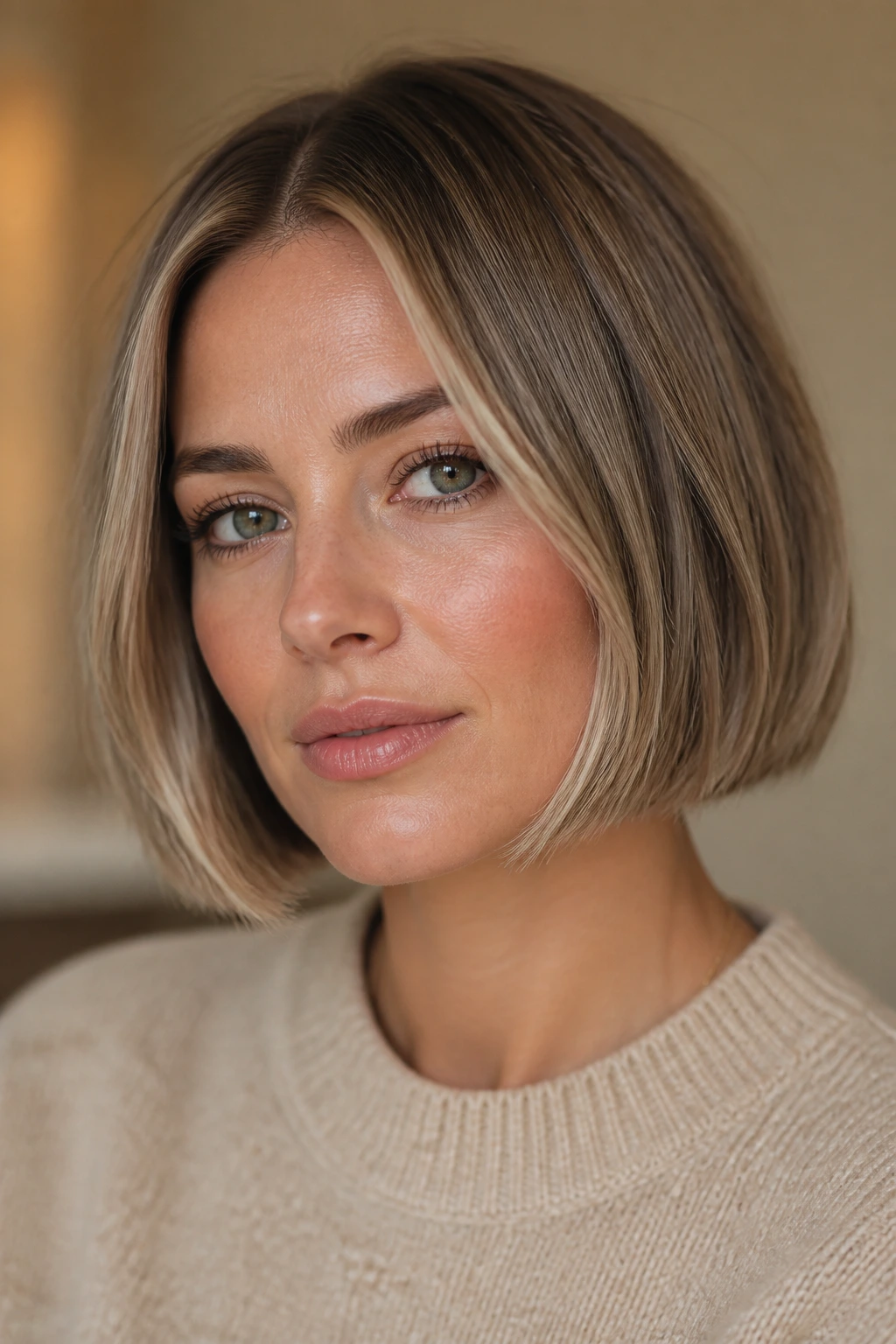
Straight hair is brutally honest. Put a dark blonde bob on it, and every line shows: the blunt edge, the part, the root grow-out, the color sitting under the top layer. That is exactly why dark blonde bobs for straight hair with lowlights tend to look richer than flat blonde. A single pale tone can go soft and washed out fast; a few deeper ribbons under the surface give the cut weight, shape, and that little bit of shadow that makes a bob feel finished.
The trick is restraint. Straight strands do not hide much, so the smartest lowlights are usually one or two levels deeper than the base, not a dramatic plunge into brunette territory. Go too dark and you get stripes. Keep the placement soft and the bob does the heavy lifting for you, whether it lands at the chin, the jaw, or the collarbone-skimming length that flips inward with almost no effort.
I keep coming back to this pairing because it solves two problems at once: straight hair can look limp, and dark blonde can look one-note. Put them together with the right lowlight placement, and the haircut starts doing that neat thing where it looks polished from a distance and quietly dimensional up close. The styles below move from crisp and glassy to soft and slightly undone, but every one of them keeps the same useful idea in play: depth where the eye needs it, clean edges where the shape needs it.
Why This Collection Feels So Wearable
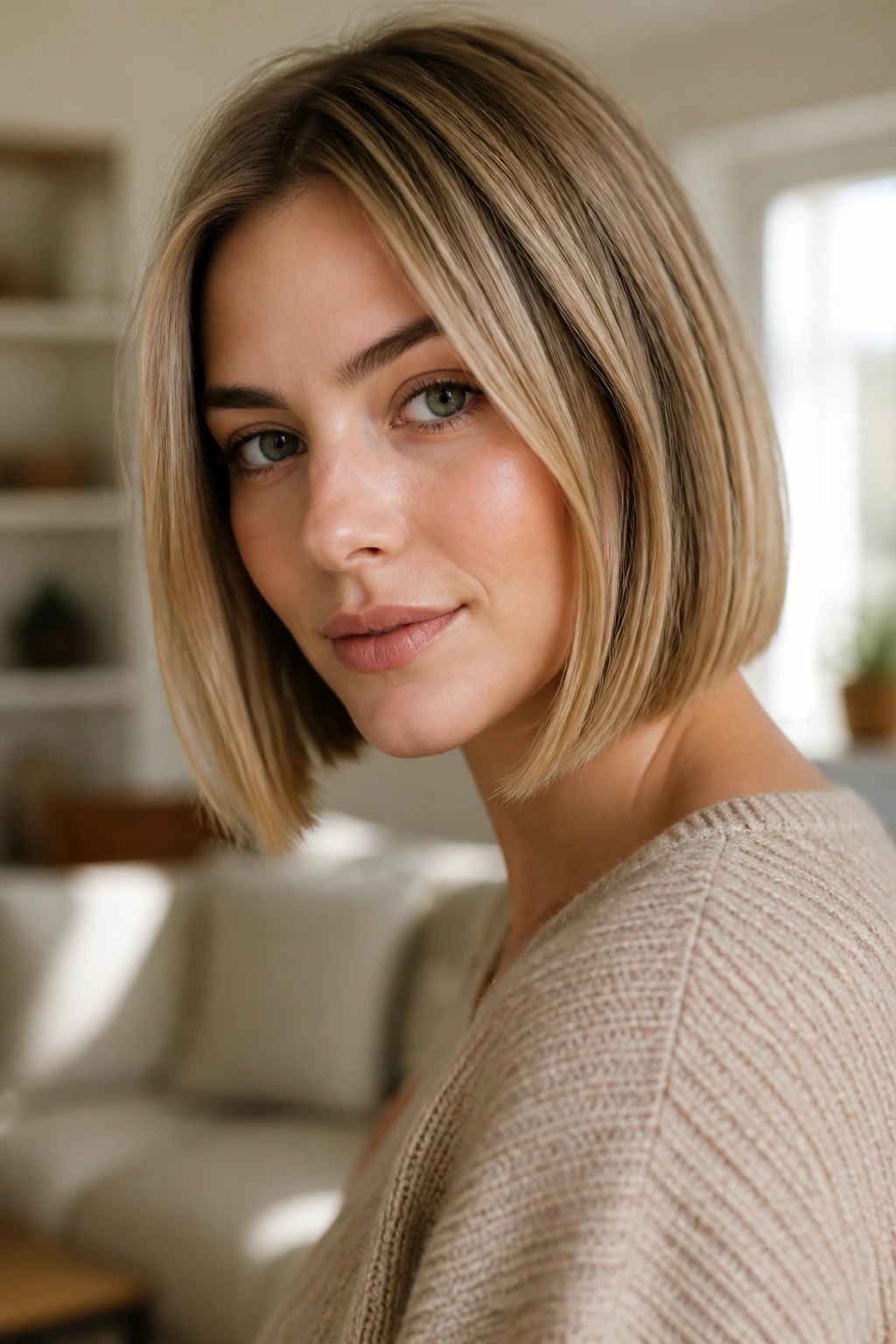
- Depth without heaviness: Lowlights tucked beneath the top layer keep straight bobs from looking like one flat sheet of color.
- Better shape definition: A blunt line reads sharper when the mids and ends have a touch of shadow behind them.
- More forgiving grow-out: When the darker strands sit close to your natural root depth, regrowth blends instead of screaming for attention.
- Thicker-looking hair: Fine hair especially benefits from lowlights placed in narrow ribbons, because the color shift makes the perimeter look denser.
- Easy daily styling: A quick pass with a flat iron or a round brush is enough when the color already provides visual movement.
- Flexible tone choices: Beige, ash, taupe, mushroom, chestnut, and caramel all live comfortably inside the dark-blonde family.
1. Chin-Length Glass Bob With Mushroom Lowlights
A chin-length bob and straight hair are a very specific couple. They either look razor-clean or they look smugly simple, and mushroom lowlights help tip the balance toward the first one. The cool beige-brown ribbons sit just under the surface, so the ends still look pale enough to feel blonde, but the whole shape stops reading as a single yellow block.
What Makes It Click
This is the cut for someone who likes sharp edges. The line lands right at the jaw, which means the lowlights have a chance to frame the face instead of disappearing into longer lengths. Ask for soft, hand-painted ribbons through the midsection and a slightly brighter perimeter so the bob keeps its crisp outline.
If your hair is pin-straight, keep the finish smooth but not lacquered. A tiny bevel at the ends keeps the mushroom tones from looking dull.
2. Jaw-Skimming Bob With Beige Ribbon Lowlights
This one is all about restraint. Beige lowlights running through a jaw-skimming bob do not shout from across the room, but they fix the most common problem with dark blonde straight hair: the color can go flat near the cheeks and temples, where the light hits hardest.
The point is softness, not contrast. Ask your colorist to keep the ribbons narrow and irregular, especially around the front. A bob like this looks expensive when the darker pieces show up as shadow, not stripes.
Wear it with a center part if you want a clean, modern line, or tuck one side behind the ear when you want the jaw to look a touch softer. Either way, the beige lowlights keep the cut from feeling too stark.
3. Collarbone Bob With Ash Brown Underlights
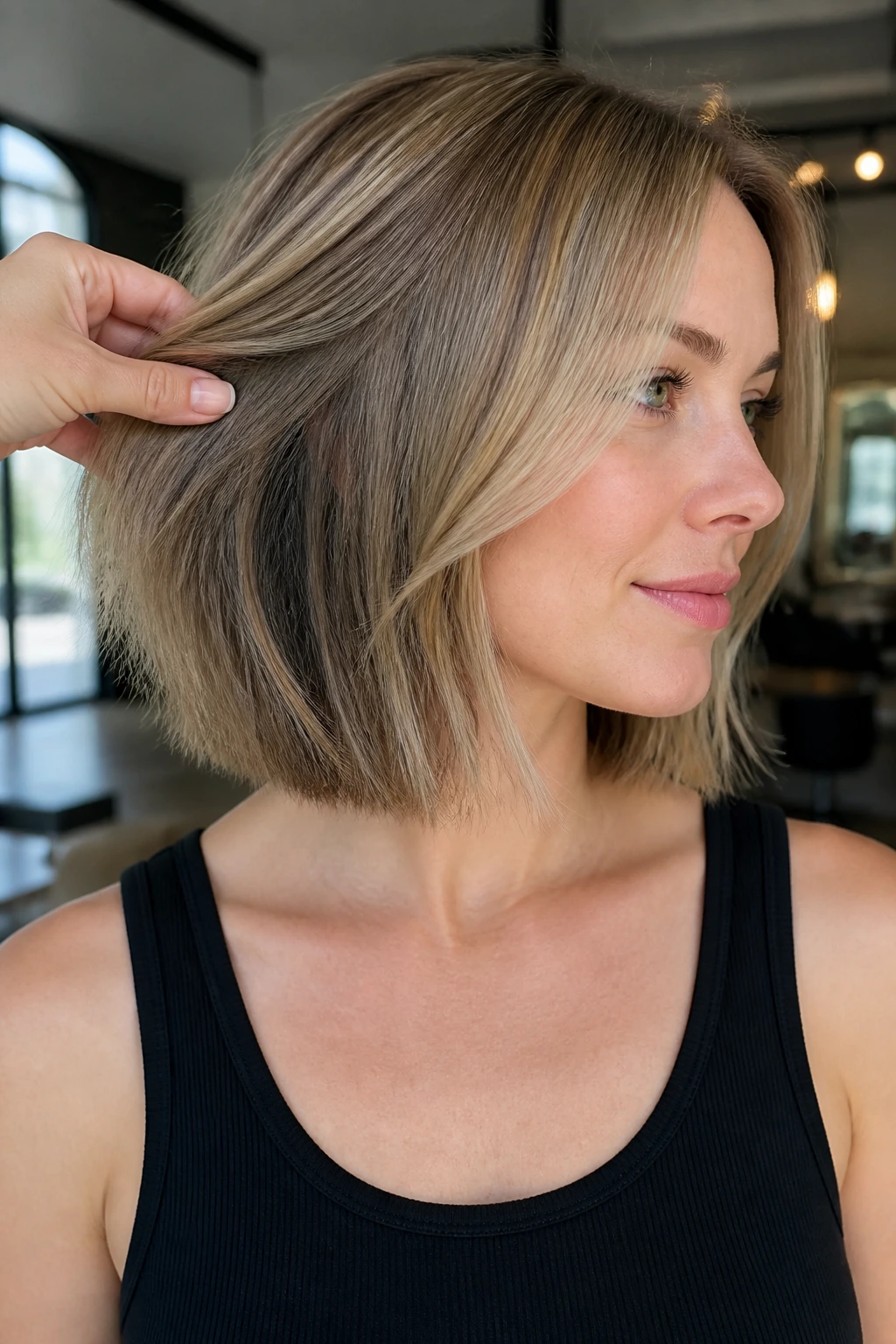
Why does this one work so well on straight hair? Because the length gives the color room to breathe. A collarbone bob can take ash brown underlights tucked beneath the top layer, and the result is a haircut that moves even when the hair barely does.
Color and Cut Notes
- Keep the base at a dark blonde level 7 or 8.
- Ask for ash brown lowlights one level deeper, not three.
- Place most of the darker pieces underneath the surface, around the occipital bone and nape.
- Finish with a flat iron bend through the last inch if the ends need a little life.
The underlights do the quiet work here. You notice them when the hair shifts, not when it sits still, which is exactly what straight hair needs.
4. A-Line Bob With Bronze Shadow Panels
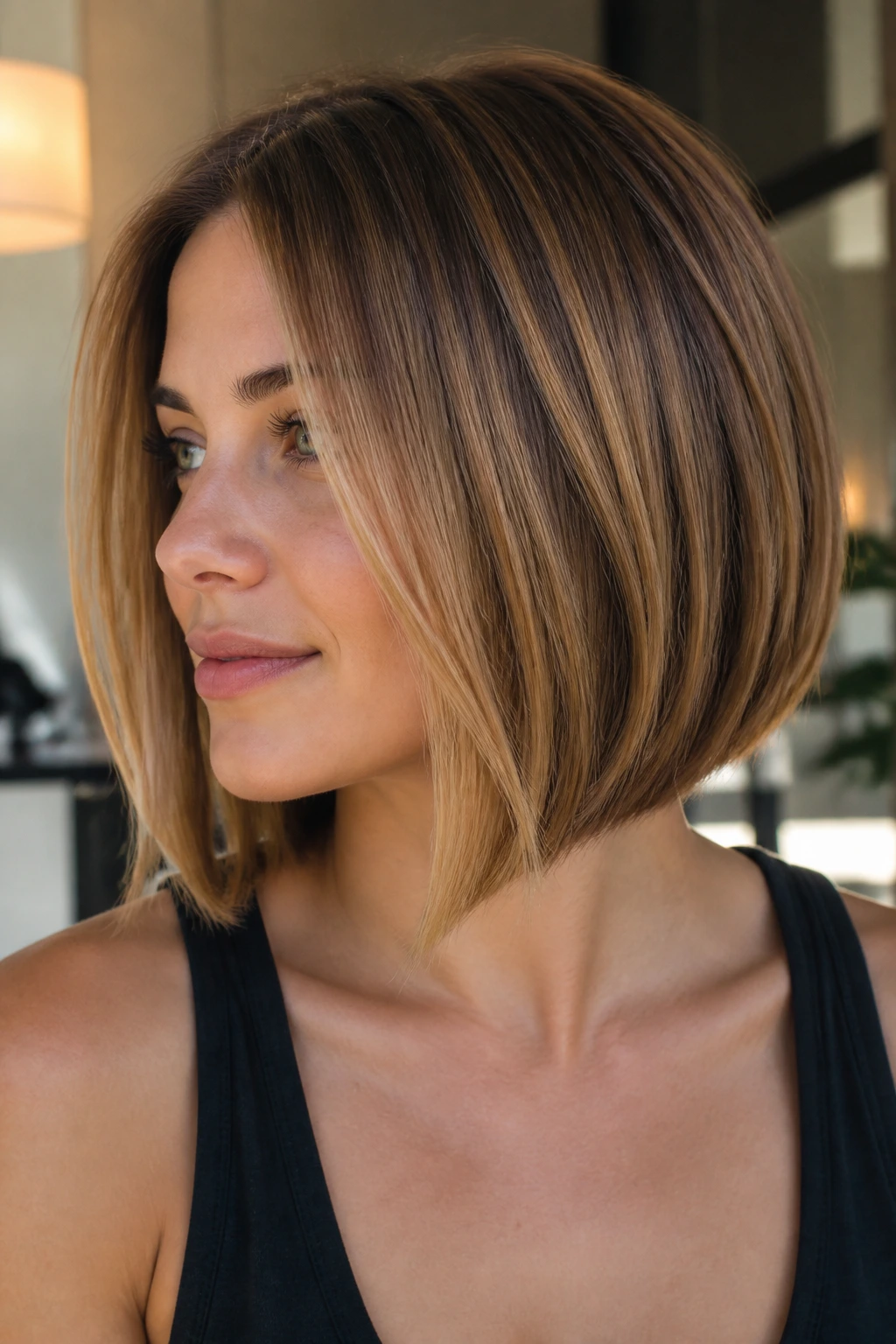
A-line bobs have a built-in angle, so they like a little color drama. Bronze shadow panels through the back section make the nape look slimmer and the front pieces look longer, even before anyone notices the haircut itself. Straight hair helps the shape stay visible, which is half the charm.
There’s a small catch. If the bronze goes too warm, the whole bob can veer copper. Keep the panels muted and ask for a gloss over the top so the dark blonde stays in the same family. This cut is a good pick if you want something tidy in profile but not severe from the front.
5. French Bob With Soft Taupe Dimension
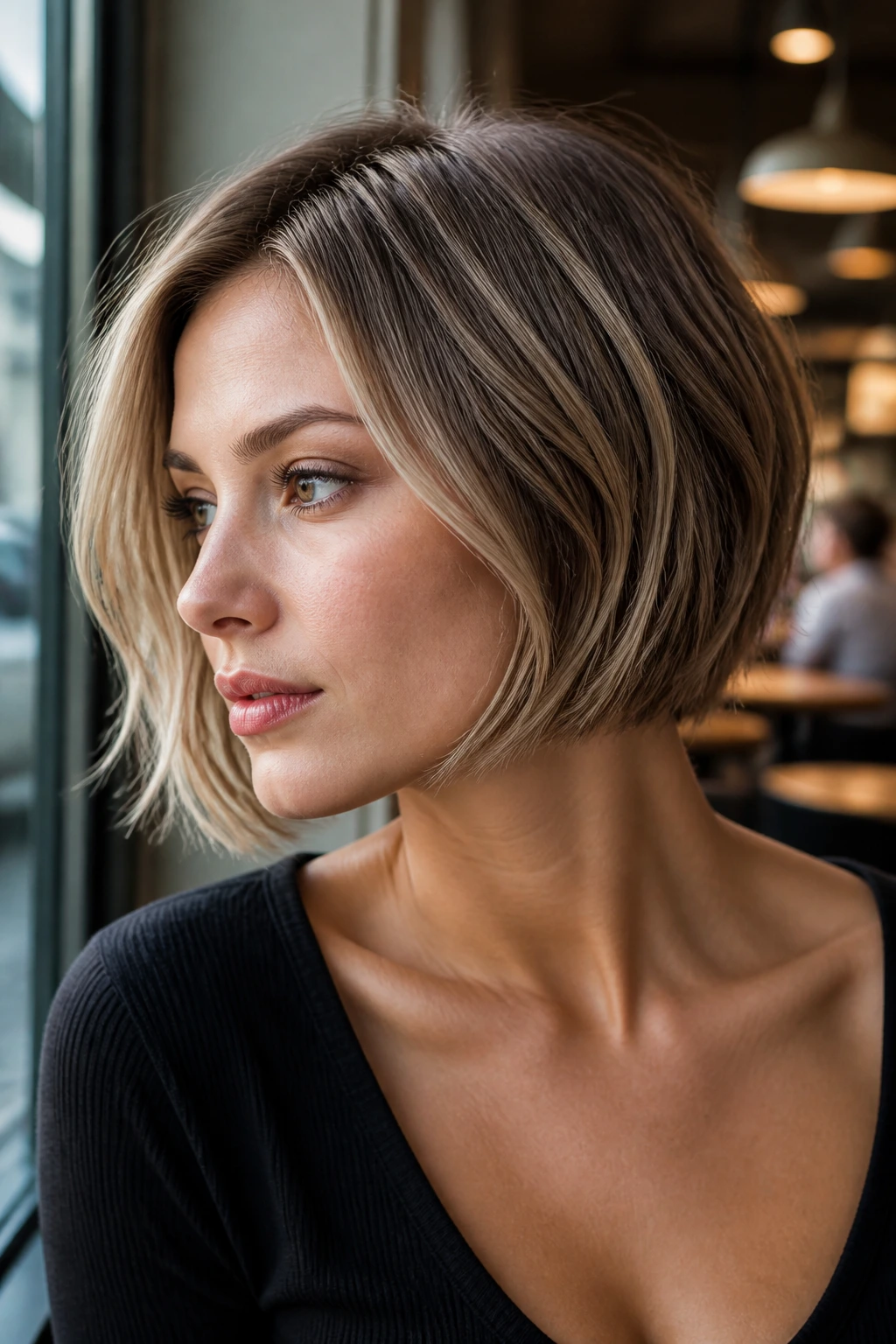
The French bob can be a little cheeky. Cut short, sitting around the cheekbone or just below it, it needs color that supports the shape without stealing the show. Taupe lowlights do that nicely, especially on straight hair where every line is exposed.
This version feels best when the ends are blunt and the lowlights are feathered through the top half rather than packed into the bottom. You get a faint smoky effect, which keeps the haircut from reading too sweet. Add a shallow side part if you want the taupe to show off a little more near the temple.
6. Center-Part Blunt Bob With Sand Lowlights
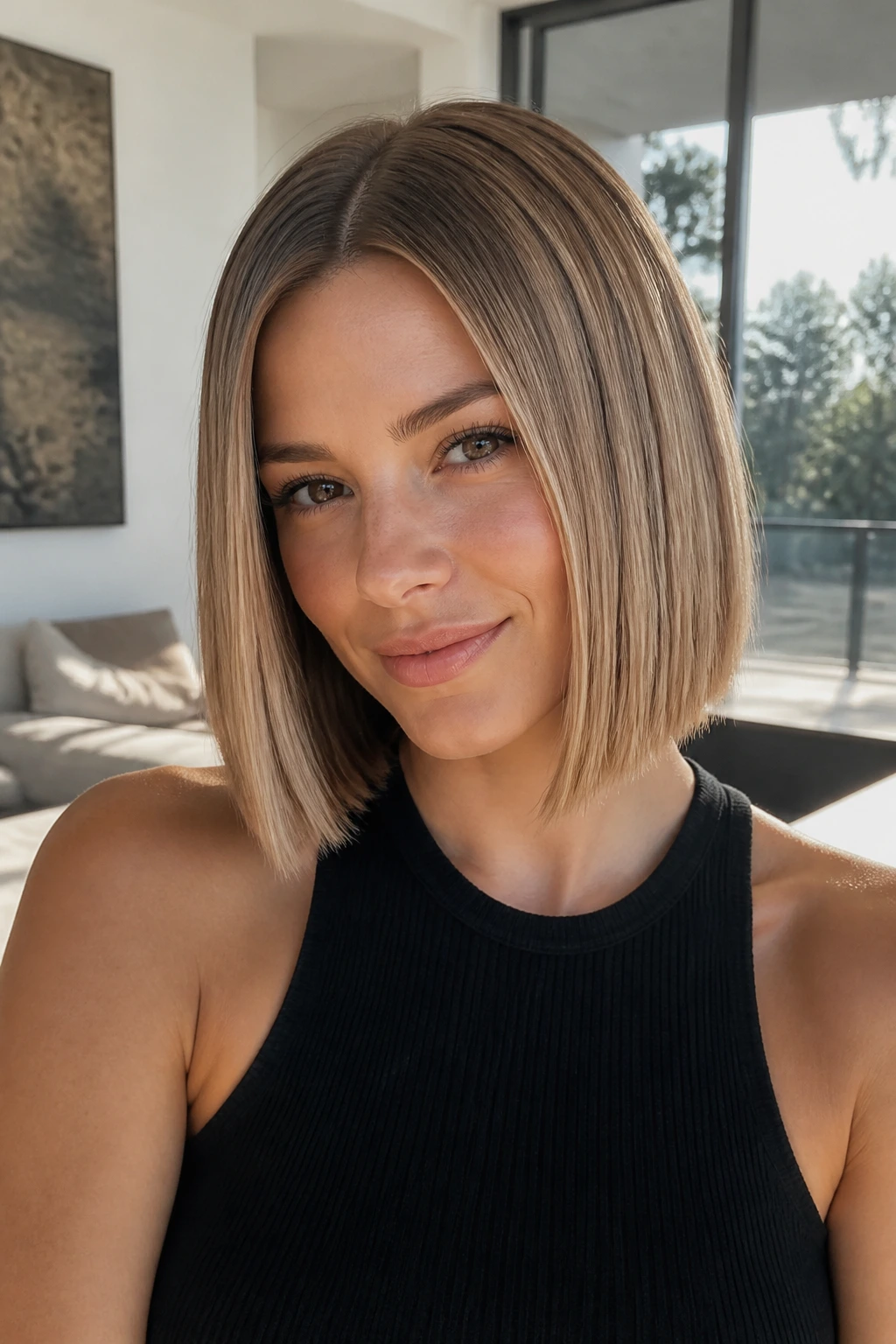
A blunt center-part bob can look almost architectural. Sand lowlights soften the hard edge just enough, and on dark blonde hair they stop the length from turning into one uninterrupted pale strip. The result is neat, not icy.
If your hair is very straight, this is one of the easiest styles to maintain. The blunt line does the heavy work, and the lowlights simply keep the color from feeling chalky. I like this cut on people who wear structured clothing — blazer collars, crew necks, boxy jackets — because the bob and the outfit have the same crisp mood.
7. Side-Part Bob With Chestnut Interior Lowlights
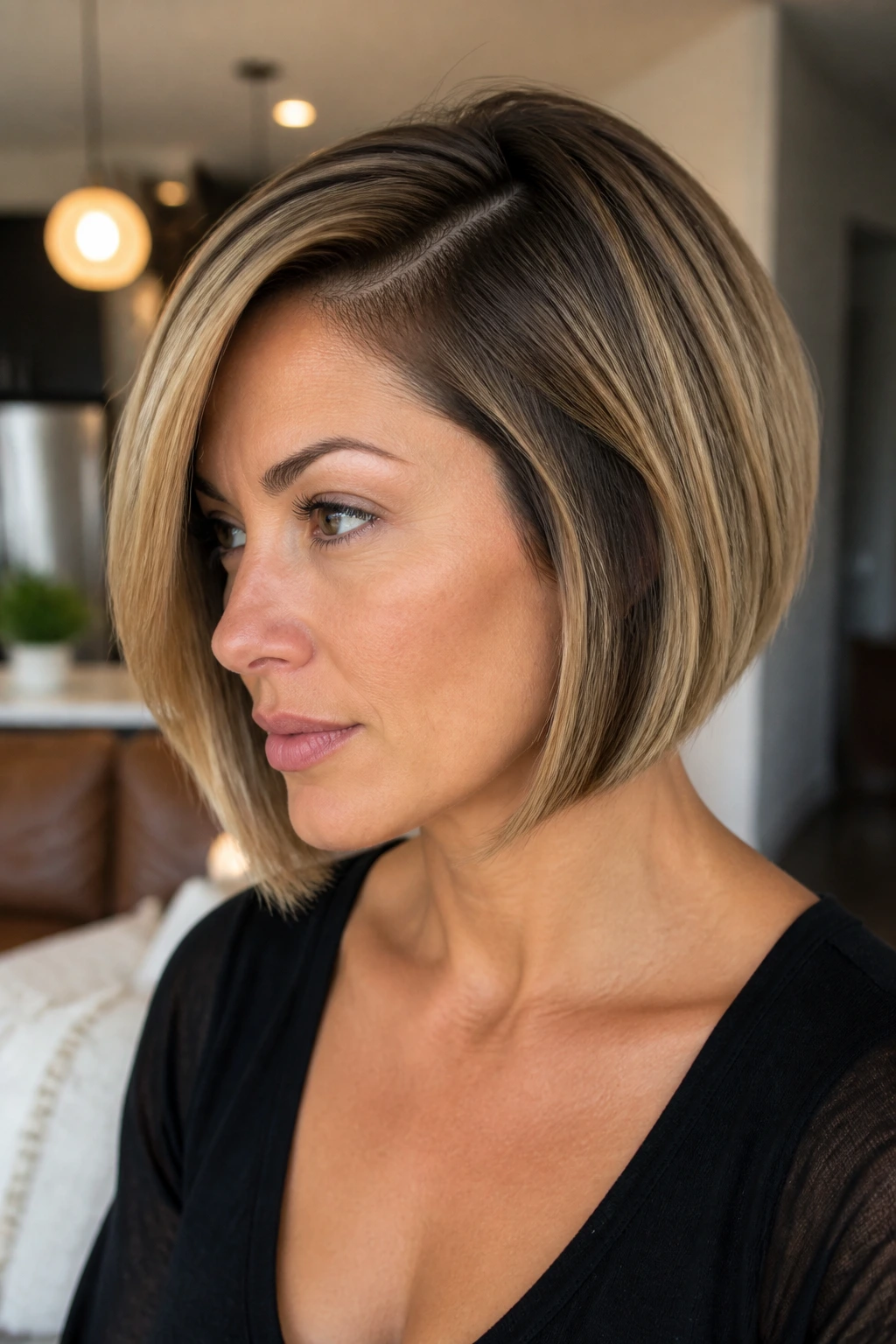
A side part changes everything. It gives the bob a little lift at the front and lets the darker chestnut pieces peek through where the hair naturally folds back. That small shift makes straight hair look fuller without requiring layers that chew up the shape.
Why It Stays Interesting
Chestnut is a useful lowlight shade because it has enough warmth to stay friendly against dark blonde, but it still reads as depth rather than brightness. Place the darkest pieces underneath the part line and through the back half, then leave the very front slightly lighter. The eye goes to the curve, not the color placement. That matters here.
8. Tucked-Behind-the-Ear Bob With Cocoa Depth
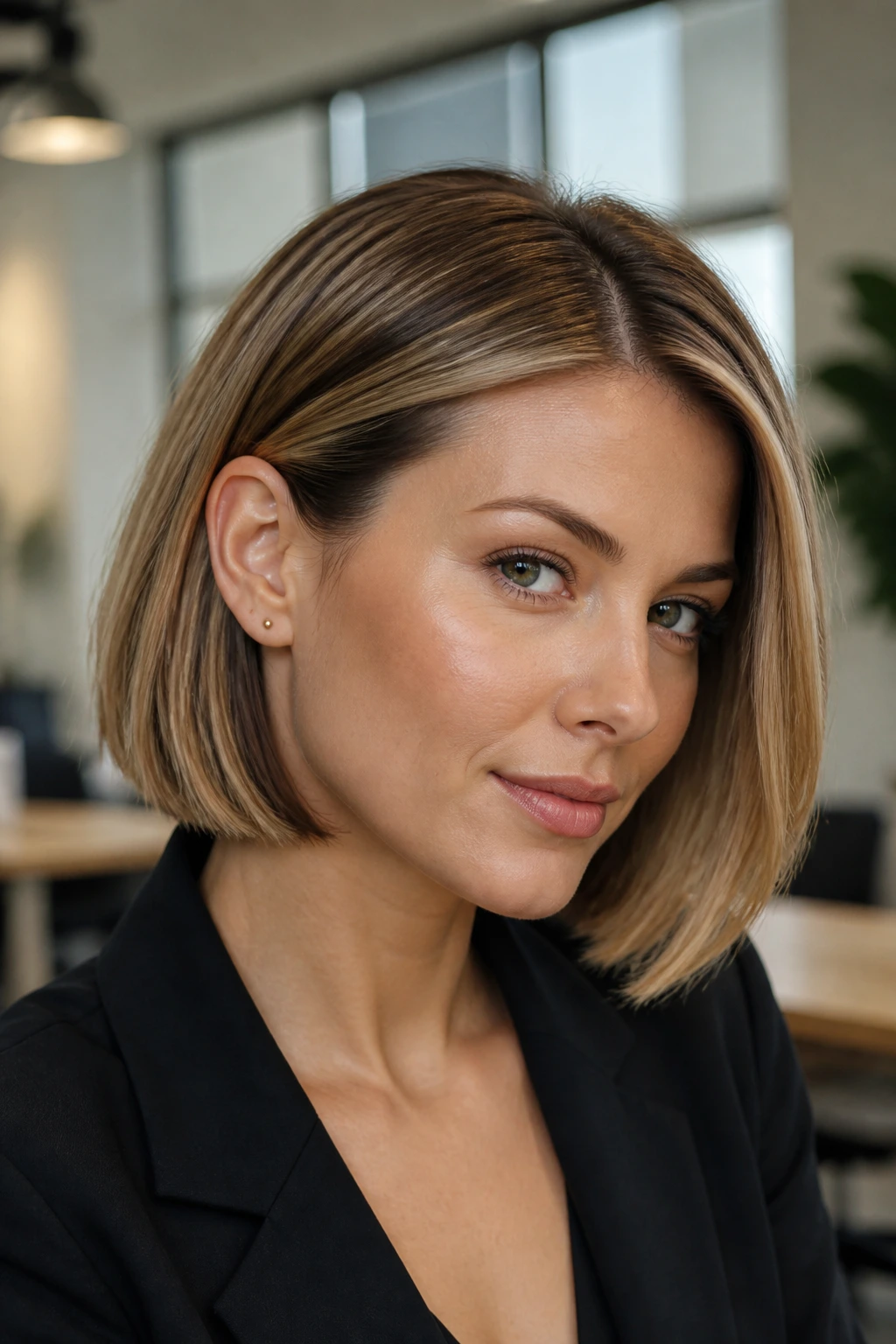
This is the bob for people who live in hoop earrings and sunglasses. Tucking one side behind the ear exposes the cocoa lowlights at the temple and underlayer, and that little shift turns a simple straight cut into something with character.
The color should feel like shadow, not streaks. Ask for the cocoa pieces to sit below the crown and around the back of the head, where they’ll show when the hair moves but won’t dominate the outline. This one is especially good if you want a dark blonde bob that stays polished at work and slightly sharper after hours.
9. Long Bob With Smoky Beige Face Frame
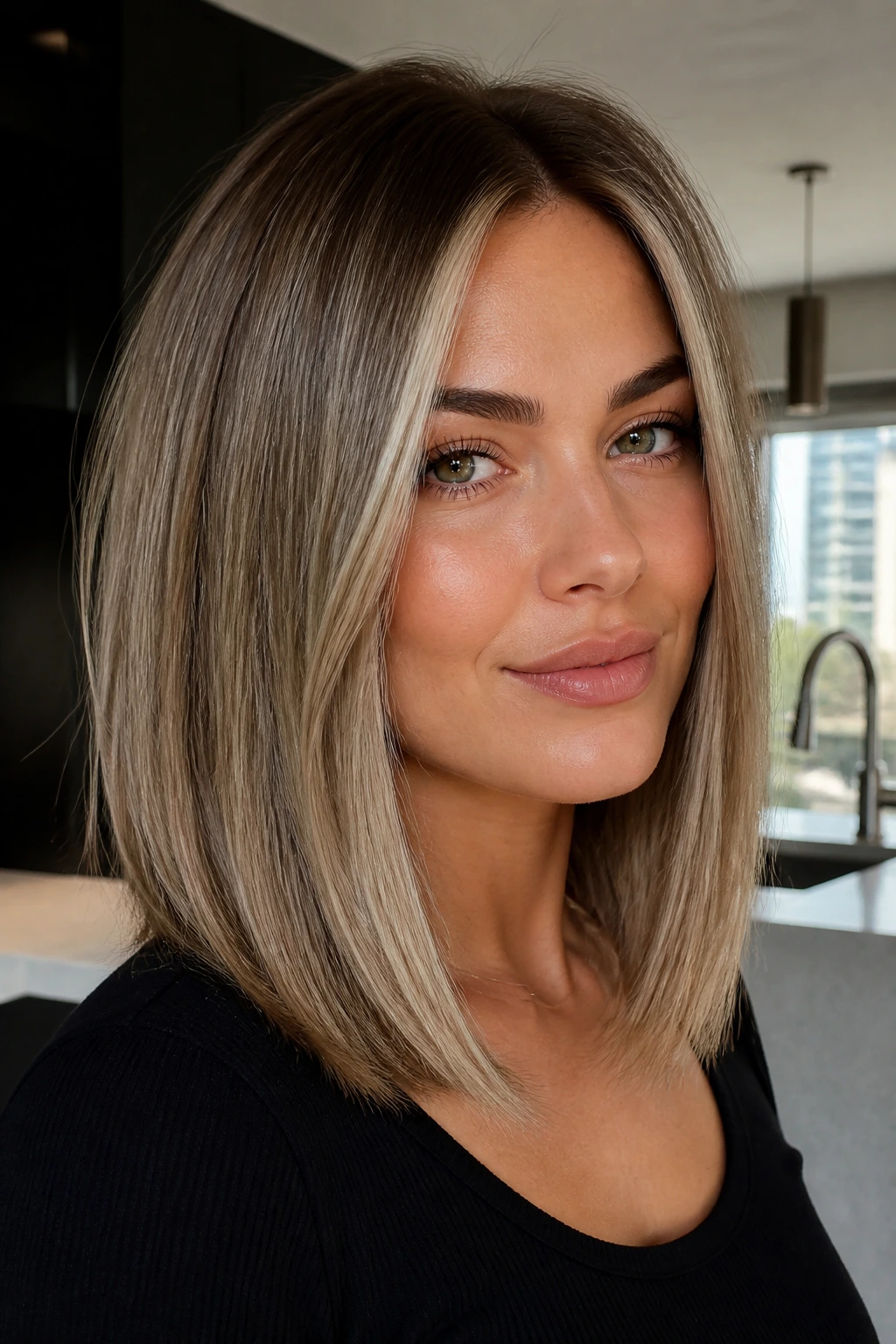
If you like a longer bob, this is the version to keep in mind. Smoky beige lowlights around the face frame the cheekbones and jaw, and the rest of the hair stays clean and straight so the color can do the contouring.
The face frame should be soft, not chunky. Ask for two thin panels at the front and a few diffused lowlights through the mids, then keep the ends brighter. You get dimension without losing that easy, shoulder-grazing line that makes a lob so useful. It’s a calm style, which is not the same thing as boring.
10. Micro Bob With Pearl Brown Lowlights
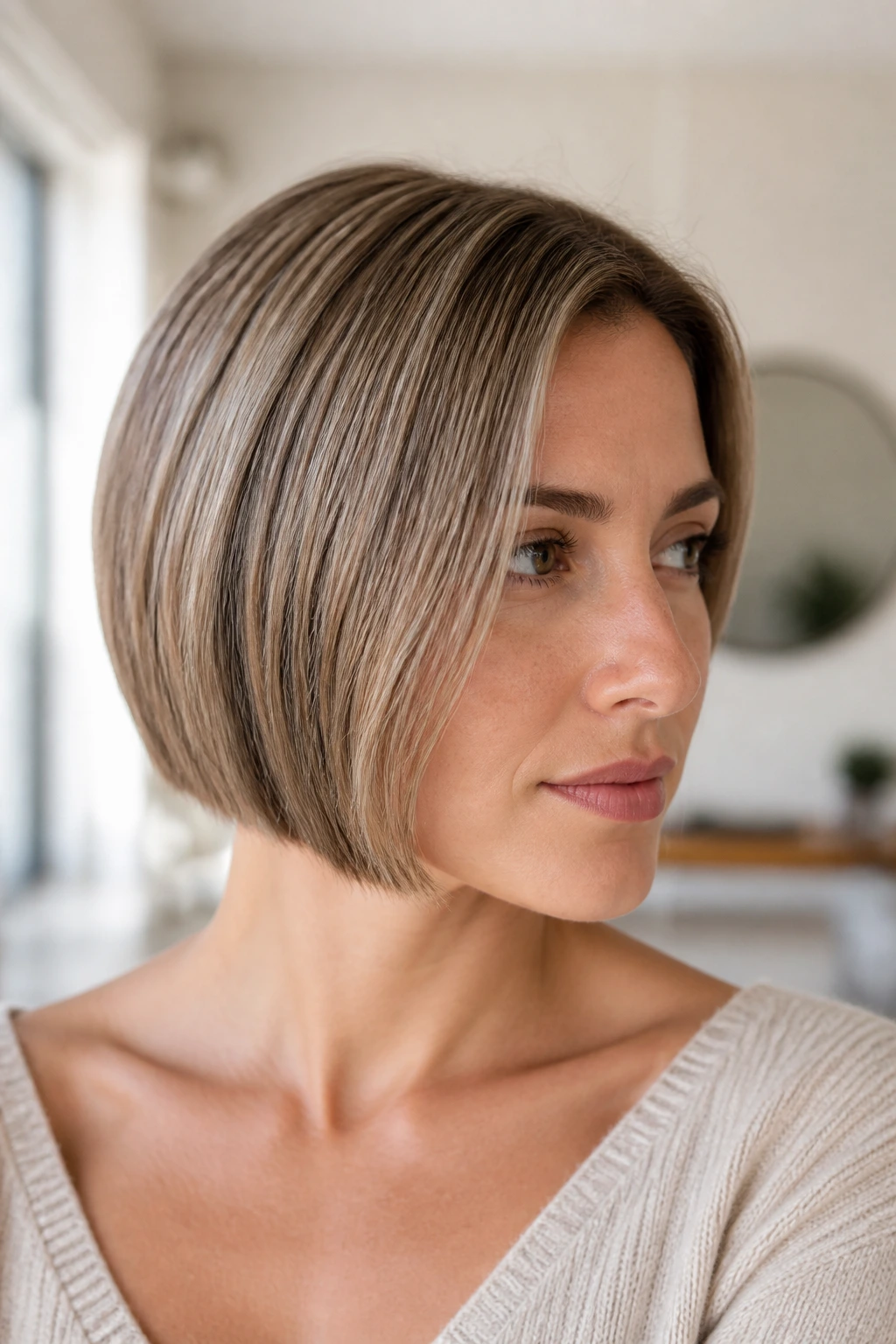
Short bobs can get fussy fast if the color is too aggressive. Pearl brown lowlights solve that by staying soft and slightly cool, giving the micro bob enough shadow to keep it from looking helmet-like. Straight hair makes the line visible, so the trick is keeping the color whisper-thin.
A micro bob tends to suit people who like clean necklines and little styling time. This version is especially nice when the ends are blunt and the lowlights are scattered in narrow pieces through the top and sides. It has that tidy, almost graphic shape, but the pearl tone keeps it from feeling harsh.
11. Rounded Bob With Toffee Underlayers
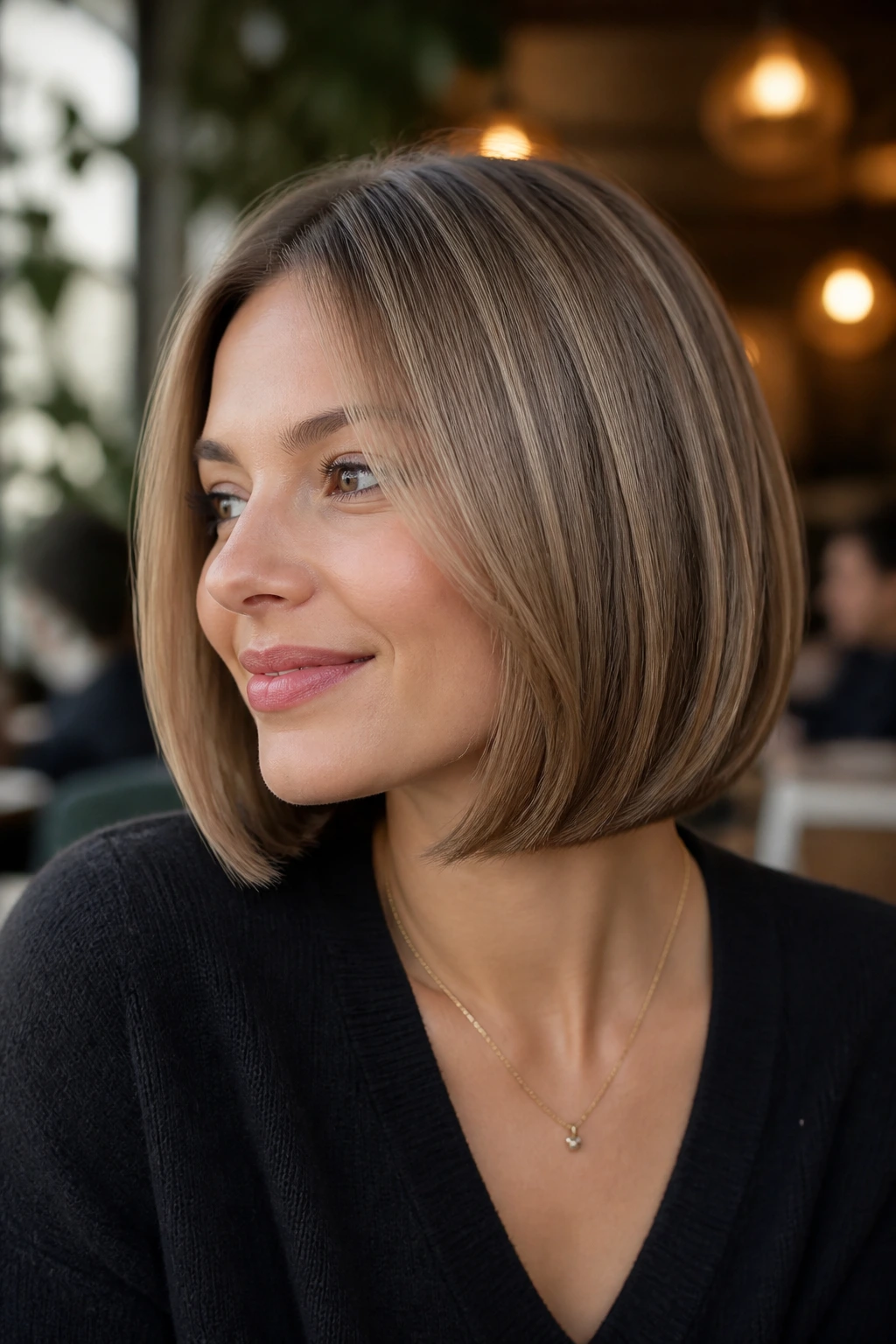
A rounded bob has more curve built into the cut, so it benefits from color that follows that curve. Toffee underlayers create a soft pocket of depth near the back and sides, which makes the top look fuller and the perimeter look plush.
The key is placing the darker pieces underneath, not on top. Straight hair lies flat enough to reveal them when the head turns, but they won’t clutter the surface. If your hair is fine, this is one of the better choices in the whole group because it creates thickness without asking for a lot of layers.
12. Boxy Straight Bob With Mocha Veil
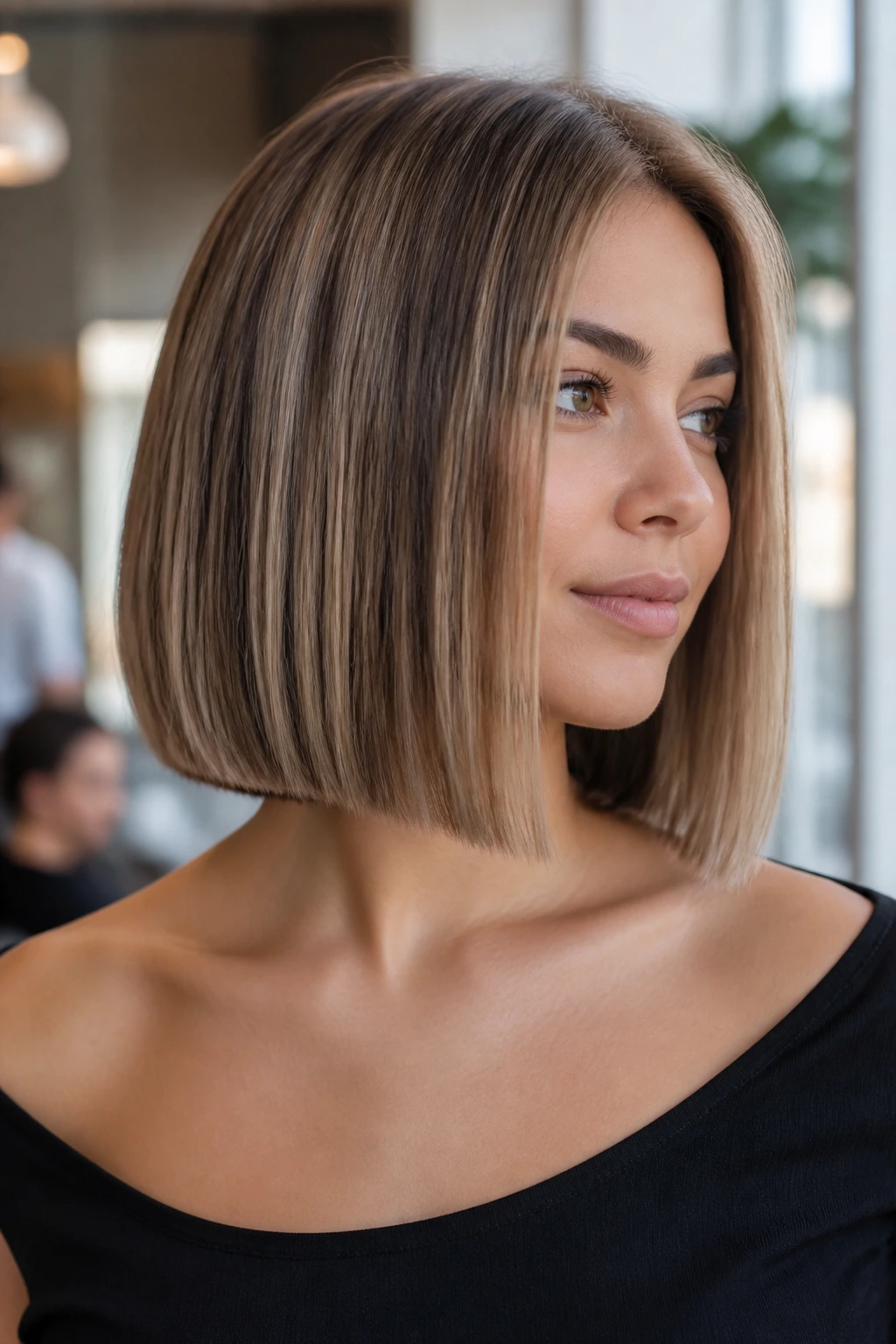
There’s something a little bold about a boxy bob. It’s blunt at the bottom, straight through the sides, and unapologetic about its shape. A mocha veil of lowlights keeps that severity from turning dull, especially on dark blonde hair that might otherwise reflect too much light at the ends.
This style is best when the color is subtle and the cut is precise. You want enough mocha to make the bob look grounded, not so much that it loses the blonde. The strongest version of this cut does not need waves, flips, or texture tricks. It just needs a clean finish and a good part.
13. Curtain Fringe Bob With Walnut Lowlights
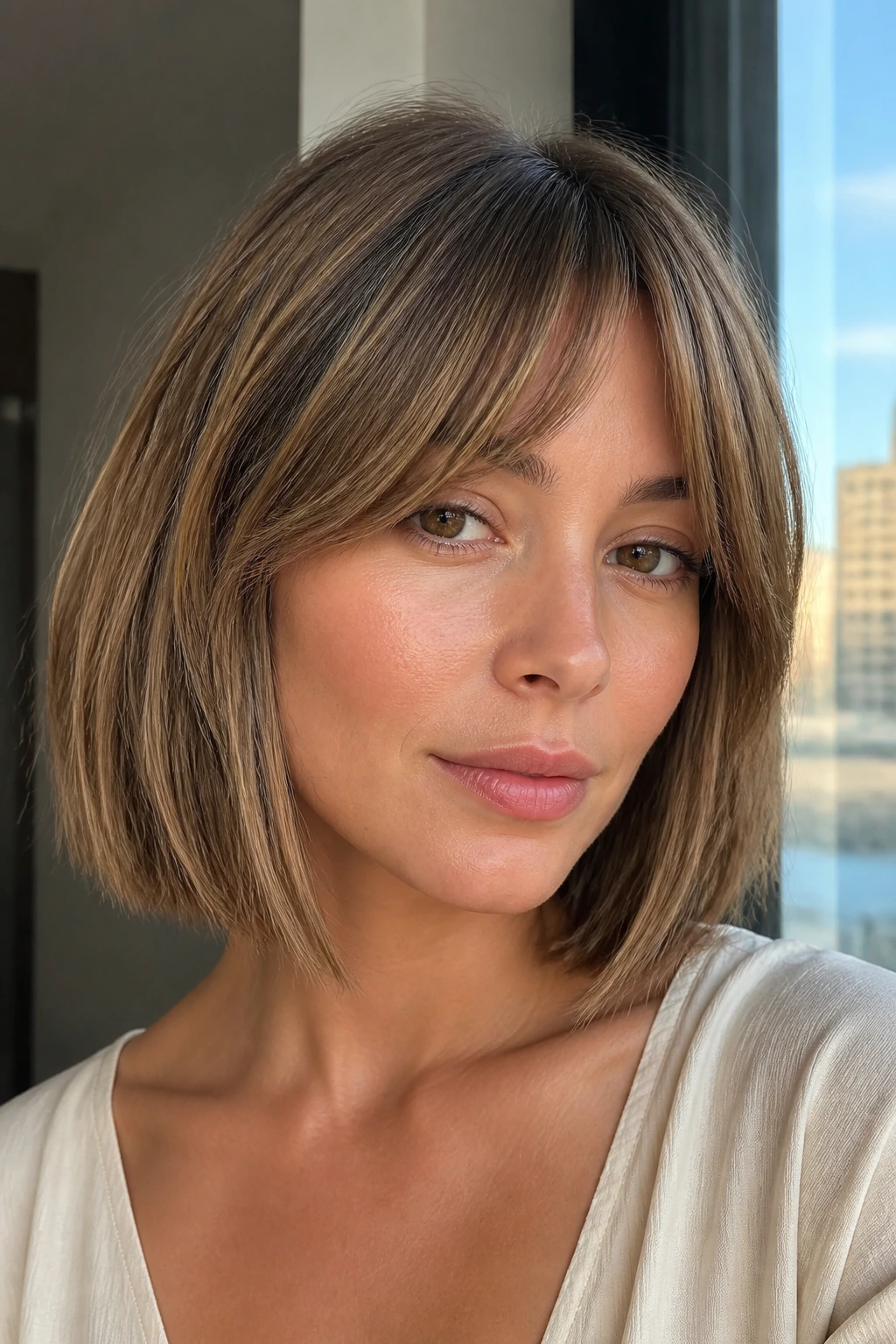
Curtain bangs can soften a bob in a hurry, but they also need color support so the whole look does not go fluffy. Walnut lowlights through the mids and fringe area keep the front pieces from floating away visually.
The Shape Story
The beauty of this version is the transition. The bangs break up the forehead line, the bob sits straight below, and the walnut depth pulls the eye downward instead of outward. That makes the face look a little longer and the haircut feel more intentional. Ask for the lowlights to be diffused around the fringe, not packed into it, or the bangs can look muddy.
14. Invisible-Layer Bob With Smoky Honey Depth
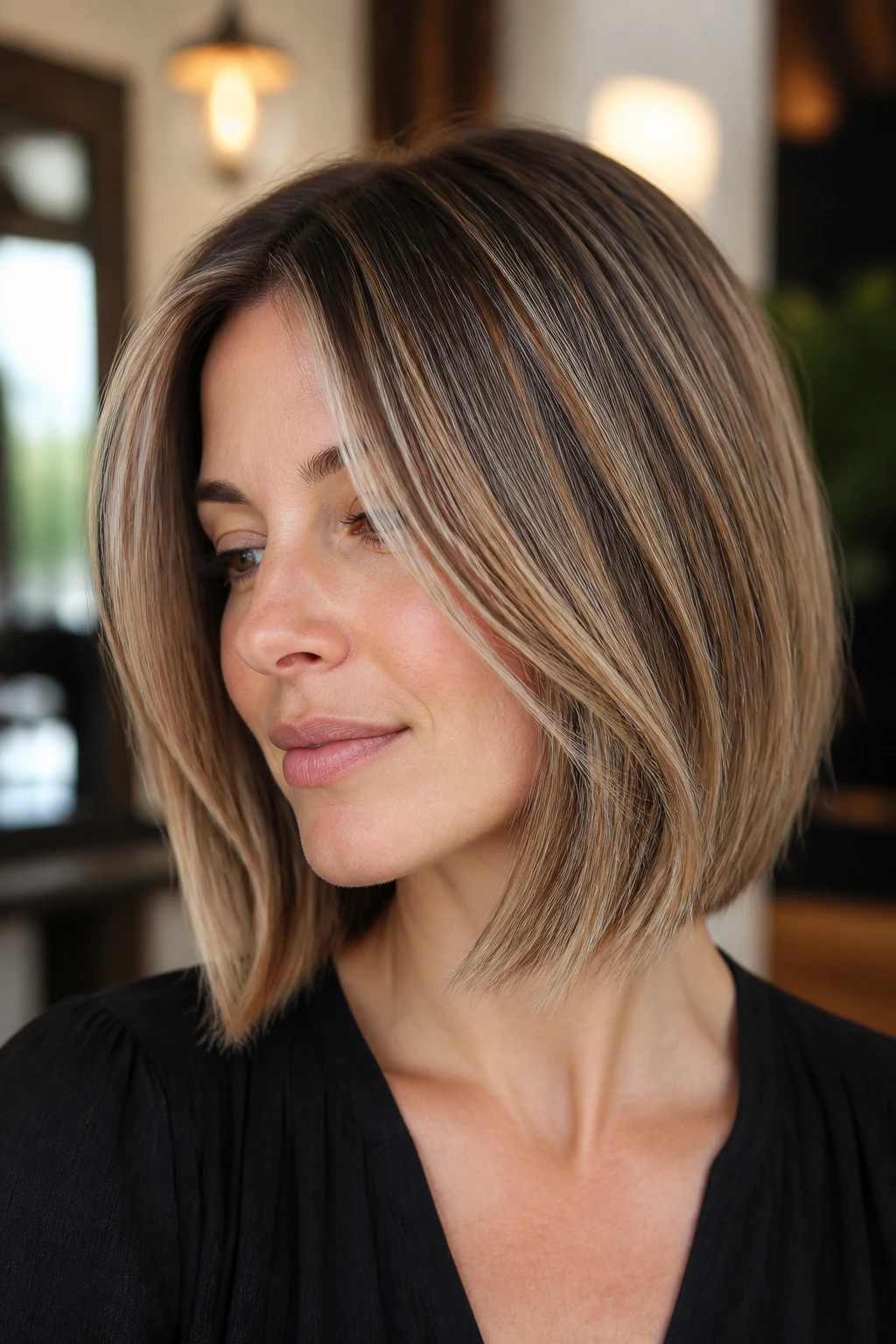
This cut is for people who want movement but hate obvious layers. Invisible layering removes weight inside the shape, while smoky honey lowlights create the illusion of texture along the surface. Straight hair loves this trick because the color gives the eye something to follow.
If your hair tends to fall flat at the crown, this is a strong option. The internal layers stop the bob from puffing out at the bottom, and the lowlights keep the upper surface from looking one-dimensional. The result is neat, swingy, and easy to push behind the ear without losing its shape.
15. Italian Bob With Rooted Beige Ends
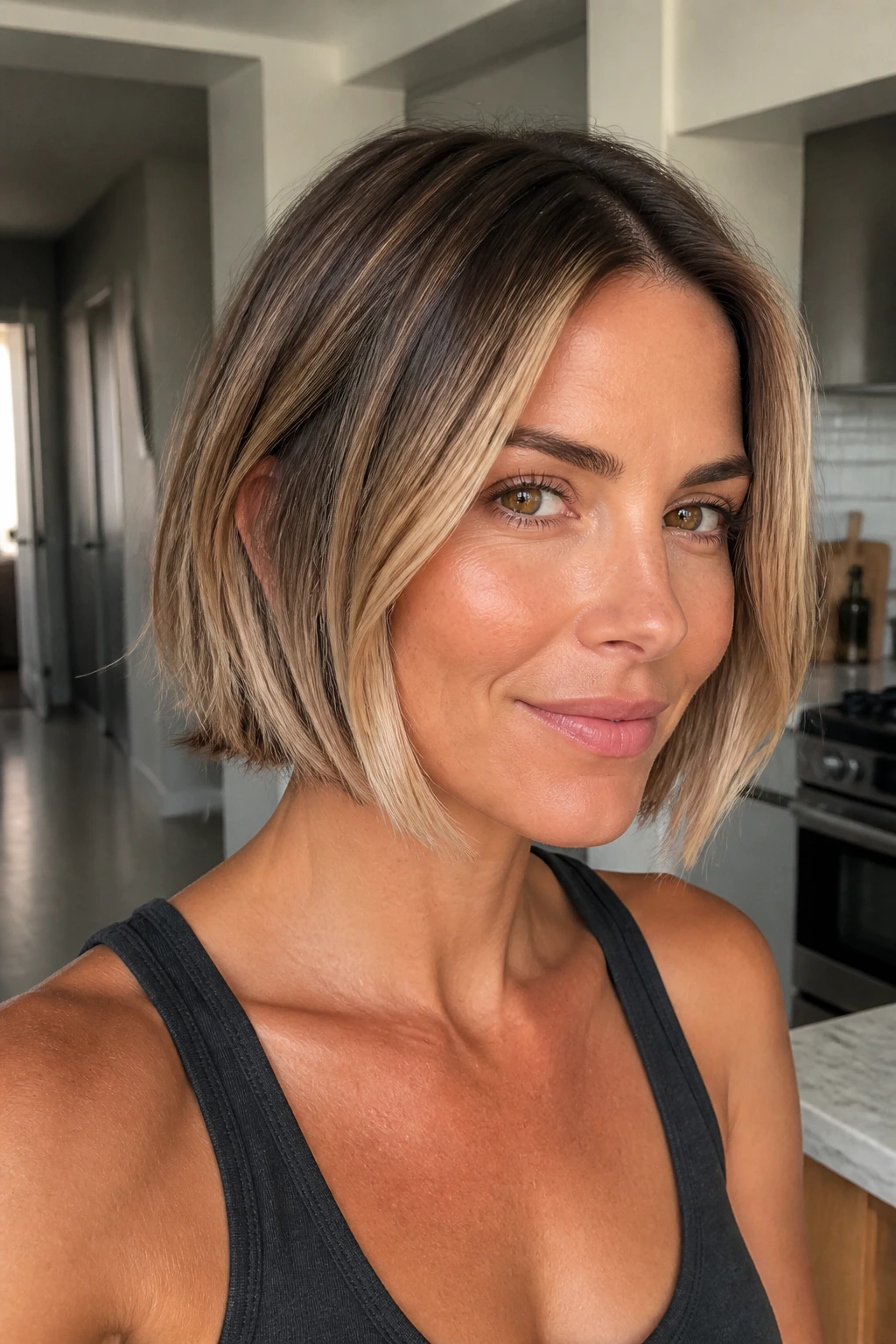
The Italian bob has a little more fullness through the body, which is why rooted beige lowlights feel so right here. They give the base a soft shadow while the ends stay airy and blonde enough to feel light.
Ask for the root area to stay close to your natural depth so the grow-out line is gentle. Then let the beige tones drift through the mids and ends in loose ribbons. On straight hair, this cut looks especially good when the finish is smooth but not pin-straight — a round brush bend at the ends is enough.
16. Feathered Bob With Caramel Interior Ribbons
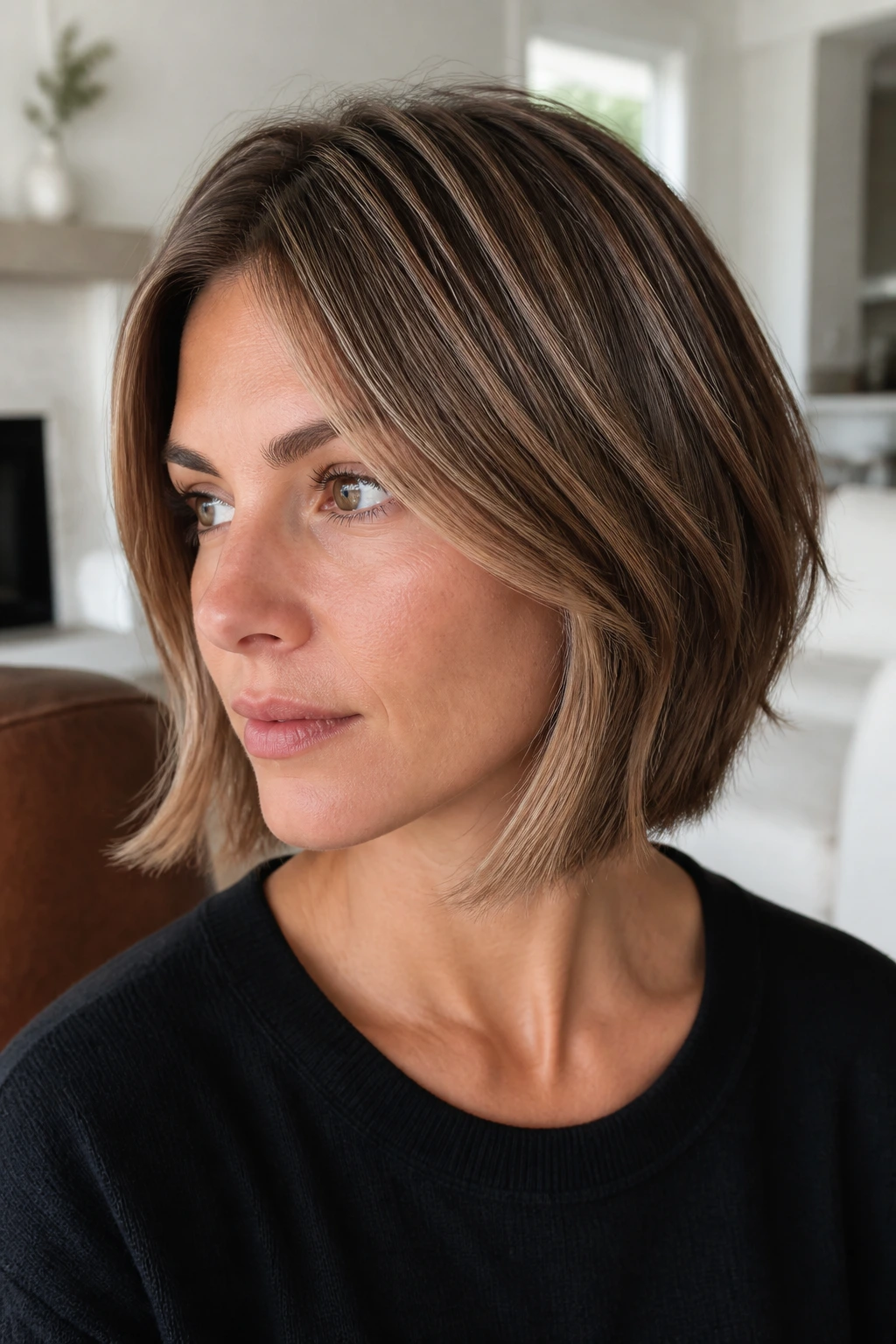
Feathering can save a straight bob from looking boxy, and caramel interior ribbons help even more. The cut gets softness through the ends, the color adds warmth inside the shape, and the whole thing feels a little more lived-in without going shaggy.
This version is a smart pick if your hair is thick or a touch coarse. The feathering removes some visual weight, and the caramel depth keeps the ends from exploding outward. It is not a fussy style. It just needs a good blow-dry and a light serum on the last inch.
17. Polished Office Bob With Neutral Chestnut Lowlights
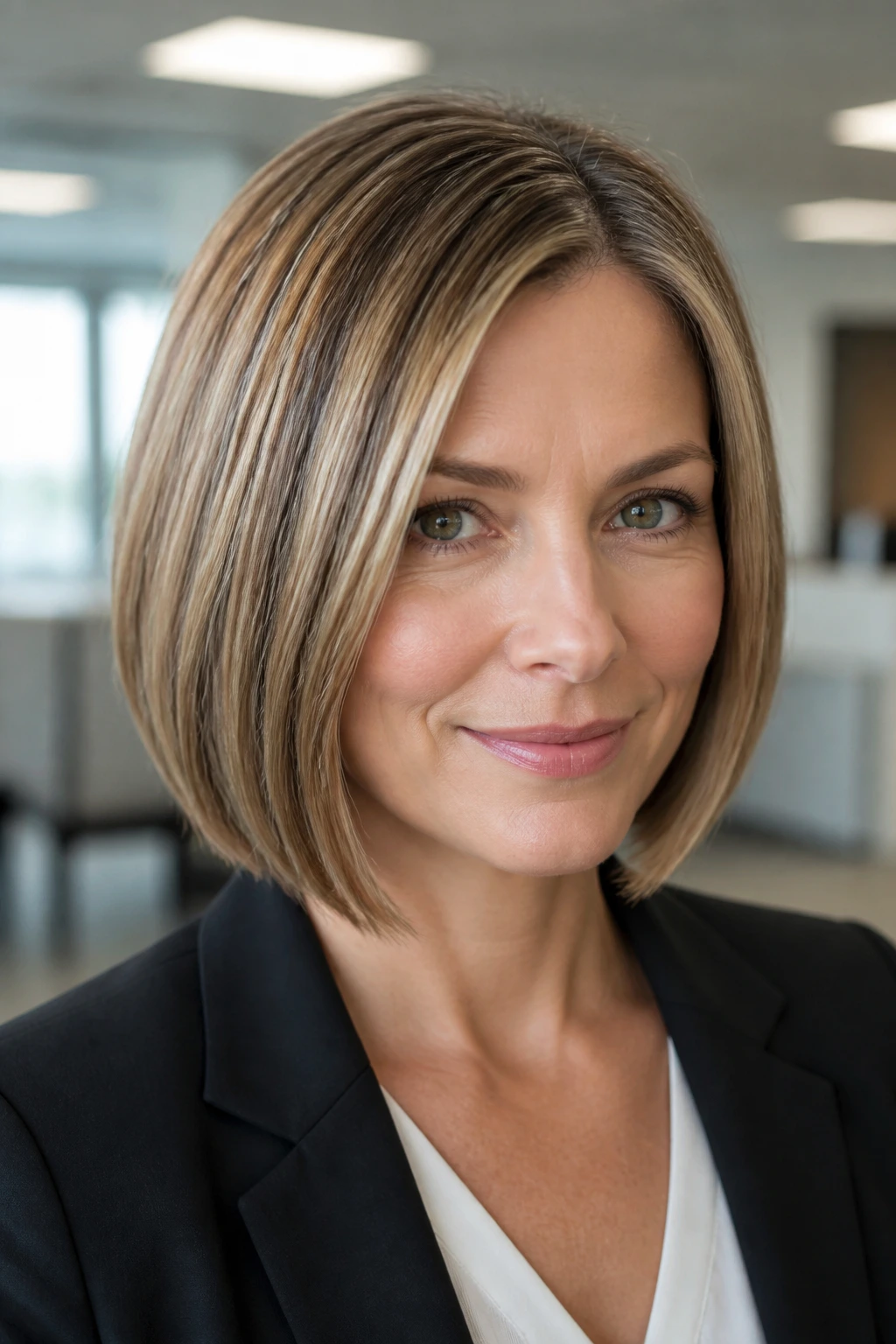
Some bobs are meant to behave. This one is the neat blazer of the group: clean part, smooth surface, neutral chestnut lowlights, no nonsense. It works because the color stays disciplined. Nothing about it asks for a curl, a wave, or a big styling routine.
Chestnut is useful when you want the lowlights to show in fluorescent light, office light, daylight — all of it. It keeps the dark blonde from washing out in stark spaces. Straight hair makes the finish look tidy, and a small inward bevel at the ends keeps the silhouette from turning severe.
18. Sleek Undercut Bob With Shadowy Low Panels
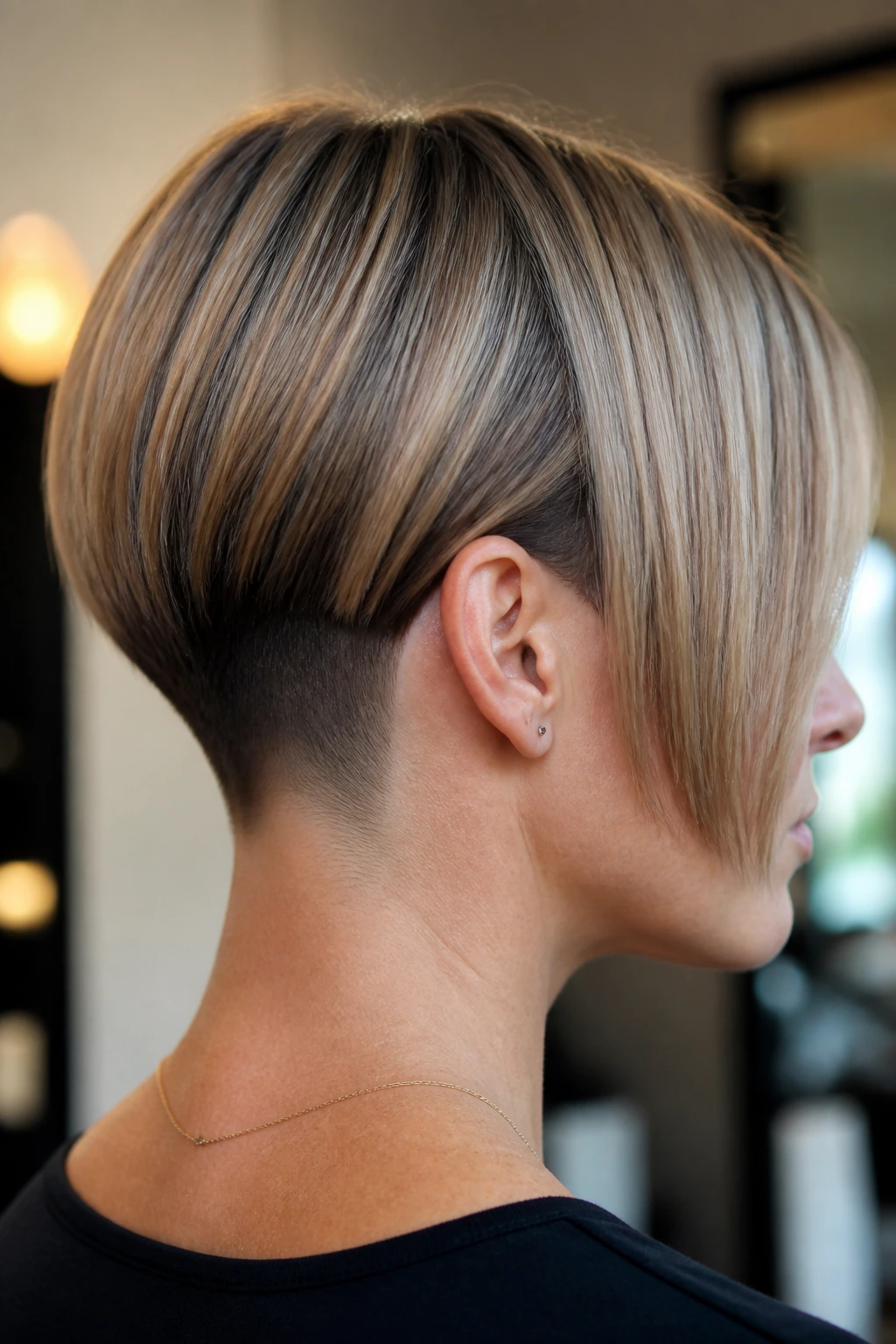
An undercut bob is already a little sharp. Add shadowy low panels underneath, and the style gets a hidden edge that only appears when the head turns or the top layer moves. That hidden contrast is the whole point.
This one works best if you like a smooth crown and a very clean neckline. The undercut reduces bulk, so the low panels can sit beneath the top layer without crowding the shape. It is not the softest look here, but it has a nice bite to it, and straight hair keeps the line exact.
19. Soft Center-Part Lob With Sandy Ribbons
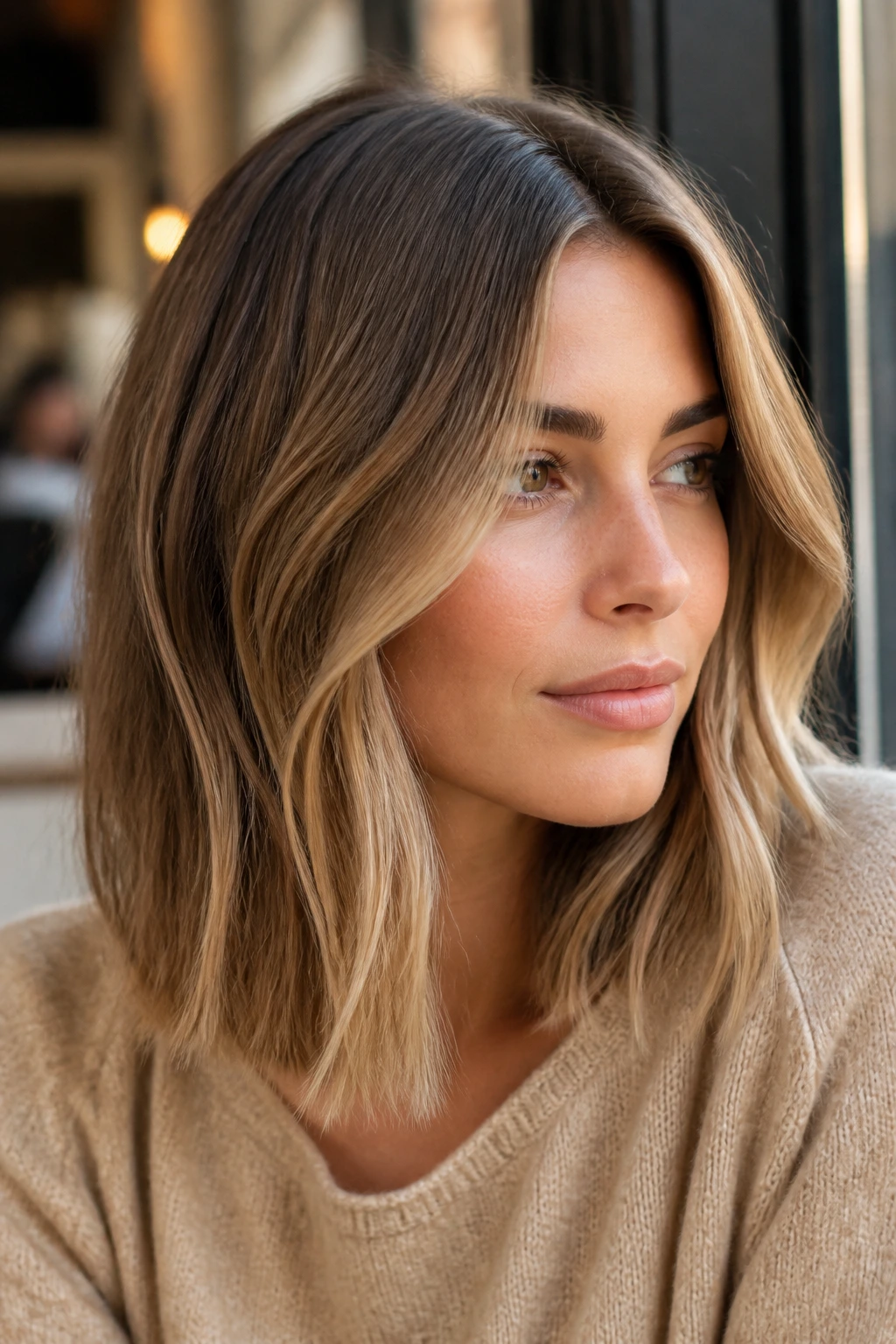
A soft center-part lob is probably the easiest entry point for someone who wants dimension without committing to a short bob. Sandy ribbons through the mids break up the straight hair just enough to keep it from looking static, but the overall result still feels light and easy.
A Small Detail That Matters
Ask for the ribbons to be uneven in spacing. Uniform color placement is what makes straight bobs look stamped on. Uneven sand pieces mimic the way light naturally falls across the head, and the cut ends up looking more expensive because it does not advertise the coloring job from every angle.
20. Thick-Hair Bob With Internal Lowlight Blocks
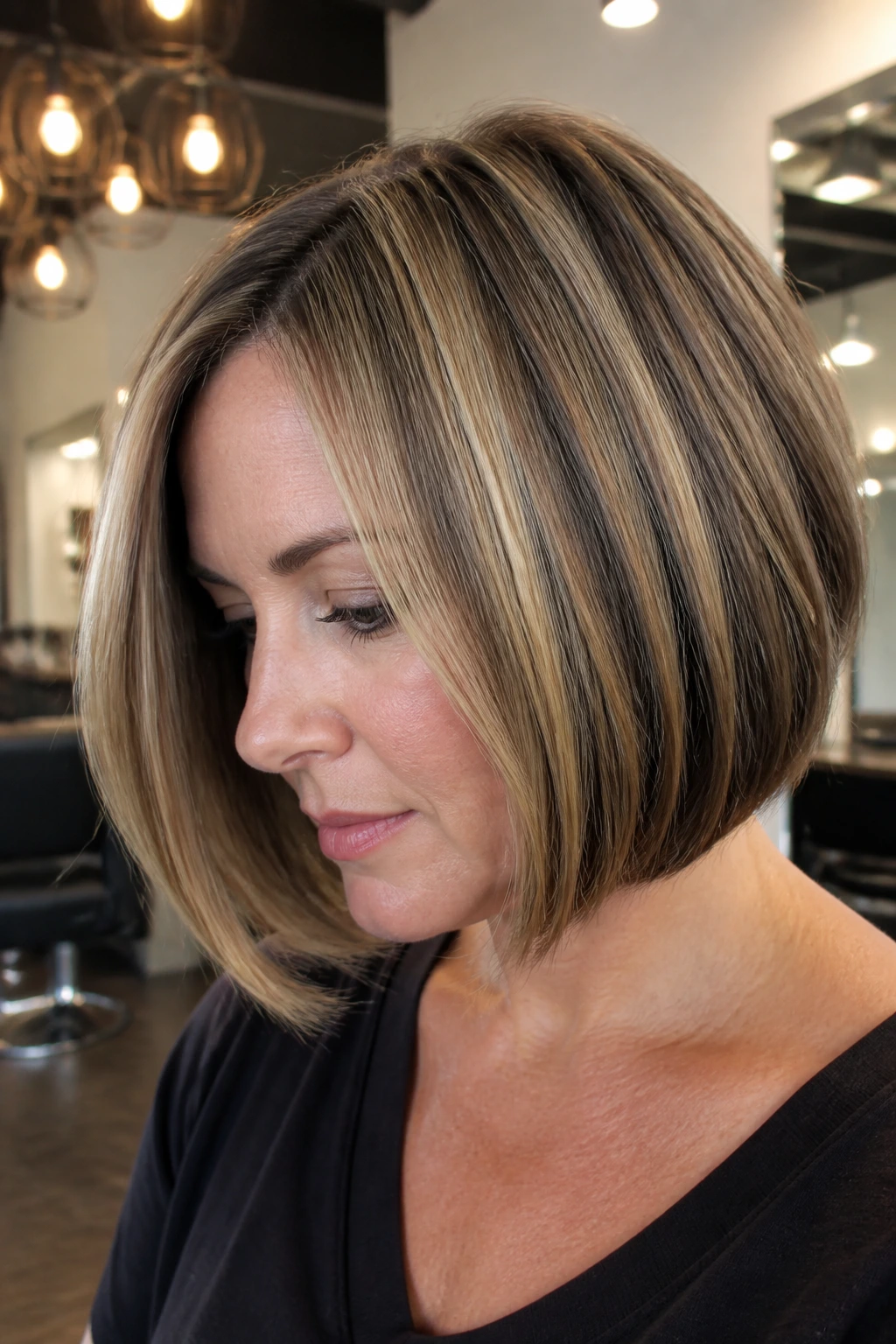
Thick hair needs a different strategy. Instead of scattering lowlights everywhere, internal blocks of deeper color can remove the visual bulk and stop the bob from looking like a padded square. Straight hair with thickness can get heavy near the ends, so this placement helps the shape breathe.
You do not want tiny, whisper-thin ribbons here. They can disappear under all that hair. Bigger internal sections work better, especially around the nape and just beneath the crown. The effect is denser at the top, slimmer at the bottom, and much easier to wear with a straight finish.
21. Fine-Hair Bob With Micro-Lowlight Weaving
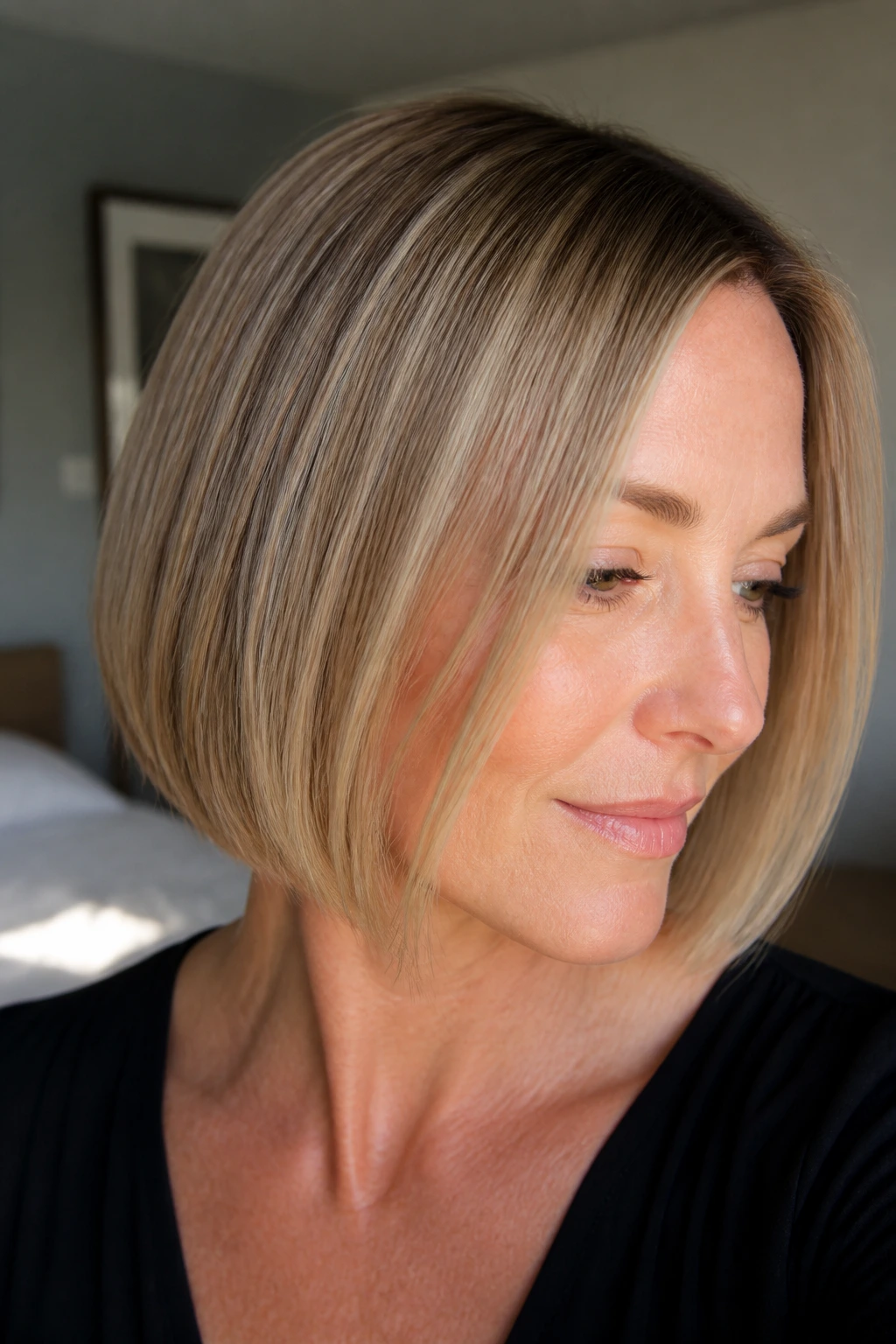
Fine hair needs a gentler hand. Micro-lowlight weaving keeps the contrast soft, which is important because strong dark pieces can make thin hair look sparse instead of full. The bob itself should stay clean at the perimeter, with the color doing the illusion work.
How to Keep It Looking Full
- Stay within one or two levels of contrast from your base.
- Ask for a shallow weave, not chunky panels.
- Keep the ends brighter so the line feels solid.
- Use a lightweight volumizing mousse at the roots, then blow-dry with a flat brush.
This is one of those styles that looks better from the side than people expect. The tiny lowlights create depth without stealing density from the outline.
22. Gray-Blending Bob With Cool Taupe Lowlights
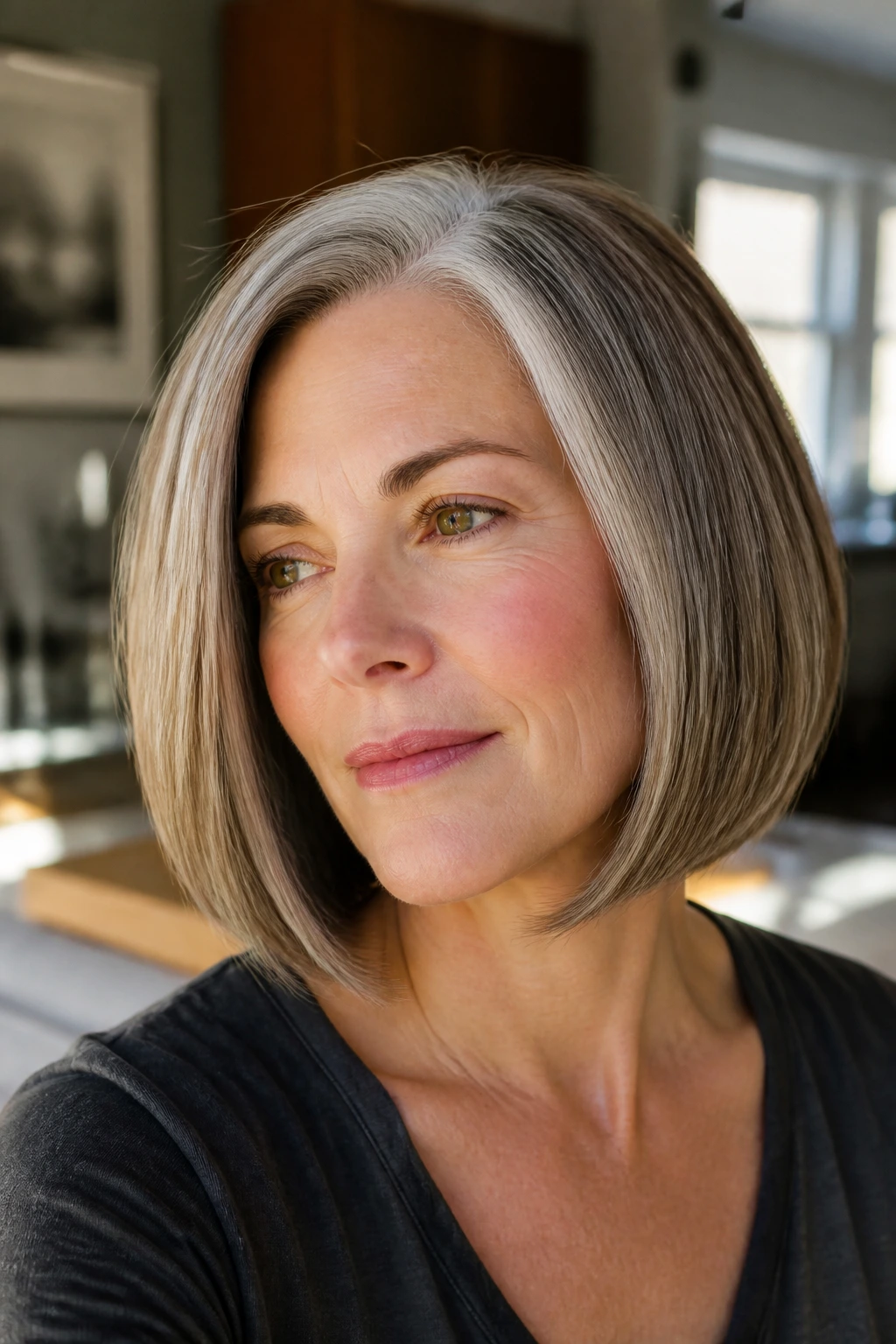
If a few grays are part of the picture, cool taupe lowlights can make them easier to live with. The darker pieces sit beside the silver strands instead of fighting them, and straight hair shows that blend in a clean, orderly way.
The bob should stay simple here. A lot of styling would just distract from the color work. A center or soft off-center part both work, as long as the taupe pieces are placed around the temples, crown, and part line. This is a quietly useful haircut. It grows out with more grace than a high-contrast blonde job.
23. Warm Honey Bob With Cinnamon Lowlight Veil
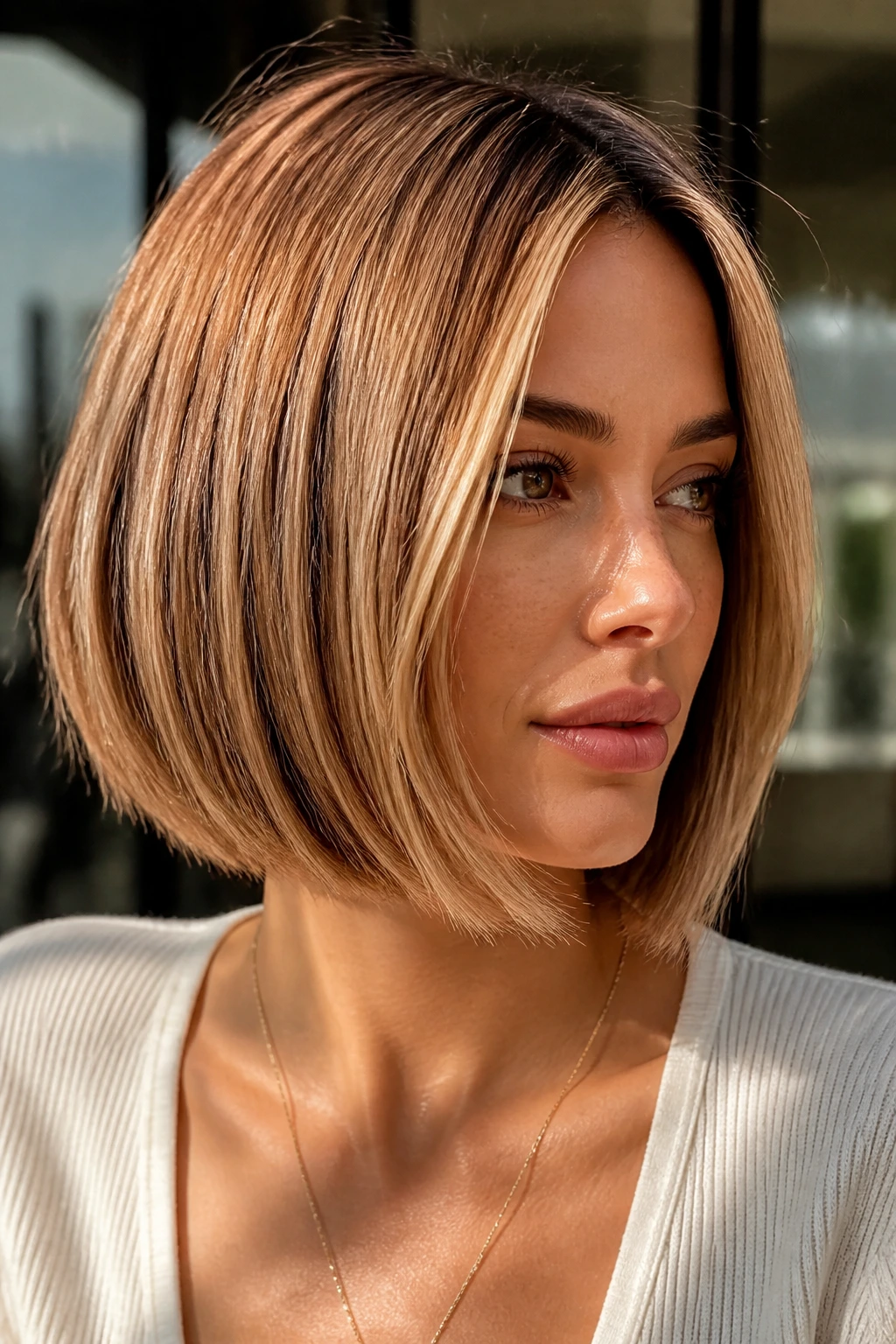
Not every dark blonde needs to lean cool. Warm honey paired with cinnamon lowlights gives the bob a little glow, which is useful if your skin reads peachy, golden, or olive. Straight hair keeps the warmth from getting fuzzy, as long as the lowlights are softened well.
This version is best when the colorist uses a demi-permanent glaze over the top so the honey stays shiny instead of brassy. The cinnamon pieces should appear in the mid-lengths and underlayers, not dumped into the front pieces. It is a friendlier, sunnier take on the whole idea.
24. Short Swoop Bob With Espresso Underdimension
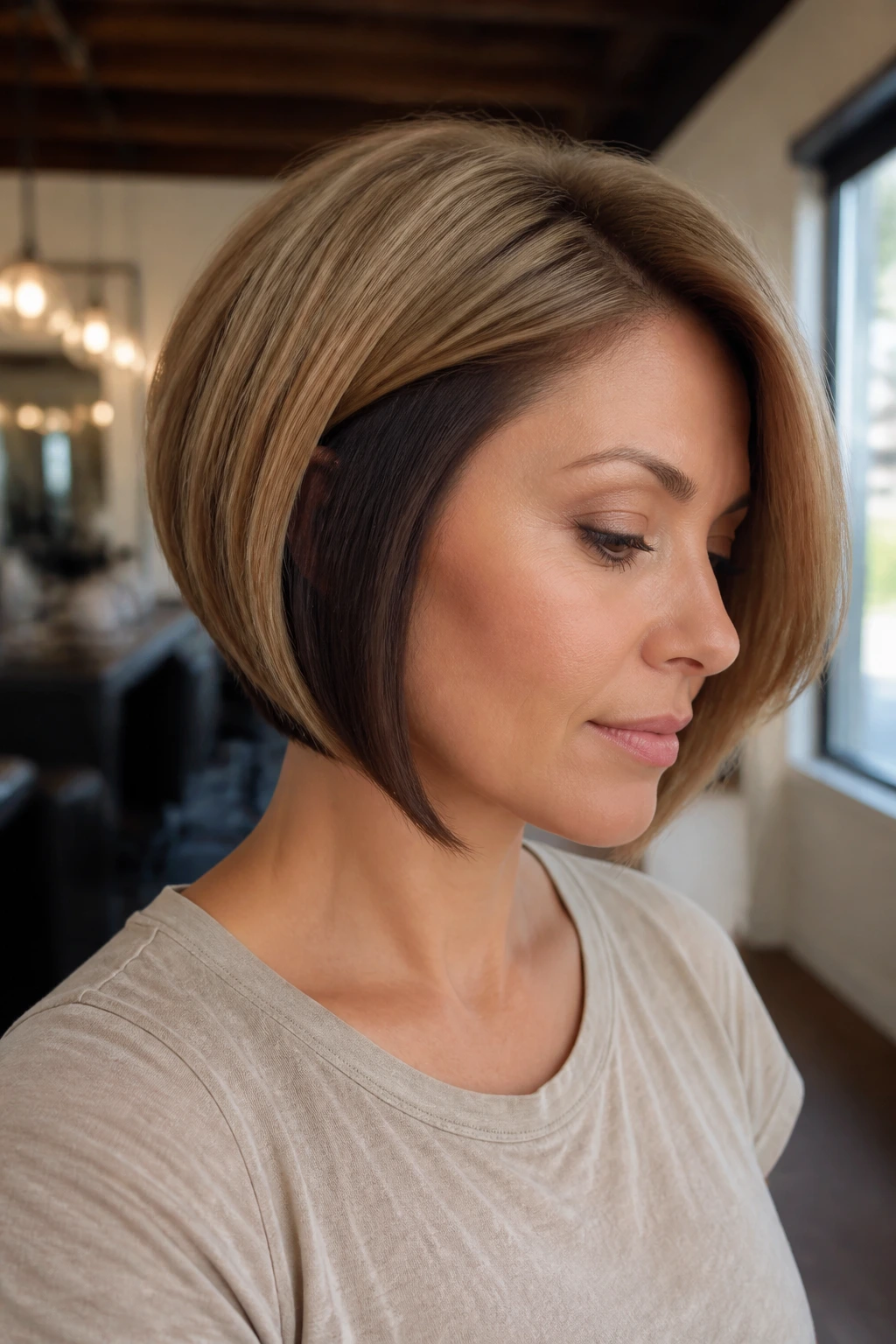
A short swoop bob has enough curve at the front to make espresso underdimension look dramatic without going overboard. The darker color sits beneath the top layer and gives the bob a little shadow line that shows up when the hair is tucked or turned.
This is a strong option for someone who likes a slight side sweep and a neat neckline. The espresso should stay hidden enough that it does not overpower the dark blonde, but visible enough to make the cut look deliberate. Straight hair helps the swoop stay crisp instead of fluffy.
25. Collarbone Bob With Soft Smoke and Beige Finish
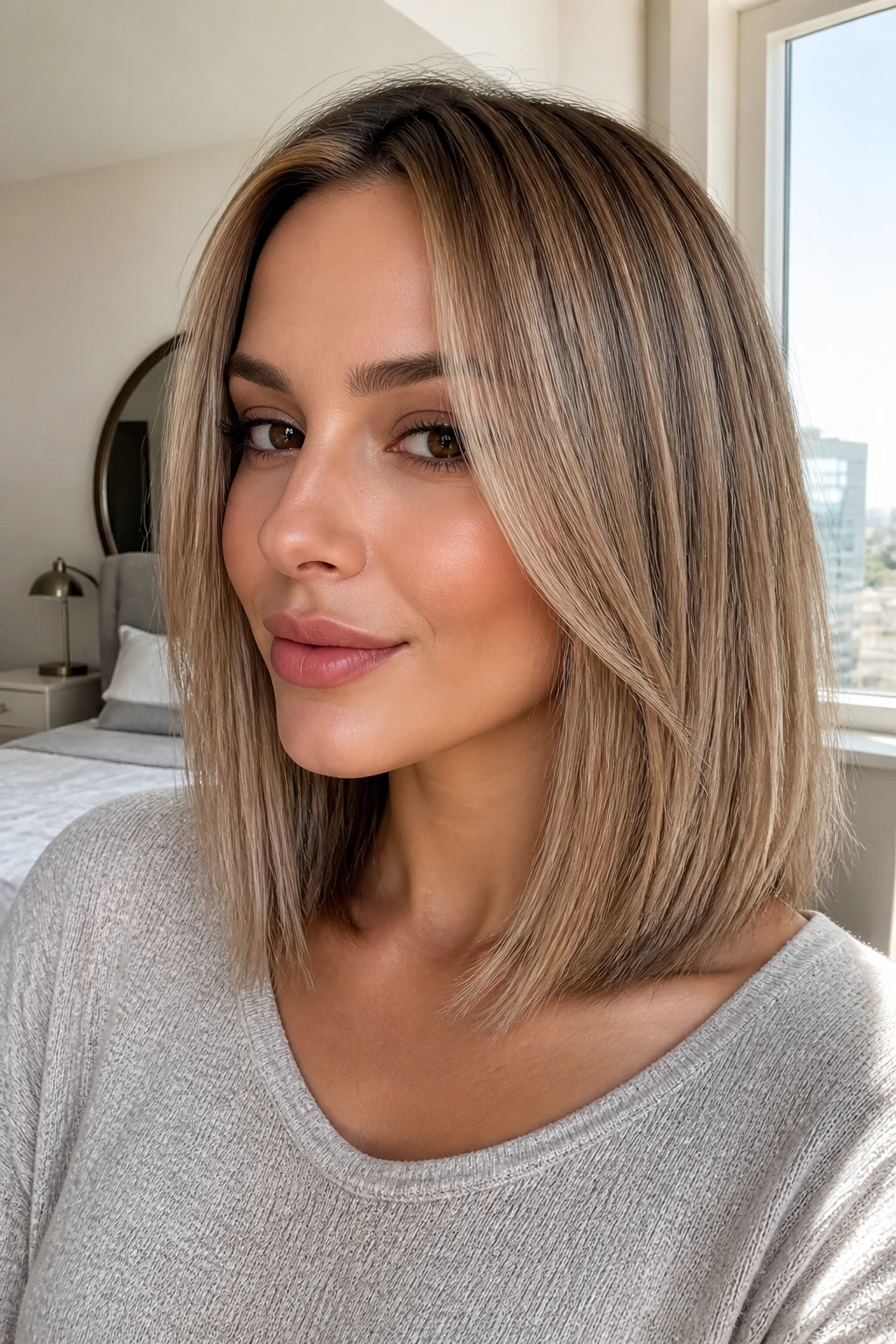
The last one is probably the most forgiving. A collarbone bob with soft smoke and beige lowlights gives you the clean line of a lob, the depth of a muted brunette blend, and enough blonde left on top that it still reads bright. Straight hair makes the contrast subtle in the best way.
This cut suits almost everyone because the length is flexible and the color is quiet. If you want a bob that looks good air-dried, blow-dried, or flat-ironed, this is the one to keep in the back pocket. It does not beg for attention. It just holds together well.
Why Lowlights Matter More Than Highlights on Straight Bobs
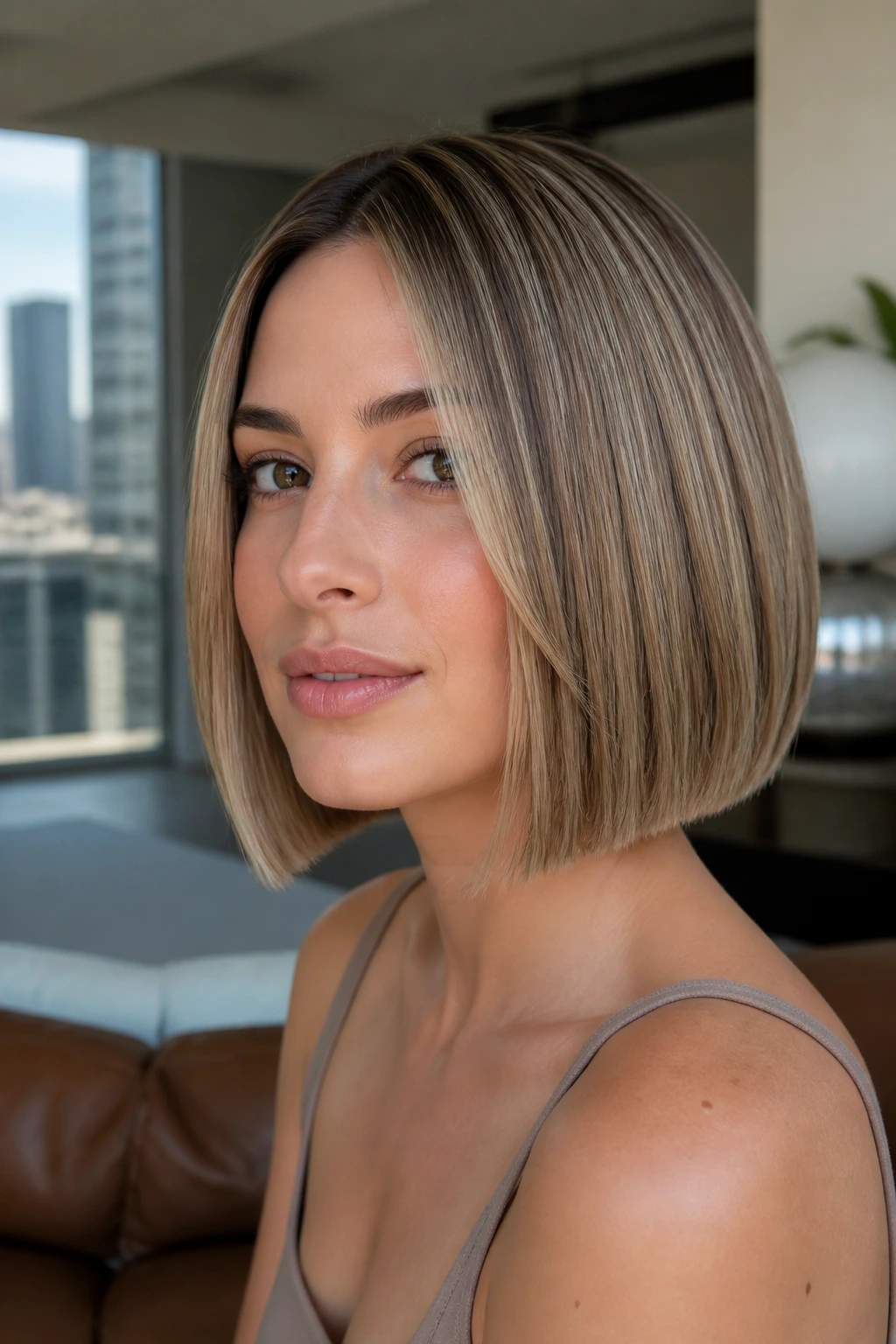
Straight hair exposes color placement with almost rude honesty. There’s nowhere for a stripe to hide, nowhere for a bright ribbon to disappear into a bend. That is why lowlights often do more useful work than extra highlights on a bob: they create a false sense of depth, and depth is what keeps a blunt cut from reading flat.
The best lowlight plan on a dark blonde bob usually sits in a narrow range. Think one or two levels deeper than the base, not a full brunette shift. A level 6 or soft level 6.5 lowlight against a level 7 or 8 dark blonde can look smooth and expensive. Go much deeper and the contrast starts shouting. On straight strands, shouting is rarely the goal.
Placement matters just as much as shade. The nape, the underlayer, the temples, and the part line all behave differently. A smart color job uses shadow to shape the haircut, not just to darken it. That’s why a bob can look thicker with lowlights even when nothing about the actual amount of hair has changed.
Essential Styling Tools for These Cuts
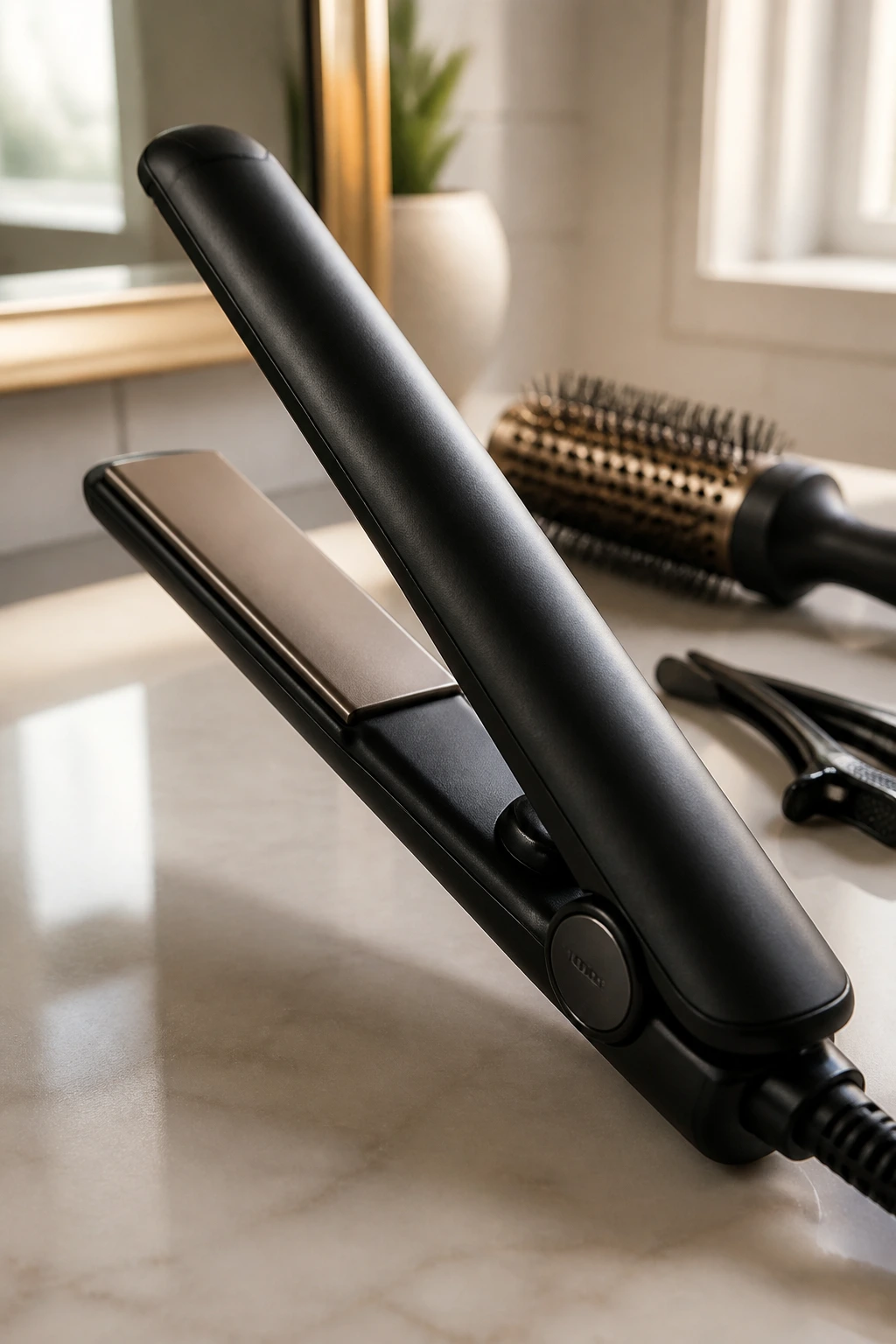
- 1-inch flat iron: Best for adding a slight bend at the ends without making the bob look curled.
- Blow dryer with a concentrator nozzle: Helps keep the cut smooth and keeps the part line neat.
- Round brush, 1.5 to 2 inches: Useful if you want an inward bevel or a soft curve under the chin.
- Tail comb: Makes clean parts and tidy sections, which matter a lot on straight hair.
- Heat protectant spray: Non-negotiable if the hair is touched with hot tools more than once a week.
- Light smoothing cream: Helps the ends lie flat without making the bob greasy.
- Lightweight shine serum: A tiny amount on the last inch of hair is enough.
- Color-safe shampoo and conditioner: Keeps the dark blonde from fading into brass or straw.
- Purple shampoo: Helpful for cooler beige, ash, or mushroom versions, but use it sparingly.
- Sectioning clips: Make styling faster and keep the top layer out of the way while you work on the underside.
Smart Shade Notes Before You Book
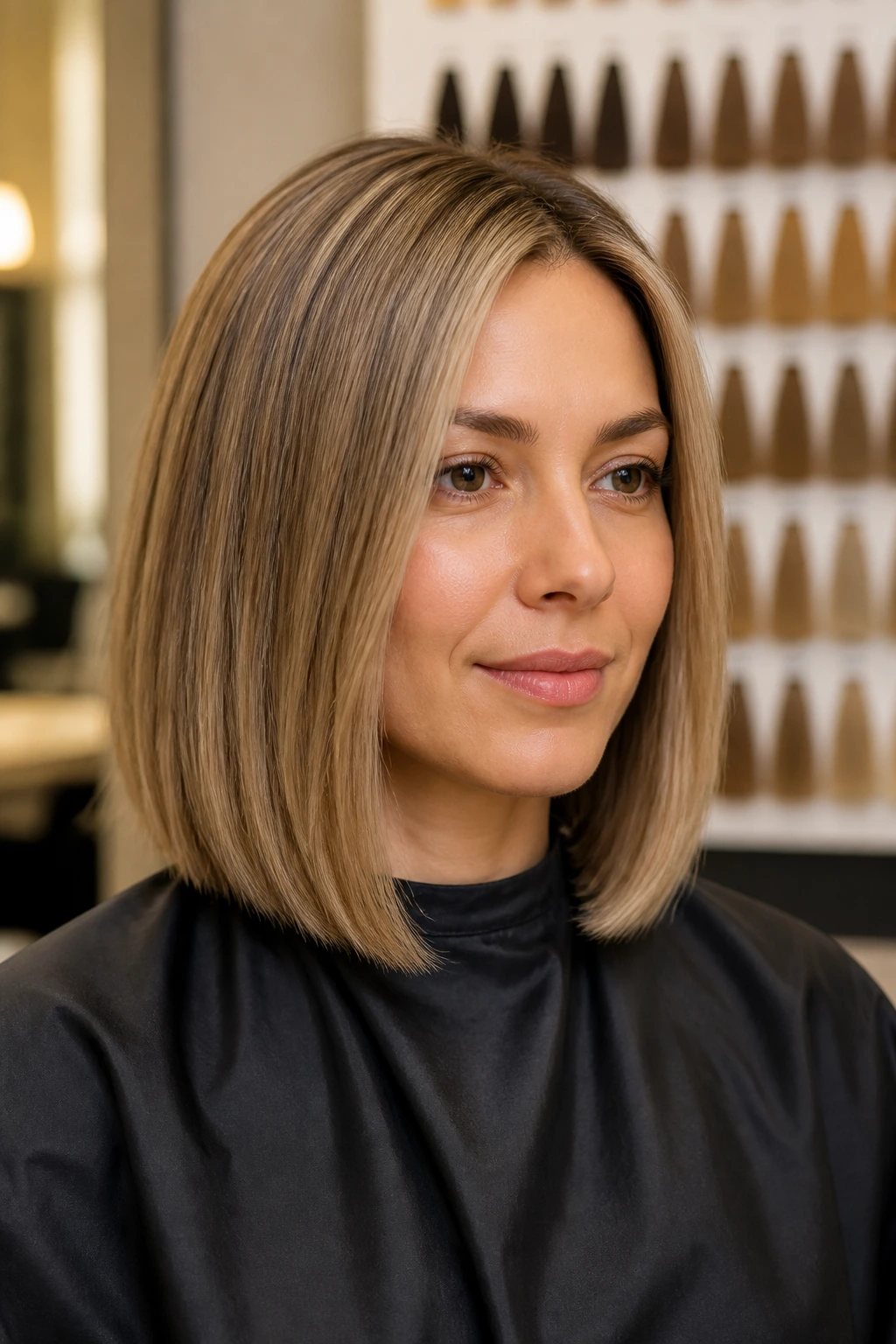
The cleanest way to ask for this look is to bring two photos: one for the cut shape and one for the color depth. People often bring only one image and then wonder why the bob is right but the lowlights are off, or vice versa. Hair never behaves like a single screenshot.
If your base is already dark blonde, ask for lowlights one to two levels deeper and make sure they’re woven, not blocked, unless you specifically want a heavier effect. Mushroom, taupe, and ash brown lean cool; beige, caramel, and soft chestnut lean warmer. The biggest mistake is asking for “dark lowlights” without naming the tone. That usually ends in a color that feels too heavy, too warm, or too flat.
Demi-permanent color is often the better pick for this kind of dimension because it fades more softly and keeps straight hair from looking over-processed. If your hair is porous, tell the colorist that. Porous hair grabs lowlights fast, and a shade that looked gentle in the bowl can turn muddy on the head. A smart color job starts with the hair you actually have, not the photo you saved.
How to Wear and Style These Bobs
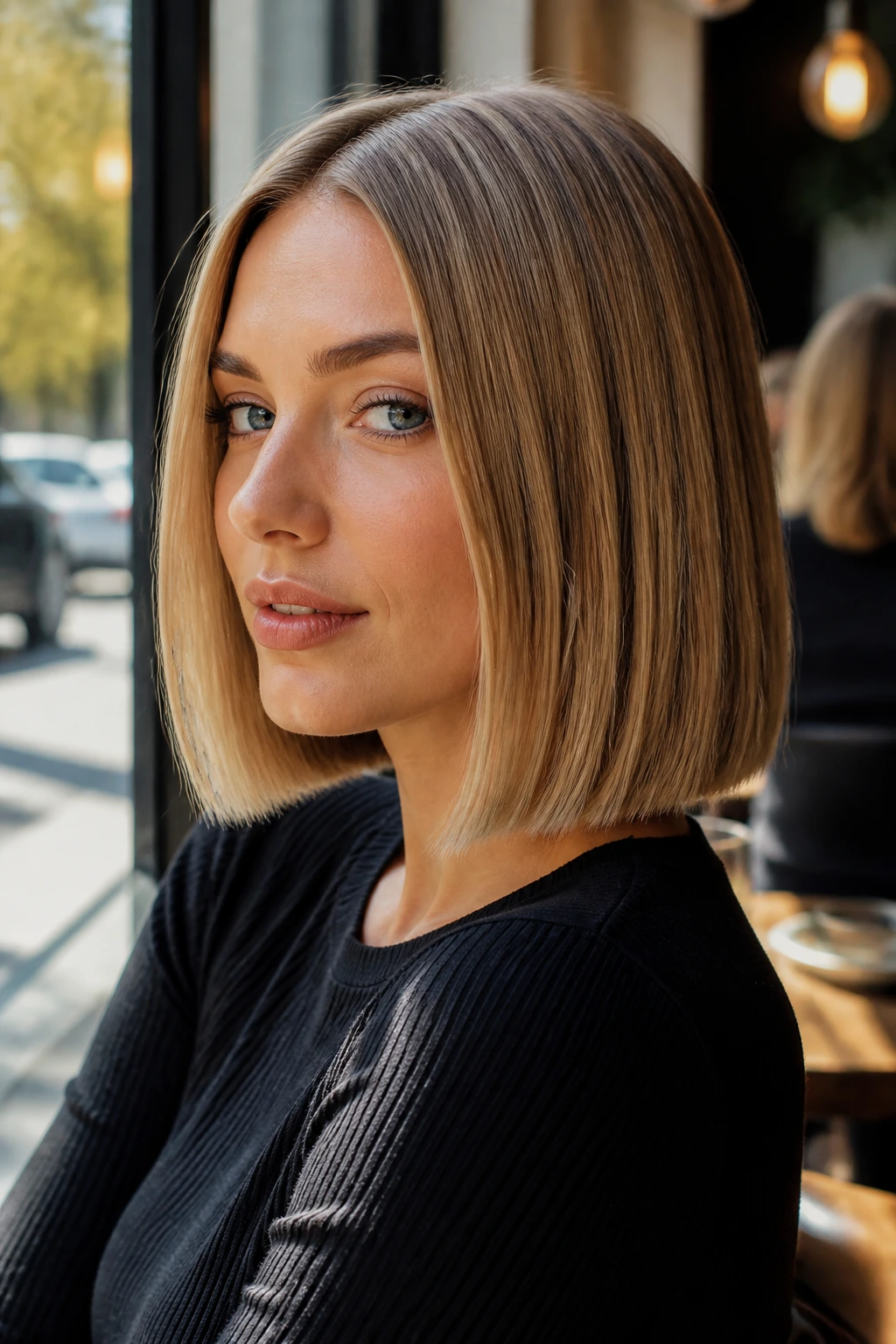
Parting: A center part sharpens blunt bobs and makes lowlights show evenly on both sides. A side part gives the hair a little lift and works well when you want the front pieces to soften the face.
Texture: On straight hair, a tiny bevel at the ends is usually enough. Run a flat iron through the bottom inch and turn the wrists inward or outward just a touch — not a curl, just a bend. That’s the difference between “freshly cut” and “stiff.”
Accessories: Small hoops, slim headbands, and sunglasses with clean lines suit these bobs better than bulky clips. Tucking one side behind the ear is still the easiest styling move in the entire category.
Outfits: Collars matter. A sharp bob looks great with a crew neck, blazer, or high neckline because the haircut and the clothes have the same geometric feel. Softer versions, like the taupe or honey bobs, sit well with knits and draped necklines.
Extra Shine, Movement, and Personalization
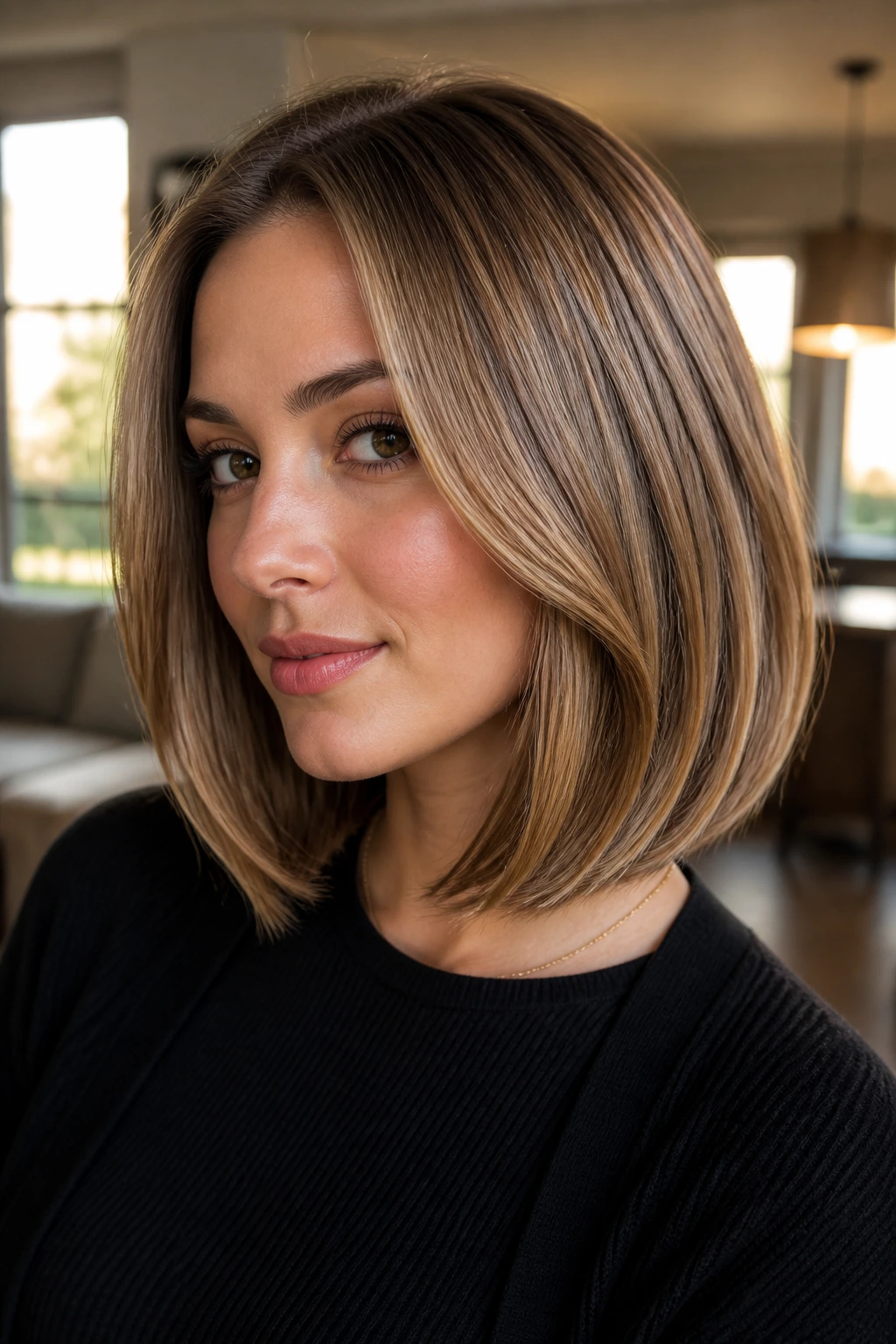
Gloss Boost: A clear or tinted gloss every 4 to 8 weeks keeps dark blonde from going dull and helps the lowlights stay glossy instead of chalky. If the hair starts looking dry at the ends, this is usually the fastest fix.
Texture Tweak: If the bob feels too strict, bend only the front two inches of hair away from the face. That keeps the line clean but makes the style feel a little looser around the cheekbones.
Face-Framing: A few brighter pieces at the temples can lift the whole cut without turning it into a highlight-heavy job. I like this especially on center parts, where the front can otherwise feel too even.
Make-It-Yours: Warm tones like caramel and honey flatter golden skin and tan easily under sunlight. Cool mushroom, ash, and taupe tones suit people who want the bob to look quieter and more modern. If you live in dry heat or style with a lot of iron work, keep the color softer and the finish lighter.
Common Mistakes to Avoid
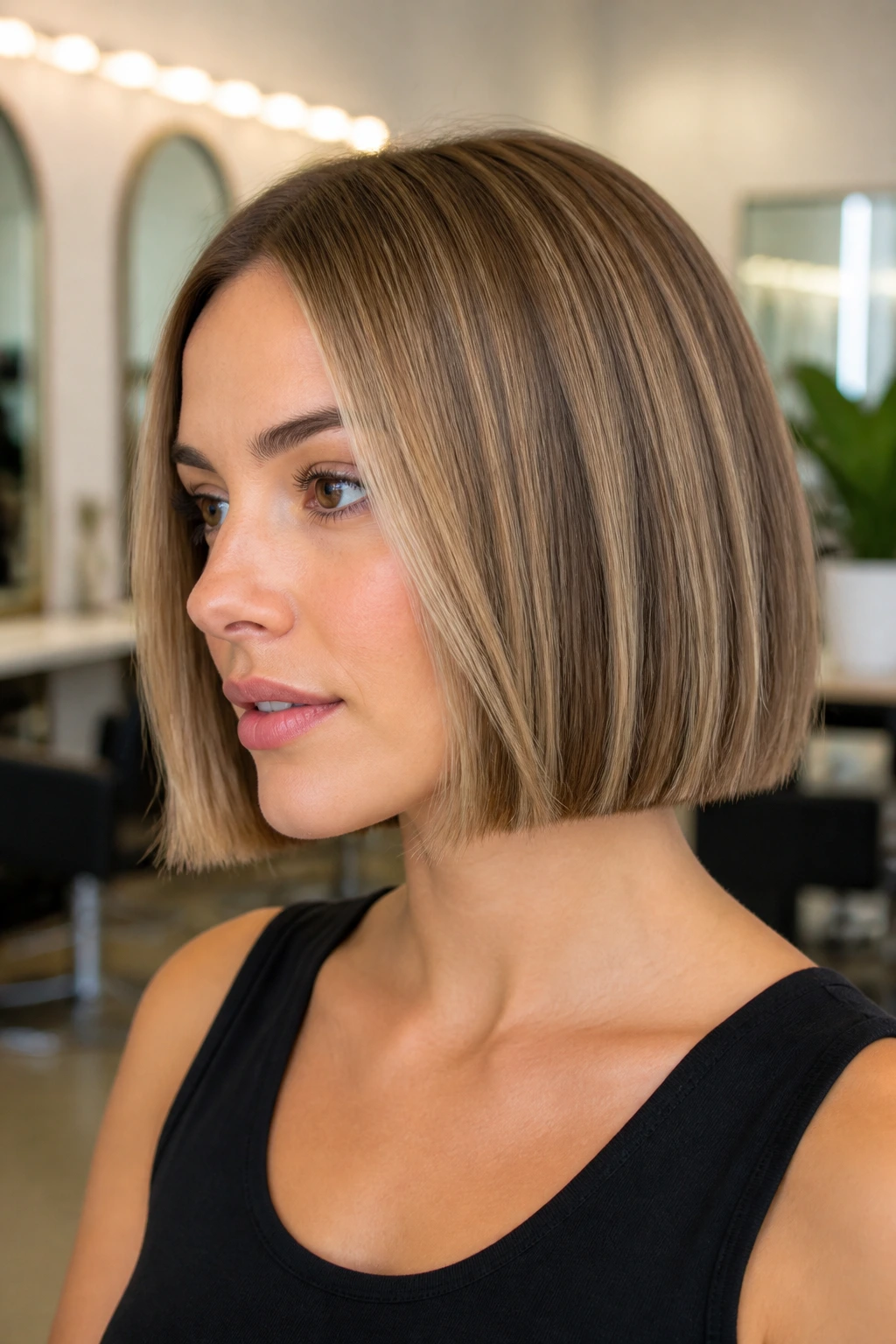
The first mistake is going too dark. On straight hair, lowlights that are three or four levels below the base can look like stripes, especially near the part and front hairline. Ask for depth, not a second hair color.
Another common issue is putting the lowlights only on the top layer. That looks tidy from one angle and flat from every other one. The underlayer, nape, and interior sections are where the shadow actually lives. That is the whole point.
The third problem is a bob with too much color contrast and too much bluntness at the same time. A hard line plus chunky lowlights can turn boxy fast. If the cut is very blunt, the color should stay softer and more diffused. If the color is strong, the cut can afford a bit of movement.
Heat damage can wreck the finish too. Straight bobs look best when the ends are smooth, not fried. If the hair starts snagging, the lowlights stop looking rich and start looking patchy. Use heat protectant. Every time.
Finally, do not ignore the back of the head. A lot of people focus on the front mirror view and forget that the nape and crown are where a bob either looks expensive or doesn’t. The back should be just as carefully painted and trimmed as the front.
Variations and Adaptations to Try
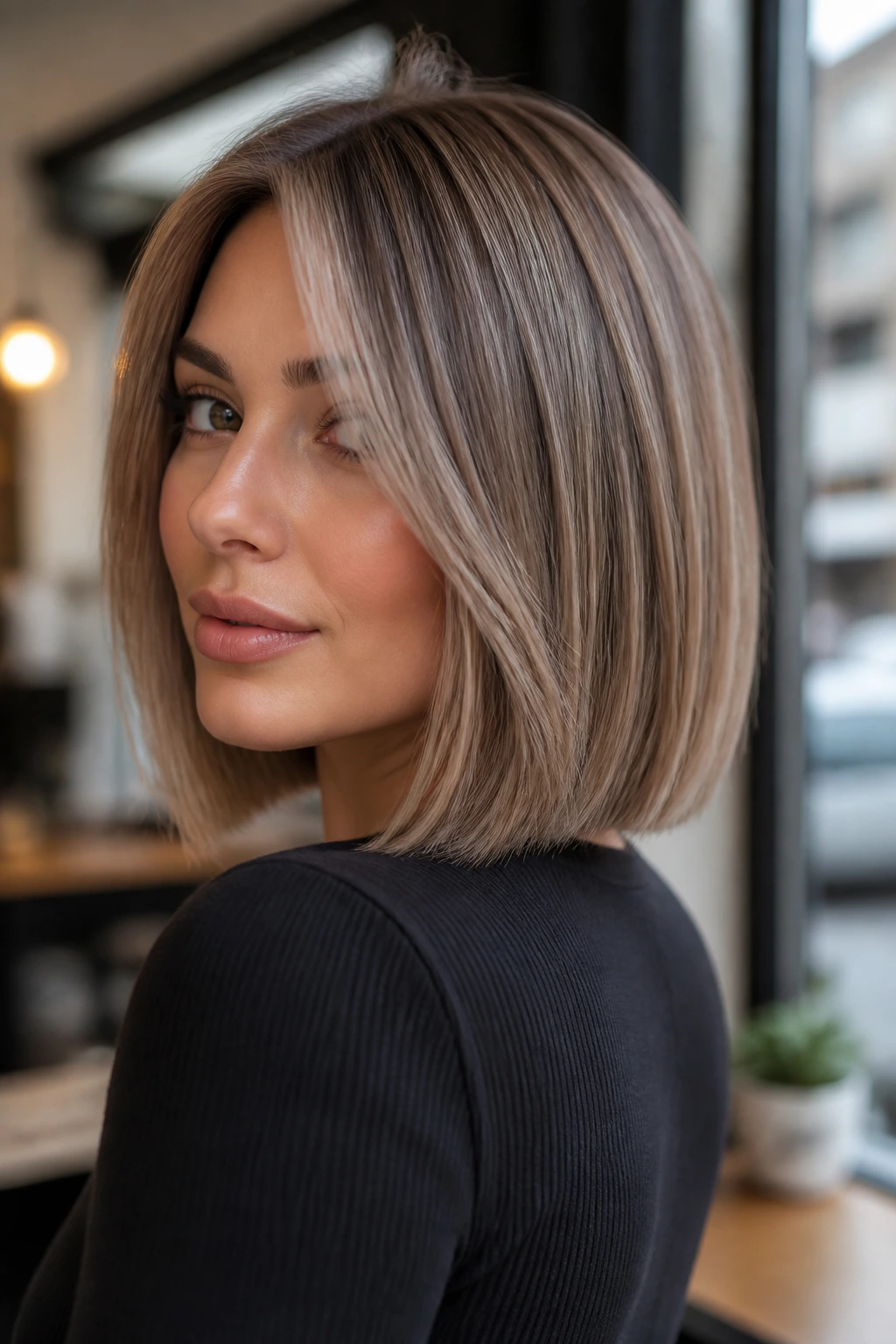
Cool Mushroom Edit: If you like a muted, smoky look, stay in the taupe-to-mushroom range and keep the finish sleek. This works especially well on fine hair because the soft contrast creates depth without making the ends look thin.
Warm Honey Edit: Swap ash and taupe lowlights for caramel, toffee, and soft chestnut. The hair reads sunnier and a little less severe, which is helpful if your skin leans golden or peach.
Fine-Hair Micro-Weave: Use tiny, diffused lowlights instead of larger panels. The goal is to create the look of denser hair at the perimeter, not visible stripes inside the bob.
Thick-Hair Internal Shadow: If the bob feels bulky, place deeper tones only in the interior and nape. The surface stays bright, but the shape loses weight where you need it most.
Gray-Blending Version: Add cool taupe or soft brown lowlights around the temples and part line. This helps early grays blend into the overall dark blonde instead of popping out like shiny silver threads.
Low-Maintenance Root-Shadow Bob: Let the root sit a shade deeper and carry the lowlights through the mids only. The grow-out looks deliberate, and you can stretch salon visits farther than you can with a high-contrast blonde job.
Maintenance, Refreshing, and Trim Timing
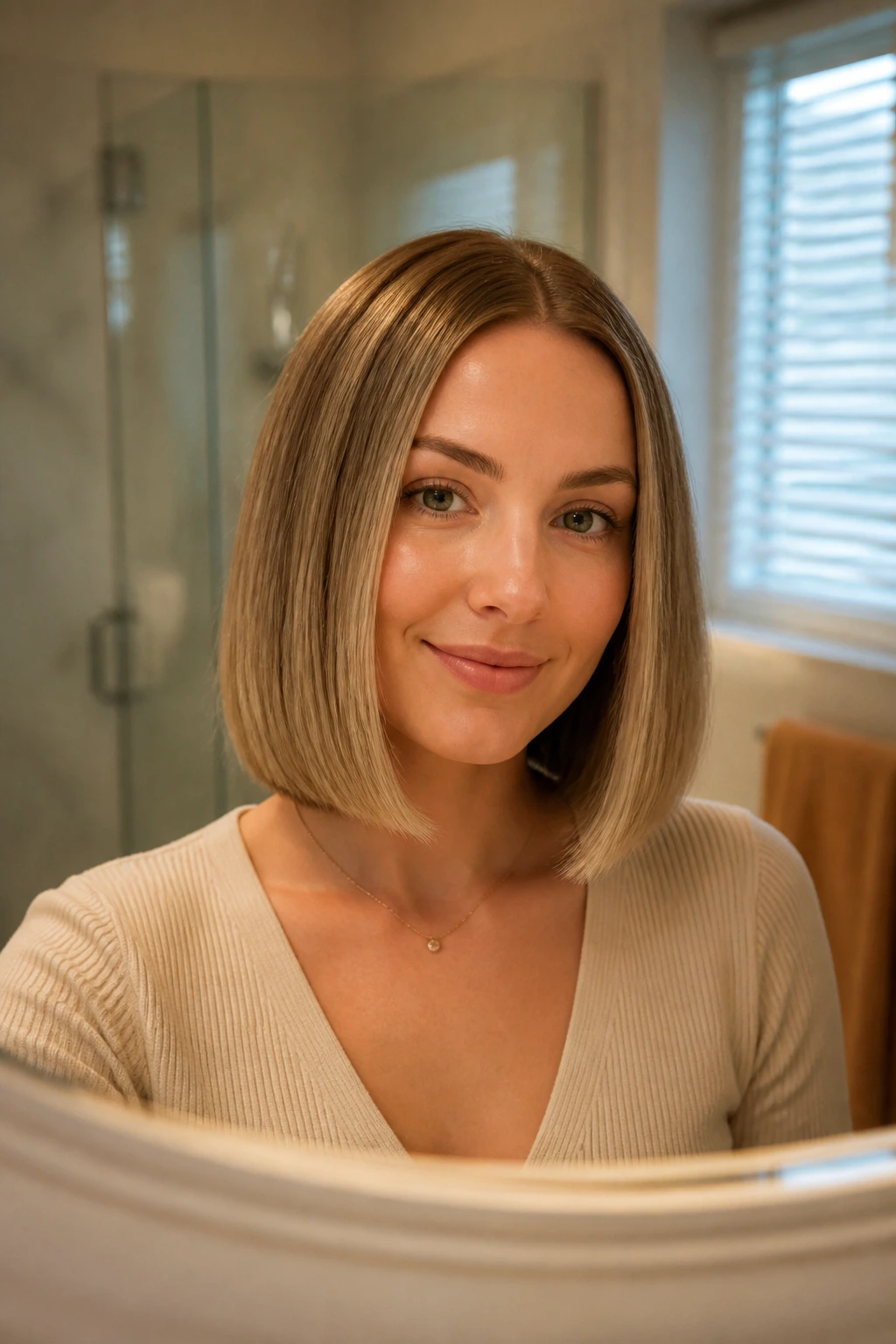
Straight bobs look their best when they stay crisp, which means the upkeep matters. Most people do well washing every 2 to 3 days, though very dry hair can go a day or two longer. If the ends start flipping oddly or the crown goes flat, a root-lift spray at the roots and a pea-sized amount of serum on the last inch usually fixes the problem faster than another full wash.
Color refresh timing depends on how bold the lowlights are. Soft demi-permanent lowlights can wear down gently over 6 to 10 weeks, while stronger shadowing may need a gloss or toner a little sooner. If the tone starts drifting brassy, a color-safe violet shampoo once every week or two can help, but use it lightly. Too much and the hair can look chalky.
Trims matter more than people think with bobs. A jaw-length cut may need reshaping every 6 to 8 weeks to keep the line from collapsing. Longer bobs can go 8 to 10 weeks if the ends stay clean. If you sleep on your hair, a silk pillowcase or loose clip at the crown helps preserve the bend and keeps the ends from creasing.
Heat styling should be conservative. One clean pass with a flat iron or a quick blow-dry is better than chasing every strand six times. Straight bobs are at their prettiest when they look controlled, not cooked.
Frequently Asked Questions
What lowlight shade works best on dark blonde straight hair?
The safest range is usually one or two levels deeper than your base, with the tone chosen to match your skin and natural undertone. Mushroom, taupe, and ash brown keep things cool; beige, caramel, and soft chestnut feel warmer.
Will lowlights make my bob look thicker?
Yes, when they’re placed well. The shadow gives the eye something to read between the strands, which makes fine or medium hair look denser at the perimeter. Chunky panels can do the opposite, so the placement has to stay soft.
Can a blunt bob still look soft with lowlights?
It can, and that’s one of the nicest combinations here. Keep the cut blunt and make the lowlights diffused, narrow, and mostly internal. The line stays crisp, but the color keeps the shape from feeling severe.
How often should I refresh the color?
Most dark blonde lowlight jobs need a gloss or tone refresh about every 6 to 10 weeks. If you heat-style often or wash with harsh shampoo, the tone may fade sooner.
What if the lowlights come out too dark?
Ask for a gloss or softening service before assuming the only fix is re-coloring. On straight hair, dark pieces can look harsher than they do on curled hair, so a little diffusion often solves the problem faster than a full redo.
Are lowlights better than highlights for straight hair?
For many straight bobs, yes. Highlights can get bright fast and may expose flatness rather than hide it. Lowlights tend to build shape, depth, and a cleaner outline, which suits the geometry of a bob.
Can fine hair handle dark blonde lowlights?
Absolutely, if the contrast stays subtle. Micro-weaves and narrow ribbons work better than wide panels. Fine hair looks fuller when the color shift supports the edge of the cut instead of sitting in the middle of the head.
Should I ask for permanent or demi-permanent color?
Demi-permanent is often the softer choice for this kind of dimension because it fades more gently and is less likely to leave a hard regrowth line. Permanent can make sense if you need stronger gray coverage or a deeper, longer-lasting shadow.
The Quiet Edge of a Great Bob
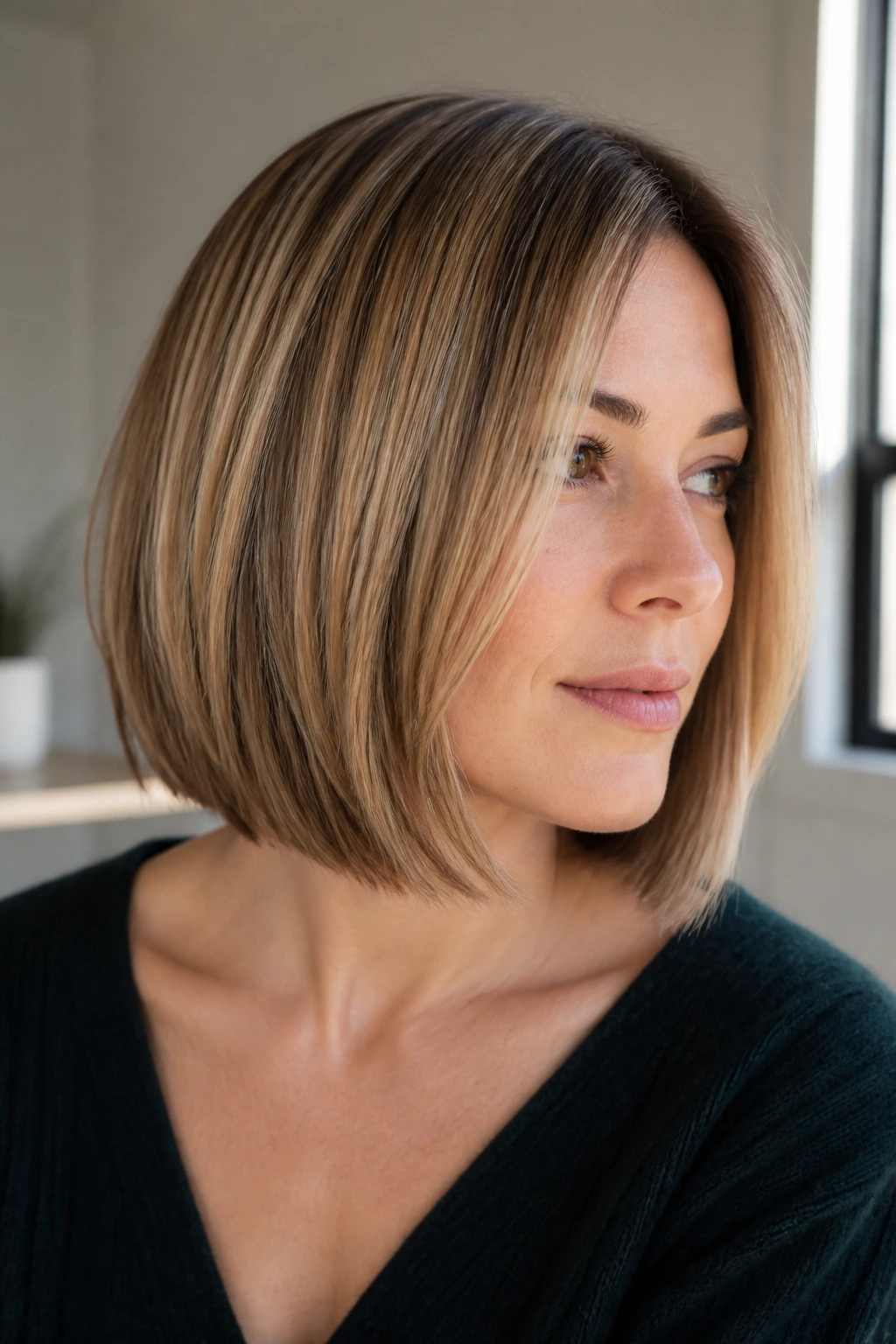
A good dark blonde bob on straight hair doesn’t need tricks. It needs a clean line, smart placement, and lowlights that behave like shadow instead of a second headline. That’s the part people often miss. The color is not there to steal attention from the cut. It’s there to make the cut look better.
If you want a bob that still has shape when the hair is freshly washed, when the humidity is rude, or when you only have five minutes and a flat iron, this is a smart lane to stay in. Keep the contrast measured, keep the ends tidy, and the whole thing will hold up far longer than a flashier blonde job with no depth underneath.