



Start with the wrong brown and olive skin can look tired in a way that’s hard to name. Start with the right one, and curly hair gets shape before you even notice the color. Caramel brown lowlights do that better than a lot of brighter shades because they sit in the hair like moving shadow, not painted stripes.
Curly hair changes the whole equation. A swatch that looks rich and dimensional on a flat strand can disappear once a coil shrinks, bends, and stacks on itself. That’s why the best caramel pieces on curls are usually thinner than people expect, and why the warmth has to stay brown-first, gold-second. Too orange and olive skin turns muddy. Too cool and the hair starts looking dull.
The sweet spot is a little quieter than the inspiration photos usually are. Thin ribbons, soft panels, a root melt that doesn’t scream for attention, and enough depth to make the curl pattern read from across the room. When that balance lands, the color looks like it belongs there.
Why Caramel Brown Lowlights Work So Well on Olive Skin and Curly Hair
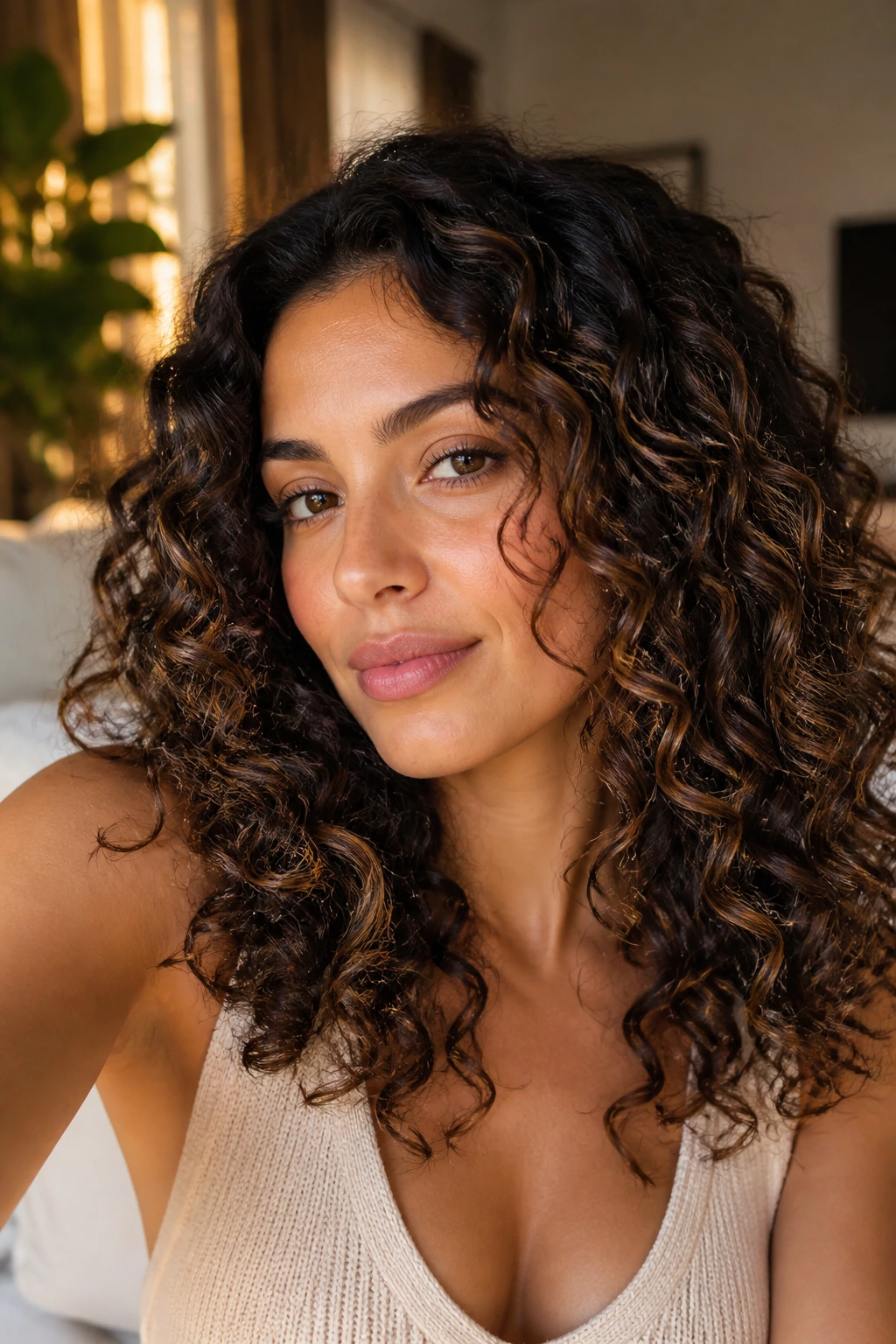
- Undertone Match: Caramel brown lowlights echo the green-gold cast in olive skin without fighting it, which keeps the face looking fresh instead of ruddy.
- Curl Definition: Darker ribbons fall between curl clumps and make spirals look more separated, especially on 3B through 4A textures.
- Lower Maintenance: Because you’re going darker, grow-out is softer than with blonde highlights, and the roots don’t shout at you every few weeks.
- Shape Control: Smart placement around the crown, temples, and nape can tame the triangle effect curly hair gets when all the depth sits at the ends.
- Custom Fit: The same caramel shade can look airy on fine curls or rich and dramatic on dense coils, depending on how wide the painted pieces are.
- Better Than Flat Brown: A single brown all over can swallow curl texture; lowlights keep the color moving as the hair bends and dries.
There’s a reason stylists reach for caramel-brown families when a client says, “I want dimension, but I don’t want to look blonde.” The shade does its job quietly. It warms olive skin, but it doesn’t flare up into copper unless you ask for it. It also gives curls a little architecture, which is a nicer word for what’s really happening: the eye can finally read the pattern.
That matters more than people think. Curly hair already has enough going on without a color that fights the shape.
1. Soft Caramel Ribbons in Dark Brunette Curls
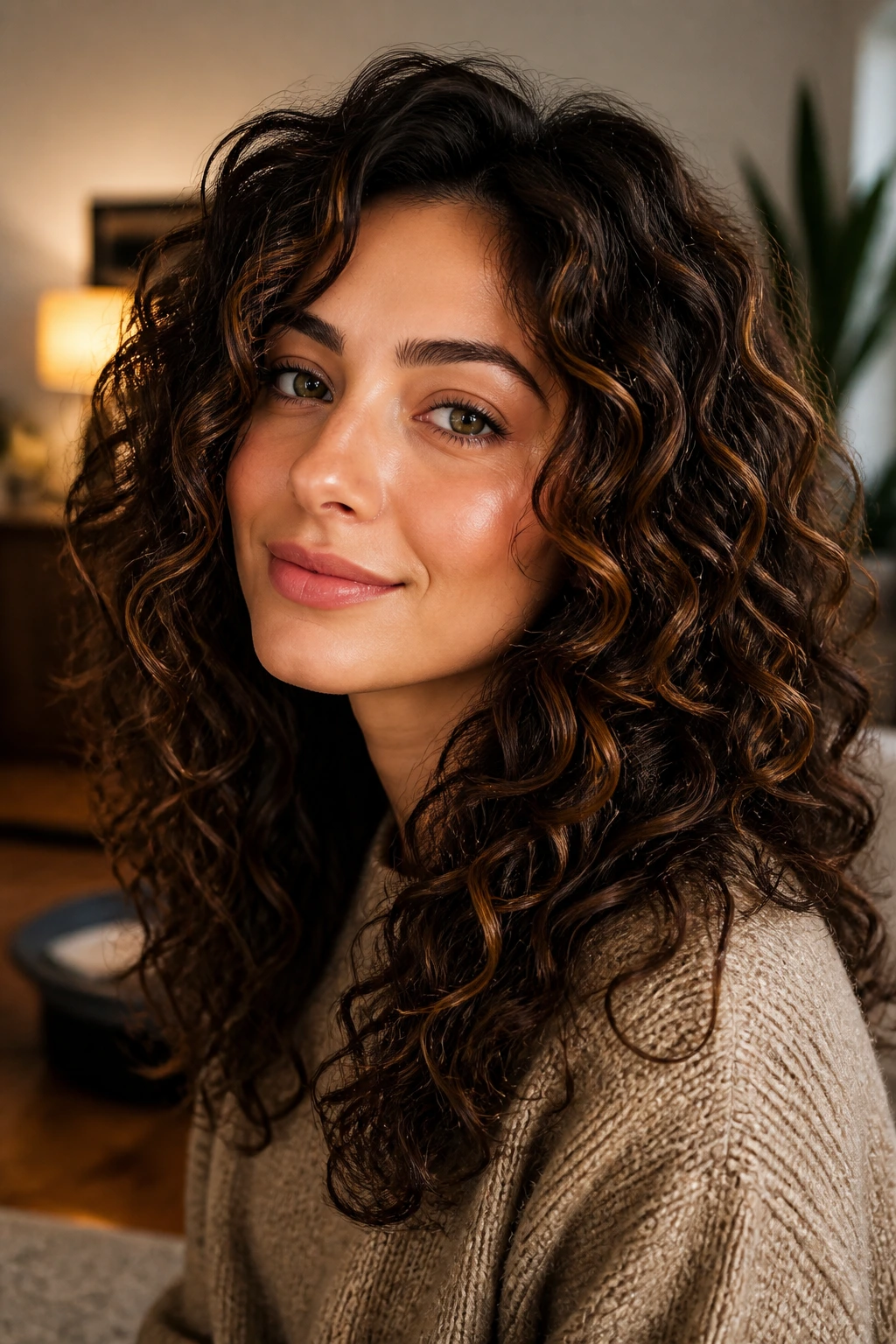
The boldest move here is to keep the pieces thin. On dark brunette curls, a few soft caramel ribbons go farther than a full head of heavy color ever will. The point isn’t to turn the hair lighter. It’s to make the curl pattern look deeper and cleaner, especially when the hair sways and those ribbons flick in and out of view.
I like this version on olive skin because the contrast stays brown-first. A level 5 or 6 caramel brown, painted in fine weaves through the midlengths and interior, gives the skin warmth without pushing the whole look into orange. If the ribbons are chunky, they read as streaks. If they’re narrow, they read as movement.
What makes it work
Keep the front a touch softer and place most of the depth under the top layer. That way the curls lift at the crown and still feel full through the ends. If you can spot every lowlight from across the room, they’re too wide.
2. Mocha Root Melt for Grown-Out Color
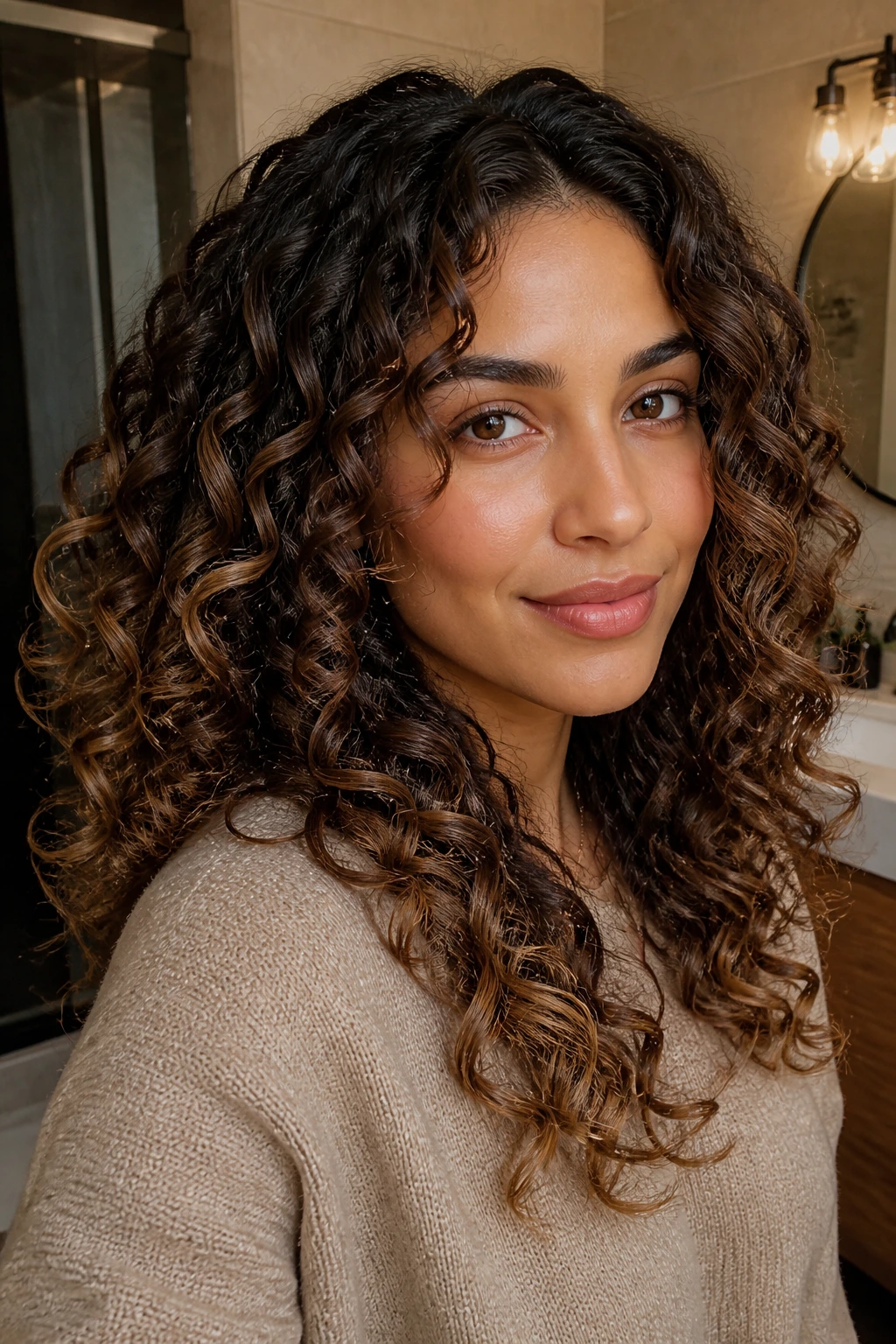
A root melt can save a curly cut that’s starting to look disconnected. The dark root melts into mocha brown, then the caramel lowlights pick up through the midlengths. It’s a clean way to make grow-out look deliberate instead of overdue.
This is the one I’d pick if you hate obvious regrowth lines. The root shadow softens the part, and the lowlights keep the curls from puffing up into one big round shape. It’s especially good if your olive skin leans muted, because the depth near the scalp keeps the face from going washed out.
- Best for: layered curls, shoulder-length shags, and anyone with a lot of natural root coming in
- Placement note: keep the melt soft at the first inch or two; hard lines look harsh in curly hair
- Maintenance note: the grow-out is forgiving, which is half the reason people keep coming back to it
If you wear your hair diffused or air-dried, this one is forgiving on day three. The color still has a shape even when the curls loosen.
3. Cinnamon Face Frame for Olive Skin
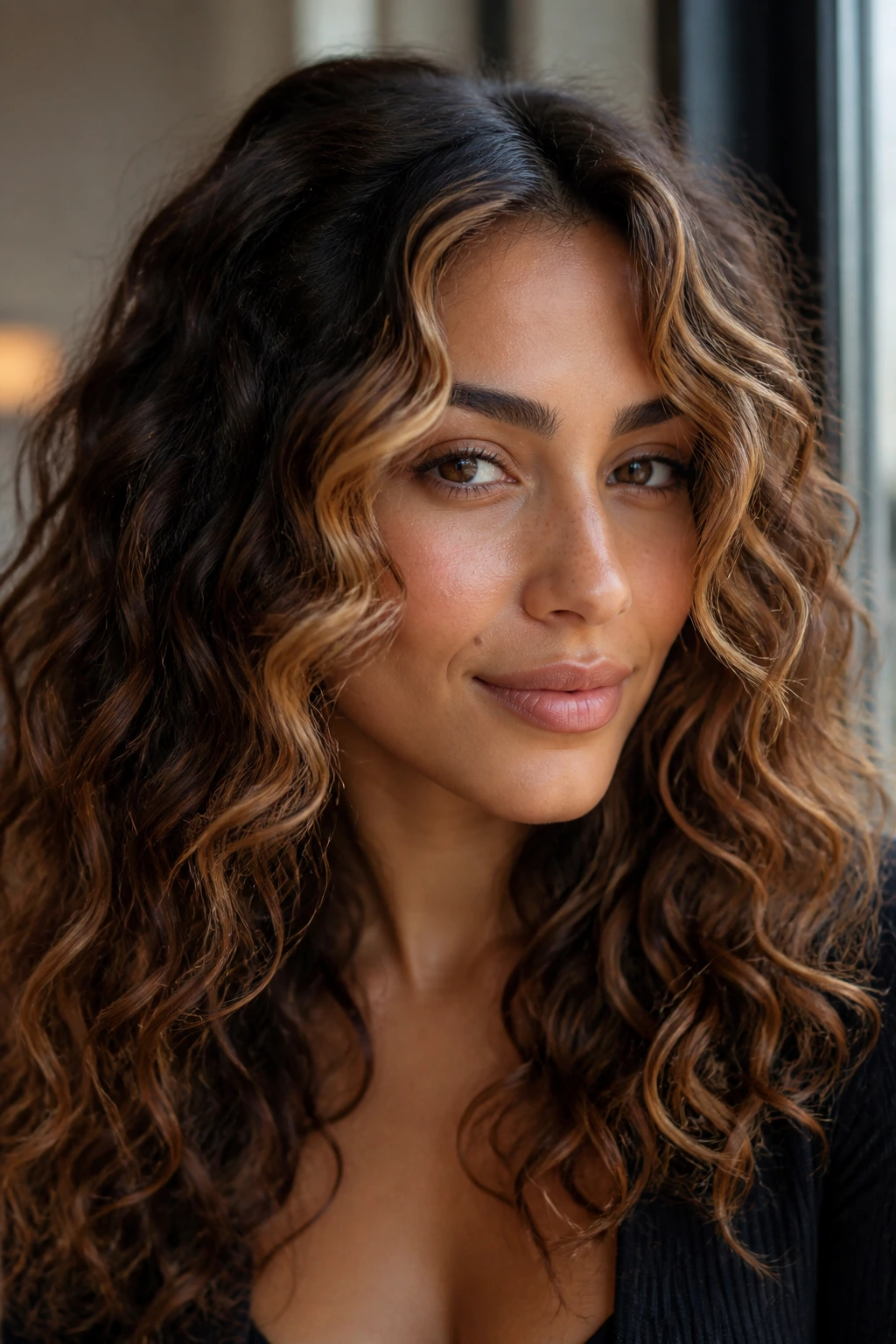
Why do some face-framing pieces look warm and flattering while others make olive skin look flat? Because the front sections sit next to your face, not next to the rest of the hair. The shade has to work harder there.
A cinnamon-leaning caramel brown is one of my favorite answers. It gives the skin a warmer edge without going copper. Keep the pieces around the temples and cheekbones soft and narrow, then let the deeper lowlights live behind them. That contrast makes the face frame look intentional instead of chopped off.
Where it should stop
- Start the first pieces just below the hairline, not in the baby hairs.
- Keep the front a little lighter than the interior if you want the face to stay bright.
- Ask for a few curls left untouched right at the front so the color doesn’t look carved out.
This is the kind of placement that makes a simple ponytail look finished.
4. Chestnut Underlayer Veil
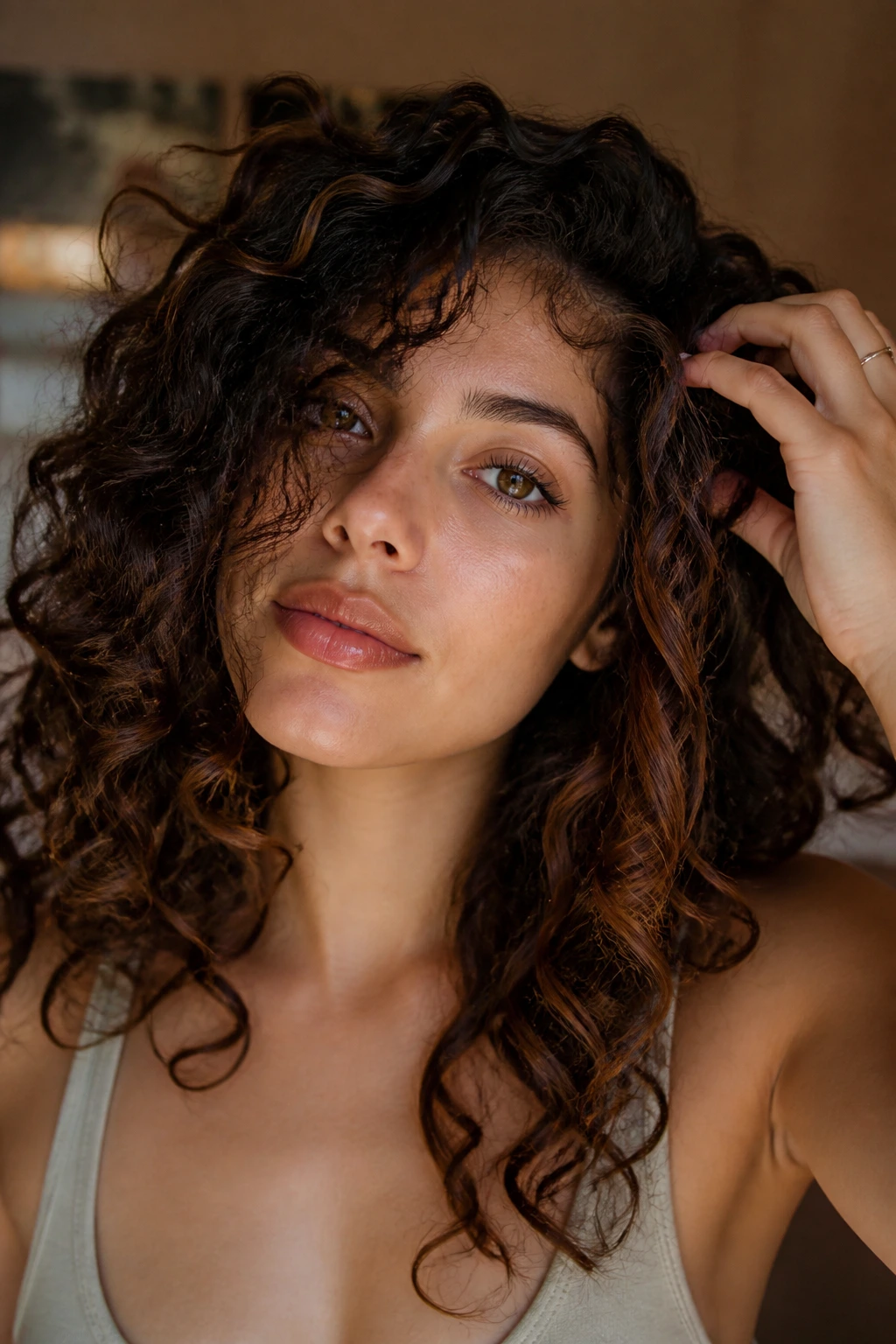
From the top, this style looks almost untouched. Then you turn your head and the underlayers flash chestnut brown through the curls. That hidden depth is the whole trick.
I love this on thicker curly hair because it adds shape without stealing volume from the surface. The top layer still reads as airy, but the underlayer stops the whole style from puffing outward in a giant halo. Olive skin benefits too, especially if it’s on the warmer side, because the chestnut has enough gold in it to feel friendly without becoming brassy.
This is a quietly good choice for people who work in conservative settings or just don’t want obvious color. The movement is there. It just waits for the hair to move.
5. Toffee Peekaboo Panels
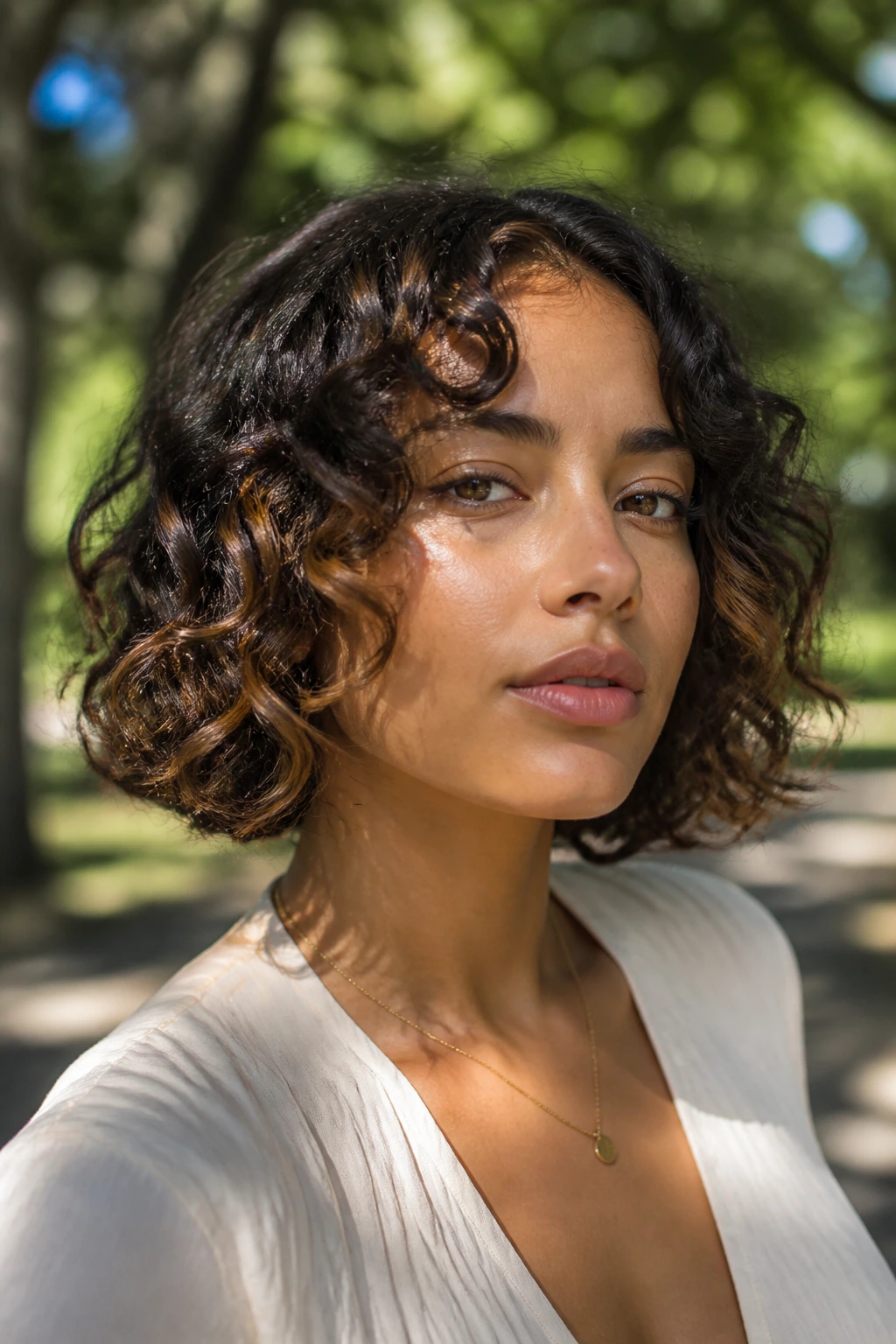
Unlike a face frame, peekaboo panels hide under the top layer and reveal themselves only when the curls swing. That makes them ideal for curly bobs, lobs, and shoulder-grazing cuts that need a little surprise.
Toffee brown works well here because it sits in that middle ground between rich and warm. You don’t want the panels so broad that they show through every parting. Two or three panels per side, plus one at the nape, is enough for most heads. More than that can start to look busy.
The nice part is how the panels show up. A tucked-behind-the-ear moment. A half-up clip. A windy walk across a parking lot. It’s one of those styles that looks better the more the hair moves.
6. Espresso Shadow Pieces for Deep Curl Patterns
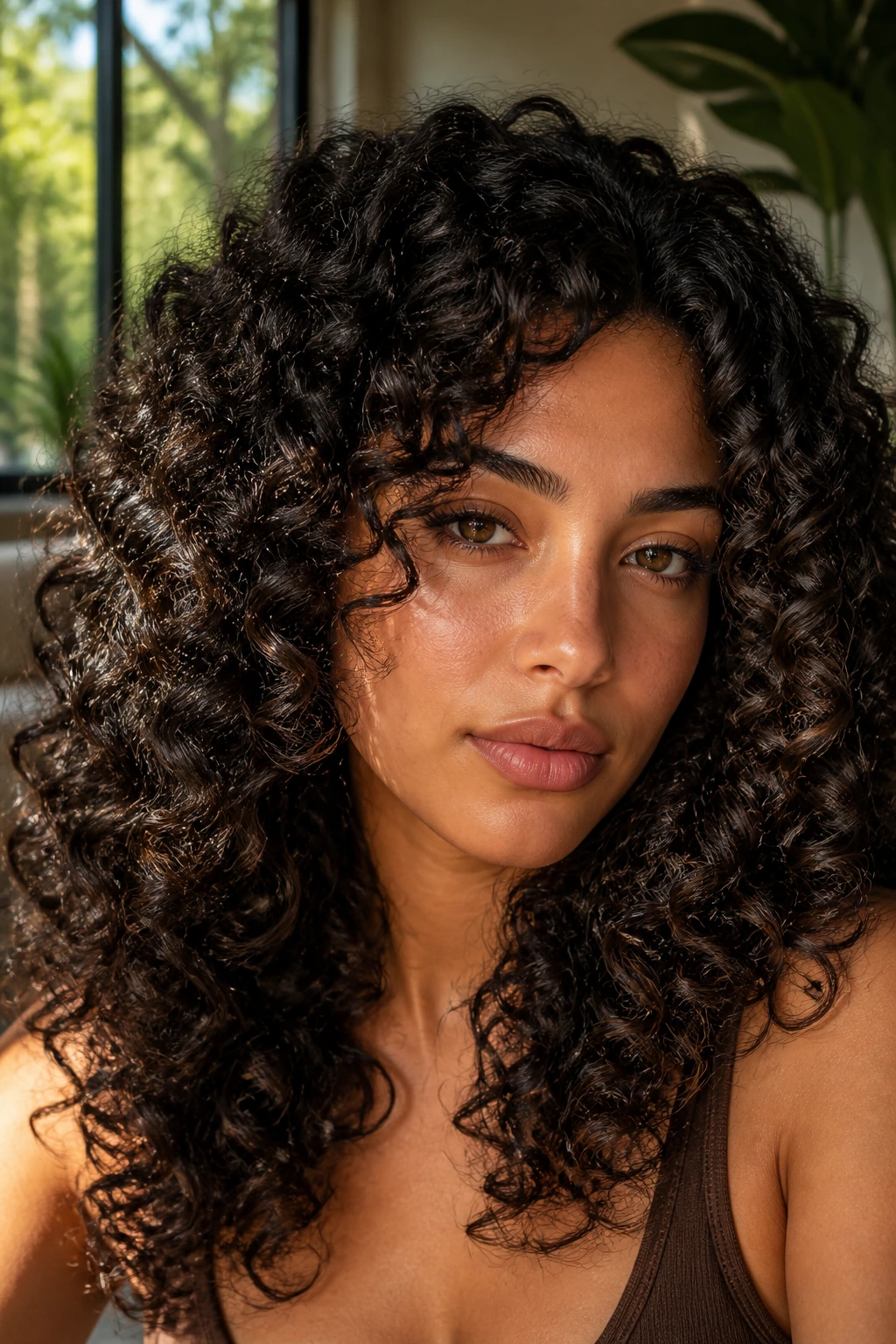
Very dark curls do not need brighter caramel to look interesting. They need shadow that knows where to stand.
Espresso-brown lowlights are a strong fit when the natural base is already deep. The goal is to create carving and separation without making the hair look harsh. Keep the pieces one shade deeper than the base, not blue-black, and place them through the interior where the coils stack and need definition. On olive skin, this keeps the color grounded and avoids the strange flatness that can happen when dark hair is colored too evenly.
What to watch for
- Don’t push the formula so dark that it eats the curl texture.
- Use a demi-permanent or gloss-based approach if the hair is porous.
- Keep some warmth in the brown, or the finish can turn muddy against olive skin.
This is the version I’d choose for dense, dark curls that need shape more than brightness.
7. Cocoa Contour Lowlights for Cheekbone Shape
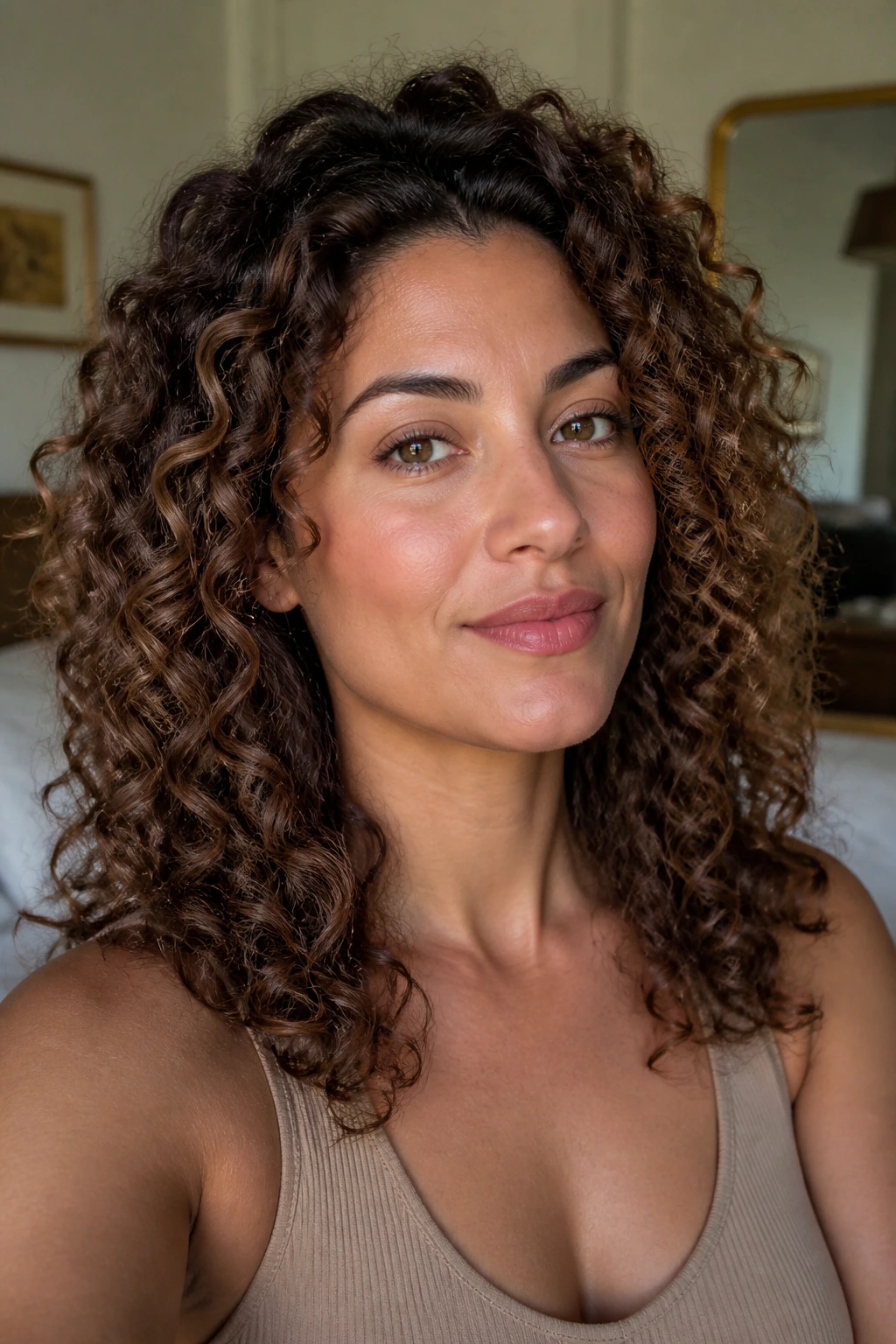
Some placements change the haircut more than the color. Cocoa lowlights around the temples and just behind the cheeks can make curly hair sit closer to the face in a flattering way, almost like a soft contour.
I like this when the face is round, heart-shaped, or just needs a little framing. The darker pieces create a visual dip near the cheekbone, then the curls open back out below. Olive skin handles this well because the brown stays grounded and doesn’t pull red. If the color is too light, the contour disappears. If it’s too dark, it can feel severe. That’s the tightrope.
The trick is to leave the front curl or two a touch lighter and let the cocoa pieces live just behind them. You get depth without losing brightness at the face.
8. Almond Micro-Lowlights for Fine Curls
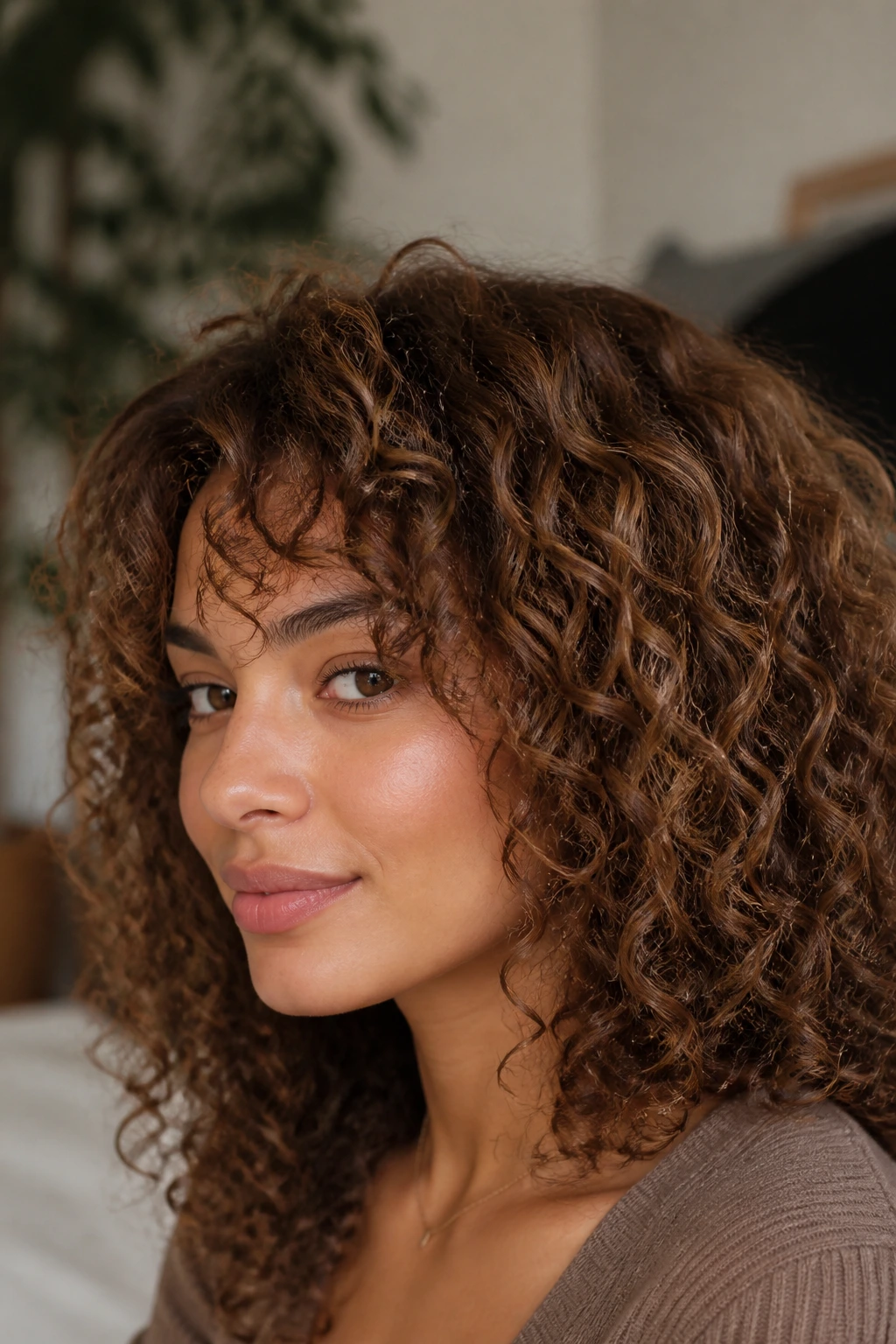
Can fine curly hair handle lowlights? Absolutely. It just needs a lighter hand than thick hair does.
Micro-lowlights use many tiny weaves instead of chunky panels, and that’s the part that matters. Fine curls collapse under big color blocks. Small almond-brown pieces keep the head looking airy while still adding depth. On olive skin, this avoids the heavy, helmet-like effect that a dense brown can create.
How to get the most out of it
- Ask for narrow sections, not broad slices.
- Keep the lowlights scattered through the midlengths instead of dumping them at the ends.
- Let the color stay within one or two levels of the base.
The result is quiet, but not boring. You see the curl pattern more clearly, which is usually the real goal.
9. Hazelnut Bands for Long Spirals
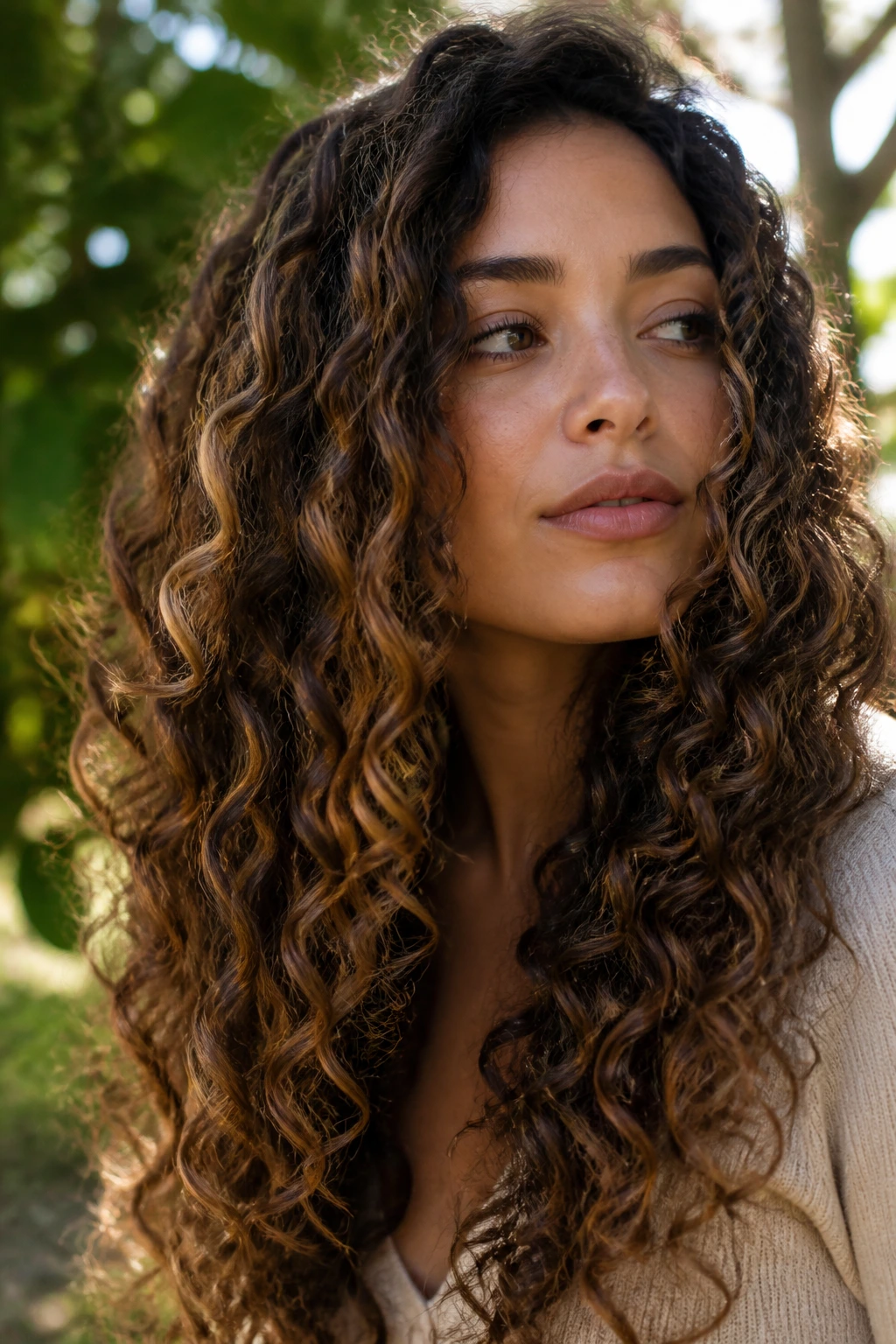
Long spirals can take wider bands of caramel brown because there’s more room for the eye to travel. On shorter curls, the same bands might look heavy. On long hair, they read as movement.
Hazelnut brown lowlights work well here because they sit softly between warm and neutral. The color moves through the midlengths and lower lengths, then breaks apart as the spiral turns. That creates a very natural swing when the hair is loose or half-pinned.
I’d use this if you like a richer finish and don’t mind a little more visual contrast. Long curly hair can swallow subtle color. A hazelnut band gives it back some shape.
10. Beige-Caramel Adjustments for Muted Olive Skin
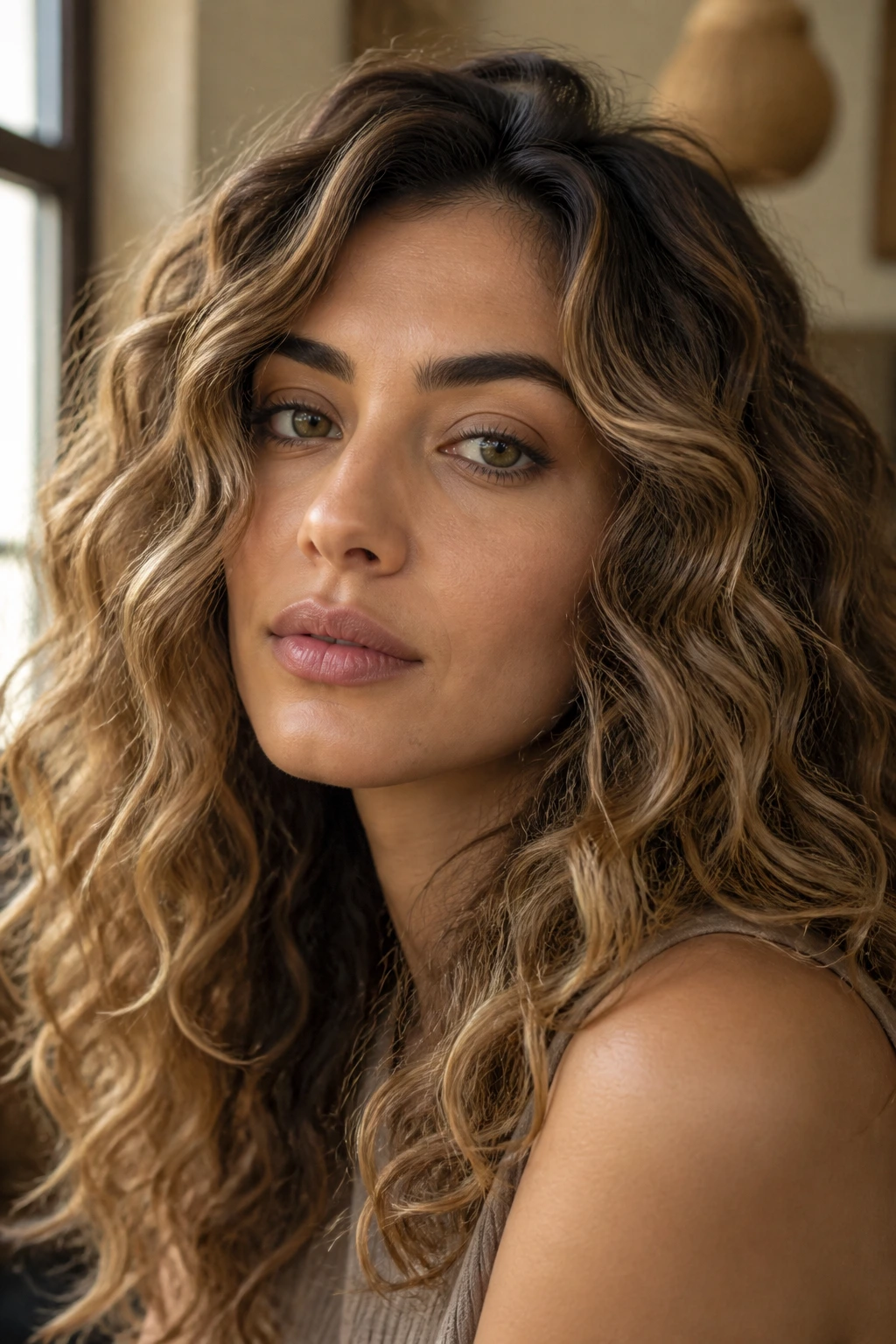
Not every olive complexion wants a warm gold-brown. Some olive skin leans muted, almost gray-green in certain light, and that’s where beige-caramel lowlights do better than anything coppery.
The rule is simple: keep the caramel soft and neutral. Think beige-brown, not orange-brown. If the lowlights are too golden, the skin can lose its clarity. If they’re too ash-heavy, the hair can look flat against the face. Beige caramel sits in the middle and behaves nicely on both.
When to cool it down a notch
If gold jewelry overwhelms you, or if very warm browns make your skin look sallow, ask for a neutral caramel with a beige base. That small adjustment changes everything. The hair still has warmth, but the face stays clean.
11. Cocoa Lowlights for Curly Bobs
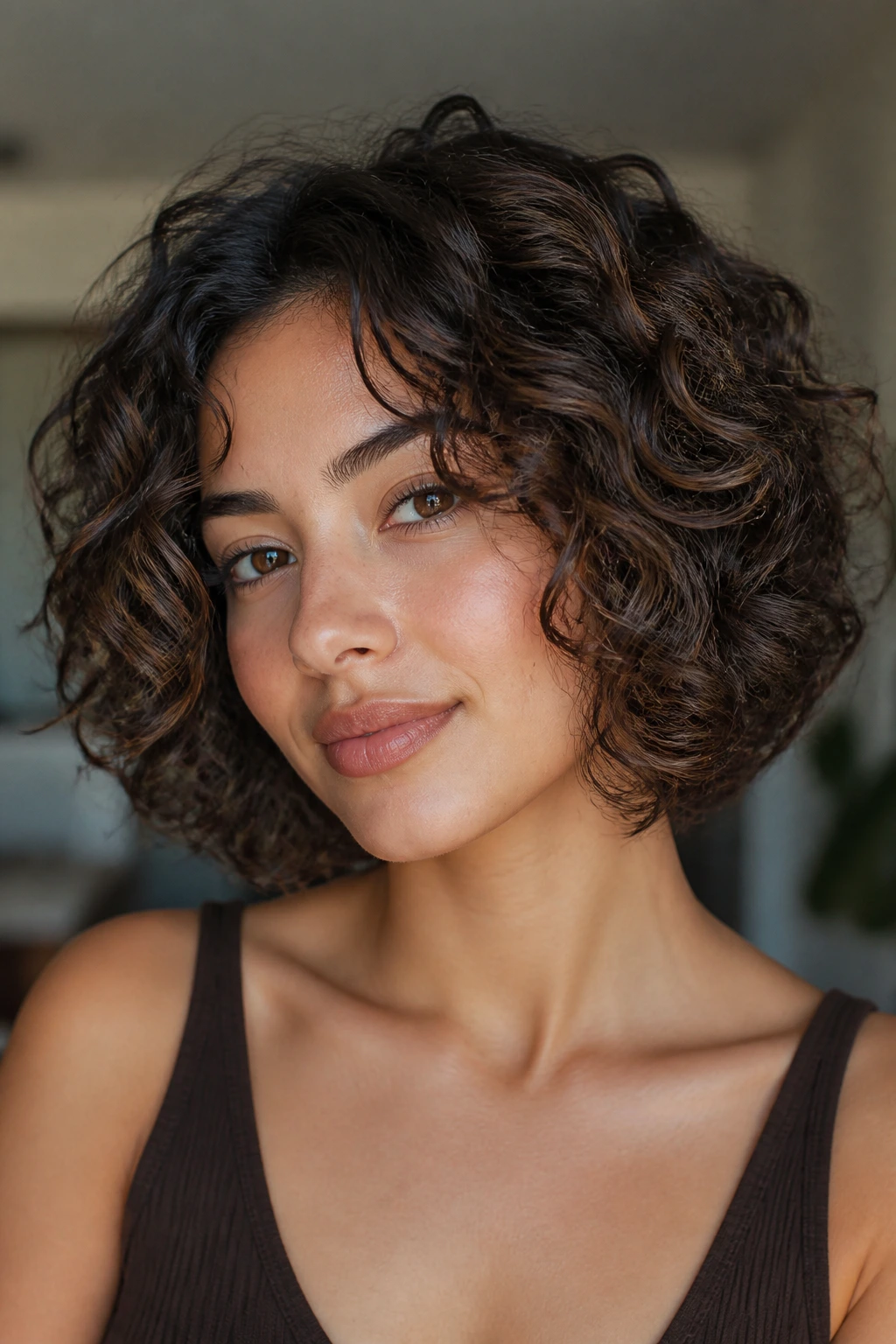
Curly bobs can go a little helmet-shaped if all the depth sits in the same place. Cocoa lowlights fix that by giving the cut a bend at the perimeter and some shadow under the roundness.
This works best when the lowlights are tucked into the interior and around the ends of the shape. The top stays lighter and buoyant, while the bottom gets a little weight. Olive skin likes this because the color stays soft near the face and richer where the bob needs structure.
If you tuck one side behind the ear, the color should still make sense. That’s the test I use. If it falls apart when the hair moves, the placement is too random.
12. Maple Underlayers for Thick Hair
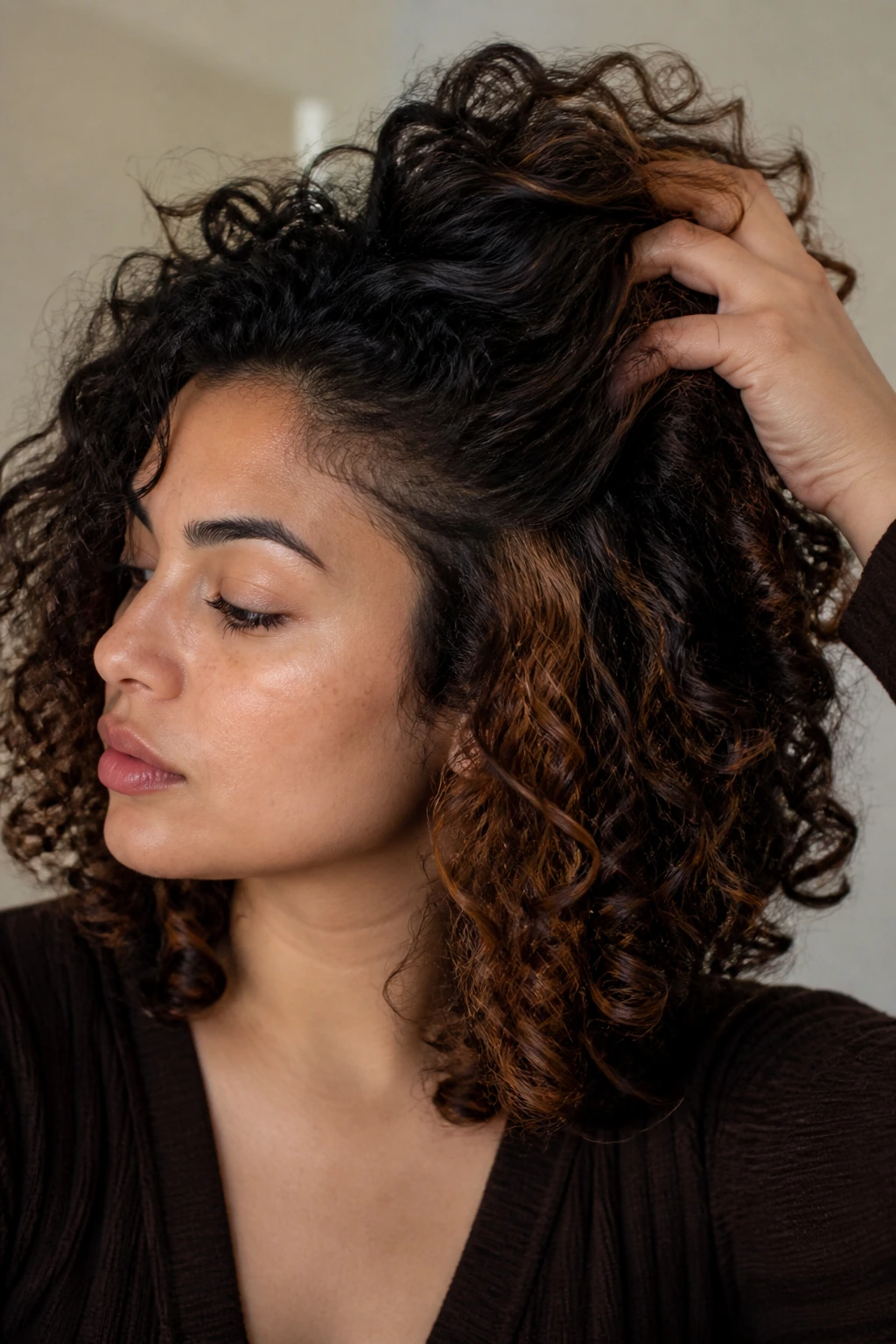
Thick curly hair eats color for breakfast. Put too little lowlight in it, and you barely see the result. Put too much in the wrong place, and the hair loses its lift.
Maple-brown underlayers solve that problem by staying mostly underneath the top sheet of curls. The crown keeps its bounce, but the underside gets enough warmth to stop the shape from ballooning outward. This is a strong choice for dense 3C through 4B textures, especially when the hair has a lot of bulk at the sides.
Why the underside matters
- It shows when the hair flips, twists, or is clipped half up.
- It keeps the profile from looking too wide.
- It gives the haircut a sense of weight without darkening the whole head.
I’m partial to this because it looks expensive in motion. Not loud. Just finished.
13. Ribboned Caramel for 4A and 4B Coils
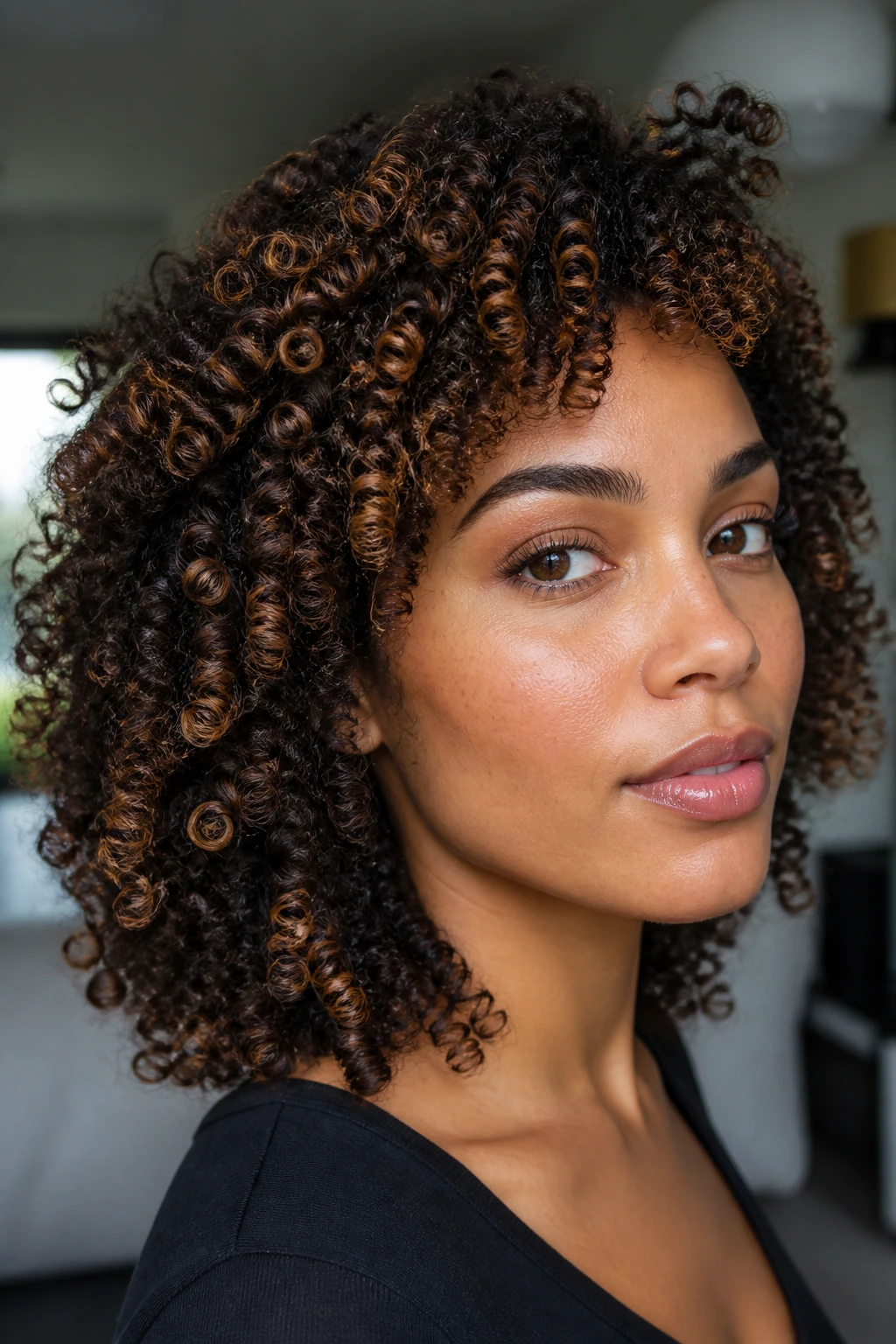
Tight coils need broader lowlight placement than loose curls do. Narrow weaves often disappear once the hair shrinks, and then all you’re left with is the memory of a salon appointment.
Ribboned caramel works because the pieces are wide enough to survive shrinkage, but soft enough not to turn stripey. Keep the color within the interior and top outer layer, and let the coils do the blending themselves. On olive skin, this adds warmth without making the complexion look overcooked.
The biggest mistake here is trying to hide the lowlights too much. If the color lives only under the very bottom layer, nobody sees it. Put some of the ribbons where the coils lift and turn. That’s where the dimension shows.
14. Glazed Toffee on Previously Highlighted Curls
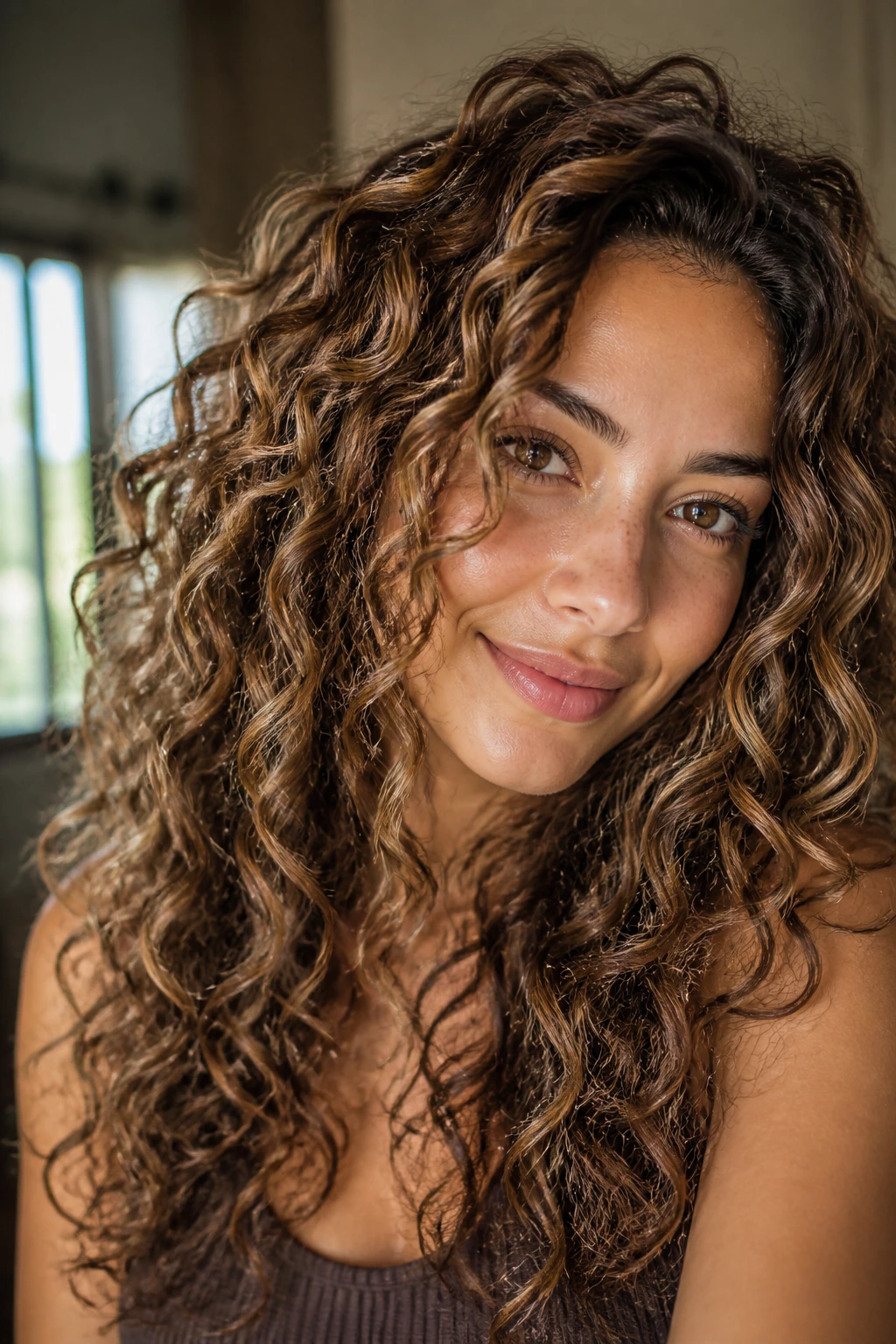
Already-blonde curls that have started to look thin or broken up are perfect candidates for toffee lowlights. The darker pieces fill in the gaps and make the old highlight pattern feel less striped.
This is the clean-up version of caramel brown lowlights, and I like it a lot. A gloss or glaze on top helps blur the transition so the hair doesn’t look patched. For olive skin, that softens the brightness enough to feel more natural. The lowlights give the hair a brown backbone again.
If your ends are porous, this is the case where a stylist may reach for a filler before the lowlights go on. Good. That’s not fussy. That’s protecting the color from soaking in too dark.
15. Multi-Tonal Caramel Mix
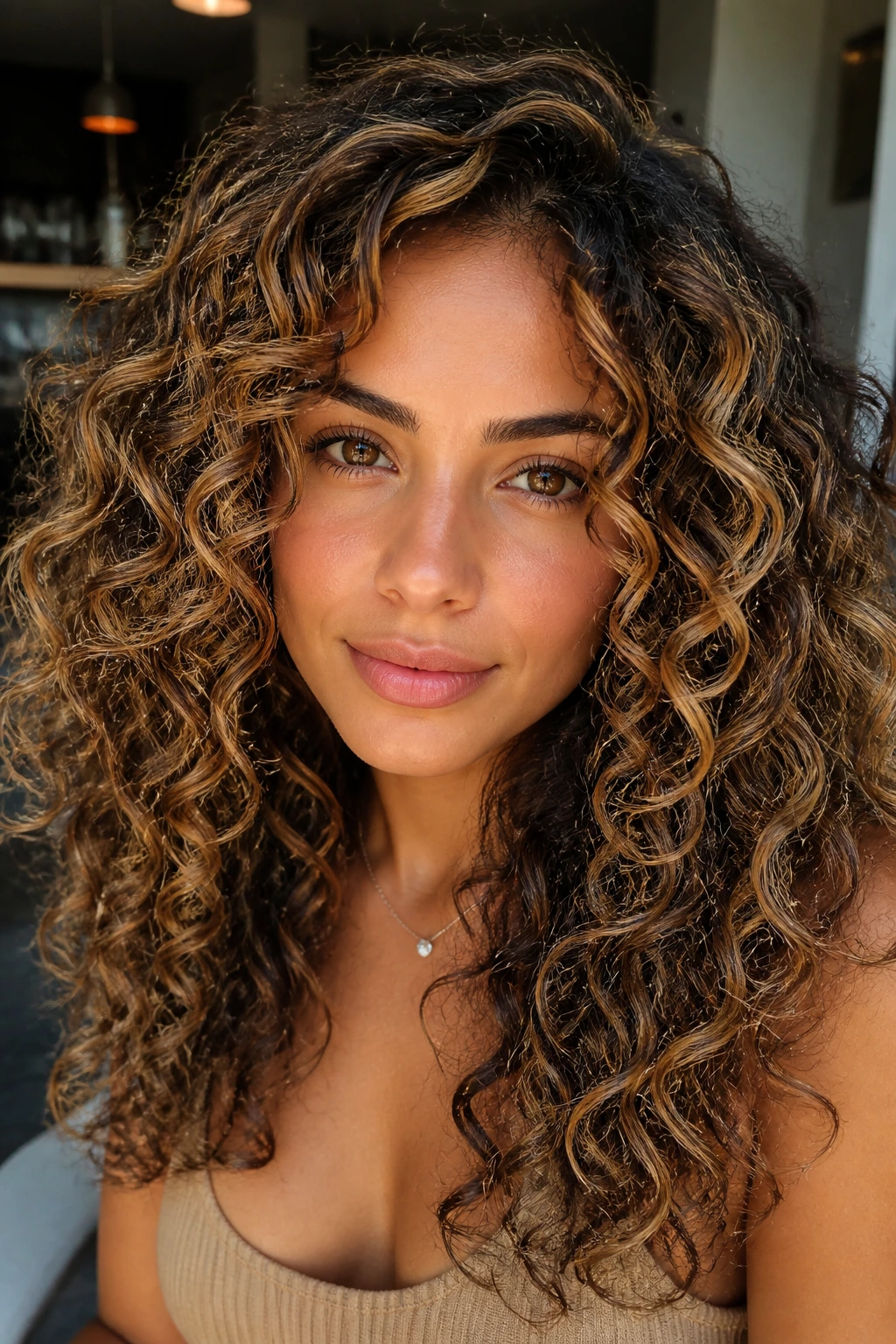
One caramel shade can be pretty. Two shades usually look better.
A multi-tonal mix keeps the curl pattern from turning repetitive. Pair chestnut with caramel, or mocha with toffee, and let the pieces alternate through the head. The rule I like is one level of difference between the shades. Push farther apart and the color starts drawing lines you can see from a mile away.
This works especially well on olive skin because the different browns catch the light differently. One piece warms, the next cools the eye for a second, and the whole head ends up looking more natural than a single processed color ever could.
16. Shadowed Crown Lowlights
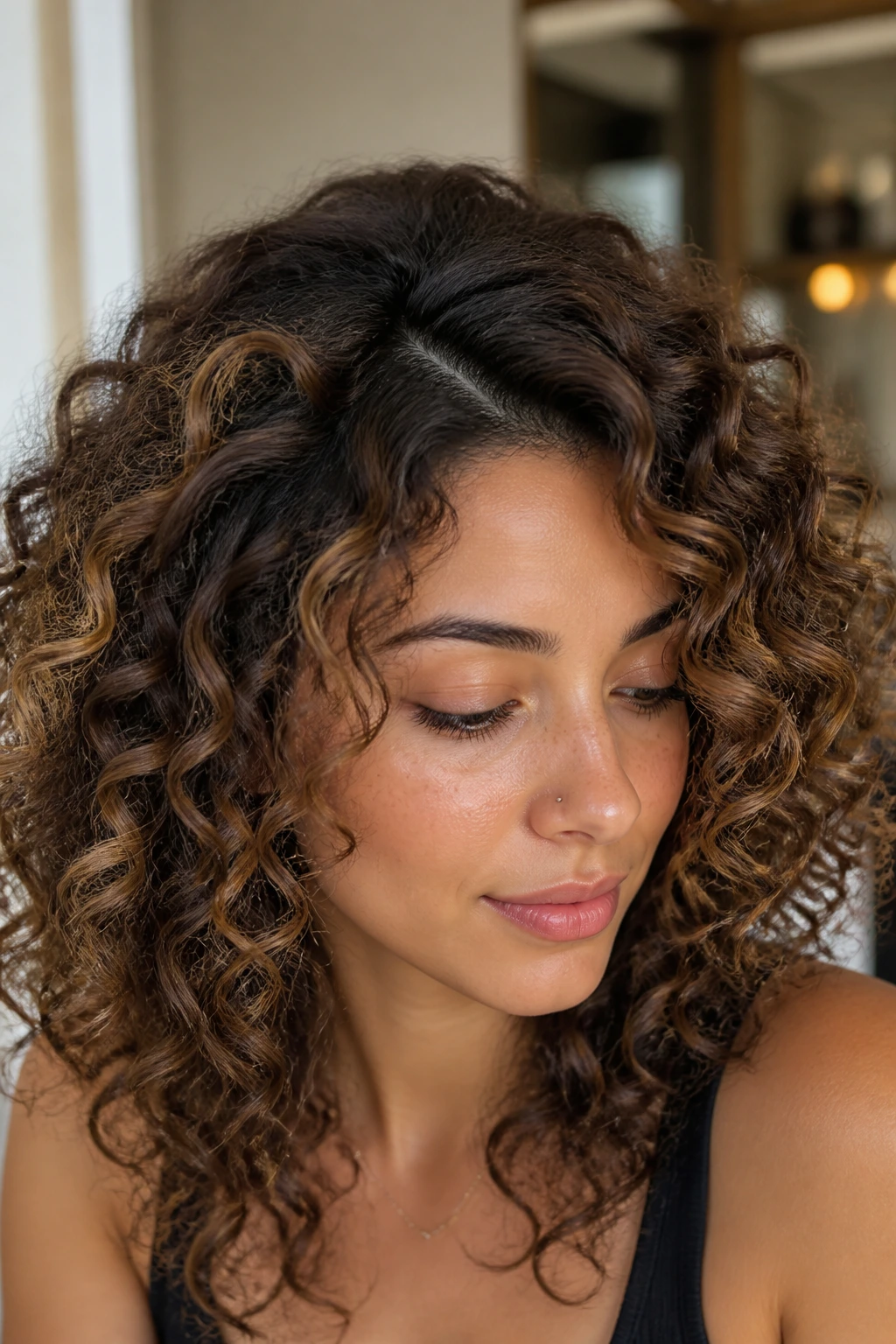
If the crown puffs up and the rest of the hair looks flat, the answer is not more lightness. It’s shadow at the top.
Shadowed crown lowlights bring the shape down so the haircut reads as a shape instead of a cloud. I’d use this on curly cuts with a lot of volume at the root, especially when the top layer needs to sit closer to the head. The lowlights should be concentrated near the part line, crown, and top side sections, then softened as they move down.
That placement makes the whole cut look neater. The curls still rise. They just do it with a little more discipline.
17. Velvet Chestnut Refresh
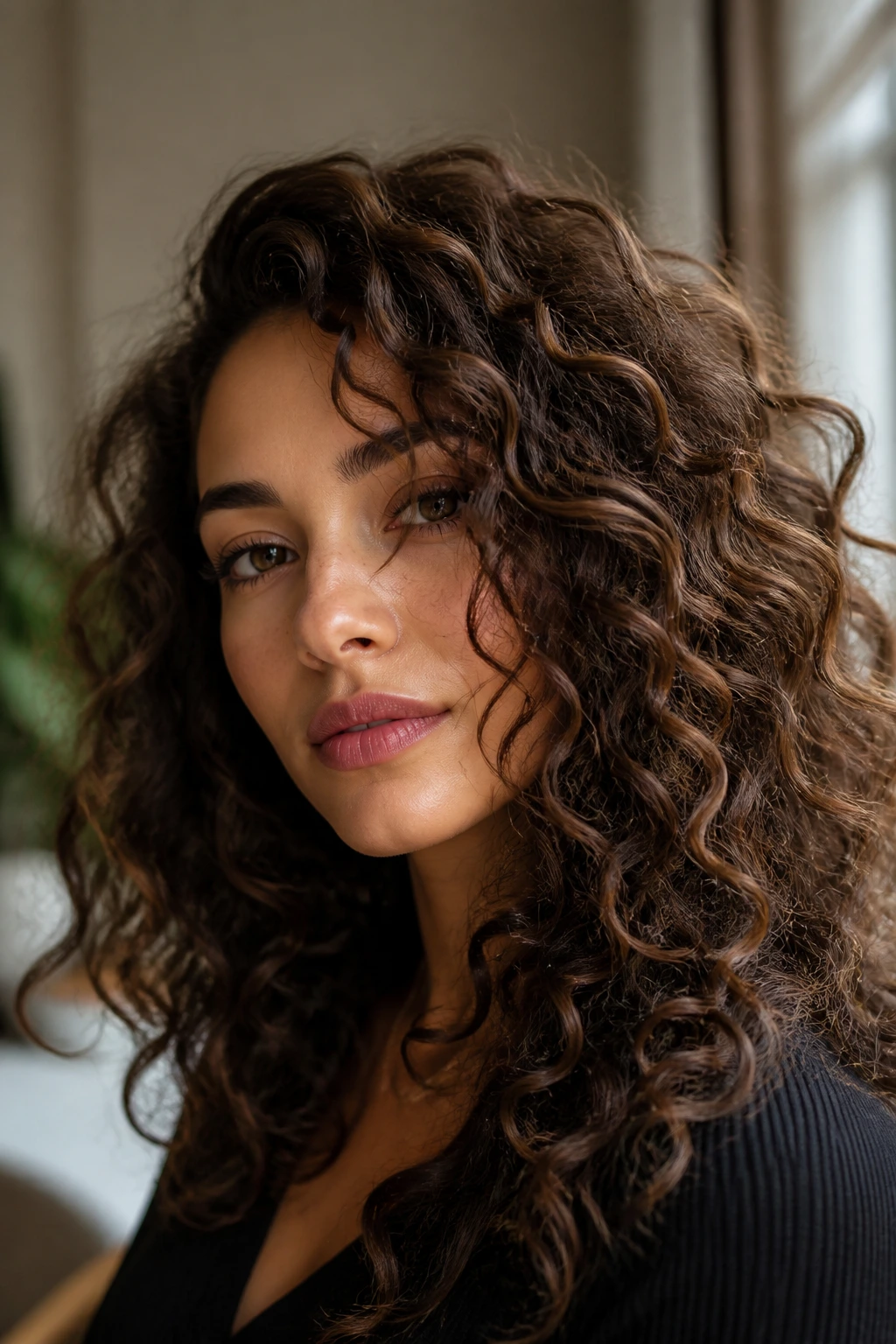
Color doesn’t stay crisp forever, and curly hair often shows that fade in a softer, fuzzier way than straight hair does. A velvet chestnut refresh puts the shine back without rewriting the whole head.
This is less about changing the look and more about restoring it. The tone gets re-glossed, the brown comes back into focus, and the curls stop looking dusty. On olive skin, that matters because faded warm brown can start to look flat or a touch orange at the wrong time. Chestnut pulls it back into line.
I like this as a maintenance move every so often if the original lowlights were subtle. You don’t need to start over. You just need the color to stop drifting.
18. Deep Toffee Finish
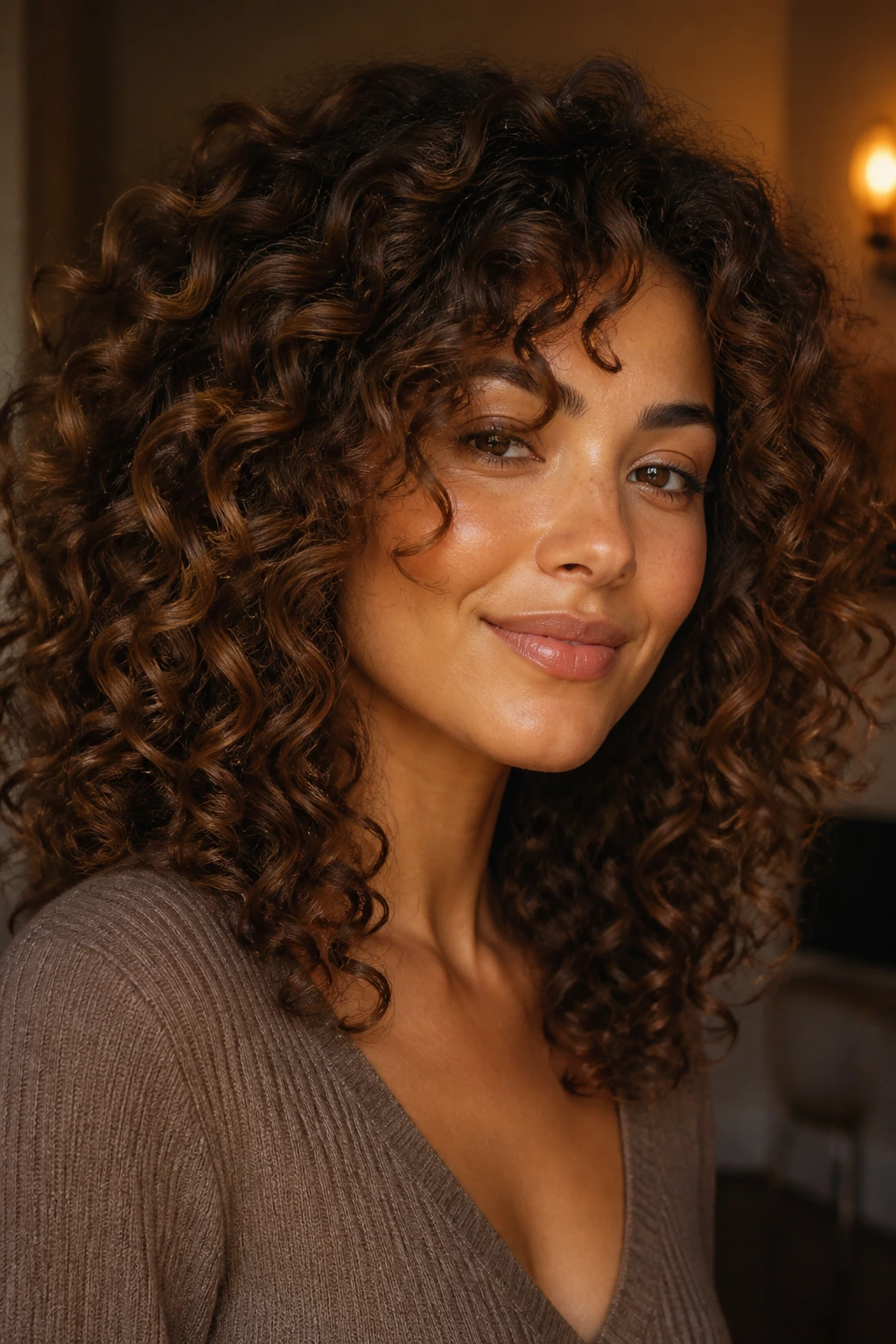
Sometimes the right answer is simply a deeper toffee finish through the whole cut. Not black. Not espresso. Just a rich brown that makes olive skin glow and curly texture read clearly.
This version is for people who want the color to feel polished from every angle. The lowlights go a little broader, the tone stays warm but grounded, and the curl definition gets stronger because the shadow is more visible. It’s especially good on thick curls and darker olive skin, where a richer brown can look elegant instead of heavy.
If you want a style that looks good when it’s freshly styled and also when it’s been shoved into a clip for three hours, this is the one I’d point to.
Why Curl Pattern Changes the Placement Map
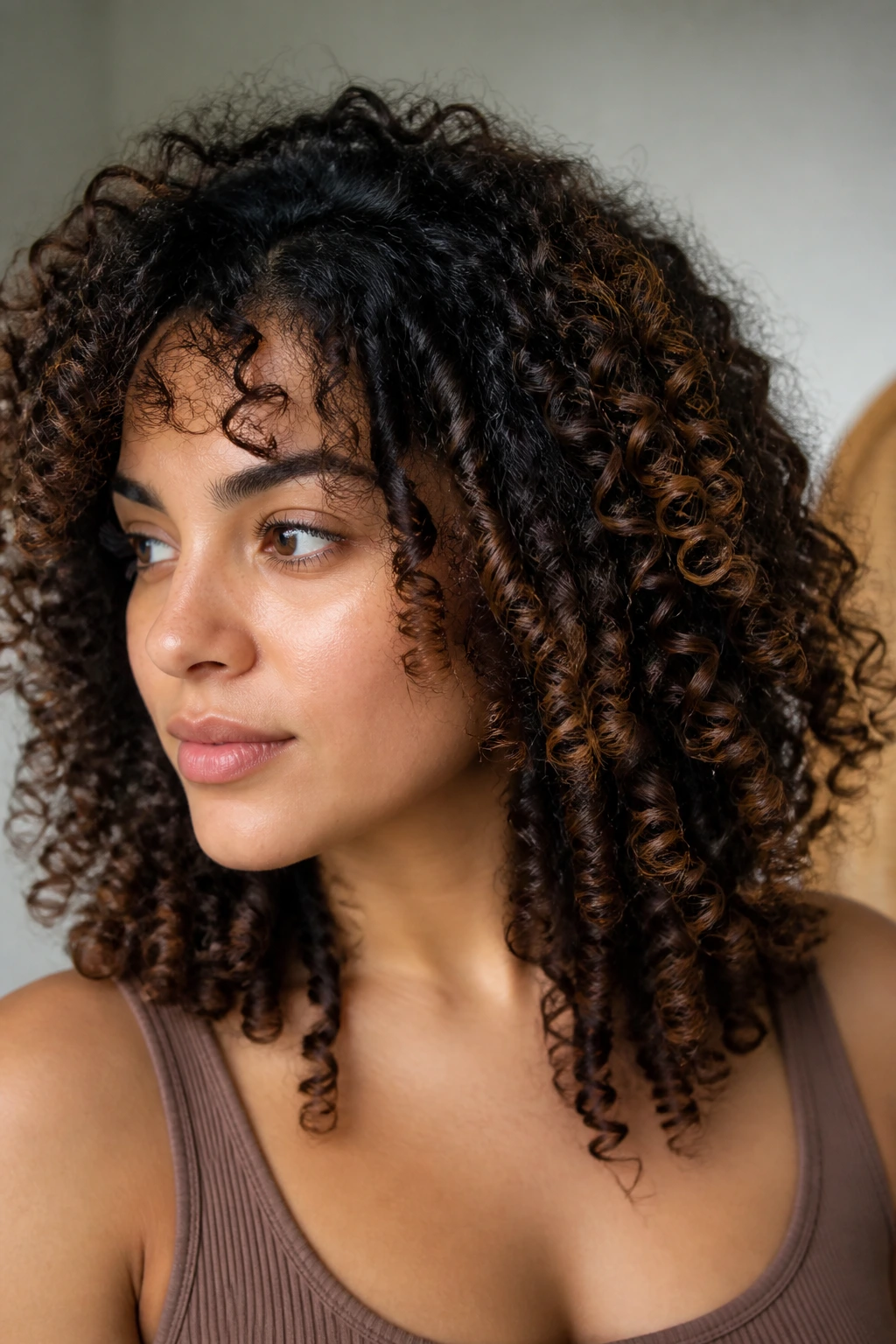
Curly hair doesn’t hold color like straight hair does. It bends, shrinks, separates, and stacks on itself, which means the same caramel brown lowlight can look soft in one place and disappear in another. That’s not a flaw. It’s the reason placement matters so much.
The top layer is the least predictable part, especially once the hair dries. A piece that looks wide on wet hair can hide almost completely in a tight curl, while a narrow ribbon can suddenly look bold once the coil opens. Good stylists work with that instead of fighting it. They leave some lowlights under the canopy, some at the crown, and some near the face so the color has different jobs to do.
The other thing people forget is shrinkage. Tight curls pull color upward and inward. Loose curls let it swing outward. That means 4A and 4B hair usually needs broader, more deliberate placement, while 3A and 3B curls can wear finer weaving. Same color family. Different map.
What to Ask for at the Salon
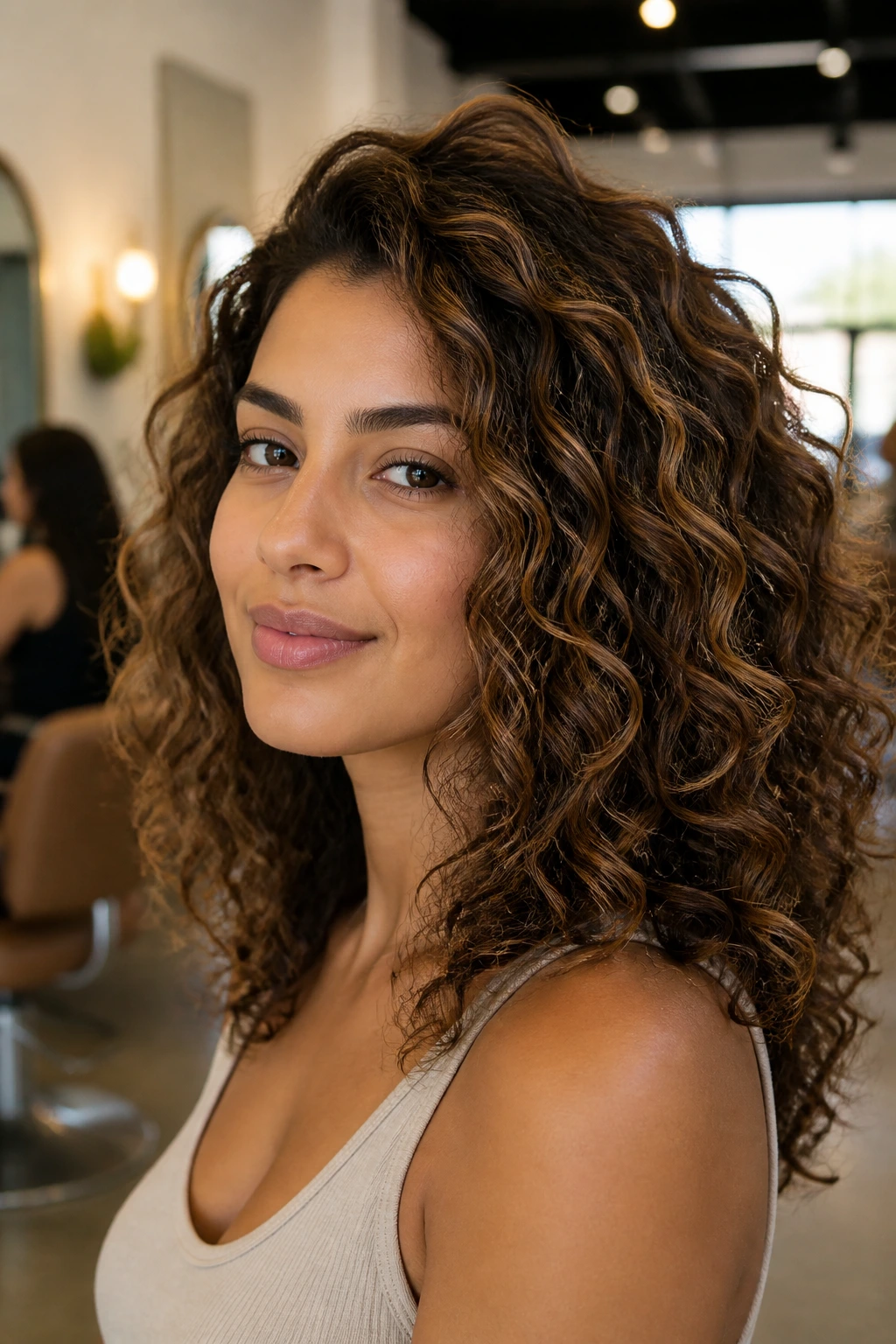
Bring pictures, sure, but bring the right pictures. A photo of curls blown out straight tells the stylist almost nothing if your hair lives in coils. Dry, styled curls tell the truth.
Ask for caramel brown lowlights in a demi-permanent formula if you want softness and less damage. Then talk about undertone. If your olive skin leans golden, ask for caramel with a beige-gold base. If it leans muted, ask for a neutral chestnut or mocha caramel. If you love depth, ask the colorist to keep the pieces one level deeper than your base and to place most of them in the interior and crown, not just the ends.
A good consultation usually includes where the color should show up. Around the face? Under the top layer? On the underside only? These are not small details. They decide whether the result looks custom or random.
How to Wear the Color So the Dimension Shows
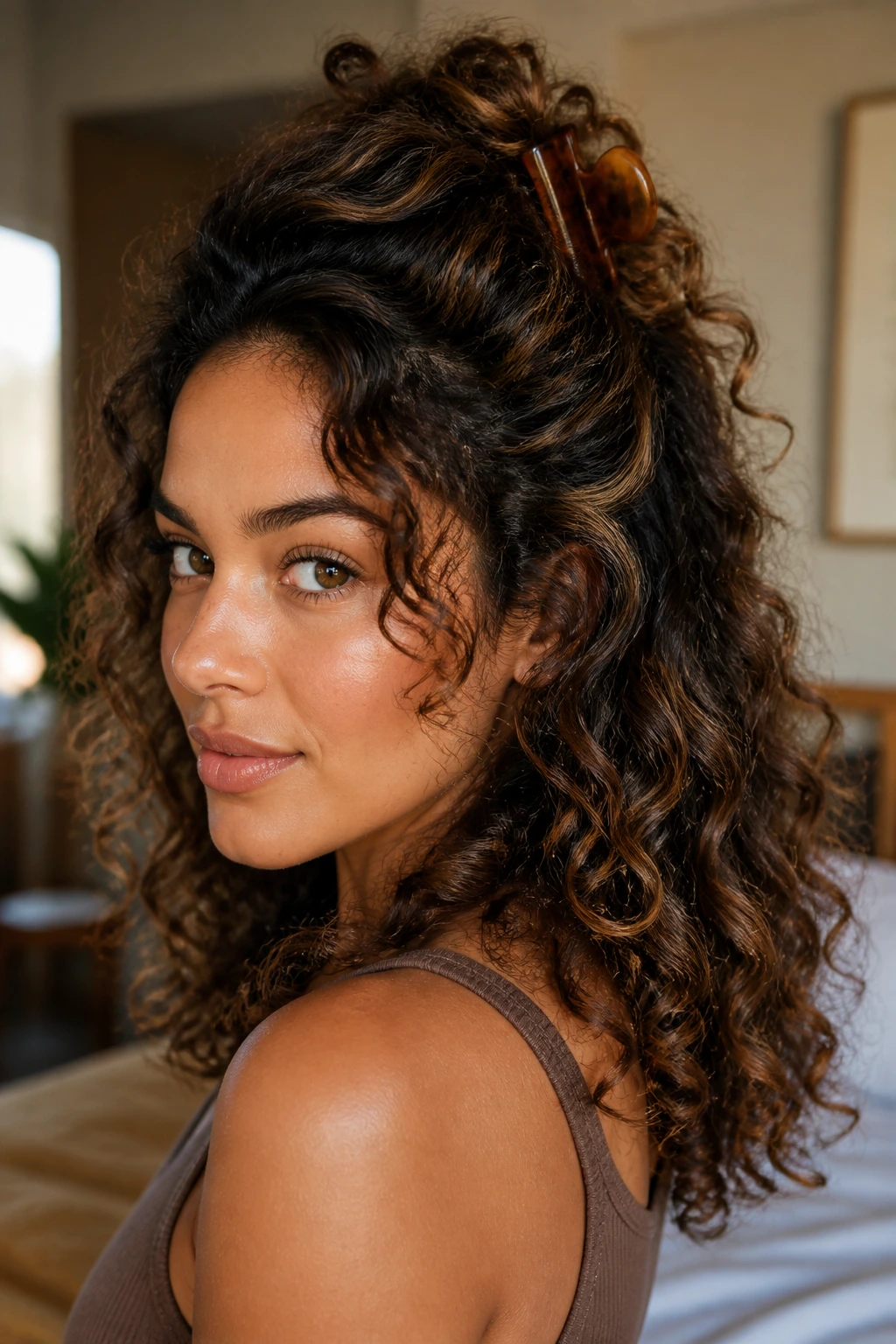
Wash-Day Definition: A leave-in cream and a diffuser help the lowlights show through the curl clumps instead of getting buried under frizz. Scrunching a little at the end brings the ribbons back into view.
Stretch and Shape: If you twist, braid, or band your curls while drying, the caramel pieces settle into longer shapes and read more clearly. That’s useful when the lowlights are subtle.
Straightened Days: One pass of a flat iron can make the tonal difference obvious, but keep the heat low and use a protectant. Burnt ends ruin a good color faster than bad toner does.
Pinned or Half-Up Styles: These are where peekaboo panels and underlayers earn their keep. A clip, a claw, or a half ponytail shows the hidden brown and makes the whole style feel richer.
Small Shade Tweaks That Change the Whole Result
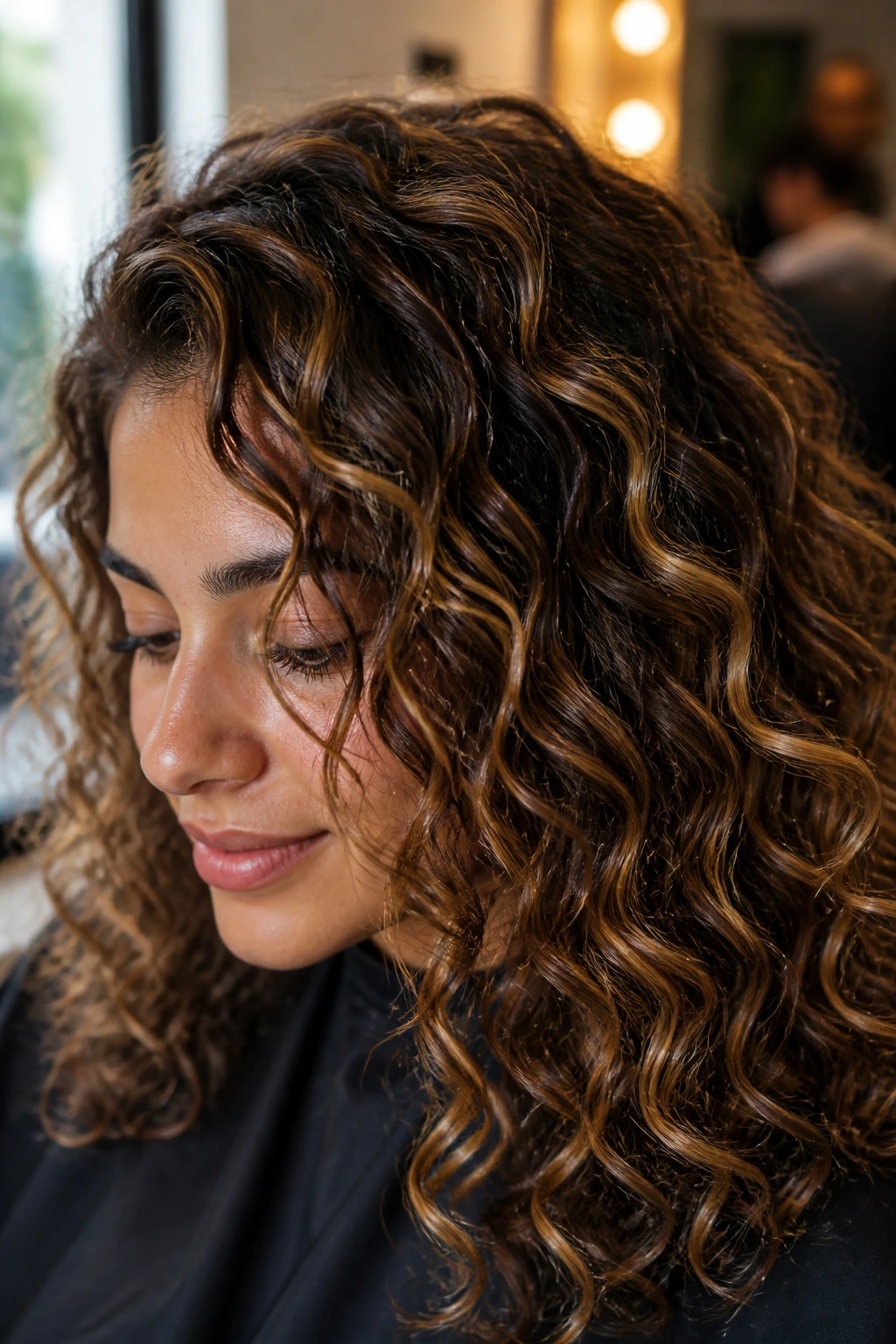
Warmth Boost: Add a beige-gold gloss if the caramel looks too flat after coloring. It wakes up olive skin without tipping into orange.
Depth Boost: Ask for a chestnut or mocha lowlight underneath the crown if the top of the hair still feels too fluffy. A little darkness there controls the shape.
Softness Boost: If the color looks stripey, soften the weave and widen the root blur. Thin curls need less structure, not more.
Face-Frame Boost: Leave the first curl or two around the face a half-step lighter than the interior. That keeps the front from feeling heavy.
Make-It-Yours: If you wear your curls stretched, go a touch broader with the lowlights. If you wear them in a tight wash-and-go, keep the sections smaller and closer together.
Common Mistakes That Flatten the Dimension
The first mistake is going too orange. Olive skin and copper-heavy brown can be a rough match, especially if your complexion already carries a bit of green. The fix is simple: ask for beige-caramel, chestnut, or mocha-brown instead of a vivid warm brown.
The second is painting the color in even stripes. Curly hair hates that. It wants irregular spacing, mixed widths, and some pieces tucked under the top layer. Even bands make the style look dated fast.
A third mistake is ignoring shrinkage. What looks subtle on wet hair can vanish when the curls dry. That’s why placement should be checked in dry curl pattern, not just brushed out or stretched.
Fourth: using a color that is too dark, too fast. Blue-black or near-black lowlights can make the hair look hard and the curl texture disappear. A rich brown usually does the job better.
And finally, skipping moisture after the color service. Curly hair needs a mask, a leave-in, and a little patience. Dry curls scatter light badly, which makes even a beautiful lowlight job look dull.
Variations and Alternatives Worth Trying
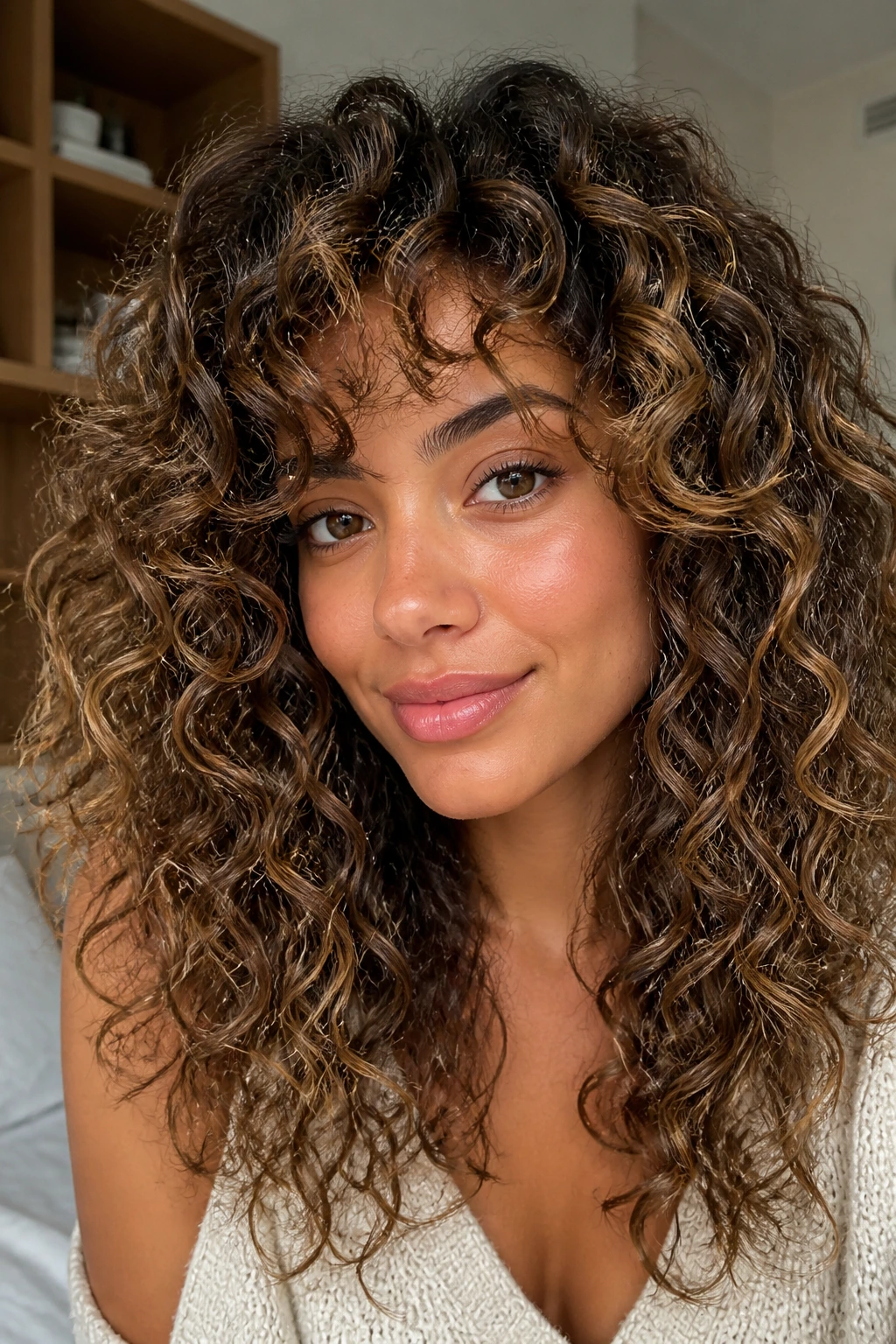
Beige-Caramel Softener: Choose this if your olive skin looks better in neutral jewelry than warm gold. It keeps the lowlights soft and a little creamy.
Mocha Minimalist: This is the quieter version, with depth only one shade darker than the base. It’s the one I’d pick for someone who wants almost no obvious contrast.
Chunky Ribbon Revival: Better for thick curls and big volume. The pieces are wider, the movement is stronger, and the shape reads from farther away.
Gloss-Only Reset: If the lowlights are still there but the tone has faded, a brown gloss can refresh them without adding more dye.
Cool Chestnut Correction: Useful when the caramel started turning too orange. A chestnut gloss pulls it back into a cleaner, richer brown.
Tools and Products That Make the Shade Easier to Keep
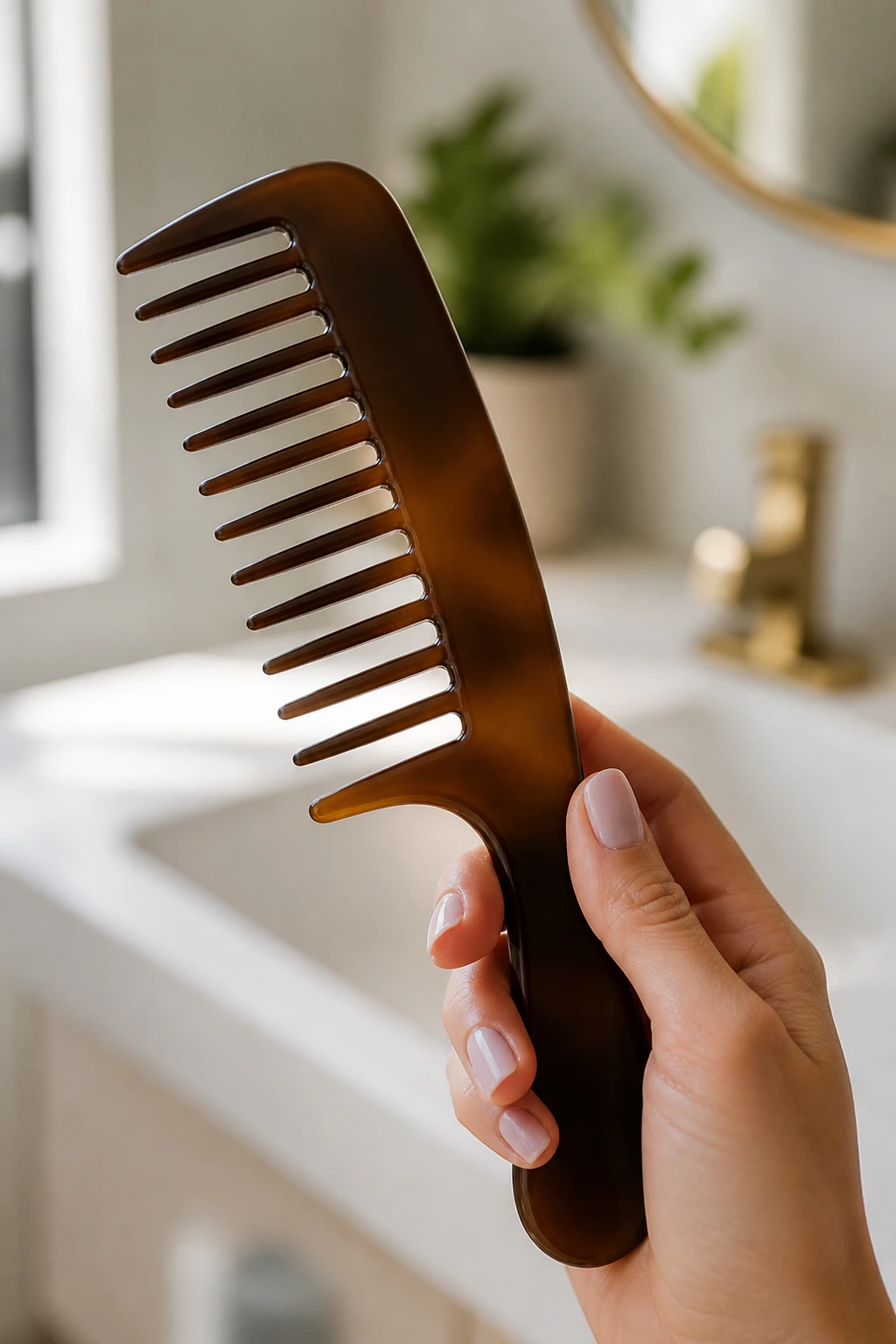
- Wide-tooth comb: Helps detangle curls without breaking up the pattern the color was painted for.
- Tint brush: Useful for salon work or careful at-home touch-ups on isolated sections.
- Color clips: Keep sections separated so lowlights don’t bleed into the face frame.
- Foils or balayage board: Helpful for clean placement and for controlling saturation on thicker curls.
- Sulfate-free shampoo: Keeps caramel tones from fading too fast and is gentler on color-treated curls.
- Rich conditioner or mask: Curly hair loses moisture faster after coloring, and this keeps the ends from going rough.
- Heat protectant: Non-negotiable if you diffuse, blow-dry, or occasionally flat-iron the hair.
- Microfiber towel or cotton T-shirt: Reduces frizz while the curls set, which matters because frizz can hide the lowlights.
- Color-safe gloss or glaze: Good for refreshes between full appointments when the brown starts to look washed out.
Keeping Caramel Brown Lowlights Fresh Between Visits
The first 48 hours matter. If you can avoid shampooing right away after a color service, do it. Let the cuticle settle. After that, wash with lukewarm water and a sulfate-free shampoo two or three times a week at most, because curly hair usually does better with less washing anyway.
A deep conditioner once a week keeps the curls smooth enough for the color to show. Rough, dry curls scatter light and make caramel look dusty. A leave-in with a little slip helps the lowlights stay visible on day two and day three, when the hair has stopped pretending to be fresh from the chair.
For gloss maintenance, a salon glaze every 6 to 8 weeks keeps the tone rich. Full lowlight retouches can often wait 10 to 14 weeks, sometimes longer if the placement is subtle and your natural color is close. If brassiness creeps in, use a brown-specific gloss rather than reaching for purple shampoo first. Purple can dull warm brunette tones if you overdo it.
Questions People Ask Before Booking Caramel Lowlights
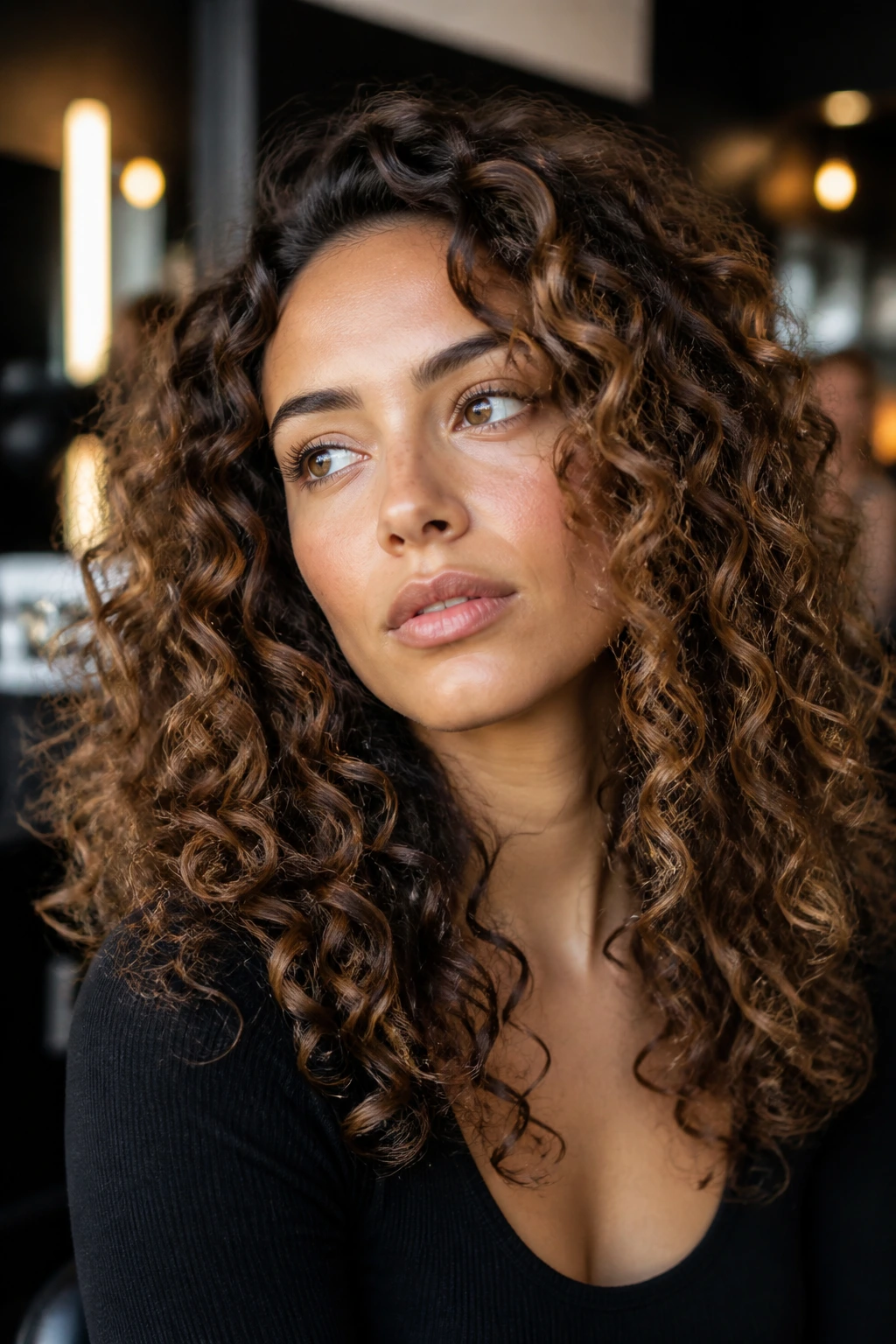
Will caramel brown lowlights work on very dark olive skin?
Yes, but the shade usually needs to go deeper—think chestnut, mocha, or dark toffee instead of a light golden caramel. The goal is warmth and shape, not a pale contrast that disappears.
Do lowlights damage curls as much as highlights?
Usually less. Lowlights often use darker demi-permanent color instead of bleaching, which is gentler on the curl pattern and keeps the hair feeling softer.
Can I do this on already highlighted curls?
Absolutely, and sometimes that’s the best use for them. Lowlights can fill in the gaps, calm stripey highlights, and make the whole head look thicker.
How often should I touch them up?
A subtle lowlight job can hold for 10 to 14 weeks, sometimes longer. If you like a glossier, sharper finish, plan on a toner or glaze every 6 to 8 weeks.
Will lowlights make my curly hair look thinner?
Only if they’re too dark or too wide. Soft caramel and chestnut pieces add depth; harsh bands can make the hair look flat. Placement matters more than shade alone.
What if my hair turns orange instead of caramel?
Ask for a beige or neutral brown gloss to pull the warmth back down. The problem is usually formula, not your hair’s texture.
Should the color be placed only on the top layer?
No. If everything sits on top, the underlayers go hollow and the style loses dimension. Interior placement is what makes curly hair look full from every angle.
Do I need bleach for caramel brown lowlights?
Usually not. Lowlights are meant to add depth, and many versions use darker or richer brown shades without any lightening at all.
A Shade That Keeps Its Shape
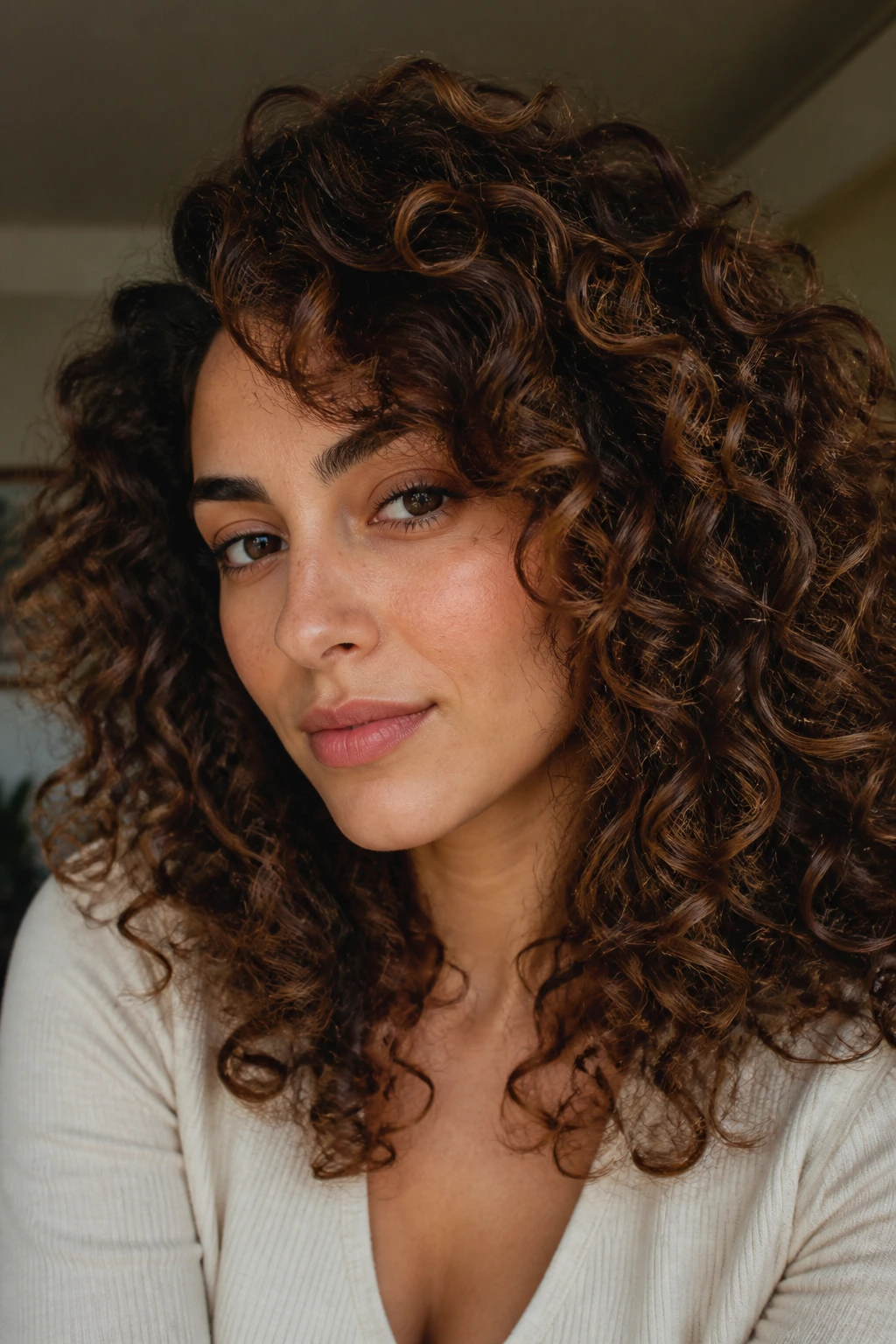
Caramel brown lowlights work because they respect what curly hair already does well. They don’t flatten the curl pattern. They don’t ask olive skin to pretend it’s something else. They just add the right amount of shadow in the right places, which is harder to do than it sounds and more satisfying when it lands.
The best versions are rarely the loudest ones. They’re the ones that still look good when the curls dry a little unevenly, when the part shifts, when the day gets long and the hair stops behaving. That’s the kind of color worth asking for.