



Dark balayage on tan skin can look soft and expensive in the best way — or it can blow open the cheeks and make the color sit too high. The difference usually comes down to two things: how warm or smoky the brown is, and where the light pieces begin. If those ribbons start right at the widest part of a round face, the eye spreads sideways. If they drop lower and stay narrow, the whole cut reads longer.
Tan skin is its own little puzzle. Some complexions lean golden and eat up caramel, bronze, and chestnut without a fight. Others lean olive or neutral and look better with mocha, mushroom, or smoked beige. The best dark balayage respects that instead of forcing one brown on everyone.
The 25 looks here lean into that balance. Some are nearly invisible in shade, some have a sharper money piece, and a few tip into ombré because that gradient can be a gift on longer hair. What matters is the shape they make around the face, not just the color in the bowl.
Why This Collection Works on Tan Skin and Round Faces
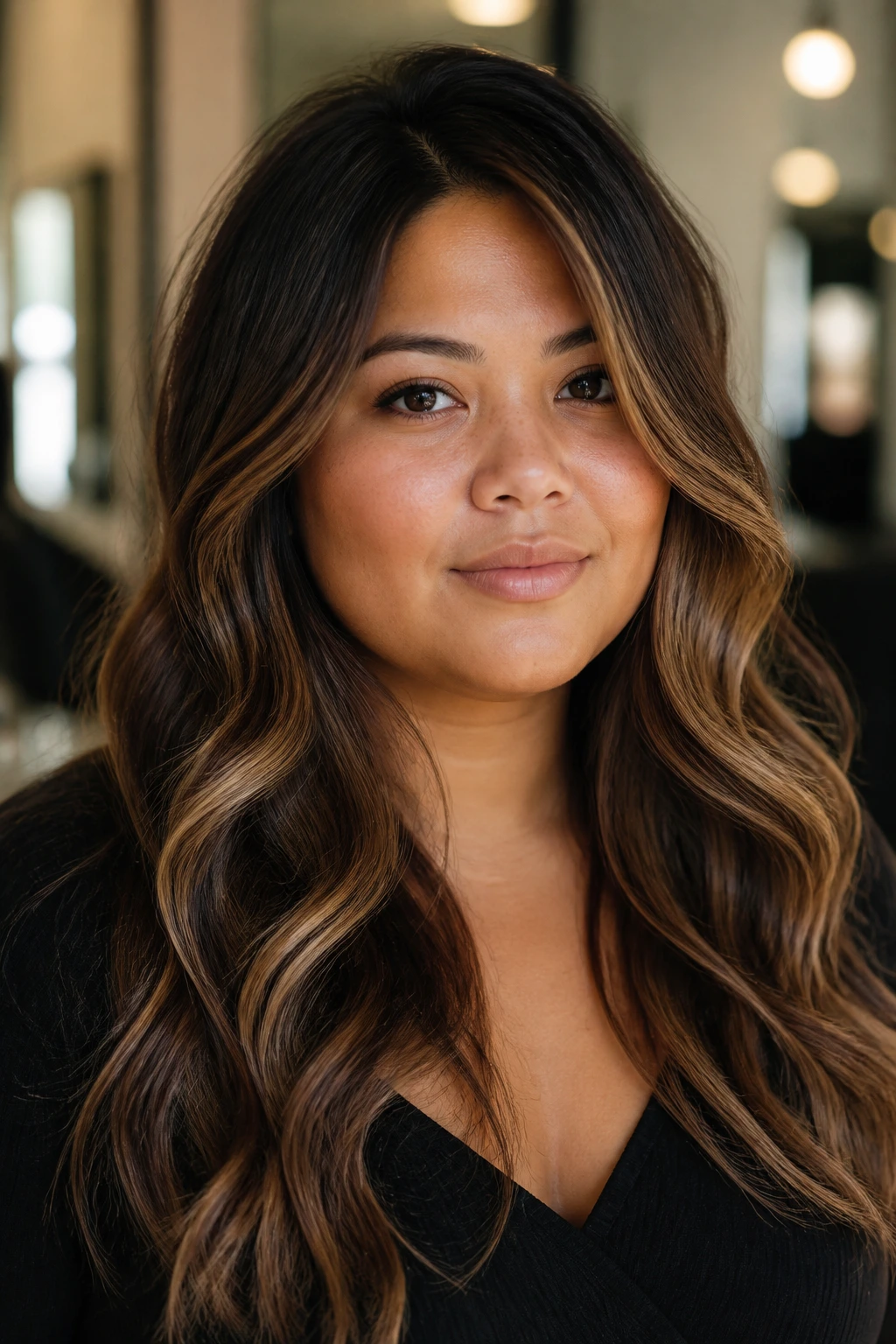
-
Face-Lengthening Placement: Bright pieces that start below the cheekbone keep the eye moving downward, which is kinder to a round face than a thick highlight sitting at the temples.
-
Tone Control: Espresso, mocha, chestnut, bronze, and smoked beige can all work on tan skin, but each one pushes the complexion in a different direction — warmer, cooler, or more neutral.
-
Soft Grow-Out: Dark balayage leaves the root alone on purpose, so the line between new growth and colored hair stays blurred for weeks instead of turning harsh.
-
Texture Friendly: Wavy, curly, and blown-out hair all show painted ribbons differently, which matters if you do not wear the same style every day.
-
Photo-Ready Without the Stripe Effect: Good balayage looks hand-placed, not zebra-striped. That matters on round faces because chunky front pieces can widen the silhouette fast.
-
Flexible Maintenance: You can keep the color subtle with a gloss and a trim, or push it warmer and brighter with a few ribbon pieces near the front.
The Placement Rules That Keep a Round Face Looking Long
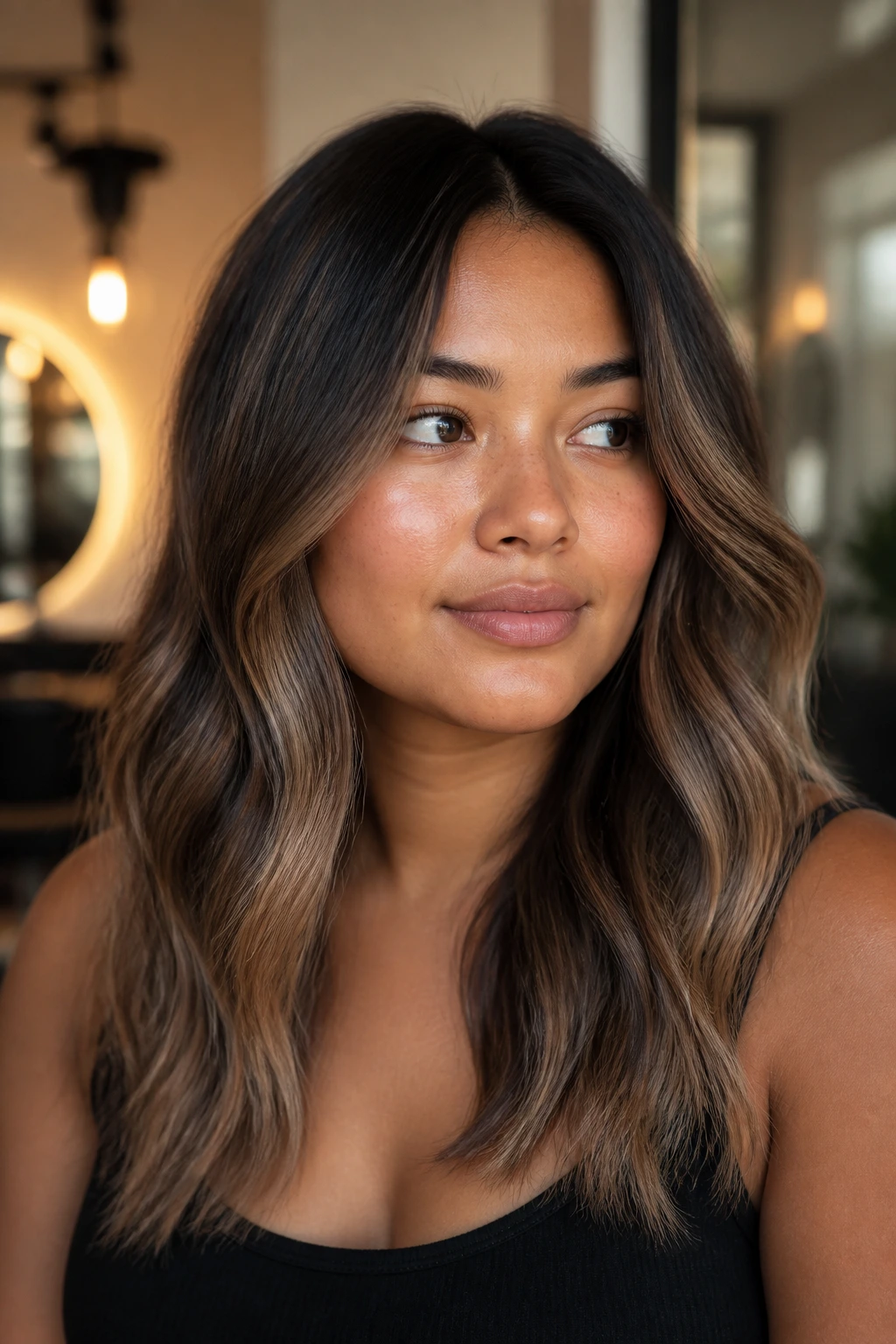
Dark balayage does a lot of the heavy lifting, but placement decides whether it lengthens or spreads the face. The easiest rule: keep the brightest pieces out of the temple area and let them start a little lower, usually between the cheekbone and the top of the collarbone. That vertical drop pulls the eye downward instead of outward.
Start Below the Widest Point
If the first light ribbon lands where the face is widest, the color can add width. Move it down a few inches and the shape settles. That is why so many round-face-friendly balayage looks have a softer front and a brighter lower third.
Keep the Crown Deeper
A dark crown gives the hair some height at the top, which helps balance softer cheeks. If the top is as light as the ends, the whole head can look flatter and wider. A deep root is not lazy color; it is structure.
Narrow the Front Pieces
A thin money piece or a soft face frame works better than a wide, pale block. I like pieces that bend around the cheek instead of sitting on it. That small choice changes the whole read of the haircut.
1. Espresso Base with Caramel Ribbons
A deep espresso base with a few caramel ribbons feels controlled, not flashy. The caramel should sit through the mid-lengths and lower third, with the brightest strands sliding down from below the cheekbone so a round face gets length instead of width. On tan skin, caramel like this reads sun-warmed, especially when the root stays a level 3 or 4.
Why it works on this face shape
The darker top keeps the head from feeling too broad, and the caramel catches light only where the hair starts to taper. That means you get dimension without a stripey front. If your hair is thick, ask for narrow panels rather than chunky sections.
A side part makes it even better. The darker side near the temple and the lighter sweep away from it stop the face from feeling circular, and the color still looks low-maintenance when it grows out.
2. Mocha Melt with Cheekbone Face Framing
Mocha melt is the version I’d hand to someone who wants the color to do the contouring for them. The front pieces sit just under the cheekbone, then drift into a softer mocha through the ends. On tan skin, that medium brown glow keeps things rich instead of muddy.
What makes this one useful for round faces is the restraint. The front lightening should be narrow, not the wide, bright money piece people keep getting talked into. A colorist can keep the root darker and paint the lightest tone only where the hair curves inward, which makes the cheek line look less blunt.
It also plays nicely with waves. One bend of the iron, and the lighter pieces show up in strips that move with the cut instead of sitting on top of it. Clean, not loud.
3. Chocolate Chestnut Balayage on Long Layers
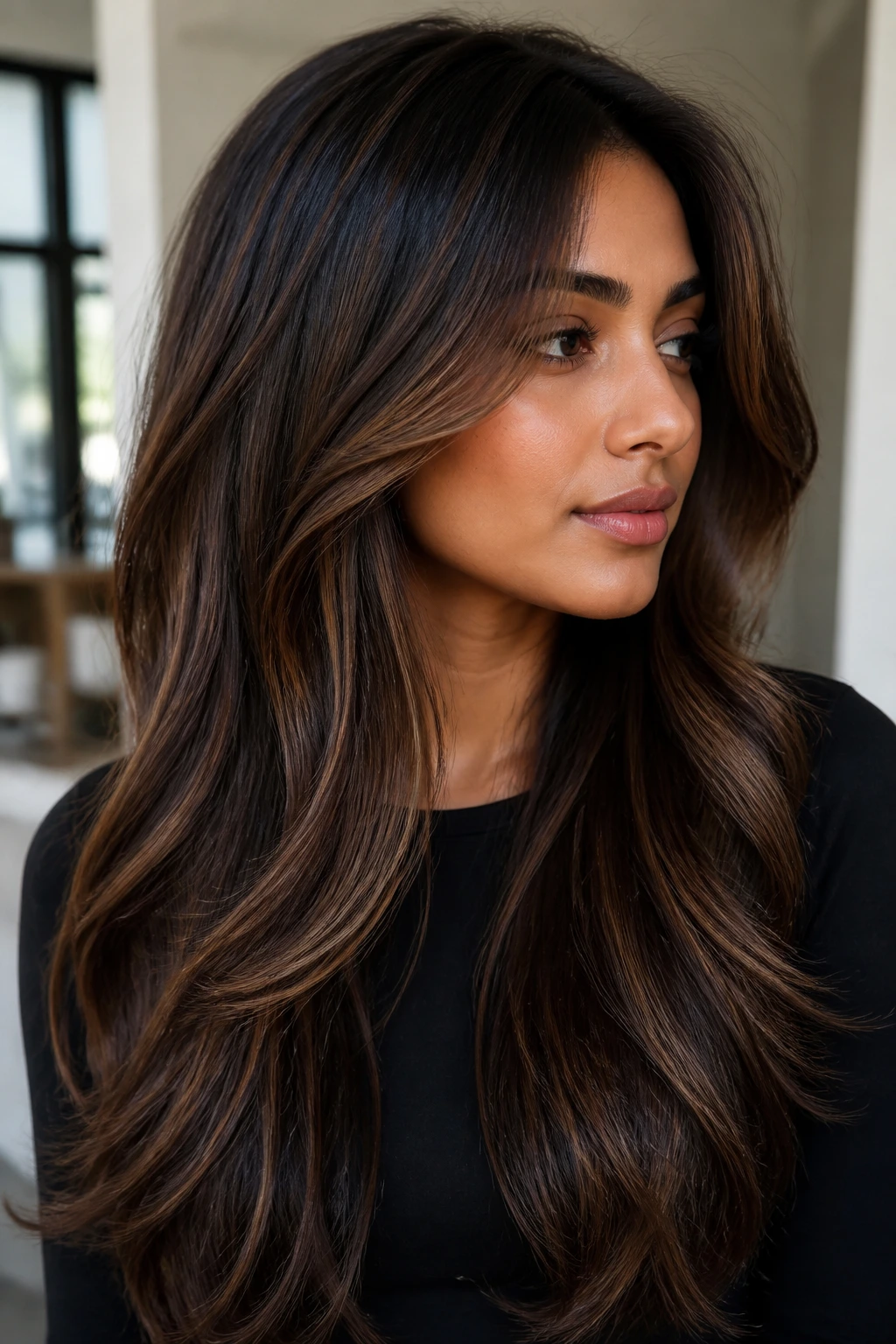
Chocolate chestnut lives in that sweet spot between warm and grounded. The chestnut threads through a dark chocolate base like a soft glaze, so the result feels dimensional instead of flat. On tan skin with golden undertones, it looks polished without pushing orange.
Long layers are what make this color breathe. Without them, the chestnut can sink into the base and disappear. With them, the ribbons catch around the jaw and then stretch lower, which helps a round face look a little longer every time the hair moves.
This is one of the easiest shades to wear in a low-drama way. You do not need a big contrast jump to make it interesting. A gloss in the chestnut family every few weeks keeps the shine alive, and that shine is half the point.
4. Smoky Ash Brown Balayage with a Soft Root
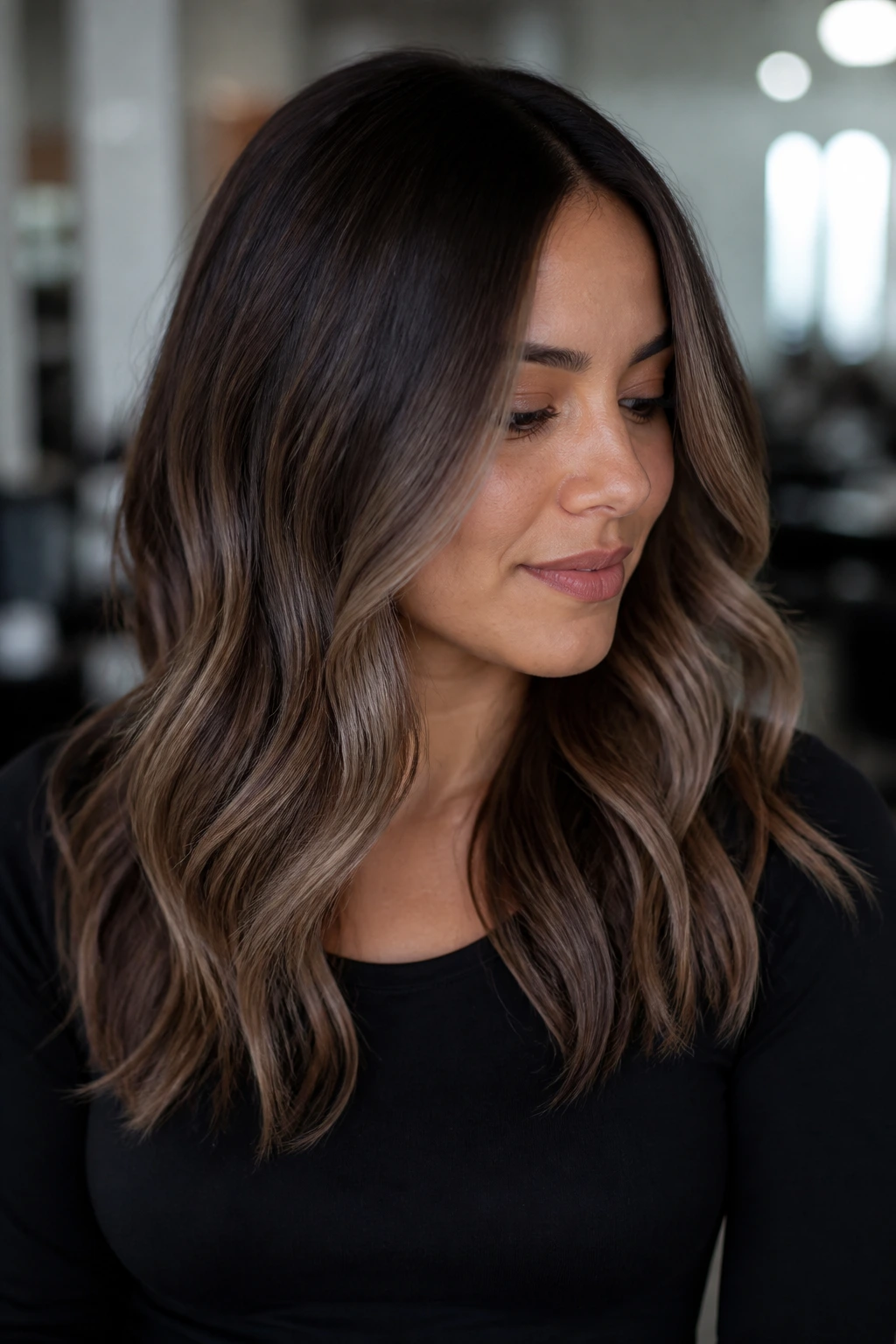
Ash brown can work on tan skin, but only when it stays smoky, not gray. The trick is to keep enough brown in the formula so the color doesn’t turn chalky against warm skin. A soft root shadow helps, too, because it stops the ash from floating at the temples.
This is the shade I’d suggest for olive or neutral tan undertones. If your skin already has a lot of golden warmth, go careful here; too much ash can make the face look a bit tired. The payoff, though, is a cool, modern brunette that still feels wearable.
For round faces, the placement matters more than the ash tone itself. Keep the lightest pieces low and narrow, then let the smoky finish sit through the ends. It reads sleeker, and sleeker usually means longer.
5. Cinnamon Brunette with Sunlit Ends
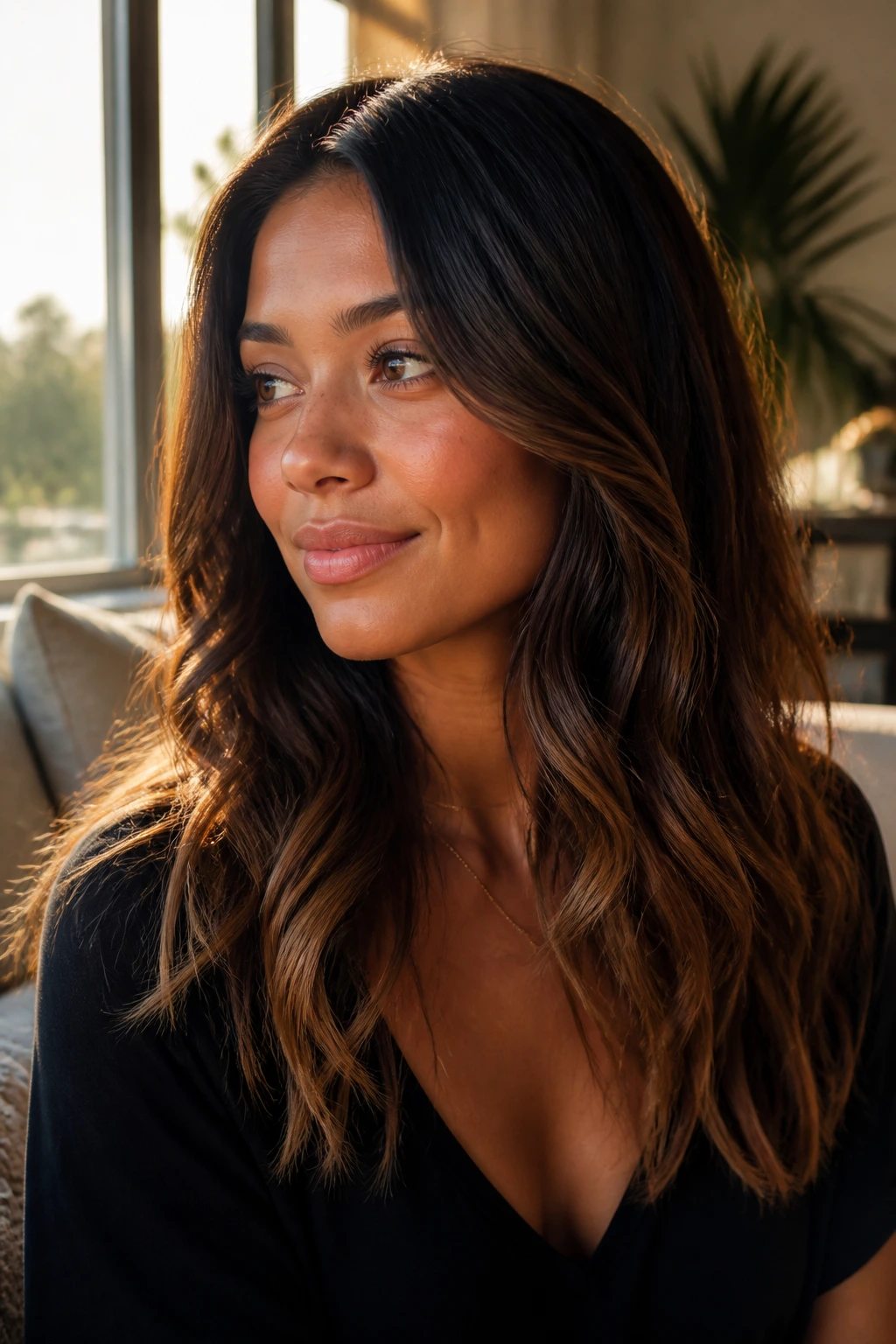
Cinnamon brunette brings heat to golden tan skin without tipping into copper overload. The color should feel like a dark brown base that has picked up a little warmth at the edges, almost as if the sun stayed on the ends for an afternoon and not much longer. That restrained warmth is what keeps it classy.
A round face likes the way cinnamon can soften the cut without ballooning it. If the face frame is kept slim and the lightest points land below the cheekbone, the warmth acts more like a glow than a stripe. I’d wear this with loose bends and a soft side part, never with a blunt, even blow-dry.
It is also one of the easier brunettes to grow out. The new growth blends fast, and the ends stay interesting even after a few months. That matters when you want color that works, not color that demands attention every six weeks.
6. Cocoa-to-Toffee Ombré
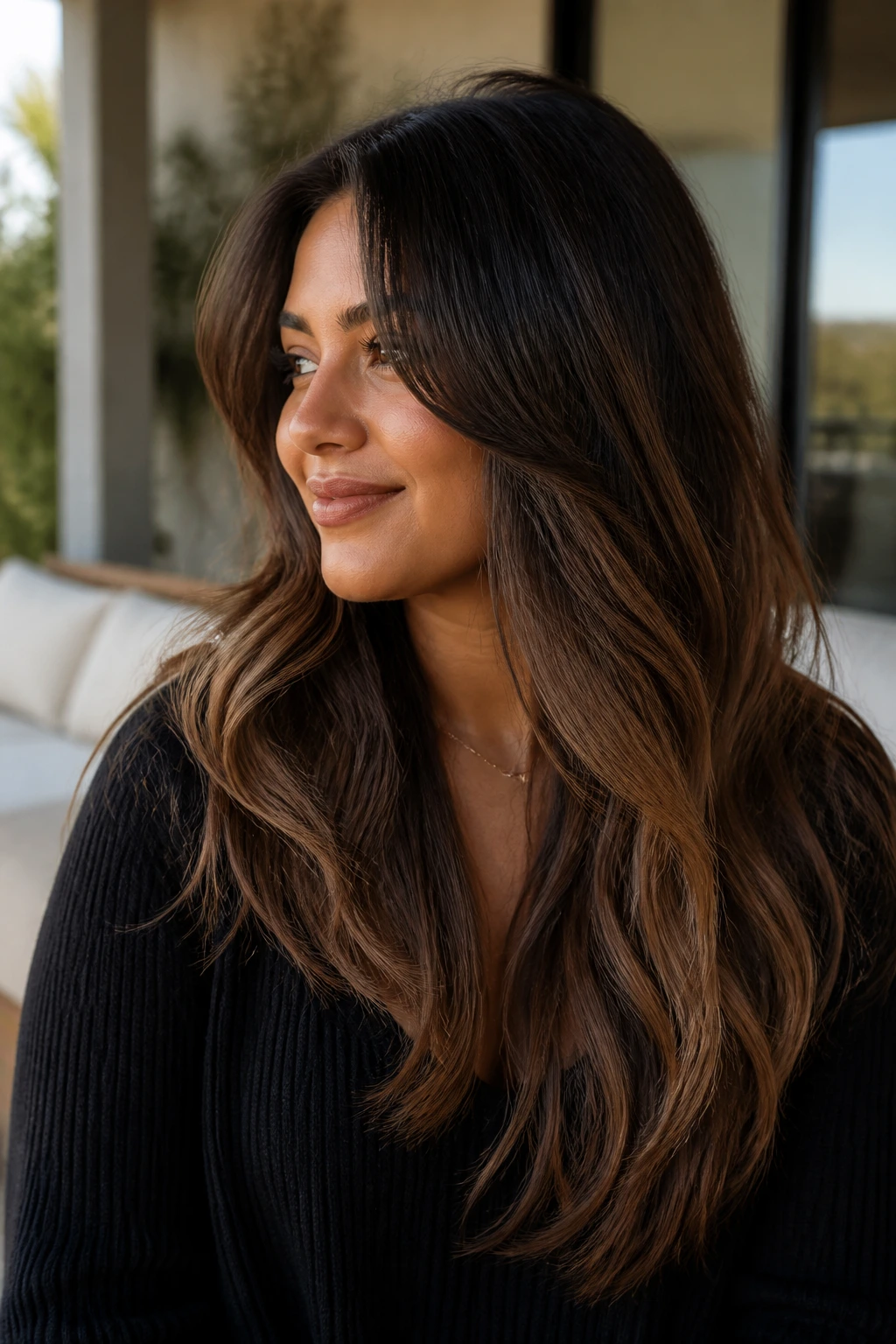
Ombré earns its place here because it lets the face stay dark and the length do the talking. Cocoa at the root keeps the top dense, then the toffee shift appears lower down where the hair naturally narrows. On long hair, that gradient can look very clean.
The reason this works on round faces is simple: no bright line sits across the middle of the cheeks. Instead, the lightness starts lower and continues toward the ends, which stretches the profile in a way thick highlights never do. Tan skin usually likes the toffee when it stays brown-leaning, not yellow.
I like this best on hair that already has movement — long layers, soft waves, or a few face-framing pieces cut slightly shorter than the rest. Without that movement, the ombré can feel heavy at the bottom. With it, the whole style looks intentional.
7. Mushroom Brown Balayage for Neutral Tan Skin
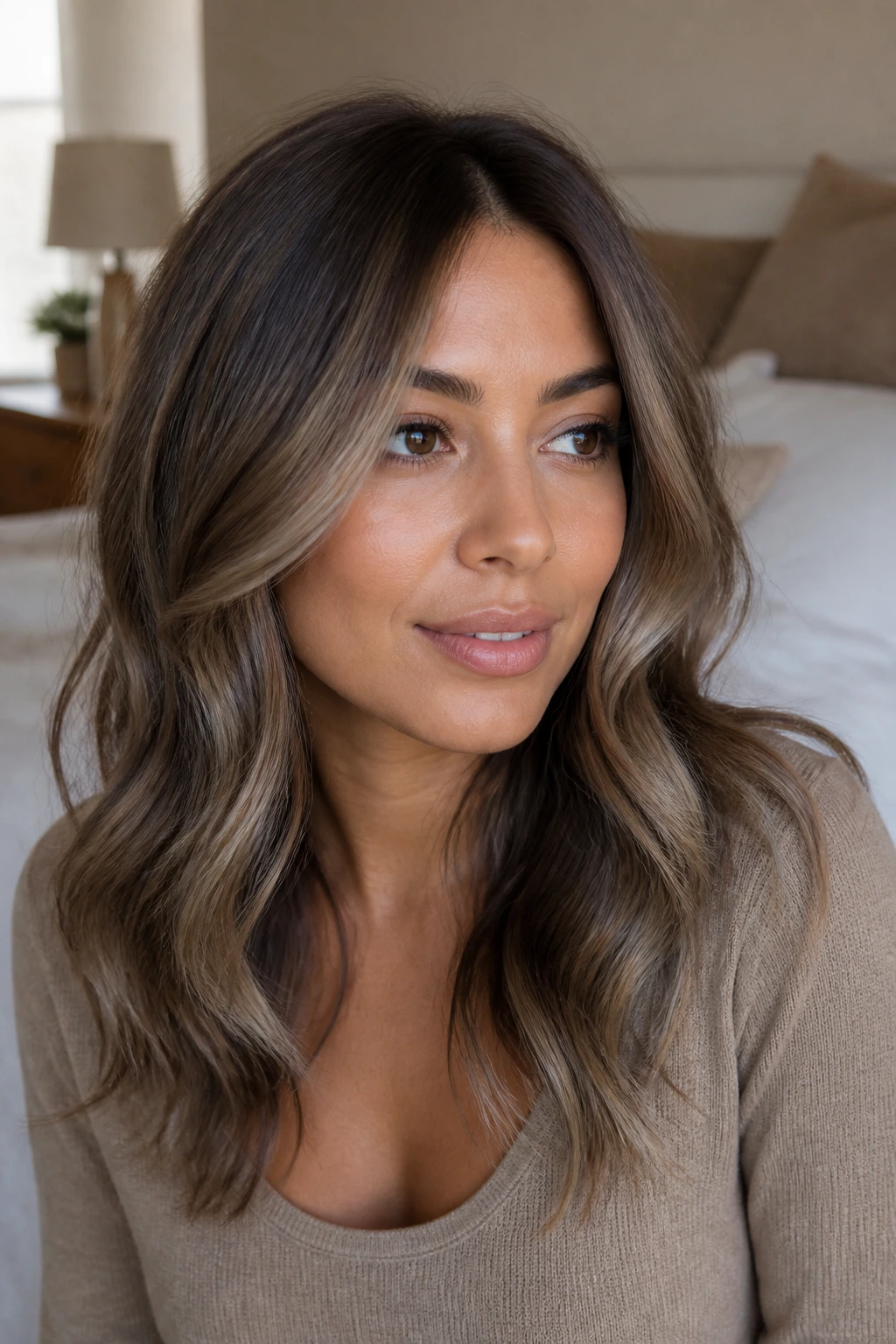
Mushroom brown is the quiet one in the lineup. It sits between beige and taupe, with enough softness to keep tan skin looking clean rather than muddy. If your undertone leans neutral, this is one of the smartest browns you can ask for.
What makes it different
The shade is cool, but not icy. That is the key. A round face gets the benefit of the soft contouring effect without the hard contrast that can make the cheeks feel wider. Ask for ribbons that are fine at the front and slightly denser underneath, where they’ll show when the hair moves.
It also loves a blunt cut more than people expect. A collarbone lob with mushroom balayage and a slight bend at the ends gives you shape without extra fuss. Straight hair makes the smoky finish look modern; waves make it softer.
8. Chestnut Bronde with a Deep Crown
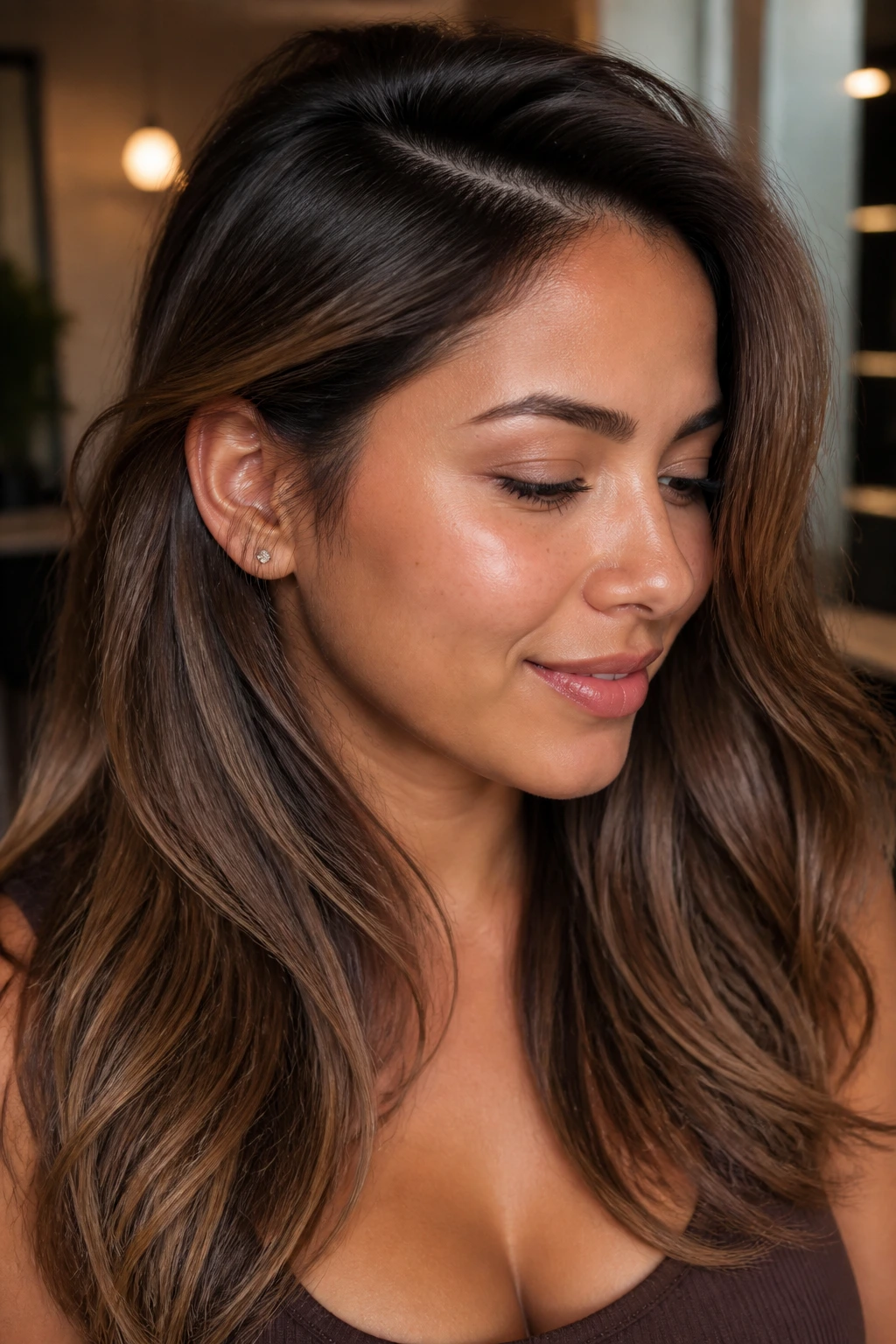
Chestnut bronde gives you a little lift without crossing into blond territory. Think dark chestnut at the root, then a gentle step lighter through the mid-lengths, stopping well short of anything pale. On tan skin, that makes the complexion look awake instead of washed out.
The deep crown is the part I care about most. Keep the top darker and the round face looks less broad right away. The lighter chestnut can live on the outside layers and around the lower face, where it creates movement instead of width.
This one is especially good if you like your hair to look expensive without looking obvious. It is not loud. It just gives the cut some air. In dim light it reads brown; in daylight it shows the lighter chestnut threads.
9. Bronze Brunette Waves
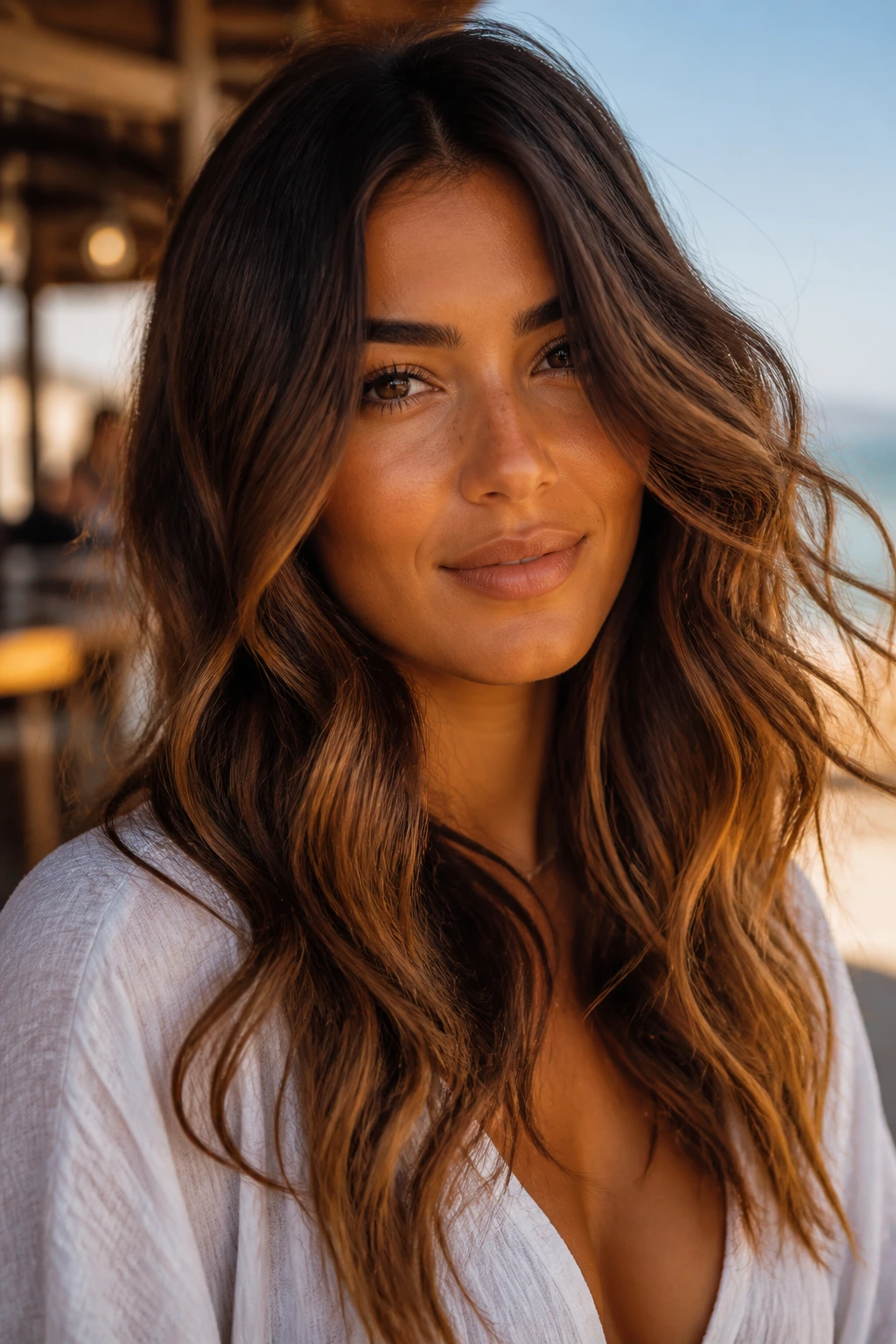
Bronze brunette waves are for people who want the color to glow when the hair moves. Bronze has that warm-metal sheen that sits nicely on golden tan skin, especially when the base is still dark enough to hold it down. The result is richer than caramel, less red than copper.
Round faces benefit from the way bronze can be painted in vertical ribbons. The front pieces should start a little lower than the cheekbone and taper through the lower half of the hair. That keeps the glow where it elongates instead of where it widens.
This shade looks especially good in loose waves with a bit of bend at the ends. Too sleek, and the bronze can disappear. Too curly, and the effect can get busy. Somewhere in the middle is the sweet spot.
10. Mahogany Balayage with a Low Face Frame
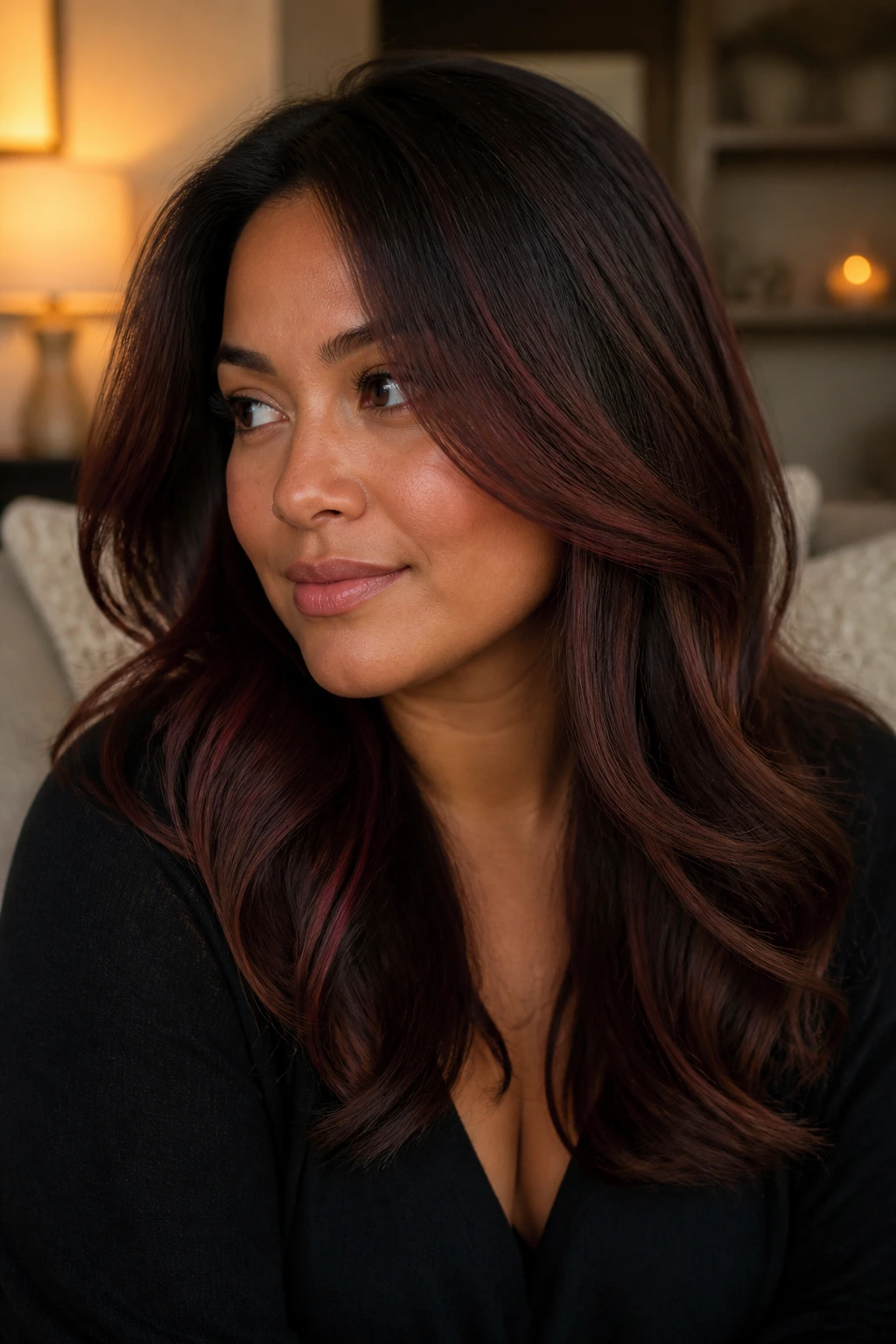
Mahogany is the deepest warm red-brown that still feels wearable. It adds a wine-dark richness to tan skin, especially on deeper complexions or anyone with dark eyes and strong brows. If caramel feels too sunny, mahogany gives you more depth.
A low face frame is the move here. Keep the lightest mahogany threads below the cheekbone and let the color stay darker near the temples. That subtle drop gives a round face a longer line and keeps the red-brown from reading as a halo.
Who should ask for it
If your hair tends to look dull in one-tone brown, this fixes that fast. The red undertone catches the light without jumping into obvious red, and the whole thing looks especially good in a soft blowout. It is one of those shades that does not need much help once it is placed well.
11. Deep Coffee Balayage with Curtain Bangs
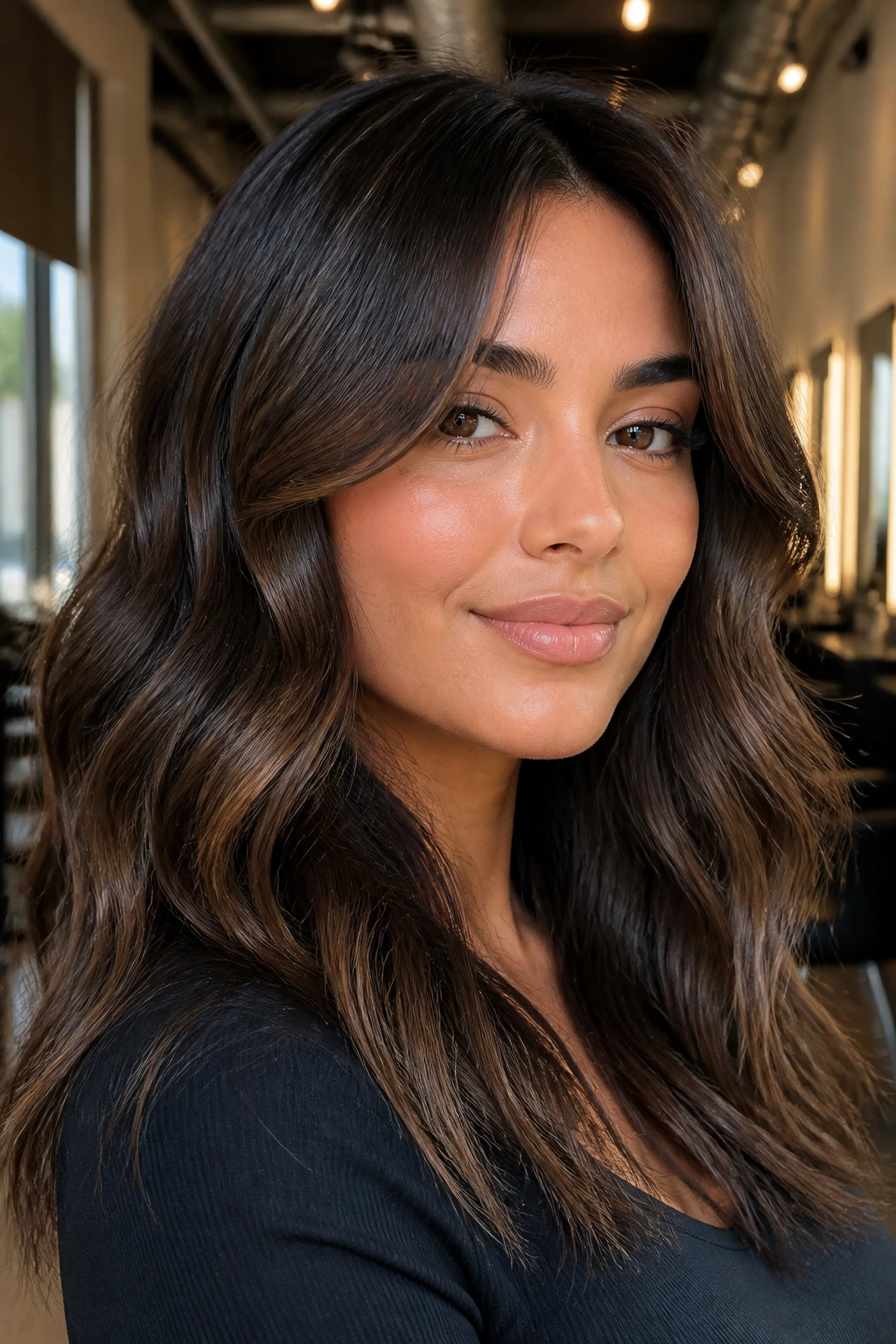
Deep coffee is the color equivalent of a strong clean line. It stays close to brunette, but the softer coffee ribbons keep the finish from feeling flat. On tan skin, especially tan skin with a little olive in it, the shade can look grounded and sharp.
Curtain bangs change the geometry in a good way. They break up the width of a round face and give the front of the haircut some length at the sides. I’d keep the bangs a touch longer, not blunt, so they blend into the coffee balayage instead of chopping it in half.
The best version has lightness only around the outer edges of the bangs and the lower layers. That way the eyes travel down, not across. It’s a small adjustment, but the cut reads more intentional because of it.
12. Walnut Brown with Narrow Money Pieces
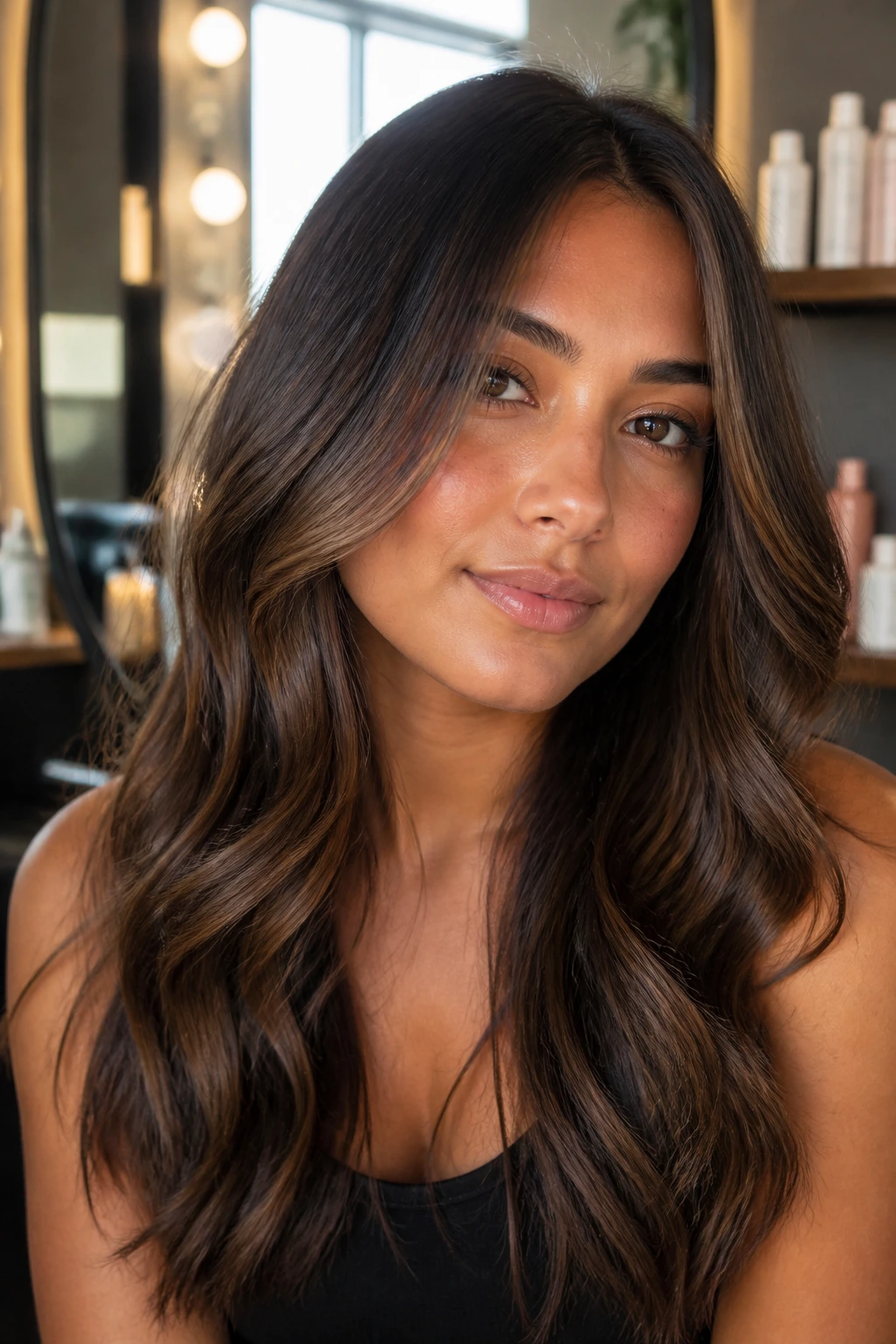
Walnut brown is one of those shades that sounds simple until you see it in good light. The base stays rich and dark, while narrow money pieces at the front add a crisp edge. On tan skin, the walnut keeps things earthy and grounded.
I like the money piece narrow enough that you almost miss it from across the room. That is the whole point. A round face does not need a wide bright block to frame it; it needs a controlled sliver of light that points downward and softens the jaw.
This look works particularly well on medium-length cuts and lobs. You can tuck one side behind the ear, let the brighter piece swing forward, and the color does the shaping for you. It’s quiet, but not boring.
13. Honey-Edged Brunette Balayage
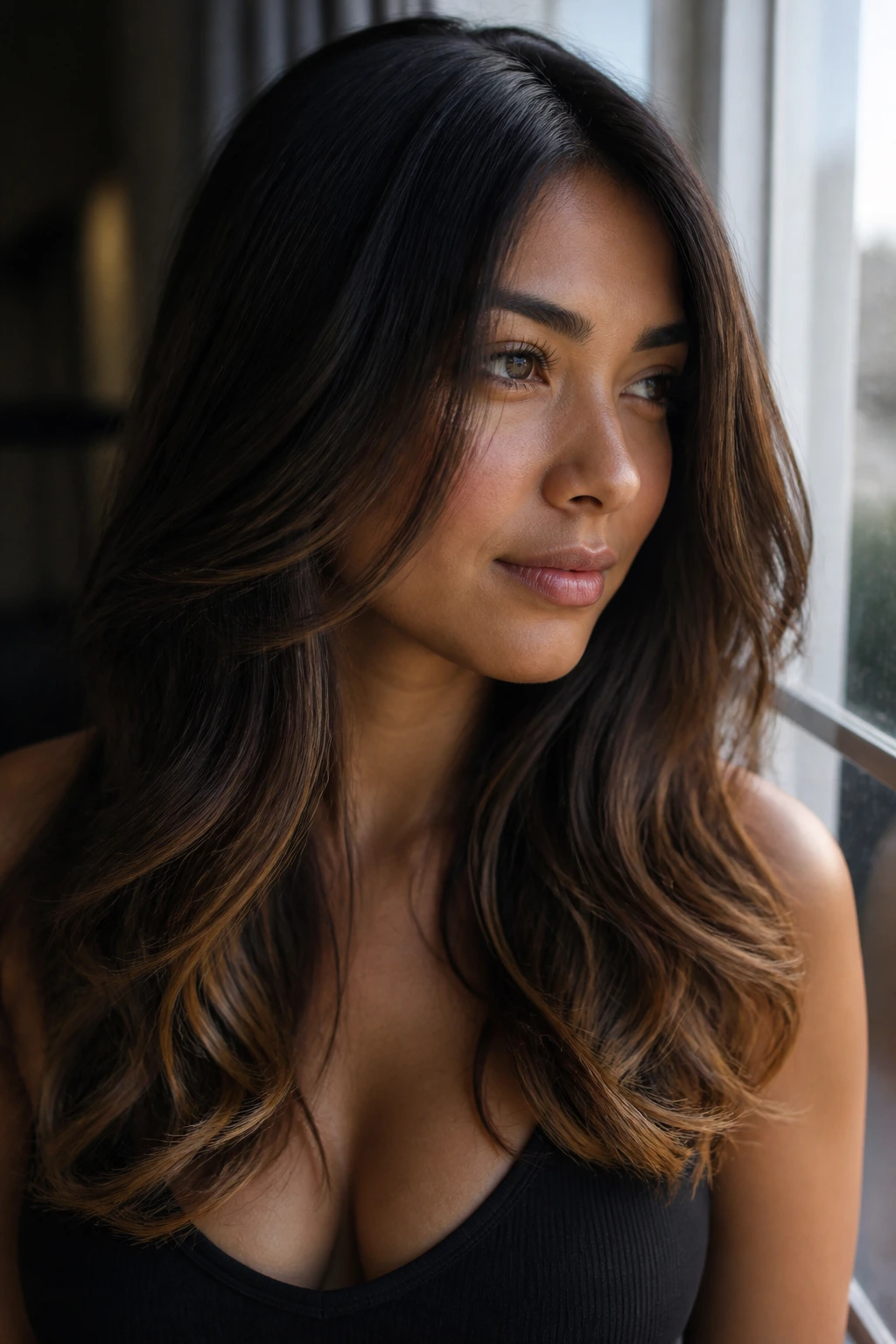
Honey-tinged ends can be lovely on tan skin, but only if the honey stays at the edges. Put too much of it near the face, and the warmth can turn brassy fast. Keep the base brunette and let the honey appear on the last few inches, where it looks sun-caught rather than over-processed.
The sweet spot
Round faces usually look better when the brightness stays low and narrow. That means no wide blonde panels at the temple, and no light strip sitting right where the cheeks are fullest. A slim sweep at the lower front and a softer honey finish at the ends works much better.
This style is especially good on layered cuts that move when you walk. The honey flashes in and out, which gives the brunette more life. If your hair is thick, ask the colorist to keep some darker panels underneath so the ends do not puff out visually.
14. Plum Brown Melt
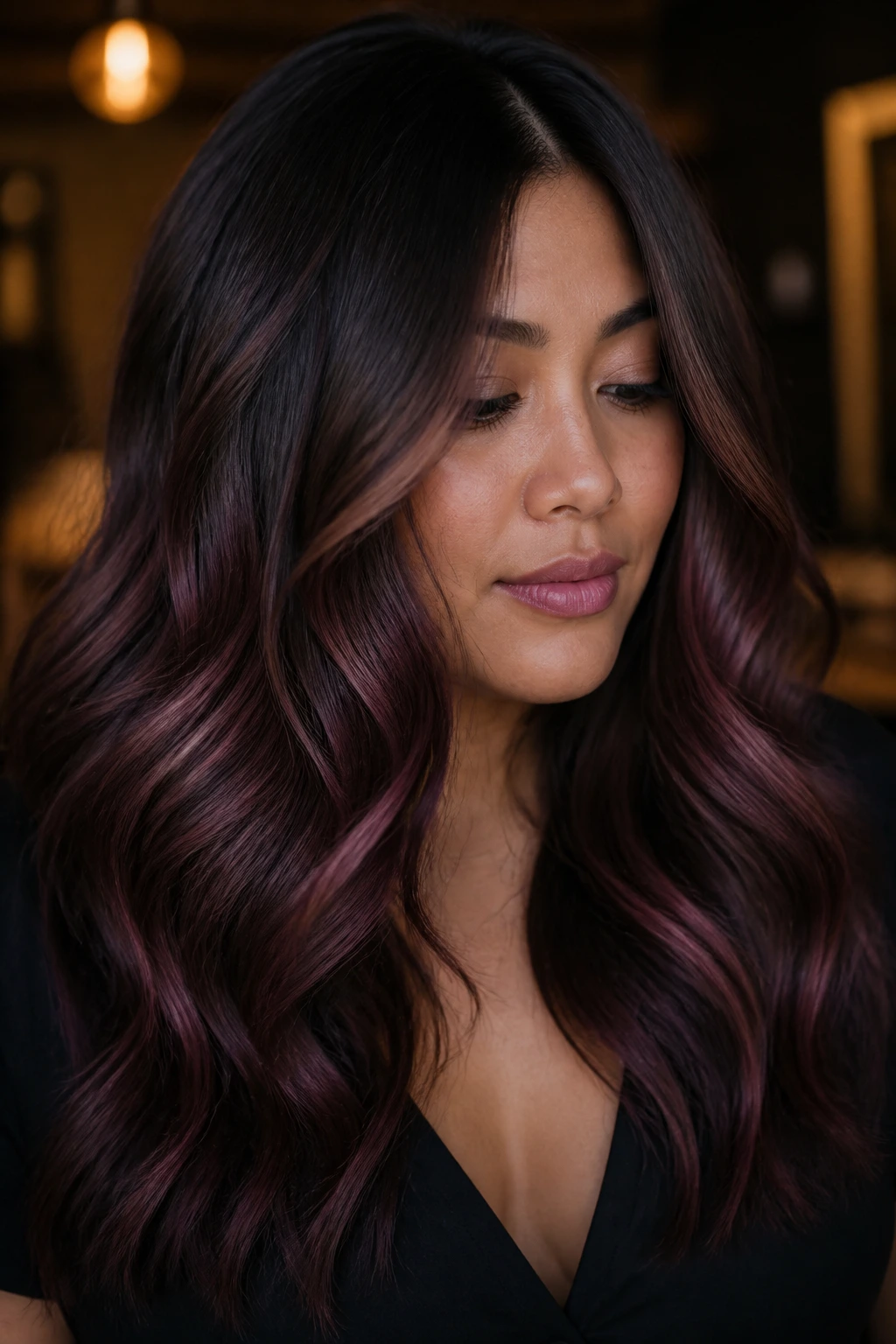
Plum brown is for someone who likes brunette with a little edge. The violet-red note gives tan skin a deeper, cooler richness, especially if the complexion leans neutral or slightly cool. It is still brown first; the plum just hangs around the edges like a good secret.
A melt works better than hard ribbons here. The top should stay close to the natural base, then the plum bloom shows up lower down where the hair thins out. That keeps the color from widening the face and lets the longer lengths carry the drama.
I’d wear this one with a center part or a soft off-center part, depending on how much face-framing you want. In shine, the plum is subtle. In direct light, it looks expensive in that moody, dark-fruit way that some brunettes pull off better than blondes ever will.
15. Bronze Ombré on Layered Waves
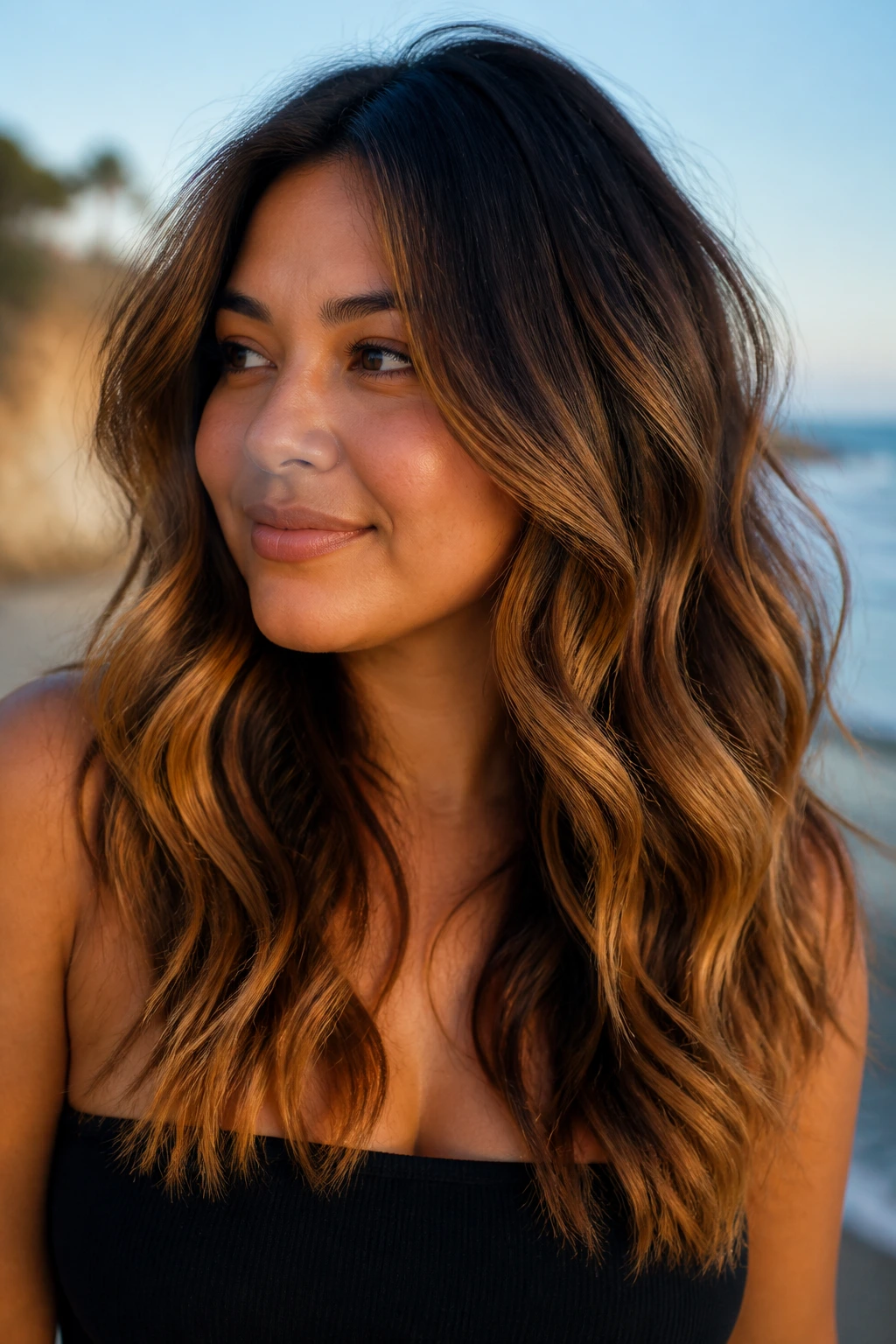
Bronze ombré on layered waves looks especially good when the color shift has room to move. The darker root anchors the top, and the bronze comes in lower, where the waves can catch light on each bend. On tan skin, the warm metallic tone reads lively without going yellow.
Layers matter here. Without them, ombré can feel like a block of lighter ends sitting under a dark shell. With them, the transition feels soft and vertical, which is exactly what a round face needs. The eye follows the changing lengths instead of stopping at the cheeks.
This is one of the more beachy looks in the set, but it does not need to be casual. A smooth blowout can make bronze ombré feel polished; loose waves make it softer. Both work.
16. Cool Cocoa and Beige Brown
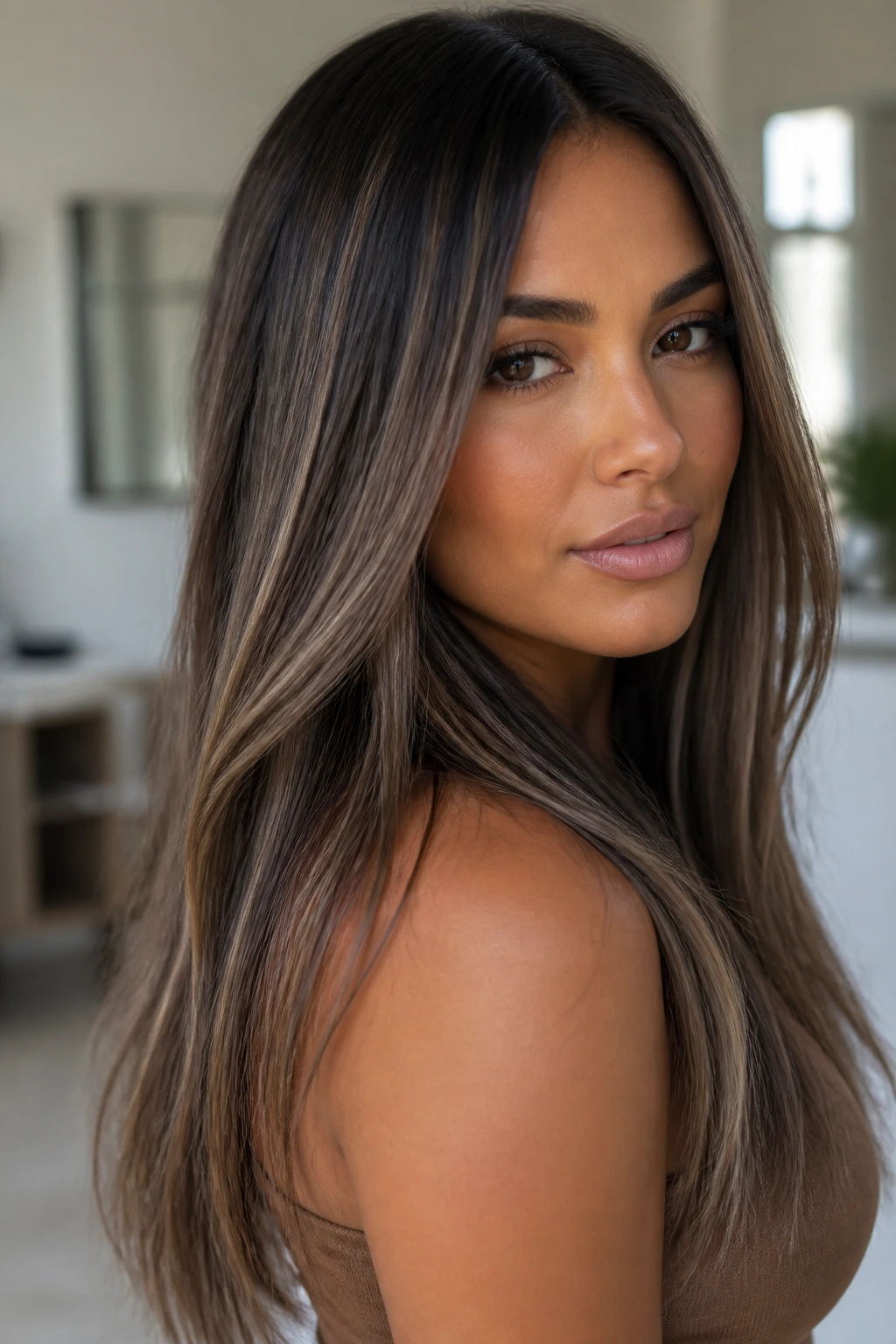
Cool cocoa and beige brown is the answer for tan skin that gets overwhelmed by golden highlights. The brown stays deep and rich, while the beige tone comes in softly enough to brighten without warming too much. If your undertone is olive, this shade can look especially clean.
The face shape advantage comes from the softness of the transition. There is no blunt border anywhere. Instead, the lighter beige pieces live lower on the sides and along the ends, which keeps the profile long and smooth.
When to choose it
Pick this if you want dimension but hate obvious highlights. The finish is muted, and that is the charm. In straight hair it looks sleek; in waves it looks more airy. Either way, the contrast stays low, which suits round faces better than a high-contrast stripe.
17. Auburn-Brown Balayage for Warm Tan Skin
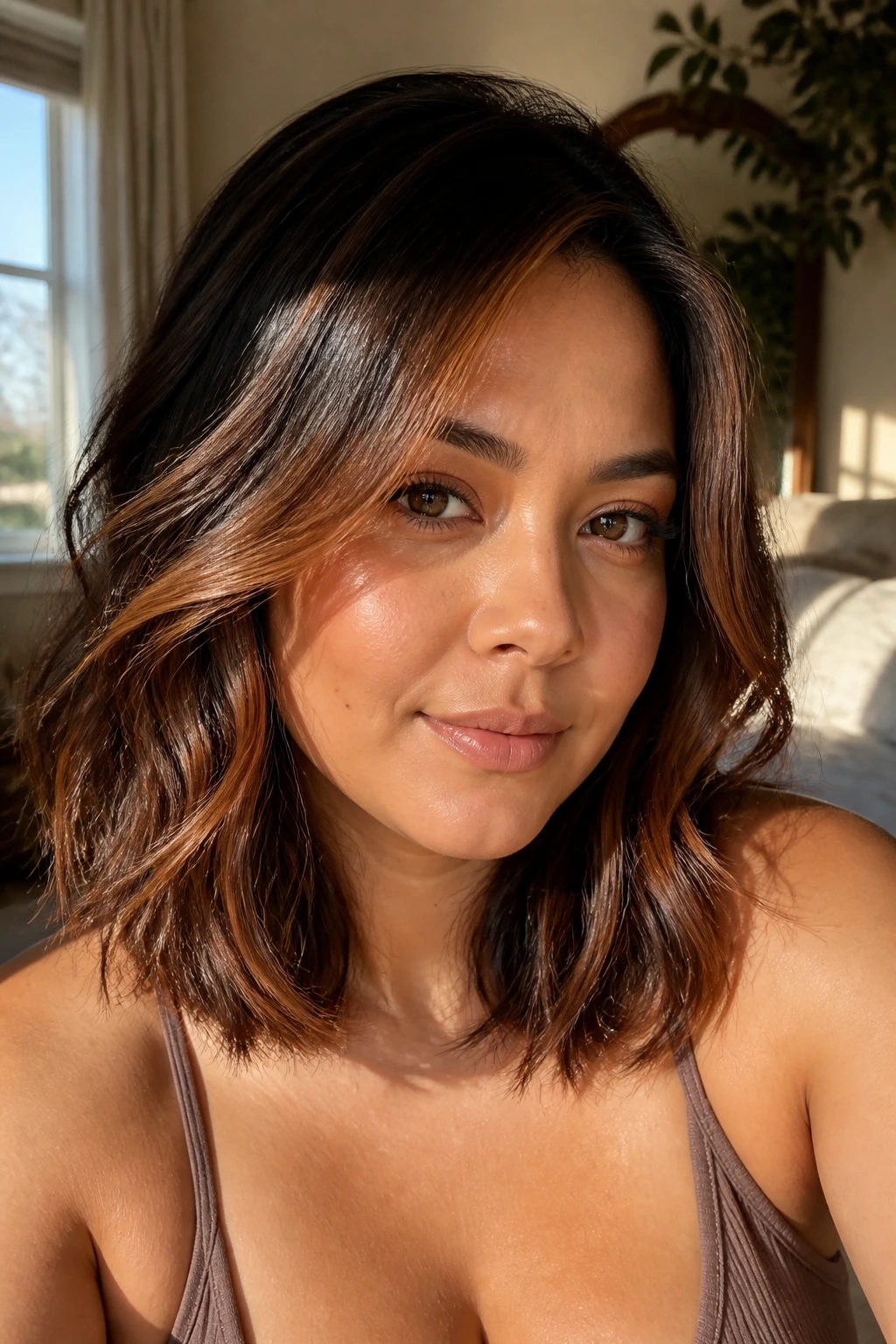
Auburn-brown is the warmest option in the group without crossing fully into red. It gives tan skin a healthy, almost terracotta glow, especially when the auburn sits in the mid-lengths rather than right at the root. If your skin already carries gold, this can be a very good match.
The trick is moderation. Too much copper and the hair starts shouting. Keep it brown first, auburn second, and let the highlights sit lower on the face. That keeps the roundness in check and prevents the front from expanding visually.
This shade looks good on shoulder-length cuts and long layers alike. I’d skip very chunky placement here. Auburn likes movement, not blocks. Give it a soft wave and it comes alive.
18. Caramel Contour Balayage
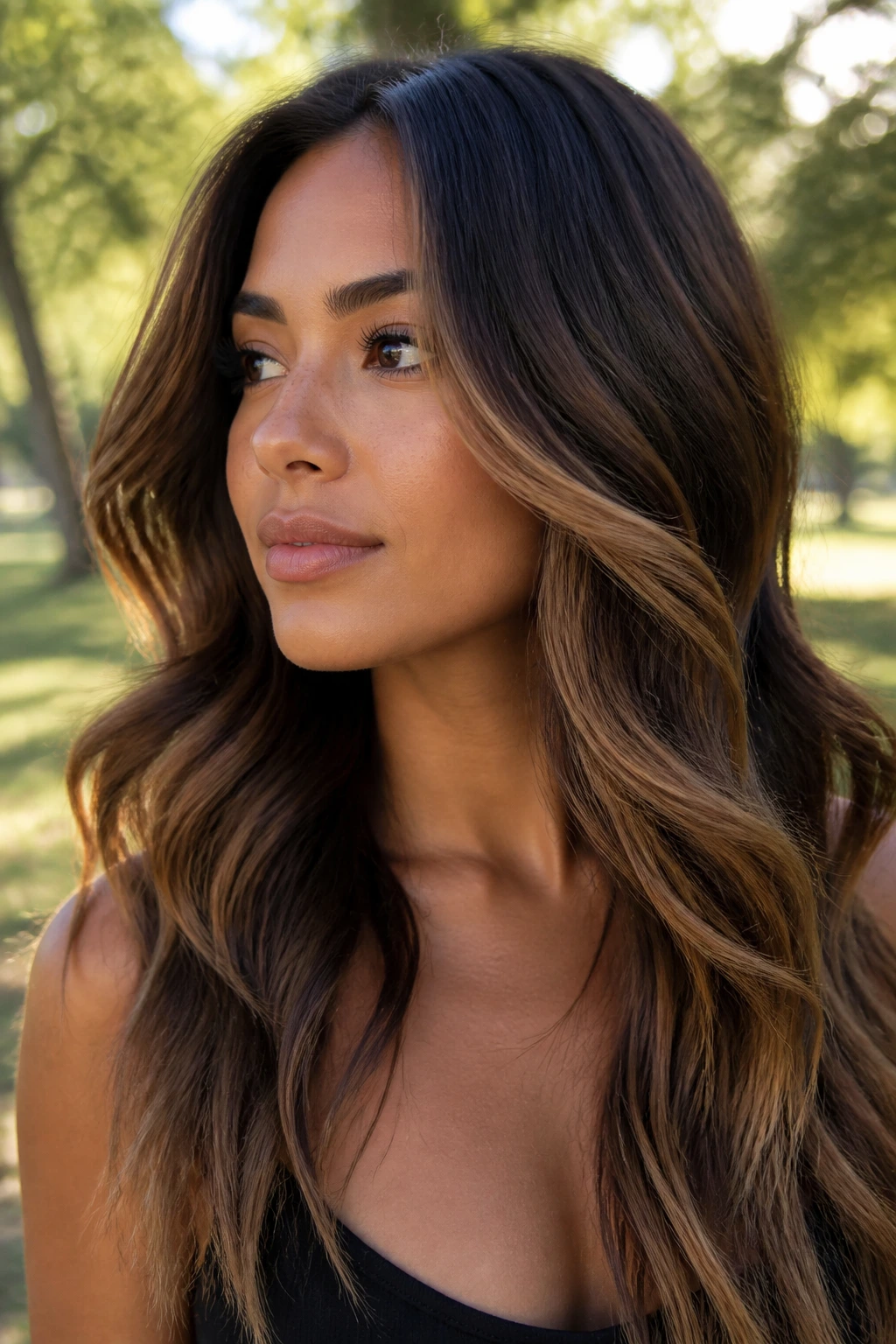
Caramel contour balayage is basically face framing with a job description. The caramel is painted where contour would go — along the outer curves, around the cheekbone, and then down toward the jaw and collarbone. On tan skin, that warmth reads flattering instead of loud.
For round faces, this is one of the smartest choices on the list. The lighter pieces sit where they can visually stretch the face, not widen it. A narrow front section and a darker root at the crown keep the whole look balanced.
I like this version best when the caramel is a touch muted, not candy-colored. The goal is shape, not sugar. If you want your hair to look like it has been placed with purpose, this is the one.
19. Smoked Maple Brunette
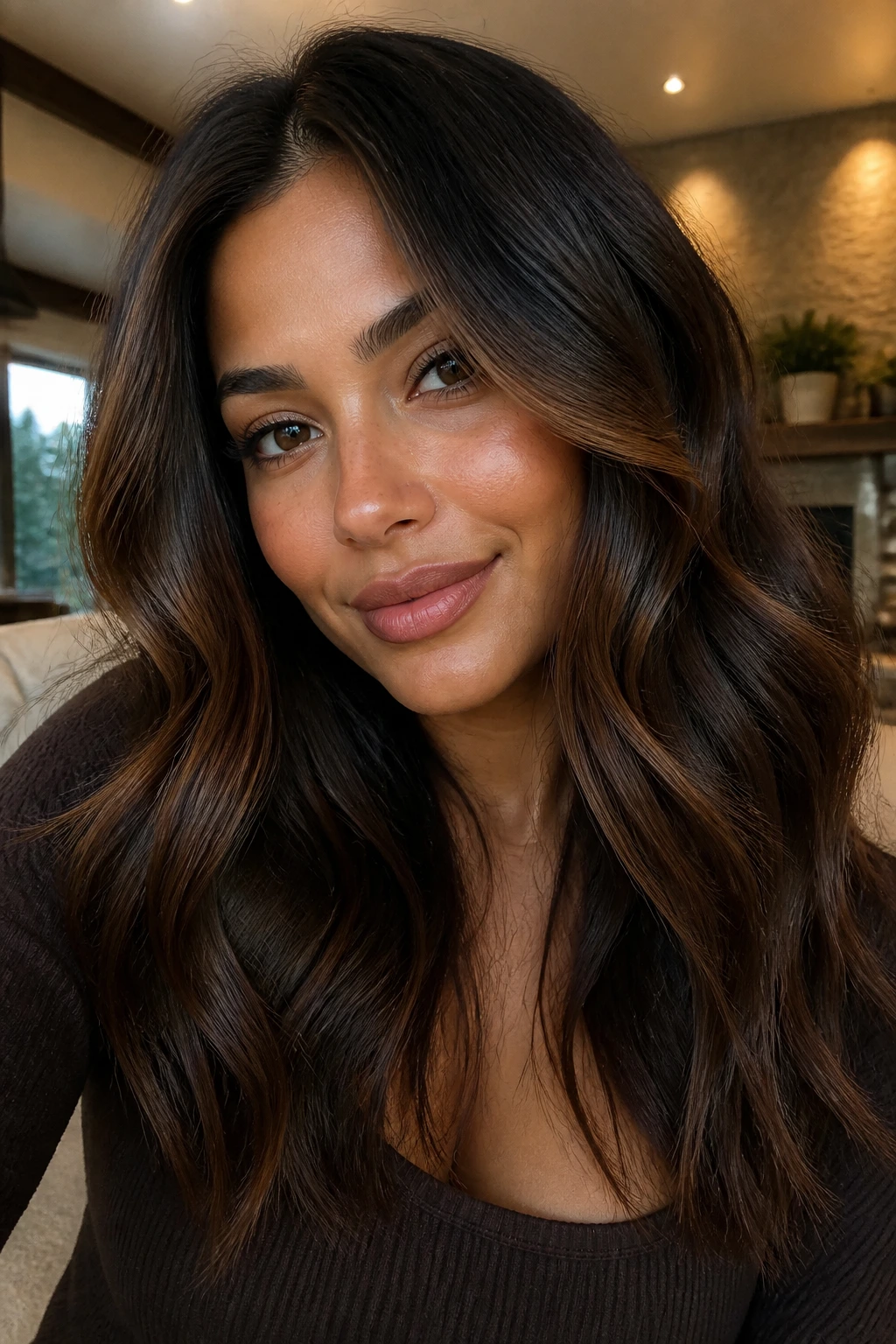
Smoked maple sounds sweet, but the smoked part matters more. The base stays a deep brunette, while the maple tone adds a warm brown glow that never tips orange. On tan skin, especially skin with warm-neutral undertones, it lands rich and wearable.
This one benefits from a soft, almost hidden placement pattern. Brightness near the ends, a few face pieces that start below the cheekbone, and darker panels underneath to keep the shape grounded. A round face needs that balance. Too much light at the outer edges and the silhouette spreads.
Best for low-maintenance wearers
If you want the color to grow out without much drama, smoked maple is a smart pick. It will blur nicely between salon visits, and a quick gloss can bring the warmth back when it starts to fade. You do not need to baby it every week.
20. Espresso-to-Mocha Ombré Bob
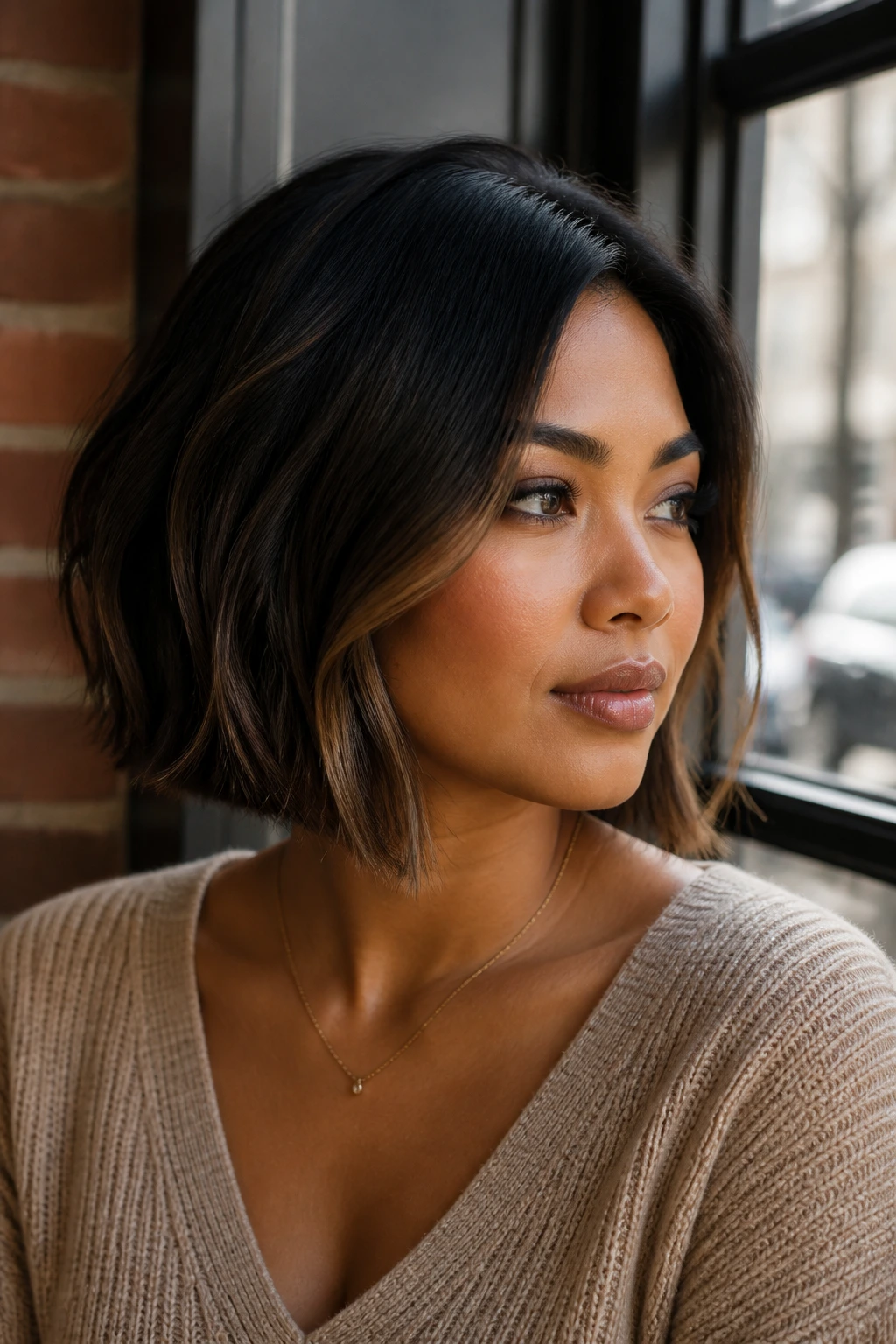
A bob changes the whole conversation because the cut already sits close to the face. That’s why espresso-to-mocha ombré works so well here: the darker top keeps the shape tight, and the mocha ends add movement without making the bob look heavy. On tan skin, the contrast reads clean.
For round faces, the ombré should stay low and subtle. Keep the darker root prominent and let the mocha show mostly through the bottom half of the cut. If the bright pieces start too high, the bob can puff outward around the cheeks.
I prefer this with a slight bend under at the ends or a soft wave, not poker-straight every day. The bend creates a tiny vertical line that helps the face look longer. Bobs need that more than people think.
21. Chestnut Ribbon Curls
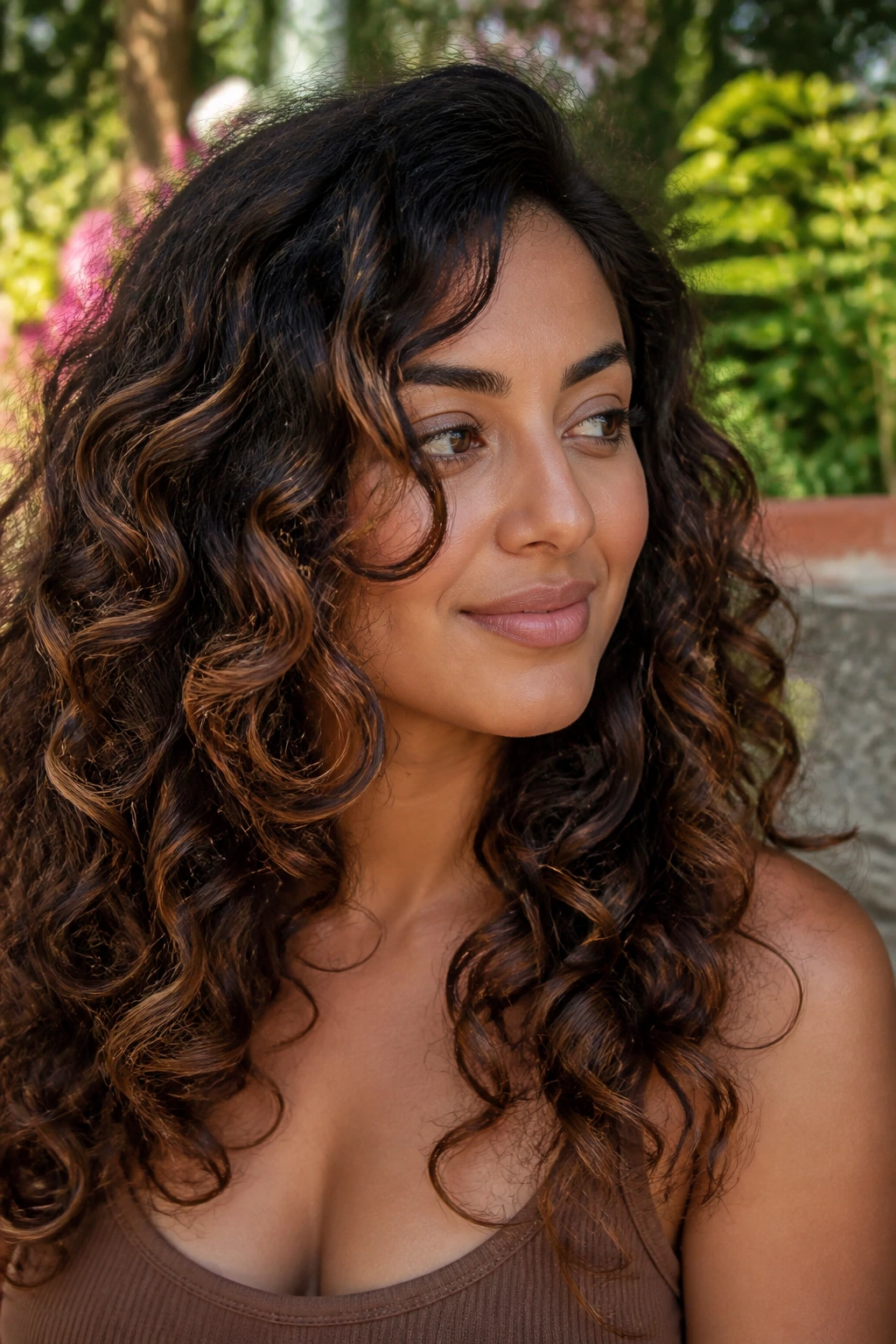
Curly hair changes how balayage behaves, and chestnut ribboning is one of the nicest ways to do it. Instead of painting broad bands, the color moves through the curl pattern in thin ribbons, so each coil catches light at a different spot. Chestnut on tan skin gives that movement warmth without going gold.
Round faces and curls can be tricky because volume can spread sideways. Chestnut ribbons help by drawing the eye down the curls rather than across the width of the hair. Keep the brightest strands lower on the curl clumps, not right beside the temples.
This is a good place to ask for less saturation near the top and more detail through the outer layers. A curly cut with shape around the chin and collarbone will show the color better than a heavy, all-one-length shape. The curl pattern does the rest.
22. Terracotta Brown Balayage
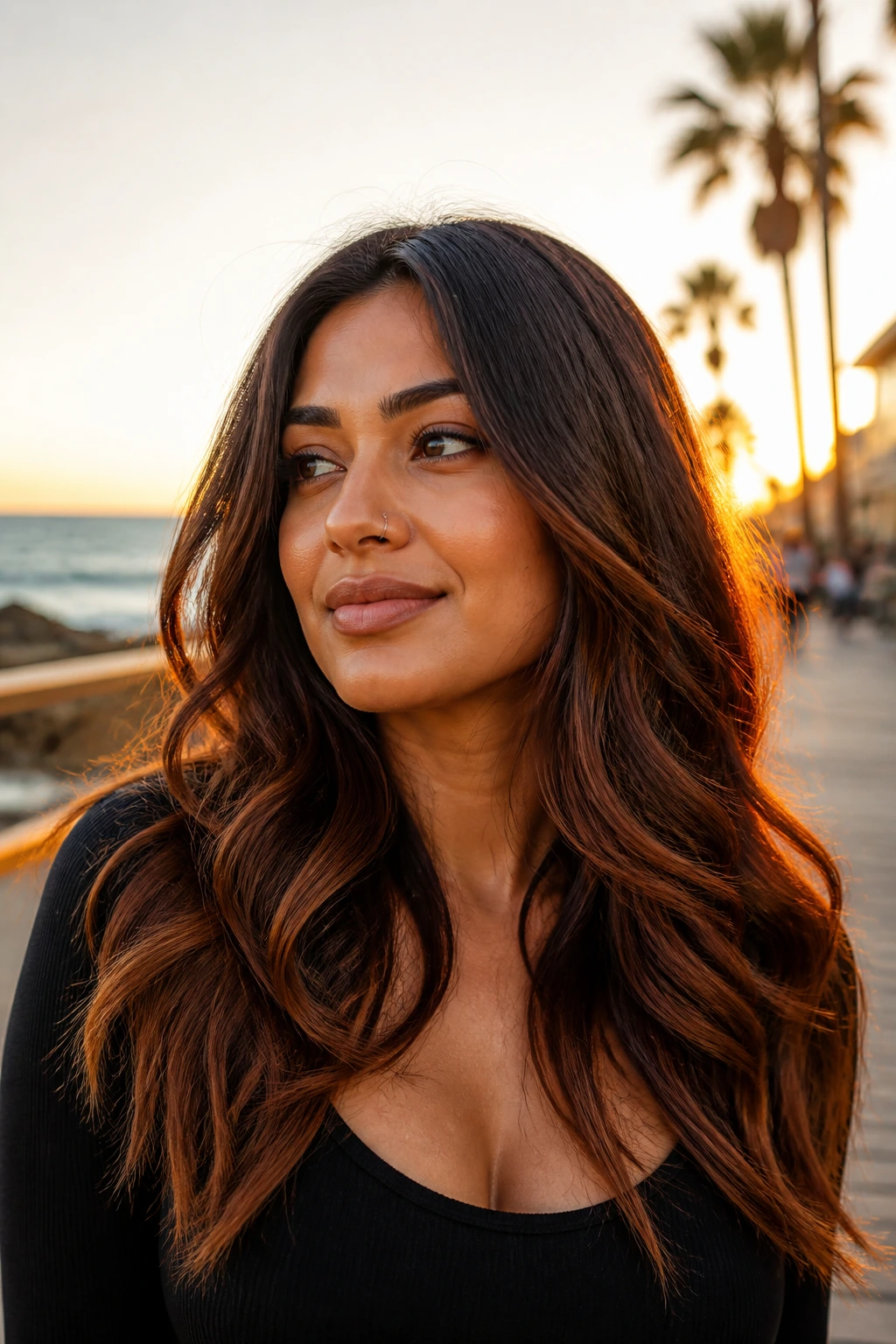
Terracotta brown is earthy, red-brown, and a little sunbaked in the nicest way. It suits tan skin that has warmth to spare, especially if the complexion leans golden or deep olive. The tone has enough red to wake up the face, but not so much that it screams copper.
Placement should stay soft and low. Terracotta can get strong if it sits too high around the face, which is exactly what you do not want on a round shape. Let it appear through the lower mid-lengths and ends, where it stretches the line of the hair.
I like this on thick hair and layered waves. The terracotta threads show up best when the hair moves, and the depth at the root keeps the color from drifting into flat rust. It is warmer than ash, cooler than auburn, and more interesting than plain brown.
23. Midnight Brown with Soft Beige Tips
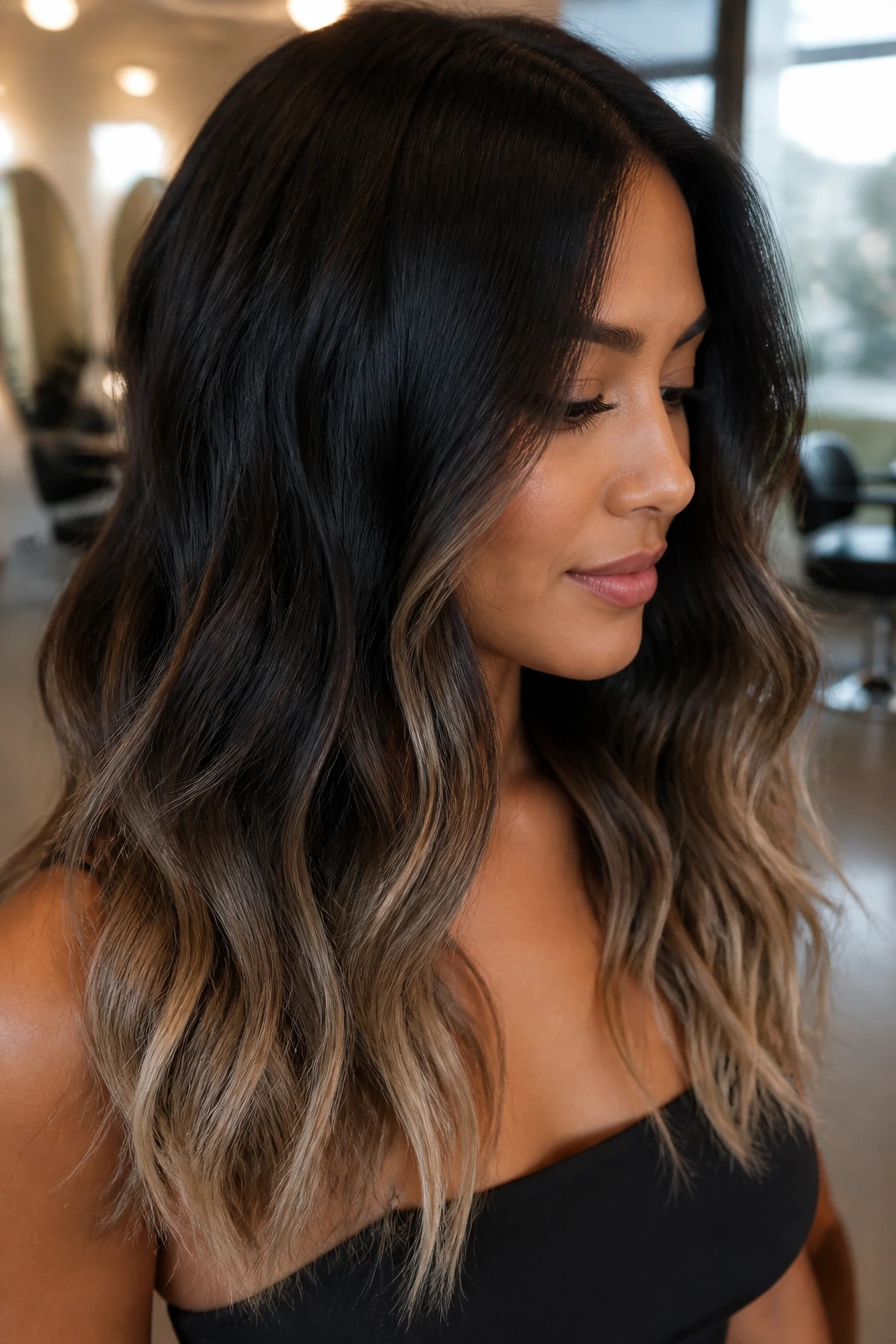
Midnight brown with soft beige tips is the subtle end of the spectrum. The base stays nearly black-brown, then the tips lighten just enough to catch the light without shouting about it. On tan skin, that contrast can look sleek and modern, especially if you prefer your color quiet.
Round faces usually benefit from this kind of restraint because the brightest area stays at the very ends. No wide money piece. No heavy band at the cheek. Just a slow fade that lengthens the hair visually and keeps the top looking dense.
This shade also grows out nicely. The dark root makes upkeep easy, and a beige gloss on the tips every so often keeps them from turning dusty. If you want movement without commitment, this is one of the safest bets here.
24. Rooted Latte Balayage
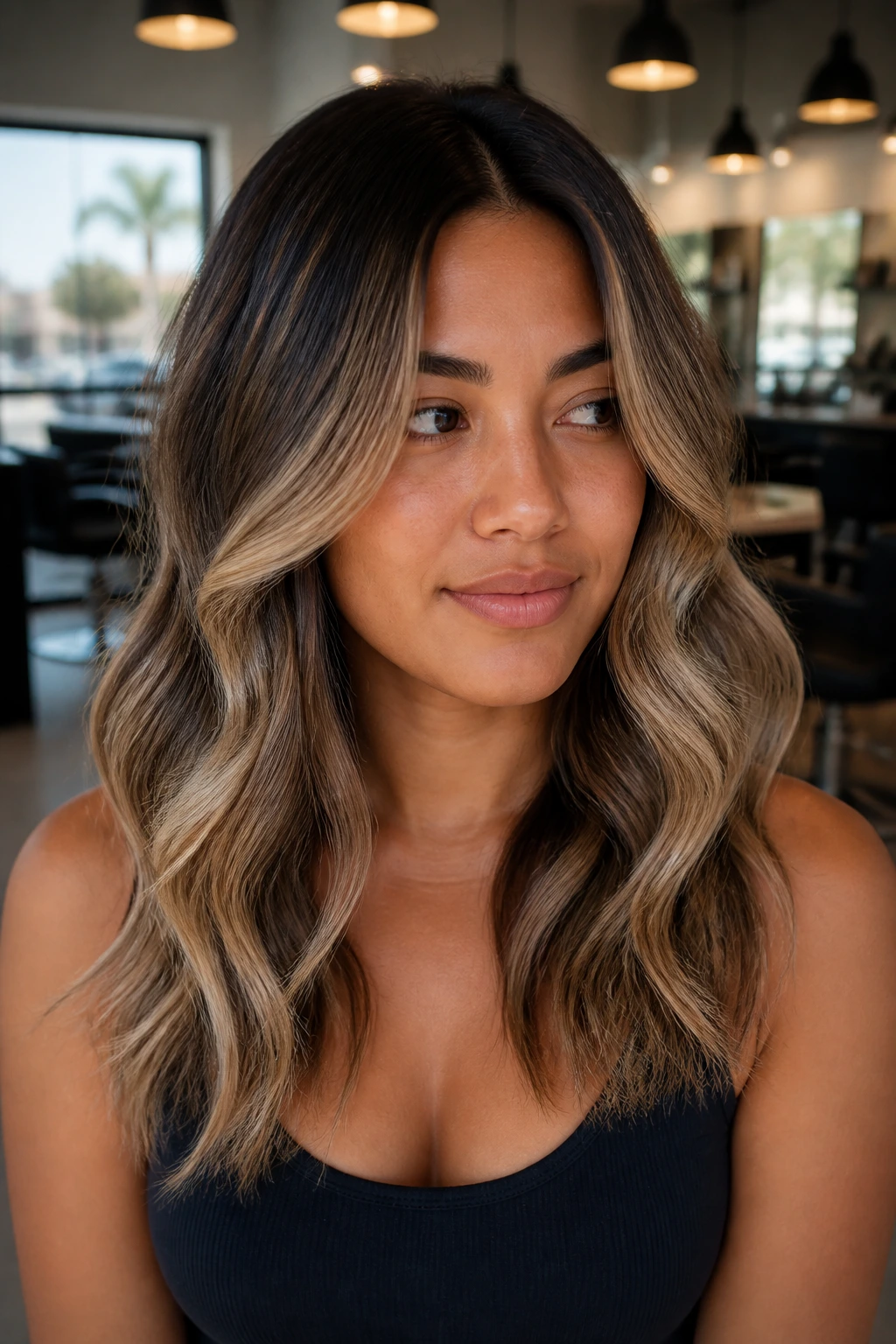
Rooted latte is creamy in the middle and dark at the top, which makes it one of the better soft-light options for tan skin. The latte tone should not be too pale; think warm beige-brown, not blond. That keeps the complexion from looking washed out.
The root shadow is doing real work here. It creates height at the crown and lets the lighter pieces sit lower, where they lengthen the face. On round faces, that shape matters more than the exact latte tone. The cut should still feel like brunette first.
I like this on medium-length layers and long bobs. It has enough brightness to show in photos, but it does not demand constant salon visits. If you want a brown that looks polished without looking done, this is a strong choice.
25. Walnut and Sandstone Face Frame
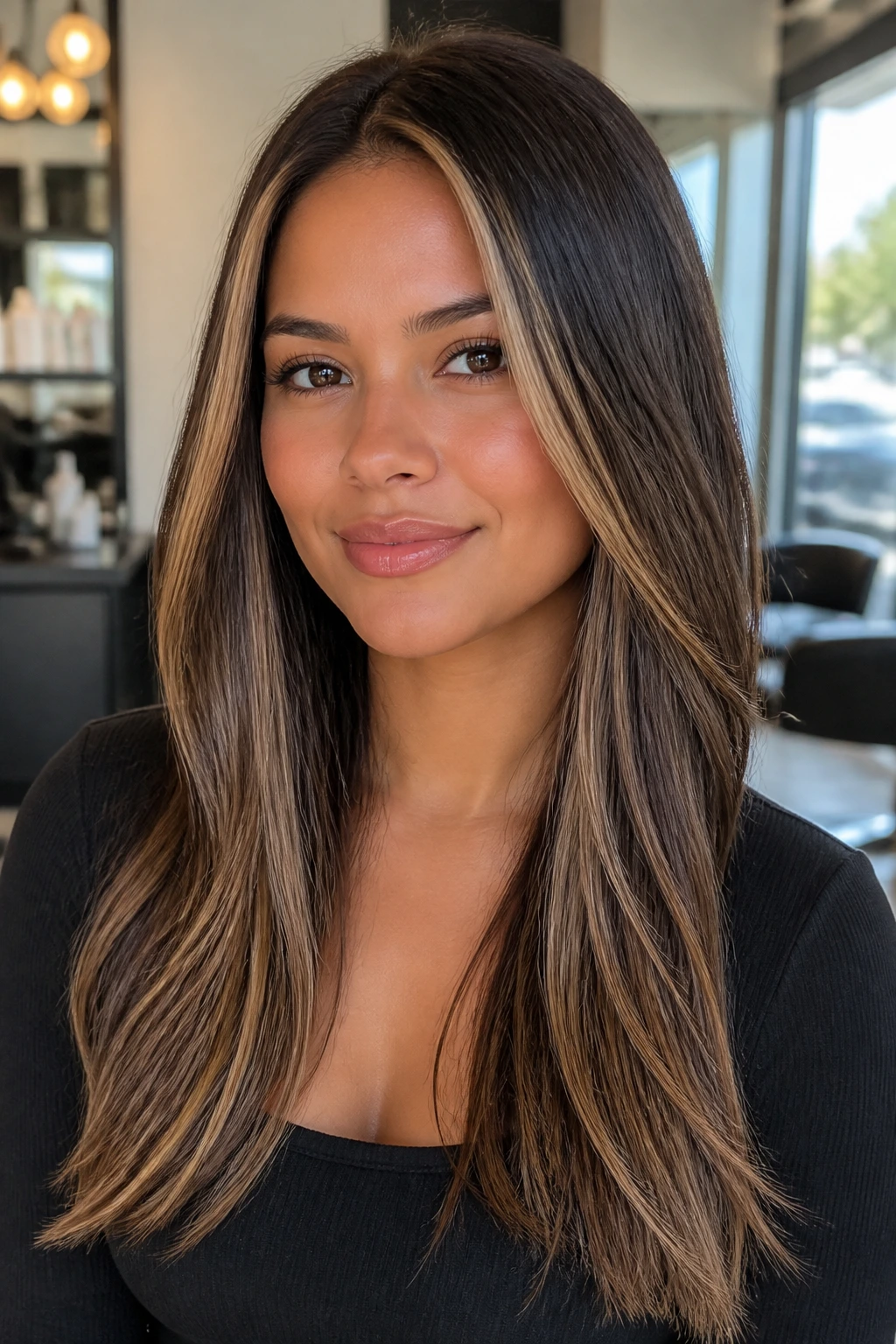
Walnut and sandstone is the one I’d hand to someone who wants the face-framing effect without a big color commitment. The walnut stays deep through the crown and back, while sandstone appears in narrow pieces around the front. On tan skin, that combination can look clean and bright without turning beige-heavy.
Why it suits round faces so well
The bright pieces are narrow, and they start low enough to avoid widening the cheeks. That gives the face a longer line and keeps the hair from feeling bulky at the temples. If you wear a middle part, the darker root at the center helps anchor everything.
It also works beautifully on straight hair, which is where a lot of face-framing colors fall apart. The walnut keeps the shape strong, and the sandstone gives just enough lift to keep the whole cut from looking flat. Quiet, yes. Flat, no.
How to Brief Your Colorist So the Placement Lands Right
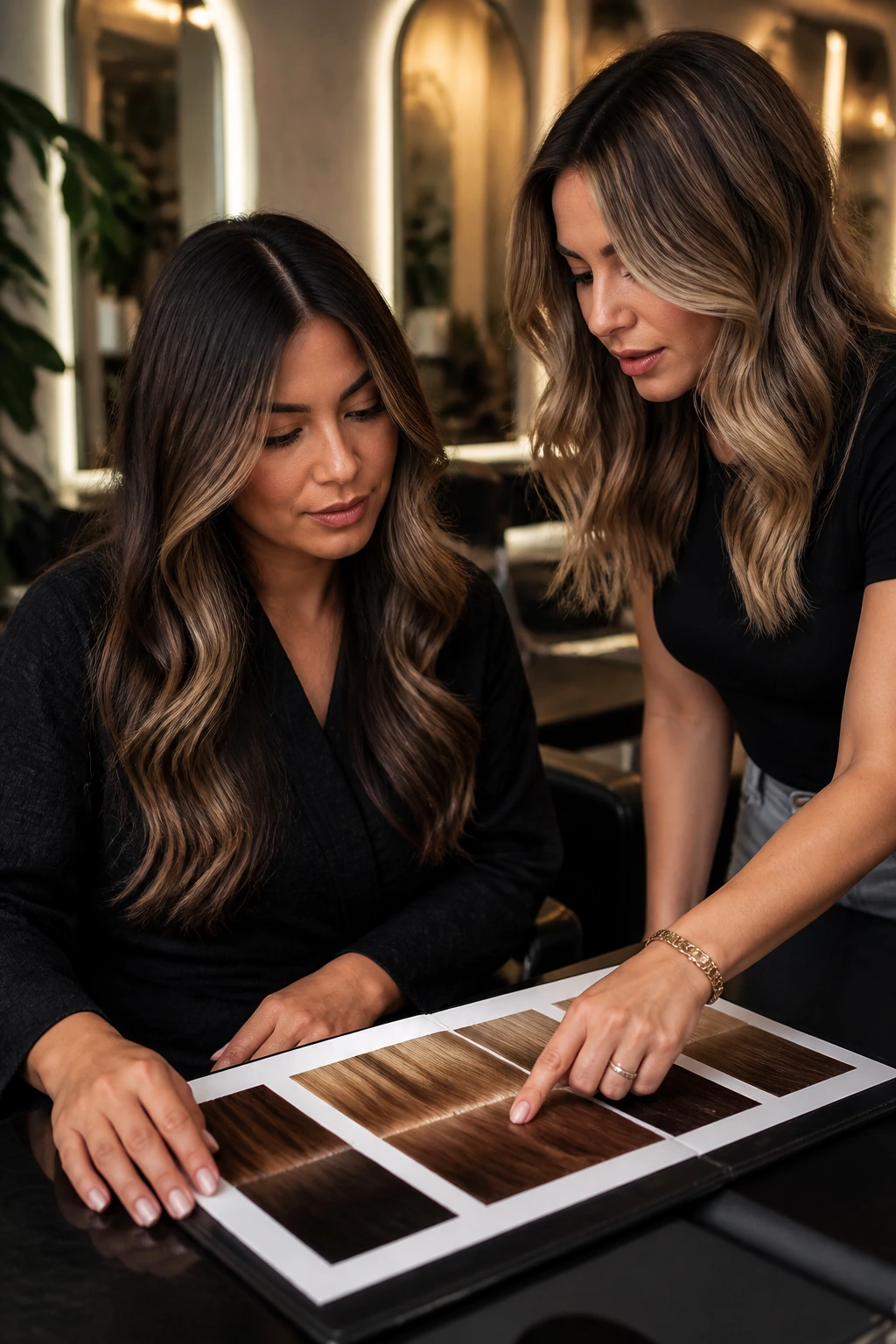
A good dark balayage consultation is half tone and half geography. Bring two or three photos, but only if they show the front, the side, and the hair in decent daylight. One selfie under warm bathroom lighting tells your colorist almost nothing.
Say the words that matter: how warm you want it, how much upkeep you can tolerate, and where you want the lightest pieces to start. If you want a round face to look longer, ask for brightness below the cheekbone and a deeper root at the crown. If you like warmth, say caramel, bronze, chestnut, or maple. If you run olive or neutral, say mushroom, mocha, cocoa, or smoked beige.
If the colorist starts talking in generalities, push for placement. “Narrow in front,” “lower start,” “soft root,” and “no chunky temple pieces” are all useful phrases. They sound simple because they are. Simple is good here.
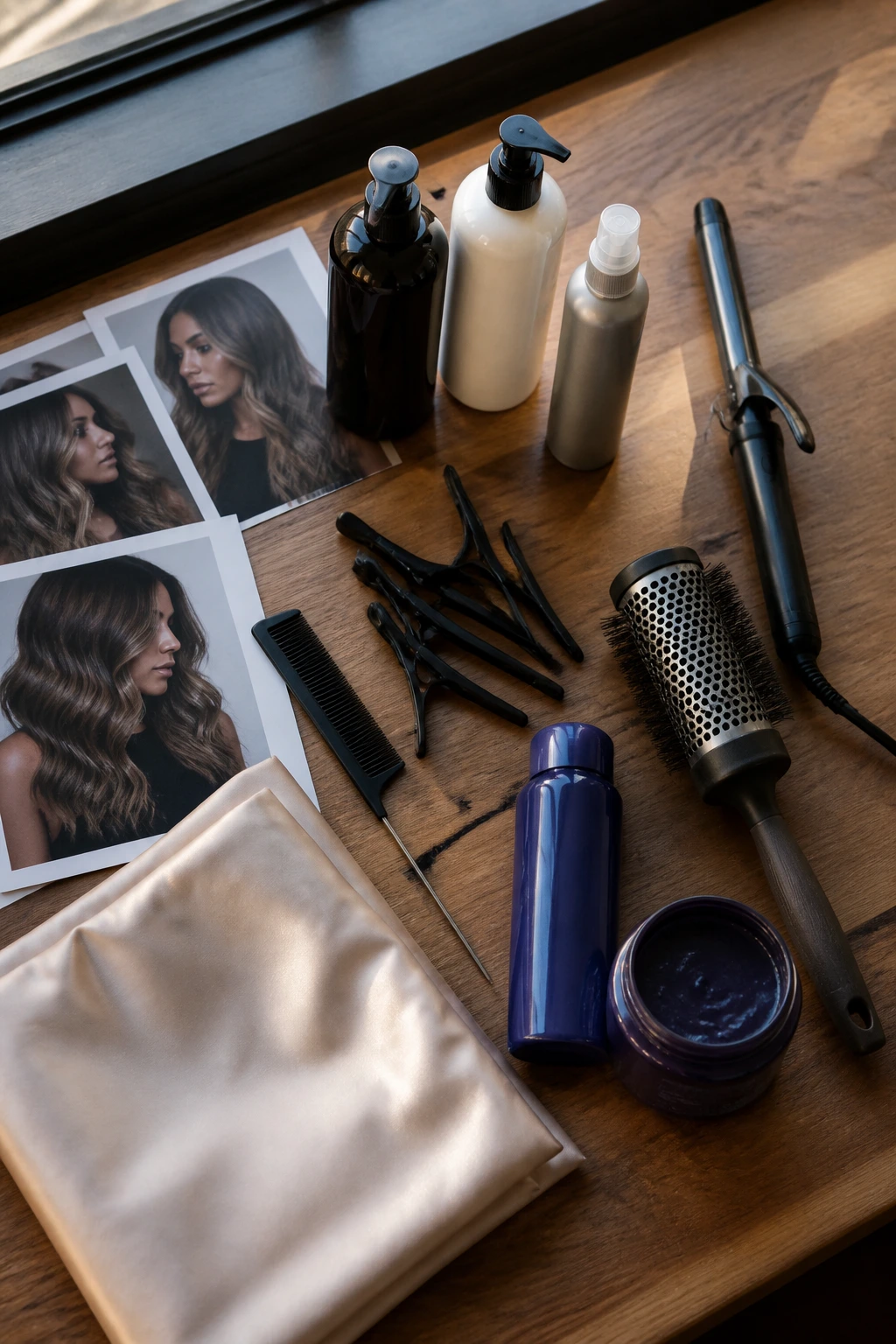
Essential Tools for the Consultation and Styling
-
Three reference photos in different lighting: One indoors, one in daylight, and one from the side tell the story better than a single selfie.
-
Hair clips: Sectioning clips help you show where the front pieces should start and how wide you want them.
-
Fine-tooth comb: Useful for pointing out your natural part and where your face falls widest.
-
Color-safe shampoo and conditioner: These keep dark brunette tones from fading into a flat, dull brown.
-
Heat protectant spray: If you blow-dry or iron your hair, this is non-negotiable.
-
1.25-inch curling iron or wave wand: The soft bend helps balayage ribbons show up instead of hiding in the length.
-
Round brush: Good for blowouts that lift the crown and keep the face from looking too wide.
-
Blue shampoo or brunette color-depositing gloss: Use carefully if brass starts creeping in, especially on caramel and bronze pieces.
-
Satin pillowcase or bonnet: Less friction, less frizz, and fewer rough ends that make the color look tired.
How to Style Dark Balayage So the Dimension Shows
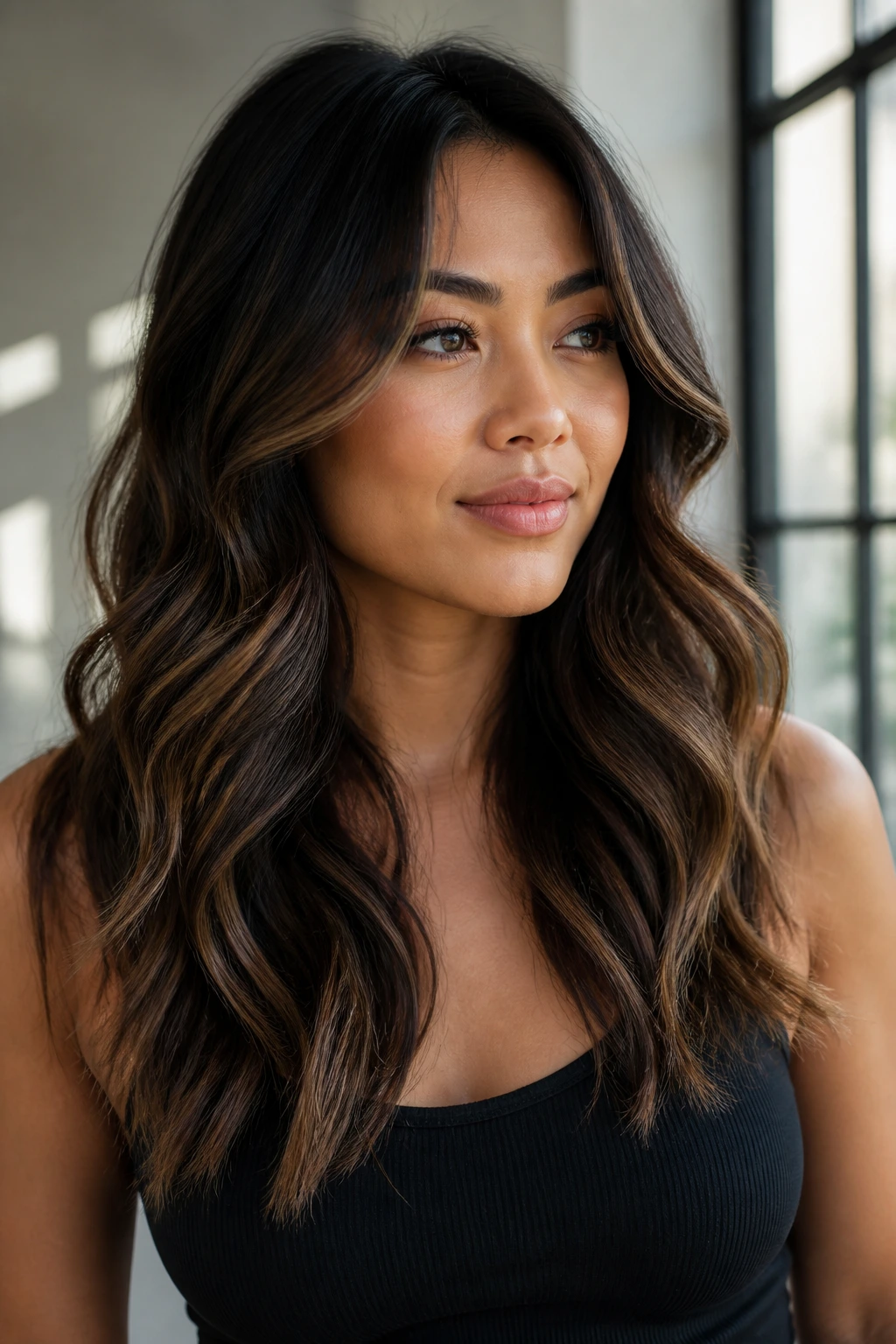
Loose Waves: A 1.25-inch iron or wand gives the best shape for most of these shades. Wrap mid-lengths and leave the last inch or two out so the ends stay soft and the ribbons stay visible.
Blowout Volume: Lift the crown with a round brush and keep the front pieces moving away from the cheeks. That tiny bit of height at the top helps a round face look longer, and the darker root shows off the dimension better.
Straight and Sleek: Straight hair can make dark balayage look very polished, but it needs a little bend at the front. Curve the face-framing pieces away from the face and tuck one side behind the ear if you want the placement to read clearly.
A tiny amount of serum on the ends is enough. Too much product flattens the light pieces and makes the whole color look darker than it is. Keep the shine on the surface, not the roots.
How to Keep Dark Balayage Fresh Between Appointments
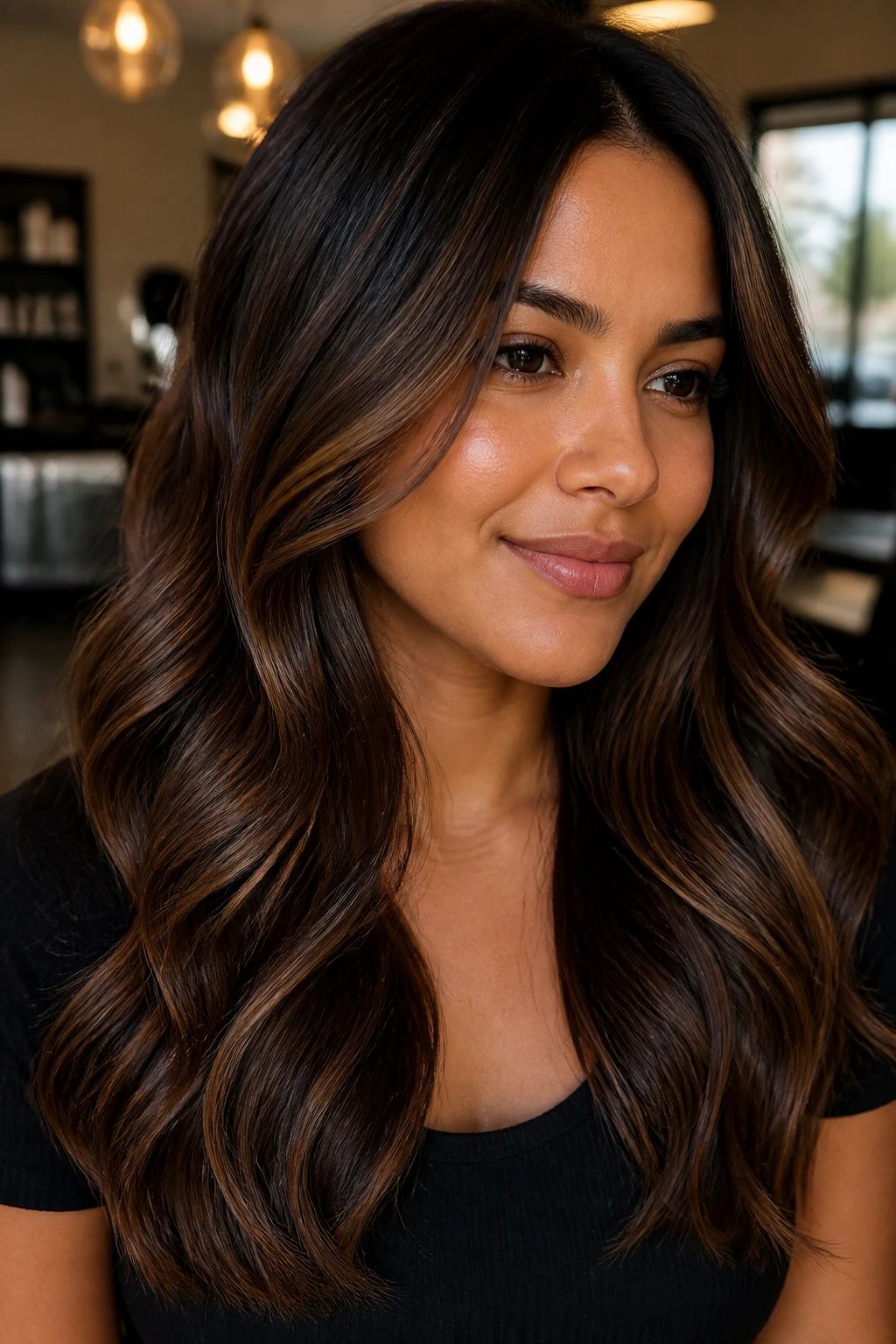
Dark balayage is forgiving, but it still likes some upkeep. Wash two or three times a week if you can; daily washing tends to wash the gloss out of brunette color faster than people expect. Use lukewarm water, not hot. Hot water strips shine in a hurry.
Glossing every 6 to 8 weeks helps keep caramel, bronze, chestnut, and maple tones from getting dull. If you chose a cooler shade like ash, mushroom, or cocoa-beige, you may need a toner or gloss sooner, especially if your hair pulls warm. Trims every 8 to 12 weeks keep the ends from looking scraggly, and scraggly ends make balayage look cheaper than it is.
If brass shows up in the lighter pieces, use a blue shampoo once every week or two, not every wash. If the color starts to look too cool, skip the blue for a bit and lean on a rich conditioner instead. And if you swim often, soak the hair with clean water first; wet hair absorbs less chlorinated water than dry hair does. Annoying, yes. Effective, also yes.
Common Mistakes That Flatten the Face or Turn the Brown Muddy
-
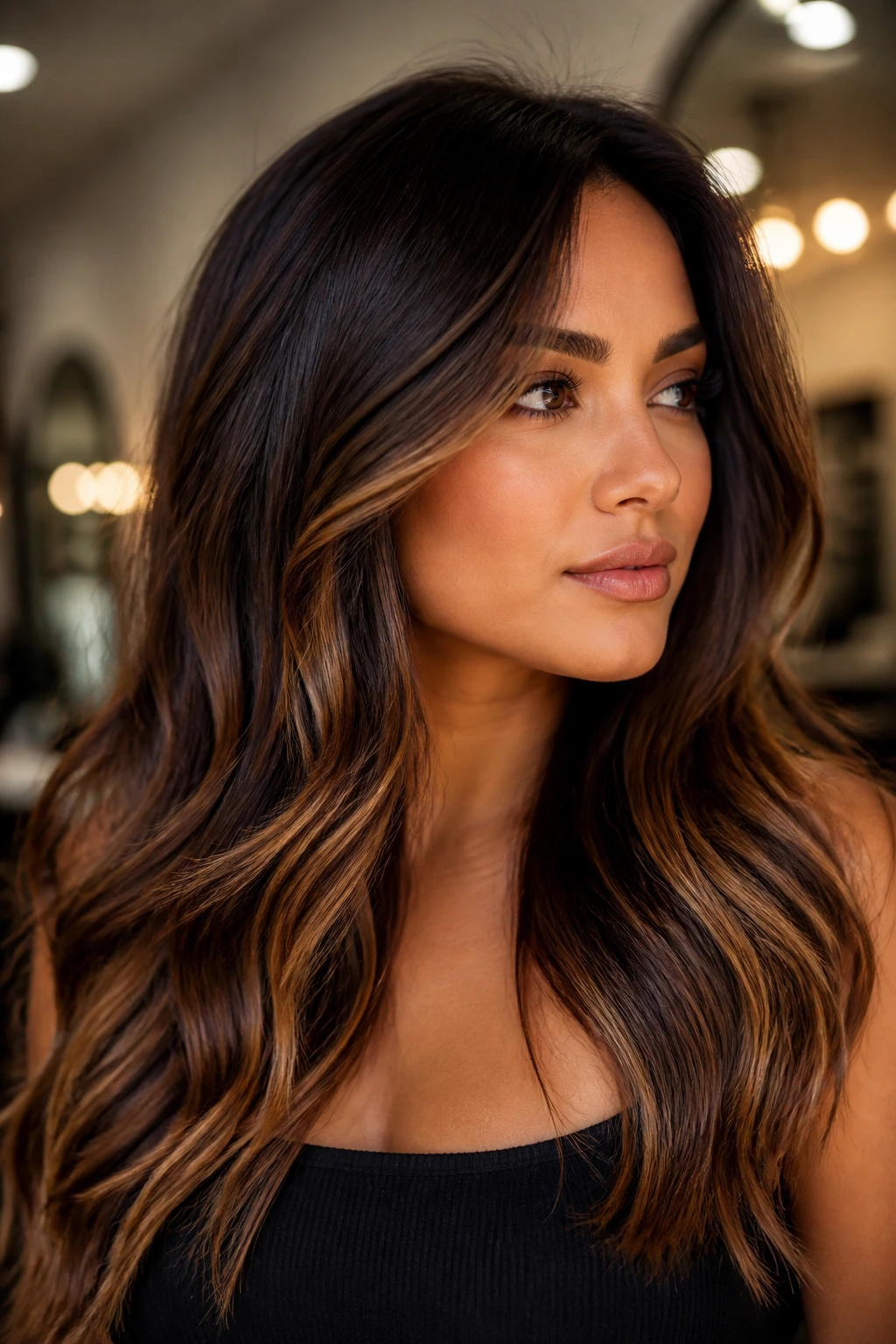
Putting the brightest pieces too high: If the front lightening starts at the temples, a round face can look wider. Move the brightness lower and narrower.
-
Choosing the wrong undertone: Ash on very warm skin can look gray, while golden caramel on olive skin can go orange. Match the brown to your skin’s undertone first.
-
Skipping the root shadow: A flat root makes the color spread out too much. A darker crown keeps the shape longer and the grow-out softer.
-
Using chunky face framing: Big light panels at the front can overpower the face. Narrow ribbons are easier on round features and look more natural.
-
Letting the ends go dry and porous: Dry ends grab toner unevenly and can turn muddy or frayed. Trim the ends and use a mask once a week if your hair is lightened.
-
Ignoring the haircut: One-length hair can hide the ribboning, while layers help the balayage move. Color and cut need to cooperate.
Variations and Alternatives to Try
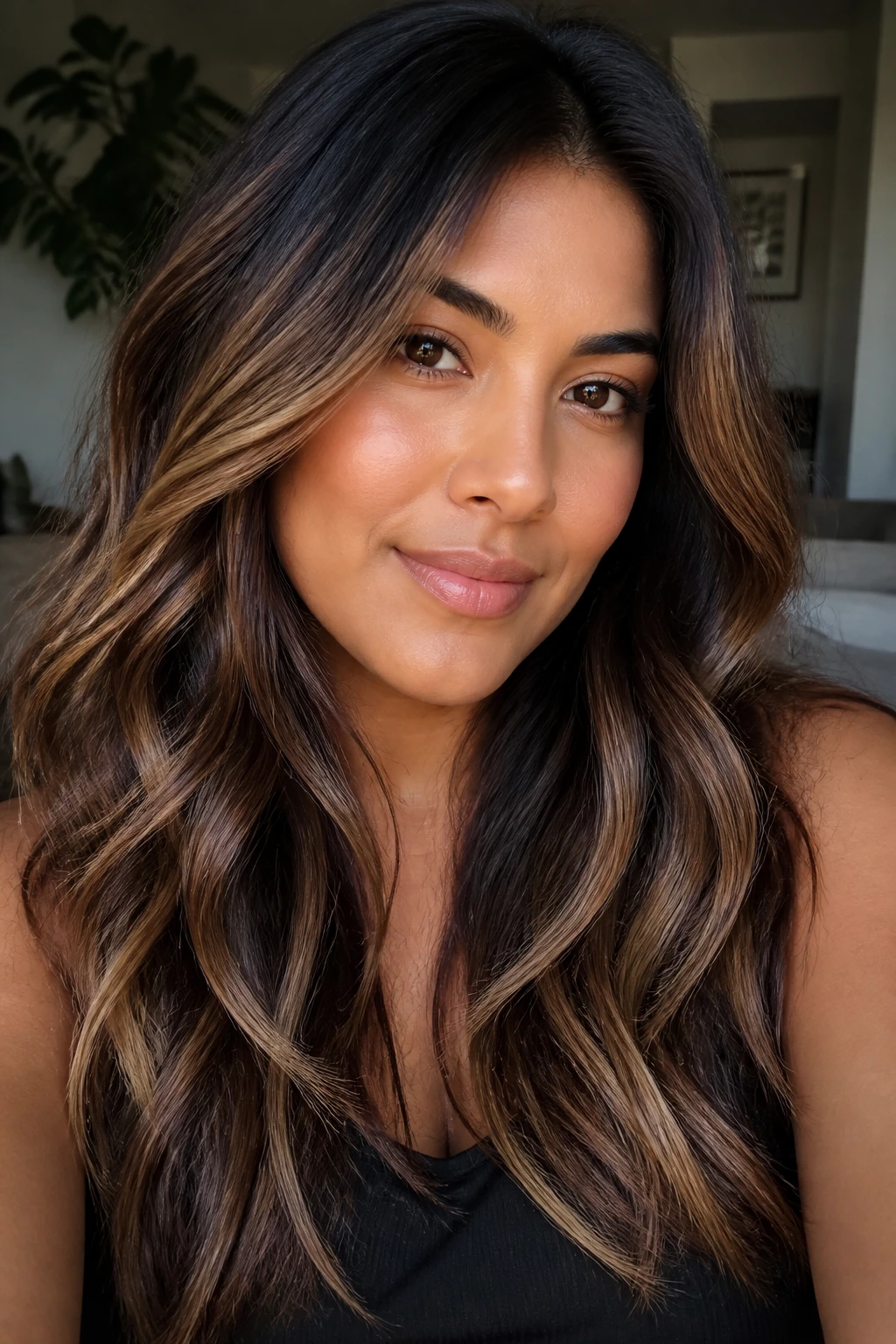
Warm Glow Version: Lean into caramel, bronze, and chestnut if your tan skin runs golden. This keeps the face bright without turning the brown flat or murky.
Smoky Neutral Version: Choose mushroom, cocoa-beige, or ash-brown ribbons if your undertone is olive or neutral. The color stays soft and modern, and it won’t fight your skin.
Curly Contour Version: For curls, paint the ribbons around curl clumps instead of across them. That gives the hair a moving, dimensional look without puffing out the sides of the face.
Low-Commitment Ombé Version: Keep the root dark and let the lighter tone live mostly through the lower half of the hair. This is the easiest choice if you want soft grow-out and fewer salon visits.
High-Contrast Version: If you want more drama, keep the root rich and deepen the difference between the base and the face-frame pieces. Just keep the front ribbons narrow so the face still reads long.
Frequently Asked Questions
What dark balayage shade looks best on tan skin?
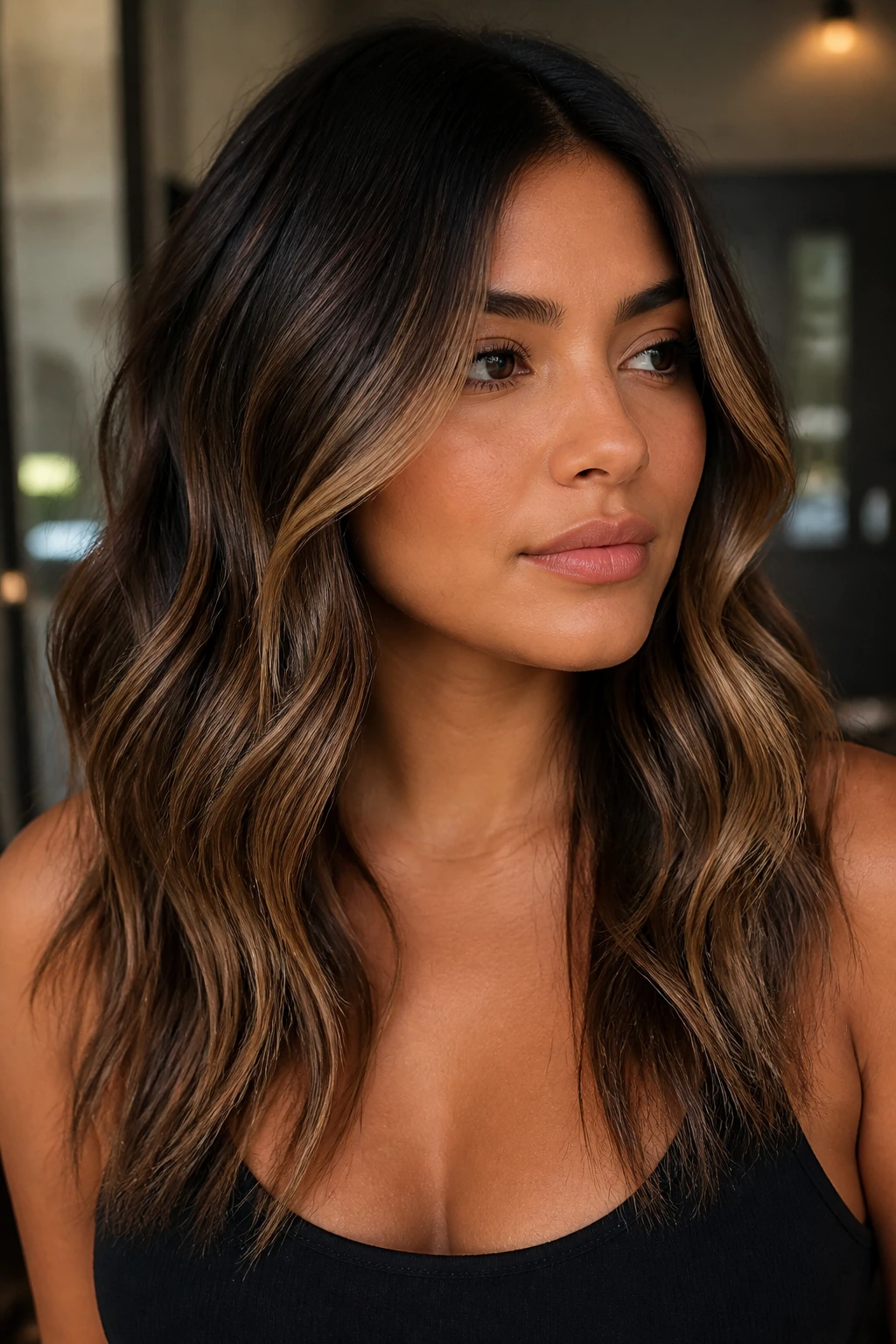
Warm tan skin usually likes caramel, bronze, chestnut, and mahogany, while olive or neutral tan skin often looks cleaner in mushroom, mocha, or smoked beige. The right answer depends on undertone more than skin depth alone.
Will balayage make a round face look wider?
It can, if the brightest pieces sit right at the cheeks or temples. Keep the lightening narrow and start it a little lower, and the color works more like contour than width.
Is balayage or ombré better for a round face?
Balayage is usually softer around the face because the light pieces can be placed exactly where you want them. Ombré works well too, especially on longer hair, as long as the gradient starts low and the top stays deeper.
Can I do dark balayage on very dark brown or black hair?
Yes, but the lift will usually be subtle unless the hair is lightened first. If you want only a gentle shift, a gloss, face-framing lift, or soft ribboning may be enough. If you want visible contrast, some bleaching is usually part of the process.
How often should I tone dark balayage?
Most brunettes do well with a gloss or toner every 6 to 8 weeks, though ash and beige tones can need touch-ups sooner if they fade warm. If the color still looks rich, wait. Do not tone it just because the calendar says so.
What if my caramel pieces turn orange?
That means the lift was warm or the toner faded. A blue-based gloss or a beige-brown toner usually pulls it back into line without making it dull. If it happens every time, the original formula is too warm for your hair.
Should I ask for curtain bangs with dark balayage?
If your face is round, curtain bangs can work very well because they break up the width and add softness at the sides. Keep them longer at the cheekbone and let the balayage peek through the outer edges.
How do I ask for a low-maintenance version?
Ask for a shadow root, fewer front pieces, and lightening that starts lower on the hair. Tell the colorist you want soft grow-out and no chunky money piece. That wording helps more than saying you want it “natural.”
The Shade That Does the Contouring for You
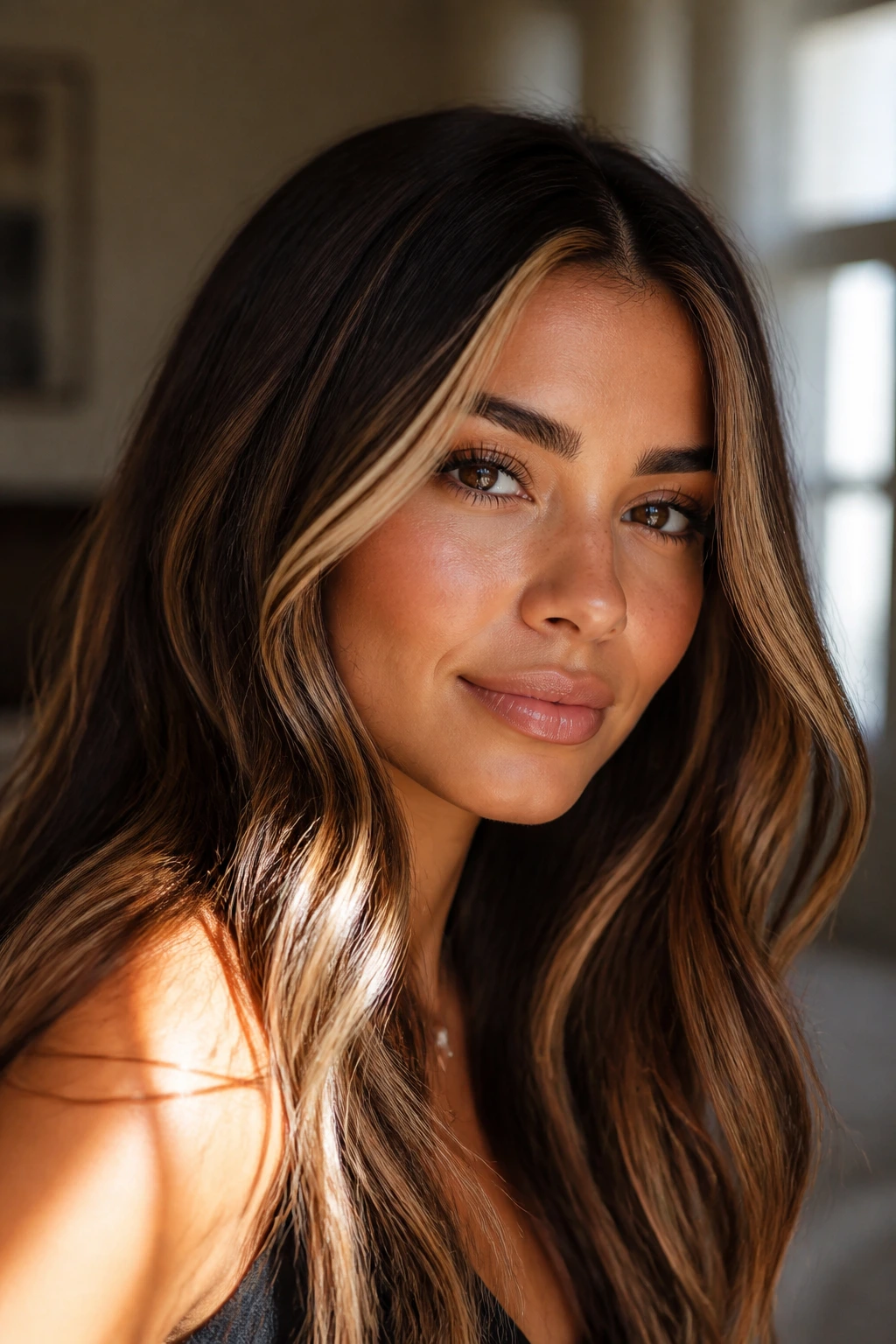
The best dark balayage on tan skin and a round face does three jobs at once: it keeps the root rich, it lifts the complexion without fighting it, and it bends the eye downward instead of outward. That is why the smartest shades in this lineup feel calm at first glance and more interesting the longer you look.
Bring a clear photo, know whether your skin leans warm, olive, or neutral, and be honest about how much upkeep you want to live with. Those three things will get you farther than chasing the prettiest picture on your phone. Pick the version that makes the whole face look a little longer, a little softer, and a lot more deliberate.