



Curly hair in your 40s has a way of getting more interesting once you stop trying to iron every bend out of it. The best cute hairstyles for women in their 40s with curly hair are not the ones that force your texture into submission. They’re the ones that let the curl pattern stay curly, but with better shape, better lift, and a little more intention around the face.
That matters because curls change their behavior over time. Some get drier. Some get flatter at the crown. Some widen out at the sides and need a little narrowing near the jaw. And some days your hair looks like it grew two extra inches overnight; other days it shrinks up and sits much shorter than you expected. A good style works with all of that instead of pretending every curl wants the same thing.
No helmet hair. No crunchy pyramid. No sad little triangle pretending to be a bob.
What tends to look best here is shape with movement: layers that sit where they should, parts that give the crown a lift, bangs that soften without collapsing, and updos that leave enough texture visible so the whole thing still feels like curls. That’s the sweet spot, and it’s where these styles live.
Why These Curly Styles Feel So Wearable
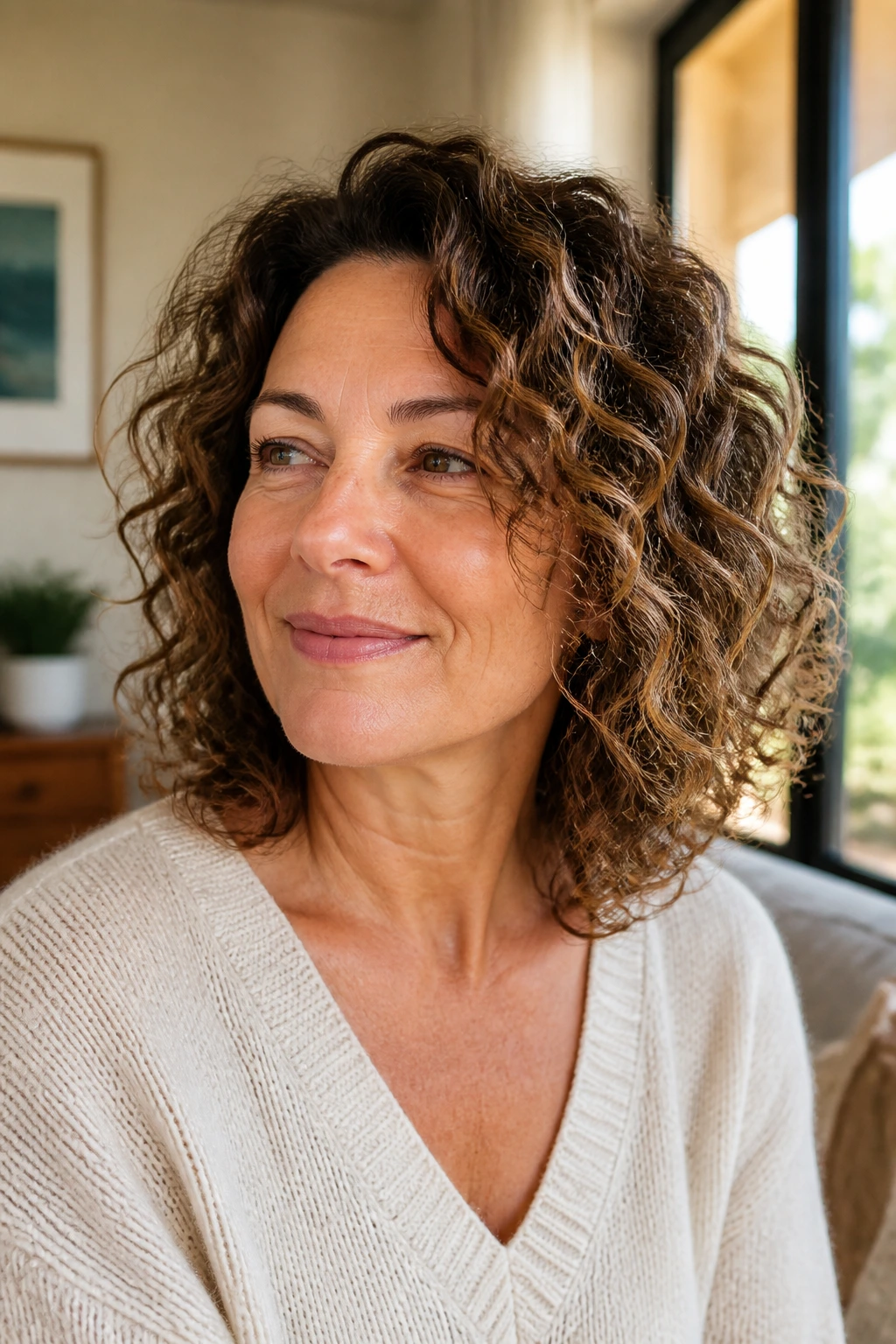
- They respect shrinkage: Curly hair rarely sits at the length it looks like in the chair, so these styles are built to still look balanced after the curls spring up.
- They keep the crown alive: A little lift at the top stops the style from dragging the face downward, which is a common problem with longer curly cuts.
- They work with different densities: Fine curls, thick curls, and everything between can find a shape here that doesn’t turn into a block.
- They move from day to night easily: A curl-friendly bob or half-up style can look polished at 8 a.m. and still make sense at dinner.
- They don’t demand perfect hair: The best part of curly hair is that a bit of frizz can look like texture, not a mistake, when the cut is doing its job.
- They suit real life: If you need a style that survives errands, work calls, humidity, and the occasional rushed morning, these hold up better than fussy curls sprayed into place.
1. Shoulder-Grazing Layers That Keep Curls Light
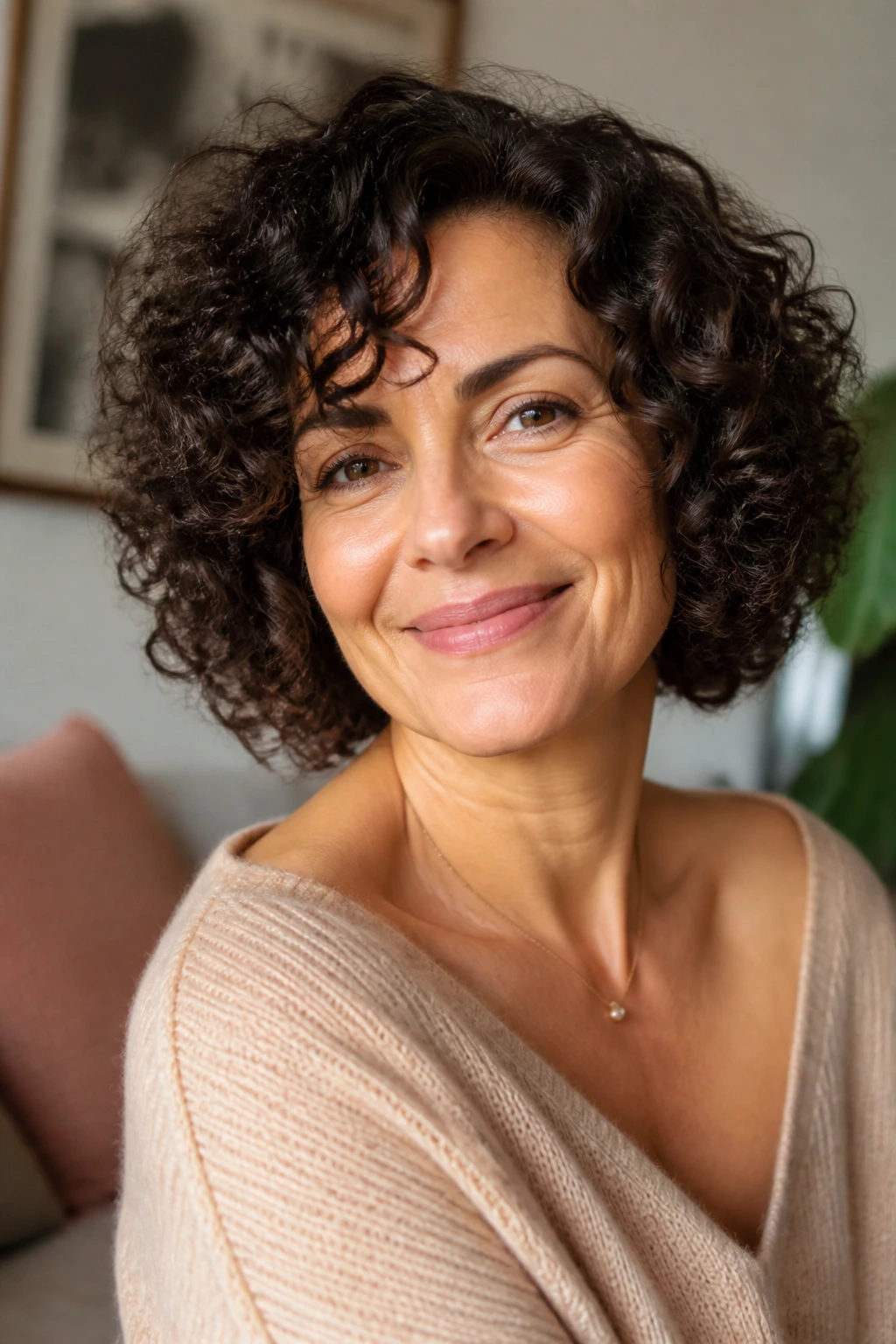
Shoulder-grazing layers are one of those cuts that quietly solve a lot of problems. They give curls room to spring without piling all the weight at the bottom, and they still leave enough length to tuck behind an ear, clip back, or twist up on a busy morning. The shape feels soft, not bulky.
What I like about this length is how forgiving it is. If the front pieces are a touch shorter than the back, the face opens up without looking carved up. If your curls are tighter, the layers stop the whole style from turning into one giant block. If they’re looser, the extra movement keeps the ends from looking stringy.
A small tip makes a big difference: ask for layers that start below the cheekbone if you want to keep fullness around the face. Start them too high and the cut can get fluffy fast. Keep them too long and you lose the lift. That narrow middle ground is where this cut lives best.
2. Curly Lob With a Deep Side Part
A curly lob with a deep side part has a kind of built-in drama that doesn’t need much styling. The longer side creates movement near the cheekbone, while the shorter side gives the crown a natural push upward. It’s a smart choice when you want polish without the stiffness of a straight blowout.
Why the side part matters
A deep side part changes how the curls fall, and that’s the whole trick. Instead of sitting evenly across the forehead and cheeks, the hair bends away from the face on one side and creates a little asymmetry that feels fresh. It also helps if one temple is flatter than the other — which happens more than people admit.
This shape works especially well on medium-density curls that need a bit of lift but not a ton of layering. The lob length keeps the ends from puffing out too much, and the part gives the style enough movement to stay from feeling too tidy. It’s neat, but not severe.
- Great for workdays when you want the hair to look finished fast.
- Easy to pin one side back with a small clip or bobby pin.
- Looks good air-dried or diffused.
- Best if you like a little swing around the jawline.
3. Rounded Curly Bob With Soft Ends
A rounded curly bob has a cleaner outline than a shag, but it doesn’t need to feel stiff. The soft ends are what keep it from looking boxy. When the cut sits around the chin or just below it, the curls create a tidy halo that frames the face without swallowing it.
This is one of my favorite options for curls that tend to spread out sideways. The rounded shape narrows the silhouette just enough to keep the style elegant, and the soft ends stop it from looking helmet-like. That matters a lot if your hair is thick or if you’ve got a lot of volume at the back.
Keep the perimeter a little curved instead of blunt. That one choice changes everything. It lets the curls stack naturally, and it also makes the style easier to refresh on day two with a mist of water and a dab of leave-in.
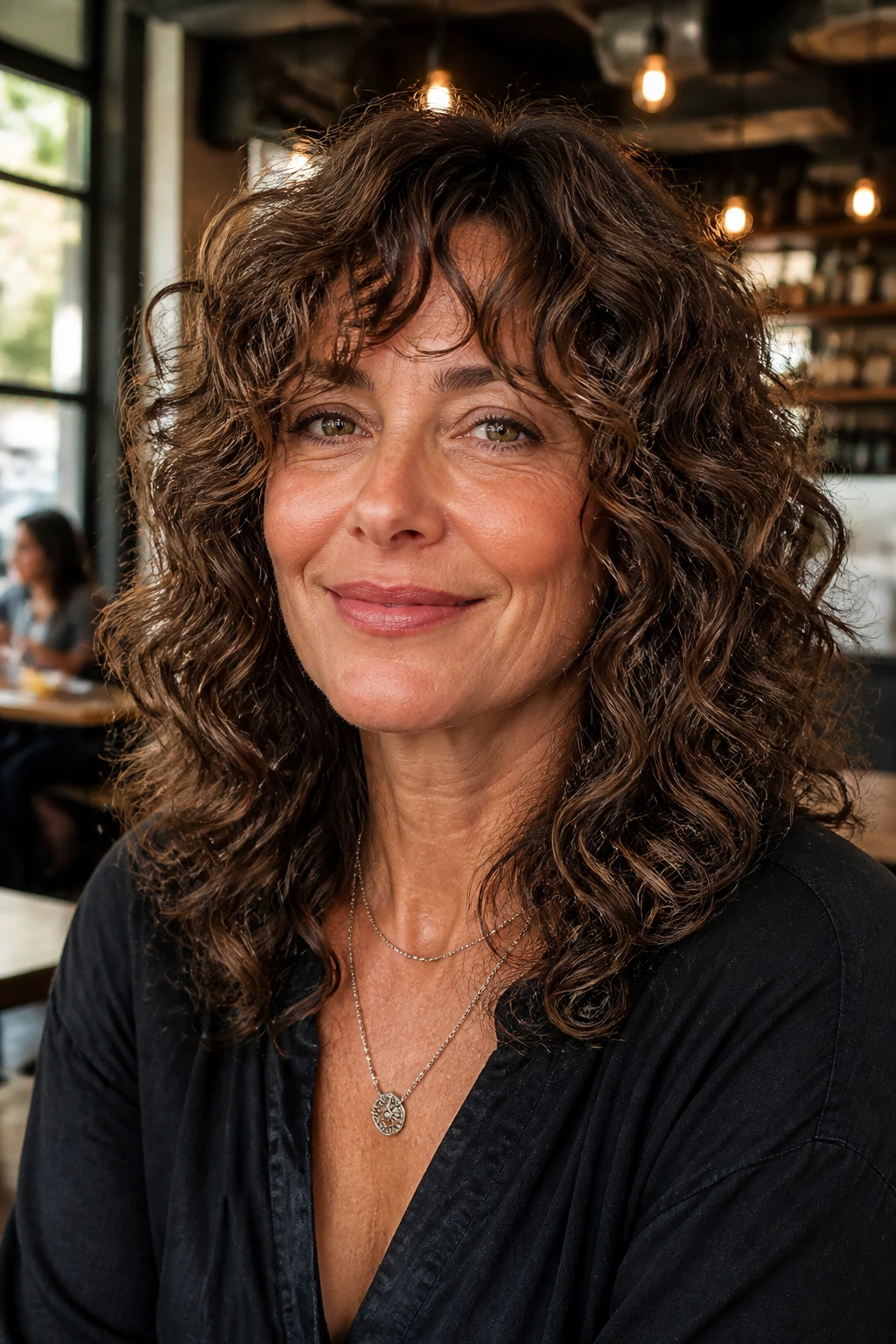
4. Curly Shag With Curtain Bangs
A curly shag has personality. It does not whisper. It moves, it lifts, and it gives curls a little attitude without turning them into a mess. The curtain bangs soften the forehead and break up the top of the cut, which helps the whole style look lighter.
What makes it work
The shag shape is built on layers, but the layers should be deliberate, not choppy for the sake of being choppy. You want enough length in the crown and sides to keep the curls from ballooning, and you want the bangs to fall apart a little as they dry. That broken-up look is the point.
This cut is especially good if your curls are dense or if your hair has a lot of natural spring. It gives the eye places to rest. Without that, dense curls can look overwhelming at the ends, especially if the same length runs all the way around.
If you like a style that looks even better on day two, this is a strong pick. The bangs settle, the layers separate a little, and the whole thing gets that lived-in shape people keep trying to fake with product.
5. Tapered Crop With Lift at the Crown
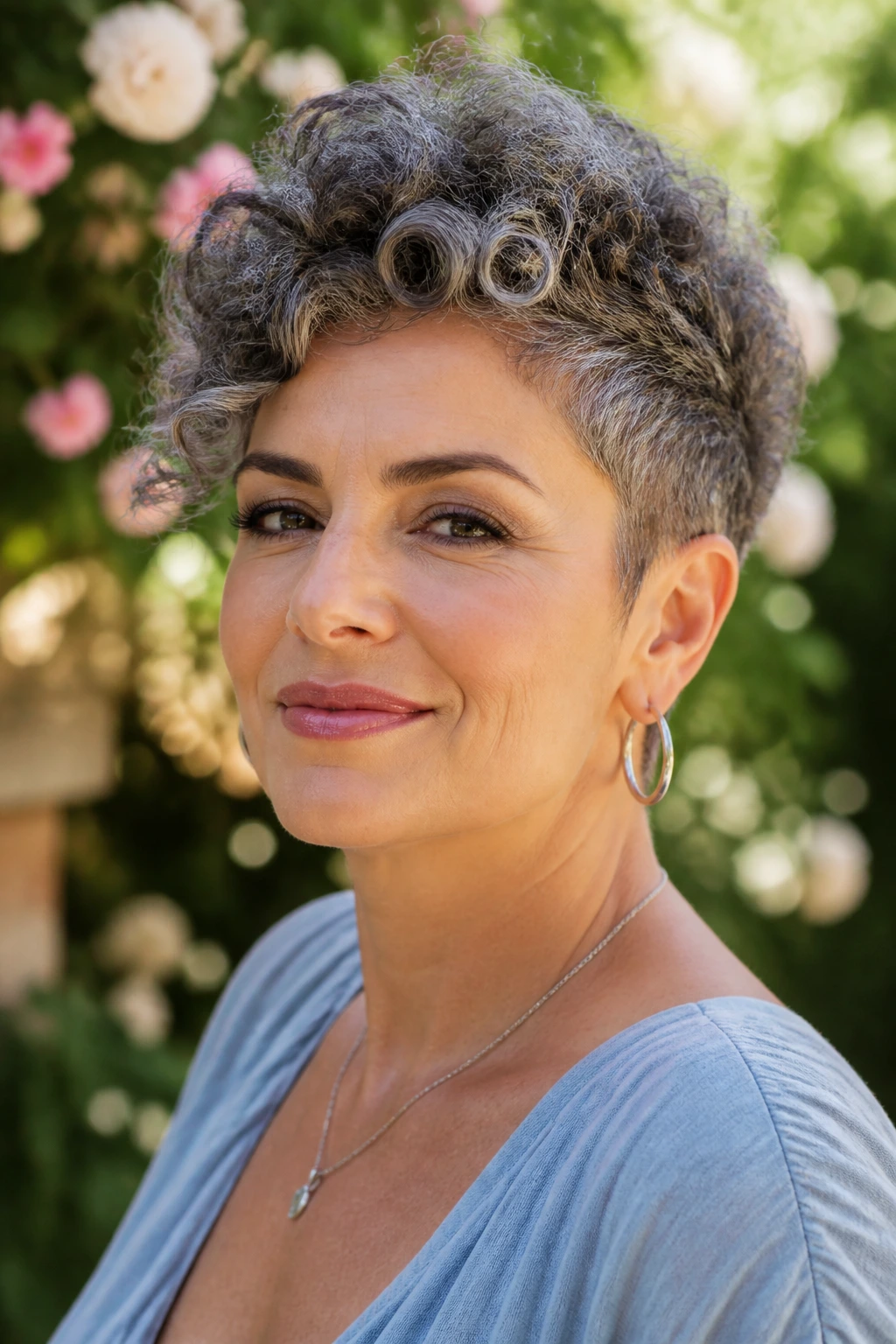
A tapered crop is sharp in a good way. The back and sides sit closer to the head, while the top keeps enough length for the curls to stack and rise. That contrast creates height where you want it and removes bulk where you do not.
It’s a smart answer when you want short hair but not a hard, flat line around the head. The taper follows the natural curve of curly hair, so the style feels tailored instead of chopped. It also puts more attention on your eyes, cheekbones, and earrings, which is a nice bonus.
What the silhouette does for the jawline
The crown height lifts the face visually. The shorter sides keep the silhouette clean. Together, they make the whole cut feel energetic rather than heavy.
This works best when the top is cut with enough room for curls to live on their own terms. If the top is taken too short, the style can get fluffy instead of sculpted. Leave a little more length than you think you need. Curls always shrink more than straight-haired people expect.
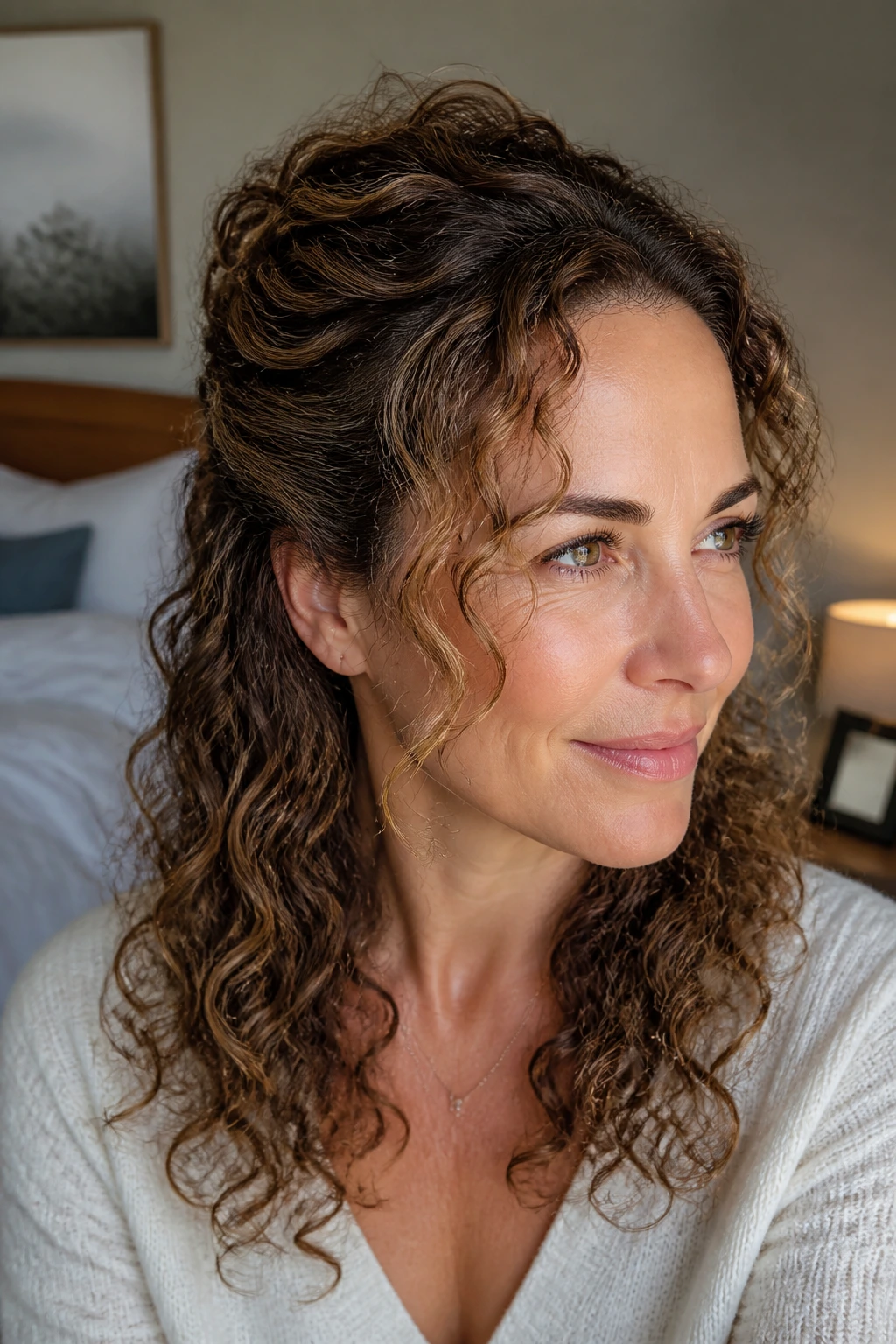
6. Half-Up Twist With Loose Face Framing
A half-up twist is one of those styles that looks like you spent time on it when you really didn’t. Pulling back just the top section opens the face and gives the crown a little structure, while the loose curls below keep the style soft. It’s easy, but it doesn’t look lazy.
The face-framing pieces matter here. Leave them too short and they spring up into little hooks. Leave them too long and they drag. The sweet spot is usually somewhere around the cheekbone or just below it, depending on your shrinkage.
This is a good one for dinner, family photos, or any day your curls are nice enough to show off but need a little control near the forehead. A couple of pins and a light mist of flexible spray are usually enough. No need to bully it with a pound of hairspray.
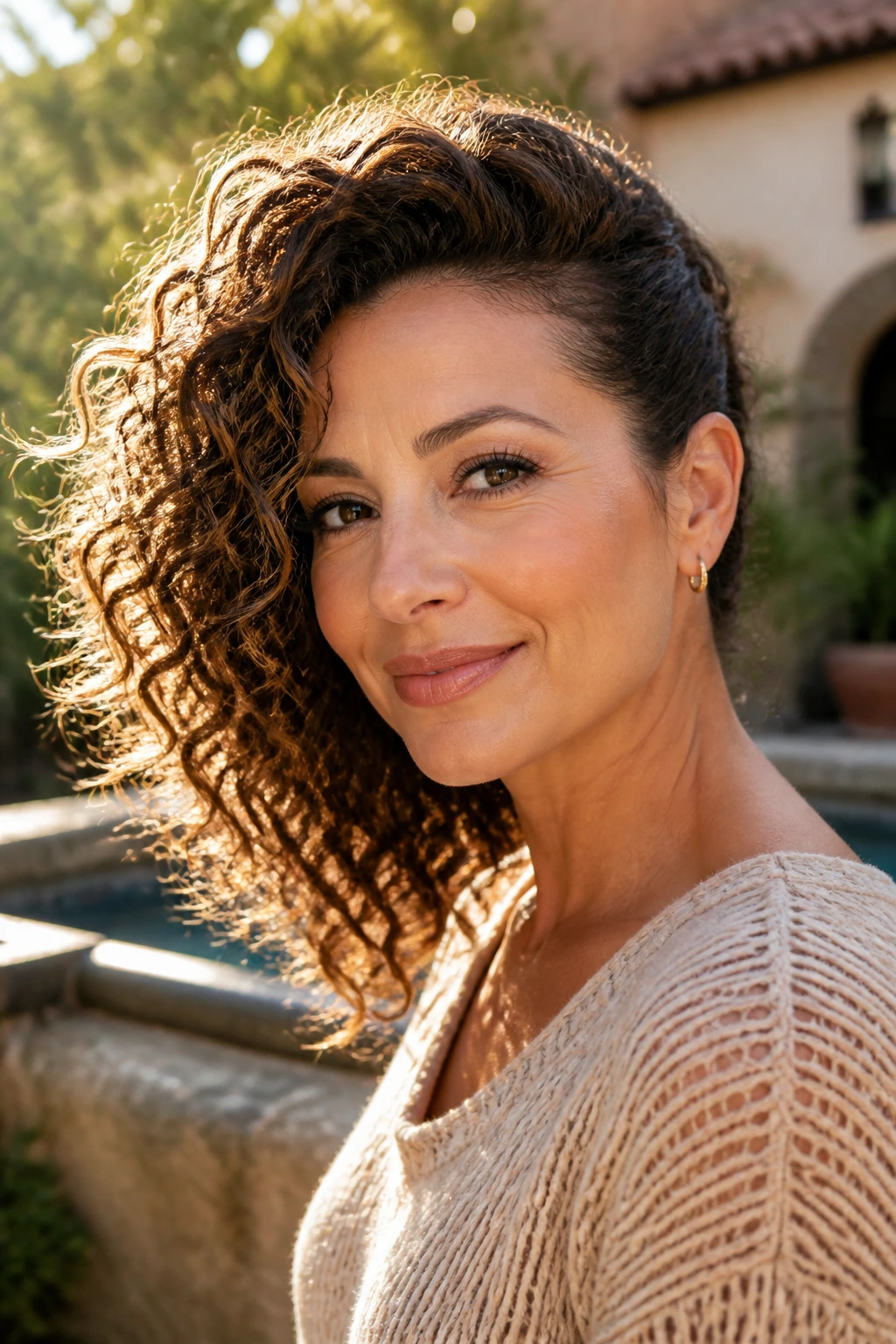
7. Deep Side-Swept Curls With One Tucked Side
One tucked side, one loose side. That’s the whole trick, and it works because curly hair already has enough texture to make asymmetry look intentional. The tucked side clears the face, while the loose side gives fullness and motion.
This style feels especially good when your curls are medium to long and you want a softer alternative to a full updo. It also handles a slightly uneven curl pattern better than a center-part style. If one side is flatter or more frizzy than the other, the asymmetry hides the mismatch instead of advertising it.
A small clip behind the ear can keep the tucked side in place, but skip anything bulky. The point is to keep the line clean. A simple stud earring or hoop looks better here than anything oversized, because the hair already carries enough texture on its own.
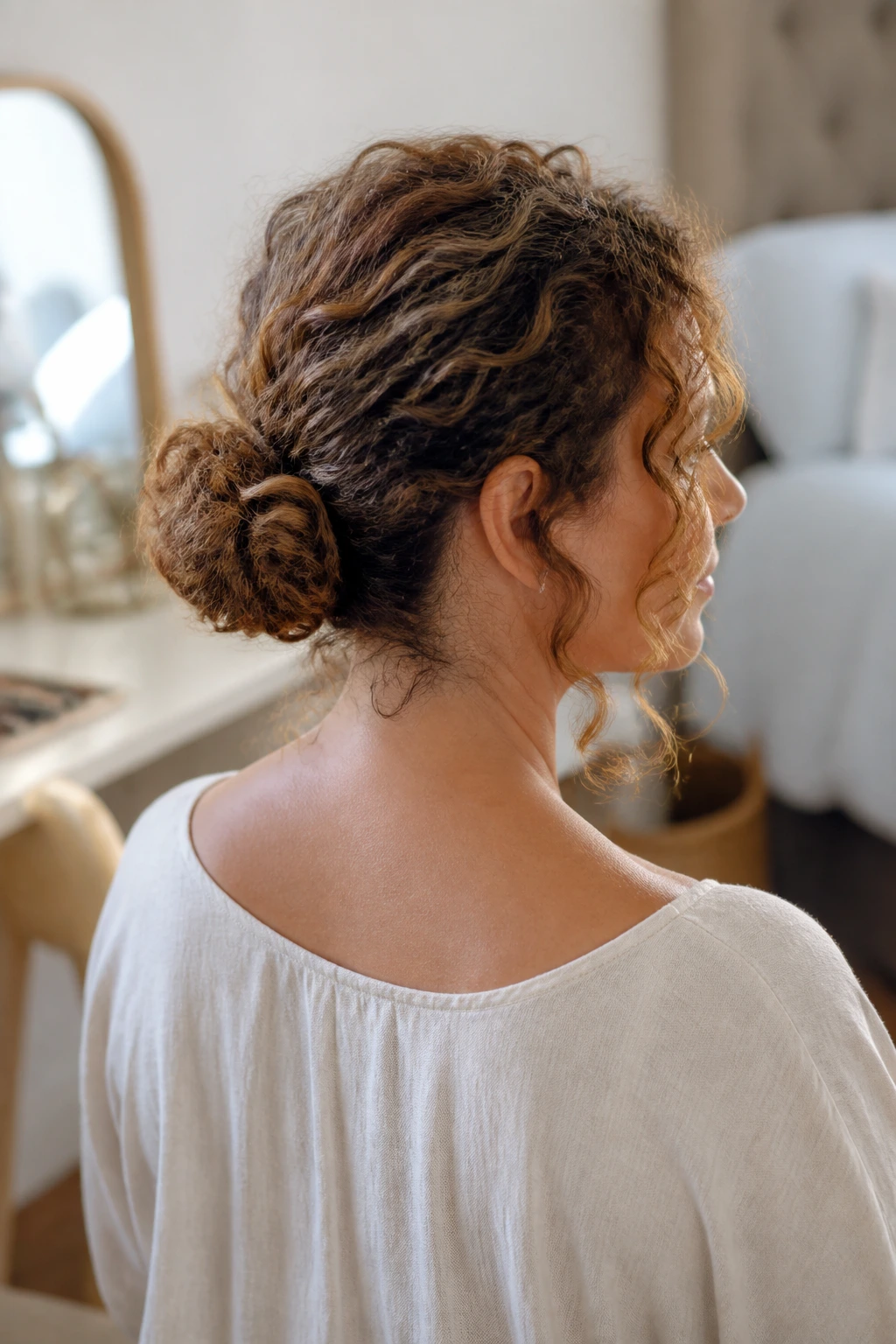
8. Low Curly Bun With Pieces Left Out
A low curly bun can look either sleek or a little too practical. The thing that saves it is leaving out a few curl pieces around the temples and nape. Those loose strands keep the bun from feeling strict, and they let the texture stay visible even when the hair is pulled back.
I like this style for days when your curls need a break from full exposure. Maybe the weather is damp. Maybe the ends need a rest. Maybe you want your hair off your neck but still want to look like you meant it. A low bun does that job well.
Twist the hair loosely before pinning, not tightly. Tight twisting breaks up the curl pattern and can make the bun sit oddly high or flat. A looser wrap keeps the shape fuller and gives the bun a softer edge.
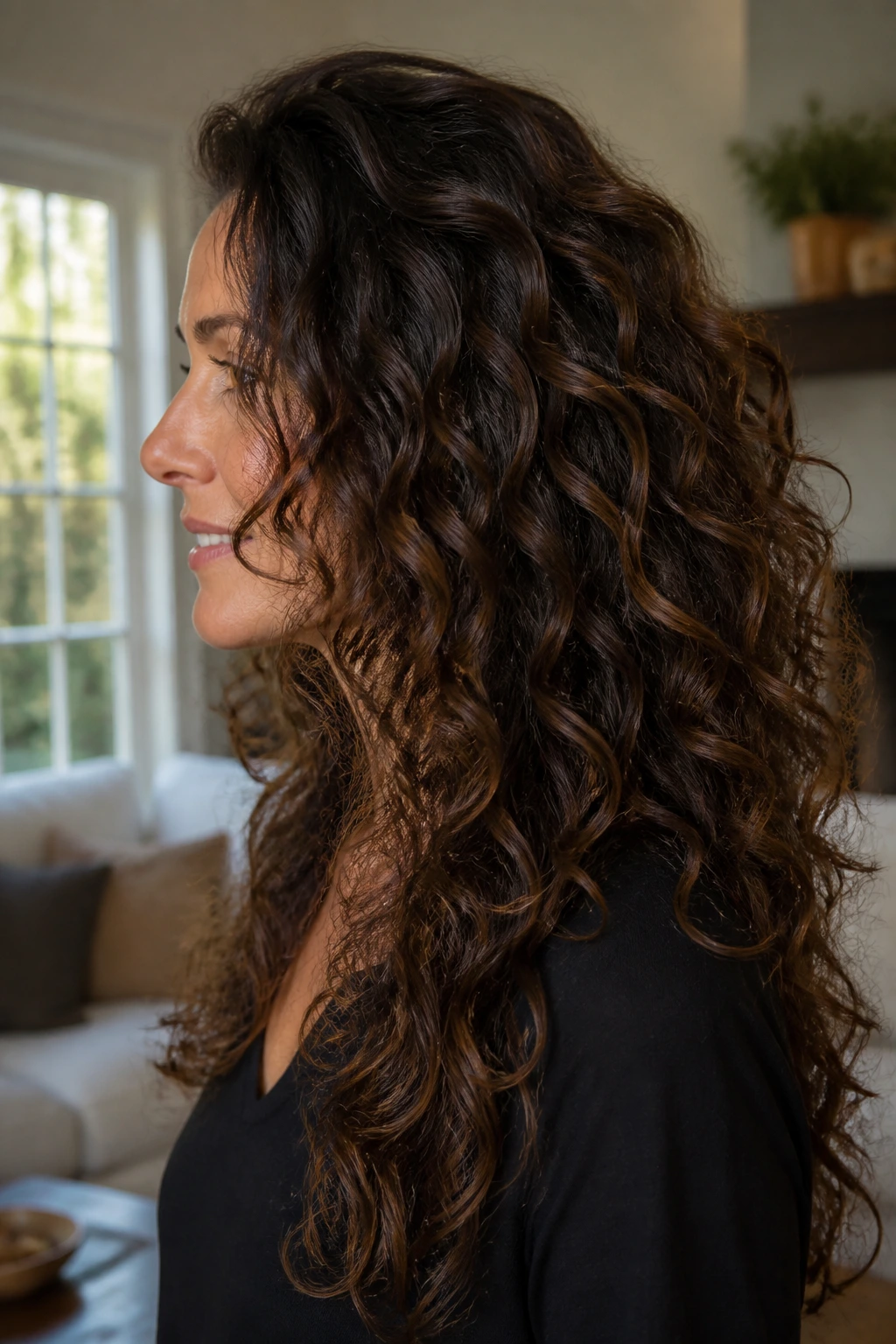
9. Long Curls With Invisible Internal Layers
Long curly hair can be stunning, but it needs structure or it starts to behave like a curtain. Invisible internal layers solve that without changing the outer length too much. The cut removes weight from the inside, so the curls fall better and don’t collapse into one thick sheet.
This style is for people who want to keep length but hate that heavy, triangular bulk at the bottom. Internal layers let the curls move, especially when the hair is dense or coarse. The outside still looks full, just less stubborn.
There’s a catch. If the layers are too aggressive, you can end up with holes in the shape and pieces that stick out in the wrong places. Keep the layering subtle. The goal is movement, not a patchy silhouette.
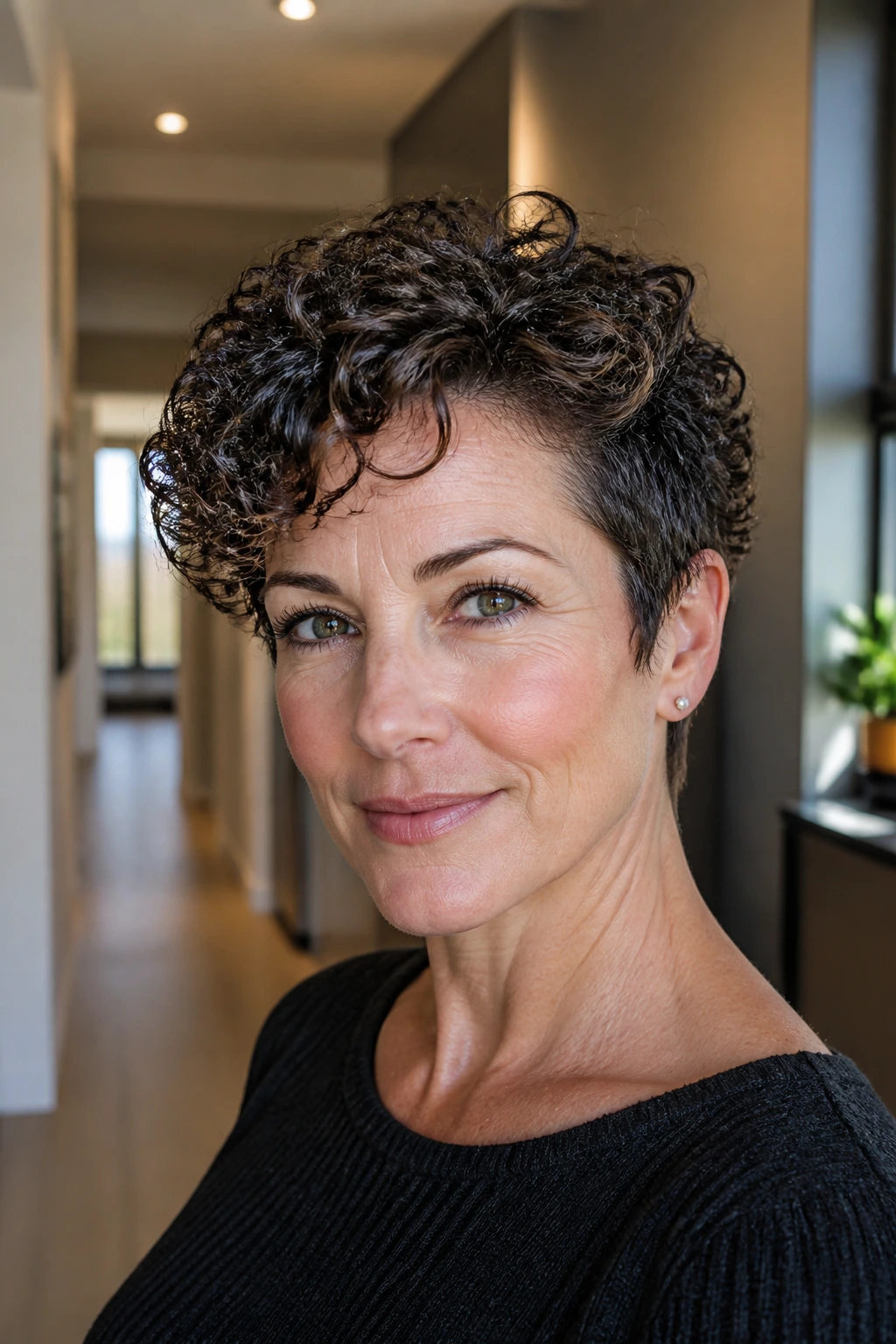
10. Curly Pixie With a Longer Top
A curly pixie only works when the top has enough length to show the curl pattern. That longer top is what keeps the cut from looking severe. The sides can stay neat, even close, but the crown should have room to spring and bend.
What to ask for if you want short but not severe
Ask your stylist to leave the top long enough to twist around your finger, because curls need that bit of slack. Ask for softness at the hairline too. A harsh edge can make short curly hair look boxy fast.
This cut is wonderful when you want a style that dries quickly and doesn’t need a lot of fuss. It does ask for regular shaping, though. Short curls lose their line faster than longer ones, so trims matter more here than they do with shoulder-length hair.
If you like earrings, glasses, or a bold lip, this cut gives them space. It frames the face cleanly and keeps the texture right where people can see it.
11. Claw-Clip Twist for Day-Three Curls
A claw-clip twist is the old reliable of curly hair. Day-three curls often need a style that doesn’t pretend they’re fresh out of the wash, and this one turns a little bend and frizz into part of the look. That’s the charm.
The trick is to twist the hair loosely upward rather than shoving it into the clip all at once. Leave the ends visible. Let a few curls spill out. If every strand is tucked in perfectly, the style can look too neat and lose the curly texture that makes it interesting.
I reach for this when the back is still decent but the front needs help. It’s fast, it’s forgiving, and it doesn’t require heat. That alone puts it high on the list.
12. Blunt Lob With Defined, Clean Ends
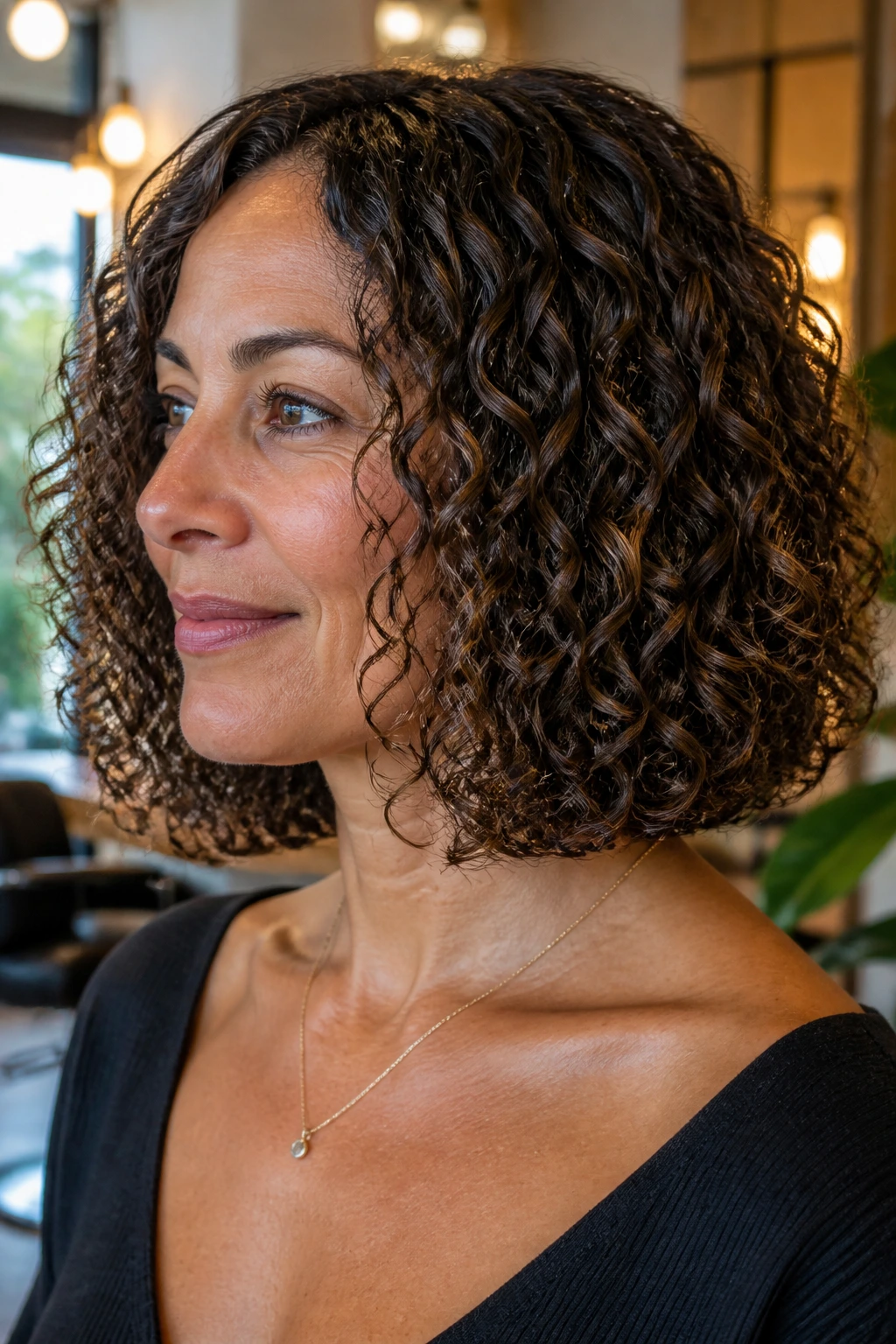
A blunt lob can feel surprisingly modern on curly hair. The cleaner bottom line gives the style structure, while the curls above it keep the shape from feeling hard. It’s a nice option if your curls are looser or if you want the ends to look thick and full.
What makes it work is definition. The curls need to clump enough that the blunt line reads as deliberate, not accidental. A good gel or foam helps here, especially if your hair tends to fray at the ends once it dries.
This style is a little more polished than a shag or layered cut. If you like a neat silhouette and you don’t want pieces flying everywhere, it’s a strong choice. If you prefer something airy and messy, this one may feel too controlled.
13. Wolf Cut With Piecey Curly Texture
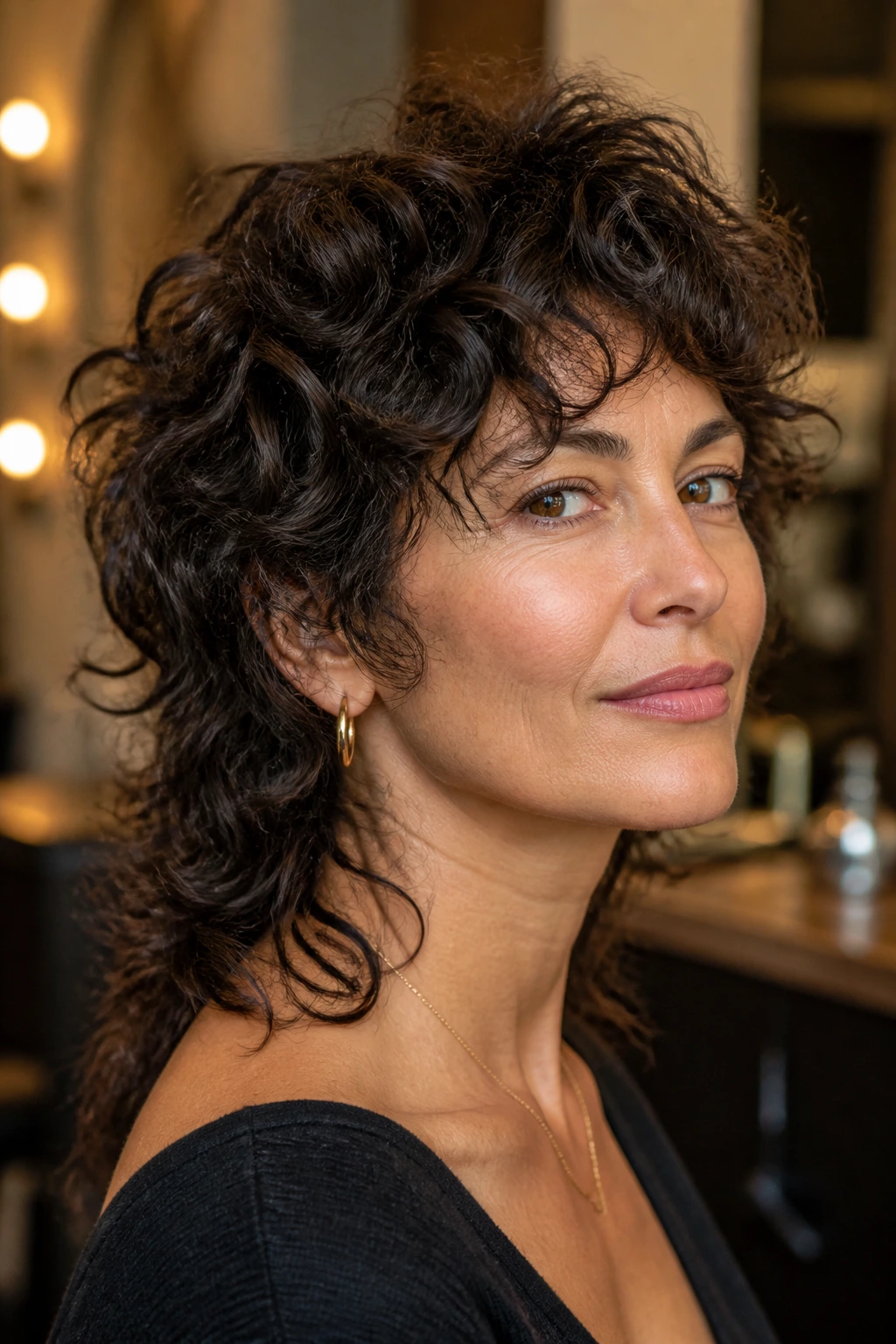
A curly wolf cut has edge, but it does not have to look rebellious in a teenage way. On mature curls, the shape can feel lively and a little undone without looking like you chopped it yourself in the bathroom mirror. The shorter crown layers and longer nape give the hair movement in every direction.
The key is restraint. You want piecey texture, not frizz everywhere. A good curl cream and gel combo usually does the trick. The curls should separate into shapes, almost like little ribbons, instead of exploding outward.
This cut suits people who like a style with personality and don’t mind a little maintenance around the front. It’s not the most formal shape in the room. That’s fine. Some days, hair should look like it has a point of view.
14. Braided Crown Over Free Curls
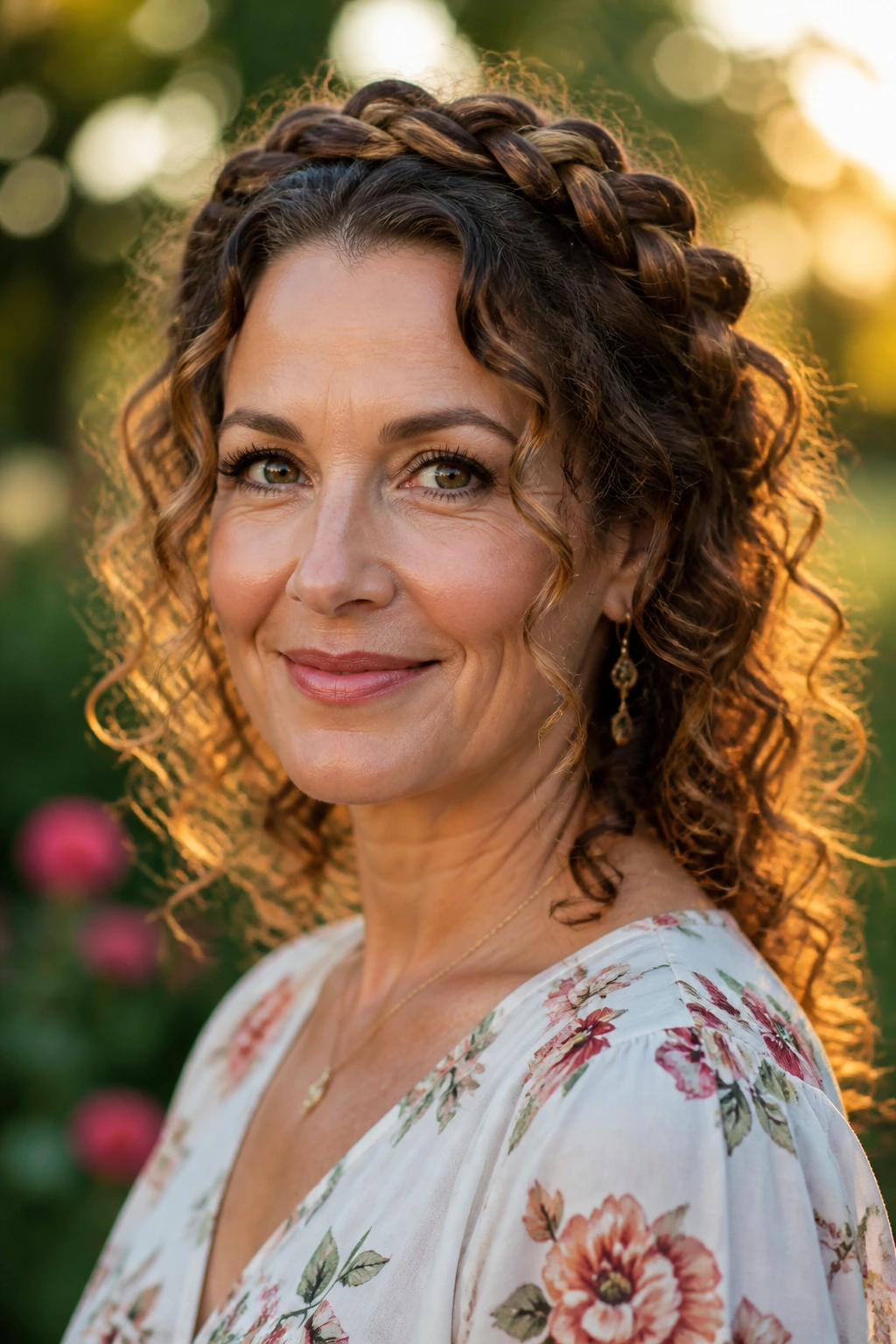
A braided crown is one of the prettiest ways to control the front while keeping the rest of the curls loose. It gives the style a frame, almost like a headband made from your own hair. The effect is soft, not stiff.
Where to braid and where to leave curls loose
Braid only enough hair to keep the front and sides off the face. Leave the back curls free so the style still looks curly, not overworked. If you braid too much, the whole thing can start feeling ceremonial in a way that’s hard to wear casually.
This look is especially nice for weddings, dinners, or any day you want the hair to look thoughtful without a full updo. It also plays well with second-day curls, because slightly looser texture helps the braid blend in instead of standing out too sharply.
A few wispy pieces around the temples keep it from looking severe. Those small pieces matter more than people think.
15. Polished Pineapple Updo
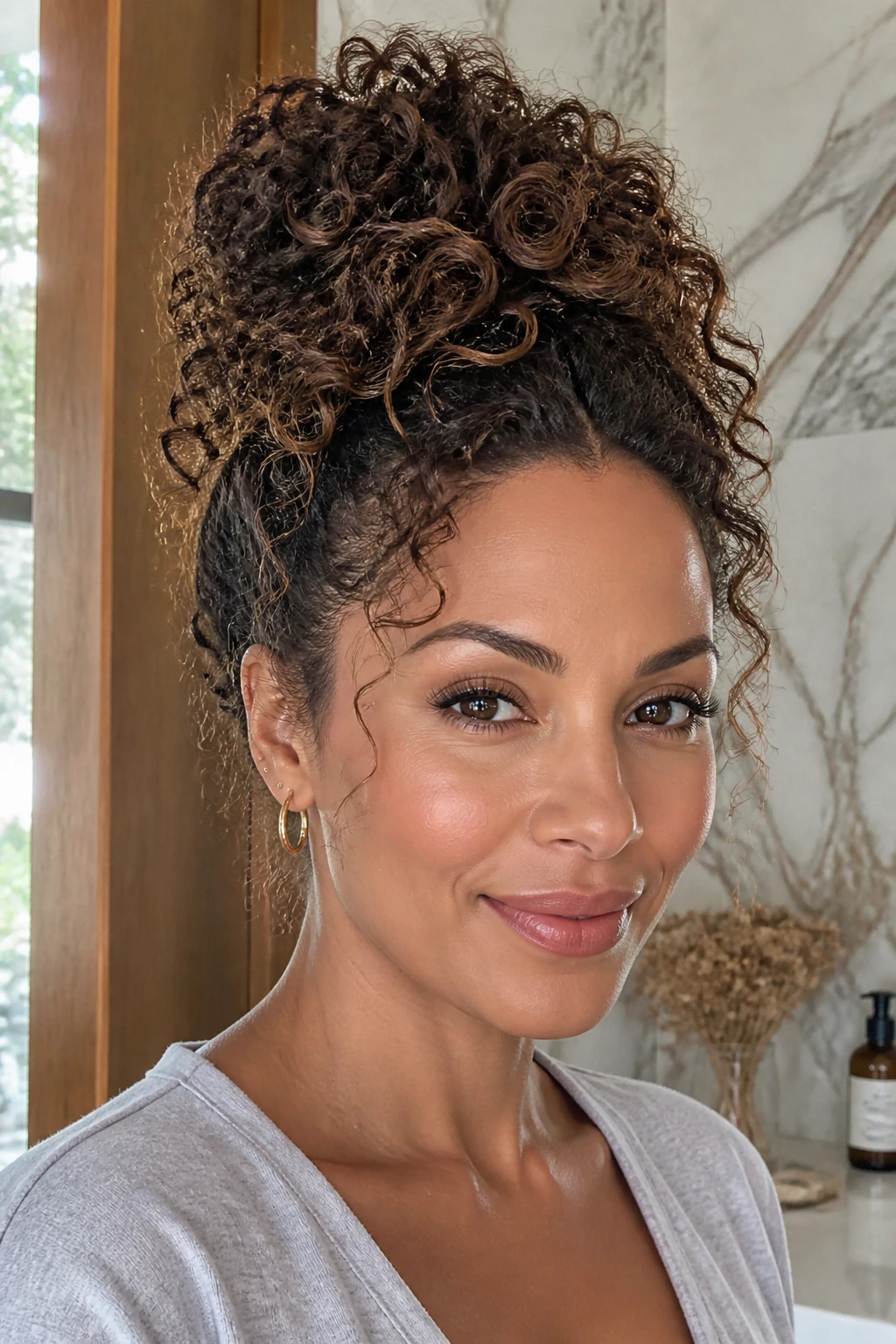
The pineapple updo sits high, which gives curls a fun shape and keeps the face open. Done well, it looks playful and neat at the same time. The hair gathers at the crown, but the curls still show enough texture to keep it from looking like a plain topknot.
This is one of the best options for preserving curl definition while keeping the hair off the neck. It’s especially useful when you want a style that can last through the day and still look like curls in the evening. The high placement also gives a nice lift to the whole face.
A silk scrunchie helps a lot here. Regular elastic can leave a dent or crush the curl pattern. And if you smooth the sides too hard, the look loses its curl personality fast. Leave a little softness around the hairline.
16. Soft Ringlets With Bottleneck Bangs
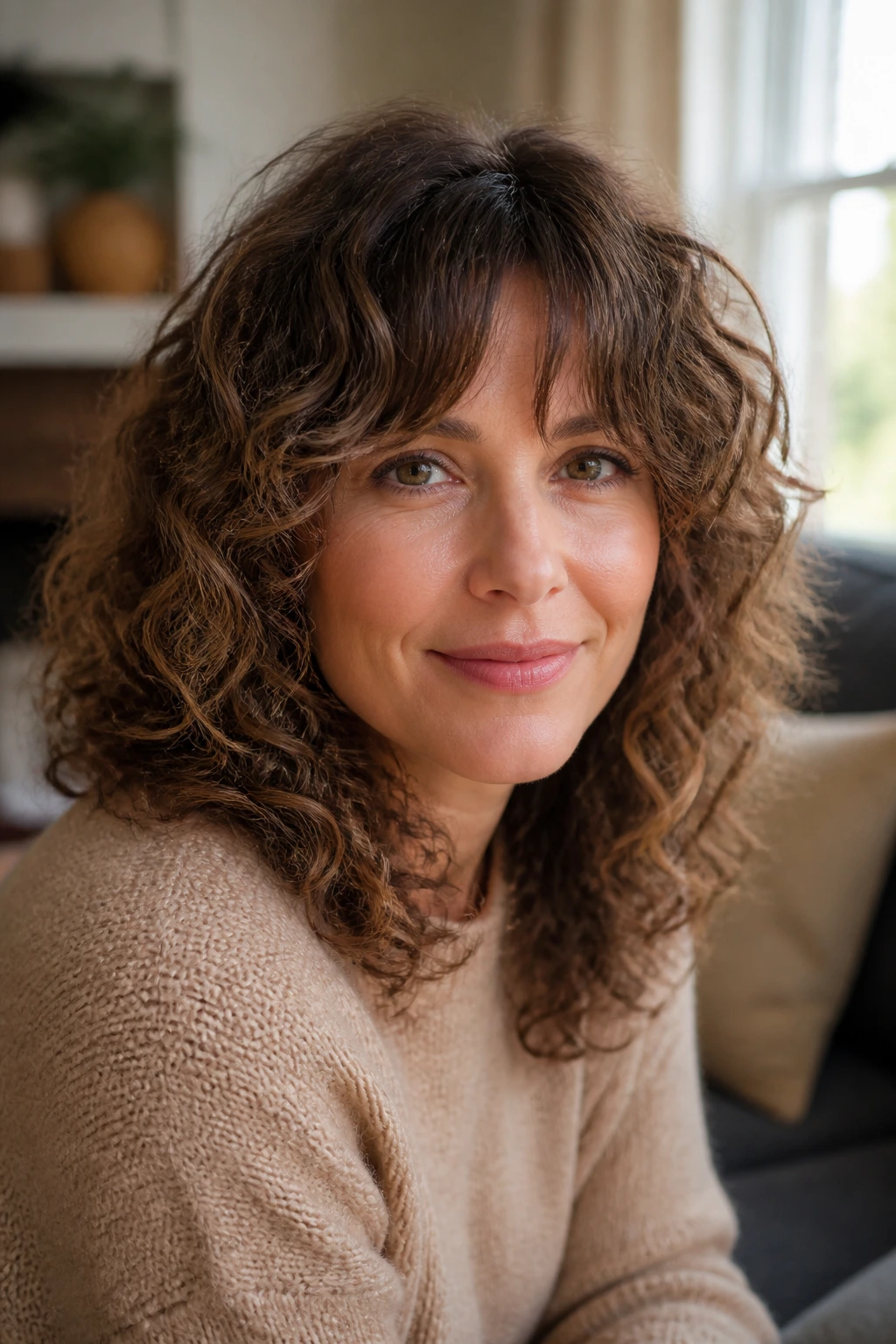
Bottleneck bangs are a clever choice for curly hair because they start slightly shorter in the center and open out toward the sides. That shape lets the bangs blend into the rest of the curls instead of sitting there like a thick curtain. The result feels soft and flattering, not heavy.
Soft ringlets around the face give the style a gentle frame. The bangs help break up the forehead, while the rest of the curls keep the look balanced. If you’ve avoided bangs because you were worried about upkeep, this is one of the easier ways in.
They do need a little styling. Bangs show bad cutting faster than the rest of the hair, so the shape has to be right. A curl-friendly stylist matters here more than product does.
17. Asymmetrical Curly Bob
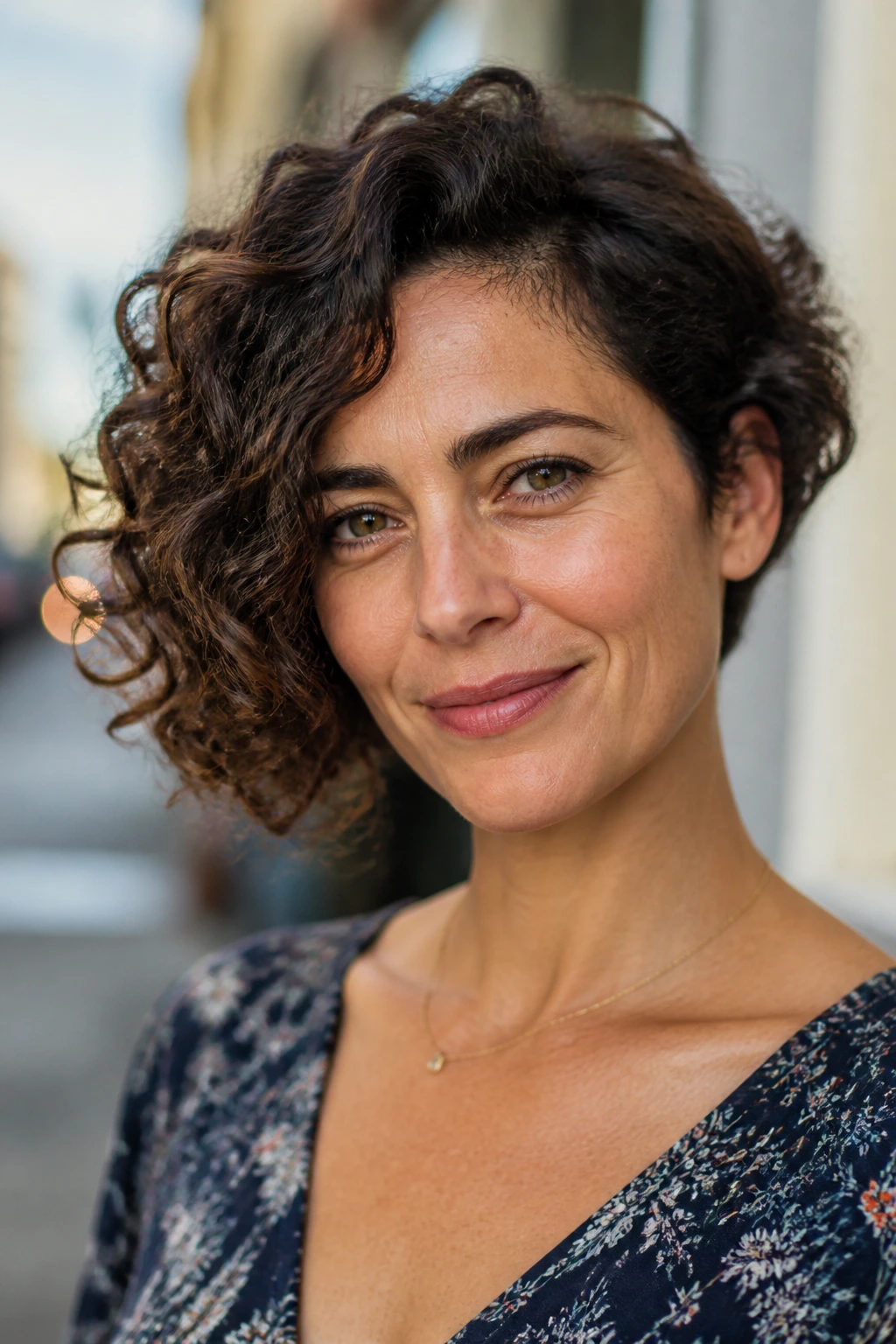
An asymmetrical curly bob gives you shape with attitude. One side sits a bit longer, which creates movement and makes the whole cut feel more dynamic. It’s a good answer if you want a bob but don’t want it to feel too symmetrical or too safe.
This cut is flattering because it draws the eye diagonally instead of straight across. That diagonal line softens the jaw and keeps the hair from spreading too evenly around the face. It’s subtle, but it changes how the style reads.
If your curls vary from side to side, asymmetry can be your friend. One side can carry a little more volume while the other stays tucked and neat. The mismatch stops being a problem and starts looking like the design.
18. Low Ponytail With a Wrapped Base
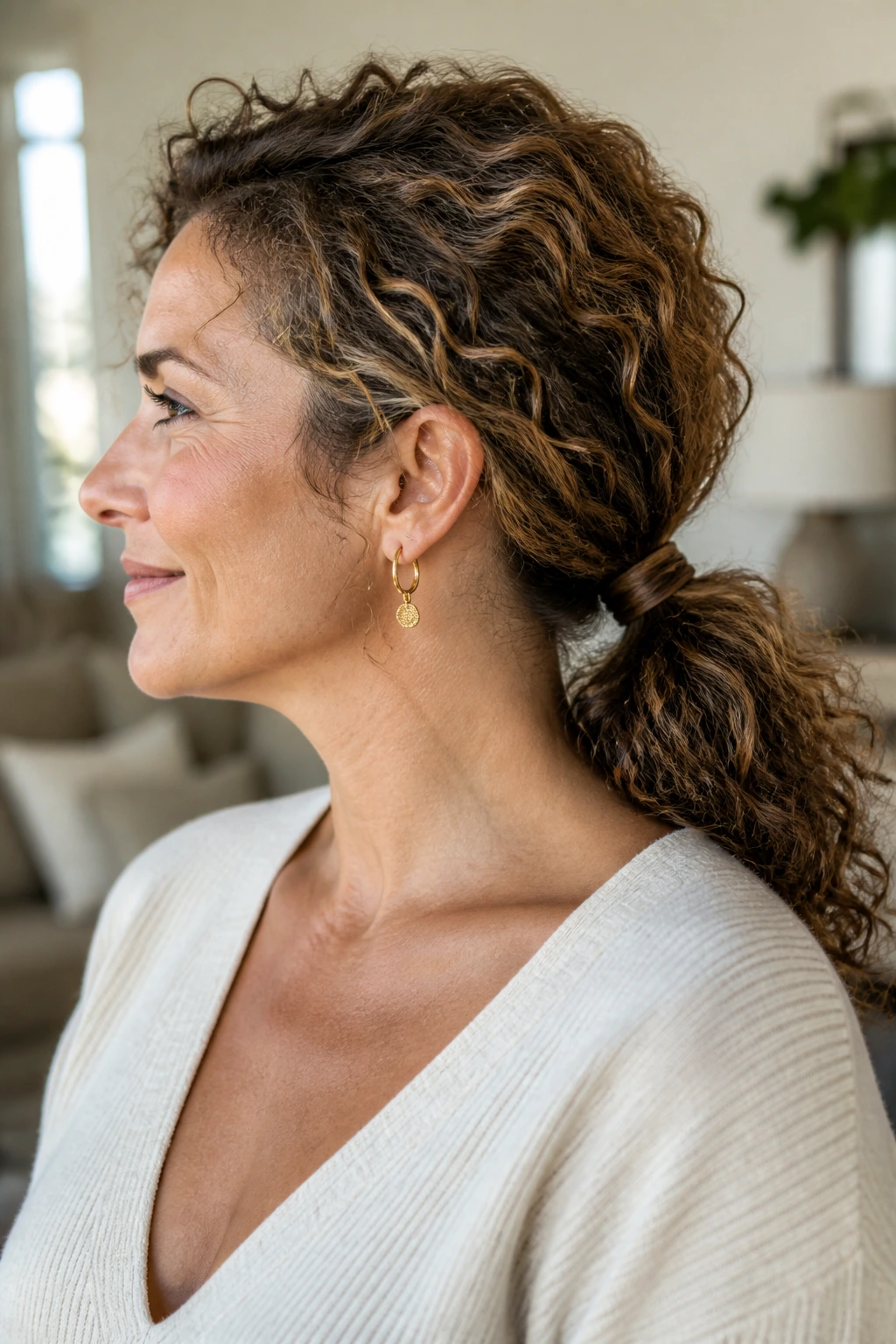
A low ponytail with a wrapped base looks cleaner than a regular elastic ponytail, and on curly hair that matters. Wrapping a curl section around the elastic hides the band and gives the style a finished edge. The base looks deliberate instead of rushed.
Keep the crown from going flat
Lift the hair slightly at the crown before you secure the ponytail. Don’t smooth it backward too hard. That’s how you end up with a tight top and a sad ponytail hanging underneath it.
This is a strong workday style because it keeps the curls gathered while still showing their texture. The ponytail can sit low at the nape or slightly off-center if you want a softer shape. A few face-framing pieces make it less severe.
It’s also one of the easiest styles to dress up with earrings or a bold neckline. Simple, but not boring.
19. Mid-Length Cascade Layers That Swing, Not Puff
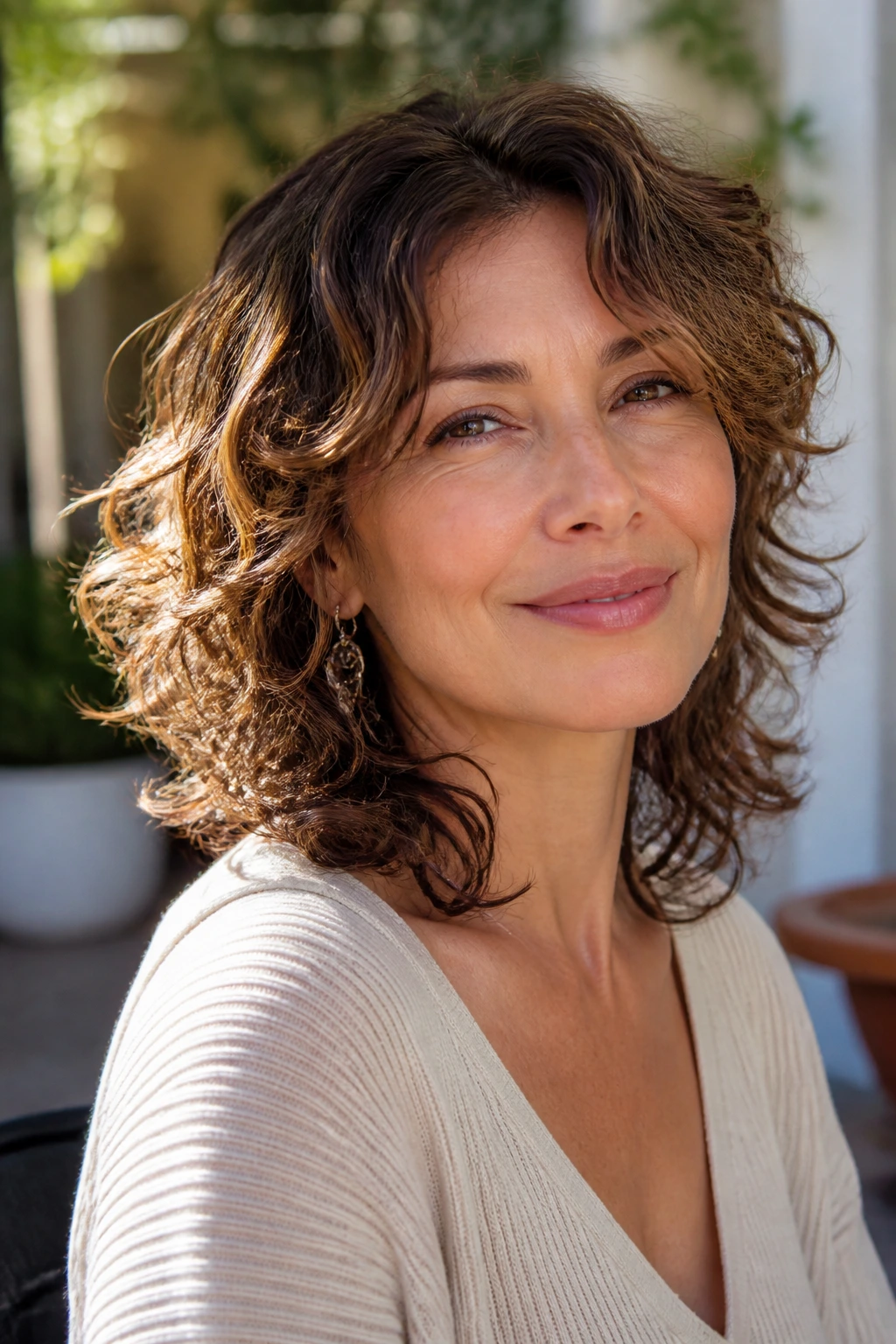
Cascade layers work best when the lengths fall in a soft progression, not in sharp steps. That progression lets the curls swing instead of puffing out at one heavy line. The style feels airy, which is useful if your hair has a lot of density.
I like this shape for people who want movement without the full commitment of a shag. The layers are there, but they’re less choppy and more blended. That keeps the style looking grown-up in the best sense: easy to wear, not over-designed.
The cut usually shines when the hair is diffused or air-dried with a little help at the roots. If the crown goes flat, the whole cascade loses energy. A root clip or a quick lift with fingers while drying can help.
20. Side-Swept Curly Crop
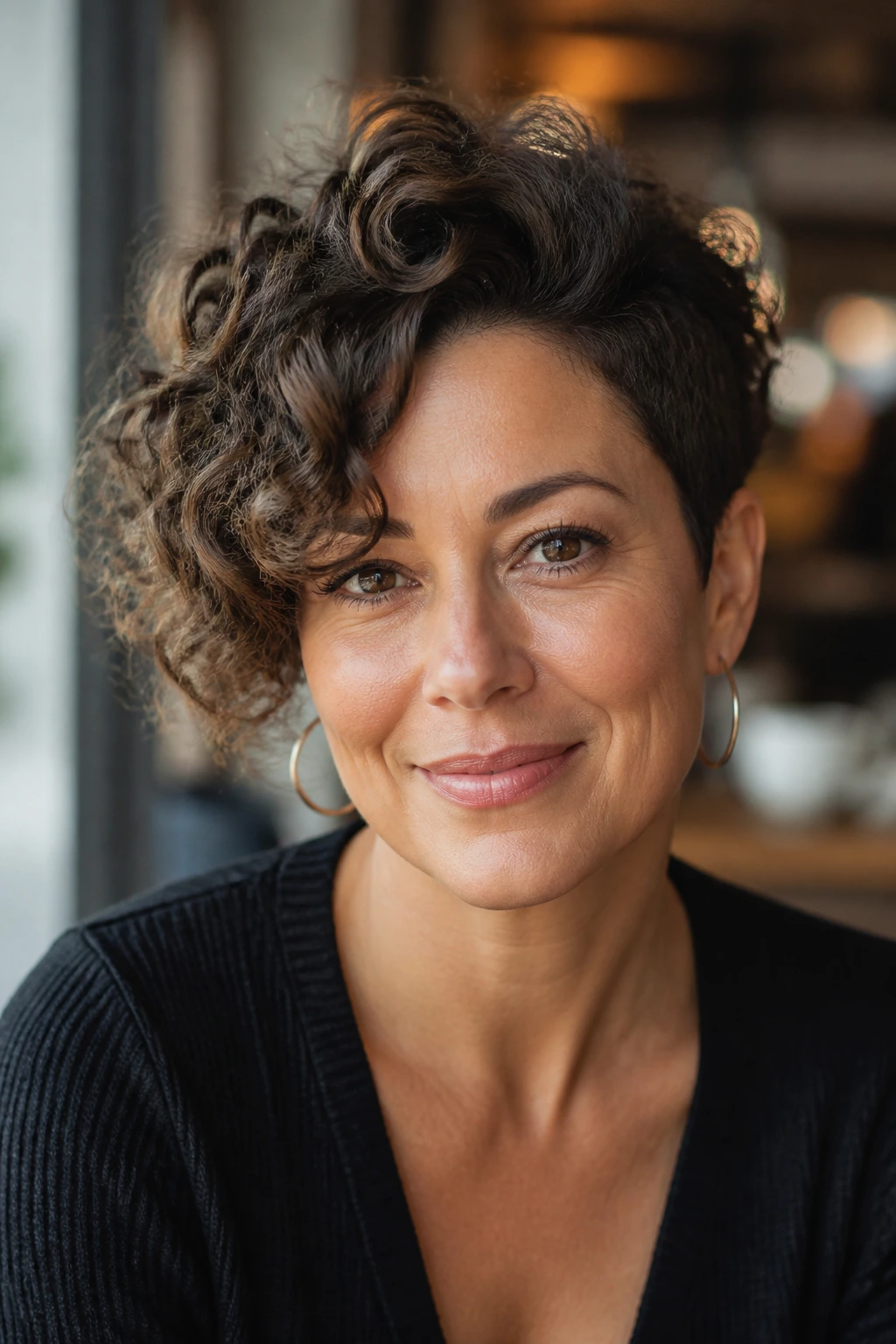
A side-swept curly crop has a lot of charm packed into a small shape. The longer side brings softness to the face, while the shorter side keeps the cut light and neat. It’s one of those styles that can look polished with almost no extra work.
What makes it interesting is the direction. Curls already have motion, and a side sweep gives them somewhere to go. That keeps the crop from feeling static or too round. It also helps if one side of your hair naturally wants to bend differently than the other.
This is a good option for glasses wearers and for anyone who likes a cut that shows the curl pattern rather than hiding it under layers. It’s short, but it doesn’t disappear.
21. Twisted Half-Up Style With Height at the Back
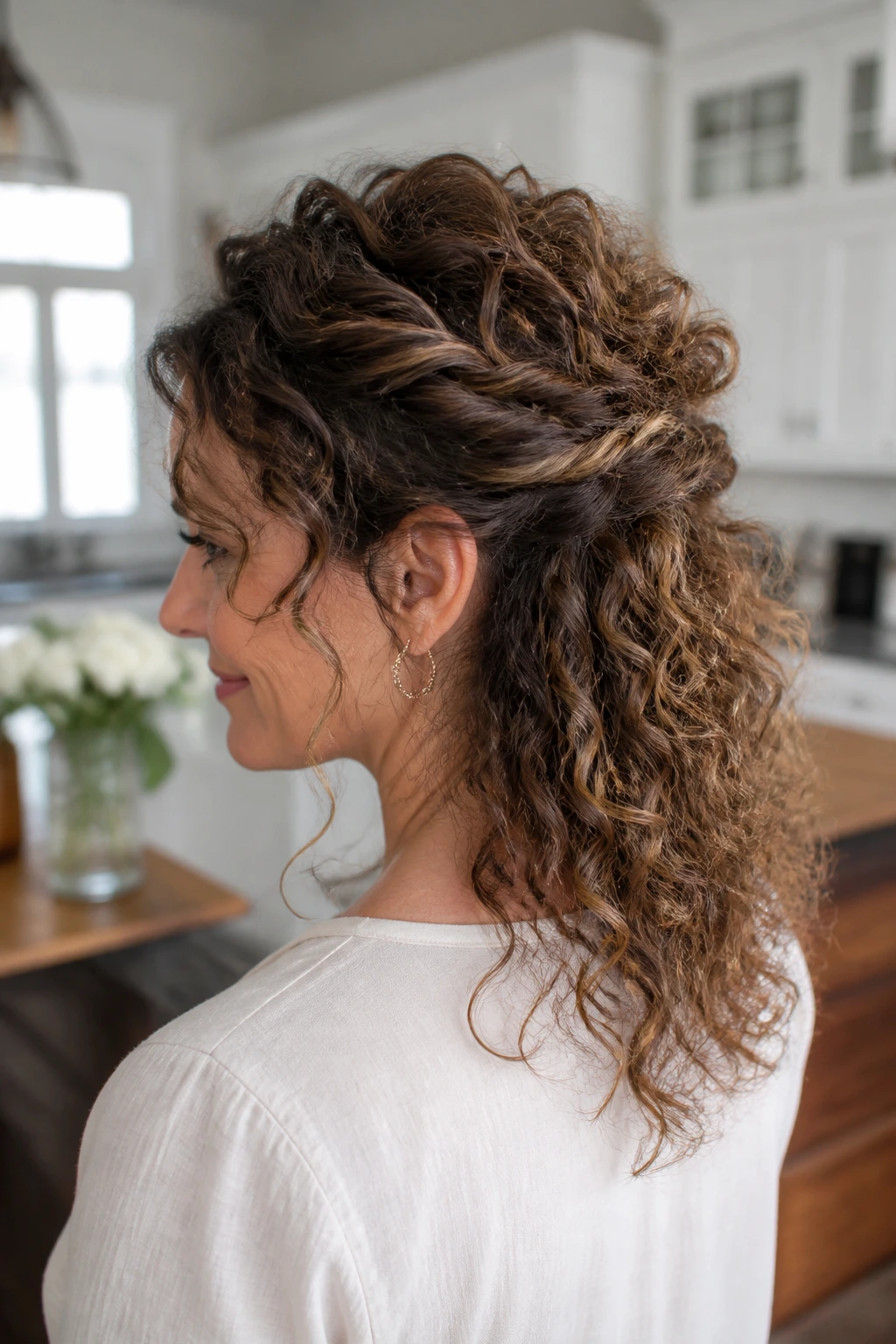
A twisted half-up style gives you lift in the back and control in the front, which is a nice combination when curls need both. The twist can sit low or high, but the important part is the volume it leaves behind. That little puff at the back keeps the style from going flat.
The front should stay soft. Pulling too much hair back makes the face look overexposed and the style look tighter than it needs to be. Leave a few curls loose near the temples and around the ears. Those are the bits that make the twist feel relaxed.
This is one of those styles that looks more complicated than it is. Two small twists and a couple of pins can change the whole shape. Handy on mornings when you need a fast answer.
22. Curly French Twist for Special Days
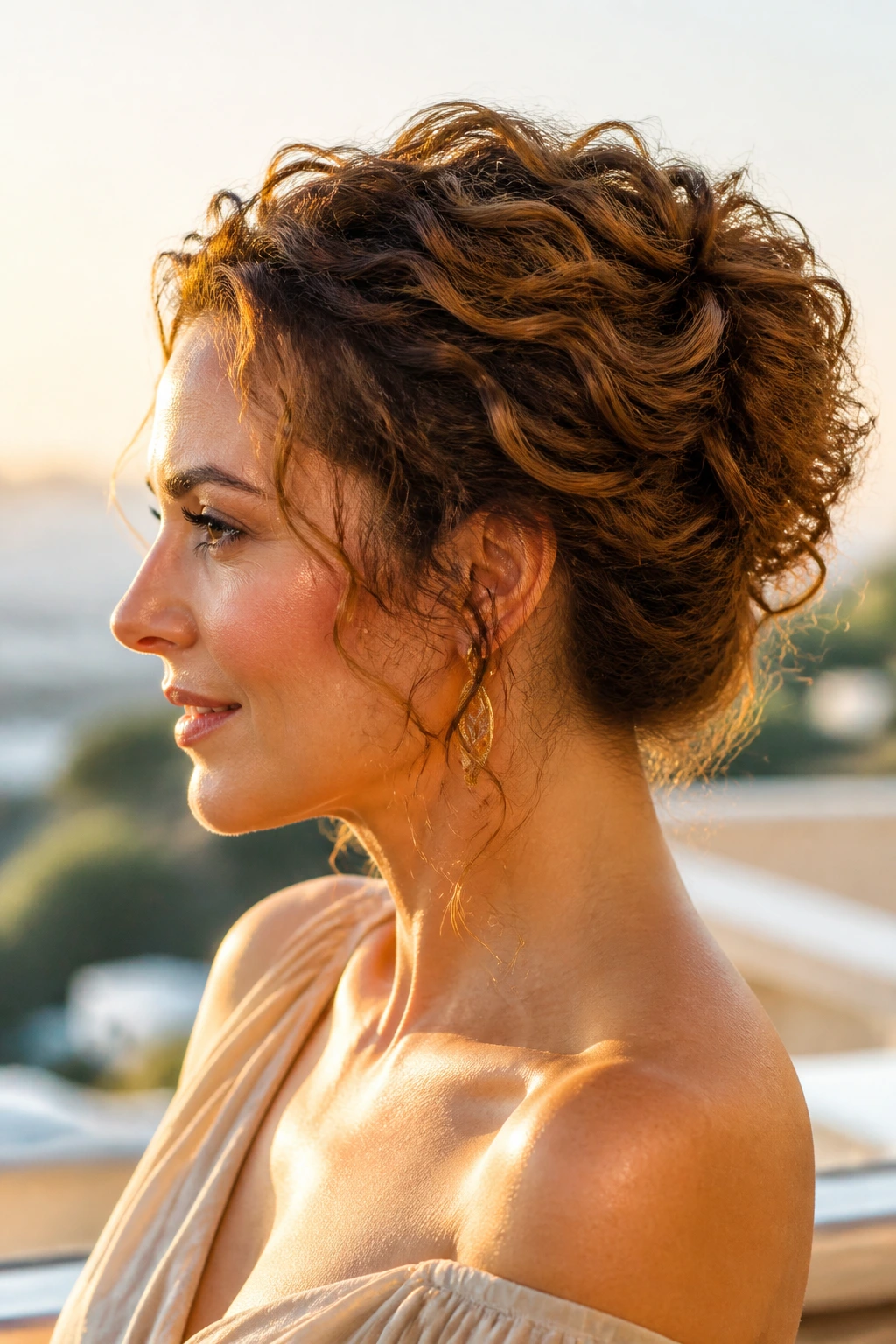
A French twist with curly texture feels elegant without losing the personality of the curls. Instead of smoothing everything into a shell, the twist lets some curl definition show through the roll. That keeps it from looking like formal hair from another era.
This style works best when the hair has enough length to gather and pin securely. Medium to long curls usually do the job well. The surface can stay a little textured; in fact, that texture is part of what keeps the style from feeling too stiff.
A few loose tendrils near the ears soften the look fast. So does a little height at the crown before you pin the twist. Flat roots make this style look older than it should. Lift helps.
23. Center-Part Coils With a Balanced Shape
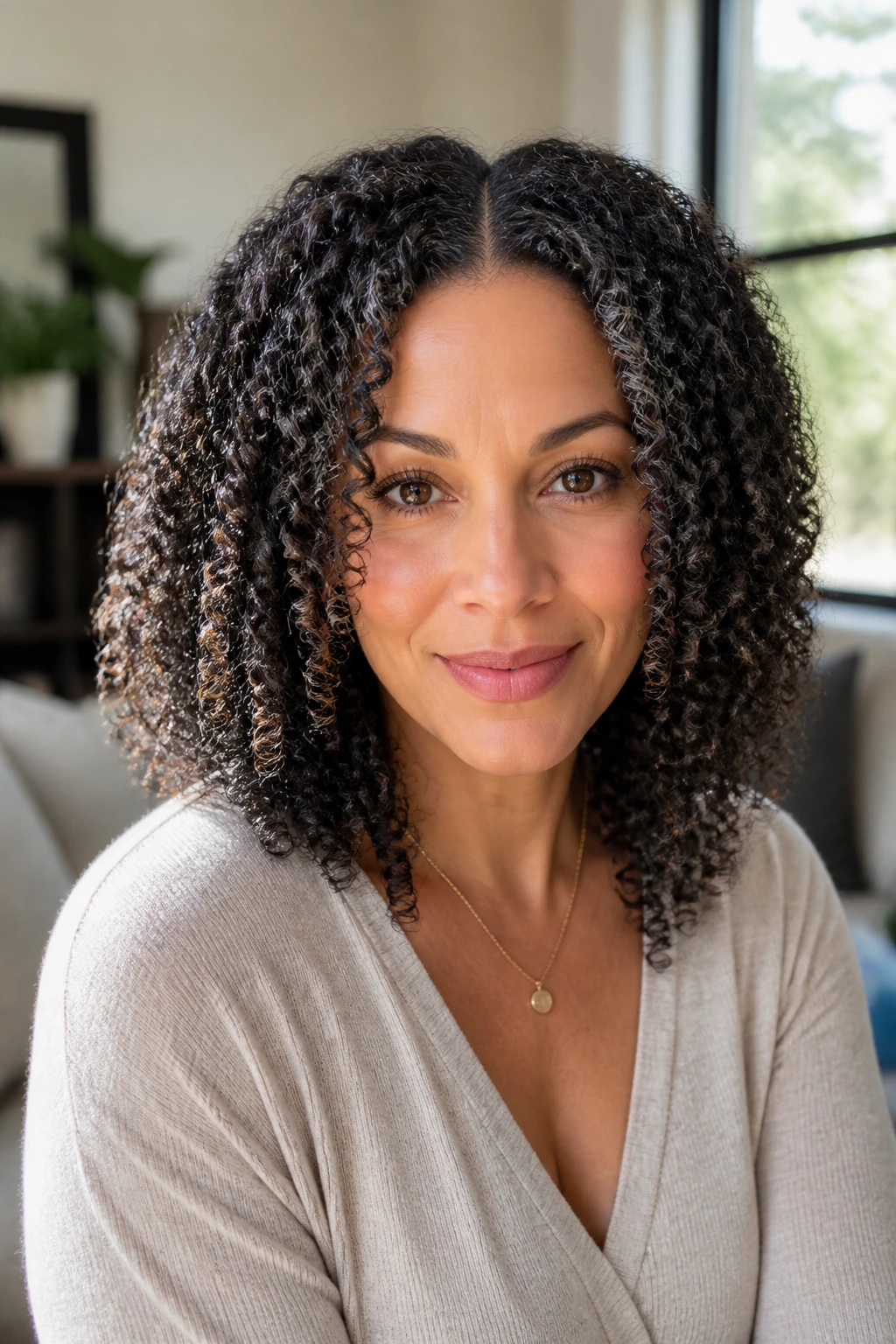
A center part can be a strong move on curly hair when the coils are shaped to sit evenly on both sides. The look feels calm and balanced, and it works especially well when the curls are defined rather than fluffy. Think symmetry, not severity.
This style is good when you want the curls themselves to be the focus. No dramatic side sweep. No extra twist. Just a clean middle line and enough shape around the cheeks to keep the face open. It looks especially nice when the hair has natural shine.
The only trap is forcing a middle part on a pattern that hates it. If the curls keep fighting the line, don’t insist. A part that matches the way your hair wants to fall will always look better than one you have to pin into place every morning.
24. Loose Curly Topknot With a Sleek Nape
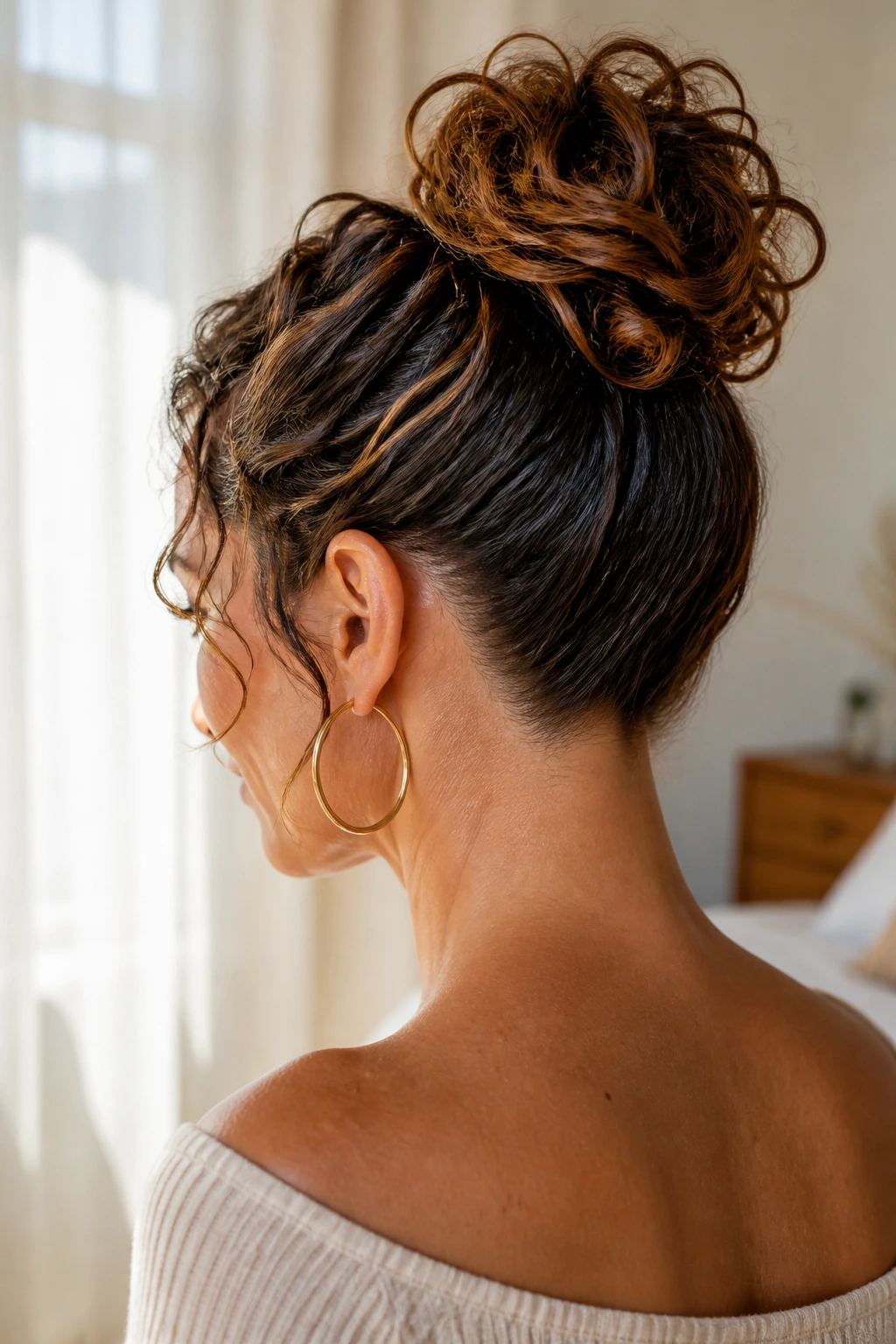
A loose topknot is a practical style, but it can still look polished if the nape stays smooth and the knot keeps some texture. The sleek back gives structure, while the curly knot keeps the style from feeling severe. It’s a good mix.
I like this for hot days, workouts, errands, or any time you want the curls up and out of the way without losing the shape completely. The knot should sit high enough to be visible but not so high that it looks like a hard little bun. Let some curls loop out around the base.
A silk scrunchie or soft elastic helps the hair stay comfortable. Tight bands can pull at curly strands and leave the whole style looking dented by midday.
25. Face-Framing Layers With Silver or Highlighted Curls
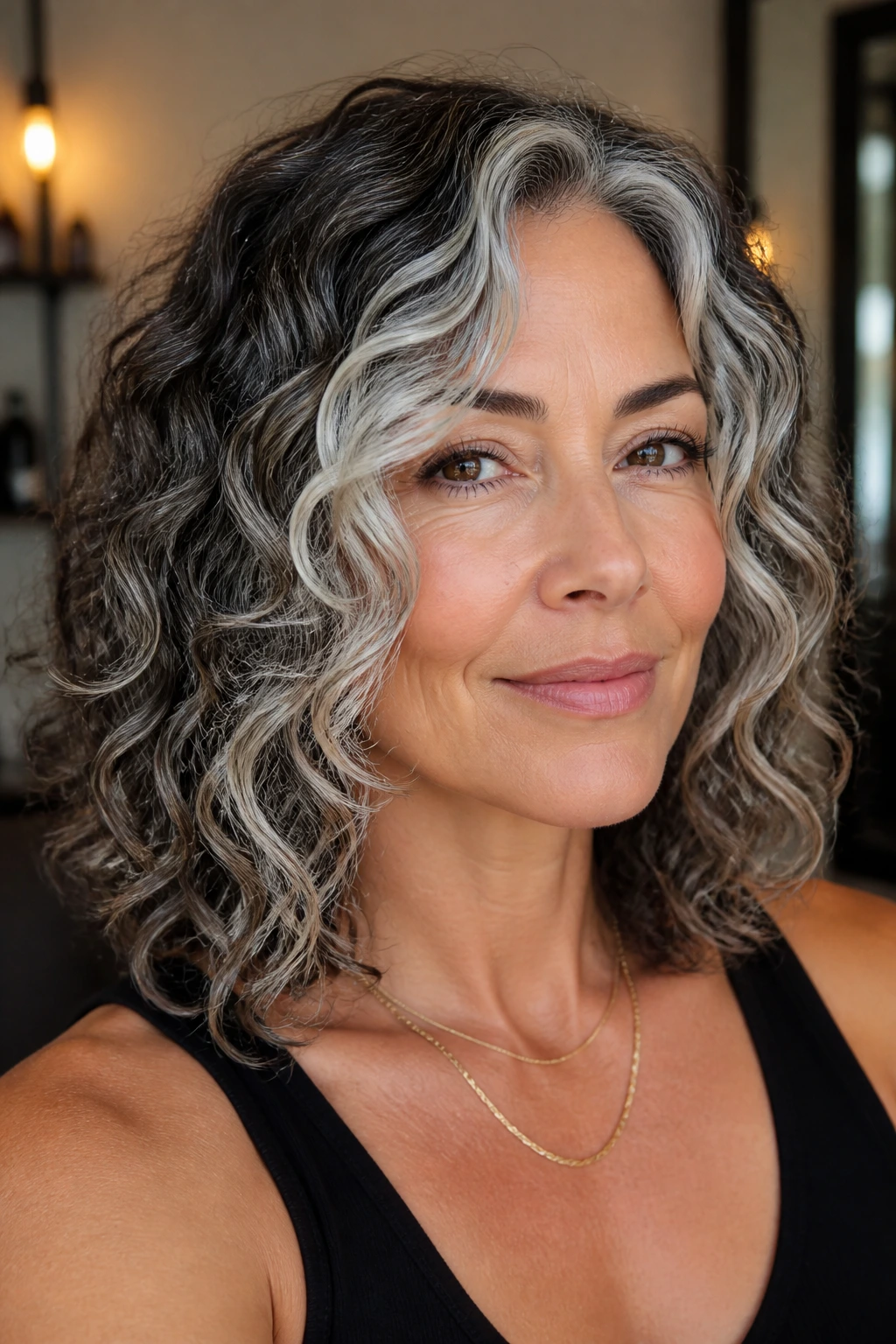
Face-framing layers are one of the easiest ways to make curly hair feel fresh, especially when silver strands or highlights are part of the picture. The layers catch the eye right where the face lives, and the color variation makes the curl pattern show up more clearly. It’s a smart pairing.
Why the color changes the shape
Highlights and silver ribbons create contrast. That contrast makes each curl stand out a little more, which can be useful if your hair is starting to feel visually heavy. The layers keep the front pieces from hanging like curtains, and the lighter strands keep the shape alive.
This is one of those styles that feels polished without trying to look younger. That’s a bad goal anyway. Better to look like yourself, just with curls that have a cleaner outline and color that works with them instead of hiding them.
A gloss or shine cream can keep the silver or highlighted pieces from looking dry. Curls with color need that extra bit of moisture, or the light pieces can get frizzy at the ends faster than the rest.
Why Curly Hair in Your 40s Likes Shape More Than Length
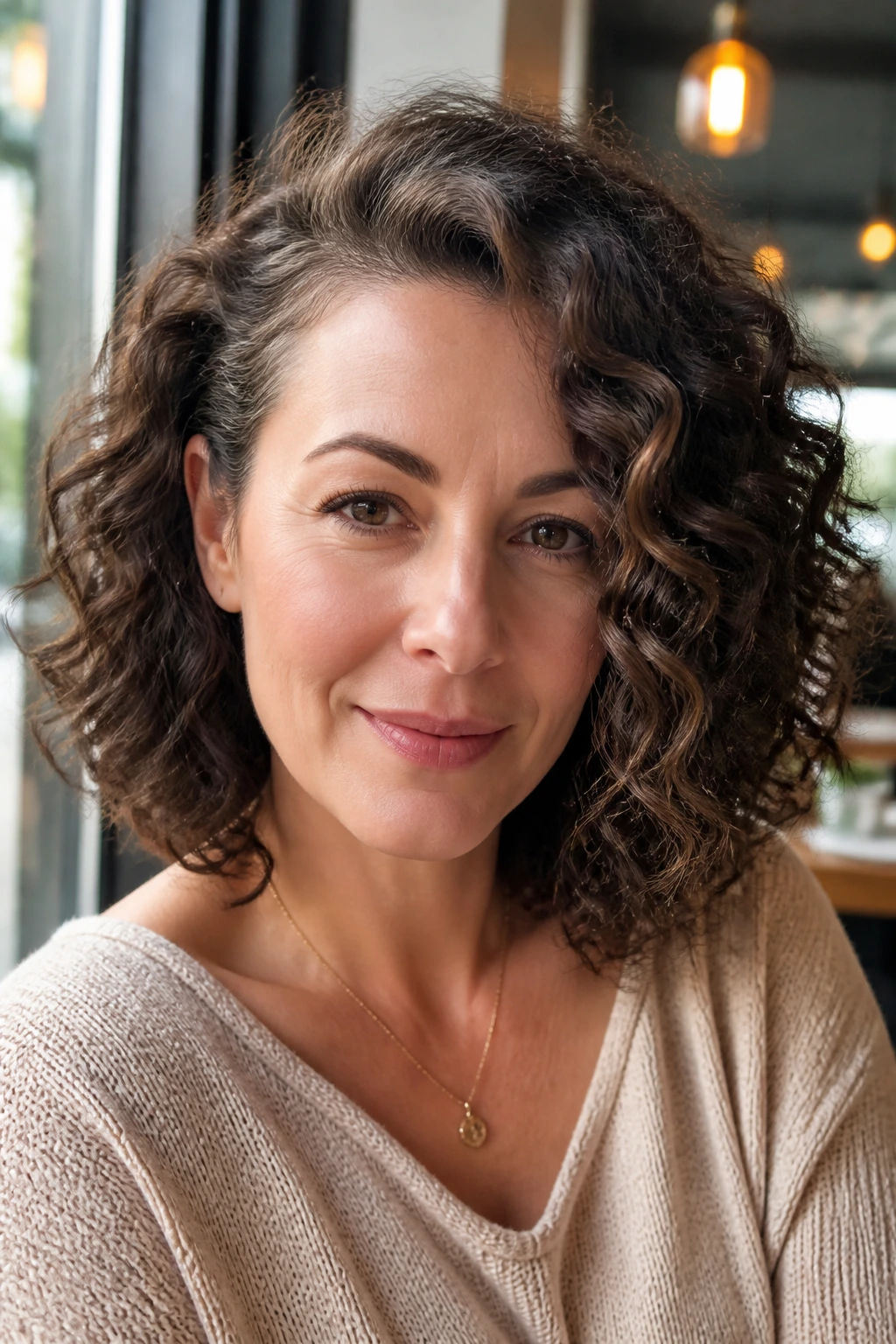
Long hair can be lovely. So can short hair. But with curly textures, shape matters more than sheer length once the curls start behaving like their own little architecture project.
Hair in the 40s often changes in ways that are easy to spot in a mirror but hard to name out loud. The crown may need more lift. The ends may feel drier. The temple area may look lighter. None of that means you need a dramatic transformation. It means the cut has to do a little more of the work.
That’s where layers, parts, and strategic removal of bulk come in. A blunt, one-length shape can look strong on some curl patterns, but on many heads it ends up widening the sides or dragging the curl line down. A better shape gives the hair movement without letting it spread.
I’m also a fan of styles that look good on day two. Real life is not a salon blowout. If a style only behaves when every curl is freshly defined and the humidity is low, it’s too fussy. The styles that win here are the ones that still look like they belong on your head after a commute, a coffee run, and a few hours of wearing glasses.
Essential Tools and Products That Make These Styles Easier
- Wide-tooth comb: Use it on soaking-wet hair or after conditioner to detangle without tearing up the curl clumps.
- Microfiber towel or cotton T-shirt: This cuts down on rough frizz compared with a regular bath towel, especially at the roots and around the crown.
- Leave-in conditioner: A light layer keeps curls pliable so they don’t go dry and puffy by lunch.
- Curl cream: Best for soft, touchable definition when you want the style to look shaped but not stiff.
- Mousse or foam: Great for lift at the roots and airy volume in lob, shag, and pixie styles.
- Strong-hold gel: Helpful when you want definition that lasts through humidity and keeps the silhouette cleaner.
- Diffuser: The attachment that keeps curls intact while drying and helps the crown dry with more lift.
- Duckbill clips: Useful for root clipping at the top, which makes a huge difference in flatter curl patterns.
- Silk scrunchies and silk bonnet: Gentle on curls overnight and much kinder than thin elastic.
- Bobby pins and claw clips: Small but useful for half-up styles, tucked sides, and quick workday fixes.
- Styling brush with flexible bristles: Handy if your curl pattern likes brushed-out clumping before the gel sets.
How to Choose the Right Cut, Stylist, and Styling Routine
A good curl cut starts before the scissors do. Bring photos, yes, but bring photos of heads that look like yours in curl pattern and density. A jaw-length bob on loose waves can behave nothing like a chin-length bob on springy coils, and the difference matters more than people think.
Ask whether the cut will be done dry or with dry shaping at the end. Dry cutting lets the stylist see how each curl sits, which helps when the hair has uneven patterns or tighter pieces in some spots. That said, a thoughtful wet cut can still work if the stylist knows how curls spring back. The real issue is not wet versus dry. It’s whether the person cutting your hair understands shrinkage.
Products should match the job. If your curls are fine, heavy creams can collapse them. If your curls are thick or coarse, a light foam may not hold enough shape. Pick based on what the hair needs to stay balanced, not on the prettiest bottle. If you want the crown to lift, choose mousse or a root-safe foam. If you want the ends to clump and stay defined, reach for gel. If you want softness, use cream sparingly and add more only where the hair actually needs it.
And if your stylist says “we can just thin it out everywhere,” be careful. A little bulk removal can help. Too much can leave holes and frayed ends that never sit right again.
How to Wear These Styles for Work, Weekends, and Special Events
Workday: Choose shapes that stay neat at the crown and around the face, like the lob, low ponytail, rounded bob, or side-swept crop. A little cream and a single barrette can take the edge off without turning the style formal.
Weekend: This is where the shag, wolf cut, pineapple, and claw-clip twist come alive. Let the curls be a bit freer. A few rough edges can actually make the shape look better, not worse.
Special events: Go for the braided crown, French twist, polished pineapple, or low bun with face-framing pieces. These styles hold their own with earrings, a bare neckline, or a more structured top. They look intentional from across the room.
Fastest version: When time is short, use the styles that hide a little chaos well: half-up twists, tucked side curls, clipped buns, and the wrapped ponytail. Those rely on shape more than perfection.
Accessories: Simple clips, pins, and silk scrunchies do more for curly hair than most people give them credit for. A good clip can make a second-day style look like a decision instead of a rescue.
Additional Tips for Volume, Frizz, and Face Framing
Volume Boost: Clip the roots at the crown while the hair dries, then remove the clips only when the hair is fully dry. That little bit of lift helps lobs, shags, and layered cuts keep their shape instead of sinking toward the scalp.
Frizz Control: Put styling product on soaking-wet hair, not damp hair that’s already starting to puff. Water helps the product spread evenly, and curls hold shape better when they’re encouraged to clump early.
Face Framing: Keep the shortest pieces around the face long enough to move. Shorter than the cheekbone can get fussy fast, especially once the hair dries and springs up.
Color Play: Silver strands and highlights can make layers look sharper, especially around the front. If the cut feels too blended, a little contrast in the color gives the eye something to follow.
Make-It-Yours: If you prefer low-maintenance hair, choose styles that can be pinned, tucked, or twisted without needing heat. If you like more polish, focus on shapes with a cleaner outline and use a diffuser instead of rough air-drying.
Common Mistakes That Flatten or Scatter Curly Hair
- Cutting every curl to the same length: The symptom is a wide triangle shape, especially around the sides. The fix is smarter layering or internal weight removal so the curls stack instead of spreading outward.
- Using too much cream or oil: The hair turns soft in the worst way — limp at the roots and sticky at the ends. Use lighter product at the crown and save richer formulas for the drier mid-lengths and ends.
- Brushing curls when they’re dry: That’s how you get the halo of frizz nobody asked for. Detangle wet, or refresh with water and a little slip before separating curls.
- Forcing one part every day: If the hair naturally wants to fall off-center, fighting it can make the style look crooked. Work with the direction the curls already take, then adjust the part slightly if needed.
- Skipping crown support: Flat roots make even a good cut look tired. Root clips, diffusing at the scalp, or a little lift while drying can change the whole silhouette.
- Ignoring shrinkage: A style that looks perfect when wet can jump up several inches once it dries. Always judge the finished length after the hair is dry, not before.
Variations and Adaptations to Try
Fine-Curl Soft Volume: Choose lob, bob, or pixie shapes with lighter layers and use mousse instead of heavy cream. The cut should keep the curls buoyant, not weighed down.
Thick-Curl Shape Saver: Pick shag, cascade layers, or a tapered crop to manage bulk. These cuts help dense curls keep a clean silhouette instead of expanding outward.
Gray-Blend Glow: Ask for face-framing layers and a gloss that keeps silver strands shiny, not dull. The color contrast helps the curls read clearly, which can make the whole style look sharper.
Humidity-Proof Finish: Use gel on wet hair and lock the shape in with a diffuser. Styles like the lob, low bun, and polished pineapple hold up better when the air gets sticky.
Heat-Free Week: Favor styles that can be refreshed with water, leave-in, and a clip. The half-up twist, tucked side curls, claw-clip twist, and low bun all survive a no-heat routine well.
Wash-Day, Refresh, and Overnight Maintenance
Curly hair styles hold better when the maintenance plan is simple and repeatable. On wash day, start with enough moisture so the curls clump cleanly. A leave-in and styling product on soaking-wet hair usually lasts longer than trying to fix dryness after the fact. If you diffused, let the hair cool fully before touching it. Warm curls fall apart faster.
At night, a silk bonnet or a loose pineapple keeps the shape from getting crushed. If you hate bonnets, a satin pillowcase is the next best thing. I’m partial to the bonnet for long curls and the pineapple for shoulder-length styles, because both keep the crown from going flat. Use whatever stays on your head without making you furious.
Most of these looks can be refreshed on day two or three with a spray bottle, a dime-size amount of leave-in, and a little scrunching. Don’t soak the hair. Just wake it up. If pieces have lost their shape, a finger coil on a few front curls is often enough to make the whole style look deliberate again.
Trims matter too. Every 8 to 12 weeks is a solid rhythm for keeping bob, lob, shag, and pixie shapes in line. Longer styles can stretch a bit farther, but split ends and lost shape have a way of showing themselves in curls faster than they do in straight hair. If the ends start looking stringy or the silhouette gets wide at the bottom, that’s usually your cue.
Curly Hair FAQs for Women in Their 40s
What curly hairstyle makes hair look fuller if it’s thinning a little at the crown?
A shoulder-grazing layered cut, a lob with a side part, or a pixie with a longer top usually gives the crown more lift. The trick is to avoid heavy weight sitting on top of the scalp, because that pulls everything down and makes the thinning look more obvious.
Are bangs a bad idea for curly hair in your 40s?
Not at all, but they need the right shape. Curtain bangs and bottleneck bangs are friendlier than blunt, heavy fringe because they move with the curls instead of sitting like a wall.
How often should curly hair be trimmed to keep these styles in shape?
Shorter cuts like pixies and bobs usually need a trim every 6 to 10 weeks. Medium and long layers can often go 8 to 12 weeks, depending on how fast the ends lose their shape.
What if my curls are a mix of loose waves and tight ringlets?
Ask for a cut that follows the tightest sections, not the loosest ones. That keeps the shape even, because the tighter curls shrink the most and will otherwise pop up shorter than the rest.
Which of these styles is easiest on busy mornings?
The claw-clip twist, low ponytail with a wrapped base, tucked side curls, and polished pineapple are all fast. They give you a finished look without needing to redefine every curl.
Can I wear these styles if my hair is mostly gray or salt-and-pepper?
Yes, and the texture often looks striking with layered shapes. Gray curls can be a bit wirier or drier, so a gloss, leave-in, and soft layers around the face usually help a lot.
How do I keep curly styles from getting huge in humid weather?
Use a gel or strong-hold styler on wet hair, then dry it with a diffuser if you can. Once the hair is dry, touch it as little as possible. That’s the boring answer, but it works.
Should curly hair be cut dry or wet?
Either can work if the stylist understands curls, but a dry finish helps a lot when the pattern is uneven. Dry shaping shows where the curls actually fall, which matters for bangs, bobs, and layered cuts.
What if my curls fall flat halfway through the day?
That usually means the cut is too heavy or the product is too rich. Try a lighter mousse at the roots, clip the crown while drying, and ask for more internal shaping at the next trim.
The Styles That Behave
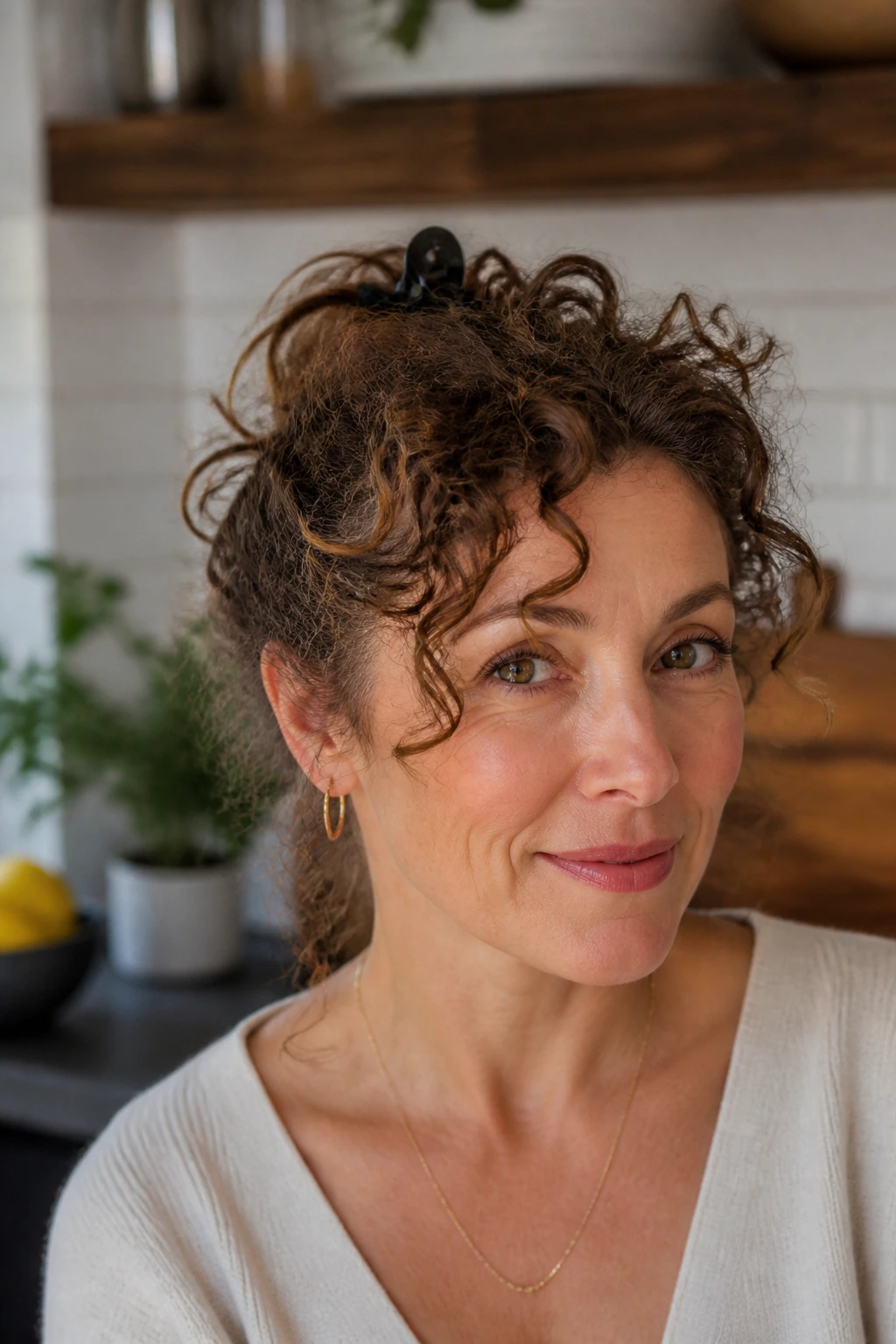
The best hairstyles for curly hair in your 40s are the ones that make the hair look like it knows what it’s doing, even when the curls are having a slightly rebellious day. That can mean a shag, a lob, a pixie, or a simple twist with a few loose pieces left out. The cut matters, the part matters, and the way you dry the hair matters too.
What I like most about these looks is that they leave room for the real texture to show. They do not try to sand curls down into something they’re not. They give shape, lift, and a little polish, then let the hair do its own lively thing from there.
Pick the one that fits your curl pattern, your morning routine, and your patience for upkeep. The right style should make your hair easier to live with, not more demanding.