



The best hairstyles for women over 40 with curly hair don’t try to tame the curl pattern into something it isn’t. They give the curl a shape, a direction, and a little breathing room so the whole head looks intentional even when the weather is doing its usual nonsense.
That matters more than most people admit. Curly hair after 40 often changes texture in pieces, not all at once: the crown may get flatter, the ends a little drier, the gray a touch wirier, and the curl pattern around the face may loosen or tighten depending on the length. A cut that looked fine five years ago can suddenly start reading as heavy, boxy, or oddly wide at the sides.
The good news is that a flattering curly style does not need to be complicated. A clean silhouette, a smart part, and the right amount of layering can do more than half an hour with a diffuser. Some of the looks below are soft and polished. Some have edge. All of them respect the way curly hair actually lives on the head.
Why These Curly Styles Earn Their Keep
-
They work with shrinkage instead of arguing with it: The cut shapes the curl where it falls naturally, so you don’t end up with a blunt line that jumps up to your ears when it dries.
-
They keep the eye moving: Side parts, face-framing layers, and soft fringes pull attention to cheekbones, eyes, and jawline instead of stopping everything at one heavy perimeter.
-
They handle texture changes gracefully: Hair that’s a little finer at the crown or drier at the ends still looks good when the shape has built-in movement.
-
They don’t demand a two-hour routine: Most of these styles can be refreshed with water, a little leave-in, and a diffuser pass that takes less time than scrolling your phone.
-
They make gray hair look deliberate: Silver, salt-and-pepper, and streaked curls all get sharper when the cut has enough structure to show off the contrast.
-
They give you options on lazy days: Even the lower-maintenance looks can be pinned, twisted, or clipped into something presentable without starting from scratch.
1. Shoulder-Length Layers That Let Curls Move
Shoulder-length layers are the reliable middle ground for curly hair that needs shape without losing presence. The curls still have room to spring, but they’re not so long that the weight drags everything down and makes the crown collapse. I like this length because it looks finished in a clean wash-and-go and still holds up when you tuck one side behind your ear.
Ask for long internal layers, not a carved-up, choppy mess. The shortest pieces should usually start somewhere around the chin or lips, depending on how much volume you want at the top. If your curls are looser, this length keeps them from hanging like wet ribbon. If they’re tighter, it stops the shape from turning into a wide triangle.
This is the style I’d hand to anyone who wants a haircut that can live in real life. It works with a blazer, a T-shirt, and a little lip color. That’s not a small thing.
2. Curly Shag with Curtain Bangs
Can a shag still feel polished? Yes, if the layers are placed with some restraint and the fringe is long enough to move. A curly shag with curtain bangs gives you lift at the crown, softness around the face, and a little attitude without needing a full-on edgy cut.
The secret is the fringe. Curtain bangs should graze the cheekbones or land just below them when dry, because curly hair springs up fast and bangs that are cut too short can get pushy. The layers around the crown should be lighter than the lengths, but not so thinned out that the top looks see-through on day three.
What to Ask For
- Long curtain bangs that blend into the front layers.
- Crown layers for lift, not a chopped-up top.
- A perimeter that stays soft so the whole cut doesn’t puff out.
This style is especially good if your curls have a little variation from root to end. The shag embraces that unevenness instead of pretending every curl ringlet behaves the same way.
3. Chin-Length Curly Bob
A chin-length curly bob has a clean line that gives curls a place to land. Shorter bobs can get too round if the density is high, but chin length keeps the shape open and lets the side pieces skim the jaw instead of crowding it.
I’m fond of this cut for finer curls because it creates the feeling of fullness without asking the hair to support too much length. A slight angle from back to front helps, too. The front pieces can sit a little longer so the face gets some framing instead of a hard shelf.
It’s also one of the better styles for women who want to see their curl pattern instead of hiding it in layers. One trim every 8 to 10 weeks keeps the bob from growing into a block. Leave it too long and it starts to lose the crispness that makes it work.
4. Side-Part Lob with Face-Framing Pieces
A side-part lob gives you that easy in-between length that can feel both grown-up and relaxed. The part does a lot of the work here. A deep side part lifts the roots, creates instant asymmetry, and keeps the curl pattern from falling flat across the forehead.
The face-framing pieces matter almost as much as the length. Cut them so they start near the chin and taper softly toward the collarbone, which keeps the jawline from getting swallowed by one big curtain of hair. On curly hair, that small shift changes the entire shape.
This is a style that behaves nicely with glasses, earrings, and busy mornings. It’s not showy. It just makes the head look balanced, which is often the real goal anyway.
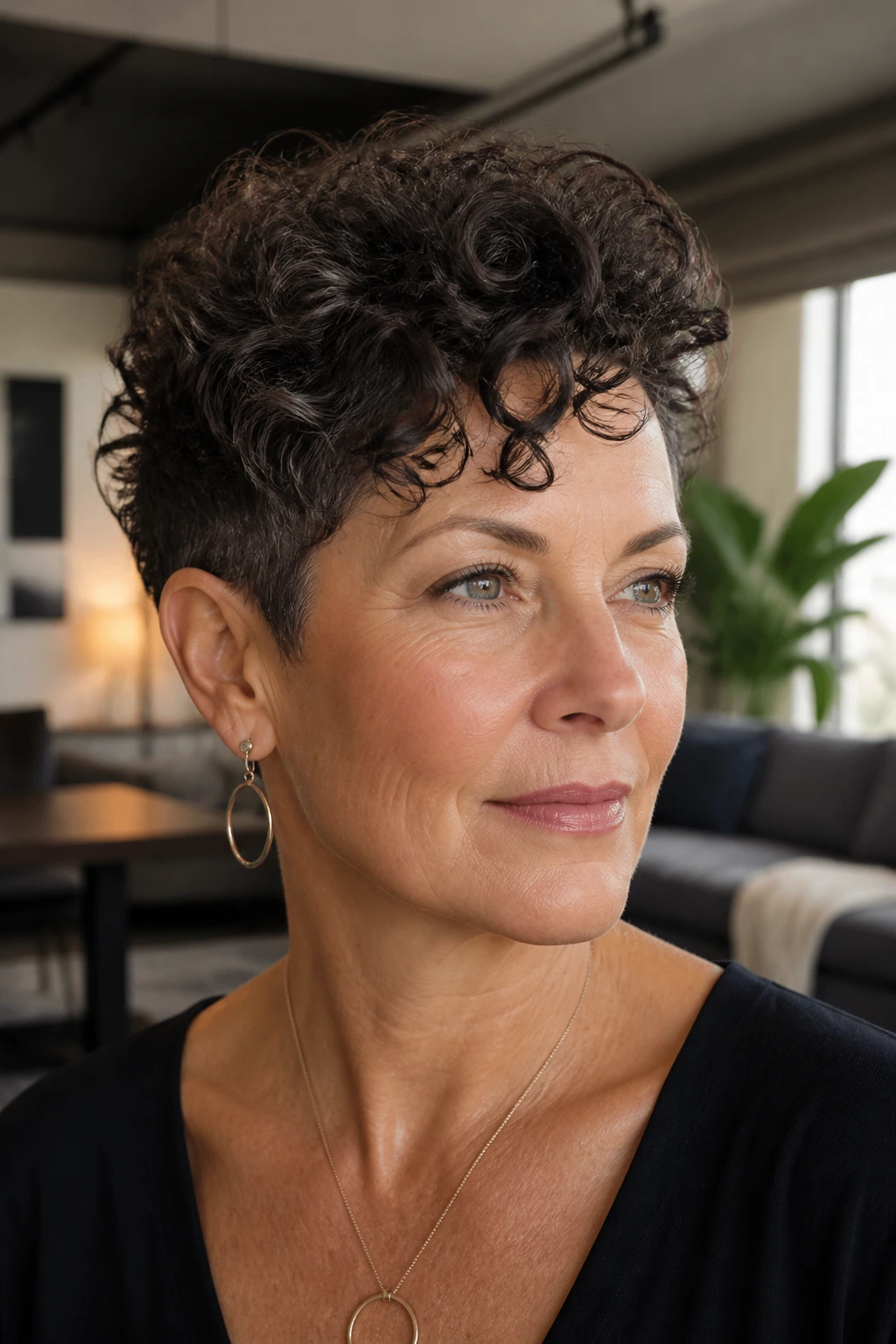
5. Tapered Curly Pixie
A good curly pixie is not a close-cropped straight-hair pixie with curls left to fend for themselves. It needs space on top, shorter sides, and a tapered nape so the curl pattern can stack up instead of sticking out like a helmet.
This cut is sharp, but not severe, when the top is left long enough to show the coil or wave pattern. Think lift at the crown, texture through the top, and just enough length to finger-style with a dab of cream or gel. If the sides are shaved too close, the result can feel harsh once the curls shrink.
It’s a strong choice for people who are tired of long-dry times or heavy ends. It also shows off earrings and glasses in a way longer cuts can’t. Short hair does not mean boring here. It means the shape has to do the talking.
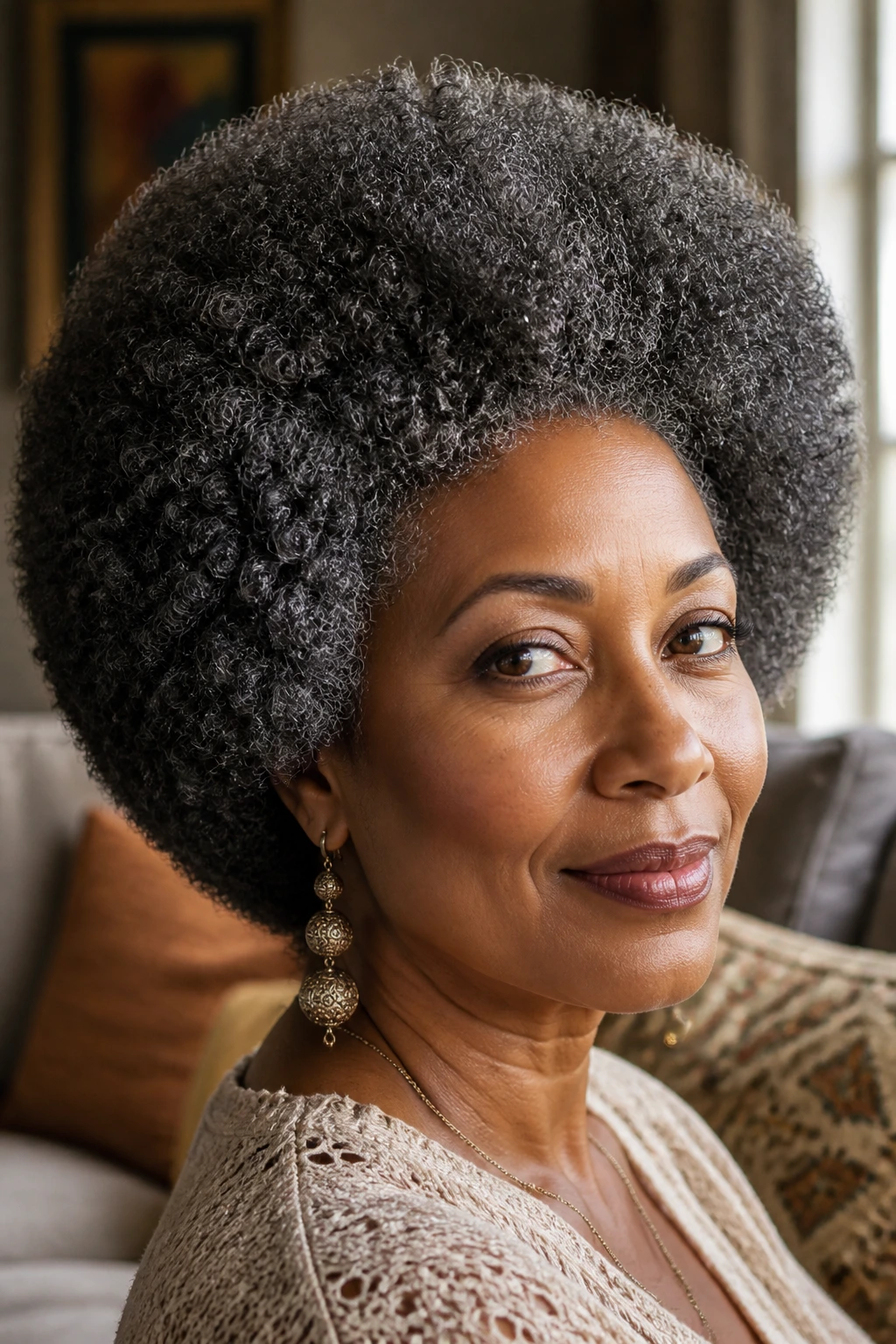
6. Rounded Afro with Soft Edges
A rounded afro works because it lets tight curls and coils keep their own structure while still looking shaped. The line should follow the contour of the head, with soft edges around the temples and a little fullness where the crown needs it most.
This is one of the best looks for gray curls, by the way. Silver strands catch the light inside the coil pattern, and the round shape makes that contrast read clearly instead of messy. The trick is moisture and patience: a leave-in, a cream or gel layered on top, and a pick used only after the hair is dry.
The edges should be neat, but not over-edged into something stiff. I like soft temple shaping and a natural hairline better than a squared-off finish, especially when the face itself already has strong lines.
7. Collarbone U-Cut
The collarbone U-cut keeps the length while taking away the blunt weight that can flatten curly hair fast. The shape is longer in the middle and a little shorter toward the sides, which helps the curls fall in a softer arc instead of hitting the shoulders all at once.
This cut is one of those quiet workhorses. It doesn’t scream for attention, but it gives long curls a cleaner outline and lets the back move instead of sitting there like a curtain. If your hair is dense, the U-shape helps it breathe. If it’s looser, it keeps the bottom from looking straggly.
It’s a smart option for women who like wearing hair down but don’t want to feel buried by it. Add a side part and the whole thing wakes up.
8. Asymmetrical Curly Bob
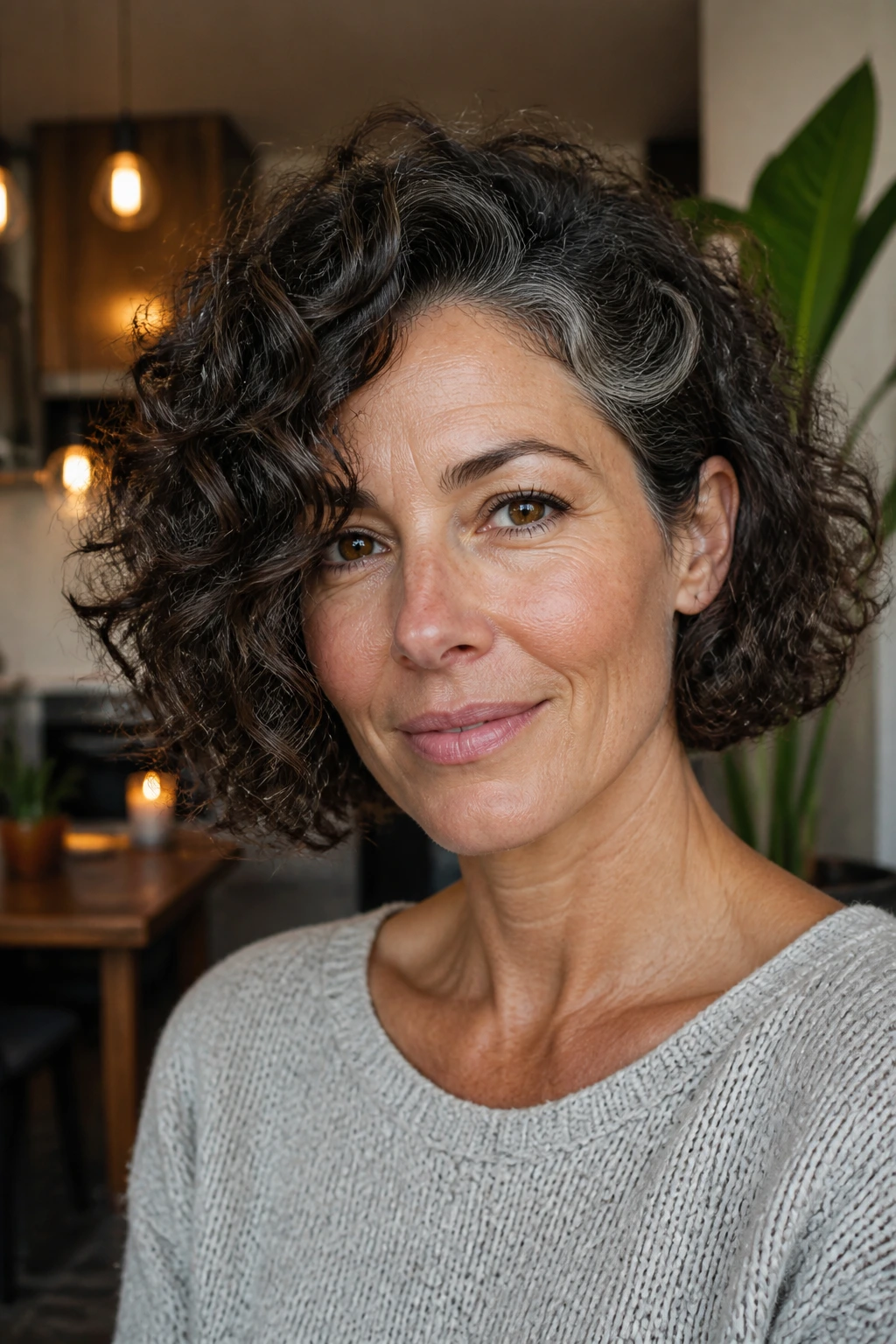
Want a bob with a little more personality? Make one side subtly longer than the other. A small asymmetrical shift is enough to break up the symmetry and keep curly hair from reading too round at the cheeks.
The key word is subtle. This is not a dramatic fashion cut unless you want it to be. Even a difference of half an inch to an inch can change how the eye moves across the face. The longer side usually works best near the front so the shape looks deliberate rather than lopsided.
I like this cut on women whose curls fall differently on each side. Instead of fighting that unevenness, the asymmetry turns it into part of the design. It’s a neat little trick.
9. Long Layers with a Deep Side Part
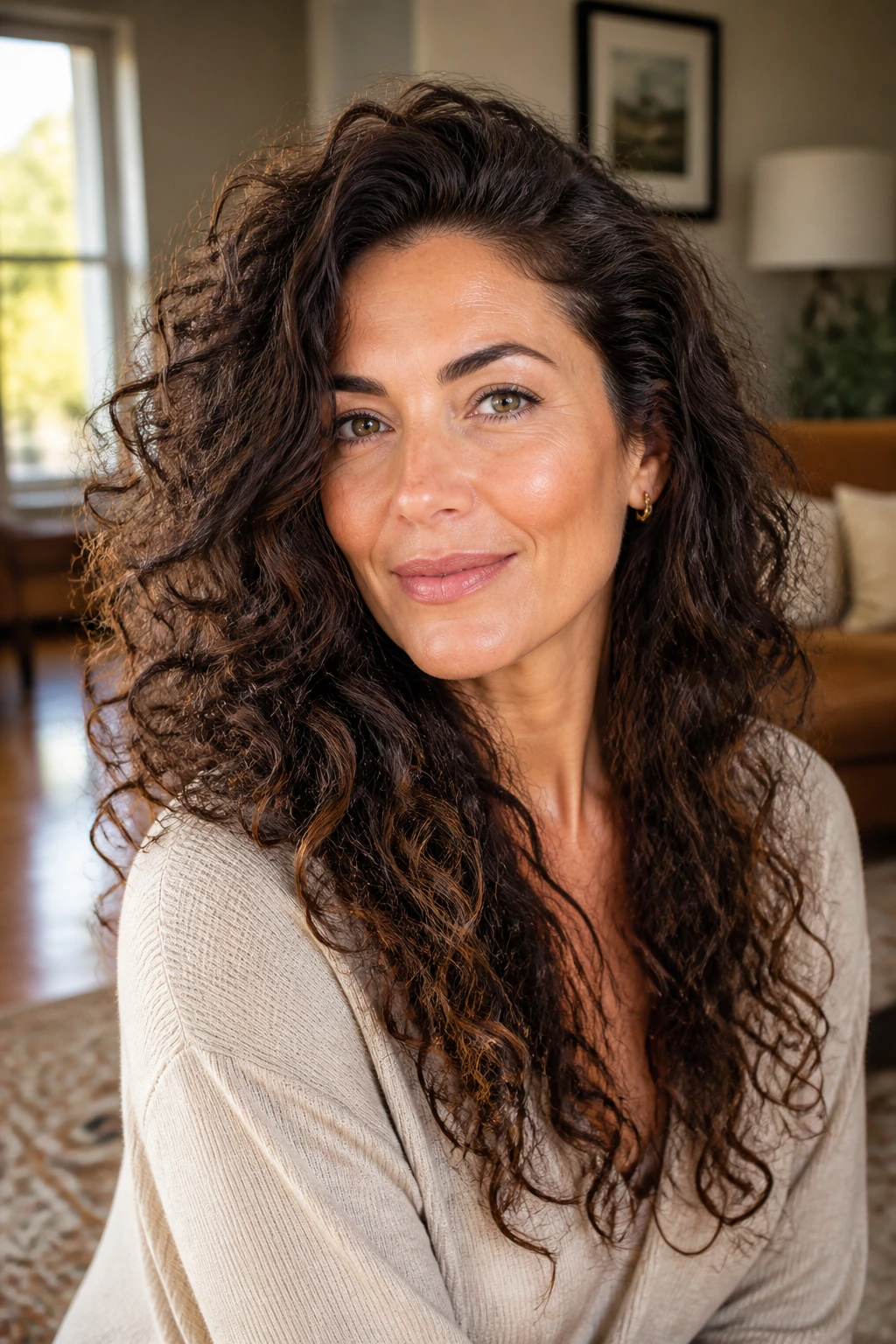
Long curly hair after 40 can still look rich and full, but it needs structure. Long layers remove weight without chopping the length, and the deep side part gives the roots some lift so the whole style doesn’t lie flat against the head.
This is a good choice if you like having hair on your shoulders or back and don’t want to cut it all off. The layers should be placed carefully so the curl clumps stay intact. Too many short layers can make long hair puff up at the wrong points and create that triangle shape no one asks for.
Use a part comb on damp hair and set the part before styling. Once the roots dry in the wrong direction, they tend to stay there. Long curls reward a little planning.
10. Curly Wolf Cut
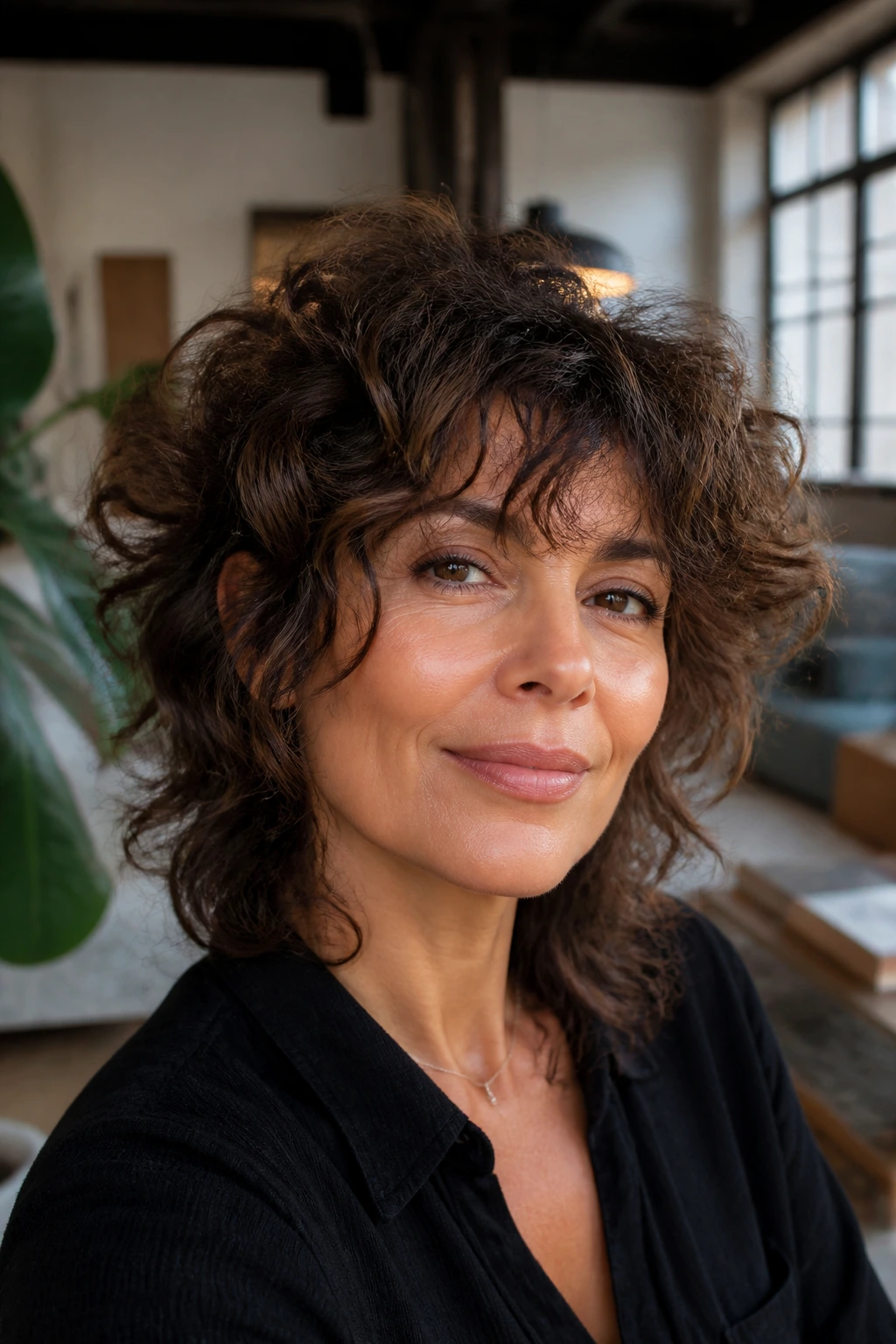
The curly wolf cut is the bolder cousin of the shag. It has more disconnect between the crown and the lengths, which makes it feel airy and a little wild in the best sense. When done well, it gives curls that cool, lived-in shape that doesn’t look overworked.
This cut needs density. Lots of density, honestly. If your hair is fine and sparse, the wolf cut can get stringy fast. But on thicker curls, the crown lift and broken-up layers create movement that straight-up layered cuts sometimes miss.
It’s especially good when you want your curls to look intentionally messy rather than perfectly arranged. Think less salon-smooth, more interesting silhouette. Not everybody wants that. The women who do usually love it.
11. Ear-Length Curly Crop with Crown Lift
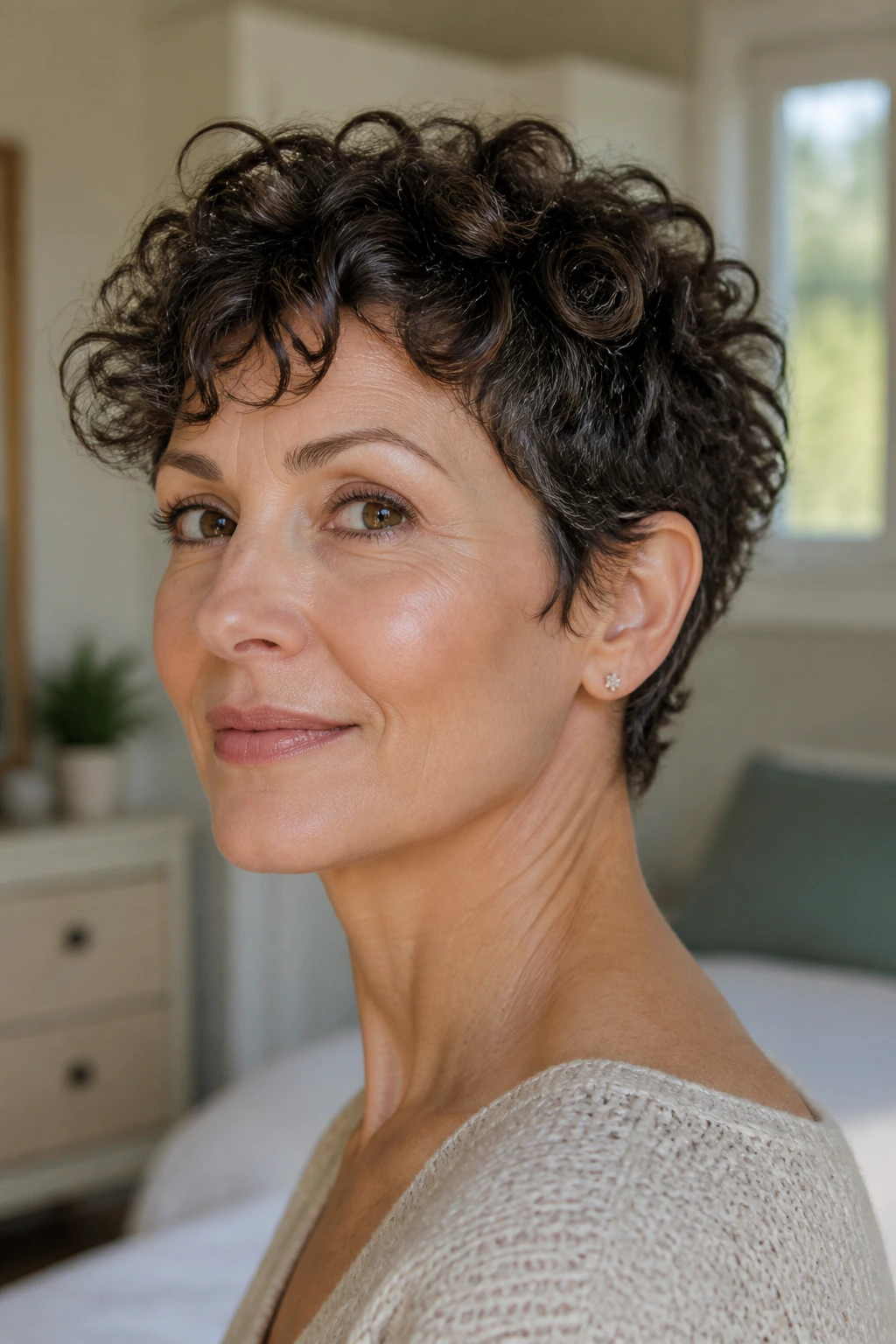
Short curly crops can be excellent on older curls, but only when the top is left with enough length to create lift. If the cut is too close to the scalp, the curls may tighten up and sit in a shape that feels boxy. Leave the crown a little longer and the whole head changes.
This crop works well for women who want short hair without the hard line of a classic pixie. The ears can show, the nape stays neat, and the top does the visual work. A little curl cream and a diffuser are usually enough. Sometimes a root clip at the front makes the difference between “flat” and “finished.”
It’s also one of the easiest styles to keep clean around the neckline. That sounds mundane. It isn’t, when you’re tired of hair sitting on your collar all day.
12. Half-Up Twist with a Lifted Crown
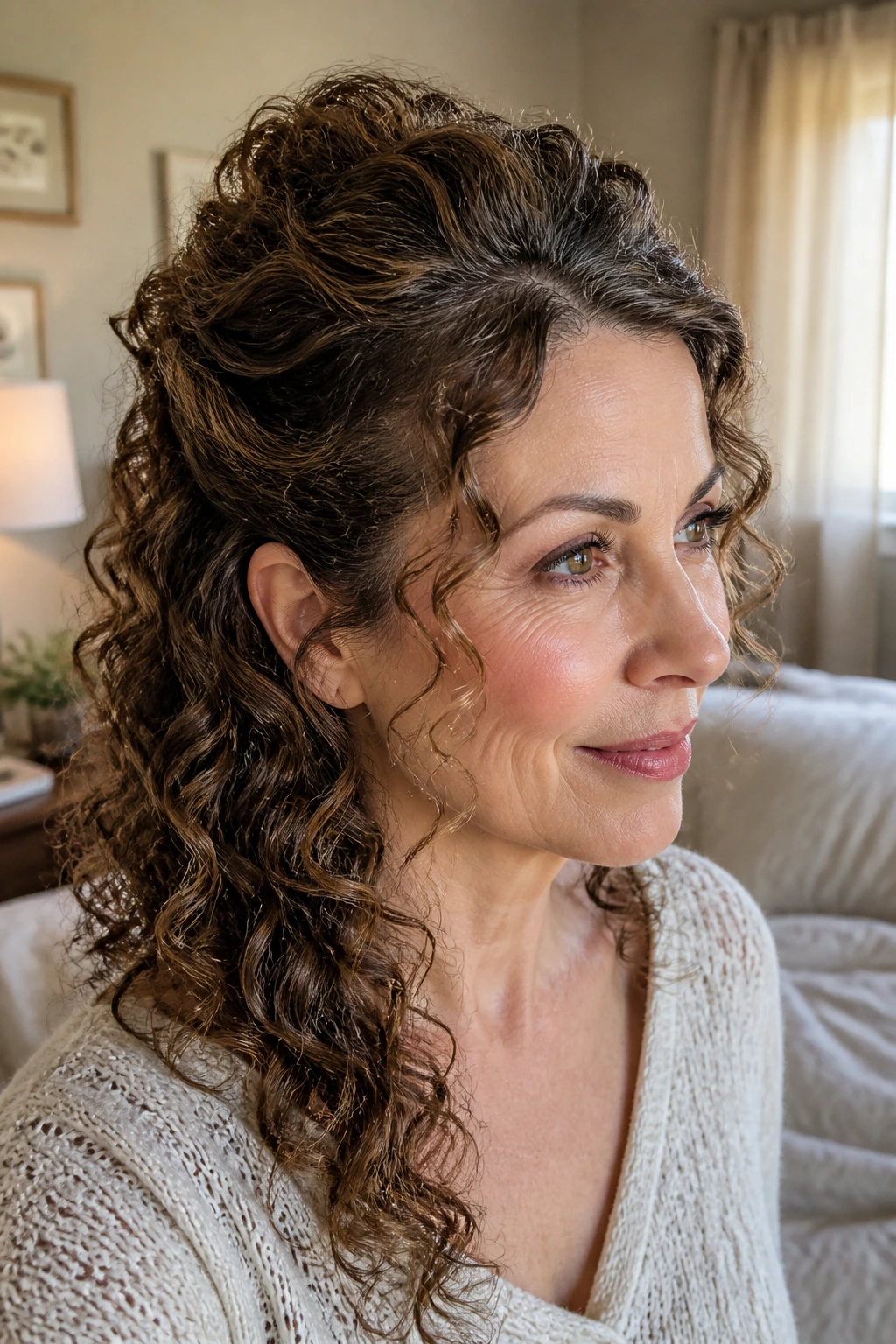
Half-up styles are underrated on curly hair because they solve two problems at once: they keep hair out of the face and they let the lower curls keep their shape. A simple twist on each side, pinned at the back, gives the crown some height without crushing the rest.
This is a good second- or third-day option when the roots need help but the lengths still look decent. Pull the top section back loosely, twist rather than slick, and leave a few curls around the temples. Those soft pieces matter. They keep the style from looking too stiff.
The best part is how fast it is. Two pins. Maybe three. If your hair is shoulder length or longer, it’s a neat way to get a lifted shape without committing to a full updo.
13. Pineapple Puff for Second-Day Curls
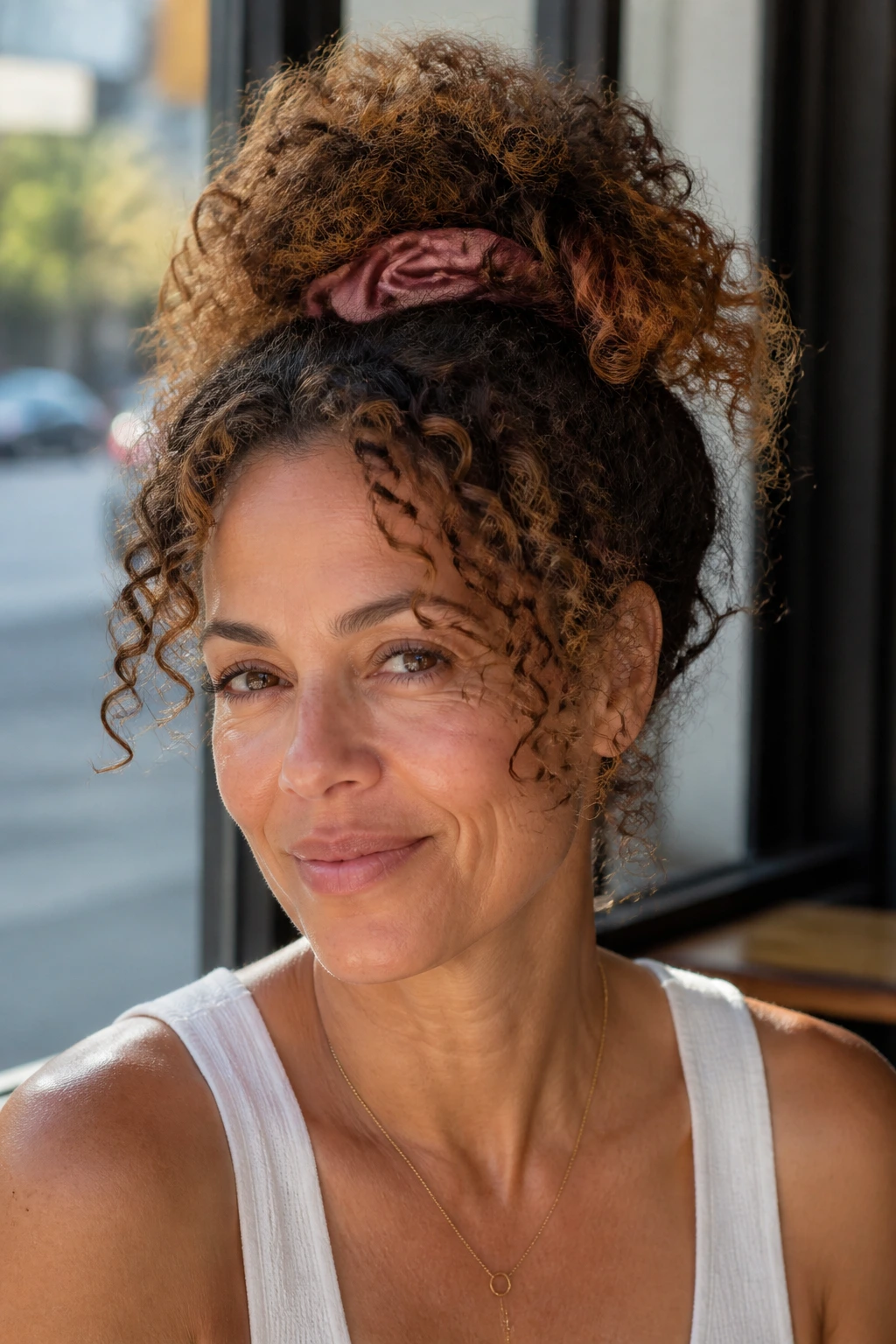
A pineapple puff is not fancy, and that’s the charm. Gather the curls loosely at the crown with a satin scrunchie, let the ends fall forward or outward, and suddenly second-day hair looks deliberate instead of neglected.
This style is especially useful for preserving curl definition overnight, but it also works as a daytime look when you want volume on top and less hair touching your neck. Keep the band loose. Tight elastics flatten the whole point of the style, which is that lifted, airy shape at the crown.
It suits women who like a low-effort option that still reads as styled. Put on earrings and it looks finished. Throw on a scarf and it suddenly feels intentional in a different way.
14. Low Curly Chignon
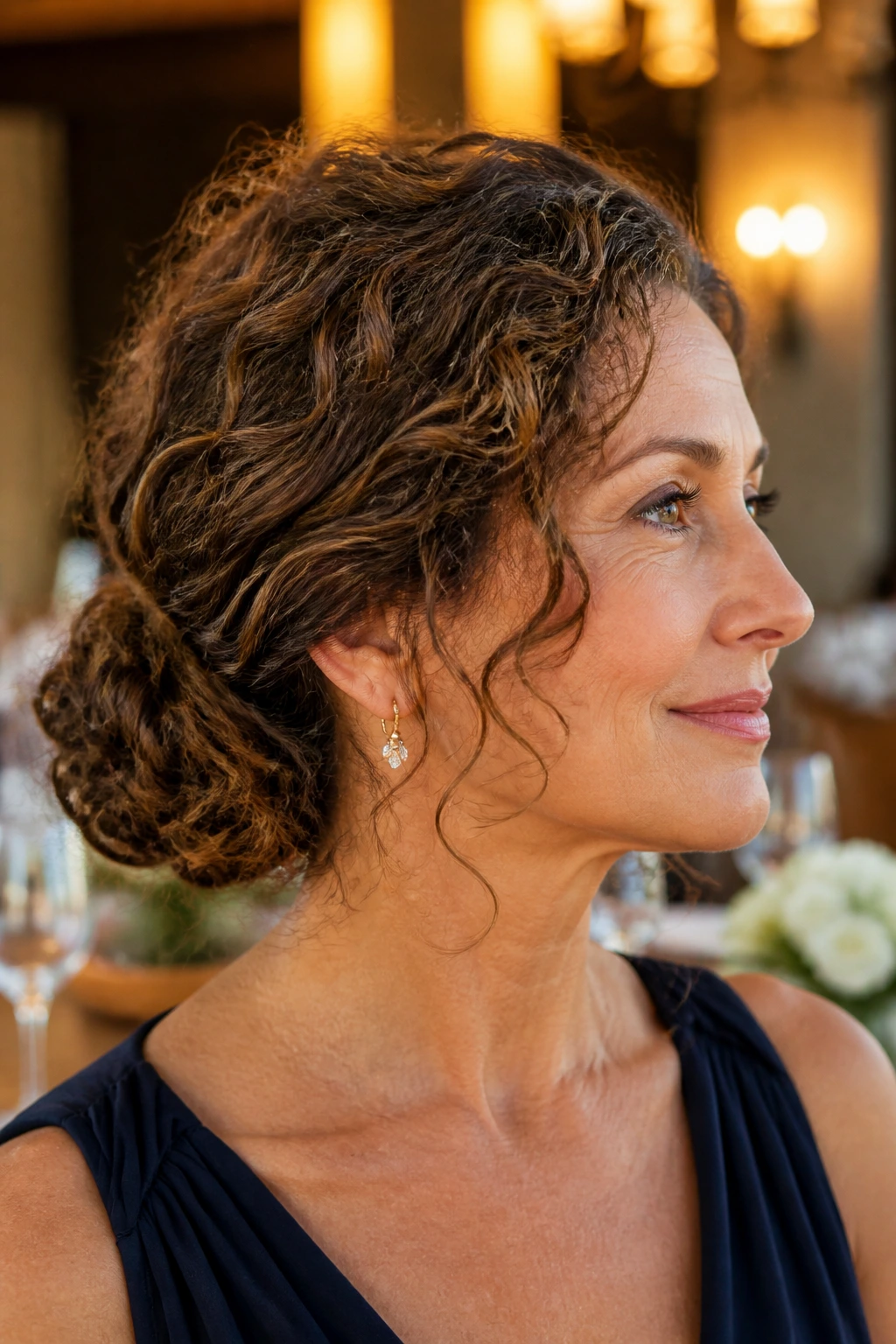
A low chignon on curly hair should never be scraped into a tight knot that fights every curl on the head. Let some texture stay visible. Pin the lower section loosely at the nape, tuck the ends under, and leave a few soft tendrils around the face.
This is a smart style for dinners, events, or any day when you want the hair up but not severe. Curly texture gives the chignon more dimension than straight hair usually does, so even a simple bun can look layered and rich. The trick is not to over-smooth the crown.
Use bobby pins with a little bend, and place them where the bun naturally wants to sit. If you force the shape, it starts to look formal in the wrong way.
15. Twisted Halo Updo
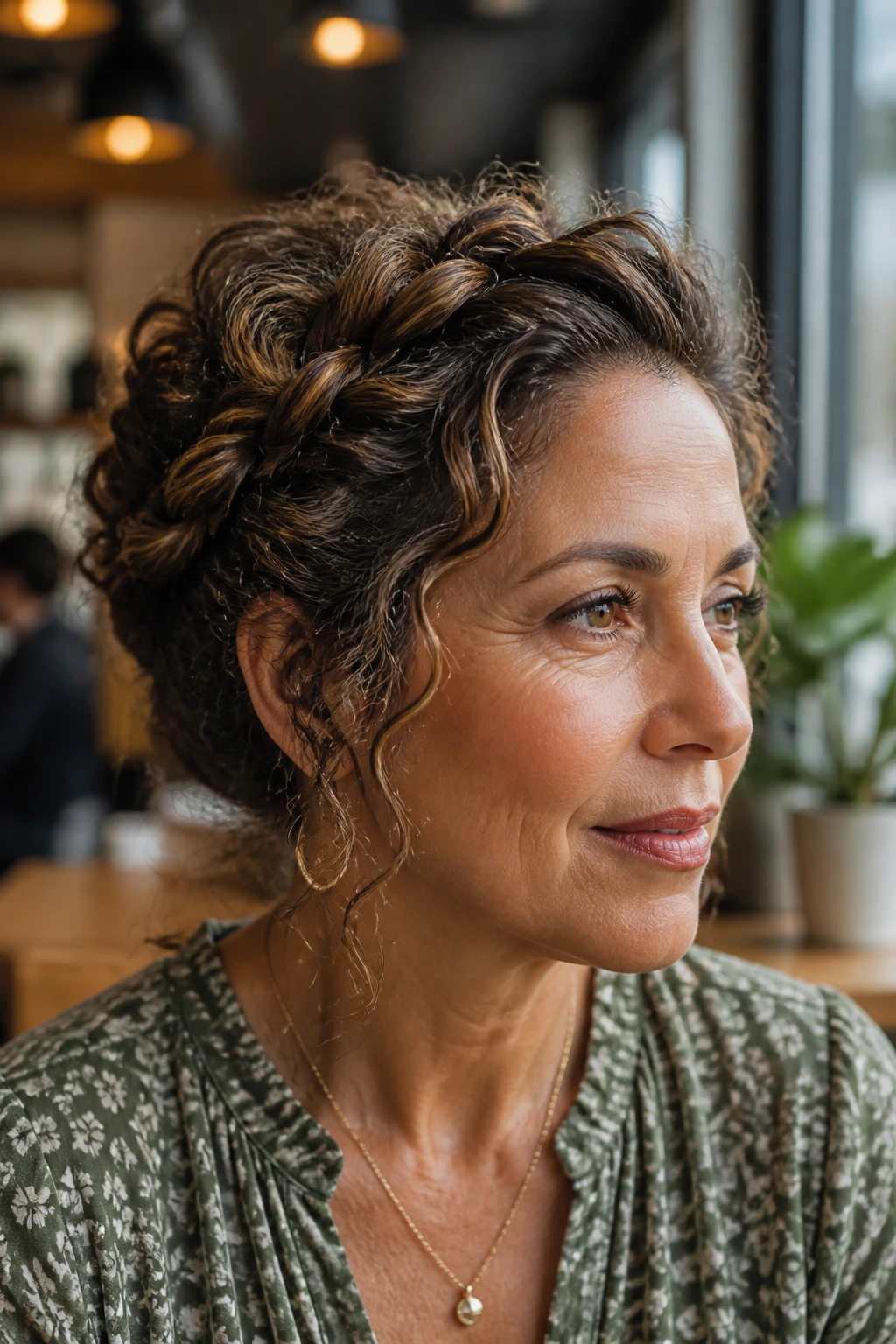
The twisted halo updo takes the hair away from the face while keeping softness around the edges. Instead of braiding tightly, twist sections from each side and pin them across the back of the head, leaving the curls loose enough to keep their spring.
This style is kinder to curly hair than a smooth braid crown, especially when the ends are dry or fragile. The twists hide uneven curl patterns and create that soft frame around the face that can be very flattering. I’d reach for it on medium-length curls that need to look polished without a lot of heat.
It also handles grow-out well. If the layers are a little uneven, the twists disguise the mismatch. Hair that wants to misbehave can be surprisingly cooperative when it’s being pinned in pieces.
16. Stacked Curly Bob
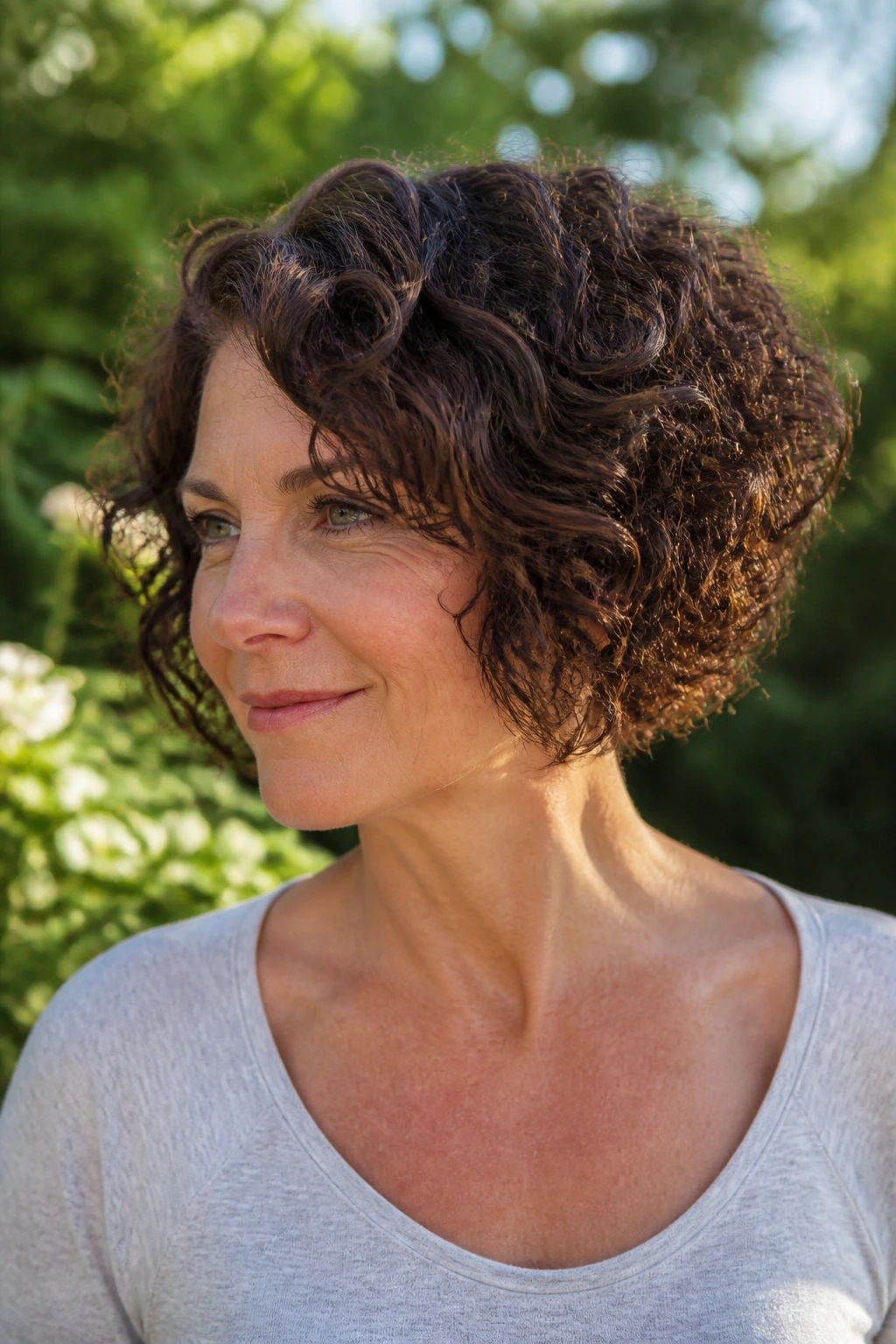
A stacked bob builds volume at the back, which is useful when curls tend to lie flat near the crown or back of the head. The shorter layers underneath push the top layers up and out, creating a rounded shape that looks clean from the side.
This cut has a bit more structure than a standard bob, and that’s why it works so well on some curly heads. The stack keeps the silhouette from drifting into a box, while the front stays long enough to soften the face. It’s a neat answer if you want body without going short all over.
Ask for the stacking to stay gradual. Too much angle and the bob can look dated fast. A gentle stack gives lift. A sharp one can feel like a different decade entirely.
17. Shoulder-Length Cut with Curtain Bangs
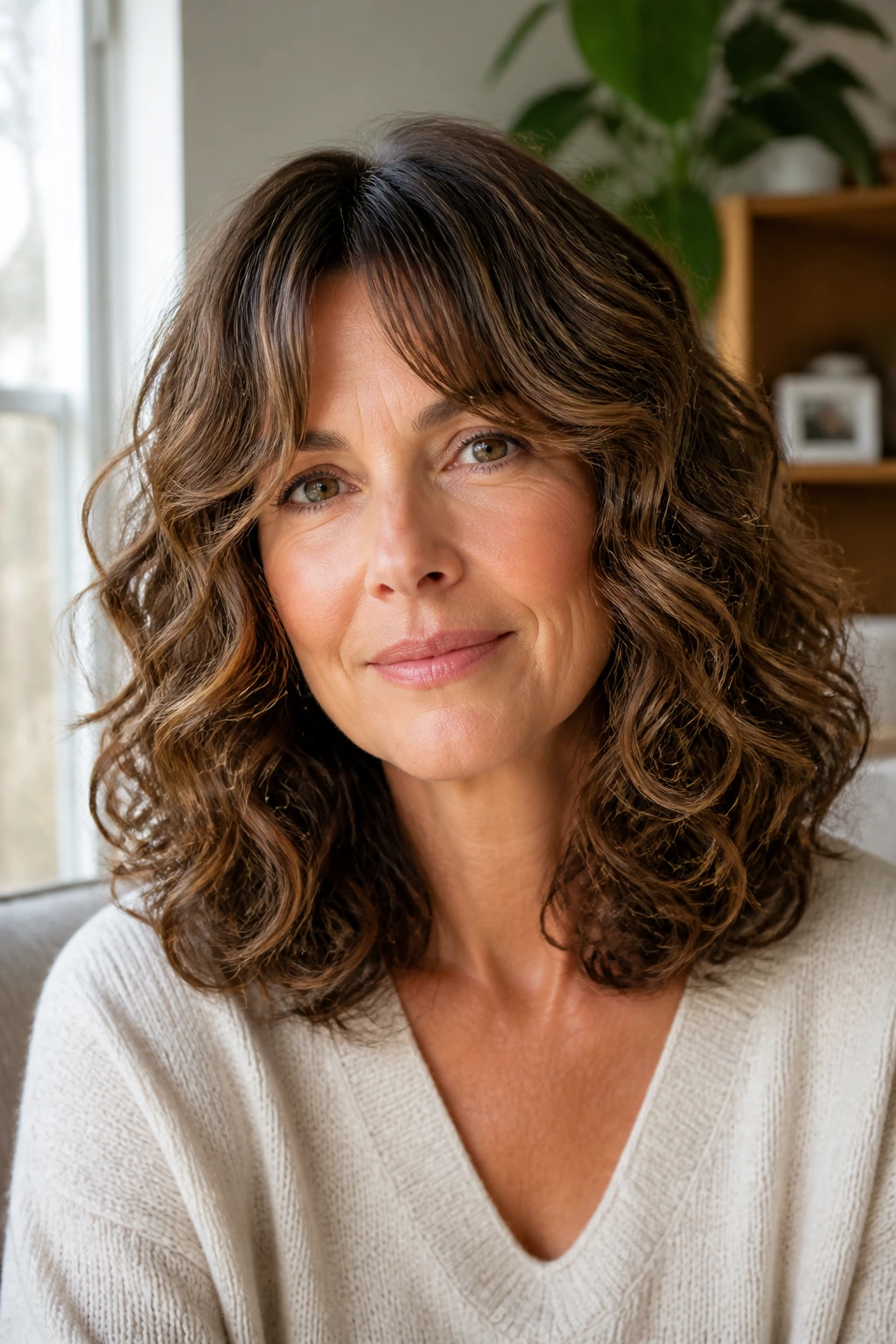
Curtain bangs on curly hair need patience and a good eye for shrinkage. When they’re cut correctly, though, they soften the forehead, open the face, and blend into shoulder-length curls in a way that feels light rather than fussy.
The bangs should be long enough to split naturally at the center or just off-center. Short curly bangs can be charming, but they ask for a lot more maintenance and a very specific curl pattern. Curtain bangs are easier to live with because they can retreat into the rest of the hair on a lazy day.
This style is one of the best choices if you want softness around the face without giving up length. It’s also a nice fix for hair that feels too heavy in front. The bangs do a small amount of work that changes the whole silhouette.
18. Loose Side-Swept Glam Waves
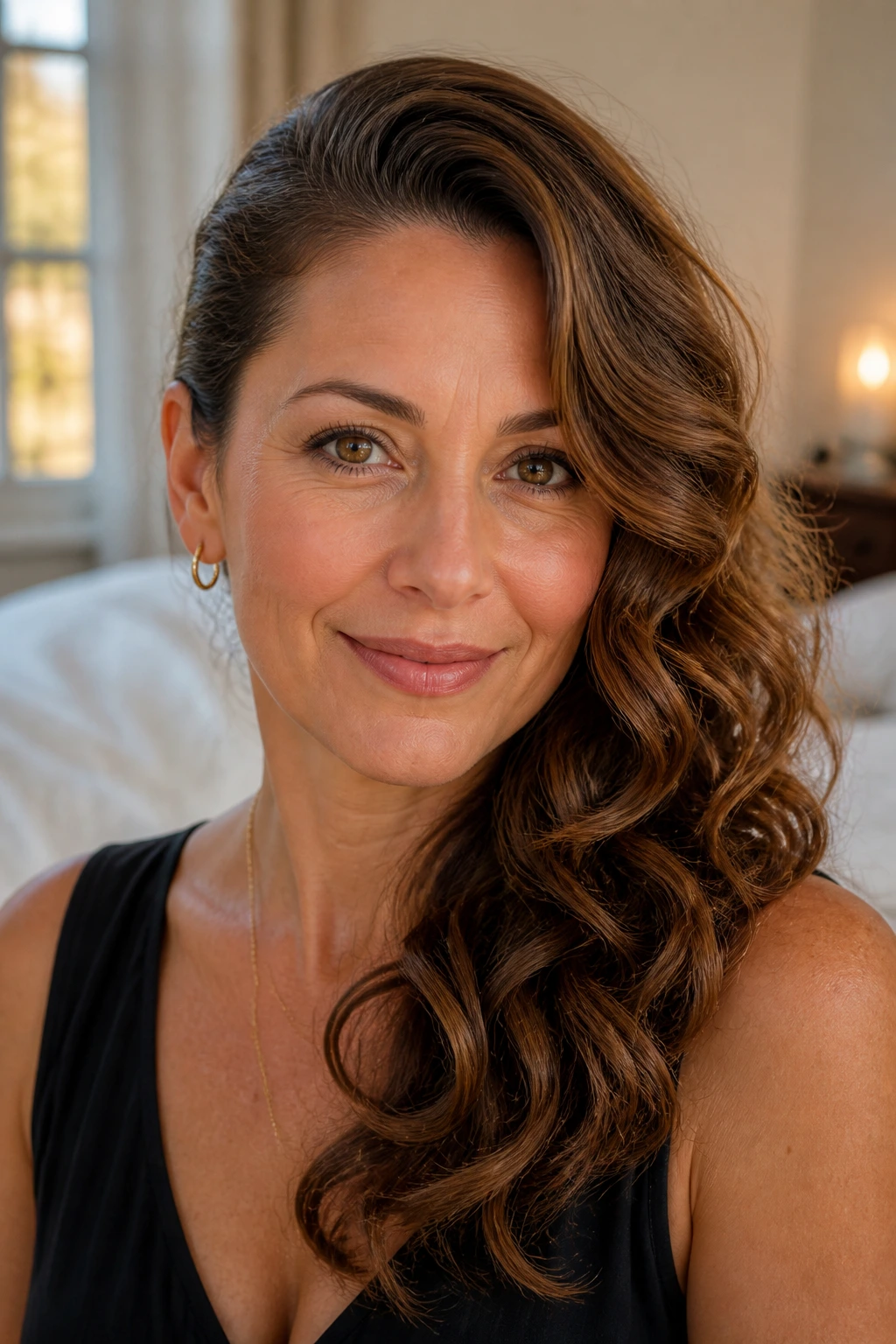
If you want a style that feels a little more dressed up, side-swept curls are hard to beat. Sweep the hair over one shoulder, pin the opposite side behind the ear, and let the curls fall in one controlled wave pattern rather than all over the head.
This works especially well with medium to loose curls that can be coaxed into a smooth arc without losing their texture. It’s a prettier option than straightening, and it still reads as special. A side part gives the style the base it needs, while a touch of gel or mousse keeps the top from puffing up.
I like this look for events because it doesn’t fight the curl. It just gathers it. That’s a much better deal.
19. Curly Mullet with Soft Ends
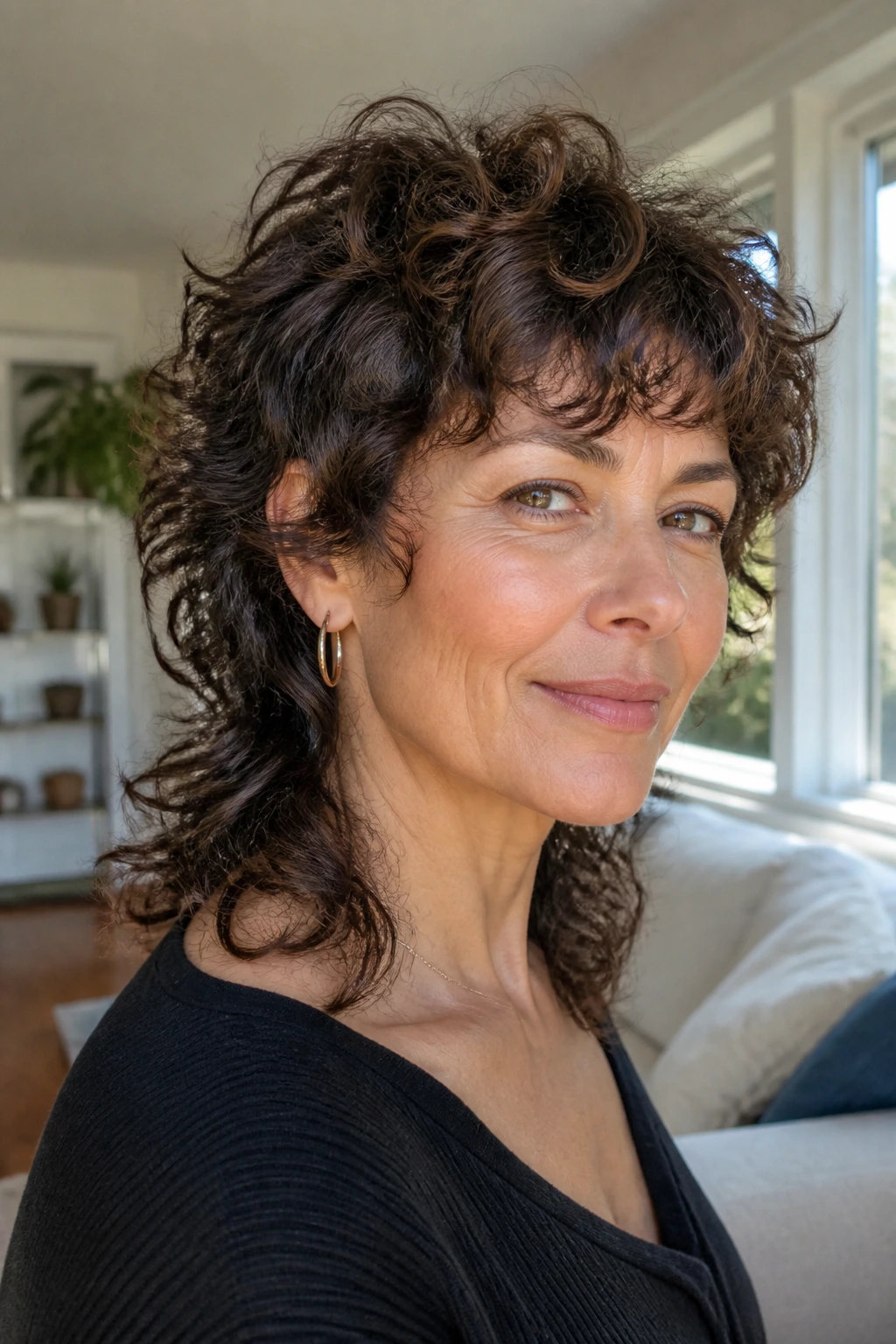
A curly mullet can sound harsher than it wears. The softened version keeps the top and front shorter, lets the back keep some length, and blends the sides so the cut looks airy instead of choppy for its own sake.
This is not for everyone. Good. It doesn’t need to be. For women who want a bit of edge and don’t mind a little shape play, it can look sharp without feeling overstyled. The layers create lift, the back keeps movement, and the whole cut feels more modern than a standard shag when the proportions are right.
The softness matters. If the ends are too ragged, the style loses its shape fast. A curly mullet needs intention, not chaos.
20. Silver-Forward Layered Cut
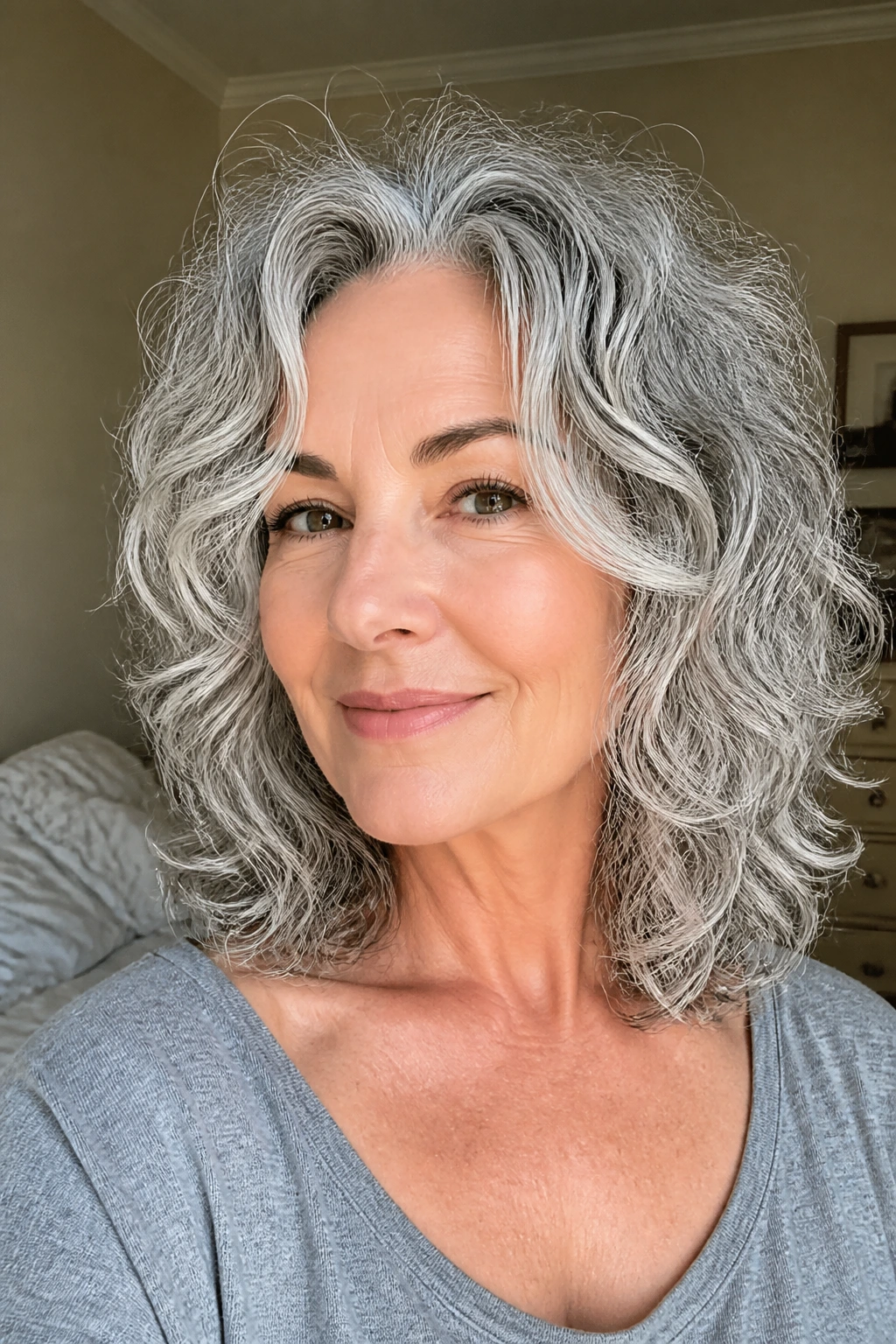
Gray and silver curls deserve a cut that shows off the contrast rather than burying it under heavy length. A silver-forward layered cut uses shape to make the light-and-dark pieces visible, which gives the hair more depth without relying on color tricks.
This is one of my favorites for women whose gray has come in with a different texture. Gray strands can be wirier or a little drier, and a layered cut gives them room to move instead of clumping in one heavy mass. Keep the layers soft around the face and a little longer at the ends if the hair is prone to puffing.
A gloss or toning shampoo can help if the silver is turning yellow, but the cut is the real star. When the shape is right, the color looks richer almost on its own.
21. Waterfall Braid into Loose Curls
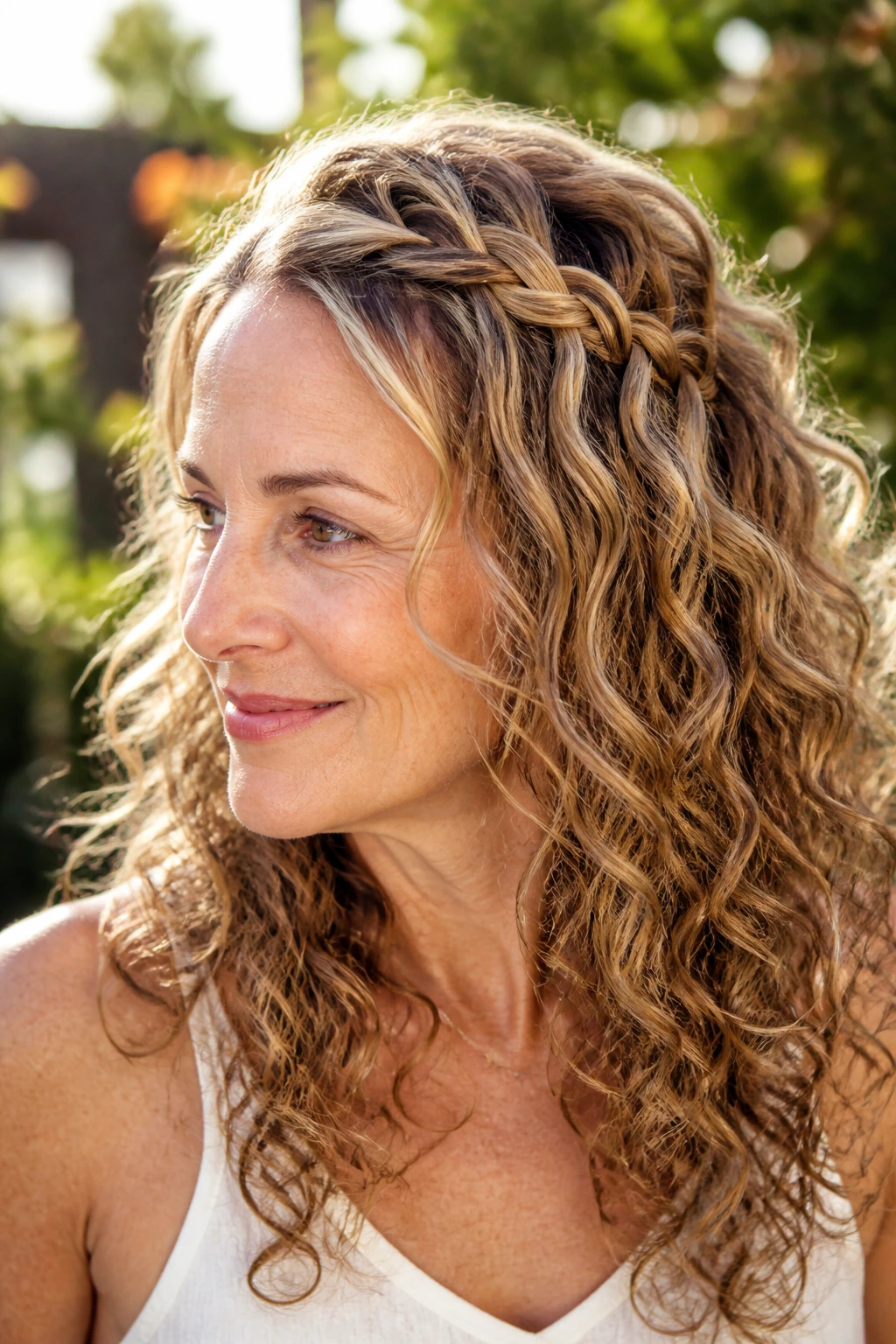
A waterfall braid is useful when you want part of the hair controlled and part of it free. The braid runs along the head, dropping sections as it goes, while the rest of the curls spill below it. The effect is more relaxed than a tight braided crown and less formal than a full updo.
This is a strong choice for medium to long curly hair, especially when you need the front pieces secured but don’t want to flatten the whole head. It also works well for growing-out fringe, because the braid keeps awkward layers from falling into the face.
I’d keep the braid loose and the curls untouched below. The contrast is what makes it work. Too much smoothing and the style loses its charm.
22. Sleek Low Bun with Texture
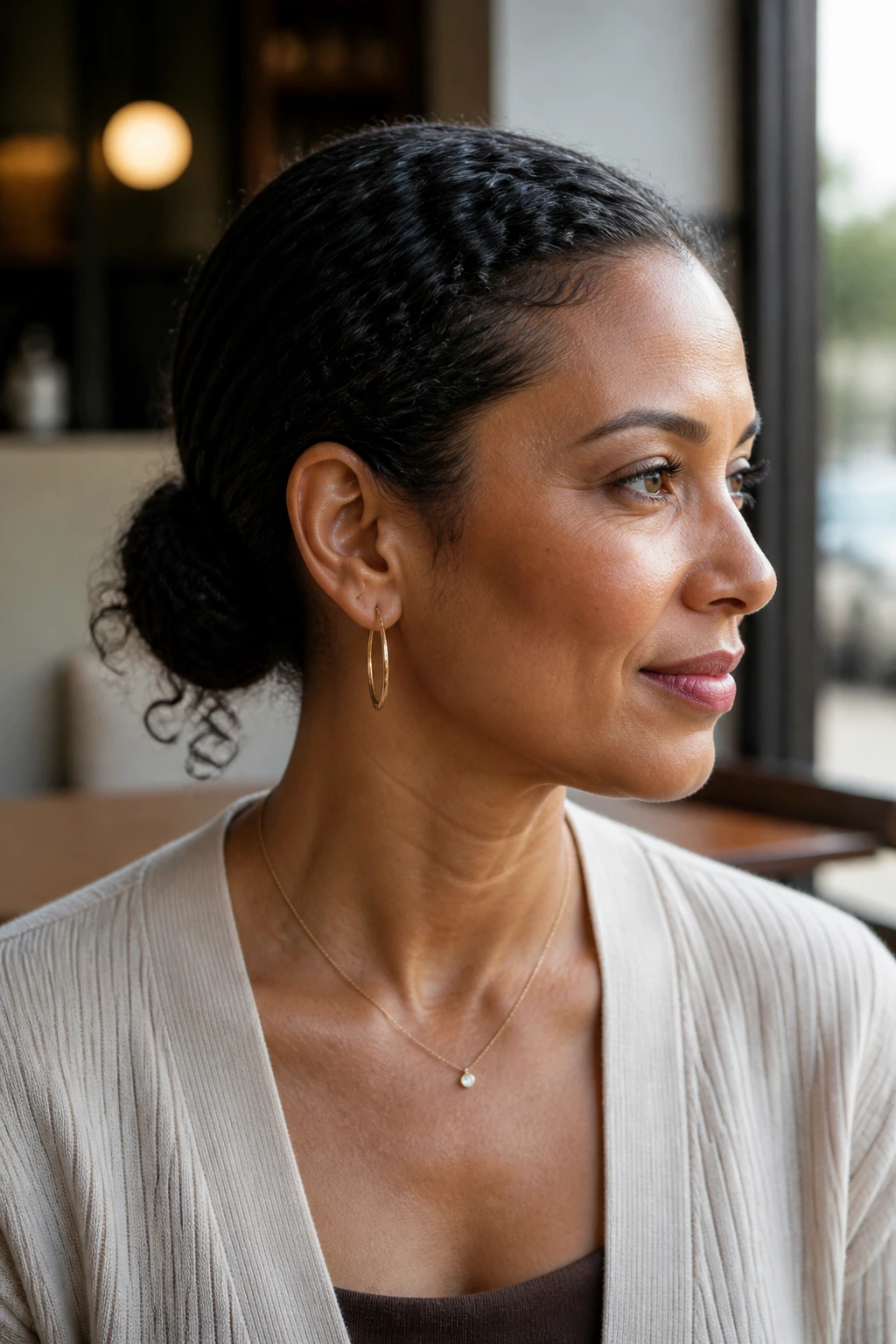
A sleek low bun on curly hair should not look pasted down. The surface can be smooth, but the bun itself should keep some texture so it doesn’t feel disconnected from the rest of the hair. That balance is what makes it look current rather than severe.
Use a light gel or cream on the crown, smooth the top, then twist the lengths into a low bun at the nape. Leave the bun slightly imperfect. A few curly ends escaping at the bottom keep the shape alive. If every strand is rigidly controlled, the style gets stiff fast.
This is a useful option for humid days, travel days, and any moment when your curls need a rest from being the main event. The shape gives them a break without hiding them completely.
23. Feathered Midi Cut
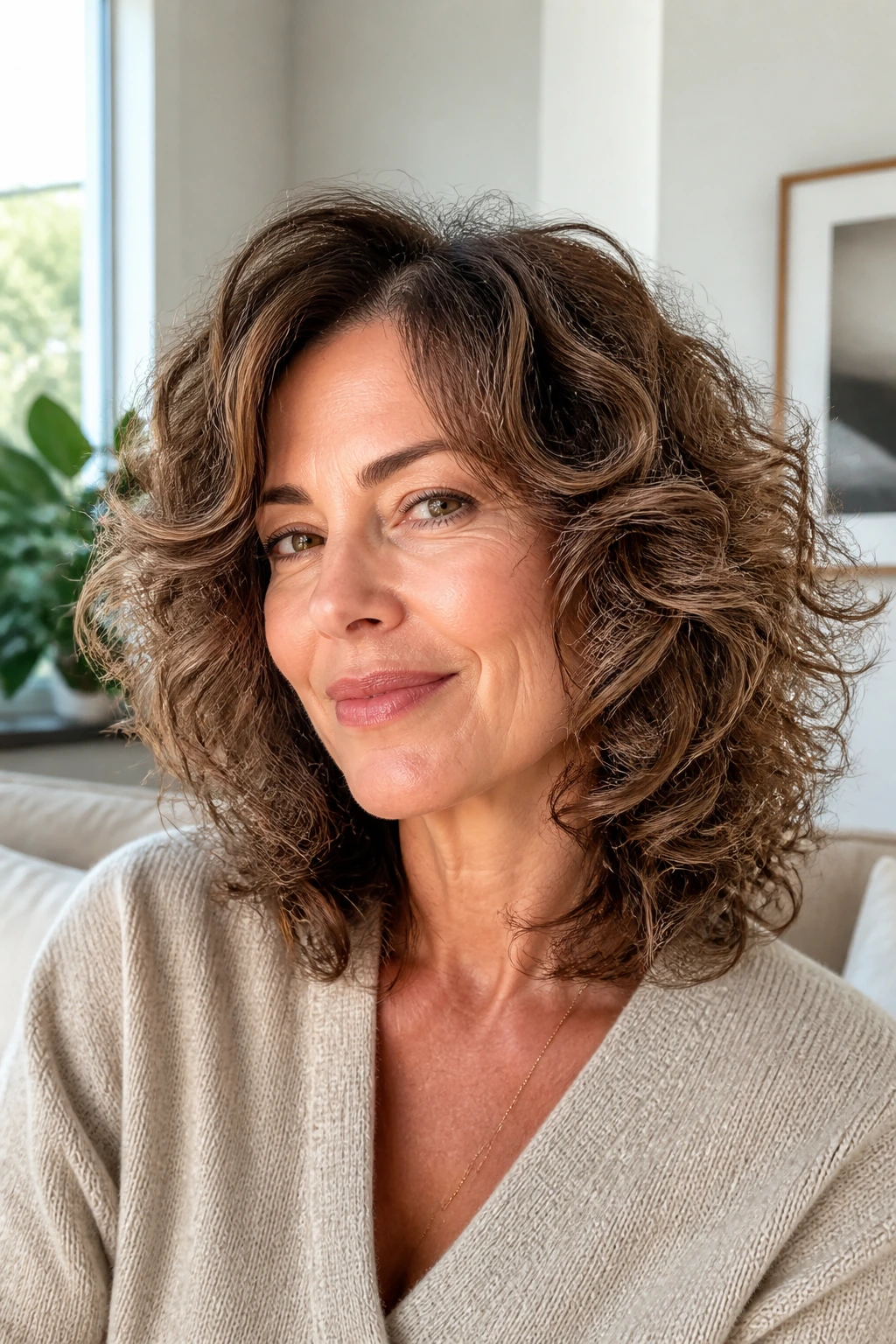
A feathered midi cut sits in that sweet spot between shoulder length and a longer lob. The feathering softens the ends and keeps the hair from stacking up at the bottom, which can happen when curly hair gets dense through the mid-lengths.
This cut works especially well for coarse or thick curls that need the shape opened up a little. Ask for point cutting or feathered layers rather than blunt slicing. Those techniques remove bulk without creating holes in the pattern. The result is lighter movement and less of that mushroom effect at the bottom.
It’s also a good cut if you wear your hair down most of the time but still want enough length for a quick clip or twist. The style has range. That matters.
24. Curly Bixie with a Longer Top
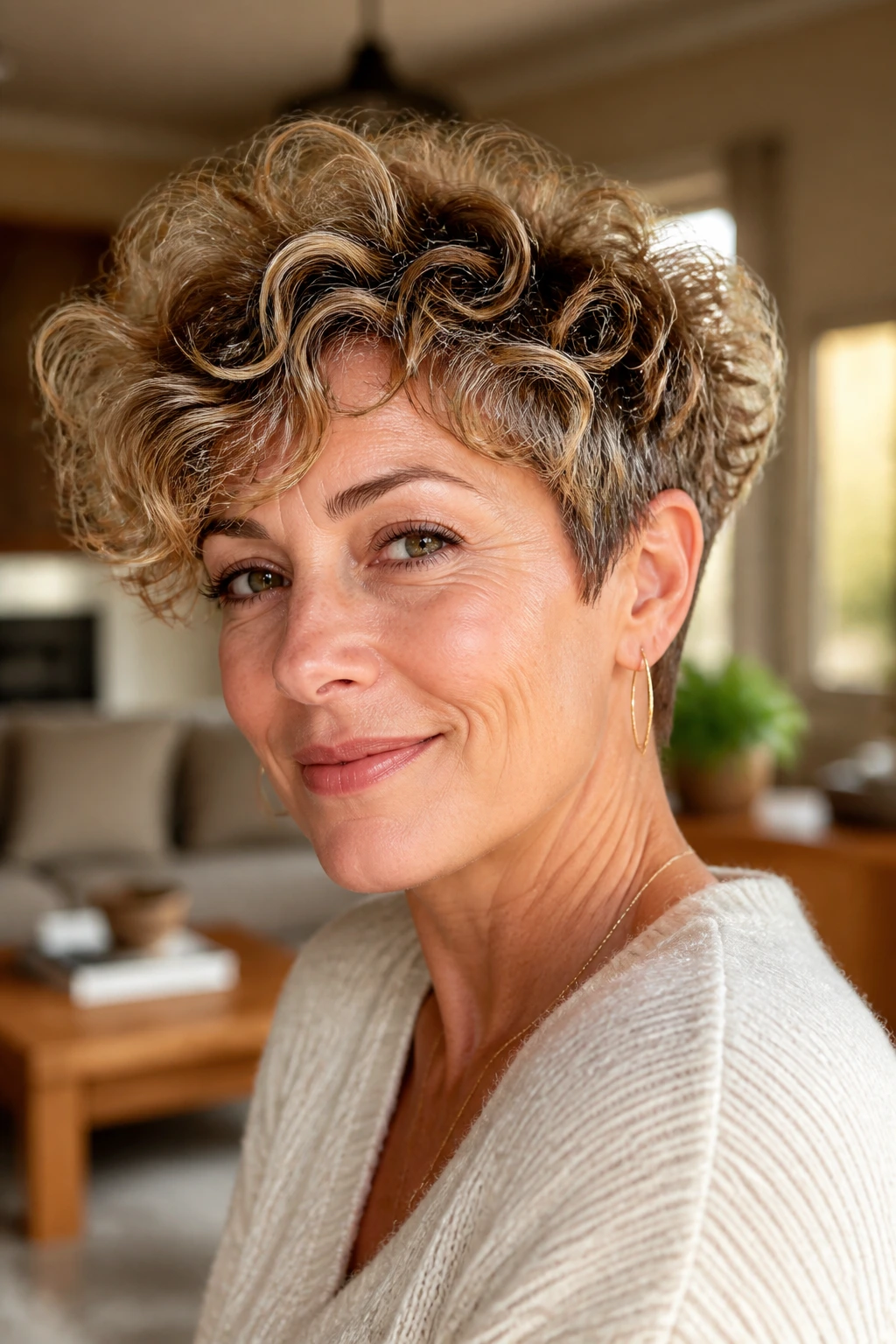
The curly bixie lives between a bob and a pixie, and that middle ground is exactly why it’s useful. You get short sides and back, but the top stays long enough to show texture, lift, and movement. It’s less severe than a pixie and less heavy than a bob.
This cut is excellent when you want short hair but are not ready to go all the way in. The top can be styled forward, to the side, or with a little lift at the crown. Because the length is uneven by design, the shape looks interesting even on a fast morning.
If your curls are tight, this cut can frame the face in a very clean way. If they’re looser, the top gives enough room for a soft wave. It’s a small cut with a lot of personality.
25. Soft Side-Swept Upstyle
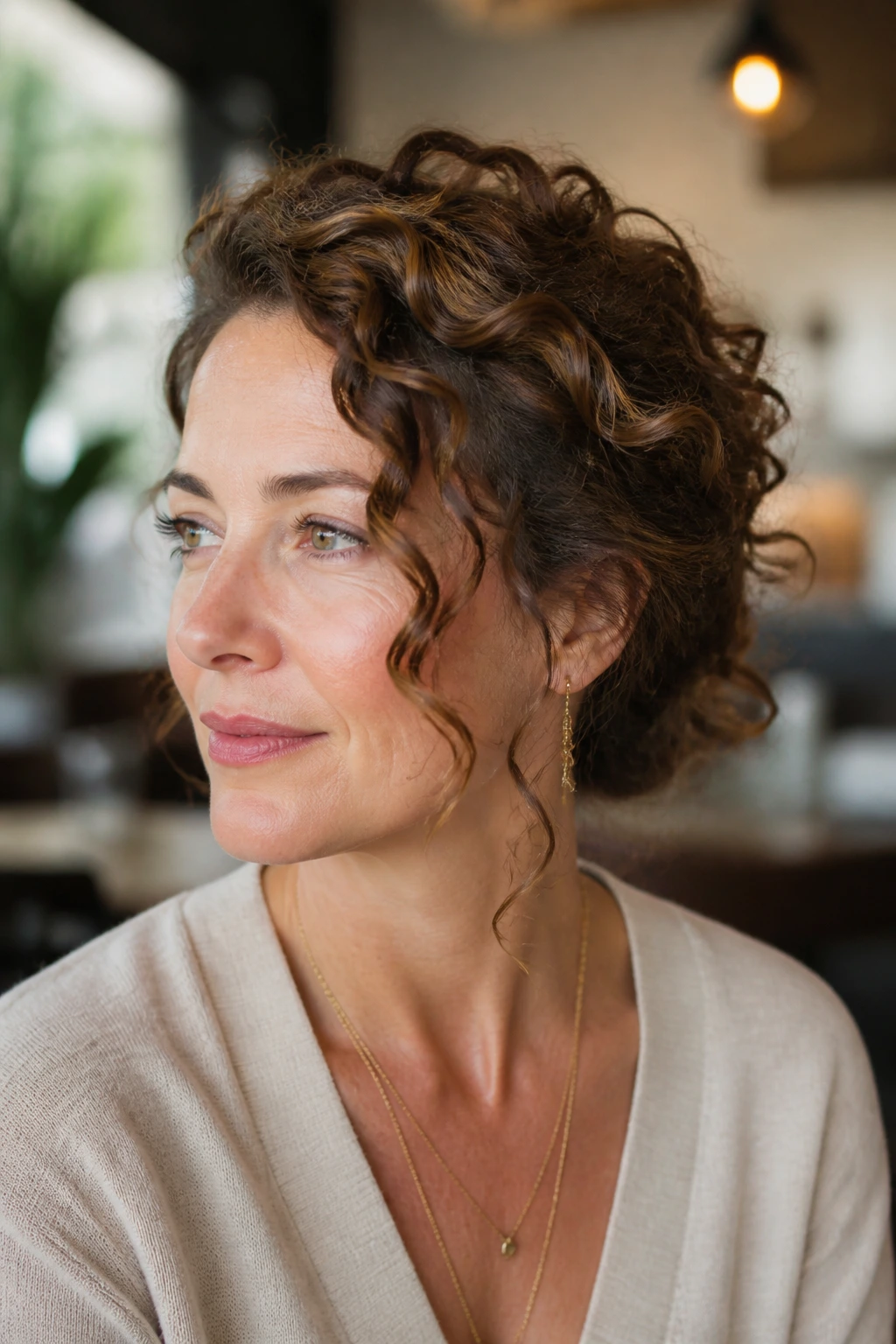
A soft side-swept upstyle is one of those looks that can go from office to dinner with a few pin changes. Sweep the curls to one side, secure the back loosely, and let the front pieces fall in a controlled arc across the forehead or cheekbone.
This style works because it keeps volume where you want it and removes bulk where you don’t. The side sweep is flattering on a lot of face shapes, especially when the hair around the temples needs a little lift. It’s also kinder than a tight updo if the curls are fragile or the ends are dry.
Use pins instead of a hard elastic when you can. The less you crush the curl pattern, the better the style holds its shape later.
Why These Shapes Hold Up So Well on Mature Curls
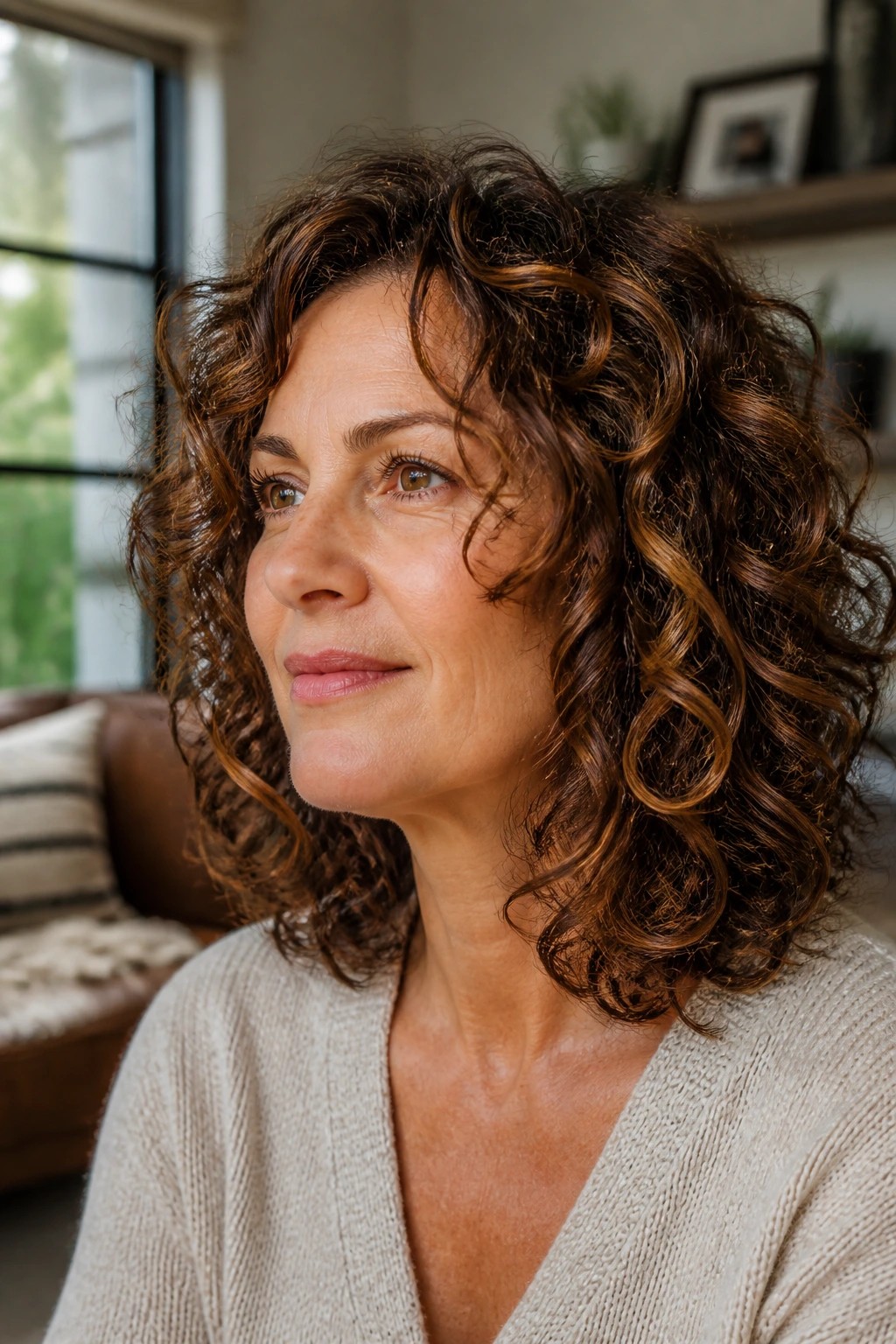
Curly hair after 40 often needs shape more than length. That’s the real thread connecting all 25 looks. A clean outline keeps the curl from spreading sideways, while layers or strategic parting stop the top from collapsing. Once you have that, the hair feels easier to wear even on the days when it hasn’t behaved.
Shrinkage and Weight
Shrinkage can change a haircut by several inches once the hair dries. A good curl style takes that into account by placing the shortest layers where they help the silhouette, not where they will bounce up and create a shelf. Heavy ends tend to stretch curls into strings. Lighter ends let the shape spring back.
Gray Hair and Texture
Gray strands often need more moisture, and they sometimes stand away from the head a little more than pigmented strands do. That’s not a problem; it’s a shape problem. A layered bob, rounded afro, or silver-forward cut gives those strands a place to sit instead of making them stick out for no reason.
Styling Time
The fastest curly styles are the ones that look good even when the routine is short. A cut that falls into place with a diffuser and a clip is worth more than one that only looks right after 25 minutes of manipulation. I’ll take a shape that survives real mornings over one that only behaves in a salon chair.
Essential Tools for Styling Curly Hair
-
Wide-tooth comb: Use it in the shower or on soaking-wet hair to separate curls without shredding the pattern.
-
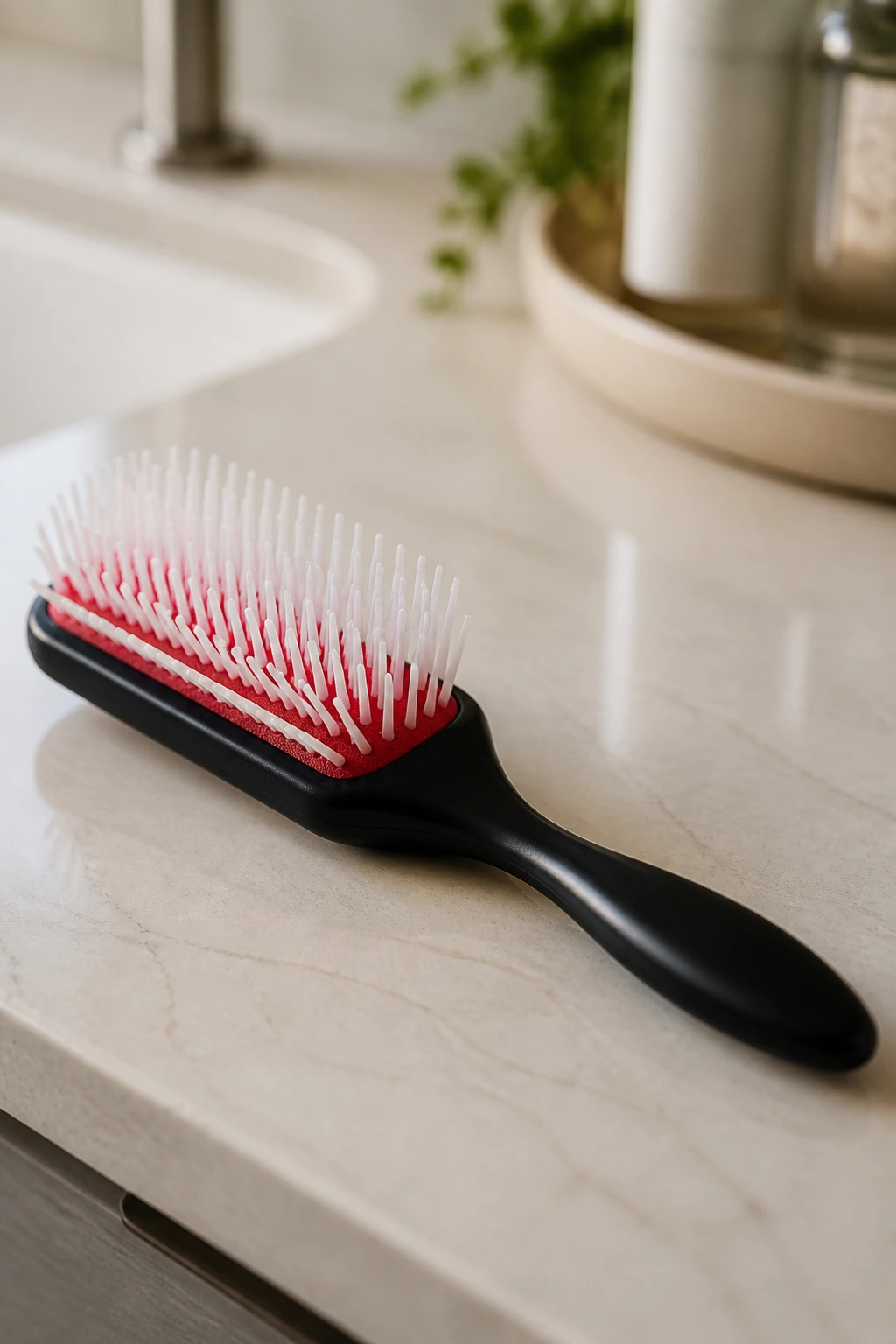
Curl brush or Denman-style brush: Good for defining sections when you want more uniform clumps, especially on bob and lob shapes.
-
Microfiber towel or cotton T-shirt: These absorb water without roughing up the cuticle the way a bath towel can.
-
Diffuser attachment: A diffuser keeps curls from blasting apart under direct heat and helps preserve the shape at the crown.
-
Duckbill or alligator clips: Handy for setting root lift while the hair dries, especially on side parts and layered cuts.
-
Satin scrunchies: Better than tight elastics for pineapple styles, half-up twists, and low buns.
-
Bobby pins with a coated finish: These grip curly hair more cleanly and don’t snag as much near the ends.
-
Tail comb: Useful for clean parts and for sectioning bangs, crowns, and braid starts.
-
Satin pillowcase or bonnet: Not glamorous, but it saves more curl definition than most products do.
Smart Shopping for Curl Products and Salon Services
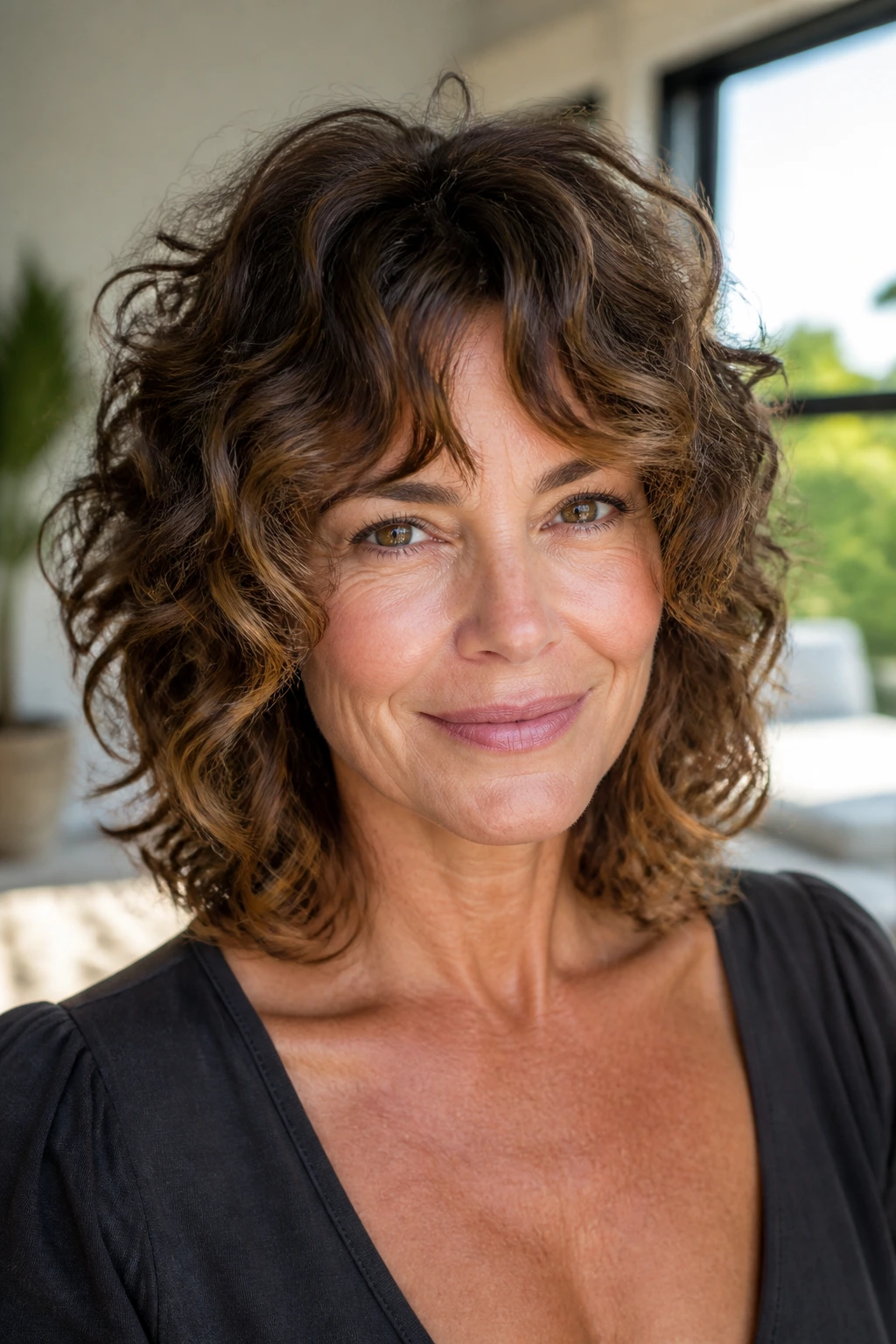
If your hair is fine, shop light. A mousse, a watery leave-in, and a medium-hold gel usually beat a heavy cream that sits on the strands and drags them down by lunch. Fine curls need shape and air, not butter in every step.
If your hair is coarse or dense, look for richer products that add slip. A cream plus gel combo can keep the curls defined while still allowing movement. Gray curls often fall into this camp because the texture can feel drier and a little rougher at the ends.
Salon services matter too. If you can, look for a stylist who understands curly cutting and ask whether they dry-cut, cut curl by curl, or at least check the shape when the hair is fully dry. Bring two photos: one for silhouette and one for length. One picture for “I like this volume” and another for “not that short.” That saves a lot of awkward explaining.
How to Wear These Styles in Daily Life
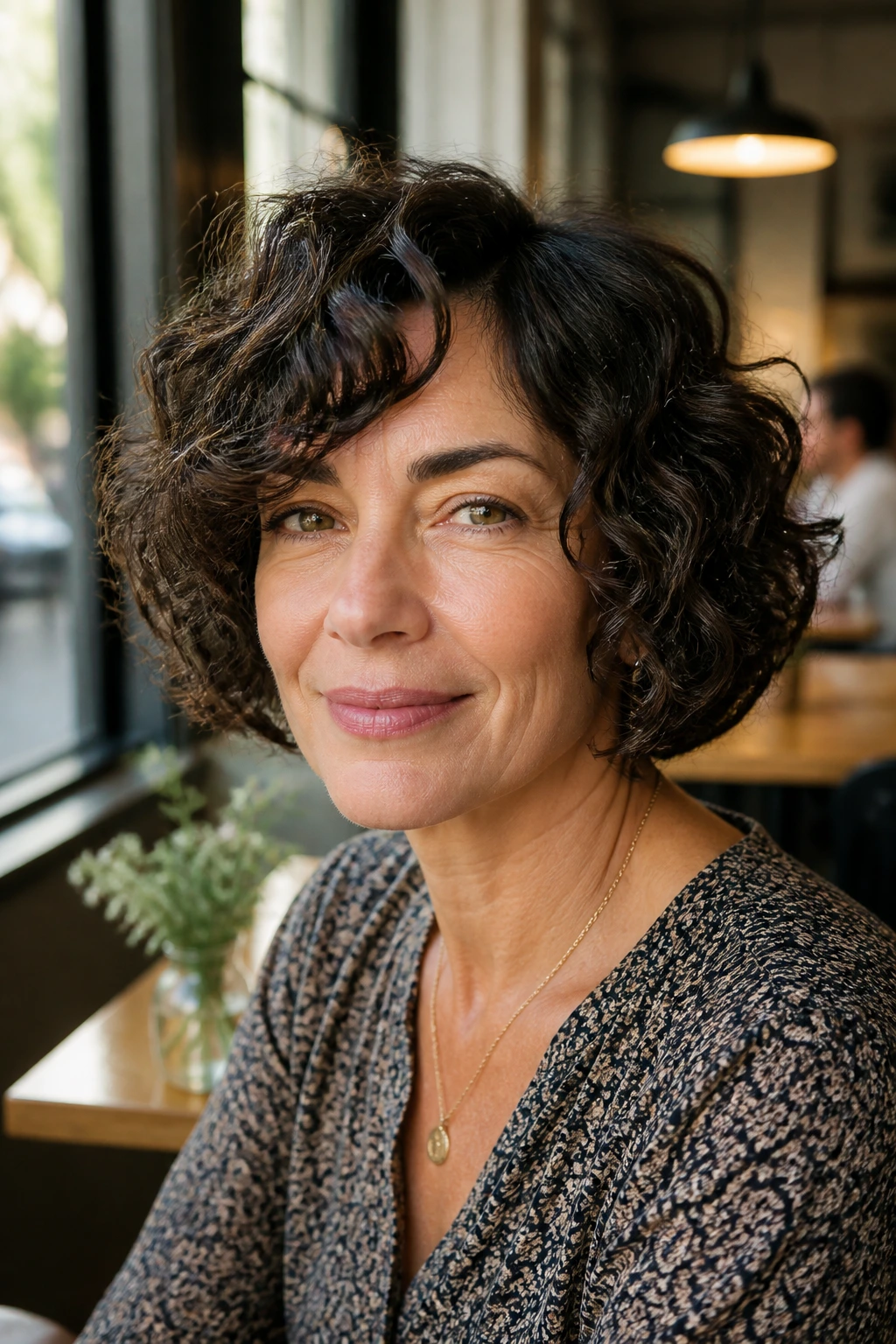
Presentation: Shape the curls before you leave the house, not after you’ve already been out in the weather for an hour. A side part, a lifted crown, or a tucked-back temple piece can change the whole reading of the style in five minutes.
Accessories: Small claw clips, a silk scarf, hoop earrings, or a single barrette can make a curly bob or upstyle look more finished. I’d skip stiff, heavy headbands unless the hair is short enough that the band doesn’t fight the curls.
Outfits: Shoulder-grazing cuts and side-swept looks sit well with open necklines and simple earrings. Short crops and tapered cuts show off collars, turtlenecks, and statement earrings. The hair and neckline should feel like they’re talking to each other.
From day to evening: A half-up twist can become a low bun. A lob can become side-swept with one pin. A curly bob can get a little gloss and a better part. Small changes, not whole reinventions.
Styling Boosters That Change the Look Without a Full Cut
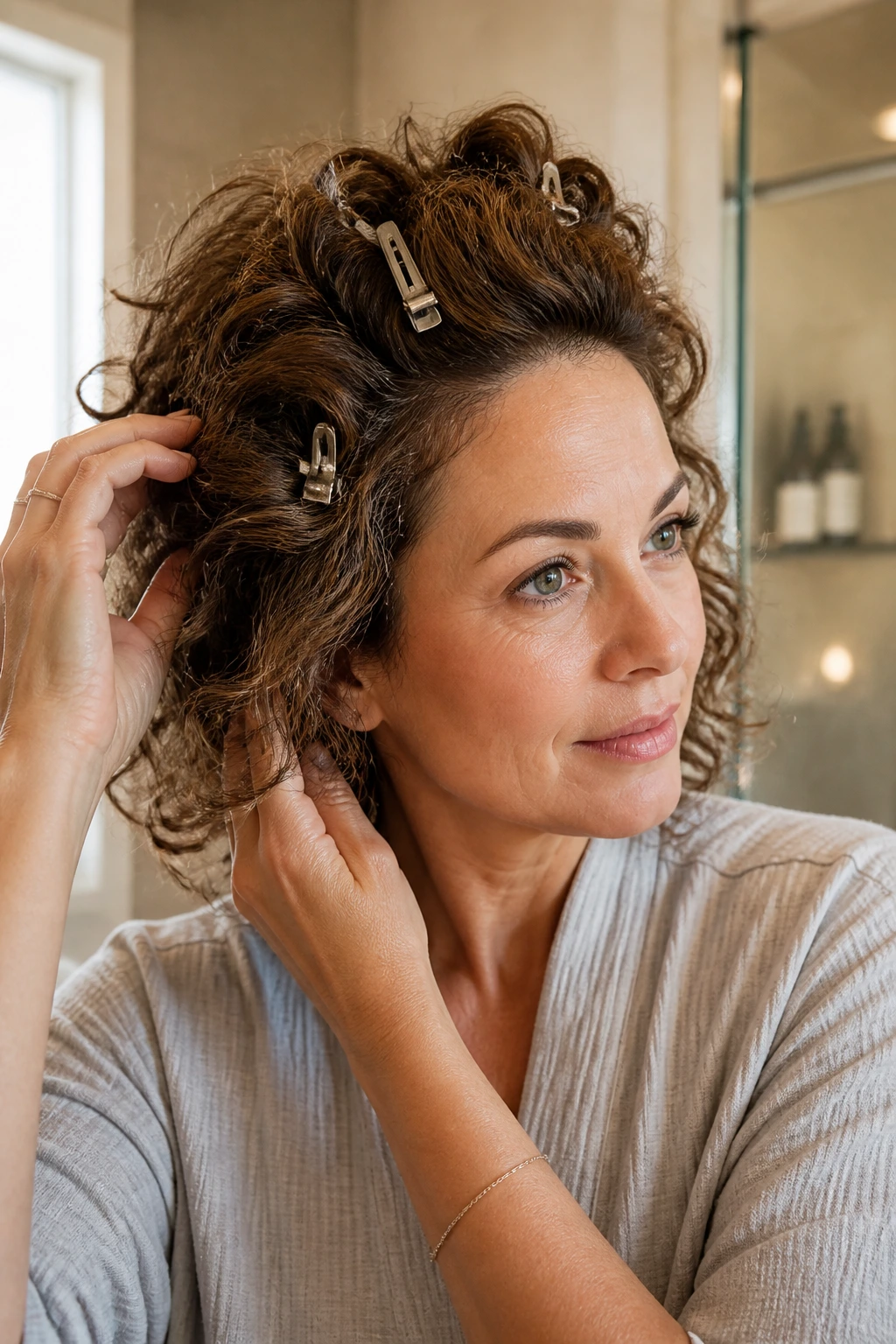
Root Clips: Clip the roots at the crown for 10 to 15 minutes while the hair sets. That tiny pause creates lift that lasts longer than most people expect.
Part Switches: Move the part one inch over and the whole haircut reads differently. Deep side parts help flatter rounder faces and give finer curls more height.
Front Section Control: If the front keeps puffing, apply product there first and set it last. The front is what people see. Start there.
Gloss and Shine: A tiny amount of serum on the ends or a glossing spray on dry hair can make gray curls and layered bobs look cleaner without making them greasy.
Shape Refresh: Wet just the top layer, re-scrunch, and diffuse for 3 to 5 minutes instead of redoing the whole head. That trick is worth its weight in mornings.
Night Care, Refresh Days, and Longer Wear
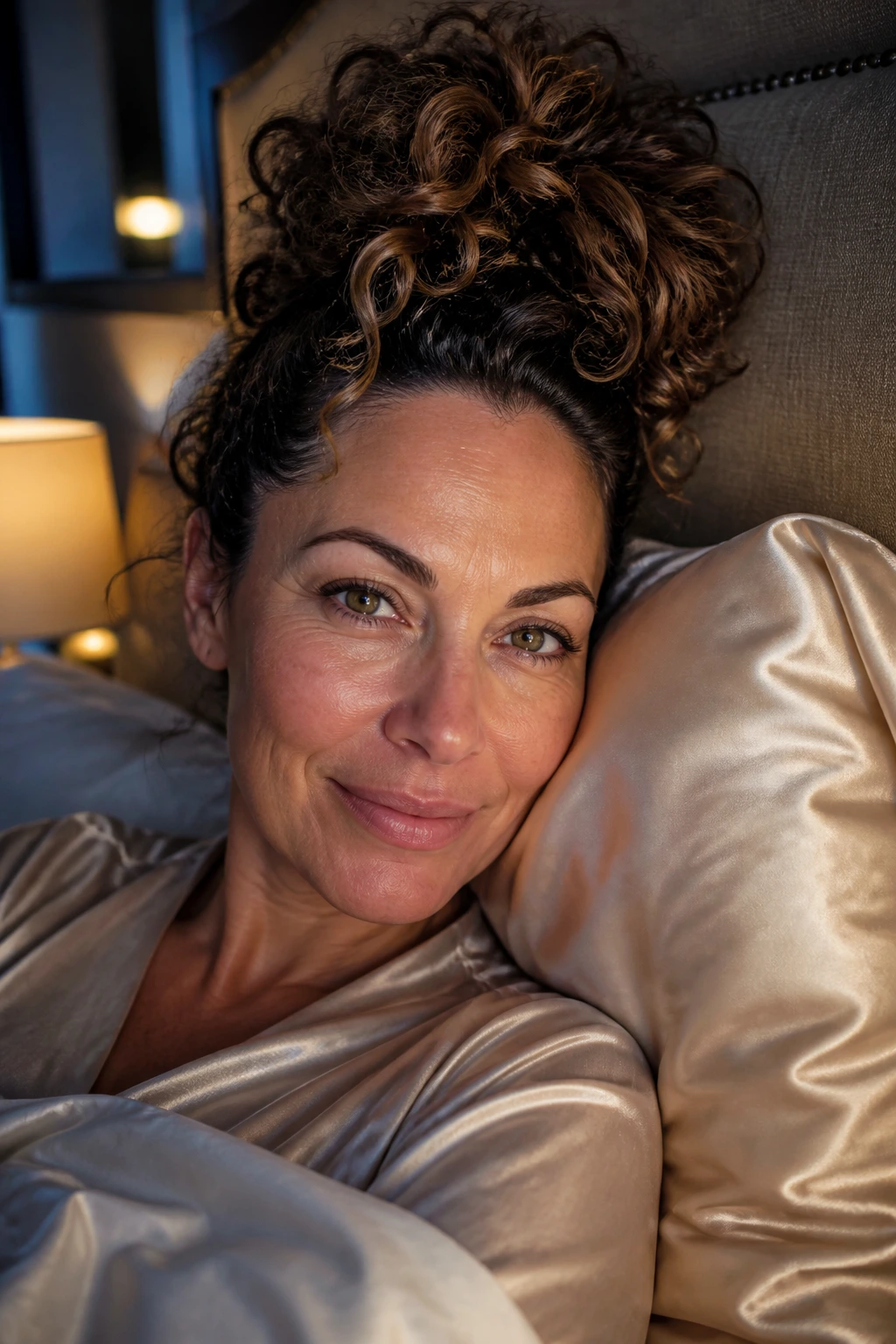
Most of these styles last 2 to 4 days if you protect them at night. Shorter cuts like the pixie, bixie, or crop may need a quick root refresh every morning, while shoulder-length layers and lobs usually survive longer if you pineapple them loosely or sleep on a satin pillowcase. Don’t smash the curls flat under cotton and expect them to wake up cheerful.
A loose pineapple, a low satin scrunchie, or a bonnet keeps the top from getting crushed. For updos, pin the style loosely enough that you can sleep without creating hard dents. If a few pieces go wonky, mist the hair with water, smooth them with damp hands, and leave them alone until they dry again.
For the next-day refresh, start with less water than you think. A few sprays at the crown, a touch of leave-in on the ends, and 3 to 8 minutes under a diffuser can revive a shape without making it frizzy. Heavy rewets often make the style bigger, not better. That’s the trade-off.
Variations and Adaptations to Try
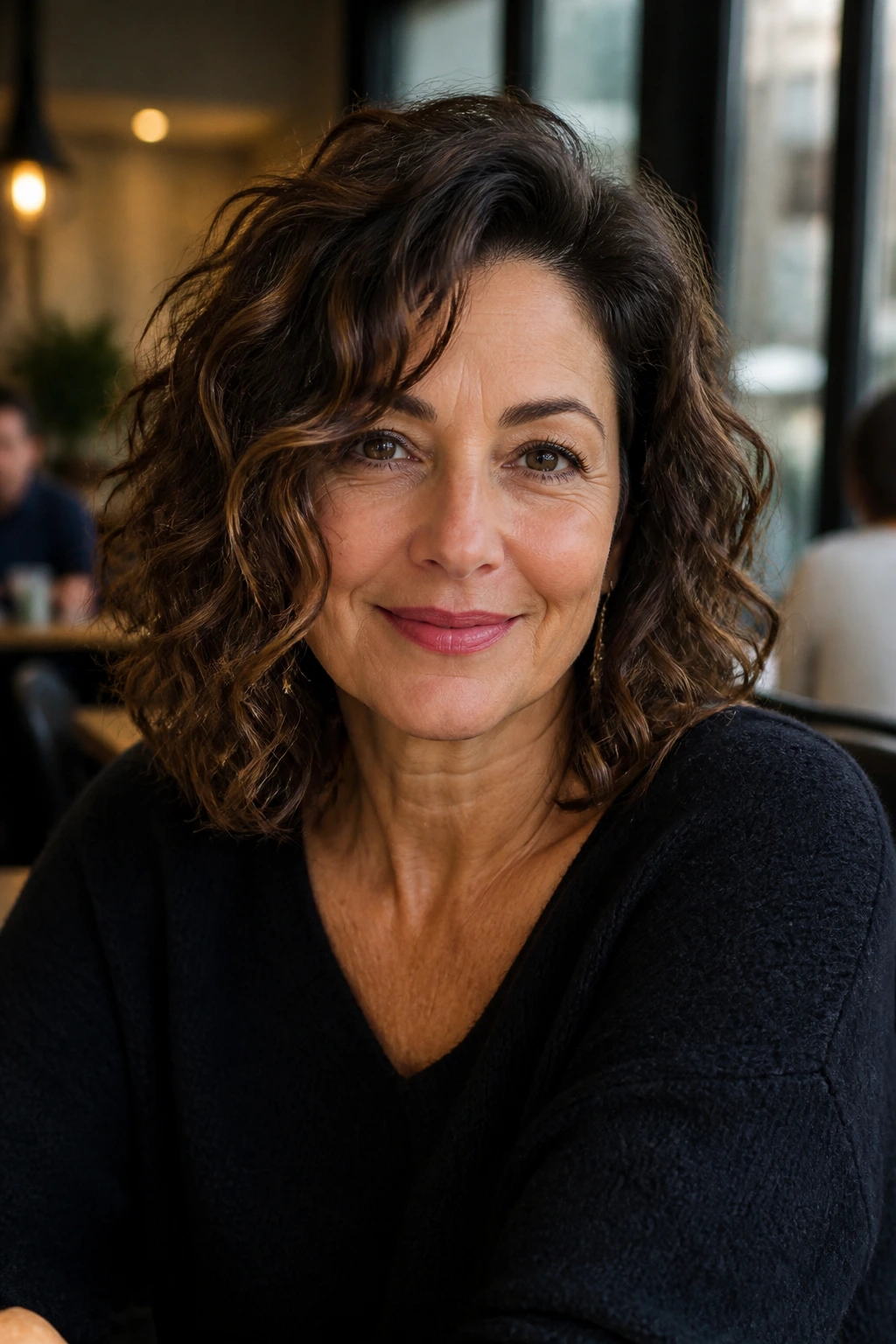
Soft Office Version: Keep the same cut, but wear it with a cleaner side part and fewer face-framing pieces around the cheekbones. The result is calmer and more polished without losing curl texture.
Silver-First Version: Let the gray take center stage with a cut that has enough structure to show contrast. A layered bob or rounded afro works especially well because the shape makes the silver pieces read as deliberate.
Low-Fuss Version: Choose a shoulder-length layer, a lob, or a curly crop and skip anything that needs daily heat. The cut should still look decent if you only diffuse the roots and leave the rest to air-dry.
High-Volume Version: Go for a shag, wolf cut, or stacked bob with a lifted crown. This is the move when the hair feels flat on top and you want height without teasing.
Glasses-Friendly Version: Keep fringe pieces longer, avoid blunt bangs that land right on the frames, and let the side pieces hit the jaw or collarbone. That keeps the hair from crowding the face.
Humidity-Ready Version: Use stronger hold at the roots and keep the shape a little more compact. A rounded bob, tapered crop, or pinned upstyle handles sticky weather better than a very long, loose cut.
Mistakes That Flatten Curly Hairstyles
-
Asking for one length all the way around: It sounds safe, but it often creates a triangular shape that widens at the bottom. Ask for internal layers or a soft U-shape instead.
-
Letting the stylist thin too aggressively: Thinning shears can leave ends frizzy and weak on curly hair. If the hair is bulky, point cutting or shape-based layering is usually cleaner.
-
Cutting bangs too short: Curly bangs jump. A fringe that looks perfect wet can sit several inches higher when dry. Keep them longer than your instinct says.
-
Using heavy products on fine curls: Too much cream or oil flattens the crown and makes the style collapse by midday. Fine curls usually want lighter foam or gel.
-
Touching curls before they dry: Separate them too soon and you’ll get fluff instead of clumps. Hands off until the cast is set or the hair is fully dry.
-
Using tight elastics for updos: They dent the curl pattern and can break the hair at the same spot over and over. Satin scrunchies and pins are kinder.
Frequently Asked Questions
What haircut is most flattering for curly hair after 40?
A shoulder-length layered cut, a lob, or a soft bob usually gives the most shape with the least effort. Those lengths keep enough weight to control frizz while still letting the curl pattern show.
Are bangs a bad idea with curly hair?
Not if they’re cut with shrinkage in mind. Curtain bangs and longer curly fringes tend to be easier to live with than very short bangs, because they can blend into the rest of the hair on low-effort days.
How do I stop my curly hair from looking triangle-shaped?
Remove weight at the right places, usually through internal layers or a rounded shape that narrows slightly at the sides. A deep side part can also help pull volume upward instead of outward.
Can I still wear long curly hair after 40?
Absolutely. Long hair just needs shape. Long layers, a U-cut, or a deep side part keeps it from hanging flat or turning into one heavy sheet of curls.
What if my curls are finer at the crown and thicker at the ends?
Choose a cut that protects the crown from being over-thinned and keep the product light at the roots. A stacked bob, pixie with crown lift, or lob with root clips can help balance the difference.
Is a dry cut better for curly hair?
Often, yes, because it lets the stylist see how much the hair shrinks and where the curl wants to sit. Some stylists cut curly hair wet and still do a good job, but they need real experience with texture and shrinkage.
How do I make second-day curls look decent again?
Mist the roots lightly, re-scrunch the ends with damp hands, and diffuse just the top and front for a few minutes. Usually that’s enough to wake the shape back up without restarting the whole routine.
What if my gray curls feel rougher than the rest of my hair?
That’s common. Use a richer conditioner, don’t overload the roots with oil, and pick a shape that lets the gray strands move rather than stand out because they’re trapped in a heavy perimeter.
Which of these styles needs the least upkeep?
The pineapple puff, soft side-swept upstyle, and shoulder-length layers usually ask for the least daily work. Short crops can be quick to style, but they often need more frequent shaping at the crown and neckline.
The Shape That Keeps Up
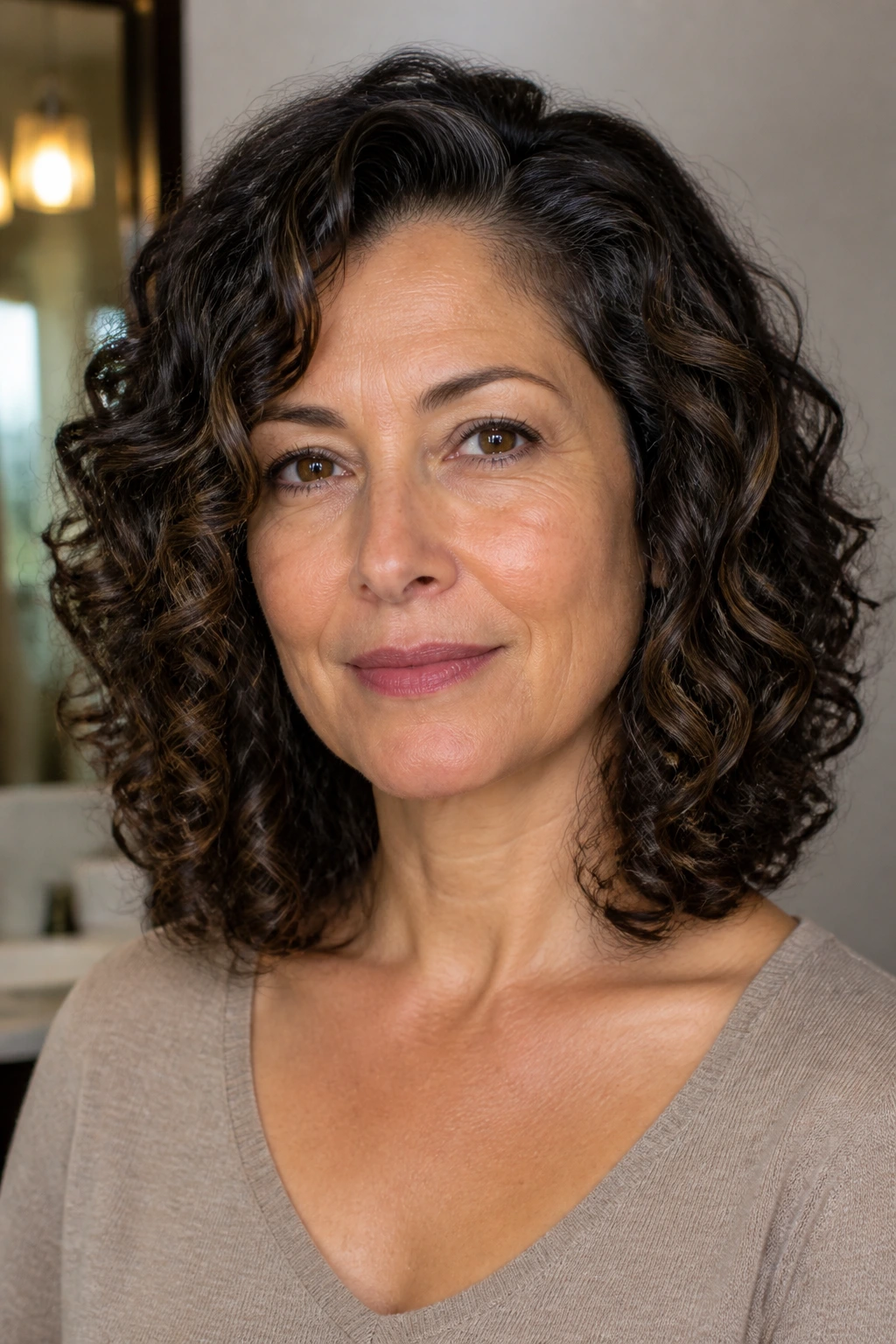
Curly hair after 40 looks best when the cut does enough of the work that you don’t have to wrestle it every morning. That may sound obvious, but it’s the part so many people miss. The right silhouette makes the curls seem more cooperative than they really are.
A good curly style doesn’t hide age, and it doesn’t chase some frozen idea of youth. It just gives the texture a frame that feels current, clean, and easy to live with. Bring that mindset to the salon chair, and you’ll usually leave with something you can wear on a good day, a rushed day, and the days in between.