



Round faces and curly hair get blamed for each other more than they should. Usually, the problem is not the curls. It’s the shape of the cut, where the volume sits, and whether the style stacks up at the cheeks like a little puffed-out halo.
That matters because curls don’t behave like straight hair. They shrink, bend, clump, and spring back in odd, lovely ways. A lob that looks safe when wet can rise to the jawline when dry. A side part that looks dramatic in the mirror can suddenly make perfect sense once the crown has some lift and the sides are not fighting for attention.
I keep seeing the same bad advice passed around: flatten the roots, chop the width, and hope the face looks longer. Nope. The better answer is more specific than that. Put height where height helps, keep the widest curl pattern away from the exact middle of the cheeks, and let the length or asymmetry do some quiet work for you.
Why These Curly Looks Work on Round Faces
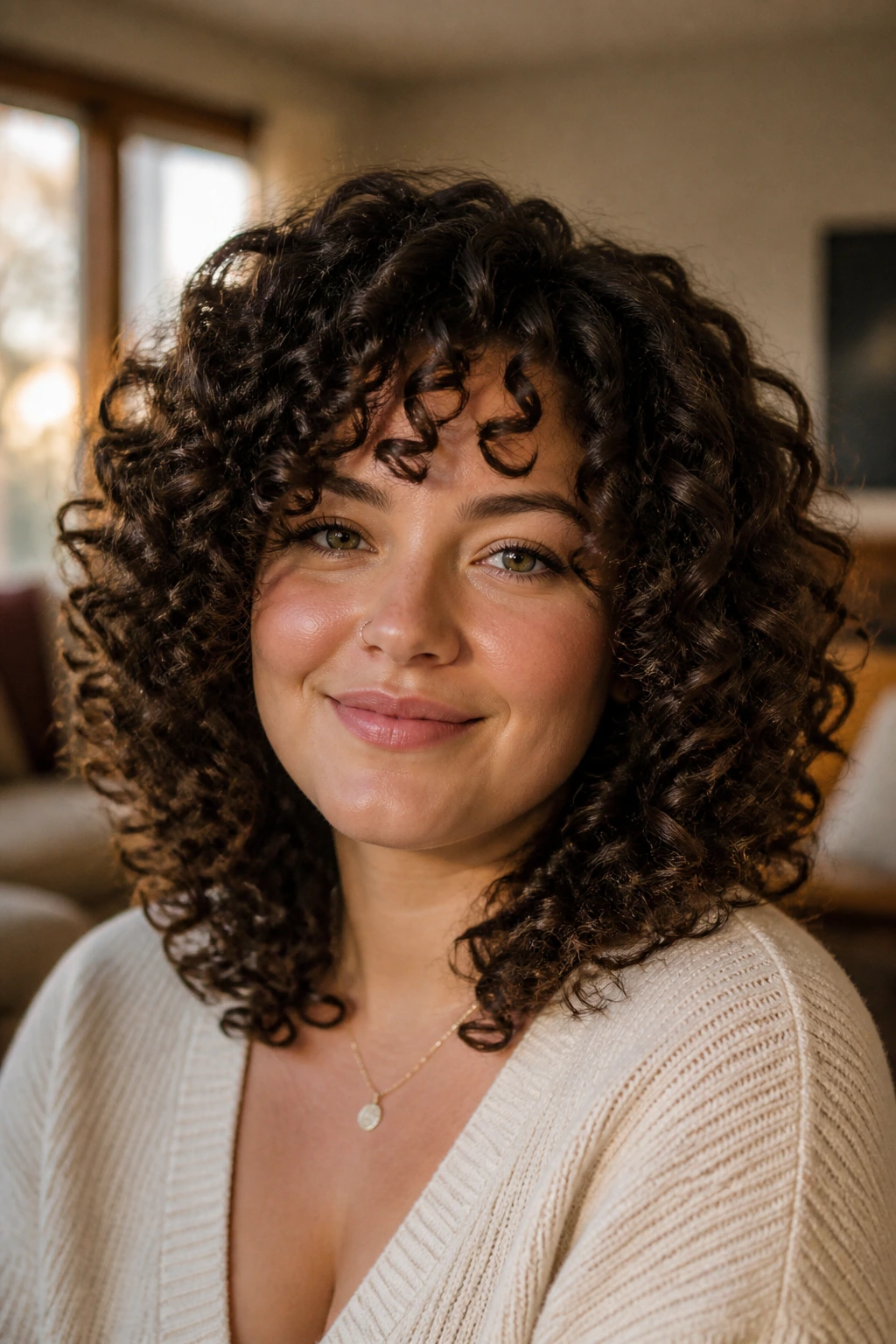
Shape matters more than length. A long curtain of curls can still read wide if it balloons at the cheekbones, while a shorter cut can look leaner if it builds height at the crown and narrows near the jaw.
Curls need room to spring. If your hair shrinks 2 to 4 inches when it dries, the cut has to be planned for the dry shape, not the wet shape. That’s where a lot of people get burned at the salon chair.
Asymmetry helps more than symmetry. A deep side part, a one-shoulder sweep, or a cut that leaves one side a little longer creates a diagonal line that the eye follows. Round faces love that.
The right style does not hide your face. It frames it. There’s a difference, and it’s a big one. Hiding usually means squeezing curls into a shape they don’t like; framing means placing the bulk where it flatters instead of fighting it.
You can work with every curl pattern. Loose waves, springy ringlets, dense coils — all of them can play well with a round face if the cut and styling choices are deliberate.
1. Long Layered Curls With a Center Part
Long layers are the safest place to start when you want your curls to hang below the face instead of puffing around it. The middle part can be a little scary on a round face, I know, but with the right layers it doesn’t look severe. It looks clean.
Why It Works
The trick is where the layers begin. Ask for the first face-framing layer to start around the mouth or collarbone, not right at the cheekbone. That keeps the eye moving downward, which is exactly what you want when your face is full in the middle.
This cut is especially good if your curls are medium to thick and your ends tend to collect weight. The longer perimeter stops the style from turning into a round cloud. And because the center part is balanced, the layers can create symmetry without adding width at the cheek line.
A tiny shift off-center helps if your face is very round. One inch is enough. Seriously. You do not need a dramatic side sweep to get the effect.
2. Deep Side Part Curls That Sweep Past the Cheek
Why does a deep side part work so well? Because it breaks the face in the most flattering way possible: diagonally.
A side part that begins near the arch of the brow and sweeps across the crown adds instant lift. Then the hair can fall away from one side of the face instead of sitting evenly on both cheeks. That small move changes the whole read of the silhouette. It makes the face feel longer without making the style stiff.
This look is especially good when your curls are defined enough to hold a shape for most of the day. If your curl pattern collapses fast, set the part while the hair is still damp and clip the heavier side up for 10 to 15 minutes as it dries. That helps the roots remember the direction.
Quick note
A deep side part looks strongest when the front pieces are left soft, not sprayed into helmets.
3. Curly Shag With Piecey Fringe
The shag is what happens when curls stop trying to behave and start helping the face instead. It has movement, air, and a little attitude.
What makes it useful for round faces is the way the layers break up the width. Instead of one big circular shape, you get texture at the crown, softer ends, and fringe that can be worn piecey rather than heavy. That means the face doesn’t get boxed in by one blunt line.
This cut suits people who like hair that looks a little undone on purpose. If you have dense curls, ask for internal layers that remove bulk near the sides without shaving off too much length. If the fringe is too short, though, it can spring up and sit right where you do not want it. Keep the shortest curl near the brow or just below it, not well above.
It’s a forgiving cut on day two. Sometimes that’s half the point.
4. Shoulder-Length Lob With Face-Framing Layers
A curly lob is one of those cuts that keeps earning its place because it lands in the sweet spot: long enough to move, short enough to stay light, and structured enough not to swell out into a sphere.
The best version for a round face brushes the collarbone and angles a little longer in front. That gives the style a soft V or U shape instead of a blunt shelf. If the hair ends exactly at the jaw, the face can look wider. If the ends hover at the collarbone, the eye drops down and the silhouette feels cleaner.
I like this cut for wavy-to-curly textures that need shape more than drama. It’s also one of the easier cuts to air-dry, because the weight of the length helps tame the upper half a bit. Ask for layers that start below the cheekbone, though. That’s the difference between “soft frame” and “why is this puffing there?”
5. Tapered Curly Pixie
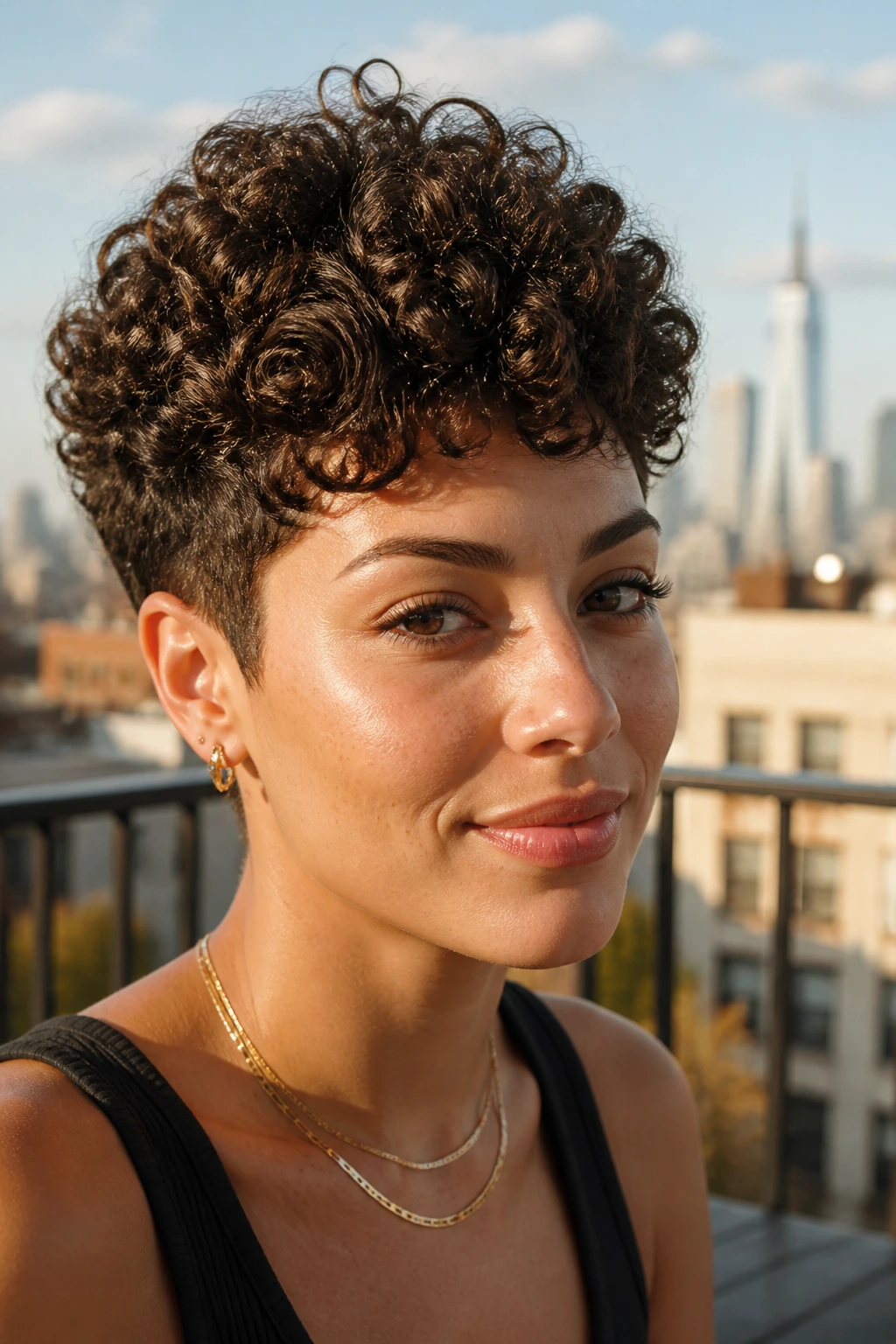
Short hair can work on a round face. It just has to be short in the right places.
A tapered pixie keeps the sides and nape snug while leaving enough height on top to pull the eye upward. That vertical line is doing real work. Without it, a short cut can end up looking like a round cap. With it, the face looks longer and the curls get to keep their texture.
This is one of my favorite options for tight curls and coils because the natural spring makes the top lively without much effort. The mistake is asking for too much length all over. If the sides are too full, the shape can get boxy fast. Keep the perimeter neat, let the crown stay the star, and don’t flatten the top with heavy cream.
Best for
- Coils and dense curls that can hold height
- People who want low styling time
- Anyone who likes a sharp neckline and a cleaner side profile
6. Curtain Bangs With Long Spiral Layers
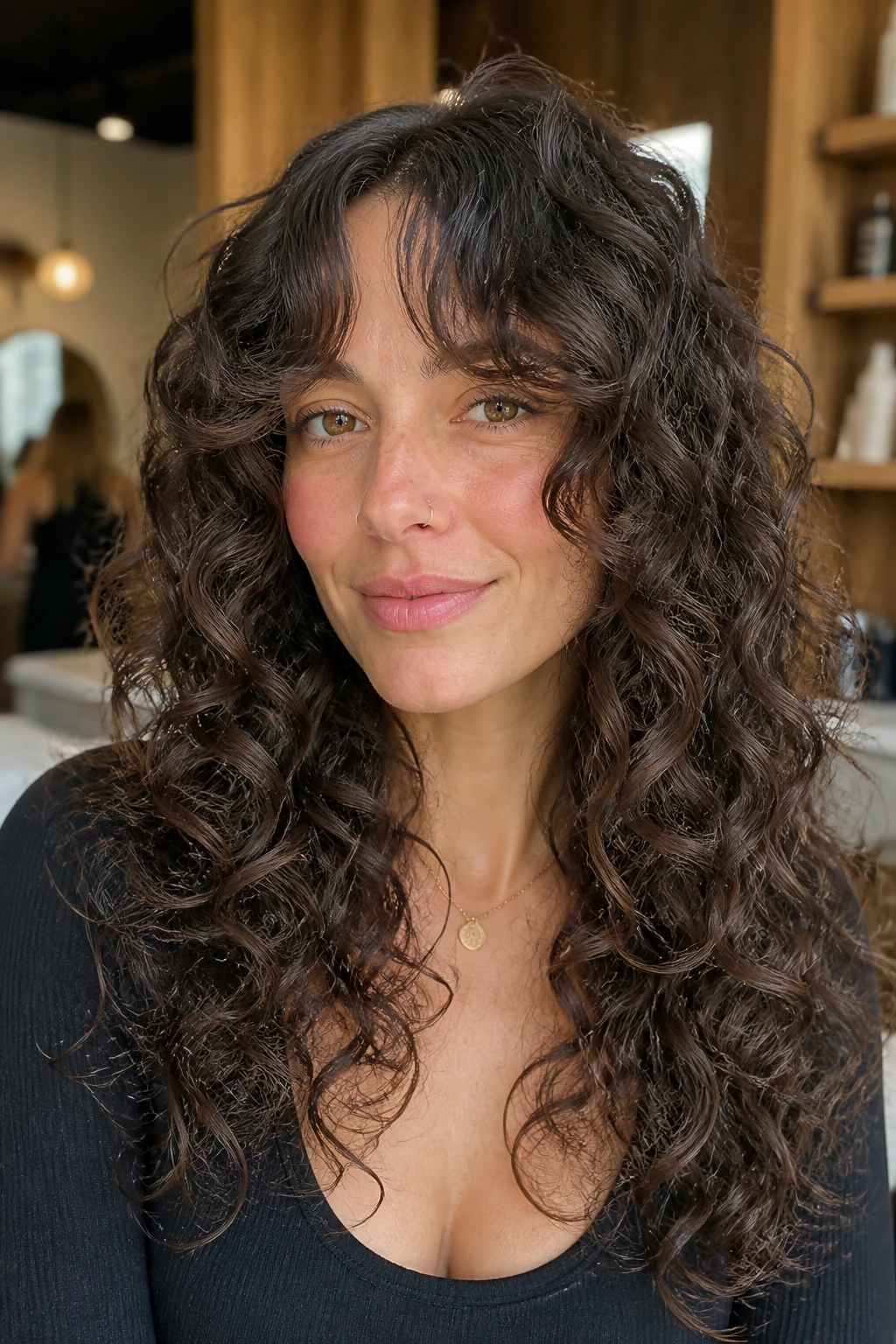
Curtain bangs and round faces get misjudged constantly. The problem is not bangs. The problem is bangs that are cut too short and too dense, then left to sit in the middle of the face like a little curtain wall.
The version that works on curls opens from the middle and drops longer toward the cheekbones. That makes the face look softly framed instead of cut off. On curly hair, the bangs should almost always be longer than they look in the chair, because shrinkage is real and rude.
Pair curtain bangs with long layers and you get movement at the front without crowding the cheeks. This is a smart choice if you want to keep length but still change the silhouette around the face. It’s also good for growing out a fringe that got a little too ambitious.
7. High Curly Ponytail
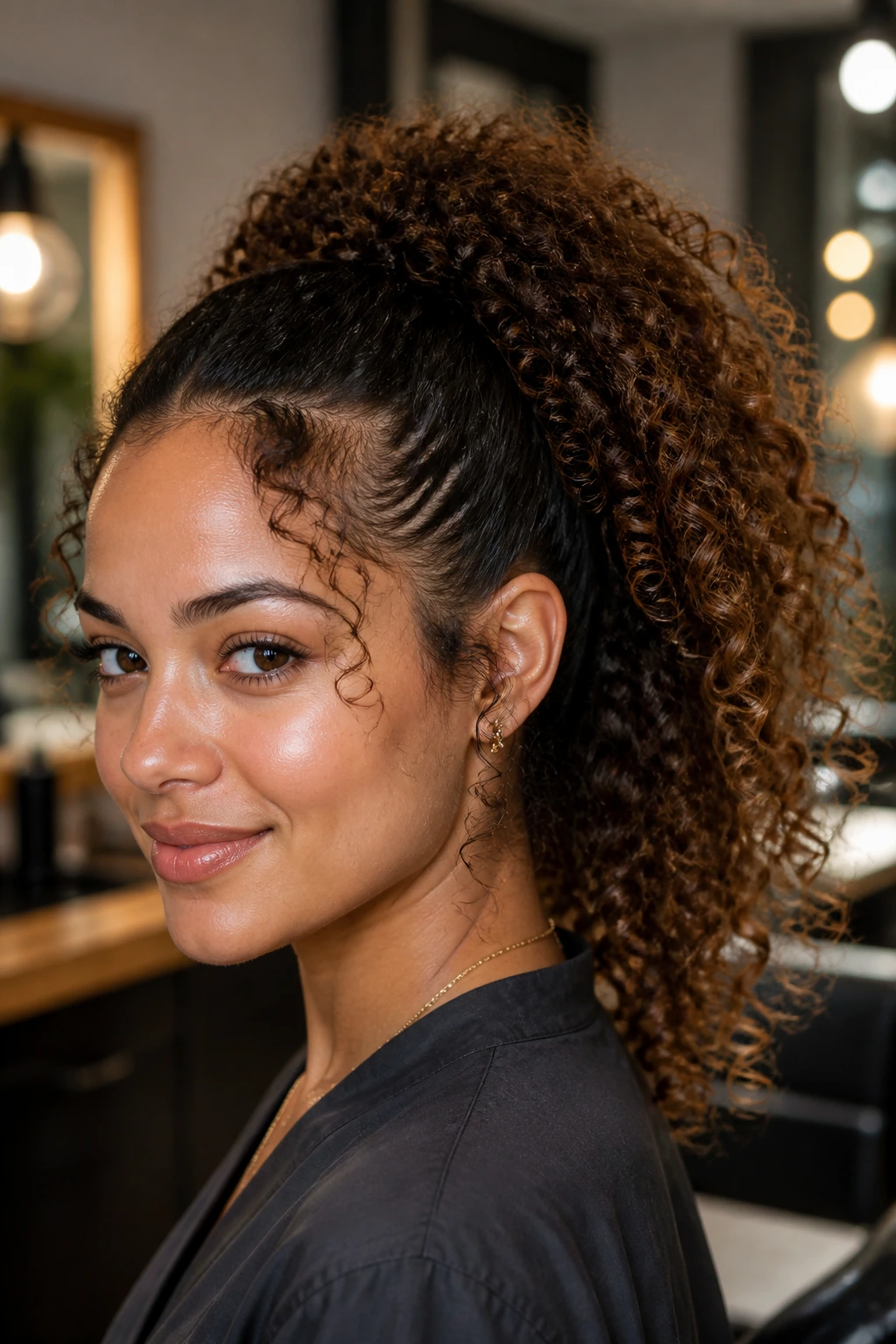
A high curly ponytail is not just a gym style. Put it high enough, and it becomes a face-lifting trick with a hair tie.
The lift sits at the crown, which pulls the eye up and away from the widest part of the face. The ponytail itself can fan out behind the head, which feels playful rather than heavy. For round faces, the key is placement: the base should sit near the upper back of the head, not midway down the nape.
Leave a few curls loose at the hairline if your face likes softness. And if you have thick curls, wrap a small coil around the elastic so the ponytail reads polished instead of rushed. I like this look for second-day hair because the root lift is already there. You just tighten the base and go.
One warning: don’t yank the sides too tight. That can make the cheeks stand out more than you want.
8. Low Curly Ponytail With Crown Lift
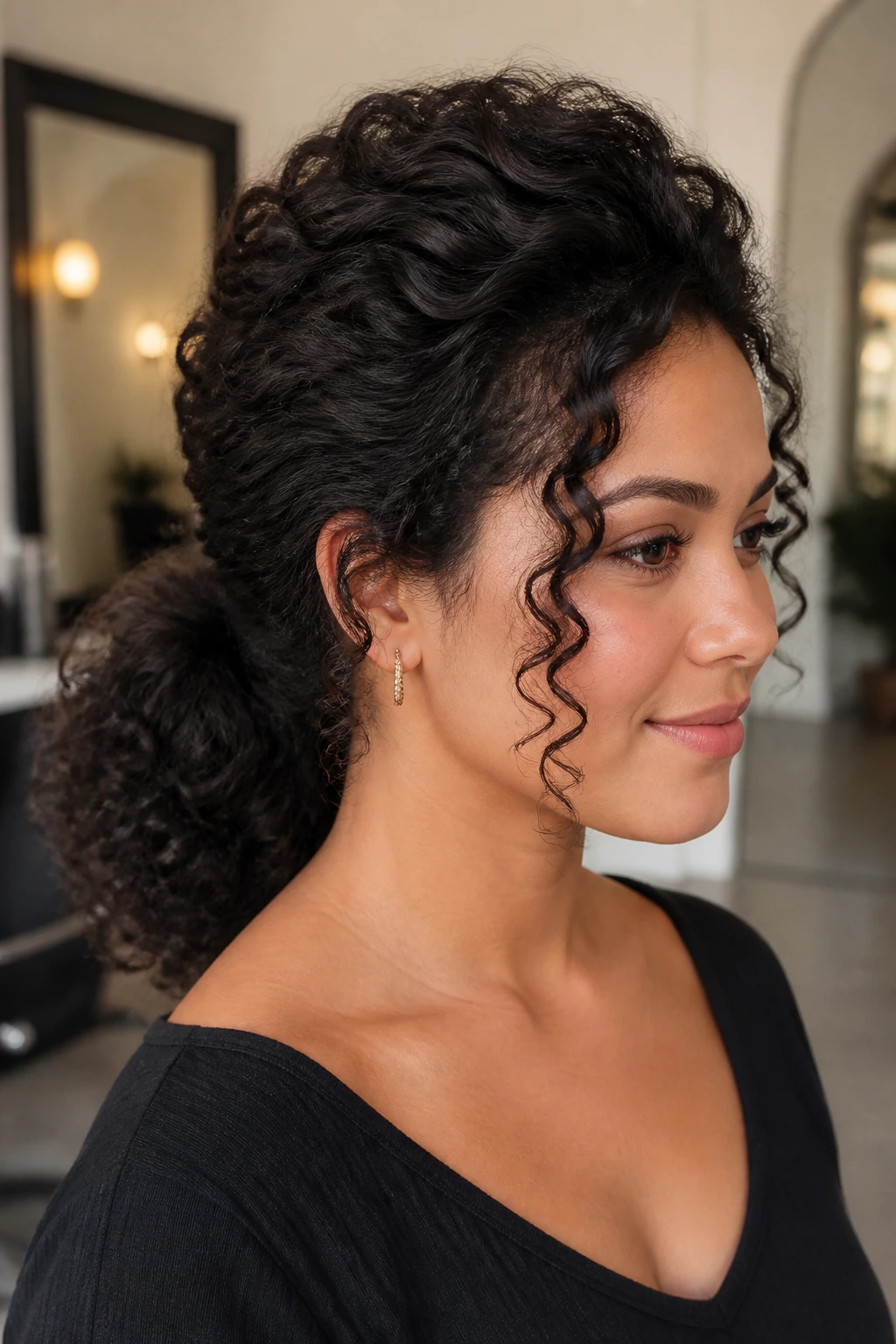
A low ponytail can flatter a round face when the crown stays tall and the sides stay soft. That sounds obvious, but people flatten the top on purpose and then wonder why the face looks wider. That’s backwards.
Keep a little lift at the roots before you gather the hair. Then let the ponytail sit at the lower back of the head, where it creates a clean line under the jaw. The result feels calm, not boxy. It works especially well if you pull out two face-framing curls and let them skim the temples.
This is the better choice when you want something tidier than a high ponytail but less severe than a bun. The length of the ponytail can stay loose and curly, which keeps the style from feeling too formal. If your hair is very dense, use two pins under the elastic so the base doesn’t sag by lunchtime.
9. Half-Up Top Knot
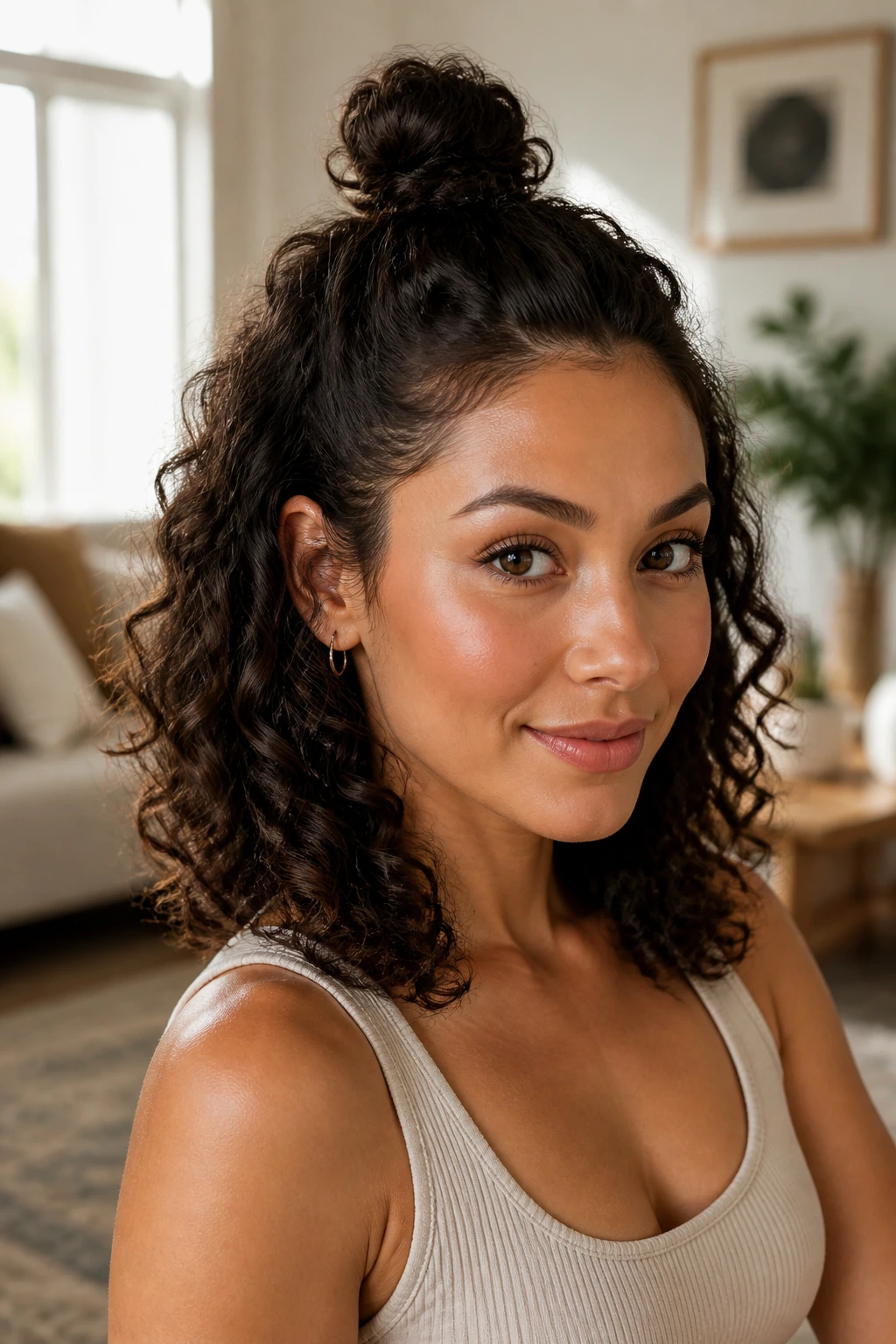
The half-up top knot is a neat trick because it gives you the height of an updo and the softness of wearing your curls down. That balance matters on a round face. Too much hair on both sides of the jaw can make the face read wider. Taking the top section up changes the silhouette right away.
Keep the knot small and centered high on the head. If it grows too wide, it starts competing with the face instead of lifting it. The loose bottom section should fall below the cheek line, not sit right on it. That’s the part people often get wrong.
This style is a good fit for medium-length curls that need a little control but still look better when they move. It also works when day-two roots need rescuing. One small knot, a few pins, and the rest of the hair gets to do its own thing.
10. Curly Messy Bun With Face-Framing Tendrils
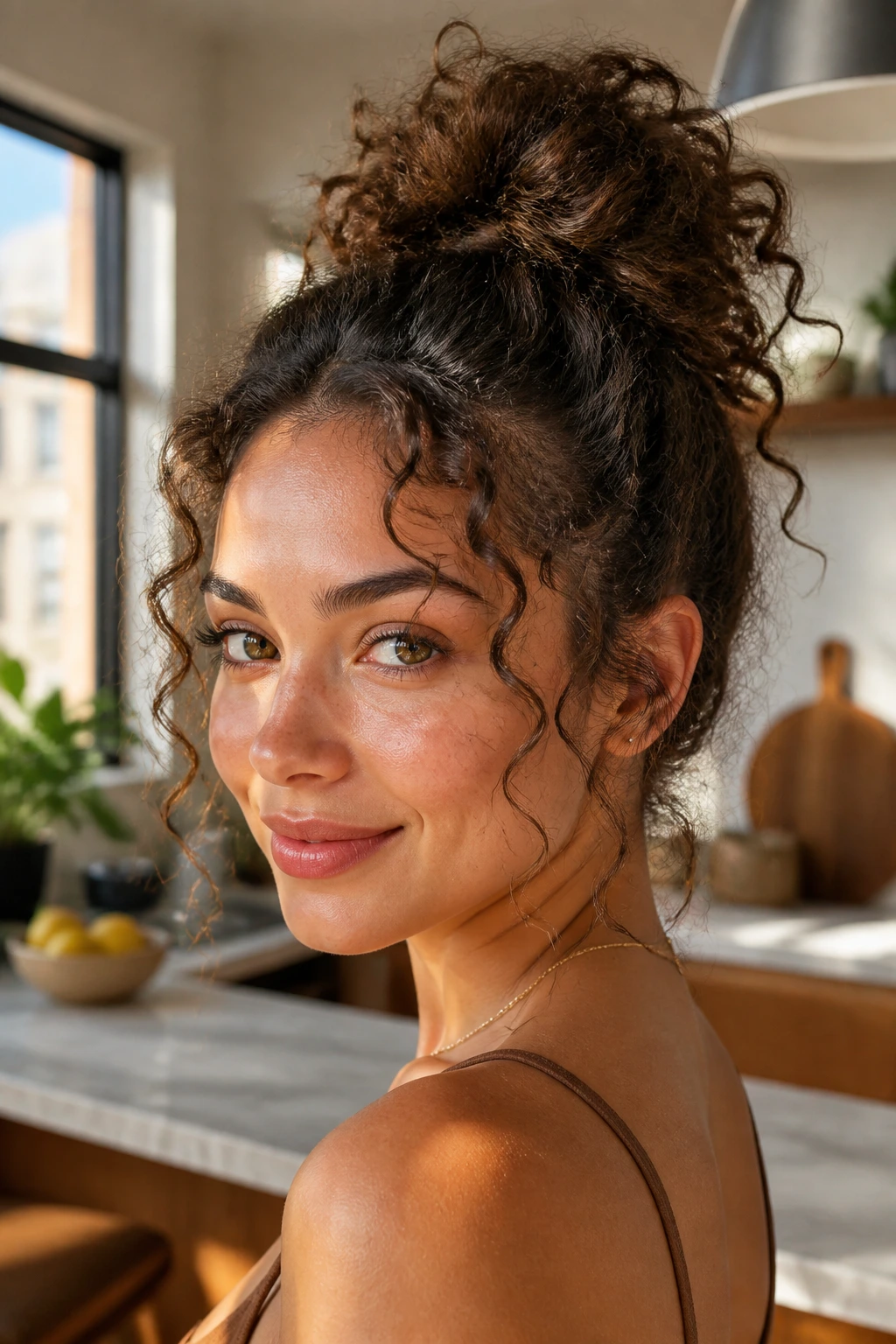
A messy bun can be lazy or smart. The difference is whether you give the shape some intention.
For round faces, place the bun high enough to add lift, or low enough to sit under the jaw. The worst spot is the exact middle of the cheeks, where a bun can make the face feel stuck in place. Let a couple of curly tendrils fall on each side, and keep them long enough to move — not those tiny wisps that stick to the temples and do nothing.
This is the style I reach for when curls are in the “not fully fresh, not yet ready to wash” stage. It hides frizz without crushing the pattern. If you have very dense hair, twist the bun instead of wrapping it tightly; the coil will sit more softly and hold better with pins.
Messy bun, but make it shaped. That’s the whole game.
11. Stacked Curly Bob
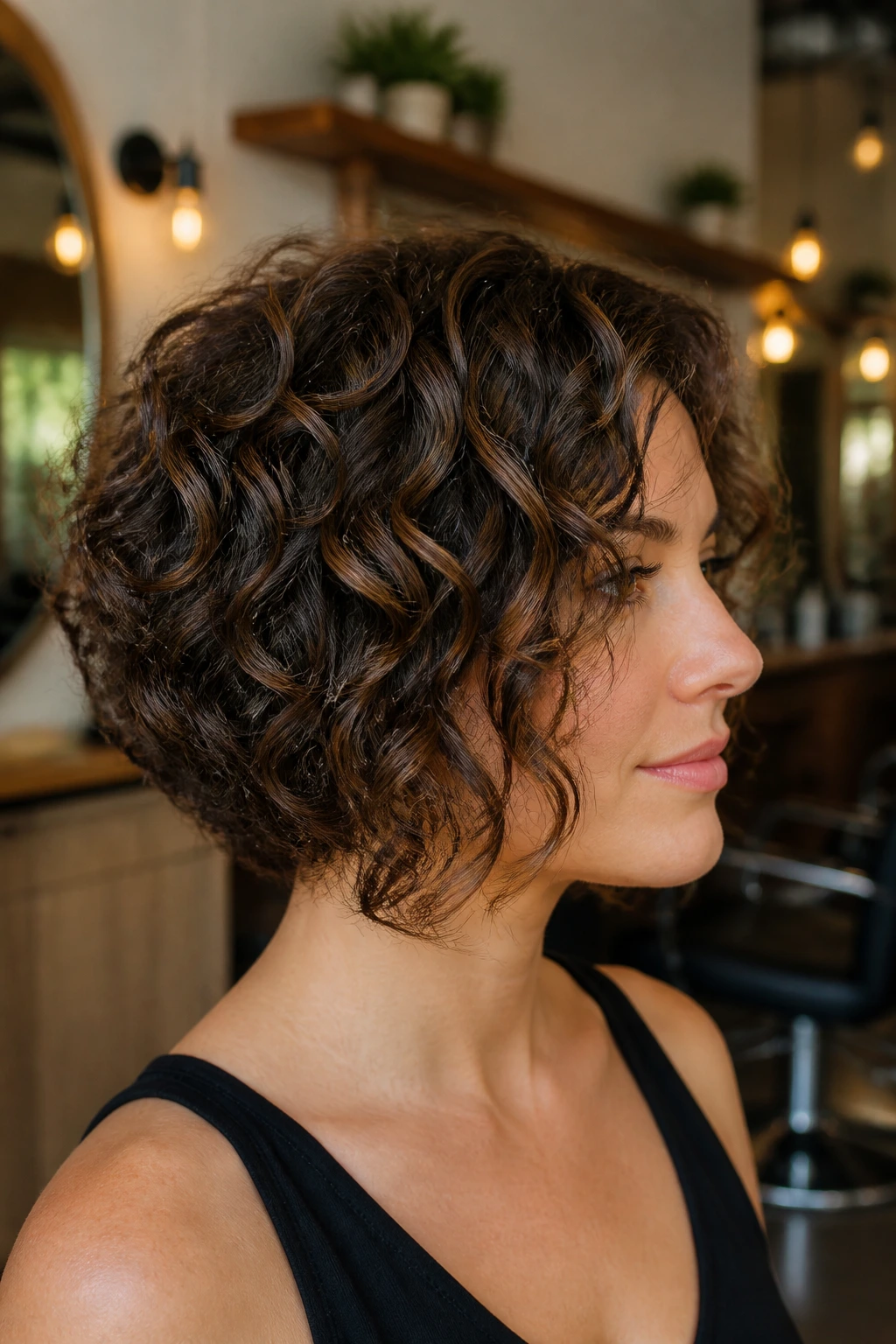
A stacked bob gives a round face structure by building shape at the back and keeping the front slightly longer. It’s the opposite of a blunt bowl. Thank goodness.
The back lift creates a nice shelf of volume at the crown, while the forward angle narrows the face visually. That’s useful for curls because a one-length bob can balloon at the sides if the texture is dense. Stacking the back removes some of that bulk and keeps the silhouette cleaner.
This cut looks best when the nape is controlled and the front pieces touch just below the chin or a bit longer. If the whole thing sits right on the jaw, the shape can get choppy in a bad way. A stacked bob wants an actual angle. Ask for one.
It’s a strong choice if you want short hair without giving up movement.
12. Asymmetrical Curly Cut
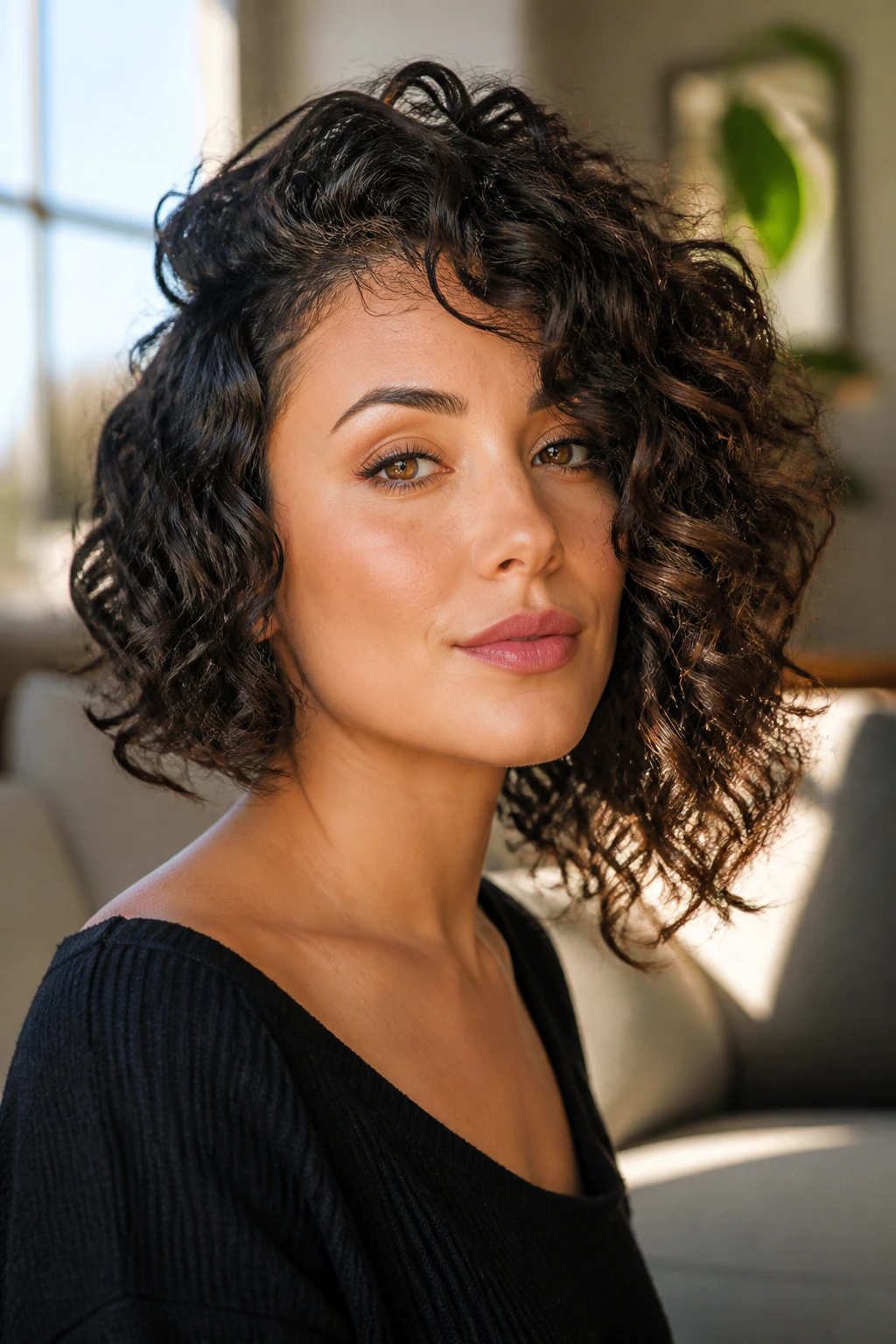
Asymmetry is one of the easiest ways to keep a round face from reading too circular. One side slightly longer than the other creates motion before the curls even start moving.
The difference does not need to be dramatic. Even one to two inches can change the line of the haircut. A stronger asymmetry works best on confident curls that clump well, because the shape will be obvious in a good way. Softer curls can take a subtler version, with one side grazing the jaw and the other falling to the collarbone.
I like this cut when someone wants a little edge but not a full-on dramatic chop. It gives shape without relying on bangs or extra styling. And because curls rarely fall in a perfectly straight line anyway, the asymmetry tends to look natural rather than forced.
13. Wolf Cut Curls
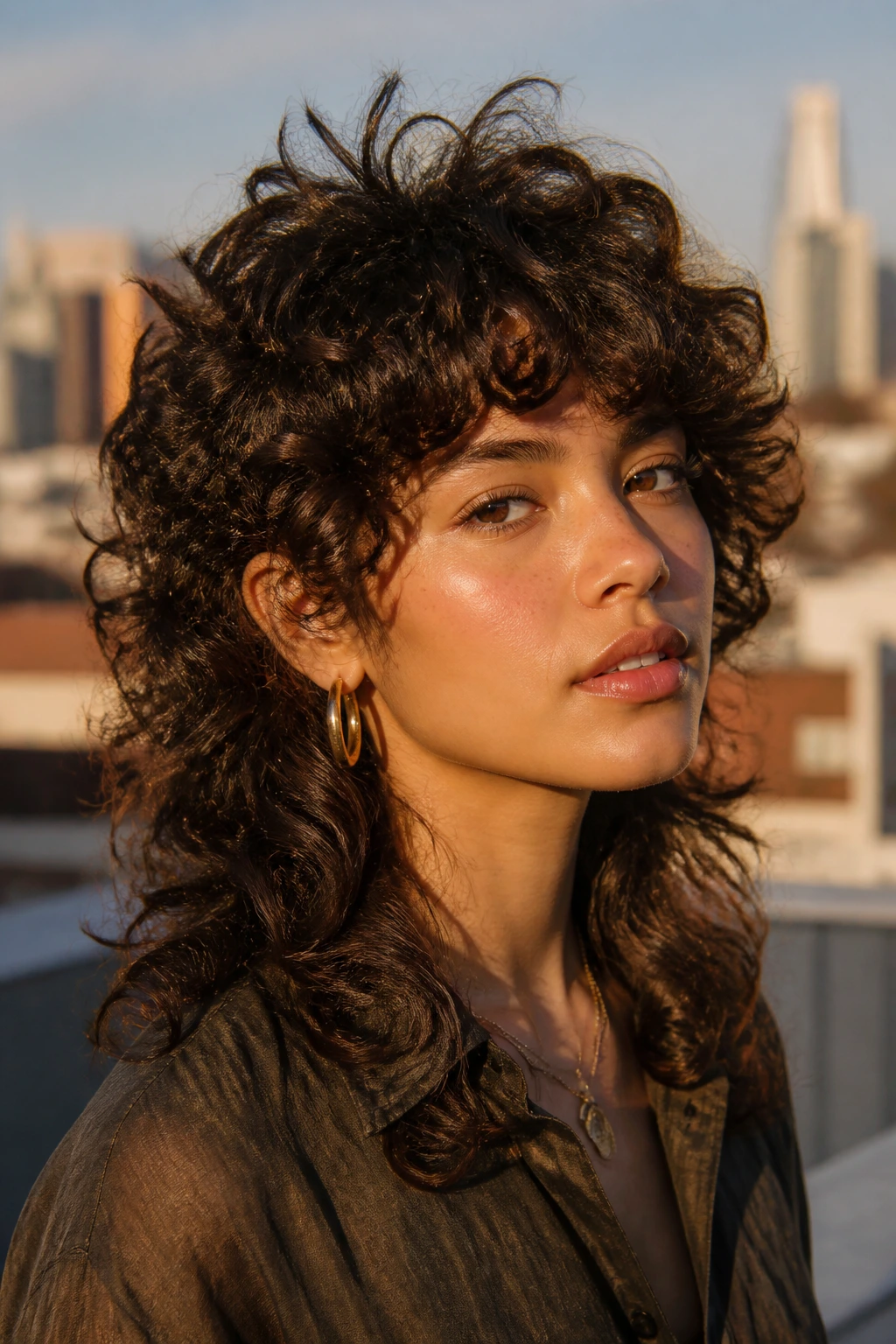
The wolf cut is the shag’s louder cousin. It has shorter layers on top, softer ends, and just enough chaos to look interesting on curls without turning into a triangle.
For round faces, the crown lift is the real draw. The top gets height, the sides get broken up, and the layers keep the curl pattern from sitting in one big wide ring. If the cut is done well, the face looks longer because the eye keeps traveling upward and downward instead of left to right.
This is not the cut for someone who wants tidy. It is the cut for someone who likes movement and a little roughness around the edges. The one thing I would not do is let the shortest layer sit right at the temples. That’s where the face already has width. Push the shortest pieces up higher or let them drift lower, and the shape gets smarter.
14. Braided Crown With Loose Lengths
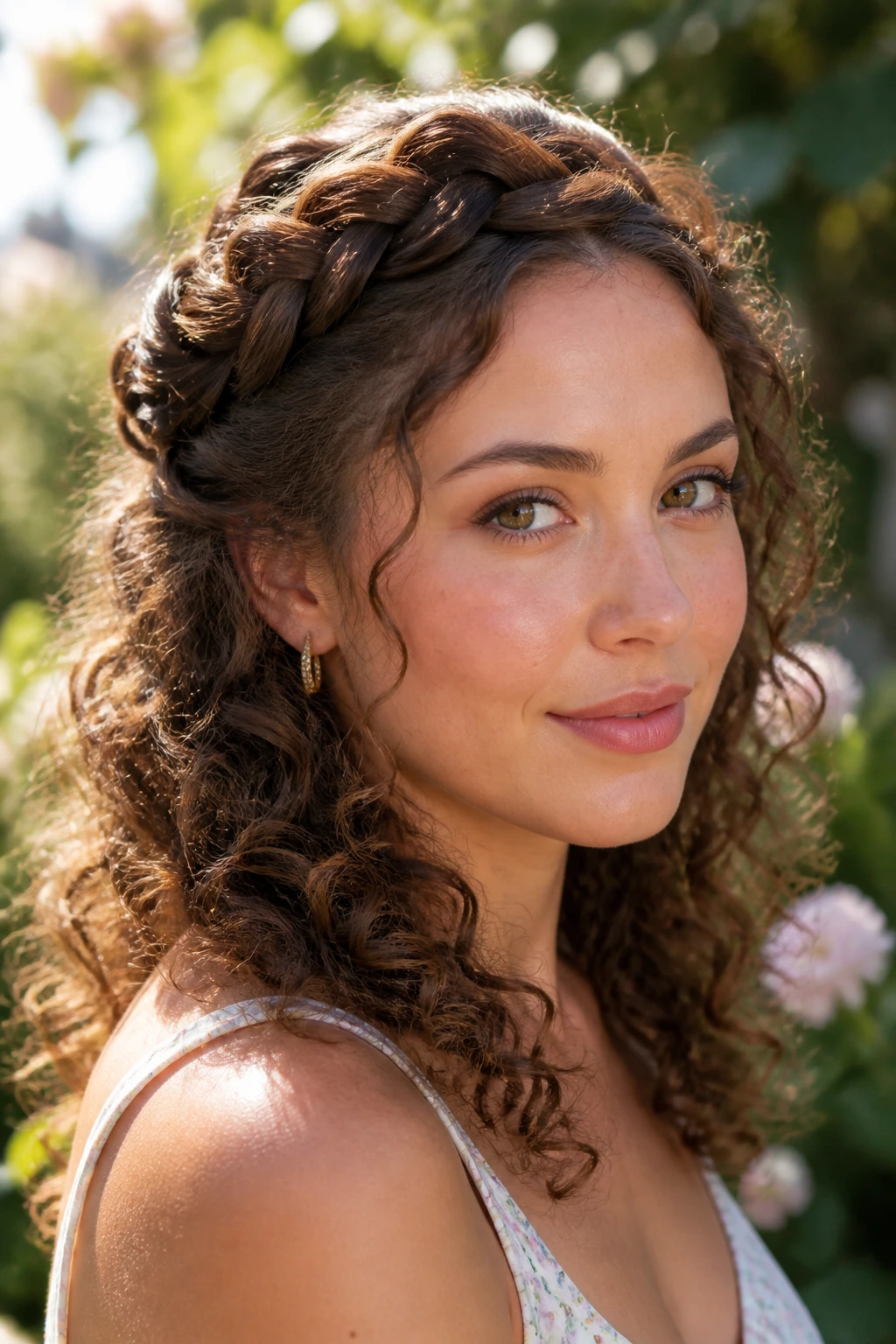
A braided crown can be a lifesaver for round faces because it pulls hair away from the sides and puts the focus higher on the head. That does two things at once: it opens up the face and keeps the curly lengths below from looking too heavy near the cheeks.
Keep the braid soft. A tight braid can drag the hairline backward and make the style feel severe. A looser braid, started just above the temples, sits more naturally and lets the curls around it stay plush. The loose lengths below can remain curly, waved, or brushed out a little, depending on how fancy you want the result.
This is one of those looks that feels like more effort than it is. A braid, a few pins, and some curl cream at the ends, and the whole style changes shape.
15. Space Buns With Loose Curls
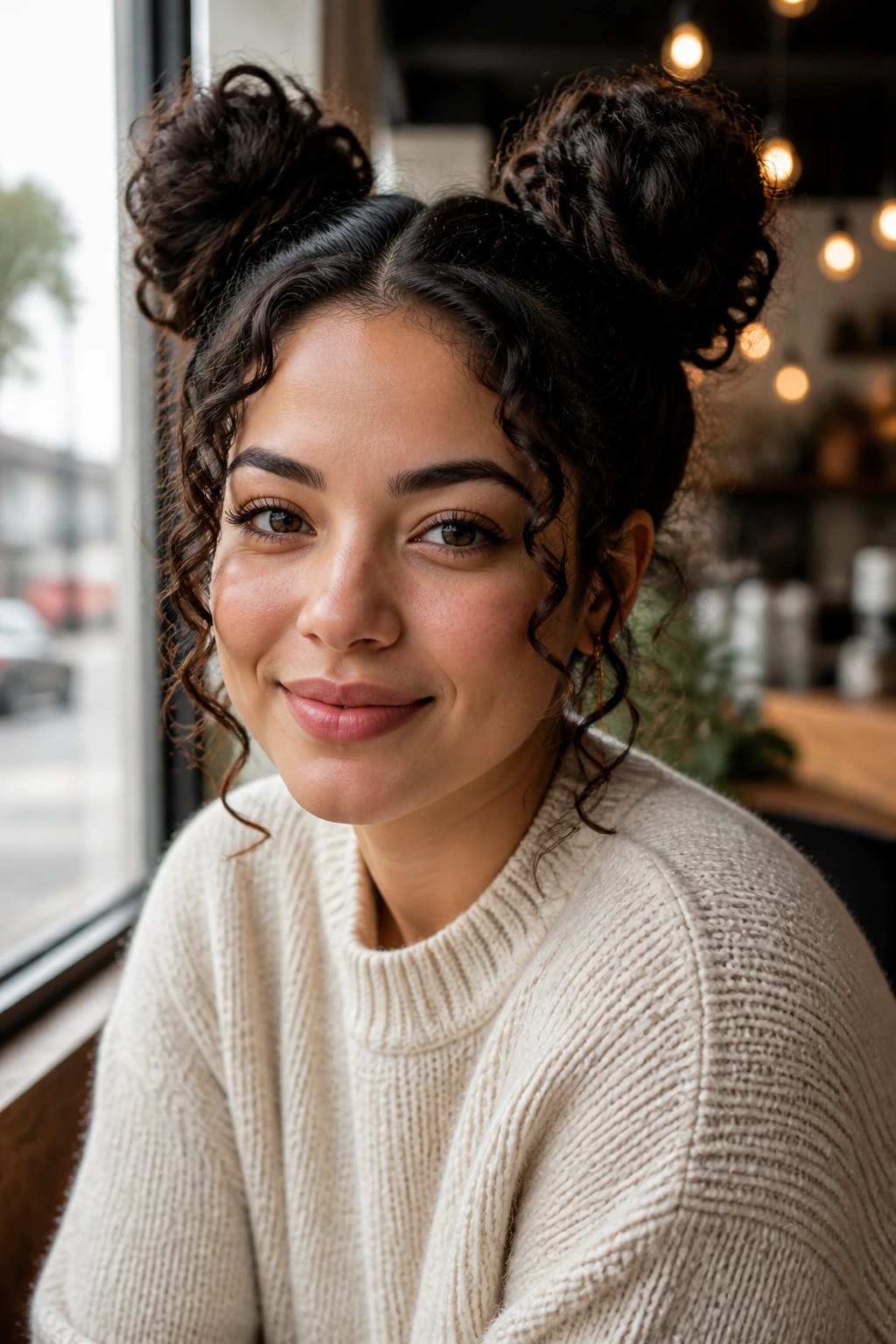
Space buns can flatter a round face if they sit high and a little narrow, not wide and round like little balloons. The point is lift, not extra width.
Place the buns above the widest part of the face and leave a few curls down around the cheeks and neck. That keeps the style from looking too cartoonish. It also softens the forehead-to-jaw line, which helps a round face look longer. On curly hair, this style works best when the buns are a little messy and the texture shows.
I like this for medium-length curls that are too short for a big bun but too long to sit neatly all day in a ponytail. It’s playful, but it still gives structure. If your hair is fine, use small silicone elastics under the buns for support. If it’s thick, pin the base before you start twisting. Otherwise the buns drift outward, and that’s the exact shape you were trying to avoid.
16. Faux Hawk Curls
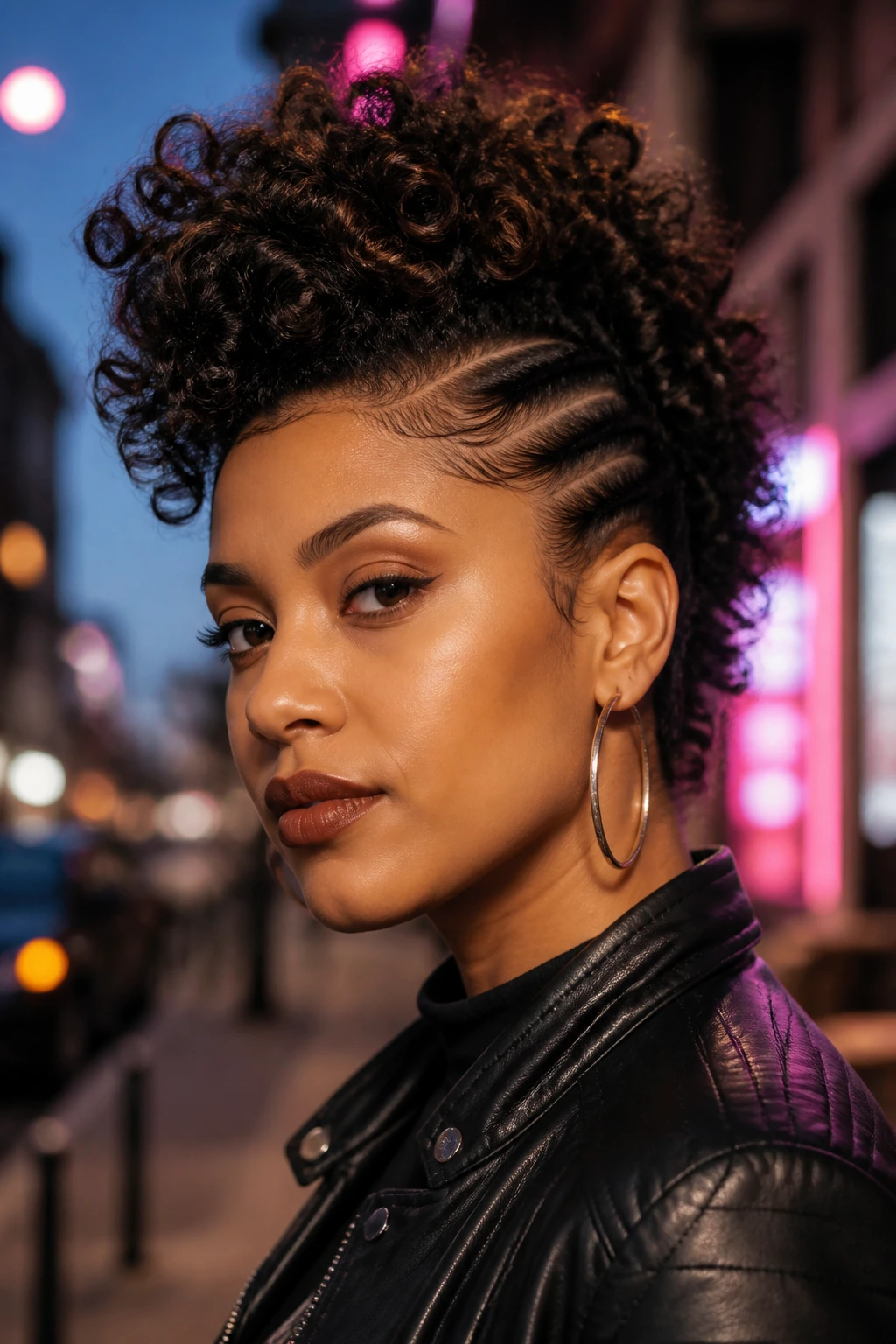
A faux hawk is one of the most face-flattering styles for round faces when you want obvious height. The sides get pinned or slicked back, and the curls stay concentrated in a strip down the center. That line pulls the face upward in a way that feels bold instead of fussy.
The best version has volume at the crown and around the upper back of the head, not just a little puff in the middle. If the sides are too fluffy, the shape gets wide again. Keep them neat and let the curls on top do the speaking. A few loose pieces at the temples can soften the look, but don’t overdo it.
This style works especially well for events, photos, or any day when you want your face to read longer without changing the cut. It’s drama with a point.
17. Side-Swept Curls Over One Shoulder

There’s a reason this old move keeps hanging around. One-shoulder hair creates a diagonal that flatters round faces without making the style feel overworked.
Sweep the curls over one side and pin the opposite side low and hidden. That shift changes the balance of the face fast. The open side gives the cheek room, while the heavier side becomes a long line that falls toward the collarbone. It’s one of the easiest ways to make long curls look intentional.
This is also a good choice if your curls are bigger on one side than the other. The asymmetry becomes a feature instead of a problem. I like it with side-parted curls, but it can also work with a middle part if the sweep is secure enough. A small clip behind the ear can hold the transition so the whole style doesn’t collapse by dinner.
18. Twist-Out Halo
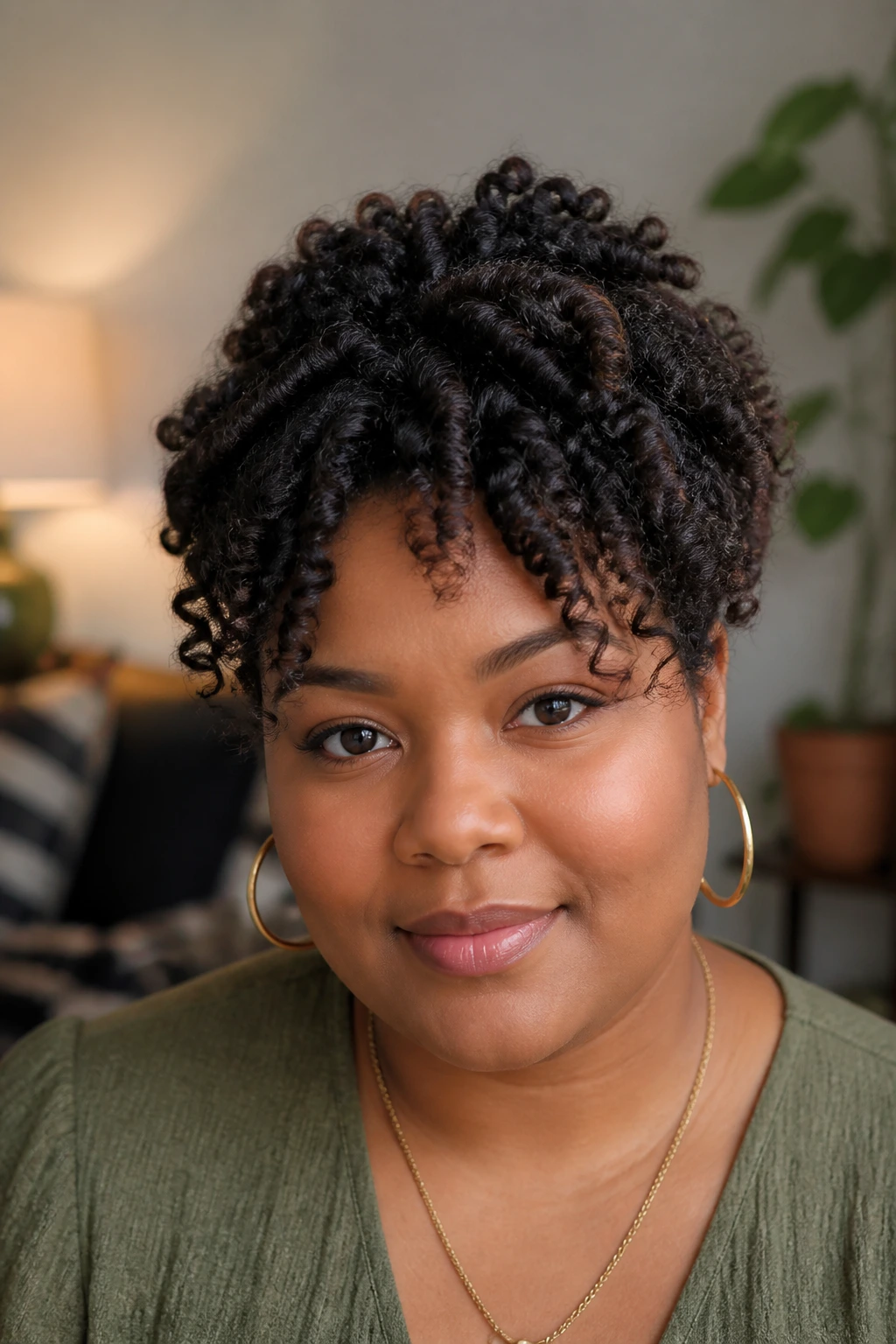
A twist-out can be a smart round-face style when the shape is kept airy at the crown and not too round at the sides. The halo effect comes from definition and a little height, not from piling all the volume at cheek level.
Smaller twists usually give more control and a tighter curl pattern. Larger twists give bigger, softer waves. For a round face, I prefer something in the middle: enough definition to show texture, enough lift to avoid a flat top. When the roots are clipped up as they dry, the final shape gains a little height for free.
This look is good for coily and kinky textures that want stretch without losing the pattern. The face looks longer because the texture travels upward before it expands outward. That’s the piece people miss when they flatten the roots too much.
19. Defined Wash-and-Go With Root Lift
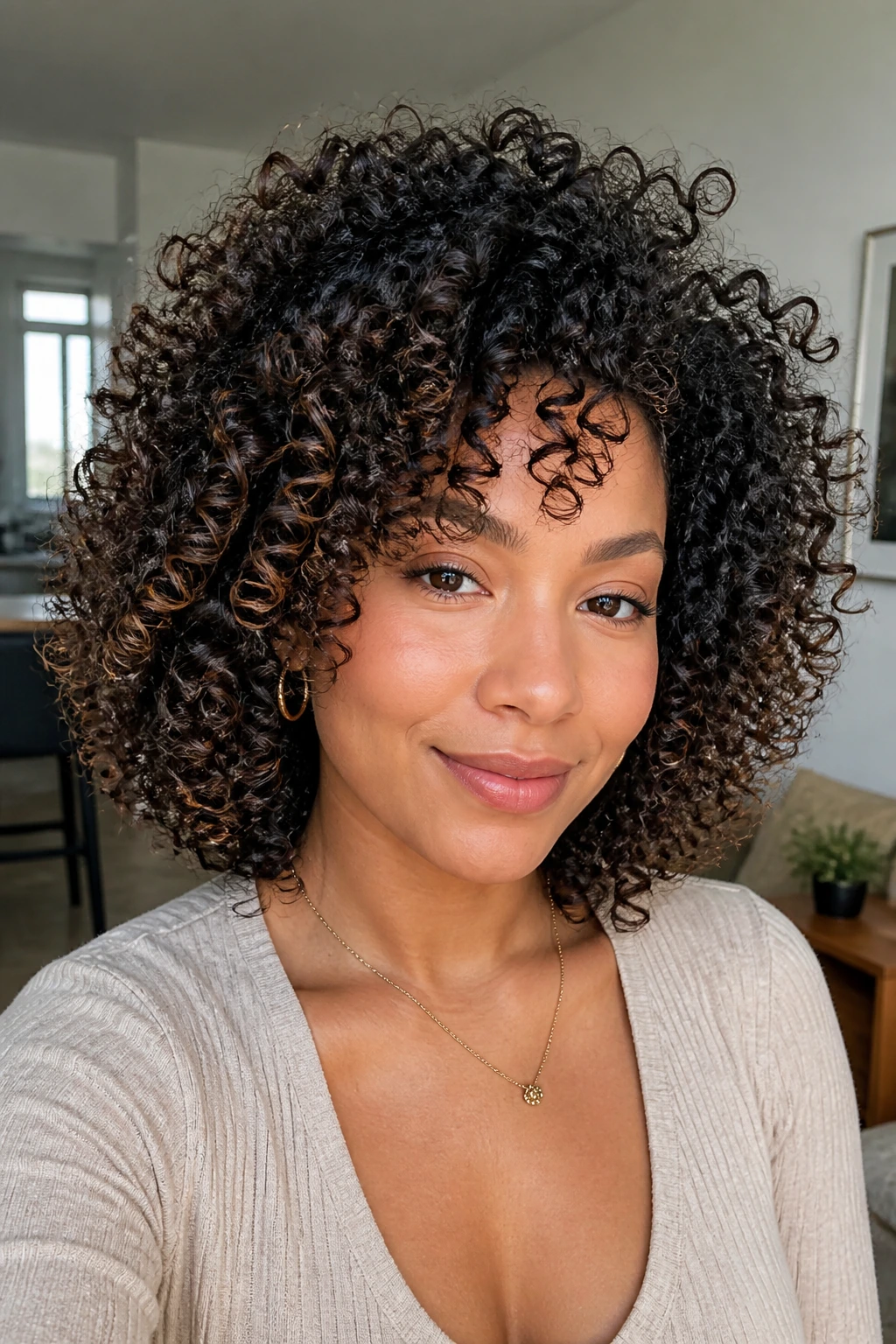
A wash-and-go can flatter a round face or fight it. The difference usually comes down to the roots.
If the curls sit flat at the crown and puff at the sides, the face looks wider. If the roots are lifted and the curls are defined in distinct clumps, the style reads cleaner and longer. I like using root clips for 10 to 15 minutes while the hair dries, then diffusing the top section first. That keeps the upper shape from sinking.
This is the style for people who want to wear their curls as they are, not force them into an updo. The shape just needs some direction. Keep the sides from overexpanding, and don’t break up the curl clumps too much with your fingers while they’re still wet. Let them set. Then touch them.
20. Low Chignon With Soft Spirals
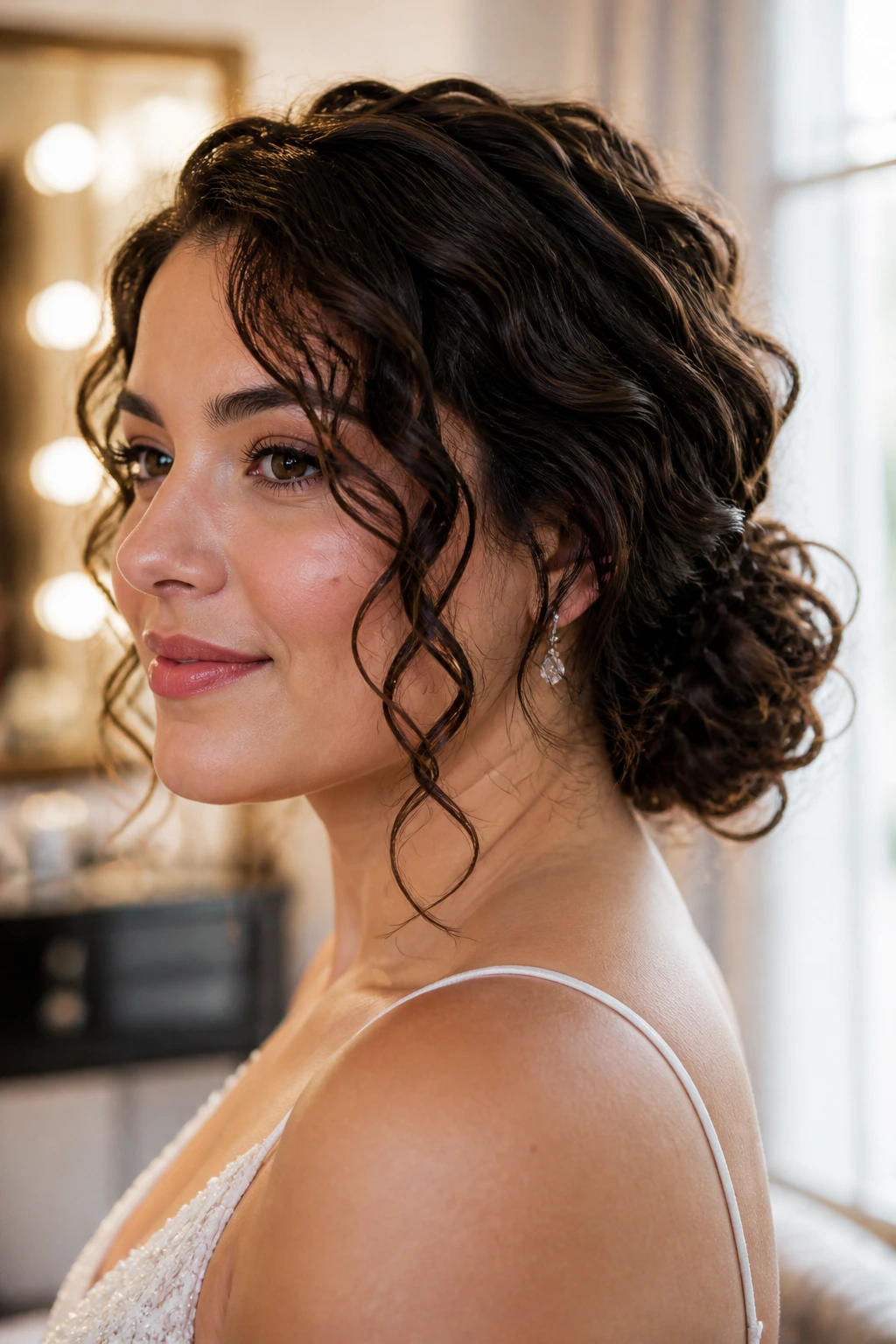
A low chignon can look severe on a round face if it sits too low and too tight. But when it has a little looseness around the front and a few spiral pieces left out, it becomes elegant without hard edges.
Place the bun at the nape, not below it. That keeps the neck line clean and prevents the style from dragging the face down. Pull a couple of curls loose at the temples and around the ears so the shape doesn’t feel boxed in. Those little pieces matter more than people think.
This is the kind of style that works for weddings, work events, and dinners where you want your hair controlled but not stiff. It also helps when the top of the hair needs smoothing and the curls have already started to fray. A chignon gives you a reset.
21. Tapered Afro Puff
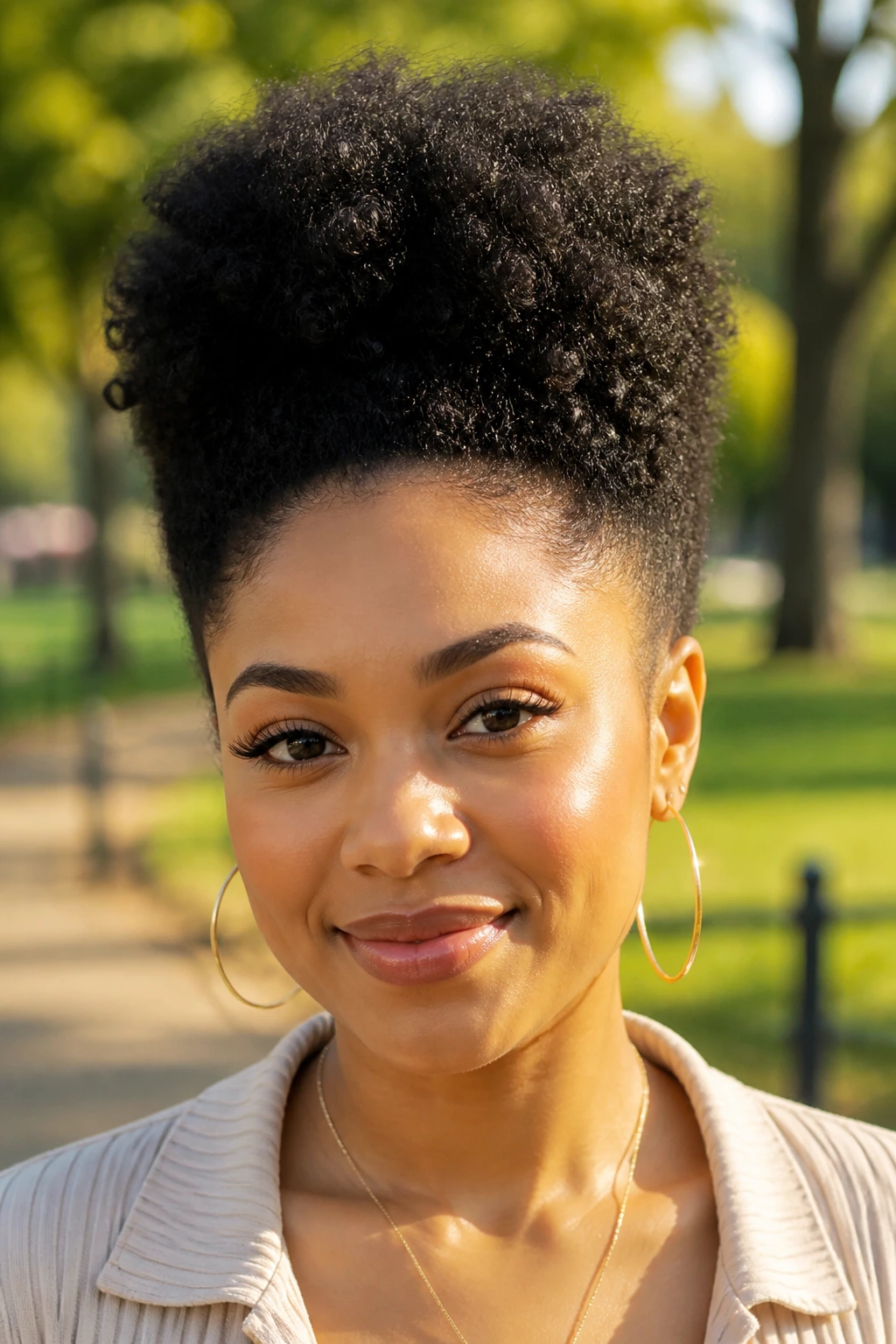
A tapered afro puff is one of the most honest answers for coils and dense curly hair. It creates height, keeps the sides neat, and gives the face a clean outline instead of a wide ring.
The taper narrows the lower half of the head, while the puff itself rises above the widest part of the face. That matters. It means the shape feels lifted, not ballooned out. The hairline can stay soft or be edged neatly depending on your preference, but the puff should sit high enough to change the proportions of the face.
This is a strong everyday style because it’s fast and it respects texture. A little moisture cream, a satin scrunchie, and maybe one pin for shape, and you’re set. If your hair is very thick, split the puff into two sections before gathering it. That keeps the base from feeling like a boulder.
22. Claw-Clip Twist With Loose Curls
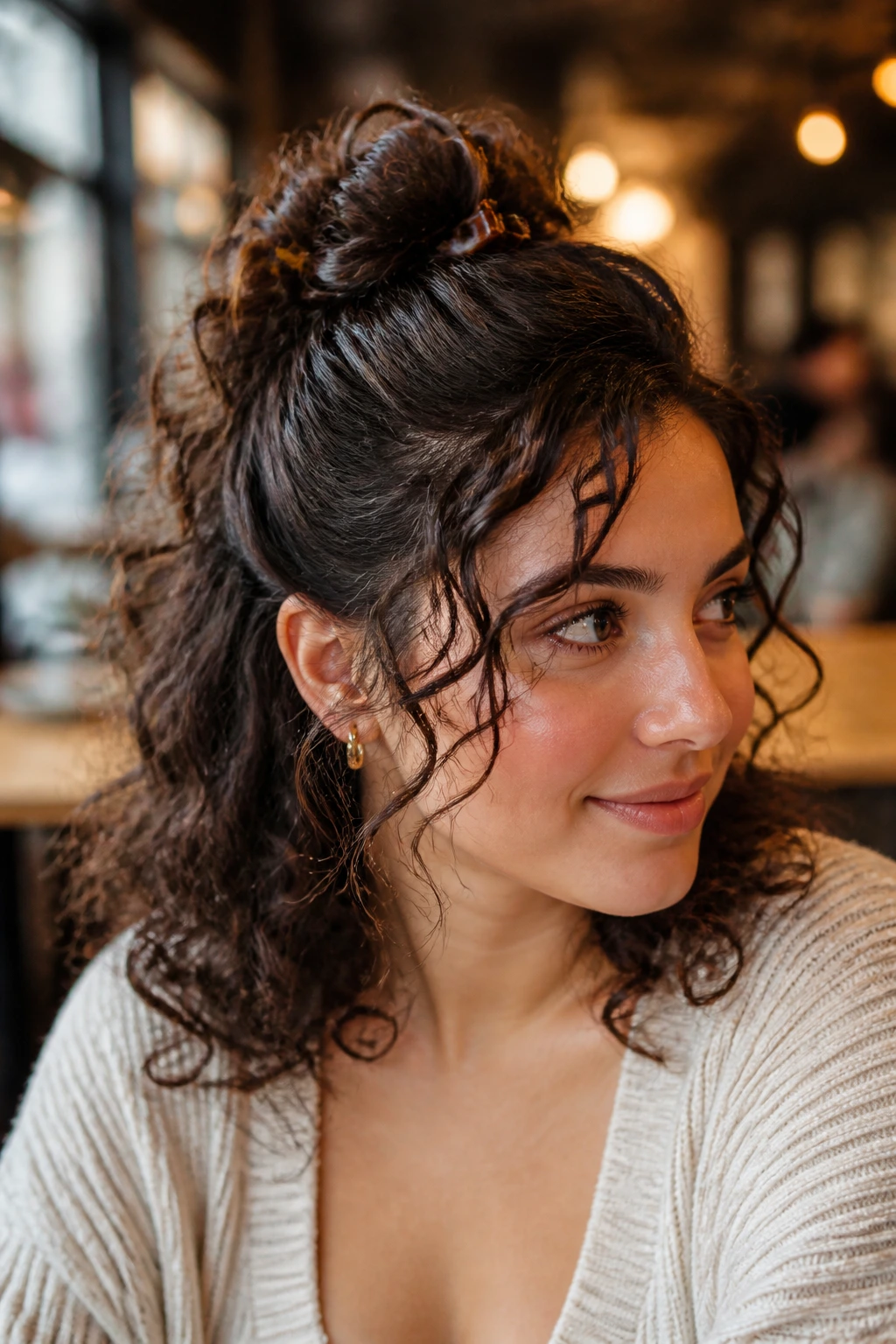
A claw-clip twist is what happens when a practical hair day gets smart about shape. The clip lifts the hair up and back, which exposes the face and adds a vertical line. On a round face, that’s doing you a favor.
The key is placement. If the clip sits too low, the style can slump into the widest part of the cheeks. Keep it slightly higher, and let some curls spill out the bottom so the shape stays soft. I like this look for medium-length curls that need to stay off the neck but don’t want to be fully pinned up.
It’s also one of the easiest styles to refresh during the day. If the twist loosens, you can twist it back into place with one hand and move on. Not every hairstyle needs to behave like a formal updo. Sometimes it just needs to hold together through coffee and a long afternoon.
Why Curly Hair and Round Faces Need Different Shape Rules

The old advice says round faces should avoid volume. I don’t buy that. Volume is not the problem. Volume in the wrong place is.
Curls are full by nature, and that fullness can either sharpen the face or soften it into a circle, depending on where it sits. If the widest part of the hairstyle lines up with the widest part of the face — usually around the cheeks — the whole look gets heavier. Move the bulk higher, lower, or off to one side, and the shape feels more balanced without losing the texture that makes curls worth wearing in the first place.
Crown height changes the whole read
A little lift at the top pulls the eye upward. That is why root clipping, diffusing, and higher updos matter so much. They are not fussy extras. They are the difference between a style that sits on the face and one that frames it.
The cheek line is the danger zone
I think this is the rule most people should remember. Anything that ends exactly at the cheekbone or jaw can make a round face read wider than it is. Longer front layers, side sweeps, and asymmetry all help move that visual stop point somewhere else.
Shrinkage changes the plan
A curl that looks safe at shoulder length in the sink may bounce to chin length once it dries. If you know your hair shrinks a lot, ask for the finished shape you want rather than the wet length you think you need. Dry cutting, or at least cutting with shrinkage in mind, keeps you from ending up with a style that looks cute for five minutes and awkward for the next eight weeks.
Essential Tools for These Hairstyles
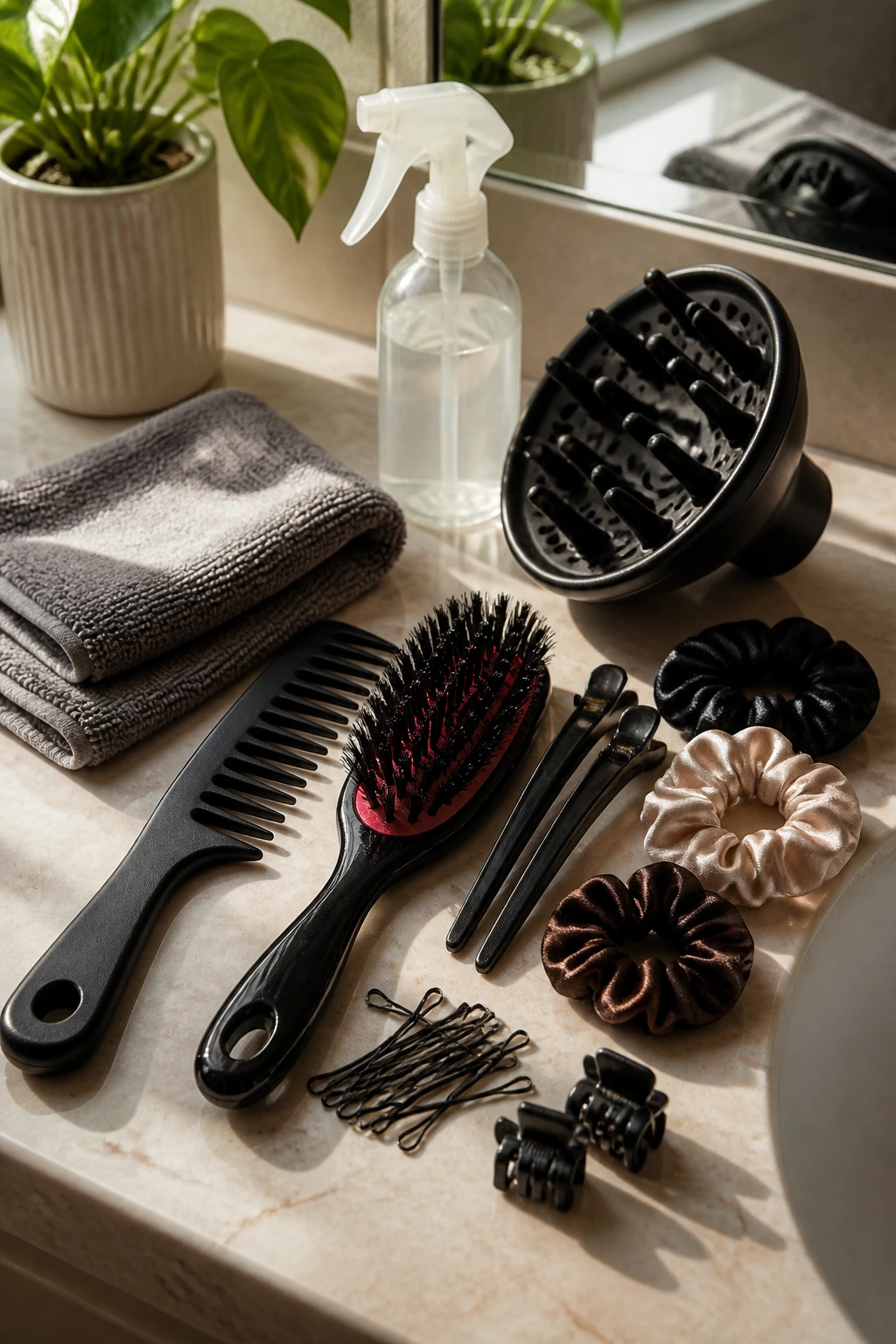
- Wide-tooth comb: Best for detangling wet curls without tearing apart the clumps.
- Curl brush or Denman-style brush: Useful when you want cleaner definition and smoother sections.
- Microfiber towel or cotton T-shirt: Cuts down on rough frizz when you squeeze out water.
- Diffuser attachment: Helps lift the roots and dry curls without blasting them flat.
- Duckbill clips or small root clips: Great for adding crown height while hair dries.
- Satin bonnet or scarf: Keeps curls from getting shredded overnight.
- Soft scrunchies or spiral elastics: Better for puffs, ponytails, and buns than stiff ties with metal bits.
- Bobby pins: Essential for asymmetrical styles, braids, faux hawks, and clipped-up looks.
- Small claw clips: Handy for quick twists and half-up shapes that need shape, not tension.
- Spray bottle: Lets you refresh curls without soaking the whole head again.
Smart Product Shopping for Curl Shape and Hold
The product aisle can get messy fast, so I’d keep the shopping plan simple. Fine curls usually need lift more than cream, which means mousse, foam, and a light gel tend to behave better than buttery stylers that drag the roots down. If the hair is thick or coarse, the opposite often works: a richer leave-in on the mids and ends, then a firmer gel on top to lock the shape.
Humidity changes the rules. In damp air, weak hold is an invitation for the style to expand sideways, and that is bad news for round faces because the silhouette widens before lunch. A firm-hold gel or mousse with enough cast to survive a commute is worth the shelf space. You do not need a ton of it, though. Thin layers win. Heavy layers get greasy, collapse the roots, and leave the curls limp by evening.
If your hair is low-porosity, look for lighter formulas that rinse clean and do not sit on the strand like wax. If it is high-porosity, a cream-plus-gel combo usually makes more sense because the hair drinks the moisture and then gives it back to the air by dinner. That’s the part no one likes to talk about, but it matters.
One more thing: don’t buy every product in the same texture family. A thick cream, a thick butter, and a heavy oil all on one style can turn a round-face-friendly cut into a soft helmet. Pick one main moisturizer, one hold product, and stop there.
How to Wear and Pair These Hairstyles
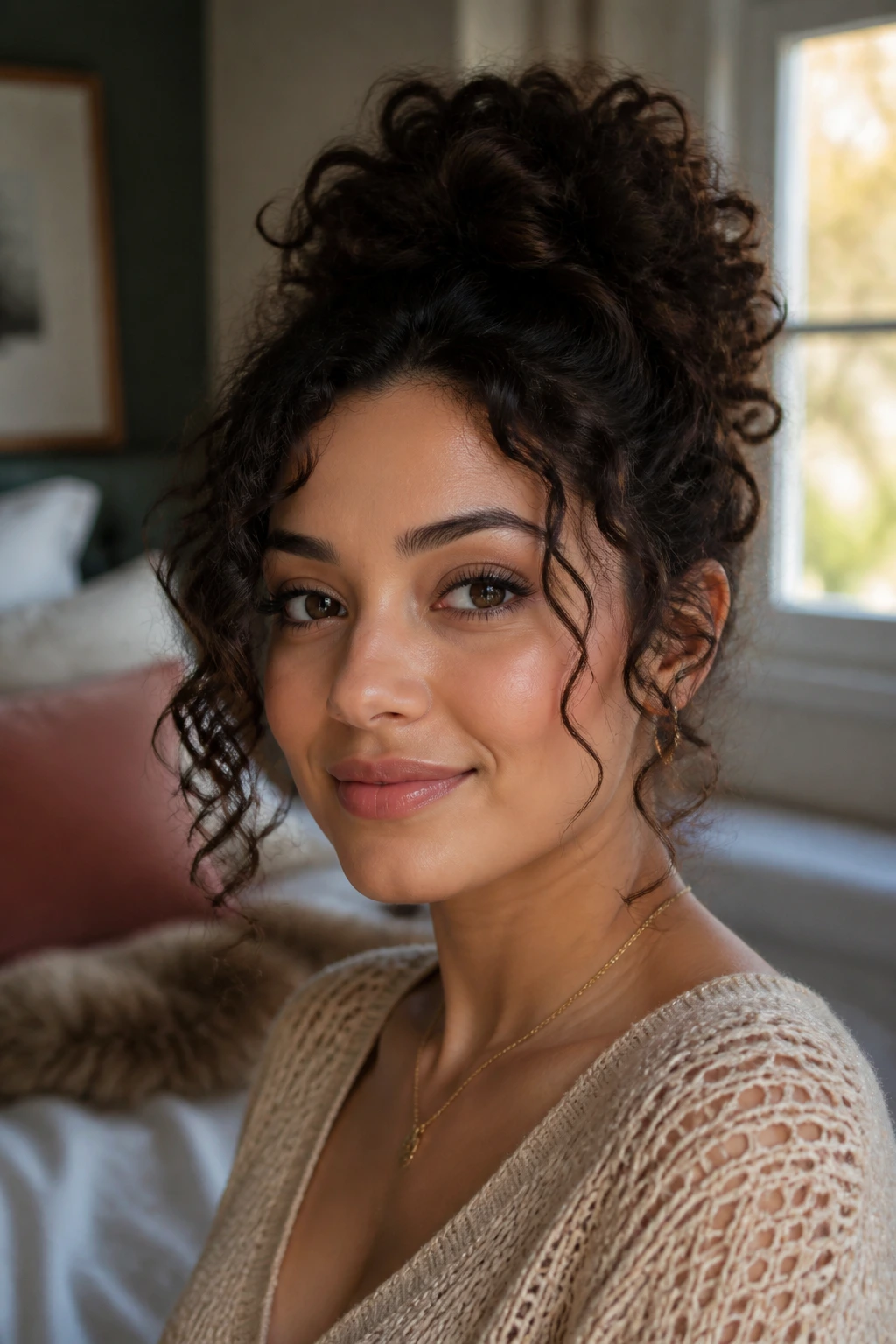
Presentation: Keep the widest part of the hairstyle above or below the cheeks, not right on them. A lifted crown, a side sweep, or a longer front piece changes the line fast.
Accompaniments: Hoops, drop earrings, and open necklines help a round face feel longer. High collars and crew necks can still work, but they look cleaner with updos, puffs, or pixies.
Scale: If your curls are big and dense, choose shapes that narrow at the sides or lift at the top. If your curls are loose and fine, lean into layers, clips, and side parts so the style does not disappear.
Finish: Soft, brushed-out curls feel casual and relaxed. A defined gel cast, a polished ponytail, or a tucked-up bun feels sharper. Pick the finish that matches the mood of the outfit instead of fighting it.
Extra Styling Tricks and Finishers
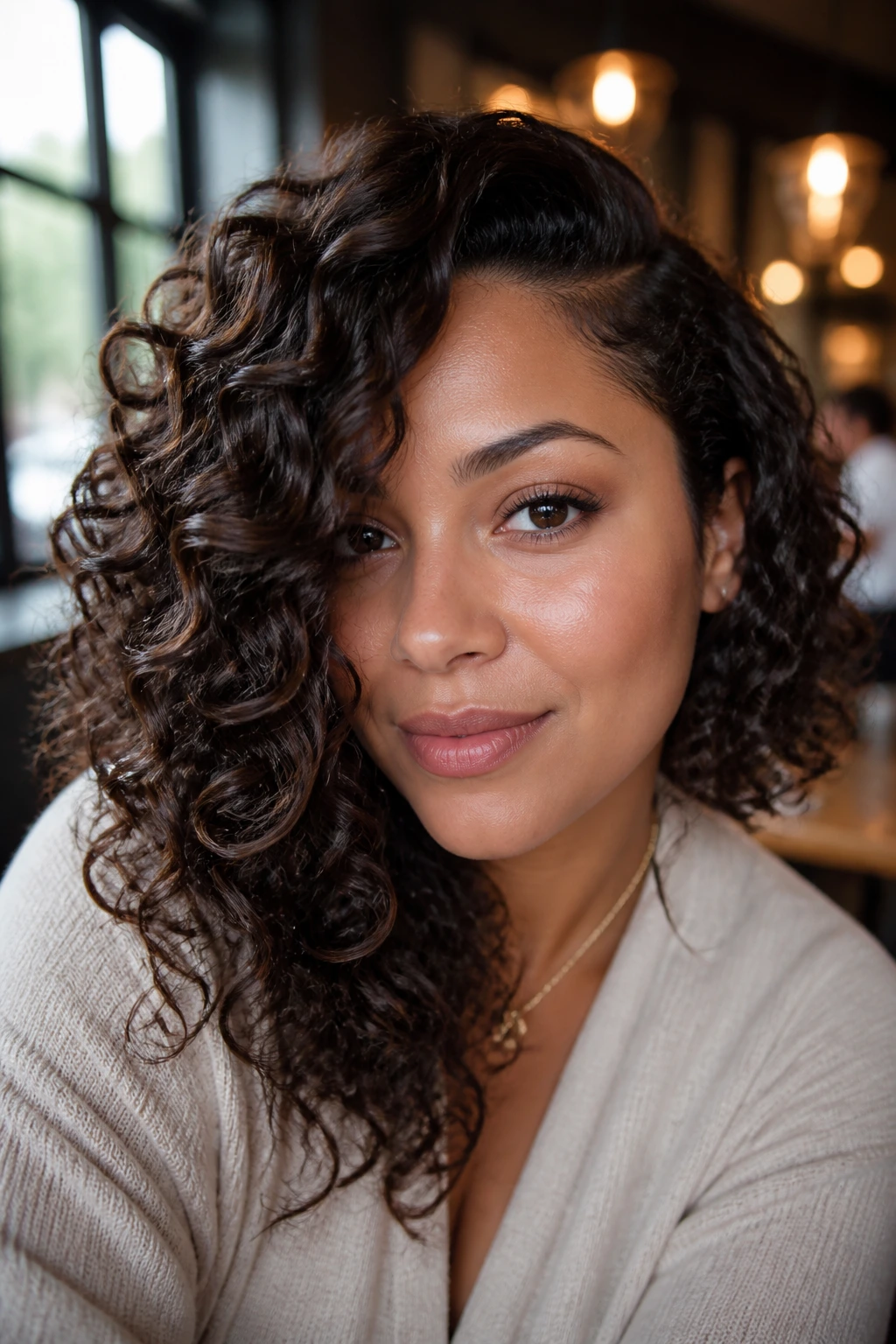
Root Lift: Clip the roots at the crown for 10 to 15 minutes while the hair dries. That small pause changes the silhouette more than another handful of mousse ever will.
Shape Boost: Dry the top section first when using a diffuser, then the sides, then the ends. If you dry the sides first, they often puff wider than the top, which is the shape round faces can least afford.
Frizz Control: Use a pea-sized amount of serum only on the ends or on the outermost layer of curls once the style is fully dry. Dumping oil at the roots just collapses the lift and makes the scalp look greasy.
Accessory Trick: One clip placed just above the ear can tilt the whole style off-center and break up the roundness of the face. That tiny move is easier than cutting bangs and safer than guessing with scissors at home.
Make-It-Yours: For fine curls, swap heavy cream for mousse. For dense coils, keep the styling product richer but use less of it. For high-shrinkage hair, stretch the roots a little with clips or banding before you decide the style is too short.
Overnight Preservation and Day-Two Refresh
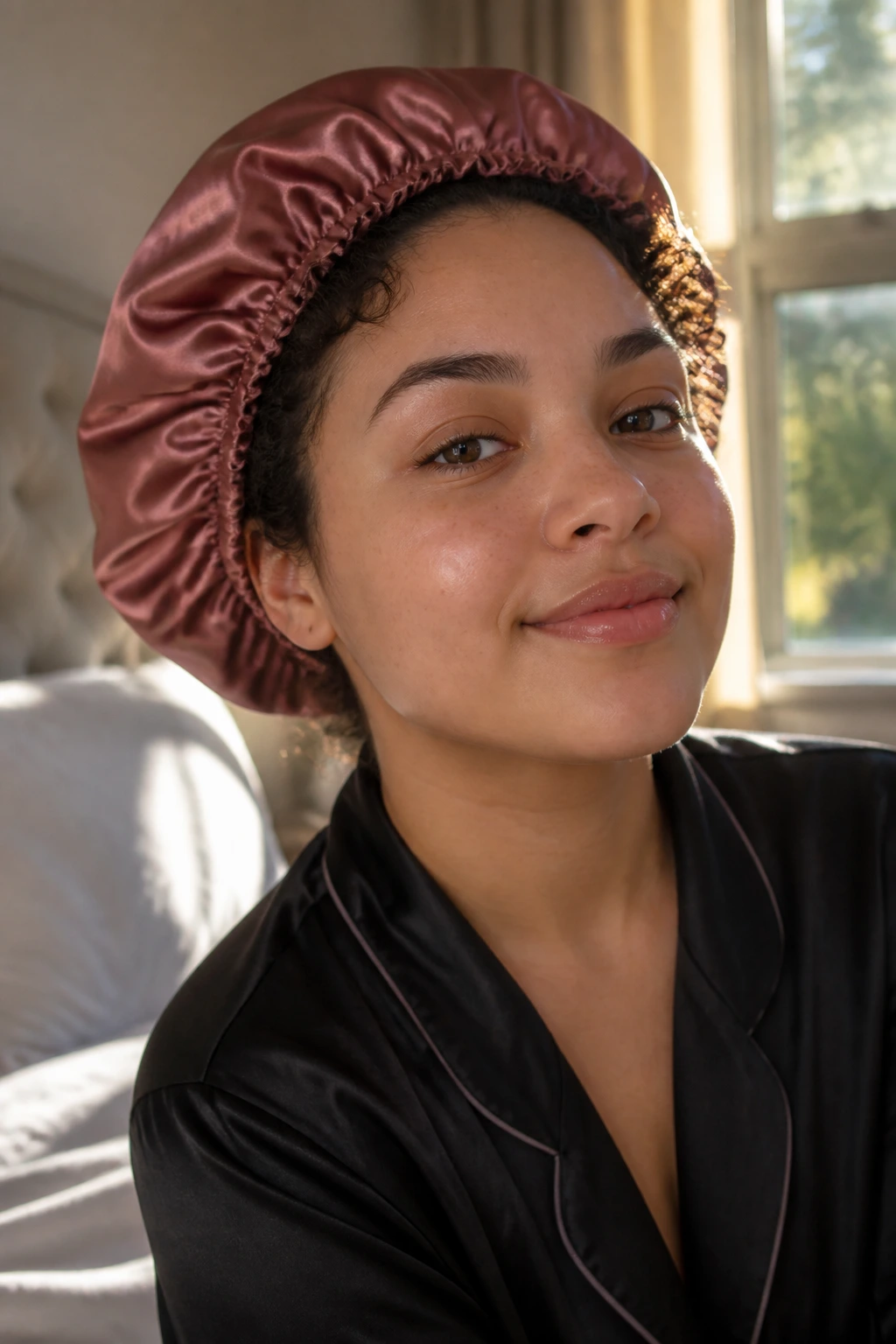
If you want these styles to last, start with hair that is fully dry. Not almost dry. Fully dry. Damp curls get crushed into the pillow, and the round-face-friendly shape you worked for disappears under a flat crown and frizzy sides by morning.
For loose styles and long curls, a high pineapple with a soft satin scrunchie works best. Keep it loose enough that the curl pattern does not get a dent at the base. For bobs, lobs, and pixies, a satin bonnet or scarf usually does a better job than trying to pile everything up. If the style has braids, clips, or a twist-out, pin the most fragile parts down first and then cover it.
Day two is usually a refresh, not a full restyle. Mist the hair lightly with water, then add a small amount of leave-in mixed with water in your palms. Smooth the frizzy bits, scrunch the ends, and leave the roots alone unless they have gone flat. If they have, rewet just the roots, clip them up for 10 minutes, and let them dry again before touching the rest.
By day three, some styles start asking for too much help. That’s normal. A ponytail, a claw-clip twist, or a puff can stretch the life of the hair another day or two, but if the curls feel coated and stringy, it’s wash day. Don’t keep rescuing a style that wants to be reset.
Common Mistakes to Avoid With Curly Hair and Round Faces
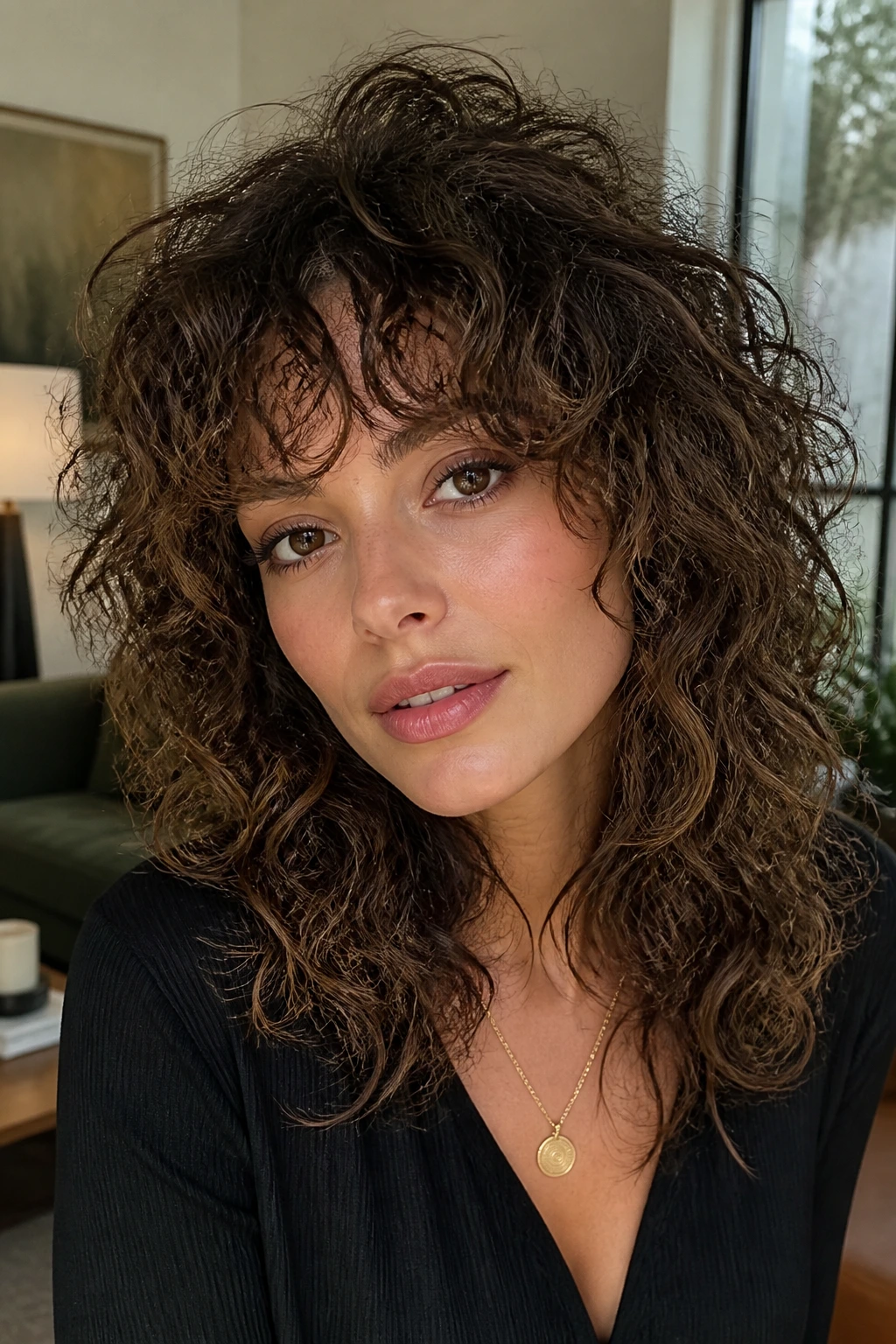
Cutting the widest curl right at the cheeks: This is the classic problem. If the fullest layer lands on the cheekbone, the face looks broader than it is. Ask for layers that start lower, or keep the top higher and the sides more controlled.
Flattening the crown to “balance” the face: People do this because they think less height equals less width. It usually does the opposite. A flat top pushes the eye sideways, while a lifted crown pulls it upward.
Choosing a blunt chin-length line with no angle: A straight bob that stops exactly at the jaw can box in a round face. Add a longer front, a stacked back, or some internal layering so the shape has movement.
Using too much cream before a volume style: Heavy product can make curls clump downward, and then the face gets framed by a wet-looking curtain. If you want lift, use less moisturizer and more hold.
Ignoring shrinkage when you ask for the cut: What looks collarbone-long while wet may sit at the chin when dry. Always discuss the finished dry length, not the wet length in the chair.
Over-touching curls while they set: Hands break curl clumps apart and create frizz at the exact spots that widen the face. Once the shape is set, leave it alone.
Variations and Adaptations to Try

Soft Office Version: Keep the same style, but smooth the front with a side part and tuck one side behind the ear. It reads cleaner and keeps the face open without looking severe.
Humidity Shield Version: Use a firmer gel, clip the roots, and finish with a cool diffuser pass. This version holds its shape better when the air is damp and frizz wants to spread.
Short-Hair Adaptation: Swap long layers for a tapered pixie, stacked bob, faux hawk, or claw-clip twist. Short cuts need height and direction more than length, so the styling has to do the work.
Fine-Curl Version: Choose a lob, deep side part, or half-up style and keep products light. Foam or mousse gives body without weighing the crown down.
Coily-Hair Version: A tapered puff, twist-out halo, braided crown, or high curly puff gives the face lift and keeps the sides neat. Stronger hold and more sectioning usually work better here than one big product layer.
Low-Key Weekend Version: A messy bun, low ponytail, or side-swept curl sweep is enough when you want the hair out of the way but still shaped. These styles do not need to look polished to flatter the face.
Questions People Ask About Curly Hair and Round Faces
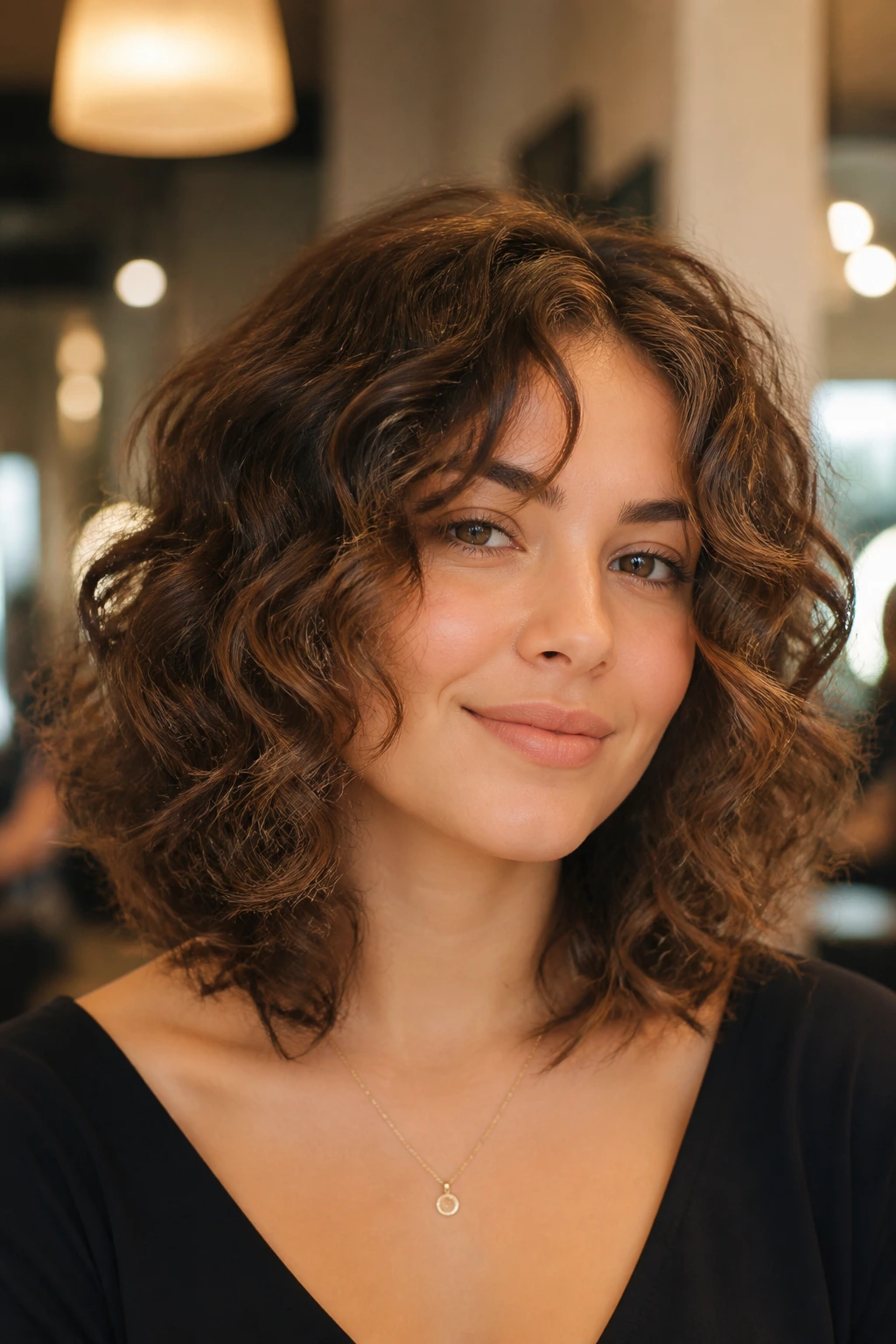
Which curly hairstyle flatters a round face the most?
The short answer is: the one that adds height, asymmetry, or a longer front. Long layers with a side part, a tapered pixie, and a curly lob with collarbone-length framing all do that well. The best pick depends on how much shrinkage your curls have and how much volume you want to keep at the cheeks.
Can a middle part work on a round face with curls?
Yes, if the cut has enough length and the layers begin below the cheekbones. A middle part with flat roots can widen the face, but a middle part with crown lift and longer front pieces usually looks balanced. A small off-center shift can help if the center feels too blunt.
Are bangs a bad idea for round faces and curly hair?
Not at all. Curtain bangs and longer curly fringe can be excellent because they frame the face without slicing it in half. The trouble starts when bangs are cut too short and too dense, then bounce up into the middle of the forehead.
Should I avoid chin-length curls if my face is round?
Not automatically, but chin-length cuts need shape. A blunt bob that lands right on the jawline can make the face seem wider, while a stacked bob, asymmetrical bob, or lob with longer front pieces creates a better line.
What if my curls are fine and collapse by midday?
Go lighter on creams and heavier on mousse or foam. Root clips, a diffuser, and a side part can give fine curls the lift they need without making the hair look stiff. Fine curls usually do better with shape and hold than with softness alone.
How do I keep my curls from widening my face at the cheeks?
Watch where the biggest curl clumps land. If they sit right beside the widest part of the face, break them up with layers, a side sweep, or a half-up style that pulls volume higher.
Can short natural hair work on a round face?
Yes, especially when the top is taller than the sides. Tapered cuts, pixies, frohawks, and puffs all help create vertical shape. The short length actually helps when the outline is deliberate.
How often should I trim curly layers?
Every 8 to 12 weeks is a solid range for keeping the shape from drifting into a triangle or a puff. If the ends start fraying and the face-framing pieces lose their angle, the haircut is telling you it needs a clean-up.
What’s the biggest mistake people make with curly hair and round faces?
They try to flatten the curls instead of shaping them. Flat roots, blunt edges, and too much width at the cheeks make the face look rounder; a little lift, a little angle, and a little restraint in the wrong places fix most of that.
The Shapes That Do the Heavy Lifting
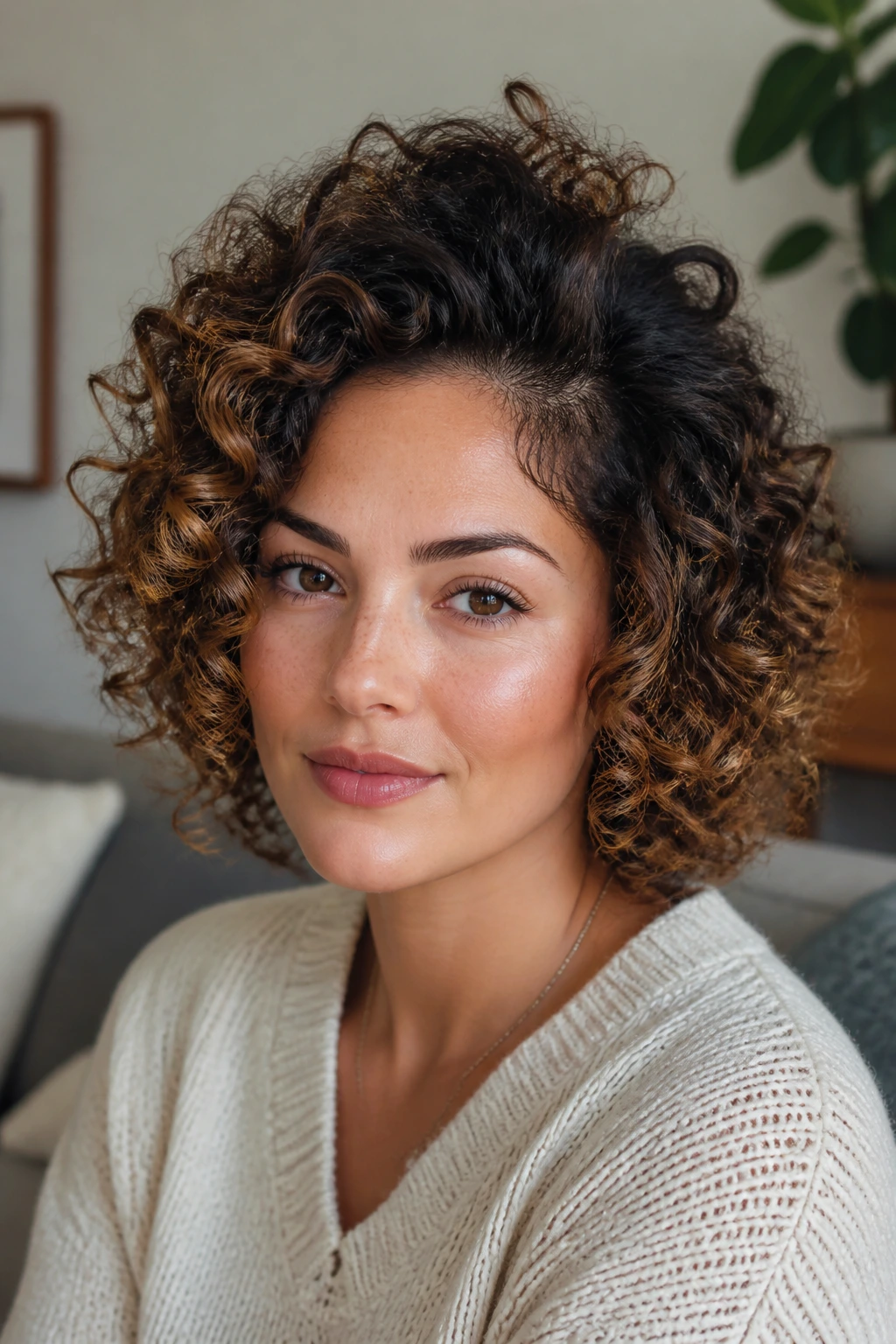
The best curly hairstyles for round faces are not the ones that hide the face. They’re the ones that make the face look intentional. That usually means some height at the crown, some direction in the part, and enough length or asymmetry to keep the eye moving.
If you remember only one thing, make it this: put volume where it helps and remove it where it crowds. That is the whole game with curls. Get that part right, and the cut starts doing most of the work before you touch a product bottle.
Pick the style that fits your curl pattern and your patience level, then ask your stylist for the dry-shape details that matter. The curls will do the rest.