



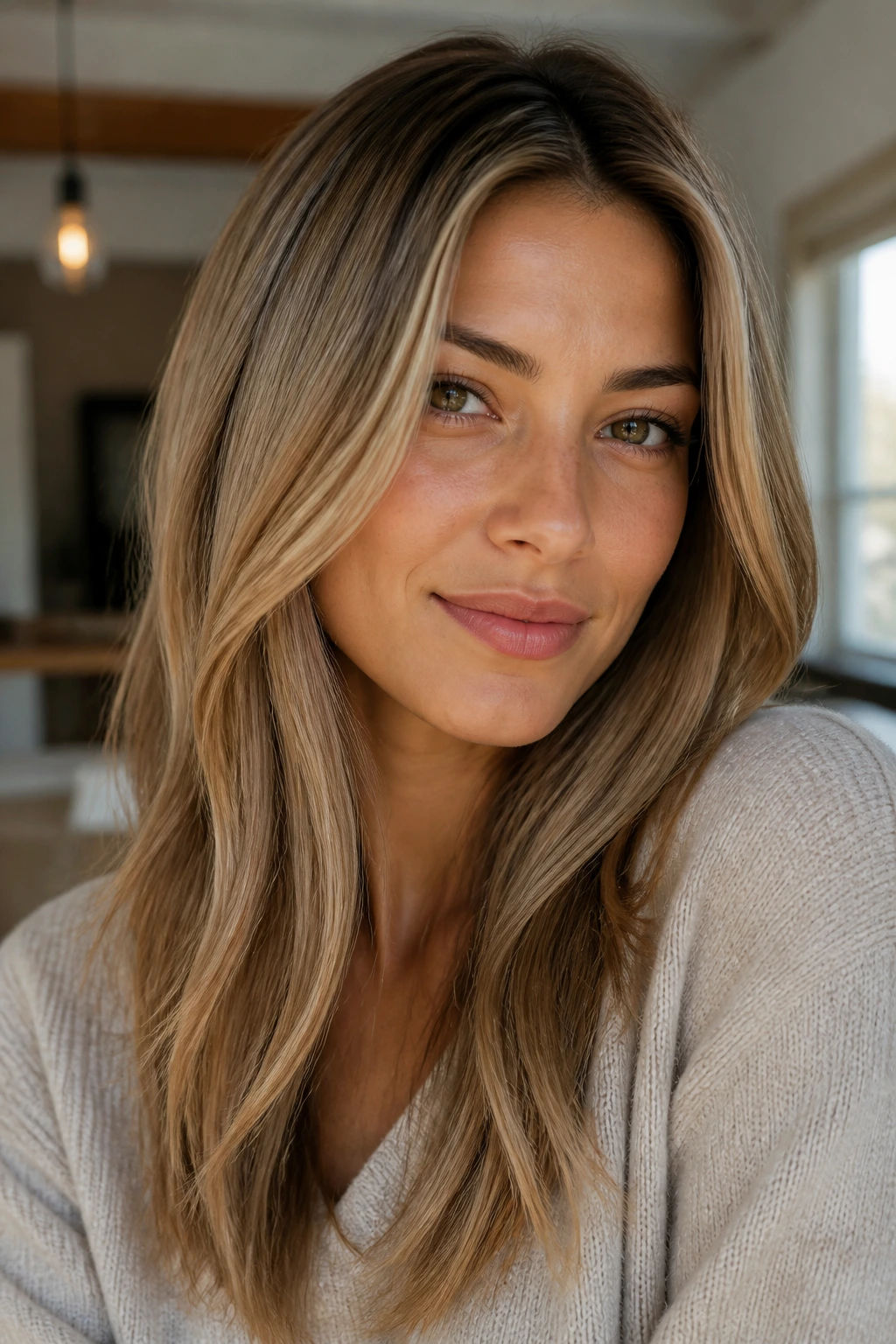
Blond caramel hair color has a sneaky advantage on olive skin: it warms the face without tipping it into brass, and it keeps the complexion from looking flat under indoor light. Olive undertones can lean green, gold, or neutral, which is why a one-note blonde often looks a little off even when the shade is technically nice. The right caramel tone fixes that by giving the hair enough depth to sit beside the skin instead of floating on top of it.
The trick is balance. Beige, honey-beige, toffee, mushroom, bronze, and soft champagne all live in that useful middle zone — warm enough to wake up the face, muted enough to stay elegant. Push the color too yellow and olive skin can start to look muddy. Push it too ash-heavy and the skin can read tired. That’s the tightrope.
The 25 blond caramel hair color ideas below are built the way a good colorist thinks: base level, highlight placement, undertone, and upkeep. Some are quiet and wearable. Some are brighter around the face. A few are for people who want a softer grow-out and fewer touch-ups. Start with the shade family that matches your undertone, not the one that looks loudest on a phone screen, and the rest gets much easier.
Why Blond Caramel Flatters Olive Skin So Well
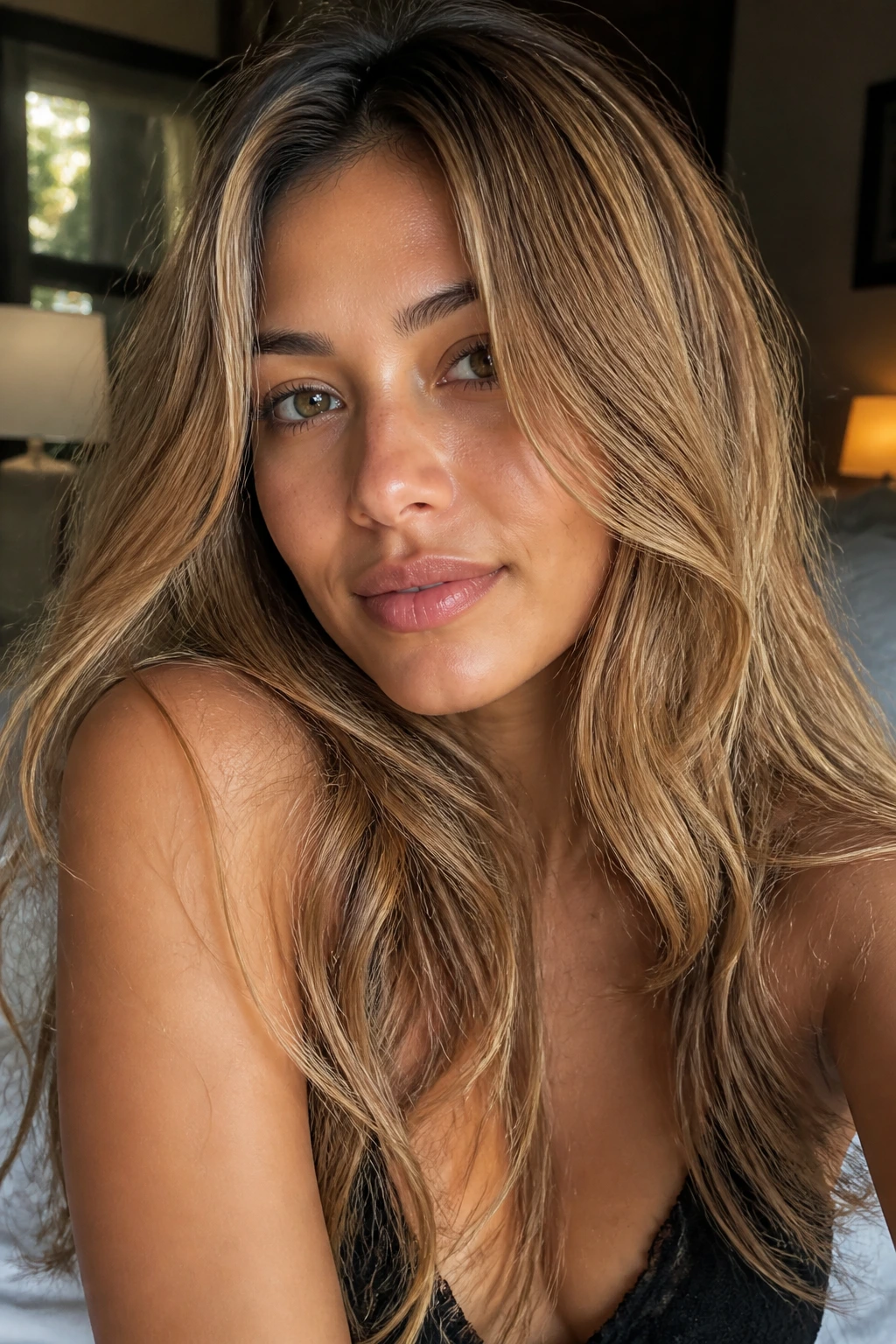
-
Beige keeps the skin clean: A beige or pearl-beige toner stops blond from turning too yellow against olive undertones, which is where a lot of “almost right” colors go wrong.
-
Caramel adds depth at the right spots: Those soft honey-brown notes around the face, roots, or lowlights keep the hair from looking chalky or washed out.
-
Dimension beats flat color: Olive skin often looks better with ribbons, melts, and smudged roots than with one solid light shade from top to bottom.
-
Grow-out looks softer: A root shadow or balayage placement lets the color fade in a way that doesn’t scream for a touch-up every four weeks.
-
The shade can move warm or cool: If your olive skin leans golden, honey and toffee read richer. If it leans green-neutral, mushroom and beige caramel are the safer lane.
How Olive Undertones Change the Way Blonde Reads
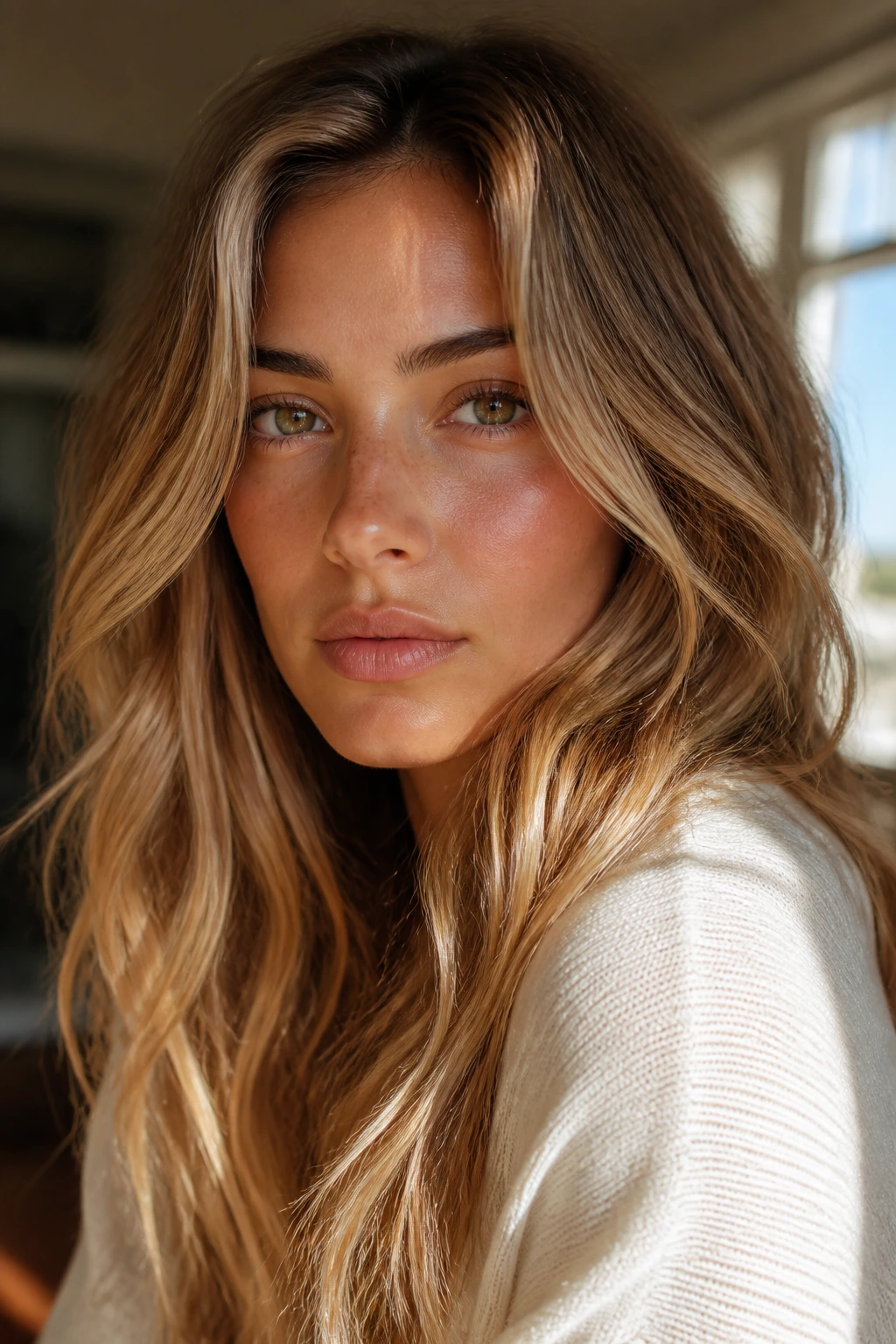
Olive skin is one of those undertones that can fool people. In one light it looks golden. In another, it looks muted, almost green-gray. That’s why the same blonde can look expensive on one person and a little off on another. The hair color isn’t the only variable. The skin is doing work too.
Warm olive skin usually likes honey, caramel, and beige-gold because those tones echo the warmth already in the face. Neutral olive skin can handle a wider range, especially if the shade keeps some beige in it instead of going straight yellow. Cool-leaning olive skin usually needs a smudged root, mushroom beige, or a smoked caramel glaze so the blonde doesn’t clash with the skin’s quieter undertone.
One blunt truth: super-icy blonde is rarely the easiest match for olive skin. It can work, but it often needs stronger makeup, sharper brows, and more upkeep than people expect. A blond caramel formula does the heavy lifting more naturally.
1. Honey-Beige Balayage
Honey-beige balayage is the safe bet that doesn’t look boring. The painted pieces sit in that sweet spot between gold and cream, so the skin looks warmed up instead of yellowed out. On olive skin, that matters. A lot.
What to Ask For
- Ask for a level 7 or 8 beige base with lighter ribbons through the mid-lengths and ends.
- Keep the toner honey-beige, not pumpkin gold.
- Leave a soft root shadow so the grow-out doesn’t look stripy.
This works especially well on shoulder-length cuts and loose waves. The movement shows the different tones instead of blending them into one flat sheet. If your natural hair is medium brown, this is one of the easiest blond caramel looks to wear without feeling overdone.
Pro tip: Ask for the brightest pieces just around the face and crown. That tiny placement change makes olive skin look clearer fast.
2. Mushroom Caramel Lob
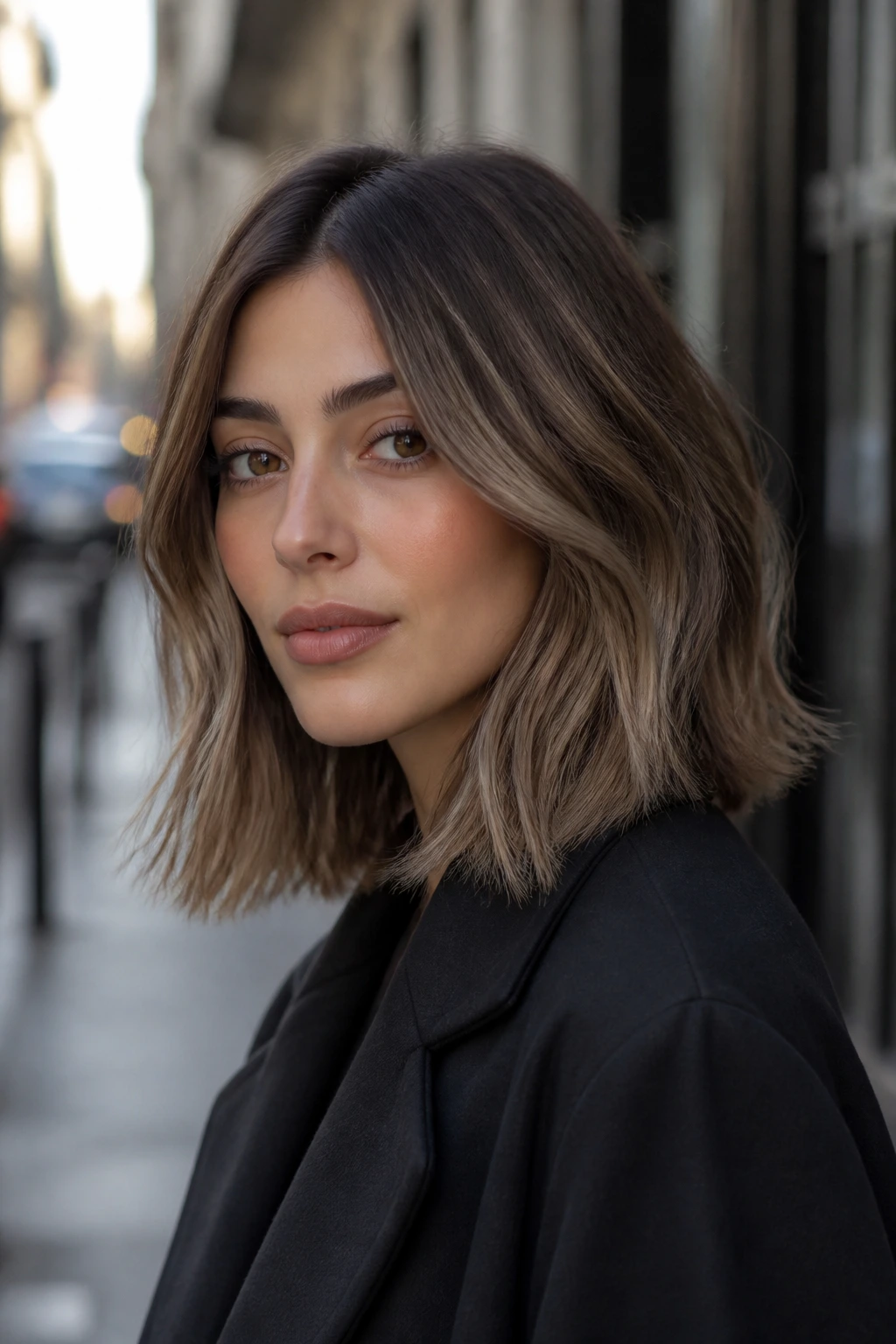
Mushroom caramel is the cooler cousin in the family, and it’s a smart move if your olive skin leans green-neutral. The finish is smoky, beige, and restrained, with just enough warmth to keep the hair from looking dusty. It’s the shade I’d point someone toward if they say, “I want blonde, but I don’t want yellow.”
A lob makes the tone look even better because the shape is blunt enough to show off the color shift. The ends catch the light. The root stays grounded. The whole thing feels tidy, which helps the cooler caramel notes stay believable.
If you’re choosing between mushroom and honey, pick mushroom when your skin looks best with silver jewelry, white tee shirts, and soft charcoal. That’s the clue.
3. Golden Ribbon Layers
Why do golden ribbons work when a full golden blonde can feel too much? Because the warmth comes in streaks, not as a wash. That’s the whole trick. Olive skin often likes little hits of brightness more than a blanket of it.
Golden ribbon highlights make sense on layered hair because the pieces move when you turn your head. Straight hair shows them in clean lines. Wavy hair scatters them, which looks softer. Either way, the face gets little flashes of light without losing shape.
How to use it
Ask for fine to medium ribbons around the face and through the top layer, with a level 8-9 golden-beige toner. Keep the base one to two levels deeper than the lightest pieces. That contrast is what keeps the color from going flat. If your eyes are hazel or brown, this shade can make them look a little warmer too.
4. Buttery Face-Framing Pieces
If you want a change without a full color overhaul, start here. Buttery face-framing pieces give olive skin the kind of brightness that people notice first, but not in a loud way. The lightness sits around the cheeks, jaw, and temples, which is where a lot of faces need a lift anyway.
The color itself should be creamy, not lemony. Think softened butter with a beige edge. Too pale and the pieces can look pasted on. Too warm and they can skew orange under fluorescent light. That is the annoying little trap with money-piece blondes.
- Best on midlength layers, curtain bangs, and long bobs
- Ask for one to two inches of brightness at the front
- Keep the back pieces softer so the contrast doesn’t jump too hard
The look grows out well if the root shadow is kept subtle.
5. Smoked Caramel Root Melt
Smoked caramel root melt is for the person who likes a polished blonde but does not want to babysit it. The darker root blends into caramel lengths with a smoky beige finish, which is very kind to olive skin. It keeps the color from sitting too high on the face.
This is one of those shades that looks more expensive than flashy. The root is usually a level or two deeper than the mids, then the blonde lightens gradually. No hard line. No chunky demarcation. Just a soft fade that feels deliberate.
It’s also one of the best options if your natural color is dark blonde or light brown. You get lift without losing the grounding effect that olive skin usually needs.
6. Champagne Caramel Bob
A champagne caramel bob sounds fancy because it is a little fancy. The color sits in a clean beige family with a hint of gold, so it reflects light without going brassy. On olive skin, that tiny champagne note can make the complexion look fresher around the mouth and under the eyes.
The bob shape matters here. Shorter hair shows tone shifts more clearly than long hair, especially around the jawline. That means the color has to do less work, which I appreciate. A sharp cut with a soft blonde usually beats a shaggy cut with an awkward blonde.
Wear this one sleek, tucked behind one ear, or with a bend through the ends. The shape keeps the shade from looking too sweet.
7. Sandy Blonde with Caramel Lowlights
This is the practical cousin of high-contrast blonde. Instead of making everything lighter, you leave sandy blonde as the main color and thread caramel lowlights through the hair to stop it from looking bleached-out. Olive skin often needs that darker thread of color, especially if the eyebrows are naturally strong.
The lowlights give the hair a little shadow, which makes the lighter pieces look cleaner. Without them, sandy blonde can turn one-note fast. With them, the color looks like it has depth from top to bottom.
This is a strong choice if your hair is fine or straight. Those hair types can go flat quicker, and the lowlights keep things from reading like a helmet.
8. Apricot-Caramel Lift
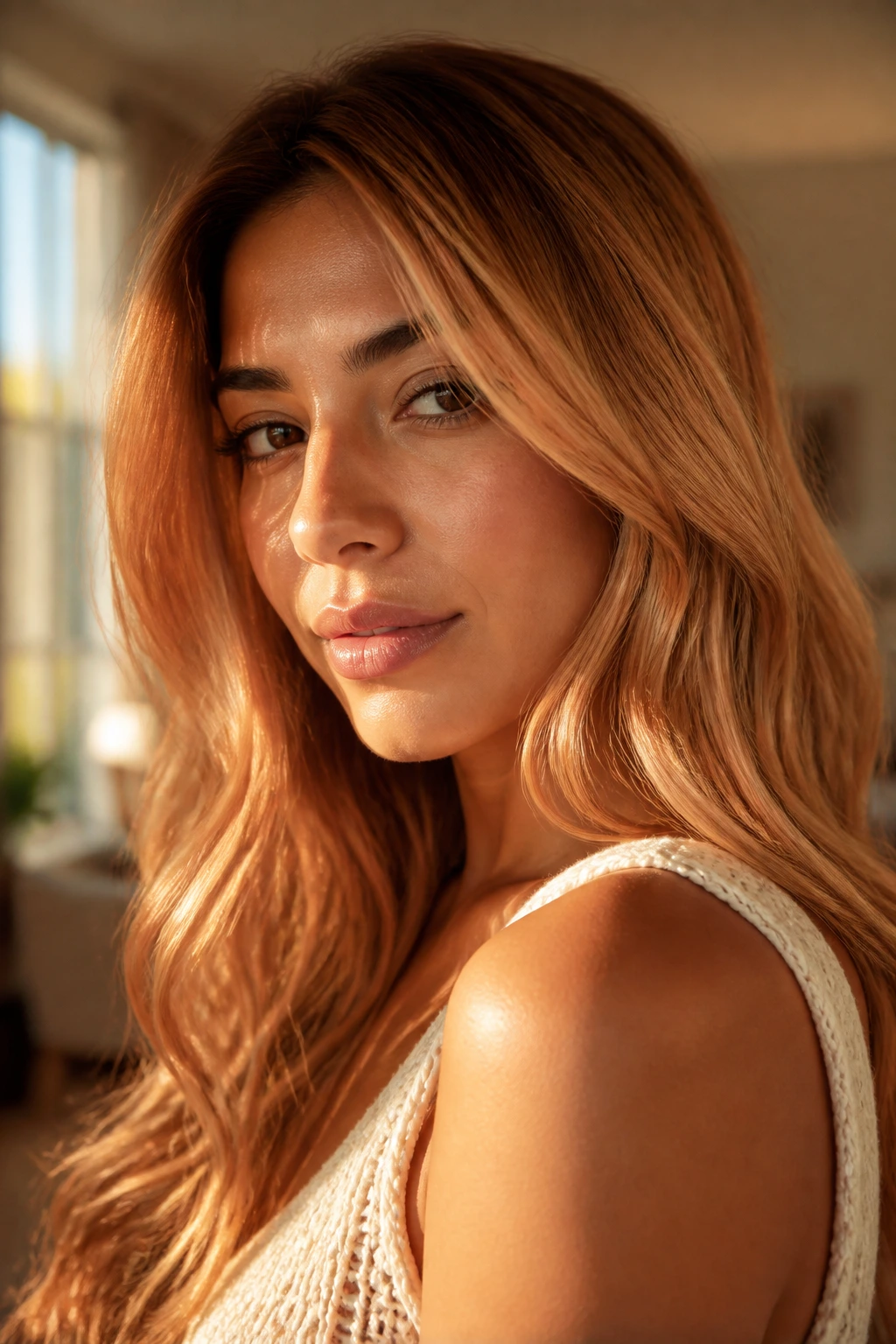
Apricot-caramel is warmer and a little bolder, but it works beautifully when olive skin has a golden cast. The shade sits between peach, honey, and caramel, so it brings life to skin that can look dull with beige blonde alone. It’s not orange. It just has a touch of sun in it.
This shade needs restraint. Too much apricot and the whole thing turns coppery. Too little and it loses its point. The sweet spot is a muted gloss over lightened hair, not a full-on fiery formula.
Best if you like cream sweaters, warm makeup, and hair that looks like it’s been outside for a week in the nicest way.
9. Bronzed Contour Highlights
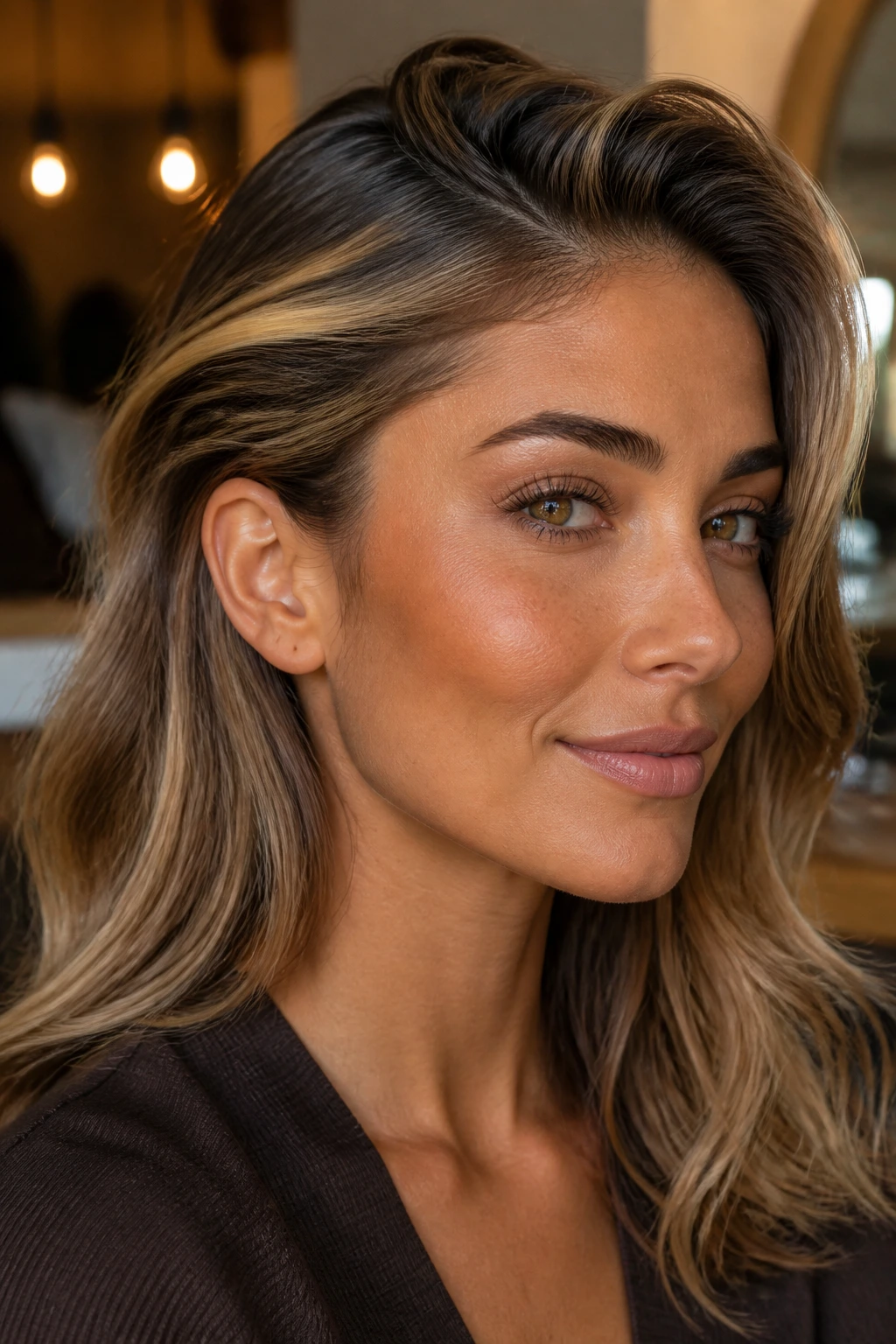
Bronzed contour highlights are placed where the face already wants light: along the hairline, through the temples, and just in front of the ears. That placement is why they’re so flattering on olive skin. They act almost like hair makeup.
The bronzed note keeps the blonde from looking too pale. It’s lighter than brown, warmer than ash, and more grounded than gold. On olive skin, that means the highlights read as part of the face rather than a separate thing sitting on it.
A little contour goes a long way here. You do not need streaks everywhere. You need smart placement.
10. Toffee Money Piece
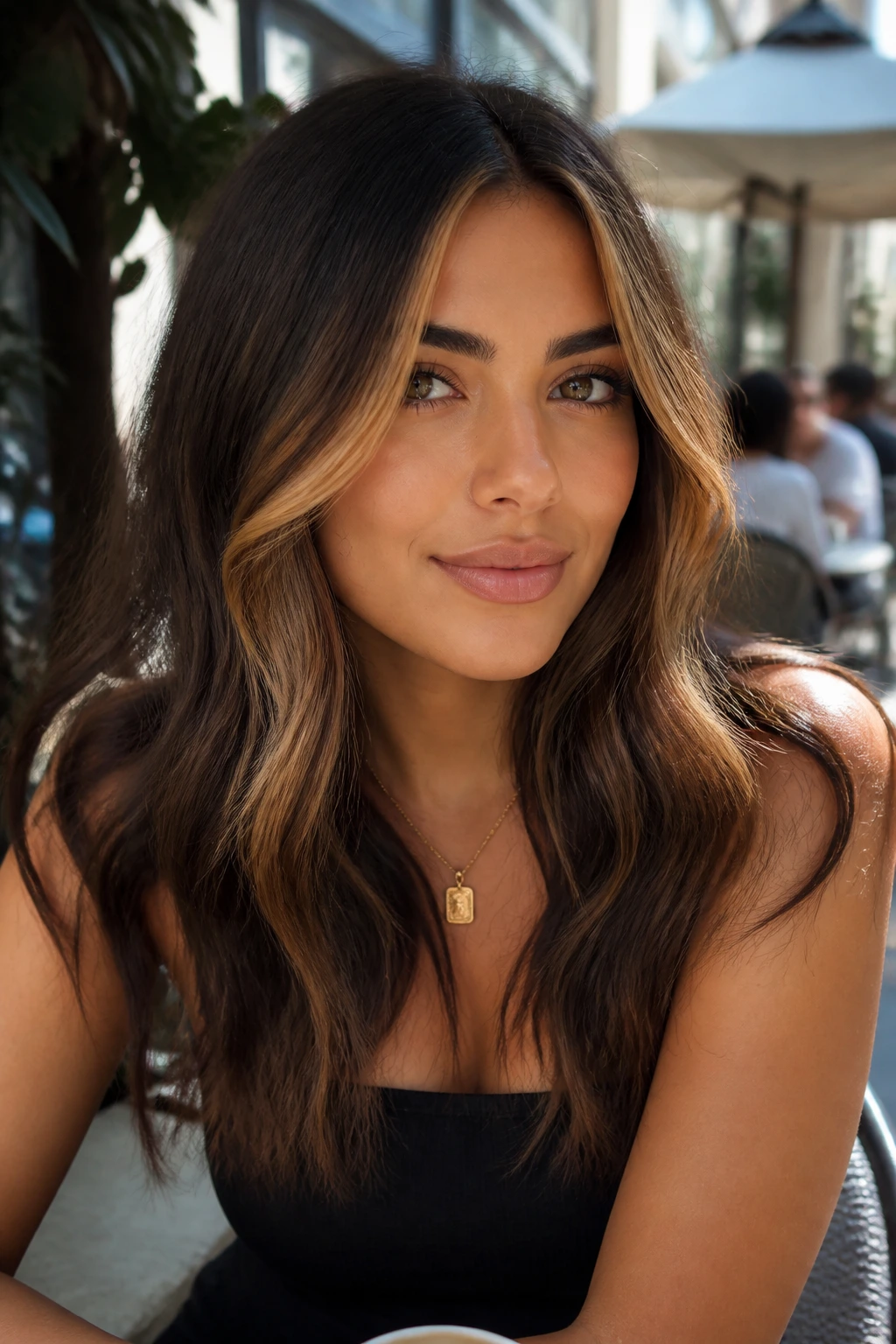
If you want the front of your hair to do the talking, this is the move. A toffee money piece gives the face a bright frame while the rest of the hair stays softer and lower-maintenance. On olive skin, toffee is one of those shades that reads rich instead of yellow.
The money piece should be thick enough to show, but not so thick it looks like a stripe. Ask for a blended fade into the front layers so the transition feels natural. That’s the difference between chic and costume-y.
This one plays well with messy waves, ponytails, and top knots. If the front pieces look good pulled back, the cut usually works.
11. Soft Caramel Ombré
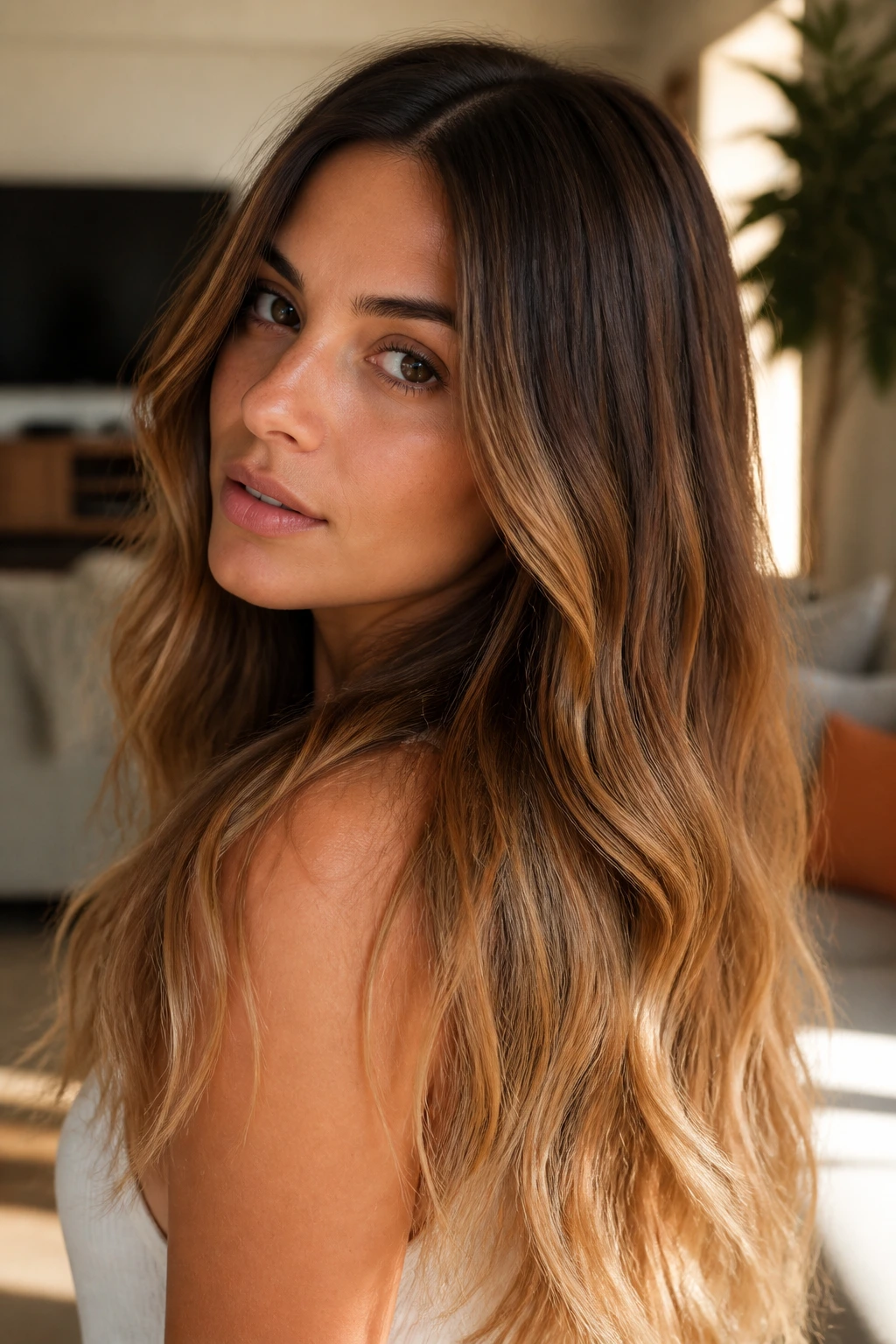
Ombré still has a place when it’s done with a softer hand. The best blond caramel ombré on olive skin moves from a deeper root into caramel mids and lighter ends without a harsh line. The change should look gradual enough that you notice it first in motion.
Long hair is the obvious home for this shade, but it also works on collarbone cuts if the lightening is concentrated below the cheekbone. That keeps the face from losing its frame.
One reason I like this look: it gives you lightness where hair naturally fades in the sun. It doesn’t fight the idea.
12. Creamy Beige Blonde
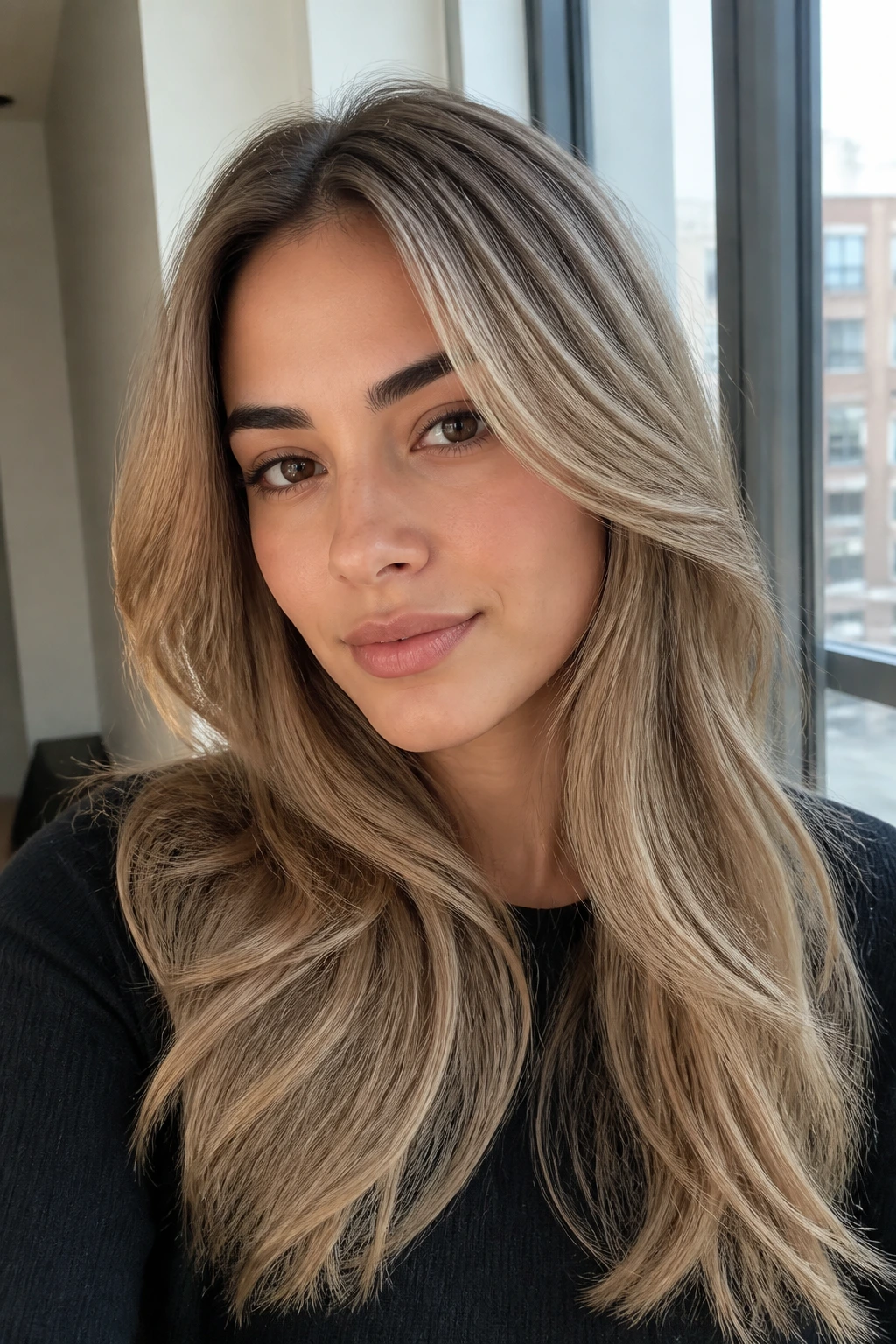
Creamy beige blonde is the one you pick when you want blonde to look expensive, not loud. It has enough warmth to flatter olive skin, but the beige base keeps the tone from drifting into brass. It’s a controlled color, and that control matters.
A creamy blonde usually needs a few lowlights or a deeper root so it doesn’t flatten out. That little bit of contrast is what gives the shade texture. On straight hair, especially, it keeps the color from looking like one big highlight.
This is a good match if your natural brows are medium to dark and you want the hair to soften the face instead of overpowering it.
13. Cinnamon-Caramel Waves
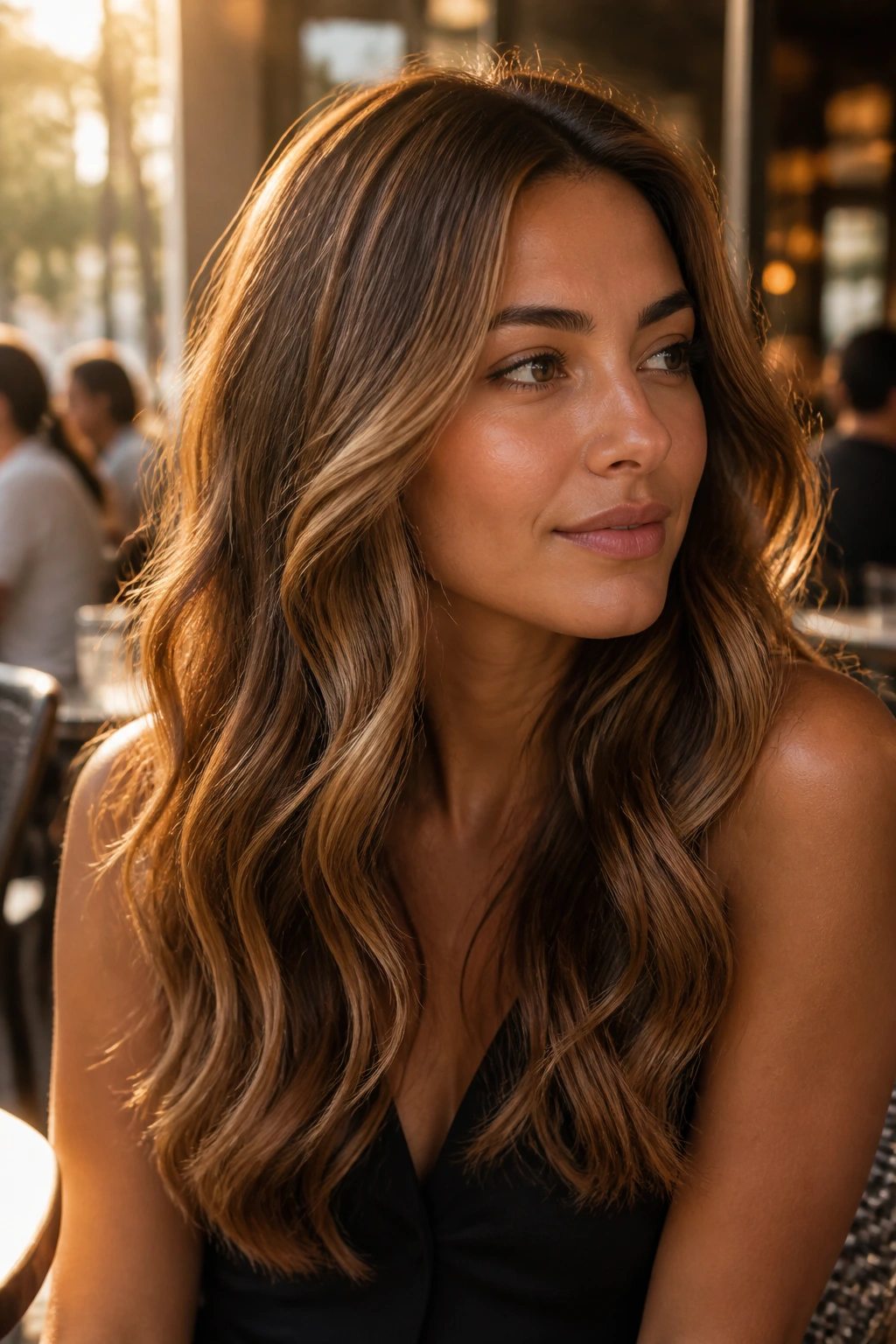
Cinnamon-caramel waves are warmer and a little deeper, which makes them a strong fit for olive skin that already leans golden. The color brings out warmth in the cheeks and jaw without turning the hair into copper. There’s a difference. A big one.
Waves help because they break up the depth and keep the cinnamon note from settling into one heavy block. The lighter caramel catches on the bend. The darker base holds the shape. It’s a rich, textured look.
If you’re tired of blonde that feels pale in winter light or office light, this is the shade family to consider.
14. Vanilla Blonde with Caramel Ends
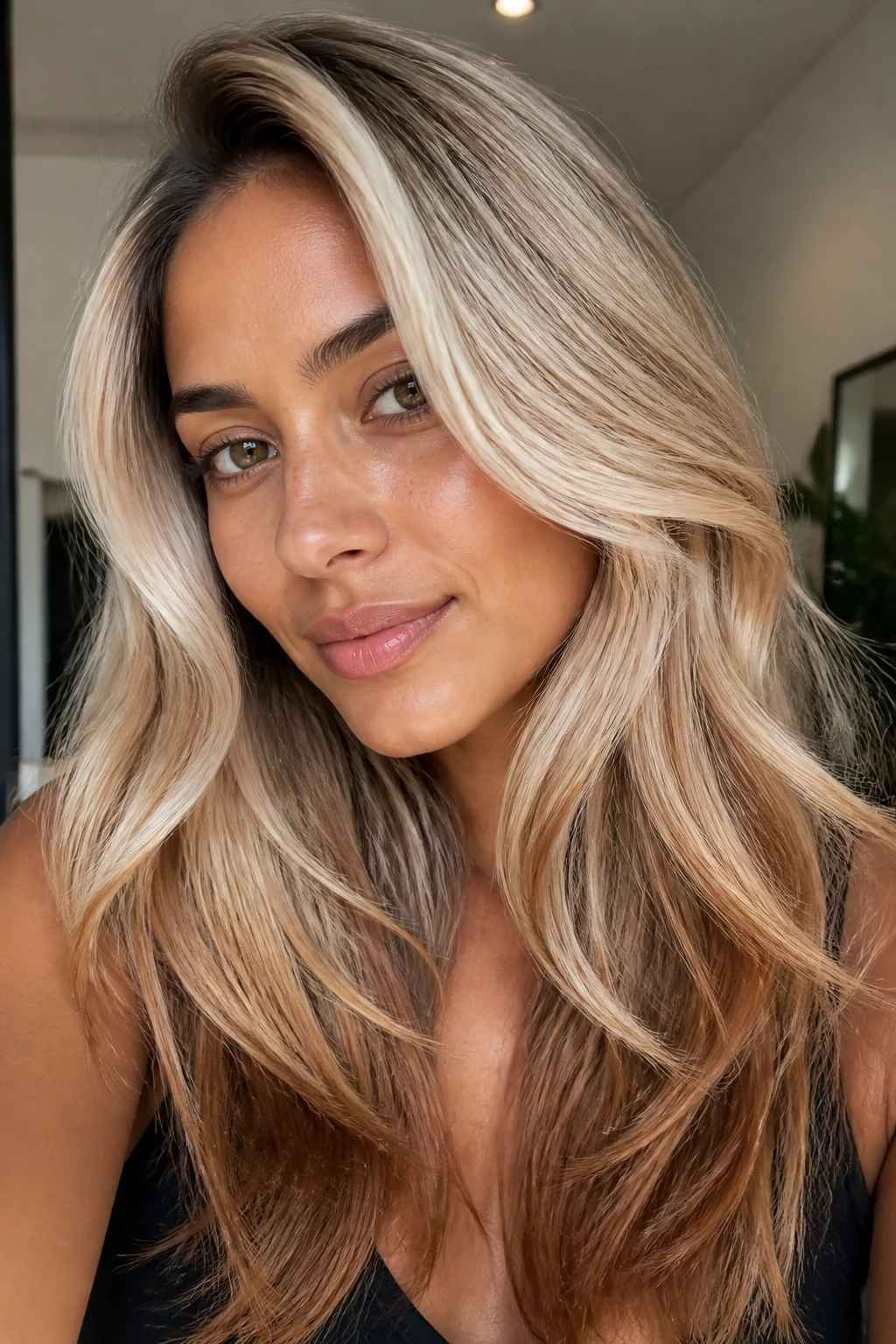
Vanilla blonde at the mids and caramel at the ends is a nice reverse of the usual blonde story. You get a lighter, cooler center, then warmth returns at the bottom. On olive skin, that can look fresh because the face gets brightness without the whole head going yellow.
The ends matter. They should feel intentionally warmer, not faded. Ask for a gloss that keeps the lower lengths soft and beige rather than orange. If your hair is long and layered, the movement makes the transition look even better.
This one suits people who like polished hair with a tiny bit of edge. Not too sweet. Not too smoky. Just enough contrast to keep it awake.
15. Sunlit Caramel Pixie
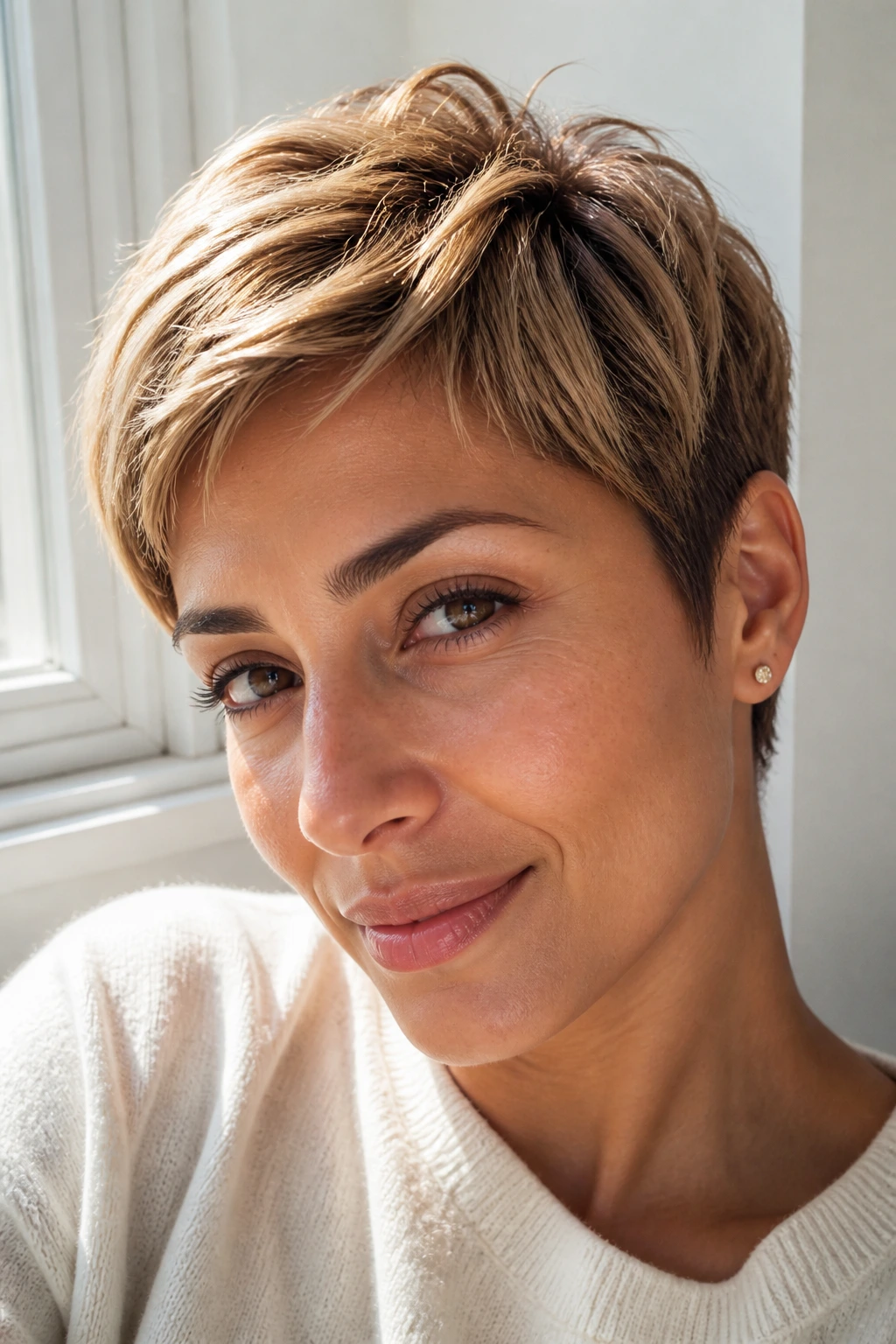
Short hair can wear caramel beautifully, and a pixie proves it. A sunlit caramel pixie keeps the top brighter and the sides more grounded, which gives olive skin a clean, lifted look. The color isn’t doing a ton of dramatic work, but it doesn’t need to.
Because the cut is short, the placement has to be precise. Tiny ribbons through the crown, a touch of brightness near the fringe, and softer beige around the sides usually look best. Chunky highlights can get noisy fast on short hair.
The upside is maintenance is simpler. You can refresh the tone with a gloss before the whole thing feels tired.
16. Dimensional Bronde Veils
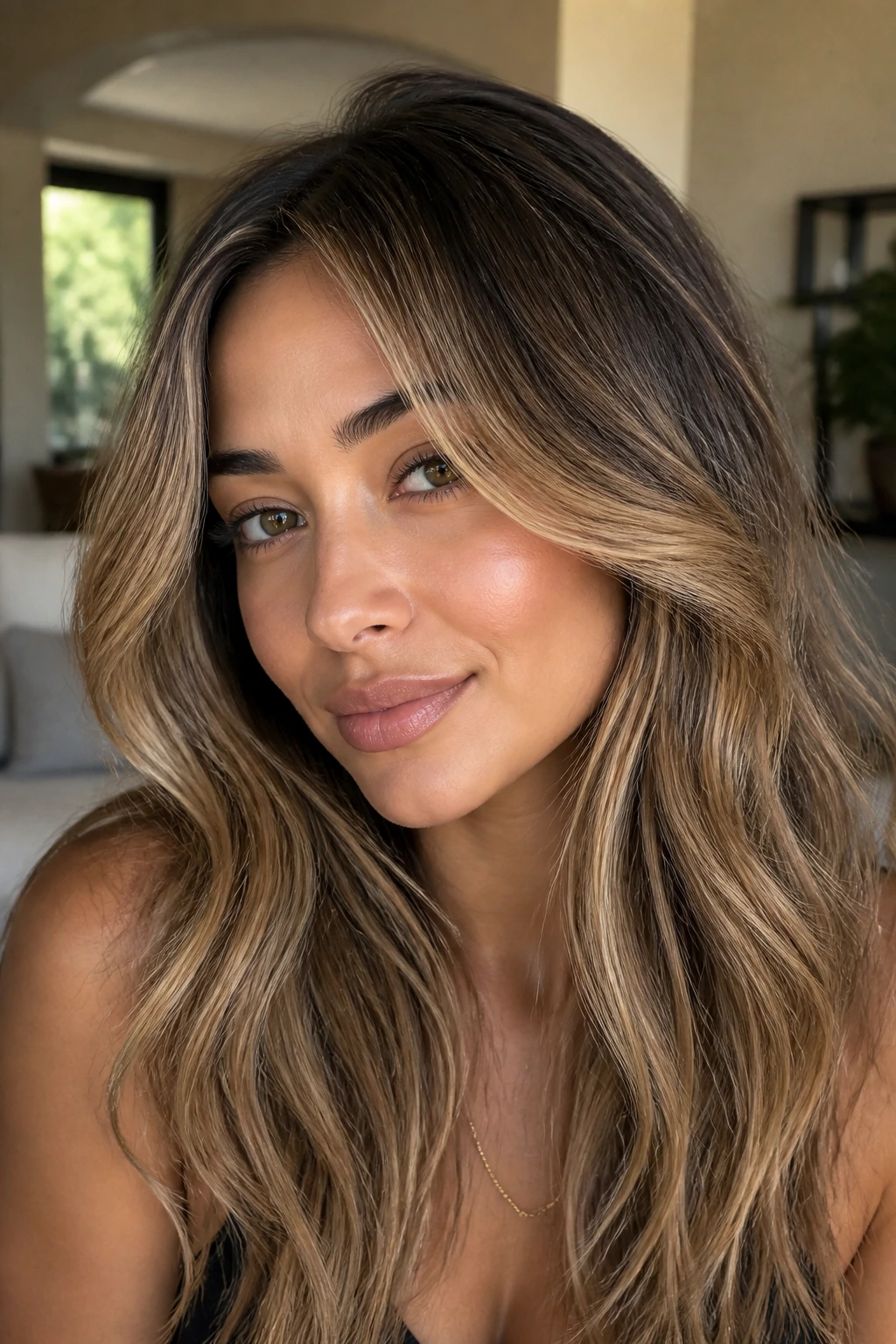
Bronde is the middle road that people talk about for a reason. Dimensional bronde veils mix brown and blonde so the hair keeps shadow and light at the same time. Olive skin often loves that balance because it doesn’t force the complexion one way or the other.
The veils should be fine enough to move in and out of view. Think translucent strands of caramel-beige, not obvious stripes. That softness is what makes the color feel modern without trying too hard.
This is a strong pick for darker olive skin or for anyone who feels washed out by lighter blondes. The depth helps the skin.
17. Beige Blonde Gloss
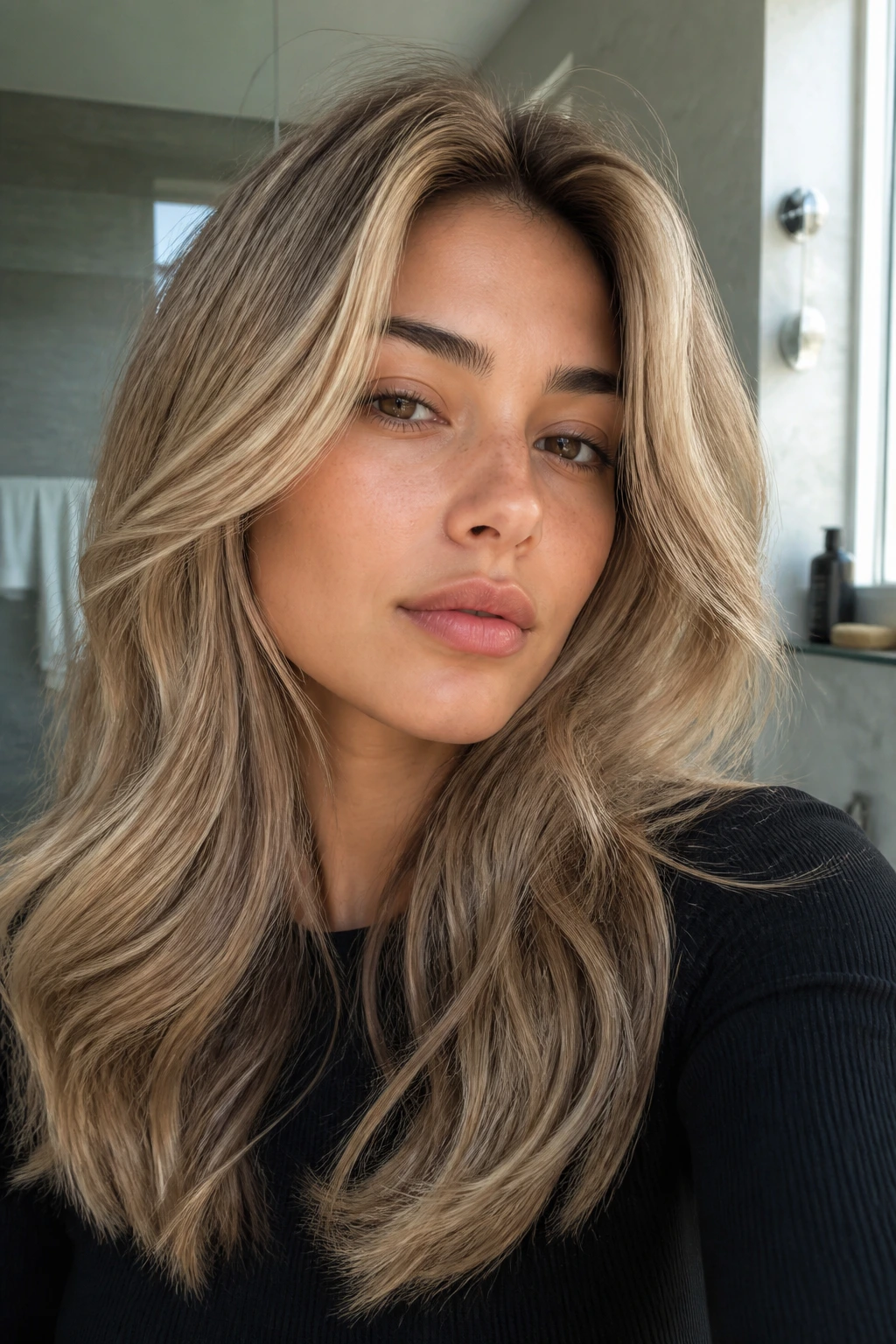
Sometimes the best move is not more lightening. It’s better tone. A beige blonde gloss can cool down existing highlights, soften brass, and make olive skin look cleaner in a single appointment. That’s a nice little trick when the hair is already lightened.
A gloss is also the easiest way to test whether you want to live in the beige-caramel family before committing to more blonde. If the gloss wakes up your skin, you know you’re near the right lane. If it makes you look flat, you need more warmth.
This shade is especially useful after the sun has taken a little too much warmth out of the mids.
18. Maple Caramel Shag
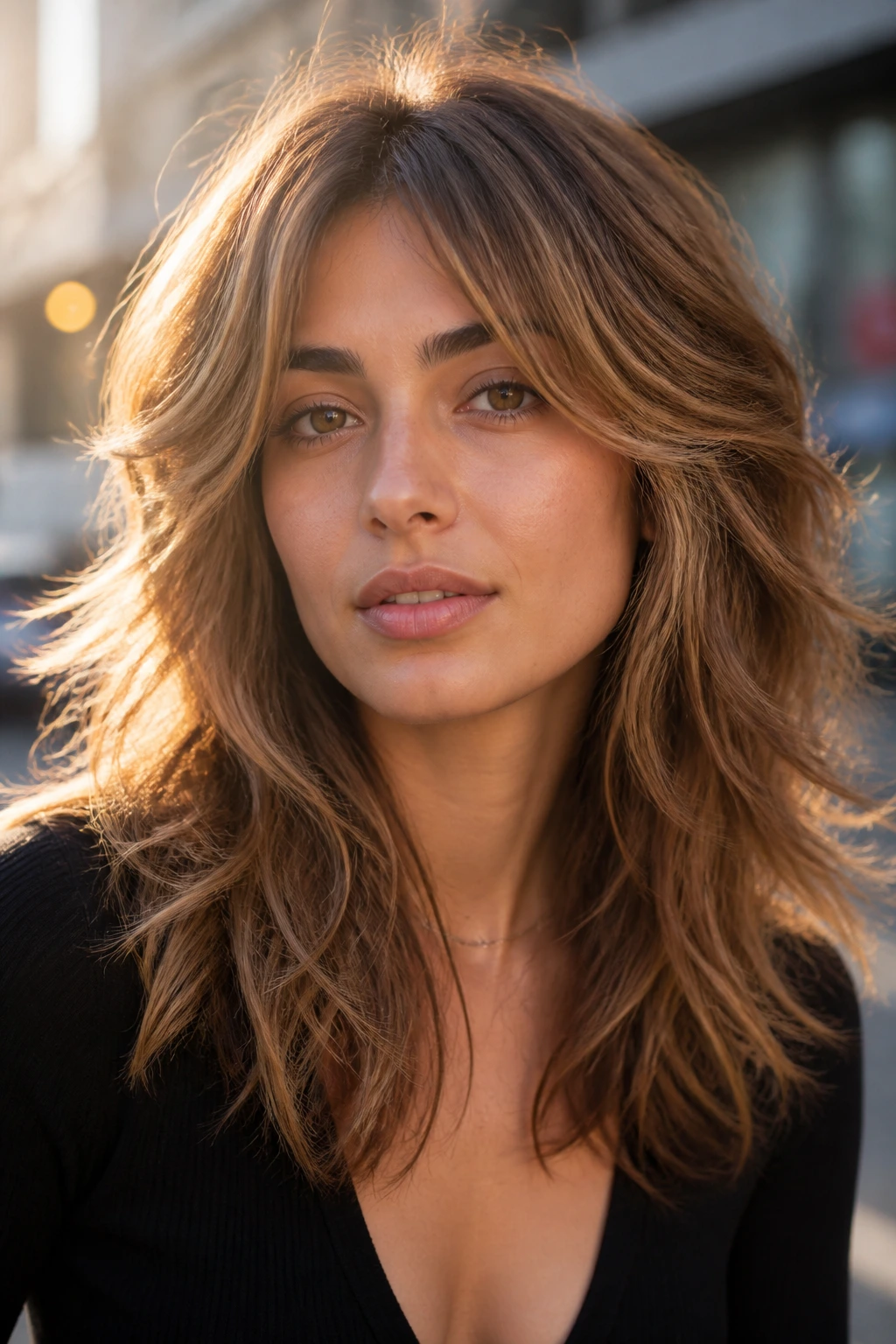
A shag likes depth. It needs it. Maple caramel gives the cut a warm, earthy base with lighter pieces around the face and on the ends, which keeps olive skin from looking heavy. The layers do the rest.
This shade is not for someone who wants squeaky-clean blonde. It’s for someone who likes texture, movement, and a little grit. The maple note makes the hair feel lived-in, not overprocessed.
If you wear your hair with texture spray, a rough blowout, or natural bends, this one looks especially good. Straight and glossy can work too, but the shag usually wants a bit of attitude.
19. Root Shadow with Curtain Bangs
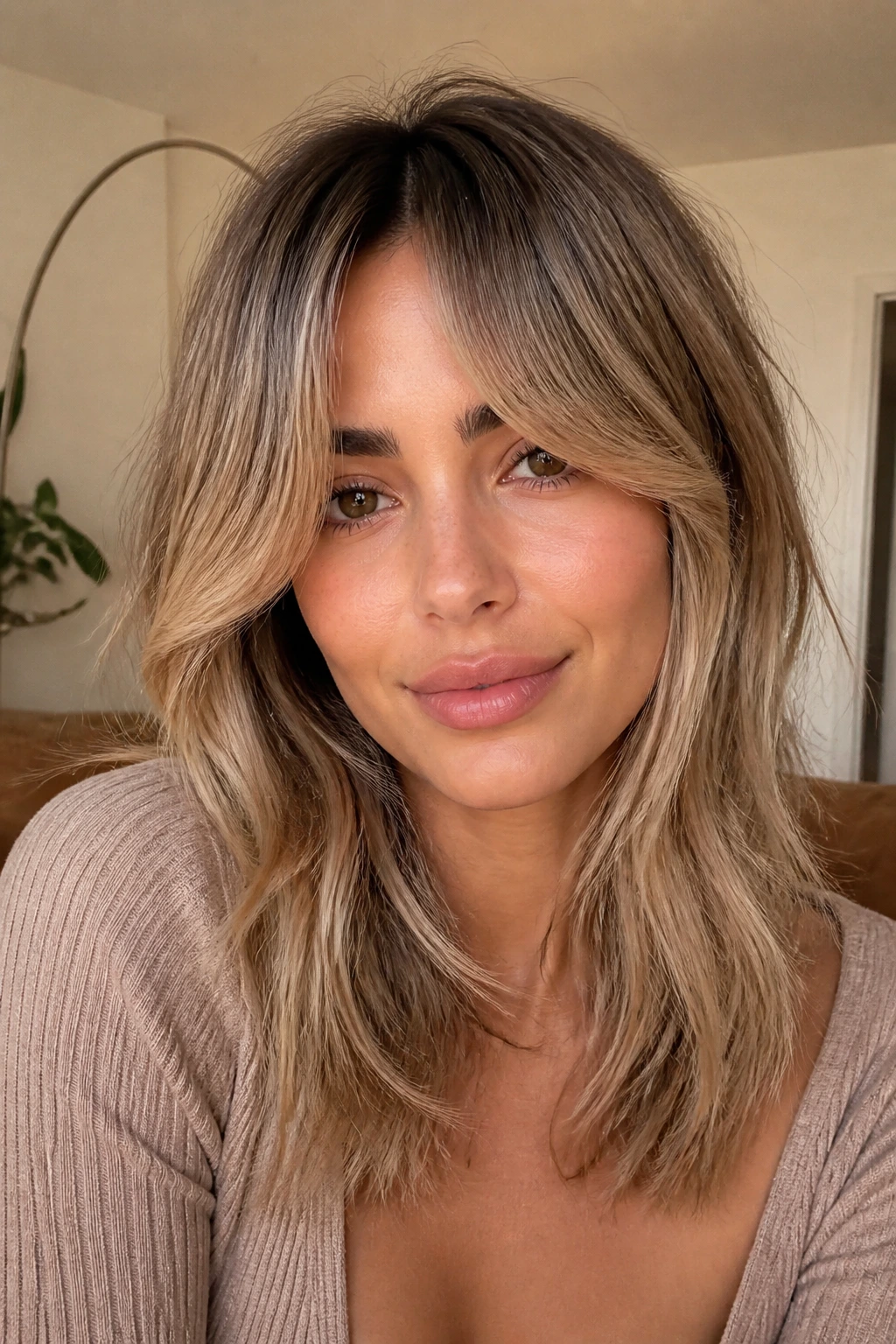
Curtain bangs can make a blond caramel shade feel softer immediately. The root shadow gives them a blurred start, and the brighter pieces around the cheekbones pull attention where you want it. On olive skin, that framing can be very flattering.
The key is not letting the bangs get too bright too soon. A little darkness at the root keeps them from looking like they were dipped in dye. Then the caramel lightens as it moves down toward the mouth and jaw.
This is one of those styles that looks better when it’s a bit undone. If the bangs are too perfect, the color loses its easy charm.
20. Tawny Blonde Layers
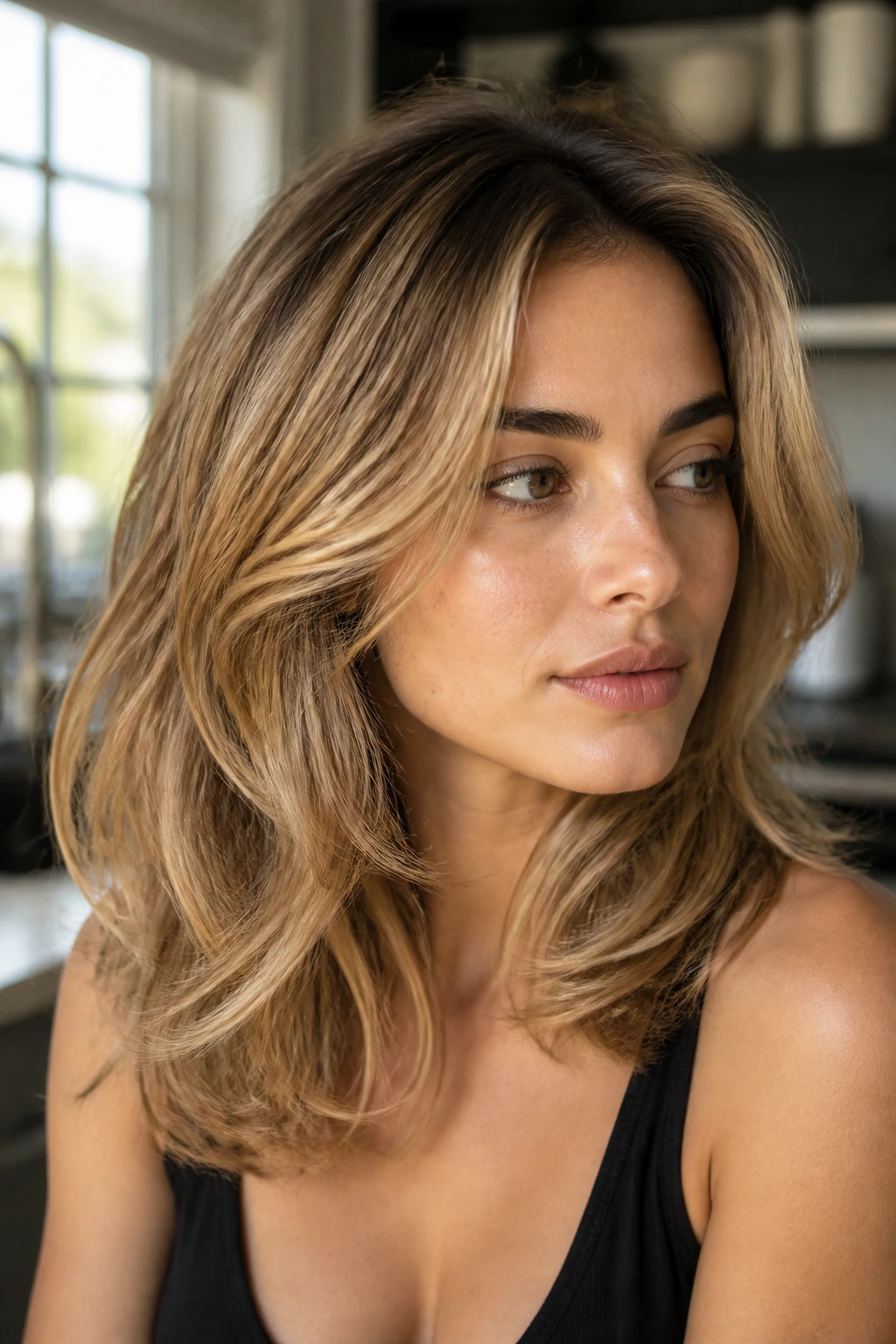
Tawny blonde is earthy and quiet in a good way. It sits between beige, gold, and light brown, which gives olive skin a soft glow without shouting for attention. The layers let the color breathe.
I like this shade on midlength cuts because the movement keeps it from feeling heavy. The lighter strands catch on the ends, while the deeper tawny pieces hold shape near the crown. It’s subtle, but not flat. That’s the sweet spot.
If you want blonde that looks believable in ordinary daylight, tawny belongs on your shortlist.
21. Chestnut-Caramel Melt
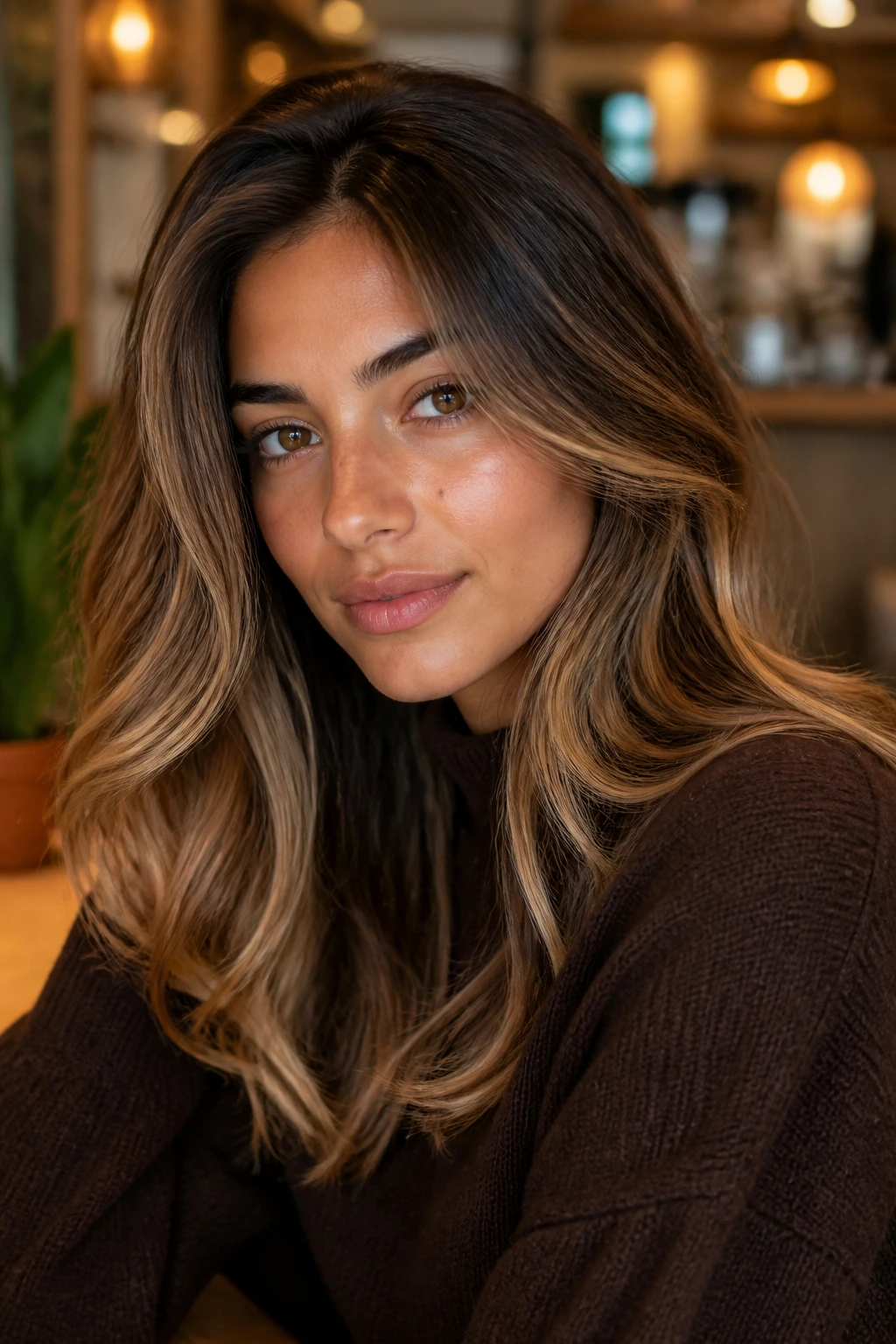
Chestnut-caramel melt starts deeper and warms up slowly toward the ends. That makes it a smart choice for olive skin that likes brunette depth more than bright blonde. You still get lightness, but the hair keeps enough richness to sit comfortably with the complexion.
The transition should be soft and slow. No striping. No hard line. The chestnut root helps the caramel mids feel deliberate, not random. If your natural hair is dark brown, this is one of the easiest ways to lean blond without losing your frame.
It’s also forgiving on regrowth, which is never a bad thing.
22. Strawberry-Caramel Balayage
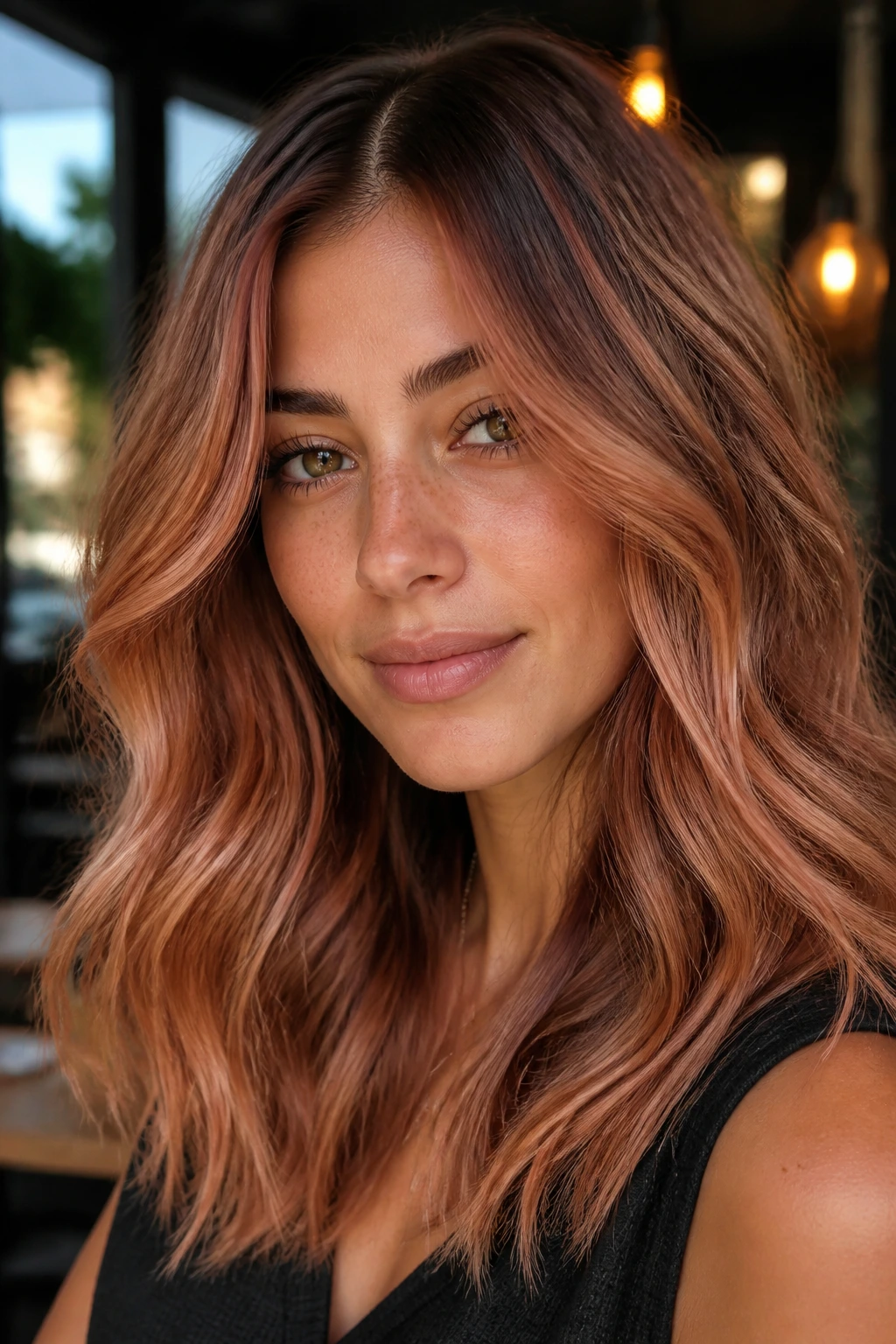
Strawberry-caramel is the playful one, but keep it muted and it can look very good on olive skin. The strawberry note should be soft, almost peachy, mixed with caramel and beige so it doesn’t swing too copper. Think ripe, not neon.
This works best when the pieces are painted lightly and the overall finish stays dimensional. A full strawberry blonde can fight olive skin if it gets too pink. A caramel balayage with a whisper of strawberry can be a lot nicer.
If you like warm makeup, freckles, or a little blush on the cheeks, this shade has a fun little echo.
23. Smudged-Root Honey Lob
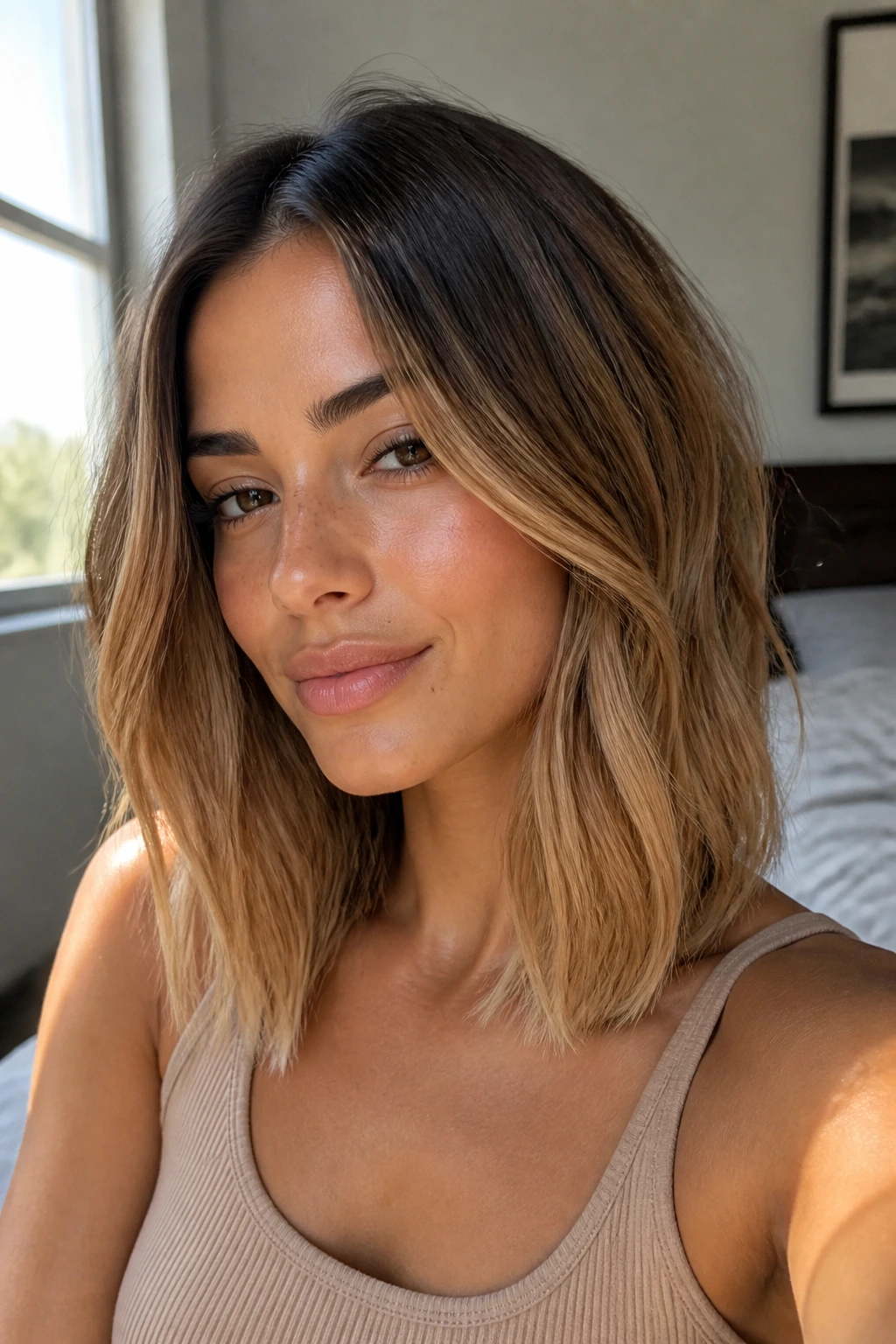
A smudged-root honey lob is a workhorse shade. The honey brightens the ends, the root keeps things grounded, and the lob cut keeps the whole look neat. Olive skin gets the glow, but not the maintenance headache.
The smudge matters because it breaks up the line between your natural color and the lighter pieces. That soft transition is what makes the shade wearable for more than a few weeks. It also keeps the color from looking too salon-fresh in a way that can feel harsh.
This is one of the easiest blond caramel ideas to live with if you’re busy and still want polished hair.
24. Iced Beige Caramel Lob
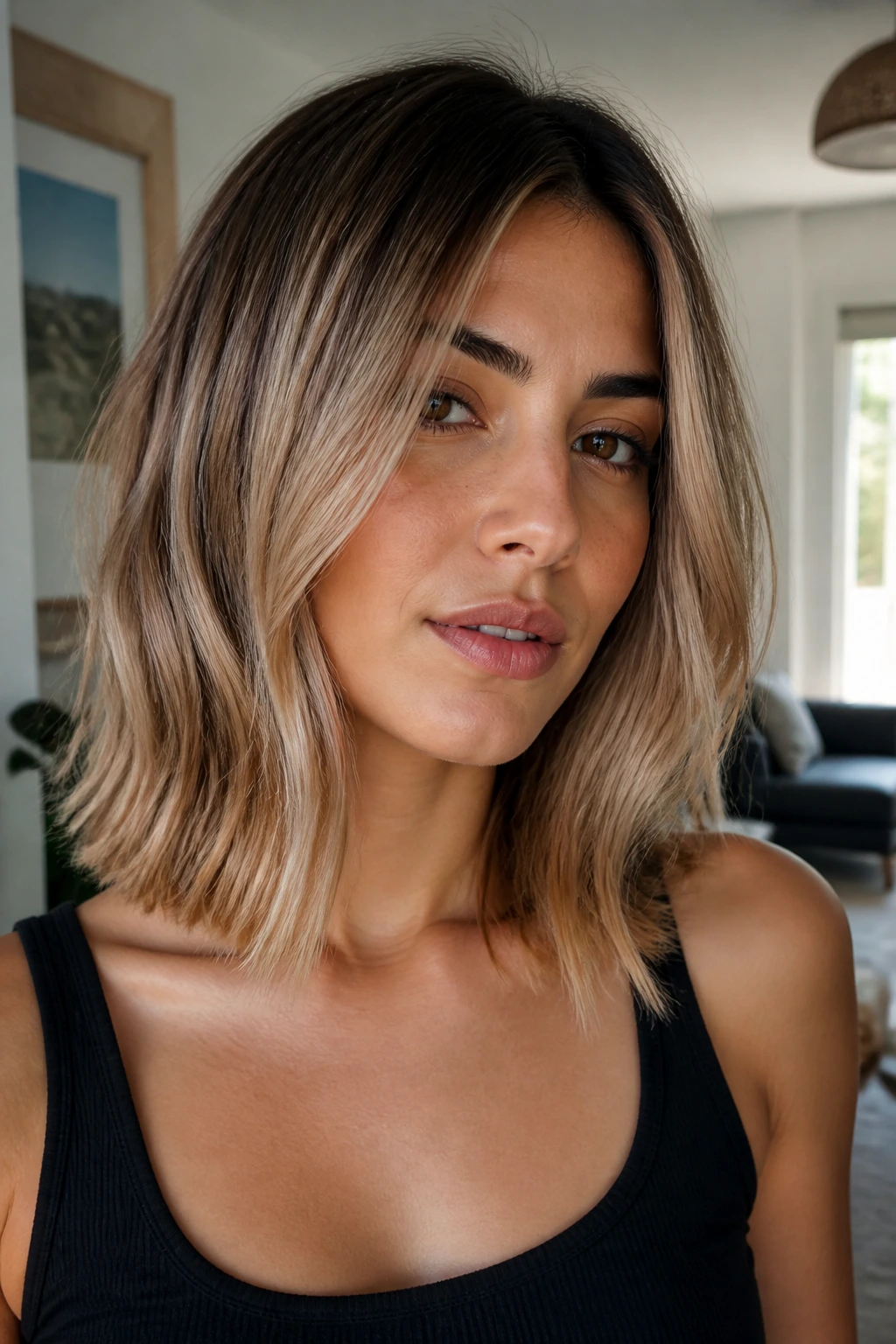
This one leans cooler than the honey-lob above. Iced beige caramel uses a cooler beige tone through the mids with just enough caramel at the edges to keep olive skin from going flat. It’s a nice match for neutral olive undertones.
The lob cut gives the color a crisp shape, which helps the cooler tone read clean instead of dull. That is the whole game here. If the cut is soft and the color is cool, the hair can start to disappear. A blunt or softly layered lob keeps it visible.
If you wear a lot of black, charcoal, or denim, this shade sits well beside those colors.
25. Glossy Caramel Bombshell Layers
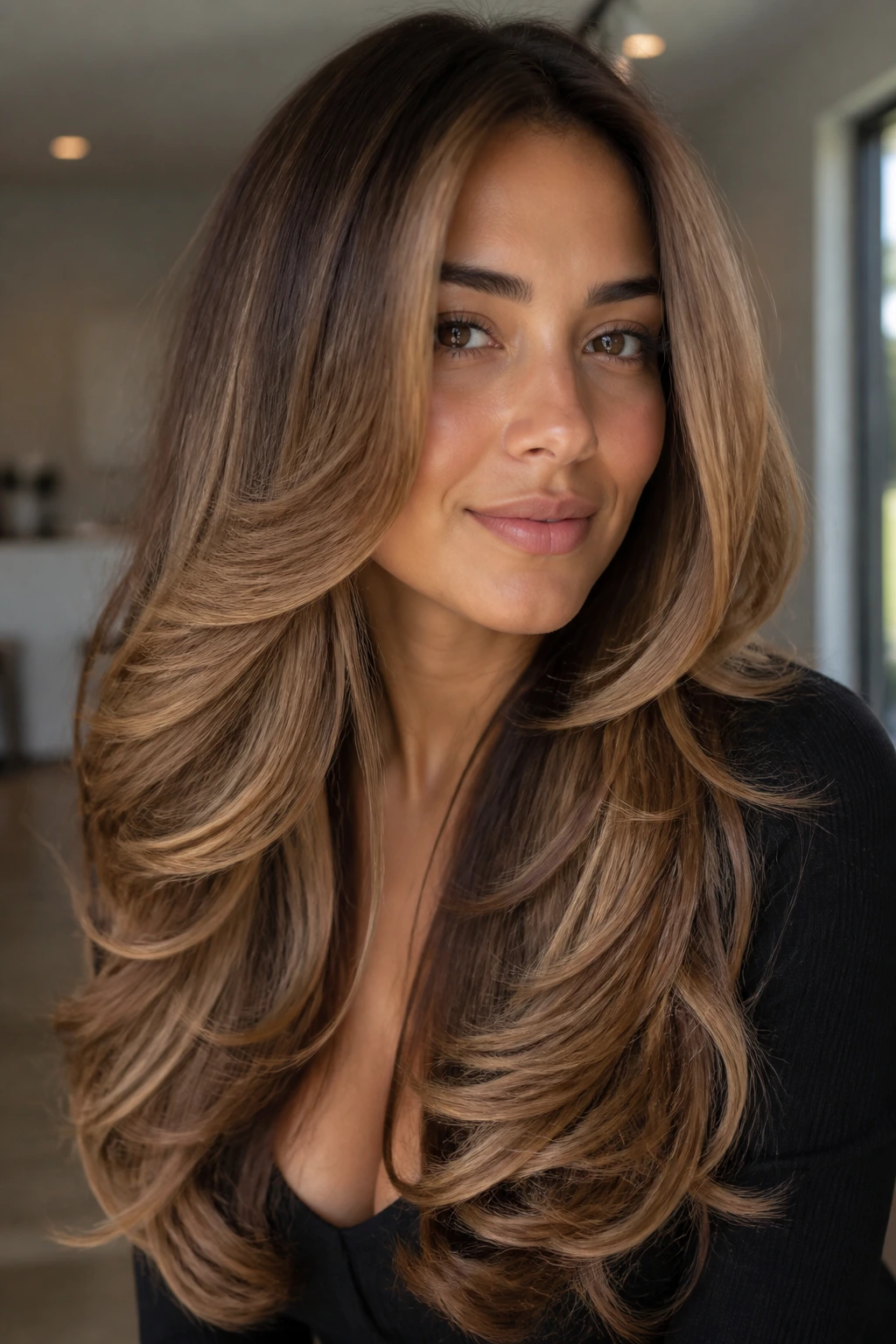
Glossy caramel bombshell layers are for people who want fullness, shine, and dimension all at once. The color uses a mix of caramel, beige blonde, and a slightly deeper base so the hair looks thick rather than blown out. Olive skin often likes this kind of richness.
The layers are part of the shade. They catch the light at different angles and keep the color from turning into one big mass. If the blowout is smooth and the gloss is fresh, the whole thing looks lush in a very old-school, very good way.
This is the loudest option in the list, but it still has enough beige and depth to stay flattering instead of brassy.
What to Ask For Before You Sit Down
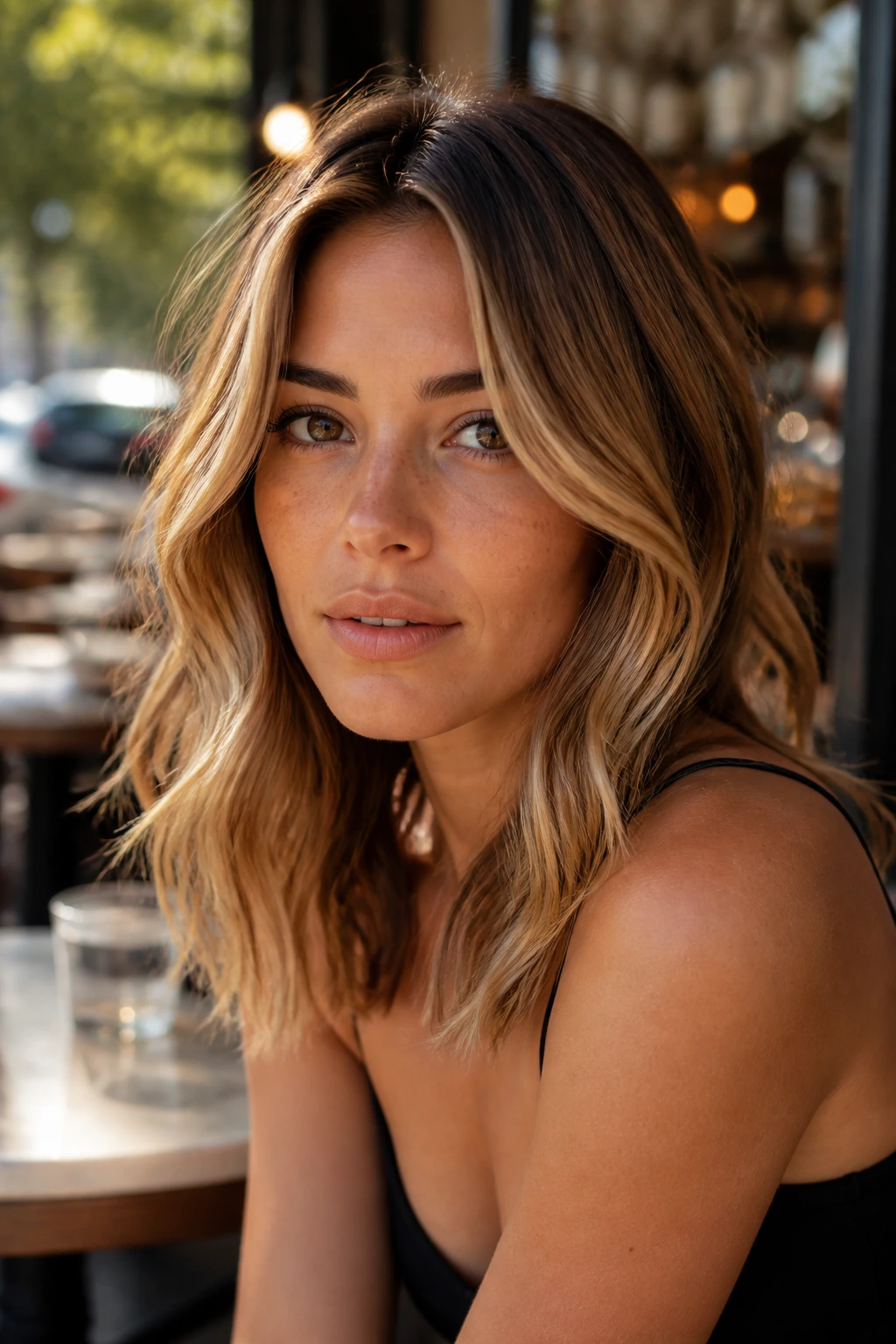
Most blond caramel photos look easy because the hard decisions were already made in the chair. When you book the appointment, talk in terms of base level, highlight placement, and toner family instead of just saying “caramel blonde.” That phrase can mean ten different things to ten different people.
Bring two or three photos that share the same undertone. Not the same haircut. The same color story. If one photo is honey-gold, one is beige, and one is ash, you’re making the stylist guess which part you actually want. Pick a lane. The session goes smoother.
If your natural hair is dark brown, ask whether the shade needs one appointment or two. That’s not a dramatic question. It’s a practical one. Olive skin looks best when the lift is clean, not fried.
Essential Tools for Coloring and Keeping It Fresh
- Sectioning clips: Keep hair out of the way so highlights or toning go on evenly.
- Tail comb: Helps create clean parts and precise face-framing sections.
- Tint brush and mixing bowl: Needed for glosses, toners, and root smudges.
- Balayage board or foils: Useful for painted ribbons and brighter pieces.
- Color-safe shampoo and conditioner: Gentle cleansers help the caramel tone last longer.
- Purple shampoo: Good for pale yellow or brassy blonde, but use it lightly.
- Blue shampoo: Better if the blonde keeps drifting orange.
- Heat protectant: Blonde lightens fast and gets dry fast; hot tools make it worse.
- Gloss or color-depositing mask: Helpful for extending tone between salon visits.
- Wide-tooth comb: Easier on lightened hair when it’s wet and fragile.
Smart Shade-Selection Tips for Olive Skin
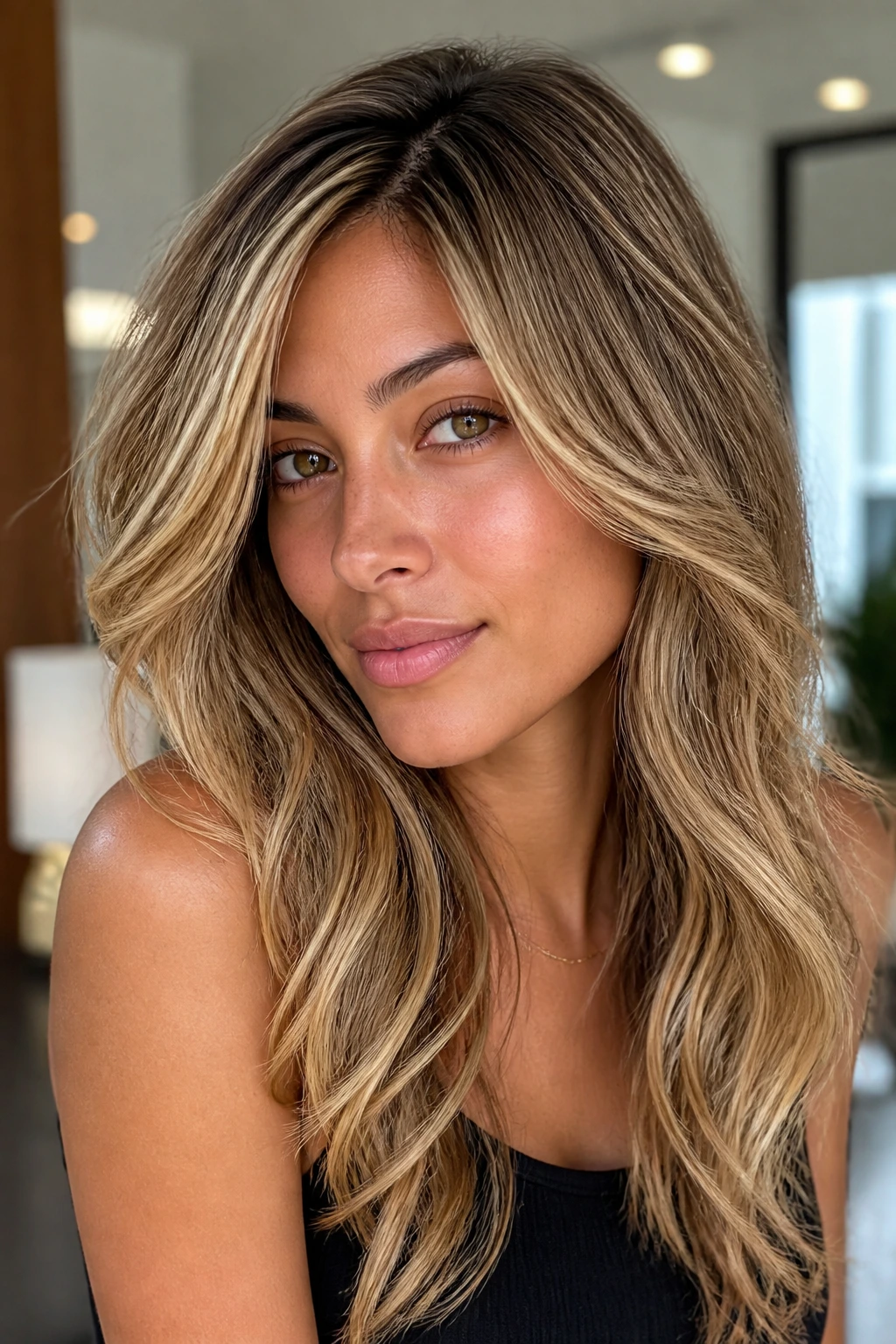
The fastest way to choose the right blond caramel is to stop thinking in broad labels and start thinking in temperature. Honey, toffee, beige, mushroom, bronze, champagne — those names matter because they hint at what the pigment is doing. If the shade sounds sunny and your skin already looks warm, go more beige than yellow. If the shade sounds rich and your skin leans muted, keep some smoke in it.
Check your brows too. If your brows are deep and your hair is suddenly very light, the face can feel disconnected unless the color has depth at the root or around the frame. That’s why root smudges and contour highlights show up so often in the better blond caramel looks. They help the hair sit beside the face instead of fighting it.
And if you color at home, do a strand test. Always. Beige caramel on a box can come out much warmer on porous hair, especially if the ends have been bleached before. One test strip saves a lot of bad surprises.
How to Wear These Shades
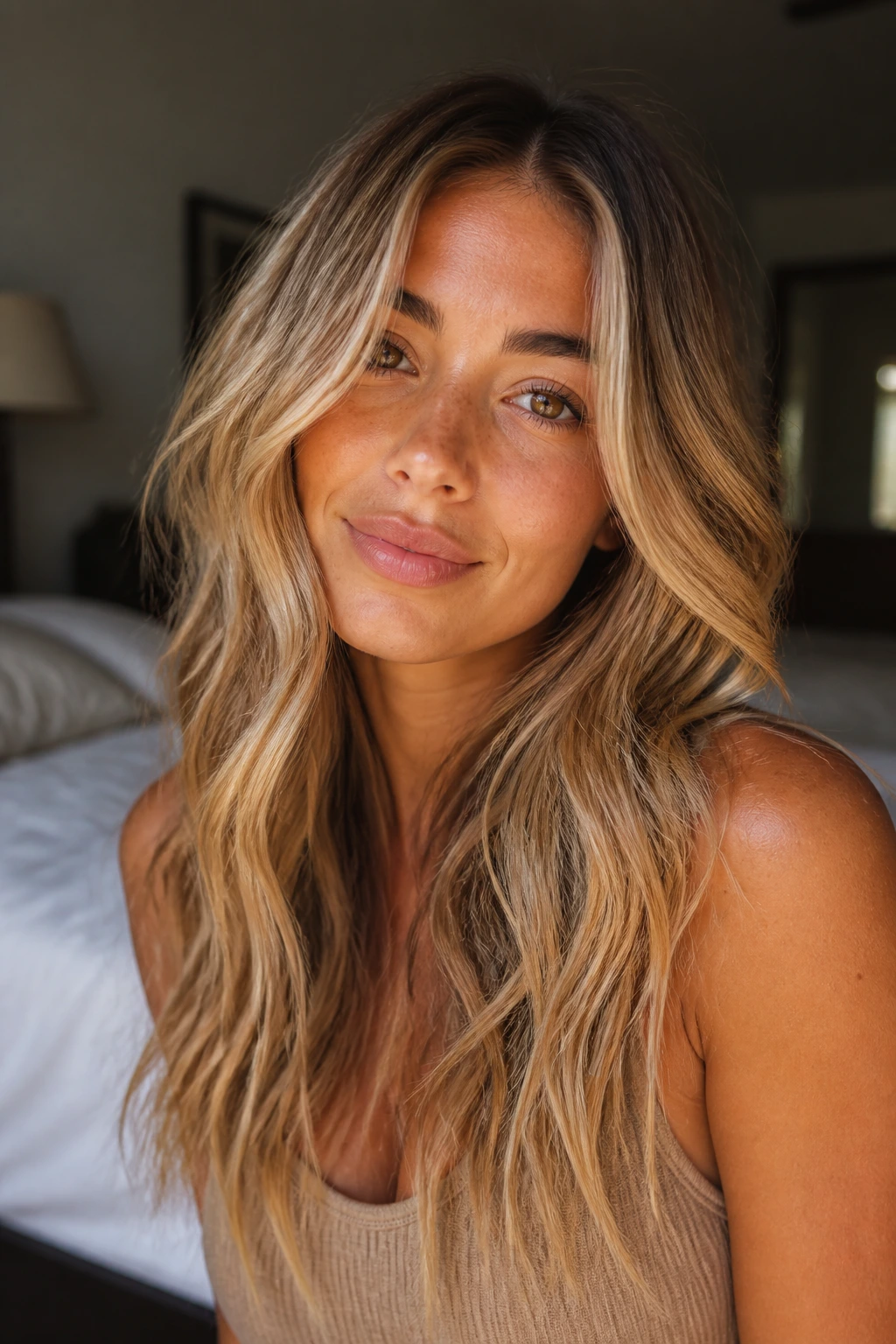
Finish: Loose waves show off ribbons, root melts, and balayage better than a stiff blow-dry. Straight hair is cleaner and sharper, which suits beige blondes and bobs. Curls need wider painting so the color doesn’t disappear into the pattern.
Cuts: Lobs, shags, layered mids, curtain bangs, and soft bobs are the easiest partners for blond caramel. Long one-length hair can work too, but it needs more dimension or it can start looking flat.
Makeup: Peach blush, soft bronzer, taupe liner, and a neutral lip keep olive skin from clashing with the hair. If the blonde is warmer, a touch of gold shadow or camel-brown liner ties it together nicely.
Wardrobe: Cream, camel, olive green, chocolate, slate, and black all sit well beside these shades. Neon near the face is a different story. It can fight the tone and make the hair look odd.
Keeping Blond Caramel Hair Fresh Between Appointments
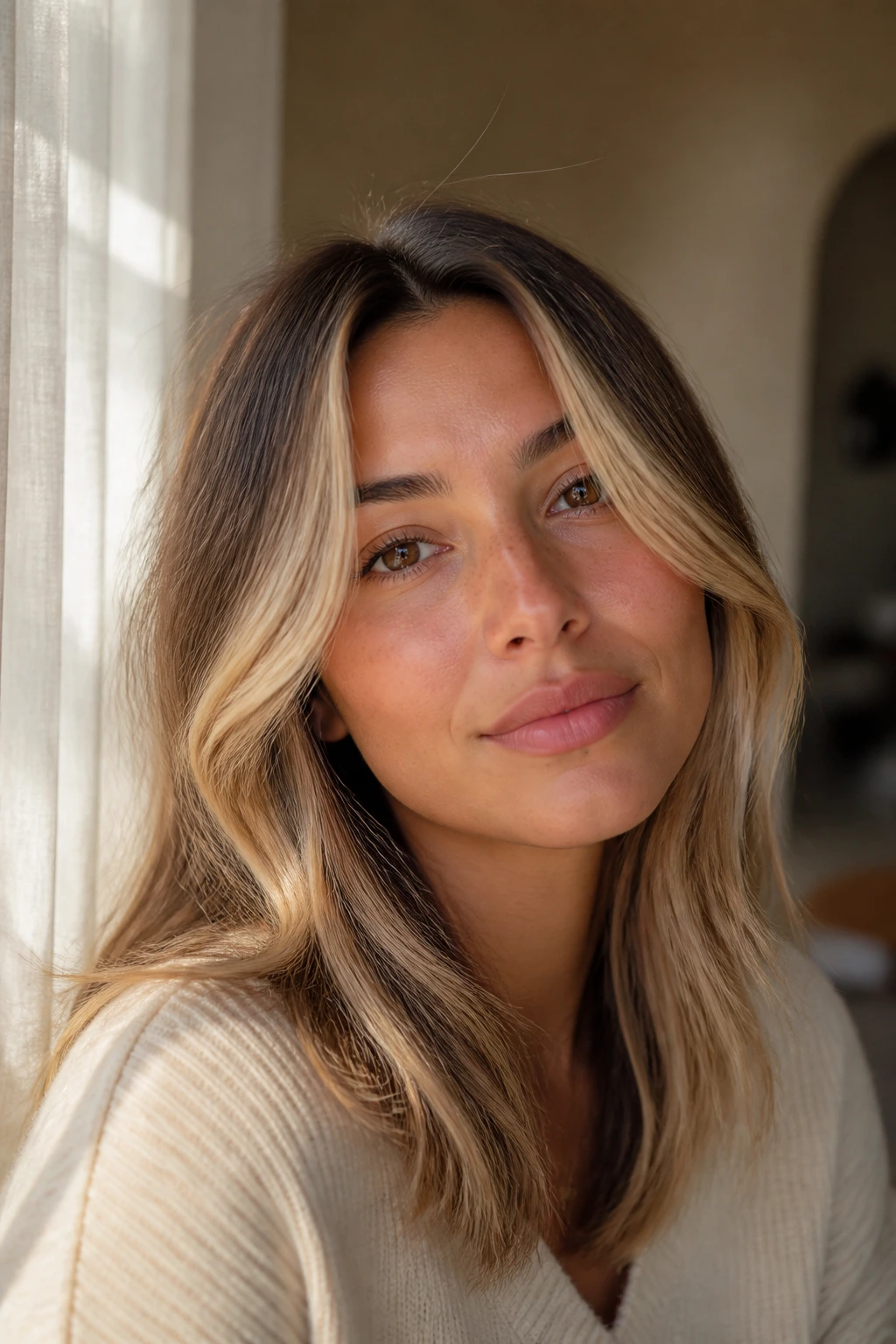
Blond caramel fades in a few predictable ways. The ends get lighter, the warm tones get louder, and the root starts to look either softer or harsher depending on how the color was built. The fix is a small routine, not panic.
Wash less often if you can. Two or three shampoos a week is usually kinder to a caramel blonde than daily washing, especially if the hair is prelightened. Use cool or lukewarm water, because hot water strips gloss faster than most people realize.
A purple shampoo once every one to two weeks is usually enough for pale yellow drift. If the shade is closer to honey or toffee, blue shampoo may be the better tool when the brass leans orange. Don’t overdo either one. Too much toning can leave beige blonde looking chalky.
Plan a gloss every four to six weeks if the color is light and dimensional. Full highlight refreshes usually stretch longer — often eight to twelve weeks — depending on how much root you left in the original formula. If the shade is built with a root shadow, you can often go longer before it looks tired.
Additional Tips and Personal Tweaks
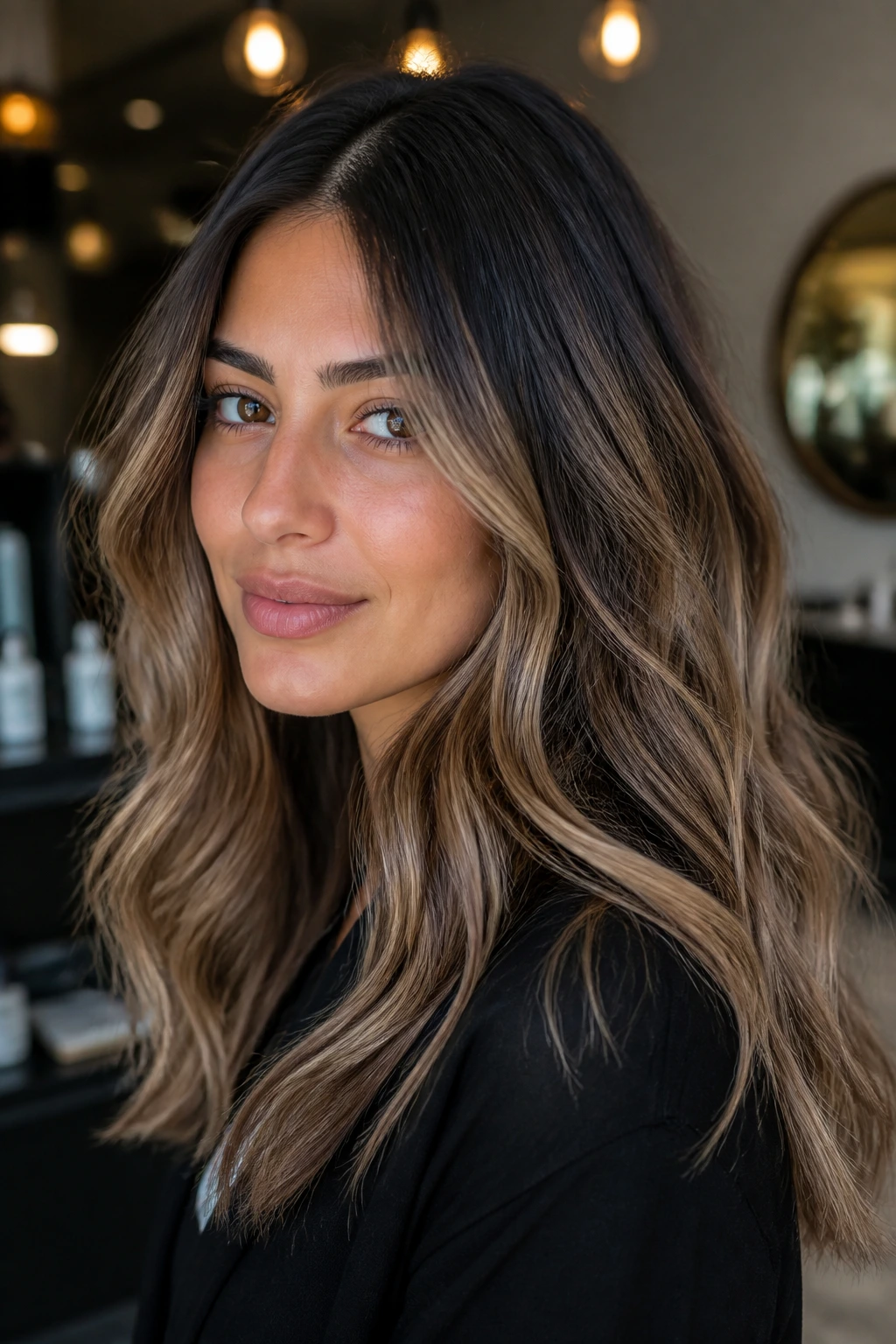
Tone Placement: Put the lightest pieces around the face and crown, then keep the underneath layers a touch deeper. That gives olive skin a bright frame without making the whole head look bleached.
Depth Control: Add lowlights one or two levels deeper than the base if the color starts to feel too flat. It’s a small move, but it changes the whole read of the hair.
Budget Move: Ask for a partial highlight plus a gloss instead of a full blonding service if you want to test the shade first. You can always go brighter later.
Texture Match: Curly and coily hair usually needs wider, more painterly placement. Fine straight hair often looks better with finer ribbons, because the color reflects more cleanly.
Make-It-Yours: If you prefer warmer makeup and gold jewelry, lean honey or toffee. If you wear silver, charcoal, and berry lipstick, mushroom beige may suit you better.
Common Mistakes to Avoid
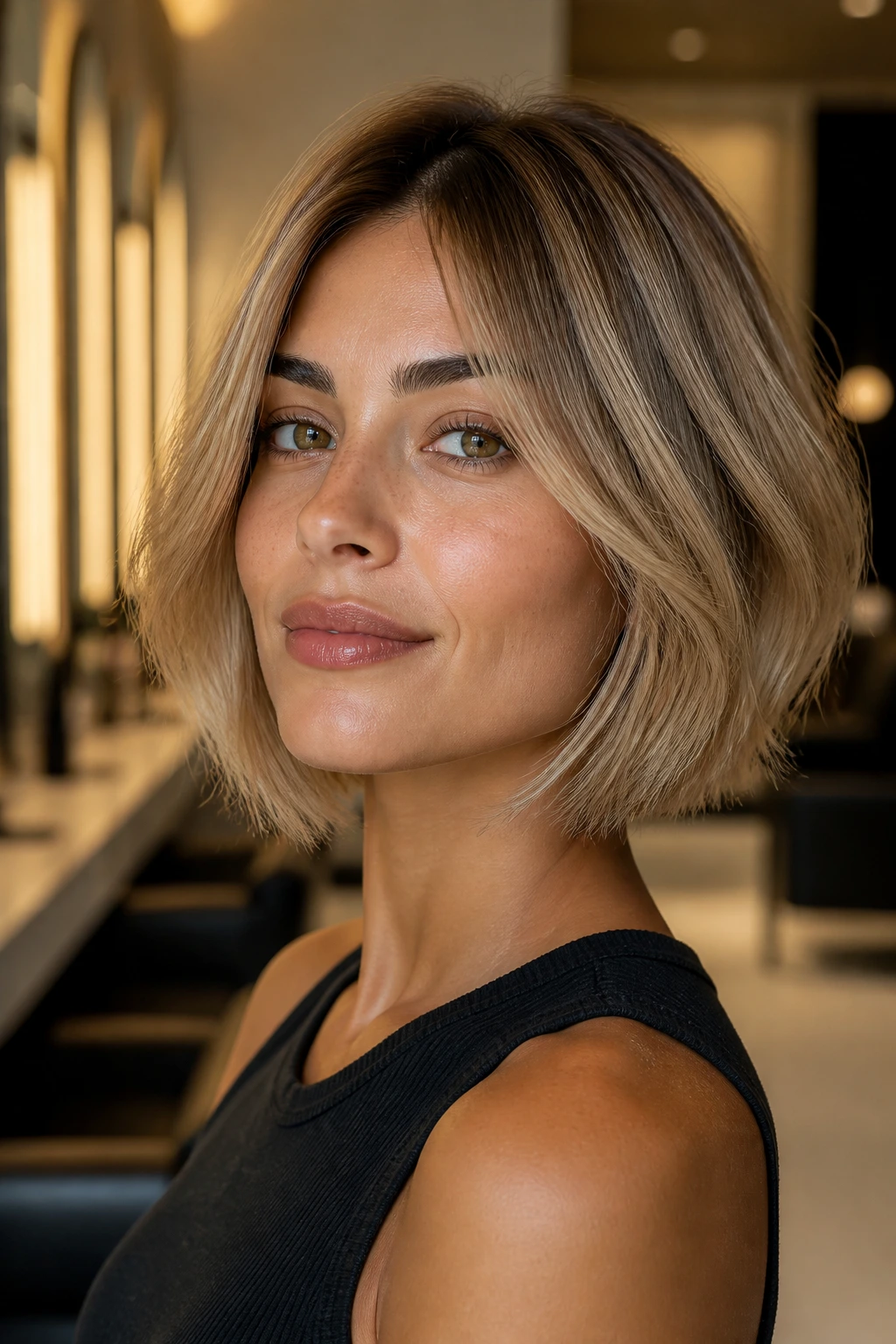
-
Going too yellow: A lemony blonde can make olive skin look sallow fast. Ask for beige or pearl in the toner, not pure gold.
-
Lifting too high too quickly: Very pale blonde against olive skin can strip the face of depth. Keep some shadow at the root or around the perimeter if you want the color to feel balanced.
-
Skipping lowlights: Flat all-over blonde can blur the face. A few deeper pieces keep the shade dimensional and easier to wear.
-
Overusing purple shampoo: Too much can mute the beige warmth that makes blond caramel flattering in the first place. Use it sparingly and watch the tone, not the bottle label.
-
Ignoring the brows: If the hair goes light and the brows stay untouched, the face can look oddly disconnected. You do not need to bleach your brows. You do need them to make sense beside the new shade.
Variations and Adaptations to Try
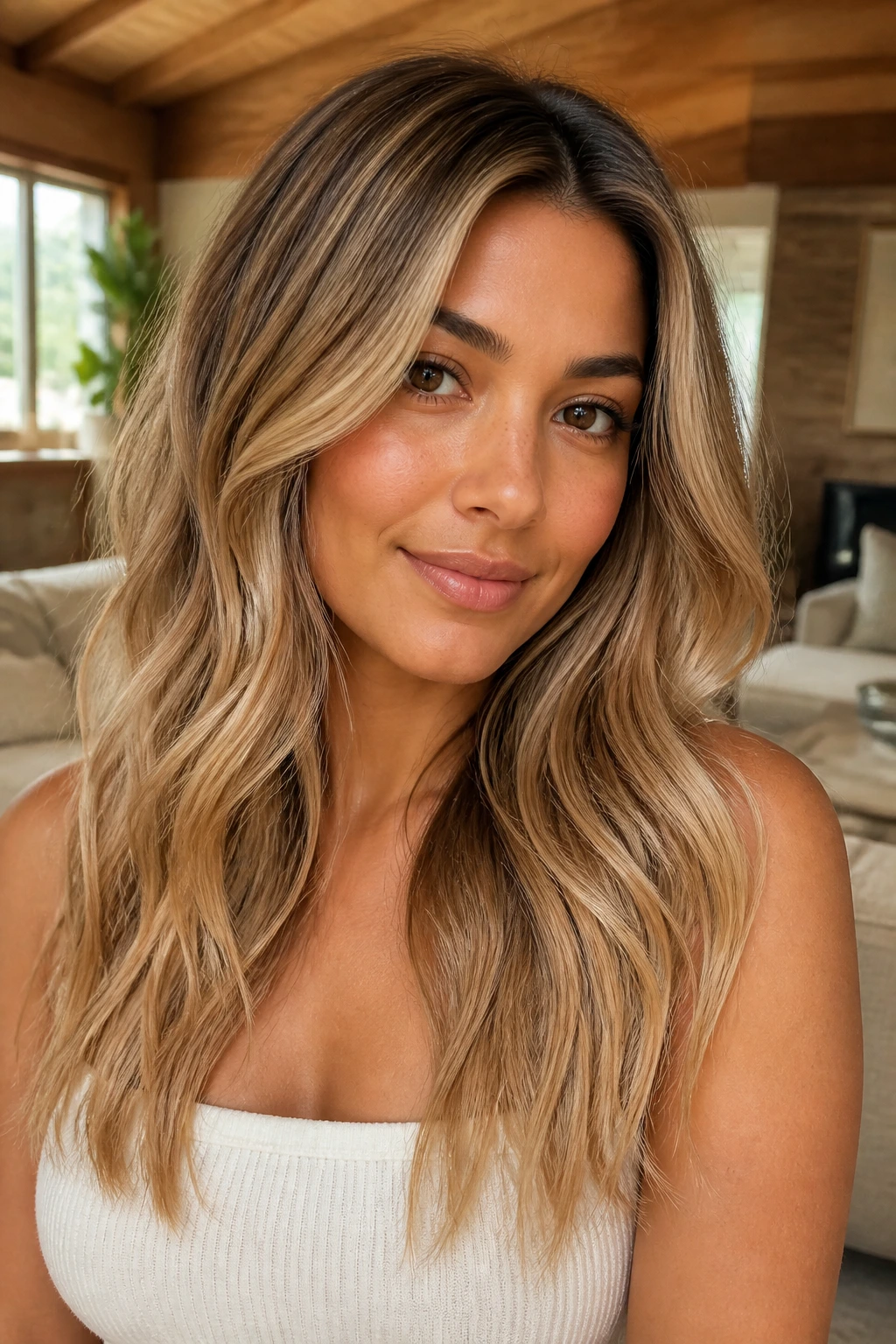
Soft Olive Beige: Keep the blonde muted with a beige gloss and a shadow root one level deeper than the mids. This is a good fit if your skin leans neutral and you want the color to look calm rather than sunny.
Honey-Glaze Boost: Add warmer ribbons through the front and crown, then glaze the ends with honey-beige. Use this if your olive skin looks best in gold jewelry, camel, and cream.
Cool Mushroom Edit: Swap gold-heavy caramel for smoky beige and pearl lowlights. This works well on greener olive undertones and on hair that tends to pull too yellow.
Curly Ribbon Balance: For curls, paint wider caramel ribbons that wrap around the curl pattern instead of tiny streaks. The color stays visible when the hair moves, which is the whole point.
Grey-Blend Caramel: If you’re starting to blend grey, ask for soft caramel lowlights and a beige highlight veil around the face. The mixed tones help grey hair look intentional instead of patchy.
Frequently Asked Questions
What blond caramel shade is best for olive skin?
The safest starting point is usually beige caramel, honey-beige, or a soft root-melt blonde. Those tones warm the face without turning yellow, and they give olive skin some life under flat light.
Should olive skin avoid ash blonde?
Not always, but ash blonde can look flat if it’s too cool or too one-note. Olive skin often does better when ash is softened with beige, mushroom, or a small amount of caramel at the root or ends.
Can dark brown hair go blond caramel in one appointment?
Sometimes, but not always without damage or a very warm result. If your hair is dark and previously colored, a stylist may need more than one session to get a clean caramel blonde that still feels healthy.
How do I keep blond caramel from turning orange?
Use a color-safe shampoo, cut down on heat, and book glosses before the tone goes too far. If the brass starts leaning orange instead of gold, a blue shampoo or beige toner usually helps more than purple shampoo.
Does blond caramel work on curly hair?
Yes, and often beautifully. Curly hair needs wider placement so the dimension doesn’t disappear into the curl pattern, but caramel ribbons can make the texture look fuller and more defined.
What if my olive skin has a cool or green undertone?
Go cooler than you think at first. Mushroom caramel, beige blonde, or a smoked root melt usually looks better than bright gold because the softer tone keeps the skin from looking muddy.
Will this color make my eyes stand out?
It often does, especially with hazel, green, or deep brown eyes. The warmth around the face pulls more attention upward, and the contrast makes the eyes look a little sharper.
How often should I refresh a blond caramel color?
Glosses usually need a refresh every four to six weeks if you want the tone to stay clean. Highlights and balayage can last longer, but the exact timing depends on how light the hair is and how much root shadow you started with.
The Shade Range That Stays Useful
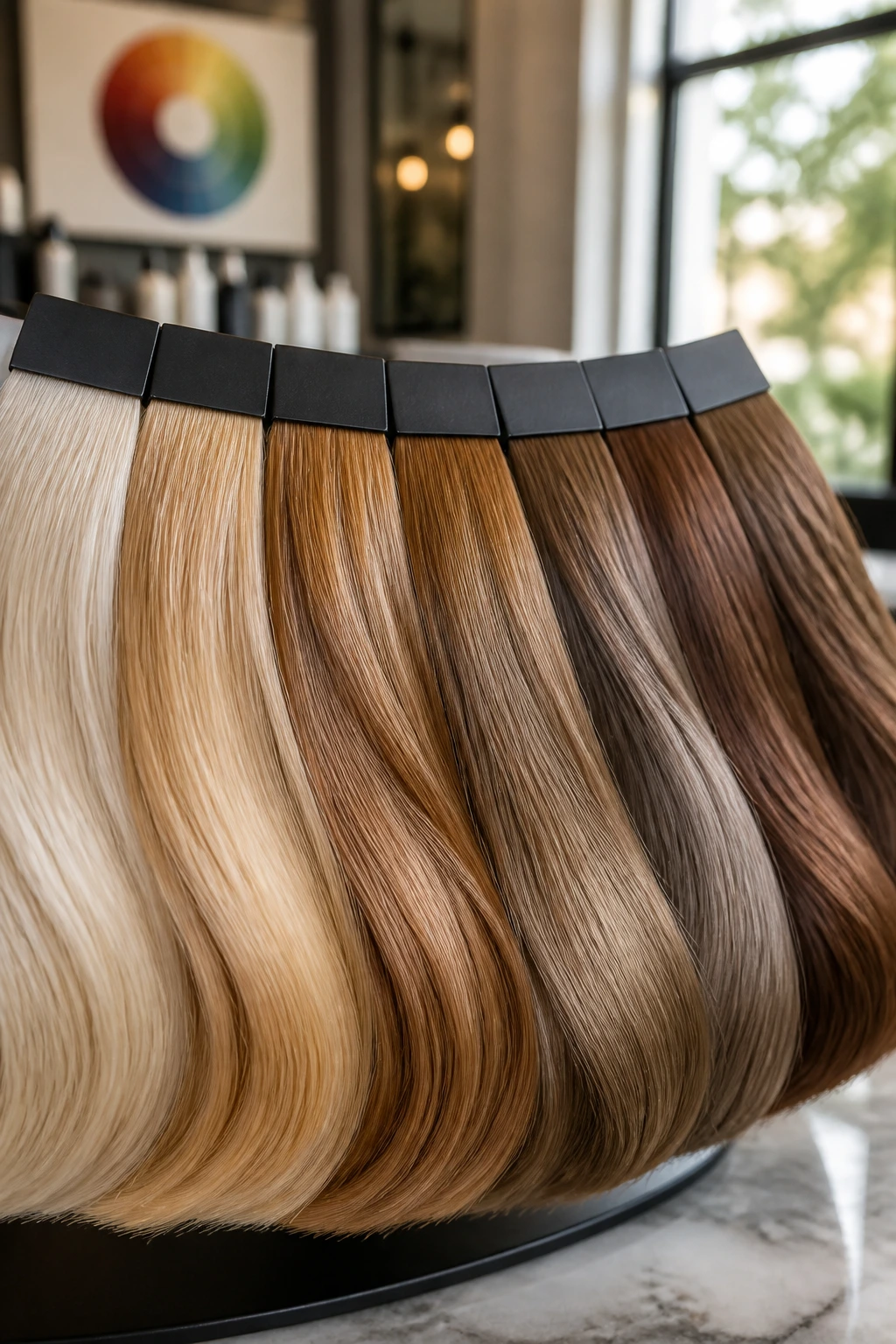
Blond caramel works on olive skin because it doesn’t fight the undertone. It gives the face warmth, depth, and a little light around the edges without forcing the color into one extreme or the other. That’s why beige, honey, toffee, mushroom, and bronzed versions keep showing up in the best-looking examples.
If you’re choosing between two photos, pick the one with better placement before you pick the brighter shade. Placement is what makes the color sit correctly on the face. Brightness is only half the story.
Save the look that matches your undertone, your haircut, and your upkeep habits — not just the one that looks loud on a screen — and your blond caramel color will have a much easier life.