



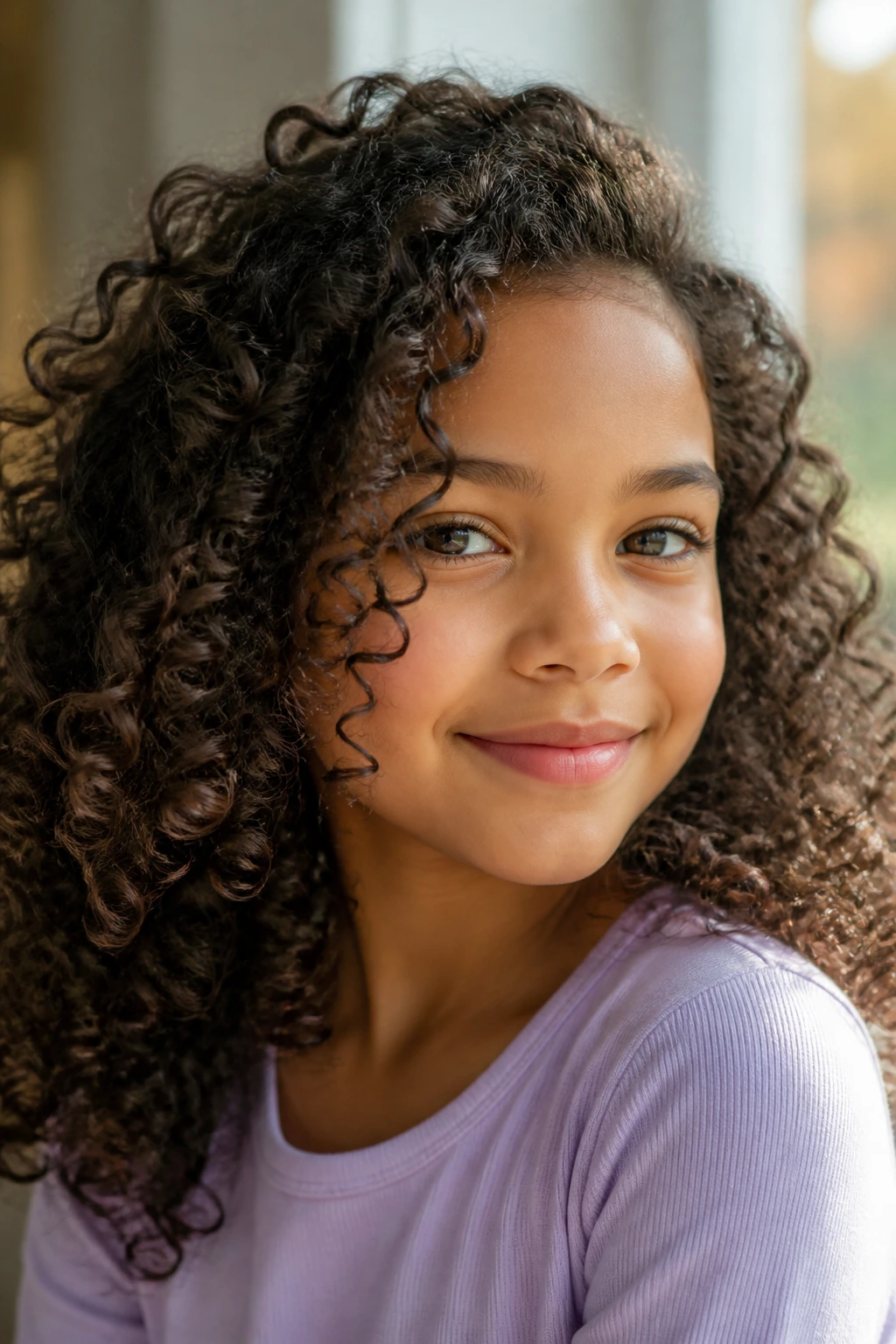
Cute hairstyles for girls with curly hair look best when the curls are allowed to keep their shape. That sounds obvious, but so many styles still try to bully curls into behaving like straight hair, and the result is usually puffed-out roots, crunchy ends, and a child who wants the whole thing out by lunch.
I like styles that start with what the hair already wants to do. A high puff sits high because the curls naturally lift. A braid looks cleaner when the front is damp and parted with a tail comb. A clip works better when it grabs a twist, not when it crushes the curl pattern flat. Small choices. Big difference.
The styles below are built for real mornings, not photo props. Some are done in three minutes with a scrunchie and a brush mist. Some need a few bobby pins and a steadier hand. All of them keep the curl texture visible, which is the whole point. You should see the springs, the volume, the little bends around the face. That’s where the charm lives.
Why These Styles Work So Well on Curly Hair
-
They respect shrinkage: Curly hair rises as it dries, so styles that leave room at the crown and around the ears still look neat after the curls spring back up.
-
They keep tension low: Soft elastics, loose twists, and clips tend to hold better than tight pulling, and they’re kinder to a tender scalp.
-
They hide day-two frizz: A half-up puff or crown braid can make slightly fuzzy roots look intentional instead of messy.
-
They work with texture instead of against it: The curl pattern becomes the style’s main feature, which means you do not need heat or heavy smoothing to make it look finished.
-
They’re easy to dress up: One ribbon, one sparkly clip, or one satin scrunchie can turn a basic shape into something that feels special without adding much time.
1. The Half-Up Puff
A half-up puff is the style I reach for when the front needs control but the rest of the curls still look good loose. You gather the top section from temple to temple, secure it with a soft elastic or satin scrunchie, and leave the bottom curls free. The effect is simple and clean, but it still keeps all that curl volume where it belongs.
This works especially well on shoulder-length and longer hair, because the lower half keeps enough weight to hang nicely. If the crown looks flat, lift the roots with your fingers before you tie it. If the ends feel dry, a tiny bit of leave-in on the bottom layer keeps the whole look from frizzing out by lunch.
Best on: medium to long curls that need the face cleared.
Small detail that helps: Keep the half-up section loose. Tight pulling makes the top look puffy in a bad way instead of lifted in a cute one.
2. The High Pineapple Ponytail
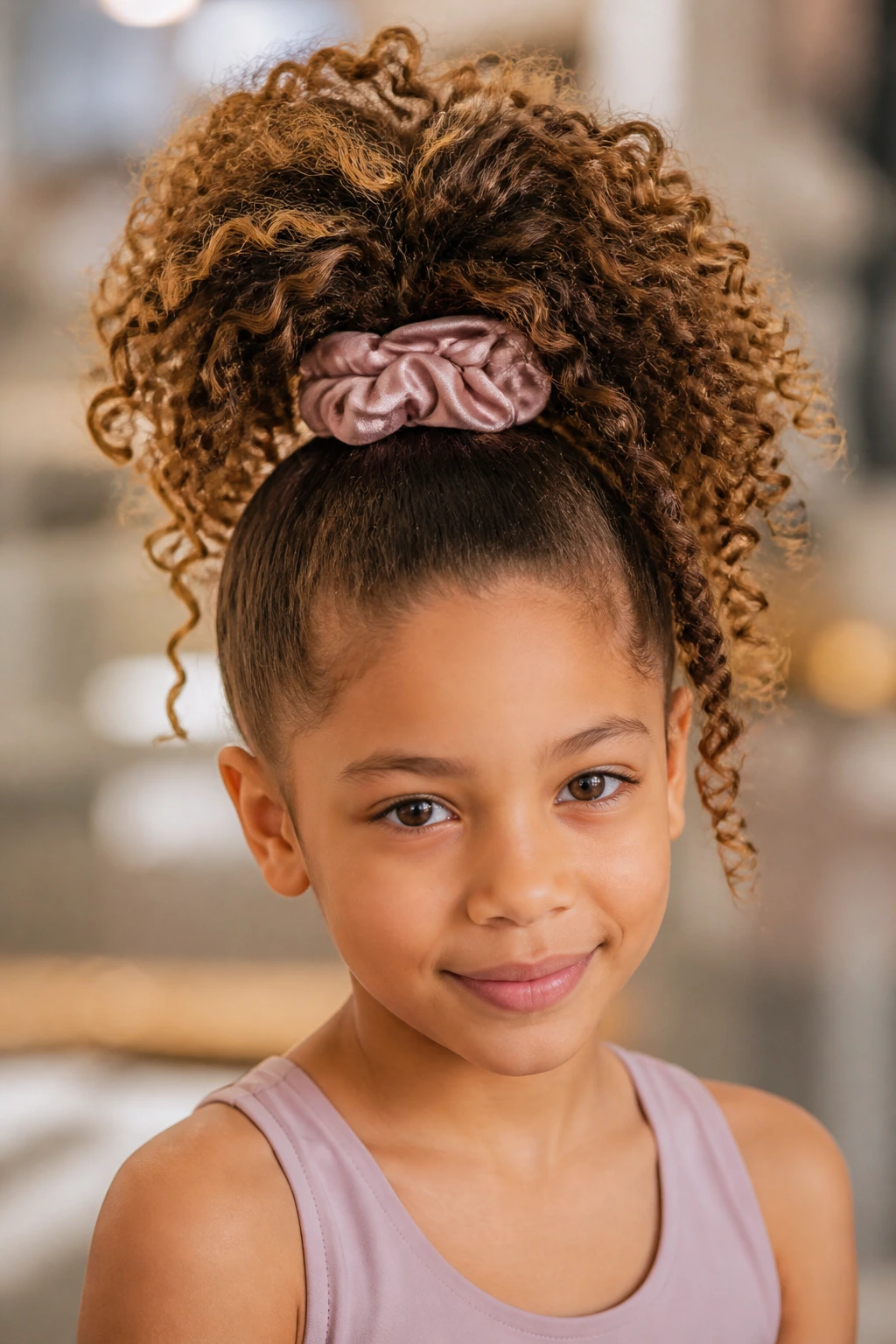
Need something that protects curls and still looks playful? The high pineapple ponytail does both. Gather the hair high on the crown, let the curls fan upward, and secure it with a satin scrunchie so the base doesn’t get dented. The shape should look soft and tall, not slicked down and sharp.
I like this one for day-two curls because the top lift hides any root fuzz while the loose ends keep their spring. On longer hair, the ponytail drapes forward a little, which gives the style that easy, bouncy shape people notice right away. On shorter curls, it looks almost like a floating puff.
How to wear it: Fluff the crown with your fingers, not a brush. A brush makes the top frizzy and steals the airy shape.
3. Curly Space Buns
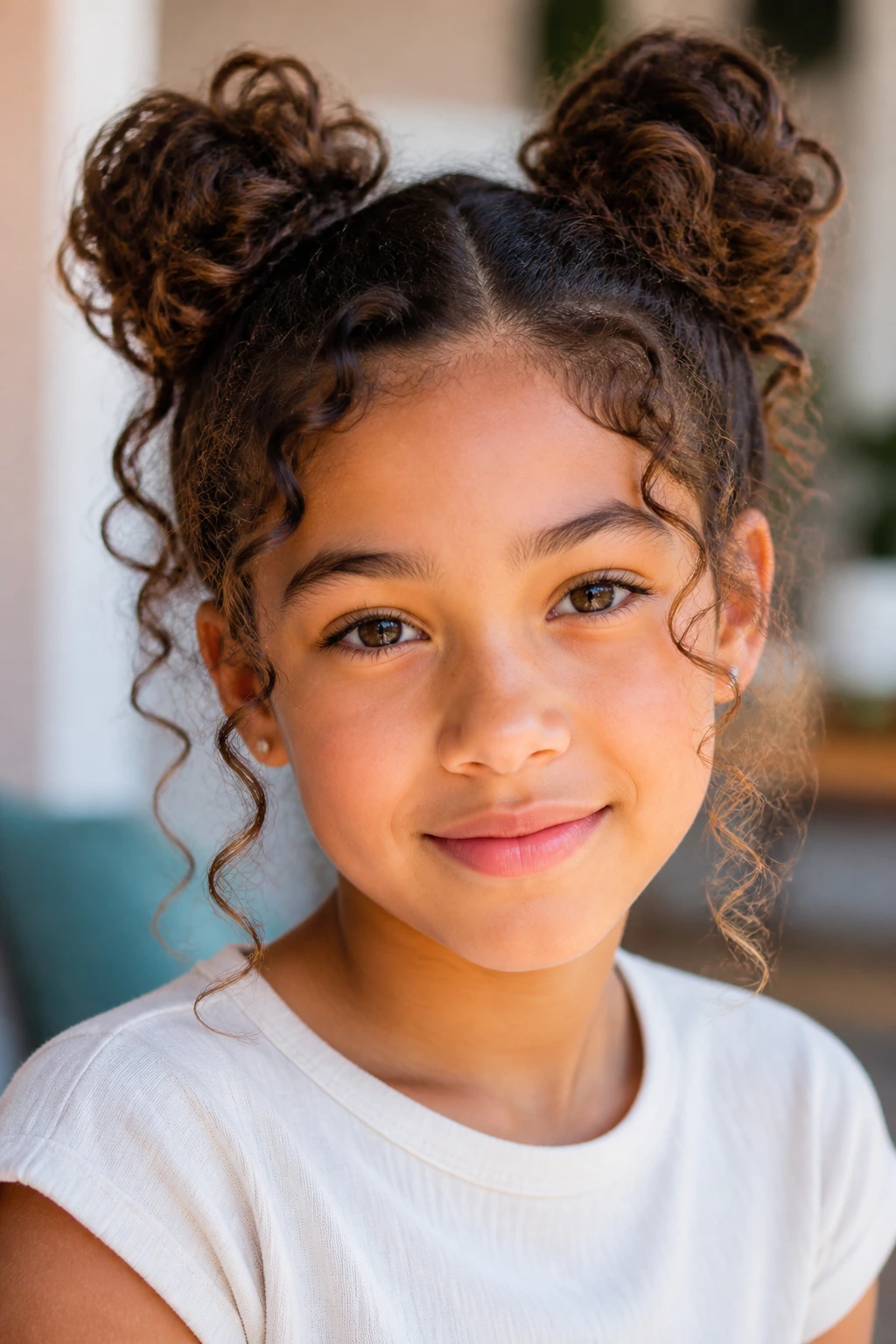
Space buns can look chaotic if you do them too tight. On curly hair, that’s a mistake. The better version is round, soft, and a little fluffy, with each bun sitting high enough to show off the curl texture and low enough that the style stays comfortable.
Why the buns should stay loose
Start with a clean middle part, then split the hair into two sections and twist each one into a bun without squeezing the life out of the curls. If a few ringlets hang out, leave them. That stray curl around the ear is often the part that makes the style feel sweet instead of stiff.
This is a fun one for school events, birthday parties, or any day when a child wants something a little more playful than a plain ponytail. It also works nicely on thick hair because the buns absorb a lot of volume without making the head feel overloaded.
4. The Side Part with a Sparkly Clip
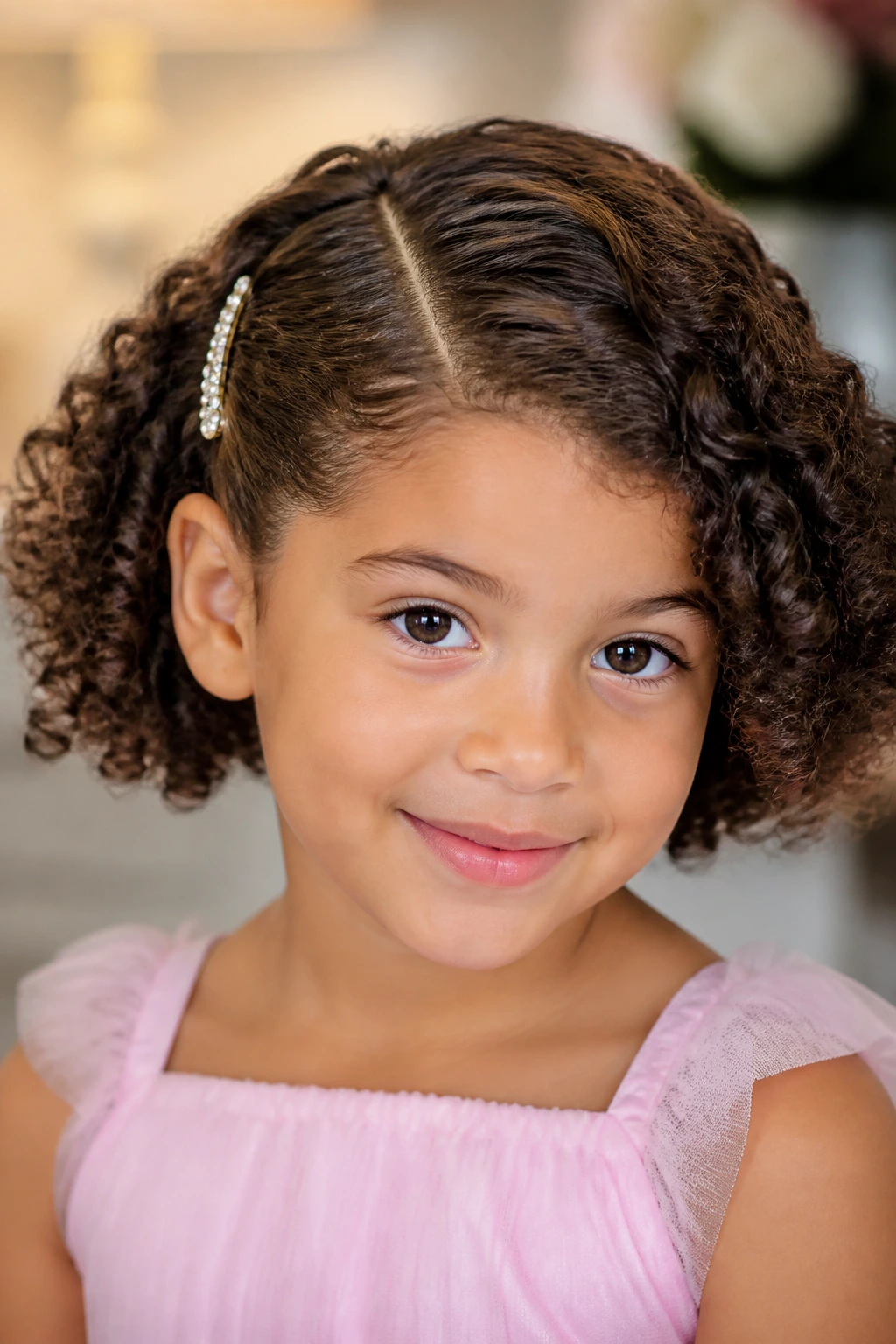
A deep side part and one good clip can save a rough morning. That’s not a backup plan; it’s a real style. Sweep the hair to one side, smooth the front section with damp fingers, and pin it back with a barrette or sparkly clip that actually holds.
This style is especially good for short curls, bob-length cuts, or hair that keeps falling into the eyes. It takes almost no time, but it still looks intentional because the part is clear and the clip gives the hair a point of focus. If the curls are springy, pin them where they naturally want to sit instead of forcing them into a straight line.
One clip is often enough. Two is fine if the hair is thick or the clip is small.
5. The Crown Braid Headband
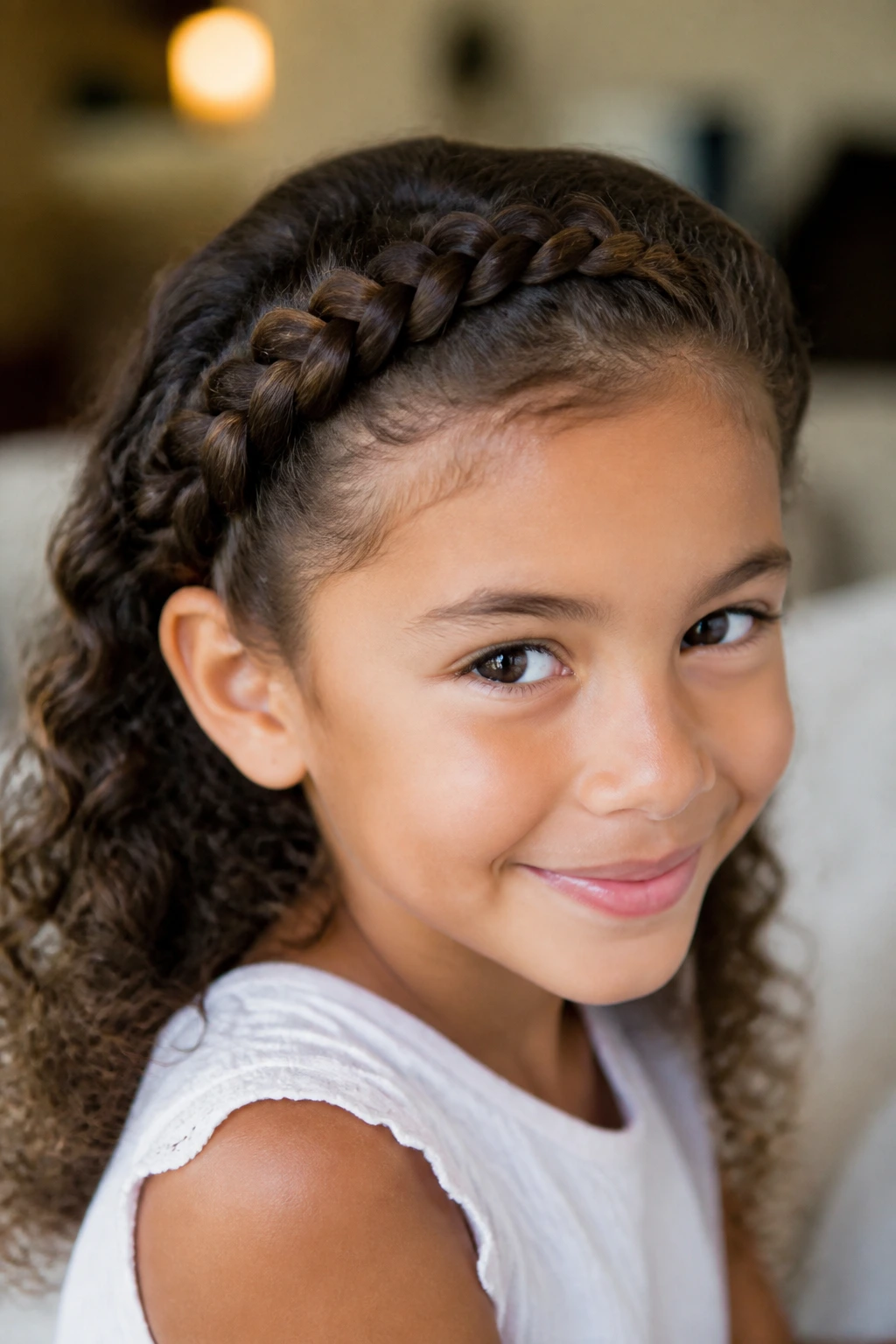
A crown braid headband is one of those styles that looks more complicated than it is. You braid a section along the hairline from one side toward the other, then pin or tuck it behind the ear so it reads like a built-in headband. The loose curls in back keep the style from feeling formal or stiff.
Keep the braid soft, not tight
Use small sections and do not pull the braid flat against the scalp. A loose braid gives the face a soft frame and leaves more curl texture visible around the back. If you braid too tightly, the style can make the front look strained and leave a dent in the hairline.
This is a strong pick for day-old curls because the braid disguises frizz near the roots. It also works when you want hair off the face but still want the rest of the curls to move.
6. The Bubble Ponytail on Curls
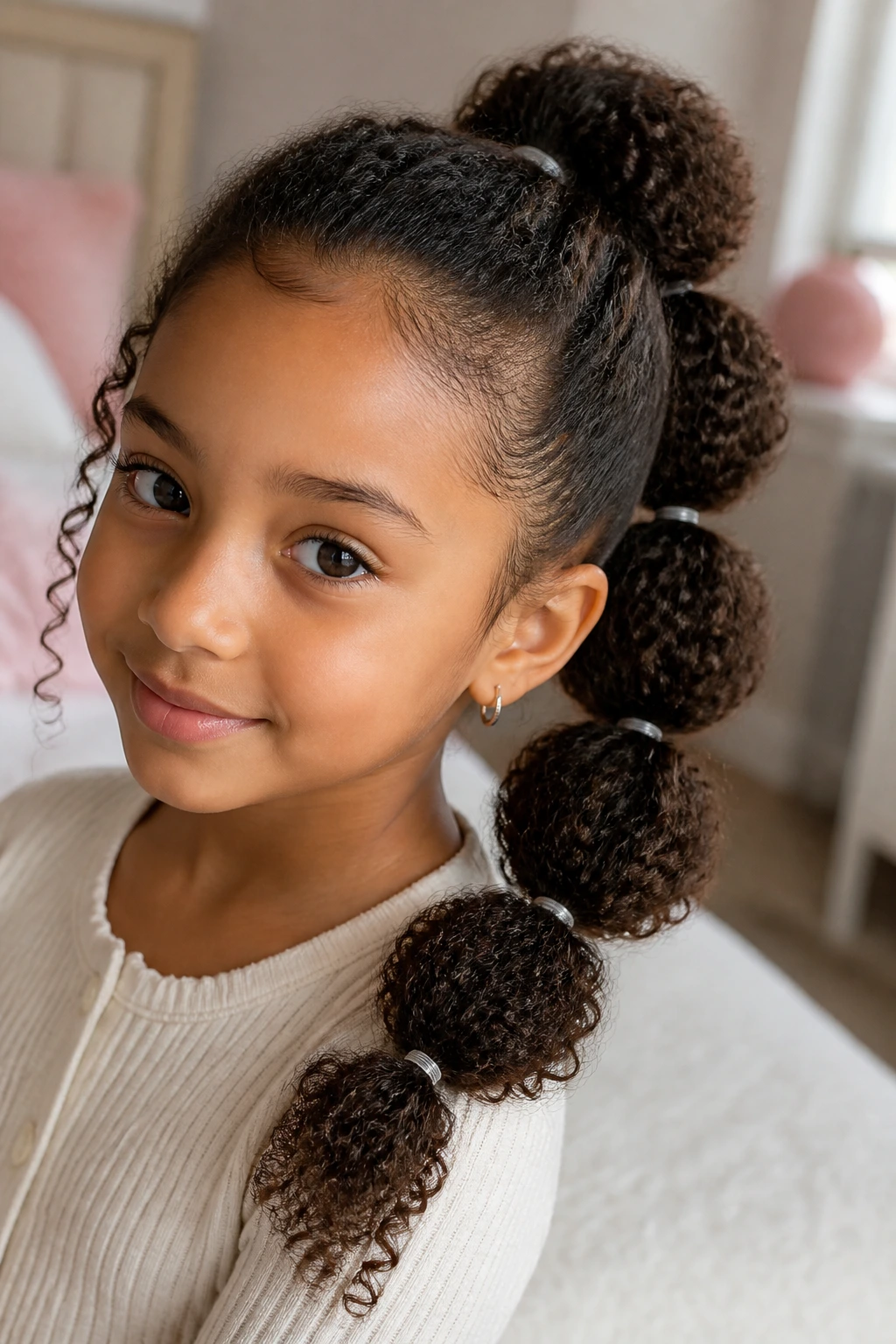
Unlike a plain ponytail, the bubble version turns the hair ties into part of the design. Secure the hair into one ponytail, then add small elastics every 2 to 3 inches down the length and gently tug each section so it rounds out into bubbles. On curly hair, those sections look especially full because the texture does half the styling for you.
This is one of the best choices for longer curls that need a little structure without being pinned flat. It also keeps hair from tangling as much as a loose ponytail can, especially during active days. I’d choose this over a slick ponytail almost every time because it keeps the curl pattern visible.
A clear elastic or tiny coated band works best. Big elastics can make the bubbles look lopsided.
7. The Low Puff with a Ribbon
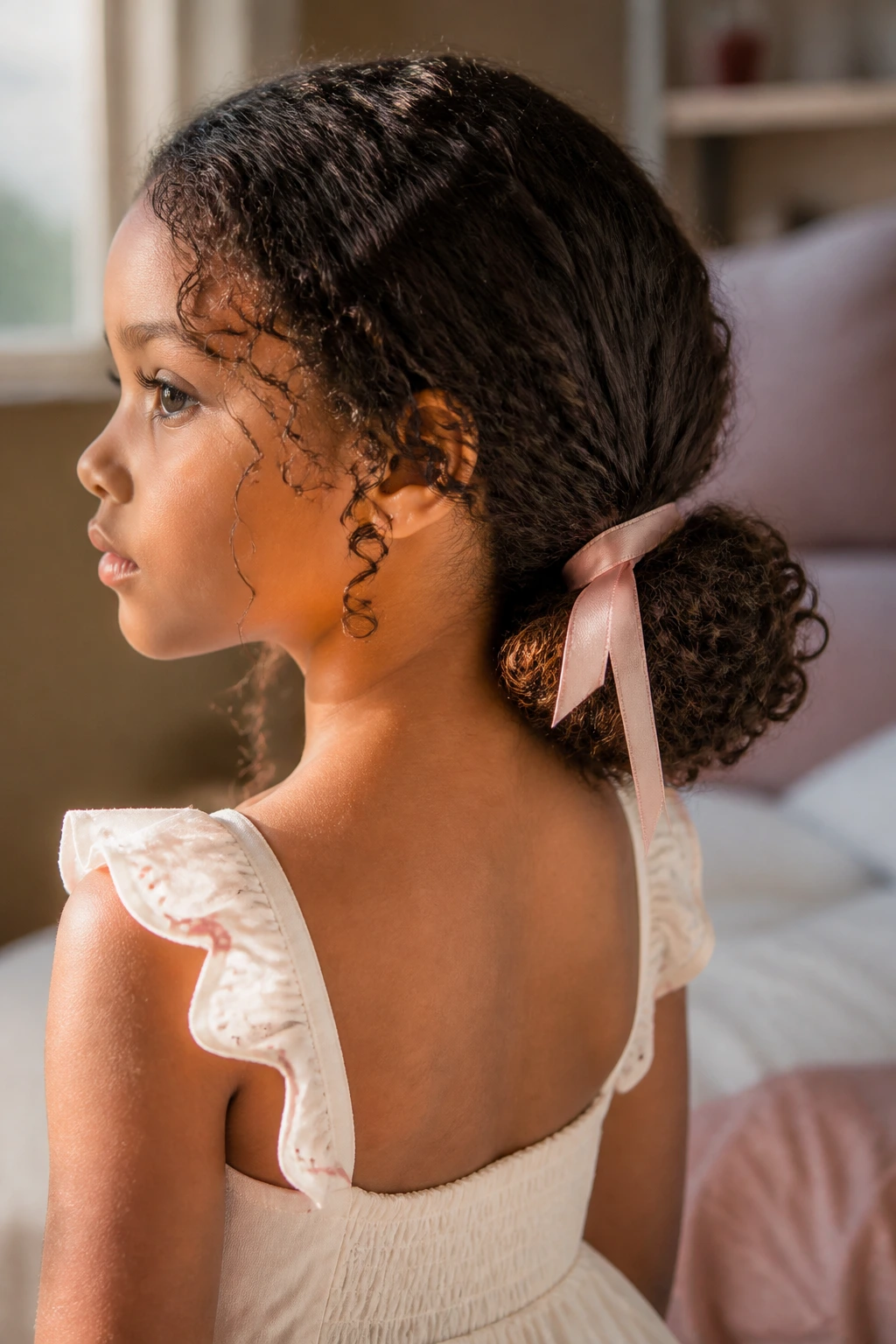
A low puff feels calmer than a high pony and dressier than a loose bun. Gather the curls near the nape, let the crown stay a little soft, and tie a ribbon around the base to hide the elastic. Satin ribbon is the nicest choice because it slides less and doesn’t snag the hair.
This style is good when the outfit has a pretty neckline or collar you want to show off. It also works well for picture day because the low placement keeps the silhouette neat while the curls still fall with shape. If the puff looks too flat, loosen the roots above the elastic with your fingers and lift slightly at the crown.
One ribbon changes everything. It’s a small thing, but it really does shift the whole mood of the style.
8. The Twisted Half-Up Crown
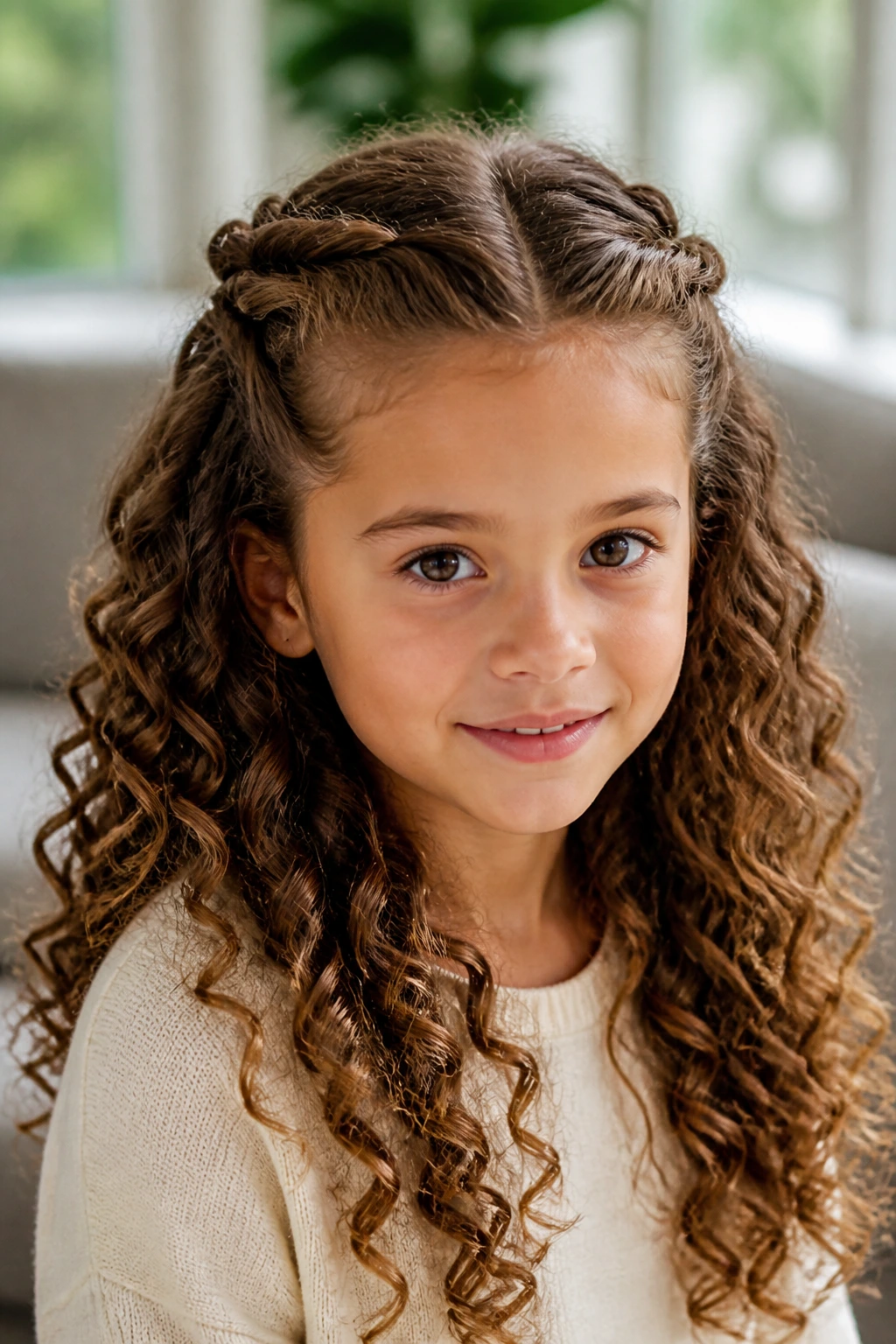
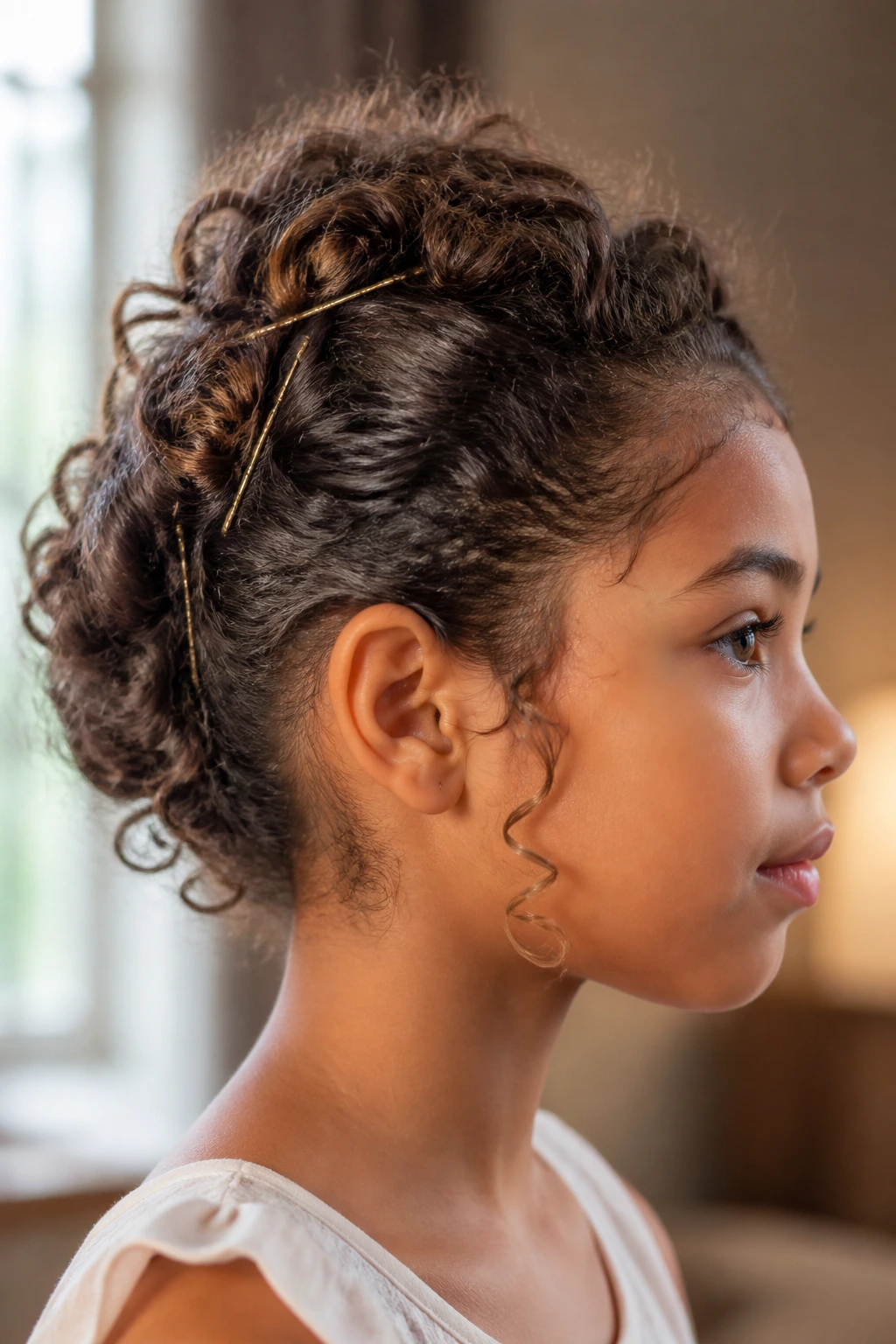
Want a style that keeps growing-out bangs and front layers under control? Two twists do the trick. Take a section from each temple, twist them back toward the crown, and pin them together at the back. The rest of the curls stay loose, so you still get volume without the front falling forward.
Best for front layers
This is one of my favorite options for hair that’s in that awkward in-between stage. The twists guide the front pieces back without flattening them, and they sit more softly than a braid if the child dislikes the feel of tight plaits.
Use two bobby pins crossed in an X if the hair is slippery or thick. That little trick keeps the twists from sliding out halfway through the day.
9. Curly Pigtails
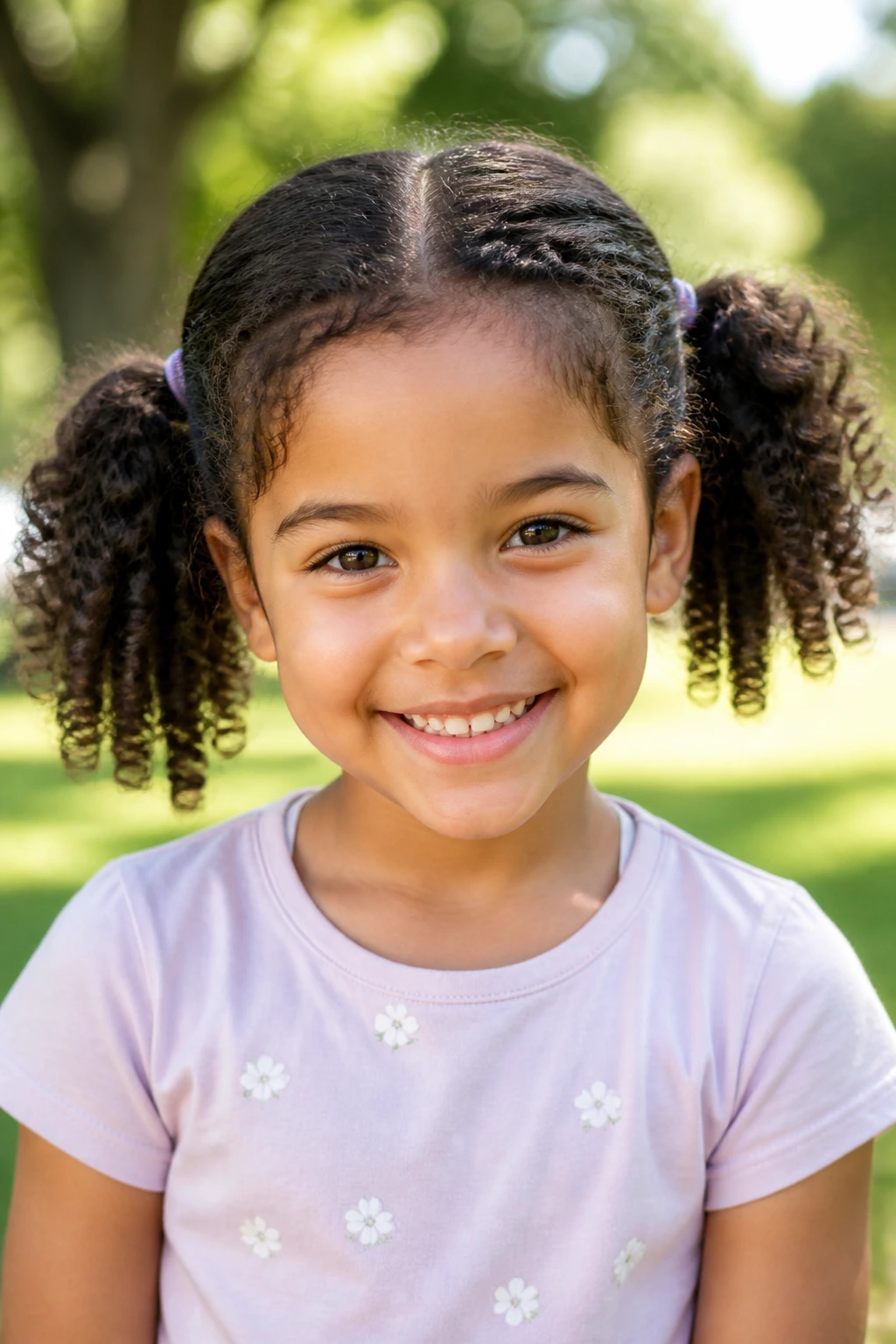
Curly pigtails are playful in the best way. Split the hair down the middle and tie two sections at ear level or just below, letting the curls spill out in their own shape. If the hair is dense, a zigzag part can make the style feel more lively than a straight line.
This style works on a wide range of curl patterns because it doesn’t ask the hair to lie flat. It also gives a child that neat, balanced look without making the head feel too “done.” If one side is fuller than the other, leave it. Curly pigtails rarely need to be mathematically perfect to look cute.
A soft elastic or ribbon-tie keeps the base from getting pinched. Tight rubber bands are a bad trade here.
10. The Loose Top Knot
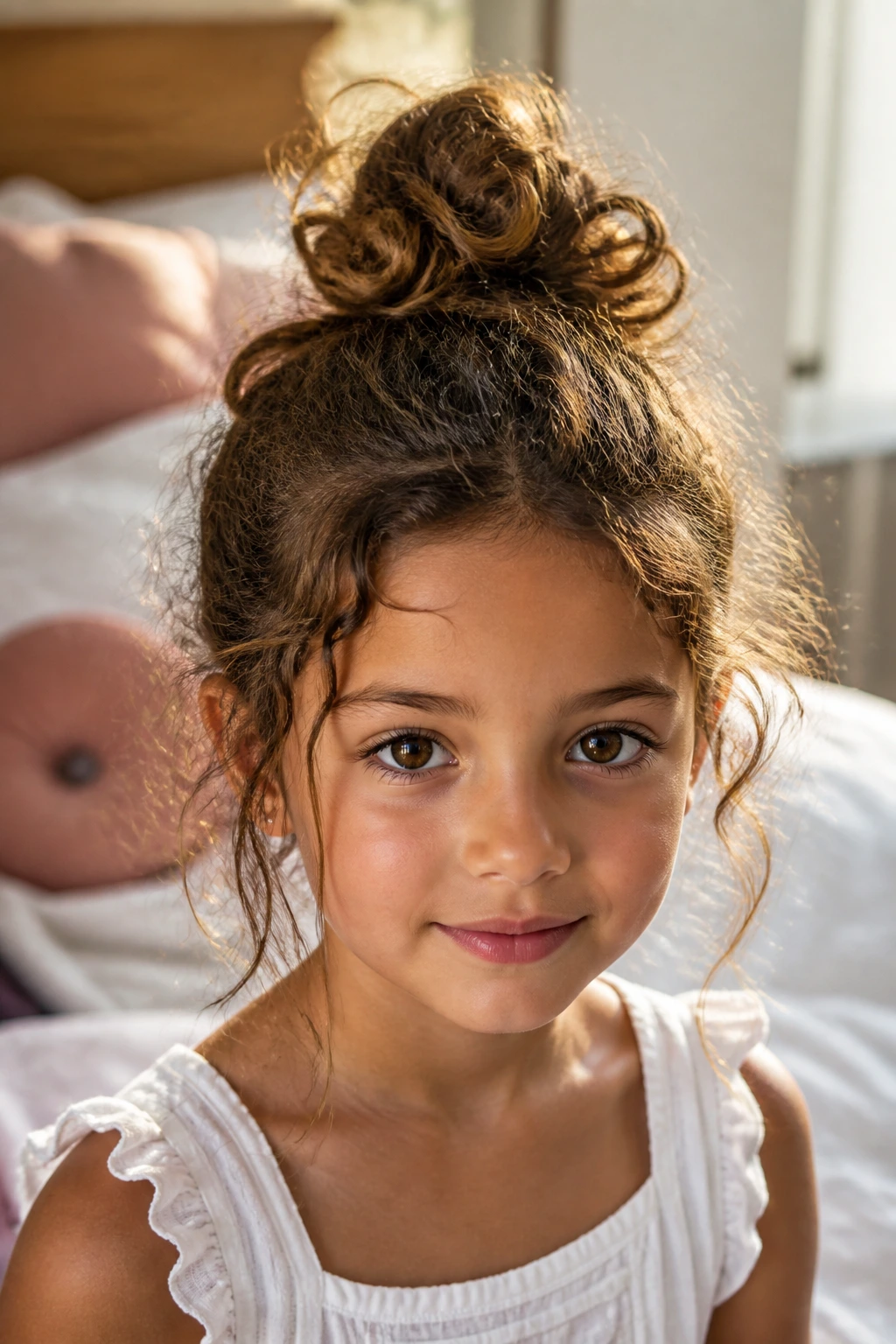
The loose top knot is the answer when the neck needs air and the hair needs to stay up. Gather the curls high, twist them into a soft bun, and leave a few ends poking out so the texture remains visible. If the front has shorter curls, let them stay loose around the face.
This style can look too severe if you smooth every strand back. Don’t do that. The charm is in the softness. A little lift at the front and a little mess at the bun make the whole thing feel lived-in rather than overworked.
It’s also a strong option for very full hair because the bun keeps the weight off the shoulders. A few bobby pins in crossed pairs usually hold it better than a single oversized elastic.
11. The Side-Swept Clip-Back
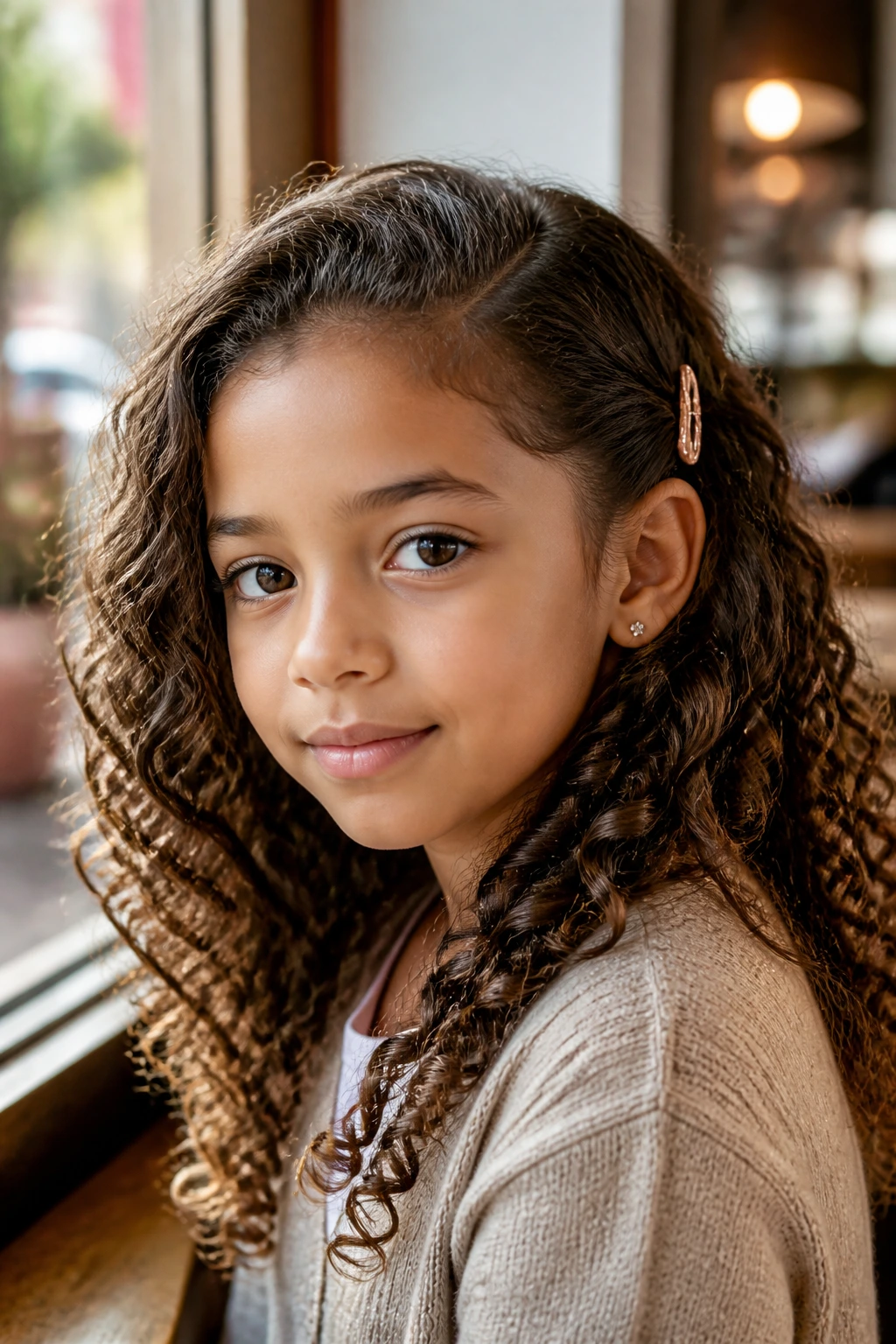
A side-swept clip-back is a quiet style, and I mean that in a good way. Pull one side of the curls back toward the ear, pin them with a barrette or small clip, and leave the rest to hang naturally. On a bob or lob, this gives shape without needing much length.
The style is handy when one side of the hair is frizzier, or when a child keeps tucking hair behind one ear anyway. Instead of fighting that habit, you build the style around it. The clip should sit where the hair already wants to fall, which keeps the shape comfortable and stops the pin from poking.
If the clip keeps slipping, pin a tiny section underneath first and then add the decorative piece on top. That two-step hold makes a difference.
12. Mini Afro Puffs
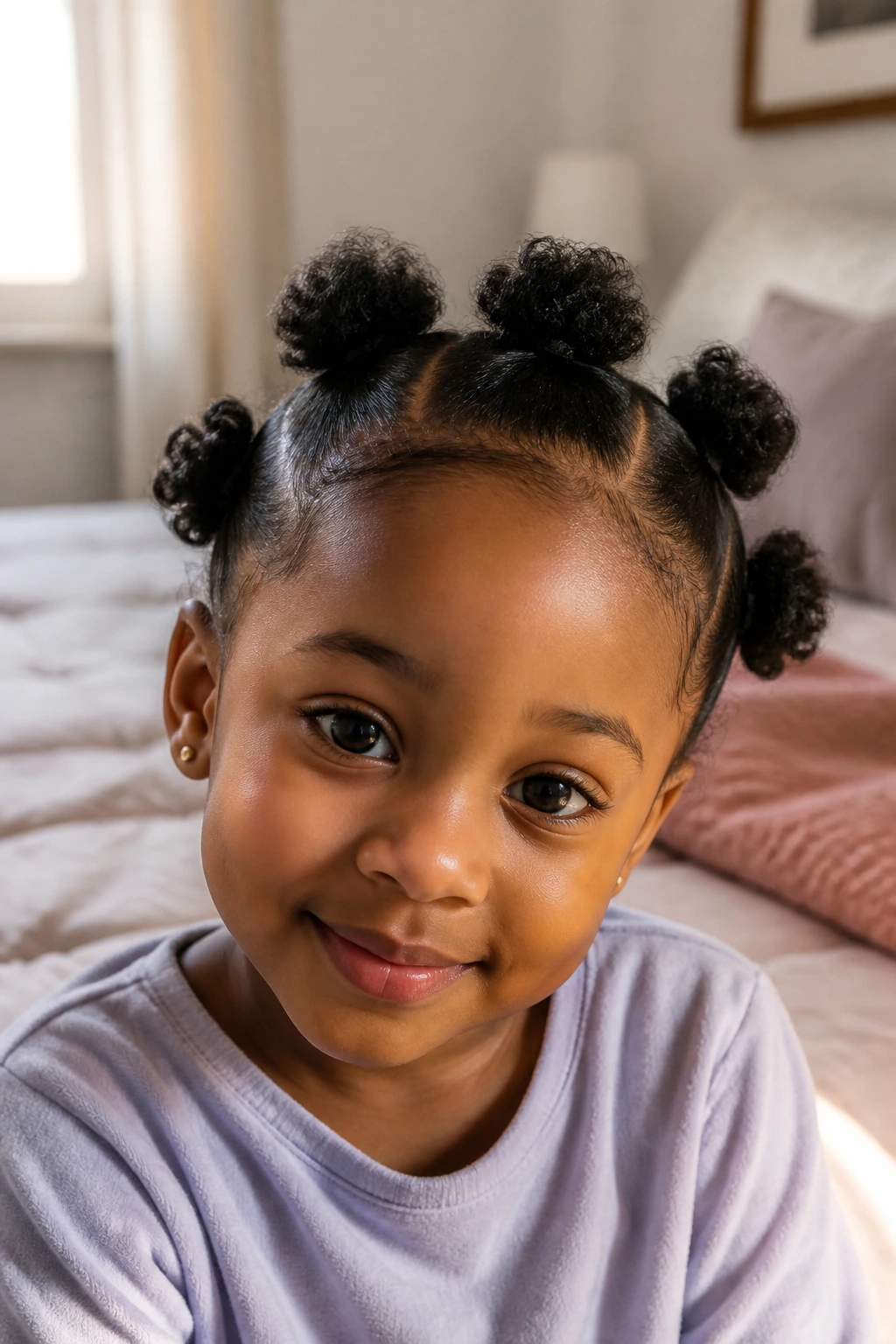
Mini afro puffs are tiny, lively, and full of personality. You divide the hair into several small sections—four, six, sometimes more—and secure each section into its own puff. The look is sweet, but it also has a neat rhythm that works well for short, dense curls and coils.
Best for shorter coils
The secret here is even parting and gentle tension. If one puff is much tighter than the others, the shape looks off balance and can tug in a way that feels unpleasant. Use a tail comb for clean sections, then smooth each puff with your fingers rather than flattening it with a brush.
This style is especially good when the hair is short enough that big ponytails won’t stay put. The mini puffs give structure without pretending the hair is longer than it is.
13. The Braided Front Accent with Loose Curls
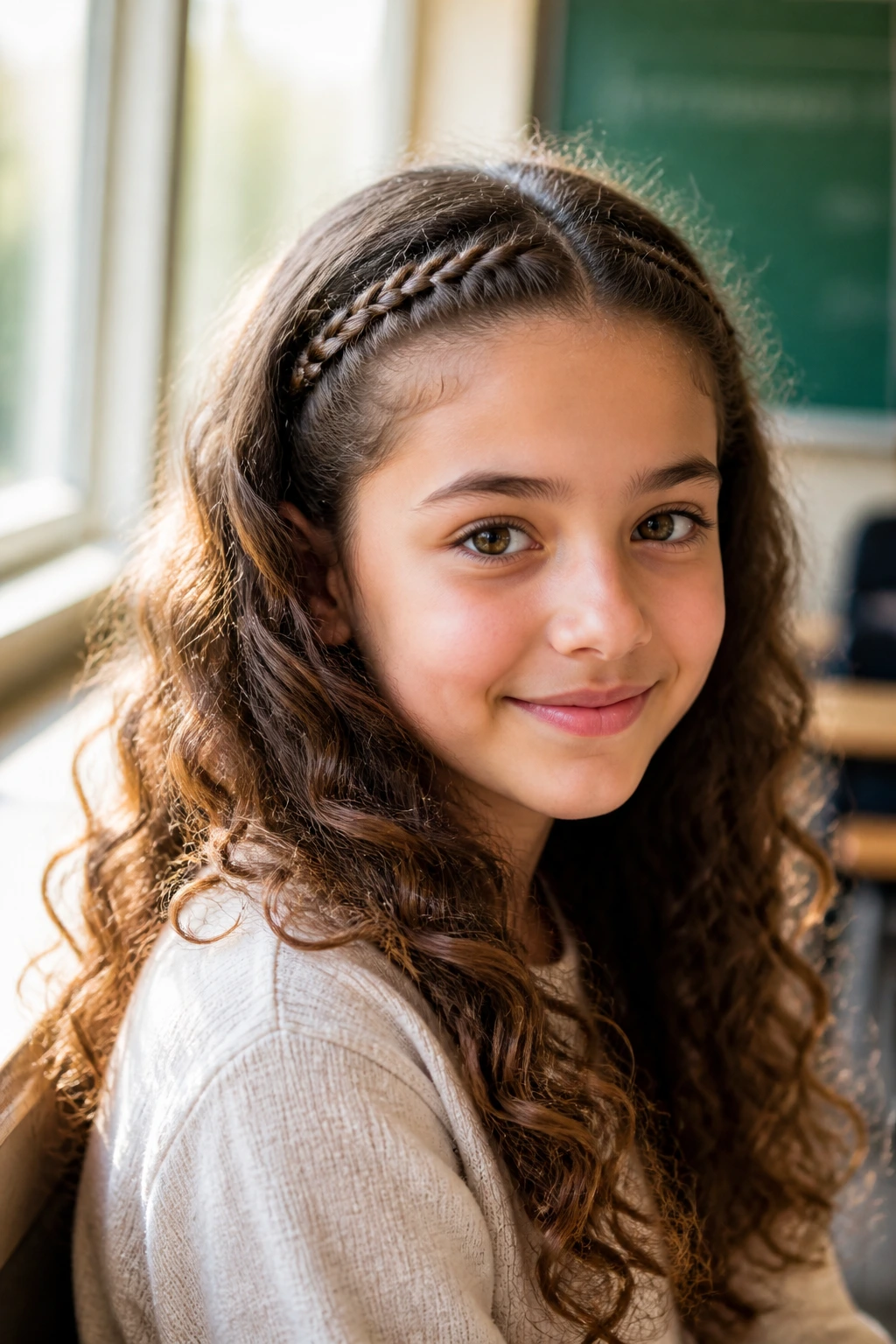
Want curls down but no hair in the face? Braid one thin front section and leave the rest loose. That single accent braid pulls the front hair back enough to clear the eyes, while the loose curls keep the style soft and full.
This is a good choice for school, casual photos, or any day when a child wants a bit of detail without the commitment of a full braid style. It also works well on second- or third-day curls because the braid hides a little root fuzz and the loose ends keep the whole look from feeling flat.
A tiny clear elastic or one discreet pin at the end is usually enough. Keep the braid narrow. A thick braid can overpower the rest of the hair.
14. The Wrapped High Ponytail
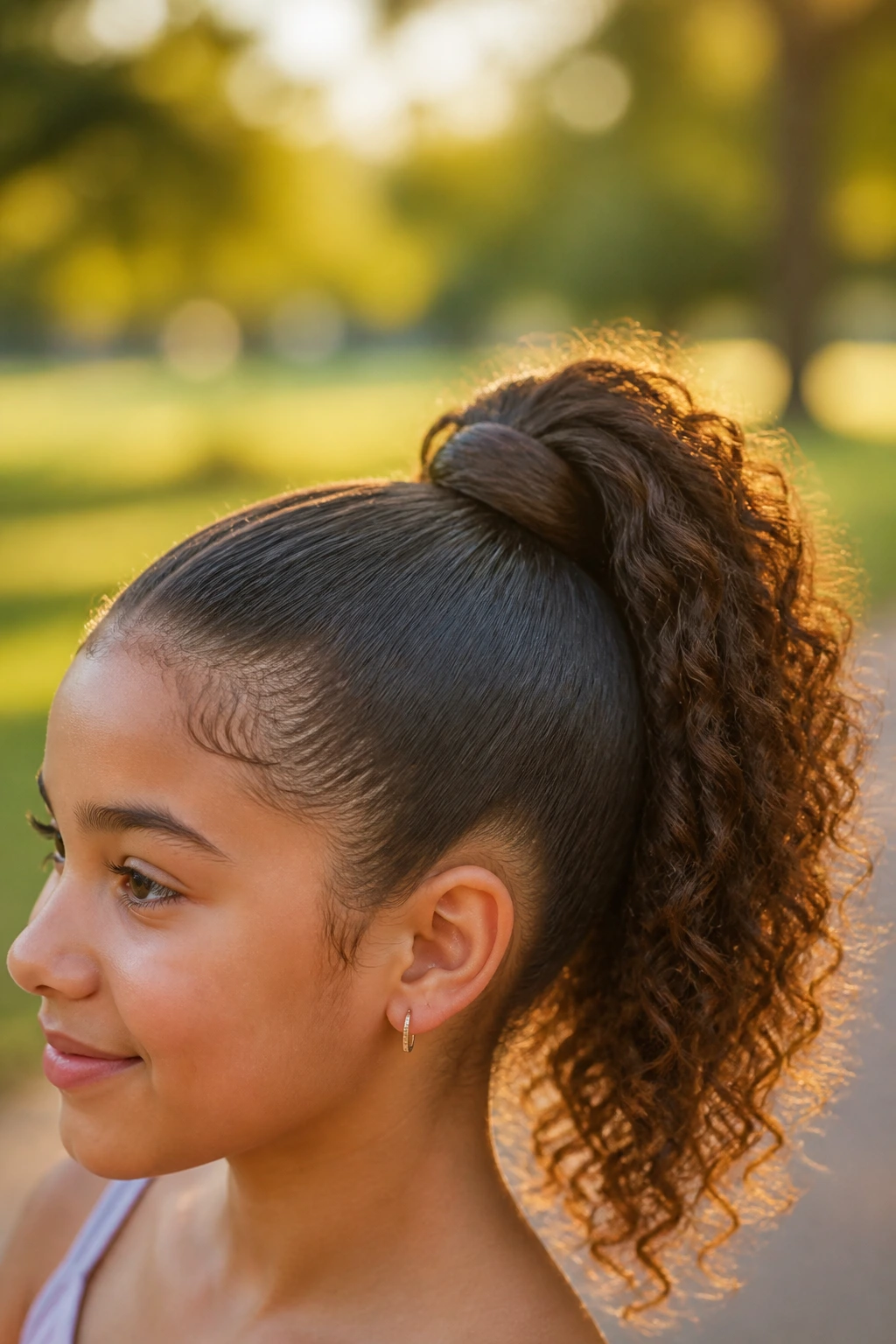
A wrapped high ponytail is a small step up from a regular pony, and that small step matters. After you secure the ponytail high on the head, take a narrow strand of hair and wrap it around the elastic so the base disappears. Pin the wrap underneath with a bobby pin.
That tiny finish makes the style feel cleaner without taking away the curl volume. It’s one of those details people notice even if they can’t explain why the style looks more polished. I also like it because the wrapped base keeps the elastic from staring back at you in photos.
If the ponytail is heavy, use two pins instead of one for the wrap. A single pin can shift as the hair moves.
15. Double Bubble Puffs
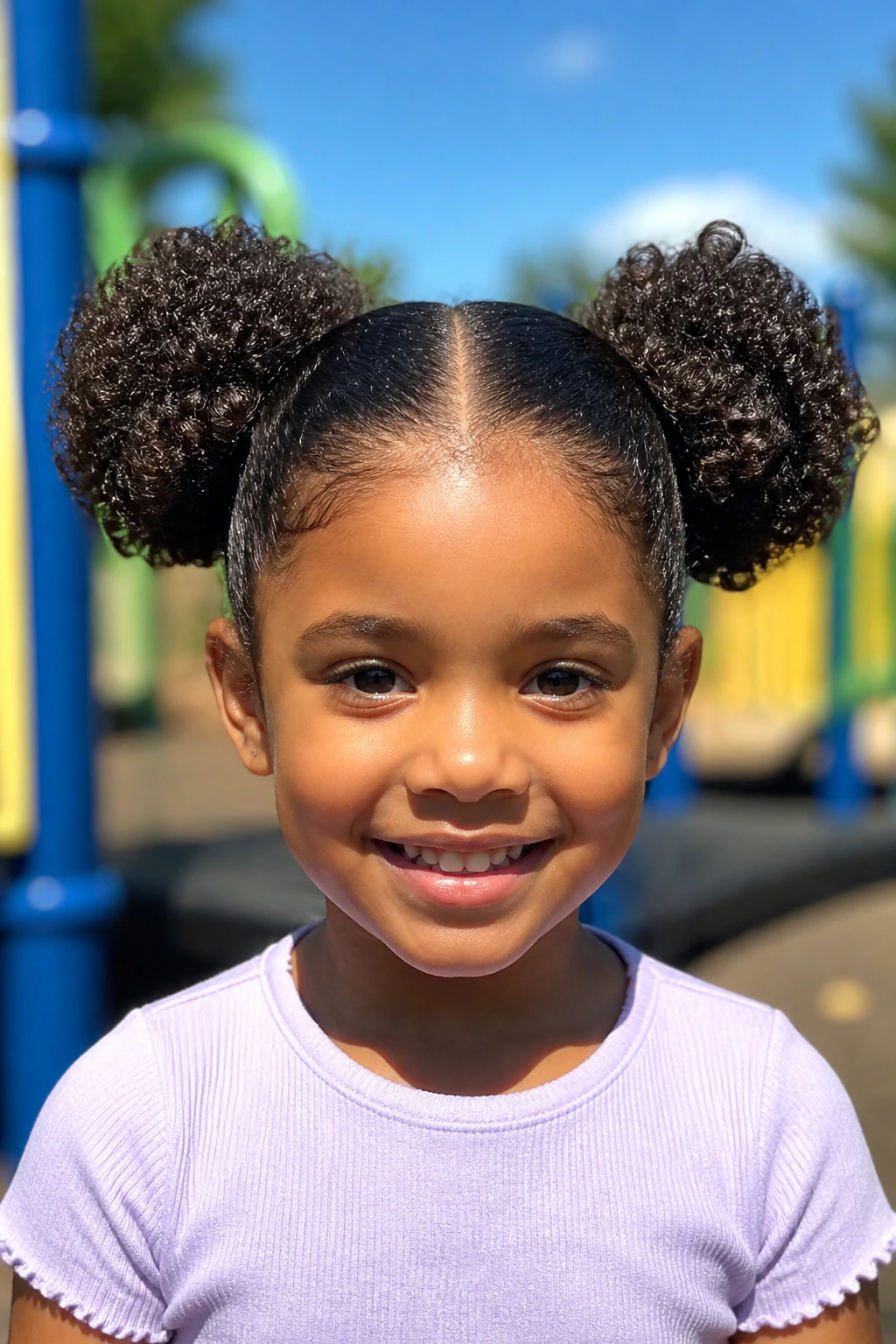
Double bubble puffs are a playful middle ground between pigtails and bubble ponies. You make two low sections, secure each one, then add one or two elastics down each tail and gently puff the sections apart. The result is round, bouncy, and a little bit cheeky.
This style shines on thick hair because the bubbles spread the volume out instead of forcing it into one tight shape. It also works nicely when a child wants something a touch different from the usual pigtails. I like the way it keeps the hair secure while still letting the curls breathe.
Keep the elastics even on both sides. If one side has more bubbles than the other, the style starts to look accidental.
16. The Messy Curly Bun with Face-Framing Pieces
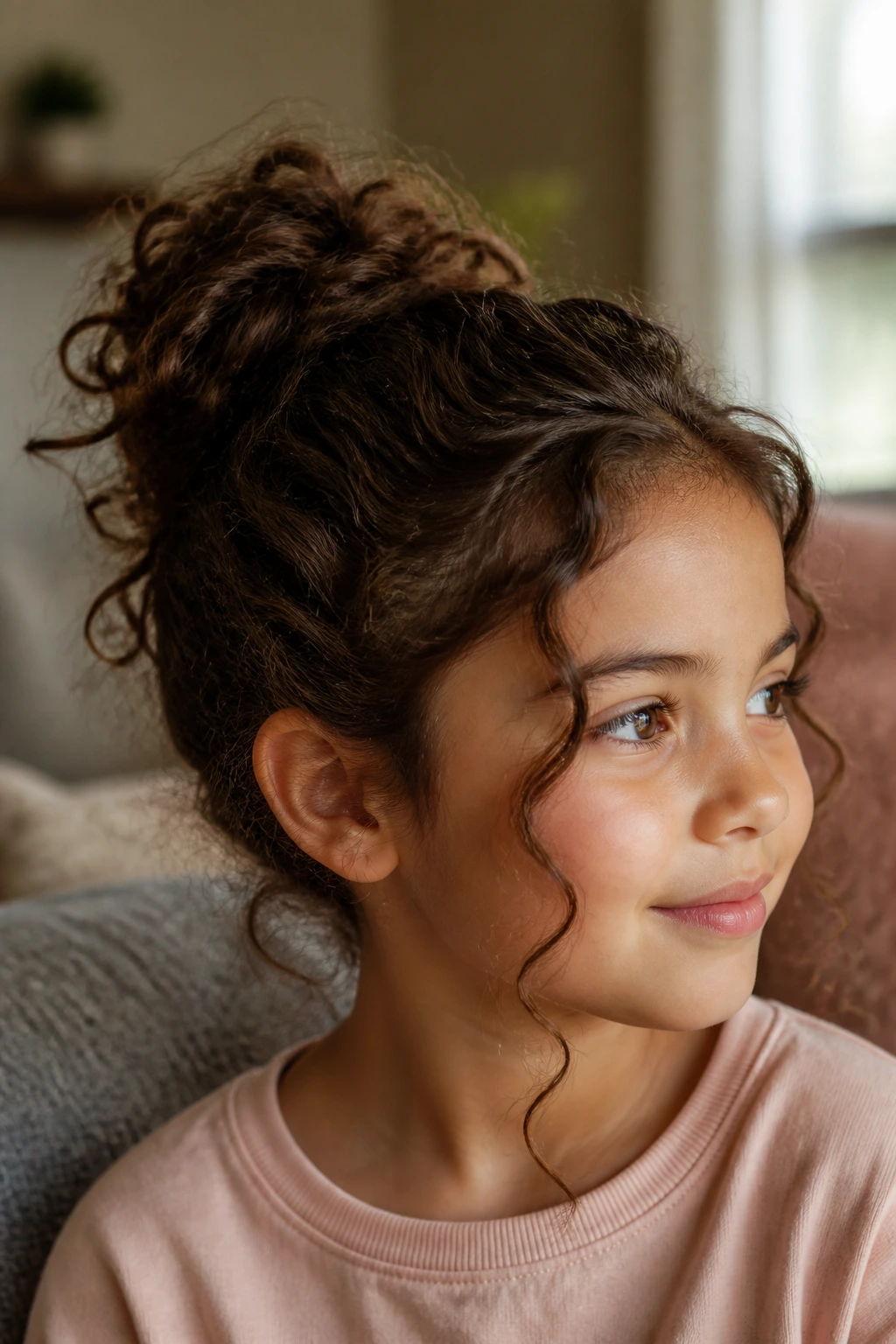
A messy curly bun can look careless if it’s done carelessly. There’s a difference. The version worth wearing gathers the hair into a soft bun, leaves two face-framing curls out, and keeps a little texture at the hairline instead of slicking everything back.
This is a strong choice for hot days, dance class, or evenings when the hair needs to get off the neck fast. The loose pieces around the face keep it from looking severe. Without them, the bun can feel too packed and tidy for curly hair.
If the bun is too bulky, twist it once more before pinning. If it’s too flat, loosen the top slightly and let the curls stack on themselves.
17. The Two-Twist Half-Up Style
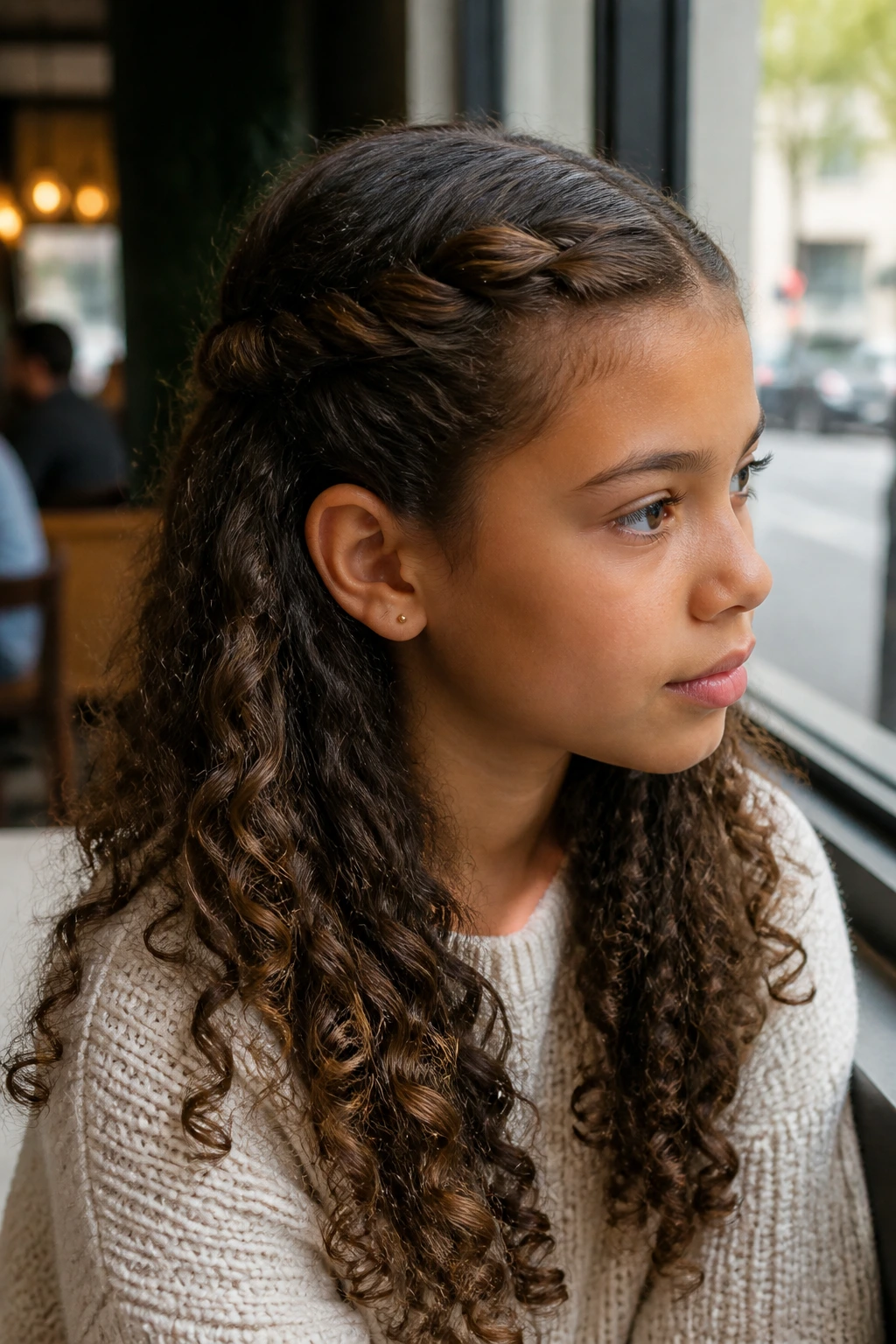
The two-twist half-up style is what I recommend when braids feel like too much work. Twist one section from each side, bring them together at the back, and pin them down. The curls below stay loose, so the hairstyle keeps its volume and movement.
Compared with a braid, a twist takes less time and puts less stress on the front pieces. That makes it a good choice for kids who dislike long styling sessions. It also works well on medium-length curls because the twists have enough length to hold without unraveling too quickly.
If the twists slip, pin them first with one bobby pin, then add a second pin across it. Simple. Effective.
18. The Curly Faux Hawk
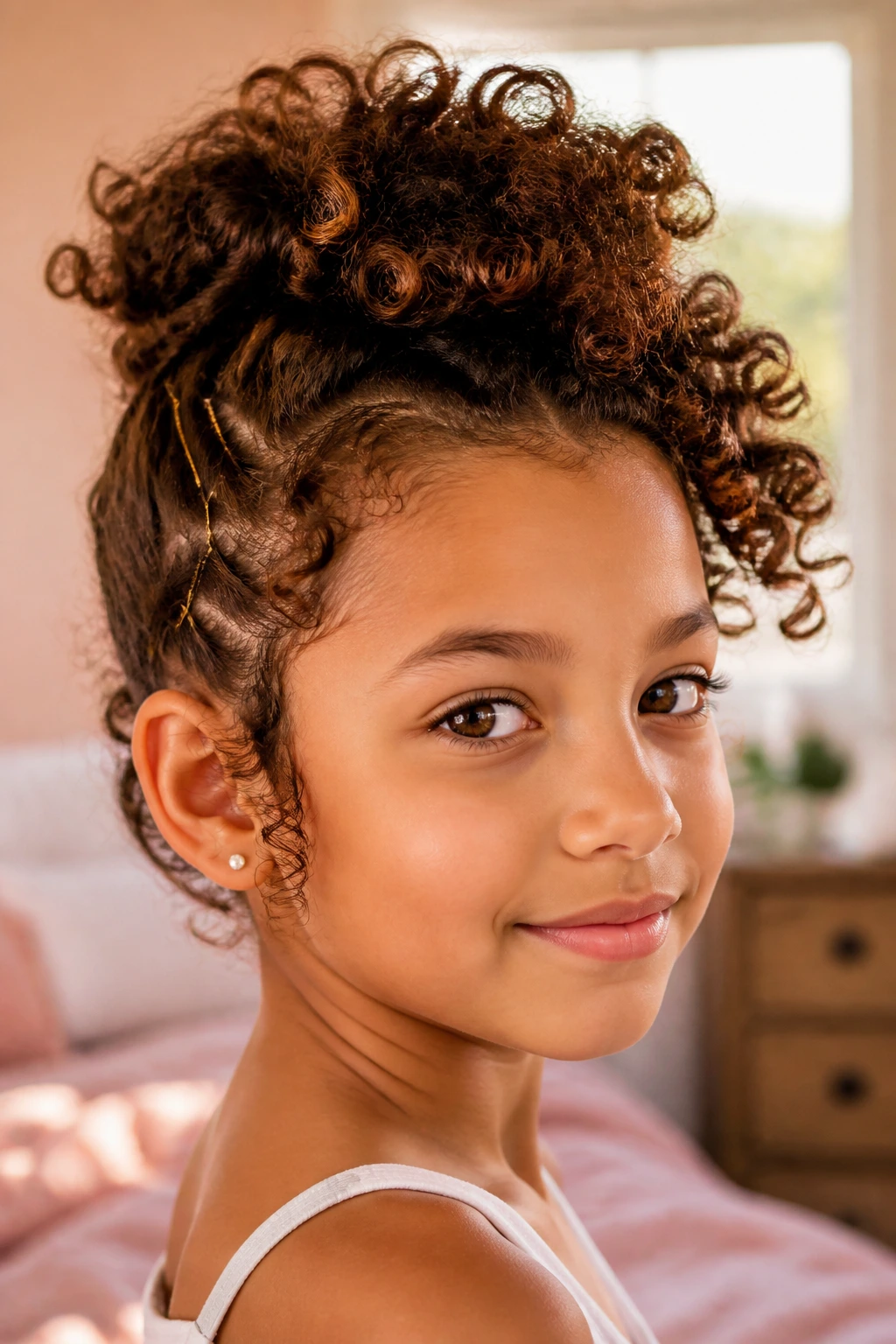
If you want a little attitude without a lot of effort, the curly faux hawk is the one. Pin the side sections upward or backward so the center strip of curls stands tall, almost like a soft crest down the middle of the head. The shape is bold, but it still feels playful.
Keep the sides soft
Do not flatten the sides so hard that the style starts to look stiff. A few loose curls near the ears keep the faux hawk from becoming too sharp. Four to six pins usually hold the side sections, depending on how thick the hair is.
This style is especially good for thick curls or coils that have natural lift. It turns volume into the point of the style instead of trying to tame it down.
19. The Claw-Clip Twist
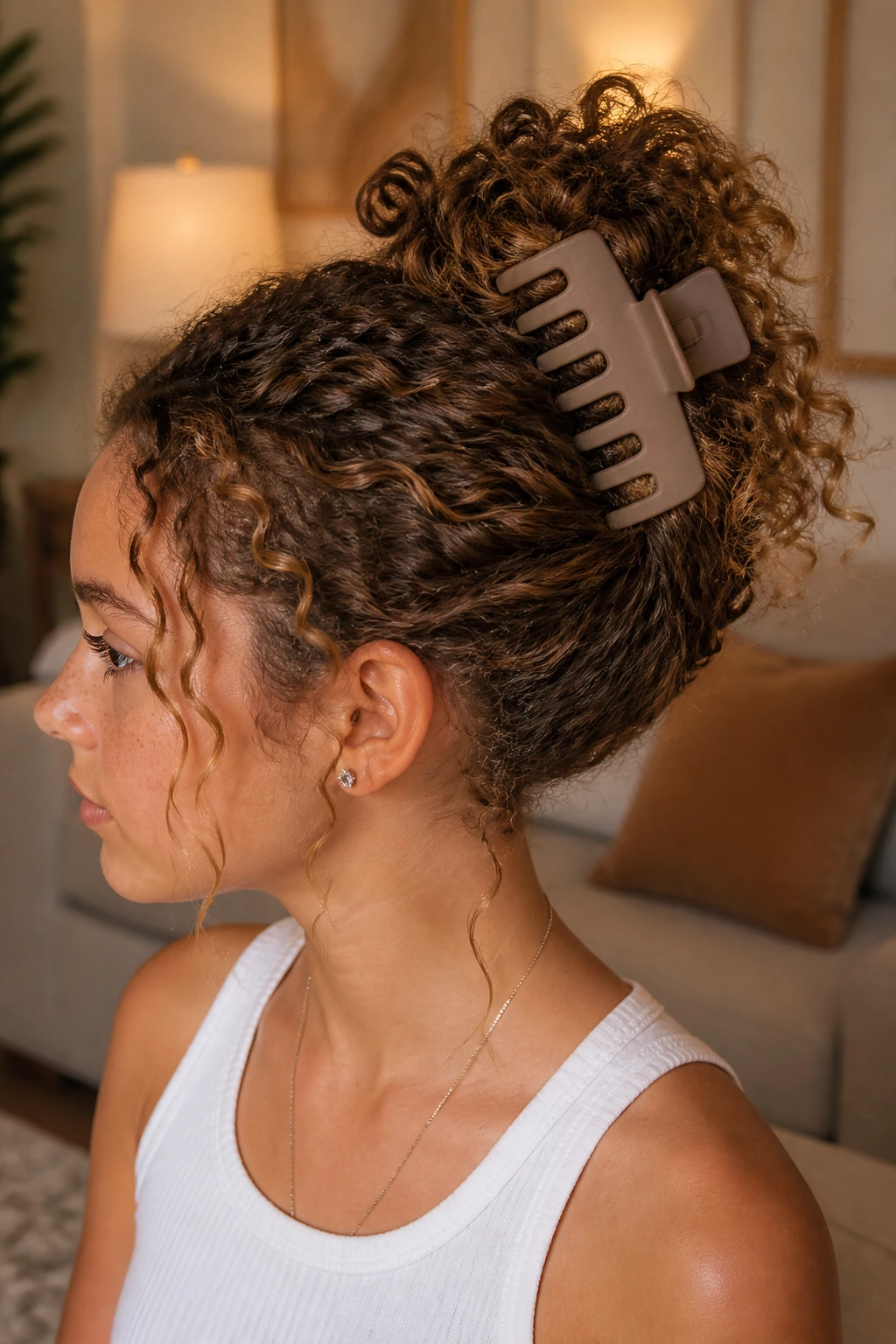
A big claw clip can be a very good thing on curly hair, as long as it grabs a twist rather than crushing the shape. Gather the hair, twist it upward, and clamp it with a clip that’s wide enough for the thickness of the curls. Let the ends spill out if that’s the look you want.
I prefer matte clips over slippery glossy ones. They grip a little better and usually stay put longer. This style is a lifesaver on medium-length hair when the child wants the hair up fast but doesn’t want a tight ponytail.
If the clip pops open, the twist is usually too thick for the clip size. Use a larger clip or split the hair into two smaller twists.
20. The Side Pony with a Scrunchie
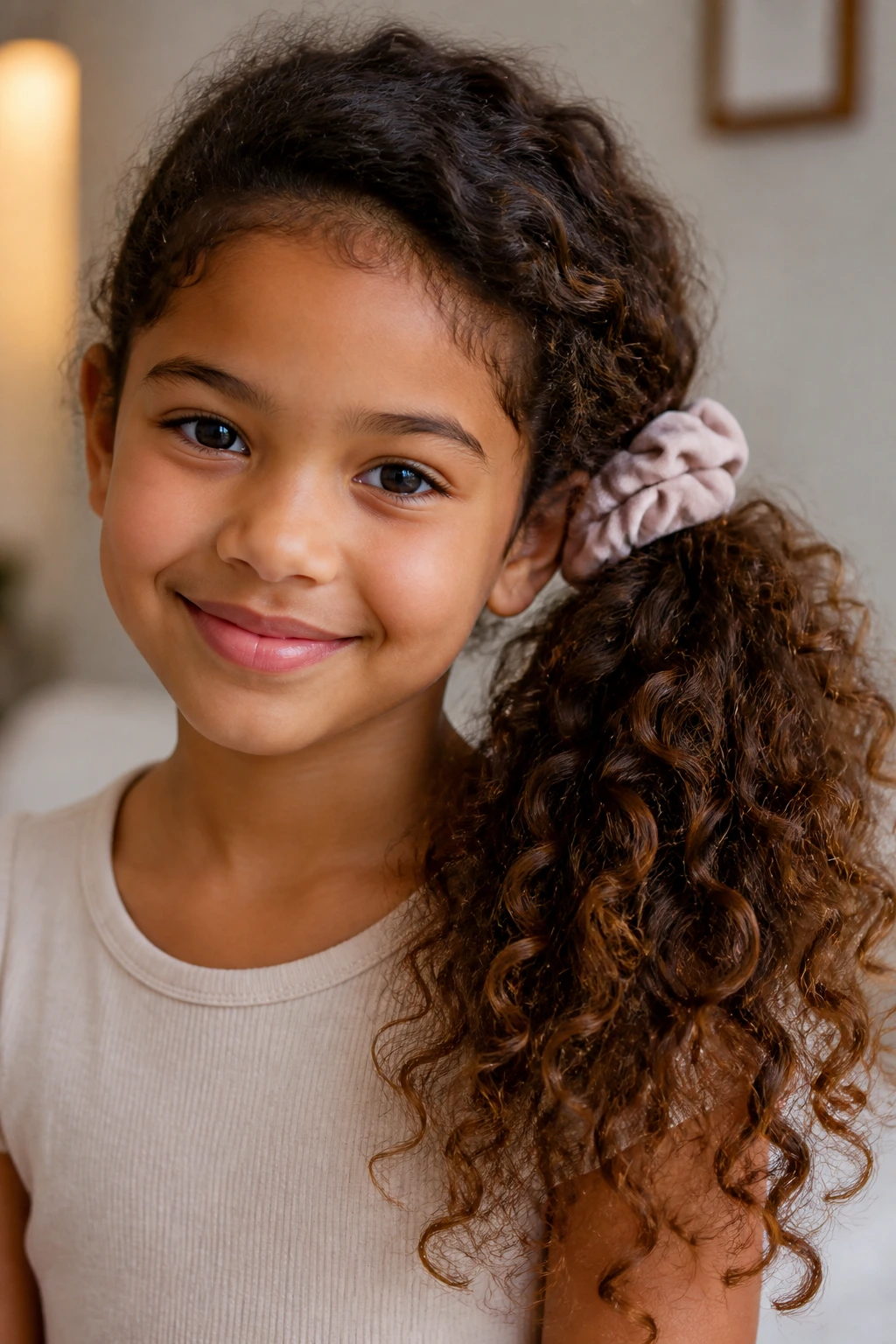
Why does a side pony feel so cute on curly hair? Because the curls spill over one shoulder and turn the whole style into something soft and lopsided in the nicest way. Pull the hair to one side at a low or mid height, secure it with a scrunchie, and leave the ends loose.
This style is useful when you want to show off a neckline, earrings, or a shirt collar. It also works well for hair that has more curl on one side than the other; the asymmetry stops the difference from looking like a problem. If the pony sits too low, move it up an inch. That small adjustment changes the whole shape.
A scrunchie gives the base a softer look than a plain elastic. It also feels easier on the hair.
21. Triple Puff Mohawk
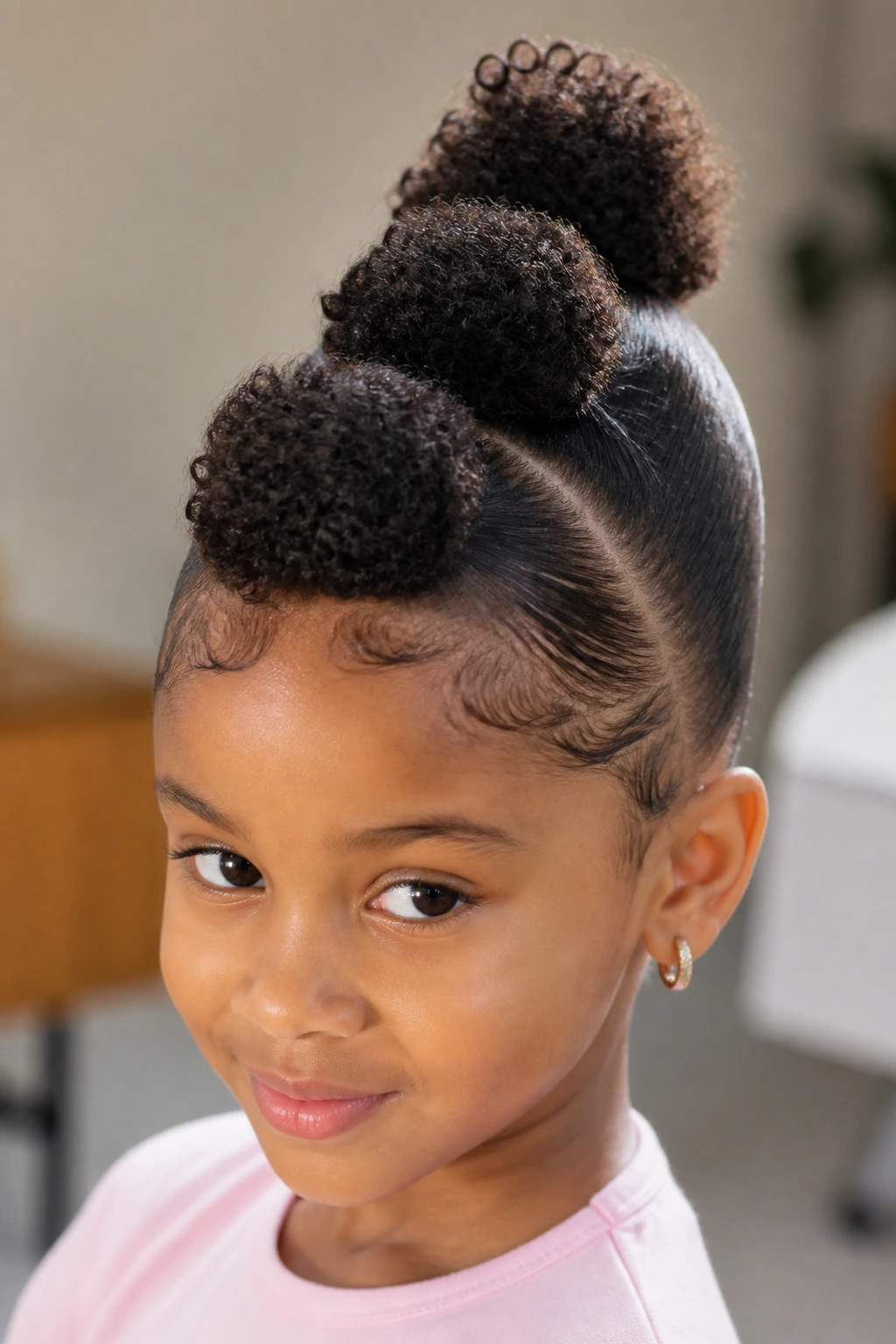
Triple puff mohawks look a little bit bold and a little bit sweet, which is a combination I never get tired of. You section the hair into three parts from front to back and secure each into its own puff, creating a row down the center of the head. The sides stay smooth or lightly brushed back.
This style works beautifully on short to medium natural curls because it uses the hair’s own fullness to build the shape. It’s also one of the best ways to show off texture without needing long length. If the sections are evenly spaced, the style looks crisp; if they’re uneven, it can read as accidental, so take a minute with the parting.
Keep the elastics soft. Three puffs are already doing enough.
22. Loose Braided Pigtails
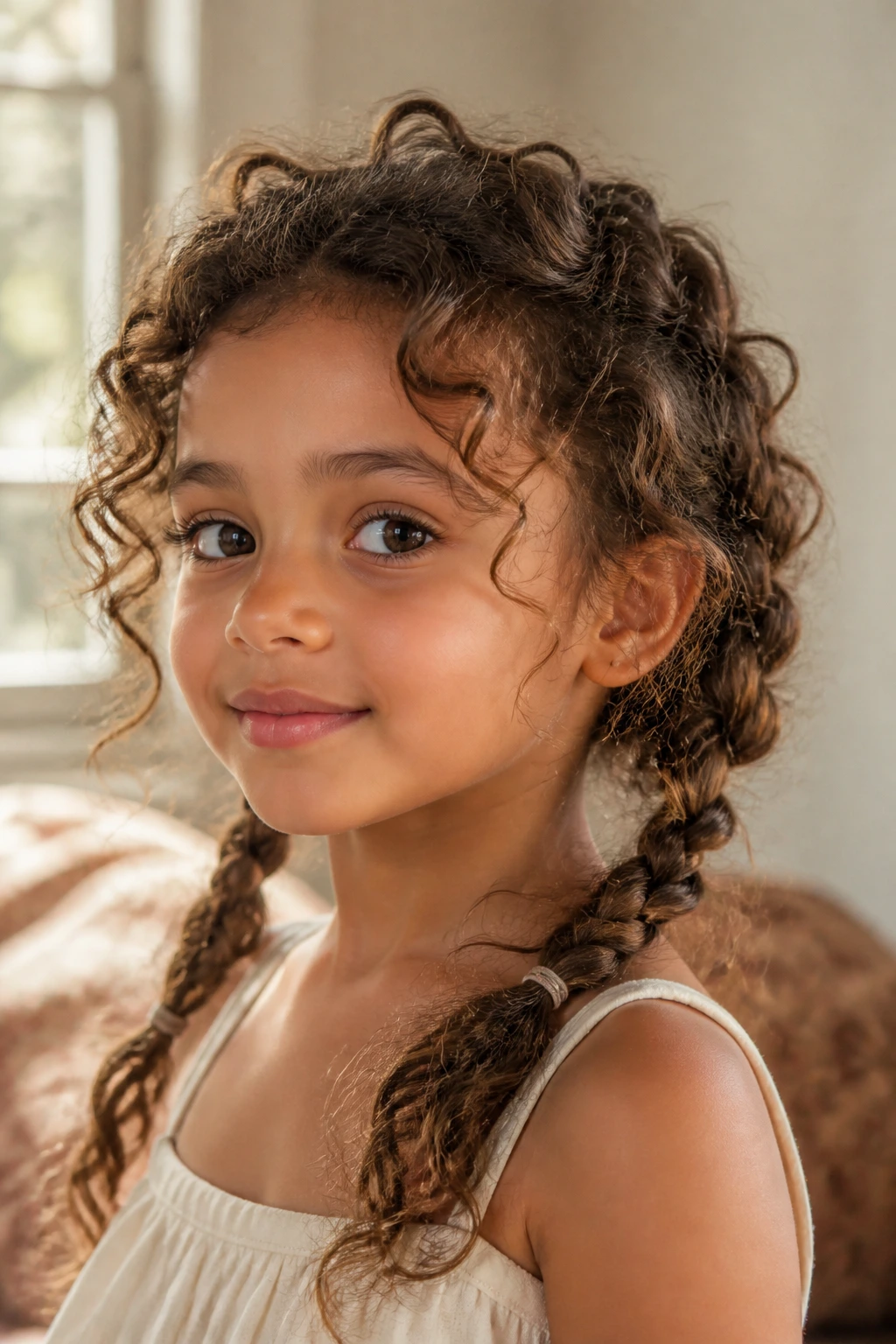
Loose braided pigtails are a smart compromise when you want the neatness of braids but still want curls to show. Start the braid mid-shaft instead of at the root, so the top keeps its natural texture and the ends stay tucked neatly. That little shift keeps the style from feeling too rigid.
This is a good choice for school days and sports because the braid helps prevent tangles while the loose crown keeps the style softer than a full tight braid. If the hair is layered, expect a few pieces to escape. Honestly, that often makes the style look better.
A gentle braid is the whole point. Pulling it tight defeats the curls.
23. The Curly Ponytail with Beads
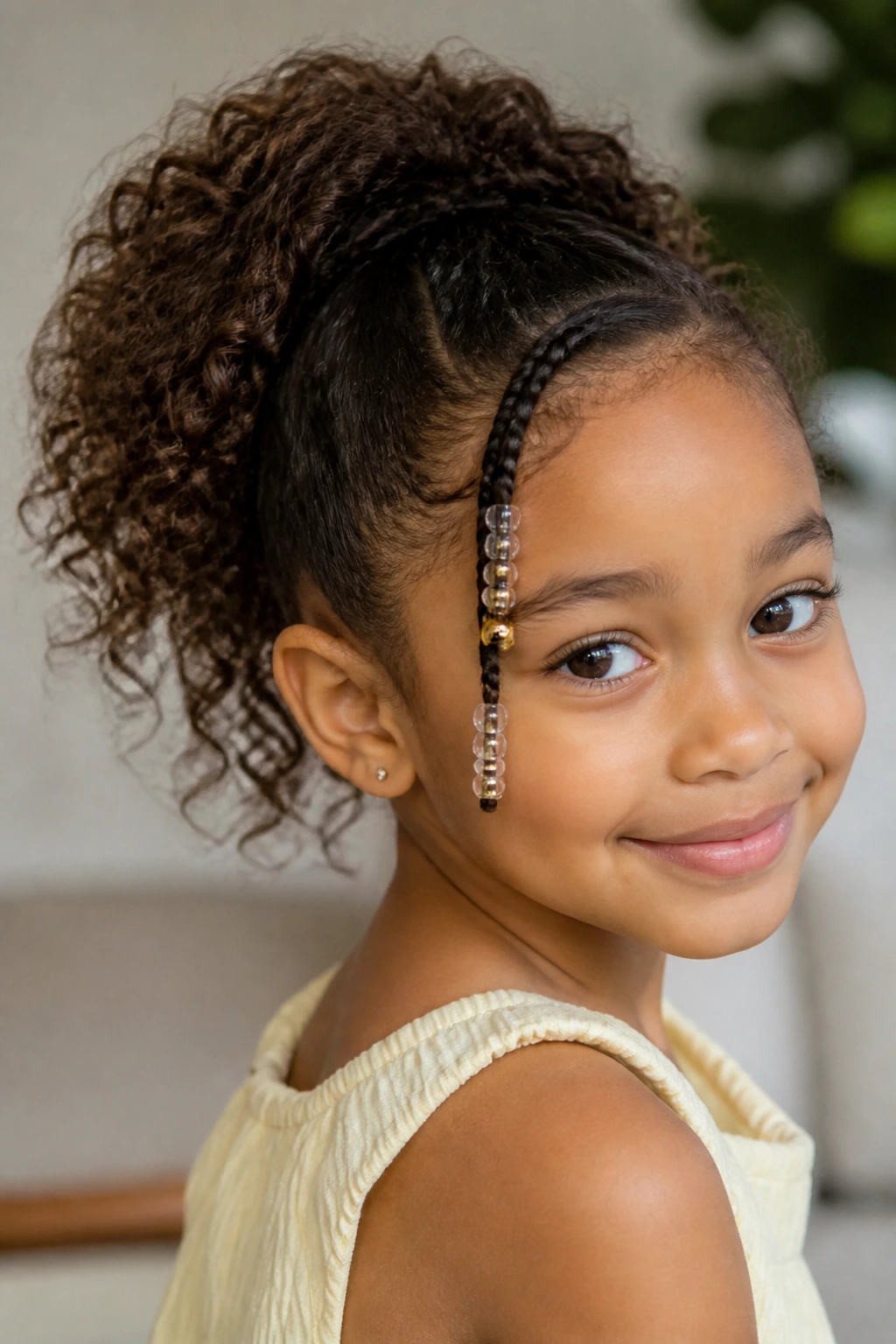
A plain ponytail is fine. A ponytail with beads or cuffs has a little more spark. After you secure the ponytail, add a few lightweight hair beads or decorative cuffs near the ends or along a small front braid if the hair length allows. The texture does the rest.
This style works best when the decorations are light enough not to drag the hair down. Heavy beads can pull on the curls and make the pony feel tired by midday. Choose one or two accents instead of loading the hair up; that keeps the look bright without turning it fussy.
If the hair is very thick, secure the base well first. Decorations should never be doing the job of the elastic.
24. The Headband Tuck and Puff
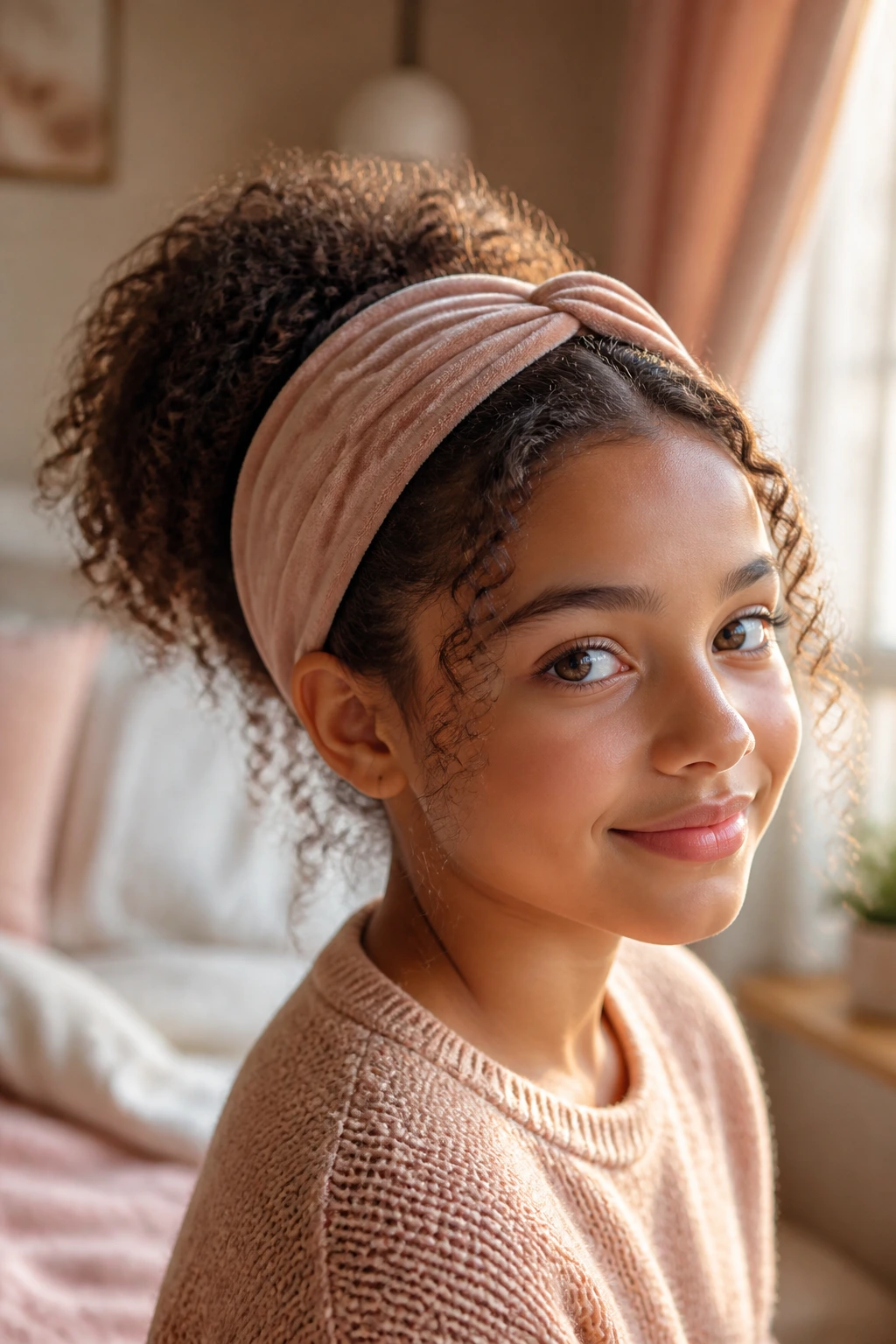
A stretchy headband and a few tucked curls can rescue a morning. Slide the headband on, tuck the front sections under it, and leave the back in a soft puff or loose cloud of curls. It’s quick, comfortable, and good at keeping hair off the face without flattening the whole head.
Best for bang growing-out stages
This style is especially useful when the front pieces are too short to stay back on their own. The headband handles that awkward layer so the rest of the hair can stay free. Use a wide soft band rather than a thin tight one; it sits better and doesn’t dig in behind the ears.
I like this one for school mornings because it takes the pressure off. Not every style needs ten pins.
25. The Tucked-In Curly Roll
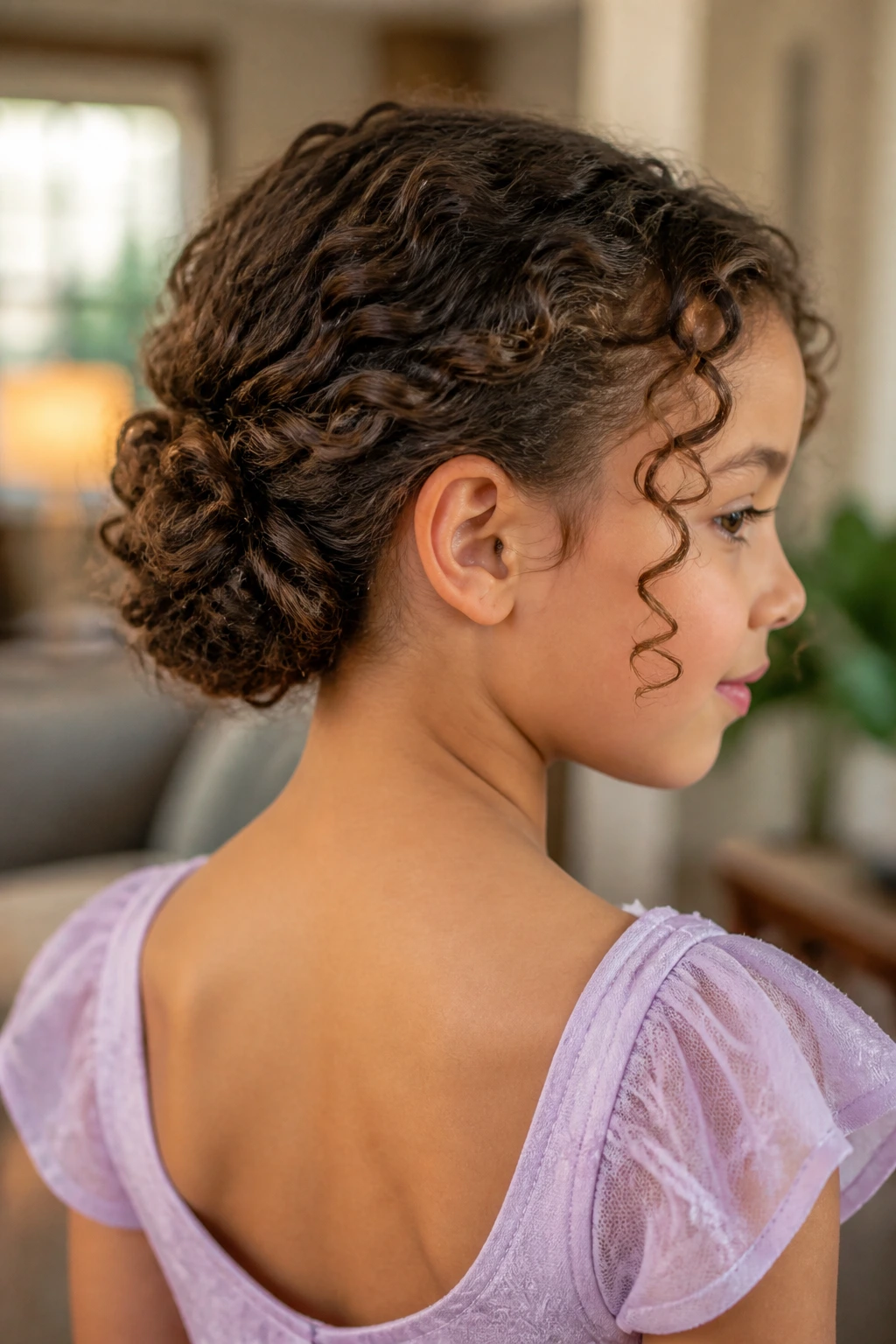
A tucked-in curly roll is a neat little finish for dress-up days, concerts, or any time the hair should stay off the neck. Gather the hair low, roll the ends upward toward the nape, and tuck them under or pin them in place so the curls fold into a soft shape.
It feels more polished than a messy bun, but it still keeps the curl texture visible around the edges. If you leave a few ringlets around the face, the style softens right away. If the roll starts to open, add bobby pins in an X so the pins lock together instead of slipping out.
This is one of those styles that looks gentle and tidy at the same time. That’s a nice combination.
Choosing the Right Style for Curl Pattern, Length, and Age
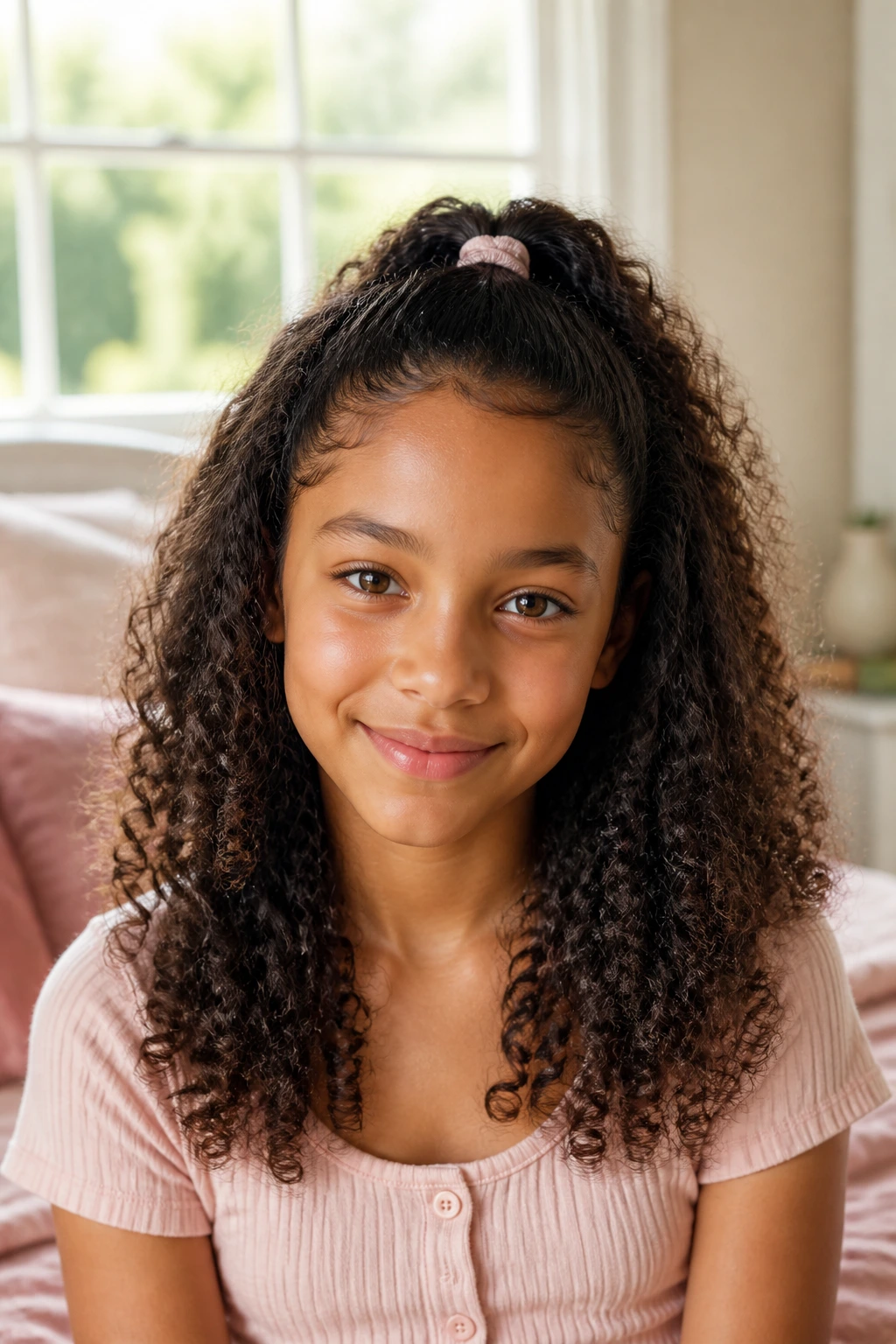
Not every curly head wants the same thing. A child with springy coils and a short cut needs different styling from a girl with long ringlets that reach past the shoulders. If you keep trying to force one method onto every head, the style will either sag or puff out in the wrong spots.
Looser curls usually do well with half-up styles, side sweeps, bubble ponytails, and crown braids because the sections can stay visible without needing a lot of grip. Tighter curls and coils often look strongest in puffs, mini puffs, faux hawks, and twist styles, where the hair’s natural shrinkage becomes part of the shape. Short hair likes clips, headbands, and tuck styles. Longer hair can handle buns, wrapped ponies, and braids with more detail.
Age matters, too. A younger child with a sensitive scalp may do better with fewer sections and softer accessories. A bigger kid who wants more personality may like beads, ribbons, or a faux hawk. Pick the style that matches the day, not the fantasy version of the day.
Essential Tools and Accessories for Curly-Hair Styling
-
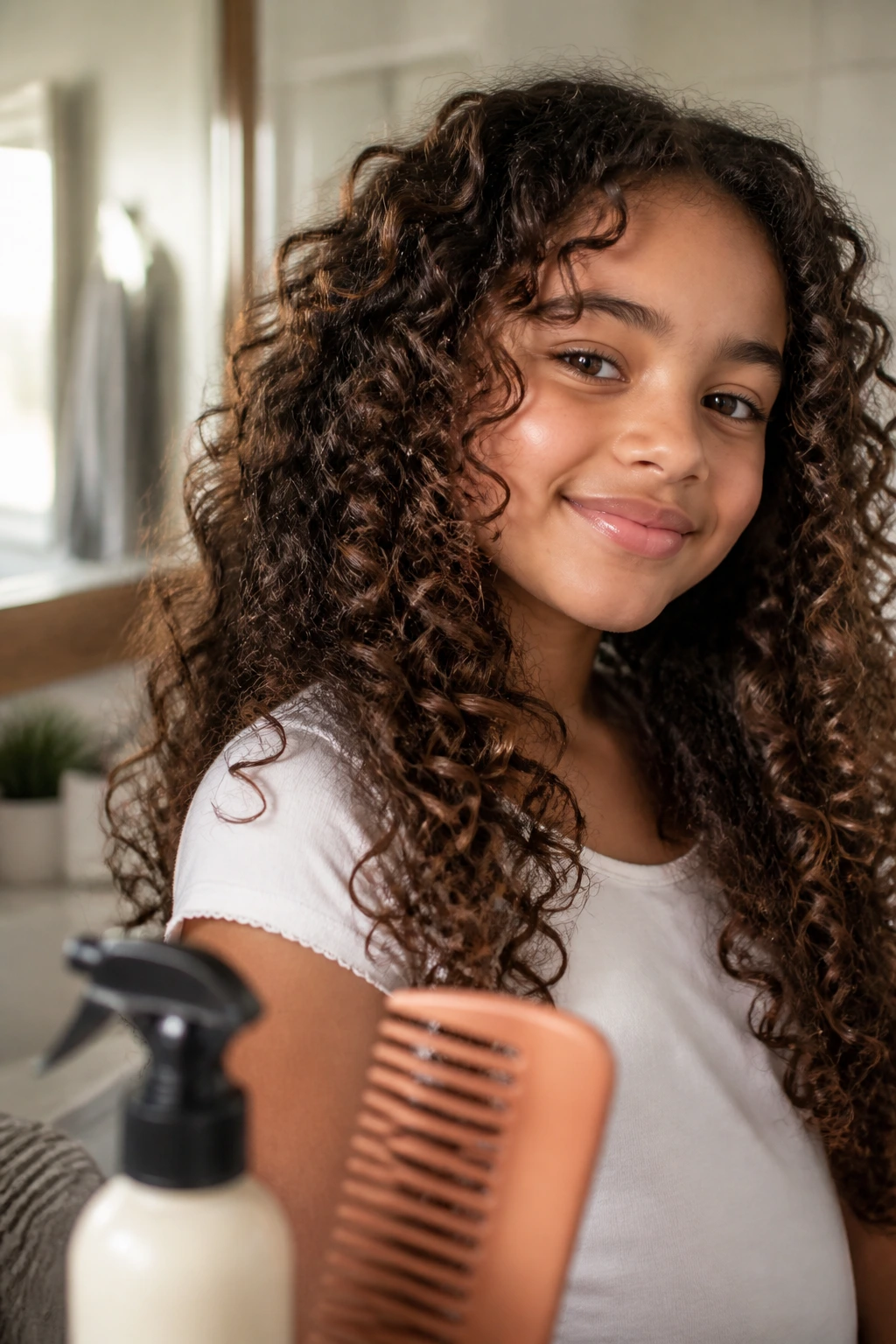
Spray bottle with water: Dampening the hair helps parts stay cleaner and keeps curls from frizzing while you section.
-
Leave-in conditioner: A small amount adds slip so the curls don’t snag when you gather or twist them.
-
Wide-tooth comb: Good for gentle detangling when the hair is damp; it moves through curls without ripping them apart.
-
Tail comb: Useful for clean parts, especially on crown braids, pigtails, and faux hawks.
-
Satin scrunchies: These hold puffs and ponytails without leaving such harsh dents.
-
Coated elastics: Better than tiny clear bands alone when you need a firmer grip, especially on thick hair.
-
Bobby pins: Cross two pins in an X for twists, buns, and side-swept clips that keep slipping.
-
Large claw clip: Handy for quick twists and messy buns, especially on medium-length hair.
-
Barrettes and clips: One decorative clip can finish a simple side part or half-up style.
-
Soft headbands: Wide, stretchy bands are easier on the hairline than narrow ones that dig in.
-
Ribbon or bows: Good when you want the style to feel dressed up without extra heat or product.
-
Satin pillowcase or bonnet: Helps preserve curls overnight so the style lasts into the next morning.
Smart Product Choices for Smooth Parts and Lasting Hold
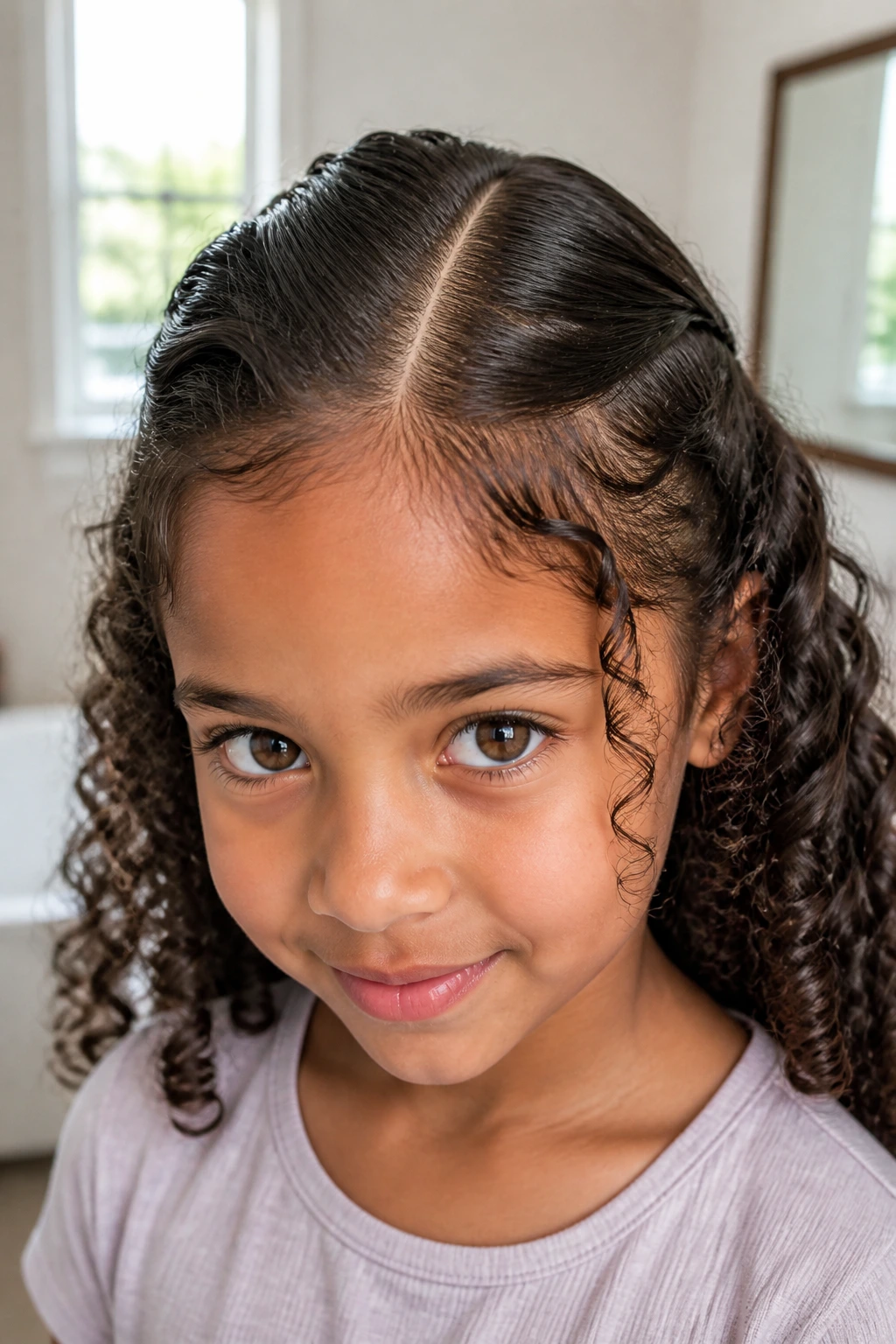
Curly hair usually needs slip before it needs hold. That’s the part people skip, and then they wonder why the comb catches or why the parts look rough. A light leave-in conditioner gives the hair enough glide to section cleanly, while a mousse or foam can help curls keep their shape after styling. If the hair is coarse or dry, a creamier leave-in often feels better. If the hair is finer, a lighter foam can keep it from going limp.
The American Academy of Dermatology has long advised gentle detangling on damp hair with conditioner, and that advice fits curly hair especially well. Dry brushing lifts the cuticle and turns neat sections into frizz. Damp hair with a little product is calmer, easier to shape, and less likely to snap at the ends.
Gel has its place, but I use it sparingly. A small dab around the hairline or part is enough for most styles. Heavy gel all over can make the curls stiff and crunchy, and that’s rarely the look a child wants. A light oil can finish the ends if they’re dry, but too much near the roots just makes the style slide.
How to Finish the Look for School, Photos, and Play
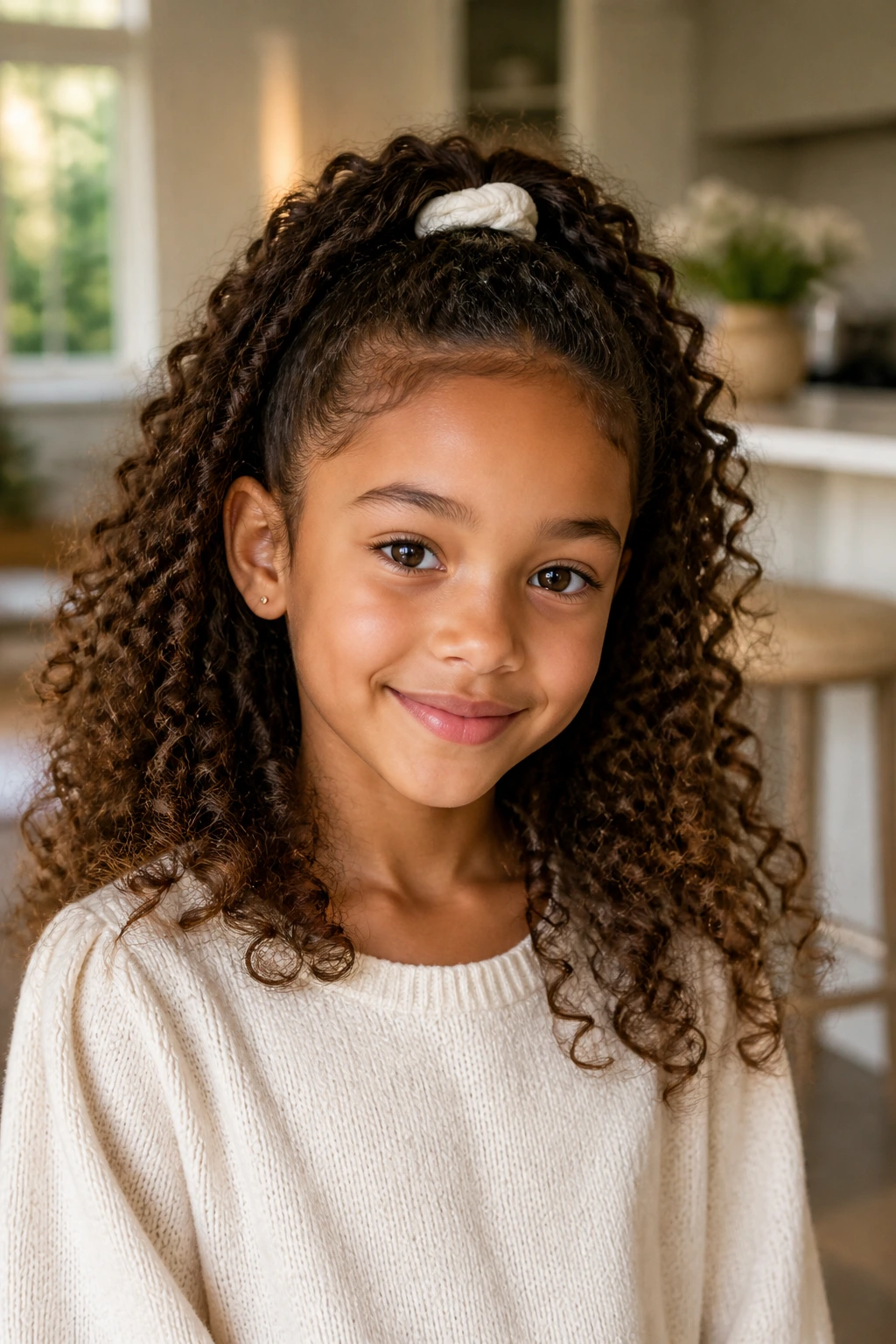
Placement: Higher styles, like puffs, faux hawks, and space buns, read lively and hold better when the curls shrink. Lower styles, like a nape puff or side pony, feel calmer and sit closer to the head, which is useful for dressier outfits or car rides with a headrest.
Accessories: One strong accessory usually beats three small ones. A single ribbon, clip, or scrunchie gives the style a clear finish point, while too many extras can make curly hair look busy in the wrong way.
Hold: If the style needs to survive a full school day, secure the base first and think about the front second. A clean part, a soft elastic, and a pin or two usually hold better than a pile of products. The style should move a little. Frozen hair is not the goal.
Best For: Half-up and clip-back looks are smart for everyday wear. Braids and twisted crowns are nicer when the hair has to stay neat for a longer stretch. Puffs and buns are better when the child needs freedom to run, climb, or simply stop touching her hair every ten minutes.
Extra Tips and Style Boosters
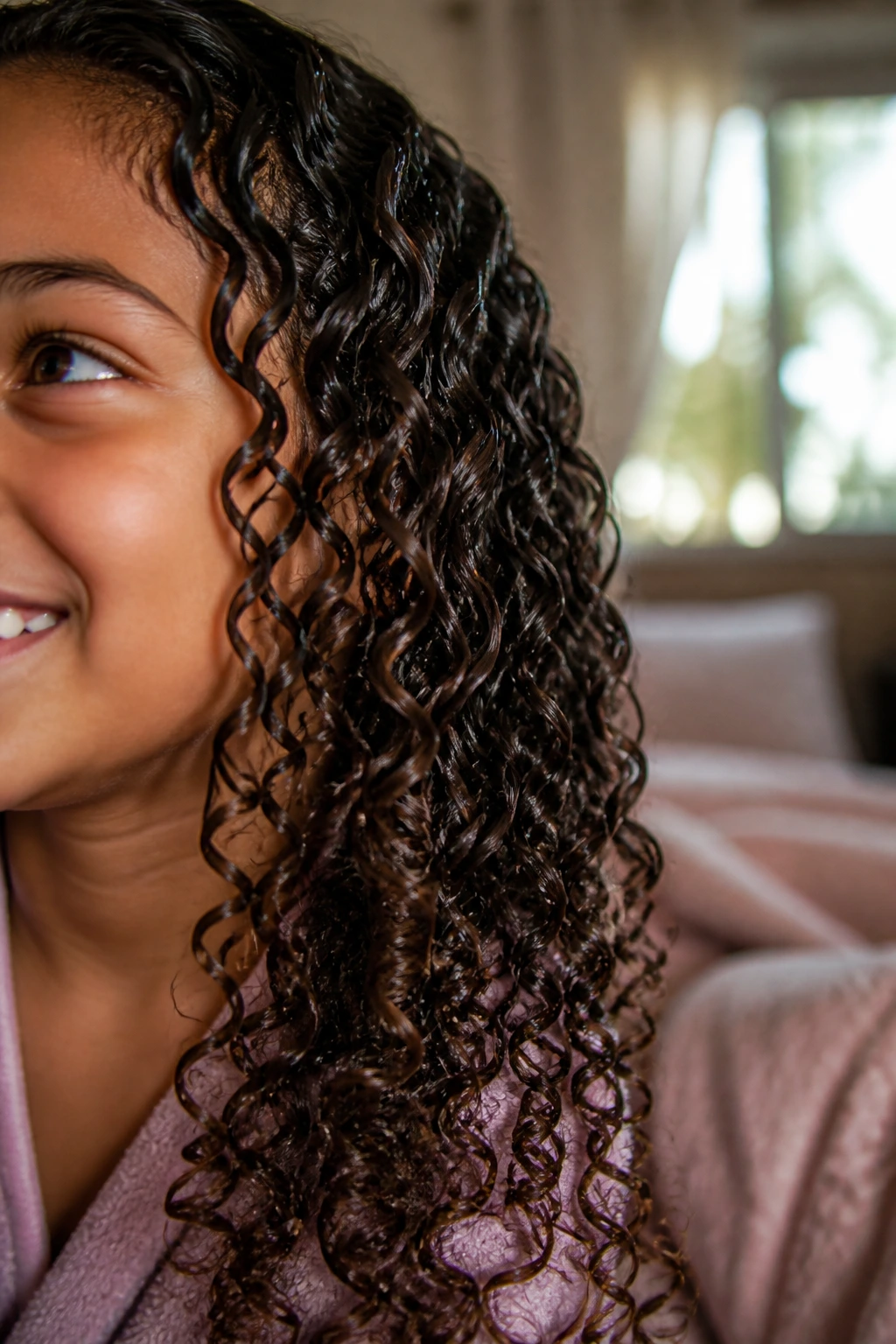
Moisture Boost: Start with hair that is damp, not soaking. If the hair is dripping, wait a few minutes before you part it. A light mist and a dab of leave-in is enough for most styles, and it stops the sections from puffing apart while you work.
Definition Boost: Twist the front pieces or finger-coil one or two curls around the face before pinning them back. That little step gives the style a polished edge without making the whole head feel overworked. I like this more than piling on gel, which can turn delicate curls stiff.
Time Saver: Use the hair’s natural shape. If one side already wants to fall forward, make it a side-swept style. If the crown already lifts, make it a puff instead of flattening it into a low pony that fights the curl pattern. You save time the second you stop arguing with the hair.
Accessory Boost: Swap plain elastics for a satin scrunchie, a ribbon, or one bright clip. That’s often all a style needs. A good accessory can make a quick half-up look feel finished even when you’ve spent less than five minutes on it.
Make-It-Your-Own: For fine curls, use smaller sections and lighter accessories. For thick curls, use bigger clips, wider scrunchies, and a few extra pins. For sensory-sensitive kids, skip tight braids and choose soft twists, headbands, or loose puffs instead.
Common Mistakes to Avoid
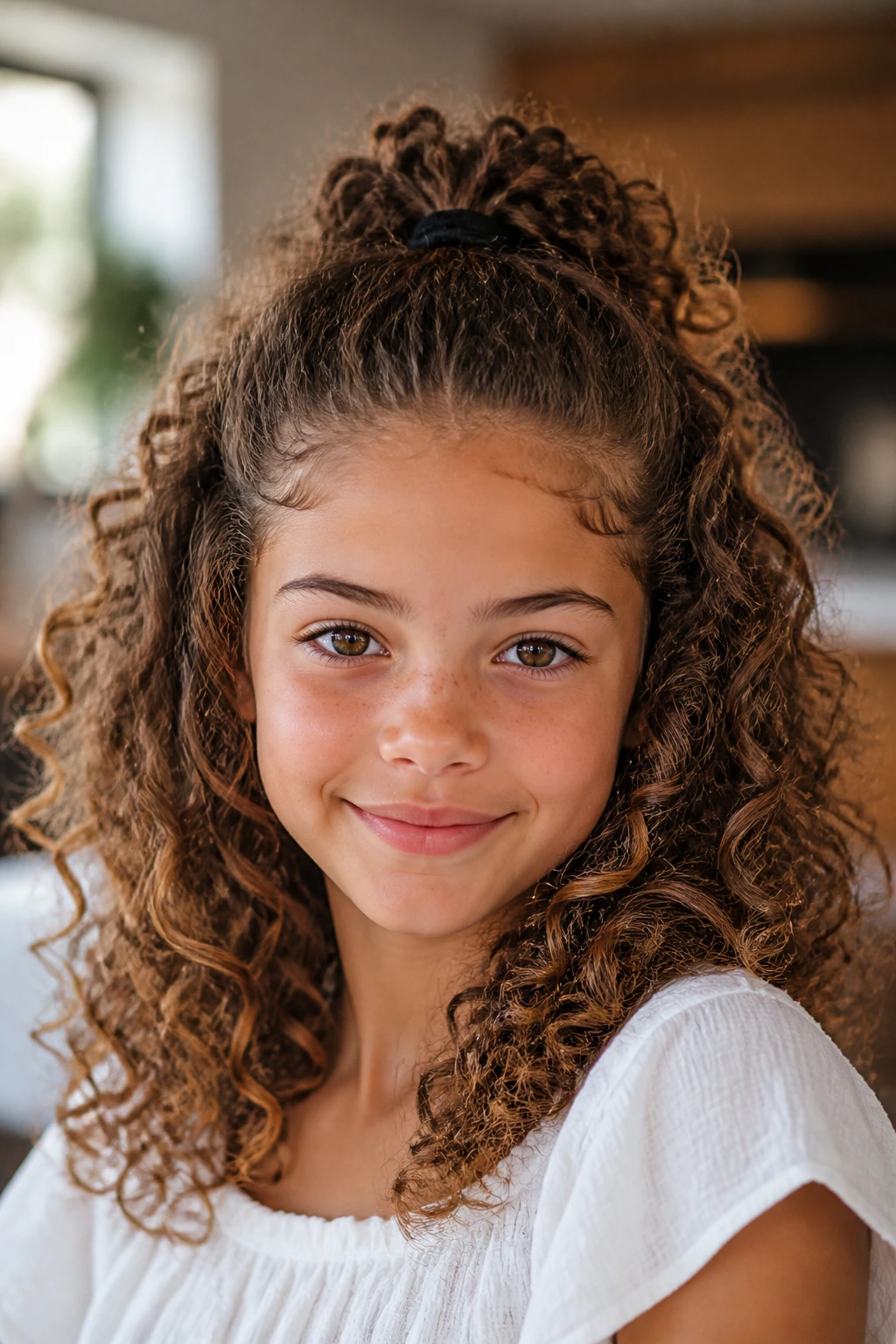
-
Pulling curls too tight at the root: The scalp gets sore, the style looks tense, and the curls often puff out at the ends. Keep the tension just firm enough to hold.
-
Brushing dry curls into submission: That’s how you get a cloud of frizz and broken definition. Detangle damp hair with conditioner, then leave the curls alone once they’re styled.
-
Using tiny bands on thick hair: They snap, snag, and make removal miserable. Coated elastics or satin scrunchies hold better and are easier to take out.
-
Loading on too much product: Heavy creams and greasy edge products can flatten the front and make the whole style collapse. Start small; add more only if the hair truly needs it.
-
Forcing a part that fights a cowlick: The hair will split open again by lunchtime. Work with the natural growth pattern whenever possible, even if the line isn’t perfectly straight.
-
Skipping the refresh: Curly styles often look fine on day one and rough on day two if you ignore them. A light mist and a quick finger-fluff can extend the style without rebuilding it from scratch.
Variations and Adaptations to Try
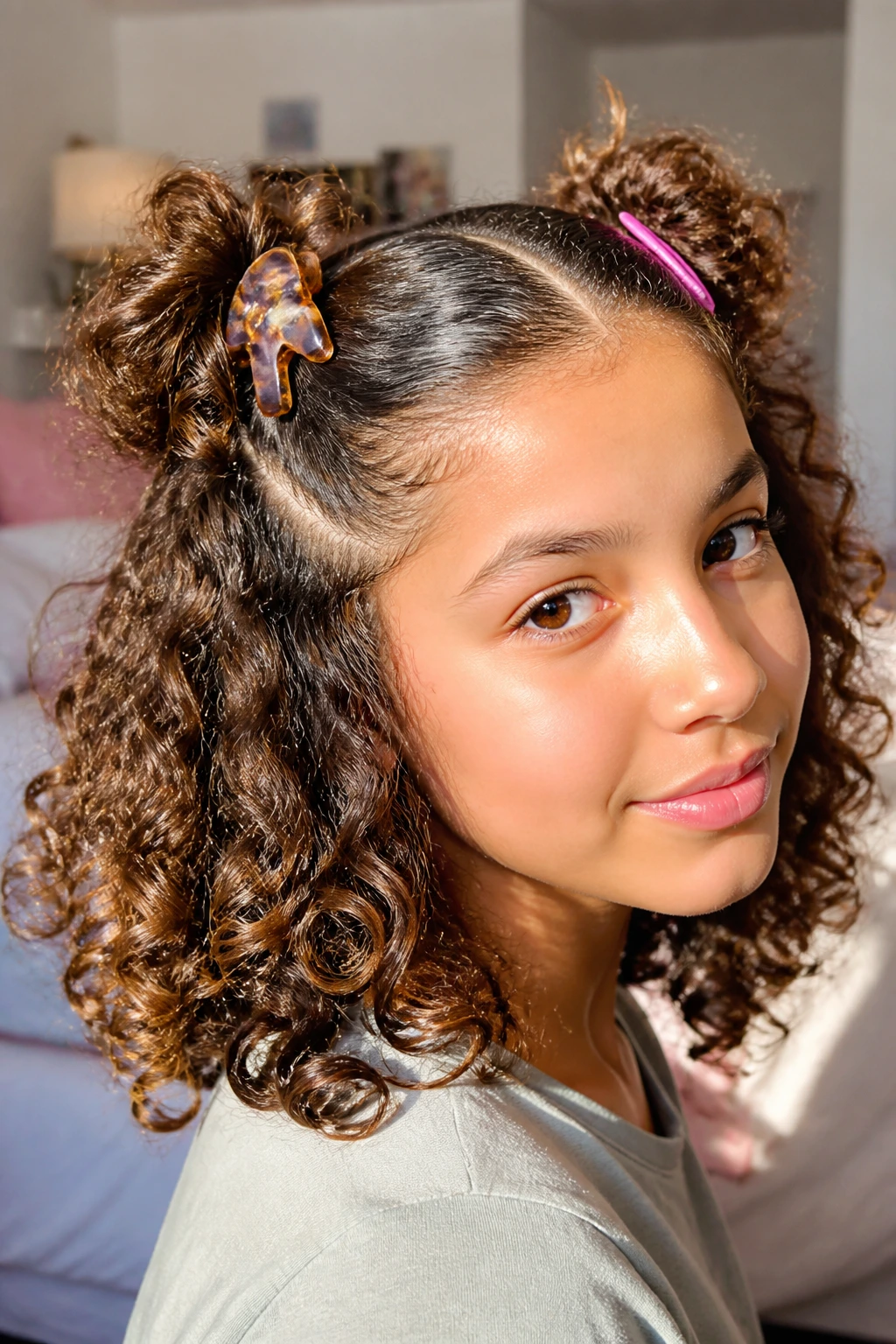
School-Bell Simple: Pick one style with one accessory and stop there. A side clip-back, half-up puff, or headband tuck keeps the morning fast and the child comfortable.
Birthday Ribbon Remix: Replace plain elastics with satin ribbon, a bow, or a sparkly clip. The shape stays the same, but the style feels dressy enough for photos or parties.
Short-Curl Switch-Up: For chin-length or shoulder-length hair, lean on mini puffs, side parts, claw clips, and tucked front sections. The goal is to frame the face, not chase a long-hair look that the haircut can’t support.
Thick-Hair Version: Use larger sections, stronger coated elastics, and extra pins. Thick curls need room to expand, so avoid packing them into tiny styles that fight their natural volume.
Low-Tension Protective Remix: Choose twists, loose braids, puffs, and soft headbands instead of tight slick styles. This is the version I’d pick when the scalp needs a break.
Weekend Play Mode: Add beads, cuffs, or a brighter scrunchie and build the style around movement. It’s the same shape, just with a little more personality.
Keeping Styles Fresh Between Wash Days
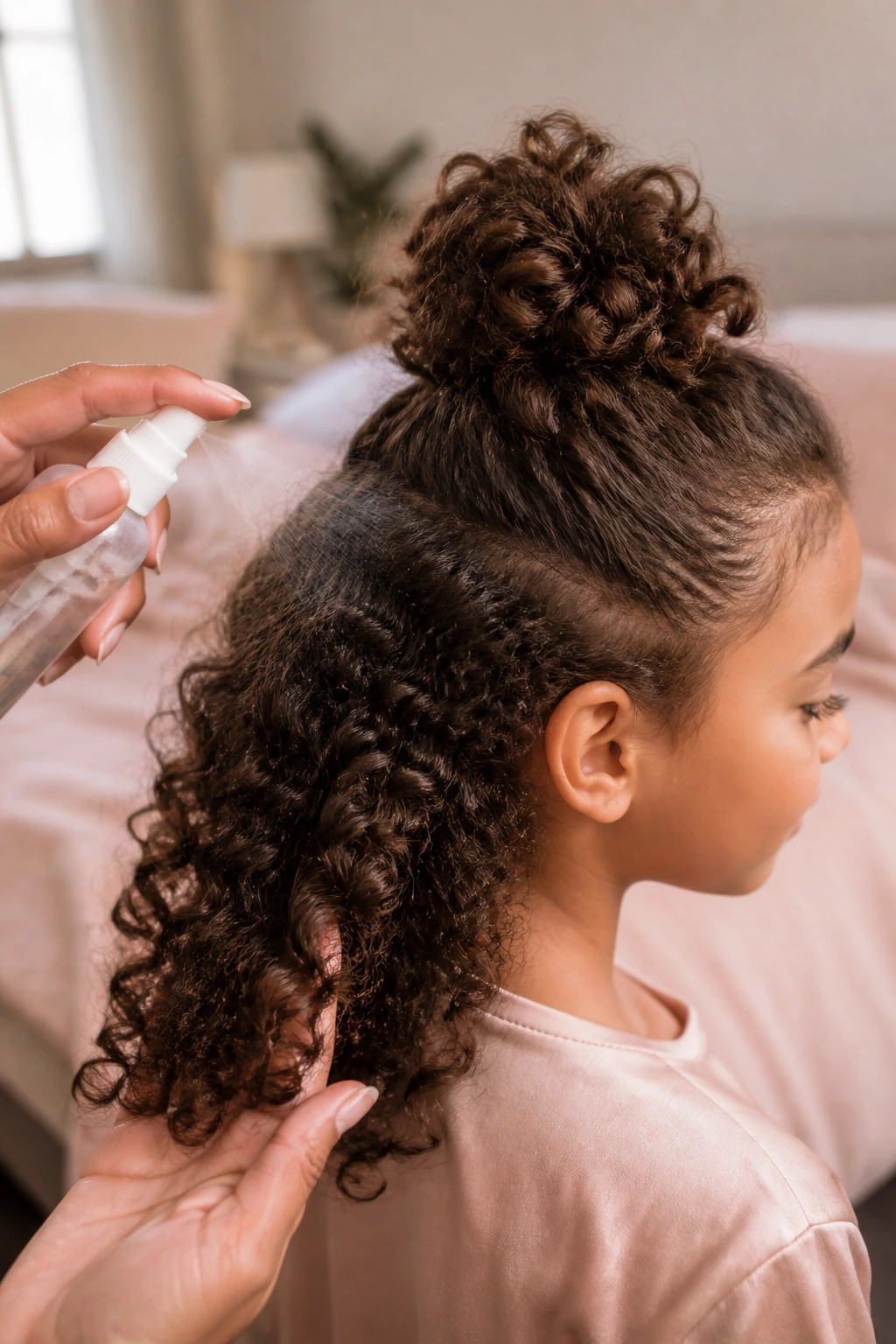
Most curly styles do not need a full reset every morning. They need a small refresh and a little respect for the shape you already built. If the hair was styled into puffs, buns, or ponytails, a satin bonnet or pillowcase at night helps keep frizz down and stops the curls from getting flattened on one side. For looser styles, a high pineapple or a loose braid can protect the pattern while the child sleeps.
In the morning, start with a light mist of water and a tiny bit of leave-in on the hands, then smooth only the pieces that need help. Don’t flood the hair. A damp spot at the root or one curly tendril near the face is enough to wake the style back up. If the style uses elastics, move them gently instead of yanking them out and redoing the whole thing.
Loose half-up styles and clip-backs usually need a refresh the next day. Braids, twists, and puffs can often last two to three days if the hair is protected at night and the scalp stays comfortable. If the hairline feels tight or itchy, take the style down. No hairstyle is worth a sore head.
Frequently Asked Questions
What is the easiest cute hairstyle for girls with curly hair on a busy morning?
A half-up puff or a side-swept clip-back is usually the fastest. Both can be done in a few minutes, and neither one needs a perfect part or a lot of product.
Can these styles work on short curly hair?
Yes. Short curls often look best in mini puffs, side parts, headband tucks, and clip-back styles. If the hair won’t gather into one ponytail, that’s not a problem—it just means the style should be built in smaller pieces.
Should I style curly hair wet, damp, or dry?
Damp is the sweet spot for most styles. Wet hair can take too long to dry and may shift as it dries, while dry hair usually frizzes when you try to part or smooth it.
How do I stop curls from frizzing when I make a part?
Use a tail comb on damp hair with a little leave-in conditioner on your fingers. Make the part once, clean it up quickly, and then stop touching it.
Do I need gel for every hairstyle?
No. Most of these styles only need leave-in, a soft elastic, and maybe a tiny bit of gel around the hairline. Too much gel can make curls hard and flat.
What if my child has a sensitive scalp?
Choose low-tension styles like loose puffs, headbands, side clips, and soft twists. Avoid very tight braids, small elastics, and anything that pulls hard at the crown.
How long do these styles usually last?
Simple clip and puff styles often last one day without much trouble. Braids, twists, and ponytail-based styles can last two to three days if they’re protected at night and refreshed lightly in the morning.
Can I use regular hair ties instead of satin scrunchies?
You can, but regular ties are rougher on curls and tend to leave sharper dents. If you use them, choose coated or snag-free ones and take them out gently.
Pinned and Ready
Cute hairstyles for girls with curly hair work best when the curl pattern stays visible. That means soft tension, simple parts, and accessories that finish the shape instead of hiding it. Once you stop fighting the curls, the styling gets easier. Strange how that works.
The nicest part is how flexible these looks are. A half-up puff can be dressed down for school or dressed up with a ribbon. A braid can be the whole style or just the front accent. A clip, a twist, a puff, a little bubble section—those small moves can carry you a long way when the hair has volume of its own.