



Short hair can go flat faster than people admit, especially when the wave pattern bends instead of curls. But large hairstyles for short hair with wavy hair have a sweet spot most people miss: the bend gives you lift at the ends, and the shorter length keeps the shape from collapsing under its own weight. If you’ve ever watched a pixie puff up on one side after a little air-dry and wondered why it looked better than a blowout, that’s the whole trick.
The best versions are not stiff, shellacked, or over-teased into helmet territory. They’re built from direction, root lift, a little grit, and the wave you already have. A good short cut with movement can look bigger at 10 a.m. than a long style with twice the product, and that’s not a fluke. It’s structure.
The real mistake is treating short wavy hair like it needs to be tamed first and styled second. That usually flattens the crown, smooths away the bend, and leaves the ends hanging like they’ve given up. The styles below lean the other way. They make the wave work for you, and they do it with shapes that still look interesting when the wind hits them.
Why These Big Shapes Work on Short Wavy Hair
The wave gives you built-in body. Short wavy hair doesn’t need as much help as straight hair to look full, because each bend creates space between strands. That space is what reads as volume from a distance.
The length keeps the lift alive. Once hair gets longer, the same wave pattern starts to pull itself down. On a pixie, bixie, or cropped bob, the curve stays springy much longer.
The silhouette matters more than the curl pattern. A higher crown, a deeper side part, or a fuller top can make the whole cut feel bigger even when the actual amount of hair hasn’t changed.
Product choice changes everything. A light mousse or foam gives wave hair a little memory. Heavy creams can turn that same shape soft and sleepy by noon.
There’s room for edge. Short wavy hair can be polished, but it can also be lifted, tucked, fluffed, pinned, flipped, or swept into a shape that looks intentional instead of accidental.
1. Deep Side-Part Lifted Pixie
A deep side part is one of the easiest ways to make a short cut look bigger without making it fussy. The trick is simple: move the bulk of the hair to one side, let the wave fall across the forehead, and keep the crown slightly raised so the top doesn’t collapse into the scalp. On wavy hair, that bend around the part does half the styling work for you.
What makes this version stand out is the tension between smooth and airy. The part line stays clean, but the top shouldn’t be flat. Mist the roots with mousse, blow-dry the crown in the opposite direction for 30 seconds, then switch the part and let the wave settle where it wants. That little detour gives you more height than blasting everything straight down.
This style is especially good if your hair is fine and you want more shape without a lot of teasing. It also softens a sharp jawline nicely, because the sweep across the forehead pulls the eye diagonally instead of straight across.
2. Wavy Faux Hawk Crop
A faux hawk on short wavy hair can look edgy in the best way, but it works because the sides are controlled, not because the center is spiked into submission. You want a loose ridge from the front hairline to the crown, with the wave still visible in the top section. If the center strip is too smooth, the whole thing loses its shape.
How to style it
- Apply a golf-ball amount of mousse to damp hair, concentrating at the roots.
- Blow-dry the sides down with a vent brush or your hands.
- Lift the center section with your fingers while drying so it stays full and slightly rough.
- Finish with a dry texturizing spray, then pinch the top pieces apart instead of combing them flat.
This is one of those looks that gets better when it isn’t perfect. A little irregularity at the front makes the ridge look taller. If your hair is thick, ask for extra removal on the sides at your next cut so the top can stand up without fighting bulk.
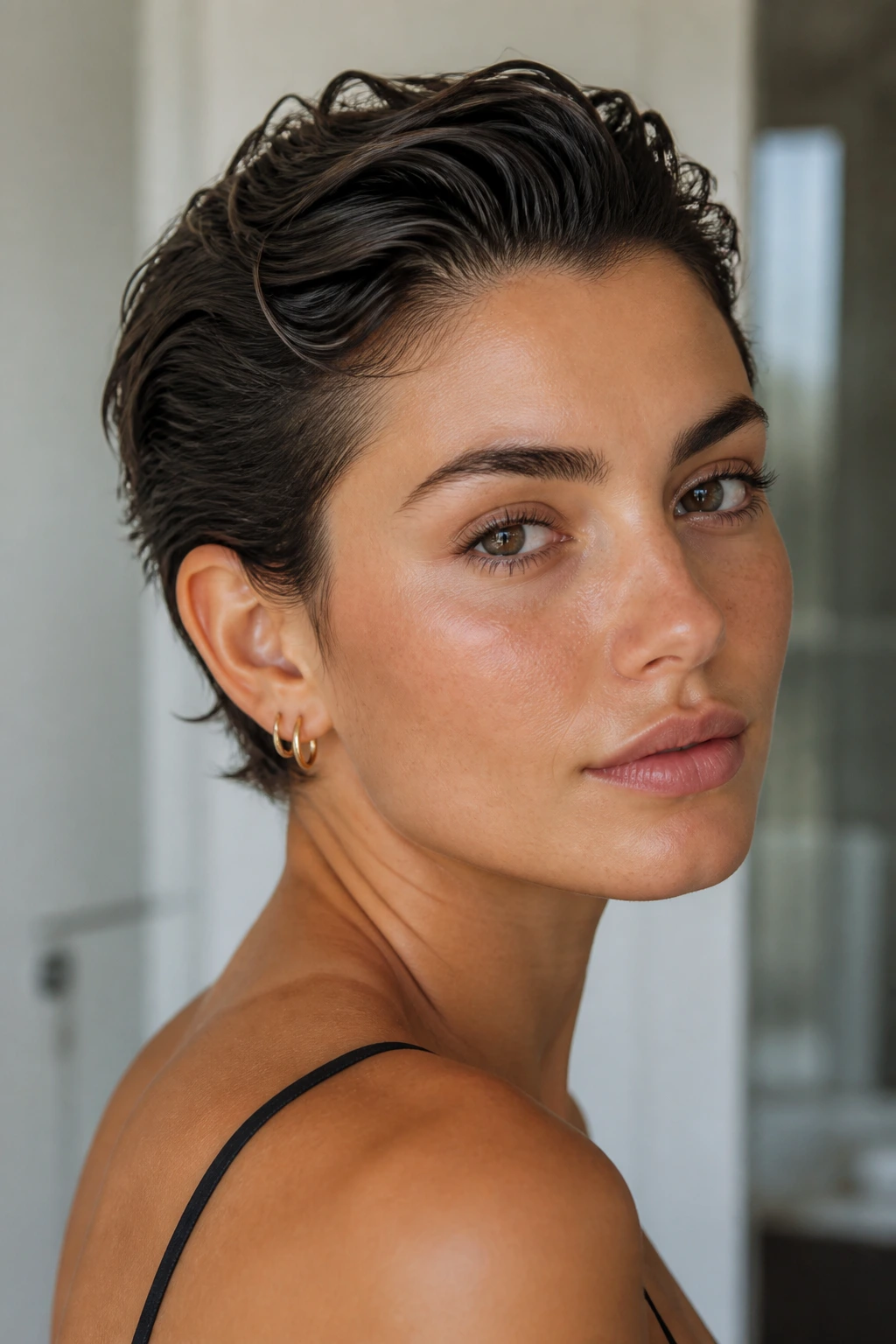
3. Swept-Back Wet-Look Crop
The wet-look crop is a smart choice when you want the hair to read dramatic instead of airy. Short wavy hair keeps enough bend to stop this style from looking glued down, which is the whole point. The front gets swept back, the sides stay close to the head, and the crown gets the room to look tall.
Use gel on damp hair, not soaking hair. That part matters. If the strands are dripping, the product slides around and the shape gets patchy. Work the gel through with your palms, then push the front back with your fingers so the wave forms a soft ridge rather than a hard line. The result should look glossy, not crunchy.
This style is especially good for evenings, but it also works on busy days when you want one style that won’t need touching. Keep a small bit of serum off the roots if you want extra shine on the ends. Too much at the scalp and the lift disappears by lunch.
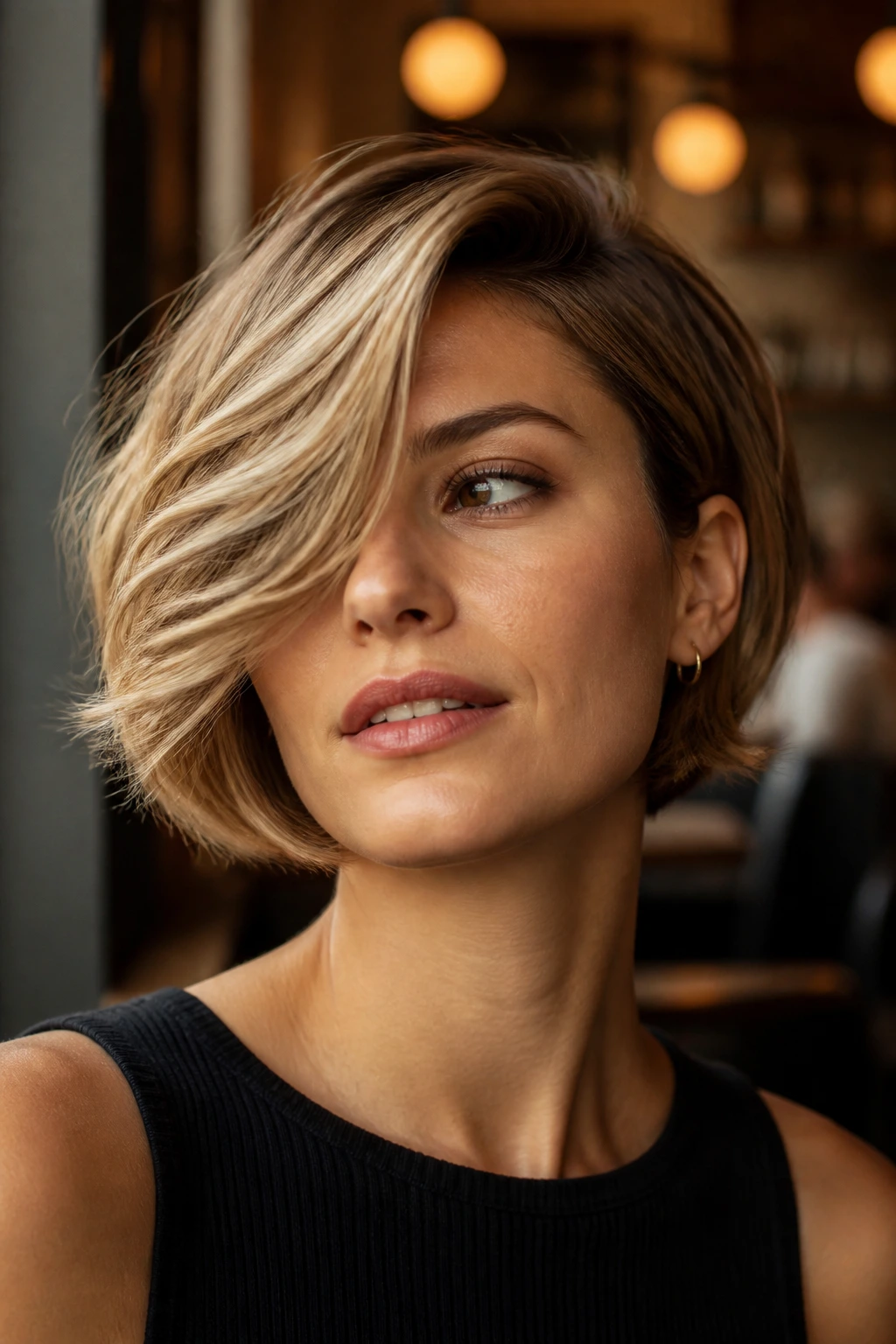
4. Deep Side-Swept Micro Bob
A micro bob with a deep side sweep has a lot more drama than people expect from a short cut. The length sits at the jaw or slightly above it, but the heavy side part and wave make the outline feel much larger. It’s one of the best ways to get width around the cheekbones without adding bulk at the bottom.
The key is not to over-smooth the ends. Let them bend outward a little, especially near the side that’s tucked behind the ear. That small flip stops the style from looking too severe. If your hair tends to puff at the temples, use a flat clip there while it cools after drying. The wave will set into a cleaner arc.
This one works well when you want a shape that feels polished but still has movement. It’s a good office style, sure, but it also holds up nicely with earrings and a strong lip, which is probably why stylists keep returning to it.
5. Flipped-Out Bixie
The bixie lives between a bob and a pixie, and that in-between length is exactly why it can look so full. Flip the ends outward, keep the crown light, and let the wave create that soft, broken outline that makes the cut feel bigger than it is. It has a bit of 1990s energy, but not in a costume way.
What makes it work: the outer flip lifts the perimeter while the top stays loose and piecey. That gives the eye something to follow from root to end, which adds visual width. If the ends are all curled in toward the neck, the shape shrinks.
A small round brush helps, but only for the front and sides. Don’t chase every strand. Leave a few irregular pieces near the temples and around the ears; those keep the style from looking too neat. On second-day hair, this is one of the easiest looks to revive with a quick mist of water and a dab of mousse.
6. Teased Crown Half-Up
Half-up styles can work on very short hair if the top layer is long enough to grab, and on wavy hair they often look richer than an all-down style. Tease the crown lightly, pin or clip the top section back, and let the rest of the wave fall loose. The height sits where people actually notice it — right at the top of the head.
Best for
- Bixies and longer pixies with enough top length to secure.
- Hair that falls flat at the roots by midday.
- Days when you want volume without a full hot-tool session.
The secret is restraint. A little backcombing under the top layer is enough. If you overdo it, the top will look ragged and the back will lose shape. Keep the section clean, smooth the outer layer over the tease, and pin it with a small flat clip so it disappears into the hair. The style should feel lifted, not crowded.
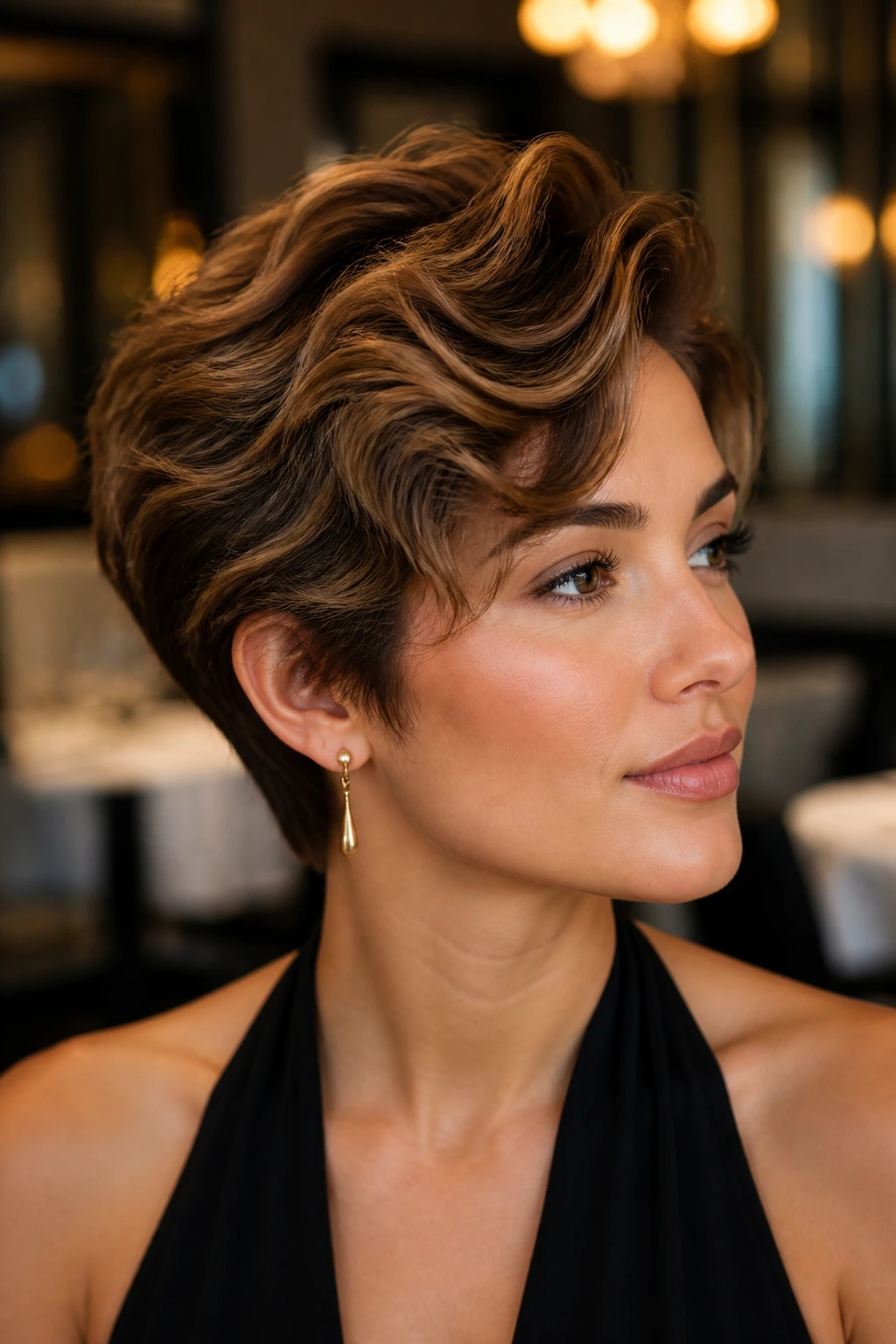
7. Curly Quiff Pixie
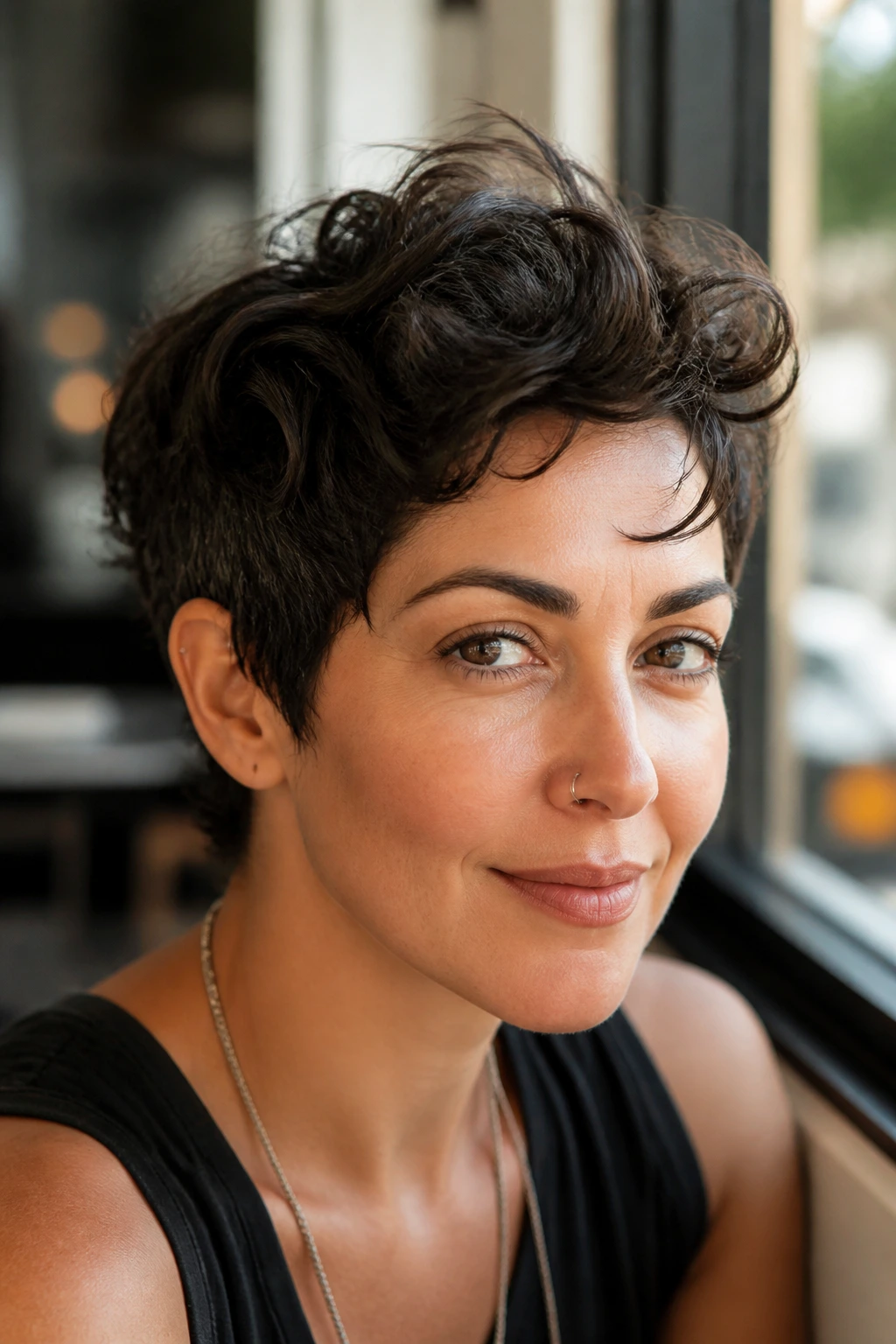
A quiff gives short wavy hair a lot of personality fast. You push the front upward and slightly back, then let the wave in the fringe break into soft texture instead of a stiff roll. The look is all about height at the hairline and softness behind it.
What I like about this style is that it doesn’t ask for perfect symmetry. In fact, symmetry can kill it. The quiff should lean a little to one side, especially if your waves form differently on each temple. Use mousse on damp hair, finger-dry the front up and away from the face, then pinch the ends once it’s dry. That last step matters more than another pass with the brush.
This shape suits faces that can handle extra height — oval, heart, and angular shapes tend to wear it well. But the real test is whether you like a front section that has some attitude. If you do, this one delivers without needing long hair at all.
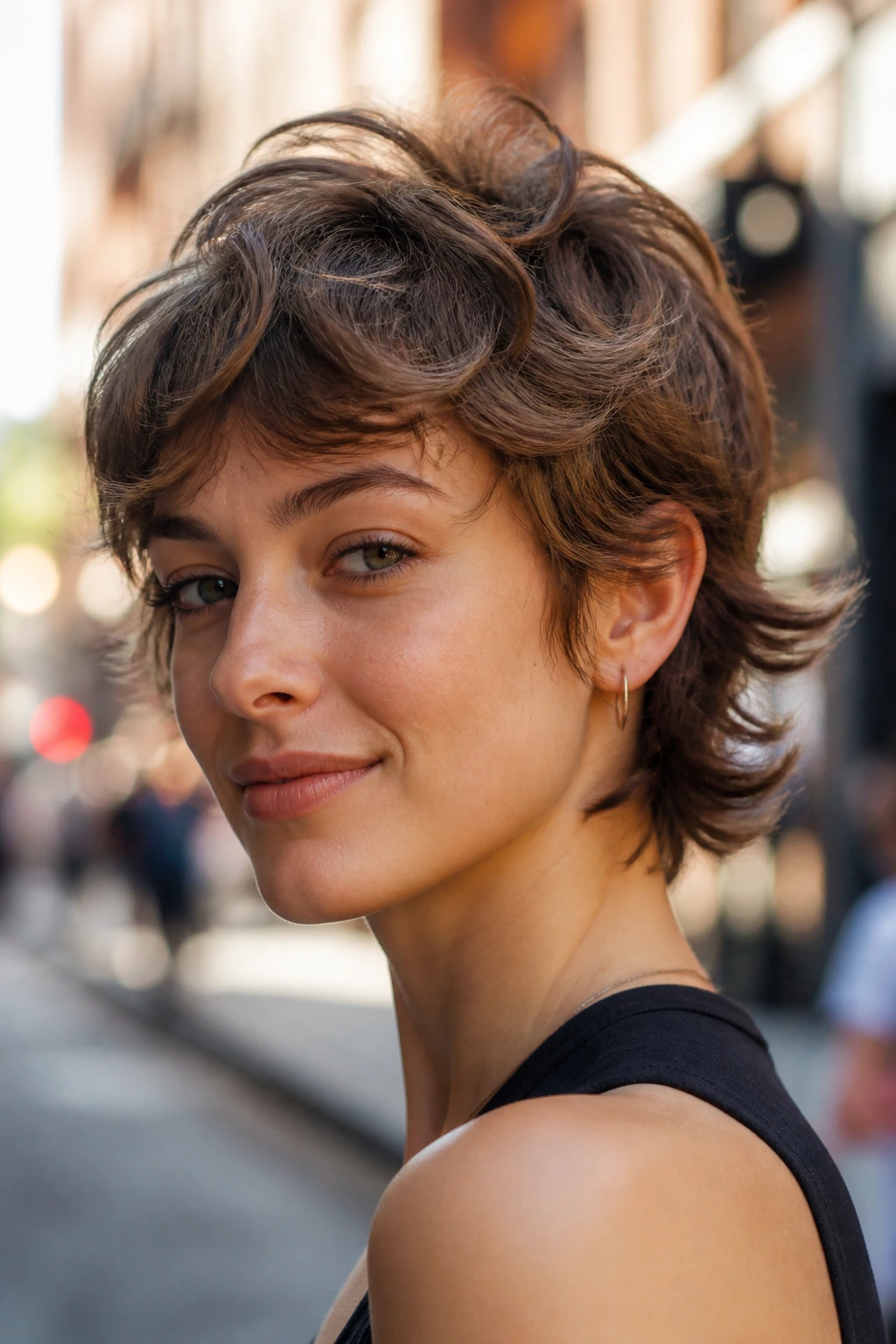
8. Tousled Shaggy Crop
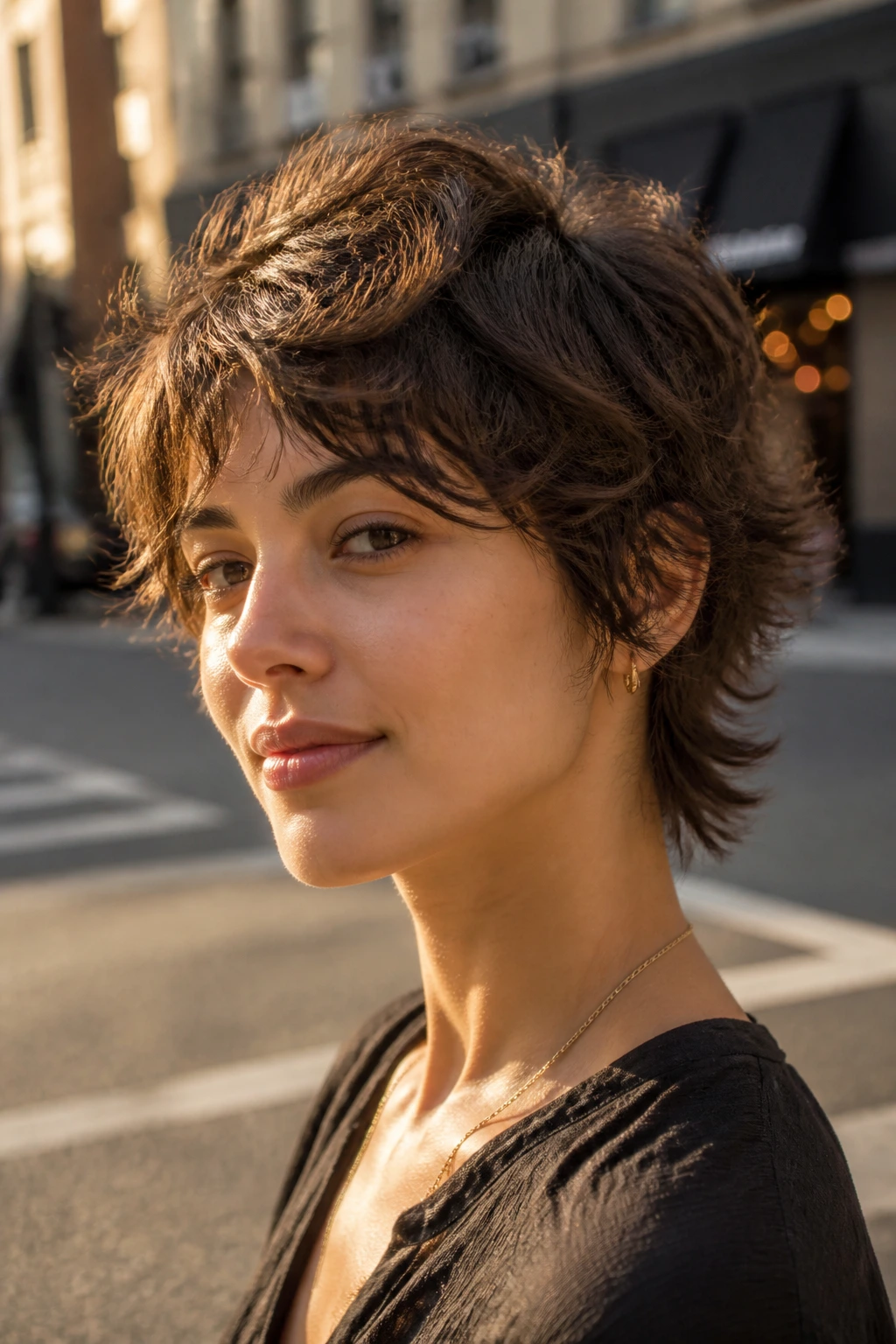
The shaggy crop is the easygoing one in this group, but it’s not lazy. The layers have to be cut with enough separation that the wave can break into pieces instead of forming one heavy block. On short wavy hair, that pieceiness creates width all around the head, which reads as fullness even when the hair is cut close.
A shag works best when the crown is slightly shorter than the outer layers. That gives the top a bit of lift while the sides stay airy. Use a small amount of foam, scrunch upward, and stop touching it once it starts to dry. The more you smooth it, the smaller it looks. Seriously.
This is the style for someone who wants movement first and polish second. It looks good after a rough dry, after a diffuse dry, and even after sleeping on it if you refresh the crown with a few sprays of water and a palmful of mousse.
9. Rounded Wave Bob with Crown Clips
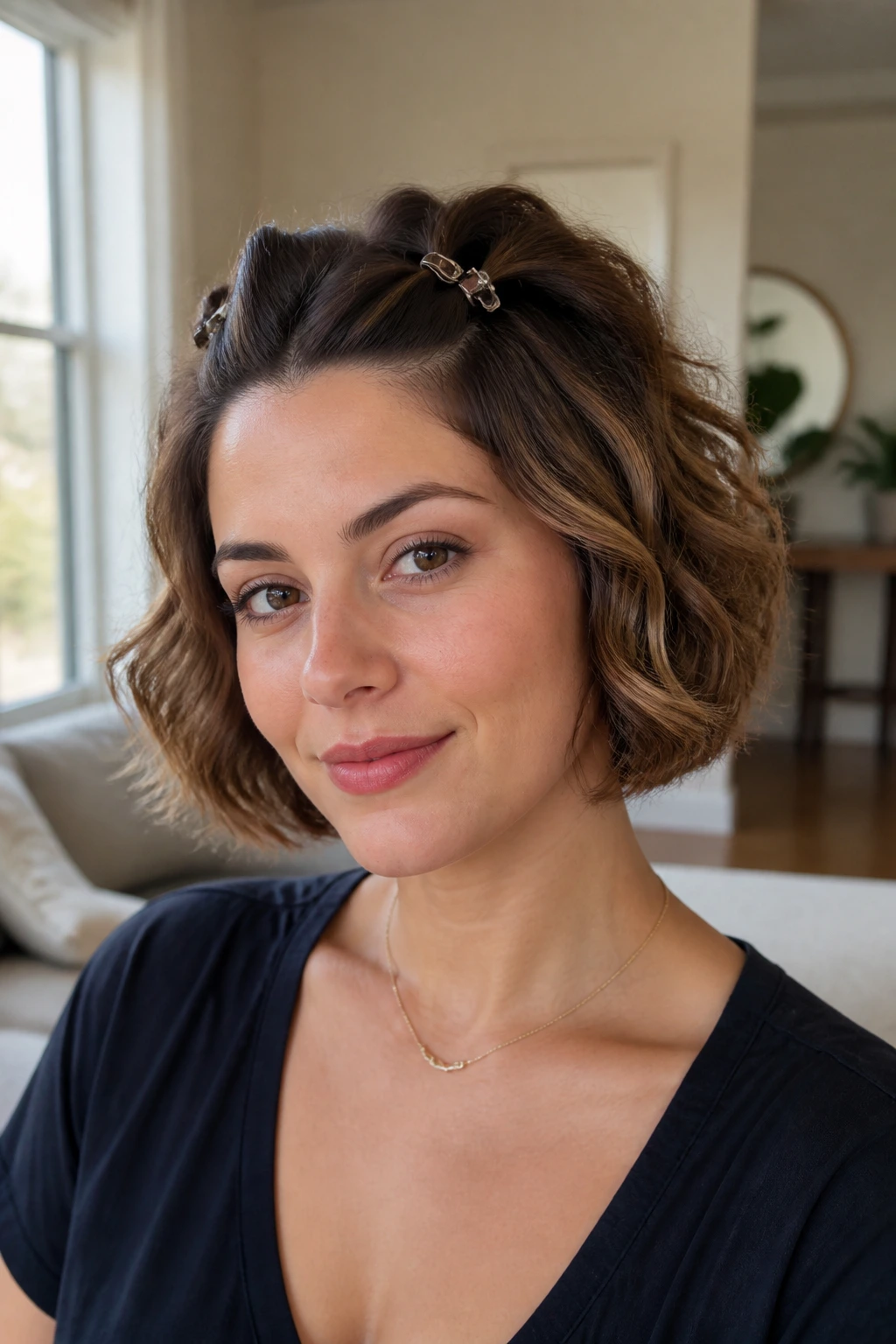
A rounded bob can make short hair look expensive without looking overdone, and wavy hair gives it a softer edge. The shape sits close to the head at the nape, then opens out through the middle so the whole cut feels like a gentle dome rather than a flat line. Crown clips during drying help the top stay lifted instead of collapsing into the part.
The trick is to dry the roots first and leave the ends to form naturally. If you work the ends too much, you’ll stretch the wave right out of them. I’d rather see a little irregular bend than a smooth, sleepy bob with no life in it. That little roughness is what makes the style feel full.
This one is especially good if you want a shape that looks controlled from the front but still has movement when you turn your head. It’s clean. It’s not stiff. That balance is harder to fake than people think.
10. Finger Waves With Height
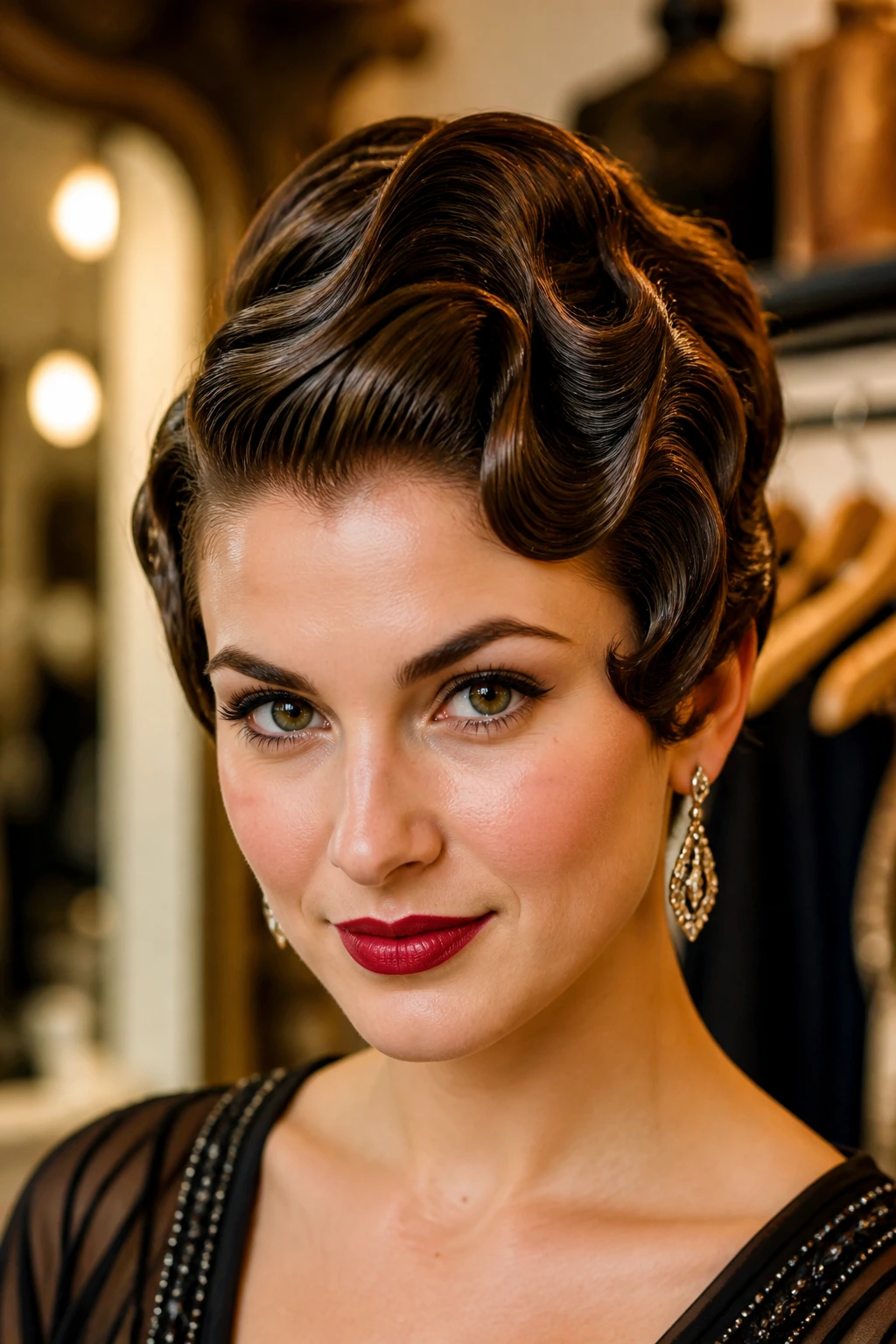
Finger waves give short hair a graphic shape, but on wavy hair they can read even richer because the natural curve blends into the set pattern. The front and side sections are molded into S-shaped ridges, while the crown stays slightly elevated so the style doesn’t go too flat or too strict.
If you’ve never set finger waves before, keep the sections narrow. Wide pieces won’t hold the wave cleanly, and on short hair the pattern can blur fast. Use gel or setting lotion, comb each ridge into place, and pin it while it dries. It takes patience. There’s no way around that.
What makes this style worth the time is the way it frames the face. It can look polished for a formal event, but it also has enough body to feel modern rather than costume-like. Add small earrings and keep the rest of the outfit simple, and the hair does the heavy lifting.
11. Headband Lift Bob
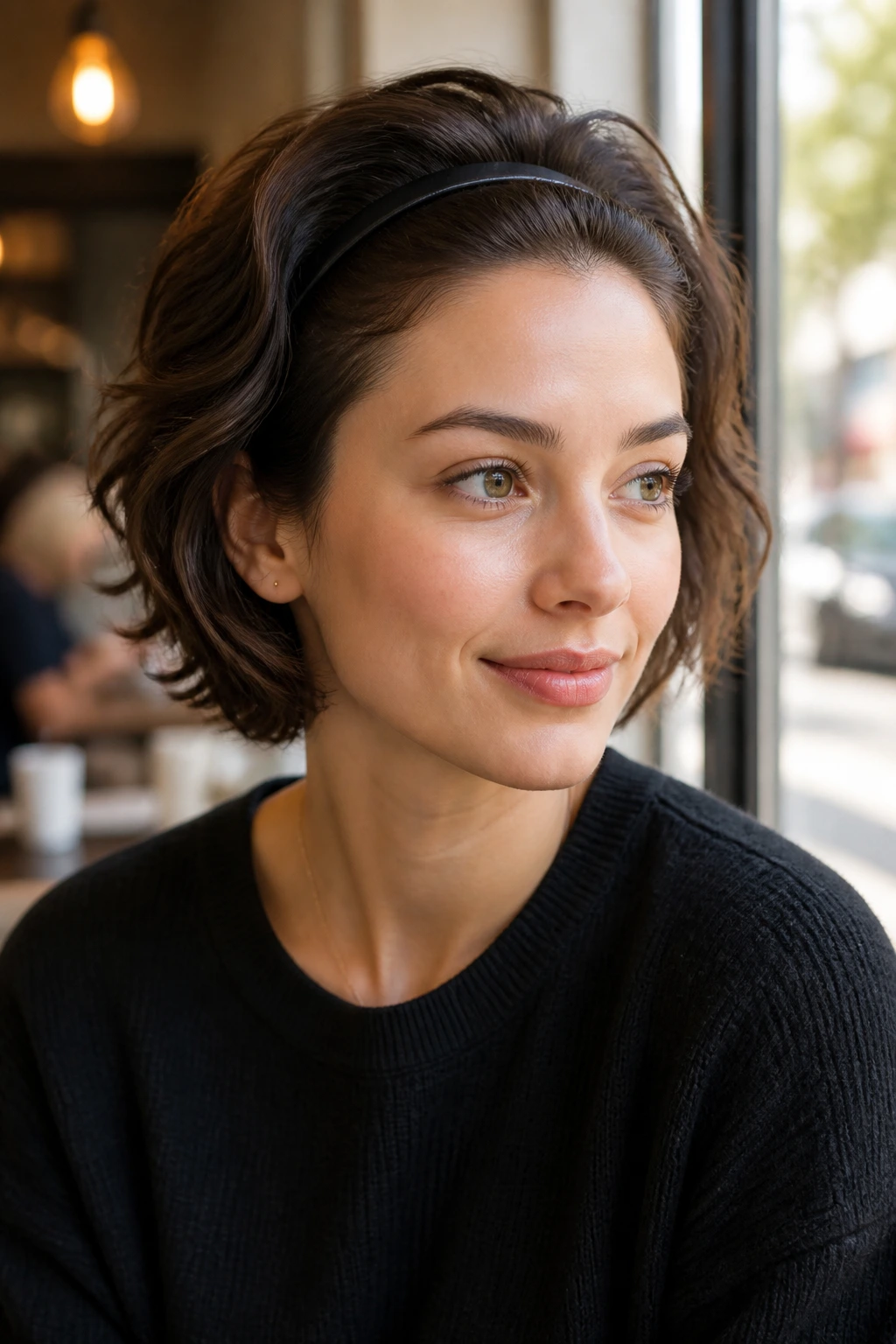
A headband can either flatten short hair or save it. The difference is placement. Set it just behind the hairline, push the crown up a little before slipping it on, and let the wave bend over and around the band instead of getting pinned straight back. That tiny shift creates lift at the top and body at the sides.
This works especially well on second-day hair, when the root area needs a reset but the ends still have shape. If your wave pattern is loose, a little dry shampoo at the crown helps the style hold. If it’s coarse, a light mist of water before the headband goes on keeps the bend from frizzing.
I like this look because it solves a real-life problem. You get the hair off your face, the crown stays tall, and you don’t have to pretend your texture is perfectly uniform. It isn’t. That’s fine.
12. Crown Braid Into Loose Ends
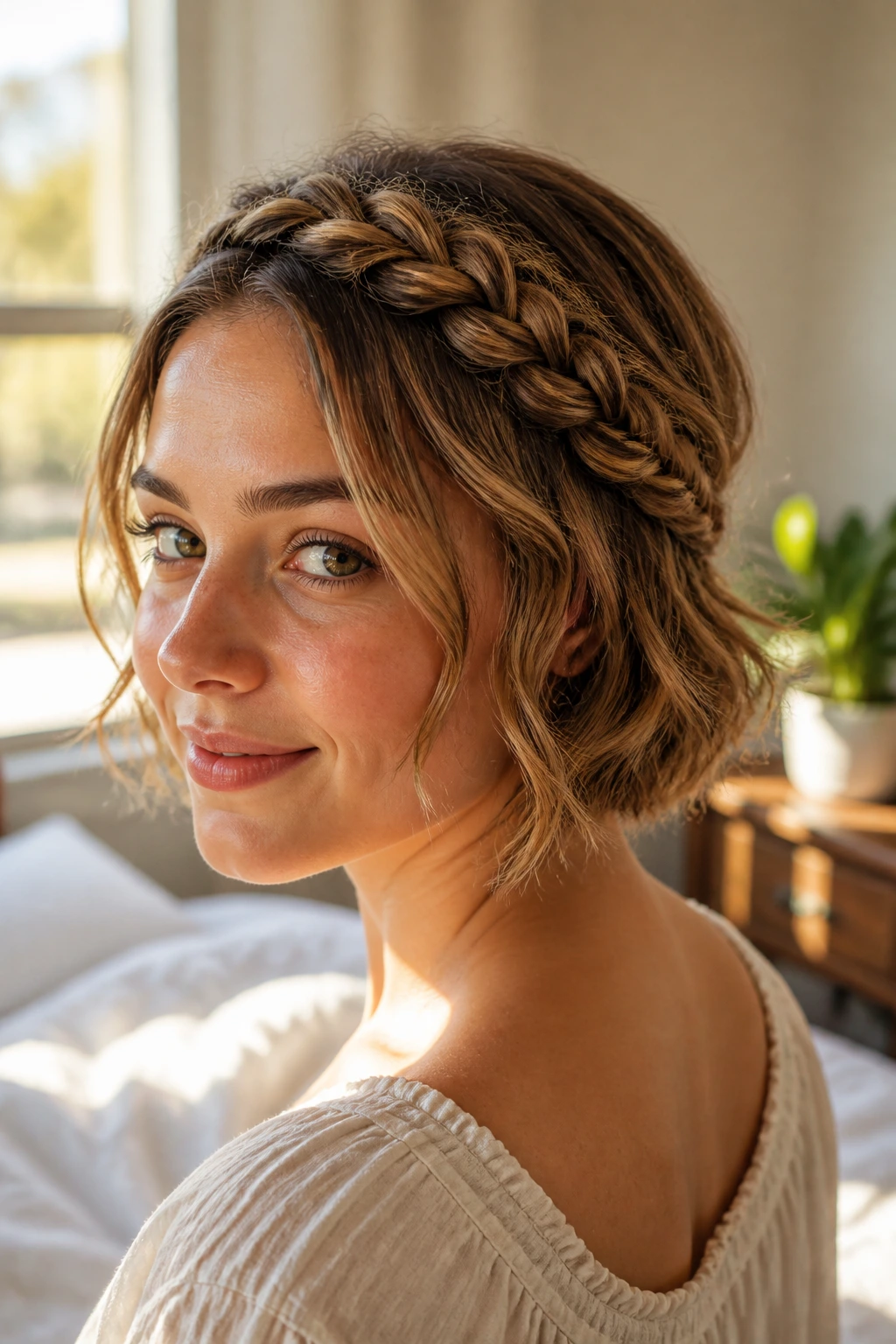
A braid across the crown adds visual width fast, especially on short wavy hair that already has some texture in the ends. Keep the braid loose, not tight, and stop once you’ve crossed the top section from temple to temple. The rest of the hair stays free, which lets the wave keep its body.
Why it works
A tight braid can make the top look small. A loose one does the opposite. It creates a ridge across the head and gives the style a raised center line that makes the whole silhouette feel bigger. That’s why this look works on bobs and longer pixies that need a little extra shape.
A couple of hidden bobby pins under the braid will keep it from slipping. Pull a few tiny pieces loose around the face if you want softness, but don’t overdo the face framing. Too many little wisps can make the style feel messy instead of full.
13. Mini Space Buns on Wavy Bob Length
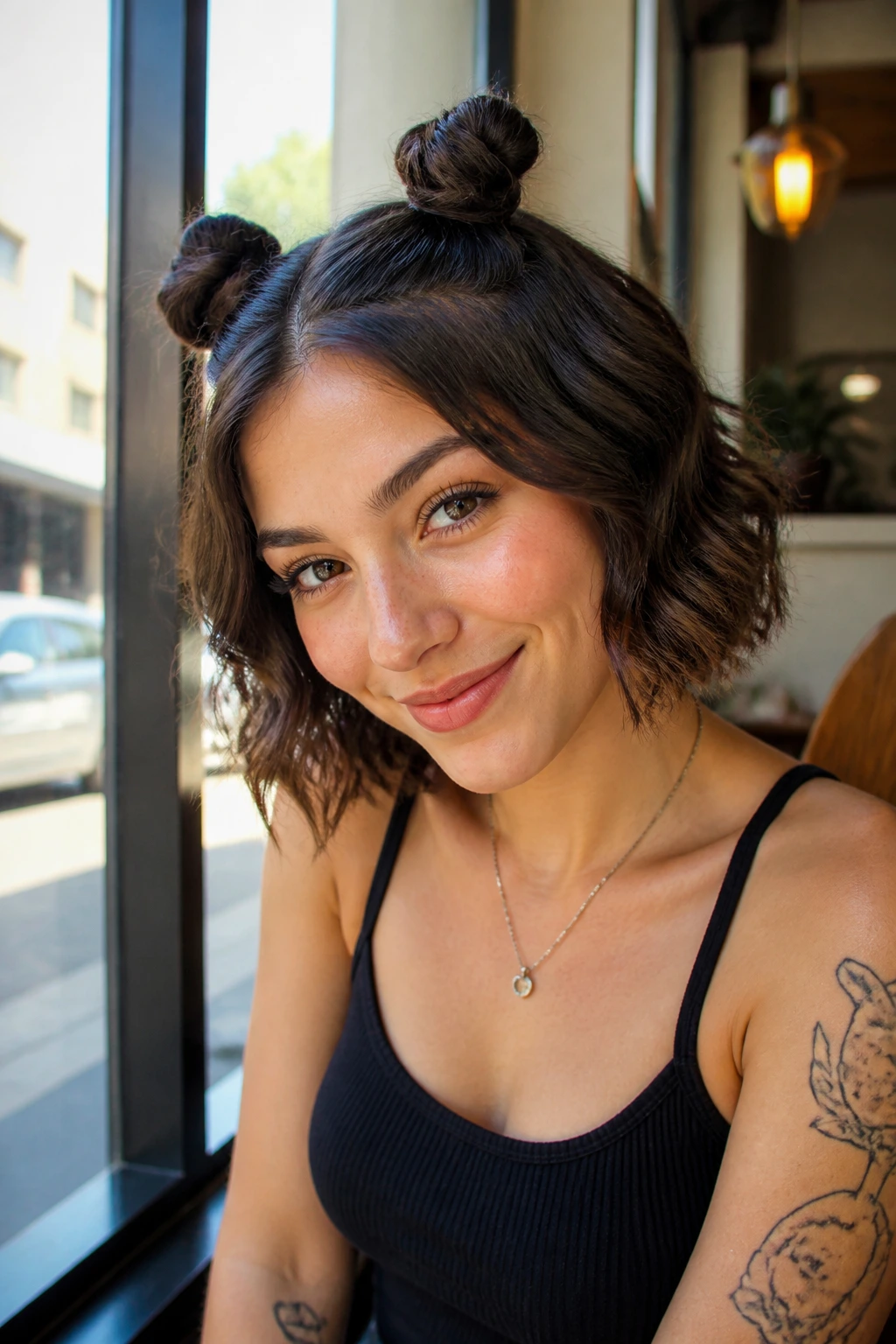
Mini space buns can look playful on short wavy hair, but they also solve a volume problem. The buns sit high enough to give height, while the loose bottom section keeps the wave visible. The style feels bigger because your eye sees two lifted points and a textured frame underneath.
This is best on hair that reaches at least the chin or a bit below. If the layers are too short, the buns turn into tiny knots and the rest of the hair slips out. Secure each bun with small elastics, then hide the bands with a wrap of hair if you have enough length. Leave the bottom textured rather than slicked.
The shape reads fun, but it’s not childish if the rest of the finish is clean. A little shine on the top and a few defined waves below keep it from looking random. It’s one of those styles that gets more interesting as the hair loosens through the day.
14. Barrel Side Twist
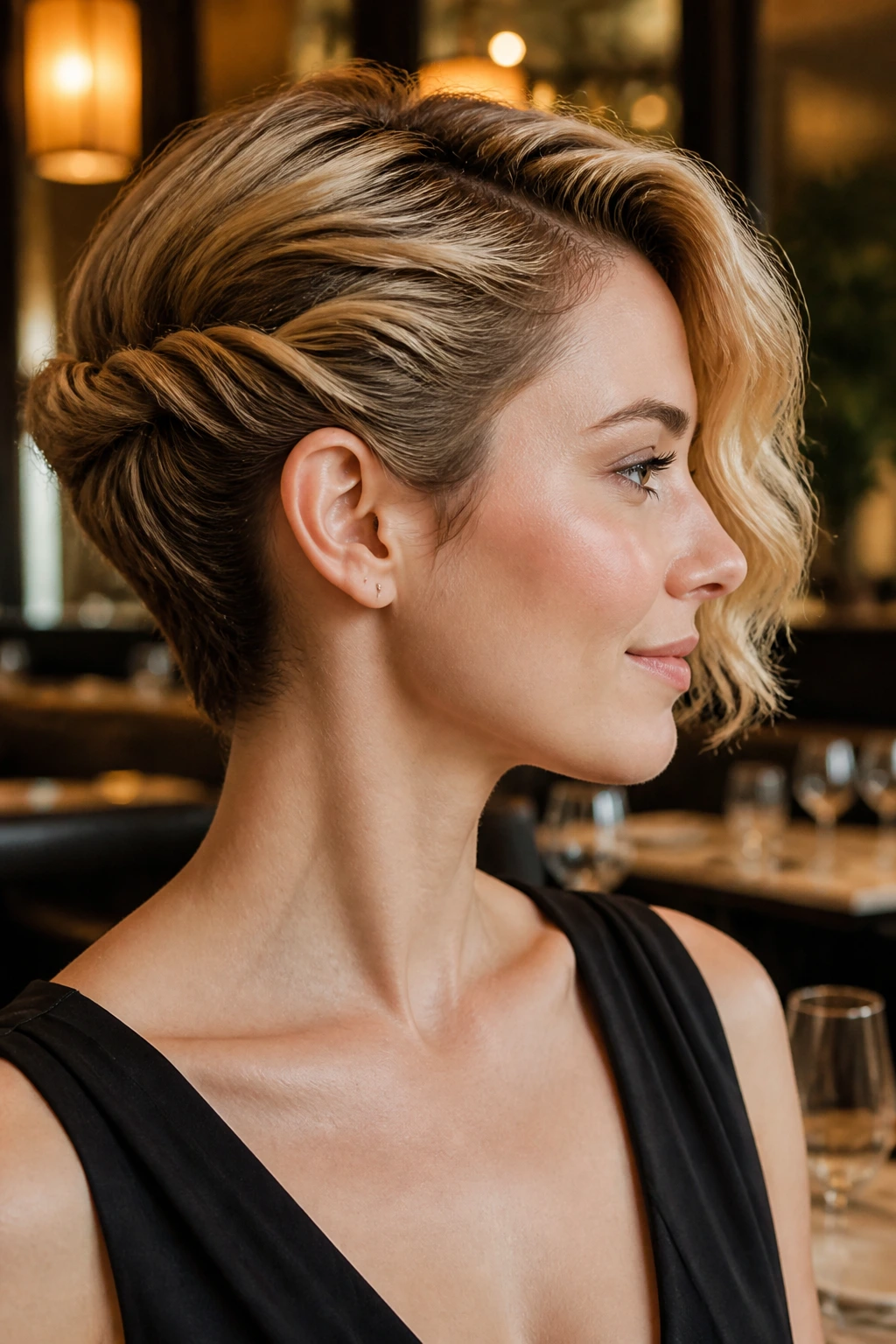
A side twist gives you height through asymmetry. Pull one side back in a loose twist, pin it at the back of the head, and leave the opposite side full so the wave can spill outward. The visual weight sits on one side, which makes the style look larger than a balanced crop.
Use this when you want something softer than a full updo but more sculpted than just tucking hair behind the ears. The twist should stay close to the head, not roll into a thick rope. If it gets too bulky, it starts shrinking the hair instead of opening it up.
This one works well for dinner, weddings, and any event where you want the hair to feel done without looking stiff. Keep the twist loose around the temple so the wave still shows. That’s the part people remember.
15. Vintage Flip Bob
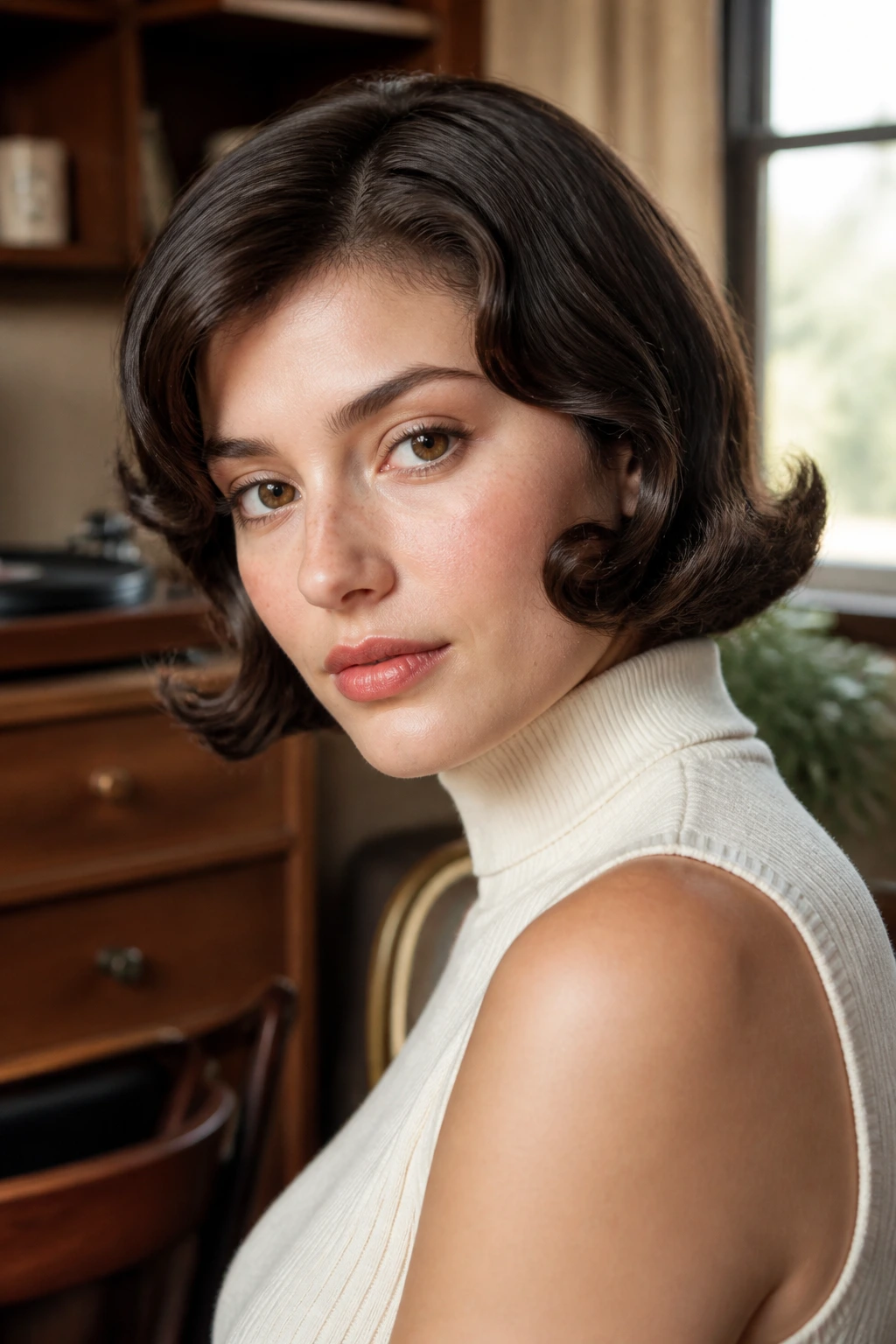
The vintage flip bob is all about the ends. They kick outward just enough to create a wide outline, while the top stays smooth enough to show off the cut line. On wavy hair, the flip reads softer than a straight blowout, which is why it doesn’t feel dated in a bad way.
A medium round brush or Velcro rollers at the ends help here. Dry the hair with a slight bend under at the roots, then turn the ends outward for that lifted finish. If the bob is blunt, the flip becomes sharper; if the layers are softer, the result feels lighter and airier.
This style flatters hair that needs body around the jaw. It also works well if you like a more styled look but hate anything that feels rigid. The flip says you made an effort. The wave says you didn’t fight your own texture.
16. Messy Quiff With Barrettes
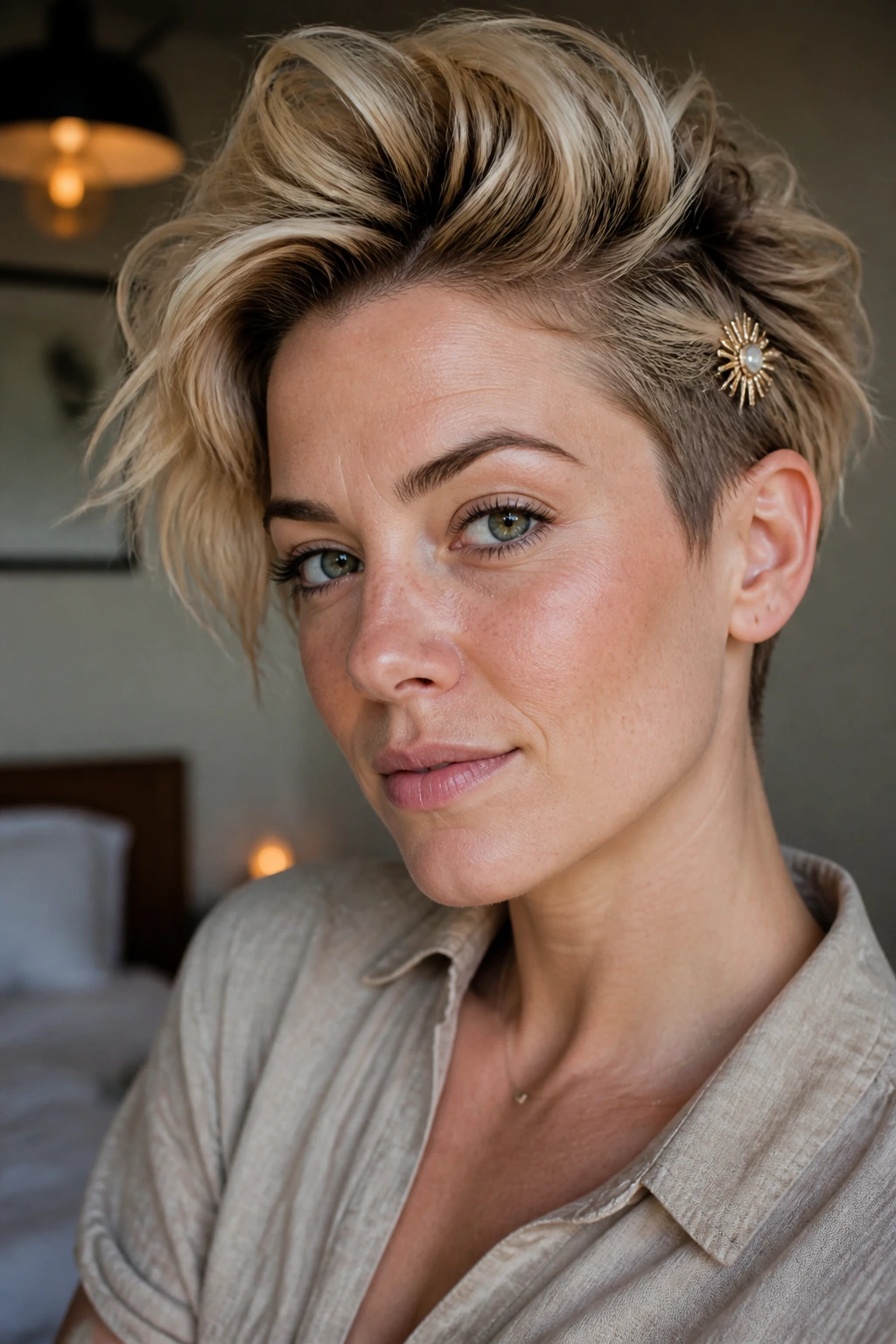
A messy quiff gets even better when one side is pinned back with a decorative barrette. The front lifts up and away from the face, the crown gets height, and the clip keeps the shape from sliding. On short wavy hair, that single pinned side helps the top look broader.
The best version is not symmetrical. Let the quiff lean a little, and keep the clipped side slightly slicker than the loose side. That contrast is what makes the style readable from across a room. You do not need a big accessory. A medium metal clip or a clean acrylic barrette is enough.
I reach for this one when I want volume fast and I don’t have the patience for full heat styling. It works on day-one hair, day-two hair, and hair that’s half-dried and doing its own thing. That versatility is the point.
17. Pinned Halo Twist
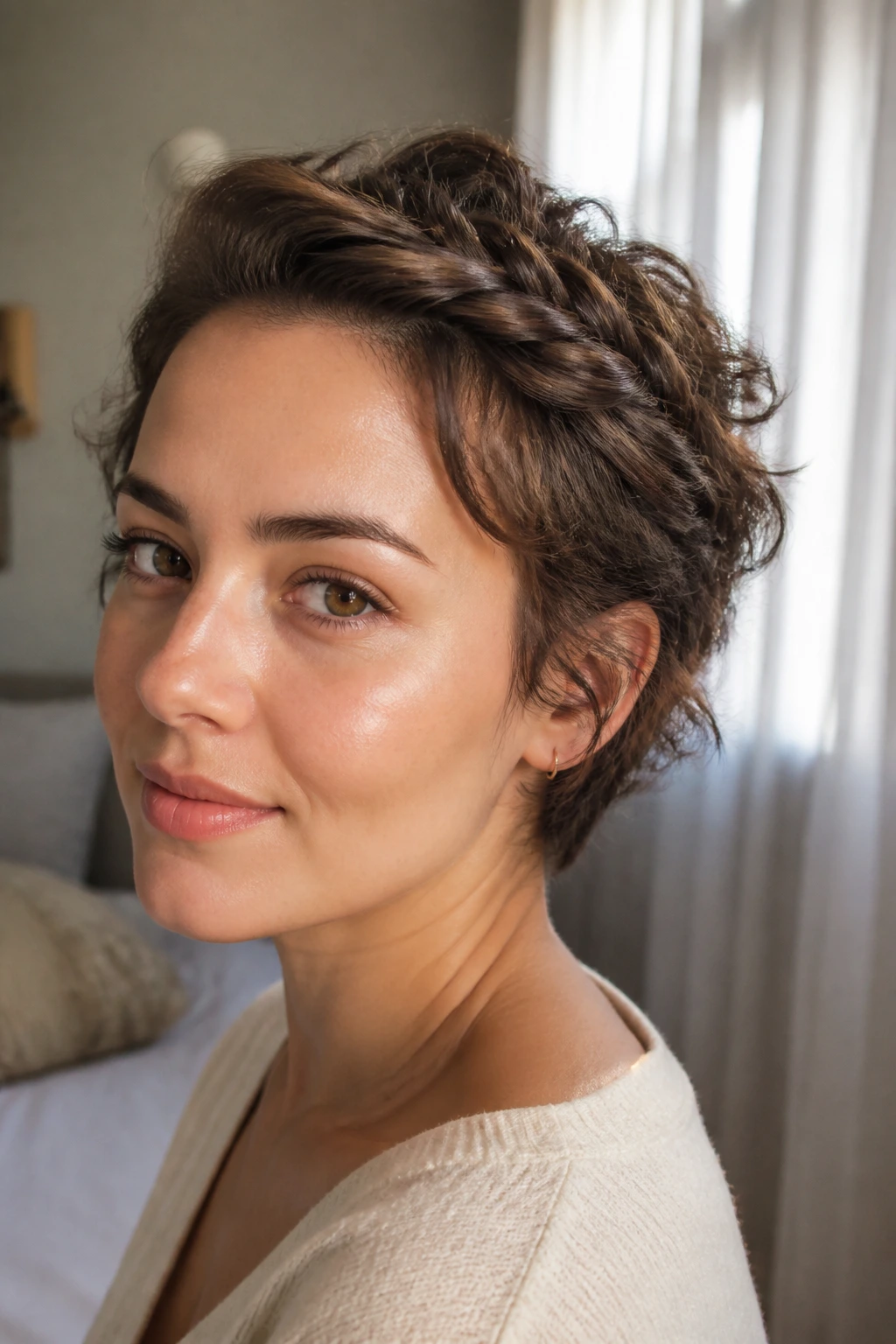
A halo twist on short wavy hair gives the illusion of much more length than you actually have. The sides are twisted back in sections and pinned around the head, leaving the top a little lifted and the ends tucked into the shape. Because the wave shows up in the twists, the style keeps some softness instead of looking rigid.
What to watch for
- Keep each twist loose enough to show texture.
- Pin from the underside so the bobby pins stay hidden.
- Leave the crown slightly raised before you start pinning.
- Don’t pull the front too tight, or the whole look shrinks.
This is a good option when you need the hair off your face but still want a full silhouette. It also works better than a slick bun on very short wavy hair, because the twist pattern gives the eye more to look at.
18. Asymmetrical Side Volume
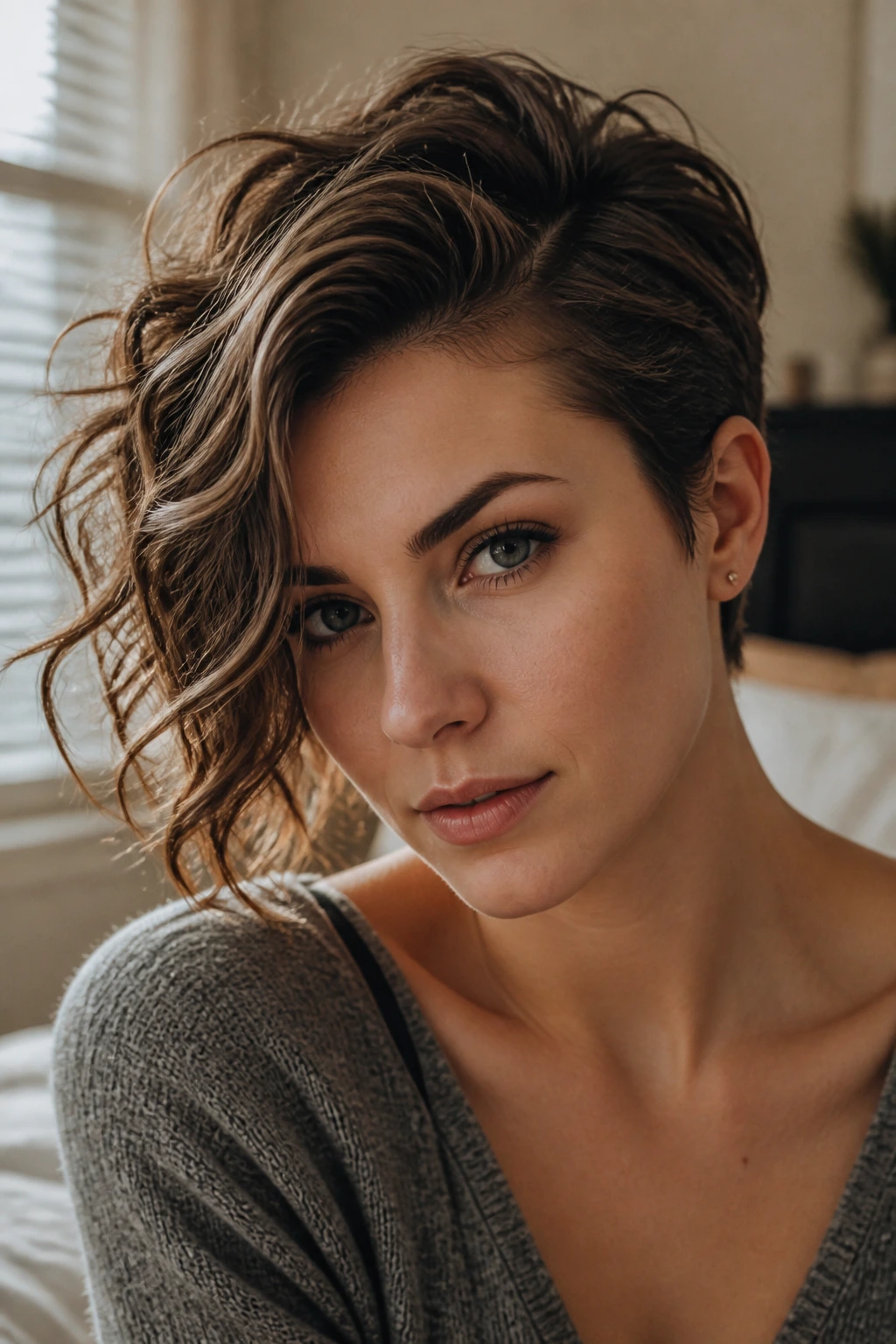
Sometimes the simplest route is also the boldest. Push almost all the volume to one side, tuck the other side close, and let the wave build a heavy, dramatic outline. The asymmetry makes the style feel larger because the silhouette stops being predictable.
This works especially well on side-parted bobs and long pixies. The fuller side can sit over the cheekbone or cheek, while the tucked side shows the jaw. That contrast creates shape even when the hair itself is short. If you want more structure, use a root-lift spray only on the fuller side.
This is the look for someone who wants the hair to be a little moody. Not dramatic in a loud way. Just decisive. It’s the kind of style that looks like it has a point of view, which is more rare than people admit.
19. Curly Mullet Pixie
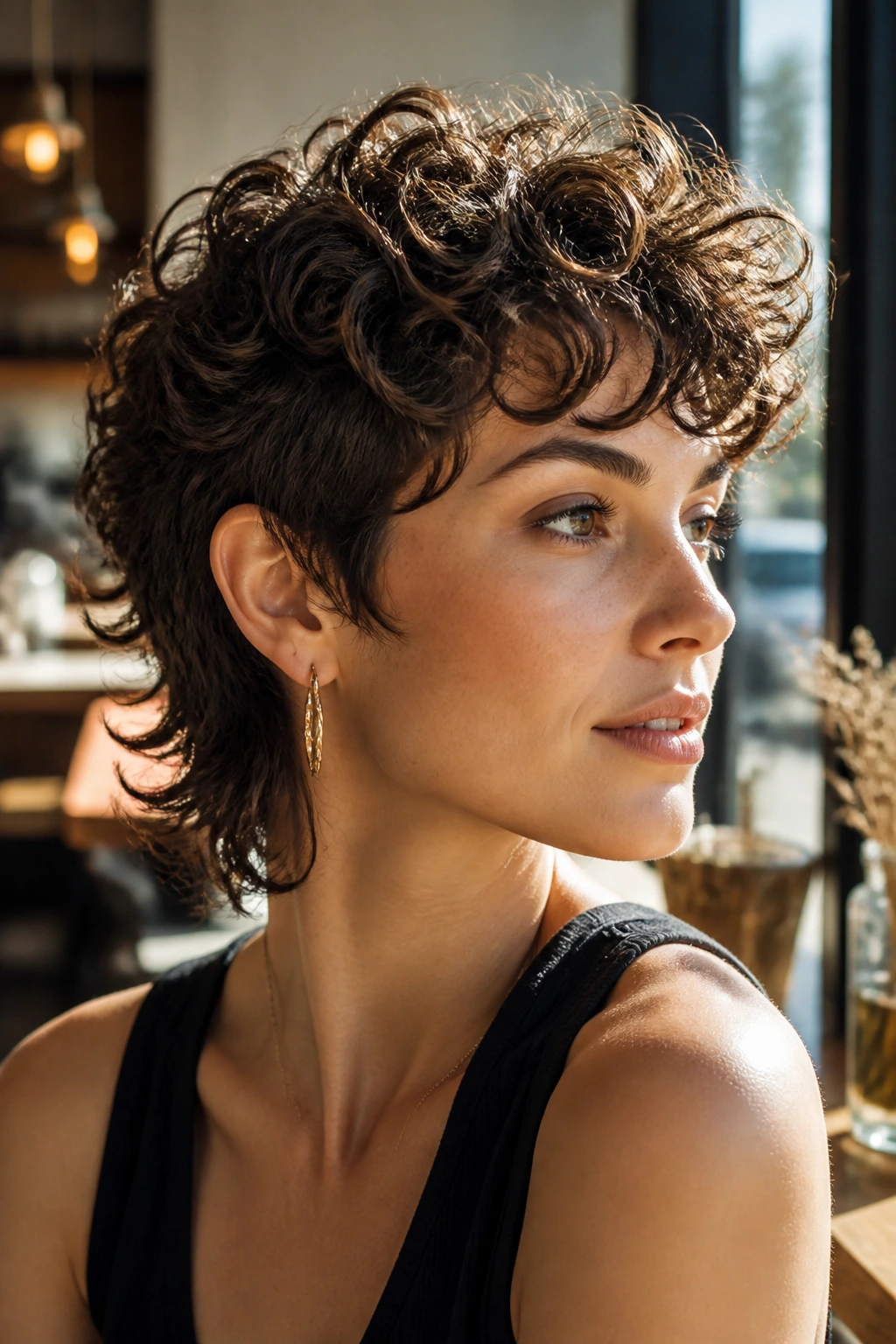
A curly mullet pixie uses the back length to make the hair feel wider and bolder, while the front and sides stay shorter and more controlled. On wavy hair, the longer back can fluff out into a soft tail shape that adds movement every time you turn your head. It’s not for everyone, and that’s part of why it works.
The silhouette matters here. Keep the top piecey, not helmet-like, and let the back retain enough length to show the wave pattern. If the nape gets too bulky, the shape turns into a lump. A good cut keeps the weight off the bottom while leaving enough texture for the style to expand.
This is an excellent choice if you like modern, slightly rebellious hair that still has softness. It looks best when it isn’t overly polished. A little grit at the ends keeps the whole thing from collapsing into a bland short cut.
20. Soft Blowout With Velcro Rollers
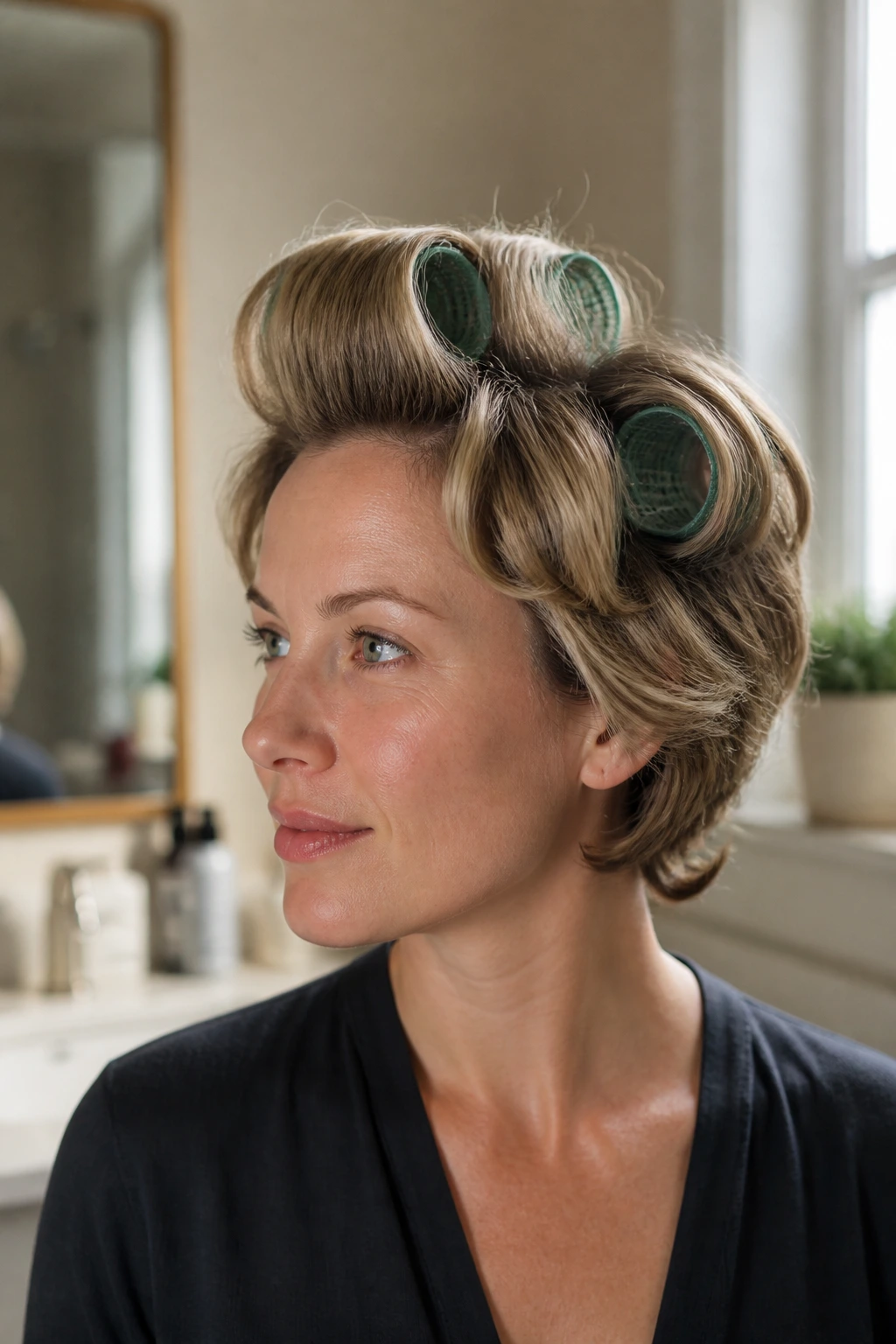
Velcro rollers can make short wavy hair look much bigger than most hot tools do, mainly because they lift the root and let the bend set as the hair cools. Roll the crown back, the sides up or away from the face, and let the ends take shape before you remove anything. The result is smooth volume, not sticky texture.
Use them on damp, nearly dry hair. If the hair is too wet, the shape takes forever to set and the crown can go soggy. If it’s bone dry, you lose the memory in the bend. A little mousse under the rollers helps the lift last.
This style is a good compromise for people who want polish without hard edges. It feels softer than a round-brush blowout and fuller than air-dried waves. The rollers do the boring part, which is the crown work nobody wants to redo every morning.
21. Side-Swept Tuck With Statement Clip
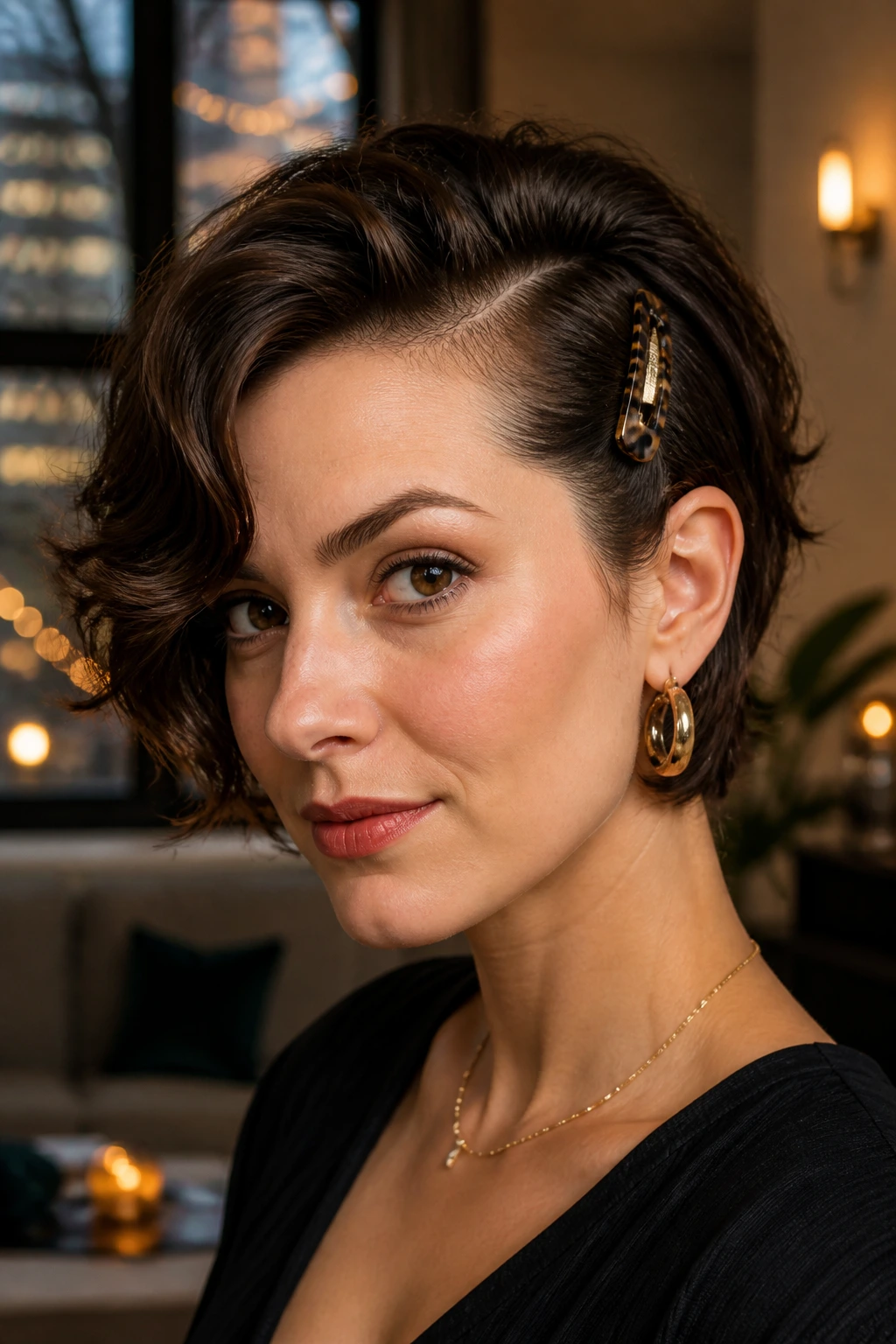
A side-swept tuck sounds plain until you add the right clip and keep the top high. The hair is parted deeply, swept over one temple, and tucked back on the other side with a barrette or clasp. The open side shows off the wave, and the tucked side keeps the shape from spreading downward.
The big mistake here is flattening the top in the name of neatness. Don’t. You want a little lift at the root so the hair doesn’t cling to the scalp. If you’ve got a few shorter layers at the front, let them fall out a little around the face. That keeps the style from looking too severe.
This is one of the easiest ways to dress up a short cut without changing the whole texture. It works for work, dinner, or a casual event, and it takes about as long as putting on earrings. Which is convenient, frankly.
22. Textured Bouffant Pixie
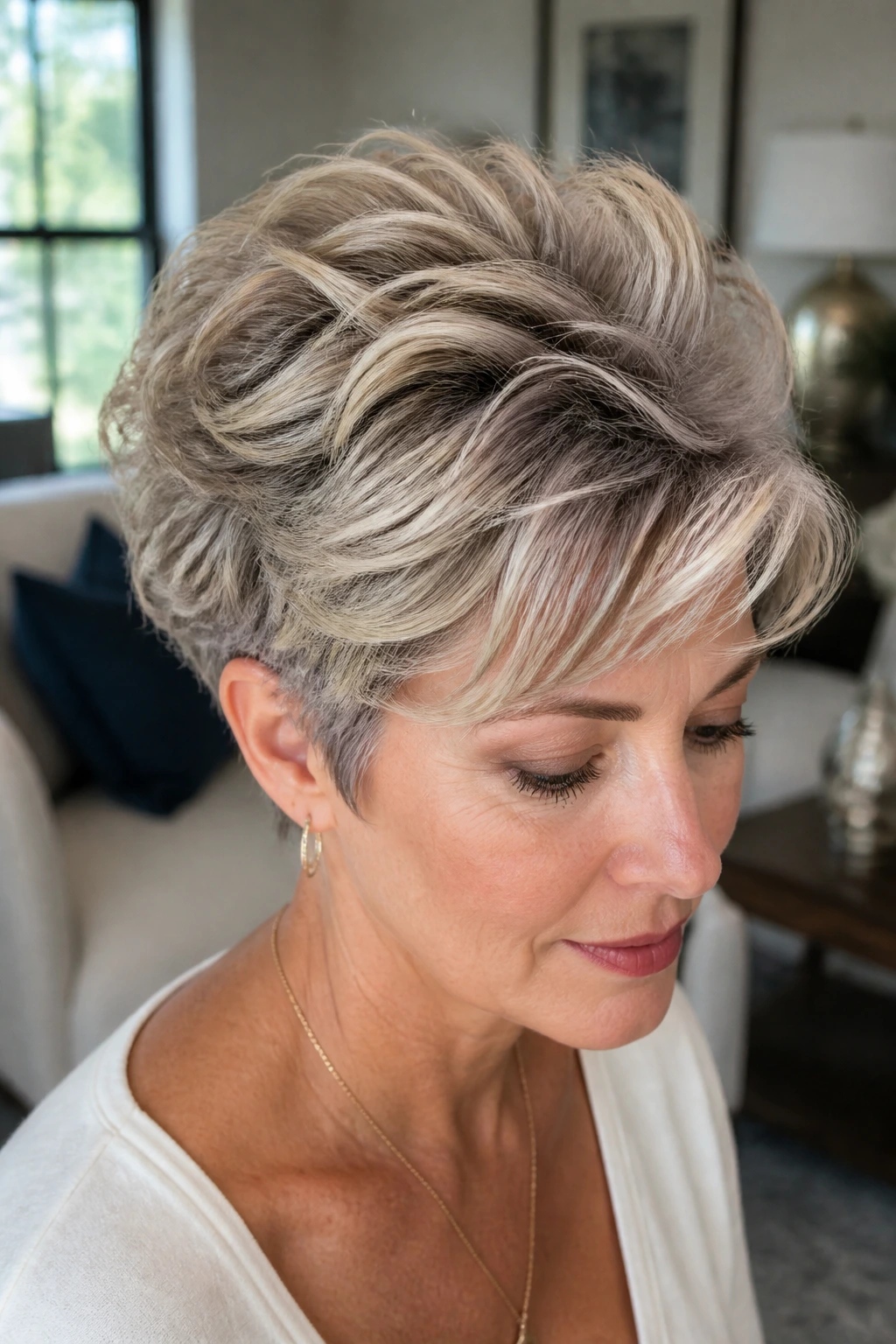
A bouffant on short wavy hair sounds old-fashioned until you see it done with a modern, piecey finish. The crown is lifted, the top rounds upward, and the sides are kept smoother so the height feels intentional. The wave gives the bouffant a little broken texture that keeps it from looking like a costume.
Use a root-lift spray at the crown, then backcomb only the underside of the top section in small strokes. Smooth the top layer over it with your hands, not a brush. A brush tends to wipe out the shape. Finish with a flexible spray so the volume holds but the hair still moves.
This is the biggest silhouette in the bunch. It’s a little glamour, a little attitude, and a lot of lift for a short cut. If you like the feeling of hair that shows up before you do, this is the one.
How to Make Short Wavy Hair Look Bigger Without Turning It Crispy
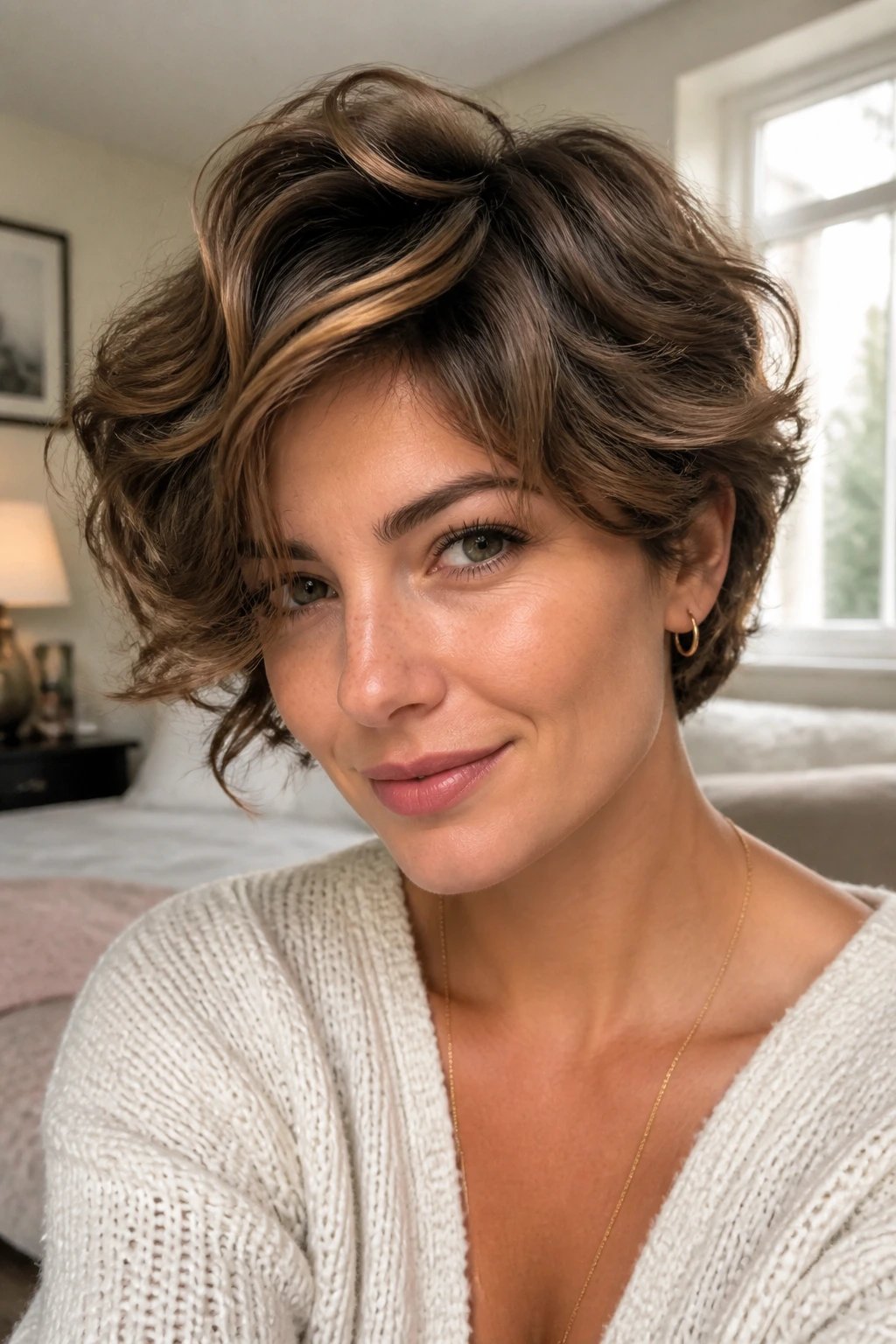
Short wavy hair gets bigger when the roots have grip and the ends keep movement. Those two things pull in opposite directions, so you have to be deliberate. A mousse or foam at the roots, a lighter touch at the ends, and a cool-down period before you touch the hair again will do more than a drawer full of serums.
Start with the crown. That’s where flatness shows first. Clip the top up while you dry the sides, or dry the roots in the opposite direction for the first minute or two. Then put the part where you actually want it.
Use less product than you think. Heavy cream makes waves clump and fall. A dime-size amount can be enough for very short hair, especially if you’re only trying to keep the bend and not smooth frizz into submission.
Let the hair cool where you want it to live. That’s the part people skip. Hair remembers shape better when it cools in that shape, whether you’re using clips, rollers, a diffuser, or your hands.
Essential Tools for These Looks
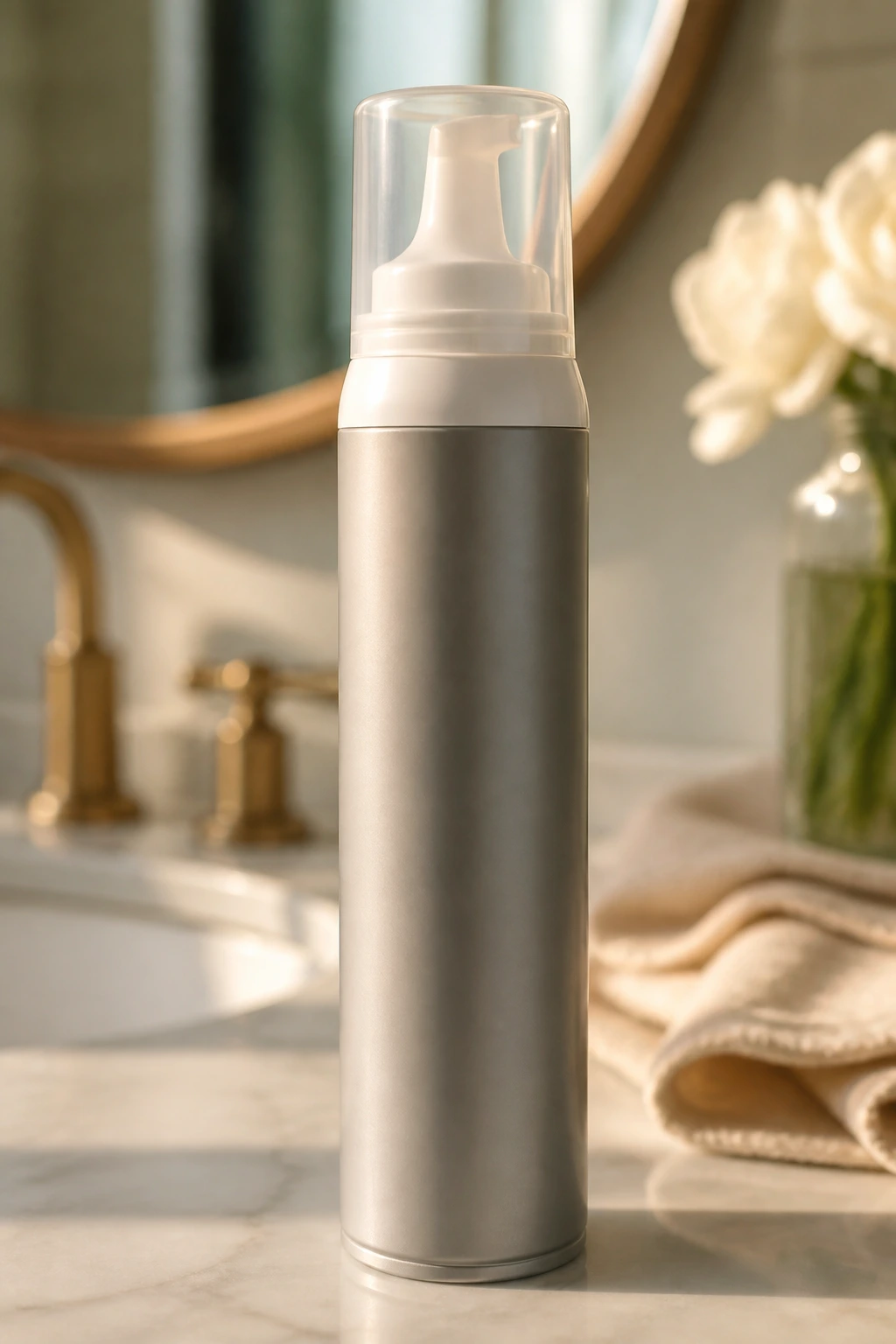
- Lightweight mousse or foam — Gives short wavy hair grip at the root without weighing down the ends.
- Root-lift spray — Best for the crown, especially on styles that need height above the ears.
- Diffuser attachment — Useful when you want to keep the wave pattern intact while drying.
- Tail comb — Helps with deep parts, sectioning, and lifting the crown cleanly.
- Duckbill clips or flat clips — Great for setting lift while the hair cools.
- Bobby pins — Necessary for twists, tucks, braids, and pinned asymmetry.
- Small round brush — Handy for flipping ends or nudging the fringe into shape.
- Velcro rollers — Good for a softer blowout look with real root lift.
- Dry shampoo — Adds texture and saves second-day roots from going limp.
- Texturizing spray — Helpful when you need separation after drying, especially for pixies and bobs.
- Satin pillowcase or sleep bonnet — Keeps the shape from getting crushed overnight.
What to Ask for at the Salon and What to Buy for the Drawer
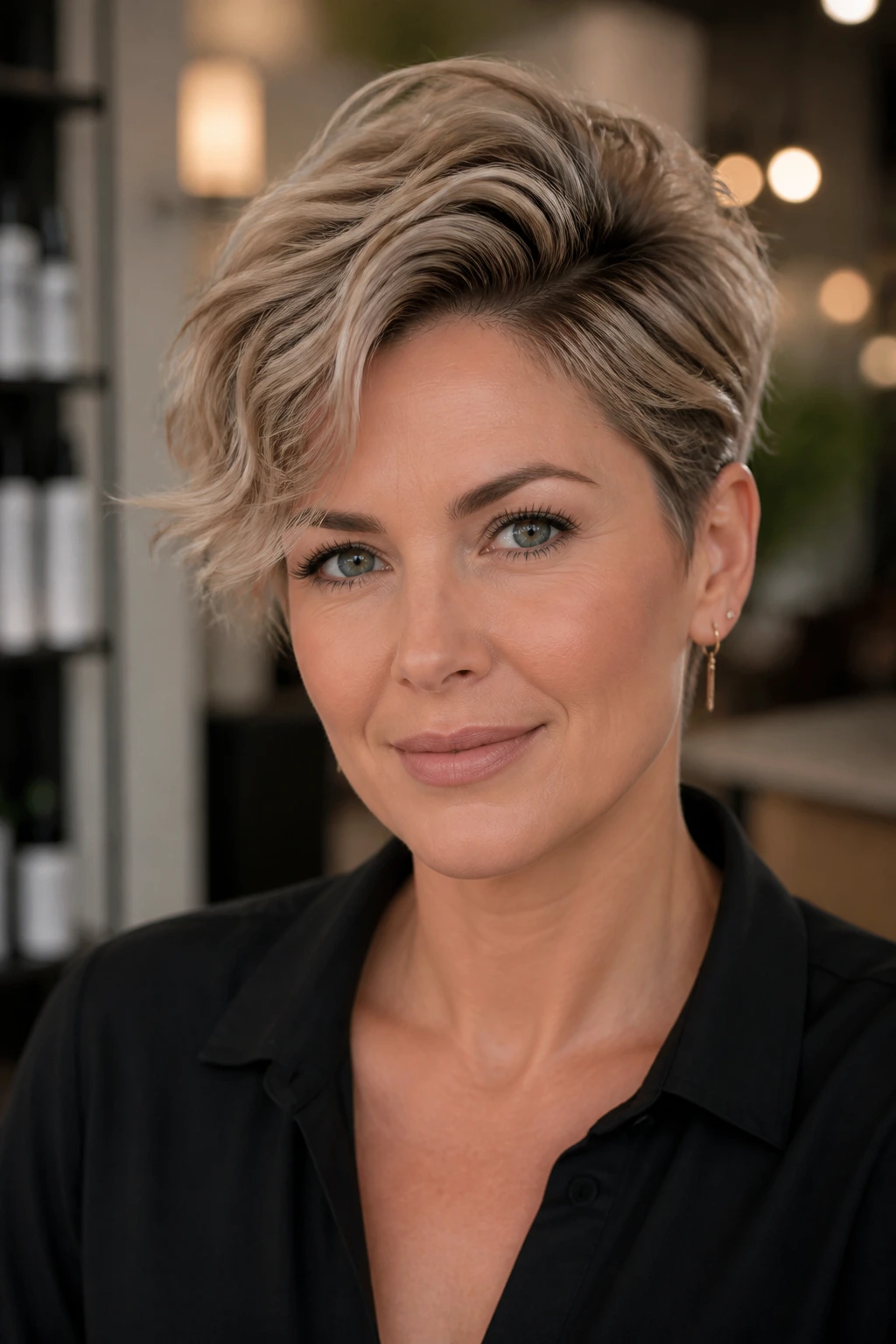
The haircut matters more than most people want to admit. If you want volume, ask for internal layers or soft graduation through the crown, not just one blunt line from front to back. On short wavy hair, a little removal at the right spot creates room for lift. Too much thinning, though, and the ends get wispy fast.
For a pixie, ask for length on top with slightly tighter sides and a crown that isn’t overcut. For a bixie or bob, ask for movement through the mid-lengths and a perimeter that can flip or tuck without looking heavy. If your hair is fine, keep the layers controlled. If it’s thick, ask for weight removal under the surface so the top doesn’t sit like a cap.
Product choice should follow texture, not hype. Mousse and foam usually beat rich creams for this whole category because they add memory without dragging the hair down. A light gel can help for wet looks and slicked shapes, while salt spray works best when you want roughness rather than shine. If your hair feels sticky after styling, you used too much. If it feels soft but drops flat, you probably need more root support, not more ends product.
How to Wear These Styles From Coffee Run to Dinner
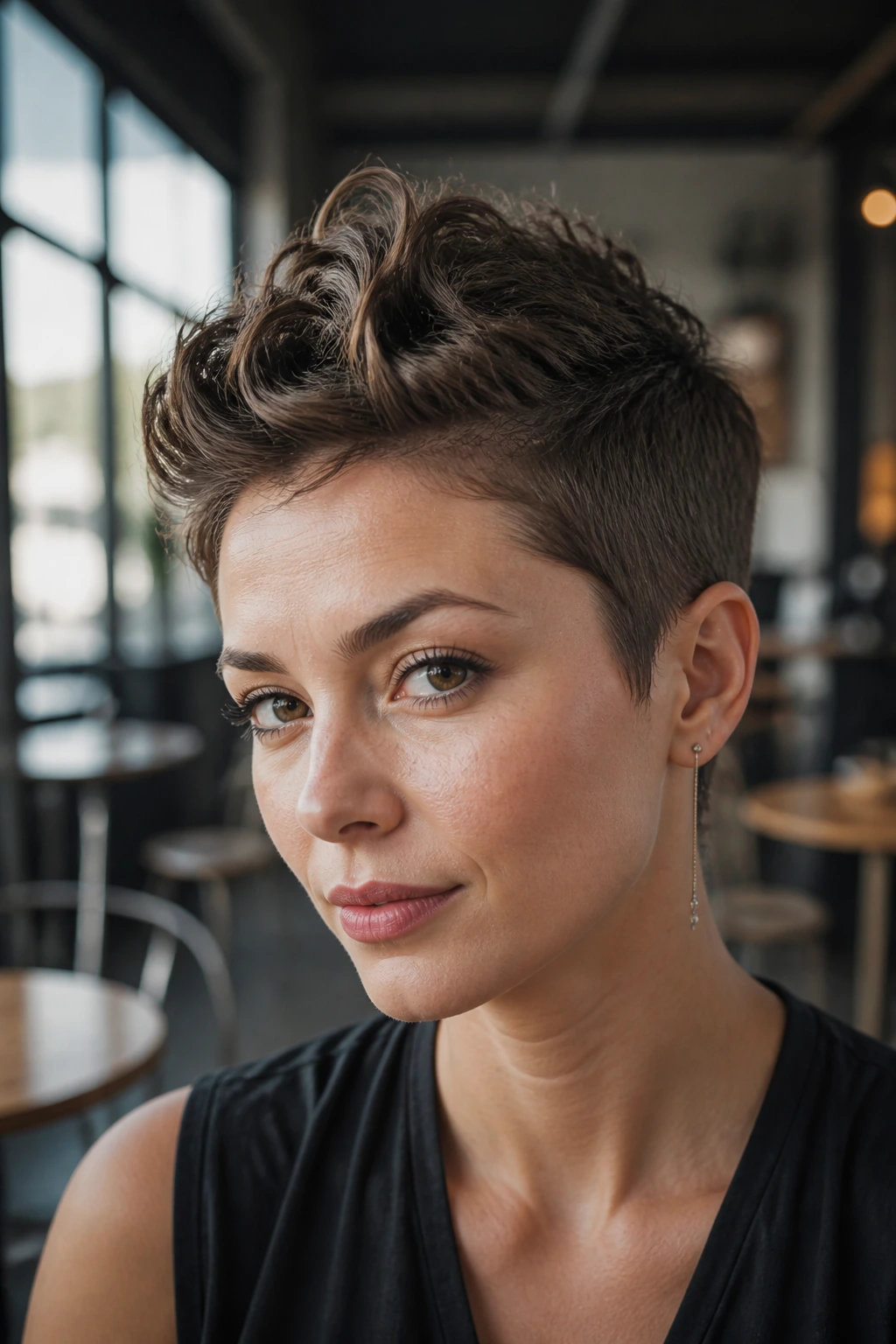
Workday: Deep side parts, tucked sides, and rounded bobs read polished without looking severe. Keep the crown lifted and the finish clean, then stop before the style gets stiff.
Weekend: Faux hawks, shaggy crops, and messy quiffs can be looser here. A little frizz is fine. It gives the hair movement and stops the style from feeling too dressed up for a grocery run.
Event night: Bouffant pixies, halo twists, finger waves, and wet-look crops do the job when you want the hair to look deliberate in photos and in person. Add one strong accessory — a clip, barrette, or set of earrings — and let the shape do the talking.
Low-effort day: Headbands, crown clips, and side tucks are the fastest win. They make second-day hair look chosen rather than rescued, which is always a better look than pretending you started from scratch.
Common Mistakes That Flatten Short Wavy Hair
Using too much cream at the roots. The scalp starts looking shiny and the hair sinks by noon. Put rich products only from mid-length to ends, and use mousse or foam at the base.
Chasing perfect smoothness. When every strand is brushed into place, the wave loses air. Leave some separation. That gap is the volume.
Teasing the wrong section. If you backcomb the ends, the style turns frayed and the crown still falls flat. Tease under the top layer near the root, then smooth the top over it.
Skipping the cool-down. If you take clips out while the hair is still warm, the shape slumps fast. Let it sit for a few minutes, even if you’re in a hurry.
Choosing an accessory that’s too heavy. Big clips are fun, but a weighty barrette can drag a short cut downward. Use something that grips without pulling.
Variations and Adaptations to Try
Fine-Hair Lift Routine: Use mousse at the roots, dry with your head tipped to the side, and finish with dry shampoo at the crown. Skip heavy oils altogether. They flatten fine waves fast.
Thick-Wave Control Routine: Add a light gel over mousse, then diffuse until the roots are dry and the ends still bend. This keeps the shape from exploding outward in humid weather.
Heat-Free Shape: Set the crown with clips, twist the side sections while damp, and let the hair air-dry fully before you touch it. The finish is softer, but the lift lasts if you keep your hands off it.
Glossy Event Finish: Use gel for structure, then smooth a tiny bit of serum only on the ends. The crown stays tall, and the surface reads sleek instead of dry.
Second-Day Reset: Mist the roots with water, add a small amount of mousse, and blow-dry just the top for 60 to 90 seconds. The rest of the hair can stay a little messy.
Keeping Short Wavy Hair Full Between Washes
Short wavy hair usually looks best when it is not freshly shampooed every single day. A little natural oil at the roots can help the shape hold. Too much, and the style collapses. The sweet spot is usually somewhere around day two, but product buildup changes that, so watch the roots instead of the calendar.
At night, don’t smash the hair flat under your head. If the style has a lifted crown, clip that section up loosely before bed or sleep on a satin pillowcase. In the morning, mist the roots lightly, add a touch of dry shampoo, and scrunch the ends with your fingers. If a section has gone crooked, rewarm it with a dryer for 20 to 30 seconds and let it cool again in the right direction.
Wash more often if you use gel or heavy spray every day. Wash less often if you’re styling with mousse and dry shampoo only. The right rhythm is the one that keeps the crown alive without leaving the scalp coated.
Questions People Always Ask About Big Styles on Short Wavy Hair
What haircut makes short wavy hair look the fullest?
A cut with crown length, soft layers, and a little shape through the sides usually wins. Pixies, bixies, and short bobs with internal layers give the wave room to expand without getting bulky.
Can fine short wavy hair pull off big hairstyles?
Yes, but it needs lighter products and a cleaner shape. Fine hair usually does better with mousse, root clips, and controlled teasing at the crown than with heavy cream or too much oil.
Is a diffuser better than air-drying?
For volume, usually yes. A diffuser lets you lift the roots and set the wave in place before it falls flat, while air-drying can work if you clip the crown and leave the hair alone.
How do I keep the crown from going flat?
Dry the roots in the opposite direction first, clip the crown while it cools, and avoid touching it until the hair is fully dry. That sequence matters more than any single product.
What if my waves get frizzy when I try to build height?
Use less product and stop roughing up the ends so much. Frizz often shows up when the hair is dry but under-supported, so add a small amount of mousse at the root and leave the mids alone.
Do these styles work on very short cuts?
Some do, especially lifted pixies, quiffs, and wet looks. Once the top is too short to pinch or sweep, the options narrow, but the crown can still be shaped with clips and product.
Can I wear these looks without heat?
Absolutely. Clips, pins, mousse, and air-drying can build a lot of shape on wavy hair. The finish is softer, but the silhouette can still read full.
How often should I wash if I want volume?
Usually every 2 to 4 days, depending on how much product you use and how oily your scalp gets. Too-frequent washing can make the hair too clean to hold shape; too little can leave the roots heavy.
Big Hair, Small Length
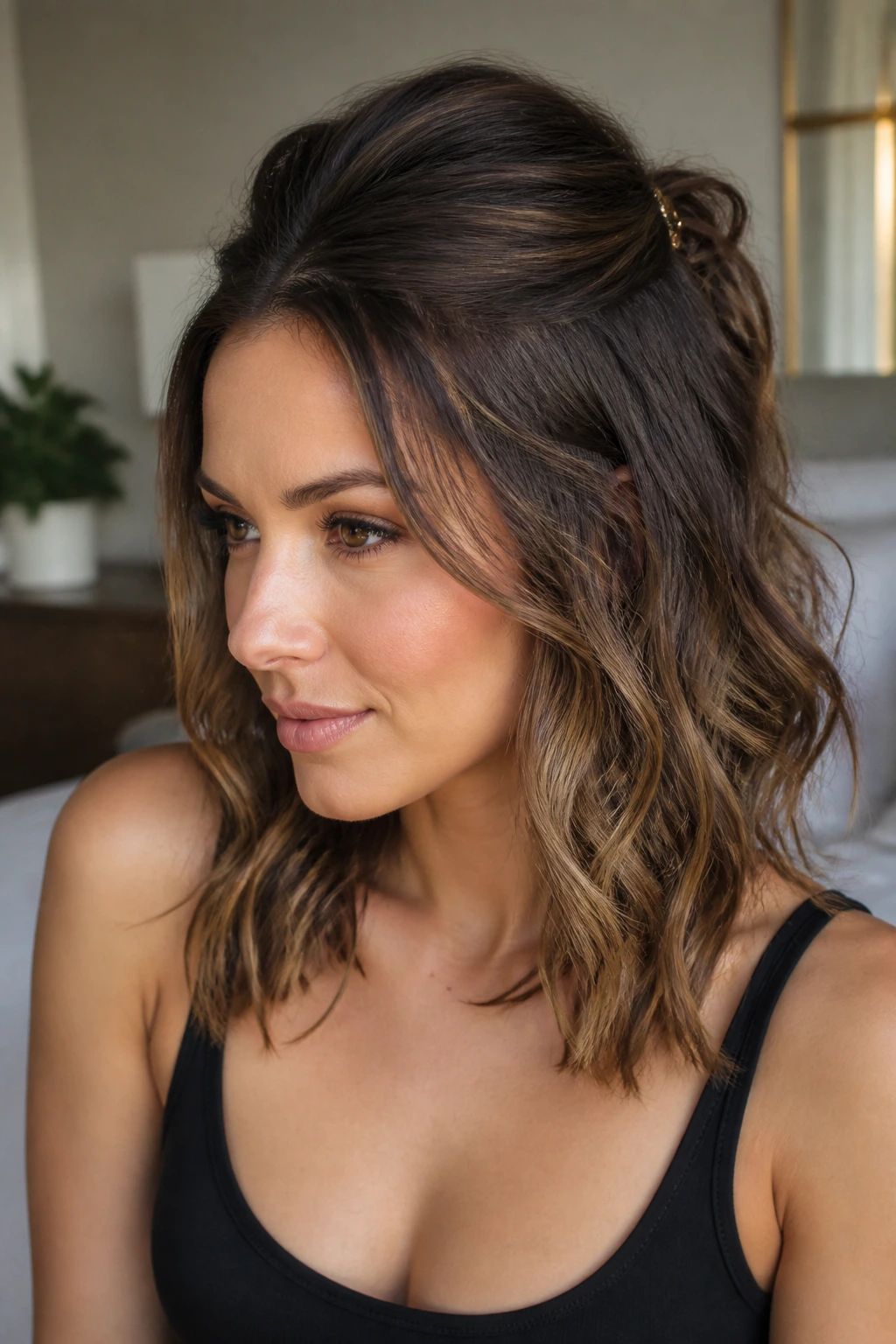
Short wavy hair doesn’t need length to make an impression. It needs direction, a little lift at the roots, and a style that respects the bend instead of fighting it. That’s why these shapes work: they use the hair’s own movement, then stack volume where the eye notices it first.
Pick the version that fits your routine, not the one that only looks good in a photo. The styles that last are the ones you can reset with your hands, a clip, and maybe a diffuser if you feel like it. That’s the sweet spot.
And once you find the cut and shape that keeps your crown up and your waves awake, the whole thing gets easier. You stop chasing volume and start wearing it.