



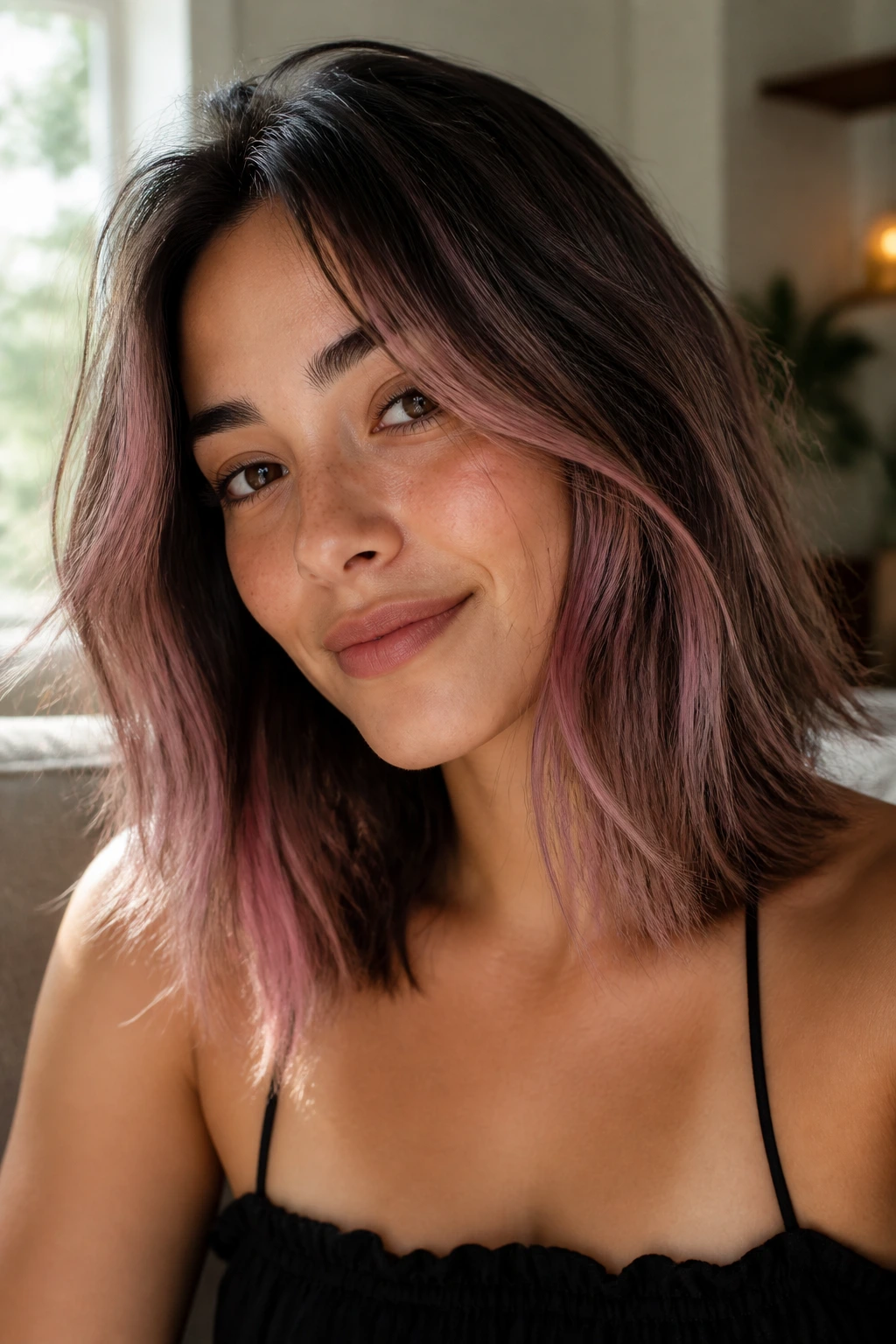
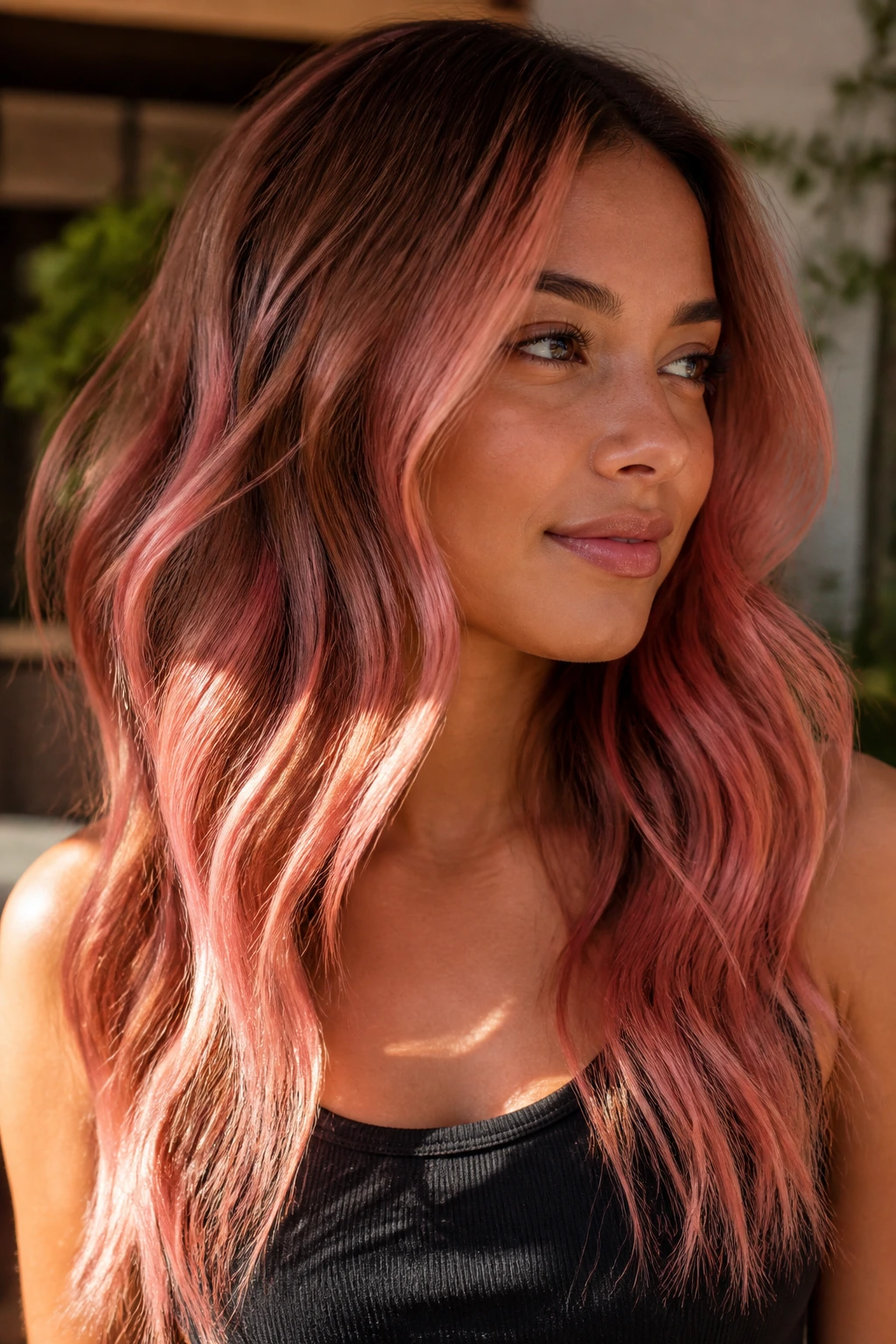
Pink highlights for medium skin tones with fine hair can go soft, sharp, or a little rebellious depending on where you put the color. The sweet spot is rarely the loudest pink on the swatch ring; it’s the one that borrows enough warmth from the base to flatter the skin and enough depth from the root to keep fine hair from looking see-through.
Medium skin has range. Some undertones lean golden, some olive, some neutral, and pink can move in several directions — peachy, rose, berry, mauve, copper-rose — without losing the point. Fine hair adds another wrinkle. Chunky stripes can expose the scalp and make the color look pasted on, while tiny babylights, face-framing pieces, and ribboned panels create movement that your eye reads as fullness.
The looks below move from whisper-soft blush threads to bolder fuchsia accents, because not everyone wants the same amount of color shouting from their head. Some are good first steps. Some are for when you want the mirror to give you a second look. Start with the placement that suits your density first, then choose the pink that agrees with your undertone.
Why These Pink Highlights Work So Well
- They can stay soft without going dull: Pink in the rose, blush, or mauve family keeps its shape even when the light changes, so the hair doesn’t turn muddy after a few washes.
- Fine hair gets lift from placement, not bulk: Tiny foils, ribbons, and underlayers create broken-up light and shadow, which makes strands look fuller than wide stripes do.
- Medium skin has room for warm and cool pinks: Golden complexions usually like coral-rose and strawberry tones; neutral and olive skin often looks cleaner with dusty rose or mauve.
- There’s a low-commitment lane here: Peekaboo panels, gloss lights, and pink ends fade more gently than all-over neon.
- The grow-out can stay neat: Root shadow, contour pieces, and scattered dimension hide the harsh line that chunky highlights leave behind.
1. Blush Babylights
Blush babylights are the quietest way to wear pink, and that’s the charm. The strands are so fine they almost disappear until the light hits them, which makes them ideal for medium skin that wants a little color without a hard edge.
Why They Read Soft Instead of Stripy
Fine hair needs air around the color. Tiny slices around the crown, temples, and part line break up light in a way that makes the hair look fuller, not thinner. On a medium complexion, a pale blush or rose-beige tone sits comfortably beside the skin instead of fighting it.
- Ask for micro-foils, not broad panels.
- Keep the pink sheer and low-saturation.
- Finish with a beige-pink gloss so the tone stays airy.
A center part shows them fast. A soft side part hides them just enough to feel polished.
2. Rose-Gold Money Piece
A rose-gold money piece is the fastest way to wake up medium skin without coloring the whole head. Those brighter ribbons around the face do the heavy lifting, especially if the rest of the hair stays slightly deeper at the root.
The reason it works is simple: light near the cheekbones and hairline pulls focus upward. Fine hair benefits because you’re not asking every strand to carry color. You’re placing the brightness where the eye lands first.
If your medium skin leans golden, ask for a rose with a warm copper note. If it leans neutral, a softer pink-gold tone keeps the result from looking orange. This one loves curtain bangs, loose waves, and any cut that frames the face instead of hiding it.
3. Dusty Pink Ribbons
Dusty pink ribbons have more mood than blush babylights, but they still stay on the wearable side. The color is muted, a little smoky, and it looks especially good on layered cuts where the movement does half the work for you.
Best for Hair That Needs Motion
Fine hair can go flat if every highlight is too clean and even. Ribboning gives you visible strands of color without turning the whole head into a stripe pattern. The result feels textured, which is handy when the haircut itself is light in density.
Ask your colorist to keep the ribbons thin through the mid-lengths and a bit softer toward the ends. A dusty rose tone flatters medium skin with neutral or olive undertones because it doesn’t lean too icy. It has enough warmth to sit well against the complexion, but not so much that it turns coral.
4. Strawberry Pink Balayage
Strawberry pink balayage is one of those shades that looks sunny in daylight and a little richer indoors. It borrows from red, which helps medium skin look alive rather than washed out, especially if the base is brown or dark blonde.
The balayage part matters for fine hair. Hand-painted placement leaves the root area intact, so you keep that visual density near the scalp. Wide, blunt pink blocks can make the crown look thinner than it is. Soft painted pieces don’t do that.
This is the shade I’d point a brunette toward first if she wants pink but doesn’t want the color to feel sugary. It’s warmer, a little juicier, and easier to wear with everyday clothes than a cold pastel.
5. Pastel Pink Peekaboo Layers
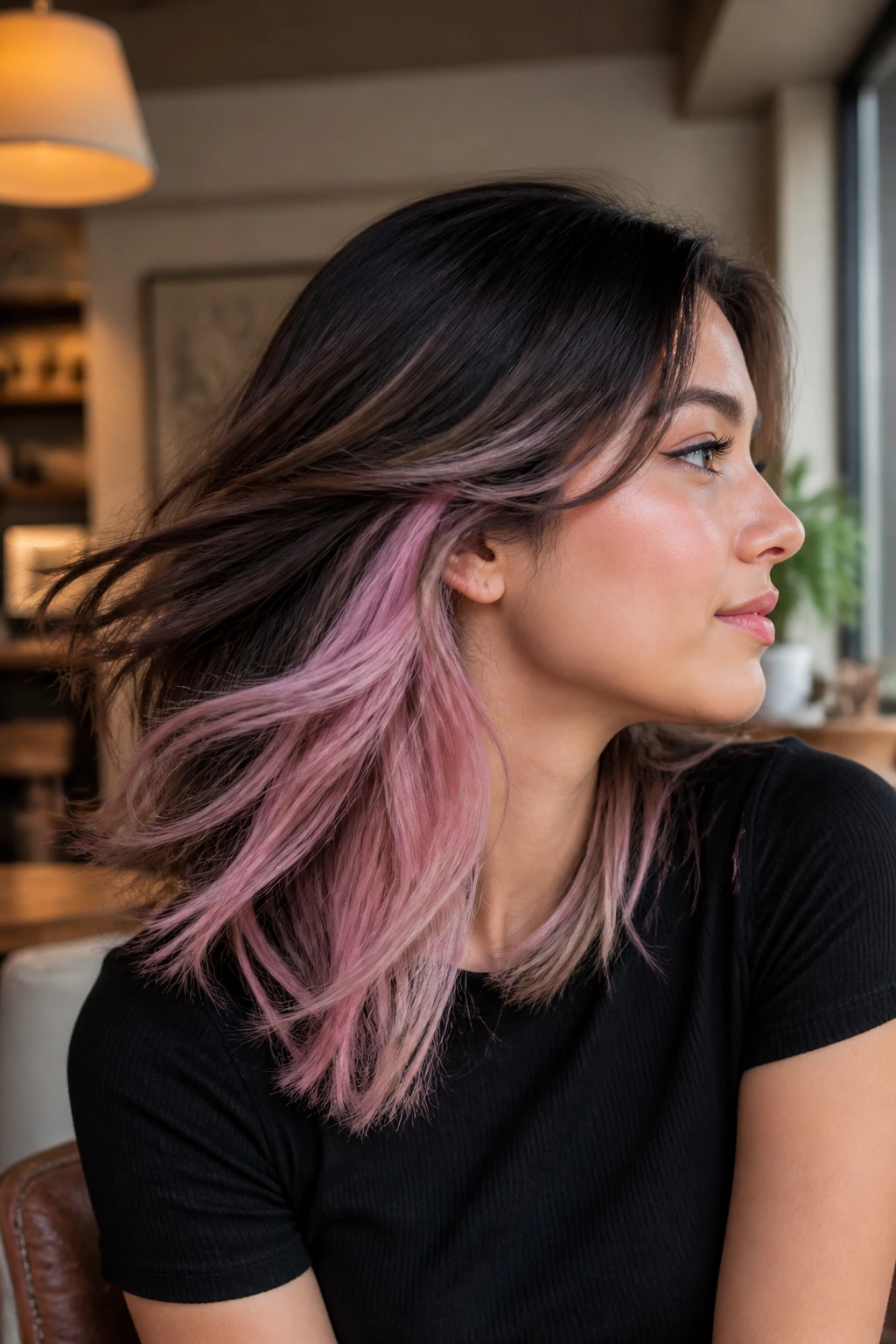
Peekaboo pink is the low-stakes option with the best payoff when you tie your hair up. The color hides under the top layer, then flashes out when you flip, braid, or tuck one side behind your ear.
That’s useful for fine hair because the visible top layer stays natural and full. You get the fun part without sacrificing the look of density. Medium skin also benefits from the contrast: when pastel pink sits under a deeper top layer, it reads cleaner against the face.
If you wear your hair in a ponytail often, this one gives you a little surprise every time you turn around. It’s a smart choice when you want color that isn’t shouting in every setting.
6. Coral-Pink Tips
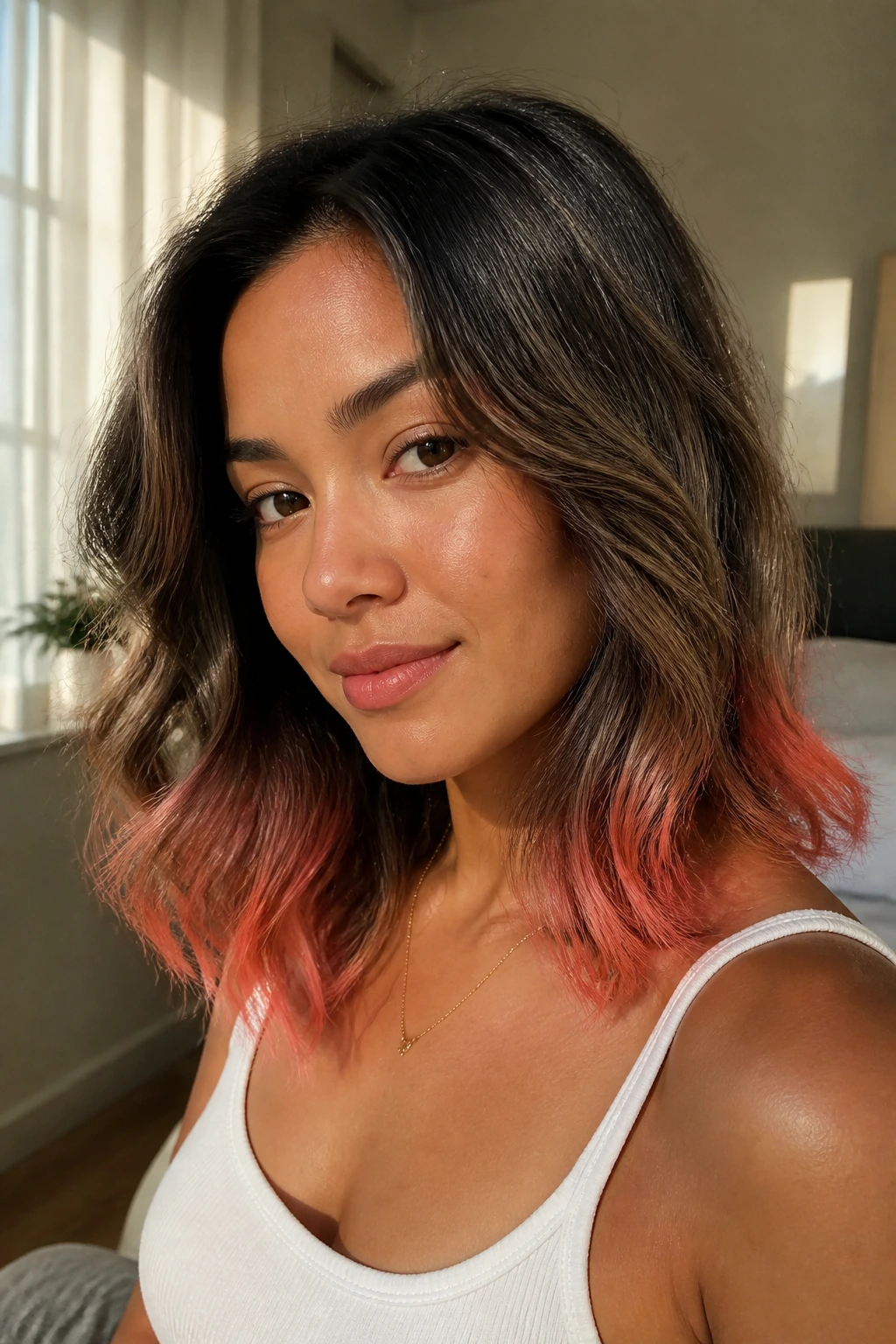
Coral-pink tips bring warmth straight to the ends, which is useful if your medium skin has a golden cast. The shade is brighter than blush and softer than neon, so it lands in that useful middle ground where the color feels fresh instead of sugary.
The end placement matters on fine hair because the roots stay dark and anchored. That little bit of depth at the top helps the cut look fuller, while the coral ends pull the eye downward and make movement visible. If your ends are dry, get a trim first. Coral can cling to porous ends and go louder than you meant.
This looks especially good on blunt lobs and shoulder-length waves. The tips catch the light; the rest of the hair does the quiet work.
7. Mauve Melt
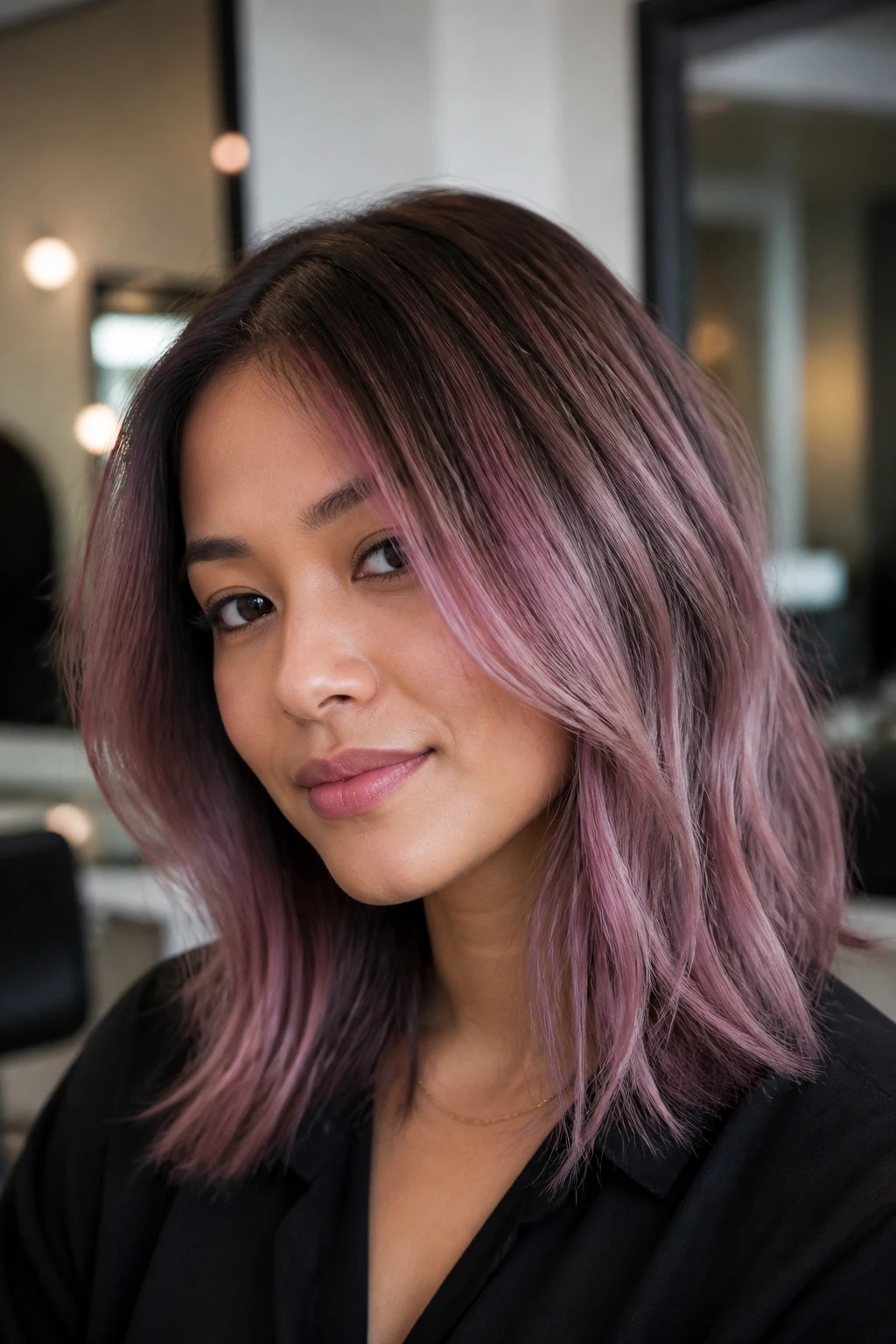
Mauve melt is where pink starts looking grown-up. The shade sits cooler, with a dusty violet edge, and the melt from root to ends keeps the color from feeling chopped up or heavy.
Why It Flatters Medium Skin
Neutral and olive medium skin often look cleaner in mauve than in bubblegum or peach. The slight coolness keeps the face from going too red, and the softness of the melt means you don’t need thick color blocks to see the effect.
For fine hair, a melt is useful because there’s no hard line between shades. The eye reads the blend as movement. Ask for a root shadow and a mauve-pink finish that gets a touch lighter at the ends. It works best on smooth blowouts or loose bends where the color can show its gradient.
8. Champagne Pink Gloss Lights
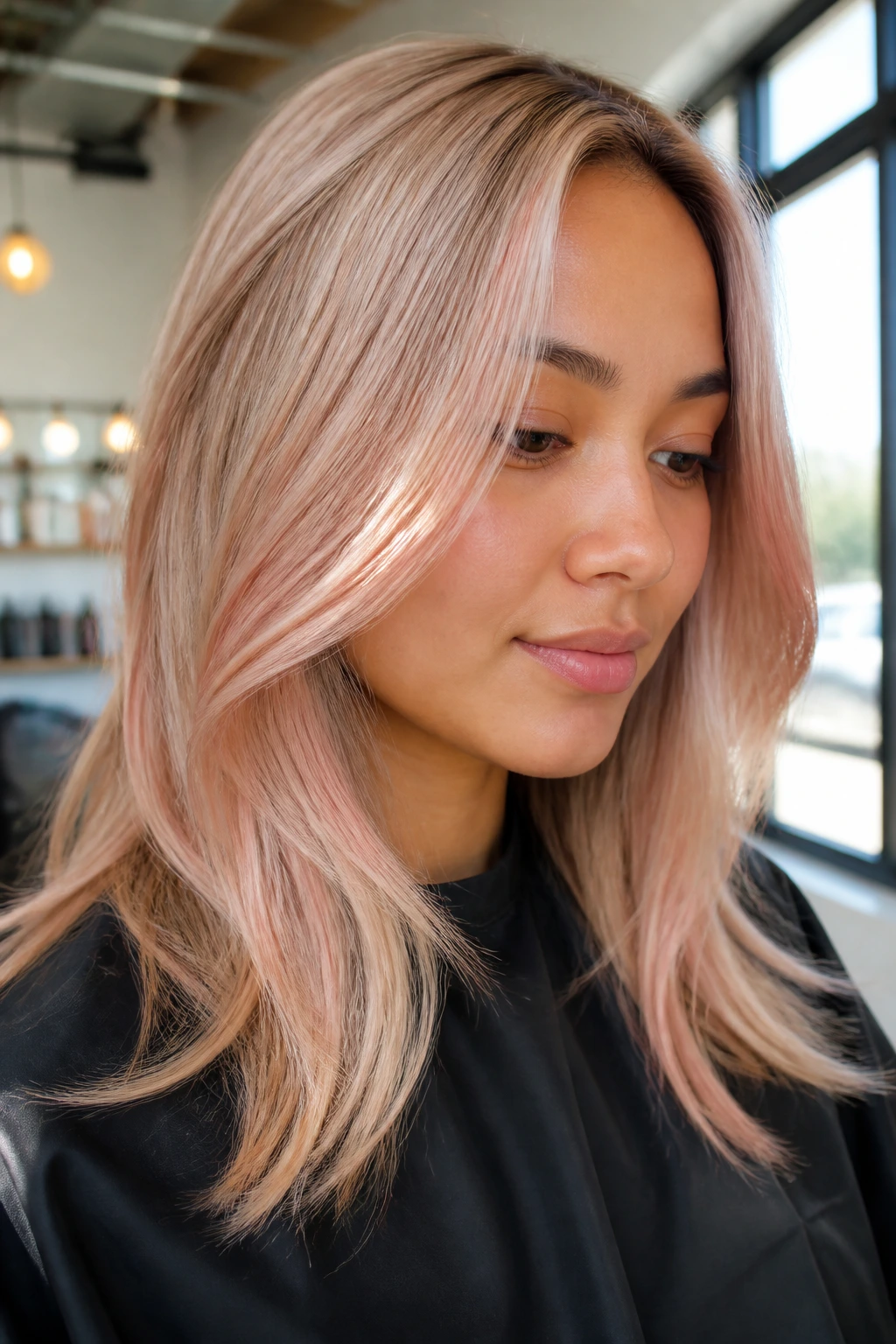
Champagne pink gloss lights are for people who want shine first and pink second. The color sits in the blonde family, but it carries a faint rosy tint that makes medium skin look fresher without the obviousness of a saturated dye job.
This is a smart move for fine hair that can’t take much lightening. If you already have lighter pieces, a gloss adds tone without loading the hair with another chemical step. The finish is the point here — smooth, reflective, and clean at the edges.
I like this one on sleek styles because the shine does the talking. The pink appears and disappears as you move, which is a nicer trick than most people expect from such a quiet shade.
9. Cotton Candy Featherlights
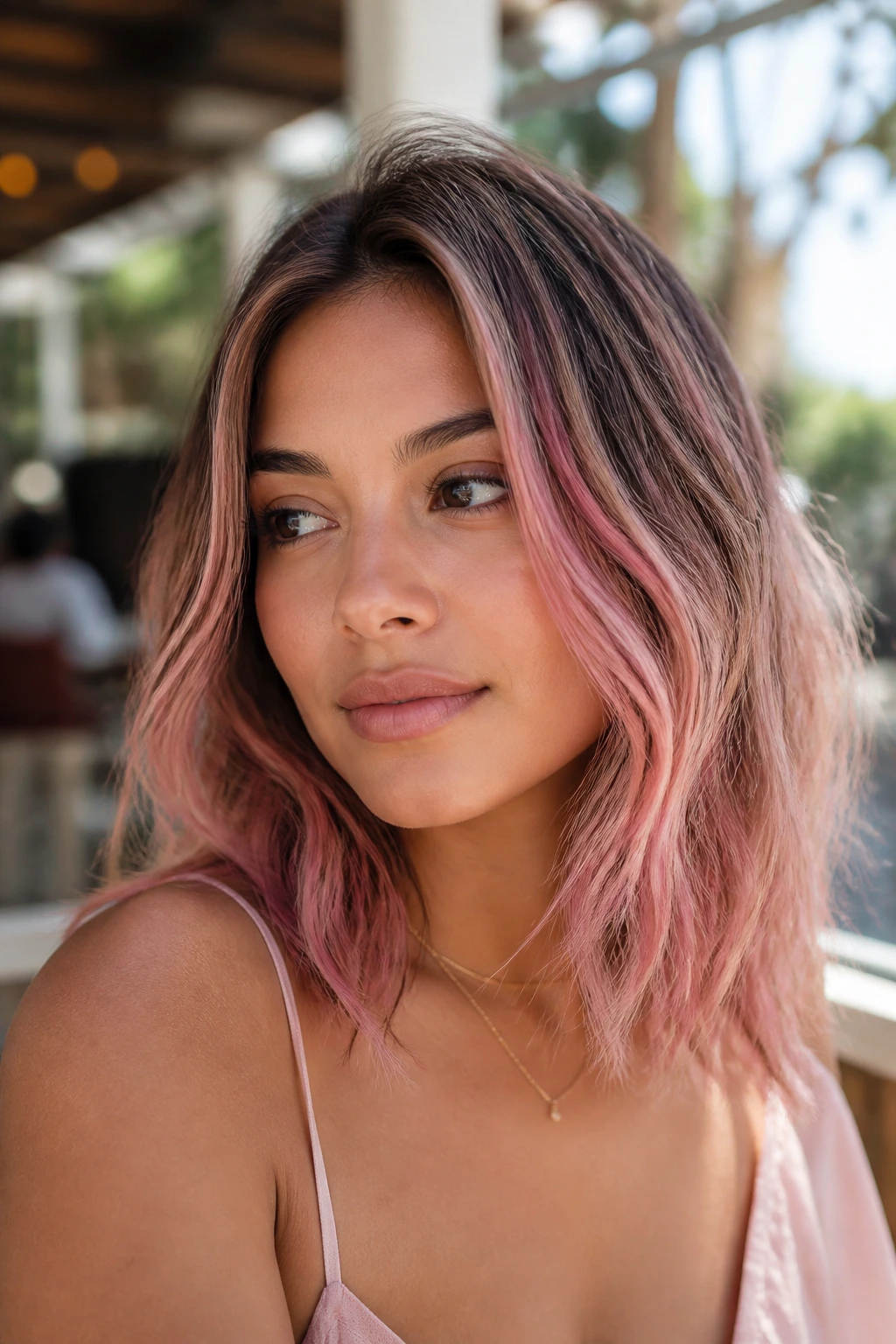
Cotton candy featherlights are playful, but they work best when the placement stays feather-thin. Think scattered, airy pink strands that feel like a breeze went through the hair instead of a paintbrush.
On fine hair, the “feather” part matters more than the candy part. Too many bright pieces and the scalp starts showing through. A few scattered streaks, especially through the top layers, keep the look lifted and light. Medium skin can handle this shade if the pink leans slightly warm rather than blue.
Best case: a wavy lob, a few pieces around the face, and a very soft root. It’s fun without tipping into costume color.
10. Raspberry Ribbon Highlights
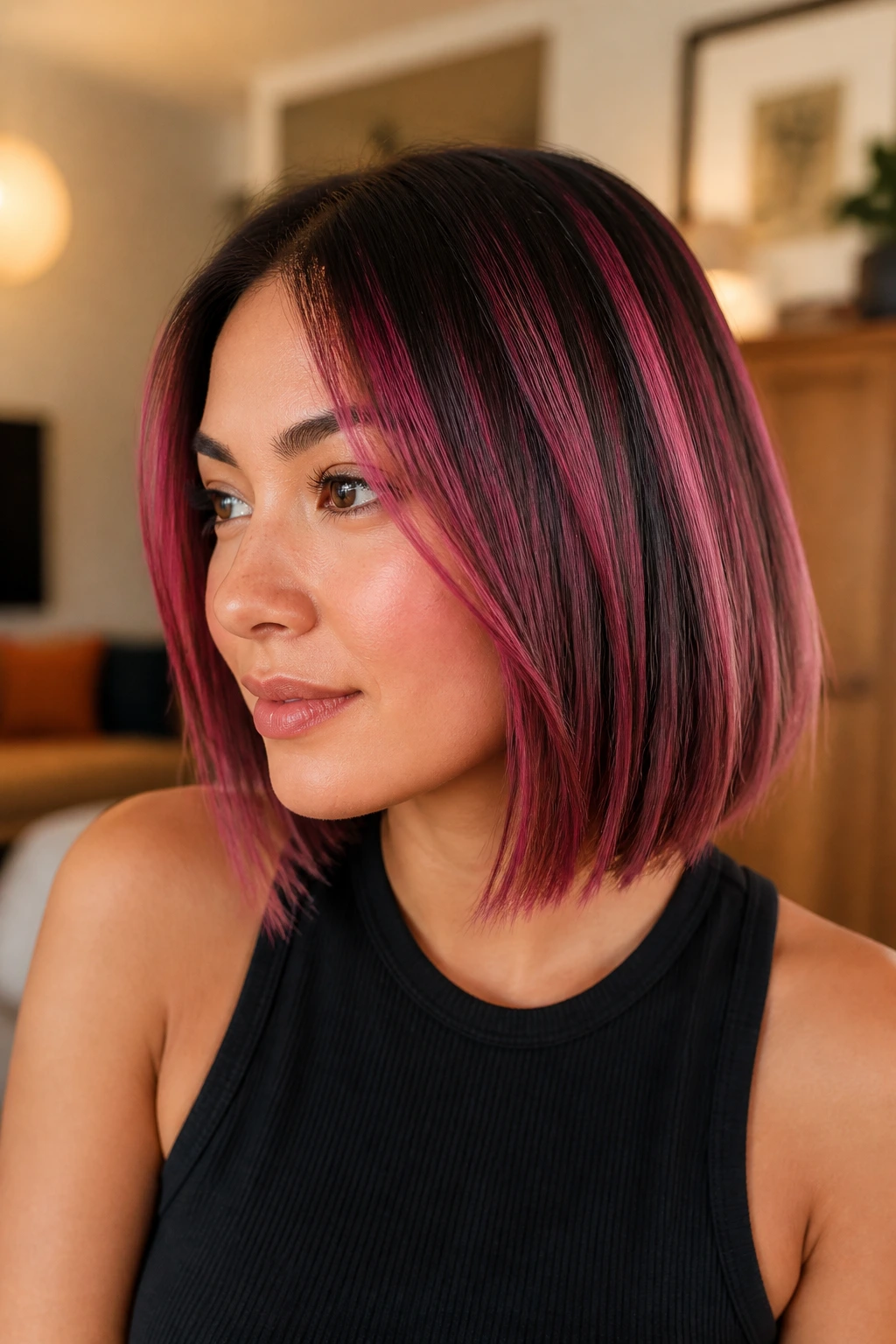
Raspberry ribbons bring more depth than pastel pink, which is why they’re useful on finer strands. Darker pinks create shadow between the pieces, and shadow is your friend when you want hair to look denser.
The color has enough red in it to flatter medium skin, especially if your undertone sits neutral or warm. On a blunt bob, raspberry ribbons can give the cut more shape. On longer hair, they add movement without making the whole head look high contrast.
A satin finish works well here. Too much gloss can flatten the dimension. Let the ribbons sit a little differently in the light, and the whole style gets more texture than a single flat shade ever gives you.
11. Salmon Pink Underlights
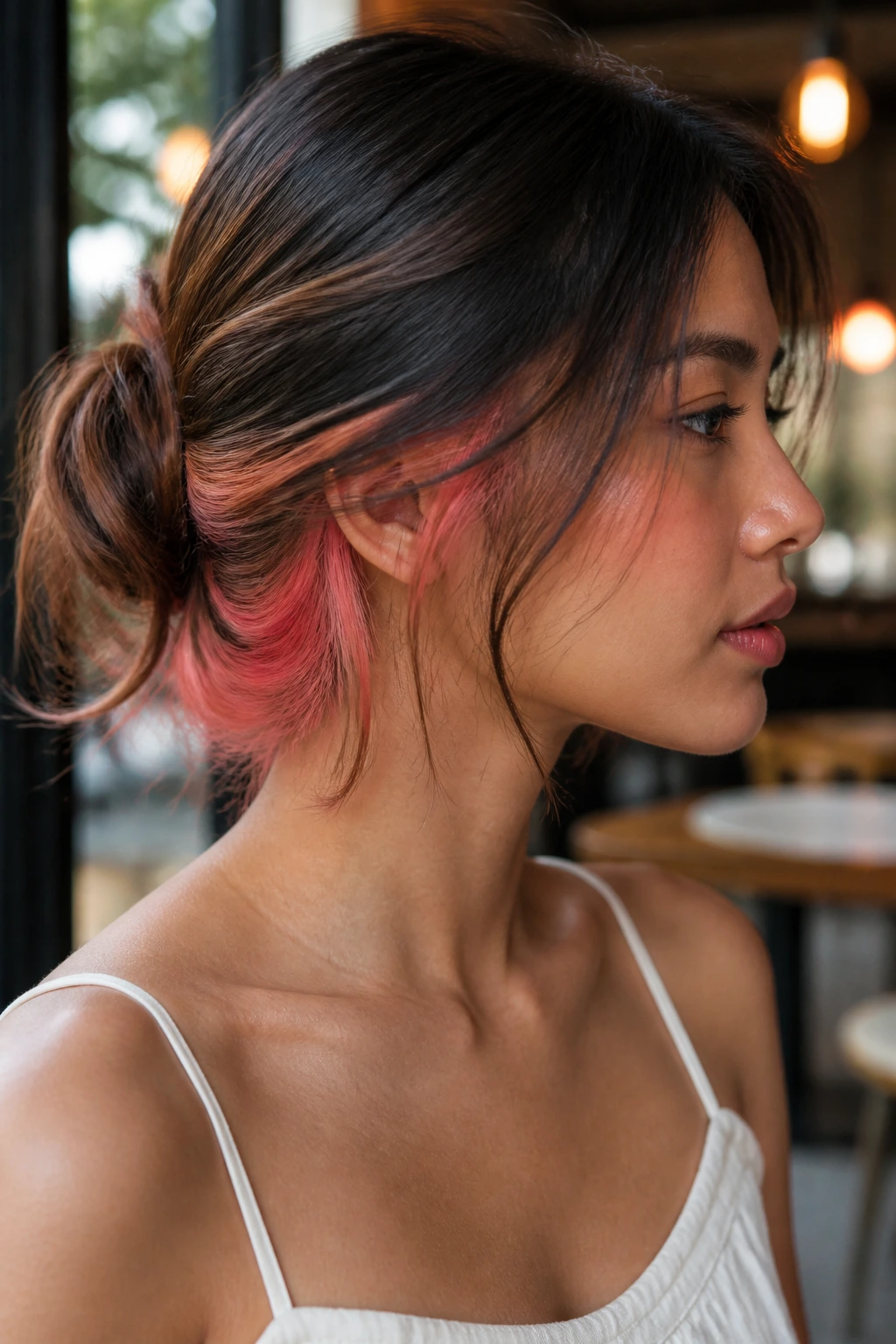
Salmon pink underlights are one of my favorite tricks for people who want color but need to keep the top layer calm. The shade lives underneath, so it glows when hair moves, bends, or lifts in a ponytail.
Fine hair usually benefits from this placement because the visible surface remains natural and full. You’re not breaking up every strand at the top, which helps the cut keep its shape. Medium skin with golden undertones tends to like salmon better than blue-pink because it feels warmer and less stark.
If you wear low buns a lot, this one is a sleeper hit. You get the color payoff when you want it, and a plain surface when you don’t.
12. Soft Magenta Slices
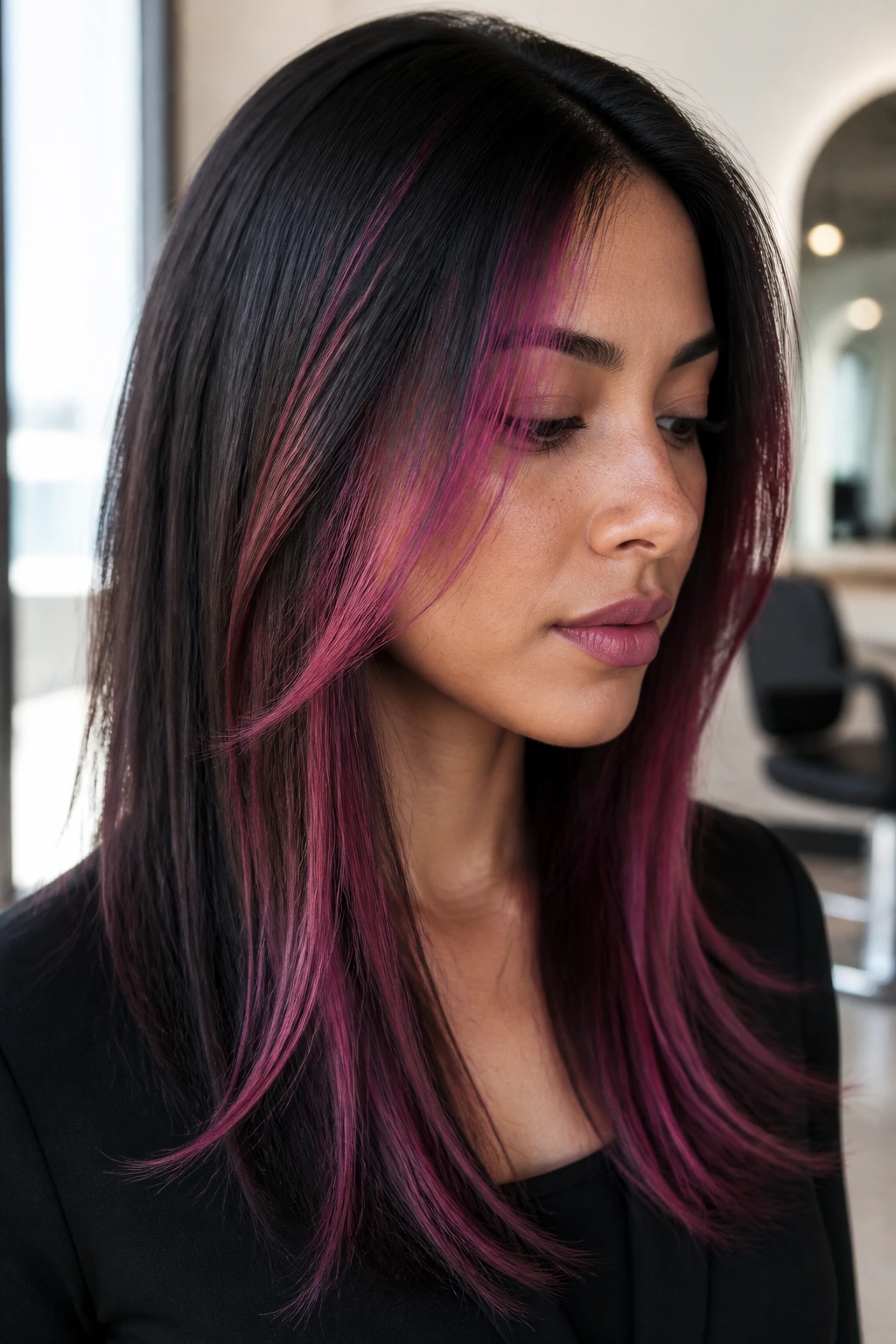
Soft magenta slices are for someone who wants the color to show from across the room, but not in a loud, messy way. The slice placement gives the hair clear panels of pink, which looks especially sharp on straight or lightly waved styles.
The Right Way to Wear a Stronger Pink
Fine hair needs restraint here. A few well-placed slices go farther than a head full of thick color. Keep the rest of the hair deeper so the pink has somewhere to land. That contrast makes the strands look more deliberate and keeps the scalp from peeking through too much.
Medium skin can carry magenta well, especially if the shade leans berry instead of electric purple. Ask for narrow slices near the face and through the mid-lengths, not huge chunks. The result feels modern instead of busy.
13. Peachy Pink Temple Lights
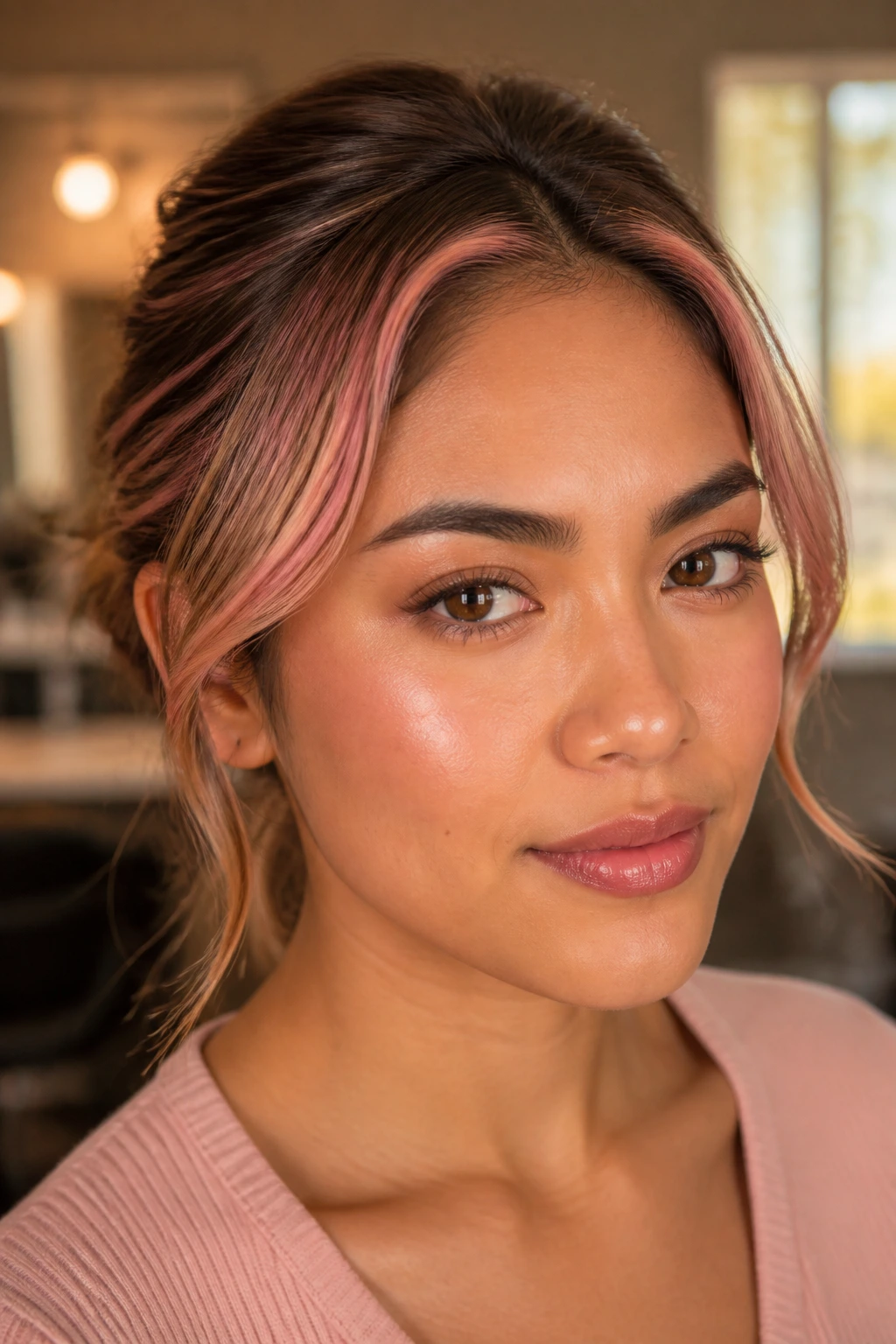
Peachy pink temple lights sit right where the face opens up — near the temples, hairline, and outer fringe. That makes them useful for medium skin that leans warm, because peach and pink together can soften the edges of the face without washing it out.
For fine hair, this is a smart placement because the brightest color sits in a small area. You get the lift where you need it, and the rest of the head stays fuller. It also works well with bangs, because the color peeks out rather than taking over the whole cut.
This one is especially good for people who wear their hair pinned back a lot. The pink shows at the sides, which is enough to change the mood of the whole style.
14. Dusty Rose Crown Lights
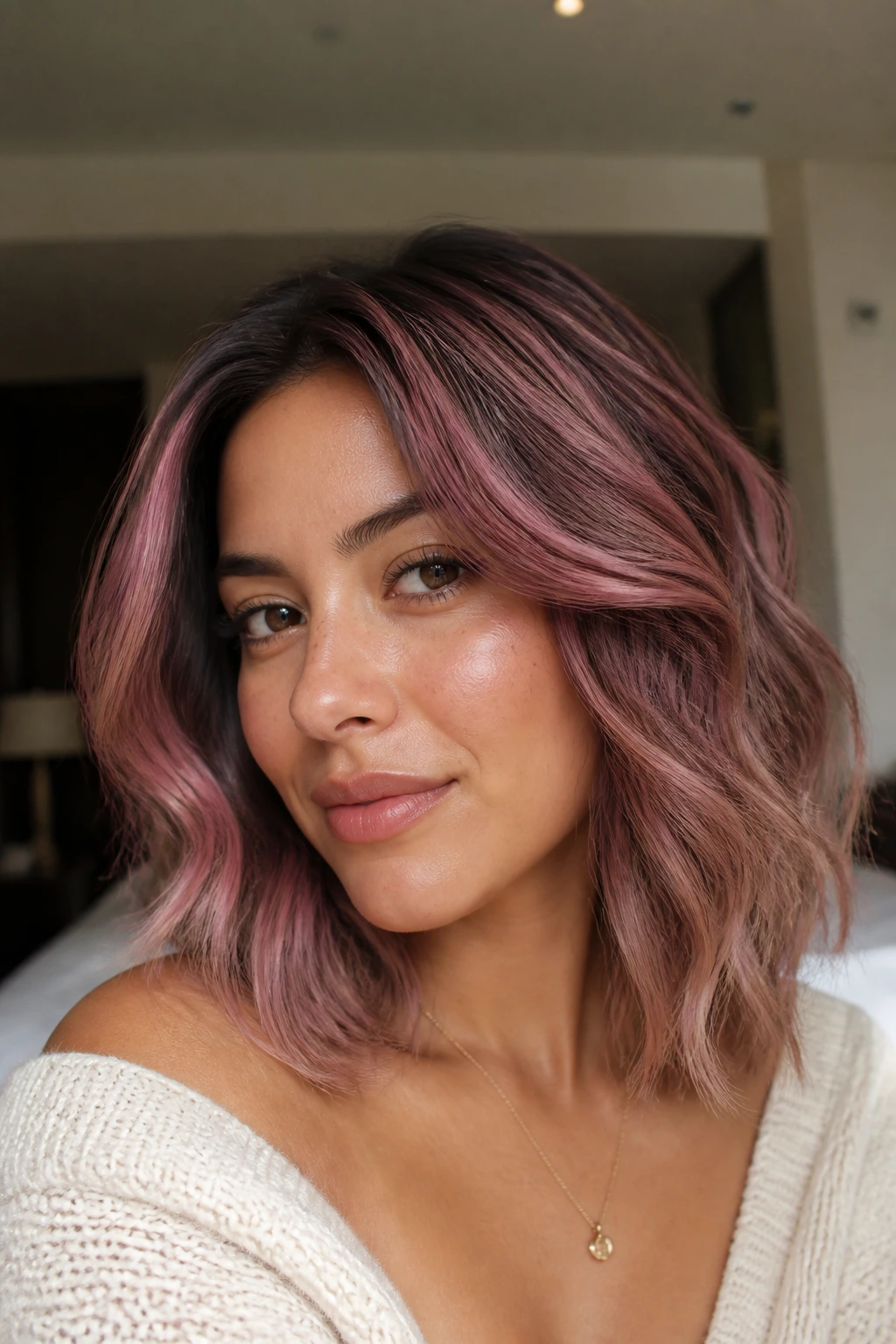
Dusty rose crown lights are practical in a very unglamorous way, and that’s why they work. The brightest pieces sit near the crown and part, which tricks the eye into seeing more lift at the top of the head.
Fine hair often looks flattest where the part is widest. Put a little rose there, and the cut suddenly has more shape. The dusty tone keeps the effect soft, so it doesn’t scream “highlight” the second you step outside.
Medium skin likes this shade when it needs a little warmth without turning peach. If your hair tends to fall flat by lunch, this is the kind of placement that earns its keep.
15. Pink Sand Balayage
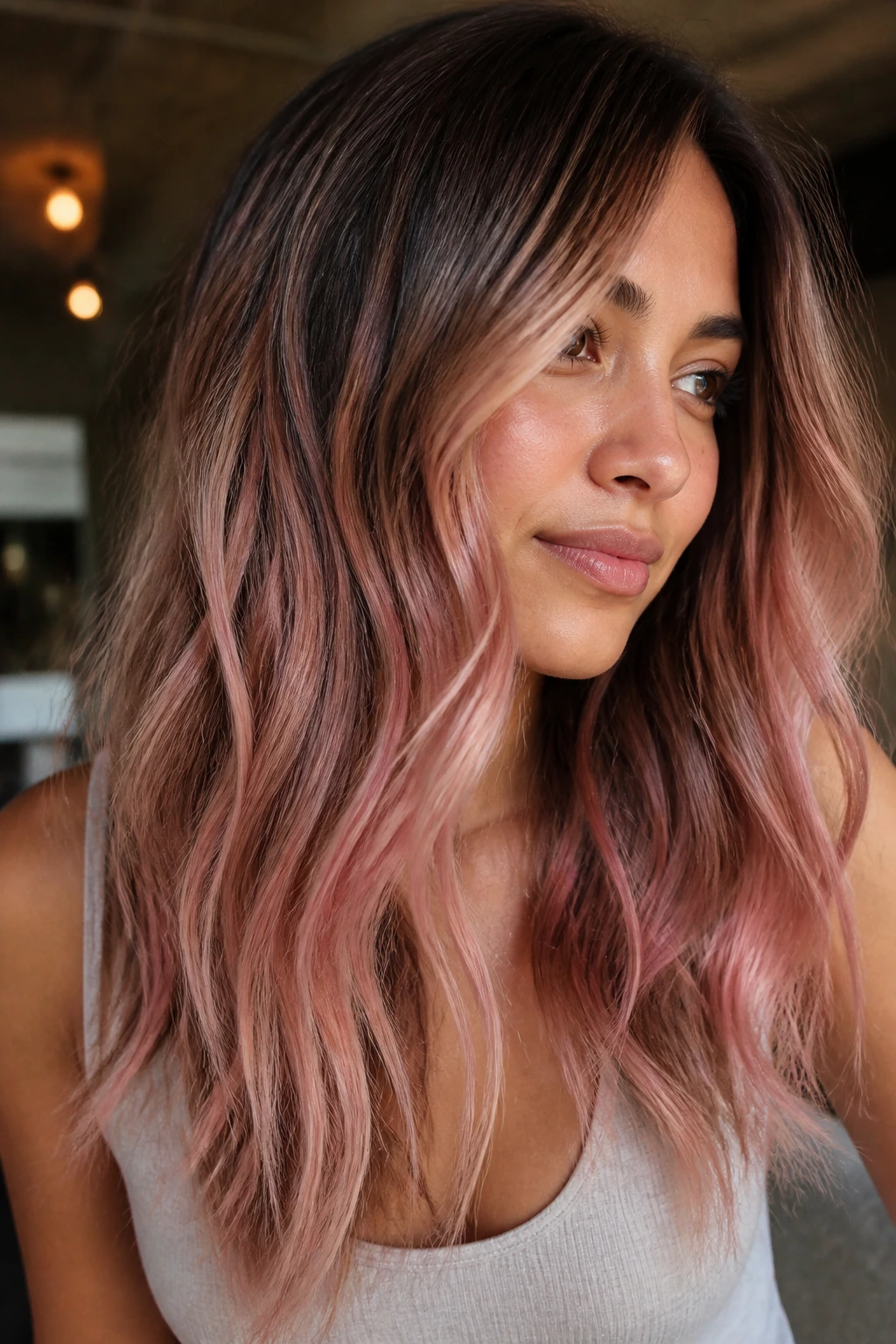
Pink sand balayage is for people who want pink but don’t want it to look like a color experiment. The tone sits between beige and rose, which makes it easy to wear with medium skin that leans neutral or olive.
The sandy base is doing a lot of the work here. Fine hair stays softer-looking when there’s depth in the roots and a light hand through the ends. The overall effect feels grown-out on purpose, not accidental.
This is a good choice if you hate obvious maintenance. The grow-out is gentler than a saturated pink, and the color can fade toward a beige blush instead of a weird yellow. That matters more than people think.
16. Warm Fuchsia Streaks
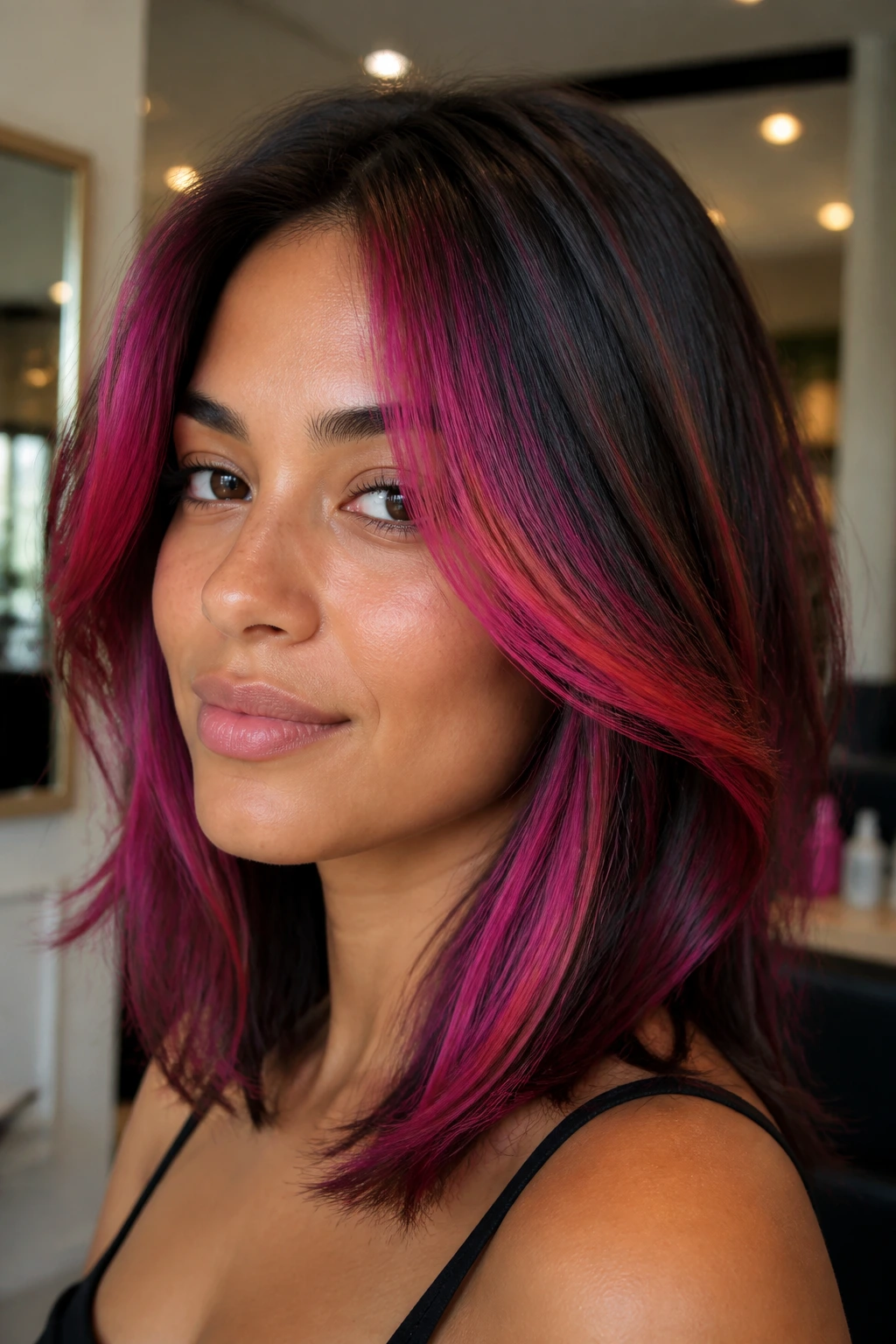
Warm fuchsia streaks are not subtle. They’re the kind of choice that says you want the color to be seen, and they work best when you keep the rest of the hair calm.
A few streaks do more for fine hair than a full-head flood of bright pink. Too much saturation can make the hair look thinner at the root. A couple of clean, warm fuchsia lines placed near the face or through the outer layers give you the hit of color without losing shape.
Medium skin handles this better when the fuchsia has a red base, not a blue one. It’s a strong look, but it’s not a fussy one.
17. Petal Pink Halo
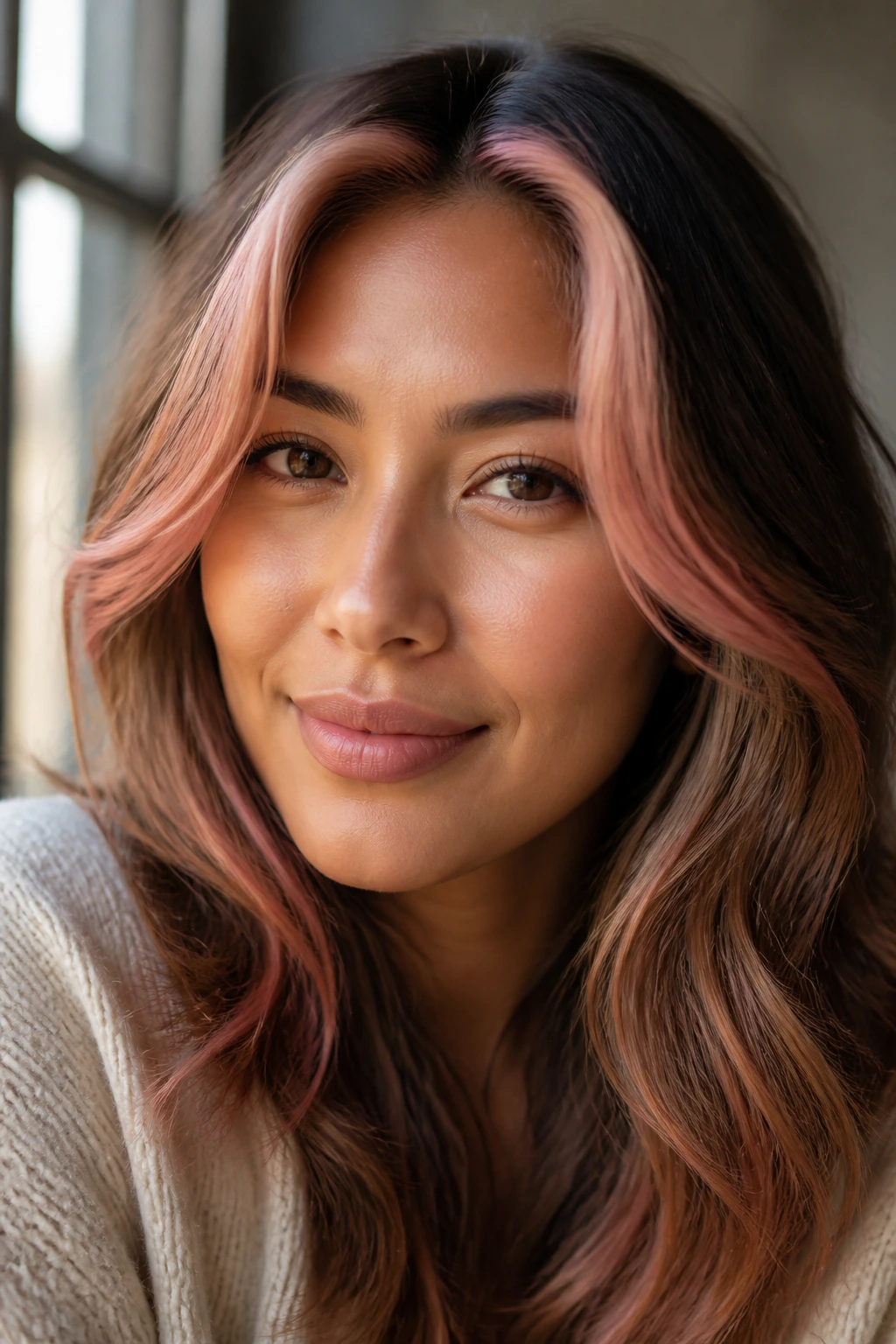
Petal pink halo highlights wrap the hairline with soft color, like a little glow around the face. The placement is flattering because it brightens the outer edges where people notice your features first.
Fine hair near the temples can look sparse if it’s left too plain. A halo fixes that by making the front look fuller and more intentional. Keep the pink soft and petal-like, not opaque, and let the root stay a shade or two deeper.
This one is lovely on ponytails, half-up styles, and blunt cuts. The halo effect shows up even when the rest of the hair is tucked away.
18. Pink Quartz Foilyage
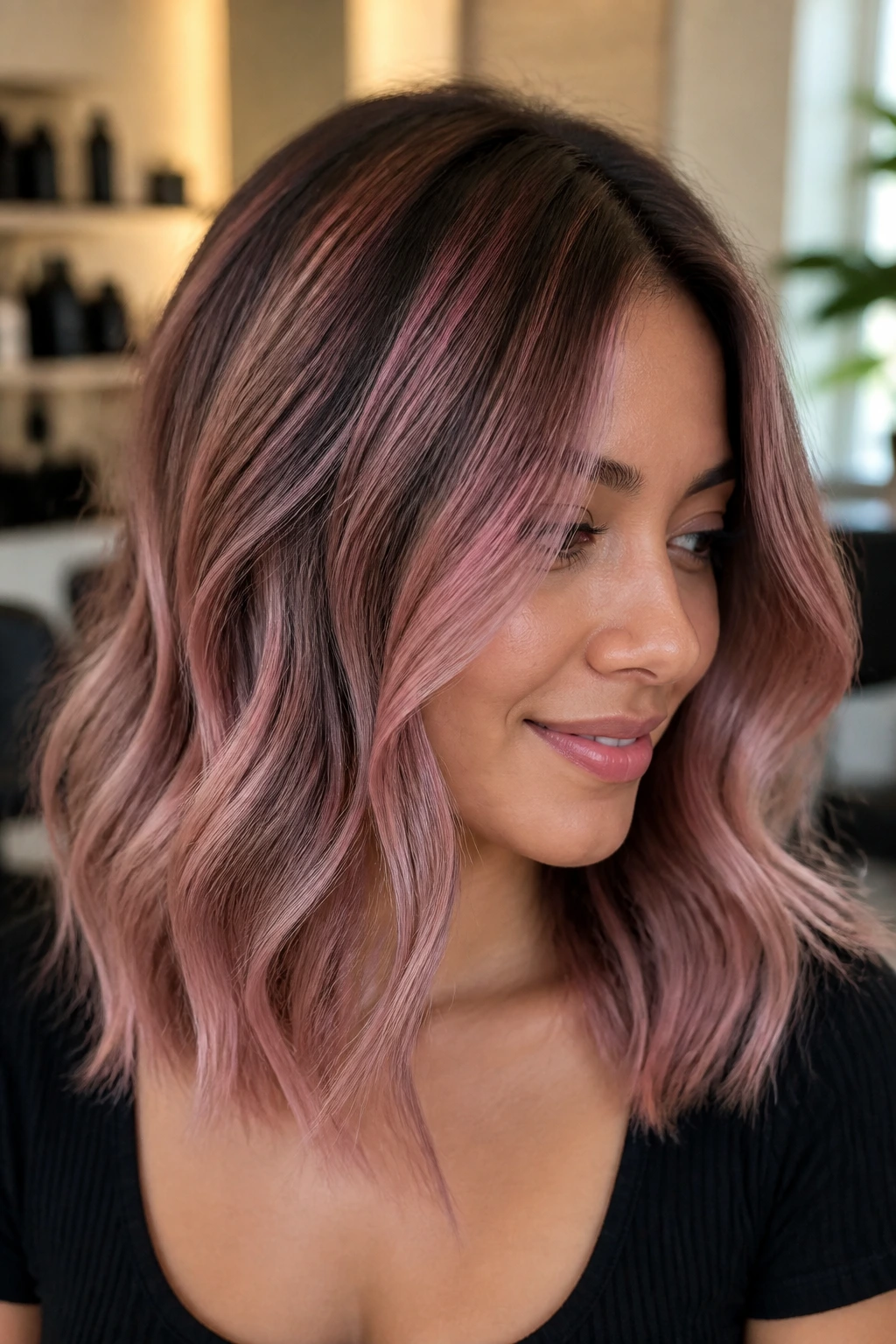
Pink quartz foilyage sits in that polished middle lane between soft balayage and brighter foils. The pink has a smoky, reflective feel — not icy, not neon, just a clean rose sheen with depth.
Why It Gives Fine Hair More Presence
Foilyage lifts the color a little more than freehand painting, which can help if your base is dark and you need the pink to actually read. Fine hair benefits from the reflective finish because shine makes the strands look smoother and more defined. Medium skin usually likes this shade when the rose is slightly beige rather than chalky.
If you want a color that still looks intentional on day fifteen, this is a strong candidate. It wears well with soft waves and a side part, where the quartz-like sheen can catch different angles.
19. Strawberry Cream Contour Highlights
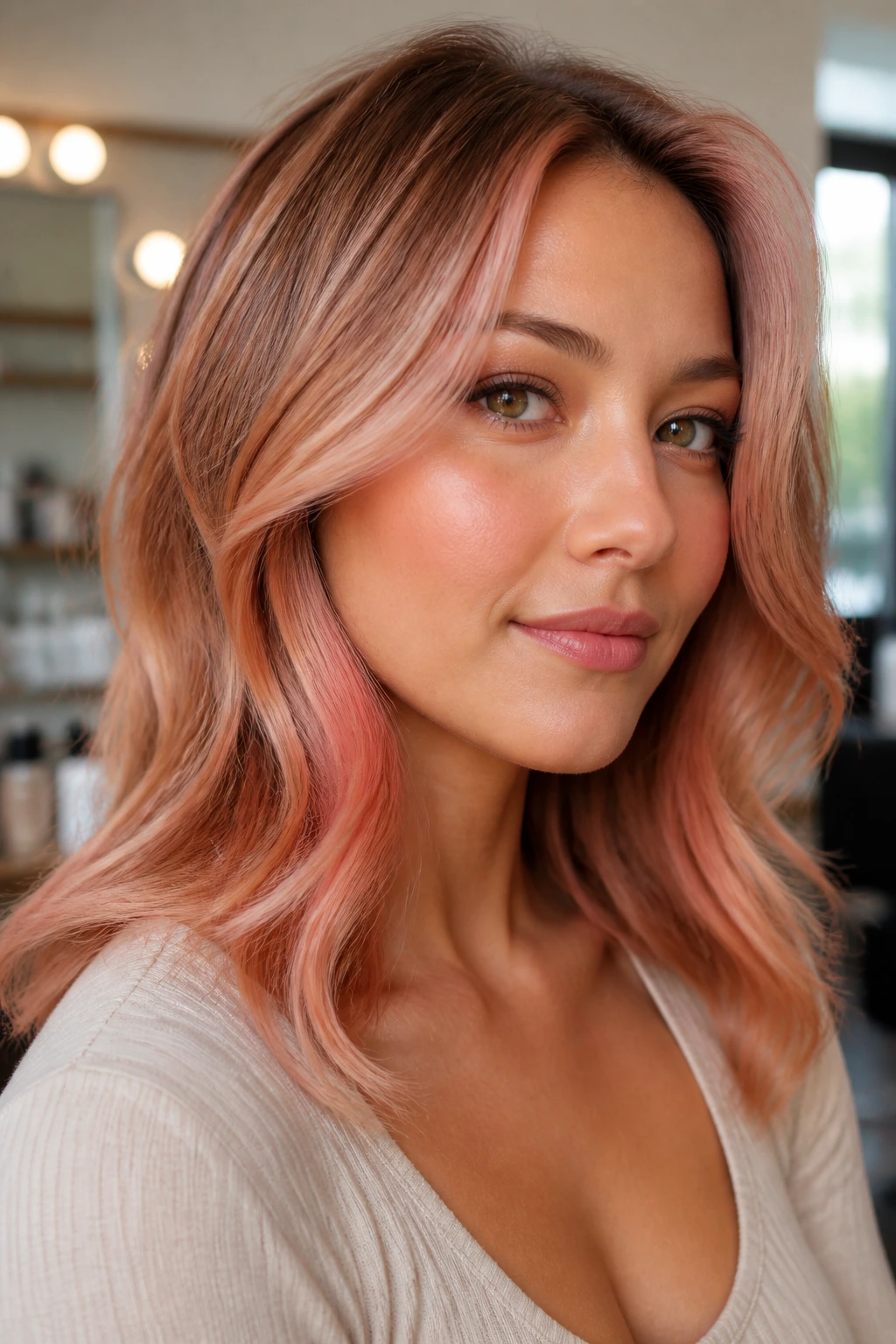
Strawberry cream contour highlights place the pink where it helps the face most — around the cheeks, jawline, and outer layers. The color is soft enough to flatter medium skin, but the strawberry note keeps it from fading into plain beige.
This is a useful trick for fine hair because the brightest pieces sit exactly where the eye wants movement. You don’t need every strand colored. You need a few well-placed sections that shape the haircut. On layered cuts, that gives the ends more life and the front more lift.
If you like makeup-style contouring, this is the hair version of that idea. The color frames the face instead of floating randomly on top.
20. Berry Dust Lowlights with Pink Ends
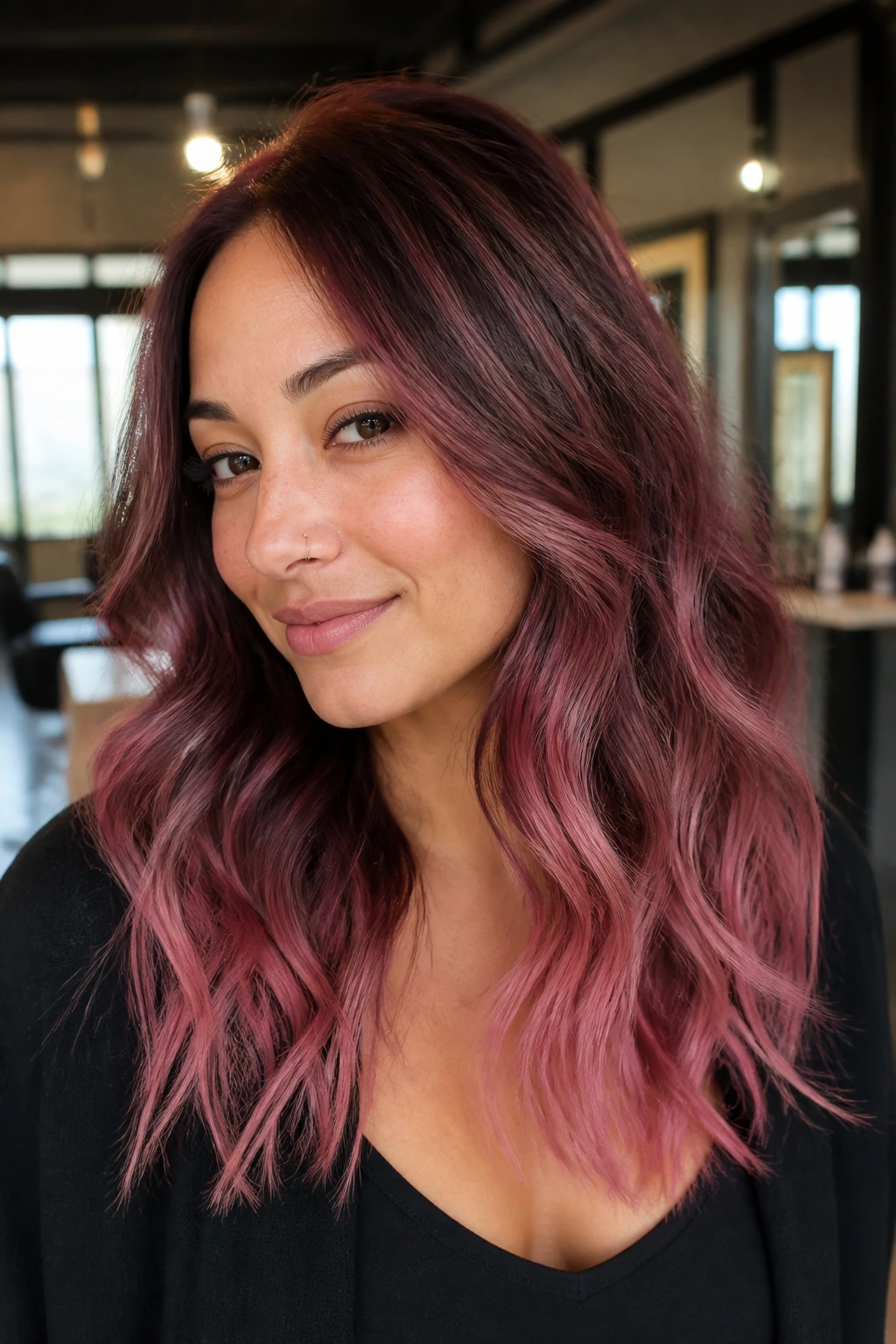
Berry dust lowlights with pink ends give you the best part of contrast: depth at the root area and color where the eye lands last. That combination helps fine hair look thicker because darker pieces create little pockets of shadow between the brighter ends.
Medium skin often looks good with this because the berry lowlights warm the complexion without flattening it. Then the pink ends keep the look from going too dark. It’s a smart fix when hair looks washed out and pale pink alone isn’t enough.
This one does well on longer layers and curls. The lowlights make the body of the hair look denser, and the pink ends keep the whole thing from feeling heavy.
21. Neon Pink Micro Strips
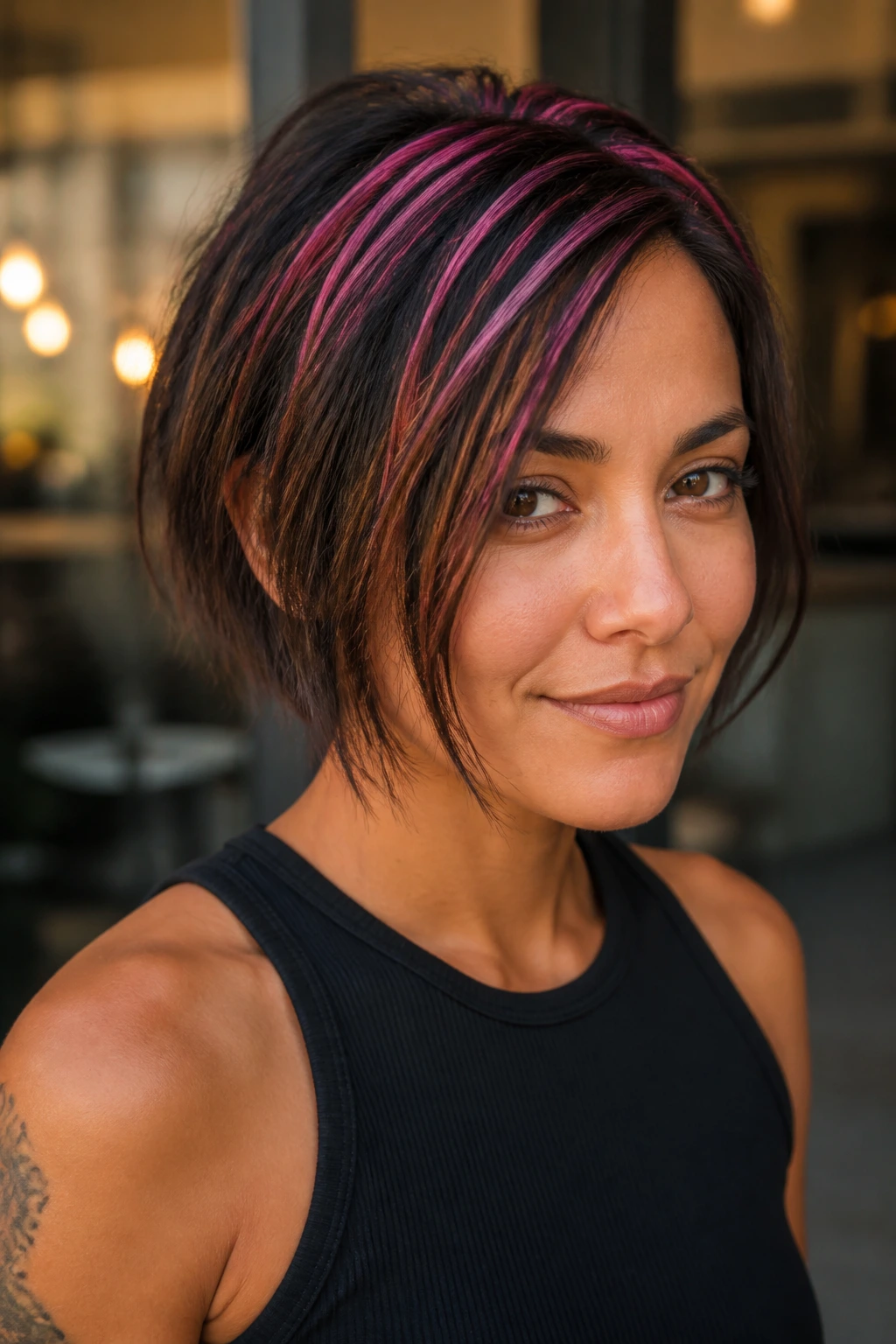
Neon pink micro strips are tiny, sharp hits of color for people who like a bit of edge. Keep the strips narrow, though. On fine hair, width matters more than most people realize, and chunky neon can start looking harsh fast.
Medium skin can handle neon pink if the rest of the hair stays grounded in a natural base. The contrast is what makes it work. If everything else is loud, the color loses its shape; if the base is calm, the pink becomes the point.
This is a good choice for short cuts, edgy bobs, or anyone who wants just enough color to feel deliberate. The trick is restraint. One or two clean neon lines beat six messy ones.
22. Orchid Pink Ribboning
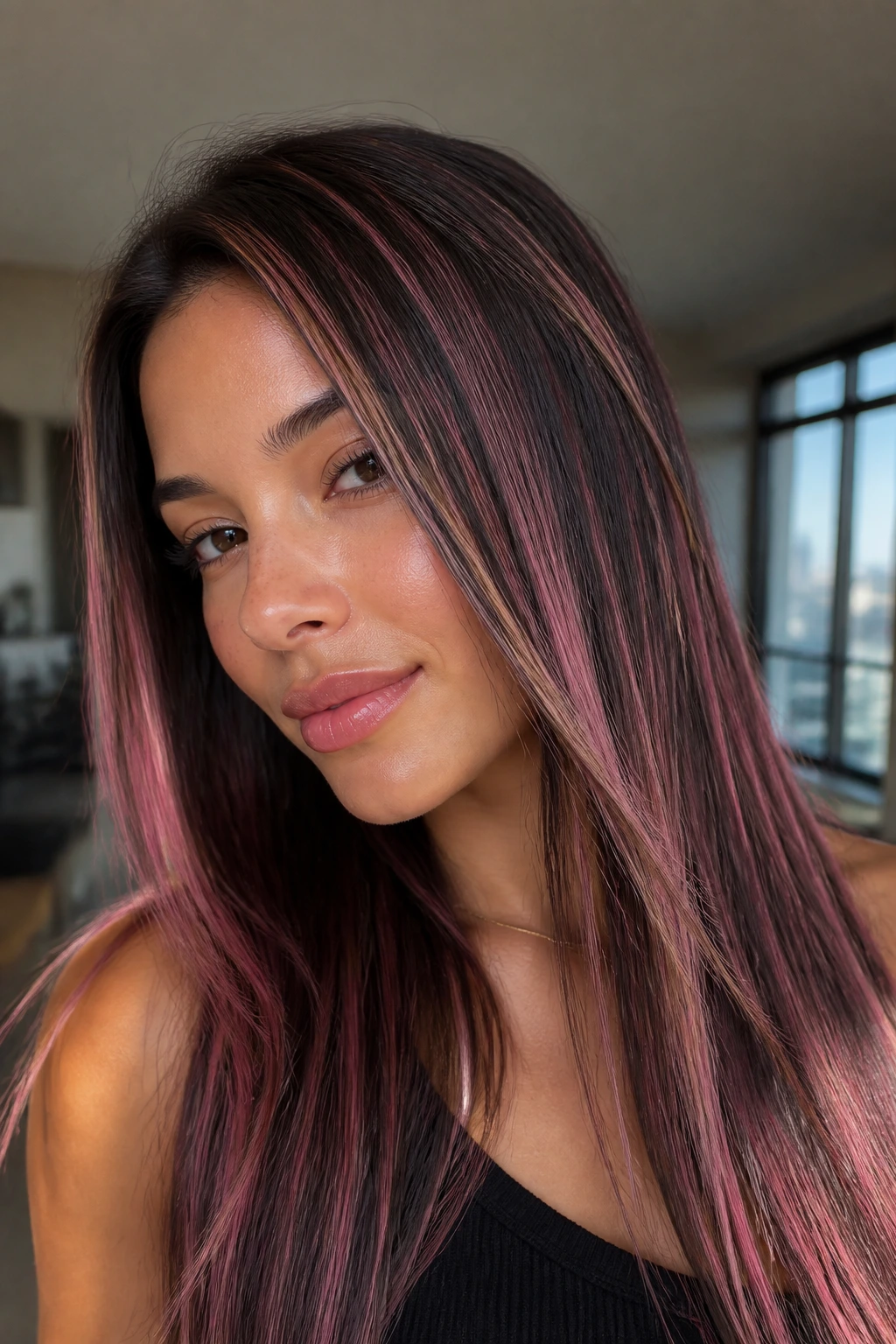
Orchid pink ribboning leans cooler, with a violet edge that keeps the color from reading too sweet. It works especially well on neutral medium skin, where the slight coolness adds clarity instead of making the face look washed out.
Where It Looks Best
Fine hair looks good with orchid when the ribbons are thin and glossy. The color has enough depth to create shape, and the ribboned placement keeps it from looking flat. Straight styles show the clean lines best, but a soft wave can make the orchid shift between pink and lavender.
Ask for a glaze over pre-lightened ribbons if you want the color to stay elegant instead of brash. That little bit of translucency helps more than most people expect.
23. Shell Pink Sombre
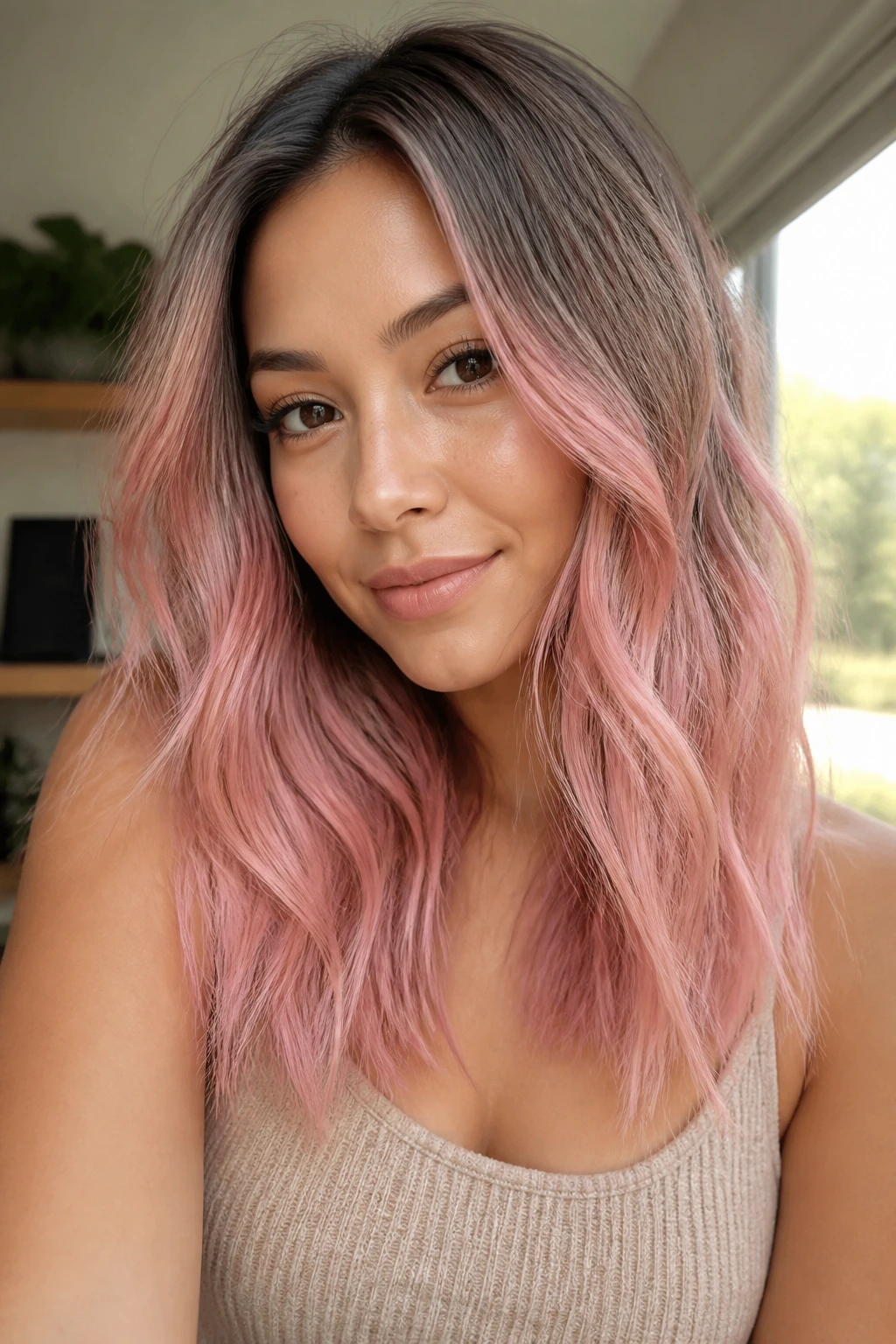
Shell pink sombre is the low-maintenance pastel that behaves like a grown-out color on purpose. The root stays deeper, the transition is gradual, and the ends pick up a soft shell-pink tone that feels calm rather than sugary.
That gentler fade is kind to fine hair because it doesn’t demand hard contrast. The hair keeps its shape near the scalp, and the pink only shows more as the lengths move. Medium skin tends to like this when the root shade is a touch warm or beige.
If you’re nervous about commitment, start here. It fades more gracefully than a lot of pastel pinks, and the grow-out looks intentional instead of patchy.
24. Rose Copper Highlights
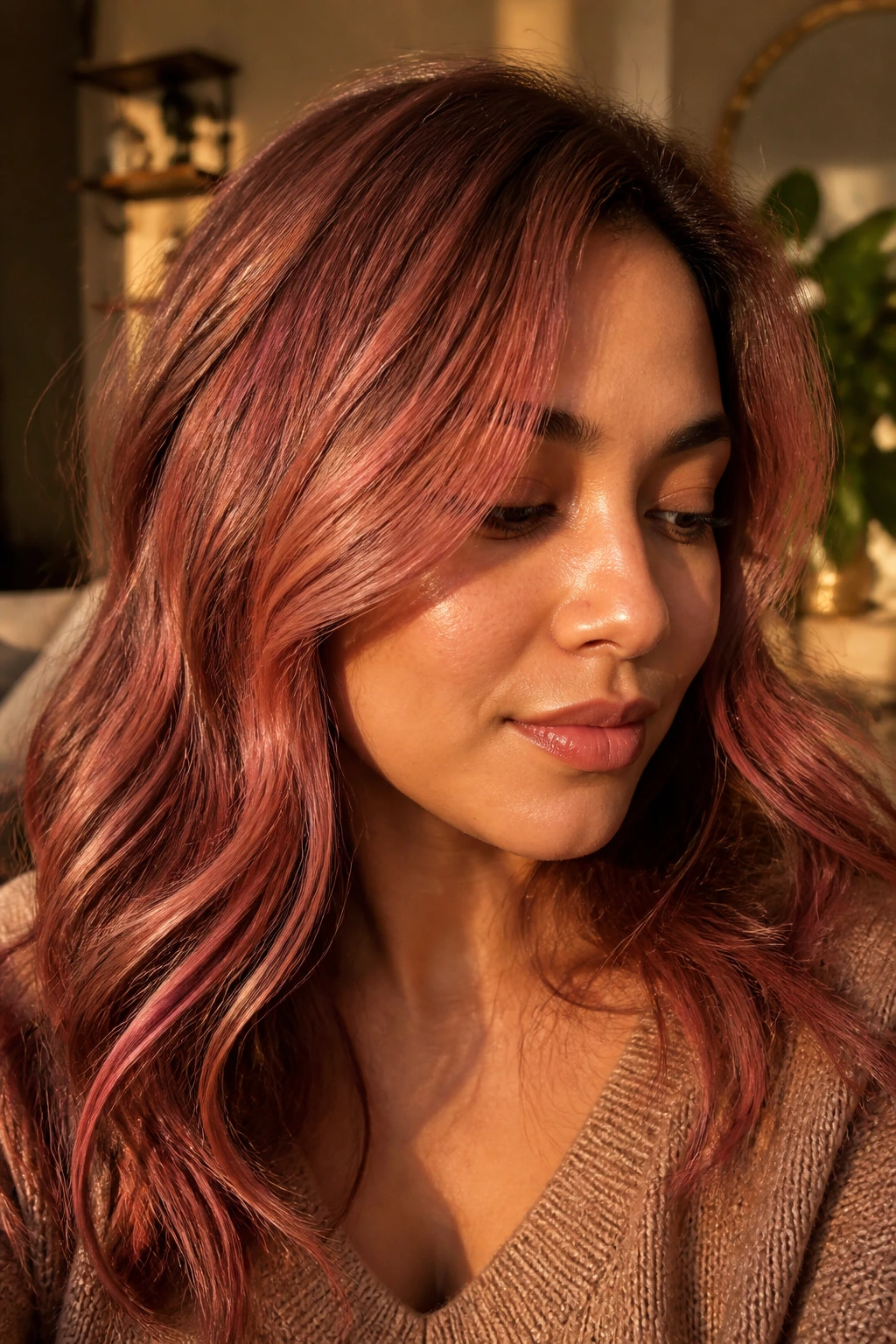
Rose copper highlights are one of the easiest pink-adjacent shades to wear on medium skin. The copper keeps the color warm, and the rose keeps it from sliding into plain red or orange.
Fine hair benefits from that warmth because the strands catch light more clearly. A cooler pastel can sometimes vanish on dark or low-density hair, but rose copper tends to hold its shape. It also pairs nicely with layered bobs and shaggy cuts, where the movement makes the highlight placement feel richer.
This is the choice for people who want a pink family color without going full pastel. It feels grounded, glossy, and easy to wear with everyday makeup.
25. Mulled Wine Pink Dimension
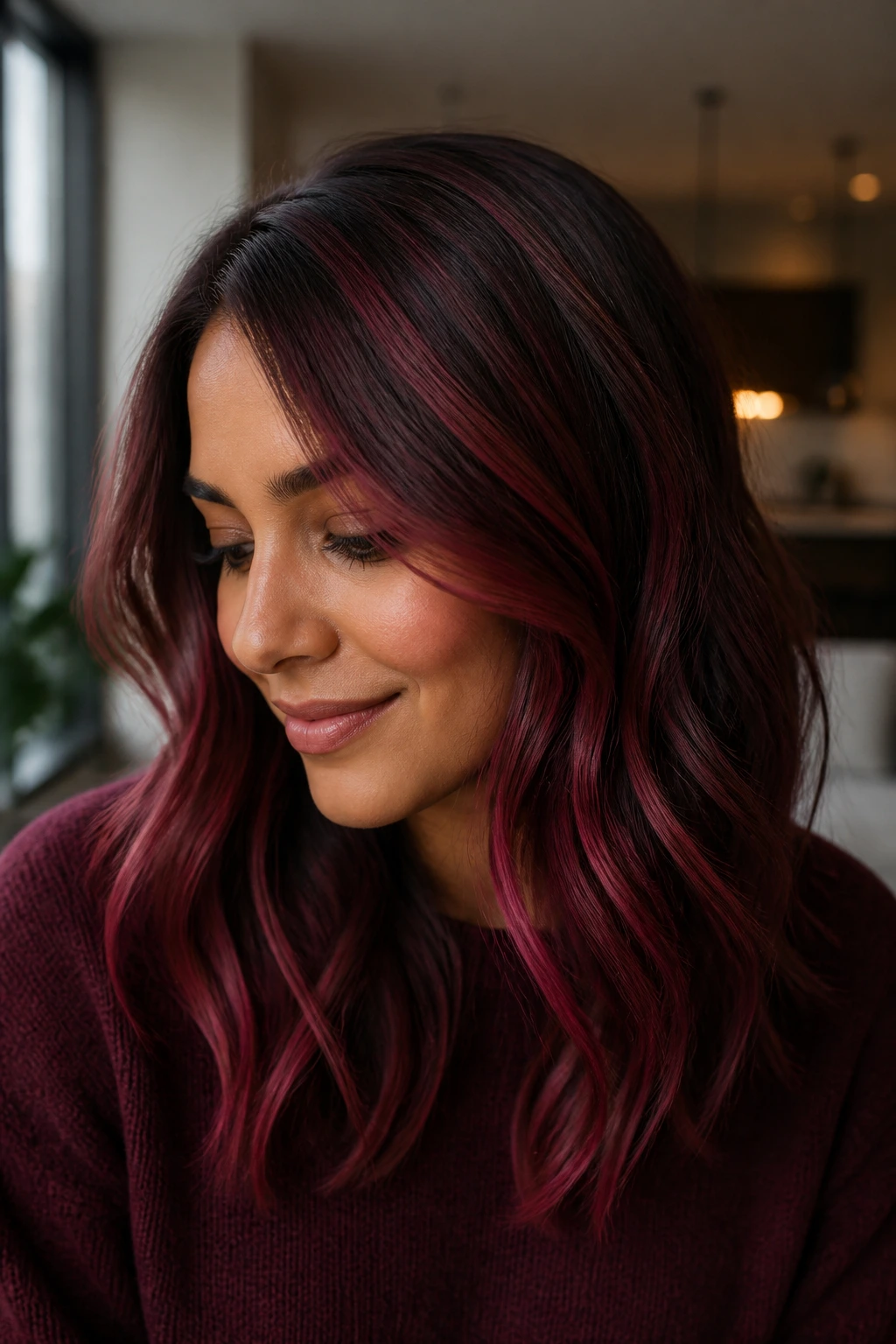
Mulled wine pink dimension is the deepest option in the mix, and it’s a strong one. The shade has berry, rose, and wine notes woven together, which gives fine hair depth instead of just brightness.
That depth matters on medium skin because the color feels rich rather than pale. If your complexion leans warm or neutral, the wine-rose balance can look especially clean. The darker pieces create the illusion of thickness, while the pink keeps the whole look from reading flat.
This is the version I’d choose for someone with brown hair who wants dimension more than pastel. It holds up well in loose waves, straight blowouts, and anything with movement at the ends.
Why Pink on Medium Skin Can Look Better Than You’d Expect
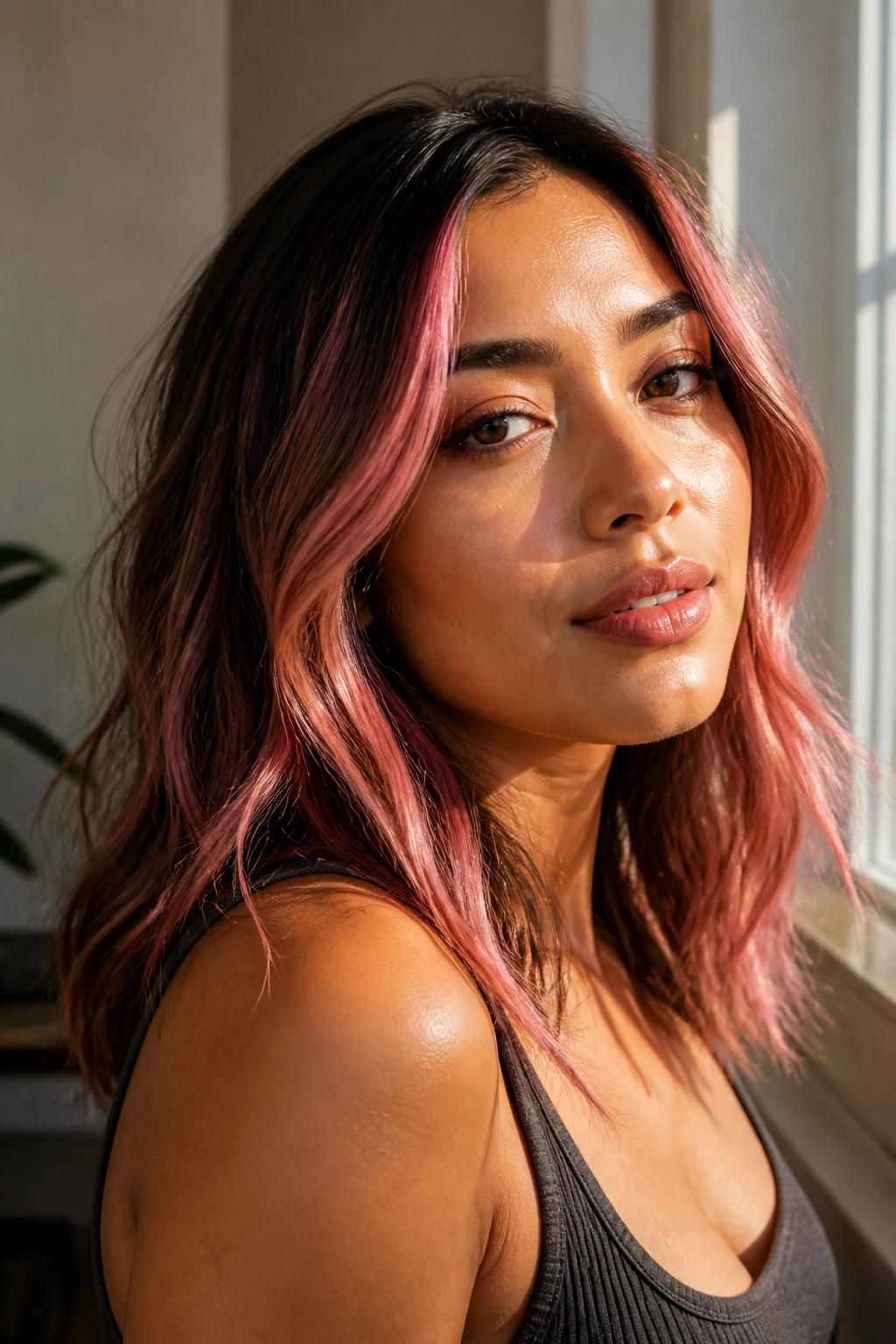
Pink gets a bad reputation when people think only of candy shades and full-head pastel jobs. That’s the lazy version. The better version is more like makeup: a warm rose can wake up golden skin, a dusty mauve can sharpen olive undertones, and a berry pink can give medium skin a little flush without making the face look red.
Fine hair changes the equation again. There’s less room for error, which sounds grim, but it actually helps. You’re forced to be smarter about placement. Babylights, slices, and ribboning let the natural base do some of the work, and that’s what keeps the hair from looking over-processed or sparse.
My bias is toward dimension. A little depth at the root, a slightly brighter front, and a soft finish through the ends usually beats a blanket of one-note color. The hair looks cleaner. The haircut looks sharper. And the pink lasts longer because it’s not fighting every strand at once.
How to Choose Pink Highlights for Medium Skin Tones with Fine Hair by Undertone
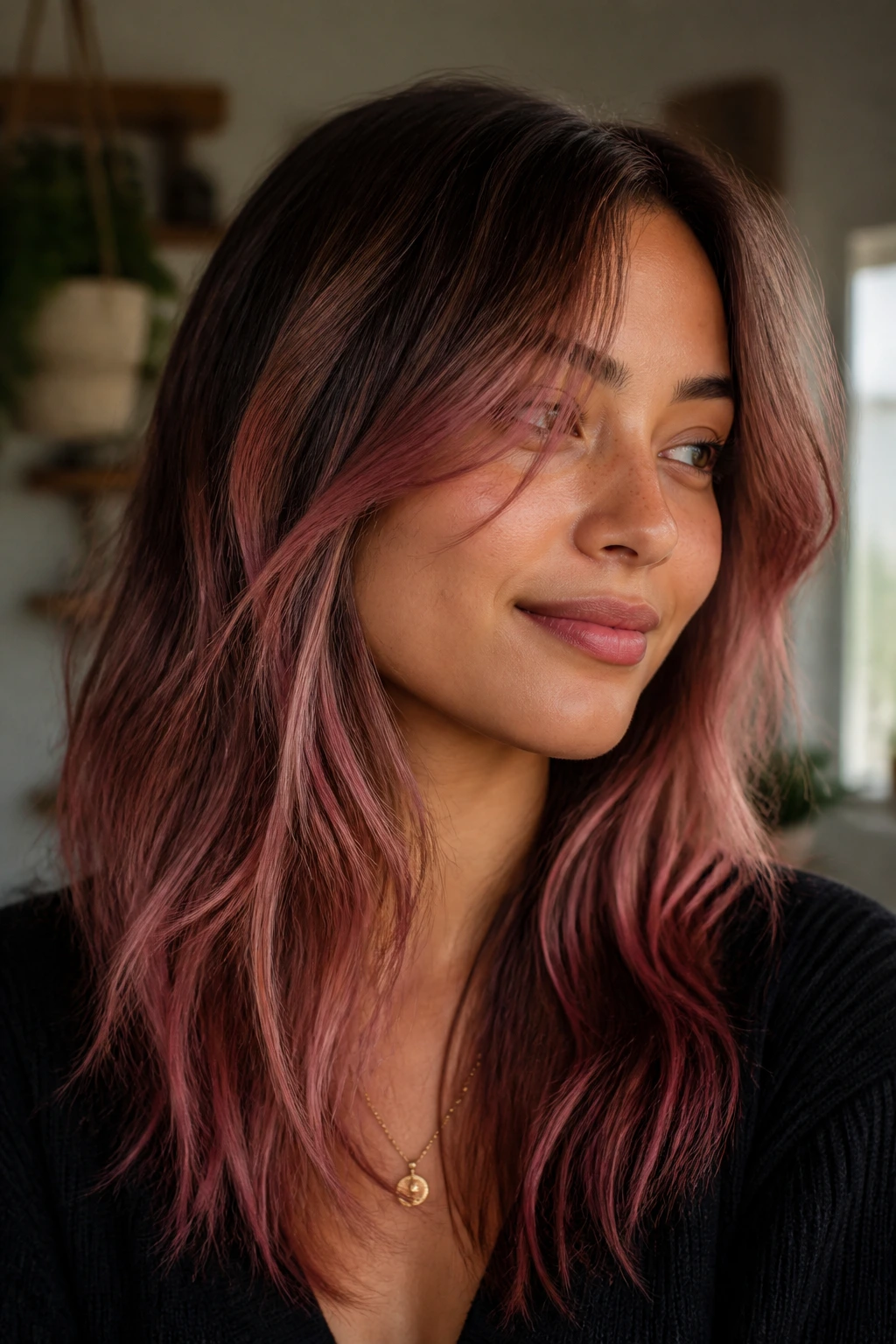
Warm, neutral, and olive medium skin do not all want the same pink. That sounds obvious, but it’s where a lot of bad color jobs start.
Warm or Golden Medium Skin
Coral-pink, strawberry, rose copper, and salmon shades usually sit nicely here. They borrow from the warmth already in the skin, so the face looks alive instead of sallow. Blue-based pinks can still work, but they tend to need more depth in the root and a softer finish so they don’t feel chilly.
Neutral or Olive Medium Skin
Dusty rose, mauve, shell pink, orchid, and pink quartz are strong options. Olive skin in particular can get weirdly flat if the pink is too warm and too yellow. A cooler or smoke-tinged rose often reads cleaner.
Deeper Medium Skin
Deeper medium complexions can wear richer berry tones, mulled wine pink, magenta, and warm fuchsia especially well. The hair needs enough contrast to show the shade, which means a careful lift and a gloss that keeps the color from going chalky. A tiny bit of depth at the base keeps the result full.
One more thing. Fine hair with low density needs a different placement strategy than fine hair with lots of strands. If your hair is both fine and sparse, avoid stacking highlights too close together. Leave breathing room between the pieces, and let some of the natural color stay visible.
Placement Tricks That Make Fine Hair Look Denser
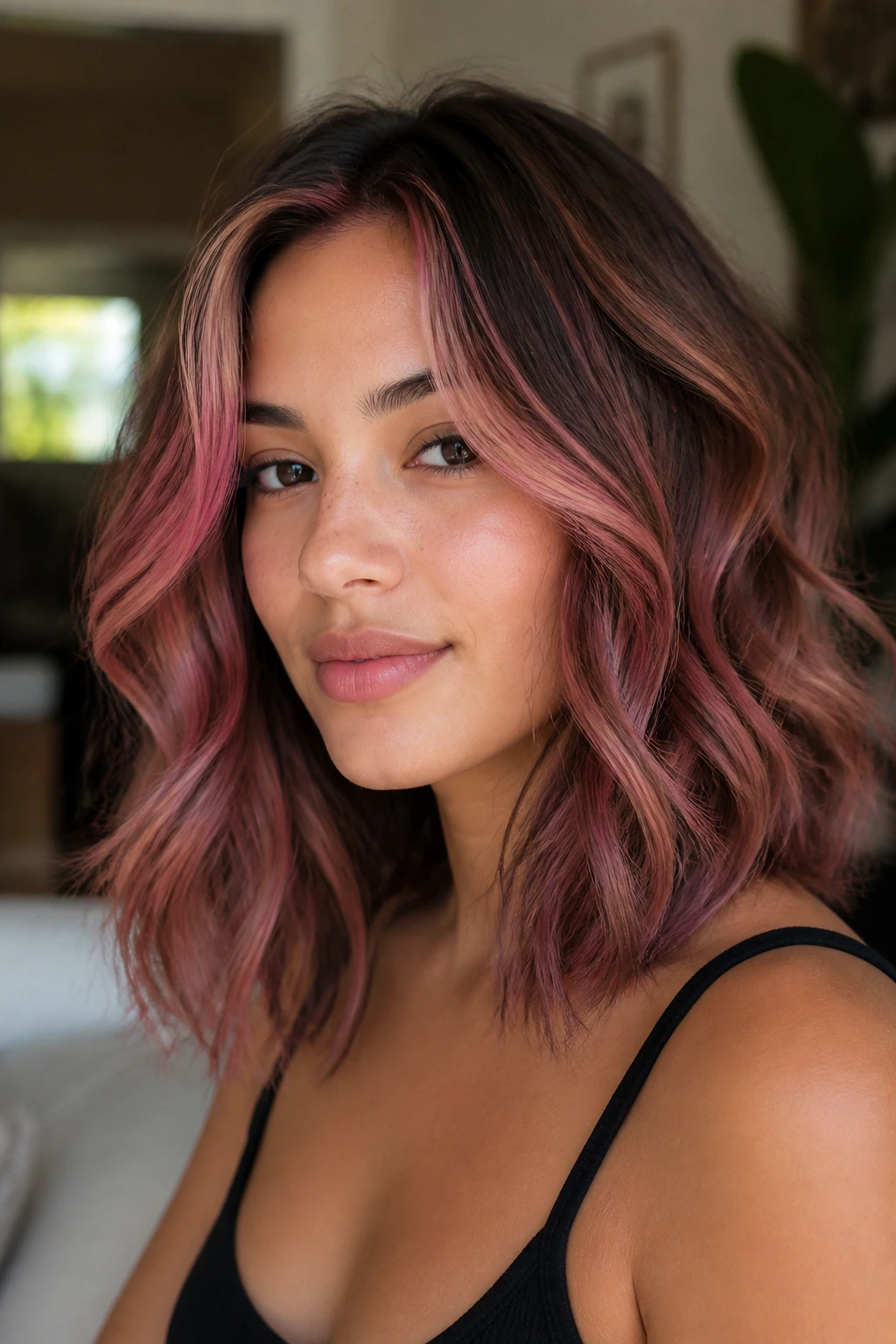
The old mistake is treating highlights like confetti. Scatter too much color everywhere, and fine hair starts looking thinner, not fuller. The smarter move is to place brightness where the eye wants shape: around the face, at the crown, and through the outer layers.
Babylights work because they break up light in tiny sections. Ribboning works because it creates direction. Root shadow works because it leaves a deeper base that acts like a frame. When those three things show up together, the hair gains body without needing actual bulk.
I also like a little imbalance. Not every highlight should be the same width or the same distance from the part. A few brighter pieces near the front, softer ones through the mids, and a quieter back section often look better than a perfectly even grid. Perfect grids belong on paper, not on hair that’s supposed to move.
What to Tell Your Colorist Before the Foils Go In
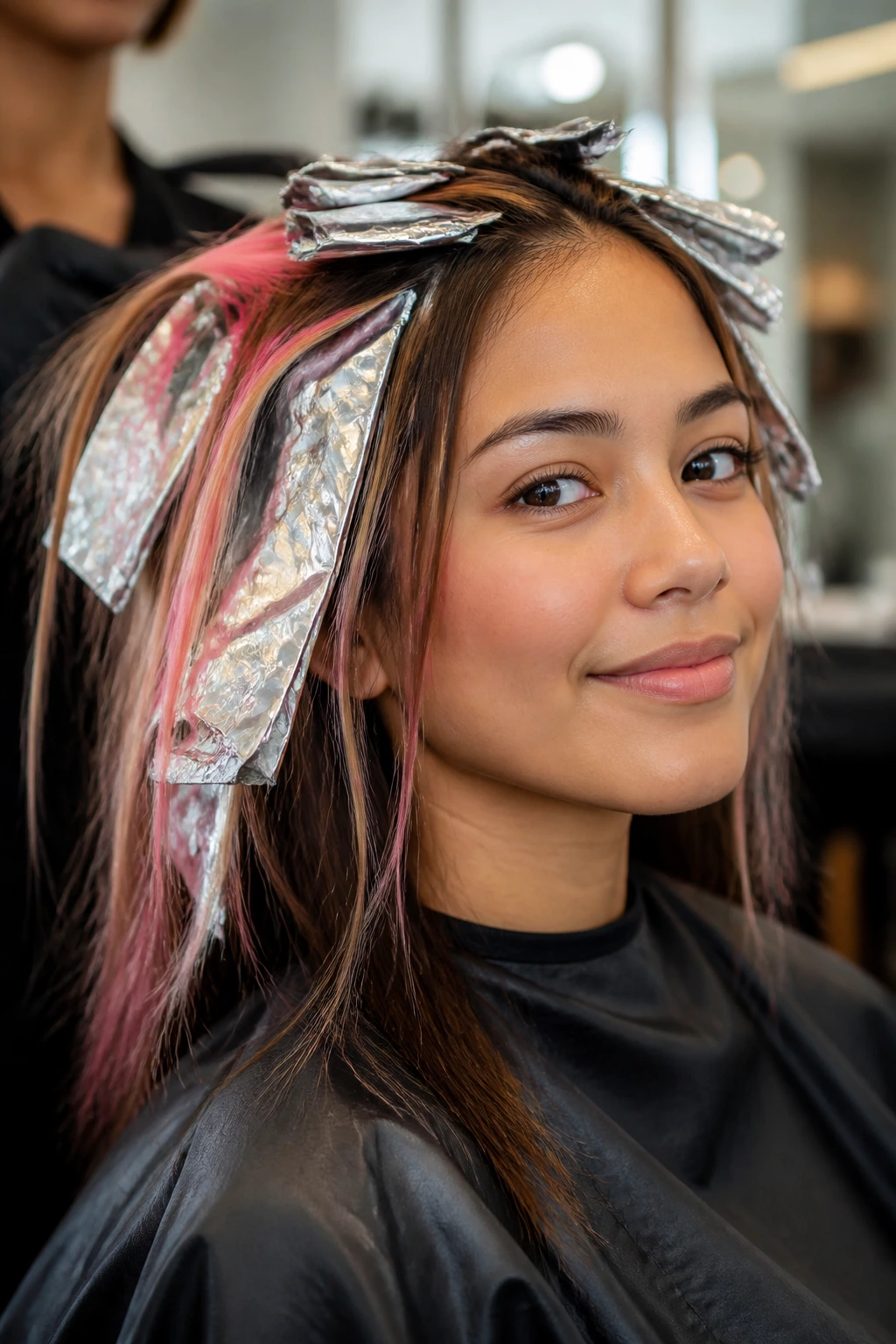
A good consultation saves more damage than any deep conditioner ever will. Fine hair is not the place for vague instructions like “make it pink but natural.” That sentence can turn into all kinds of trouble.
Bring photos that show both shade and placement. One image for the tone, one for the density, one for the front pieces. Then say what you want to protect: density at the root, softness through the ends, or a low-maintenance grow-out.
A useful script is simple:
- “I want pink, but I need to keep the hair looking full.”
- “Use small, broken-up pieces instead of wide stripes.”
- “Leave some root depth.”
- “If you pre-lighten, stop before the hair gets overcooked.”
That last line matters. Fine hair reaches the yellow stage fast, and yellow is often enough for pink. White-blonde isn’t always better. Sometimes it’s worse.
Tools and Products That Keep the Color Clean
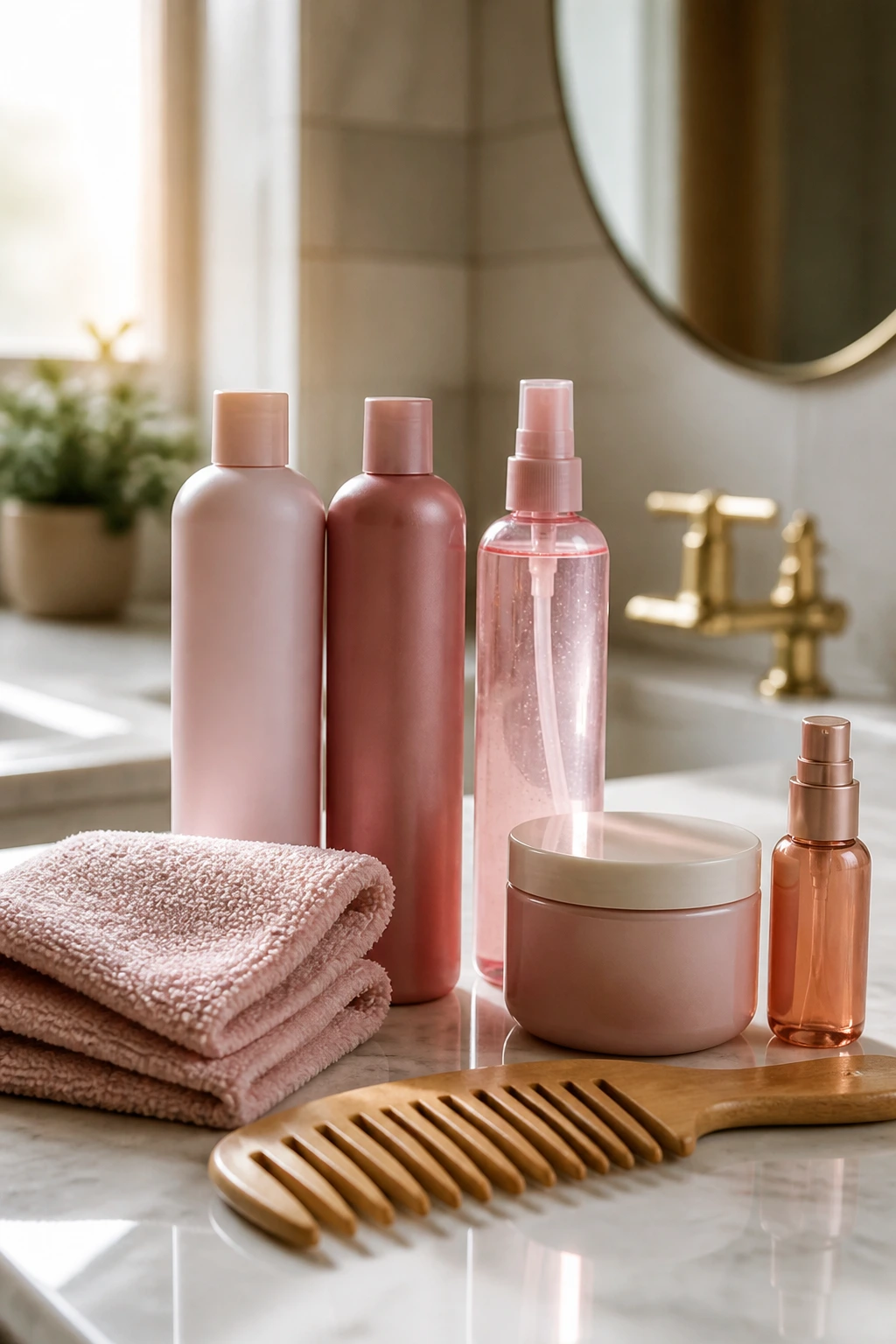
- Sulfate-free shampoo: It helps pink fade more evenly instead of stripping the color in one wash.
- Color-depositing conditioner in rose or blush: Use it every second or third wash if the pink starts turning faint at the ends.
- Heat protectant: Fine hair shows heat damage fast, especially after lightening.
- Microfiber towel: It cuts friction after washing, which matters when the hair is porous.
- Wide-tooth comb: It detangles without snapping the fine sections that hold pink the best.
- Bond-building mask: Once a week is a reasonable pace if the hair was lightened first.
- Gloss or glaze service: Keep one in your budget if the color is pastel or champagne-pink.
Skip heavy oils near the roots. They can weigh down fine hair and make the highlights look darker than they are. A pea-sized amount on the ends is enough.
How to Style Pink Highlights So They Show Up
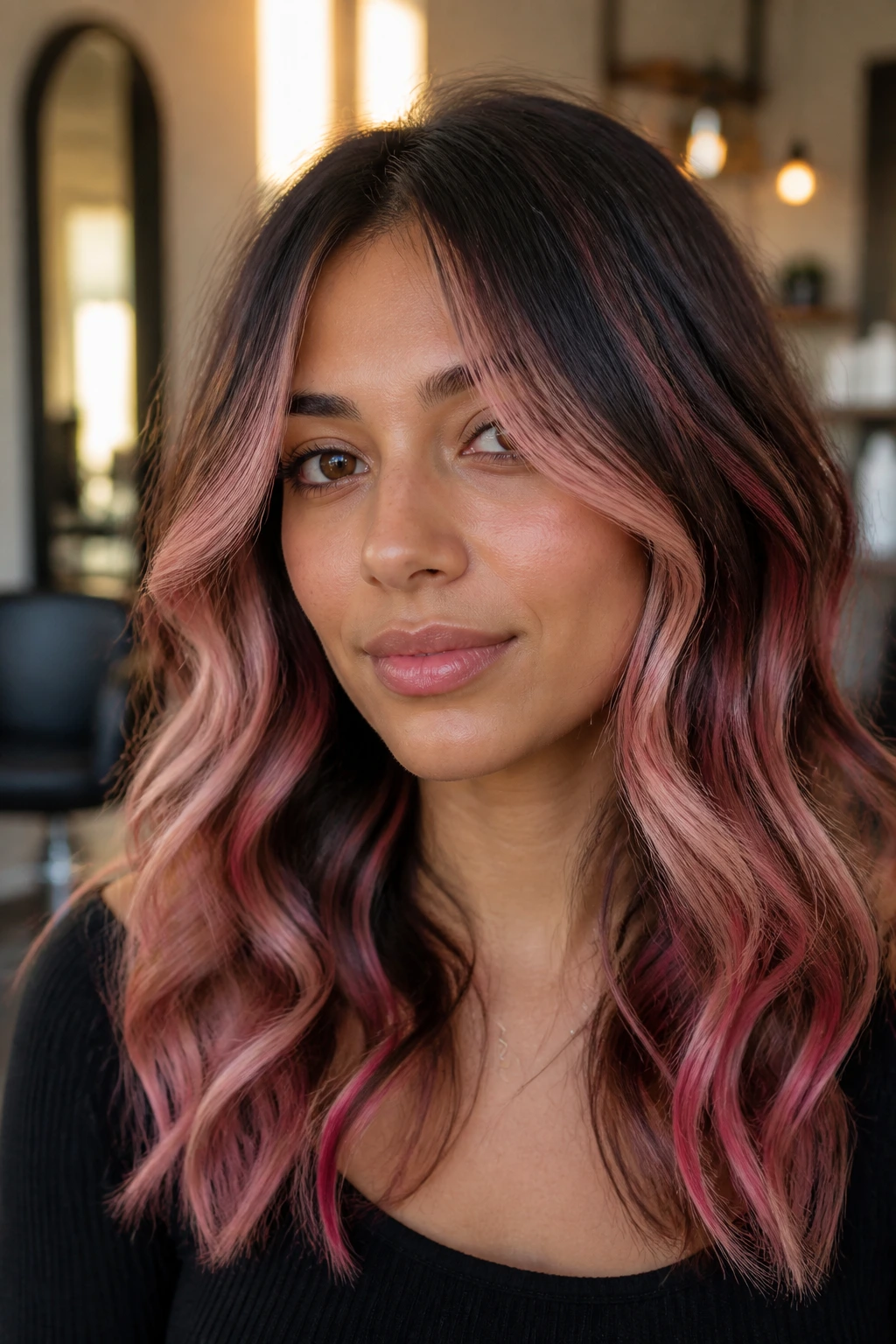
Loose waves are the easiest way to let pink do its job. A 1.25-inch iron, a few alternating bends, and a brush-through at the end will show ribboned pink much better than a tight curl set. The color bends with the hair instead of sitting on top of it.
Straight styles can be sharper, especially with rose-gold money pieces or orchid ribbons. Use a side or center part, tuck one side behind the ear, and the color line becomes easier to read. A little serum on the ends helps, but keep it off the roots or fine hair will collapse.
Best finishing moves
- Soft bend: Best for babylights, blush ribbons, and pink quartz foilyage.
- Sleek blowout: Best for magenta slices, rose copper, and orchid ribboning.
- Half-up or clip-up style: Best for peekaboo layers, underlights, and halo pieces.
Clothing also changes how the pink reads. Cream, charcoal, olive, black, and deep denim tend to make rose shades show up more clearly than busy prints do. You do not need a wardrobe overhaul. Just know that the hair will look different against different fabrics.
Practical Tips for Getting More Wear Out of the Color
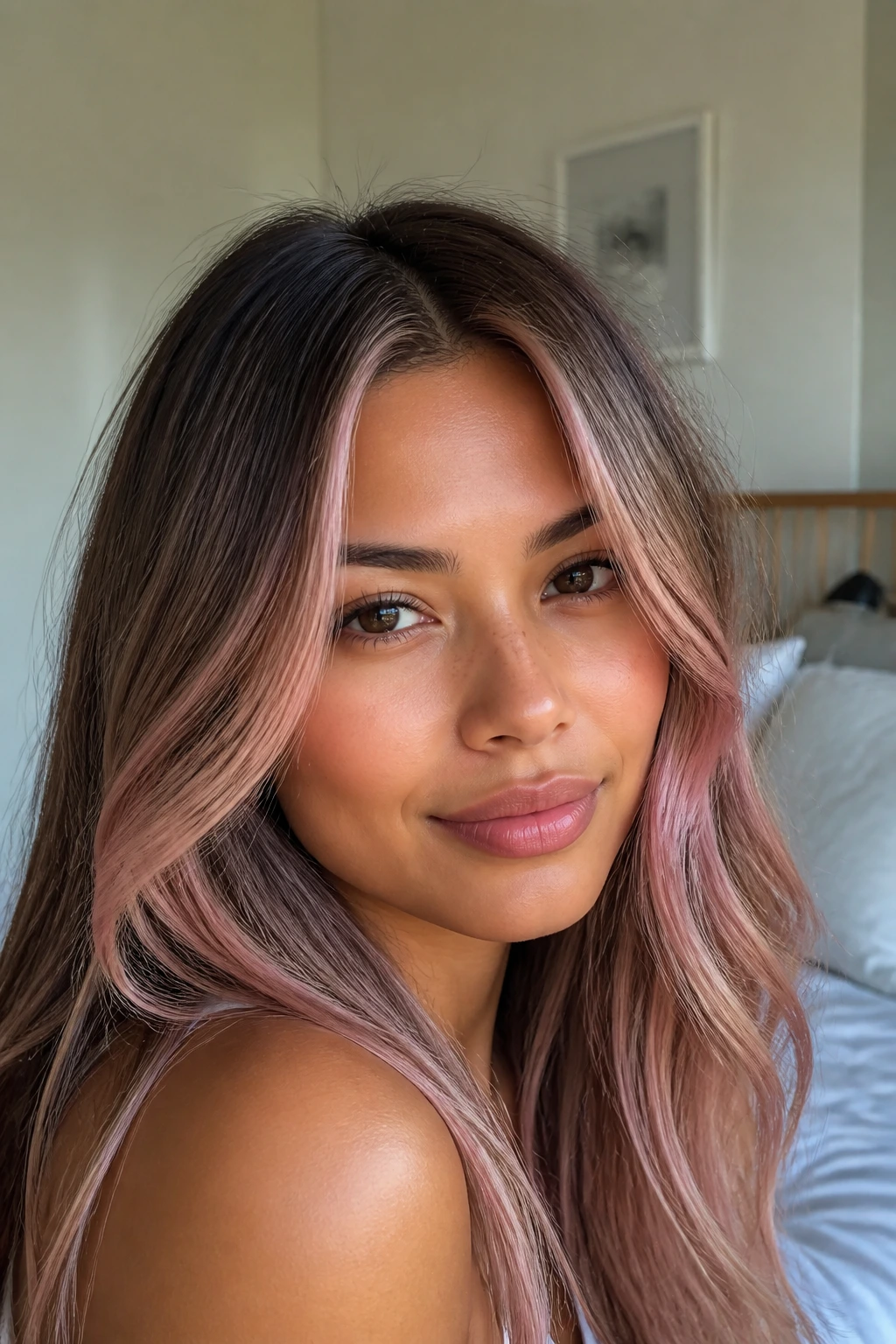
Color Enhancement: A color-depositing conditioner once every 10 to 14 days can keep blush, mauve, or rose pink from fading into a weak peach. Use it sparingly on porous ends; they grab pigment fast.
Time-Saver: Dry shampoo is not just for limp roots. If you wash less often, the pink stays in longer, and fine hair keeps more body between shampoos.
Pro Move: Ask for a shadow root that’s one shade deeper than your natural base. It makes the highlights look fuller and buys you a softer grow-out line.
Cost-Saver: If you’re trying pink for the first time, keep the brightest pieces around the face and crown. You’ll get maximum visual change without paying for a full saturation job.
Shape Fix: A blunt trim before coloring can help the ends hold pink more evenly. Thin, wispy ends often soak up too much pigment and go dull faster.
Common Mistakes That Flatten the Shade or the Hair
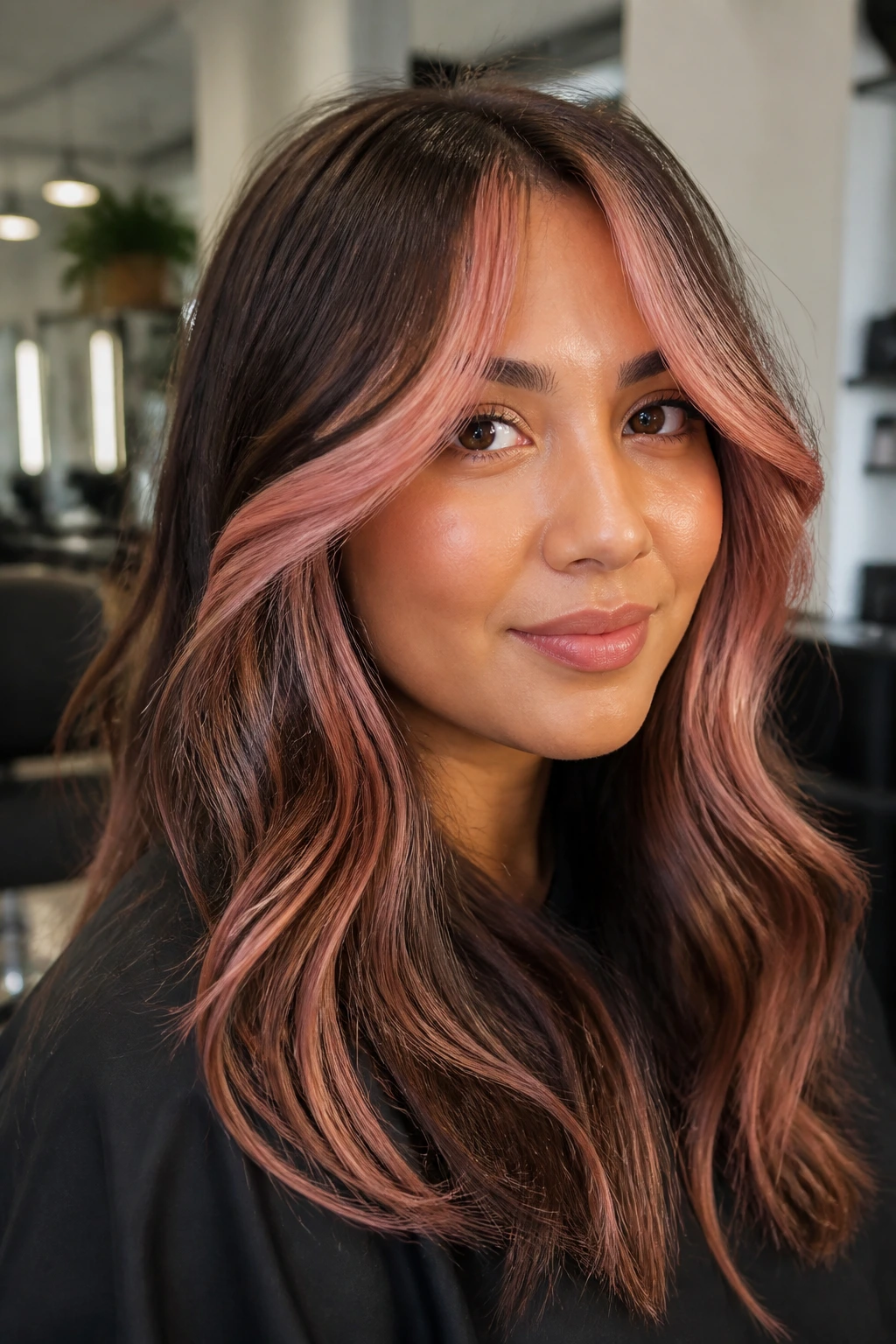
The first mistake is going too chunky. Wide pink panels on fine hair can make the scalp more visible because the color stops looking like texture and starts looking like gaps. Thin slices or babylights usually solve that.
The second mistake is choosing a shade that fights the skin. Cool, blue-heavy pink on warm medium skin can look detached. Warm coral or rose-leaning pink often sits better. If the skin has an olive cast, too much yellow in the pink can turn muddy fast.
The third mistake is bleaching too far. Fine hair does not need to reach white before it can take pink. Pale yellow is often enough, and pushing beyond that can make the ends feel stretchy or rough.
The fourth mistake is washing like the color owes you money. Hot water and clarifying shampoo every few days will drain pink fast. Use cooler water, keep shampoo focused at the scalp, and let the lather rinse through the lengths instead of scrubbing them.
Variations and Alternatives to Try
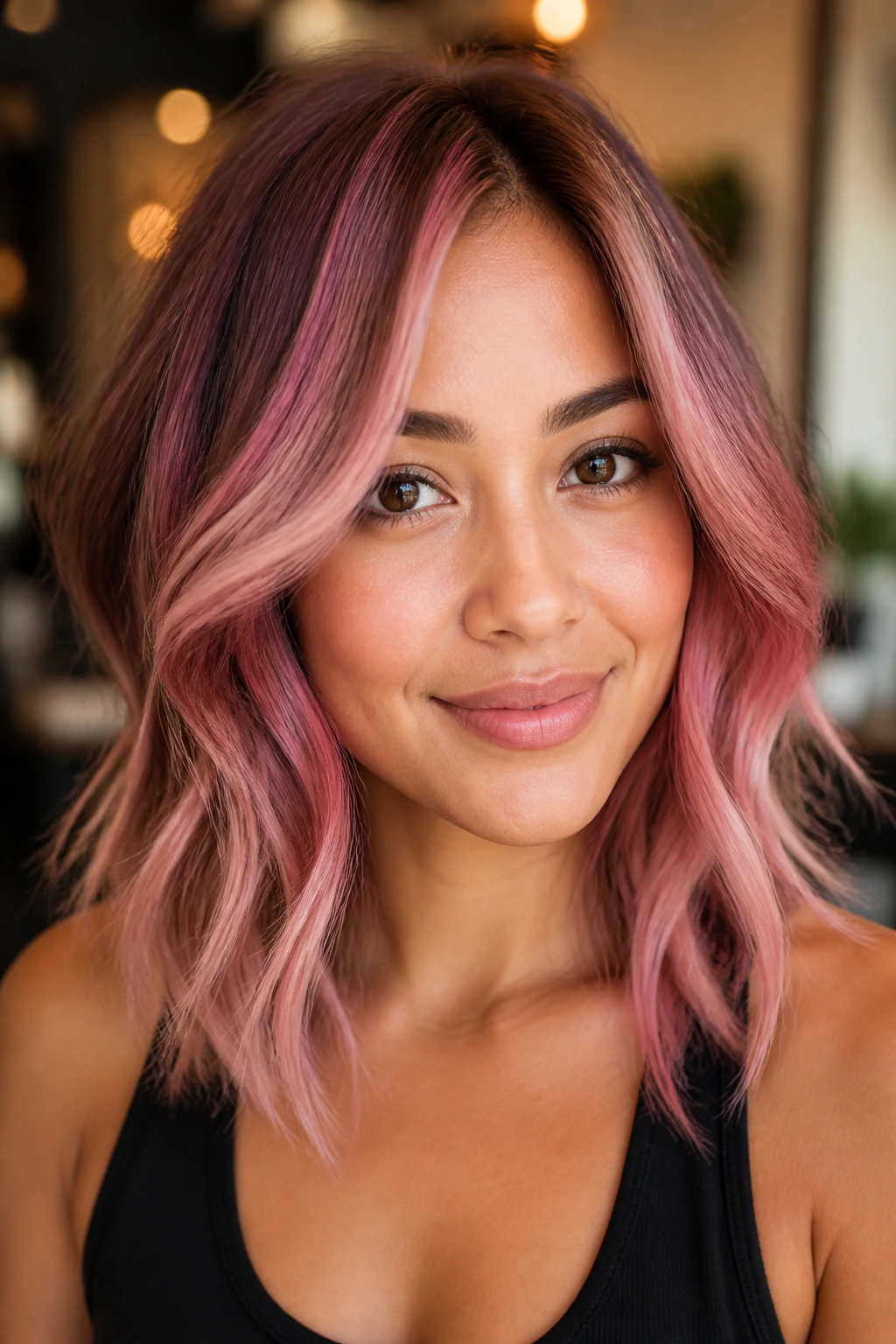
Soft Office Blush: Keep the highlights tiny, mute the pink with a beige gloss, and place the brightest pieces only around the front. It gives you color without turning every meeting into a hair conversation.
Weekend Raspberry: Use a deeper berry pink through the mid-lengths and a brighter front frame. This one holds up well if you like waves or a tousled blowout.
Curly Halo Pink: Concentrate the pink around the outer surface of curls and the crown. The shape of the curls does half the work, so you can use less color and still see it.
Short Bob Rose Slices: If your hair is above the shoulders, a few clean rose slices can make a blunt cut look sharper and fuller. Keep the pieces narrow so the bob still reads dense.
Low-Maintenance Shell Pink: A root shadow, soft pink ends, and minimal lift. It fades slowly and is one of the easier pastel routes for fine hair.
Maintenance, Touch-Ups, and Washing Schedule
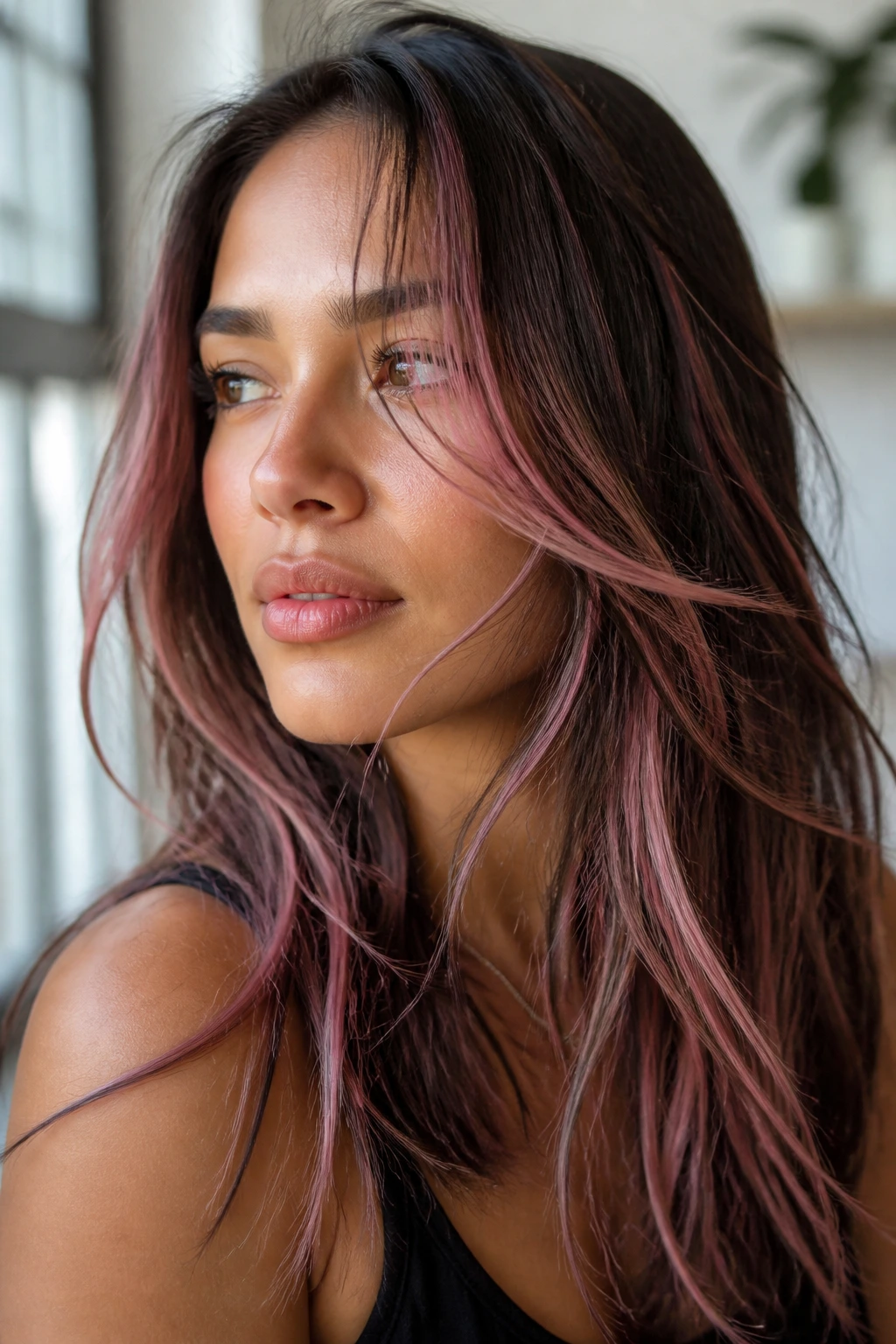
The first 48 hours after coloring are the most delicate if your hair was glossed or directly pigmented. If your colorist gives you a specific wait time, follow that. As a rule, the less you shampoo early on, the longer the pink hangs on.
Weekly care
Wash two to three times a week if you can get away with it. Use lukewarm or cool water, not hot. Pink fades faster on porous ends, so keep shampoo at the scalp and let the rinse do the rest. A bond-building mask once a week is a good habit if the hair was lightened first.
Touch-up timing
Soft babylights or peekaboo panels often need a gloss refresh every 4 to 6 weeks. Brighter money pieces and fuchsia streaks may want a refresh sooner if you want the color crisp. Full highlight maintenance usually lands closer to 8 to 12 weeks, depending on how fast your roots show and how obvious you want the line to be.
Fading management
If the pink starts looking peachy or weak, a color-depositing conditioner can buy you another couple of washes. If the ends feel gummy, stretchy, or rough, stop the heat tools for a bit and trim the driest inch. Fine hair rarely needs heroics. It needs consistency.
Frequently Asked Questions
Will pink highlights work on medium skin if my undertone is warm?
Yes, but pick the right family. Coral-pink, rose copper, strawberry, and salmon usually sit better on warm medium skin than icy pastel pinks. If the shade looks too cool in the bottle, ask your colorist to warm it slightly.
Can fine hair handle pink highlights without breaking?
It can, if the lightening is controlled. Fine hair usually does better with small sections, low-volume developer, and a stop point before the hair becomes white-blonde. The color itself is not the issue; over-processing is.
Do pink highlights make fine hair look thinner?
They can, if the placement is too chunky or too close together. Babylights, ribbons, and face-framing pieces tend to help fine hair look fuller because they keep some natural depth between the highlights.
How often will I need to refresh pink?
Pastel pink fades faster than berry or rose-copper shades. Expect the softest tones to need a gloss or color refresh every 4 to 6 weeks if you want them visible, while deeper pinks can go longer before they look tired.
Can I get pink highlights on dark brown hair?
Yes, but the hair will usually need pre-lightening for the pink to show clearly. If you want a softer route, berry, mulled wine, or rose copper usually reads better on dark brown bases than pale blush does.
What if the pink turns too orange or muddy?
That usually means the shade was too warm for the base or the hair was lifted unevenly. A beige-pink or mauve gloss can rebalance it, but if the ends are porous, a trim may be the faster fix because damaged ends grab the wrong tones first.
Are pink highlights high maintenance?
Pastel pink is, but not every pink is. A shadow root, lowlights, and a deeper rose family shade can make the color much easier to live with. Placement matters as much as color strength.
Which is better for fine hair: balayage, babylights, or money pieces?
Babylights are the safest starting point if you want softness and density. Money pieces give the biggest face-framing impact. Balayage sits in the middle and works well if you want a little more visible movement through the lengths.
The Shade That Fits
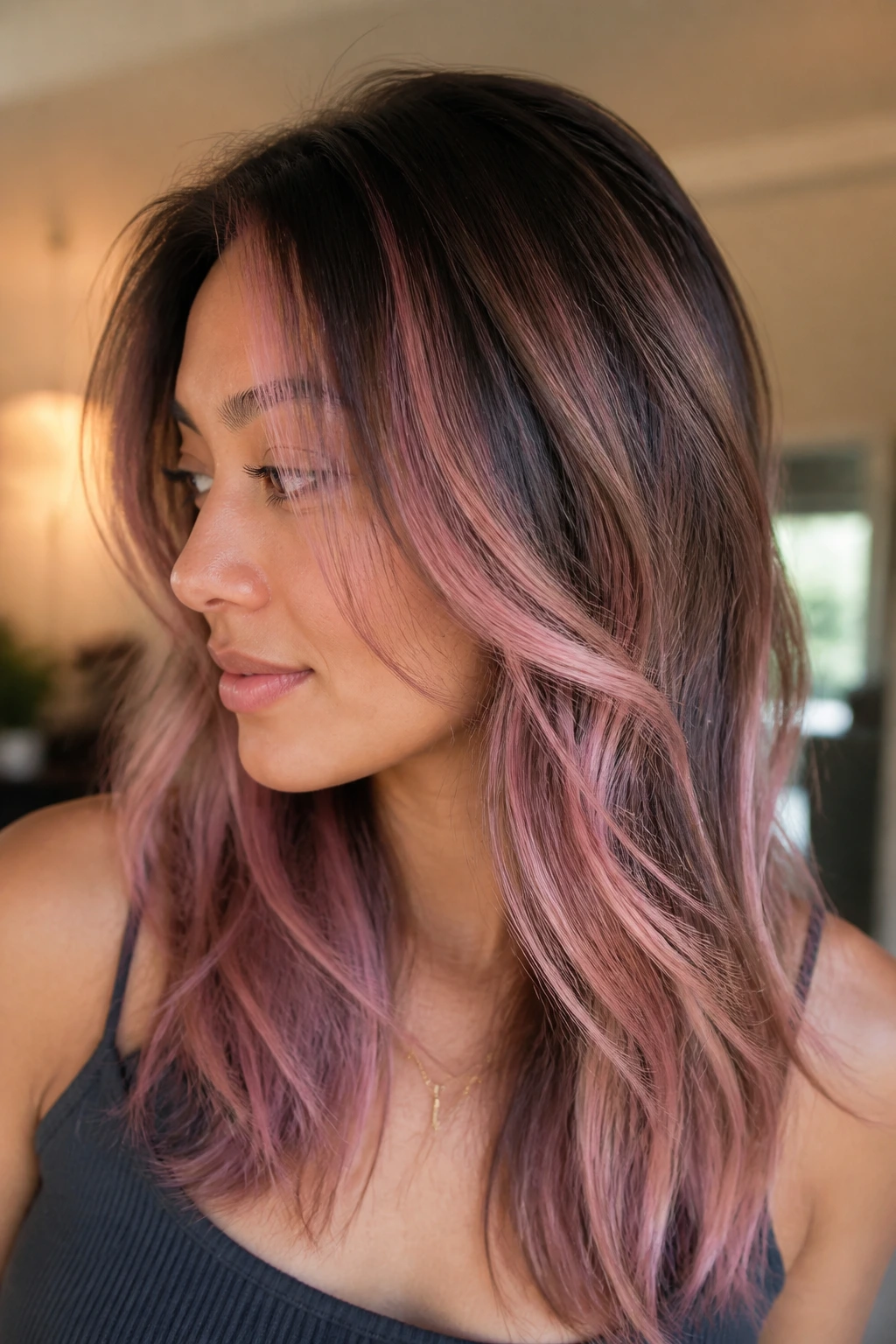
The best pink on medium skin tones with fine hair is not the loudest one in the room. It’s the one that keeps some depth at the root, uses small enough pieces to respect the hair’s density, and sits in a pink family that doesn’t fight the skin.
That can mean blush babylights for one person and mulled wine dimension for another. It can be a money piece, a halo, a few hidden underlights, or a glossy rose melt. Pick the version that makes the haircut look more alive when you move your head. That’s the one worth booking.