



Thick hair can be a gift and a nuisance on the same morning. Give it the wrong cut, and it turns into a wide, puffy helmet that eats half your face. Give it the right cut, and suddenly there’s swing, bite, and a little attitude in the shape — which is exactly why short sassy haircuts for thick hair with babylights hit so hard when they’re done well.
The cut handles the bulk. The babylights handle the heaviness of the color. Put those two things together, and you get short hair that moves instead of sitting there like a block. I like babylights on thick hair because they’re fine enough to break up the surface without shouting over the haircut; chunky highlights can be pretty, but on dense hair they often look striped and busy, like someone drew lines on a brick wall.
And that’s the whole game here: remove weight where thick hair balloons, then add tiny threads of light where the eye needs a break. The result can be polished, edgy, soft, or a little messy — sometimes all in the same cut, which is the fun part.
Why These Cuts Feel Lighter on Thick Hair
- The shape does the heavy lifting: Thick hair needs a cut that removes bulk in the right places, not just a few sad snips at the ends.
- Babylights break up the mass: Fine color ribbons make the surface look softer, so the haircut reads as movement instead of one solid block.
- Short length changes the balance: When hair sits above the shoulders, the weight stops dragging everything down, which means the silhouette actually shows.
- These cuts are easier to style than they look: A good short cut on thick hair usually needs less product, not more, because the shape is already doing the work.
- They grow out with less drama: When the perimeter is planned well, you can go a few weeks before the shape starts feeling shaggy in a bad way.
How Fine Babylights Change a Dense Short Cut
Babylights are tiny. That’s their whole charm. On thick hair, they don’t need to fight for attention; they just need to catch the eye when the hair shifts, bends, or tucks behind the ear. A stylist usually places them with micro-weaves, very fine slicing, or a soft veil around the part line so the color looks woven in rather than painted on top.
Thick hair can hide color. That sounds odd until you’ve sat in a chair and watched a bright toner disappear into a heavy bob the second the hair dries. Fine babylights solve that by sitting closer to the surface and showing up as shimmer instead of streaks. They work especially well around the face, through the crown, and along the outer perimeter where light naturally lands.
The trick is restraint. If the pieces are too wide, the contrast gets busy and the cut starts looking louder than it should. On a short, dense style, I’d rather see a handful of tiny, well-placed babylights than a whole panel of chunky color that flattens the shape. The haircut should still be the star. The color is there to make the line, the bend, and the texture easier to see.
1. Chin-Length Blunt Bob with Babylight Veil
A chin-length blunt bob on thick hair is one of those cuts that looks almost severe in the chair and unexpectedly chic in motion. The edge sits cleanly around the jaw, which gives the whole face a sharper frame, while the babylight veil keeps the surface from reading like one dark sheet. It’s neat, but not stiff. That matters.
Ask for a blunt perimeter with enough internal weight removal that the ends don’t puff outward. On thick hair, the mistake is leaving the bottom too heavy, then wondering why the bob turns into a triangle by lunch. The babylights should be tiny and close together near the crown and temples — think shimmer, not stripes.
If you wear your hair straight most days, this cut has a satisfying, almost tailored feel. If you wear it wavy, the ends take on a little flick that keeps the shape from looking too polished. I’d style it with a light smoothing cream and either a round brush or a flat iron bend at the ends; anything more complicated starts to work against the clean line.
2. French Bob with Micro Bangs
Can a short bob look playful without losing shape? Absolutely — and thick hair is one of the best canvases for it when the haircut is kept tight through the perimeter. The French bob with micro bangs sits above or right at the lip line, so the face becomes the focus, and the babylights keep all that density from feeling too heavy.
Ask your stylist for this:
- A short, slightly cropped bob that lands between the cheekbone and lip line.
- Micro bangs that skim the brows or sit just above them, cut soft rather than blunt as a board.
- Babylights concentrated around the fringe, side panels, and top layer so the cut has lift near the face.
This style works best when the bangs are textured enough to separate a little, because thick hair can turn a mini fringe into a solid curtain if it’s cut too full. I like the babylights here to stay warm and delicate — beige, honey, or soft champagne — because they soften the strong little line of the bangs.
If you want something with attitude but not a lot of styling steps, this is a good pick. It still needs a quick blow-dry at the front so the fringe doesn’t curl into itself, though. No one talks enough about that part.
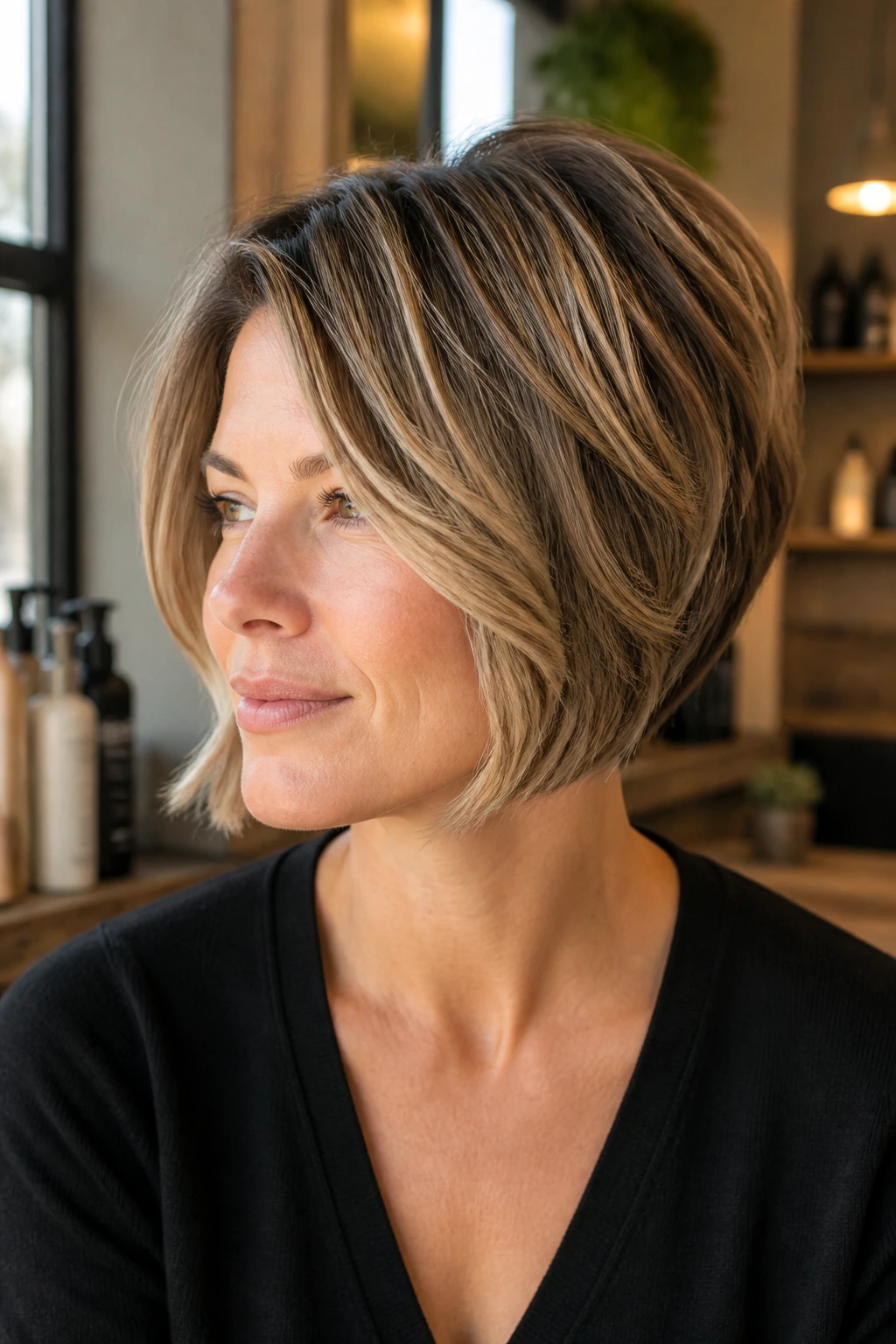
3. Stacked Bob with Tapered Nape
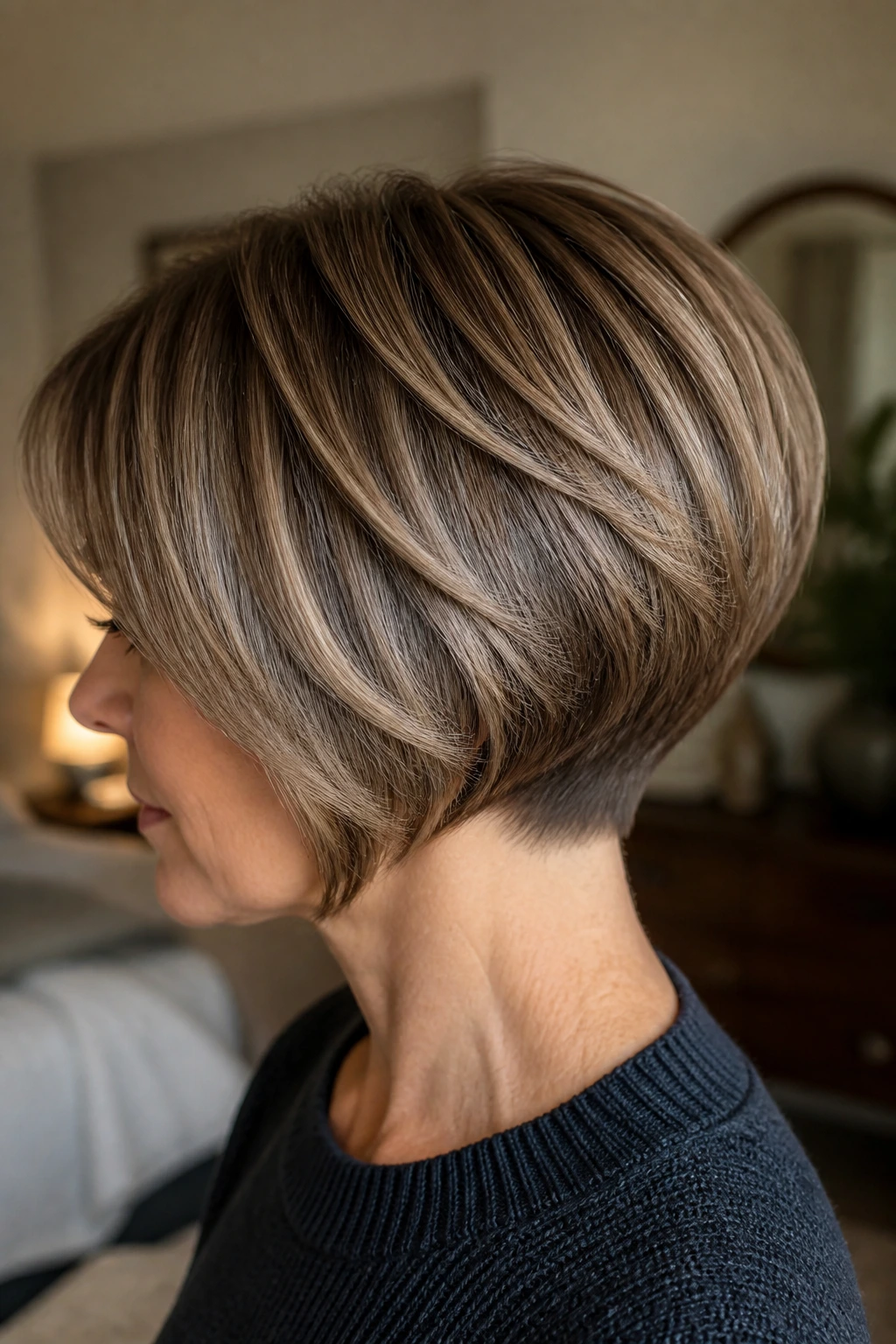
The stacked bob is the haircut I reach for when thick hair needs to stop sitting on the neck like a wool scarf. The back is built shorter and tighter, so the nape looks clean while the crown gets a little lift. Add babylights through the top stack, and the whole shape looks lighter from every angle.
Why the stacking matters
The stacking creates an actual shelf of volume in the back, which sounds counterintuitive until you see how it removes weight from the lower half. Instead of having all the bulk hanging at one level, the layers are staggered. The result is a curve that hugs the head instead of flaring out.
Where the color should go
Babylights belong through the crown and upper sides, not packed into the underlayer. That way, the light catches the curved top of the stack and shows the shape without making the nape look too busy. A cool beige or soft caramel works well if your hair is naturally dark; it keeps the cut from getting harsh.
This is a neat, tidy haircut, but not a boring one. When it’s cut well, the back rises slightly and the front falls forward just enough to soften the jaw. It’s the sort of bob that makes thick hair behave.
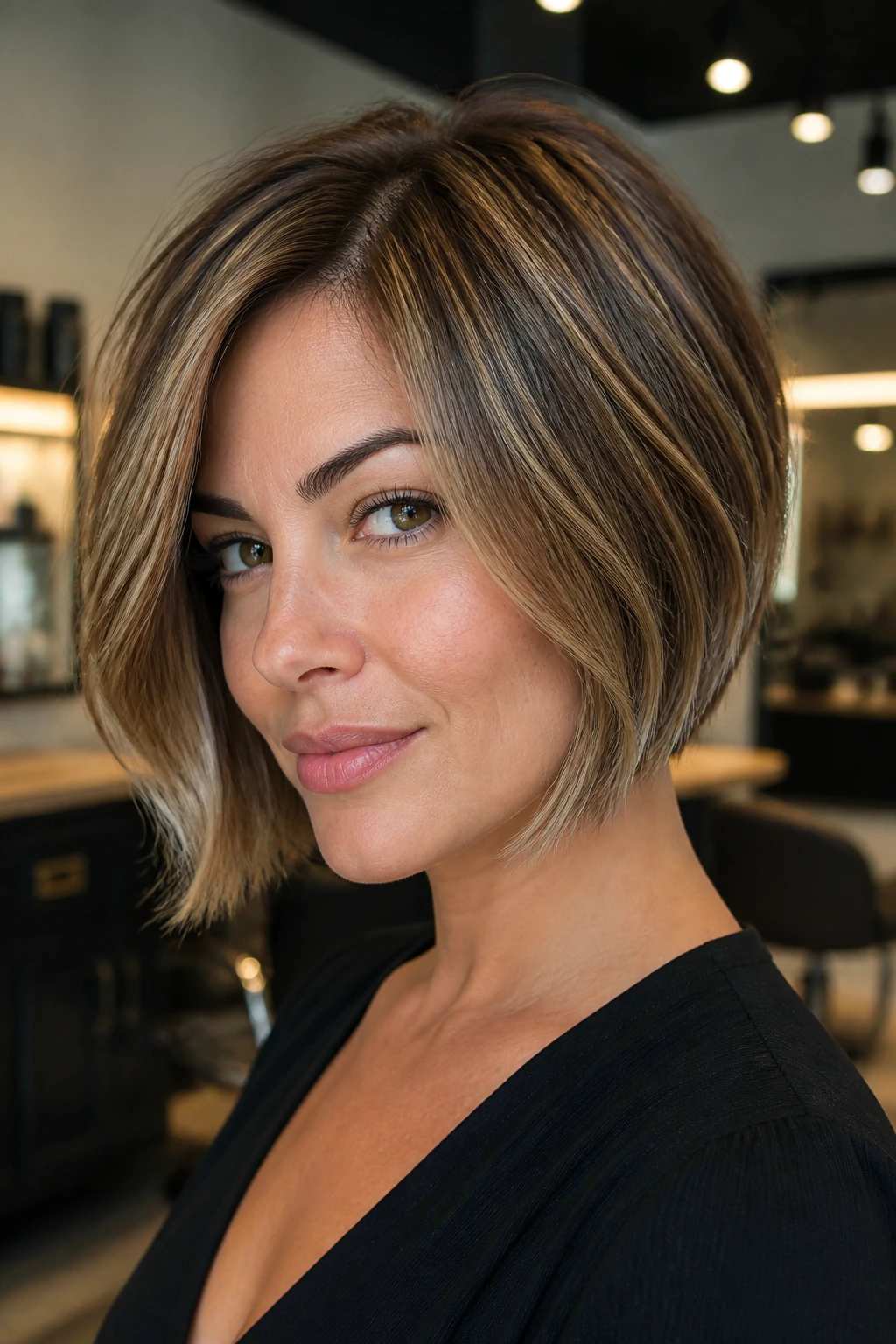
4. A-Line Bob with Face-Framing Babylights
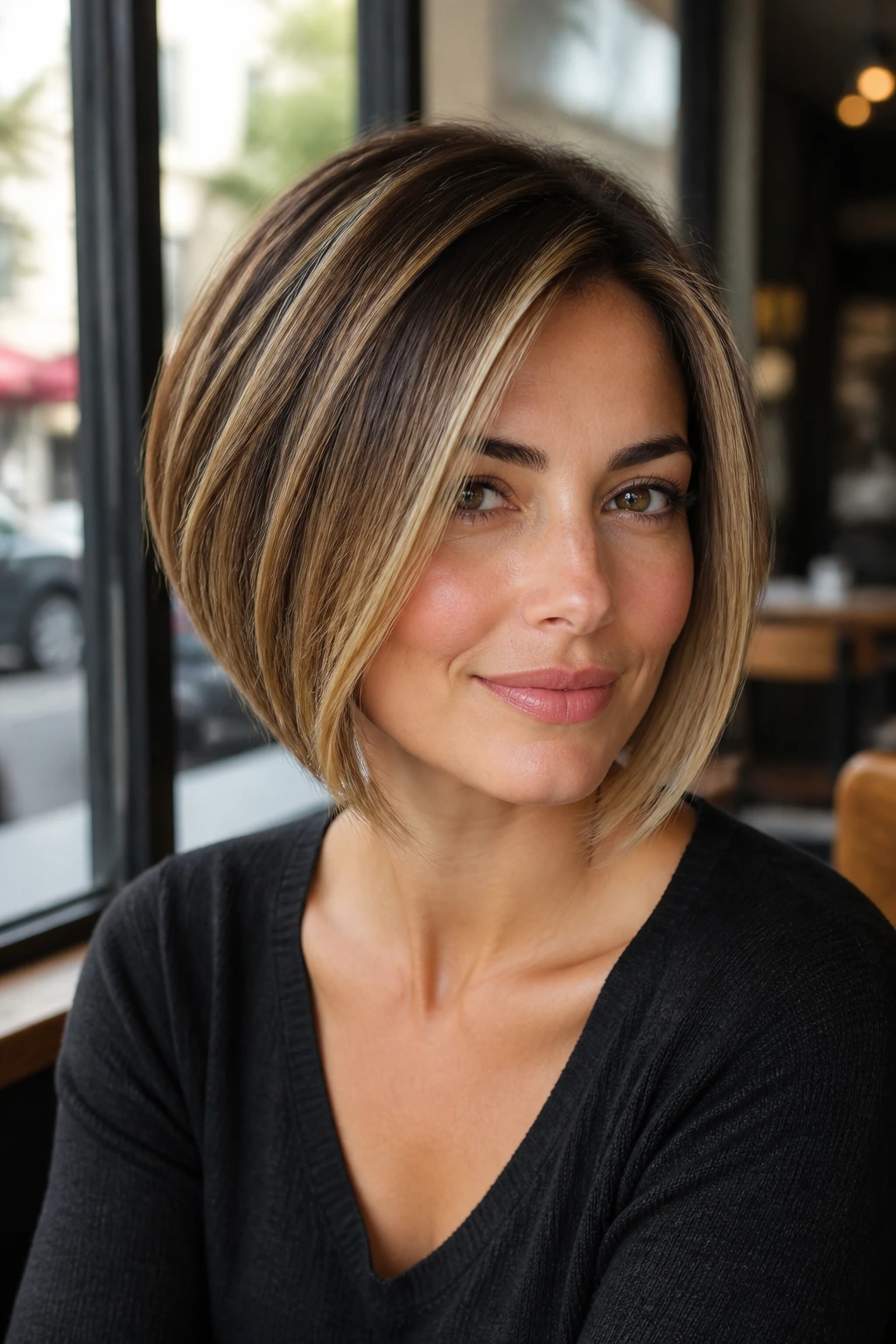
What if you want a sharper line without going full blunt? The A-line bob gives you that angle: shorter in the back, longer in the front, with a gradual drop that draws the eye downward instead of outward. On thick hair, that slant helps the cut look sleek rather than bulky.
The babylights should live on the longer front panels and around the face. That placement is doing more than decorating; it pulls light toward the edges of the haircut, which makes the angle visible even when the hair is tucked behind one ear or blown forward. If the color stays only in the back, the line gets lost.
I like this cut for people who want a little edge but still need the hair to fit under a coat collar or tuck into a blazer cleanly. It’s tidy enough for straight styling, but the front length also allows a soft wave if you want a more relaxed finish. Skip heavy layering here. The whole point is the slant. Too much texture and the shape loses its nerve.
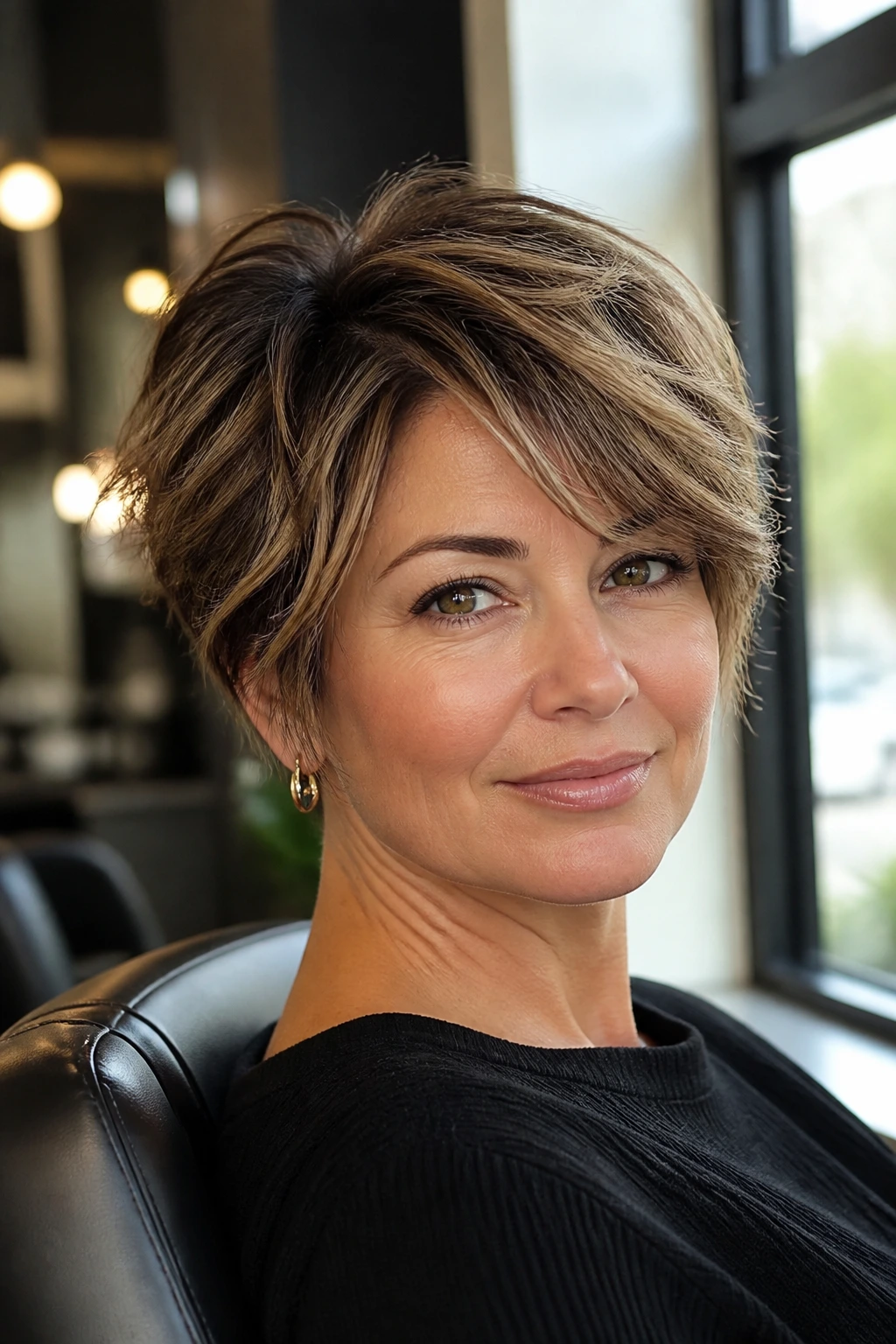
5. Choppy Pixie Bob with Piecey Crown
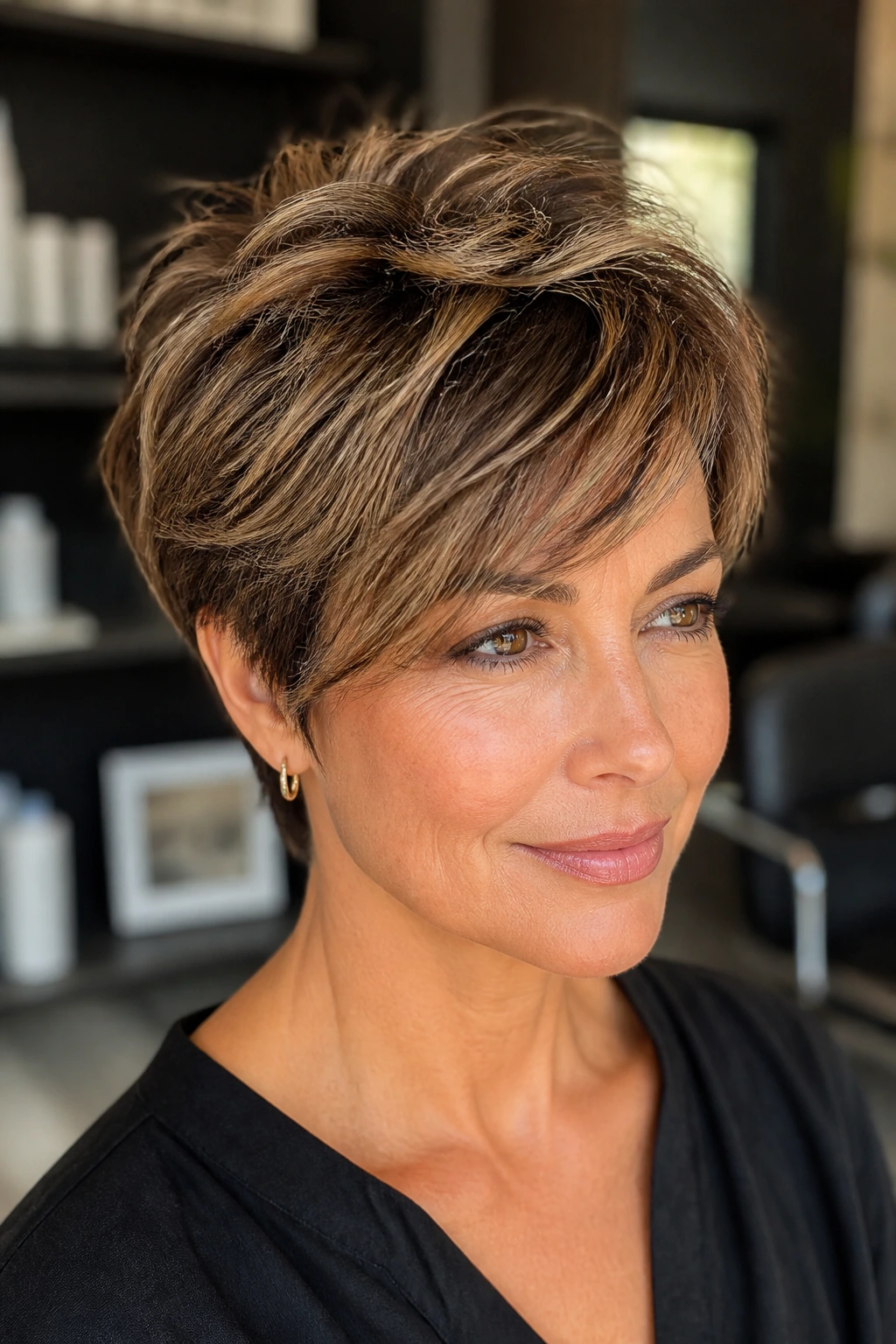
A pixie bob is what happens when a pixie decides it wants a little more length and a little less maintenance drama. On thick hair, that extra length is useful because it keeps the style from sticking straight up, while the choppy texture stops the crown from turning into a helmet. Babylights through the top make the piecey finish look deliberate.
The best version has short sides, a soft nape, and enough top length to sweep forward or over to one side. Ask for point-cut ends instead of blunt edges; thick hair likes a little irregularity here. The babylights should be scattered through the crown and fringe, not hidden underneath, because the whole point is to show that separation and lift.
This cut feels modern without being fussy. You can scrunch in a small amount of paste, twist a few top pieces with your fingers, and you’re done. If your hair is very coarse, a tiny bit of smoothing cream under the paste keeps the ends from feeling spiky. That tiny detail matters. A lot.
6. Rounded Layered Bob with Side Sweep
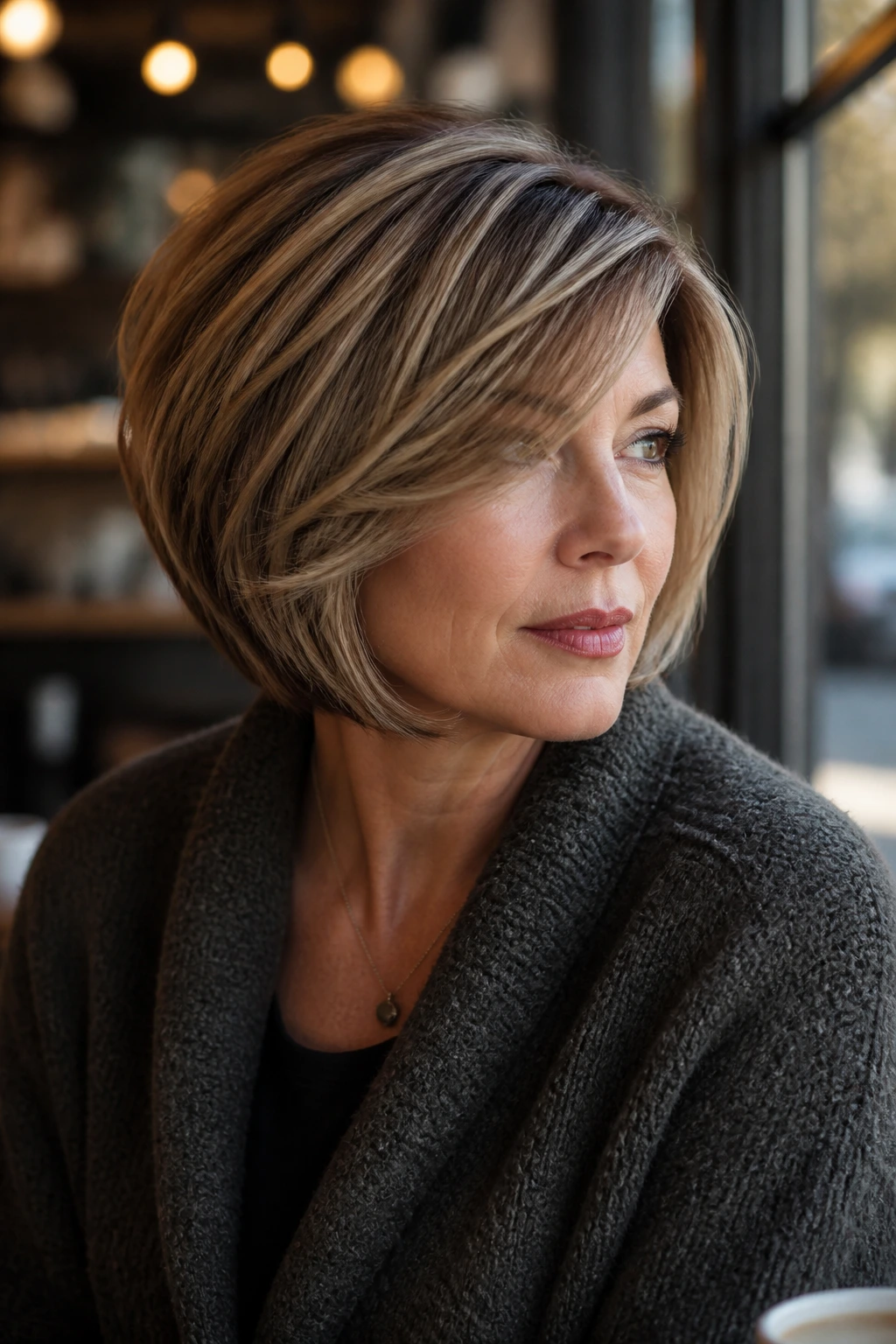
This is the bob for thick hair that wants softness instead of sharp edges. The rounded shape hugs the head, which keeps the outline smooth, and the layers are cut to follow that curve rather than fight it. With babylights, the roundness looks airy instead of heavy.
I like a deep side sweep here because it breaks up the symmetry and gives the front a little lift. Thick hair can turn symmetrical shapes into a box if the balance is too even, so a side part saves the whole thing. The babylights should be placed around the part and through the upper half of the bob, where the light can catch each curved layer.
Best for
- Thick straight hair that gets too wide at the sides
- Wavy hair that needs a smoother outline
- Anyone who wants volume at the crown without poof at the cheeks
This cut does need some blow-drying. A round brush at the roots and a quick bend under the ends will keep it rounded instead of mushroomy. The difference between cute and awkward here is usually about two minutes with the brush.
7. Mixie Cut with Feathered Fringe
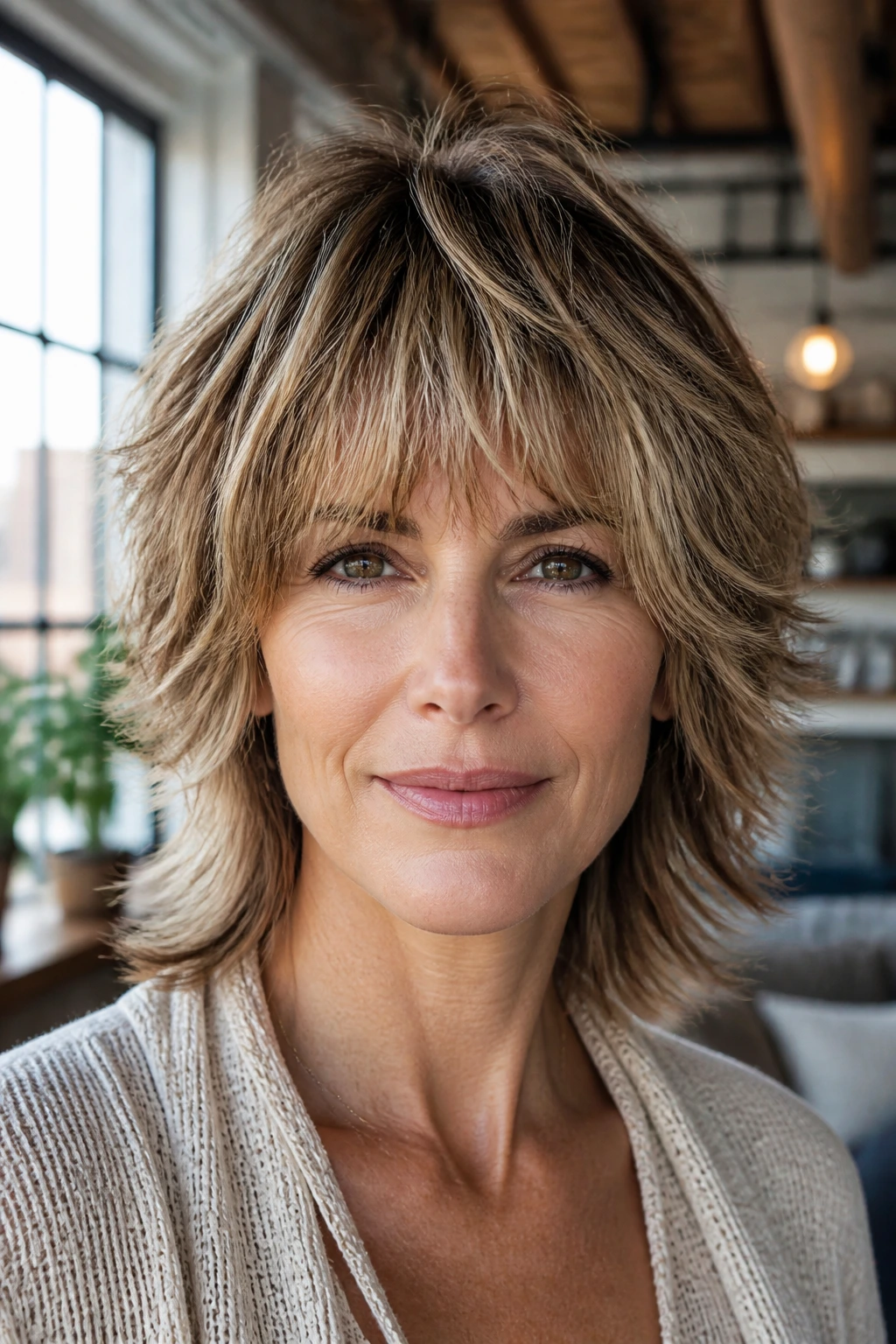
A mixie is a little mullet, a little pixie, and a lot more wearable than people expect once the layers are cut with intent. Thick hair makes this shape shine because the density gives the top enough body to stand up, while the longer nape keeps the whole thing from feeling too severe. Babylights in the fringe and crown keep the movement visible.
The feathered fringe is the part that softens the attitude. It can be wispy, side-swept, or broken into shorter pieces that fall around the forehead. I’d keep the babylights soft and irregular here — not too symmetrical, not too bright. The goal is to show the cut’s layers, not turn the head into a checkerboard.
This is one of the more playful looks in the group. It suits someone who likes texture and doesn’t mind a little styling paste in the morning. The best thing about it? It looks even better when the ends are a bit undone. That’s rare, and useful.
8. Tapered Pixie with Dimensional Crown Lightening
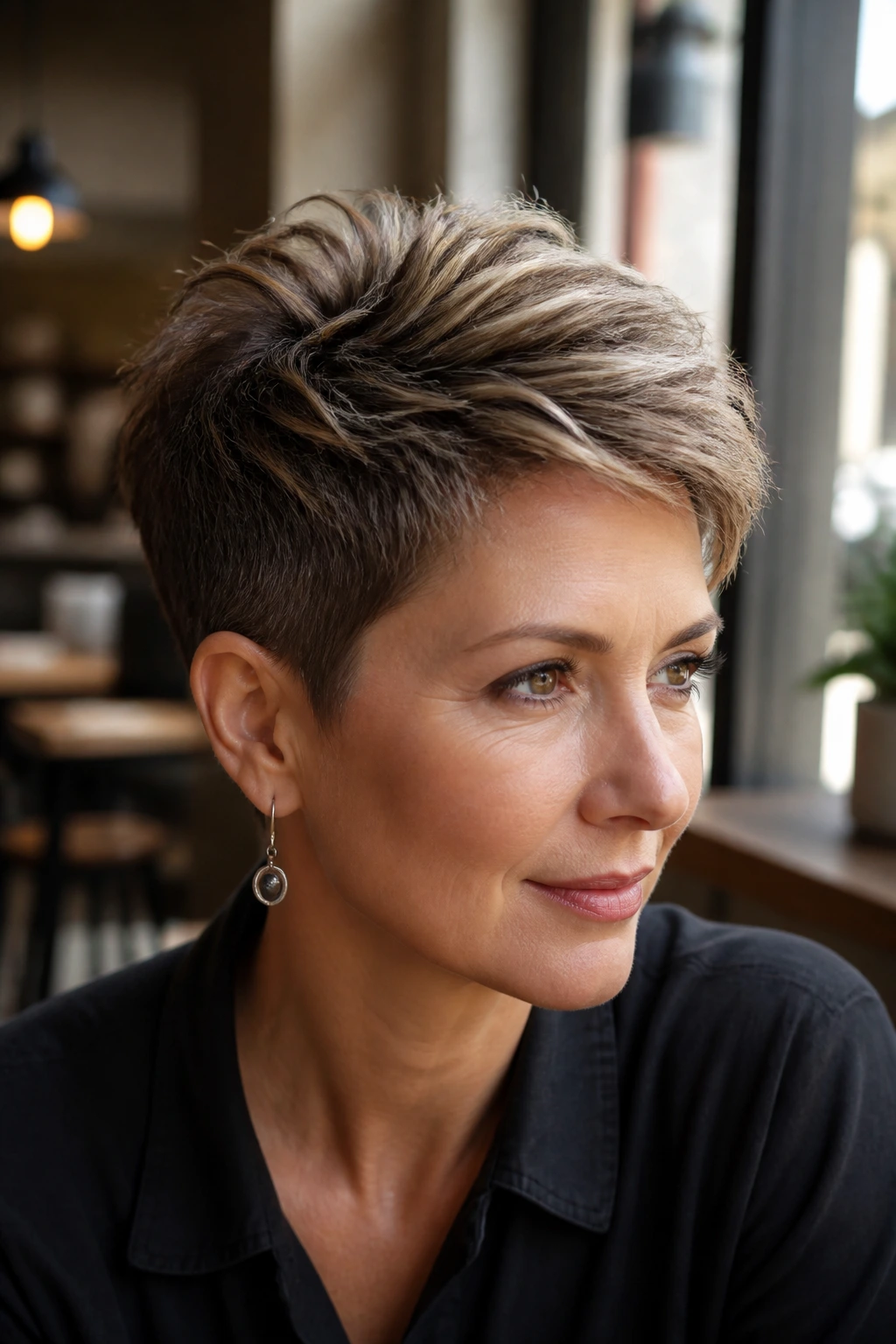
A tapered pixie can feel almost sculpted on thick hair. The sides and nape are cut close enough to take the bulk down, while the top stays longer so you can sweep, spike, or soften it depending on your mood. The babylights belong mostly at the crown, where they break up the density and make the lift read clearly.
The crown lightening should be subtle but present. Tiny ribbons through the top and front create depth, especially if your base color is dark. If the color is too even, the pixie can go flat fast; if it’s too chunky, it starts to look busy. Fine babylights solve both problems at once.
This cut is a good match for someone who wants a real short style but still likes a bit of movement at the top. It can be worn sleek with a touch of cream, or roughened up with a matte paste for a sharper edge. I’d keep the sides clean and the top touchable. That contrast is the whole point.
9. Textured Crop with Long Top
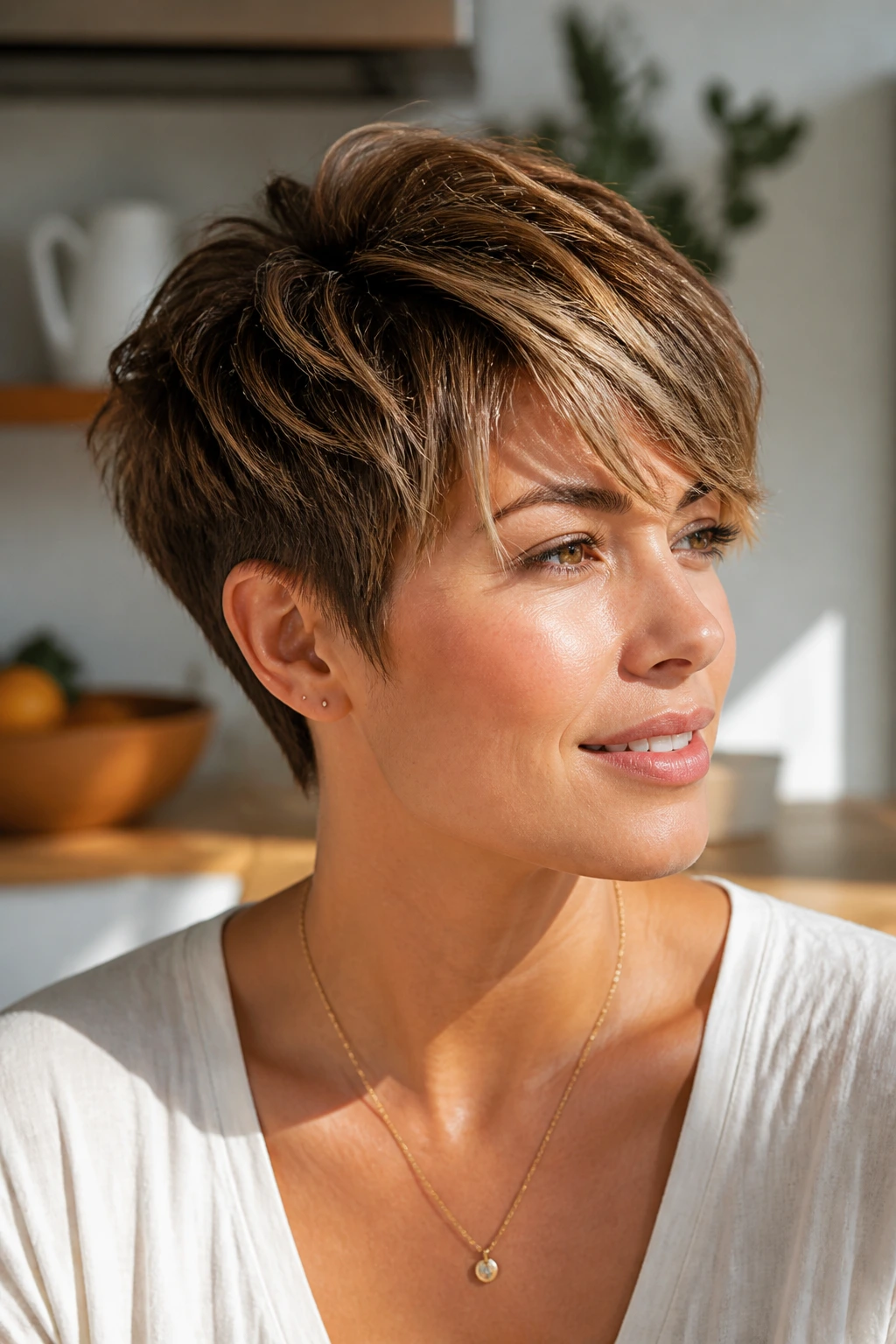
A textured crop with a long top is the kind of short cut that looks simple until you notice how carefully it’s been shaped. Thick hair helps because there’s enough density to keep the top from collapsing, but the sides need to be trimmed in a way that releases bulk. Babylights through the top ridge and fringe make the texture pop.
What makes it different
Unlike a standard crop, this version keeps the top long enough to move. You can push it forward, sweep it to the side, or rake it back with a little styling paste. The babylights follow that movement, so the eye sees the direction of the cut instead of a solid cap of hair.
How to wear it
A little matte clay goes a long way. Work it through dry hair from back to front, then pinch the ends rather than rubbing the product in. Thick hair can get gummy if you use too much, and then the texture disappears under the weight of the product.
This is a strong choice if you want a short, low-drama cut that still has personality. It’s neat around the ears, but the top gives it enough edge to keep it from feeling flat. That balance is hard to fake. Here, it’s built in.
10. Asymmetrical Bob with Deep Side Part
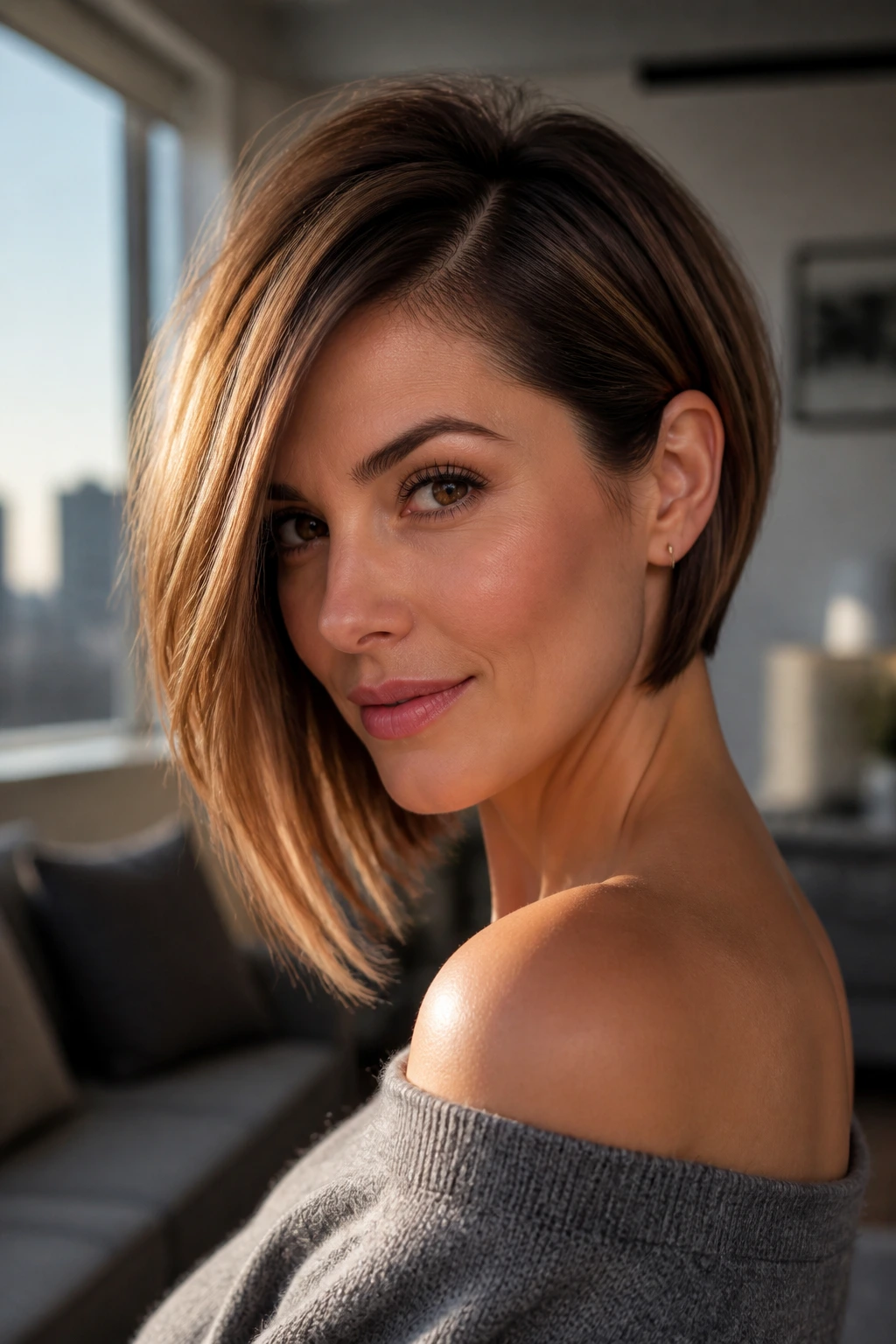
There’s something deliciously bold about an asymmetrical bob on thick hair. One side sits a little longer, the part dives deep, and the whole cut feels intentional from the first glance. Babylights on the longer side make the angle even clearer, which is exactly why this shape works so well when you want the haircut to speak for itself.
The asymmetry can be subtle or pronounced. I prefer subtle for daily wear — maybe half an inch to an inch difference between sides — because thick hair already brings plenty of presence. The babylights should concentrate on the longer side and around the face so the eye follows the line cleanly. That’s what makes the shape feel sharp rather than random.
This cut is especially flattering if your hair tends to sit heavy on one side or if you want to break up a very round face shape. A deep side part gives you instant lift at the crown, which thick hair often needs anyway. Keep the ends blunt enough to show structure, but not so blunt that the cut becomes boxy.
11. Razor-Cut Bob with Internal Layers
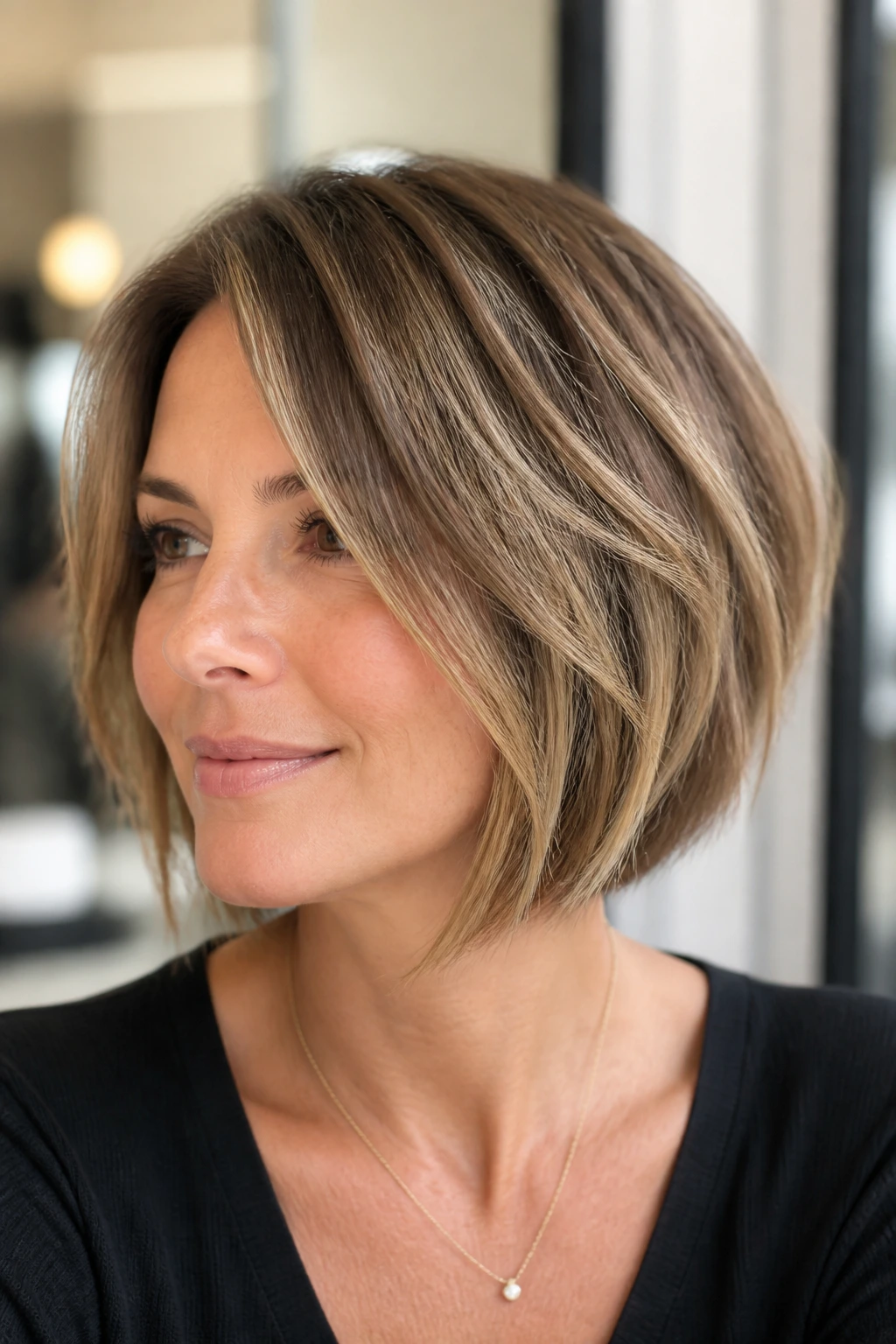
A razor-cut bob is not for every head of hair, and I’m glad to say that out loud. On thick hair that has some bend or softness, though, it can be beautiful because the razor removes weight in a way that scissors sometimes don’t. The end result is airy, slightly shattered, and full of little seams of movement that babylights can pick up.
The trick is restraint. If the hair is coarse and frizzy, too much razor work can make the edges feel fuzzy instead of light. But if your texture is medium-thick with a bit of wave, the razor gives the bob a softer line and the internal layers stop the shape from puffing at the sides. Babylights should be fine and diffused through those internal layers so the movement reads all the way through.
Good to know
- Best on hair that has natural bend or a smooth wave
- Works with soft beige, ash beige, or honey babylights
- Needs a stylist who’s comfortable using a razor without over-texturizing
I’d pair this with a lightweight cream and a rough dry. The whole point is a cut that looks touched by air, not flattened into obedience.
12. Neck-Length Shag Bob with Curtain Bangs
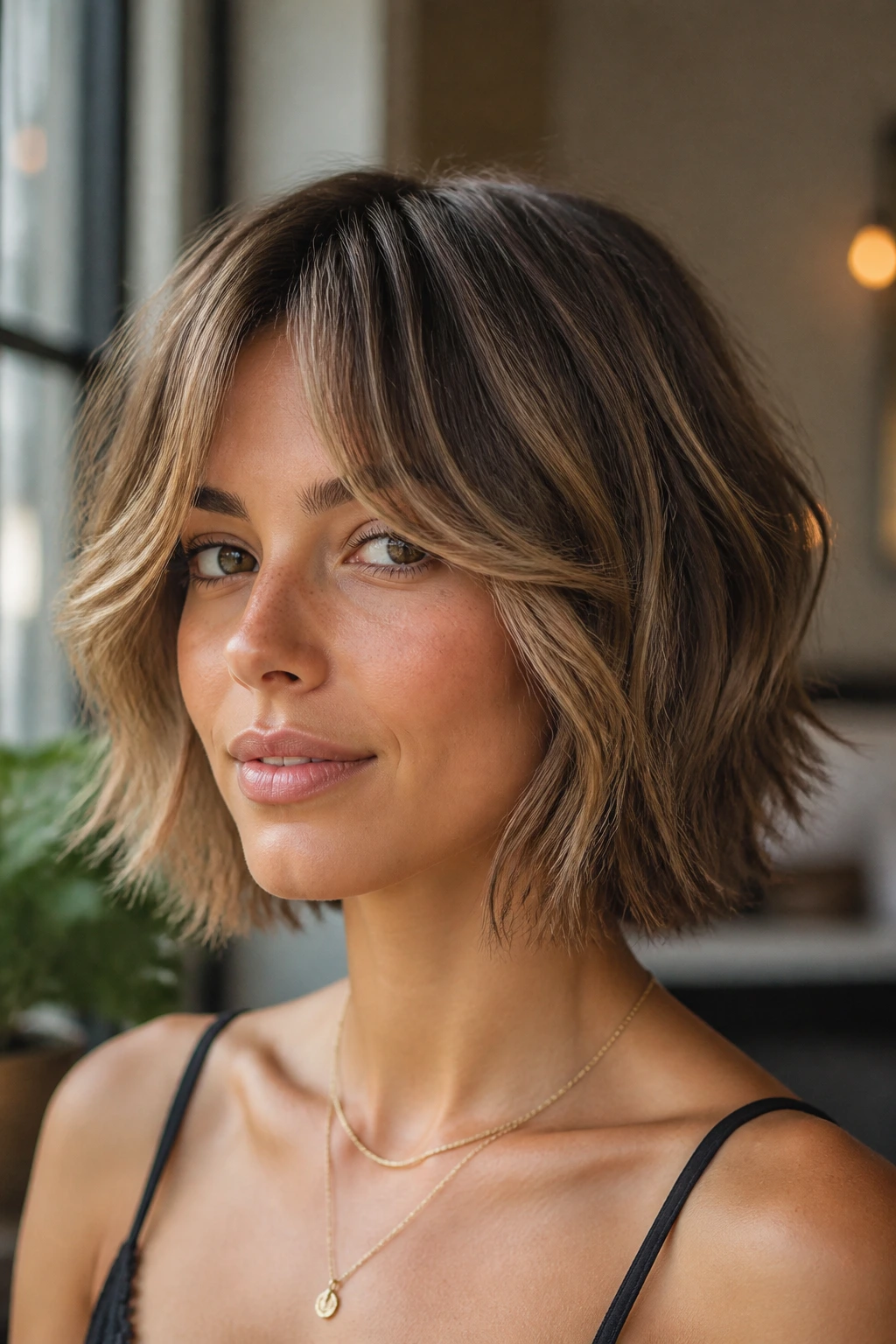
The shag bob is where thick hair gets to look cool without having to act too polished. It lands around the neck, not quite a bob and not quite a shag, with layered ends and curtain bangs that split the face in a relaxed way. Babylights through the bangs and crown make the layers easy to read, which matters because dense hair can eat subtle shaping.
This one is especially good if your hair waves on its own. The curtain fringe can be blown away from the face or tucked a bit toward the cheekbones, and the rest of the cut can air-dry with texture spray. The babylights should be placed in soft ribbons rather than narrow stripes, because shaggy layers need a little spread to feel dimensional.
What I like most here is that it looks better slightly imperfect. A neat shag can feel overworked, but this cut wants a bit of bend and a few loose pieces. If you hate spending fifteen minutes on your hair, keep the layers long enough to move on their own. That’s the sweet spot.
13. Ear-Tucked Pageboy Reboot
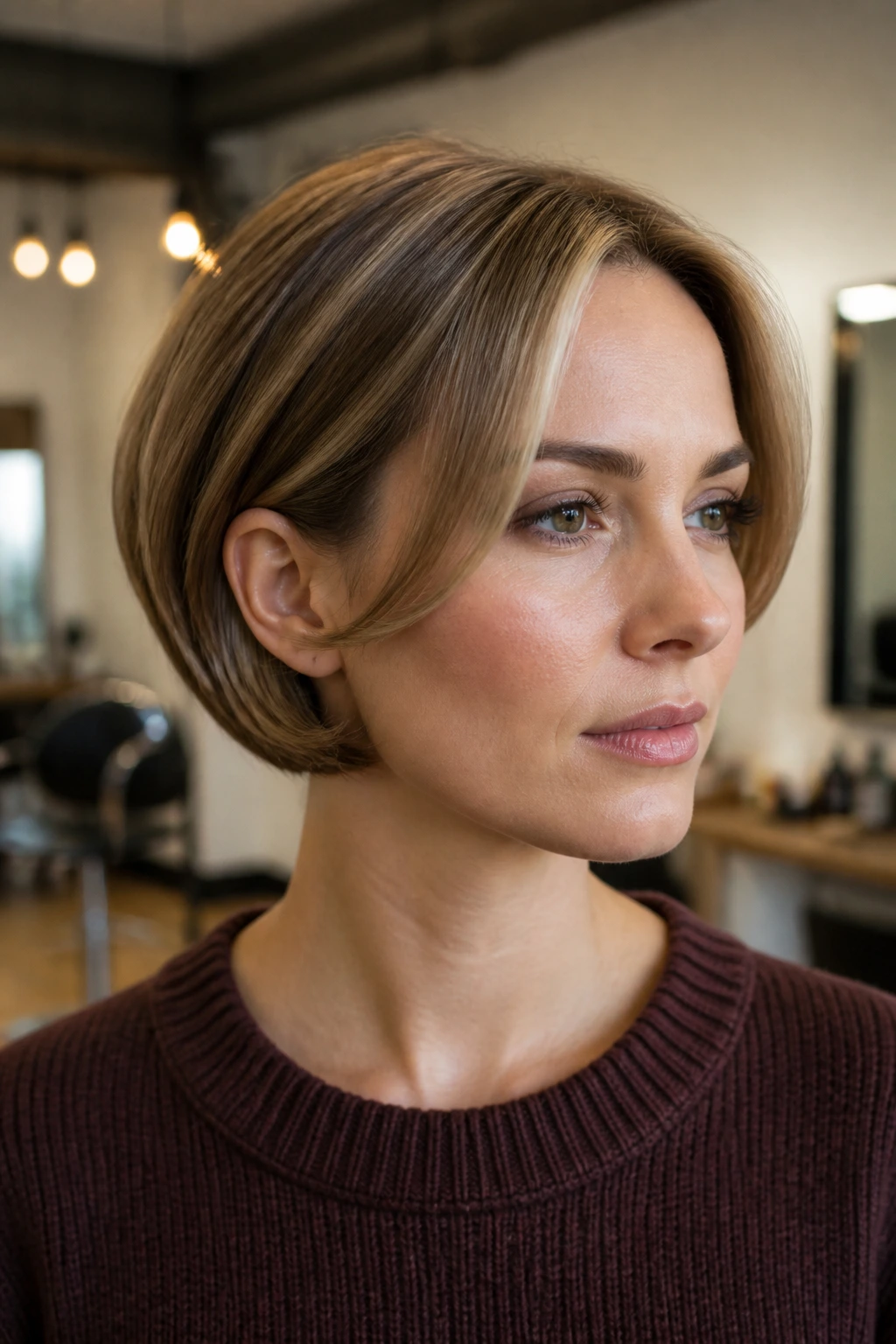
The pageboy gets a better life when it’s not trying so hard to be retro. On thick hair, the rounded shape can be sleek and almost architectural, especially when the ends are kept heavy enough to tuck behind the ears cleanly. Babylights around the temples and under the curve help the silhouette feel lighter.
This cut is all about the line around the face and jaw. The hair hugs the head, then curves under just enough to keep the shape controlled. I like babylights concentrated near the front so the eye catches the tuck and the curve; if the color is spread everywhere, the rounded edge loses its clean shape.
It’s a quiet haircut with a little swagger. Wear it smooth, use a side part if you want more softness, and keep the nape neat. If your thick hair usually looks like it’s wearing a puffed-up collar, this shape cuts through that problem fast.
14. Undercut Pixie with Swept Fringe
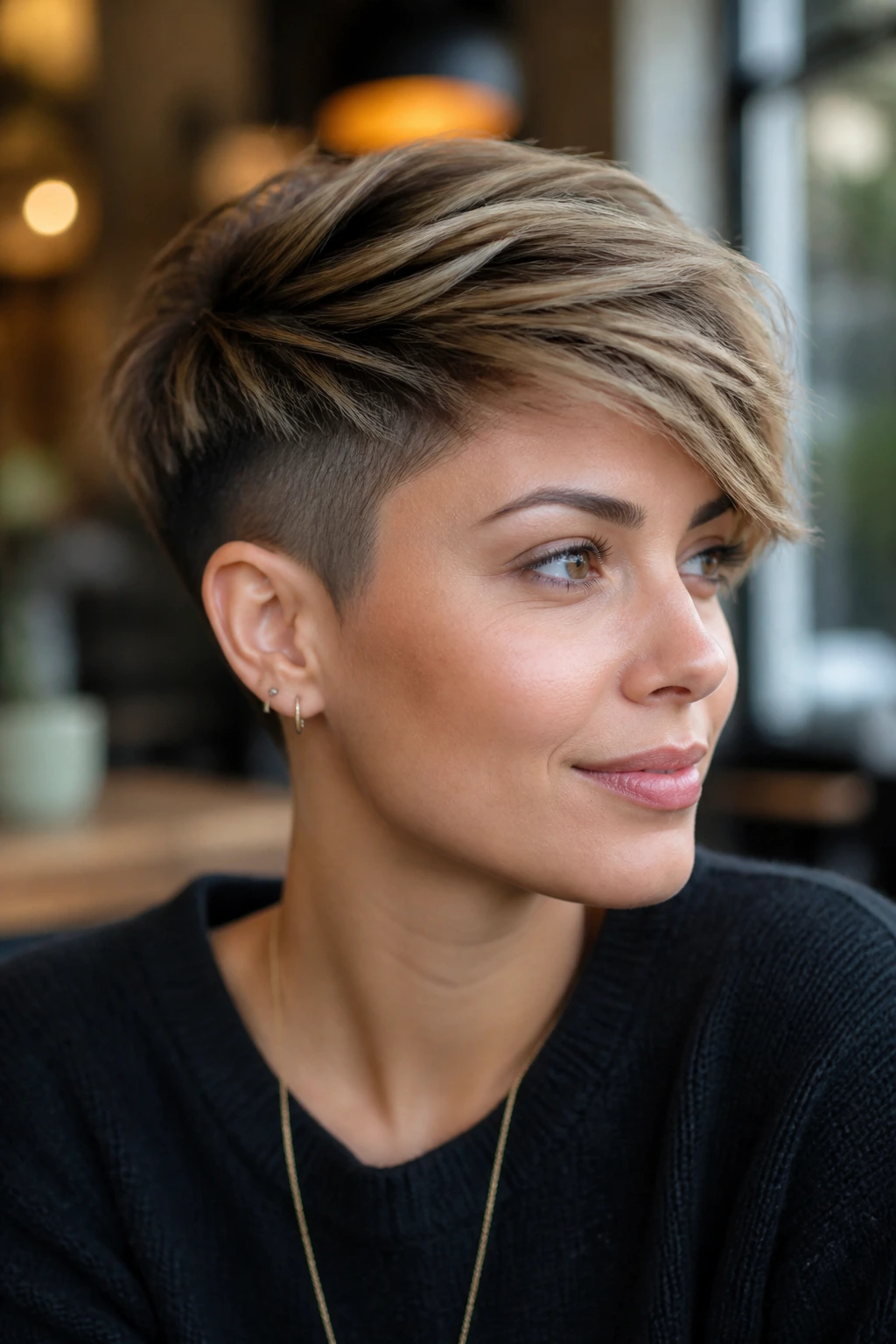
An undercut pixie is the blunt answer to hair that refuses to lie down. Take weight away beneath the top layer, keep the fringe long enough to sweep, and suddenly thick hair stops building itself into a dome. Babylights on the top and fringe prevent the cropped sides from making the whole style look too dark or flat.
This cut has edge, but it’s practical edge. The undercut can be hidden or exposed depending on how short it’s taken at the nape and sides. The top should still have enough length to move across the forehead, because that’s where the shape softens. Babylights there give you a bit of brightness without sacrificing the clean lines under the longer top.
Ask for this if:
- Your hair grows wide at the sides
- You want a short cut that dries fast
- You like a fringe you can sweep, not a heavy bang
This is the kind of haircut that can look polished with one swipe of styling cream. It also grows out better than people think, as long as the undercut is trimmed on schedule.
15. Curly Short Bob with Ribbon Babylights
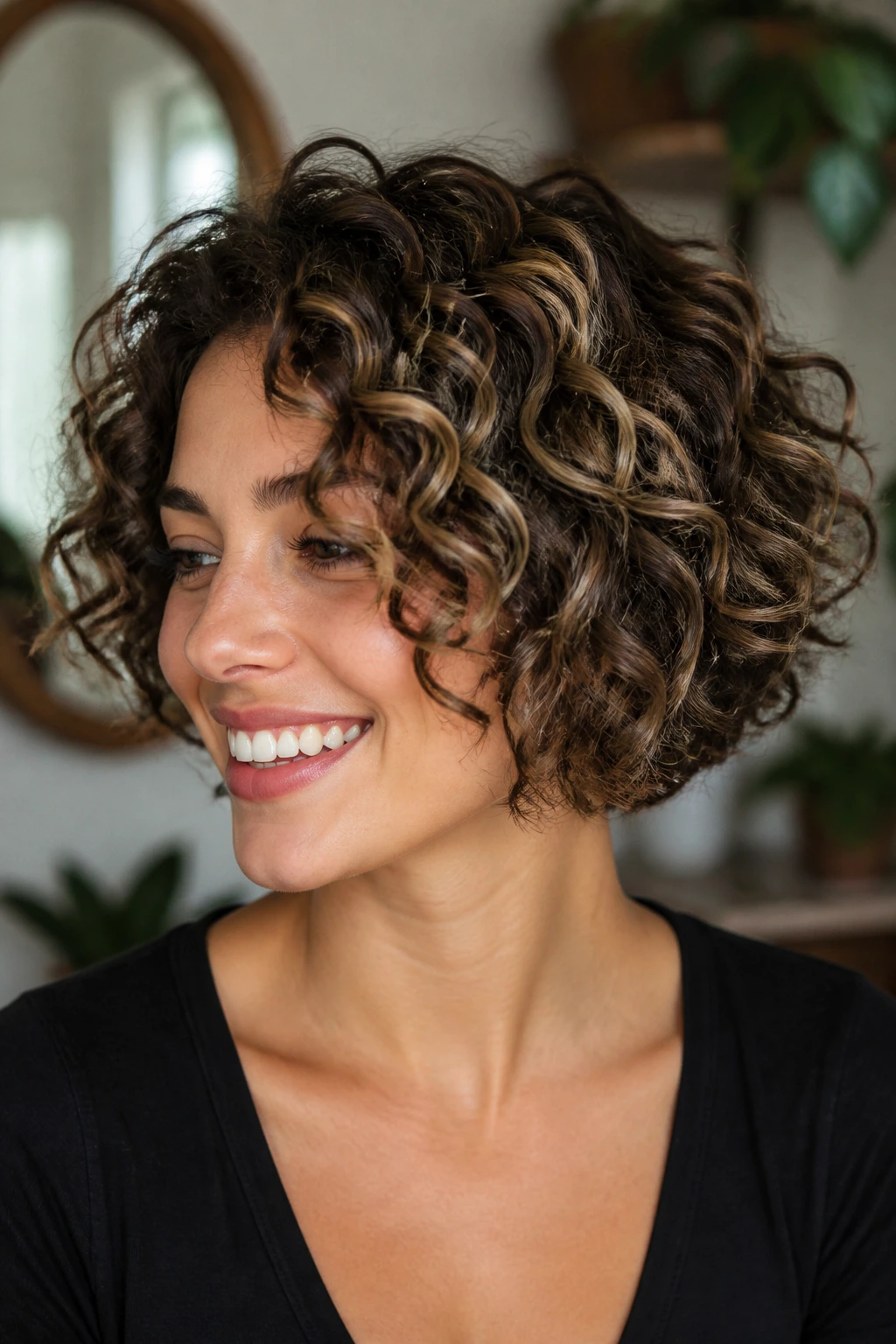
Curly thick hair loves a short bob when the cut respects the curl pattern instead of trying to crush it. The shape should sit just around the jaw or a touch below, with enough layering to let the curls stack without exploding outward. Babylights work here as ribboned light, weaving through the curls instead of sitting on top of them.
That ribbon effect matters. On curls, babylights shouldn’t be sprayed everywhere like confetti. They need to follow the spiral so the highlights show up when the curl turns, then disappear again when it moves. That keeps the result soft, not streaky.
I’d ask for dry cutting if your stylist works that way, because curls behave differently when they’re wet. The perimeter should be shaped to your curl pattern, and the babylights should be placed where the curls naturally separate — around the front, on the top layer, and a little through the outer sides. If your curls are very tight, a warmer tone usually reads softer than a stark blonde.
16. Wavy Mushroom Bob with Soft Edge
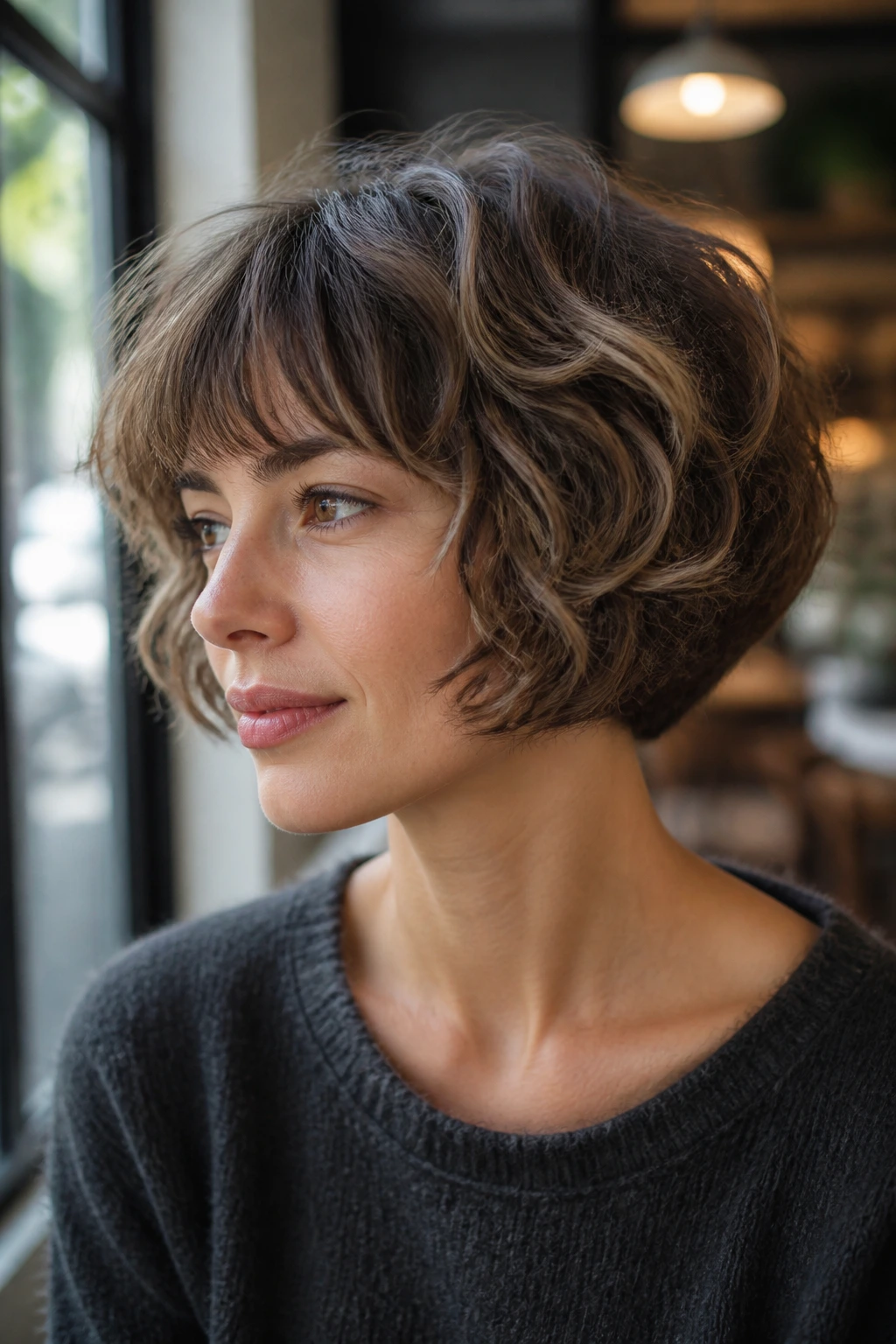
A mushroom bob can go wrong fast. Too round, and it looks dated; too flat, and it loses the whole point. The modern version keeps the curve but softens the edge, which works nicely on thick hair because the density already gives the shape body. Babylights through the crown and around the perimeter stop it from looking like one solid cap.
The ends should be cut in a way that lets them float, not sit in a hard ring. That means a little internal removal, a little texturing at the bottom, and a careful eye on the side balance. I’d keep the babylights fine and slightly irregular so the rounded shape gets movement instead of a striped border.
This cut has a retro lean, but it doesn’t feel costume-y when the edges are soft. If you want something with personality that still sits close to the head, it’s worth a look. Thick hair gives the mushroom shape its strength; the babylights stop it from feeling sealed shut.
17. Flipped-End Bob with Money Pieces
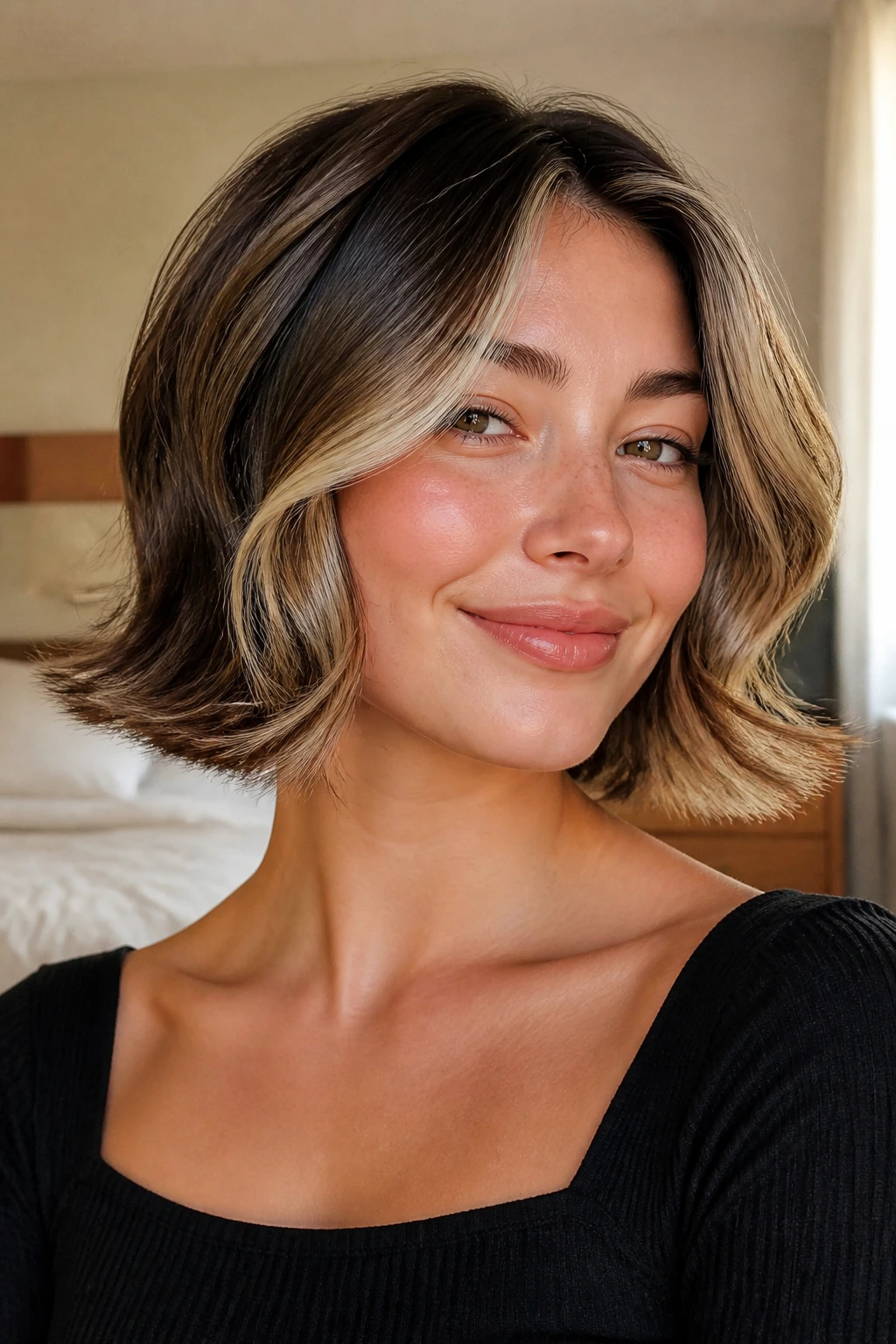
The flipped-end bob has a cheerful, slightly cheeky mood that thick hair wears well. The perimeter lands around the chin or a touch below, then the ends are styled outward just enough to show the shape. Babylights throughout the body and brighter money pieces near the front keep the flips from feeling chunky.
The front pieces matter most here. If the face-framing color is a touch brighter, the flip looks intentional and the haircut feels lifted around the cheekbones. Thick hair often needs that front brightness because the density can visually drag the face down. A small contrast near the front changes that fast.
This cut is especially nice if you like a round brush finish. Curl the ends away from the face, not all in one direction, so the movement looks light instead of helmet-like. It’s a bit playful, a bit polished, and it does not ask for much beyond a decent brush and a few clips.
18. Disconnected Pixie-Bob with Crown Lift

The disconnected pixie-bob is for thick hair that wants a strong shape and a little rebellion. The top is left noticeably longer than the sides and nape, which creates a visible break in length — that’s the “disconnected” part — and the result is extra crown lift without extra bulk. Babylights on the top ridge make that difference in length easier to see.
This cut is sharper than a classic pixie bob, but not harsh if it’s handled well. The long top can be swept, blown forward, or roughed up with paste, while the sides stay close enough to keep the profile neat. I’d ask for babylights that stay concentrated on the upper sections, because lower placement can make the cut look overdone.
If your hair tends to flatten on top and widen at the cheeks, this is a smart correction. The extra length above creates height; the tighter sides reduce width. It’s a very practical kind of drama.
19. Soft Bowl Bob with Airy Layers
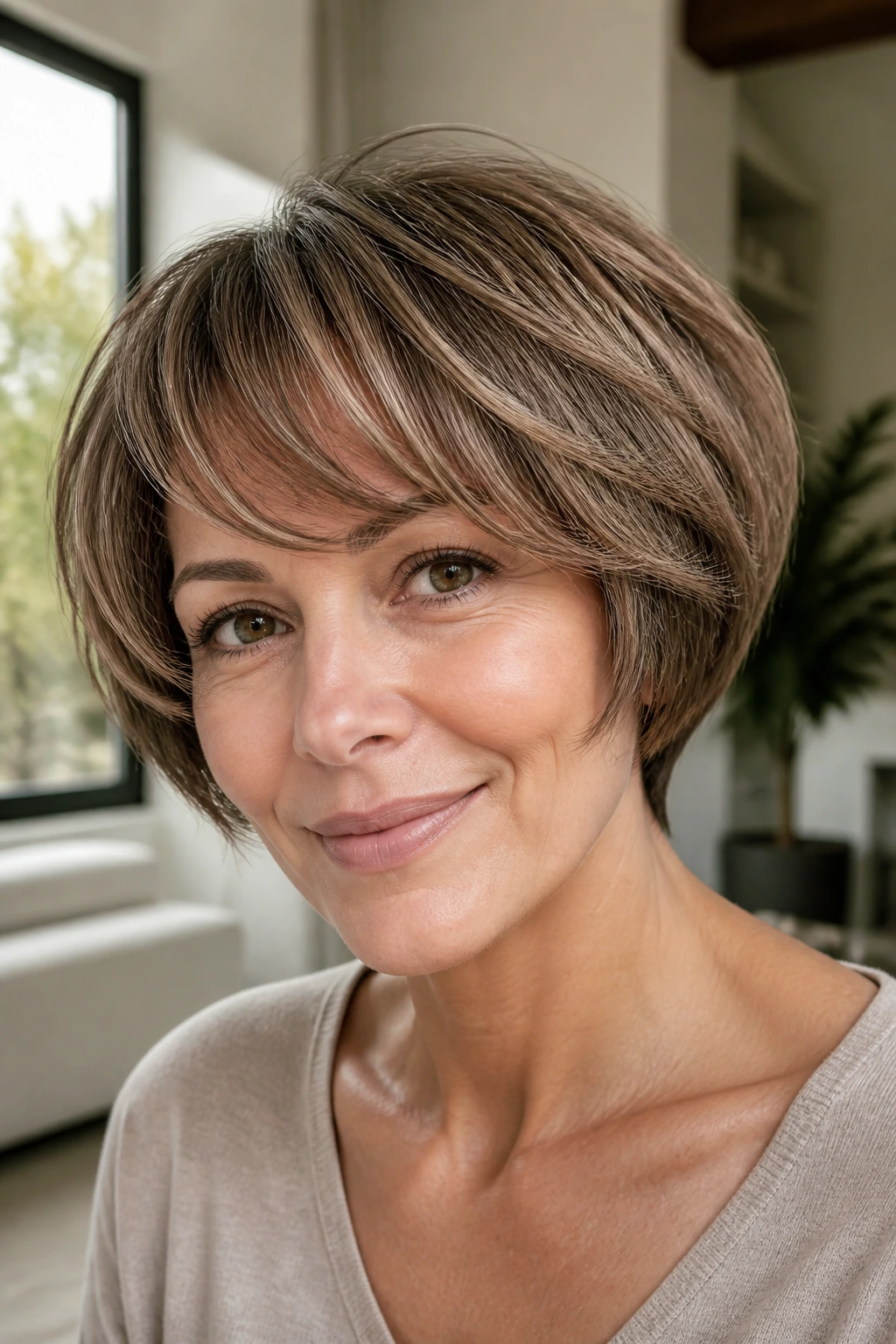
A bowl bob sounds severe until you soften it with layers and a little light. On thick hair, the rounded outline can be very flattering because it keeps the silhouette intentional, not random. The trick is to avoid the solid helmet effect, and babylights are one of the easiest ways to do that.
Why this version works
The internal layers take away some of the density under the surface, so the top can sit smooth while the sides don’t balloon. Babylights through the crown and around the outer curve of the bowl create movement in the places the eye would otherwise read as flat. The result is rounded, but not frozen.
Who should try it
- People who like a strong shape
- Thick straight or slightly wavy hair
- Anyone who wants a fashion-forward cut that still tucks neatly
I’d keep the finish sleek rather than tousled. A bit of smoothing cream, a blow-dry with tension, and maybe a quick bend under the ends will do more here than a pile of texture spray. This haircut likes discipline.
20. Sleek Box Bob with Blended Babylights
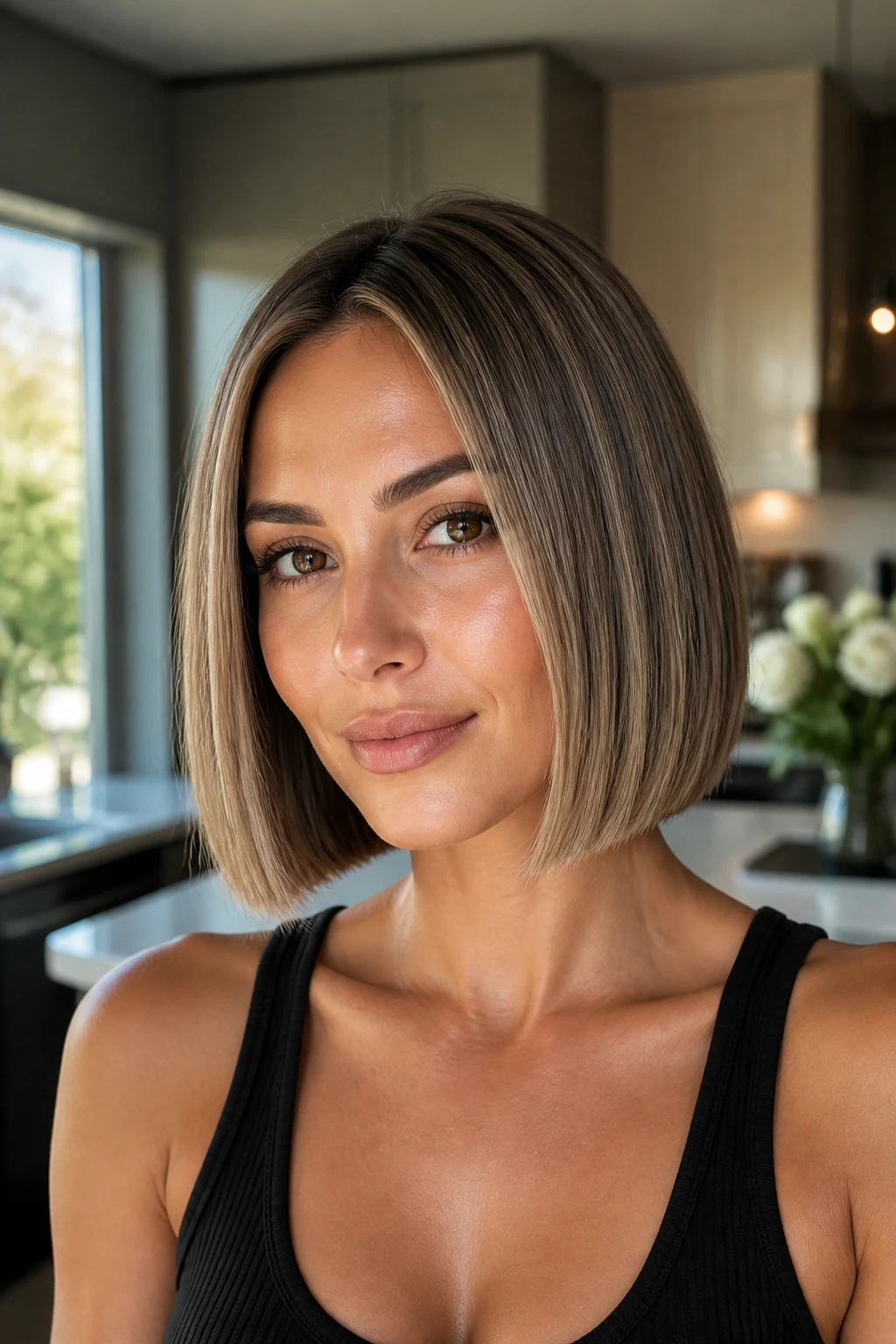
A box bob has clean edges and a straight silhouette, which sounds simple until you put thick hair inside it. Then it becomes a very deliberate shape. The boxy line keeps the perimeter strong, and the babylights are there to stop the surface from looking flat or too heavy.
I prefer blended babylights here rather than bright, obvious ones. Think soft beige woven through mid-lengths and front panels, with just enough brightness near the part to show the sleekness of the line. If the contrast is too sharp, the bob starts looking busy, and the whole point of a box bob is clarity.
This cut works best when you like a smooth finish and don’t mind using a flat iron or a big round brush. It can feel very modern on thick hair because the bluntness says confidence without needing much decoration. That said, if your hair has a mind of its own, this style will ask for a little more daily smoothing than the shaggy options. That’s the tradeoff.
21. Feathered Crop with Sideburn Detail
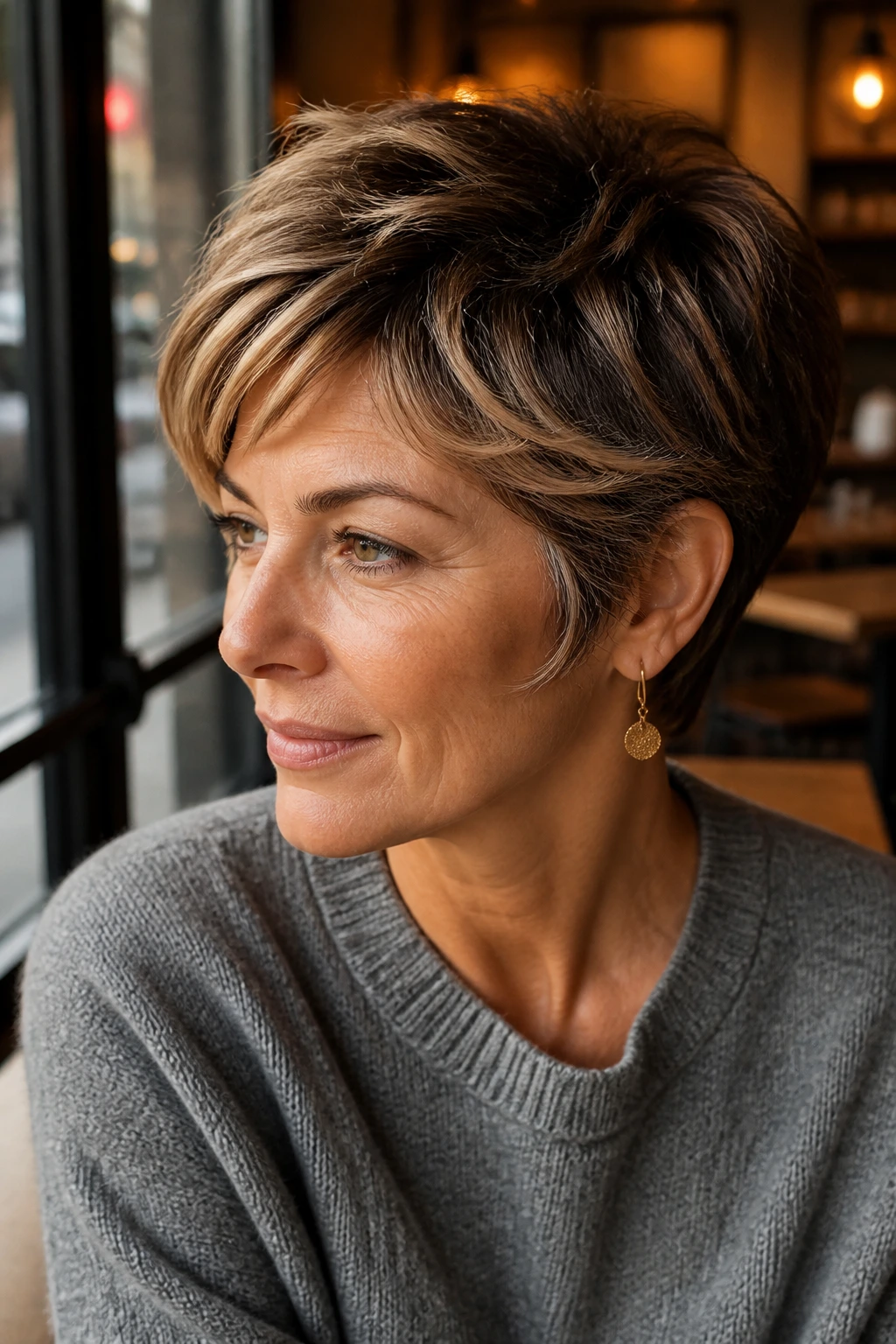
The feathered crop is a short cut with softness built into the edges. Thick hair can make very short cuts feel rigid, so the feathering matters; it keeps the outline airy, especially around the sideburns and front hairline. Babylights around the face and crown make the texture easy to see without making the cut feel overworked.
Best for
- People who want a very short style with some movement
- Thick hair that needs weight removed around the ears and nape
- Strong cheekbones or a smaller face that can carry a cropped outline
Sideburn detail is one of those little things that makes a crop feel finished. A wispy bit in that area can soften the jaw and keep the haircut from looking too severe. I’d keep the babylights close to the top and front, where they can brighten the face first and the rest of the crop second.
This is not the haircut for someone who wants to hide behind their hair. It is for someone who likes clean edges, a little lift, and a style that’s done being polite.
22. Tousled Mini Shag with Airy Layers
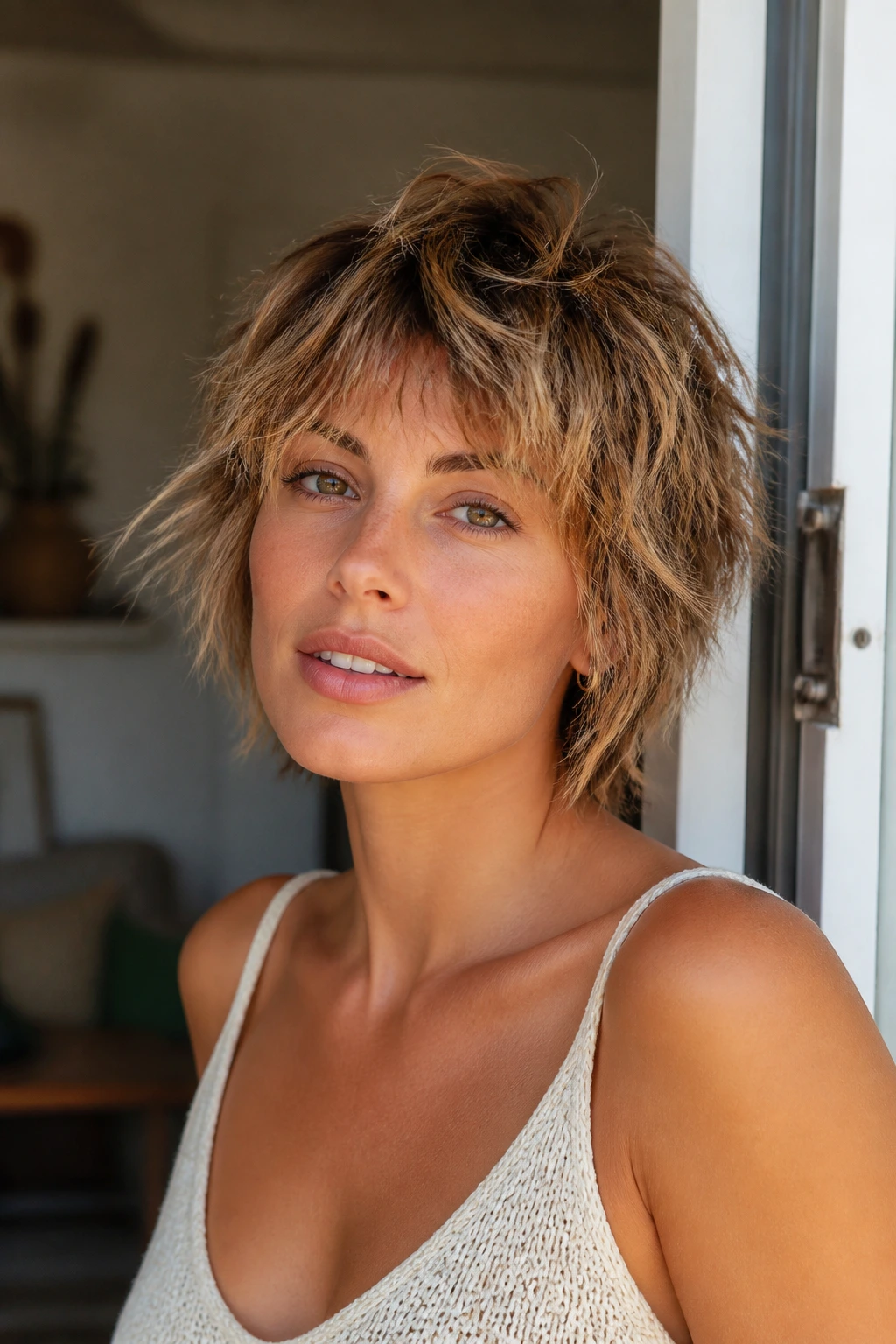
If you want the easiest-looking version of short sassy haircuts for thick hair with babylights, this is one of the strongest contenders. The mini shag keeps the layers short enough to move, but not so chopped up that the shape falls apart. Babylights through the fringe, crown, and ends give all that texture a visible path.
The cut should feel loose, not mullet-heavy. Ask for airy layers that still leave some weight around the perimeter so the hair has a shape to sit in. The babylights can be warmer or cooler depending on your base, but I’d keep them fine and slightly scattered. That gives the shag a sun-kissed, broken-up look without turning it into a color event.
It’s the style I’d point someone to if they want to air-dry often and still look like the haircut had a plan. Add a little mousse at the roots, scrunch, and let it do its thing. Some haircuts need a speech; this one just needs a good trim and a little texture.
What Thick Hair Needs From a Short Cut
Thick hair doesn’t need to be thinned into sadness. It needs shape. There’s a big difference, and a lot of bad short cuts come from confusing the two. If the stylist only removes random bulk from the ends, the middle of the head still swells out, and the haircut looks wide from the ears down.
The better approach is weight control. That means internal layering, smart stacking, or a perimeter that’s strong enough to hold the form while still letting the top and sides move. A good short cut on thick hair should feel balanced when it air-dries and still behave when you blow-dry it smooth. If it only looks good under perfect styling, it’s not the right cut.
Babylights fit into that logic because they reveal the structure you paid for. Fine color placement near the crown, temples, and outer layers helps the haircut read as shape rather than bulk. If you’re sitting in a salon chair, the phrase I’d keep coming back to is remove weight where it builds, keep strength where the line needs it. That’s the whole trick.
Tools That Make Styling Easier
You do not need a drawer full of gadgets to keep a short thick cut looking good. You need a few things that actually pull their weight.
- Concentrator-nozzle blow dryer: Pushes air in the direction you want, which helps tame puffiness at the sides.
- 1- to 1.25-inch round brush: Good for smoothing bobs, flipping ends, and lifting the crown without overbuilding volume.
- Heat protectant spray: Thick hair can take heat, but that doesn’t mean it likes being scorched.
- Light mousse or root lift foam: Useful when the top needs structure without a crunchy finish.
- Texture spray: Better than heavy wax for piecey pixies, shags, and mixies.
- Matte paste or light pomade: Good for cropping, sweeping, and keeping the fringe in place.
- Wide-tooth comb: Gentler for curls, waves, and fresh color.
- Duckbill clips: Handy for sectioning bangs, setting the front bend, or cooling off a round brush style.
- Purple shampoo or toning conditioner: Only if your babylights lean blond and need the brass knocked back a bit.
A good mirror and a decent pair of sectioning clips don’t hurt either. Neither does a stylist who is willing to show you how much product is actually enough. Usually, it’s less than people think.
How to Choose the Right Length, Shape, and Tone
Picking the right short cut on thick hair is less about chasing inspiration photos and more about matching the haircut to the way your hair moves. A chin-length bob and a pixie can both work; the question is where your hair wants to sit when nobody is fussing with it. If it naturally swells at the cheeks, you need a cut that removes width there. If it collapses at the crown, you need lift at the top. Simple. Not easy, but simple.
Length
Shorter lengths make thick hair feel lighter faster, but they also expose the shape. If you want something low-risk, stop at the jaw or just below it. If you want edge and don’t mind more frequent trims, go shorter in the nape and sides.
Shape
Blunt, stacked, asymmetrical, shaggy, or tapered — each shape changes where the eye lands. Blunt cuts look strongest when the outline is clean. Shaggy cuts look best when the layers are visible from dry to dry, not only after styling.
Tone
Babylight color should work with the haircut, not sit on top of it. On dark hair, warm beige, caramel, or soft honey usually softens density better than icy blond streaks. On lighter bases, beige, pearl, or muted champagne keeps the finish airy instead of brassy.
If you’re unsure, bring two photos: one of the shape and one of the color placement. That usually gets a better result than waving around a single inspiration picture and hoping for the best.
Styling Tricks That Keep the Shape Light
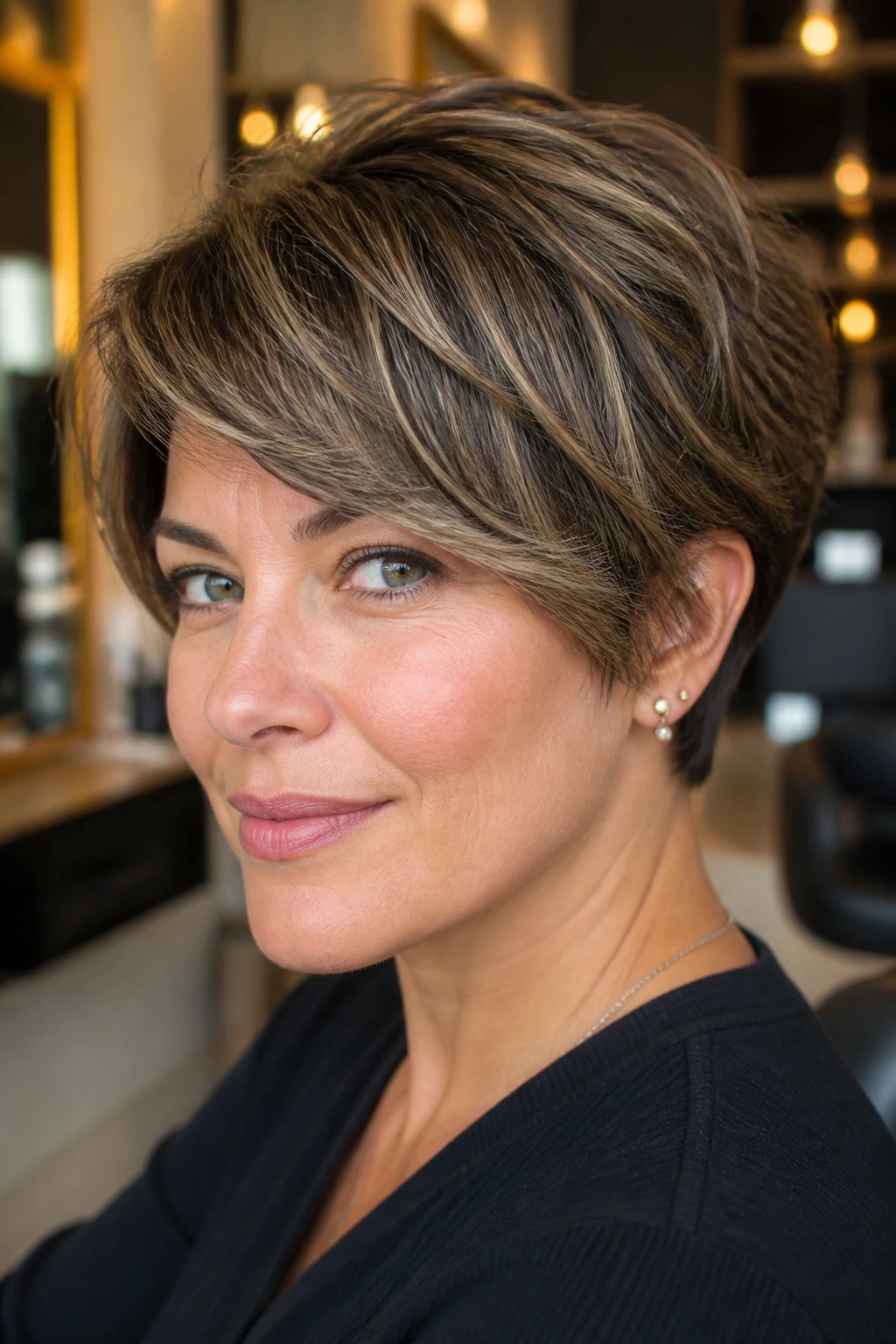
Root Lift: Blow-dry the roots in the opposite direction of how they naturally fall for the first minute or two. That tiny bit of tension helps thick hair keep lift without needing a mountain of product.
Texture Control: Use a dime-sized amount of mousse or root foam at the crown, not the mids and ends. Thick hair absorbs product fast, and if you coat the whole head, the babylights and cut detail disappear under weight.
Smooth the Perimeter: On bobs and crops, run a round brush or flat iron only through the bottom inch or two. You want the outline tidy, not ironed flat from scalp to tip.
Night Reset: Sleep on a silk or satin pillowcase, or at least flip the part when you go to bed. Thick hair sets fast, and the wrong sleeping position can puff up one side by morning.
For shaggy cuts and pixies, your fingers are often better than a brush. Push the hair where you want it, add a little texture spray, then stop touching it. People ruin perfectly good short hair by trying to keep fixing it all day. It gets bigger, not better.
Common Mistakes That Make Thick Hair Look Bigger
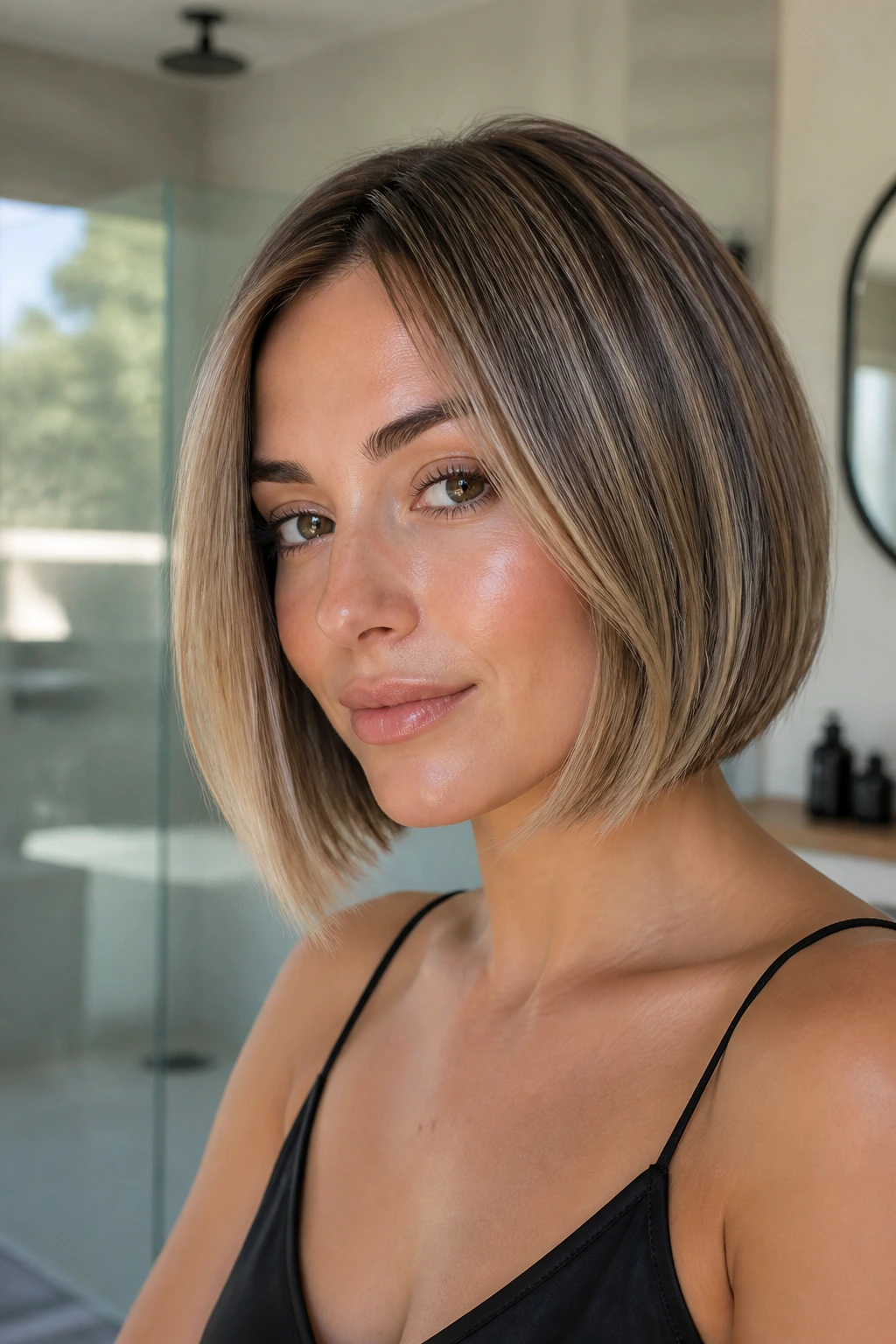
The biggest mistake is cutting only the ends and leaving the middle too full. Thick hair doesn’t puff from one place; it balloons in layers. If the stylist never removes weight through the crown or mid-lengths, the haircut still feels bulky even if the bottom is trimmed.
Another one: babylights that are too chunky. Thick hair can hide a lot, but it also exaggerates bad color placement. Wide streaks can make the cut look stripey and widen the head visually. Fine weaving usually looks softer and more expensive, even when the color itself is simple.
Heavy bangs are trouble, too. Thick hair already brings enough mass to the forehead area, so a dense fringe can turn the top half of the haircut into a wall. Softer bangs, textured micro bangs, or curtain fringe usually behave better.
And please, don’t drown the style in oil. Thick hair can handle a touch of smoothing serum, but too much of it makes babylights disappear and turns airy layers into slick ropes. Use the smallest amount you think you need, then use half of that.
Variations and Alternatives for Different Moods
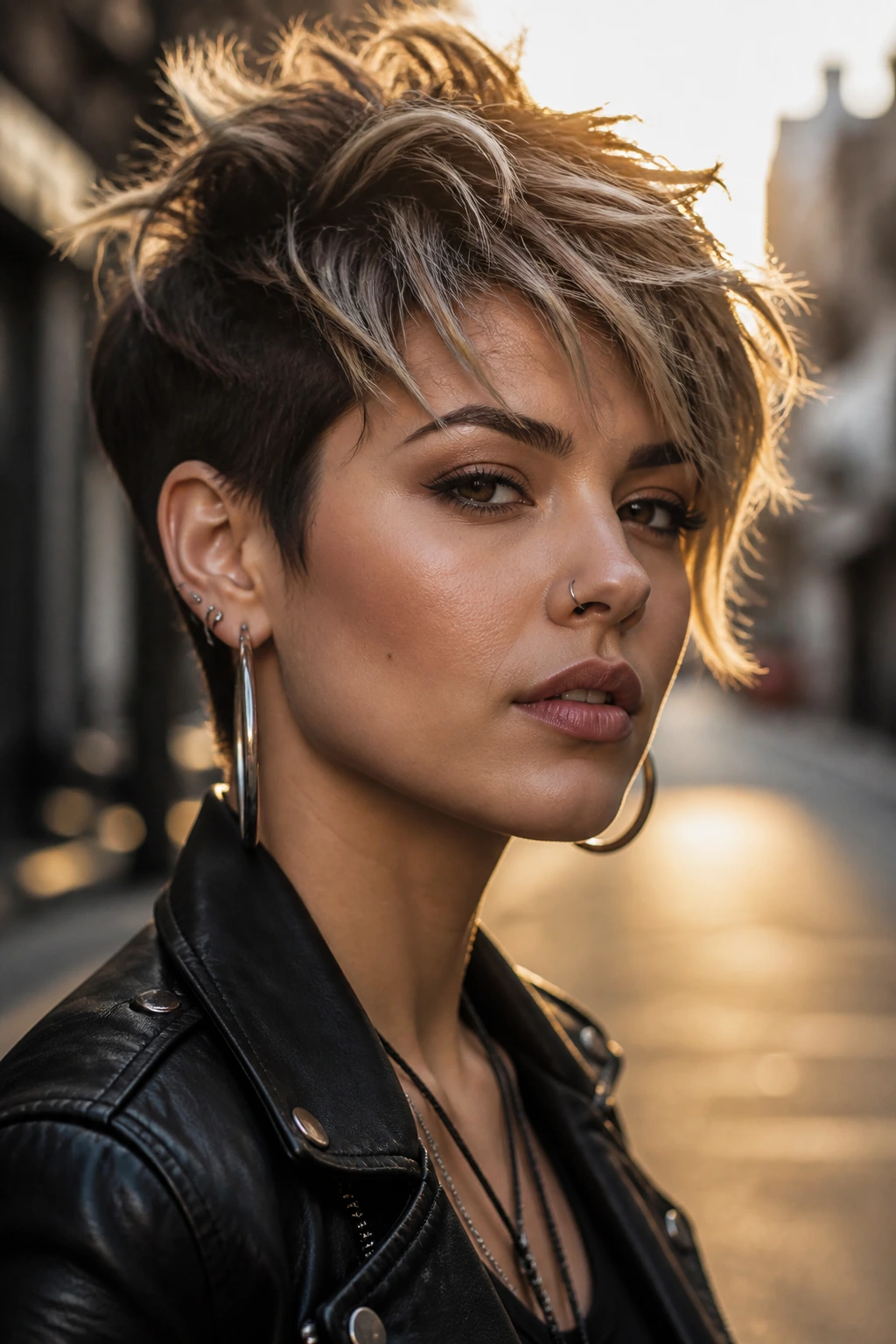
The Soft Money-Piece Update: If you want the haircut to feel brighter without changing the whole color story, keep the babylights subtle and add slightly lighter face-framing pieces. It gives you that lifted front without turning the rest of the head into a highlight map.
The Cool Beige Edit: This version leans ashier and softer, which works especially well on dark blond or light brown bases. It keeps the cut from reading too warm and can make a blunt bob feel a little sleeker.
The Curly Air-Dry Version: Ask for the same shape, but keep the layers curl-friendly and let the babylights follow the spiral rather than the part line. This is the best route if you spend more time with a diffuser than a flat iron.
The Low-Maintenance Grow-Out Bob: Keep the perimeter a bit longer, the layers softer, and the babylights concentrated near the top. The grow-out is gentler, which means fewer in-between panic trims.
The Punker Pixie: More texture, more separation, shorter nape, and a stronger sweep at the front. It’s for someone who wants the cut to look deliberate even when it’s a little messy — especially good with a matte paste and a sharp fringe.
Keeping the Cut Sharp Between Appointments
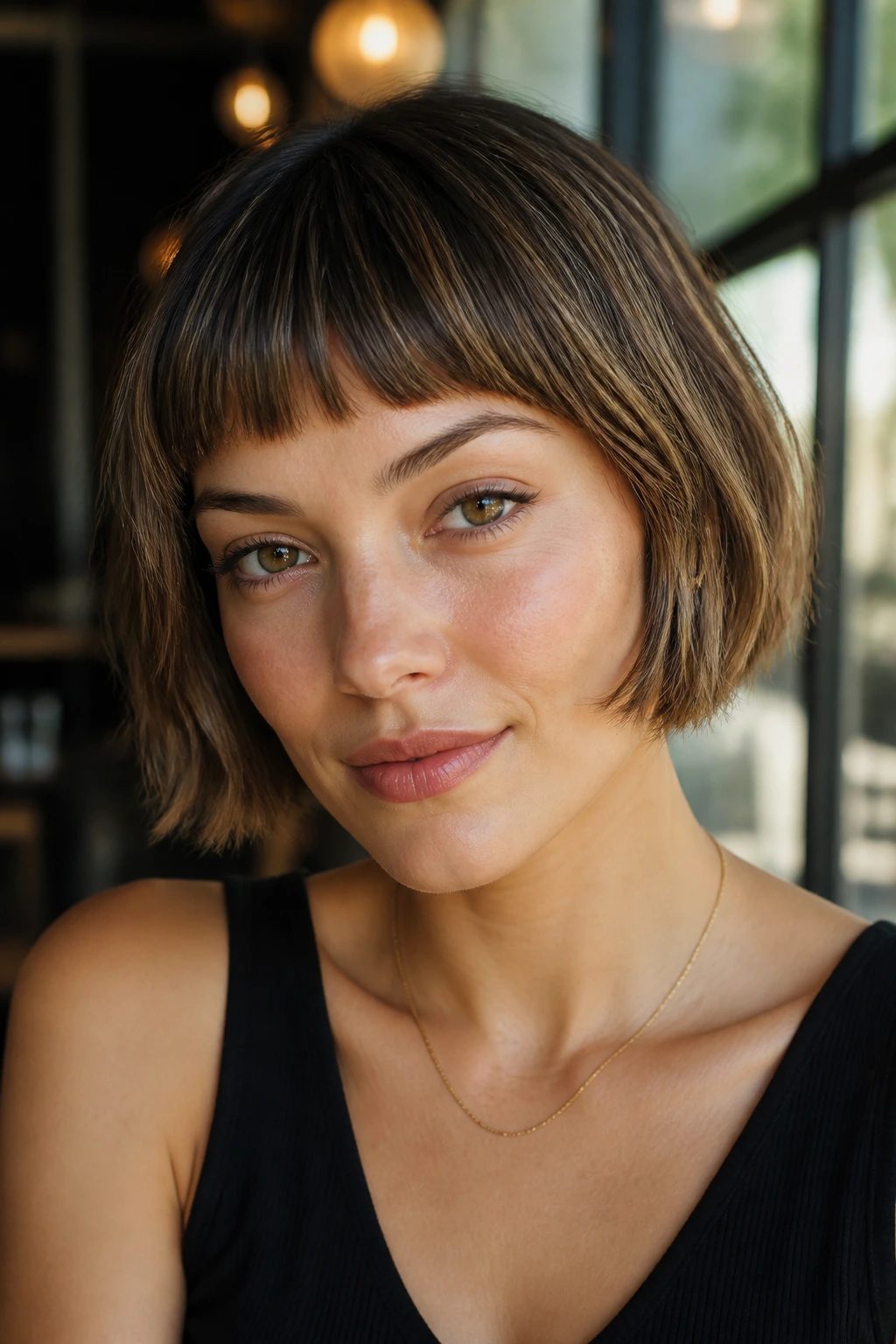
Short hair tells on itself. A blunt bob that’s gone four or five weeks without a trim starts to lose its line. A pixie can lose its shape even sooner if the nape grows out fast. Thick hair is forgiving in some ways and ruthless in others. You’ll know when the outline starts expanding past the jaw or the ears.
For most bobs, a trim every 6 to 8 weeks keeps the shape clean. Pixies and crops usually want 4 to 6 weeks if you like the edges neat. Shaggy cuts can stretch a little longer — 8 to 10 weeks — as long as the layers still fall where they’re supposed to.
Babylights need their own rhythm. If they’re very fine and close to the natural color, they can grow out softly for 8 to 12 weeks. Brighter face-framing pieces tend to show roots sooner, so those may need a refresh earlier. In between, a root powder or a light spray can buy you time without making the hair stiff.
A weekly mask is worth it if you’ve lightened thick hair. Not because every strand is fragile, but because smooth, hydrated hair shows the cut better. Dry ends stick out, and then the whole style gets bigger than it should be. That’s the loop to break.
Questions People Ask Before Booking
Will babylights make thick hair look thinner?
Not if they’re done well. Babylights don’t remove density; they break up the surface so the haircut looks lighter and more dimensional. The cut still needs weight control, though — color alone won’t fix a bulky shape.
Which of these haircuts is best if my hair puffs out at the sides?
Stacked bobs, A-line bobs, and tapered pixies usually help most because they remove width where thick hair spreads. A deep side part can also shift the bulk away from the widest part of your face.
Can curly thick hair wear short babylighted cuts?
Yes, and some of the best versions are curly bobs and mini shags. The key is cutting the curls in their natural state and placing babylights where the curls separate, not in hard stripes.
How do I ask for babylights without getting chunky highlights?
Say you want very fine woven lightness through the top, part, and face-framing pieces. If that sounds too technical for the salon you’re in, show a photo of a soft shimmer effect rather than a bold contrast shot.
Which cut grows out the easiest?
Soft shags, mini shags, and longer bobs with textured ends tend to grow out most gracefully. Very sharp box bobs and high-contrast pixies need more regular clean-up.
Will these cuts work if I air-dry my hair most days?
Some of them will better than others. Shag bobs, mini shags, and textured crops behave nicely with air-drying; blunt bobs and box bobs usually need more smoothing if you want the line to stay crisp.
What if my thick hair is coarse, not soft?
Then the shape matters even more. Coarse hair benefits from clean internal removal, careful edge cutting, and babylights that are soft enough not to look streaky against the texture.
How much styling time should I expect?
A crop or pixie may only need 5 to 10 minutes. A bob with a strong line often needs 10 to 15 if you want it smooth and tucked under properly. If your hair is very dense, skipping the blow-dry usually costs you more time later in the day.
The Shape That Does the Work
The best short haircuts for thick hair are the ones that make the hair carry itself well. That’s the whole point. A clean perimeter, smart layers, and babylights placed where the eye needs relief can turn dense hair from bulky to deliberate without stripping away what makes it interesting in the first place.
If I had to boil the whole idea down, I’d say this: let the cut control the weight and let the babylights show the movement. Everything else is detail — useful detail, sure, but still detail. Bring good reference photos, talk honestly about how your hair behaves when it dries, and ask your stylist where the bulk lives when the hair is cut dry or wet. That conversation changes everything.
And if you’re stuck choosing between two looks, pick the one that makes your hair look lighter from the side. That’s usually the one that will feel best in real life.