



Shoulder length hairstyles for mother of the bride sit in a very useful middle zone. Long enough for curls, twists, pins, and half-up shapes. Short enough that the style does not sag under its own weight by the time the cake is cut.
That middle length also has a nice practical advantage: it can look polished without swallowing the face. A strong blowout, a clean side part, or a low twist can change the whole shape of a shoulder-length cut, especially if the ends are styled on purpose instead of left to do whatever they want. That’s the difference between “I got ready” hair and hair that looks thought-through in photos.
And honestly, that matters on a wedding day. The mother of the bride is usually doing a lot of smiling, hugging, sitting, standing, and being photographed from slightly awkward angles. A style has to move well, hold its shape, and still look like itself after a few hours of heat, nerves, and dancing.
Why These Shoulder-Length Styles Earn Their Place
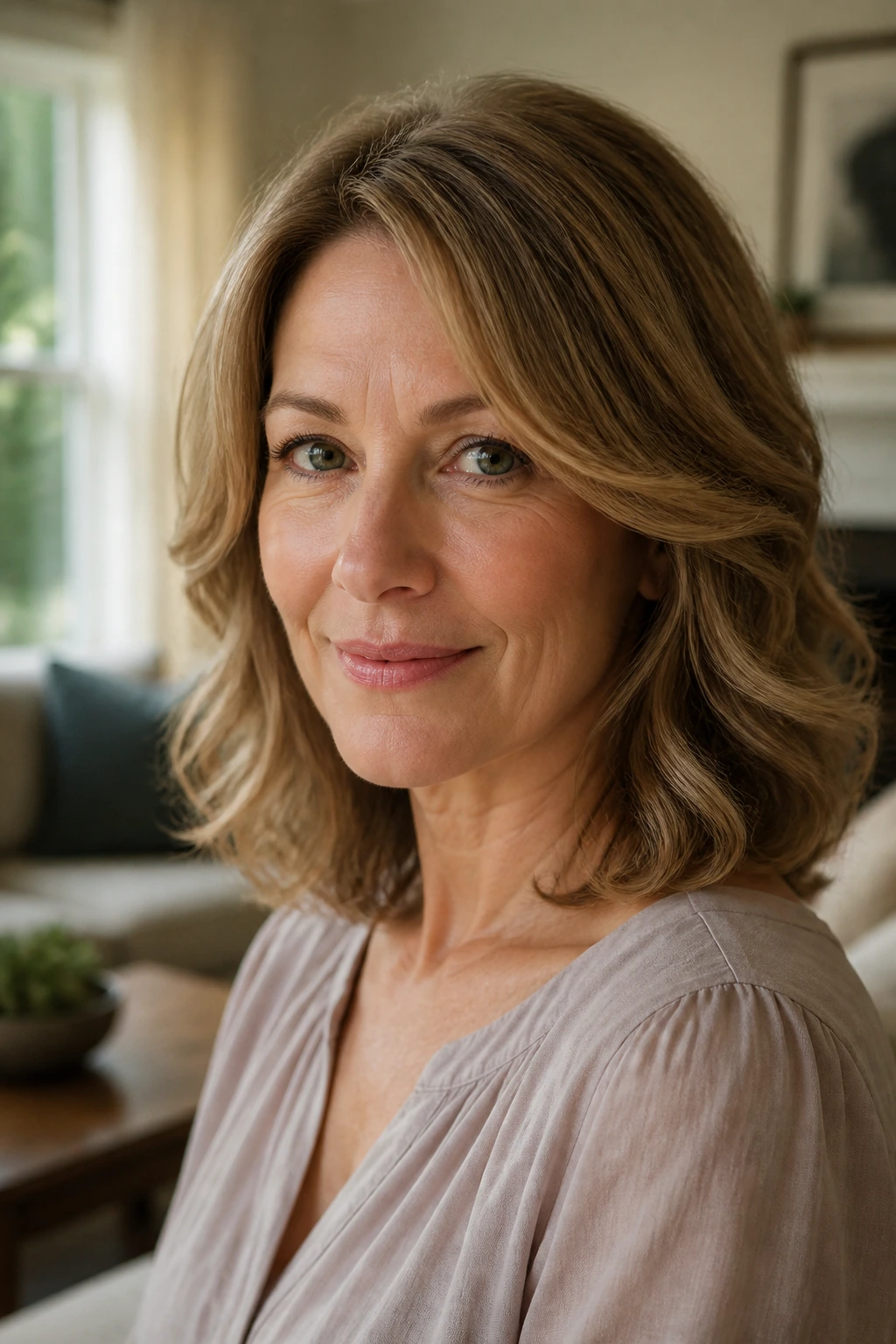
- Range: Shoulder-length hair can be worn down, half-up, pinned back, or tucked into a low shape without fighting the cut.
- Balance: These styles give lift at the crown and softness around the face, which keeps the whole look from feeling heavy.
- Hold: Medium-length hair usually takes pins and setting spray better than very long hair, so the shape stays in place longer.
- Photo Value: Waves, twists, and side parts show up cleanly in pictures, especially when the neckline or earrings need room to breathe.
- Comfort: A style that sits at the shoulders avoids the hot, tight feeling some full updos create after a long ceremony.
- Personality: There is enough length to soften a formal look, but enough structure to keep it from drifting into everyday hair.
1. Soft Hollywood Waves with a Side Part
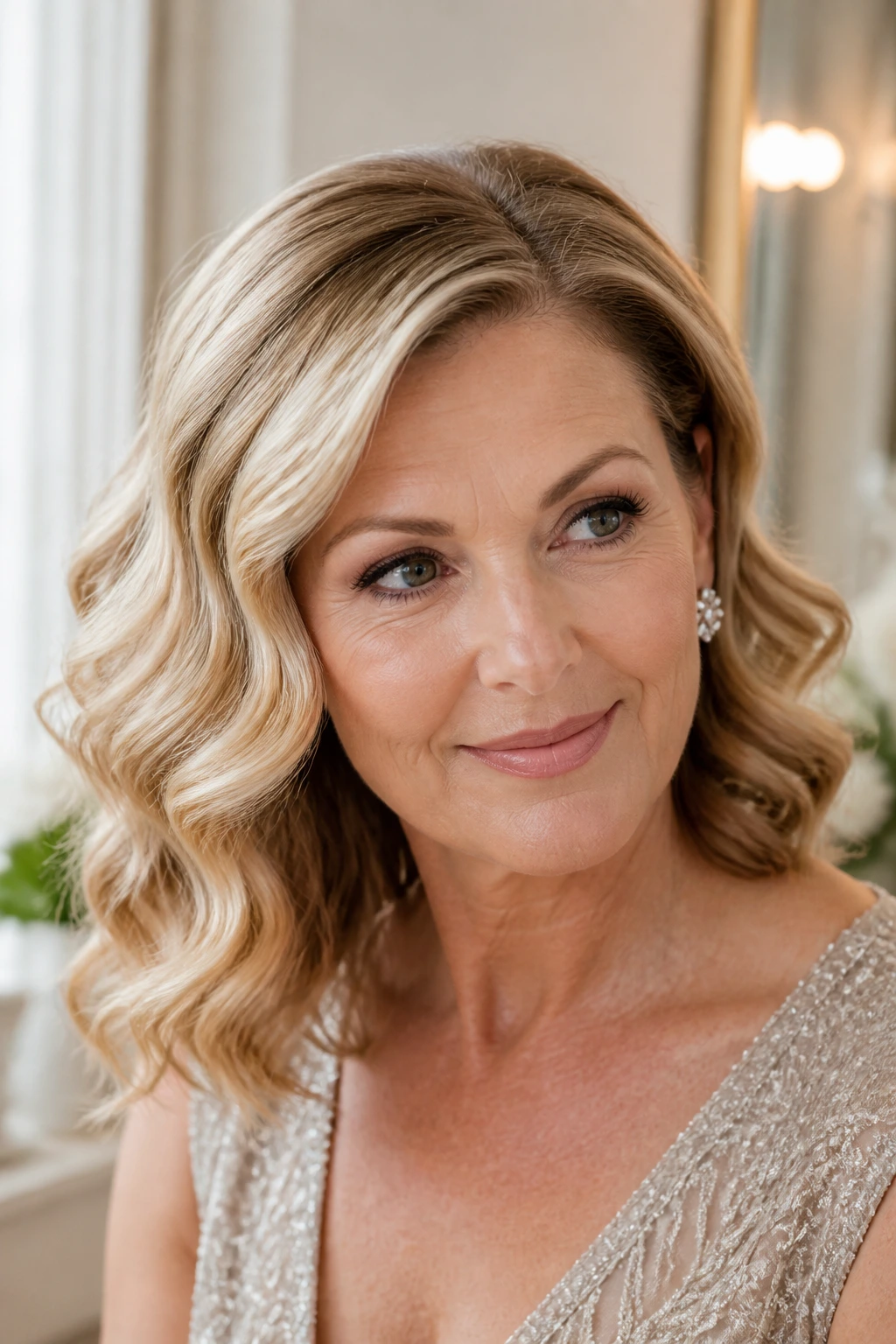
These are the style people mean when they say “polished,” and for good reason. Shoulder-length waves with a side part give you that smooth, brushed finish that holds its shape through the ceremony and still looks soft once the room lights change. The curve through the ends matters here; it keeps the style from looking flat or dated.
They work especially well if the dress has a clean neckline, satin fabric, or a little shine already built in. Keep the wave loose, not crunchy. A 1¼-inch iron, cooled completely before brushing, gives that glossy bend without turning the whole head into a curl helmet.
A little lift at the crown helps a lot. Not much. Just enough to keep the side part from collapsing by the time the photographer asks for one more family photo.
2. Low Chignon with Face-Framing Pieces
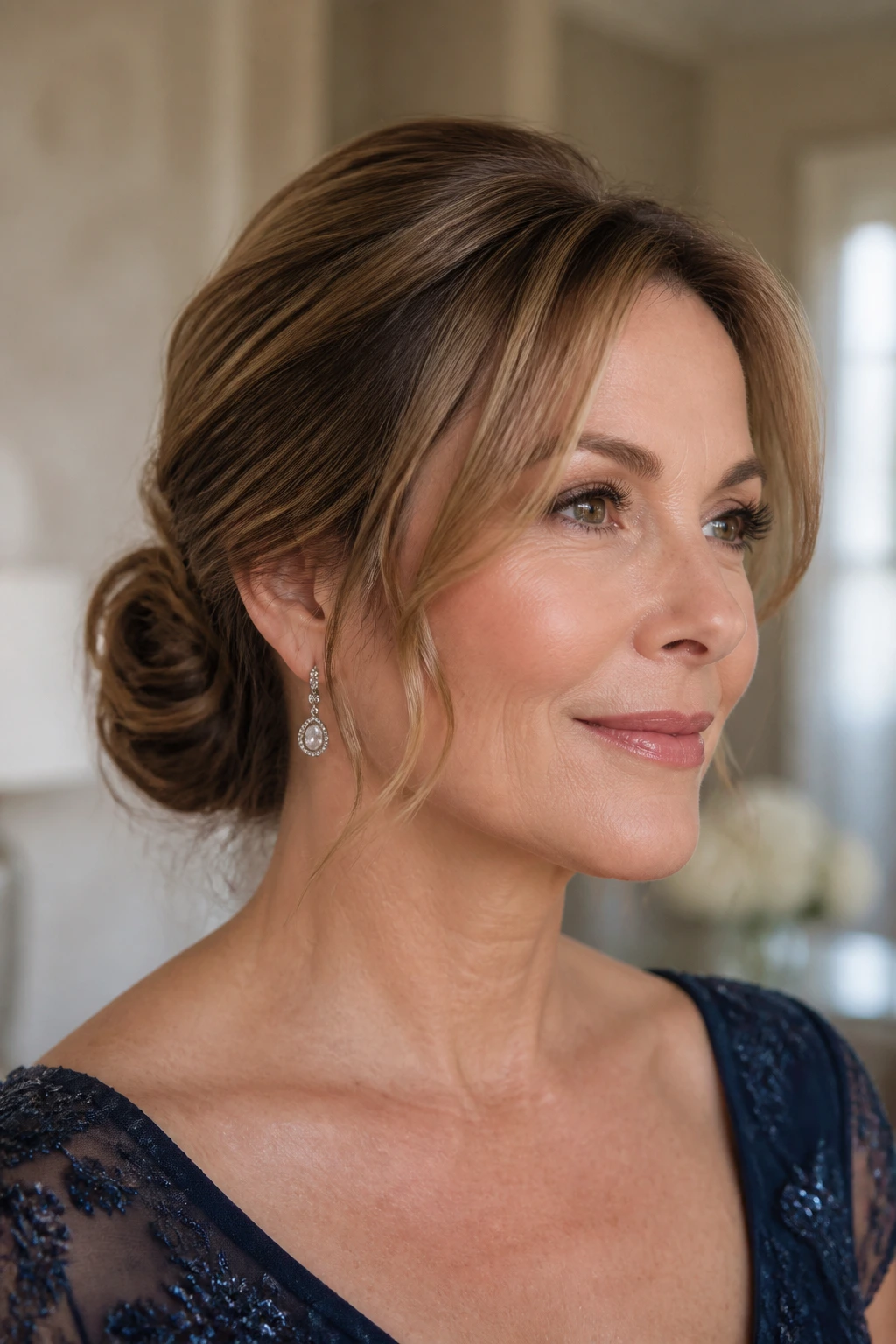
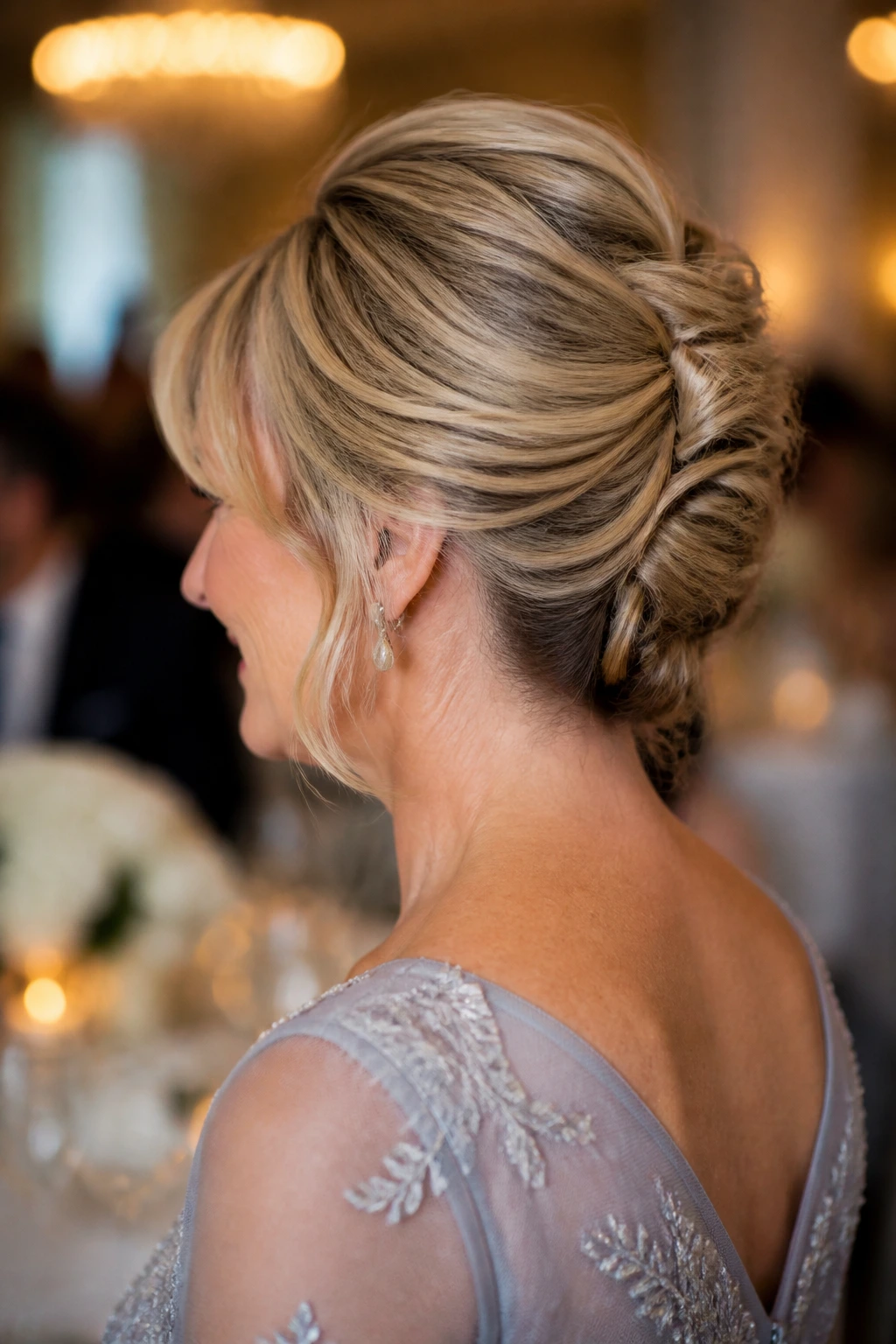
A low chignon on shoulder-length hair has a nice tension to it. The bun sits near the nape, but the face-framing pieces keep the whole thing from feeling severe. If your hair grazes the shoulders, you’ll want the twist to stay snug and the pins hidden under a thin veil of hair, not jammed so tightly that the style looks stiff.
This one is strong for mothers of the bride who want something secure without going full formal chignon. It also plays well with pearl earrings, a bateau neckline, or a lace back that deserves a clear view. Ask for a little softness around the temples and jawline; that tiny bit of movement makes a huge difference.
No heavy teasing is needed. A smooth root and a controlled twist give the style its shape.
3. Twisted Half-Up Crown
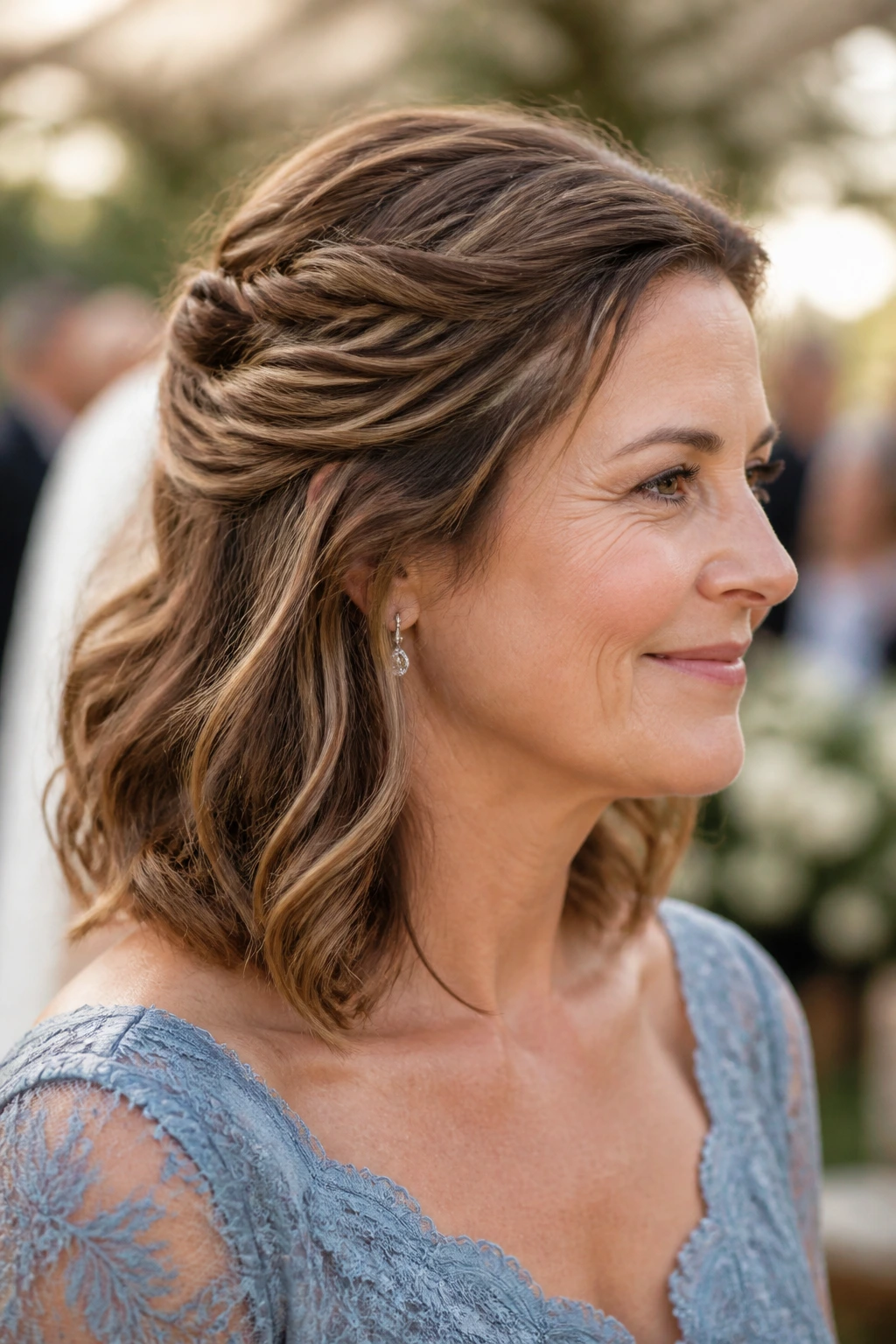
Want hair away from your face without losing the length? This is the sweet spot. A twisted half-up crown takes the front sections, rolls or twists them back, and leaves the rest moving softly over the shoulders. On shoulder-length hair, that arrangement looks intentional rather than overbuilt, which is exactly the point.
It’s especially useful if your cut has layers that normally fall forward. The twist corrals those layers and turns them into part of the design. Add a small comb or one crystal pin where the twists meet, and the whole style suddenly reads formal instead of casual.
This one likes texture. A little wave or bend in the lower half gives the finished look some life. Straight, slippery hair can still work, but it needs grip spray or a light mousse before styling.
4. Deep Side-Part Volume
A deep side part can do a lot of quiet work. It lifts one side, skims across the forehead, and lets shoulder-length hair sit in a shape that feels fuller than it is. If the hair is fine, this is a smart move because the part itself creates structure before you even touch a curling iron.
The trick is to keep the volume at the crown and through the side sweep, not just at the ends. Brush the top smooth, then set the front section with a large barrel or velcro roller while it cools. That keeps the side from collapsing into your cheek halfway through cocktail hour.
It’s a strong choice for asymmetrical dresses, one-shoulder necklines, and jewelry that deserves one clean, open side. One statement earring. That’s enough.
5. Soft French Twist for Shoulder-Length Hair
A French twist on shoulder-length hair should not look over-tight or overly formal. The best versions are a little looser, with the ends tucked in neatly and a bit of softness left at the top. That keeps the look elegant without making it feel like a boardroom hairstyle wearing a wedding dress.
This style is useful when you want the neck completely clear and the hair anchored away from movement. It also does well with structured jackets, clean satin gowns, and dresses that already have a lot happening at the bodice. The hair should support the outfit, not compete with it.
If your hair is very layered, ask for extra pinning through the middle of the twist. Shoulder-length layers can slip unless they’re secured in sections. A few hidden bobby pins crossed in an X hold better than one dramatic clip.
6. Feathered Blowout with Tucked Ends
This one has a softer, airier feel than a classic curl set. The ends are turned under or slightly out, the layers are brushed into motion, and the crown stays lifted enough to keep the shape from falling flat. It’s especially good on shoulder-length cuts that already have a bit of movement through the sides.
Fine hair likes this style because it doesn’t need a lot of product to look finished. A round brush, a medium heat blow-dry, and a touch of smoothing serum on the ends are enough. The hair should move when you turn your head. If it doesn’t, it’s been overworked.
It’s a nice fit for daytime ceremonies, garden venues, and dresses with softer fabrics like chiffon or matte crepe. The whole look has a gentle, groomed feel.
7. Braided Halo Half-Up
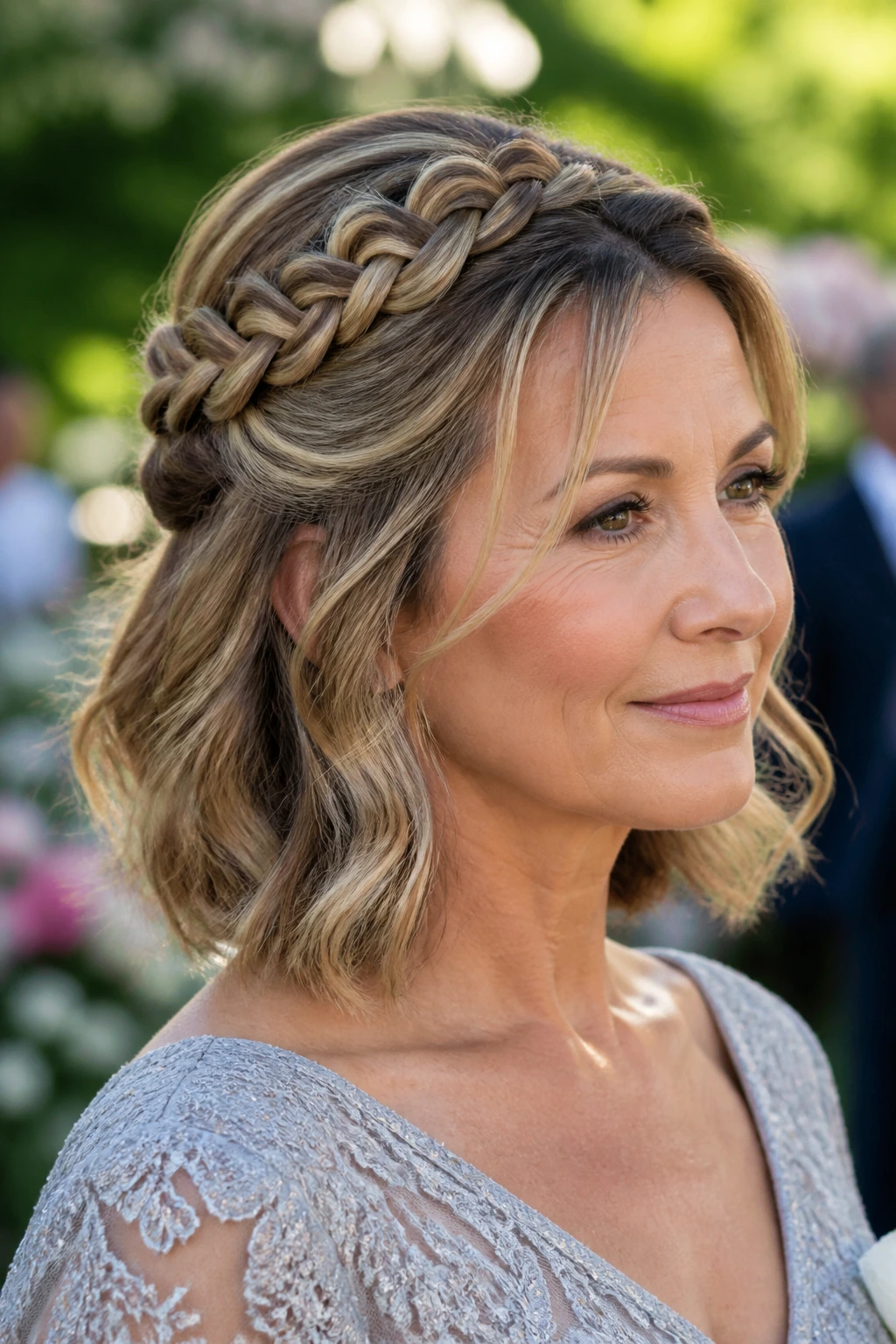
A braided halo half-up style gives shoulder-length hair a bit of structure without trapping all of it away. The braid acts like a frame, keeping the front polished and the rest soft. On medium hair, that frame has enough presence to show in photos without looking bulky.
This is one of the better choices if your hair is naturally wavy or holds shape after a curl. The braid can be thin and delicate, or a little wider if you want more texture near the crown. Either way, pull the edges of the braid slightly after it’s secured. That small stretch makes the braid look fuller and keeps it from disappearing against the rest of the hair.
I like this look with floral pins or a small comb placed just off-center. It gives the braid a reason to be there.
8. Sleek Tucked-Under Bob Shape
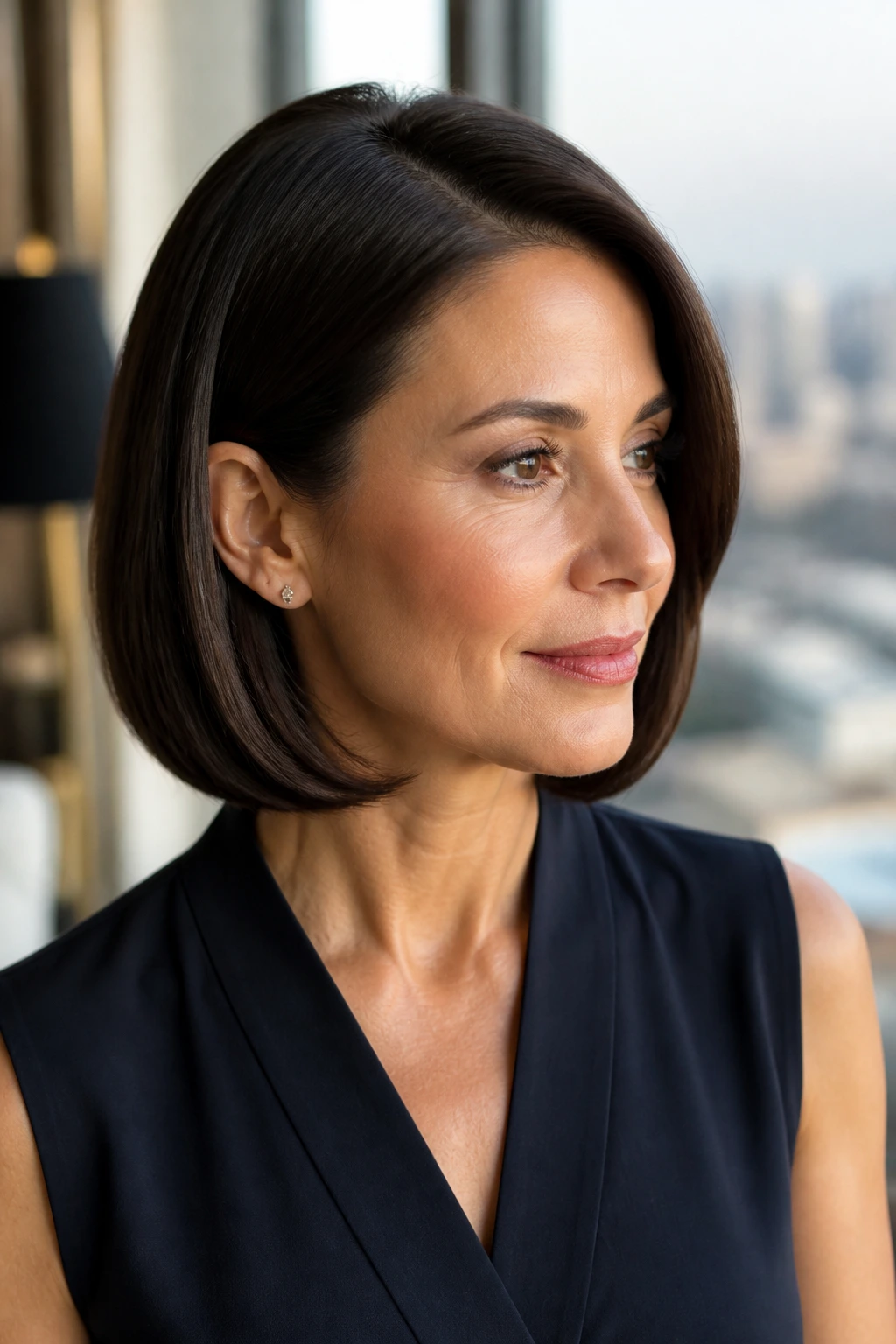
If your shoulder-length cut sits just above the shoulders, a sleek tucked-under shape can look incredibly sharp. The ends curve inward, the surface is smooth, and the silhouette stays close to the head. It’s clean. Controlled. A little bit editorial without being fussy.
This style is especially good if the dress has a dramatic neckline or a lot of lace detail, because the hair stays quiet and lets the clothing lead. It also works for mothers who do not want to fuss with curls all day. A flat iron, a smoothing cream, and a precise side or center part can do a lot here.
The catch is shine. Flat styles only work when the finish looks deliberate, not limp. A light gloss spray at the end helps the hair read polished instead of plain.
9. Textured Low Bun with Soft Ends
A low bun with texture is one of those styles that seems simple until you get the details right. The texture is what keeps it from looking too strict. A few loose coils at the nape, a little volume through the crown, and soft ends tucked under or left to peek out just enough—that’s the version worth wearing.
This shape is useful if the wedding day will be long and you want hair that can sit still for hours. It also suits thicker hair well because the texture gives the bun body without needing a giant knot. If the hair is fine, a little padding at the base can help the bun look fuller without making it look fake.
Keep the front relaxed. Too much smoothness can make the bun feel severe. A few soft pieces near the temples help a lot.
10. Old Hollywood Side Flip
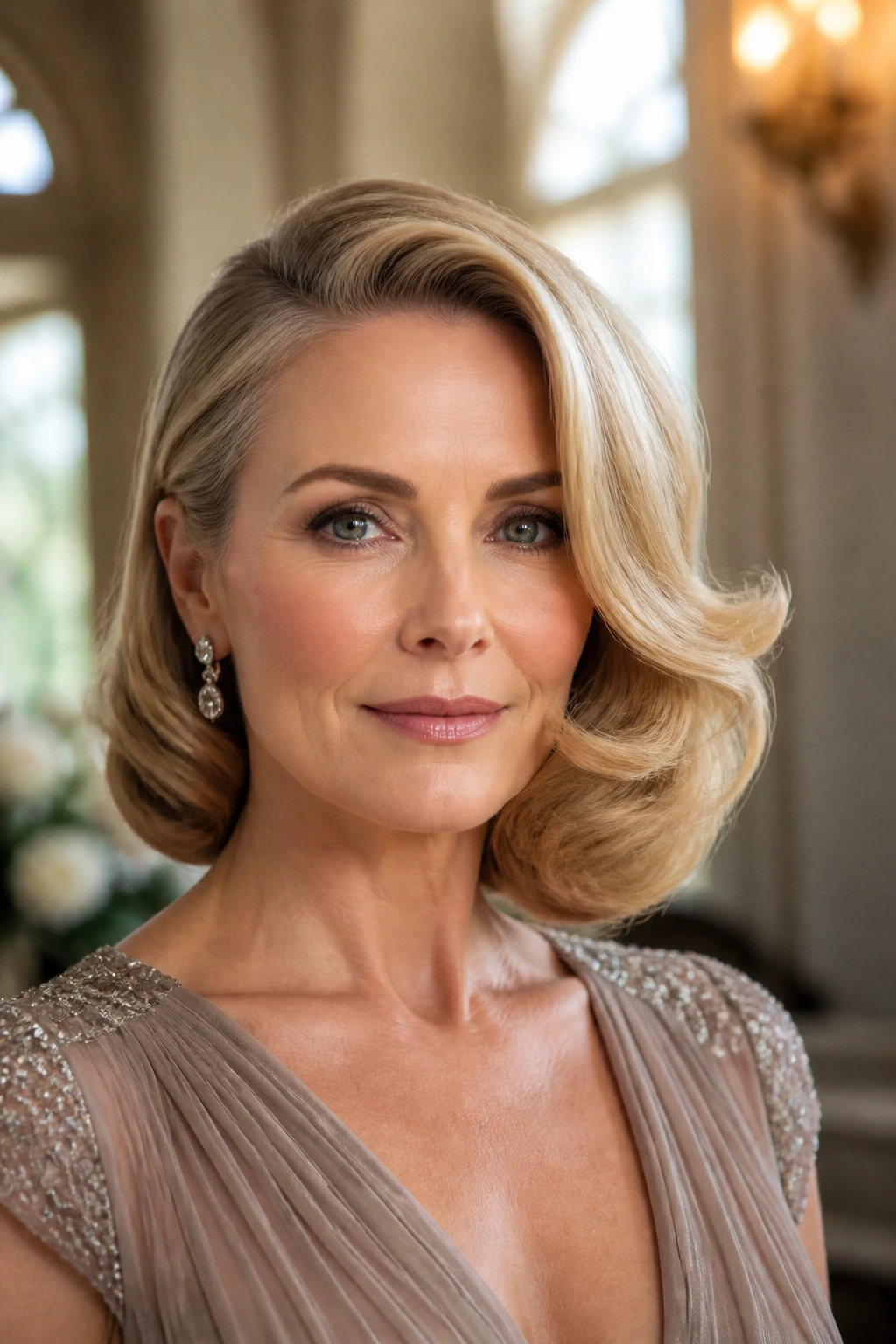
There’s something wonderfully specific about a side flip. The ends roll away from the face, the part sits low and deep, and the whole style carries a sense of old-school glamour that works beautifully for formal family portraits. Shoulder-length hair is the right length for it, because the flip has enough weight to stay visible but not enough length to drag down the shape.
This style loves a strong brow, a clean neckline, and a dress with structure. It also makes earrings pop. Not tiny ones. The kind with some shine or movement. The side sweep creates one open side and one more dramatic side, which gives the face a little asymmetry without looking trendy.
A good setting spray matters here. The ends need memory. Without it, the flip relaxes too fast and the whole style loses its edge.
11. Waterfall Braid Half-Up
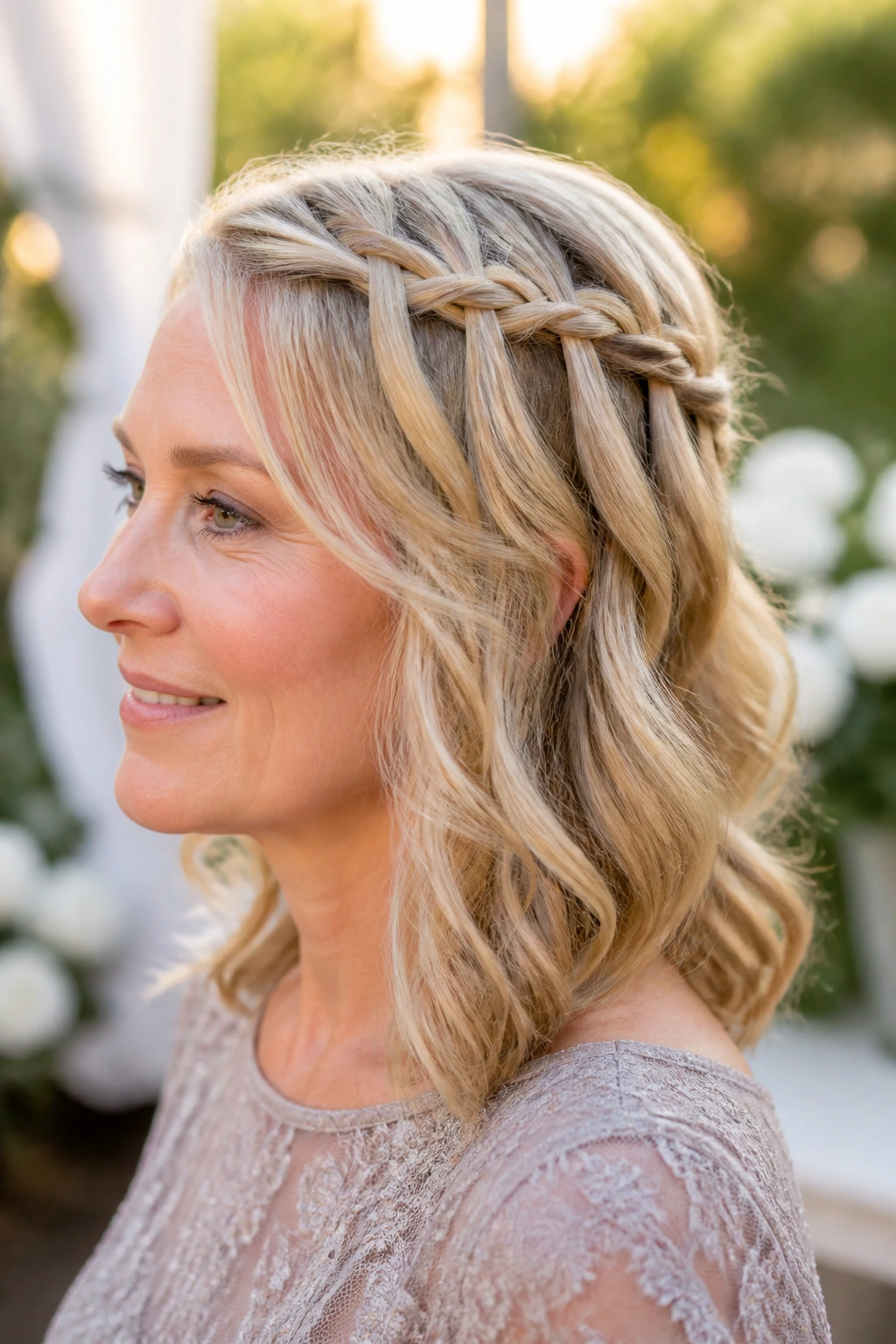
A waterfall braid gives shoulder-length hair a pretty, layered look that feels softer than a full braid crown. The braid releases strands as it travels, so the lower half keeps its movement while the top half gets organized. That’s useful when the haircut itself has layers that want to fall forward.
This one is especially nice for outdoor ceremonies or receptions where the mood is more romantic than formal. It sits nicely with softer fabrics, flutter sleeves, or dresses with a little movement in them. Add a small curl through the loose sections and the whole style gains shape.
A waterfall braid does take patience. It’s worth it. If the braid is too tight, it loses its airy effect, so keep the tension even and let it breathe.
12. Loose Curly Lob with a Pearl Pin
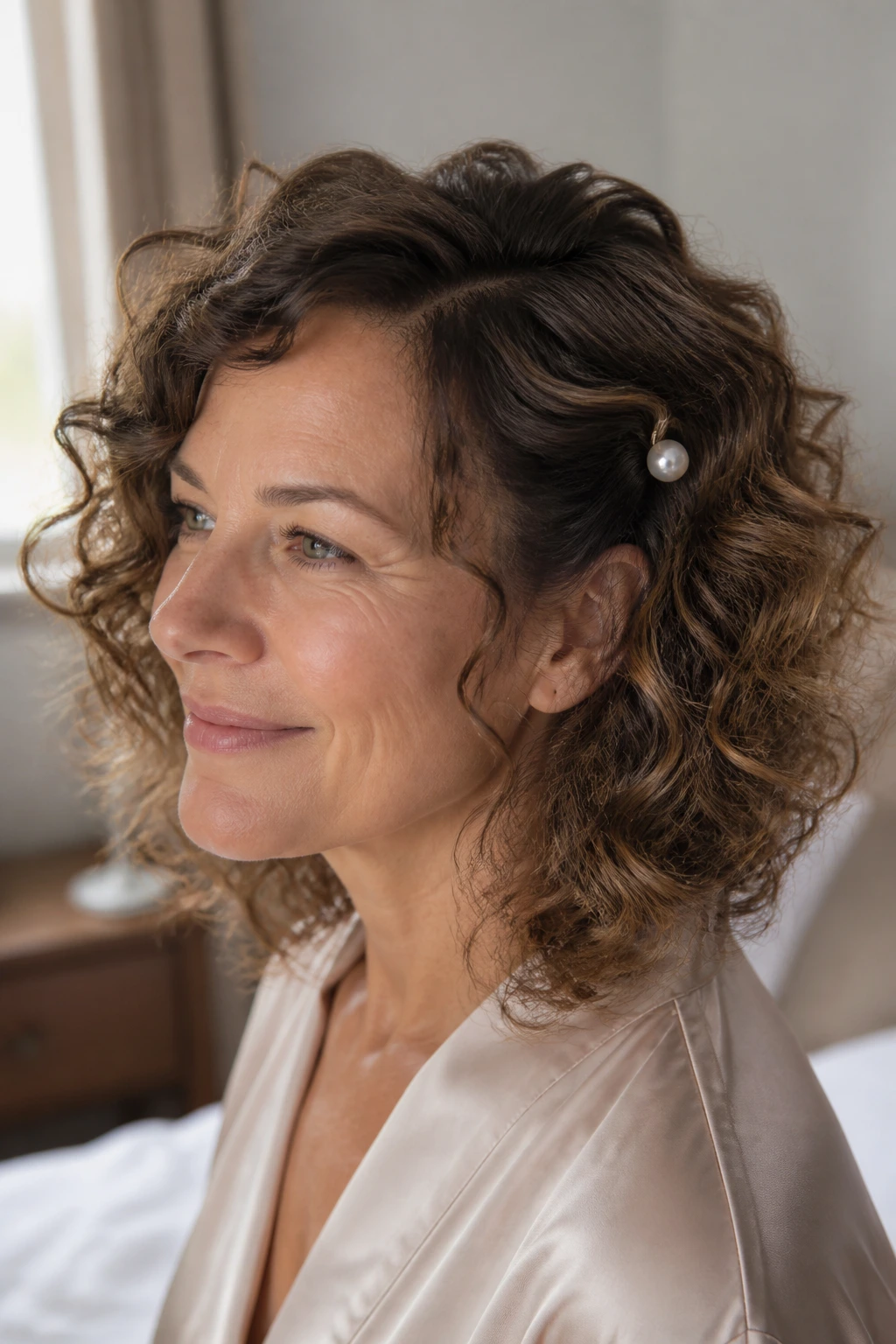
If your shoulder-length hair already curls, don’t fight it into something else. A loose curly lob with one pearl pin can look far more refined than a forced blowout. The key is definition, not stiffness. The curls should have shape, but they should still move when you turn your head.
This style works best when the curls are refreshed with a little water, curl cream, or light mousse before the event. Break up any crunchy sections with your hands, then tuck one side back with a pin. That one small detail keeps the style formal without stealing its softness.
It’s a strong option for mothers who want the hair to feel like themselves. Not a costume version. Just cleaner, shinier, and a little more controlled.
13. Rolled Vintage Waves
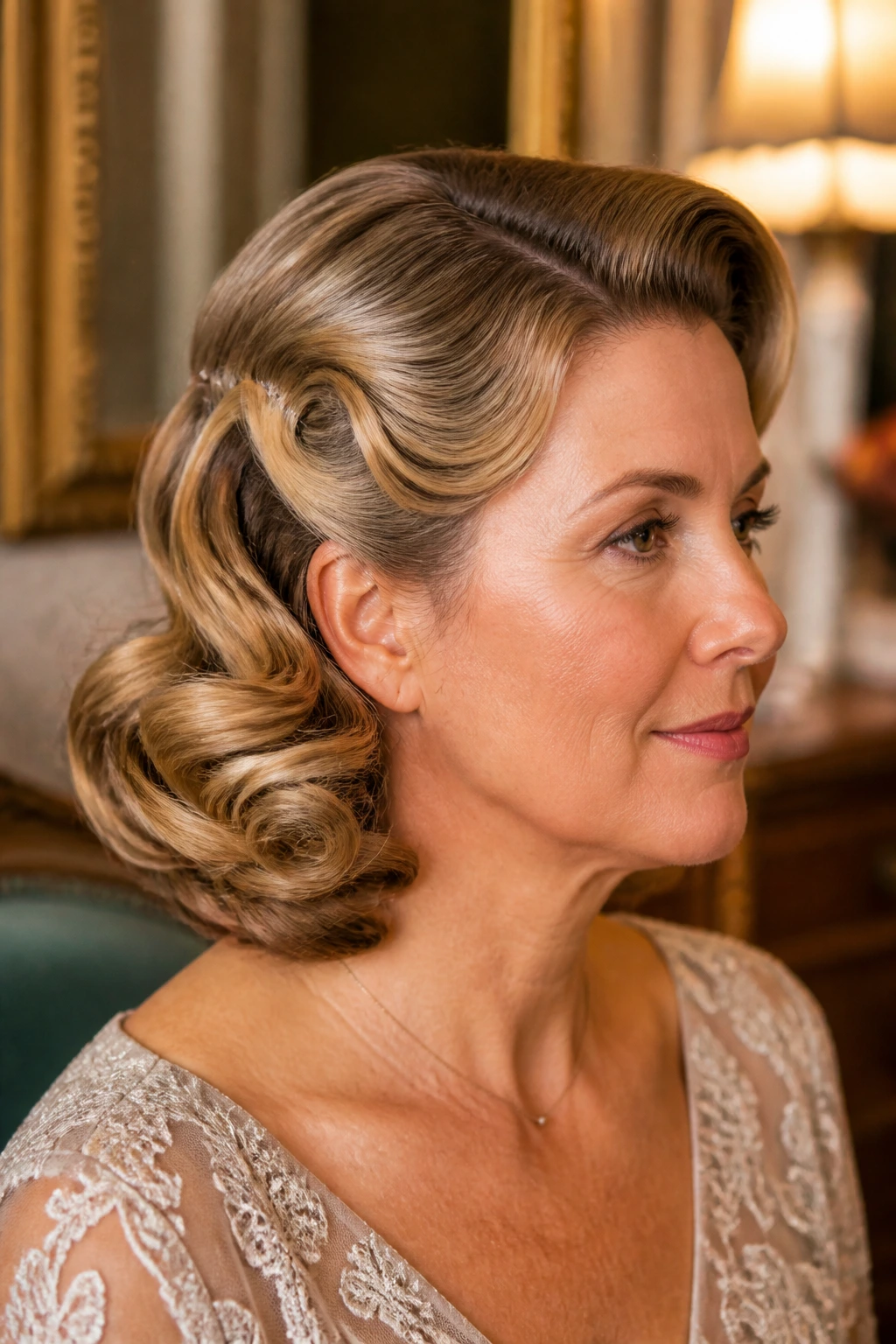
Rolled waves have a strong profile. They sit close to the head, curve in a deliberate pattern, and bring a bit of 1940s polish to shoulder-length hair without needing a full set. This is one of the best choices if the dress leans classic, tailored, or a little nostalgic.
The style depends on direction. Each wave should be formed with purpose, not with random curls brushed into submission. Pinning each section while it cools makes a big difference, especially if the hair is resistant or a little too silky. Once the curls are set, brush them into one smooth flow.
It’s a look that rewards patience. The finished shape should feel sculpted, not stiff. That is a narrow line, and it matters here.
14. Crown-Volume Pin-Up Roll
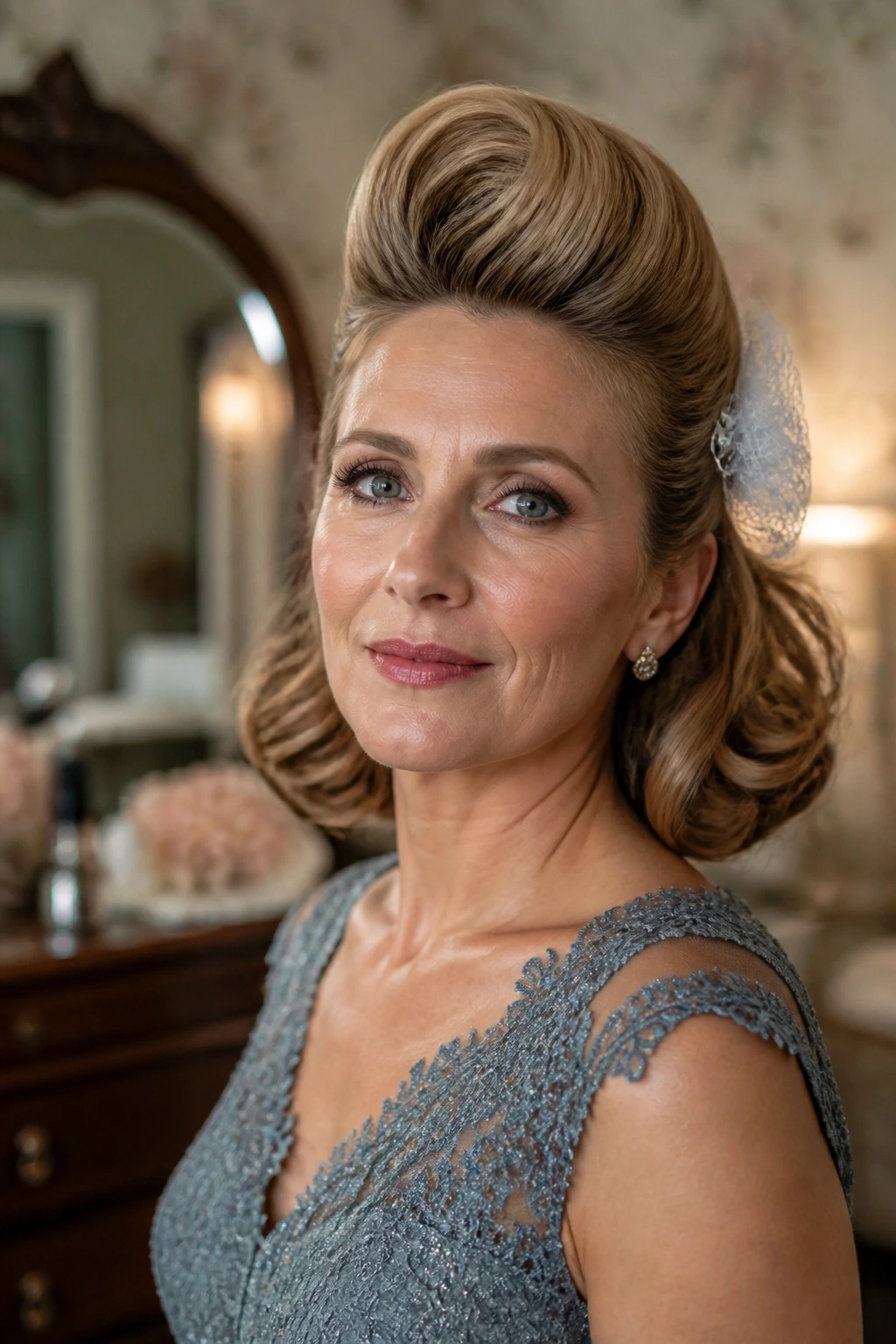
A bit of height at the crown changes everything. A pin-up roll lifts the top section, smooths the sides, and lets the rest of the hair sit in a neat, controlled shape below. On shoulder-length hair, that lift can make the face appear longer and the whole style feel more finished.
This is useful if your hair tends to sit flat against the scalp. A roll at the crown gives the style backbone before the rest of the hair even enters the picture. The lower half can stay curled, tucked, or softly pinned, depending on how formal the dress is.
It also pairs well with a small veil, decorative comb, or vintage-style clip. Place the accessory where the roll starts to fall, not where the hair is busiest. That keeps the eye moving in the right direction.
15. Tousled Shoulder-Length Updo
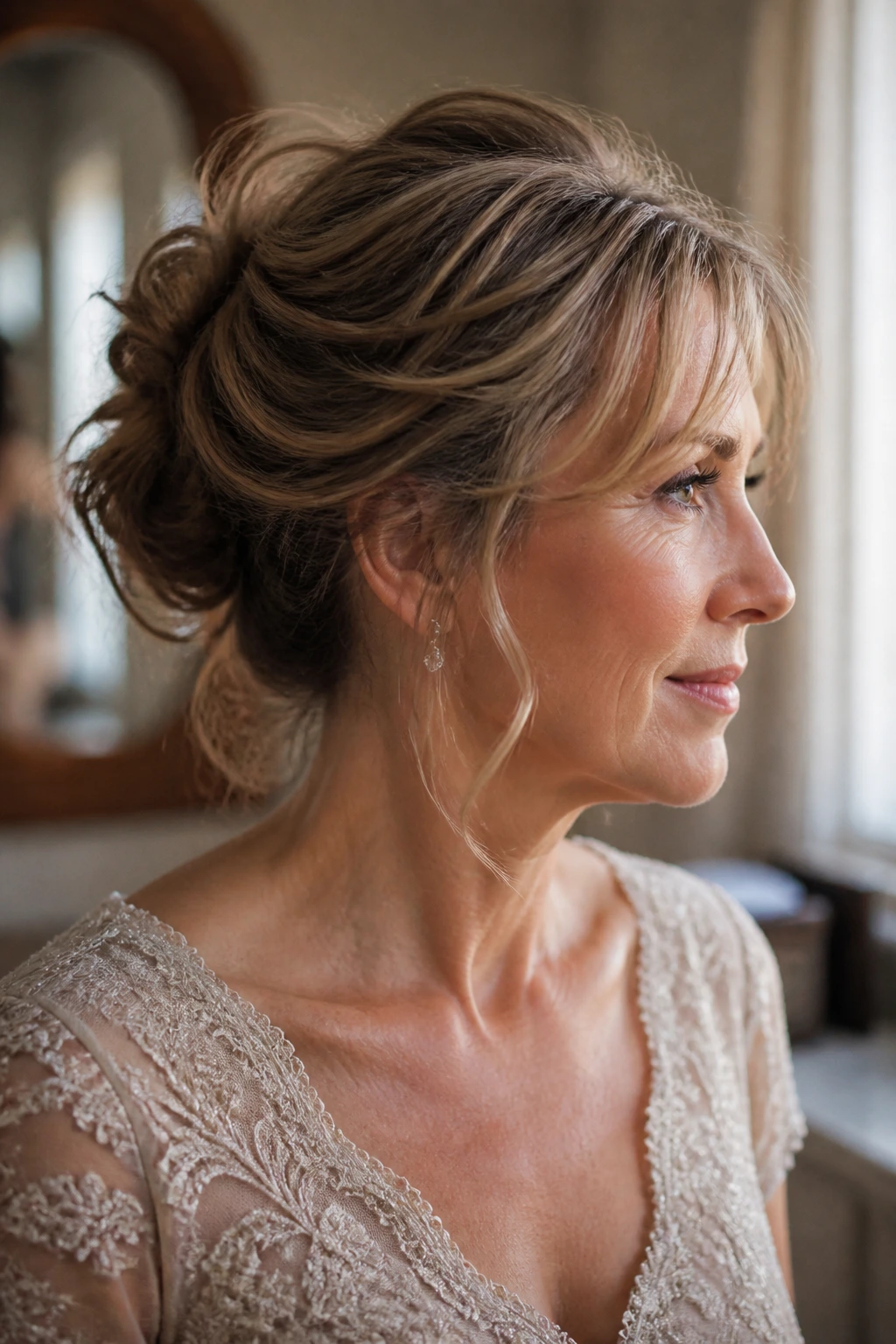
A tousled updo sounds relaxed, but it still needs shape. The hair should be lifted, pinned, and arranged in a way that looks loose on purpose. A few pieces can escape, but not in a messy way that looks like the morning got away from you.
Shoulder-length hair is a sweet spot for this because there’s enough length to pin into a soft knot or roll, yet the shorter layers leave texture around the face and ears. That texture is the point. It softens a formal dress and keeps the style from feeling too heavy.
This one likes a little grit. Day-old hair, dry shampoo, or a light texturizing spray gives the pins something to hold. Clean hair can work, but it usually needs more product than people expect.
16. Braided Side Bun
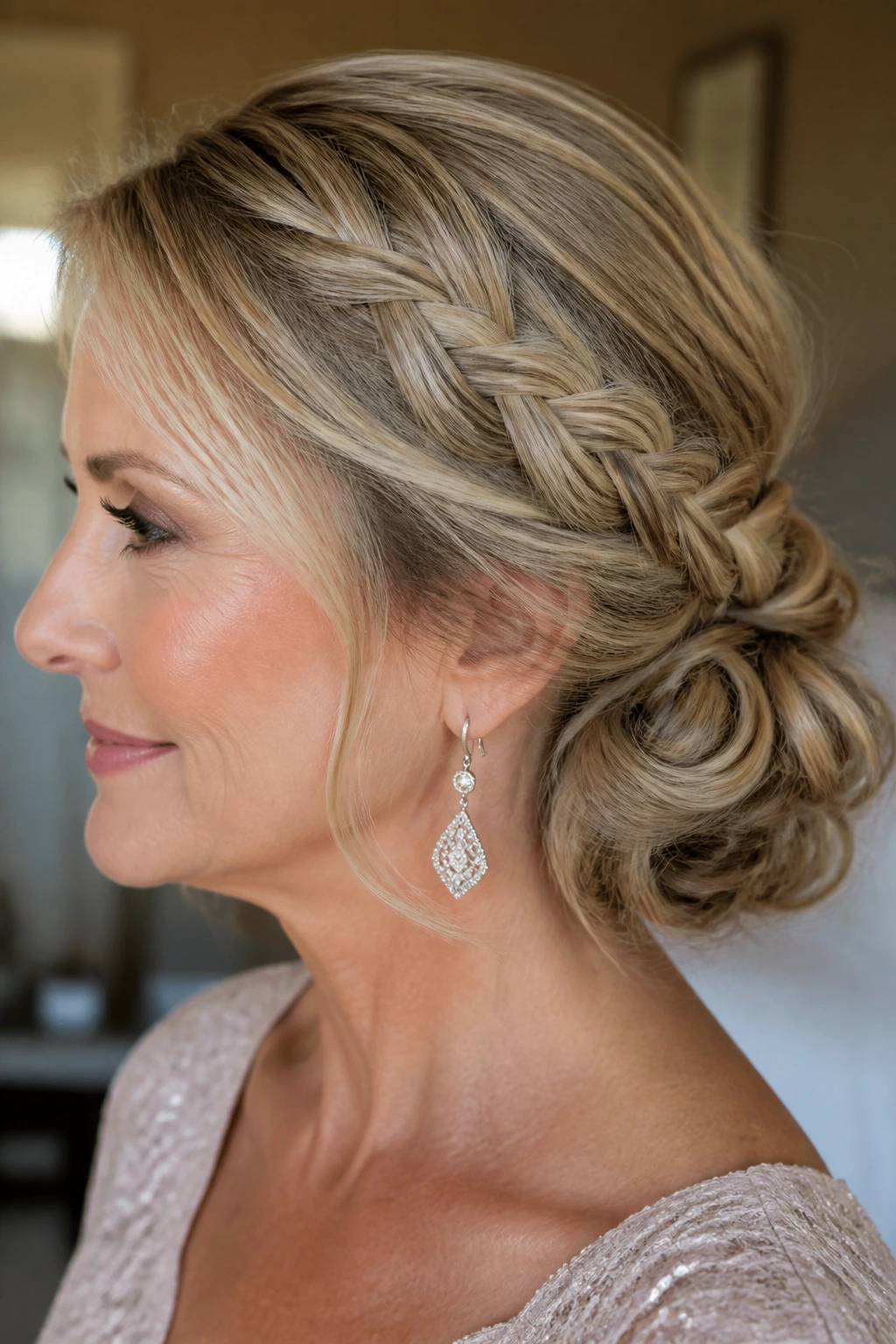
A side braid feeding into a low bun gives the style a little motion before it settles into the nape. It’s romantic, but not fussy. That braid adds detail where plain buns can feel a bit bare, especially on medium-length hair that needs one more visual element to feel complete.
The side placement is what makes it interesting. It draws the eye across the face and down toward the bun, which is flattering on many necklines and face shapes. Thick hair handles this shape easily. Fine hair may need a small pad at the bun base to keep it from looking too tiny.
This look is also kind to earrings. The braid gives enough texture that you do not need much else. Maybe one comb, maybe a small pin. That’s plenty.
17. Pinned-Back Asymmetrical Waves
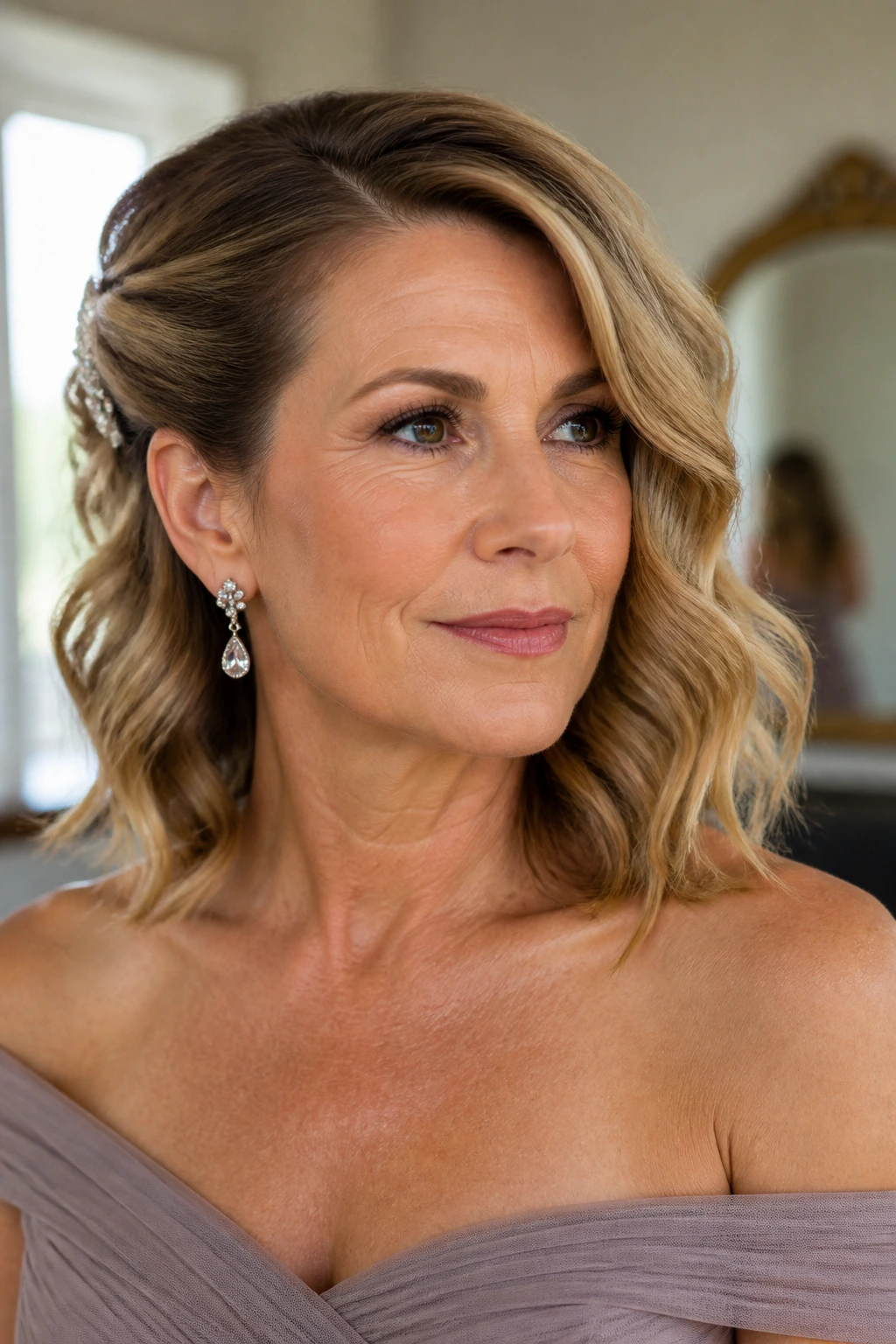
One side pinned, one side loose. That’s the whole idea, and it works because the contrast gives shoulder-length hair a clear shape. The pinned side creates structure, while the loose side keeps the style soft and modern. It’s a smart choice if the dress has one shoulder, a dramatic sleeve, or a lot of detail on one side.
The loose side should still be controlled. Barrel curls or brushed waves keep the shape from falling into a random curtain. On the pinned side, keep the clips hidden or match them to the jewelry so the detail reads as part of the look, not an afterthought.
There’s a quiet confidence to this style. It does not try too hard. It just uses the hair’s natural movement and places it where it helps most.
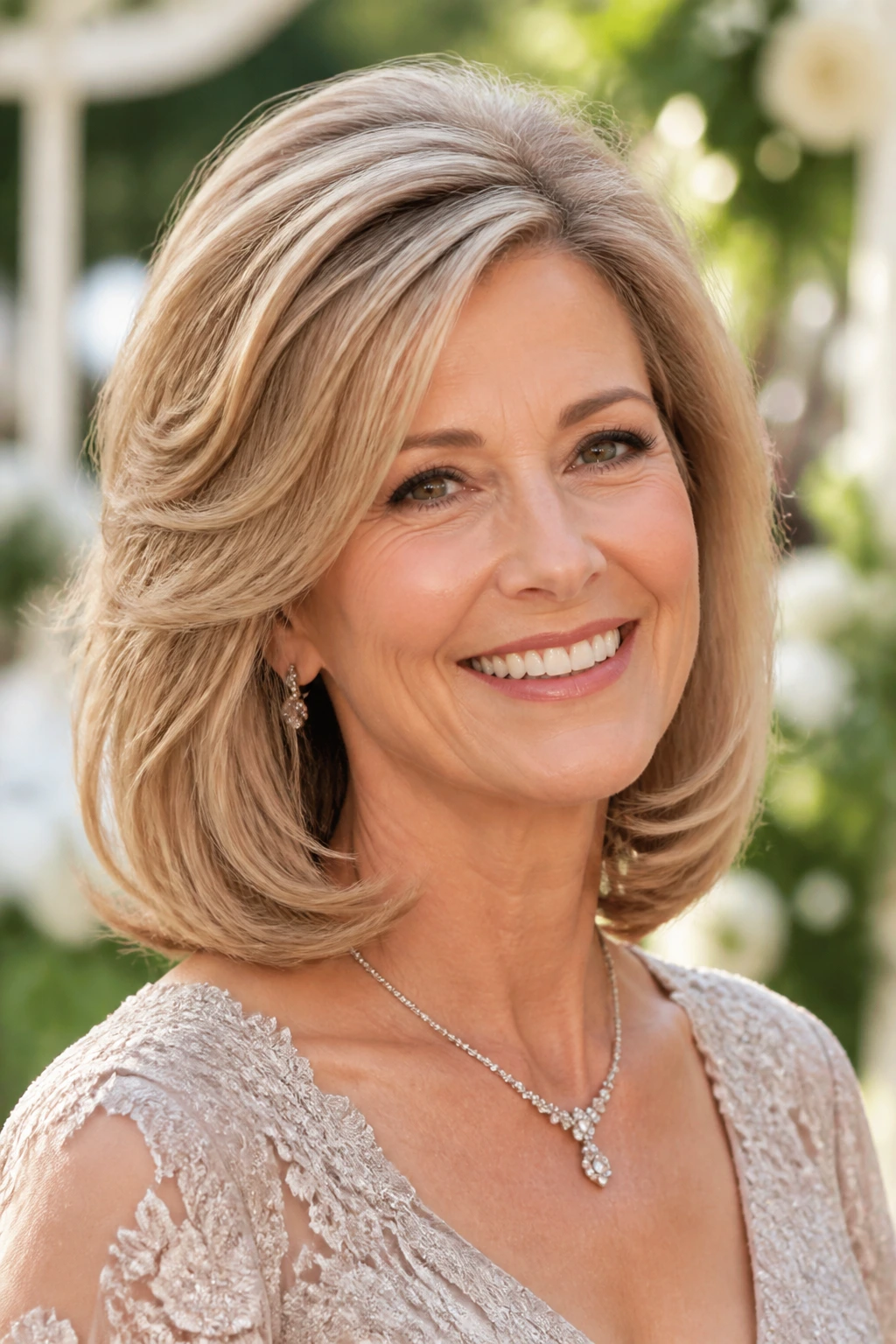
18. Classic Blowout with Big Ends
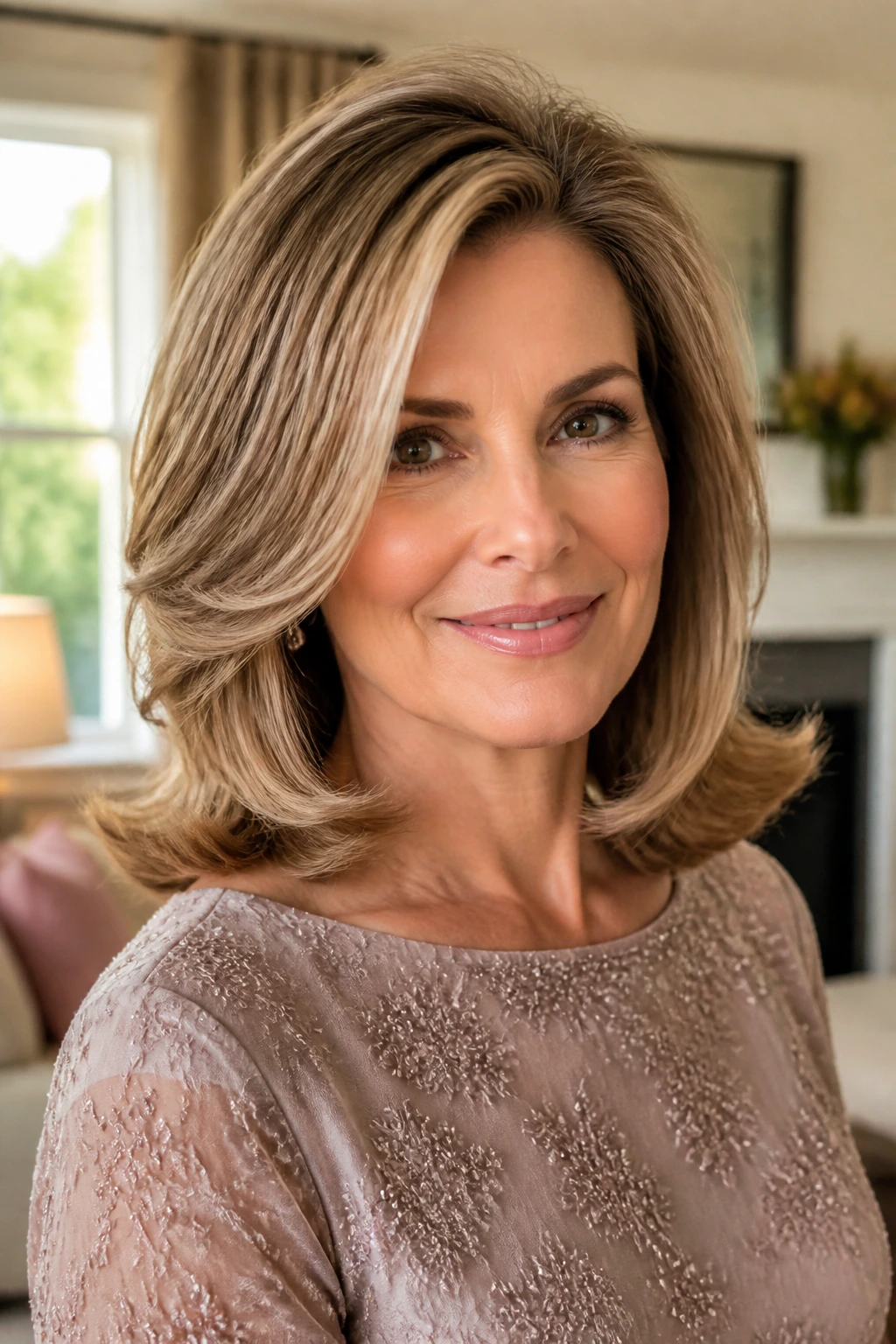
If you want one style that never feels overdone, a classic blowout with big, rounded ends is hard to argue with. The shape is clean, the shine is controlled, and the shoulder-length cut gets a little swing without losing polish. It’s simple in the best sense.
This is a strong fallback when you do not want pins or braids, but you still want a style that looks dressed up. Ask for volume at the roots and a soft curve through the ends. Too much curl at the bottom can look dated. Too little and the hair falls flat.
A good blowout also photographs well from every angle, which is not nothing. It gives the face room, and it plays nicely with almost any dress shape.
19. Twisted Low Knot
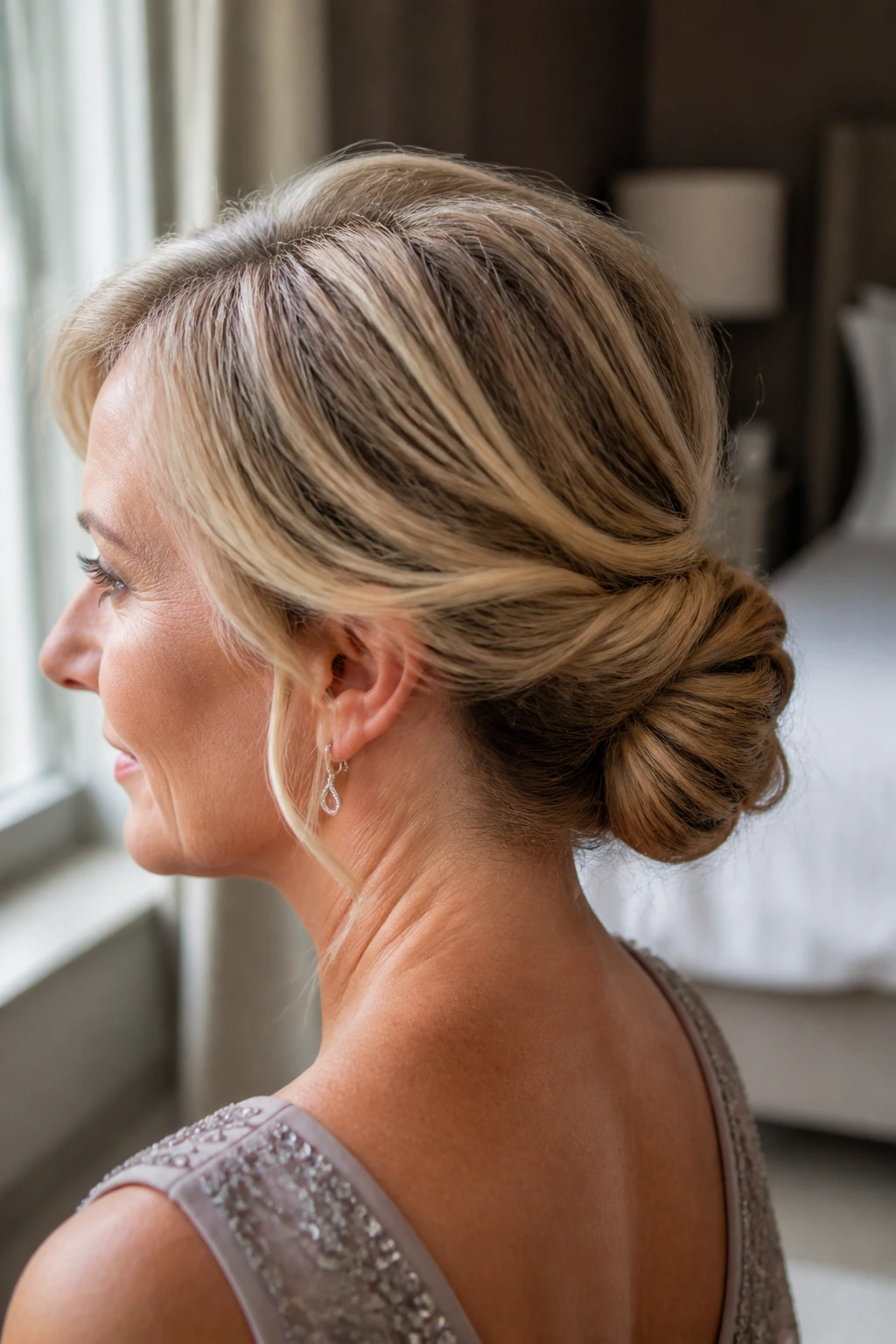
A twisted low knot gives you the look of an updo without the tightness of one. The twists create texture before the hair is gathered at the nape, and the knot sits neatly below the head, which keeps the silhouette long and graceful.
This style works especially well when the hair is shoulder-length but not especially layered. The pieces have enough length to twist cleanly and enough weight to stay put. If the hair is very fine, a small cushion or a few hidden pins can help the knot keep its shape.
It is one of the quieter styles in the lineup, and that’s a good thing. It lets the dress, makeup, and jewelry do more of the talking.
20. Deep Side-Part Barrel Curls for Mother-of-the-Bride Photos
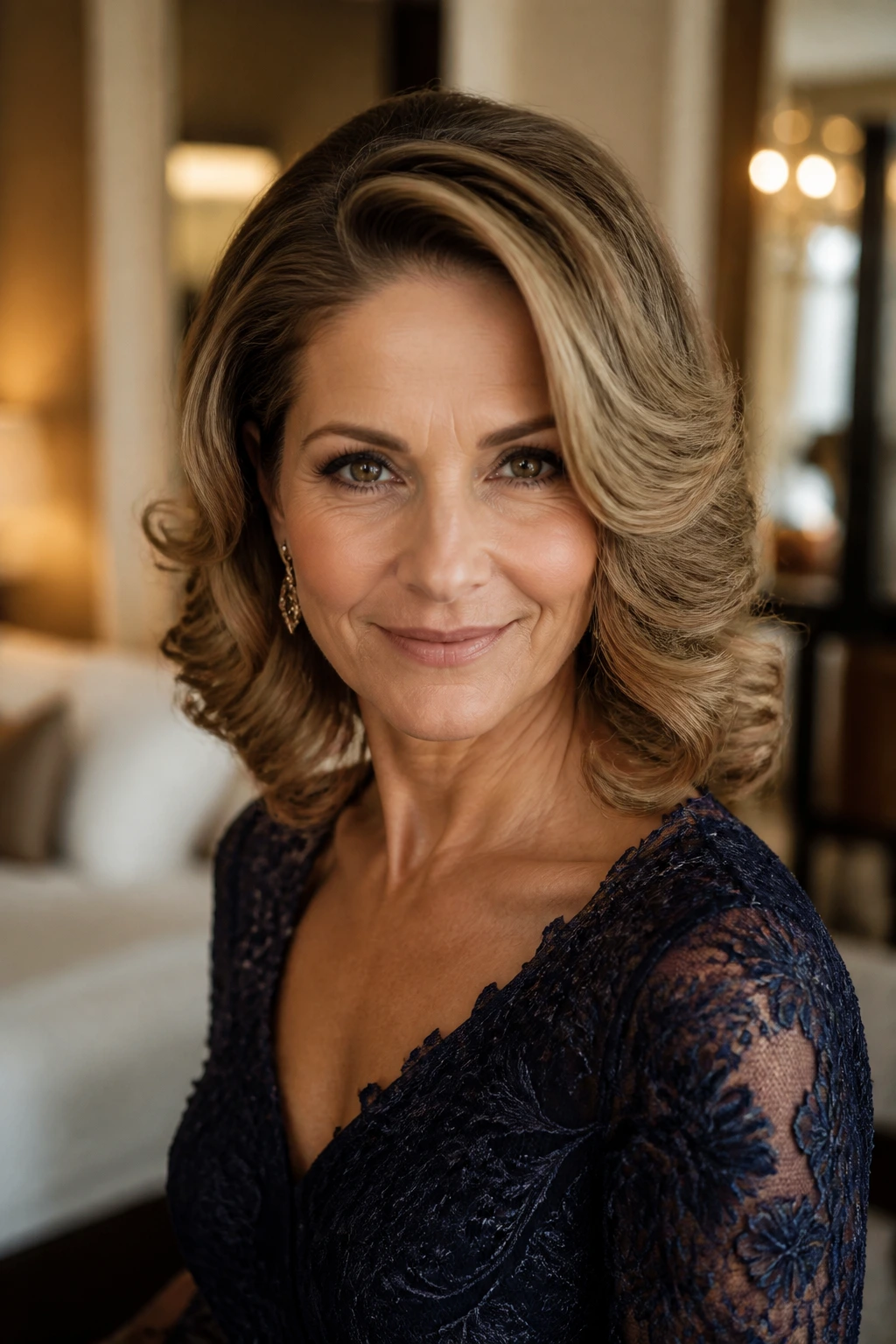
This is a serious photo style. The deep side part builds instant structure, and the barrel curls give shoulder-length hair that plush, soft volume photographers tend to love. The shape opens the face while keeping the body of the hair rich through the ends.
It works best when the curls are brushed out only slightly. You want movement, not a cloud. Large sections set on a 1¼-inch iron or hot rollers hold their shape better than tiny curls that frizz out by dessert. A side-swept front can also help frame the eyes, which matters more in photos than people think.
If the dress has beading or shimmer, this style gives it room without competing. It’s formal, but still warm.
21. Curtain Bang Lob with a Smooth Bend
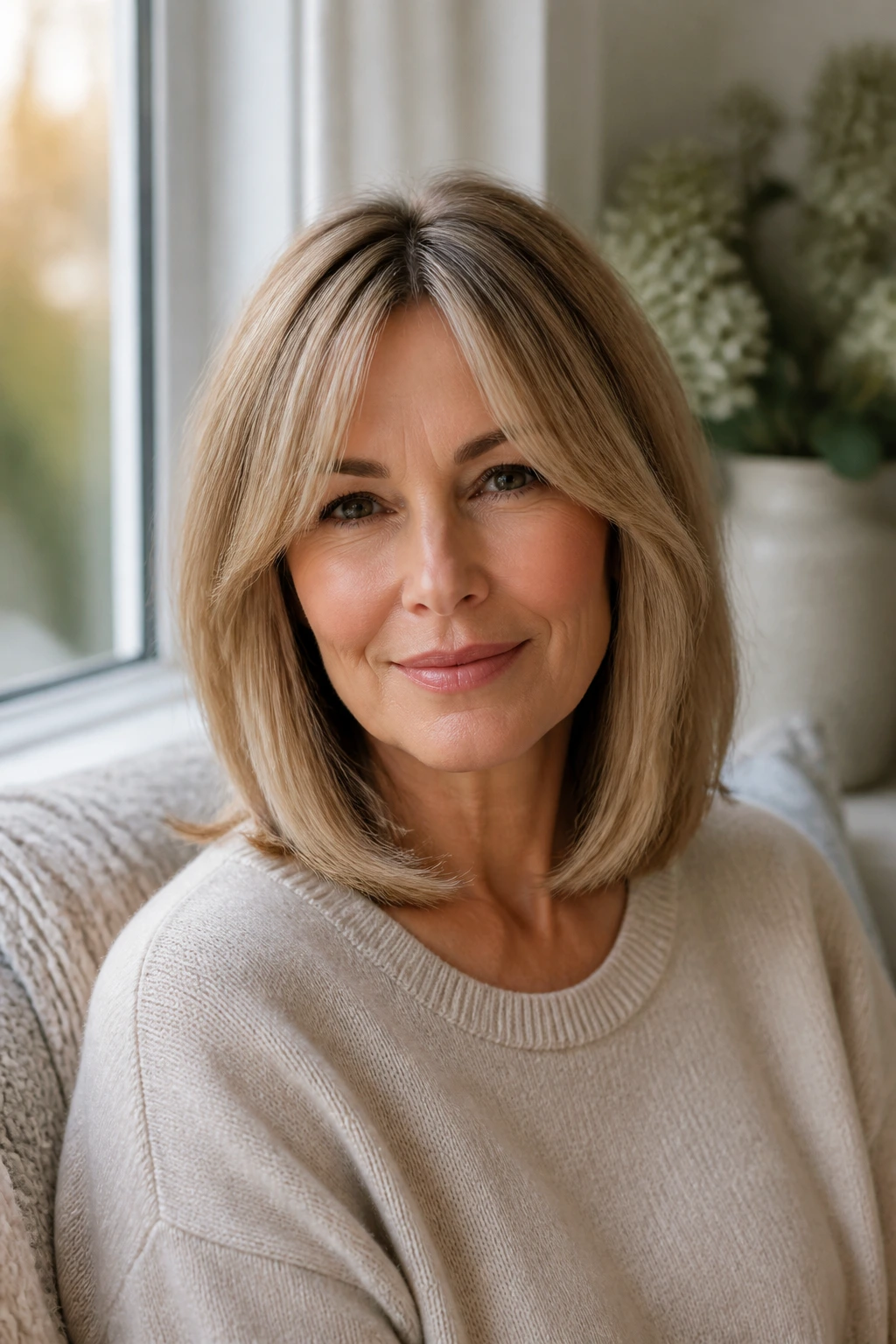
Curtain bangs can be a lifesaver on shoulder-length hair because they soften the forehead and guide the eye into the rest of the style. Add a smooth bend through the lob, and the whole look feels current without leaning too casual for a wedding.
This style is good when you want your hair to move naturally, not sit in a shell of spray. The bangs need a round brush and a bit of direction so they fall away from the face instead of straight down it. Keep the rest of the hair sleek or softly waved, depending on the dress.
It’s particularly flattering with square or longer face shapes. The fringe breaks up the length in a gentle way, which is one reason so many stylists reach for it when the cut already lands around the shoulders.
22. Half-Up Knot with Curls
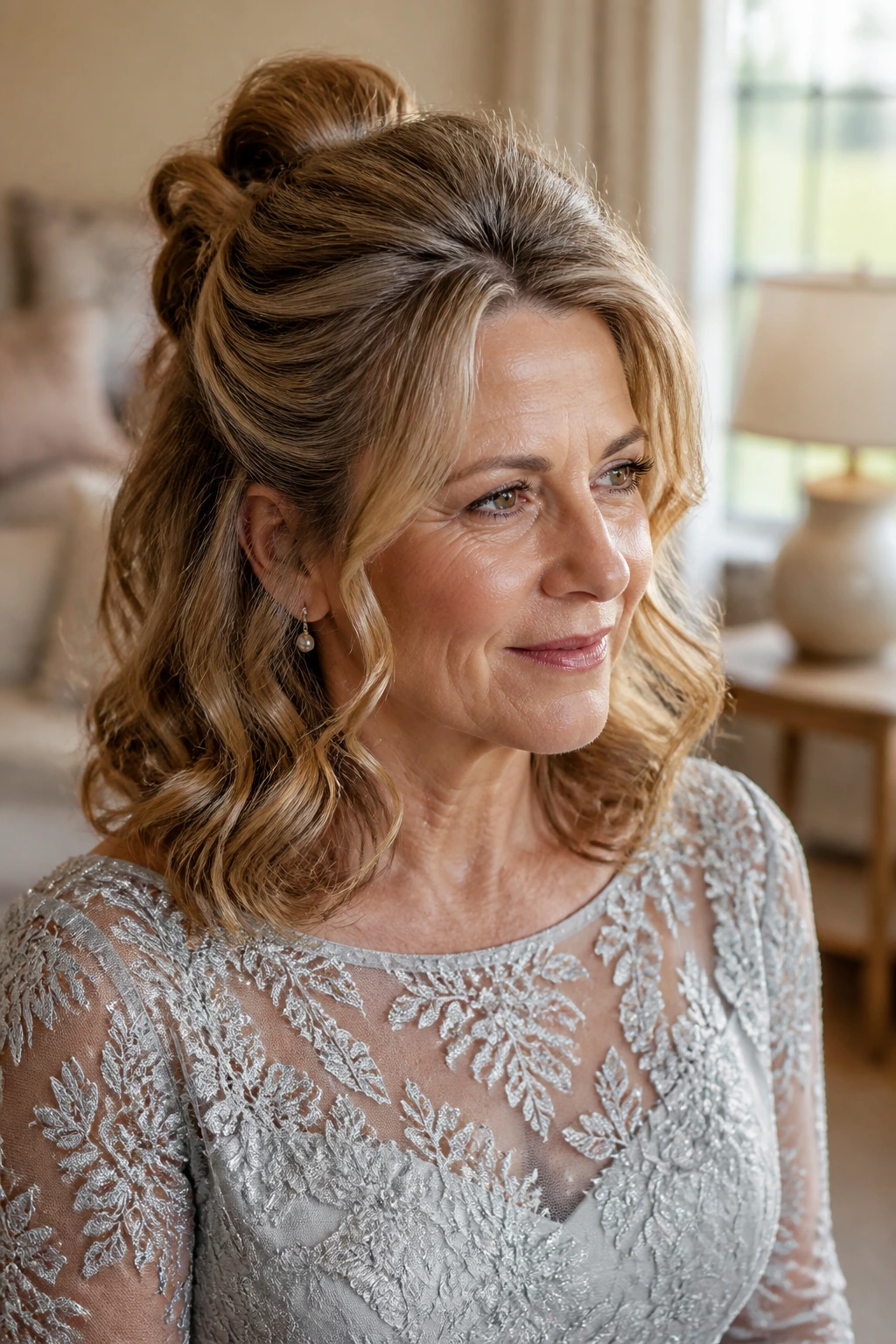
A half-up knot gives shoulder-length hair a little lift without hiding the length. The knot at the crown creates height, and the curled lengths below keep the style soft. That combination is useful when you want a younger, lighter feel without losing formality.
The best version is not pulled tight. Leave a bit of volume at the root and a few soft pieces around the ears. If the knot is too small, it can look accidental. If it is too big, it starts to dominate the whole head. Medium-sized and secure is the sweet spot.
This style also works well with tiny pins or a small barrette. A little sparkle at the knot is enough. You do not need much else.
23. Side Tuck with Statement Earrings
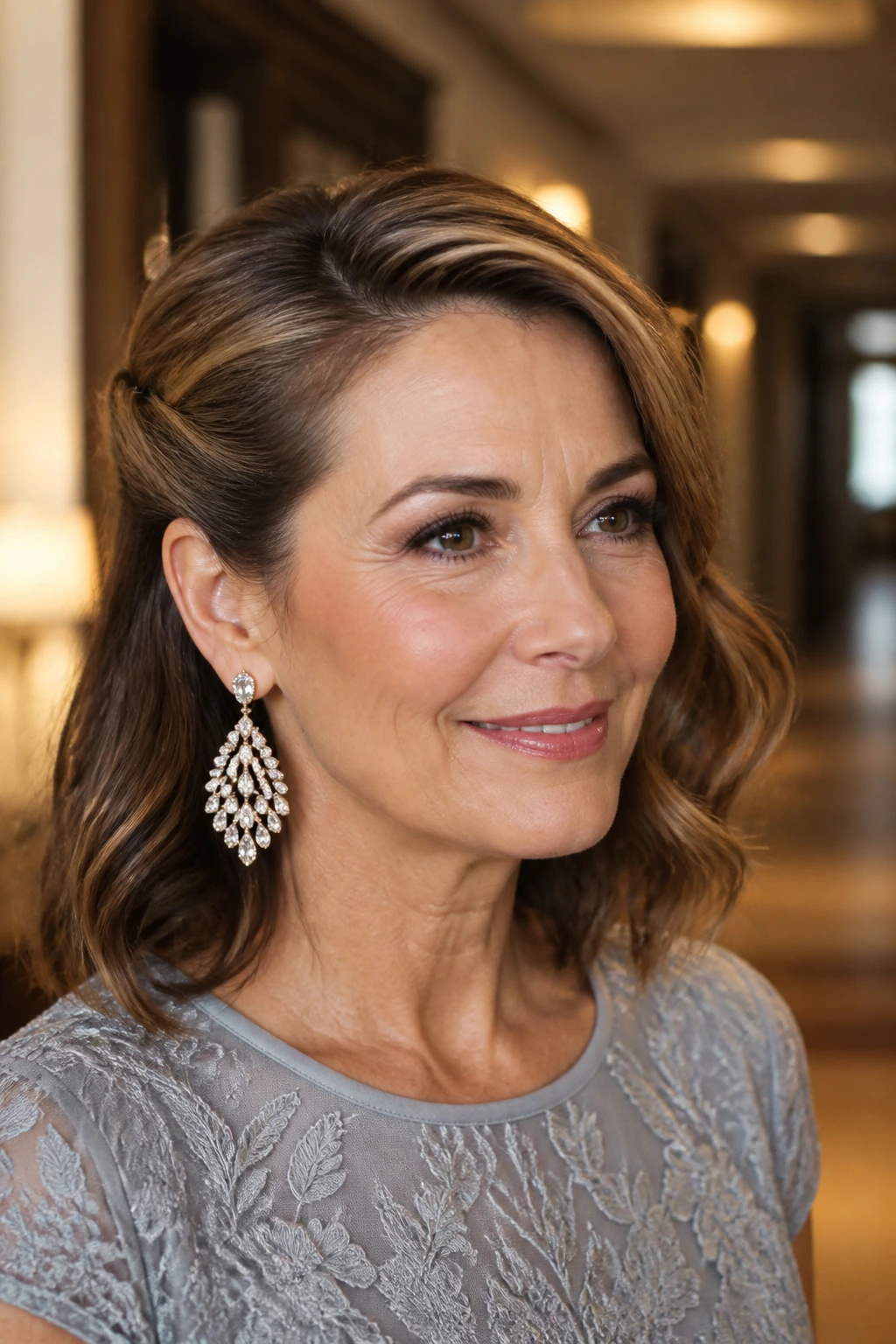
Some hairstyles are built around jewelry, and this is one of them. A side tuck clears one ear, opens the neck, and gives statement earrings the room they deserve. On shoulder-length hair, the tucked side can stay smooth while the other side keeps a soft wave or curve.
It’s a good move for dresses with simple lines or a high neckline. The hair becomes part of the accessory story rather than competing with it. That’s especially useful if the earrings are large, geometric, or bright enough that you want the face framed cleanly.
The tuck must stay hidden. Bobby pins crossed behind the ear hold better than one pin placed too far forward. If you can see the pin, move it. Simple as that.
24. Romantically Pulled-Back Curls
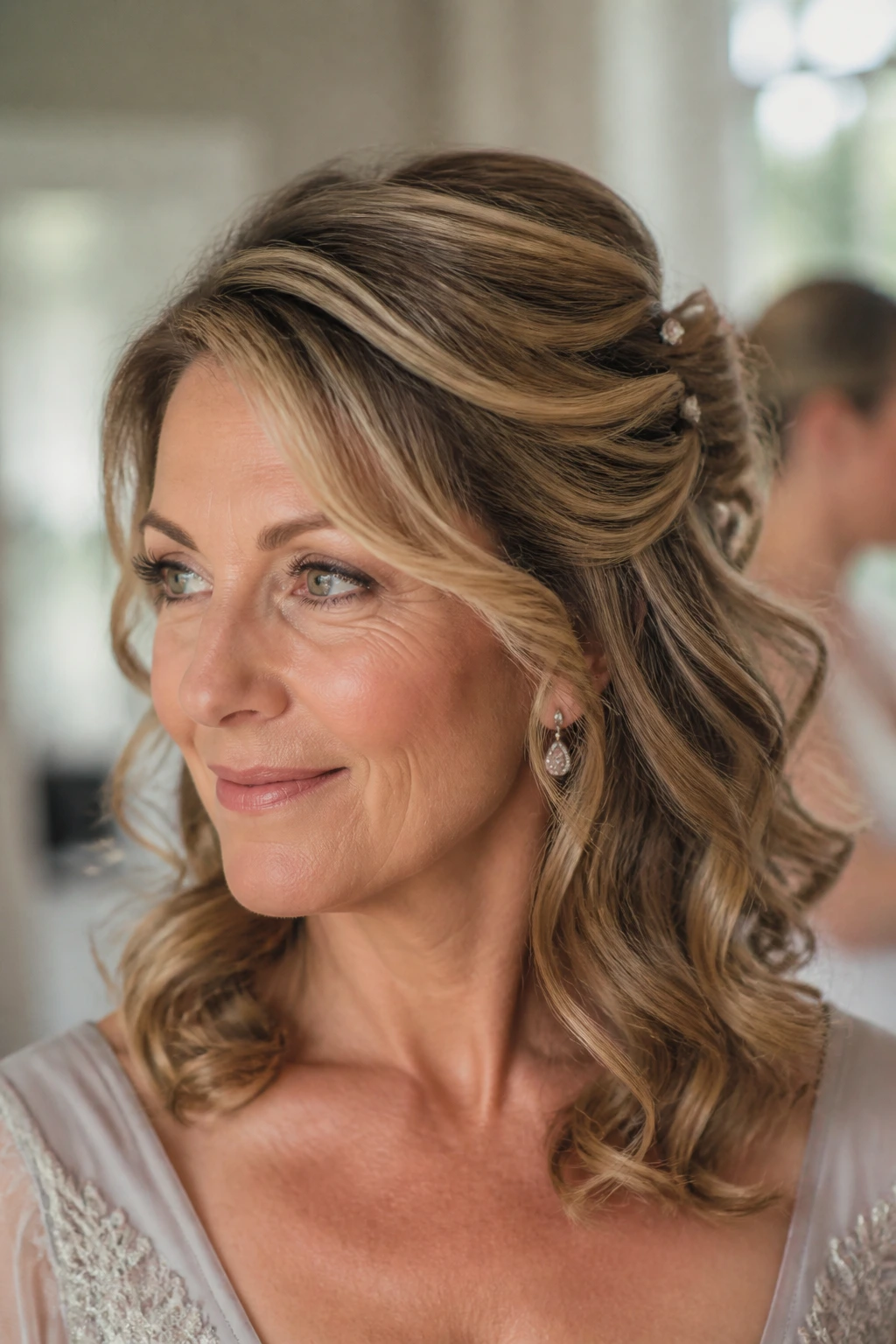
This is the style for someone who wants softness first. The front sections are pulled back just enough to open the face, and the rest of the curls fall freely around the shoulders. It feels gentle and formal at the same time, which is a rare combination.
Shoulder-length curls do well here because the hair has enough weight to keep the shape from floating apart. The pulled-back sections give you a little control around the face, which helps with glasses, makeup, and all the hugging that happens between ceremony and reception.
A small decorative clip or two hidden pins can anchor the back. The style should look relaxed from a distance and tidy up close.
25. Polished Low Ponytail with a Wrapped Base
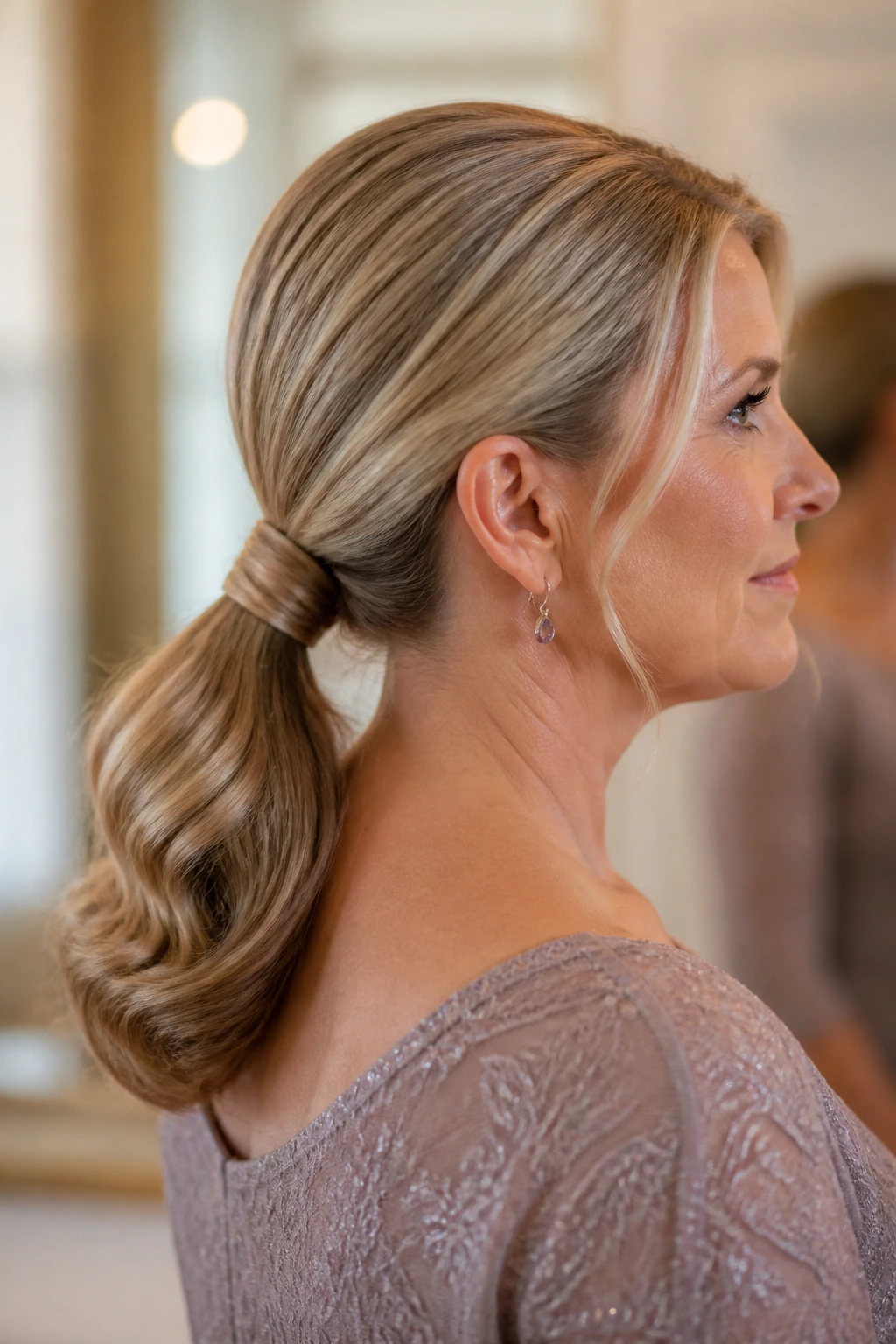
A low ponytail can be formal if you treat it with enough care. Wrap a strand around the base, smooth the crown, and curl the tail just slightly so it has shape, not stringiness. On shoulder-length hair, this becomes a sleek, modern option that does not feel like an afterthought.
It’s a strong choice for dresses with strong shoulders, clean satin, or a dramatic back. The ponytail keeps the profile neat and uncluttered. If the hair is layered, the tail may need a few hidden pins under the elastic to keep the shortest pieces from slipping out.
This one is practical too. It stays comfortable for a long day and does not trap heat at the neck. That counts.
26. Shoulder-Length Shag with a Glossy Finish
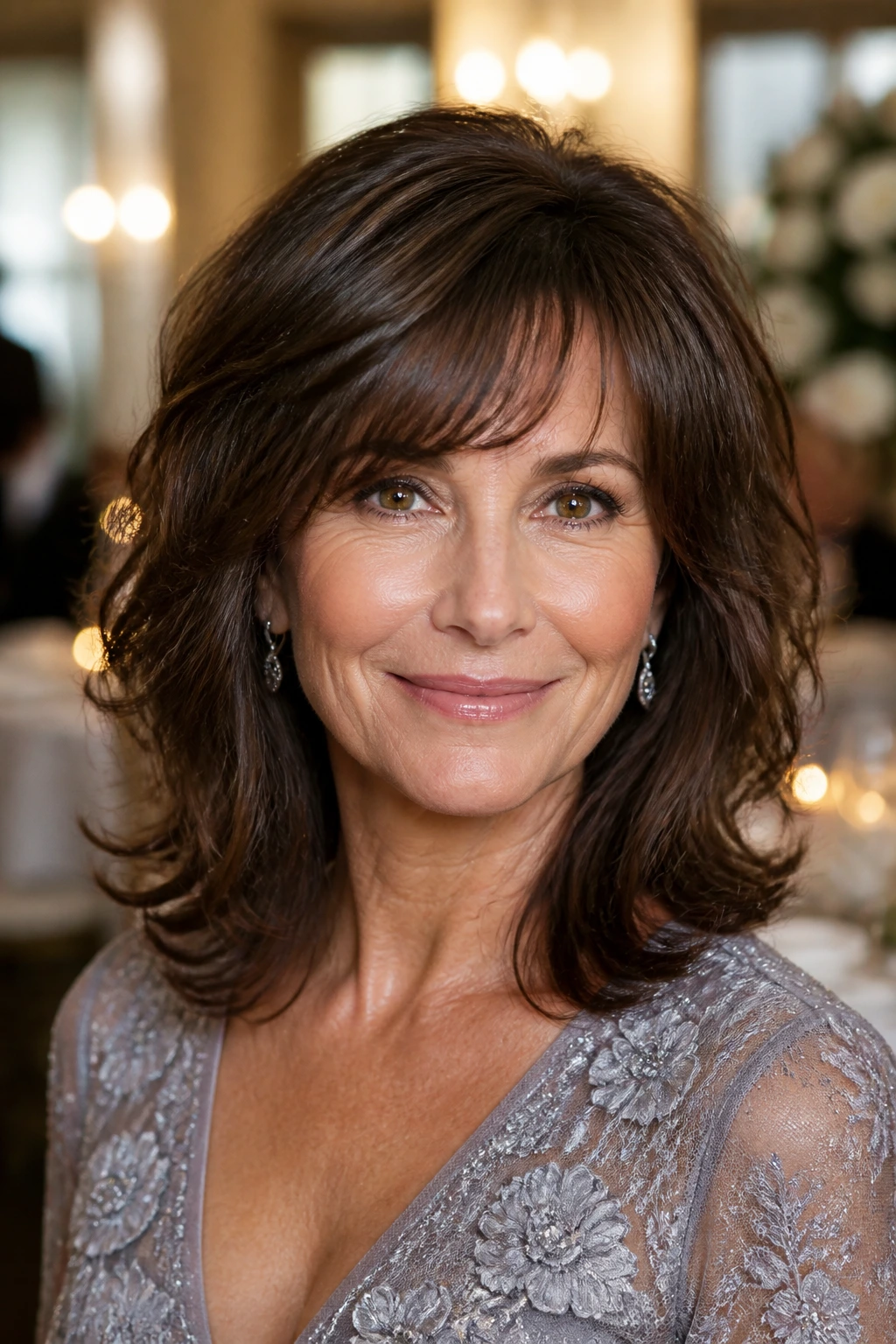
A shag cut does not need to be hidden on a wedding day. It needs to be controlled. When the layers are smoothed just enough and the texture is polished, the result has movement, shape, and a little edge without looking messy. That matters for mothers who wear their hair layered and do not want to fight the cut.
The key is to polish the ends while leaving the body of the hair alive. A round brush or large iron can bend the pieces away from the face, then a light shine spray keeps the whole thing from looking dry. Too much curl can make a shag look busy. Too little and the layers lose their point.
This style suits softer dresses, clean lines, and people who look uncomfortable in overly formal hair. That honest match is worth more than forcing the wrong updo.
27. Rope-Braid Half Crown
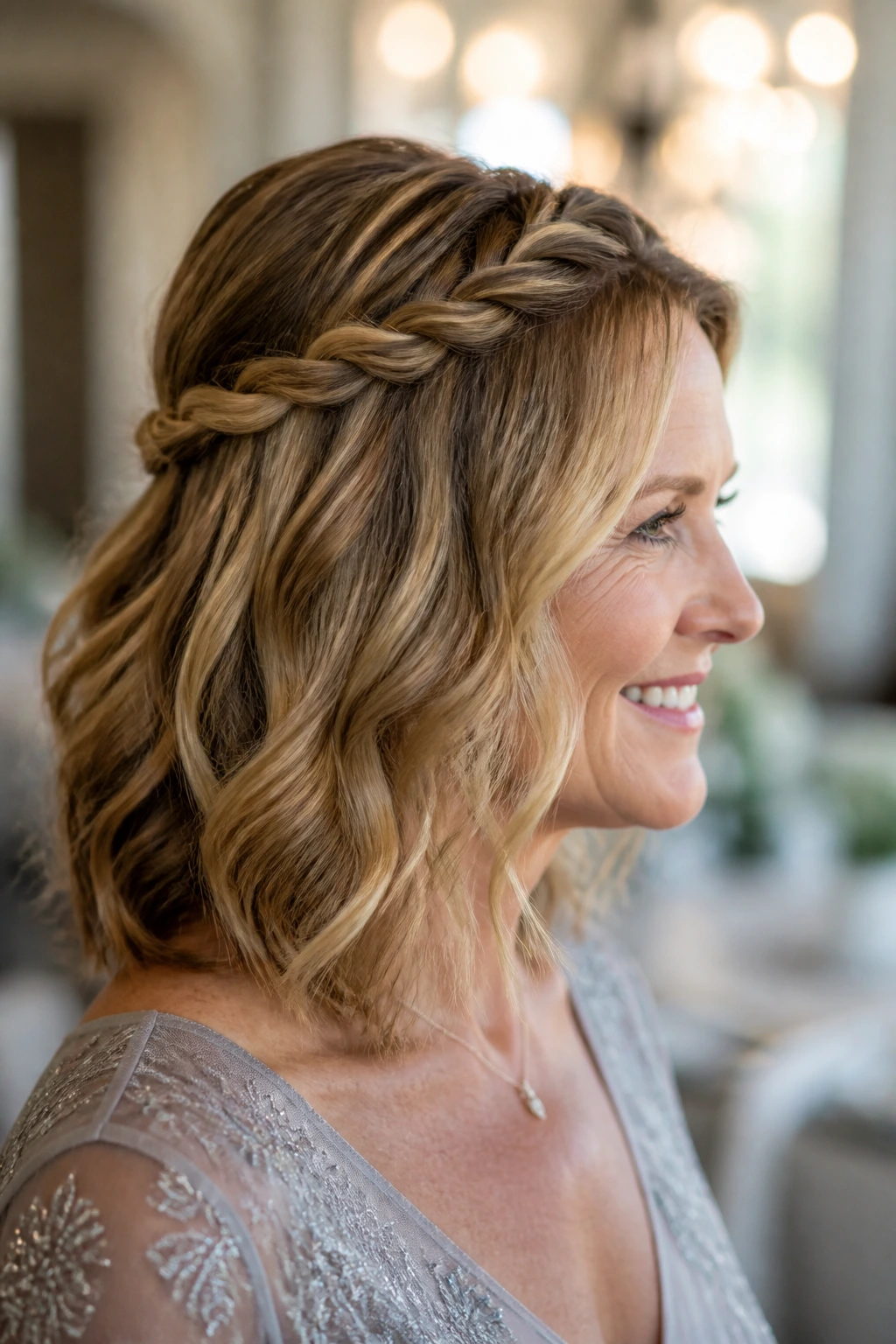
A rope braid gives a different texture than a standard three-strand braid. It twists in a neat, almost ribbon-like way, and across the top of shoulder-length hair it can look sleek and interesting without stealing too much attention. That makes it a smart choice for a mother of the bride who wants detail but not drama.
The braid can sit across one side or wrap across the crown like a soft band. Either way, keep the rest of the hair wavy or bent so the braid has something to contrast with. On very smooth hair, rope braids can slip, so a touch of texture spray beforehand helps.
It’s a nice compromise between formal and relaxed. Not stiff. Not plain. Right in the middle.
28. Soft Face-Framing Blowout with a Decorative Headpiece
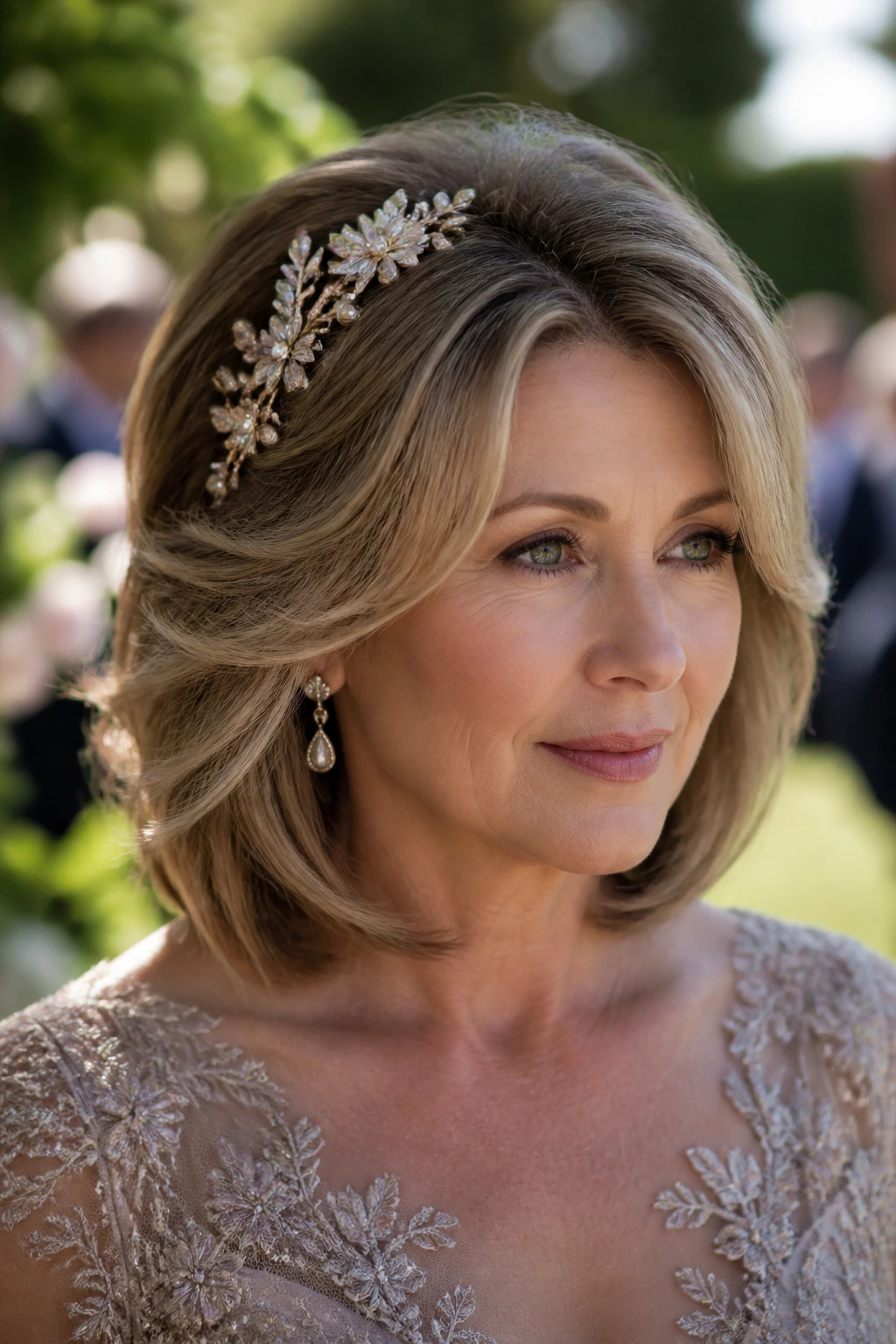
A decorative comb, crystal pin, or small floral piece can change a simple blowout into a formal look fast. On shoulder-length hair, that accessory has room to show without taking over the whole style. The hair stays soft around the face, with volume through the crown and a clean bend at the ends.
This is one of the easiest looks to adapt to the dress and the venue. A delicate comb works with satin. A floral piece feels right for outdoor settings. A small crystal clip suits evening light. The blowout itself should be smooth, not shellacked, so the accessory looks like the finishing touch rather than a patch.
If the headpiece is heavy, anchor it with crossed pins underneath. Pretty pieces fall out when they are only clipped to clean, slippery hair.
Why Shoulder-Length Hair Is Such a Good Formal Canvas
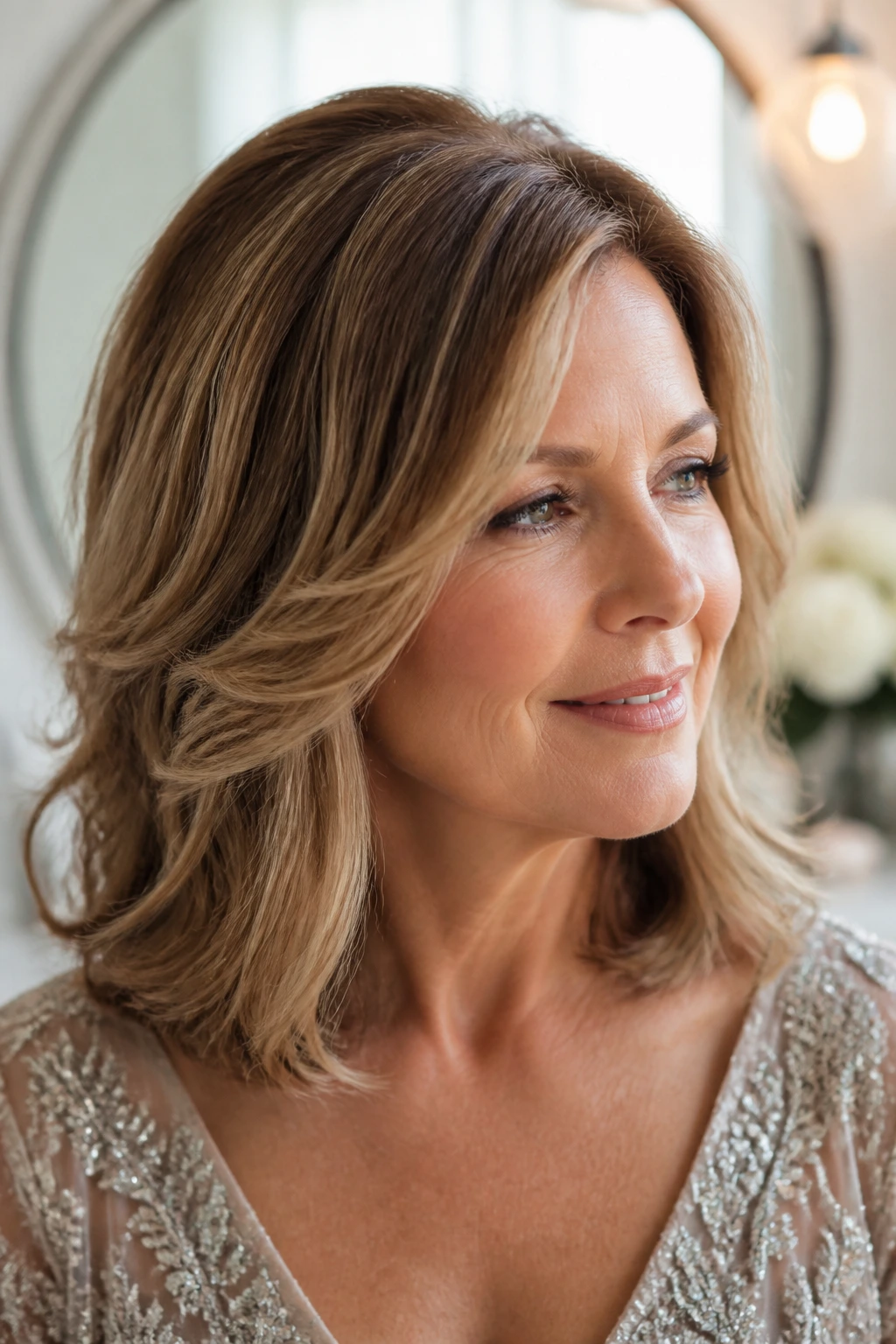
There’s a reason stylists like shoulder-length hair when a formal event is on the calendar. The length has enough weight to look finished, but it still responds quickly to shaping. A curl sets faster. A twist stays put more easily. A blowout dries with less drag.
The other advantage is proportion. Very long hair can overpower a face or weigh down a neckline. Very short hair can limit the range of formal shapes. Shoulder-length hair sits in the useful middle and gives you room to choose between softness, polish, and structure without forcing the cut into something it is not.
It also behaves better under pressure, which matters on a wedding day. Pins hold. Curls cool faster. Sides can be tucked. And when the ceremony runs a little long or the air gets warm, the style is less likely to collapse into itself.
Essential Tools for These Looks
- 1-inch and 1¼-inch curling irons: These cover tighter face-framing waves and larger brushed-out curls.
- Flat iron: Useful for sleek tucks, smooth bends, and polishing the front sections.
- Round brush: A medium or large brush gives the crown lift and the ends that soft bend.
- Blow-dryer with nozzle: The nozzle matters. It keeps airflow directed and cuts down on frizz.
- Tail comb: Parting, sectioning, and teasing the crown are all cleaner with a fine-tooth comb.
- Bobby pins in two shades: Dark and light pins disappear better depending on hair color.
- Strong-hold hairspray: Pick one that sets without turning the hair into a helmet.
- Texturizing spray or dry shampoo: These give pins something to grab and help fine hair stay alive.
- Smoothing serum or cream: One small amount tames flyaways without flattening the style.
- Clip set or sectioning clamps: They make the prep process calmer, especially when hair is layered.
- Decorative comb, clips, or pins: Best used after the shape is set, not before.
- Silk or satin scarf: Handy for protecting the style if there’s a gap between prep and ceremony.
Choosing the Right Prep for Your Hair Type
Fine hair needs grip before it needs shine. That usually means root-lifting spray at the crown, a bit of mousse through the mid-lengths, and a dry finish that isn’t overloaded with oil. If the hair is too soft and clean, pins slide right out. Day-old hair usually behaves better.
Thicker or coarser hair usually wants the opposite treatment. Start with a smoothing cream, blow-dry in sections, and use pins generously instead of hoping the style will “hold on its own.” It won’t. Dense hair can support a strong twist or bun, but only if the inner structure is pinned properly.
Curly hair deserves a different plan again. Do not force it into a style that fights the curl pattern unless you truly want the work of it. A defined curl set, a half-up shape, or a pinned-back style usually looks better than trying to flatten the whole head. If you need sleekness, stretch the curl with a blow-dryer first, then shape it.
And get a trim early enough to let the cut settle. A clean shoulder-length line, softened layers, and face-framing pieces make every style on this list easier.
How to Match the Hairstyle to the Dress and Accessories
Silhouette: If the dress has a high neck or a lot of detail at the bodice, lean toward a low chignon, tucked-under shape, or polished ponytail. If the neckline is open or the shoulders are bare, soft waves, half-up twists, and side sweeps give the face more room and keep the look balanced.
Accessories: Large earrings like a side tuck or a pinned-back asymmetrical wave. A comb or crystal pin works best where the hair already has structure—a twist, a knot, or the base of a braid. If a veil or hat is part of the outfit, choose a style that leaves a smooth anchor point, not a pile of curls that will fight the accessory.
Texture: Satin, silk, and beading can handle smoother hair. Chiffon, lace, and softer fabrics often look better with waves, bends, or braids that echo the fabric’s movement. The goal is not matching the fabric exactly. It’s matching the weight of the hair to the weight of the dress.
Finish: Glossy styles read more formal. Airier styles read softer and less strict. If the event is black-tie, push the finish toward polished. If the ceremony is outdoors or daytime, a little movement feels more natural.
Additional Tips and Style Boosters
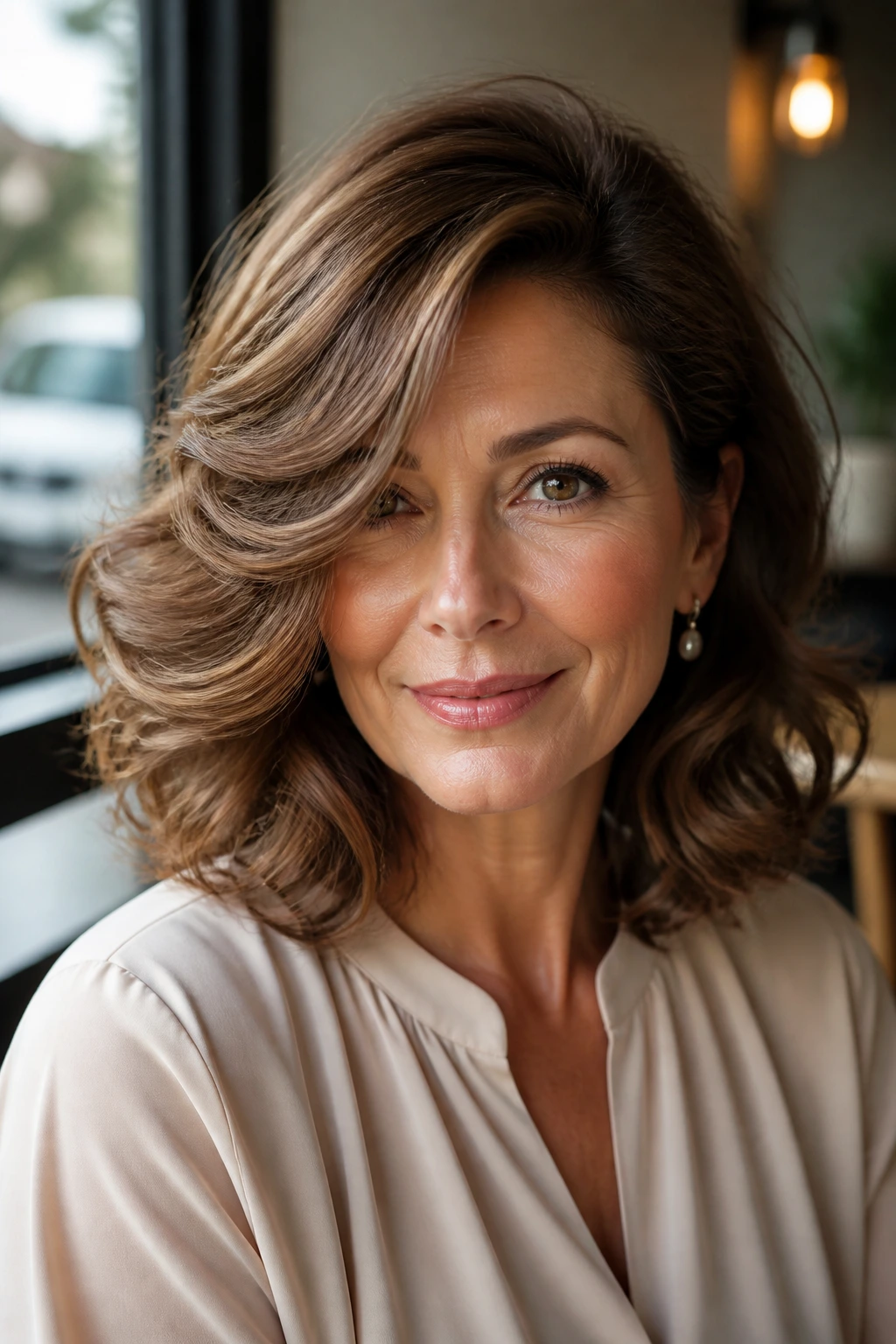
Root Lift: A small amount of lift at the crown changes the whole look. Use a round brush, a roller, or a bit of teasing under the top layer so the style does not lie flat against the head.
Accessory Placement: Place pins and combs where the hairstyle already has structure. That keeps the accessory from looking pinned on as an afterthought. The best spot is usually near a twist, a braid join, or the curve of a side part.
Softness Switch: If a style starts to feel too strict, loosen just two or three face-framing pieces and brush the ends lightly. That tiny change takes the edge off without undoing the shape.
Humidity Shield: A light anti-humidity spray or a final mist of strong-hold hairspray helps, especially if the wedding is outdoors or near water. Do not flood the hair. A fine veil is enough.
Make-it-Your-Own: Add a small pin from a family heirloom, weave in a subtle braid, or choose a part that you normally would not wear. The style should still feel like your face, your hair, your neck, your shoulders. Not a borrowed version of somebody else’s formal look.
Make-Ahead, Touch-Up, and Longevity Strategy
Hair for a wedding should not be treated like a one-shot gamble. A good plan starts the day before. If your hair tends to get slippery, wash it the day before the event rather than the same morning. Clean but not freshly washed hair usually holds pins and curl memory better. If your hair is very fine and tends to get oily fast, a light dry shampoo at the roots can create the grip you need without making the scalp chalky.
If you are setting curls, let them cool all the way before brushing. Warm curls fall apart faster than people expect. That cooling period is not wasted time; it is the part that locks the bend in place. For updos, pin them, mist them, and then leave them alone for a few minutes while the spray settles. Touching the style too soon loosens the work you just did.
Carry a tiny touch-up kit. A few bobby pins, a travel hairspray, one comb, and a couple of blotting papers solve most problems. Flyaways can be smoothed with a little spray on a toothbrush or a clean spoolie. That trick sounds fussy. It works.
If the style needs to survive into the evening, ask for slightly firmer pinning at the start instead of trying to rescue it later. A style that is secured well at 2 p.m. is much easier to refresh at 8 p.m. than one that started loose and lazy.
Variations and Adaptations to Try
Fine-Hair Boost: Add root spray, velcro rollers, and a lighter wave pattern. Fine hair usually looks best when the shape is lifted and the ends stay soft rather than heavily curled.
Curly-Hair Celebration: Keep the natural texture, define the curls, and choose half-up or pinned-back styles that leave the coil pattern visible. Trying to flatten curly shoulder-length hair often creates more work than payoff.
Shorter Shoulder-Length Cut: Choose tucked shapes, side sweeps, and half-up styles that use pins near the crown. If the ends barely touch the shoulders, a low bun or full chignon may need padding to look full enough.
Heirloom Accessory Version: Build the hairstyle around a comb, barrette, or pin that matters to the family. A simple blowout or low twist can feel formal fast when the accessory has a little history behind it.
Soft Glam Version: Keep the same style structure but increase shine and curl definition. A polished wave, a smooth crown, and brushed ends turn most of these looks into evening-ready styles.
Common Mistakes to Avoid
The first mistake is choosing a style that fights the haircut. Shoulder-length layers can slip out of a tight knot or full twist if they are not pinned with enough structure. The fix is to choose shapes that work with the length you already have, not against it.
Another one is overusing product. Too much hairspray or serum can flatten the roots and make waves clump in a greasy way. Start with less than you think you need. Add more only if the hair is actually moving out of place.
Skipping a trial run is risky. A style that sounds good in theory can sit oddly on the actual head, especially if you wear glasses, have a strong side part, or need a comb in the hair. Try the look at least once before the event, even if it is just a quick version at home.
And do not pin everything too tightly. Severe tension can make the face look pulled and the whole style less flattering in profile. The goal is secure, not strained.
Finally, do not forget about the back of the head. A lot of styles look fine from the mirror and fall apart in photos taken from behind. Check the back. Always.
Frequently Asked Questions
What is the most flattering shoulder-length hairstyle for a mother of the bride?
Soft waves with a side part are one of the safest bets because they flatter a wide range of face shapes and dress necklines. They also hold up well in photos and can be dressed up with a comb or pin if the outfit needs more formality.
Can shoulder-length hair be put into a real updo?
Yes, but the best updos on this length are usually low chignons, twisted knots, or tucked styles rather than very tall buns. If the hair is layered, your stylist may need to pin in sections or add a little padding so the shape looks full.
Should I wash my hair the morning of the wedding?
Usually, no. Hair that is washed the day before tends to hold curl, volume, and pins better. If your scalp gets oily fast, a touch of dry shampoo at the roots can give you a cleaner base without making the hair too slippery.
What if my hair is very fine and flat?
Choose styles with crown lift, side parts, or half-up structure. Root spray, dry shampoo, and a good blow-dry with a round brush help more than heavy oil or cream, which can drag the hair down fast.
How do I keep curls from falling out before the reception?
Set each section fully, let it cool before brushing, and use a spray that has real hold. Curls made on hot hair and brushed too soon often collapse by the first round of photos.
Can I wear glasses with these styles?
Absolutely. Side sweeps, pinned-back waves, and soft half-up shapes often work better with glasses than styles that leave bulk around the temples. The key is to keep the side pieces smooth so the frames do not get lost in the hair.
What if the weather is humid or windy?
Pick a style with structure first, then softness. Low buns, twisted knots, and pinned-back waves handle weather better than loose curls. A light anti-humidity spray and a few backup pins in your clutch help more than people think.
Are hair accessories too much for a mother of the bride look?
Not if they are used with restraint. One comb, one pin, or a small barrette can sharpen a style nicely. The issue is usually scale: a heavy accessory on fine hair looks forced, while a small detail placed well looks deliberate.
The Finish That Feels Like You
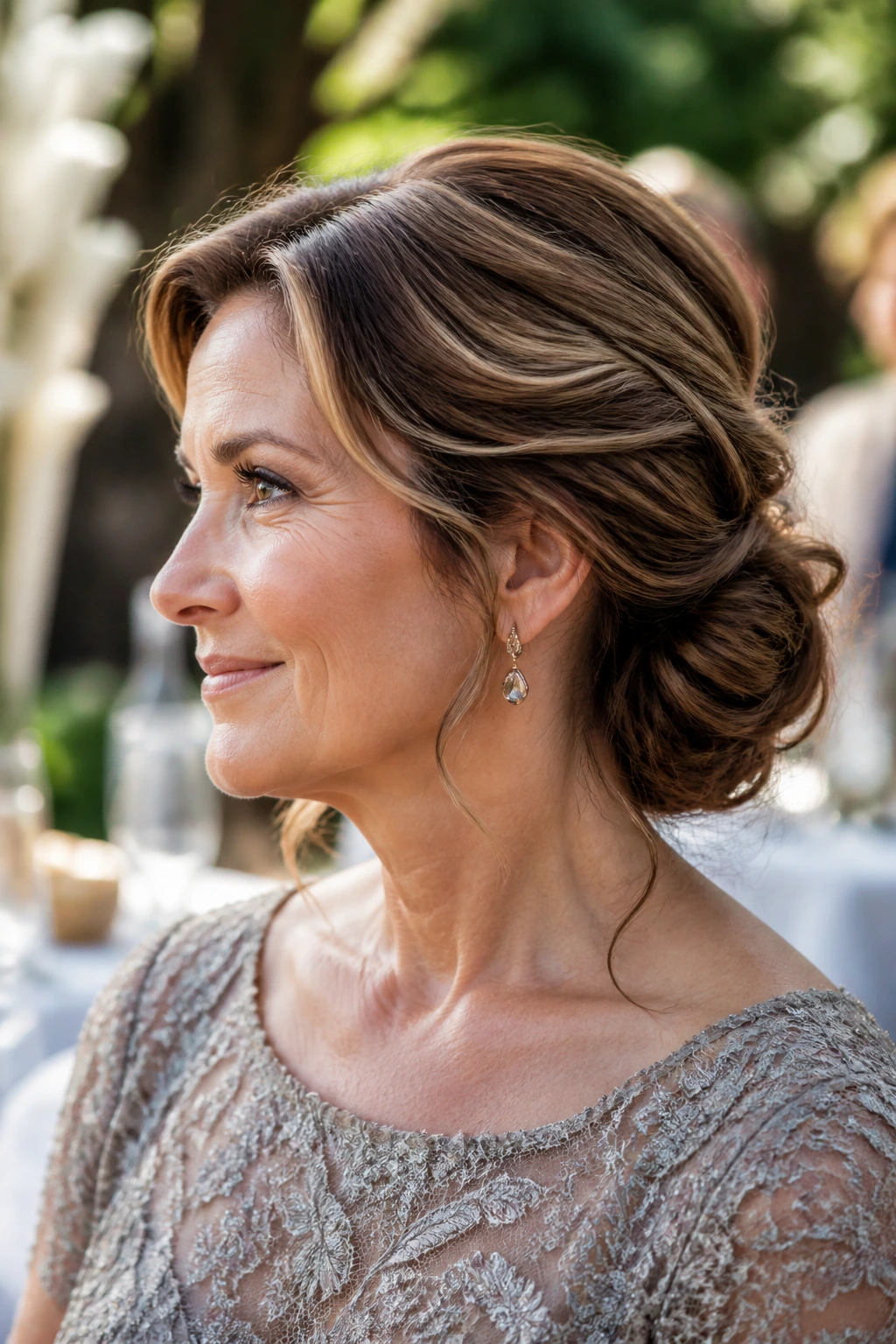
The best shoulder length hairstyles for mother of the bride do not try to hide the haircut. They use it. That length gives you enough room for waves, twists, and elegant low shapes, but it still keeps the whole look light enough to wear comfortably through a long day.
The styles that hold up best are the ones that match the dress, the jewelry, and the texture of the hair instead of chasing some vague idea of “formal.” A neat low twist, a soft side sweep, or a brushed-out wave can look far more expensive than anything overworked with spray and pins.
Pick the shape that lets your face stay open, your neckline stay clear, and your hair stay itself. That is usually the move that ages best in photographs, too.