



Thick short hair has a funny habit: it refuses to behave like a polite little bob in the salon chair, and that’s exactly why color looks so good on it. Colorful hairstyles for short hair with thick hair get extra lift from density, extra shape from weight, and extra punch from the way short layers make every shade show up in clean slices instead of disappearing into length. A neon streak on fine hair can look shy. On thick hair, it flashes.
That density is a gift, though not always an easy one. Short cuts on thick hair can go blocky fast, and bright color will expose every blunt edge if the shape isn’t thought through. The best looks here aren’t just “pretty color on short hair.” They’re cuts that use bulk on purpose: tight napes, airy crowns, slice-y bangs, hidden panels, and color placement that works with the silhouette instead of fighting it.
And honestly, that’s the fun of this category. You can go sharp and graphic, soft and pastel, dark with a hidden surprise, or loud enough that people notice the shade before they notice the cut. Thick hair can carry all of it. The trick is knowing where to put the pigment, where to remove weight, and where to let the texture do the talking.
Why These Looks Work So Well on Thick Short Hair
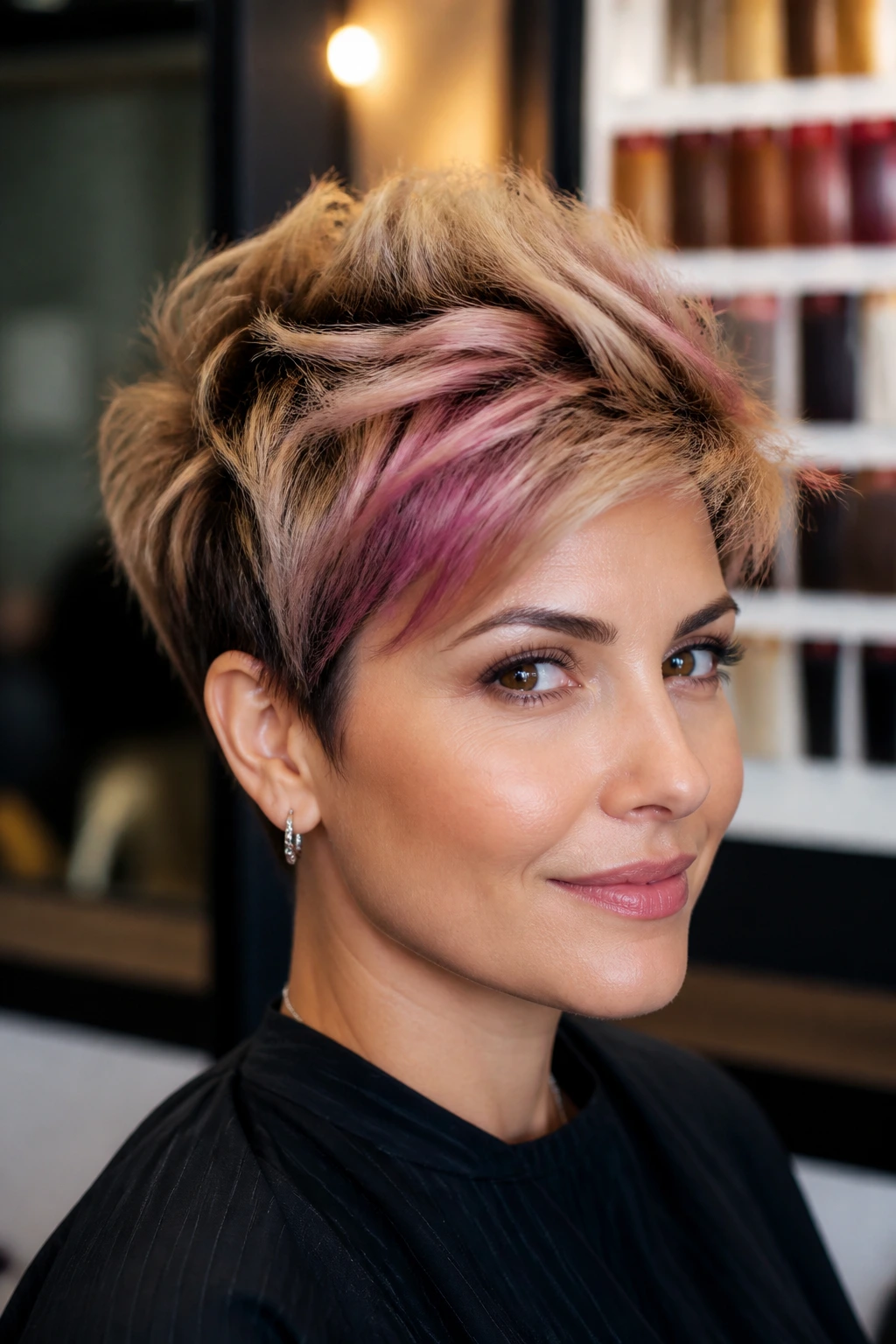
Shape holds its own: Thick hair gives a pixie, crop, or bob enough body to keep color panels looking crisp instead of stringy.
Bold color reads faster: Vivid shades like cobalt, magenta, copper, and lime pop harder on short lengths because there’s less hair for the eye to sort through.
Hidden color becomes a real payoff: Dense short hair can hide underlayers, peekaboo streaks, and color blocks under the top layer, so the reveal feels sharper when you turn your head.
The cut can carry more texture: Thick hair loves choppy ends, razor work, and point-cutting. Those details help bright color look deliberate instead of bulky.
Grow-out is easier to manage: Short hair means fewer inches to retouch, which matters when you’re working with semi-permanent color, roots, or a lighter shade that needs regular refreshes.
You can go louder without losing the cut: On fine hair, a vivid color can overwhelm the silhouette. On thick hair, the shape stays visible under the shade, and that balance is the whole point.
1. Neon Money-Piece Pixie
The front of this cut does most of the talking. A deep brunette, black, or dark chocolate pixie gets split by two bright money pieces at the fringe line—think acid yellow, neon orange, or electric pink right where the face catches light first. On thick hair, those front streaks don’t vanish into the rest of the cut; they sit on top like a deliberate slash of color.
Why It Works on Dense Hair
The bulk in the back keeps the pixie from collapsing, which matters because a strong front highlight needs a solid base. If the shape is too wispy, the color looks random. If the back is clipped close and the top is left with enough length to sweep forward, the bright strands frame the eyes instead of getting swallowed up by volume.
A little root shadow helps here. Too much lightening at the root can make the front look flat and over-processed, and thick hair already gives you enough visual weight. Ask for soft tapering around the temples so the neon reads as a feature, not a strip of paint.
Best for: People who want something loud but still wearable Monday through Friday.
Ask for: A short tapered back, longer top layers, and two face-framing pieces lightened just enough to take vivid dye.
Tip: Keep the rest of the color darker and matte. The contrast makes the front streaks look sharper.
2. Cherry Cola Textured Crop
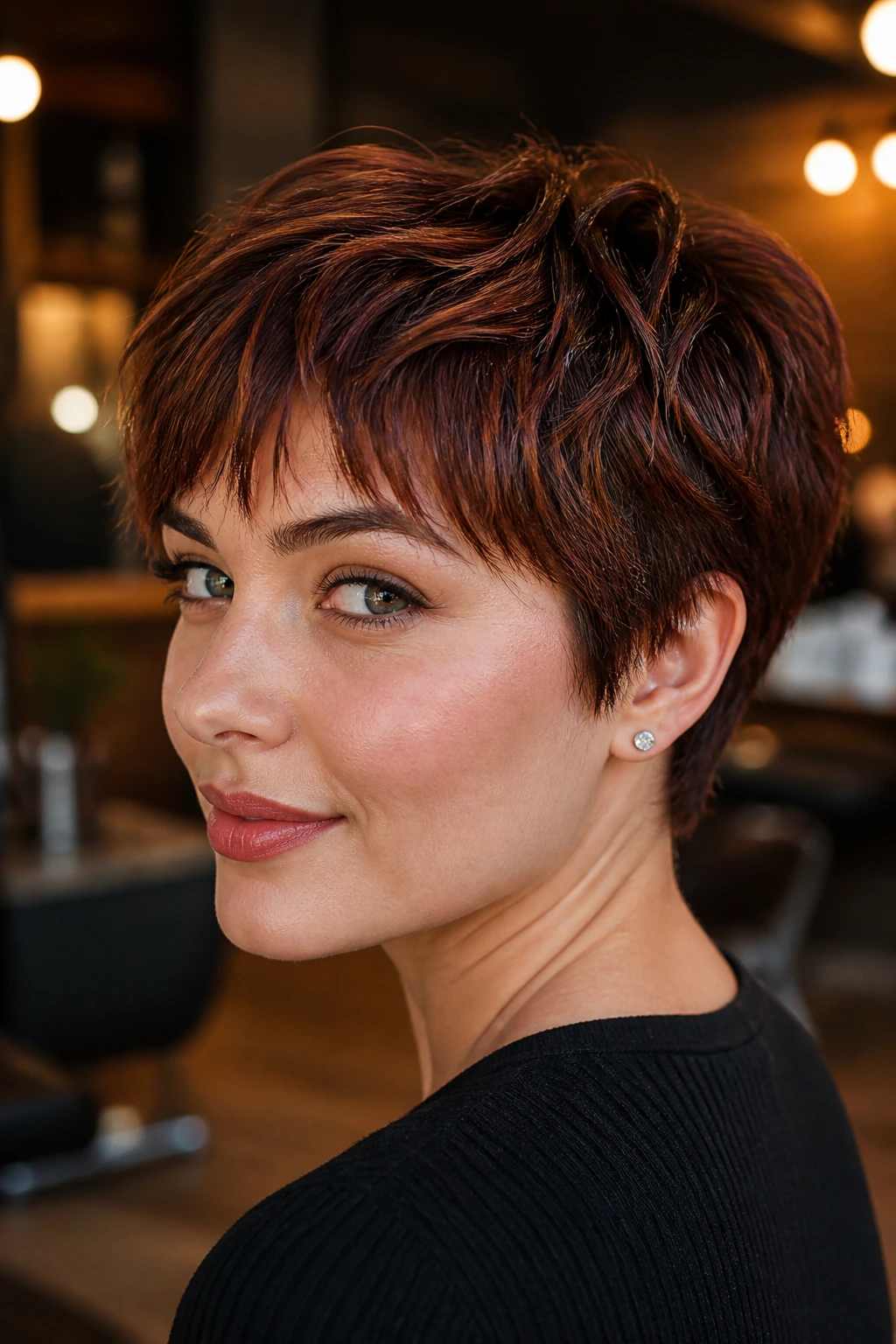
Cherry cola hair sits in that sweet spot between red and brunette, which is why it works so well on thick short cuts. The shade has depth at the root and a glossy red shimmer through the ends, so the whole look feels rich instead of flat. On a choppy crop, it has the same effect as a good lipstick: the shape is simple, but the color does the heavy lifting.
The texture matters. A thick crop with piece-y layers lets the red tones catch differently across the cut, especially if the top is styled with a light cream or matte paste. You get darker, wine-like pockets near the base and brighter cherry notes where the ends turn outward. That movement keeps the color from reading as one block.
This is one of my favorite choices for thick hair because it doesn’t fight the density. It makes the density look intentional.
What Makes It Different
Unlike a flat burgundy bob, cherry cola has enough brown in it to soften regrowth. That’s useful if you’re not keen on touching up roots every few weeks. It also plays nicely with warm skin tones, but it won’t look muddy on cooler ones if the red leans blue rather than orange.
3. Electric Blue Undercut Pixie
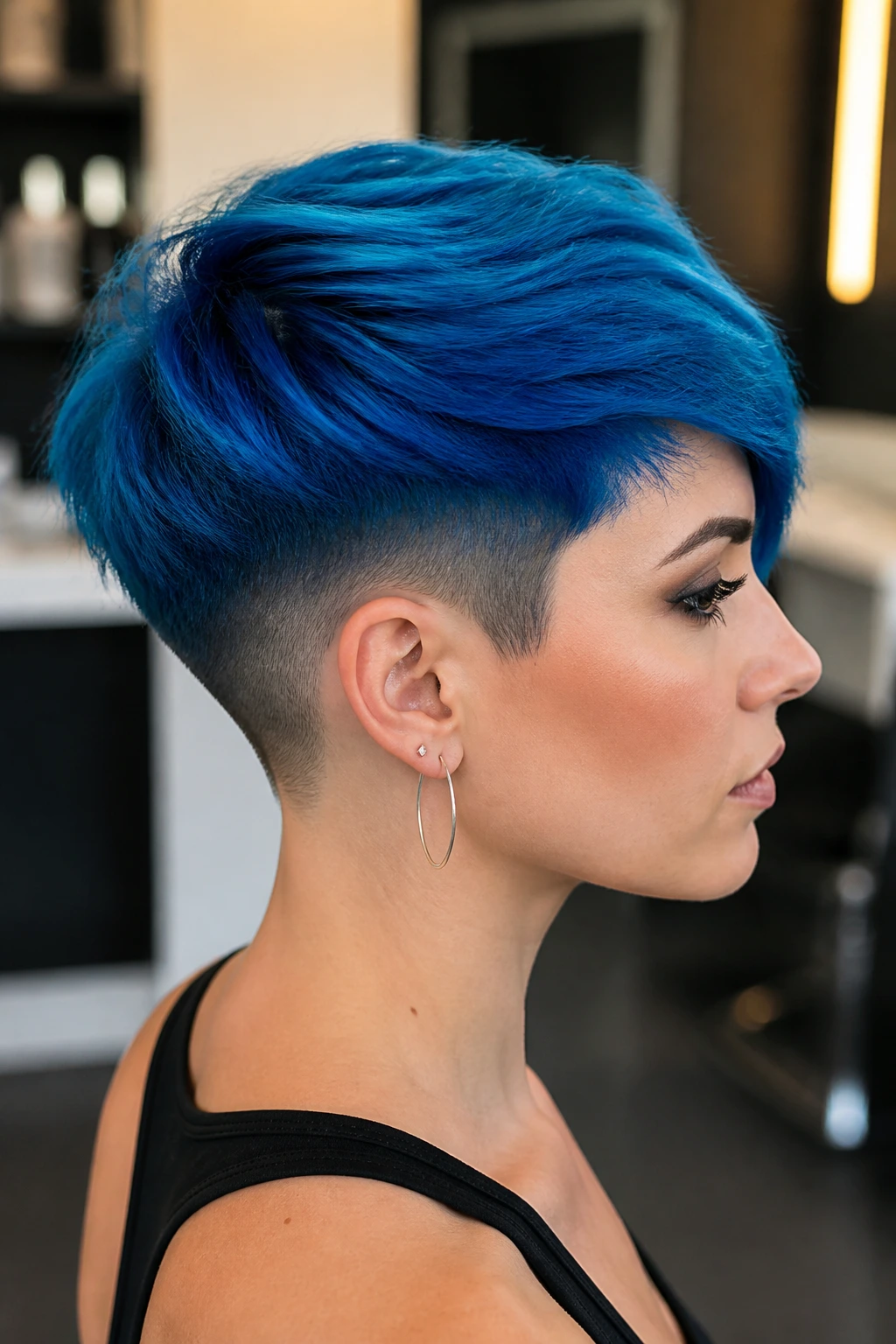
If you want drama, here it is. A close undercut with a longer top layer gives electric blue room to shine, and thick hair keeps the contrast strong. The shaved or tightly clipped nape removes bulk, while the top stays long enough to sweep over, spike up, or fall into a side-swept wave. That top section becomes the perfect little billboard for the blue.
How to Wear It
This style works best when the cut line is clean. The undercut should be neat around the ears and nape, because the color looks sharper when the outline is crisp. If the top is tinted blue all over, the look feels bold and even. If only the ends or the top layer are dyed, the cut starts to look more dimensional and a little less intense.
Here’s the catch: electric blue fades into teal and then gray-blue fast if you wash with hot water every day. Cold or lukewarm rinses help, and so does a color-depositing conditioner once a week.
Use it when: You want something edgy enough to stand on its own without a lot of styling.
Styling note: A dry wax or fiber paste gives the top enough separation to show the color slices.
4. Cotton Candy Frosted Bob
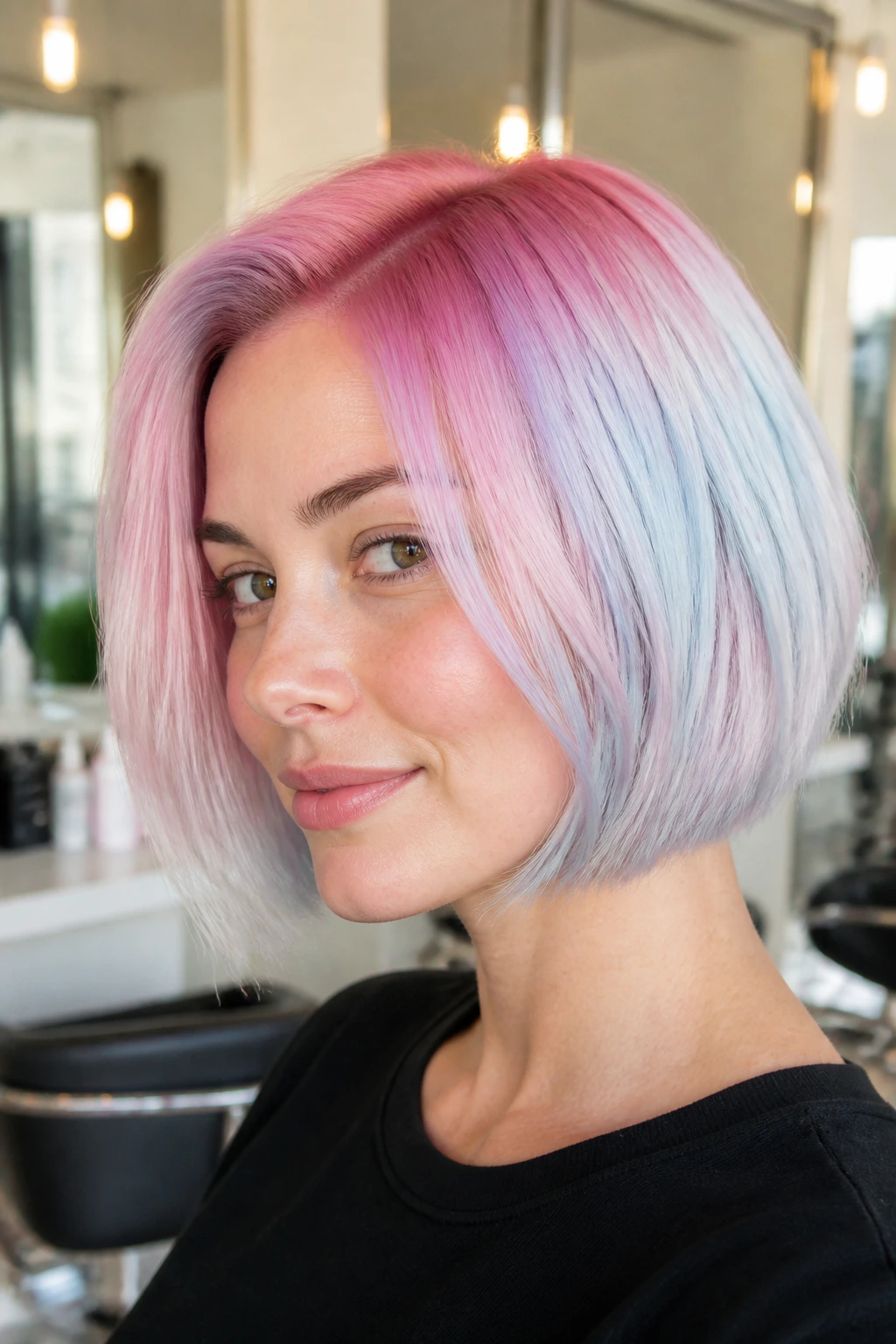
Cotton candy on thick hair can be dreamy instead of sugary. A chin-length bob with blunt ends and soft internal layering gives pastel pink, lilac, and baby blue enough surface area to blend without turning muddy. The density of the hair keeps the shape from going limp, which is half the battle with pastel tones.
I like this look when the front pieces are slightly brighter than the back. It keeps the face from disappearing into one pastel blur. Thick hair also helps the color sit more evenly after lightening, because there’s enough structure in the cut to prevent that flimsy see-through effect you get on very fine strands.
A frosted pastel bob looks best when it’s glossy, not crunchy. Use a smoothing cream before blow-drying, then finish with a light serum on the ends. Too much product and the pastel just sinks.
A Small Salon Detail That Matters
Ask for soft beveling at the ends rather than a hard, heavy shelf. That tiny change stops the bob from looking helmet-like, and pastel colors are unforgiving about shape.
5. Sunset Ombre Shag Pixie
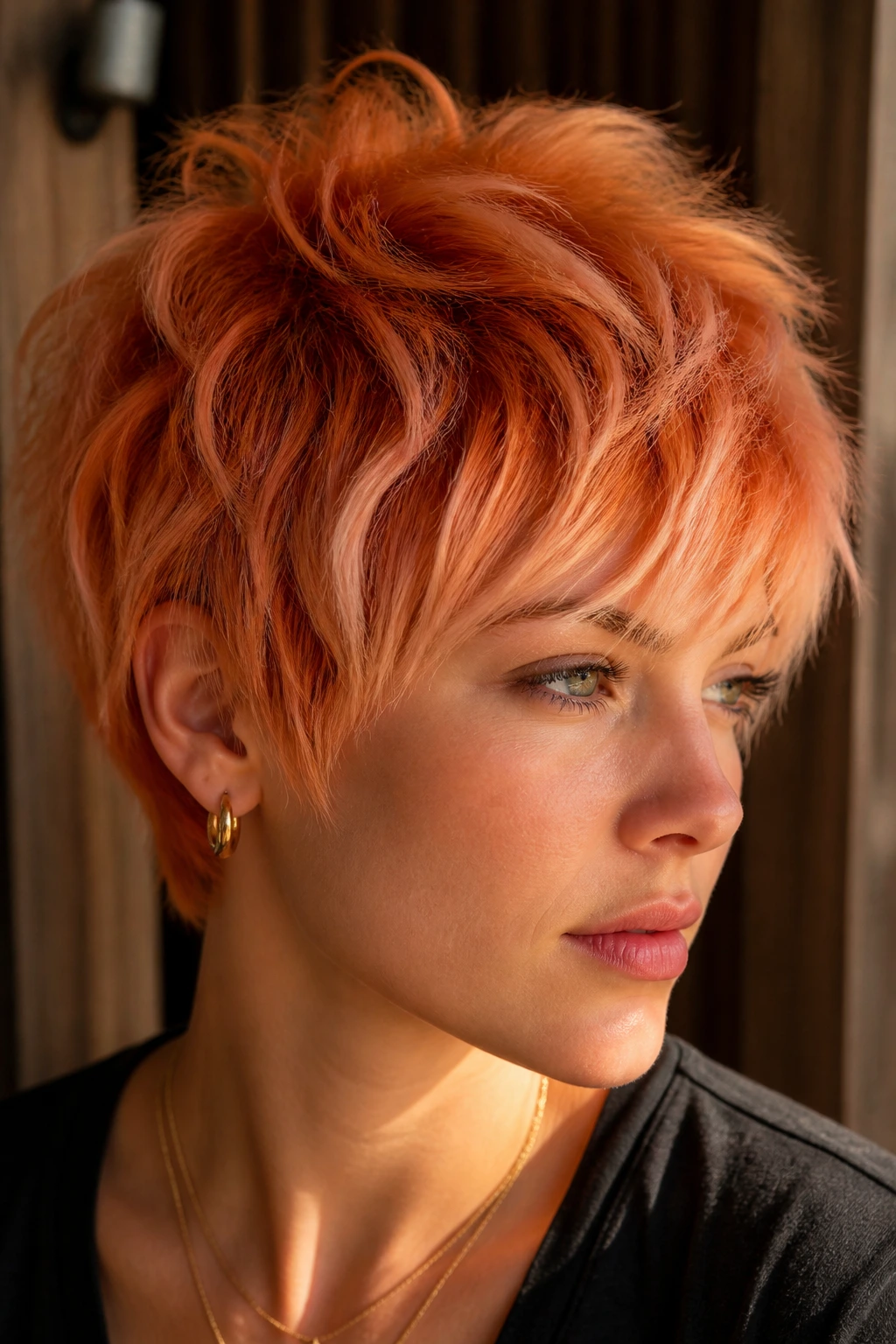
This one leans into movement. A shaggy pixie with copper at the root, peach in the middle, and pale apricot or rose at the tips gives the impression of sunset fading through the hair. Thick hair is a help, not a hurdle, because the volume lets the color melt across layers instead of stacking into one flat band.
The best version has feathered top pieces and a tighter side contour. You want the eye to travel through the cut, not stop at a blunt line. The orange-to-pink gradient feels especially good on thick hair that naturally wants to puff out a little—those layers break up the bulk so the colors can show.
It’s also one of the easiest vivid looks to soften later. If the peach fades first, the copper root and warmer mid-lengths still look deliberate.
Why it stands out: The shag shape keeps the top light, while the ombré keeps the color story interesting from every angle.
Styling note: Scrunch in a small amount of texturizing cream and let the ends stay a bit piece-y.
6. Split-Dye Side-Part Crop
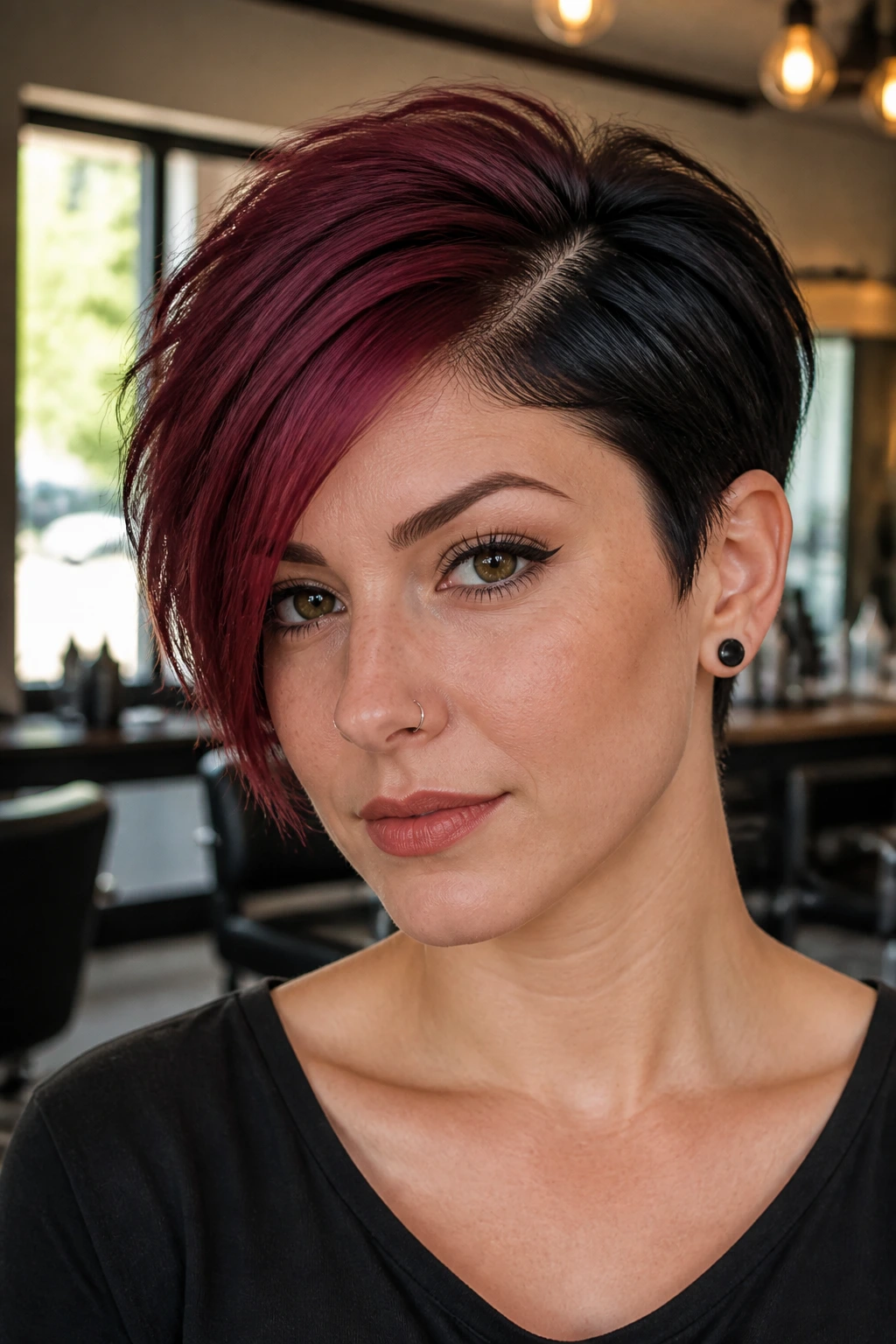
Split dye is a bold move, and on thick short hair it actually looks cleaner than people expect. The side part creates a hard line, and one side can stay dark while the other side goes vivid—plum, teal, fuchsia, cobalt, whatever you can commit to. The density keeps both halves full, so the contrast feels graphic instead of patchy.
This style is strongest when the haircut has enough top length to sweep across the forehead. If the top is too short, the split can read as accidental. If it has a little more length on one side, the color boundary becomes part of the shape. That’s the good stuff.
For thick hair, I’d ask for weight removal near the parietal ridge so the part doesn’t puff out too hard. That keeps the color divide visible even when the hair grows a little.
Best way to wear it
Keep the styling simple. A side-swept blow-dry or finger-styled texture is enough. Over-styling kills the line, and the line is the whole point.
7. Emerald Peekaboo Pixie Bob
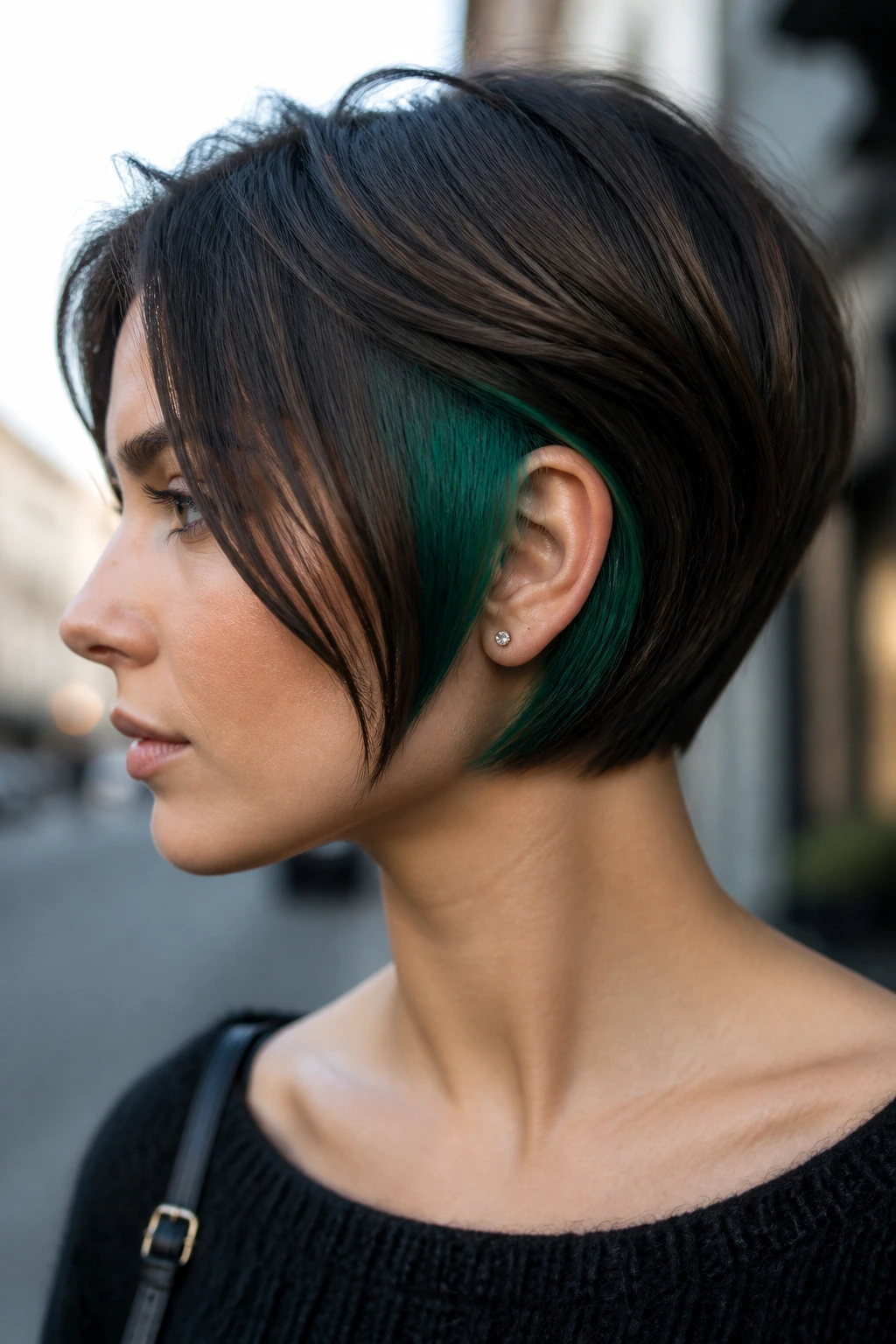
A peekaboo color is the one I reach for when someone wants surprise, not shouting. An emerald underlayer hidden under a dark pixie bob flashes when the hair tucks behind the ear or when the top layer shifts. Thick hair is excellent for this because the top has enough density to hide the color until you choose to show it.
The cut should be short at the nape with a little more room through the crown. That way the emerald peeks out instead of taking over. If the top is too thin, the whole effect turns obvious. If it’s dense enough, the green feels like a secret.
I like emerald especially on short thick hair because it keeps a polished feel. Green can go edgy fast; under the top layer, it reads a little more luxe.
Ask your colorist for: A hidden panel beneath the crown and around the lower sides, not all-over green.
Maintenance note: The underlayer is the easiest part to refresh, which is handy if you want bright color without a full head commitment.
8. Magenta Micro-Bob with Choppy Fringe
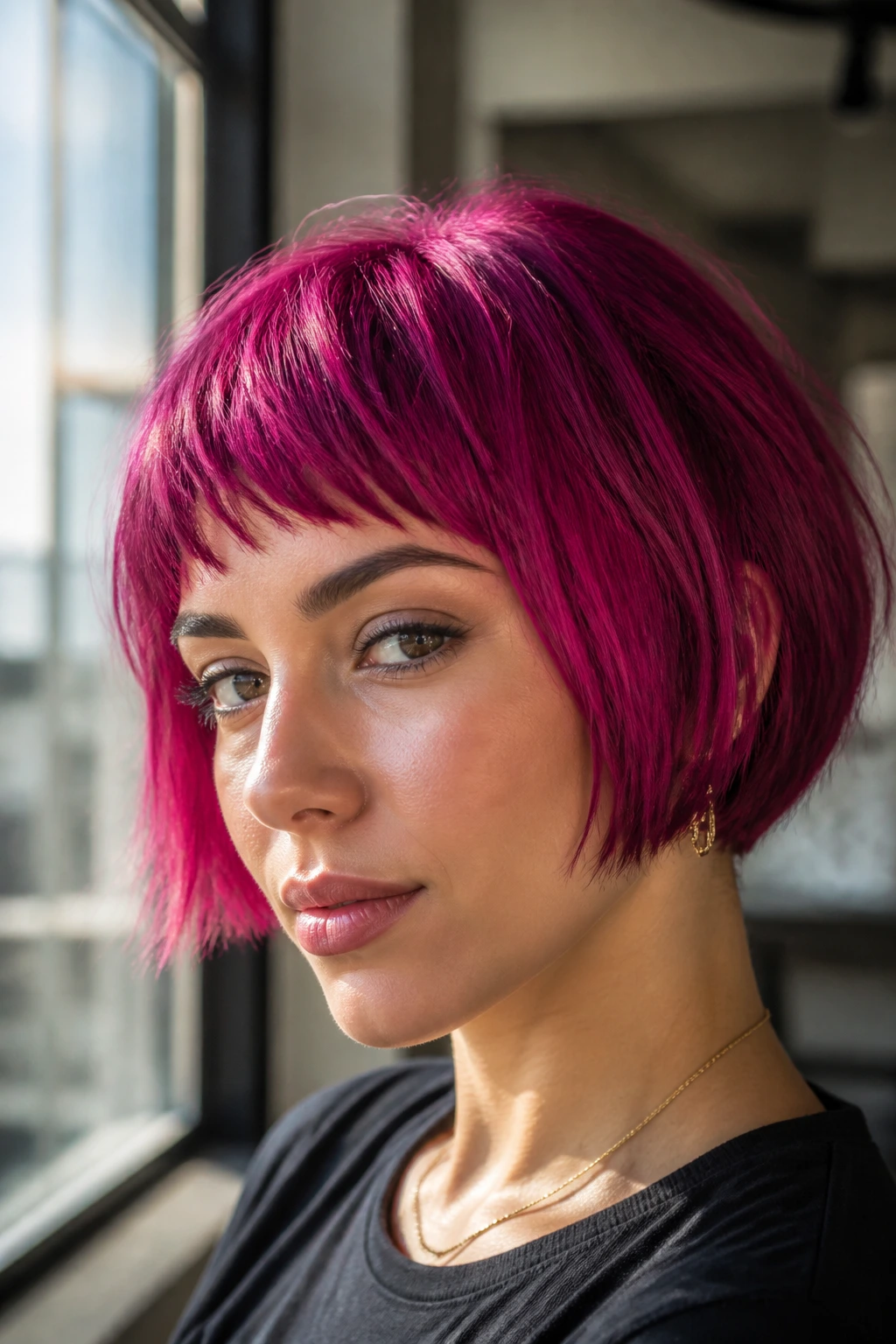
There’s nothing shy about magenta, and on a micro-bob it looks sharp as a slice. Thick hair gives the bob enough body so the fringe doesn’t sit limp on the forehead. The choppy edge keeps the color from feeling too sweet or too polished.
This one works because magenta is a loud shade with a lot of red-blue depth, so it reflects light in a way that makes the hair look glossy even when the cut is textured. If you want the color to feel even richer, keep the roots slightly deeper and let the brighter magenta live through the mid-lengths and ends.
A blunt little bob can look boxy on thick hair, so ask for light internal layering. Not too much. Just enough to stop the shape from puffing out at the jaw.
What to style with it
A flat iron bend at the ends or a round brush tuck under the chin helps the cut read as deliberate. Magenta loves a clean line.
9. Copper Flame Layered Crop
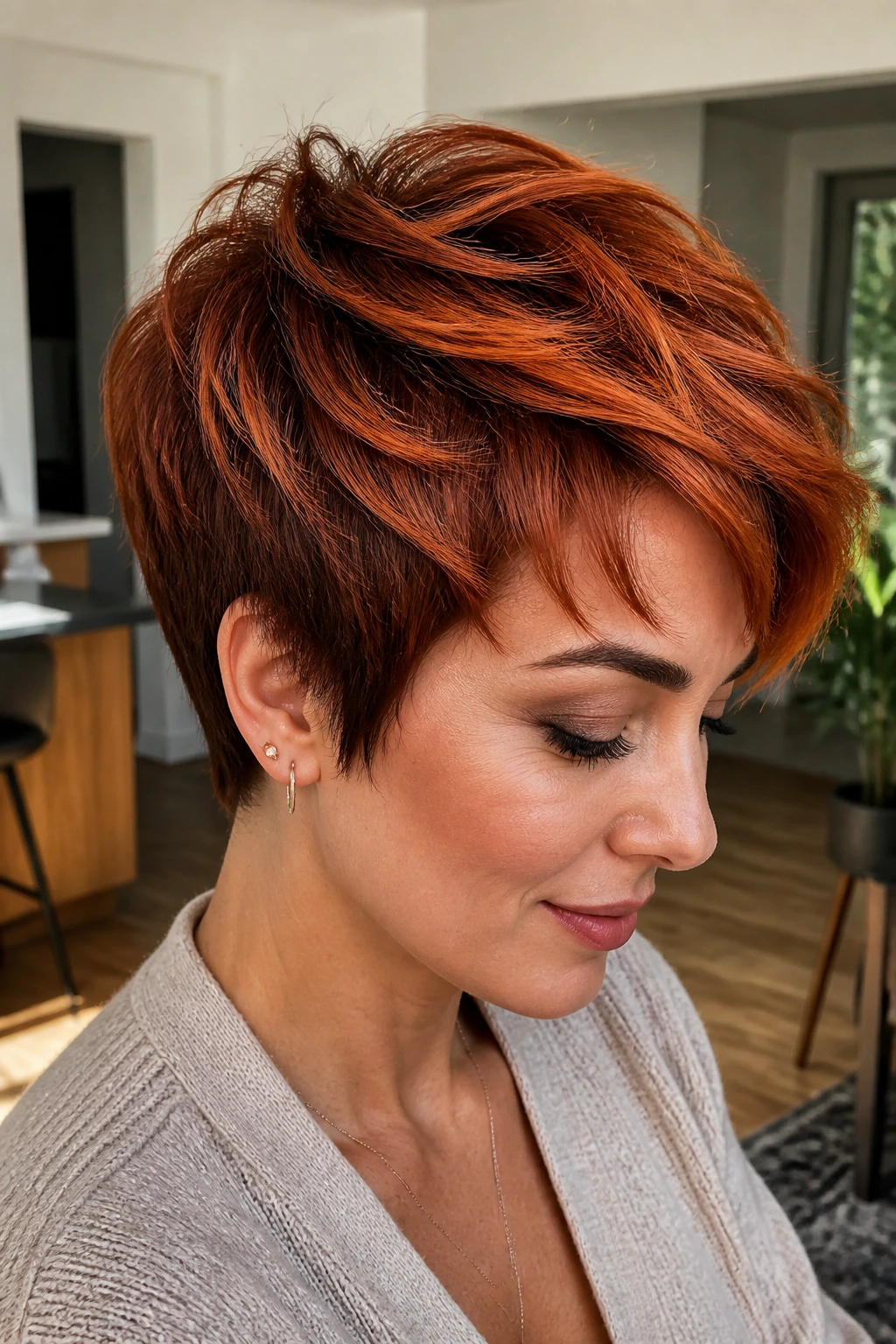
Copper is one of those shades that makes thick short hair look expensive without trying too hard. A layered crop with brighter copper ribbons near the crown and deeper auburn around the base creates a flame effect, and the density gives the color more depth than it would have on a finer head of hair.
What makes this cut work is the layering through the top. The crown should have lift, the sides should sit closer to the head, and the front should be long enough to feather away from the face. That shape keeps the copper moving, which matters because this color looks best when it shifts from bright to dark as you turn.
It’s a smart pick if you want a vivid tone that doesn’t demand fantasy-level upkeep. Copper grows out more gracefully than most neon shades, and on short hair, that grow-out stays neat longer.
A good sign: In daylight, the top should show bright orange-gold flashes; indoors, it should settle into a deeper penny tone.
10. Lavender Buzzed-Nape Pixie
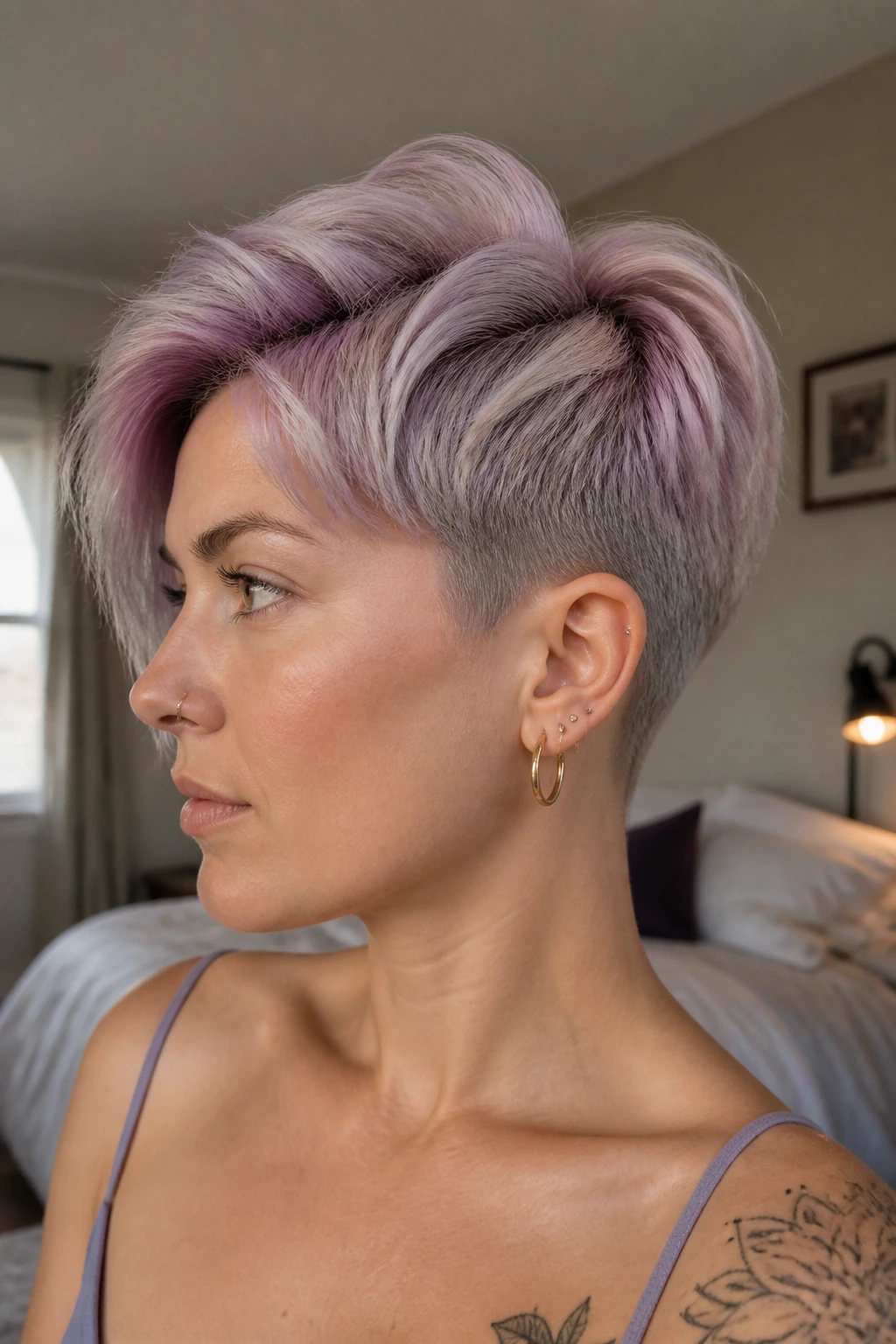
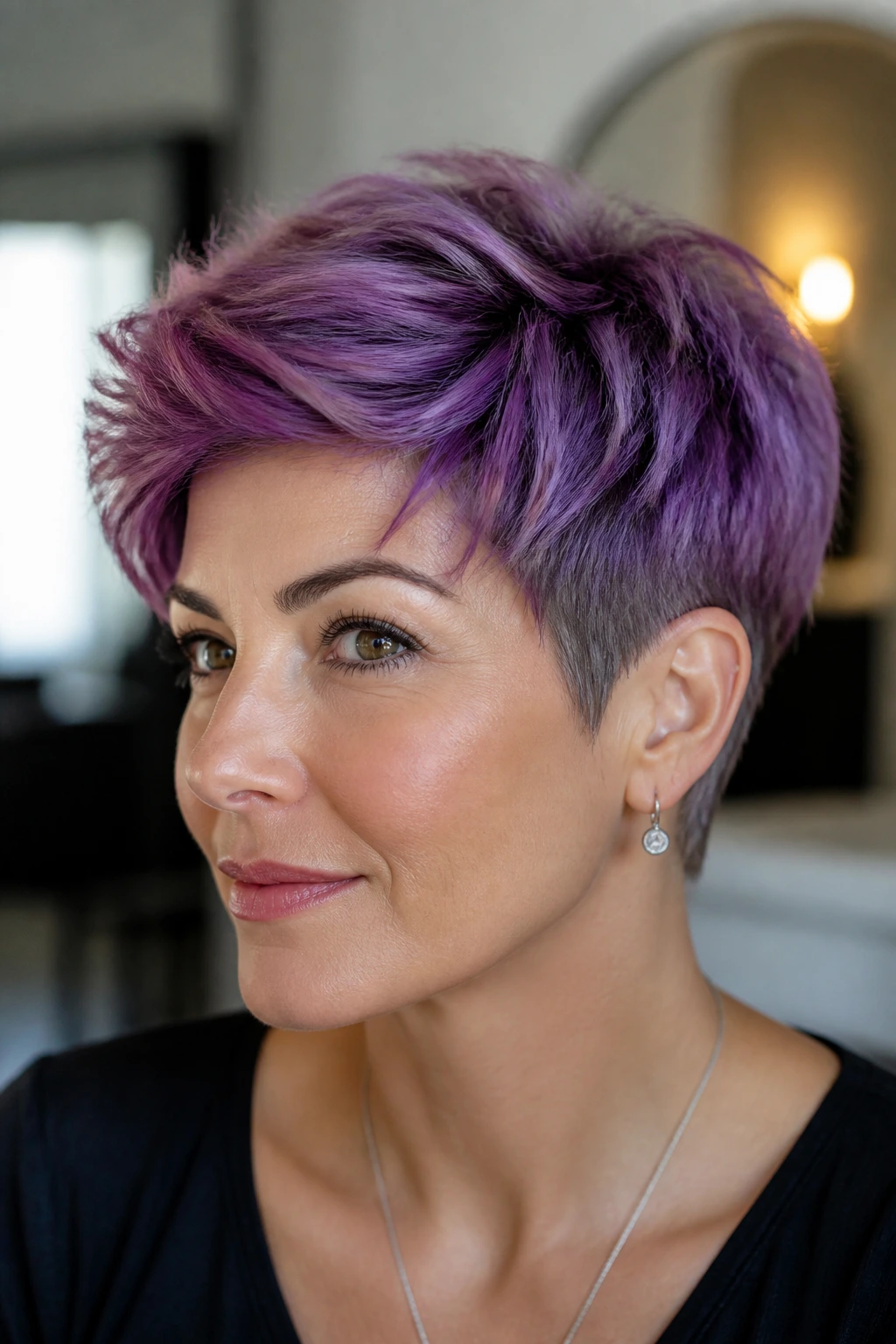
A buzzed nape plus lavender top is a lovely little contradiction. The close back removes weight where thick hair tends to swell, while the soft purple shade keeps the cut from looking severe. On short hair, that contrast between tight and airy is what makes the whole thing work.
Lavender can go powdery if the lightening isn’t even, so this style benefits from a strong, clean blonde base. Thick hair helps because the top layer has enough density to hold the pastel without exposing the scalp too much. That gives you a softer finish than a super-short, ultra-thin crop would.
I like this with a side part and a little lift at the roots. It keeps the lavender from sitting like a helmet.
Keep in mind
Pastel purple fades fast into silver-gray or creamy lilac. That’s not a flaw, really. It’s part of the charm, but it does mean a color mask or gloss is worth the shelf space in your shower.
11. Rainbow Underlayer Short Shag
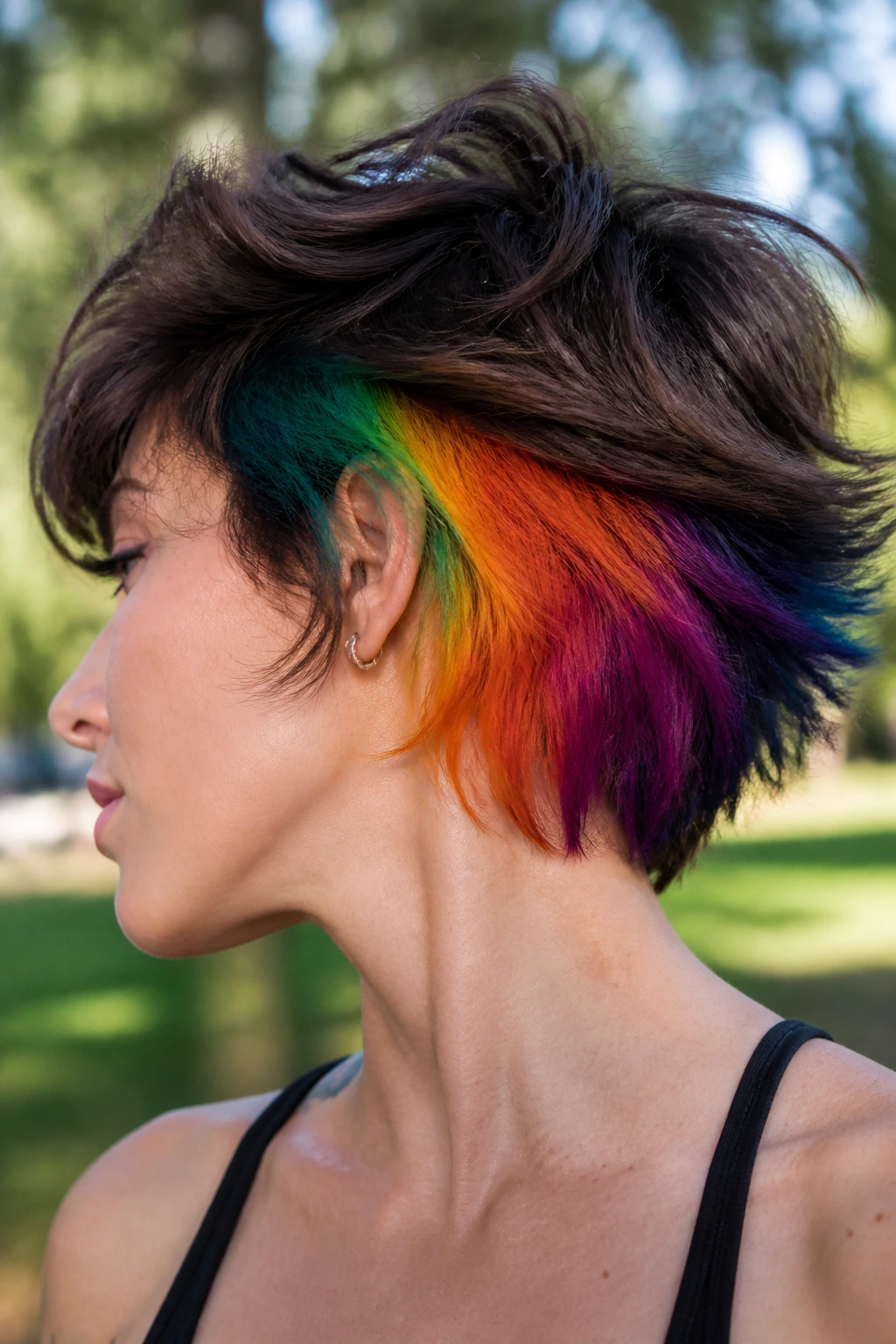
This one is pure fun, and thick hair is the reason it works. A short shag with hidden rainbow panels underneath—red, orange, yellow, green, blue, violet—lets the top layer stay a natural shade or a single vivid color while the underlayer does the wild part. When the hair moves, the color breaks out in streaks.
The shag cut matters because it creates lift between the layers. Without that separation, the rainbow can disappear. With it, the underlayer flashes through the choppy ends and around the ears. Thick hair gives you enough density to hide the bright colors until you want them to show.
It’s one of the few rainbow looks that can feel playful rather than costume-like. The cut keeps it grounded.
Best for: People who want color that doesn’t have to stay on display all day.
Styling note: Flip the crown with your fingers and a little lightweight spray. The movement is what reveals the good bits.
12. Icy Silver Piece-y Pixie
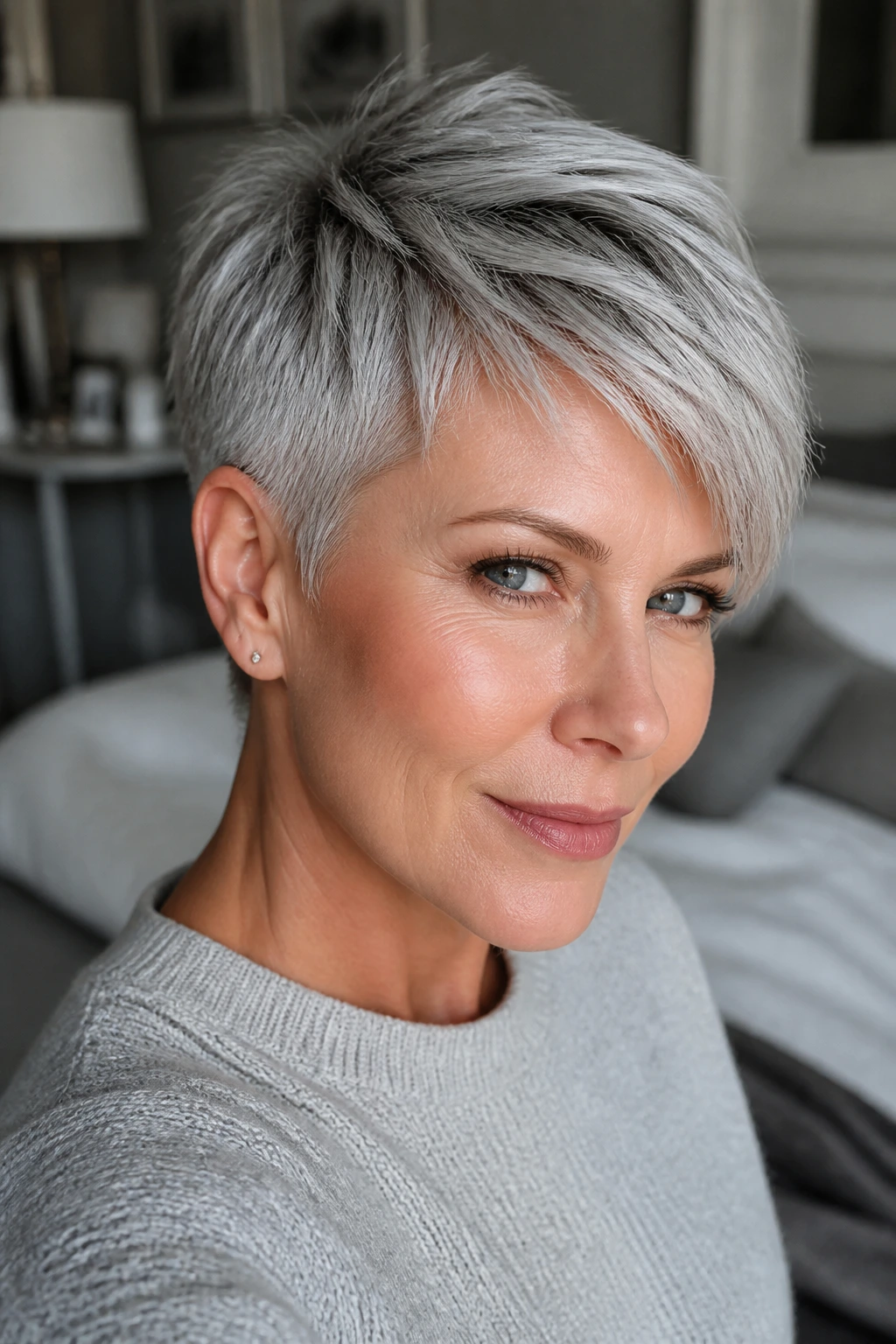
Silver on thick short hair can look almost architectural. The color itself is cool and reflective, but the piece-y styling stops it from feeling rigid. A pixie with long top pieces, close sides, and an icy silver tone makes the haircut look sharper, not flatter.
The trick with silver is tone control. If the blonde base is too yellow, the silver reads beige. If it’s lifted cleanly, the result is crisp and bright, especially on thick hair where the cut line has enough substance to hold the shape. A little darker root shadow can keep it from looking washed out.
I like this look because it handles texture well. You can rough it up with paste, smooth it down with cream, or wear it slick. Silver has range.
How to make it hold up
Use a purple shampoo sparingly, maybe once a week, not every wash. Overdoing it can leave the ends chalky, and thick short hair still needs shine to keep silver looking expensive.
13. Coral Box-Bob with Tucked Ends
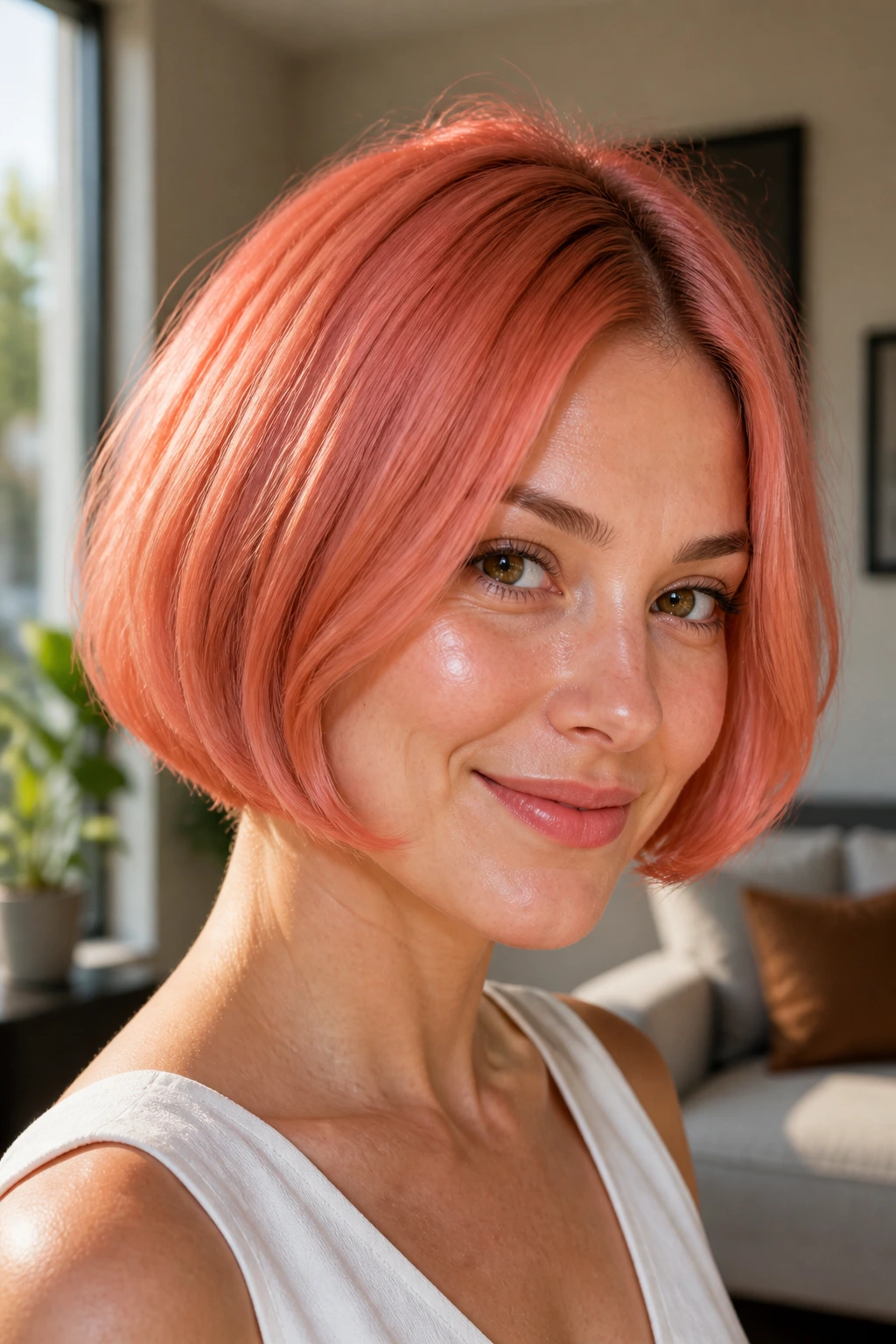
Coral is one of those colors that feels bright without turning aggressive. On a box-bob with tucked ends, it can look fresh and tidy at the same time. Thick hair gives the box shape the fullness it needs, while the coral shade prevents the cut from looking severe.
The clean line around the jaw is the whole visual here. A tucked-under end creates a smooth curve, and coral warms that curve up. If the hair is very dense, ask for a little internal removal near the back so the bob doesn’t balloon out. The color will look better when the shape sits close to the head.
This is a strong choice for someone who likes structure. It’s not messy. It’s not shaggy. It just sits there looking deliberate, which is rarer than it sounds.
Style it with: A round brush and a smoothing cream, then a touch of shine spray on the ends.
14. Teal and Black Color-Blocked Crop
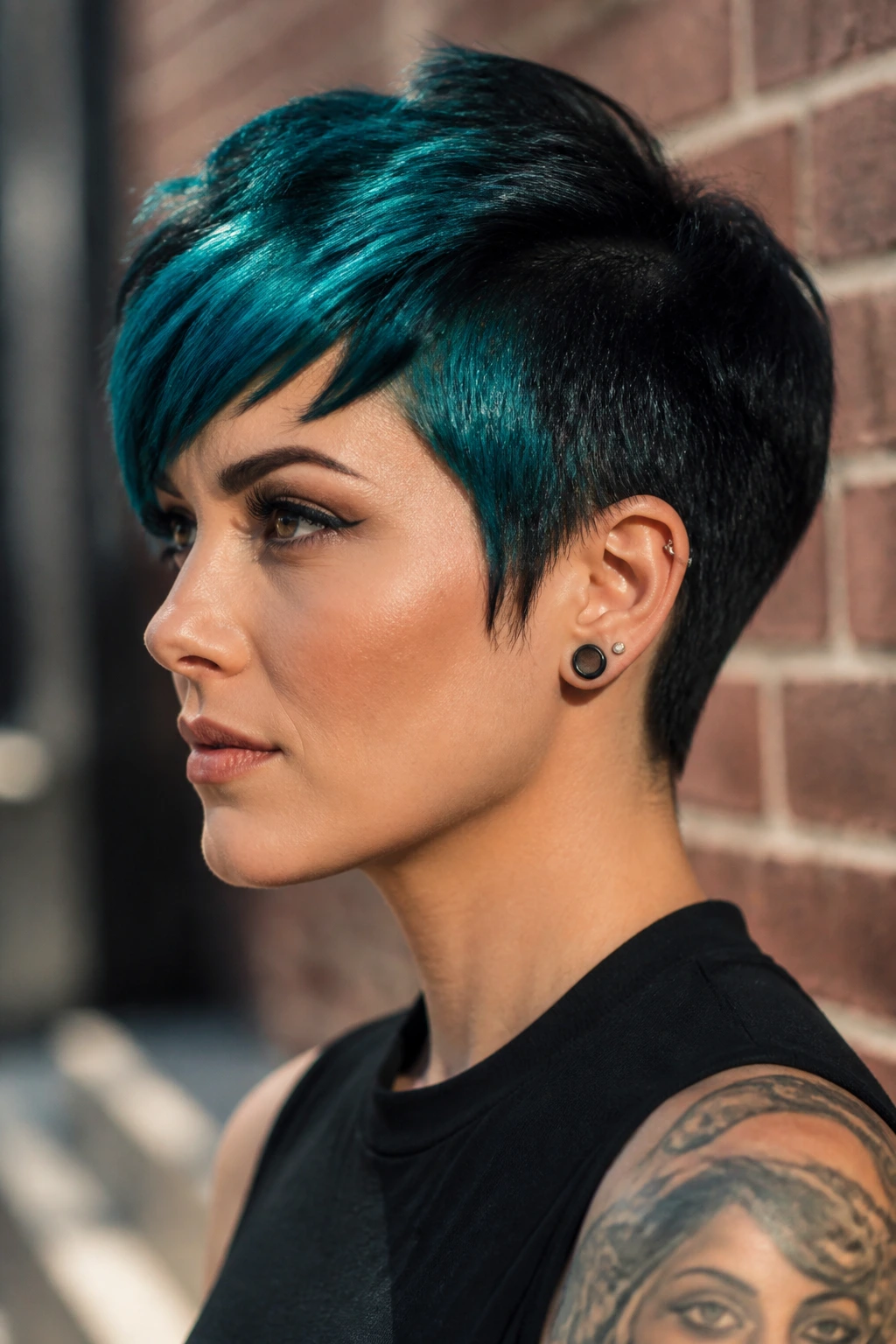
Teal against black is a little moody, a little graphic, and very good on thick short hair. The color-blocking works because the dark sections anchor the style while the teal adds brightness in hard-edged chunks. On a crop, that contrast can be placed through the fringe, crown, or one side only.
This look needs a haircut with clear geometry. Think of it as color you build into the structure, not color you throw on top. Thick hair gives you enough canvas for the block to read from across the room, which is useful because teal can disappear if it’s too finely striped.
I’d choose this when you want a strong look that still feels grown-up. It has edge, but it doesn’t rely on softness to carry it.
A practical detail
Use a matte paste if you want the blocks to look sharp. Shiny products can blur the line, and blur is the enemy of color blocking.
15. Rose Gold Tapered Pixie
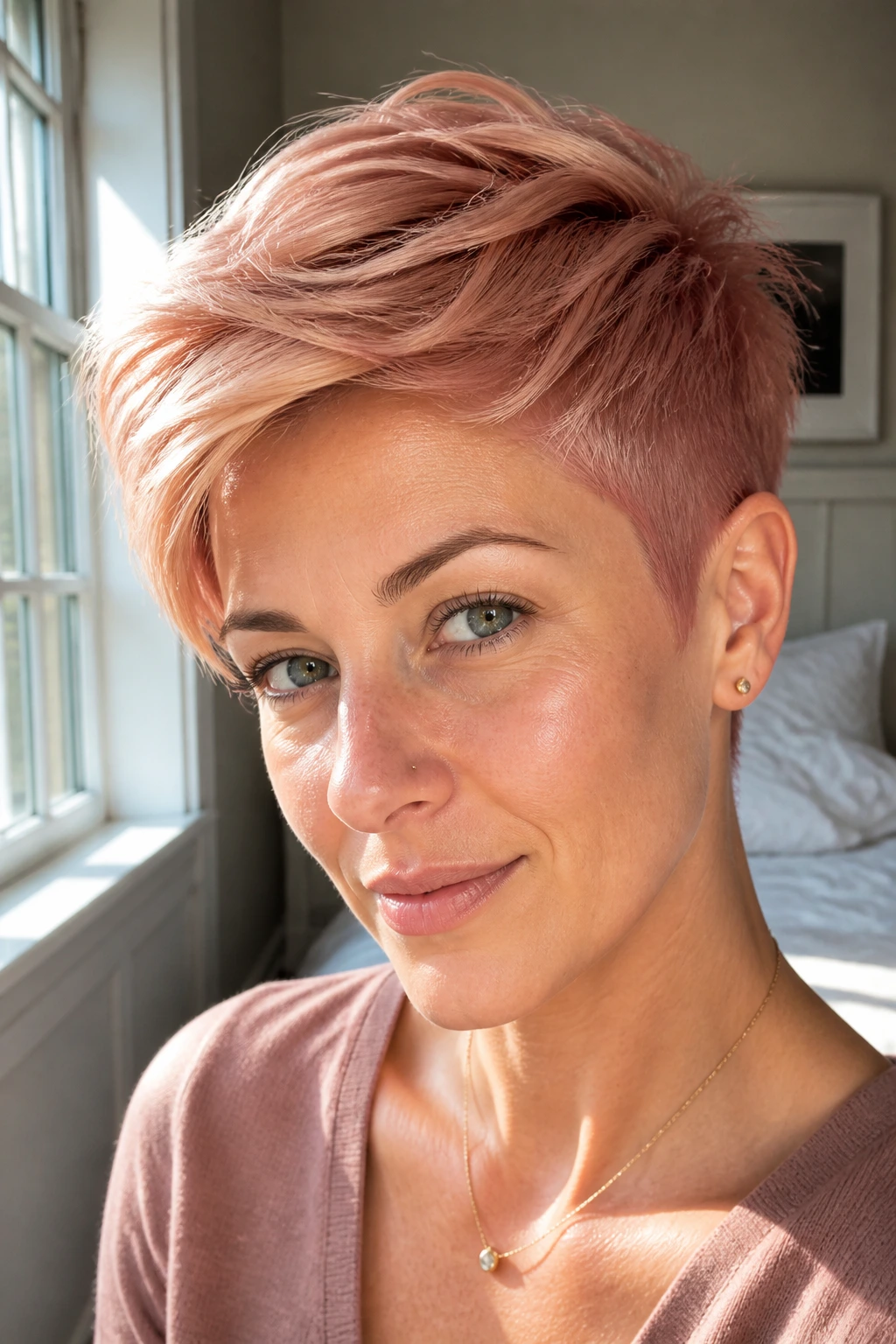
Rose gold has a way of flattering short thick hair without begging for attention. The tapered sides trim away bulk, the longer top keeps the shape soft, and the pink-gold color gives the cut warmth. It’s one of the easiest ways to make a pixie feel polished and light.
What I like about rose gold on thick hair is that it doesn’t need perfect styling. The shade already has enough glow. If the top is slightly tousled, the color still looks intentional. If it’s smoothed down, it turns elegant fast. The taper is what keeps the silhouette from getting heavy.
This is a good color if you’re easing into vivid hair for the first time. It’s bright, yes, but not in a shouty way. It fades into peach and soft blonde tones that still look nice as they wash out.
Best paired with: Side-swept bangs and a soft, shiny finish.
16. Plum Melt Textured Bob
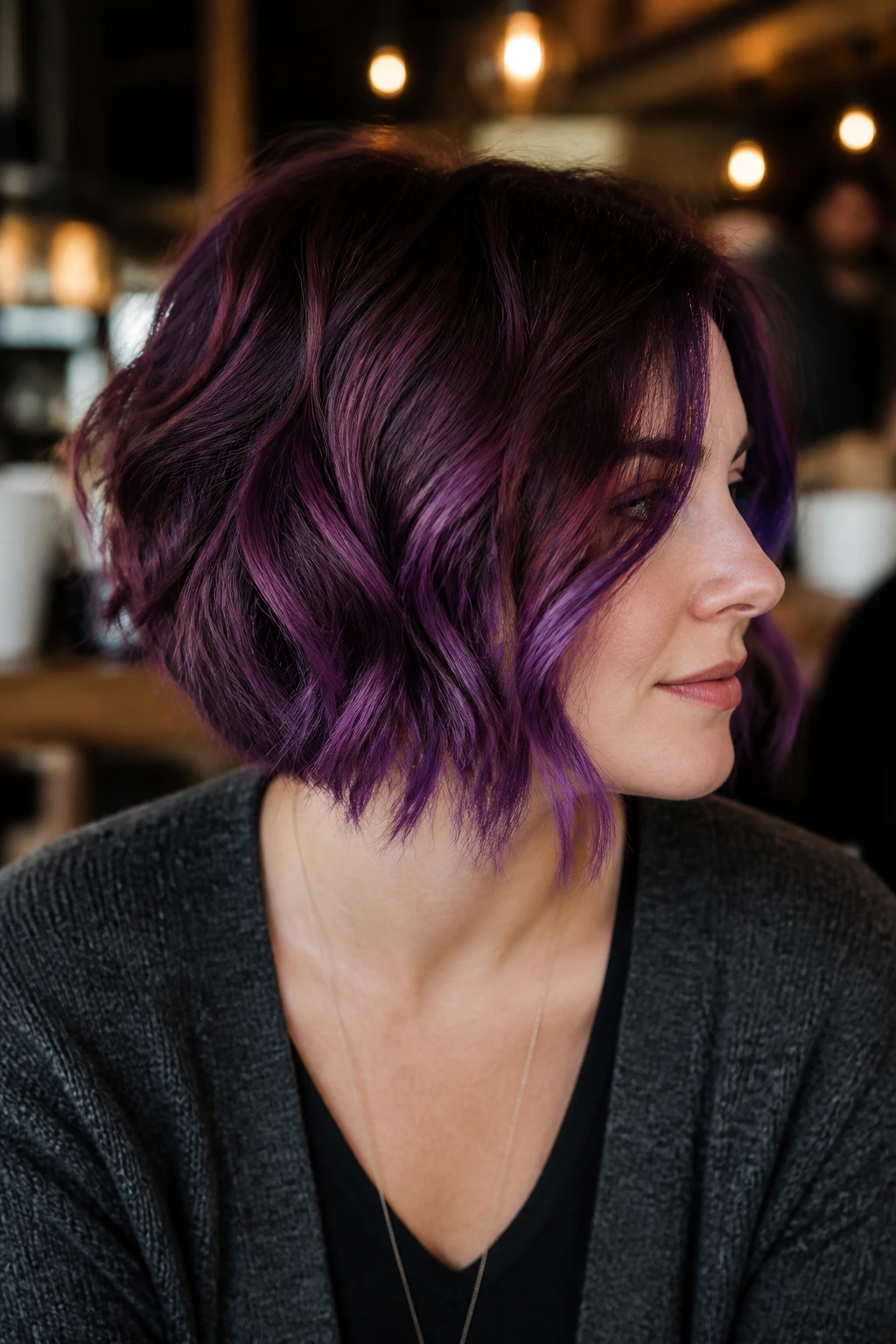
Plum can be rich or bruised, and a good melt keeps it rich. On thick short hair, a plum-to-violet gradient through a textured bob gives the cut depth without making it look flat. The lower layers can stay darker, while the ends pick up a brighter berry tone.
A melt works better than a solid block here because thick hair has enough body to show each shade as the layers move. A blunt bob with plum all over can feel heavy. A textured bob with a color melt feels alive, and that’s a better fit for dense strands.
This look is one of the quieter vivid choices on the list. Quiet, but not shy. The plum stays visible, especially in daylight or under a warm lamp, and the texture keeps it from looking like a helmet.
Ask for this at the salon
A soft transition, not a hard line. You want the plum to shift gradually into violet or berry, especially around the ends.
17. Lemon-Lime Spiky Pixie
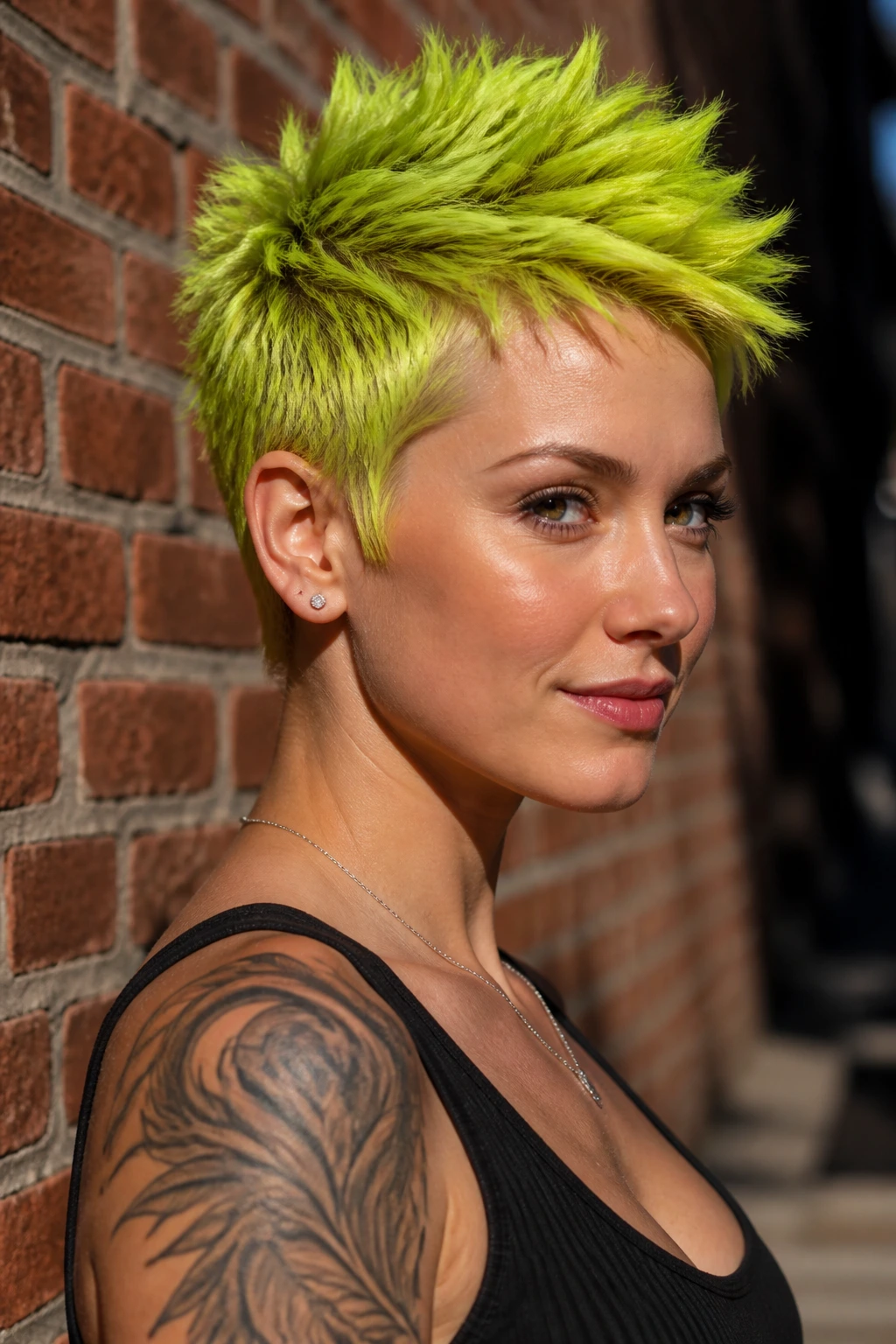
This one has attitude in capital letters. Lemon-lime color on a spiky pixie is bright, sharp, and slightly wild, which thick hair handles well because the texture gives the spikes something to stand on. The cut should be short at the sides and nape, with enough length through the top to push upward and forward.
The reason this color works is simple: lime looks most convincing when the cut has enough structure to support it. On thick hair, those little spikes or broken-up pieces don’t fall flat right away. They hold. And when the color is this loud, hold matters.
I’d wear this with a light wax or strong paste, worked through dry hair in tiny amounts. Too much product and the spikes collapse. Too little and the color pieces just blur together.
Good match for: Someone who likes a sharp finish and doesn’t mind the color being the first thing people notice.
18. Oil-Slick Gloss Short Cut
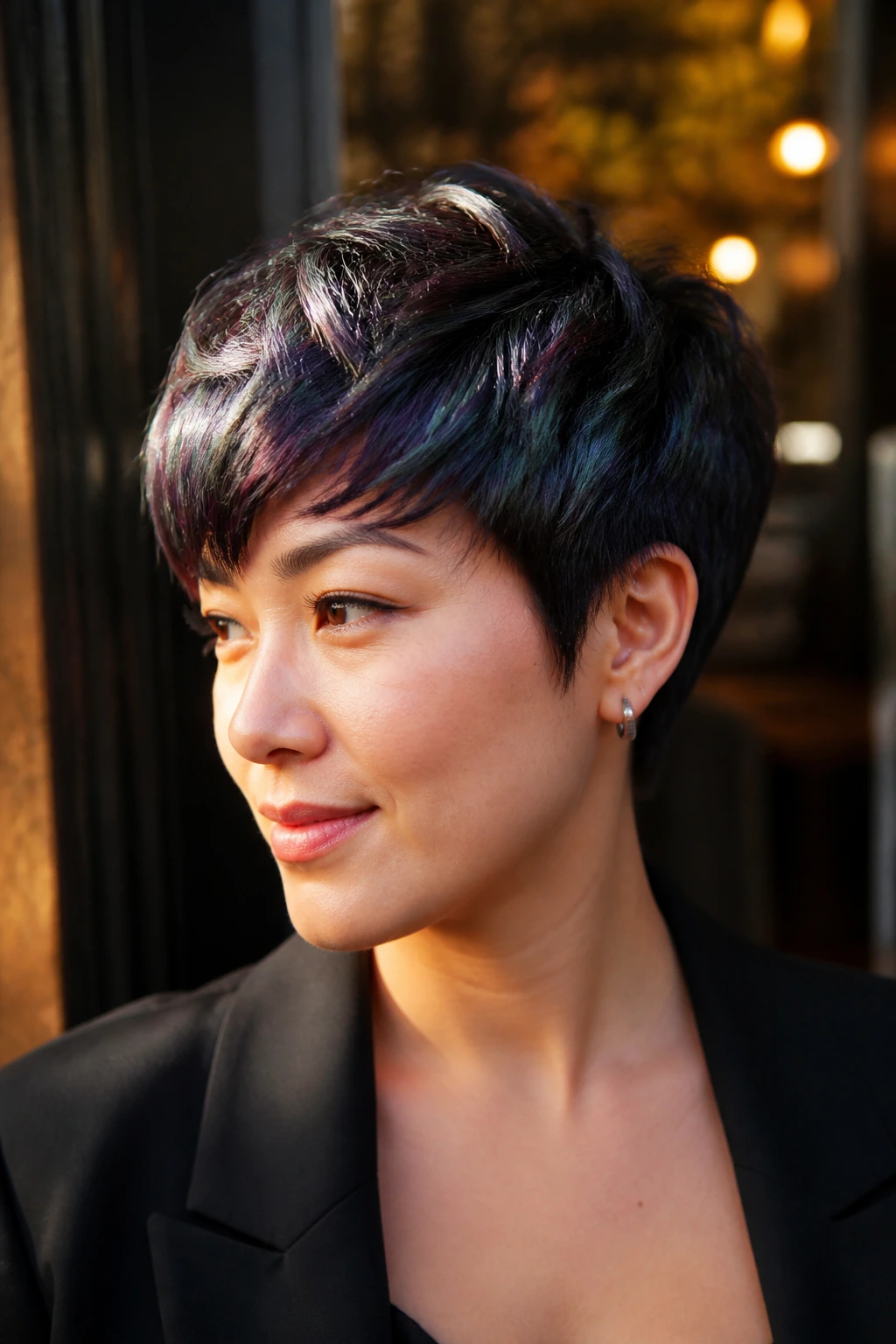
Oil-slick hair is dark at its base, but when the light hits it, you get flashes of green, violet, blue, and wine. On thick short hair, that effect can look incredible because the density gives the dark base enough weight and the color shifts enough surface to move across. A cropped cut with slight bend at the ends shows the shimmer better than a rigid shape.
The secret here is shine. This look depends on gloss, not matte texture. A smooth blow-dry, a serum on the mid-lengths, and a topcoat gloss treatment keep the colors from reading muddy.
It’s a smart choice if you want color that feels moody instead of candy-bright. There’s drama, but it’s not loud in the usual way. The hues show up in motion, which is more interesting anyway.
One small warning
Skip heavy oils near the roots. They flatten the cut fast and make the oil-slick effect read greasy rather than reflective.
19. Peach Sorbet Rounded Pixie
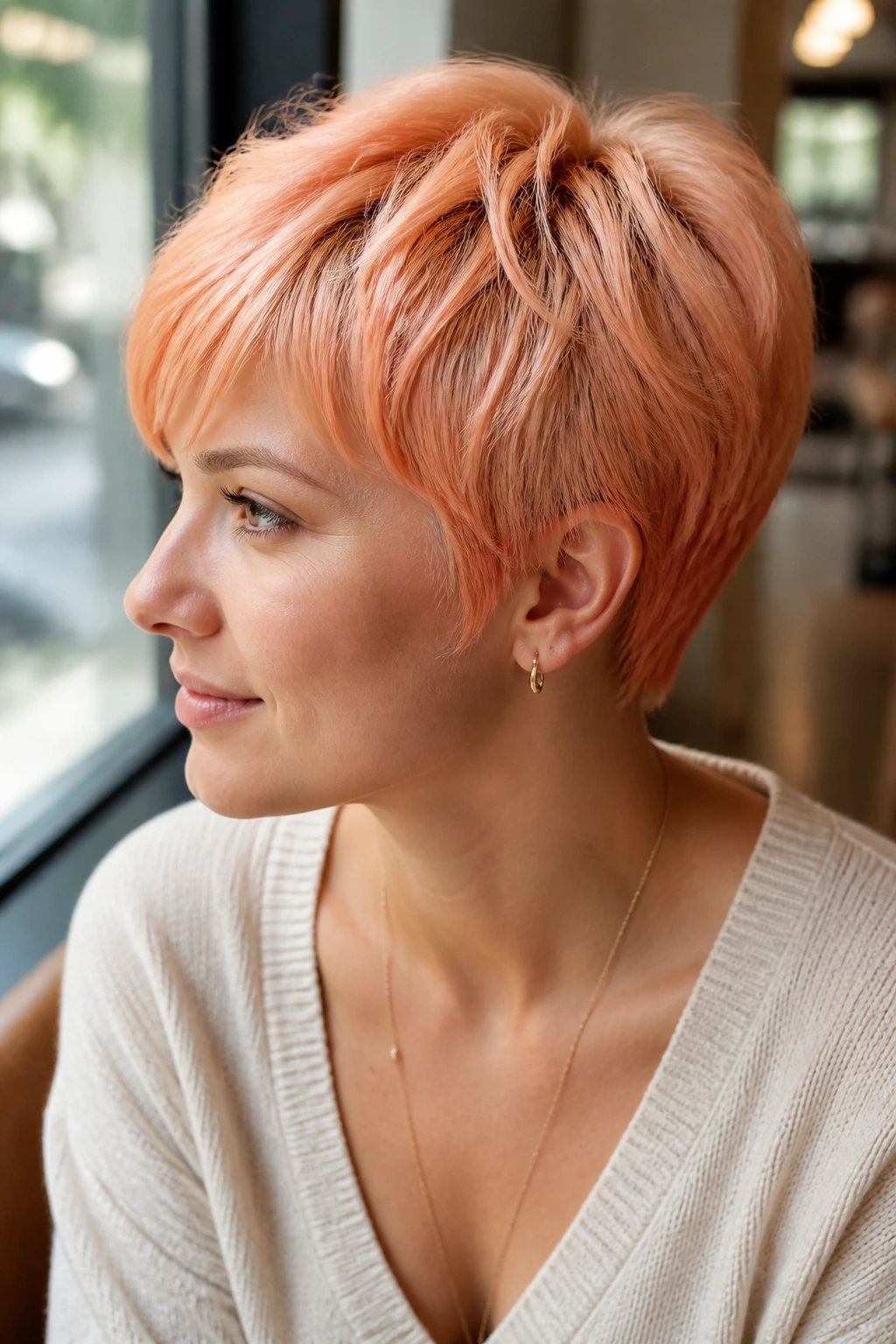
A rounded pixie with peach color looks soft on the surface, but thick hair keeps it from becoming puffy. That’s why it works. The round shape follows the head, the sides stay neat, and the peach tone brings enough warmth to keep the style from feeling severe.
This is one of those cuts that benefits from delicate layering around the crown. You want lift, not bulk. Peach shows off best when there’s a little light hitting the top and face-framing edges. On thick hair, that light catches the ends more cleanly than it would on a limp cut.
I’d recommend this if you want something colorful that still feels easy to wear. Peach, more than many shades, looks friendly without looking boring.
Styling note: A soft brush finish and a tiny bit of cream at the fringe are enough. Don’t overwork it.
20. Half-and-Half Bold Pixie
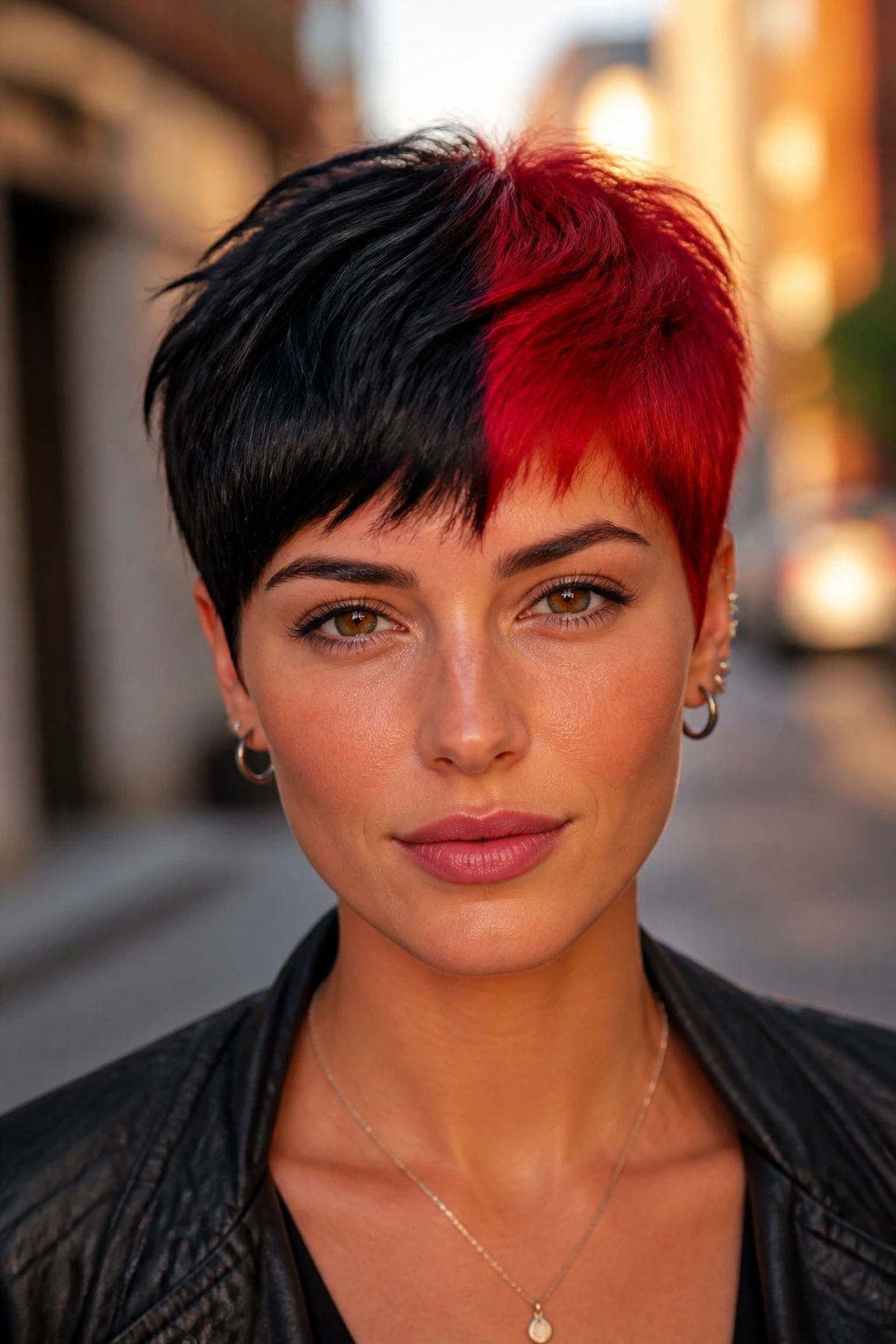
Half-and-half color is exactly what it sounds like: one side one shade, the other side another. On thick short hair, the look gets a clean line because the density gives each half enough presence. You can go black and red, cobalt and silver, plum and teal—whatever contrast you can live with in the mirror.
This style works best on a pixie with a longer top and a clearly defined part. That gives the color divide a shape to follow. Thick hair helps the line stay visible, but the cut has to be disciplined. Too many layers and the halves blur together.
The appeal here is obvious: it looks intentional from every angle. Face front, you get contrast. Turn your head, and the back gives you something else. That little bit of surprise is what makes the style stay interesting.
Practical tip
Keep the styling fairly smooth near the part so the split doesn’t fray. Texture can live in the ends. The line itself should stay clean.
21. Denim Blue Layered Crop
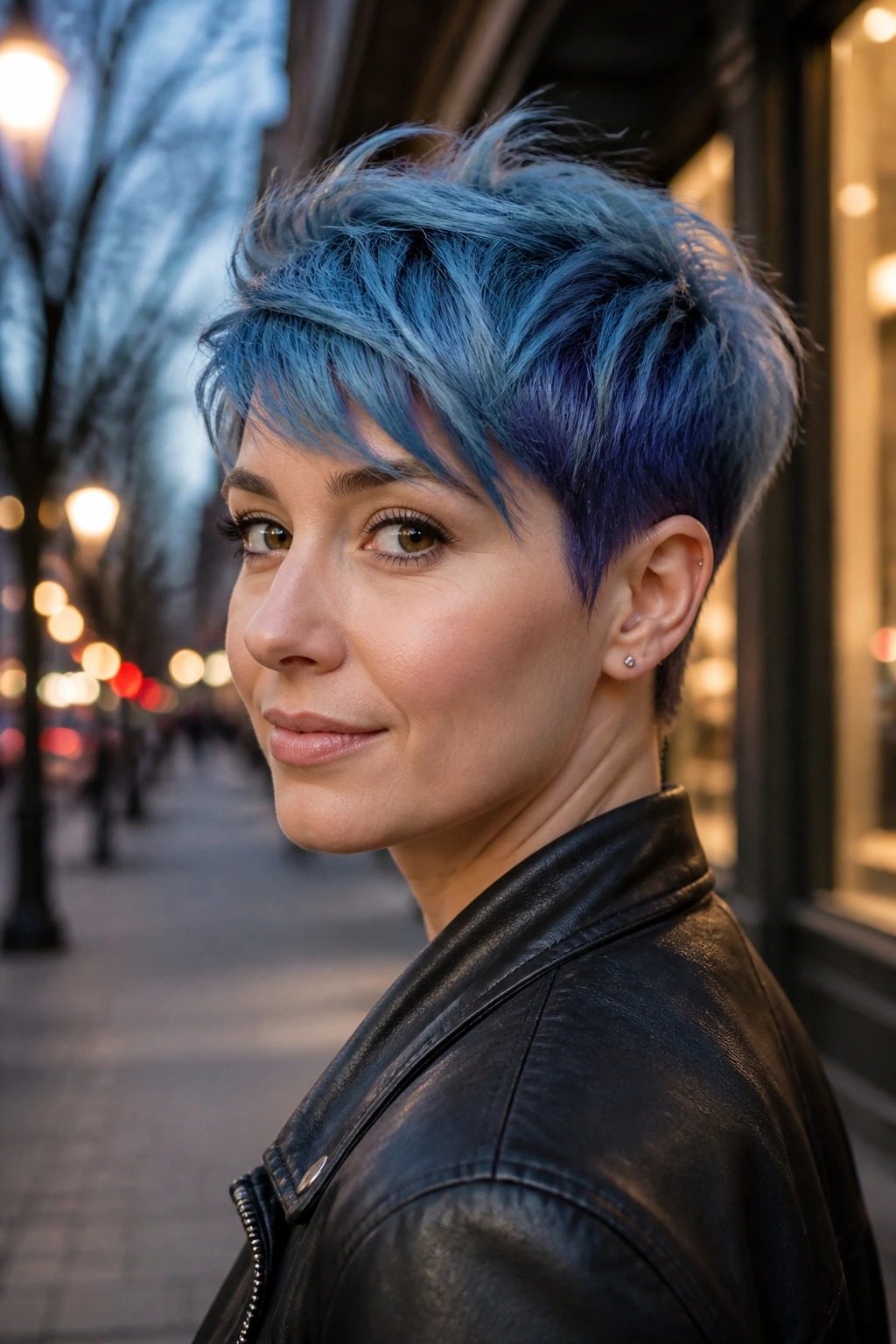
Denim blue is one of the most underrated colors for short thick hair because it feels lived-in rather than theatrical. A layered crop in this shade has movement, depth, and just enough edge. It’s the color version of your favorite jeans: worn in, but still put together.
The layering matters because denim blue can flatten if the cut is too solid. With point-cut ends and a little lift at the crown, the shade catches light on the top pieces and goes deeper at the sides. That variation keeps the style from looking like a single helmet of blue.
This is a good pick if you want vivid color without a lot of shouting. It reads cool, slightly edgy, and easy to pair with black clothes, white tees, or basically anything.
Best for: Thick hair that tends to hold shape without much help.
Styling note: A matte paste gives the layers enough separation to show off the blue depth.
22. Burgundy Curl-Enhancing Bob
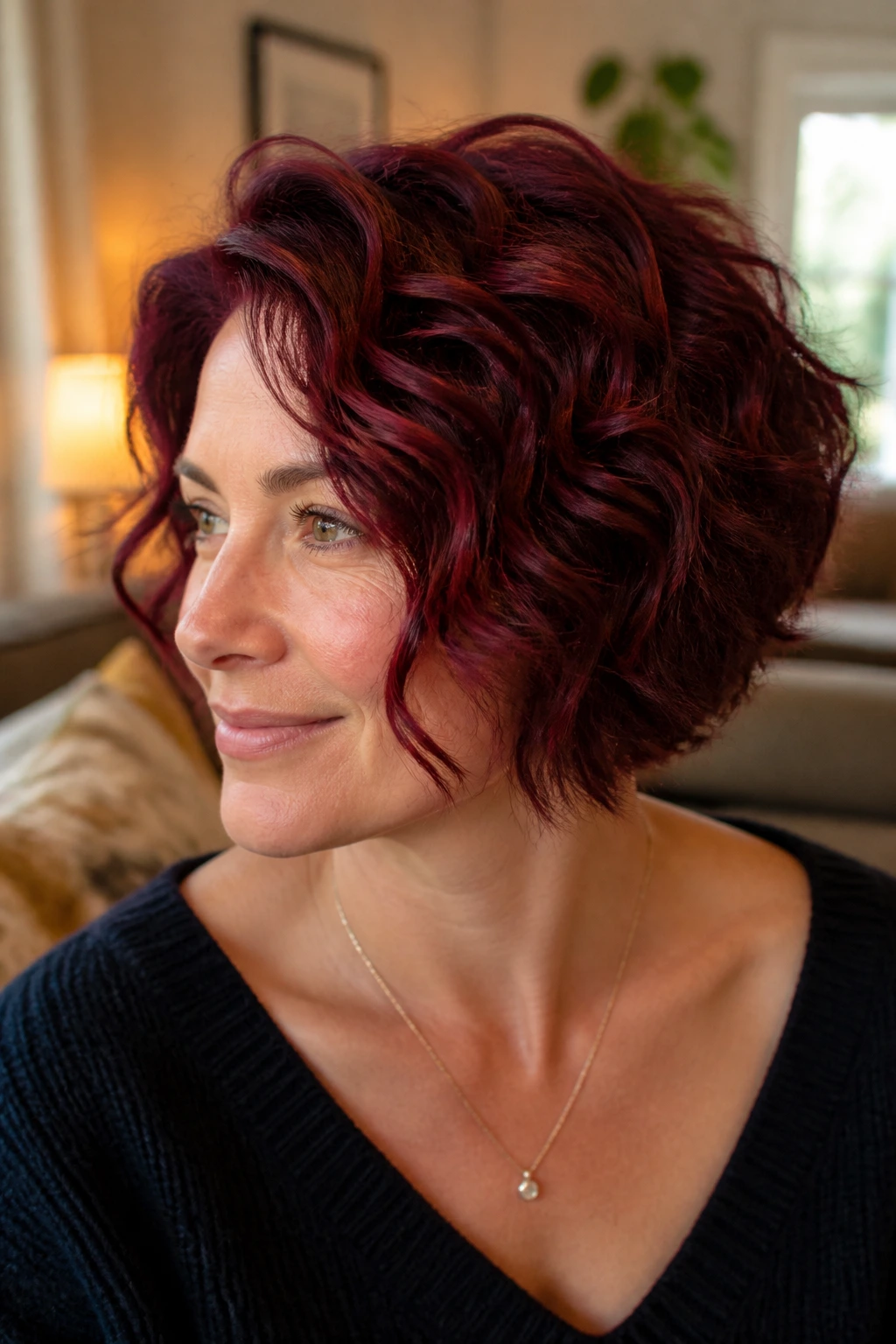
If your thick short hair has even a little natural bend, burgundy can make that texture pop. A curl-enhancing bob in a deep wine shade gives the hair body and color at the same time. The richer the burgundy, the more the curves of the bob stand out.
This one is all about keeping the cut soft enough around the edges to let the hair move. A blunt edge can work, but a slightly shattered perimeter makes the curls or waves look more relaxed. Thick hair tends to hold a curl better, so that helps the color show in layers instead of one single mass.
I like this shade because it doesn’t need fancy styling to look finished. A diffuser, a bit of cream, and a scrunch are often enough.
Watch for this
If the burgundy leans too brown, it can get lost indoors. A stronger wine base with a little violet in it usually stays visible longer.
23. Holographic Pastel Micro Crop
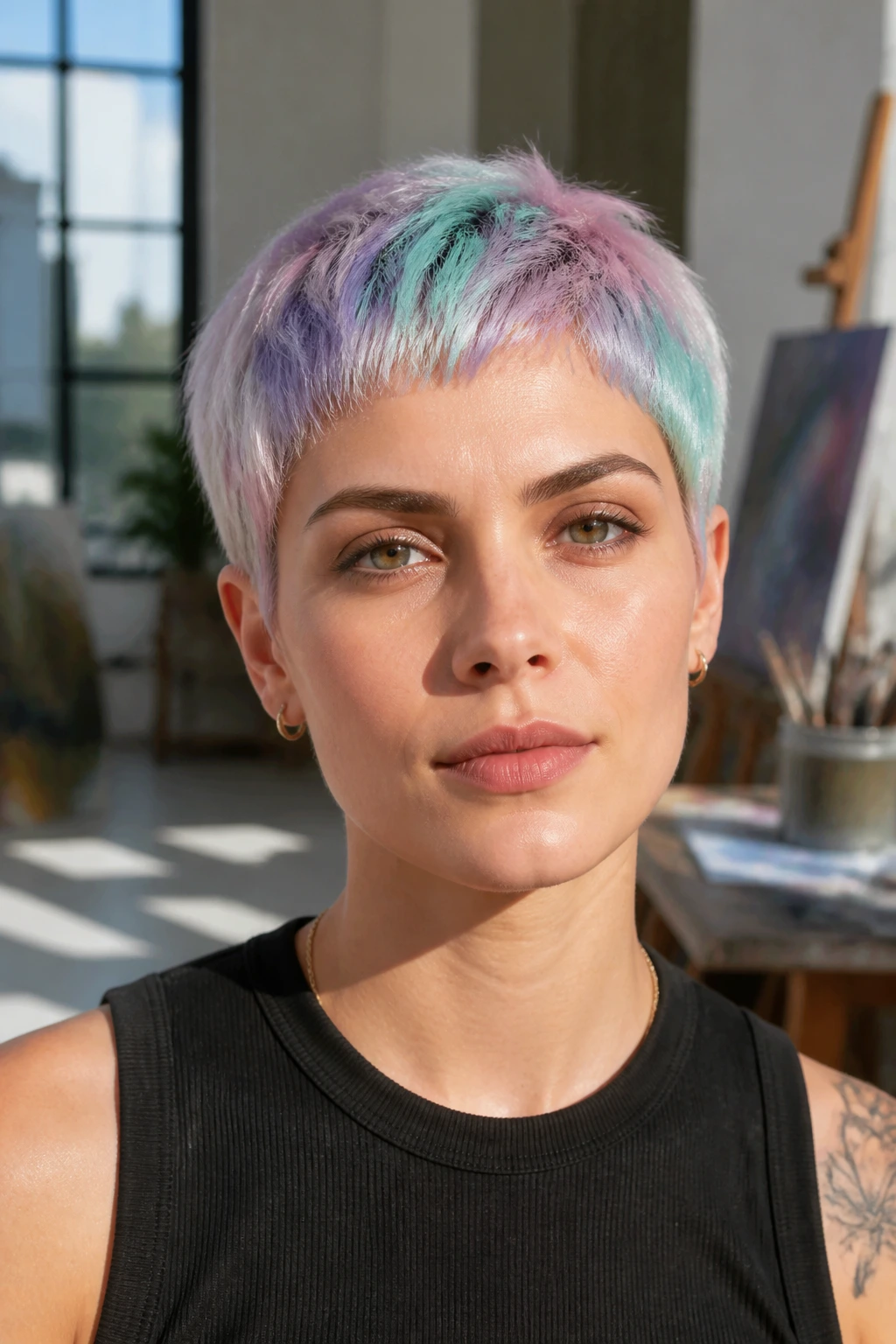
This is pastel with an edge. A micro crop keeps the length short enough that multiple tones—mint, lavender, blush, icy blue—can sit together without the hair getting muddy. Thick hair matters here because the density gives the tiny cut enough presence to hold those shifting shades.
The “holographic” part comes from placement. Instead of painting everything evenly, the colors need to alternate in thin slices or panels so the eye catches different tones as the head moves. On a short crop, that effect is cleaner than it would be on long hair, where the colors can drift and blur.
This isn’t the easiest color family to maintain, but it’s one of the most rewarding when the cut is right. Short thick hair gives it a neat, crisp base. That keeps the pastels from looking too sugary.
A good finishing move: A gloss spray or shine serum, used lightly, helps the tones reflect instead of fading into dust.
24. Fiery Red Tousled Short Shag
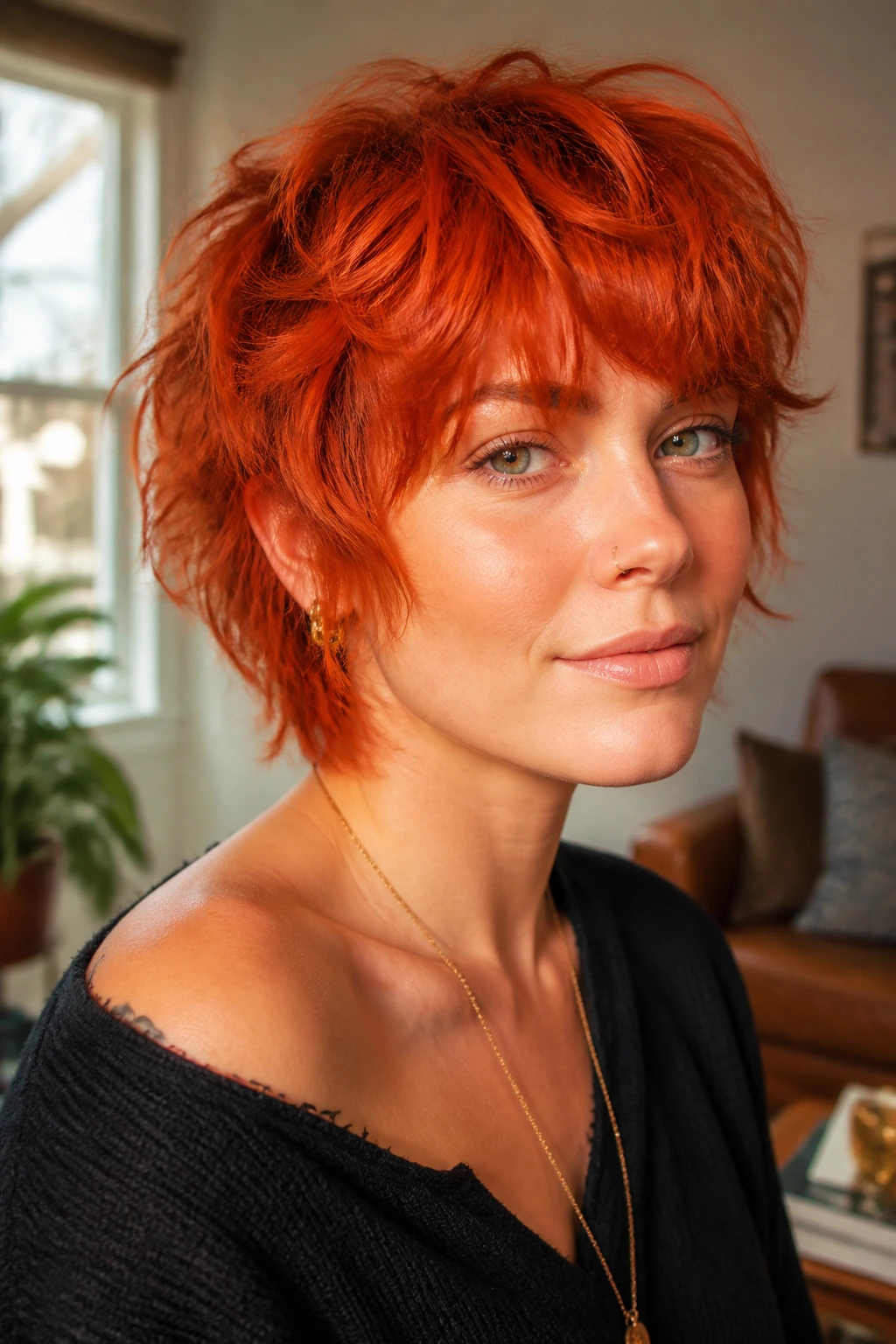
Red and shag cuts belong together more often than people admit. On thick short hair, a tousled shag in fiery red—think tomato, chili, and bright copper mixed together—looks bold without needing perfect symmetry. The layers create movement, and the red makes every broken edge visible.
This is a good one if you want hair that looks better the less you fuss with it. The shag is supposed to be a little messy. The color should feel hot, not neat. Thick hair helps by giving the top enough body to keep the fringe from collapsing.
A light mousse at the roots and a little dry texture spray through the ends are enough. Let it go piece-y. That’s where the shape lives.
Best detail: Ask for face-framing layers that start high enough to keep the red bright around the cheekbones.
25. Neon Rainbow Undercut Pixie
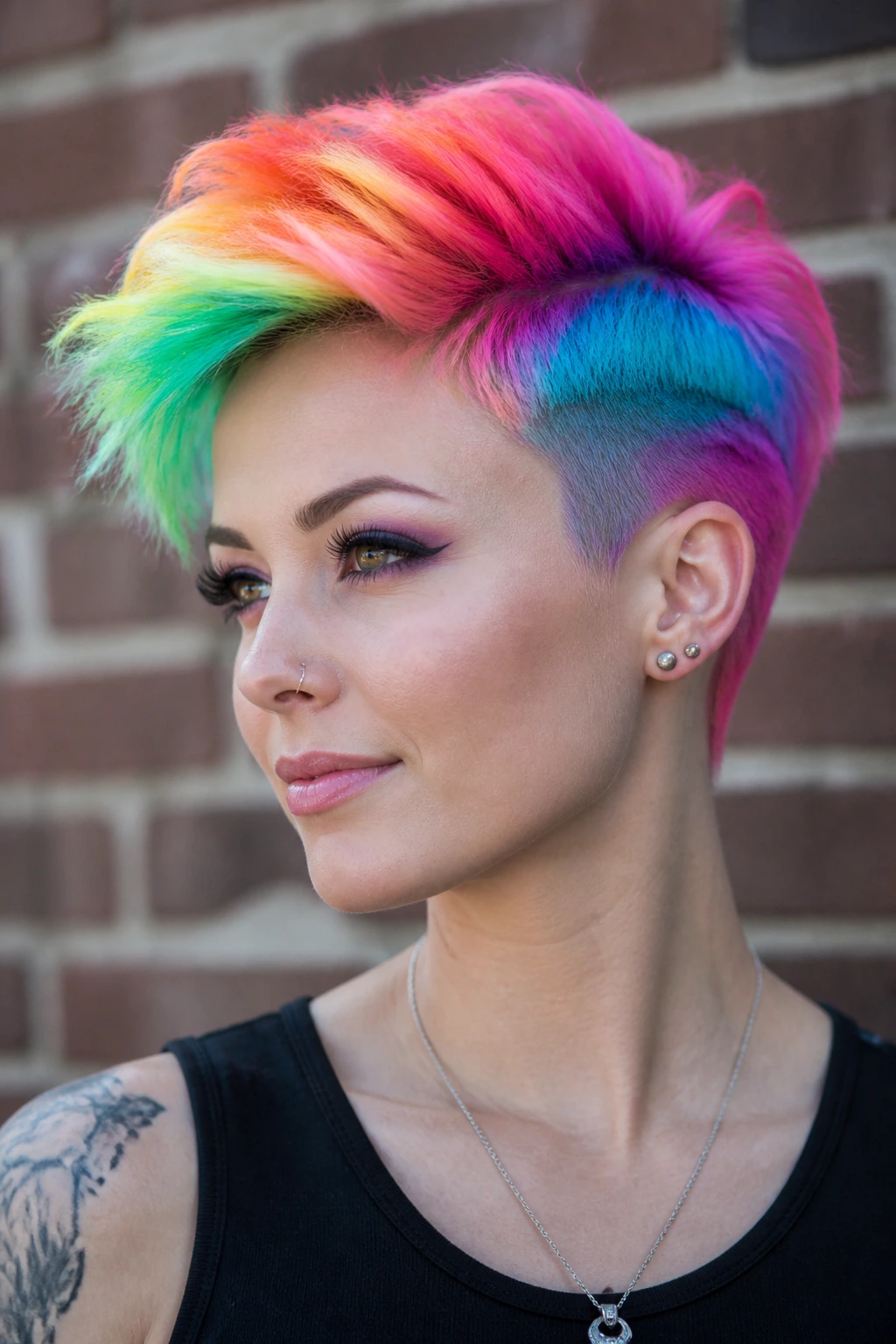
This is the loudest look in the bunch, and yes, it can work on thick short hair without turning into chaos. The undercut clears out bulk at the nape and sides, while the longer top carries a neon rainbow—hot pink, orange, yellow, lime, aqua, violet—either blended together or painted in distinct streaks. Because the hair is dense, the color has enough surface to show off each shade cleanly.
The cut has to be tidy. That’s the hard part. If the undercut grows out too much, the shape starts to puff and the rainbow loses its edge. Keep the sides tight, keep the top mobile, and let the colors live in the longer layers.
I like this look because it proves a point: thick hair does not limit bright color. It can make it look even better, as long as the haircut respects the bulk.
How to wear it
Keep the styling lifted and light. Finger-dried texture, a small amount of paste, and a little spray at the crown are enough. The color is already doing a lot.
Why Thick Short Hair Makes Color Work Differently
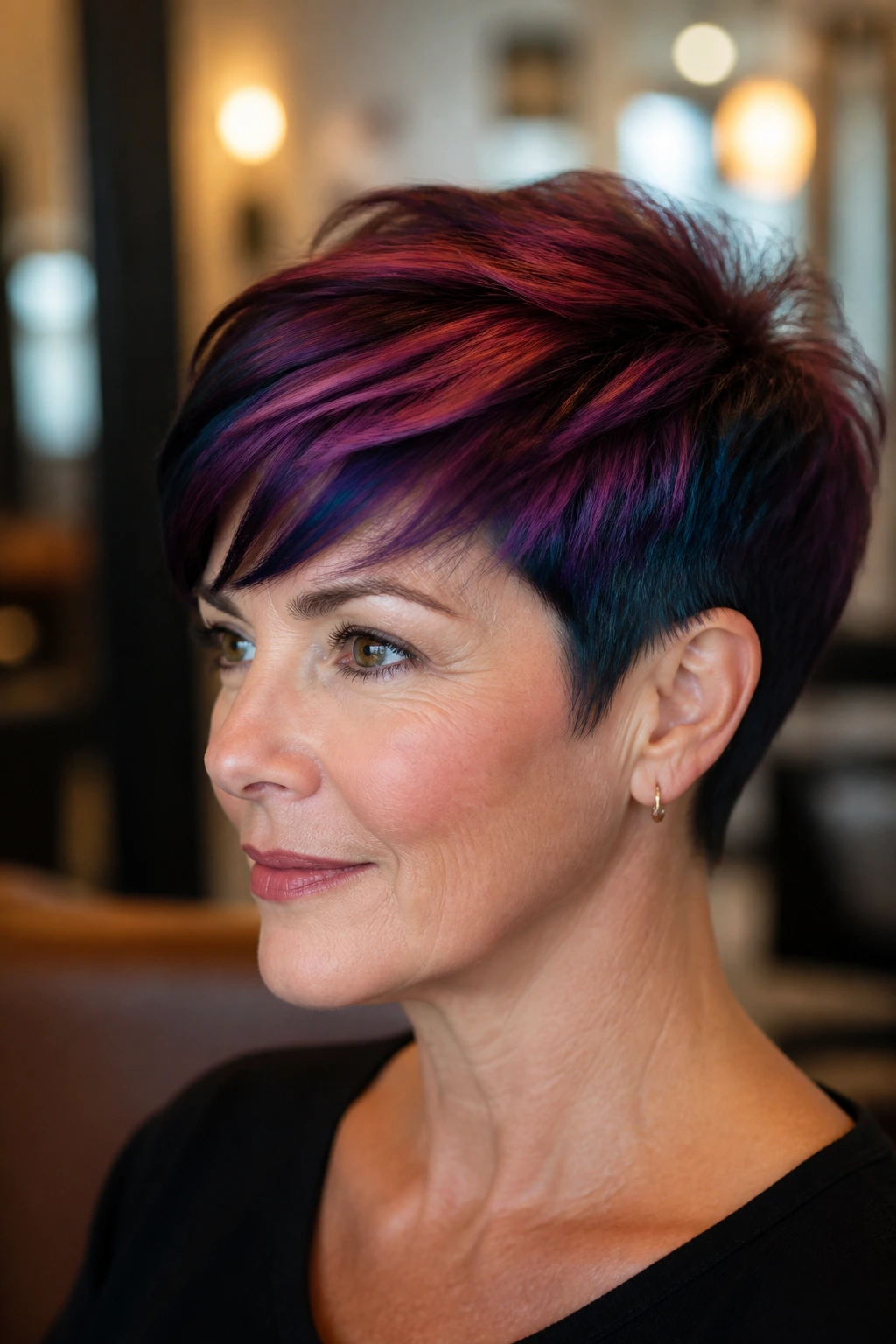
Thick short hair changes the whole color conversation. A shade that looks meek on fine hair can look rich and decisive when the same pigment sits on a dense pixie or crop. That’s not magic. It’s just structure. More strands mean more light reflection, more visual weight, and more room for a color placement to register as a deliberate design.
A short cut also gives color a cleaner edge. On long hair, bright dyes can blur into a wash of tone. On thick short hair, the cut line acts like a frame. The shape matters more, and that’s useful because it lets you play with panels, underlayers, money pieces, and split colors without needing twelve inches of length to make the idea work.
The downside is equally clear. Thick hair can look puffy or boxy if the cut is too blunt, and strong color will make that shape even more obvious. So the real trick is balancing removal and retention: enough weight left in the right places to hold the style, enough internal shaping to stop it from swelling out.
That balance is why these styles are interesting. They don’t rely on color alone. The haircut, the texture, and the placement all have to agree.
Essential Tools and Products for These Looks
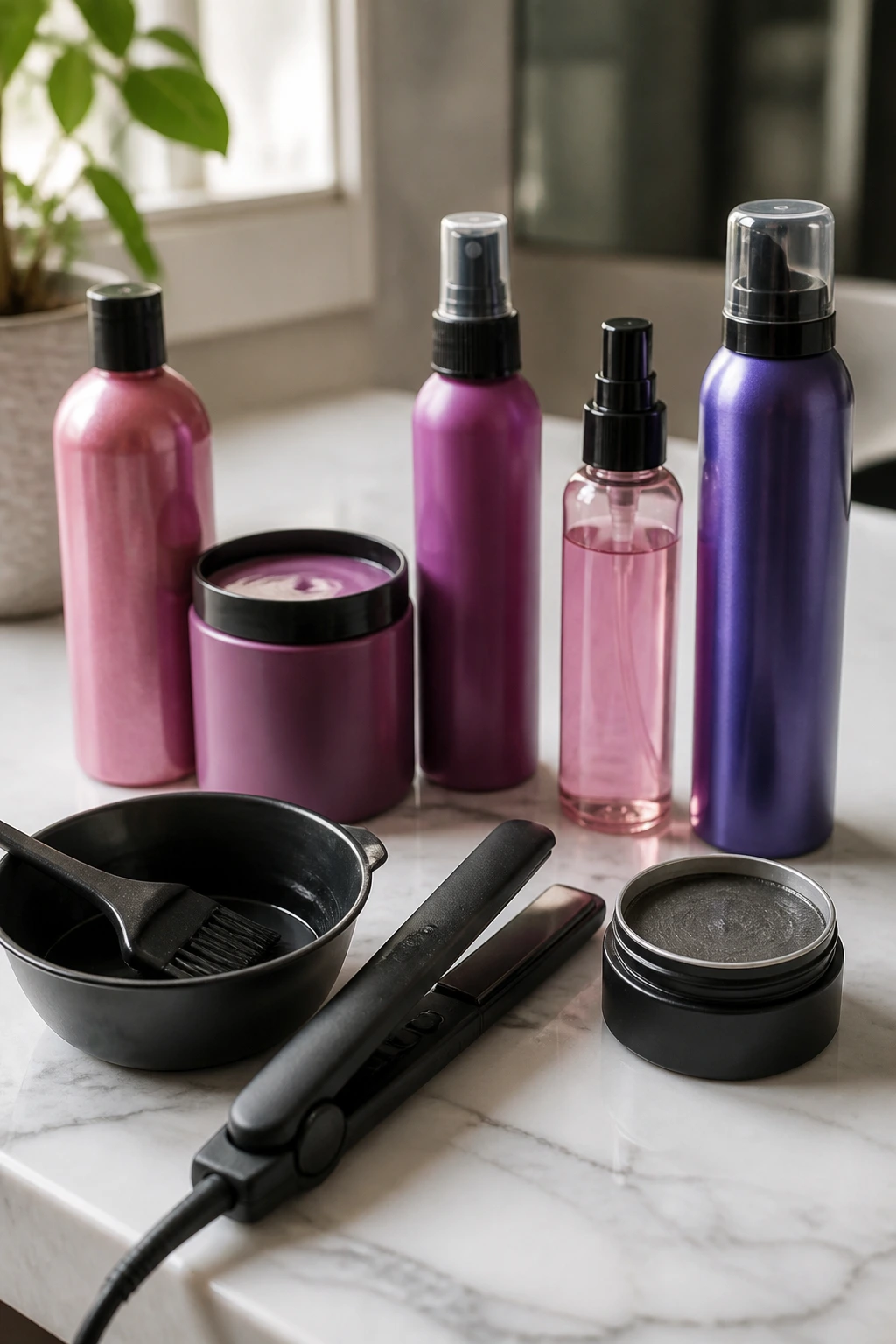
- Color-safe shampoo: A sulfate-free formula helps bright shades last longer and keeps the hair from feeling stripped.
- Color-depositing conditioner or mask: Useful for maintaining teal, pink, copper, violet, and red between salon visits.
- Heat protectant spray: Short hair still gets damaged by irons and dryers, and color shows damage fast.
- Matte paste or fiber cream: Best for pixies, crops, and shaggy styles when you want separation without shine.
- Lightweight smoothing serum: Good for bobs and glossy looks where flyaways make the color look messy.
- Root-lift mousse: Thick hair usually needs a little push at the crown so the shape doesn’t collapse.
- Small flat iron or 1-inch curling iron: Handy for bends, flips, and polished ends on short cuts.
- Tint brush and mixing bowl: Helpful if you’re refreshing a peekaboo panel or a fringe color at home.
- Gloves and clips: Non-negotiable for vivid color touch-ups, especially on short hair where placement matters.
- Wide-tooth comb: Better than a fine comb for detangling thick hair without ripping through the texture.
- Microfiber towel or old T-shirt: Cuts down frizz after washing and helps color-treated hair dry without roughing up the cuticle.
- Purple shampoo: Keep it around if you’re wearing silver, icy blonde, lavender, or pastel shades.
Smart Cut and Color Planning for Thick Short Hair
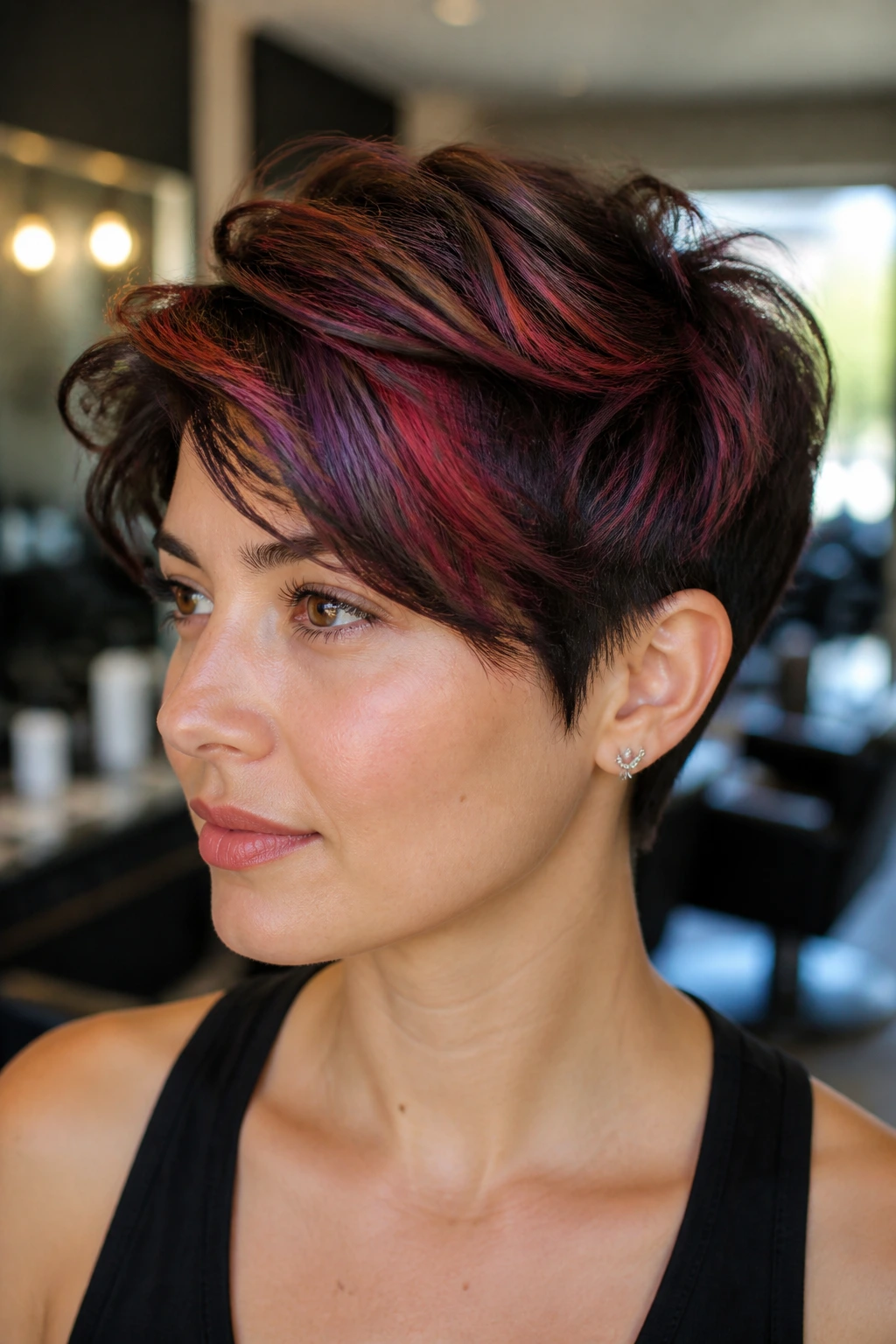
The best color on thick short hair starts before the dye bowl. If the cut is too heavy around the sides, even the brightest shade will look trapped. Ask for internal layering, point-cutting, or soft texturizing so the color can move through the hair instead of sitting on a single block. The exact method depends on the cut, but the goal is always the same: remove enough bulk that the color can breathe.
Placement matters just as much. Face-framing streaks pull attention forward. Underlayers create surprise. Color-blocked sides sharpen the silhouette. If you love seeing the shade from every angle, use more surface color. If you want a smaller commitment, keep it under the top layer or around the fringe. Thick hair gives you room to choose, which is a nice problem to have.
For vivid shades, I’d be careful with over-lightening near the scalp. Dense hair can handle pigment well, but lightened thick hair can still get dry and puffy if it’s pushed too far. A shadow root, or at least a slightly deeper base, often helps the style look cleaner as it grows. And if you’re planning a copper, red, or magenta tone, ask how the color will fade. Some shades soften into something lovely. Others just get dull.
How to Wear These Styles So the Color Shows
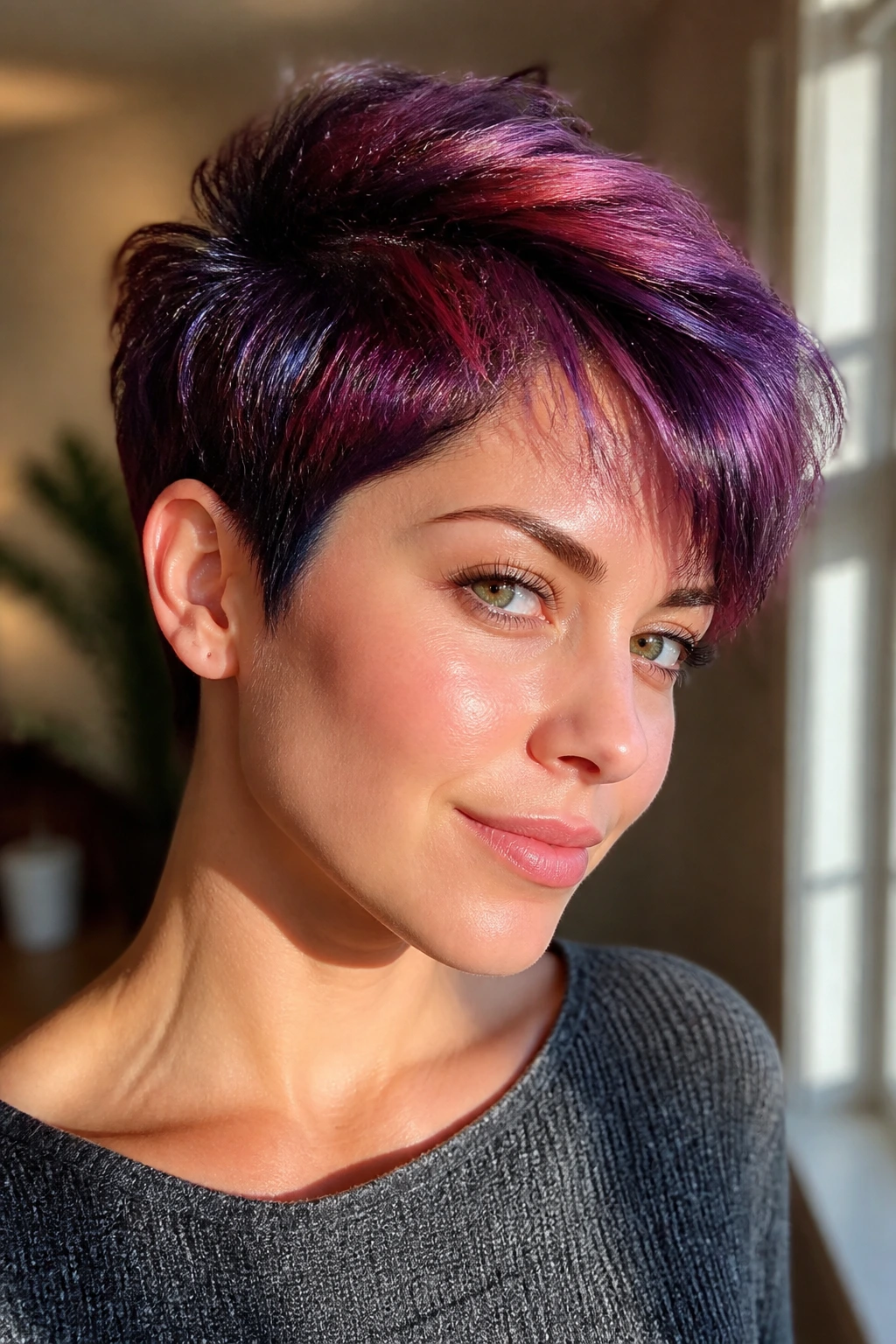
Parting: A side part makes split dyes and money pieces more obvious. A center part shows symmetry and can make pastel shades feel cleaner.
Texture: Spiky paste, finger waves, soft bends, and piece-y separation all show color in different ways. If the shade is multi-tonal, texture helps each tone catch light on its own.
Accessories: Tiny clips, metallic pins, or a simple headband can either frame the color or hide it. Use them on purpose. A bright clip against a vivid pixie can look sharp; a busy accessory can fight the hairstyle.
Lighting: Glossy colors like silver, copper, and oil-slick shades look best when they catch daylight or warm indoor light. Pastels need clean light to stay readable. Neon colors can go flat under yellow bulbs, so a little shine goes a long way.
Outfit pairing: Black clothing makes electric shades sharper. Cream, camel, and soft gray make pastel or rose tones look more expensive. Denim and white tees are a cheat code for blue, green, and teal hair because they don’t compete with the color.
Additional Tips and Color Boosters
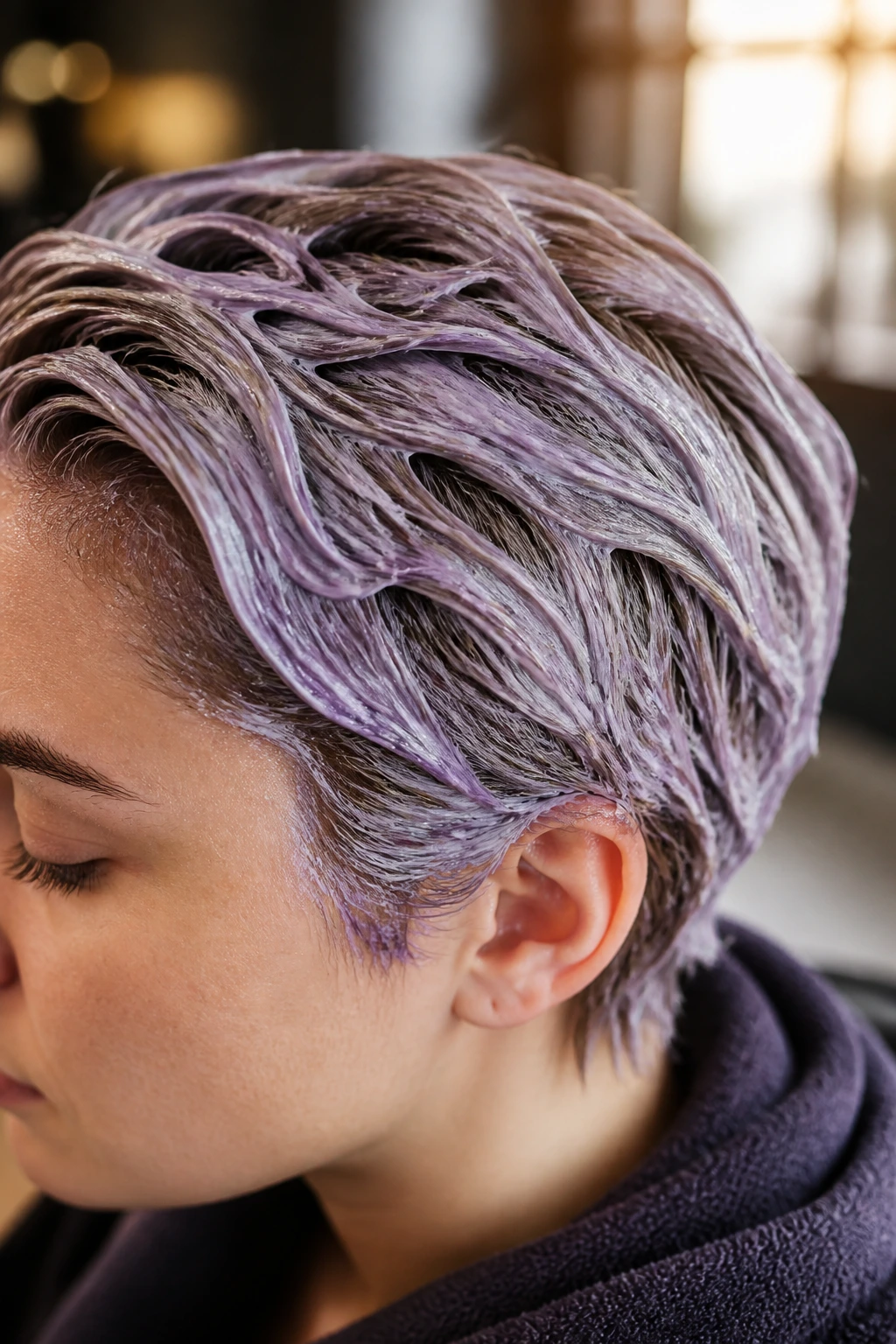
Color Boost: If a vivid shade looks muted after a few washes, use a color-depositing mask for 5 to 10 minutes on towel-dried hair. That’s enough for most short cuts; leave it on too long and some tones can go muddy.
Customization: Thick hair can handle more than one color family at once. A dark root with bright ends, or a hidden panel beneath a natural top layer, often looks better on short hair than a full head of one bright tone.
Styling Swap: A matte finish changes the personality of a cut fast. Use it for punkier pixies, shaggy crops, and spiky looks. Switch to serum or shine spray for copper, silver, rose gold, or oil-slick shades.
Make-It-Yours: If you want lower maintenance, choose colors that fade within the same family: copper to peach, plum to mauve, blue to denim, pink to rose. If you want a bolder jump, go for teal, lime, or neon magenta and accept that the refresh cycle will be shorter.
Tiny upgrade that matters: Clean the neckline and around the ears between salon visits. Thick short hair starts to look rough when the edges grow out unevenly, even if the color still looks good.
Maintenance, Refresh, and Grow-Out Guidance
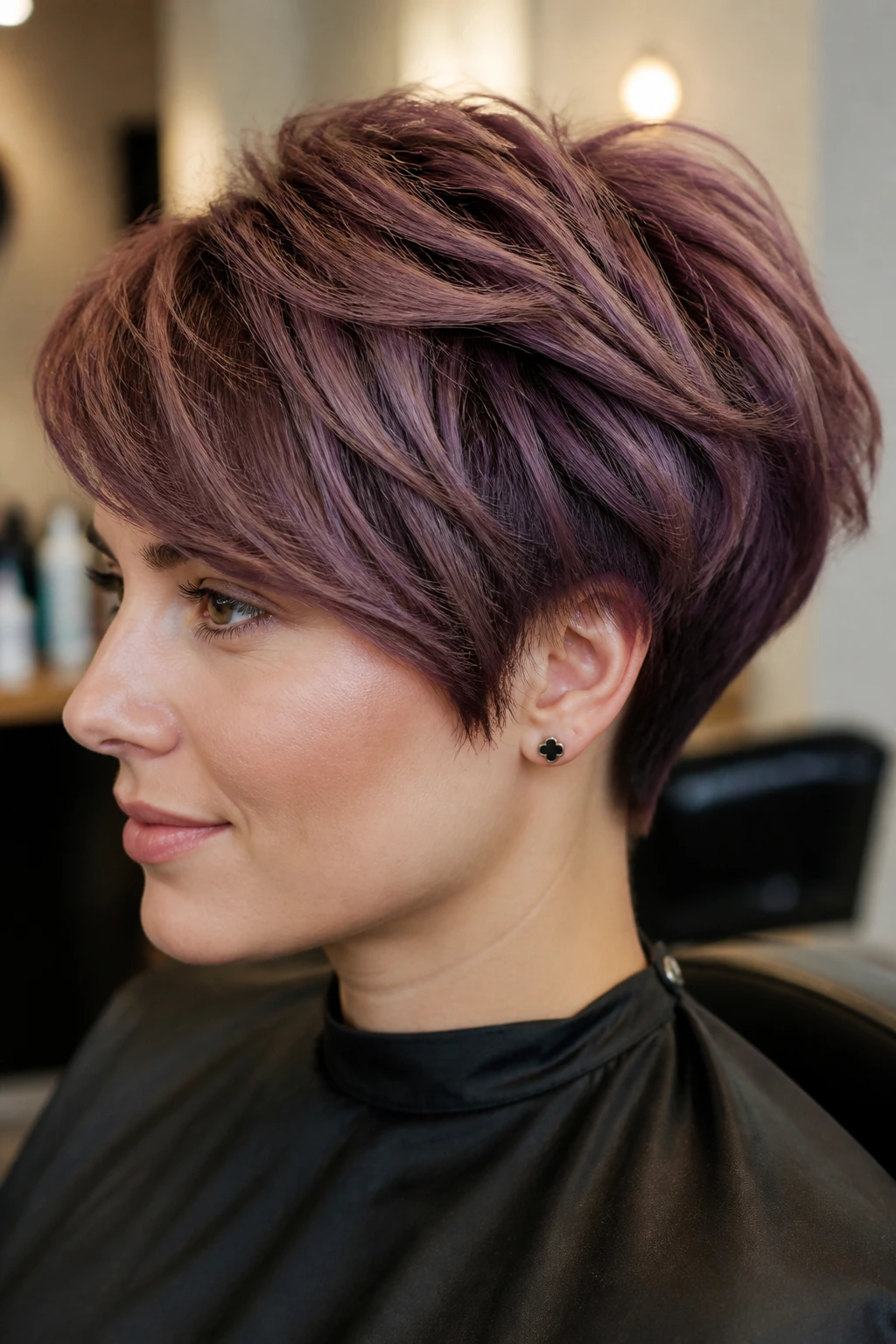
Short colorful hair is easier to live with than long colorful hair, but it still needs a schedule. For vivid semi-permanent shades—pink, blue, green, purple, coral—plan on refreshing the color every 2 to 4 weeks if you want it bright. Coppers, burgundies, and rose golds usually stretch longer, often around 4 to 6 weeks before they need a gloss or toner. Silver and pastel blonde shades need the most attention because every bit of brass shows fast.
Washing habits matter more than product labels. Use lukewarm water, not hot, and don’t scrub the scalp so hard that the color gets stripped from the lengths. Thick short hair can hold oils near the roots, so a light shampoo at the scalp and a gentle rinse through the ends is usually enough. If your cut leans pixie-short, you may not need conditioner everywhere. Put it where the hair feels dry—usually the top and the ends—and keep it off the roots.
For grow-out, short hair is forgiving in a way long colorful hair isn’t. A tidy trim every 4 to 6 weeks keeps the cut sharp, which makes faded color look intentional instead of neglected. If you’re growing out a vivid shade, ask for a neutral glaze or a soft root shadow rather than trying to cover everything at once. That lets the color soften without creating a hard line.
A silk pillowcase helps. So does skipping the flat iron on days when the hair already has shape. Small habits. Big difference.
Common Mistakes to Avoid
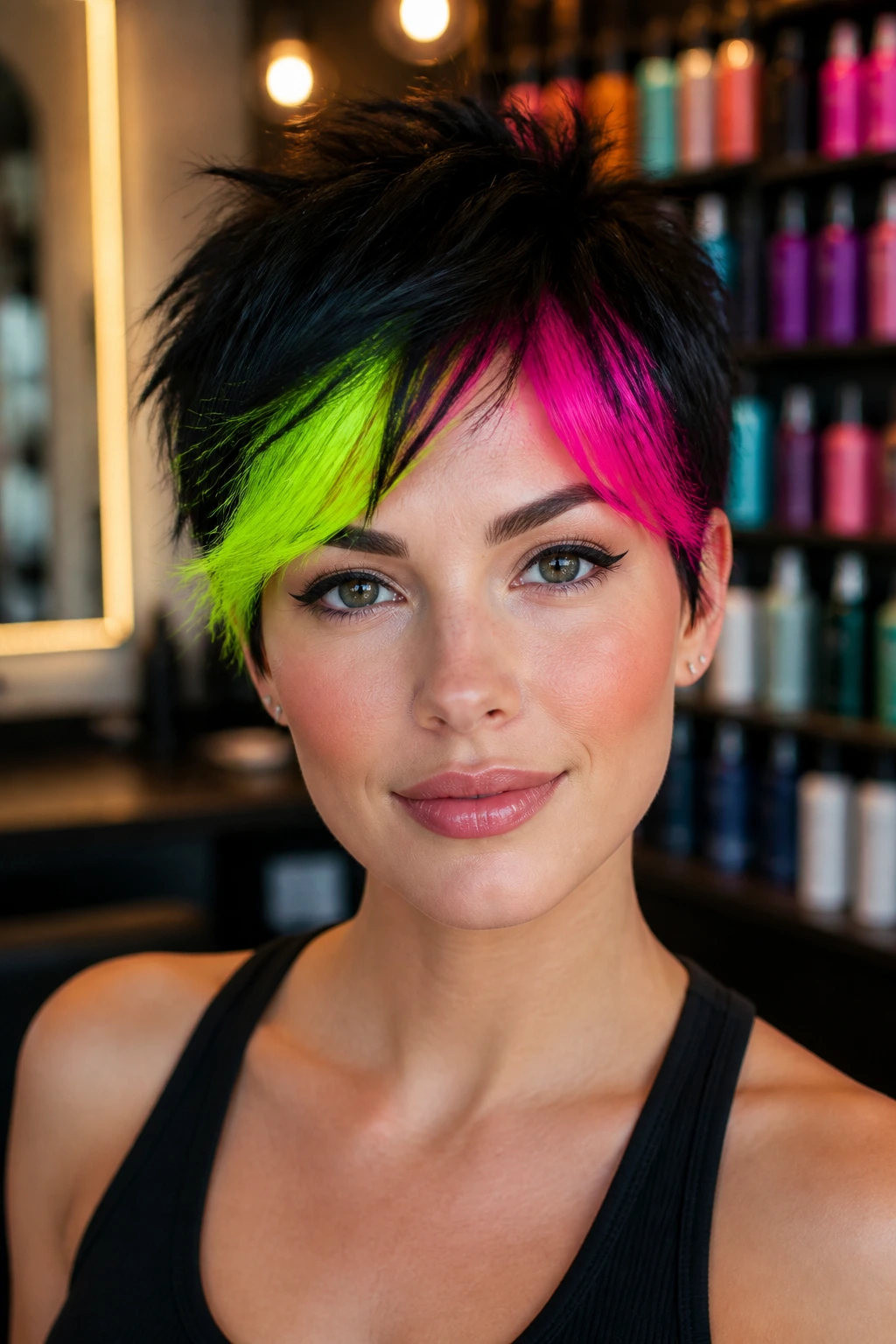
The first mistake is using too many colors with no hierarchy. Thick short hair can hold a lot, but it still needs a visual plan. If every panel is shouting at the same volume, the cut disappears. Pick one dominant shade and let the others support it.
The second is keeping too much bulk at the sides. That’s how a colorful pixie turns into a colorful triangle. Ask for weight removal where the hair tends to puff, especially around the temples and the nape. Color will not fix a bad silhouette.
The third is lightening too aggressively on dense hair. Thick strands often need careful sectioning to lift evenly. If the bleach is rushed, the color goes patchy, and patchy shows more on short hair because there’s nowhere to hide it. Slow, clean sectioning beats trying to blast through it.
Another classic problem is choosing a shade that fades badly for your maintenance habits. Neon lime and bright pink can be fantastic. They’re also high-maintenance. If you wash often and hate touch-ups, choose copper, burgundy, or denim blue instead.
Finally, don’t drown short color in heavy cream products. The hair goes flat, the root lift disappears, and the whole cut looks smaller than it is.
Variations and Alternatives to Try
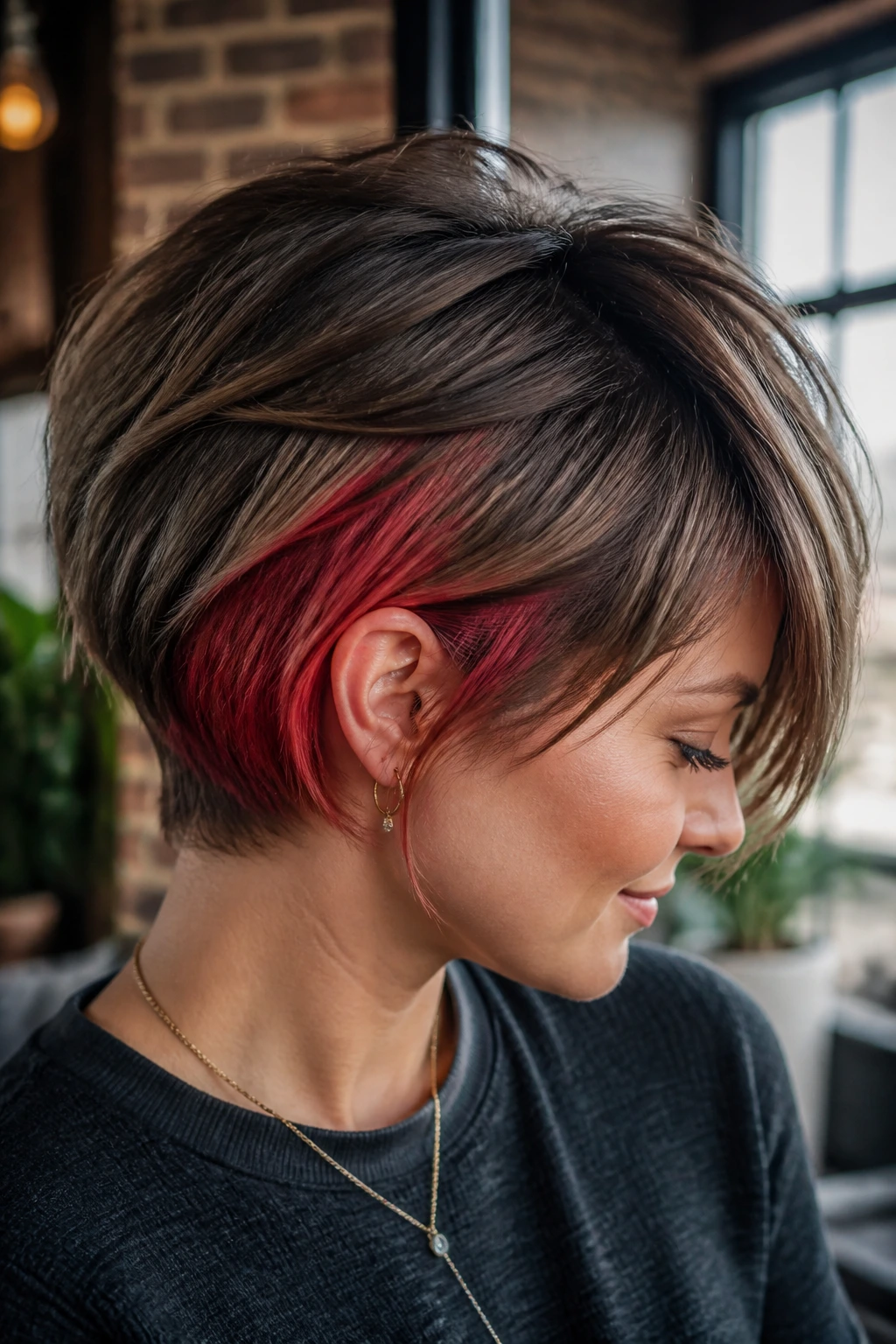
Office-Friendly Gloss: Keep the cut short and the shape clean, then choose rose gold, burgundy, copper, or denim blue instead of neon. These shades still read colorful, but they soften enough that the look feels polished rather than loud.
Hidden-Color Pixie: Leave the top neutral and place teal, plum, or magenta only under the crown or behind one ear. This works well if you want color that shows in motion and stays quieter in straight-ahead lighting.
Curly-First Crop: If your thick hair has wave or curl, let the texture drive the shape. Burgundy, copper, plum, and cherry cola all make curls look more defined, and the extra body helps the color sit in visible ribbons.
Graphic Split Cut: Choose two contrasting shades—black and electric blue, platinum and cherry red, violet and silver—and keep the cut sectioned enough that each side stays distinct. This version needs a cleaner line and a little more salon maintenance, but the payoff is huge.
Soft Pastel Melt: If neon feels like too much, go for lilac, peach, mint, or rose in a blended gradient across a bob or pixie bob. The effect is gentler, and thick hair keeps the shape from going mushy as the colors fade.
Frequently Asked Questions
Can thick hair actually make vivid color look better on short cuts?
Yes. Dense short hair gives color more body to sit on, which makes bright shades look fuller and sharper. The key is shaping the cut so it doesn’t puff out around the sides.
What colors work best if I want low maintenance?
Copper, burgundy, denim blue, rose gold, and plum usually fade more gracefully than neon pink, lime, or electric blue. They grow out with less drama and don’t scream for a refresh the minute the roots show.
Do I need bleach for all of these looks?
No. Darker shades like cherry cola, burgundy, plum, and some blues can work on a darker base. Pastels, silver, and neon tones usually need a lighter starting point.
How often should short colorful hair be trimmed?
Every 4 to 6 weeks is a good rhythm for pixies, crops, and short bobs with strong shape. Thick hair grows into the outline fast, and the cut starts to look bulkier if you wait too long.
Can I keep the color bright if I wash my hair a lot?
You can slow the fade, but you can’t stop it completely. Lukewarm water, color-safe shampoo, and a color-depositing mask help a lot. So does keeping hot tools to a minimum.
What if my thick hair is curly or wavy instead of straight?
That’s a bonus, not a problem. Curly thick hair holds color dimension well, especially with burgundy, copper, plum, teal, and darker blues. The main thing is to cut for the curl pattern first, then place the color where the curl opens up.
Which style is best if I want something bold but still wearable?
Rose gold tapered pixies, cherry cola crops, denim blue layered cuts, and plum melts are easier to live with than neon rainbow looks. They still feel colorful, but they don’t dominate every outfit.
Will these colors look okay as they fade?
Some will, some won’t, and that’s worth planning around. Copper, burgundy, plum, and rose tones tend to soften nicely. Neon shades can fade into dullness if you don’t refresh them, so choose them only if you like maintenance.
The Color Works Best When the Shape Does
Thick short hair can carry more color than people give it credit for. It can take neon, gloss, pastel, underlayer surprises, split-dye drama, and warm metallic shades without losing the cut’s outline—if the haircut does its part. That’s the real lesson here. The color is only half the story.
The other half is precision. Clean napes, thoughtful layering, smart placement, and a little respect for how thick hair behaves after wash day. Get those pieces right, and the result looks bold without looking sloppy. That’s the difference between a hairstyle that feels like a costume and one that feels like your own hair, only more interesting.
Pick the shade that matches how much maintenance you’ll actually live with, not how brave you feel at 9 a.m. in the salon chair. The good looks here are the ones that still make sense two weeks later.