



Thick hair can make a long pixie look rich and deliberate in a way finer hair sometimes can’t pull off. It can also turn into a wide, puffy halo if the cut is wrong, the crown is too blunt, or the sides are left with too much bulk. That’s the whole game with this haircut: not cutting a lot off, but cutting smart.
Oval faces make the field wider. You can wear a side sweep, a curtain fringe, a brushed-back shape, or a choppy, textured crown without fighting your bone structure. But even an oval face can get swallowed by a heavy pixie if the top goes sky-high and the sides stay boxy. The sweet spot is movement near the cheekbones, a clean taper around the nape, and enough length on top to keep the cut from feeling too severe.
The cuts below lean into that balance. Some are soft and feathered. Some are sharp and sculpted. A few keep things polished enough for work, while others are better when you want your hair to look like it dried in an interesting way instead of a boring one. Thick hair gives these styles body right away; the trick is making that body look intentional instead of bulky.
Why These 22 Long Pixie Cuts Work So Well on Thick Hair and Oval Faces
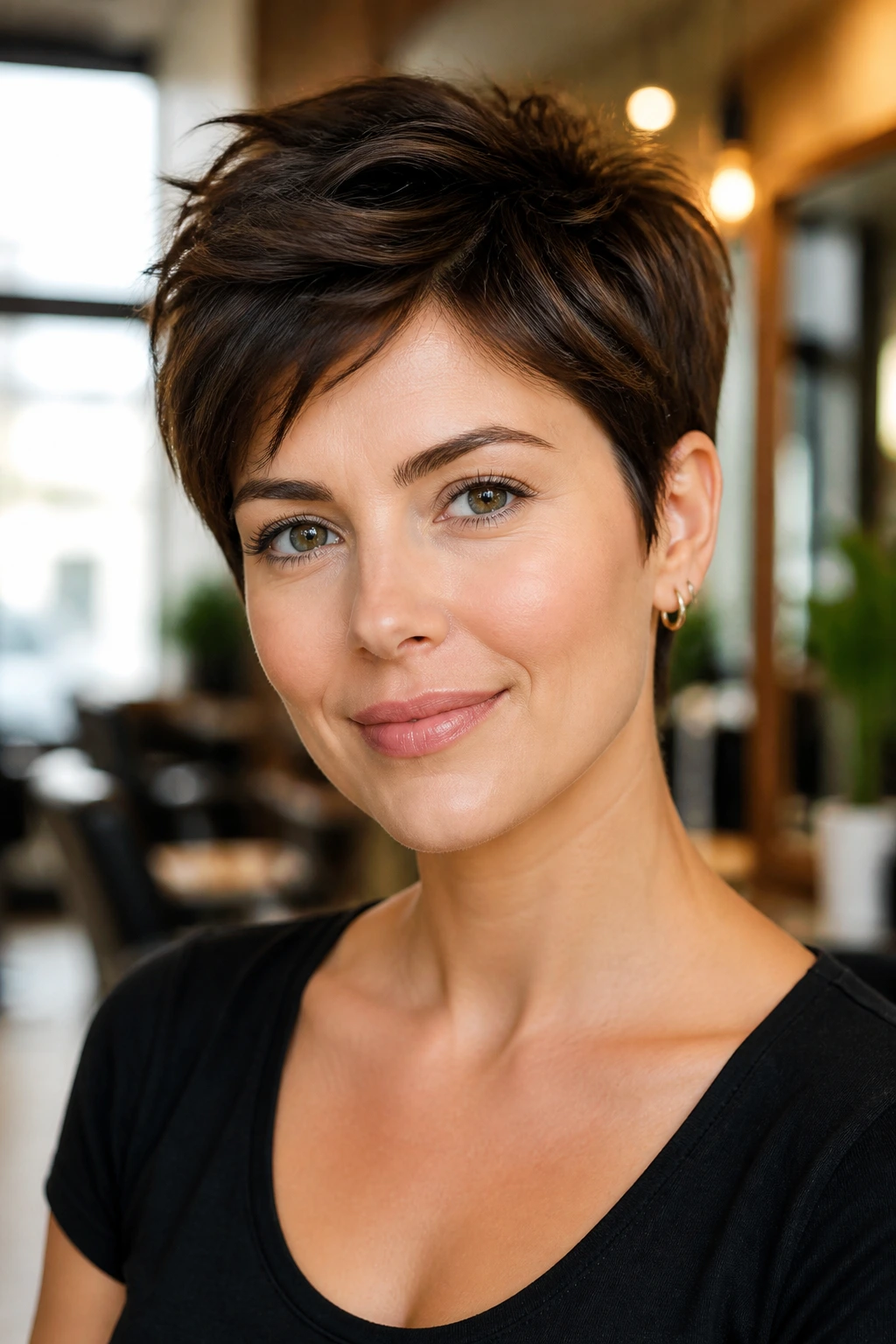
- Bulk Control: Thick hair needs shape removal in the right places, and these cuts keep weight from ballooning at the temples and sides.
- Oval-Face Balance: An oval face can handle side-swept fringe, center-ish separation, and longer top layers without getting visually cut off.
- Movement First: Every style here keeps some softness in the top and front, so the haircut doesn’t freeze into a helmet the second it dries.
- Easy Grow-Out: Long pixies are forgiving when they start to grow, especially when the nape is tapered and the top stays layered.
- Styling Range: You can wear these cuts sleek, piecey, blown out, or air-dried, which matters when thick hair has a mind of its own.
- Salon-Friendly: Most of these shapes rely on internal layering, point cutting, and a clean perimeter — not a pile of thinning shears.
1. Feathered Side-Sweep Long Pixie
This is the long pixie I recommend when someone wants softness first. The side-swept front drapes across the forehead in a narrow arc, and the feathered layers keep thick hair from looking too blunt at the edges. On an oval face, that diagonal line is flattering without trying too hard. It just sits there and does the job.
Why It Works: The side sweep breaks up width at the temples, while the feathered top removes weight without making the haircut wispy. Ask for length that falls just below the brow on the heavy side and a slightly shorter opposite side so the shape feels intentional, not accidental.
Cut Notes: Keep the nape neat and softly tapered. The crown should hold enough length to move, not spike straight up.
How to Style It: Blow-dry the front with a small round brush, directing the hair across the forehead, then pinch the ends with a pea-size amount of matte paste. You want the fringe to look brushed, not glued.
Watch Out: Don’t over-layer the top. Thick hair needs movement, yes, but it still needs enough substance to avoid puffing out.
2. Tapered Nape Pixie With Crown Lift
This one is all about shape discipline. The back hugs the head, the nape sits clean and narrow, and the crown gets enough lift to keep the cut from flattening into a sad little cap. Thick hair loves this kind of structure because it has room to stack without growing sideways.
Why the Shape Matters: Oval faces can handle the height on top, and the tapered neck keeps the whole cut light around the jawline. The result feels sharp in profile, which is where this cut earns its keep.
Ask for This: A snug nape taper, internal debulking at the crown, and point-cut ends on top. If your stylist reaches for thinning shears right away, pause them. A little goes a long way on dense hair.
At Home: Blow-dry the crown upward with a vent brush and a dab of root mousse. Finish with a flexible spray so the lift stays soft instead of crunchy.
3. Curtain Fringe Long Pixie
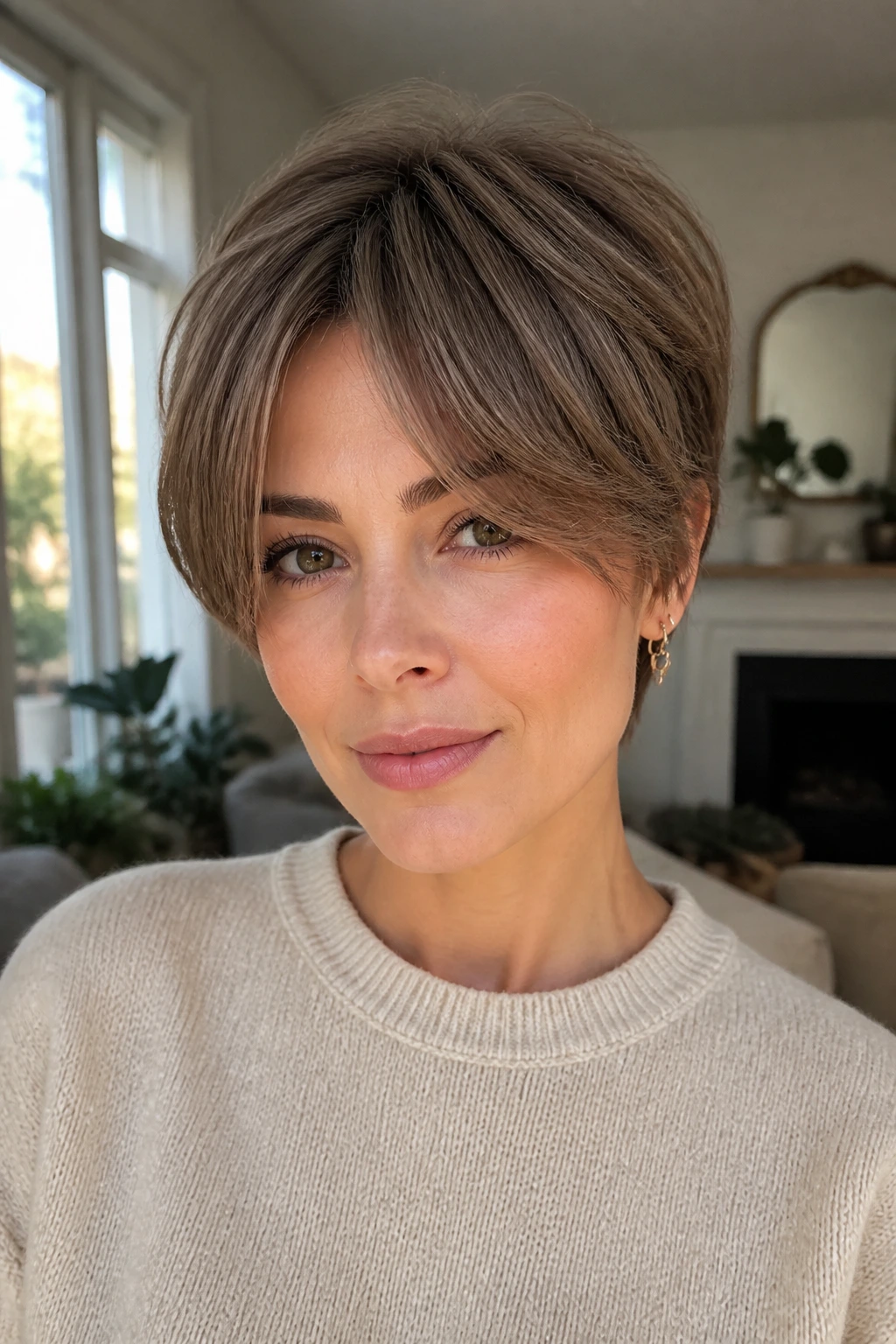
Curtain fringe on a pixie sounds almost contradictory, and that’s why it works. The front splits softly near the center or just off-center, then drapes down toward the cheekbones. On an oval face, that frame adds a little romance without stealing too much length from the face.
Why It Works: Thick hair gives curtain fringe enough weight to fall cleanly instead of flying apart. The longer front pieces also help balance a dense crown, which is often the part that needs the most negotiating.
What to Ask For: Keep the fringe longer than you think — ideally skimming the cheekbone — and make sure the sides connect softly into the top. Hard disconnects are rough on this shape.
Styling Note: If your hair bends oddly at the front, set the fringe with a round brush, then let it cool in place. That cooling step matters. Skip it and the fringe can split in weird directions by noon.
4. Choppy Textured Pixie
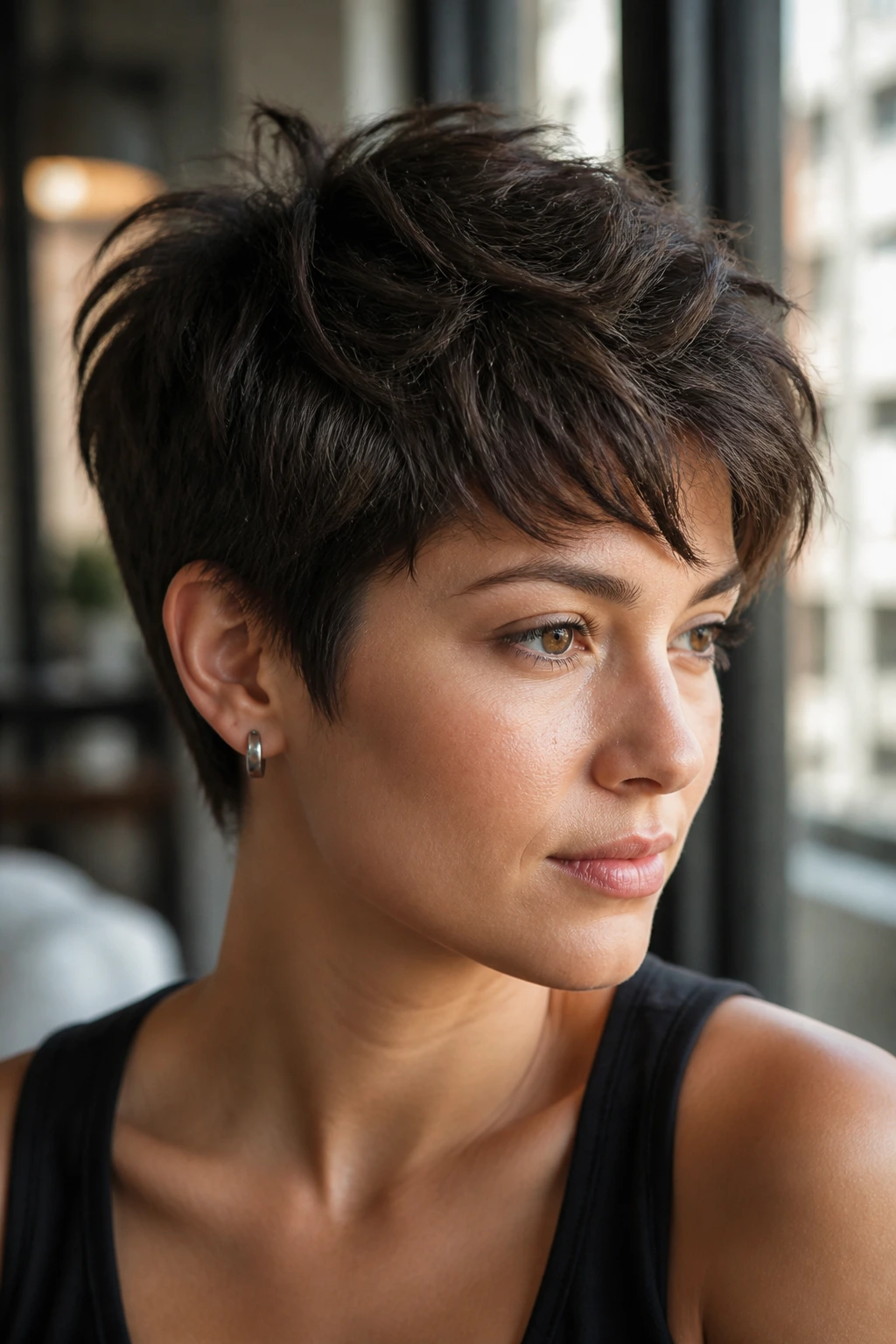
This is the no-fuss, piecey version of a long pixie. It looks better when it’s not too polished. Thick hair gives the cut plenty of body, and the choppy ends stop that body from turning into a solid mass. Oval faces can wear the uneven texture without the haircut overpowering the features.
Why It Works: The cut relies on point cutting and uneven layering to keep the finish alive. You get lift, separation, and movement without needing to force the hair into a smooth shape.
Best For: People who like a little edge and don’t want to spend twenty minutes fighting a round brush every morning. This cut is happiest with a rough blow-dry or air-dry plus a texture cream.
Common Slip: Don’t pile on too much product. A choppy pixie with too much paste turns sticky fast, and thick hair makes that mistake even more obvious.
5. Soft Undercut Long Pixie
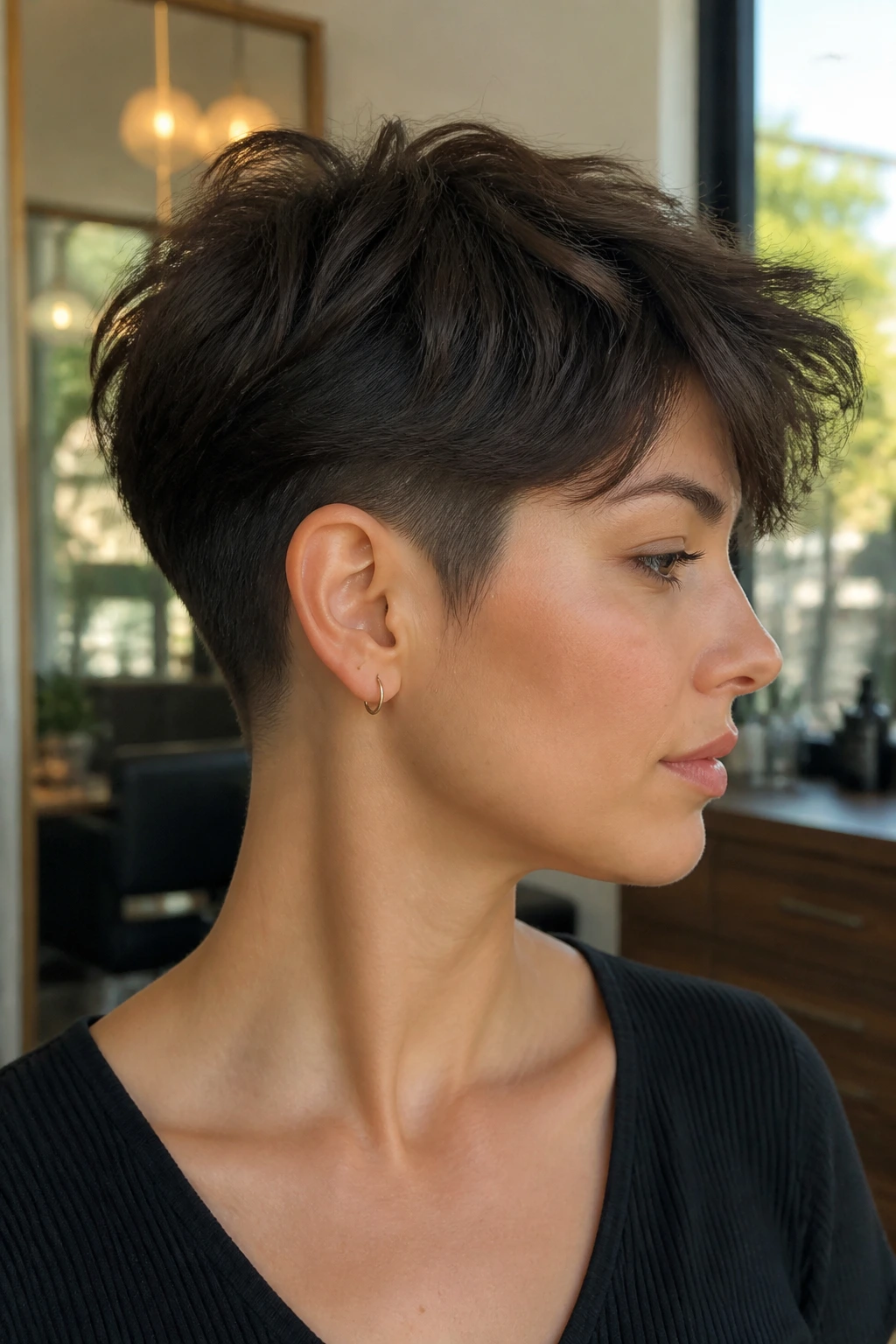
A soft undercut is the cleanest way to take weight out of thick hair without making the cut look severe. The hidden shorter section sits underneath the top layers, so from the outside you get fullness and movement, not bulk around the ears and nape.
Why It Works: Oval faces don’t need much help balancing proportions, so the undercut can focus purely on removing density. That makes the top easier to sweep, tuck, or tousle without the sides puffing out.
Salon Request: Ask for a concealed undercut or a very tight internal taper under the crown and behind the ears. You want reduction, not a dramatic shaved strip unless that’s the look you’re after.
Styling Tip: Lift the top with a root spray, then use your fingers to separate the ends. The cut is doing half the work already; don’t bury it under too much smoothing cream.
6. Deep Side-Part Sleek Pixie
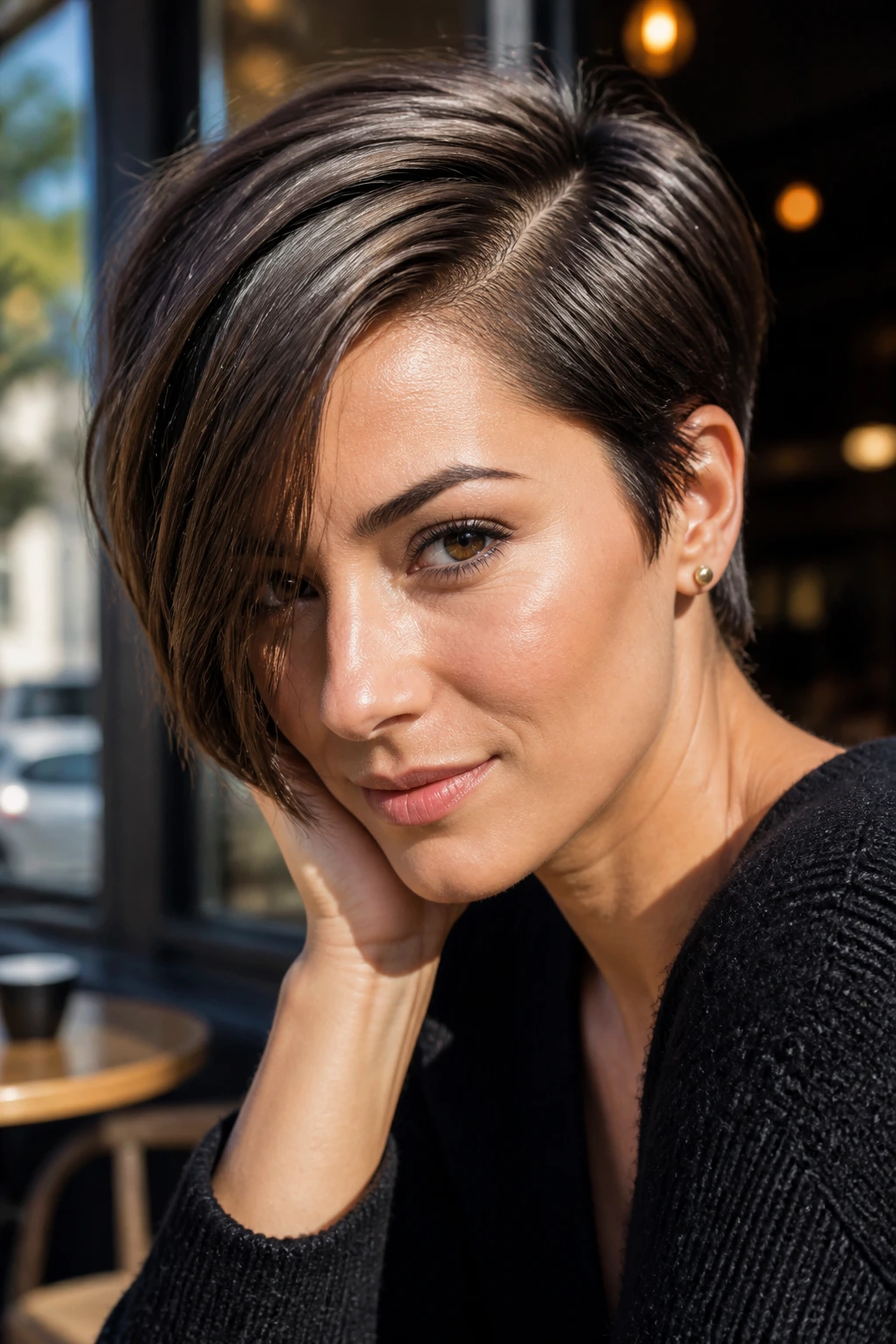
The deep side part gives thick hair direction. Without it, dense hair often spreads too evenly and starts to feel boxy. With it, the style gets a clean sweep over one eye and a sharper side on the other, which adds a little tension in a good way.
Why It Works: An oval face can take the strong diagonal line without losing balance. The heavy side brings drama; the shorter side keeps the profile tight. That contrast is the whole point.
Styling Note: Use a fine-tooth comb while the hair is damp, then blow-dry the part in place. If the part is off by even half an inch, the whole mood changes.
Watch For: Thick hair can resist a deep part at first. Train it with clips while it cools, or it’ll try to fall back into its old pattern.
7. Air-Dried Wavy Pixie
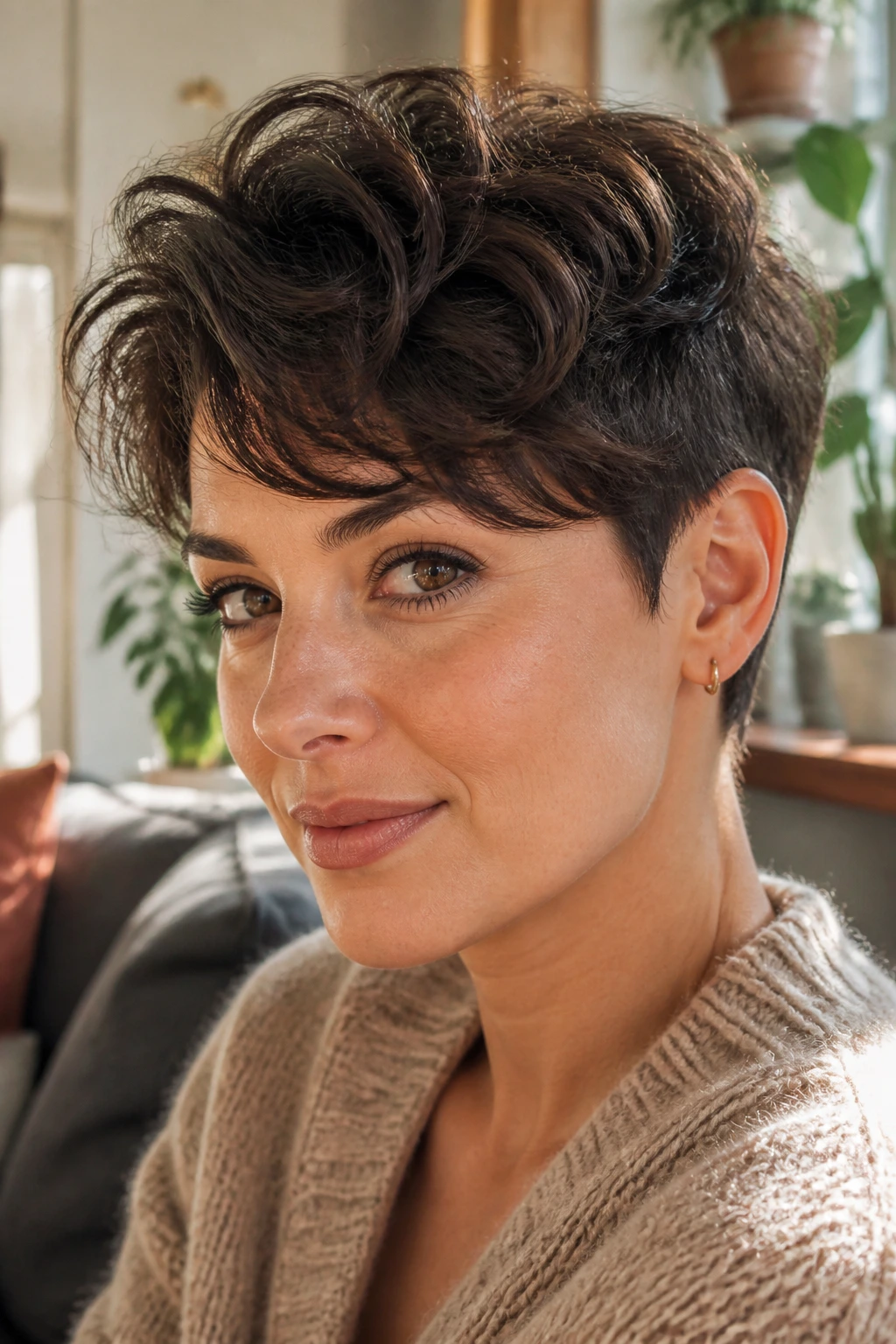
If your thick hair has a little wave, this shape lets the texture breathe. The cut stays long enough on top to show movement, while the sides stay controlled enough that the wave doesn’t expand into a triangle. Oval faces get a laid-back frame that feels natural instead of overworked.
Why It Works: The hair’s own bend becomes the styling tool. That means less heat, less forcing, and fewer mornings where you’re trying to flatten something that wants to live its own life.
How to Wear It: Work in a light mousse or curl cream on damp hair, scrunch the top lightly, and let it air-dry or diffuse on low heat. Once dry, break up the shape with clean hands and a touch of wax.
Small Warning: Air-dried pixies need a good cut underneath. If the interior is blunt or heavy, the wave lands badly and the whole style looks slumped.
8. Brushed-Back Glossy Pixie
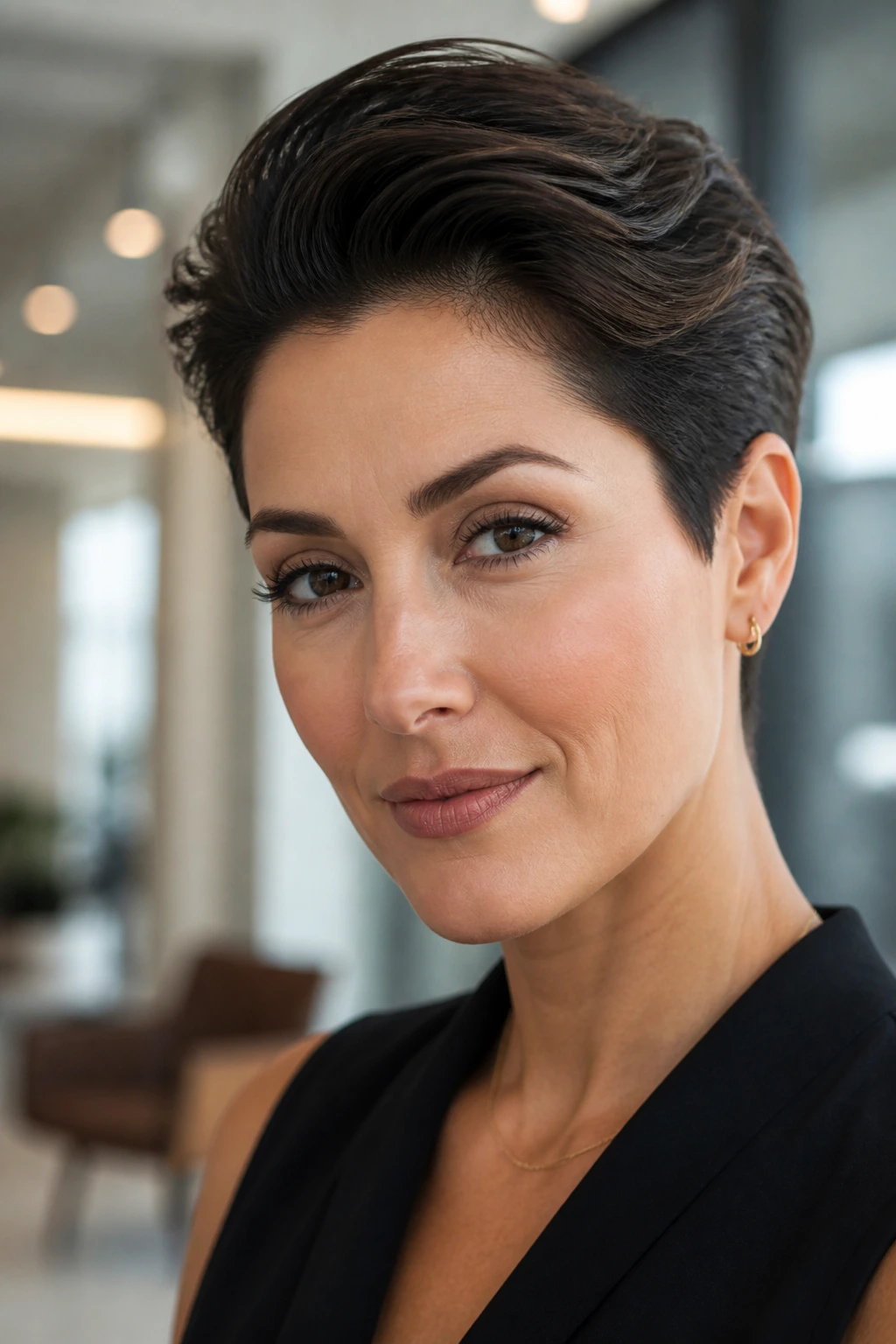
This is the polished one. Thick hair gives the brushed-back style enough presence to look expensive without needing a lot of product, and oval faces can wear the forehead open without getting lost. The result feels sharp, modern, and a little formal.
Why It Works: The brushed-back direction shows off the cheekbones and keeps the front away from the eyes. The thick hair helps the style hold its shape, especially if the top is layered just enough to bend backward instead of standing straight up.
Styling Note: Use a light gel or cream on damp hair, then brush it back with a vent brush and finish with a touch of shine spray. Keep the product weight low. Too much and the front goes greasy.
Where It Fits: This one plays well with structured jackets, earrings, and sharp collars. It’s the kind of cut that can make simple clothes look more finished.
9. Razor-Soft Shag Pixie
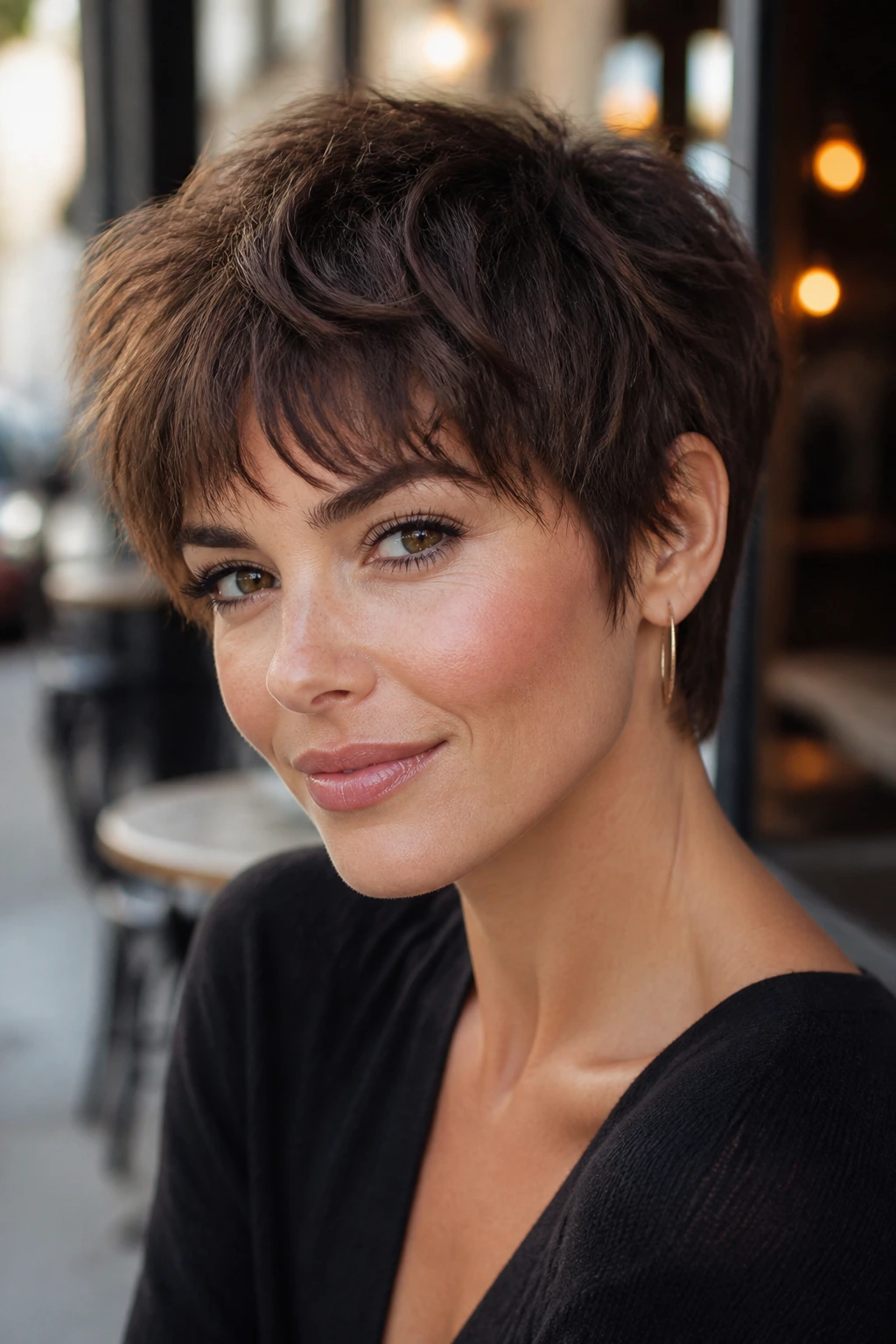
This cut sits between a shag and a pixie, which is exactly why thick hair likes it. The ends are softened with razor work or careful slide cutting, so the texture feels airy instead of blocky. Oval faces get a bit of fringe and a bit of edge without the shape turning heavy.
Why It Works: Thick hair needs broken-up ends to keep the silhouette from becoming too square. A razor-soft finish gives the haircut a little grit and keeps the movement loose around the forehead and temples.
Pro Tip: Ask for razor work only from someone who knows how your hair reacts. On some thick textures, too much razor can fray the ends. Controlled point cutting can be safer.
Styling Mood: Best with a small amount of texture cream and a rough dry. If you over-style it, the charm disappears.
10. Asymmetrical Long Pixie
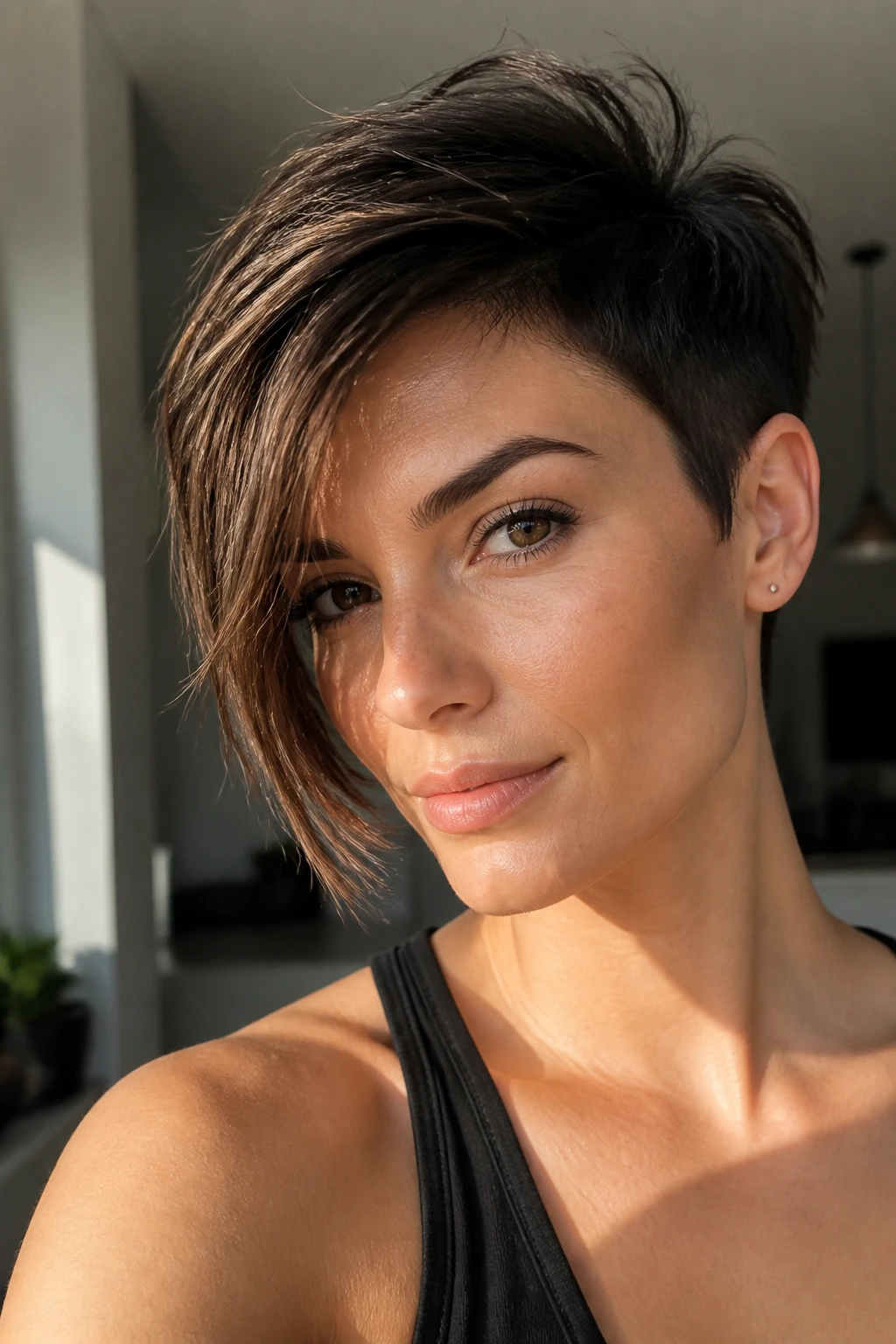
One side longer, one side shorter. Simple idea, sharp payoff. On thick hair, asymmetry helps shift the bulk instead of letting it sit evenly around the head. On an oval face, that off-balance line adds interest without needing bangs that hit you straight in the forehead.
Why It Works: The longer side gives you a curtain-like feel, while the shorter side keeps the shape crisp. Thick hair has enough density to carry the contrast without losing body.
How to Ask: Request a visible but not extreme asymmetry. The longer side should graze the cheekbone or jaw, and the shorter side should still have enough length to tuck behind the ear.
Common Slip: Don’t let the stylist leave the shorter side too short. On thick hair, that side can stand out like a shelf if there’s no soft transition.
11. Ear-Tucked Minimal Pixie
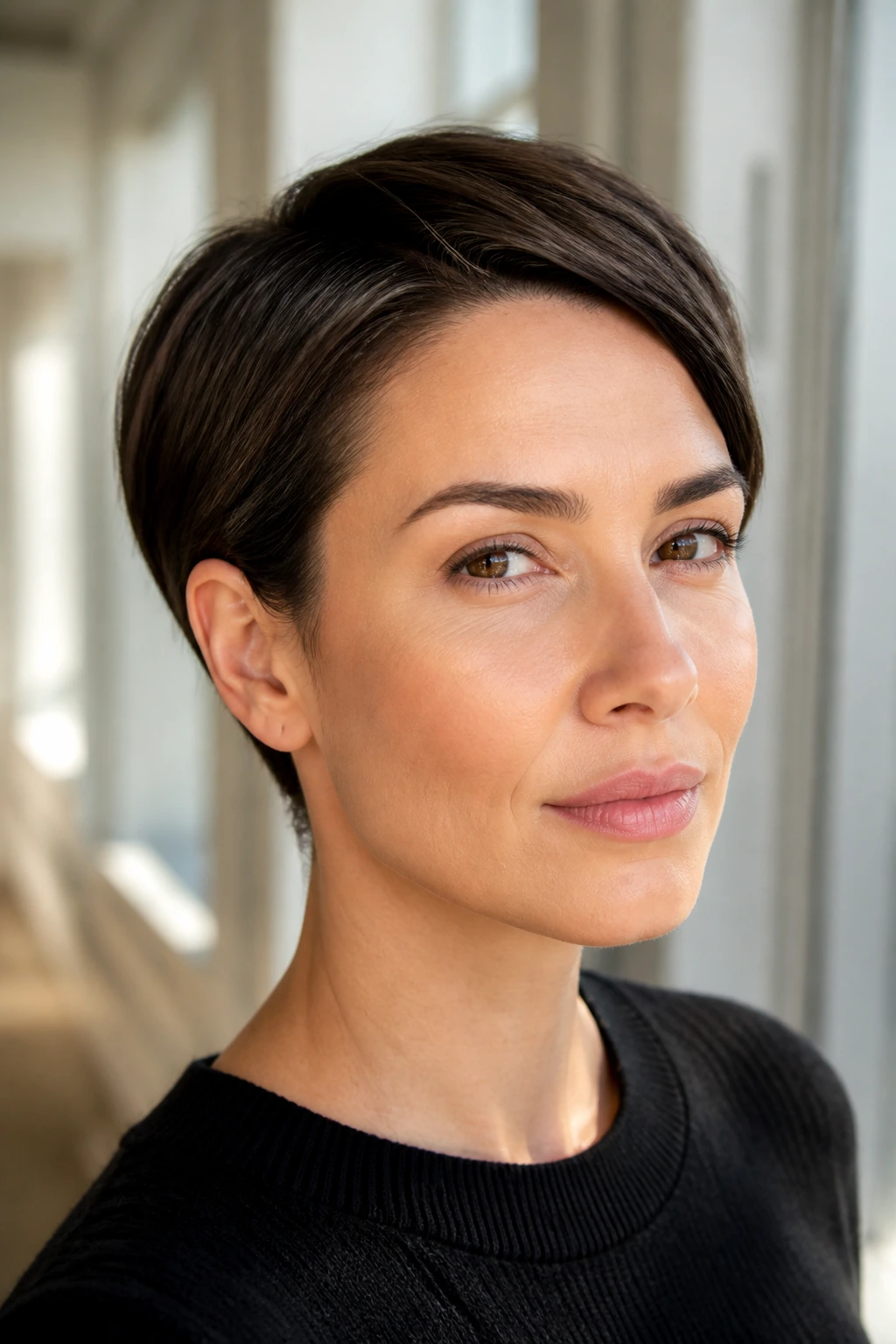
This is the neat one. The front stays long enough to tuck, the sides skim the ear, and the nape remains tidy. Thick hair usually fights minimalism, but when the bulk is controlled, the result looks clean instead of empty. Oval faces wear this easily because the exposed cheekbone line does the talking.
Why It Works: The tuck opens up the face, which is useful when the rest of the cut has enough density to create structure on its own. You don’t need extra fluff. You need clean edges.
Wear It Like This: Add a smoothing cream to the side you tuck, dry the hair flat against the head, then tuck it behind the ear and leave a few soft pieces loose in front.
Small Opinion: This cut looks best when it’s a little imperfect. If everything is over-flattened, it can feel severe in a way that thick hair doesn’t deserve.
12. Piecey Fringe Pixie
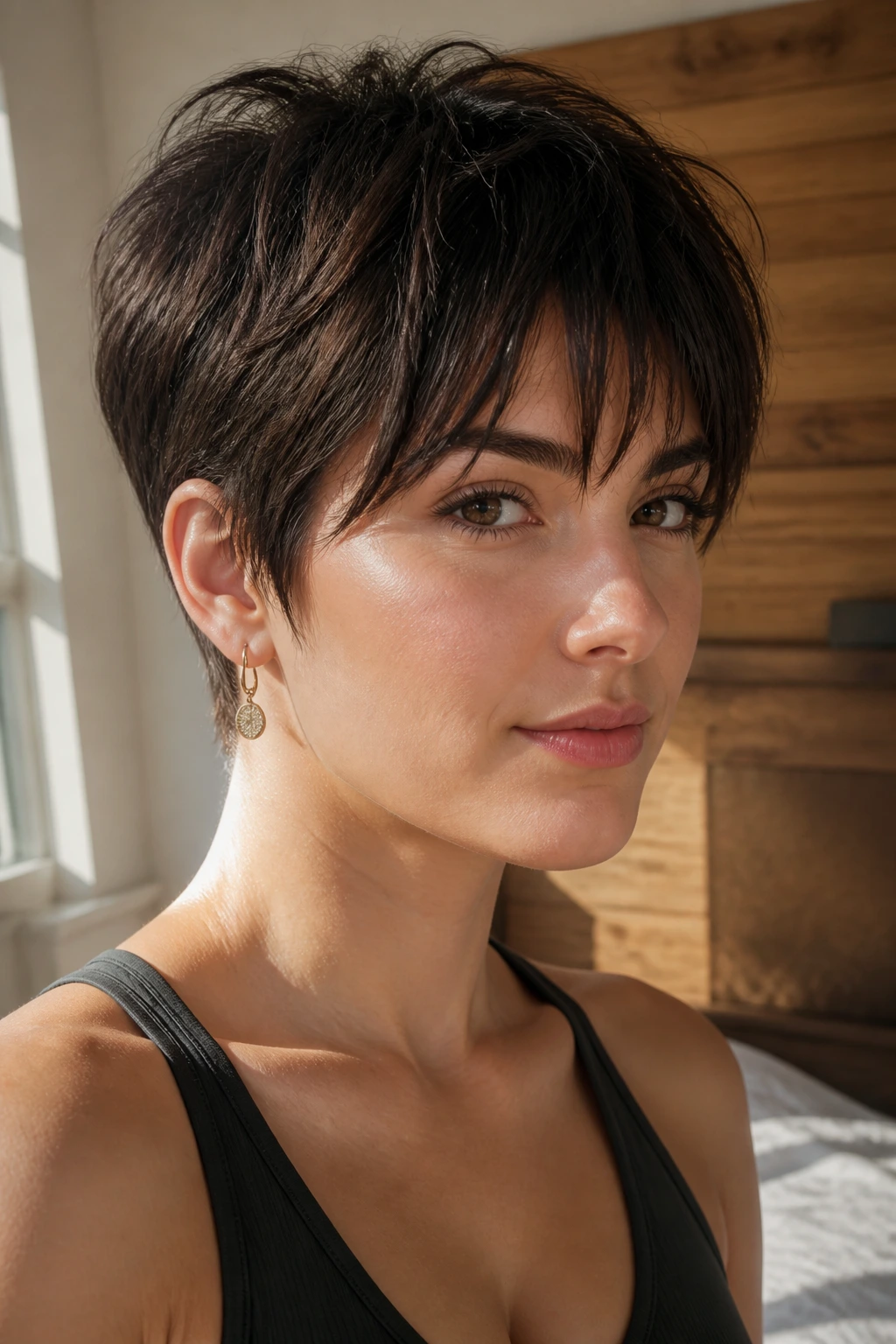
The fringe is the star here, and it should look broken up into small, readable sections rather than one heavy curtain. Thick hair makes that easier because there’s enough material for the fringe to hold shape. Oval faces get definition right across the brow, which can be useful if the rest of the cut is tighter.
Why It Works: Piecey fringe prevents the front from becoming a solid wall. That matters on thick hair, where the front can quickly overpower the face if the ends aren’t softened.
Cut Detail: Ask for internal texture in the fringe and a slightly longer center piece if you want the shape to feel softer. Don’t let the fringe get too short; thick hair springs up.
Styling Tip: Twist small sections with a little wax between your fingers. That gives separation without the crunchy look that heavier gels can leave behind.
13. Rounded Crown Volume Pixie
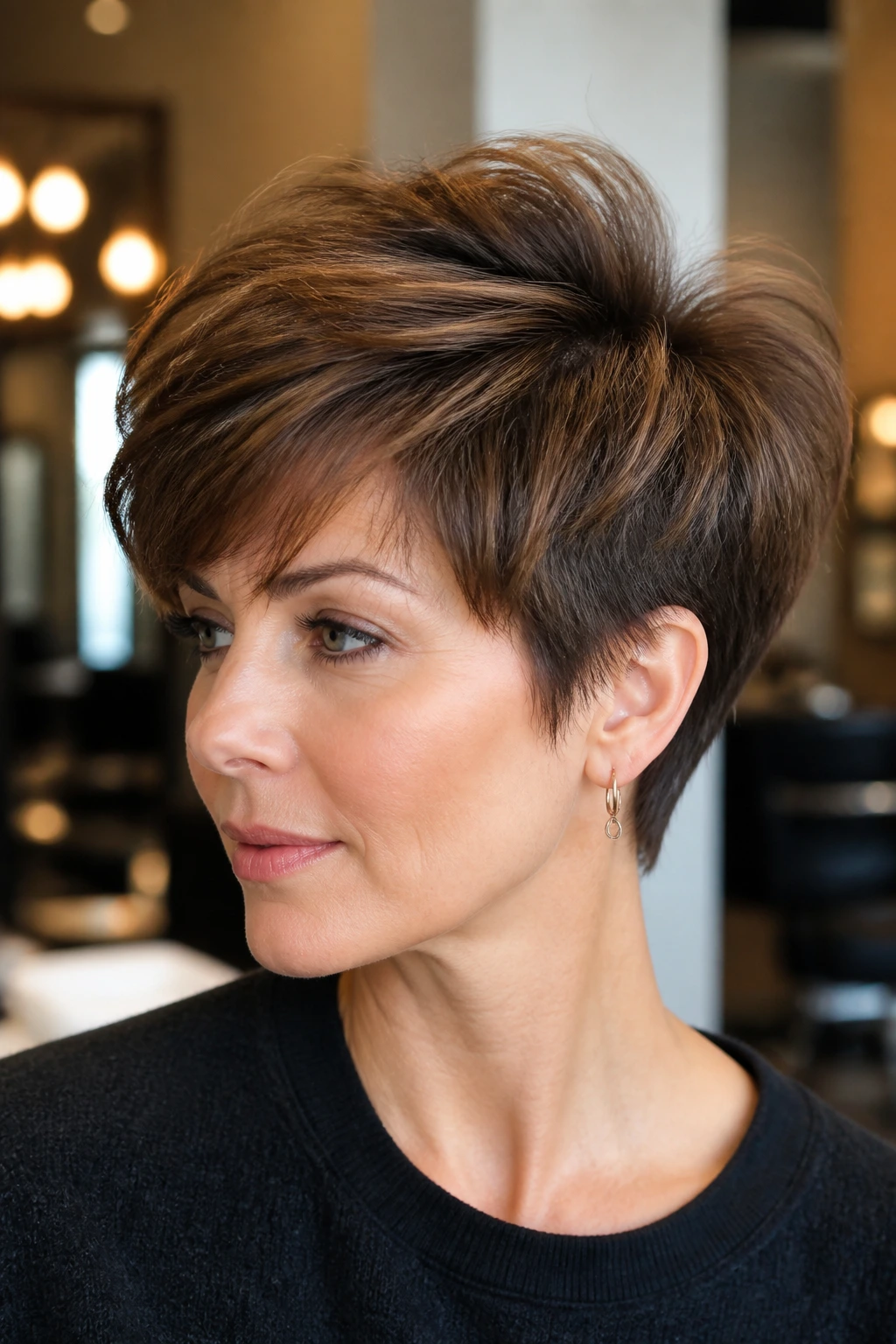
This one is for people who actually like height. The crown is rounded and airy, but the sides stay controlled enough that the style doesn’t become top-heavy. Thick hair can hold that curve naturally, and oval faces can handle the extra lift because the proportions stay balanced.
Why It Works: The rounded crown uses thick hair’s natural body instead of fighting it. When the layering is done well, the shape looks smooth from every angle.
Best For: Anyone who wants a bit of glamour in a short cut. It’s especially nice if your hair wants to puff at the crown anyway — might as well make that work for you.
Watch Out: Don’t confuse rounded with bulky. The back and sides still need a tapered edge, or the crown will look detached from the rest of the cut.
14. French-Girl Soft Pixie
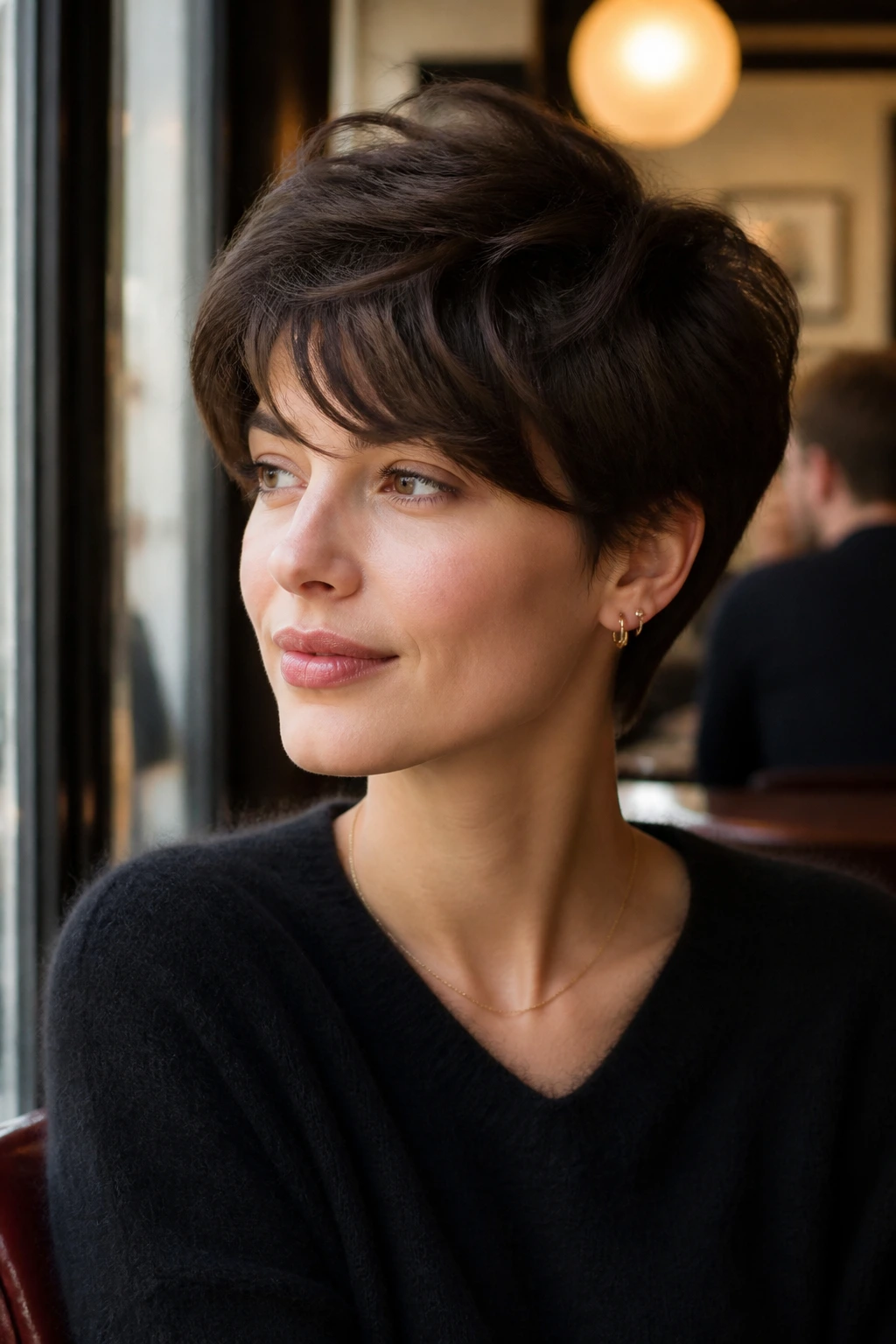
The French-girl version is softer at the edges, less choppy, and a touch romantic. Thick hair gives it weight, which keeps the front pieces from vanishing. Oval faces can wear the off-center fringe and soft side sweep without the cut feeling too precious.
Why It Works: The shape relies on relaxed lines, not crisp geometry. That makes it easier to style on days when your hair refuses to behave. And yes, it still needs a good cut underneath, even if it looks casual.
Styling Note: Use a little cream, not a lot. You want separation and bend, not a shiny shell.
Looks Best With: A slight bend at the ends and a less-than-perfect part. If the hair sits a little unevenly, good. That’s the point.
15. Grown-Out Bixie Pixie
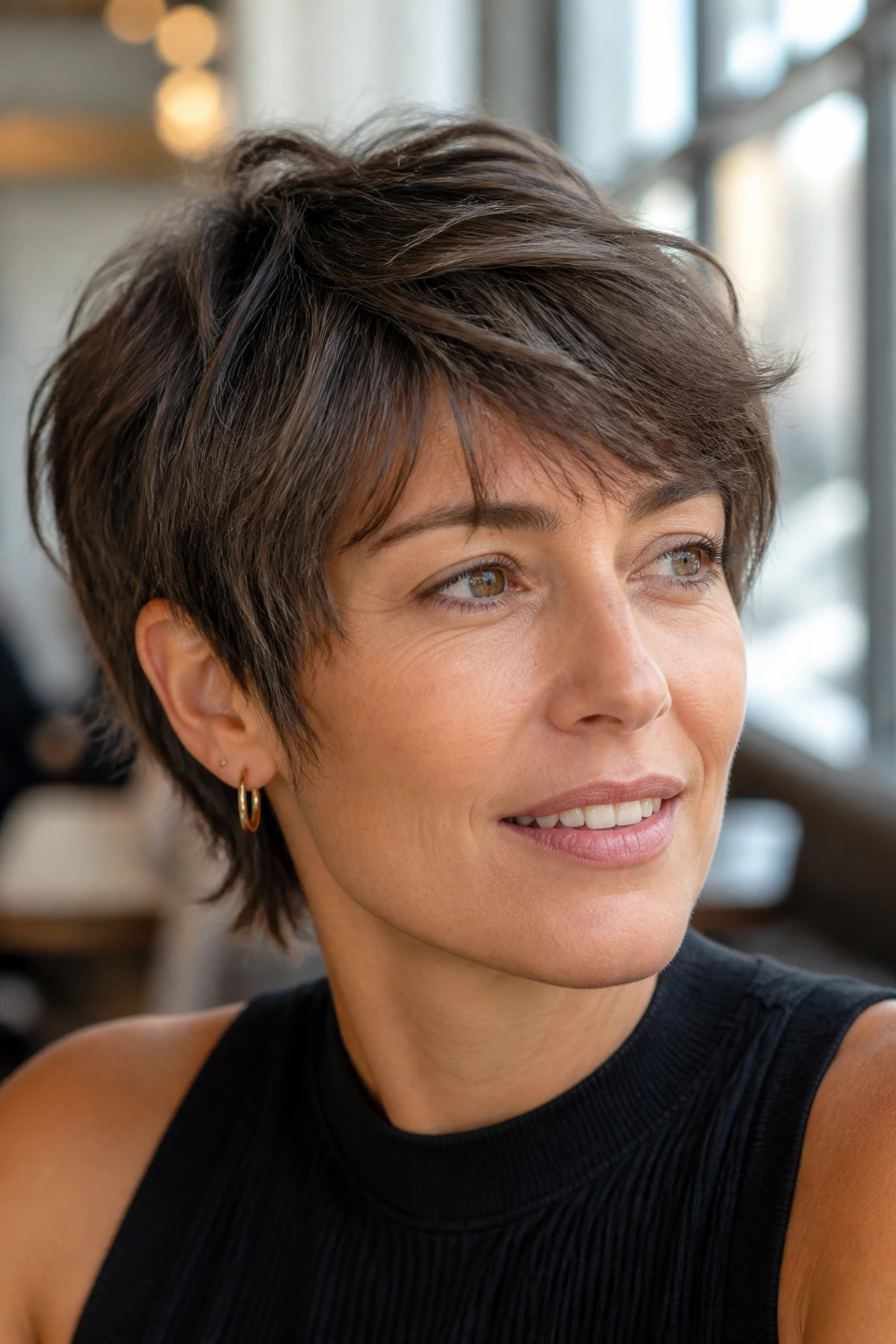
The bixie — that in-between shape that borrows from both a bob and a pixie — is a smart move for thick hair. It keeps more length around the ears and nape, which helps if you’re not ready for a dramatic chop. Oval faces can wear the longer shape without it dragging the features down.
Why It Works: Thick hair gets room to move, but not so much room that it turns into a mushroom. The length also makes the grow-out gentler, which matters if you hate constant salon visits.
Salon Note: Ask for soft graduation through the back and long, blended layers on top. You want the outline to stay airy. A hard line kills the effect.
Good For: People moving from a bob into shorter hair or anyone who wants to test the pixie idea without jumping straight into a crop.
16. Sculpted Straight Pixie
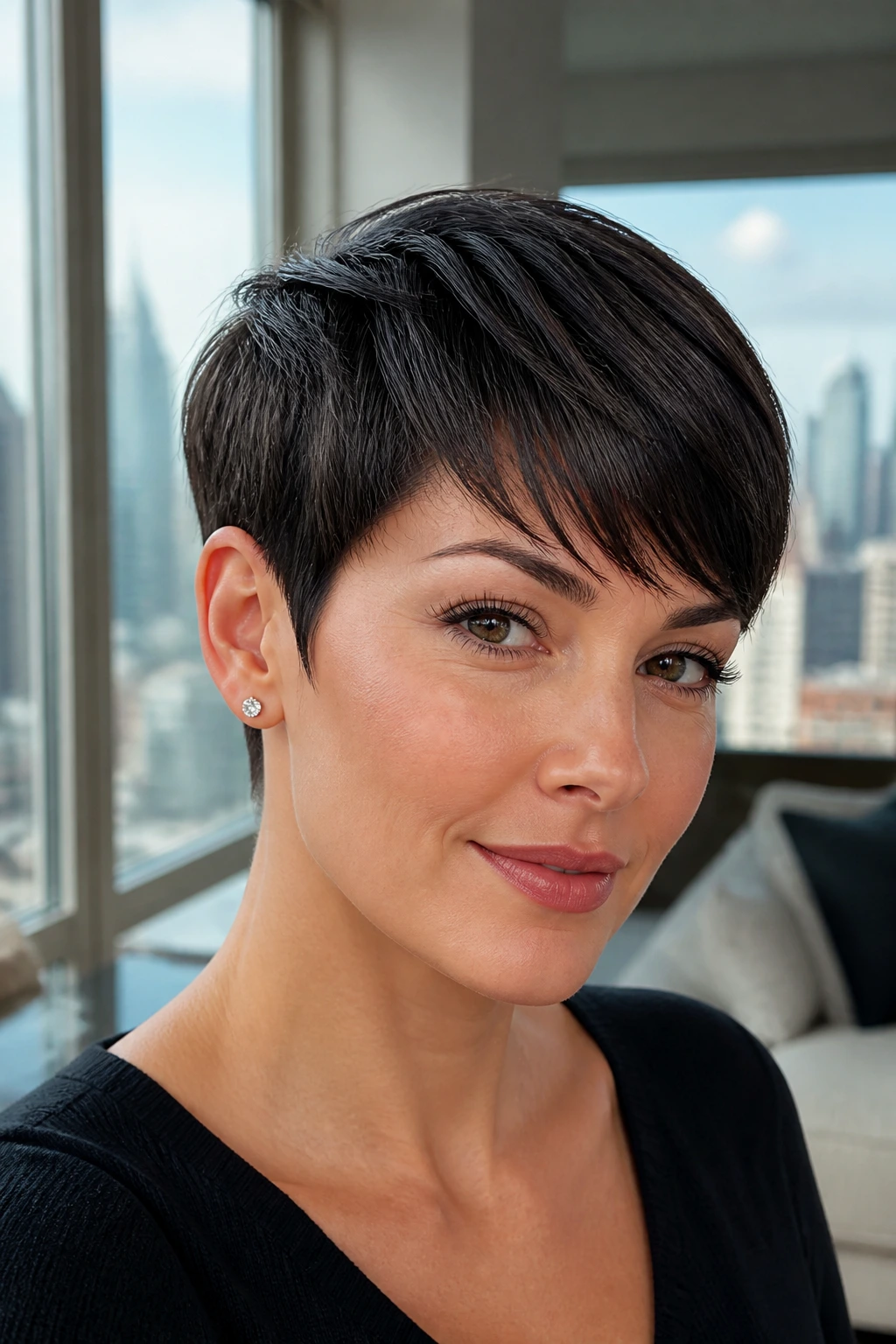
Straight hair with density can look almost architectural when it’s cut right. This pixie is cleaner than the shaggy versions, with careful lines and controlled layer placement. On an oval face, that precision can be striking, especially if you like a more refined finish.
Why It Works: Thick straight hair can hold a sculpted perimeter without collapsing. The key is taking enough weight out of the interior so the sides sit close and the top doesn’t lift into a block.
Cut Notes: Ask for internal shaping rather than heavy thinning at the ends. A precise edge needs support from inside the haircut, not just a slim outline.
How to Style: Blow-dry smooth with a paddle brush, then use a tiny amount of serum on the ends. Tiny. Too much and the shape starts to slip.
17. Tousled Bedhead Pixie
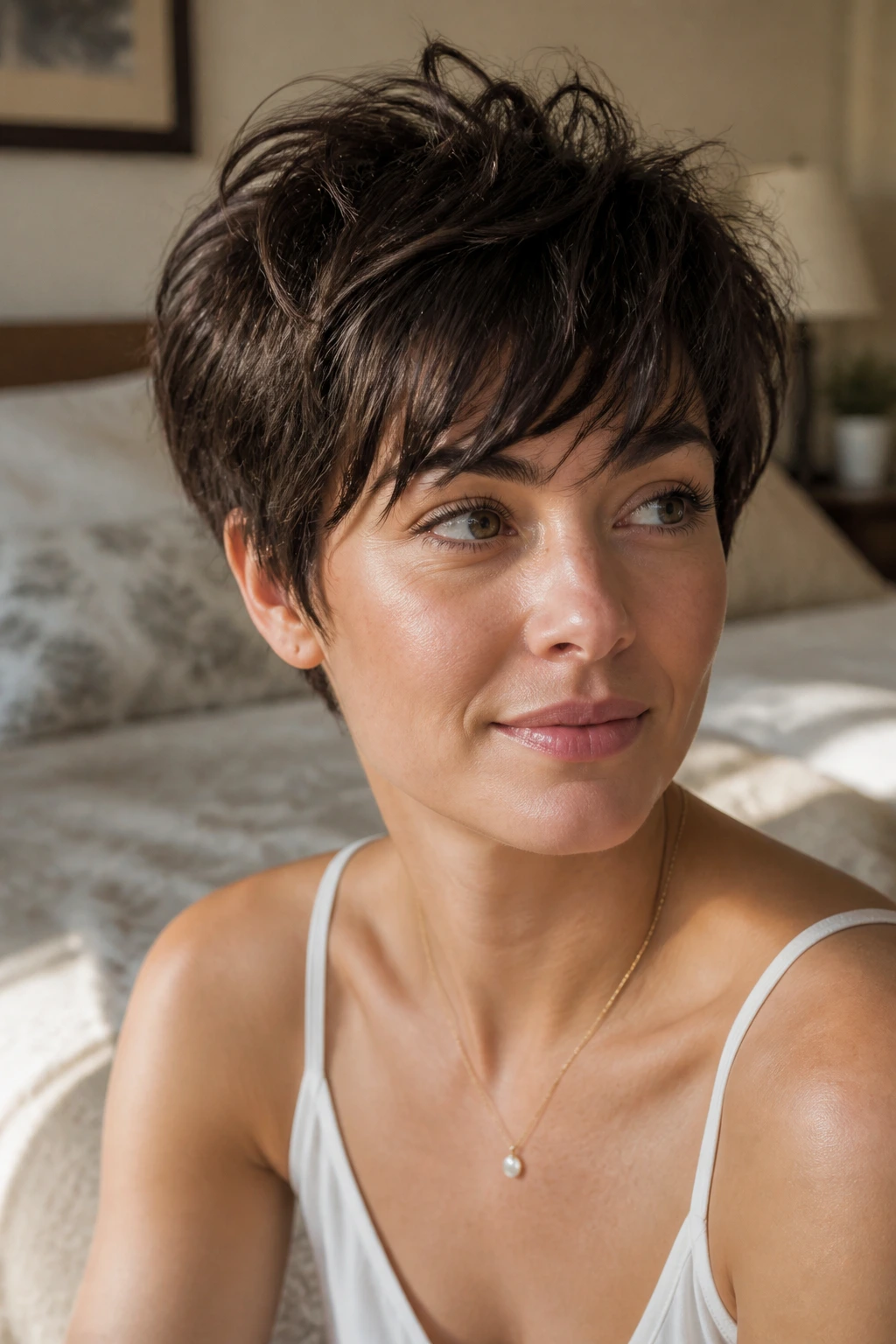
This one embraces the mess. Thick hair naturally has enough body to create a tousled shape, so the cut only has to nudge it in the right direction. Oval faces can wear the loosened fringe and uneven top without looking overwhelmed.
Why It Works: The piecey, uneven texture hides the fact that the hair may not have been perfectly styled. That’s useful. Not every morning deserves a full round-brush session.
Styling Note: Spray in texture mist on damp hair, scrunch the top, and dry with your fingers. Once it’s dry, pinch a few ends with paste.
Common Slip: Don’t use too much paste. Bedhead should look dry and airy, not like you fell asleep in a jar of wax.
18. Swept-Forward Fringe Pixie
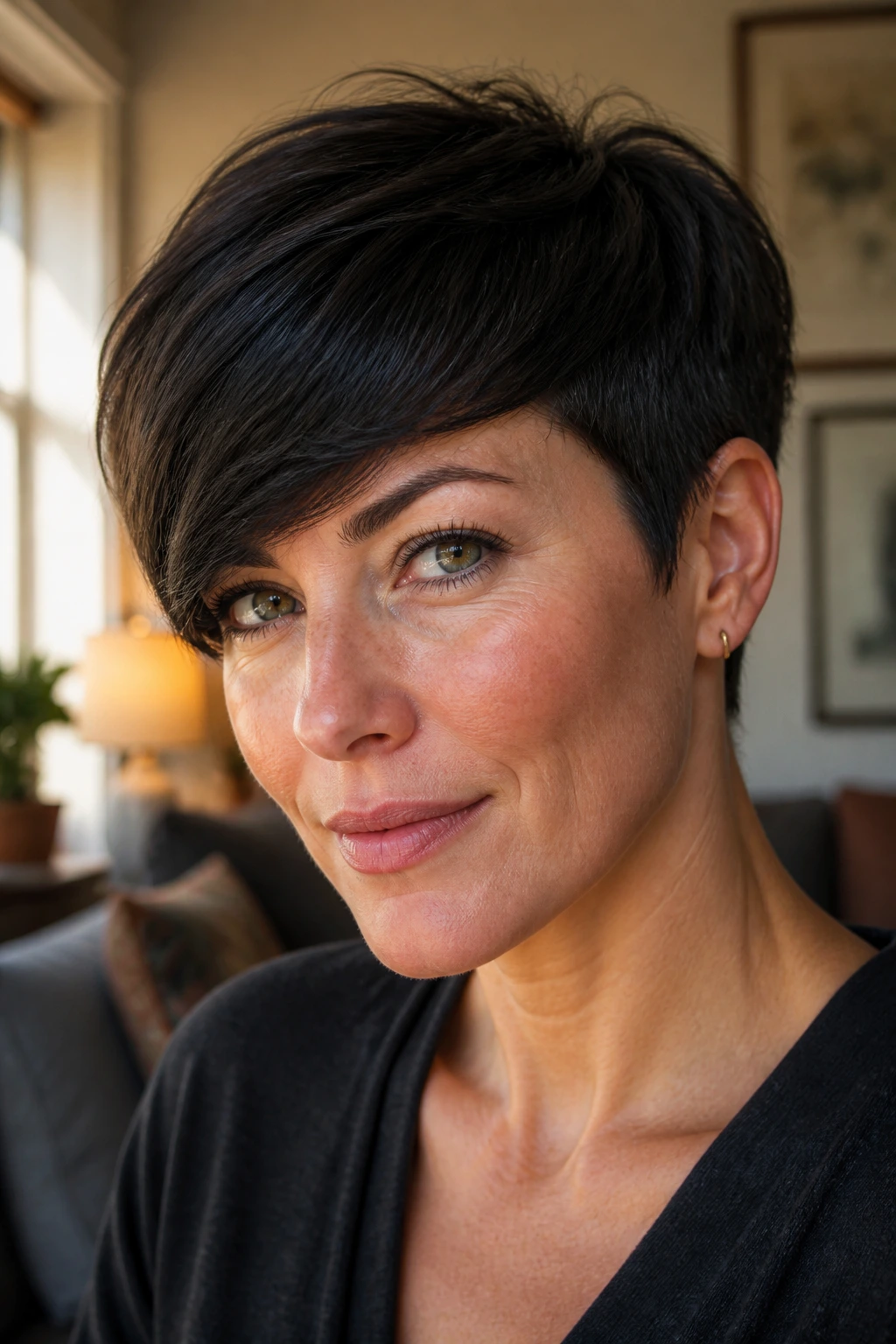
This cut brings the front forward rather than pushing everything away from the face. Thick hair gives the fringe enough density to sit where you want it, and oval faces get a nice line across the forehead without losing openness around the cheeks.
Why It Works: The forward sweep can soften a high forehead or sharpen a loose face-framing shape. It also keeps the top from feeling too airy if your hair tends to puff at the crown.
Styling Tip: Blow-dry the fringe forward with a flat brush, then bend the ends slightly under with your fingers. You’re aiming for movement, not a straight sheet.
Watch For: If your hair has a stubborn cowlick at the front, this cut needs a longer fringe to cooperate. Shorter lengths will fight you every morning.
19. Polished Work-Week Pixie

This is the neat, controlled version that still keeps enough length to avoid looking severe. It’s good for thick hair because the silhouette stays close to the head, and oval faces can take the clean lines without losing softness.
Why It Works: It reads tidy even when the hair has a lot of body. The top is long enough to comb into place, the sides are slim enough to prevent bulk, and the neckline stays crisp.
Best For: People who need a haircut that works with blazers, simple earrings, and busy mornings. Nothing flashy. Just well cut.
Styling Note: A smoothing cream at the sides and a light volumizer at the crown usually do the trick. Keep the product zones separate.
20. Soft Mohawk Pixie
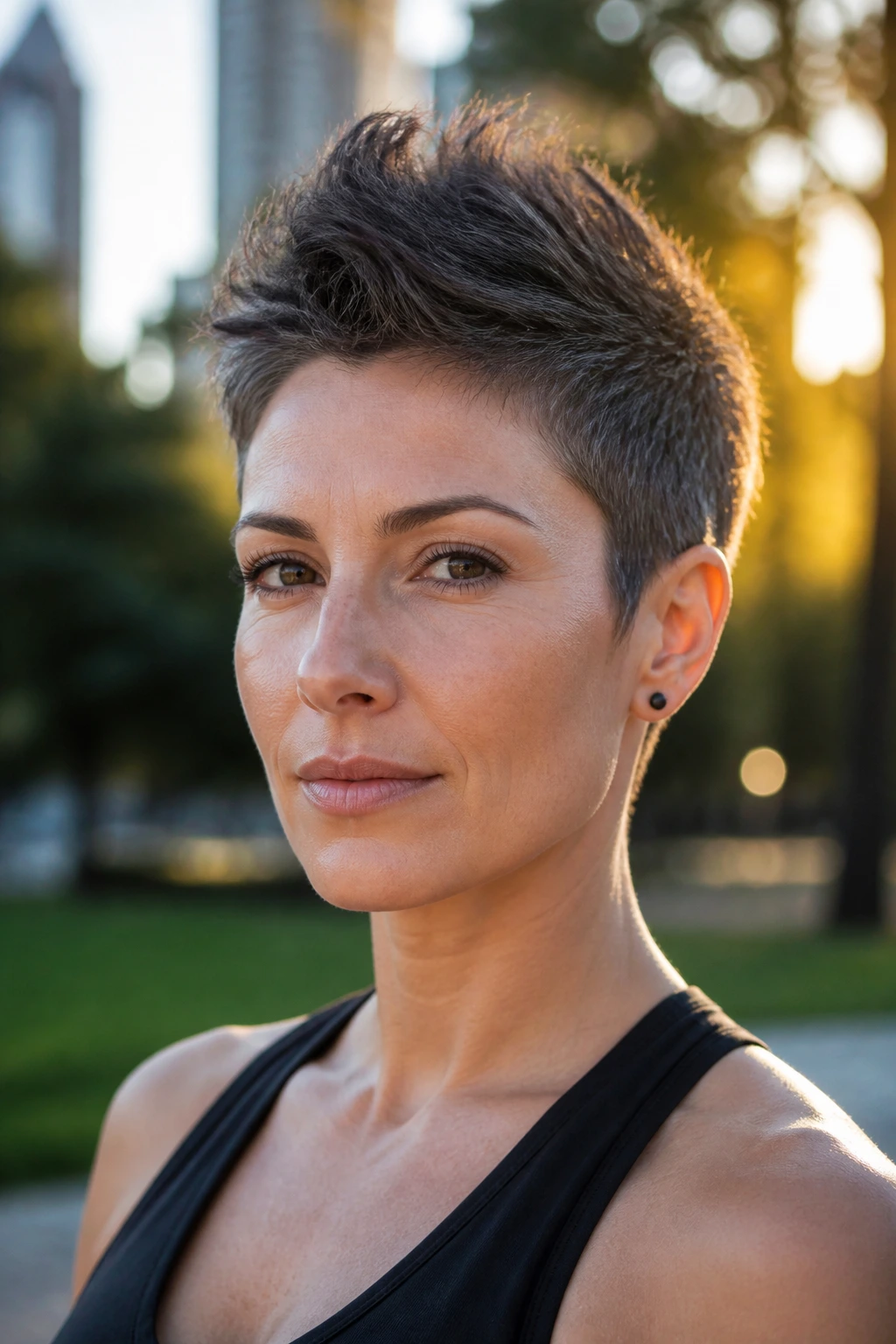
A soft mohawk doesn’t mean shaved drama unless you want it. Here, the center section stays a little taller and longer, while the sides taper down cleanly. Thick hair carries the center beautifully, and oval faces can handle the vertical line without getting elongated too much.
Why It Works: The central lift uses the hair’s density in the best way. It makes the haircut feel energetic without forcing the sides into a puff.
How to Style It: Blow-dry the center upward with root spray, then smooth the sides down with a touch of cream. The contrast is what makes it work.
One Caveat: Keep the mohawk strip soft, not stiff. A hard ridge on thick hair can look costume-y fast.
21. Extended Top-Layer Pixie
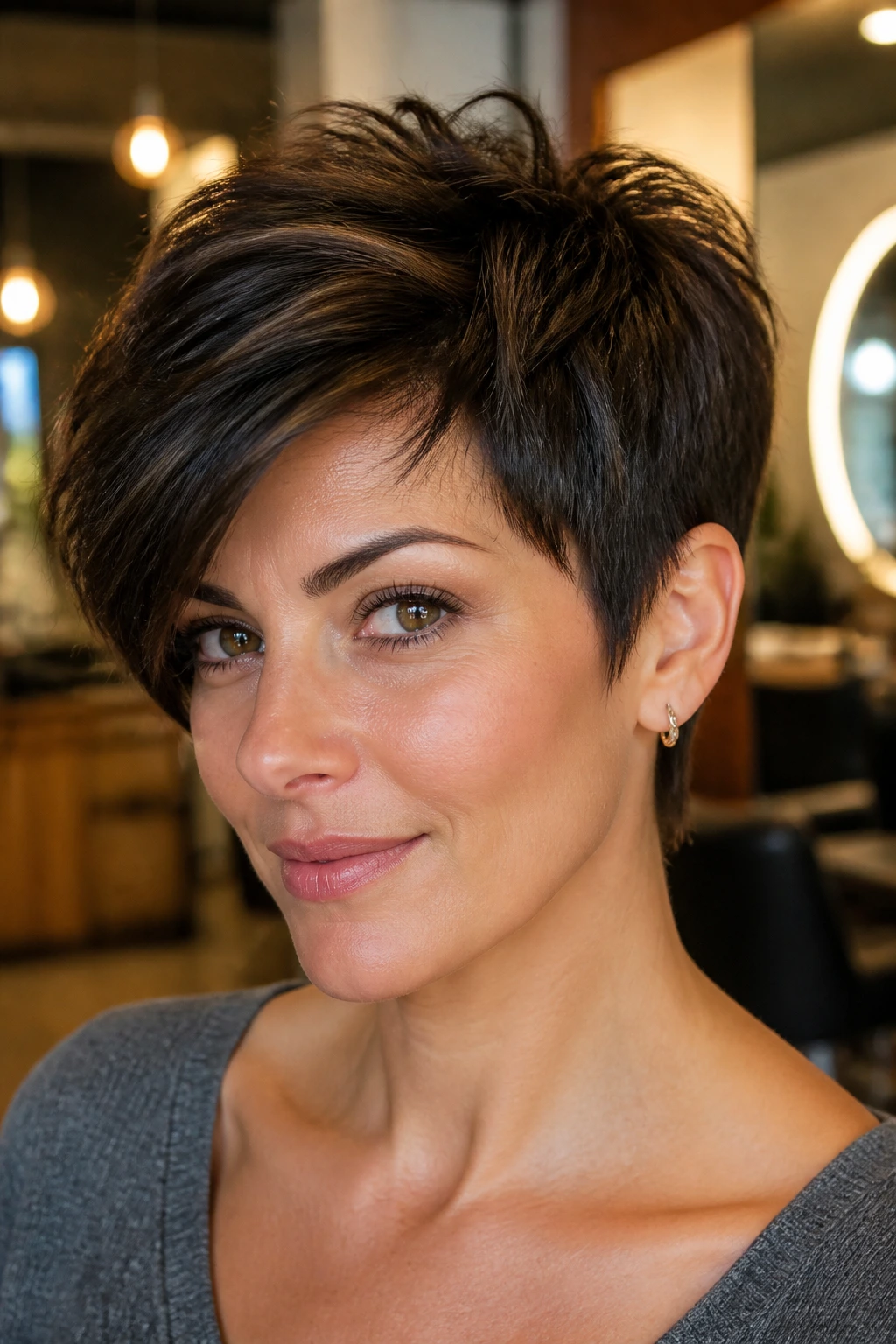
This cut keeps the top layers longer than most, which gives you more styling room. Thick hair likes that because the weight of the length helps it move, while the shorter sides keep the shape from getting too wide. Oval faces can wear the extra top length and still look balanced.
Why It Works: The longer top can be swept, curled, parted, or finger-styled depending on the day. It’s one of the easiest ways to keep a pixie from feeling too committed.
Salon Request: Ask for longer crown layers with subtle graduation through the back. You want swing and direction, not bluntness.
Styling Tip: A small barrel brush or a curling iron on the top only can create a bend that makes the whole cut look more finished.
22. Grow-Out Friendly Pixie
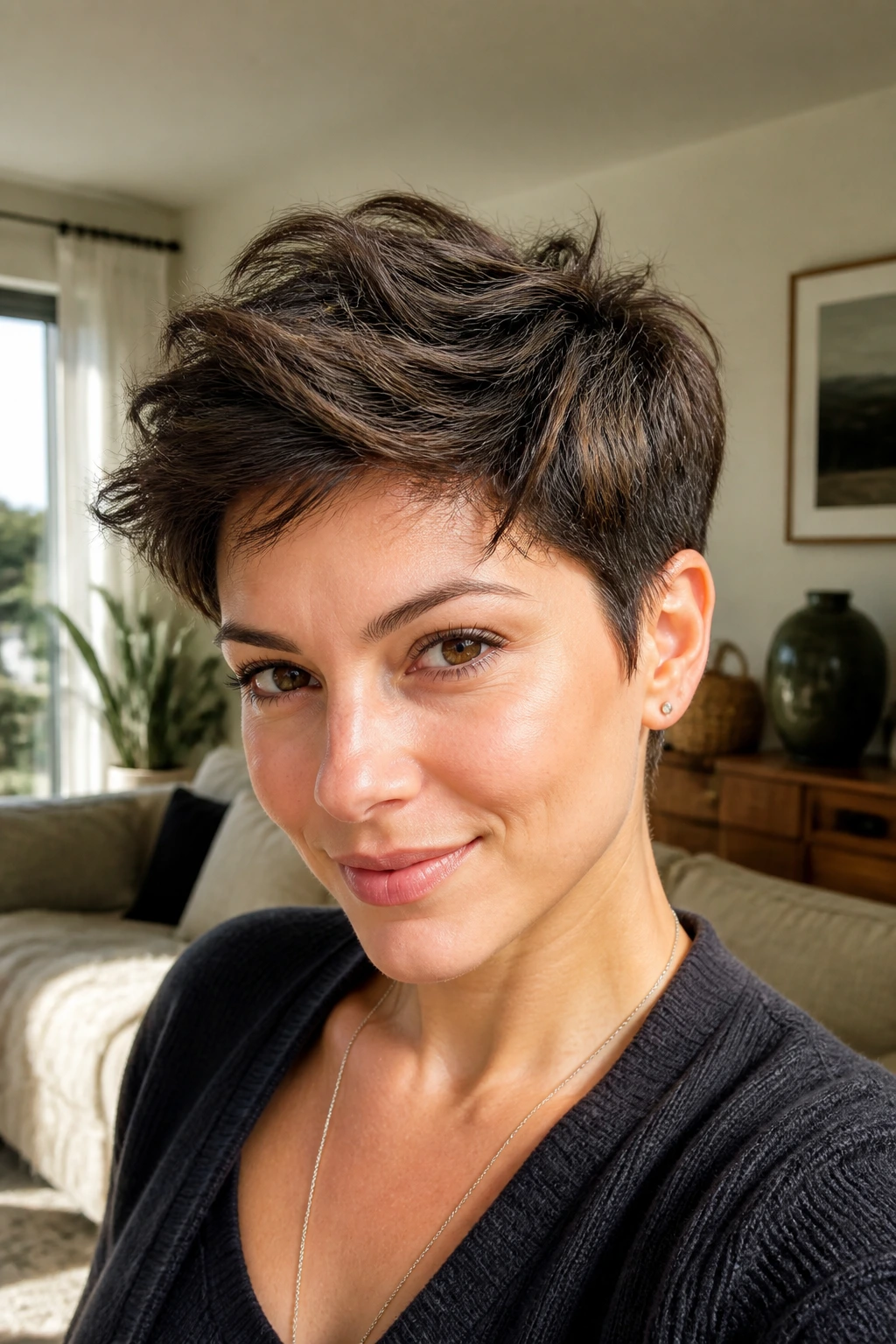
This is the practical winner for people who want a shorter cut but hate the awkward stage. The top stays long enough to move into a bixie later, and the sides are tapered just enough to stay neat for weeks. Thick hair gives it enough body to hold shape between appointments, which is rare and welcome.
Why It Works: Oval faces can wear the length even as it softens, and the careful taper means the haircut doesn’t balloon while it grows. That’s a huge deal if you want less maintenance without sacrificing shape.
Best Of All: It doesn’t force you into a harsh line at any point. You can keep trimming the nape and sides while the top stays a little longer, then slowly shift the whole cut in a new direction.
Keep In Mind: Ask for a grow-out plan before the first cut. A good stylist should be able to show you how the shape will change over the next couple of trims.
How Long Pixie Cuts Behave on Thick Hair
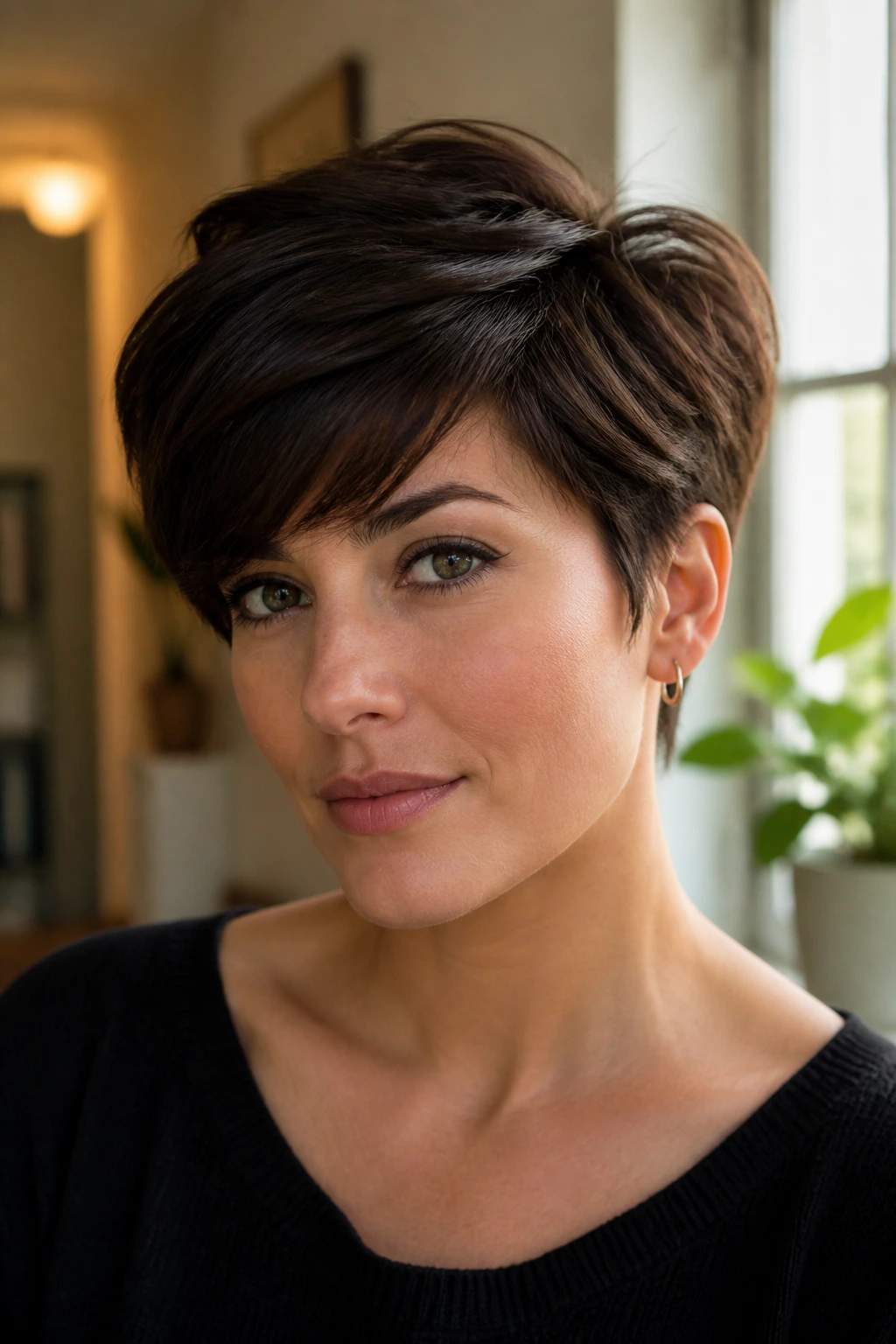
Thick hair behaves like it has opinions. It wants to stand up, spread out, or tuck itself into old habits around the part line and crown. That’s why a long pixie on dense hair needs internal structure more than it needs a lot of visible layers. The outer shape can be cute, sure. The inside is what keeps it from becoming a puffball by midday.
The best long pixie cuts for thick hair usually remove weight in the crown, around the occipital area, and just above the ears. That’s the triangle zone. Leave too much there and you get width where you do not want it. Remove too much and the top can go flat while the sides still stick out. That middle ground is where the cut starts earning its keep.
Oval faces make all of this easier, but they don’t erase bad proportions. A taller top still needs a softer side. A strong fringe still needs some air around it. If you’ve ever seen a pixie look cute from the front and boxy from the side, that’s usually a weight-distribution problem, not a face-shape problem.
Essential Tools and Products for Styling a Long Pixie
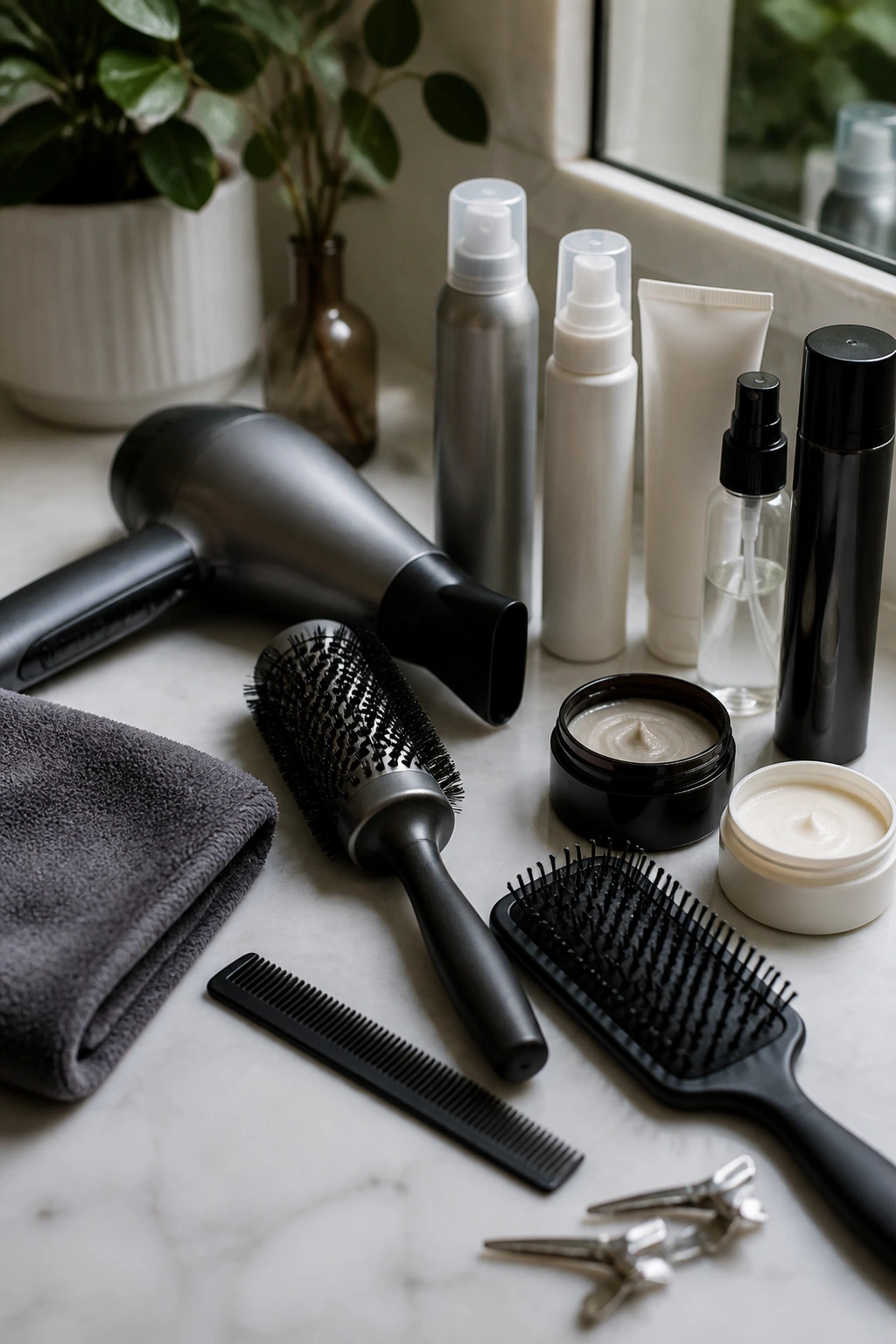
- Hair dryer with a concentrator nozzle: Helps you direct thick hair instead of blasting it into random volume.
- Small round brush, 1 to 1.5 inches: Best for lifting the crown and bending the fringe without creating huge curls.
- Paddle brush: Useful when you want the top smooth and controlled, especially on sleek styles.
- Fine-tooth comb: Good for clean parts and polished sweeps on denser hair.
- Texturizing paste or cream: Gives piecey separation; use a pea-size amount and build slowly.
- Root lift mousse or spray: Adds height at the crown without making the ends sticky.
- Lightweight smoothing cream: Keeps thick hair from fuzzing out around the sides and neckline.
- Heat protectant: Non-negotiable if you blow-dry often; thick hair can take heat, but it still gets rough at the ends.
- Flexible-hold hairspray: Holds the shape without freezing it into helmet territory.
- Microfiber towel or T-shirt: Cuts down on frizz when your hair is damp and ready for styling.
- Sectioning clips: Save time and stop the top from getting tangled with the sides while you work.
What to Tell Your Stylist Before the First Snip
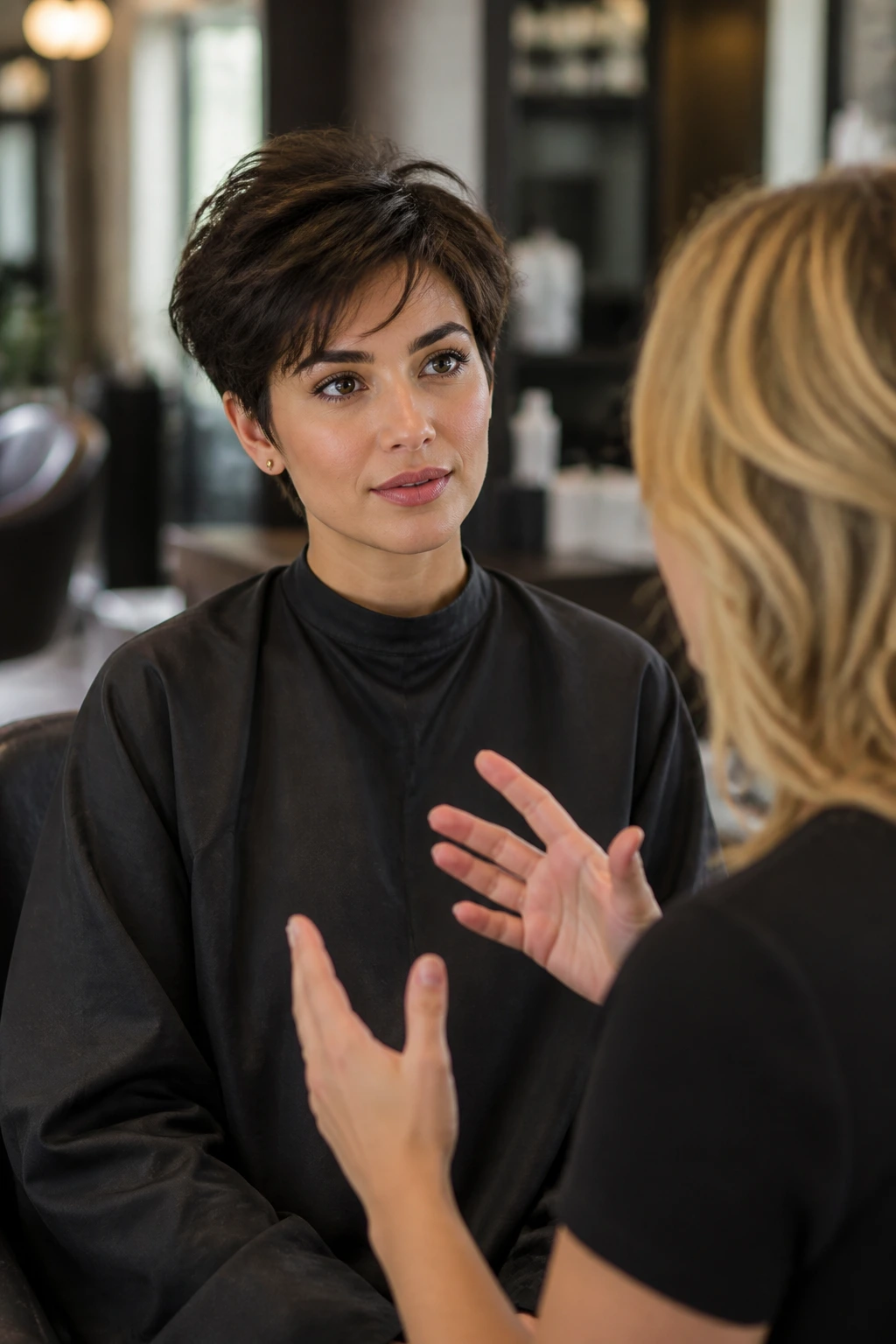
Be specific. “Short on the sides, longer on top” is too vague for thick hair. That phrase can produce a dozen different results, and half of them will make the sides balloon. Bring photos, yes, but also say what you want the haircut to do: less width, more movement, easier blow-drying, a softer fringe, a tapered nape.
Say whether your hair is coarse, dense, wavy, or straight. Those are not the same thing. A stylist who understands thick hair will adjust the internal layers differently if your hair is coarse and springy versus dense and smooth. Coarse hair often needs more careful weight removal. Dense straight hair often needs more directional shaping.
Mention your cowlicks, especially at the front and back. If you have a strong swirl at the crown, you cannot pretend it doesn’t exist. You can work with it, but only if the haircut respects where the hair wants to sit. The same goes for a stubborn neckline or a part that naturally falls off-center.
How to Style a Long Pixie Cut on Busy Mornings
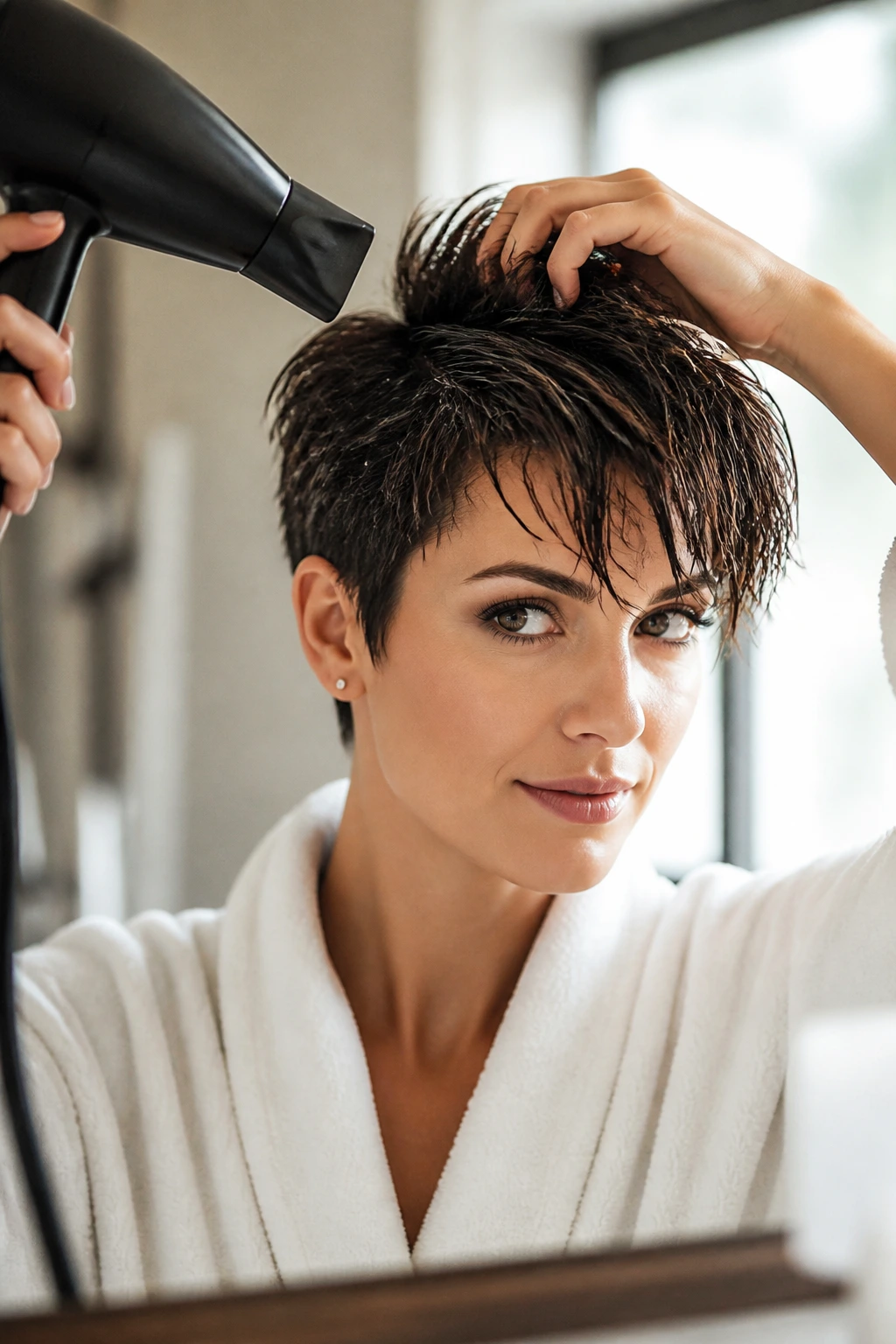
Some mornings call for a full blow-dry. Most don’t. Thick hair is forgiving, but only if you keep the routine tight. On a five-minute day, dampen the front, add a little root mousse, and rough-dry the crown with your fingers. Then tuck one side, sweep the other, and stop touching it. The more you fuss, the bigger it gets.
On a ten-minute day, section the top away from the sides. Blow-dry the crown first with the nozzle pointed upward at the roots, then smooth the fringe with a round brush. That sequence matters. If you dry the sides first, the top can sit on top of them like a cap. Nobody wants that.
For a more polished finish, cool the hair after shaping it. That small pause locks the bend in place and keeps the front from collapsing as the day goes on. It sounds boring. It works.
What to Leave Out of the Consultation
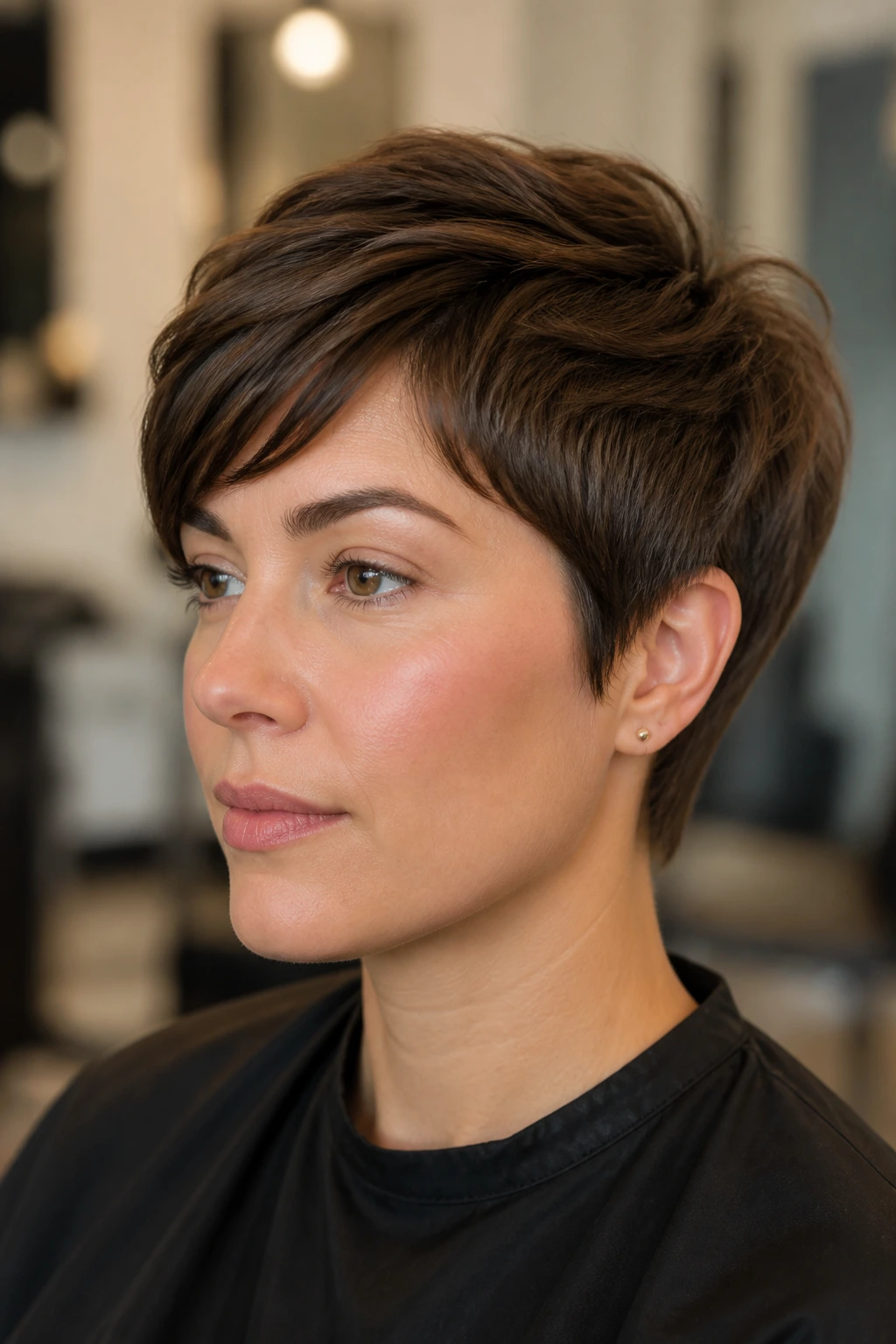
Don’t ask for aggressive thinning just because the hair feels heavy. On thick hair, that can create frayed ends and weird, see-through patches that puff even more later. The goal is usually controlled removal, not a random attack on density.
Don’t make the fringe too short if you want flexibility. Long pixie cuts live or die on their front pieces. If you trim them too much, you lose the ability to sweep, tuck, or soften the face shape. A little length buys you options.
And don’t skip the grow-out conversation. If you want something low-maintenance, the stylist needs to know that before the first cut. Otherwise you may walk out with a shape that looks gorgeous for ten days and annoying for six weeks.
Common Mistakes That Make Thick Pixies Puff Out
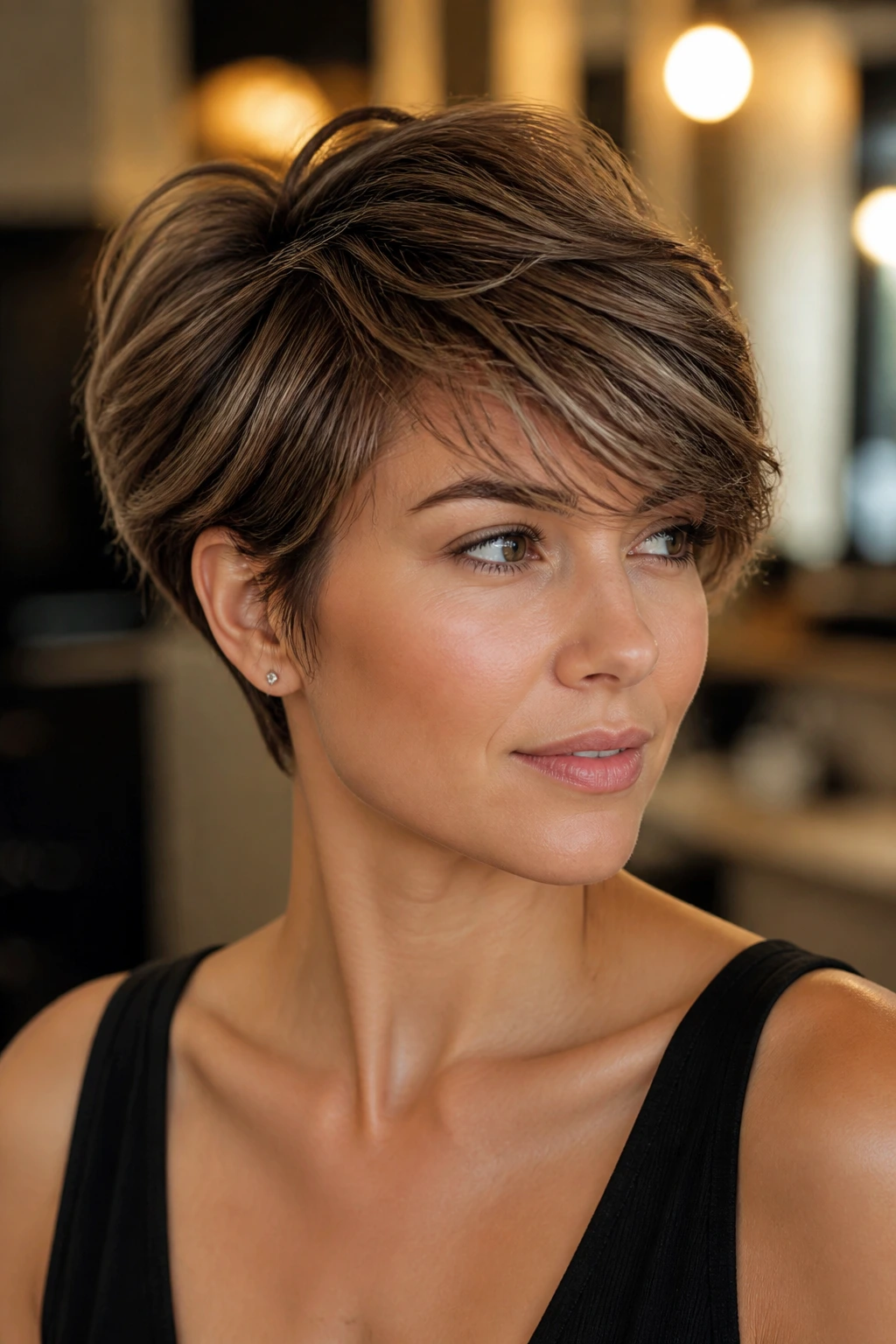
The first mistake is cutting the sides too blunt. Thick hair has mass, and blunt sides make that mass sit outward instead of downward. The symptom is that mushroomy little flare around the ears. The fix is softer graduation through the sides and a cleaner taper at the nape.
The second mistake is overloading the top with product. A long pixie already has structure. If you pile on wax, gel, and paste, the hair gets sticky and clumped, and the shape looks smaller but heavier at the same time. Start with a pea-size amount and add only if the ends need it.
The third mistake is forgetting the crown. Thick hair often lifts there on its own, which sounds helpful until the top starts looking like a shelf. If the crown is too dense, the silhouette becomes bulky from above. Ask for internal weight removal and check the shape when the hair is dry.
The fourth mistake is ignoring the part. An old part can make a pixie sit flat in the wrong place or force the fringe into a weird split. Re-training the part with clips and a blow-dryer takes a few days, but it’s worth it.
Variations and Alternative Approaches
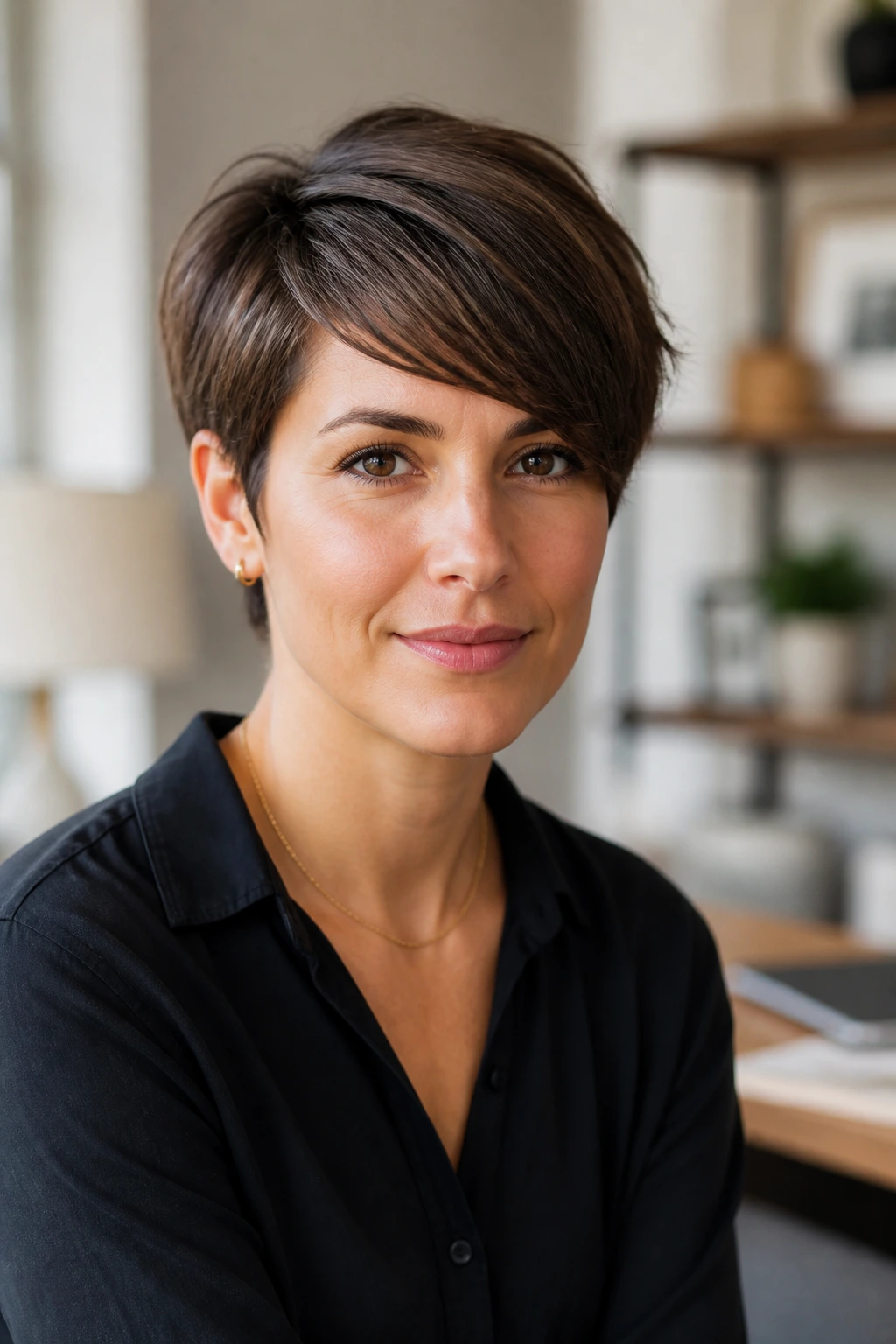
The Softer Office Version: Keep the fringe longer, skip the sharp undercut, and lean on a side sweep or ear tuck. This makes the cut look neat without reading severe.
The Textured Weekend Version: Add more point cutting, use matte paste, and dry the hair roughly with your fingers. That gives thick hair extra separation and a less polished finish.
The Sleek Evening Version: Smooth the sides down, polish the top with a small round brush, and finish with a light shine spray. Thick hair can hold this look better than finer hair because it has natural body to start with.
The Wavy Air-Dry Version: Leave the top layers longer and work with your wave pattern instead of flattening it. A light curl cream plus a diffuser keeps the shape soft and natural.
The Low-Maintenance Grow-Out Version: Keep the back tapered and the top long enough to shift into a bixie later. This is the smart choice if you want fewer awkward stages between trims.
How to Keep the Shape Between Salon Visits
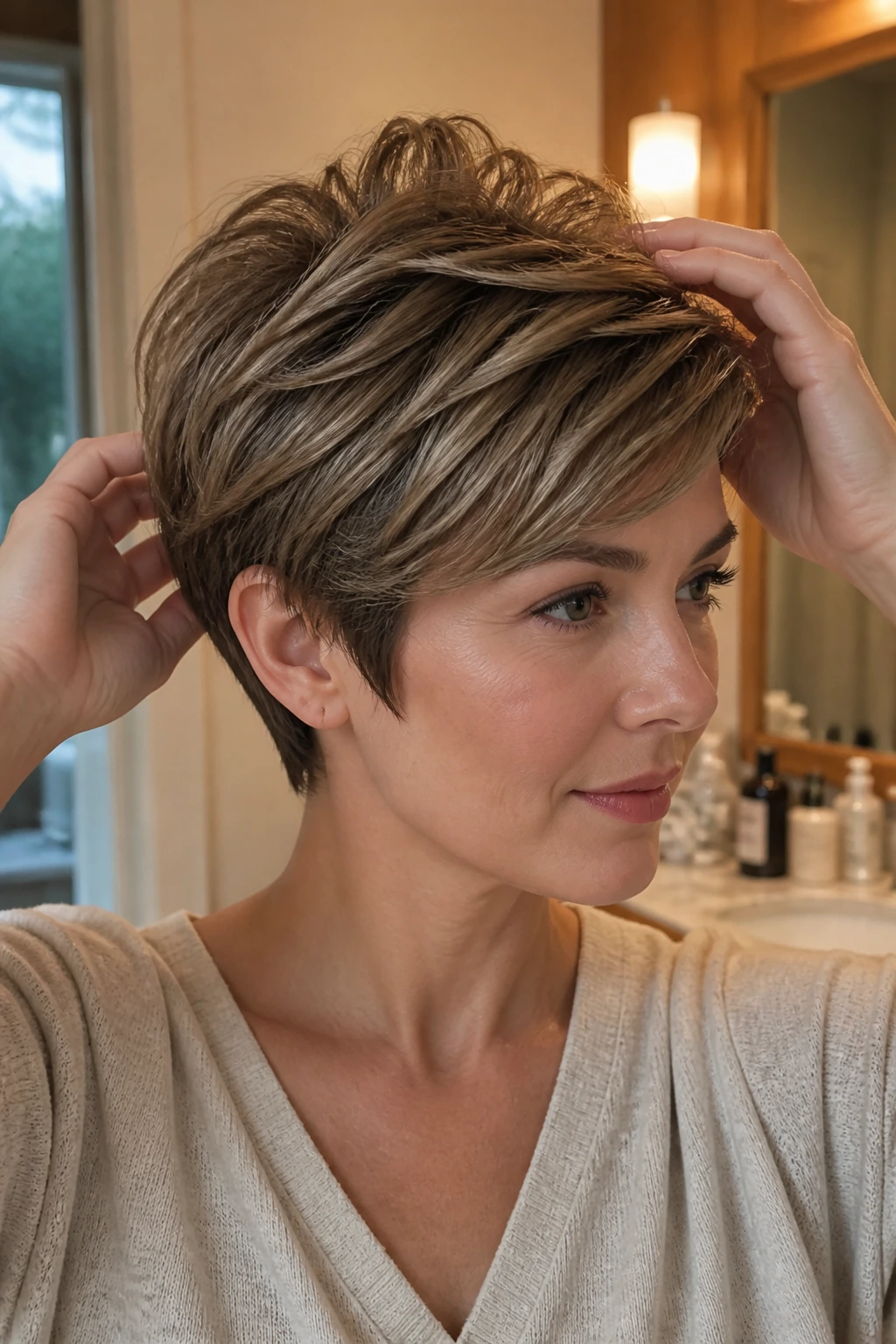
A long pixie on thick hair usually needs a trim every 5 to 7 weeks if you want the shape to stay crisp. You can stretch that a little if the cut is softer and longer, but the nape and sideburns will tell on you first. Once the neckline starts flipping or the ears lose their clean line, the haircut has already begun to drift.
At home, keep the top from getting too dry. Thick hair can get frizzy at the ends, especially if you use heat most days. A tiny amount of smoothing cream or a light oil on the very tips can keep the finish from looking rough. Very tiny. If the product reaches the roots, the style collapses.
If the cut starts feeling boxy before your next appointment, change the part or switch the styling direction for a day. Sometimes that’s enough to bring the shape back. Hair gets stubborn when it’s worn the same way every morning.
Frequently Asked Questions
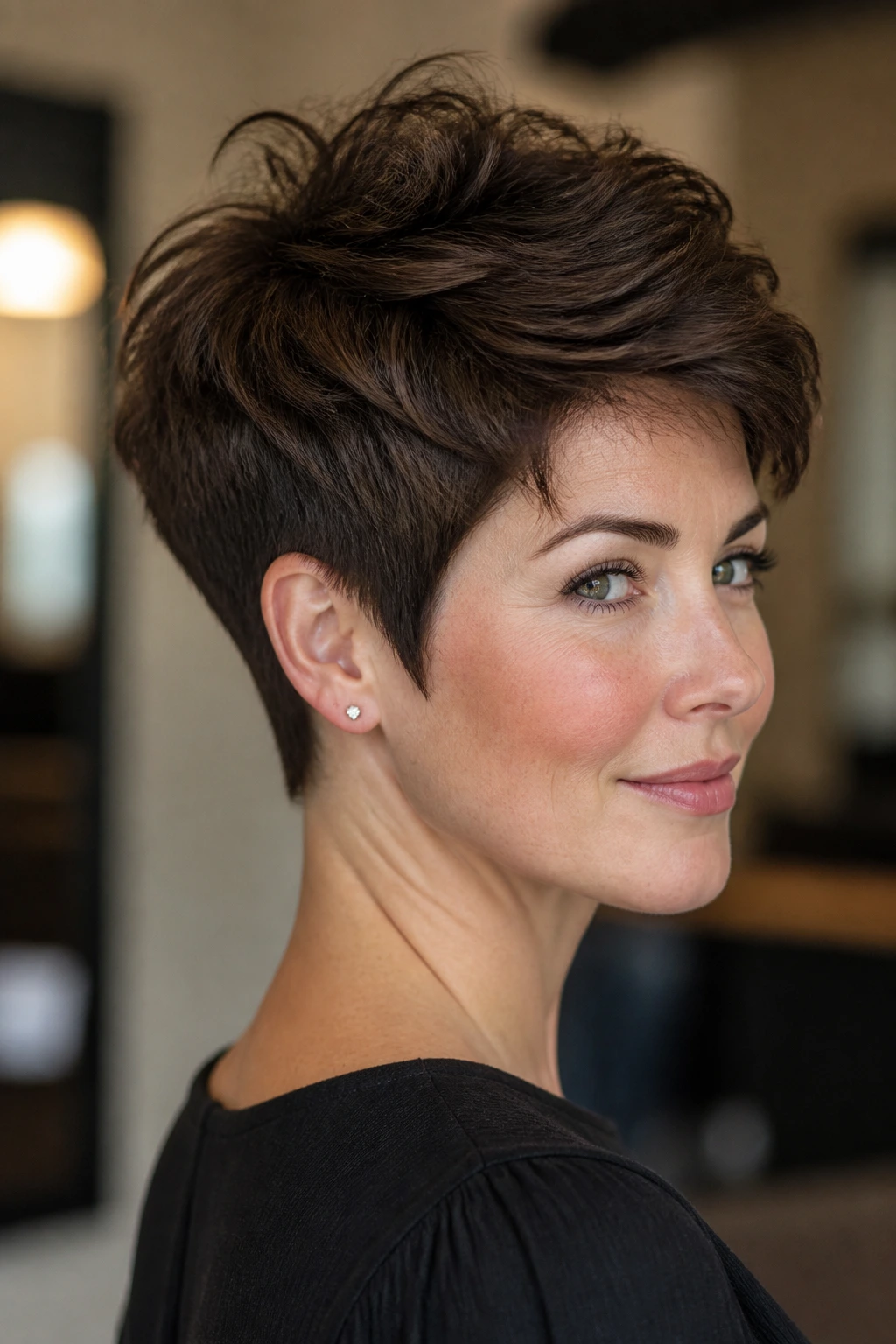
Can thick hair actually make a long pixie easier to style?
Yes, if the cut is shaped well. Thick hair gives the style enough body that you don’t need to fake volume, but it also means the internal weight has to be controlled or the sides will flare out.
Will a long pixie make an oval face look longer?
It can if the top is too tall and the sides are too tight. The fix is a little width around the temples, a softer fringe, or a side sweep that breaks up the vertical line.
Is a pixie cut high maintenance on thick hair?
The haircut itself can be easy; the trim schedule is the part that asks for discipline. If you like a clean outline, expect to trim the nape and side edges every 5 to 7 weeks.
Should I use thinning shears on my own thick pixie?
I wouldn’t. Home thinning often removes the wrong bulk and leaves uneven, frizzy patches that puff up later. If the cut feels too heavy, take it back to a stylist and ask for interior shaping.
What if my thick hair has a strong cowlick at the front?
Leave the fringe longer and have it cut to work with the swirl, not against it. A short front section will usually spring up and split in the wrong direction.
Can I air-dry a long pixie if my hair is thick and straight?
Yes, but the cut has to support that. Straight thick hair needs clean layering and maybe a little texturizing at the ends so the shape doesn’t dry into one solid block.
What styling product works best for thick pixies?
For most of these cuts, a light mousse at the roots plus a small amount of paste or cream at the ends is enough. Heavy waxes and thick gels tend to overload the shape.
How do I stop my pixie from looking puffy by lunchtime?
Dry the roots in the direction you want them to stay, keep product off the sides, and make sure the cut has enough internal weight removal. Puffy hair is usually a cutting problem first and a styling problem second.
The Shape That Keeps Working
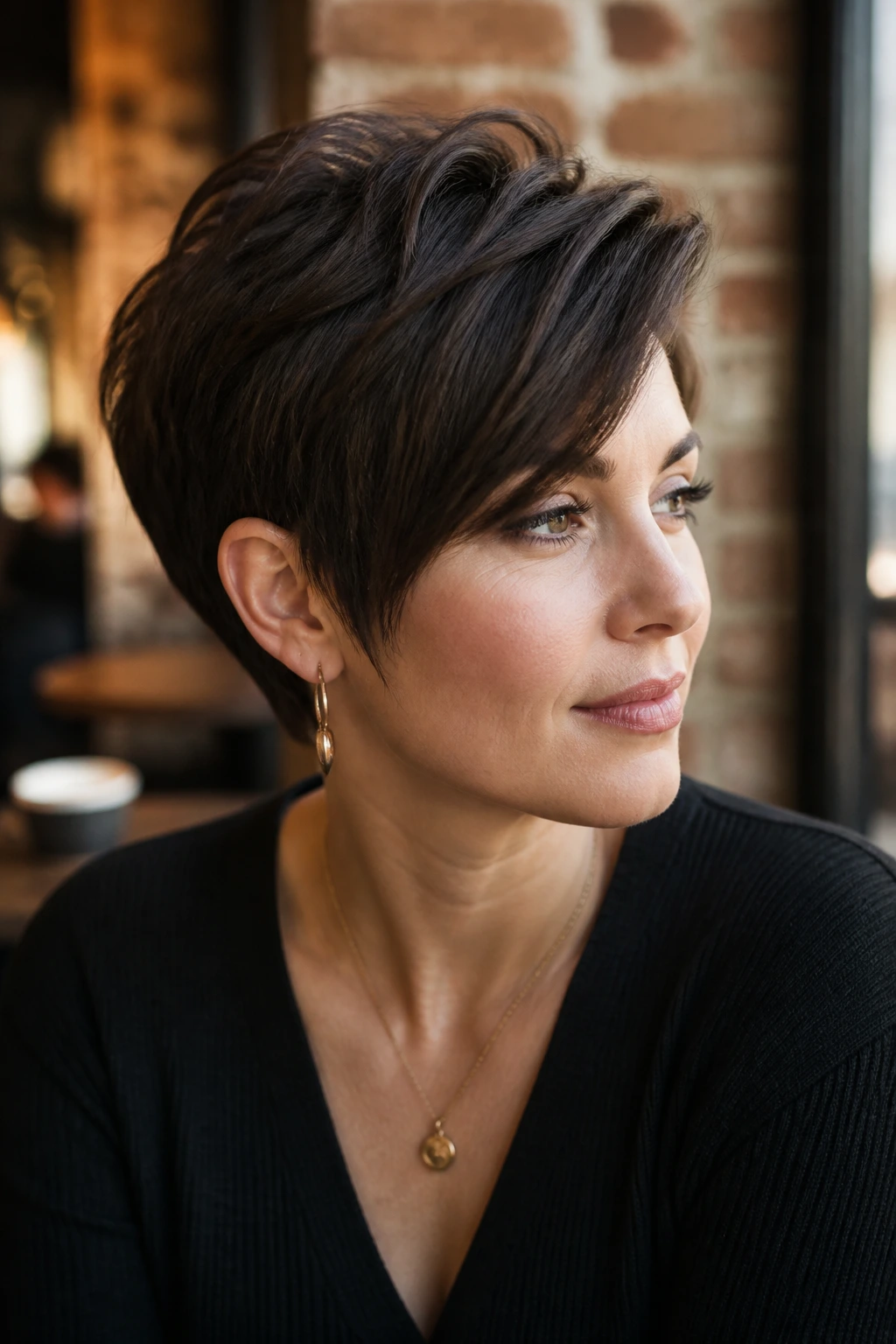
A good long pixie on thick hair is not about making the hair disappear. It’s about giving all that density a clean outline so it looks like a choice, not a battle. Once the weight sits in the right places, the haircut starts doing a strange and lovely thing: it makes daily styling easier because the hair finally has somewhere to go.
Oval faces have room to play here. Side sweeps, curtain fringe, brushed-back tops, soft asymmetry — all of them can work when the silhouette is balanced and the nape stays honest. Pick the version that matches your routine, not just the one that looks best in a photo.
And ask for the structure that thick hair actually needs. That’s the part that saves the cut.