



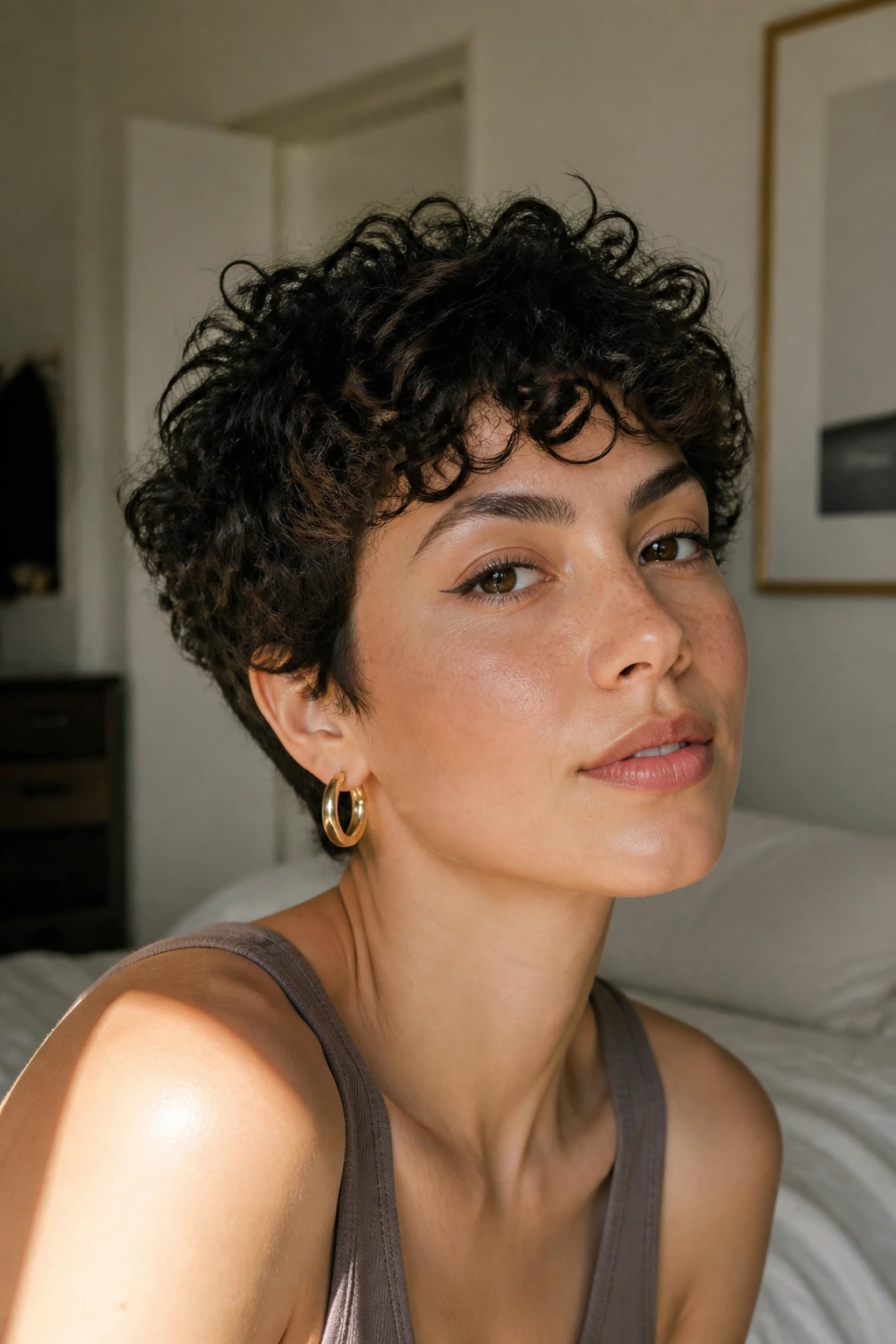
Modern pixie cuts with curls for oval faces have a rare advantage: they can lean soft, sharp, or slightly wild without making the face look crowded. That balance is the whole trick. An oval face already gives you room at the forehead, cheekbones, and jaw, so the haircut can play with height, fringe, taper, and texture without fighting the bone structure underneath.
Curl changes the game, though. A pixie that looks neat in the salon mirror can shrink, spring, and puff in different directions once it dries, which is exactly why the best versions are shaped with curl pattern, not against it. Short curly hair has memory. It will show every blunt edge, every undercut, every over-thinned corner.
That’s what makes this group of cuts worth paying attention to. Some are polished enough for a sharp blazer and hoop earrings, some are messy in the good way, and a few are deliberately bold. None of them rely on one tired formula. They work because the shape is tuned to the curl and the face at the same time.
Why These Curly Pixies Make Sense on Oval Faces
-
The proportions already cooperate: Oval faces can wear shorter bangs, tighter sides, and more crown lift without the haircut making the face look chopped in half. The cheekbones still have room to show.
-
Curl shrinkage has space to breathe: A curl that bounces up 1 to 2 inches won’t wreck the silhouette here. That matters more than most people think, especially if your hair springs up after a diffuser session.
-
You can go soft or sharp: The same oval face can handle a wispy fringe one week and a tighter taper the next. The haircut doesn’t need to fake balance.
-
Styling time stays short: Most of these pixies need 5 to 12 minutes with a diffuser, a little product, and your fingers. That’s the appeal, honestly. No drama.
-
Grow-out is less ugly: A pixie on an oval face tends to slide into a crop or a mini bob more gracefully because the shape doesn’t depend on one exact fringe length.
-
Texture does the work: Instead of building the whole look from blowout tricks, the curls give you movement, lift, and a bit of irregularity that makes short hair look alive.
1. Soft Layered Curly Pixie with Airy Crown
This is the version I recommend to people who want a pixie that still feels touchable. The layers are soft, the crown has a little lift, and the perimeter sits close enough to the head that the curl doesn’t balloon outward. On an oval face, that combination keeps the hair from hiding the cheekbones.
Why It Works
The cut keeps the top around 2 to 3 inches, which gives curls enough length to form instead of turning into tiny fuzz. The sides stay lighter, so the silhouette doesn’t widen at the temples. That matters when the hair is dense or springy.
Styling Notes
Use a nickel-sized dab of curl cream on damp hair, then add a mousse the size of a golf ball if you want extra hold. Diffuse on low heat until the roots are about 80% dry, then stop touching it. The less you fuss, the better the curl clumps stay intact.
A soft layered pixie is one of those cuts that looks expensive even when the styling is minimal. Not fancy. Just tidy, airy, and shaped with intent.
2. Tapered Nape Curly Pixie with Clean Lift
Do you want the back to stay neat even after a full day of movement? Then a tapered nape matters more than another inch of length on top. This version keeps the neck crisp while the curls pile a little higher at the crown, which gives an oval face a nice vertical line.
The thing I like here is the contrast. The nape can be tightly tapered with scissors or clipper work, while the upper sections keep enough softness to avoid looking severe. If your hair is thick, this is one of the few pixies that can remove bulk without making the top look thin.
Ask for the taper to stop before it turns into a skin fade unless you want a very sharp finish. A soft taper is easier to grow out, and it keeps the silhouette from getting too sporty. Pair it with a light gel if your curls puff at the back after lunch.
3. Side-Swept Fringe Pixie with a Long Front Arc
What makes this one work is the front. A side-swept fringe that falls from a deeper side part gives the face a diagonal line, and diagonal lines are kind to oval shapes because they add movement without clutter. The fringe can skim the brow, brush the outer eye, or sit just above the cheekbone.
That longer front piece also gives you a little styling range. You can wear it tucked, curled forward, or pinned back with one bobby pin if you’re having a stubborn hair day. I like this version for people who want softness near the eyes without covering the whole forehead.
How to Style It
Blow-dry the fringe first with a small round brush, directing it away from the face. Then let the rest air-dry or diffuse. If the bang collapses, mist it lightly and rewrap it around your fingers for 20 seconds.
It’s a flattering cut, yes, but more useful than flattering. The fringe gives you options.
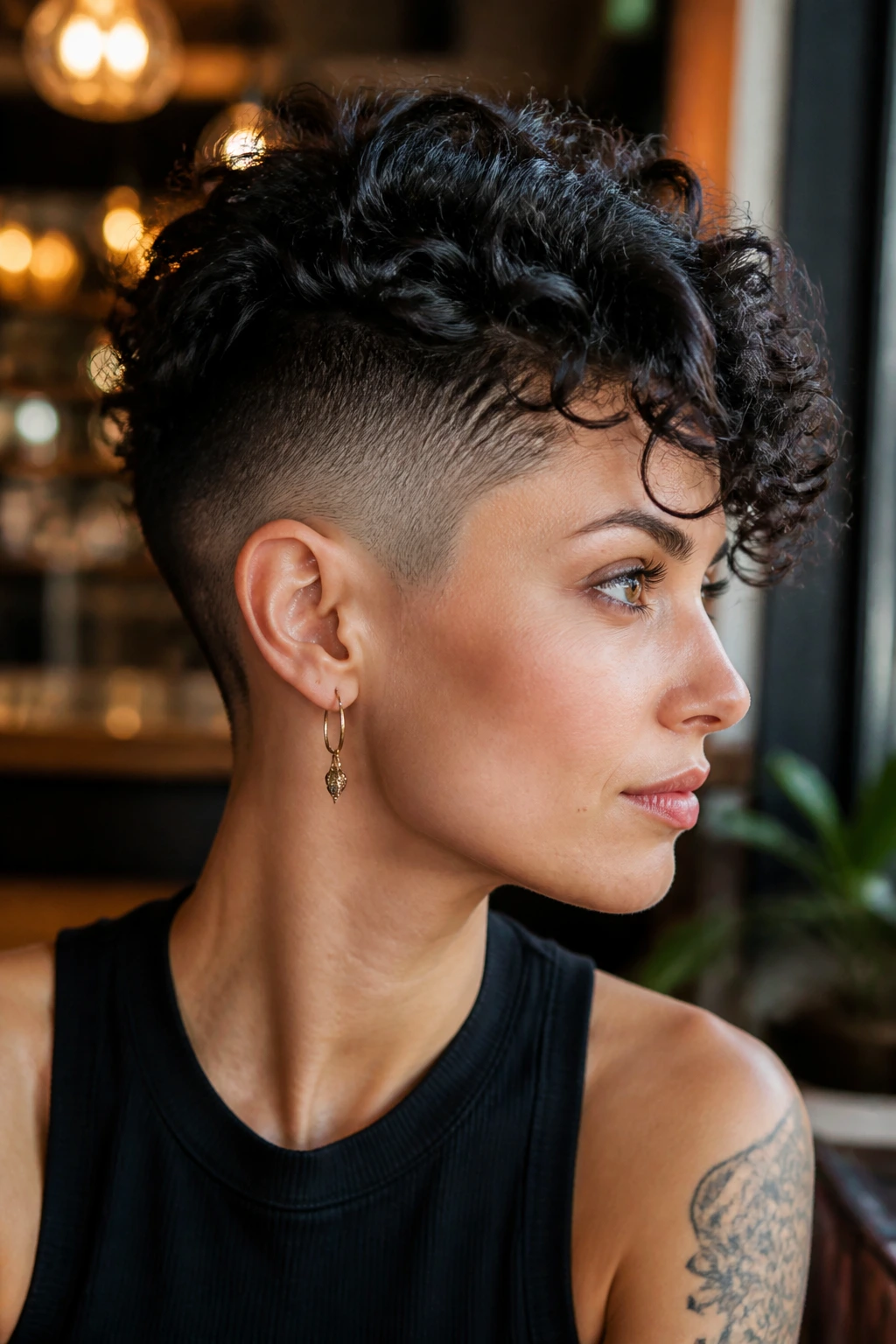
4. Curly Undercut Pixie with a Shaved Side
If you like contrast, this is the loudest cut in the group. One side or the nape gets clipped very short, while the curls stay fuller on top, and the whole thing lands somewhere between tough and playful. Oval faces can handle that asymmetry without getting thrown off balance.
The undercut removes a lot of weight, which helps if your curls are thick enough to swell into a helmet by noon. It also makes the top look taller because the eye has fewer competing shapes to read. That’s the visual trick.
Ask for a guarded clipper length instead of a bare shave if you want the grow-out to be less annoying. A #1 or #2 guard keeps the edge visible without turning the haircut into a maintenance trap. Finish with a strong-hold mousse and a pea-sized touch of pomade on the ends for separation.
5. Choppy Micro Pixie with Piecey Ends
This is the shortest cut in the collection that still keeps a curl story alive. The ends are choppy, not blunt, and the overall shape sits close to the head, which makes the face the main event. On an oval face, that can look sharp in the best way.
A micro pixie works best when the curls are loose to medium, or when the natural texture has enough bend to show definition at short length. Tight curls can do it too, but the shape needs careful scissor work, not aggressive thinning. Otherwise the pieces fray and the silhouette turns fuzzy fast.
Keep the product light. A tiny amount of gel or styling cream is enough, because too much will weigh the short strands down and erase the piecey effect. If you like a little edge, this is one of the few pixies that looks better when it’s slightly imperfect.
6. Long-Top Curly Pixie with Ear-Grazing Sides
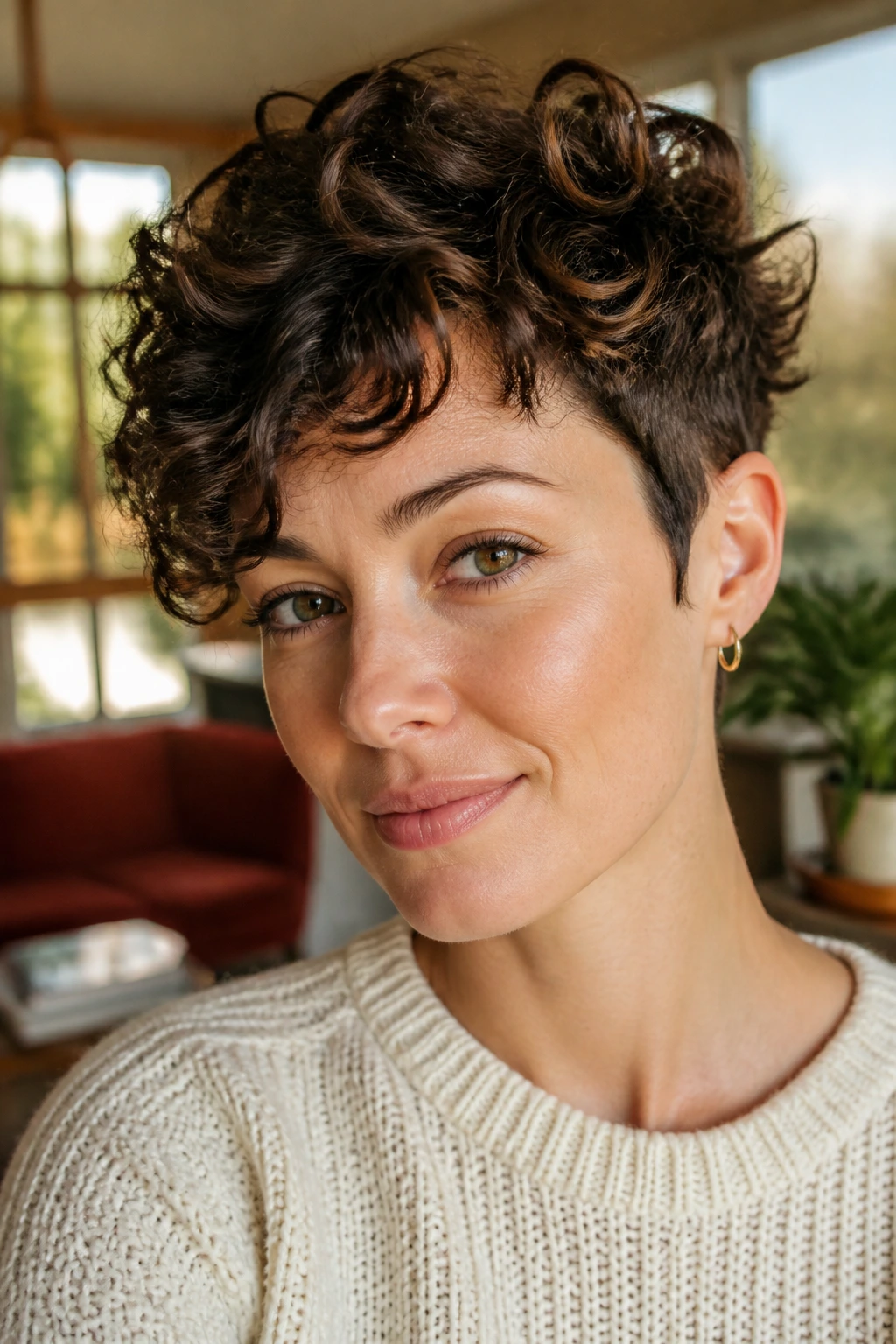
A longer top changes everything. The sides stay short enough to expose the ears, while the crown and front keep enough length to form visible curls, waves, or bends. That extra top length gives oval faces a nice bit of height without turning the haircut into a mushroom.
I prefer this shape when someone wants a pixie but doesn’t want to feel “too short” around the hairline. The ear-grazing sides give the cut a clean frame, and the top can be swept forward, to the side, or pushed up at the roots. It’s flexible in a way a stricter crop isn’t.
Use a diffuser with your head tipped slightly forward, then flip it back and pinch a few curls at the front when they’re almost dry. That tiny timing detail keeps the top from sticking straight up. A little planning saves a lot of awkwardness.
7. Finger-Wave Pixie with Sculpted Front Ridges
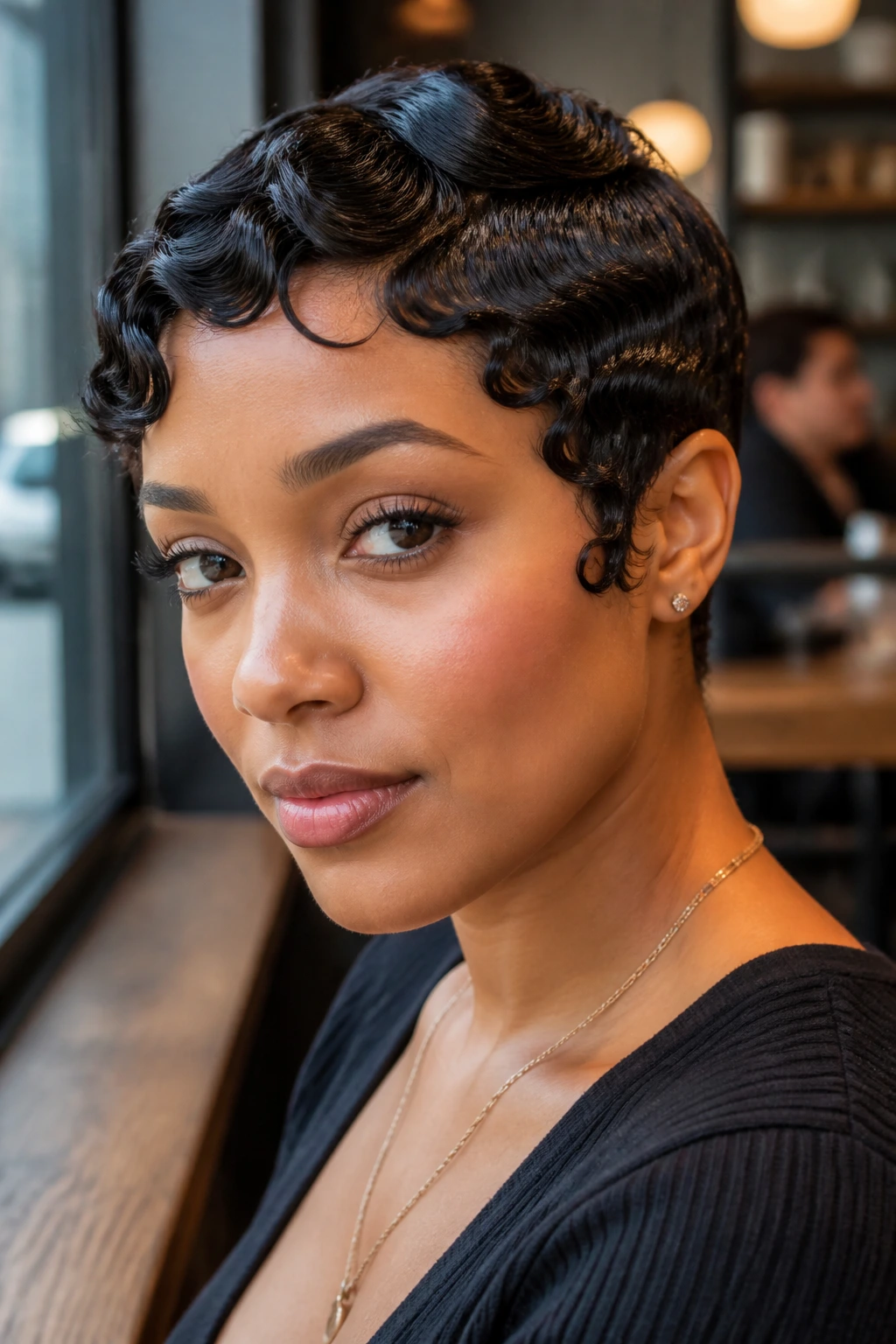
This one leans polished. Instead of loose, tousled curls, the front is shaped into soft ridges or wave-like bends that sit close to the head and follow the brow line. It has a vintage feel, but not in a costume-y way.
Why It Sits Well on an Oval Face
The clean front keeps the face open, while the sculpted texture adds interest right where the eye lands first. Oval faces can wear that kind of front detail without feeling crowded because the face doesn’t need extra visual correction.
What to Ask For
Tell your stylist you want definition at the front and enough length to mold the curl pattern into waves or bends. That usually means leaving the top a touch longer and cutting the perimeter tighter. If you have looser curls, set them with finger-coiling and clips while they dry.
This is the cut I’d pick for an event, a dinner, or any day when you want your hair to look composed without looking stiff.
8. Asymmetrical Pixie with a Deep Side Part
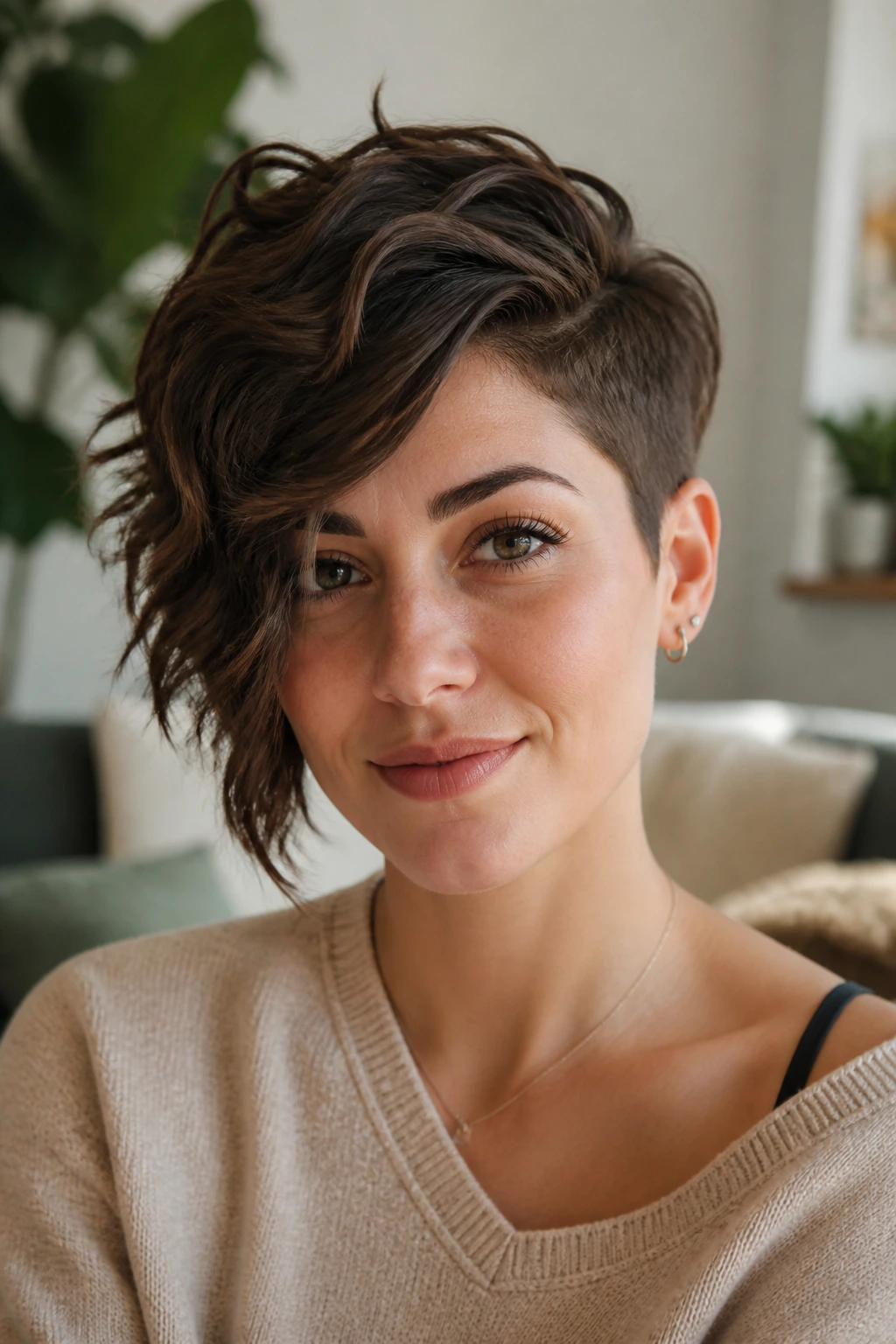
A deep side part changes the whole mood. One side falls closer to the cheek, the other side lifts away, and the shape stops being symmetrical in a way that feels alive instead of fussy. On an oval face, asymmetry can sharpen the features without overpowering them.
This cut works especially well if one side of your hair naturally lies flatter than the other. Instead of fighting that, let the stronger side carry the volume. The result feels intentional, and the curl pattern has a place to go.
I like a longer front piece on the heavier side, maybe 2 to 3 inches stretched, with the opposite temple kept tighter. That contrast is what makes the haircut read as modern. A touch of styling paste at the roots can help the part stay where you want it.
9. Rounded Curly Crop with a Soft Halo Shape
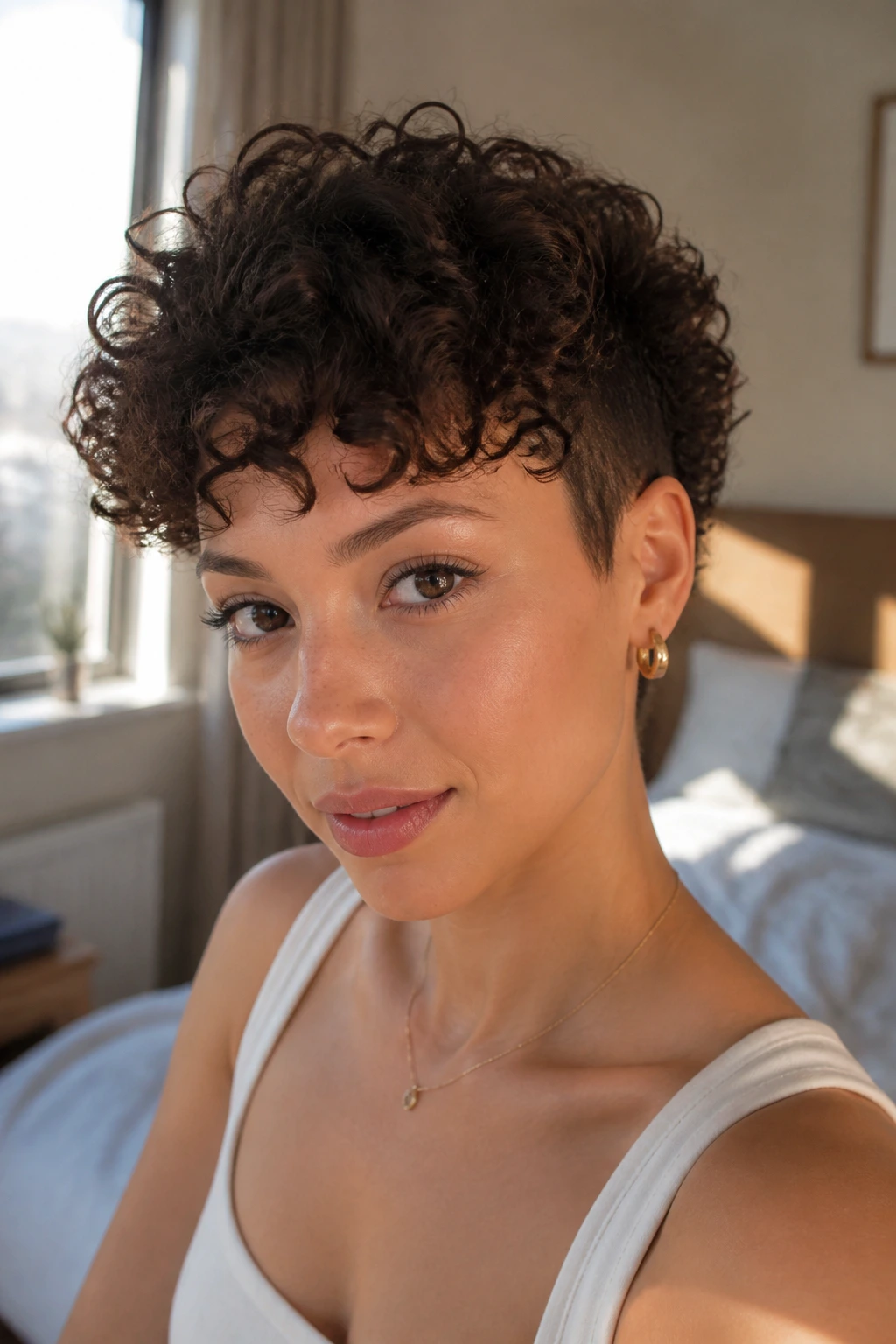
Not every pixie needs a hard edge. A rounded crop uses the curl pattern to create a soft halo around the head, which sounds gentle because it is, but it still has shape. The trick is keeping the sides neat enough that the roundness doesn’t drift into puffiness.
Quick Shape Notes
- Keep the crown slightly longer than the temples.
- Leave the front light, not blunt.
- Ask for the nape to sit close so the cut doesn’t mushroom out.
This shape looks especially good when curls have spring but not too much frizz. If the texture is coarse, use a cream-gel mix and finish with a light hold spray. You want the curve, not the cloud.
On an oval face, the rounded crop can feel almost architectural. Soft architecture, but still architecture.
10. Tousled Wash-and-Wear Pixie with Loose Top Layers
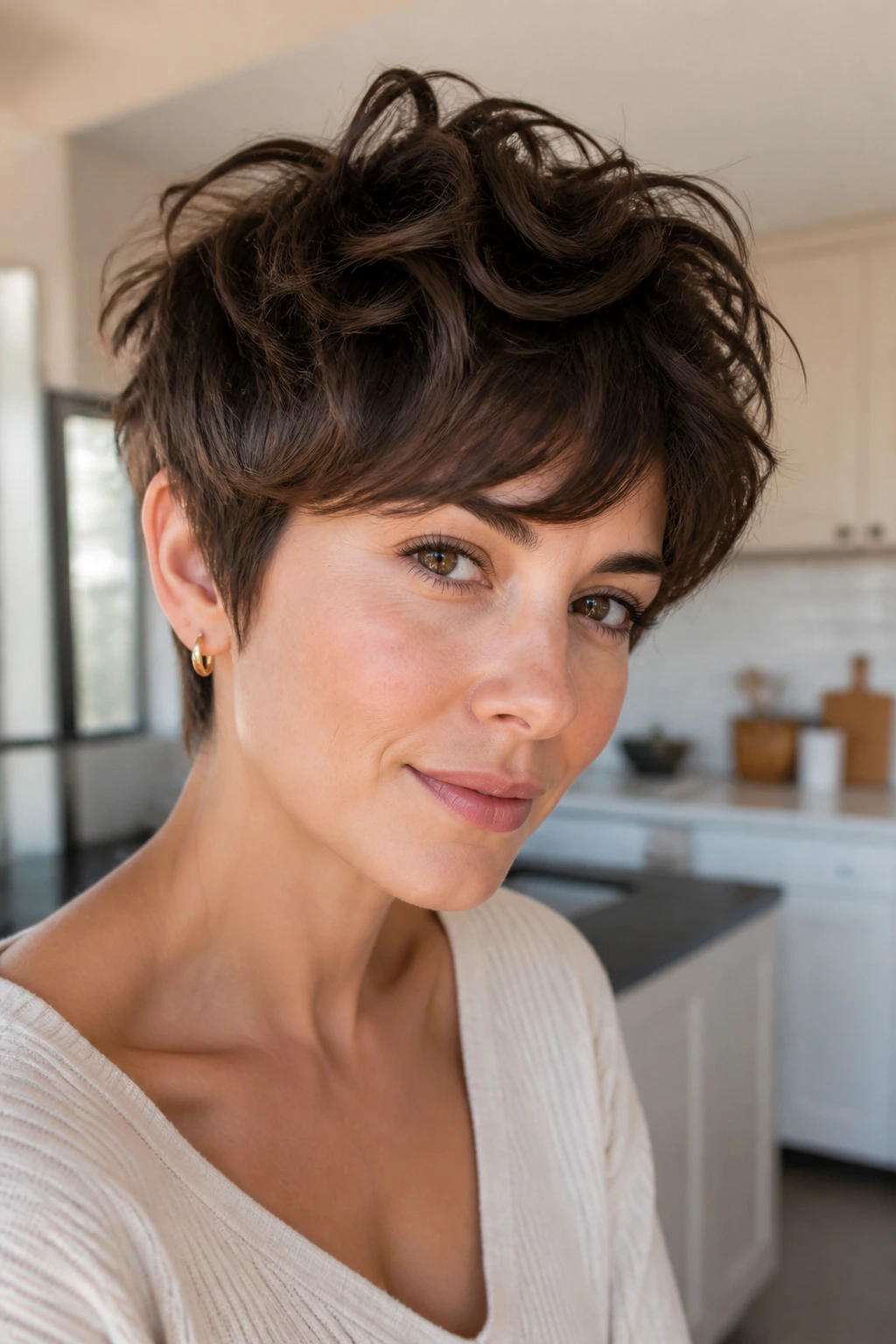
This is the easy one. Not lazy. Easy. The top has loose layers that wake up with a little water and product, and the sides are trimmed just enough to keep the whole thing from puffing out overnight. If you want a low-maintenance pixie, start here.
The shape is forgiving because it doesn’t demand perfect curl clumps. A bit of unevenness only makes it look more natural. That’s a gift for people whose curls behave differently from one side of the head to the other, which is common and completely normal.
For styling, a spray bottle and a small amount of leave-in conditioner may be enough on day two. Scrunch, let the front dry with a little lift, and leave the rest alone. The cut does not need constant rescue.
11. Tapered Temple Pixie with Clean Side Contours
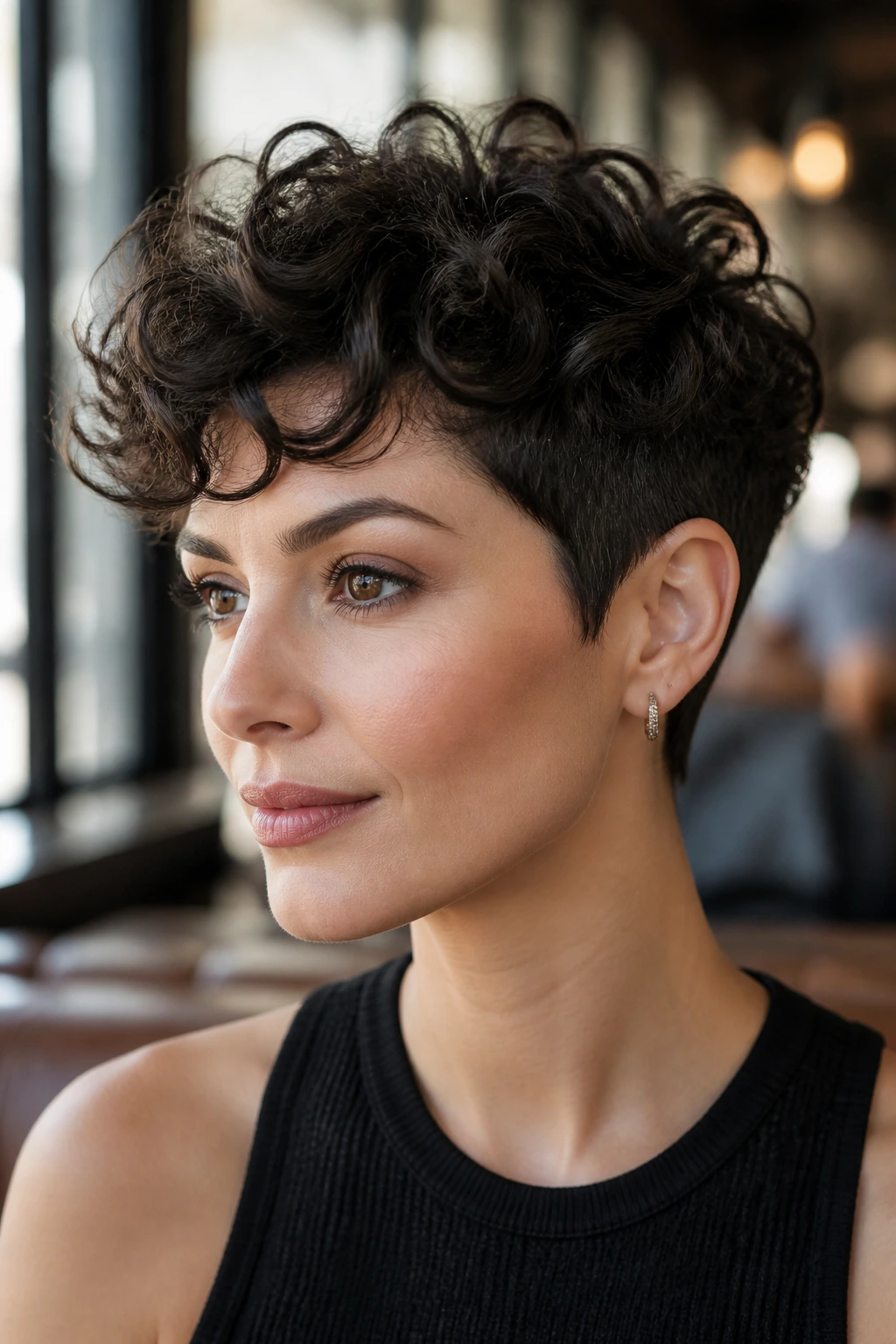
The temples are where a lot of pixies go wrong. They get bulky, and the haircut starts to widen the face in a way that feels clumsy. This version solves that by keeping the temple area neat and slightly shorter, which gives the cheekbones space to show.
That doesn’t mean it has to look severe. In fact, the best tapered temple pixies keep enough softness at the front so the cut doesn’t slide into military territory. The curls can still live on top; they just stop hogging the sides.
If you wear glasses, this is a particularly smart shape. The clean side contours keep the hair from fighting the frames, and the curl sits above the arm of the glasses instead of around it. That’s a small detail, but it changes the whole impression.
12. Pixie Bob Hybrid with a Soft Jawline
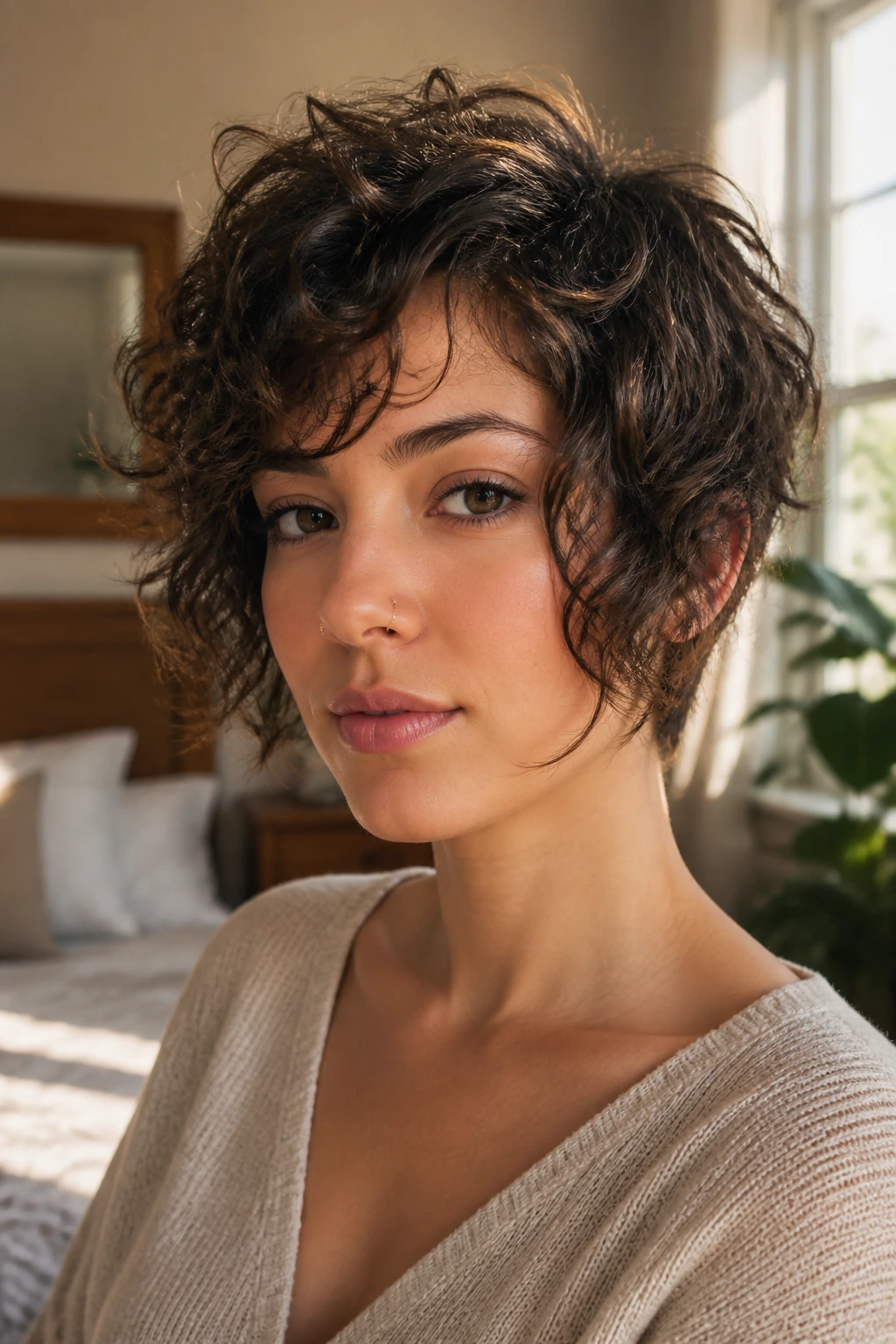
This is the bridge between a true pixie and a short bob. The back is still short, but the front reaches down closer to the jawline, sometimes grazing the cheek when the curl stretches. On an oval face, that extra length can make the whole cut feel relaxed instead of severe.
Best For
- People growing out a pixie who are not ready for a bob.
- Curls that need a little weight to hang properly.
- Anyone who wants more side-to-side movement around the jaw.
The hybrid shape is useful because it buys you styling room. You can tuck one side, push the front behind the ear, or let it fall forward on damp days when the curl wants to collapse. It also grows out more gracefully than a super-short crop.
I’d call this the practical fashion haircut of the bunch. It looks polished, but it doesn’t punish you for having real hair.
13. Feathered Curl Crop with Feather-Light Ends
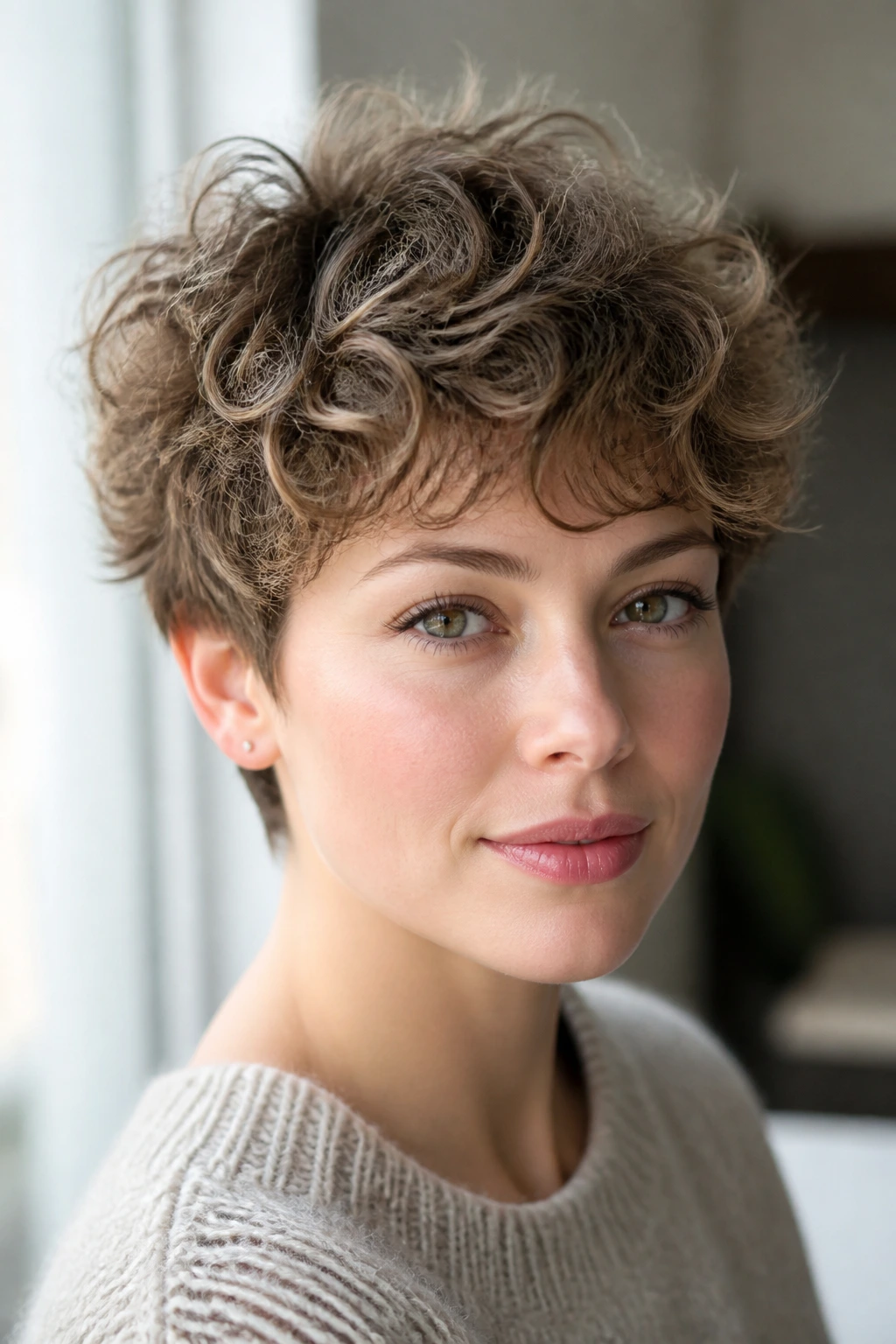
Feathering changes the feel of a pixie in a subtle way. Instead of blunt ends that sit heavily, the tips are softened so the curl can separate and flutter instead of stacking into one block. The result is airy, and on an oval face it keeps the haircut from feeling boxy.
A feathered crop is especially good when your hair is fine to medium and needs a little lift without a lot of product. Too much cream would flatten it. A light mousse or volumizing foam is usually enough, and the ends should be left a bit drier than the roots so they move.
If your curls are coarse, feathering still works, but it needs a stylist who knows how to remove weight without shredding the curl. The difference is big. Feathered ends should look soft, not frayed.
14. Wet-Look Defined Pixie with Glossy Separation
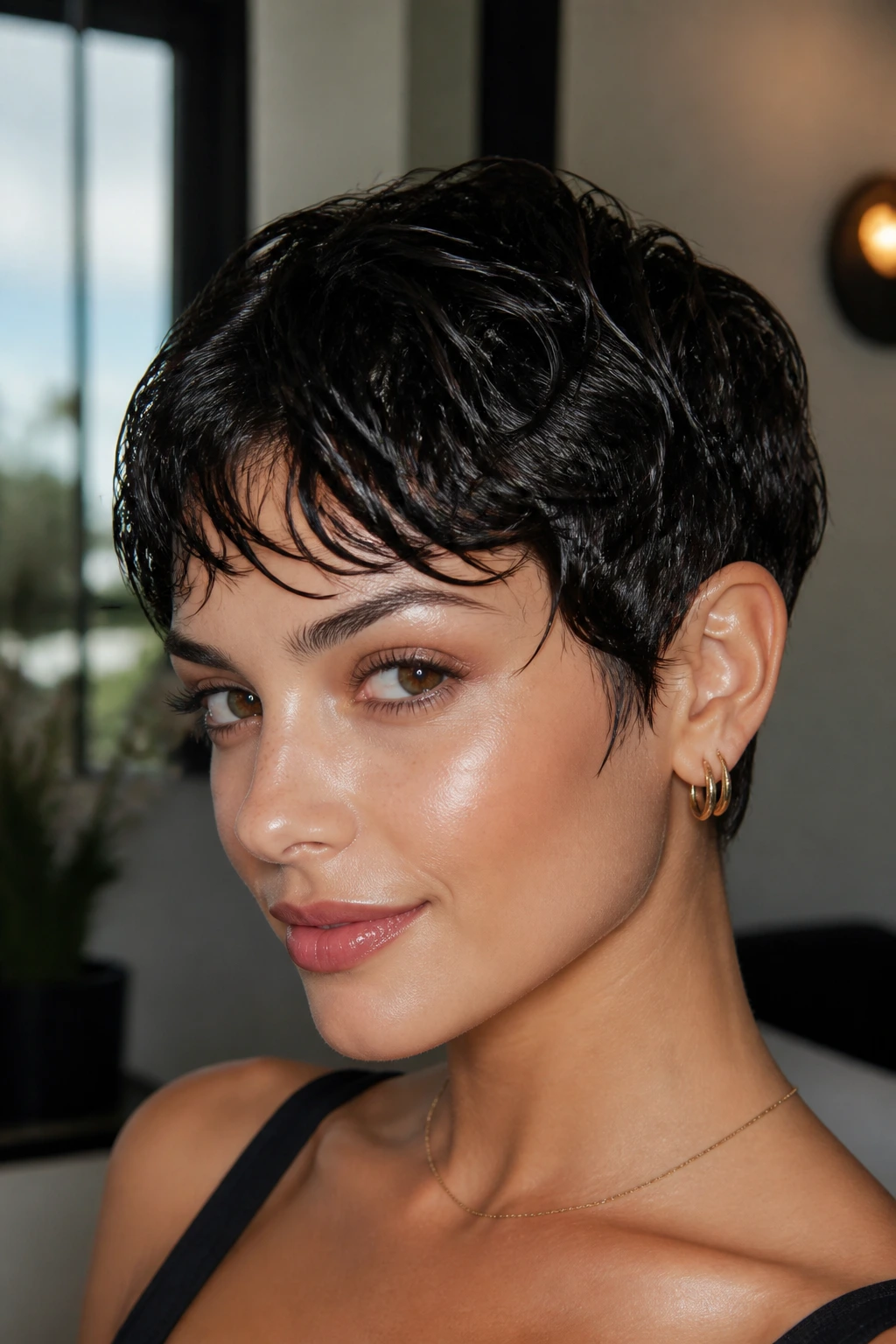
Some pixies want softness. This one wants definition. The wet-look version uses gel or a strong styling cream to set the curls into visible clumps with glossy separation, which gives the haircut a cleaner edge. It’s slicker, sharper, and a little bit bolder.
The face shape matters here because an oval face can handle that tight framing without losing balance. The hairline stays open, the curls sit close to the head, and the shine adds structure. I like this look with a side part or a slightly lifted front.
Use more product than you would for a tousled pixie, but not so much that the hair goes crunchy in the wrong places. A gel cast is fine. In fact, it’s useful. Once the hair is dry, scrunch out the stiffness with dry hands, and the curl will keep the shape without feeling hard.
15. Salt-and-Pepper Curly Pixie with Natural Silver
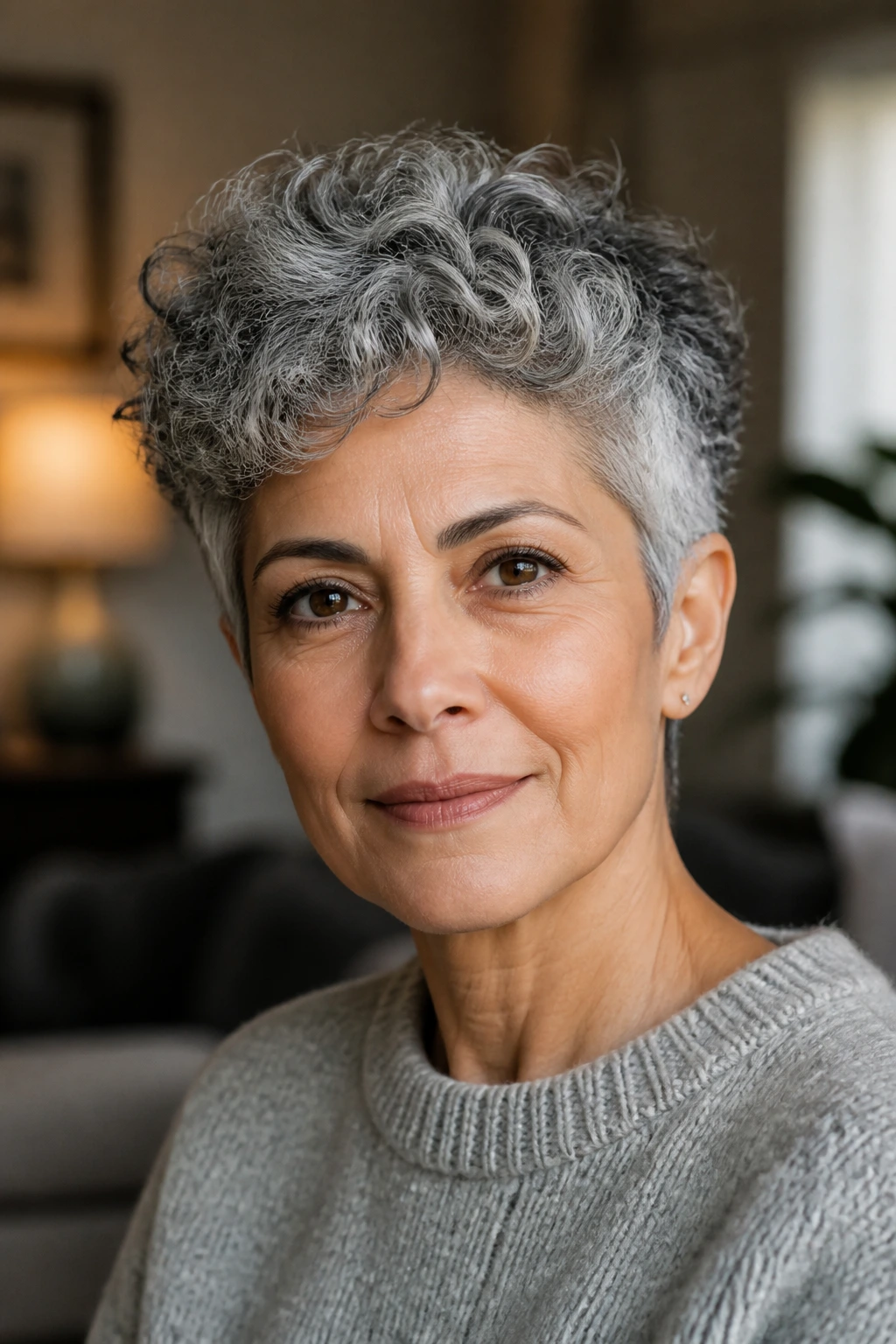
Gray hair changes the surface of curl. It can feel drier, sometimes coarser, and it often shows every line in the haircut a little more clearly. That’s why a salt-and-pepper pixie can be so good. The silver strands make the layers visible, and the short shape keeps the color from getting lost in length.
This is one of the most honest-looking pixies in the set. No pretending. Just a clean crop, a little curl, and the natural contrast that comes with mixed shades. On an oval face, the silver around the temples and top can actually sharpen the facial structure instead of softening it away.
Keep a leave-in conditioner in the routine and skip heavy waxes. They dull the shine and can make gray curls feel tacky. A small amount of shine cream at the tips is usually enough.
16. Baby Bang Pixie with a Short Fringe
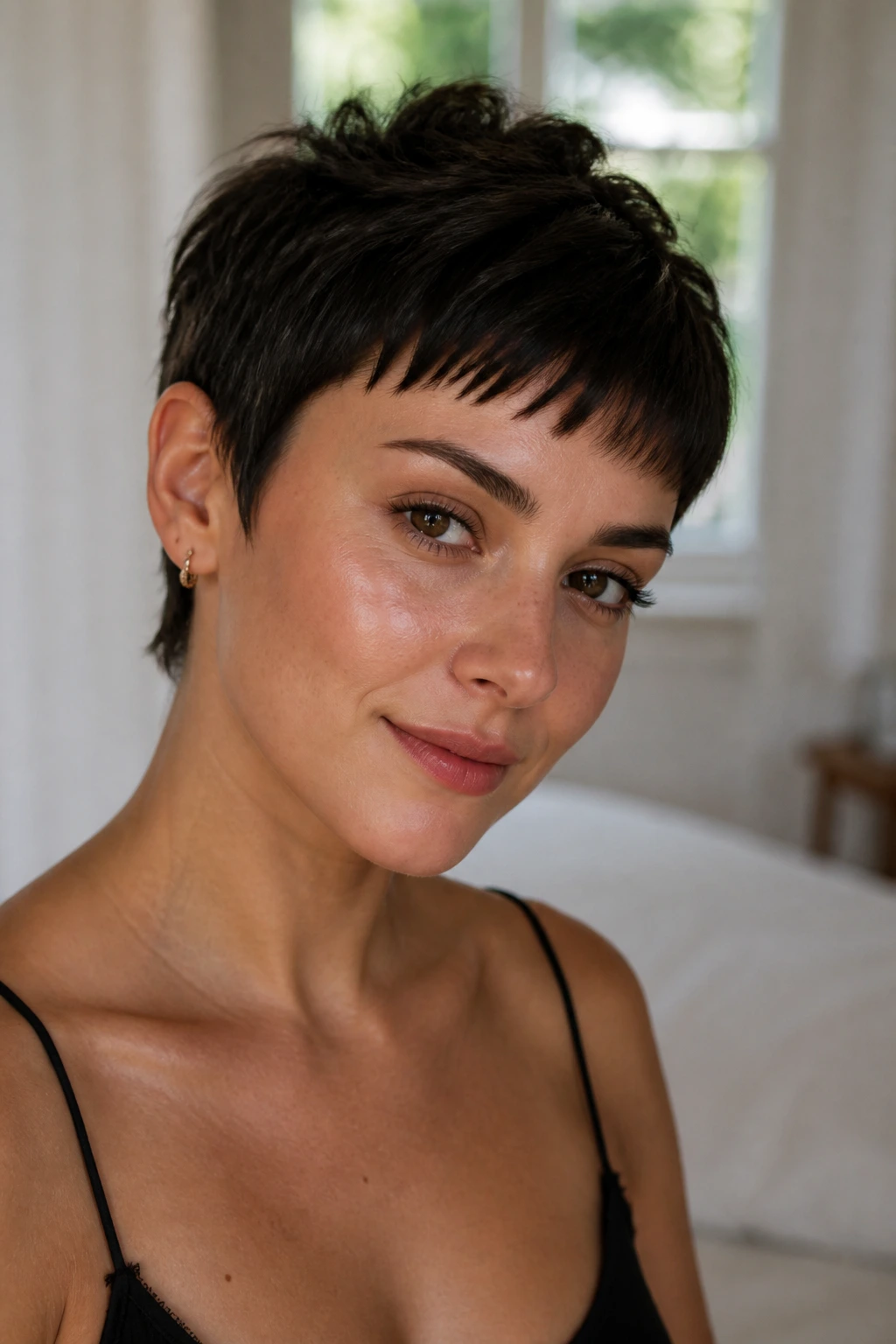
Baby bangs are not timid. They’re decisive. On an oval face, though, they can work better than people expect because the proportions leave room for a short front without making the face look cut in half.
Why It Works
The short fringe pulls the eye upward and leaves the cheekbones and jawline open. That gives the cut a strong frame without demanding extra length elsewhere. If your forehead is on the longer side of oval, baby bangs can shorten the visual distance in a clean way.
What to Watch
- Keep the fringe slightly textured, not blocky.
- Ask for soft point-cutting at the edge.
- Don’t overstyle it; a small bend is enough.
I’d avoid baby bangs if your curls spring up too much and you’re unwilling to trim them often. They demand upkeep. But if you like a sharp front, this cut has real personality.
17. Curtain Fringe Pixie with Split Front Pieces
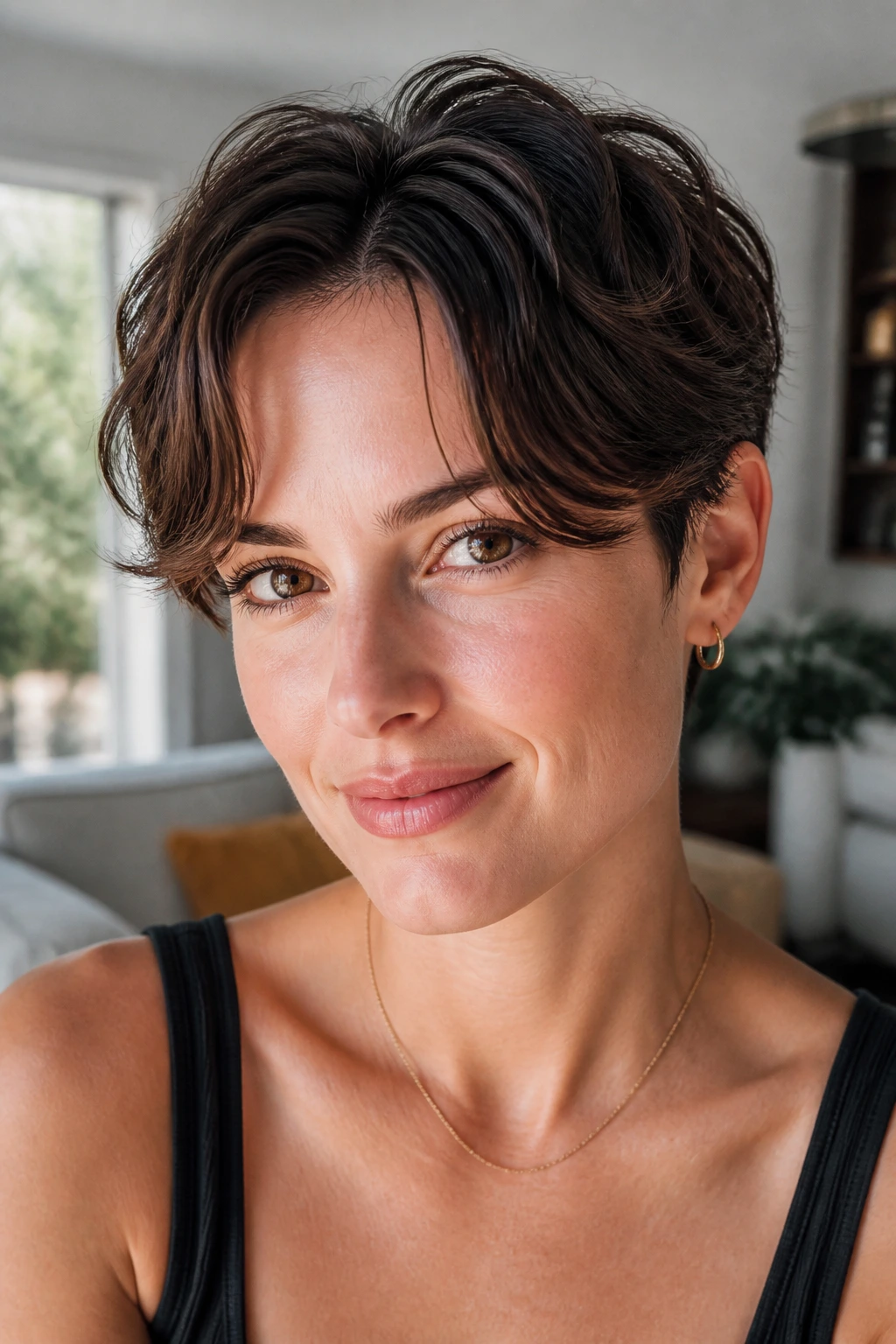
Curtain fringe on a pixie is one of the easiest ways to soften the forehead without hiding the face. The front opens from the middle or a slight off-center part, and the two pieces fall away from the eyes in a gentle split. It’s less severe than baby bangs, but still more styled than a plain crop.
Oval faces wear this well because the fringe creates width at the right point — near the cheekbones and outer brow — instead of across the whole forehead. The shape adds balance without fuss. That’s the part I keep coming back to: it’s a smart cut, not a dramatic one.
Style it with a round brush or your fingers, depending on curl strength. The front pieces should curve out, not stick straight down. If they do, the fringe is probably too heavy and needs a little more layering.
18. Playful Coily Pixie with Springy Texture
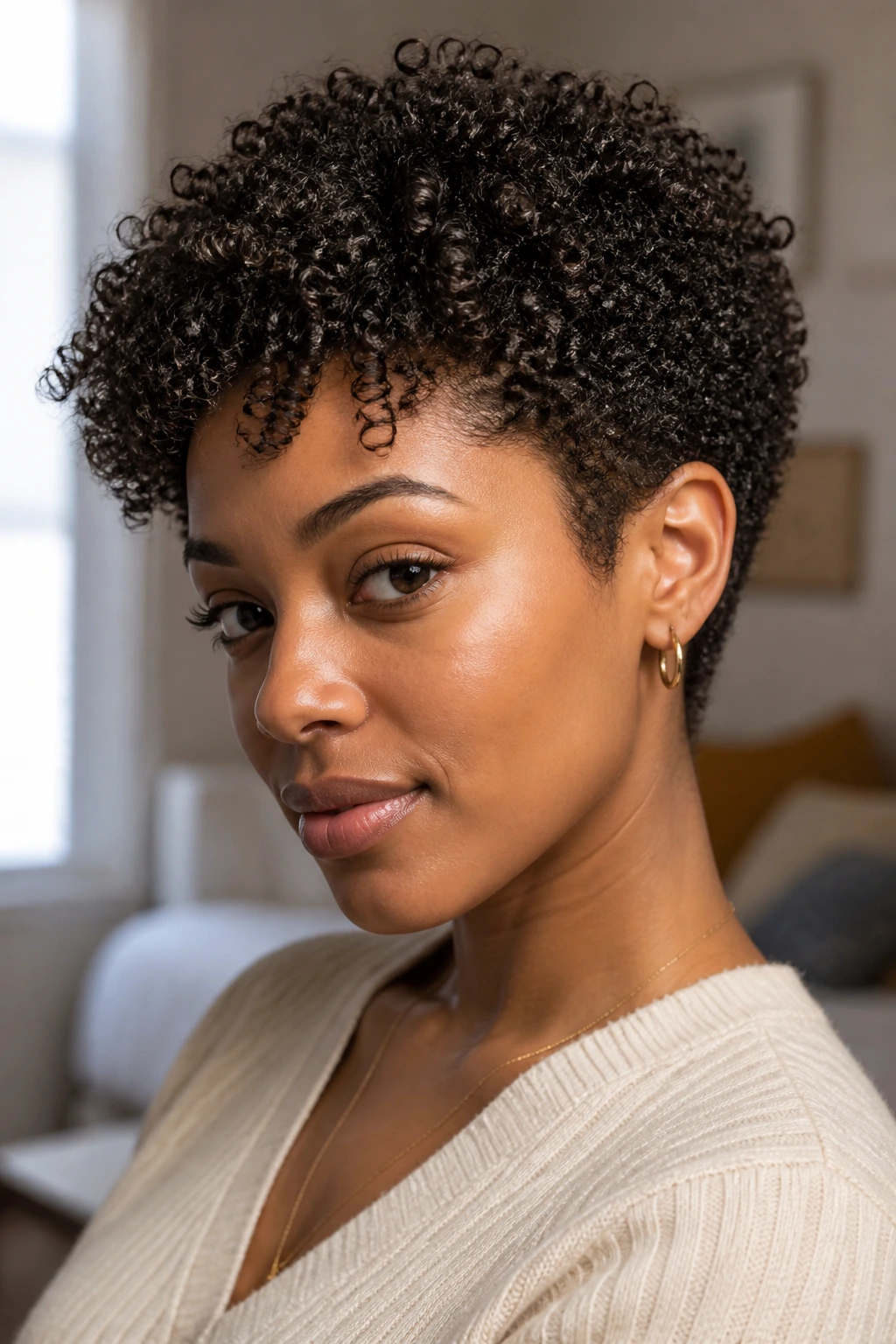
Tighter coils need respect, not over-managing. A playful coily pixie lets the texture stay compact and lively while trimming the sides and nape just enough to keep the silhouette neat. On an oval face, that little halo of coils can look balanced and full without swallowing the features.
The cut is usually best when the top keeps a bit more length than the sides, because coils shrink more aggressively than loose curls. That extra length gives the shape some breathing room. Dry cutting is often useful here, since the curl pattern tells the truth when it’s in its real state.
Use a cream with some slip and a gel that dries with definition. Too much oil can make coils collapse. Too much water and they puff. That middle ground is where this cut lives.
19. Shaggy Airy Pixie with Choppy Crown Layers
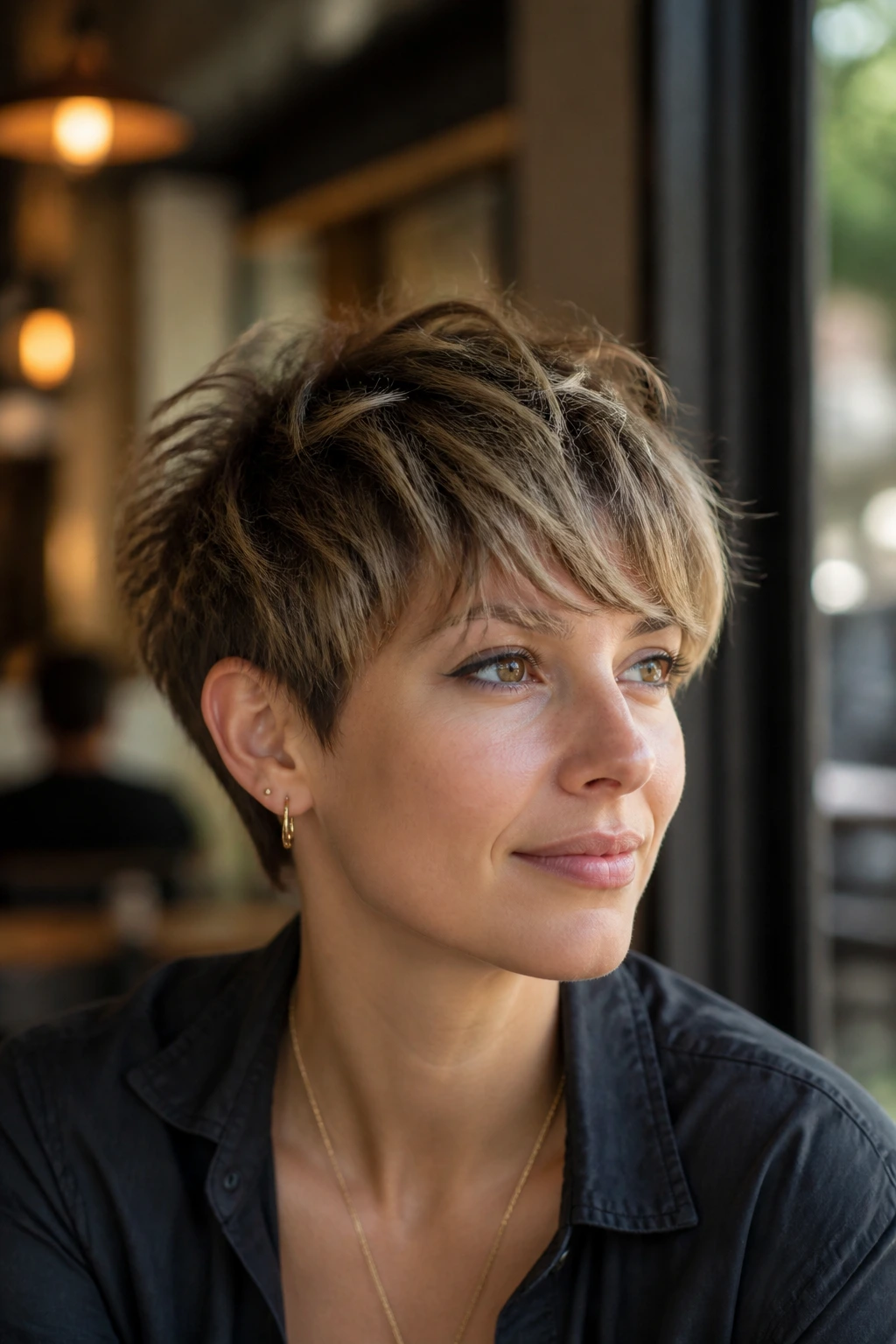
This is the pixie for people who like a bit of disorder in the best sense. The crown has choppy layers, the fringe is feathered, and the sides are light enough that the whole cut feels breezy. It borrows from the shag, but keeps the length short.
A shaggy pixie works on oval faces because the uneven layers keep the eye moving. There’s no single fixed line to stare at, which means the face gets framed in a softer, more casual way. If you hate the idea of a stiff haircut, this is a good place to land.
The one thing to avoid is over-thinning. The texture should look airy, not sparse. A little mousse and finger-drying can be enough, especially if your curls already have some bend. Let the mess do the work.
20. Sculpted Sideburn Pixie with Elegant Sides
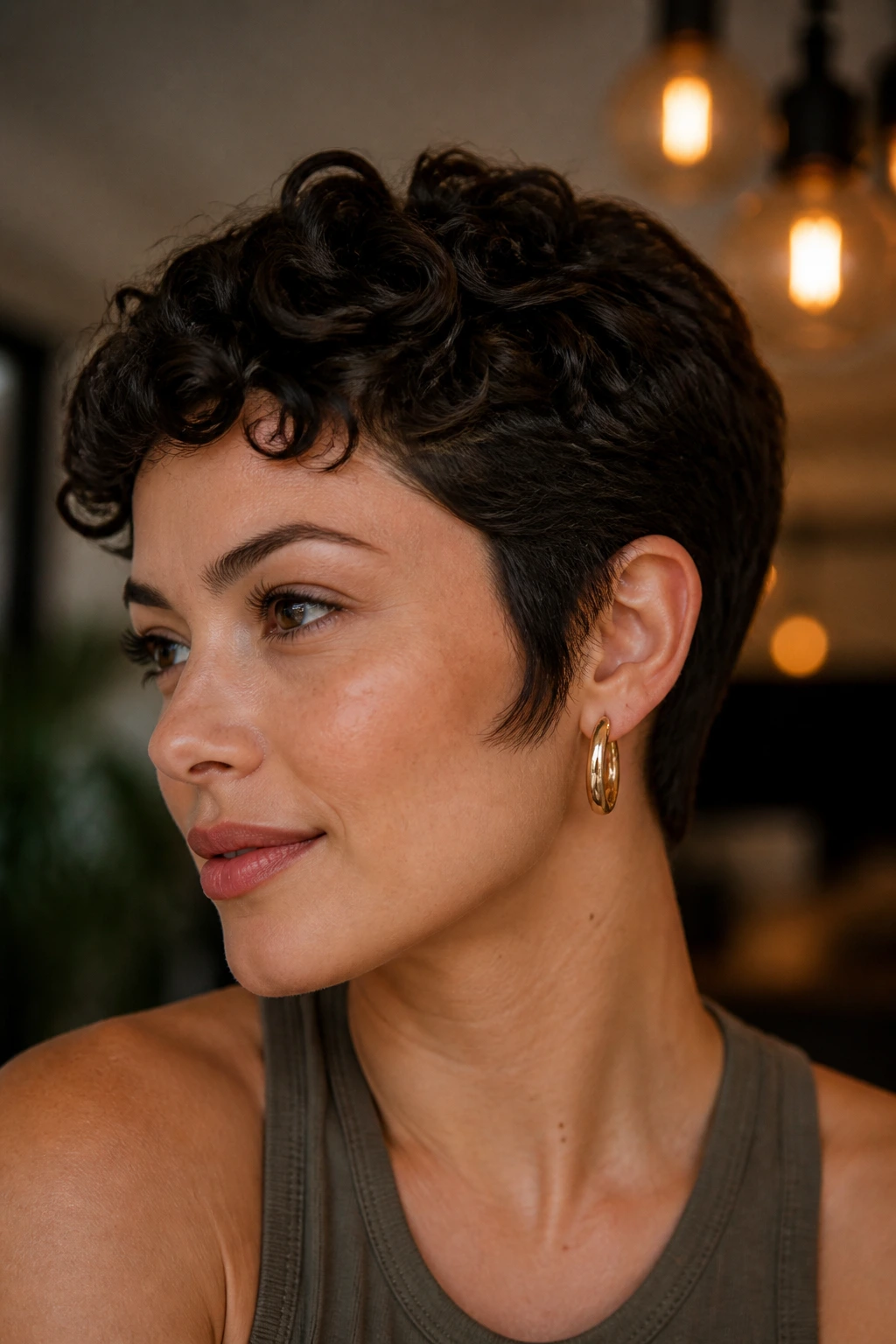
Sideburns are underrated. A sculpted sideburn, even a small one, changes the whole front view of a pixie because it gives the face a deliberate edge near the jaw. On an oval face, that helps the haircut feel tailored instead of floating around the head.
This style works beautifully if you like earrings, glasses, or a clean neckline. The sides can stay close while the front and crown hold the curls, and the sideburns act like little anchors. I like them a touch longer than people expect — enough to frame, not enough to drag.
If your hair is fine, keep the sideburns soft and narrow. If it’s dense, they can be a bit fuller. Either way, they should look shaped, not accidental.
21. Mousse-Defined Minimalist Pixie with Soft Control
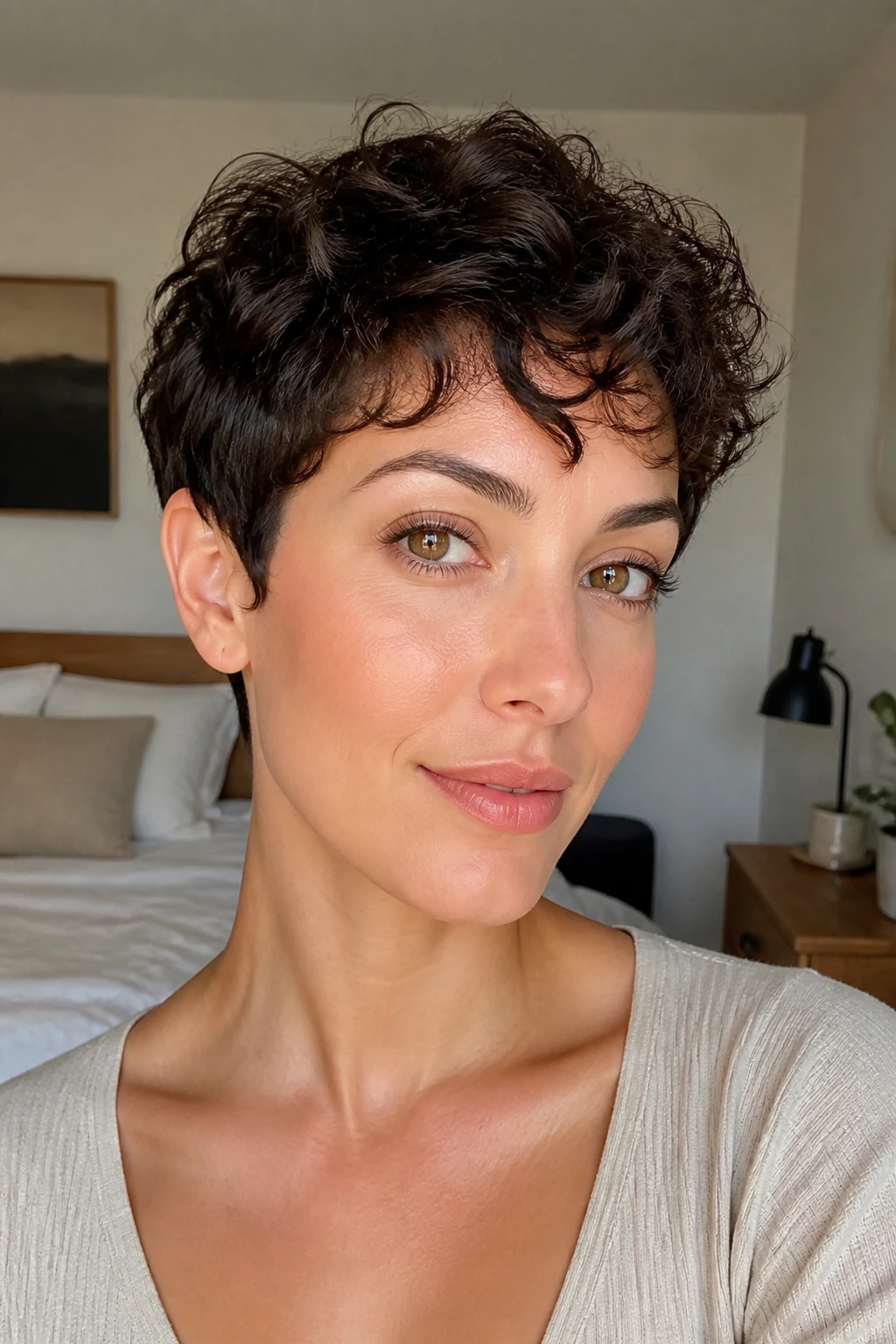
Can a pixie be minimal and still feel finished? Yes, if the curl pattern is doing most of the work. This version keeps the layers clean, the length short, and the product load light so the hair sits with quiet control instead of crunch.
The shape is good for oval faces because it doesn’t overstate any one feature. No huge fringe. No oversized crown. Just a neat outline and enough texture to keep the cut from looking flat. That restraint is the appeal.
Use mousse on damp hair, comb it through with your fingers, and let the curls set on their own. If you want extra polish, pinch a little cream between your palms and tap it only onto the front pieces. Restraint matters here. Too much product will flatten the whole thing.
22. Highlighted Curly Pixie with Ribboned Dimension
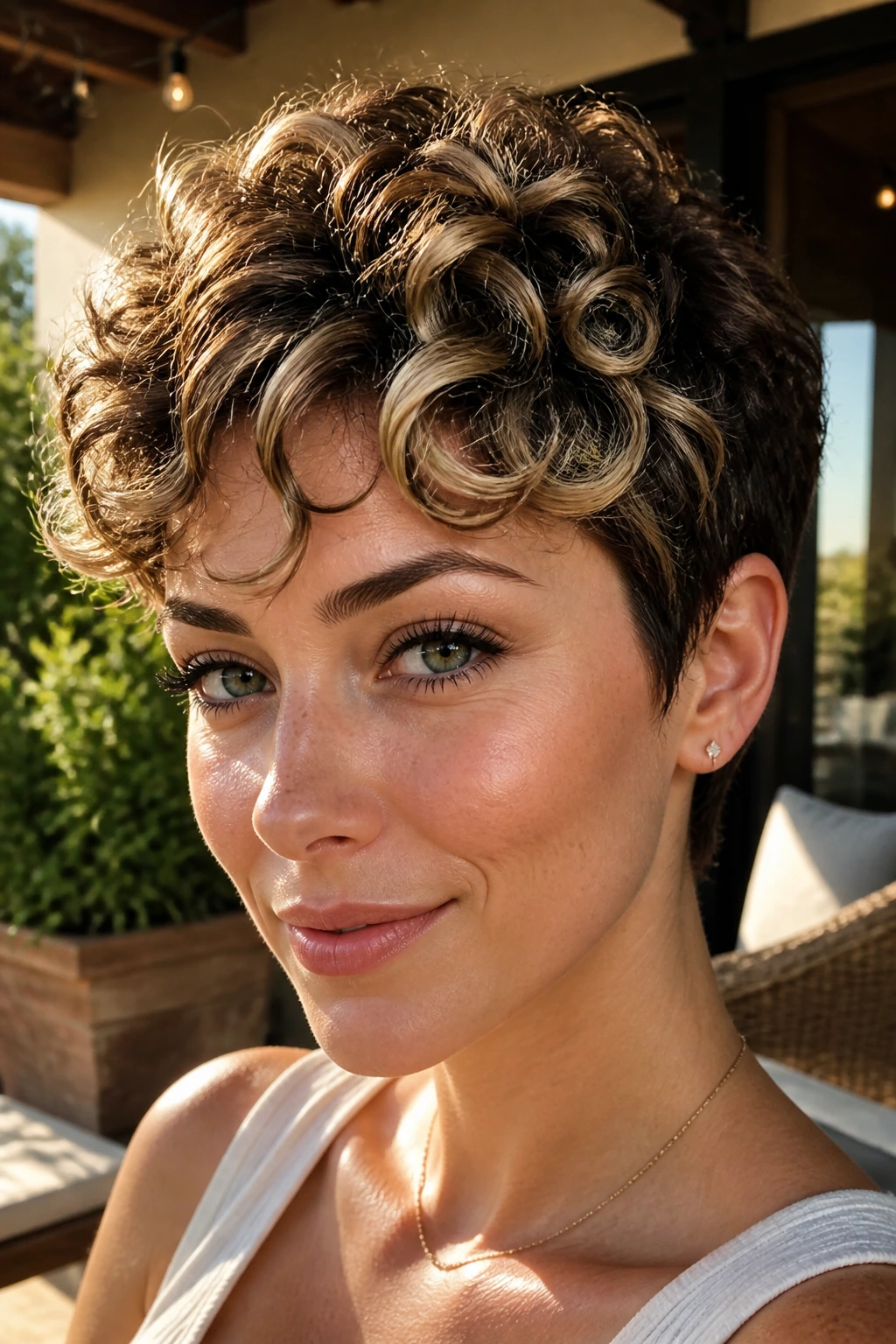
Color changes how a pixie reads. A few highlights — especially around the fringe, top layer, and temple area — can make the curl pattern easier to see and give the haircut more depth. On an oval face, that extra dimension keeps short hair from disappearing into one plain shape.
How to Ask for It
Ask for ribbons, not a blanket of color. A few lighter pieces near the front and crown are enough to show movement. If the highlights are too dense, the haircut can start to look stripy instead of textured.
This cut is especially good when the curls are a bit looser because the colored pieces catch the eye as they bend. It’s also a clever way to make a simple pixie feel more styled without changing the cut itself. Sometimes the haircut is fine; it just needs a little light placed in the right spots.
23. Piecey Razor Pixie with Separated Ends
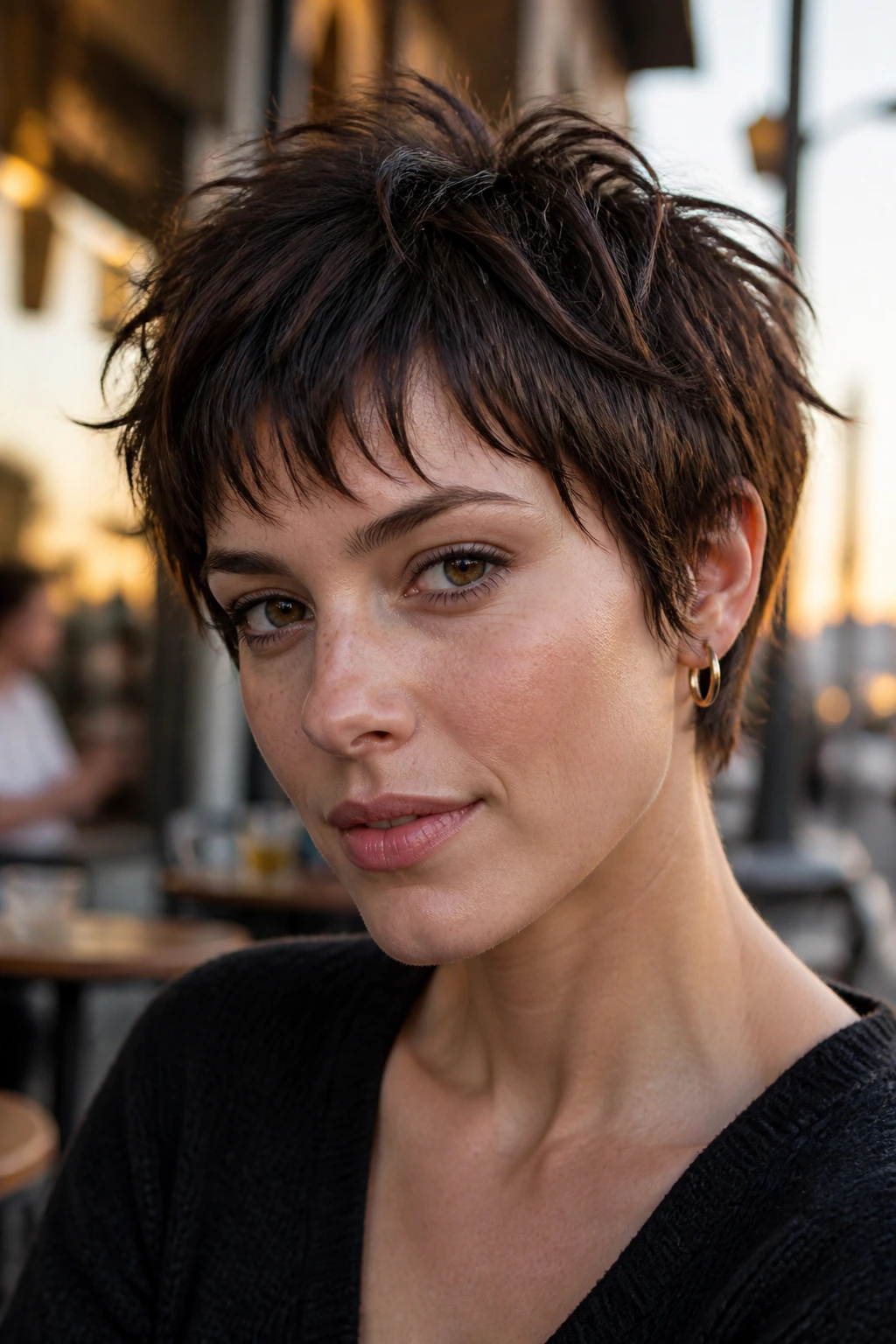
A razor pixie is a little risky, and I like that honesty. On the right curl pattern — loose to medium curls, not fragile tight coils — razor cutting can create separated ends that move instead of stacking together. The result looks sharp and modern, with a bit of edge.
The reason it works on oval faces is that the piecey finish keeps the haircut from reading as one heavy mass. The face stays open, and the texture becomes the main detail. If the hair is too dry or too coarse, though, a razor can fray the ends and make the shape fuzzy.
Ask your stylist whether your curl pattern can handle it dry or semi-dry. That conversation matters more than the name of the cut. If the answer is yes, a tiny amount of styling paste can make the separation look deliberate.
24. Tucked-Behind-Ear Pixie with Sweepable Sides
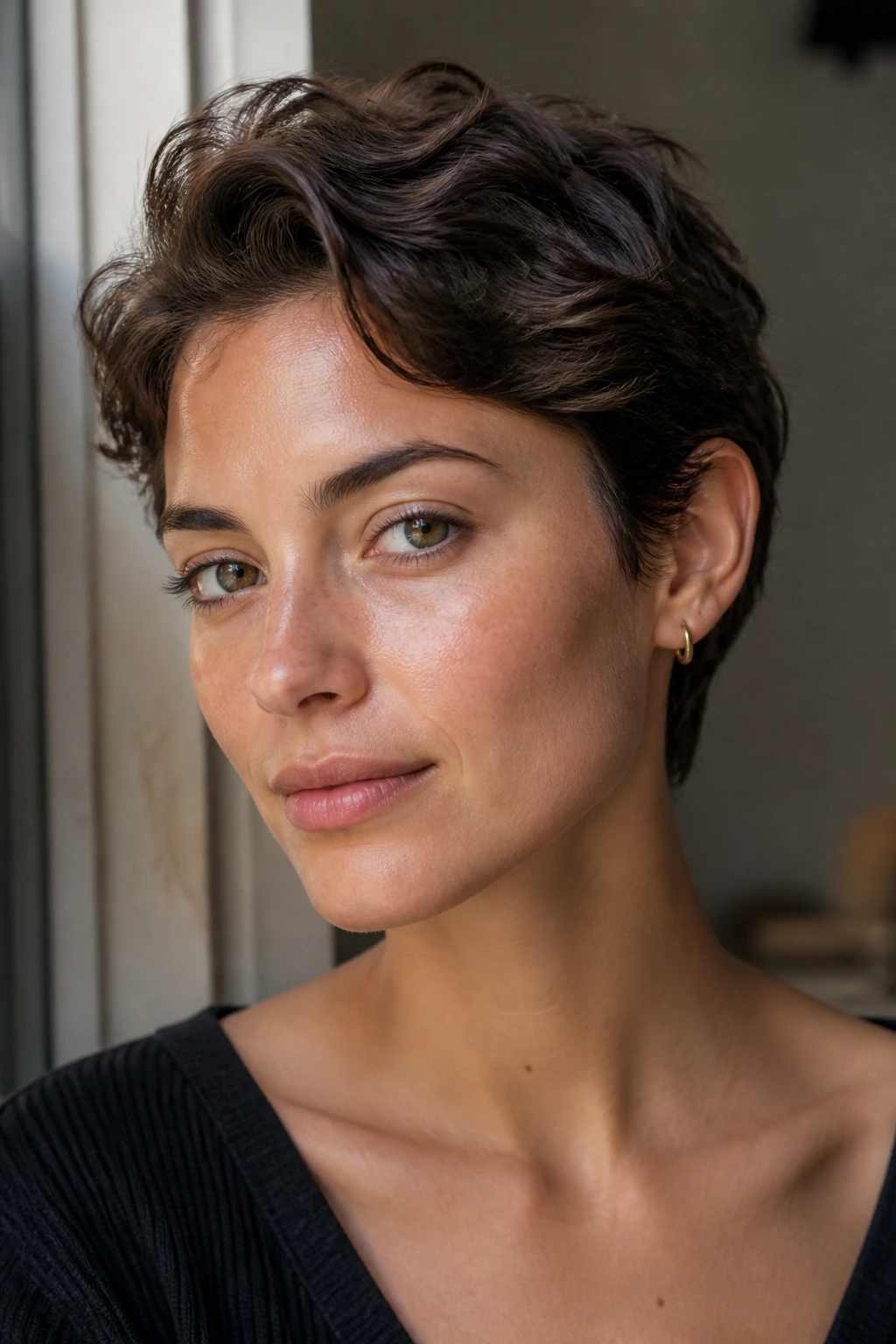
This one is all about movement around the ear. The side pieces are left long enough to tuck back, while the top keeps enough curl to feel soft and lived-in. On an oval face, that tucked shape can make the cheekbones and jawline look especially clean.
I like this cut for people who switch between polished and casual fast. One day the front is tucked and neat; the next day it falls forward and reads more relaxed. The cut needs to be precise around the ear, though. If that area gets bulky, the tuck stops looking intentional.
A lightweight cream or spray gel is usually enough. You want the side pieces to obey, not freeze. The best versions look like they were arranged with half a second of effort.
25. Full-Crown Volume Pixie with Lifted Top
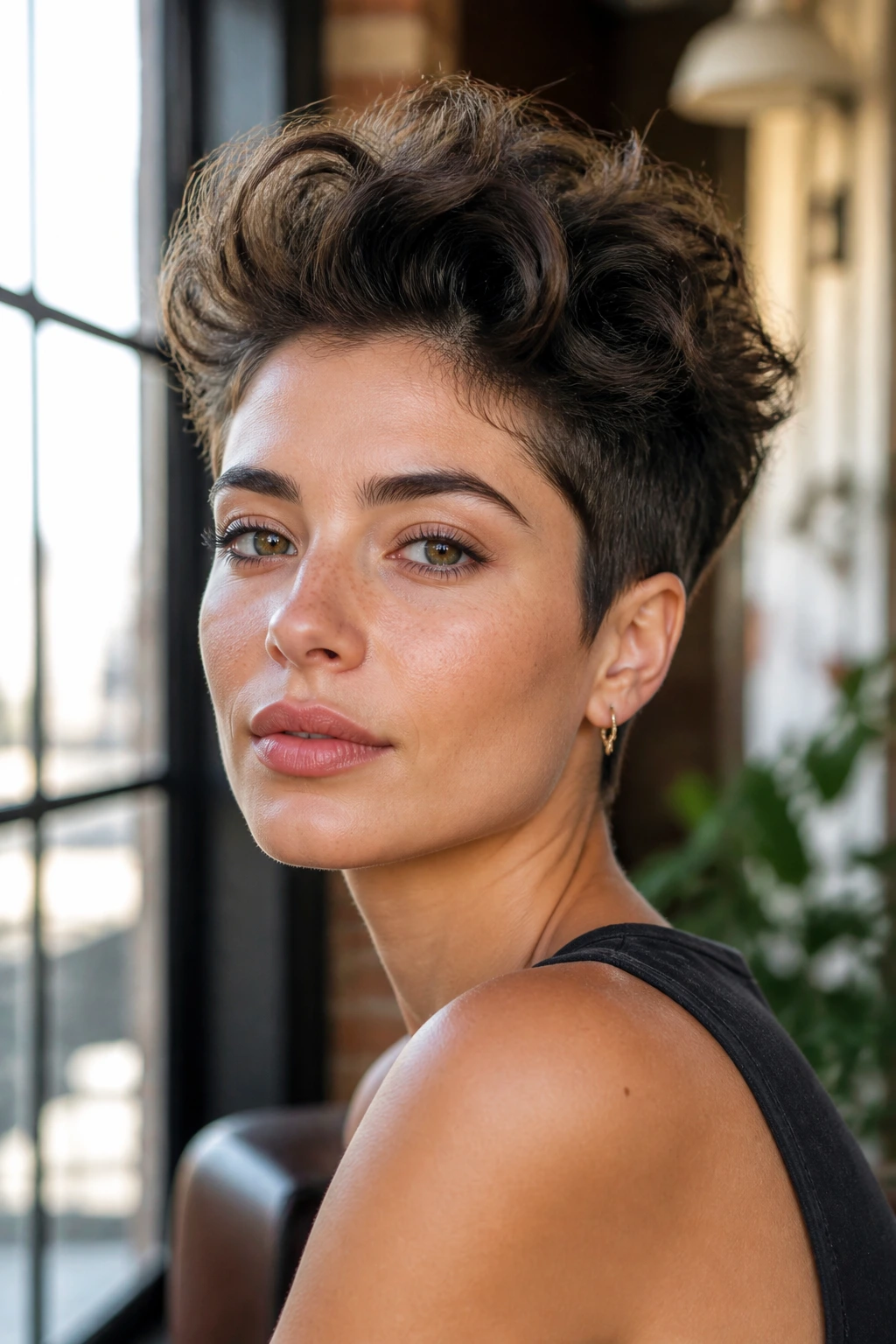
This is the bold finish. The top carries the height, the crown has real lift, and the sides stay slimmer so the whole cut stretches the face in a clean line. Oval faces can take that volume without the shape feeling top-heavy, which is why this style often looks stronger than people expect.
The trick is not to confuse volume with puff. Volume is controlled; puff is what happens when every curl goes in a different direction. To get the good version, diffuse at the roots, clip the crown while it cools, and let the top set before you touch it.
If you like a little drama in short hair, this is the one to keep in your pocket. It has enough structure for a serious outfit and enough curl movement to stay interesting when you turn your head.
Why Curly Pixies and Oval Faces Click So Well
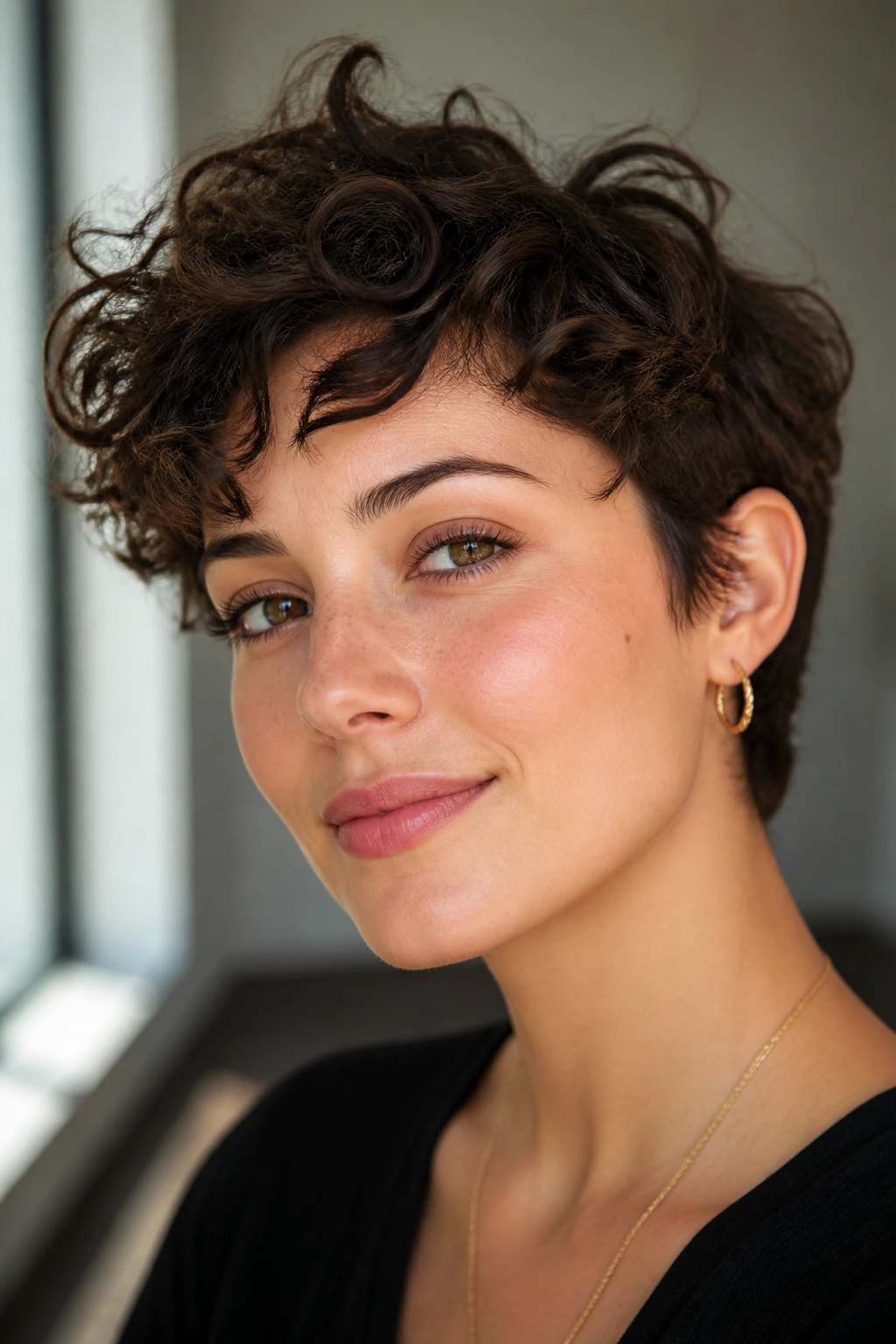
The best curly pixie on an oval face does three things at once: it shows the curls, it respects the natural balance of the face, and it keeps the silhouette from getting too wide at the sides. That last part is where a lot of short curly cuts go sideways. The hair gets shorter, then poofs outward, and suddenly the shape is fighting the person wearing it.
Oval faces are forgiving, but not magic. What they do offer is room for movement around the forehead, cheekbones, and jawline, which means you can choose where the eye lands. A lifted crown makes the face feel a little longer. A side-swept fringe softens the brow. A tighter nape makes the front look fuller. Those are small changes, but short hair lives in small changes.
The haircut also behaves differently depending on curl type. Loose curls need more shape at the ends. Tighter curls need more restraint at the sides. Thick hair benefits from internal removal of bulk, while fine hair needs careful layering so it doesn’t collapse by midday. A good curly pixie is not one formula. It’s a shape built around what your hair already does.
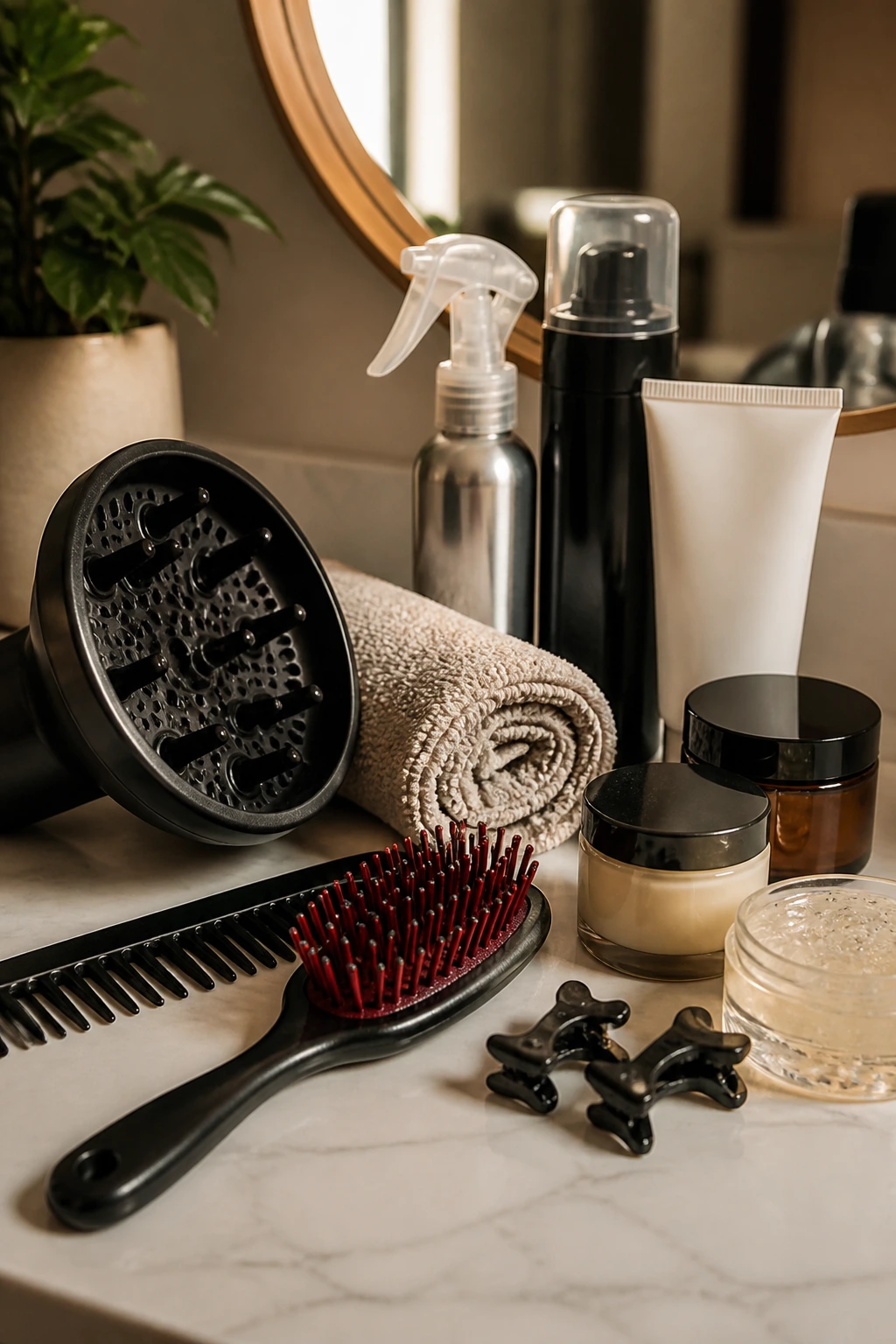
Essential Tools and Products for Curly Pixie Styling
-
Diffuser attachment: Keeps the curl pattern intact while drying, especially when you want lift at the crown instead of a puffed-up halo.
-
Microfiber towel or cotton T-shirt: This cuts down on frizz from the start and keeps the curl clumps from getting roughed up.
-
Spray bottle: Useful for refreshing day-two curls without soaking the whole head.
-
Wide-tooth comb: Good for spreading leave-in conditioner through damp hair without pulling curls apart.
-
Small round brush or Denman-style brush: Handy for directing bangs, front pieces, and side-swept sections.
-
Duckbill clips: Great for pinning the crown up while it cools so the top keeps some lift.
-
Light curl cream: Best for soft definition when you want control without stiffness.
-
Mousse or foam: A stronger choice for fine hair or for cuts that need body at the roots.
-
Gel with flexible hold: Useful for wet-look styles or days when humidity likes to mess with your plans.
-
Pomade or styling paste: A tiny amount helps separate the ends and smooth the perimeter, especially around the ears and nape.
How to Ask Your Stylist for the Right Shape
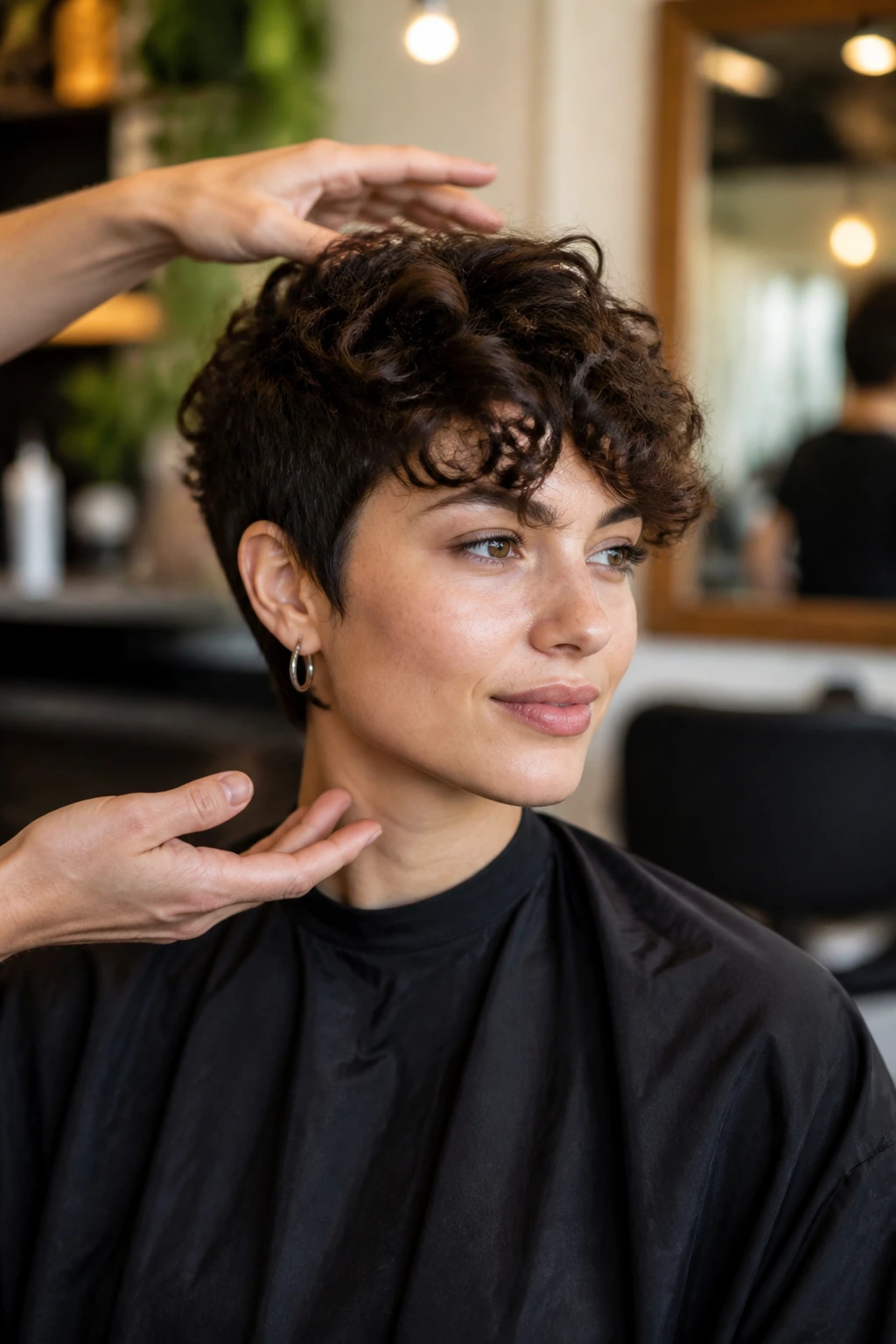
Bring pictures, yes, but bring the right pictures. One front view, one side view, and one back view tell the story much better than a single pretty photo from a bad angle. Curly pixies can look wildly different from the front and back, and the back is often where the real haircut lives.
Say how your curls behave when dry. Mention whether they spring up an inch, two inches, or more. That one detail helps the stylist leave enough length for shrinkage. If you don’t say it, you can end up with a crop that looked perfect wet and ends up a lot shorter than expected.
Be specific about the part, the fringe, and the neck. Tell them if you want the ears clear, partly covered, or left soft. Ask whether the nape should be tapered or left rounded. And if you like the style of a dry cut, say so plainly. Curly hair lies less when it’s cut in its real state.
Smart Product and Curl Care Tips
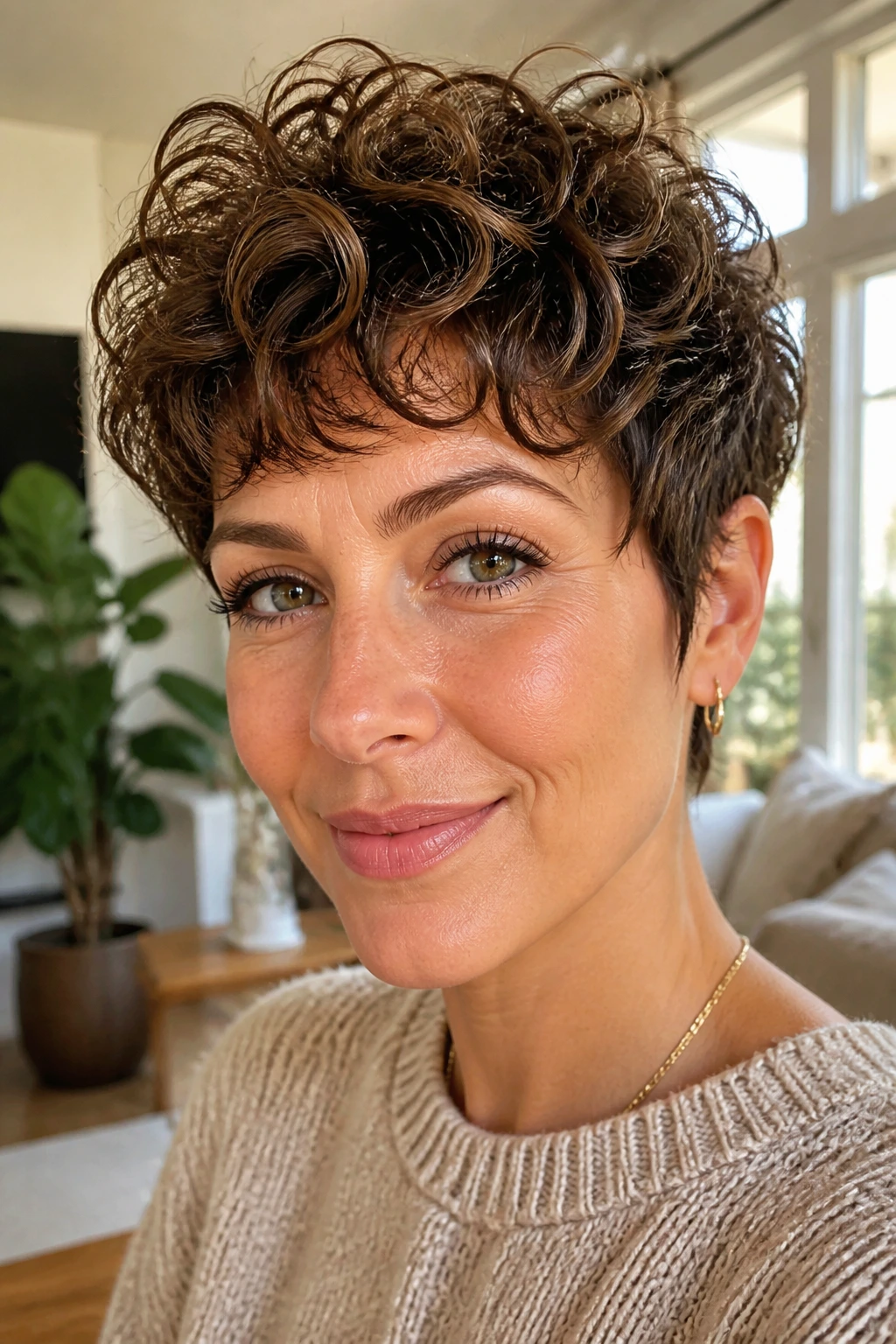
Pick products by curl weight, not by hype. Fine curls usually want mousse, foam, or a light gel because heavy cream can collapse the top by lunchtime. Coarser curls often need a leave-in plus a gel, especially if the ends feel dry after washing. The wrong product doesn’t just change the finish. It changes the whole shape.
If your hair gets frizzy in a puff around the crown, look for hold first and shine second. A soft cream may make the hair feel nicer, but it won’t always keep the lines clean. For a pixie, that matters. Short hair shows product failure faster than long hair does.
A small bottle of water is still one of the best tools in the drawer. Refreshing with a mist and a tiny amount of leave-in usually works better than piling on more product. Once the curl is overloaded, it gets sticky and dull, and then you have to wash sooner than you wanted.
How to Wear These Cuts Day to Day
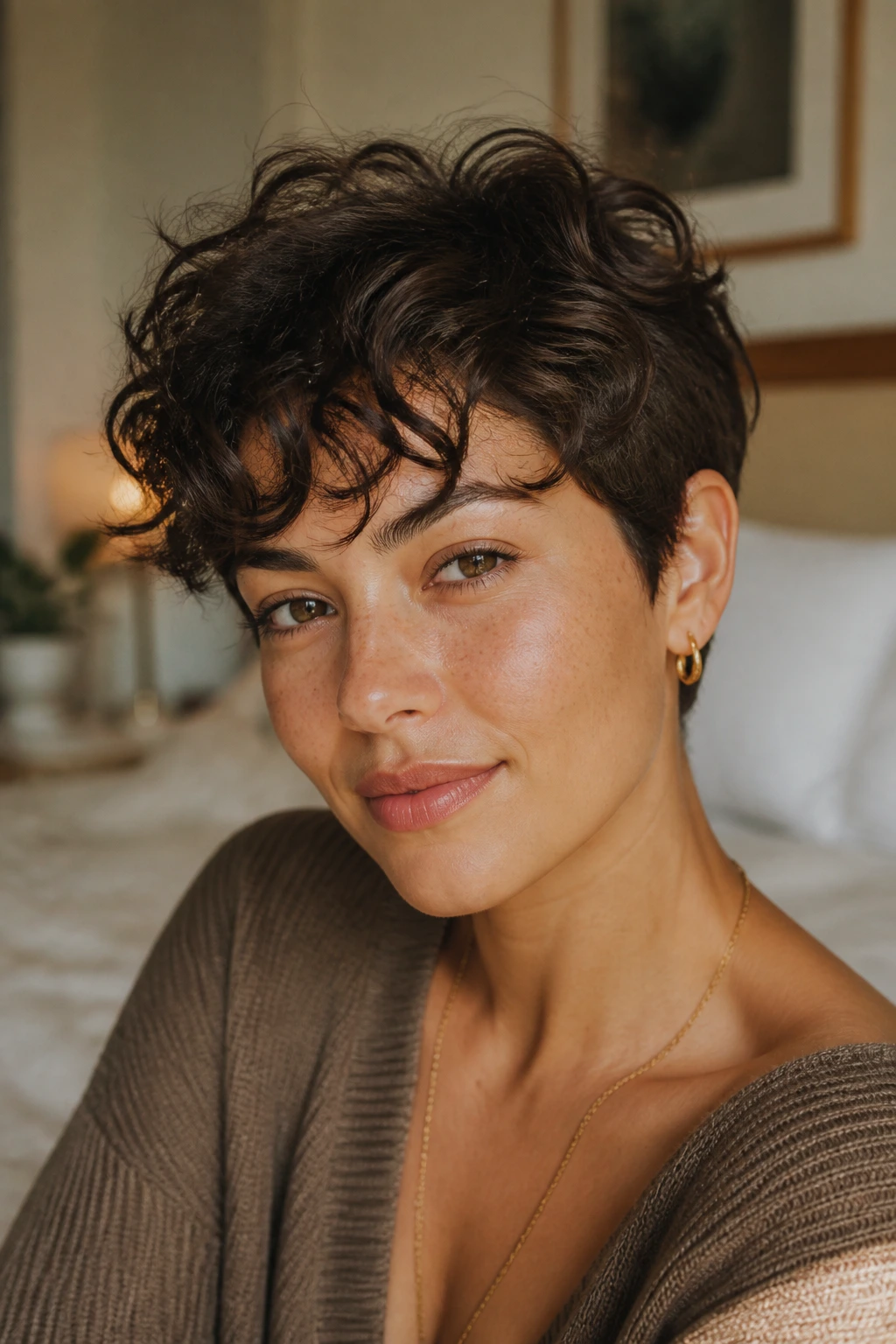
The trick with a curly pixie is not to over-style it every morning. Start with damp hair, work product through the crown and front first, then let the sides fall where they want. If the top needs lift, clip the roots for 10 to 15 minutes while the hair dries. That tiny pause makes a big difference.
On day two, spray the front and crown lightly, scrunch once or twice, and leave the rest alone. You do not need to remake the whole haircut. Most of the time you only need to wake up the shape. That is the real payoff of a pixie: less hair, fewer problems.
If you’re heading somewhere polished, focus on the fringe and the sideburns. If you’re heading somewhere casual, rough up the crown with your fingers and let a few pieces fall out of place. The cut can handle both. That flexibility is the reason these shapes keep coming back.
Additional Tips and Lift
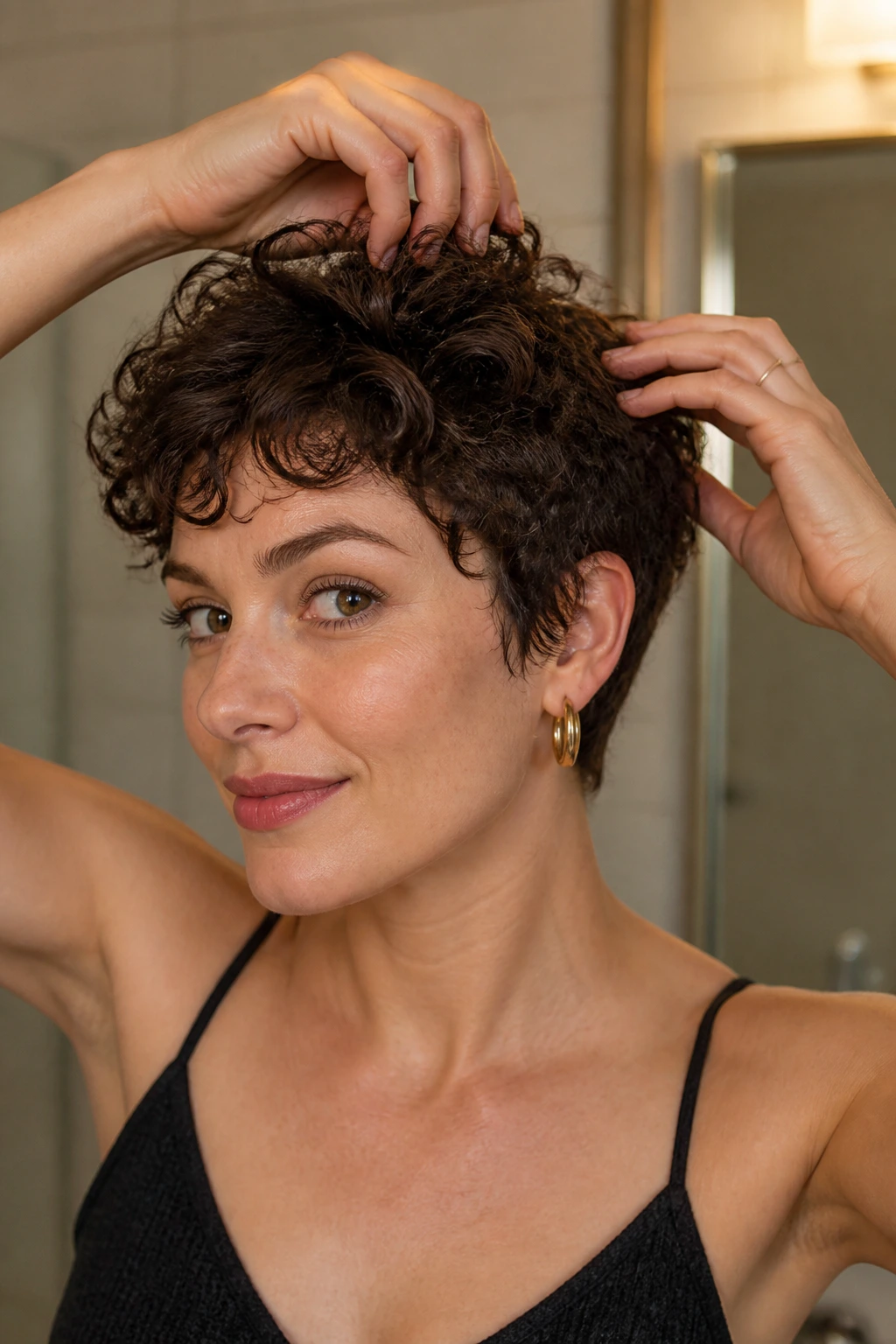
Definition Boost: After the hair is almost dry, pinch a tiny amount of pomade between your fingers and touch only the ends of the front pieces. That gives the curl a cleaner edge without turning the whole head greasy.
Shape Control: If the crown wants to stick up too much, clip it flat for the last part of drying, then remove the clips and let it cool. Heat sets shape. Cooling keeps it.
Face-Framing: Leave the front perimeter a little longer than the rest if you want a softer line around the cheekbones. Half an inch can be enough to change the whole read of the haircut.
Make-It-Yours: Fine hair likes mousse and a lighter nape. Thick hair needs more interior removal and a firmer hold product. Coily hair often looks best with a rounded top and carefully cleaned sides. Gray hair usually wants a touch more moisture and less product buildup.
Common Mistakes to Avoid
-
Cutting the fringe too short while wet: Curls bounce up more than people expect. If the hair sits 1 inch below the desired line when wet, that may be the finished line once it dries. The fix is simple: leave more length at the first cut and trim again after drying.
-
Using too much cream: The symptom is limp, separated curls that feel sticky and never quite dry. Use a smaller amount and add gel or mousse only where the shape needs it.
-
Thinning tight curls too aggressively: This can make the ends fray and the outline look fuzzy. Ask for weight removal inside the shape, not a heavy pass with thinning shears at the edge.
-
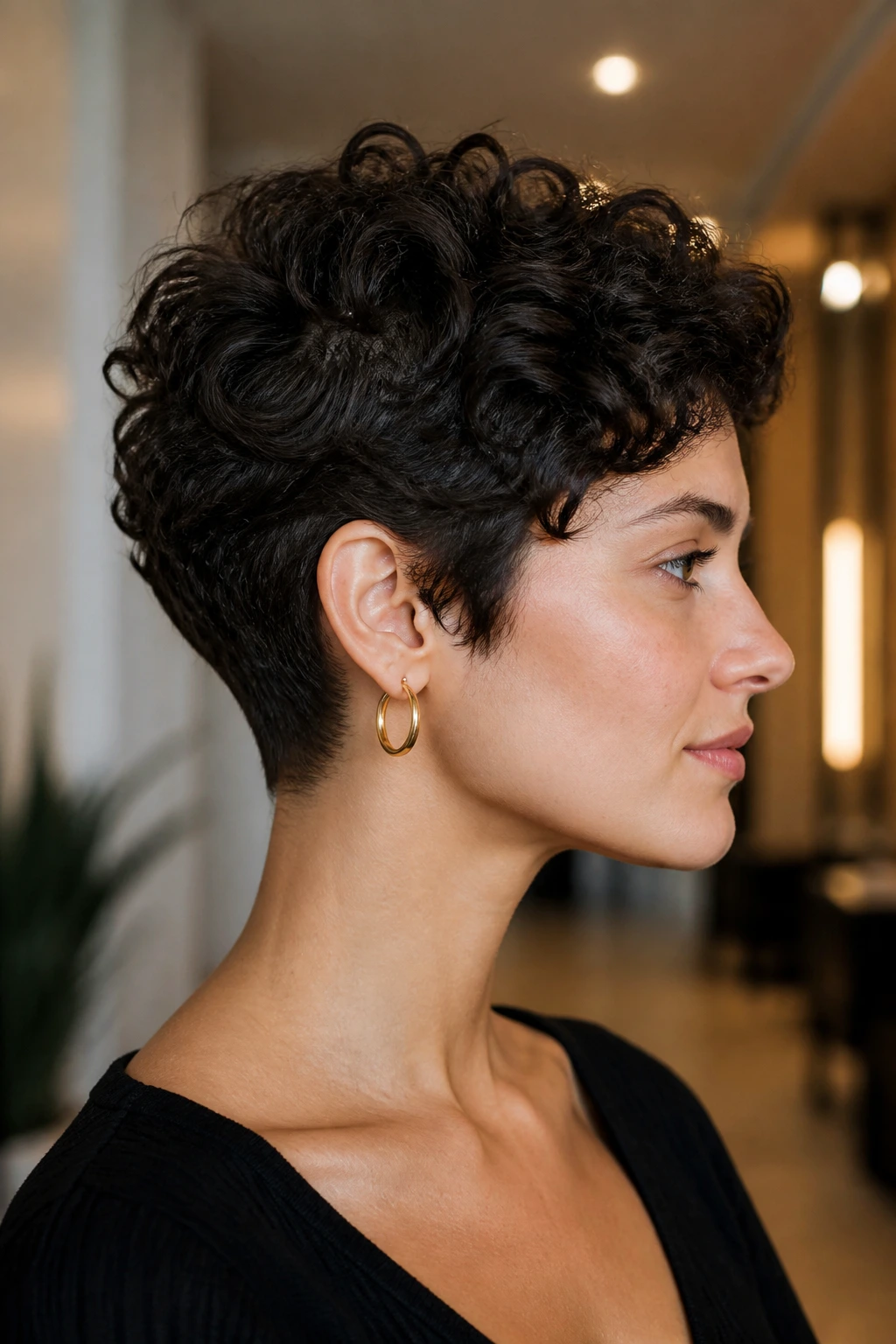
Leaving the nape too wide: A bulky back makes the whole pixie look like it’s sitting on the head instead of wrapping it. The fix is a cleaner taper or a tighter back shape.
-
Ignoring the grow-out plan: A pixie grows fast, and the line can lose shape in a few weeks. Schedule small tidy-ups before the top starts falling into your eyes and the sides start flipping out.
Variations and Adaptations to Try
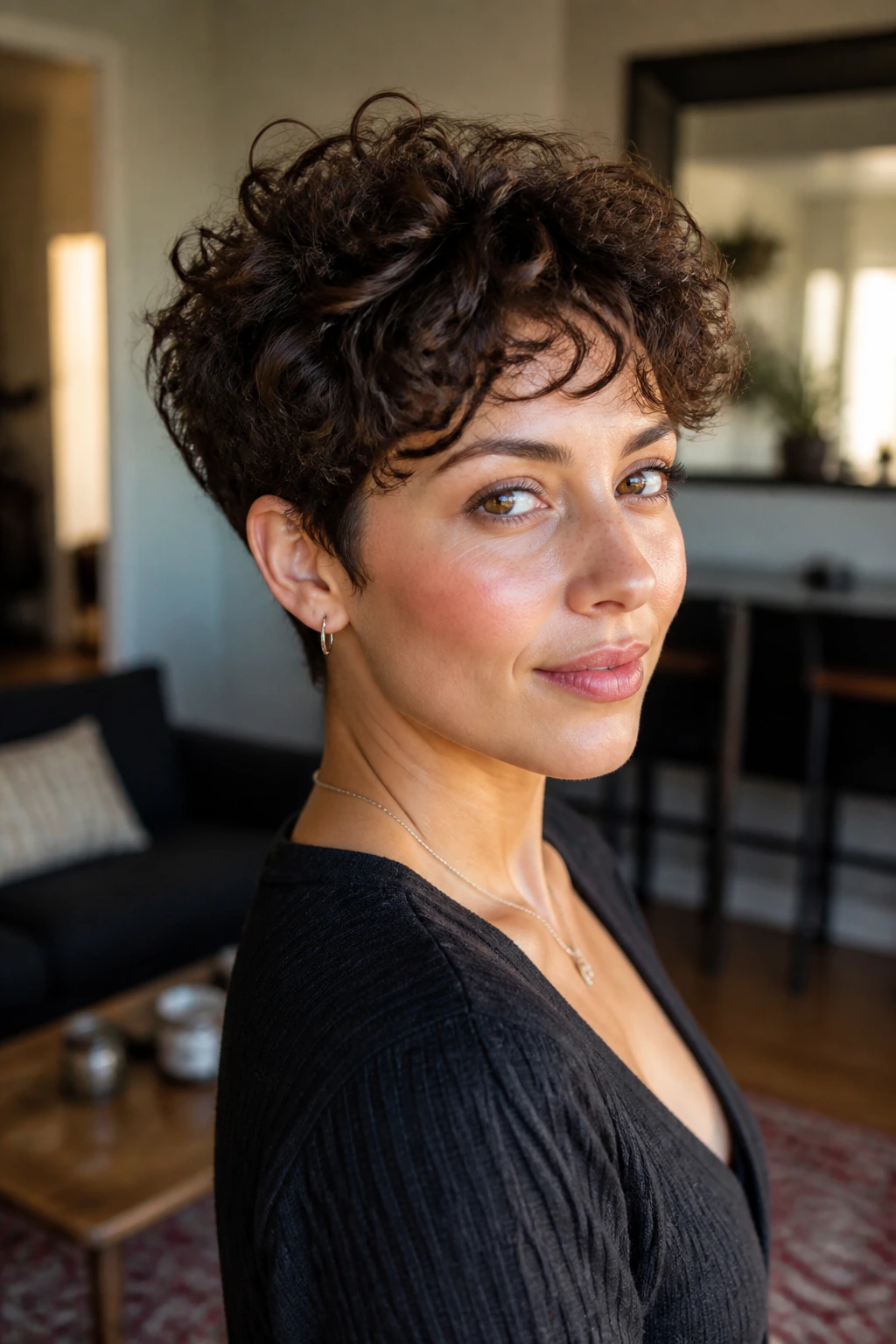
The Fine-Hair Lift Version: Keep the top slightly longer and the sides close to the head, then style with mousse only. This keeps the hair from collapsing and makes the crown look fuller.
The Thick-Curl Control Version: Ask for stronger tapering at the nape and sides, with longer pieces on top left untouched. Thick curls need space removed from the lower half or the shape becomes boxy.
The Coily Halo Version: Let the top keep more length and round the outline softly instead of forcing a sharp edge. This works when the curls shrink a lot and need room to spring.
The Silver-First Version: If your hair is gray or transitioning to gray, keep the cut clean and avoid over-layering. Silver strands show shape quickly, so the haircut can stay simple and still look deliberate.
The Color-Pop Version: Add highlights only around the crown, fringe, and temples. That gives the curl pattern depth without needing a dramatic color change everywhere.
Maintenance, Night Care, and Trim Timing
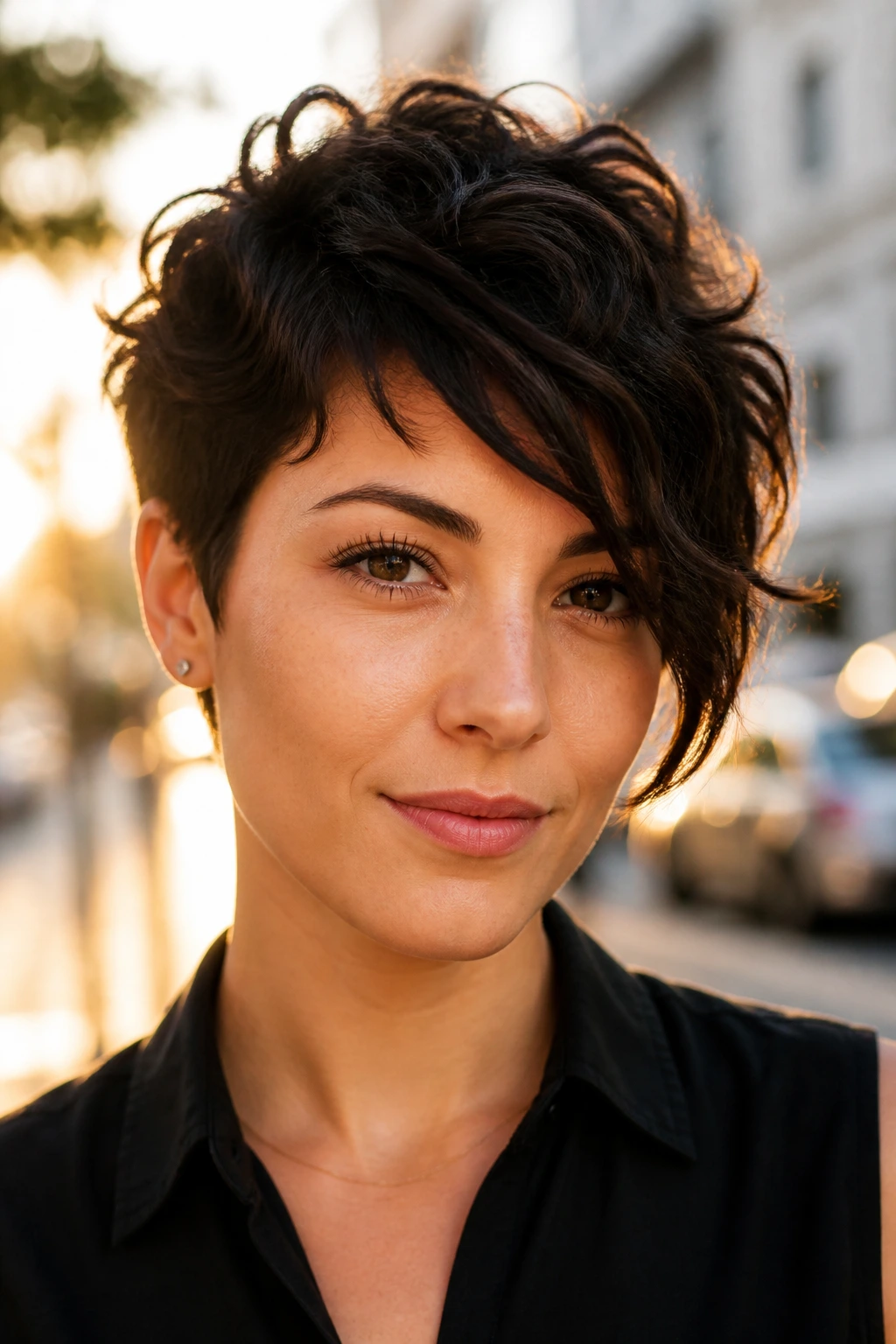
A curly pixie does best with regular shape-ups, not one dramatic overhaul after it gets wild. Most versions need a trim every 4 to 6 weeks if you want the nape and temples to stay crisp. If your hair grows fast around the ears, a tiny cleanup sooner can keep the whole style from looking sloppy.
Wash frequency depends on your scalp and product load, but many people do well with shampooing every 2 to 4 days. The key is not to strip the curl dry just because the haircut is short. Short hair still needs moisture, especially if the curls are tight or gray.
At night, a satin pillowcase helps, but a loose satin bonnet or scarf can be even better if your curls flatten hard against the pillow. In the morning, mist the front and crown, then reshape with your fingers. If the back has flipped out, dampen only that section and smooth it back into place.
Every couple of weeks, check the fringe length and the sideburns in daylight. Those small lines change fastest, and once they go, the whole cut loses its polish. Tiny trims keep the pixie sharp without turning maintenance into a project.
Frequently Asked Questions About Curly Pixie Cuts for Oval Faces
Will a pixie make my oval face look longer?
It can, if the top is very lifted and the sides are too tight. The fix is easy: keep some width through the fringe or temple area so the cut frames the face instead of stretching it upward.
Should curly pixies be cut dry or wet?
Dry or mostly dry is usually better for curl-heavy hair because shrinkage changes everything. A wet cut can work as a first pass, but the final shaping should happen when the curls are in their real state.
How short can the bangs go on an oval face?
Shorter than you might think. Baby bangs or a short textured fringe can work because the face shape already has balance, but they need frequent touch-ups and a soft edge so they don’t look blunt.
What if my curls are loose waves instead of tight curls?
Loose waves are actually a sweet spot for many pixie cuts. They show shape without ballooning too much, and they can handle side-swept fringe, piecey ends, and longer tops very well.
How do I keep the back from puffing out?
Ask for a tapered nape and use a stronger-hold product near the back roots while drying. A diffuser aimed upward for too long can make the back swell, so dry it just enough to set the shape and stop there.
Can I wear a curly pixie if my hair is very thick?
Yes, but the shape needs real bulk removal inside the cut. Thick curls do better with a tighter nape, a controlled side contour, and enough top length to let the curl stack without turning into a triangle.
How often should I trim it?
Most curly pixies need a shape refresh every 4 to 6 weeks. If the fringe is the whole point of the cut, you may want a tiny bang trim between full appointments.
Can I grow a pixie into a bob without an awkward stage?
You can, but the awkward stage is shorter if the top is left a bit longer from the start. A pixie bob hybrid, side-swept fringe, or longer sideburns help the grow-out land in a soft crop instead of a lopsided mess.
The Shape That Keeps Its Edge
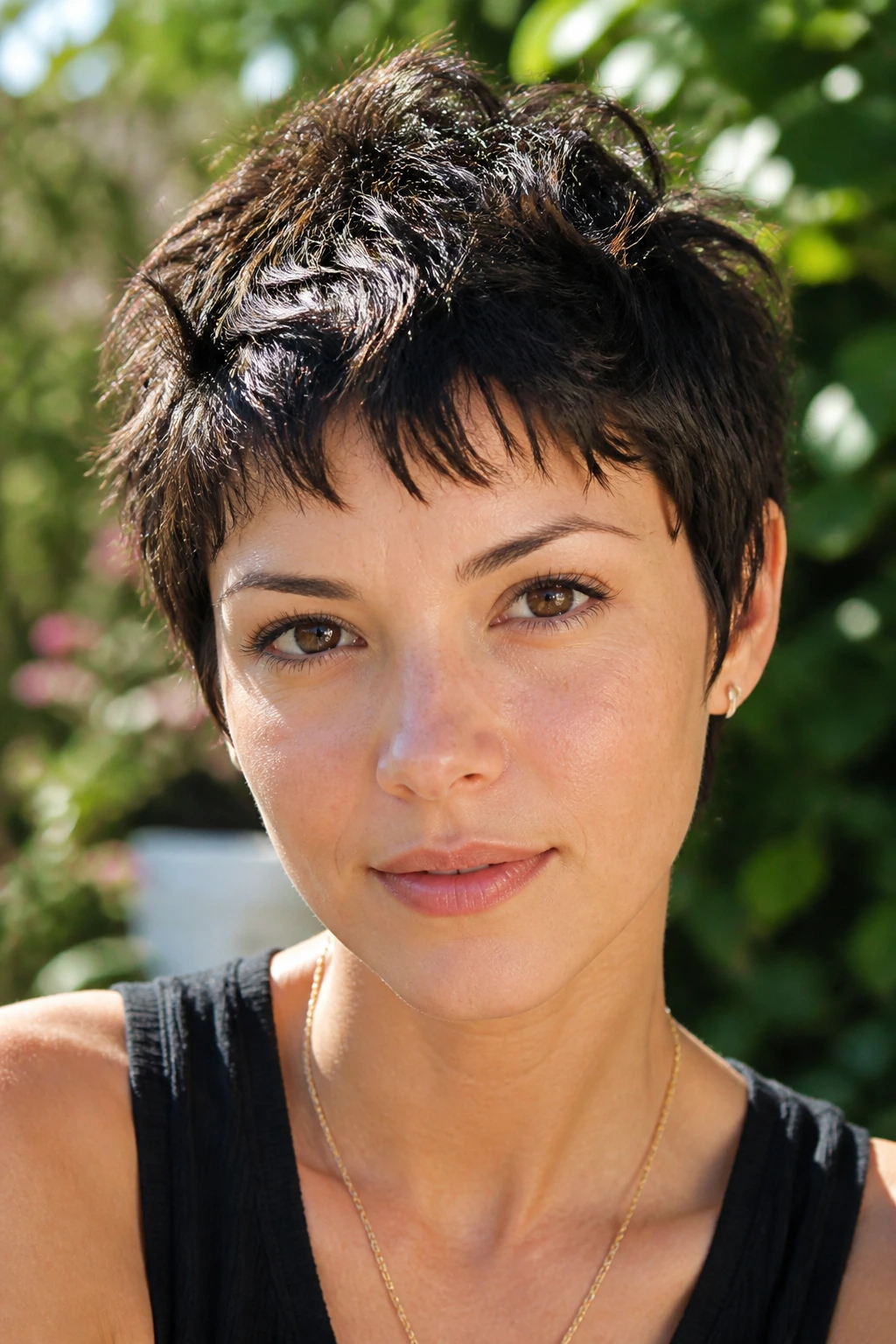
A curly pixie on an oval face works because it doesn’t have to do too much. That’s the charm. The face already gives you balance, and the hair gets to play with lift, texture, and line instead of trying to fix something that isn’t broken.
The best version is the one that matches your curl pattern and your tolerance for upkeep. If you like quick styling, lean toward the tousled or minimalist shapes. If you want more attitude, the undercut, baby bang, or wet-look versions carry it well. A good cut is not the loudest one in the room. It’s the one that still looks right when you’ve had coffee, humidity, and a long day.
Bring a few photos, say how your curls behave when they dry, and let the shape be honest. That’s where these cuts shine, and it’s why they keep earning their spot.