



A round face doesn’t need to be hidden behind hair. It needs shape. A little lift at the crown, a softer line around the cheekbone, and a fringe that doesn’t sit like a ruler across the widest part of the face can change the whole read of a haircut. That’s why shag transition pixie cuts for round faces keep showing up in serious salon conversations: they create movement where the face wants movement, and they give you structure without turning your head into a helmet.
The transition part matters just as much as the shag part. This isn’t a severe crop, and it isn’t a full bob pretending to be short. It lives in that useful middle ground where the nape stays neat, the top carries texture, and the front can graze the brow, temple, or jaw just enough to interrupt all that softness. Get that balance wrong and you get width. Get it right and the cut looks deliberate from every angle.
Some of these shapes are airy and clean. Some are choppier, more undone, a little bolder around the ears. A few are the kind of cuts that make growing out a pixie feel less like a waiting game and more like a style choice. The trick is matching the silhouette to your hair’s habits, not to some fantasy version of what short hair “should” do.
Why These Cuts Earn Their Keep on Round Faces
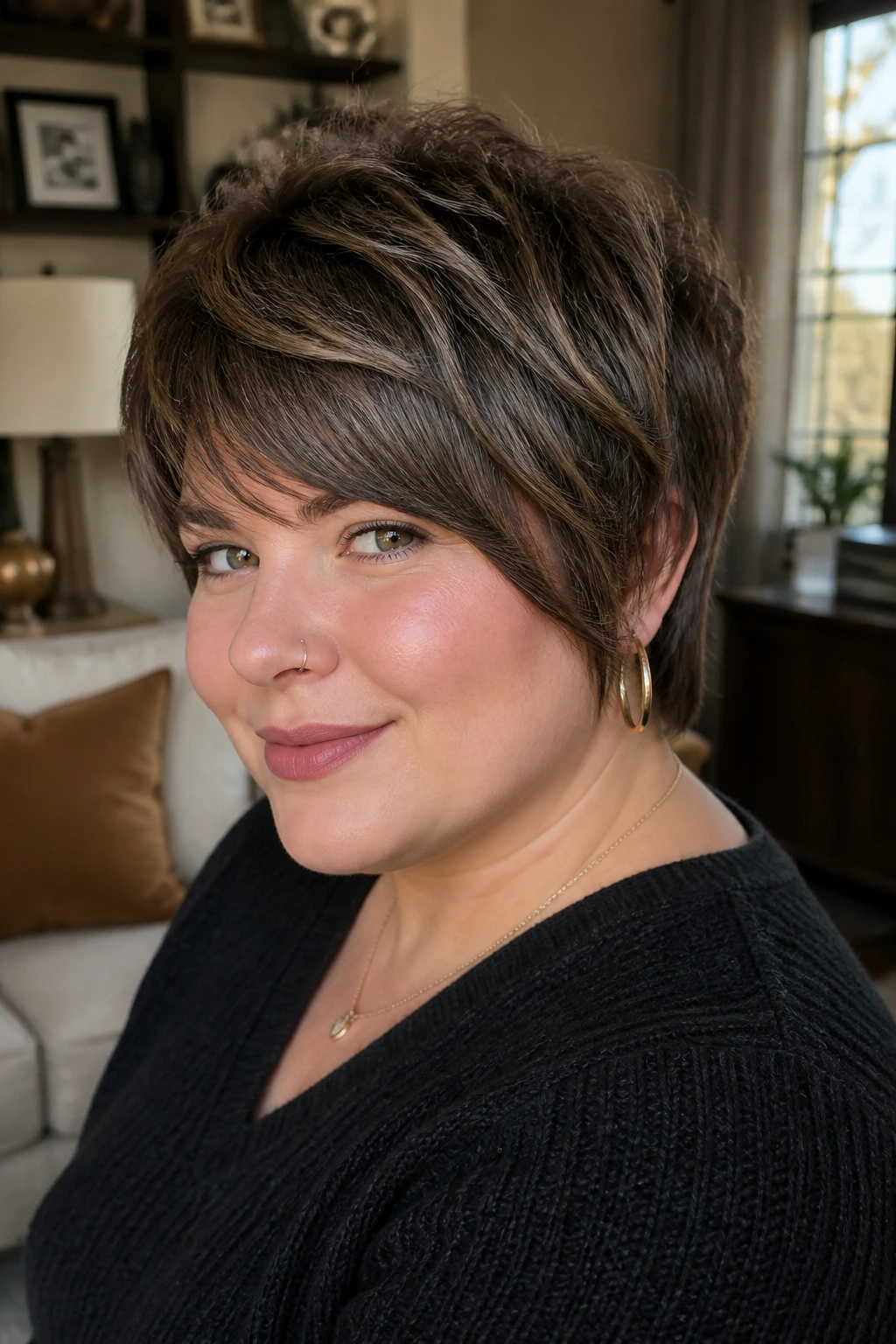
- Vertical lift: The strongest shag transition pixie cuts keep the highest point at the crown, which stretches the eye upward and helps a round face look longer through the middle.
- Soft diagonal lines: Side-swept fringe, asymmetry, and broken texture stop the face from reading as one continuous circle. Diagonals do a lot of quiet work here.
- Grow-out grace: A good transition pixie doesn’t fall apart when it grows. The shape should look intentional at six weeks, not only on the day you leave the salon.
- Cheekbone control: The right front pieces either skim above the widest part of the face or drop below it; they do not park right on top of it and shout about width.
- Texture without bulk: Shag layers add movement, but the best versions remove bulk at the sides so the head doesn’t puff out near the temples.
- Low-friction styling: Most of these cuts can be revived with a root lift, a blast of heat, and a pea-size amount of paste. That matters on mornings when you don’t have the patience for round-brush gymnastics.
1. Crown-Lifted Feathered Pixie
This is the cut I reach for when someone with a round face says they want short hair but not that short-hair feeling. The crown stays airy and a little tall, while the sides hug closer to the head, so the whole silhouette reads leaner. Feathered ends keep it from turning stiff. The result is light, not spiky.
Why it flatters a round face
The eye goes up first. That’s the whole game.
Ask for 1 to 2 inches of extra length through the top, with soft internal layering and a tapered side that doesn’t flare out at the cheekbone. A feathered pixie like this is especially good on fine to medium hair because it gets shape from lift, not from brute density. If the crown collapses easily, a round brush and a little mousse will keep it honest.
- Best for: fine, straight, or lightly wavy hair
- Styling note: blow-dry the crown in the opposite direction first, then flip it back
- Avoid: a blunt fringe that stops right at the widest part of the face
A tiny bit of matte paste on the ends is enough. More than that and you lose the floaty feel that makes this cut work.
2. Side-Swept Shag Pixie
Why does a side-swept fringe work so well here? Because it breaks the face into diagonals instead of letting it sit in one broad shape. This version leans softer than a sharp asymmetrical cut, but it still cuts across the forehead in a way that narrows the overall look.
The front pieces should sweep from a deep side part and taper into cheek-grazing texture. Keep the longer side just below the brow line, not heavy and blunt. That little drop helps the face feel longer without dragging the whole cut downward. It’s a good choice if you want something feminine, easy to style, and not remotely fussy.
A touch of volumizing mousse at the root is enough for the day. If your hair naturally separates, this cut almost styles itself.
3. Piecey Bixie Pixie
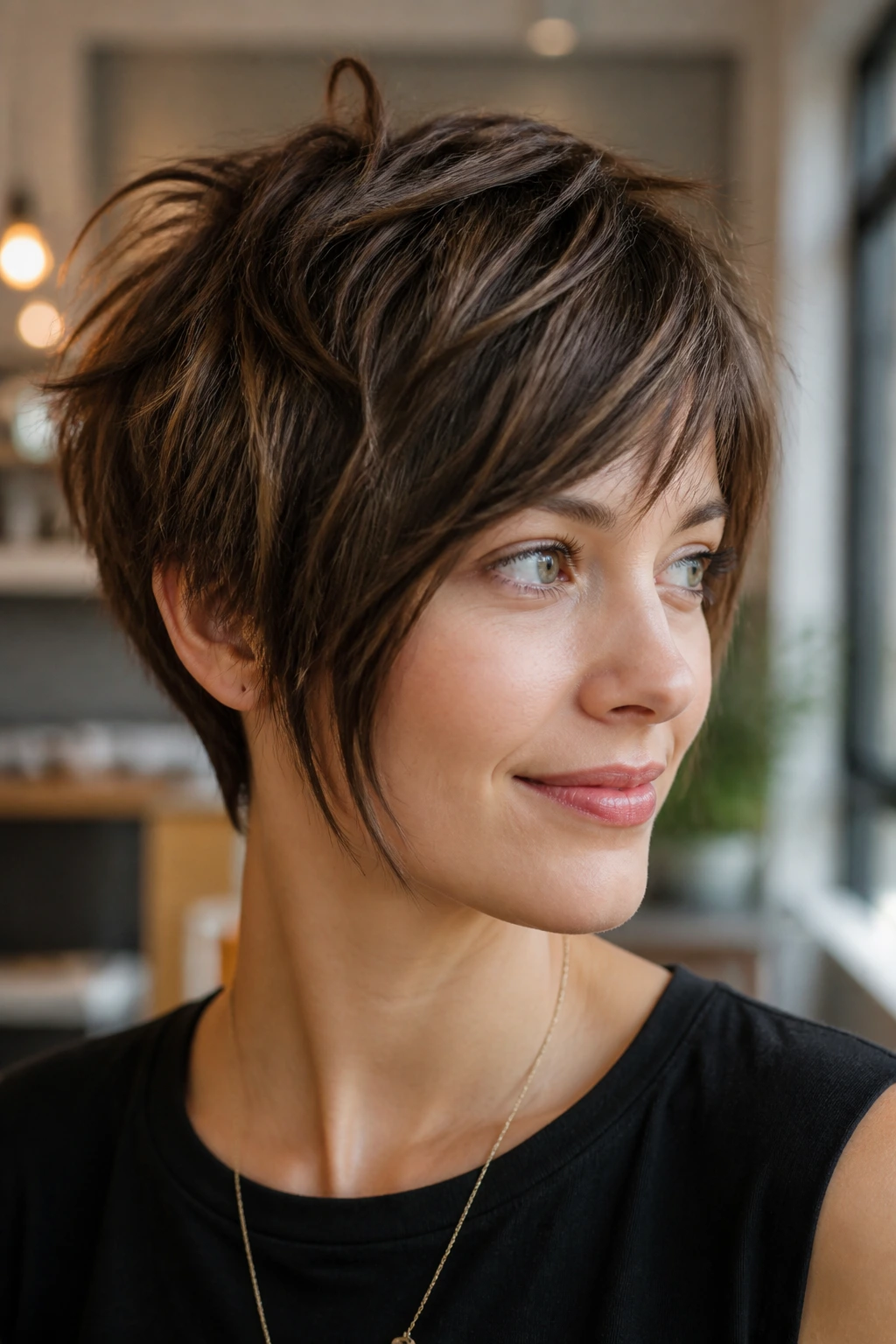
The piecey bixie is the safest “I want short hair, but I’m not ready to go all the way” move in the bunch. It sits between a pixie and a mini bob, so the front can stay long enough to brush the jaw while the back stays cropped and neat. On a round face, that extra front length gives you a clean vertical line.
What makes it different
The interior layers are choppy, not stacked. That matters.
A bixie with too much roundness at the bottom will puff out around the cheeks and make the face look fuller than it is. The version you want has broken ends, a little bend around the temples, and enough separation that the hair moves when you turn your head. It’s especially good if you wear glasses, because the front pieces can sit around the frames instead of fighting them.
- Ask for: soft graduation in the back, with textured length through the front
- Works best on: hair that has a little body or a slight wave
- Style with: texture spray, finger-drying, and a light squeeze of paste at the tips
This one grows out better than most people expect. That’s half the appeal.
4. Tapered Nape Shag Pixie
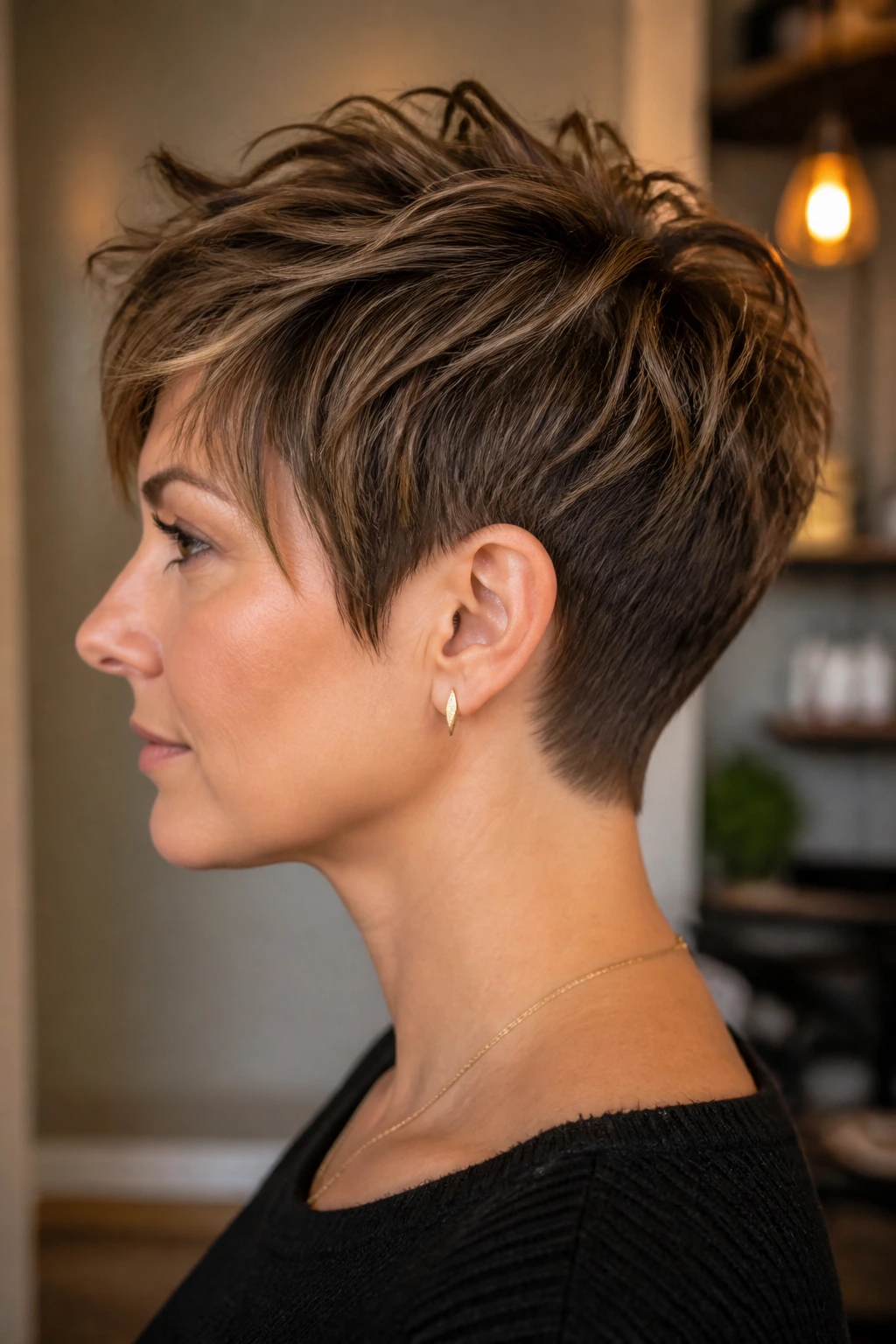
If your hair tends to bulk up at the neck, this is the one that fixes the silhouette fast. A tapered nape keeps the back clean and close, while the top carries the shag energy. The contrast makes the face look more vertical because the cut doesn’t widen at the bottom.
A lot of round-faced clients worry that a short cut will make the jaw look heavier. The opposite usually happens when the nape is tight and the top has texture. The eye stays busy at the crown and fringe, not at the widest point of the cheeks. This version is especially useful on thick hair, where a little internal debulking can save you from that mushroom shape no one asked for.
Ask your stylist to remove weight from underneath, not from the surface layers alone. That detail matters. Surface thinning without shape control can leave the top flyaway and the bottom bulky, which is the exact wrong trade.
5. Curly Halo Pixie
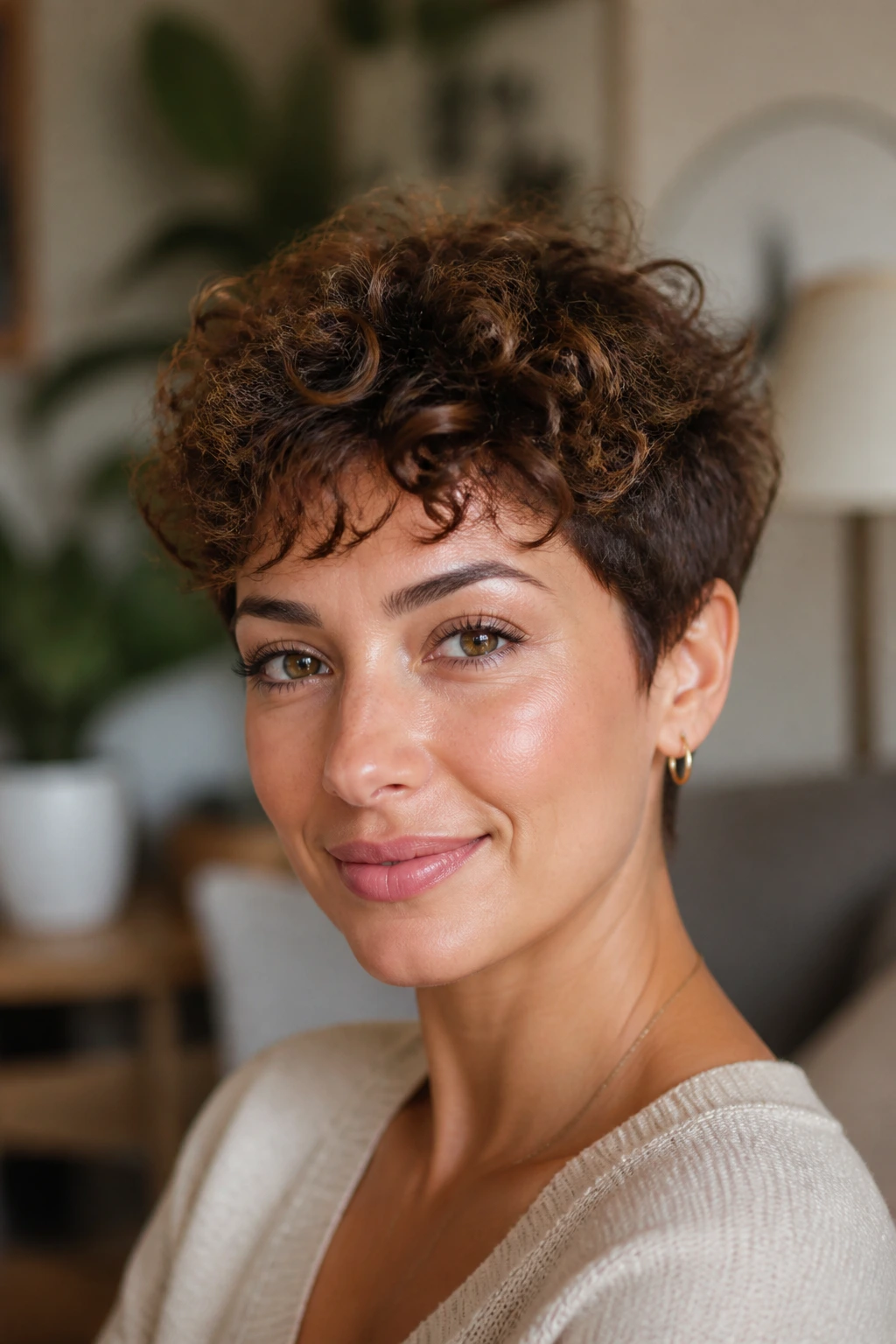
Curly hair needs room to breathe, and a round face needs a little height. That combination is why the curly halo pixie can look so good when it’s cut with restraint. The curls sit higher, the sides stay controlled, and the overall shape resembles a soft crown instead of a puffball.
Keep the curl stack high
Don’t let the curl pattern spread outward at the cheek line.
This cut works when the stylist shapes the curls with their spring factor in mind. A curl that looks modest when wet may bounce up a full inch or two as it dries, so leaving a touch more length at the top is smart. The fringe can be curly and still flattering, as long as it’s broken and not squared off. Rounded, too-heavy bangs are where this style starts to fight the face.
- Best for: loose curls through tighter coils
- Ask for: dry or curl-by-curl shaping if possible
- Style with: leave-in conditioner, gel, and a diffuser on low heat
If the curls are dense, keep the sides narrow. A little shape control around the temples goes a long way.
6. Razor-Cut Micro Shag Pixie
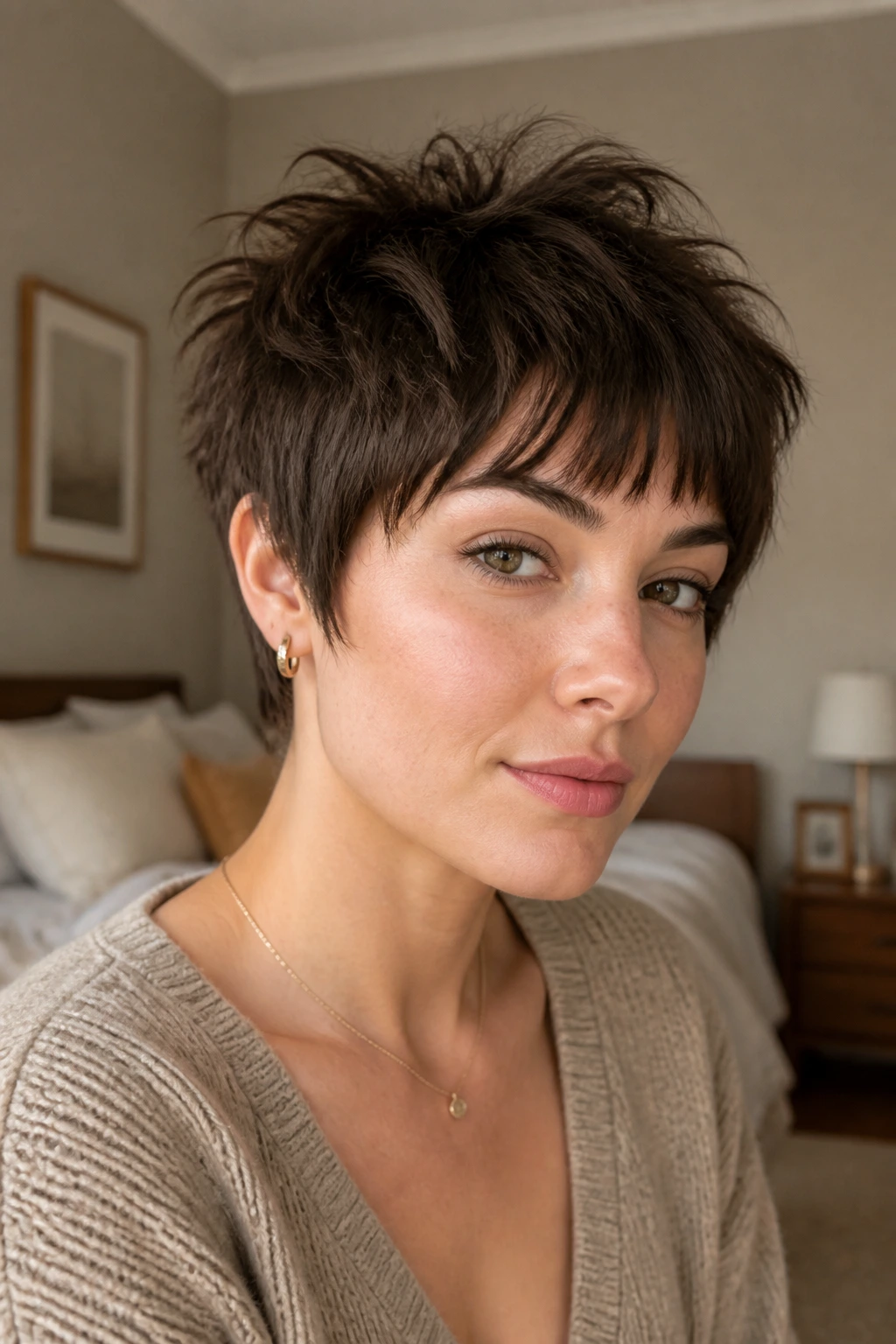
A razor isn’t magic. Used badly, it makes hair frizzy and unhappy. Used well, though, it gives straight or lightly wavy hair that broken, whispery edge that makes a short cut feel softer and less blocky. That’s why the razor-cut micro shag pixie has such a strong place in this lineup.
The ends should look sliced, not chopped. You want movement through the top and front, but not so much layering that the whole thing flutters away from the head. On a round face, the softness helps, because hard lines right at the cheeks can be brutal. This cut is the opposite of brutal. It’s controlled mess.
If your hair is prone to frizz, ask for more point-cutting and less aggressive razor work. Same shape, calmer finish. The difference can be the difference between chic and fuzzy.
7. Asymmetrical Long-Top Pixie
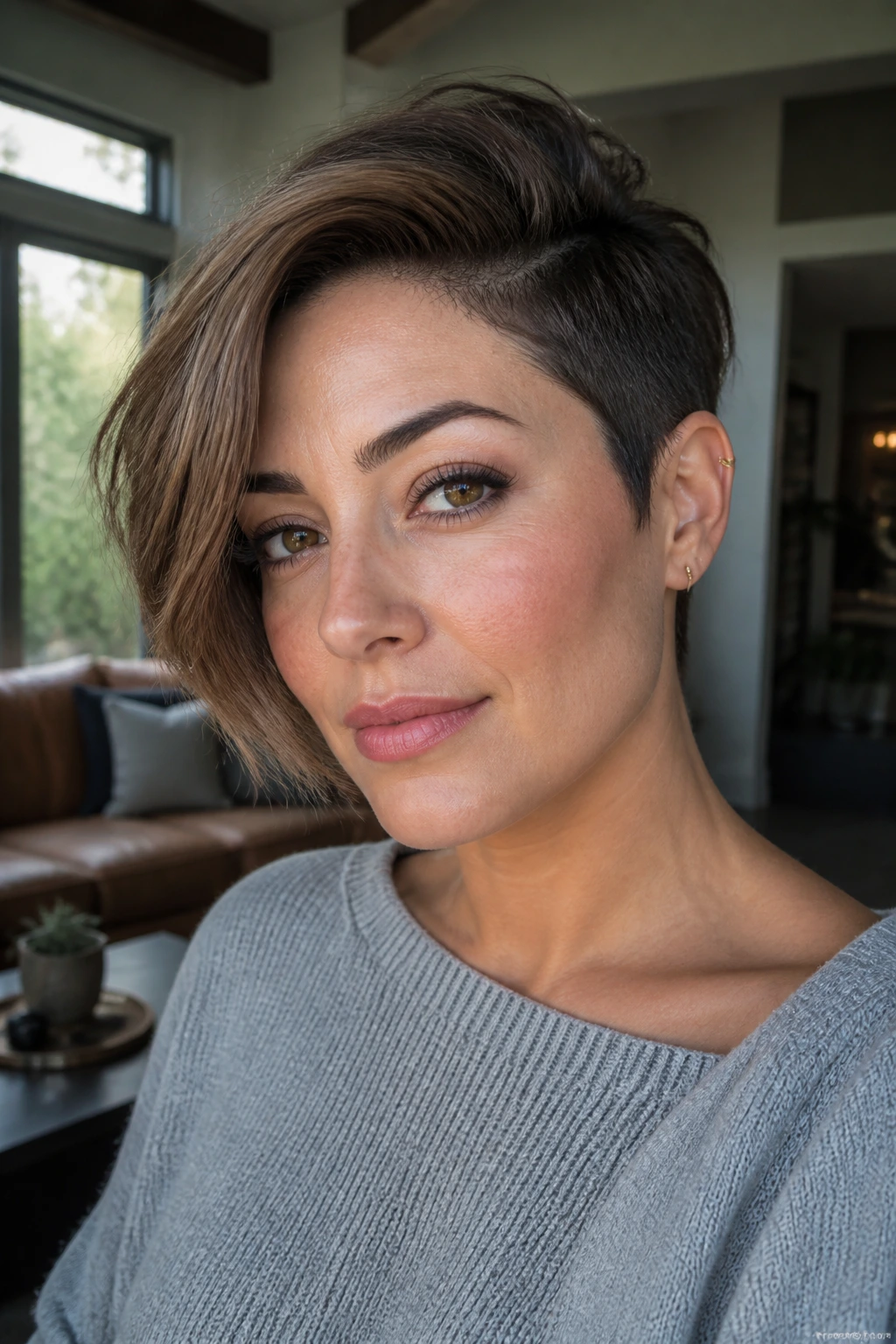
One side long, one side shorter. Simple idea. Big payoff.
An asymmetrical long-top pixie creates a diagonal that visually pulls the face off center, which is exactly what helps a round face feel less full. The longer side should sweep past the temple or skim the outer cheekbone, while the shorter side stays neat enough to keep the cut from spreading sideways. That contrast is the point.
This style is strong without looking severe. It has enough attitude to feel modern, but the shape still stays wearable if you keep the texture soft. I like this on clients who want one cut that looks polished at the office and a little cool at dinner without a total restyle.
A deep side part helps. So does a light hand with product. Too much paste, and the whole asymmetry turns into a wet, cramped shape that loses the airiness you need.
8. Choppy Mullet-Edge Pixie
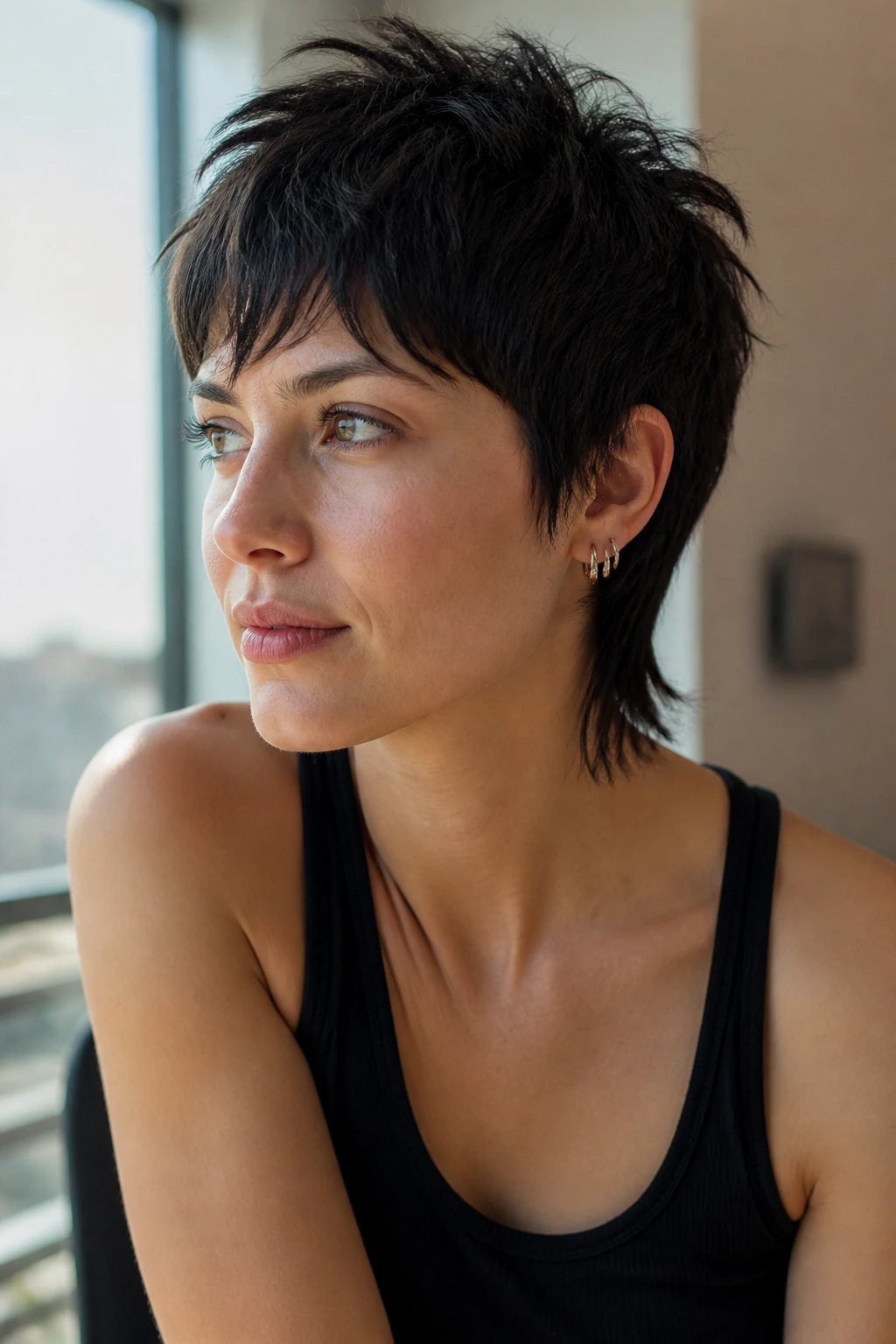
This one has a little bite to it, and I mean that as praise.
A choppy mullet-edge pixie keeps the top and crown short and lived-in, then leaves a touch more length through the nape. That extra length in back helps a round face because it draws the eye downward. The cut feels edgy, but it’s also practical: you get a lot of movement without needing a ton of heat styling.
The trick is restraint at the sides. Let the nape stretch a bit; don’t let the temples balloon. If the sides get too full, the style starts to widen the head, and that defeats the whole point. Keep the front broken and slightly off-center, and the cut reads as intentional rather than rebellious for rebellion’s sake.
This is a good choice if you like a bit of rock-and-roll texture and don’t mind your haircut having a personality.
9. Bottleneck Fringe Pixie
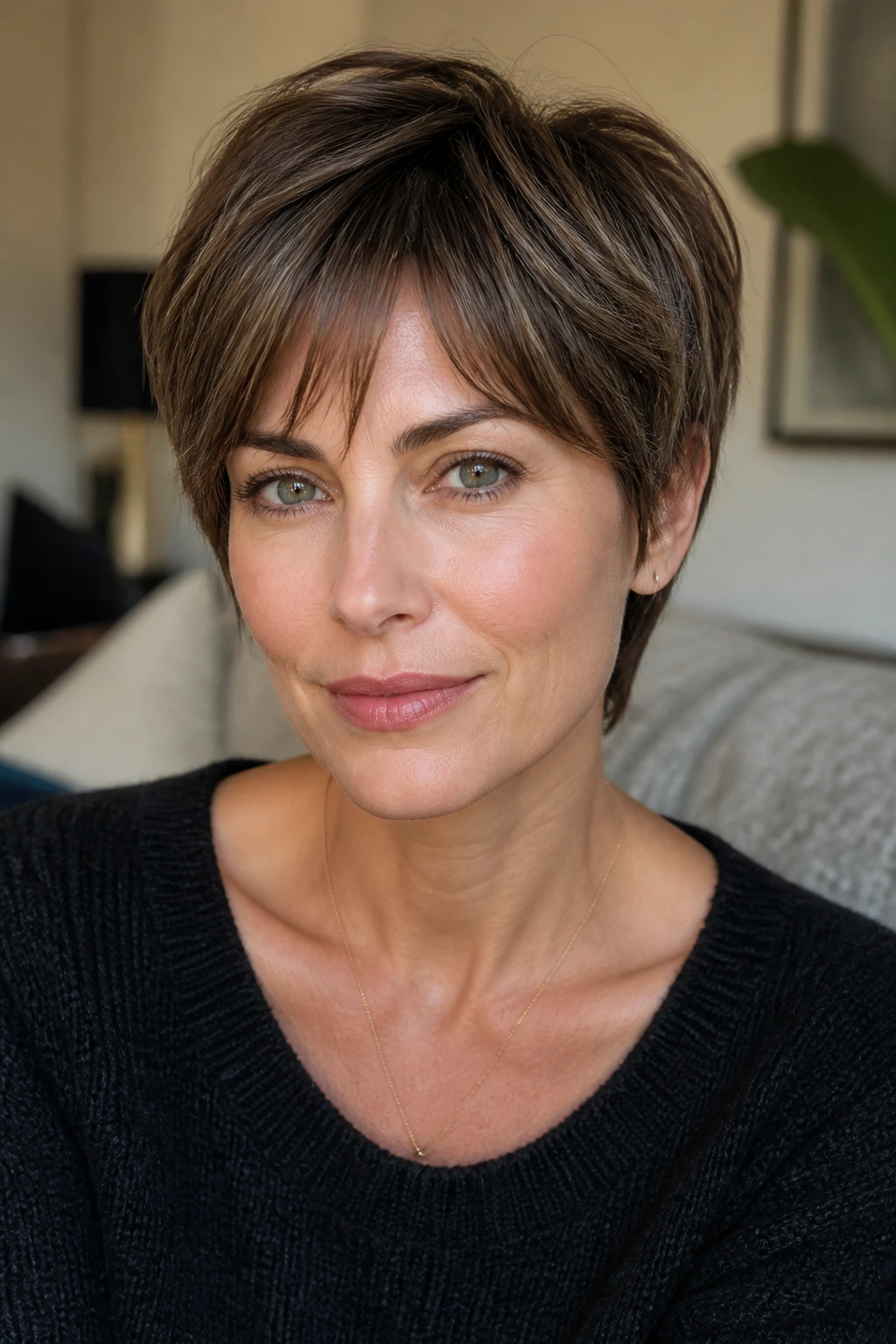
A bottleneck fringe is one of the smarter bangs for a round face because it starts narrow in the center and opens wider toward the temples. That shape softens the forehead without laying a heavy horizontal bar across the face. It’s flattering in a way that feels almost sneaky.
The shorter center pieces should be feathered, not blunt, and the longer sides should taper into the cheek area without landing exactly there. That soft opening around the brow creates a little vertical path, which keeps the face from looking boxed in. Pair it with a short shaggy crop on top and the whole cut feels lighter than a classic straight fringe.
If you wear your hair tucked behind the ears sometimes, this is one of those cuts that still behaves. The fringe stays useful even when the rest of the style gets casual.
10. Grown-Out Transitional Pixie
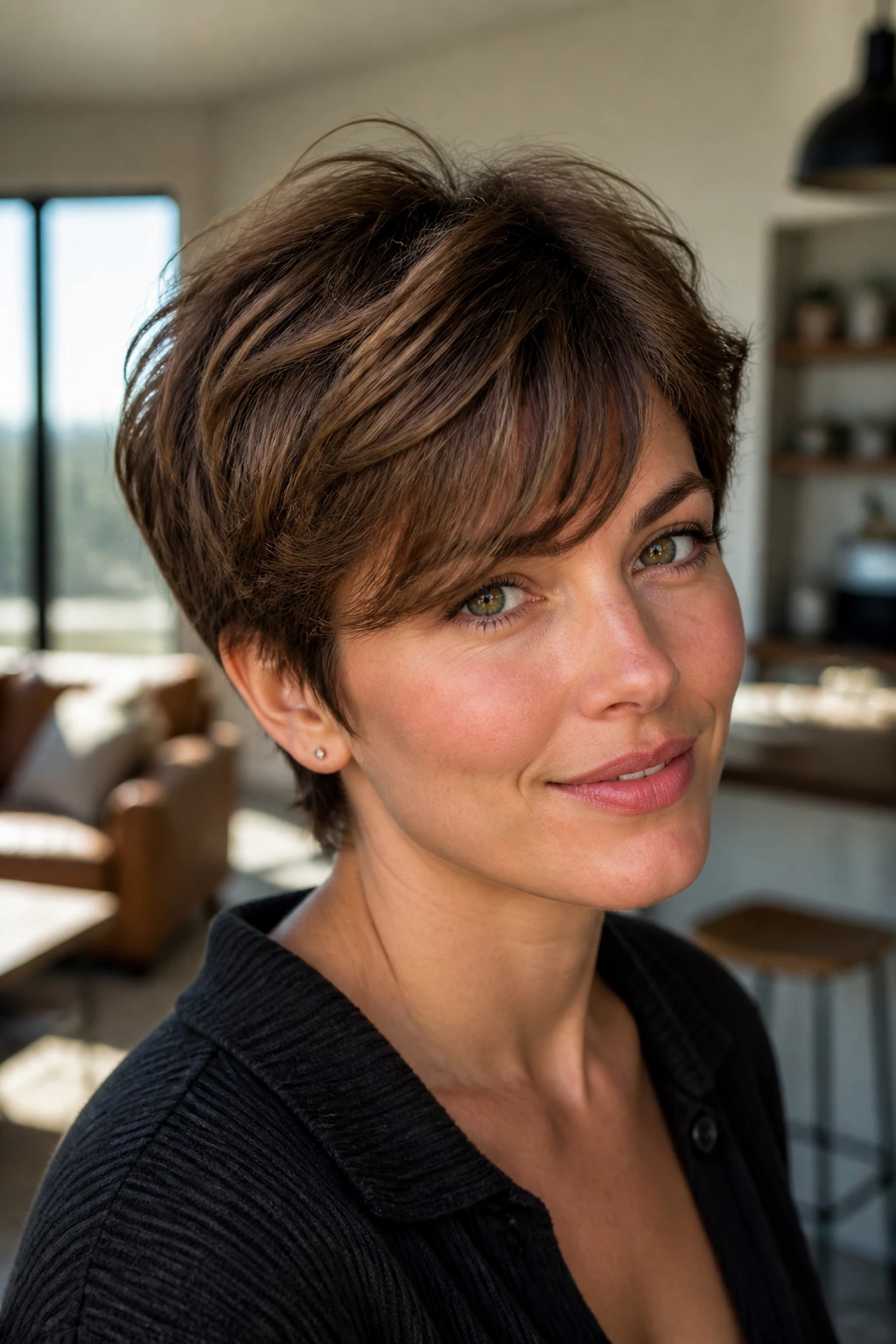
This is the haircut for people who live in the awkward in-between stage and refuse to apologize for it. A grown-out transitional pixie already has some softness around the ears and some movement through the top, so it doesn’t need to look freshly cut every single week to keep its shape.
Round faces often benefit from this sort of relaxed outline. Why? Because the extra length gives the face a little downward pull, while the shag layers stop it from turning heavy. The trick is keeping the perimeter tidy enough that the shape still feels planned. If the back fuzzes out and the sides widen, the whole thing loses its line.
Ask for light dusting trims, not drastic length removal, if you’re growing into a bixie or a bob. That’s the whole point of the transition look: it should let you move forward without looking like you stalled out halfway there.
11. Undercut Volume Pixie
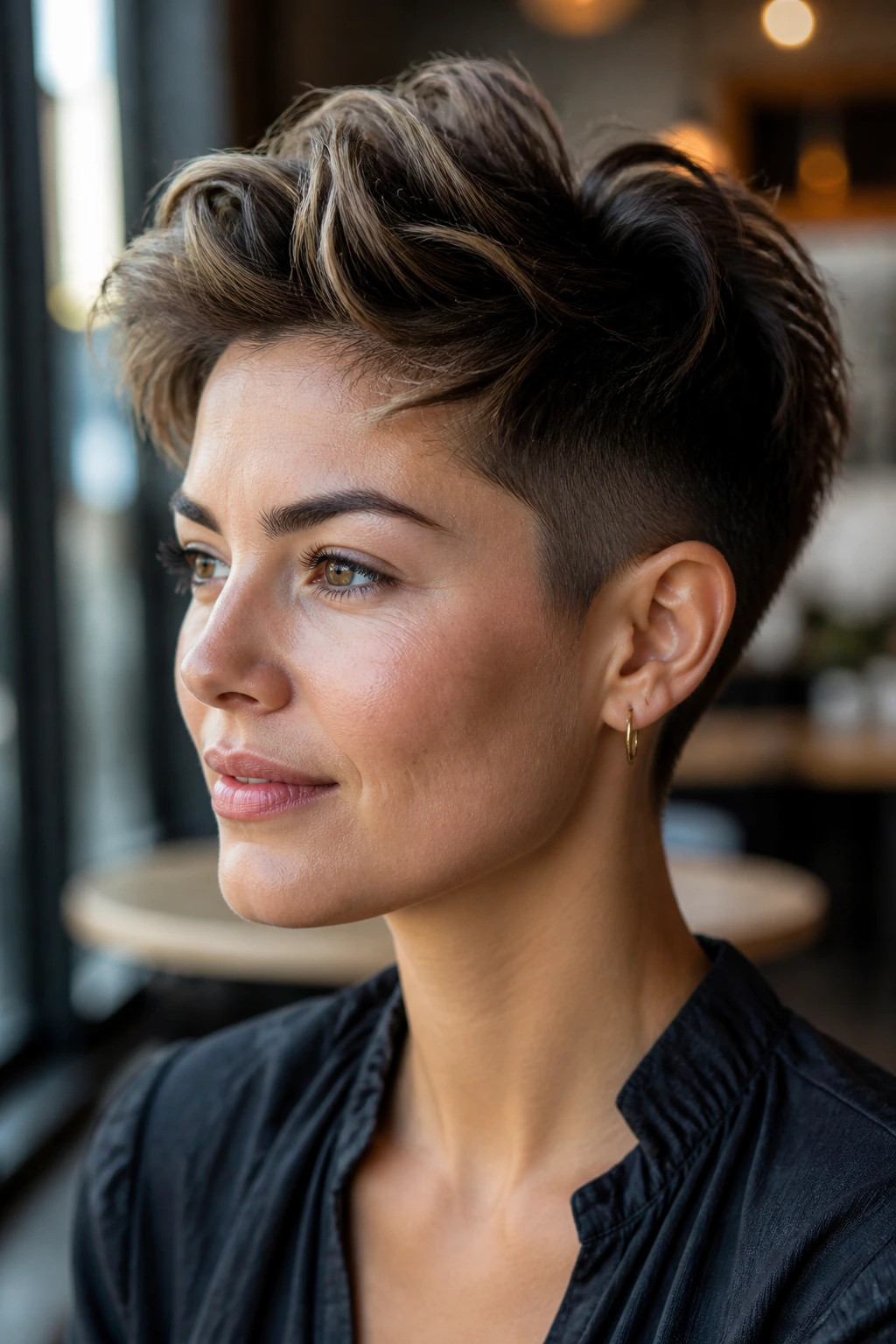
Thick hair can be a blessing until it turns into a triangle. An undercut volume pixie fixes that by removing weight underneath and leaving the top free to rise. The result is height without bulk, which is exactly what a round face wants.
You do not need a dramatic shaved side to get this effect. Even a hidden undercut at the nape or around the lower sides can take a surprising amount of heaviness out of the shape. The top can then be styled with lift and separation, and the face reads longer because the profile is tighter near the jaw.
This cut works best when the top is kept layered but not shredded. If the hair is too thinned out, it can stand up in odd little spikes. A cleaner internal removal of bulk usually wears better.
12. Air-Dry Wavy Pixie
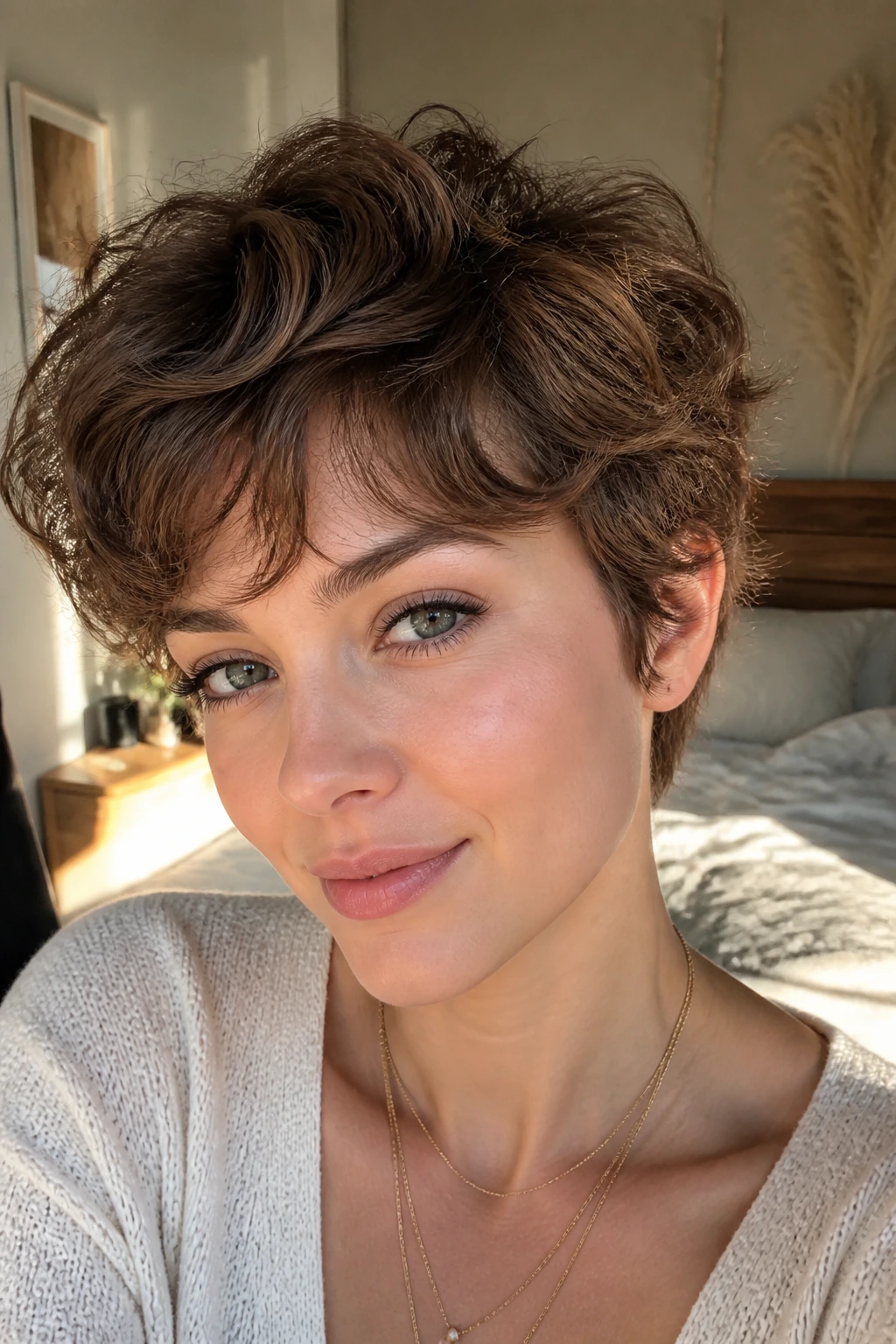
Not every short cut needs a round brush. Some of the best shag transition pixie cuts for round faces are the ones that work with your natural wave and leave a little bend in the hairline. An air-dry wavy pixie does exactly that.
The front can be kept long enough to twist around the forehead, while the sides stay close and the crown gets just enough layering to move. On a round face, the loose wave breaks up the outline without adding width. It’s soft, relaxed, and frankly a relief if you’re tired of fighting your texture every morning.
A curl cream or lightweight foam is usually enough. Scrunch at the ends, push the top forward and then up, and let the hair dry with as little touching as possible. If you rake your fingers through it every ten minutes, you’ll flatten the shape and make it frizzy. Leave it alone. Seriously.
13. Sliced Fringe Pixie
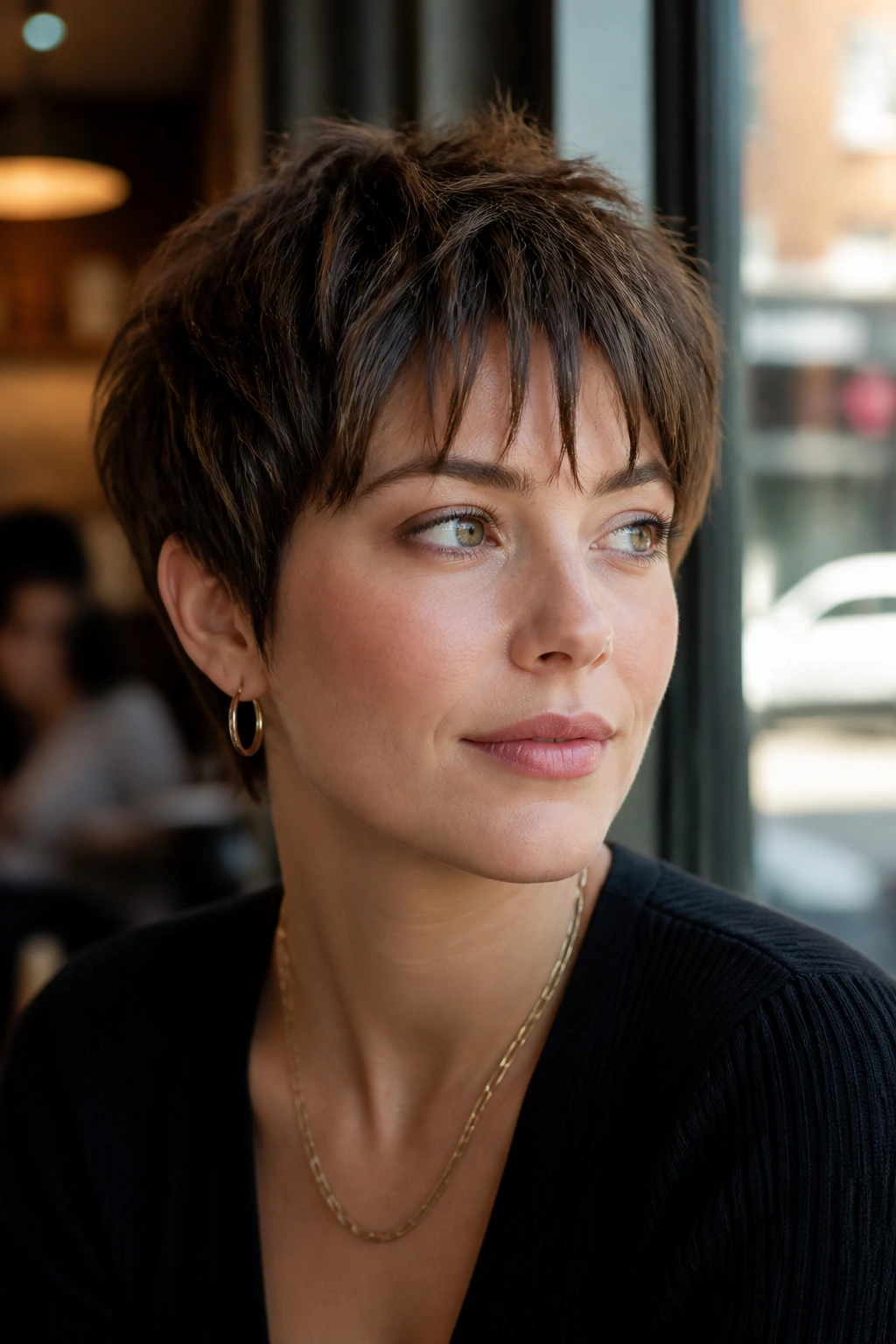
Sliced fringe is a cleaner, lighter answer to heavy bangs. The pieces fall in separated strips instead of one thick curtain, which keeps the forehead covered without building a solid block across the face. For a round face, that broken line is the difference between softening the look and closing it in.
What to ask for
Point-cut ends, not a blunt chop. The fringe should have air between the pieces.
This cut is a smart move if you like bangs but hate the feeling of a heavy fringe sitting on your eyes. It works especially well when the rest of the cut stays shaggy and short, because the fringe gets to do the visual work while the sides stay narrow. I also like it for people who wear glasses. The sliced texture keeps the fringe from competing with the frames.
A tiny round brush, used just at the root, can give the front a clean bend. No need to over-style the rest.
14. Face-Framing Pixie Bob
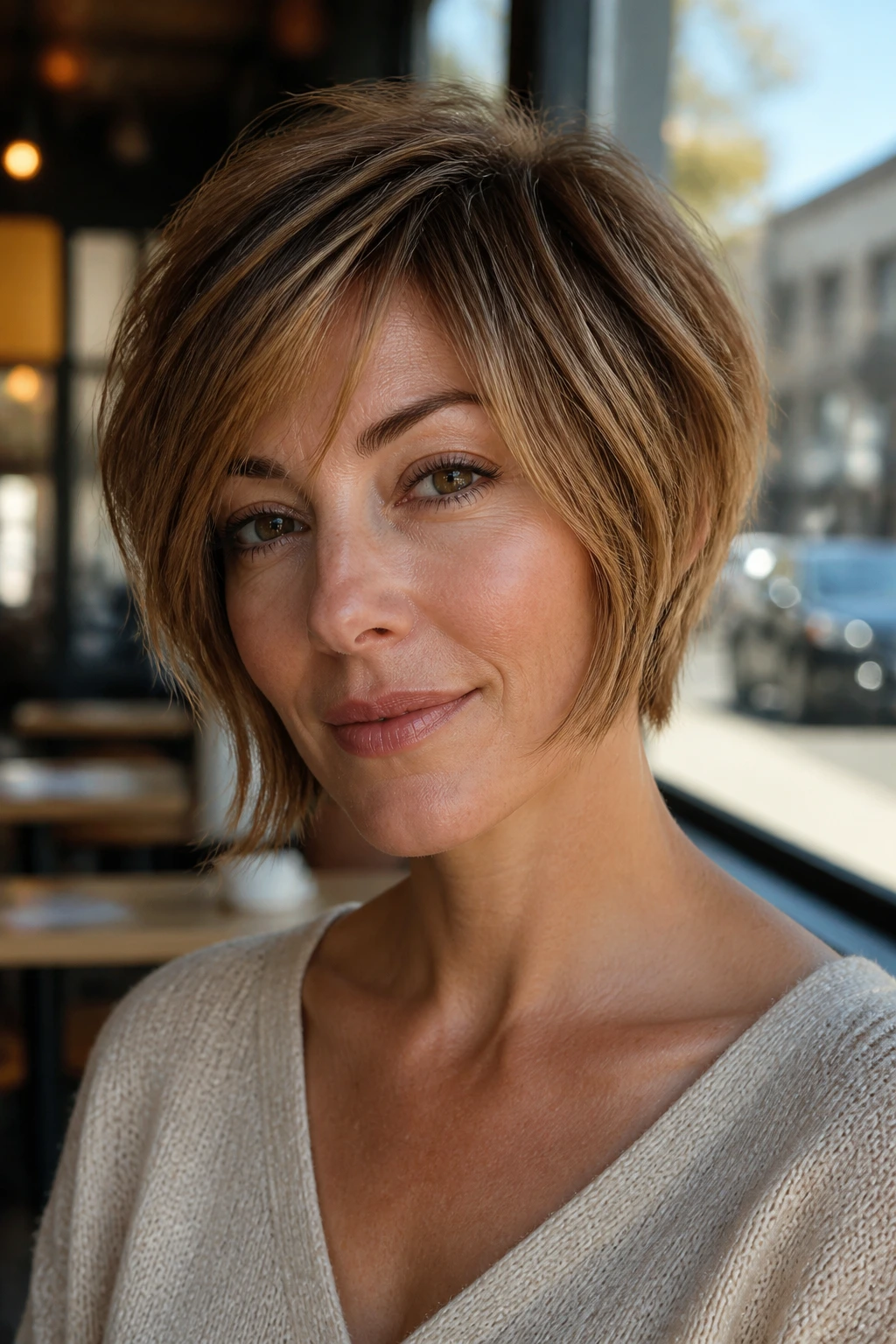
If you want the softest possible bridge between a pixie and a bob, this is the one. The back stays cropped and close, while the front stretches forward to graze the jaw or even skim the chin. That extra front length is a gift for round faces because it creates a longer outer line without asking you to go full bob.
The important part is where the front lands. Too short, and it just sits on the cheekbone. Too long and it becomes a different haircut entirely. The sweet spot is that jaw-skimming zone where the edges move when you walk. Add shag layering through the crown, and the whole shape feels light rather than helmet-like.
This is the cut I’d recommend for anyone nervous about a dramatic pixie. It gives you the face-framing effect people usually hope for, but with far less daily fuss.
15. Soft Faux-Hawk Pixie
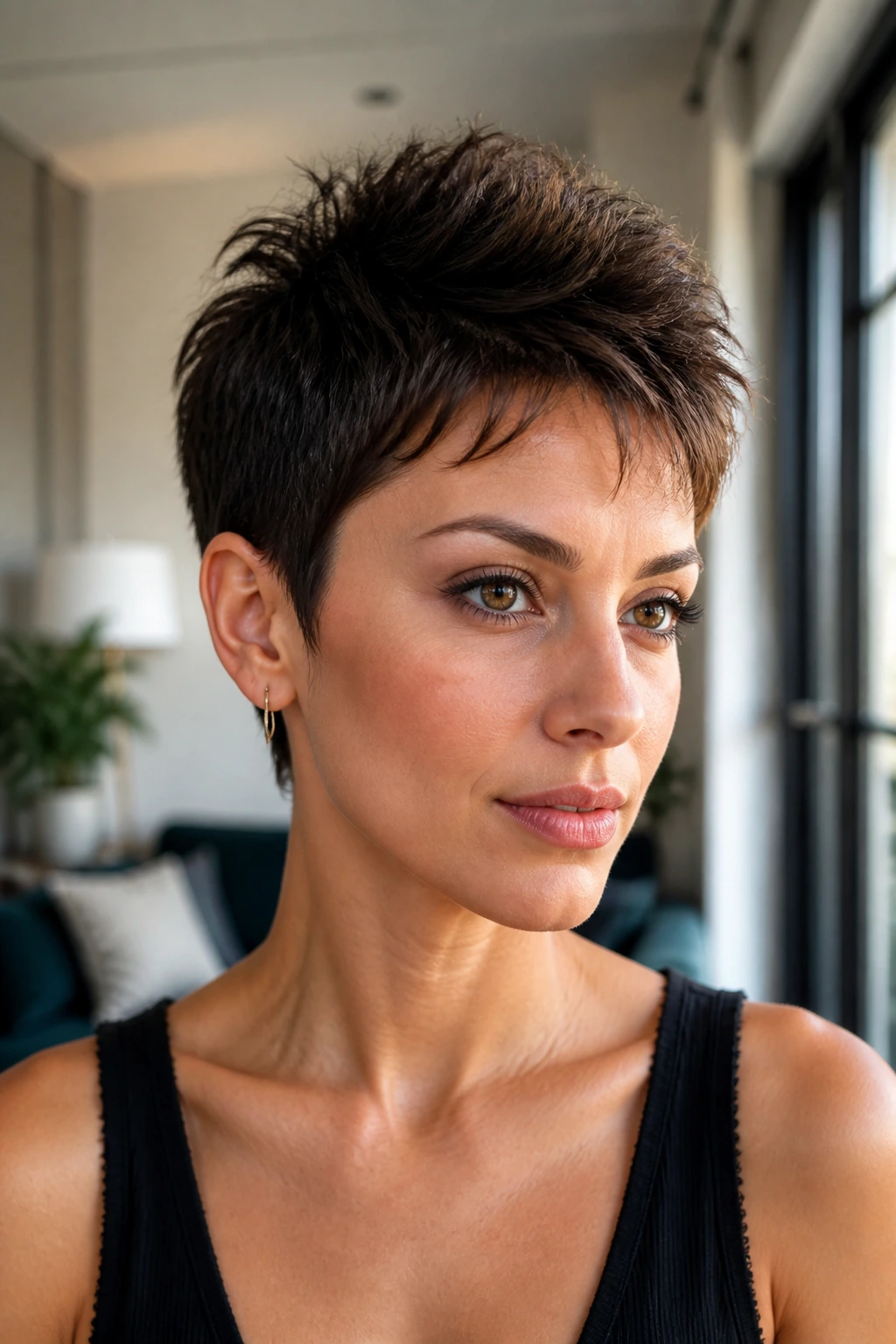
A faux-hawk doesn’t have to scream. A soft faux-hawk pixie just keeps the center ridge taller than the sides and lets the texture stay touchable instead of stiff. On a round face, that central height pulls the eye up and down, which is a very good thing.
The sides should be tidy and somewhat narrow, but not shaved to the bone unless that suits your style. The top can be messy, piecey, and lightly separated with matte product. If you like hair that has a little edge and still looks feminine or polished depending on how you finish it, this is a strong choice.
I’d avoid heavy side volume here. The whole point is that the middle does the lifting while the perimeter stays slim. A faux-hawk with wide sides turns into a triangle fast. No thanks.
16. Deep Side-Part Pixie

A deep side part is one of the simplest tools in the box, and it works because it quietly changes the entire geometry of the cut. Instead of letting the face read as symmetrical and round, the part creates a long sweep that breaks up the width. The result feels tailored without trying too hard.
This is an especially good option if you want a pixie that still looks office-ready. The part can be neat, the fringe can stay soft, and the crown gets enough height to help the face look longer. On days when you want it messier, a quick finger tousle is enough to revive the texture.
Keep one side tucked behind the ear if you want even more shape. That little trick opens the face and stops the cut from sitting too heavily on both cheeks at once.
17. Long-Top Layered Shag Pixie

This is the shaggiest version in the lineup, and it earns that description. The top stays longer, the layers are more visible, and the ends are broken enough to move around without behaving like a classic sleek crop. For a round face, the extra length on top is useful because it builds height without needing a lot of styling machinery.
The texture matters here
A long top without layers just looks heavy. The shag needs internal lift.
This cut suits someone who wants softness first and neatness second. The ends can skim the ears, the fringe can drift to one side, and the crown can carry a bit of messy height. If your hair has any natural bend, this cut plays into it instead of flattening it down. If your hair is dead straight, a bit of texture spray at the roots and ends helps the layers separate.
There’s a line between shaggy and sloppy. Keep the nape tidy, and the whole thing holds together.
18. Sculpted Sideburn Pixie
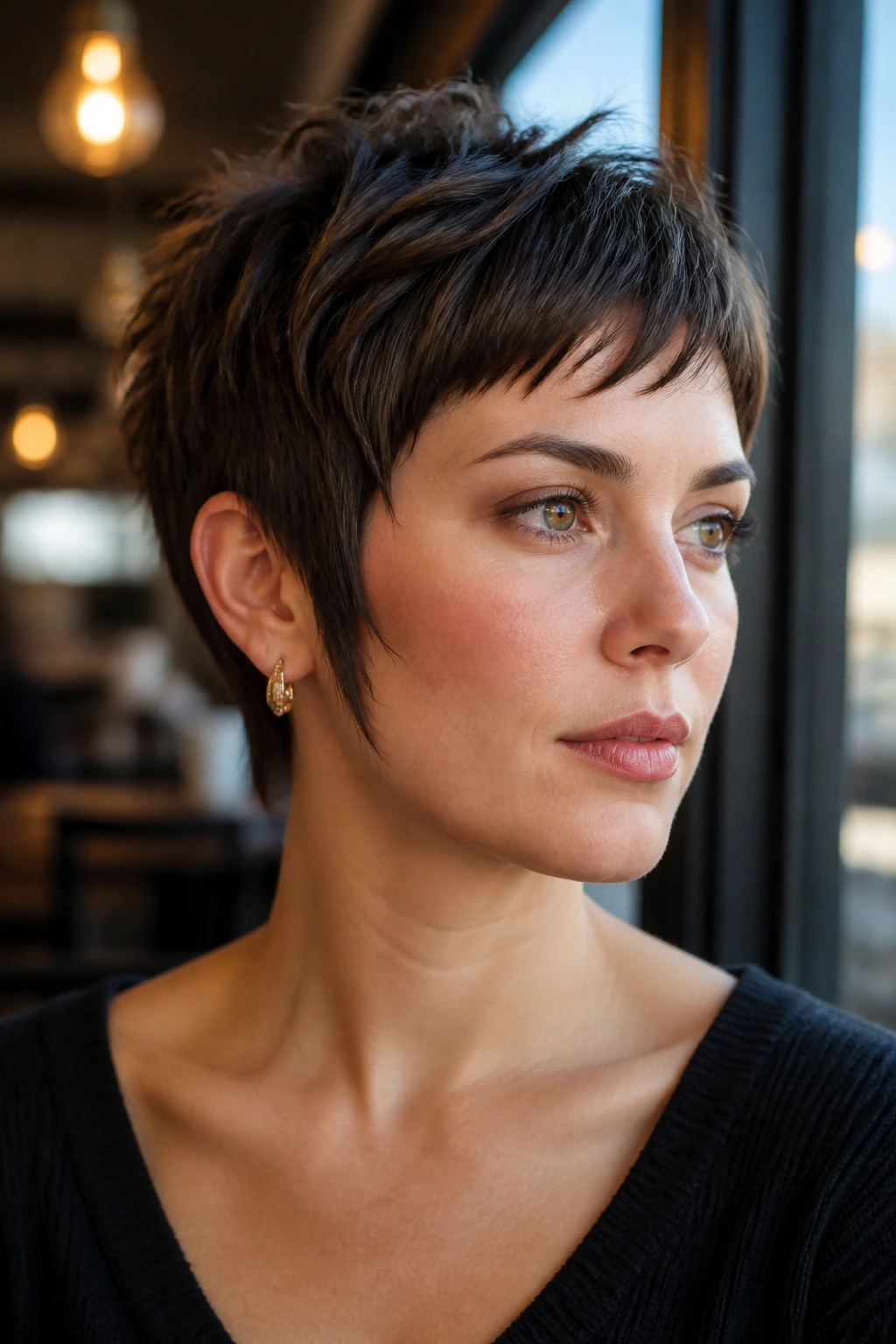
Sideburns do more work than people give them credit for. A sculpted sideburn pixie leaves a little length at the front edges of the ears, which creates a vertical frame on either side of the face. That simple move can slim the look of a round face without changing the overall haircut into something dramatic.
The rest of the cut can be short and airy, but those sideburn pieces should be intentional. Not wispy by accident. Intentional. They can be tucked, flipped, or left to graze the jaw, and they often look especially good with earrings because the hair and jewelry echo each other instead of competing.
If you like structure but don’t want a severe line, this is a smart compromise. It’s one of those details that reads subtle in the mirror and surprisingly important in photos.
Picking the Right Shag Transition Pixie Formula
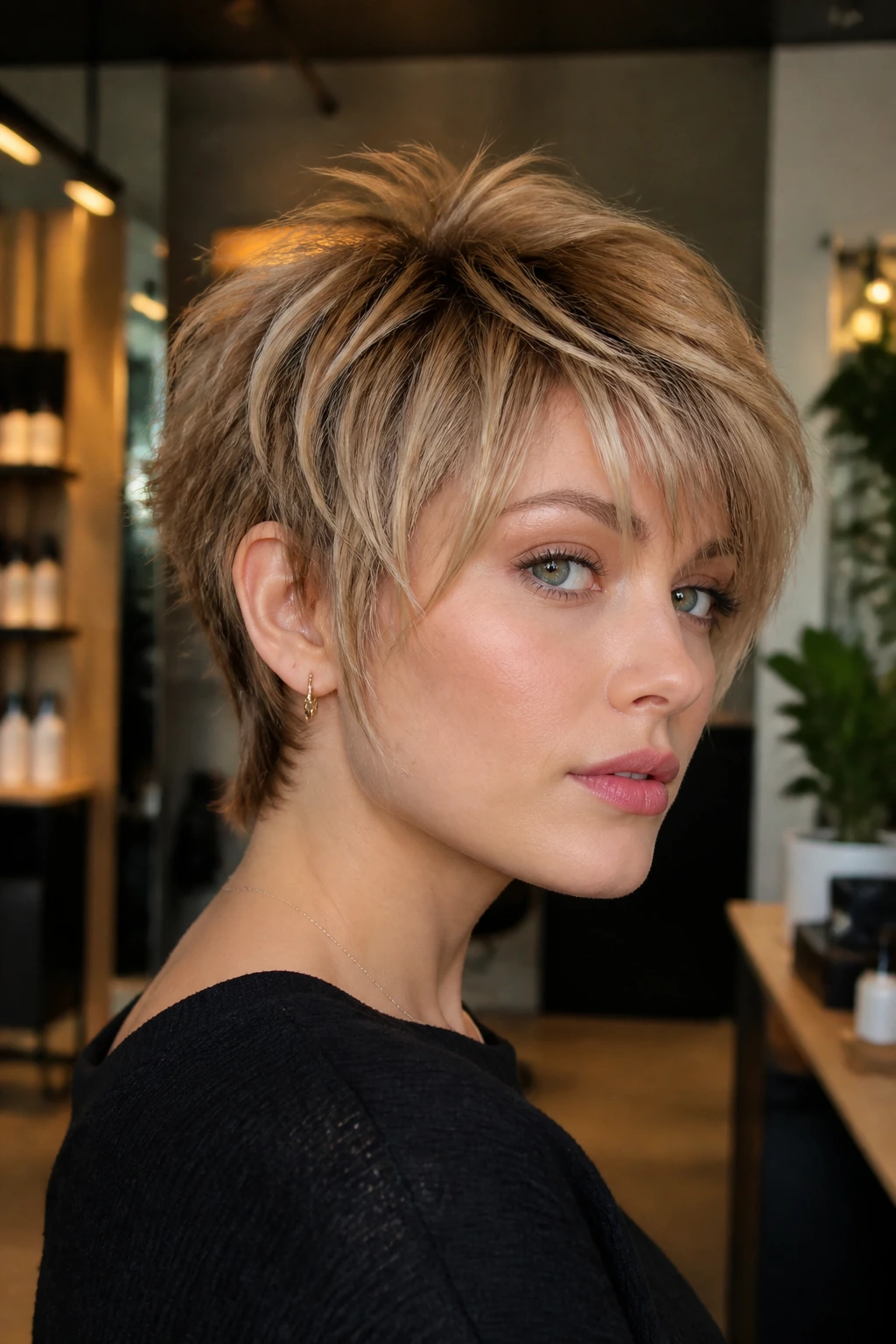
The best version for you depends on three things: how much height your hair can hold, how much length you want to keep in front, and how much work you’ll actually do in the morning.
Fine hair
Fine hair usually needs shorter sides, a lifted crown, and feathered ends. Cuts like the crown-lifted feathered pixie, the deep side-part pixie, and the razor-cut micro shag keep the silhouette airy without collapsing. Avoid over-thinning the ends. Fine hair can disappear fast if it’s shredded too much.
Thick hair
Thick hair wants bulk removal underneath and a strong shape on top. The tapered nape shag pixie and the undercut volume pixie are the best bets when the head starts to feel too wide through the sides. You want the haircut to sit close where it needs to, not flare out like a triangle with opinions.
Curly or wavy hair
Texture does half the work for you, but only if the cut respects the curl pattern. The curly halo pixie and air-dry wavy pixie keep enough length in the right spots to let the curls stack upward instead of outward. If your stylist cuts curls like they’re straight, the shape can bounce in the wrong places.
Nervous about going short
Start with the piecey bixie or the face-framing pixie bob. Those are the cuts that keep some softness around the jaw while still giving you the lift and movement of a pixie. They also grow out with less drama, which is worth more than people admit.
Tools That Make These Cuts Easier to Wear
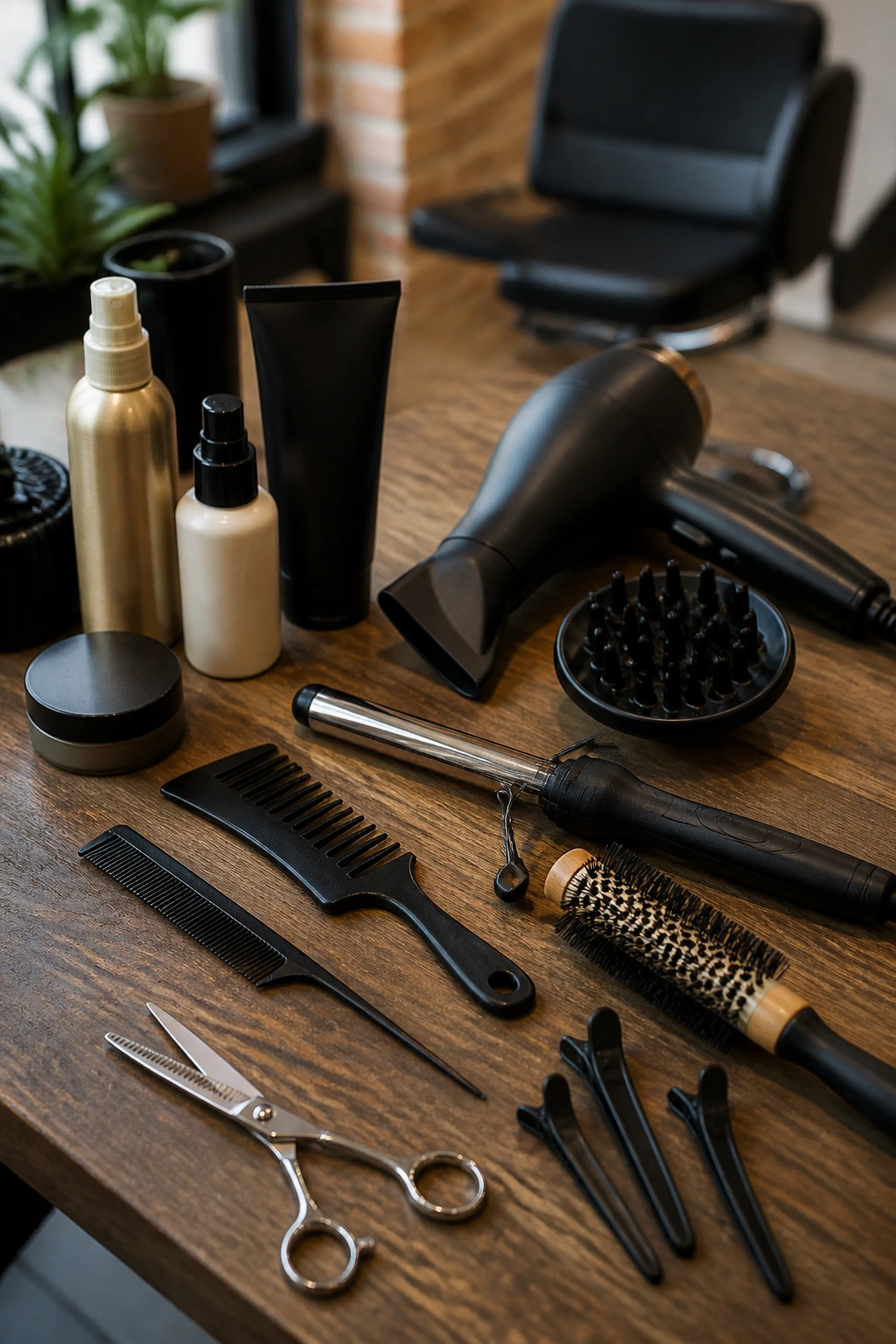
- Blow dryer with a concentrator nozzle: The nozzle helps direct air at the roots, which is how you get crown lift without blasting the whole cut apart.
- Small round brush, 1 to 1.5 inches: Best for bending the fringe and lifting the top of a pixie without making it puffy.
- Tail comb: Useful for clean side parts, sectioning, and lifting small slices of hair at the crown.
- Sectioning clips: They keep the top separate while you dry the sides or vice versa; that saves a lot of fiddly work.
- Light mousse or root lift spray: Gives body to fine or flat hair without the sticky feel of heavy gel.
- Texturizing spray: Good for broken, piecey ends on shaggier versions; use it mid-length to ends, not on the scalp.
- Matte paste or cream wax: Best for defining the tips and sideburns without making the cut shiny or stiff.
- Diffuser: Essential if your hair is curly or wavy and you want the shape to hold rather than frizz out.
- Flat iron, narrow plates: Handy for a quick bend in the fringe or a polish pass on the front pieces.
- Light hairspray: A flexible mist keeps the crown alive without freezing the texture in place.
What to Tell Your Stylist Before the First Snip
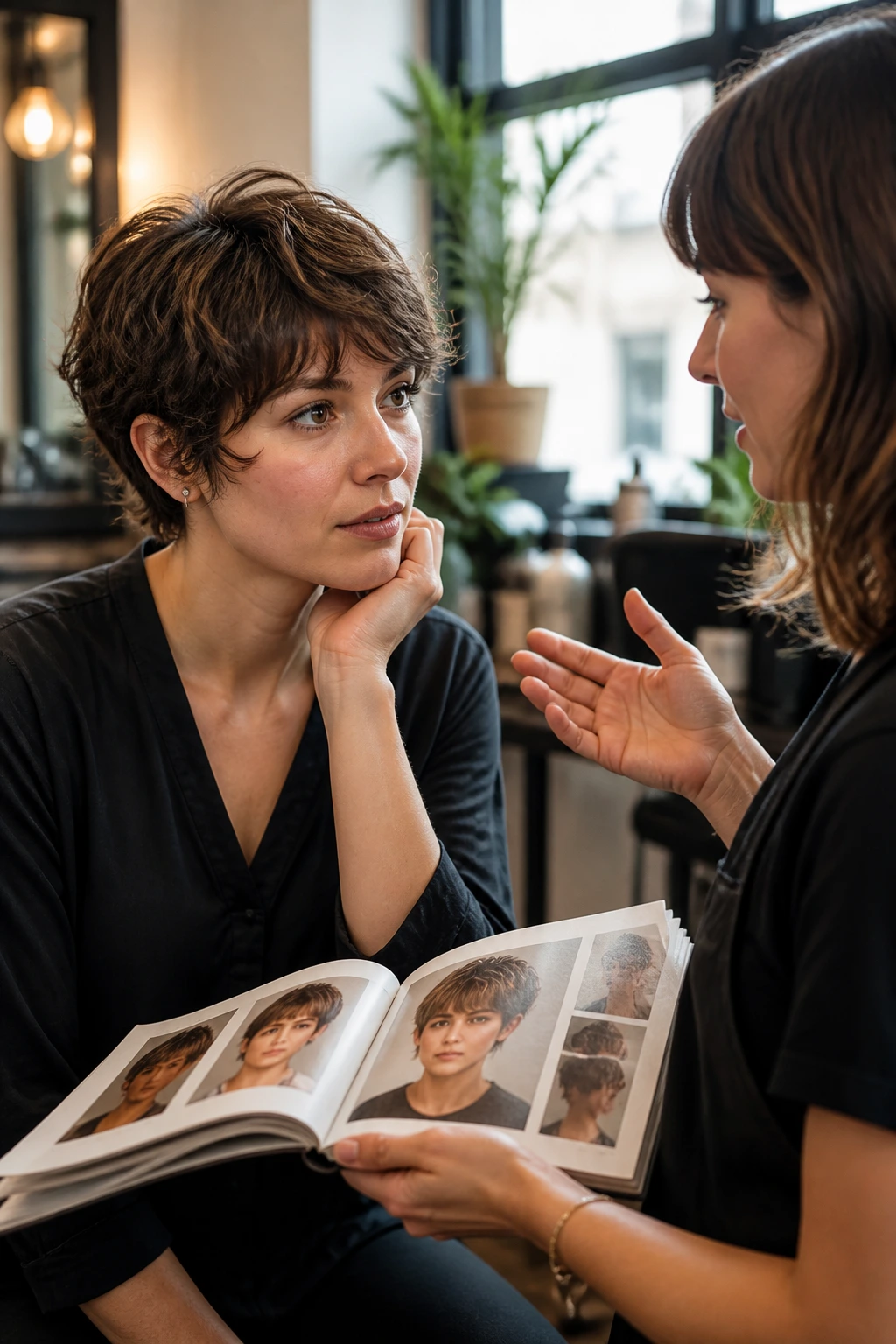
Bring photos, yes, but bring the right photos. The best reference shots are the ones that show the haircut from the front, side, and back, not just one flattering angle from a celebrity’s best side. Haircuts are shapes. Shapes need context.
Say what you want the cut to do for your face. That matters more than naming a trend. Tell the stylist whether you want more height at the crown, more coverage at the forehead, less fullness at the cheeks, or a softer line around the jaw. A good stylist can work with all of that. “Something like this but shorter” is less useful than “I want the front to hit below the cheekbone and the sides to stay close.”
Tell them how long you’ll style it in the morning. Five minutes? Ten? Zero? That answer changes the layering. A shag transition pixie that depends on a round brush is a different haircut from one that can be finger-dried and left alone. Also mention your cowlicks, especially at the crown and temple. Those little rebellions matter.
How to Wear the Shape Day to Day
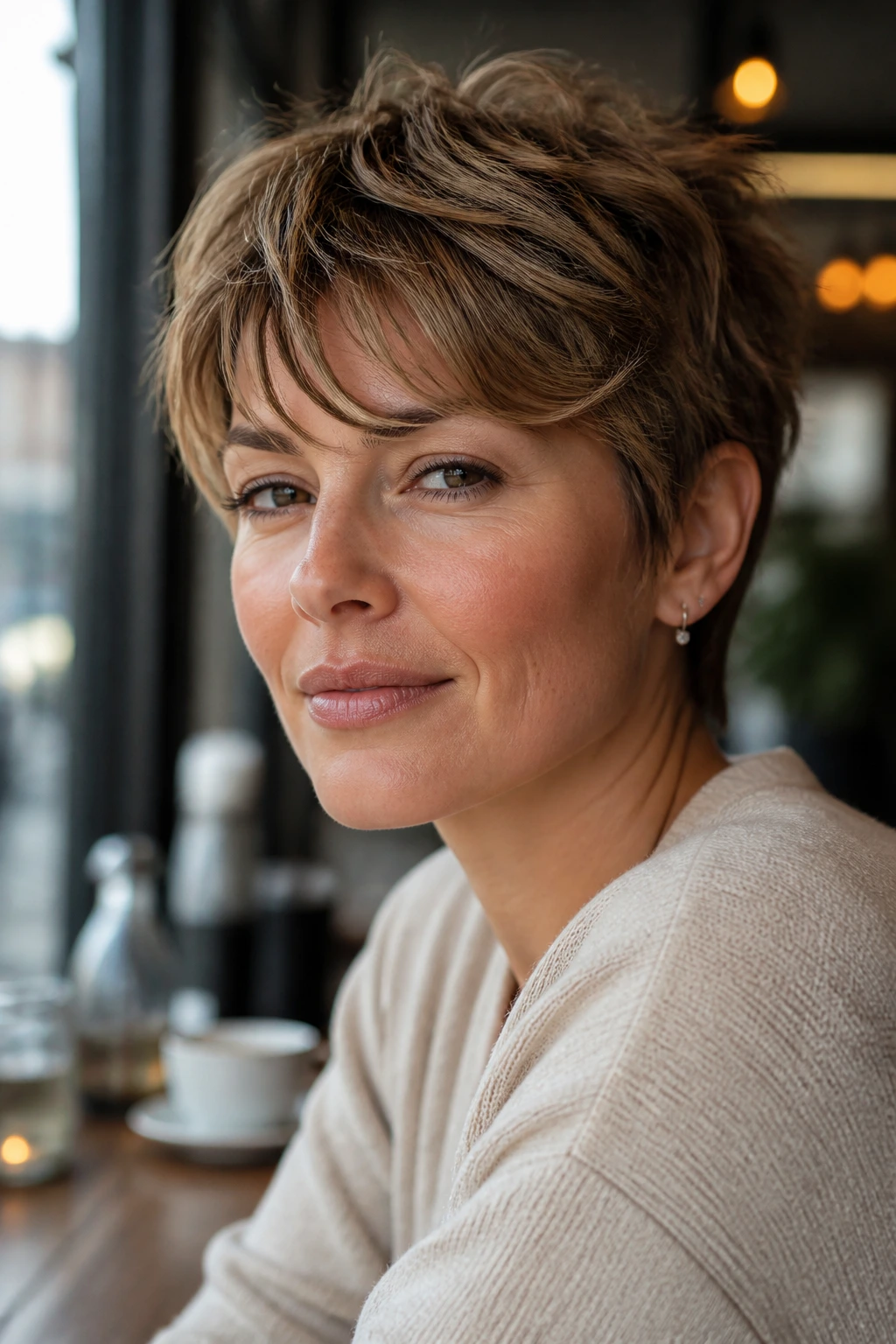
Presentation: Keep the tallest point at the crown or along one side of the crown. On a round face, a little lift goes a long way, while width at the cheekbone tends to flatten the whole effect.
Accompaniments: Glasses, hoops, and open necklines usually work better than boxy collars that crowd the jaw. If you wear frames, a side-swept or sliced fringe can sit around them without stealing the whole show.
Length balance: Let the front pieces land either above or below the widest part of the face. Stopping exactly on the cheek usually creates a visual shelf. That shelf is the enemy.
Daily rhythm: A quick root-dry, a small amount of paste, and a bit of finger separation can be enough. If the shape feels too neat, rough it up a little. If it feels too wild, smooth only the fringe and leave the ends loose.
Extra Styling Moves That Keep the Cut Lively
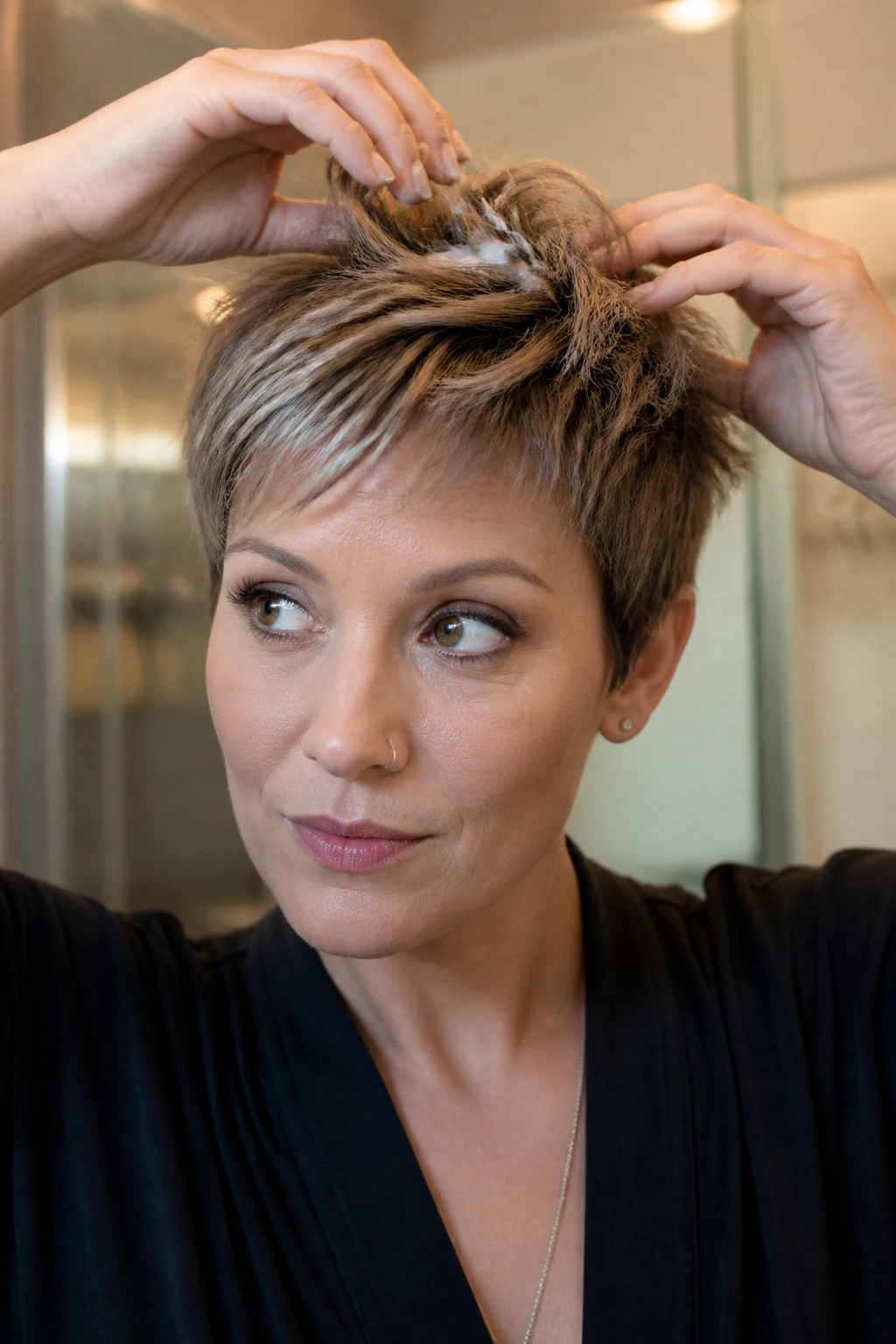
Root Lift: Flip the crown in the opposite direction while blow-drying for the first minute, then set it back where you want it. That one move gives the top some memory, and memory is what keeps a short cut from lying flat by noon.
Piece Separation: Warm a pea-size amount of paste between your fingers and pinch only the ends and fringe. Do not smear it all over the roots. That’s how a soft shag turns greasy.
Soft Bend: If the front feels too straight, bend just the longest pieces with a narrow flat iron, then shake them loose. You want movement, not ringlets and not a crisp wave pattern that looks too engineered.
Finish Choice: Matte products give the shaggy cuts a softer, modern edge. A light sheen can work on polished versions like the deep side-part pixie, but too much gloss on a textured crop tends to make the layers disappear.
Make-It-Yours: If you like a cleaner finish, tuck one side. If you want more attitude, rough up the crown and let the sideburns stay visible. Small tweaks change the whole mood.
Common Mistakes That Make a Pixie Lose Its Shape
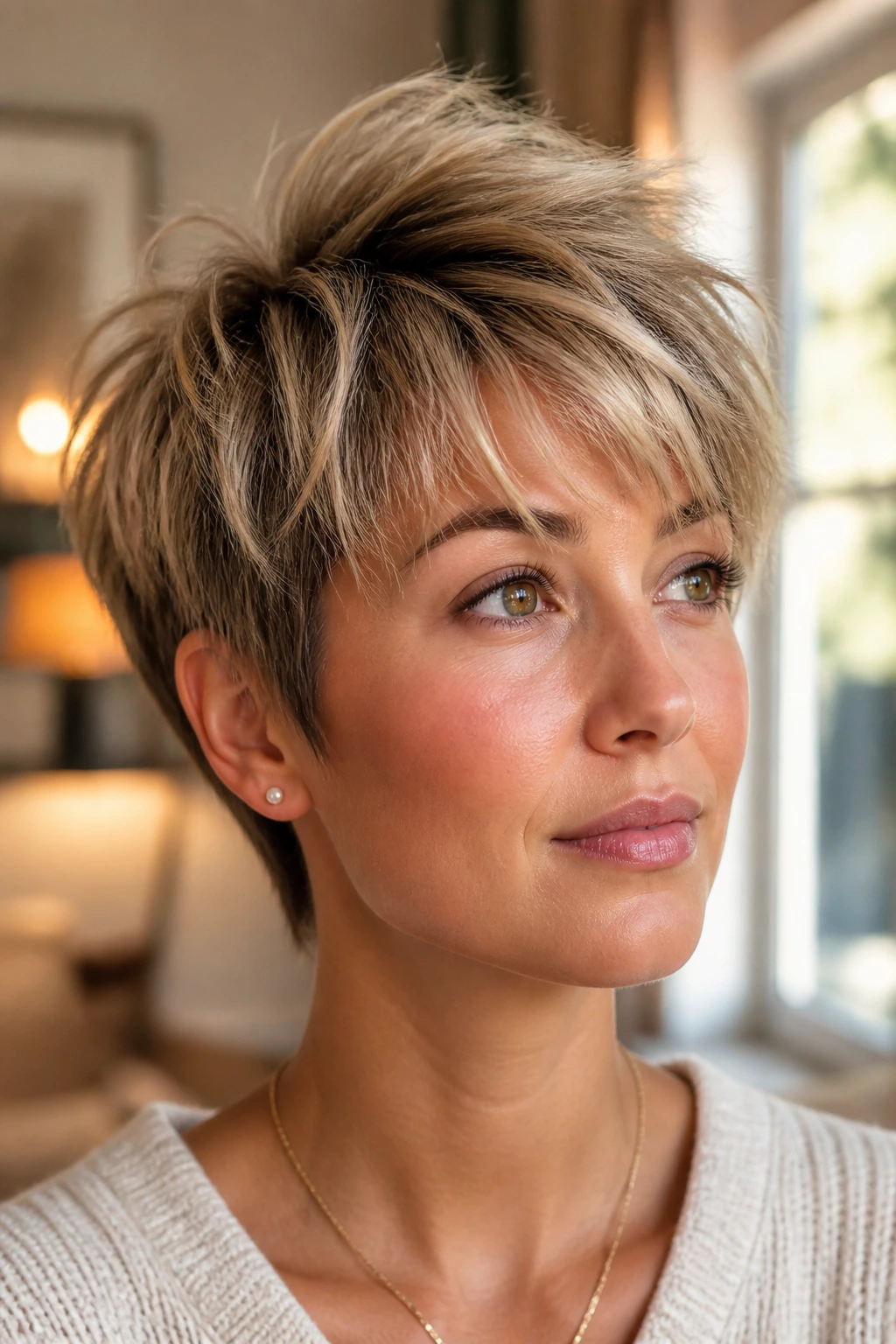
- Too much width at the cheekbone: The haircut starts looking rounder instead of leaner. Fix it by keeping the sides closer and moving the longest front pieces either above or below the cheek area.
- A blunt fringe cut straight across the forehead: It can make the face read shorter and wider. Ask for feathering, slicing, or side-sweeping instead of a hard horizontal line.
- Overloading with product: The ends clump, the roots flatten, and the cut loses all that airy movement. Start with less than you think you need. You can always add a touch more.
- Skipping trims too long: The nape fuzzes out, the ears disappear, and the shape stops looking intentional. Short cuts need upkeep. That’s just the deal.
- Thinning curly hair too aggressively: The curl pattern expands in odd places and the silhouette gets fuzzy. Curly or wavy hair usually needs shaping, not heavy slicing.
Variations and Alternatives to Try
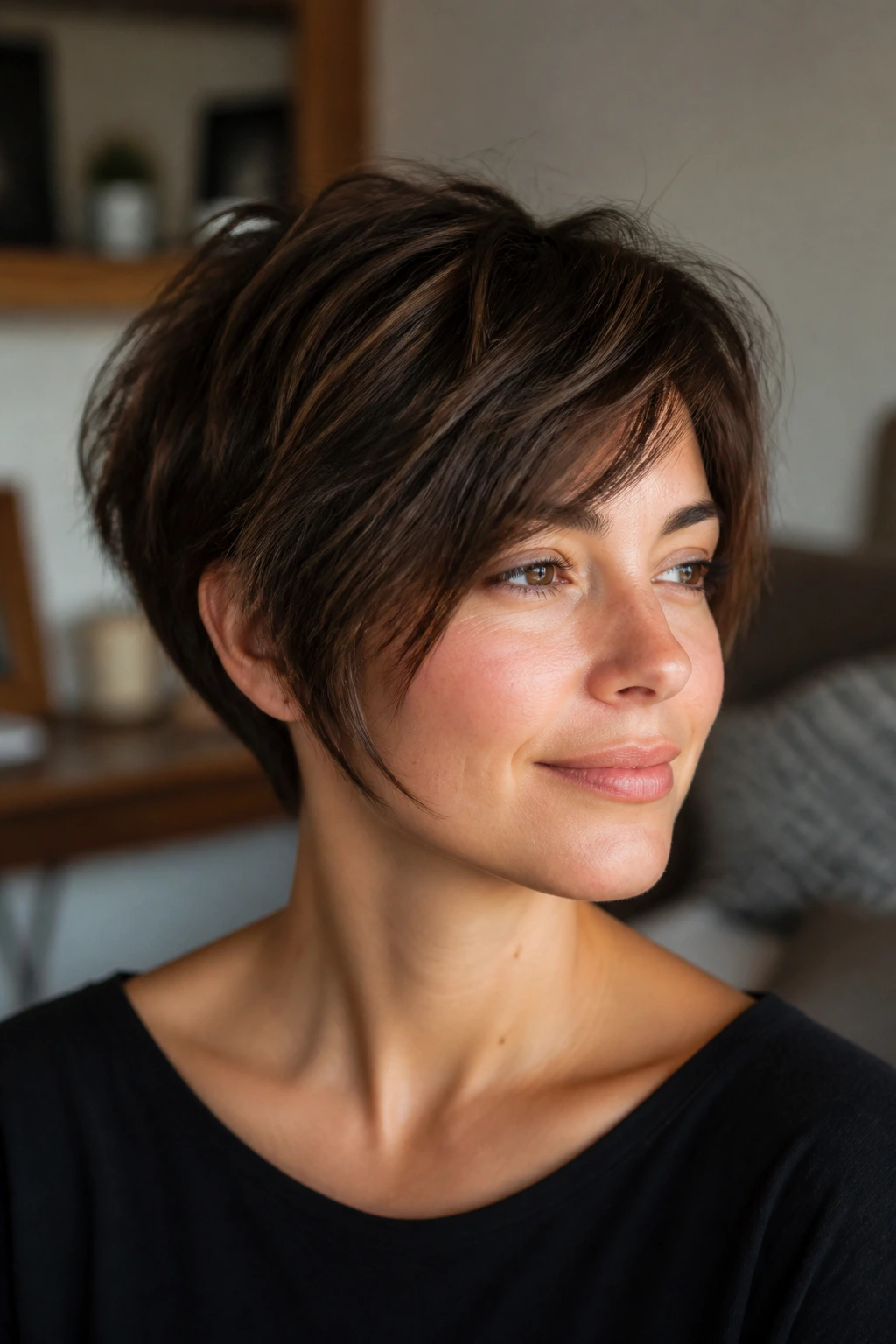
The Soft Bixie Drift: Keep the back short but let the front relax toward jaw length. This version is kinder if you’re not ready for a dramatic crop and want a cut that moves toward a bob without losing the pixie lightness.
The Curly Cloud Version: Leave more length in the crown and temples, then let the curls stack naturally. It suits round faces because the shape rises upward, but the perimeter stays soft instead of ballooning.
The Office-Safe Side Sweep: Keep the fringe clean, the texture controlled, and the side part deep. You still get the face-lengthening diagonal, just without the messy finish that can feel too casual for a dress code.
The Thick-Hair Debulk: Use hidden internal removal under the top layers and around the nape. The cut will sit closer to the head and stay cooler around the sides, which matters if your hair tends to swell.
The Grow-Out Bridge: Start with a pixie bob or long-top layered shag pixie and let it move into a collar-skimming shape over time. This is the least stressful route if you know you’ll want more length later.
Maintenance, Trim Timing, and Grow-Out Care
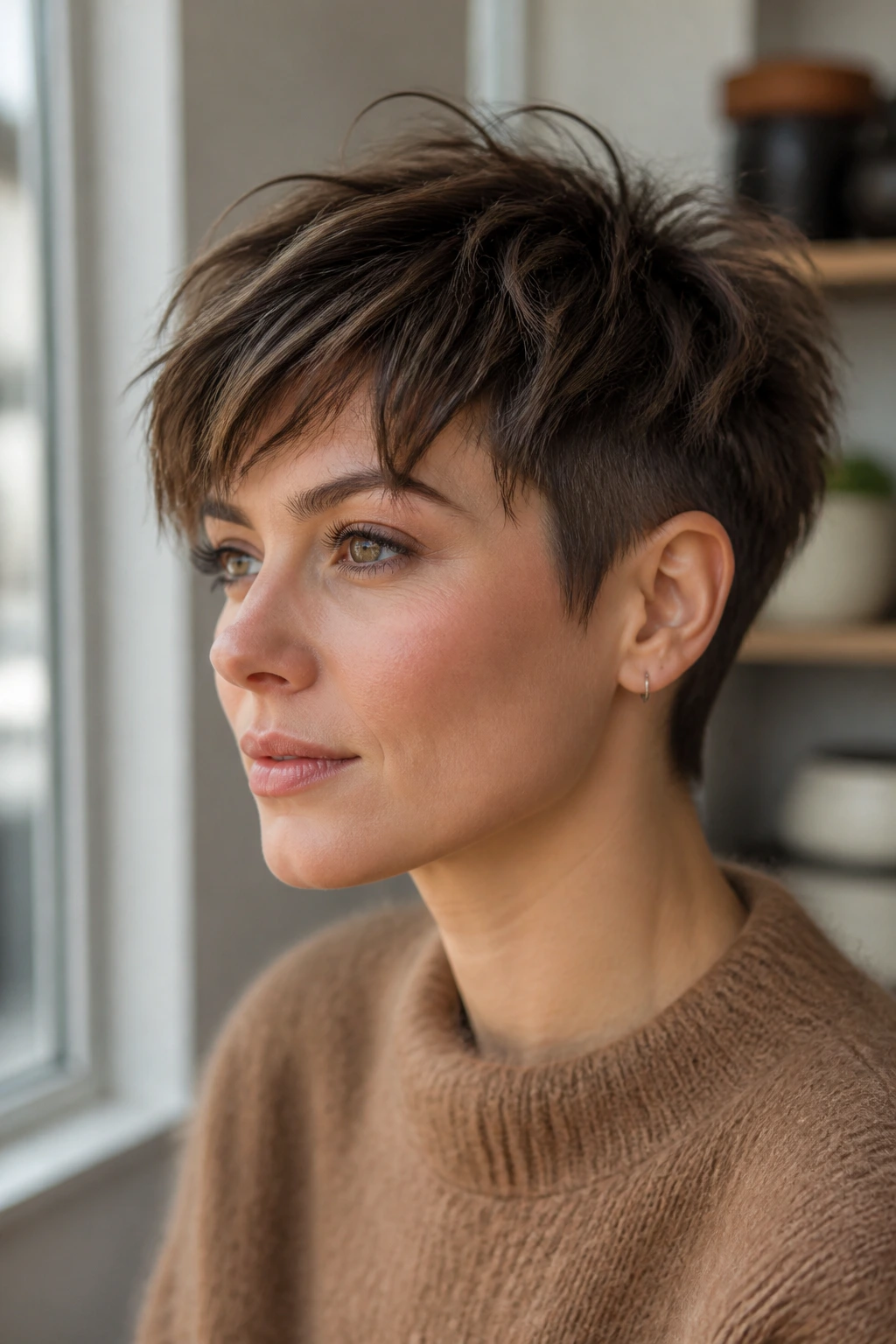
Short, textured cuts stay sharp when you respect the calendar a little. Most shag transition pixie cuts need a cleanup every 4 to 6 weeks if you want the outline to stay crisp, and a slightly softer style can stretch to 6 to 8 weeks before it starts losing its shape. Bang-heavy versions may need fringe trims sooner, sometimes every 2 to 3 weeks, because the front controls the whole cut.
The nape is usually the first place to go fuzzy. The sideburns are next. If those edges start sticking out or curling under in odd ways, the style has already drifted. A quick salon cleanup is cheaper and less annoying than trying to make a shaggy overgrown pixie behave with extra product.
Sleeping on a satin or silk pillowcase helps the fringe and crown keep their shape overnight. If the top gets smashed flat, mist it lightly with water in the morning, blow-dry the roots for 30 to 60 seconds, and re-work only the front. Don’t drown the whole head. That just restarts the frizz cycle.
When you want to grow it out, resist the urge to trim the top short while leaving the sides alone. That creates an odd shelf. Let the top keep moving toward a bixie or bob while cleaning the nape and ears. The shape will pass through a few awkward-looking weeks, but it doesn’t have to look messy the whole time.
FAQs About Shag Transition Pixie Cuts for Round Faces

Will a shag transition pixie make my round face look wider?
It can, if the cut adds width at the cheekbone or uses a blunt fringe that stops right across the face. The safer version builds height at the crown, keeps the sides close, and lets the front pieces move diagonally.
What bangs work best on a round face with a pixie cut?
Side-swept fringe, bottleneck bangs, and sliced fringe usually work best because they break up the face instead of boxing it in. Heavy, straight-across bangs can work in some cases, but they need careful shaping and often a bit of extra height on top.
Can fine hair pull off a shaggy pixie?
Yes, and often better than thick hair does. Fine hair benefits from feathered layers, root lift, and a little crown height, as long as the ends aren’t thinned to the point of looking sparse.
What if my hair is thick and puffy?
Ask for debulking underneath, a narrower side profile, and a shape that sits closer at the nape. Thick hair can look gorgeous in a shag transition pixie, but it needs weight removed in the right places or it will puff sideways.
Is this cut hard to style every morning?
Not if the cut matches your texture. Some versions need a round brush and a quick blow-dry, while others are built for air-drying or finger styling. The more your stylist works with your natural pattern, the less you’ll fight it.
Can I wear glasses with these haircuts?
Absolutely. In fact, a lot of these shapes look better with glasses because the temple area and fringe can be tailored around the frames. The key is keeping the side pieces narrow enough that they don’t compete with the arms of the glasses.
How do I grow a pixie into a bob without looking awkward?
Aim for a transition shape like a bixie or a face-framing pixie bob, and ask for maintenance trims that clean the nape and ears while leaving the top and front a little longer. That keeps the silhouette intentional while the length builds.
Should I avoid this style if I have a double chin or a softer jawline?
Not necessarily. The trick is to keep the front pieces from ending right at the widest part of the face and to maintain lift at the crown. A short cut with bad proportions can be unhelpful, but a well-shaped one can bring the eye upward instead.
A Cut With Real Shape
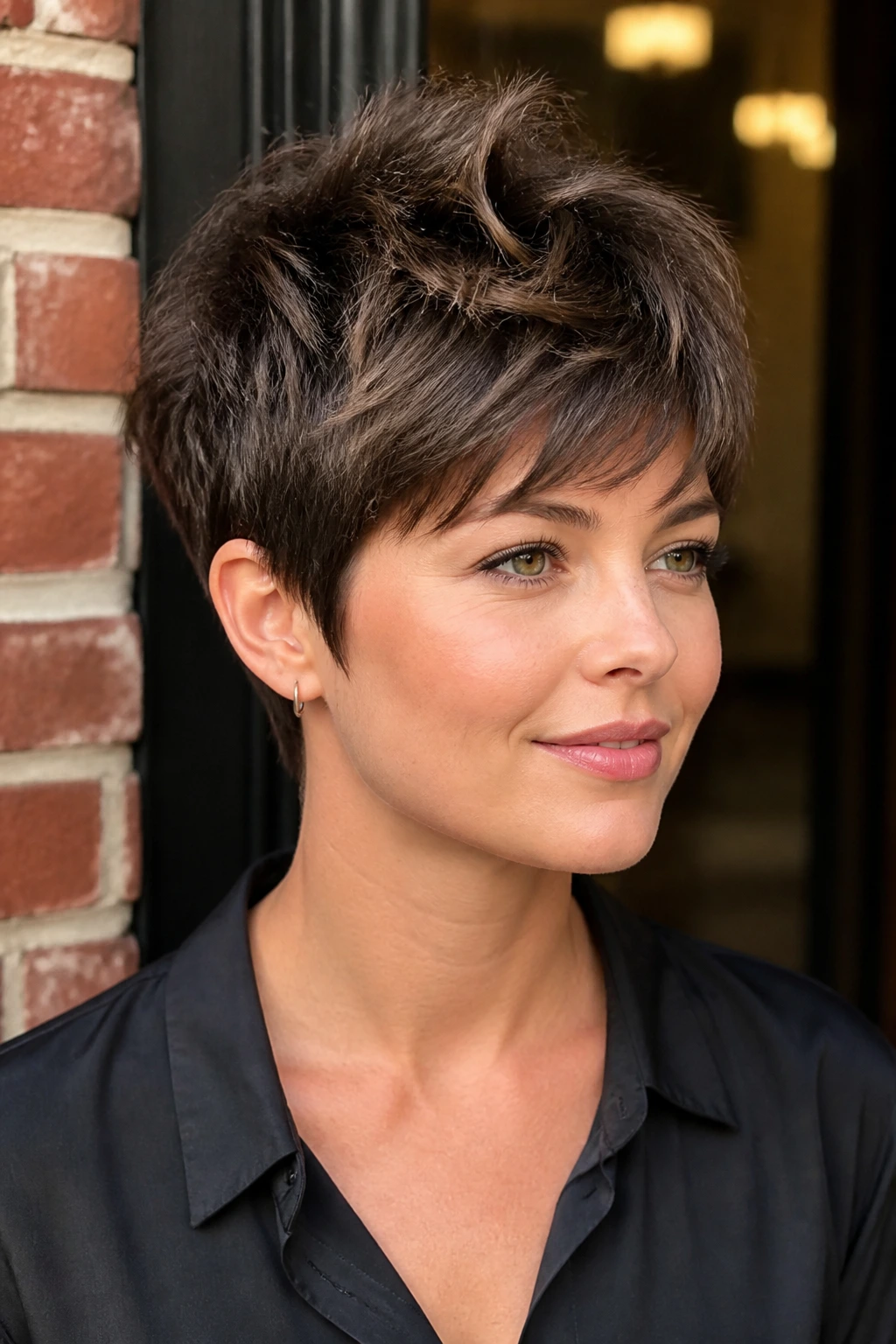
Short hair can be soft. It can be angular, too. The best shag transition pixie cuts for round faces prove that the two ideas can live in the same haircut if the layering is handled with a little care and a little nerve.
What matters most is not the label on the cut. It’s where the volume sits, where the fringe falls, and how the shape behaves when it’s lived in for a few weeks. If you get those pieces right, the haircut stops looking like a compromise and starts looking like a point of view.
Bring a photo, bring your hair’s bad habits, and bring a clear opinion about how much maintenance you’ll actually tolerate. The right version of this cut will make that conversation easier, and the wrong version will tell you fast.