



A good short cut should move when you turn your head. It should fall back into place after a bad commute, a windy sidewalk, or a rushed five-minute bathroom mirror check. That is the whole appeal of Korean pixie cuts with bangs: they keep the edges soft, the fringe light, and the shape neat enough for daily life without looking overly styled.
What makes this family of cuts so useful is not the length alone. It’s the balance. The crown keeps a little lift, the nape stays tapered, and the bangs do a lot of the face-framing work so you do not have to fight your hair every morning. When a stylist gets the weight right, the cut looks finished after a quick blow-dry. When they don’t, you get puffiness at the temples or bangs that split apart by noon. Small details. Huge difference.
The 25 styles below lean into that softer Korean-inspired shape in different ways — airy, rounded, choppy, sleek, fluffy, and a little bit boyish in the best sense. Some play well with glasses. Some are kinder to thick hair than others. Some need almost nothing more than a dab of wax and a toothbrush-sized brush. That’s the fun of it. The range is wider than most people expect.
Why Korean Pixie Cuts With Bangs Feel Softer on Real Faces
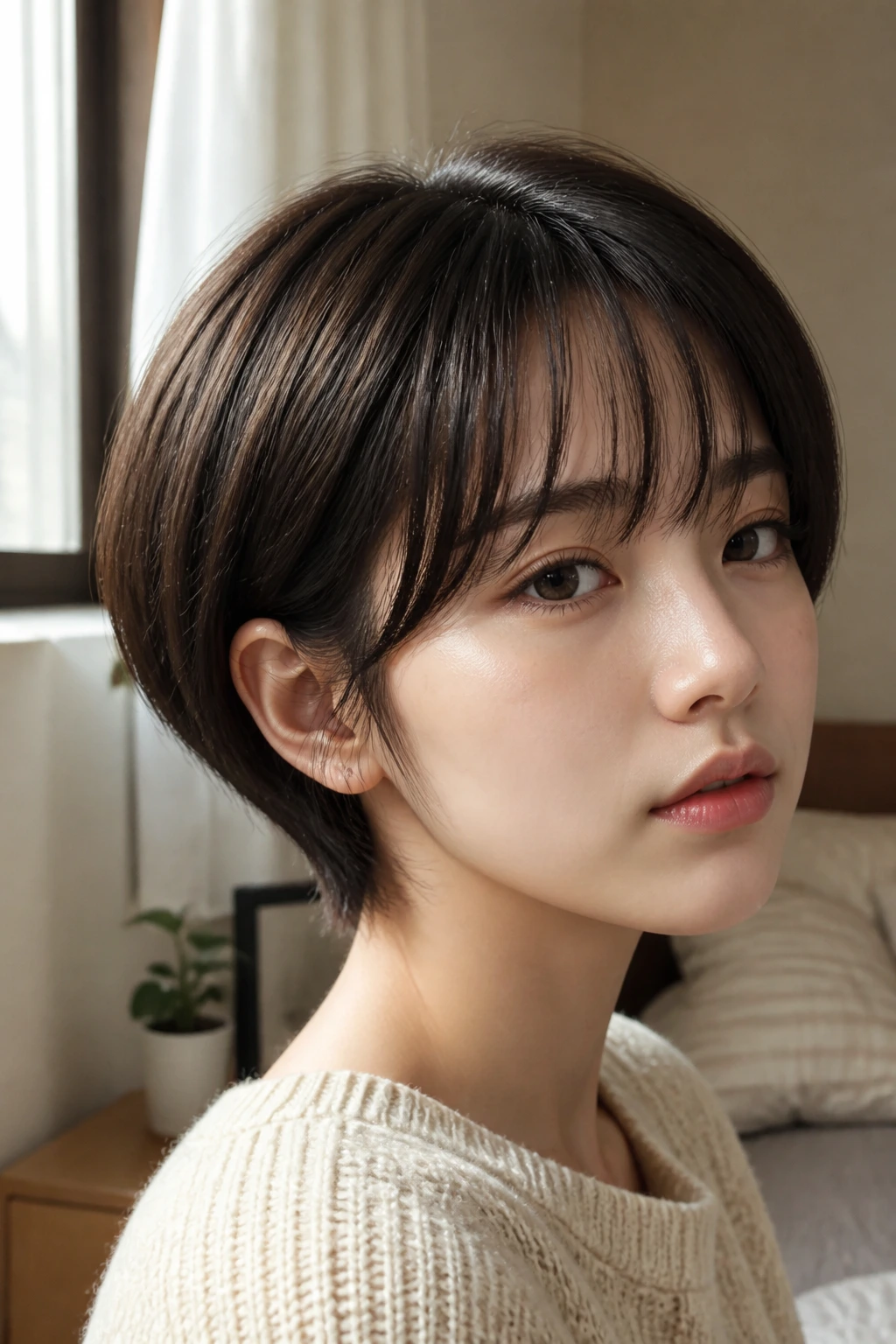
Light fringe keeps the forehead open. A see-through bang or wispy fringe lets skin show through, which stops the cut from looking boxed in or heavy across the brow.
Rounded edges calm down the silhouette. A softly curved nape and gentle temple taper make the head shape look smoother from the side, especially if your hair is fine or naturally flat.
The front does the styling work. When the bangs carry the face-framing job, you can leave the rest of the cut cleaner and shorter without losing softness.
They grow out more politely. A blunt pixie can look abrupt after four weeks. These versions blur the line a little, so the grow-out feels intentional instead of accidental.
They work with low-effort mornings. A quick root lift, a finger twist, and a touch of cream is often enough. No one needs a twenty-minute battle with a round brush before coffee.
They can be tuned up or down. The same basic crop can read sweet, sharp, boyish, or polished depending on bang density, crown length, and how much taper sits around the ears.
How to Choose the Bang Length That Sits Well on Your Hairline
The bang decision changes everything. Too short, and the cut can look severe before you’ve even stepped away from the chair. Too dense, and the forehead disappears under a solid sheet that needs constant trimming. The sweet spot usually sits somewhere between the center of the forehead and just above the lashes, but the right answer depends on your hairline, swirl pattern, and how much you want to style on a weekday morning.
If your hair grows forward at the crown, ask for softer, longer bang pieces that can move off-center. If your hairline sits high or your forehead feels longer, a fuller fringe can make the proportions look calmer. And if you wear glasses, leave a little more length at the temples so the frames do not fight the fringe. That tiny adjustment saves a lot of annoyance.
I also like to tell people to think about how much forehead they want to show when they smile. Some bangs look lovely standing still and then disappear once the face moves. Others sit a little higher but stay readable all day. Tiny difference. Big payoff.
1. Soft Rounded Pixie With See-Through Bangs
This is the starter cut I recommend when someone wants the Korean pixie look without the drama of a super-short crop. The top stays plush, the sides hug the head, and the bangs come through as a thin veil instead of a solid wall. It looks neat after a quick blow-dry, and it does not bully your features.
Why It Works
The rounded crown gives the haircut a little lift where fine hair usually collapses. The see-through fringe keeps the face open, which matters if you do not want the cut to feel boxy or severe.
- Ask for the fringe to be cut dry so the stylist can see how much it shrinks.
- Keep the nape tapered tight enough that the profile stays clean.
- Use a pea-sized matte cream and nothing heavier unless your hair is thick.
Best for: oval, heart, and narrow faces.
2. Ear-Grazing Pixie With Side-Swept Fringe
If you wear glasses, this is one of the easiest shapes to live with. The fringe sweeps away from the lens line, and the side length brushes the ear instead of sitting on top of it like an afterthought. The whole cut feels neat, but not stiff.
A little more weight in the front third helps the side sweep hold its shape. Not much. Just enough for the hair to bend when you brush it across the forehead instead of springing straight up. Blow-dry from the heavier side toward the opposite temple, then pinch the ends with a touch of wax.
It’s a cut that makes sense on busy days. The side-swept line softens the face, and the exposed ear gives it that airy Korean salon finish that looks deliberate even when you’ve done almost nothing.
3. Choppy Air-Bang Pixie
Why does this one work so well on straight hair? Because the choppy ends keep the fringe from turning into a flat curtain. The bangs sit lightly across the forehead, with tiny broken pieces that move when you blink or turn your head. It has a bit of cheek, which is exactly why it feels so modern.
The trick is restraint. Ask for air bangs, not thick bangs with a few layers hacked out later. You want separation at the front, not a fringe that looks thinned to death. A small flat iron bend at the ends can help if your hair falls poker-straight and refuses to cooperate.
How to Style It
Blow-dry the roots forward first, then change direction halfway through the fringe so the pieces do not all sit in one line. If the hair gets too airy, smooth the top with a light cream and stop there.
4. Layered Bixie With Curtain Bangs
This is the cut for someone who wants a pixie feel but is not ready to let go of a little length around the cheeks. The layers sit between a pixie and a bixie, so the silhouette reads softer and a touch fuller. Curtain bangs open the center and sweep outward, which keeps the eyes visible and the forehead from feeling crowded.
I like this shape on hair that has a slight bend or wave. The front pieces can curve away from the face with almost no effort, and the extra length through the sides makes the whole cut easier to tuck behind one ear. That tiny tuck matters. It keeps the style from looking too precious.
If you want a short cut that still behaves like a haircut and not a haircut trying too hard, this is a strong candidate. It’s the one that can look polished with a blazer and casual with a T-shirt, which is probably why it shows up so often in everyday rotation.
5. Feathered Nape Pixie With Wispy Bangs
The nape is the quiet hero here. A feathered back keeps the neckline soft, so even when the front gets a little messy, the haircut still looks intentional from behind. Wispy bangs keep the top half of the face light, which is useful if your features already carry a lot of contrast.
This shape works best when the stylist removes weight in tiny passes instead of carving big chunks out of the cut. Too much thinning makes the ends float. Too little leaves the back bulky and triangular. The sweet spot sits in the middle, where the hair skims the neck instead of standing away from it.
I’d choose this if you like the feeling of a fresh neckline. There’s something oddly satisfying about the way a tapered nape makes a short haircut feel clean even on the second day after washing.
6. Tapered Boyish Pixie With Micro Fringe
This one has attitude. The silhouette is compact, the sides are closely tapered, and the micro fringe sits just high enough to show the brow line. It gives off a sharp, clean shape without tipping into hard-edged or severe territory.
It’s not the easiest version on a very round face, because the short fringe can make the upper face look a touch broader. But on stronger bone structure, or if you want the eyes and cheekbones to do more of the talking, it lands beautifully. The key is softness at the temples. Without that, it turns into a very different haircut.
Ask your stylist to keep the top short but not spiky. A tiny amount of length at the crown lets you push the fringe forward or off to one side, which makes the cut less rigid than it sounds on paper.
7. Cloud-Volume Pixie With Long Bangs
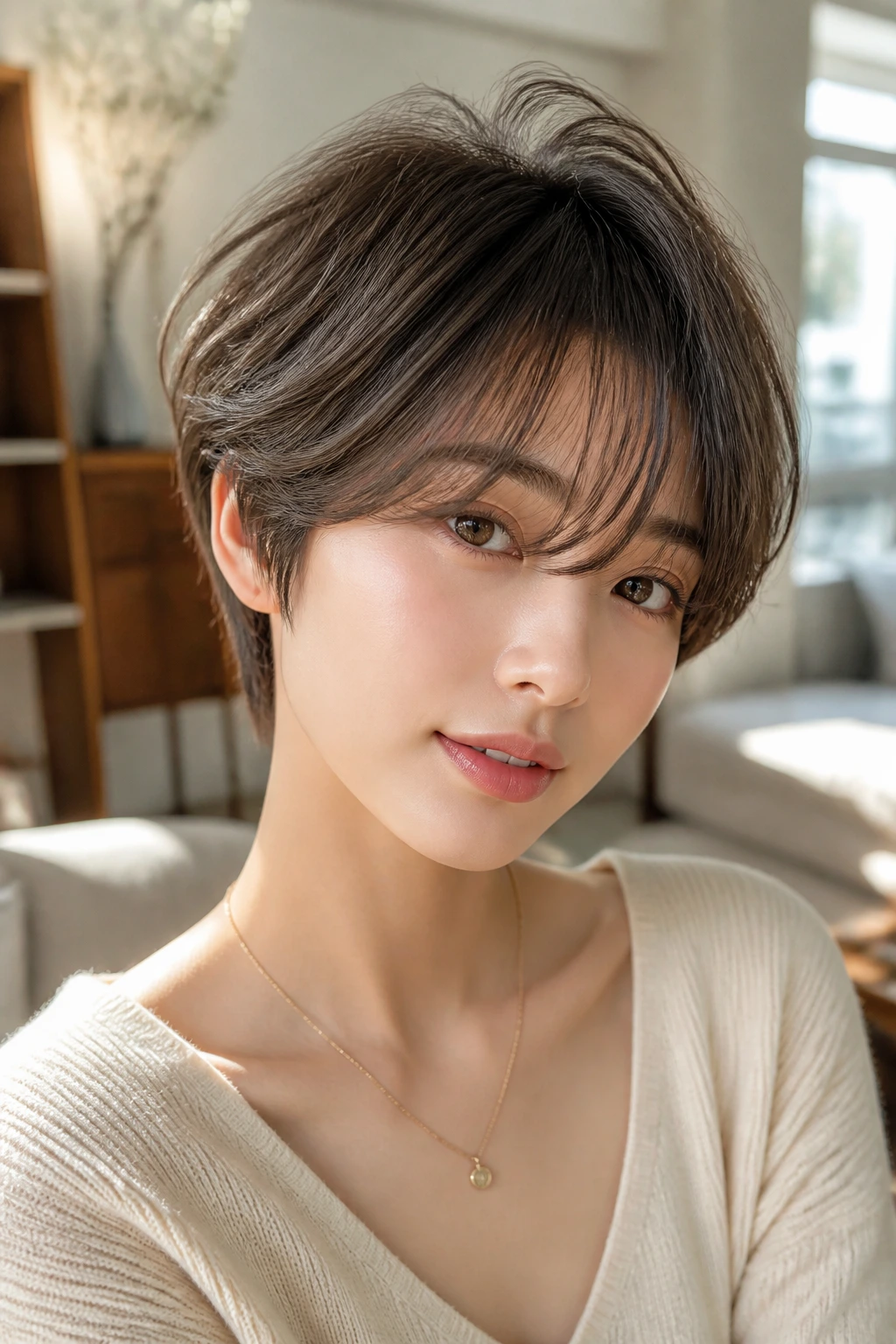
A flat pixie is boring. There, I said it. This cut fixes that by keeping some airy lift at the crown and a longer bang section that can drape or sweep depending on your mood. It has a soft, cloudlike shape that suits thick hair especially well because the volume is part of the point.
The longer bangs make this one more forgiving on mornings when you do not feel like doing much. Brush them forward, bend the ends slightly, and let the rest do its thing. If your hair tends to puff at the crown, a little root control spray at the roots before blow-drying helps keep the top from ballooning.
Best Detail to Ask For
Tell the stylist you want height at the crown, not width at the sides. That one sentence changes the whole silhouette.
8. Sleek Side-Part Pixie With Tucked Fringe
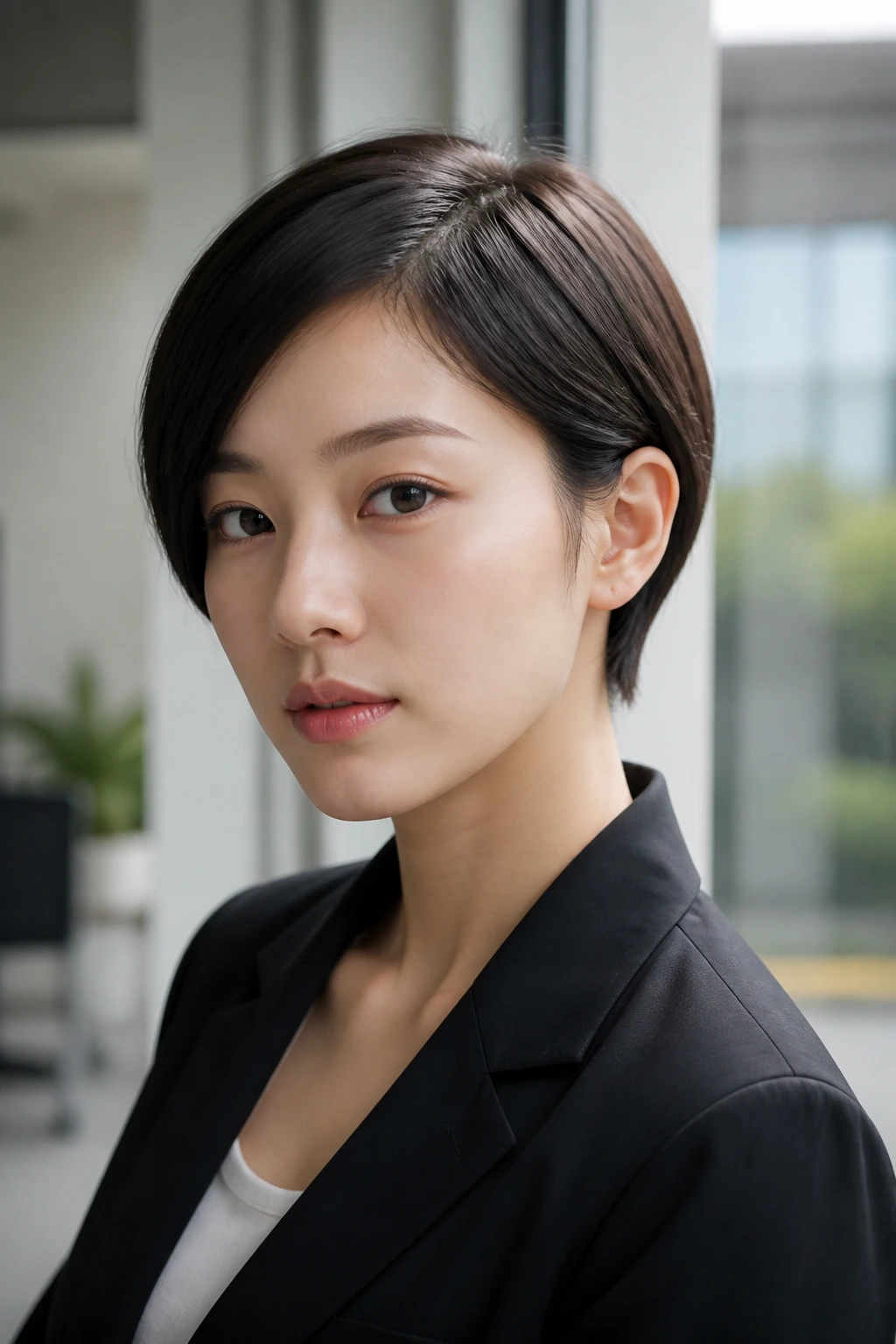
This cut is the neat one in the group. The side part gives the pixie a clean line, and the tucked fringe sits close to the head instead of flopping over the forehead. If you like a short hairstyle that can look office-ready with minimal fuss, this is a very solid choice.
The magic is in the finish. Use a small round brush or even your fingers to direct the front pieces back toward the part, then tuck one side behind the ear while the hair is still warm. That creates a soft bend rather than a hard, helmet-like curve. The result looks calm and tidy, which is not the same as flat.
It’s especially good if your face shape benefits from asymmetry. The side part breaks up the center line, and the tucked fringe keeps the haircut from feeling too symmetrical or too sweet.
9. Shaggy Textured Pixie With Piecey Bangs
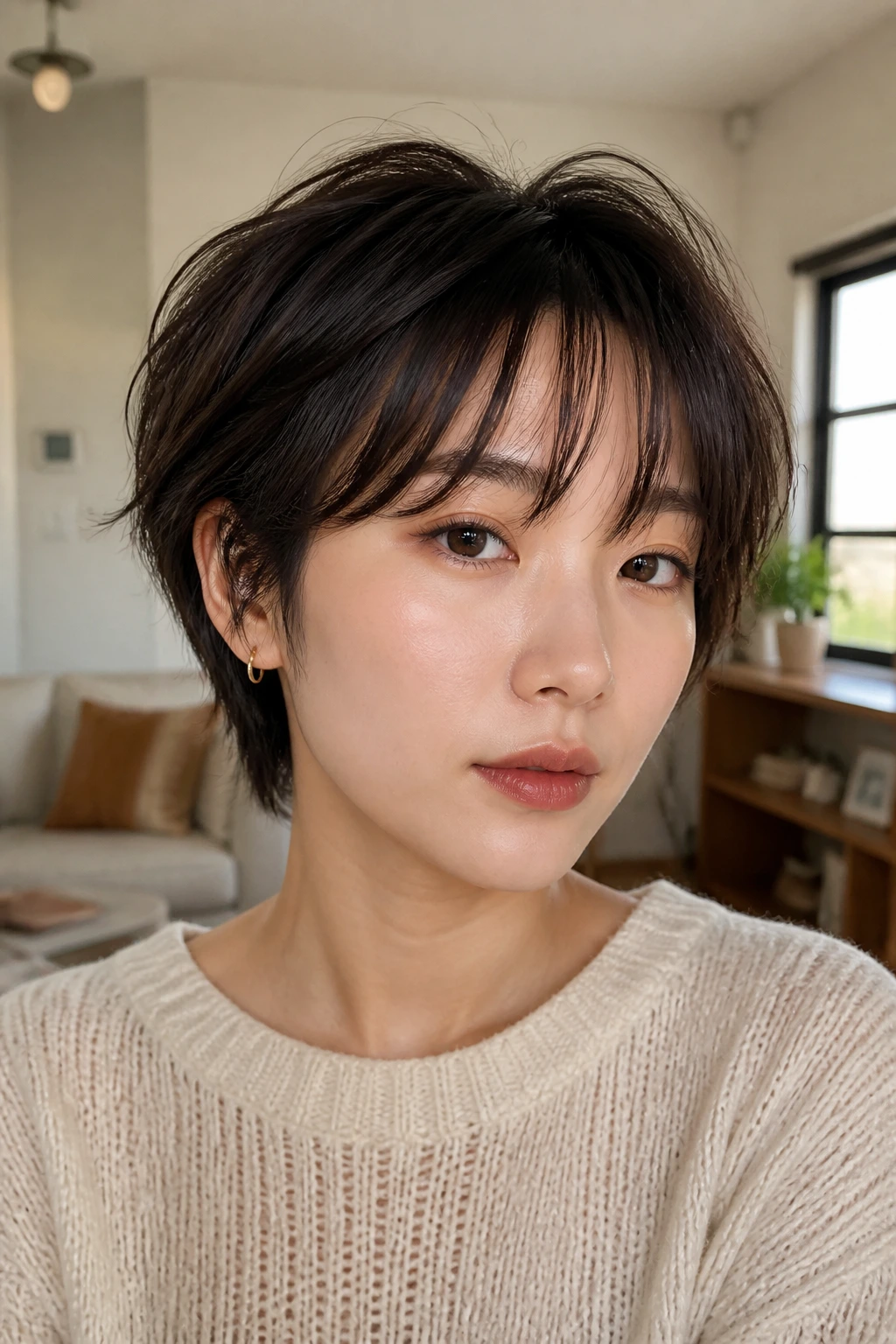
Does your hair naturally want to do a bit of its own thing? Then stop fighting it. This shaggy version leans into that movement with uneven layers, small broken ends, and piecey bangs that separate instead of behaving like one solid block.
The texture matters more than the exact length. The cut should feel feather-light at the ends, but not so thinned out that the shape disappears. A tiny bit of paste rubbed between the fingertips can pull the bangs into visible strips, which looks cleaner than a heavy hand with wax.
How to Use It
Let the hair air-dry until it’s about 80 percent dry, then direct the front with your fingers. If you blow-dry it bone dry from the start, the pieces can get too fluffy and lose that laid-back separation.
10. Rounded Bowl-Inspired Pixie With See-Through Bangs
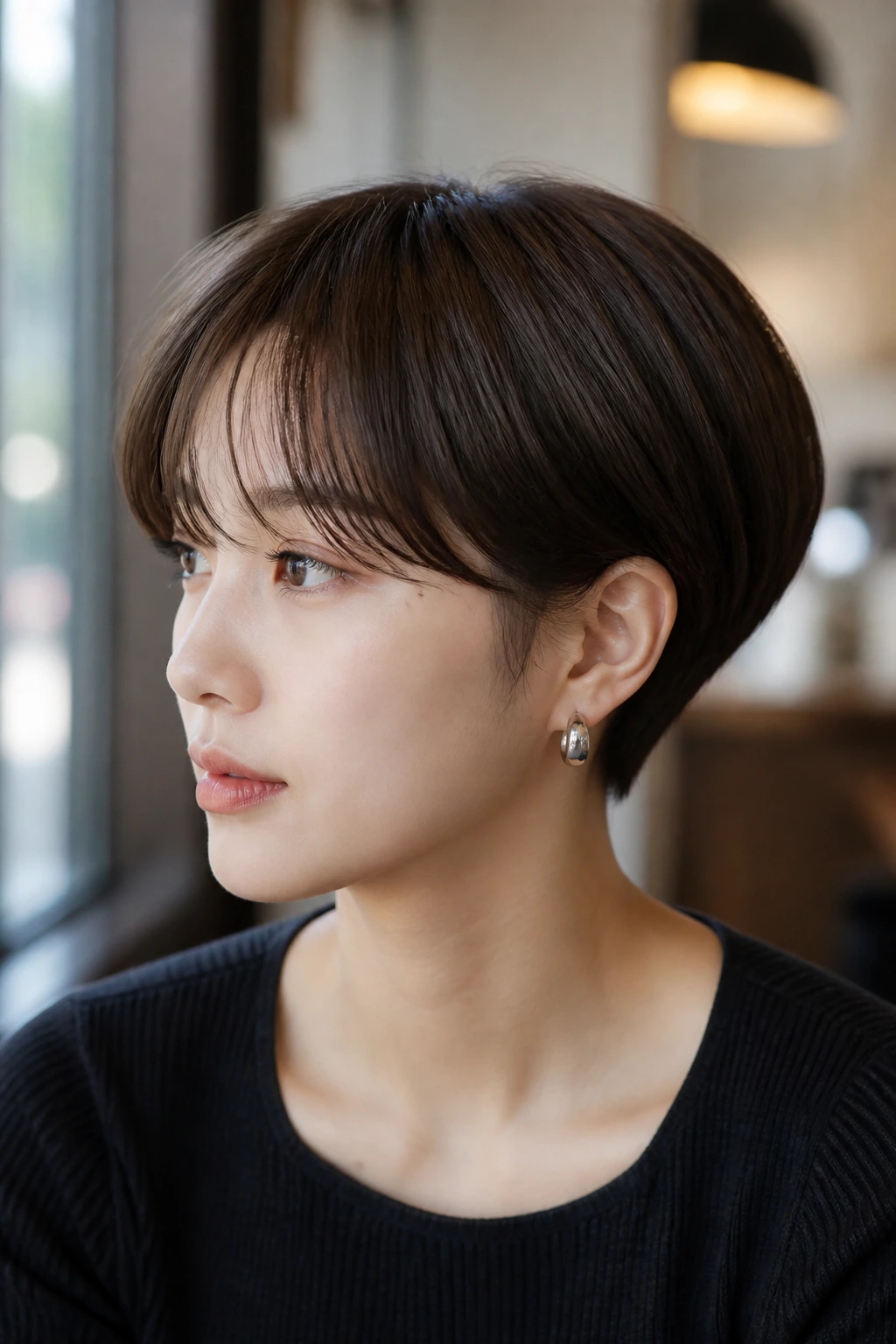
This one is more graphic than the soft rounded pixie above. The outline curves closer to the head, with enough perimeter shape to hint at a bowl cut without crossing into costume territory. The see-through bangs keep it from looking too strict, which is the whole reason this version works.
A lot of people hear “bowl-inspired” and picture a harsh helmet. Not this. The difference is in the weight removal around the temples and the softness in the fringe. The shape should feel controlled, not blunt. On straight hair, it can look almost architectural in a nice way.
I like this on people who want a short cut with a little visual structure. It photographs like a strong silhouette, but in person it still moves when the hair shifts. That’s the part that keeps it wearable.
11. Soft Mullet Pixie With Fluffy Fringe
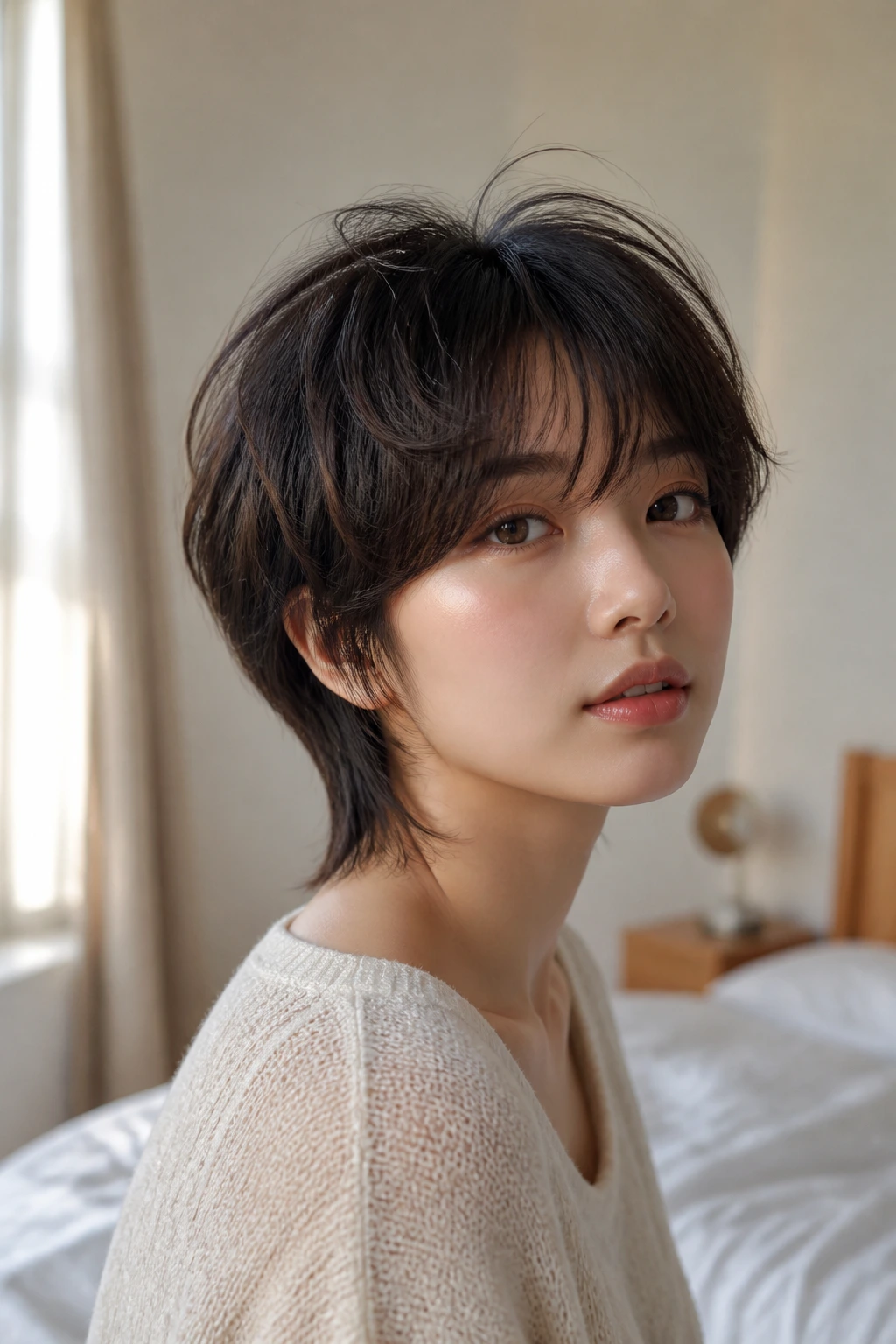
This is the loosest cut in the bunch, and that looseness is the point. The front stays fluffy and light, while the back keeps a little more length through the nape. It has that slightly undone Korean salon feel, but it still reads as a real haircut rather than a grow-out in progress.
The fringe should feel feathery, not heavy. If your stylist leaves too much bulk in the front, the whole thing turns into a shaggy triangle. The sweet version has movement at the top and a soft tail at the back, with no sharp line where one section ends and the other begins.
This cut is forgiving on wavy hair and a little tricky on very fine hair. Fine hair can wear it too, but the crown needs enough lift to keep the shape from collapsing into the neck.
12. French-Girl Pixie With Brow-Grazing Bangs
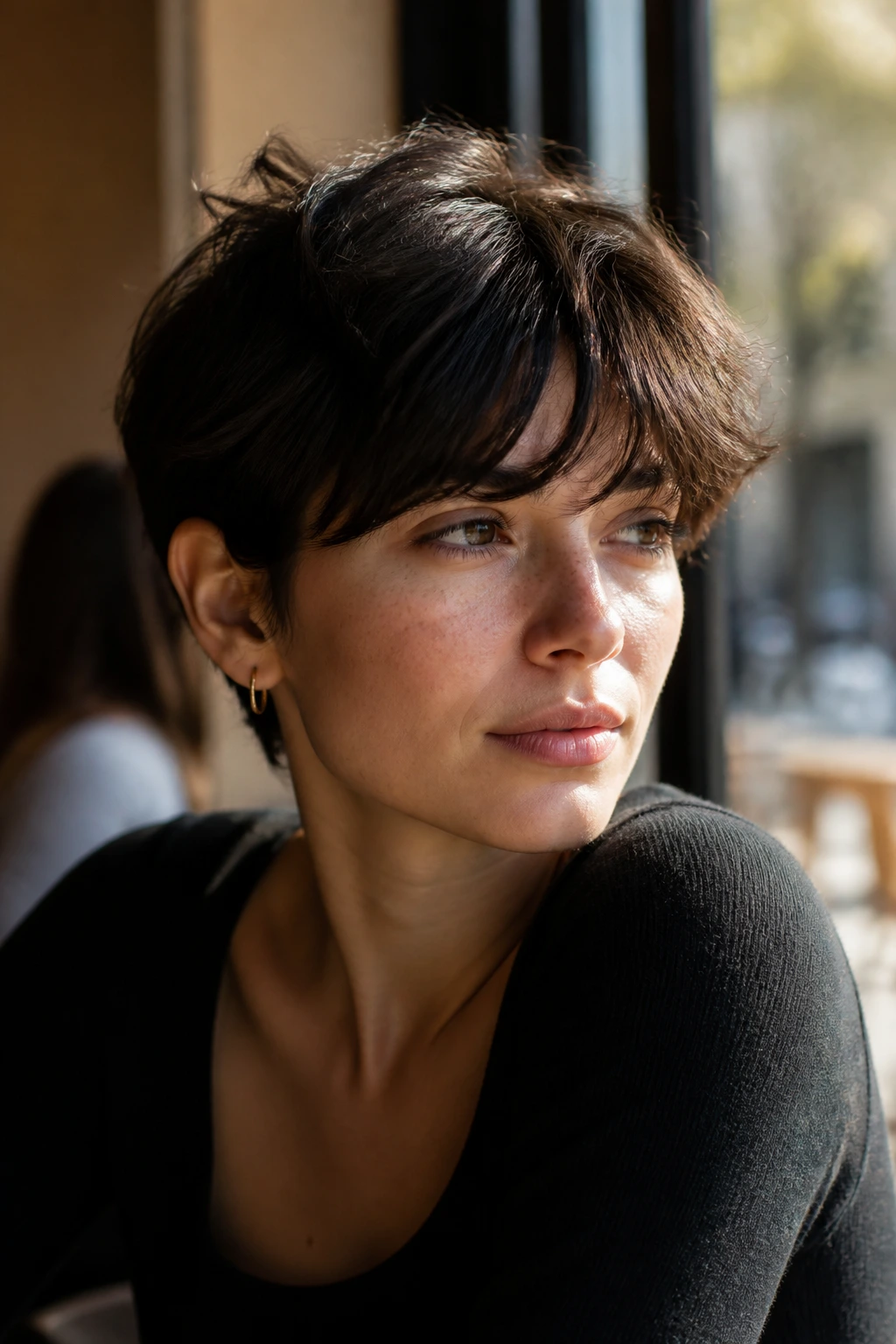
This is the one for people who want a short cut with a bit of romance in it. The bangs skim the brow line, the top remains soft, and the sides sit just loose enough to avoid a severe crop. It has a quieter mood than the choppier styles, which is exactly why it pairs well with everyday clothes.
The brow-grazing length does one useful thing: it lets the hair swing a little as you move. That motion keeps the cut from freezing into a single shape. If your forehead is short, ask for the bangs to be slightly airier so they do not crowd the eyes.
I like this one with a little bend through the front rather than pin-straight styling. A soft curve looks better than a perfectly flat line. Flat can be chic, sure. But soft is easier to live with.
13. Rounded Crop With Baby Side Bangs
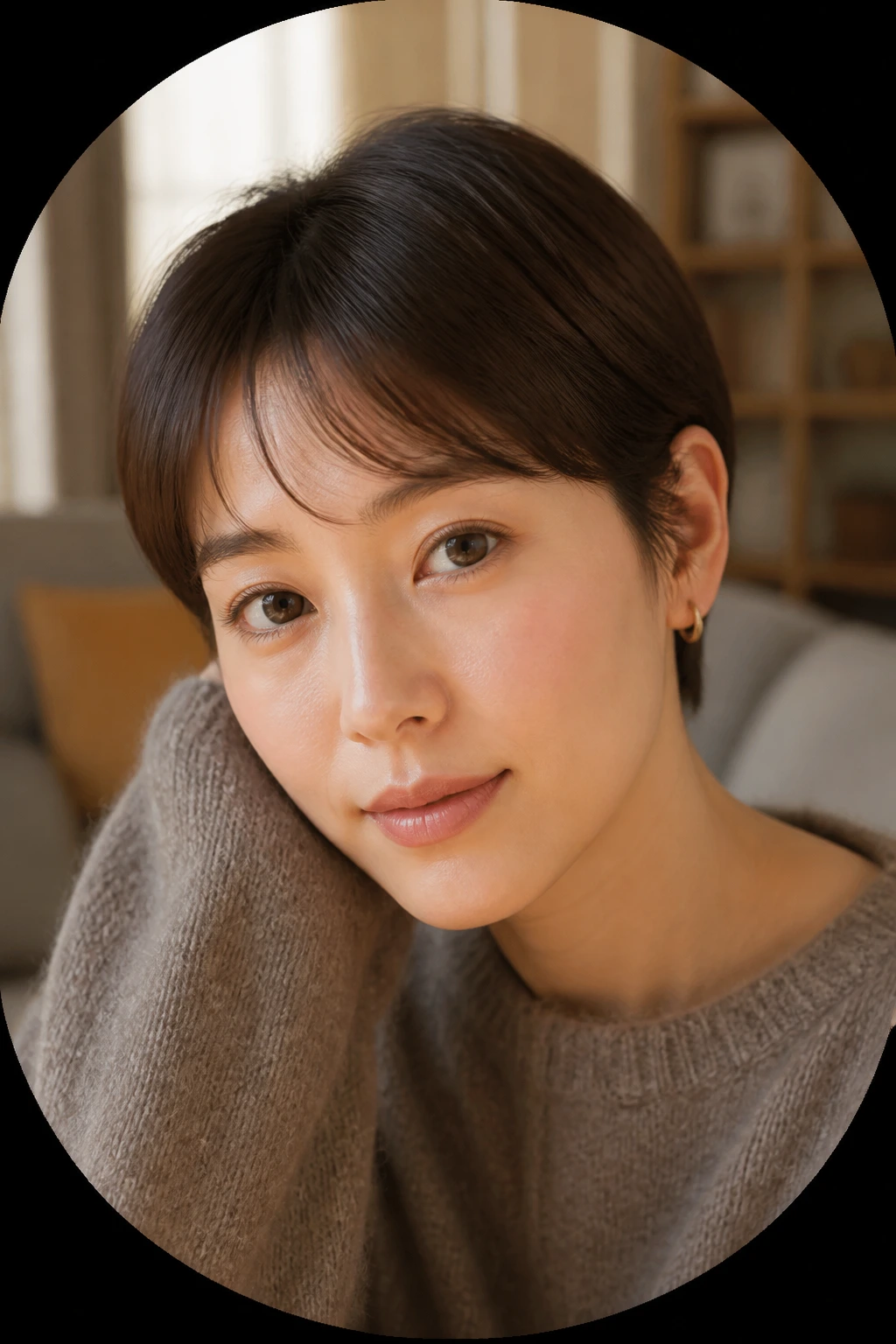
Short, neat, and slightly sweet. That’s the appeal here. The rounded crop keeps the outline smooth, while the baby side bangs add just enough asymmetry to stop the cut from feeling too strict or too youthful.
This shape works nicely on smaller faces and on hair that has a natural bend near the hairline. The side bangs should not be heavy. They need to sit like a whisper across the temple, which means the stylist should keep them light and slightly longer than you think. Too short and they kick up. Too dense and the softness disappears.
A dab of styling balm is usually enough. I would not load this cut with heavy wax, because the whole point is that the bangs move a little instead of sticking to the forehead like glued strips.
14. Asymmetrical Pixie With Deep Side Fringe
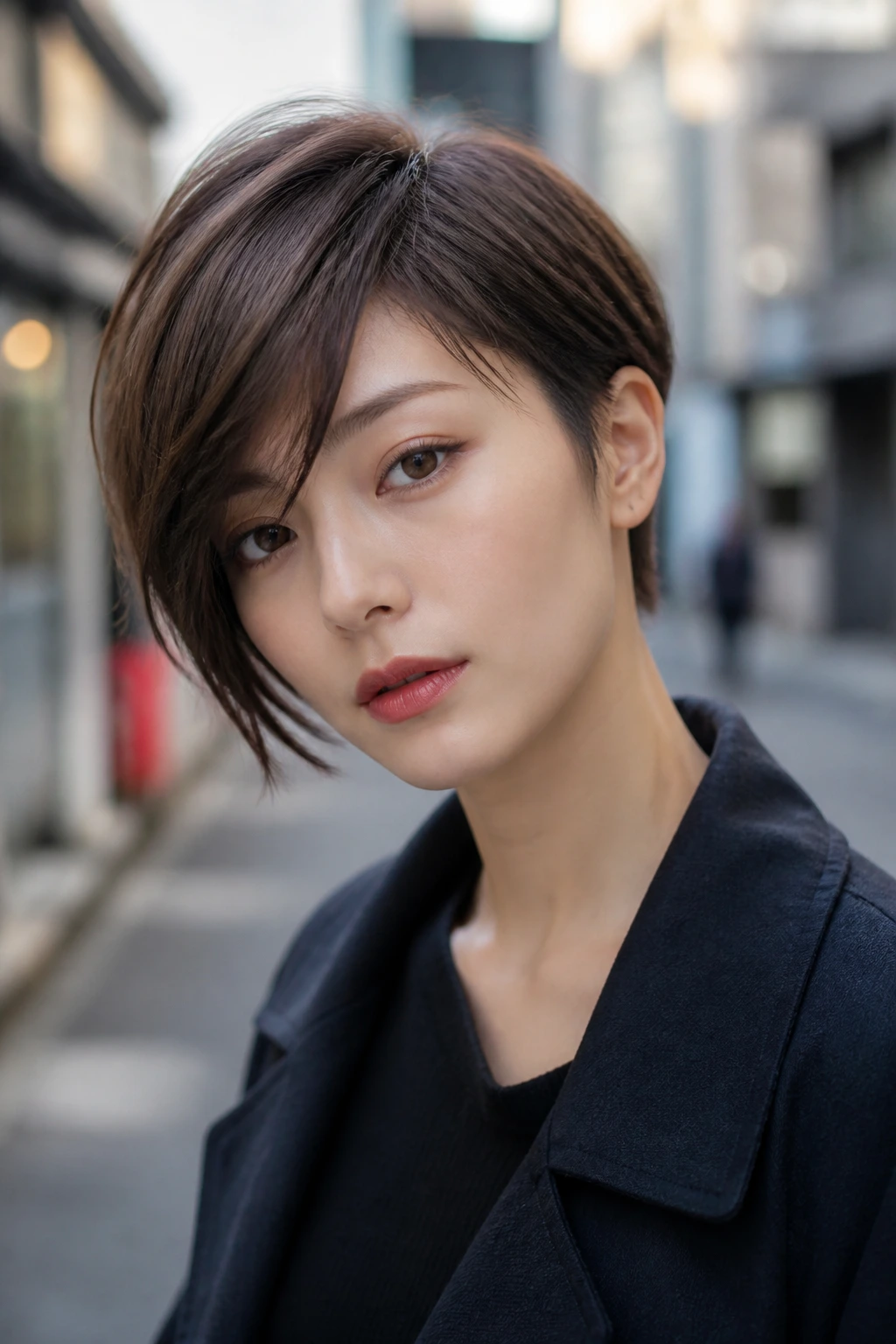
Want a cut that takes one side of your face seriously and lets the other side relax? This is it. The deep side fringe creates a strong diagonal line, which slims the face and gives the cut a bit of drama without turning it into a formal hairstyle.
The asymmetry is doing most of the work, so the rest of the cut can stay quiet. Keep the nape tapered and the crown moderately lifted. If you over-layer the top, the diagonal gets muddy. If you keep it too flat, the fringe loses its sweep.
This is one of my favorite options for people who want a pixie that feels a little sharper but still wearable with a sweater, blazer, or plain tee. It has enough shape to look styled, even if you only spent eight minutes on it.
15. Wet-Look Pixie With Sleek Bangs
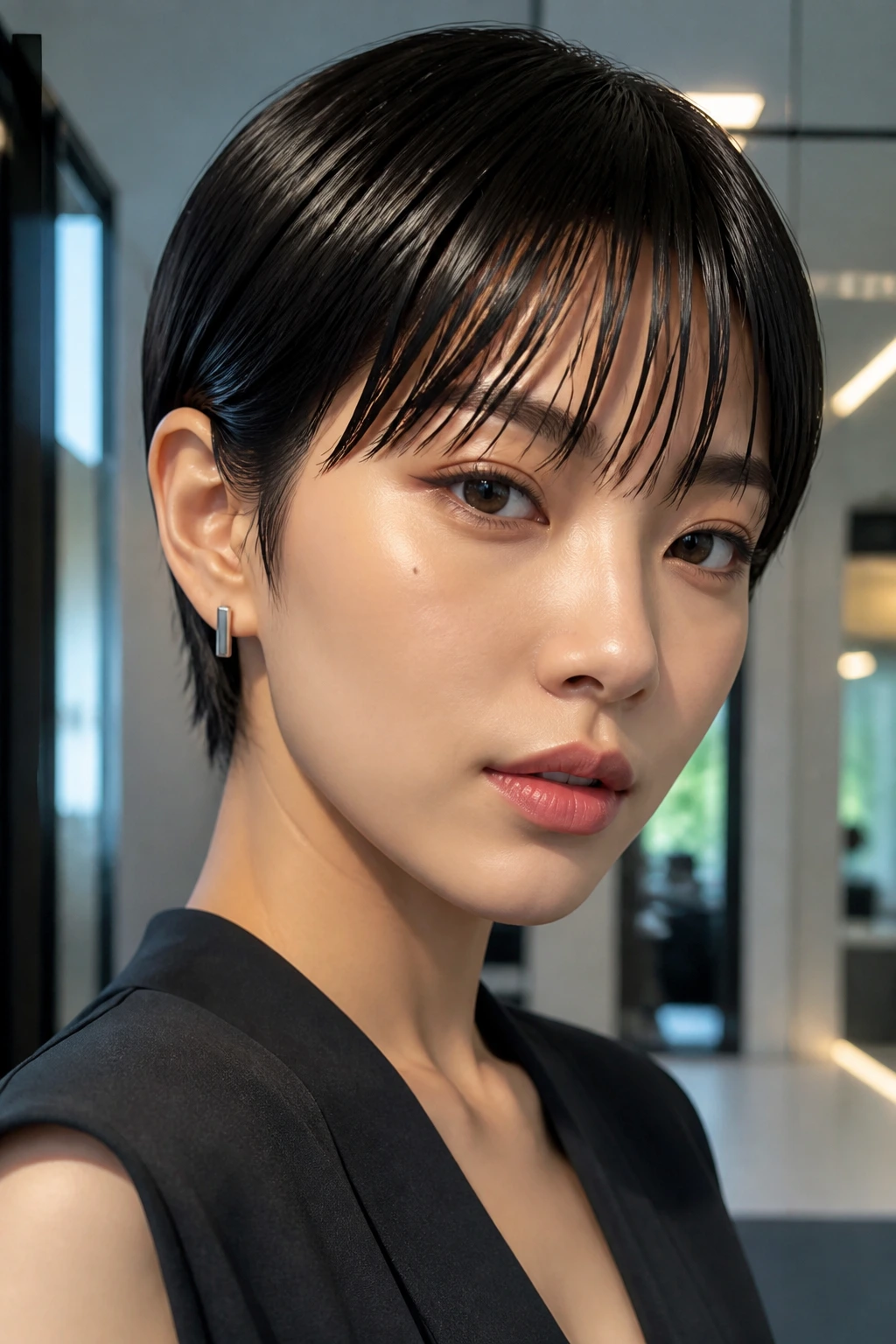
If you like a polished finish with almost no fluff, this is the move. The wet-look pixie uses shine and separation to create a clean, controlled silhouette. The sleek bangs sit close to the forehead, and the edges around the ears stay neat.
The challenge is restraint. Too much product and the hair turns greasy. Too little and the style collapses before it has a chance to set. Use a small amount of gel or gloss cream on damp hair, then comb the bangs into place and stop touching them. Seriously. The less you fuss, the better it looks.
This version is especially useful for fine or straight hair that already dries smooth. It gives that glossy, intentional finish without needing a full blowout.
16. Airy Perm-Style Pixie With Curved Bangs
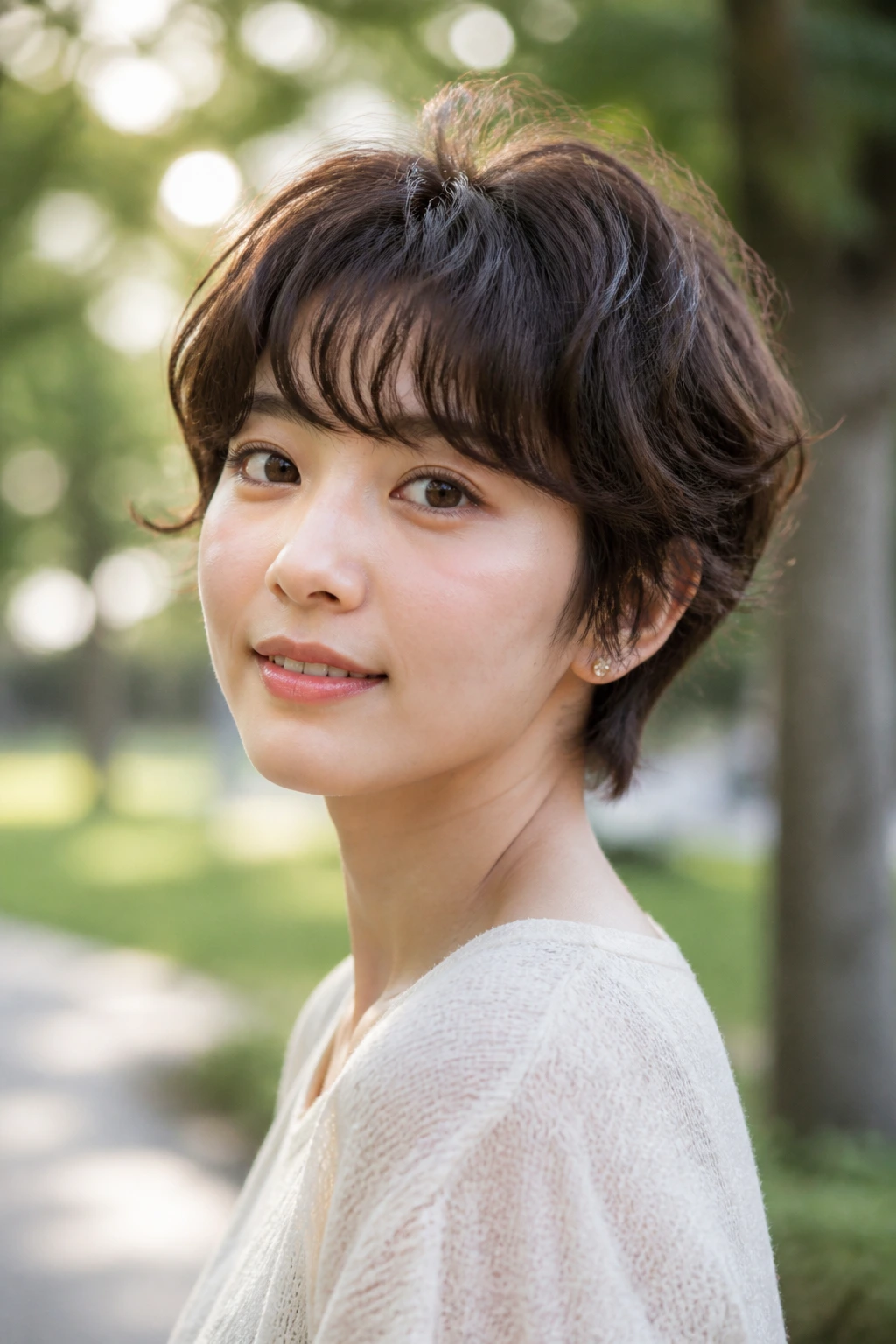
This is the softest, fluffiest haircut in the group when the texture is right. The curved bangs bend away from the forehead, and the rest of the cut follows a light perm-style wave or bend that keeps the shape from going dead flat. It feels casual, almost a little sleepy in the nicest way.
If your hair already has body, this shape is easy to wear. If it is pin-straight, you can still get the effect with a small round brush or a curling iron on the top layers, but the goal is a bend, not a curl. Think of the curve as a gentle hook at the ends.
The best thing about it is the way it softens strong features. The bangs do not cover the face; they circle it.
17. Soft Undercut Pixie With Longer Top
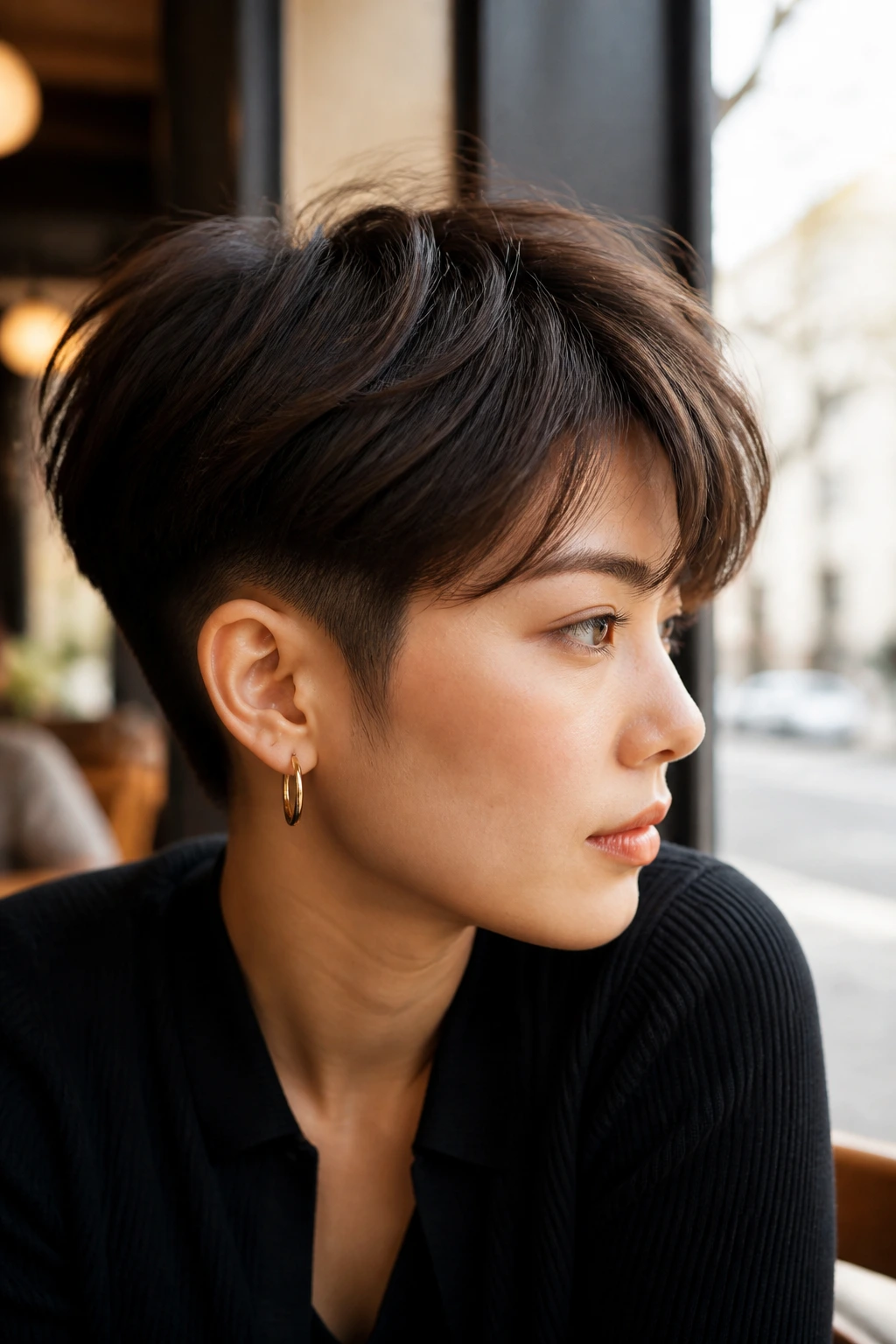
This cut has a bit more edge, but the soft top keeps it from reading hard or punk. The undercut removes bulk around the sides and lower back, while the longer top gives you room to style the bangs forward, sideways, or in a loose sweep.
It works well if your hair is thick and tends to puff out at the sides. Taking weight out underneath makes the top sit cleaner and can cut down on the daily battle with volume around the ears. The longer top also buys you more styling options, which is useful if you do not want to commit to one fringe shape.
Ask for a soft undercut, not a shaved one unless you really want the contrast. The softer version grows out better and feels easier to wear with everyday outfits.
18. Chin-Skimming Pixie Bixie With Draped Bangs
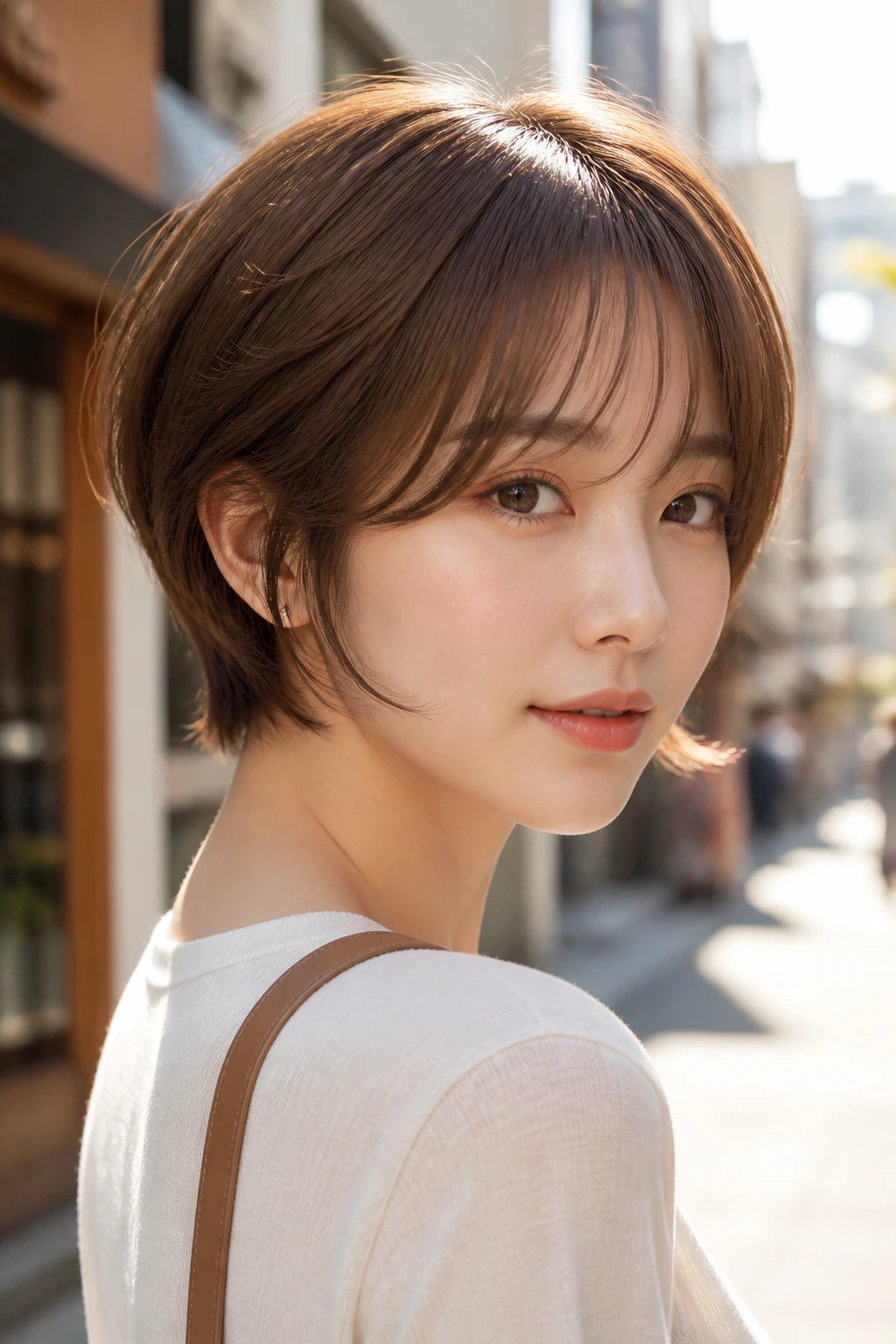
This is the one I’d point to if you want something between short and medium-short. The extra length around the jaw softens the face, and the draped bangs fall in a loose frame that makes the haircut feel gentler than a strict pixie.
It’s useful on faces that need a little vertical balance. The chin-skimming sides draw the eye downward without dragging the whole look. And because the bangs drape instead of sit flat, you can tuck them behind the ear or let them spill forward depending on the day.
It also grows out with less irritation than a shorter crop. That matters. Haircuts should earn their upkeep, not demand your life.
19. Fine-Hair Pixie With Lifted Crown Bangs
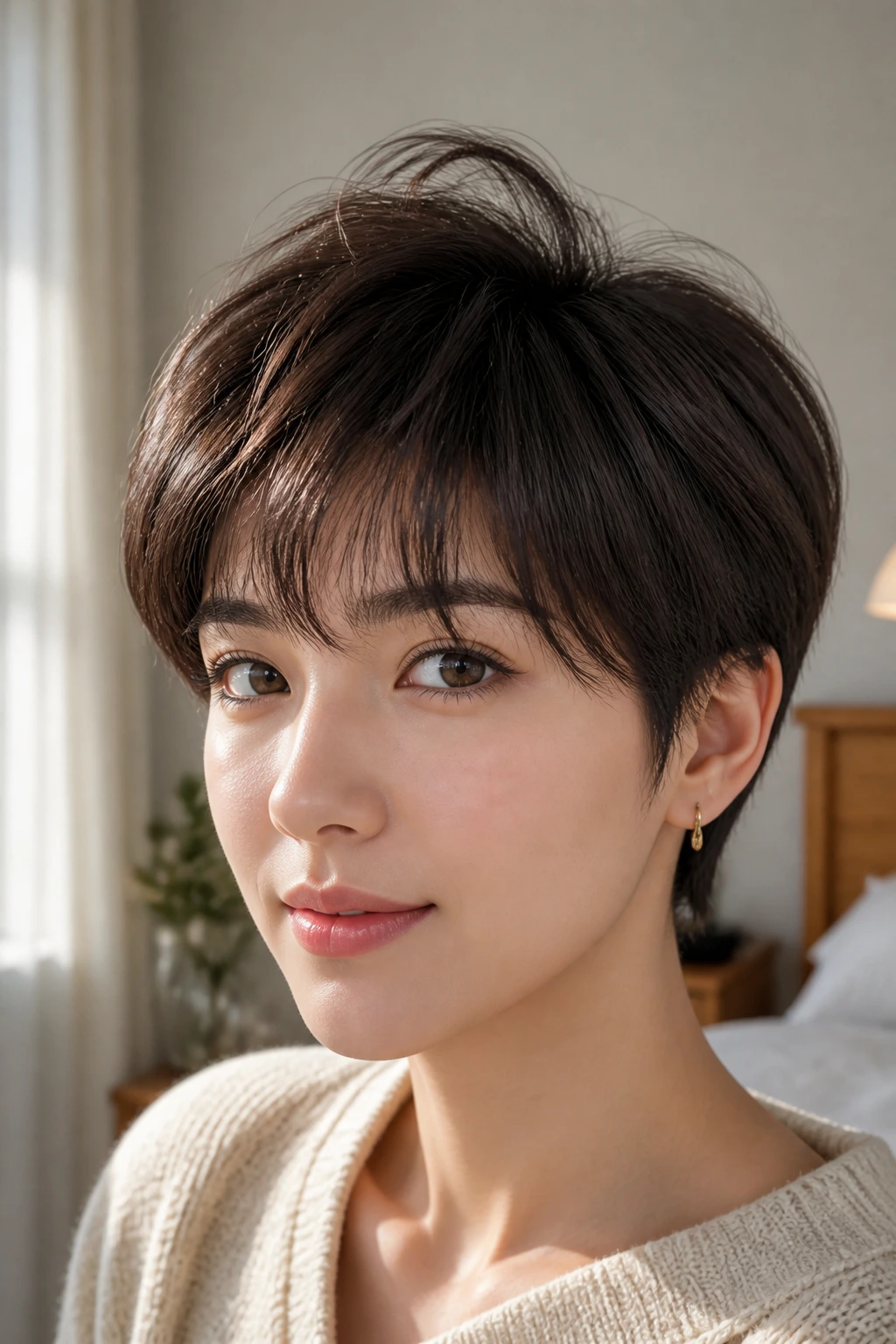
Fine hair needs a little strategic bluffing. This cut does that by keeping the crown lifted and the bangs soft enough to suggest fullness without pretending the hair is thicker than it is. The shape creates height where you want it and keeps the rest of the cut tight enough to avoid limp ends.
The styling move is simple: lift at the roots first, then direct the fringe forward with a small brush. A mist of lightweight volumizing spray at the crown helps the cut hold its shape for longer than a flat cream would. Heavy products are the enemy here. They make fine hair look tired in a hurry.
This is a smart everyday pixie if your hair tends to go limp by midday. The lift around the crown makes the whole haircut feel alive.
20. Thick-Hair Pixie With Internal Layers and Bangs
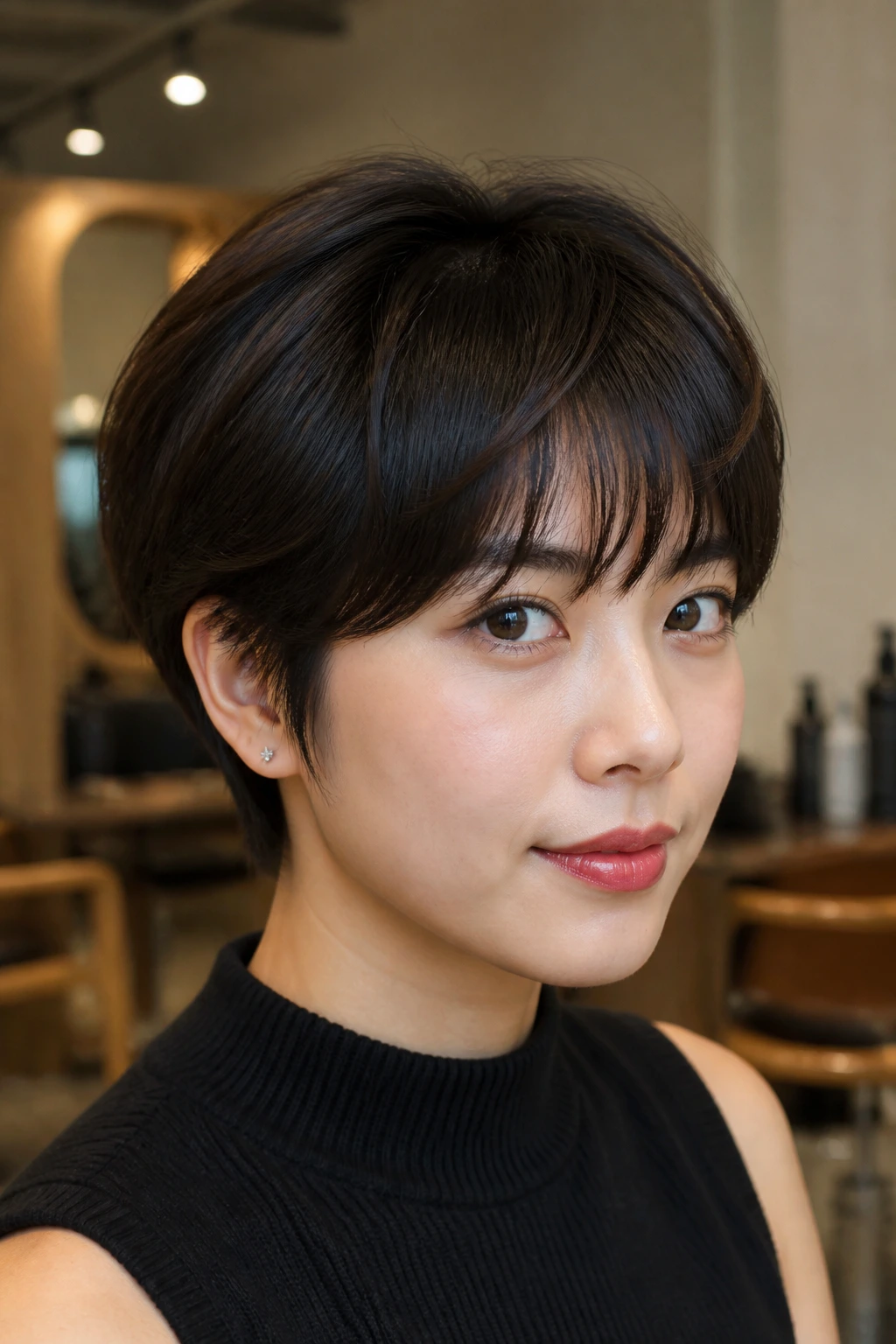
Thick hair looks good in a pixie only when the inside of the haircut is handled properly. That means internal layers, hidden weight removal, and bangs that don’t feel like a brick sitting on the forehead. The visible shape can stay soft, but the inside has to be controlled.
If your stylist only cuts the surface, the hair will puff out at the sides and make the head look wider than it is. Internal layers keep the bulk from living all in one place. The bangs should be cut with enough density to look polished, but not so much that you need to thin them every morning just to see your eyebrows.
This is one of those cuts that looks easy from the outside because someone did the hard part underneath.
21. Wavy Pixie With S-Curve Fringe
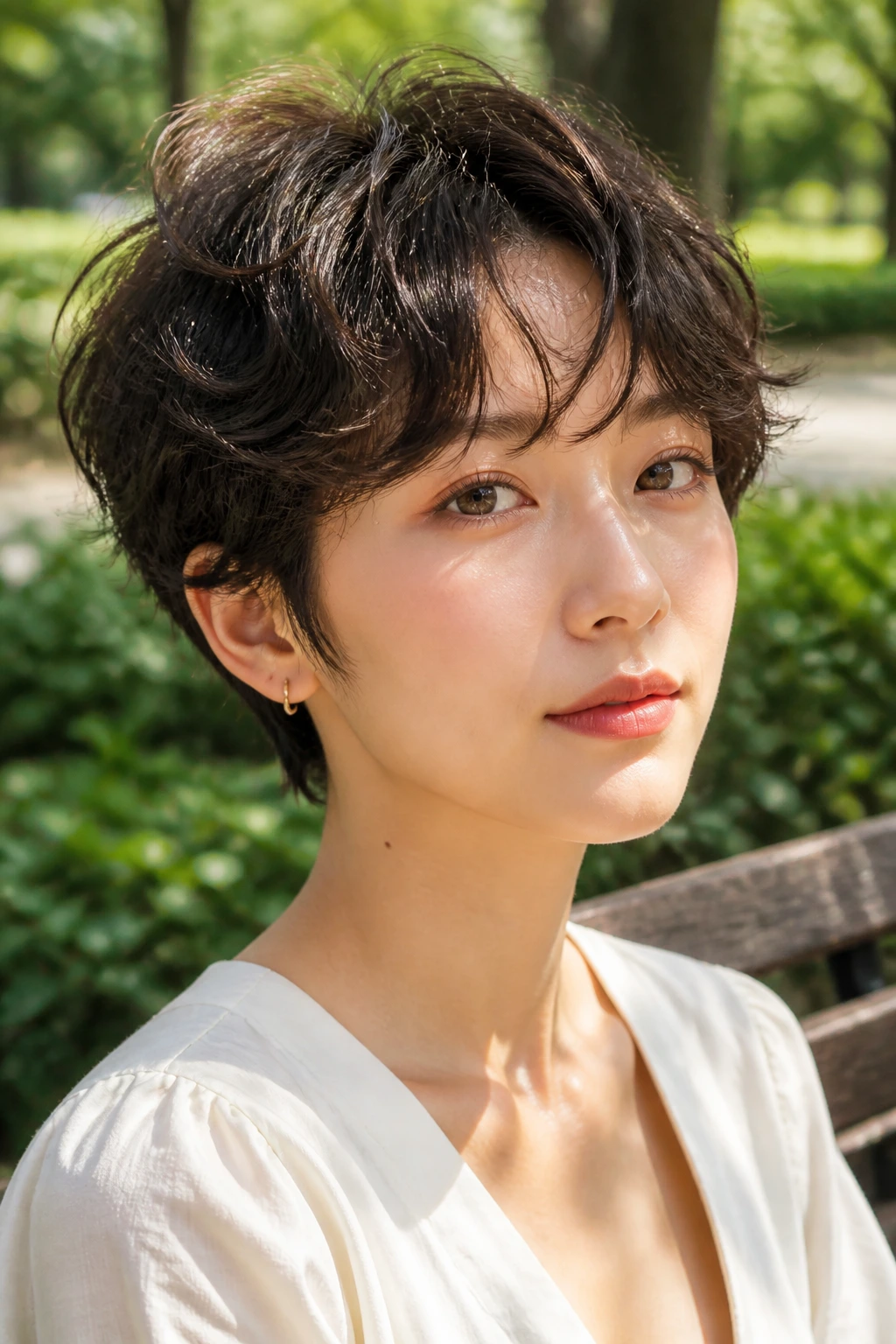
A wave wants to bend. Let it. The S-curve fringe follows the natural movement of wavy hair instead of forcing it into a straight line, which means fewer fights with the mirror and less frizz around the forehead.
The cut should keep the front a little longer so the waves have room to settle into shape. If the fringe is too short, it can spring up and break the silhouette. The rest of the cut can stay compact, with soft layers through the crown and temples to keep the wave pattern from turning bulky.
This one works especially well when you air-dry and only touch the fringe with a diffuser or a tiny brush. Overworking wavy hair is how you end up with puff.
22. Glass-Hair Pixie With Blunt-Yet-Soft Bangs
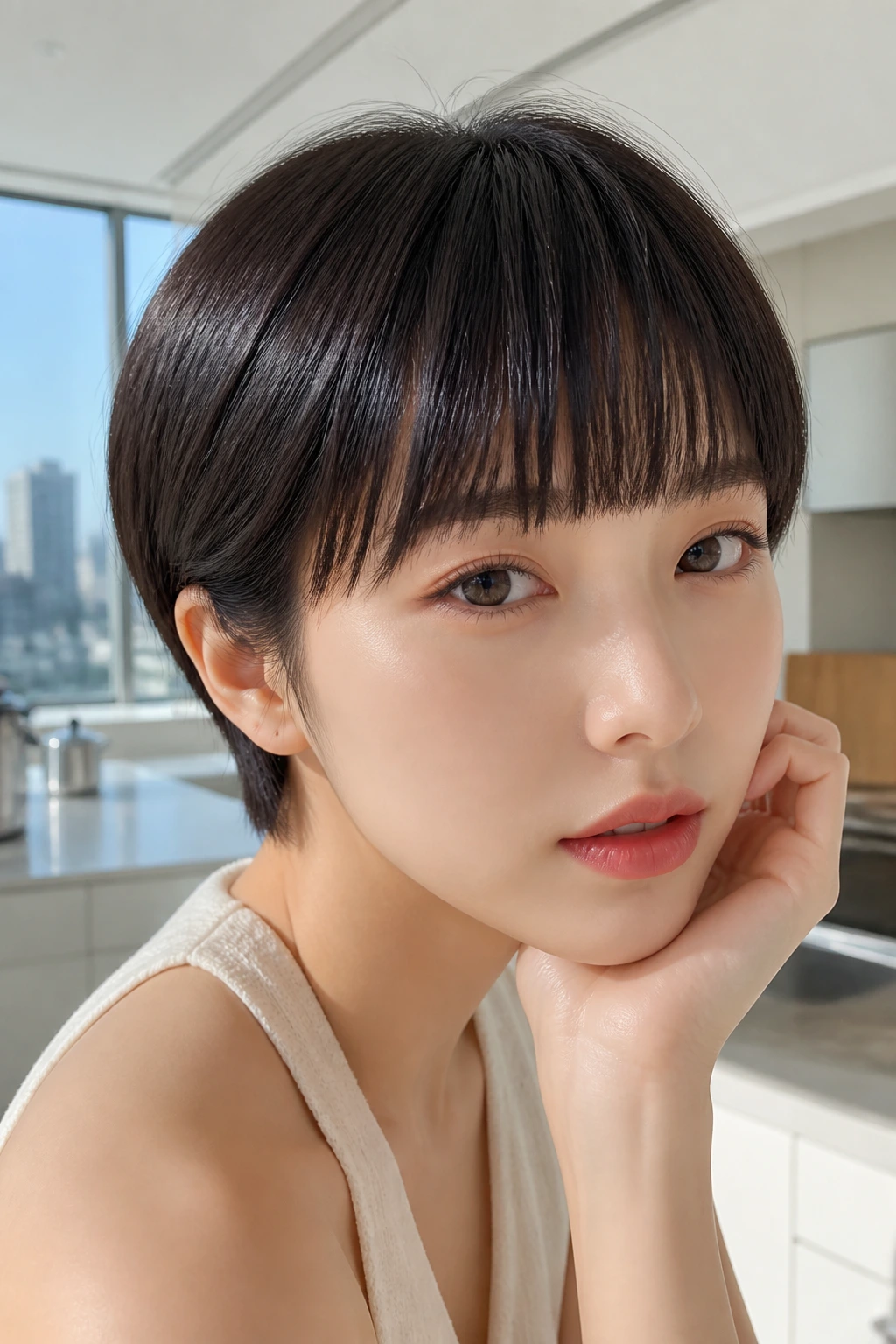
This cut looks crisp, but it should never feel hard. The bang line is a little fuller, giving that smooth glass-hair finish, while the edges are softened so the style still sits nicely on the face. It has polish, not stiffness.
The important bit is the perimeter. If the ends are too blunt everywhere, the haircut can read severe. A little softening at the temples and nape lets the shine do the talking instead of the shape shouting at you. Flat iron the fringe only if it needs it. Some hair already falls this way on its own.
I like this version for people who want a cleaner, more controlled everyday pixie. It looks especially good with simple clothes because the haircut becomes the sharp part of the outfit.
23. Casual Office Pixie With Side Curtain Bangs
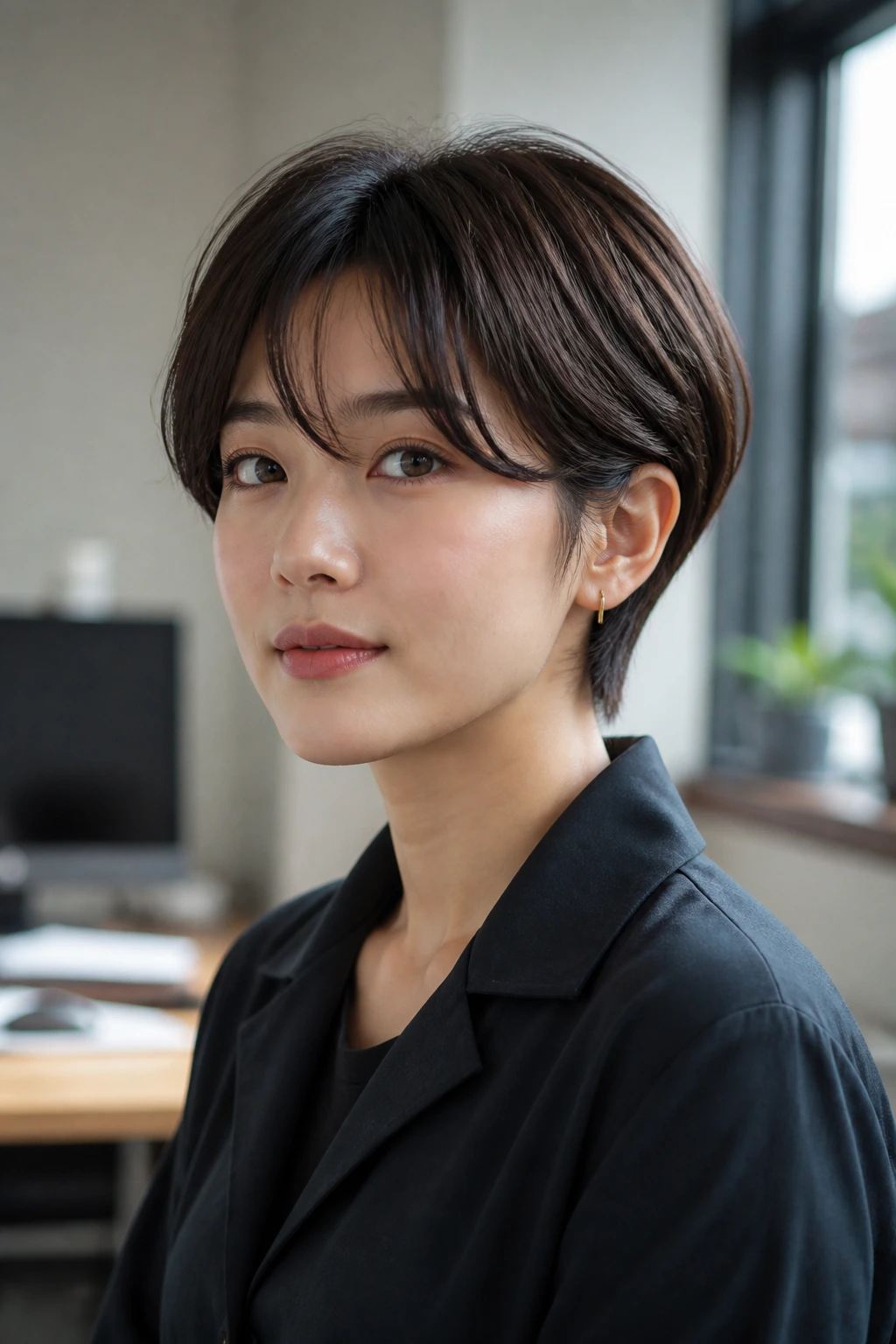
This is the haircut I’d send to someone who wants short hair that still looks polished in meetings. The side curtain bangs part gently at the center or just off-center, and the rest of the cut stays tidy enough to read professional without feeling rigid.
What makes it work is the way the bangs frame the eyes without hanging in them. They leave room for glasses, room for movement, and room for a little mess. That last part matters. A style that only looks good when it’s freshly combed is a bad weekday haircut.
It’s not trying to be edgy. It’s trying to behave, and that’s underrated.
24. Playful Tomboy Pixie With Textured Fringe
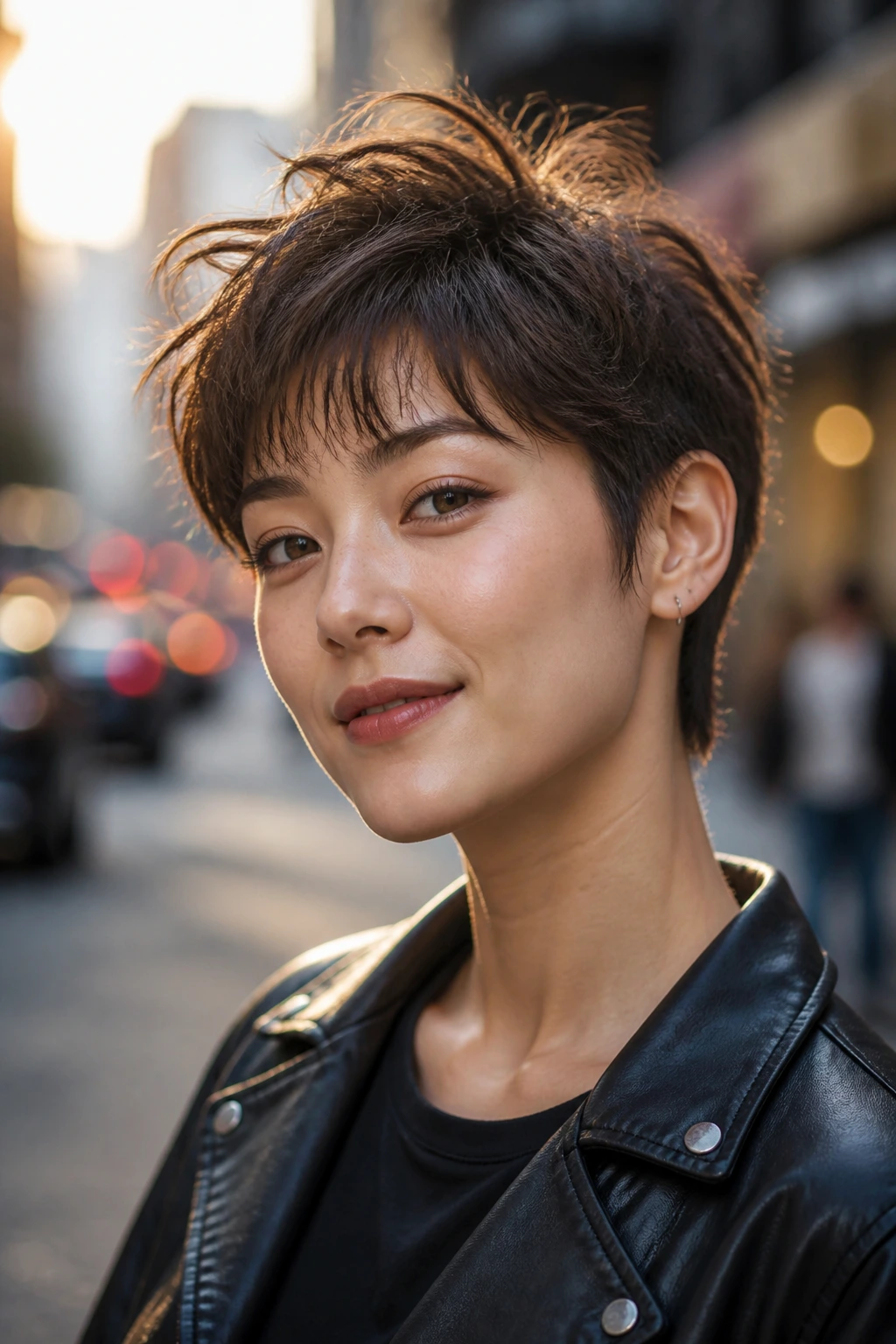
This cut has energy. The fringe is chopped with movement, the crown stays loose, and the sides are short enough to keep the silhouette lively rather than fussy. It feels youthful without looking childish, which is a harder balance than people think.
Texture is everything here. A little paste worked through the bangs can make the pieces stand apart and give the haircut that hands-in-the-pocket feel. If the hair is too smooth, the playful edge disappears. Too much product, though, and you lose the swing.
I’d choose this one if you want a pixie that looks good with sneakers, a leather jacket, or a plain white shirt. It has that easy, slightly rebellious shape that never seems overdone.
25. Grow-Out Friendly Pixie With Face-Framing Bangs
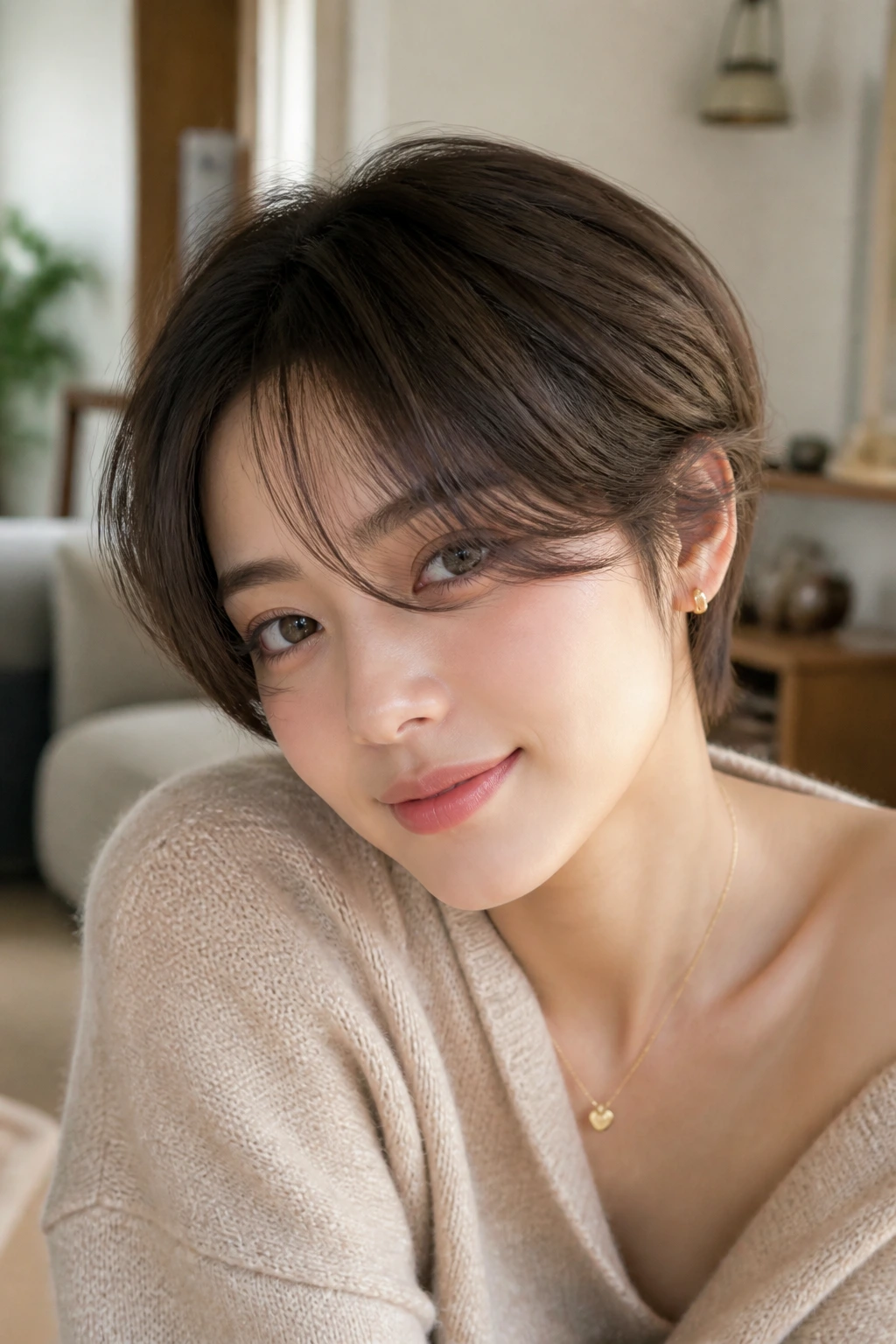
This is the cut I end on because it solves the problem most people worry about but rarely say out loud: what happens after six weeks? The answer is a shape that still looks good while it’s growing. Face-framing bangs soften the transition, and the top keeps enough length to shift direction as needed.
The trick is leaving a little extra room at the temples and front edges. Not a shag. Not a bob in disguise. Just enough length that the haircut can slide into a longer version without feeling awkward the second it misses the salon. That makes the whole thing easier to live with.
If you want one of the Korean pixie cuts with bangs that can survive a real calendar, this is probably the one I’d choose first.
How to Make a Short Cut Look Intentional Before You Leave the House
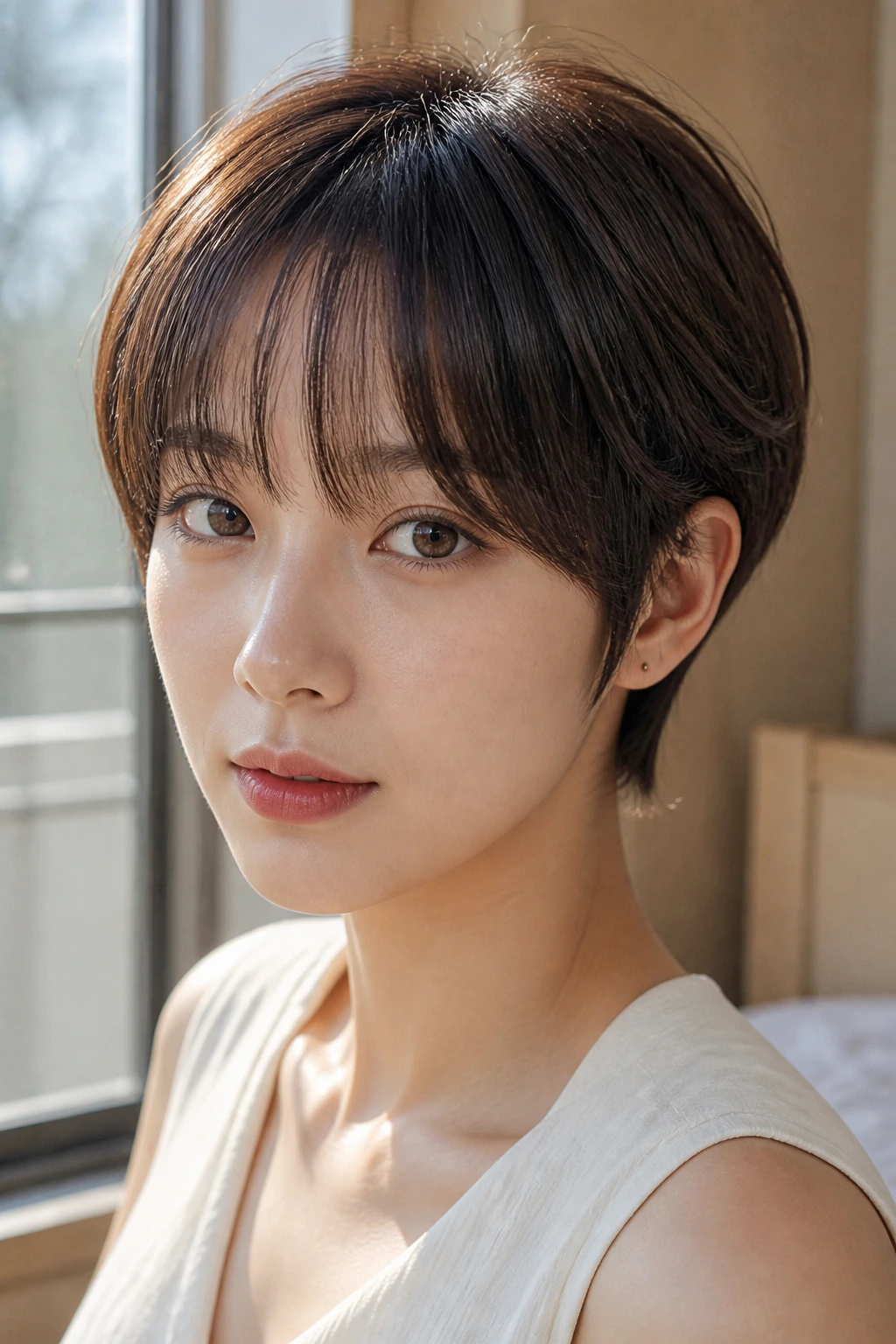
The best everyday pixie routine is boring in the best way. You do not need six products and a prayer. You need a clean part, a little root direction, and the discipline to stop before the hair starts looking sticky.
Blow-dry the roots first. Aim the dryer at the fringe and crown while the hair is still damp, then shape the direction with your fingers or a small brush. That first minute matters more than anything else.
Use less product than you think. A rice-grain amount of wax, cream, or paste often beats a full fingertip. Short hair shows every extra dab.
Treat the bangs separately. Dry the fringe first if it tends to split or bend the wrong way. Once it’s set, the rest of the cut is easier to handle.
Trim the line before it gets annoying. If the bangs start brushing the lashes every time you blink, they are already past the cute stage. Bang trims at home can work, but only if you take off tiny amounts.
Leave some texture. A pixie that looks too polished can lose the softness that makes Korean-inspired cuts appealing in the first place. A little movement around the temple and crown keeps it human.
The Most Common Mistakes That Make a Pixie Look Harsh
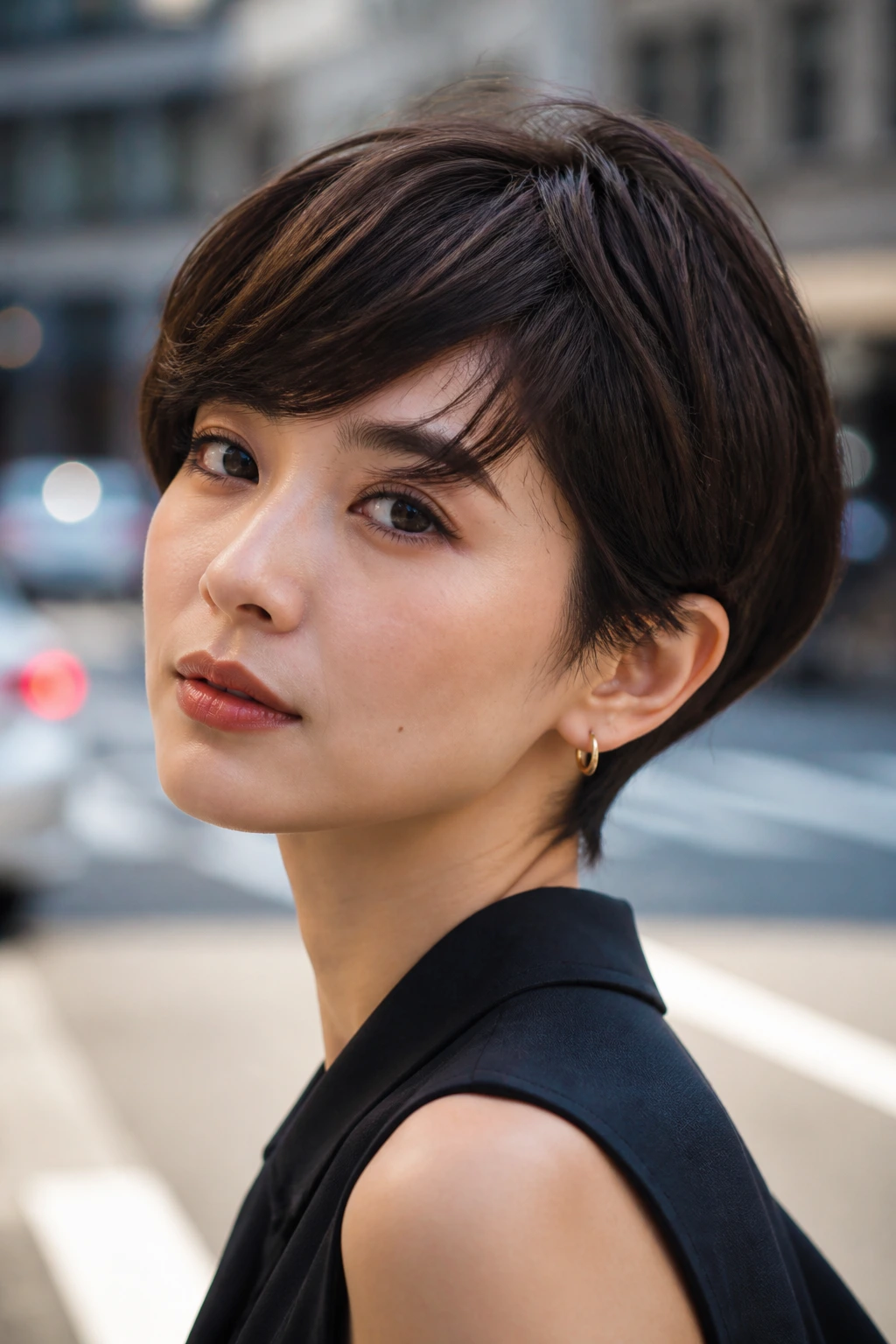
The first mistake is asking for too much density in the bangs. A heavy fringe can swallow the face and make the cut feel boxy. The fix is simple: keep the fringe light, or leave the center a little longer so you can part it if needed.
Another one is removing too much weight at the crown. That sounds smart on paper, but in real life it often leaves the top flat and the sides puffy. You want balance, not scalp exposure.
Cowlicks get ignored all the time. They shouldn’t. If your hair pushes forward or splits at the front, the bangs need to be cut with that pattern in mind, not against it. Otherwise you’ll spend every morning forcing the same stubborn section into place.
Overloading short hair with product is another classic mess. A little paste makes texture. Too much paste makes grease. You can feel the difference before you can see it.
And then there’s the biggest one: waiting too long between trims. A pixie grows out fast around the ears and neck. Once the shape loses its taper, the whole haircut starts looking tired, even if the bangs still behave.
Variations and Alternatives if You Want More or Less Fringe
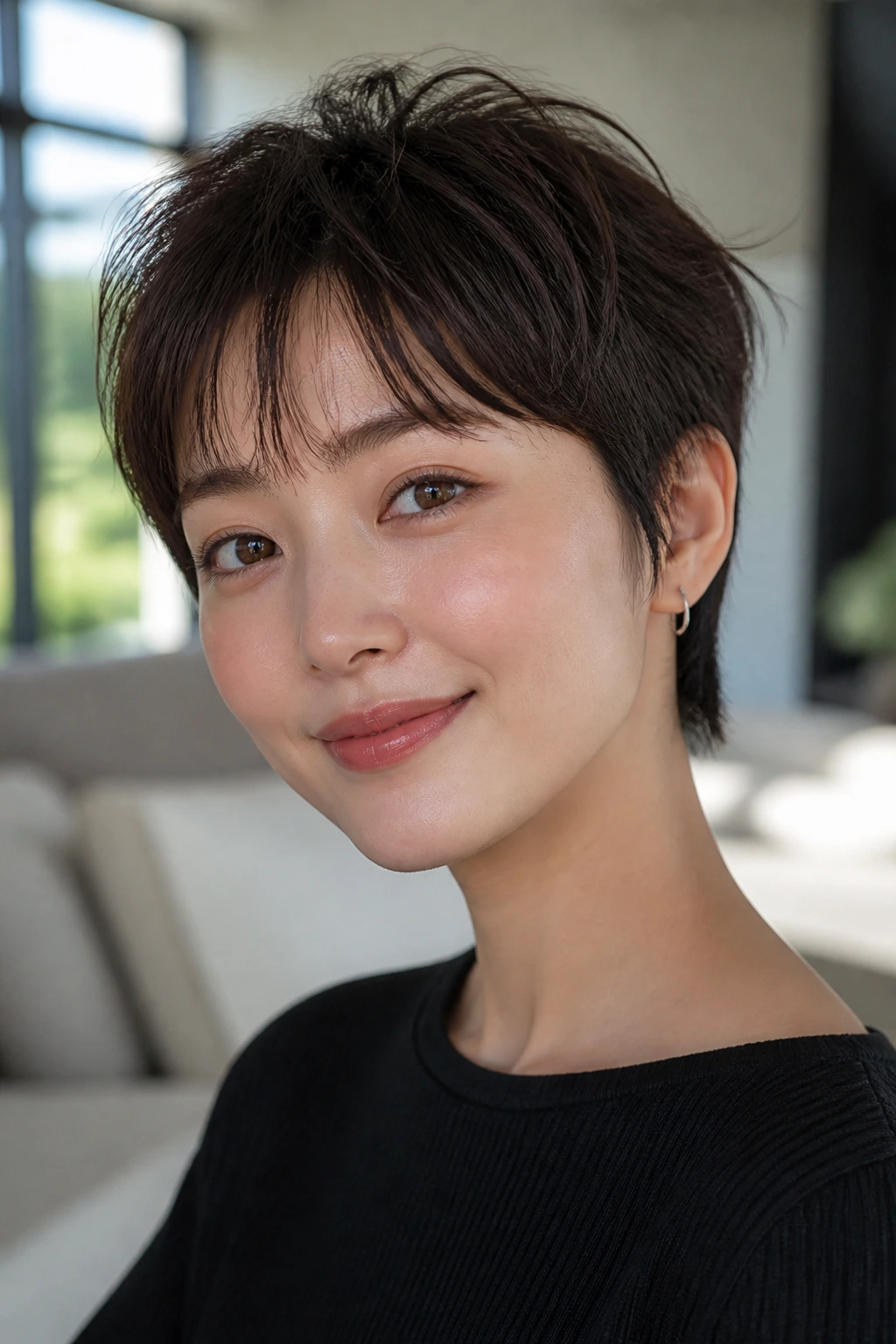
Longer Bangs, Softer Face: Keep the fringe between brow level and lash level, then let the sides stay a touch longer. This is the easiest option if you want room to tuck, sweep, or part the front.
Shorter Bangs, Sharper Outline: If you like a more graphic shape, shorten the fringe slightly and keep the nape tight. The cut reads cleaner, but it asks for more confidence and a more precise trim schedule.
Wavier Texture, Less Work: Leave the top a little longer and let the bangs bend with your natural wave. This reduces daily styling and gives the haircut a looser, more lived-in feel.
Fine Hair, More Lift: Keep the perimeter compact and add lift at the crown instead of thinning everything out. Fine hair usually looks better with careful shape than with aggressive texturizing.
Thick Hair, Hidden Weight Removal: Ask for internal layering and light debulking through the sides. That keeps the cut from puffing out while still preserving enough body to look full.
Tools and Products That Make the Cut Behave
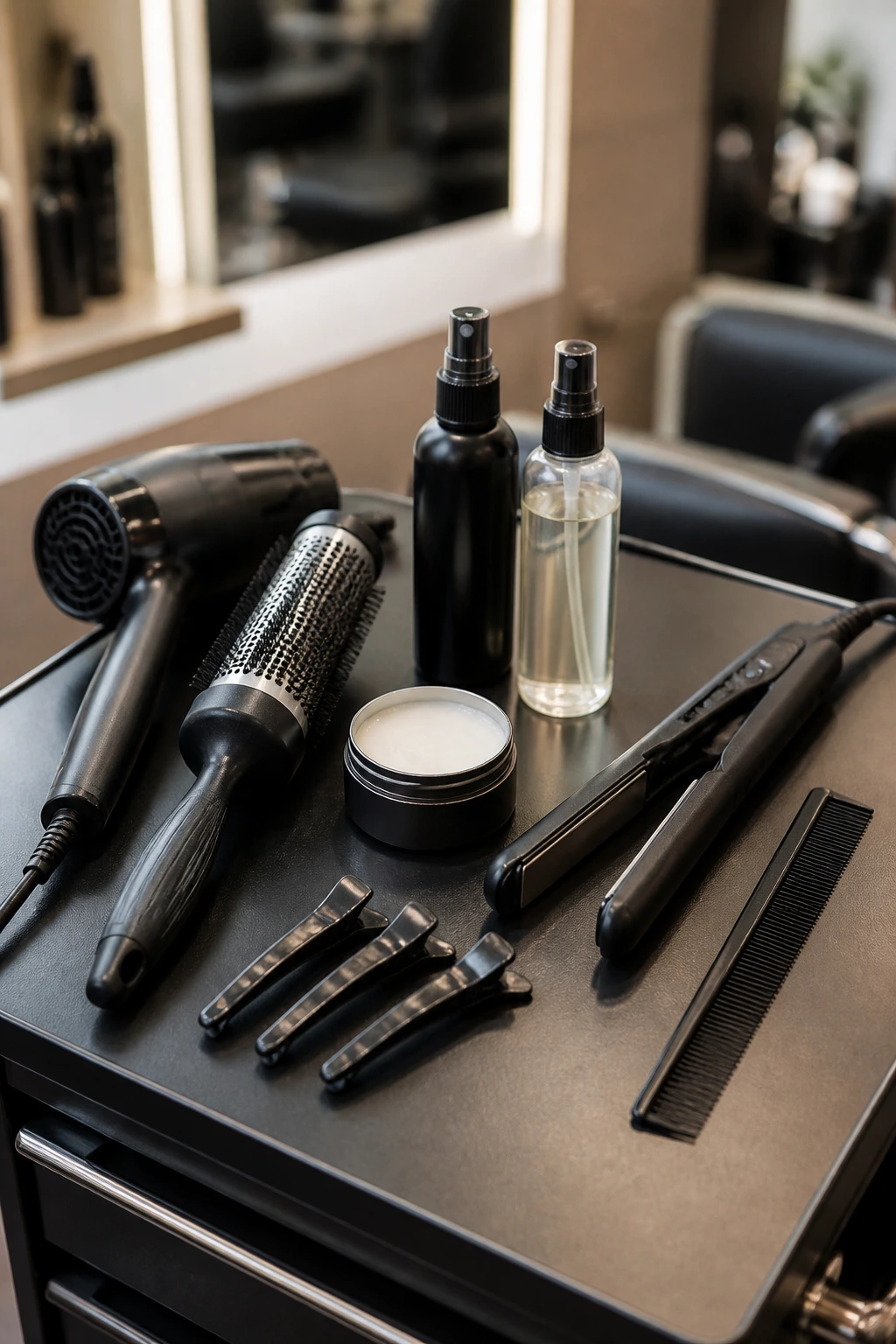
- Small round brush, 1 to 1.5 inches: Useful for curving the bangs and lifting the crown without blowing the shape wide open.
- Blow dryer with a narrow nozzle: A nozzle gives you more direction at the fringe and helps tame flyaways.
- Mini flat iron or slim straightener: Handy for bending the front pieces or calming a stubborn cowlick.
- Lightweight wax or styling cream: Best for piecey ends and controlled texture; use a tiny amount.
- Volumizing spray or root mist: Helpful if the crown goes flat by noon or if the hair is fine.
- Fine-tooth comb: Good for setting a neat side part and directing wet bangs.
- Duckbill clips: Useful when blow-drying the front in sections so the fringe doesn’t collapse back on itself.
- Heat protectant spray: Worth using any time you touch the bangs with a dryer or iron.
How to Keep the Shape Between Salon Visits
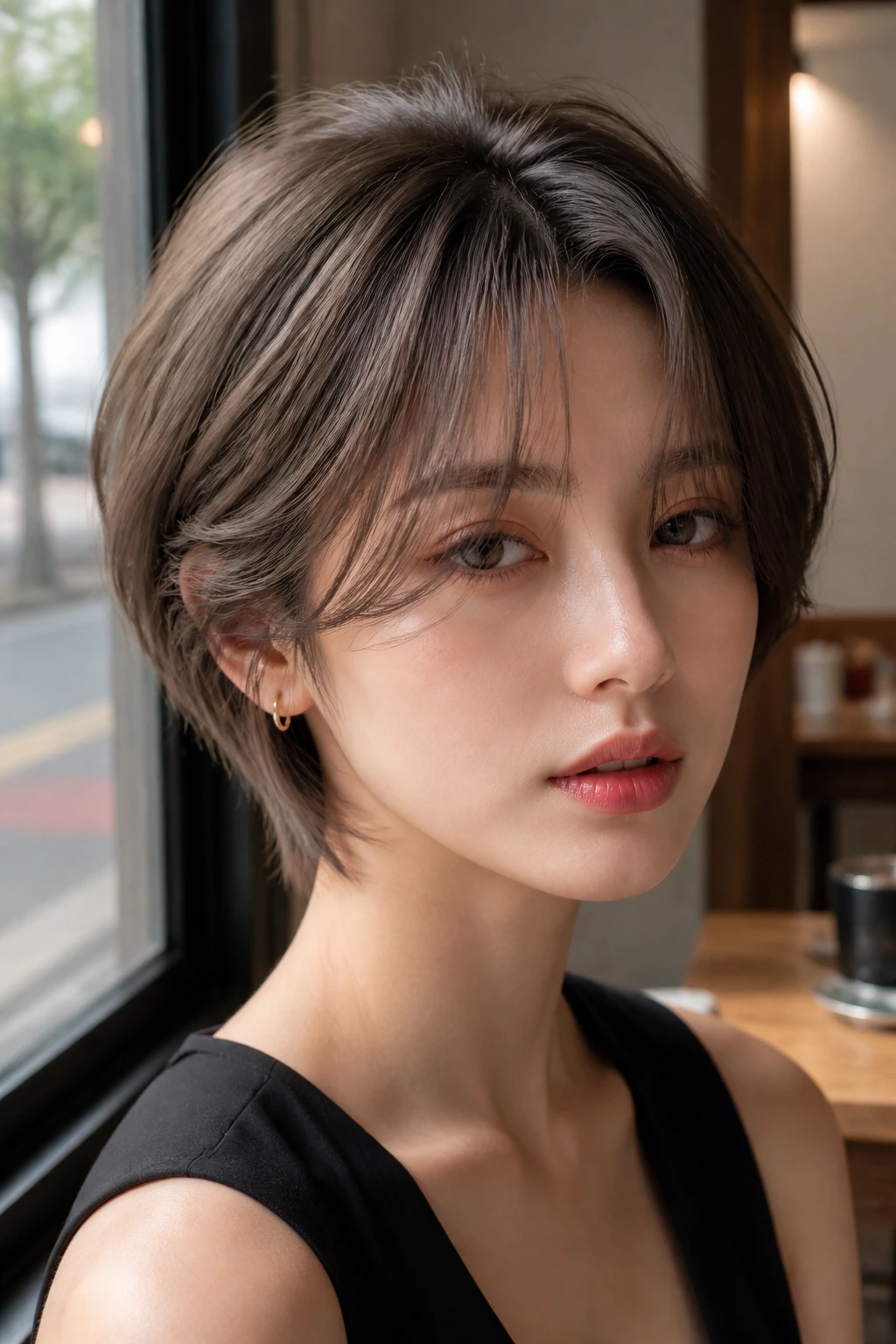
A pixie only looks effortless if the maintenance is steady. Bangs usually need attention every 2 to 3 weeks if you like them near the lashes, and the nape starts losing its clean line around 4 to 6 weeks. Let it go longer than that, and the haircut stops reading as a pixie and starts reading as a short grow-out.
Wash rhythm matters too. If your fringe gets oily fast, a light shampoo focused at the front and crown can save you from over-washing the ends. Dry shampoo helps, but use it at the roots only. Spraying the whole front turns soft bangs into chalk.
If the shape starts slipping, refresh just the front pieces first. Wet the bangs, brush them in the direction you want, and blow-dry from the root up. That one habit can buy you several extra good hair days.
Frequently Asked Questions
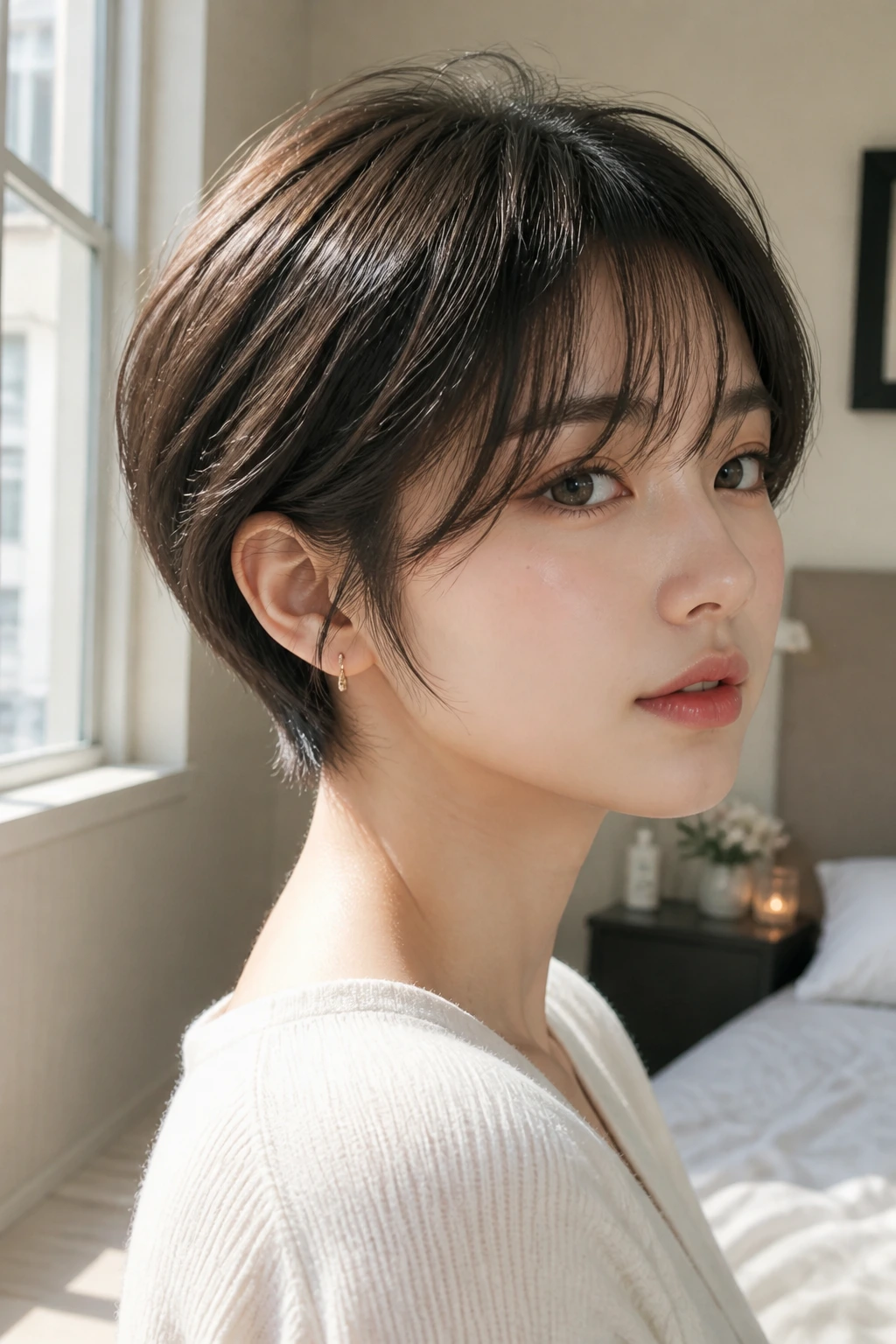
What makes a pixie cut look “Korean” instead of just short?
The softness. Korean-inspired short cuts usually keep a gentler outline, lighter fringe, and more intentional face-framing than a hard, blunt crop. The shape often has a rounded crown or airy bang section rather than a severe edge.
Do Korean pixie cuts with bangs work on thick hair?
Yes, but the inside of the haircut has to be handled carefully. Thick hair usually needs internal layering or hidden weight removal so the sides do not puff out and the bangs do not sit like a block across the forehead.
Can I get this style if my hair is wavy or slightly curly?
You can, and it often looks especially soft. The trick is leaving the fringe a little longer so the curl has room to sit, then shaping the cut to follow the bend instead of forcing it flat.
How short should the bangs be?
That depends on your forehead height, hairline, and how much styling you want to do. Brow-grazing or just-above-the-brow lengths are the easiest to live with; micro fringe needs more precision and more frequent trims.
What if my bangs split in the middle?
That usually means a cowlick or a strong growth pattern at the front. Dry the fringe first, guide it from the roots in the direction you want, and ask your stylist to cut it with the split in mind instead of against it.
Are these cuts good with glasses?
Some are, some need adjustments. Side-swept fringe, curtain bangs, and airy see-through bangs usually sit more comfortably around frames than dense straight-across bangs. Leave a little extra room at the temples so the glasses and hair do not compete.
How often do I need to trim a pixie like this?
Bang trims often land every 2 to 3 weeks, while the full shape usually needs attention every 4 to 8 weeks depending on how fast your hair grows. If you like a crisp outline around the ears and nape, stay closer to the shorter end of that range.
What if I want to grow it out later?
Pick one with longer bang pieces or face-framing length at the sides. Those versions move into a bixie or short layered bob more cleanly, which saves you from the awkward mushroom stage that some very short crops create.
A Short Cut That Still Feels Like You
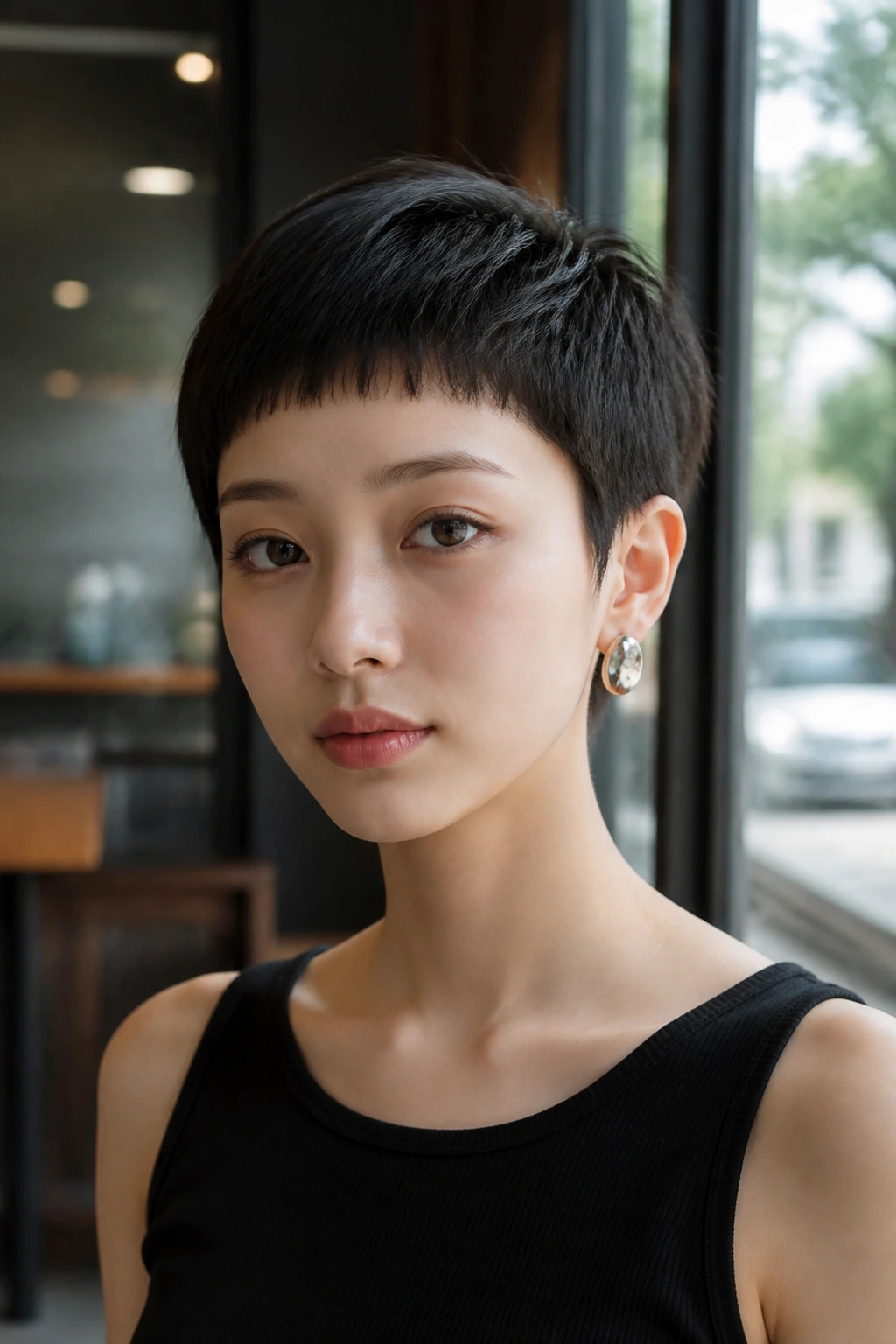
The best thing about these Korean pixie cuts with bangs is that they do not ask you to become a different person to wear them. They can be neat, playful, soft, sharp, airy, or quietly polished, and the difference usually comes down to a few inches at the fringe and the way the crown is shaped.
If you want short hair that can handle real mornings, pick the version that works with your growth pattern, not against it. That is the whole trick. A pixie that sits well on your hairline, your face, and your weekday routine will always beat a cut that only looks good in the mirror on the day you leave the salon.