



A chin-length bob can look ready for a black-tie dinner — until the first bobby pin slips and the side clip starts migrating toward your ear. Thick hair has a sneaky way of doing that. It gives you body, grip, and a little built-in drama, but it also brings weight, bulk, and a tendency to puff at the nape the second you try to tame it. That’s the real puzzle behind fancy hairstyles for short hair with thick hair: you’re not fighting a lack of volume, you’re learning how to aim it.
The styles that work best on dense short hair are the ones that respect the cut line. They don’t try to fake length. They use clean parts, small sections, tucked ends, and deliberate decoration — a pearl pin here, a velvet ribbon there, a side sweep that turns a regular bob into something with a point of view. Once you stop expecting short hair to behave like long hair, the options open up fast.
And yes, the details matter. A crown braid on thick hair has a richer shape than the same braid on fine hair. A slick side tuck holds better when the hair is dense enough to anchor the pin. A pixie with a lifted front looks sharp because the hair has enough body to stand up before it settles. That’s the fun of this length. It behaves like it has opinions.
Why These Styles Hold Their Shape So Well
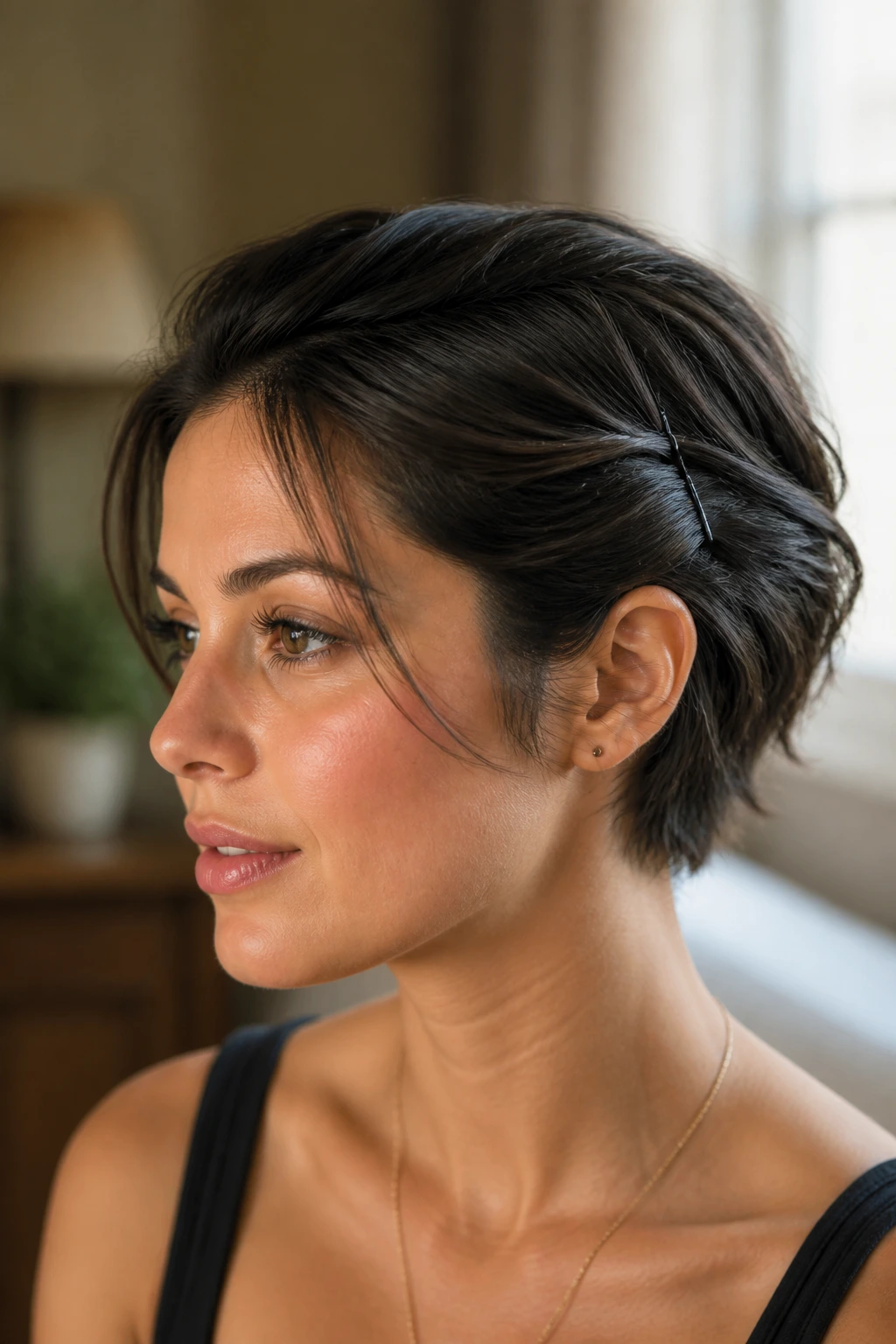
-
Dense hair gives pins something to grab: A bobby pin clings to thick strands better than it does to silky, airy hair, so a tucked twist or side clip usually stays in place longer.
-
Short length makes the silhouette cleaner: You’re not burying the head in a cloud of curls. The haircut line stays visible, which is why one neat side part or one rolled nape can look so finished.
-
Smaller sections control the bulk: Thick hair needs tighter parting and narrower sections. If you grab too much hair at once, the center stays soft and the style balloons at the edges.
-
Accessories matter more, not less: A jeweled pin, pearl barrette, or satin ribbon does a lot of work on short hair. One well-placed accessory can make the whole style feel intentional.
-
Shape beats length every time: A clear sweep, tuck, twist, or wave reads as polished far faster than piling on too many moving parts. Short hair looks best when it picks one line and commits.
What Thick Hair Needs Before the First Pin Goes In
Thick short hair behaves best when it’s prepped with restraint. Heavy cream, too much oil, or a soft conditioner left at the roots will make the whole head slide around, and that’s the fastest route to pins falling out by dessert. Start with clean, dry, or almost-dry hair, then decide whether you need grip or shine. Those are not the same thing.
For sleek styles, use a small amount of smoothing cream only from mid-length to ends, then blow-dry with the nozzle pointed downward so the cuticle lays flatter. For waved or braided styles, add mousse or lightweight foam to damp roots and a touch of texturizing spray once the hair is dry. Thick hair does not need a huge amount of product. It needs the right product in the right place.
Sectioning matters more than people think. With short dense hair, a 1-inch section can behave completely differently from a 3-inch section, especially near the temple or nape where the hair wants to spring out. Clip the hair you are not using, and let each set or twist cool before you touch it. That cooling time is what helps the shape hold. Rush it, and you’ll spend the evening fixing pieces that never had a chance.
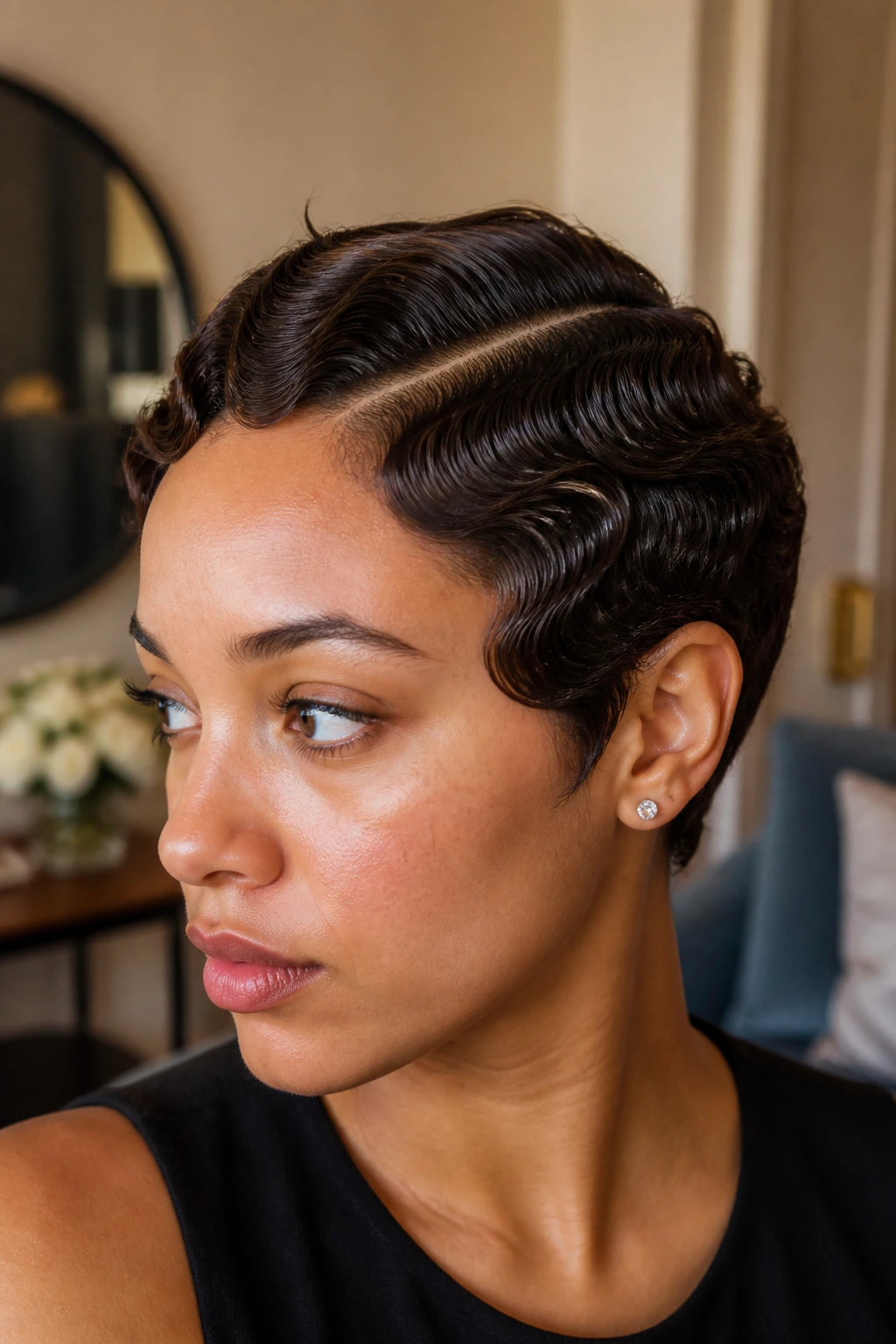
1. Deep Side-Part Finger Waves on a Pixie
A deep side-part finger wave turns a short cut into something sleek and deliberate without pretending the hair is longer than it is. Thick hair makes this style easier than it looks because the density gives the waves a firm edge once they’re set.
Shape the Front First
Work on damp hair with a walnut-size amount of mousse, then carve a side part with a rat-tail comb. Direct the front section forward with a small flat brush and pinch each S-curve into place using the comb and your fingers. If your hair fights back, clip each ridge for a few minutes before moving on.
- Use a 1-inch flat iron only if the hair refuses to bend by hand.
- Keep the wave section narrow, about 1 to 1½ inches wide.
- Finish with a fine-mist hairspray, not a heavy spray that leaves white dots.
The style looks sharp with statement earrings and a bare neckline. That contrast is the whole point. One tiny wave, set cleanly, does more than a dozen loose tricks.
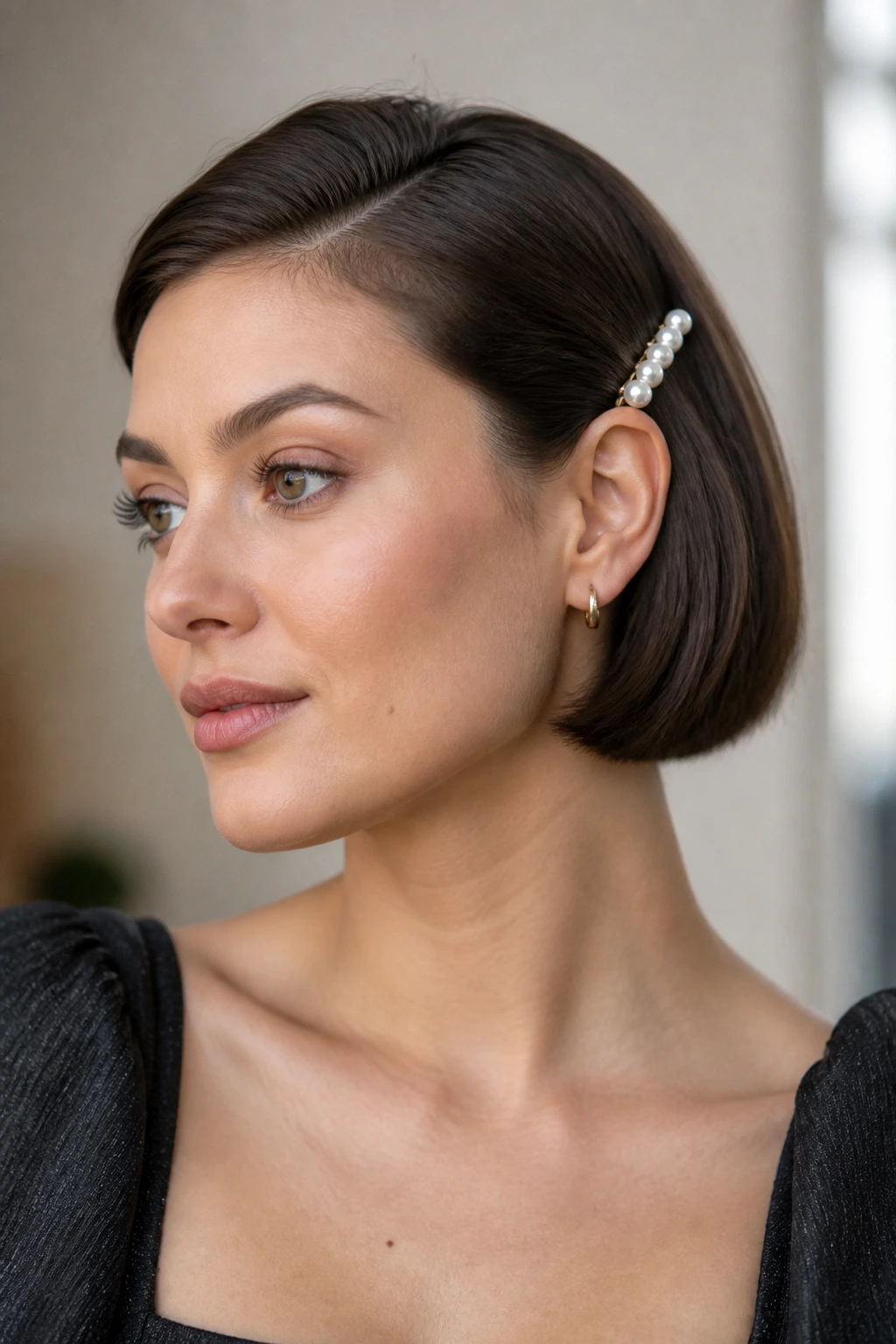
2. Sleek Tucked-Behind-Ear Bob with a Pearl Barrette
Can a bob look formal without curls? Absolutely. In fact, this is one of the best moves for thick short hair because it lets the haircut do the work while the barrette finishes the sentence.
Why It Holds So Cleanly
The trick is to smooth only the top layer and leave the underside controlled, not flattened to death. Use a smoothing cream from the middle of the hair down, then blow-dry with a brush toward one ear. Tuck the heavier side behind the ear and pin it just above the lobe, where the bone gives the clip something firm to grab.
A pearl barrette works best when it sits slightly forward, not dead center. That little shift keeps the style from looking stiff. If your bob has a blunt end, let that edge stay visible. It gives the whole look a crisp finish.
3. Braided Crown Half-Up on a Thick Bob
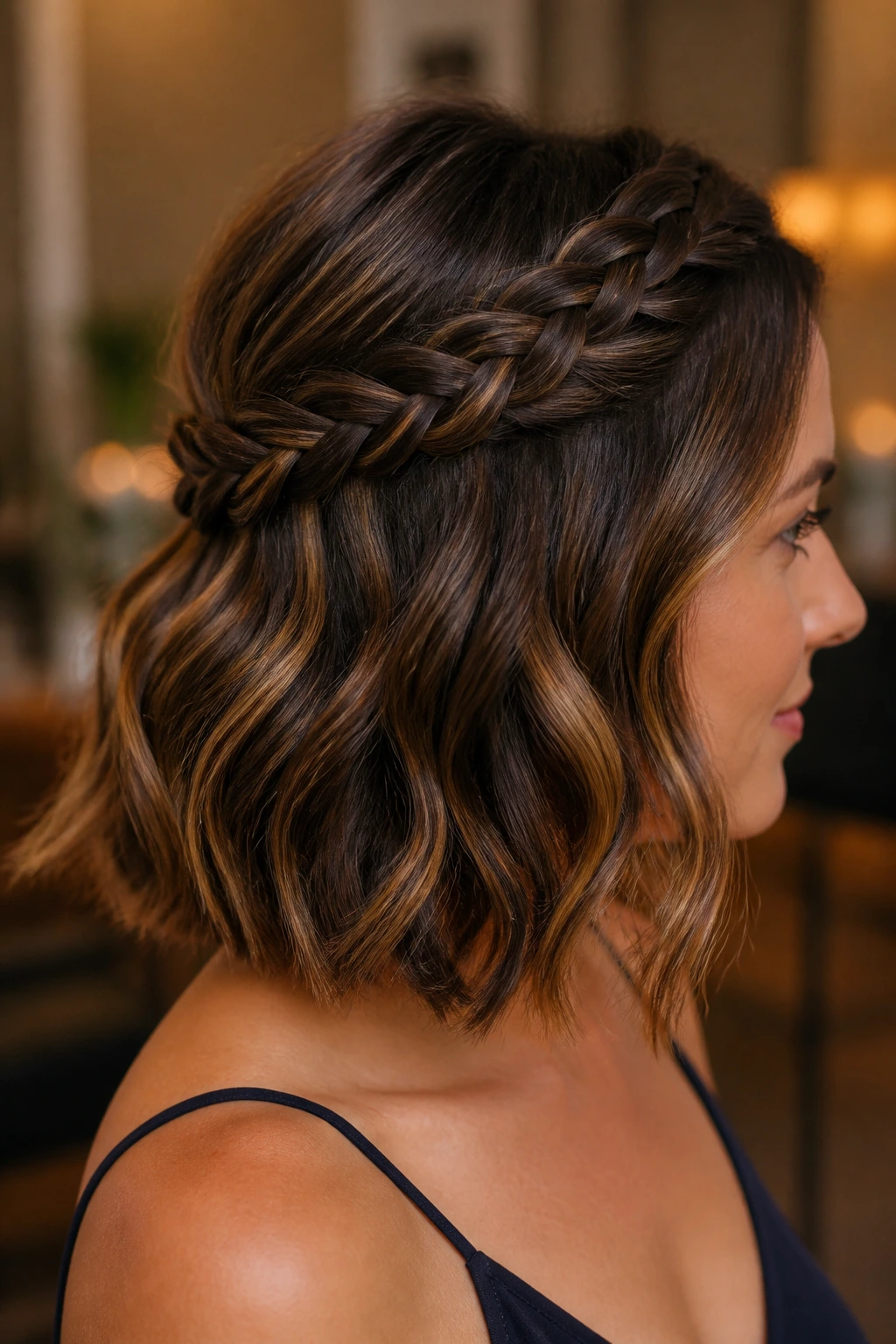
A braided crown half-up is the style I’d reach for when the hair needs to look dressed up but not overworked. Thick hair gives the braid body, so even a narrow braid reads substantial instead of stringy.
Start at one temple and braid a thin section along the hairline, then repeat on the other side. Pull both braids back and pin them together at the crown. Leave the rest of the bob down and softly curved at the ends.
Small Details That Matter
- Braid the hair when it’s slightly textured, not slippery-clean.
- Keep the braid tight at the start so the crown sits flat.
- Pin the ends under the braid so nothing pokes out.
This one is good when you want face-framing pieces and a little height without going full updo. It has that easy, expensive-looking shape that comes from control, not volume overload.
4. Mini French Twist at the Nape
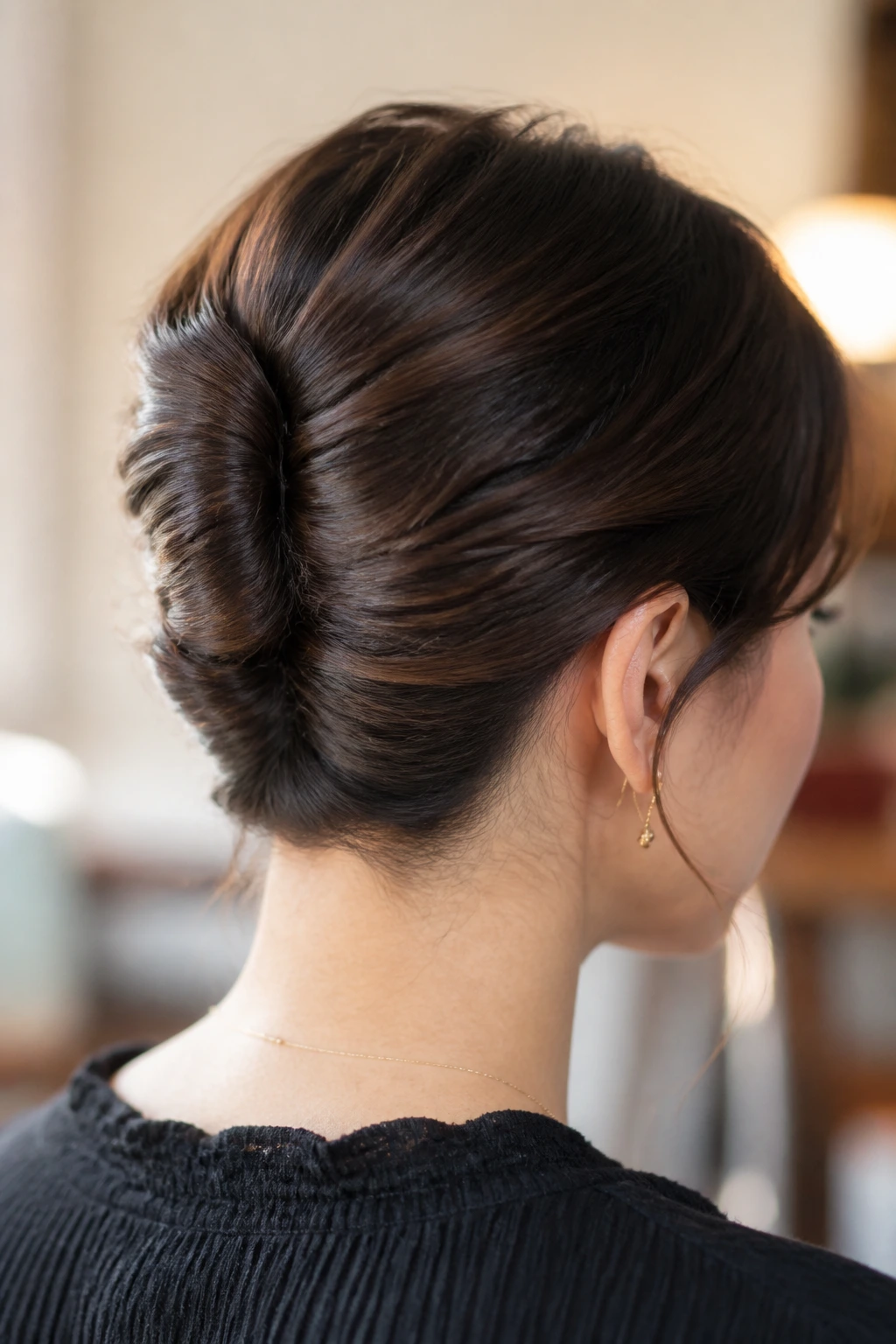
A mini French twist on short hair feels clever because it looks like a full updo from the front and a tidy little fold from the back. Thick hair makes it easier to tuck enough length into the roll, which is half the battle.
Gather the hair low at the nape, twist it upward, and tuck the ends into the center of the roll. Secure it with U-pins or long bobby pins placed upward through the base, not across the surface. The surface should look smooth; the grip should live underneath.
The style shines when the nape is neat. If you have layers that want to escape, mist them first with spray, then press them in with the tail of a comb. It’s not the fastest style in this list, but it has one of the cleanest finishes.
5. Sculpted Faux Hawk with Sleek Sides
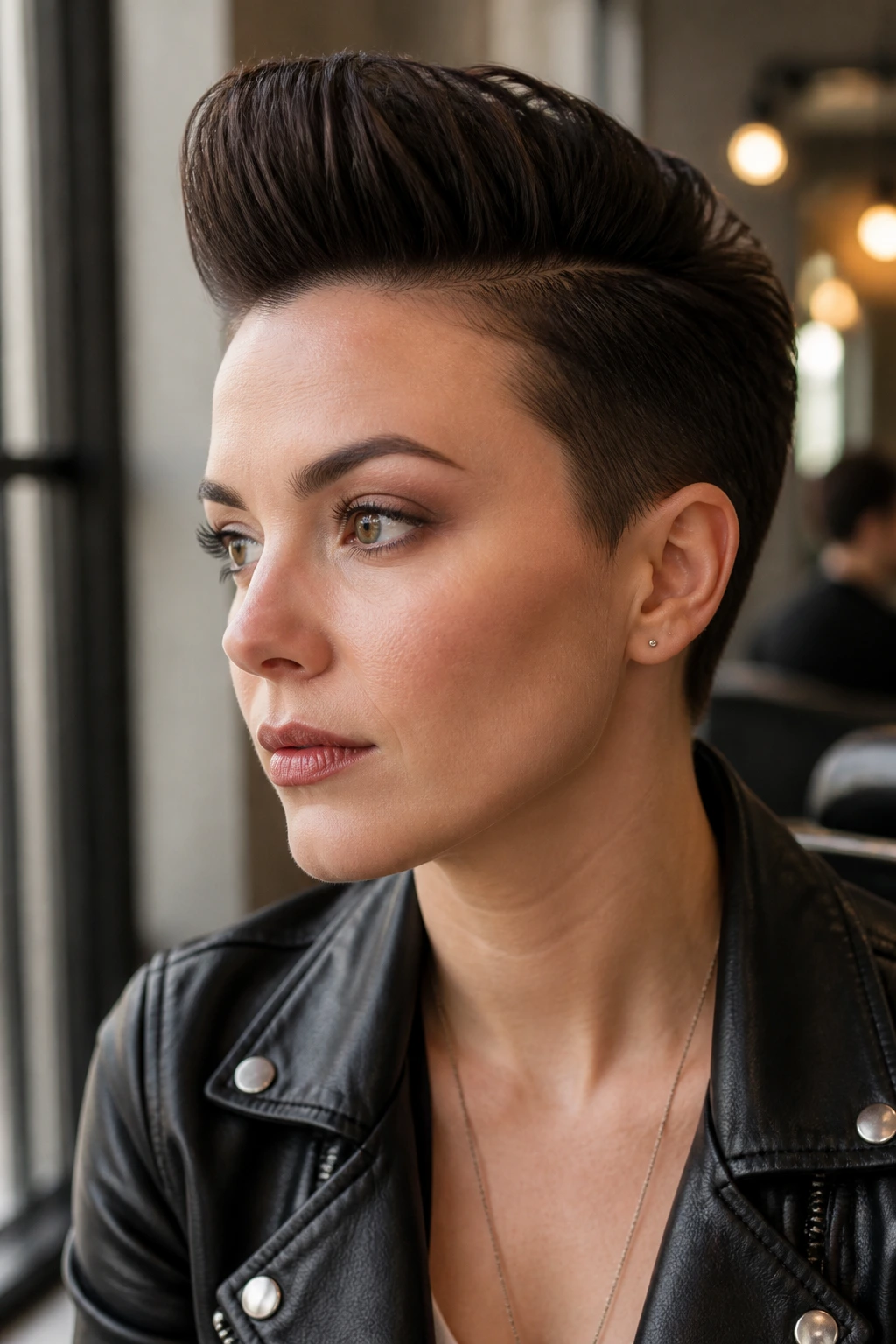
The faux hawk is the bold one in the group, and thick short hair wears it well because the center section already has enough mass to stand up. You are not building height from scratch. You are shaping what’s already there.
What Makes It Different
Slick the sides back with a light pomade or gel, then lift the crown with a round brush or fingers while blow-drying. The center should rise, not frizz. A little teasing at the roots helps, but only in the top section. If you tease the whole head, the style turns fluffy instead of sculpted.
Use a strong-hold spray once the shape is right. That keeps the lifted center from collapsing toward the crown. This looks best with sharp collars, clean necklines, and earrings that don’t compete for attention.
6. Side-Swept Rope Braid Accent
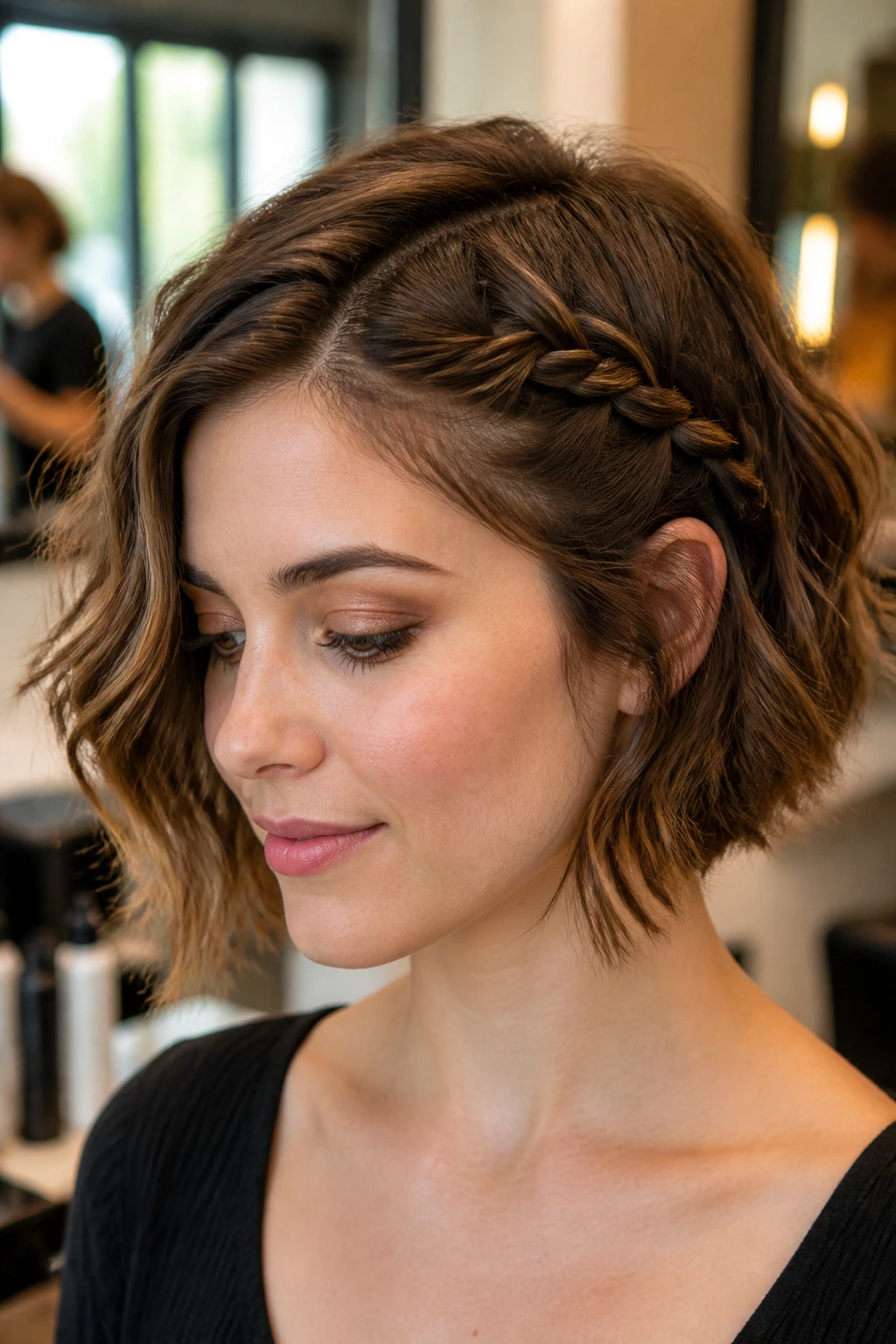
A rope braid across the front of short thick hair does something useful: it keeps the face open while adding a polished line that looks intentional. Rope braids are also kinder to thick hair than tiny traditional braids, because the twist shows the texture without turning into a knot.
Take a front section from the heavier side, divide it into two strands, and twist each one away from the face before wrapping them around each other. Pin the end behind the opposite ear and let the rest of the hair fall in soft bends or a smooth bob.
This is one of those styles that looks more complex than it is. Good news. It also survives a long evening without asking for much besides a few hidden pins.
7. Vintage Pin-Curl Bob
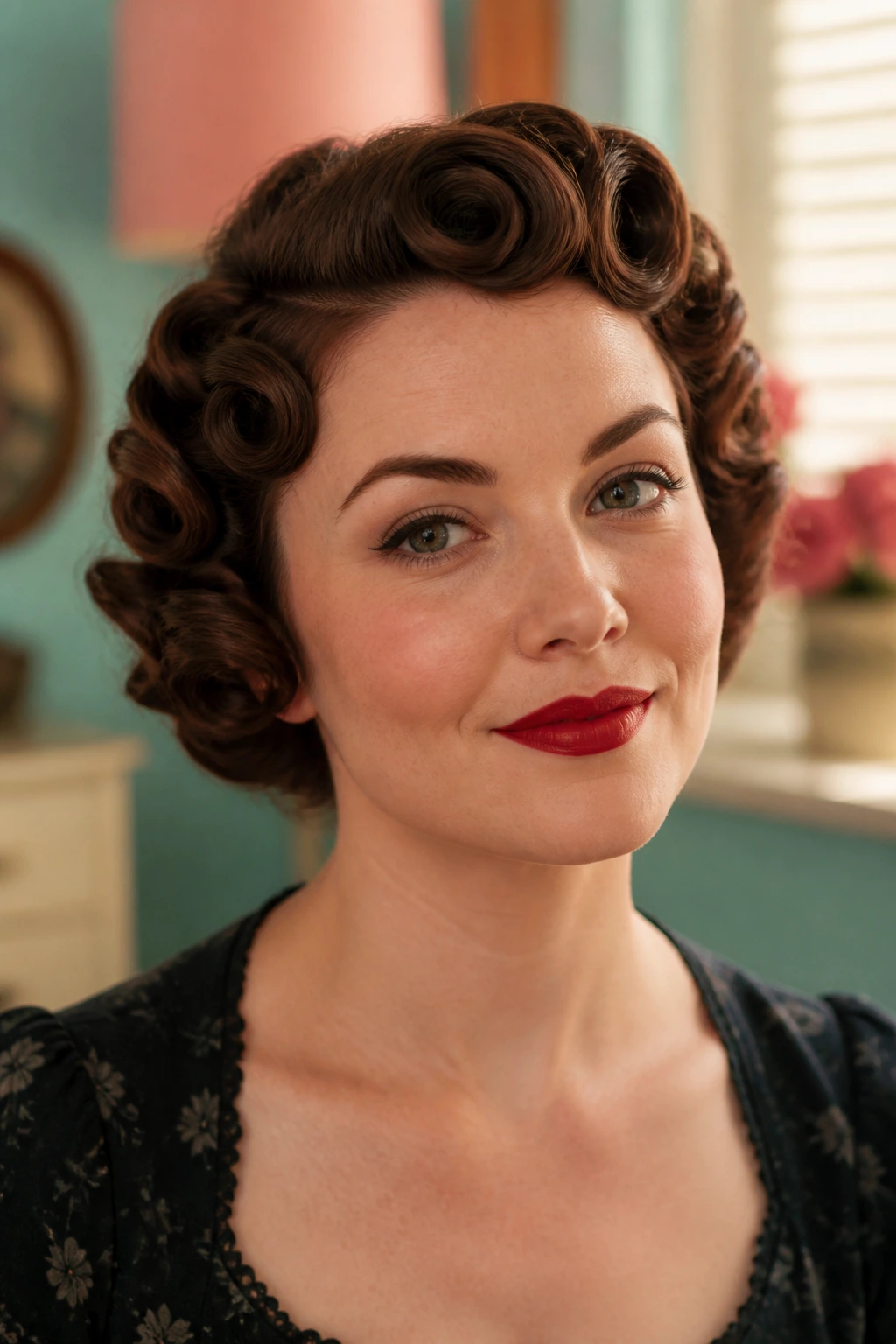
Pin curls are old-school for a reason. They give short hair that exact, glossy curve that regular loose curling sometimes misses, and thick hair holds the pattern nicely once it cools.
Set the hair in small 1-inch sections, wrap each section flat against your finger, then clip it to the scalp and let it cool all the way through. Once the pins come out, brush the curls gently into a soft wave. Don’t rush the brushing. The shape comes from the set, not from force.
How to Keep It Neat
- Let every curl cool before releasing it.
- Use a light setting lotion or mousse instead of heavy cream.
- Brush only after the curls feel fully dry.
The result has a polished, dressy finish that works especially well with one dramatic lip, strong brows, or a simple neckline. It’s a little retro, in the best way.
8. Low Folded Knot for Short Lengths
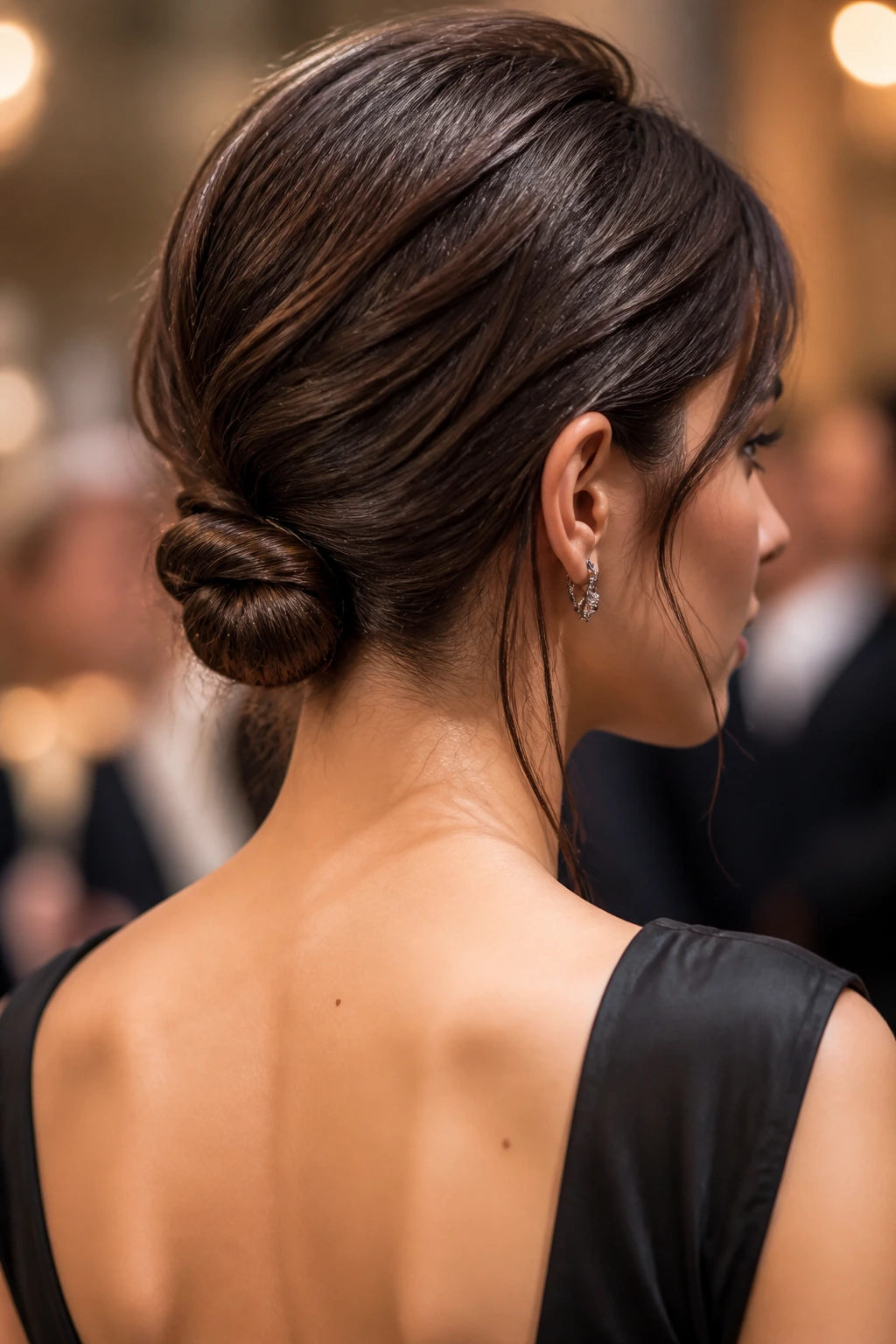
Can a bob really become a knot? Yes, if the knot stays low and compact. Thick hair gives you enough material to fold, even when the ends are shorter than you’d like.
Pull the hair to the nape, gather it into a tiny elastic or loop, then fold the ends upward and inward. Pin the loose ends flat against the head so the knot looks shaped rather than stuffed. The secret is to keep the base tight and the finish narrow.
Why It Works
The low placement hides the fact that the hair is short. The compact knot keeps the profile sleek, and the density of thick hair makes the fold look full instead of thin. If layers escape, pin them under the knot rather than trying to force them into the center.
This style is good for dinner events where you want your hair off your neck but still want the haircut to show.
9. Glossy Slick-Back Crop
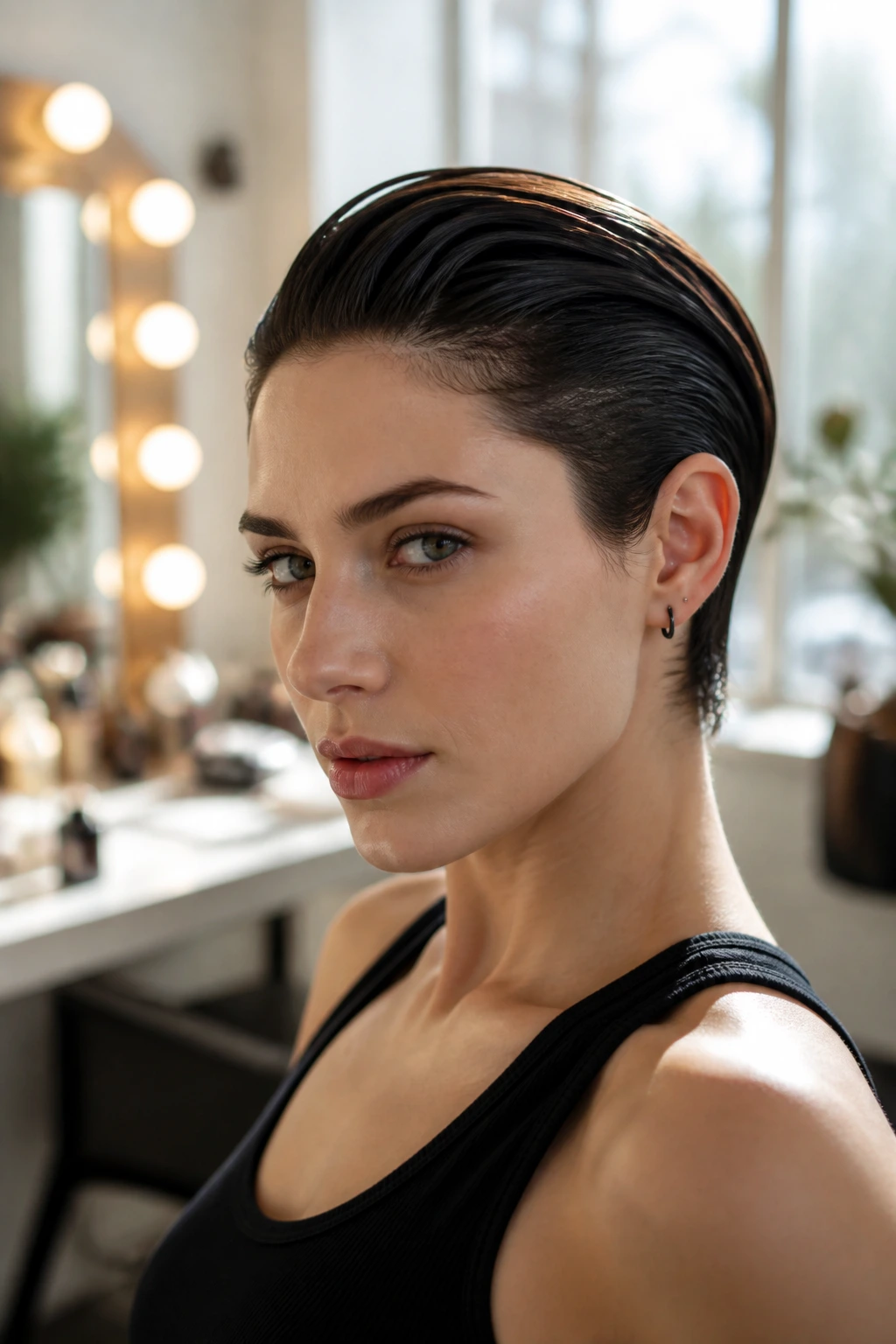
A glossy slick-back crop can look severe in photos, but in person it has a sharp, polished edge that thick short hair carries better than most cuts. Dense hair gives the style enough structure that it reads sleek instead of flat.
Use gel or a strong styling cream on damp hair, then comb everything straight back or into a slightly off-center part. Keep the product close to the scalp and hairline, and don’t drag it too far down the length. That’s where the greasy look creeps in.
This style belongs with bold earrings and a simple outfit. The hair becomes the clean line, and that line does not need help from anything else.
10. Bubble Ponytail on Chin-Length Hair
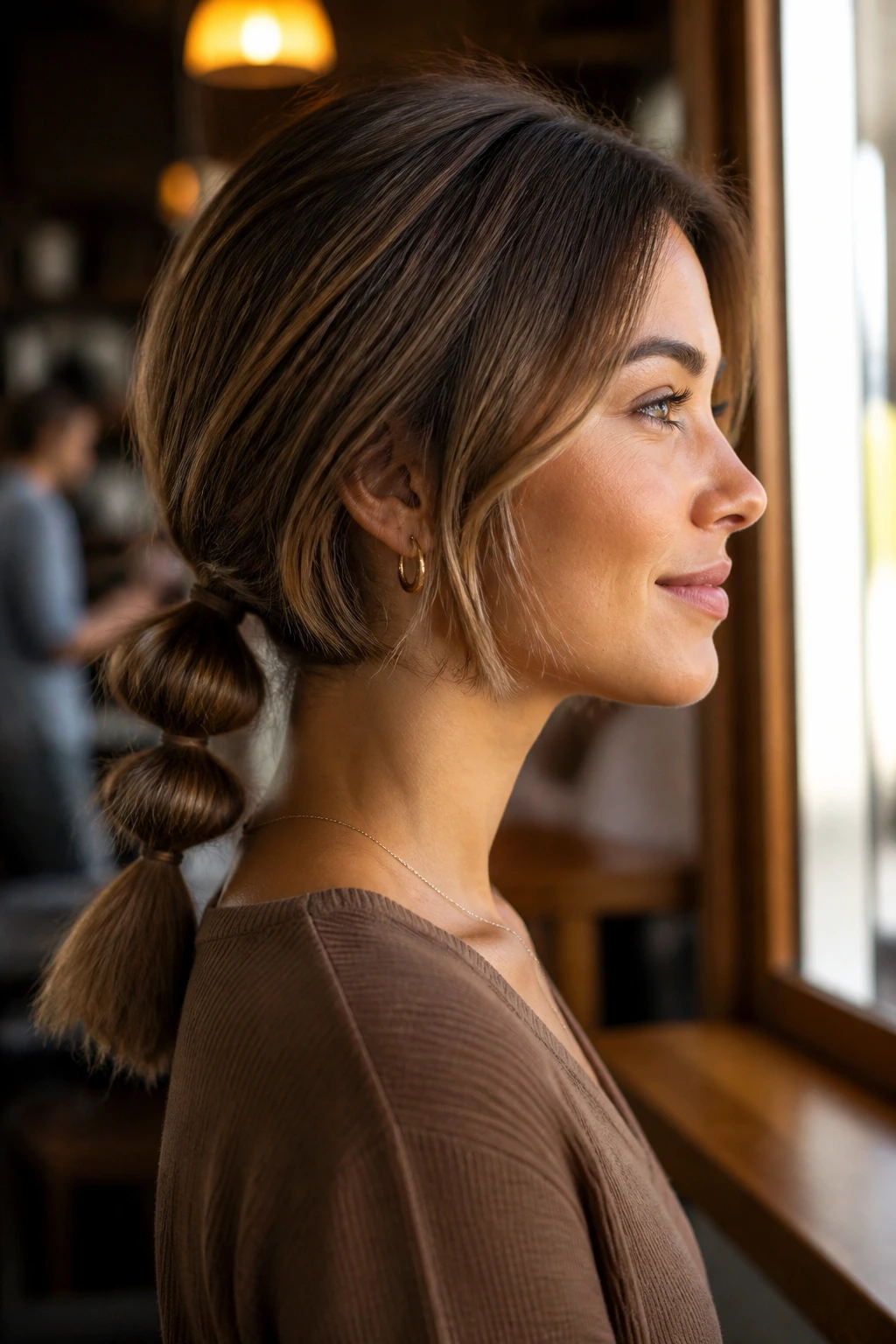
A bubble ponytail on short hair sounds a little cheeky, and that’s why it works. If your bob or lob reaches a low ponytail, thick hair will give each bubble enough fullness to look deliberate instead of droopy.
Secure the hair low at the nape, then add clear elastics every 1 to 1½ inches down the tail. Gently tug each section outward so it forms a round shape. If your ends are short, tuck them under the final bubble or pin them flat.
It reads playful, but the repeated sections give it a dressed-up rhythm. Use this when you want something a little less formal than a twist and a little more interesting than a plain ponytail.
11. Jeweled Double-Twist Half-Up
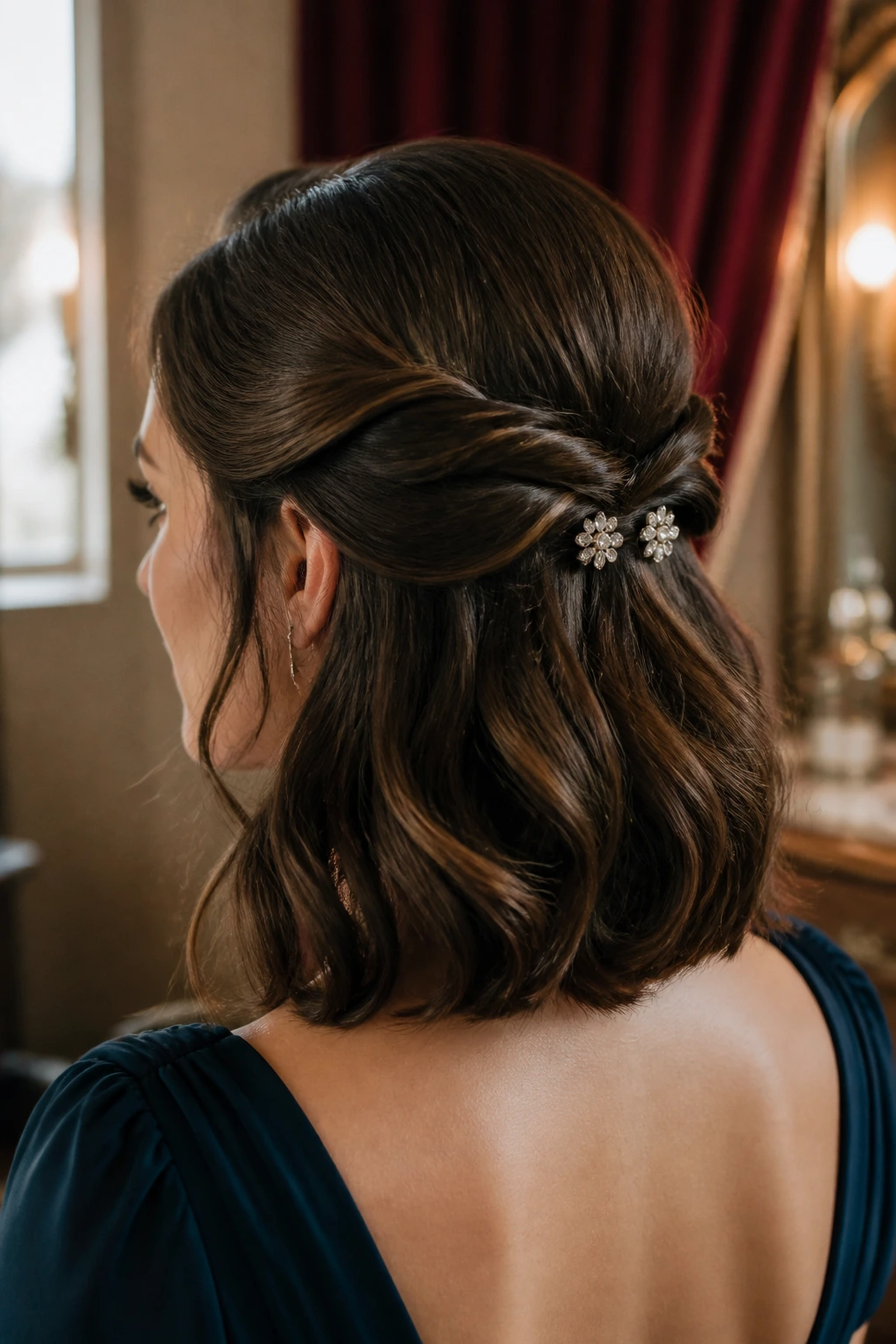
Two twists pulled from the temples create a tidy, balanced half-up style that thick hair can carry without looking skimpy. Each twist has enough body to show, and jeweled pins at the back make the finish feel finished instead of rushed.
Twist each side away from the face, cross them at the back of the head, and pin them just below the crown. Leave the rest of the hair down in loose bends or smooth ends. If the twists feel bulky, flatten them lightly with your hands before pinning.
I like this style for outfits with sparkle because the hair doesn’t need to compete. The pins are the ornament. The twists are the structure.
12. Soft Hollywood Waves with One Side Pinned
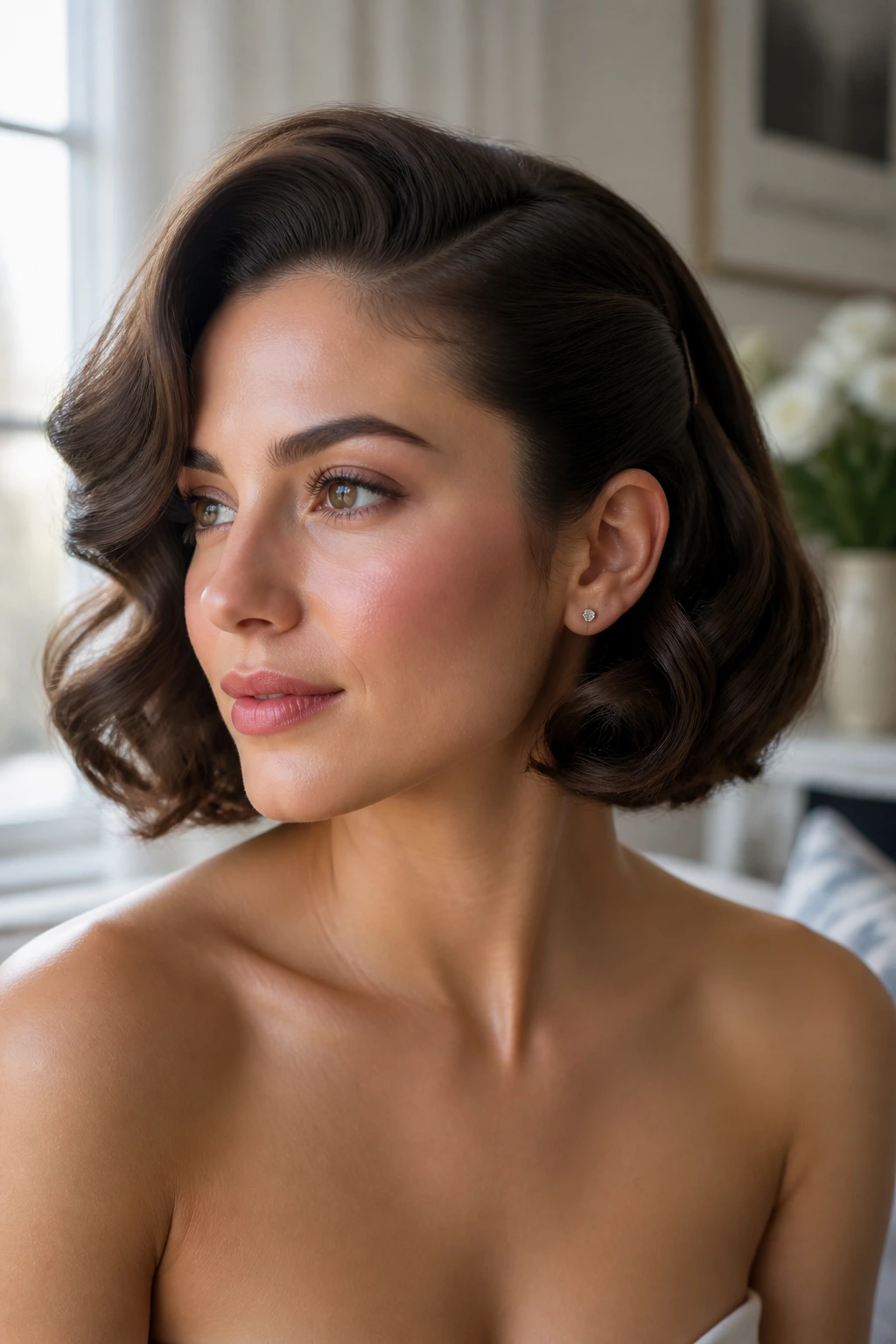
Hollywood waves on short thick hair can look expensive fast, but only if the sections are small and the brushing is gentle. Large sections create loose bends; small sections create the clean wave line that makes this style read formal.
Wrap 1-inch sections around a curling iron, clip them to cool, then brush them together into one continuous wave. Pin one side behind the ear and let the other side flow. The contrast between the pinned side and the soft curve is what gives the style its shape.
Best Use Case
This is the one I’d choose for a dress with a strong shoulder line or a simple column shape. The hair stays smooth near the face and moves at the ends, which keeps thick short hair from looking puffed out.
13. Halo Braid with Hidden Ends
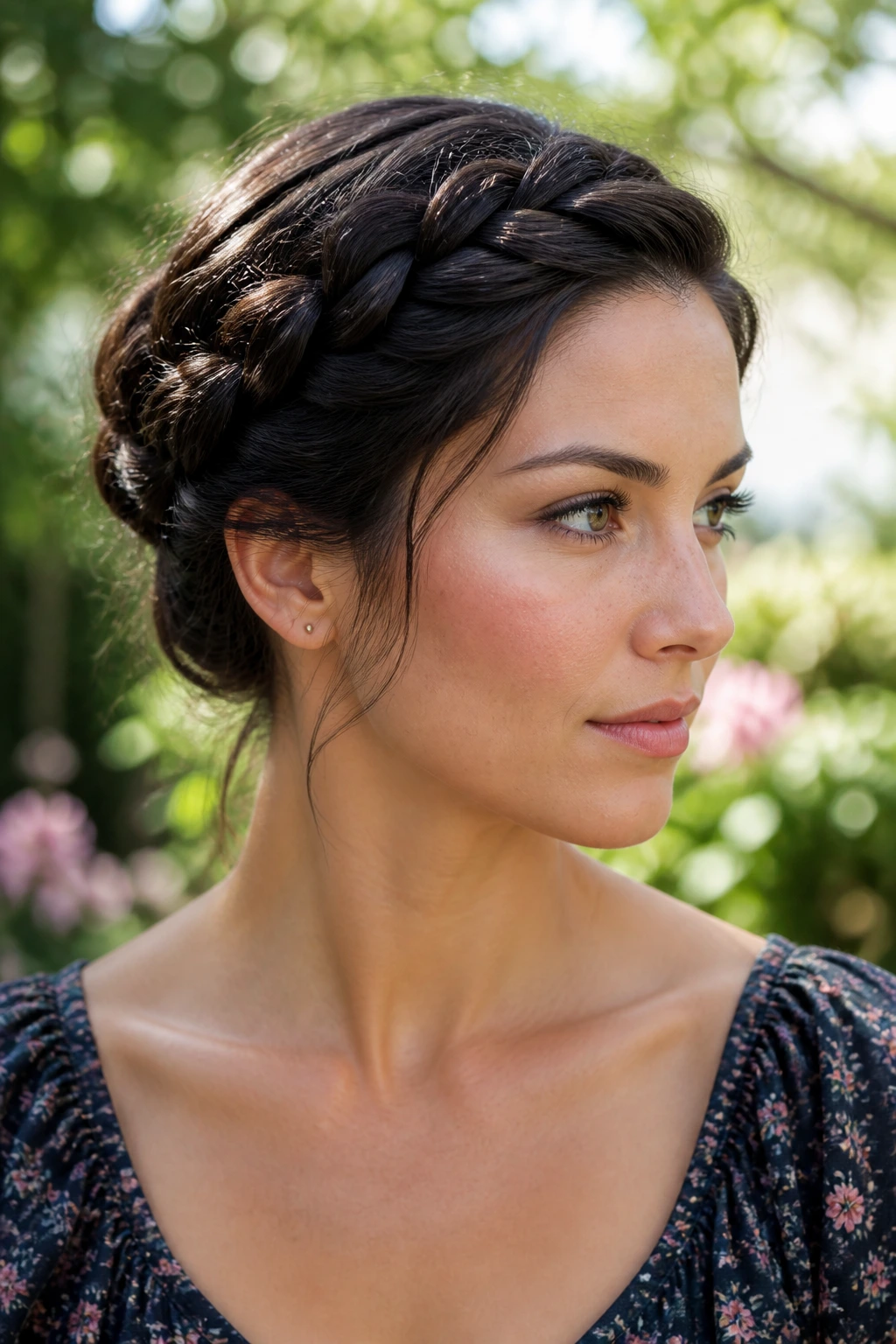
Why does a halo braid look richer on thick hair? Because the braid has more substance to wrap around the head. Thin hair sometimes needs padding to get the same effect. Thick hair doesn’t.
Braid from one ear around the head, following the hairline, and tuck the tail under the braid at the opposite side. Pin the ends flat and hide them under the braid itself. If your hair is layered, use a little hairspray on the short pieces before braiding so they don’t poke loose.
How to Wear It
Wear it when you want the face and neckline completely open. It’s secure, elegant, and not fussy. A halo braid also stays put through more movement than most short upstyles, which is useful if the evening involves dancing, not just standing under flattering lighting.
14. Rolled-Under Bob with a Barrette Line
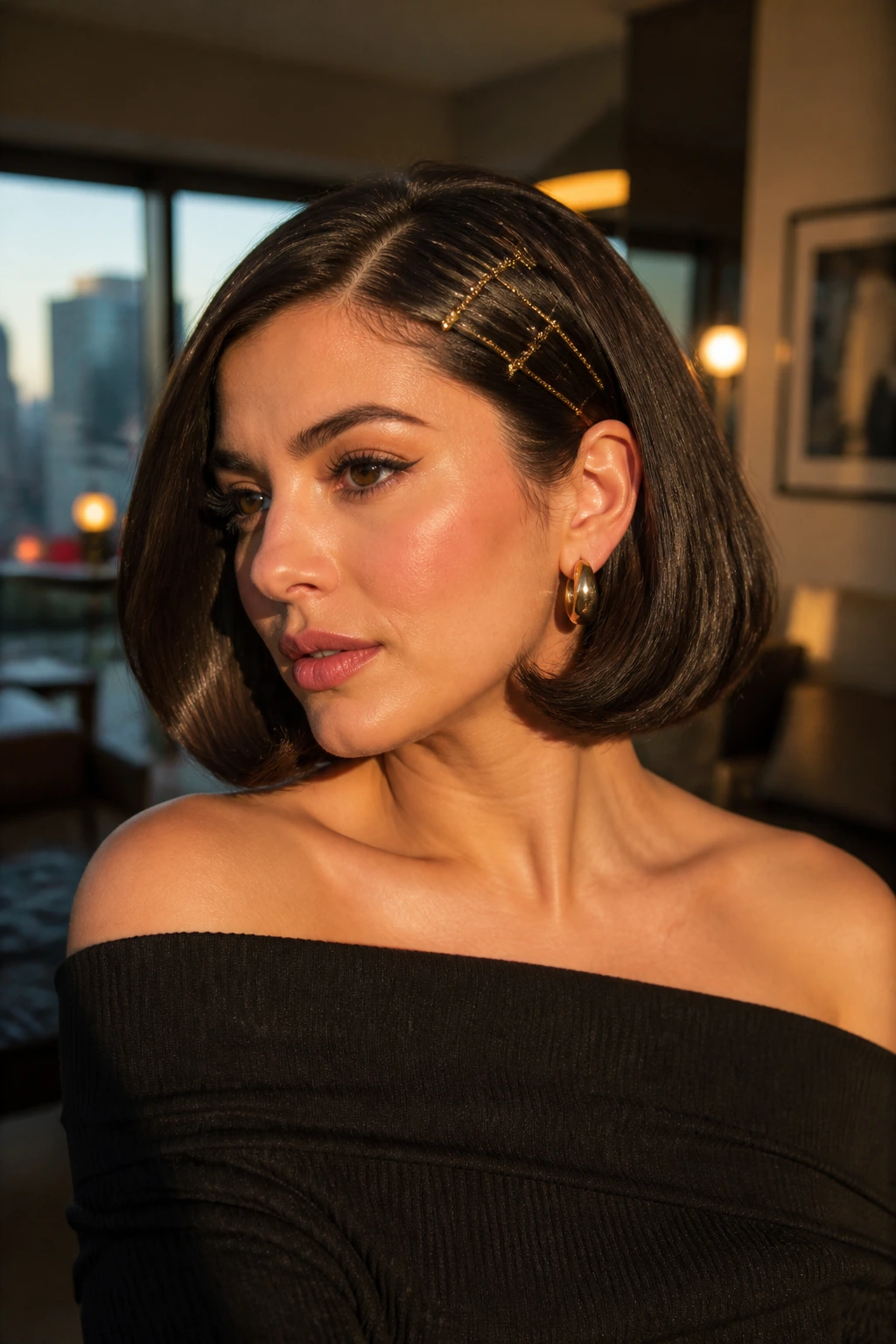
A rolled-under bob is the neat freak of the group. Everything bends inward, the silhouette stays smooth, and thick hair gives the roll enough weight to hold a clean line.
Use a round brush or large flat brush to direct the ends under while blow-drying. Once the shape is there, place two or three small barrettes in a straight line above one ear or along the side part. That row of clips adds polish without stealing the whole look.
The style works because the haircut line stays visible. You still see the bob, only tidier. That’s often more elegant than trying to hide the cut under elaborate styling.
15. Crown-Lift Pompadour
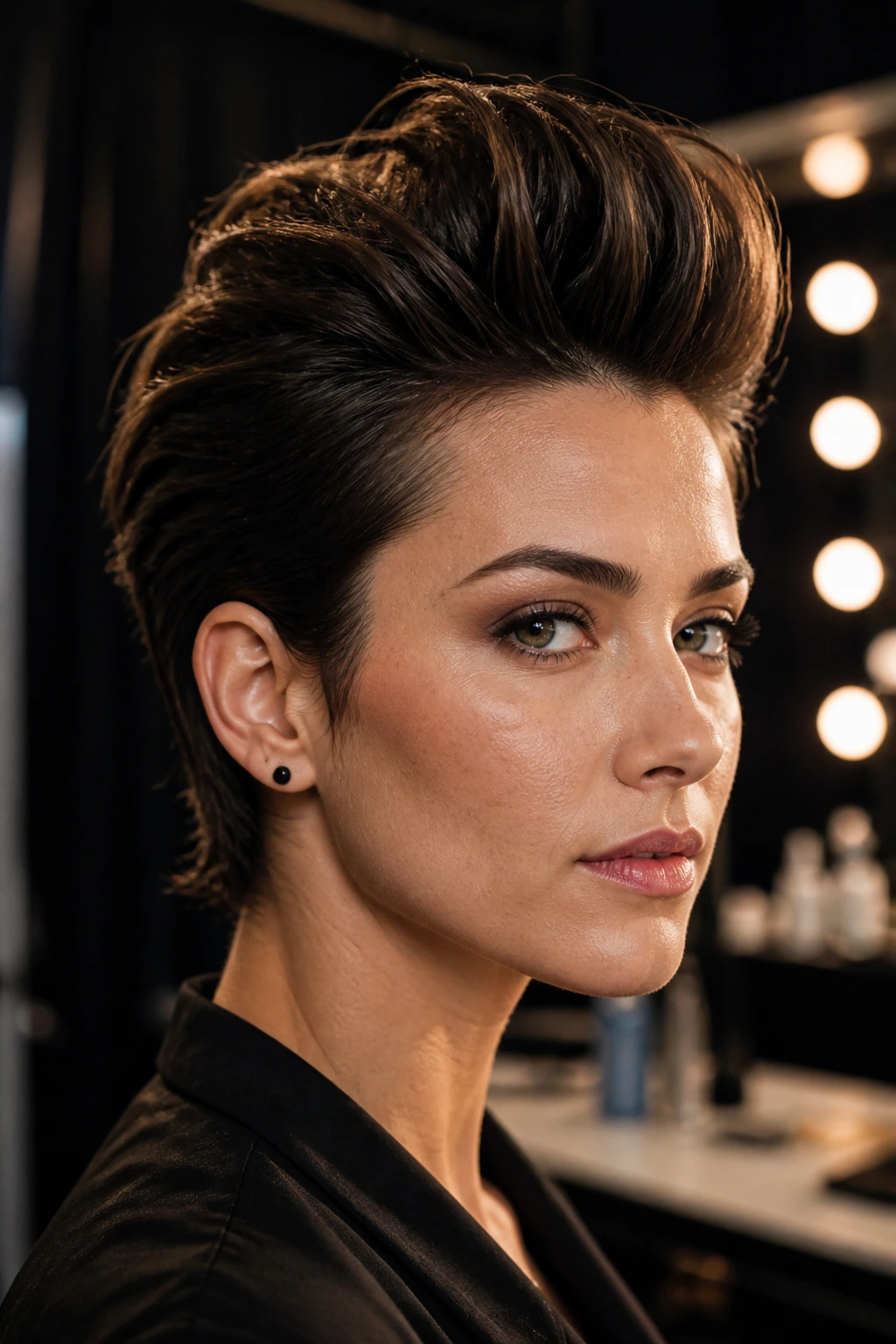
A crown lift can be dramatic without becoming fussy, and thick hair is one of the few textures that can support it without constant adjustment. The lift at the front gives height, while the sides stay controlled.
Backcomb the roots lightly at the crown, then smooth the top layer over the lift. Pin the sides back low or tuck them behind the ears. The front should rise in a clean arc, not a puffball. If the lift looks too round, press the surface gently with the flat side of a comb and a mist of spray.
This style suits short cuts with strong features. It also gives a little edge to a formal outfit that might otherwise feel too sweet.
16. Headband Tuck with Soft Volume
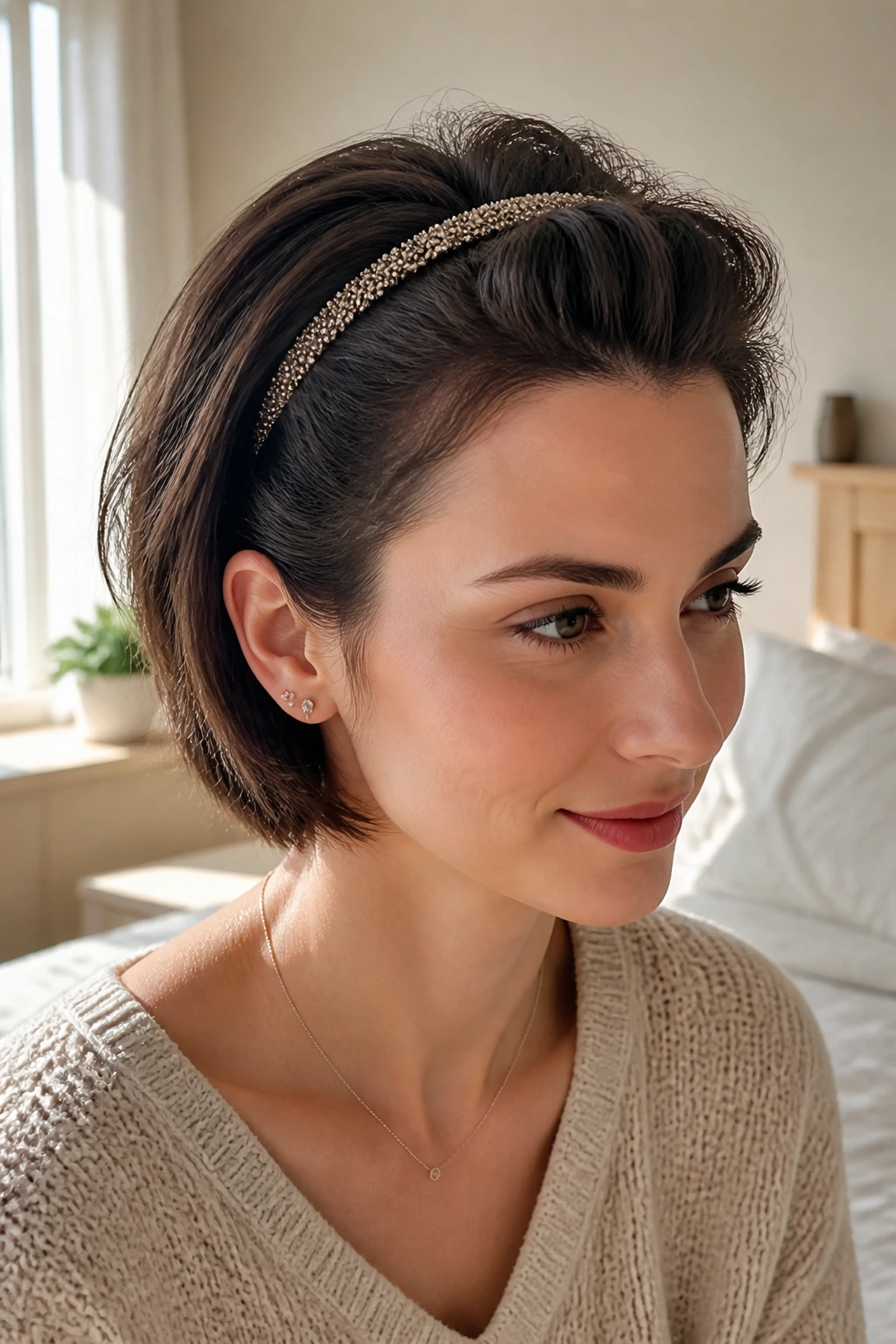
A headband tuck can look almost deceptively easy, which is partly why I like it. Thick hair stays inside the band better than fine hair, so the tucked shape feels solid once it’s set.
Place a stretchy or padded headband over the crown, then tuck the back sections under and around it, working from the ends upward. Leave the top a little lifted so the shape doesn’t go flat against the scalp. A pearl or velvet band makes the whole thing feel dressed up without demanding a lot of styling time.
It’s a good choice when you want your hair off your face but still want some softness around the head. The profile stays neat. The mood stays gentle.
17. Asymmetrical S-Wave Set
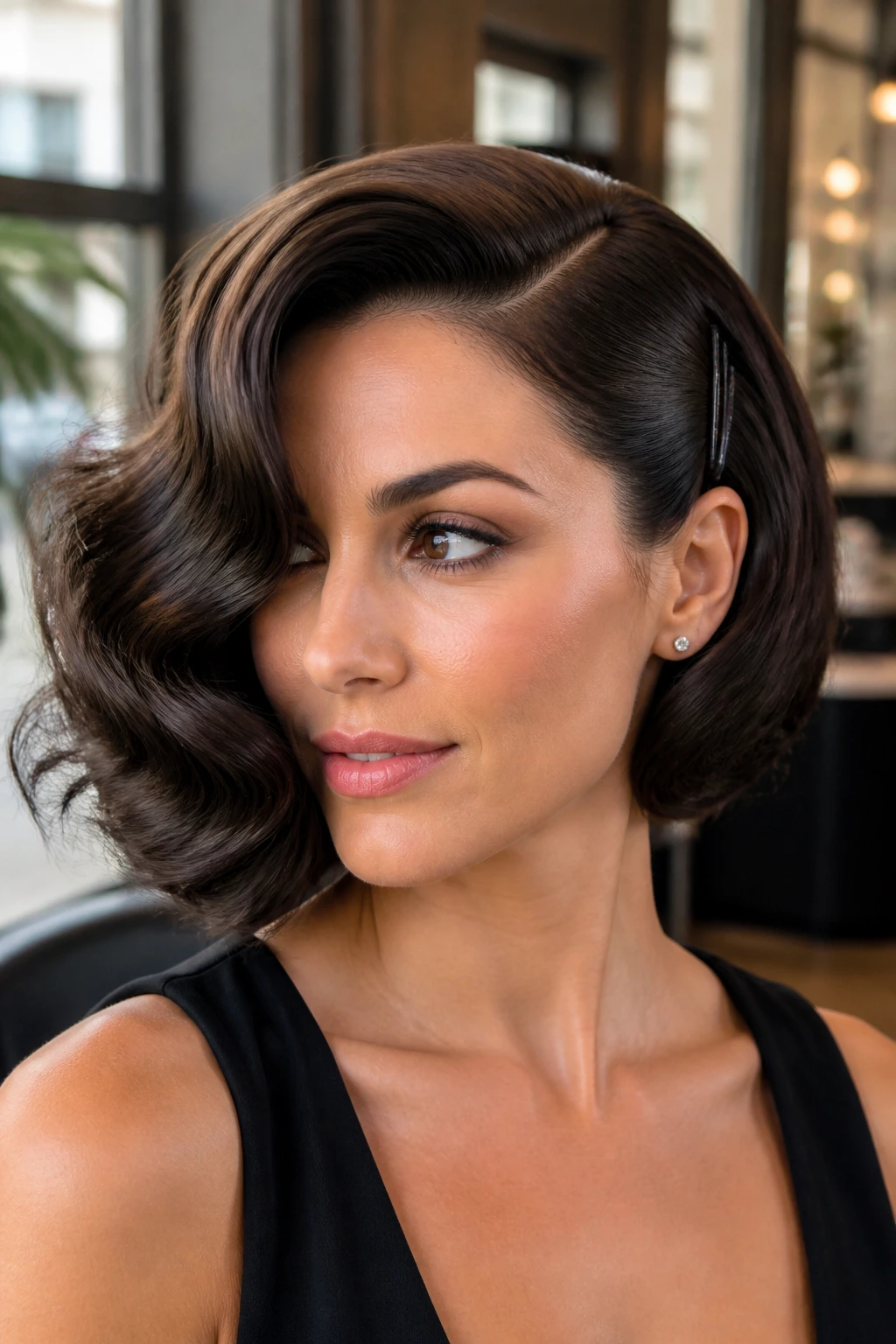
An asymmetrical wave set does one useful thing: it lengthens the face without adding more hair than the cut already has. Thick hair keeps the wave full, and the off-center balance stops the style from looking too neat.
Set one side into a smooth S-wave or brushed curl, then pin the other side flat and low. The pinned side creates contrast, and the open side gives the eye somewhere to land. That contrast is the trick. Without it, the style can feel like a regular curl set with no point of view.
Best For
Round faces, square faces, and anyone who wants a little asymmetry in the silhouette. It’s also a strong choice if one side of the cut has better shape than the other.
18. Braided Bang Sweep with a Low Side Knot
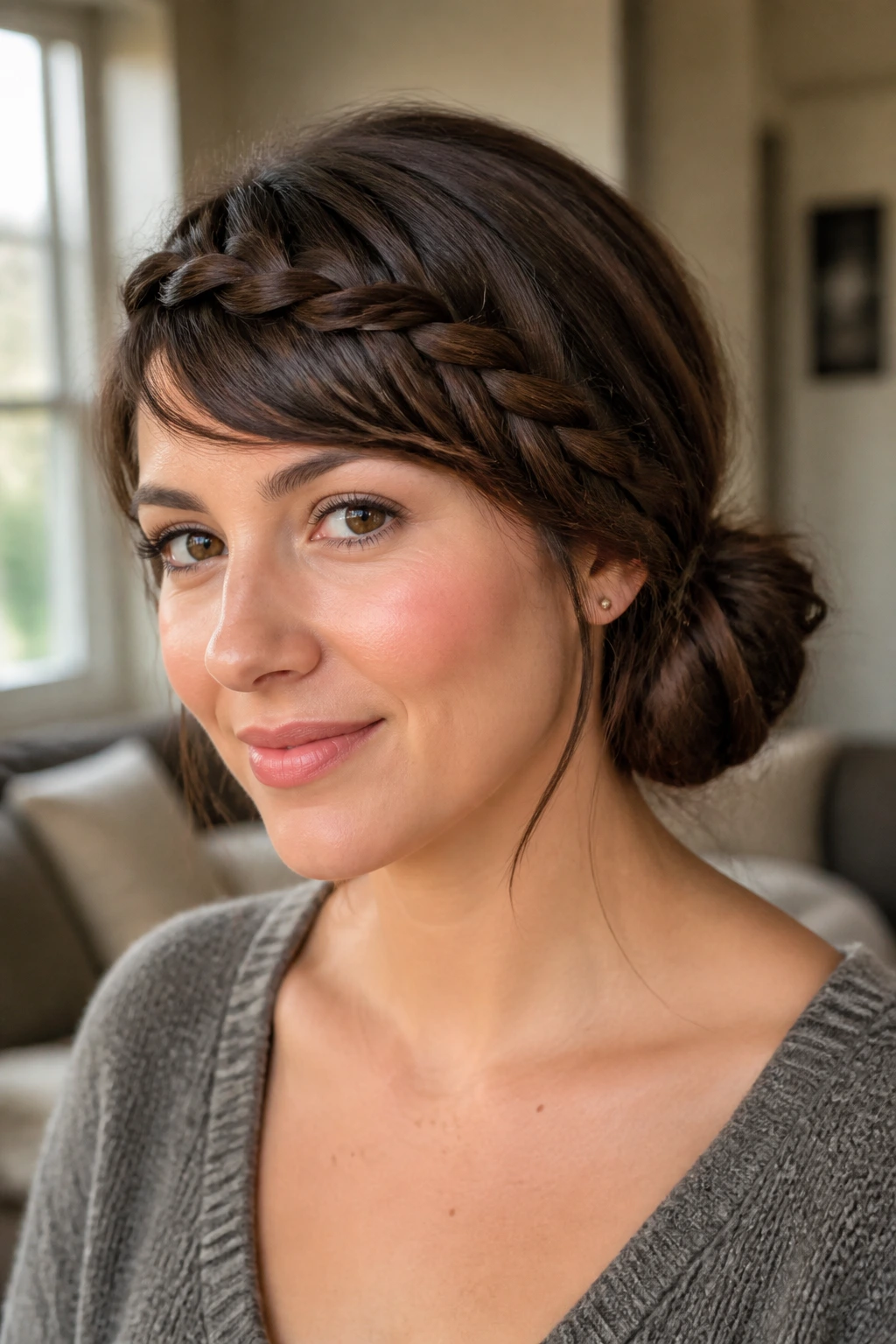
If your bangs are growing out or your front layers keep falling into your eyes, braid them away and fold the rest into a small side knot. Thick hair makes the braid sit heavier and more secure, so it looks purpose-built rather than improvised.
Start the braid at the part or temple, sweep it across the forehead, and anchor it near the opposite side. Gather the remaining hair low on that side and twist it into a compact knot. Hidden pins do the boring work here; the braid is what people notice.
This one has a slightly romantic shape, but it doesn’t lean sweet. The off-center knot gives it a bit of attitude.
19. Flipped Ends with a Satin Ribbon
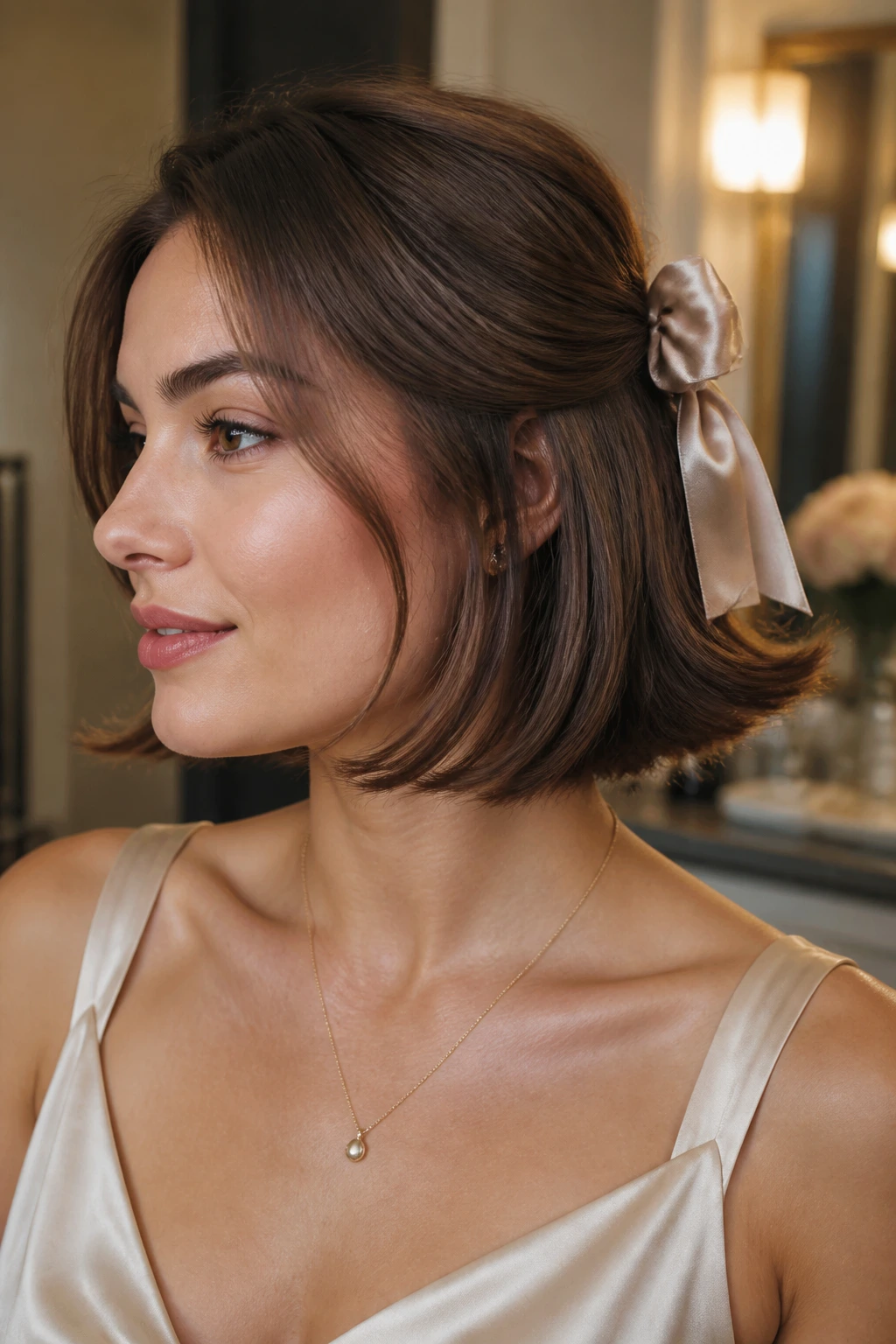
Flipped ends feel playful, but on a short thick bob they can look sharp and polished if the flip is even. The ribbon is the detail that pushes it into fancy territory.
Use a round brush or flat iron to turn the ends outward, then tie a narrow satin ribbon near the back or side. If the ribbon feels too cutesy, choose a matte black or deep jewel tone so it reads like an accessory, not a costume. Thick hair makes the flip hold its shape at the tips, which is the part that tends to disappear on finer hair.
It’s an easy option for someone who wants movement more than structure. The haircut stays visible. The ribbon gives it a finish.
20. Textured Quiff with a Sparkle Clip
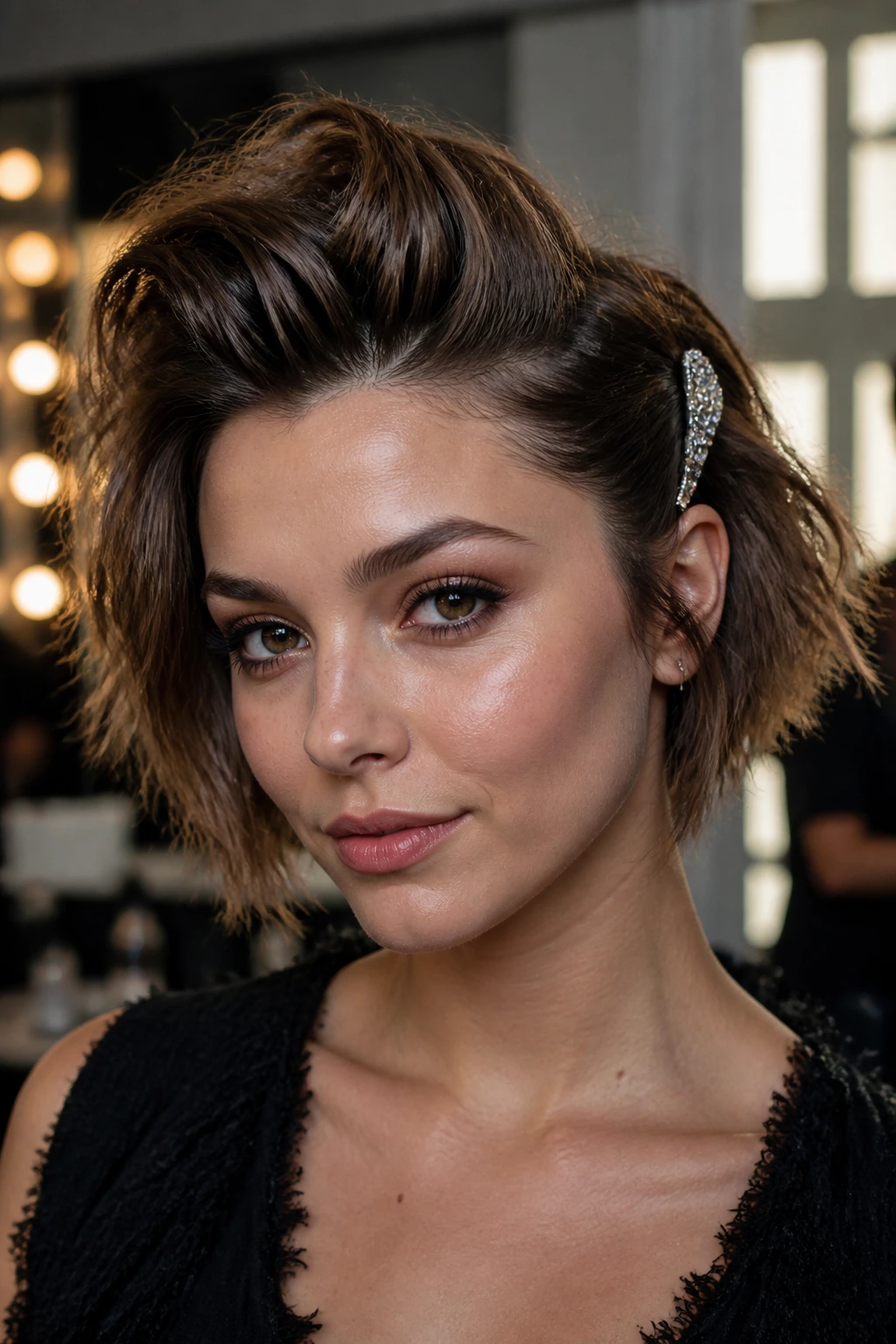
A textured quiff brings height to a pixie or crop without needing a full tease-out. Thick hair already has enough density to build a front lift that stands up when sprayed.
What Makes It Different
Lift the front section with your fingers, push the roots upward with a round brush or blow-dryer, and clip one side back with a sparkle clip or comb. Leave the rest slightly piecey. Not messy. Piecey. There’s a difference.
- Keep the crown section narrow.
- Use texture spray at the roots before lifting.
- Place the clip where it can actually hold hair, not just decorate it.
This is the style that gives short hair a little swagger. It works especially well when you want something less formal than a sleek tuck but sharper than loose styling.
21. Defined Twist-Out with a Side Pin Cluster
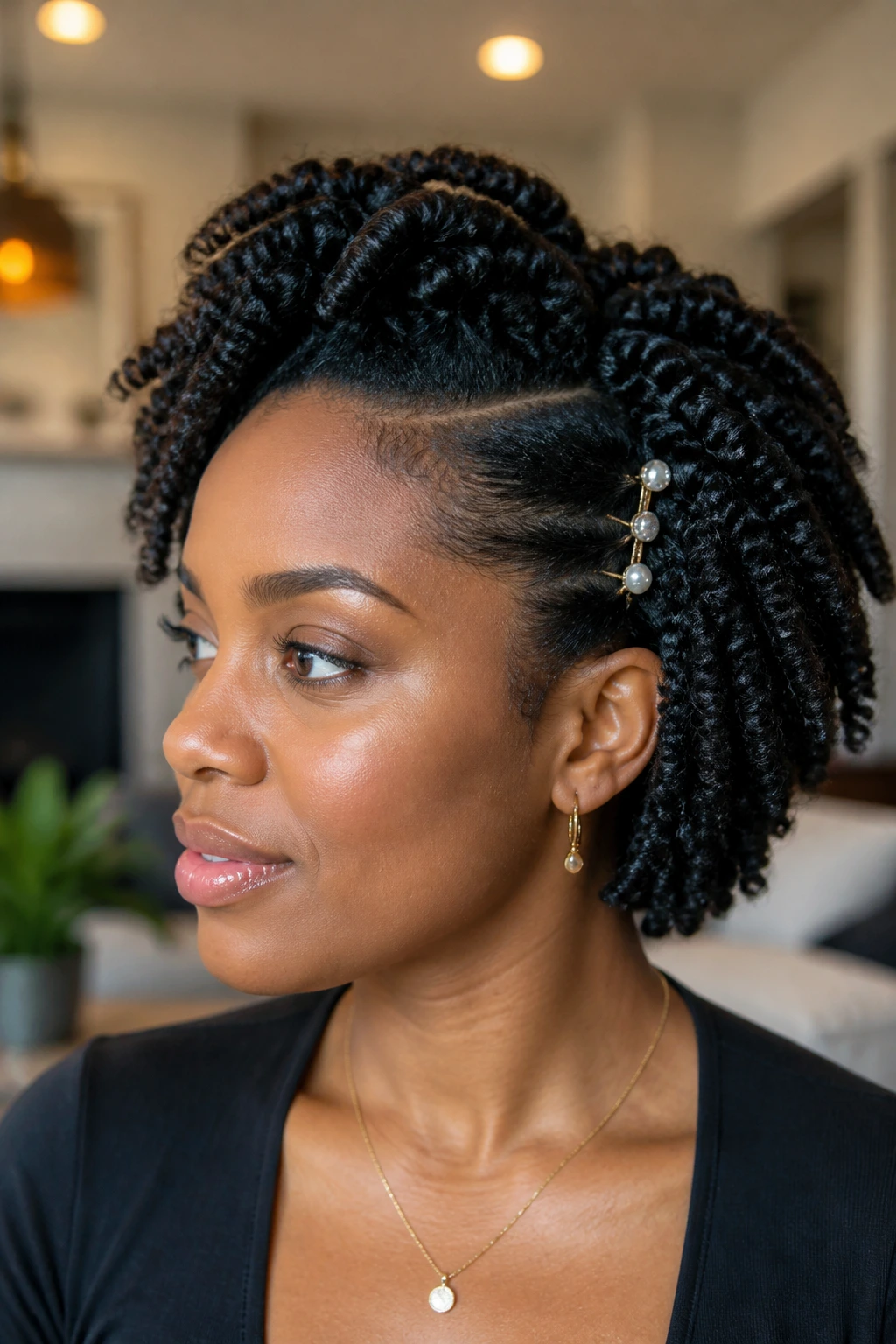
For naturally curly or coily thick hair, a defined twist-out can be the dressiest shape in the room. It keeps the texture visible, which is the point, and the side pin cluster adds a small polished detail that stops the style from feeling too casual.
Twist the hair in small sections, let it dry fully, then separate each twist with oiled fingers or a tiny bit of leave-in on the palms. Pin one side with two or three decorative pins close together so they look like a small cluster, not a random scatter. That cluster gives the style direction and makes the texture feel styled, not only defined.
This is one of the best ways to make thick hair look intentional without straightening it first. The texture does the talking.
22. Sculpted Side Bun with Hidden Pins
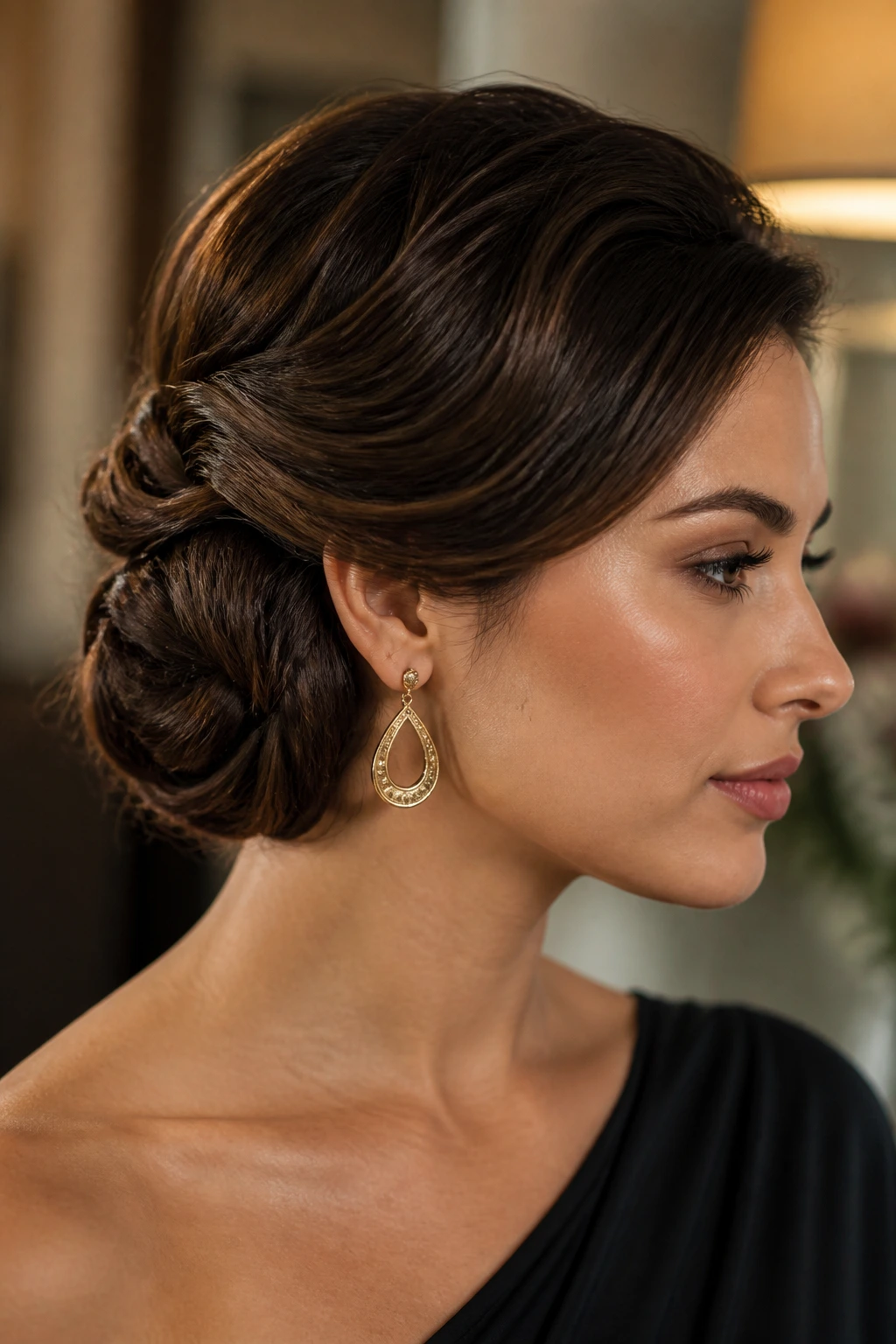
A sculpted side bun is the quiet closer: low, contained, and full enough to look dressed up without getting ornate. It works best on the longest of the short cuts — a strong bob, a longer crop, or a grown-out pixie with enough side length.
Sweep the hair to one side at the nape, fold it under itself, and pin from underneath so the bun sits compact and slightly asymmetrical. Hide the pin ends inside the fold. If the bun feels too round, press one side flatter so the shape has a cleaner line.
This style has a nice balance of softness and structure. It’s the one I’d choose when the outfit is doing most of the talking and the hair needs to stay elegant in the background.
How to Make Thick Short Hair Stay Polished Without Turning Crispy
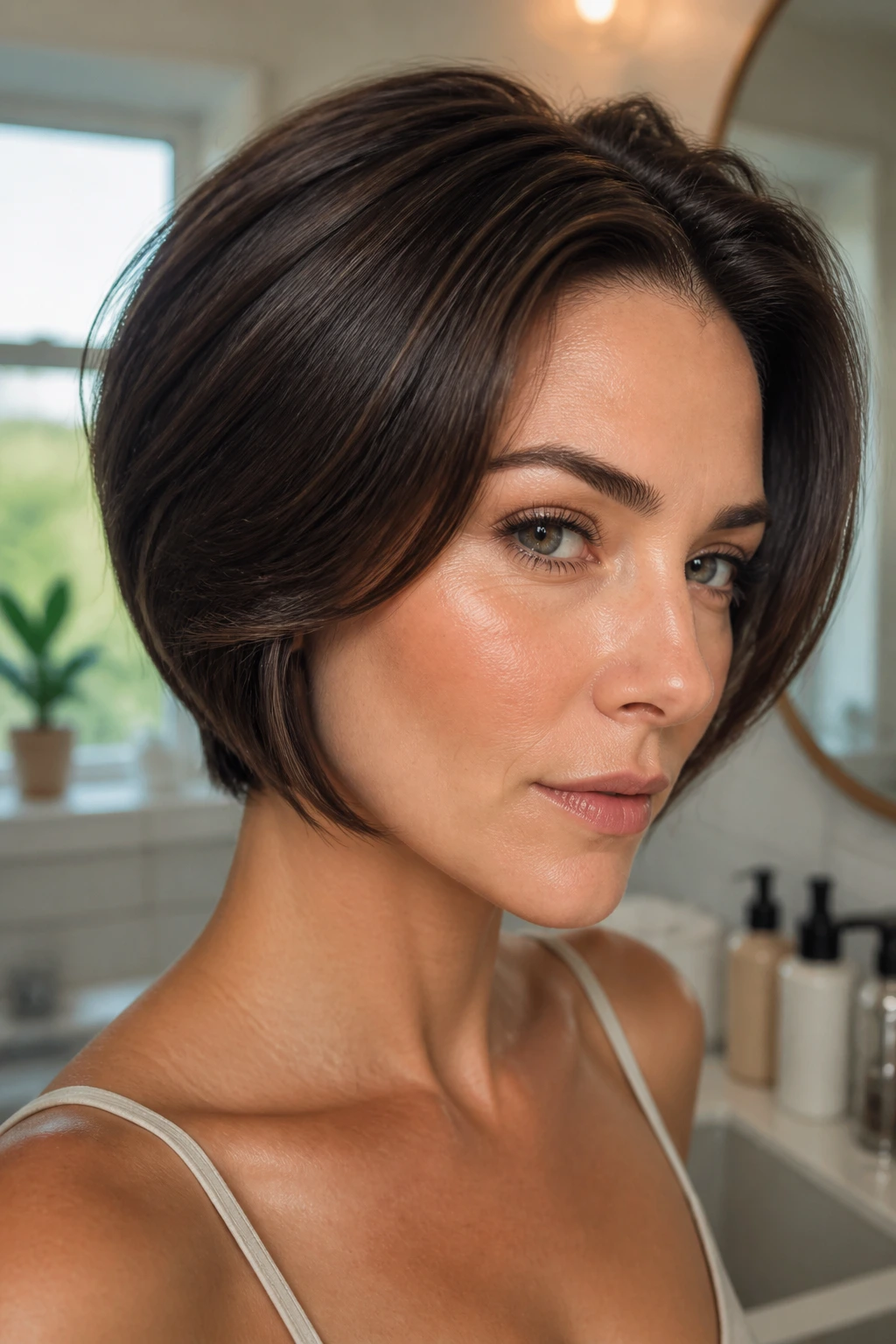
The biggest mistake with short thick hair is chasing hold by stacking on more and more product. That usually backfires. You get stiffness at the roots, a sticky finish at the temples, and ends that look dusty instead of glossy. The better move is to separate the job: mousse or root spray for lift, pomade for smoothness, spray for hold, and only a touch of shine product at the very end.
Prep the base first. Blow-dry the roots in the direction you want them to lie before you start pinning or waving. If the roots are already trying to stand up, the rest of the style has to fight that shape. A round brush helps, but a small vent brush can be enough if you just need direction, not height.
Let hot-tool sections cool before you touch them. Thick hair keeps heat longer than fine hair, and that cooling time is what locks in the bend. If you brush out a curl the moment it leaves the iron, it expands fast and loses its shape. Pin it, clip it, or leave it alone for a few minutes.
Use hidden anchors. Cross bobby pins in an X when a section keeps slipping. Slide the pin in against the direction the hair wants to move, then lock the second pin over it. It sounds fussy, but it saves a lot of frustration.
Choose the finish on purpose. Flexible spray keeps waves soft. Strong hold spray keeps rolls, twists, and faux hawks from collapsing. Matte pomade can tame a pixie; shine spray can make a sleek tuck look deliberate. Different styles need different tools. One can of hairspray cannot do every job well.
Essential Tools for These Looks
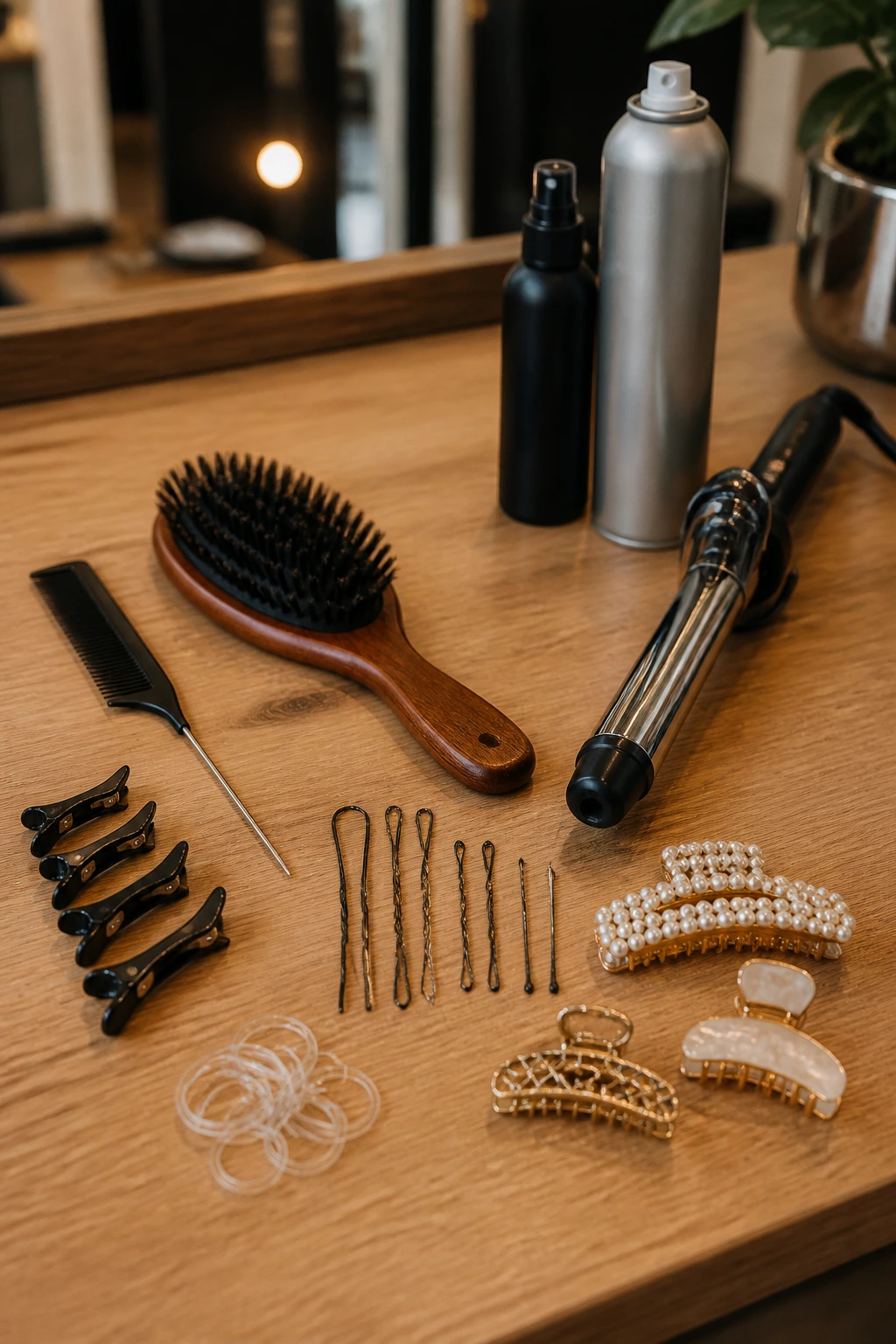
- Rat-tail comb: Best for clean parts, small sections, and precise tuck placements.
- Sectioning clips: They keep dense short hair from springing loose while you work on one area.
- 1-inch curling iron or flat iron: The most useful hot tools for short lengths because they can shape small sections without swallowing the ends.
- Boar-bristle brush or smoothing brush: Good for sleek tucks, rolled-under bobs, and polished side parts.
- Long bobby pins: Short pins disappear in thick hair too fast; longer ones grip better.
- U-pins: Useful for French twists, knots, and tucked styles where you want an anchor under the surface.
- Clear elastics: Handy for bubbles, tiny ponytails, and braid ends that need to stay discreet.
- Strong-hold hairspray with a fine mist: A fine mist lands evenly; a heavy spray can leave wet patches.
- Texturizing spray or dry shampoo: Adds grip for braids, twists, and pin curls.
- Decorative clips, pearl pins, ribbons, or a slim headband: These are the finishing pieces that make short hair feel dressed up.
Smart Product and Accessory Picks
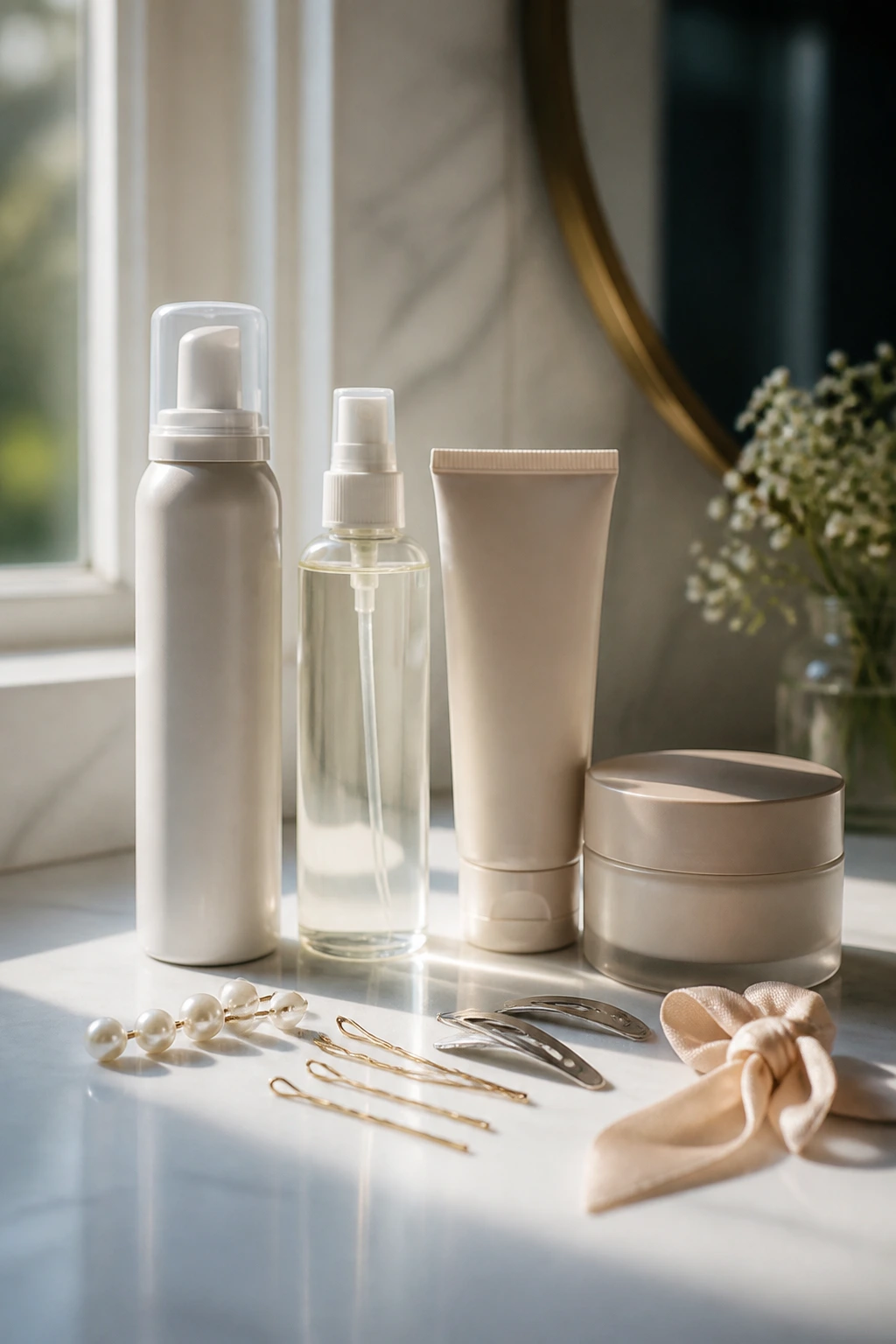
The product shelf matters more than the average beauty aisle suggests. Thick short hair can take more hold, but it does not need more weight. If you reach for a heavy cream or an oil that leaves slip behind, the pins won’t grip and the shape will drift. A lightweight mousse, a dry texture spray, and a strong-mist hairspray do more useful work than a pile of shiny products ever will.
For sleek styles, look for a smoothing cream that disappears into the hair instead of sitting on top of it. You want softness, not grease. For pixies and crops, a matte pomade or paste is often better than gloss because it grips the strands and lets you shape the front without making the scalp look wet. For waves and pin curls, a setting lotion or foam gives better memory than a serum-heavy cocktail.
Accessories should match the scale of the cut. A massive claw clip swallows a short bob. A narrow pearl barrette, a pair of slim jeweled pins, or a ribbon tied low at the back looks more balanced. The clip should solve a problem — hold a tuck, mark a part, stabilize a twist — not just sit there because it was shiny. That’s the difference between a style that feels finished and one that feels piled on.
Common Styling Mistakes That Make Thick Short Hair Puff Out
-
Using too much product at the roots: The hair turns slippery, and every pin starts sliding. Keep creams and oils away from the scalp unless the style is meant to be glossy.
-
Taking sections that are too large: Big sections do not cool or set evenly. The outside looks styled while the middle stays soft, which is why the shape falls apart halfway through the evening.
-
Pinning only the surface: A bobby pin needs to catch real hair underneath, not just skim the top layer. Slide it into the base, then lock it down.
-
Ignoring the nape: Short hair at the neck loves to flip and puff. If the underside is not controlled, the front can look polished while the back looks unfinished.
-
Trying to make every style look full: Thick hair already has plenty of body. If you tease every section, the result is round and fuzzy instead of clean and fancy.
-
Picking accessories that are too small or too weak: Tiny clips get swallowed by dense hair, and flimsy elastics snap under tension. Choose stronger hardware than you think you need.
Four Ways to Change the Mood
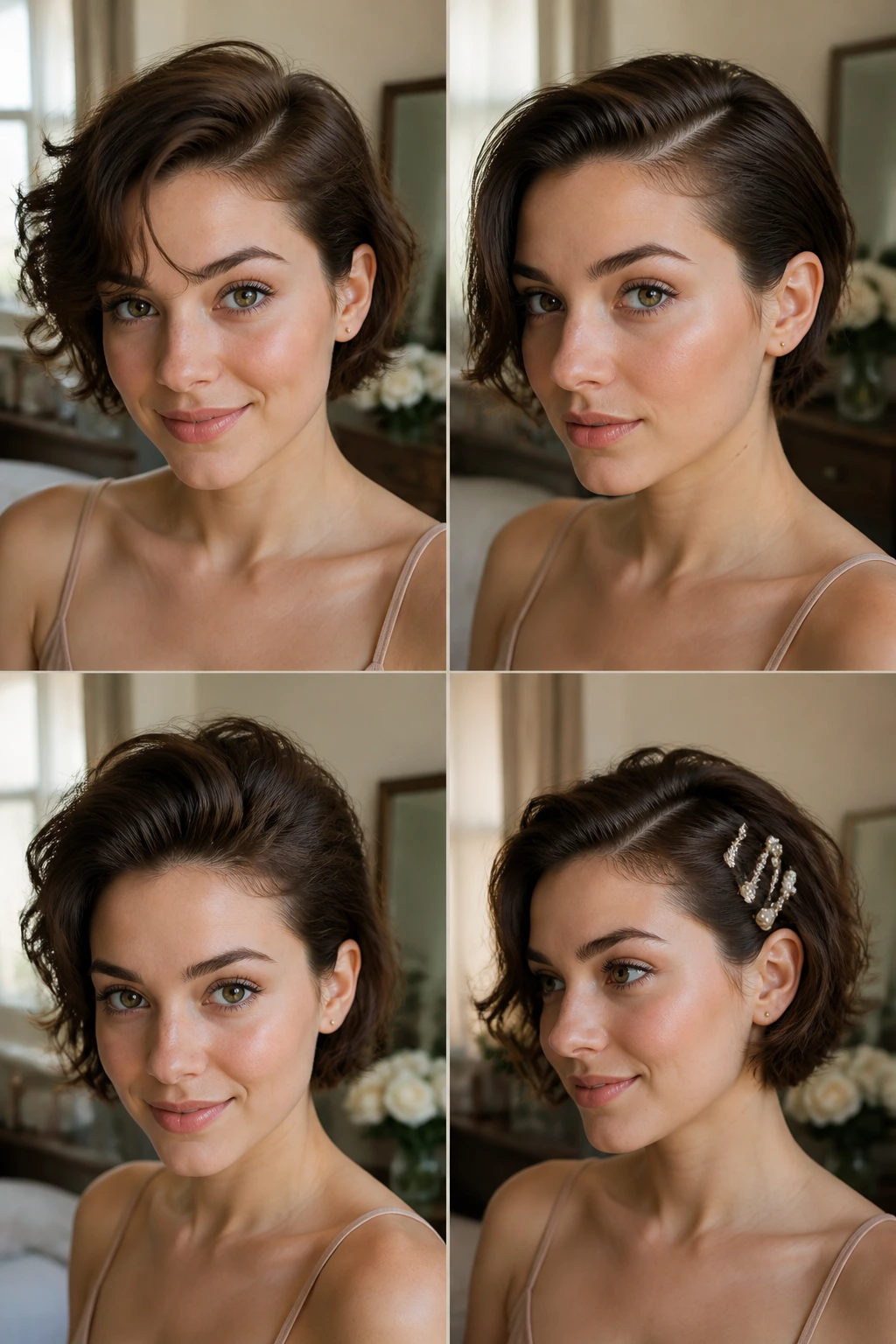
Soft Romantic: Swap hard-edged clips for pearl pins, brush curls looser, and keep the part slightly off-center. This version is good when you want the hair to feel gentle instead of sculpted.
Sharp and Editorial: Go for a deeper part, tighter smoothing at the sides, and a single hard line — a barrette row, a crown lift, or a slick tuck. It suits angular outfits and clean necklines.
Heat-Free Texture: Twist damp hair, let it dry fully, and shape the result into a braid crown, half-up twist, or pinned tuck. The finish is softer, and the texture feels lived-in rather than overstyled.
Natural Texture Focus: Let curls or coils stay visible, then add one accent — a side pin cluster, a jeweled clip, or a low tuck at one side. This keeps the style honest and avoids flattening the hair into something it never was.
Humidity Shield: Choose low, close-to-the-head shapes like tucks, rolls, and side pins. Use a stronger spray at the finish and avoid oversized curls that swell when the air turns damp.
Keeping Short Thick Hair Fresh Between Washes
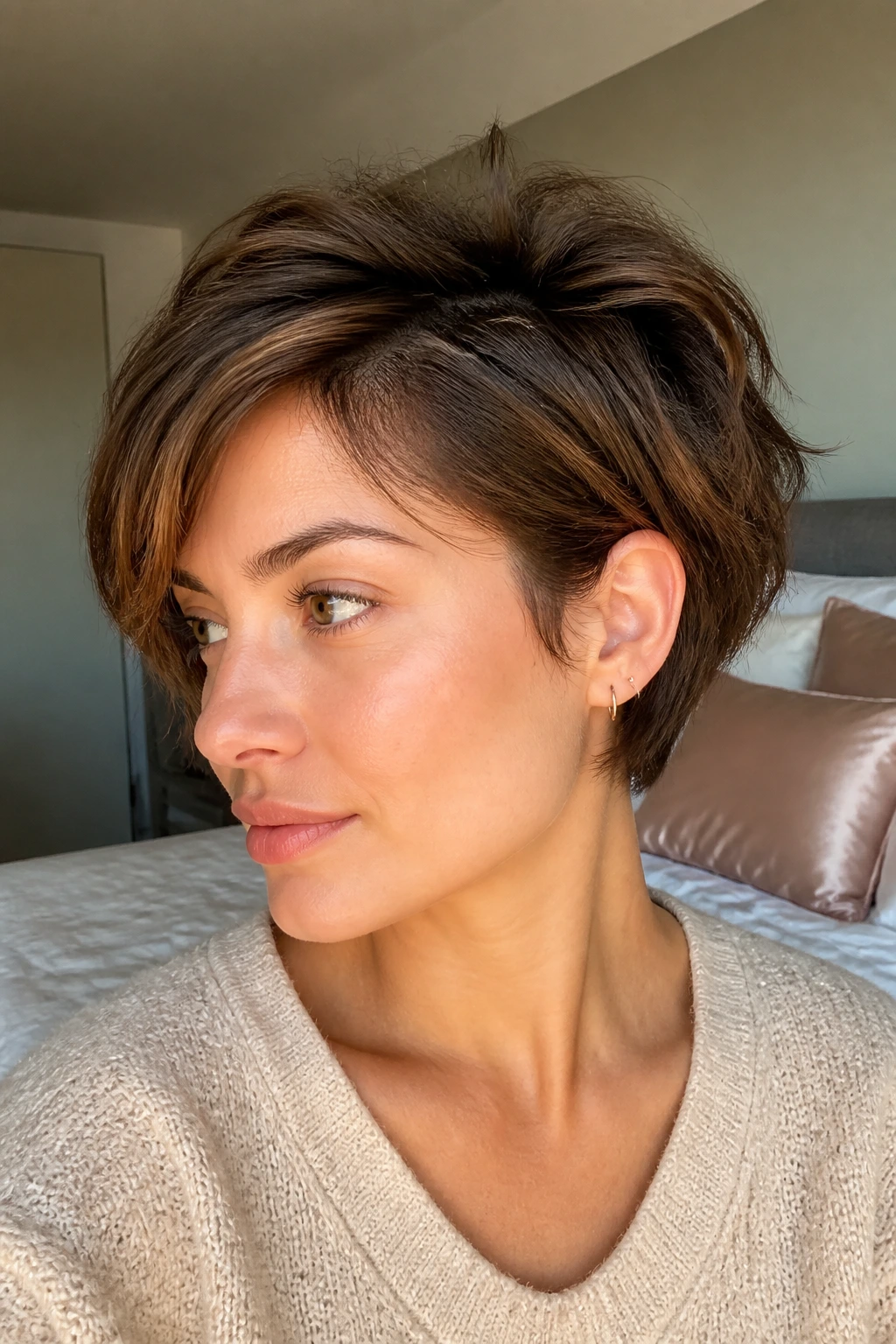
Most of these styles look best the same day, but several can stretch into the next morning if you treat them kindly. The trick is not to drown them in more product. Start with the hairline. That’s where short styles usually go wrong first — a little frizz at the temples, a lifted nape, a pin that loosened overnight.
Sleep on a satin pillowcase or wrap the head loosely in a satin scarf if the style includes waves, curls, or a side tuck. That keeps the surface from getting roughed up while you sleep. If you’re wearing a slick style, avoid bending the hair under your head; it leaves a crease that’s hard to hide without redoing the whole thing.
For next-day refreshes, use dry shampoo only at the roots and only if the hair needs grip. A small amount at the crown can bring back lift, but too much on sleek styles leaves a chalky patch. If the style is a braid or twist, check the pins first, then smooth the hairline with a tiny bit of pomade on a toothbrush or edge brush.
If you need to rewear the style, unpin the loosened parts instead of forcing the old shape back into place. Rebuild only the section that shifted. That saves time and keeps the ends from getting bent in all the wrong spots.
Frequently Asked Questions
Can these fancy hairstyles work on a very short pixie?
Yes, but the best options are the ones that use the front and sides: finger waves, a textured quiff, a slick-back crop, or a tiny side pin. Once the hair gets too short for tucks or knots, the style has to come from direction and finish instead of length.
How do I keep bobby pins from sliding out of thick hair?
Use longer pins, slide them in against the direction the hair wants to move, and cross them when a section feels slippery. A pin that only sits on top of the hair will not last; it has to grab the base layer underneath.
Do I need heat tools for every style on this list?
No. Braids, twists, headband tucks, halo styles, and many pin-up looks can be done with damp or air-dried hair. Heat tools help when you want a cleaner wave or a sleeker bend, but they are not required for every fancy shape.
What if my hair is thick but very straight and slippery?
Start with texture spray or a small amount of dry shampoo before styling. Straight, silky thick hair needs grip more than hold in the beginning, especially for braids, twists, and tucks.
Which styles work best for humidity?
Low styles usually win: mini French twists, rolled-under bobs, side tucks, halo braids, and sculpted side buns. Big brushed-out waves can swell in damp air, so keep the silhouette close to the head when the weather is unkind.
Can I do these styles on curly or coily short hair without straightening it first?
Absolutely. The twist-out, halo braid, side pin cluster, headband tuck, and low side bun all make sense on natural texture. The styling changes a little — more gel, more definition, less brushing — but the shapes still work.
How much hairspray is too much?
If the hair feels crunchy before you leave the mirror, you’ve gone too far. Use enough spray to lock the shape, then stop. You can always add one more light mist after a final check.
What if my bob is too short for a ponytail or bun?
Choose tucks, side sweeps, crown braids, or rolled shapes instead. Short hair usually gives up before it makes a real ponytail, and that’s fine. The better-looking solution is to style the haircut you already have, not force it into a shape it can’t support.
Short Hair, Big Finish
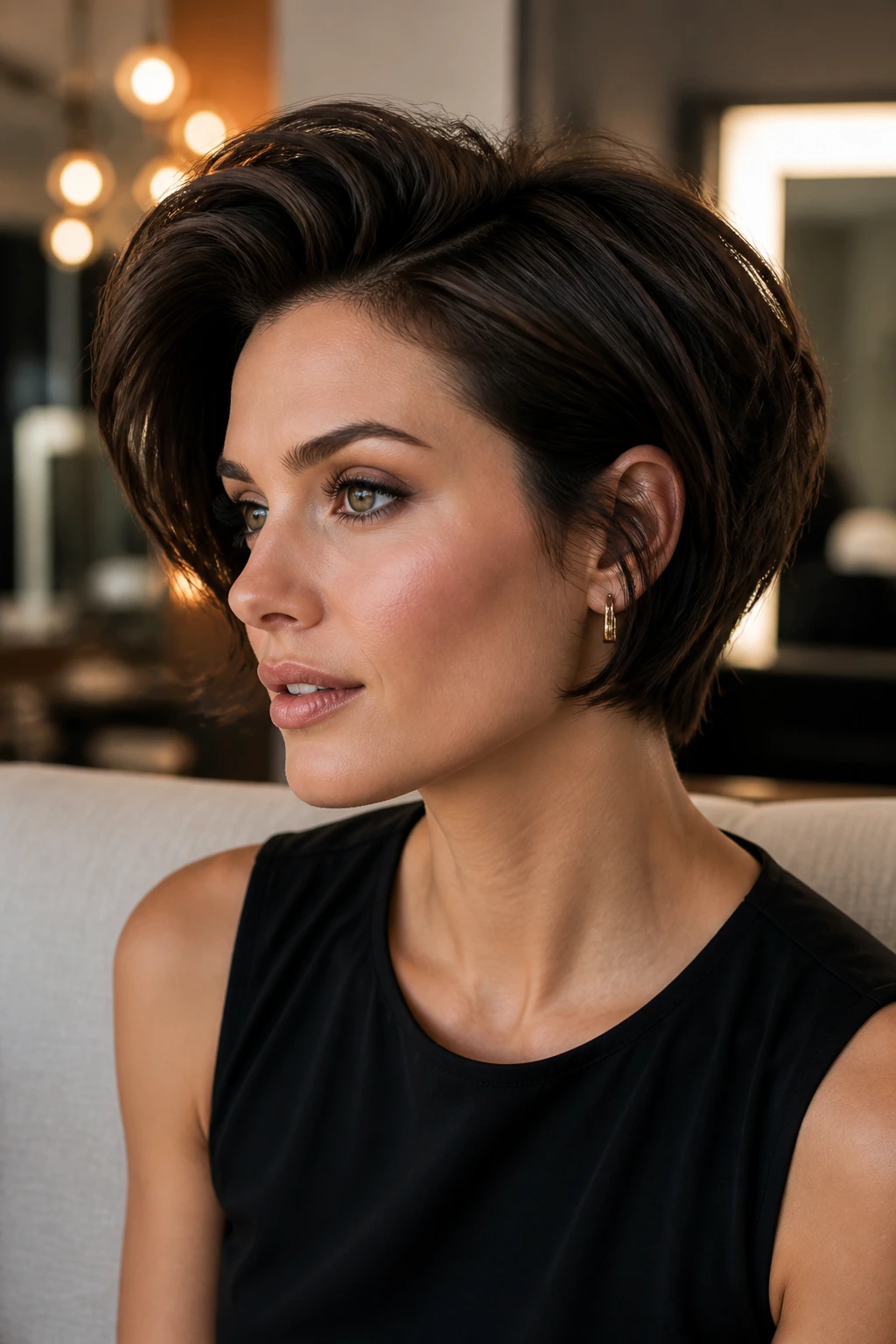
Short, thick hair has one advantage that gets ignored too often: it already has presence. You do not need to fight for drama. You need a clean line, the right amount of grip, and one choice that tells the eye where to look.
That could be a pearl barrette sitting just above the ear, a twisted crown pinned flat, or a tiny French roll tucked low at the nape. Small moves. Strong shape. That’s where this hair length shines.
Pick one style, prep the hair properly, and don’t overload it with product. The second time you do it, the whole thing gets easier — and that’s usually the moment the haircut starts looking like it was meant to be dressed up all along.