



Short wavy hair has a funny way of making up its own mind. One side bends out, the other side lifts, and by lunchtime the whole thing can look either too puffy or too flat if the cut is fighting the texture instead of working with it. The sweet spot is a shape with enough choppiness to let the wave move, but enough structure to keep the ends from fuzzing out into a halo.
That’s why choppy messy hairstyles for short hair with wavy hair have such a loyal following. They take the exact things that frustrate people — bend, lift, unevenness, weird little flips at the neck — and turn them into the point. A blunt line often looks too stiff on a loose wave. A heavy, over-layered cut can turn into a fluff ball. The right messy crop sits between those two extremes and leaves room for the hair to do what it already wants to do.
The best versions are not random. They’re controlled chaos. You can see the shape, but you don’t see the effort. A little point cutting here, a soft perimeter there, a few face-framing pieces left longer than the rest — that’s usually enough to make the whole style read as intentional instead of accidental. And once you know which shapes play nicely with your wave pattern, the morning routine gets a lot less theatrical.
Why This Collection Feels Different

-
Built for real wave patterns: These cuts are chosen for the way 2A, 2B, and 2C waves actually behave, not for board-straight hair pretending to have texture.
-
Easy to rough-dry: Most of these shapes look better when you scrunch, twist, or air-dry them a little crooked. Perfection makes them worse.
-
Grows out better than blunt cuts: A choppy edge softens as it lengthens, so you don’t get that harsh “my haircut expired three weeks ago” look.
-
Works with fine or thick hair: The trick is changing where the weight sits, not chasing one universal shape. That matters more than people think.
-
Lets fringe do real work: Bangs, curtain pieces, and broken fringe can change the whole face-framing effect without adding much maintenance.
-
Looks polished without looking stiff: A wave that has a few broken pieces and a touch of separation usually reads better than hair that has been over-brushed into submission.
1. Grown-Out Pixie with Piecey Ends
A grown-out pixie on wavy hair has a tiny bit of rebellion in it, and that is the charm. The top stays long enough to catch the bend, while the sides and nape stay cropped so the shape never turns into a helmet. When the ends are point-cut instead of sliced blunt, the texture separates into little ribbons instead of puffing into one solid block.
Why it works
A pixie on wavy hair needs air around it. If the top is left around 2 to 3 inches long, the wave can show without springing up into a triangle. The shorter perimeter keeps the cut tidy, while the piecey top keeps it from feeling severe.
- Best for: Fine to medium waves that collapse under too much weight.
- Ask for: Longer length on top, tapered sides, and point-cut ends.
- Style with: A pea-sized dab of matte paste or styling cream.
- Watch for: Over-thinning at the ends, which makes short waves frizz faster.
Pro tip: Twist two or three damp top sections in opposite directions before they dry. It gives the cut that broken, separated finish without looking crunchy.
2. Choppy Bixie with Airy Crown Volume
The bixie sits in that useful middle ground between bob and pixie, and wavy hair loves a middle ground. It leaves enough length to feel soft around the face, but the back stays short enough that the style never gets heavy at the nape. The crown gets the most lift here, which matters if your wave pattern tends to collapse flat on top and fluff out on the sides instead.
What makes it different
This is the style I reach for when someone wants short hair but is nervous about losing softness. The crown can sit a little higher, the sides can graze the cheekbones, and the overall shape still feels breezy rather than chunked into pieces. Dry it with a diffuser for 3 to 5 minutes at the roots, then let the rest air-dry.
A tiny root clip near the part can help, too. Not at the temples. Just at the crown for the first 10 minutes after washing.
3. French Bob with Broken Fringe

Why does a French bob work so well on waves? Because it knows where to stop. The chin-length line creates a clean frame, but the broken fringe and irregular ends keep it from looking stiff. On wavy hair, that little bit of roughness is what saves the cut from feeling like a costume.
How to style it
Keep the fringe light and slightly separated, not dense. A small round brush can bend the front pieces under or away from the face, but the back should be dried mostly by hand so the wave doesn’t get overly polished. If your hair is coarse, ask for a few hidden internal layers so the bob doesn’t puff out at the jaw.
A French bob looks best when the line is almost neat. That “almost” is doing a lot of work.
4. Jaw-Length Shag Bob

Picture a bob that decided to loosen its tie. The jaw-length shag bob sits right where the face wants definition, and the choppy layers make the wave fall in uneven, flattering pieces instead of one heavy curtain. If your hair tends to balloon out at the sides when it’s cut too blunt, this shape usually fixes that problem fast.
Key details to ask for
- Keep the perimeter around the jaw, not below it.
- Add soft interior layers that start near the cheekbones.
- Leave the ends broken, not razor-thin.
- Use a light mousse at the roots before drying.
The thing I like most about this cut is how it changes in different weather. In dry air, it looks airy and loose. In humidity, it still keeps enough shape to avoid turning into a puffed-up triangle.
5. Side-Swept Crop with Tapered Nape
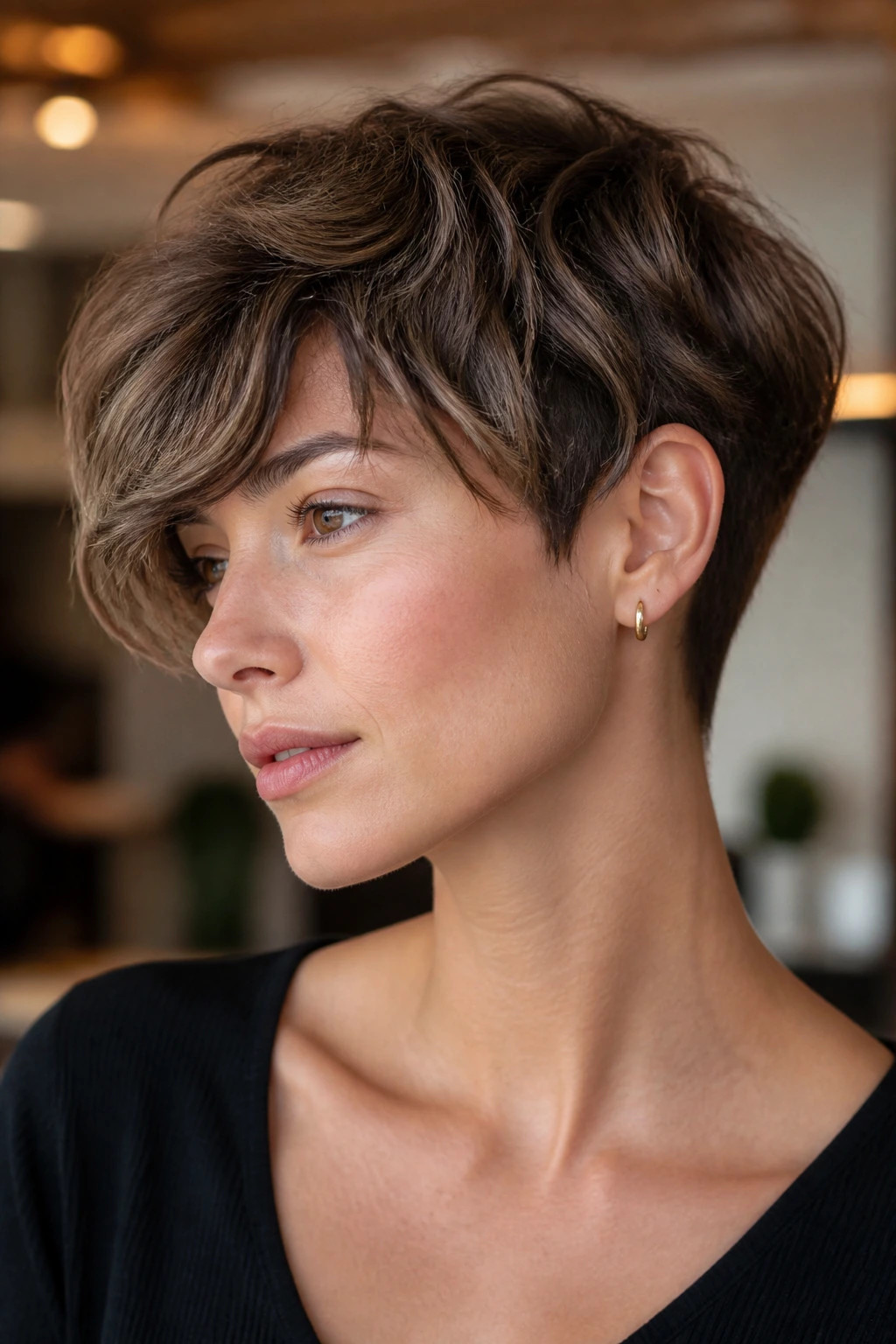
A side-swept crop gives wavy hair a lane to run in. Instead of splitting the hair down the middle and hoping for symmetry, it uses a deep side part to put the wave where it behaves best. The tapered nape keeps the back neat, which makes the longer front pieces feel deliberate rather than overgrown.
Who it suits best
This is a smart choice if one side of your wave pattern is stronger than the other. It also works well on narrow faces that need a little width near the forehead. Keep the longest front piece around eyebrow or cheekbone length, then let the nape sit clean and close to the neck.
A little wax or soft paste at the front can push the sweep into place without freezing it. And yes, it’s one of those cuts that looks better after you’ve slept on it once.
6. Soft Mullet with Wavy Ends
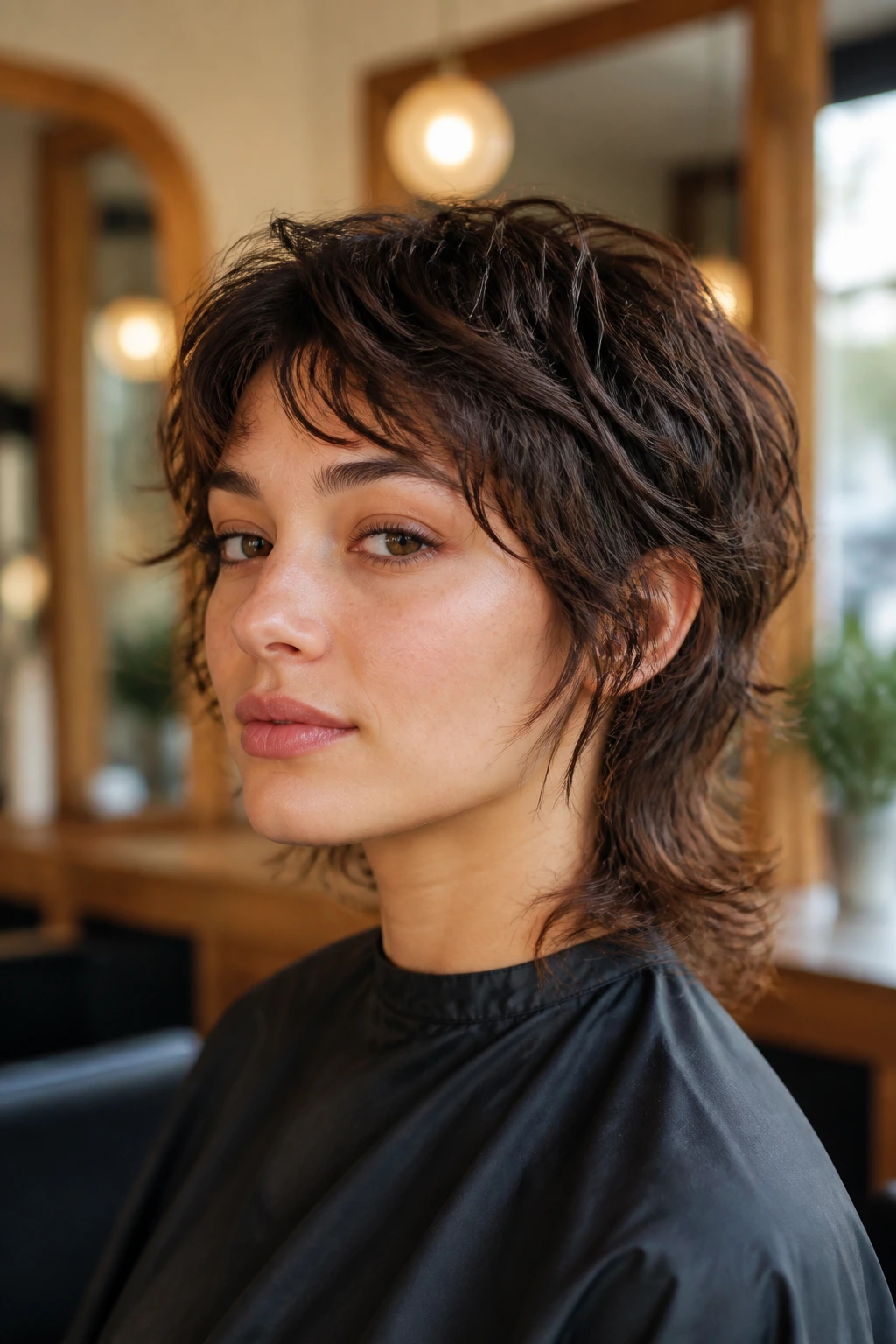
The soft mullet is for people who want movement with a little attitude. It keeps the top and sides short, then leaves the back slightly longer so the waves can flick at the neckline. Done badly, this cut can look harsh. Done well, it looks like the hair has its own rhythm and nobody bothered to interrupt it.
There’s a good reason this shape works on wavy short hair: the shorter crown gives lift, the sides remove bulk, and the longer nape keeps the silhouette from turning boxy. If you’re nervous about going full mullet, ask for a “soft” version with blended sides and only a small difference between top and back.
A touch of texturizing spray at the ends helps the back piece out instead of hanging limp. Don’t overdo it. Two sprays, scrunch, leave it alone.
7. Layered Crop with Curtain Bangs

The layered crop with curtain bangs is one of those styles that makes wavy hair look expensive without trying too hard. The layers around the crown keep the top from sitting flat, while the curtain fringe opens the face in the middle and bends away from the cheeks. That soft split in the front is useful if your features need a little room.
Why it works
Curtain bangs are forgiving on waves because they don’t demand a perfect line. They can part a little unevenly and still look right. If the fringe sits around cheekbone level, you get a nice frame without losing too much length on the sides.
Use a light blow-dry on the bangs only. The rest can air-dry with a bit of mousse scrunched through the top. If the fringe starts too dense, it will fight the rest of the cut. Keep it airy.
8. Razored Bowl Bob with Soft Edges
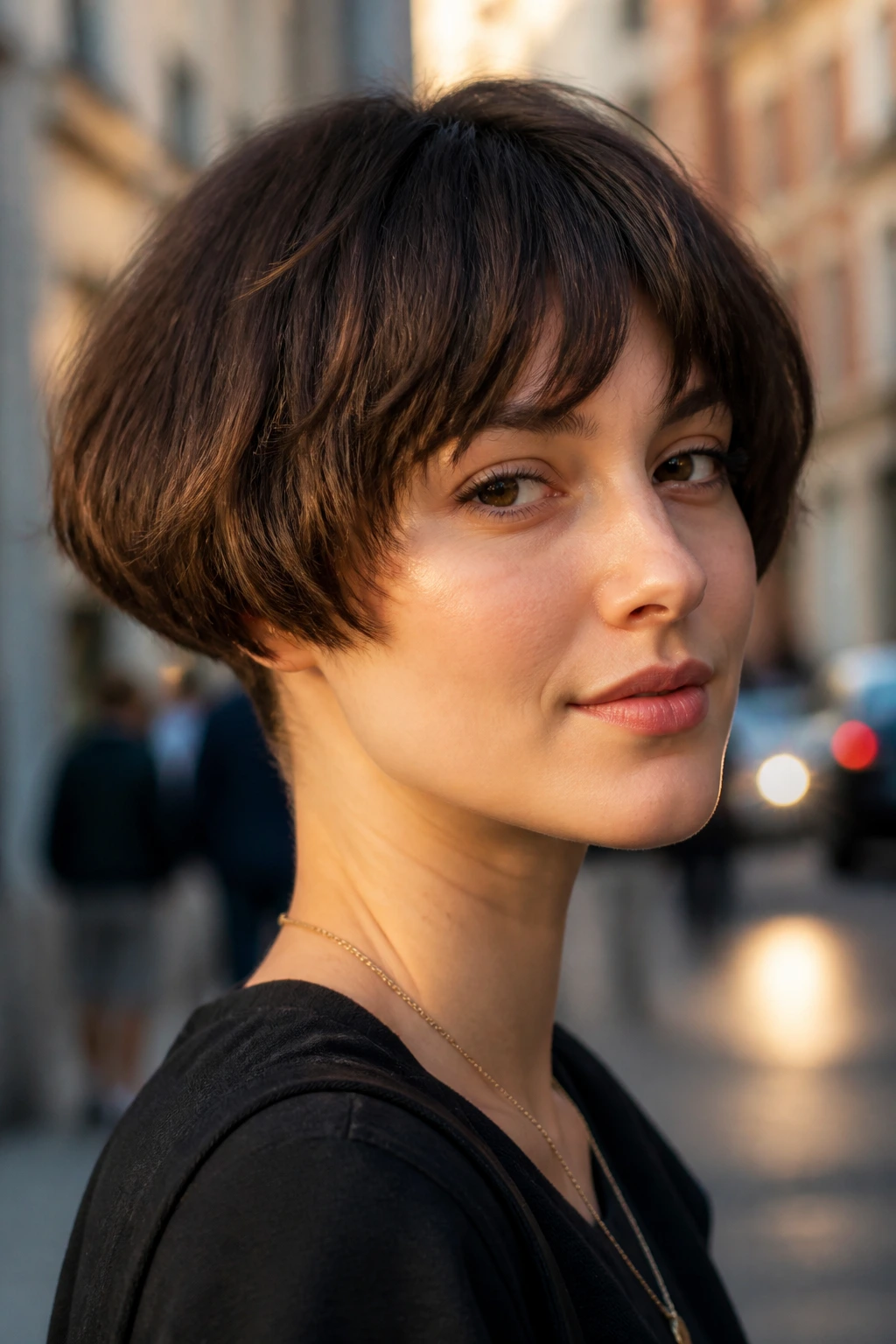
A bowl bob sounds severe until you put waves inside it. Then the whole thing changes. The razored edge breaks up the shape, the soft perimeter stops it from looking like a cap, and the wave pattern makes the cut feel modern instead of retro in a literal way.
This style is bold, no question. But it’s also practical if your hair is thick and tends to swell outward. The round silhouette removes some of that heaviness while the soft edges keep it wearable. Ask your stylist to preserve movement near the temples and to keep the very bottom broken up, not blunt.
If your wave pattern bends more in the back than around the face, this cut can balance that nicely. It’s a nice trick.
9. Asymmetrical Messy Bob
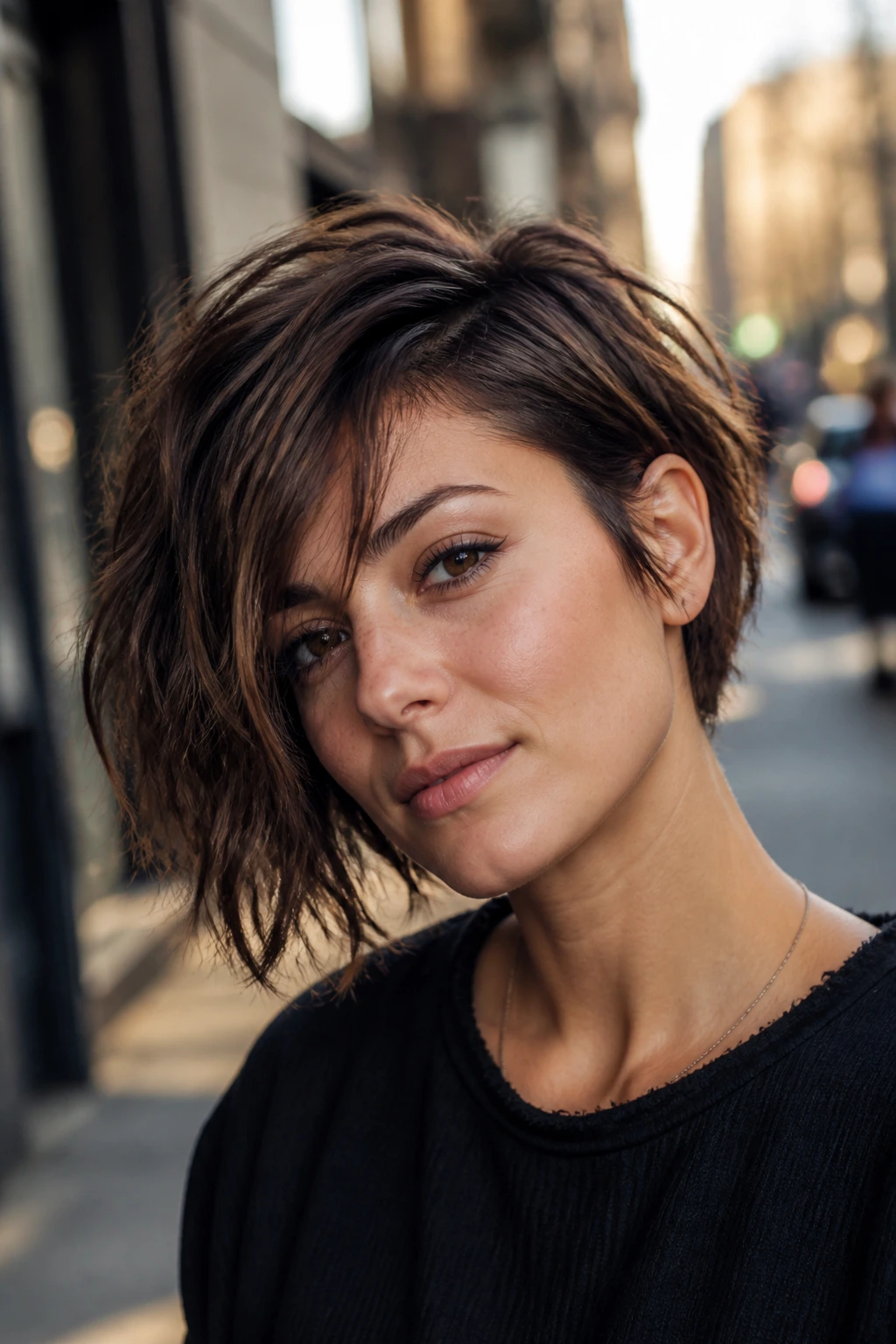
Why choose symmetry when the hair keeps refusing it anyway? The asymmetrical messy bob leans into the natural unevenness of wave patterns and gives it a clear shape to live in. One side stays slightly longer, the other side shorter, and the difference turns movement into part of the design.
How to style it
A deep side part makes the asymmetry easier to see, but you can also wear it with a soft off-center part if you want less drama. The longer side should skim the cheek or jaw, not drag below the collar. A flat iron wave on just the front corners can sharpen the contrast if your natural bend is too soft.
This cut is especially good when you want a shape that looks fresh even after a long day. It doesn’t collapse into “bad bob” territory as quickly as a blunt version.
10. Feathered Crop with Long Top
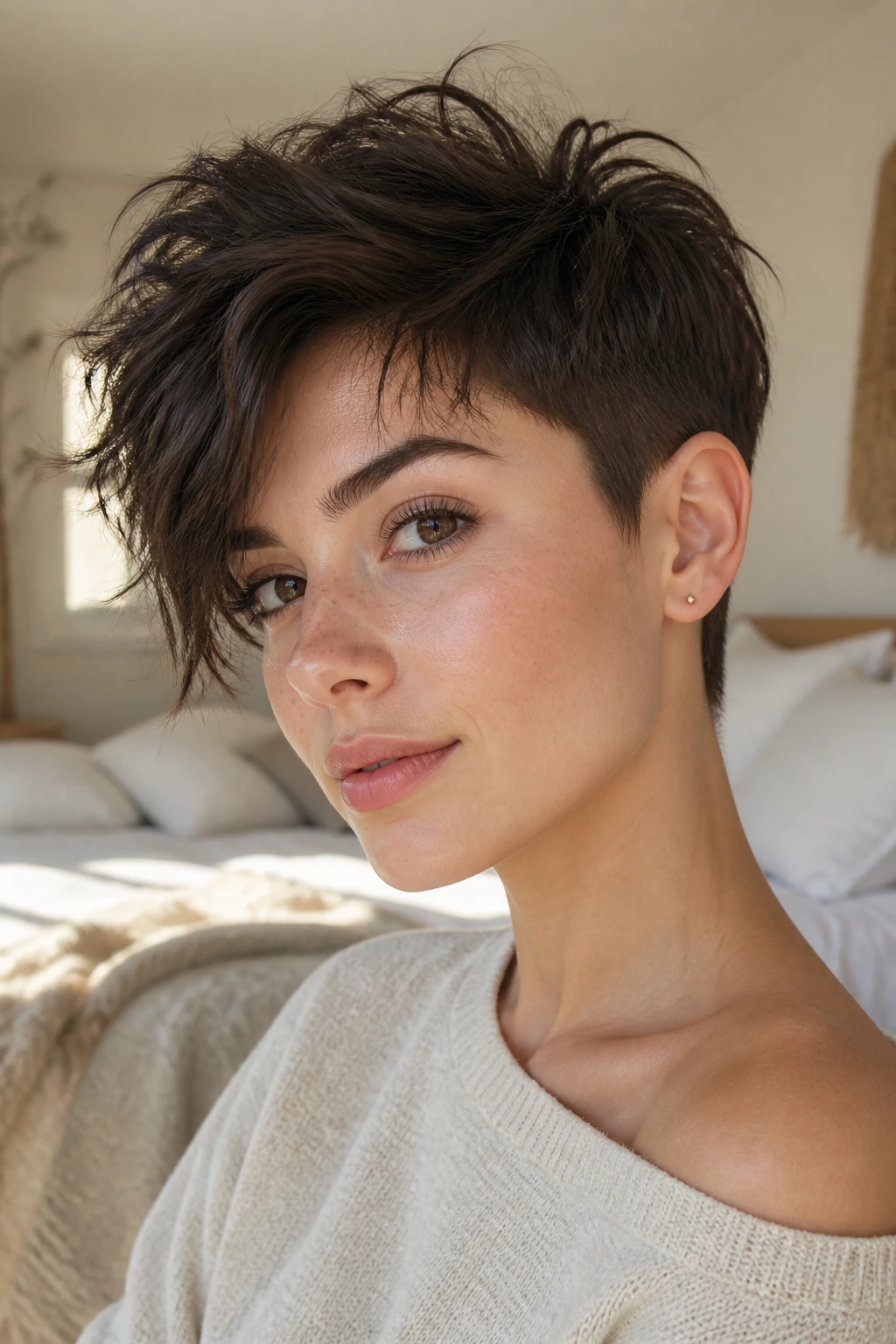
A feathered crop is built for people who want movement without a lot of product. The sides stay light, the top keeps enough length to show the wave, and the feathered layers break the shape into soft strands. It’s one of the easiest short looks to wake up and wear.
A practical note
If your hair is fine, keep the feathering gentle. Too much slicing can make the ends fray. If your hair is dense, the feathering helps lift the top away from the scalp so the whole cut doesn’t sit heavy. Either way, a vent brush and a quick blast at the crown can make the shape pop in under five minutes.
This style pairs well with casual outfits because it has that loosened-up energy. But it also cleans up nicely with a smoother side part. Useful range. Always welcome.
11. Wet-Look Tousled Pixie
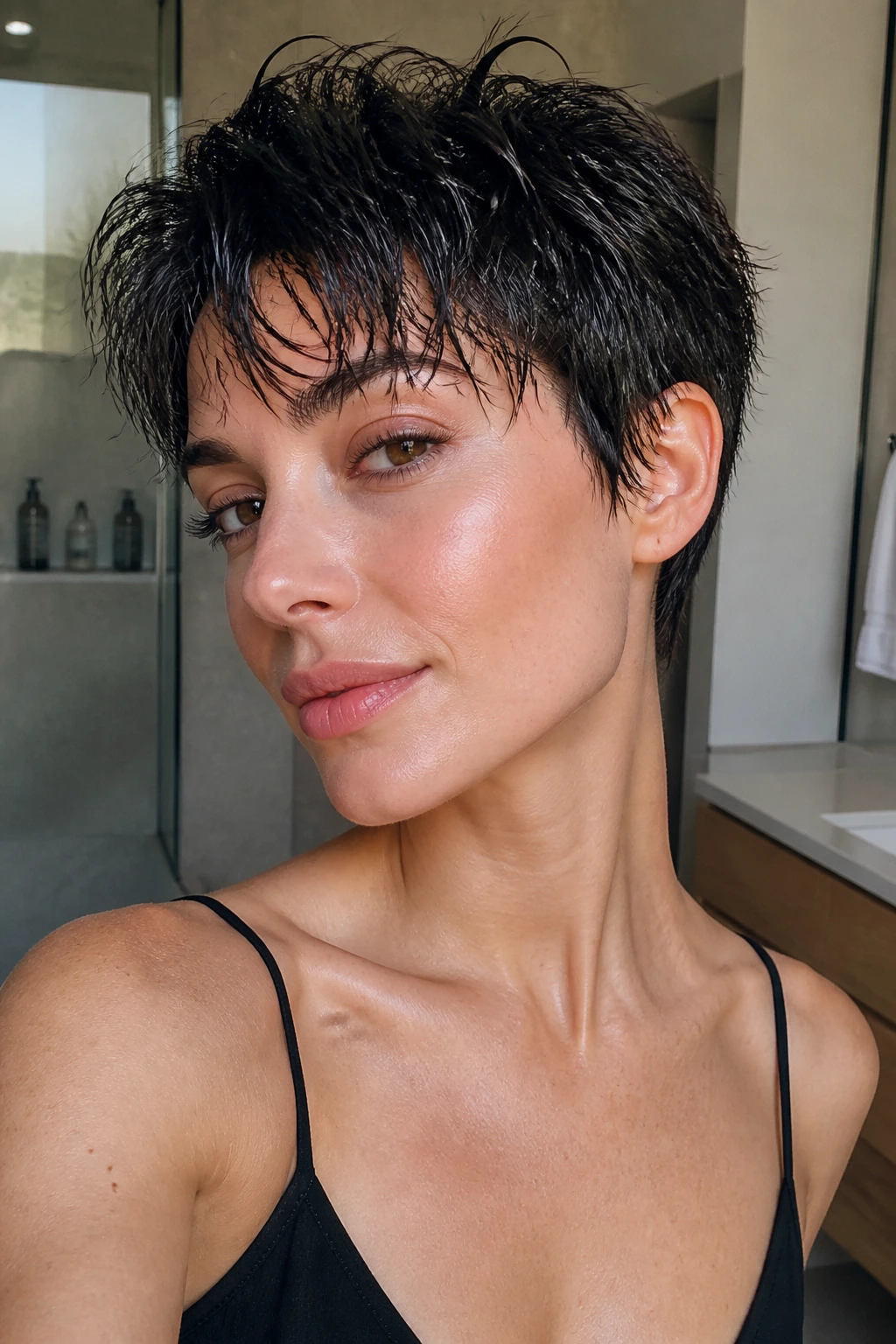
The wet-look pixie is not for people who want invisible styling. It is for people who like knowing the product is part of the finish. On wavy hair, a small amount of gel or glossy cream can hold the bends in place while still letting the cut separate into neat little pieces. The result is sleek at the roots and broken at the tips.
The key is restraint. Use a dime-sized amount of gel, mix it with a little cream if your hair gets crunchy fast, and rake it through damp hair from front to back. Then pinch the ends once the shape starts setting. If the crown dries too fast before you’ve placed the product, mist it lightly and reshape with your fingers.
This look is one of the few short wavy styles that can feel polished without losing edge.
12. Wavy Undercut Bob
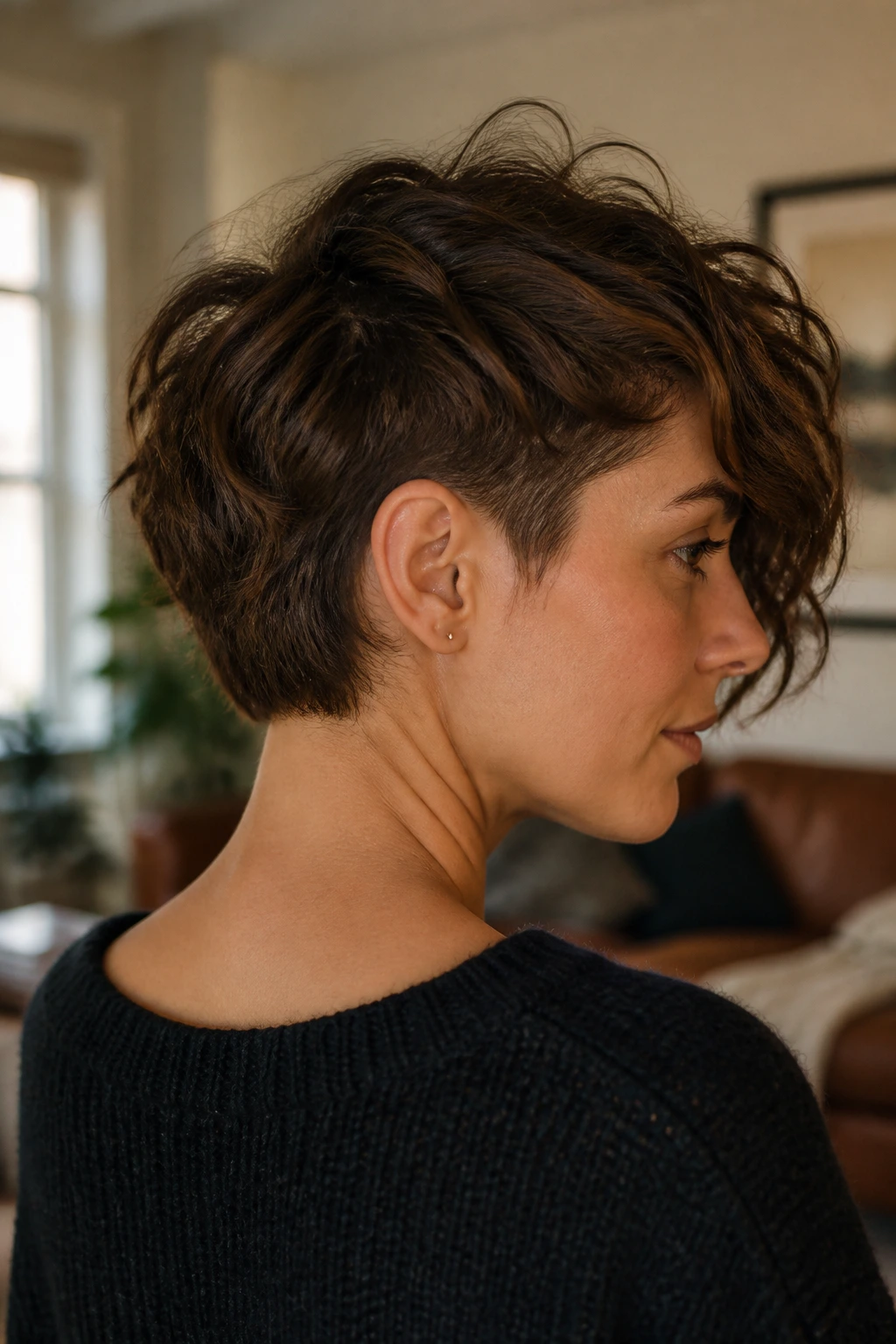
An undercut bob on wavy hair is a weight-management move disguised as a haircut. The hidden undercut removes bulk from the lower layers, which stops thick waves from swelling out at the nape and sides. The top stays long enough to swing, so the cut still reads as a bob and not a shaved statement.
Comparison point
Unlike a standard bob, this one relies on hidden structure. That matters if your hair looks compact when wet but expands like a sponge when dry. The undercut keeps the silhouette close, especially around the back of the head, and the top layers can fall freely over it.
It’s best for denser hair or anyone who gets that “triangle” shape by day two. If your hair is already fine, ask for only a small undercut or skip it entirely. Too much removal can make the top lose its shape.
13. Mini Shag with Lifted Crown
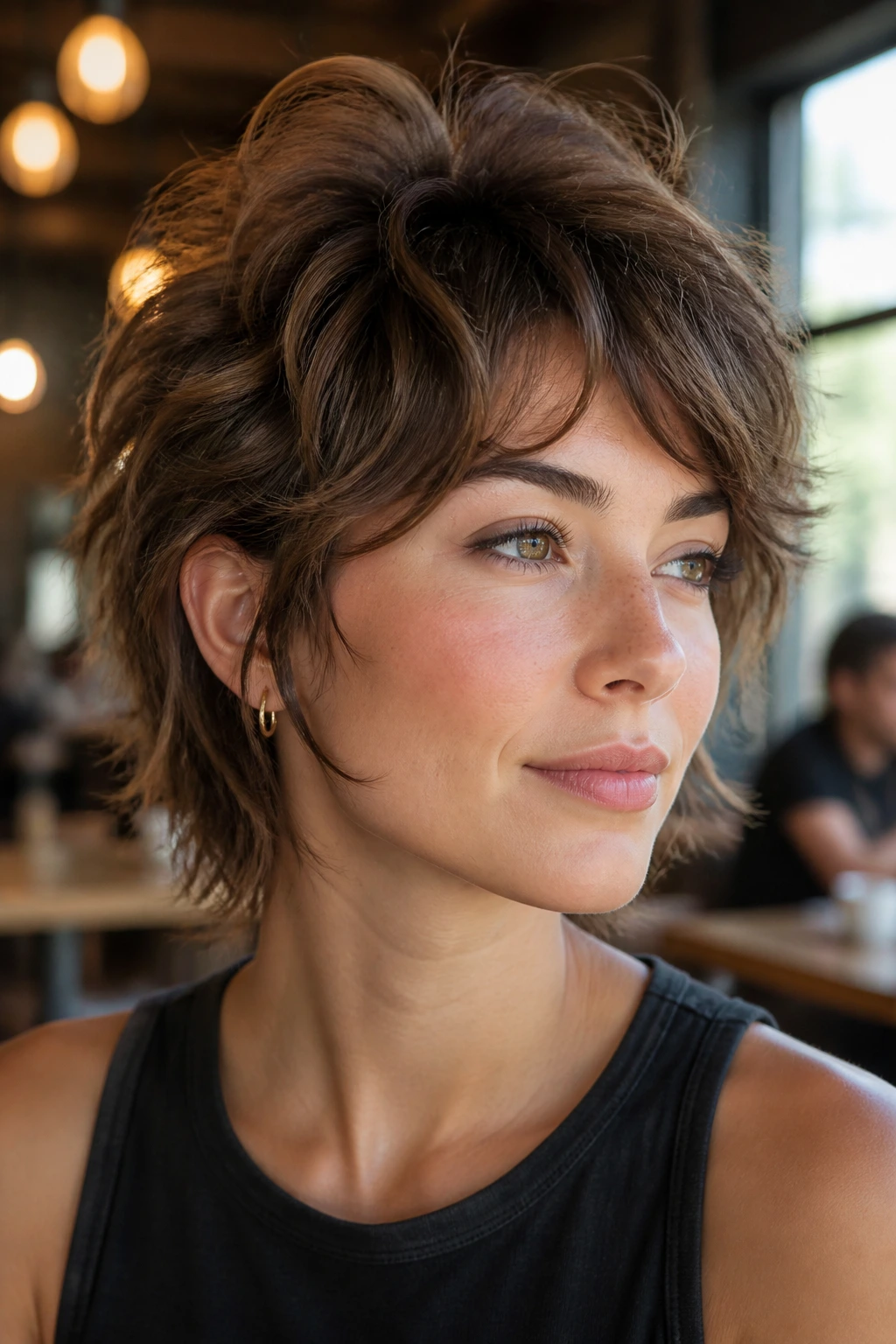
The mini shag is a short cut with a little rock and roll in its bones. It’s not a long shag chopped off; it’s built for short wavy hair from the start. The crown layers are shorter, the face pieces stay soft, and the bottom edge keeps enough irregularity to stop the cut from looking rigid.
Why it works
Waves need somewhere to break apart. A mini shag gives them that space at the crown and around the temples, which helps the hair avoid that blocky mushroom look. If the front tends to fall heavy, ask for face-framing pieces that start around the cheekbones and taper down.
A diffuser helps here, but so does pure air-drying if you have enough natural bend. The hair should look a little undone, but not like you forgot it. There’s a difference, and the mirror knows.
14. Chin-Length Flip Bob
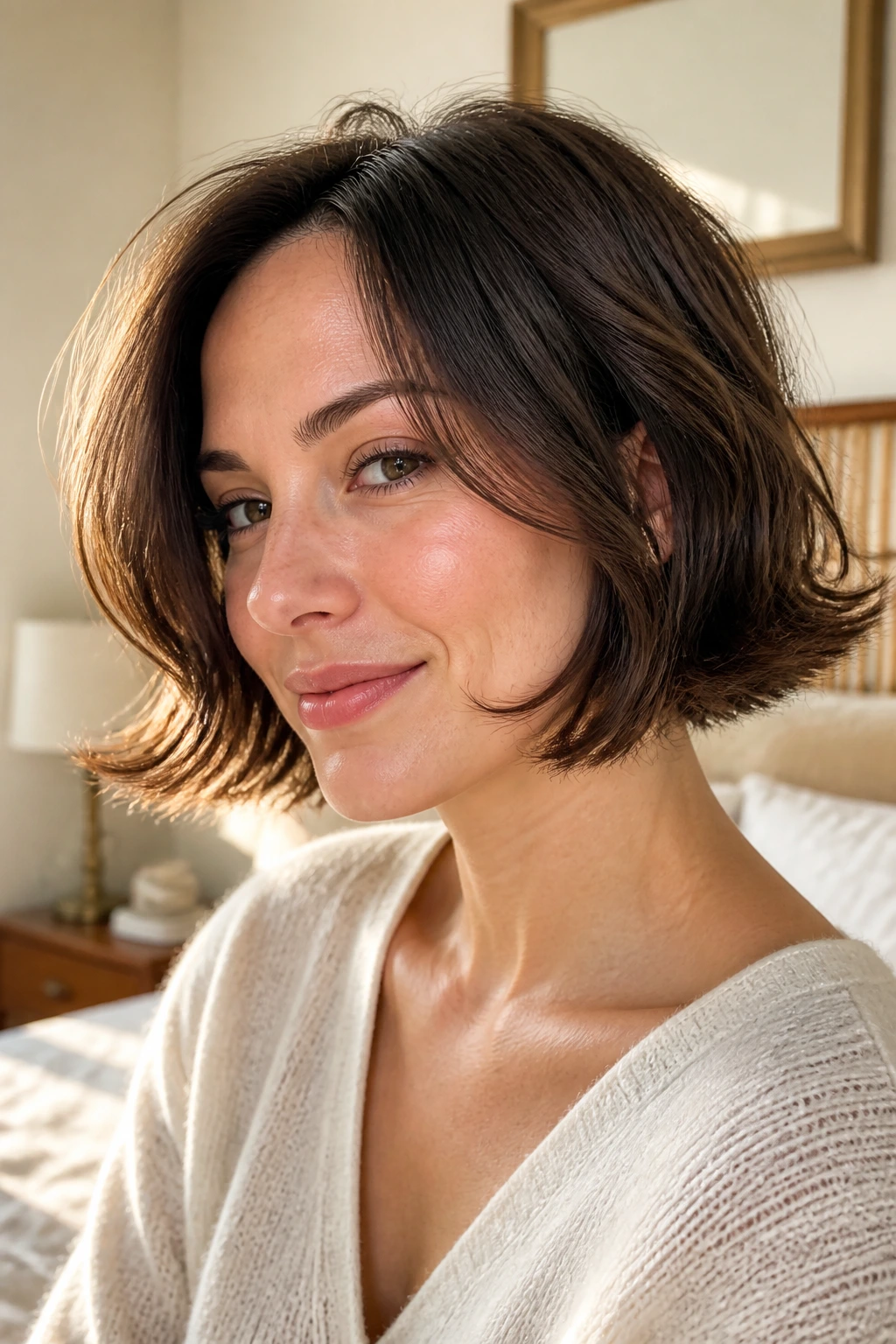
This is the cut for people who like a little swing at the edges. The chin-length flip bob uses a soft perimeter and a bit of internal layer work so the ends turn out instead of hugging the neck. On wavy hair, that flip can happen naturally or with a quick bend from a brush or flat iron.
A blunt chin bob can sit too square. A flip bob solves that by giving the bottom edge motion. If your hair is medium density, this is a flattering middle road — enough shape to look clean, enough looseness to stay casual.
Dry the ends with a round brush or just wrap a few front sections around your fingers while they’re damp. Let the wave do the rest. You do not need to polish every corner.
15. Tucked-Behind-Ears Layered Bob

Why does tucking the hair behind the ears change so much? Because it shows off the shape instead of hiding it. A layered bob with enough face-framing length to tuck easily gives you two looks in one: loose and floating when worn down, sharp and cheekbone-forward when tucked back.
How to style it
Keep the front pieces a little longer than the back, then ask for soft layers that don’t fray at the ends. That gives the tuck something to work with. A light styling cream on the side pieces helps them stay smooth behind the ears without slipping out by lunch.
This one suits people who wear glasses or hoop earrings a lot. The cut clears space around the face, which keeps accessories from fighting the hairline.
16. Wispy Fringe Crop
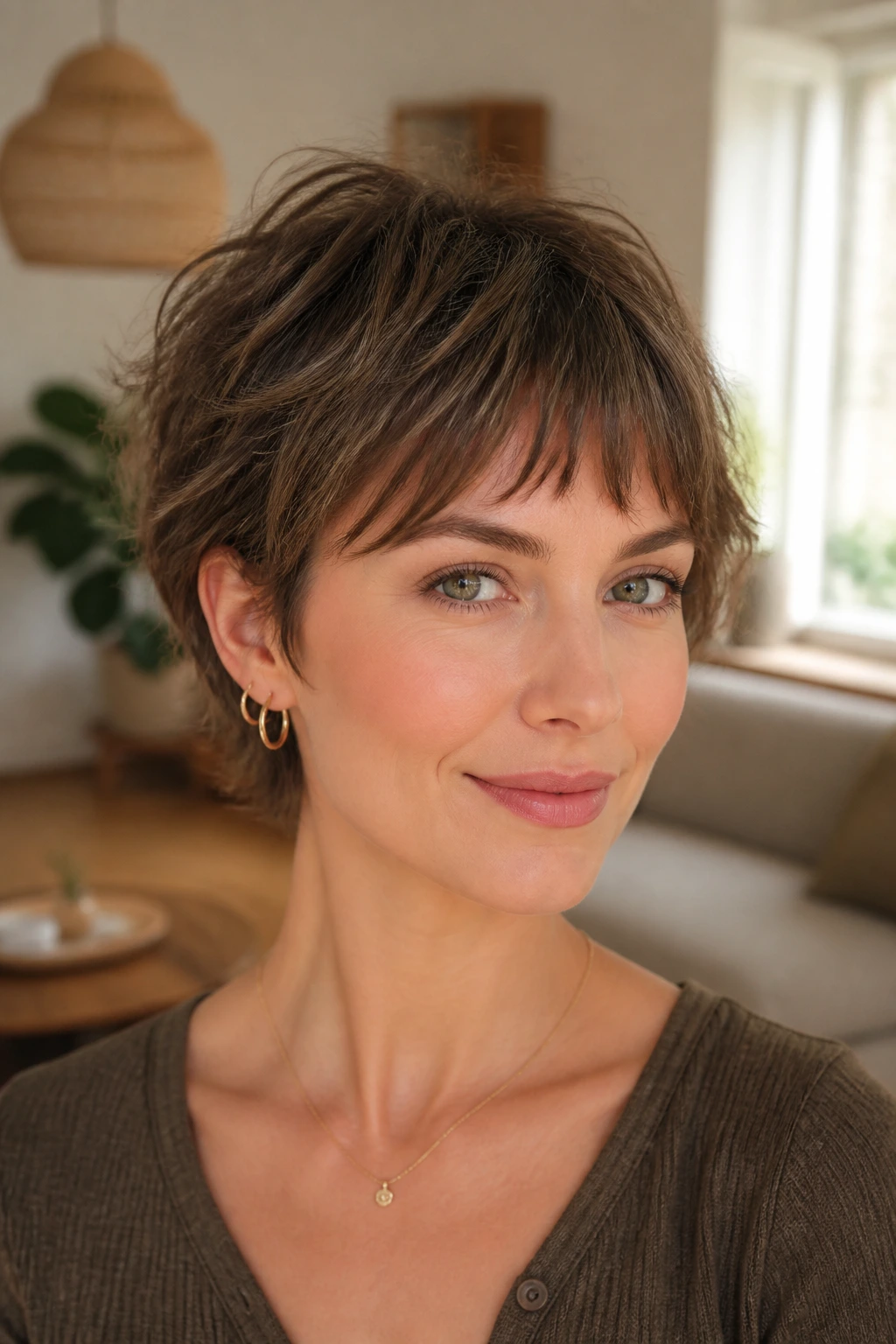
A wispy fringe crop can be a gift on short wavy hair if the fringe is cut with a light hand. Too dense, and the bangs fight the wave. Too short, and they spring up in odd directions. The sweet spot is soft, broken fringe that skims the brows and then loosens at the sides.
The crop underneath should stay close enough to the head to keep the front from looking bulky. That balance makes the fringe feel intentional rather than random. If your forehead gets oily quickly, this cut can still work — you just need a dry shampoo mist at the roots and a quick finger-rearrange in the morning.
It’s a small cut with a lot of personality. Tiny pieces matter here.
17. Neck-Length Lob with Choppy Ends

A neck-length lob is the long short cut for people who want some security around the face but still want movement. On wavy hair, the choppy ends stop the shape from turning into a block, and the extra length lets the wave stretch out a bit instead of bouncing straight up. That can be useful if your hair is dense or coarse.
Why it sits differently
Compared with a chin-length bob, this length gives the wave more room to loosen. The cut should still be textured at the ends, though. Otherwise it hangs like a shelf. Ask for soft internal layering and a little face framing so the front pieces don’t feel heavy.
This is a nice choice if you’re not ready to go very short but still want a cut that behaves better than a blunt bob. It grows out with less drama, too.
18. Curved Bob with Razored Perimeter
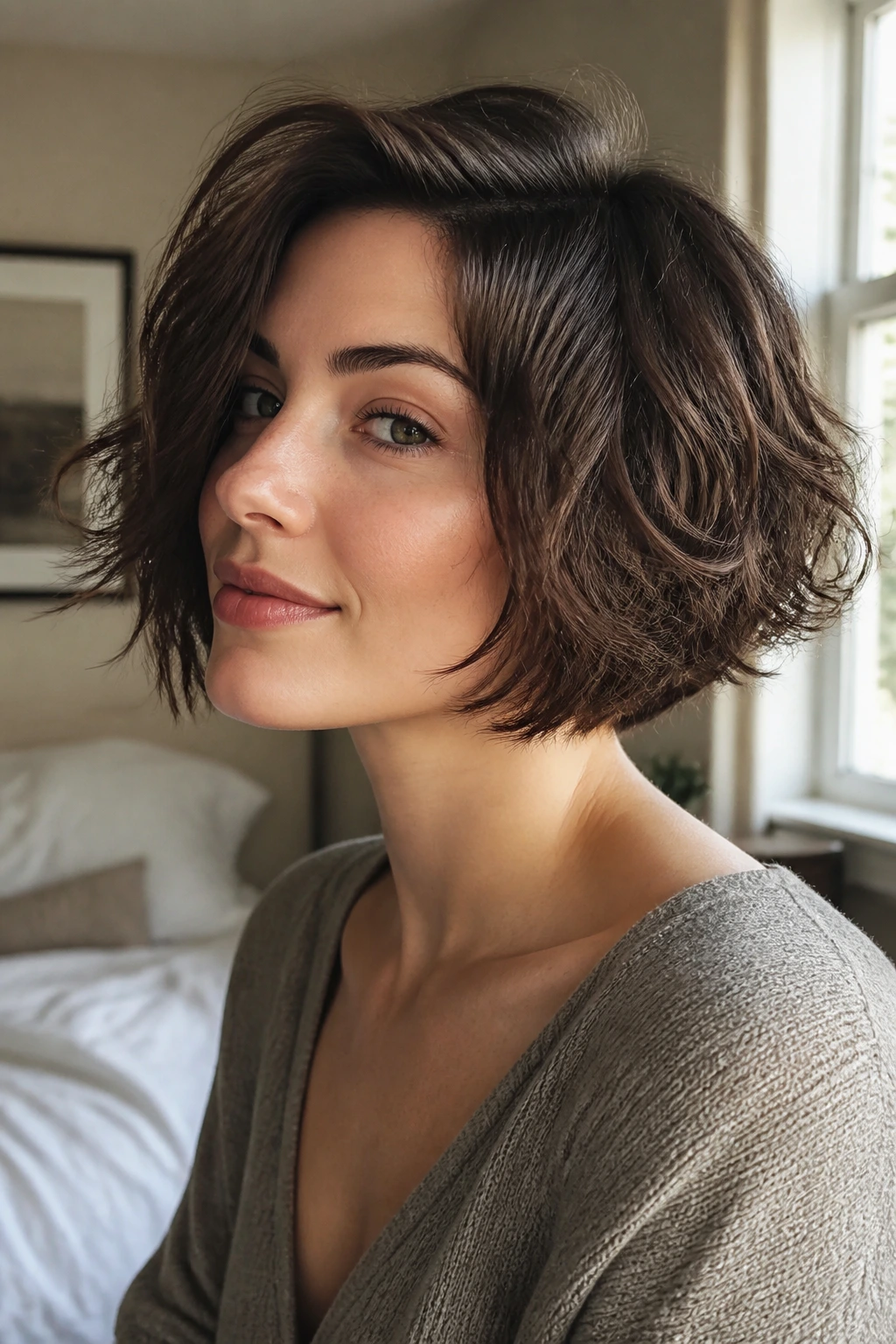
A curved bob follows the shape of the head a bit more closely, which is useful when wavy hair tends to puff out at the sides. The razored perimeter breaks the line just enough to keep it from feeling too strict, but the overall curve keeps the cut close and compact. It’s cleaner than a shag, softer than a blunt bob, and a little easier to wear with a side or center part.
This style is especially good if your jawline is sharp and you want to soften the outline around it. A few longer face pieces can help, but the real work happens in the curve of the body itself. Don’t over-texture the very bottom or the shape loses its structure.
It’s neat without being boring. Which is rare, honestly.
19. Soft Hawk Crop
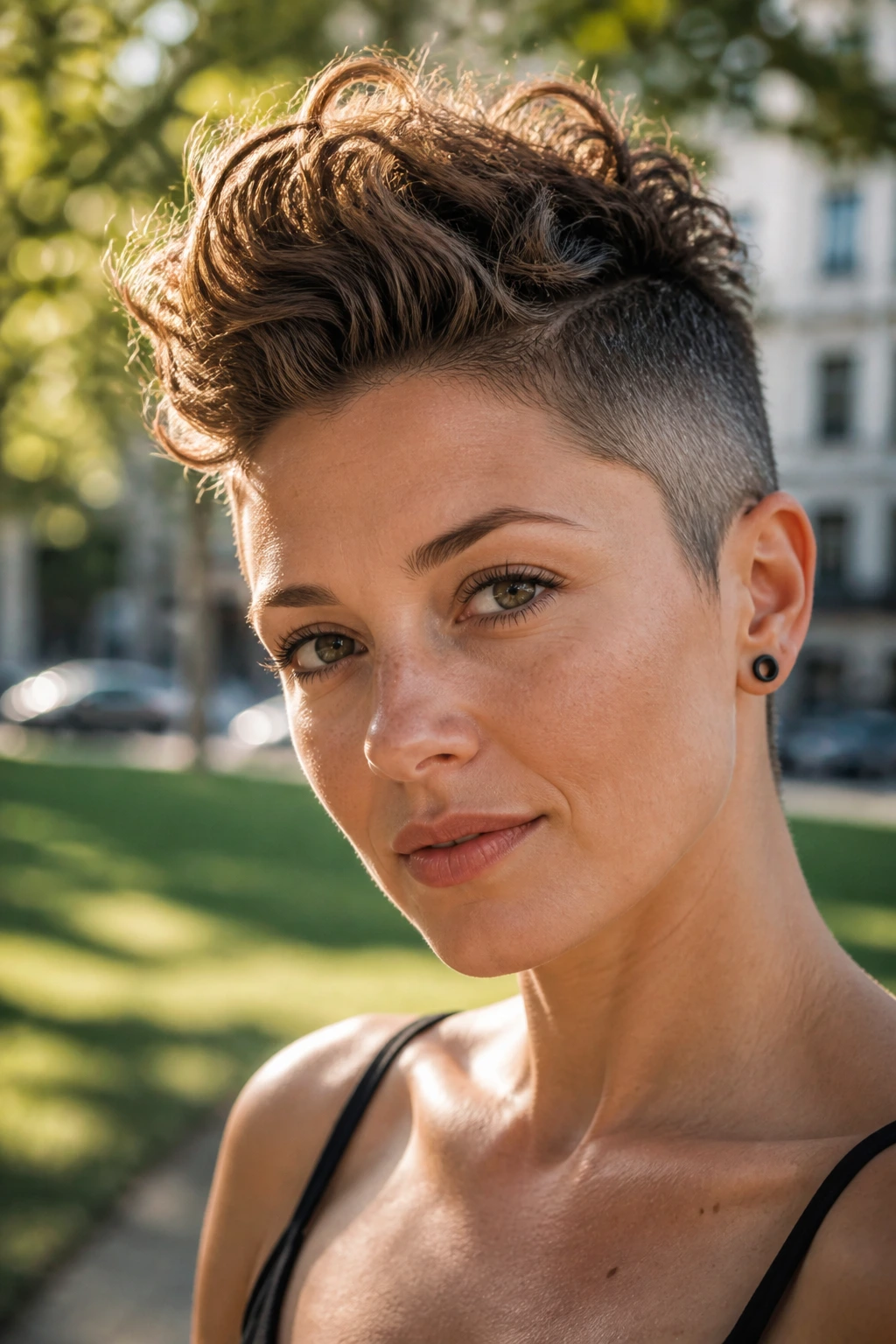
The soft hawk crop borrows the energy of a mohawk without turning into costume hair. The sides stay short and close, while the center strip keeps enough length for wavy texture to lift up and forward. It’s a strong silhouette, but the softness comes from the bend in the top rather than from hard edges.
A practical way to think about it
If you like a style that looks a little sharper from the front and softer from the side, this is a good one. It gives the crown a clear line to follow, which can make fine waves look fuller. A matte paste or texture cream is usually enough to define the strip without making it stiff.
This cut does not need symmetry. In fact, it often looks better with slightly uneven movement. That’s the point.
20. Sculpted Messy Pixie with Micro Fringe
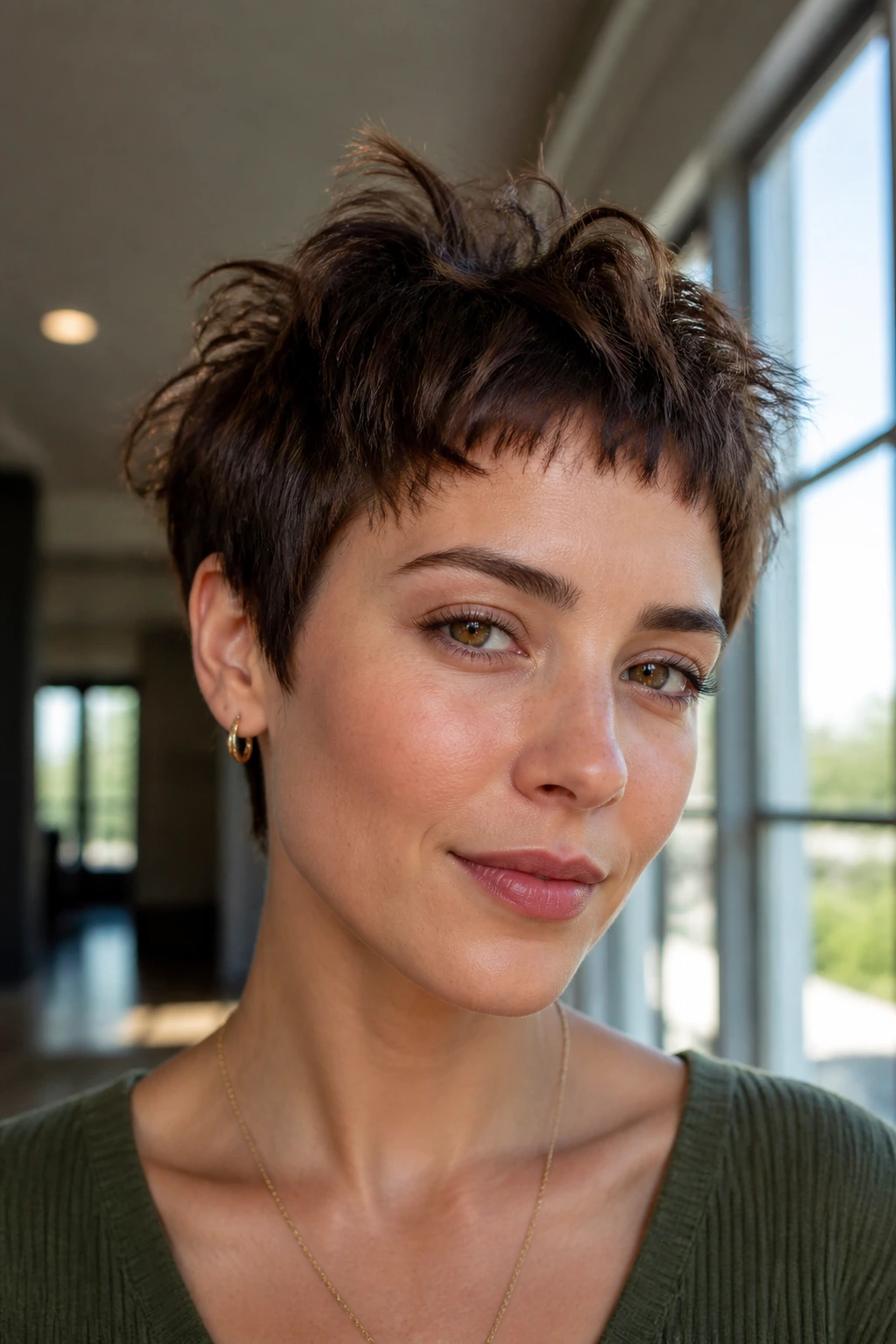
This is the pixie for people who want attitude in a small package. The micro fringe keeps the face open and sharp, while the top stays choppy enough to show off the wave pattern. It looks especially good when the pieces aren’t all going the same direction.
The sculpted part comes from where the hair is directed, not from flattening it. Blow-dry the front a little forward, pinch the sides into place, then let the crown keep some lift. If you’re tempted to pile on product, pause. Short wavy hair can go from sculpted to sticky in one extra squeeze of paste.
It’s a clean shape with a messy finish. That contrast is the whole point.
21. Beachy Shag-Bob with Piecey Layers

The beachy shag-bob sits right between a bob and a shag, and wavy hair usually loves that in-between space. The layers hit the cheekbones and the jaw, which creates movement around the face without taking out too much length. The ends stay piecey, so the style keeps that broken-up texture even when it’s tucked behind an ear or pushed away from the face.
How it behaves
This cut works well if your waves are loose and a little unpredictable. It also handles day-two hair better than a sleek bob because the separated layers can be reactivated with a bit of water and scrunching. Sea salt spray can help, but use a light hand; too much makes short hair feel dry and rough.
If your hair is thick, ask for the layers to be concentrated around the top and sides so the bottom doesn’t become too wispy. That keeps the shape from going hollow.
22. Ear-Grazing Crop with Long Front Corners
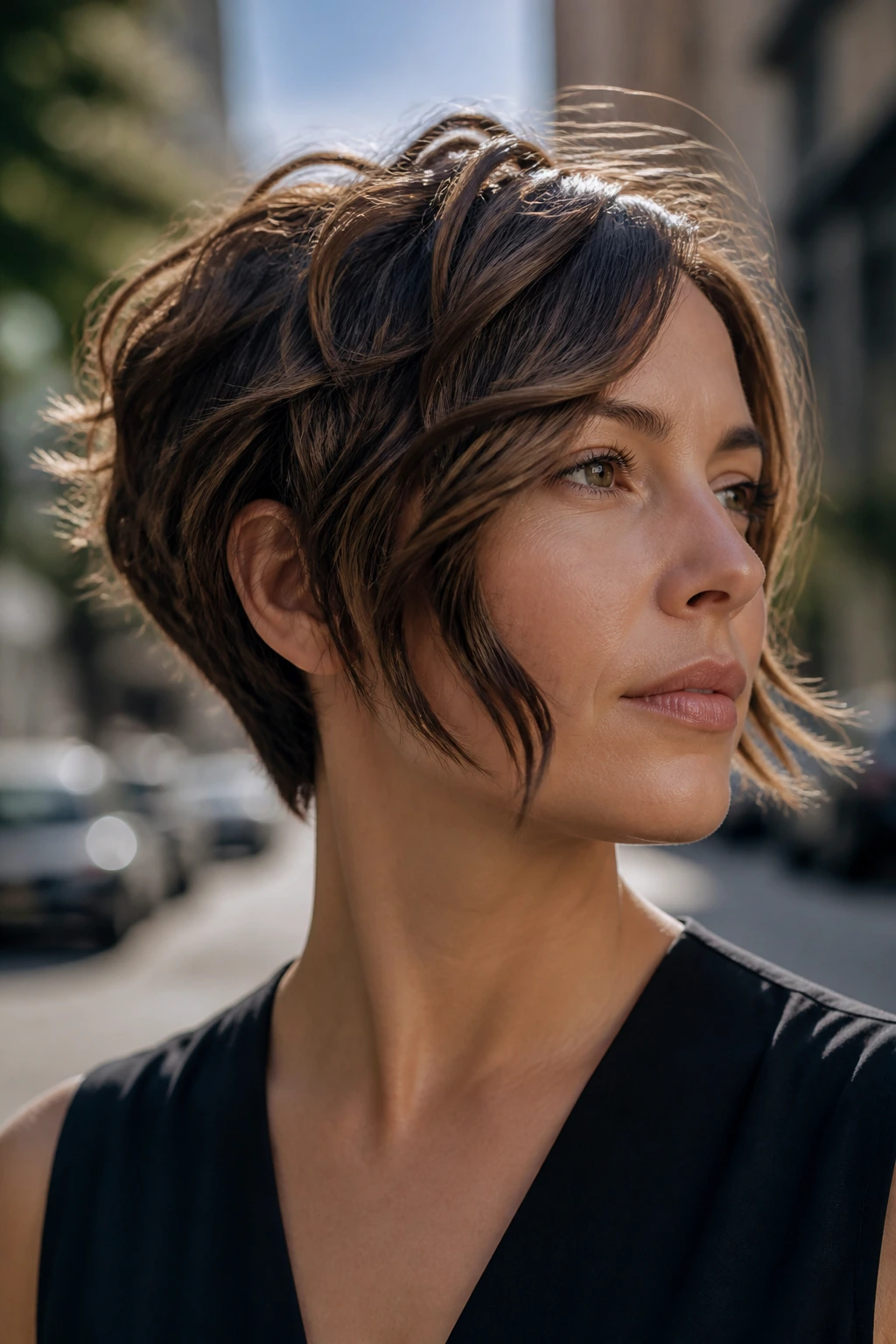
An ear-grazing crop with long front corners is a tidy little shape with a lot of movement hiding in it. The back and sides stay close enough to the head to look neat, while the front corners drop forward and frame the cheekbones. On wavy hair, those front pieces catch the bend and make the whole cut feel softer.
It’s a smart choice if you want something short, light, and easy to tuck behind the ears without losing shape. The corners should be long enough to brush the jaw, not so long that they overwhelm the crop. A small amount of mousse and a side part usually gives the best result.
Simple. Sharp. Not fussy. That combination ages well.
Why Choppy Layers and Messy Styling Work So Well on Wavy Hair
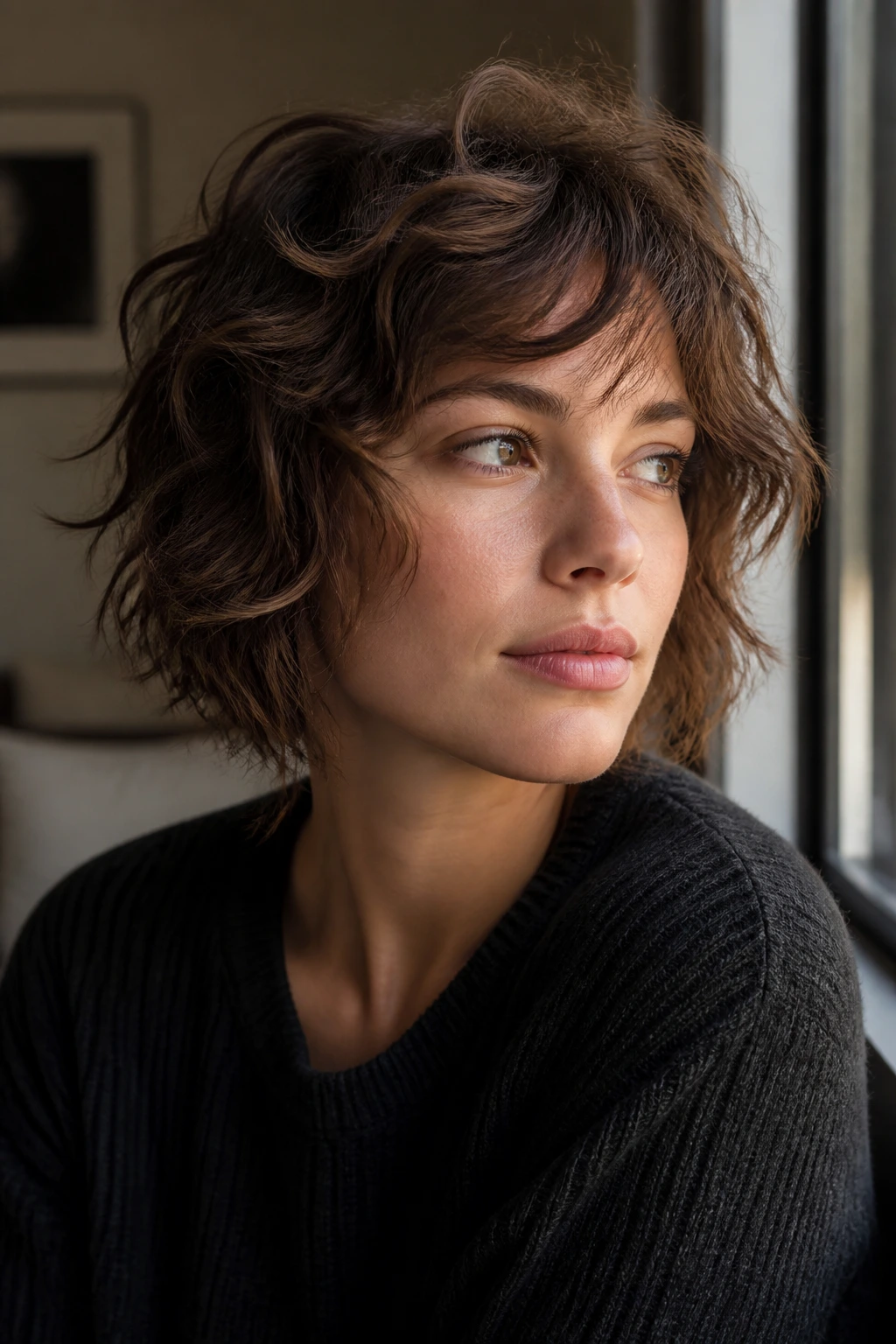
Wavy hair is not straight hair with a bad attitude. It has its own structure, and the structure matters. A loose S-bend needs room to fall, and a choppy cut gives it that room by removing heavy blocks of weight that would otherwise drag the wave down or force it outward in a triangle.
The best choppy shapes also respect the fact that wavy hair behaves differently when wet. It stretches. It lies. It tells lies, honestly. A wave that looks tame in the chair can spring up half an inch once it dries, which is why dry cutting or at least partially dry cutting matters so much on short hair. You want the stylist to see where the bend actually lands, not where the water pulled it.
Messy styling helps because it avoids overcontrol. Brushing waves into submission usually separates the top from the bottom in all the wrong ways. A little scrunching, a little finger shaping, maybe one or two bends with a small iron — that’s usually enough. The cut does most of the work, and that is exactly how it should be.
What to Ask Your Stylist for Before the First Snip
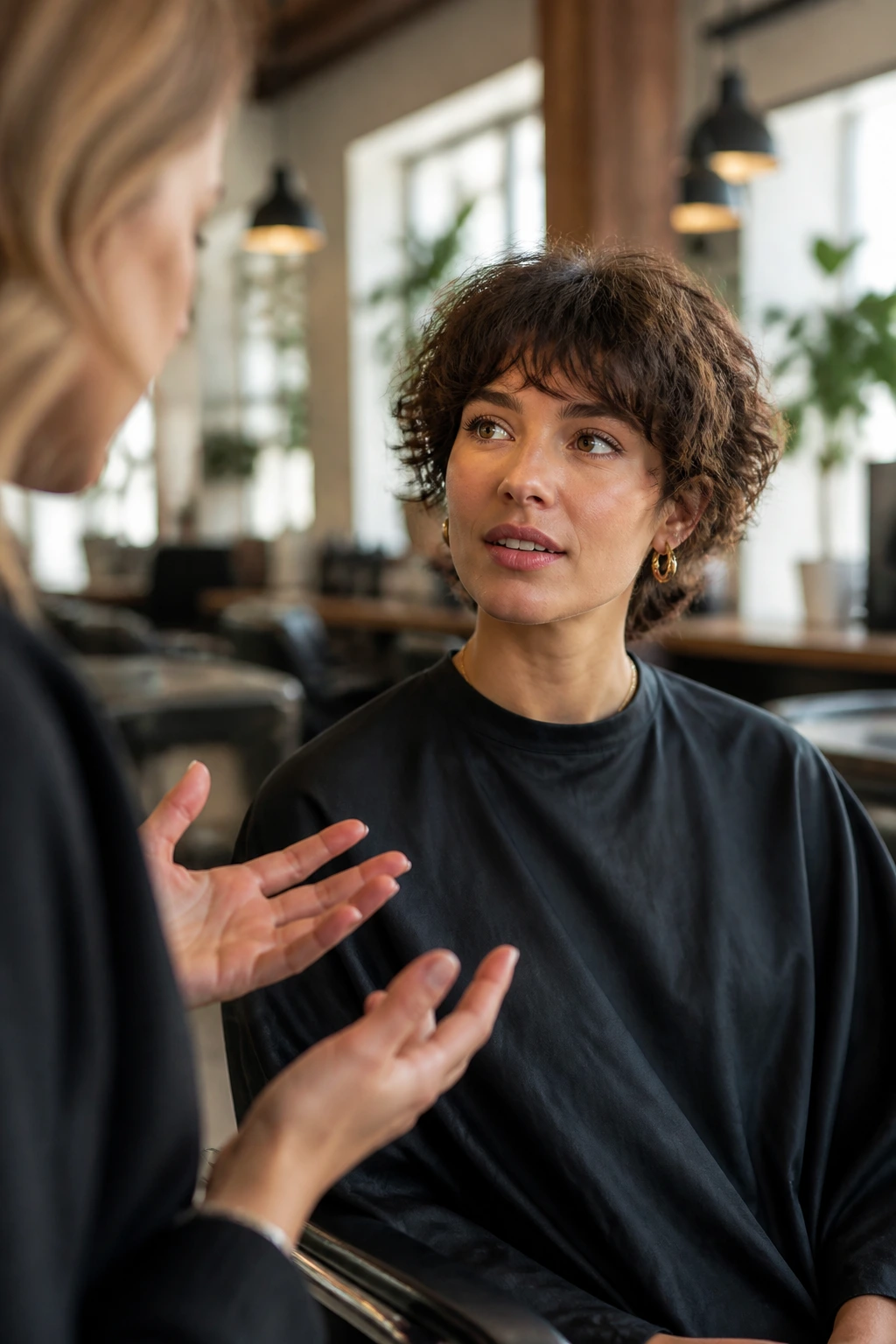
Bring photos, yes, but bring words too. A picture of a short wavy cut helps, but saying “I want the perimeter soft, not blunt” or “I want the crown lighter but not thinned out at the ends” gives your stylist a much better map. Those details matter because short hair on waves can go from lively to puffy fast if the weight is removed in the wrong place.
A good conversation usually includes three things: where the length should sit, how much bulk needs to come out, and whether the texture should be cut dry or wet. If your hair is thick, ask for internal debulking instead of aggressive thinning shears at the bottom. If your hair is fine, ask for gentle layering and avoid taking too much off the crown. That’s where a lot of shape lives.
Fringe also deserves a decision before the scissors come out. Curtain bangs, broken fringe, micro fringe, or no fringe at all — each one changes the whole mood. If you wear glasses, tuck hair behind your ears often, or hate anything that brushes your lashes, say so early. The best cut is the one that fits your actual life, not the one that looked nice in the chair for ten minutes.
The Tools That Make These Looks Easy to Refresh
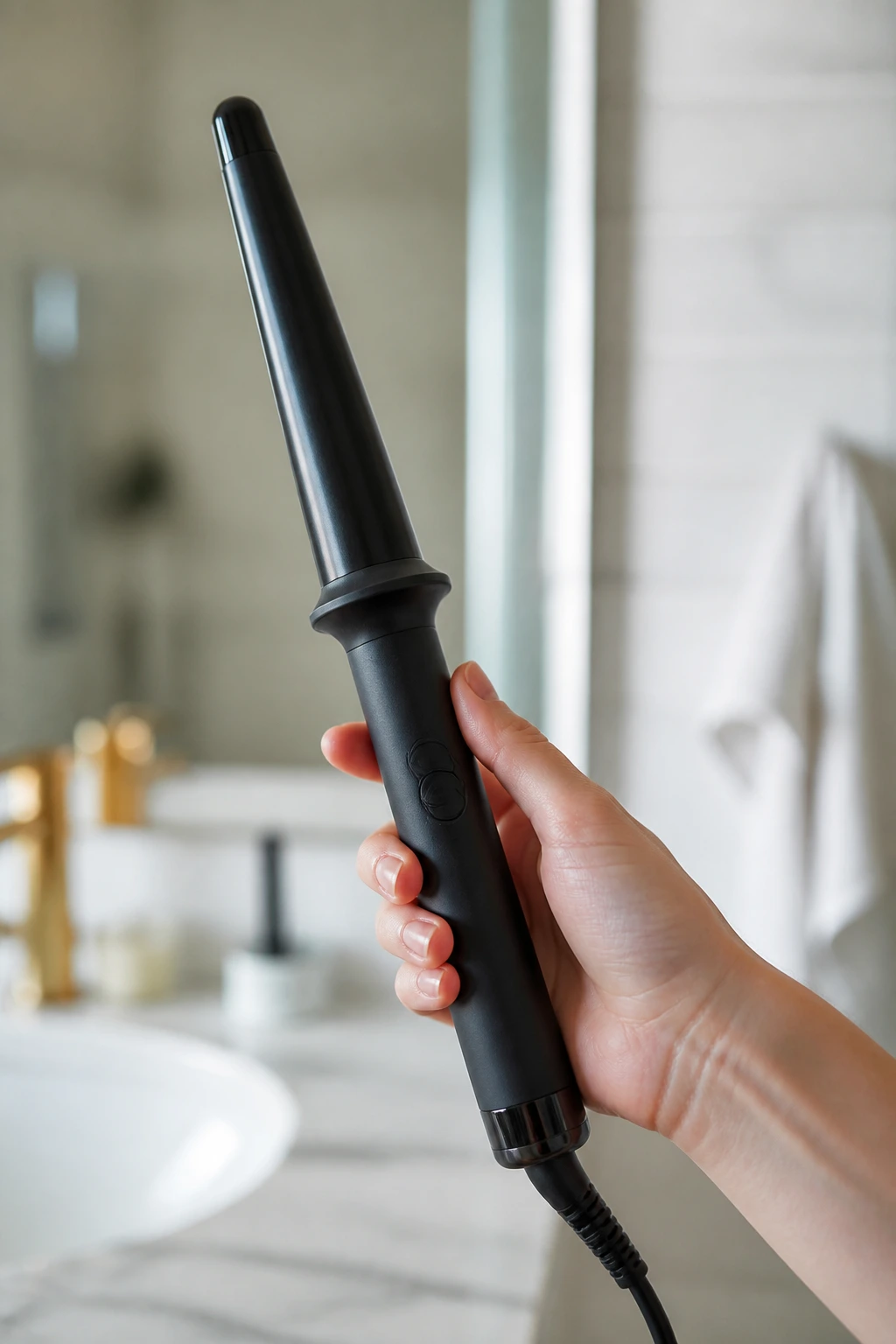
You do not need a drawer full of gadgets. A short wavy cut behaves best with a small, sensible set of tools that help you reshape the same bend instead of fighting it.
-
Microfiber towel or soft T-shirt: Cuts down on rough friction after washing and helps keep frizz under control.
-
Wide-tooth comb: Good for detangling damp hair without stretching the wave flat.
-
Diffuser attachment: Useful if you want lift at the crown or a little more separation in the top layers.
-
Blow dryer with a narrow nozzle: Helps direct the front pieces, bangs, or nape when you need a little shape.
-
1-inch curling iron or wand: Handy for bending stubborn front corners or evening out one side that dries flatter than the other.
-
Small round brush: Best for flipping ends under or outward on bobs and crops.
-
Duckbill clips or root clips: Great for holding crown volume while hair dries.
-
Matte paste or texture cream: Gives piecey definition to pixies, shags, and short bobs without too much shine.
-
Lightweight mousse: Adds body at the roots without making short hair gummy.
-
Heat protectant spray: If you use hot tools at all, this is not optional.
What to Buy for Wavy Short Hair, and What to Leave on the Shelf
Short wavy hair needs lighter products than most people think. Heavy creams can make the roots collapse, especially on fine hair, while thick oils can separate the wave into greasy-looking pieces. A better setup usually starts with a lightweight mousse or foam at the roots, then a small amount of cream or paste only where the ends need help.
Sea salt spray can be useful, but it’s easy to overdo. One or two sprays on damp mid-lengths is enough for most short cuts. More than that and the hair can feel crunchy or dry before lunch. If your hair is coarse, you may need a smoother cream instead of salt spray, because coarse waves often need a little slip to stop frizz.
Look for texture products with a soft hold rather than a hard shell. Short hair shows product mistakes fast. If the label promises extreme grip, that usually means the finish may feel sticky or stiff in a cut that is supposed to move. A dry shampoo that doubles as a root refresher is also worth having on hand, especially if your fringe starts to separate by day two.
How to Wear These Styles So They Match Your Face and Wardrobe

Silhouette: If your face is narrow or long, styles with side sweep, curtain bangs, or a bit of crown volume can help balance the length. If your face is rounder, keep a few longer front pieces near the cheekbones and avoid too much width at the sides. The haircut should frame you, not swallow you.
Accessories: Short wavy cuts make earrings, glasses, and necklines matter more because the hair leaves them visible. Hoops, small studs, or a clean pair of frames can work with the texture instead of competing with it. Tuck one side behind the ear if you want to show a collar or a strong earring.
Wardrobe Pairings: A sharp crop looks good with a structured collar or a plain crew neck. A softer shag-bob sits nicely against knitwear or open-neck shirts because the texture keeps the outfit from feeling too neat. There’s no rule that says short messy hair needs casual clothes, but the shape does change how the neckline reads.
Finish: Matte, piecey, and a little rough suits the more rebellious cuts. Slight shine works better on French bobs, wet-look pixies, and curved bobs. Match the finish to the cut’s mood, and the whole look feels easier.
Extra Styling Moves That Add Grit, Lift, and Separation
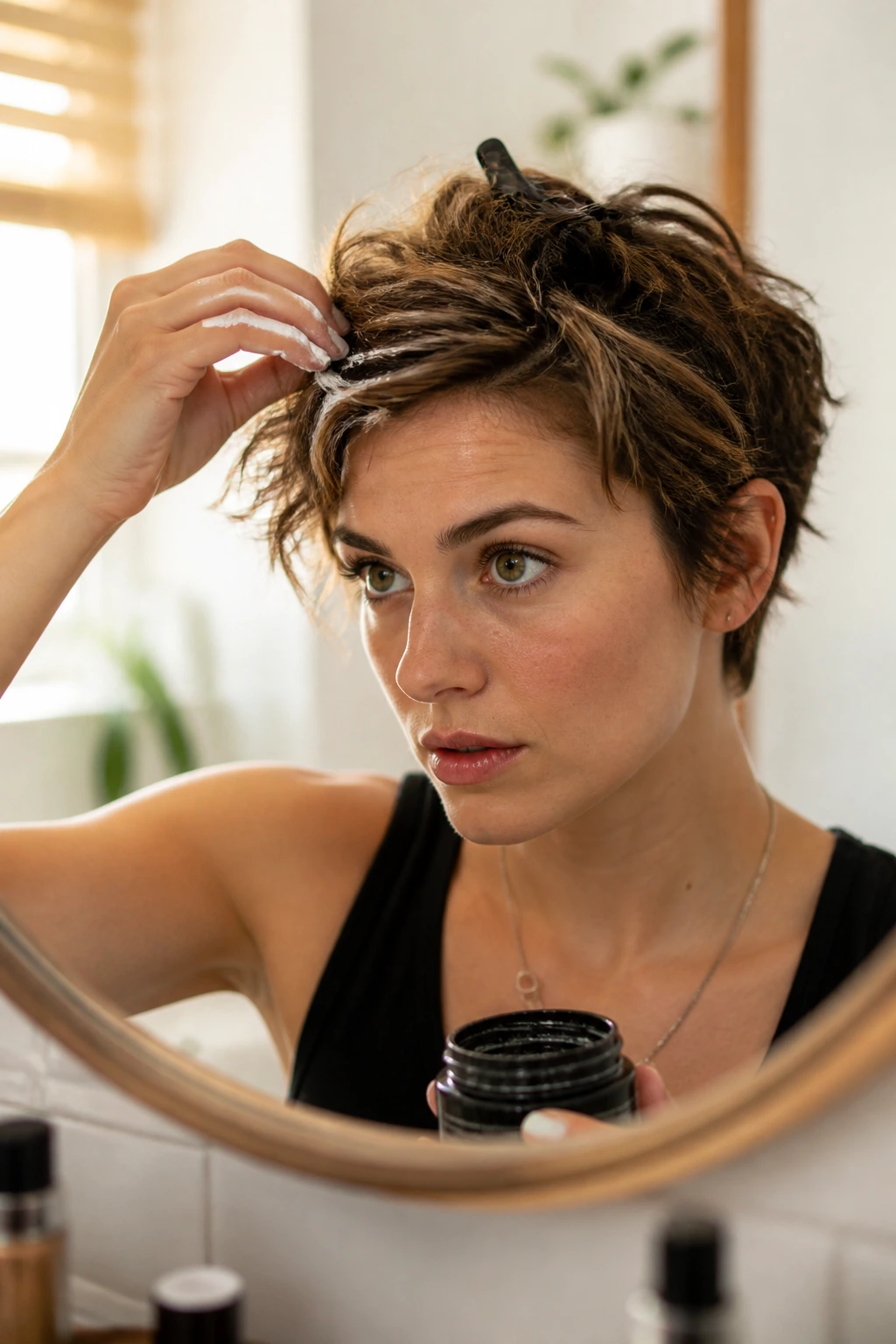
The fastest way to make short wavy hair look intentional is to place product where it matters, not everywhere. A little mousse at the roots can make the crown stand up without turning the ends dry. Then a small amount of paste or cream on the fingertips can be tapped into the front pieces and ends, where the eye lands first.
Texture Boost: Twist two damp sections around your fingers and let them dry like that for a few minutes. It gives a broken wave that looks lived-in instead of brushed out.
Lift: Clip the crown up while you get dressed. Even 10 minutes of root lift can change how a short cut sits for the rest of the day.
Shape: If one front corner falls too flat, wrap it around a 1-inch iron for one turn only. Hold it for 5 to 8 seconds, then let it cool in your hand before touching it again.
Customization: Fine hair likes mousse and a dry finish. Thick hair often needs a touch more cream on the ends and a little less on the roots. Don’t force both hair types into the same product routine.
Short-Cut: If you’re running late, mist the hairline, scrunch the top, and pinch the ends with a little paste. That usually fixes 80 percent of the morning chaos.
Common Mistakes That Make the Shape Go Flat or Puffy
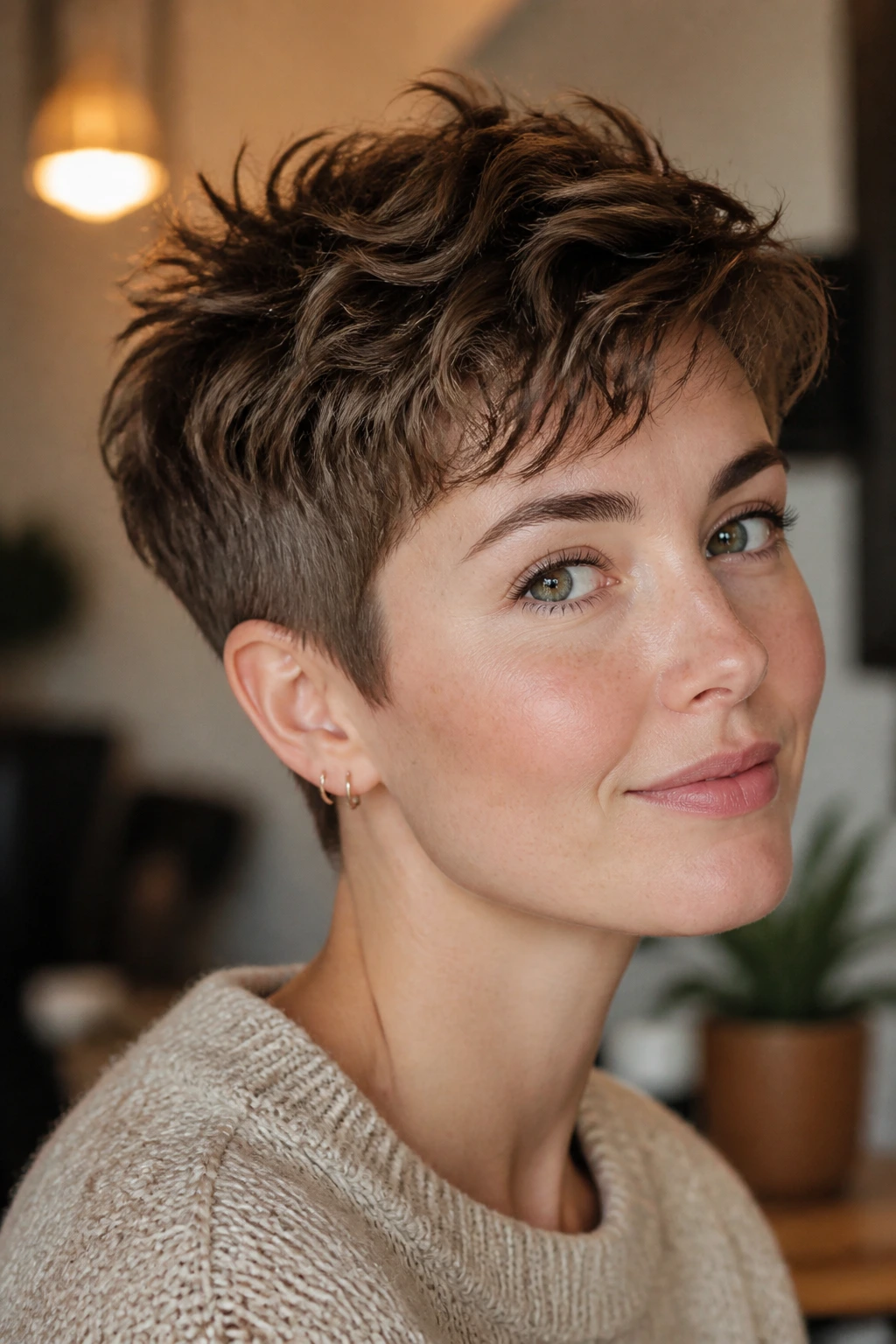
The first mistake is cutting too blunt and too short on a wave that needs room. The hair then springs up at the ends and spreads out at the sides, which makes the head look wider than it is. The fix is simple: leave a little more length and ask for point cutting or soft layering at the perimeter.
Another common problem is over-thinning the ends. That can make short wavy hair look airy for an hour, then frizzy by the afternoon. If the hair is dense, remove weight from the inside, not by shredding the outer edge into wisps.
Too much product causes a different kind of trouble. Cream-heavy styling can flatten the roots and leave the ends stringy. Use less than you think you need, especially on fine hair. Start with a pea-sized amount, then add a little more only if the hair still feels too loose.
Skipping maintenance is the quiet killer. Short cuts lose their shape faster than longer ones, and wavy hair shows that loss in the outline first. Once the nape starts puffing or the fringe starts splitting, the style stops reading clean. A trim every 6 to 8 weeks usually keeps the edges honest.
Variations and Adaptations to Try

The Office-Soft Version: Keep the same short shape, but reduce the most dramatic texture and wear a slightly smoother side part. It still reads as wavy and short, just a bit calmer for work or formal settings.
The Fine-Hair Lift Version: Leave the top slightly longer, keep the sides lighter, and use mousse at the roots only. This version makes the crown look fuller without asking fine hair to carry too much product.
The Thick-Hair Weight-Removal Version: Ask for internal layering and, if needed, a hidden undercut near the nape. That cuts the bulk without turning the ends thin and frayed.
The Curly-Wave Hybrid Version: Keep more length in the top pieces and use a diffuser instead of brushing the wave out. If your pattern shifts between loose bends and small curls, this version gives both room.
The Glossy Evening Version: Swap matte paste for a light gel or styling cream and tuck one side behind the ear. The cut suddenly looks cleaner, and the wave pattern gets a more polished outline.
The Grow-Out Friendly Version: Keep the perimeter a touch longer and avoid super-short fringe. This one buys you a longer runway between salon visits, which is useful if you hate frequent trims.
Keeping Short Wavy Hair Fresh Between Washes
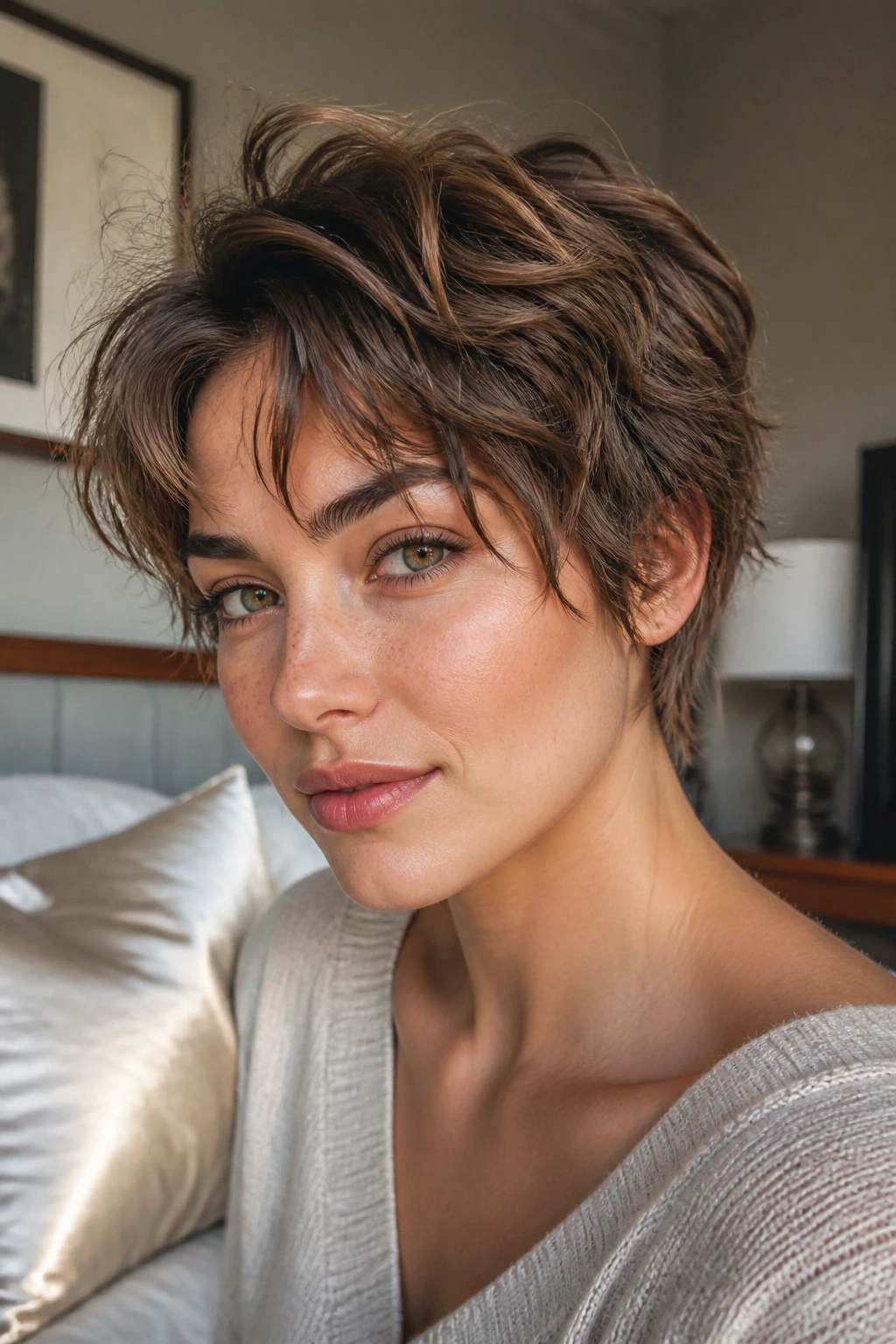
Short wavy hair usually looks best when it is not overwashed. If your scalp gets oily fast, you may still wash often, but even then the refresh routine matters. A satin pillowcase helps more than people admit. So does not sleeping on damp hair.
In the morning, start at the roots. A little dry shampoo at the crown and around the part can stop the style from collapsing before the coffee is even brewed. Then mist the front pieces lightly with water, scrunch them back into shape, and press a tiny bit of cream or paste into the ends. If one side has gone rogue, bend it with your fingers or a quick tap from a small iron.
Trim timing matters too. A short bob or crop usually needs a tidy-up every 6 to 8 weeks. Bangs may need a lighter trim every 3 to 4 weeks, especially if they sit at the brows or cheekbones. That’s not vanity. It’s structure maintenance.
Frequently Asked Questions
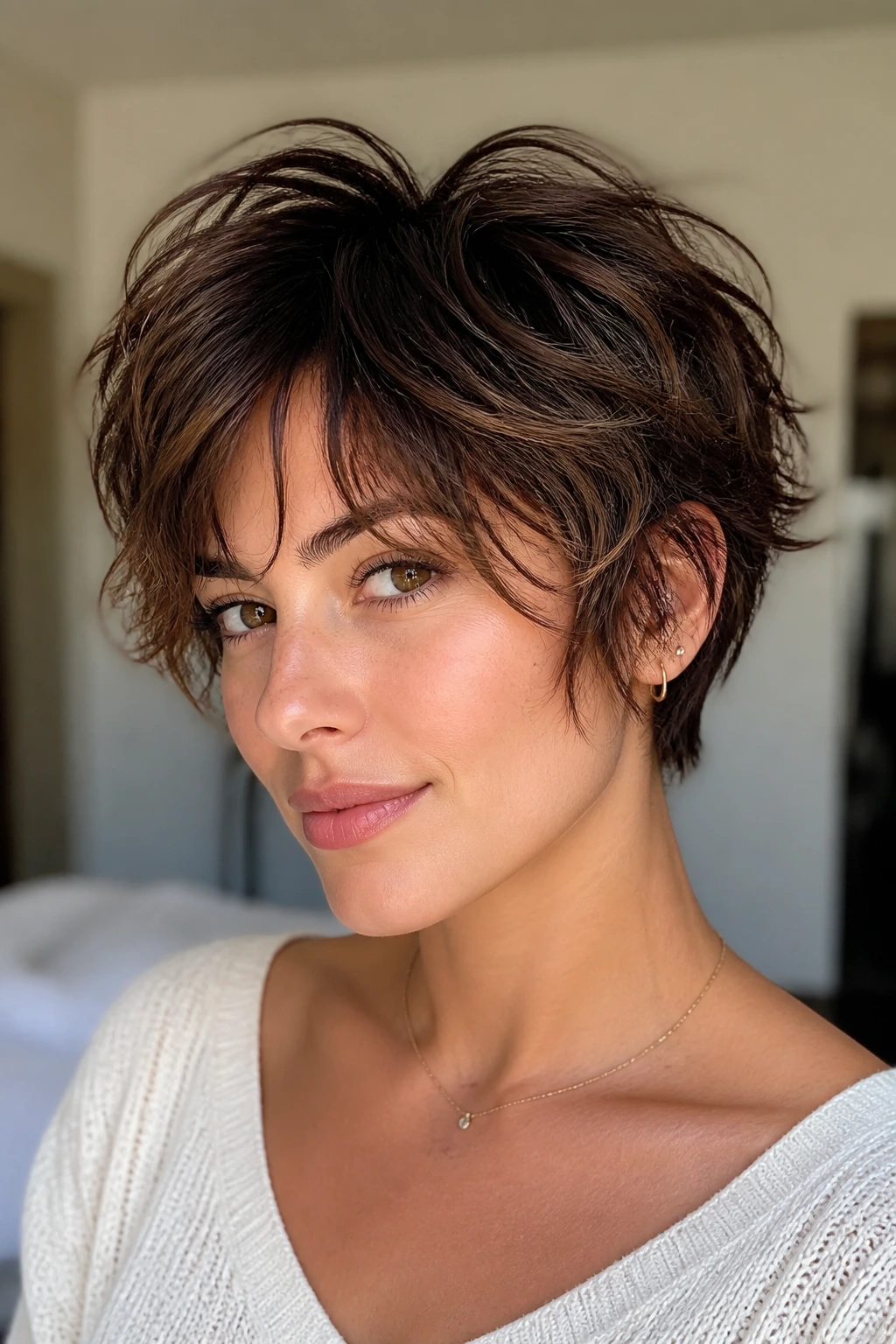
Which short wavy haircut is easiest to style in the morning?
The bixie, soft pixie, and layered crop usually win here because they need less precision. A little mousse and finger-drying are often enough. If you want the shortest possible routine, choose a shape that already follows your wave pattern instead of one that demands a lot of bending with hot tools.
Do choppy layers make wavy hair frizzier?
They can, if the layers are too aggressive or the ends are shredded. The better version uses soft point cutting and removes bulk from the right places. Frizz usually comes from over-thinning, rough drying, or too much product near the roots.
Is a blunt bob bad for wavy short hair?
Not bad, but trickier. A blunt line can look chic on some waves, yet it often expands outward if the hair is dense or if the wave pattern is strong. Most people get a better result from a slightly broken perimeter or a curved bob instead of a hard block.
What product should I use if my waves fall flat?
Start with a lightweight mousse at the roots and a touch of dry texture spray through the mid-lengths. Heavy oils and thick creams usually make flatness worse. If the crown still collapses, use root clips while the hair dries.
Can I wear these styles straight sometimes?
Yes, but the cut should still be designed for how your hair lives most days. Short wavy cuts can be straightened with a small brush or flat iron, yet the layers and fringe may look better when there’s a little bend left in them. A totally straight finish can expose a bad cut fast.
How often should I trim short wavy hair?
Most short shapes need a cleanup every 6 to 8 weeks. Pixies and fringe-heavy cuts may need more frequent shaping if the front starts covering the eyes or the nape starts to bulk up. The shorter the style, the more obvious the grow-out.
What if one side of my wave pattern is stronger than the other?
That’s common. A side part, asymmetrical bob, or crop with a longer front piece can hide the imbalance instead of forcing symmetry. You can also reshape the weaker side with a quick bend from a wand or a finger twist while the hair is damp.
Can I ask for bangs with a short wavy cut if my forehead is small?
Yes, but keep them light. Broken fringe, curtain bangs, or a wispy crop usually work better than a dense straight fringe because they leave more room around the face. Heavy bangs on wavy hair can close the face in fast.
Which styles here are best for thick hair?
The undercut bob, curved bob, soft mullet, and jaw-length shag bob are especially useful because they remove bulk without making the ends thin. Thick wavy hair usually needs weight control more than extra layering. The wrong kind of thinning can make it puff harder, not easier.
The Shape That Grows Out Well

The best short wavy cut is the one that still looks like a haircut on day forty, not a compromise. That’s really the thread running through these styles: they keep enough structure to frame the face, but they leave enough slack for the wave to move on its own.
If you choose a shape that fits your density, your wave pattern, and your willingness to style in the morning, short hair stops feeling like a high-maintenance dare. It becomes quick. Lived-in. A little messy in the right places, which is usually where short wavy hair looks best anyway.