



Angled bobs for Black women with thick hair work because they give density a job: lift at the crown, a clean drop at the front, and enough weight in the back to keep the line from puffing out. I love a cut that respects hair instead of wrestling it.
Thick hair can do one of two things in a bob. It can stack up into a box, or it can swing with shape. The difference is usually the angle, the internal weight removal, and whether the stylist understands shrinkage, especially if you wear your hair curly one week and silk pressed the next.
That’s why this collection matters. Some of these bobs are sharp and graphic, some are soft and rounded, some are made for coils, some for straightened strands, and a few sit right in the middle so you can change your finish without changing the cut. The good ones keep their outline even when humidity shows up uninvited.
Why This Collection Is Different on Thick Hair
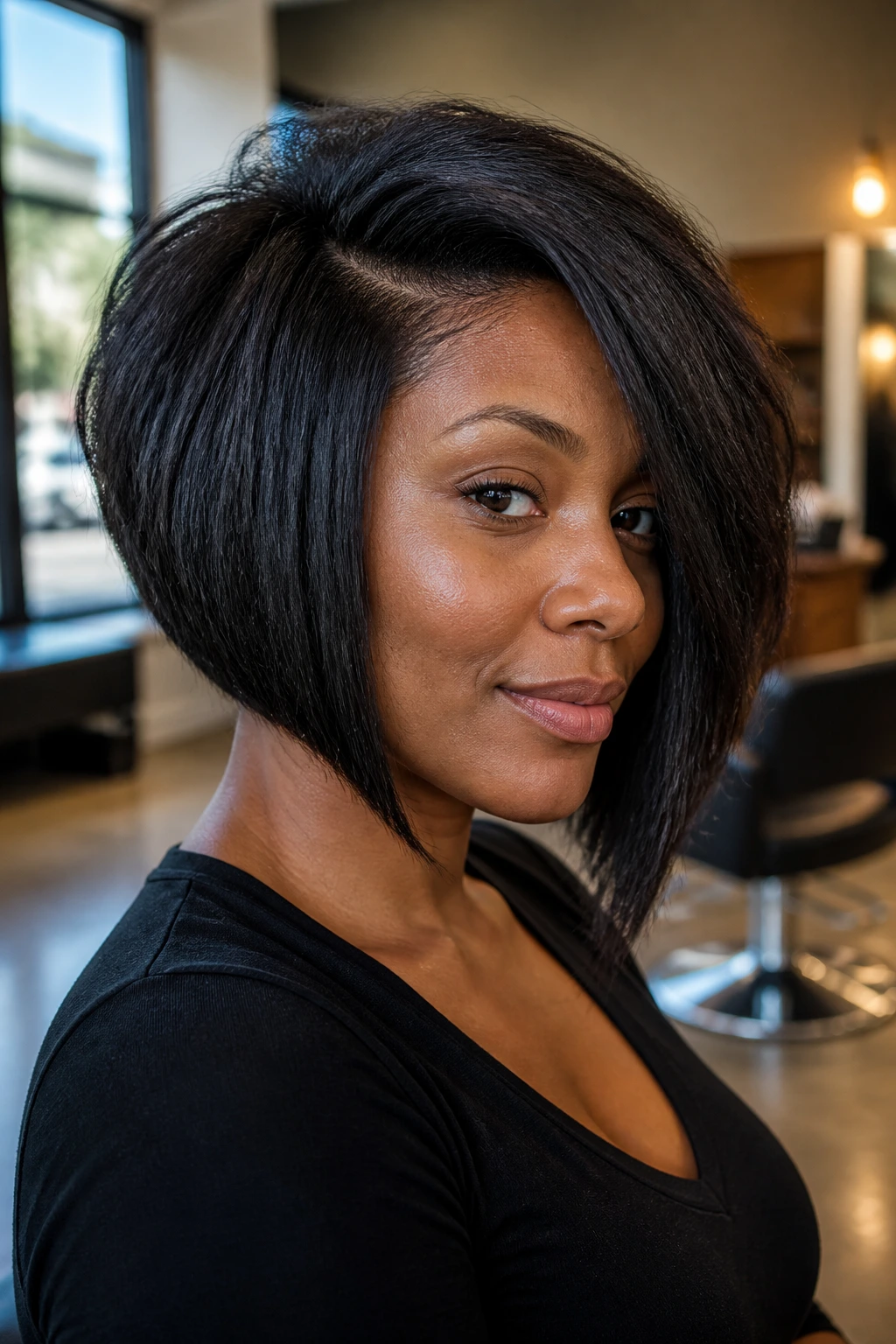
-
Density-Friendly Shape: The front-to-back angle gives thick hair somewhere to go, so the cut looks intentional instead of square at the jaw.
-
Shrinkage-Smart Options: Several of these styles work with coils, curls, or blowouts, which matters when your hair changes length after it dries.
-
Salon-Ready Details: Each look comes with a shape note you can actually say out loud to a stylist instead of waving around a blurry photo and hoping for the best.
-
Easy Grow-Out: A good angled bob still looks put together at week six because the longer front pieces soften the line as the back grows.
-
Styling Flexibility: You can wear many of these cuts sleek, curly, pressed, or braided without losing the point of the shape.
1. The Classic Stacked A-Line Bob
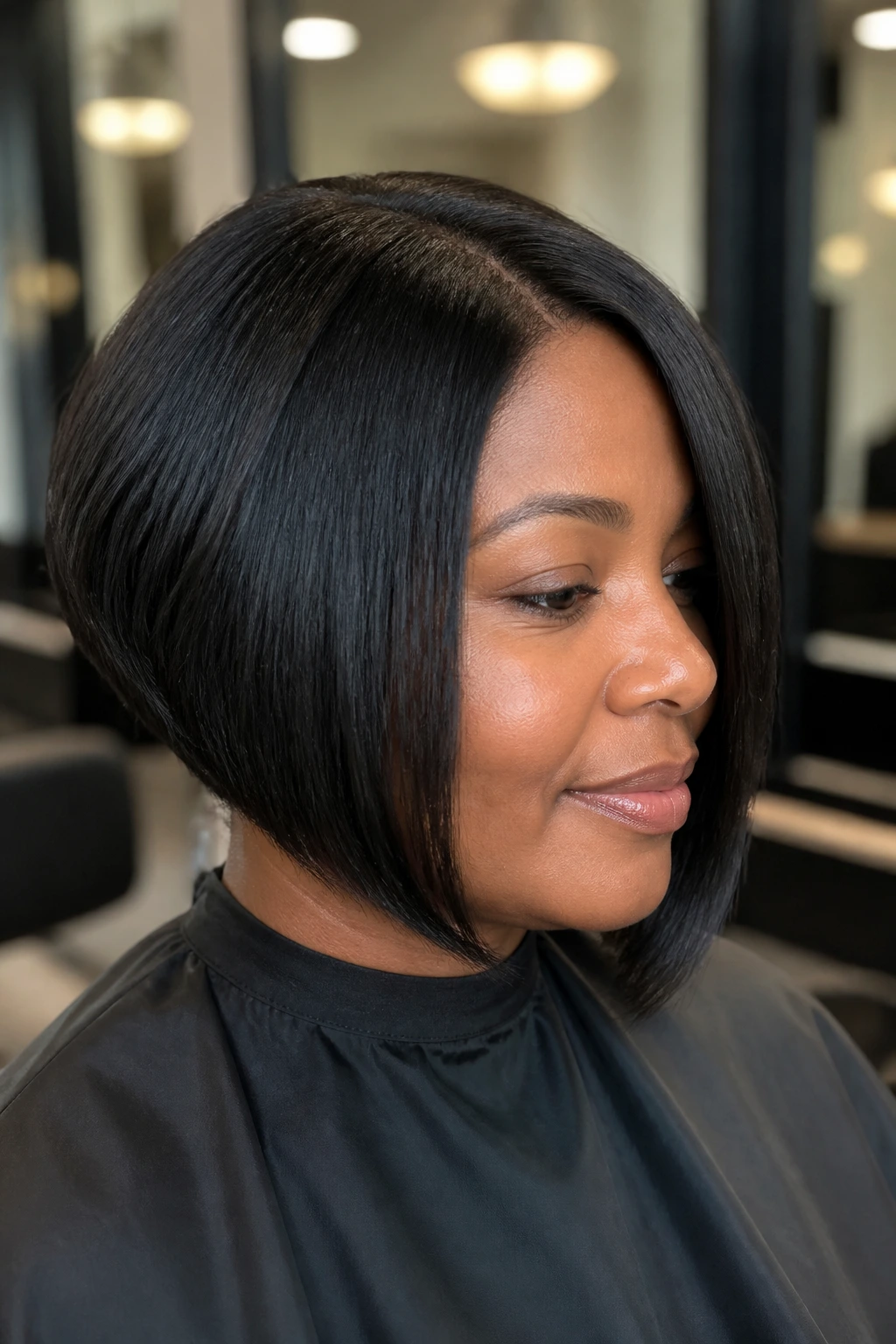
This is the cut that made angled bobs famous for a reason. The back is stacked close to the nape, the front drops toward the chin, and the whole thing gives thick hair a clean slope instead of a blunt shelf. On dense strands, that stacked back keeps the silhouette from ballooning.
Ask for a shorter nape with a 2- to 3-inch front drop if your hair is very full. That gap creates the angle without making the front look stringy. If you wear your hair straight most of the time, this shape looks crisp with a side part and a flat iron pass that keeps the ends tucked under just a touch.
A little shine spray at the ends goes a long way here. Too much oil will flatten the back and blur the line, which defeats the whole point.
2. The Deep Side-Part Angled Bob
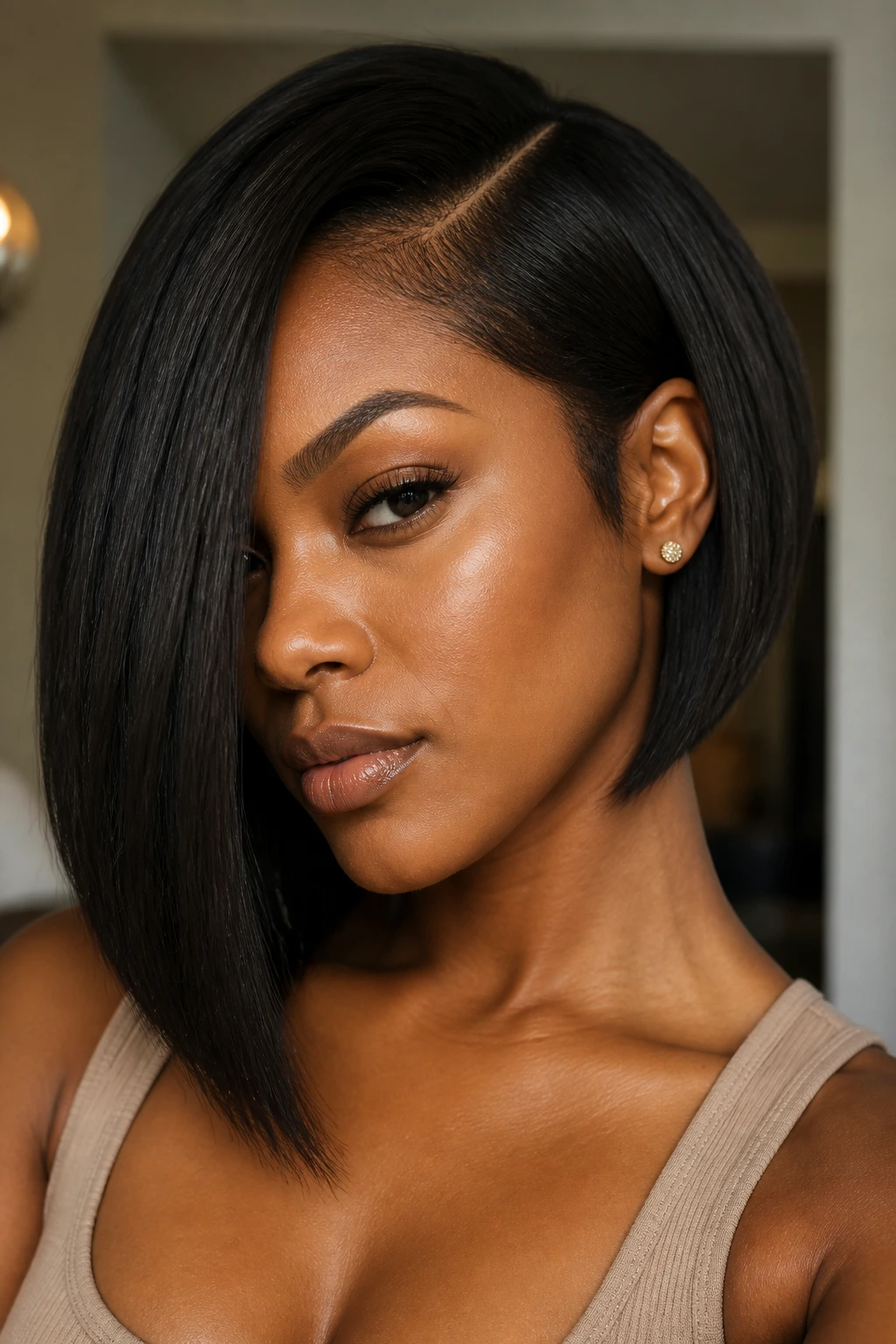
A deep side part changes the mood fast. It pulls one side forward, lightens the center of the face, and gives thick hair a little drama without needing extra length. I like this one when the hair is full and needs a directional cue, because the part does half the styling work.
What Makes It Click
The side sweep helps the front pieces lie flatter, which is useful if your hair wants to puff at the temples. Ask for the longer side to fall somewhere between the jaw and collarbone, then let the shorter side skim the cheekbone. That contrast is what makes the angle read clearly.
This version plays well with silk presses, wand curls, and brushed-out curls. It’s also one of the easier bobs to refresh the next morning because you only need to reset the part and smooth the front. If your hair tends to fight the middle, this cut can feel like a relief.
3. The Sleek Silk-Press Bob
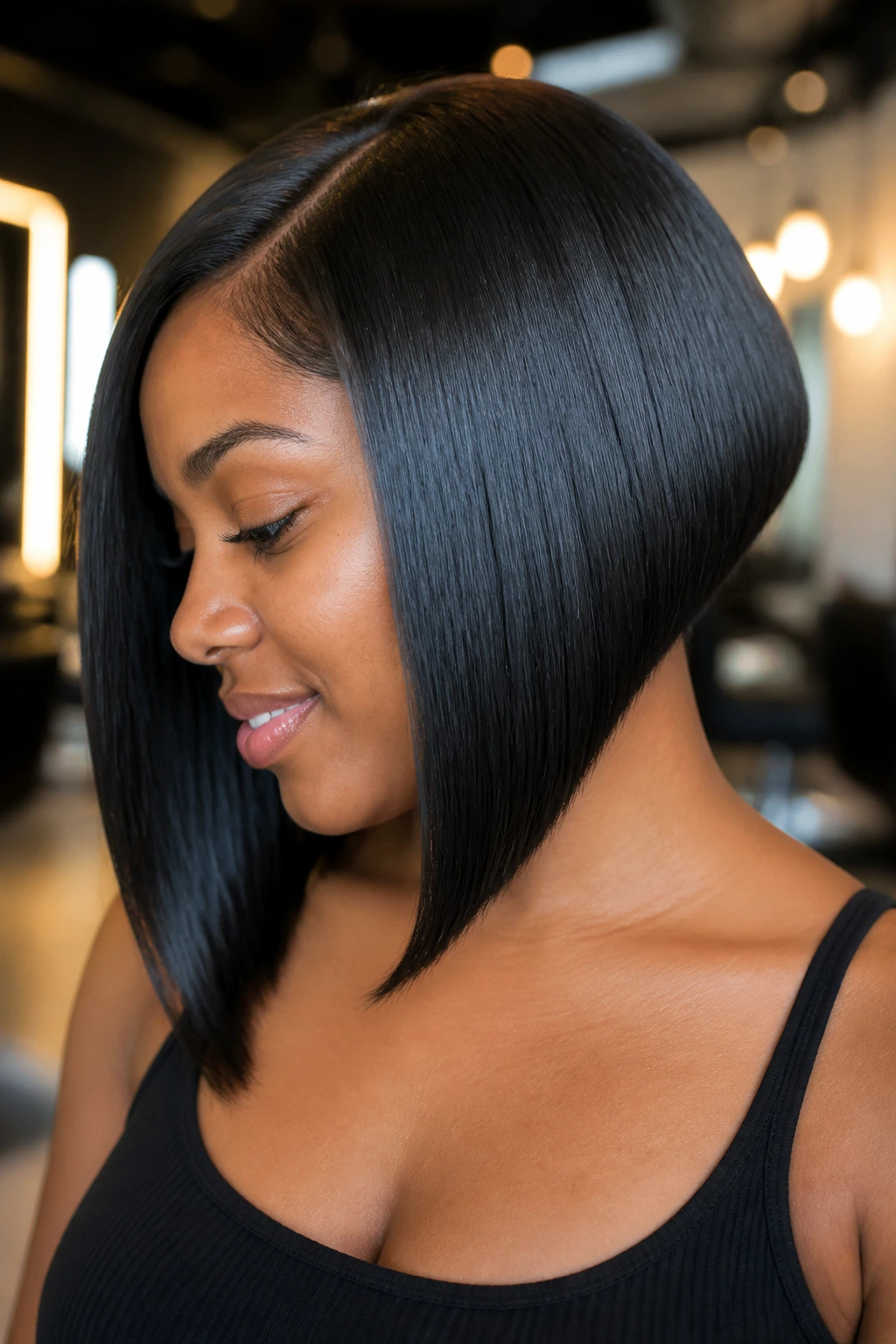
When thick hair is pressed well, an angled bob turns almost architectural. You get a clean line in back, a strong fall in front, and that glossy swing that only shows up when the heat work is done carefully. The trick is not blasting the hair with too much heat. The trick is control.
A heat protectant, a concentrator nozzle, and a fine-tooth comb chase make a real difference here. Keep the flat iron at a temperature your hair can actually tolerate, then pass it once or twice instead of overworking the same section. If the ends start looking dry or wispy, the iron is too hot or the section is too wide.
This style is a favorite when you want the cut itself to do the talking. The line should be clean enough that you notice every inch of the angle as you turn your head.
4. The Curly Angled Bob with Rounded Ends
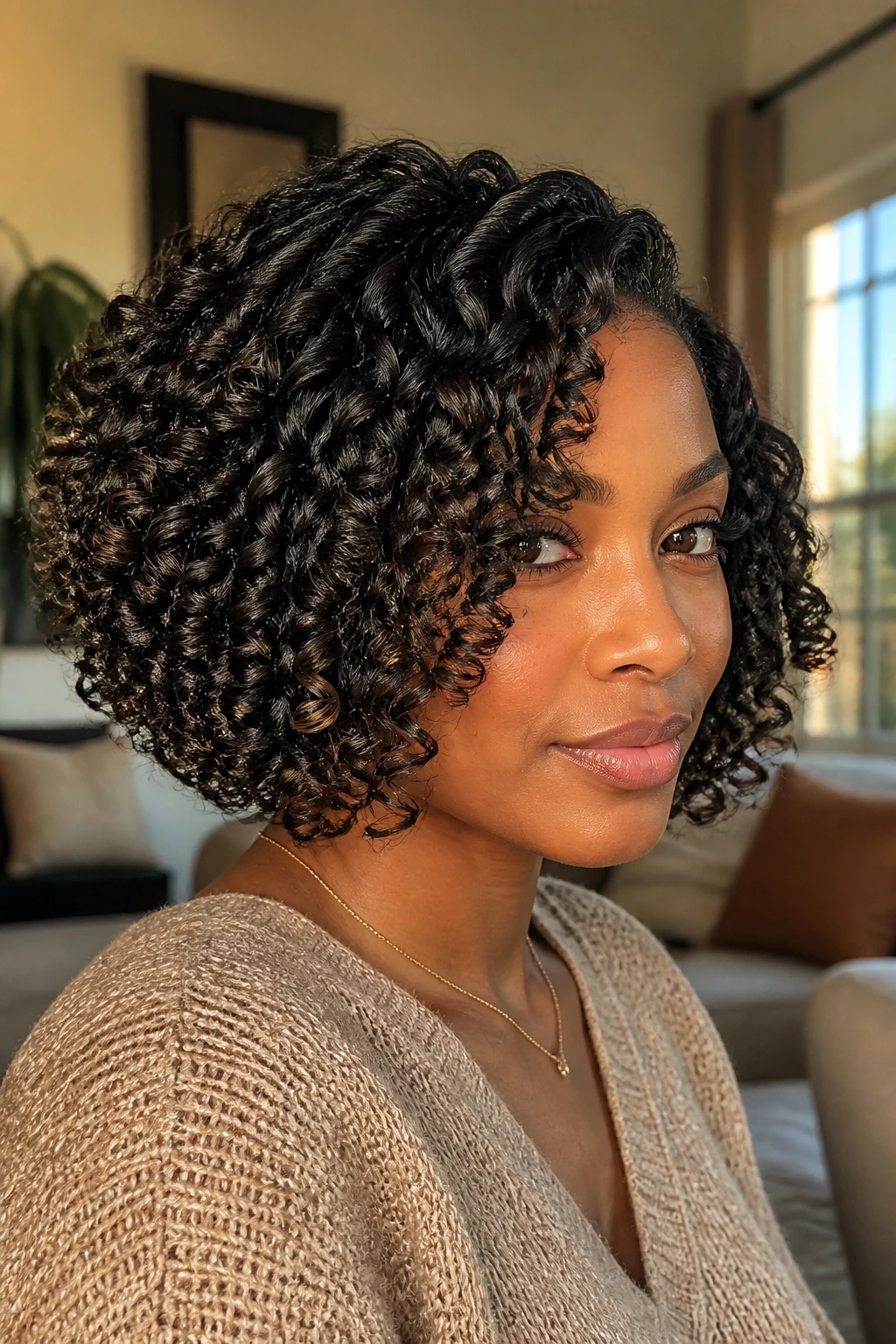
Curly bobs do not need to be stiff to look polished. A rounded angled cut lets the front curl forward while the back hugs the neck a little tighter, which keeps thick curls from mushrooming out. The shape is soft, but it still has direction.
A diffuser helps, though I’m a bigger fan of starting with the cut and letting the curls fall where they want. If your curl pattern varies, ask for the perimeter to be left slightly longer than it looks when wet. That tiny buffer keeps the bob from coming up too short once shrinkage kicks in.
This is a good choice if you want movement without heat. The front pieces can sit just below the chin when stretched and rise to cheek level once dry, which feels flattering without trying too hard.
5. The Tapered Nape Bob with Crown Lift
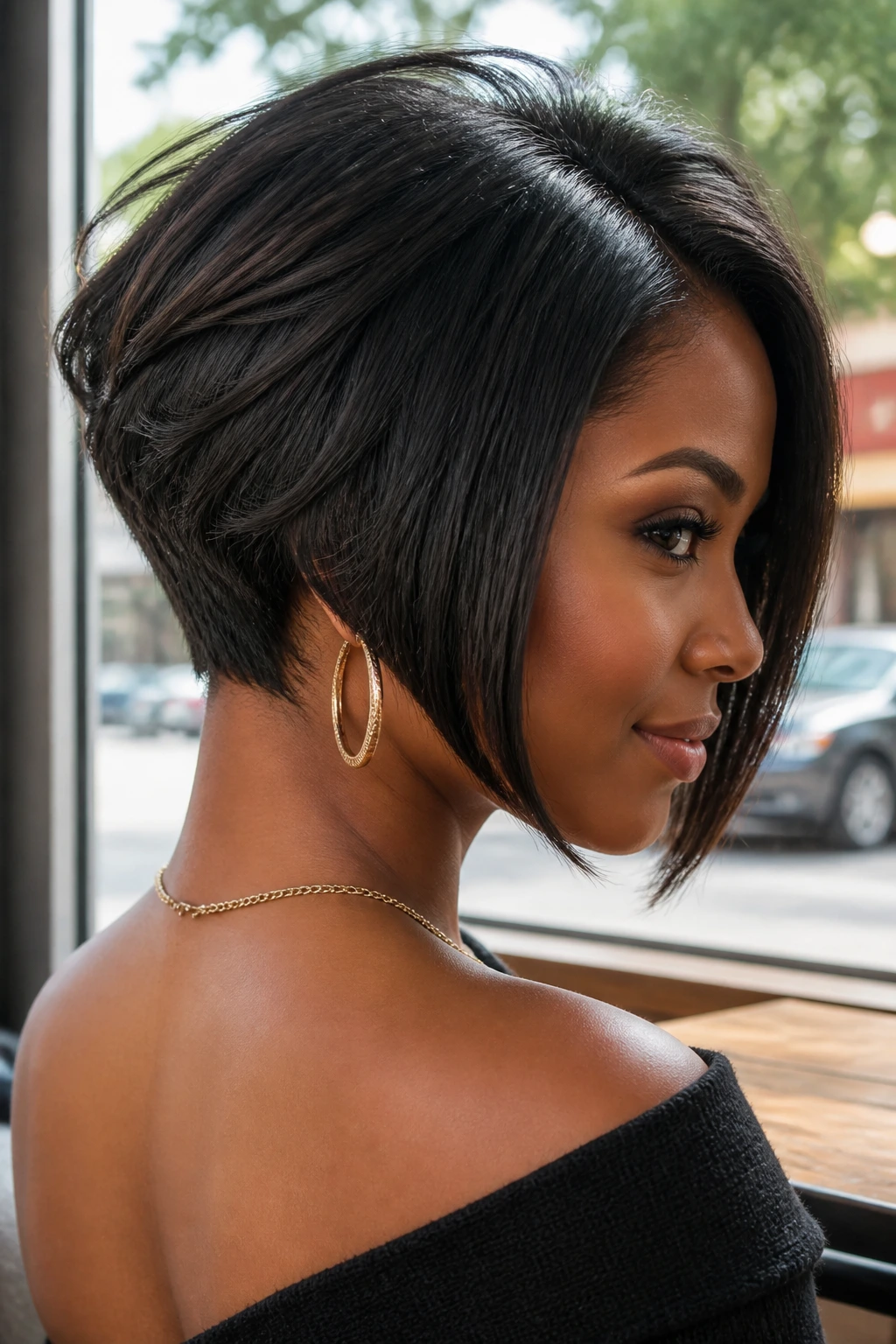
The back of thick hair can get bulky fast. This cut solves that by tapering the nape close while leaving enough fullness through the crown to keep the shape from collapsing. It has a neat, almost sculpted finish from behind, and that matters more than people admit.
If you wear your hair blown out or pressed, ask for the nape to be short enough to sit flat at the collar line. Then keep the crown full enough that the top does not look pinched. That balance keeps the bob from looking like a helmet, which is the problem too many thick-hair bobs run into.
Best of all, it stays tidy between trims. Even when the back grows out, the taper keeps the neck area from puffing into a triangle.
6. The Jaw-Length Asymmetrical Bob
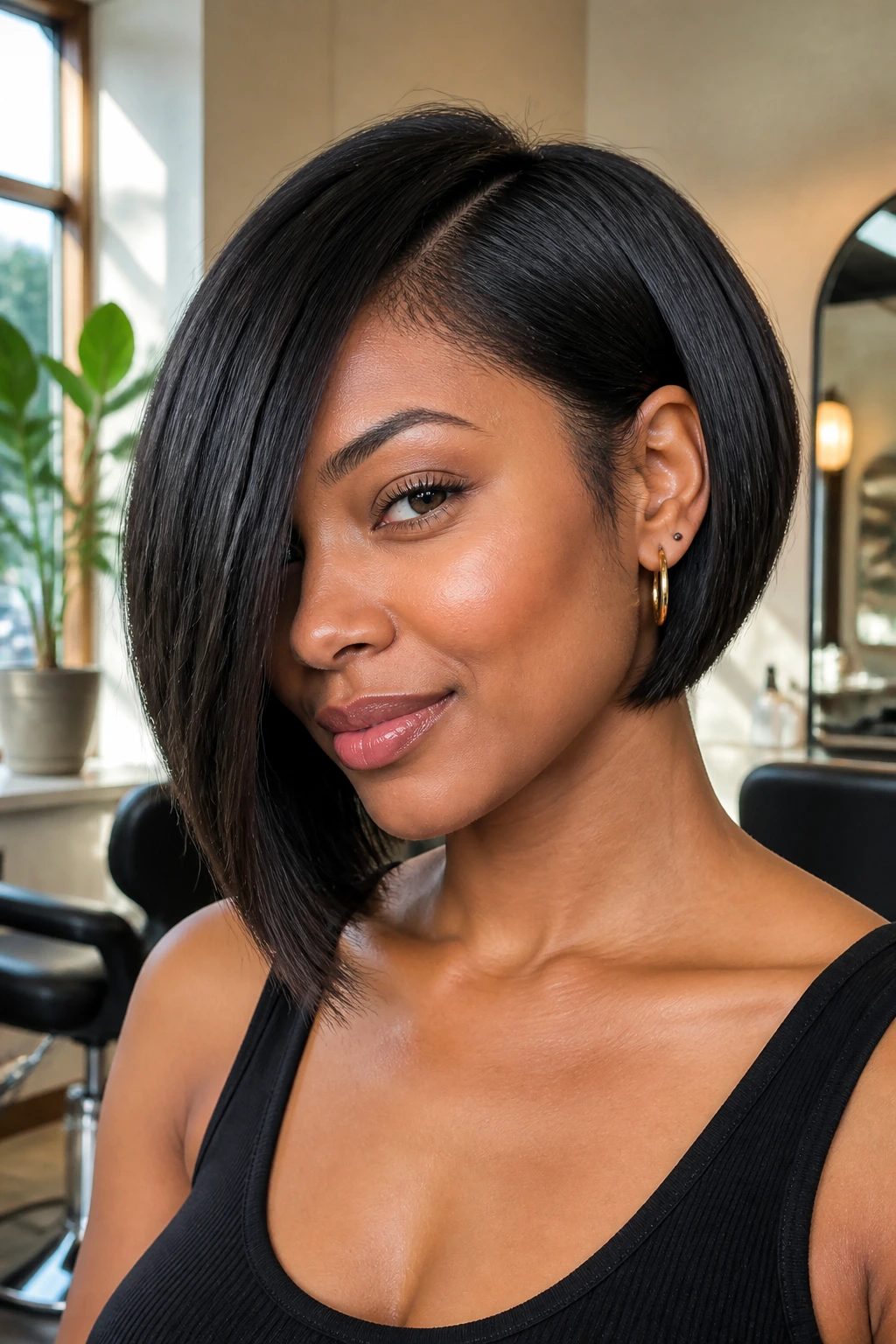
One side a little longer. That’s all it takes to make the haircut feel sharper. The asymmetry gives thick hair a built-in point of interest, and it’s a good move if you like a bob that looks deliberate from every angle. It also helps if one side of your face carries more fullness than the other.
The difference does not need to be huge. A 1- to 2-inch shift is enough to change the silhouette without making the cut hard to wear. If the gap gets too dramatic, the style can start feeling costume-y instead of polished.
I like this one with a tucked-back side and a deeper side part. The asymmetry gets clearer when one ear is visible and the other side hangs a little longer toward the jaw.
7. The Blunt Angled Bob
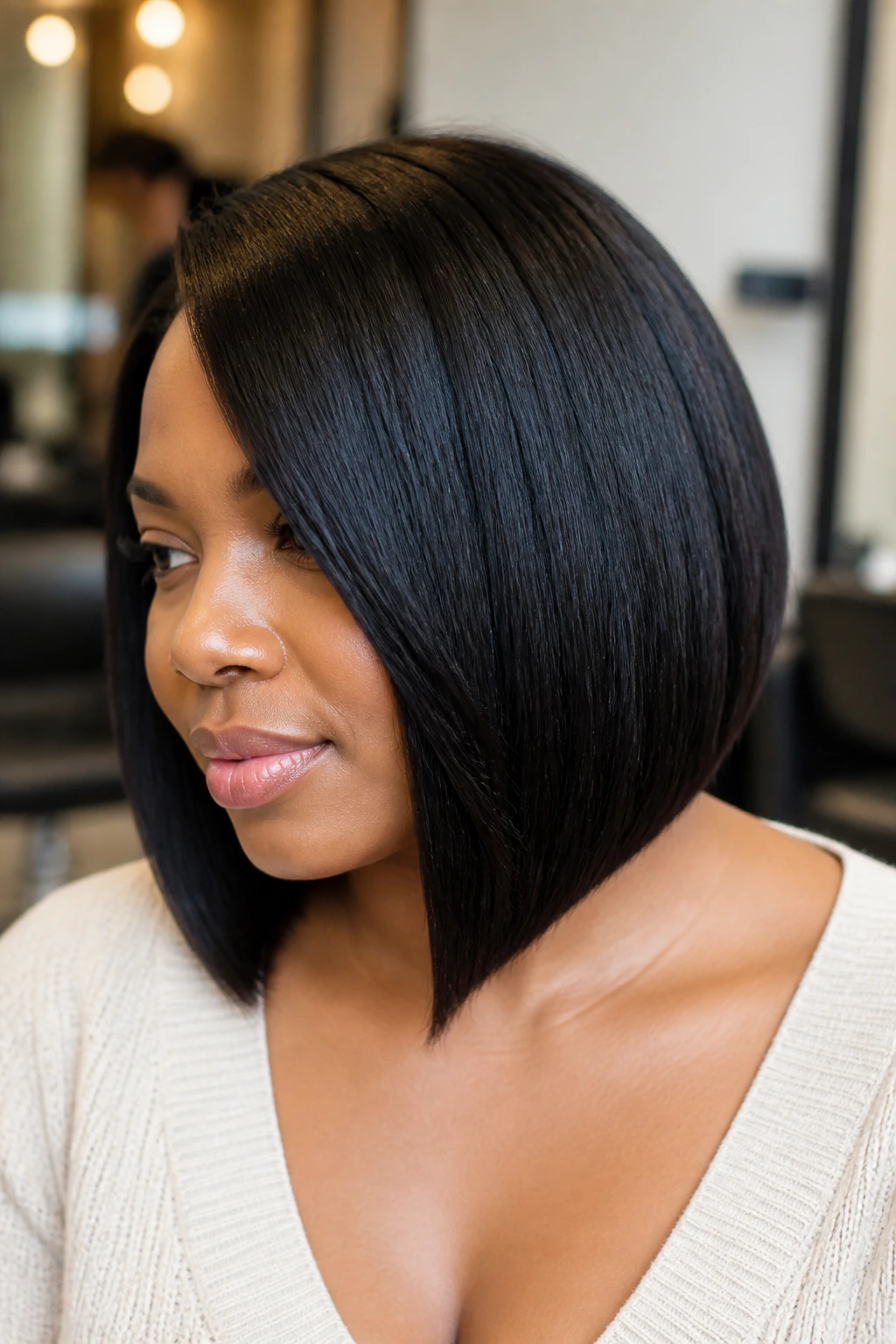
Blunt ends on thick hair can be a gift. They make the perimeter look dense and expensive, not wispy or thin. Add a slight angle and you get a line that feels clean but still softens the face as it moves toward the front.
The key is leaving enough weight at the bottom. A stylist who over-thins the ends will take away the very thing that makes this bob work. Ask for the edge to stay full, with only the internal bulk removed if needed.
This cut is especially good when you want a simple shape that still looks finished on day three. It does not need layers to be interesting. Sometimes a strong, blunt line is the whole story.
8. The Layered Bob for Shrinkage
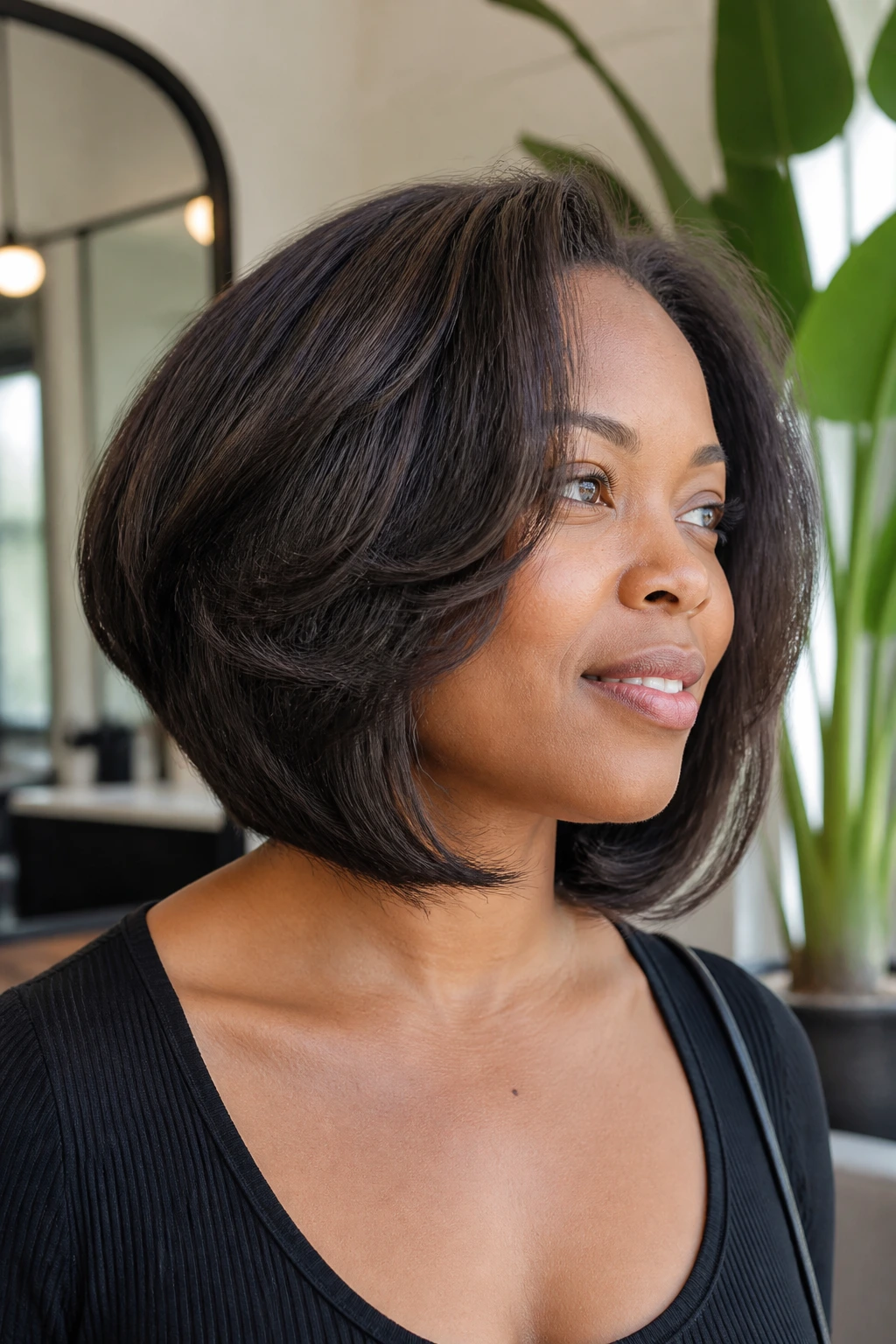
Shrinkage is the reason some bobs look perfect when wet and oddly boxy when dry. Internal layers solve that by removing bulk where the hair stacks up, not just at the ends. For thick natural hair, that matters more than a pretty haircut photo.
A dry cut or a cut on stretched hair often gives the best result here. Then the stylist can refine the shape once the hair settles back into its natural pattern. That two-step approach helps the bob sit better whether you wear it blown out, curled, or in its natural state.
This is one of the most forgiving options in the whole group. It keeps the front pieces visible while letting the body of the hair stay full enough to look rich, not hollow.
9. The Undercut Angled Bob
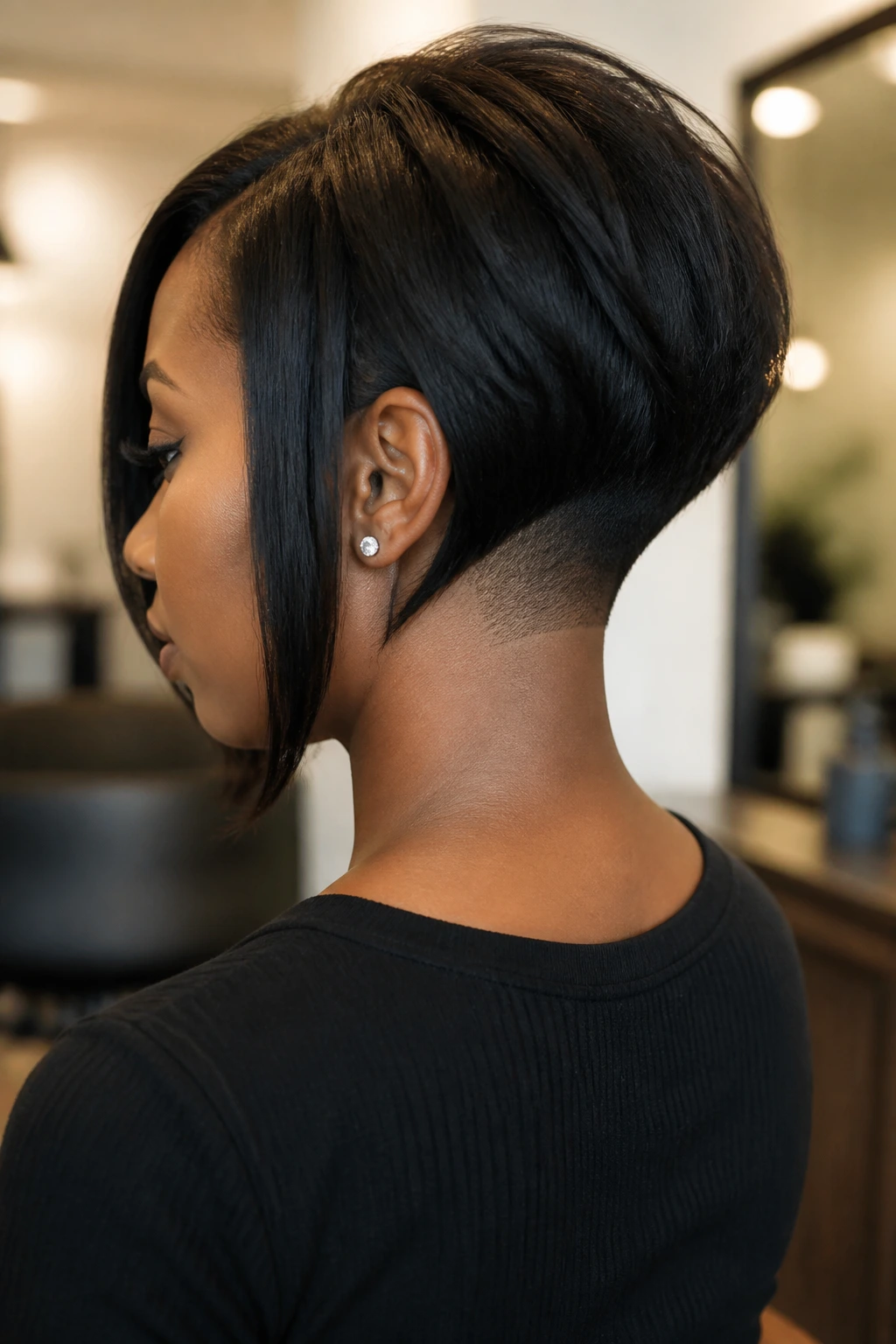
An undercut changes everything in a thick bob. It removes hidden weight from the lower back or sides, so the top layer can lie closer to the head and show off the angle. You still get fullness where you want it, but the bulk stops fighting the cut.
This is the move for someone who hates spending forever blow-drying the back. Less hair underneath means faster drying time and less puff at the neckline. If you keep the top layer long enough to cover the undercut, the style still reads like a bob, not a shaved cut.
It’s a bolder choice, sure. But it’s practical too, and I respect that. A lot.
10. The Shoulder-Skimming Angled Lob
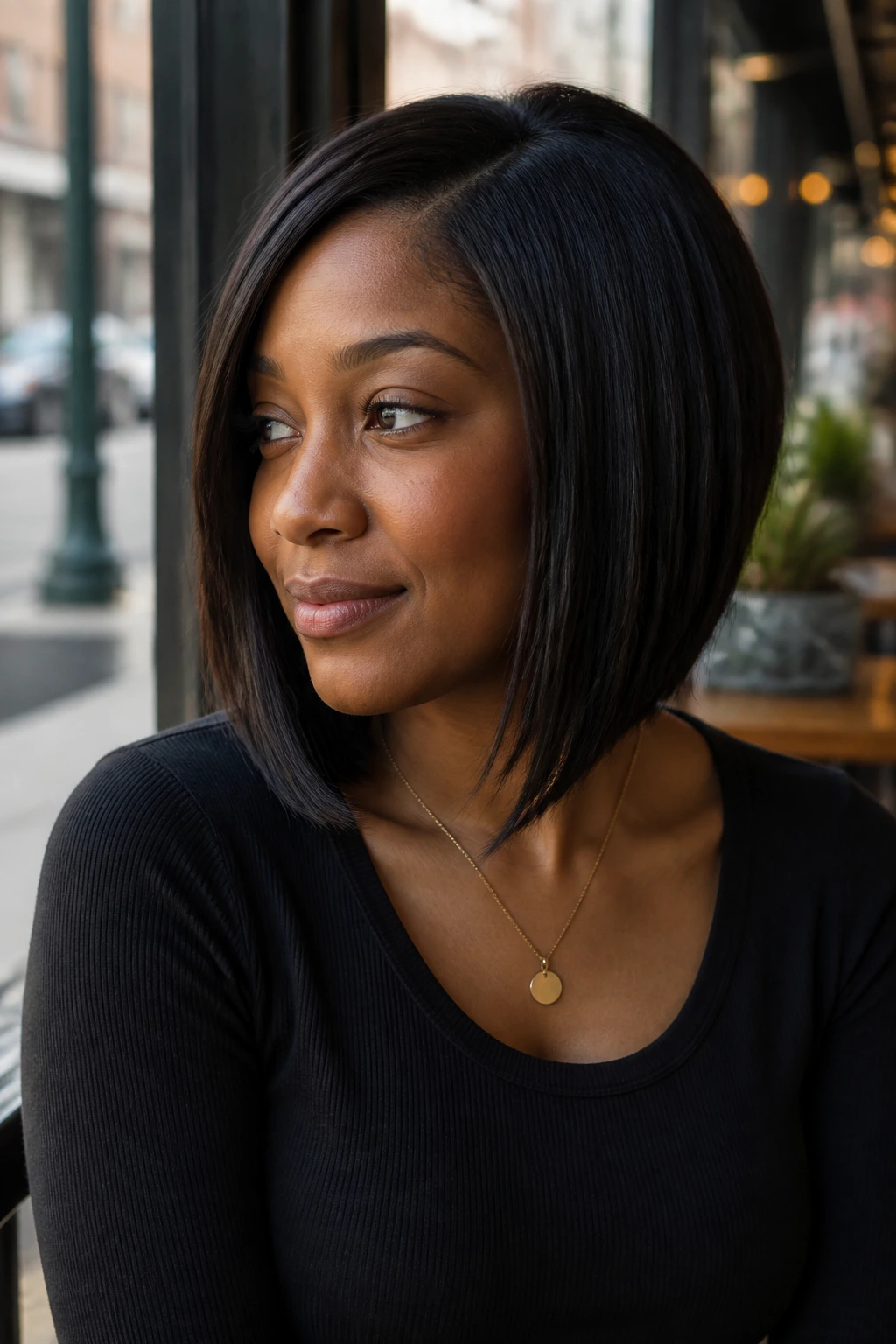
If you want room to breathe, take the angle a little longer. A lob that grazes the shoulders gives thick hair movement without the maintenance that comes with a shorter chin-length bob. The front pieces can sit just below the collarbone, while the back lands a few inches higher.
This one is especially kind to people growing out a shorter cut. The line still looks intentional, even when the shape starts to soften. And because the length is a little more generous, you can flip the ends, tuck one side, or pull a half-up style without losing the outline.
It’s not boring. It’s strategic.
11. The Side-Swept Bang Bob
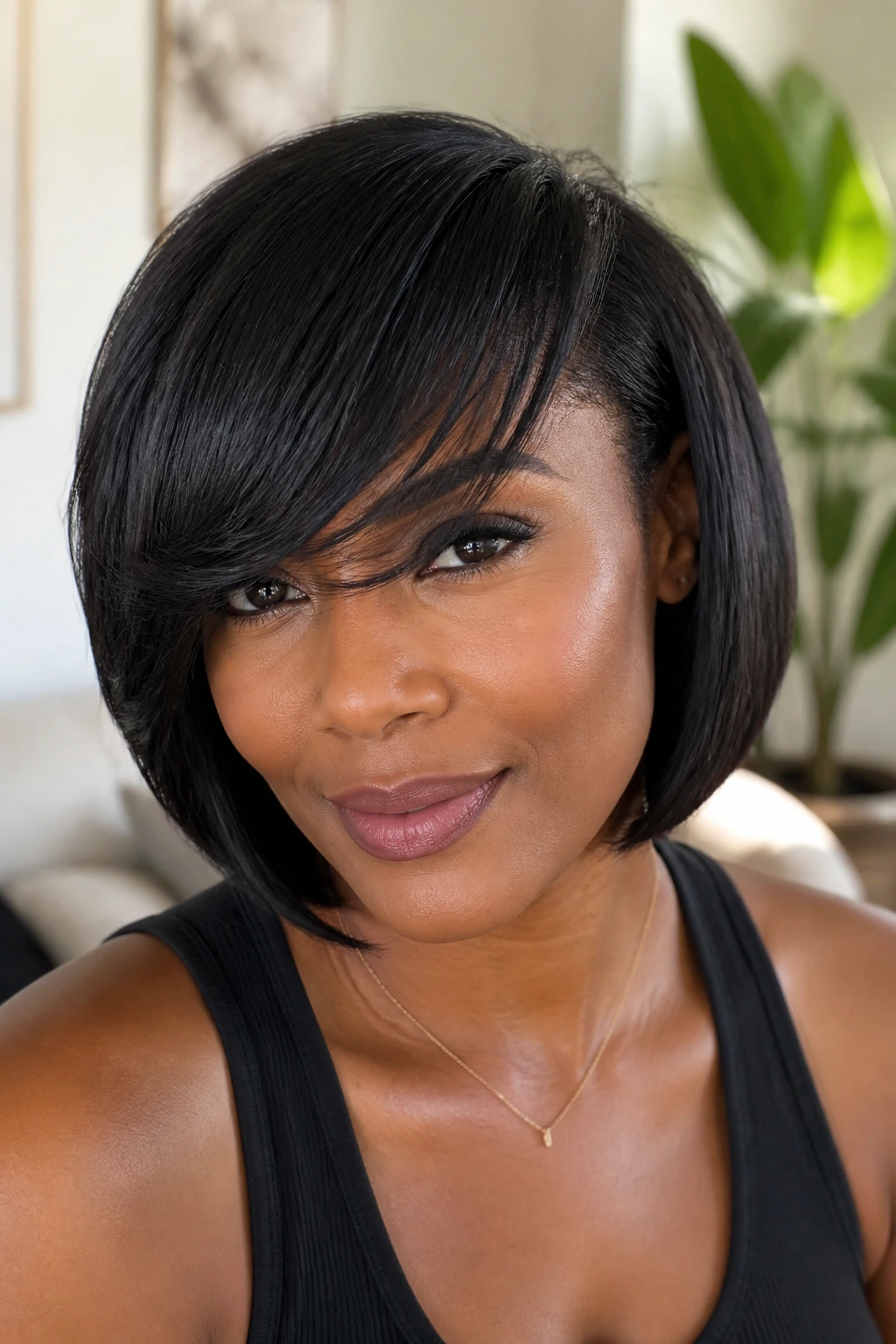
Bangs can be a lot on thick hair if they’re cut too straight or too heavy. Side-swept bangs are the safer, prettier answer. They break up the front of the bob, soften the forehead, and give the angle a bit of motion near the face.
The fringe should blend into the front layers instead of sitting on top like a separate piece. Ask for the shortest point to graze the eyebrow or upper cheekbone, depending on how much forehead you want to keep open. Longer bangs are easier to live with, especially if your hair texture changes with the weather.
This cut works nicely with curls too. The bangs can fall into a soft arc instead of sitting stiffly across the face, which keeps the whole look from feeling overstyled.
12. The Highlighted Angle Bob
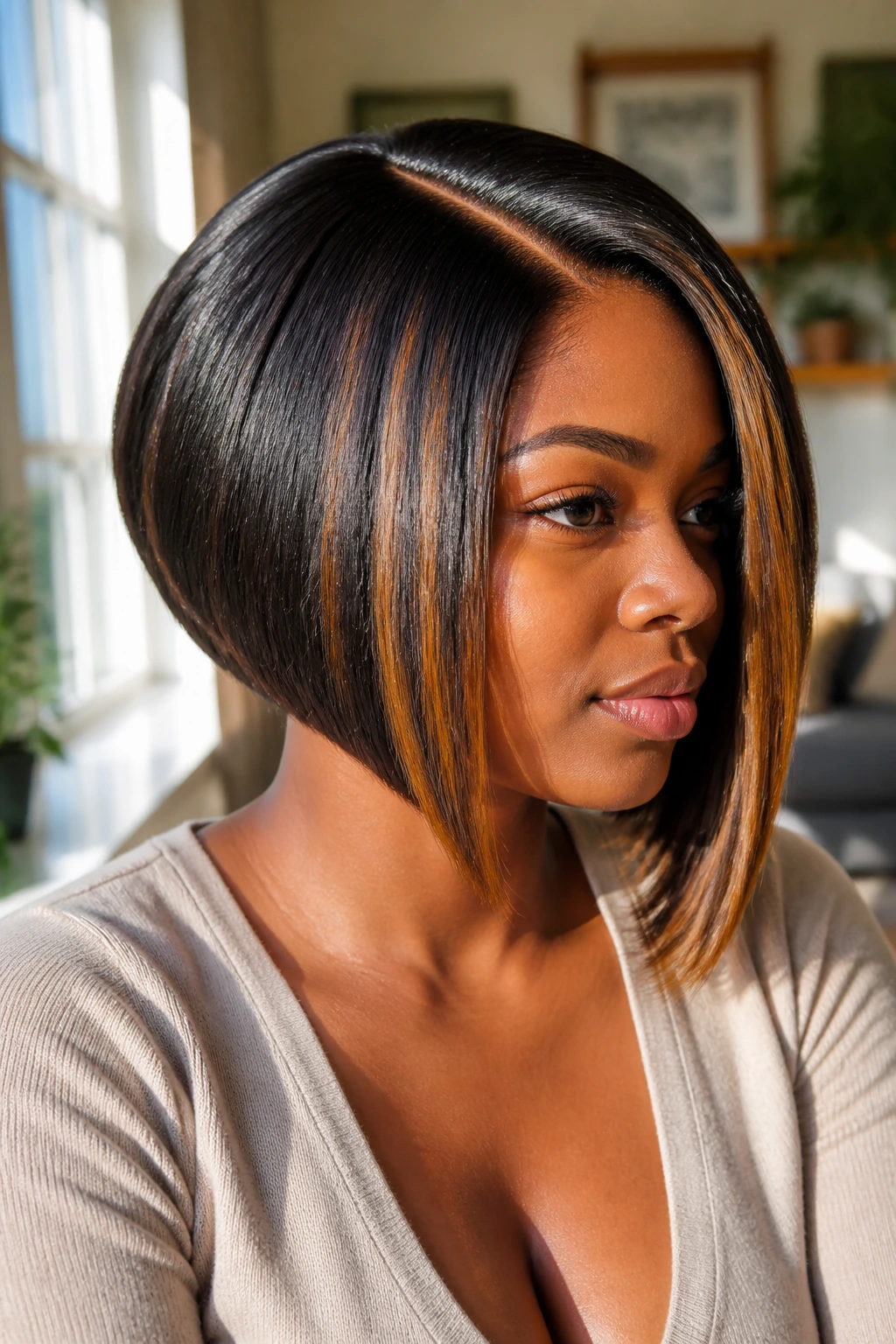
Color changes the way an angled bob reads. Caramel ribbons, warm brown lights, or chestnut streaks can trace the front edge and make the slope more obvious. On thick hair, that matters because the cut can get lost if every strand is the same dark depth.
A few well-placed highlights around the face and front sections do more than a full head of color sometimes. They catch the eye right where the angle begins, so the haircut looks more carved out. Keep the color close to your natural base if you want maintenance to stay reasonable.
This style has a nice side effect. The movement shows up even when the hair is still, which is handy on days when you do not feel like re-styling.
13. The Burgundy Color-Block Bob
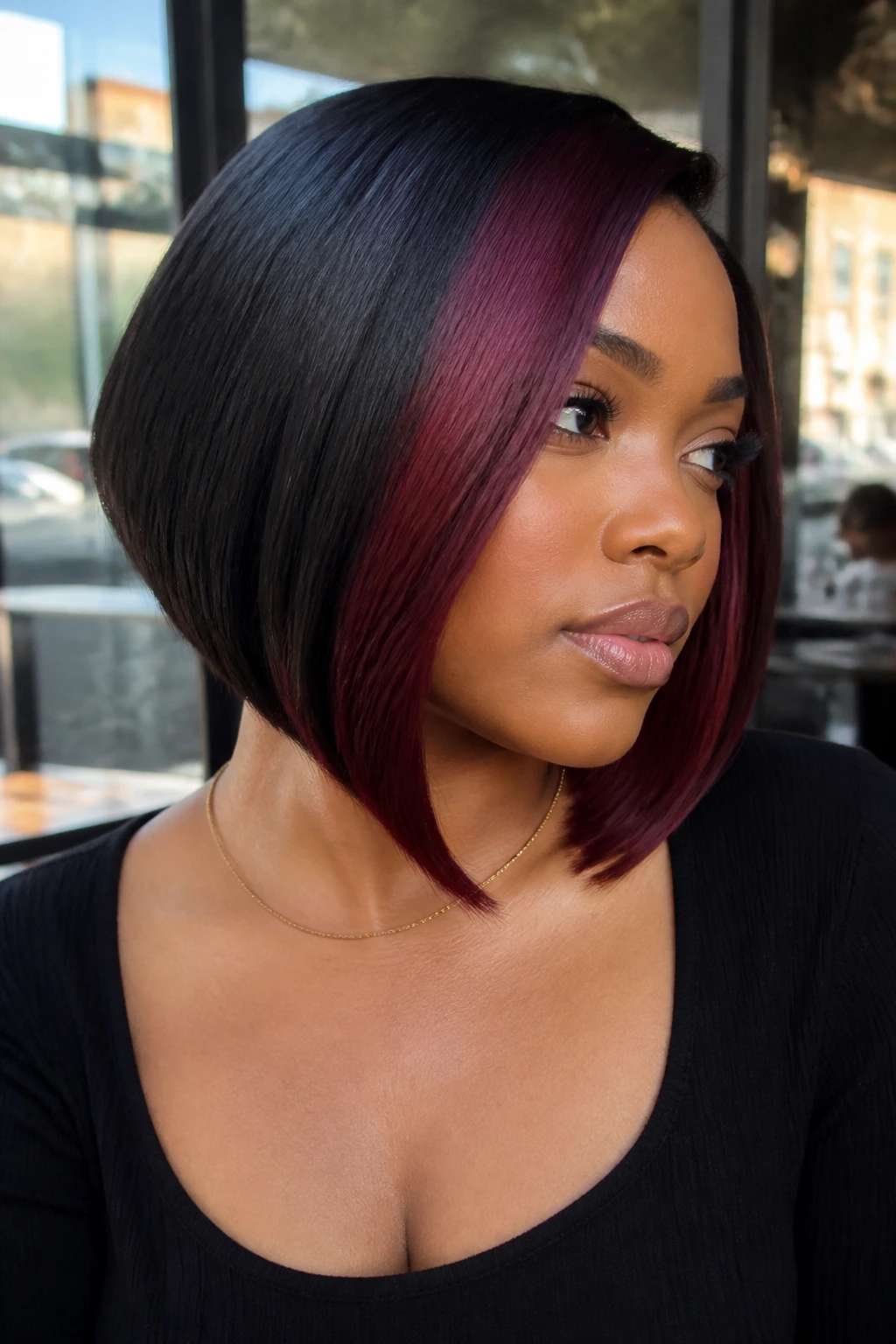
A burgundy bob has presence. A color-block version, where the front pieces or ends carry the deeper shade, gives thick hair a sharper outline and makes the angle feel almost graphic. I like this especially on darker bases, where the contrast shows up in low light and still looks rich in daylight.
If you want the color to read without overwhelming the cut, keep it concentrated on the front edge or just under the top layer. That way the line stays the star. You get the bonus of dimension without turning the whole head into a single block of color.
This one leans fashion-forward, but it’s not fussy. It’s the sort of cut that looks finished with a plain tee and hoop earrings.
14. The Feathered Angled Bob
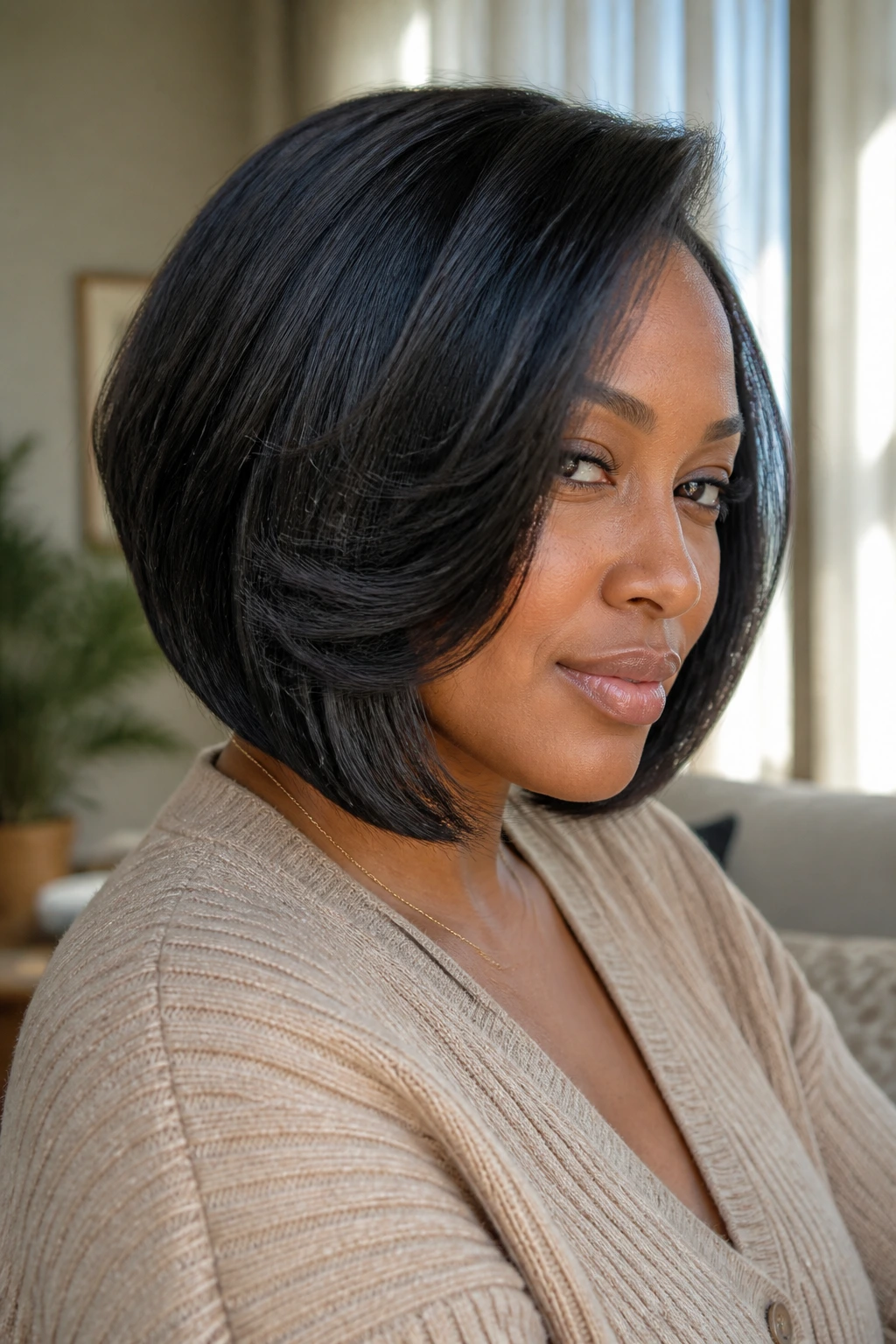
Feathering works when thick hair needs softness at the ends. Instead of a hard, blunt edge, the perimeter is lightly textured so the finish moves a little more. That keeps the bob from feeling heavy around the jaw, which is a real issue when density builds fast.
The feathering should stay controlled. Too much slicing and the ends begin to look ragged, especially on straightened hair. You want enough softness to lighten the outline, not enough to thin it out.
This is a good pick if you like bouncy hair with a bit of swing. It feels less severe than the stacked styles, but still keeps the front and back in conversation with each other.
15. The Rounded Angle Bob
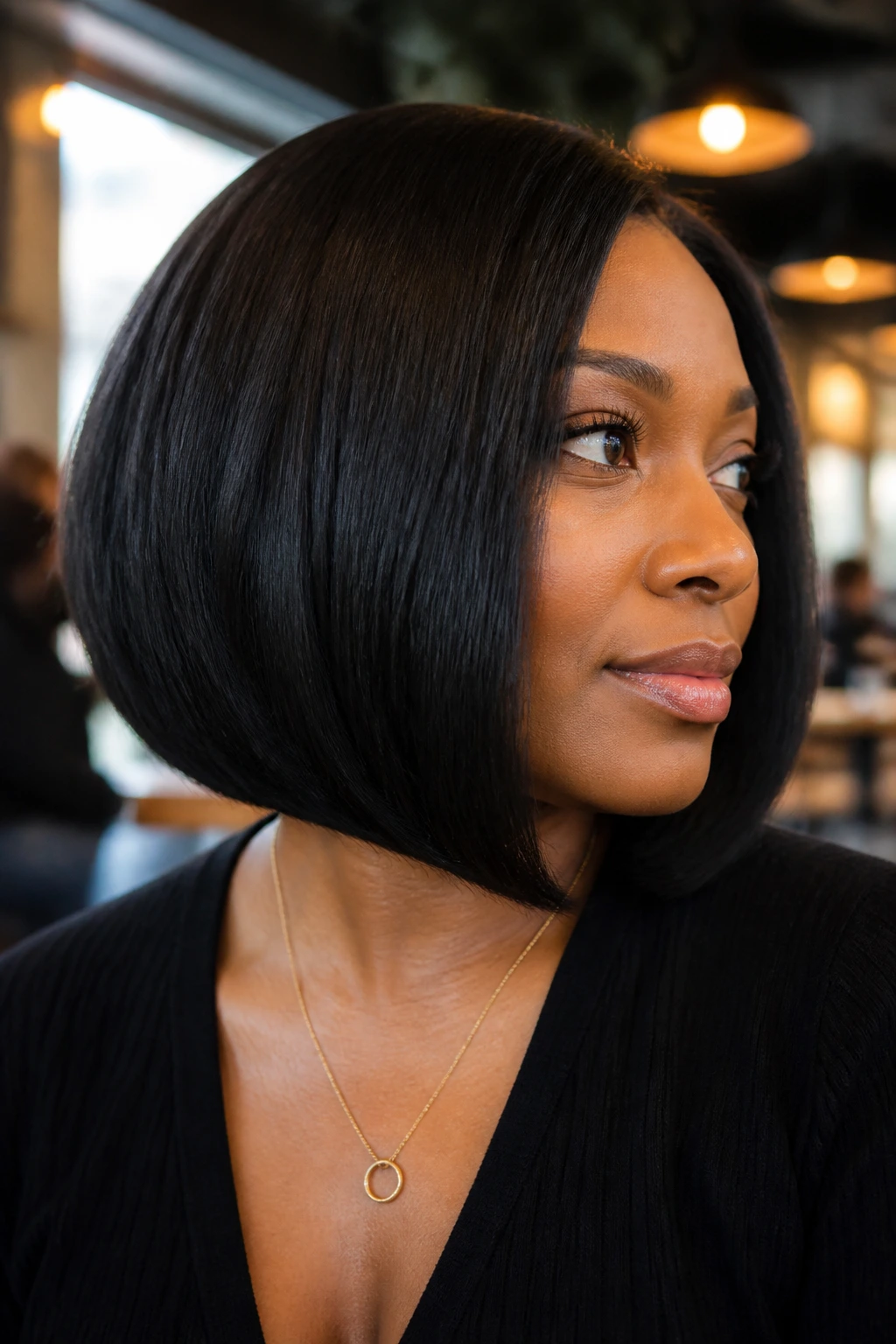
Rounded bobs are kinder than sharp ones, and sometimes that’s the right move. The shape curves slightly around the head, then drops longer toward the front, which keeps thick hair looking smooth instead of square. It’s especially nice if your hair has a lot of body at the crown.
The roundness helps the back lie flatter. That can be a lifesaver if your hair tends to puff at the nape the moment you step outside. Ask your stylist to leave enough length for the curve to show, because cutting it too short kills the shape.
This cut sits in a sweet spot: polished, but not severe. A lot of people end up liking it more than the harder angles because it’s easier to wear with everyday clothes.
16. The Center-Part Bob with Clean Lines
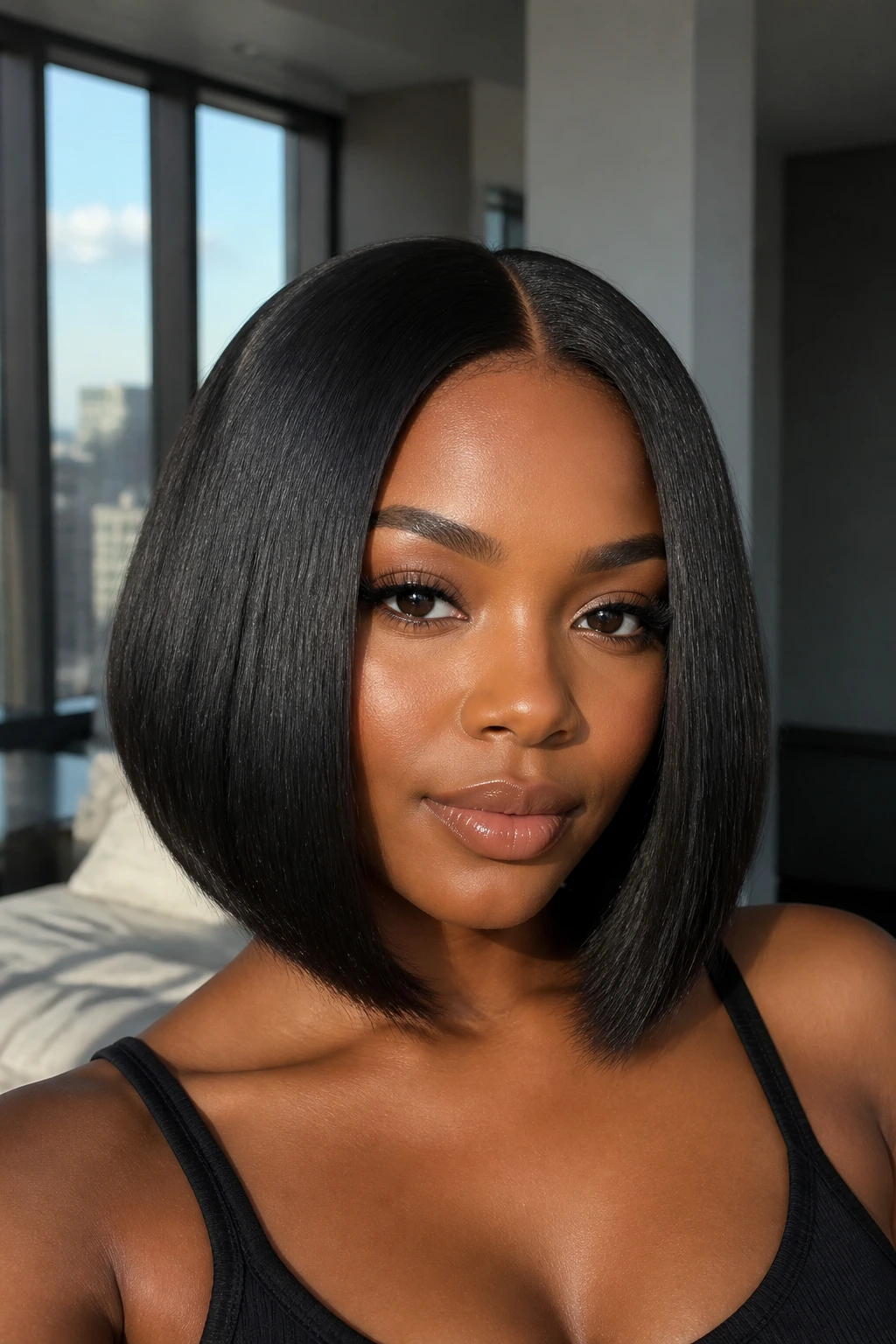
A center part makes a bob look symmetrical and calm. On thick hair, that symmetry can be powerful because it balances out a lot of natural volume without needing lots of layers. The angle still shows, but it feels more deliberate and modern than dramatic.
The line in front should fall evenly on both sides of the face, with the back staying shorter and close to the neck. If the middle part is too flat, the cut can go lifeless, so a little root lift helps. A round brush at the crown or a touch of mousse at the roots can bring it back.
This is a good look when you want neatness. No drama. No guessing.
17. The Coily Angled Bob
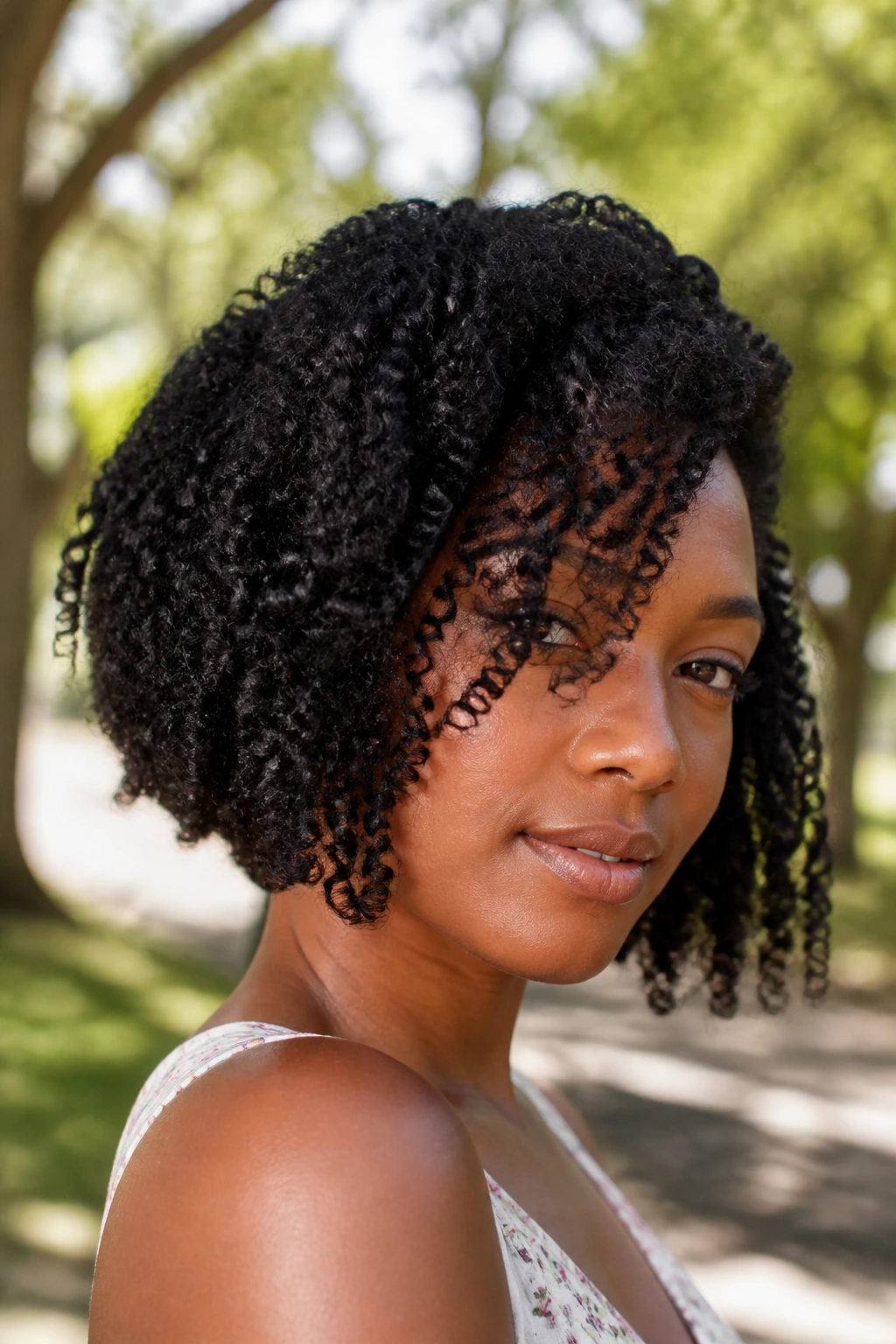
Coily hair and angled bobs get along better than people think, but the cut has to respect shrinkage. A shape that looks chin-length when stretched might sit much higher when dry, so the stylist needs to build the angle with that in mind. Dry cutting or detailed shaping on stretched coils often gives the cleanest result.
The outline should follow the coils rather than fight them. That means the back can sit shorter and tighter, while the front keeps enough length to show the angle even after the curls spring up. A curl-defining cream and a diffuser can help, but the cut does most of the work.
I like this version because it feels alive. The shape shifts a little as the hair dries, and that movement is part of the charm.
18. The Side-Swept Curly Bob
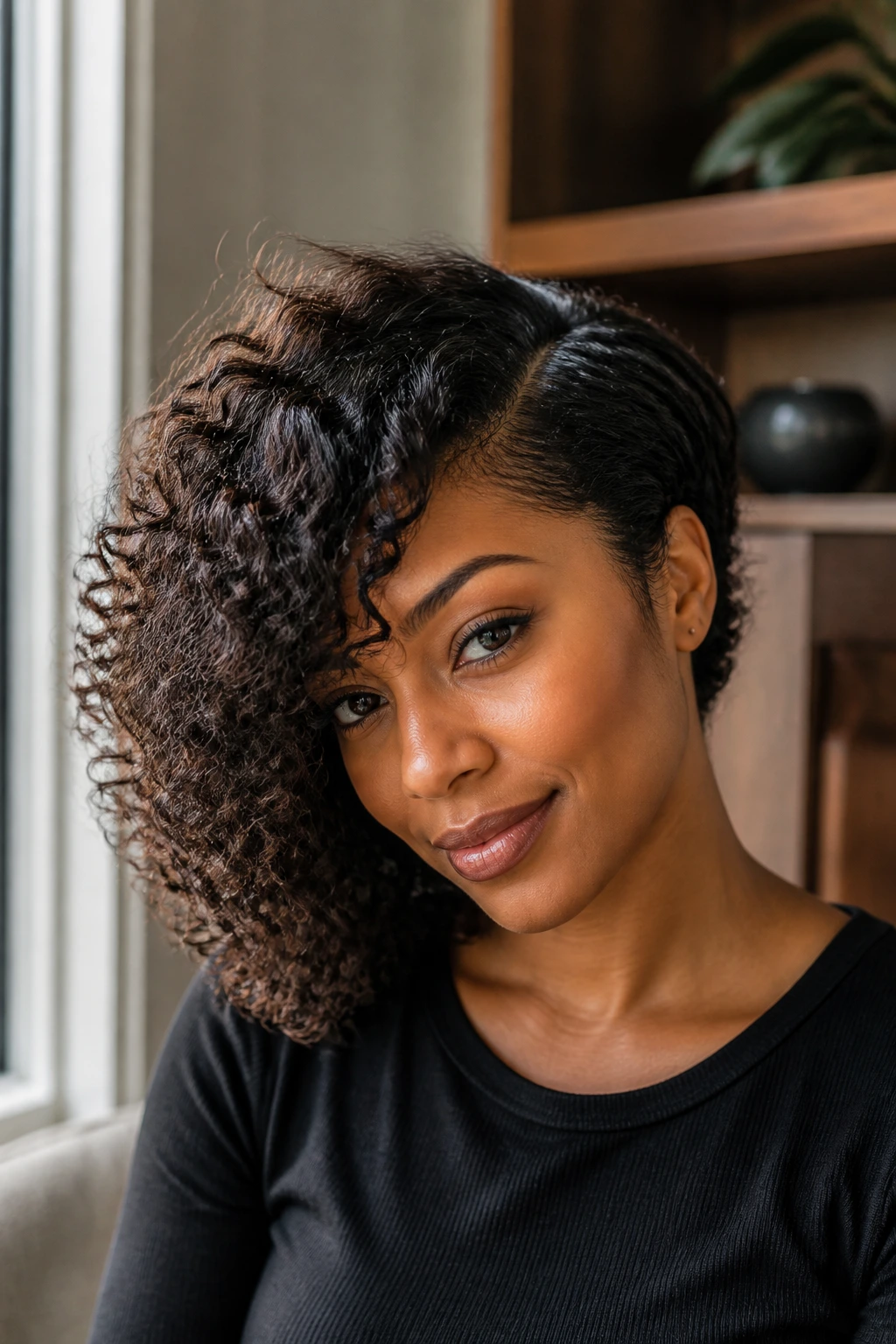
This one is about direction. One side carries more curl and more length, while the other side stays a touch tighter near the face. Thick curly hair benefits from that asymmetry because it breaks up the width and keeps the bob from reading too round.
Use a side part that matches your natural fall if you can. Fighting the curl pattern usually ends badly, and the ends puff in strange places. Let the curls settle, then shape the top with a little mousse or foam while the hair is damp.
The cut feels easy but not lazy. That’s a nice line to walk.
19. The Graduated Nape Bob
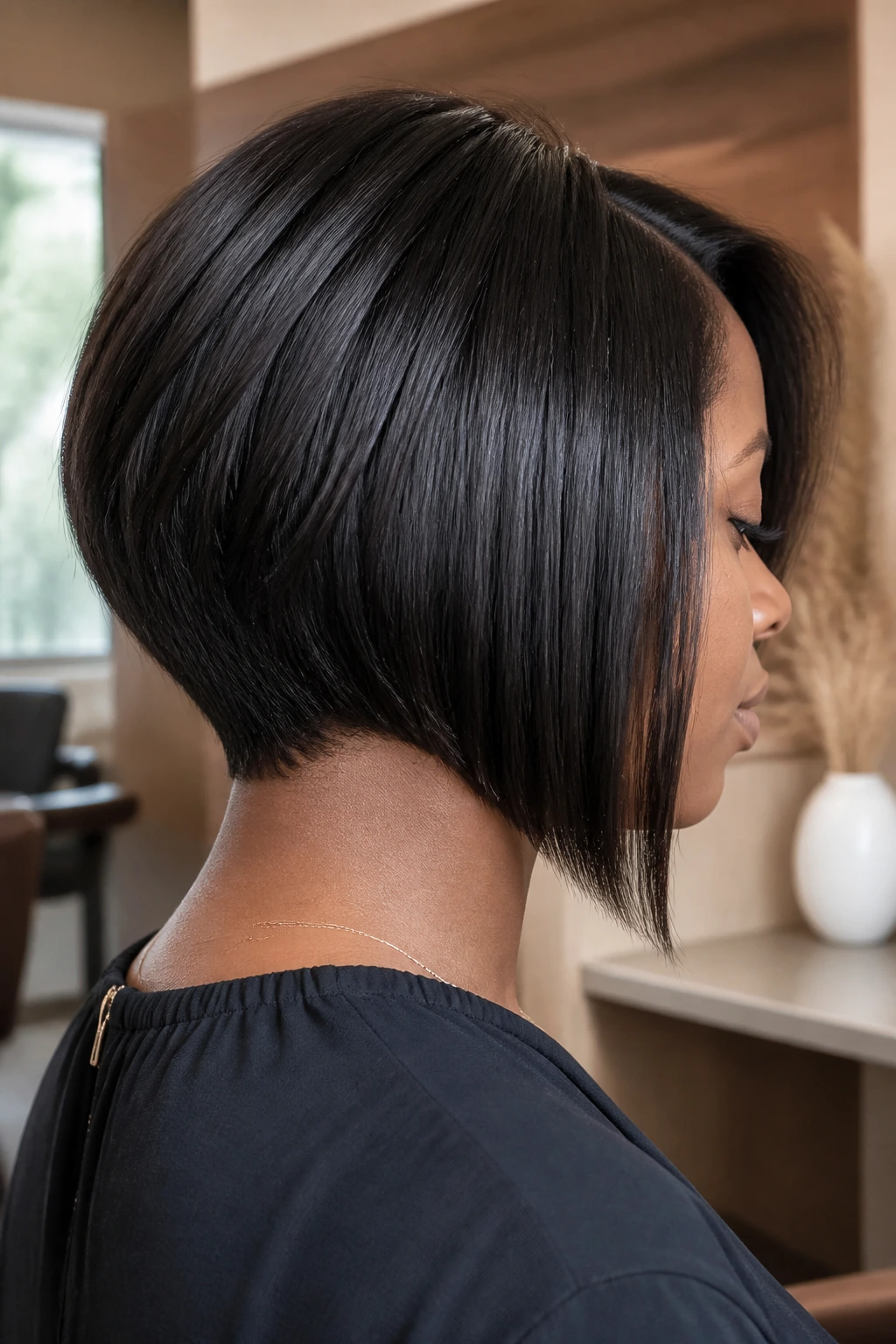
Graduation gives thick hair a smooth stair-step shape from the neck upward. It’s more gradual than a stacked bob, which makes it a little softer and a little easier to grow out. The nape sits neat, the middle section carries the bulk, and the front hangs longer enough to frame the jaw.
This version is useful if you like body at the back but hate a blocky silhouette. The graduation takes weight out of the bottom without making the whole haircut look thin. Ask for the shortest layer to sit close to the neckline, then build the front in small increments.
It’s one of those cuts that looks tidy even on a rushed morning. That matters.
20. The Invisible-Layer Bob
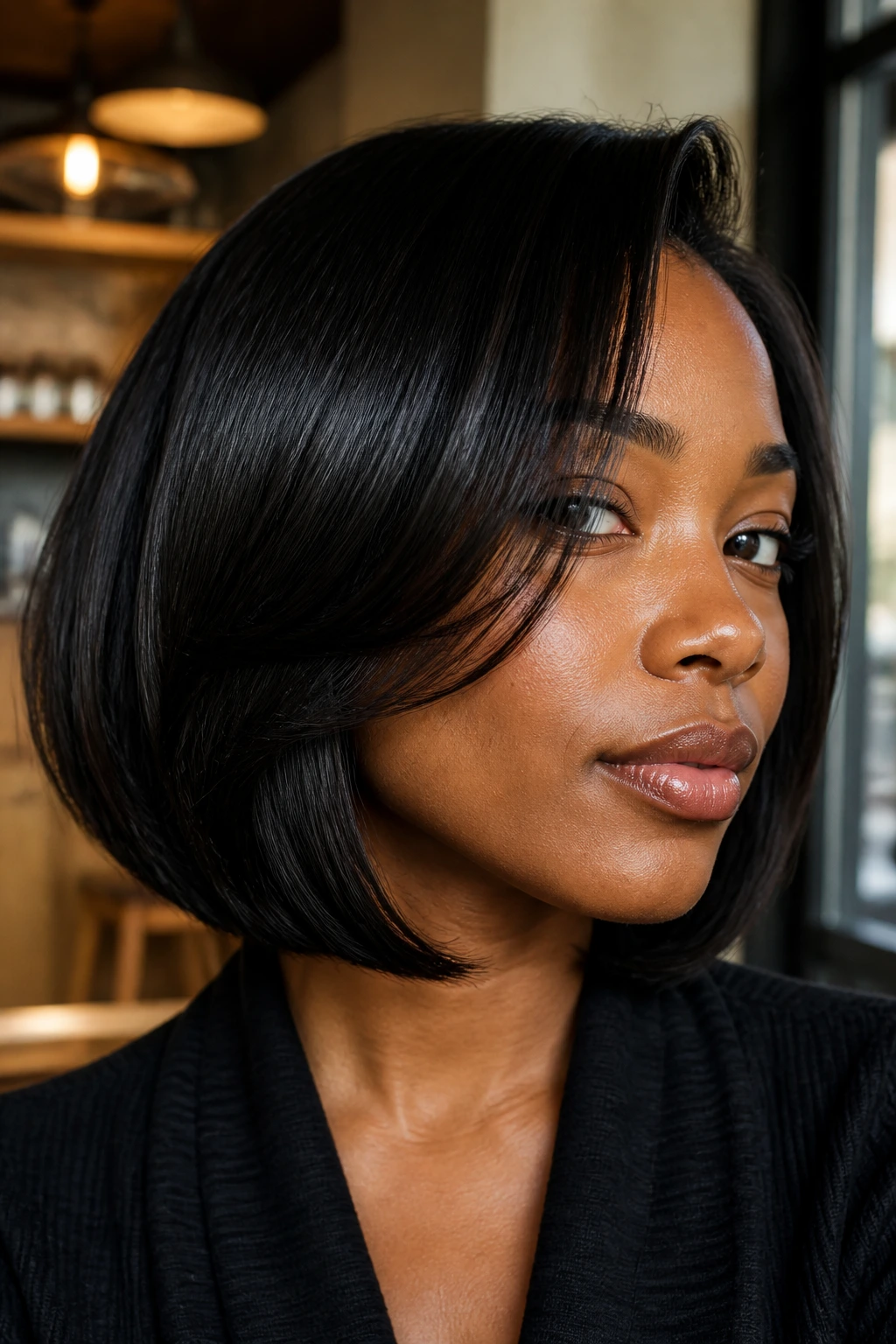
Invisible layers are the quiet answer to heavy hair. They remove bulk from inside the shape so the outer line stays clean. You still get a solid bob outline, but the hair stops acting like a brick.
This works especially well when you want a smooth finish with minimal fuss. The cut looks simple from the outside, which is exactly the point. The real action is underneath, where the weight is softened so the front can move without the back ballooning.
If you’ve ever had a bob that felt heavy even after a fresh trim, this is the fix worth asking for. It changes the way the hair falls, not just the way it looks in a mirror.
21. The Choppy Textured Bob
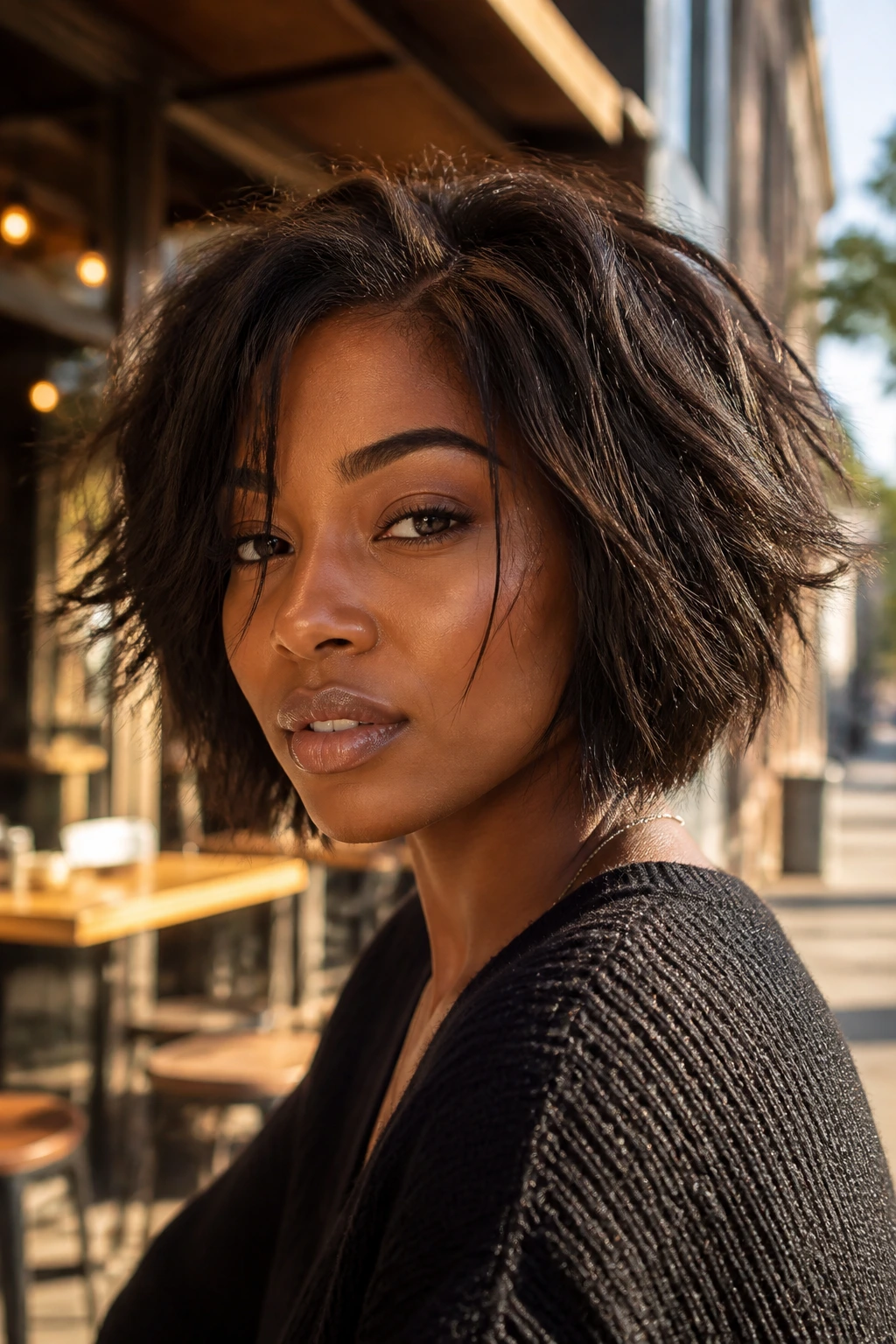
A little choppiness can be a relief when thick hair feels too serious. Textured ends break up the mass and give the bob a breezier feel, especially if you wear it with a bend or loose curl. The trick is keeping the texture controlled so it looks edgy, not hacked up.
This version likes movement. A light mousse, a curling wand, or a quick finger-twist on damp hair can bring the texture forward without making the cut messy. If your hair is very dense, the texture helps the ends separate instead of sitting in one heavy sheet.
It’s a cut with some attitude. Not much attitude. Just enough.
22. The Boxy A-Line Bob
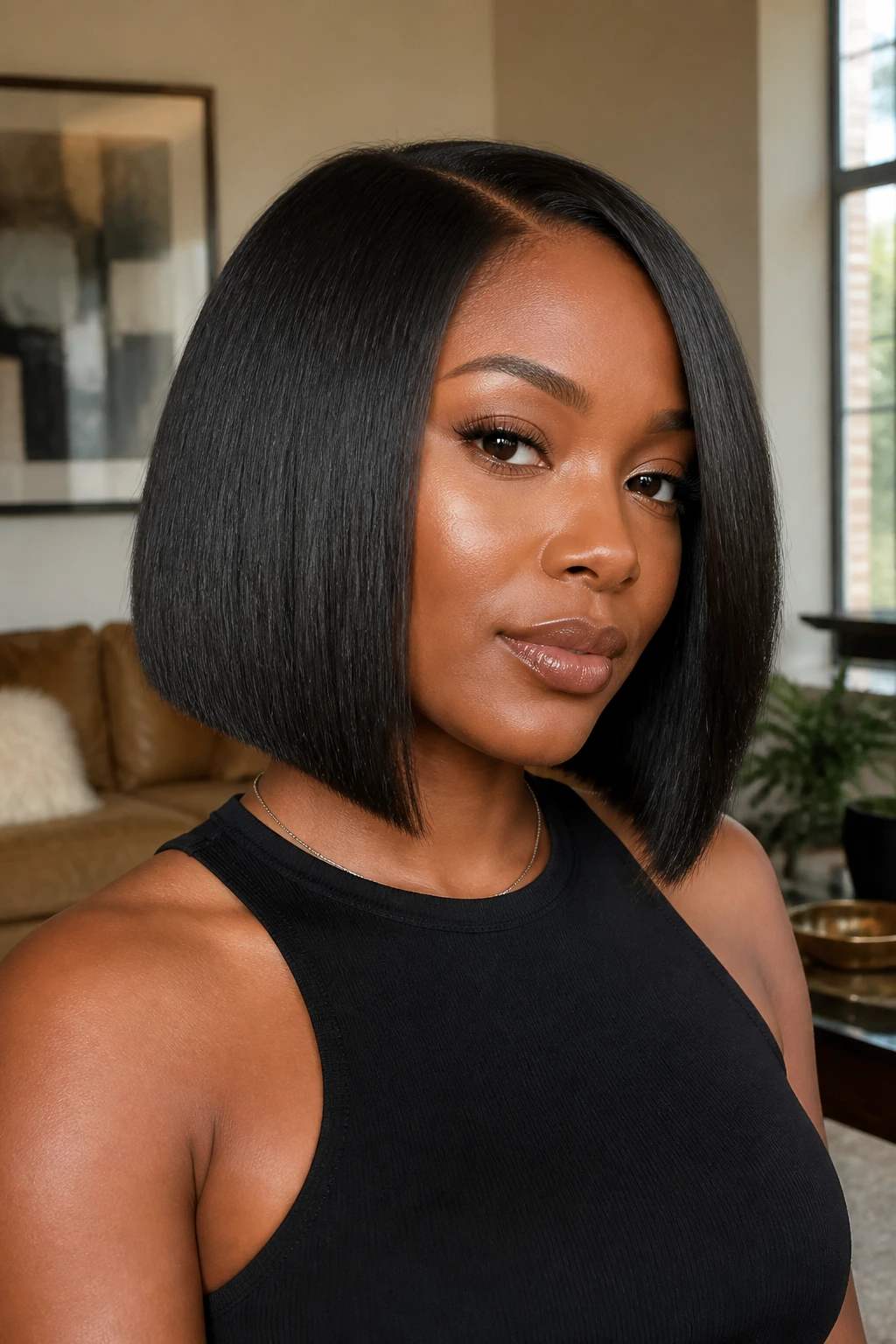
Boxy sounds unflattering until you see the right version of it. On thick hair, a slightly boxy A-line can create a strong, fashion-y shape that looks bold instead of soft. The front still drops longer than the back, but the perimeter stays firm and structured.
This one works best when the ends are blunt and the angle is modest. If the cut gets too steep, the boxiness turns awkward. Keep the line crisp and let the density do the rest. It’s a good pick if you like geometric silhouettes and don’t mind a haircut that makes a statement before you do.
There’s nothing timid about it. Which, frankly, is part of the appeal.
23. The Temple-Undercut Bob
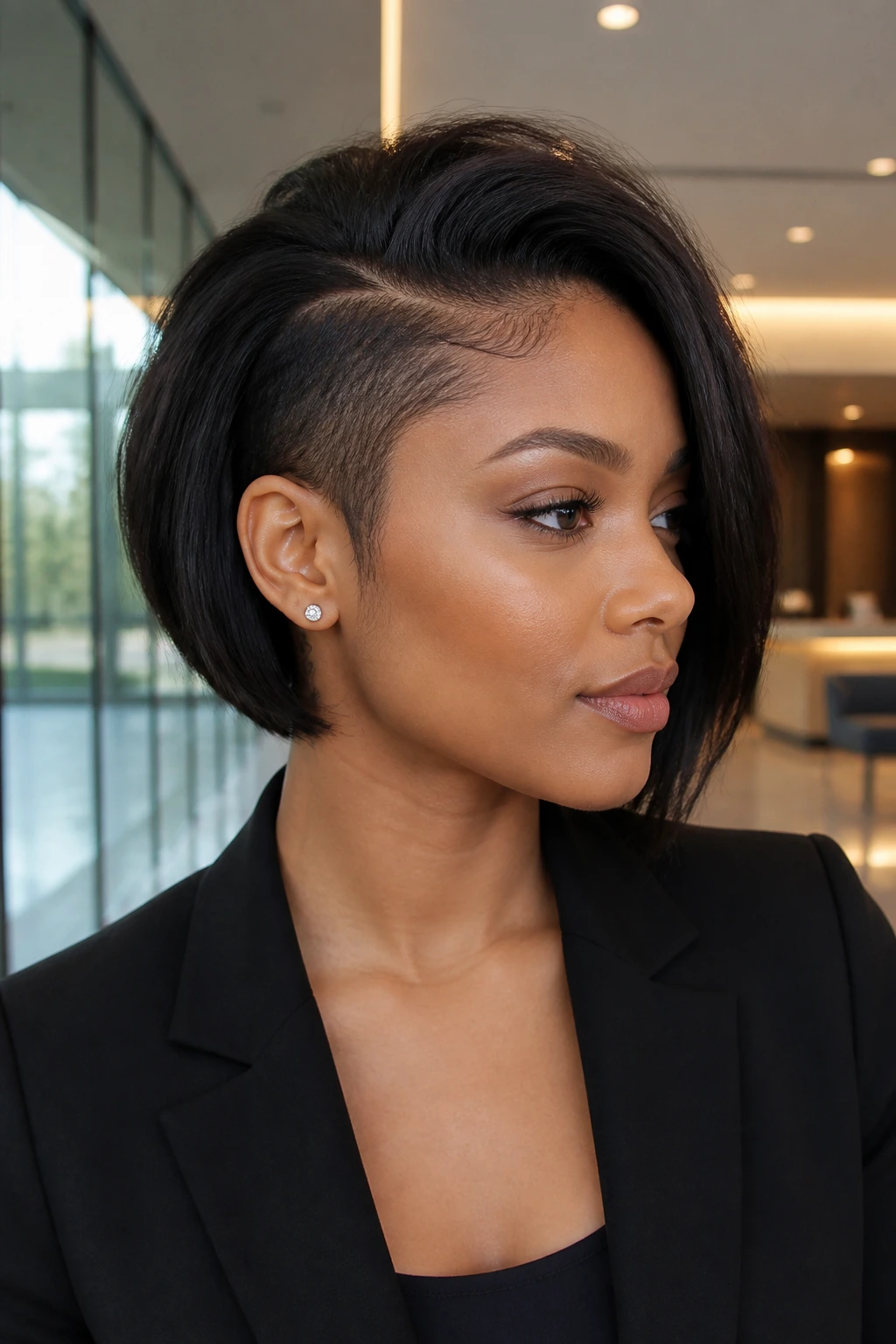
A temple undercut trims weight near the sides, just above or around the ear area, where thick hair can puff out and widen the whole face. By thinning that hidden zone, the bob lays closer to the head and the front pieces move with more ease.
This is a smart option if you wear glasses, hoops, or any kind of statement earrings. The sides stay tidy, so the accessories don’t have to fight the haircut for attention. It also gives the cut a sharper profile from the front, which is harder to get than people think.
It’s subtle enough to wear to work and bold enough to feel different. That’s a rare balance.
24. The Braided Angled Bob
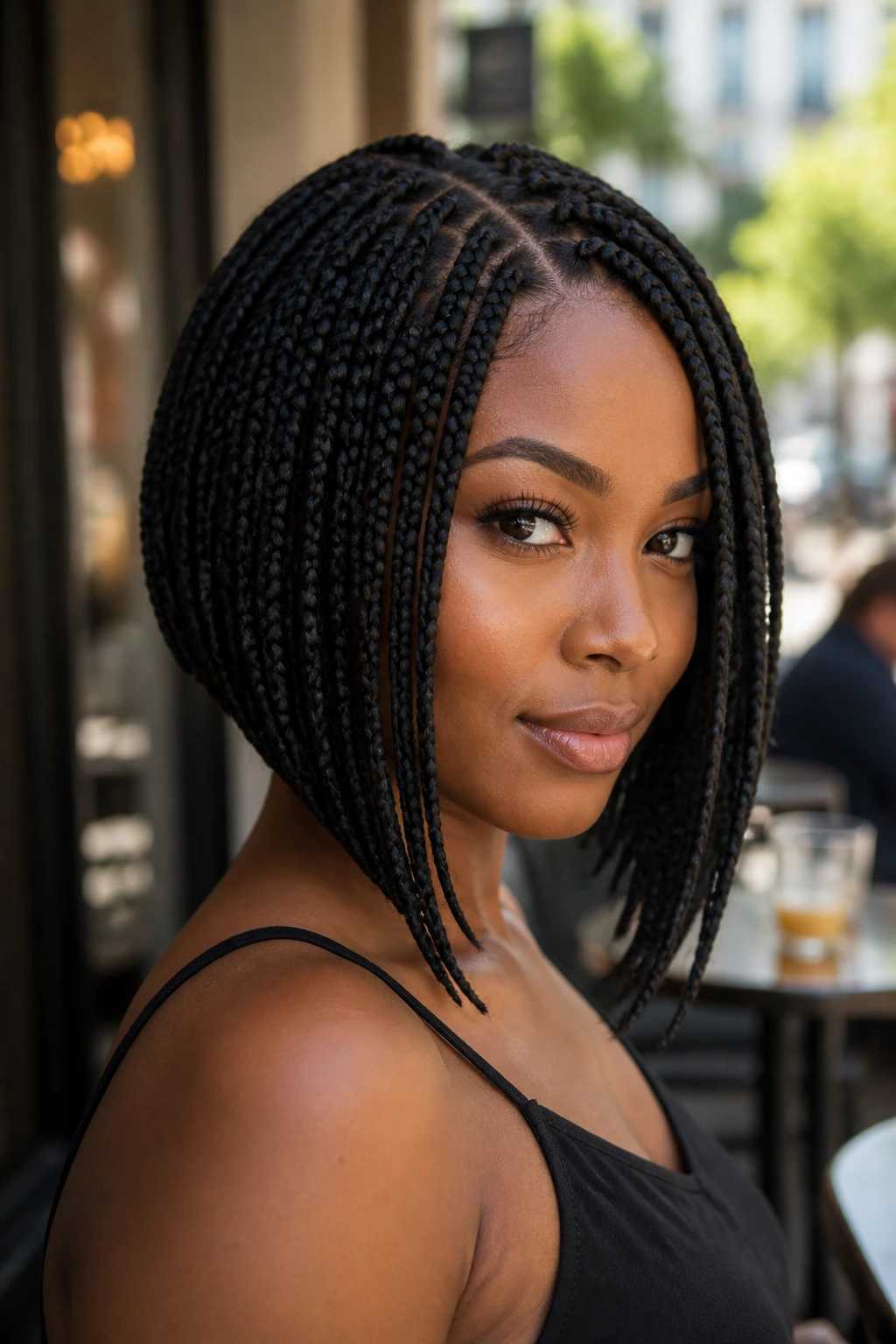
Braids and angled bobs can sit in the same conversation when the length is cut into an angle or installed to taper from back to front. Knotless braids, feed-ins, or crochet styles can all mimic the bob shape while giving your natural hair a break from daily heat.
The best version keeps the back shorter and the front a little longer so the angle is visible even when the braids settle. You can keep the ends blunt for a clean finish or let them angle softly toward the shoulders. This is a practical choice if you want the look of a bob with less daily styling.
I like it for travel and busy weeks. Less brush time. Less fuss. Same shape.
25. The Wet-Look Angled Bob
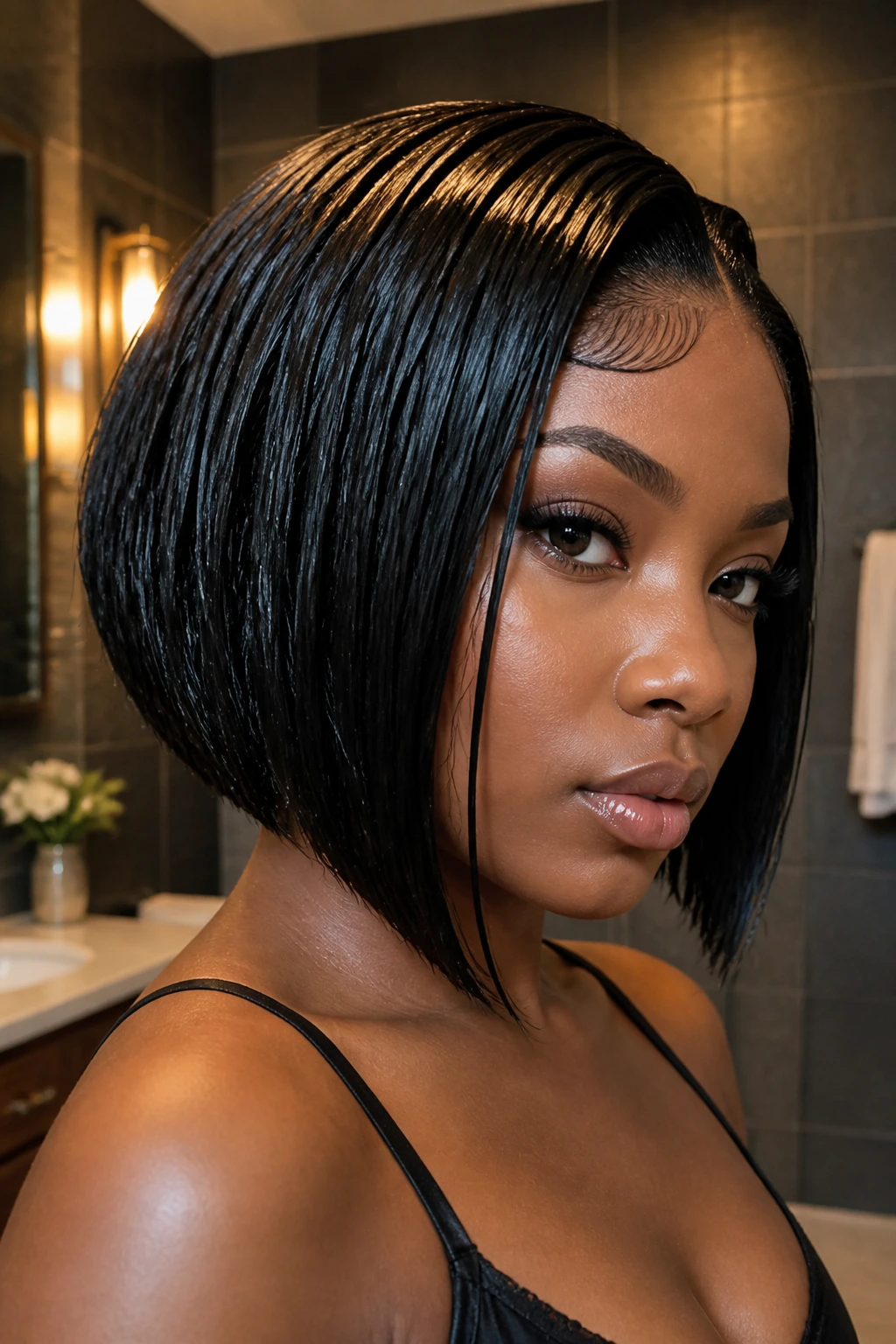
The wet-look version is for days when you want shine and definition to do the talking. On thick hair, gel or styling foam can pull the cut tight enough to show the angle clearly, especially around the crown and front pieces. The finish should look glossy, not crunchy.
The key is using enough product to hold the shape, then combing it through so the line stays smooth. A little edge work around the hairline can sharpen the look, but don’t drown the hair in product. Heavy buildup makes thick hair sag, and sagging kills the angle.
This style has a polished edge that works for nights out, events, or any time you want the bob to look sleek without needing a full silk press.
Why the Angle Works So Well on Thick Hair
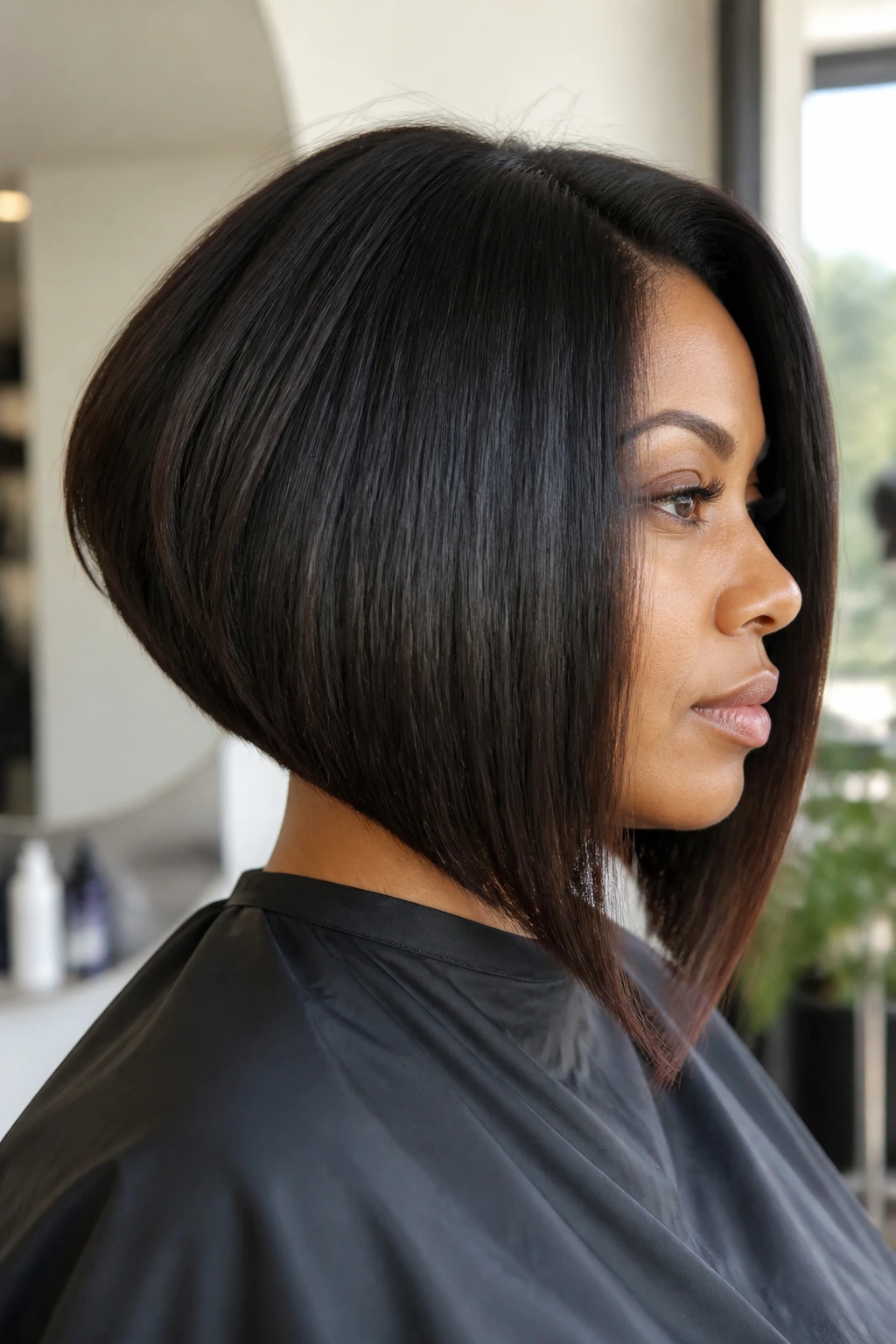
Thick hair has weight, and that weight can either help the haircut or swallow it. An angled bob uses the natural heaviness in the back to keep the neck area neat, then lets the front pieces hang longer where they can frame the face. That’s the whole trick. Simple, but not basic.
The angle also creates a visual line that keeps dense hair from reading as one big block. When the back is shorter and the front is longer by even a couple of inches, the eye sees movement instead of bulk. The hair still feels full. It just stops looking oversized.
Black hair textures often shrink, bend, or puff in different ways depending on humidity, heat, and product load. A good angled bob accepts that. It doesn’t pretend every strand will sit like a mannequin head. It gives the hair enough structure to hold up when life gets messy, and that is why these cuts stay useful.
The Tools That Keep the Shape Clean
-
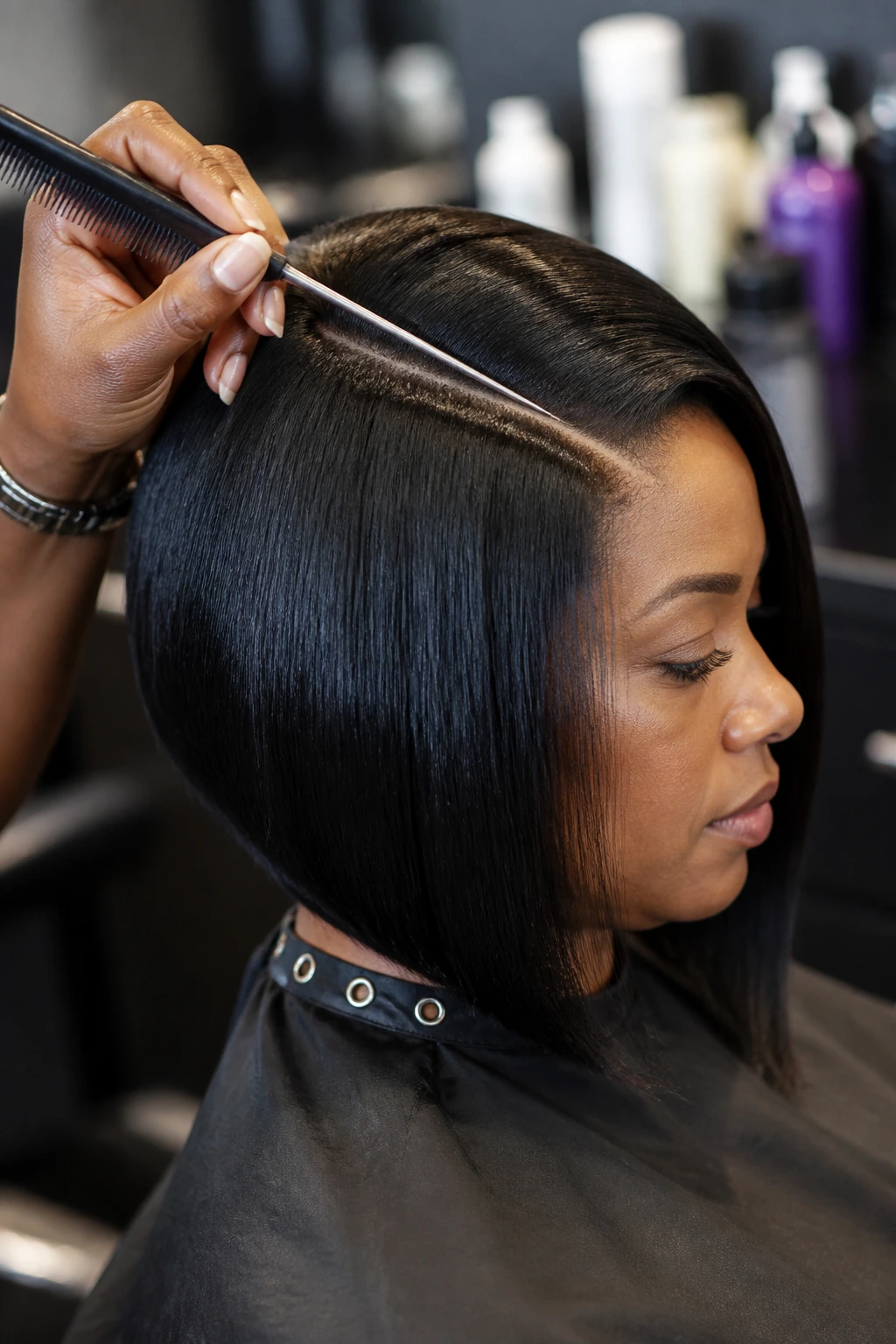
Rat-tail comb: Partings matter in an angled bob, and this makes the line clean without shredding the roots.
-
Wide-tooth comb: Best for detangling thick natural hair without tearing through the ends.
-
Blow dryer with concentrator nozzle: Needed if you want a sleek finish or a stretched base before trimming.
-
Round brush: Helps lift the crown and bend the front pieces under a little.
-
Paddle brush: Good for smoothing silk presses and wrapping the hair at night.
-
Flat iron with adjustable heat: Thick hair often needs heat control more than heat itself.
-
Duckbill clips: Keep sections separate during blow-drying and flat ironing.
-
Heat protectant: Non-negotiable if the bob is ever pressed.
-
Styling mousse or foam wrap: Useful for curly, coily, or wet-look versions.
-
Lightweight serum or shine spray: Adds polish without turning the back greasy.
-
Silk scarf or bonnet: Keeps the angle from getting crushed while you sleep.
-
Satin pillowcase: Nice backup if the scarf slips off.
What to Ask Your Stylist Before the Snip
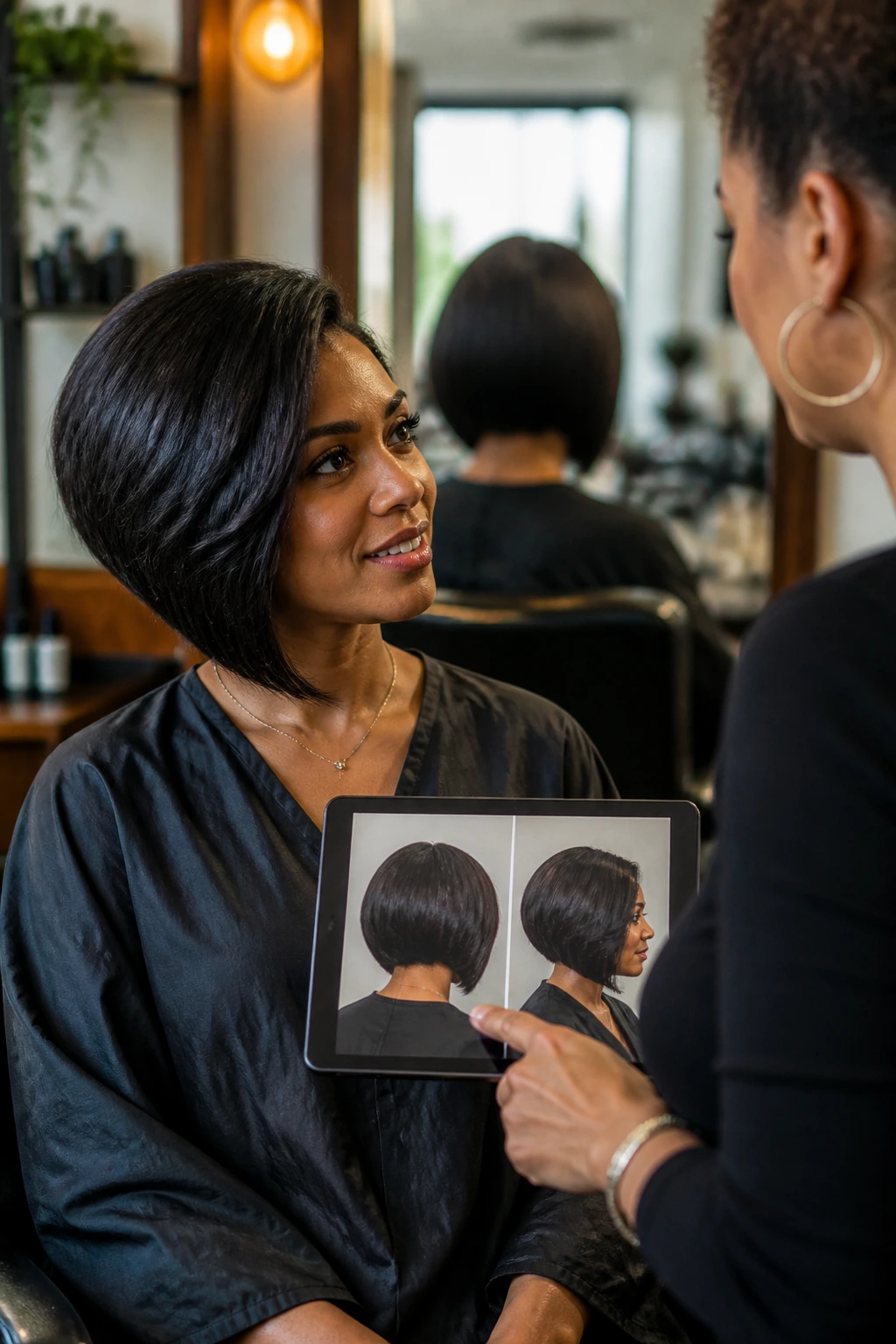
Bring photos, but bring the right photos. One front shot is not enough for an angled bob, because the whole point is the side and back relationship. You want at least one picture from the side and one from behind so the stylist can see how steep you want the angle to fall.
Say where you want the shortest point to land. The nape? Just below the ear? Close to the neck but not shaved? Those details matter more than a vague “short bob.” If you wear your hair curly, add that too. A bob cut for straight hair will sit differently once coils shrink up.
Ask whether the cut will be done on blown-out hair, stretched natural hair, or dry hair. Thick hair can hide weight until it’s fully dry, so the method changes the result. And if you know you hate daily heat, say it early. A bob that needs flat-ironing every single morning is not the same haircut as one built for curls and foam.
How to Wear These Bobs Without Fighting the Cut
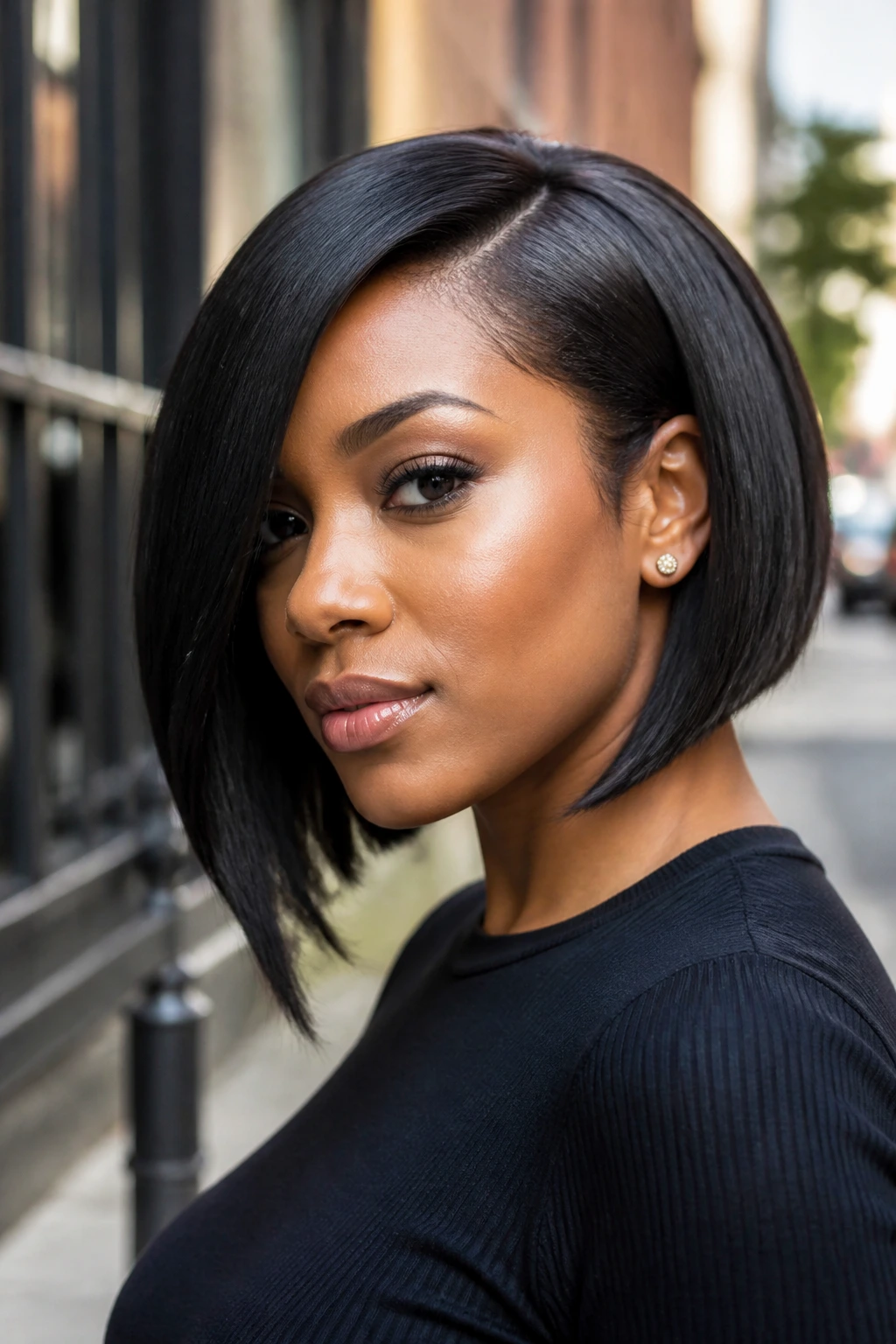
Face Shape: Chin-length angles tend to sharpen rounder faces, while longer fronts soften square jaws. If your face is already long, keep the front pieces just below the chin instead of all the way to the collarbone.
Parting: Deep side parts add drama and help dense hair lie flatter near the crown. Center parts make the shape feel balanced and neat, which is useful if you want the haircut to read clean and calm.
Accessories: Small hoops, bold earrings, and collars with a low neckline work well because they don’t hide the line of the haircut. Big turtlenecks can swallow a short bob, so a V-neck or open collar often looks better.
Makeup and Finish: A sharper bob looks great with a defined brow and a glossy lip. A softer, curly bob plays well with fresh skin and a little blush. Strange as it sounds, the haircut changes the balance of the whole face.
Everyday Wear: If you wear glasses, keep the temple area tidy. If you work out often, choose a version that wraps well and survives a little sweat at the roots.
Small Styling Moves That Change the Whole Mood
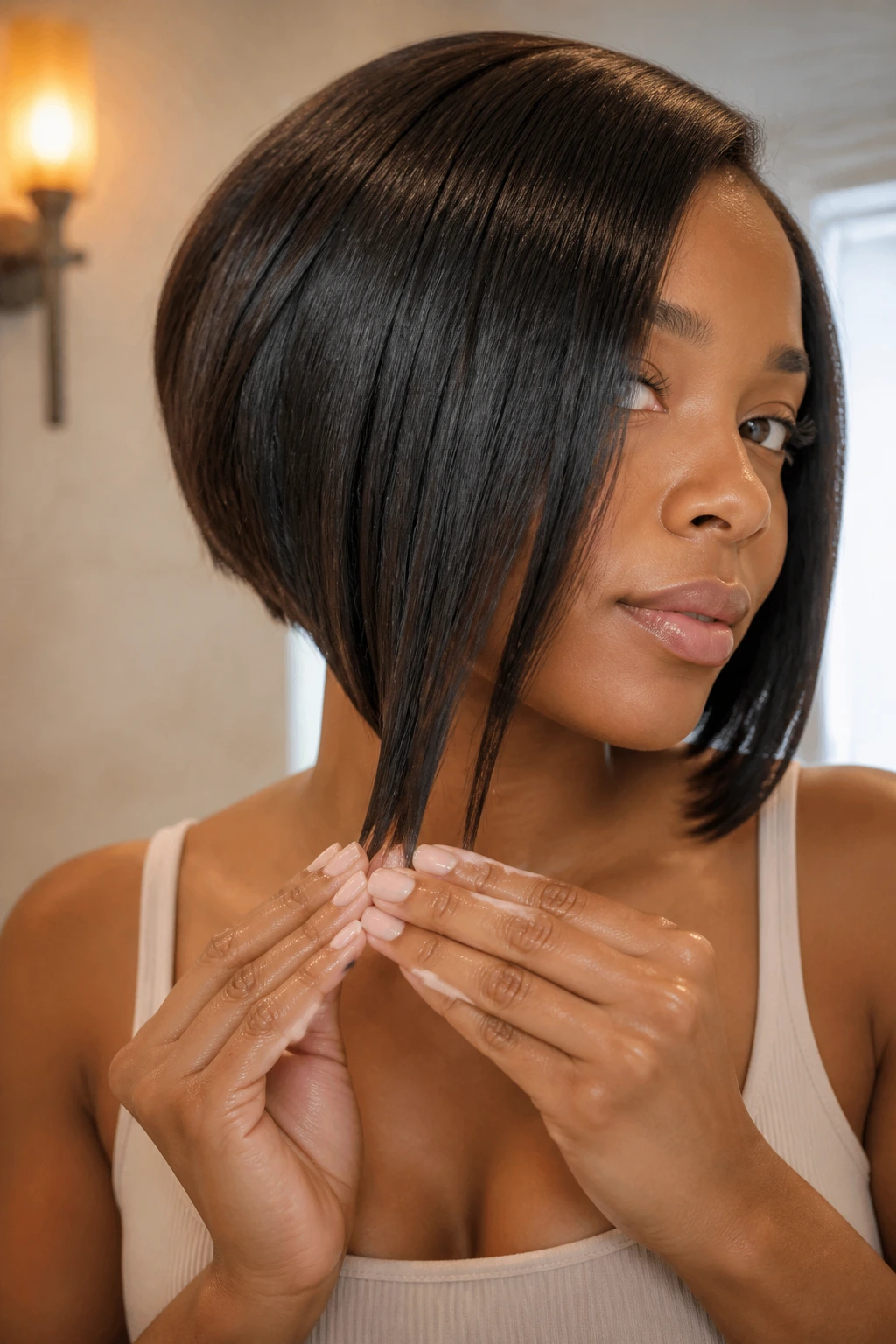
Shine Boost: A pea-sized amount of serum rubbed between the palms and pressed onto the ends can make a silk press or blowout bob look finished without flattening the back. Focus on the front pieces and the perimeter, not the crown.
Texture Play: A few bent ends can change the whole cut. Wrap just the front inches around a flat iron or medium barrel iron, then leave the back straighter for contrast. That slight mismatch gives the bob movement.
Volume Control: Root mousse at the crown helps a center-part or rounded bob keep lift for the first couple of days. Use it sparingly. Too much and the top gets sticky fast.
Make-It-Yours: Tuck one side behind the ear, pin a side part with a barrette, or add a clean hair clip above the temple. Small details make an angled bob feel custom even if the cut itself is classic.
The Most Common Ways Thick Hair Loses the Angle
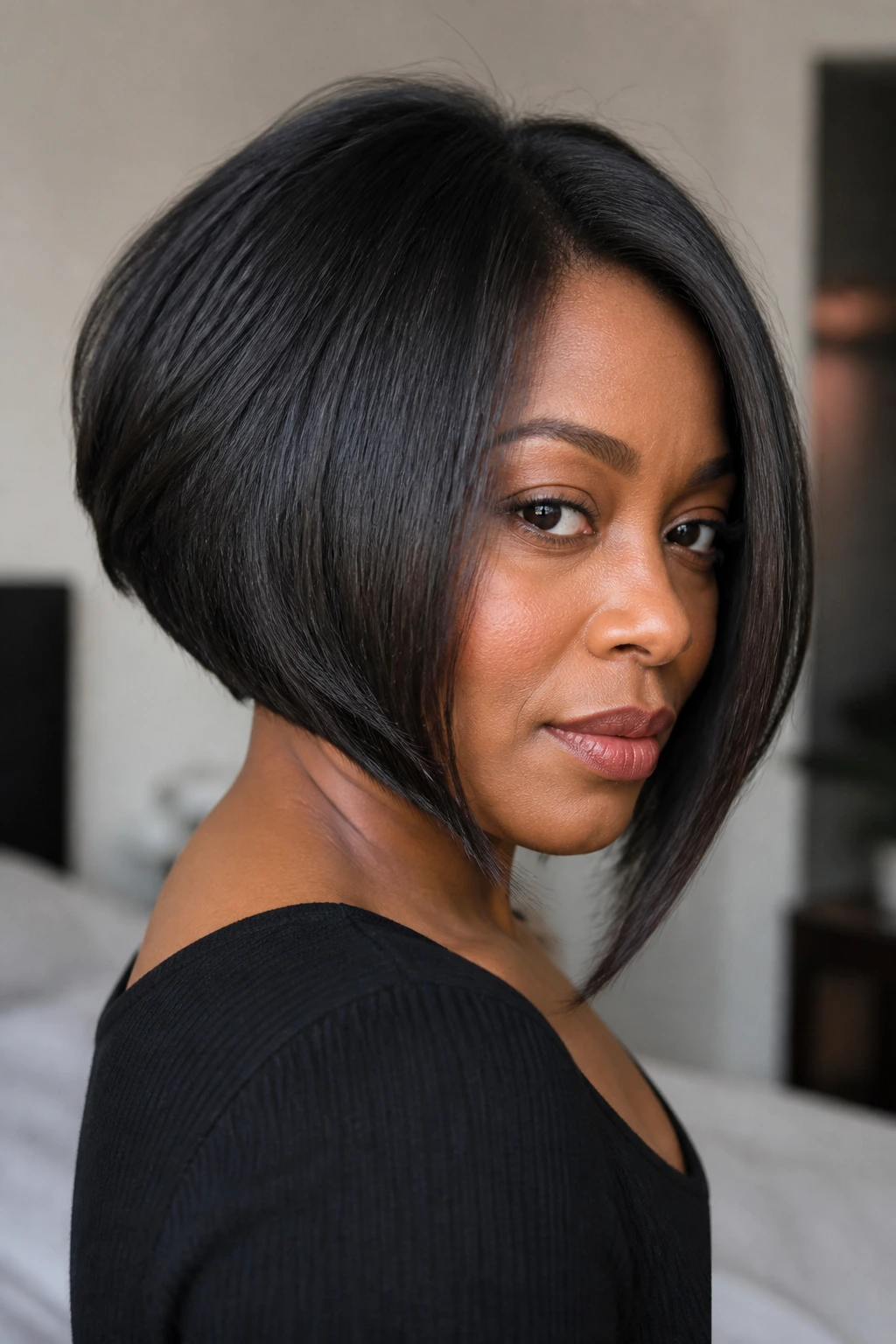
The first mistake is cutting the front too short and the back too soft. That turns a bold angled bob into a puffy box, especially once thick hair expands in humidity. The fix is to keep a clear difference between front and back, even if the angle is modest.
Another problem is over-thinning the ends. People see density and start removing too much weight, then the perimeter looks see-through and frayed. Thick hair wants structure at the bottom. Remove bulk inside the shape, not all along the edge.
Skipping regular trims is a sneaky one. The cut may look fine for a while, then the back grows into the neck and the front stops reading as an angle. A six- to eight-week clean-up keeps the outline honest.
And please, do not drown the whole style in heavy creams. They sit on thick hair and blur the line. Light product. Controlled sections. That’s the better route.
Variations and Adaptations to Try
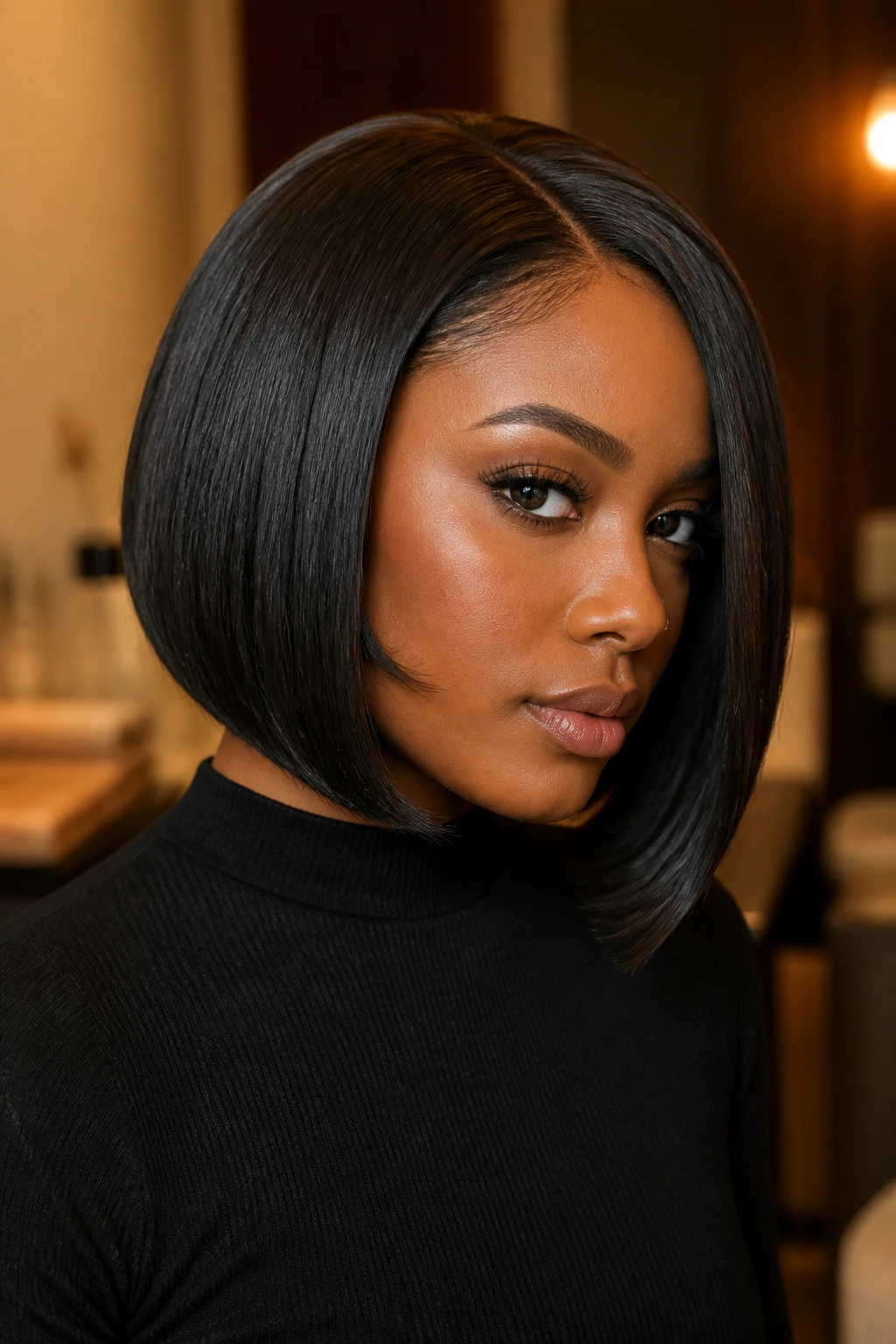
Silk-Press Chic: Keep the cut sharp and polished, then press it into a smooth finish with a slight under-curl at the ends. This version is best if you like a crisp line and do not mind heat styling every week or two.
Coily Everyday: Let the bob live in its natural coil pattern and shape the angle through a dry cut and careful trimming. A leave-in conditioner plus a foam styler usually gives enough hold without turning the hair stiff.
Protective Braided Bob: Use knotless braids, feed-ins, or crochet pieces cut into an angled length. It gives you the bob shape with far less daily manipulation, which makes sense if your real goal is low-effort hair.
Color-Rimmed Front Pieces: Add lighter color to the front or around the face only. The angle becomes easier to see, and the cut feels brighter without full-head maintenance.
Soft Office Bob: Keep the angle gentle, the nape neat, and the front just below the chin. This is a quieter version that still looks polished with blazers, button-downs, and minimal styling.
Keeping the Bob Fresh Between Trims
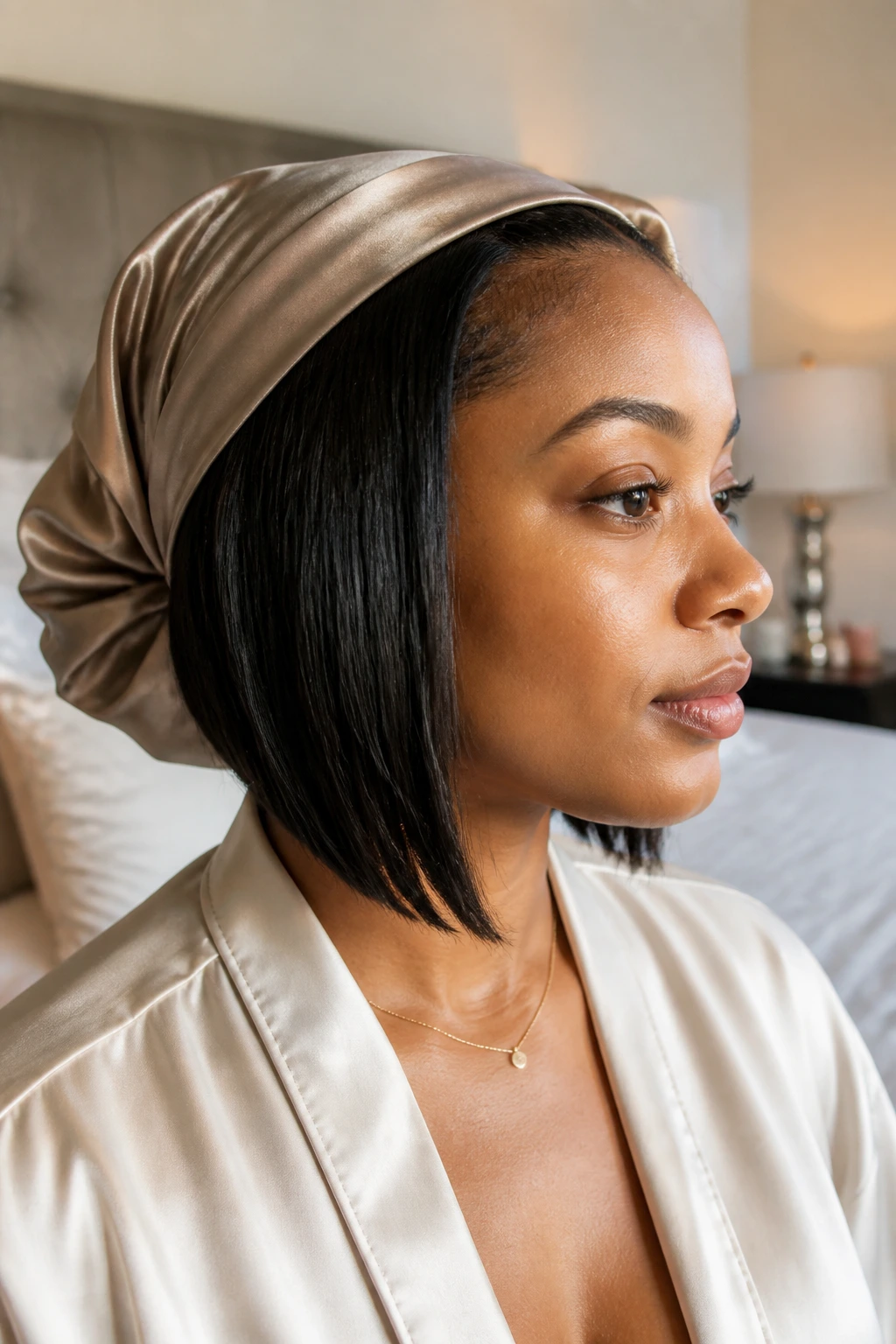
An angled bob stays sharp longest when you treat the perimeter like it matters. Wrap sleek versions at night with a silk scarf or bonnet, then smooth the front in the morning with a paddle brush and a tiny bit of serum. If the hair is curly, refresh the ends with water and a light foam every two or three days, then scrunch the curl back into place.
Heat-styled bobs usually need a full reset less often than people think. The front pieces may only need a quick touch-up at the roots, while the back can stay wrapped and brushed into place. If you are pressing your hair regularly, keep the heat on the lower side that still gets the job done. Repeated high heat makes thick hair look tired fast.
Trims matter more than product here. Every 6 to 8 weeks is a solid rhythm for keeping the angle visible, especially if the back starts touching the collar and losing its shape. Braided or protective versions stretch longer between reshapes, but even they need a small clean-up when the outline starts to drift.
Questions People Ask Before They Cut
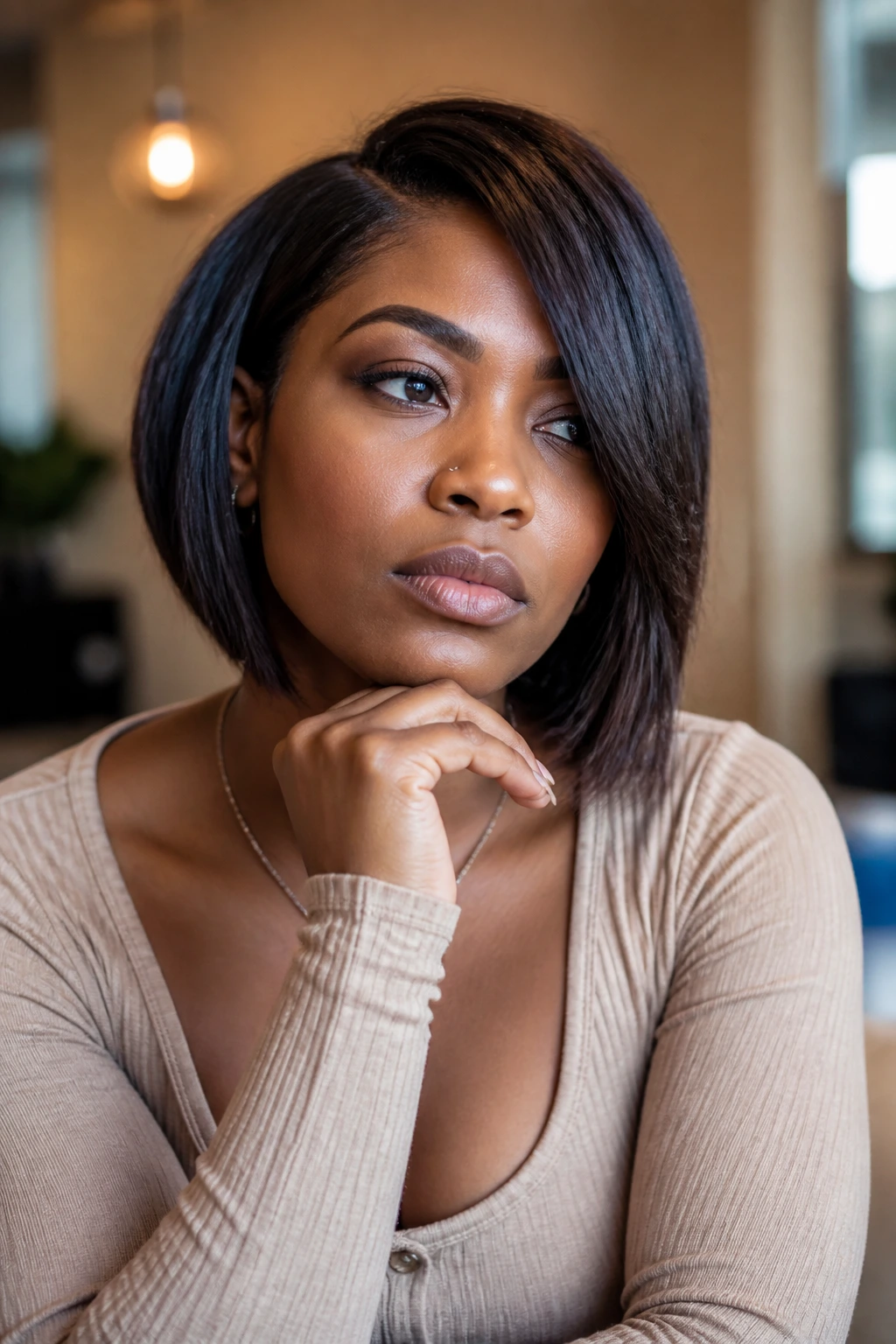
Will an angled bob work if my hair is very dense?
Yes, and density is often the reason it looks so good. Thick hair gives the back enough body to hold the shape, as long as the stylist removes bulk in the right places.
Should the cut be done wet or dry?
For natural coils and shrinkage-heavy textures, dry cutting or cutting on stretched hair often gives a more honest shape. For silk presses or pressed bobs, a wet-to-dry process can still work if the stylist understands how the hair expands.
How steep should the angle be?
A subtle 1- to 2-inch difference can be enough for some faces, while a sharper 3-inch drop gives more drama. If you want the cut to stay easy to wear, start modest and go steeper later.
Can I wear this cut without heat?
Absolutely. A curly, coily, or foam-styled bob can show the angle just fine. The key is making the perimeter and the front pieces intentional when the hair is dry.
What if the back feels too bulky?
That usually means the internal weight was left too heavy, or the nape needs more taper. A good trim focused on the back and hidden layers can fix it without changing the whole shape.
How do I keep the front from flipping out?
Use a round brush, wrap the front while warm, or bend the ends under with a flat iron. Thick hair likes a little direction at the ends or it will decide for itself.
Can I ask for this cut if I wear braids or wigs part of the time?
Yes. Tell the stylist how often your natural hair is out and what shape you want under the protective style. That helps them plan a bob that still makes sense when your own hair is visible.
The Shape That Keeps Its Line
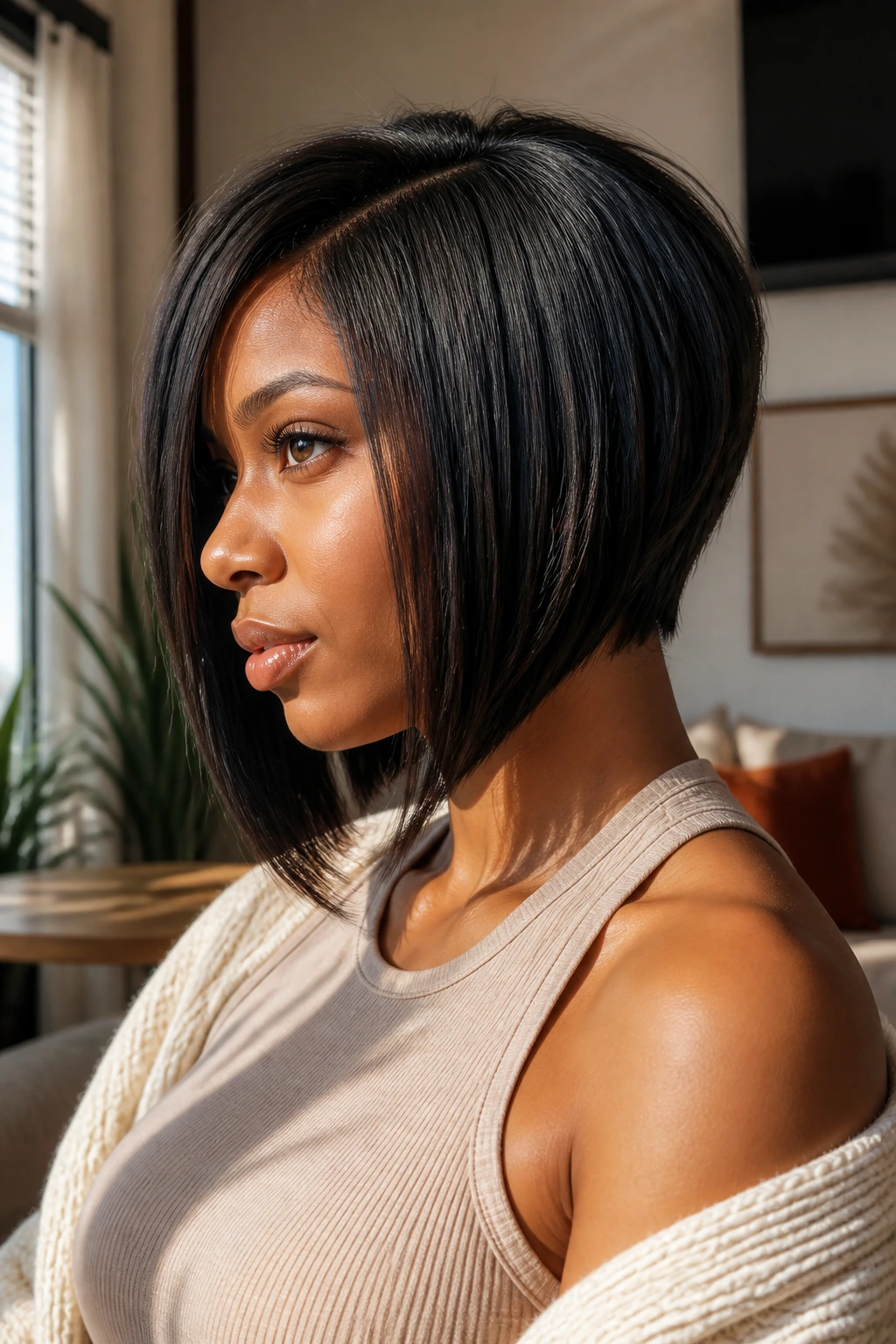
Angled bobs stay useful because they do something many cuts fail to do: they give thick hair a clear shape without sanding down its personality. That balance is the whole point. The back can be neat, the front can frame the face, and the overall cut can still feel like hair with body, not hair that has been flattened into obedience.
If you choose one of these styles and keep up with the trim schedule, the line holds. That is the part people remember when they leave a good salon chair — not just that the hair is shorter, but that it finally has somewhere to go.