



Short hair can look boxy in a hurry, and the fix is usually a diagonal line, not more length. That’s why angled hairstyles for short hair keep showing up in the hands of stylists who know how to make a cut look deliberate instead of chopped off. One inch in the right place can change everything: the jawline looks cleaner, the nape looks tighter, and the whole shape stops sitting there like a square.
I’ve always liked short hair best when it has a point of view. Not fussy. Not overworked. Just a clear direction from back to front, or from one side to the other, so the shape does some of the talking for you. A flat bob can feel heavy. A severe pixie can feel too blunt. Put a slope into the silhouette, and the cut suddenly has movement even on day two.
That little shift matters more than most people expect. A front that lands even 1 to 2 inches longer than the back can make fine hair look denser, thick hair look lighter, and curls sit in a cleaner outline. The 22 looks below cover the sleek, the choppy, the softly grown-out, and the slightly rebellious versions — the ones that make short hair feel sharp without turning it into a maintenance headache.
Why You’ll Love This Collection
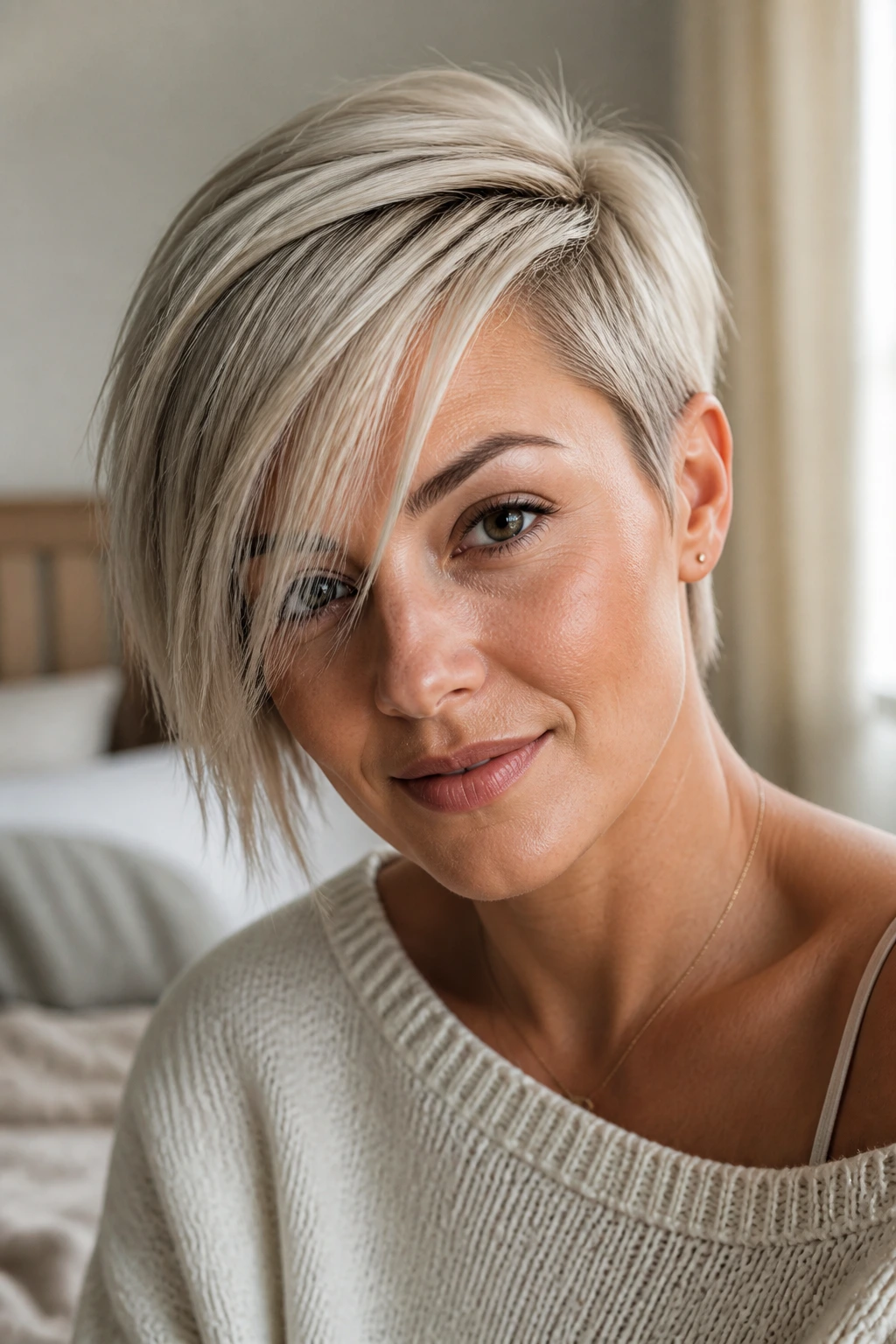
-
The line does the work: A good angle gives short hair shape before you even touch a styling tool, which means less daily wrestling with the front pieces.
-
It flatters the jaw in a real way: When the front lands lower than the back, the eye follows that diagonal instead of stopping at one hard edge.
-
There’s room for texture: Straight hair, waves, curls, and coily bends can all wear an angle; the difference is how soft or sharp the line should be.
-
It keeps fine hair from collapsing: Short layers at the nape plus a longer front can fake density without loading the crown with product.
-
It gives thick hair somewhere to go: Instead of a heavy triangle, the shape releases bulk at the sides and lets the front swing forward.
-
You can go subtle or dramatic: A two-inch difference and a six-inch difference are not the same haircut, and that range is half the fun.
1. The Classic A-Line Bob
The classic A-line bob is the quiet one in the room, and I mean that as a compliment. The back sits shorter at the nape, while the front angles down toward the jaw, sometimes skimming just below it. On straight hair, that clean line looks crisp without needing a lot of product; on wavy hair, it reads a little softer, which is usually a good thing.
Why It Works
A-line bobs make short hair look longer without actually adding length everywhere. That’s the trick. The front gets the visual weight, so the face gets framed, and the back stays lifted enough to avoid that heavy, helmet-like feeling people complain about when a bob grows out.
Quick Styling Notes
- Keep the front 1 to 1½ inches longer than the back if you want a subtle slope.
- Blow-dry with a paddle brush for a flatter, cleaner finish.
- If the ends flip out, tap them under with a 1-inch flat iron for just a half turn.
- A tiny bit of shine cream at the last inch of the hair keeps the edge from looking dry.
Best for: straight to lightly wavy hair, especially if you want a shape that stays neat by lunchtime.
2. The Stacked Nape Bob
If you want the back of your head to look fuller, this is the cut that earns its keep. The stacked nape bob uses short, graduated layers at the back so the crown lifts and the nape hugs in tight. The front still angles forward, but the real star is that stacked back section that gives the haircut a little architecture.
It’s one of my favorite angled hairstyles for short hair when the hair is fine, because stacking gives the illusion of density where the hair is often flimsiest. The catch is simple: if the stylist over-thins the back, you lose the shape. You want movement, not see-through ends.
For styling, think root lift first, polish second. A little mousse at the roots before blow-drying does more for this cut than a whole shelf of finishing sprays ever will. And if your hair grows fast at the nape, book a cleanup before the silhouette starts to sag. That part goes first.
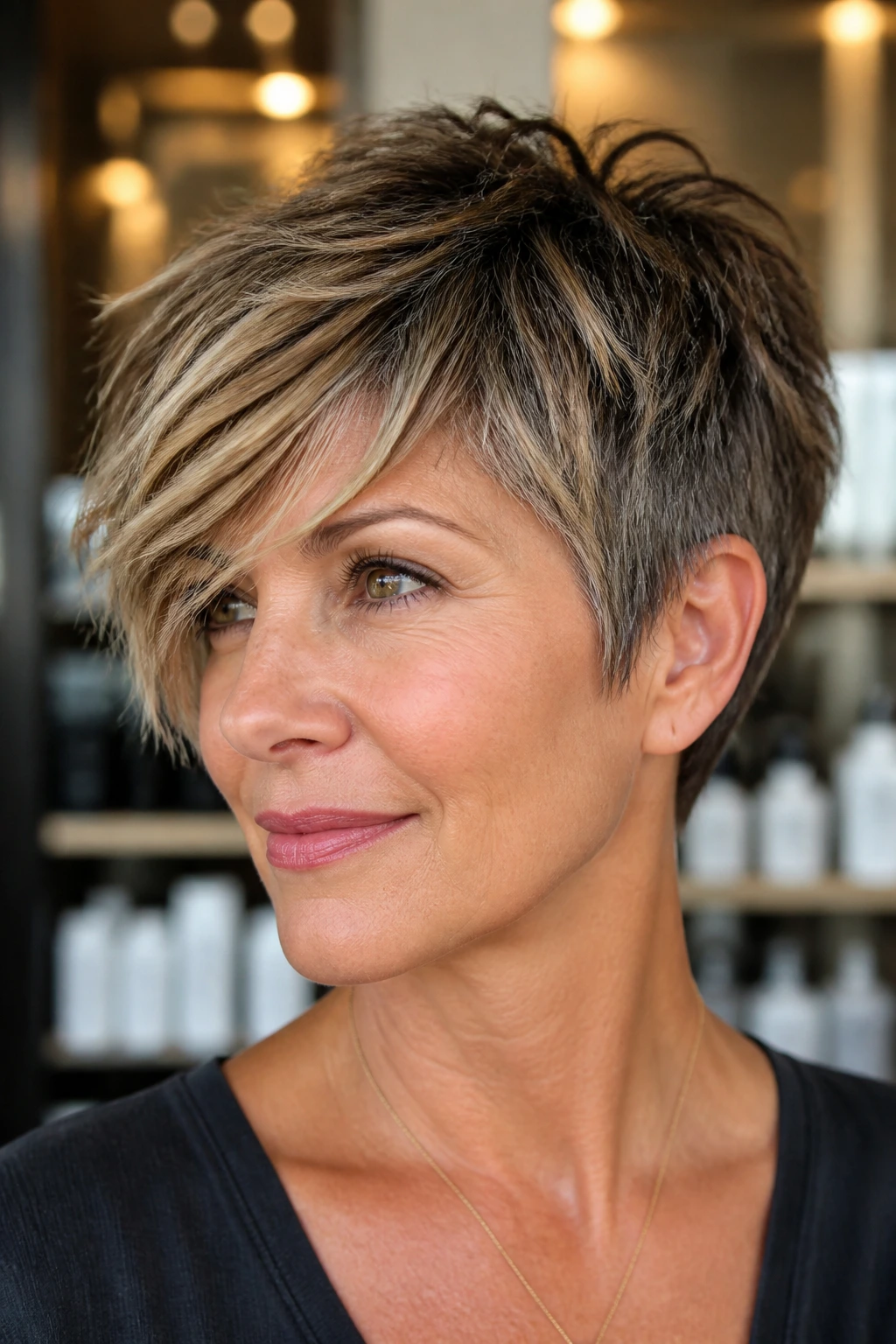
3. The Side-Swept Pixie Bob
Why does a side-swept pixie bob look softer than a straight pixie? Because the long fringe breaks the front edge and drags the eye diagonally across the face. That one move makes the cut feel less cropped and a little more deliberate, especially if your forehead is wider or your brows are a feature you actually want to show off.
What Makes It Different
The back stays short — usually close to pixie length — while the top and front keep enough length to sweep over one eye or brush past the cheekbone. It’s a nice middle ground if you like the ease of a pixie but don’t want the front to feel severe.
How to Style It
- Dry the fringe first with a small round brush so it takes the bend you want.
- Pinch the ends with a pea-sized dab of matte paste.
- Keep the crown a little lifted so the side sweep doesn’t collapse into the face.
- If it falls flat, mist dry shampoo at the roots, even on clean hair.
This one likes a finger-styled finish. Too much brushing makes it look polished in the wrong way.
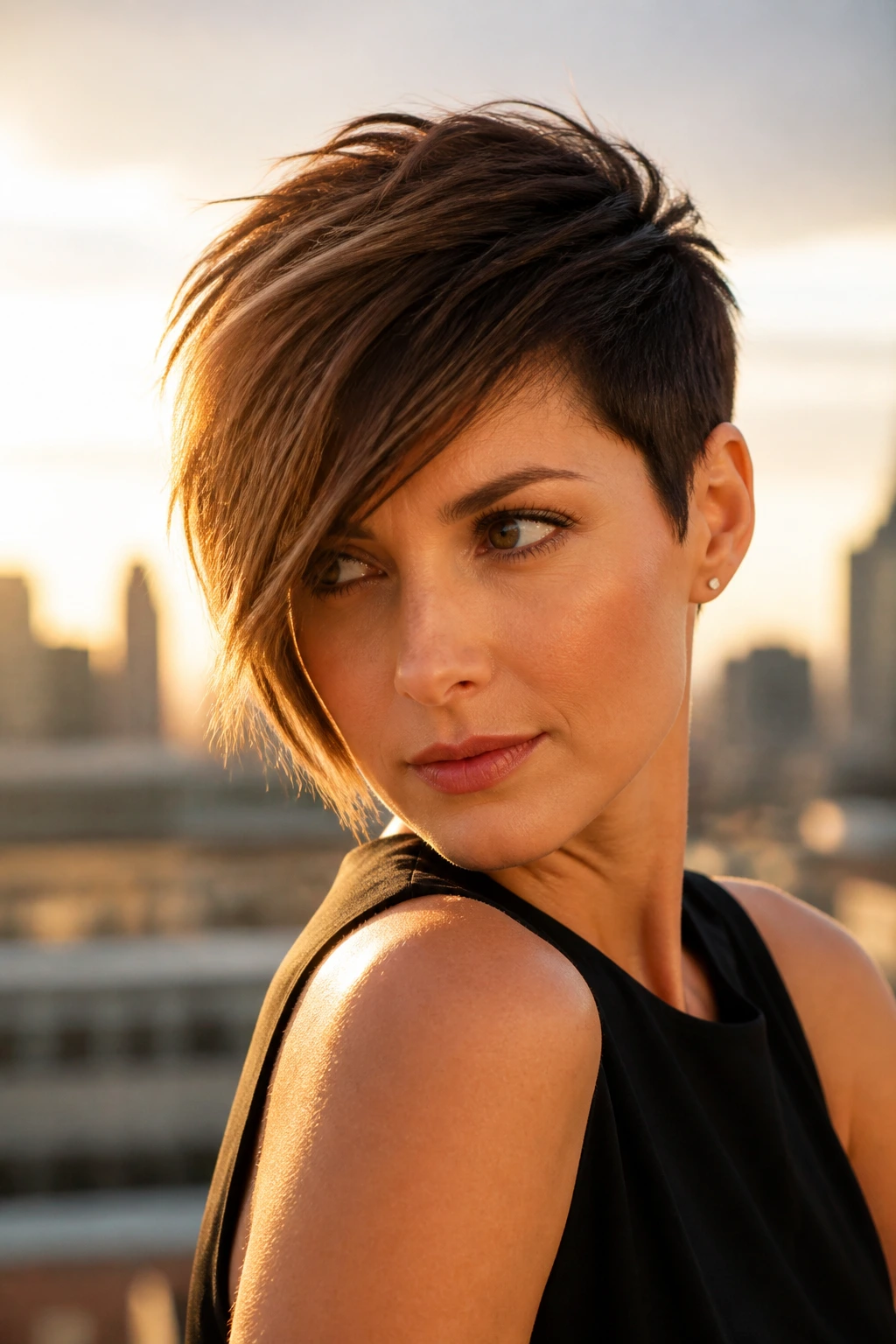
4. The Asymmetrical Pixie with Long Fringe
If one side of your face always photographs better, this cut lets you lean into that. The asymmetrical pixie keeps one side closer and tighter, while the other side stays longer and slides across the forehead or cheekbone. It’s a small haircut with a strong opinion.
The beauty of it is the contrast. One side looks sharp and close to the head; the other side gives enough length to soften the whole thing. That contrast is what makes the style feel modern instead of just uneven. It also gives glasses frames, earrings, and strong brows a little room to breathe.
Best Details to Ask For
- A longer side fringe that lands around the outer corner of the eye
- A shorter side that stays tucked above the ear
- Soft blending at the temple so the shift doesn’t look choppy
- A light neck taper so the back sits cleanly
Use a waxy paste, not a glossy pomade. The finish should look piecey, not wet. That tiny difference matters more than people think.
5. The French Bob with a Forward Angle
The French bob lives on the edge between neat and slightly undone, which is exactly why it works so well with a forward angle. The front tends to sit around the chin or just above it, while the back is cut a touch shorter so the shape tips forward instead of hanging straight down. Add a brow-skimming fringe, and the whole look gets that easy, lived-in line.
What I like about this version is how little it asks for. A French bob does not need to be blown into perfection. In fact, it often looks better if the ends bend a little and the fringe moves when you walk. That softness keeps it from feeling stiff.
It suits hair that already has some bend, but straight hair does fine too if you rough-dry the roots and leave the ends a little imperfect. The trick is not to over-style the front. Let the angle show. That’s the point.
6. The Textured Crop with a Longer Front
Unlike a blunt crop, this one lives on internal choppiness. The back and sides stay short, but the front pieces stay longer and slightly feathered so they can fall forward over the forehead or into the cheekbones. If thick hair tends to puff out around the ears, this cut gives it somewhere to go.
The best version is not overly styled. It should look like the ends were broken up a bit with scissors or a razor, then roughed in with paste. That separation keeps the crop from feeling too packed.
What to Watch For
- Too much thinning around the crown can make thick hair frizz outward.
- A heavy front loses the angled shape fast.
- Matte paste works better than shine cream here because it keeps the texture visible.
- A side part can change the attitude of the whole cut in about ten seconds.
If you like hair that looks better after you’ve slept on it once, this is a strong one.
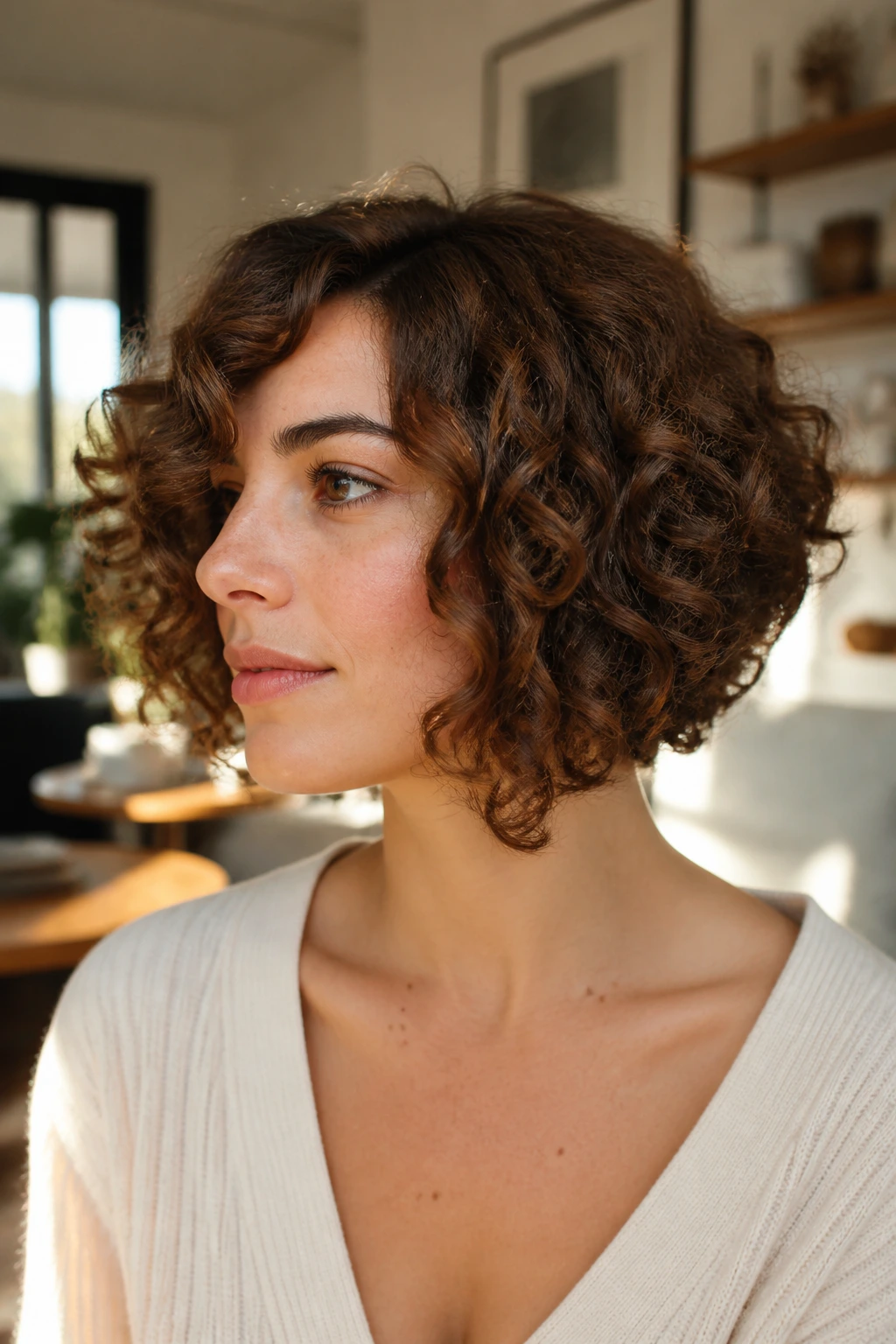
7. The Curly Angled Bob
Curly hair loves an angle, but not the kind that gets forced into a straight line. The front needs a little more length because curls spring up, and the back has to stay controlled so the silhouette doesn’t turn into a triangle. That means the cut should follow the curl pattern, not fight it.
How to Get the Most From It
Cutting curly hair dry, or at least partially dry, helps the stylist see where the springs really land. A curl that looks chin-length wet may shrink to the cheekbone once it dries. That is the sort of surprise that ruins a nice bob in a single afternoon.
- Ask for the front to sit 1 to 2 inches longer than you think you need.
- Diffuse on low heat until the hair is about 80% dry.
- Clip the roots at the crown if you need more lift.
- Use a light cream, not a heavy butter, unless your curls are coarse and thirsty.
This version is less about crispness and more about a clean curve. That’s the right trade.
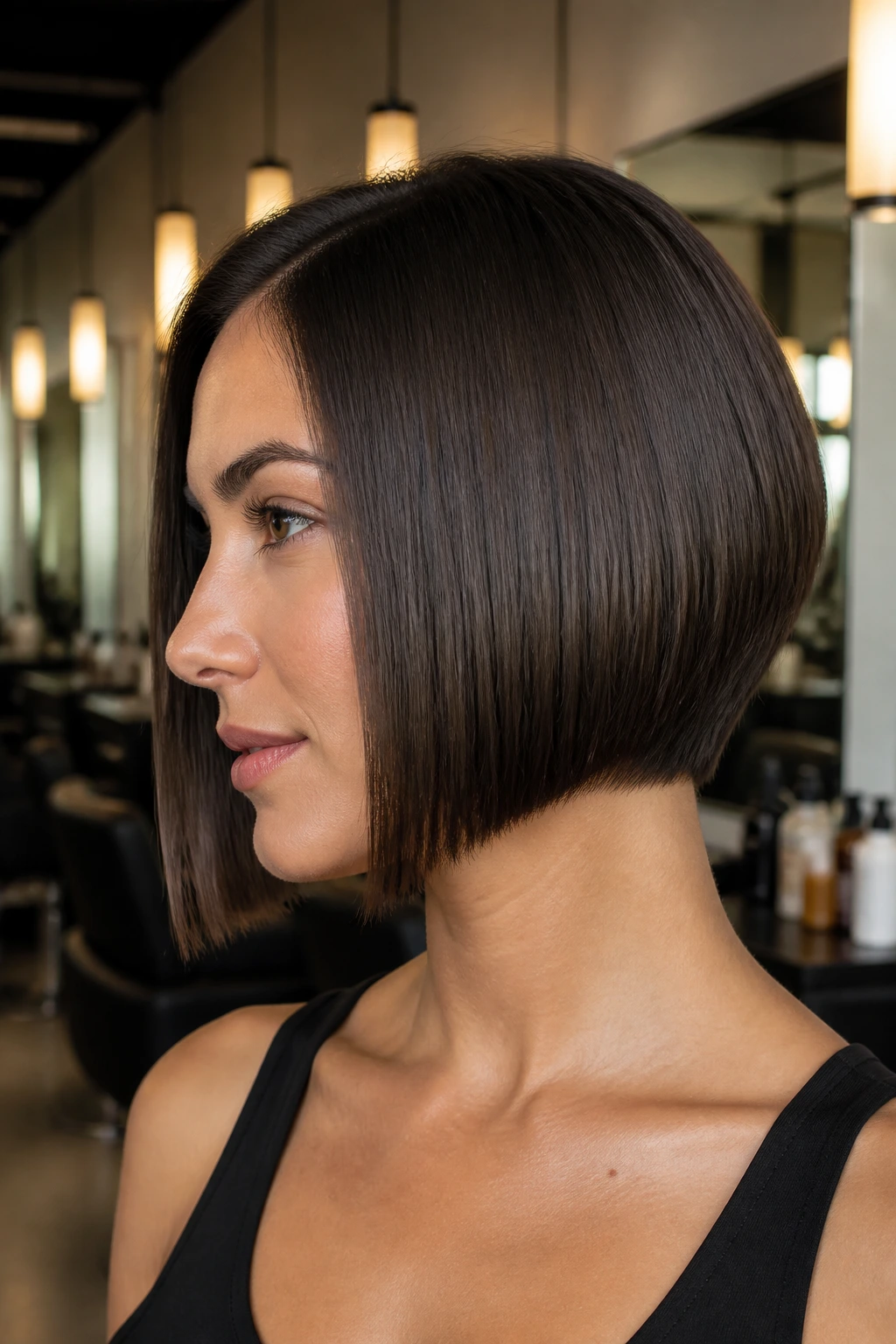
8. The Sleek Blunt Bob with a Tapered Back
Sharp edges do not have to mean harsh ones. A sleek blunt bob with a slightly tapered back gives you the drama of a clean line without the boxy weight that one-length short hair sometimes carries. The perimeter looks blunt from the front, but the nape is trimmed tighter so the shape sits closer to the neck.
This cut shines on straight hair, especially hair that holds a blowout well. If your strands are fine, the blunt edge can make the ends look thicker. If your hair is dense, the tapered back stops the bob from swallowing the neckline.
A flat iron can help, but it should not be doing all the work. The better trick is a blow-dry with tension, then a quick pass through the ends only. One slow glide. That’s enough. Anything more and you start ironing out the life in the shape.
9. The Bixie with Angled Layers
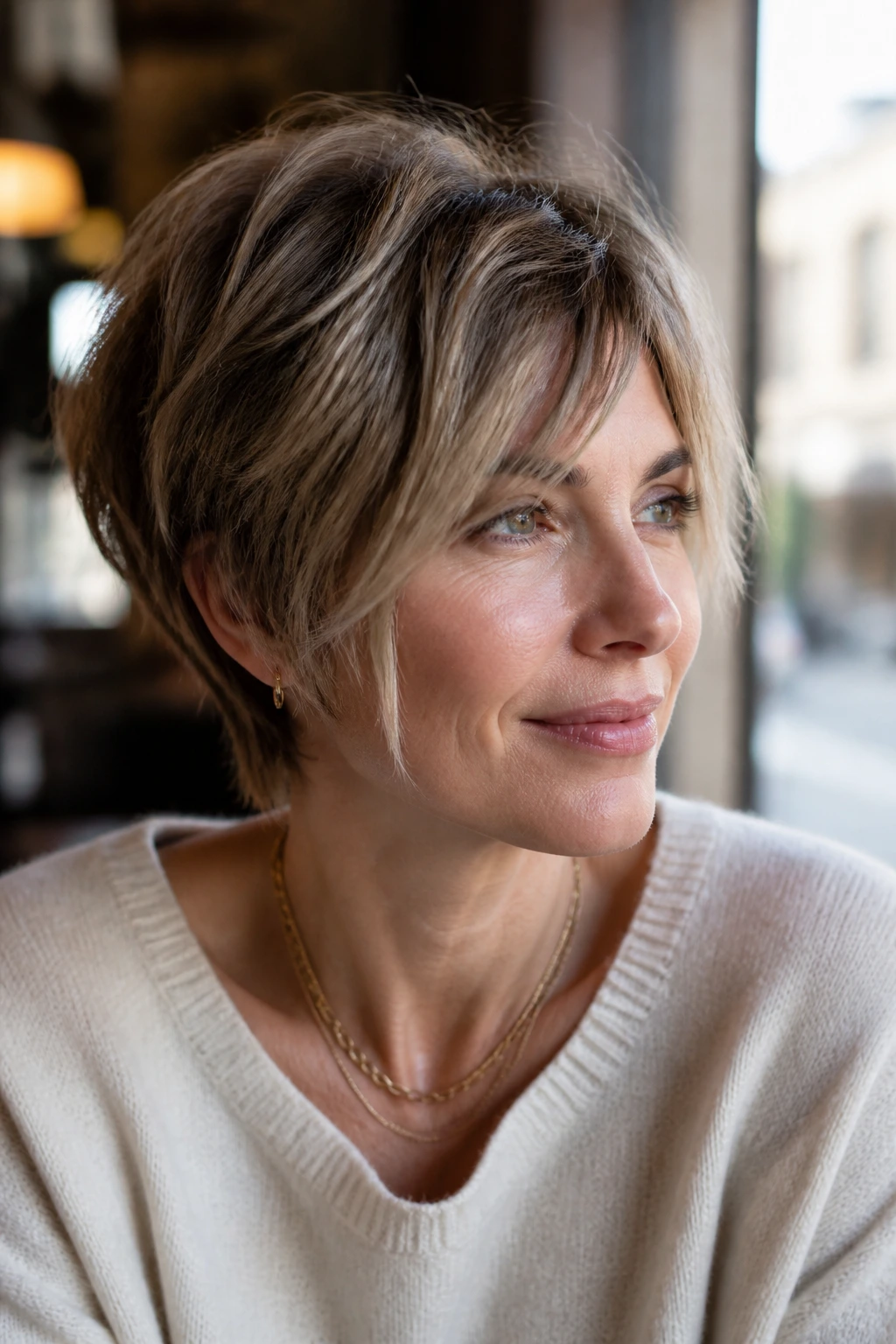
What if you want a bob’s shape but a pixie’s ease? The bixie is the answer I keep coming back to. It sits in the middle, with enough length at the top and front to create an angle, but enough shortness at the nape and sides to keep daily styling quick. It’s one of the few short cuts that grows out without turning instantly awkward.
The angled layers matter here. They keep the front pieces from hanging flat and give the crown a little lift. If the top is too short, the style becomes a plain crop. If it’s too long, you lose the tidy profile that makes a bixie look intentional.
Ask for cheekbone-grazing front pieces, a soft neck taper, and layers that travel forward rather than straight out. That direction is what gives the haircut its shape. Not the label. The angle.
10. The Tapered Undercut Pixie
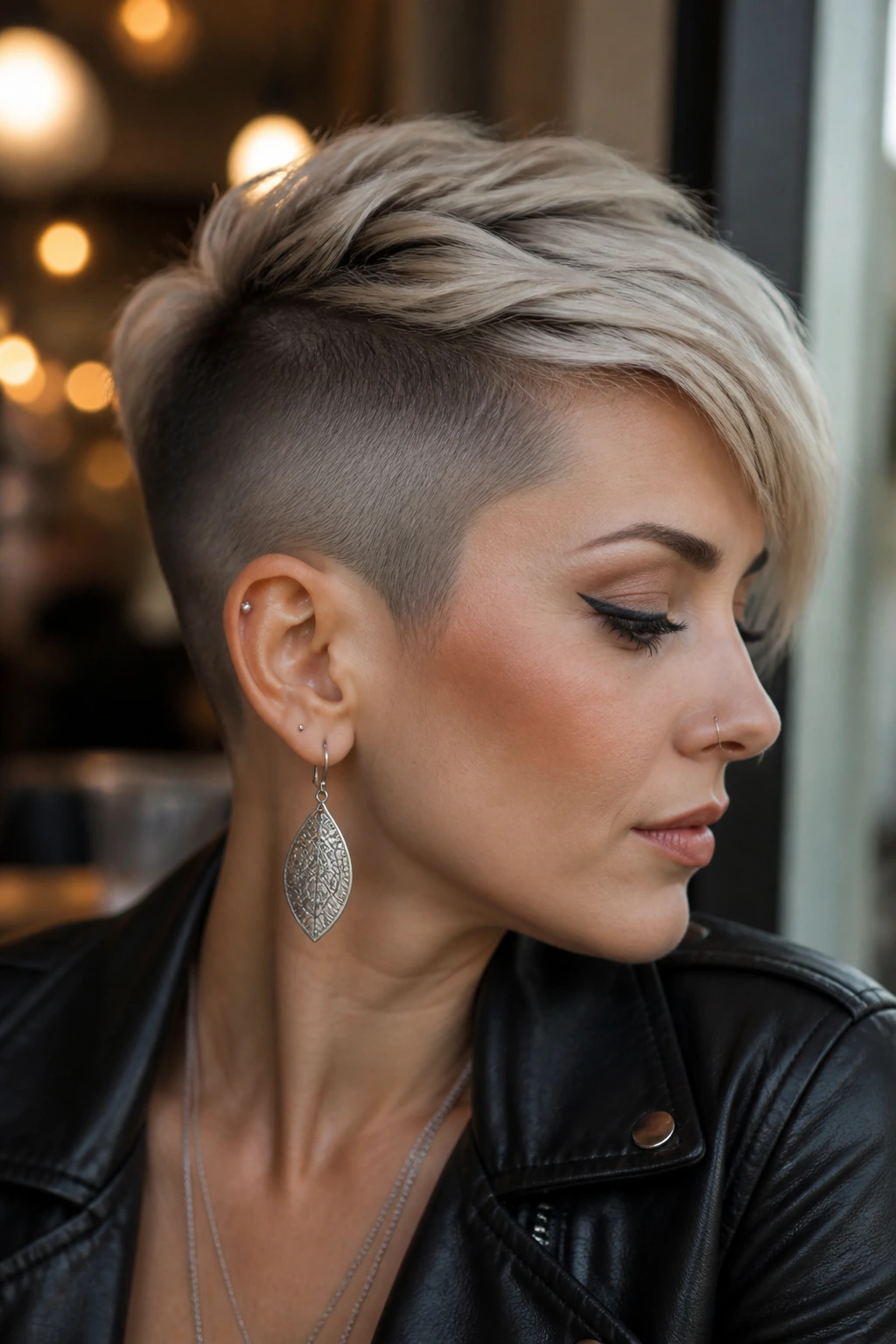
This one has teeth, in a good way. The tapered undercut pixie keeps the sides and nape tight, sometimes very tight, while the top stays long enough to sweep forward or across the forehead. That length contrast is what gives the cut its edge.
It’s especially useful on dense hair that swells out at the temples or around the ears. Removing bulk underneath makes the top behave better, which means less time fighting the silhouette every morning. The cut also feels cooler on the neck — not a bad bonus when you’ve had enough of hair brushing your collar all day.
The downside? It is not subtle. If you want softness around the ears, this is not your cut. But if you like a clean neckline and a front that can be brushed forward with a little paste, it does the job fast. One pass with your fingers and you’re out the door.
11. The Choppy Angled Shag Bob
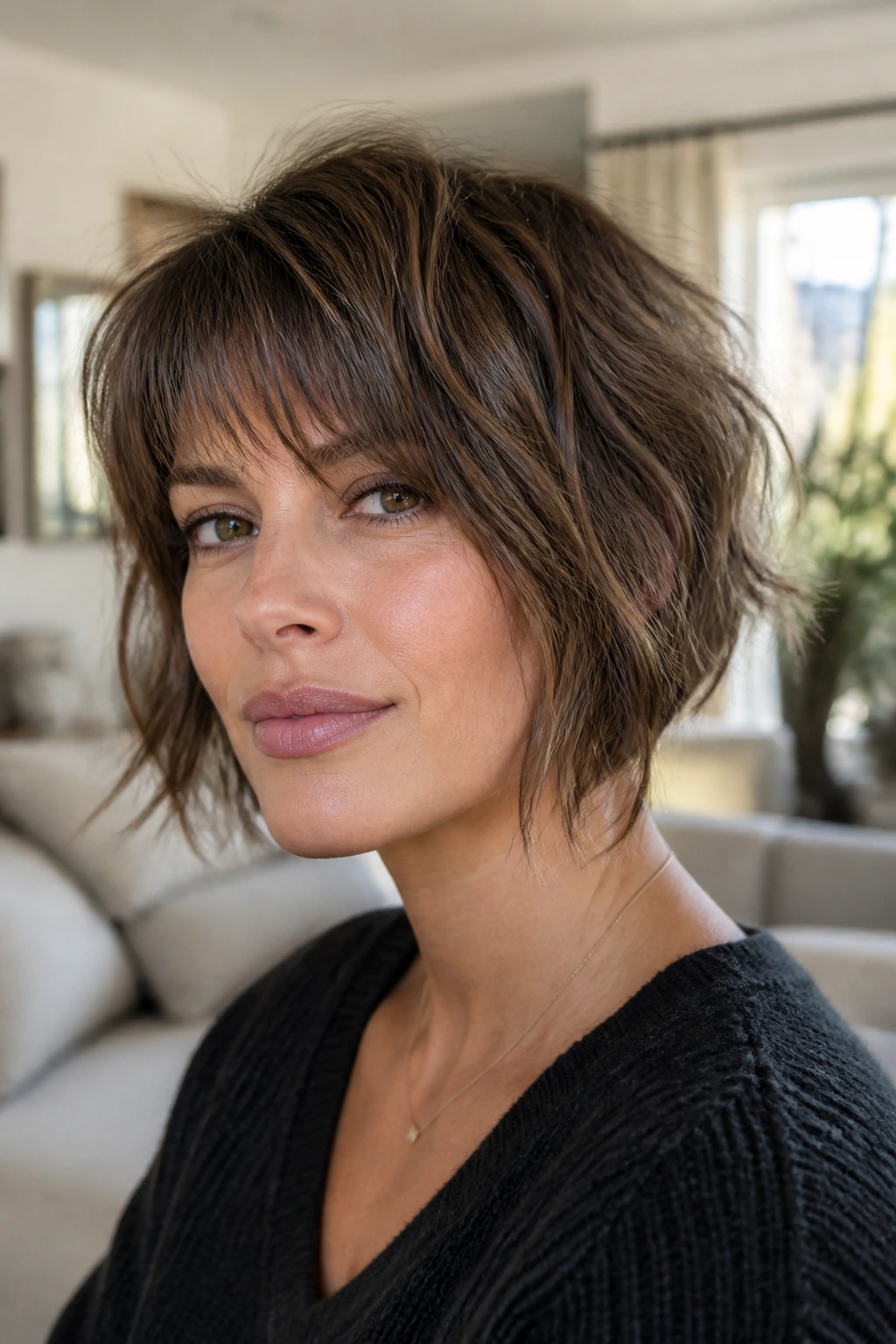
If your hair lives somewhere between straight and wavy, this one behaves better than the neat cuts. The choppy angled shag bob uses loose layers through the mid-lengths and a longer front so the hair can swing, piece out, and fall a little messily without losing the overall line. It’s short hair with some attitude.
The angle is softer than in a classic bob. That matters. A shag needs air around the ends or it starts to look heavy. The front can still be longer, but the movement comes from the internal layers, not a hard slope.
I like this one with a mousse-and-scrunch routine. Work the mousse into damp hair, air-dry until it’s about half way there, then twist the front pieces forward with your fingers. The result is a cut that looks better when it is not trying too hard. Which, honestly, is the whole appeal.
12. The Ear-Length Asymmetrical Cut
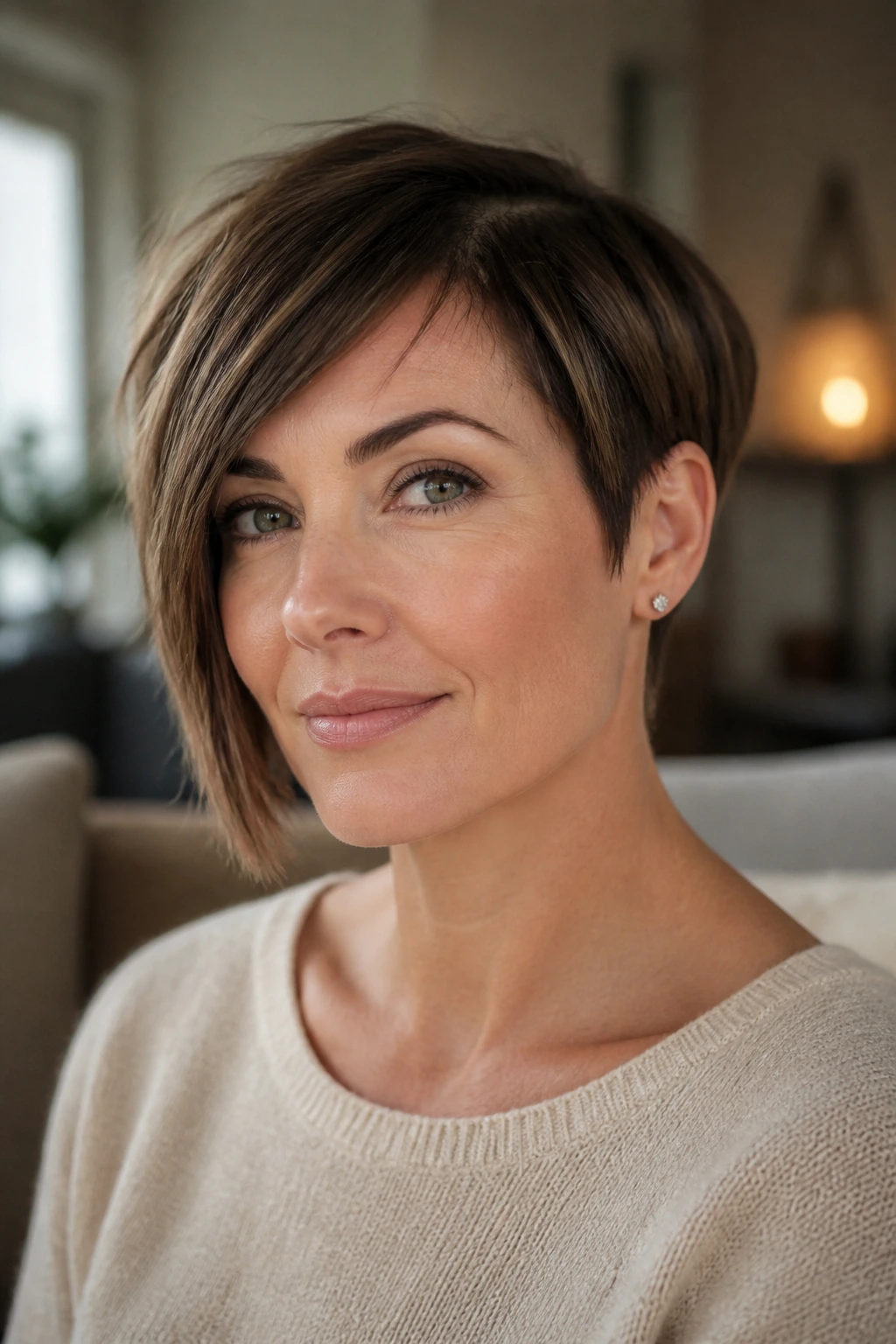
This is the minimalist’s answer to short hair with shape. One side sits a little longer, often brushing the jaw or ear, while the other side stays tighter and cleaner. The angle is not loud, but it is there, and that is what makes it feel sharp instead of plain.
It works well if you wear earrings, glasses, or simple necklines, because the cut leaves space for those details instead of fighting them. I also like it on fine hair that needs structure without a lot of layering. Too many layers can make fine hair float away; this cut keeps the outline compact.
The real trick is the edge around the ear. Keep it clean. A fuzzy sideburn area ruins the whole effect, even when the rest of the haircut is good. That little trim line is doing more than people realize.
13. The Feathered Crop with a Side Part
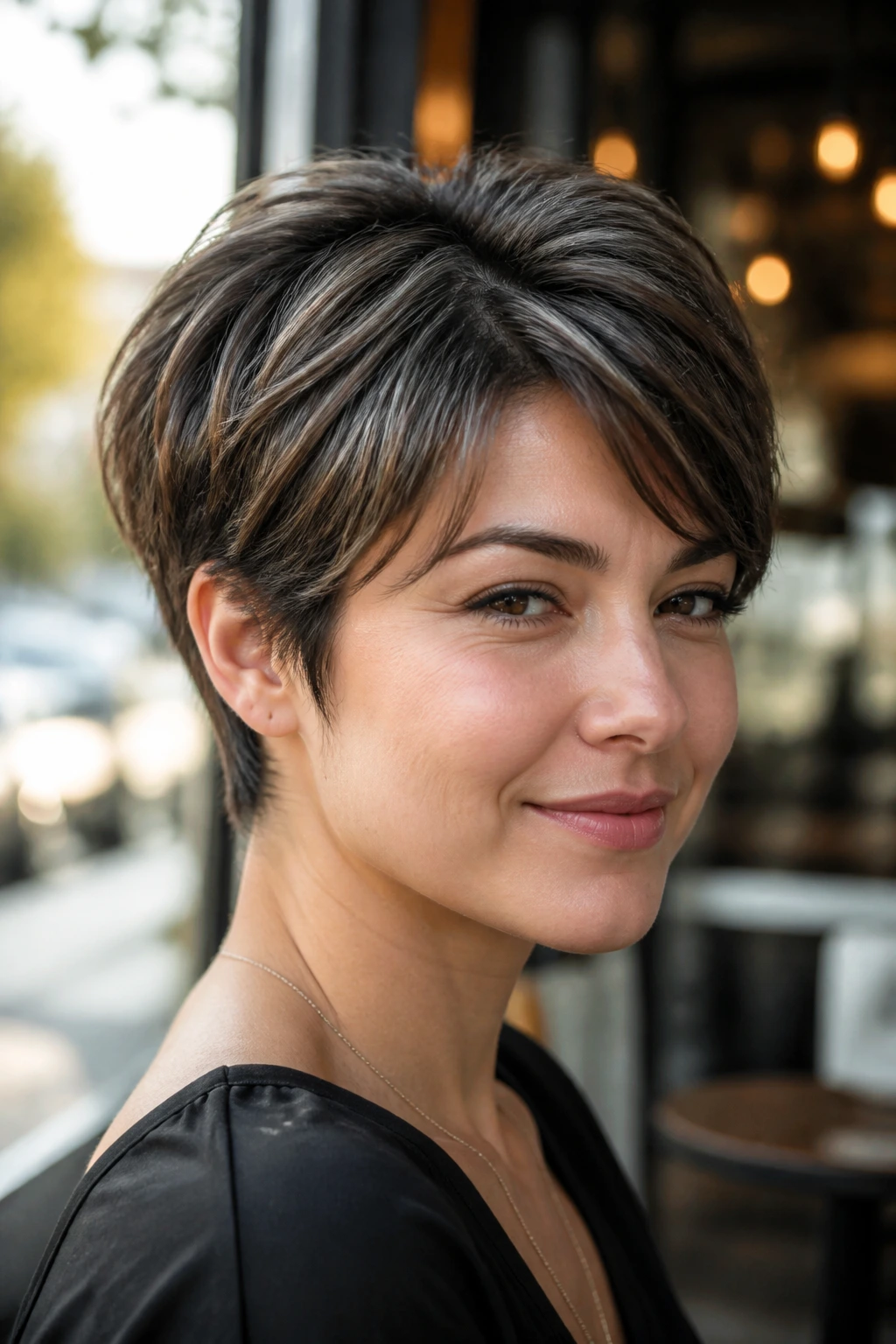
Where the softness lives
A feathered crop with a side part is one of those cuts that looks polite until the light hits it and you realize there’s movement everywhere. The top is feathered rather than chopped bluntly, and the side part shifts the weight so the shorter side can tuck in while the longer side falls across the brow or temple.
That side part is doing more than separating hair. It changes how the face reads. A deep part can stretch rounder face shapes, while a softer side part can break up width at the temples. The feathering keeps the ends from sitting like little shelves.
For styling, use a light volumizing spray at the roots and a small round brush to turn the front pieces slightly away from the face. The goal is lift, not curl. If the crop starts to look fluffy, the part is probably too high or the product too heavy.
14. The Wavy Micro Bob with Face Frame
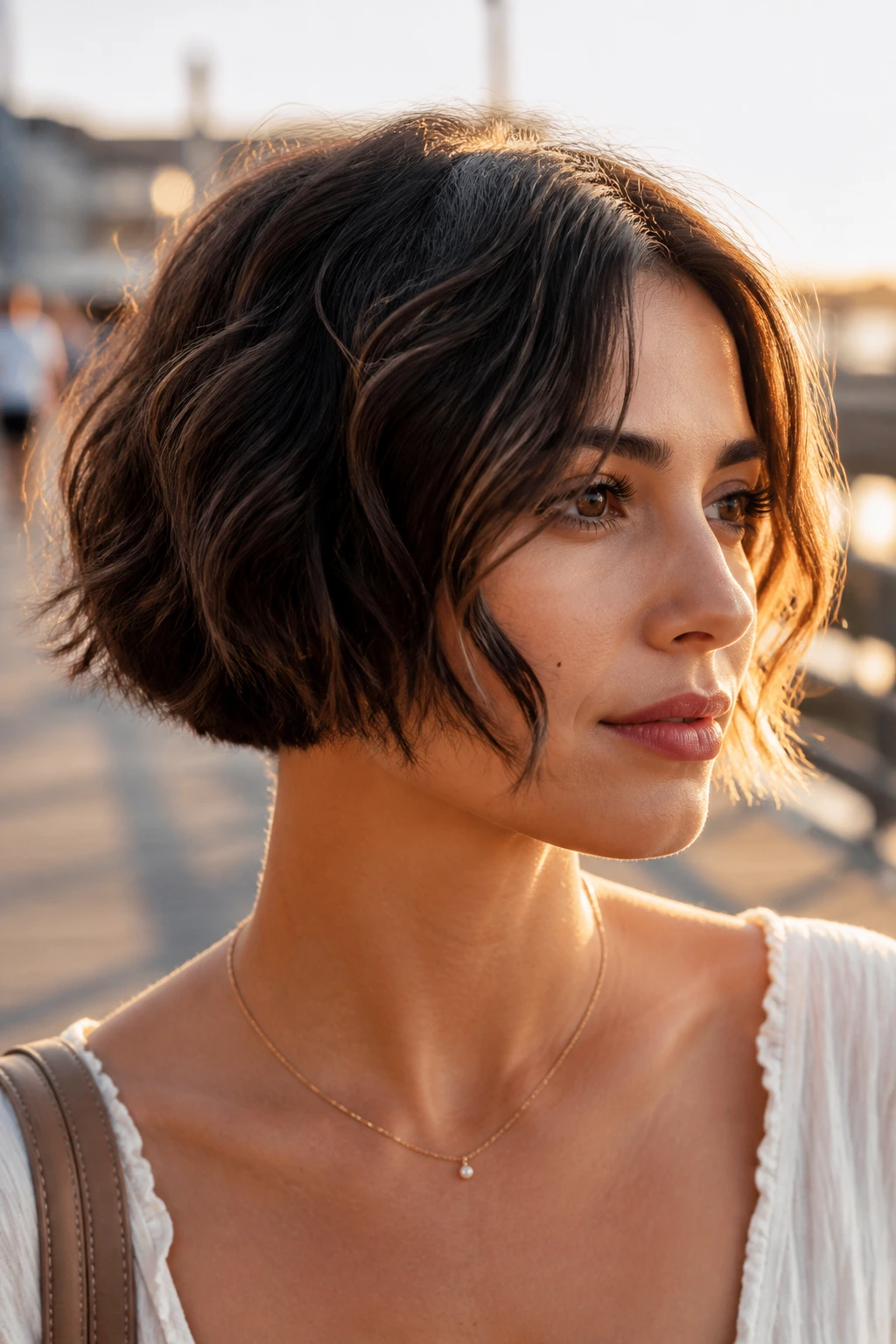
A micro bob gets a lot less severe when the front pieces bend forward. That’s the whole personality of this cut. It stays short — often around the ear or just under the jaw — but the face-framing sections are left a touch longer so they can curve around the cheekbones instead of stopping abruptly.
Waves make this cut especially good. Not because they make it “soft,” which is a lazy word, but because they interrupt the line enough to keep it from feeling stiff. If your hair bends easily, use that to your advantage. Scrunch in a mousse, diffuse until the root is dry, then leave the ends slightly unfinished.
A micro bob needs shape more than polish. If the front pieces are too straight and too flat, the haircut can look severe in a way that is hard to fix. If they move, the whole thing opens up.
15. The Deep Side-Part Pixie Bob
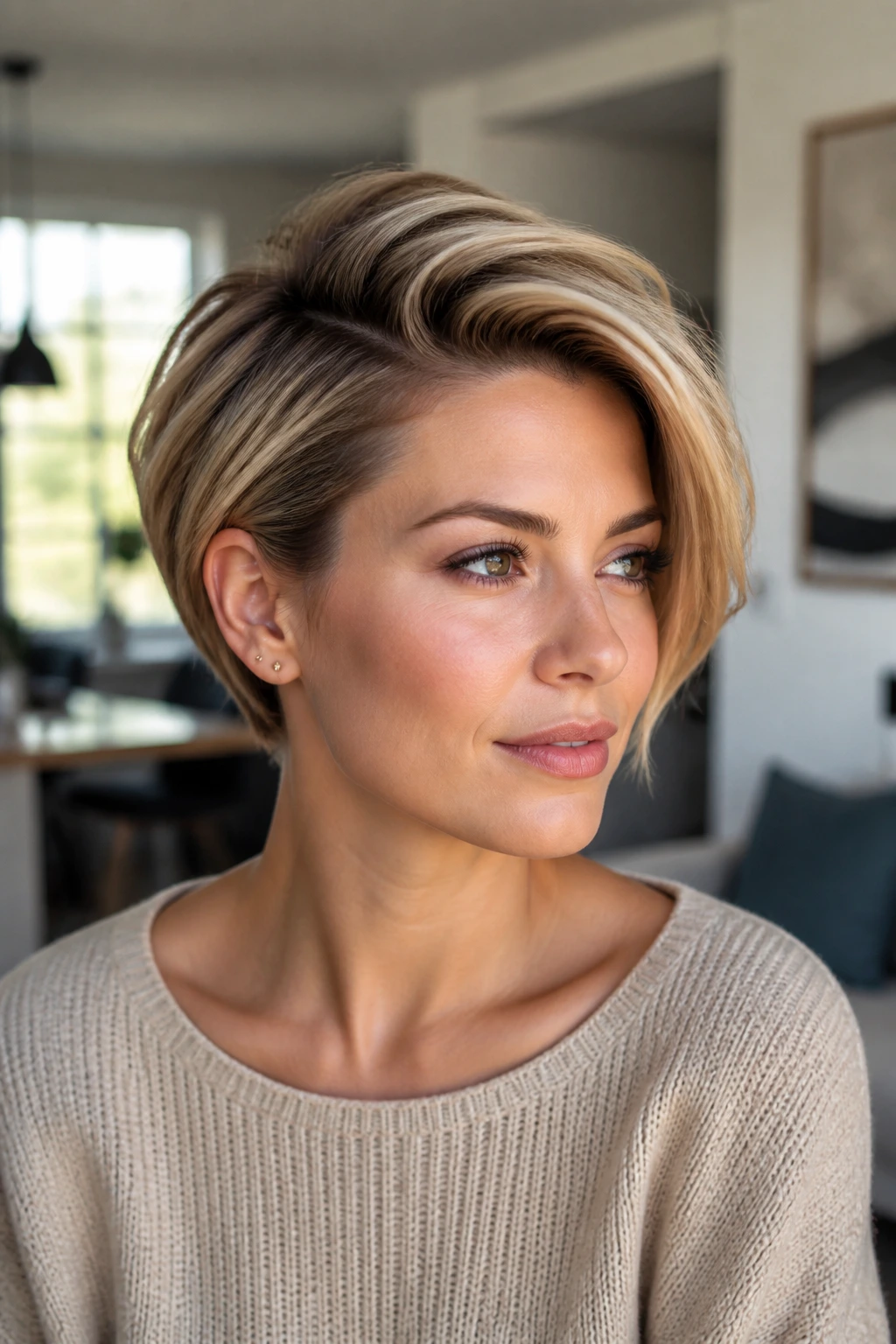
Why does a deep side-part pixie bob work so well on rounder faces? Because the diagonal line does two things at once: it adds crown height and it moves the eye away from the widest point of the face. That’s a neat trick for such a small haircut.
The shape itself sits between a pixie and a bob, with enough length on top to sweep over the forehead and enough shortness in back to keep the neckline clean. The part is what gives it drama. Without that deep part, the whole style can lose its lift and collapse into something too plain.
If your hair tends to flatten at the crown, this cut will reward a little root spray and a clip while it cools. Hold the top up for a few minutes after blow-drying, then release it. That pause matters. Hair remembers the direction it cooled in.
16. The Razor-Cut Angled Bob
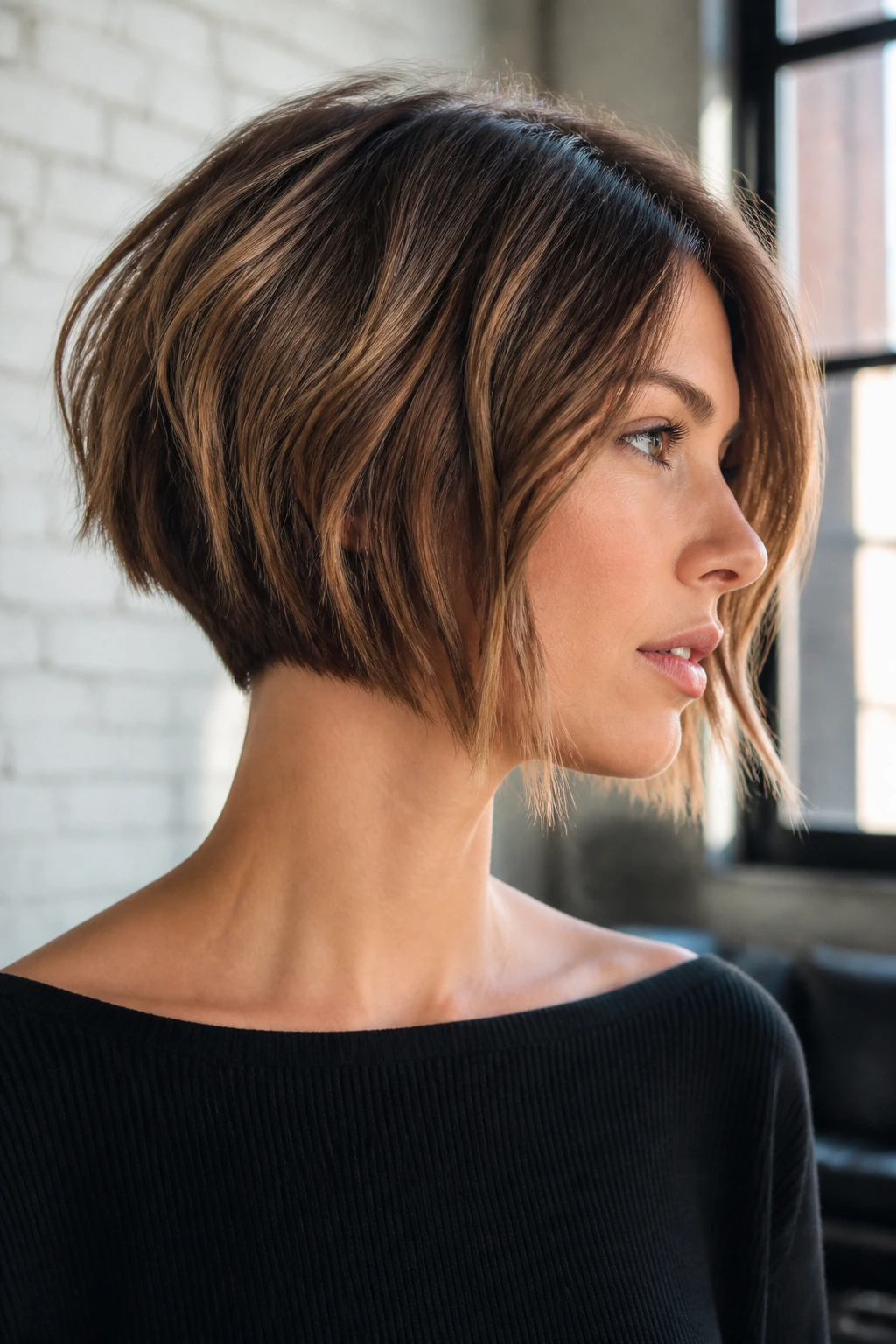
A razor-cut angled bob has a softer edge than a scissor-cut version, and you can see it immediately at the ends. They look feathered, not blunt. That makes the whole cut feel lighter, which is a useful move if your hair is thick or stubbornly straight.
The catch is that razored ends need healthy hair. If your strands are already dry or split, the soft edge can tip into fray fast. On strong, dense hair, though, the razor gives the front a bit of swing and keeps the shape from sitting too heavy around the jaw.
I’d choose this cut when I want the angle to read as airy rather than graphic. It’s a little less polished, a little more lived-in. Not messy. Just relaxed. That’s a better word for it.
17. The Graduated Chin-Length Bob
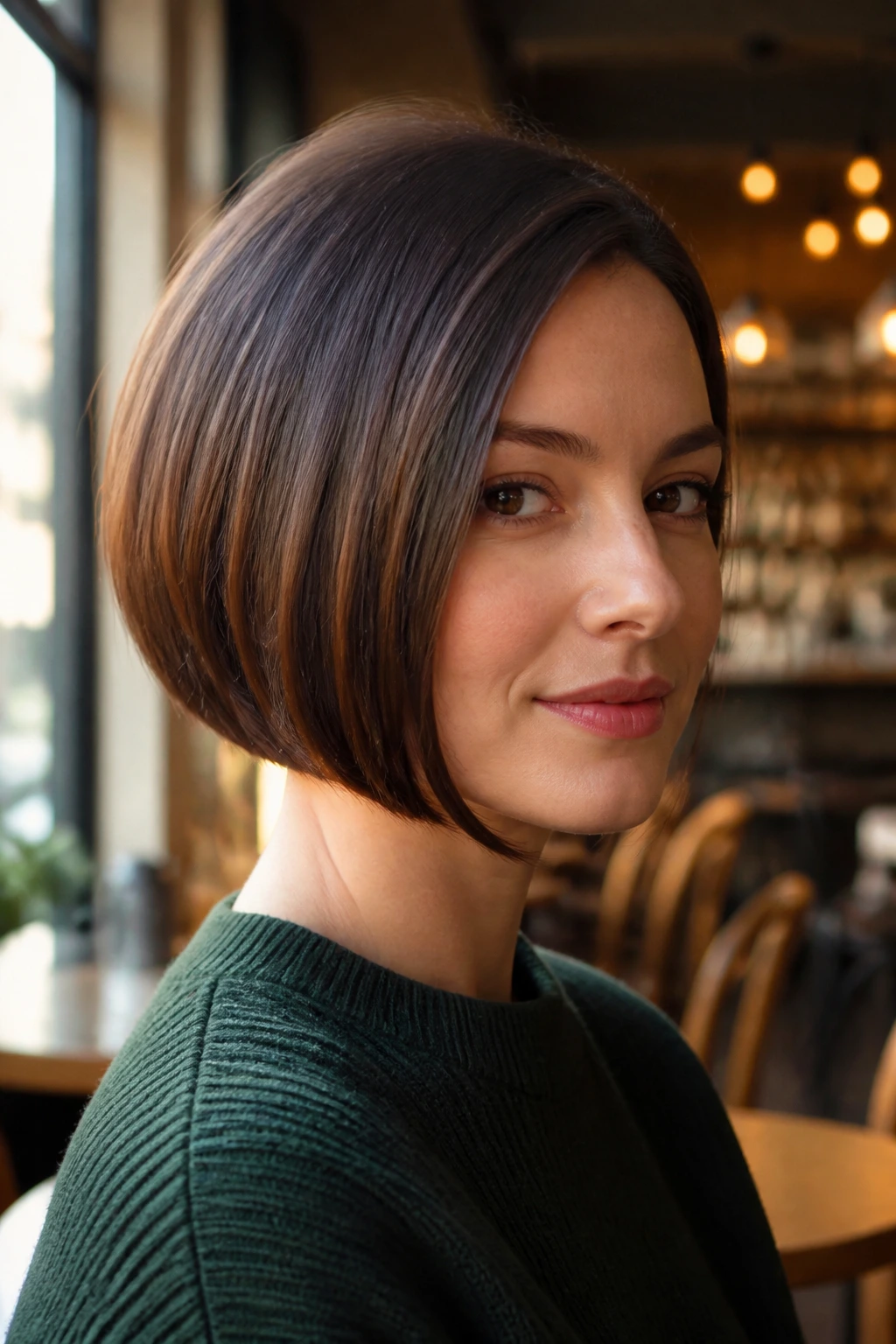
This one sits right at the chin, which is a useful place to stop if you want your neck to look longer and your jawline to feel cleaner. The back is graduated so it sits tighter, and the front keeps enough length to swing forward in a tidy line.
It’s the sort of haircut that behaves well with collars, blazers, and knit tops because it doesn’t fight your clothes. The edge sits where the eye naturally wants to stop. That makes the whole style feel neat without being stiff.
The important detail is the chin line. If the front lands too high, you lose the elegance. Too low, and the shape starts to lose the angle. About chin to just below chin is the sweet spot for most faces, but your stylist should adjust that based on your neck length and how your hair bends.
18. The Tucked-Behind-Ear Asymmetrical Cut
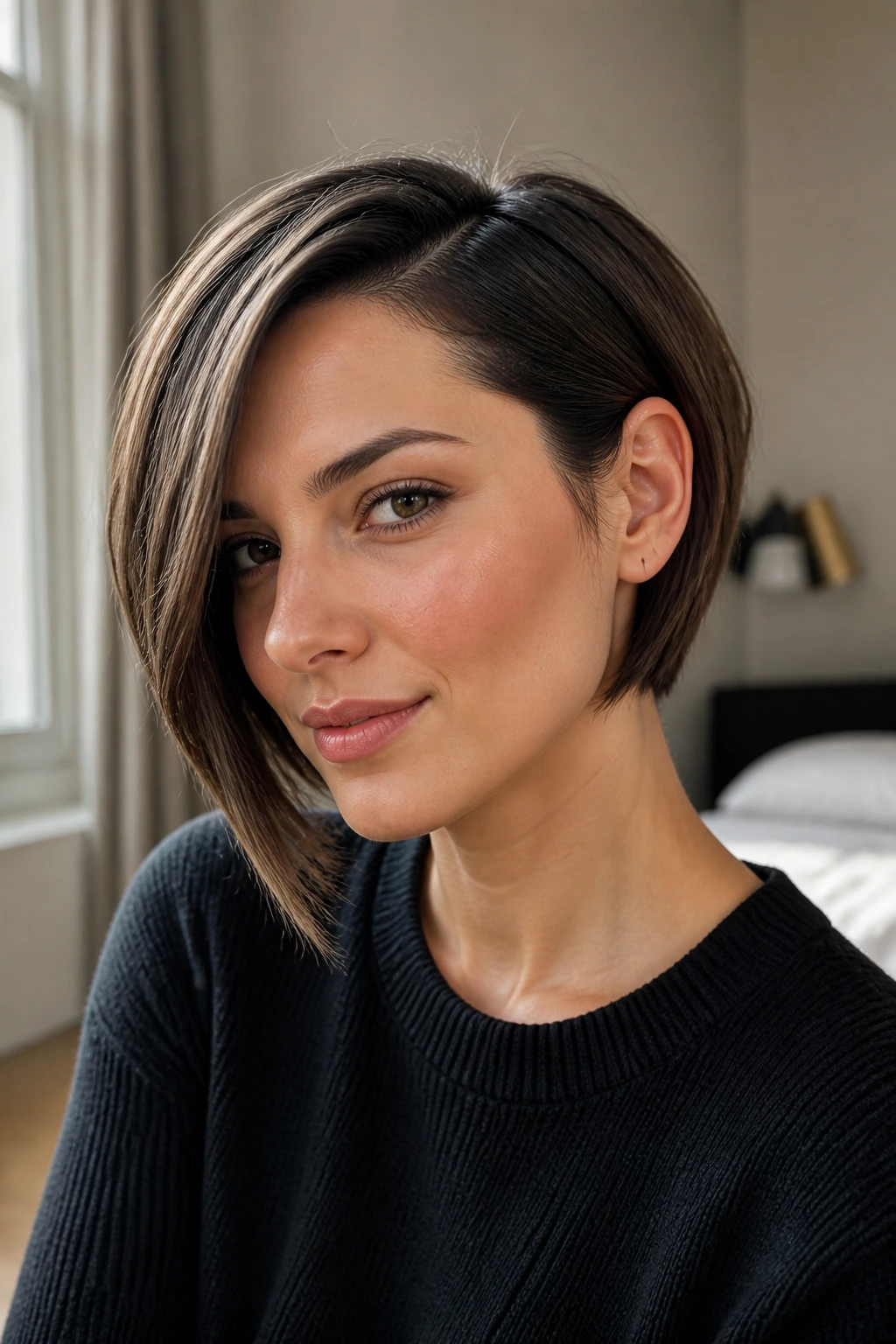
This cut was made for people who like hair that changes depending on how they wear it. One side stays long enough to tuck behind the ear, while the other side holds more length at the cheek or jaw. The tucked side opens the face; the longer side keeps the outline from feeling too bare.
It’s a good choice if you want the haircut to interact with earrings or frames. Tuck one side, leave the other loose, and the whole look shifts. That kind of built-in flexibility is handy when you do not want to restyle your hair five times a day.
Keep the sideburn area clean and the neckline precise. Loose edges make this haircut look unfinished in a hurry. A small trim around the ears can keep the contrast sharp. Tiny details, big payoff.
19. The Soft Bowl Cut with Angle
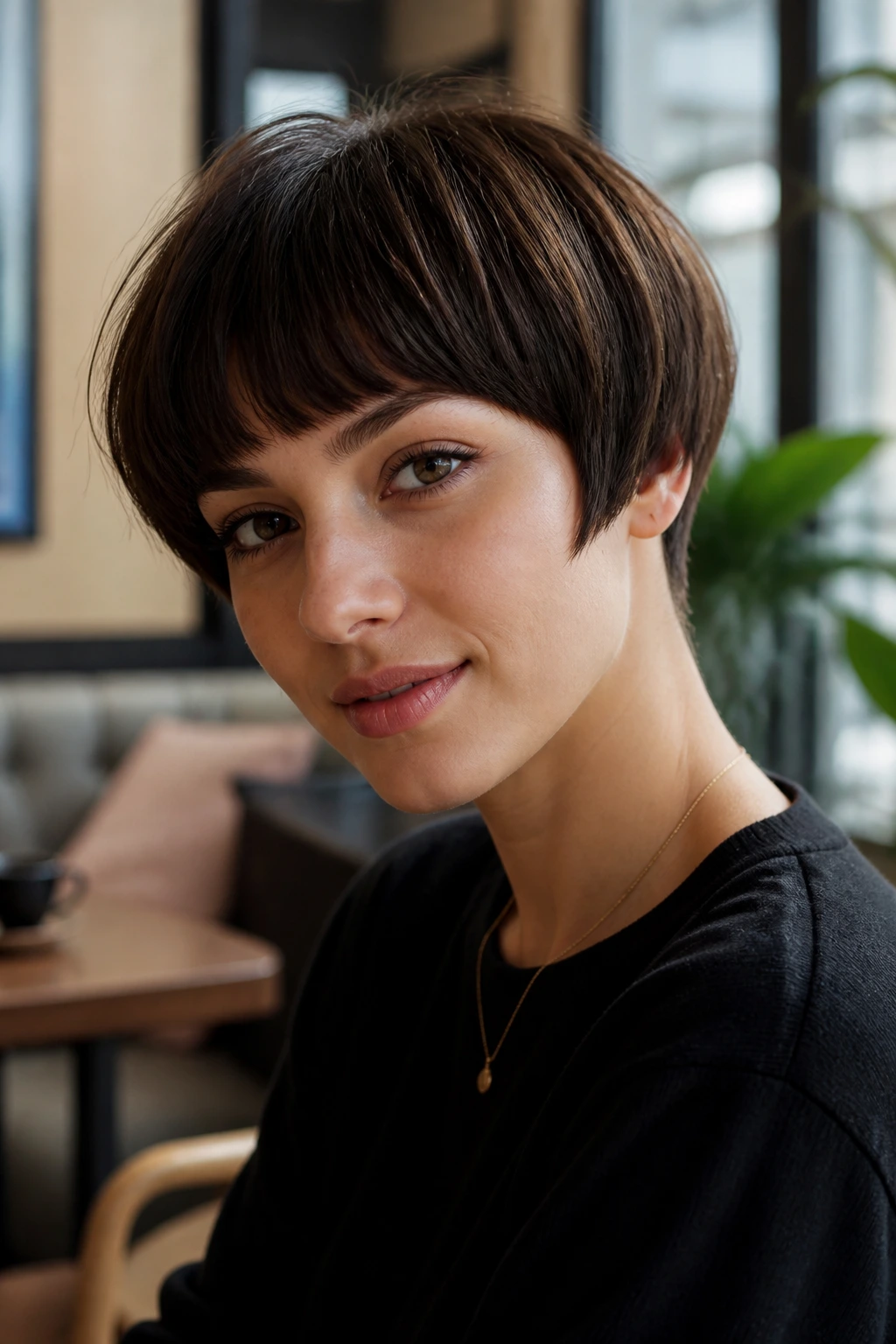
Why the softened edge matters
A modern bowl cut is not the hard, mushroom shape people picture from old photos. The softened version keeps a curved perimeter, but the front corners stretch a little longer so the cut gains angle and doesn’t sit like a cap. It can be striking, especially on straight hair that holds a line.
The appeal is the graphic shape. It gives you a deliberate outline right away, which is rare in short hair. But the softness keeps it wearable. If the perimeter is cut too bluntly, the style can take over the face. With a little angle, it frames instead of swallows.
This one needs regular trims to stay clean. It also likes a shine spray or a tiny bit of serum because the shape is the whole point. Frizzy ends ruin the effect fast. No excuses there.
20. The Spiky Textured Pixie
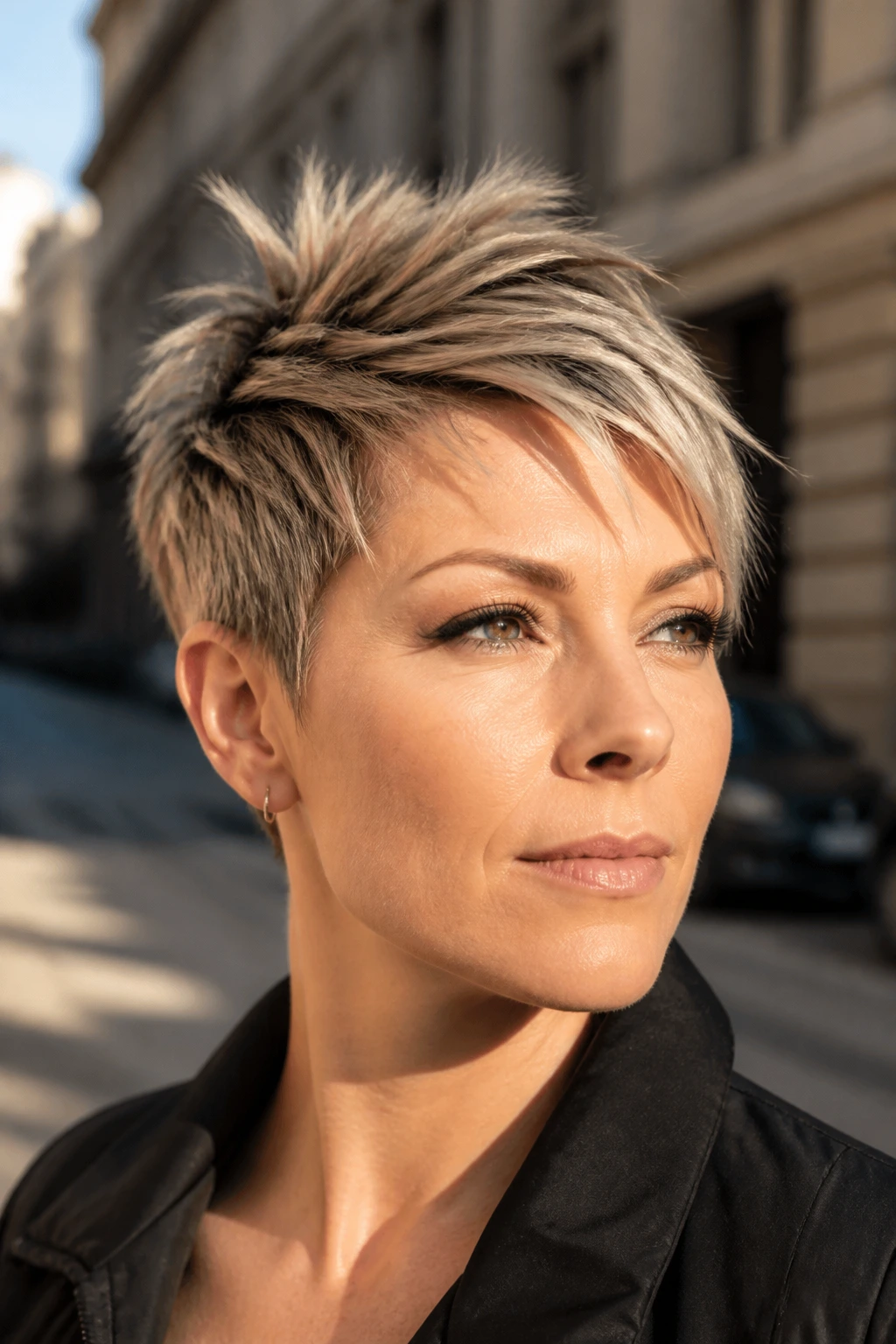
This cut has range if you want short hair that reads energetic instead of polished. The top stays long enough to pinch upward or forward, while the sides and nape are trimmed close. The angle shows up in the fringe and temple pieces, which can be directed diagonally across the forehead.
It works best when the texture is intentional, not accidental. A pea-sized amount of paste, worked through dry hair, is usually enough. Too much and the spikes clump. Too little and the whole style falls flat.
I like this cut on dense hair and stronger facial features because it gives the face space without hiding anything. The shape is clean, the finish is piecey, and the styling takes about five minutes if the haircut is done well. That last part matters. A bad pixie looks fussy. A good one just looks sharp.
21. The Curved-Under Nape Bob
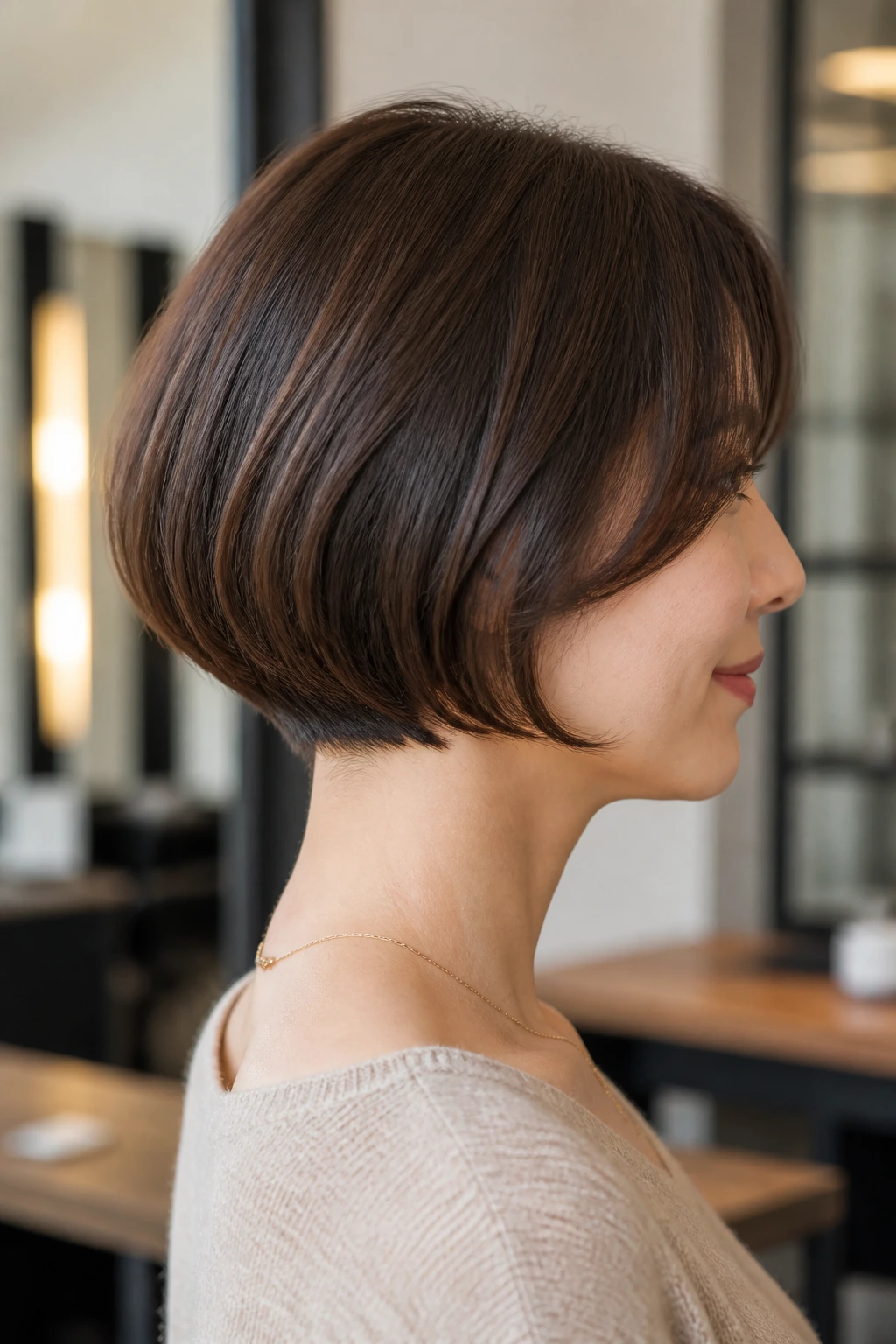
What if you want angle without drama? The curved-under nape bob is the answer. Instead of a sharp A-line, the ends curve gently under the chin or jaw, and the nape sits snug enough to keep the back tidy. The result is softer, less severe, and easier to wear in plain clothes.
This cut is good for people who like a neat shape but don’t want a haircut that screams for attention. It’s also friendly to blow-drying because the curve can be set with a round brush in a few passes. If the ends bend too much, that usually means the brush was too small or the dryer stayed too close at the tips.
It’s one of those cuts that looks expensive without trying to look expensive. Which is probably why it keeps coming back.
22. The Swept-Front Short Cut
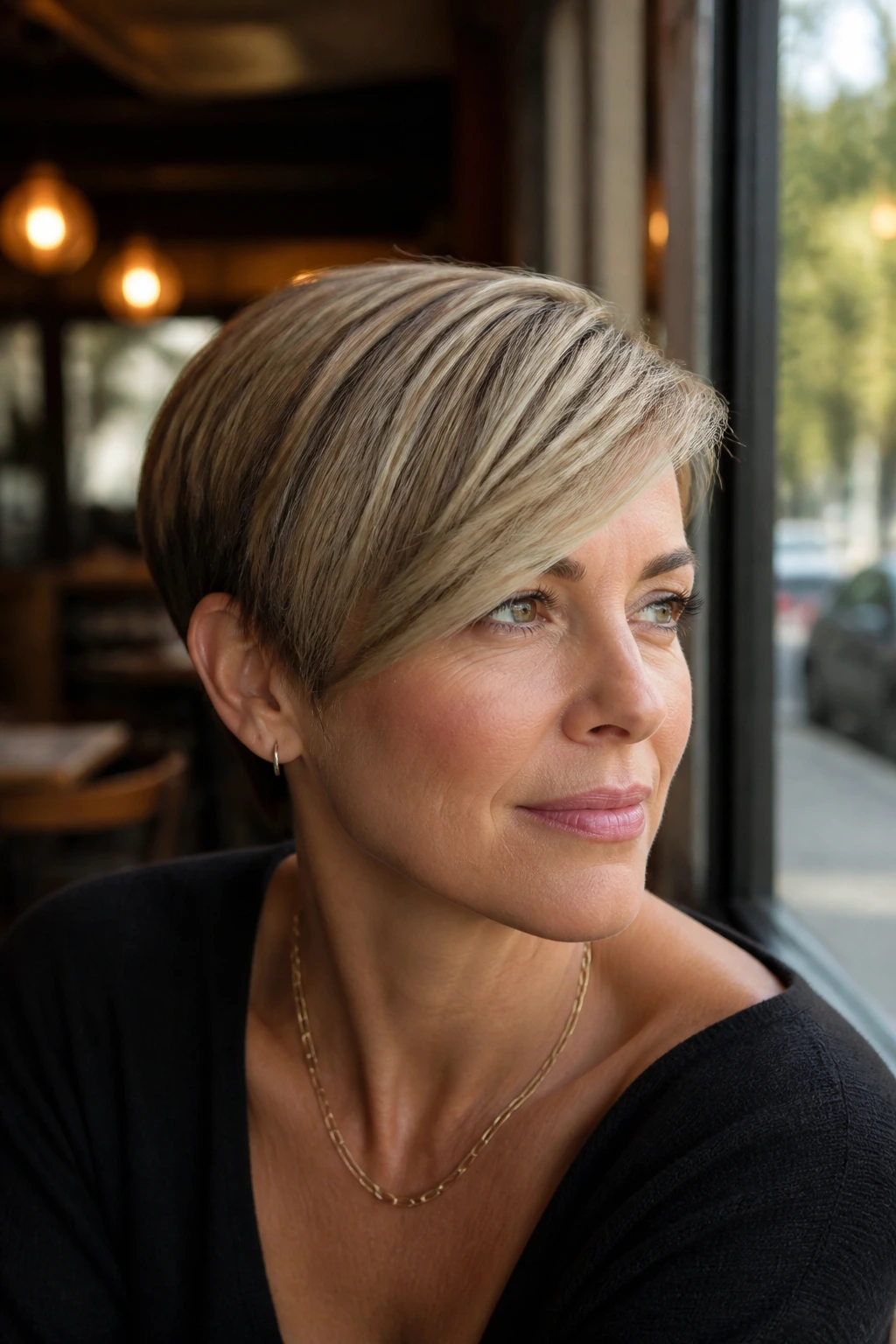
This cut leans on motion. The back is clipped or tapered close, and the front sweeps forward in one long diagonal that can skim the cheekbone, eyebrow, or even the jaw depending on how short you go. It’s a clean way to wear short hair if you want some drama without the hard edges of a sharp bob.
The front does the heavy lifting here. If it’s cut too short, the angle disappears. If it’s too heavy, the sweep collapses. The sweet spot is long enough to move, short enough to stay off the face unless you want it there.
I reach for this look when someone says they want short hair but not “boy short” and not too many layers. It gives shape, keeps the neckline tidy, and still leaves room for styling product to do something useful. A little lift at the root. A little sweep at the front. That’s enough.
Why Angled Hairstyles for Short Hair Change the Whole Outline
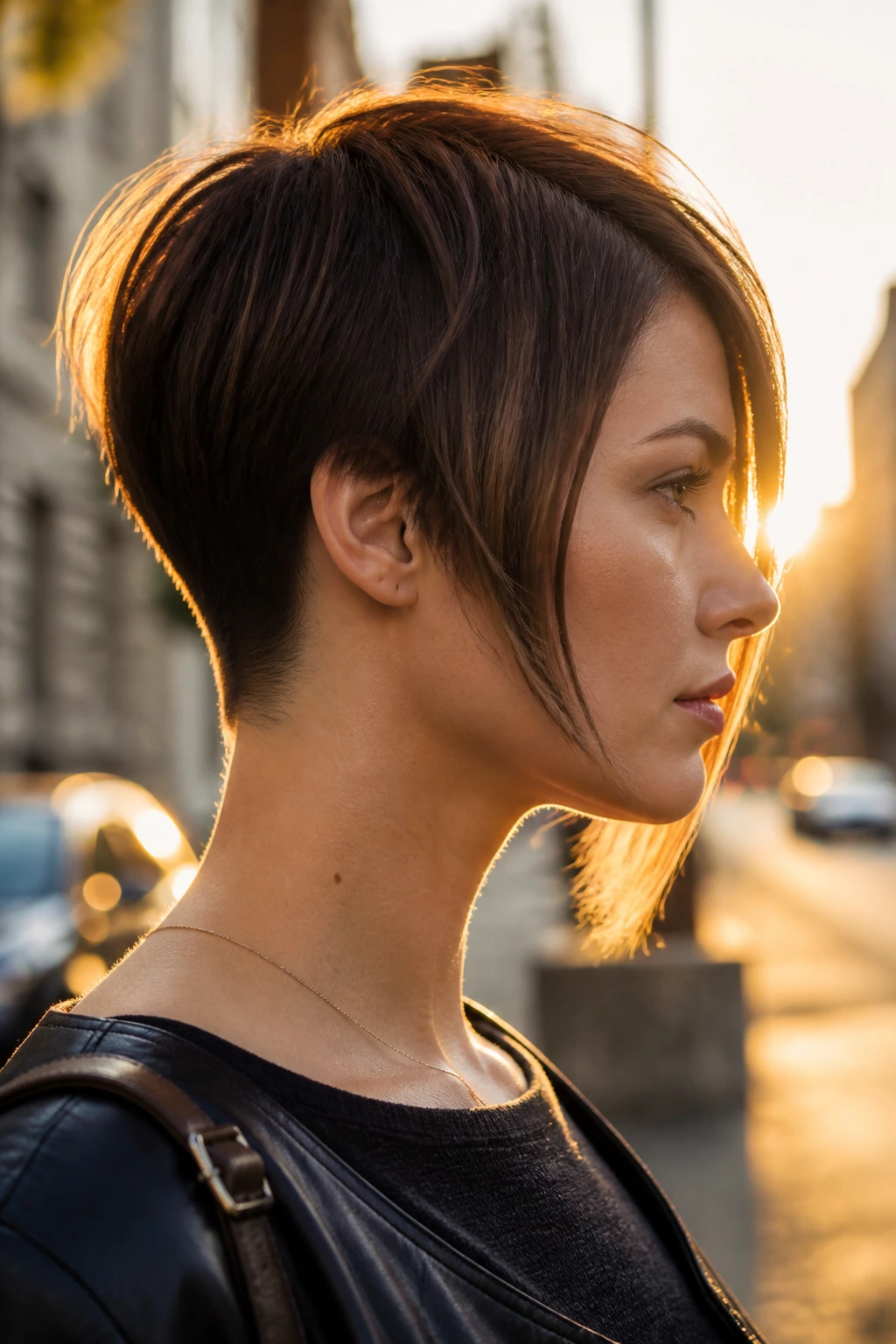
Short hair has a habit of telling the truth. If the cut is off, you see it immediately. If the cut is good, you also see it immediately — and that is the real reason angled hairstyles for short hair are so effective. They give the eye a path to follow. Back to front. Side to side. Down the jaw. Anywhere but straight across.
The angle matters because it breaks up the blocky feel that can happen with one-length short cuts. A shorter nape removes bulk where hair likes to pile up, while the longer front adds direction. On fine hair, that can create the feeling of fullness. On thick hair, it can stop the silhouette from ballooning at the sides. Same trick, different result.
There is a small practical bonus too. When the shape is angled, growing it out is less miserable. A blunt bob can go weird fast; an angled bob has a built-in transition as the back catches up to the front. That does not mean grow-out is effortless — it isn’t — but it does mean you have more room before the haircut starts looking tired.
And yes, the angle can be subtle. It does not have to be a six-inch drop from back to front. Sometimes the best version is only a slight slope, a cleaner nape, and a front that brushes the jaw just enough to frame it.
Best Tools for Keeping the Line Clean
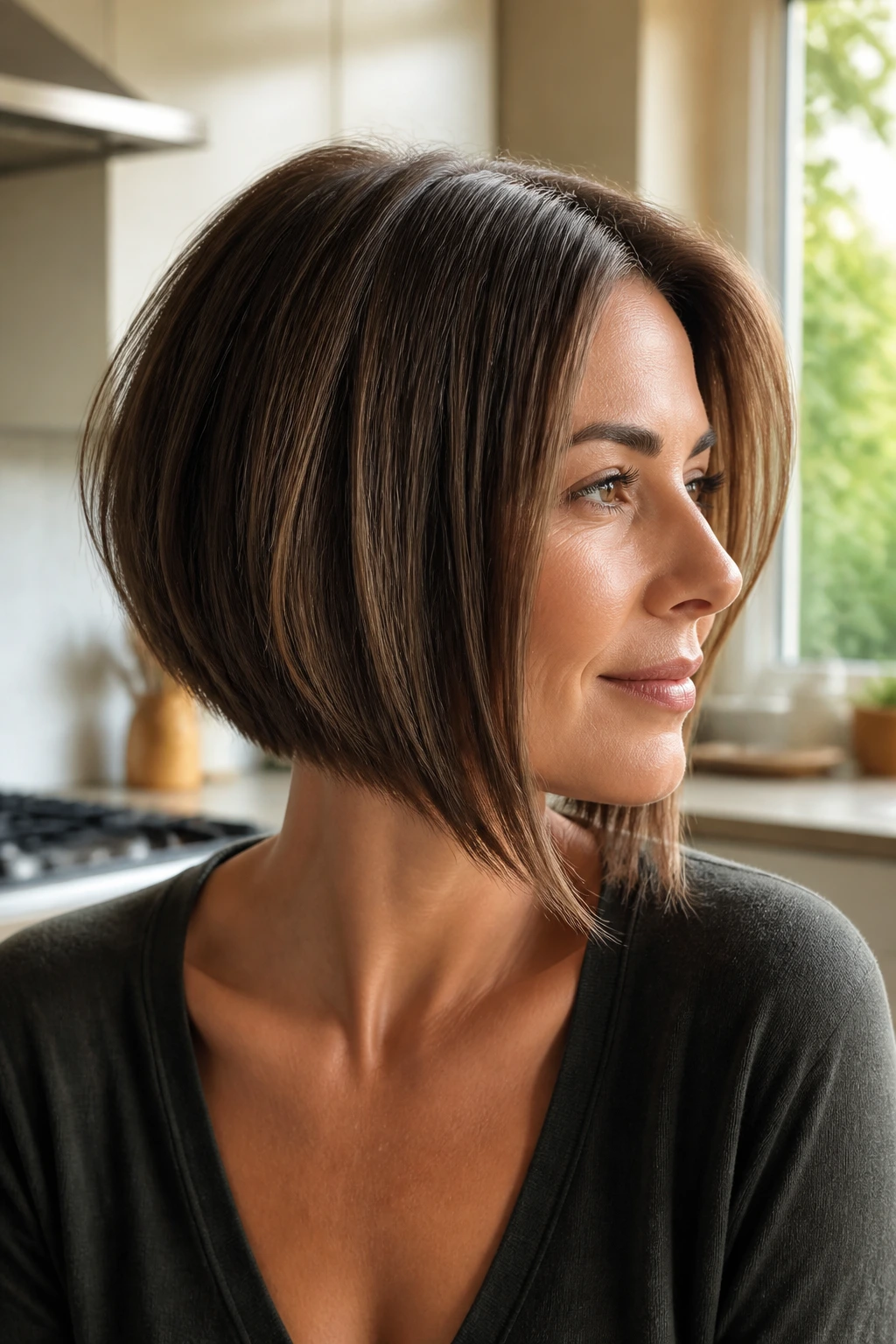
You do not need a drawer full of gadgets. You do need the right few things, because short angled hair shows every shortcut.
- Tail comb: Use it for clean parts and for directing the front into the right side sweep.
- Paddle brush: Best for sleek A-line and blunt styles when you want the ends to sit flat and tidy.
- Small round brush, 1 to 1½ inches: This is the sweet spot for lifting the crown and curving the front under.
- Blow dryer with a concentrator nozzle: The nozzle matters more than people think; it keeps airflow pointed where you need it instead of roughing up the cuticle.
- 1-inch flat iron: Good for smoothing the last inch of the hair or bending a stubborn end under.
- Root-lift mousse or spray: Helps stacked and graduated cuts keep their height at the crown.
- Matte paste or cream wax: Best for pixies, bixies, and textured crops where you want separation, not shine.
- Lightweight serum: Use a drop on the ends only if your hair frizzes; too much and the angle goes limp.
- Clips: Handy for setting a side part while the hair cools.
- Hand mirror: Essential for checking the nape. Seriously. The back of the cut matters here.
How to Ask for Angled Hairstyles for Short Hair at the Salon
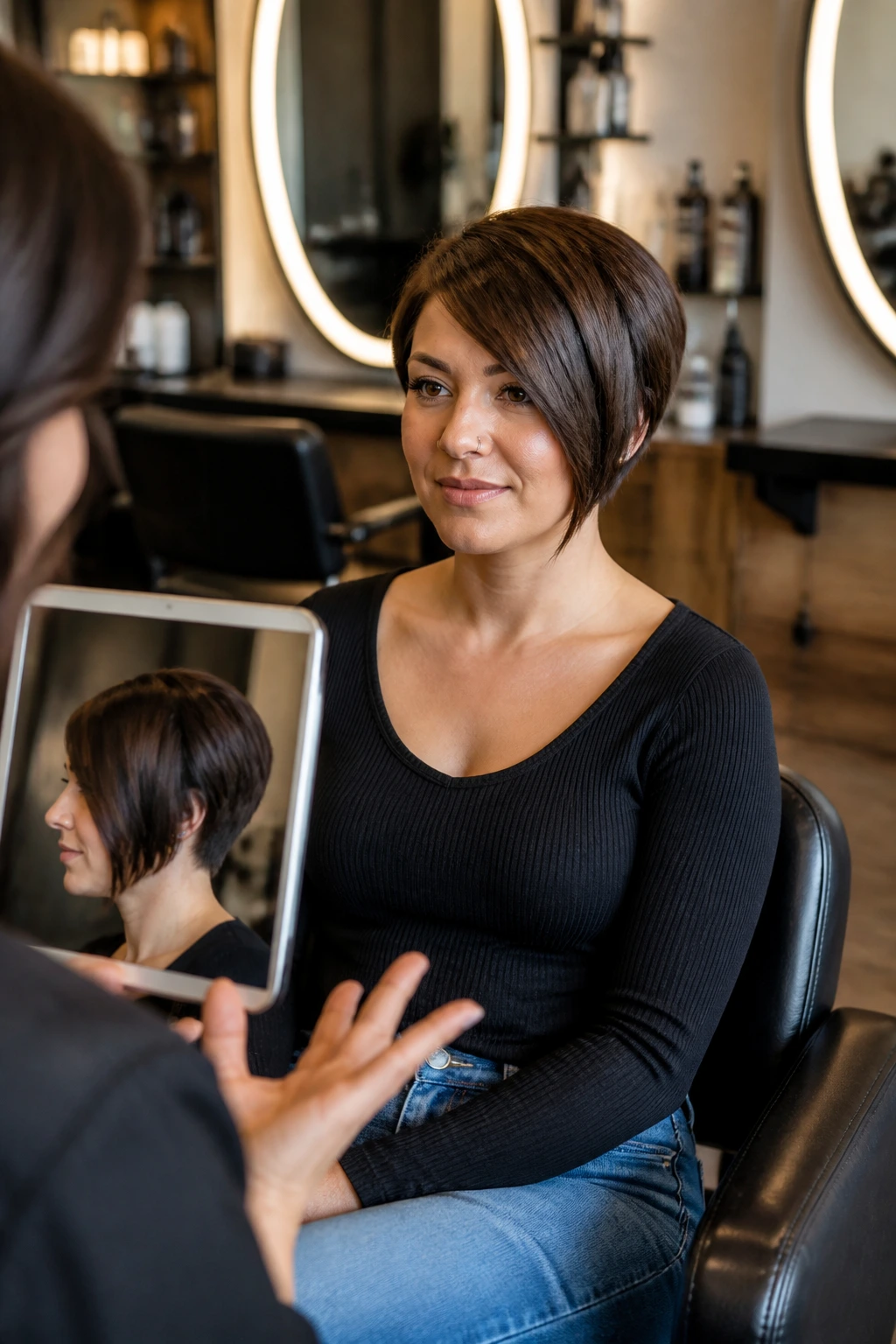
The best salon appointment is the one where you can describe the shape in plain language. Don’t lead with a style name alone, because one stylist’s “angled bob” is another stylist’s “slight front length.” Bring a photo if you can, then talk in measurements and landmarks: chin, jaw, cheekbone, nape, ear.
Three details make the difference. First, say how much longer you want the front compared with the back. Even saying “about an inch” is more useful than saying “a little bit.” Second, tell the stylist whether you want the nape exposed or covered. Third, mention your daily styling habit. If you air-dry every day, the cut needs more forgiveness than a look that gets blown out with a round brush.
If your hair has a cowlick, a strong whorl, or curls up at the nape, say that early. Those spots can push the whole shape off balance. A good stylist will adjust the angle so the haircut sits right when your hair does the moving, not when a mannequin head does.
Styling Products That Make Short Angles Behave
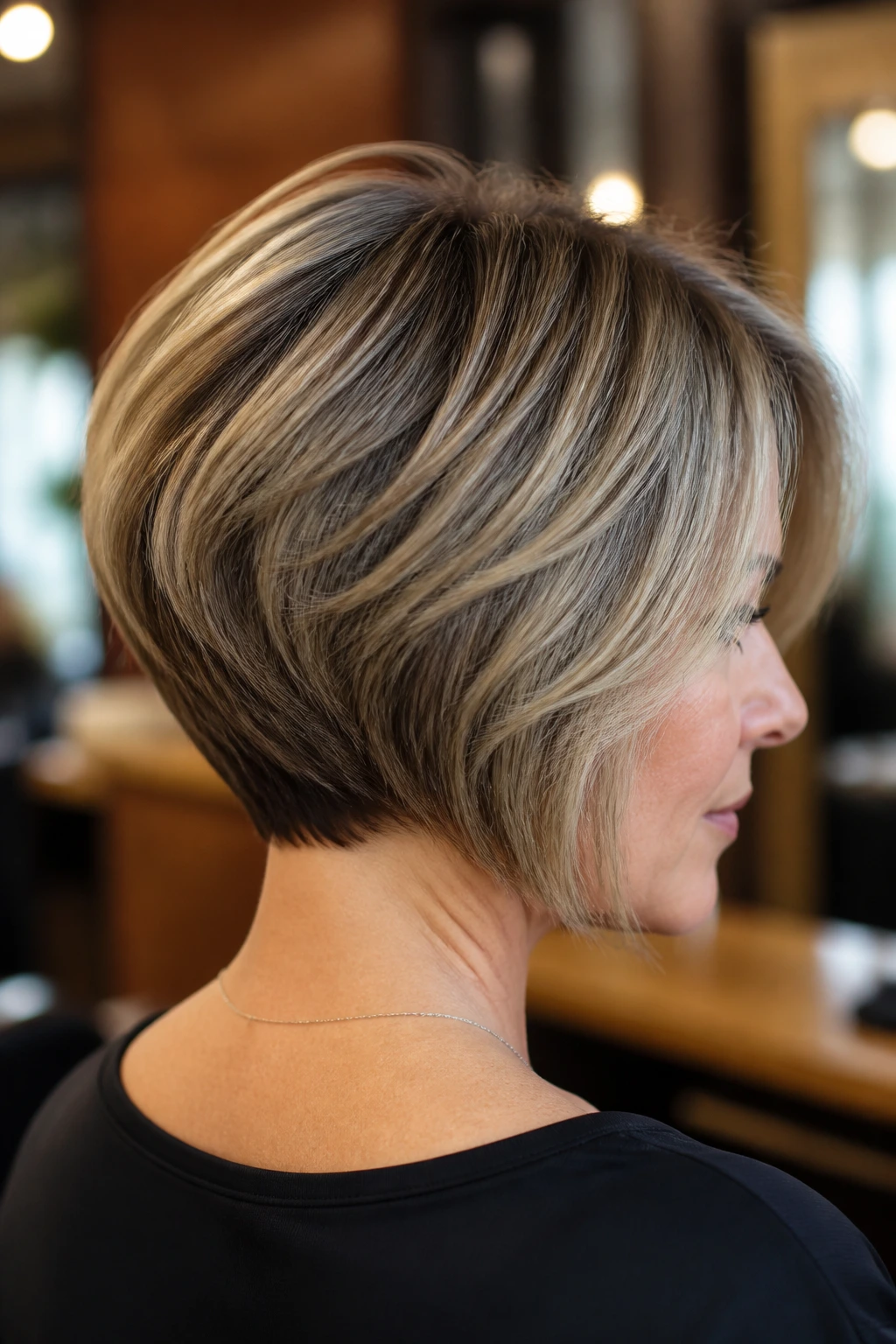
The right product depends on the texture, not the label on the bottle. Fine hair needs lift without weight. Thick hair needs control without stiffness. Curly hair needs enough moisture to keep the shape from frizzing out. Simple enough.
For fine hair: a light mousse at the roots and a root spray before blow-drying will usually do more than a thick cream ever could. Fine hair collapses under heavy product, especially at the front where the angle needs to stay visible.
For thick hair: smoothing cream through the mid-lengths, then a tiny bit of paste at the ends, keeps the silhouette from puffing out. Thick hair often needs directional help more than moisture.
For waves and curls: a curl cream or gel cocktail can keep the bend defined while preserving the front shape. The goal is not stiffness. It is memory.
For sleek styles: heat protectant and a light serum on the last inch of hair are enough. If you pile on shine oil, the ends can look separated in the wrong way and the line gets muddy.
How to Wear These Looks on Busy Mornings
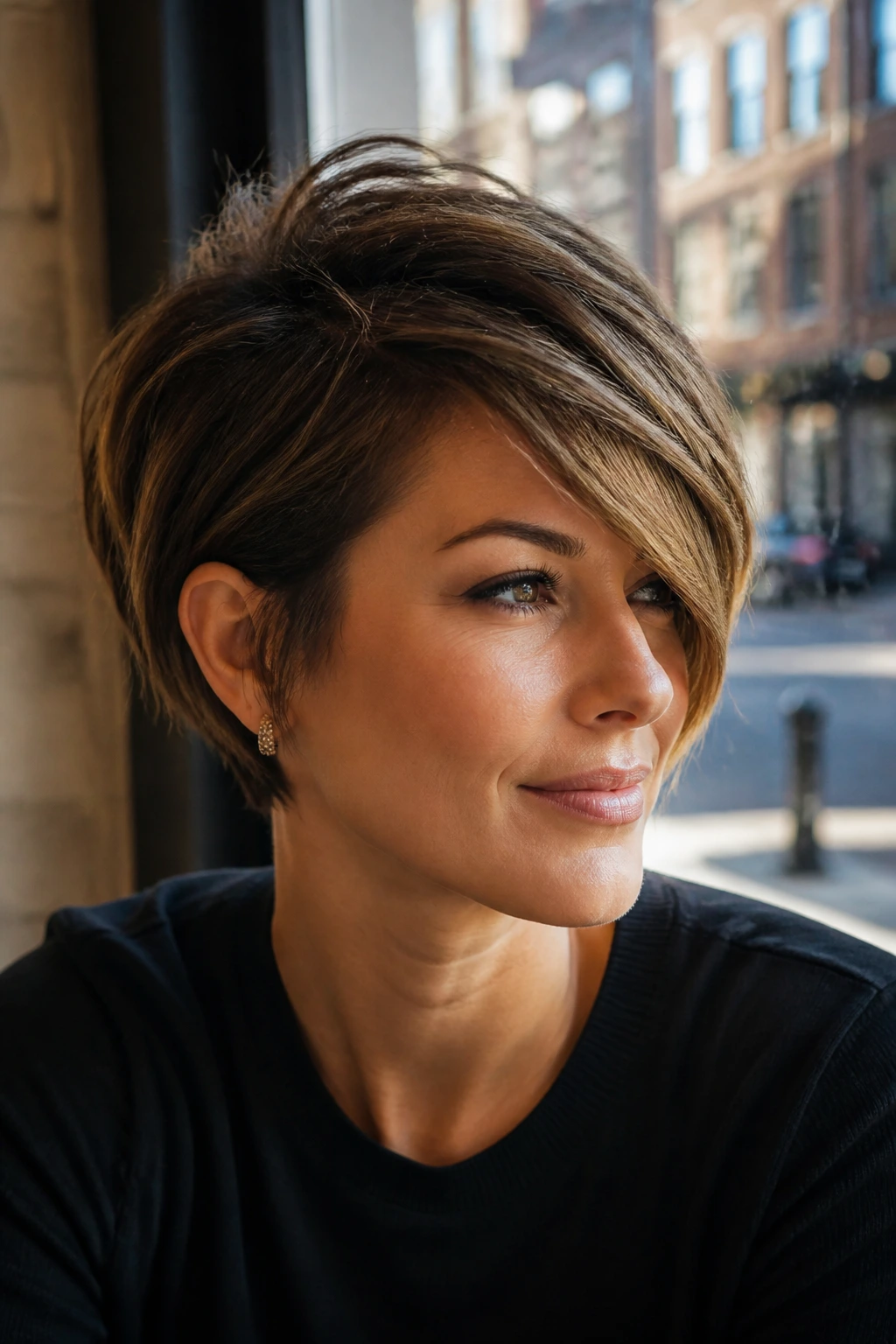
Some mornings ask for a polished blowout. Most do not. So the trick is learning which version of the cut you can wear when the clock is rude.
Air-dry days: Apply mousse or curl cream to damp hair, then push the front pieces into the angle you want and leave them alone until they set. Touching the hair too much while it dries tends to wreck the line.
Blowout days: Dry the roots first, then turn the ends under with a round brush or flat iron. That order matters. If you work the ends before the roots are dry, the shape collapses while you are still standing there.
Second-day hair: Dry shampoo at the roots and a quick pinch of paste at the front usually refresh the silhouette fast. The front is where short hair shows fatigue first, so spend your time there.
If you wear glasses: Keep the side pieces from sitting directly on the frame hinge. A tiny bit of lift at the temple makes the haircut look finished instead of caught.
That’s the whole game, really. Make the front intentional, keep the nape tidy, and stop before the product starts shouting.
Common Mistakes That Flatten the Shape
The most common mistake is asking for an “angled cut” without naming the actual difference between front and back. Some people leave the salon with a shape that is barely sloped at all, then wonder why it still feels blunt. If you want the angle to show, say where the front should land and where the nape should sit.
Another one: too much conditioner or serum at the roots. The hair slides down, the crown loses lift, and the front pieces cling to the face. The fix is simple. Keep moisture on the mid-lengths and ends, not the scalp area, unless your hair is very dry and coarse.
Over-thinning is a sneaky problem, especially on thick hair. The haircut may feel lighter for a day, then the ends start fizzing and the shape loses its body. Ask for bulk removal in the right spots, not random thinning shears everywhere.
The last mistake is skipping trims for too long. Angled cuts depend on proportion. Once the back grows out too much, the slope stops reading as intentional and starts looking accidental. Short hair is not forgiving about that.
Variations and Alternatives to Try

Softened Angle: Keep the front only slightly longer than the back and avoid heavy graduation. This is the version for people who want shape but not a dramatic line.
High-Contrast Edge: Push the difference further — shorter nape, longer front, and a cleaner side profile. It reads sharper and suits straight hair that can hold a visible line.
Curly-Friendly Shape: Leave extra length in the front and let the curls set the outline. This is the better choice when shrinkage would otherwise make the cut too short.
Undercut Version: Taper or shave the nape and sides while leaving the top longer. Good for dense hair and anyone who wants the morning routine to stay fast.
Grow-Out Bob Hybrid: Start with a pixie bob or bixie shape so the haircut can live through the grow-out phase without turning into a helmet. This is the sensible version, which I say with respect.
Maintenance, Trims, and Grow-Out
Short angled cuts ask for regular maintenance, and there is no way around that. Most styles in this family need a trim every 4 to 6 weeks if you want the angle to stay clean. Pixie-based cuts may need a neckline cleanup sooner, especially if the nape grows quickly or the sides puff out.
If you wear the style with a fringe, plan on a quicker bang trim — often every 2 to 3 weeks — because the front shows growth first. That is annoying, yes. But it is also why the haircut looks polished when the fringe sits in the right spot. Sleep care helps too. A silk pillowcase or bonnet reduces the roughness that can make short ends stick out in the morning.
For grow-out, let the back lengthen in steps rather than waiting too long between cuts. That way the angle softens instead of disappearing overnight. A trim that shapes the nape while keeping the front intact can buy you another few weeks before the haircut needs a bigger reset.
Frequently Asked Questions
Can angled hairstyles for short hair work on fine hair?
Yes, and they often help fine hair look fuller because the longer front gives the eye more to follow. Keep the layering controlled, though, or the ends can go wispy fast. A stacked nape bob or a bixie usually gives the best lift without making the hair look sparse.
Are these cuts good for curly hair?
They can be, but the angle should usually be softer than on straight hair. Curls shrink, and a front that looks long enough wet can pop up several inches once dry. Ask for the cut to be shaped with your curl pattern in mind, not against it.
What face shape suits an angled bob best?
Almost any face shape can wear one if the angle is adjusted properly. Round faces often like a longer front and a deep side part, while square faces can use softer layers around the jaw. The wrong version usually fails because the length lands in the wrong place, not because the cut itself is bad.
How do I keep the nape from looking bulky?
A cleaner neckline, regular trims, and a blow-dry that points the hair inward help a lot. If your hair is thick, ask for light graduation at the back instead of a flat, one-length finish. That keeps the shape sitting close to the neck.
Can I style these cuts without heat?
Absolutely, especially if your hair has a natural bend. Use mousse, set the part while the hair is damp, and let the front fall into place as it dries. You may not get the same polish as a blowout, but you can still keep the angle readable.
What if one side flips out more than the other?
That usually means the lengths are not balanced, or your growth pattern is stronger on one side. Try setting that side with a round brush or a flat iron bend in the opposite direction, then let it cool before touching it. If the flip is constant, the cut may need a small correction.
Can I grow an angled pixie into a bob without it looking awkward?
Yes, if you keep trimming the nape and sides while the top and front grow. That preserves the shape as it changes. Letting everything grow at once is what creates the awkward stage people dread.
Do bangs work with angled short hair?
They do, especially side-swept or lightly textured bangs. Heavy blunt bangs can overpower a very short angle, but softer fringe can make the whole cut feel more balanced. If your forehead is short, keep the bang length a little longer so it doesn’t crowd the face.
How do I know whether I should choose a blunt or textured finish?
Choose blunt if you want the line to read clean and the hair to look fuller at the ends. Choose textured if your hair is thick, wavy, or prone to puffing out. Blunt finishes need sharper upkeep; textured ones are easier to live with between trims.
The Clean Angle Wins
Short hair gets interesting when the shape has direction. That’s the real thread running through all 22 looks here: the angle turns short hair from a length into a silhouette. Some versions are polished, some are a little messy, and some lean hard into edge. None of them rely on length alone to do the work.
If you’re taking one screenshot to your stylist, pick the cut that matches your texture first and your mood second. A good angled cut should move with your hair, not fight it every morning. And when the line is right, you notice it immediately — in the mirror, from the side, and again when you turn your head and the front falls exactly where it should.