



A chin-length bob can do a lot with very little hair. On round faces with fine hair, the right cut narrows the cheek area, keeps the line at the jaw clean, and makes the ends look fuller than they would at shoulder length. One inch matters. Sometimes half an inch does.
The wrong version does the opposite. Too much rounded volume at the sides, too many short layers near the cheeks, or a blunt cut that sits an inch too high can make the face look wider and the hair look airy in the wrong places. That’s the part most people miss: the shape isn’t the whole story. Where the weight sits matters just as much.
What works best is a haircut with intention — a sharp perimeter, a part that opens the face, and just enough internal movement to keep the shape from collapsing. Some versions feel sleek, some feel soft, some need a round brush and a little nerve, but every one of them uses the same trick: put the fullness where it helps, not where it hurts.
Why These Bobs Earn Their Keep
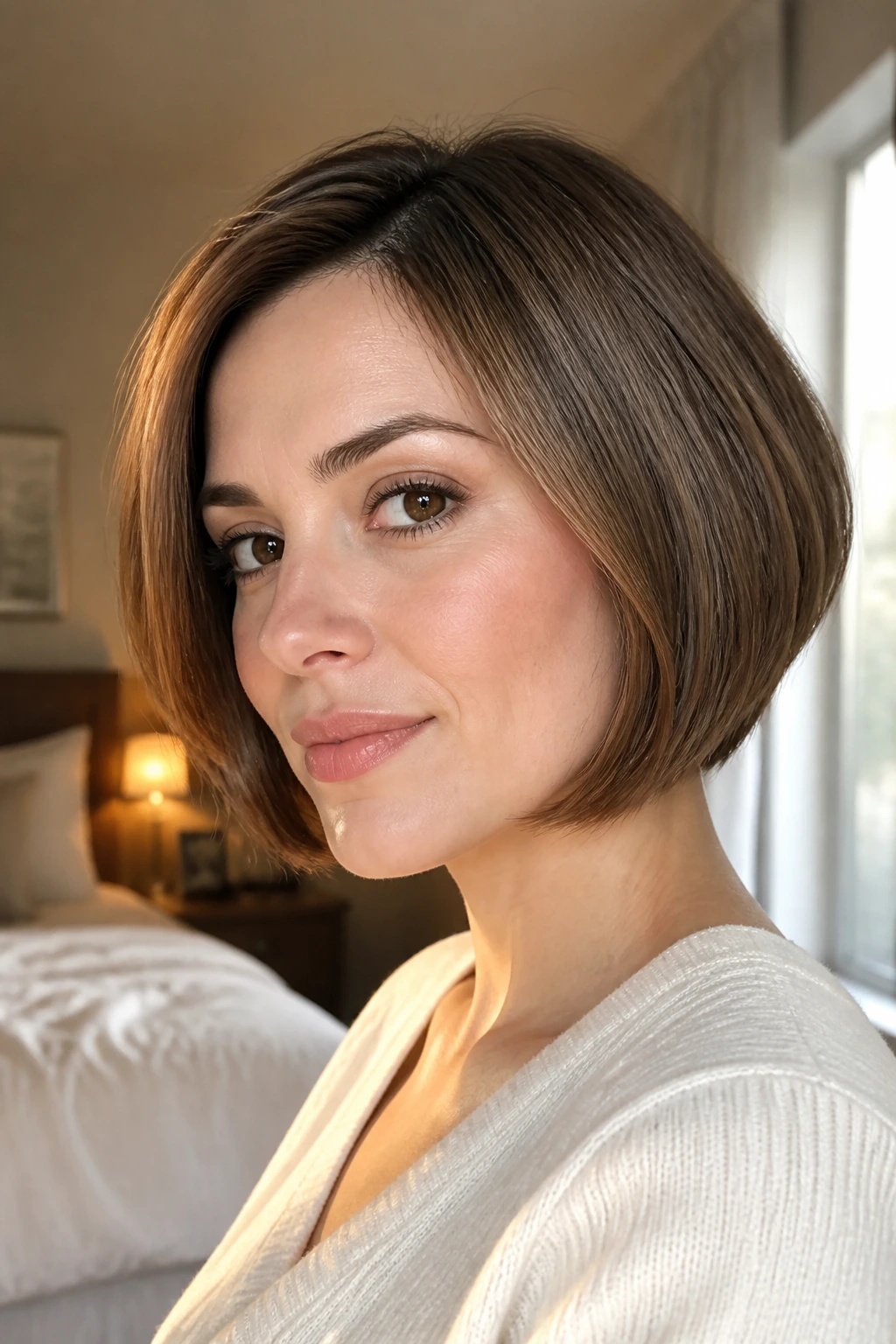
- Jawline Control: A chin-length line creates a clear stop point, which helps round faces look a little longer and less wide through the cheeks.
- Better Density: Fine hair looks thicker when the ends sit in a tight perimeter instead of tapering into thin, wispy ends.
- Less Styling Drama: This length dries faster than longer bobs, but still leaves enough hair to shape with a brush, iron, or tuck.
- Parting Flexibility: A side part, off-center part, or soft middle part can change the whole silhouette without changing the cut itself.
- Bangs Are Optional: You can add fringe, skip fringe, or keep it whisper-light depending on how much forehead you want to show.
- Salon-Friendly Language: It’s easier to ask for this cut in inches, angles, and weight lines than to describe a vague “short bob” that might land in the wrong place.
1. The Blunt Chin Shelf
A blunt chin-length bob is the cleanest place to start if you want the haircut to do the heavy lifting. The straight edge makes fine hair read denser, and the line at the chin keeps the eye from hanging out at the widest part of a round face. No fluff. No frizzed-out ends pretending to be movement.
Ask for a one-length perimeter that lands at the chin or a hair below it, with minimal internal layering. Wear it with a slight off-center part and a soft bevel under the last half inch, not a big inward curl. That tiny bend keeps it from looking helmet-like. The goal is a sharp edge, not a round bubble.
- Ask for: one-length length, blunt ends, very light point-cutting only at the corners.
- Style with: a blow dryer nozzle, a flat brush, and a pea-size dab of smoothing cream.
- Avoid: strong curl under the cheek area; it adds width where you do not want it.
2. The Soft A-Line Sweep
What if you want the chin-length shape without the hard edge? This is the version. The front sits a touch longer than the back, usually by a half inch or so, and that tiny angle pulls the eye downward. On a round face, that matters more than people think.
The soft A-line works especially well if your hair is fine but not flimsy, because the front corners keep some visual weight while the nape stays tidy. It gives you movement without the puff. Keep the angle subtle, though. If the front gets too long, the cut starts to drift out of the chin-length zone and loses the crisp read that makes it flattering in the first place.
A light side part helps. So does tucking one side behind the ear for a minute while the hair cools. That little habit trains the front pieces to fall in a more vertical line.
3. The Deep Side-Part Lift
A deep side part does more than change the mood; it shifts the weight line and gives the face a diagonal. On round faces, diagonals matter because they break up the soft horizontal spread through the cheeks. Fine hair likes it because the root lift shows up almost immediately.
Why it works
When the heavier side falls just past the cheekbone, the eye reads downward and inward instead of straight across. That gives the bob shape without asking the ends to do all the work. The cut can stay fairly simple; the part does the clever part.
Styling note
Set the part while the hair is still damp, then clip the heavy side up for 3 to 5 minutes while you dry the crown. Blow the root from underneath with the nozzle pointed down, then finish with a light mist of dry shampoo at the top if the hair flattens fast. If your hair naturally wants a center part, don’t force a dramatic one. A gentle side shift is enough.
4. The Crown-Layered Bob
This is the fix for hair that collapses by lunchtime. Instead of loading up the bottom with layers, the lift is hidden higher up at the crown, where it can create shape without shredding the perimeter. Fine hair usually needs that kind of restraint. Too many visible layers make the ends look stringy. Hidden layers give you air without giving away the trick.
The cut still lands at the chin, but the top is slightly shorter and more responsive to blow-drying. That means you can get lift where the eye wants it most — near the top of the head — while keeping the lower edge dense. On a round face, that vertical height helps more than side volume ever will.
A round brush and a cool shot at the roots matter here. So does not overloading the hair with cream. Heavy product kills the whole point.
5. The French Bob With Airy Fringe
A French bob can work on a round face and fine hair if the fringe stays airy, not heavy. The blunt little shape around the mouth and chin looks lovely in photos, but the version that flatters real people keeps the bangs broken up and the perimeter at or near the chin. A thick wall of fringe will box the face in. Soft pieces won’t.
The best version has texture at the bangs, not at the hem. That keeps the eye moving upward without making the forehead feel crowded. If your hair is straight or only lightly wavy, this cut is easy to wear with a quick air-dry and a touch of texture spray at the ends. If your hair puffs up at the crown, ask for less bulk up top and more precision through the fringe.
It’s a good choice if you like some personality in a haircut and don’t mind a bit of styling. Not much. Just enough to keep the fringe from looking chopped by accident.
6. The Tucked-Ends Bob
This one is for the person who likes a bob that can be tucked behind the ears and still keep its shape. The trick is in the front corners: they need to be long enough to skim the jaw, but not so long that the whole cut turns into a small lob. When the ears are exposed, the face opens up, and that’s useful on a round shape.
The shape to ask for
- Keep the perimeter at chin length.
- Leave the front corners slightly longer than the center.
- Ask for soft internal shaping, not choppy layers.
- Wear it with a side part or soft off-center split.
A dab of styling balm at the ends helps the tucked side stay neat instead of flaring out. This version is especially handy with glasses, because it leaves room around the temples and keeps the whole look clean.
7. The Slightly Stacked Nape Bob
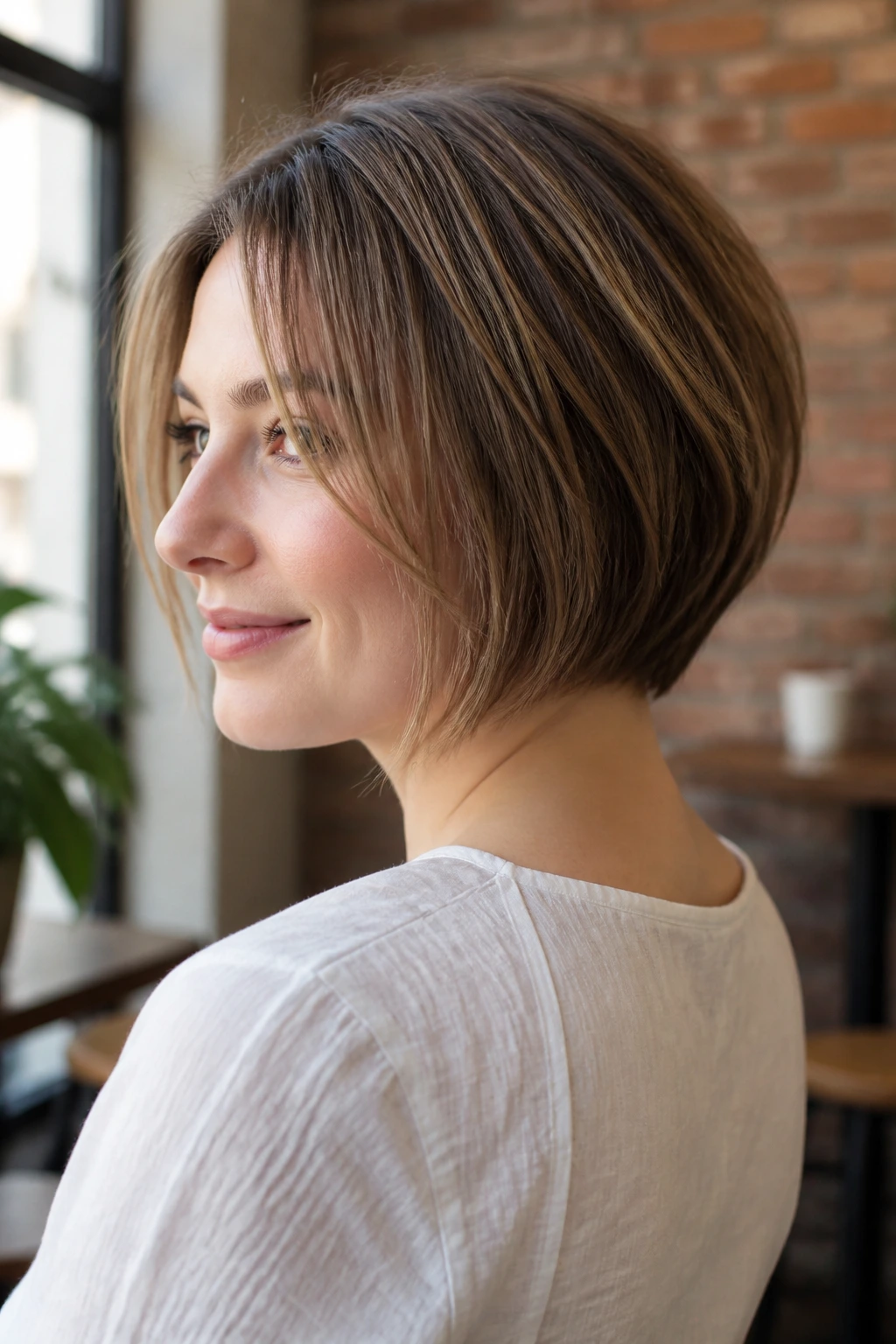
A little graduation at the nape can do a lot for fine hair. Not a big stack. That tends to puff. Just enough shortening at the back to give the crown some lift and keep the lower edge from hanging flat against the neck. On round faces, the stack is useful because it lifts the eye upward before the hair falls into the chin line.
What to watch
The back should feel tidy, not bulky. If the graduation is too steep, the bob starts to widen right under the ears, which is the opposite of what you want. The front should still reach the chin or slightly below it, so the face keeps that lengthening frame.
This is a good option if your hair tends to collapse in the back and go flat around the crown. A root-lift spray at the scalp and a brush-dry that follows the curve of the head will keep it looking polished without much fuss.
8. The Razored Edge Bob

Razoring can be brilliant on fine hair, but only when it’s used lightly. A razor-soft edge takes the bluntness out of the line just enough to add movement, which is useful if your hair feels too stiff in a one-length cut. The danger is obvious: too much razor work and the ends can look frayed, see-through, and tired by the second day.
This version works best on hair that already lies fairly straight and has a little slip to it. The perimeter still lands at the chin, but the corners are softened with a feathered finish instead of a hard block. On a round face, that kind of finish keeps the cut from feeling heavy around the jaw.
If your stylist reaches for a razor, ask how much texture they plan to remove and where. A little at the edges is one thing. Ripping through the interior is another.
9. The Curtain-Frame Bob

Curtain pieces can be a smart move on round faces because they create a long, open line through the center of the face without locking everything into a heavy fringe. In this bob, the front pieces begin near the temples, then drift toward the chin like a soft frame. The body stays chin length. The fringe stays loose.
What makes it different
The shape gives you forehead coverage without the blocky feel of blunt bangs. It also gives fine hair a useful trick: the longer front pieces look fuller than short, wispy fringe ever will. That extra length can make the cut feel more balanced if your cheeks are the widest part of your face.
How to wear it
Dry the front pieces away from the face first, then bend them very slightly back at the ends. Don’t curl them under too much. You want a soft line, not a horseshoe. A tiny bit of shine spray on the front pieces keeps the frame from looking dry and flimsy.
10. The Piecey Textured Bob

If your hair refuses to hold a perfectly smooth finish, stop arguing with it. A piecey bob can look better than a polished one when the texture is light and intentional. The key is separation, not fuzz. You want a few visible bends and clean ends, not a halo of random fluff.
Fine hair can actually benefit from this look because piecey styling creates the illusion of more strands moving in different directions. The cut should still be controlled at the perimeter so the shape does not balloon out. Keep the sides close to the face and let the texture live mostly through the mid-lengths and top layer.
A little mousse at the roots and a 1-inch iron on a few random sections is enough. If every piece gets waved, it turns into busy hair. Pick a few strands and leave the rest alone.
11. The Side-Swept Bang Bob
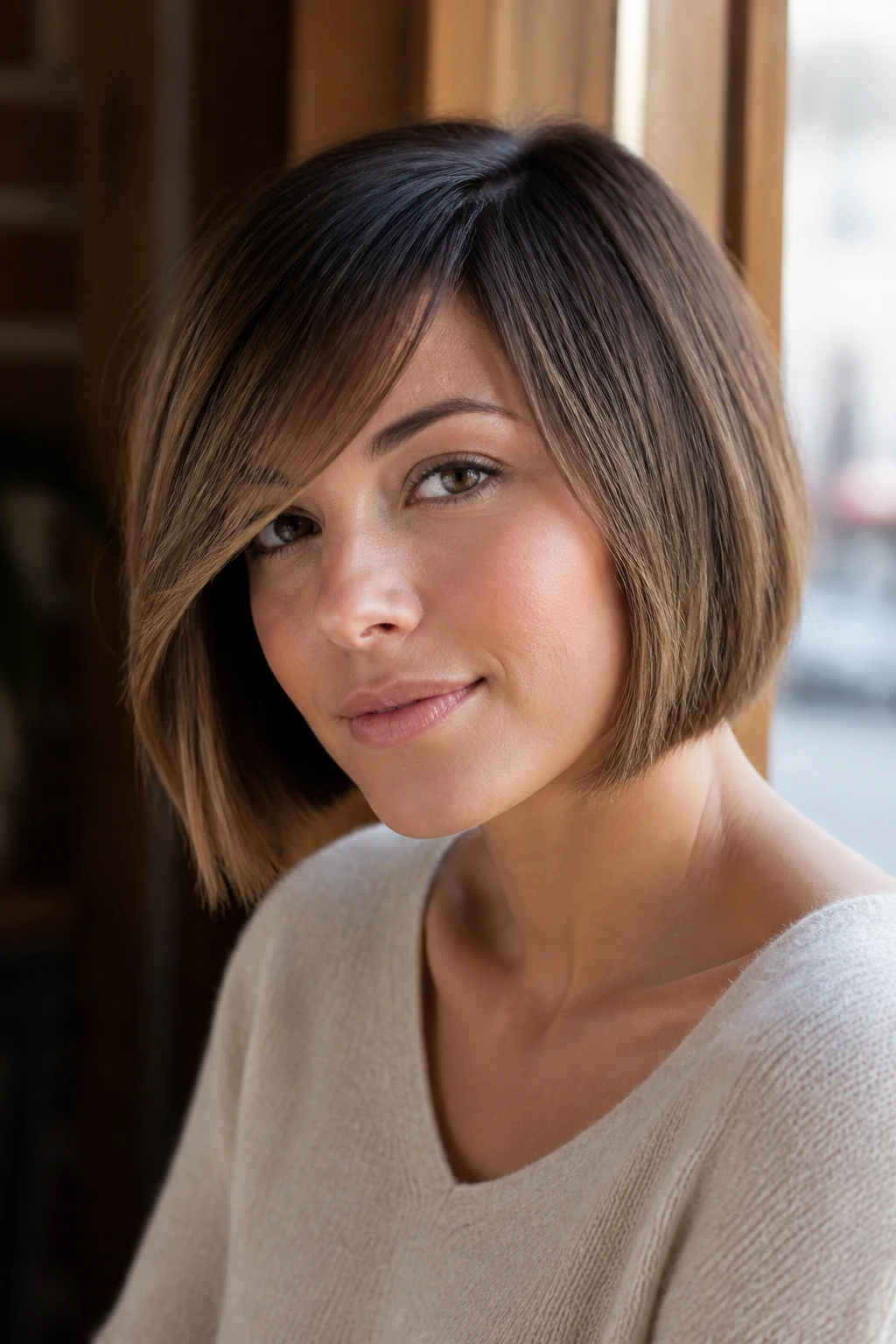
Side-swept bangs are one of the easiest ways to break up a round face without forcing a dramatic haircut change. The diagonal line from forehead to chin draws the eye across the face in a way that feels softer than blunt fringe. That matters when the rest of the bob is clean and chin-skimming.
The bang itself should be light enough to move. Heavy side bangs can drag fine hair flat and make the face feel shorter. Keep the section narrow, and let the longest point blend into the front corners of the bob instead of stopping abruptly at the cheek.
A side-swept bang bob is a good middle ground if you want face framing but do not want to commit to curtain bangs. It’s easier to grow out, too. That alone makes it worth a look.
12. The Sleek Glass Bob
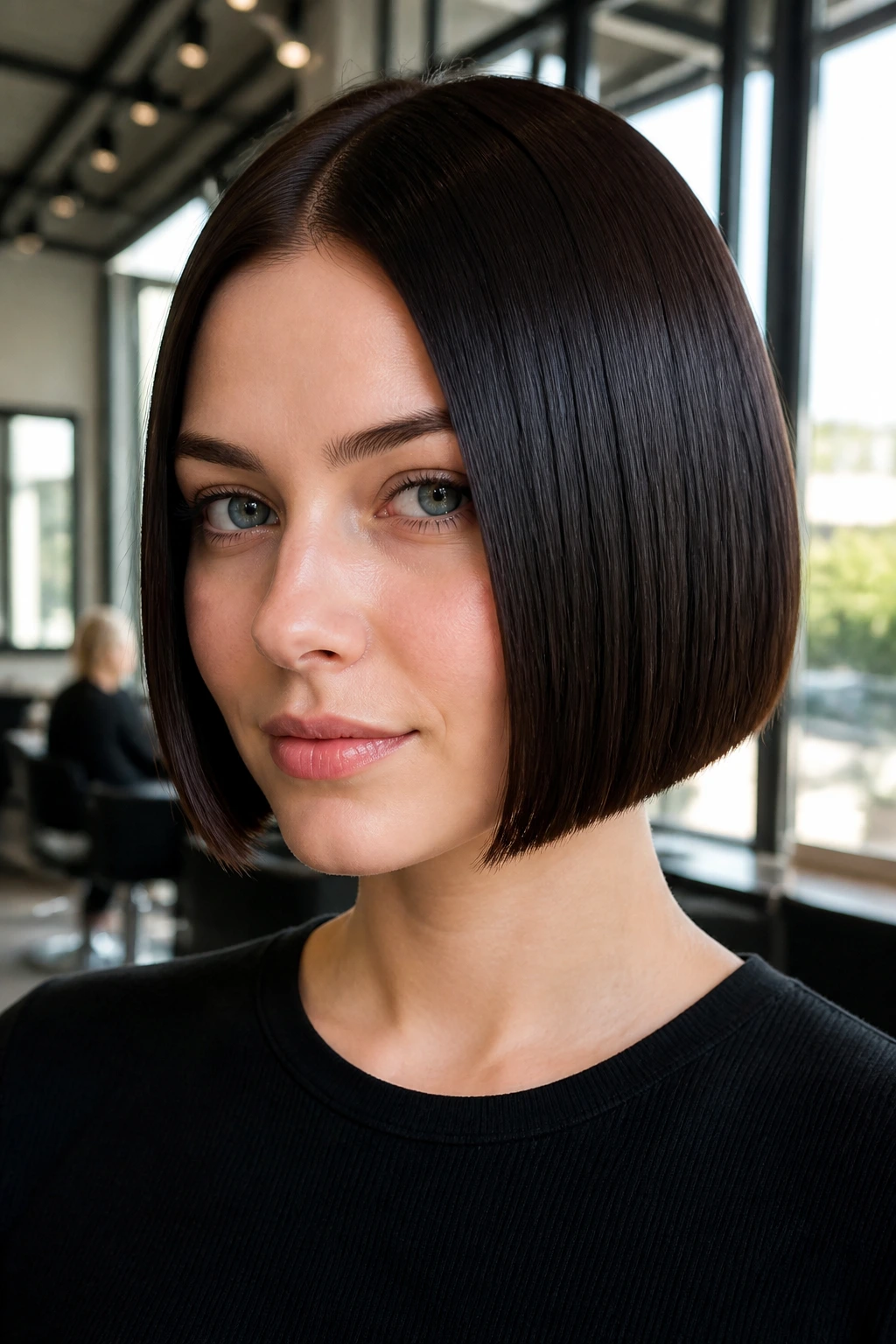
This is the polished version of the cut, and it works especially well if your fine hair is straight or nearly straight. The shine and the blunt edge do the flattering work here. A glassy finish makes the line at the chin look deliberate, which helps the whole face read cleaner and slightly longer.
The part can be center or just off-center, but the sides need to stay flat enough to skim the cheeks rather than puff around them. A smoothing serum, a nozzle, and a flat brush are your best friends. If your hair has a slight bend, a quick pass with a flat iron on the last inch of the ends keeps the silhouette crisp.
This style looks simple, which is exactly why it’s easy to get wrong. Too much serum turns it greasy. Too much rounding turns it wide. Keep the finish controlled and spare.
13. The Undone Wave Bob

Soft waves can work on round faces if they start below the widest part of the cheeks. That’s the trick. A bend that sits right at the cheekbone adds width. A bend that starts closer to the chin or just below it adds softness without making the face feel broader.
The undoneness matters, too. You want a relaxed S-shape, not a polished curl. On fine hair, that means using the iron on only a few sections and leaving the ends a little straighter. The cut should still read like a bob, not a mini beach wave.
If your hair is naturally wavy, let it live there and guide it with a small amount of cream. If it’s straight, wrap only the mid-lengths around a flat iron once or twice. Overworking the wave is the quickest way to make fine hair look thin.
14. The Feathered Inner-Layer Bob
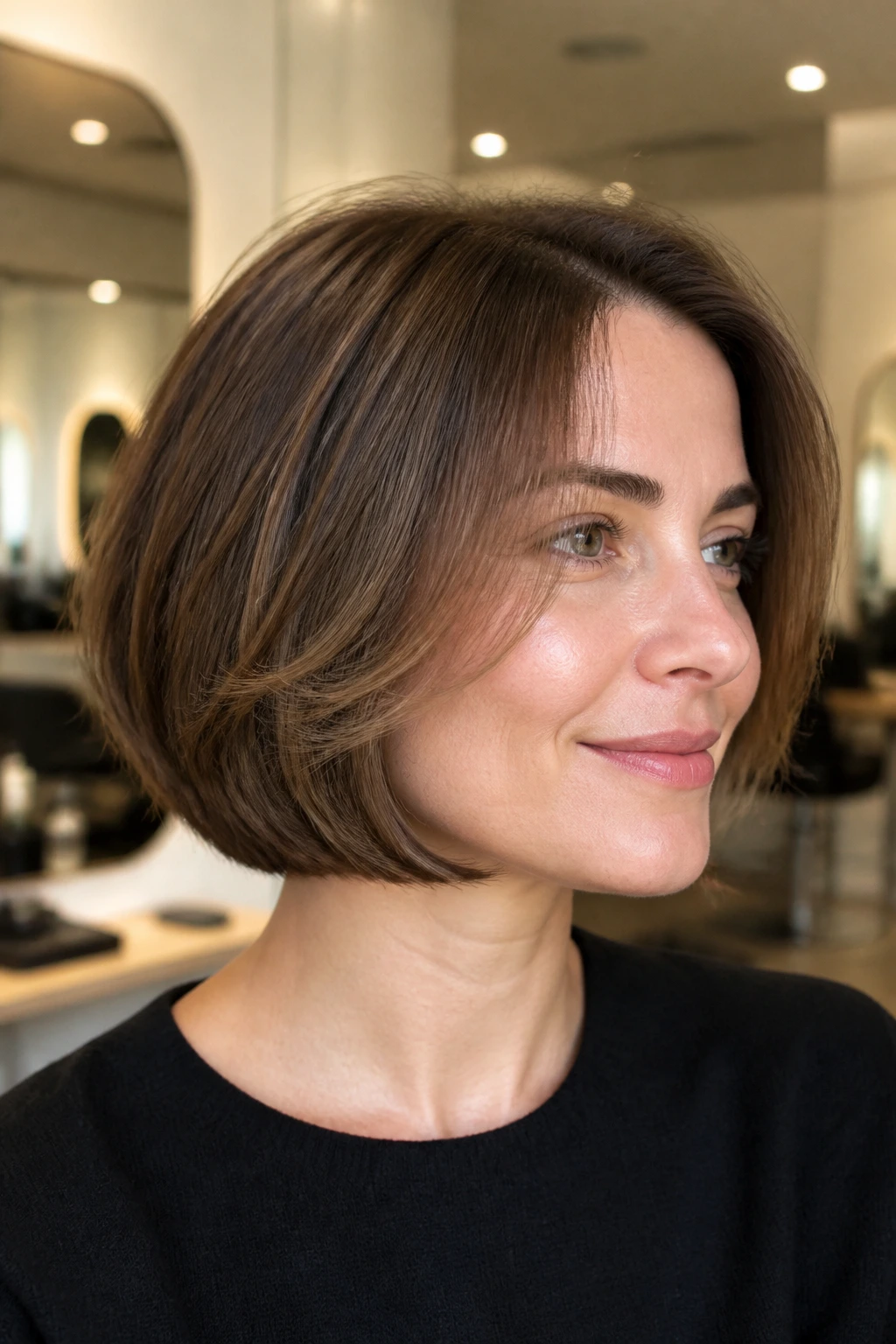
Feathering the inside of the bob gives movement without tearing up the outline. That’s the part I like most about this version. On fine hair, visible layers can look choppy fast, but internal feathering lets the cut breathe while the perimeter keeps its density. It’s a quieter haircut. Also a smarter one, most of the time.
Where the lift lives
The feathering should sit under the top layer and around the crown, not through the very bottom. That keeps the ends looking full at the chin while the top gains some softness and swing. On a round face, that balance matters because the eye sees lift above the cheeks, not width beside them.
Best for
Hair that goes flat, but not hair that is already overly airy. If your strands are very fine and your density is low, ask for the lightest possible internal shaping and keep the edge blunt. You want support, not holes.
15. The Jaw-Skimming Long-Front Bob
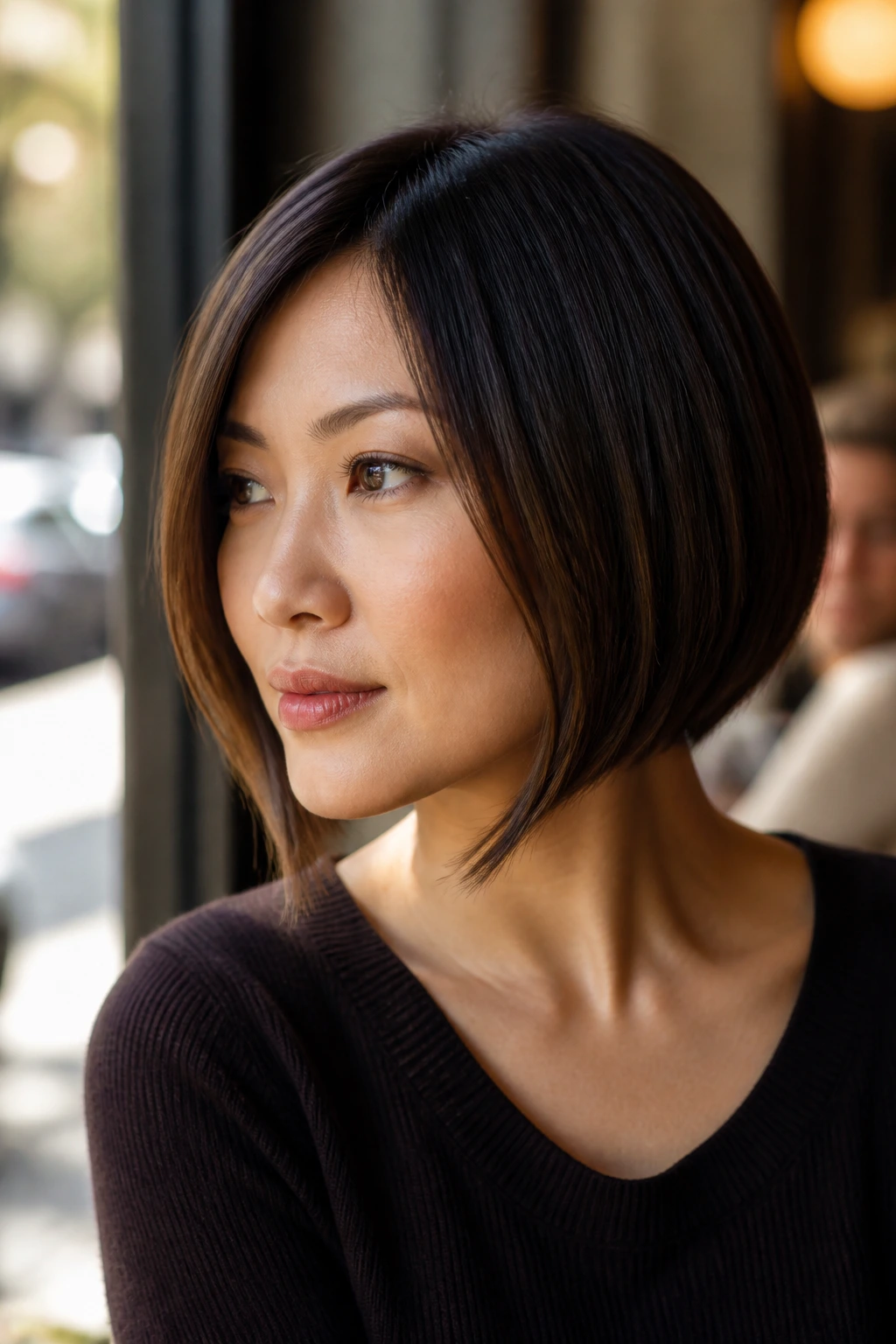
This version is about line and direction. The front pieces fall a touch below the jaw, while the back stays at the chin. That contrast creates a slim visual frame around the face, which is especially helpful when the cheeks are the widest point. It’s one of the easiest ways to make a bob feel less boxy.
Because the front is a little longer, the hair has room to drape instead of sticking out at the side of the face. Fine hair likes that. The line looks calmer and denser at once. Keep the front corners clean and avoid too much curl under, or the extra length gets folded back into the cheeks.
If you like a style that can move between sleek and soft, this is a good pick. It grows out gracefully, too, which is handy because clean chin-length cuts can get fussy fast.
16. The Salon-Blowout Bob

This is the bob that looks like it came from a round brush and a little time, and yes, that matters. Fine hair often looks its best when the roots have lift and the ends have a small, polished bevel. The cut should support that finish, with subtle crown shape and enough length at the perimeter to hold the curve.
How to style it
Dry the roots first, then move to the sides in sections no wider than the brush. Pull the hair up and slightly forward at the crown for lift, then rotate the brush only at the final inch of the ends. Cool each section before moving on. That cooling step is the part people skip, and it’s the part that helps the shape last.
The result is clean, shiny, and a little airy at the top without being poofy at the cheeks. If your hair goes limp fast, this is the version that buys you the most shape for the least effort.
17. The Choppy Lite Shag Bob

Yes, a shag can work on fine hair. No, not the overly chopped version that leaves the ends looking blown apart. The trick is keeping the layers light and the bob still anchored at the chin. Small choppy bits around the crown and fringe add movement, but the perimeter needs to stay strong.
This cut is good if you want a little personality and do not want a polished, one-length bob. The texture helps distract from a round face by breaking up the outline. Just make sure the choppiness stays above the jawline and not around the cheeks, where it can widen the face in a hurry.
A little salt spray or light texture spray is enough here. If you load it with product, the whole thing collapses into stringy pieces. That’s not the point.
18. The Tapered Nape Bob
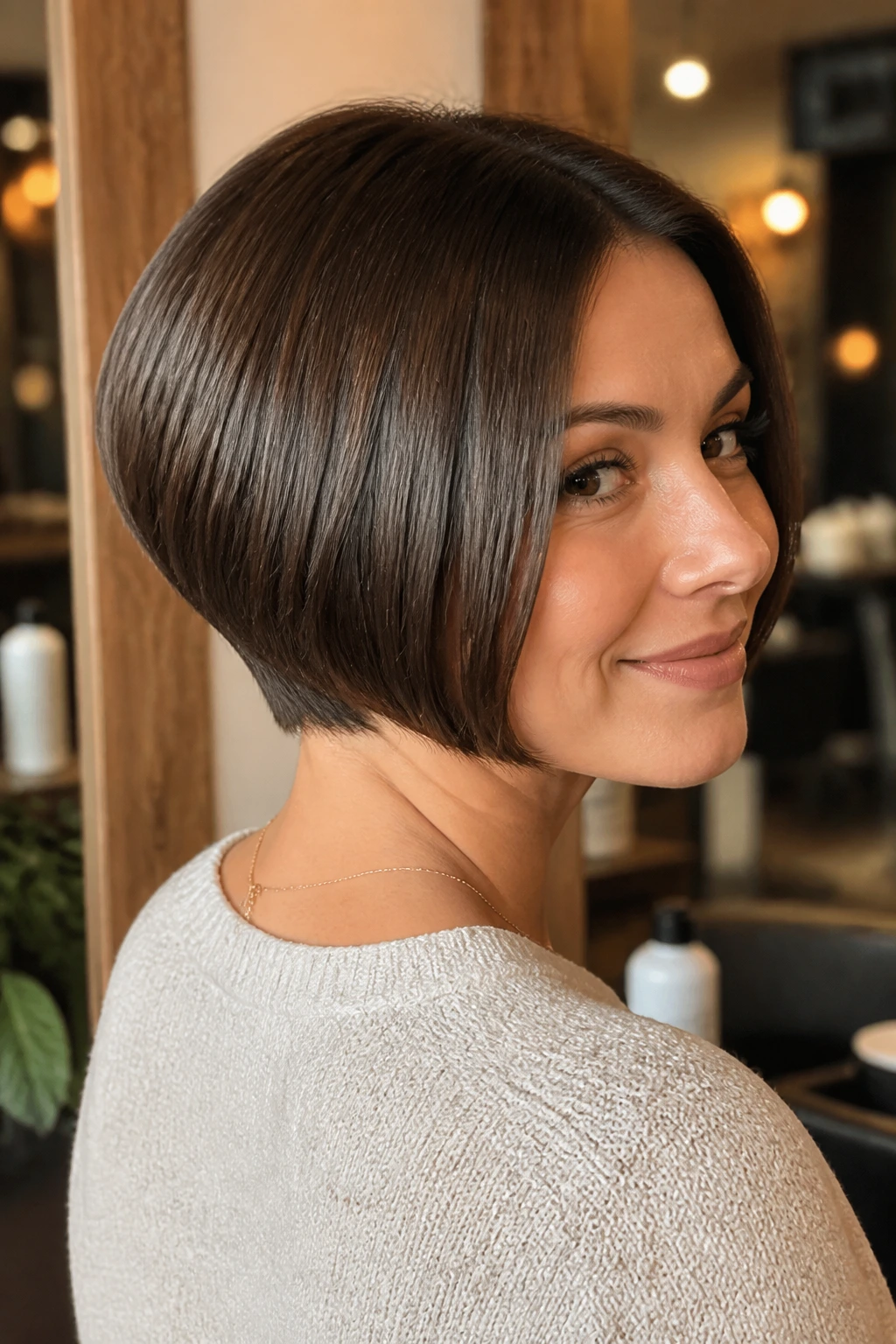
A tapered nape creates a neat back view and keeps fine hair from hanging straight down like a curtain. The front still reaches the chin, but the back is tucked in slightly shorter so the silhouette feels lighter and more lifted. On a round face, that shape keeps the eye moving upward through the crown instead of outward through the sides.
The taper should be subtle. You want a narrow nape, not a stacked wedge that steals too much softness from the profile. If the graduation is too strong, the cut starts to widen below the ears. Keep the corners at the front a little longer, and the whole style stays balanced.
This is a strong choice if your neckline tends to swallow hair. A tidy nape makes the bob look intentional even on low-effort days.
19. The Pinned-Back Bob

This is the cut for people who like one side tucked, pinned, or clipped back and still want the shape to hold. On round faces, asymmetry helps because it interrupts the even width across the cheeks. A bob that can be pinned back without losing its line gives you that effect fast.
The front pieces need enough length to stay elegant when they’re moved off the face. The rest of the bob should stay close enough to the chin that you do not lose the framing effect. Small clips, a side tuck, or a single decorative pin can all change the read of the haircut in a useful way.
It’s a practical choice, too. If you get tired of hair touching your jaw, you can pull one side back and keep the style alive. That’s a better solution than constantly overcutting the front.
20. The Airy Middle-Part Bob

A middle part isn’t off-limits here. It just needs the right kind of bob. The front corners should stay slightly longer, and the line at the chin should be clean enough to keep the face from looking too wide. With fine hair, the center part can actually help because it creates a vertical split right through the face.
What to keep in mind
The part should be soft, not ruler-straight and severe. A little lift at the crown keeps the center from going flat, which is where a lot of round-face center parts go wrong. If the hair is pin-straight, a tiny bevel on the ends keeps the shape from feeling harsh.
This is a good pick if you like symmetry and do not want bangs. It also works well when you wear glasses, because the hair frames the face without crowding the temples.
21. The Softly Curved Bob
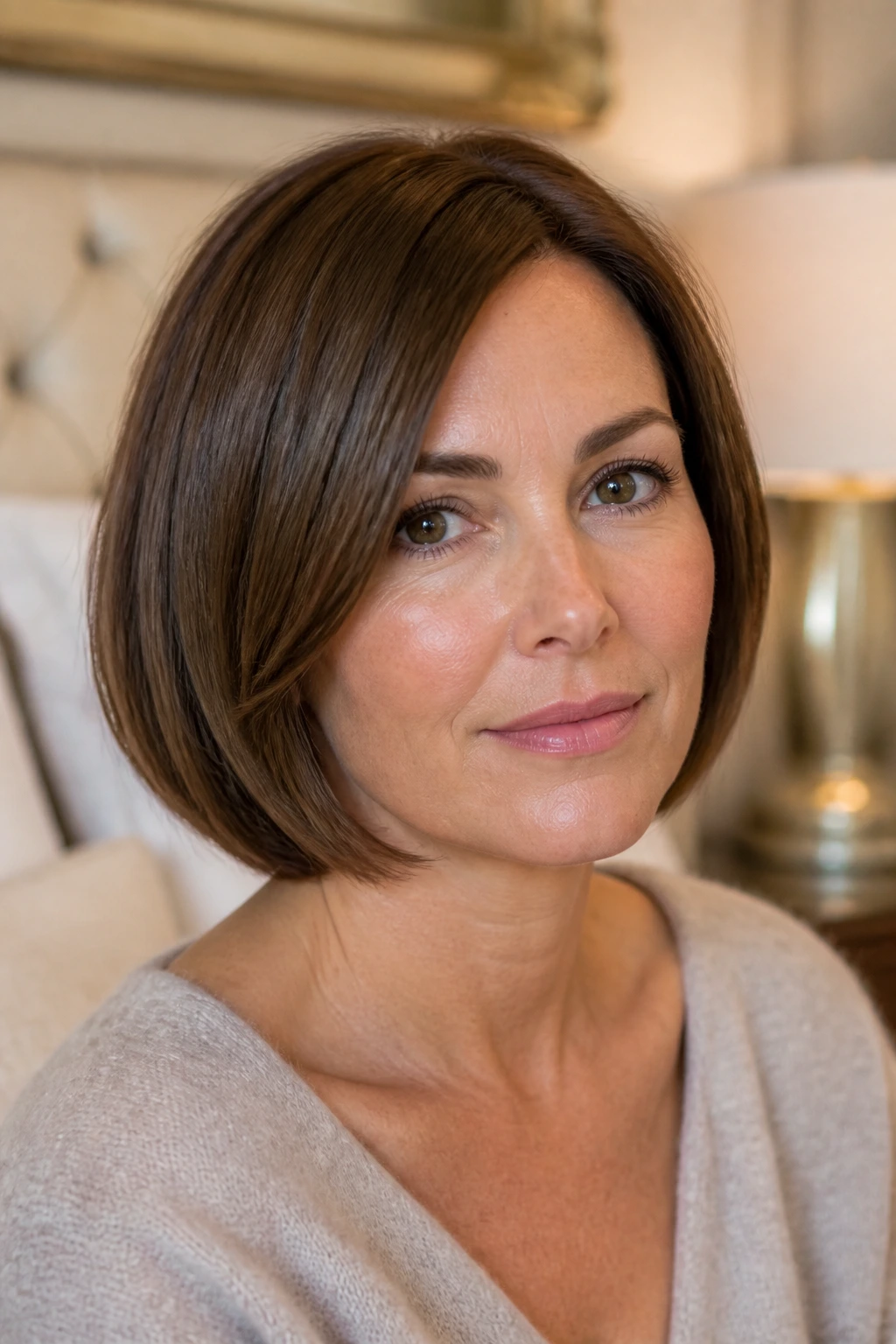
A softly curved bob has a gentle U-shape, but it stays restrained. The edge curves in just enough to follow the jaw without making the whole head look round. That distinction matters. Too much curve and the face gets more width. A little curve and the shape feels deliberate, almost tailored.
Fine hair likes this because the curve gives the illusion of fullness at the perimeter. The round face likes it because the curve sits low enough to avoid the cheekbones. The whole thing works only if the bend is subtle. If the blow-dry forces a big inward roll, the haircut loses its clean line.
This is the kind of bob that looks polished even when you do not spend a long time on it. A gentle brush-through and a small amount of serum are often enough.
22. The Root-Lift Bob

Some cuts are about the ends. This one is about the top. A root-lift bob keeps the perimeter calm and puts the volume at the scalp, which is where fine hair needs help most. On a round face, that lift makes the face look longer because the eye sees height before width.
Use this if
- Your crown flattens by noon.
- Your hair is fine but not overly layered.
- You prefer a bob that looks fuller from the top, not puffier at the sides.
- You’re willing to use mousse or root spray.
The cut itself should be tidy and fairly controlled through the bottom. The styling does the lift. Blow the roots in the opposite direction of the part first, then reset them. That simple shift gives the bob more staying power than piling on heavy product ever will.
23. The Minimal-Layer Power Bob
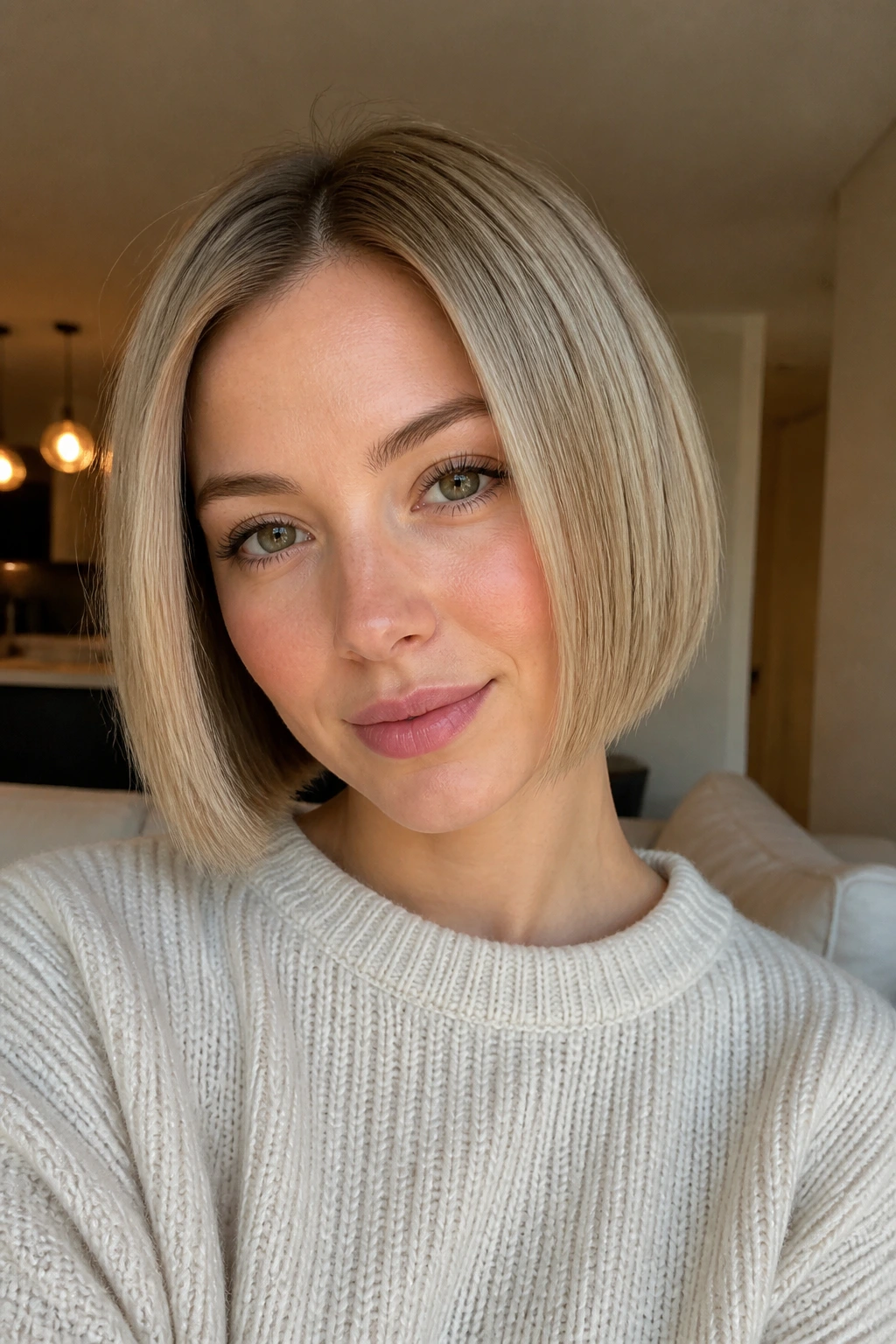
This is the version for people who have learned the hard way that layers can be too generous. The outline stays almost one-length, with only the lightest internal shaping for movement. That gives fine hair the strongest possible edge and keeps the ends from looking frayed. On a round face, the clean perimeter still matters more than extra motion.
The cut lands at the chin and can be worn with a side or off-center part. It looks especially good when the hair is naturally straight or only slightly bent. If you want a bob that grows out neatly and doesn’t require constant fixing, this is one of the safest bets.
A lot of people ask for movement and then wonder why their fine hair looks see-through. This is why. Sometimes the stronger move is to cut less.
24. The Peekaboo Fringe Bob
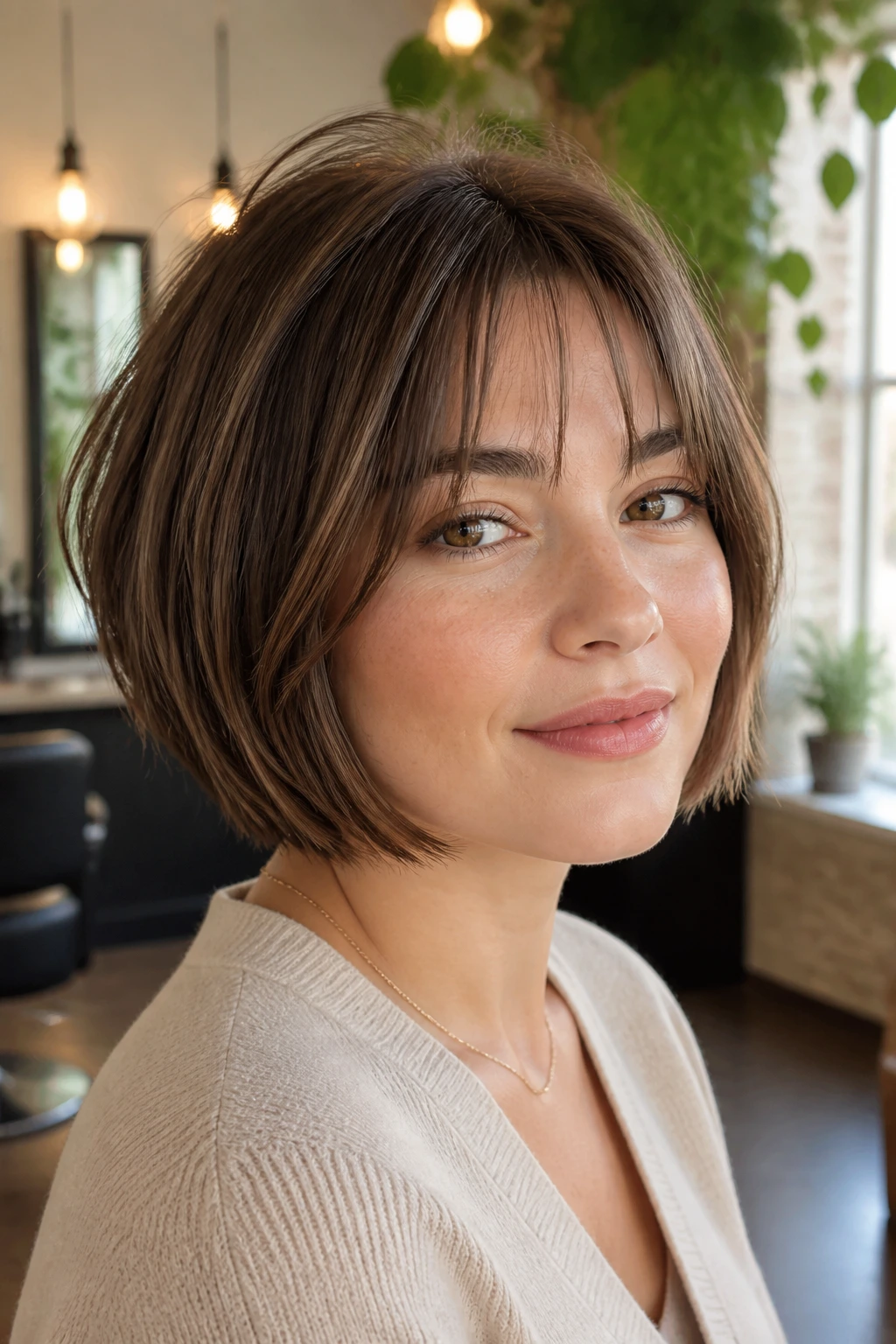
A peekaboo fringe gives you bang energy without a heavy curtain across the forehead. The fringe can split in the middle, sweep lightly to one side, or fall in small pieces that disappear into the front corners of the bob. On a round face, that soft interruption above the cheek area helps the cut feel less blocky.
It’s a nice option if you want the attention shifted upward but do not want a full fringe. Fine hair handles it well because the fringe pieces do not need to be thick to read clearly. In fact, too much fringe can crowd the face and flatten the top of the bob.
Keep the fringe light enough to move. If it sits stiffly on the forehead, the cut loses the easy feel that makes this one work.
25. The Sculpted Everyday Bob
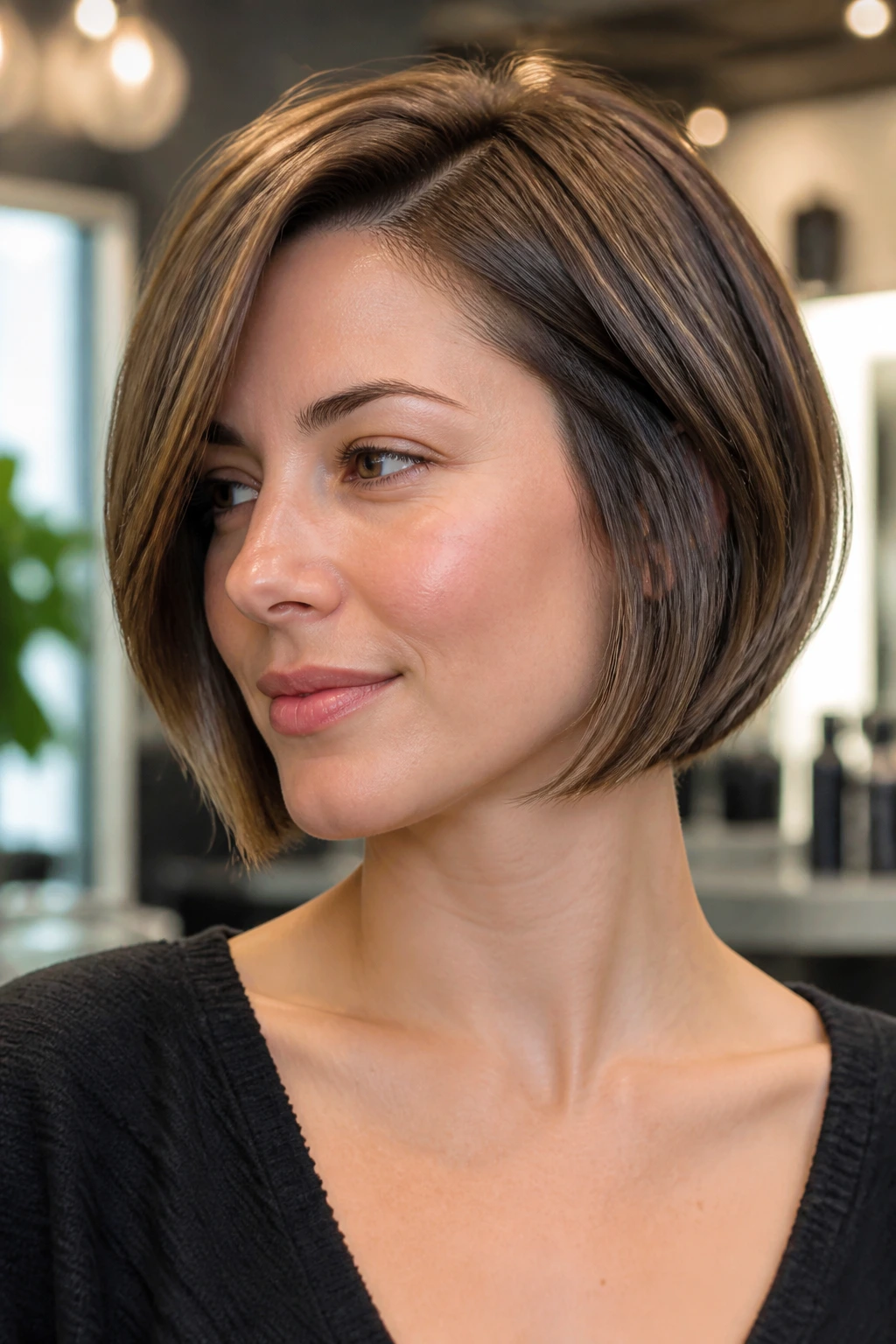
This is the bob for someone who wants the shape to behave on Monday morning and still look decent by Thursday. The perimeter stays at the chin, the crown gets a little support, and the front corners are cut with enough precision to frame the face without clinging to the cheeks. It’s not flashy. It’s useful.
The styling is simple: a side or off-center part, a small bend at the ends, and a touch of product only where the hair needs it. That’s enough to keep fine hair from going limp and enough to keep a round face from feeling boxed in. If you’re trying to choose one version and live with it for a while, this one earns a serious look.
A good everyday bob should not need a rescue plan. This one usually doesn’t.
Why Chin-Length Bobs Work on Round Faces and Fine Hair

The best chin-length bob sits right where the face changes direction. That’s the secret. A round face usually reads widest through the cheeks, so a line that lands at or near the chin helps pull the eye downward. It gives the haircut a stopping point below the center of the face, which makes the whole shape feel longer and a little leaner.
Fine hair gets a different benefit. A shorter perimeter keeps more of the strand density together, so the ends look thicker and the outline looks cleaner. Long layers often thin out fine hair in a way that’s hard to hide. A chin-length bob, especially one with a strong edge, does the opposite. It gathers the hair into a shape you can actually see.
The face-shape piece
Avoid volume right at the cheeks. That’s the area that already reads widest, and extra roundness there is where a lot of good haircuts go sideways. Lift belongs at the crown, not at the side of the face. A side part, a subtle angle, or a front corner that sits a little longer can help redirect the eye.
The fine-hair piece
Fine hair needs a visible edge. Not a lot of shaggy breakup. Not too much internal thinning. Just enough movement to keep the bob from looking stiff. If your density is also low, keep the layers even lighter and spend more energy on root lift and styling control.
One blunt truth. A lot of “volume” advice is wrong for this combo.
Tools That Make These Bobs Easier to Wear

- Blow dryer with a nozzle attachment — directs air down the hair shaft so the cuticle lies flatter and the bob looks smoother.
- Small round brush, 1 to 1.5 inches — gives the chin bend without creating a bubble at the cheeks.
- Paddle brush or flat brush — useful when you want a straighter, faster finish with less roundness.
- 1-inch flat iron or curling iron — perfect for a light bevel, a few bends, or a soft wave.
- Heat protectant spray — use it every time you apply heat; fine hair burns and frays fast.
- Volumizing mousse or root-lift spray — keeps the crown from collapsing and adds grip before blow-drying.
- Texturizing spray — helps piecey or undone versions hold shape without heavy wax.
- Dry shampoo — adds grit at the roots and buys you another day of shape.
- Duckbill clips — useful for setting the front pieces while they cool into place.
- Tail comb — helps clean up your part so the cut and styling line up.
How to Ask for the Cut and Style It So It Does Not Puff at the Sides
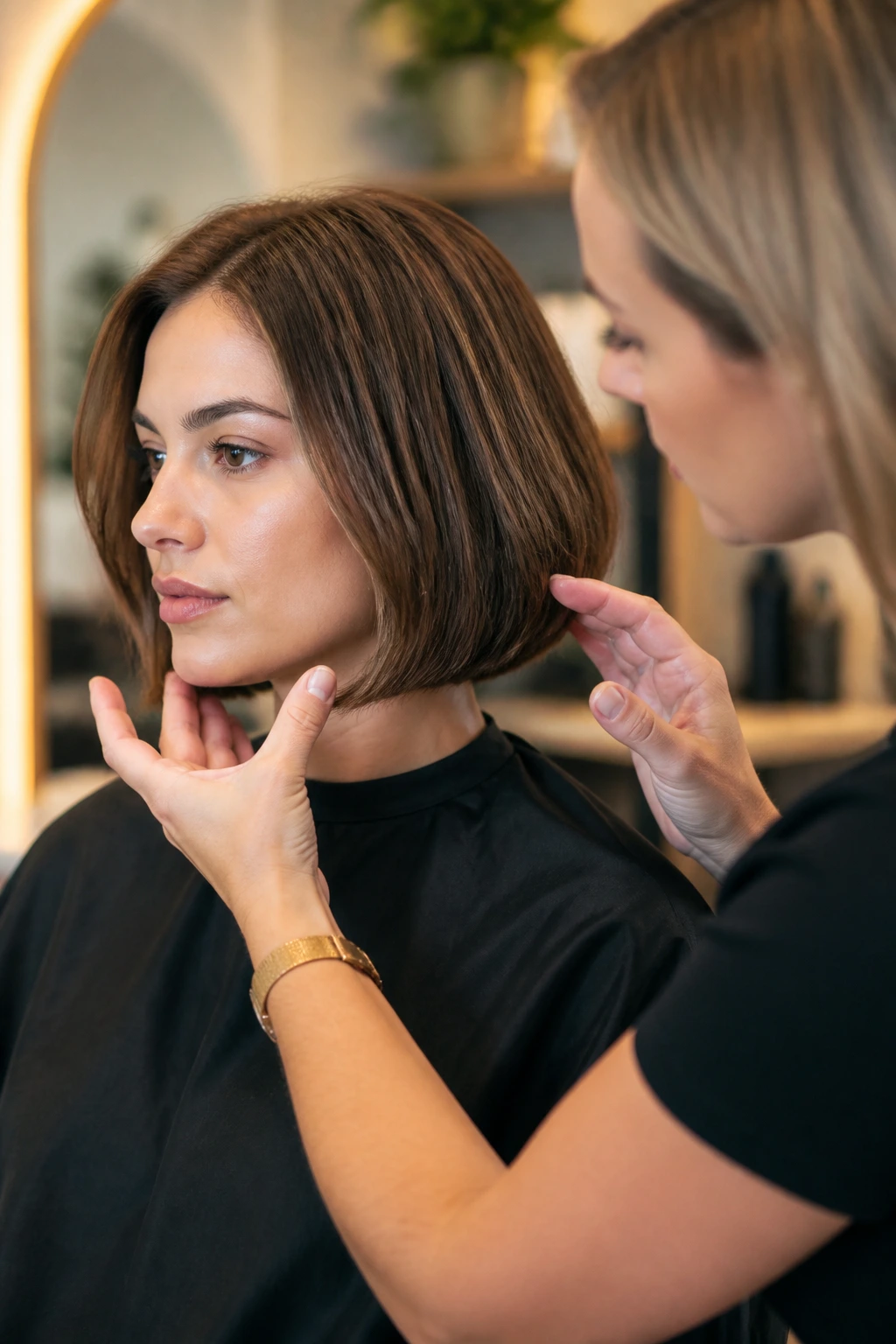
Bring photos, yes, but also bring language. Tell your stylist where you part your hair most often, where your face feels widest, and whether you want the bob to feel polished or a little undone. Those details matter more than saying “short bob.” A good cut on a round face with fine hair lives or dies by placement.
Length Check: Ask where the front will land in relation to the chin. If you want a slimmer read, the front corners usually need to sit at or just below the chin, not right at the cheekbone. A half inch can change the whole shape.
Layer Control: Ask for internal shaping, not a lot of visible layers. On fine hair, visible layers can look thin fast, especially once the style settles.
Parting: If you wear a side part, cut it with the side part in mind. A bob cut for a center part can sit oddly if you switch later.
Finish: Tell your stylist how much heat styling you actually do. If you air-dry most days, the cut should be forgiving without a perfect blowout.
Styling Moves That Keep the Shape Tight

Root First: Dry the roots before you worry about the ends. If the scalp area goes flat, the whole cut starts to feel wider and heavier. A quick lift at the crown matters more than extra curl at the sides.
Brush Down and Forward: Keep the air moving down the hair shaft and direct the front sections slightly forward, then back into place. That prevents the sides from ballooning out at cheek level.
Product Lightly: Fine hair only needs a small amount of product. A pea-size cream or a few sprays of mousse is usually enough; too much will flatten the bob and make the shape sticky.
Cool Before You Touch: Let each section cool in the shape you want. That tiny pause helps the bend hold. Skip it and the bob falls apart sooner.
Use the Ends on Purpose: A soft bevel at the bottom is often enough. You do not need every strand curled under. In fact, that can widen the line.
Common Mistakes That Make a Bob Read Wider

- Cutting it too short at the cheekbone: If the front lands right where the face is widest, the bob can make the cheeks look broader. Ask for the front corners to sit at the chin or slightly below it.
- Over-layering fine hair: Too many visible layers take away the density that makes the bob look full. Keep the perimeter strong and the layering soft.
- Using heavy cream or oil: Fine hair can go limp fast. Heavy product collapses the crown and makes the ends clump in a thin way.
- Curling the sides inward too much: A hard round brush finish at the cheeks can create a bubble. Keep the bend at the very ends, not through the mid-lengths.
- Ignoring the part: A part that fights your cowlick will fight the whole cut. Work with the way your hair grows, not against it.
- Letting it grow too long without trimming: Once a chin-length bob drifts into awkward territory, it loses the clean frame that makes it work.
Variations and Adaptations to Try

The Softer Wave Edit: Keep the chin-length perimeter and ask for slightly longer front corners. Then style with a loose bend instead of a smooth blowout. This suits hair that has a little natural wave and wants to look relaxed rather than polished.
The Fine-Hair Safety Version: Keep the bob nearly one-length with only light internal shaping. This is the version to choose if your strands are very fine or your density is low, because it protects the density at the ends.
The Bang-Forward Version: Add wispy fringe or curtain pieces that start softly at the temples. This draws attention upward and gives the face a longer read without changing the length of the bob itself.
The Root-Lift Version: Ask for subtle crown layering and style with mousse, clips, and a round brush. This works when the issue is not the cut, but the collapse that happens a few hours after styling.
The Sleek Side-Part Version: Keep the line blunt and polished, then wear a deep or off-center part. The diagonal line is the real move here. It’s a strong choice if you want the haircut to look sharp and a little grown-up.
Keeping the Shape Between Salon Visits

A chin-length bob needs maintenance, but not as much as people fear. Plan on a trim every 6 to 8 weeks if you want the line to stay crisp. If your hair grows slowly, you can stretch that a little longer, but once the front drops below the chin and the back loses its structure, the whole silhouette starts to sag.
On day-to-day styling, refresh the roots first. A light mist of water or leave-in spray at the crown, then a quick blow-dry or brush-dry, is usually enough to wake the cut back up. If the ends start to bend out, touch only the last inch with a flat iron or round brush. Do not reheat the whole head unless you want to spend more time than the haircut deserves.
At night, a loose clip at the crown or a silk pillowcase helps keep the shape from flattening. Fine hair does not like to be smashed into the mattress for eight hours. It remembers.
Product buildup matters too. A clarifying shampoo every 2 to 4 weeks, depending on how much mousse or dry shampoo you use, keeps the bob from getting dull and heavy. Clean hair holds a cleaner line. Simple as that.
Questions People Ask Before Cutting It
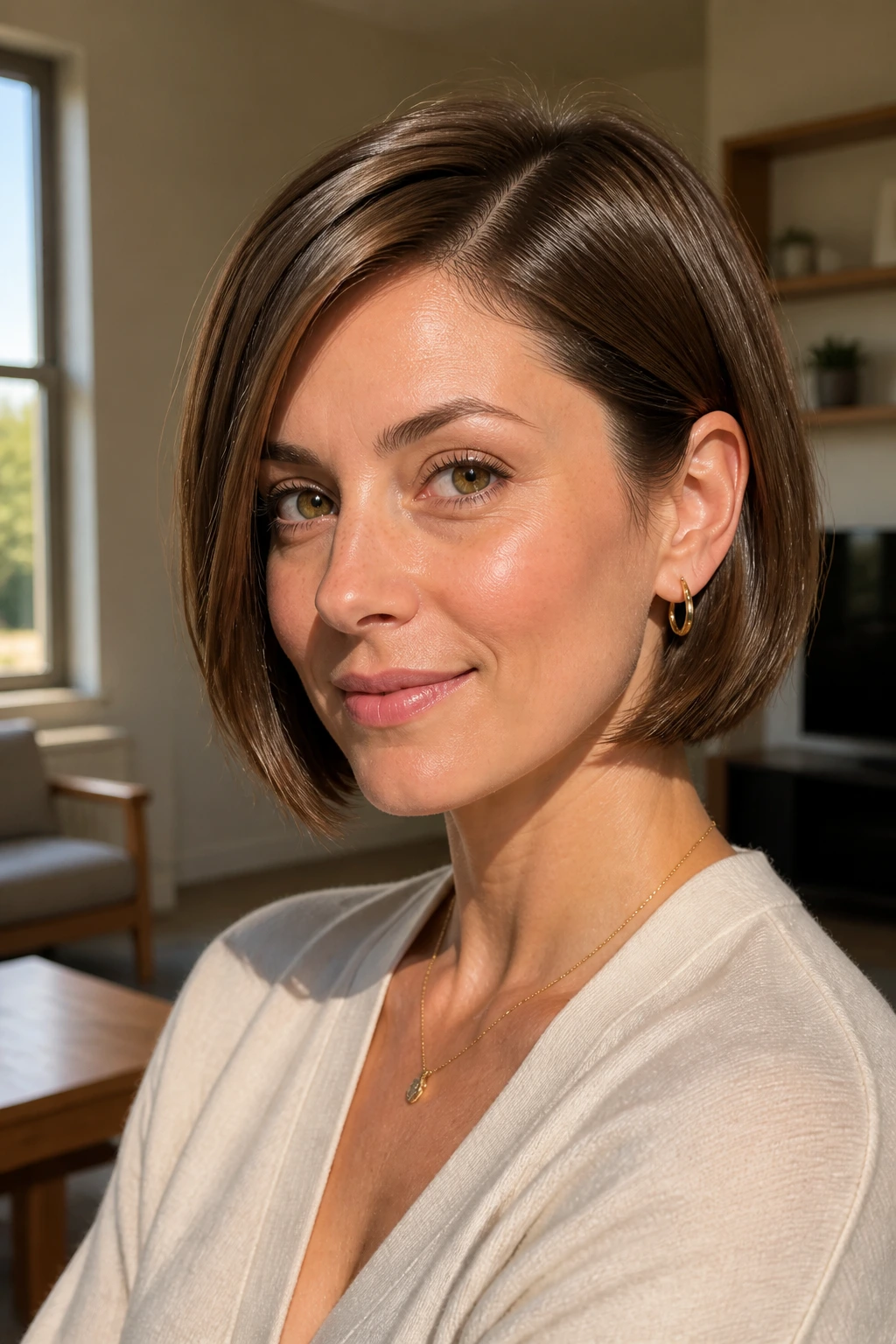
Will a chin-length bob make my round face look wider?
Not if the length and weight are placed well. A clean line at the chin, a bit of lift at the crown, and a part that breaks the symmetry can make the face look longer rather than wider.
Should fine hair have layers in a bob?
Some, but not many. Fine hair usually looks better with internal shaping or very light layers than with a lot of visible chopping through the ends.
Is a center part bad for a round face?
Not automatically. A center part can work if the front corners stay a little longer and the crown has enough lift. If the hair lies flat and wide, though, a slight side part often works better.
What if my hair flips out at the ends?
That usually means the cut or the blow-dry is pushing the ends in the wrong direction. Ask for a cleaner perimeter and style only the last inch with a brush or iron.
How often should I trim it?
Every 6 to 8 weeks is the sweet spot for keeping the chin line clean. If you wait too long, the shape turns into something softer and less defined.
Can I wear this cut if my hair is wavy?
Yes, but keep the front corners a little longer and let the waves start lower, below the cheekbone. That keeps the width from sitting at the wrong spot.
What if my crown is flat no matter what I do?
Choose one of the root-lift versions and use mousse at the scalp before drying. A good cut helps, but a little product and a clip-set at the roots can make a huge difference.
Does fine hair mean I should avoid bangs?
No, but the bangs should stay light. Wispy fringe, curtain pieces, or a side-swept bang usually work better than a thick fringe that steals too much density from the rest of the bob.
The Line That Holds Its Shape
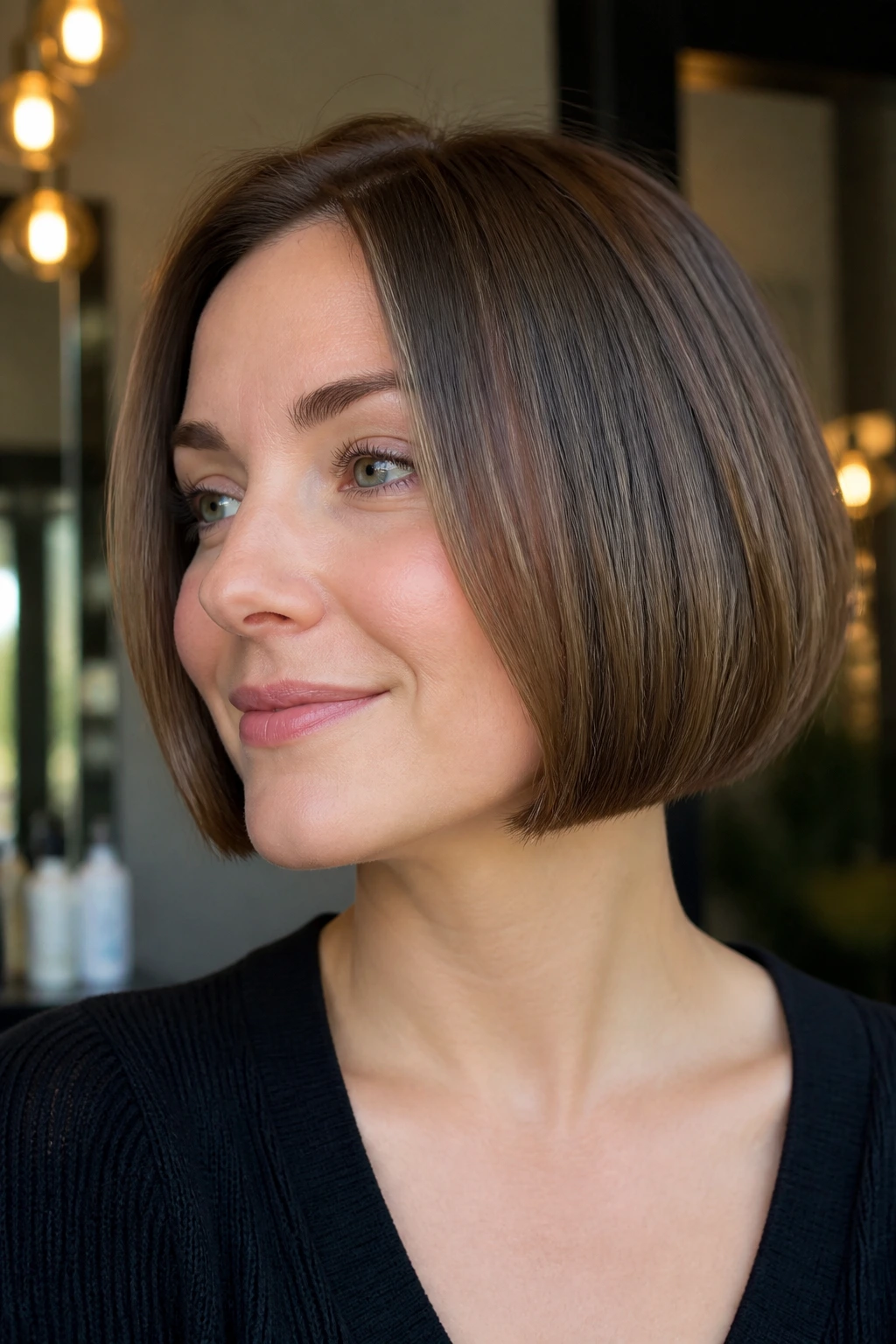
When the line lands in the right place, a chin-length bob stops fighting your face and starts doing useful work. It gives round features a little more vertical pull. It gives fine hair a stronger edge. And it gives you a haircut that can look tidy, sharp, or softly undone without changing the basic shape.
Bring a photo, yes, but bring a plan too. Know where your hair parts, where it flattens, and how much styling you’re actually willing to do on a Tuesday morning. The right version of this cut is the one that still looks like itself after a commute, a meal, and a day that did not cooperate.