



Square faces can look sharper than people expect under the wrong fringe. A blunt line parked straight across the forehead can box in the face fast, and a center part with no movement can make the jaw look even more square. Side-swept bangs for long hair and square faces do the opposite: they break the front of the haircut on a diagonal, soften the corners, and let the length of the hair do some quiet work in the background.
Long hair helps more than most people realize. A side sweep has room to travel. It can start high at the part, skim the brow, then melt into cheekbone-length layers or tuck into the rest of the cut without looking chopped up. That length is the magic trick. Too short, and the bang pops up and feels abrupt. Too heavy, and the whole thing turns into a curtain that fights the face instead of flattering it.
The best versions aren’t all built the same way. Some are wispy and airy, some are full of bend and volume, some sit almost like a grown-out curtain bang with one side pushed aside. The common thread is simple: the fringe moves, the jaw softens, and the long hair keeps the shape from feeling fussy.
Why These Side-Swept Bangs Earn Their Keep
-
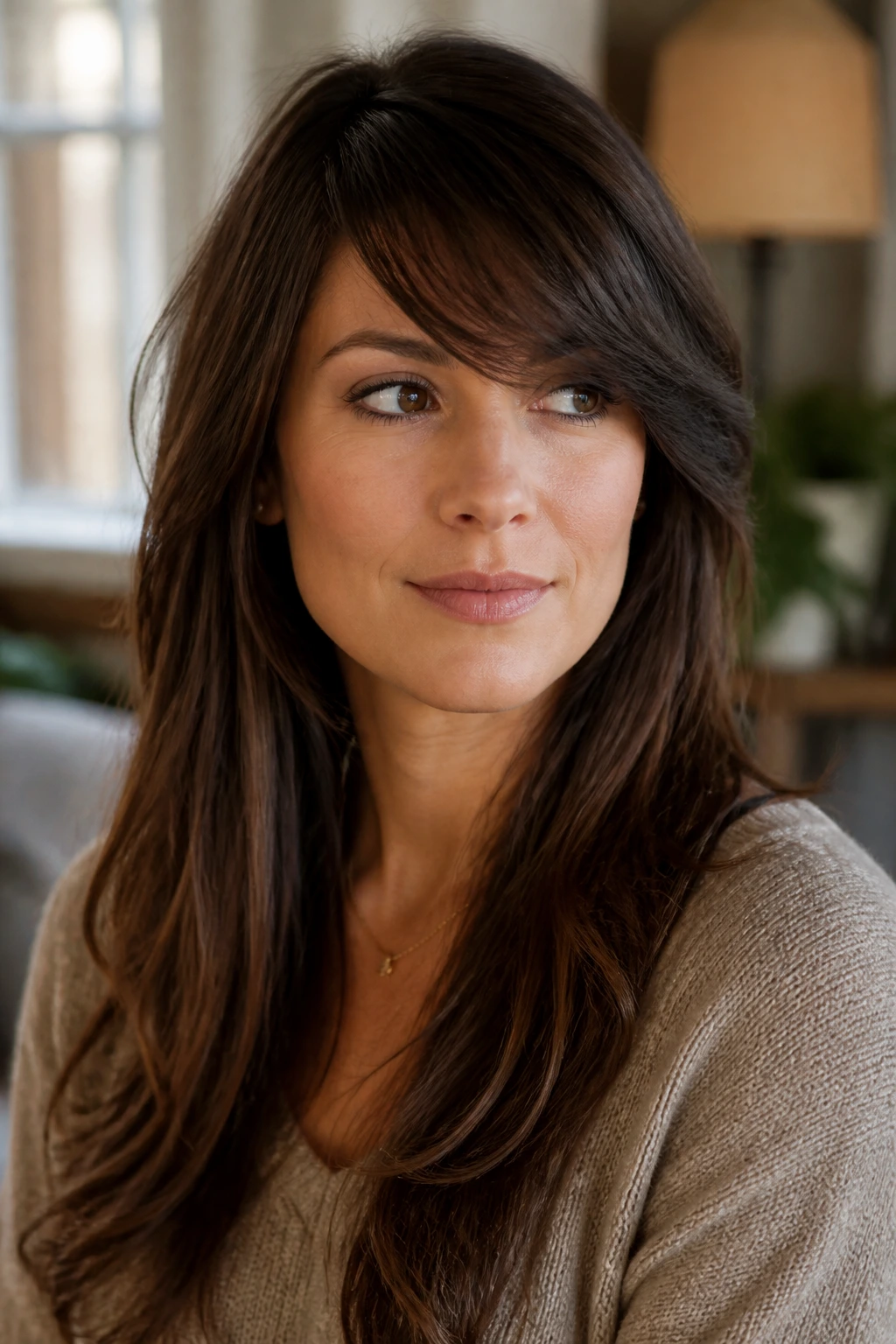
They break up strong angles: A diagonal fringe interrupts the forehead-to-jaw symmetry that square faces often have, which takes the edge off without hiding your bone structure.
-
They work with long hair instead of against it: Long lengths give the bang somewhere to disappear, so the front doesn’t look disconnected from the rest of the cut.
-
They can be soft or dramatic: You can go for a whisper-thin sweep or a fuller swoop with real volume, depending on how much front coverage you want.
-
They grow out better than blunt bangs: When the length gets a little shaggy, most side-swept cuts slide neatly into face-framing layers instead of turning into an awkward shelf.
-
They’re friendlier to day-to-day styling: A quick round-brush pass, a little dry shampoo at the roots, and you’re usually back in business.
-
They suit more than one texture: Straight, wavy, thick, and even curly hair all have a version of this shape; the trick is choosing the right length and weight.
1. Feathered Deep Side Sweep
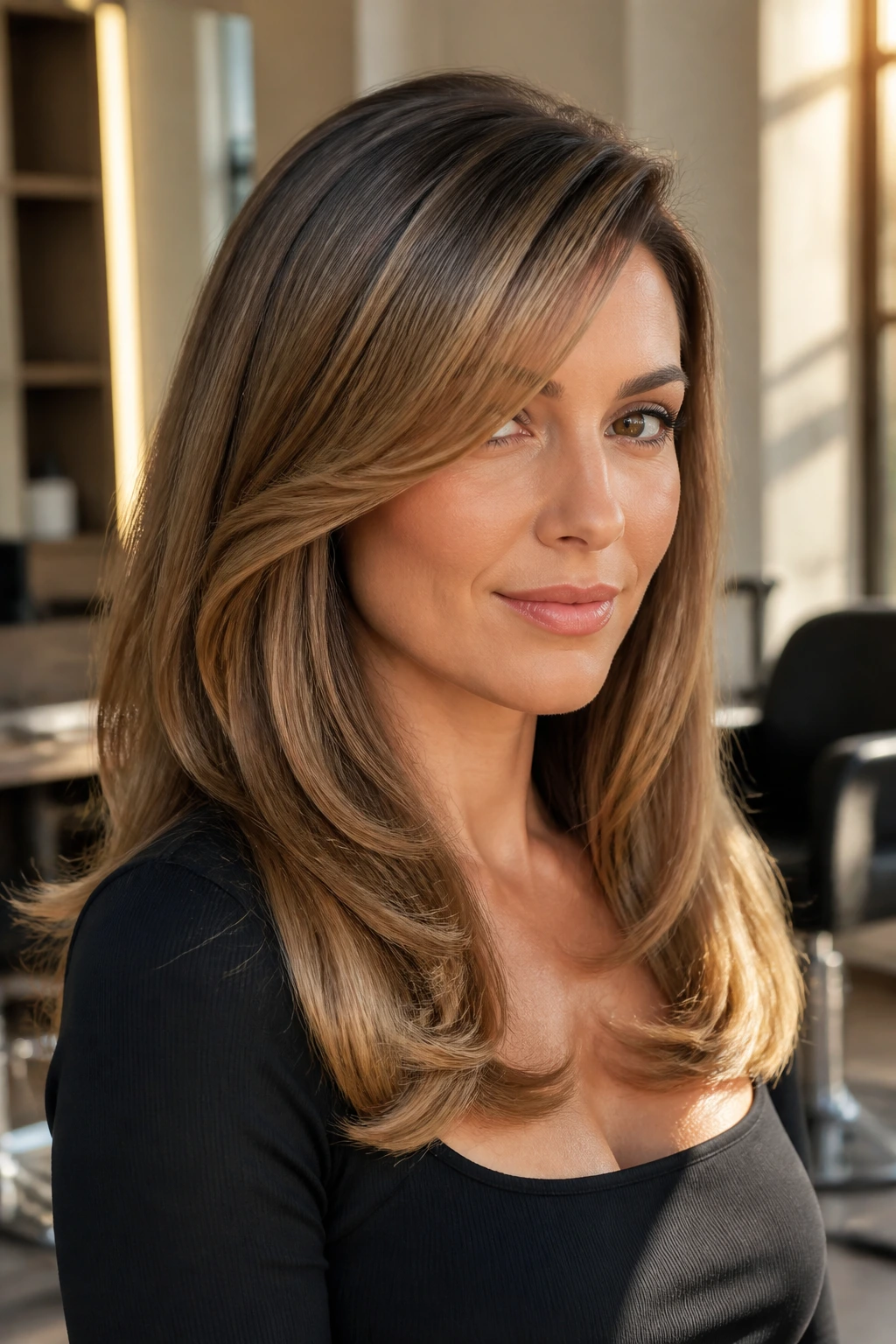
This is the cleanest place to start if you want the bang to soften a square face without shouting for attention. The part is deep, the fringe is light, and the ends are feathered so they don’t stack up into a hard line. On long hair, that feathered edge slides into the front layers and keeps the whole haircut from feeling dense around the cheeks.
Why it flatters a square jaw
The softness comes from motion. The bang doesn’t stop at one blunt point; it travels across the face and thins out near the cheekbone, which keeps the eye moving. That diagonal line is doing more than people think.
Quick details
- Best on straight to slightly wavy hair
- Ask for the shortest point around the outer brow
- Keep the longest pieces grazing the cheekbone
- Style with a medium round brush and a cool shot at the end
If your hair is heavy, this cut is one of the easiest ways to avoid that helmet feeling. The feathered ends matter. They stop the bang from sitting like a slab.
2. Brow-Grazing Wispy Sweep
A wispy side sweep is for the person who wants bangs but does not want to feel trapped by them. The fringe is narrow, the density is light, and the shortest pieces just kiss the brow before drifting off to one side. On a square face, that little bit of front softness can make the forehead feel less severe without adding bulk.
The best thing about this version is how little it asks of the rest of the haircut. You can wear long hair loose, in a low pony, or half-up, and the bang still reads as intentional. It’s subtle. Almost sneaky.
If your hair is fine, this is one of the smartest choices in the whole set. Heavy bangs on fine hair often collapse by noon. Wispy ones have a better shot at staying lifted, especially if you keep product off the roots and use a tiny bit of dry shampoo for texture.
3. Cheekbone-Length Swoop
Why does this one work so well on square faces? Because it aims right at the place where the face benefits from a little shadow and movement: the cheekbone. A bang that starts higher and stretches down toward the outer cheek gives the front of the haircut a soft diagonal, which is exactly what a strong jawline likes.
This shape feels more polished than wispy bangs, but it’s not severe. The length matters. If the bang ends too high on the face, the sweep can look accidental. If it reaches the cheekbone and curves there, it looks finished.
How to wear it
- Blow-dry the front section toward the opposite temple
- Wrap the ends around a 1.25-inch brush for a soft bend
- Let the last inch stay loose, not curled under too tightly
Long hair helps this style look expensive without being overstyled. That may sound like a silly phrase, but you know the look when you see it: the front falls in one clean line, then disappears into the lengths like it belongs there.
4. Blended Fringe With Long Face-Framing Layers
Picture this: you’re growing out layers, your hair is past your shoulders, and you want a fringe that doesn’t announce itself every morning. This is that cut. The side bang is blended into long face-framing pieces, so the whole front of the hairstyle feels like one movement instead of two separate decisions.
That blending is doing the real work. Square faces tend to look best when the front hair is soft around the jawline, not when it stops and starts in obvious blocks. A layered sweep helps the eye glide from brow to cheek to collarbone.
Ask your stylist to connect the bang to the first layers around your face. If the disconnect is too sharp, the fringe looks like an add-on. If the transition is too gradual, it can disappear completely. There’s a middle zone, and that’s the good one.
5. Choppy Textured Side Bangs
Choppy bangs are for people who like a little edge in the front. The pieces are broken up, the ends are not perfectly even, and the sweep feels casual rather than glossy. On long hair, that texture keeps the cut from going soft in a sleepy way. It has some bite.
Square faces benefit from this because the unevenness interrupts straight facial lines. A smooth side bang can be lovely, but a choppy one brings more movement around the cheekbones and keeps the front from feeling too tidy. That can be a relief if your hair naturally falls flat.
Use a matte texturizing spray, not a heavy cream. Heavy products flatten the tiny separations that make this cut interesting. And if your hair is thick, this is one of the better ways to remove some visual weight without making the fringe look thin.
6. Blowout Swoop With Rounded Ends
This is the glamorous version, and I mean that in the practical sense, not the overblown one. The bang is cut to swing, then styled with a round brush so the ends curl softly under and away from the face. On long hair, that bend makes the front of the haircut feel finished, especially if the rest of the hair has loose volume through the mid-lengths.
Unlike a flat-ironed side fringe, this one has body. That matters on square faces because flat bangs can echo the straightness of the jawline. A rounded swoop brings in a little curve where you want it.
If you blow-dry this style, dry the roots first and move the brush from root to tip in one smooth pass. Don’t fuss over the ends too much. A little bend is enough. Too much curling and the bang starts to look dated, which nobody asked for.
7. Long Diagonal Fringe
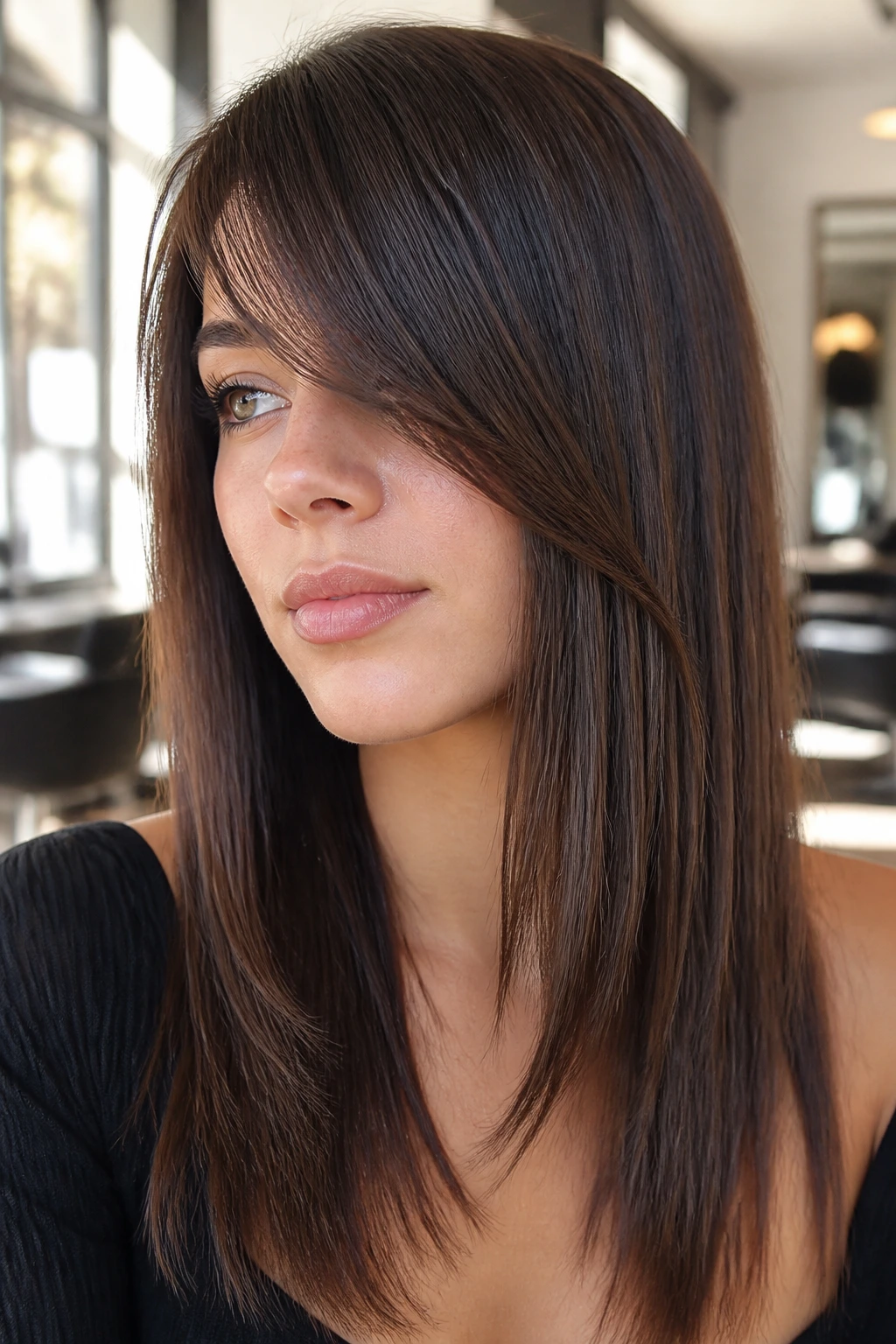
A long diagonal fringe is exactly what it sounds like: the hair starts short near the part and travels down in one long slant across the face. It’s one of the most flattering options for square faces because the angle is obvious. No guessing. The eye follows the line, and the line softens the face.
What to tell your stylist
Ask for the shortest point to begin around the peak of the brow or slightly above it, then let the fringe lengthen toward the cheekbone. The goal is a diagonal that still feels airy, not a heavy wedge. That distinction matters.
How to style it
- Blow-dry the front section in the opposite direction first
- Sweep it back across the forehead while the hair is still warm
- Finish with a flexible hold spray so it moves instead of freezing in place
This is a good choice if you wear your long hair straight. The cut adds shape without making you rely on curls or waves to do all the work.
8. Soft Arched Sweep
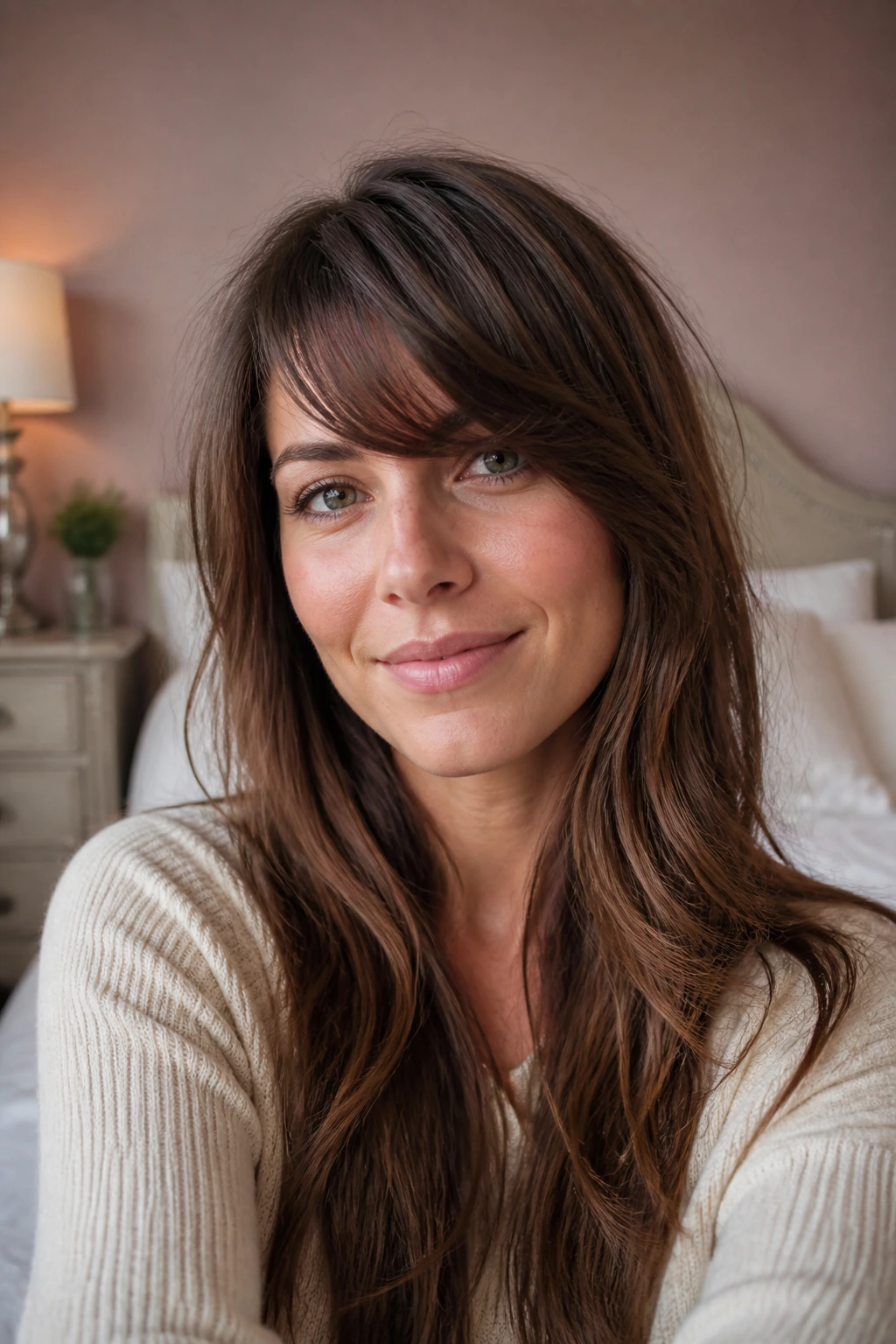
This one starts with a gentle curve rather than a straight slash. The fringe is cut so it arches slightly above the brow and then falls sideways, which gives the front a softer shape than a hard diagonal. It’s a nice fit for square faces because it lightens the forehead without drawing a box around it.
The arc helps if your hairline is a little uneven or if your part naturally wants to drift. Instead of fighting that, the cut works with it. That’s the part people miss. Good fringe should follow your hair’s habits, not bully them into submission.
If your hair is medium to thick, keep the bang light through the interior. Too much density and the arch loses its softness. A little point-cutting at the ends keeps the line from looking blunt.
9. Piecey Side Bangs for Thick Hair
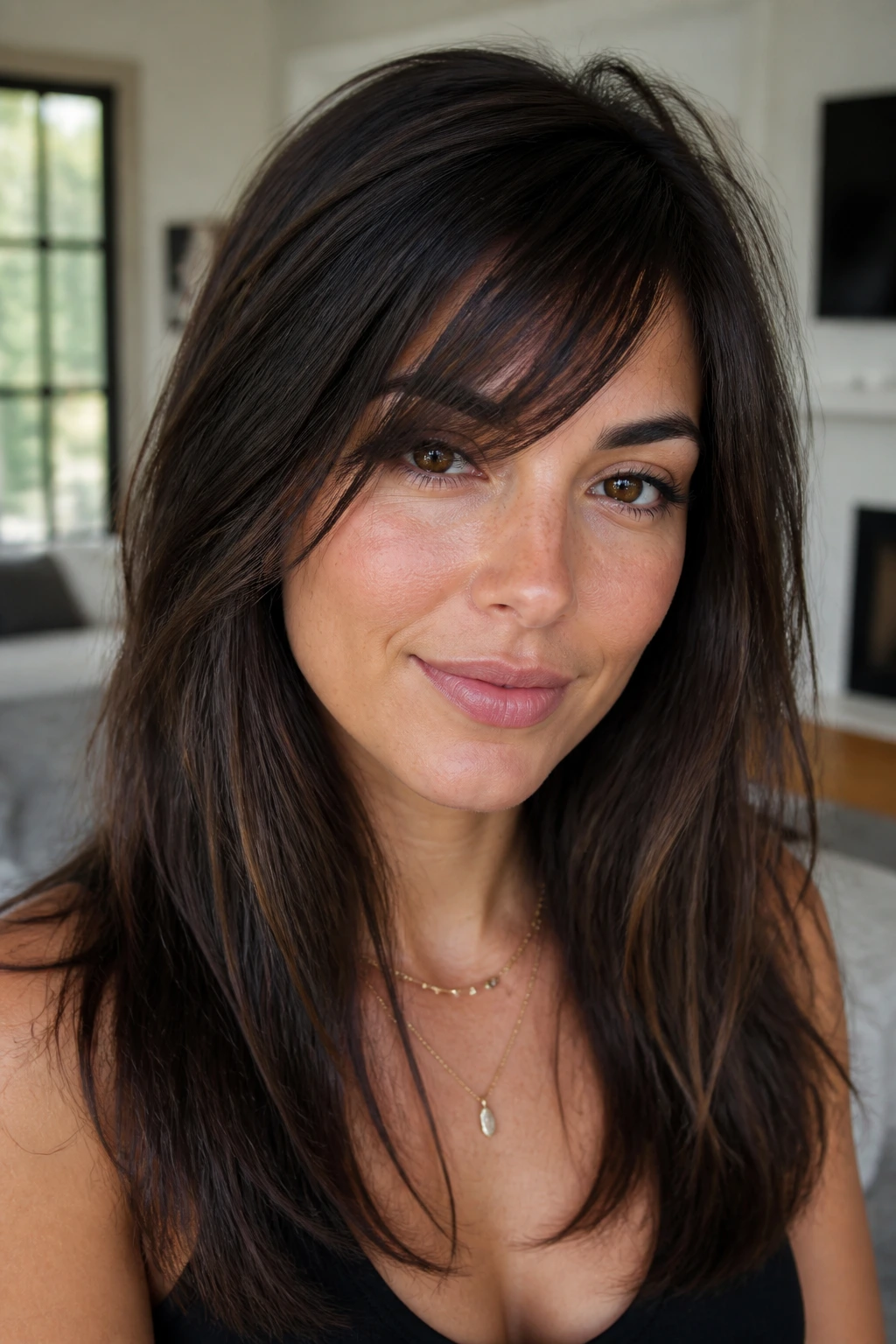
Thick hair needs a different answer. A dense side fringe can swallow the face whole, especially on a square shape where the jaw already has a clear outline. Piecey bangs solve that by breaking the fringe into separate strands that move independently instead of landing as one solid sheet.
The cut should remove weight in the right places, not everywhere. If the stylist thins too aggressively, the bang turns see-through at the ends and puffs up at the roots. If the weight stays too low, you get that heavy triangle shape nobody enjoys.
Here’s what usually helps:
- Ask for internal texture, not blunt thinning
- Keep the shortest pieces at the high point of the cheekbone
- Use a little cream only on the ends
- Rework the front with your fingers after blow-drying
Piecey side bangs are also kind to long hair because they sit on top of the length instead of taking over the whole haircut.
10. Razor-Cut Side Fringe
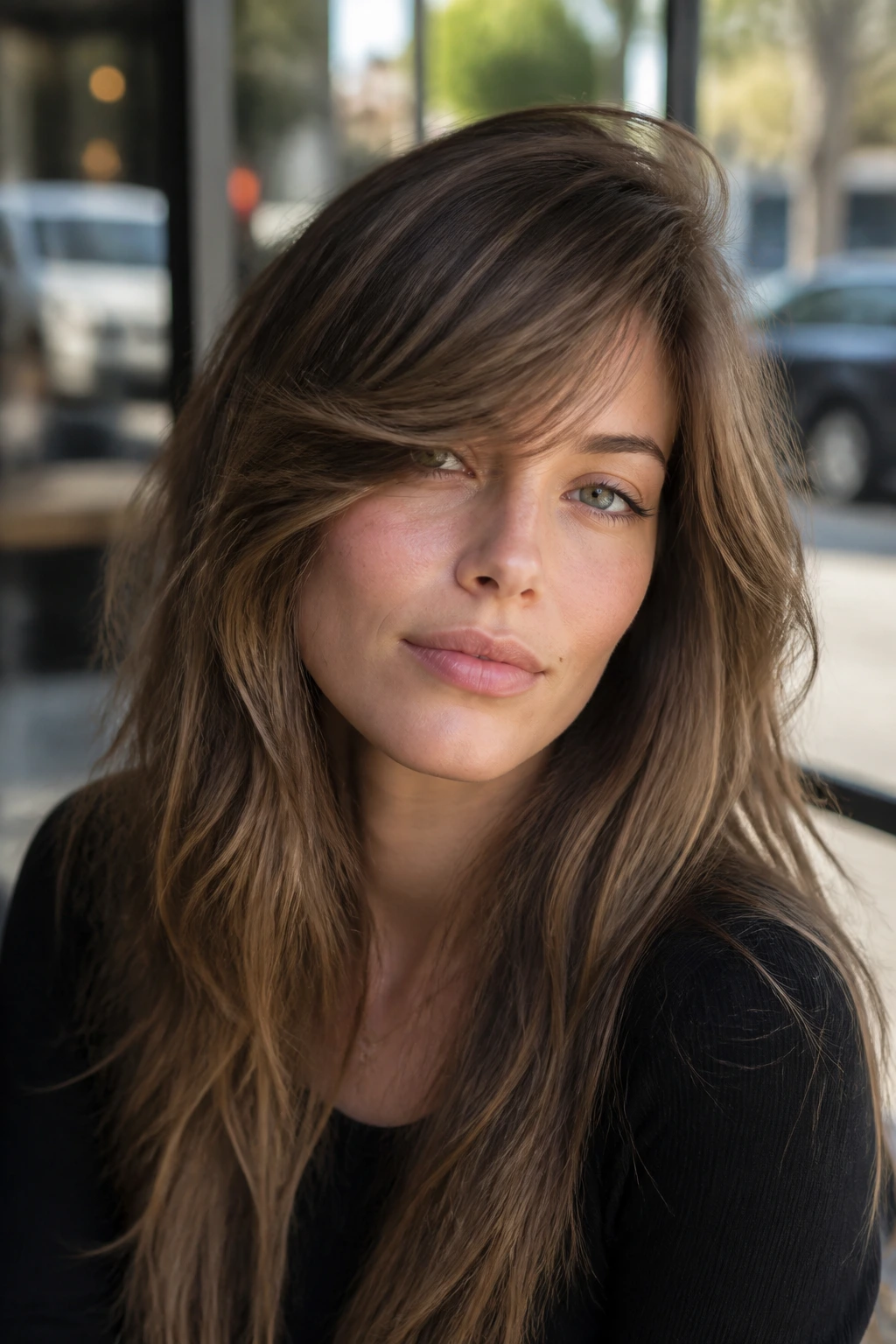
Why choose a razor cut? Because it creates a softer edge than scissors alone, especially if you want the fringe to melt into long hair without any harsh line. The ends look airy and a little broken up, which gives square faces the kind of front movement that keeps strong angles from dominating the whole look.
This style does best on hair that is not too fragile. Razor cutting can make very fine, brittle hair fray at the ends if it’s handled badly. On healthy hair, though, it gives a cool, lived-in finish that looks less polished and more natural.
Best for
- Wavy hair that needs softness at the front
- Thick hair that gets bulky when cut bluntly
- Long layers that already have some movement
If you like a side fringe that looks better after it’s been worn for a few hours, this is a strong pick. It settles in nicely.
11. Side-Swept Bangs With a Long Shag
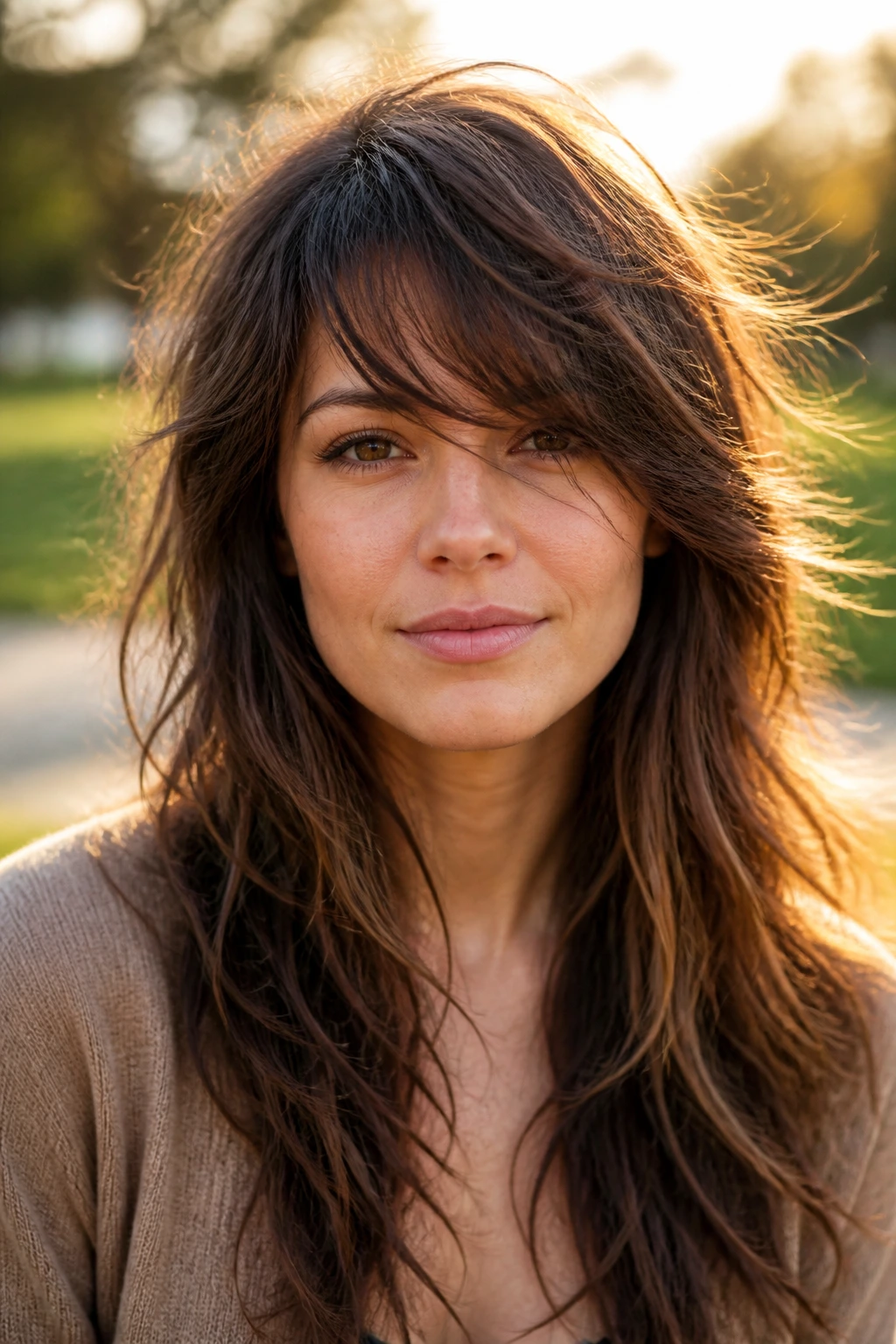
A long shag and a side sweep are a good pair because they both like movement. The fringe doesn’t sit alone; it drops into layers, bends into the sides, and keeps the whole haircut from feeling carved up. On square faces, that layered softness is useful because it breaks the straight edges around the jaw and forehead without making the face disappear.
This is one of the more forgiving options if you don’t want to restyle bangs every single morning. The shag gives the fringe a little built-in mess, and that’s half the work done. A quick blow-dry at the roots and a squeeze of styling cream through the ends is often enough.
The downside? If you hate texture or prefer sharp lines, a shag may feel too casual. But if you like hair that can survive a little wind and still look good, this is a smart lane.
12. Bottleneck Sweep
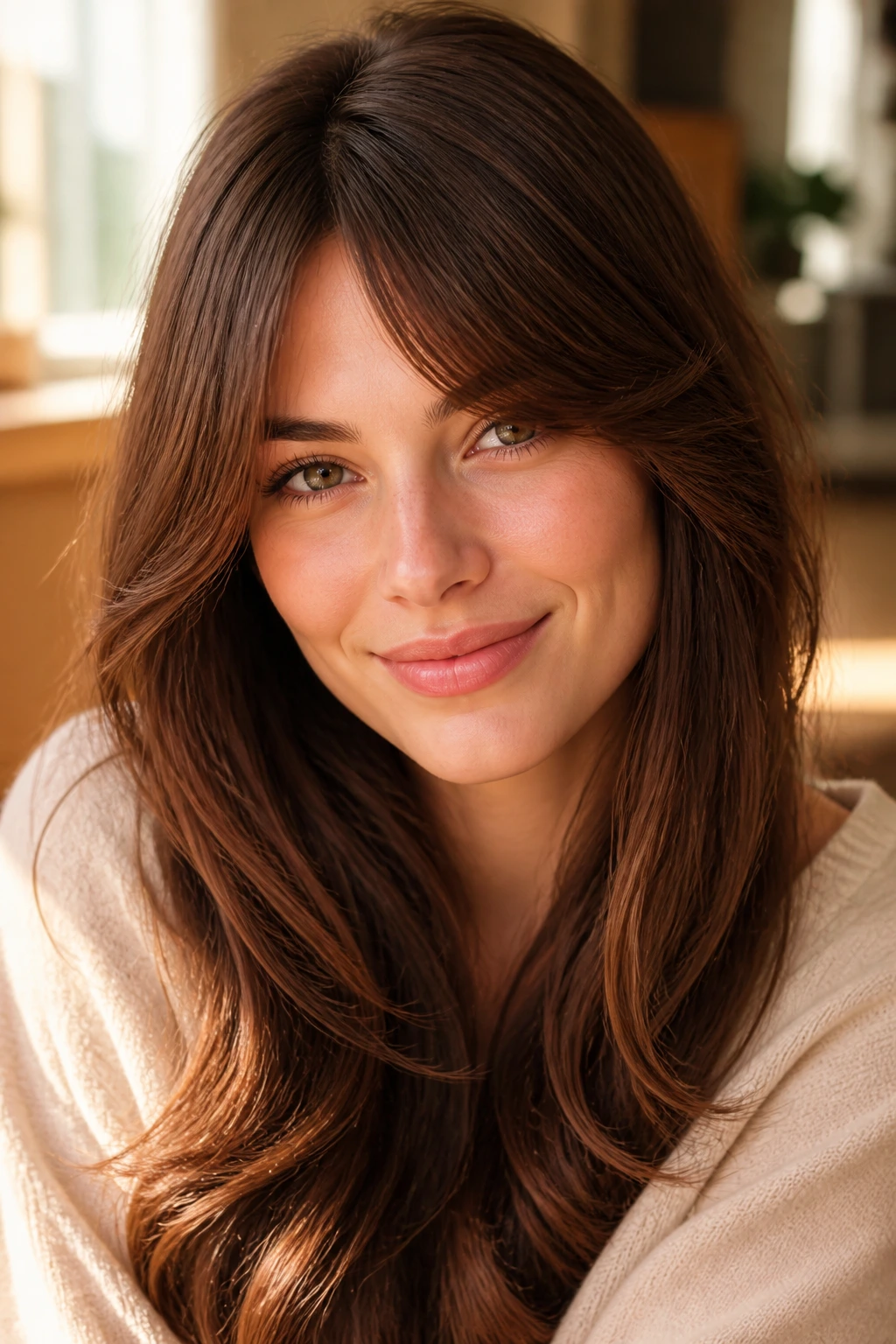
The bottleneck shape narrows near the center and opens wider toward the sides, which makes a square face look softer without adding too much bulk at the forehead. Side-swept bangs in this family tend to start with a lighter center piece and spread into longer side sections. The effect is gentle but not bland.
It’s a good compromise for anyone who wants bangs that are clearly there but not heavy enough to feel like a commitment. On long hair, the shape blends well into layers because it already has that tapered middle-to-side structure.
This cut is especially useful if your face feels broad at the temples. The wider outer pieces frame the face, while the narrower center keeps the bang from crowding the forehead. Small detail, big difference.
13. Tousled Beach-Wave Bangs
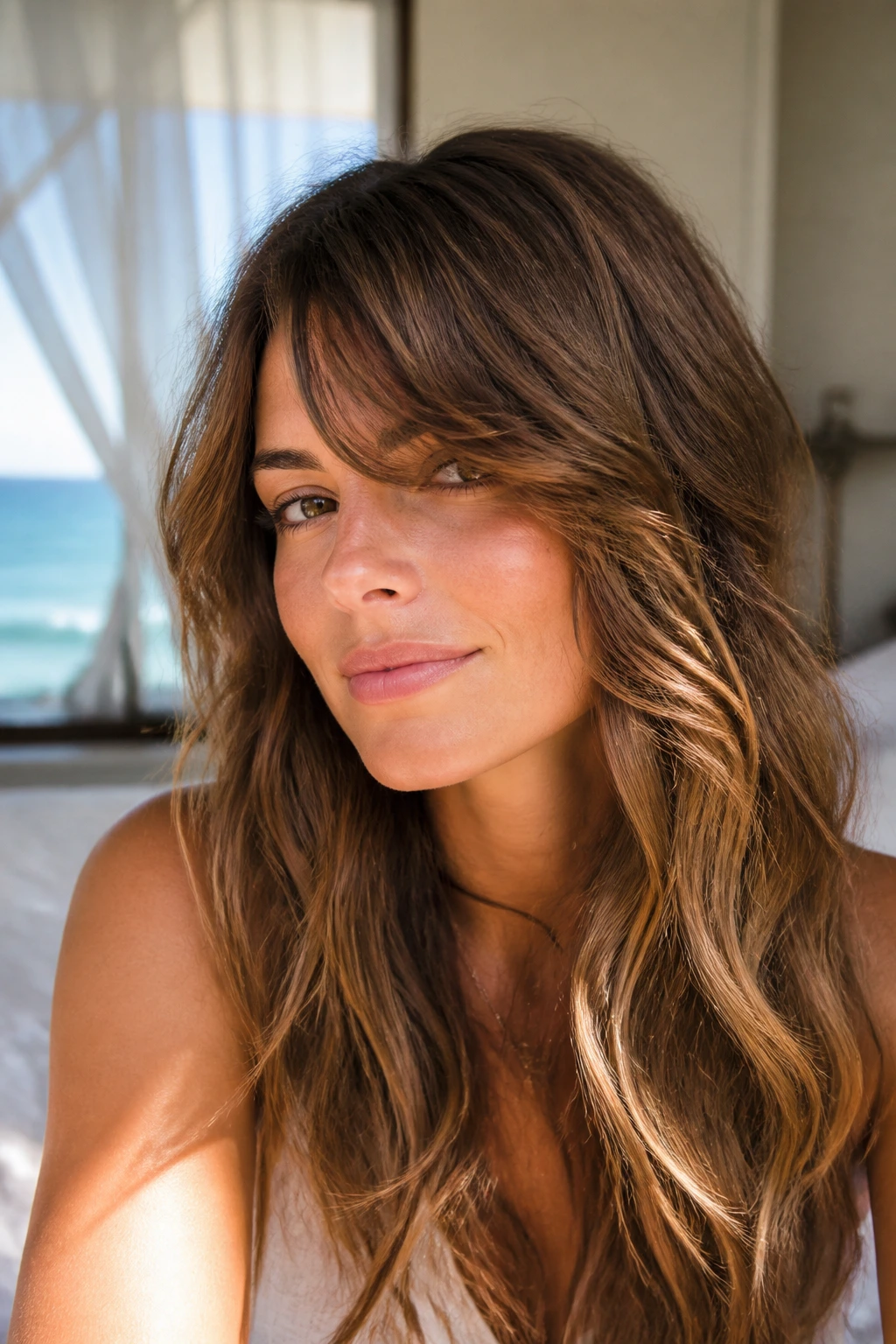
A tousled side bang wants a little bend, not a perfect blowout. The fringe is cut to sit with natural wave, and the styling leans into that softness instead of flattening it. Square faces get a real break from the texture because the irregular movement stops the face from reading as too geometric.
Why it works
The wave creates tiny shifts in the line of the bang, which is useful when your facial structure already has strong straight edges. A smooth sweep can be pretty, sure, but a little rumple around the front often looks more relaxed and current.
You can air-dry this one with a touch of curl cream or diffuser-dry it on low heat. The key is to leave the front somewhat loose. If you squeeze every bend out, you lose the charm.
Long hair lets the texture stay concentrated where it matters. The rest can fall straight, wavy, or curled. The fringe still does the job.
14. Sleek Polished Sweep
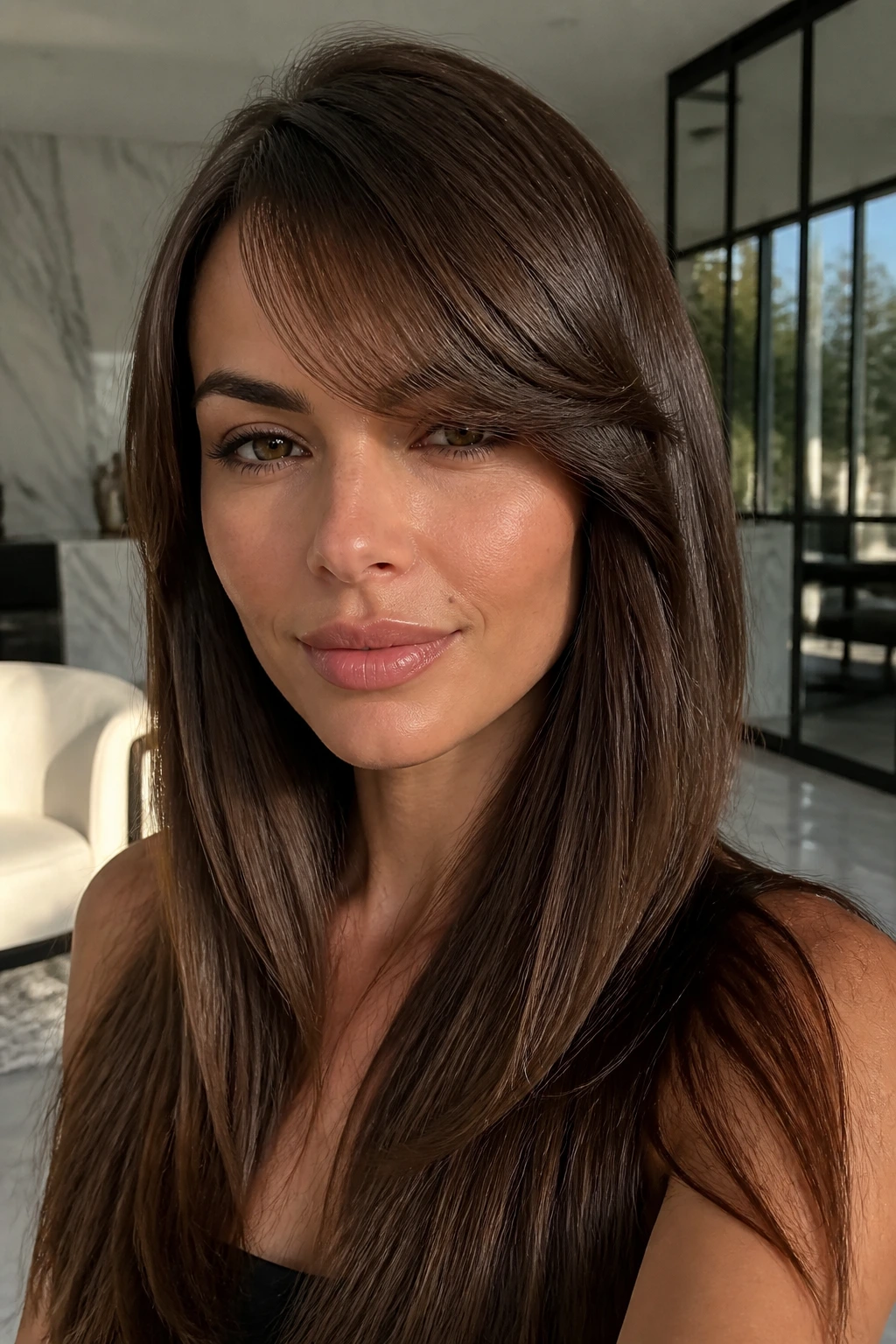
Not everyone wants texture. Some people want the front of the haircut smooth, glossy, and clean. A sleek side sweep can look gorgeous on long hair if the line is cut properly and the ends are directed away from the face. For square faces, the trick is to keep the fringe soft in shape even when the finish is smooth.
That means no chunkiness. No square block of hair parked at the temple. The bang should skim and curve, not sit stiffly. A flat iron can help, but only if you use it to shape, not to iron the life out of the hair.
This look shines when the rest of the hair is long and healthy. Split ends and fuzzy roots show up fast under a polished finish, so it rewards good upkeep. A pea-sized dab of serum on the mid-lengths is plenty. Too much, and the bang looks greasy by noon.
15. Side Bangs With Subtle Highlights
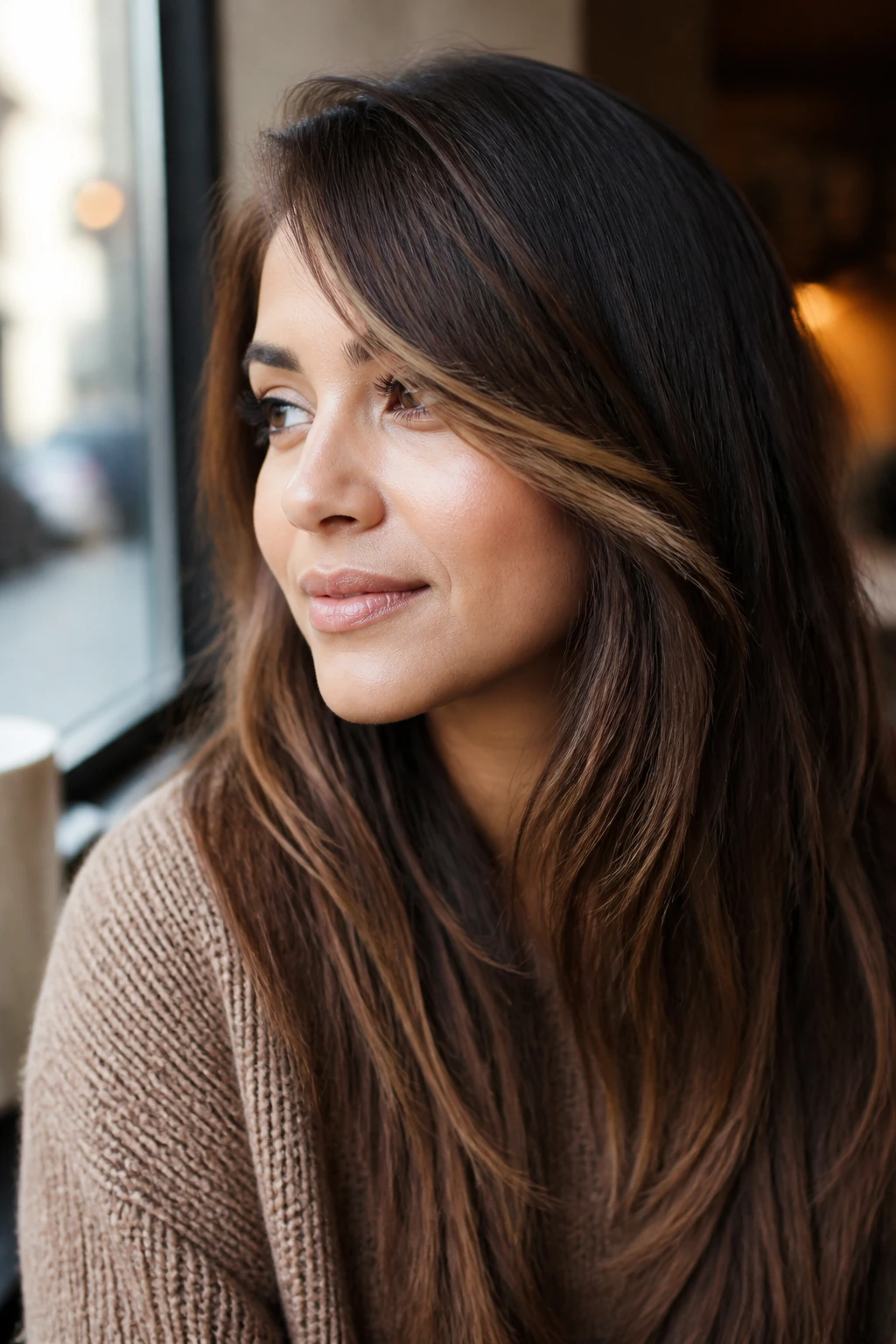
Color changes the way bangs read. A little highlight through the side sweep can make the fringe feel lighter, which is useful on square faces because lightness in the front softens the overall frame. You don’t need stripey pieces. That would be a mess. Fine ribbons near the face are enough.
The best placement is usually around the longest side of the bang and the face-framing layers beside it. That’s where the eye lands. The dimension makes the sweep look more fluid, especially in natural light.
This style is especially good if your long hair is one solid color and you want the front to move a bit more visually. The highlights do not change the cut, but they change the way your eye sees the cut. Small shift, big payoff.
16. Retro Volume Sweep
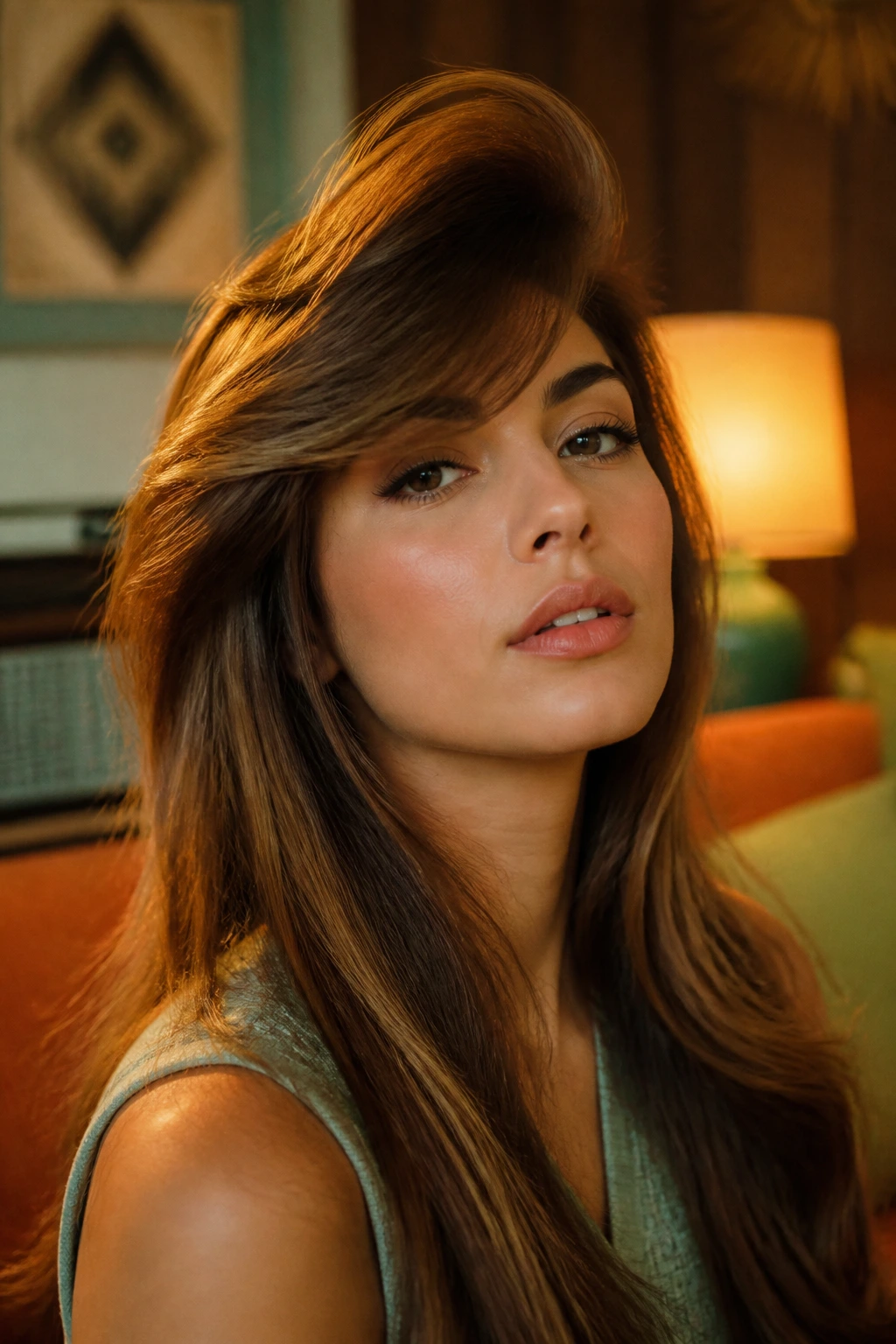
Do you like a little drama at the front? Then a retro volume sweep gives you that lifted, swooping shape that sits high at the root and curves across the face with a little bounce. On square faces, the added height is useful because it draws the eye upward and away from the jawline.
The styling note that matters
Set the roots first. If the root stays flat, the whole idea collapses. Use a round brush, roll the bang up and away from the face, then clip it in place for a few minutes while it cools. That cooling stage is what makes the bend hold.
The volume should live at the base, not in a puffy end shape. If the ends flare too much, the look goes costume-y fast. Keep the lift near the part and let the sweep taper gracefully.
This is one of the few bangs that can make long hair feel even longer, because the front rises before it falls. It has a nice old-school glamour to it. Not precious. Just controlled.
17. Minimalist Narrow Sweep
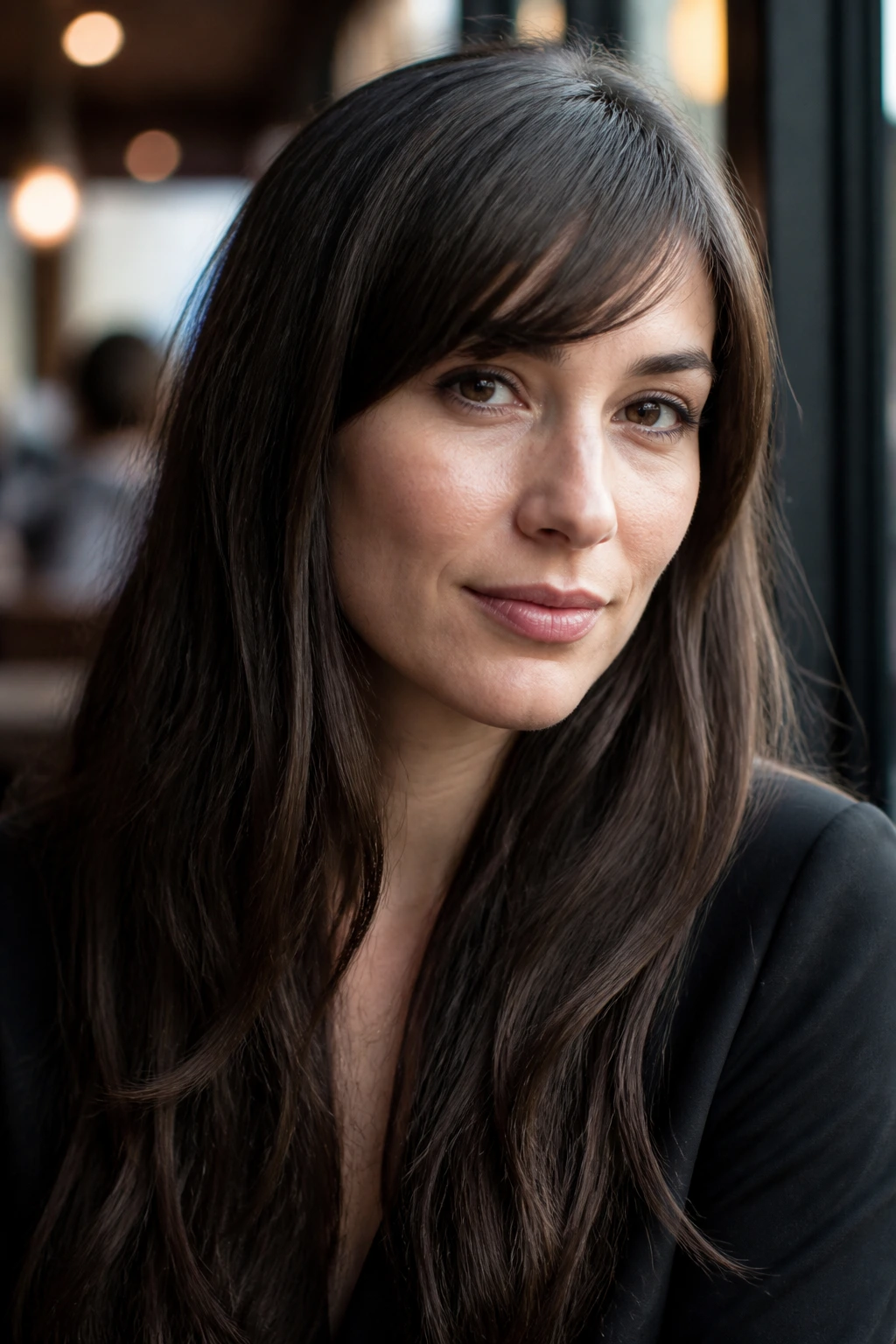
A narrow sweep is the quiet one in the group. It uses a smaller section of hair, so the fringe feels delicate rather than full. For square faces, that light touch can be a relief. You get the softness across the forehead without adding too much width around the temples.
This cut is a good fit if you already wear long hair with a center or off-center part and want just a small directional shift. It’s also friendly for people who get annoyed when bangs take over their whole morning. Less hair in the front means less fuss.
Best for
- Fine hair that can’t handle much density
- People easing into bangs for the first time
- Long, straight hair that needs a touch of asymmetry
If you go this route, keep the shape clean. A narrow sweep looks best when it’s precise, not over-textured.
18. Curved-Ends Side Bangs
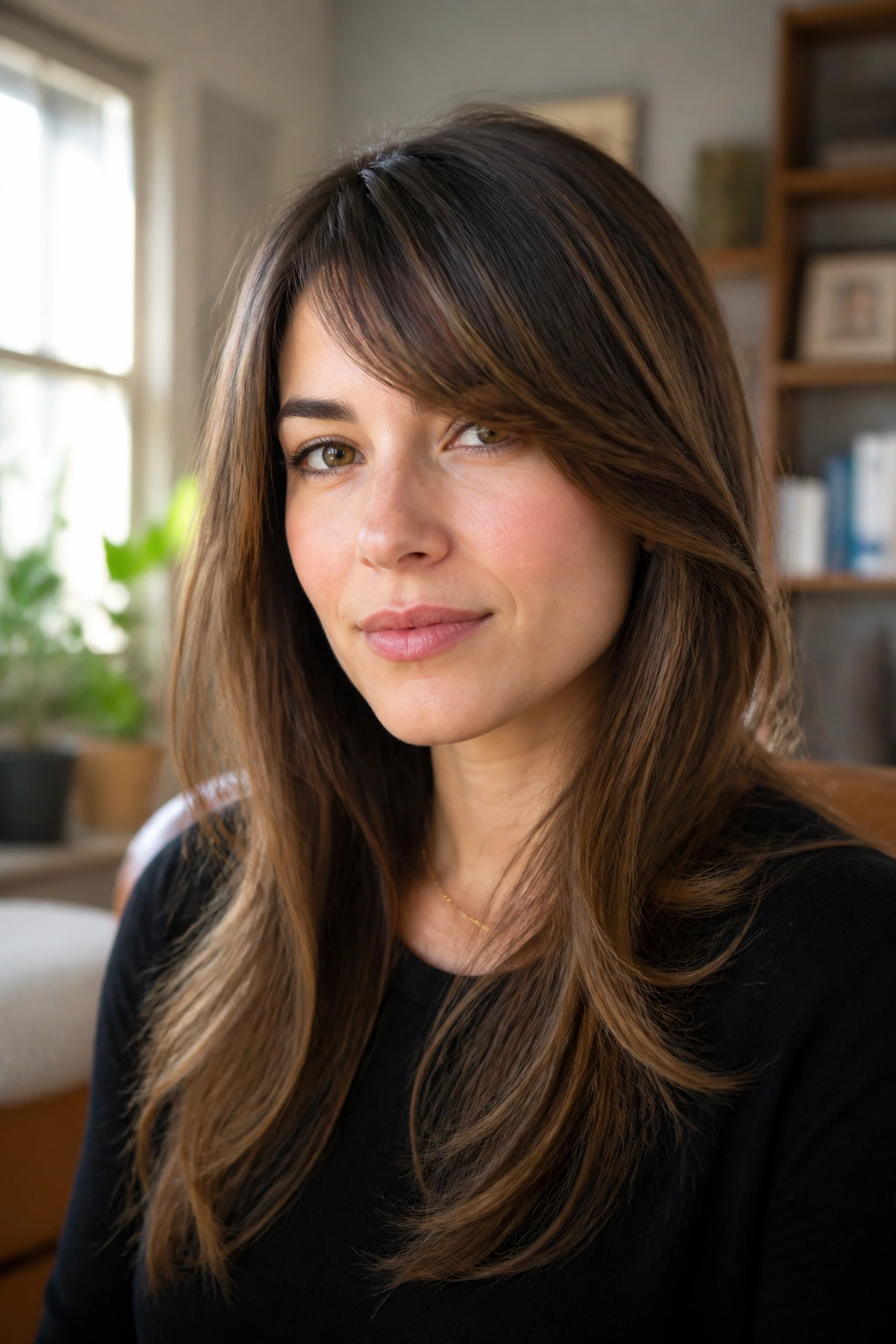
The ends make this one. Instead of falling straight, the fringe curves softly at the last inch or two, usually toward the cheekbone or just below it. That little hook of movement is useful for square faces because it breaks the straight downward line and adds a rounder feel at the front.
It’s a nice option for medium-thick hair that holds shape well. The curve can be built with a round brush, a large barrel curling iron, or even a velcro roller if you’re patient enough to wait for it to cool. Patience helps here. Rushing it usually leaves the bang limp.
This version is less about drama and more about finish. It makes a haircut look thought through. On long hair, the curved end helps the bang connect to the rest of the lengths instead of sitting like a separate piece.
19. Side Sweep for Curly Hair
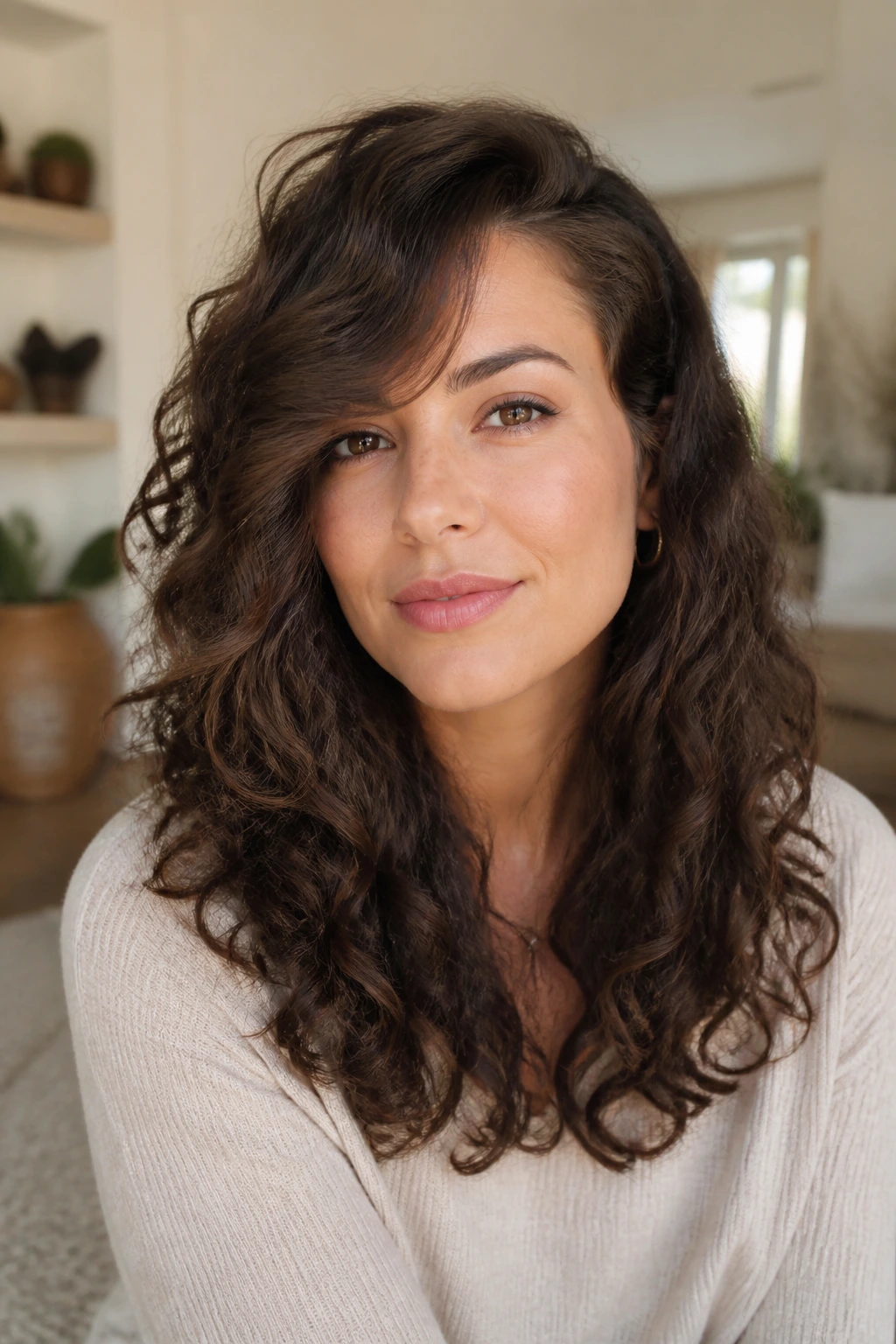
Curly hair can absolutely wear side-swept bangs, and the result is better when the cut respects the curl pattern instead of flattening it into submission. The fringe should be left longer than you think, because curls bounce up. On a square face, a curly side sweep softens the outline in the easiest possible way: movement.
The main job is shape control. You want a diagonal, not a puffed triangle. That means cutting the fringe dry or nearly dry, watching where the curl lands, and leaving enough length for the hair to spring where it wants to spring. Heavy products are the enemy here. Light cream, maybe a little gel at the ends, and stop.
Long hair gives curly bangs room to blend. The front can be loose and soft while the rest of the hair falls in bigger waves or curls. That contrast is part of the appeal.
20. Curtain-Like Side Bang Blend
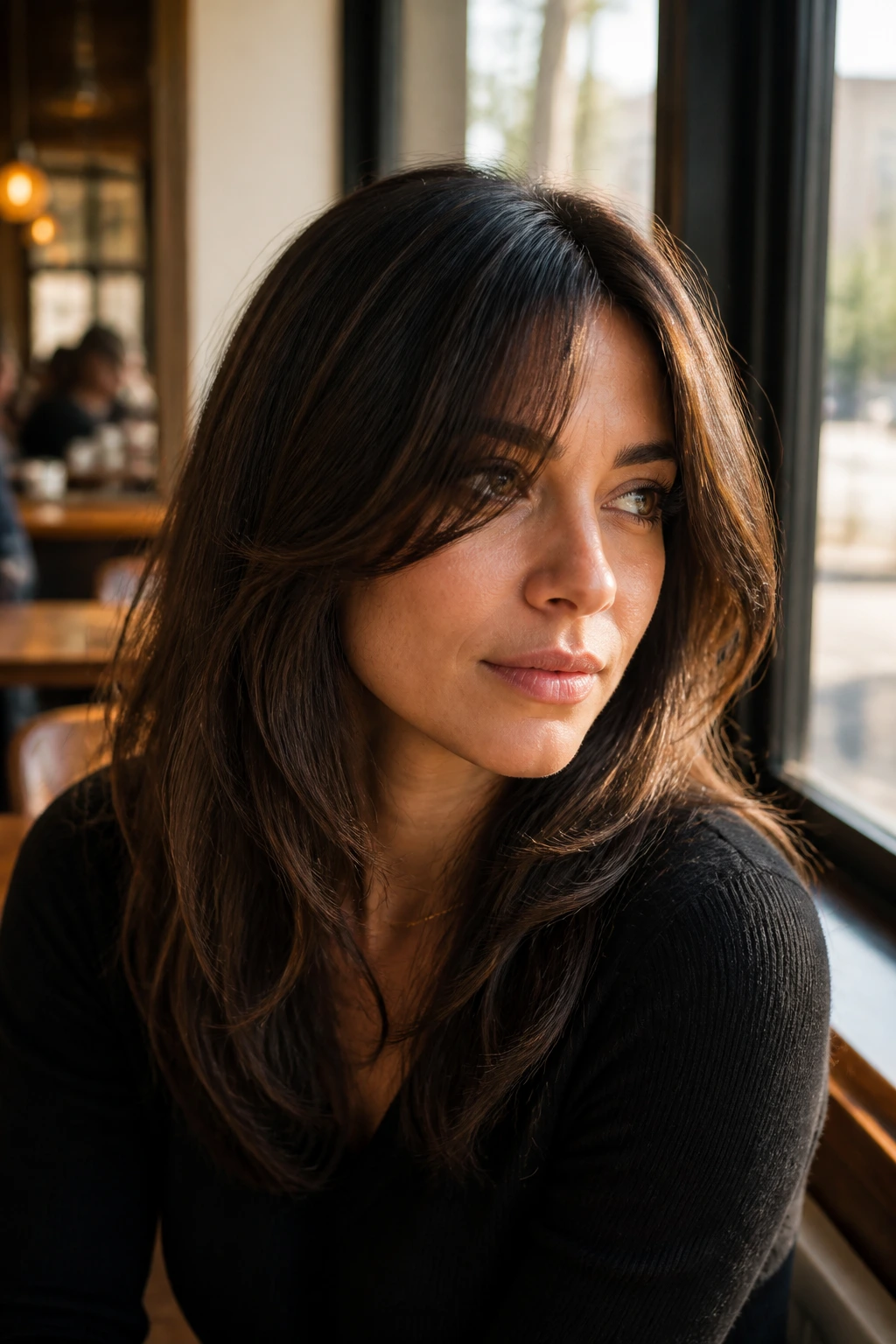
This is the bridge between side bangs and curtain bangs, and honestly, it’s one of the easiest styles to live with. The fringe parts slightly off-center, then sweeps to one side while still keeping a little openness at the forehead. Square faces usually like this because the front of the haircut stays soft and flexible rather than locked into one fixed angle.
It works especially well on long hair with layers around the chin or collarbone. Those layers give the bangs somewhere to flow, which keeps the sides from feeling heavy. If you’re not sure whether you want a full fringe commitment, this is a smart middle ground.
The best thing about this shape is how forgiving it is when it grows. A few extra weeks between trims does not ruin it. It just becomes a little more curtain-like. That’s not a flaw. That’s the point.
21. Grow-Out Friendly Sweep
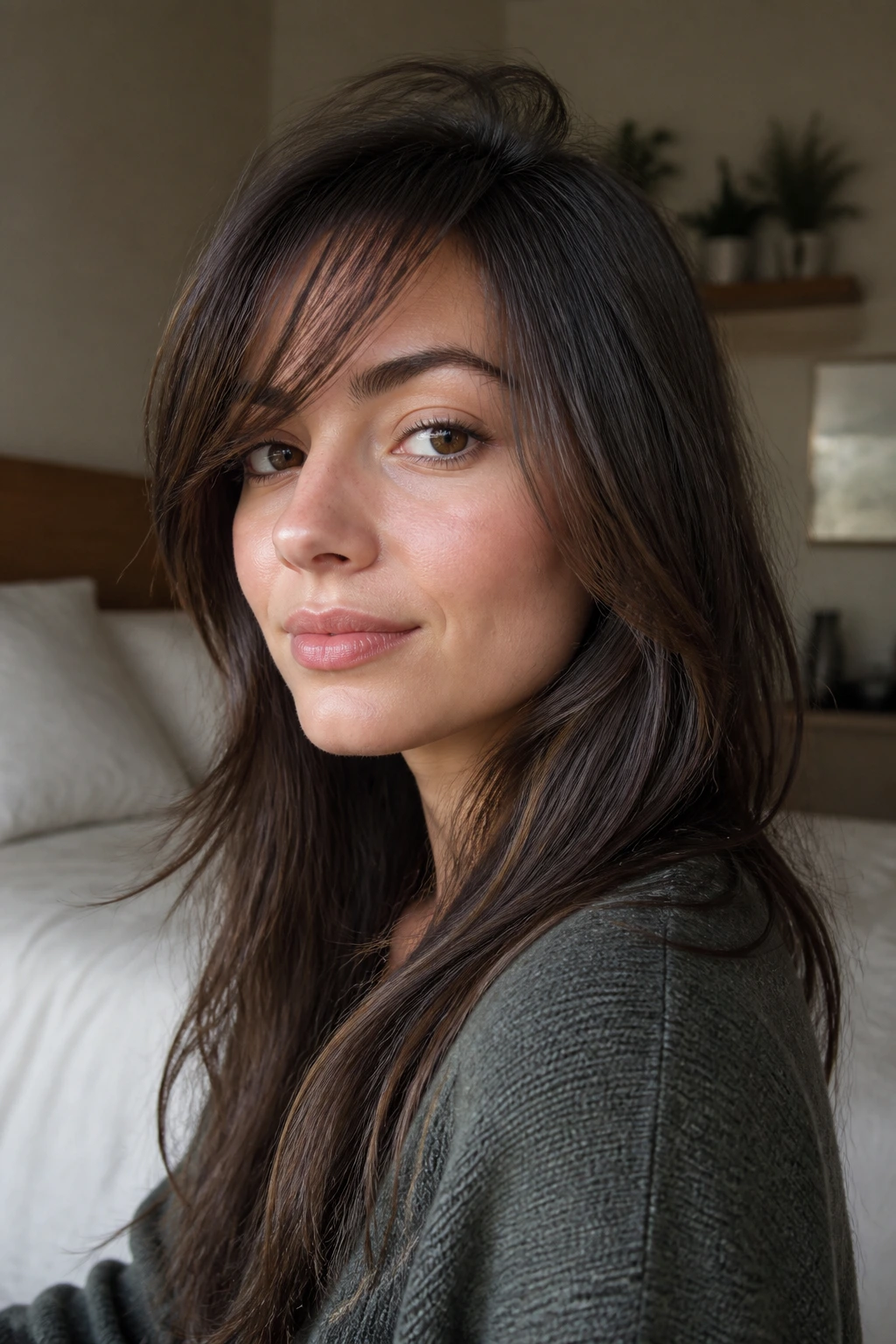
A grow-out friendly fringe is for the person who wants the look without signing up for constant trim appointments. The shortest pieces stay long enough to move into side layers later, and the overall shape is soft from the start. Square faces benefit because the front remains diagonal even as the cut gets a little longer.
This is one of my favorite ways to wear bangs on long hair, because it doesn’t punish you for having a life. A missed trim doesn’t make it ugly. It just makes it softer. The line slowly turns into face-framing layers, which is exactly where you want a lot of side-swept bangs to end up anyway.
Ask your stylist not to overcut the shortest point. Leave room. Room is what makes this version useful.
22. Soft Flip at the Cheekbone
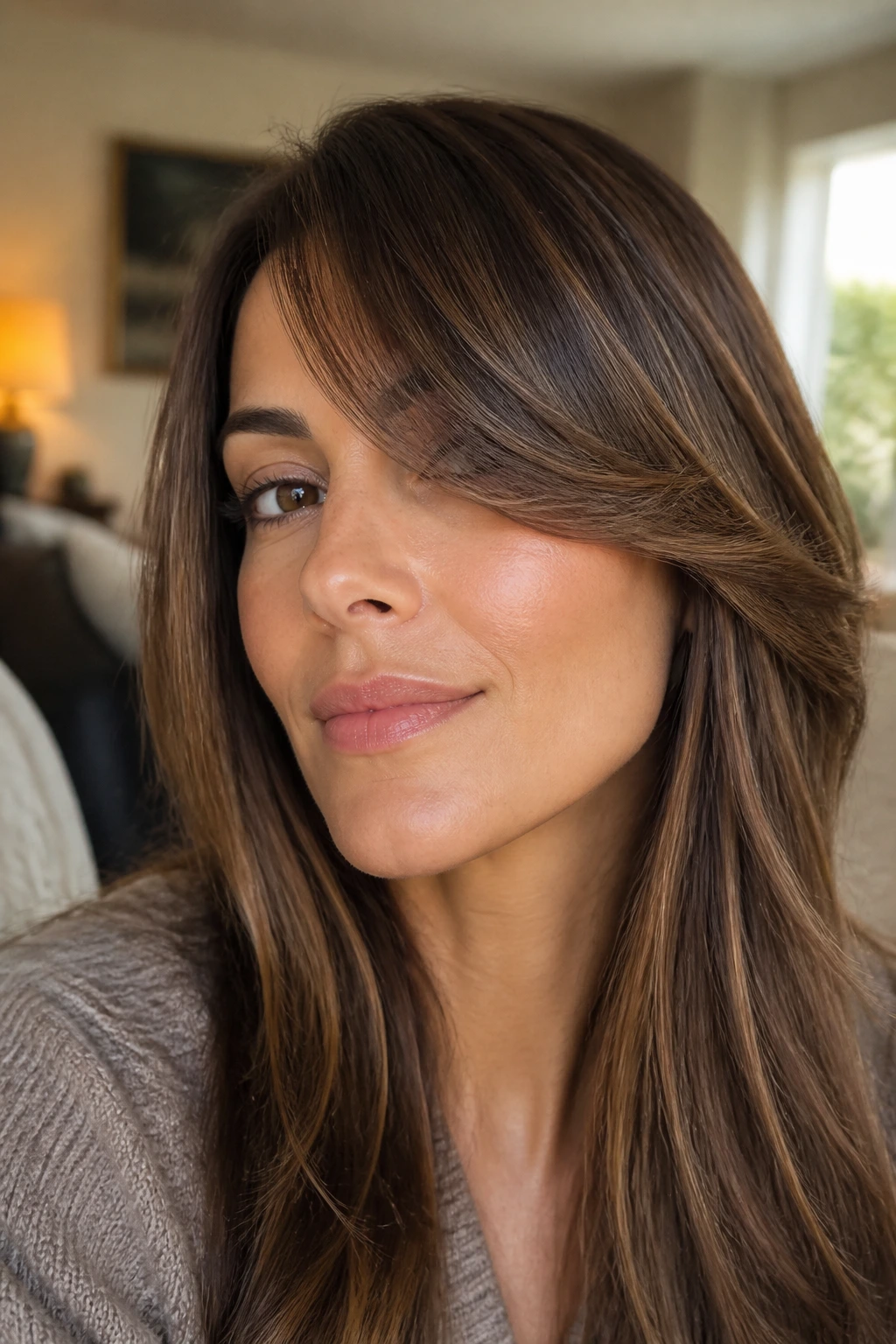
The final version is all about the finish. The bang sweeps across the face and flips very slightly away at the cheekbone, which keeps the front from clinging too tightly to the face. On square faces, that little outward turn adds softness right where the jaw begins to feel strongest.
It looks polished without feeling stiff. You can wear it with straight long hair, loose waves, or a blown-out bend, and the cheekbone flip still reads as intentional. That little curve helps the fringe connect with the longer layers beside it instead of just sitting there.
If you want something that looks styled but not overworked, this is a very good lane. It’s a small detail, but small details are what make bangs look expensive or awkward. The difference is often half an inch and one better brush pass.
What Makes Side-Swept Bangs Look Good on Square Faces
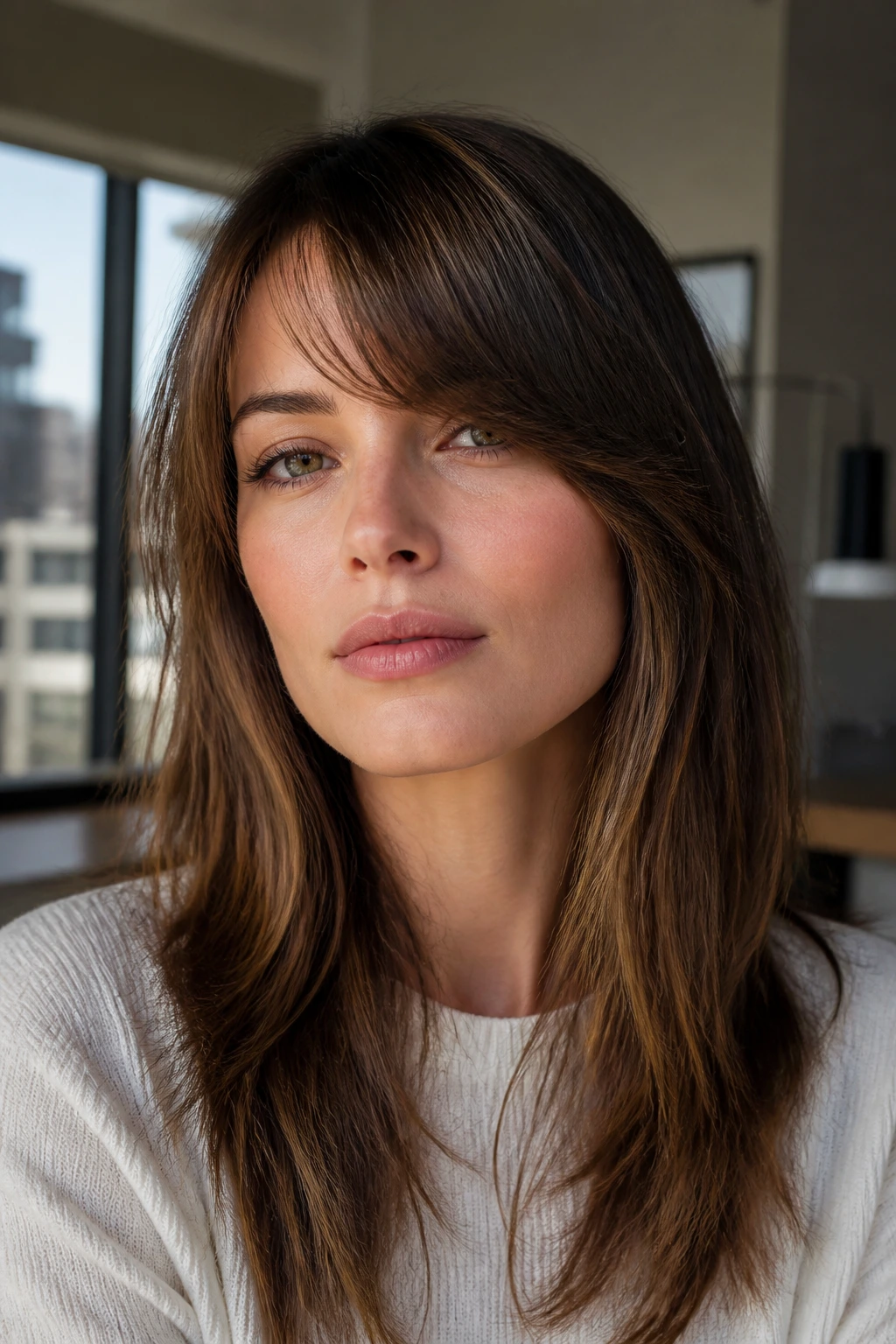
A square face usually has clear structure through the jaw, forehead, and cheek width. That structure is a strength. The problem only starts when the haircut repeats those same lines too neatly. Straight-across bangs, dense blunt edges, and boxy side pieces tend to echo the face shape instead of balancing it.
Side-swept bangs change the math. The diagonal line pulls the eye across the face, not straight down it. That matters because a diagonal feels softer than a horizontal line. It also gives the hair movement near the temples and cheekbones, which is where square faces often benefit most from a little break in the geometry.
Long hair makes that effect easier to keep. The fringe can merge into layers, and the weight of the lengths prevents the front from floating away on its own. If the bangs are too short or too isolated, they can look like a separate haircut. Blend is what makes the whole thing work.
The best side-swept bangs for long hair and square faces usually have three things in common: a diagonal start, a tapered end, and some softness around the cheekbone. That may sound fussy, but it’s really just a way of saying the face needs movement, not a barricade of hair.
The Tools That Make Styling Easier
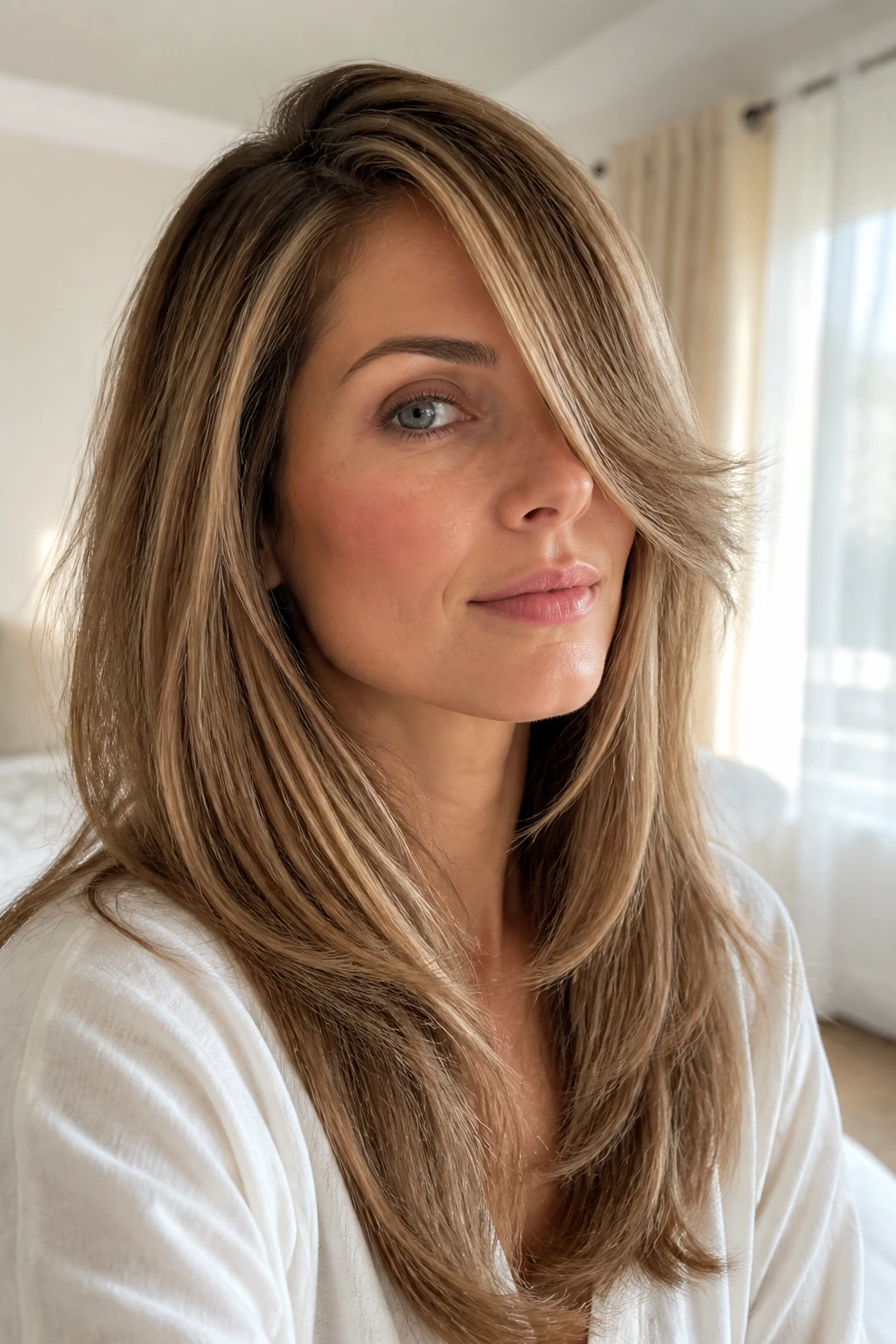
You do not need a drawer full of gadgets, but a few good tools make this haircut behave a lot better.
-
A blow dryer with a narrow nozzle: This keeps the airflow pointed where you want it, which matters when you’re pushing bangs across the forehead instead of blasting them into chaos.
-
A round brush in the 1 to 1.5-inch range: Smaller brushes create more bend; larger ones create a softer sweep. If your hair is thick, go slightly bigger.
-
A tail comb: Useful for making a clean side part and separating the bang from the rest of the hair before drying.
-
Sectioning clips: These stop the longer lengths from getting in the way while you style the front.
-
Heat protectant spray: Bangs live close to the face, so this isn’t optional if you use hot tools.
-
Flexible-hold hairspray: You want movement, not shellac. A light spray keeps the sweep in place without making it stiff.
-
Dry shampoo: It helps the roots stay lifted and takes the oil out of the front, which is where bangs usually get greasy first.
-
A flat iron, optional: Good for a quick bend or a smooth finish, but not necessary if your brush work is solid.
How to Tell Your Stylist What You Want
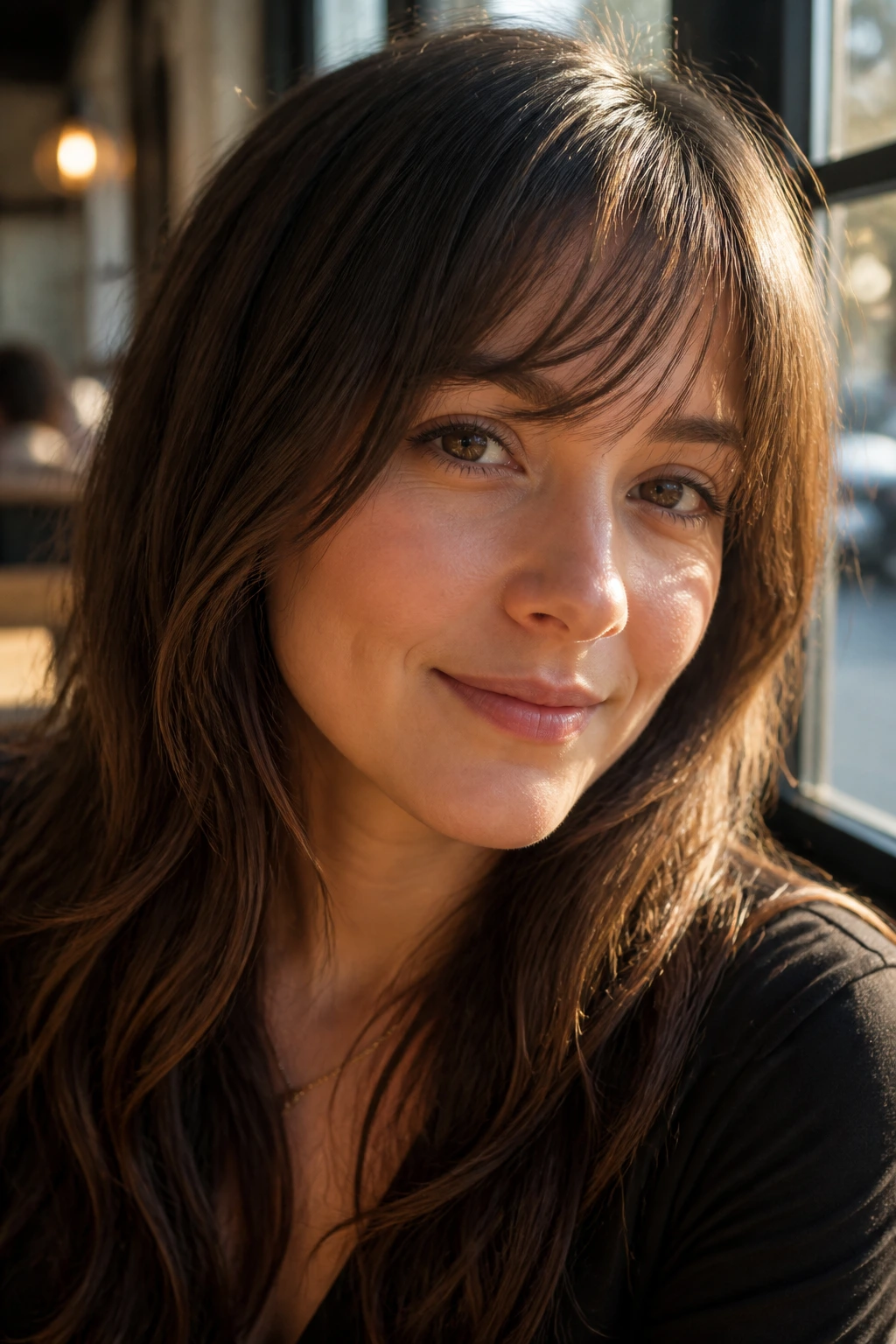
Bring photos, yes, but also give real instructions. Photos help with shape, but words help with length. On a square face, length is everything. A bang that stops at the wrong point can change the whole effect.
Ask your stylist to show you where the shortest point will land when the hair is dry and swept. That sounds obvious until you remember that wet hair lies. If your hair shrinks when dry, the bang may end up shorter than you expected. If it falls flat when wet but puffs up later, the final line can sit too high.
A few useful phrases:
- “Keep the shortest point near the outer brow.”
- “Let it lengthen toward the cheekbone.”
- “Blend it into the first face-framing layers.”
- “Please leave enough weight for the bang to sweep instead of sticking up.”
If you have a strong cowlick or a part that always shifts, say so. Seriously. A fringe that ignores a cowlick spends half its life fighting your scalp. The fix is usually a slightly longer cut, a stronger root set, or a part placed where the hair already wants to fall.
Daily Styling Tricks That Keep the Bangs Moving
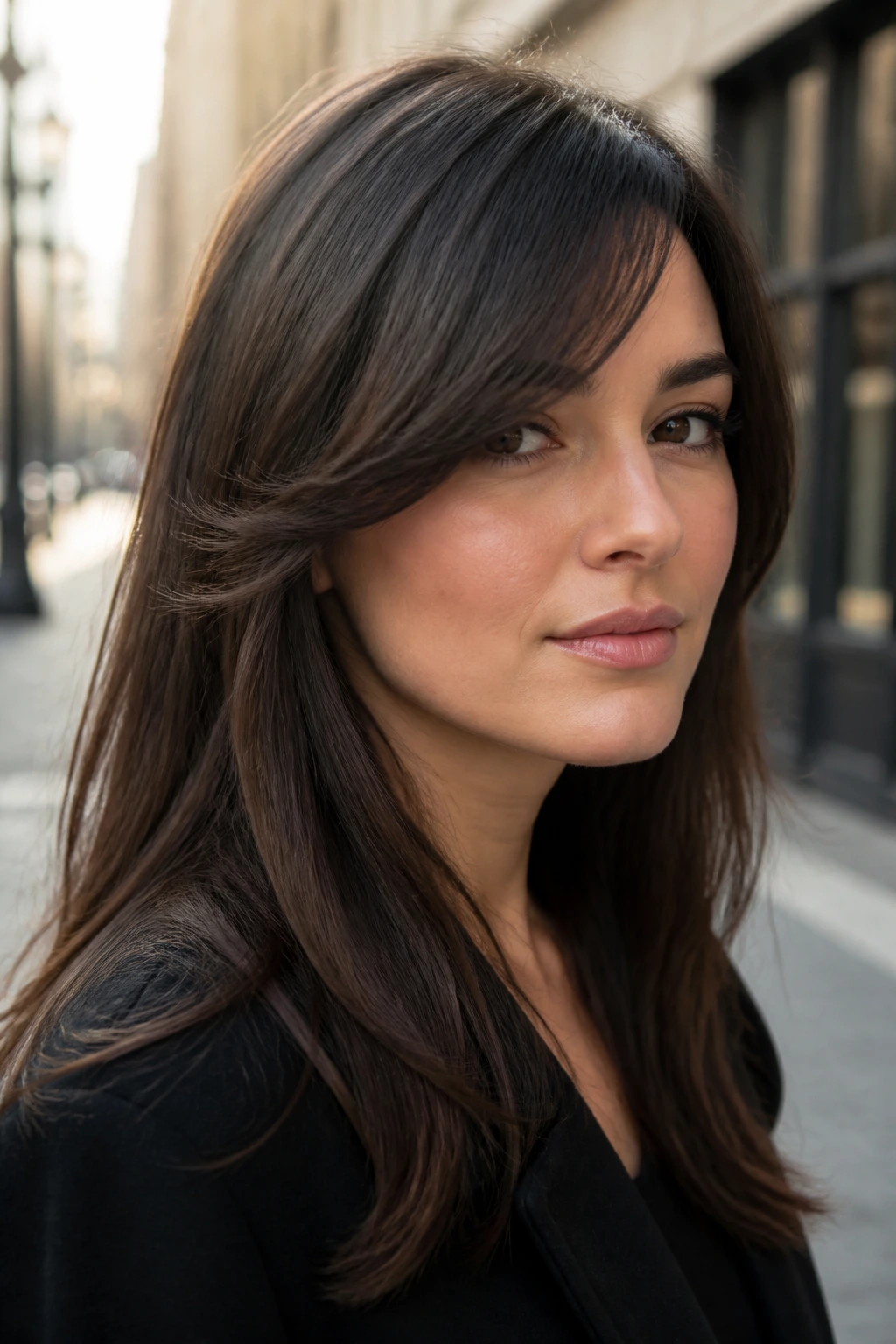
Start the styling while the bangs are still damp. That’s the window where shape is easiest to set. Blow-dry the root in the opposite direction first, then bring the fringe back across the forehead. That little detour helps build the sweep instead of letting the hair collapse in the direction it naturally dries.
A round brush is useful, but don’t overwork the ends. The bang should bend, not curl into a little sausage. If you want a soft finish, wrap the hair once around the brush, pull it away from the face, and let it cool before you touch it again. Cool air matters more than people think.
Use less product than you want to. Bangs sit on the face. A pea-size amount of cream or serum can go from polished to greasy in one step. If the front starts getting stringy by noon, the fix is usually less product and more dry shampoo at the root.
One more thing. Style the bangs before the rest of the hair if you can. Once the front gets warm and humid from curling the lengths, it loses some of its hold. The front deserves its own five minutes.
Common Cutting and Styling Mistakes to Avoid
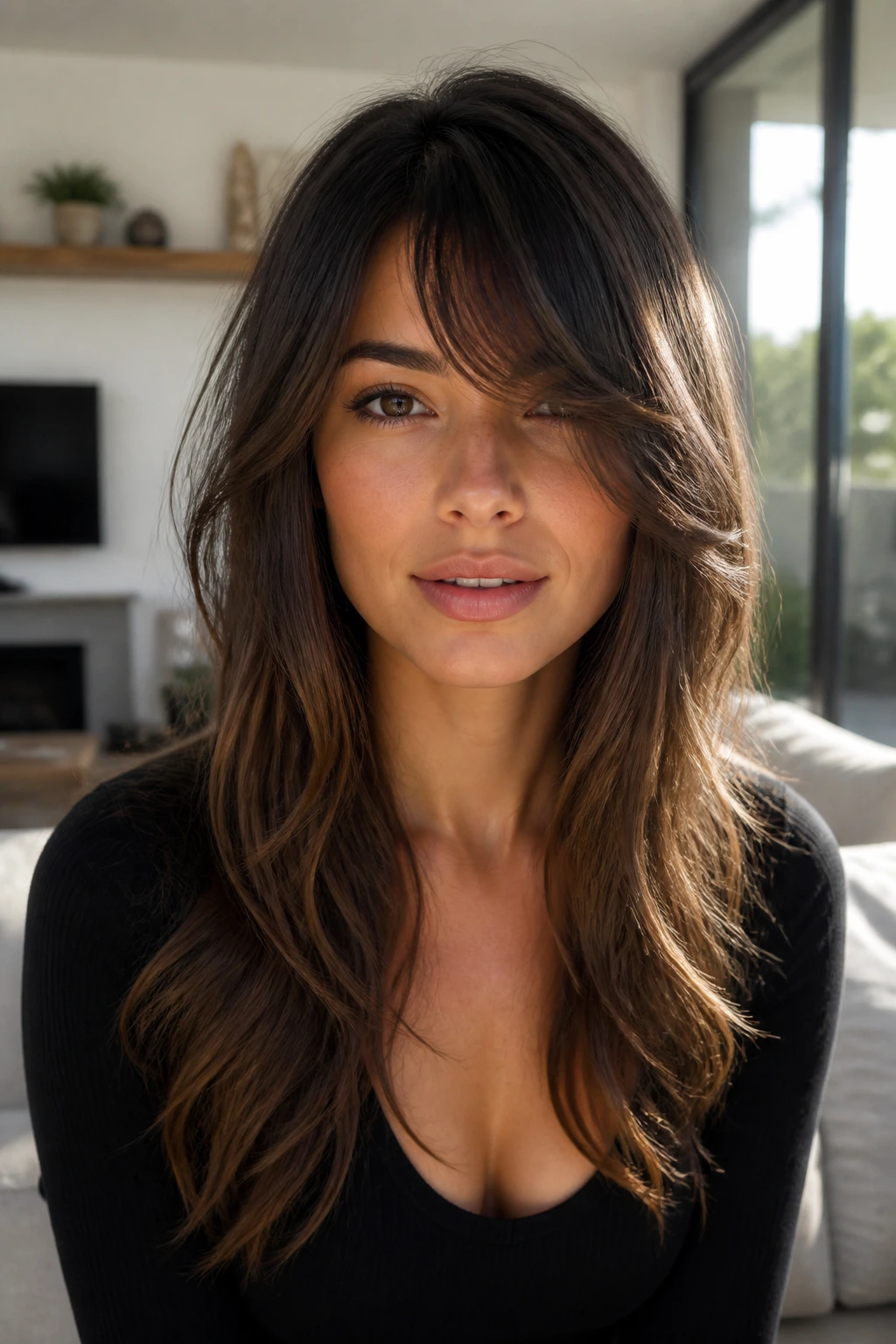
The easiest mistake is cutting the bang too short. Square faces do not need a choppy little sliver of hair stuck high on the forehead. They need room for the fringe to travel. If the shortest pieces land too high, the bang can kick up and look more severe than soft.
Another problem is making the fringe too thick. Dense bangs sound flattering in theory, but on long hair they can swallow the face and create a heavy front panel. If the haircut starts looking like a wall, the fix is to remove weight from the interior and keep the longest pieces moving toward the cheekbone.
A lot of people also place the side part too low. That creates a bang that barely sweeps at all; it just droops. A slightly deeper part gives the front enough height to move diagonally instead of hanging straight down. Small shift, better shape.
And then there’s the product issue. Heavy oils, thick creams, and waxy pomades make the front look flat and dirty faster than you’d expect. Use light styling products near the roots, keep the richer stuff on the ends, and refresh with dry shampoo rather than piling on more cream.
Variations and Alternatives Worth Trying
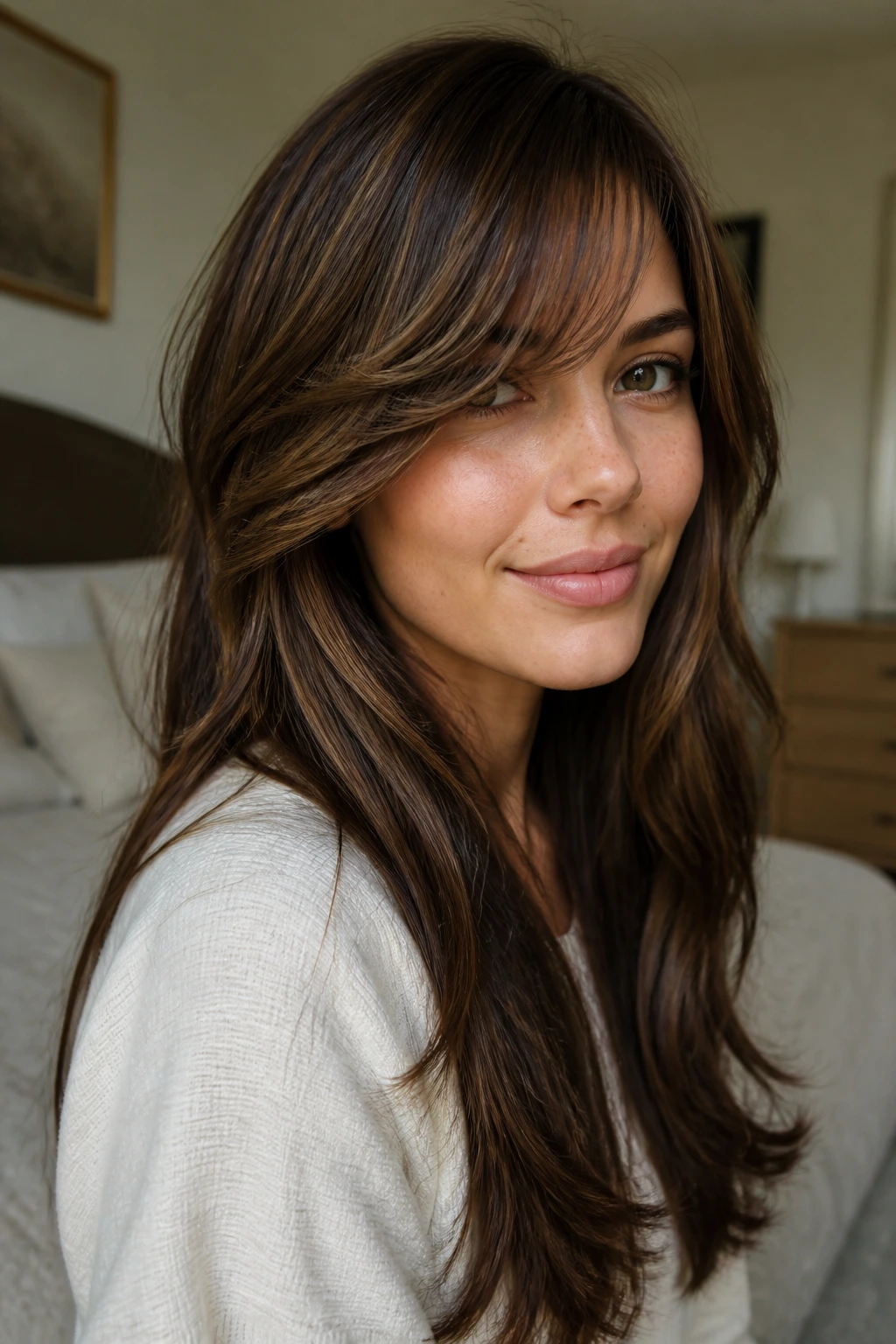
Soft Curly Sweep: This version keeps the bangs long and lets the curl pattern do the softening. It’s best when your hair wants to bend on its own and you don’t want to fight that shape every day.
Glossy Blowout Sweep: Think smoother, shinier, and more polished at the root. This works when you want the fringe to look deliberate and a little dressier, especially with long straight hair.
Shag-Blend Sweep: The bang blends into a shaggy layer pattern so the front looks lived-in and airy. It’s a good match for thick hair that needs some breakup around the face.
Low-Key Grow-Out Sweep: The shortest point stays long enough to move into face-framing layers later. If you hate frequent trims, this is the version to ask for.
High-Drama Side Swoop: This one leans into volume and height at the root, with a bigger bend across the forehead. It gives square faces more vertical lift and reads bolder than the softer options.
Trim Cycles, Wash Days, and Grow-Out Care
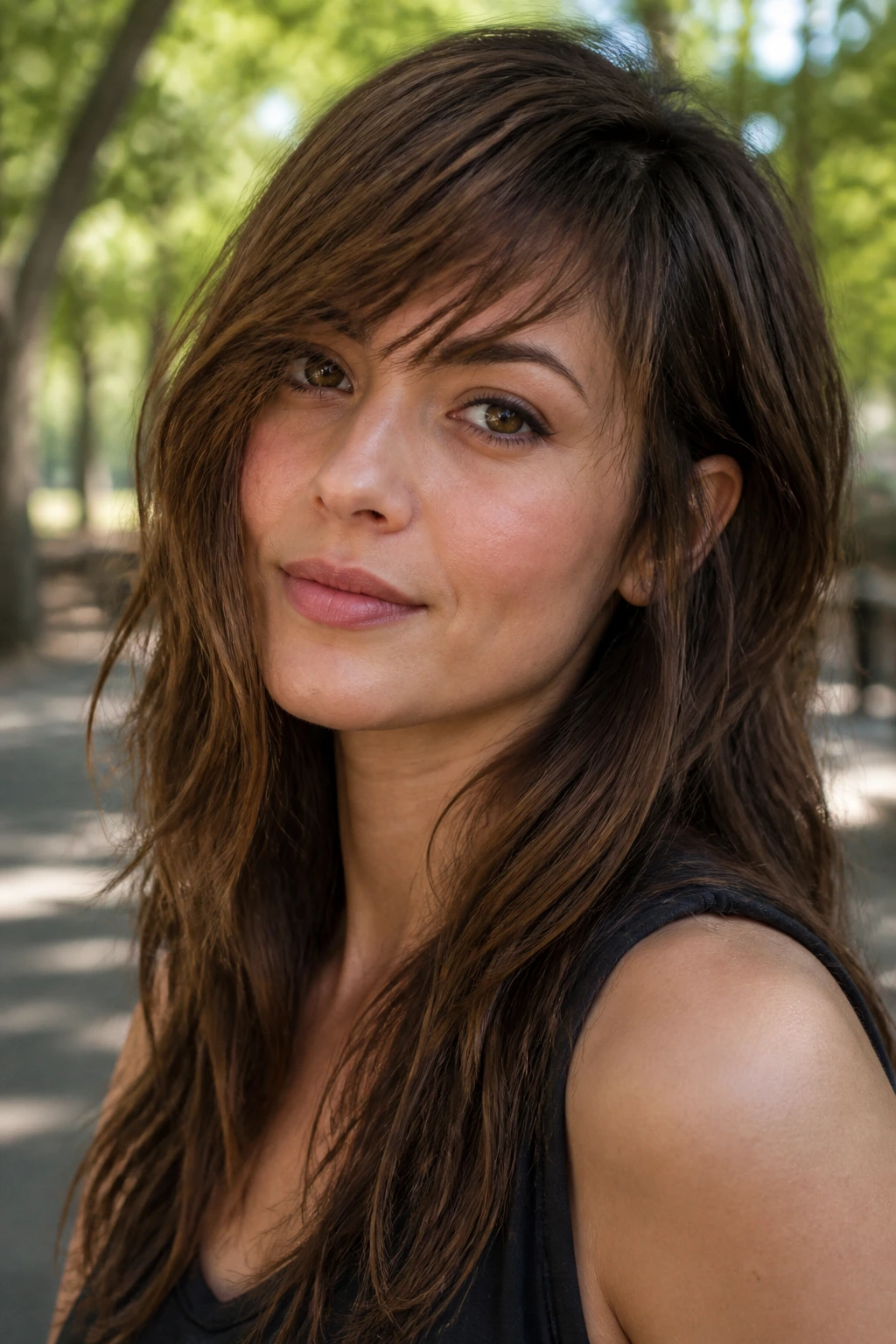
Bangs need more attention than the rest of long hair. That’s the deal. If you want a crisp side sweep, plan on a trim every 4 to 6 weeks. If you want a softer, more lived-in shape that can drift into layers, you can stretch that closer to 8 weeks, sometimes a bit longer if the cut started with enough length.
Wash the bangs more often than the rest of your hair if your roots get oily fast. You do not need a full shampoo every time. Sometimes a quick rinse of the front section, a little blow-dry at the root, and a touch of dry shampoo is enough to reset the shape. The point is to stop the front from separating into greasy strands.
Night care helps too. Clip the bangs loosely away from the face before bed if they tend to flatten or bend weirdly. If the fringe gets a cowlick from sleeping, a minute with a damp brush and a round brush in the morning usually fixes it. If it does not, your cut may be too short for your hair pattern.
Grow-out phases are where side-swept bangs earn their reputation. They slide into long layers more cleanly than blunt bangs, but only if you keep the trim line soft. Letting them drift a little is fine. Letting them turn into uneven chunks is not.
Frequently Asked Questions
Do side-swept bangs really suit square faces?
Yes, when the cut is angled and soft. The diagonal breaks up the straight lines of the forehead and jaw, which is why this fringe shape gets recommended so often for square faces.
What length is most flattering?
Usually somewhere between the outer brow and the cheekbone, with the longest pieces reaching farther down. That gives the bang enough travel to soften the face instead of stopping abruptly.
Are side-swept bangs good for thick hair?
They can be, but the weight has to be managed well. Thick hair usually needs internal texture and a slightly longer starting point so the fringe doesn’t sit like a heavy block.
Can curly hair wear side-swept bangs without straightening them?
Absolutely. The cut just needs to respect curl shrinkage. A dry or nearly dry cut is often the safest route because the stylist can see where the curls actually land.
How often do side-swept bangs need trimming?
If you want them neat, plan for 4 to 6 weeks. If you like them softer and more blended, you can stretch that longer, especially if the cut already has face-framing layers.
What if my bangs keep splitting apart?
That usually means the roots need more direction or the cut is too thin in the wrong place. Try styling the front while damp, using a light hold spray at the root, and blow-drying the bang across the forehead before letting it cool.
Do side-swept bangs work with glasses?
Yes, but the length needs to be planned carefully. The bang should land above or beside the frame rather than crowding the lens area, and a softer sweep usually works better than a heavy one.
Will they make my face look wider?
Not if the sweep is diagonal and not too thick. A heavy, blunt side fringe can add width; a tapered one usually does the opposite by guiding the eye downward and outward.
The Soft Edge That Keeps Working
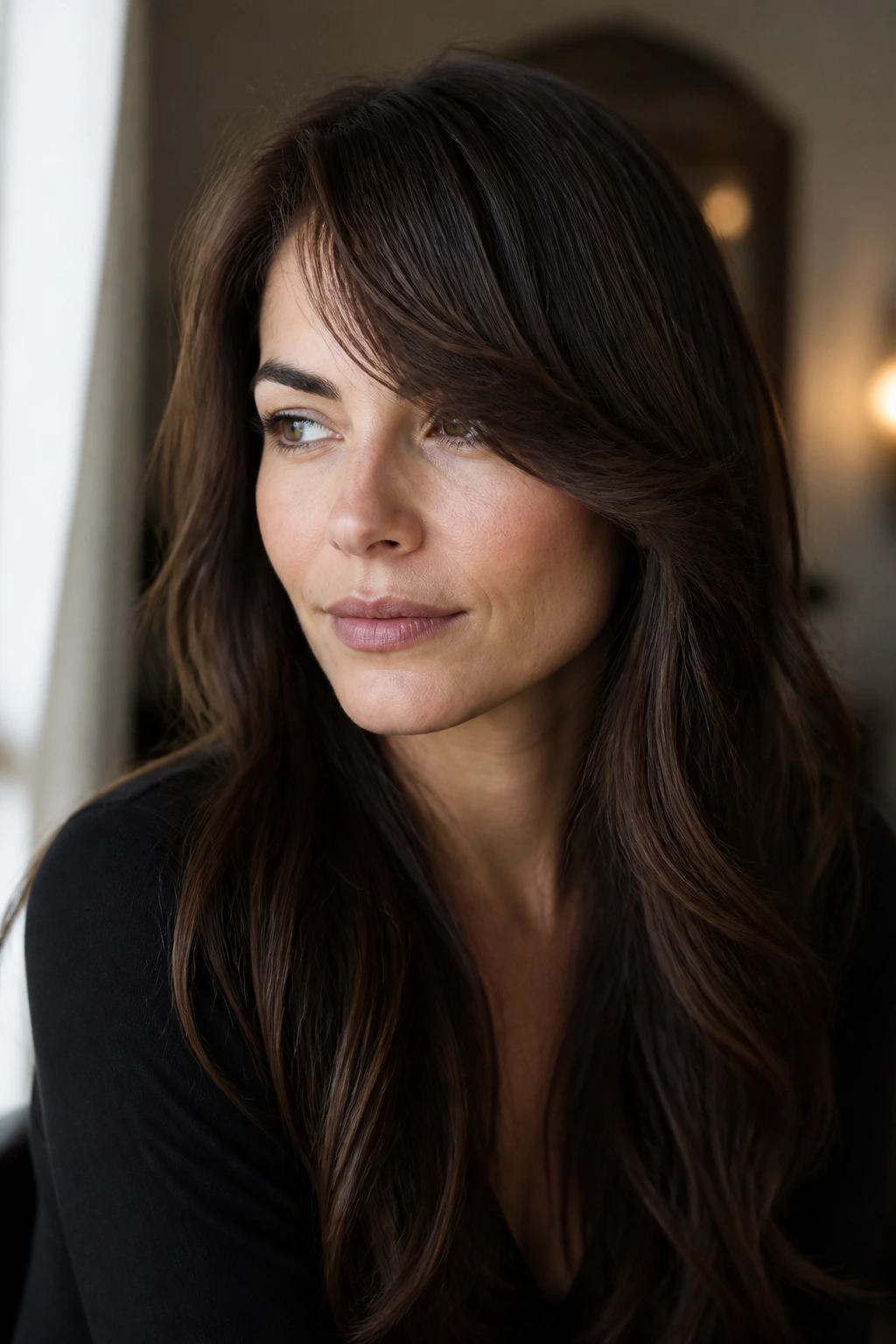
Side-swept bangs have staying power for a reason. They soften a square face without flattening it, and they give long hair a front shape that moves instead of sitting there like a lid. That balance is harder to get than people think, which is why the right cut feels so different from the wrong one.
The sweet spot is usually some mix of diagonal length, light weight, and a little bend near the cheekbone. Get those three things right and the fringe stops behaving like a separate project. It becomes part of the haircut.
And that’s the version worth keeping around: a sweep that looks like it belongs there, even on the mornings when you barely touched it.