



Angled bobs for women over 40 with wavy hair have one job: keep the wave, ditch the bulk, and leave the shape looking deliberate even after the first rough breeze. The right version doesn’t fight your texture; it leans into the bend, then uses the slope of the cut to do the heavy lifting. That’s why one bob can look crisp at breakfast and another can look like it lost an argument with a humid parking lot.
The difference lives in the geometry. A shorter back gives lift at the nape, while a longer front skims the jaw or collarbone and keeps the silhouette from puffing outward. On wavy hair, that diagonal line matters more than most people think. Too blunt, and the ends can widen. Too layered, and the shape gets fuzzy. Get the angle right, and the cut almost styles itself.
There’s a lot of room inside that shape, which is the fun part. Some versions are soft and chin-length with curtain bangs. Others are stacked, beveled, polished, choppy, or grown-out enough to tuck behind the ear. The collection below covers the spectrum, so you can match the cut to your wave pattern, your face shape, and how much time you want to spend with a diffuser before coffee.
Why These Angled Bobs Stay Put Together on Wavy Hair
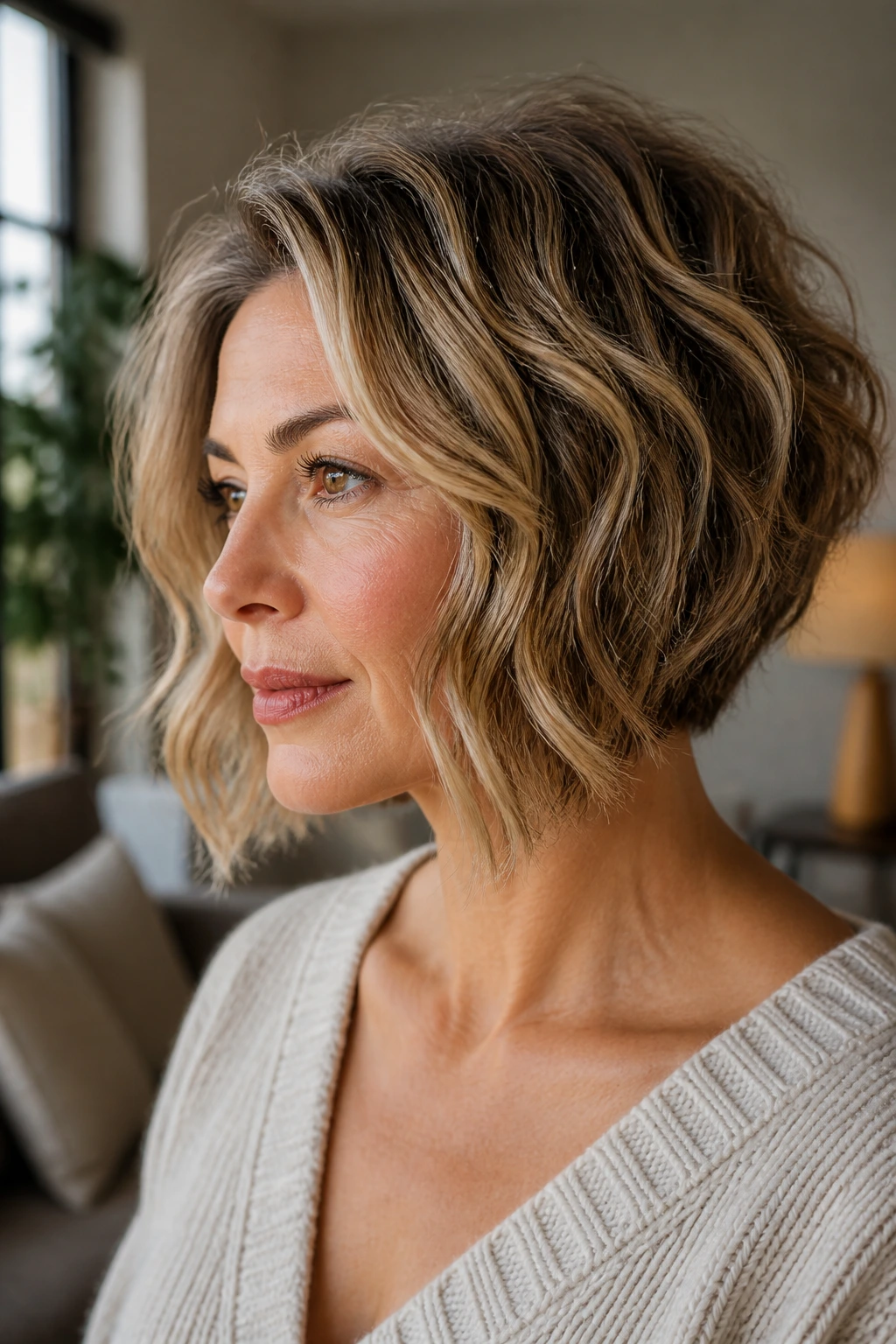
Lift Without Teasing: The shorter back gives the crown a little architectural help, so wavy hair doesn’t sag into a flat block by midmorning.
Room for the Bend: The longer front pieces let the wave fall forward instead of springing outward at the cheeks, which is where many bobs start to look boxy.
Less Fight, More Shape: A good angled bob usually needs less round-brush work than a one-length cut, because the cut itself directs the hair where to go.
Easy to Tune: You can make the same silhouette softer, sharper, airier, or denser just by changing the degree of angle and how much weight is removed in the interior.
Good with Hair That Changes Texture: Plenty of people notice their hair gets finer at the crown or coarser at the ends over time. An angled shape gives the stylist a way to balance those differences instead of flattening everything into one line.
1. Soft Chin-Length Angled Bob With Curtain Bangs
This is the friendly version of the angled bob. The front lands around the chin, the back sits a little shorter, and the curtain bangs split away from the face so the whole cut feels soft instead of severe. On wavy hair, that matters. The front pieces skim the jawline instead of flipping out at it, which keeps the silhouette from turning into a triangle.
Why It Works
The cut gives you enough structure to show the angle, but not so much that the wave gets trapped. Curtain bangs also break up the forehead and pull attention toward the eyes and cheekbones, which is a nice move if you want shape without a hard edge. Ask for the bangs to start around the bridge of the nose and open toward the cheekbone; anything shorter can fight a strong wave pattern.
If your hair dries with a bend right at the ends, this one tends to behave. A little mousse at the roots, a quick scrunch through the mids, and you’re done.
Best for
- Round or heart-shaped faces
- Medium-density waves
- Anyone who wants a bob that still feels touchable
2. Stacked Angled Bob for Fine Waves
Fine waves need lift more than they need drama, and this cut gives them exactly that. The back is stacked in a controlled way, so the nape gets height without the sides ballooning. It’s the sort of bob that makes the hair look like it has more body than it actually does.
The trick is restraint. You want graduation at the back, not a choppy pile of layers that leaves the crown see-through. A good stylist will keep the interior support long enough to hold shape, then taper the nape just enough so the back doesn’t drag.
A lightweight mousse and a round brush at the roots are usually enough. Skip heavy oils near the scalp. They’ll drag the whole cut down by noon.
3. Collarbone Angled Lob With Airy Layers
If you like the idea of a bob but don’t want to commit to anything too short, the angled lob is the calmest option in the room. The front grazes the collarbone, the back sits higher, and the length gives wavy hair room to settle instead of puff up. It’s one of those cuts that still looks intentional when you’ve air-dried it badly, which is not a minor gift.
What Makes It Different
The extra length changes the way the wave falls. Instead of springing up at the jaw, it drops into a longer line that reads relaxed but not sloppy. Light internal layers keep the shape moving, and that movement matters more on medium to thick hair than people expect.
If you wear necklaces, scarves, or structured necklines, this cut handles them well. It sits just enough off the shoulder to stay visible.
4. Deep-Side-Part Asymmetrical Bob
Want the easiest way to make a bob feel sharper? Shift the part and let one side fall longer. A deep side part adds instant lift at the crown, and the asymmetry draws the eye across the face instead of straight down it. On wavy hair, that diagonal movement is gold.
This version works especially well if your hair tends to collapse on one side or if one temple always lies flatter than the other. The longer side softens the jaw, while the shorter side creates the little bit of tension that makes the whole cut look modern without trying too hard.
Use a root-lift spray before drying, then direct the front pieces away from the face with your brush. If the part is too severe, it can feel theatrical; just a little off-center usually does the job.
5. Jaw-Skimming Blunt Angled Bob
This one is for people who want a cleaner line. The edge is blunt, but the shape still angles down slightly toward the front, so you get structure without a helmet effect. On wavy hair, that blunt perimeter keeps the ends from fraying too much, which is useful if your wave is loose but your hair is dense.
A blunt angled bob is not the same as a choppy one. It needs enough weight at the bottom to stay crisp. If the stylist removes too much around the perimeter, the bob loses its edge and starts to puff at the sides. Keep the front right at or just below the jaw, and ask for soft point-cutting only where the wave needs release.
Styling note
A dab of smoothing cream through the mids and ends will keep the line clean. You do not need a ton of product. Too much will flatten the crown and make the cut look older than it is.
6. Razored Piecey Bob for Thick Waves
Thick wavy hair can handle a little chaos, and this cut uses that to its advantage. A razored finish breaks up the bulk and turns the wave into pieces instead of one heavy mass. The result looks lighter around the face and less square at the bottom, which is often the whole problem with thick bob cuts.
The key is where the razor goes. You want it in the ends and interior, not dragged wildly through the whole head. Too much razoring on coarse or porous hair can leave the ends fuzzy and thirsty. A thoughtful stylist will thin the right spots and leave enough weight in the back so the shape still holds.
This cut tends to look best with a touch of texture spray and a loose scrunch rather than a polished blowout. It likes movement. It does not like to be overcontrolled.
7. French-Inspired Angled Bob With a Light Fringe
A French-leaning bob has a little attitude, but it stays wearable because the fringe is light and the line is relaxed. On wavy hair, the slight angle keeps the chin area from looking too wide, while the fringe softens the forehead and adds that slightly undone feel people keep trying to recreate with too many products.
The fringe should be airy, not dense. Think soft separation, not a thick sheet of bangs. That matters if your wave springs up near the brow or you wear your hair naturally dry most days. A light fringe can dry in place; a heavy one usually needs more heat and more maintenance than it’s worth.
This one looks especially good when the ends are just a bit broken up and the finish is not too shiny. A little texture is the point.
8. Long Angled Bob for Easy Grow-Out
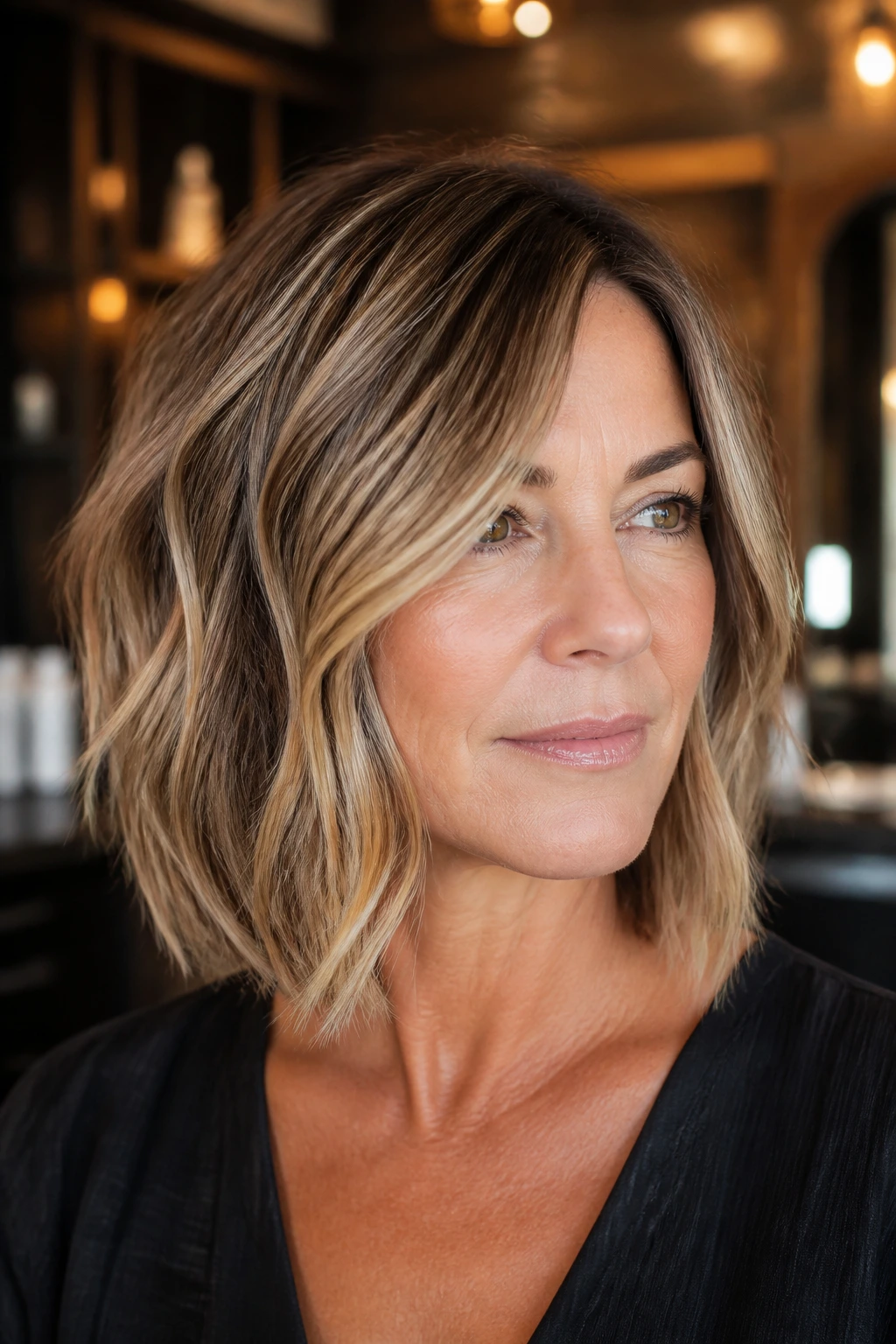
If you are flirting with shorter hair but not ready to lose ponytail-length pieces entirely, start here. The front hangs near the collarbone, the back keeps a shorter angle, and the whole cut grows forward instead of out in an awkward box. That makes a difference six weeks later when the shape starts to soften.
A long angled bob works because it gives the wave enough space to fall without expanding too wide. It also buys you some flexibility on bad-hair days. You can tuck it, clip it back, or let it sit loose with a little dry texture.
This is the version I’d point someone to if they want a bob that behaves well between salon visits. It’s not the most dramatic shape in the group. It might be the smartest.
9. Rounded Angled Bob With Face-Framing Layers
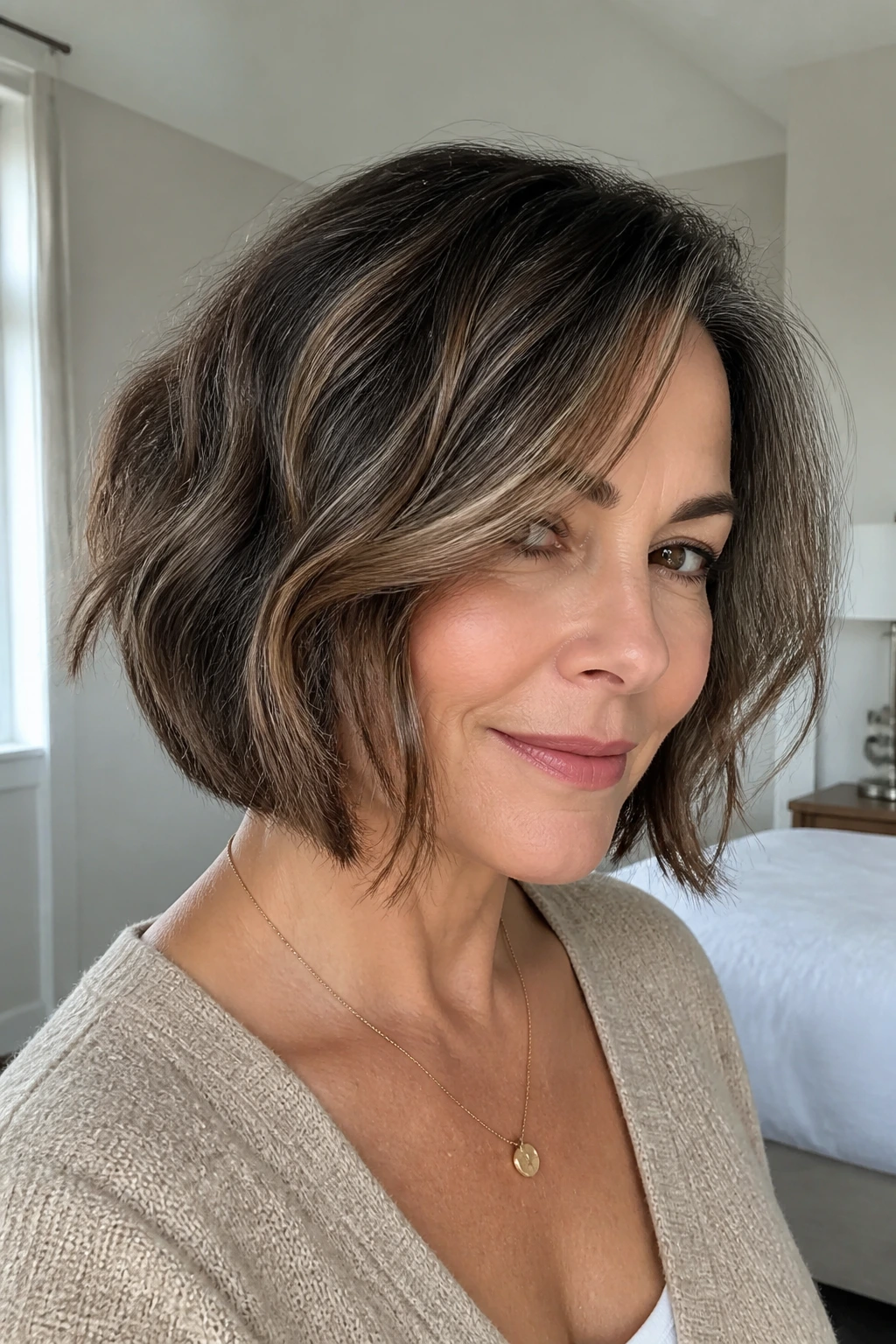
A rounded bob sounds simple, but the shape does a lot of quiet work. The back is angled, yes, but the sides curve gently around the face instead of stopping abruptly at the jaw. That soft rounding is useful if your jawline is strong or your face shape runs square, because it breaks up hard edges without hiding them.
The face-framing layers should be long enough to move. Short, choppy face layers can make wavy hair puff around the cheeks, and that’s not the goal. Ask for the front to bevel inward slightly, almost like the cut is hugging the face.
Good choice if you want:
- A softer neckline
- A shape that grows out neatly
- Less need for daily hot-tool work
10. Choppy Angled Bob With Wispy Bangs
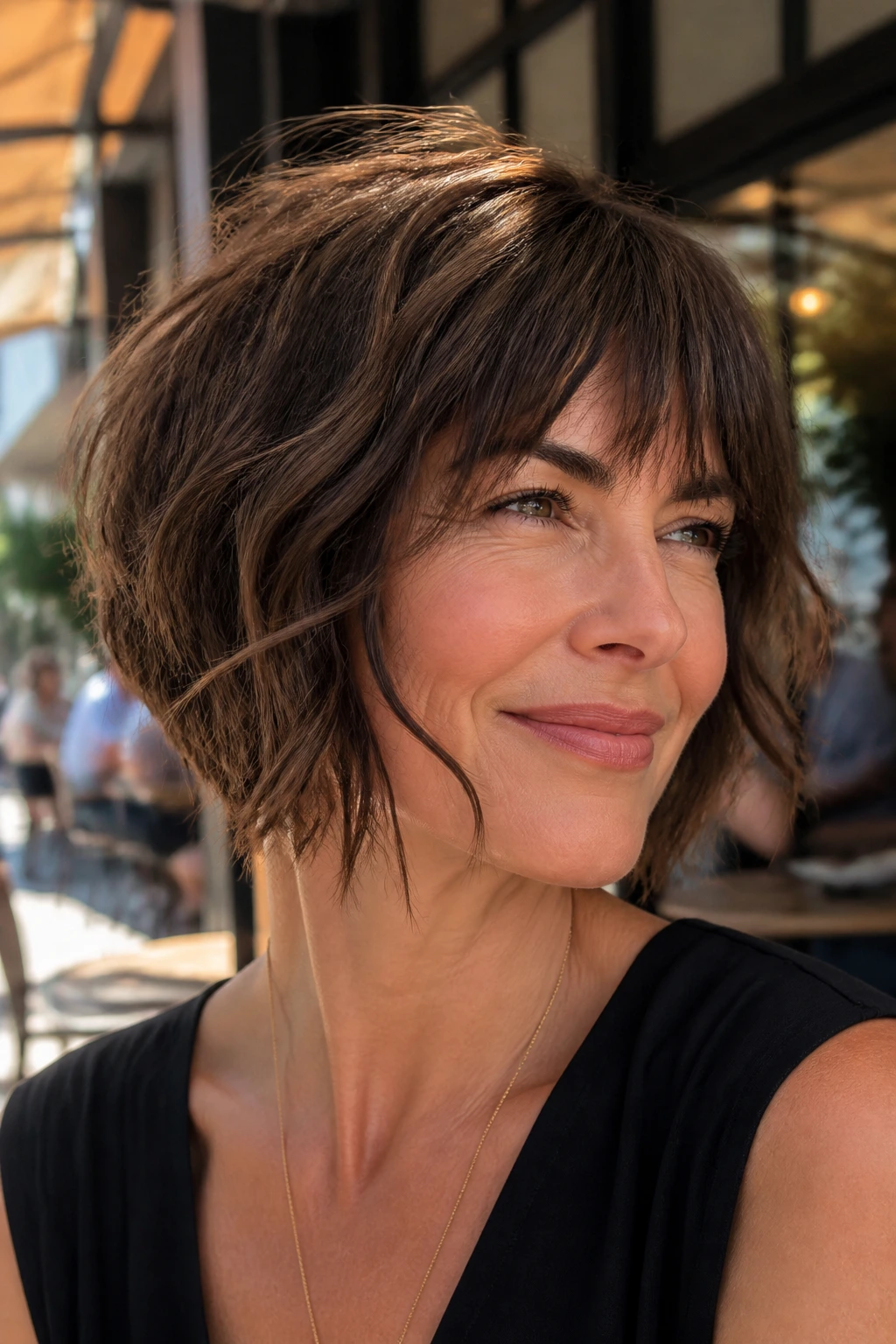
This is the playful one. The ends are deliberately irregular, the fringe is light, and the whole cut has a bit of broken texture that keeps wavy hair from looking too polished or too rigid. It’s a smart option if your hair is finer and needs visual fullness rather than strict structure.
Because the shape is choppier, the perimeter can look fuller than it really is. That’s the trick. The eye reads the uneven pieces as movement, which makes the cut feel lively even when the hair has only been lightly styled.
A sea-salt spray or soft texturizer works here, but keep it light. The cut already has enough motion. Too much grit can make the ends feel dry.
11. Sleek-Looking Angled Bob for Coarse Waves
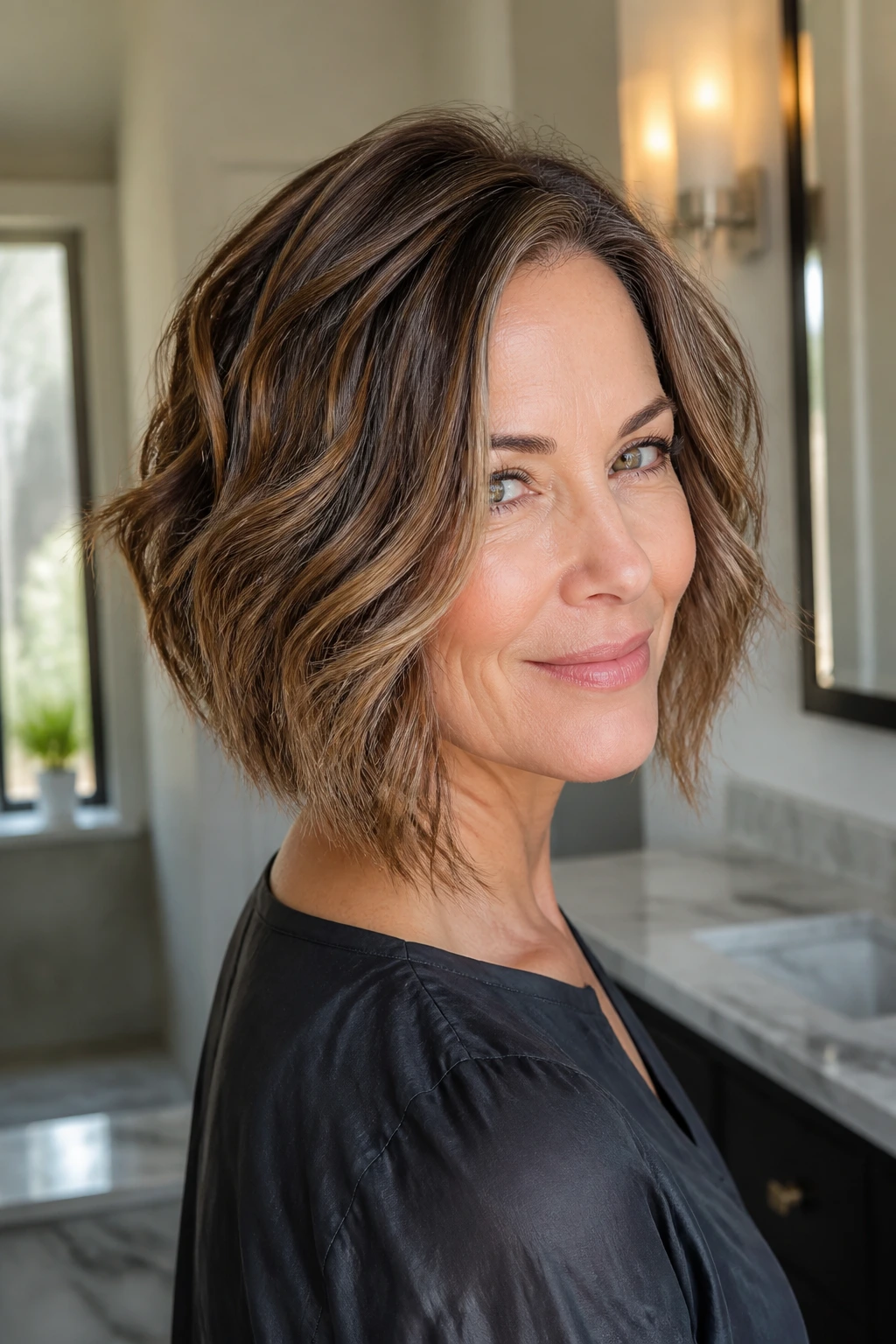
Coarse waves can wear a more polished bob without losing their shape. In fact, they often need it. The goal is a smoother surface with a strong diagonal line, not a straight blowout that erases texture completely. When this works, it looks expensive in the plainest possible sense: the hair looks controlled, but not stiff.
The cut itself should have less aggressive layering. Heavy removal of bulk can make coarse wavy hair spike out at the ends, especially around the jaw. A cleaner perimeter and a little internal shaping usually do the job better.
A blow-dry cream, a medium round brush, and a final pass with the cool shot are enough for most days. If you use a flat iron, do one pass only and leave a hint of bend in the ends. Bone-straight is not the point.
12. Silver-Soft Angled Bob With a Soft Bevel
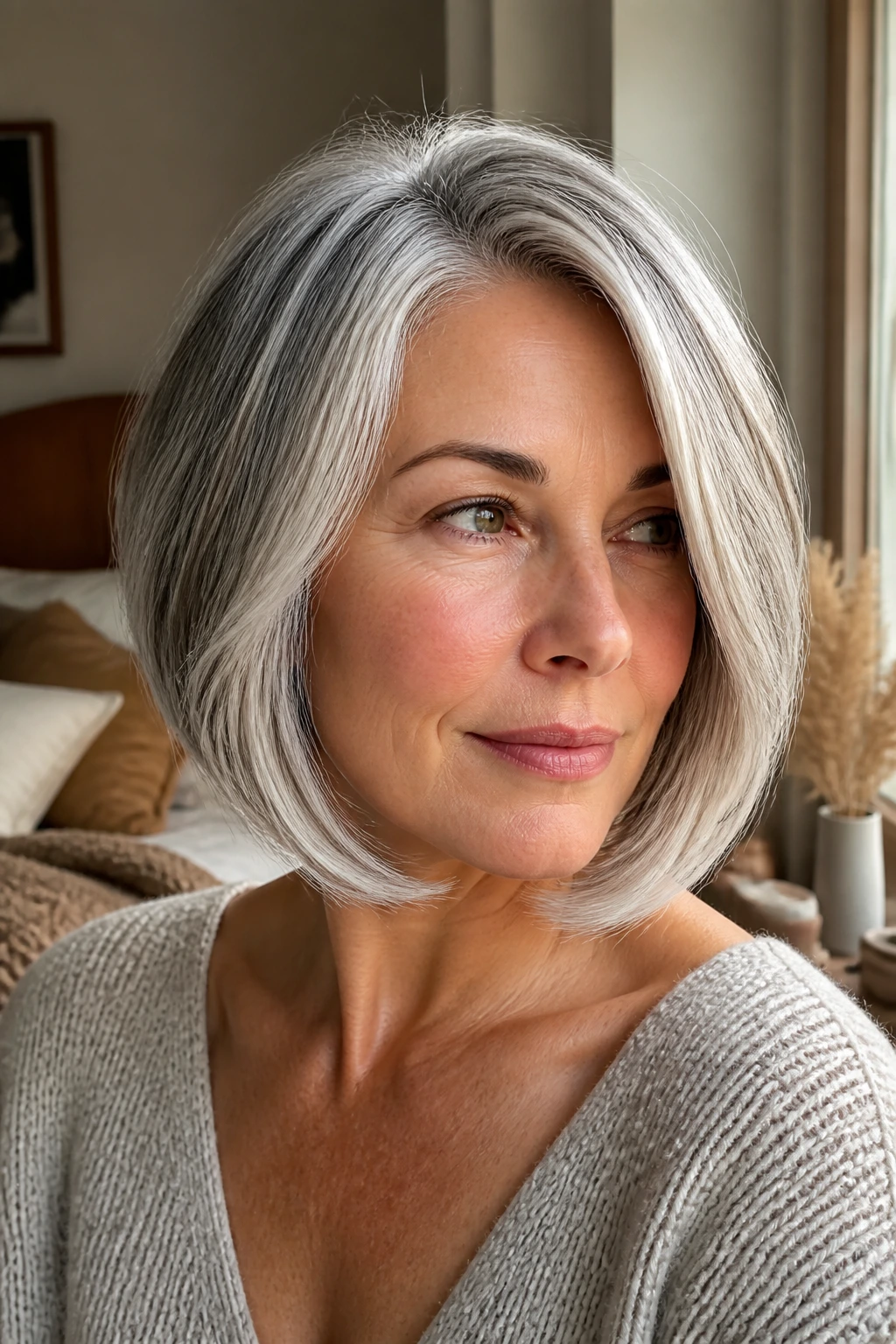
Gray and silver hair often brings extra texture, sometimes in a good way and sometimes in a wiry, stubborn way. A soft-beveled angled bob handles that change without fighting it. The ends curve inward just enough to keep the shape tidy, while the front stays long enough to show movement and shine.
What I like about this version is how well it plays with natural silver highlights and white streaks. The angle gives those lighter pieces a place to catch the eye, and the bevel keeps them from frizzing into the air. If your hair has become a little more porous over time, this shape can help it look calmer.
A light leave-in and a tiny bit of serum on the ends are usually enough. Heavy oils can make silver hair look greasy fast, and that ruins the lift.
13. Layered Angled Bob With an Under-Nape Taper
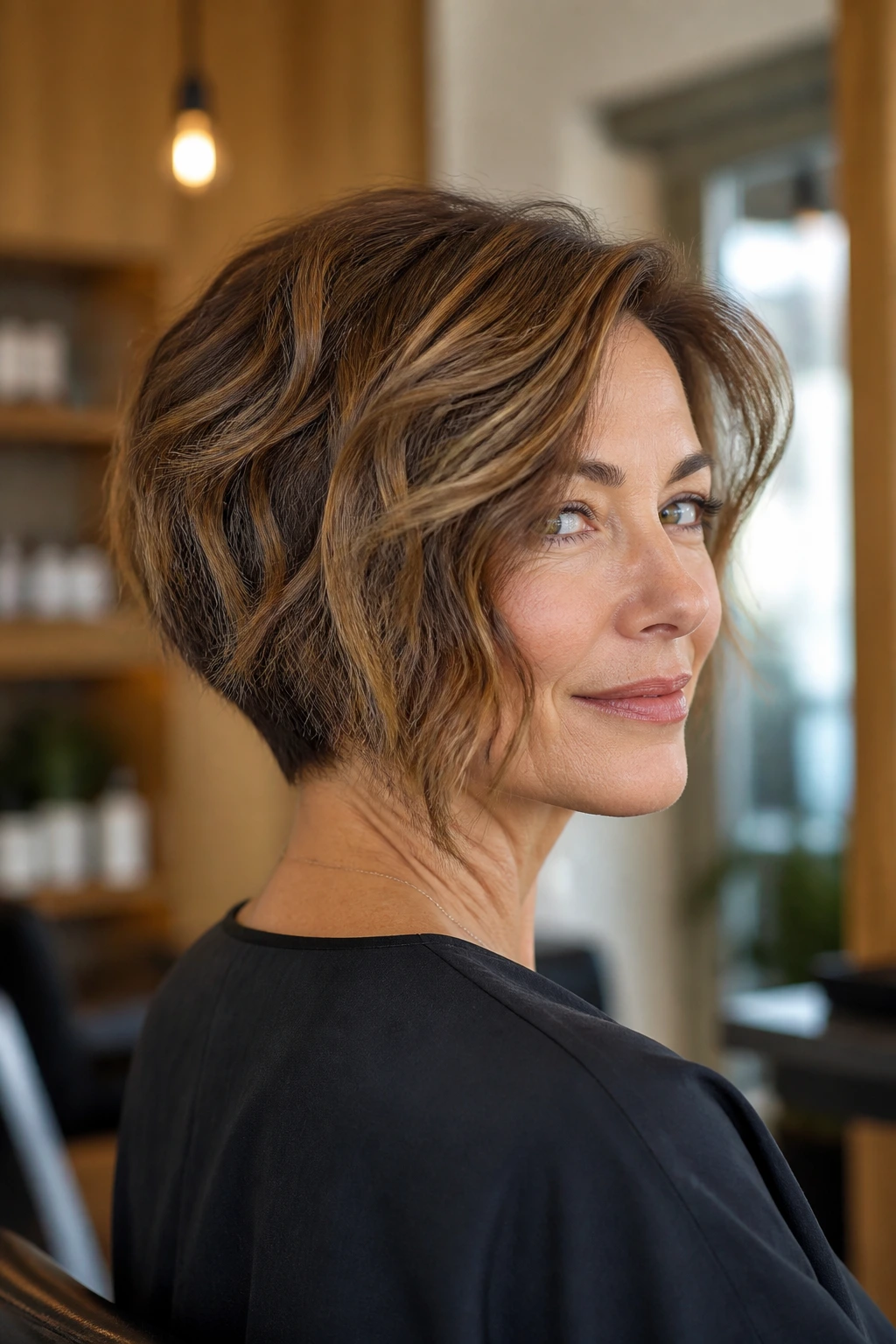
If thick hair sits heavy on your neck, this cut can feel like a relief. The under-nape taper removes weight where it’s least visible, then the outer length keeps the angle clean. You get a bob that feels lighter without losing its outline.
This is one of the better options for people who wear high collars, jackets, or scarves a lot. The shorter underlayer keeps the back from bunching up underneath fabric, and that small change makes the haircut more comfortable. It also helps the silhouette stay close to the head instead of flaring out.
Ask for long layers, not a stacked mushroom shape. The taper should help the shape, not take over the whole cut.
14. Volume-Boosting Side-Swept Angled Bob
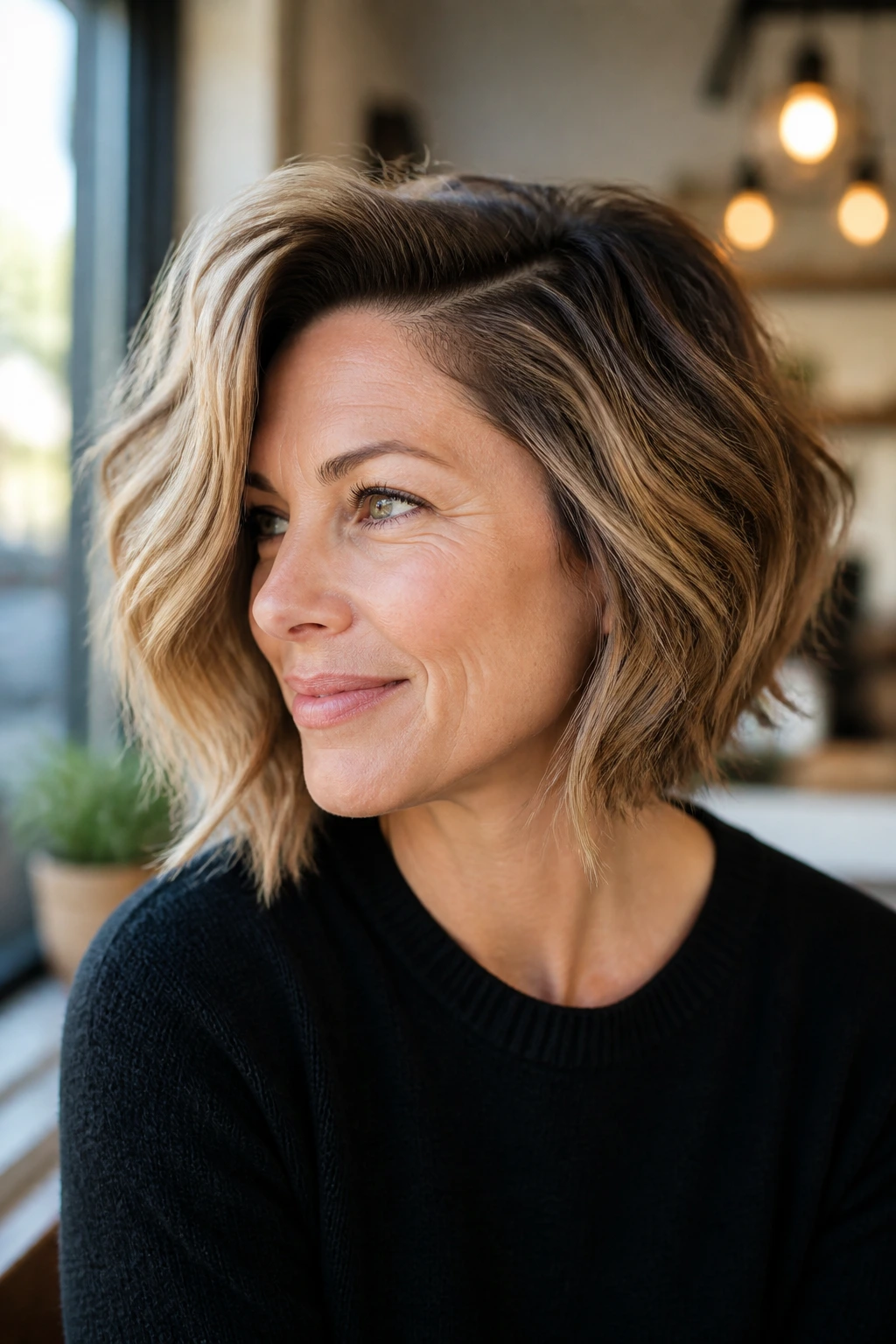
A side-swept bob brings lift where flat roots tend to give up. The part starts deep enough to create height, and the front drops across the face in a way that feels polished but not frozen in place. On wavy hair, the side sweep also gives the wave a direction, which makes the whole cut look more intentional.
This is a useful bob if your hair tends to flatten at the crown or if you like a little lift around one temple. Blow-drying the roots in the opposite direction first, then flipping them into place, can make a surprising difference. Old trick. Still works.
The angle does not need to be extreme here. A subtle slope with a stronger part is often enough.
15. Beachy Angled Bob With Razored Ends
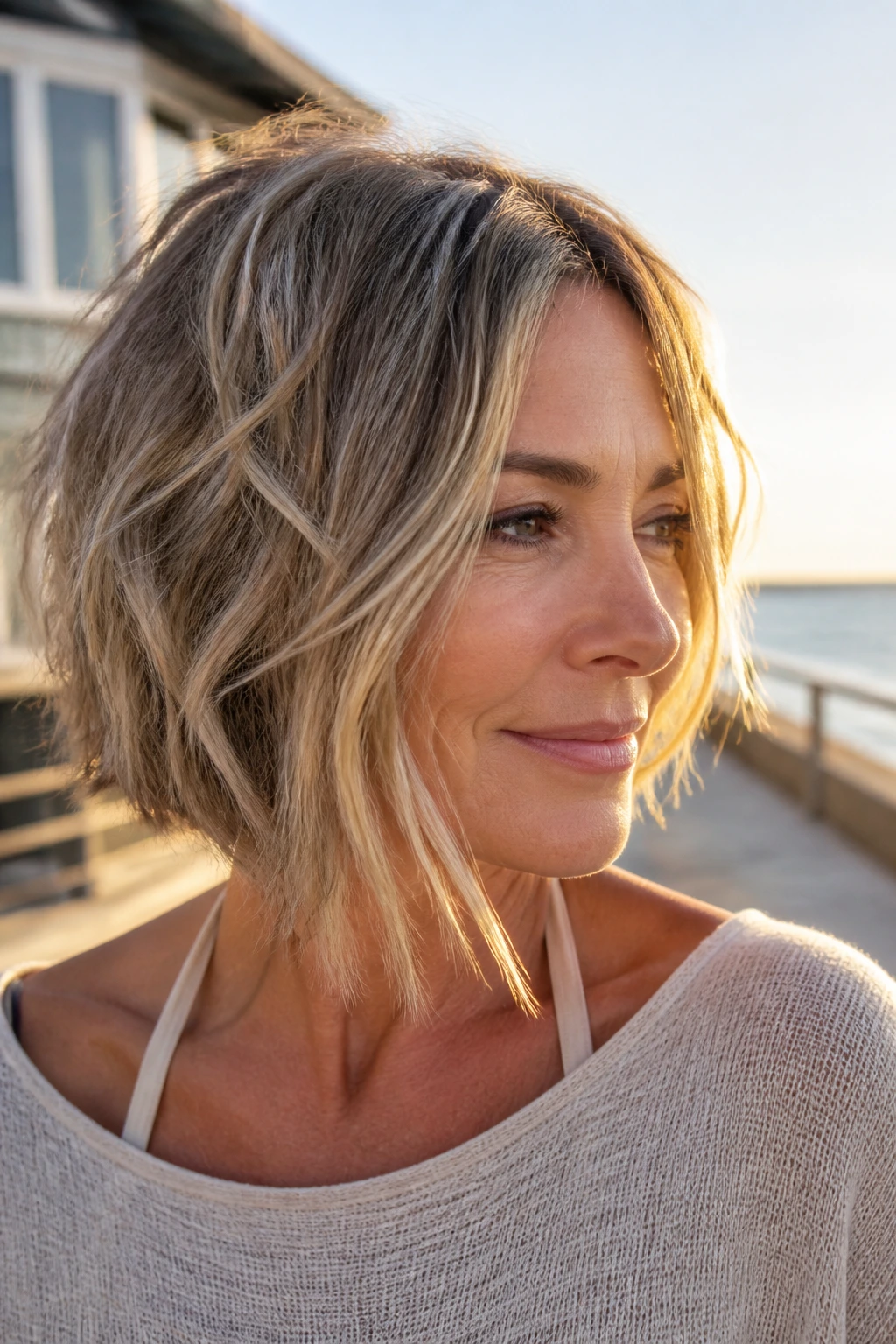
This is the relaxed, lived-in version of the angled bob. The ends are lightly razored, the texture is loose, and the whole cut looks best when it is not overworked. If you like your hair to feel touchable and a little bit wind-tossed, this is the lane.
Beachy does not have to mean sloppy. The angle still keeps the shape from spreading sideways, and the razored ends keep the bob from feeling too dense. The front should stay long enough to move when you turn your head; that motion is what makes the shape feel current.
A wave cream or light salt spray can help, but keep the finish soft. Crunchy texture is a bad trade here.
16. Wedge-Inspired Angled Bob
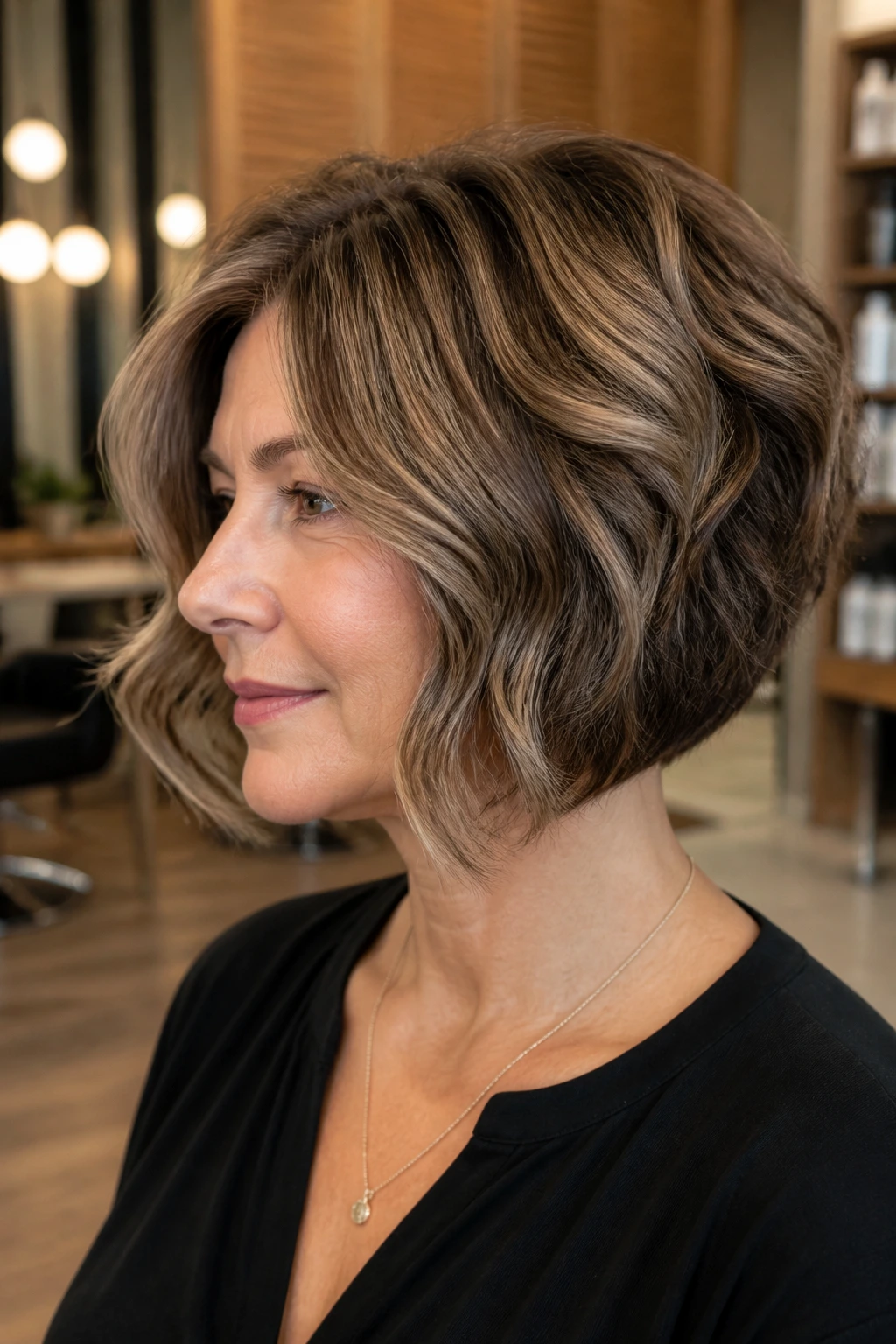
There’s a little retro energy in this one, and I mean that in a good way. A wedge-inspired angled bob has a more pronounced back shape and a defined slope toward the front, which creates lift at the crown and a neat outline around the nape. It’s tidy without being severe.
This cut suits people who like their hair to hold a shape all day. It can handle wavy texture if the layers are kept controlled and the interior is not thinned out too aggressively. Too much texture and the wedge loses its edge; too little and it feels dated in the wrong way.
A round brush and a dryer nozzle help, but you don’t need a full salon blowout every time. The shape should do a lot of the work by itself.
17. Curly-Wavy Hybrid Bob With a Longer Front
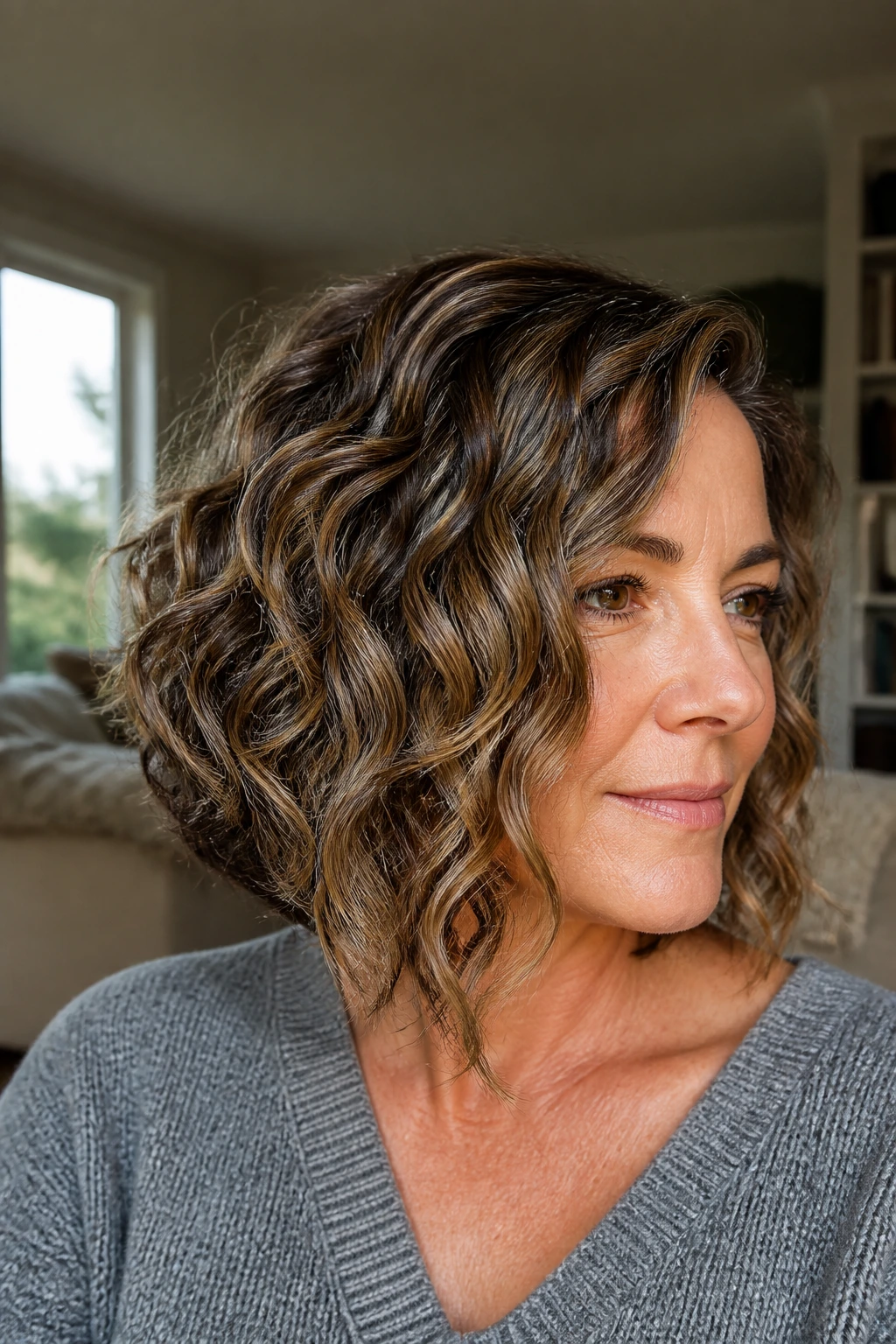
Some waves are on the edge of curls, and those need a bob with a little more room. Keeping the front longer lets the curl pattern shrink without jumping too far above the jaw, which is the mistake that makes so many short cuts feel too bouncy. The back can still be angled, but the front should stay generous.
This cut is especially good if your texture changes from day to day. On looser days, it falls like a soft bob. On tighter days, it still keeps its balance because the front length gives it slack. That flexibility is worth a lot.
Diffusing upside down for a few minutes, then finishing upright, helps the roots keep some lift without ruining the curl grouping.
18. Boxy Angled Bob With a Solid Weight Line
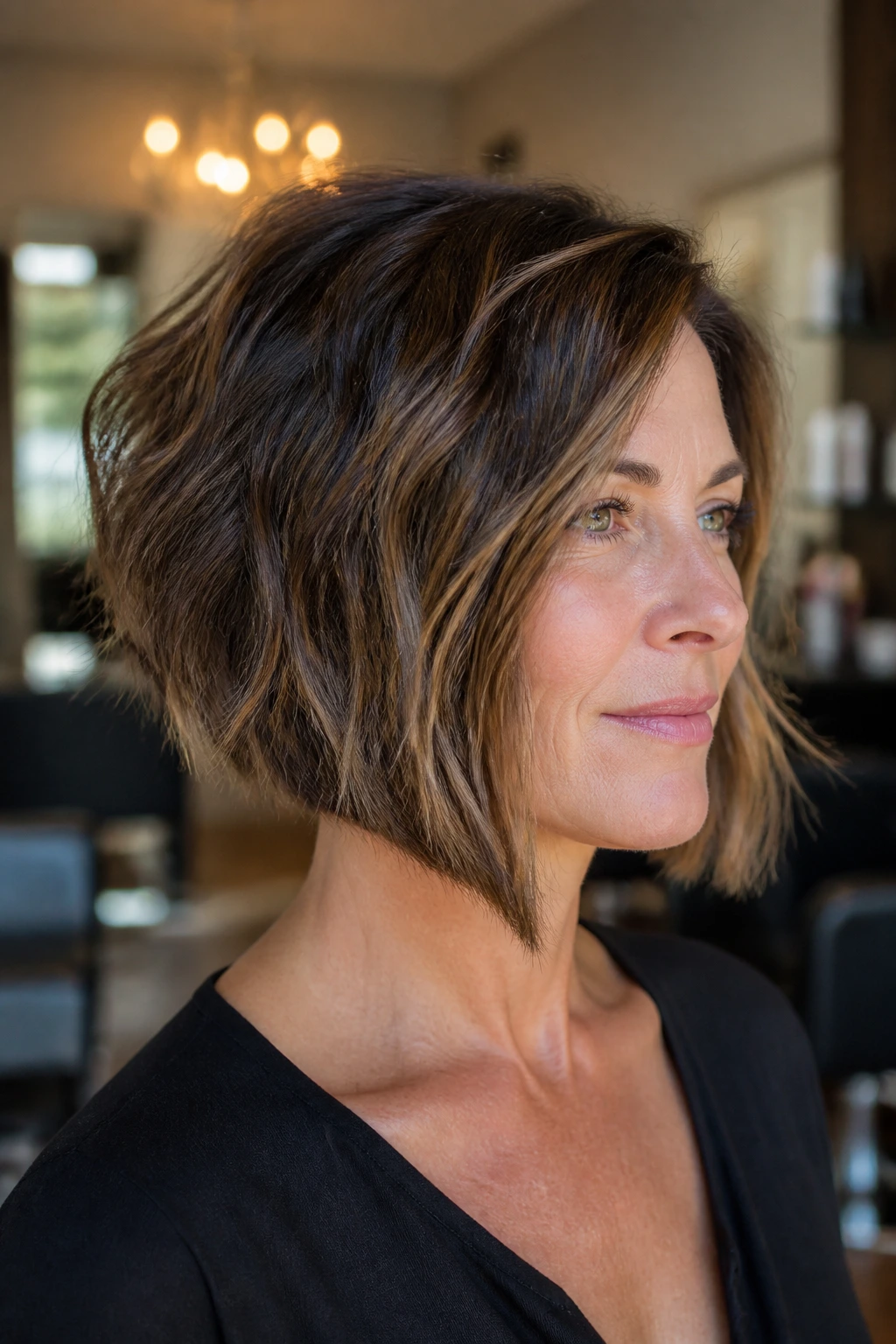
Not every angled bob has to be airy and broken up. A boxier version with a strong weight line can look sharp in a way that suits strong features, straight-wavy texture, or anyone who likes a cleaner silhouette. The angle is there, but the shape is more architectural.
This is the cut that says you want the outline to matter. The ends sit more deliberately, and the line from back to front is easy to see. If your hair is fine, this may need a bit more internal support to avoid looking flat. If your hair is thick, it can look especially strong.
A little smoothing product and careful drying are enough. Don’t over-texturize it. That would defeat the point.
19. Tucked-Behind-the-Ear Angled Bob
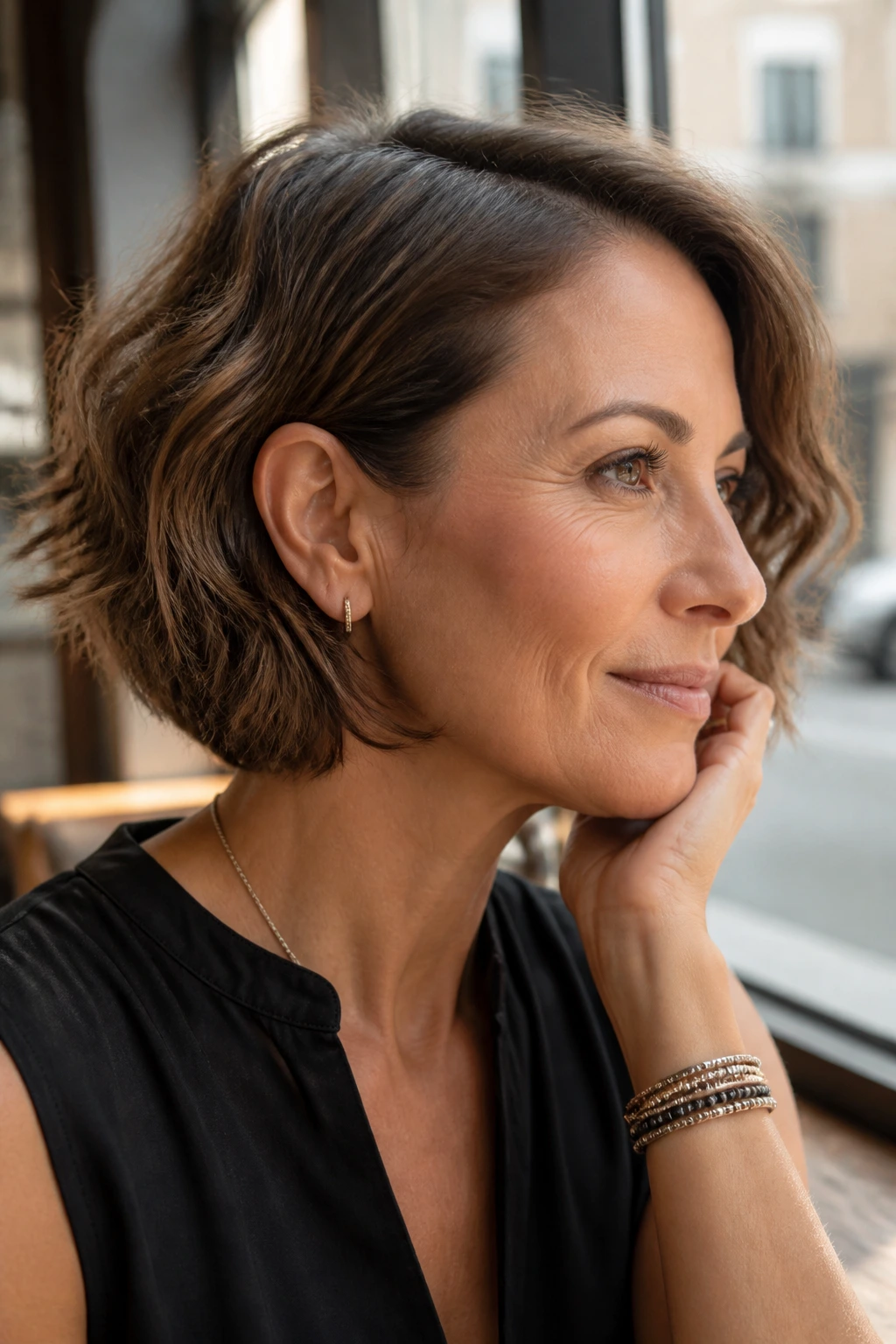
A tucked bob sounds almost too simple until you notice how it changes the whole face. One side or both can tuck behind the ear, which shows off the angle and opens up the cheekbone. It also plays nicely with glasses, earrings, and any haircut that needs to stay out of the way for part of the day.
This version works because the front has enough length to tuck cleanly without slipping out. If the layers are too short, they escape. If the front is too heavy, the tuck adds bulk. The sweet spot is usually somewhere between the jaw and the collarbone depending on wave strength.
It’s the kind of bob that can look casual in a T-shirt and still feel finished with a blazer. That kind of range is hard to beat.
20. Feathered Angled Bob With Wispy Fringe
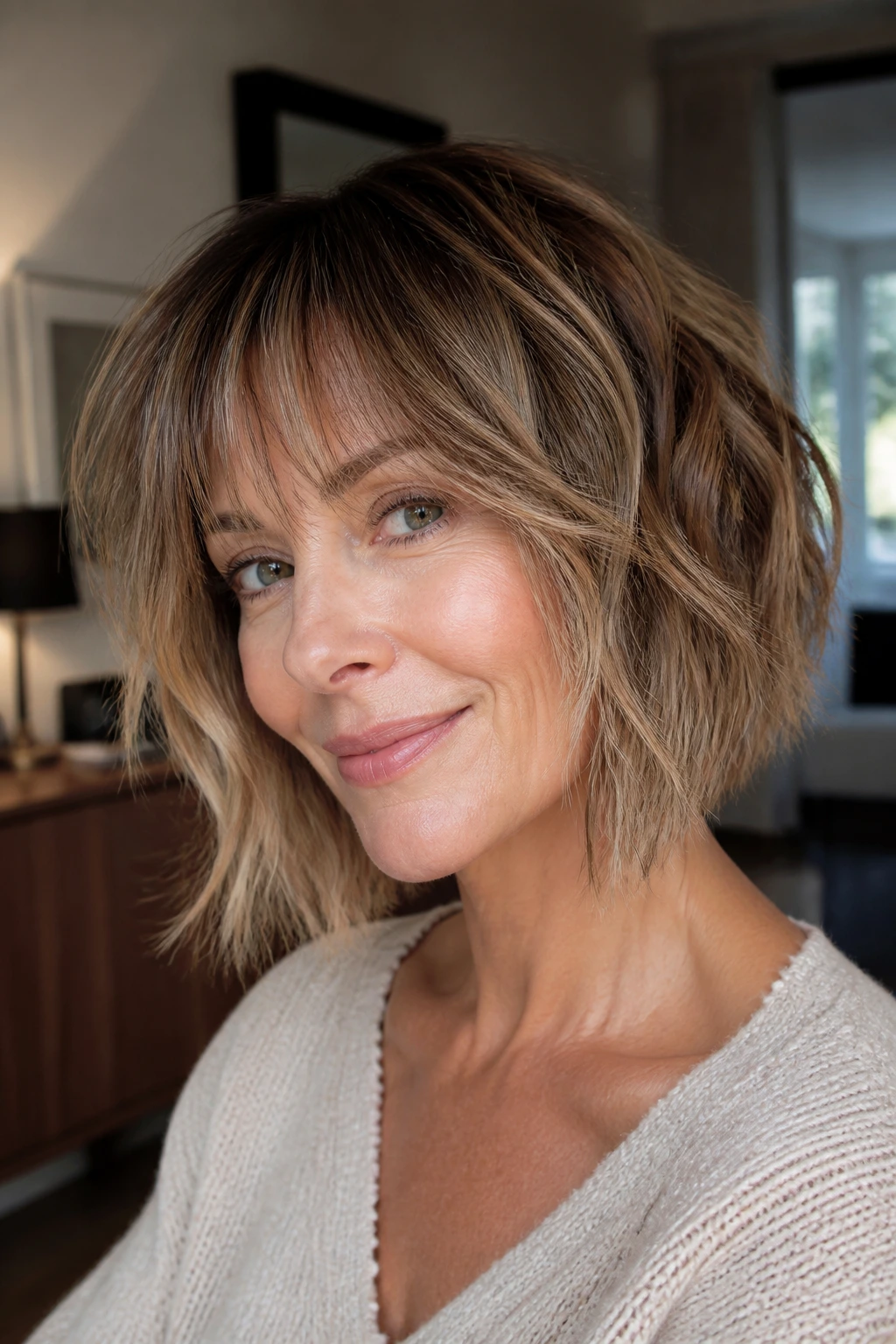
Feathering can save a bob that feels too solid. The ends break up softly, the fringe stays wispy, and the whole cut gets lighter around the face. On wavy hair, that softness helps the shape move instead of puffing in one solid block.
This is a good choice if you want a little room around the eyes and cheekbones. The fringe should not be thick. It should fall in a light scatter that can live with a natural wave pattern. Feathering around the sides also keeps the jawline from feeling boxed in.
A light-hold spray can help keep the fringe separated. Heavy hairspray will make it clump, and then the whole airy effect disappears.
21. Low-Maintenance Grow-Out Angled Bob
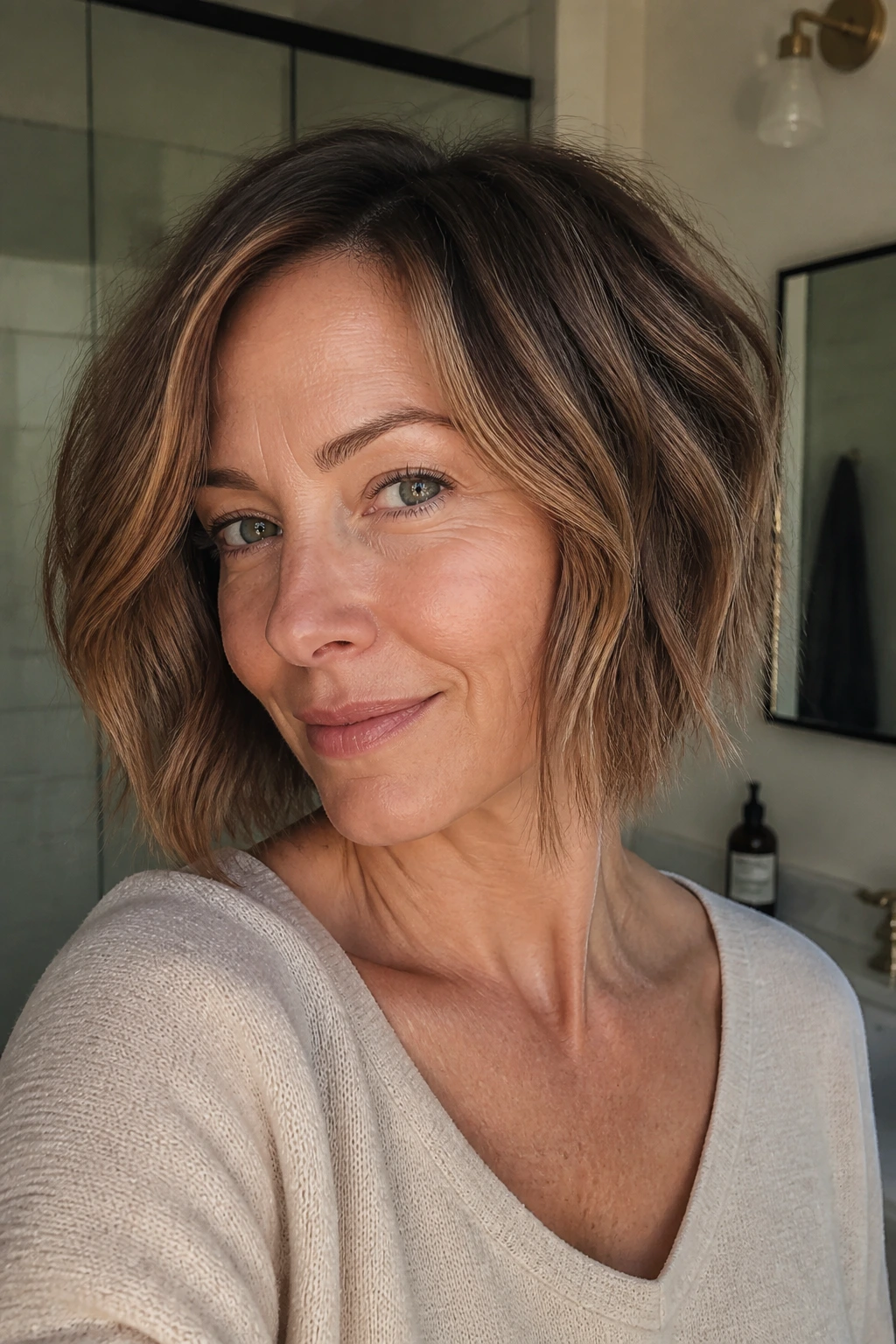
This is the practical bob in the group, and I mean that as a compliment. The angle is gentle, the back is not overstacked, and the front has enough length that the cut can grow for weeks without looking like it gave up. If you want shape without a salon calendar that runs your life, this one deserves a hard look.
The best thing about a low-maintenance angled bob is how it changes over time. It moves from bob to lob without a weird shelf at the back, so you can stretch appointments a little if your schedule gets messy. Wavy hair helps, because the bend disguises the grow-out better than straight hair does.
Ask for a softer bevel and fewer short layers in the back. That buys you time.
22. Bold Asymmetrical Angled Bob
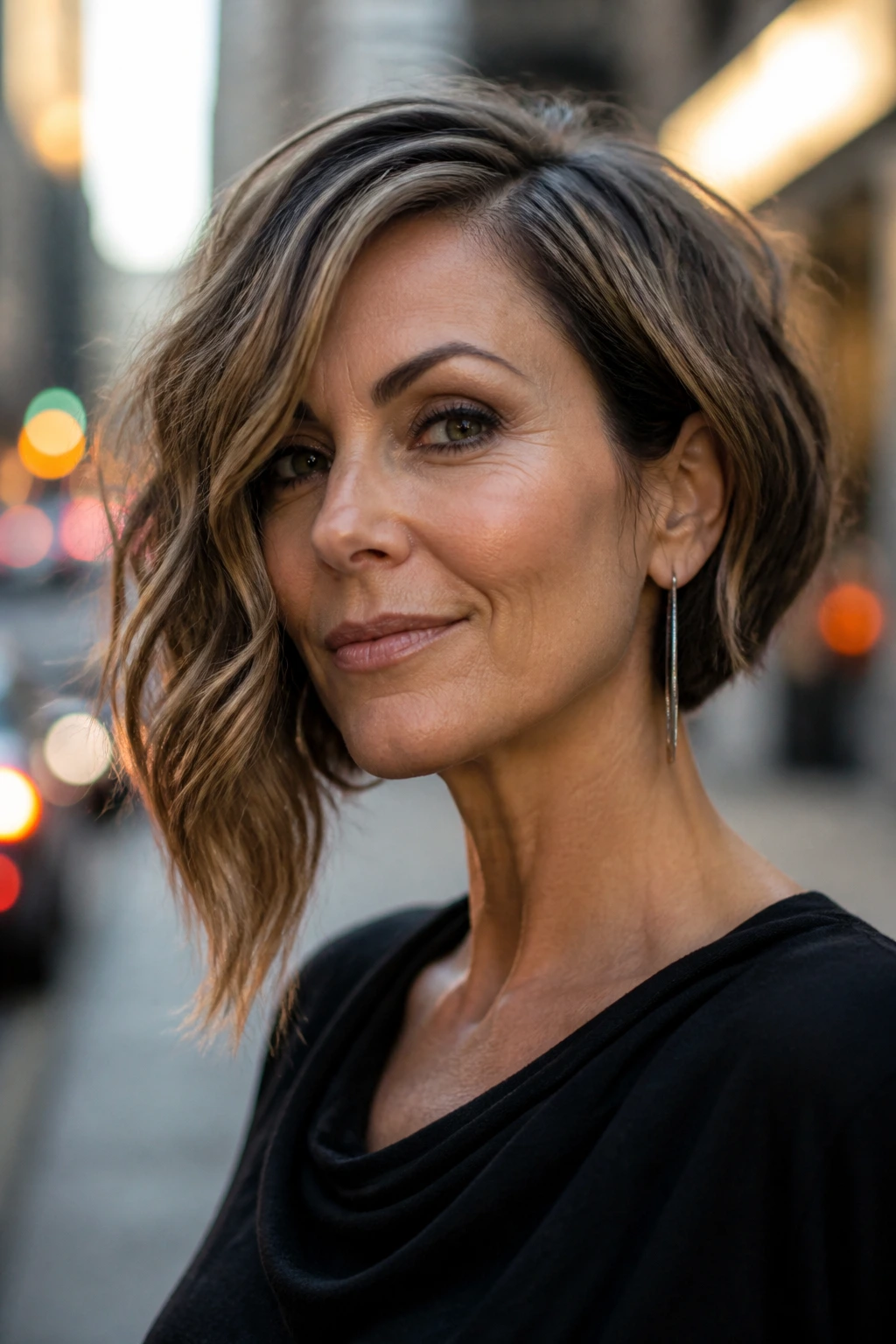
This is the cut with some nerve. One side sits noticeably longer, the angle is visible from the first glance, and the asymmetry gives wavy hair a strong direction. If you like hair that reads as a choice, not an accident, this is the one.
A bold asymmetrical bob works best when the stylist keeps the balance under control. The longer side should feel intentional, not like one half of the haircut forgot to show up. On wavy hair, the texture makes the asymmetry even more obvious, which is great if you want a shape with personality.
It suits people who like earrings, strong glasses, or side parts with a little drama. Quiet it is not.
Why the Angle Works Better Than a Straight Line on Wavy Hair
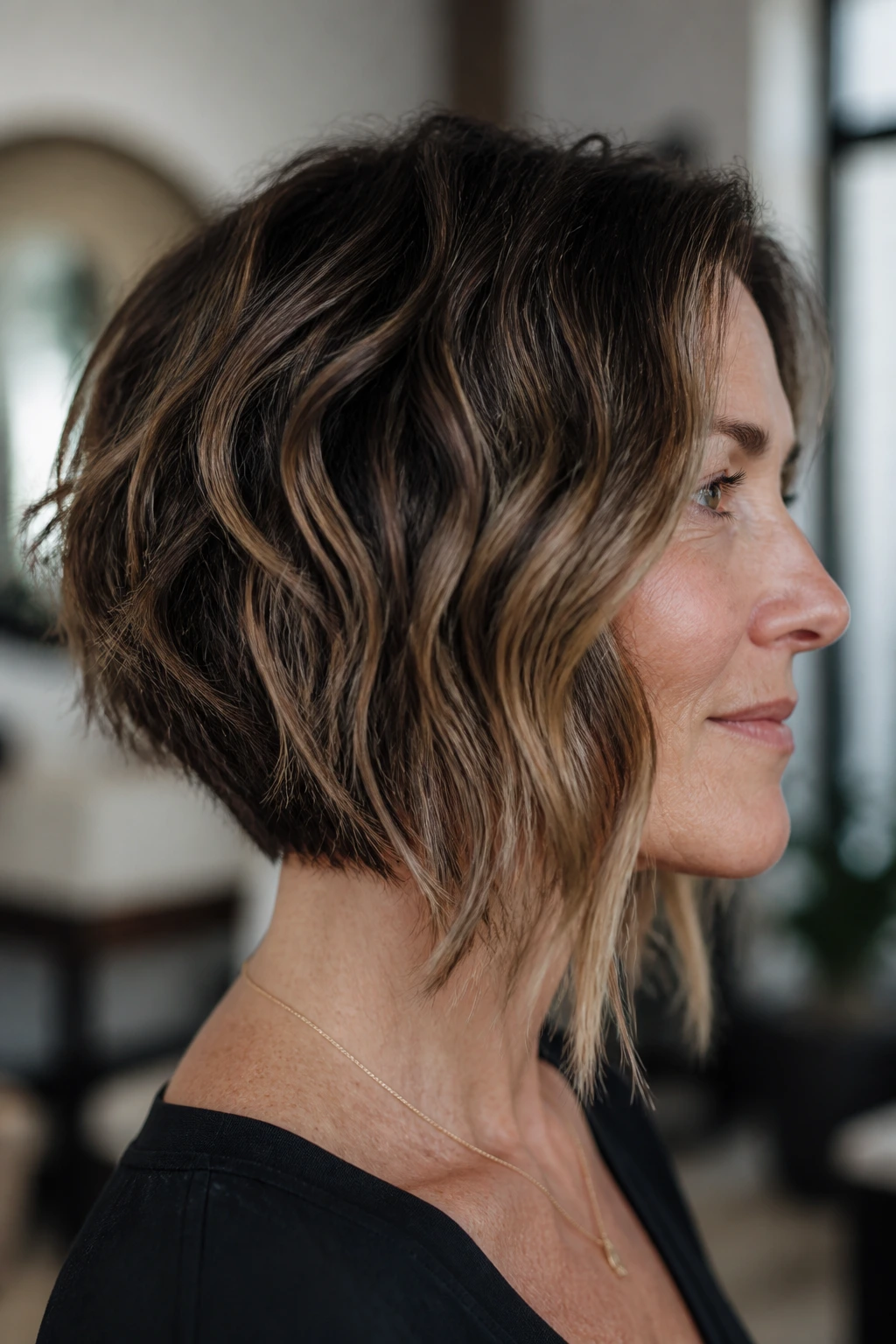
A straight bob and a wavy head of hair often have a brief, awkward meeting. The hair wants to bend. The cut wants to sit flat. Somewhere in the middle, you get width where you didn’t want it and collapse where you needed lift.
An angled shape changes the map. The shorter back removes bulk at the nape and gives the crown a bit of air. The longer front lets the wave land in a line that follows the face instead of fighting it. That is why the silhouette reads as clean even when the texture is loose or irregular.
Shorter Back, Less Drag
Hair weighs something. People forget that. When the back of a bob sits too long and too blunt, it can drag the whole shape downward, especially if the hair is thick or slightly coarse.
Longer Front, Better Movement
The front doesn’t need to be dramatic to matter. Even an inch or two of extra length lets the wave settle around the jaw instead of sticking out at the sides.
Why It Feels Easier After 40
A lot of people notice changes in density, texture, or curl pattern over time. The angle helps because it gives the hair a direction again. It can make finer crown areas look fuller and keep stronger ends from taking over the whole head.
Tools That Make Styling Easier at Home
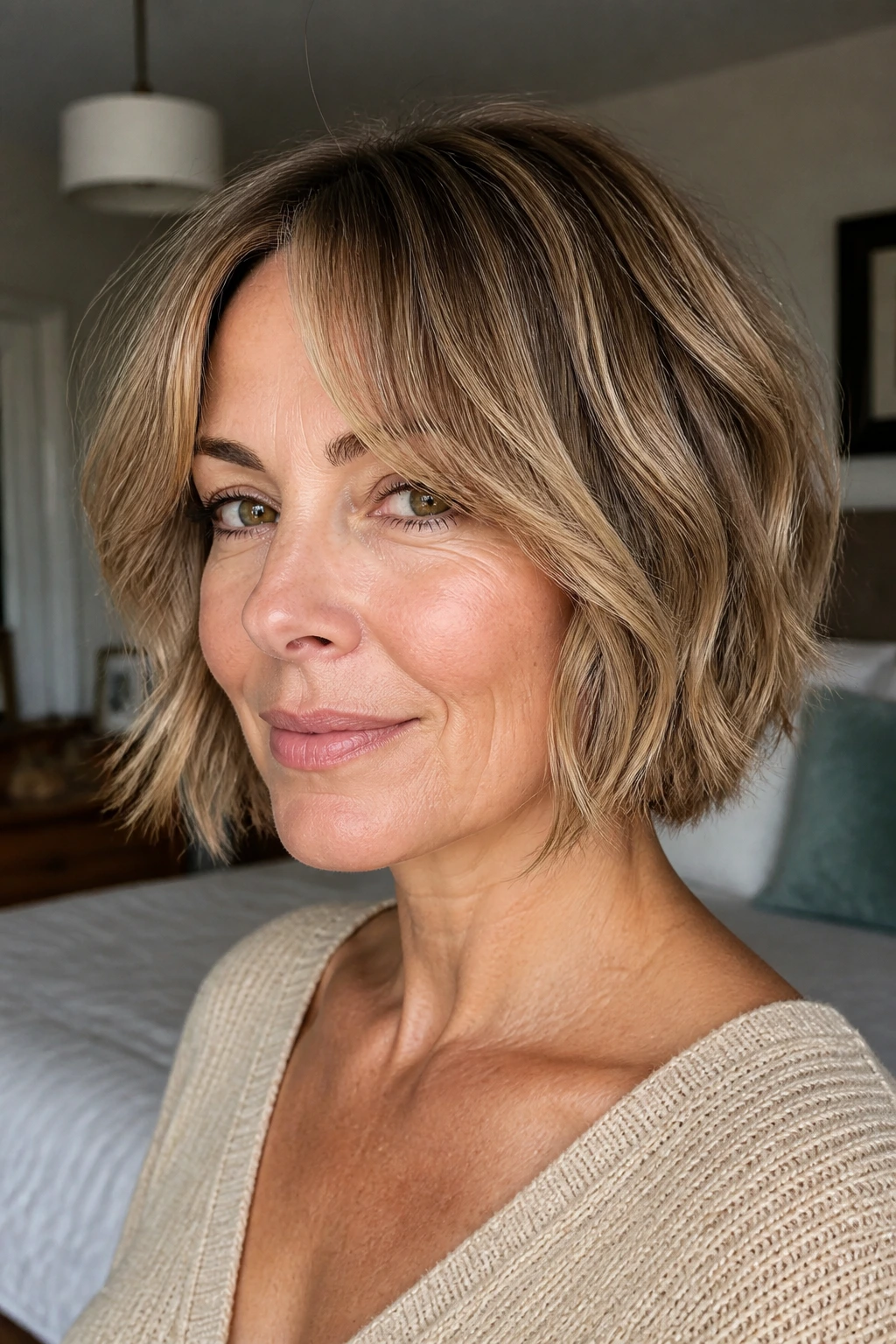
You do not need a counter full of gadgets to wear this cut well. A few good tools will do more than a drawer full of shiny things that only get used twice.
- Blow dryer with a nozzle: The nozzle keeps airflow pointed where you want it, which matters when you’re trying to guide wavy hair instead of blasting it into frizz.
- Medium round brush, about 1½ to 2 inches: Big enough to shape the front, small enough to lift the crown without making the ends flip hard.
- Diffuser attachment: This is the safest way to keep natural wave pattern in the lower layers while still getting volume at the roots.
- Lightweight mousse or foam: Gives body without coating the hair in heavy residue.
- Root-lift spray: Best at the crown and around the part line, where many bobs go limp first.
- Wide-tooth comb: Good for distributing conditioner in the shower and for detangling without crushing the wave.
- Microfiber towel or old T-shirt: Cuts down on rough drying, which means less frizz at the ends.
- Dry shampoo: Useful on day two or three when the crown starts to flatten but the ends still look good.
- Satin pillowcase or bonnet: Helps keep the angle from getting mashed overnight.
- Light serum or cream: Use it on the mids and ends only. The roots do not need it.
How to Ask for the Right Cut at the Salon
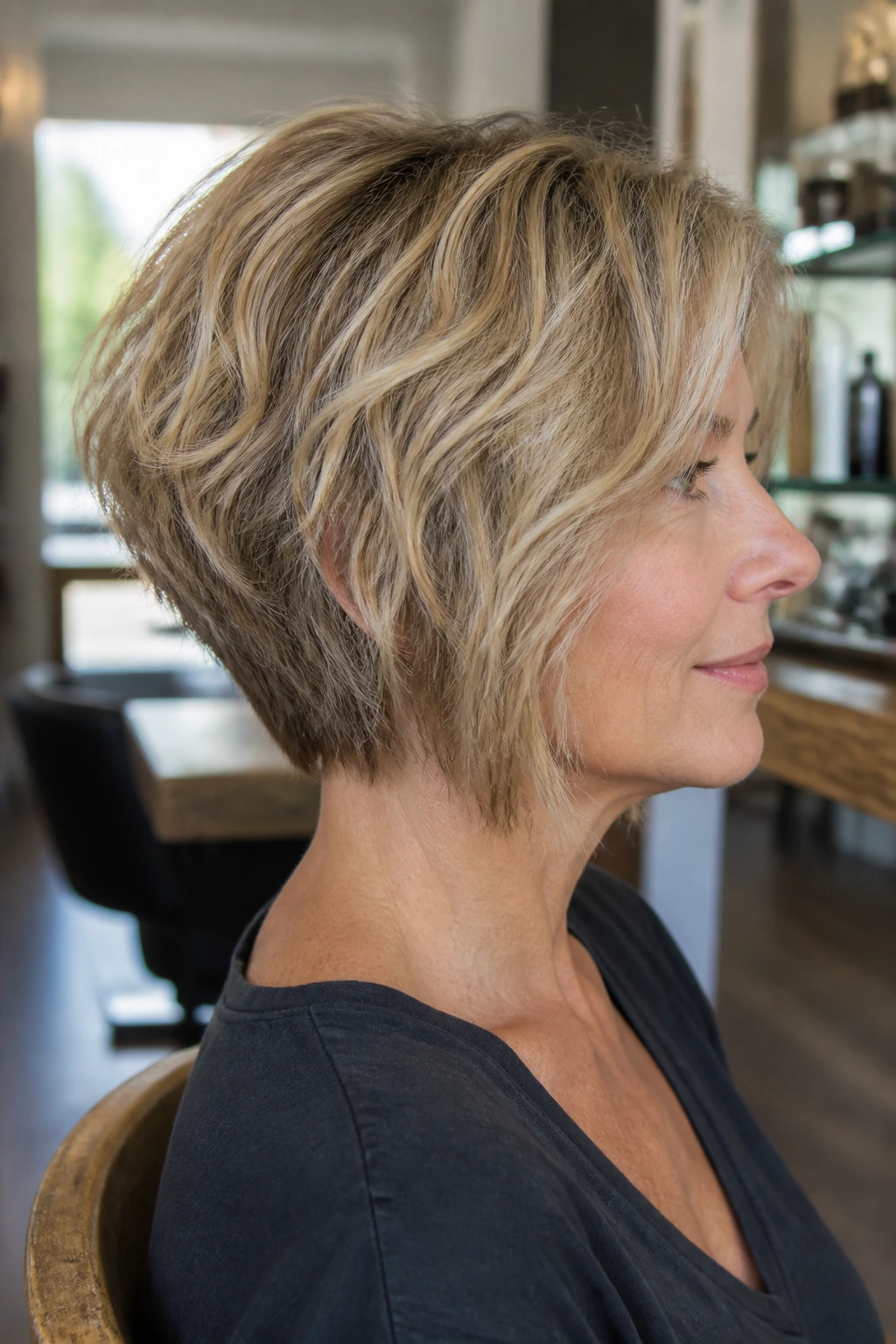
Bring photos, yes, but bring the right kind. One photo should show the silhouette from the side. Another should show the texture you want: smooth, airy, piecey, polished, or soft and undone. A picture of a cut on straight hair will not tell a stylist enough if your own hair bends in waves.
Tell them where you want the front to land. Cheekbone, jawline, chin, collarbone—those points change the whole feel of the bob. The difference between subtle and strong is often only a couple of inches, but those inches decide whether the cut reads soft or dramatic.
Ask how much graduation they plan to put at the back. A little stack at the nape gives lift. Too much can make the head look narrow and the front too bulky by comparison. For fine waves, ask for more support and less thinning. For thick waves, ask where they’ll remove weight so the bottom doesn’t sit like a shelf.
If you want bangs, say what you want them to do. Curtain bangs open the face. Side-swept bangs soften a broad forehead. Wispy fringe can blur lines without stealing too much length. Be specific. Stylists can work with that.
How to Wear and Style These Cuts in Real Life
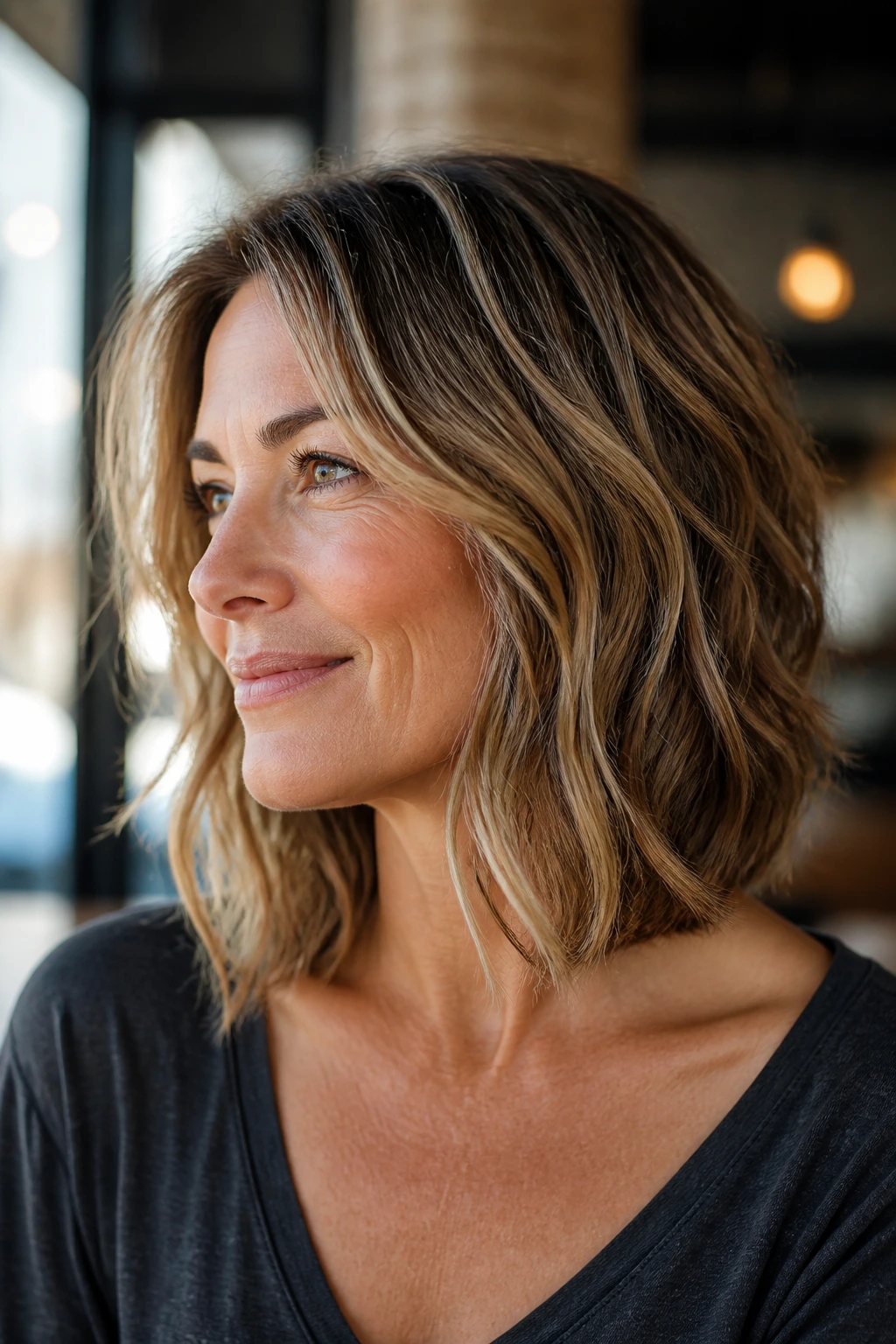
Presentation: Let the front pieces sit where they were cut to fall. If you keep pushing them behind your ears all day, the shape loses the point of the angle and starts acting like a short grow-out instead of a real bob.
Accompaniments: Glasses, earrings, and open necklines all show this cut well because they leave room around the jaw and cheekbone. High collars can work too, but they tend to hide the nape, so a bit more length in back usually helps.
Scale: Subtle angles work when you want a quiet shape that still has direction. Stronger angles make sense if you like a sharper profile and you don’t mind a little more upkeep. The more dramatic the slope, the more often you’ll want a trim.
Finish: Air-dried texture gives the cut a relaxed edge. A round-brush finish gives it more polish. Neither is mandatory every day. A lot of the time, a quick root lift and a bit of finger-tousling are enough to bring the line back.
Small Tweaks That Change the Whole Silhouette
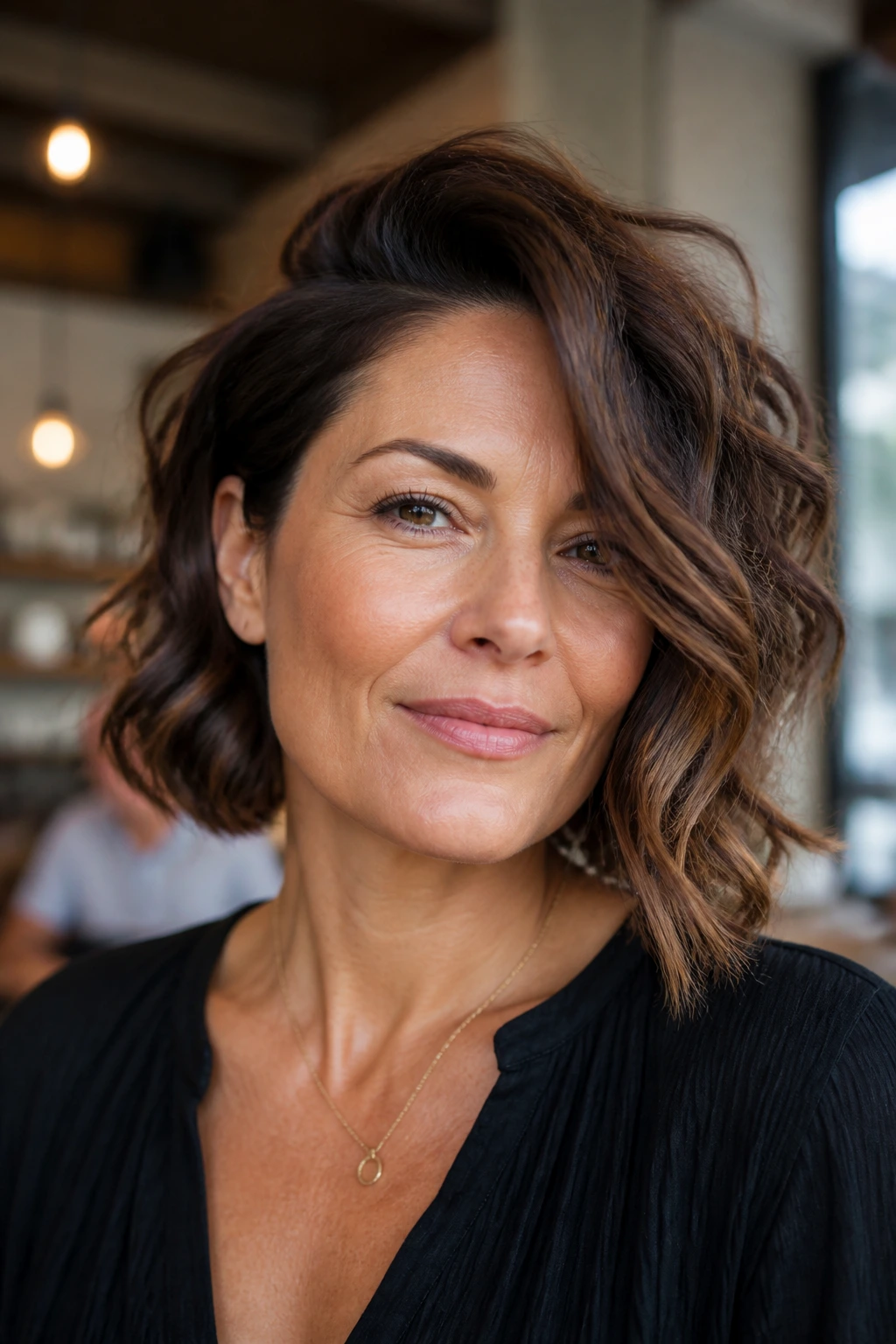
Root Lift: A puff of root spray at the crown before blow-drying gives the back of the bob enough height to show the angle. Concentrate it at the part and around the crown, not all over the head.
Texture Boost: If the ends look too neat, scrunch in a small amount of mousse or a salt spray on damp hair and let it dry halfway before touching it. That keeps the wave visible without making the hair crunchy.
Fringe Shift: Curtain bangs make the cut softer, but a side sweep can sharpen it. If your face is long, a fringe usually helps. If your wave pattern is very strong at the front, keep the bangs longer so they don’t bounce up too much.
Color Placement: A few lighter pieces around the front can make the angle read more clearly, because the eye catches the movement. This works especially well on silver, brunette, or dimensional blondes where the cut line needs help showing up.
Finish Control: A tiny bit of serum on the ends calms frizz. Put it on your palms first, then tap it into the lower third of the hair. Never smear it near the roots unless you want the whole crown to collapse.
Common Mistakes That Flatten the Cut

- Cutting the front too short: If the front sits above the cheekbone on wavy hair, it often flips outward and makes the face look wider. Keep enough length to let the wave fall, not bounce.
- Over-layering the interior: Too many short layers can make the bob look fluffy and unhinged. The fix is long support layers and a cleaner perimeter.
- Using heavy oil at the roots: Wavy hair gets weighed down fast, and a bob shows it. Put richer products only on the mids and ends.
- Blow-drying every strand perfectly straight: That can erase the very thing that makes the cut interesting. Leave a little bend in the ends so the shape keeps moving.
- Waiting too long between trims: The angle softens first in the back. Once the nape starts growing out, the whole cut loses its line.
Variations Worth Trying

The Polished Office Bob: Keep the angle subtle, smooth the surface with a blow-dry cream, and let the front land just below the jaw. It’s the cleanest version for days when you want the cut to look neat instead of carefree.
The Salt-Air Bob: Add texture spray to damp hair, scrunch it, and let the wave do most of the work. This version likes broken-up ends and a little bit of movement at the crown.
The Silver Halo Bob: Soften the bevel, keep the fringe light, and let silver or gray strands show. The contrast between the angle and the natural color variation can be striking without looking forced.
The Grow-Out Lob: Push the front to collarbone length and keep the back only slightly shorter. It grows elegantly and gives you more room if you’re not ready for a true short bob.
The Statement Sweep: Make the side part deep, keep one side longer, and let the angle show from every profile view. This is the one for people who want the haircut to do the talking.
Keeping the Shape Between Salon Visits
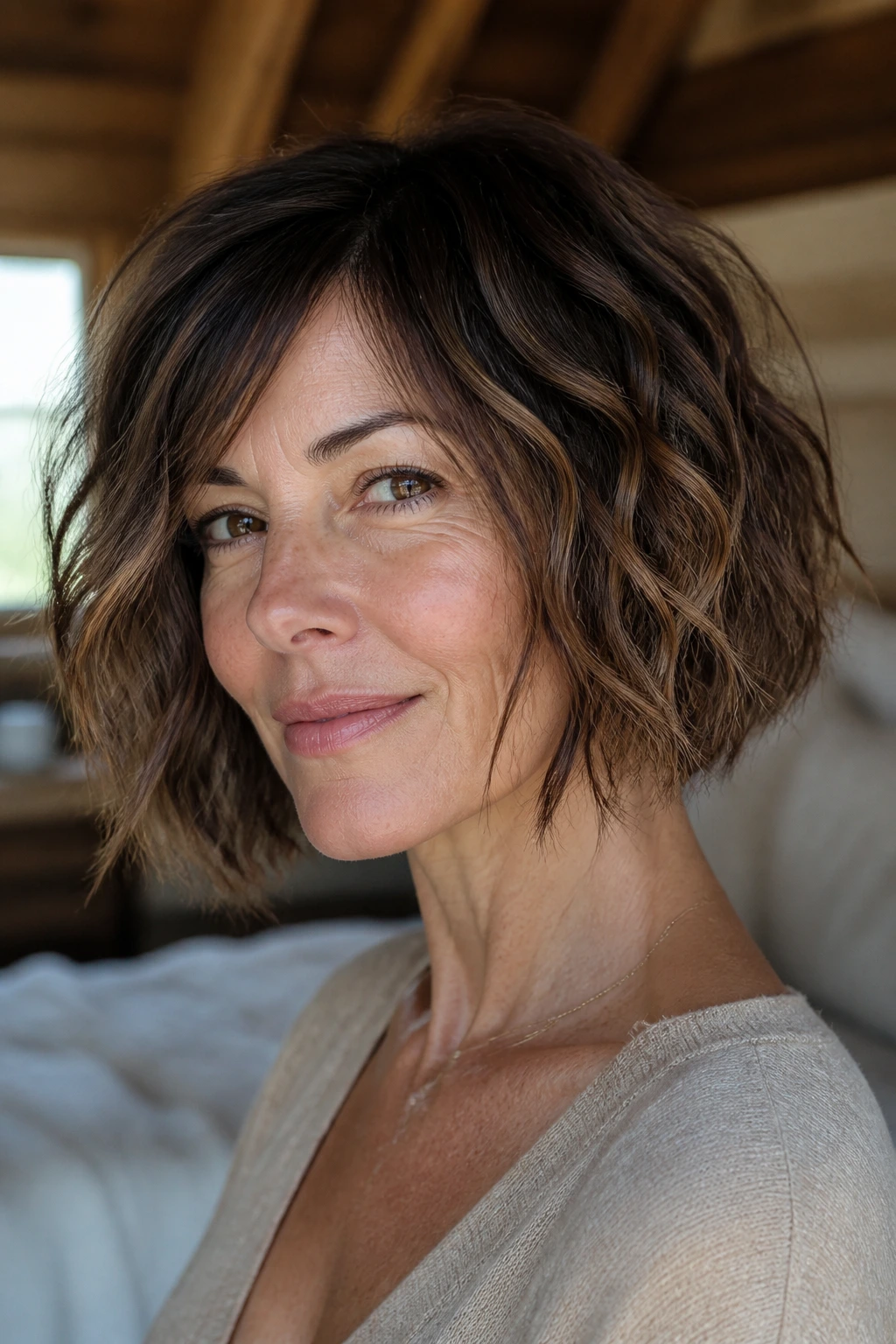
An angled bob does not need daily heroics, but it does need a little upkeep. The back is usually the first part to lose its edge, so short versions tend to need a trim every 5 to 7 weeks. Longer bob and lob versions can usually stretch to 8 to 10 weeks before the shape starts to blur.
At home, the easiest maintenance move is to protect the crown. Sleep on a satin pillowcase if you can, and if the front pieces bend badly overnight, clip them loosely above the forehead so they don’t get crushed flat. A quick mist of water, a pea-sized amount of mousse, and a few minutes with a diffuser can bring the wave back faster than a full restyle.
On wash days, start with product at the roots if you need lift, then keep richer cream or serum on the ends only. If the bob gets flat by day two, use dry shampoo at the crown and flip the part from side to side for a minute. That wakes the roots up without forcing a full wash.
If you plan to grow the cut out, tell your stylist early. They can soften the angle in stages instead of letting it turn into a blunt, awkward half-bob. That approach looks better and saves you the weird middle stage that makes people reach for hats.
Frequently Asked Questions

Will an angled bob make wavy hair look poofy?
It can, if the cut is too short in front or too layered in the middle. The fix is a longer front, a controlled amount of graduation in back, and enough weight left at the perimeter so the wave falls instead of expanding sideways.
Is this cut better for fine hair or thick hair?
Both, but the version changes. Fine hair usually needs stacking, root lift, and a cleaner line to look fuller. Thick hair usually needs internal weight removal and a longer front so the cut doesn’t turn bulky at the jaw.
Can I air-dry an angled bob and still keep the shape?
Yes, as long as the cut respects your natural wave pattern. Use a lightweight mousse, scrunch from the ends upward, and let the roots dry with a little lift before you stop touching it.
How short is too short for wavy hair?
If the front sits too high on the face, the wave can spring up and create width. For many people, cheekbone to jaw length is the safest zone; shorter than that needs a very careful hand.
Do bangs work with an angled bob?
They do, but the type matters. Curtain bangs, side-swept bangs, and wispy fringe tend to cooperate better with waves than thick blunt bangs, which often need extra heat styling to sit right.
What if my hair gets frizzy in humidity?
Keep the layers longer, use a smoothing cream on the mids and ends, and avoid over-drying the cut. A small amount of anti-frizz serum on the last inch of hair can help, but don’t coat the whole head or you’ll lose lift.
Will this haircut work with glasses?
Yes, and some versions look better with glasses than without them. A bob that tucks behind the ear or lands just below the frame line keeps the face open and stops the hair from crowding the lenses.
How often should I get it trimmed?
Shorter versions usually need a trim every 5 to 7 weeks. Longer angled bobs can go a bit longer, but once the back starts losing its lift, the whole silhouette softens fast.
What should I ask for if I want the cut to grow out well?
Ask for a softer angle, fewer short layers in the back, and a front length that reaches the jaw or lower. That gives the bob room to turn into a lob without a harsh shelf forming at the nape.
A Shape That Still Looks Intentional
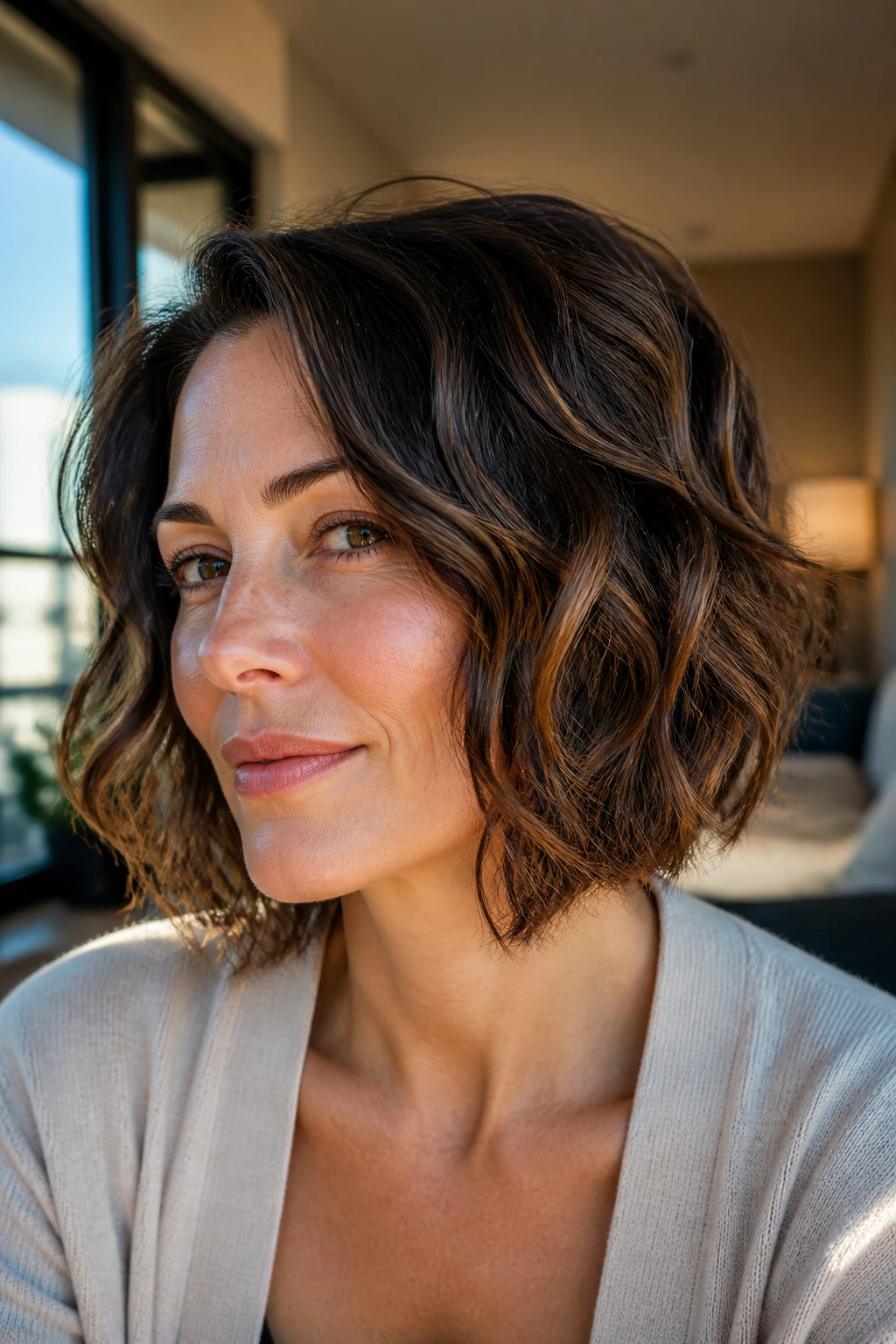
The nicest thing about a well-cut angled bob is that it keeps working after the salon visit fades into the week. It doesn’t ask wavy hair to become straight, or thick hair to shrink, or fine hair to pretend it has more of something than it does. It gives the texture a path and leaves enough room for movement.
That is why these angled bobs for women over 40 with wavy hair feel so useful. They are not stiff. They are not precious. They hold shape, soften the face, and make the hair look like it knows where it’s going—even on the days when you do not.