



The wrong bob can sit like a shelf. The right one bends around an oval face and lets wavy hair do half the styling for you.
Short bobs for oval faces and wavy hair work best when the cut respects two things at once: where the face is widest and where the wave wants to spring. If the line lands in the wrong spot, the whole shape can feel boxy, puffy, or oddly heavy at the jaw. If it lands well, the cut looks like it belongs there from day one, even when you’ve only rough-dried it and run a little cream through the ends.
That part matters more than people admit. Wavy hair is sneaky. It changes length as it dries, bends wider in humidity, and eats blunt cuts if the ends are too light. An oval face gives you room to play, which sounds easy until you realize that “room to play” can also mean “easy to overdo.” The sweet spot is a bob with shape, not fuss.
What follows is a pile of styles that solve different problems: bulk, flatness, too much neatness, not enough movement, a forehead that wants a little frame, or a jawline that needs a softer landing. Pick the one that matches your texture and the way you actually live, not the version that only behaves for ten minutes under salon lights.
Why These Short Bob Ideas Work So Well Together

-
Oval faces can take a lot, but they still need balance. A bob that lands anywhere from just below the ear to the top of the collarbone can work, as long as the shape keeps the eye moving instead of freezing it at the jaw.
-
Wavy hair likes a cut with a little slack. The best versions here leave enough length for the wave to bend without puffing up into a triangle, which usually means keeping the perimeter cleaner than the interior.
-
Short does not have to mean high-maintenance. Several of these cuts air-dry well in 10 to 15 minutes with the right product, and a few need nothing more than a quick bend with a 1-inch iron.
-
You can steer the face shape with the part and the front pieces. A side part, a curtain fringe, or a cheekbone-skimming slice can change the whole read of the cut without making it feel overloaded.
-
Texture matters more than the name on the inspiration photo. A French bob, an Italian bob, and a blunt bob can all look completely different depending on whether the wave is loose, dense, fine, or springy.
1. The Chin-Grazing French Bob
A good French bob has that slightly careless, slightly exact feeling that only works when the length is right. For oval faces with wavy hair, I like it when the line sits just at or a touch below the chin, not high above it. That extra half inch keeps the waves from ballooning and gives the cut a little swing instead of a hard edge.
Why it flatters this face-and-texture combo
The chin is a useful landmark here because it gives the bob a clean stop without cutting the face in half. On an oval face, that chin-level edge brings attention to the eyes and cheekbones without crowding the lower face. On wavy hair, the wave pattern softens the perimeter so the style never looks severe.
Ask for a soft, blunt outline with only light point-cutting at the ends. Too much slicing turns this into a frizzy halo on day two. If your wave is loose, you can keep the sides slightly fuller and let the natural bend do the work. If your wave is stronger, leave the front pieces a hair longer than the back so the cut doesn’t kick out at the jaw.
- Best length: just at the chin or 1/2 inch below it
- Best wave type: loose to medium waves
- Best styling move: air-dry with a pea-sized amount of cream, then scrunch the ends
- Best maintenance: trim every 6 to 8 weeks
One thing to watch: if your neck is short, don’t let the back climb too high. You want the cut to skim, not perch.
2. The Jawline Bob With an Off-Center Part

Want a bob that feels neat without looking stiff? Shift the part by about 1 inch and let one side sit a little heavier than the other. That tiny move changes the whole face shape. On an oval face, it keeps the cut from feeling too symmetrical, and on wavy hair it gives the bend somewhere to fall naturally instead of splitting straight down the middle.
The off-center part works because wavy hair likes to settle where it wants. If you force a perfect center part on a wave that doesn’t love it, the front often breaks apart and puffs near the temples. A slight offset lets the longer front section swing across the cheekbone, which is where this cut gets its charm.
Keep the ends around the jaw, but not exactly on the widest point of the jaw. I prefer the front to taper a touch longer, maybe by 1/2 inch, so the shape feels deliberate. If your hair is dense, ask for internal weight removal rather than heavy exterior layering; the perimeter should still read clean.
A quick side note: this bob looks especially good with glasses. The uneven part gives the frames a little breathing room instead of creating a flat wall of hair behind them.
3. The Micro Bob With a Clean Nape
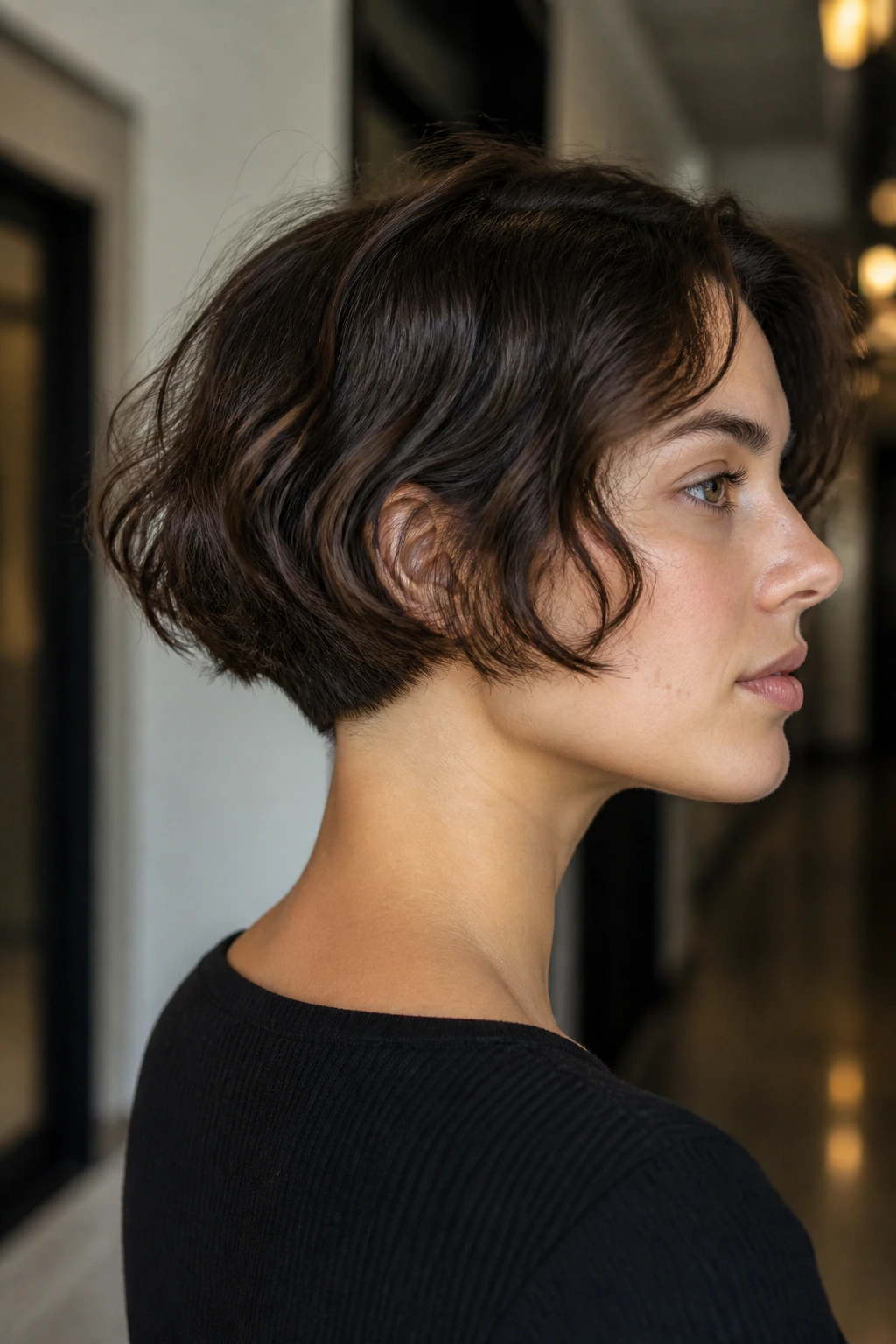
The micro bob is not for anyone who wants to hide. It sits high, often just below the ears, and the back is trimmed close enough that the nape looks crisp rather than bulky. On oval faces, that short length can be striking in a good way because the proportions stay open. On wavy hair, though, you have to respect shrinkage. Seriously. If your waves spring up 1 inch when dry, that matters here.
The short version
This cut works best when the wave is loose and the hair has enough density to hold a line. Fine, sparse waves can go wispy fast at this length. Thick waves can look amazing, but they need the weight controlled so the sides don’t flare out like a helmet.
What to ask for
- A clean, tapered nape
- Soft interior texturizing, not aggressive thinning
- Front pieces that hover just below the cheekbone if you want a little softness
- A dry cut or a dry check at the end, because wet curls lie
I’d call this a confidence cut. It looks best when it is kept sharp every 4 to 6 weeks. Let it grow too far and it loses the whole point.
4. The Collarbone Bob With Invisible Layers

This one lives in the gray area between bob and lob, and that is exactly why it works so well. The collarbone length gives wavy hair enough room to bend without puffing, and the face can stay open because the front pieces usually skim the jaw rather than sit on it. Oval faces get a long, soft frame instead of a hard line.
Invisible layers are the secret. You don’t want choppy steps showing through the surface. You want the inside of the cut to carry the movement while the outside still looks smooth. That keeps the ends from piling up at the bottom, which is the thing that makes so many wavy bobs look bottom-heavy.
If your hair is thick, this is one of the easiest short bob shapes to live with because it removes bulk without making the outline choppy. If your hair is fine, keep the layers very light and ask for a blunt-ish perimeter so the ends don’t look see-through. A flat iron bend through the front pieces can make the whole cut look more polished in under 5 minutes.
This is the kind of bob I recommend to people who say they want short hair but are nervous about the commitment. It grows out cleanly. That alone earns it a place.
5. The Blunt Bob With an Air-Dried Bend

A blunt bob and wavy hair can be a gorgeous pairing when the wave is allowed to show up on its own terms. The trick is to keep the outline solid and let the texture live inside it. Oval faces benefit because the shape stays controlled around the jaw without covering the features in layers.
The blunt perimeter does two things at once. First, it makes fine or medium-density hair look fuller at the bottom. Second, it gives wavy hair a frame, so the bend reads as intentional instead of fuzzy. You can air-dry this cut with a dab of mousse at the roots and a touch of leave-in cream on the ends, then leave it alone. That’s half the battle.
If you want a little softness near the face, ask for very slight graduation around the front, but do not let the stylist overtexturize the ends. A blunt bob that has been shredded too much loses the clean line that makes it feel modern. The best version looks like it could swing when you turn your head, but still holds its shape when you’re still.
This is also one of the easiest cuts to dress up. A deeper side part and one tuck behind the ear can change the mood in seconds.
6. The A-Line Bob That Tips Forward
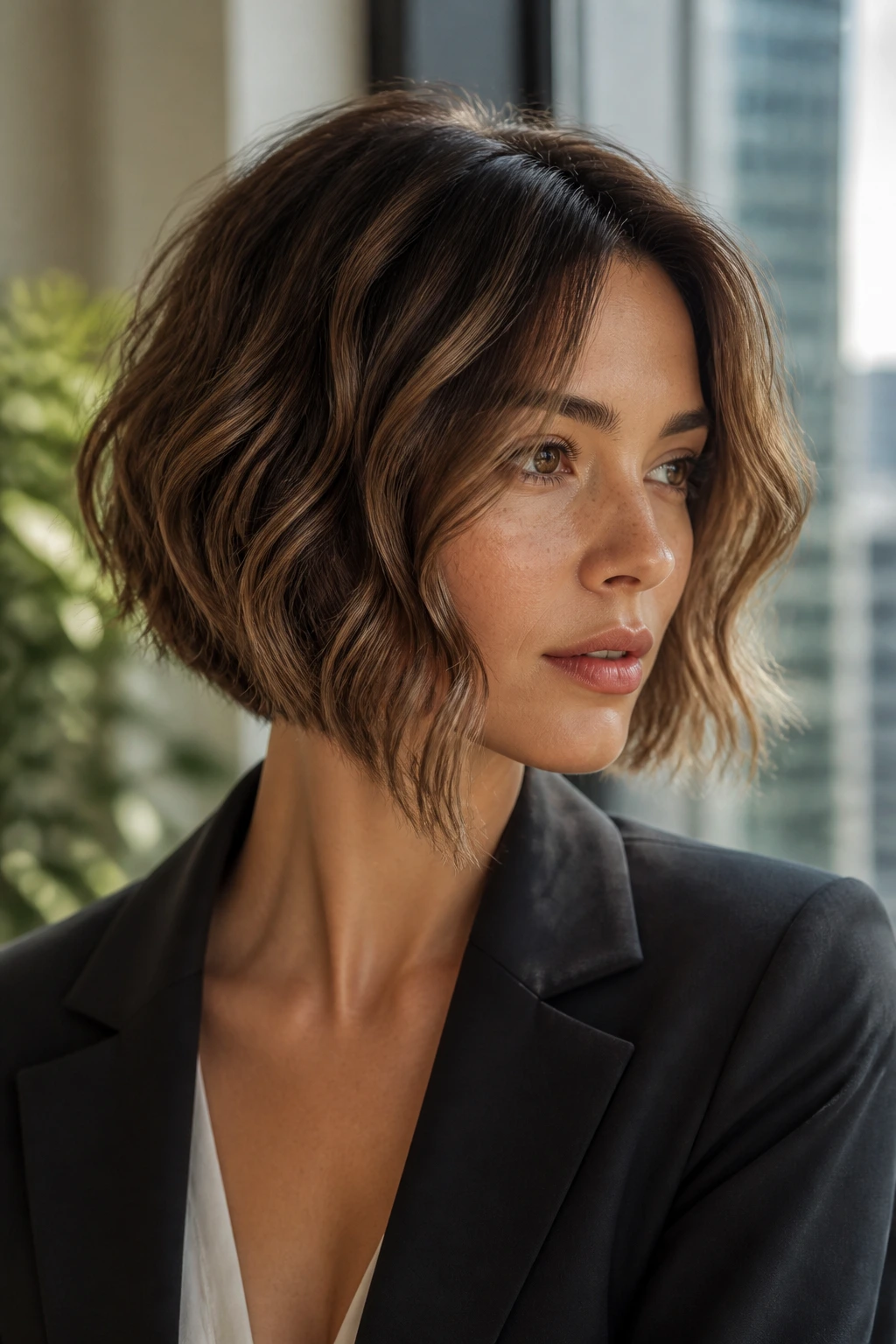
An A-line bob gives you that subtle forward angle: shorter in back, longer toward the front. It sounds simple. It changes everything. For oval faces, that little forward tip brings the eye along the cheek and jaw in a soft diagonal, which keeps the face from reading too long. For wavy hair, the angle gives the wave a path to follow instead of letting it puff outward at the sides.
The best A-line version for wavy hair is not sharply graduated. You want enough difference to see the angle, but not so much that the back looks stacked or dated. The front should land between the chin and just under the jaw, depending on how much wave you have. If your waves are strong, staying closer to the chin keeps the style from creeping outward.
This cut is a smart choice if your hair gets bulky at the nape. The slightly shorter back clears the neck and makes the head feel lighter. I also like it for people who want a bob that still works with a blazer or high collar. It sits cleanly and doesn’t fight clothing.
One warning: if your stylist makes the front too long, it stops reading as a short bob and starts drifting into lob territory. That’s fine if you want it, but it changes the whole feel.
7. The Curved Bob That Hugs the Cheekbones
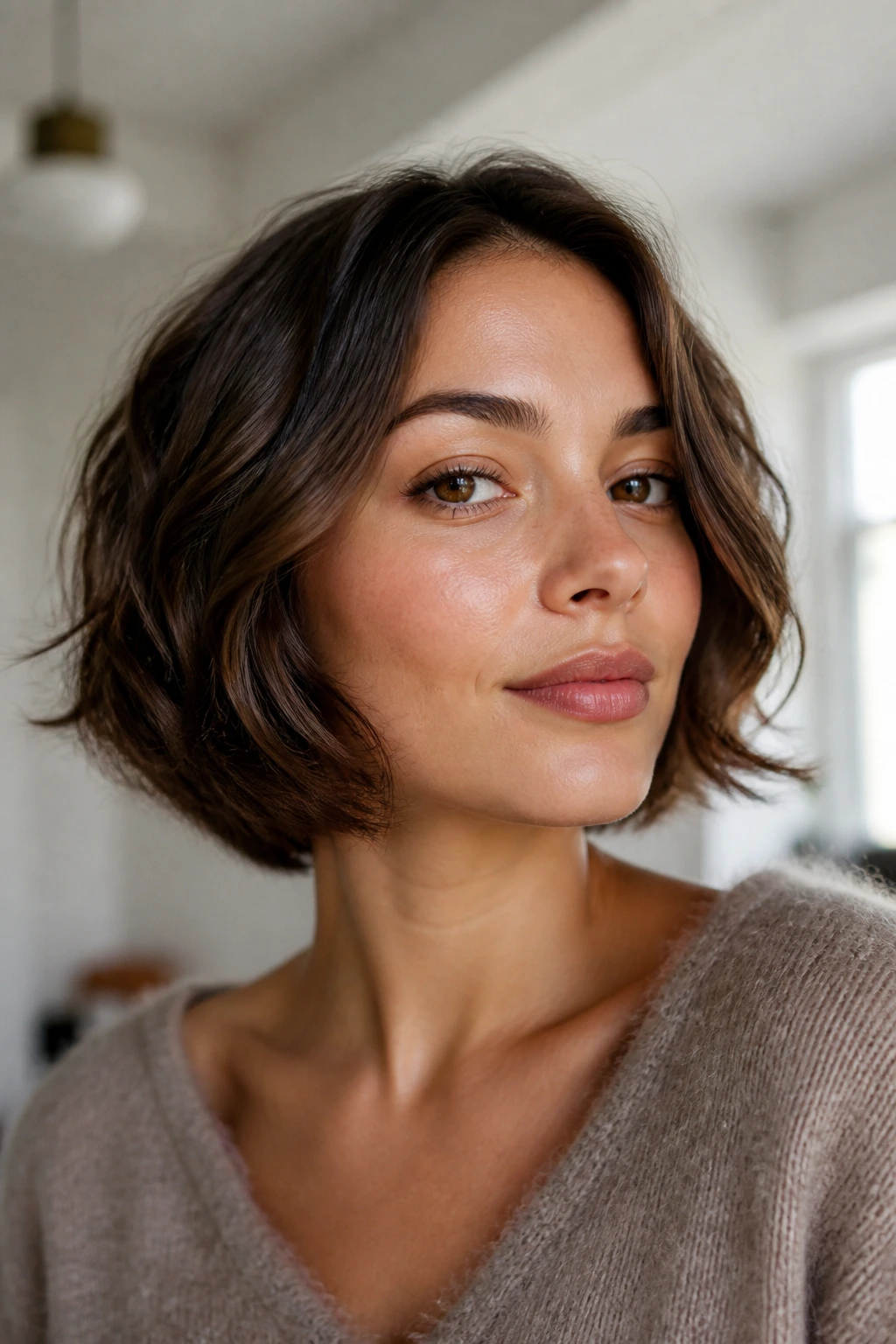
A curved bob is one of the easiest ways to make oval faces look even more balanced. The shape arcs gently under the cheekbones and then back in toward the nape, which keeps the silhouette soft without going flat. Wavy hair loves this because the interior movement supports the curve instead of breaking it up.
The cut usually works best with a slightly rounded perimeter rather than a dead-straight line. I like a version that starts around the middle of the ear and curves toward the chin, with the front ever so slightly longer. That line gives your waves something to settle into. If the hair is too heavily layered, the curve disappears. If it is too blunt, the style can get heavy at the bottom.
This one is especially good if you want your hair to look polished with a minimum of heat styling. A round brush and a quick pass under the ends can sharpen the curve in 8 minutes or less. Or you can just scrunch and go, which is honestly how most people will wear it after the first week anyway.
The face-framing effect is subtle, not dramatic. That’s the point. It looks like the cut belongs to your face, not like your face has been forced to fit the haircut.
8. The Shaggy Bob With Feathered Ends
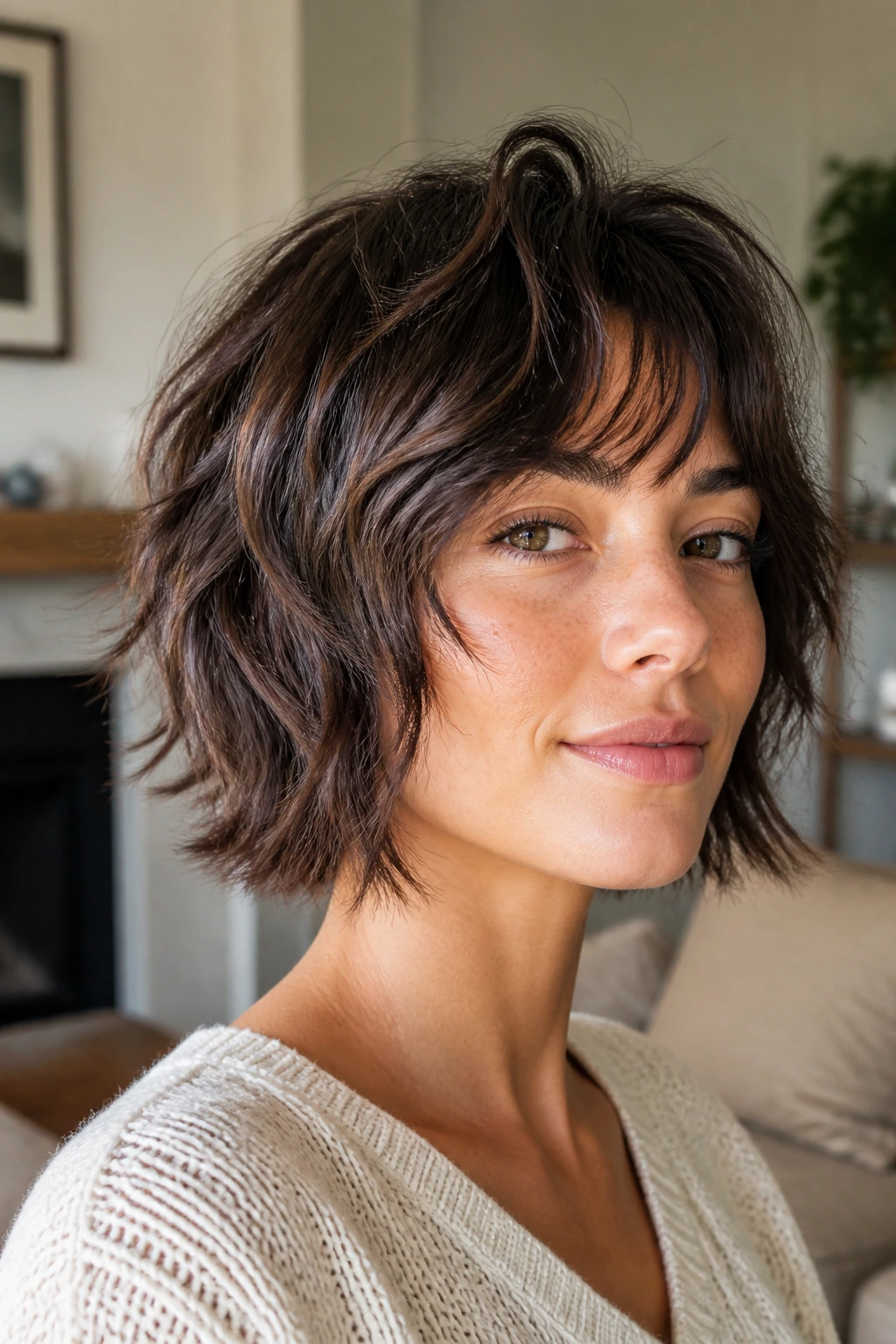
If your waves are loose but not sleepy, a shaggy bob can make them look fuller and more alive. The feathered ends keep the silhouette from getting blocky, and the shorter layers let the wave break up in a nice, piecey way. Oval faces get a little more movement near the temples and cheekbones, which helps the whole cut feel relaxed.
This is the bob for people who hate spending time with a brush. It behaves best with a bit of mousse or wave spray, air-dried until about 80 percent dry, then finger-tousled. A diffuser helps if you want the layers to separate more clearly, but don’t blast it until the hair frizzes. That ruins the whole point.
The feathering matters. Ask for soft, directional texture at the ends rather than random thinning. You want the layers to fall in a way that suggests movement, not in a way that leaves empty gaps. On dense hair, this cut takes the weight out in a useful way. On fine hair, it can become too wispy unless the perimeter stays strong enough.
The shaggy bob is not the cleanest option on this list. It is, however, one of the most forgiving on a day when your waves refuse to cooperate. That counts for a lot.
9. The Deep Side-Part Bob
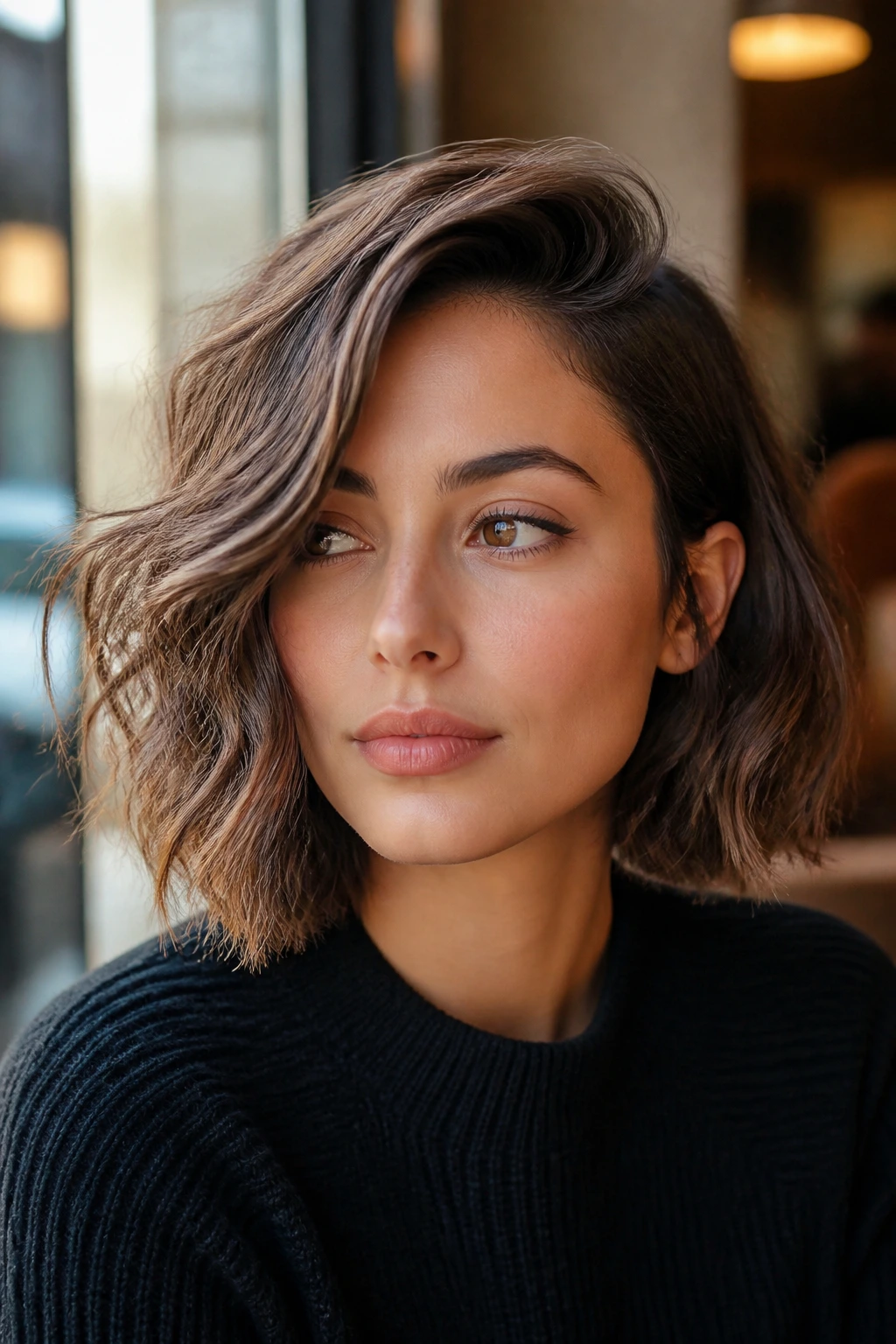
A deep side part changes the whole temperature of a short bob. Move the part 2 to 3 inches off center, and suddenly the waves fall differently, the crown lifts a little, and the face gets a diagonal line instead of a straight one. Oval faces wear this well because the asymmetry adds interest without interrupting balance.
The reason it works on wavy hair is simple: waves like to stack when they are forced into a middle part. A deep side part gives the hair an easier route. One side sits fuller. The other side can tuck back or skim the cheek. That unevenness makes the cut feel bigger without needing extra layers.
How to style it
- Blow-dry the part first so it stays put
- Lift the root on the heavier side with a round brush
- Tuck the lighter side behind the ear or pin it flat
- Finish with a light mist of texture spray, not a heavy cream
The deep side-part bob reads a little more dressed up than the center-part versions. It is a good pick if you want your short bob to work with a sharp shirt collar, a dress, or anything with strong shoulders. There’s a certain quiet drama to it. Not dramatic in a loud way. Just enough.
10. The Tucked-Behind-Ear Bob

Sometimes the simplest trick is the whole haircut. A bob that lands just below the ear and can be tucked cleanly behind one side creates shape without needing much styling. Oval faces get a clear view of the cheekbones, and wavy hair gets to keep its bend where it matters most—through the mid-lengths and ends.
What makes this version different is the front. Keep the front pieces long enough to survive the tuck, usually about 1 to 1.5 inches past the jaw, so one side can sit open while the other curves under the ear. That little asymmetry stops the style from looking too tidy. It also plays well with earrings, which is not a trivial detail. A good bob and a simple hoop can do a lot of work together.
This is one of the more practical cuts on the list if you spend time in and out of hats, headphones, or scarves. It resets easily. If a wave goes flat on one side, a quick bend with your fingers and a spritz of water brings it back.
I like this shape for people who want a short bob that won’t fight daily life. It gets out of the way when you need it to, then looks intentional again the second you tuck one side back.
11. The Razor-Cut Bob With Piecey Ends
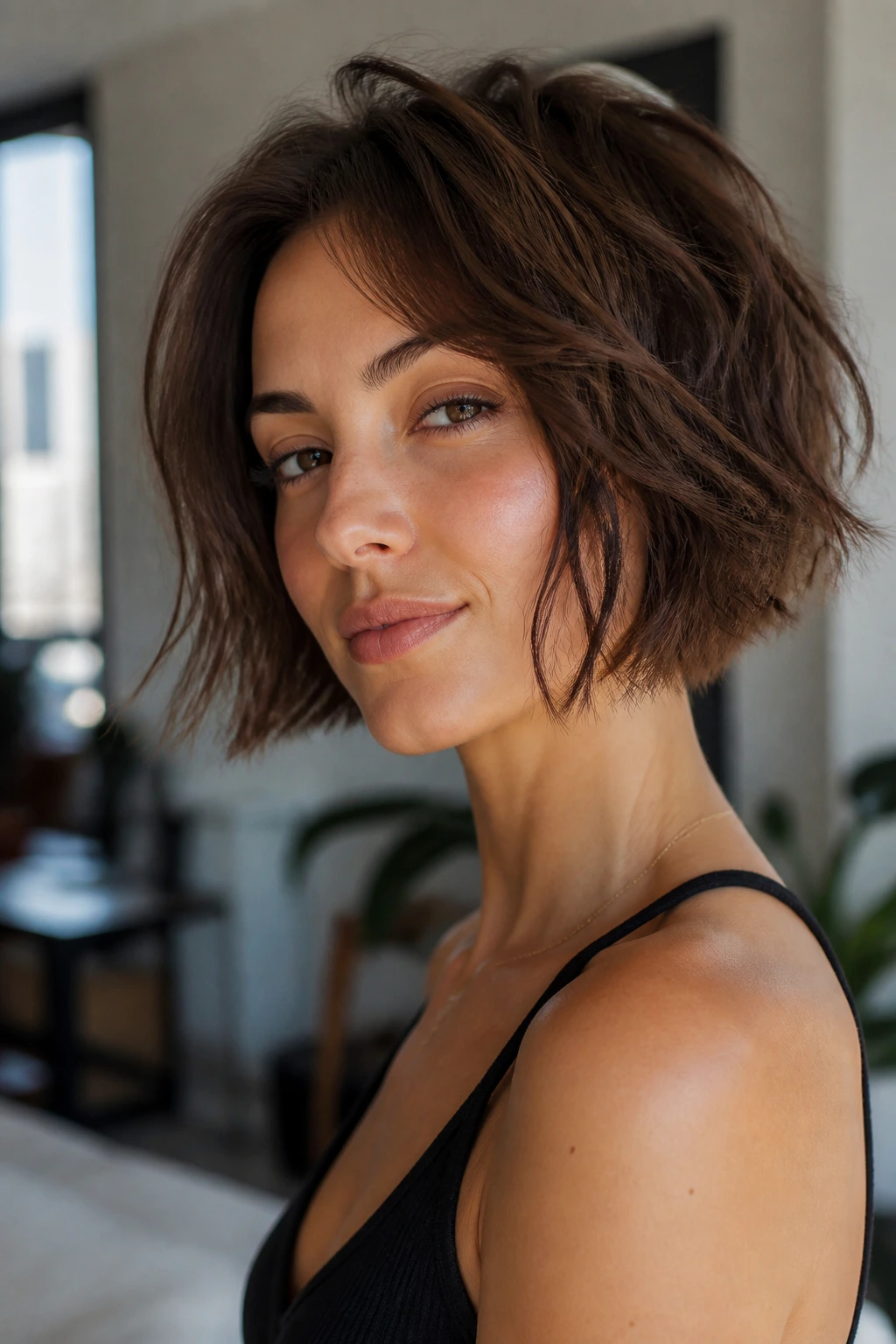
Razor cutting can be tricky, and I’d rather be honest about that. Done well, it gives wavy hair a separated, airy finish that keeps the bob from feeling blunt or heavy. Done badly, it can chew up the ends and leave them looking shaggy in the wrong way. On oval faces, the good version is lovely because it softens the outline without destroying it.
This cut works best when the hair has some density. Thick or medium-thick waves can handle the lighter ends and still hold shape. If your hair is fine, too much razor work can make the bottom look scraggly by the third day. Ask for a controlled razor finish on the surface, not a full-on thinning of the perimeter.
The piecey effect is the draw. Those separated ends catch the wave and make the style feel light, but not fluffy. A small amount of styling paste through the mid-lengths can sharpen the texture without making it crunchy. If you’re used to a round-brush blowout, this version will feel looser and a little less polished. That’s the tradeoff.
It’s a good choice if you like your hair to look lived-in rather than perfect. Some days that is exactly the right thing.
12. The Bob With Curtain Bangs
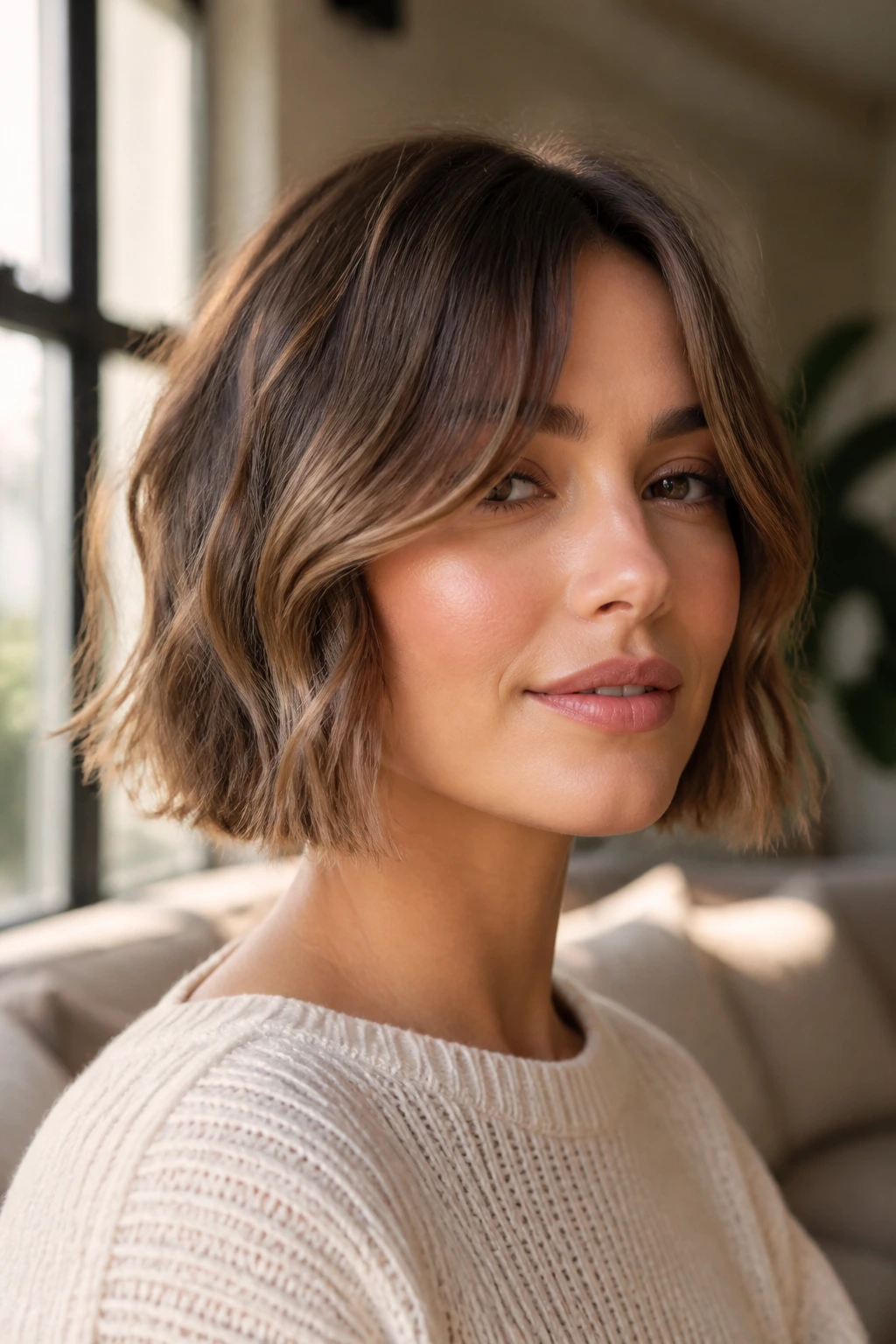
Curtain bangs and a short bob are an easy match on oval faces because the fringe opens the forehead while still giving structure around the eyes. With wavy hair, the bangs don’t need to lie flat. In fact, they look better with a little bend and a soft split at the center that falls around the cheekbones.
The cut should keep the bangs long enough to blend into the front pieces, usually starting around the eyebrow and tapering to cheek length. Short, blunt fringe with wavy hair can be a pain unless you like styling it every morning. Curtain bangs have more freedom. They grow out cleaner, too.
The best thing about this combo is how much it changes the mood of the bob without changing the length. A chin-length bob with curtain bangs reads softer and more styled than the same bob without fringe. It also helps if your forehead feels broad or if you want the eye to move upward a little.
One small caution: if the bangs are cut too short, they can bounce up and sit oddly above the brow. Ask for a dry check so the stylist can see where the wave settles. That one step saves a lot of regret.
13. The Bob With Bottleneck Bangs
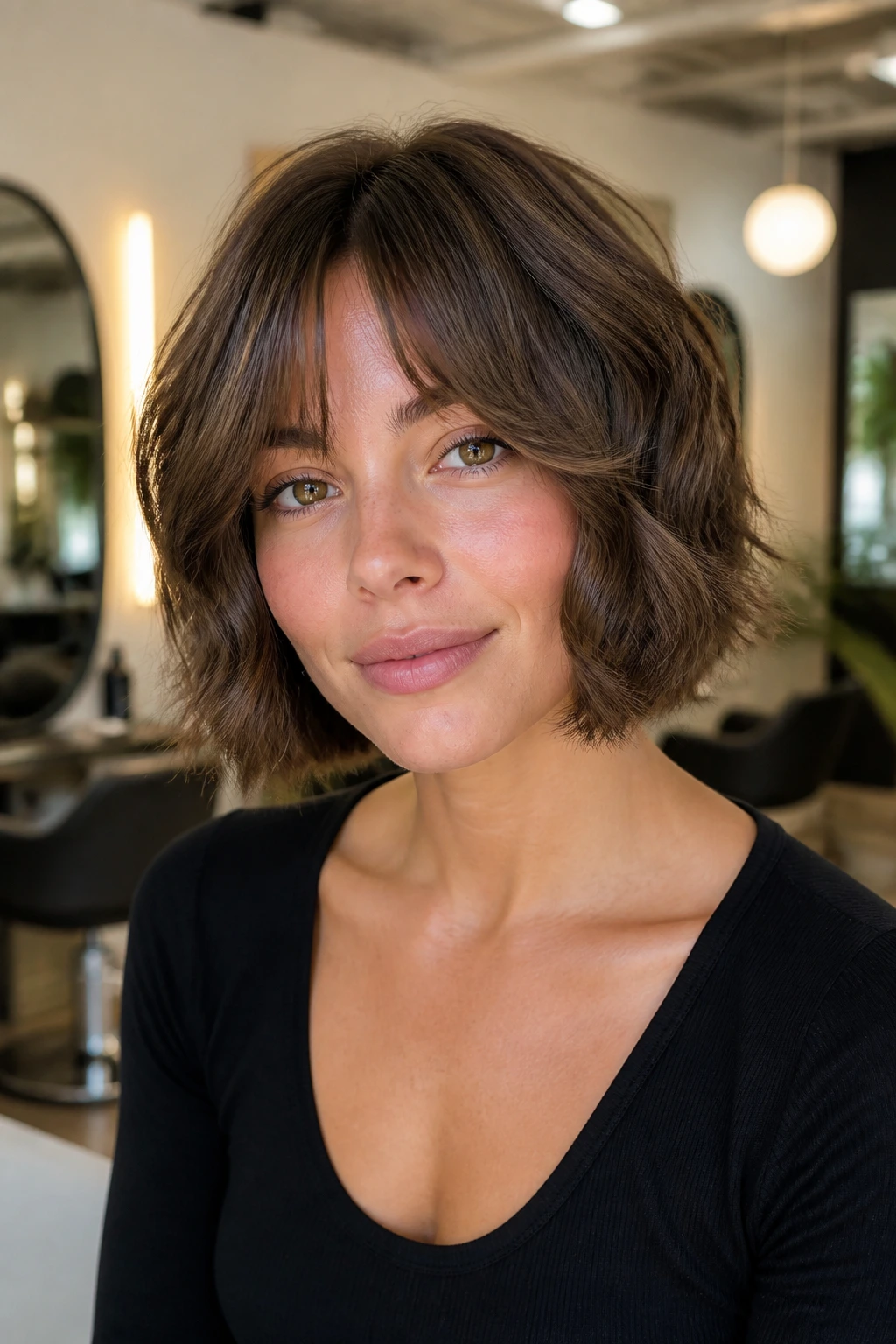
Bottleneck bangs are the more tailored cousin of curtain bangs. They start narrower at the center and flare out as they reach the cheekbones, which makes them a sharp match for oval faces. Wavy hair tends to give them a soft edge, so the result looks polished without feeling stiff.
This style works because the fringe acts like a frame, but not a curtain wall. The narrow center opens the forehead, while the longer side pieces graze the face and keep the bob from looking top-heavy. If your waves are stronger in front, this fringe can be a blessing. It breaks up the front line without making you commit to a full bang.
I’d keep the bob itself fairly clean, somewhere between chin and jaw length, so the bangs remain the main event. Too much layering around the face can compete with the fringe and make the cut feel busy. A little bend through the bangs with a round brush or Velcro roller is enough. You do not need a full blowout. You just need the fringe to sit in its own lane.
This is a neat option if you want a bob that looks styled even when the rest of the hair is simply air-dried.
14. The Italian Bob With Heavy Ends
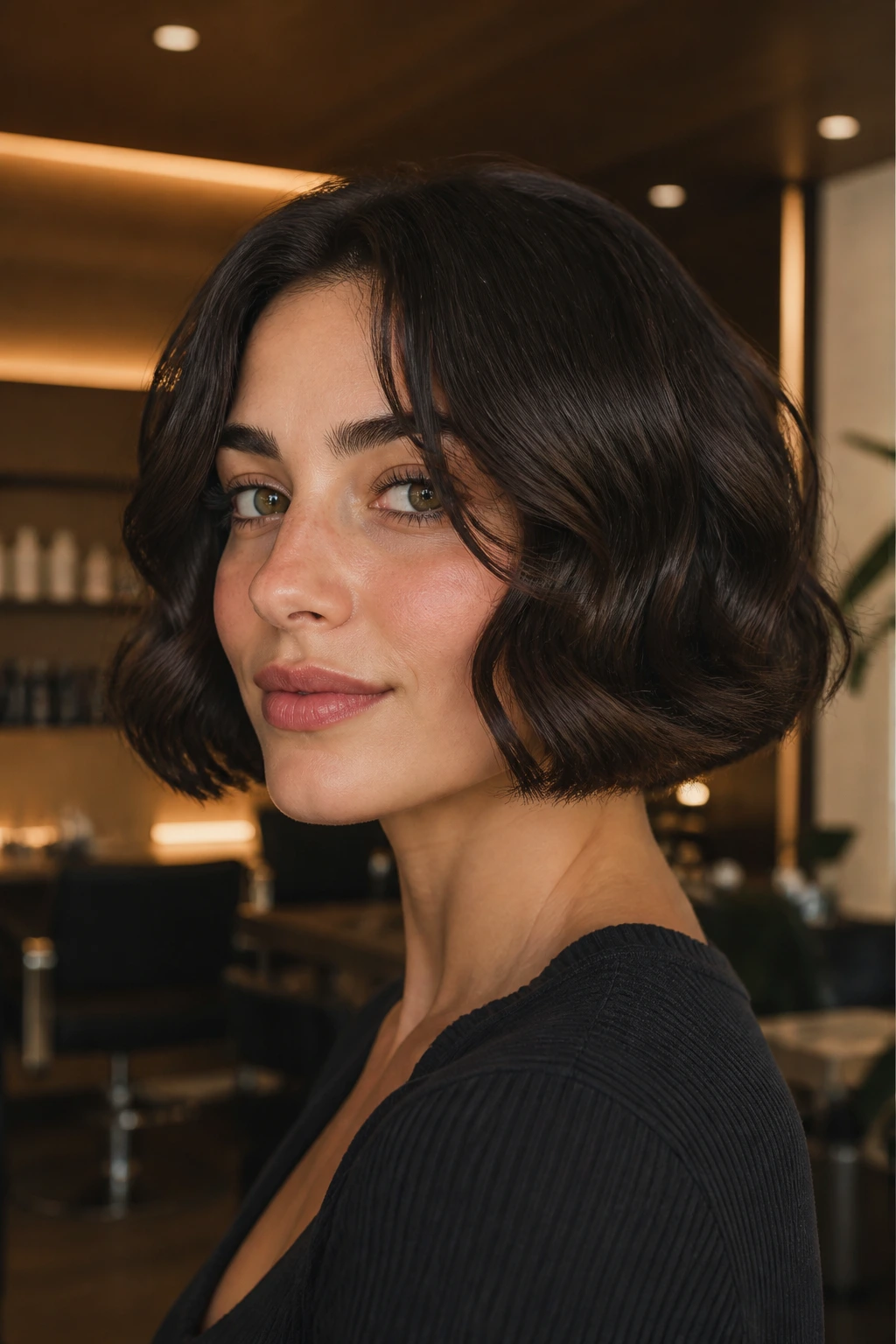
The Italian bob is about body. Not volume for its own sake, but a thick-looking perimeter that sits with some weight at the bottom. For oval faces, that heaviness gives the shape presence without stealing width from the face. For wavy hair, it helps the waves fall into a rich, rounded curve instead of scattering into frizz.
What I like about this cut is the restraint. You do not want too many visible layers. You want the hair to look dense and expensive in the old-fashioned sense—full, deliberate, and a little lush around the jaw. A good version usually lands at chin to neck length, with internal shaping only where the hair needs room to move.
If your hair is naturally thick, this is one of the strongest options on the list. If it’s fine, the heavy perimeter can still work, but the stylist has to leave enough density at the ends so it doesn’t look transparent. A round-brush finish brings out the curve. A few bends with a flat iron can also make the ends sit with a soft inward roll.
This is not the bob for someone who wants airy and wispy. It is the bob for someone who wants the haircut to have a little presence.
15. The Graduated Bob With a Built-Up Back
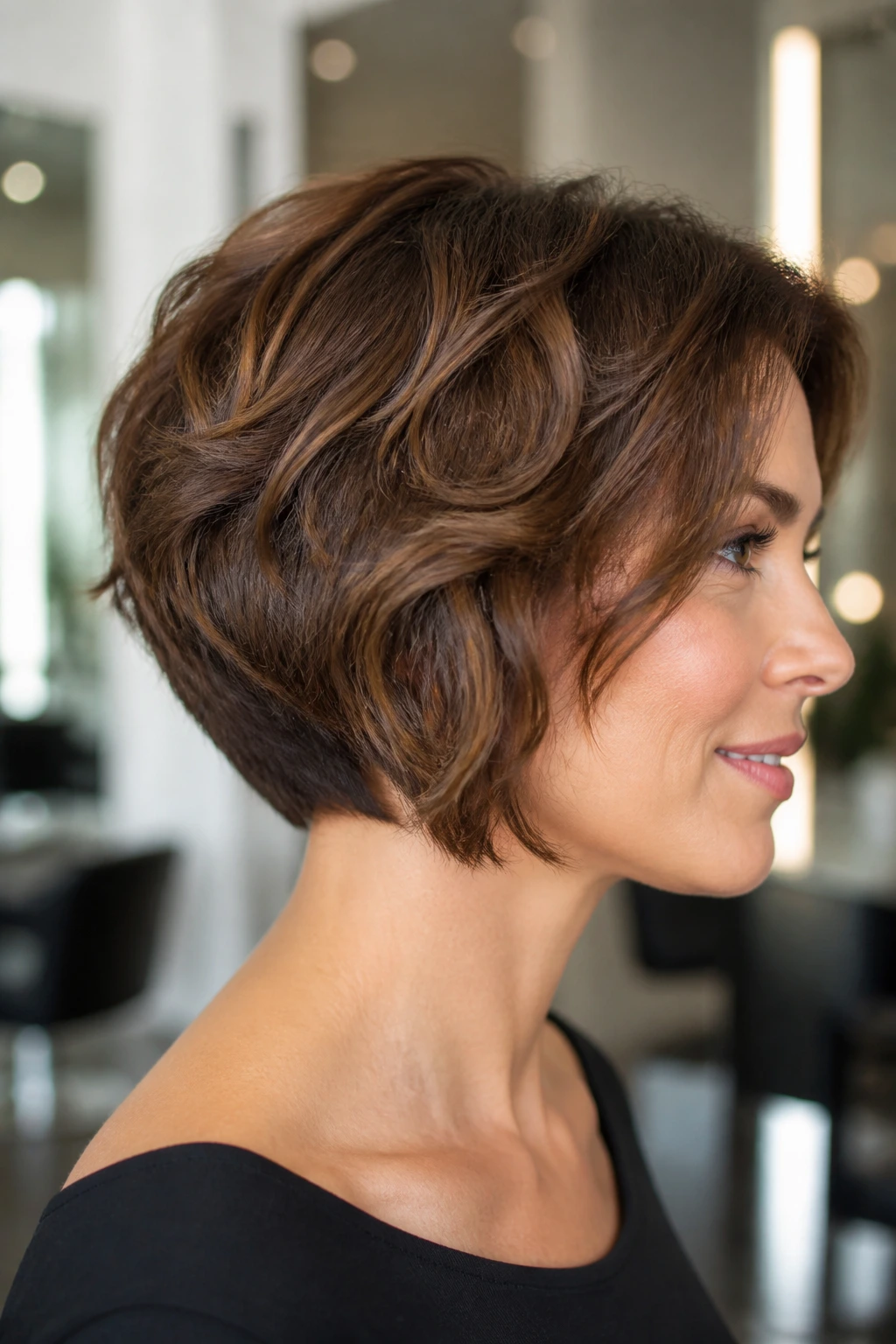
A graduated bob builds shape in the back and eases forward toward the jaw. The nape is shorter, the crown carries a little lift, and the front stays long enough to soften the face. Oval faces can wear this beautifully because the cut adds structure without making the profile too wide.
Wavy hair can make a graduated bob either excellent or puffy, depending on how the weight is handled. The key is clean graduation at the back, not a stack that sticks out too hard. You want the back to look supported, not bulky. If the wave is strong, the layers should be kept under control so the outline doesn’t explode outward.
This shape is especially useful if you want volume at the crown but not at the sides. It creates a lift where the head naturally wants one and keeps the sides close enough to the face to stay neat. In practice, it can make the neck look longer and the jaw look cleaner, which is a nice trick in a short cut.
If you like a bob that has a more classic salon structure, this is the one to bring pictures of. It’s tidy. It has backbone. And it grows out in a way that still looks deliberate for quite a while.
16. The Internal-Layer Bob for Loose Waves
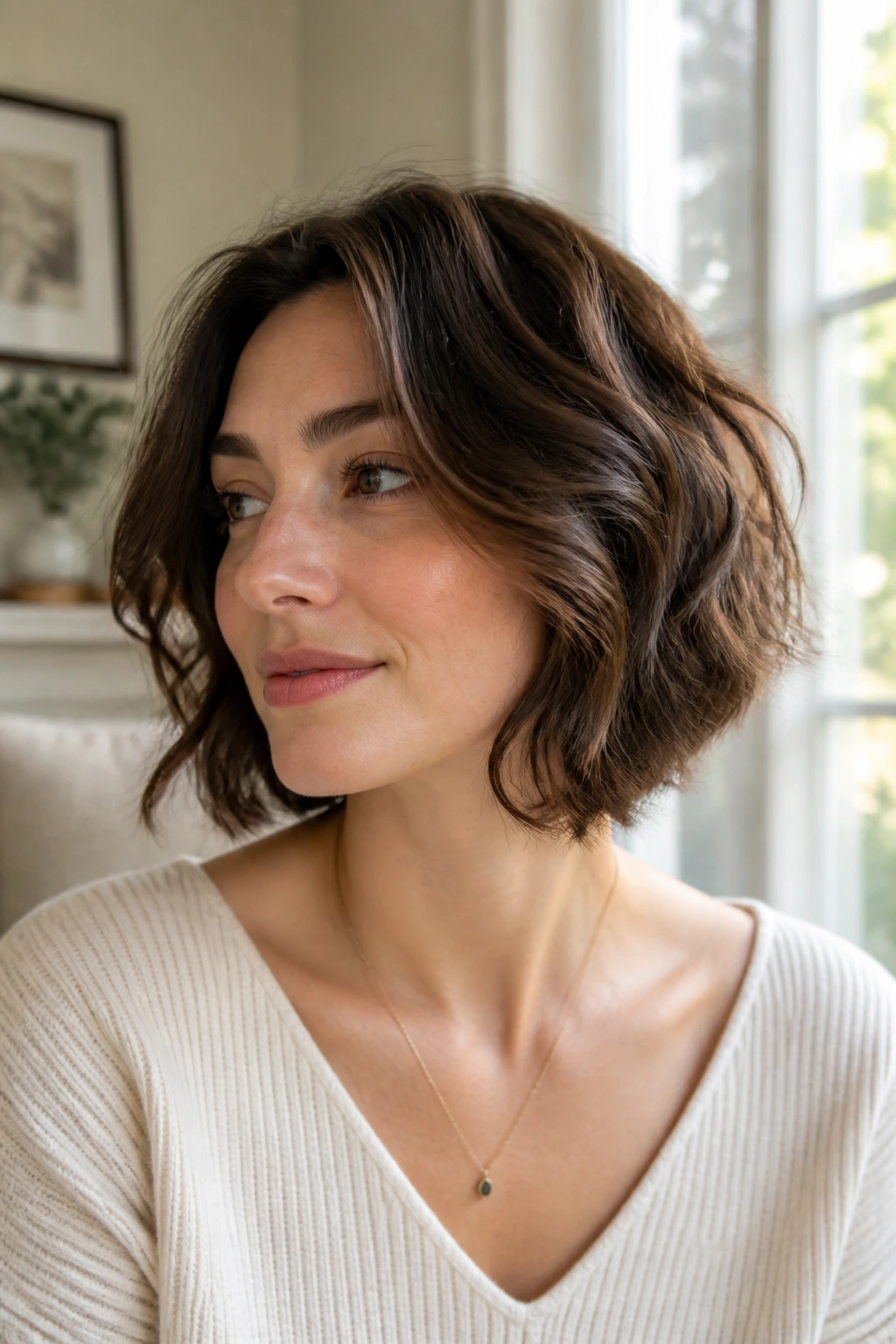
Here’s the cut for people who want movement without visible choppiness. Internal layers remove bulk from inside the shape, so the outside line stays smooth. That matters on wavy hair because the texture already brings enough visual interest. Oval faces benefit from the clean outline, which keeps the cut from swallowing the features.
The internal-layer bob tends to sit around chin to upper-neck length. The surface looks simple, almost blunt from a distance, but the inside carries the motion. That means your waves can bend, separate, and shift without turning the silhouette into a triangle. It’s a smart middle path if you don’t want a shag, but you also don’t want a helmet.
This version is one of my favorites for thicker waves because it keeps the hair from feeling heavy at the bottom. If you have fine hair, ask for only light interior layering. Too much can make the ends look thin and the shape disappear. The whole point is to keep the line visible while letting the hair breathe.
You’ll usually style this one with a lightweight cream or foam and then leave it alone. The more you fuss with it, the more likely the wave is to split in odd places.
17. The Sleek Bob With a Hidden Undercut
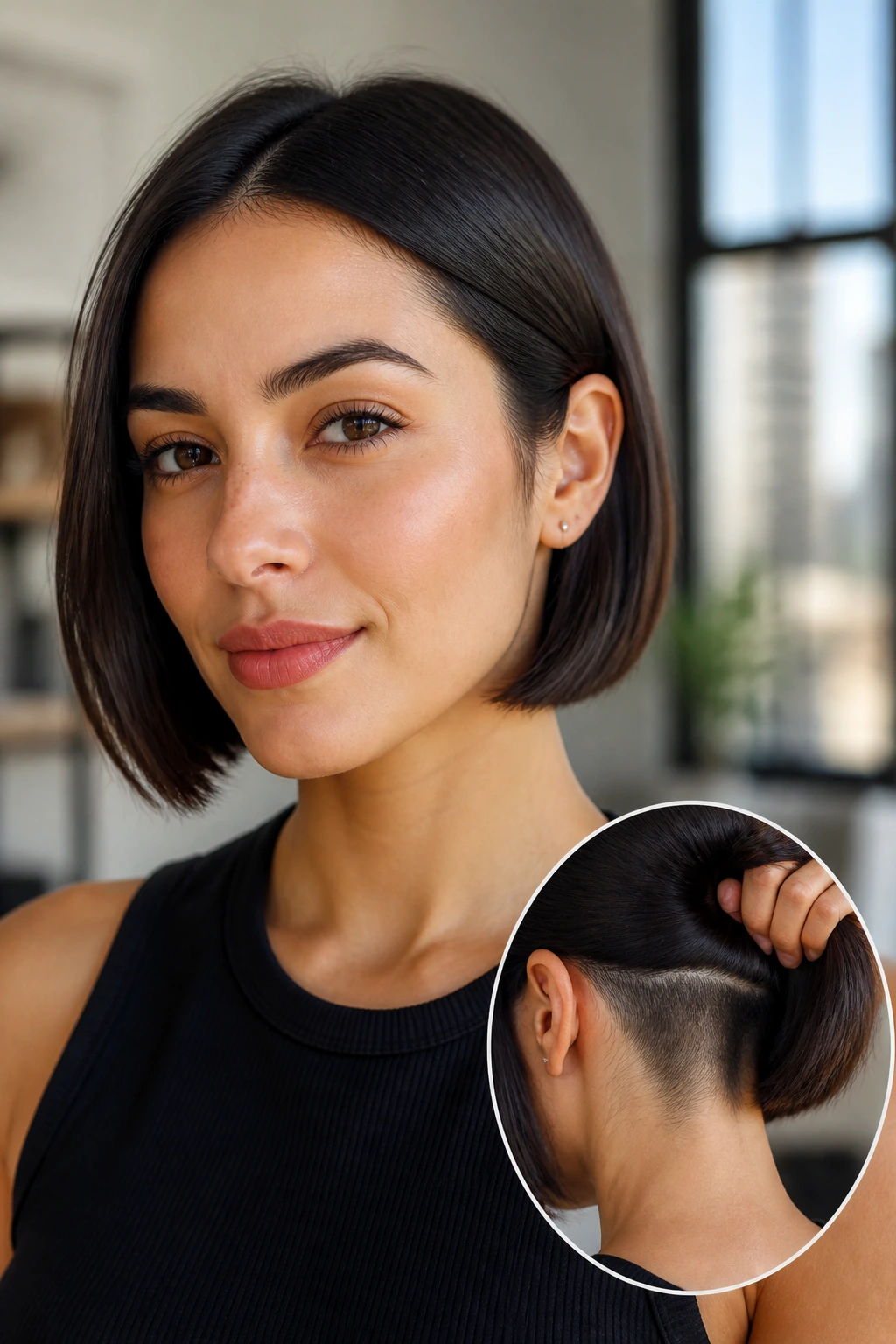
A hidden undercut sounds dramatic, but if it’s done well, nobody notices it unless the hair moves. That’s the point. It removes bulk from underneath the top layer, which is a lifesaver for thick, wavy hair that turns triangular the second it dries. On oval faces, the sleek surface keeps the cut looking deliberate and close to the head.
This is the bob I’d send someone toward if they have a lot of hair and are tired of spending twenty minutes trying to tame the bottom half. The undercut lightens the load, but the visible top layer still looks like a normal bob. The result is a shape that can be worn straight-ish, bent, or softly waved without getting too wide.
It does take a little trust, though. The cut has to be mapped well, because if the undercut is too high, the top layer loses support. If it’s too low, it won’t do much. When it’s right, the bob sits flatter at the neck and curves cleanly at the ends.
This is a maintenance cut. Not high drama, just regular care. Keep the undercut trimmed every 6 to 8 weeks if you want it to stay invisible and useful.
18. The Tousled Bob With Salt-Spray Separation
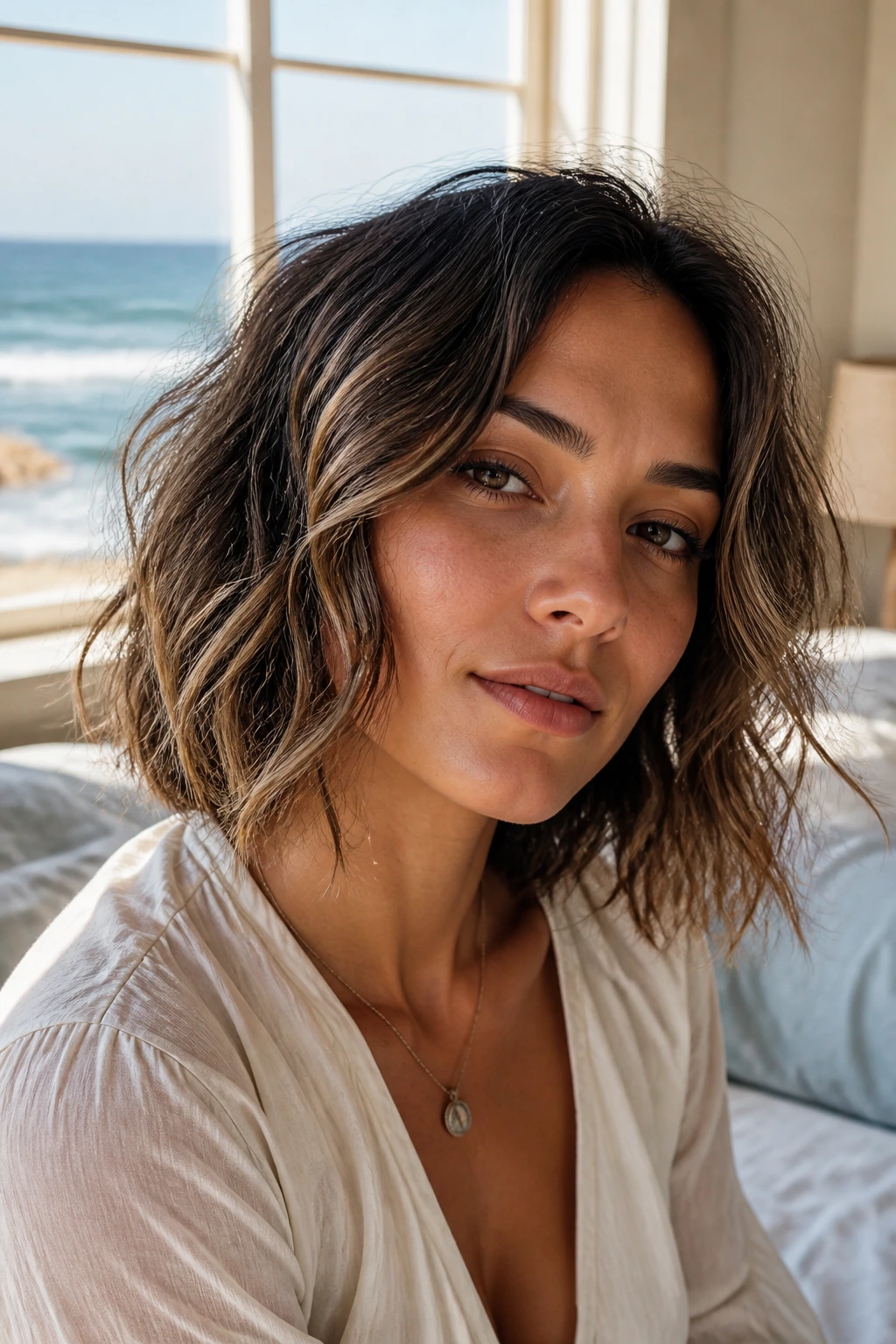
Salt spray can be a blessing or a curse. Used lightly, it gives wavy hair grip and separation that makes a short bob feel casual rather than overworked. Used too much, it dries out the ends and turns the surface rough. So yes, there’s a line here. A small one.
For oval faces, the tousled bob works because it moves. The eye doesn’t stop at a hard edge. It travels through the bends, especially if you let one side sit a little fuller than the other. The cut itself should still have shape underneath all that texture. A clean perimeter is what keeps it from looking random.
I’d use this style on loose to medium waves that tend to collapse without product. The routine is simple: apply mousse at the roots, a touch of leave-in through the mids, then mist salt spray from mid-length to ends and scrunch. Let it dry halfway before you touch it again. If you break up the clumps too early, you lose the wave pattern and just get frizz.
It’s the easiest bob on the list to make look like you didn’t try. The trick is that you actually did, just not in a fussy way.
19. The Face-Framing Slice Bob

This one lives or dies by the front pieces. Slice layers around the cheekbones create a frame that pulls the eye inward, which is useful on oval faces because it adds a little contour without changing the overall balance. Wavy hair helps because the slices separate naturally and don’t sit flat against the cheeks.
The cut can be chin length or slightly below, but the front should be the star. Ask for pieces that start around 1 inch below the cheekbone and angle toward the jaw. That keeps the front soft and keeps the haircut from going blunt in the wrong place. The back can stay cleaner and more controlled so the face-framing effect stands out.
I like this when a bob needs a little personality but not bangs. The slices act like a gentle steer for the face. They work especially well if you wear your hair mostly down and want the style to shift with movement instead of sitting as one fixed shape.
One thing to watch: too many face-framing pieces can turn into a curtain that hides the face. Keep the framing selective. A little goes a long way here.
20. The Box Bob With a Clean Line

The box bob has a straighter, more graphic perimeter. On paper, that sounds severe. In practice, wavy hair softens the edges just enough, and oval faces carry the shape well because the face itself is already balanced. The cut ends up looking crisp rather than hard.
This style works best when the hair has medium density and the wave is not so strong that it kicks the ends wide. The outline should sit around the jaw or just below it, with minimal layering through the surface. If the hair is thick, internal removal can keep the shape from exploding. If it’s fine, the strong perimeter helps it look fuller.
The box bob has a certain fashion-editor feel, but it is not as fussy as people think. A center part keeps it modern. A side tuck makes it softer. And a flat iron bend through the ends can keep it from looking too square. The key is not to overtexture it. The clean line is the feature.
If you like your haircut to make a statement before you’ve even styled it, this is one to keep in mind. It does the talking for you.
21. The Grown-Out Bob That Skims the Shoulders
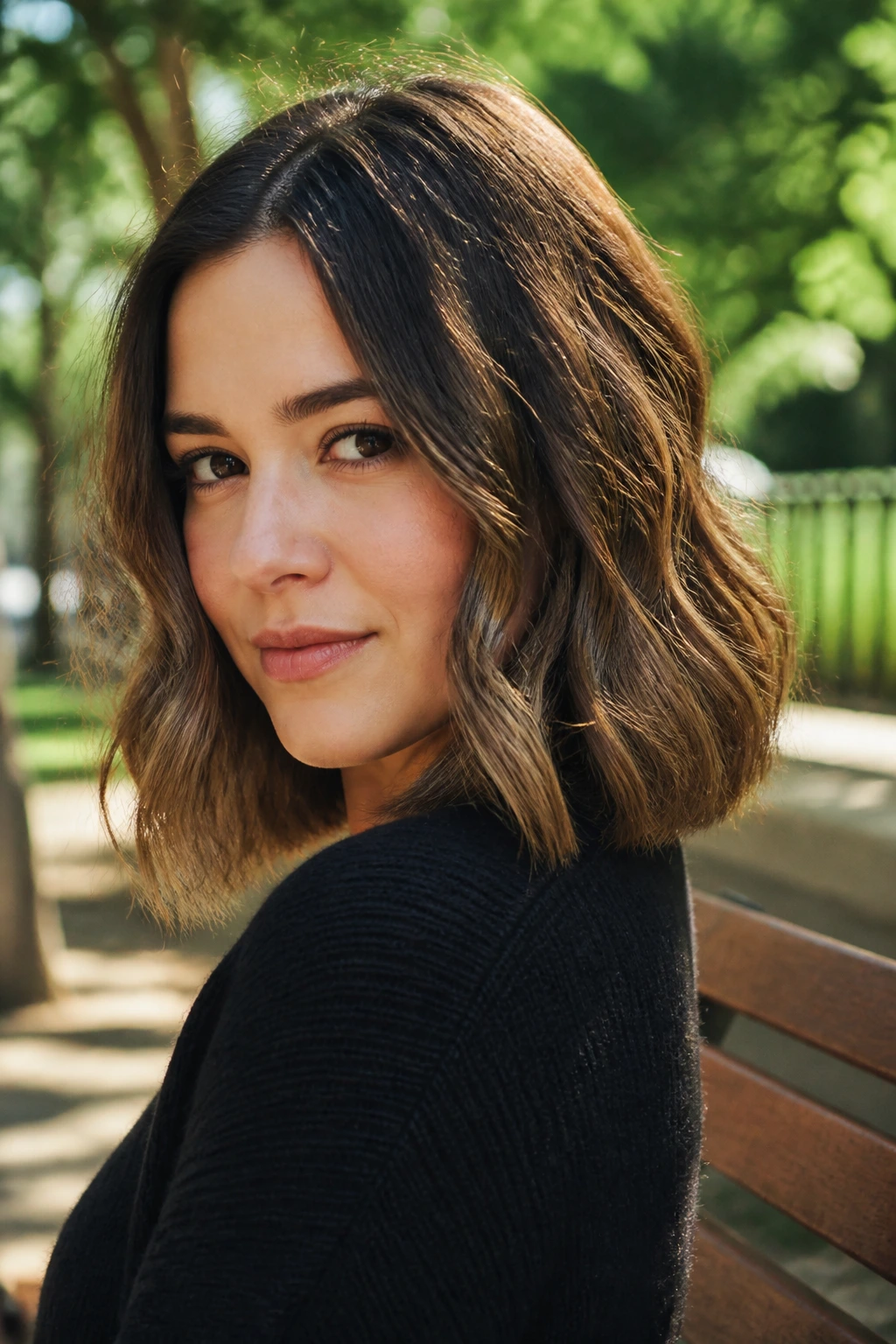
Sometimes the smartest short bob is the one that gives you room to move. A grown-out bob that skims the shoulders is ideal if you want a shape that still reads as bobbed but doesn’t demand a trip to the salon every month. On oval faces, the longer length keeps the balance easy. On wavy hair, it gives the bend enough room to form cleanly.
This is not an in-between cut in the lazy sense. It needs shape. The front should still be slightly shorter than the back, or at least softly angled, so the length doesn’t collapse into a plain shoulder cut. You can keep a blunt edge or layer it lightly depending on density, but the overall line should stay intentional.
I recommend this for people who like to wear their hair half-up sometimes or who want the option of a low twist without losing the bob feel. It also handles bad haircut anxiety better than the shorter versions because the grow-out is built into the look.
It is the calmest choice in this whole list. Not boring. Calm.
22. The Side-Swept Fringe Bob
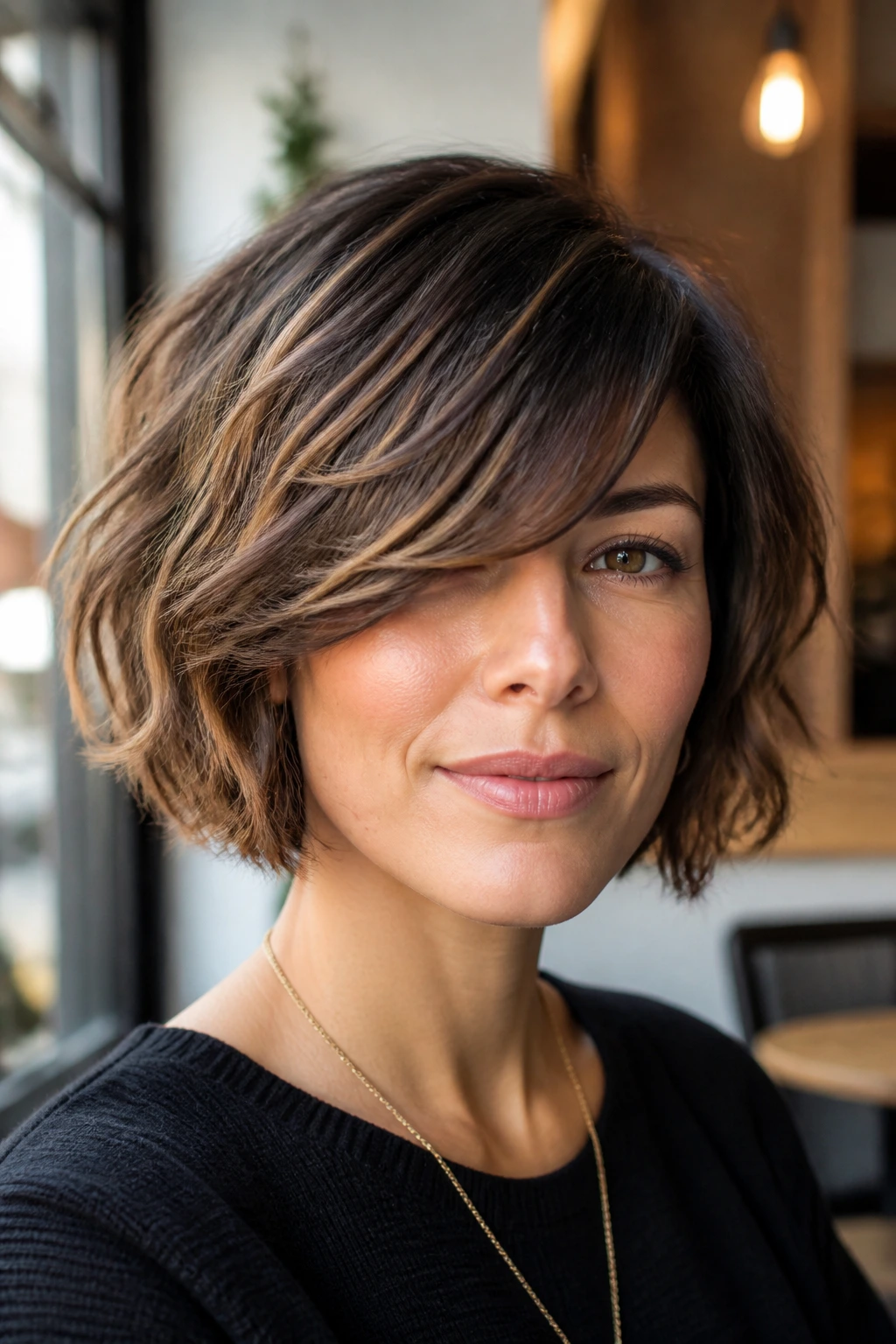
A side-swept fringe changes the bob by creating motion across the forehead and into the face. It’s softer than blunt bangs, less fussy than a curtain fringe, and very good at making oval faces feel a touch more sculpted. Wavy hair keeps the fringe from looking stiff, which is exactly what you want.
The fringe should usually start near the brow and sweep toward the cheekbone, blending into the front layers rather than sitting as a separate piece. The bob underneath can be chin length, jaw length, or slightly longer. The beauty of this style is the diagonal line. It cuts across the face in a way that looks easy, even though it’s doing a lot of work.
This is a good option if you want some forehead coverage but don’t want to commit to full bangs. It also plays well with side parts, which means you can change the shape of the cut without changing the haircut itself. A quick blow-dry with a small round brush keeps the fringe in place. If you prefer air-drying, clip the fringe to one side while it sets. Old trick. Works.
The side-swept fringe bob feels a little romantic, a little practical, and not overdesigned. That mix is hard to fake.
Why the Shape Matters More Than the Length
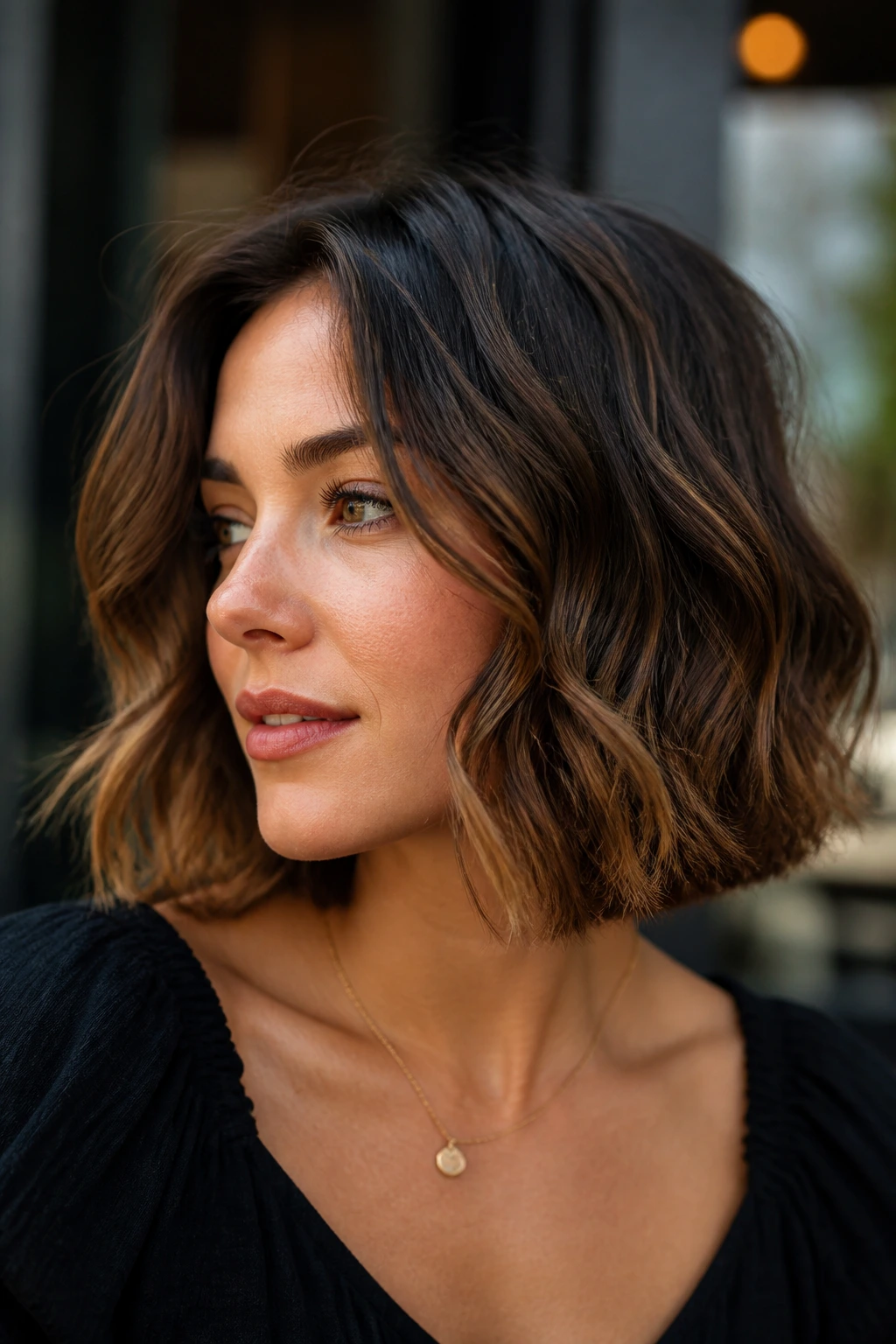
A bob is never just a bob. With oval faces and wavy hair, the real question is where the line lands and how much support the hair has underneath it. A chin-length cut can look longer than you expect once the wave springs up. A collarbone cut can still feel short if the perimeter is clean and the front is controlled. The length matters, but the shape does the heavy lifting.
Face balance changes with one inch
One inch around the jaw can shift the whole read of the haircut. Shorter in the back can clear the neck. Longer in the front can keep the face from looking too wide. A fringe can soften the forehead, while a side part can keep the style from splitting into two flat curtains. These are small moves. They make a big difference.
Wave pattern decides the mood
Loose waves can handle bluntness better. Stronger waves usually need a little internal removal or a longer front. Fine waves often need density left in the ends so the bob doesn’t look see-through. Thick waves need room under the surface so the cut doesn’t swell out sideways by lunch.
Density changes the whole equation
Two people can ask for the same bob and walk out with different results because one has hair that’s compact and the other has hair that is airy. That’s why a good stylist doesn’t just talk about face shape. They look at how much hair you’ve got, how it falls when wet, and whether the wave shows up mostly in the mids or near the ends.
The Salon Tools and Styling Products Worth Having
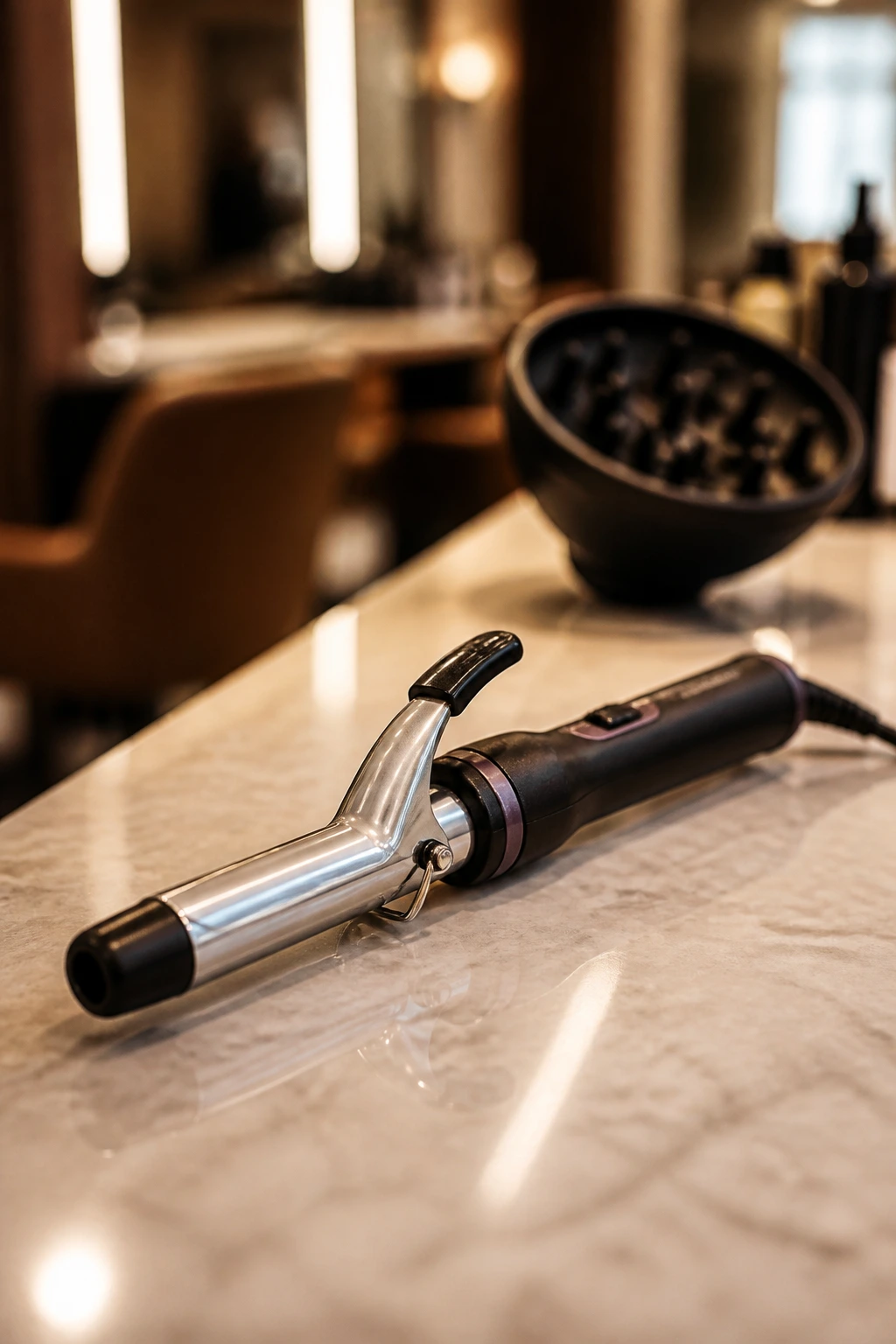
A good bob becomes easier when the tools match the cut. You do not need a drawer full of gadgets. You need a small set that handles wave, smooths the outline, and keeps the front pieces from doing something weird on day two.
- 1-inch curling iron or wand: Best for adding a soft bend to the front pieces and ends without turning the whole bob into curls.
- Round brush, 1.5 to 2 inches: Useful for polishing the curve under the jaw or lifting the crown a little.
- Blow dryer with a diffuser attachment: Helps wavy hair dry with less frizz and more shape, especially for the shaggy or tousled versions.
- Wide-tooth comb: Good for detangling wet hair without stretching the wave out of shape.
- Sectioning clips: Keep the front pieces separate while you dry them, which matters more than people think.
- Lightweight mousse: Gives structure at the roots and mid-lengths without crushing the wave.
- Leave-in cream or spray: Helps the ends stay soft, especially on blunt or micro bobs.
- Texture spray: Useful for separation in piecey cuts, but use a light hand.
- Heat protectant: Non-negotiable if you use irons or blow-dry regularly.
- Silk or satin pillowcase: Keeps the bob from getting mashed flat overnight.
The big mistake is buying products that are too rich. Wavy short bobs usually need less cream than you think. Start light. Add more only if the hair asks for it.
How to Ask for the Cut Without Getting a Generic Bob
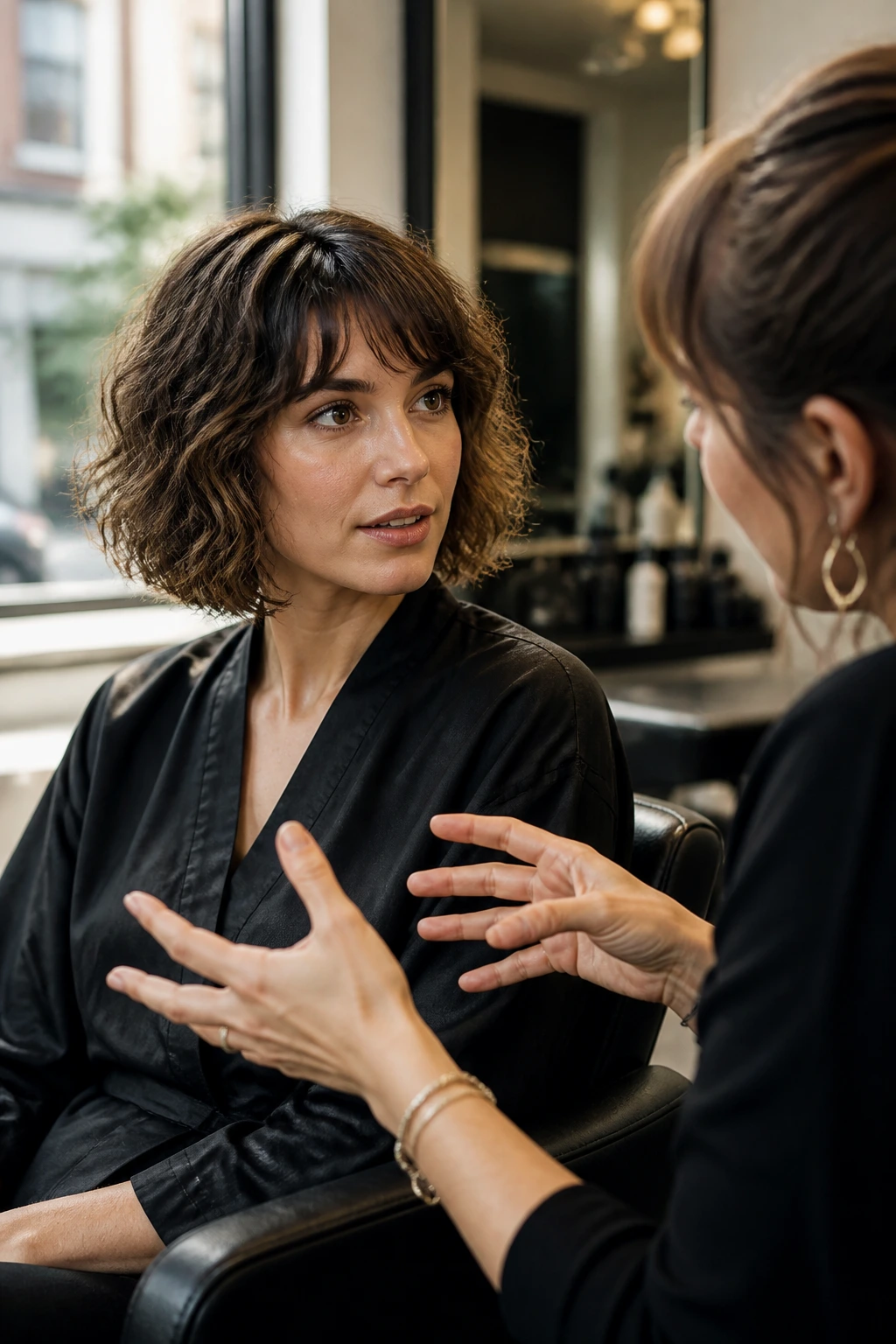
Bring photos, sure, but don’t stop there. The best photo in the world can still be misleading if the model has straighter hair, more density, or a different neck length. Say where you want the bob to land on your own face: chin, jaw, upper neck, or collarbone. That one sentence saves a lot of back-and-forth.
Be specific about the wave. Tell the stylist whether your hair bends mostly at the ends, forms loose S-waves, or gets puffier as it dries. Ask whether the cut should be blunt, lightly layered, or internally shaped. Those are not tiny details. They determine whether the bob sits cleanly or flares out.
If you want bangs, say how much forehead you want left open. If you wear glasses, say so. If your hair is thick enough to need bulk removed, say that too. A stylist can work with all of it, but only if the information is on the table.
One smart request: ask for the final check on dry hair. Wavy texture changes a haircut enough that a wet-only cut can mislead both of you. Dry checking the front pieces and the perimeter is worth the extra few minutes.
How to Wear These Bobs Without Fighting Them

Presentation: Keep the strongest line where you want the eye to land. If you want cheekbones to show, tuck one side behind the ear. If you want softness, let the front pieces skim the face instead of pinning them back.
Accessories: Earrings matter more with a bob than with long hair. Small hoops, slim drop earrings, and clean stud shapes all work because they don’t collide with the ends. Glasses do too, especially with jaw-length or side-parted cuts.
Wardrobe Pairings: High necklines can make a short bob feel more deliberate, while open collars and scoop necks show off the jaw and neckline. A sharp collar can make a blunt bob look expensive. A soft knit can make a shaggy bob look less messy.
Daily Routine: Don’t overwork the roots. Most of these cuts look better when the crown has a little lift and the ends have a little separation. If the bob starts to puff, mist the mids with water, smooth in a pea-sized amount of cream, and let it set again. That usually fixes the problem faster than starting over.
The best styling move is often the smallest one. A part shift. A tuck. A bend at the front. That’s enough.
Extra Styling Tricks That Make the Shape Look Intentional
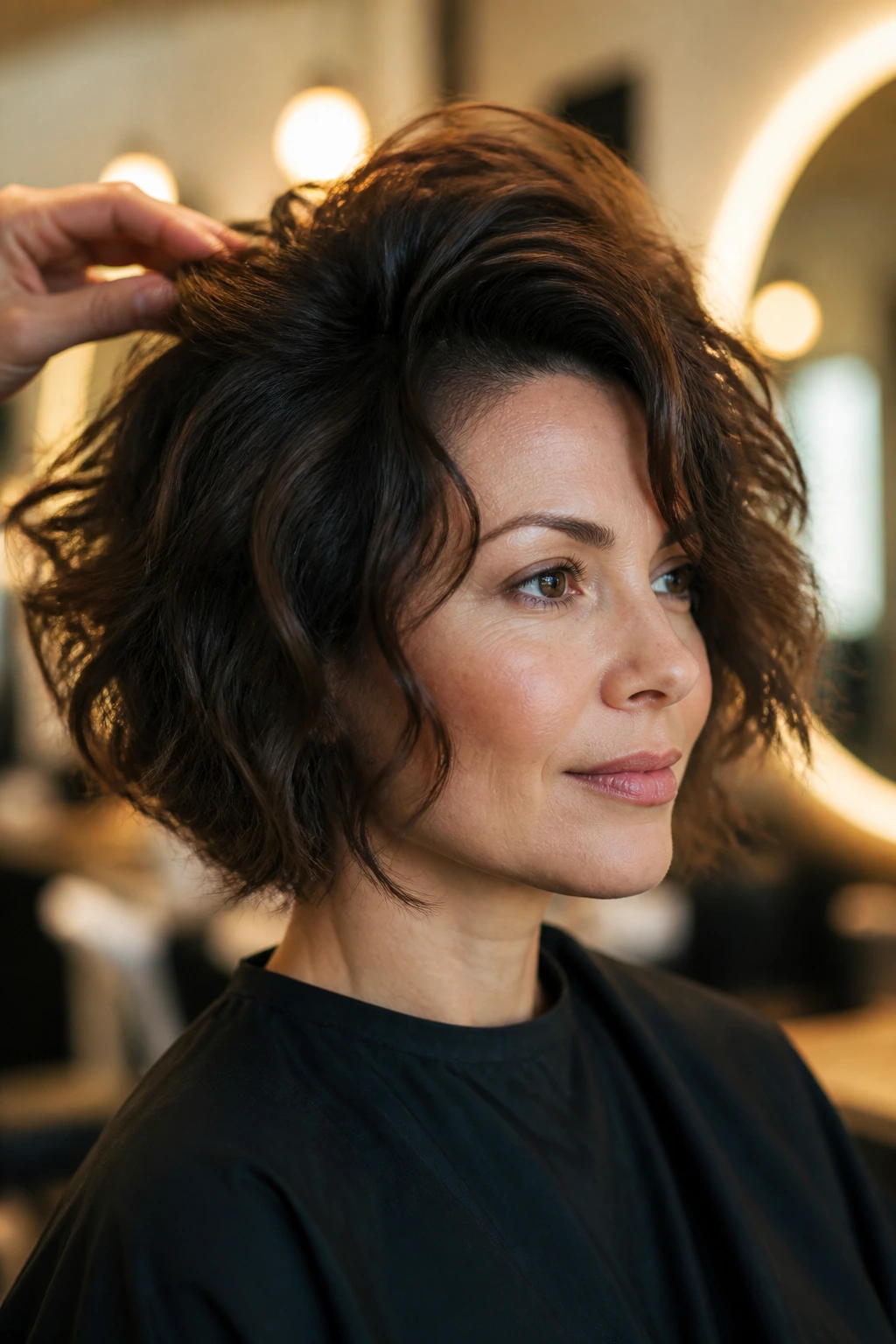
Volume Enhancement: If the crown lies too flat, blow-dry the roots forward first, then back, using the nozzle pointed down the hair shaft. That little cross-direction drying trick helps the top stand away from the scalp without teasing.
Texture Enhancement: For wavy hair, scrunching works better when the product is distributed while the hair is still dripping, not half-dry. The waves clump in a cleaner way, and the ends don’t look dusty.
Face-Frame Refinement: Ask for the front pieces to start about 1 inch below the cheekbone if you want softness without a full fringe. That length tends to flatter oval faces because it follows the natural contours instead of cutting across them.
Make-It-Yours: Fine hair usually looks strongest in a blunt or lightly angled bob with minimal thinning. Thick hair usually behaves better with internal shaping or a hidden undercut. If you like low effort, choose a cut that can air-dry with mousse and still look finished. If you like polish, choose a shape that takes a quick bend with a round brush and holds it.
A good bob is not one-size-fits-all. The useful one fits your density, your wave, and your patience level on a Tuesday morning.
Common Cutting and Styling Mistakes to Avoid

The first mistake is cutting too short at the jaw when the wave is strong. On paper, chin length sounds neat. In practice, strong waves can kick outward and make the sides look wider than you planned. The fix is simple: leave an extra 1/2 inch in the front and check the cut dry before you decide it’s finished.
Another one is thinning the ends too aggressively. People think they want weight removed, then wonder why the bob looks ragged by day three. If the perimeter gets shredded, wavy hair stops sitting in a clean line. Ask for internal shaping instead of heavy texturizing at the bottom edge.
Ignoring shrinkage causes its own mess. Wavy hair often dries shorter than it looks wet, and that difference is bigger than most salon mirrors suggest. If your hair springs up a lot, tell the stylist before they reach for the scissors. Wet length is not the same thing as finished length.
Then there’s too much product. A thick cream or heavy oil can make a short bob collapse into limp strands, especially around the face. Start with half the amount you think you need. Add more only if the hair still feels dry.
Finally, a center part on a wave that hates it can make the bob split and puff. If the front looks uneven no matter what you do, shift the part a little off center and see what happens. Sometimes that alone makes the cut come to life.
Other Ways to Wear the Same Bob Idea
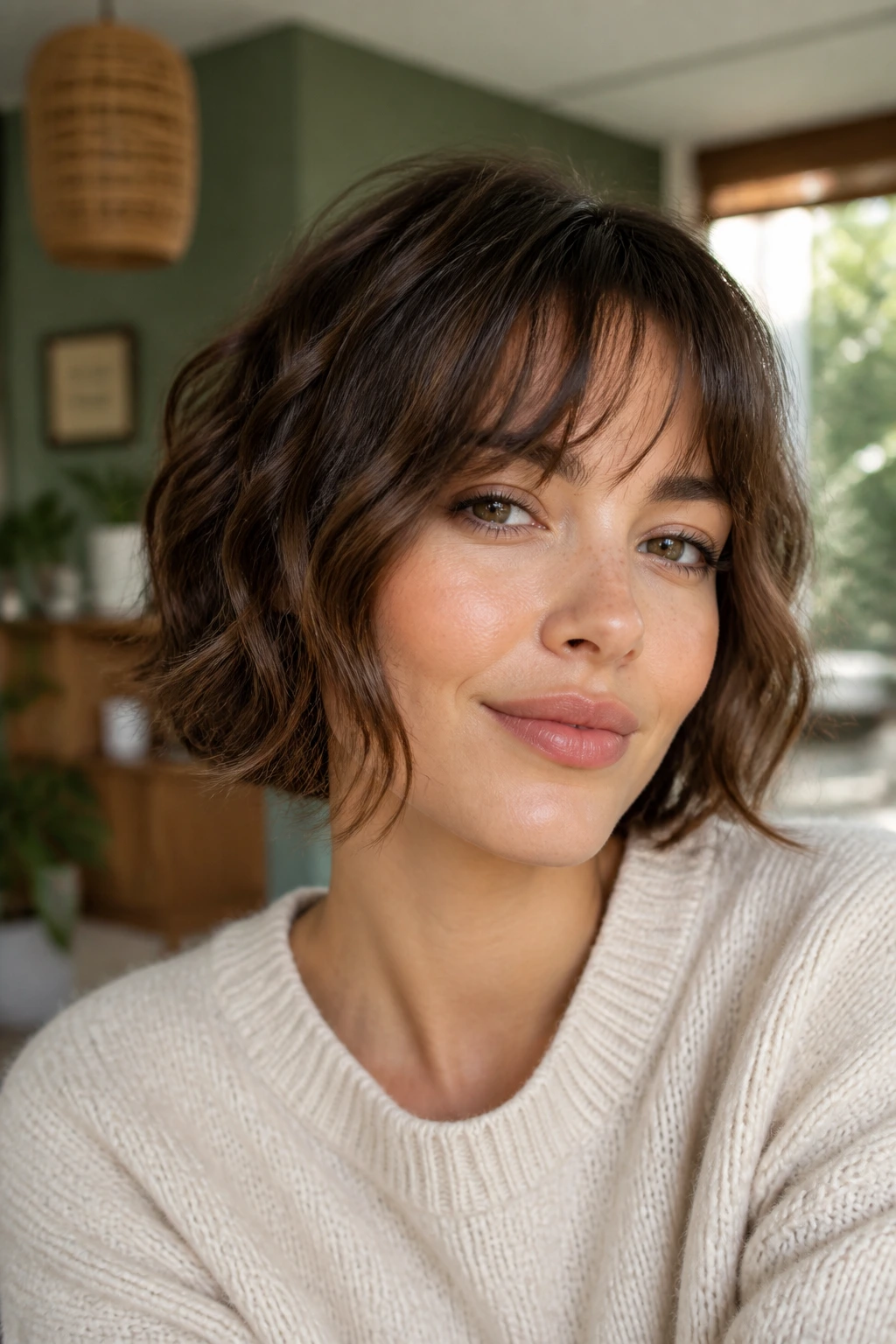
The Soft-Air-Dry Version: Keep the perimeter blunt, reduce the layers, and let the waves dry naturally with mousse. This works best if you want a short bob that doesn’t ask for a brush every morning.
The Polished Round-Brush Version: Use a round brush to turn the ends under by a half inch and lift the crown. It gives the bob a cleaner, salon-finished feel and suits office wear or evenings when you want the shape to look a little sharper.
The Thick-Hair Relief Version: Add a hidden undercut or deeper internal shaping. This keeps the silhouette from ballooning and helps dense waves sit closer to the head without losing length.
The Fringe-Forward Version: Swap the open front for curtain bangs or bottleneck bangs. This is the right move if you want the bob to feel softer around the forehead and more styled around the eyes.
The Grow-Out Version: Start at the chin or jaw, then let it move toward the collarbone. This is smart if you dislike frequent trims or want a cut that can shift from short bob to longer bob without looking awkward.
The Glossy Blowout Version: Keep the cut mostly one length, use heat protectant, then smooth the ends with a 1-inch iron. It works best for wavy hair that needs a little discipline rather than a lot of texture.
How to Keep the Shape Between Salon Visits

A short bob asks for regular maintenance, but not the kind that ruins your week. Most of these cuts stay tidy with a trim every 6 to 8 weeks. If you wear bangs, plan on a fringe cleanup every 3 to 4 weeks so the front doesn’t start dropping into your eyes or splitting in odd directions.
At home, wash frequency depends on how much product you use and how oily your roots get, but wavy bobs usually look best when they’re not overloaded. A light refresh on the second day often works better than a full wash. Mist the mids with water, smooth in a tiny bit of leave-in, scrunch the ends, and let the shape reset for a few minutes.
Overnight care matters more than people expect. A silk or satin pillowcase keeps the ends from getting roughed up, and a loose clip at the crown can help preserve the bend. If the bob gets crushed, don’t panic and rewash it every time. That’s a fast way to dry out wavy hair. A little water and a small amount of product usually bring it back.
If you use heat often, give the ends a break now and then. A bob can take more wear than long hair because the ends are all the way out where friction lives—scarves, collars, seat belts, sweatshirt hoods. That’s where it starts to fray first.
Questions People Ask Before They Chop

Will a short bob make an oval face look too long?
Usually no, as long as the front pieces don’t pull straight down without shape. A side part, curtain fringe, or slightly curved perimeter keeps the eye moving across the face instead of vertically.
Can wavy hair wear a blunt bob without looking bulky?
Yes, but the weight has to be managed carefully. A blunt edge with a little internal shaping usually looks better than a blunt cut with no support at all, because the wave needs somewhere to sit.
How short is too short for wavy hair?
That depends on shrinkage. If your waves jump up 1 inch or more when dry, a micro bob may need to be a little longer than the inspiration photo. The goal is a finished length that still looks deliberate once the wave settles.
Do I need bangs with a short bob on an oval face?
No. Bangs are a tool, not a requirement. If your forehead already feels balanced, a side part or face-framing pieces may be enough.
What if my hair is thick and triangular?
Choose a bob with internal shaping, an A-line angle, or a hidden undercut. Those options remove bulk without tearing the outline apart.
What if my waves are fine and flat at the roots?
Pick a blunt or lightly graduated cut and keep the layering minimal. Then use mousse at the roots and dry the crown in the opposite direction for a little lift.
How often do I need to style it?
Some of these cuts are built for air-drying, while others really benefit from a quick round-brush pass. If you want almost no styling, lean toward the French bob, the blunt bob, or the air-dry shag.
Can I wear a short bob with glasses?
Absolutely. Jaw-length and tucked-behind-ear versions are especially good because they keep the hair from crowding the frame line. Just avoid a fringe that lands exactly where the glasses sit unless you want to adjust it daily.
The Bob Sweet Spot
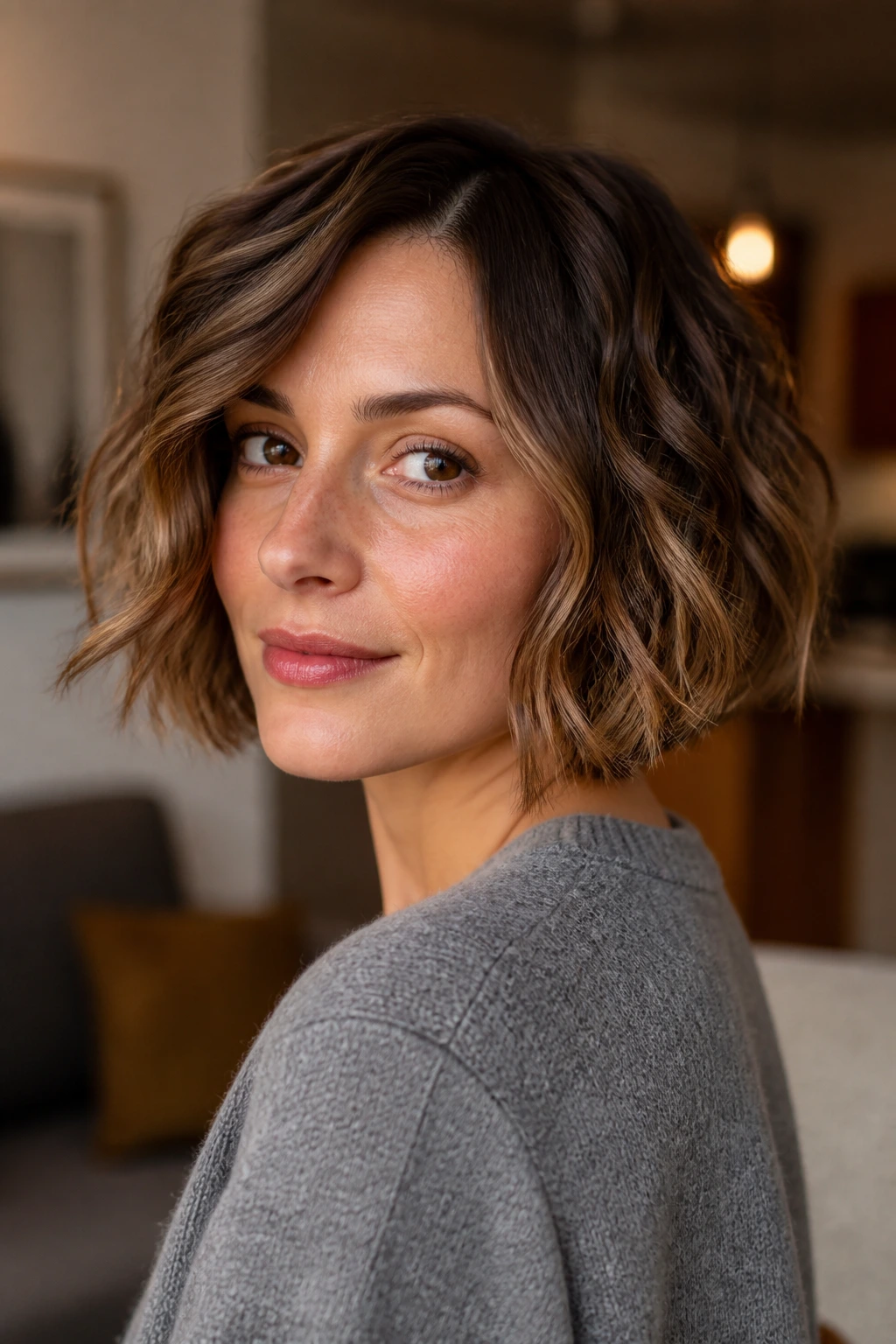
The best short bob for oval faces and wavy hair is the one that respects the wave instead of fighting it. That sounds simple, but it’s where most cuts go wrong. Too blunt, and the hair kicks out. Too layered, and the shape loses its spine. Too short in the wrong place, and the face reads wider than it should.
Pick the version that fits your density, your part, and the amount of styling you’re willing to do on an ordinary morning. The right cut should make your hair easier to live with, not more interesting in a glass-only way. If it bends cleanly, keeps its outline, and still looks good when you tuck one side back, you’ve landed in the sweet spot.