



Short hair has a nice trick: it can look intentional in the time it takes to find your other shoe. That’s the real appeal of short rockstar hairstyles for busy mornings. They don’t ask for a full blowout, a curling marathon, or a dozen bobby pins that disappear into the bathroom counter. They need shape, a bit of attitude, and the nerve to look slightly undone.
The best ones make peace with reality. A cowlick near the temple? Fine. A fringe that wants to split down the middle? Fine. Second-day roots that have a little grit to them? Even better. Short hair, when it’s cut and styled with some thought, can carry more personality than a fussy long style that takes ten extra minutes and still falls flat by lunch.
What matters most is knowing which shapes give you lift, which products disappear into the hair instead of sitting on top of it, and which tricks actually save time. A good pixie can be finger-styled while the kettle boils. A short bob can look sharp with one clean part and two passes of a flat iron. The right cut does half the work before the mirror even comes into play.
Why These Short Cuts Earn Their Keep
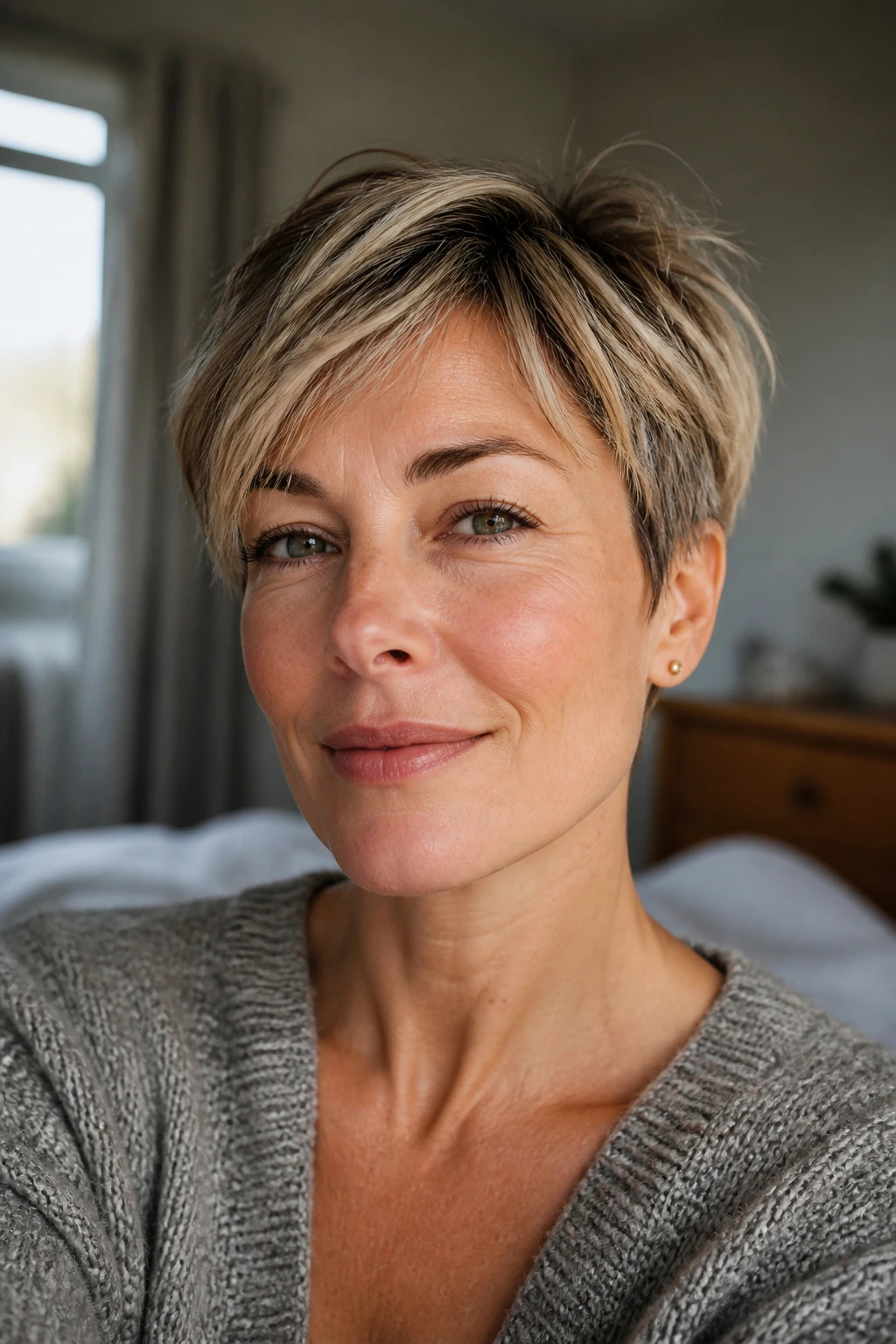
-
Fast to reshape: Most of these styles can be revived with water, a dab of product, and 90 seconds of finger work, which is a big deal when the alarm has already won.
-
They work with imperfect hair: Slight bedhead, a crown swirl, or a bend from a hair tie often gives these looks more edge, not less.
-
Product goes farther: Short hair does not need a palmful of paste or a cloud of spray. A pea-sized amount can cover the whole head if the cut is doing its job.
-
They dry fast: Less length means less time under a dryer or waiting for hair to air-dry before you leave the house.
-
They can look polished or rough: The same crop can read sleek with gel or rebellious with matte clay. That range is the fun part.
-
They suit tight schedules: Most of these styles land somewhere between “walk out the door” and “five minutes if you’re being careful.”
1. Tousled Pixie with a Deep Side Part
A tousled pixie with a deep side part is one of those cuts that looks like you had a plan, even when you didn’t. The part carves out shape fast, and the tousled texture keeps the whole thing from feeling too neat. It’s a little messy, a little sharp, and exactly the kind of hair that looks better when your fingers touch it first instead of a brush.
Why It Works
The deep side part gives the eye a line to follow, which makes short hair feel styled without a lot of effort. On a pixie, that matters more than length. A quick blast of heat at the roots—especially if you blow dry against the direction of the part—creates lift that lasts longer than a simple air-dry.
A small amount of mousse at the crown and a pea-sized dab of matte paste through the ends is enough. More than that, and the texture starts to look sticky instead of airy.
- Best for: Fine to medium hair that needs root lift.
- Time budget: About 3 to 5 minutes.
- Finish: Soft, separated, and slightly rebellious.
Small tip: Push the front section forward with your fingers before you set the part. That tiny move keeps the top from lying flat all morning.
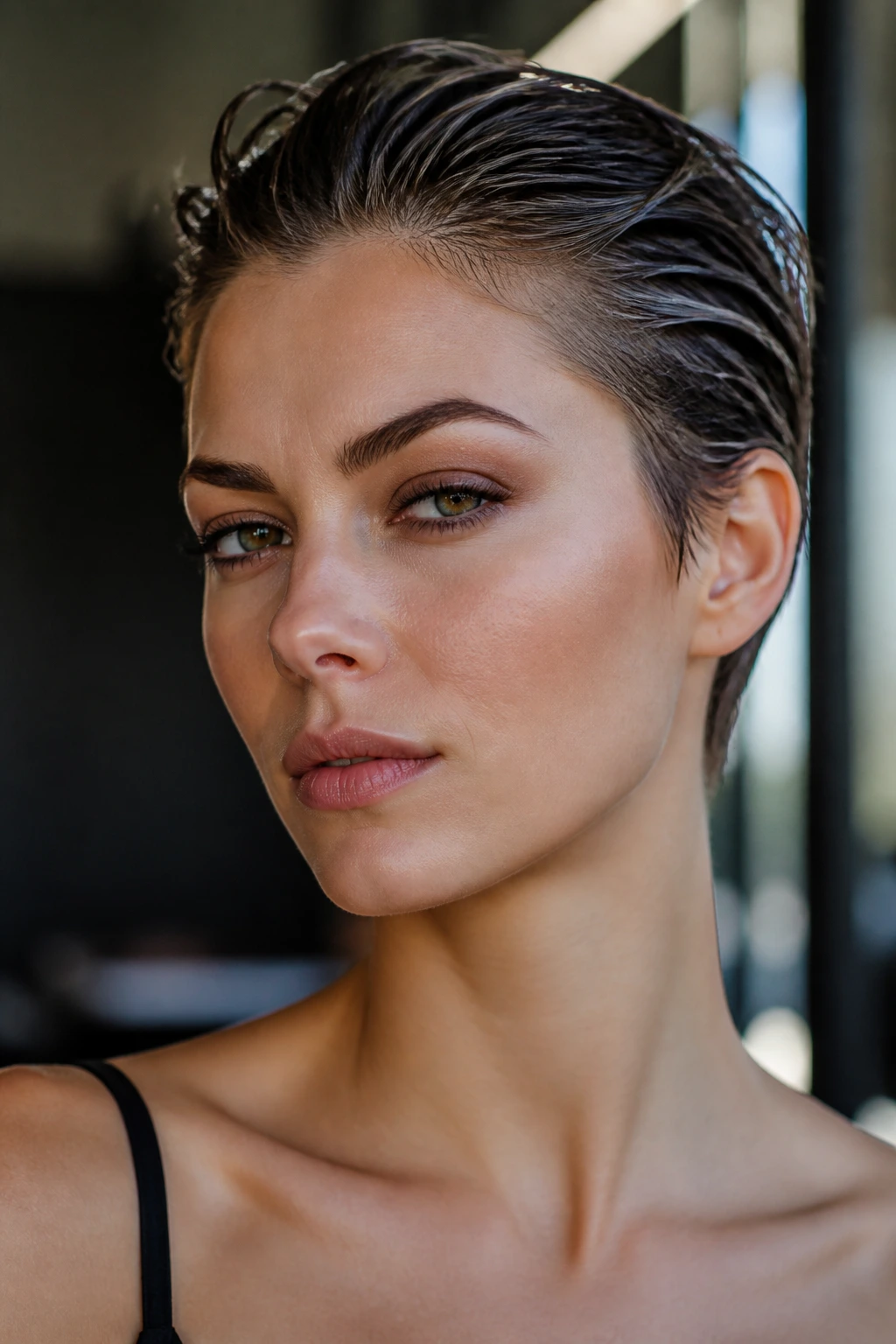
2. Slicked-Back Wet-Look Pixie
This one has attitude without trying too hard. Slicked-back pixies work because they turn short hair into a shape, not a problem. The wet look is clean, glossy, and a little dramatic in the best way. It also buys you time, which is the whole point on rushed mornings.
The trick is not drowning the hair in gel. Use a lightweight gel or styling cream on damp hair, then comb it back with a fine-tooth comb or your fingers. You want the surface to look smooth, but the hair should still move a little when you touch it. If it’s crunchy, you’ve gone too far.
For extra staying power, tuck the sides behind the ears and let the top stay slightly fuller. That contrast keeps the style from looking like a helmet. It reads sharper with a bold earring, a strong lip, or a jacket with a little structure—but the haircut is doing most of the work.
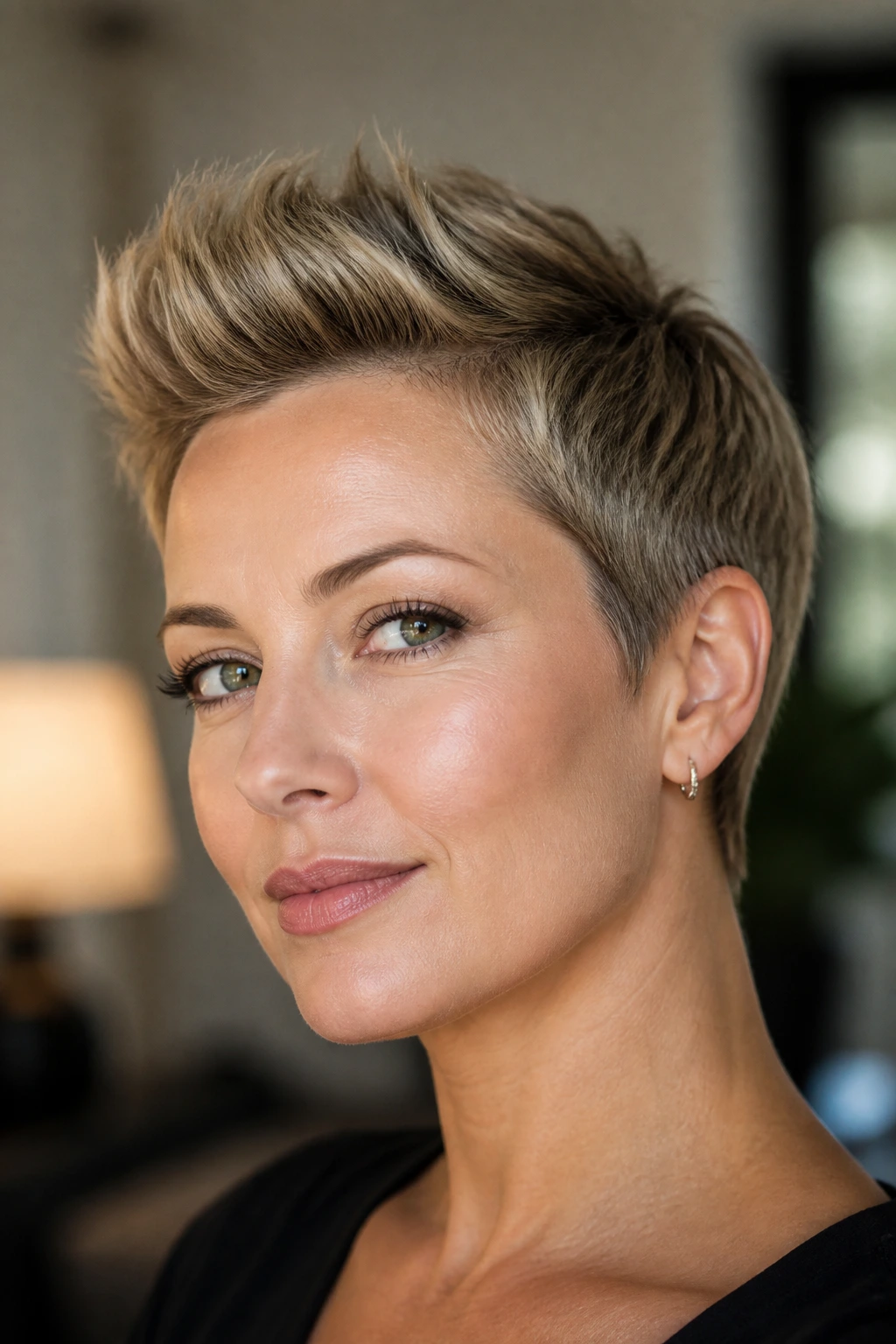
3. Mini Pompadour Pixie
Want height without a full blow-dry circus? The mini pompadour pixie gives you just enough lift at the front to look deliberate, and it takes less effort than people expect. The shape sits at the hairline, so even a small amount of volume has a big visual effect.
Start with damp hair and work a light mousse or root-lifting spray through the front section. Then blow-dry that area upward with a small round brush or your fingers while pinching the roots into place. Once the hair is dry, a little matte paste at the ends helps hold the lift without making the front stiff.
What to Watch For
If your hair is very fine, keep the pompadour small. Big front height on soft hair can collapse fast. If your hair is thick, you can push the shape higher, but use less product at the crown so it does not go dense and heavy.
Best move: Set the front while it’s still warm. Once it cools, that shape sticks better than you’d think.
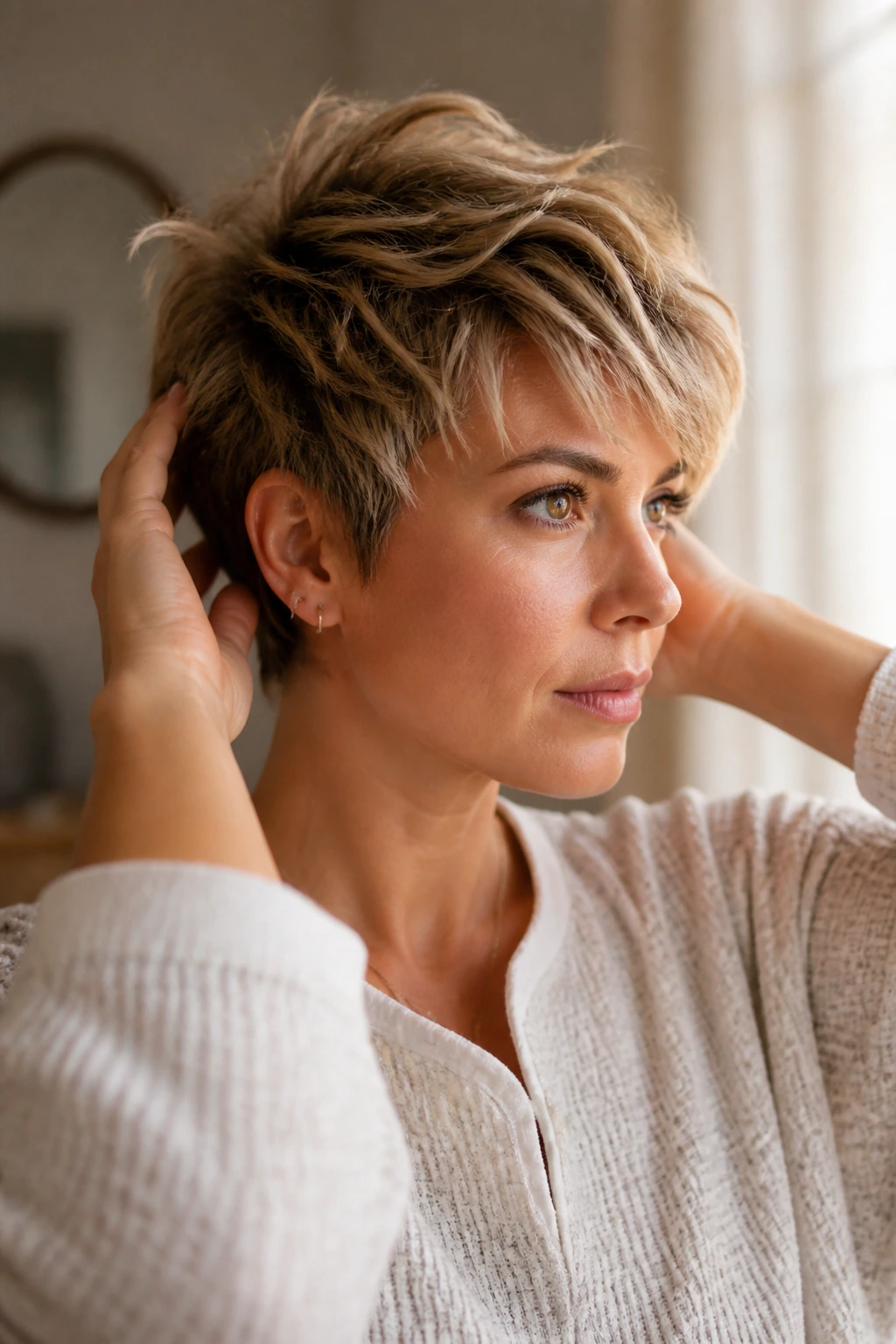
4. Choppy Crop with Piecey Fringe
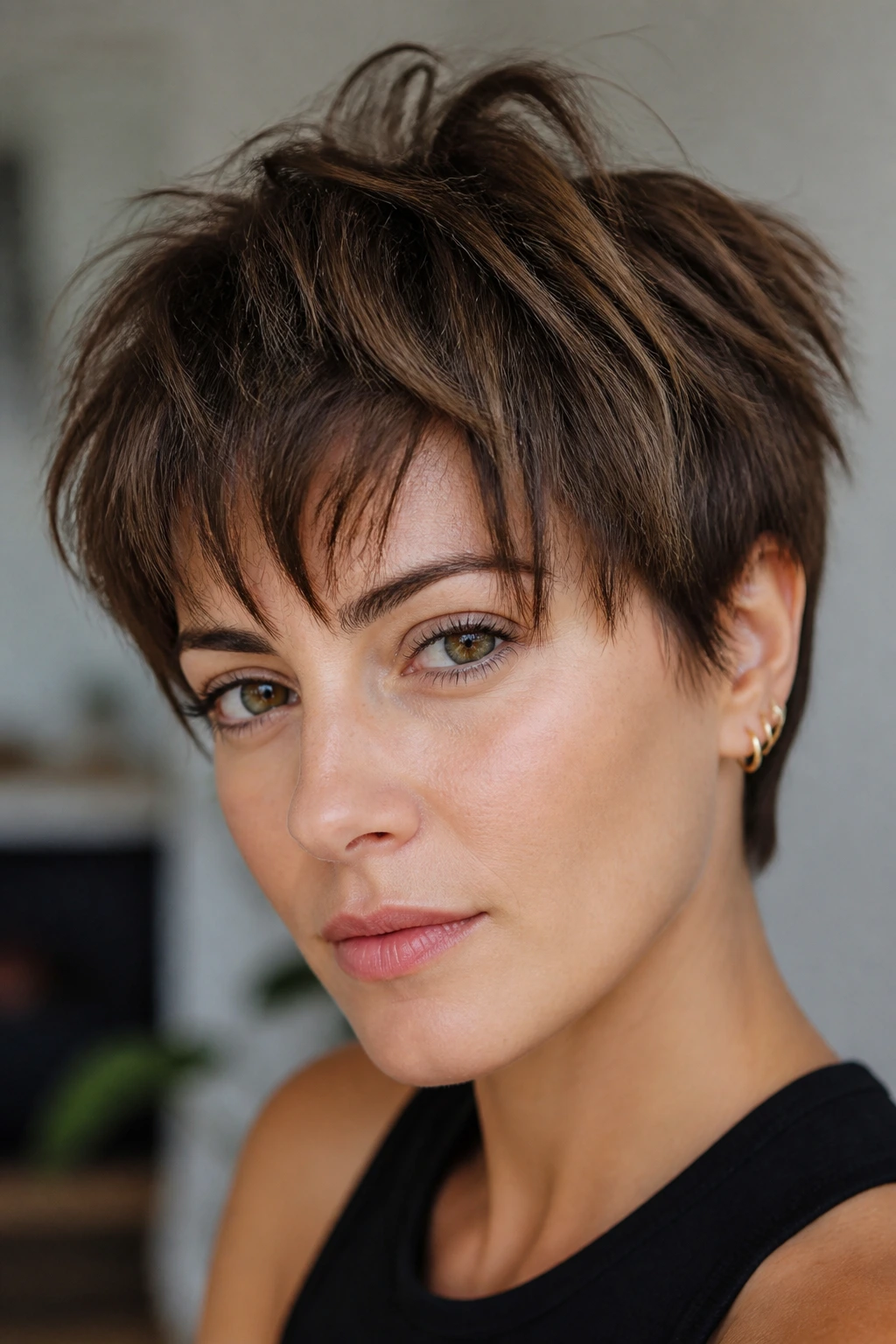
A choppy crop with piecey fringe has that blunt little rockstar energy that says you meant to wake up with texture. It’s short, broken up, and a bit jagged around the edges, which is exactly why it styles so quickly. You do not have to chase perfection here. If anything, the whole point is to avoid it.
This works especially well when the fringe is cut into small, uneven sections instead of one heavy block. A tiny swipe of wax or paste through the fringe separates the pieces and keeps them from fusing together. If the front wants to split, let it. That split can look better than a perfect line anyway.
For a little extra lift, rough-dry the crown with your head tipped forward for fifteen seconds. That one move makes the top feel less helmet-like. You get shape, texture, and a fringe that frames the eyes without sitting in your face.
- Best for: Straight or slightly wavy hair.
- Keep it soft: Use less product near the roots, more on the ends.
- Skip the brush: Fingers give better separation here.
5. Short Faux Hawk
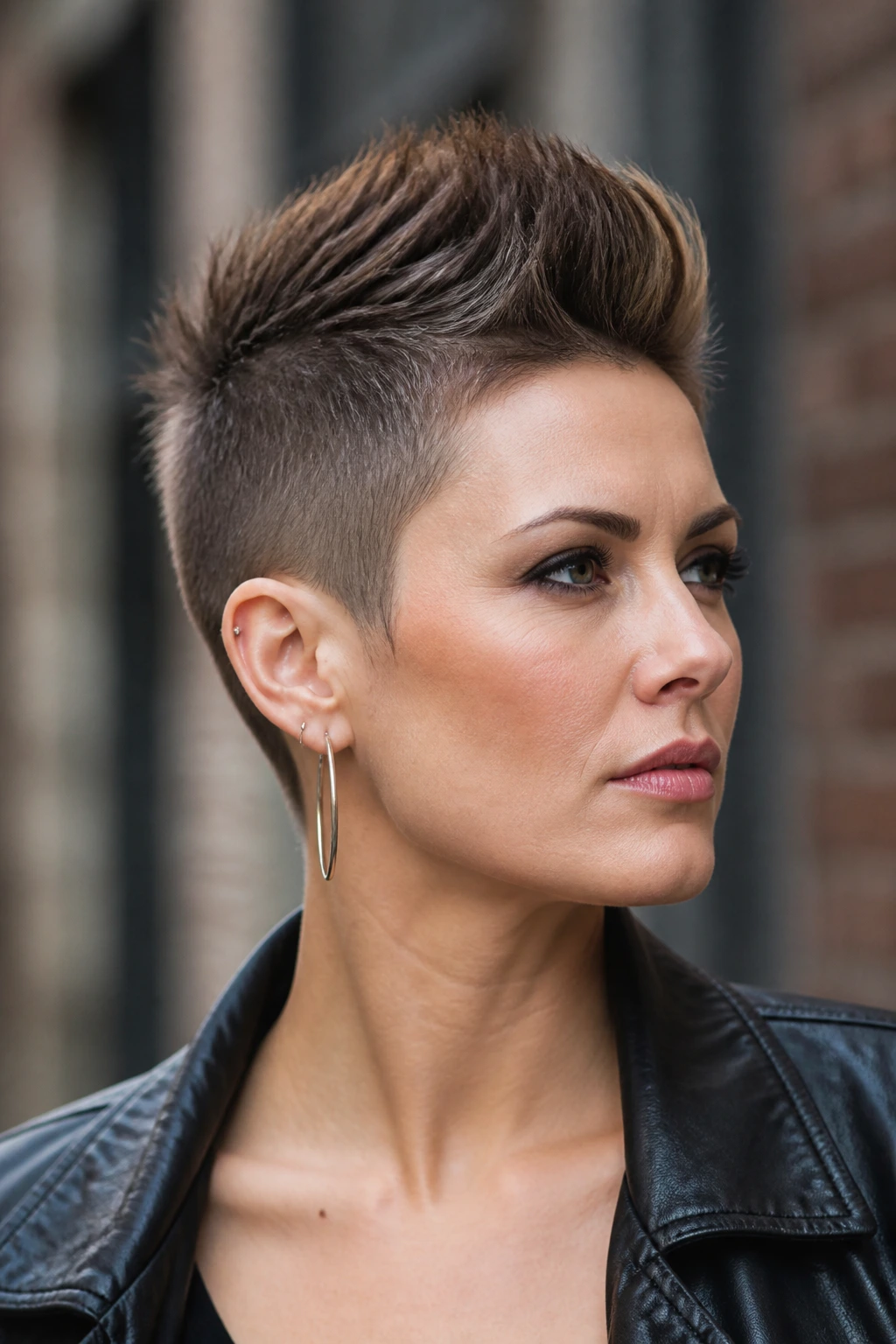
A short faux hawk is the cut for mornings when you want a little swagger without a full styling session. The center strip gets the height, the sides stay tighter, and the whole thing feels built for movement. It’s not subtle. That’s the fun of it.
The style works because it gives short hair a direction. Brush or finger the sides down with a light gel, then lift the center with mousse or a dab of paste. If your hair is damp, blow-dry the center upward in short bursts and press the sides flat as you go. If your hair is dry, warm the product between your palms first so it spreads cleanly.
This is one of those looks that gets better with a bit of mess. A perfectly symmetrical faux hawk can feel stiff. A slightly uneven one has more life.
6. Matte Spikes with Directional Lift
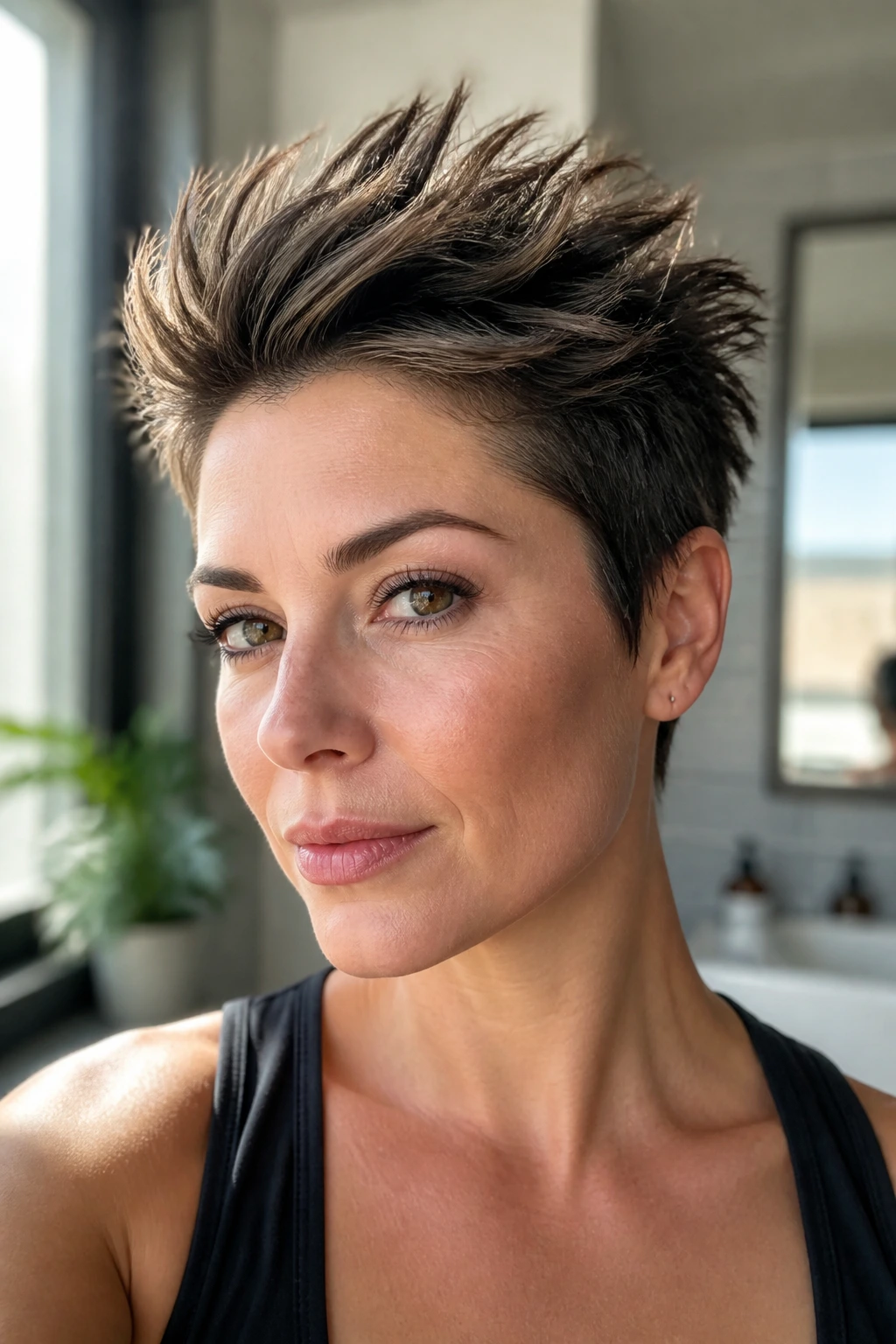
Matte spikes are the grungier cousin of the faux hawk. They’re less sculpted, more directional, and a lot easier to wear if you do not want your hair to look “done” in the traditional sense. The texture should feel touchable, not shellacked.
A small amount of matte clay or paste goes a long way on short hair. Warm it in your hands, press it into the roots, and then flick the ends upward or forward depending on how much edge you want. The important part is not the spikes themselves. It’s the direction. Spikes that all point one way look deliberate. Spikes that stick out randomly just look like you slept badly.
This style is a good fit for dense hair because the product helps control bulk. On finer hair, use less clay and more root spray so the hair does not collapse under the weight.
7. Side-Swept Bob with a Tucked Ear
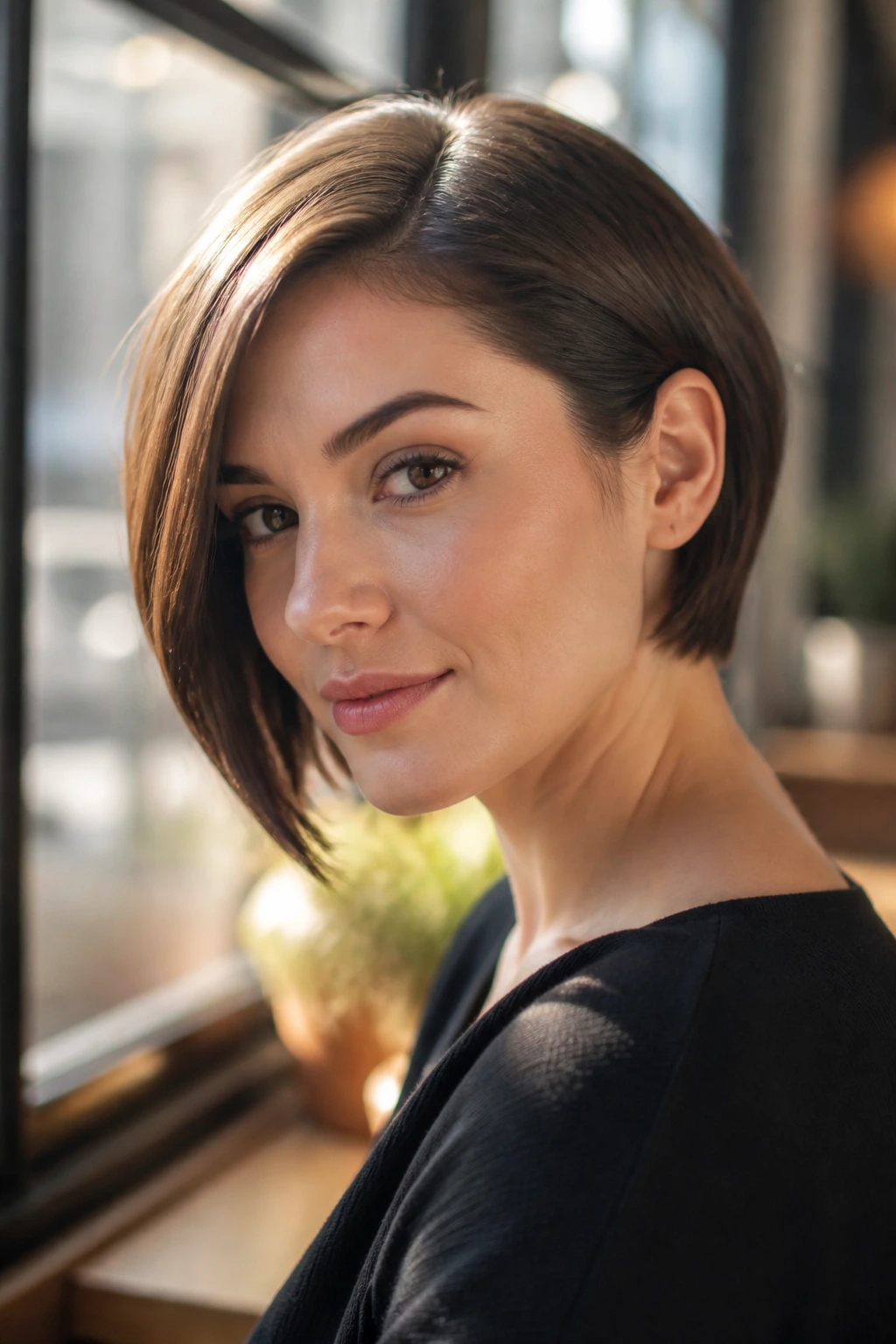
This is the bob that behaves in the morning. Sweep it deeply to one side, tuck one ear, and you’ve got shape without fuss. The exposed ear gives the style a little bite, especially if the bob hits around the jaw or just below it.
A side-swept bob is one of the easiest short rockstar hairstyles for busy mornings because it only needs one clean decision: where the part goes. Once that’s set, the rest is just smoothing the top with a brush or your palm. You can add a flat iron bend at the ends if you want the edge to feel a little sharper, but you do not need it.
Wear this when you want a sharper finish than a messy crop but less upkeep than waves or curls. It’s one of the few looks here that can slide from coffee run to meeting without much adjustment.
8. Flipped-End Bob
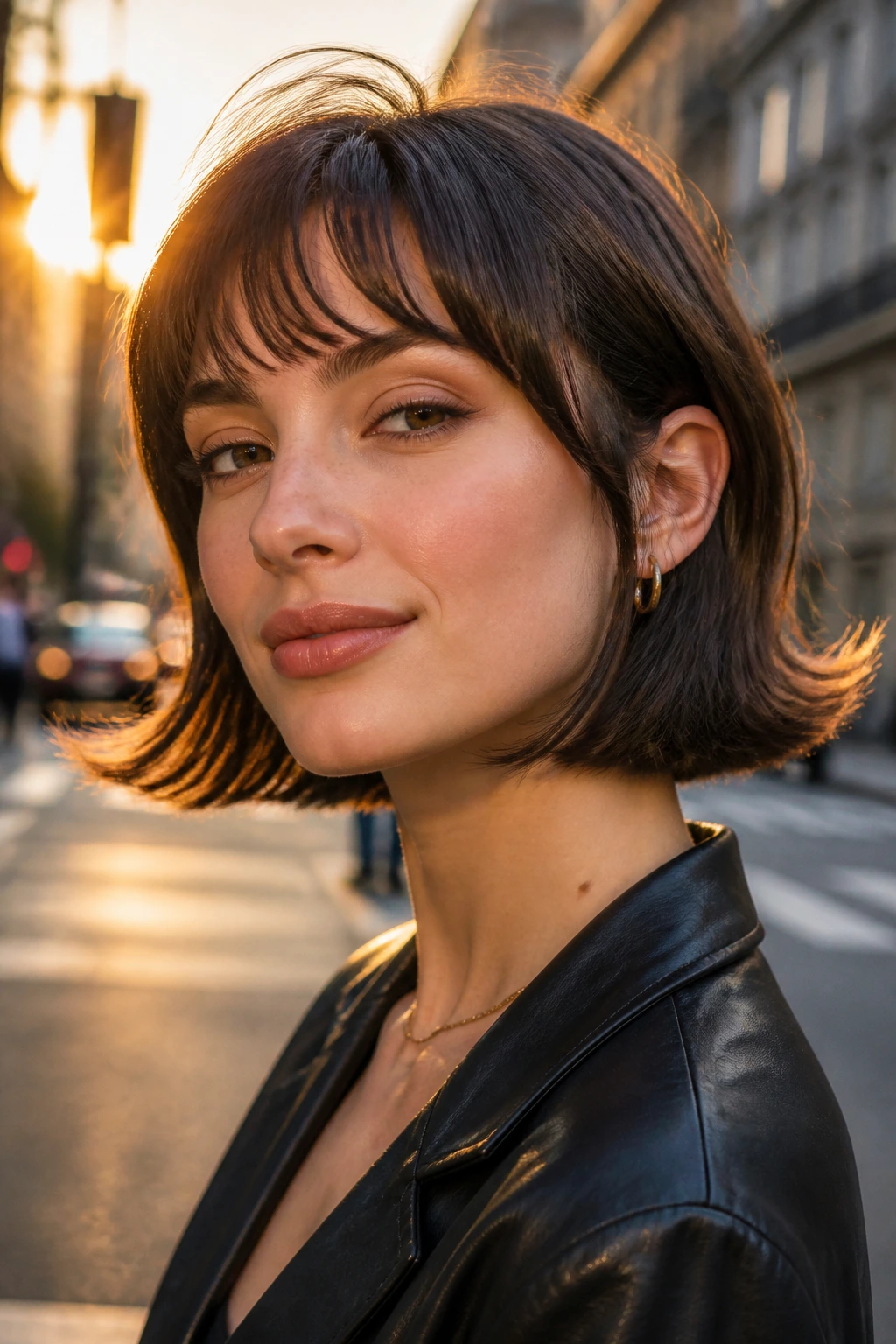
A flipped-end bob brings a little retro swagger without turning into costume hair. The ends bend outward just enough to catch the eye, and that tiny flip keeps a short bob from sitting too neatly against the neck. It feels playful, not precious.
Use a flat iron or a round brush at the last inch of the hair and bend the ends away from the face. Keep the rest smooth and clean. That contrast is what makes it work. If the whole bob is too curled, you lose the sharp line that gives it energy.
This one is especially nice if your bob is blunt and you want movement without layers. The flip breaks up the heaviness at the bottom. A quick mist of light-hold spray will keep the ends from collapsing before you reach the door.
9. Finger-Wave Bob
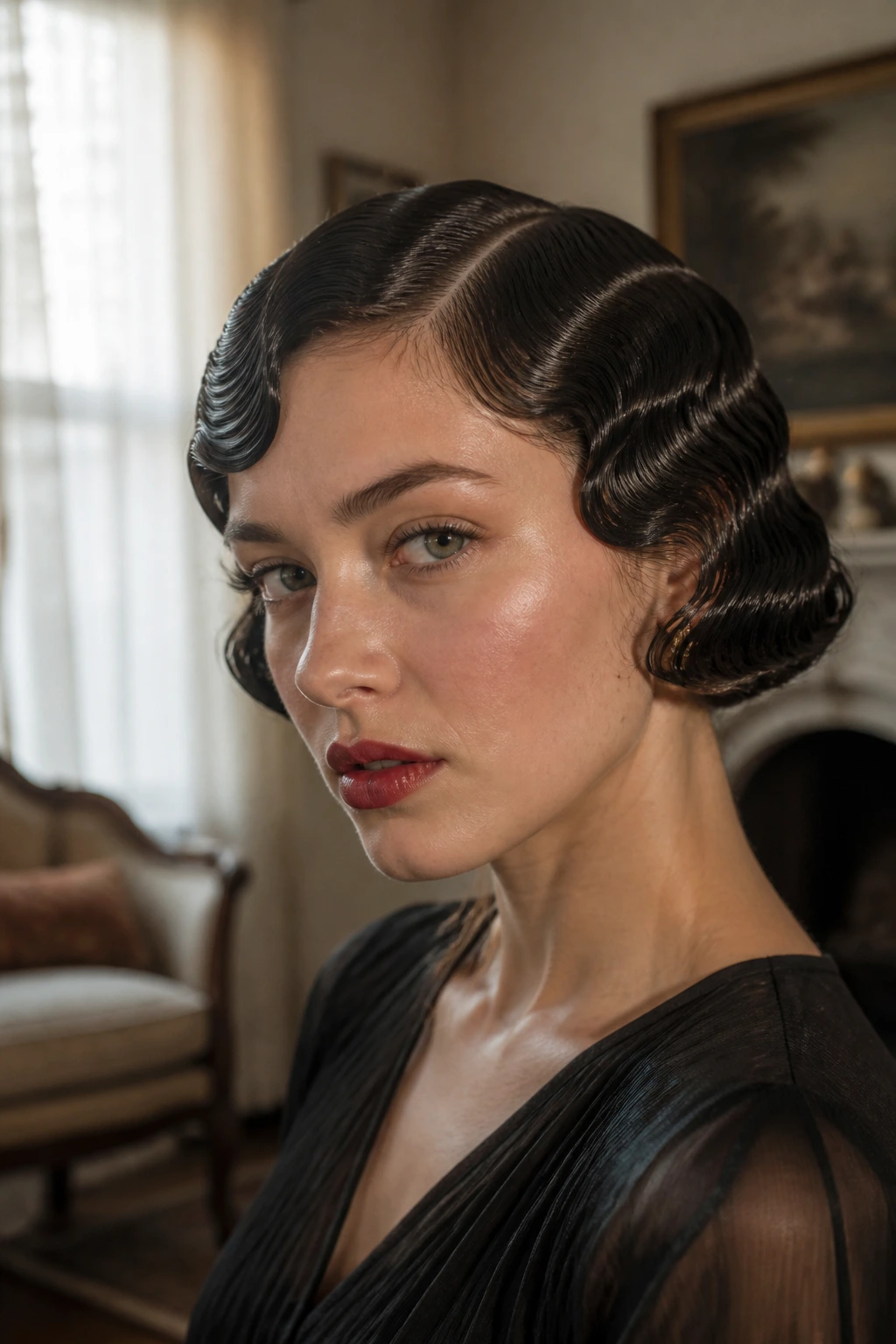
Finger waves on short hair look like you spent forever on them, which is exactly why they’re satisfying. Done right, they give a bob a glossy, old-school shape with hard curves and clean ridges. Done fast, they still look chic. Not delicate. Chic.
This style wants a little more patience than the others, but not as much as it seems. Work gel through damp hair, create the waves with a comb and your fingers, and clip the bends in place until they dry. The key is setting the pattern before the hair loses moisture. Once it dries, the wave line stays put.
Finger waves are best on shorter bobs or cropped cuts with enough length to hold a bend. They are not the quickest choice here, but they are one of the most striking when you need a sharper look for an event.
10. Curly Shag Crop

If your hair already has curl, a curly shag crop can save you a lot of morning negotiation. The layers do most of the visual work, and the shape keeps curls from turning into a triangle. That’s the real win. Short curly hair is often happiest when it has room to spring.
Use a curl cream or light mousse on soaking-wet hair, scrunch it upward, and let the hair air-dry or diffuse for a few minutes. Do not rake through it too much after the product goes in. That’s how you turn defined curls into a fuzzy halo. The shaggy layers give the ends movement, so the style looks lively even when you’ve barely touched it.
This cut also grows out well. That matters. Some curly short cuts lose shape fast; a shag keeps looking intentional for longer between trims.
11. Defined Natural Curl Crop
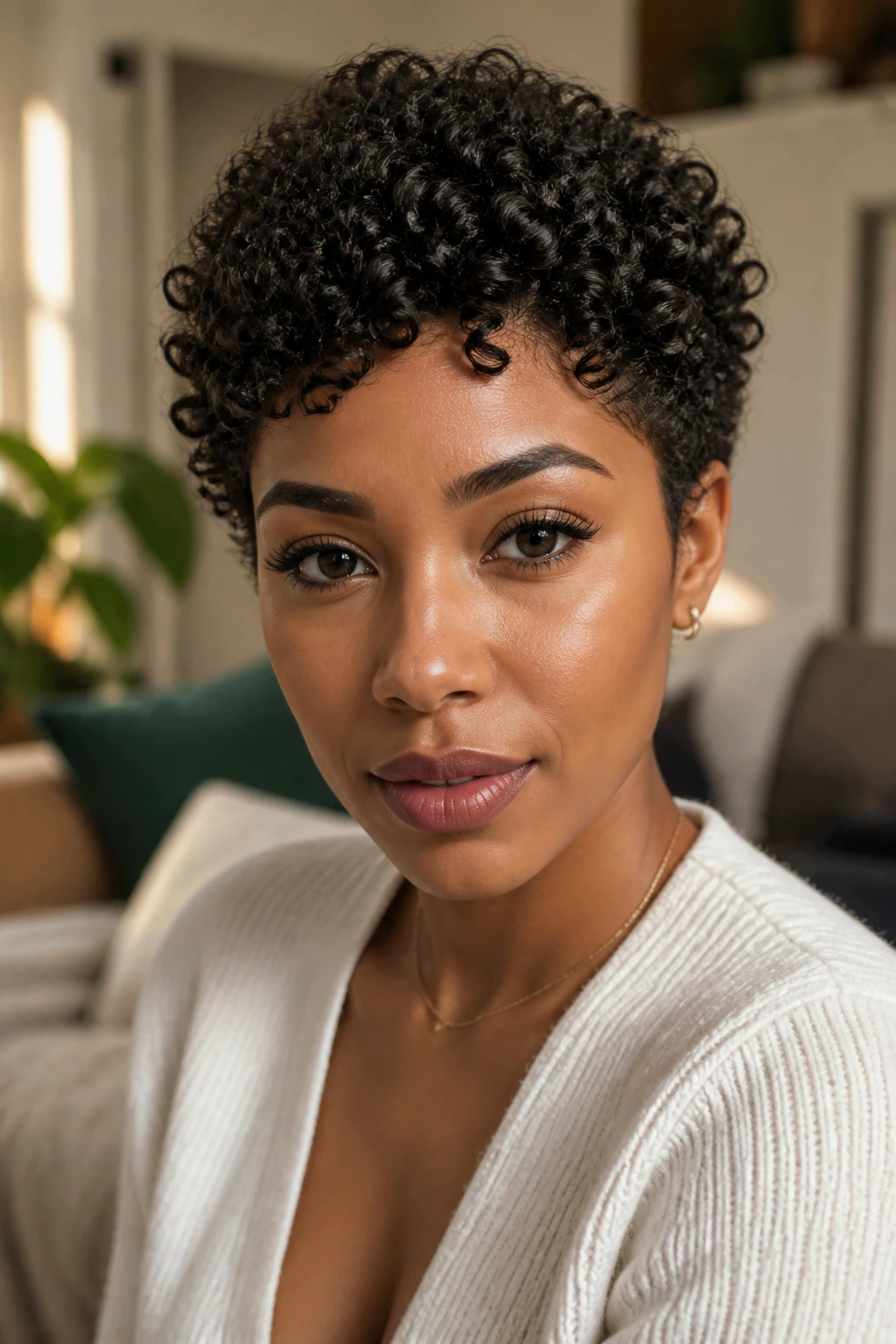
A defined natural curl crop is the polished version of the previous style. It keeps the shape short and close, but it leans into curl definition rather than shaggy movement. The look is cleaner at the edges and a bit more controlled around the face.
Start with a leave-in conditioner and a gel that gives hold without crunch. Apply it in sections while the hair is wet, then scrunch with a microfiber towel or your hands. A diffuser helps if you want the curls to dry faster, but you can also leave them alone and let the shape settle. Either way, the goal is to keep the curl pattern intact.
This style is useful when you want your hair to look dressed up without much actual styling. It has a strong silhouette. That’s why it works.
12. Micro Braid Temple Accent
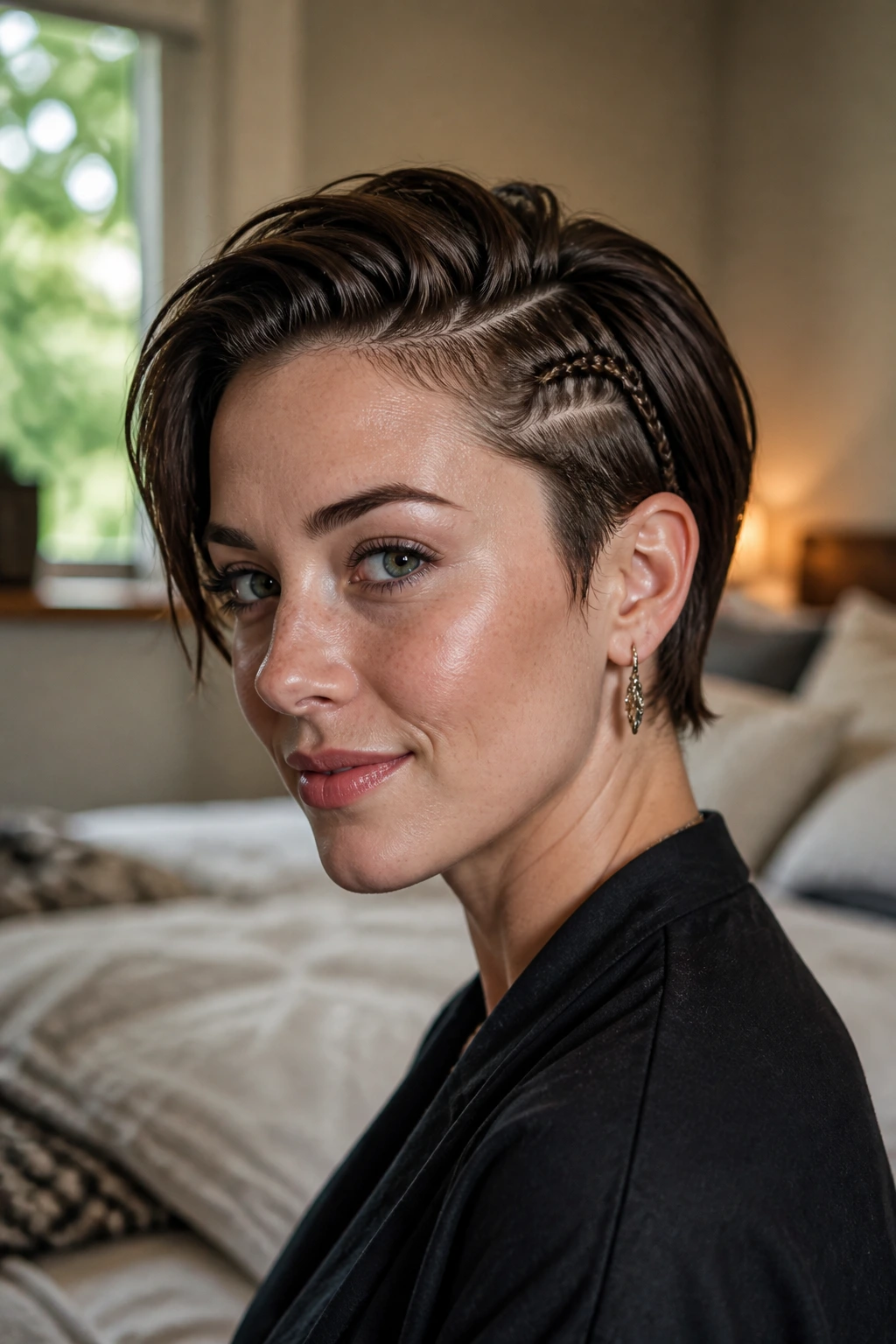
A micro braid at the temple is a tiny move with a lot of attitude. It keeps short hair off the face, adds a little texture, and makes even a simple crop look more styled. One braid is enough. Two can be fun. More than that, and the whole thing starts stealing time.
Braid a narrow section near the hairline, then pin it back or let it blend into the rest of the hair. This works best on second-day hair or hair with a little grip from dry shampoo. Clean, slippery hair is harder to control, and the braid can unravel before noon.
Best Use Case
Use this when your cut feels too plain and you do not want to rewash it. The braid gives the style a point of focus, and it keeps the rest of the hair free to do whatever it wants.
13. Half-Up Knot for Short Layers
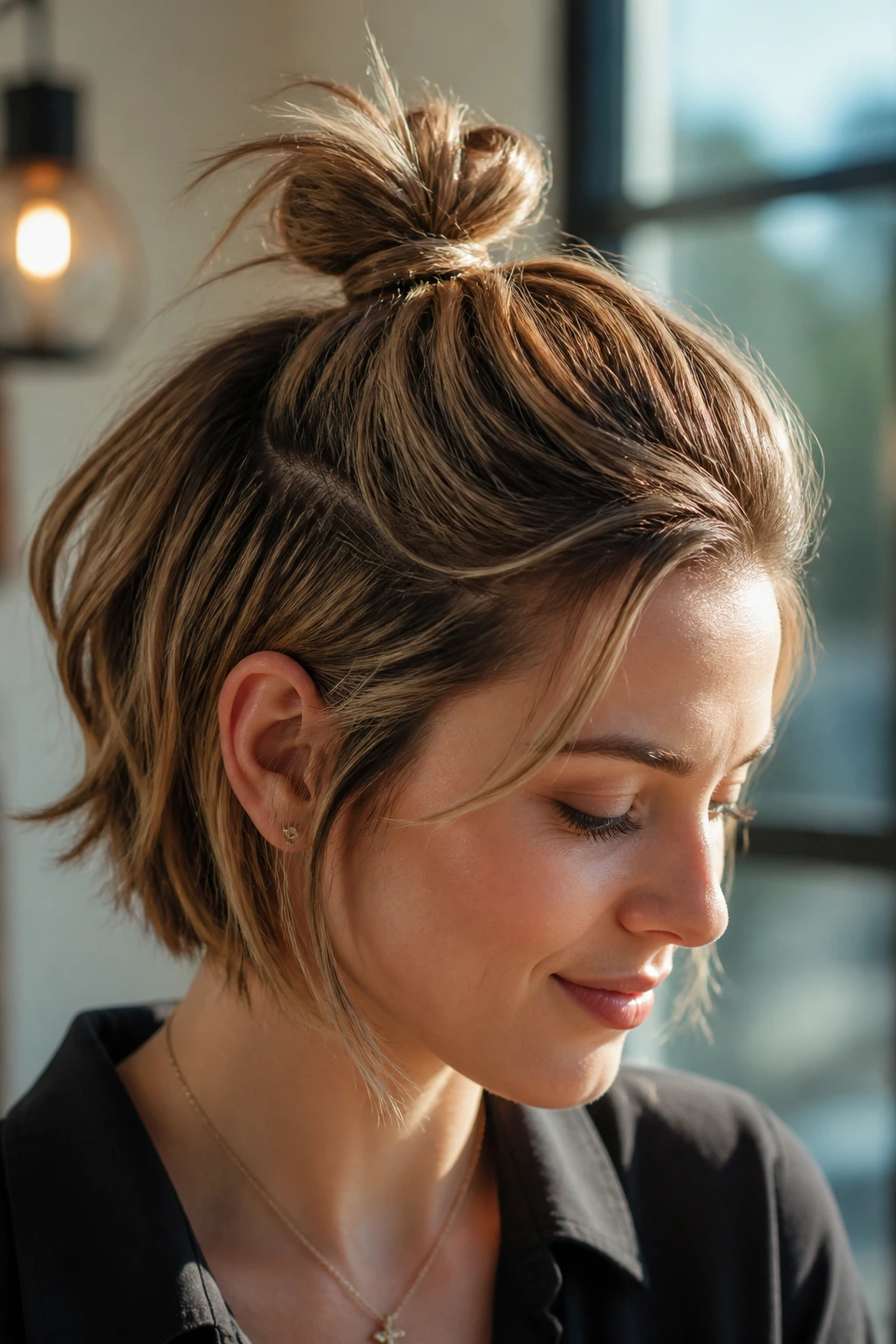
A half-up knot on short layers is the hairstyle equivalent of making a quick decision and looking good for it. It pulls enough hair back to feel tidy, but leaves the lower layers loose so the style still has movement. On shoulder-grazing bobs or grown-out pixies, that little knot can be a lifesaver.
Gather the top section from temple to temple, twist it once or twice, and pin or tie it into a small knot. Don’t stretch it too tight. A little looseness keeps the style from looking severe. If shorter pieces fall out around the face, leave them. Those wisps soften the shape and keep it from feeling overmanaged.
A dab of texturizing spray at the roots helps the top hold. If the hair is too clean, the knot slips. That’s the trade-off. Slightly gritty hair behaves better here.
14. Twisted Crown on a Bob
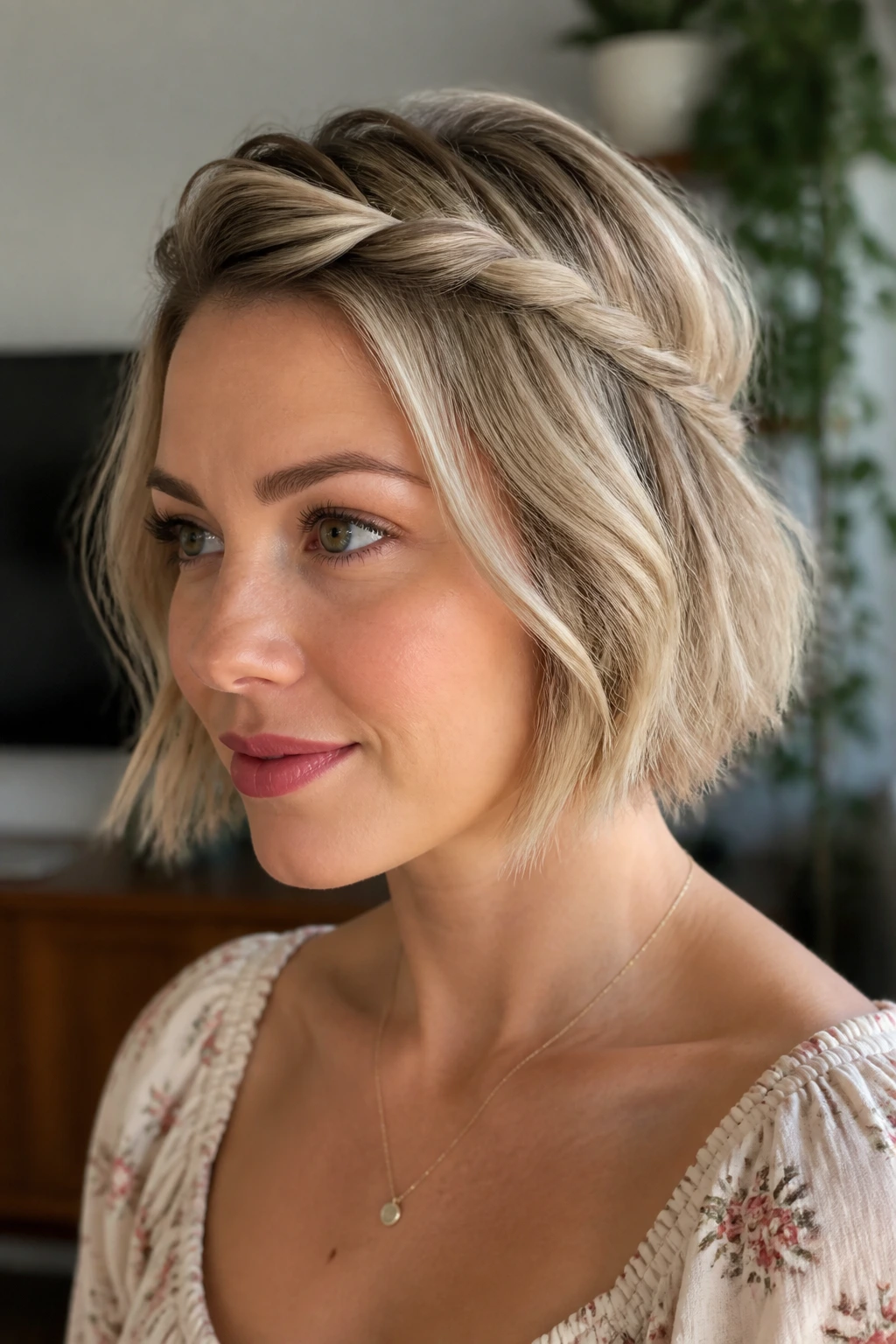
A twisted crown on a bob gives you that pinned-back feeling without the heaviness of a full updo. Twist small sections back from each temple, secure them at the crown, and let the rest fall free. It’s tidy, but not stiff.
This style works because it uses the front pieces to frame the face while keeping the top away from the eyes. It’s a good choice when your bob has enough length to twist but not enough for a true braid. If you’ve got a blunt chin-length cut, a pair of twists can add shape in a way that a simple part cannot.
Use bobby pins that match your hair or go with a visible metal pin if you want more edge. Both work. The crown twist is one of those styles that can lean soft or sharp depending on the finish.
15. Claw-Clip French Twist for Short Hair
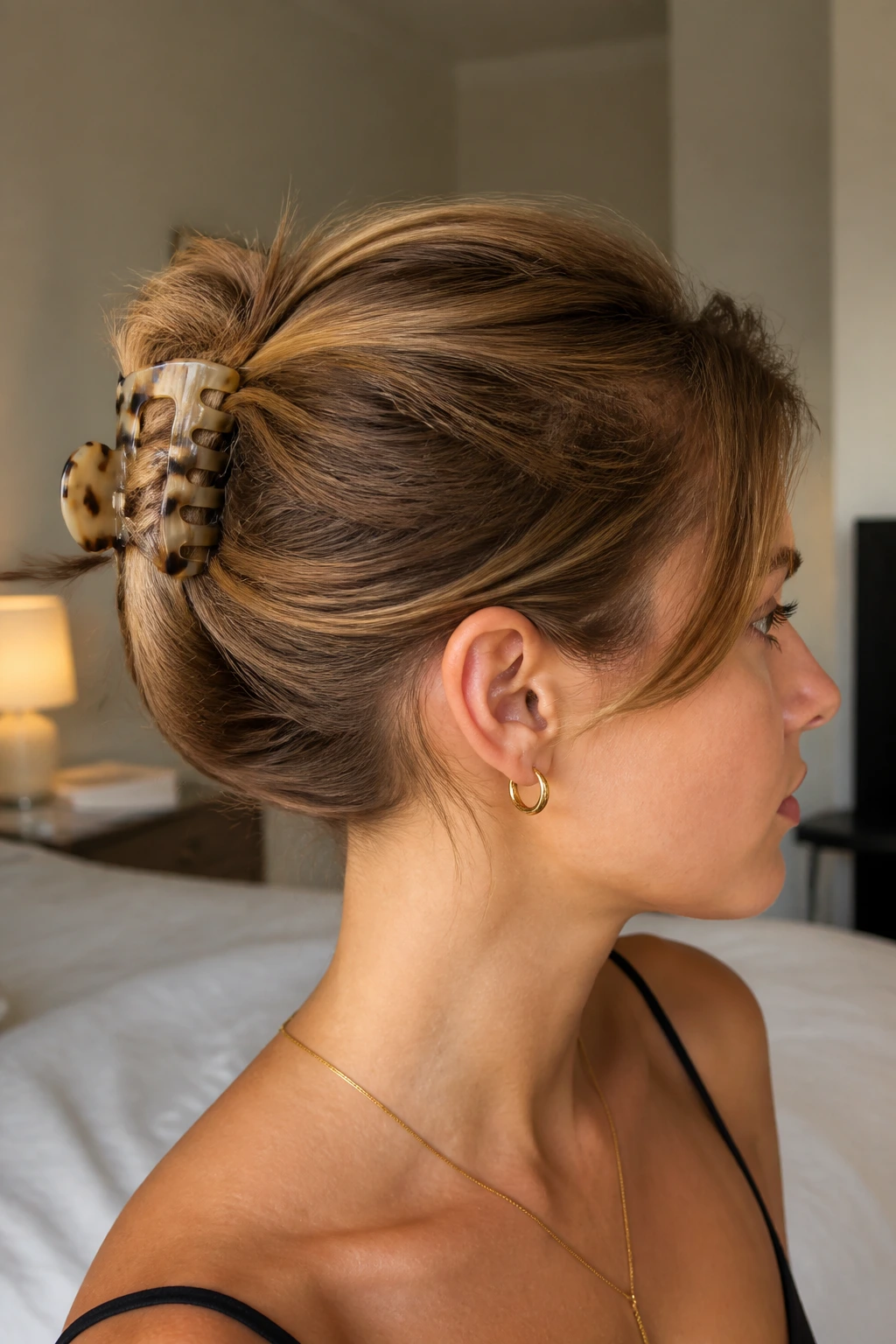
A claw-clip French twist is the shortcut that short hair keeps trying to give us. It’s part twist, part tuck, part “I had to leave the house in five minutes,” and it works best when the hair is at least bob length or slightly longer at the nape. The clip does the heavy lifting, but the shape still looks deliberate.
Gather the hair at the back, twist upward, and fold the ends in before clipping them in place. If shorter layers stick out, let them. That loose texture keeps the style from looking too formal. It also makes the twist feel more modern than bridal.
This one is useful on damp hair, too, because the clip holds the shape while the hair dries. That is a neat trick on rushed mornings. One clip. Done.
16. Bandana-Frame Textured Bob
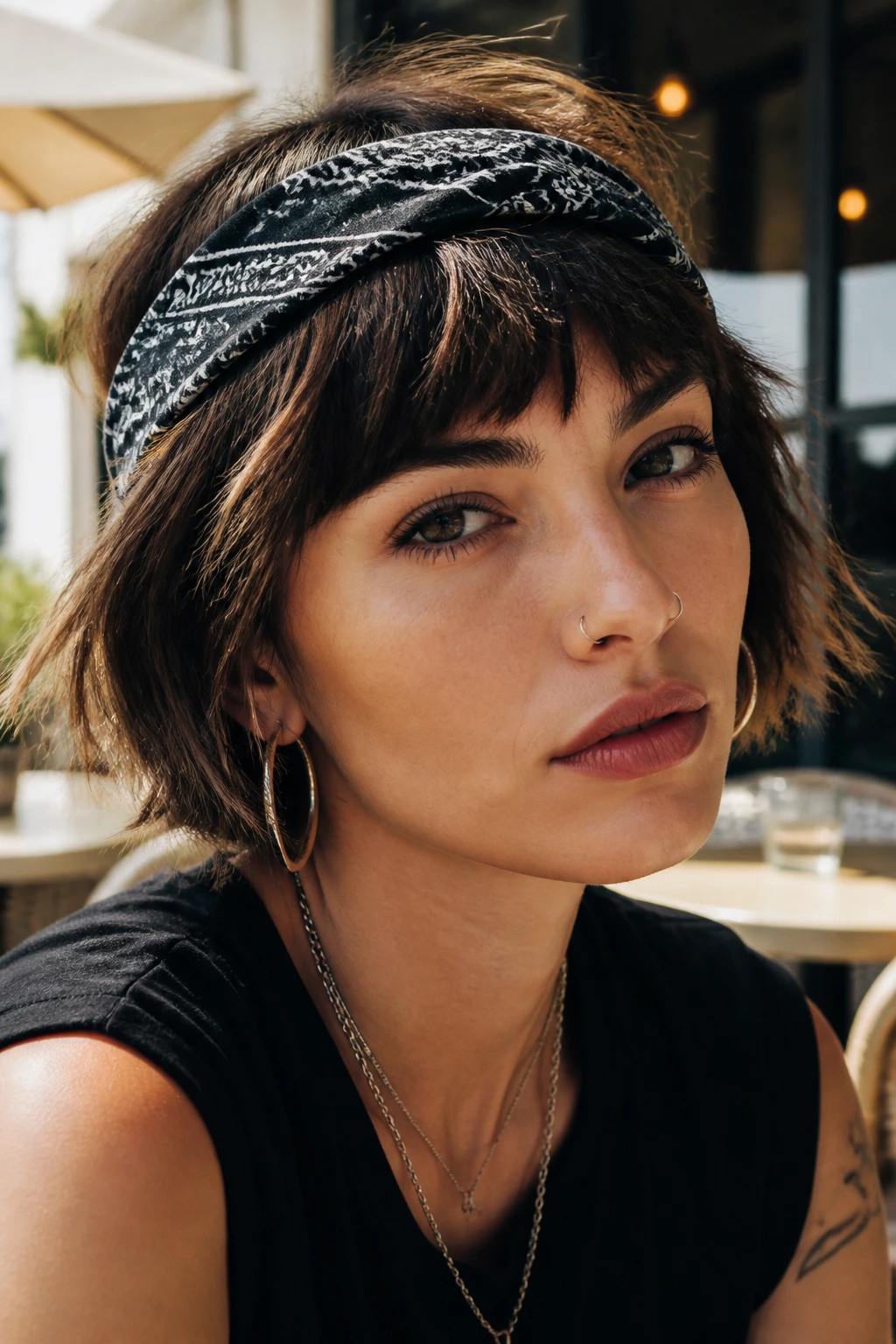
A bandana-framed bob is not cheating. It is smart. The bandana keeps the front clean, hides any awkward cowlicks at the hairline, and lets the bob’s texture do the talking. Add a little bend through the lengths and the whole thing gets a casual rock-and-roll feel.
Fold the bandana into a narrow strip and tie it low or across the forehead depending on the vibe you want. Leave some hair loose around the ears and the nape so the style doesn’t feel sealed in place. This look works especially well on day-two hair, when the top needs taming but the ends still have movement.
If your hair is fine, tease the crown just a touch before tying the bandana. That helps the style avoid going flat under the fabric.
17. Asymmetrical Deep Side Part
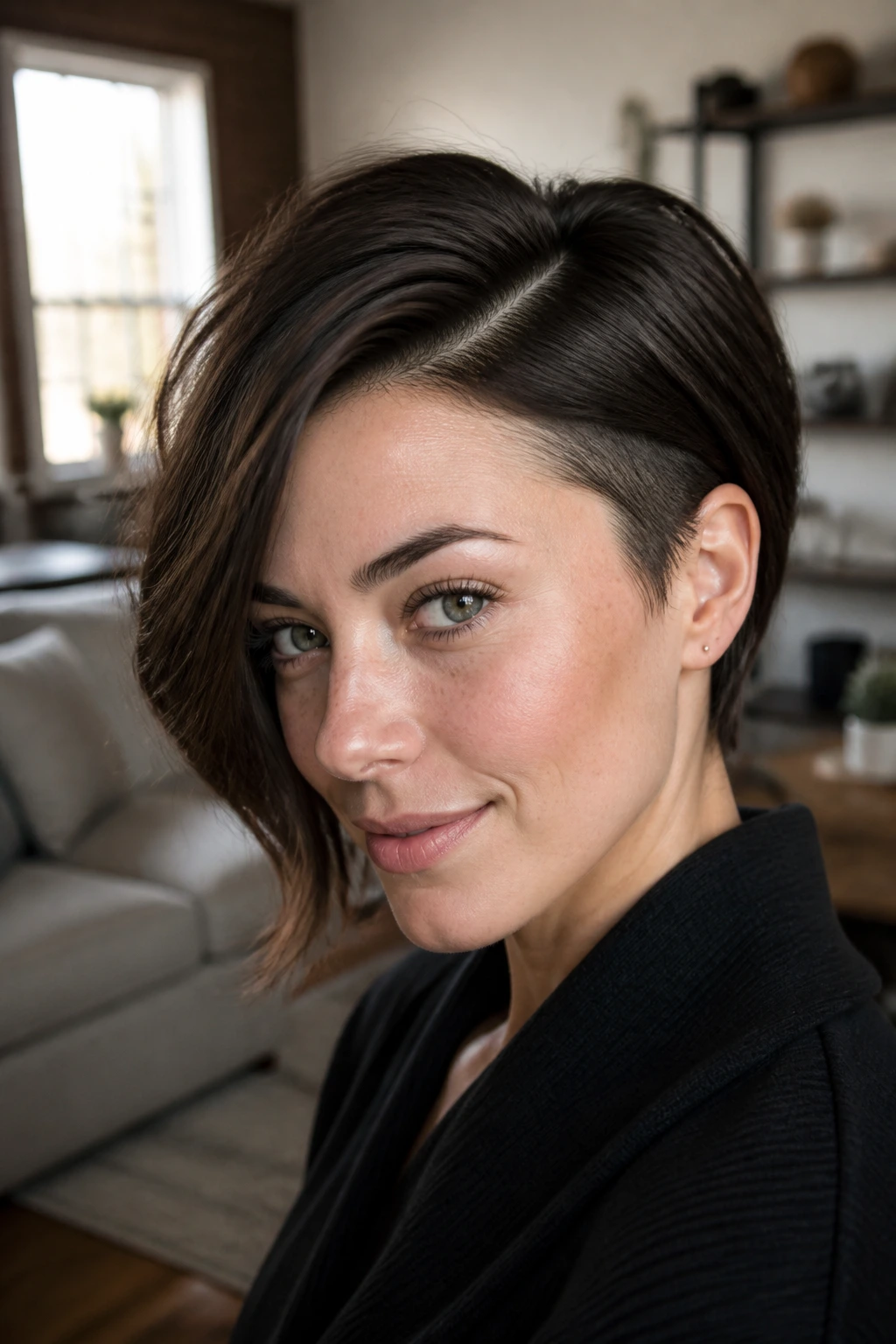
An asymmetrical deep side part is the quickest way to make a short cut look more styled without changing the cut itself. One side gets tucked or flattened, the other gets more volume. The imbalance is the point. It looks sharp because it refuses symmetry.
Use a rat-tail comb to place the part where the hair naturally wants to resist. Then blow-dry the heavier side with a bit of lift at the root and smooth the other side close to the head. A lightweight cream can keep the part clean without making it shiny.
This style is especially good if your hair has some natural bend. The part and the bend work together instead of fighting each other. That saves time and keeps the style from feeling forced.
18. Feathered Micro Mullet
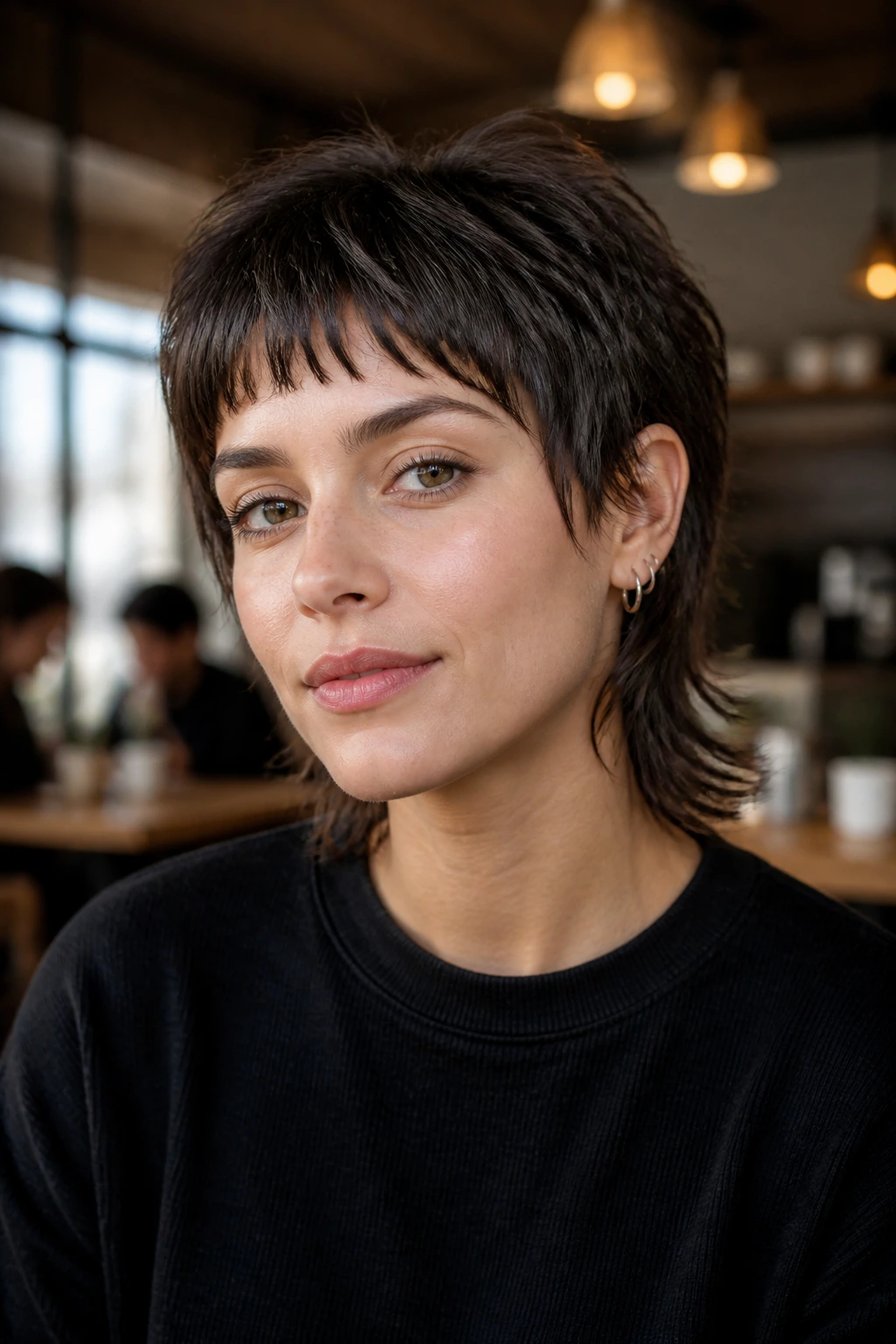
A feathered micro mullet is for people who like a little rebellion with their coffee. The front stays cropped, the crown gets movement, and the back is left just long enough to suggest a shape without turning into a full shag. It’s edgy, but not costume-y.
The feathering matters here. Softly textured ends keep the cut from feeling heavy or boxy. Use a light texturizer or matte cream and break up the crown with your fingers, not a brush. The brush tends to flatten the shape and erase the point of the cut.
This one is one of my favorites for fast mornings because it looks better with a little disarray. A clean, precise finish can make it feel too controlled. The feathered version keeps the attitude.
19. Wet-Look Tapered Cut
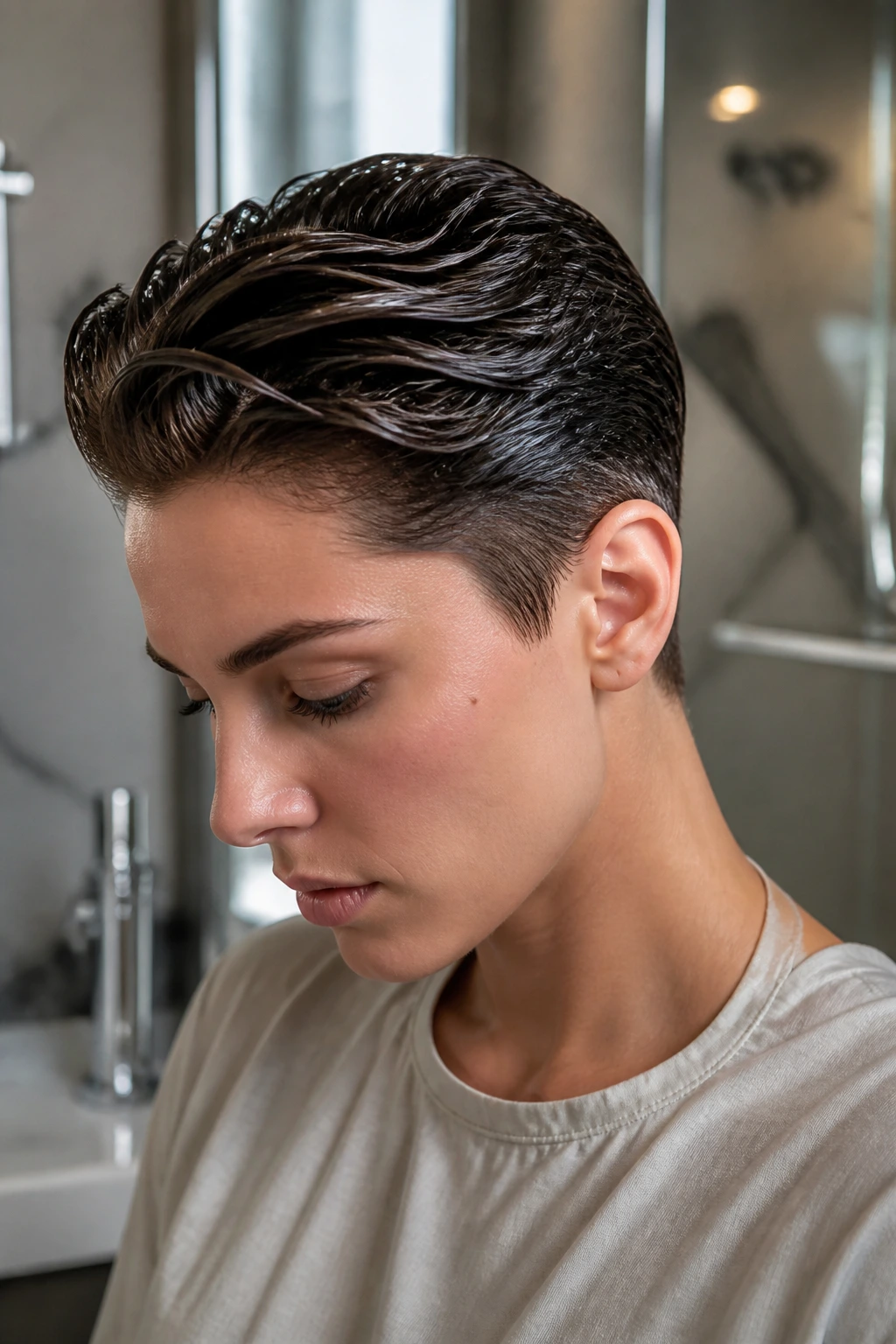
A wet-look tapered cut gives you a clean neckline and a glossy top without needing a long styling session. The taper keeps the sides neat, while the wet finish makes the whole cut look intentional and a bit dramatic. It is sleek, but not boring.
Apply gel or styling cream to damp hair, comb it into place, and let the taper do the heavy lifting. The back and sides should sit close to the head, and the top can stay slightly fuller for shape. If you want extra shine, smooth a tiny amount of serum over the top once the gel sets.
The important thing here is balance. Too much product and the hair looks weighed down. Too little and the wet effect disappears before you leave the driveway.
20. Statement-Clip Side Sweep
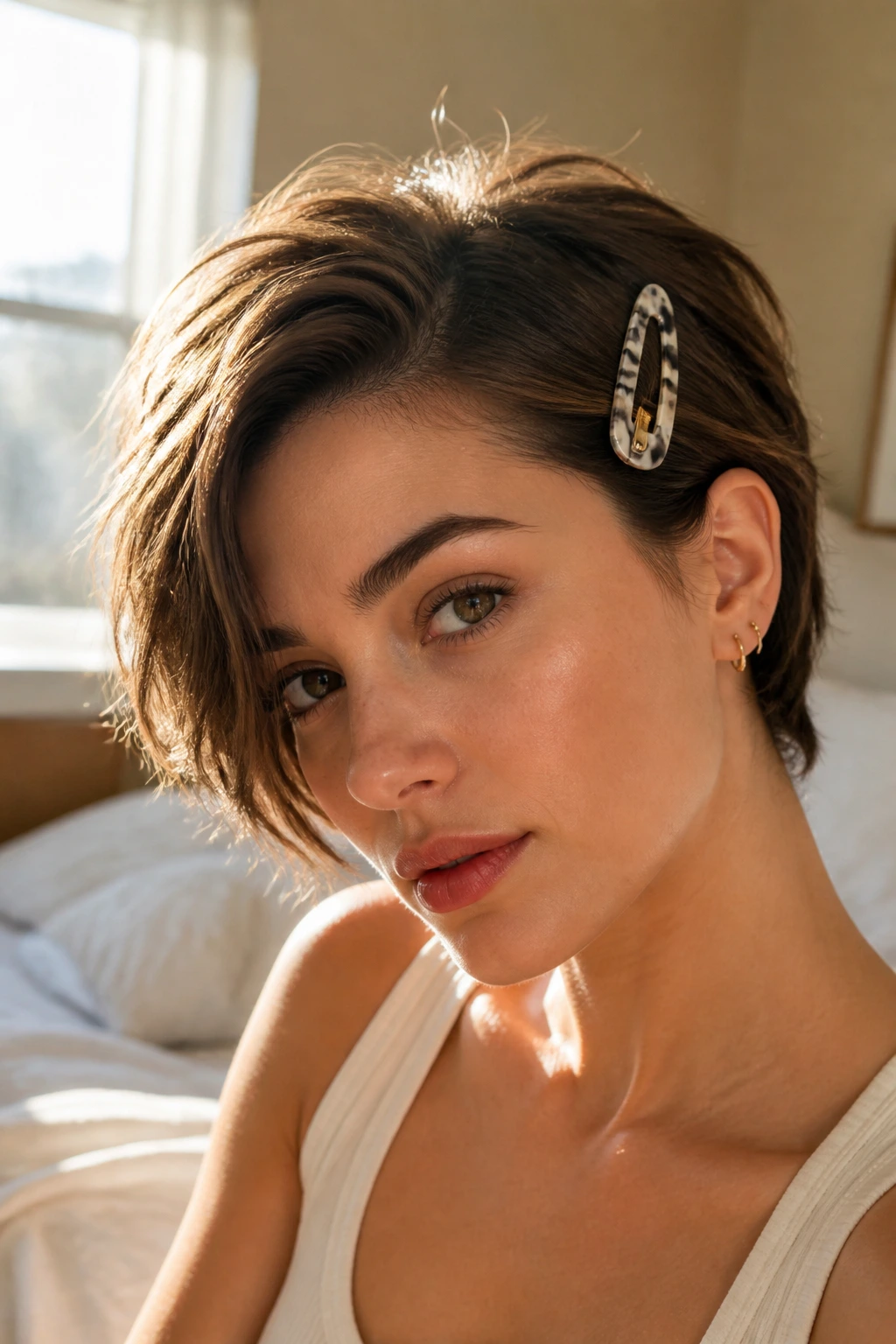
A statement-clip side sweep is the easiest way to make short hair look finished when you have no interest in complicated styling. Sweep the front to one side, secure it with a strong clip, and let the rest keep its texture. The clip becomes the focal point, which means the hair itself can stay relaxed.
Choose a clip that has enough grip for your hair density. Thin clips slide. Heavy clips hold better. That sounds obvious, but half the battle with short hair accessories is making sure they do not slip after twenty minutes. If you want more control, mist the roots with a little dry shampoo first.
This look is especially good when the cut is in that awkward grow-out stage. The clip turns a problem area into part of the style. That’s a useful trick to keep in your pocket.
Why Short Hair Wins on a Rushed Morning

Short hair works so well on rushed mornings because it gives you fewer moving parts. That sounds basic, but it matters. A bob, pixie, or cropped shag dries faster, needs less product, and usually needs less heat to look finished. The shape sits closer to the head, so even a tiny bend in the front or a clean part can change the whole mood.
There’s also less punishment when the morning goes sideways. A longer style often falls apart in stages: roots flatten, ends tangle, length swings the wrong way. Short hair is more forgiving. If one section misbehaves, you can usually fix it with a quick mist of water and a finger-comb through the crown.
The best short styles lean on silhouette instead of perfection. They use part lines, texture, or a tucked ear to do the heavy lifting. That’s why they feel rockstar-ish without needing stage hair. A little grit helps. A little shine helps. A little asymmetry helps too.
Tools That Make These Looks Faster
-
Blow dryer with a nozzle: Directs air at the roots and makes lift easier on pixies and short bobs.
-
Small round brush: Handy for flips, pompadour lift, and soft bends at the ends.
-
Rat-tail comb: The best tool for clean parts, sectioning, and tiny braid accents.
-
Wide-tooth comb: Good for curls and for pulling product through without breaking up the curl pattern.
-
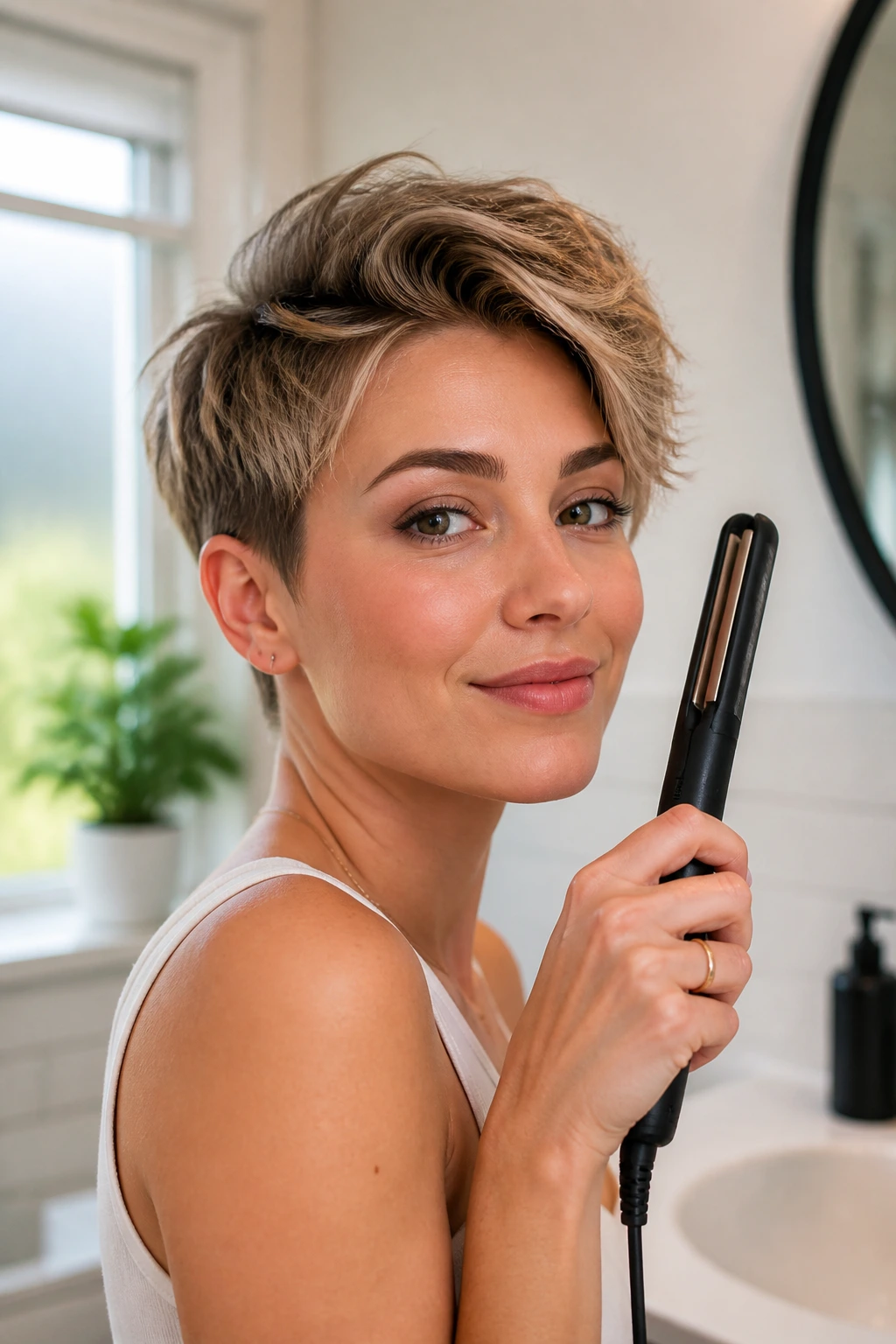
Flat iron, 1/2 to 1 inch plates: Useful for blunt bends, flipped ends, and smoothing stubborn cowlicks.
-
Diffuser: Saves curls from getting blasted apart and cuts drying time on curly crops.
-
Matte paste or clay: Gives piecey separation and directional lift without shine.
-
Light gel: Best for wet looks, sleek side sweeps, and finger waves.
-
Mousse or root spray: Helps fine hair hold volume without getting sticky.
-
Dry shampoo or texture powder: Adds grit on day-two hair and keeps flat roots from sinking.
-
Bobby pins and a few strong clips: Necessary for twists, mini braids, and any style that needs a hold point.
Product and Cut Notes That Save Time
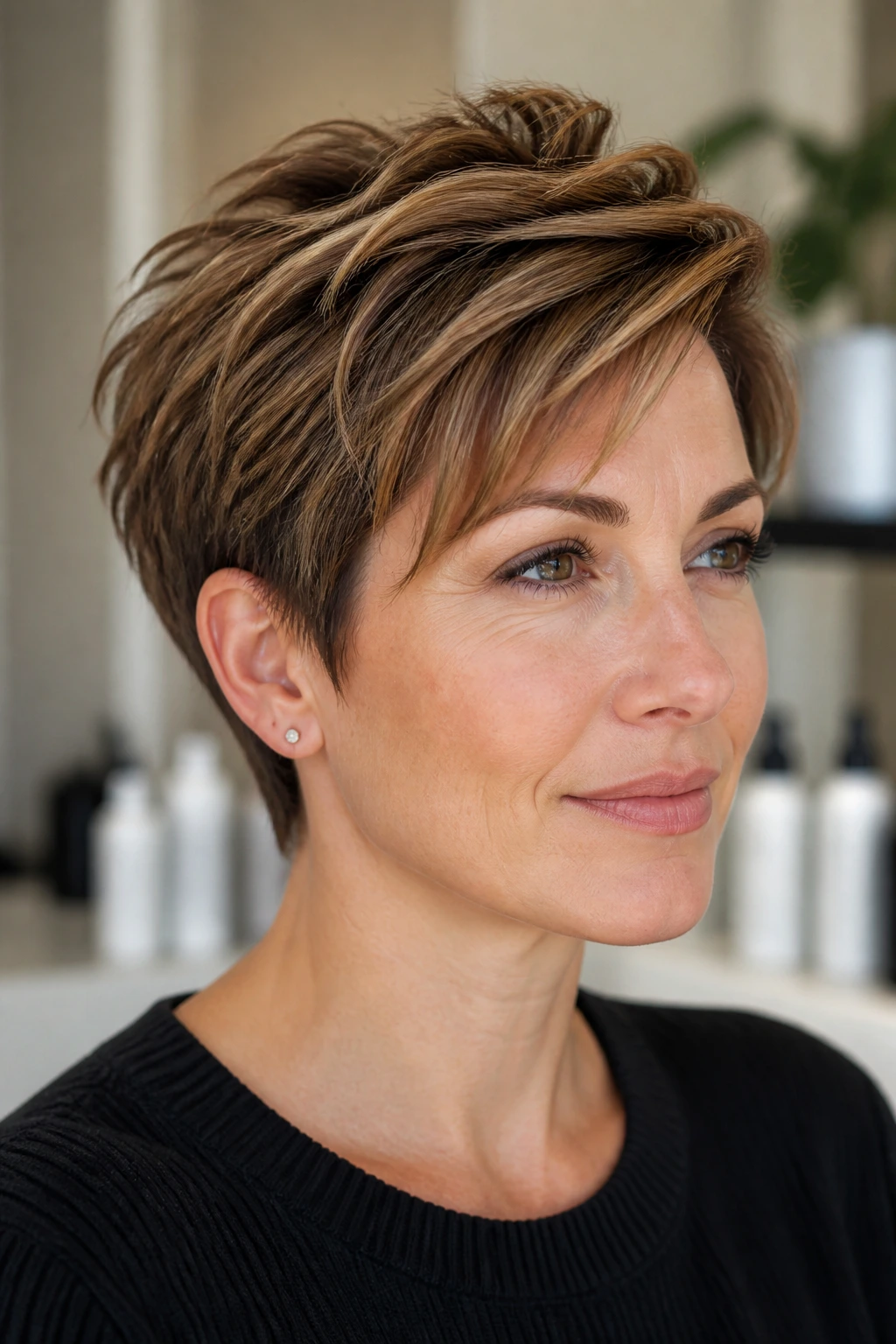
The right product matters less than the right amount. Short hair punishes overuse faster than long hair does. A pea-sized blob of paste can coat a whole pixie, and a few sprays of texture mist can fake a full styling session. If the hair feels tacky before you leave, you’ve probably used too much.
The cut matters just as much. Ask for internal layers if your hair is thick and dense; they remove bulk without making the silhouette puff out. If your hair is fine, ask for weight kept at the ends so the shape doesn’t fray. Point-cutting around the fringe can soften a short cut and keep it from looking blocky. I’m not a fan of over-thinning on fine hair. It can make the ends look weak and ragged.
Think about growth pattern, too. Cowlicks, temple swirls, and a stubborn crown part can either fight the style or help it. A good stylist will cut with those patterns in mind. If you already know your crown splits hard to one side, that is not a flaw. It is a styling decision waiting to happen.
How to Wear the Finish Without Overthinking the Rest of Your Look
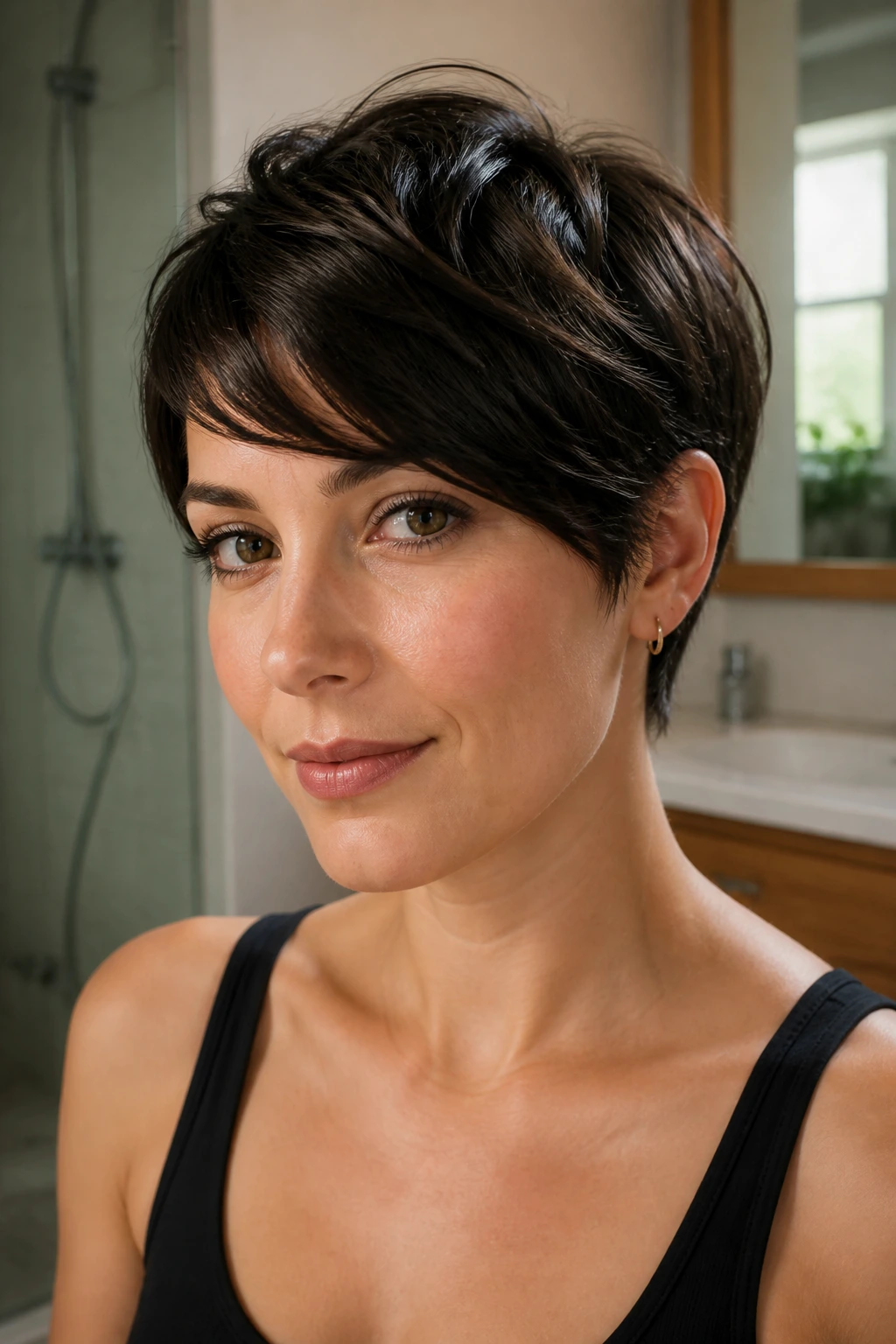
Shape: Match the volume to where your face needs balance. Higher lift at the crown can lengthen a rounder face; side sweep and tucked ears can soften strong angles. You do not need to memorize face-shape charts to use this well. Just notice where the hair feels loud and where it feels close.
Outfit Energy: Sleek wet looks read sharper with clean lines, while messy crops and faux hawks lean better with denim, leather, or heavier textures. A smooth bob and a crisp shirt can feel very different from the same bob with a ribbed tank and boots. Hair and clothes talk to each other, whether we want them to or not.
Accessories: Small hoops, a single barrette, or a narrow bandana can push a style from plain to pointed. Use one accessory with intention. Two is usually enough. More than that and the hair starts to compete with itself.
Time Budget: Save the mini pompadour, finger waves, and claw-clip twist for days when you can spare a few extra minutes. Reach for the deep side part, side sweep, or statement clip when the clock is being rude.
Extra Ways to Add Lift, Shine, or Edge
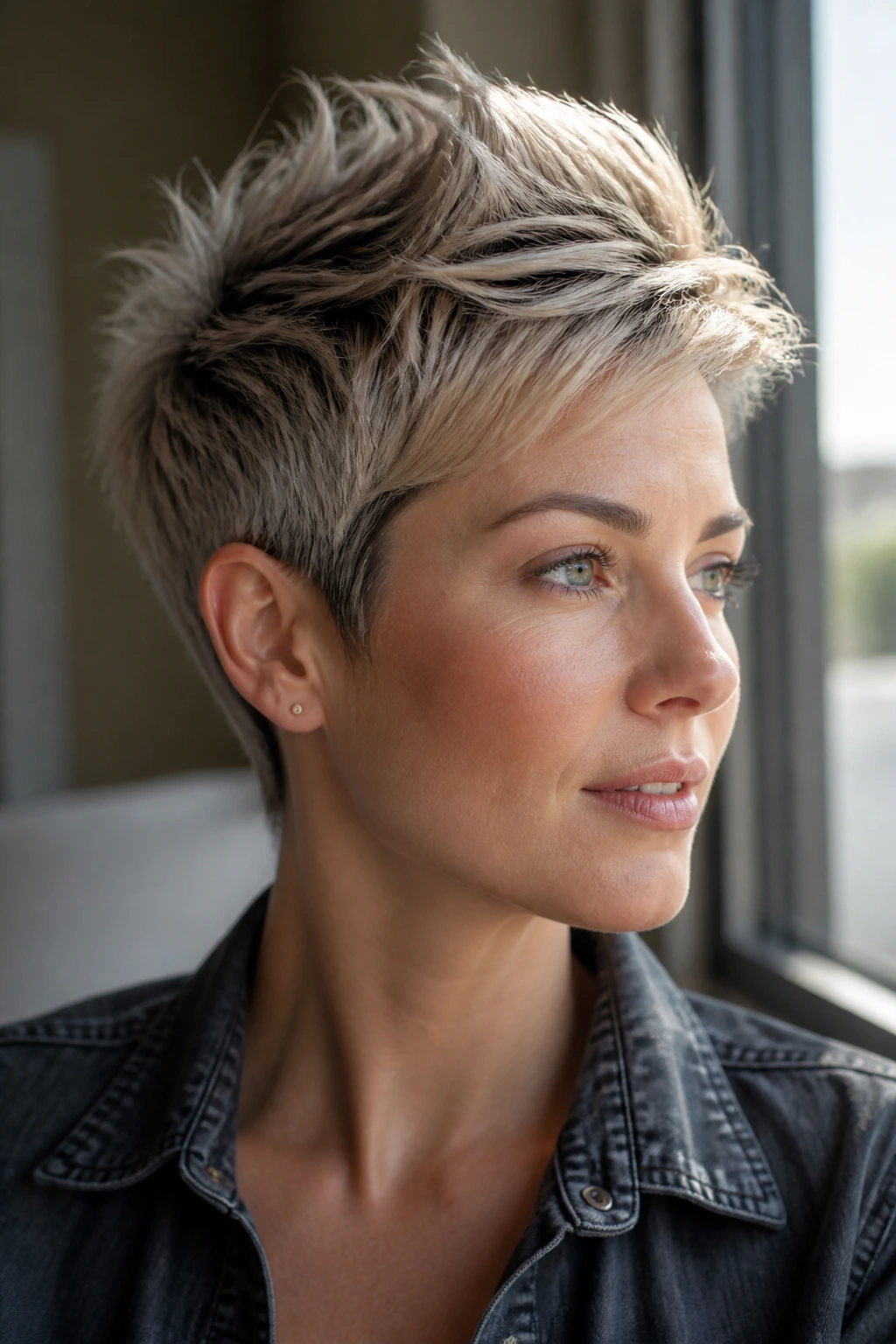
Texture Trick: Mist dry shampoo at the roots before you style, not after. It gives the hair a little grip so your part, twist, or pompadour holds longer. On fine hair, this can matter more than the actual product finish.
Shine Trick: Use a single drop of serum on the ends only. That keeps the top from looking greasy while the lower layers catch a little light. I would rather see shine at the perimeter than a glossy scalp.
Edge Move: Tuck one side behind the ear and leave the other side loose. That small imbalance gives even a simple bob a harder line. It also works when your hair has gone a little flat and needs shape, not rescue.
Customization: If your hair is curly, swap paste for curl cream or gel. If it is straight, try a matte product first and only add shine at the end. The finish should match the texture you already have, not fight it.
Common Mistakes That Make Short Hair Look Flat
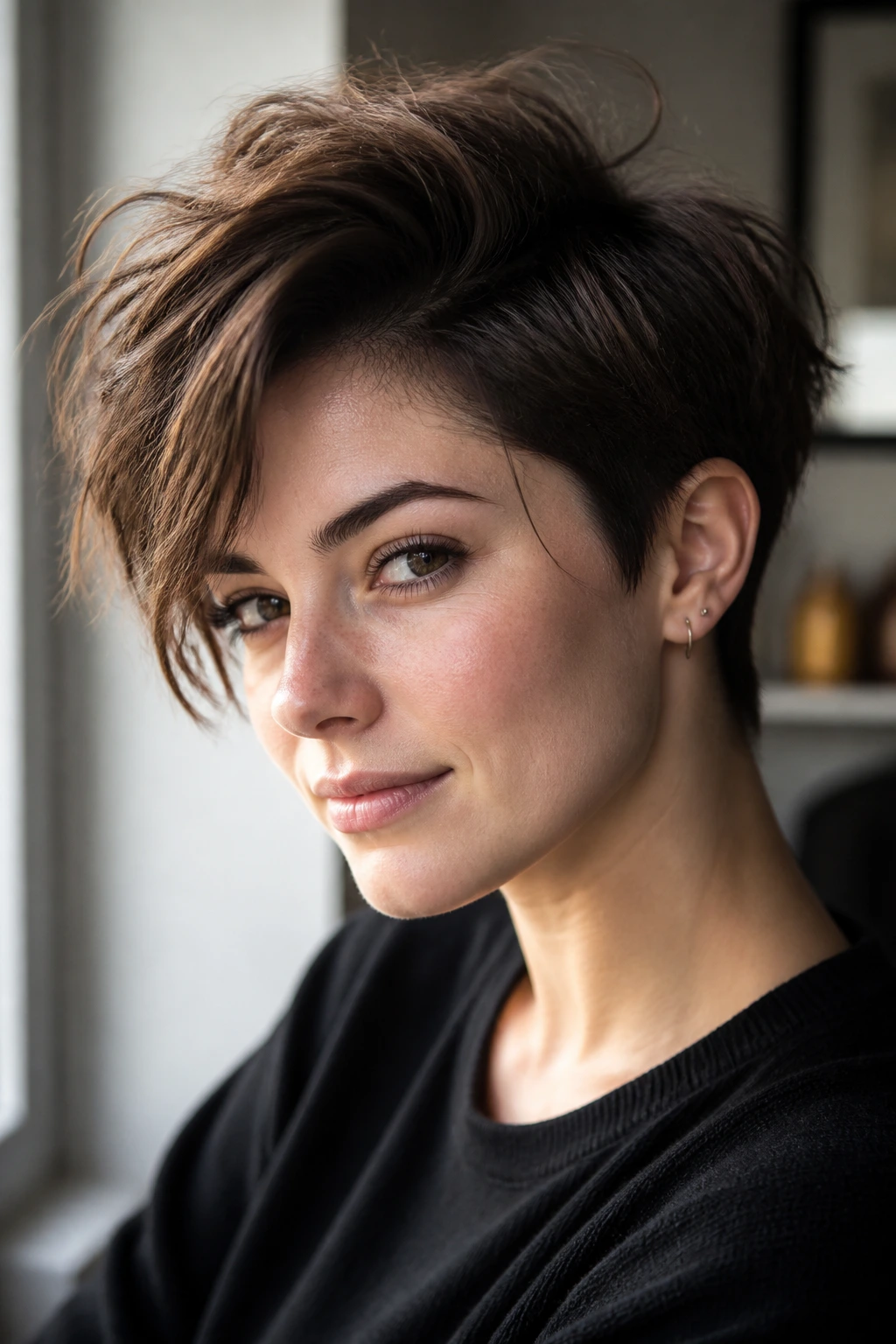
The first mistake is using too much product. Short hair does not need a full palm of anything. When the roots start looking wet, sticky, or heavy by noon, the style has already lost. Start small. Add more only if the shape needs it.
Another common issue is styling hair that is too wet or too dry for the product you chose. Gel likes damp hair. Paste likes dry or mostly dry hair. Mousse needs some water to spread, but not enough to drip down your neck. If the timing is wrong, the style slips before it sets.
People also ignore the cut’s natural direction. A cowlick at the front will push back. A swirl at the crown will split. Fighting that with brute force usually wastes time. Work with it instead. That’s how you get a side part that stays put or a fringe that falls the way you want.
The last trap is trying to make short hair look like long hair in miniature. It isn’t long hair. It needs a different strategy. More shape, less fuss. More texture, fewer passes with the brush. That shift alone can cut your mirror time down fast.
Day-Two Revival and Night-Before Prep
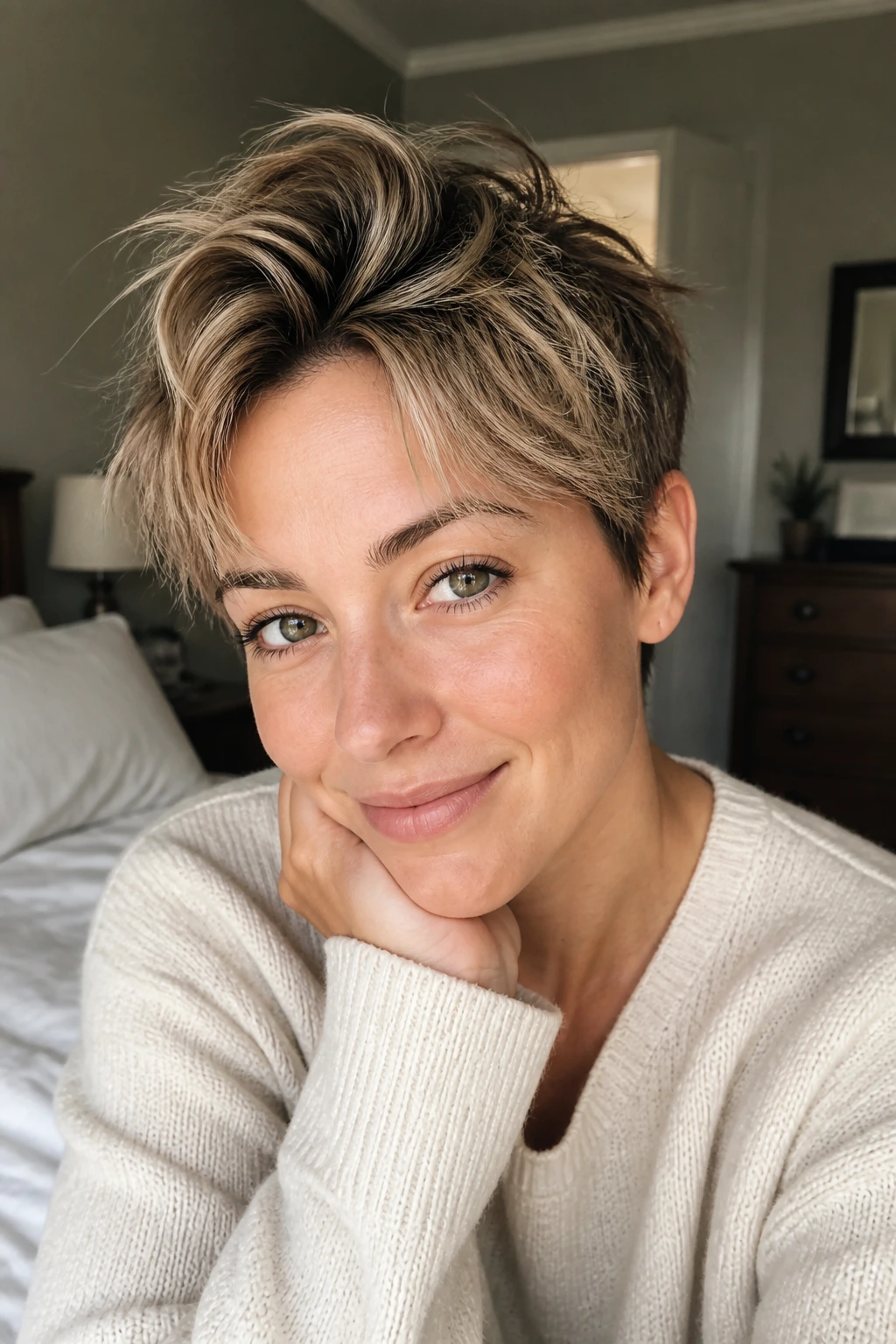
Short styles often look better on day two than they do fresh out of the shower. A little natural grit gives the shape something to hold onto. The trick is keeping the ends from drying out while letting the roots keep their lift. That balance is easy to lose if you pile on too much oil or sleep on a rough pillowcase.
At night, pin down any twist, clip, or fringe that tends to flip the wrong way. A silk or satin pillowcase helps, but the main win is avoiding friction at the crown. If a style is very smooth, like a wet-look pixie or a sleek bob, wrap the front loosely with a soft scarf so the part does not collapse.
For the morning refresh, use a mist bottle, then a dab of product only where the shape needs help. Rework the crown before touching the ends. If the front is flat, you can rebuild it in under a minute by lifting the roots with your fingers and aiming the dryer at the base for a short burst. That is often enough. No full wash required.
Variations and Adaptations to Try
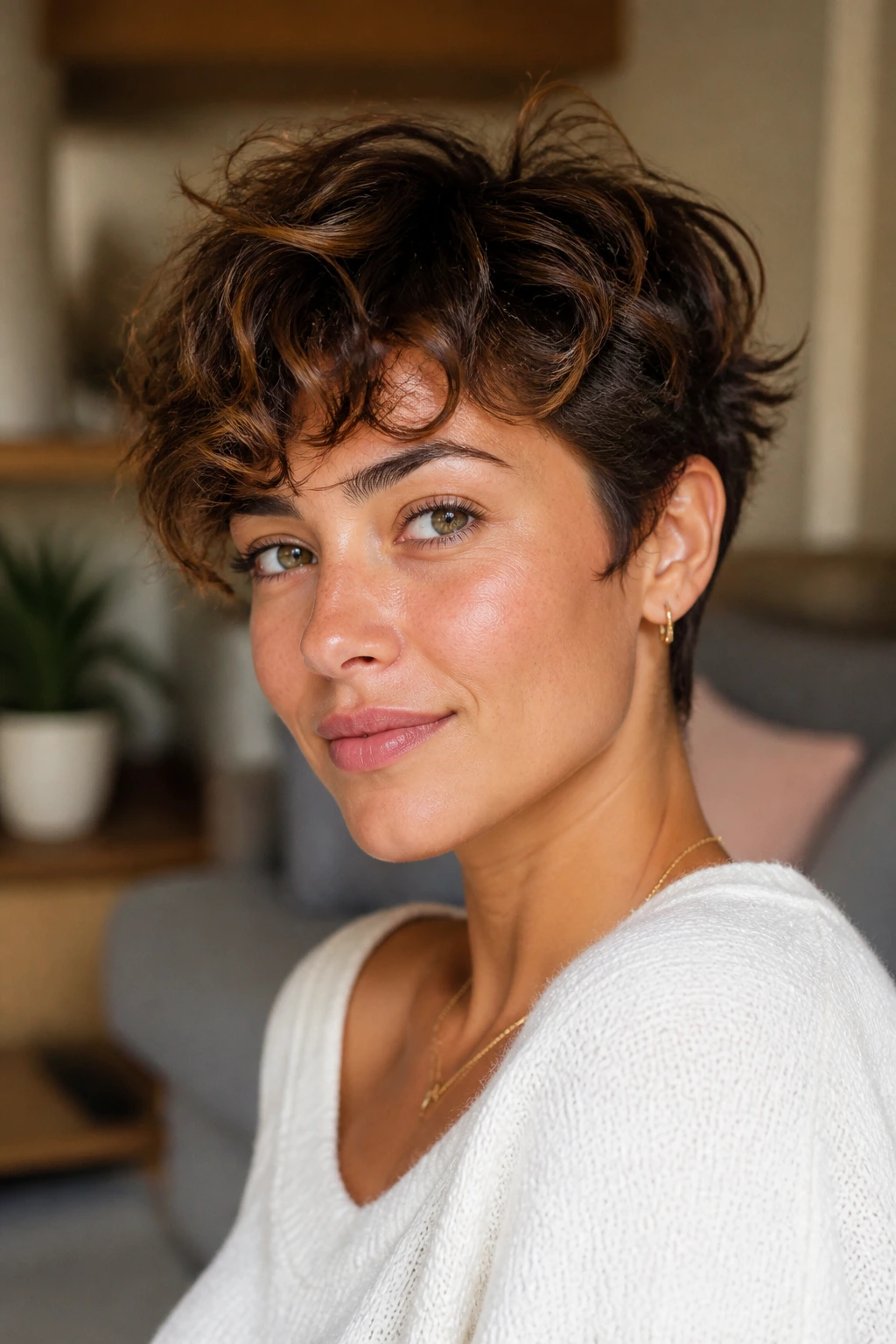
Fine-Hair Lift Version: Use mousse, root spray, and dry shampoo instead of heavy cream or oil. Fine hair looks best when it keeps some air in the style, so stay away from thick products that eat the volume.
Thick-Hair Control Version: Ask for internal layers or debulking at the salon, then use a cream or clay with medium hold. Thick hair can carry bolder shapes, but it also needs product that controls puff without turning crispy.
Curly-Hair Definition Version: Swap blunt spikes and slick parts for curl cream, gel, and diffusing. Curls need definition more than force, and trying to flatten them usually wastes time. A curly shag or crop is the easiest place to start.
Heat-Free Version: Lean on twist, braid, clip, and bandana styles. A deep side part, side sweep, or crown twist can look finished without a single pass of heat. Let the hair dry with the part already set.
Grow-Out Version: Choose styles that use the middle and front of the hair, not just the shortest layers. Half-up knots, twisted crowns, and statement clips all help awkward grow-out phases look planned rather than accidental.
Mistakes to Avoid When Styling Short Hair
Over-brushing the texture away. If you keep combing a piecey crop or shag, the separation disappears and the hair goes soft in the wrong way. Stop once the shape is in place.
Using the same finish on every style. A wet-look pixie wants gel. A feathered micro mullet wants matte cream. A curly crop wants curl product. One formula does not suit all of them, and the wrong finish can flatten the whole cut.
Ignoring the front hairline. The front is what people see first in short hair. If the fringe, temple pieces, or part line are messy, the whole style reads unfinished.
Skipping a quick root dry. On short hair, even ten seconds of heat at the roots can make the difference between lift and collapse. Air-dried roots tend to sit lower.
Trying to rescue a bad cut with more styling. Sometimes the issue is the shape, not the product. If the cut fights you every morning, the fix may be a better cut, not another can of spray.
Short Hair Questions People Actually Ask
Which short hairstyle is fastest on a truly rushed morning?
A deep side part, side sweep, or statement-clip style is usually the quickest. They rely more on placement than on full styling, so you can get out the door fast.
Can these looks work on fine hair?
Yes, but choose lighter products and avoid anything thick or oily near the roots. Fine hair usually does better with mousse, root spray, dry shampoo, and a small amount of paste at the ends.
What if my hair has a stubborn cowlick?
Treat the cowlick as part of the style. Blow-dry against it while the hair is damp, then set the direction with a part, clip, or a small amount of gel once the hair cools.
Do short hairstyles need daily washing?
Not always. Short hair can often go a day or two between washes if you use dry shampoo at the roots and refresh the front with a small mist of water. Overwashing can make some textures limp.
Which styles here are best without heat?
Twists, braids, bandanas, claw clips, and deep side parts are the safest bets. They rely on shape and placement, not curling irons or blowouts.
How do I keep a short bob from turning helmet-like?
Avoid too much product at the crown and keep some movement in the ends. A tiny flip, a tucked ear, or a side part helps the bob stay lively instead of stiff.
What if my style falls apart by lunchtime?
You probably used too much weight at the root or too little hold at the base. Reset the style with dry shampoo or texture spray, then use a stronger product just at the points that need support.
Can growing-out pixies still look stylish?
Absolutely. Half-up knots, twisted crowns, clips, and asymmetrical parts are perfect for awkward in-between lengths. They use the longer top while keeping the shorter sides from looking unfinished.
The Morning Routine, Cut Down
Short rockstar hairstyles for busy mornings work because they respect the clock and the cut. They do not ask you to fake a blowout that your hair does not want to hold. They ask for a part, a little texture, and a shape that knows where to sit.
The best part is how forgiving they are. A slick pixie can look polished with one comb-through. A shaggy crop can look better with a little chaos. A bob can flip, tuck, braid, or twist and still feel like the same haircut. That flexibility is the whole point.
Pick the style that matches your texture, your tools, and your patience on a Tuesday morning. Then make it yours with one small detail—an ear tuck, a clip, a braid, a bit of lift at the crown. That one move is often enough to turn “I got dressed in the dark” into hair with a pulse.