



Chin-length bobs for older women with face-framing layers do something many longer cuts never quite manage: they put the shape right where the face needs it most, then stop before the ends start dragging everything down. That’s the magic here. The bob lands at the jaw, the front pieces soften the line of the cheek, and the whole cut keeps moving instead of sitting there like a block.
I keep coming back to this length because it solves a very specific problem. Hair changes over time — it can get finer at the ends, puffier at the crown, wavier in places that used to be straight, or just a little less cooperative after a night on a pillow. A chin bob with face-framing layers handles those changes better than a heavy one-length cut. It gives you lift without a lot of length to wrestle with. And when it’s cut well, it works with glasses, earrings, jawline changes, gray blending, and all the little real-life things that make a haircut either a pleasure or a nuisance.
The part people miss is placement. A chin bob is not one haircut. It can be soft and round, sharp and glossy, piecey and lived-in, or lightly stacked with movement around the face. The difference is usually just a half-inch here, an angle there, and whether those front layers start near the cheekbone, the mouth, or the chin. That tiny shift changes everything.
Why These 25 Chin-Length Bobs Keep Getting Requested

- The length sits on purpose: A chin-length perimeter keeps the weight off the neck and gives the face a clean line instead of a shaggy mid-length hang.
- Face-framing layers do the softening: The front pieces blur the edge of the jaw and cheek without hiding the face under too much hair.
- They play well with thinning ends: Shorter hair makes the last inch or two look fuller, which matters when the bottom of the hair feels a little sparse.
- They’re easy to dress up or down: A round brush, a flat iron bend, or an air-dry cream can push the same cut in three different directions.
- They grow out better than a crisp crop: A good chin bob turns into a tidy swingy bob, not a shapeless triangle.
- Glasses and earrings finally get space: The front can be cut to land around the frames or tuck behind them without fighting for attention.
1. Soft Center-Part Chin Bob
A soft center-part chin bob is the calm one in the room. The line sits right at the chin, but the front pieces are sliced to skim the cheekbones instead of hanging like two blunt curtains. On straight or slightly wavy hair, that little bit of movement keeps the cut from looking severe, which matters when you want polish without stiffness.
Why It Flatters So Well
The center part makes the face feel open, and the face-framing layers stop the cut from turning boxy. If the hair has gotten finer through the ends, this version gives the illusion of denser perimeter weight because the eye reads the whole shape, not just the last inch.
- Best detail to ask for: chin-length perimeter with front pieces starting at the top of the cheekbone.
- Best texture: straight, softly wavy, or blow-dried smooth.
- Best styling move: a 1.5-inch round brush curve under the ends.
Tip: Keep the front only slightly longer than the back. Too much difference turns soft into fussy fast.
2. Side-Swept Layered Bob
A side-swept layered bob has a little more personality the second you part it. That side sweep lifts the front hair off the face and makes the chin line feel lighter, which is useful for women who don’t want every strand landing symmetrically across the cheeks.
The real trick is the layer placement. You want the shortest face-framing piece to fall around the cheekbone or just below it, then let the rest taper toward the jaw. That gives movement without turning the sides wispy. On fine hair, this is one of the smartest chin bobs around because the off-center part gives root lift for free.
3. Feathered Jawline Bob
What if you want softness without losing the shape? Then this is the cut. A feathered jawline bob uses light, airy face-framing layers to take the edge off the jaw, but the silhouette stays crisp at the chin.
How to Ask for the Feathering
Ask for soft point-cut ends around the face and very controlled layering through the front third of the haircut. That phrase matters. You do not want the stylist chopping thick steps into the sides, because that makes the face frame look broken instead of light.
A small round brush or a bend from a flat iron is enough to show off the feathered edge. The cut looks especially good with highlights or gray streaks, since the light catches the separated pieces instead of flattening them into one dark sheet.
4. Rounded Bob with Curtain Layers
If your hair tends to flip out at the ends, a rounded bob with curtain layers can feel like relief. The round shape keeps the line tucked under the jaw, while the curtain layers open at the face and make the front feel less heavy. It is one of those cuts that looks tidy without looking rigid.
The best version keeps the shortest front layer around the cheekbone and lets the next pieces fall toward the lips and chin. That gradual drop matters. It prevents the side of the bob from puffing out like a mushroom cap, which is where a lot of rounded cuts go wrong.
- Best for: straight to wavy hair that wants a little curve.
- Best parting: center or soft off-center.
- Best finish: smooth blowout with the ends rolled under.
5. Stacked Chin Bob with Long Front Pieces
This one is for women who want lift in the back but refuse to give up softness in the front. The stacked chin bob builds subtle height at the nape, then keeps the front longer so the face doesn’t get boxed in. Done well, it has energy. Done badly, it looks dated. The difference is how high the stacking starts.
Keep the stack low and controlled, with the shortest point just above the nape, not halfway up the head. Then let the front pieces fall to the chin or a touch below. That front length gives the haircut room to move around glasses, earrings, and collars without looking bulky.
6. Piecey Razor Bob
A piecey razor bob is the rebellious cousin in this group. The ends are softened with a razor or aggressive point-cutting, which gives the haircut separation instead of a hard edge. On hair with a natural bend, the result is loose and modern; on stick-straight hair, it needs a styling product or it can look a little thin.
I like this version most when the face-framing layers are left longer and the texture is concentrated through the ends. That keeps the front from fraying. It also gives the cut some swing, which makes a chin bob feel younger without trying too hard.
7. Curved-Under Chin Bob
A curved-under chin bob is the neat one. The perimeter hugs the jaw, the front layers soften the cheeks, and the whole cut curves inward instead of flipping away. That inward movement makes the neck look longer and the jawline look cleaner.
What Makes It Different
A lot of chin bobs either stand straight out or bend too much at the ends. This one sits between those extremes. It behaves nicely with a round brush, and it doesn’t need a ton of product. If the hair is medium density, it’s one of the best choices because it keeps the shape visible from every angle.
Quick fact: ask for the front to stay at chin length when dry, not just when wet. Hair shrinks and shifts more than people expect.
8. Tousled French Bob
A tousled French bob has that “I didn’t overwork it, but it still looks considered” feeling. The length stays close to the chin, the front layers are light and cheek-skimming, and the texture is a little bit undone. Never messy. Just relaxed enough to breathe.
This cut is especially good if your hair has a natural wave or if you want to air-dry more often. A small amount of mousse at the roots and a touch of cream through the mids is usually enough. The front pieces should stay long enough to brush past the cheekbones, because too-short layers turn this style into a choppy helmet. Nobody wants that.
9. Sleek Glass Bob with Internal Layers
Can a chin-length bob feel sharp without looking harsh? Absolutely. A sleek glass bob with internal layers keeps the outside line smooth while removing bulk inside the haircut, so the silhouette stays clean and the ends don’t puff out.
The Science of the Shape
Internal layers are hidden support. They let the hair lie flatter at the surface while taking weight out from underneath. That matters if your hair is thick, coarse, or just stubborn around the chin. The face-framing pieces stay long and glossy, which is where the softness comes from. A smoothing cream plus a quick pass with a flat iron is usually enough. Keep the heat low enough that the ends stay bendy instead of fried.
10. Wavy Bob with Cheekbone Layers

A wavy bob with cheekbone layers makes sense when your hair already wants to move. The cut doesn’t fight the wave pattern; it gives it shape. The face-framing layers start higher, usually around the cheekbone, so the wave has a place to fall instead of spreading outward.
This is one of the nicest cuts for women whose hair has become a little more bendy over time. A wave that used to sit quietly can suddenly look alive in this shape. Use a diffuser or a medium curling wand, but don’t curl every strand. Leave some texture alone. That unevenness keeps the cut from looking overdone.
- Best styling cue: scrunch or bend the front pieces away from the face.
- Best finish: soft, touchable texture spray.
- Best for: natural wave, loose curls, or hair that refuses to stay pin-straight.
11. Asymmetrical Bob with Side Bangs
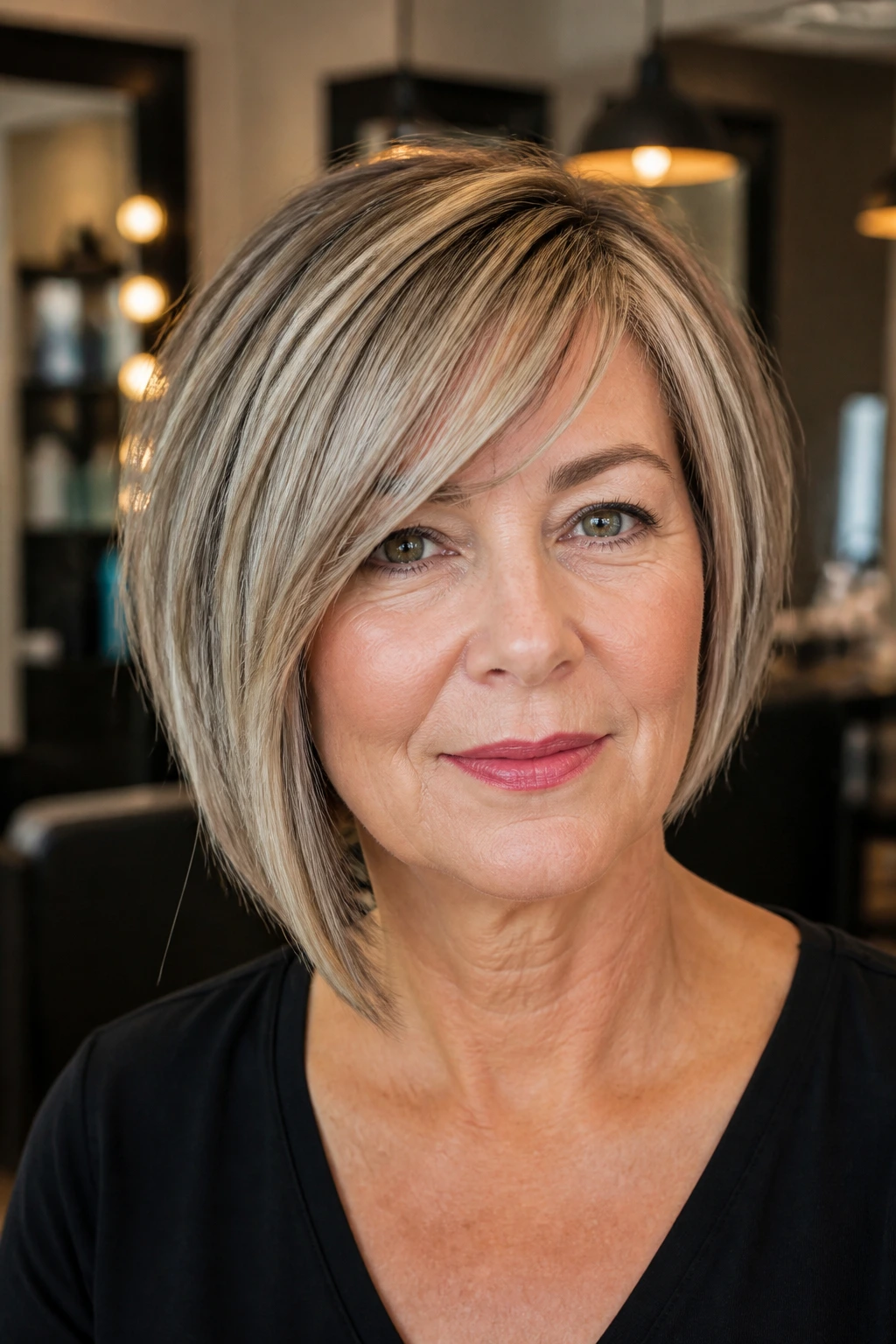
An asymmetrical bob with side bangs is the haircut for someone who wants the chin-length idea, but not the predictability. One side sits a little longer, the bangs sweep across the forehead, and the face-framing layers join the whole thing together instead of making it feel chopped up.
I like this cut on women who wear glasses or have a stronger jaw, because the asymmetry draws the eye diagonally instead of straight across the face. That diagonal line can feel softer and more interesting than a strict even bob. Keep the difference modest — about half an inch to an inch — or the haircut starts to read as dramatic in a way that’s hard to live with every day.
12. Choppy Bob with Airy Ends

A choppy bob with airy ends is the opposite of a dense, heavy chin cut. The layers are broken up just enough to let light through, and the face frame has separation instead of one solid curtain. It’s not the same as the razor bob above; this version is a little less shredded and a little more playful.
That makes it a strong match for women with medium hair density who want movement but not wispy collapse. The ends should still feel present. If they look threadbare after the cut, too much hair has been removed. I’d pair this with a light texture spray and a rough-dry using fingers, not a perfect blowout. The charm is in the looseness.
13. Inverted Bob with Soft Face Frame
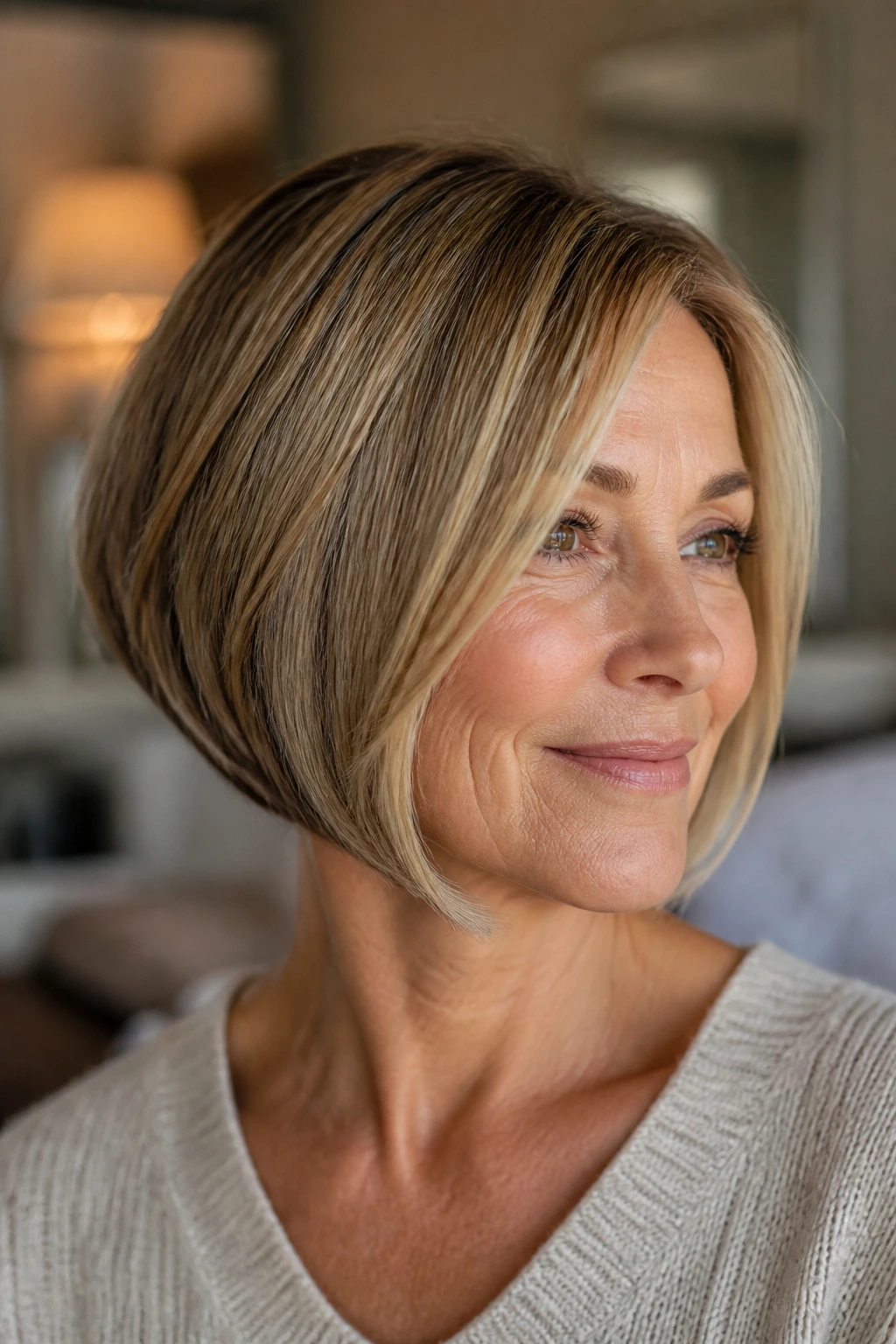
The inverted bob usually gets described as the angular one, but the good version for mature hair keeps the angle gentle. Shorter at the back, longer in front, and softened around the face. That front softness matters. Without it, the cut can feel too severe near the chin.
Why the Angle Works
The back lifts the silhouette, which helps if hair lies flat against the head. The longer front pieces keep the jaw from looking boxed in. Ask for the front to fall just at or slightly below the chin, then let the layers skim the cheekbones. The angle should be visible when the hair moves, not shouted from across the room.
14. Curly Chin Bob with Diffused Layers
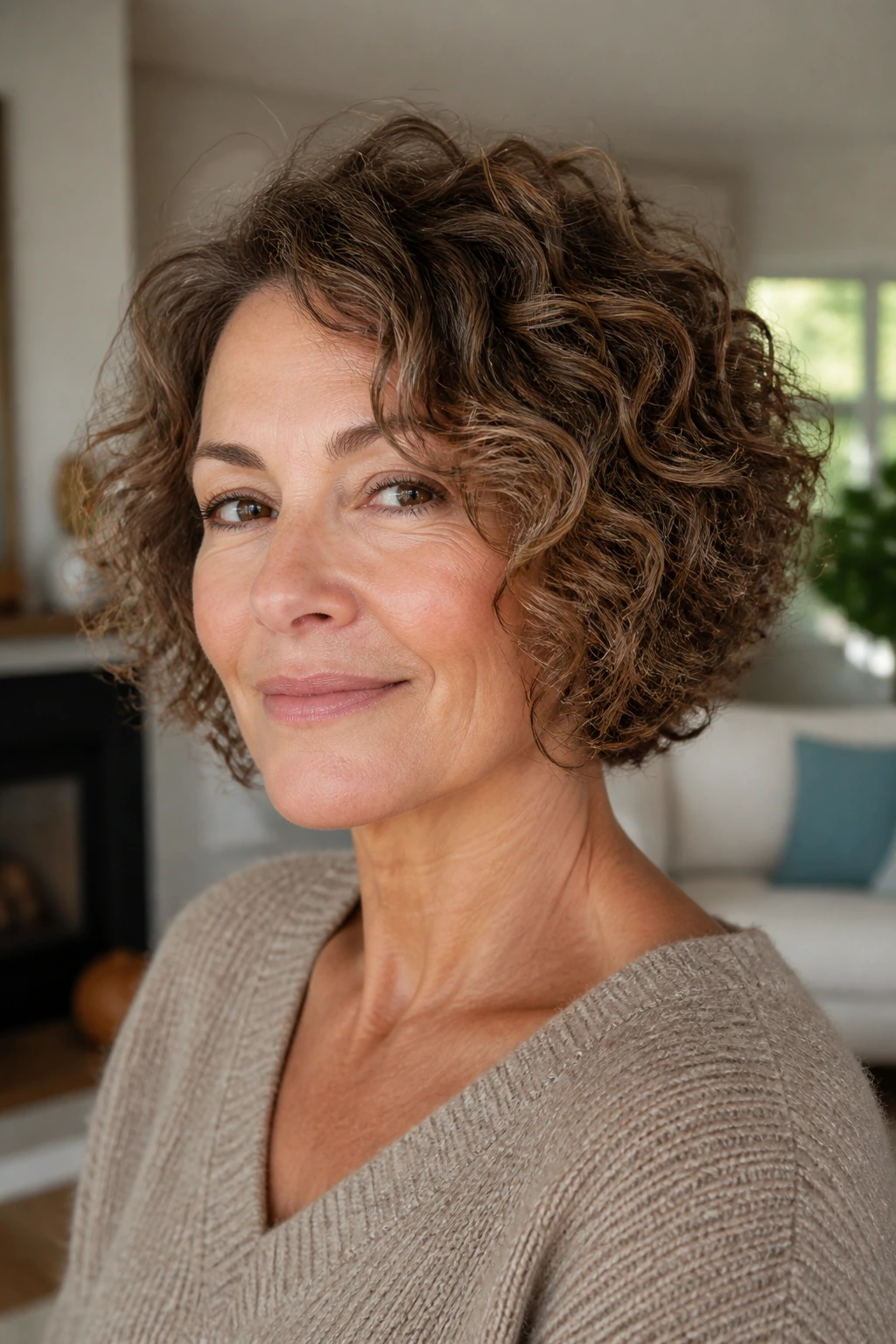
Curly hair can wear a chin-length bob beautifully, but the layers have to respect the curl pattern. A curly chin bob with diffused layers keeps the front pieces light enough to frame the face without cutting the curl springs too short. That’s the part people get wrong most often.
If curls are springy, the dry length will sit higher than you think, so the stylist needs to account for shrinkage. Longer face-framing pieces are safer than short ones. Diffuse from the ends up, and stop touching the hair once it starts setting. The shape should look lively, not fluffed out.
15. Tucked Bob with Ear-Grazing Layers

Why does a tucked bob feel so neat? Because it gives you a clean side line without forcing the whole haircut to stay pinned in place. Ear-grazing layers let the front slip behind the ear, which is a small move that changes the whole mood of the haircut.
How to Ask for It
Tell the stylist you want face-framing pieces long enough to tuck cleanly without losing the shape at the chin. That usually means leaving a little extra length at the temples. This cut works well for women who wear earrings, readers, or both, because the sides stop competing with the hardware on your face.
16. Shaggy Bob with Soft Fringe

A shaggy bob with a soft fringe lives in the sweet spot between casual and intentional. The chin length keeps the silhouette tidy, while the fringe and face-framing layers soften the forehead and cheek area. It’s a good choice if you like hair that looks better after it has been touched a little by the day.
The fringe should stay wispy, not thick. Thick fringe plus chin-length layers can close off the face too much. Let the crown keep a little height, and keep the ends airy rather than blunt. That way the cut has movement even when you haven’t curled a single thing.
17. Volume-Building Round-Brush Bob
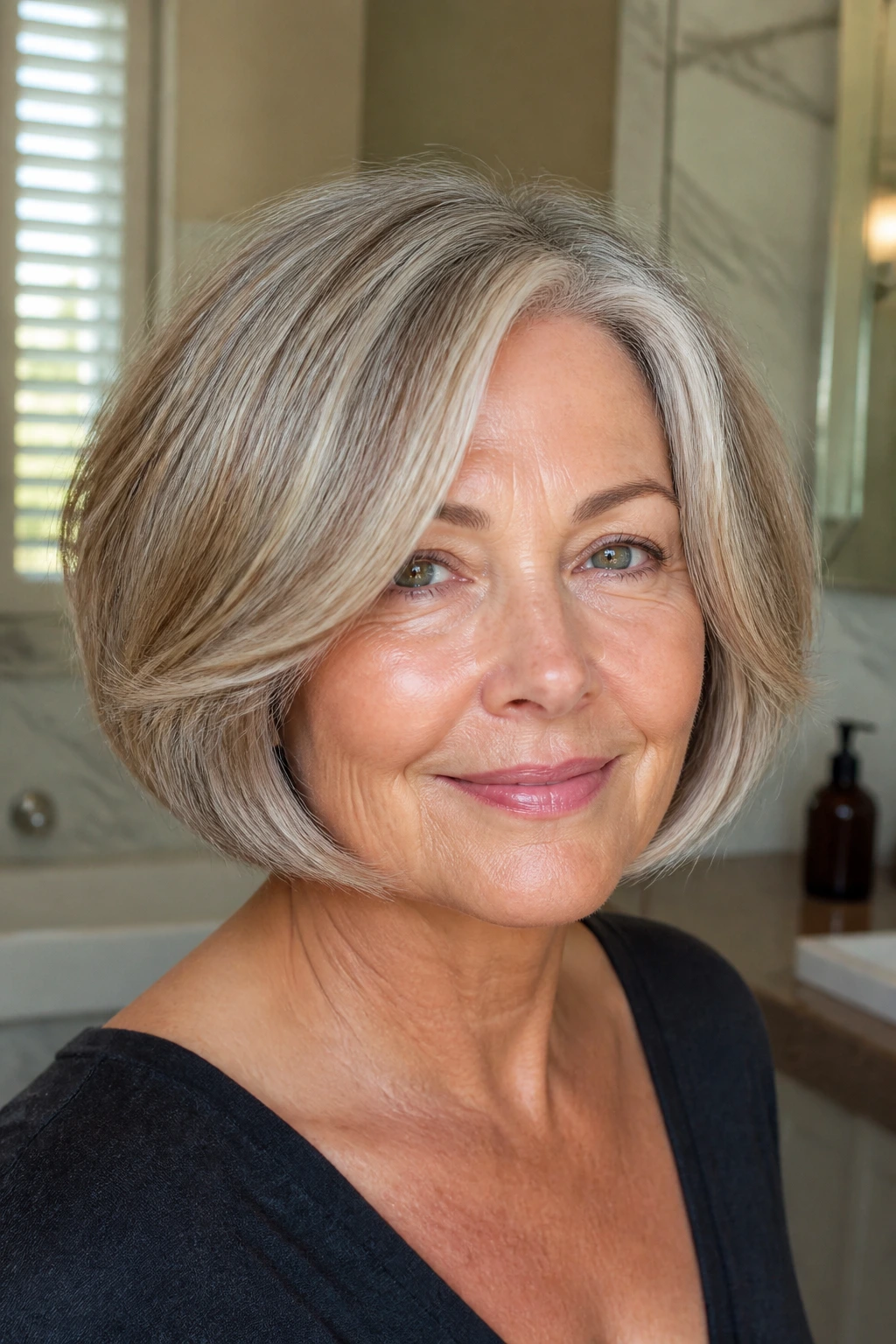
This is the one for people who want lift without teasing the hair into submission. A volume-building round-brush bob uses the brush itself as part of the cut’s personality. The perimeter sits at the chin, the front layers curve off the cheekbones, and the root area gets enough lift to stop the style from looking flat.
It works best on fine to medium hair that needs body in the sides. Blow-dry with the nozzle pointed down the shaft, then wrap the ends around a 1.5- or 2-inch round brush and pause for a few seconds. That little pause matters. It sets the bend without a lot of heat, and the whole thing looks like it had more effort than it did.
18. Blunt Bob with Invisible Layers
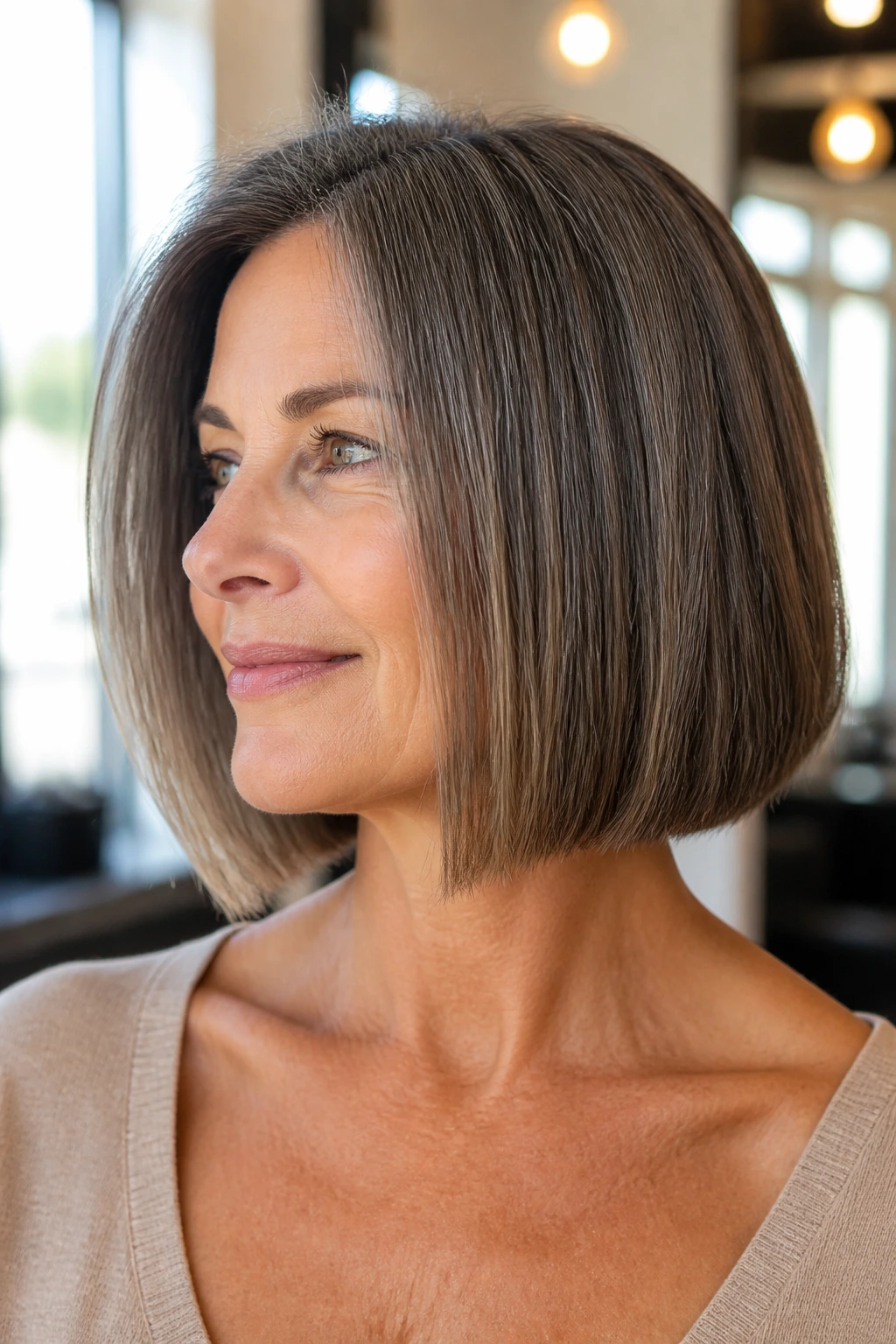
A blunt bob with invisible layers is a smart choice when you want a solid line but not a blocky one. From the outside, it looks clean and even. Inside, the stylist has removed just enough weight to keep the shape from ballooning. That’s why this version works so well on thick or straight hair.
The face-framing pieces stay subtle. They should soften the front without announcing themselves. If you can see the layers from across the room, they’re probably too short. This is a good haircut for women who wear bold lipstick, big earrings, or strong frames and want the hair to stay in the background a bit.
19. Chin Bob with Flipped Ends

A chin bob with flipped ends brings back a little attitude, but not the kind that makes the haircut hard to wear. The ends kick outward just enough to catch the light and keep the jawline from feeling too serious. If you like a playful finish, this one has charm.
The Flip Should Be Small
A half-inch of turn is enough. More than that and the style starts to look accidental. Use a medium round brush or a flat iron bend at the very last inch of the hair, then leave the front layers soft so they don’t fight the flip. It’s a surprisingly flattering shape on women who want a little energy around the chin without adding width.
20. Salt-and-Pepper Bob with Light Layers
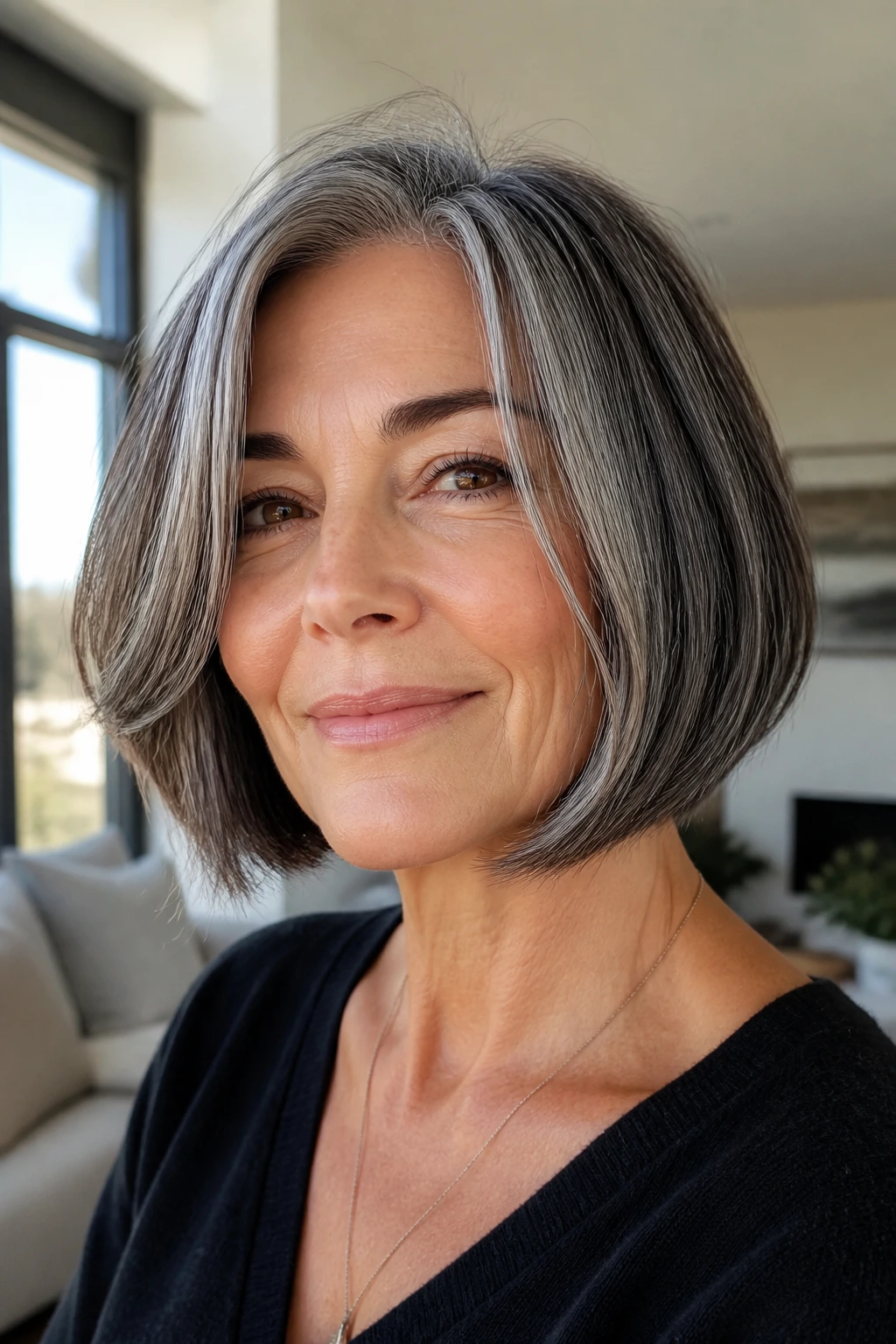
Salt-and-pepper hair can look especially sharp in a chin-length bob because the contrast shows off the shape. Light layers around the face keep the silver strands from clumping together into one flat sheet. The cut should be crisp enough to frame the color, but gentle enough to preserve density at the ends.
This is one of my favorites for women who are letting gray grow in and want the haircut to carry some of the style work. A shiny serum on the mids and ends helps the silver read as intentional, not dry. Keep the layers long. Gray hair can get a bit more wiry, and too many short pieces only make that more obvious.
21. Razored Bob with Long Bangs
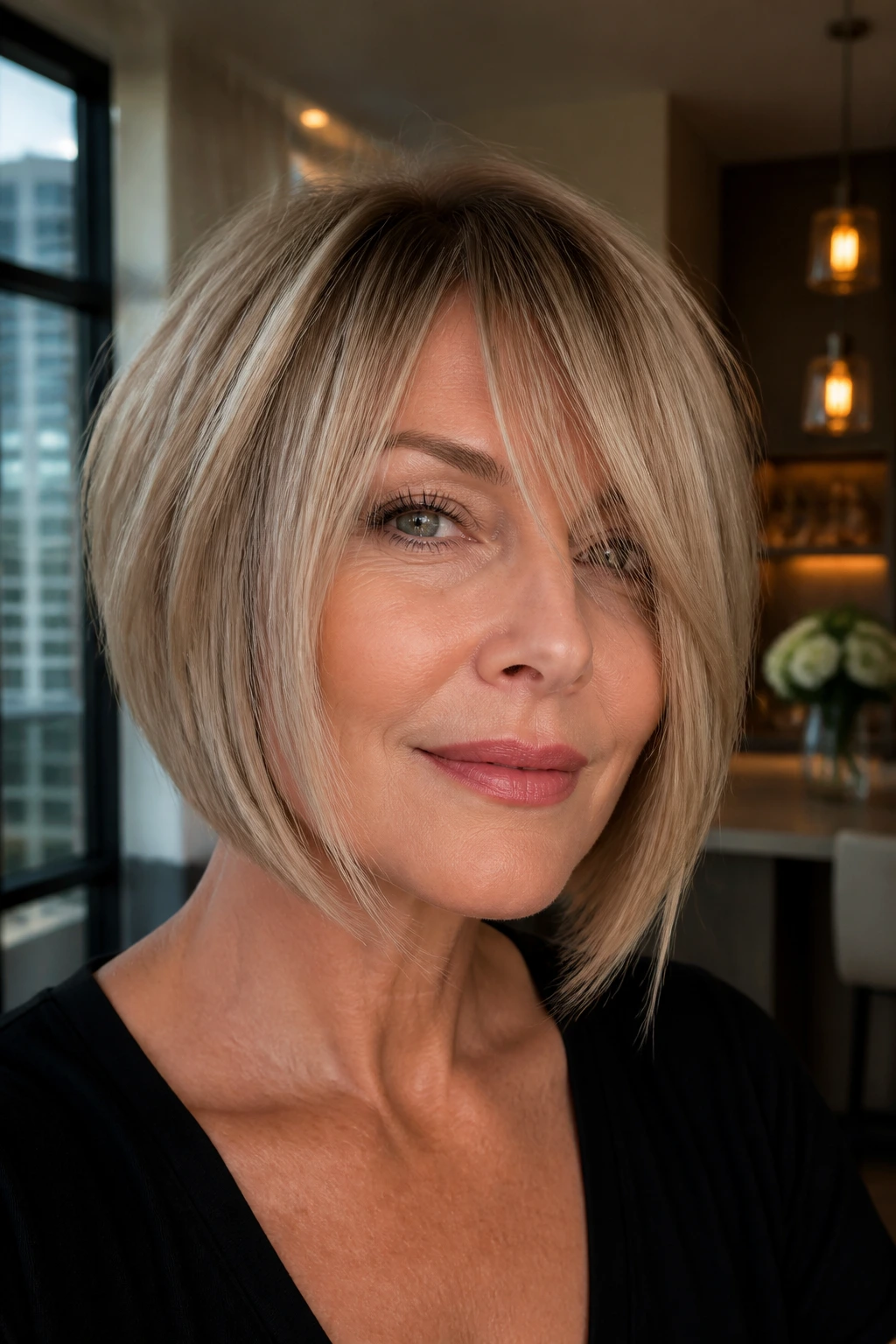
A razored bob with long bangs is for the woman who likes edge but doesn’t want a hard line across the forehead. The bangs sweep into the face frame, and the razor-softened ends keep the whole cut from looking heavy. It’s a good fit for high foreheads, longer faces, or anyone who wants movement right around the eyes.
What makes it work is restraint. The razor should open the hair, not shred it. If the front pieces feel too wispy after the cut, ask for more weight left in the perimeter. Long bangs need enough substance to sit properly when you wear them to the side or tuck them away.
22. Low-Maintenance Air-Dry Bob

Some bobs are built for a brush. This one is built for your hands. A low-maintenance air-dry bob depends on a cut that already knows how to fall: chin length, soft face-framing layers, and just enough internal shape to keep the sides from puffing out.
That makes it useful for women with a bendy wave pattern or a schedule that does not leave room for a round brush every morning. A leave-in cream, a little root lift at the crown, and a quick scrunch around the face are enough. If the cut is done right, the layers around the cheekbone dry into shape without needing a lot of rescue work.
23. Polished Blowout Bob

A polished blowout bob is the dress-up version of the chin cut. The line is clean, the front layers are smooth, and the ends curve under or away in a controlled way depending on the look you want. It suits dinners, events, and any day you want your hair to look deliberate rather than casual.
The key is tension. Use a round brush with enough grip to smooth the cuticle, then let the front pieces sit softly around the chin. Too much product will weigh the finish down. Too little heat control will leave frizz around the face. It’s a narrow lane, but when it lands, it looks precise in the best sense.
24. Side-Part Swing Bob

A side-part swing bob gives you movement without the rigid stack of a classic angled cut. The side part shifts the weight, and the face-framing layers swing forward just enough to soften the cheek line. There’s a bit of bounce here. Not curls. Just motion.
This version is good for women whose hair likes to fall flat through the crown but still has enough body at the ends to move. Keep the front slightly longer on the heavy side, and let the shorter side fall around the jaw instead of the cheek. That shape can make the whole face feel lifted without looking like the haircut is trying to make a statement.
25. Soft A-Line Bob with Temple Layers

A soft A-line bob with temple layers feels like the best of both worlds. The front is a little longer than the back, but only enough to give the shape some glide. The temple layers are the part that makes it age beautifully, because they break up the line near the face without stealing too much density from the perimeter.
Why It Often Becomes the Favorite
It grows out neatly. That matters. The front keeps its shape for weeks, the back does not suddenly look like it has lost its mind, and the layers around the temples stay useful whether you tuck the hair behind your ears or wear it forward. If you want a chin-length bob that behaves through a normal life — weather, sleep, errands, glasses, all of it — this is one of the strongest bets.
Why Chin-Length Bobs Work So Well on Mature Hair

Hair changes with age in ways that are annoying but predictable enough to plan around. The ends often get lighter, the crown can flatten, and the part may widen a bit. A chin-length bob answers those changes by removing the dead weight at the bottom and bringing the strongest part of the shape closer to the face.
That’s why this length feels cleaner than longer layers on many women over 50. Shoulder-length hair can hang and separate, especially if the ends have thinned. A chin bob cuts that problem off. The front layers then do the cosmetic work, softening the cheeks, balancing a strong jaw, and making the cut feel intentional rather than just shorter.
There’s also a practical thing going on. Chin-length hair dries faster. It needs fewer passes with a brush. It sits better under scarves, collars, and jackets. And because the shape is compact, a good trim can keep it looking fresh for weeks instead of days.
How to Ask for the Right Cut at the Salon

Bring photos. That part never gets old because haircuts are not just about the final picture — they’re about texture, density, and growth pattern. Show the stylist a chin bob you like, then point to the part you want to copy: the length at the chin, the amount of face framing, the softness at the ends, the amount of lift in the back.
Say where you want the front pieces to start. Cheekbone? Jaw? Lip? Those are different cuts. If you have fine hair, ask for longer layers and internal shaping instead of a lot of slicing. If your hair is thick, ask for debulking in the interior, not on the surface, so the outside line stays clean. If you wear glasses, mention the arms of the frames. That tiny detail can save you a lot of annoyance later.
And tell the stylist how much time you want to spend on it. A lot. A little. Almost none. The best chin-length bob for your life is not the prettiest one on the Instagram wall. It’s the one that still behaves after you sleep on it and spend five minutes getting dressed.
Essential Tools for Styling and Maintaining These Cuts

- Blow dryer with a nozzle attachment: Keeps the airflow controlled so the front layers do not frizz outward.
- 1.5- to 2-inch round brush: The sweet spot for curving chin-length ends under or away from the face.
- Flat iron with rounded edges: Useful for a small bend at the ends, especially on sleek or piecey versions.
- Sectioning clips: Helpful when you want a smooth blowout instead of a rushed, half-dry finish.
- Lightweight mousse or root lift spray: Adds shape at the crown without making the bob feel stiff.
- Heat protectant: Non-negotiable if you use heat more than once a week.
- Texture spray or dry spray wax: Good for piecey or shaggy versions when you want separation around the face.
- Light serum or finishing cream: A small amount on the ends keeps silver, gray, or highlighted hair from looking dry.
Smart Product and Formula Tips

Fine hair usually wants light products, not more product. A pea-sized amount of mousse at the roots and a whisper of texture spray through the mids is often enough. Heavy creams can drag chin-length bobs down so fast you can see the collapse happen by lunchtime.
Thicker or coarser hair usually needs more control. A smoothing cream before blow-drying keeps the face-framing layers from puffing out at the cheek. If the hair is gray or silver, a small amount of shine serum on the ends can calm the rough cuticle and make the color look richer. Don’t flood the hair. One drop too many and the cut loses shape.
Wavy and curly hair need a different attitude. Use a cream that encourages the pattern instead of a crunchy gel that freezes it. Then let the front pieces dry in the direction you want them to fall. If the wave naturally wants to push away from the face, guide it while it’s damp. That small bit of shaping beats trying to wrestle it later.
How to Style and Wear These Cuts

Everyday Wear: For a normal day, pick one focus point — crown lift, smooth ends, or piecey texture — and let the rest stay easy. A chin bob looks best when it does not look over-handled.
For Glasses: Keep the front layers long enough to sit just outside the frame line or tuck behind the arms without sticking out. Temple pieces are your friend here.
For Earrings: Pull one side behind the ear or use a soft side part so the haircut doesn’t crowd the jewelry. The cut should frame the face, not fight the earrings.
For a Dressier Finish: Add a smooth bend under the chin and a touch of shine spray on the ends. That’s enough. You do not need a shellacked finish for the haircut to look polished.
For Casual Texture: Mist the hair with a salt spray or texture spray, then scrunch just the front layers. That keeps the style from looking flat without making it crunchy.
Additional Tips and Shape Boosters
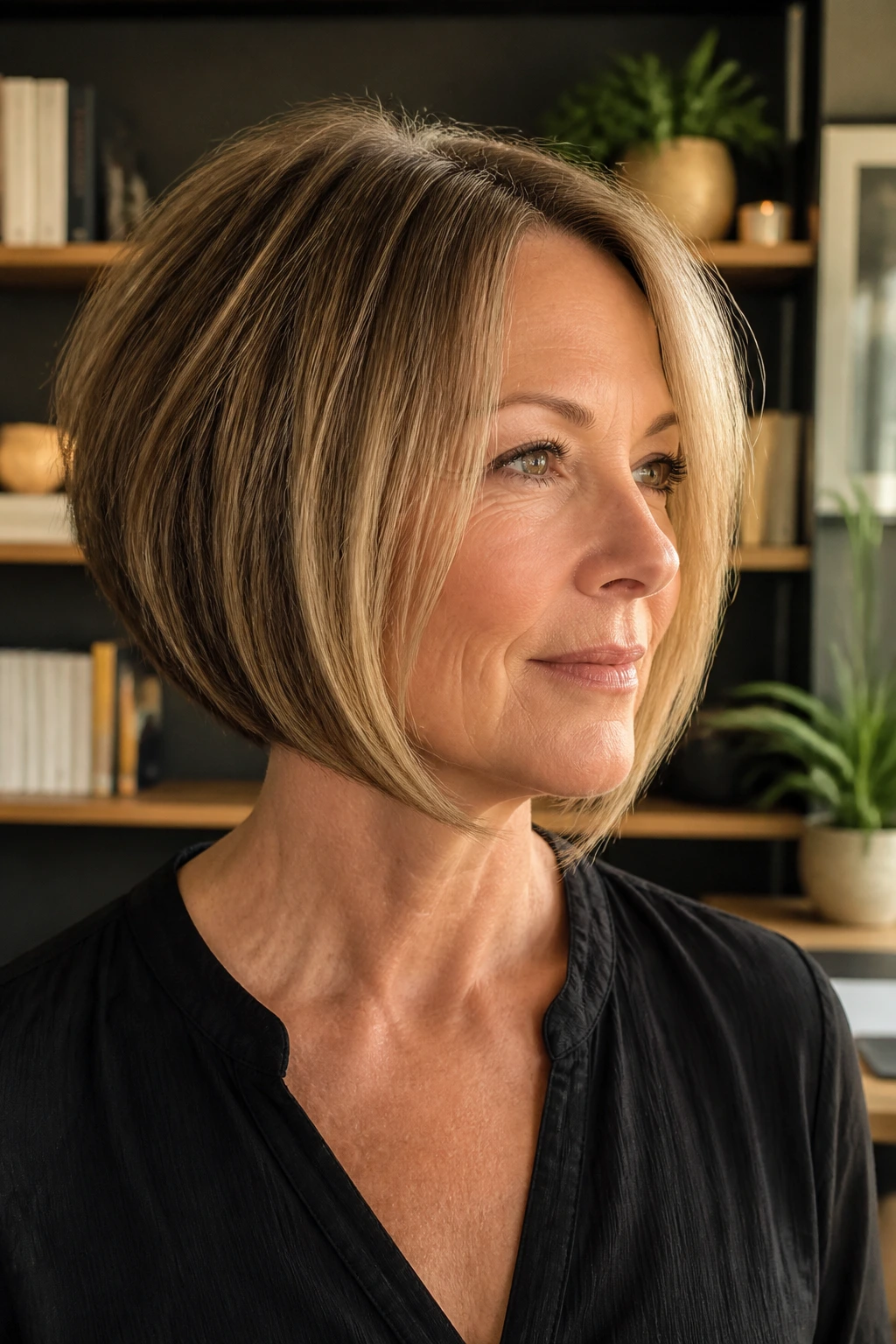
Lift at the Crown: If the top of the head goes flat, ask for a little less weight through the crown and style with root lift only at the roots, not through the lengths. The difference is obvious in profile.
Keep the Front Slightly Longer Than You Think: Many people ask for too-short face-framing pieces and then hate how they sit. Leave enough length to tuck, bend, or part them around the cheekbone.
Use Color to Help the Cut: Highlights, lowlights, or gray blending can make face-framing layers show up more clearly. A soft money piece around the front can sharpen the shape without changing the haircut itself.
Match the Ends to Your Neckline: If you wear a lot of turtlenecks or open collars, decide whether you want the ends to curve under or flip out. That tiny styling choice changes the whole mood.
Common Mistakes to Avoid
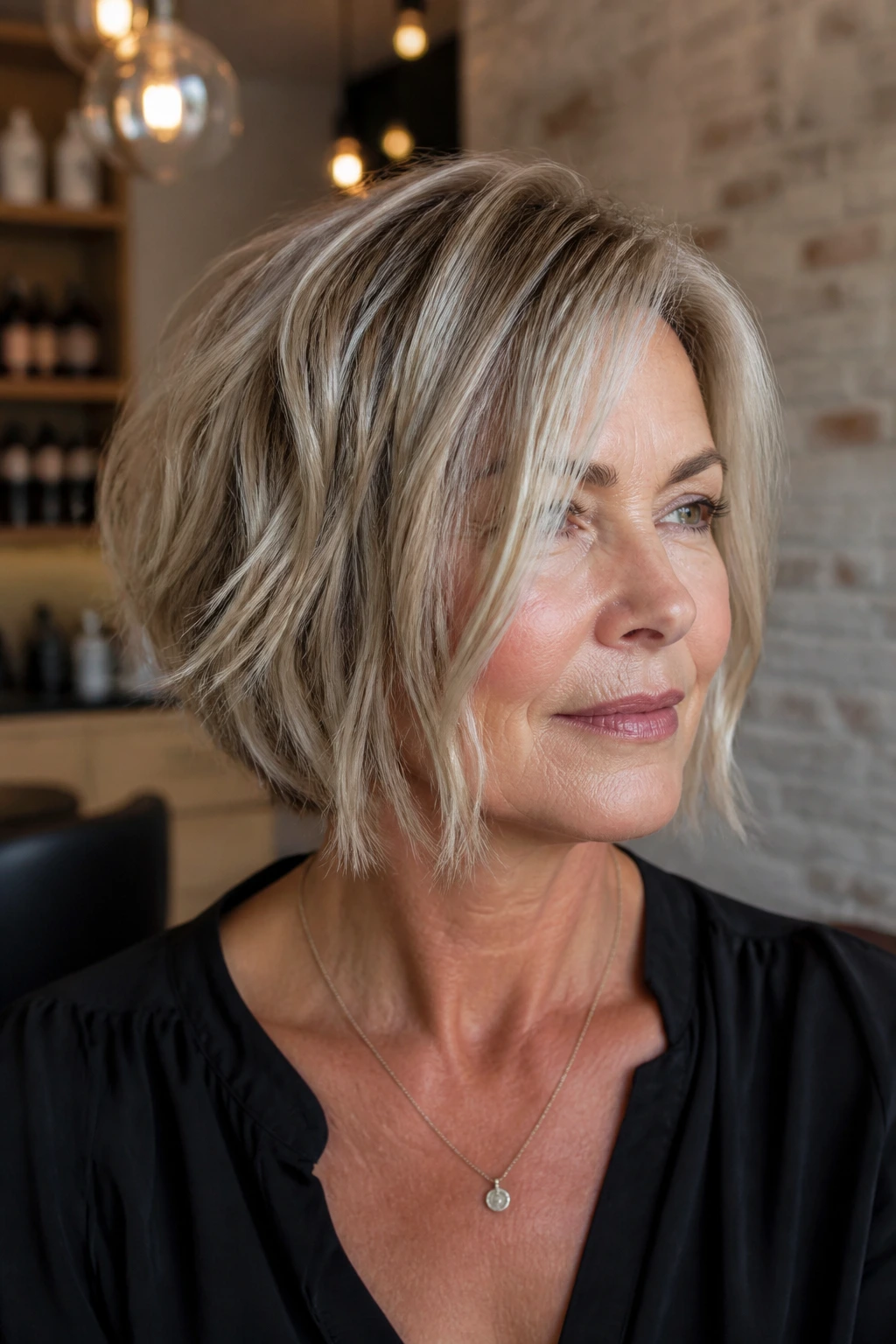
Cutting the front too short. The symptom is a bob that sits high on the cheek and makes the face look wider than you expected. The fix is simple: keep the face-framing layers long enough to skim, not stop, at the cheekbone or chin.
Removing too much bulk from fine hair. If the ends look see-through after the cut, the layering was too aggressive. Fine hair needs shape, not a lot of holes punched into it.
Stacking the back too high. A high stack can make a chin bob feel dated and helmet-like. Ask for a low, soft lift instead, especially if you want the cut to grow out cleanly.
Skipping the trim schedule. Chin-length bobs lose their shape fast when the perimeter drops past the jaw. Once that happens, the cut starts to feel heavy around the neck. Book trims before the silhouette collapses.
Using the wrong styling product. Heavy cream on fine hair, or too-dry texture spray on coarse hair, can flatten the whole thing or make it frizzy. Match the formula to the texture you actually have, not the texture you wish you had.
Variations and Adaptations to Try

Fine-Hair Featherlight Version: Keep the perimeter solid and the layers long, then use a root-lifting mousse and a round brush. The goal is density at the edge, not a lot of internal slicing.
Thick-Hair Debulked Version: Ask for interior weight removal and a cleaner chin line. This keeps the haircut from blooming outward at the sides and makes styling much faster.
Curly-Pattern Version: Let the stylist cut with the curl’s shrinkage in mind and keep the face frame longer than it looks wet. A diffuser and a curl cream will usually do more than heat ever could.
Gray-and-Silver Shine Version: Leave the ends fuller and focus on gloss, not texture. Silver hair looks especially sharp when the line is clear and the finish is smooth.
Glasses-Friendly Temple Layer Version: Keep the temple pieces long enough to clear the frame arms and avoid layers that puff into the lenses. This is one of those small changes that pays off every day.
Low-Heat Air-Dry Version: Build the shape into the cut itself, then use a light cream and clip the roots while the hair dries. That approach works best when the hair has some natural bend already.
How to Keep the Shape Between Salon Visits
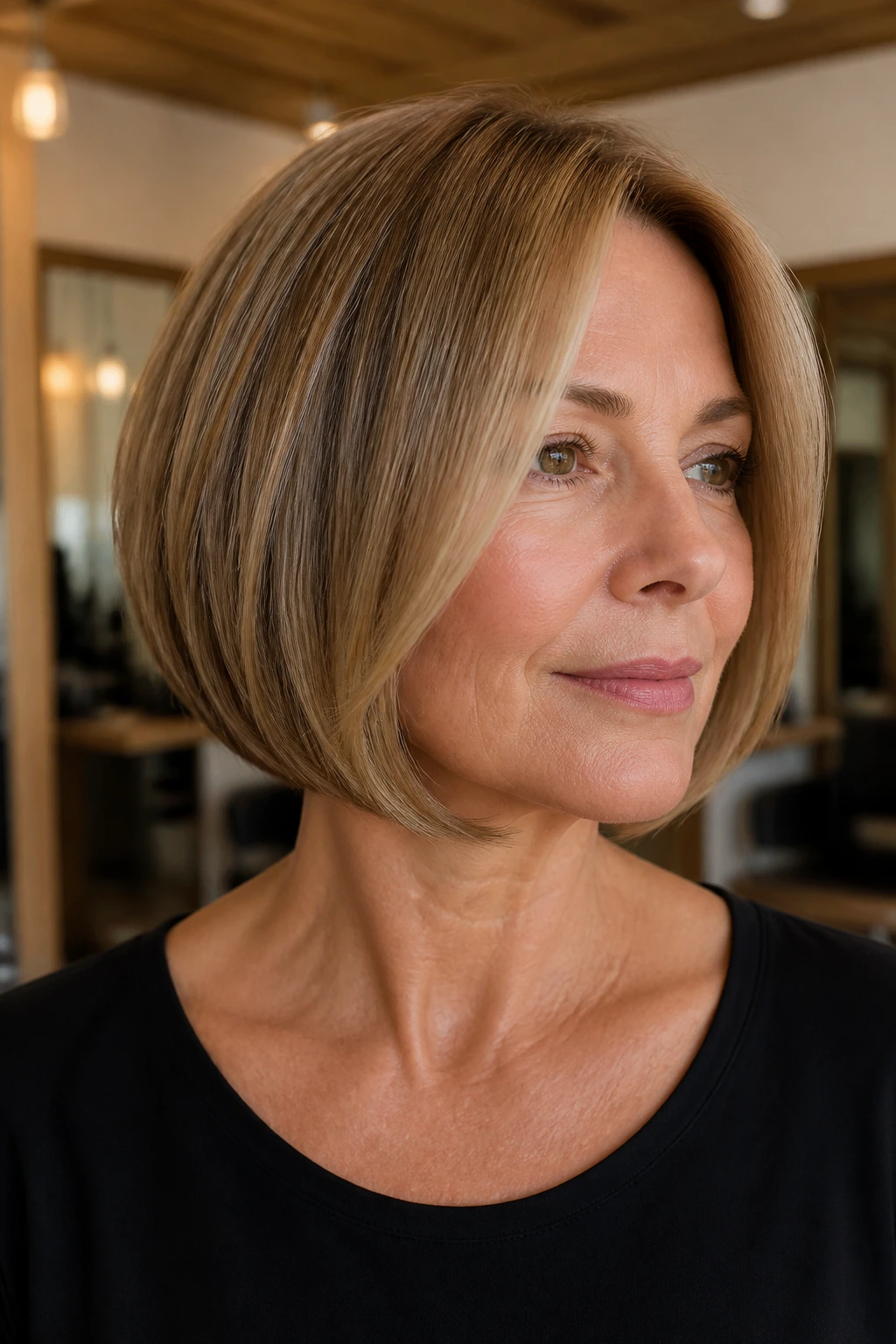
Chin-length bobs stay tidy longer when the perimeter is protected. That means trimming on a schedule, not waiting until the front pieces have dropped onto the shoulders and started to flip in random directions. For most hair types, a trim every 6 to 8 weeks keeps the line at the chin instead of below it. If the haircut is very blunt or very precise, 5 to 6 weeks is even better.
The front layers usually need a little more attention than the rest. They show the wear first, especially around the face where you brush, tuck, and touch the hair all day. If the layers start flipping in the wrong direction, a quick wet reset with a round brush or a one-inch iron can bring them back. You do not need to restyle the whole head. Usually the front third is enough.
Sleeping matters too. A loose clip at the crown or a soft silk pillowcase can keep the bob from getting crushed flat on one side. If you wake up with one side bent the wrong way, mist it lightly, re-dry the front pieces, and leave the back alone. The cut should not demand a full production every morning.
Frequently Asked Questions

Will a chin-length bob make my face look wider?
It can if the front pieces stop at the widest part of the cheek and the layers are too blunt. The fix is to keep the face-framing pieces soft and a little longer, usually around the cheekbone or just below it, so the eye moves downward instead of straight across.
Are face-framing layers good for thin hair?
Yes, if they’re kept long and light. Thin hair tends to look fuller when the perimeter stays solid and the layers are used to shape the front, not carve away too much weight from the sides.
Can I wear this cut with glasses?
Absolutely, and some versions look better with glasses than without them. The main trick is leaving the temple pieces long enough to sit around the frame arms instead of stabbing into them.
What part works best with a chin bob?
A center part gives symmetry, a side part gives lift, and a deep side part adds drama. If your crown goes flat easily, a soft side part usually gives the best daily result.
How often do I need a trim?
Most chin-length bobs need shaping every 6 to 8 weeks. If the line is precise, or if your hair grows fast around the face, 5 to 6 weeks keeps the bob from losing its shape.
Can curly hair pull off this length?
Yes, but the cut needs to respect shrinkage. The face-framing layers should be longer than they look wet, and the stylist should shape the bob around your natural curl pattern instead of forcing it into a straight-hair blueprint.
What if the ends flip out all the time?
That usually means the weight line is sitting a little too blunt for your texture, or the brush work is pushing the ends outward. Ask for a softer curve under the chin, then style with a round brush or a quick low-heat bend at the last inch.
Is this a good cut if I have a strong jaw?
It can be one of the best cuts for a strong jaw, provided the front layers start high enough to soften the edge. The bob should frame the jaw, not end right on top of it like a ruler mark.
A Cut That Keeps Working
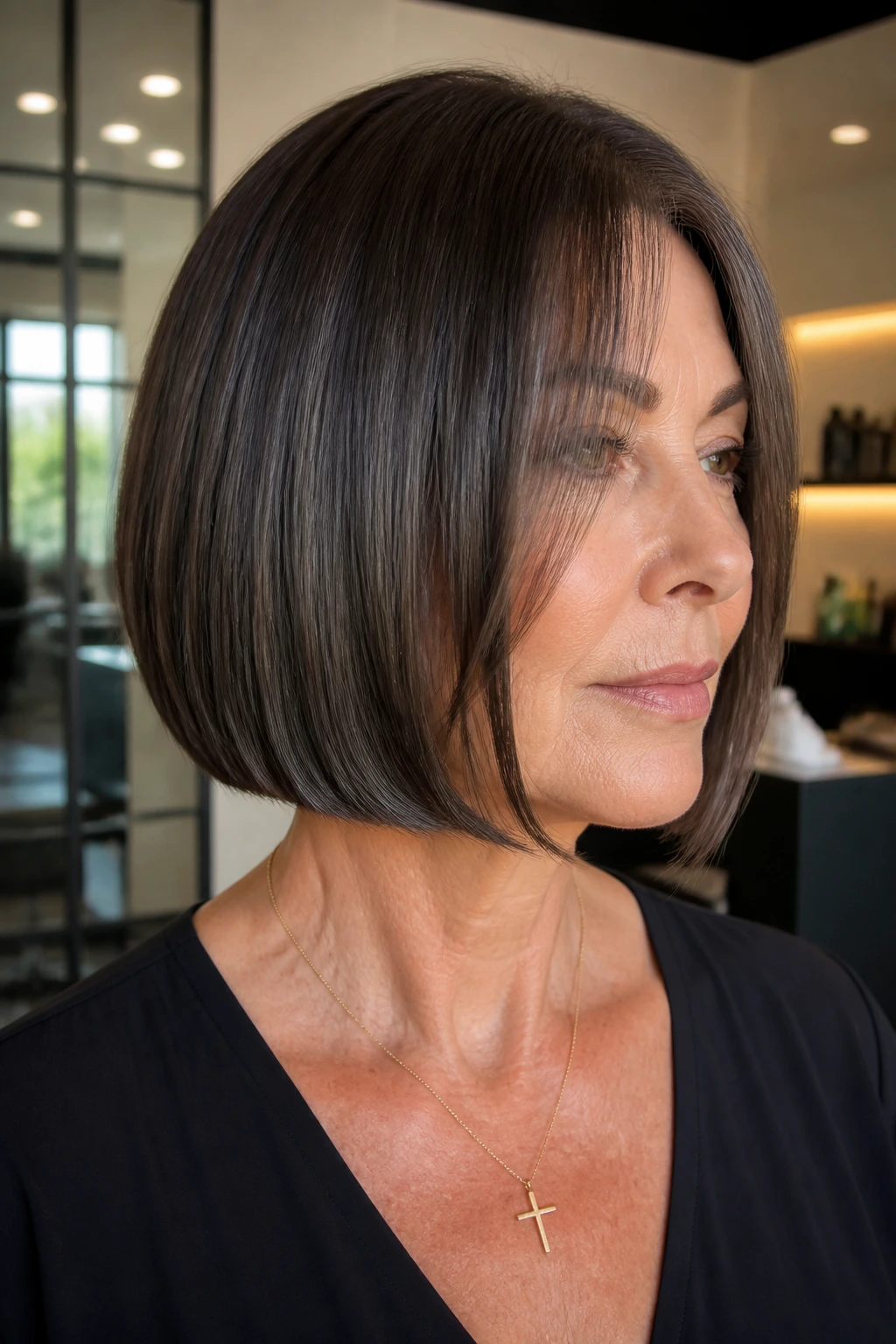
A chin-length bob with face-framing layers has staying power because it solves more than one problem at once. It gives shape, it gives lift, and it gives the face some breathing room without asking for a lot of maintenance in return. That’s a rare combination.
Pick the version that matches your texture, your schedule, and the way you actually wear your hair. The right one should feel flattering on day one and still look like itself after a few sleeps, a few errands, and one too many trips through the wind. Bring the photo, mention the front length you want, and let the perimeter do its job.