



Thick hair has a way of making up its own mind. Give it an inch, and it takes a mile; cut it too bluntly in the wrong place, and it puffs out like it’s trying to leave the chair on its own. That’s why short rocker hairstyles for women with thick hair need more than attitude. They need shape, weight control, and a little architectural thinking.
The best short cuts for dense hair don’t fight the bulk. They redirect it. A sharp nape, a jagged fringe, a bit of internal layering, a hidden undercut near the ear — those small choices change everything. The silhouette stops reading as heavy and starts reading as deliberate. You can see the line. You can see the neck. You can see the cheekbones again.
And no, this does not mean all short hair on thick strands has to look severe or boyish. Some of the best rocker cuts are soft around the edges and slightly messy on top, the kind of shape that looks even better when you’ve run your hands through it twice and left the front a little piecey. The 20 ideas below lean into that energy: short, edgy, and built to handle density without turning into a triangle by lunchtime.
Why These Styles Earn Their Keep
- Bulk Control: Thick hair can balloon at the sides fast, so these cuts use blunt edges, undercuts, or internal removal to keep the outline clean.
- Less Daily Fighting: A good short rocker cut should fall into shape with a quick blow-dry, a dab of paste, or even an air-dry and a little finger work.
- Built-In Edge: Jagged fringe, asymmetry, and nape tapering do more than look cool; they keep the haircut from feeling too round or too polite.
- Better Neck and Jaw Definition: Taking the length up above the collarbone shows off the neck, which is one of the reasons these styles feel sharper on thick hair.
- More Movement, Not More Puff: The right layers create bend and separation, while too much thinning can make coarse hair frizzy. The cuts here are chosen with that line in mind.
- Easy to Personalize: You can lean punk, polished, or androgynous with the same base cut just by changing the fringe, the part, or the finish.
1. Choppy Pixie with Razor Fringe
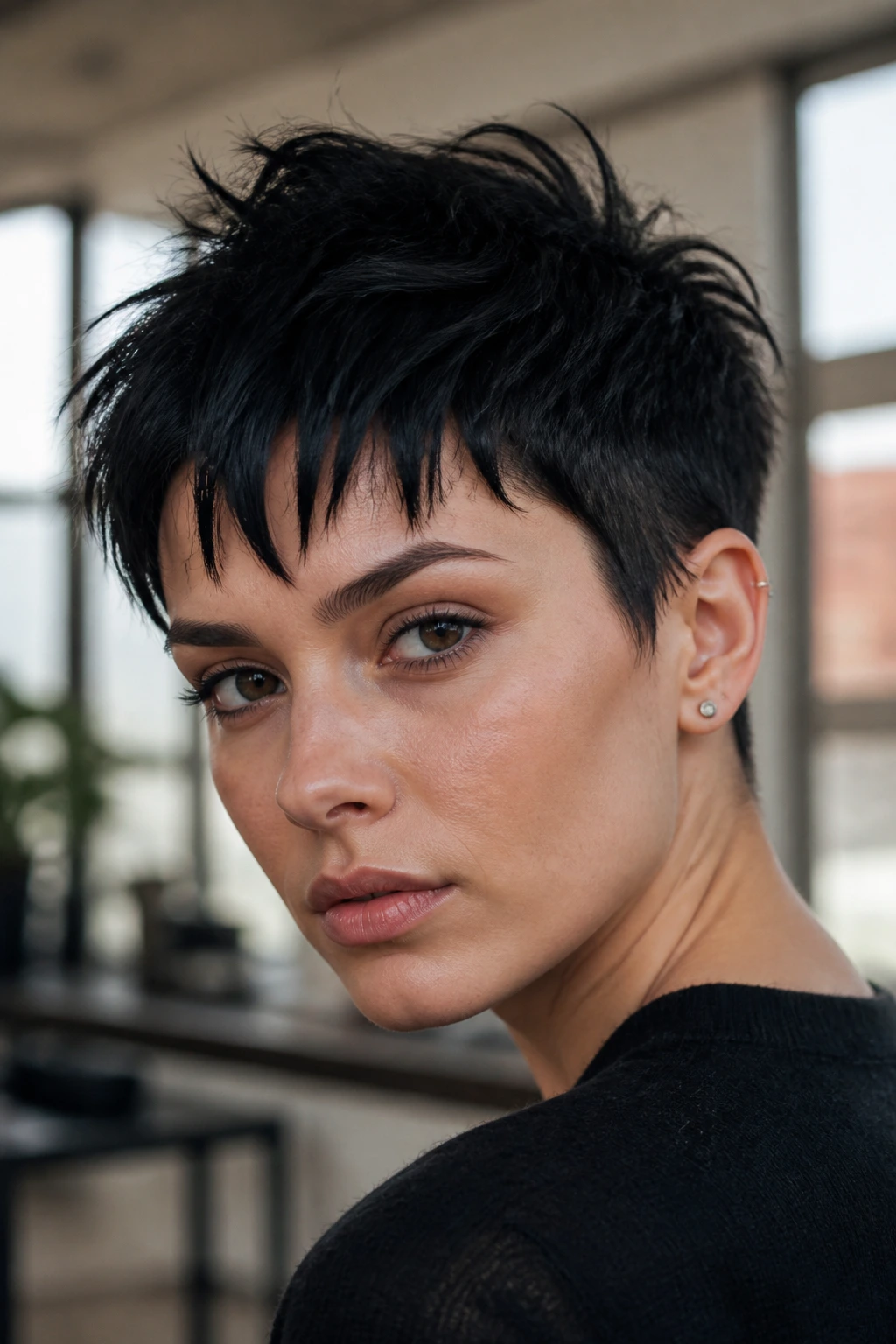
A choppy pixie is one of those cuts that looks almost too simple until you see what it does to thick hair. The back stays tight, the top sits around 2 to 3 inches long, and the fringe gets sliced into thin, uneven pieces that fall forward with a little bite. It feels lean, but not fragile.
Why It Works on Thick Hair
The strength here is contrast. Thick hair gives the top enough density to hold jagged texture, so the cut doesn’t collapse after an hour. The short sides keep the bulk under control near the ears, and the razor fringe breaks up the front instead of letting it form one heavy curtain.
Styling Notes
- Use a pea-sized matte paste on dry hair and work it through the top with your fingertips.
- If the fringe starts to sit flat, mist the roots with water and re-scrunch the front.
- Keep the neckline tidy every 4 to 6 weeks, or the shape loses its edge fast.
This is a good cut if your hair has a straight or slightly wavy pattern and you like a finish that feels a little rough around the edges. It’s not precious. That’s the point.
2. Side-Swept Undercut Pixie
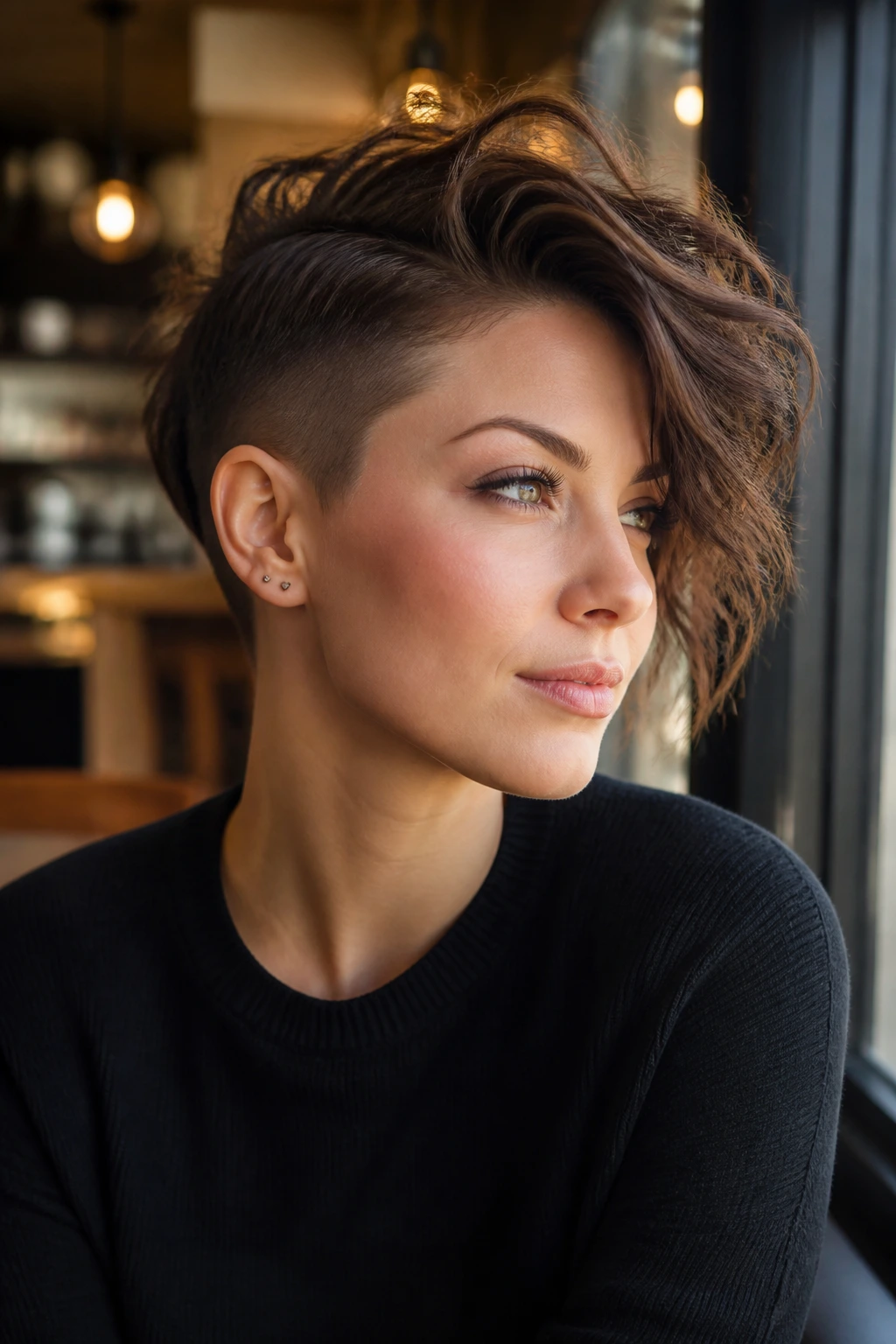
This one has a sharper personality. One side stays close to the head with a hidden or visible undercut, while the top keeps enough length — usually 3 to 4 inches — to sweep across the forehead in one heavy, glossy motion. On thick hair, that long side piece looks deliberate instead of limp.
A lot of women choose this cut because it gives them two moods in one shape. Tucked behind the ear, it looks clean and severe. Swept over the forehead, it feels almost romantic, but with a harder edge than a standard pixie. That shift is what makes it interesting.
The undercut matters more than people think. Without it, dense hair on the sides can swell outward and swallow the face. With it, the style sits closer to the scalp and the longer top reads as a design choice, not a compromise. If you wear earrings, this is one of the better short rocker styles for showing them off.
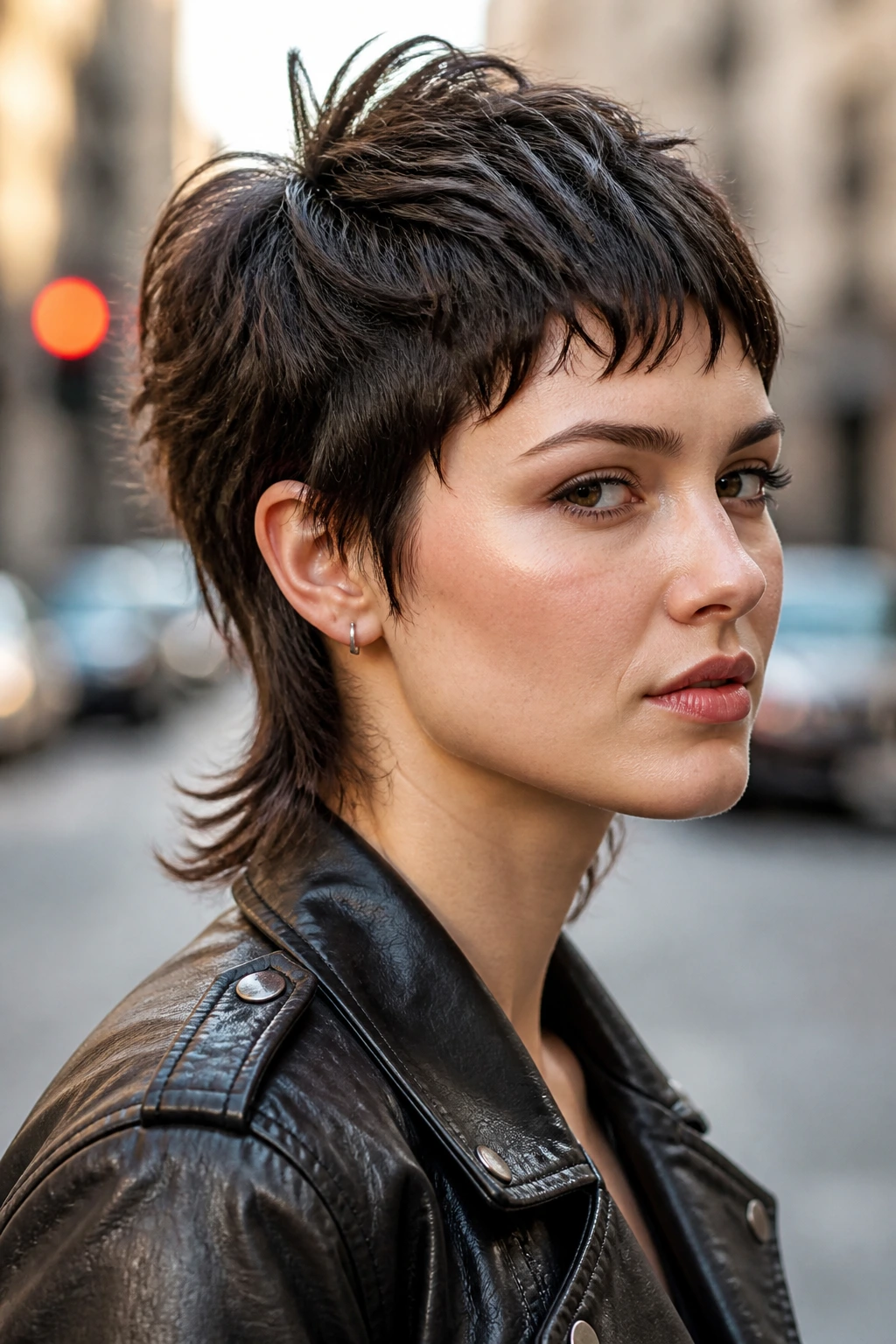
3. Tapered Pixie Mullet
Want something a little rebellious without going full wolf cut? The tapered pixie mullet is a smart middle ground. The front and crown stay short and textured, the sides taper in tight, and the back keeps a touch more length so the shape flicks instead of stopping abruptly.
Thick hair is useful here because it keeps the back from going wispy. The mullet part of the cut has enough body to move, while the taper keeps the overall outline from turning bulky. I like this shape on hair that naturally kicks out at the nape; instead of fighting that bend, the cut makes room for it.
What Makes It Feel Rocker
- Short, fitted sides
- Choppy crown layers
- A nape that’s slightly longer than the top sides
- A finish that looks best when it isn’t too polished
Use a bit of texturizing spray at the ends and rough-dry the crown forward, then push the back into shape with your fingers. If you want a little more grit, pinch a light wax through the ends instead of brushing everything smooth.
4. Bixie with Piecey Ends
If a pixie feels too short and a bob feels too safe, the bixie lives in that useful in-between place. It’s shorter than a classic bob, longer than a true pixie, and on thick hair it gives you enough length to tuck, sweep, and rough up without carrying the weight of a full bob.
The trick is in the ends. Ask for piecey, broken edges rather than one clean curtain. That keeps the shape from looking helmet-like, which is a real risk when thick hair hits chin length. The top should move. The sides should bend. Nothing should hang there like a wet towel.
This cut suits women who want a softer rocker vibe. Less punk, more lived-in. It plays nicely with natural waves and makes round faces look a little narrower because the front pieces don’t stop at one blunt line.
5. Jaw-Length Blunt Bob with Hidden Layers
A blunt bob on thick hair sounds strict, maybe even boring, until you look at how the inside is cut. The visible outline is clean and square at the jaw, but the interior has been thinned just enough to stop the mass from puffing outward. That hidden work is what makes the haircut.
The jaw-length finish is useful because it frames the face without dragging the neck down. Thick hair often looks best when a blunt edge gives it a boundary. Without that boundary, the length can feel heavy and blurry. With it, the whole style looks tidy from the front and sharp from the side.
This bob feels more rock-and-roll when you wear it with a slight bend at the ends or a bit of separation through the crown. Flat irons can be useful here, but only on the outer layer. You’re not trying to press the life out of it.
6. Asymmetrical Bob with Deep Side Part
One side skims the jaw. The other side drops a little lower, sometimes grazing the neck. That asymmetry does a lot of work on thick hair because it breaks the shape before the hair can settle into a wide, round block. It also looks more intentional than a standard bob when you want a haircut with some drama.
The deep side part is doing half the styling for you. It creates lift at the crown and shifts weight away from the center of the face, which keeps the hair from feeling too square. On dense hair, that matters. A middle part can sometimes make the style sit too evenly and too heavily.
If you tuck the shorter side behind one ear and leave the longer side loose, the cut gets even sharper. It’s one of those styles that makes a simple black tee look better. Not because it’s trying hard. Because the line is good.
7. Shaggy Crop with Micro Bangs
Micro bangs are a commitment. They don’t whisper. They announce themselves the second you step into a room. On thick hair, though, they can look crisp and fearless instead of unruly, as long as the rest of the crop is light enough to balance them out.
The cut works because the crown and sides are textured into a short shag shape, which stops the bangs from being the only thing the eye notices. If you leave too much weight up top, the fringe can look chopped on purpose but not flattering. The better version has a little lift around the temples and some softness around the ears.
Best For Hair That Wants to Pile Up
If your thick hair tends to sit heavy across the forehead, this cut clears the view. The bangs sit above or around the brow line, which opens the face, and the short layers stop the style from looking boxy. Use a dry paste, not a creamy balm. Cream can make micro bangs separate in weird little strands.
8. Feathered Crop with Lifted Crown
This is the cut for someone who likes movement more than bluntness. The crown gets enough height to stay interesting, while the sides feather outward instead of lying in one heavy sheet. Thick hair makes this shape easier to hold because the strands have enough body to stay where you put them.
The best version keeps the ends soft but not wispy. That sounds like a small difference, but it isn’t. Wispy on thick hair can look accidentally thinned out, while feathered reads as light and deliberate. Ask for short, directional layers around the crown and ear area, then keep the perimeter tidy.
A round brush and a blow-dryer nozzle help here, but only for the top. You’re trying to coax lift at the roots, not smooth every strand into obedience. Leave a little bend in the front. That’s where the style gets its charm.
9. Curly Undercut Pixie
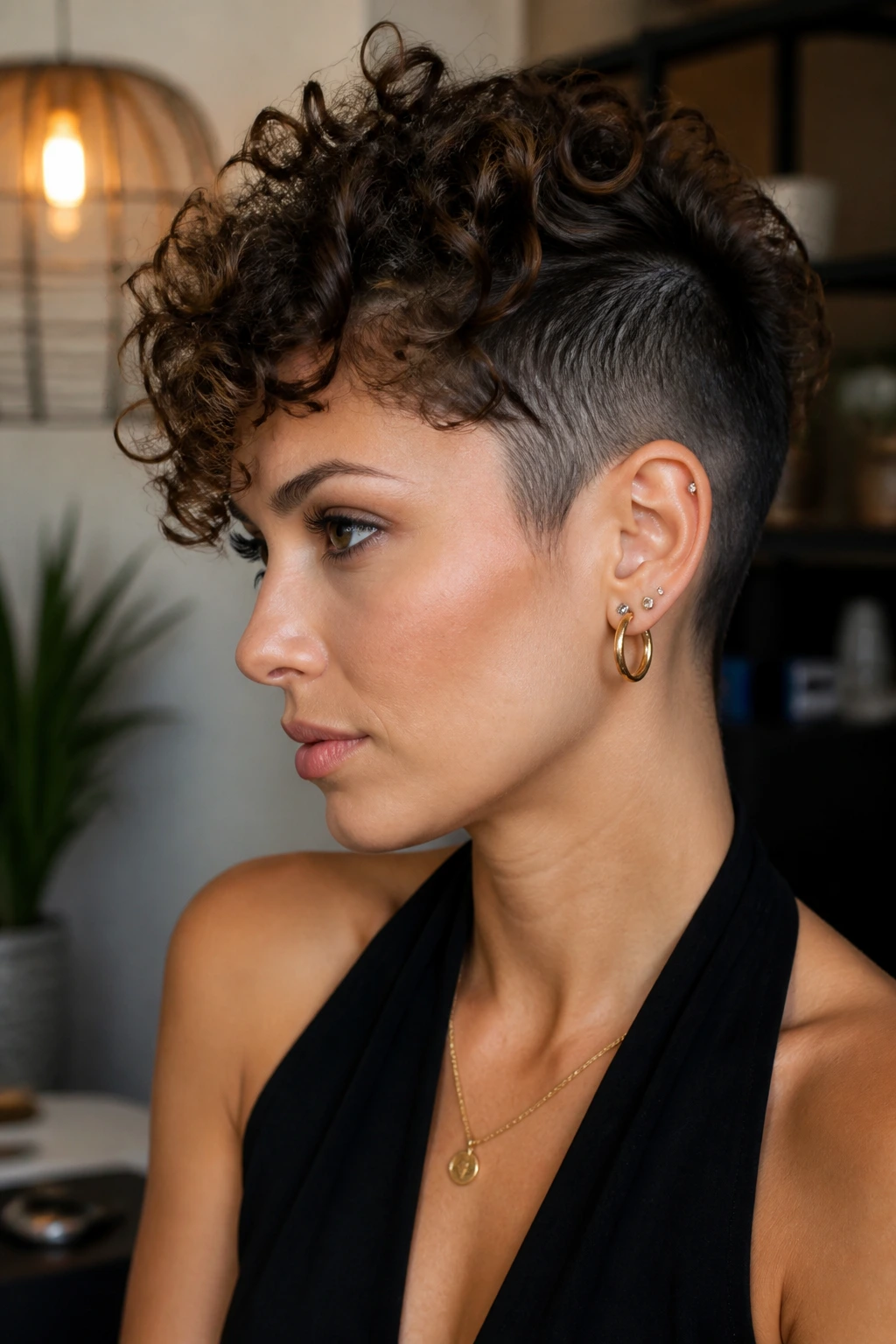
Curly hair can look spectacular in a pixie, but only if the bulk is managed with some care. A curly undercut pixie keeps the sides and nape close to the head, then leaves the curls on top long enough to spring up and out without swallowing your features. Thick curls need room. They also need boundaries.
The undercut helps the curl pattern breathe. Instead of piling around the temples and the back of the neck, the hair stays lifted and shaped. That makes the curls look intentional rather than triangular. I like this version especially when the curl on top is left around 3 to 5 inches, because that length still allows definition without turning into a helmet.
How to Wear It
Diffuse on low heat until the roots are dry and the curls feel set, then break the cast with a drop of lightweight oil in your palms. The result should feel soft but not fluffed out. If your curls are coarse, a satin pillowcase matters here more than you’d think.
10. Wet-Look Sculpted Crop
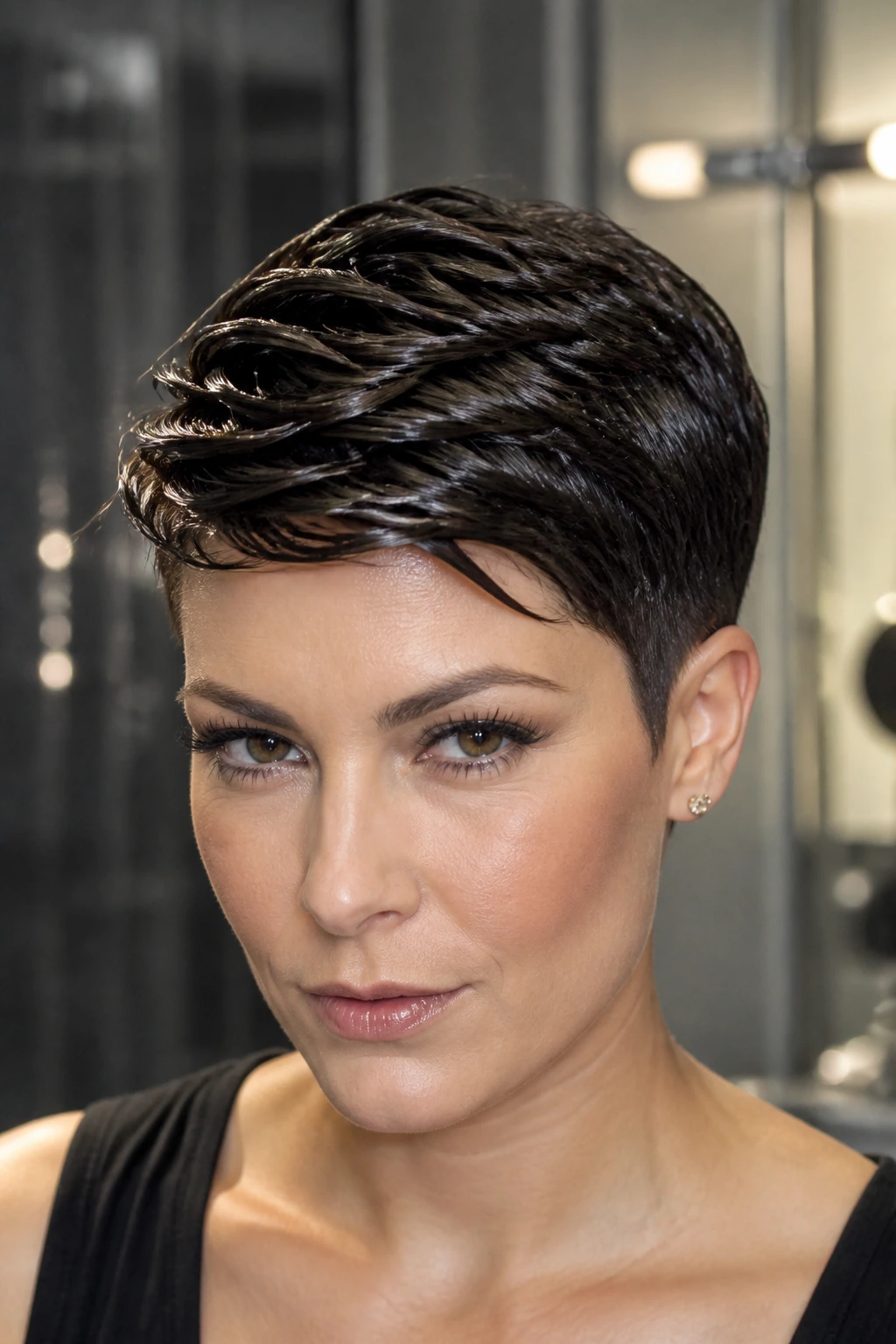
This is the sleek one. The kind of cut that looks like it was styled in under five minutes, even when you know there was some work involved. Thick hair is useful because it holds gel well and keeps the sculpted finish from falling flat too early in the evening.
The top is usually kept short and directional, then coated with gel or styling cream while damp. A comb or fingers can push the front back, sweep it to one side, or shape it into a little wave. The beauty of this style is that it doesn’t pretend to be casual. It leans all the way into the polished rocker thing.
One note: don’t overdo the product. Thick hair can handle more than fine hair, sure, but too much gel turns the whole cut stiff and crunchy. Use enough to create shine and separation, then stop before it looks wet in a sticky way.
11. Messy French Bob

A French bob on thick hair needs a sharp eye, because the classic version can go boxy fast if the interior is too full. The right cut stops around the jaw or just below it, with a slightly shorter back and enough texture through the front to keep it from sitting like a block. Add a fringe, and it gets even better.
I like this shape when the hair has natural bend. Thick straight hair can wear it too, but the cut has to be lighter inside so the ends don’t kick outward too much. A little undercurve near the chin keeps the line graceful. Too much weight, and the bob starts doing that mushroom thing no one asks for.
This is one of the easiest rocker cuts to dress up or down. A red lip and a sharp jacket make it feel Paris-meets-garage-band. A hoodie makes it look relaxed. Same haircut. Different energy.
12. Temple-Fade Pixie with Long Top
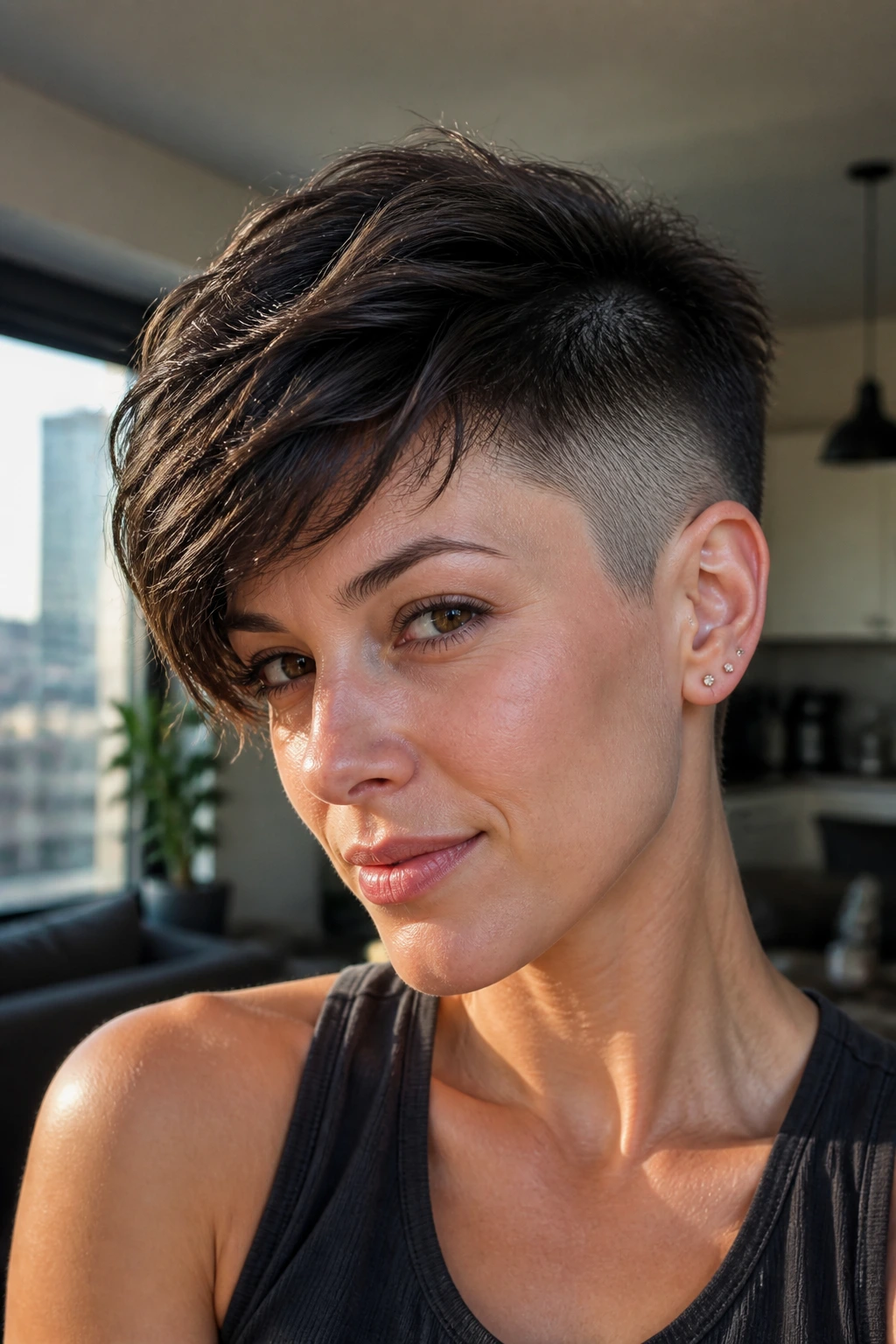
If you want a short style that looks crisp from every angle, the temple-fade pixie does the job. The hair around the temples gets cropped close, sometimes almost faded into the skin, while the top stays long enough to sweep, lift, or spike. Thick hair benefits from that contrast because the sides no longer fight the top for attention.
The shape is especially clean around glasses and earrings. That matters. Some short cuts crowd the face, but this one opens the side view and leaves the top free to do the styling. You can rough it up with paste for a gritty look, or smooth it back for something sharper.
How to Ask for It
Bring a reference photo that shows the side and back. Say you want the temples lighter, not necessarily shaved down to nothing, and ask for the top to keep enough length to move. Those details keep the cut from sliding into a barber-only look unless that’s exactly what you want.
13. Disconnected Bowl Cut with Texture
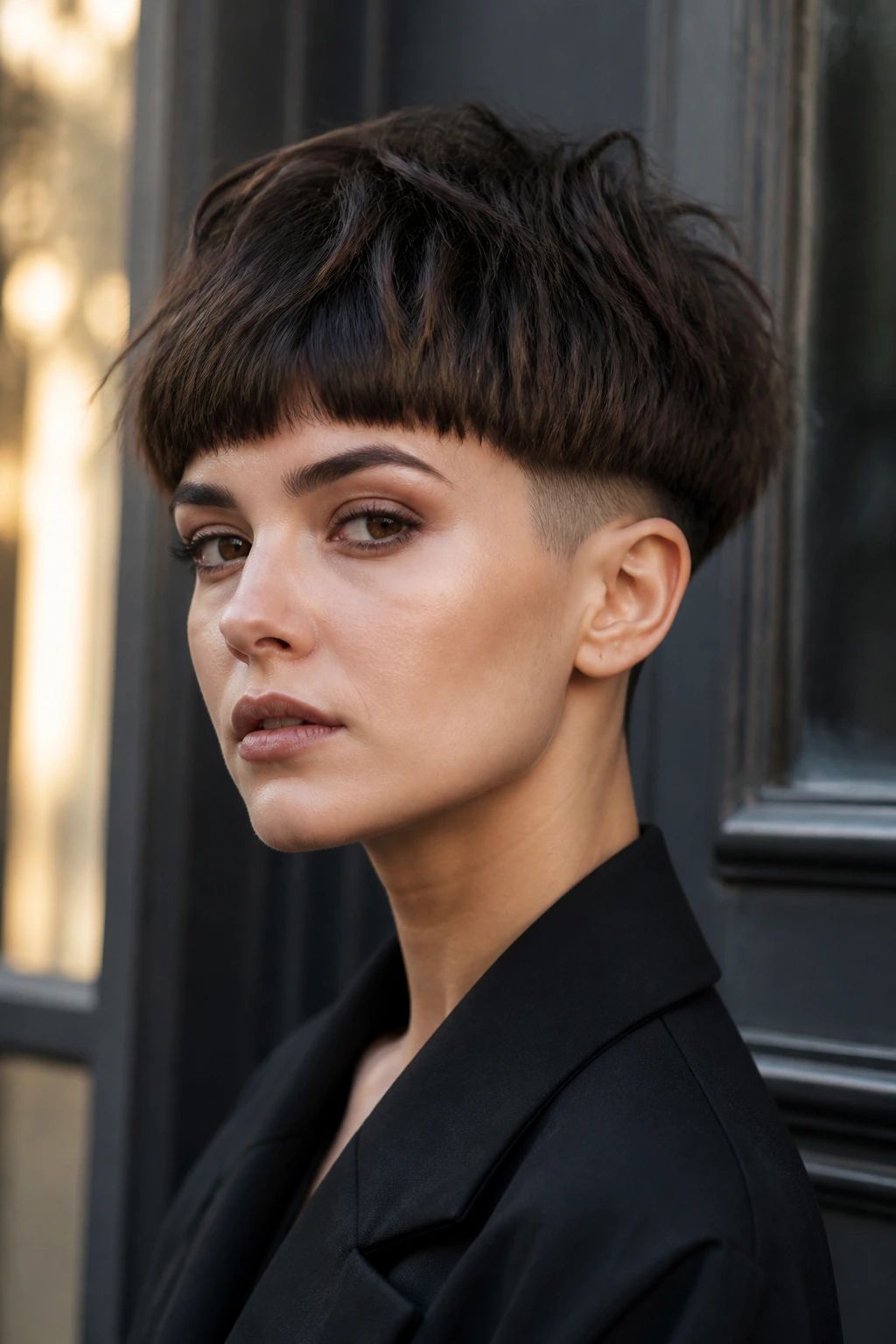
Bowl cuts only look cartoonish when the line is too perfect and the body underneath is too full. On thick hair, a disconnected bowl with texture can look bold in a good way — almost graphic. The trick is to break the shape with internal layers and a slightly uneven fringe so it doesn’t sit like a helmet.
This cut works best when the perimeter is kept clear but the inside has movement. The top can be left full enough to create that rounded shape, while the sides and nape are thinned just enough to prevent bulk from pushing outward. It is not a soft haircut. That’s part of the appeal.
If you like sharp clothes, dark lipstick, or strong brows, this haircut fits that visual language. It has a graphic edge that pairs well with plain clothes because the hair already carries the statement.
14. Choppy Ear-Length Bob with Nape Undercut

Ear-length might sound tiny, but on thick hair it can feel liberating. The nape undercut takes away the hidden mass that usually collects at the collar, while the visible bob stays just long enough to tuck behind the ears or flip under at the ends. It’s neat, but not precious.
The important part is keeping the bob choppy. A single blunt line at ear length can look too stiff on dense hair. Tiny point-cut ends or soft internal layering keep it from turning into a round block. The undercut underneath does the heavy lifting, literally.
This is a useful option if your hair grows fast around the neckline and gets itchy there. The undercut buys you a cleaner silhouette between appointments. It also makes scarves, collars, and high-neck tops sit better. Small thing. Big difference.
15. Faux Hawk Pixie
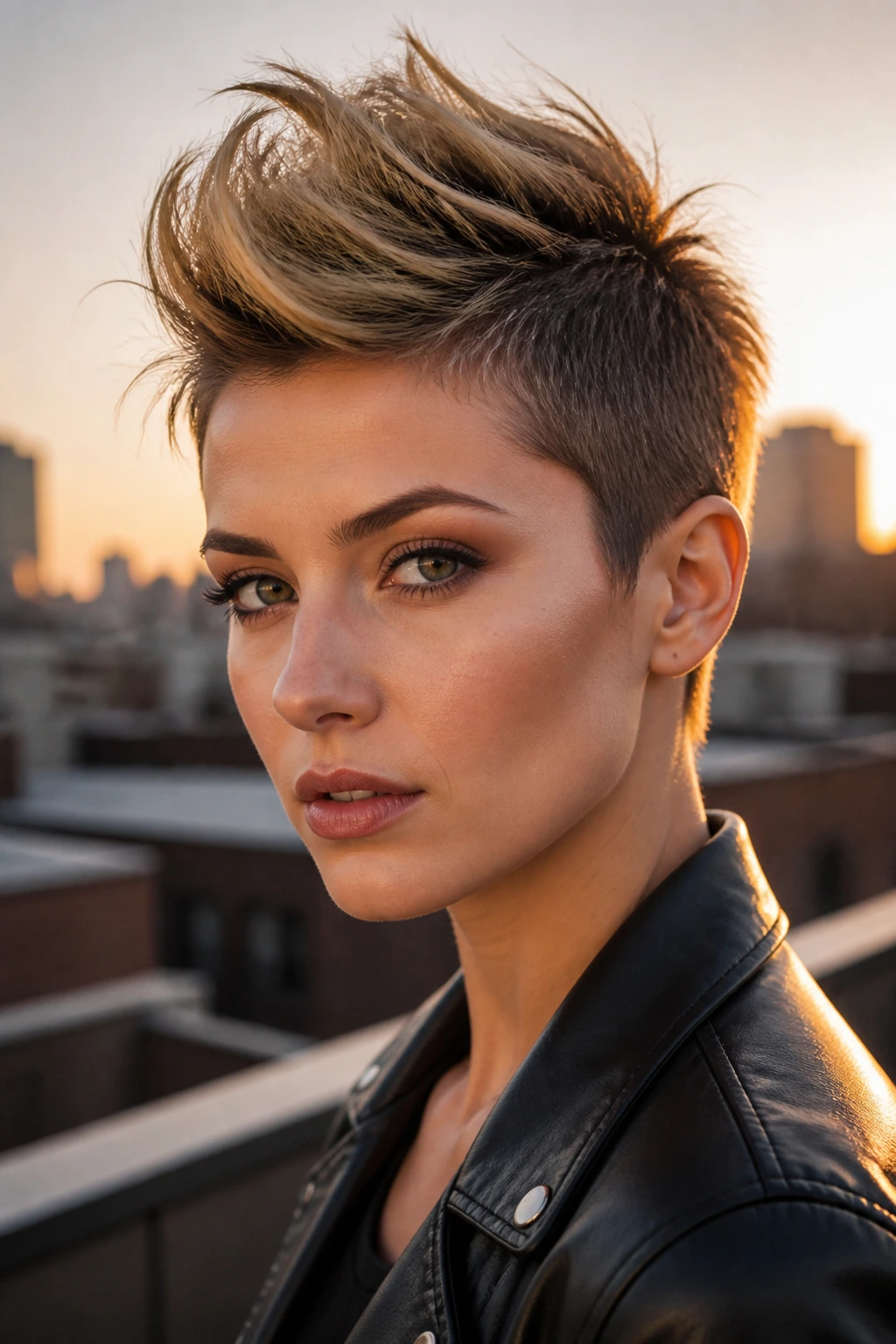
A faux hawk pixie is one of the easier ways to get a little rebellion without fully committing to a shaved design. The sides stay shorter and tighter, while the center strip from forehead to crown is left longer and styled upward or slightly forward. Thick hair is excellent for this because it has enough body to hold height.
The shape can go polished or messy depending on the finish. A matte paste gives it that rough, pinched texture. A little gel and a comb make it look more sculpted. Either way, the haircut thrives on contrast.
Best When You Want Height
If your face is round or your features are softer, the upward line draws the eye vertically. If your hair is coarse, even better — coarse strands stand up with less effort and often hold the shape longer. The only real trap is overloading the crown with too many short layers. That can make the top frizz instead of lift.
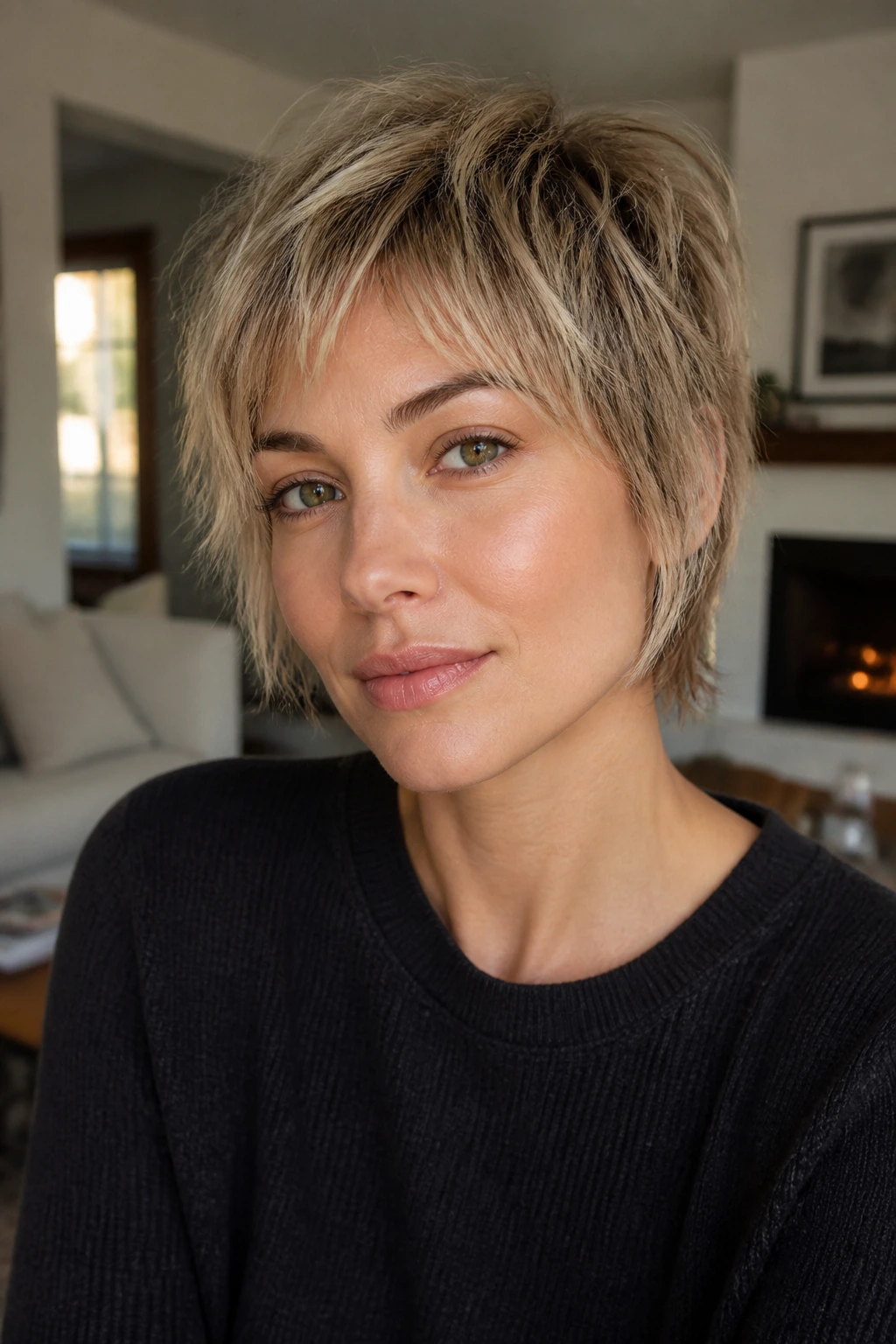
16. Wolfy Mini Shag

The mini shag is the quieter cousin of the full wolf cut. It keeps the layered, slightly wild energy, but shortens the length so the weight never gets a chance to settle in one place. On thick hair, that matters a lot. The layers create bend, and the shorter length keeps the volume from spreading too wide.
Curtain pieces or a broken fringe help here. So do soft edges around the ears and a crown that isn’t too blunt. You want the haircut to feel like it’s moving even when you’re standing still. That’s the charm.
This is a strong pick for wavy hair that dries with a little body. Add texture spray, scrunch it lightly, and leave it alone. Brushing it out too much usually kills the shape. A shag should look touched, not tortured.
17. Side-Parted Tomboy Crop
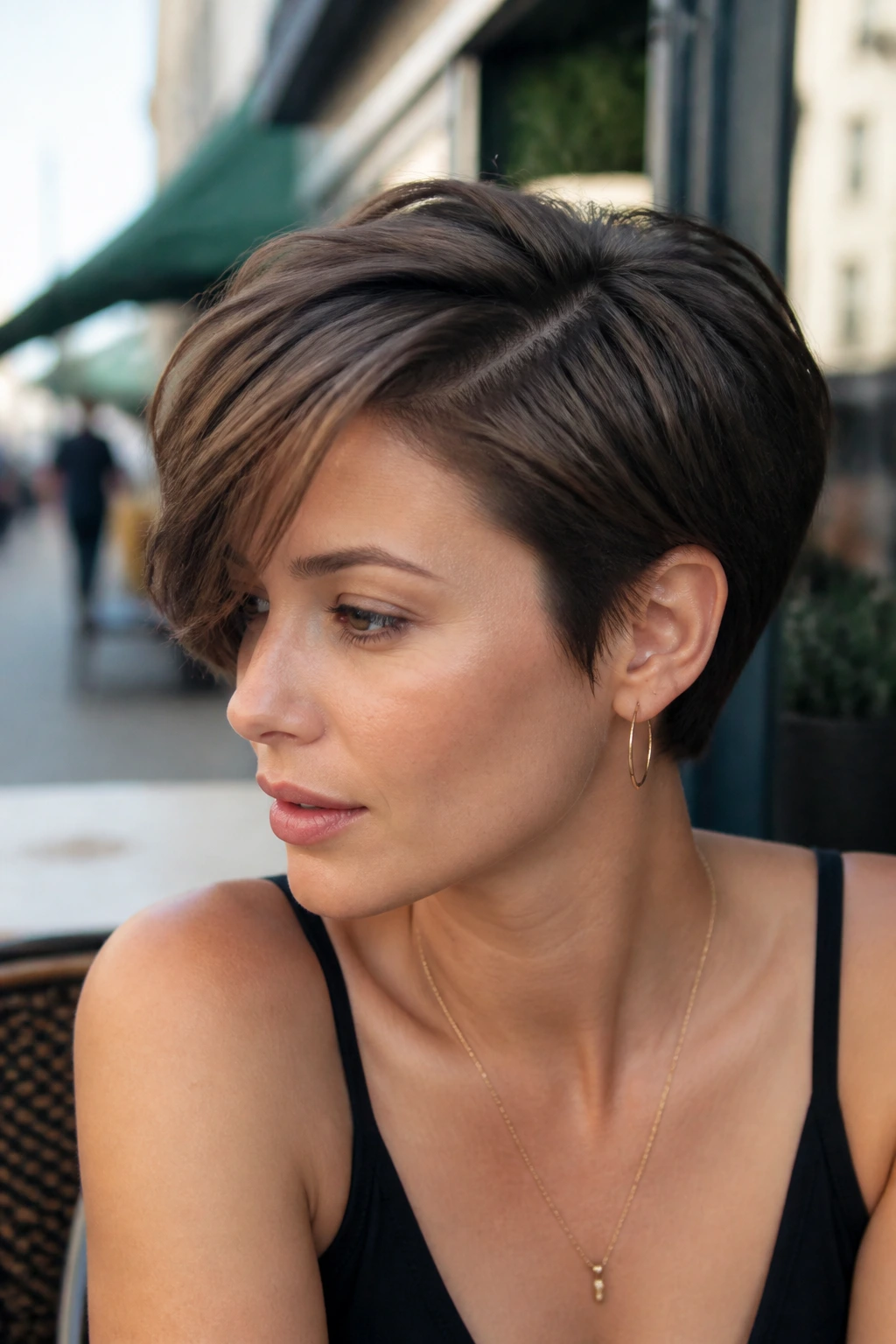
A tomboy crop sounds plain until you see how good it can look with the right side part. The cut stays short all around, with a slight taper at the nape and sides, and enough top length to shift across the head without needing a lot of product. Thick hair gives this shape some softness, so it doesn’t read as harsh.
This one appeals to people who want short hair but hate looking overstyled. It has presence because of the shape, not because of the styling tricks. You can wear it tucked behind the ears, parted hard to one side, or smoothed down with a little cream. It changes mood fast.
The best version avoids too much roundness at the crown. Keep the top a bit flat and the edges crisp. That keeps the crop from reading like a standard salon short cut and pushes it toward something a little cooler, a little more sure of itself.
18. Curtain-Bang Bixie
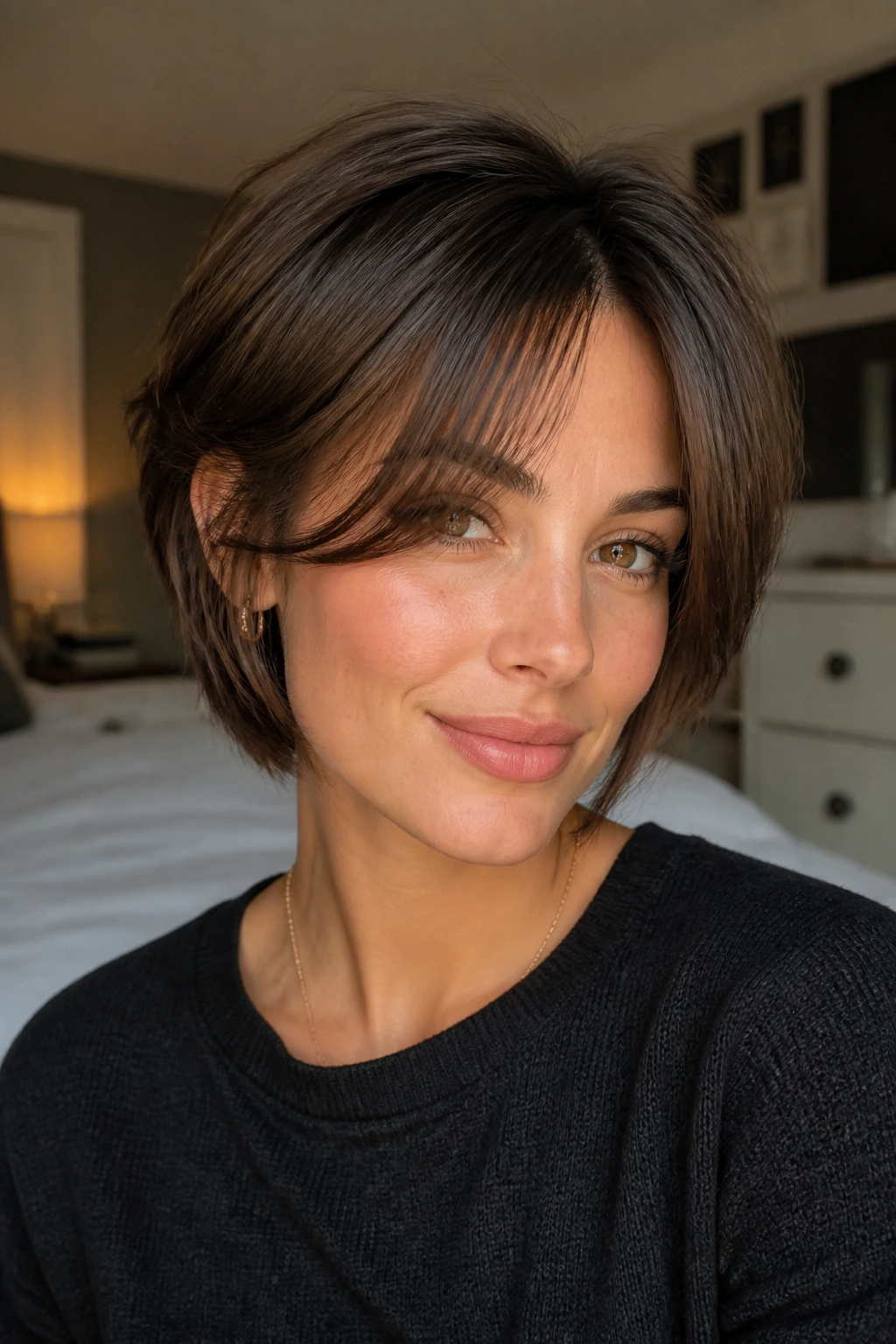
Curtain bangs can look airy and soft, but on thick hair they need enough thinning around the center part to fall correctly. Pair them with a bixie and the result is sharp in the back, soft at the front, and easy to move around with your fingers. It’s one of the more wearable rocker options if you want face framing without committing to a full fringe.
The middle pieces should be shorter near the cheekbones and longer at the jaw, so they sweep away from the face instead of hanging dead straight. That angle matters. It creates a bit of shape around the eyes while keeping the density from building up at the forehead.
This cut can be dressed down with dry texture or smoothed with a round brush for a more finished look. It’s a good bridge cut if you’re growing out bangs and don’t want the awkward stage to take over your whole head.
19. Spiky Textured Crop
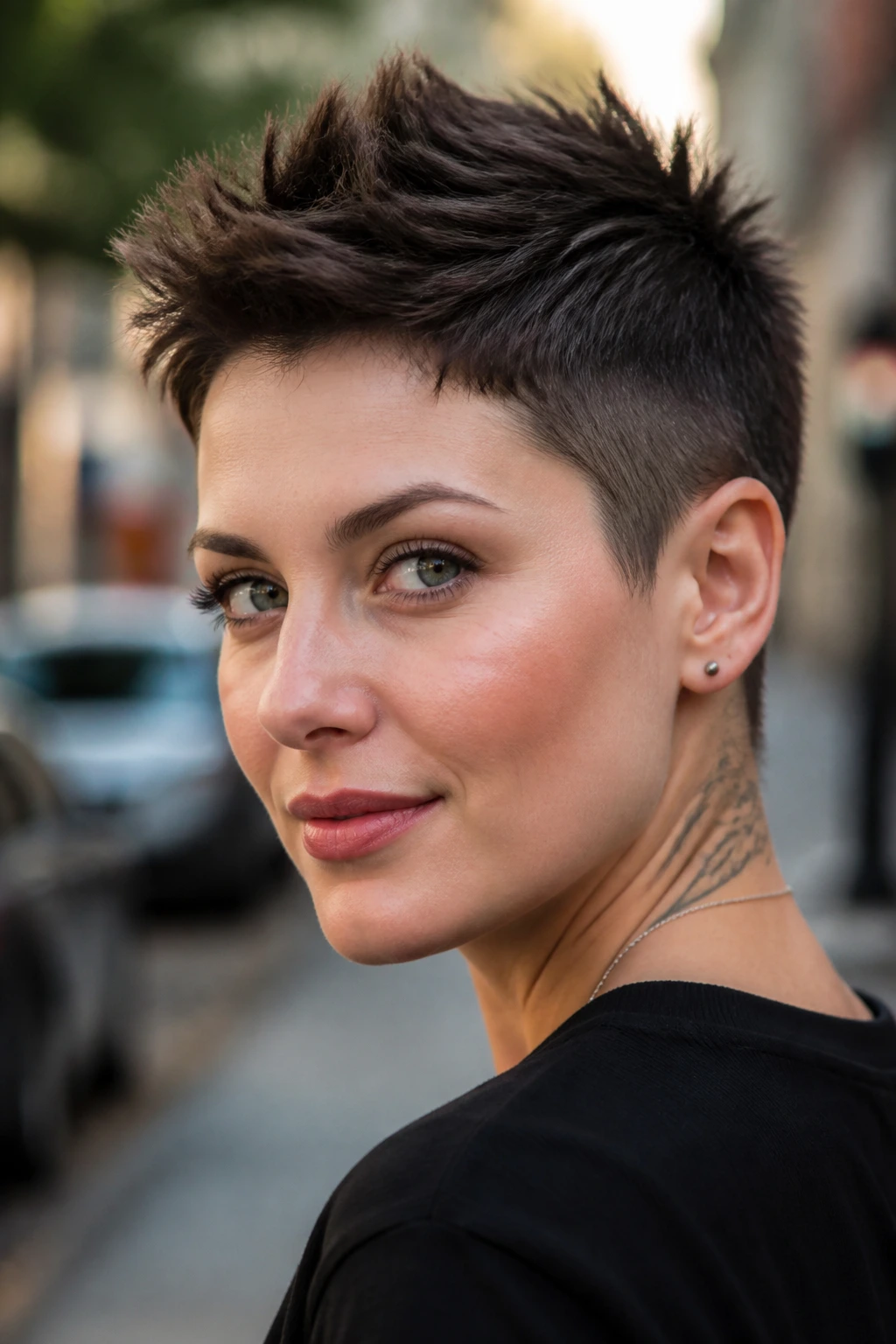
Spiky doesn’t have to mean crunchy or dated. On thick hair, a spiky crop can look clean if the ends are textured, the sides are tight, and the styling product is matte rather than shiny. The whole point is to separate the pieces just enough that the haircut looks alive.
This style works best when the top is short but not shaved too close. You need enough length to pinch and lift the strands into shape. A little root lift at the crown helps too, because thick hair can otherwise sit heavy and flatten the silhouette.
A good spiky crop is one of the easiest styles to wake up with. Rub a small amount of paste between your fingertips, twist a few sections upward, and leave some irregularity in the front. Perfect symmetry kills the attitude. A bit of imbalance makes it better.
20. Rockstar Mullet Bob

This is the cut for someone who wants the bob to misbehave a little. The front and sides stay shorter, the nape keeps a bit more length, and the crown gets layered so the whole shape has movement. It’s not a true mullet, and it’s not a standard bob. That in-between feeling is why it works.
Thick hair gives this style the body it needs. The longer nape has enough density to flick out or curl under without disappearing, and the top layers stop the style from becoming too boxy. If you like a haircut that looks different from every angle, this is one of the strongest options in the list.
Bring photos to the salon for this one. Words like “shaggy” or “edgy” can mean five different things to five different stylists. A rockstar bob-mullet hybrid needs clear reference points: where the front falls, how short the sides are, and how much length you want left at the neck.
Why Thick Hair Loves Short Lengths When the Shape Is Right
Thick hair has a lot going on before you even start styling it. There’s density, of course, but there’s also weight distribution, growth direction, and the way coarse strands sit against each other. Short rocker cuts help because they shorten the leverage. Long hair on thick strands can pull down at the root and widen at the bottom. Short hair gives that mass a more controlled outline.
The best versions don’t just remove length. They remove the right length in the right places. Around the nape, behind the ears, and sometimes through the interior crown, thick hair often needs weight taken out so it can sit close to the head without puffing. Blunt edges at the perimeter are useful because they give the cut a clean boundary, while texture inside the cut keeps it from looking like a helmet.
There’s another reason these styles work. Thick hair usually holds shape longer than fine hair once it’s been cut correctly. A piecey fringe stays piecey. A lifted crown stays lifted. A tucked side stays tucked. That makes short cuts practical, not just stylish. You spend less time negotiating with the mirror and more time deciding whether you want the finish matte, glossy, or somewhere in between.
What to Tell Your Stylist Before the First Snip
Bring photos, yes, but don’t stop there. Thick hair needs context. Tell your stylist whether your hair grows straight out at the crown, whether your nape curls under, whether one side is denser than the other, and whether you wear it air-dried more often than blown out. Those details change the cut more than a vague request for “something edgy.”
Say how short you really mean. Jaw-length? Ear-length? Above the cheekbone? People often use the same words for very different lengths, and on thick hair that difference matters. A half-inch can change the weight line a lot. If you want a pixie but hate your ears showing, say that. If you want the neckline clear, say that too. Stylist confusion is expensive.
Also mention how you want to live with the haircut. If you will not use a round brush, don’t let the cut depend on one. If you’re a wash-and-go person, the structure needs to work on its own. If you don’t mind a five-minute style, the options widen. The point is to get a shape that fits your life, not a shape that only looks good in the chair.
The Products That Help Thick Short Hair Behave
Product choice matters more on thick short hair than people expect. A heavy cream that works on a bob-length style can flatten a pixie into a damp-looking shelf. A light matte paste, on the other hand, can carve out movement without making the ends greasy. The formula matters almost as much as the cut.
What to Reach For
- Matte paste: Good for piecey texture, especially on pixies, crops, and shags.
- Volumizing mousse: Best at the roots when you want lift without stiffness.
- Texturizing spray: Useful on bixies, mini shags, and any cut that needs separation.
- Heat protectant spray: Needed before blow-drying or flat-ironing; thick hair can take heat well, but it still needs protection.
- Lightweight hairspray: Picks up hold without turning the shape crunchy.
- Dry shampoo: Helps the root stay airy on day two and day three.
What to Avoid
Heavy oils near the scalp. Creams that promise softness but erase definition. Sticky pomades unless you want a wet finish. Thick hair can take more product than fine hair, but short rocker cuts rely on movement, and too much slip kills that.
If your hair is coarse, a small amount of serum on the ends can help with frizz. Keep it away from the roots. That’s where most people go wrong.
How to Wear the Cut So It Feels Intentional
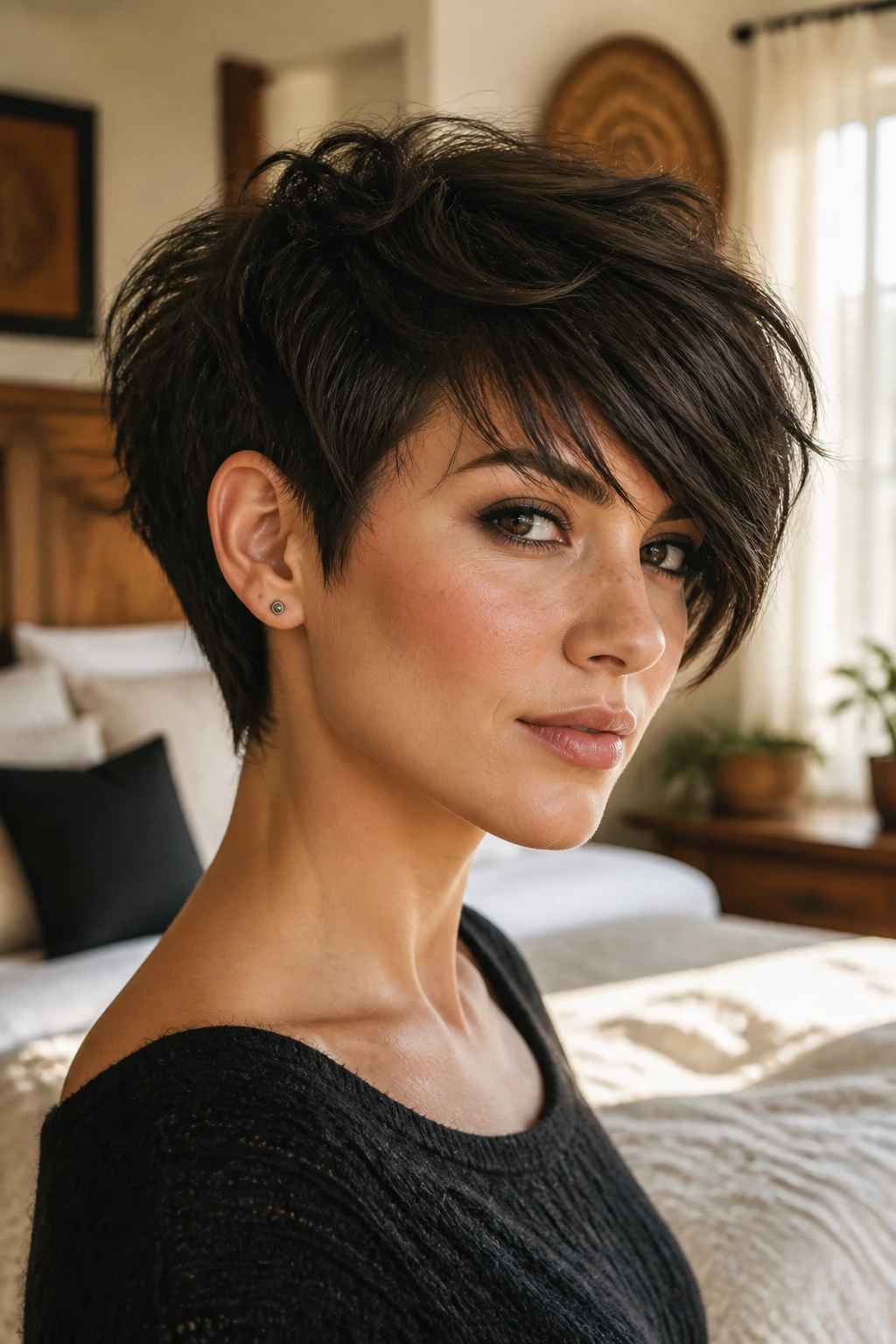
A short rocker haircut gets stronger when the rest of the look respects the shape. Tiny hoop earrings, a sharp collar, a strong brow, or a clean neckline can all help the haircut read as deliberate. If the hair is cropped close at the sides, oversized earrings can feel balanced. If the cut already has a lot of visual texture, simpler jewelry keeps things from getting crowded.
Shape: If your haircut has a side-swept fringe or asymmetrical front, let that side lead. Don’t fight it with a middle-parted outfit vibe that feels too prim. The line of the haircut should have somewhere to go.
Clothing: Leather jackets, crisp tees, ribbed tanks, work shirts, and slim knits all play well with short rocker cuts because they don’t compete with the hair. You don’t need to dress like a costume. You just need fabrics that don’t swallow the neck or collar line.
Accessories: Glasses can look fantastic with these cuts, especially pixies and crops with tight sides. Sunglasses with a thicker frame work nicely too. Hats are trickier; if the top is highly textured, choose a soft beanie or a cap that doesn’t flatten the crown for hours.
Finish: A little shine at the front or a roughened crown changes the mood fast. Clean and polished says sharp. Messy and separated says louder. Same haircut. Different volume.
Additional Tricks for Getting More Out of the Cut
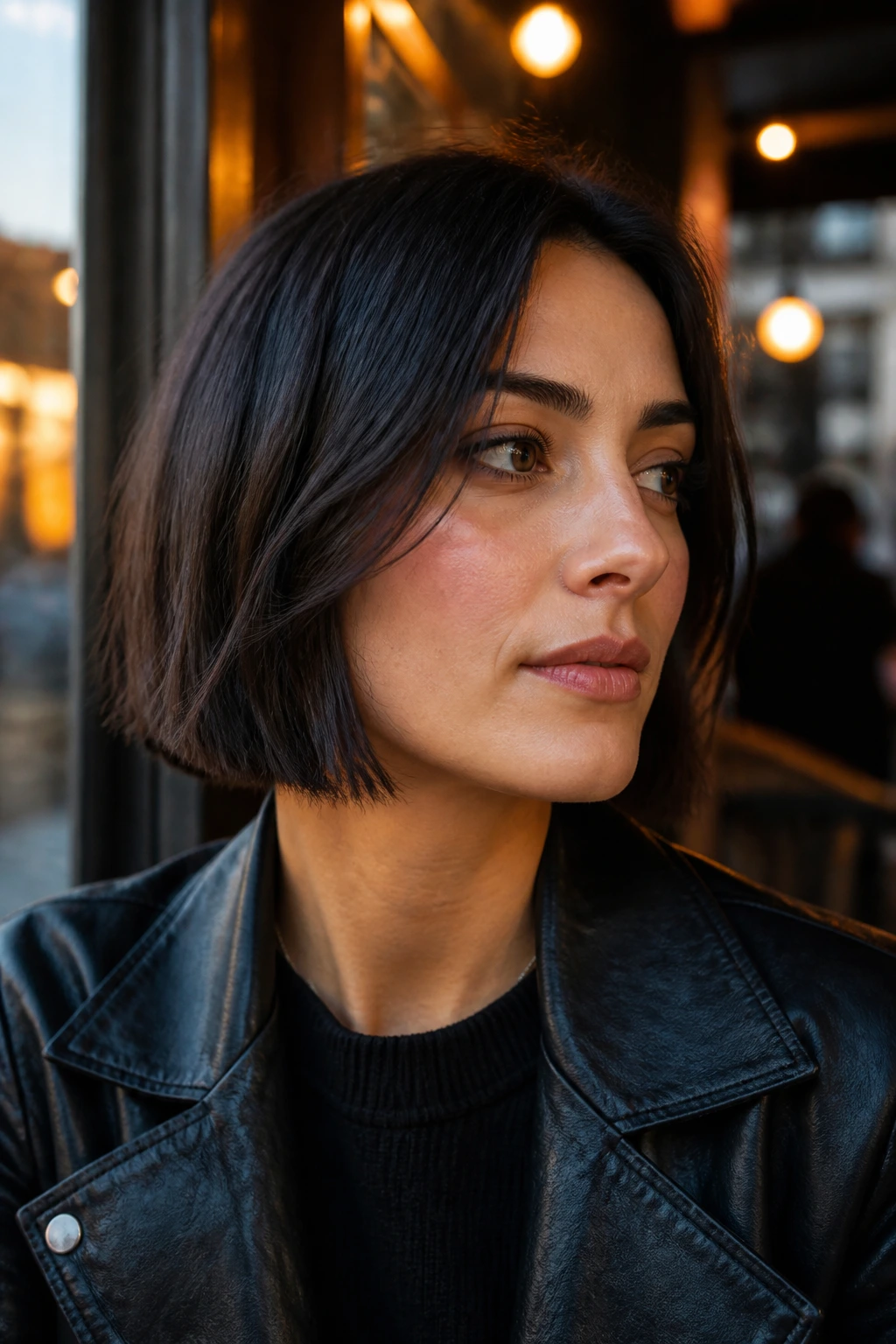
Texture Boost: A quick mist of texturizing spray on dry hair, followed by a few scrunches at the crown, gives thick short hair more separation without making it feel stiff. Spray from about 8 inches away so you don’t soak one spot.
Root Lift: If the top keeps collapsing, clip the crown up while the hair cools after blow-drying. Even 5 minutes of cooling in the lifted position can help the shape hold longer.
Color Contrast: A little lightness around the fringe or top layers can make choppy texture stand out. You do not need dramatic color work; even subtle highlights can make the cut read more clearly.
Low-Effort Finish: On mornings when you are not in the mood, dampen the front with water, add a tiny bit of paste, and push the hair into shape with your fingers. Thick short hair often looks best when it isn’t overly handled.
Grow-Out Plan: If you know you’ll want to stretch the cut, keep the top a touch longer and let the perimeter stay blunt. That way, as it grows, it shifts into a bixie or mini shag instead of turning into an awkward puff.
Common Mistakes That Make Thick Short Hair Misbehave
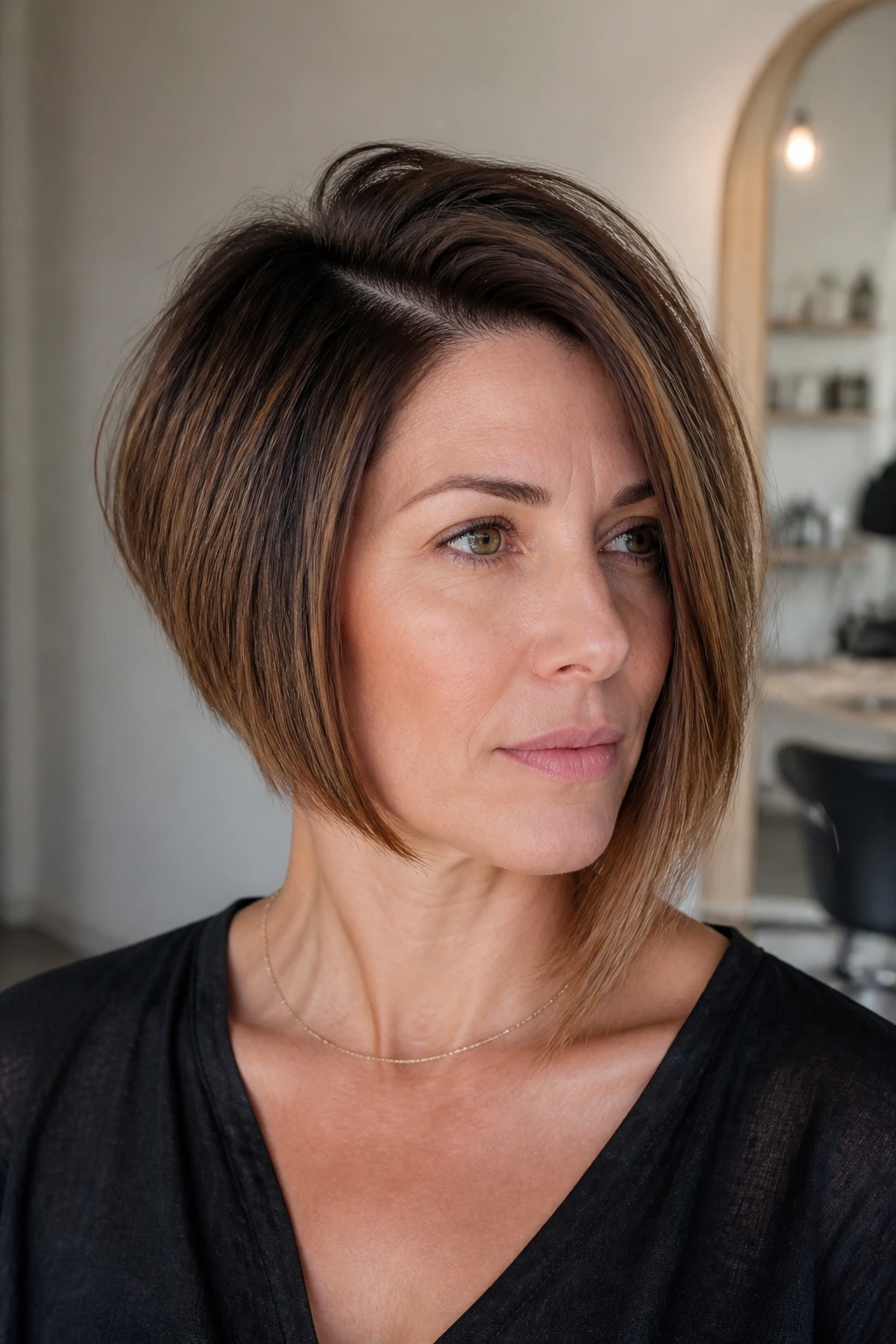
- Too Much Thinning at the Ends: If the ends look shredded or see-through, the hair can frizz and expand instead of settling. Ask for weight removal inside the shape, not a hacked-up perimeter.
- Keeping the Nape Too Heavy: A dense nape makes the whole haircut sit out from the head like a shelf. The fix is a tighter taper or a hidden undercut, especially if your neck line is thick or your hair grows fast there.
- Using Heavy Cream on the Roots: Roots coated in rich product lose lift almost immediately. Keep creams and oils on the ends only, then use a lighter paste or spray where you want shape.
- Brushing the Style Flat After It Dries: Thick short hair often needs finger styling, not constant brushing. Once the shape is dry, brush too much and you erase the texture you paid for.
- Letting Bangs Get Too Thick: Fringe that’s cut too full can overpower the face. Ask for internal texture or piecey separation so the bangs sit lightly instead of as one heavy block.
- Waiting Too Long Between Cuts: On short shapes, even half an inch can change the balance. If the neckline starts to feel bulky or the fringe stops sitting right, it’s time to trim.
Variations and Adaptations to Try
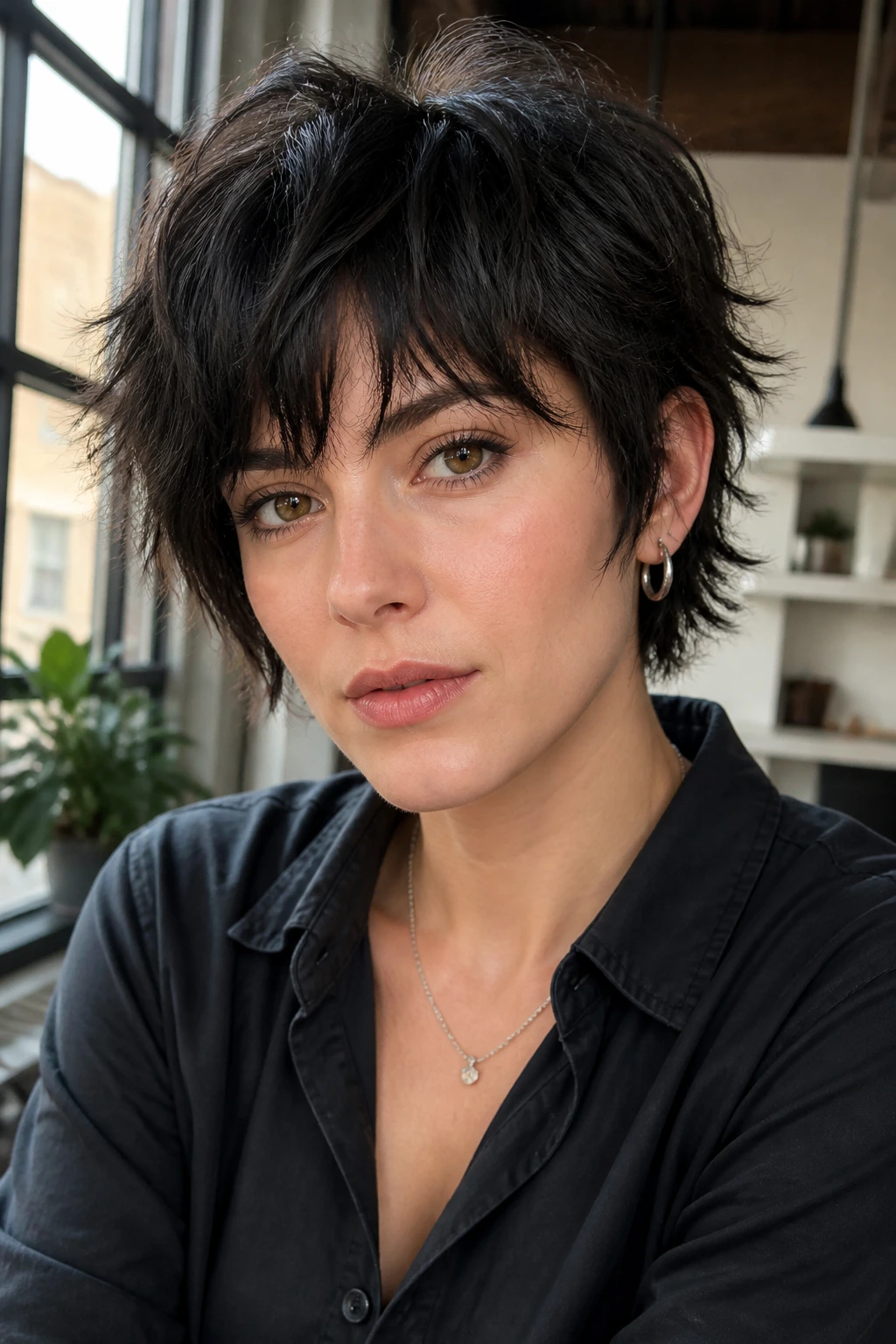
Soft-Edge Rebel: Keep the same short structure, but soften the fringe and the perimeter a little. This version works if you want the rocker shape without the hard corners, and it’s easier to wear in more formal settings.
Curly-Top Punk: Leave the top longer for curls or waves and cut the sides tighter. The texture on top becomes the statement, and the cleaner sides keep the shape from ballooning outward.
Low-Maintenance Air-Dry Cut: Ask for a bixie or mini shag with enough internal texture to fall well without heat. This version suits thick hair that already has some bend and refuses to stay perfectly smooth anyway.
High-Contrast Undercut: Push the sides and nape much shorter and keep the top longer for a sharper outline. This is the bolder version, and it works especially well if you wear strong eyeliner, big earrings, or plain clothes that let the haircut do the talking.
Grow-Out Friendly Shape: Keep the top and front a little longer and the back slightly shorter. When it grows, the cut turns into a shaggy bob instead of losing its line overnight.
How to Keep the Shape Between Salon Visits
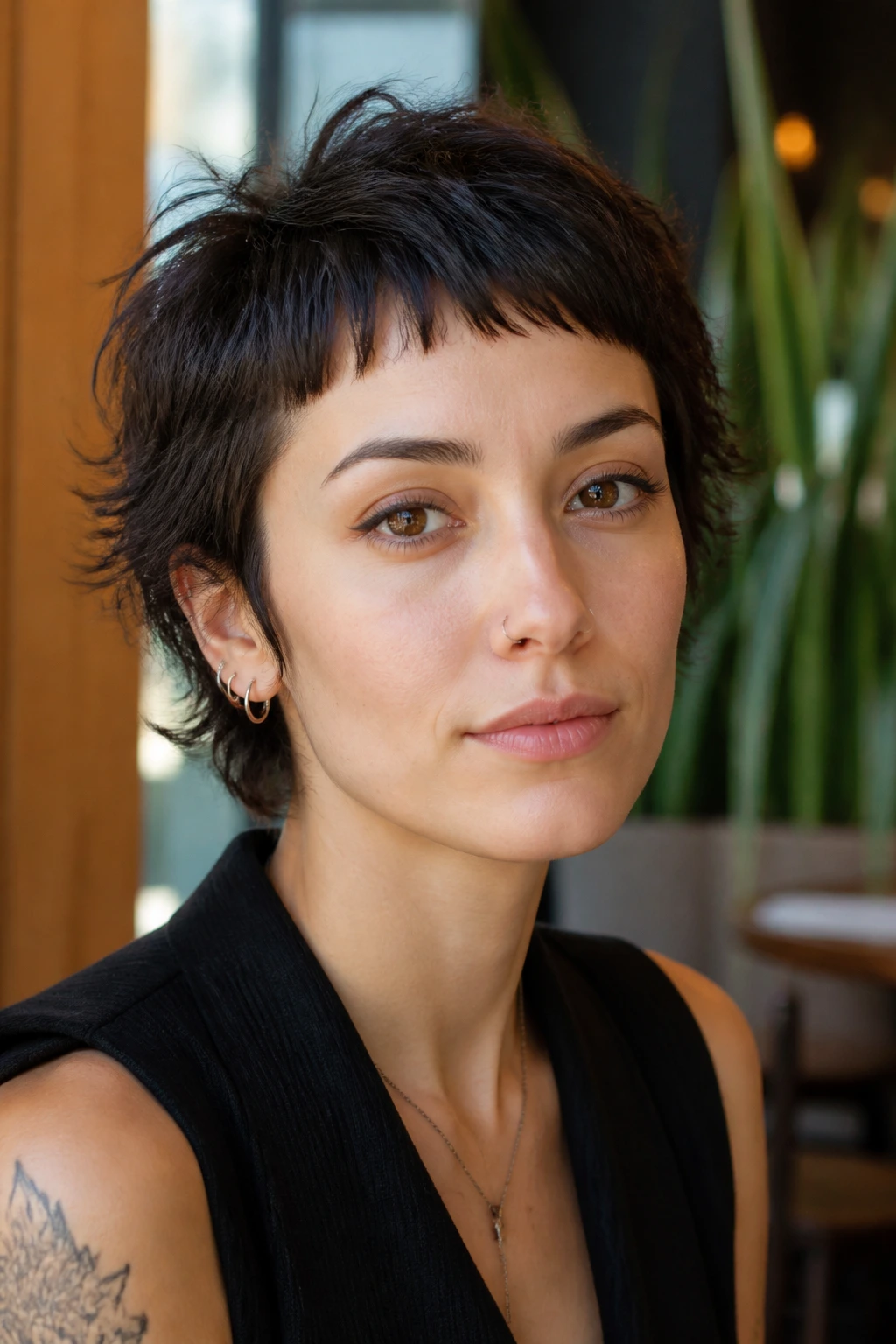
Short rocker hair looks best when the outline stays clean. That means you cannot ignore the neckline for months and hope texture will save it. Thick hair grows with enough force that even a good cut can swell into something round if you wait too long. For most short styles, a trim every 4 to 6 weeks keeps the shape intact. If you have an undercut, the sides may need attention even sooner.
Wash frequency depends on how much oil your scalp makes, but thick short hair often does well with every 2 to 4 days. On the off days, dry shampoo at the roots and a little water at the front can wake the shape back up. I like to use a spray bottle with plain water on the fringe and crown, then scrunch in a touch of paste. It takes less time than full restyling and keeps the haircut from looking stale.
Sleep matters too. A satin or silk pillowcase reduces frizz and helps keep the top from getting crushed flat overnight. If your hair has a lot of movement, clipping the top loosely before bed can preserve the shape for one more day. That sounds fussy, but it’s cheaper than over-washing and re-styling every morning.
If the ends start to look bulky or the back starts to flip in a bad way, don’t wait for the next big haircut. A quick cleanup around the nape or fringe can put the whole thing back in line.
Frequently Asked Questions About Short Rocker Hairstyles for Thick Hair
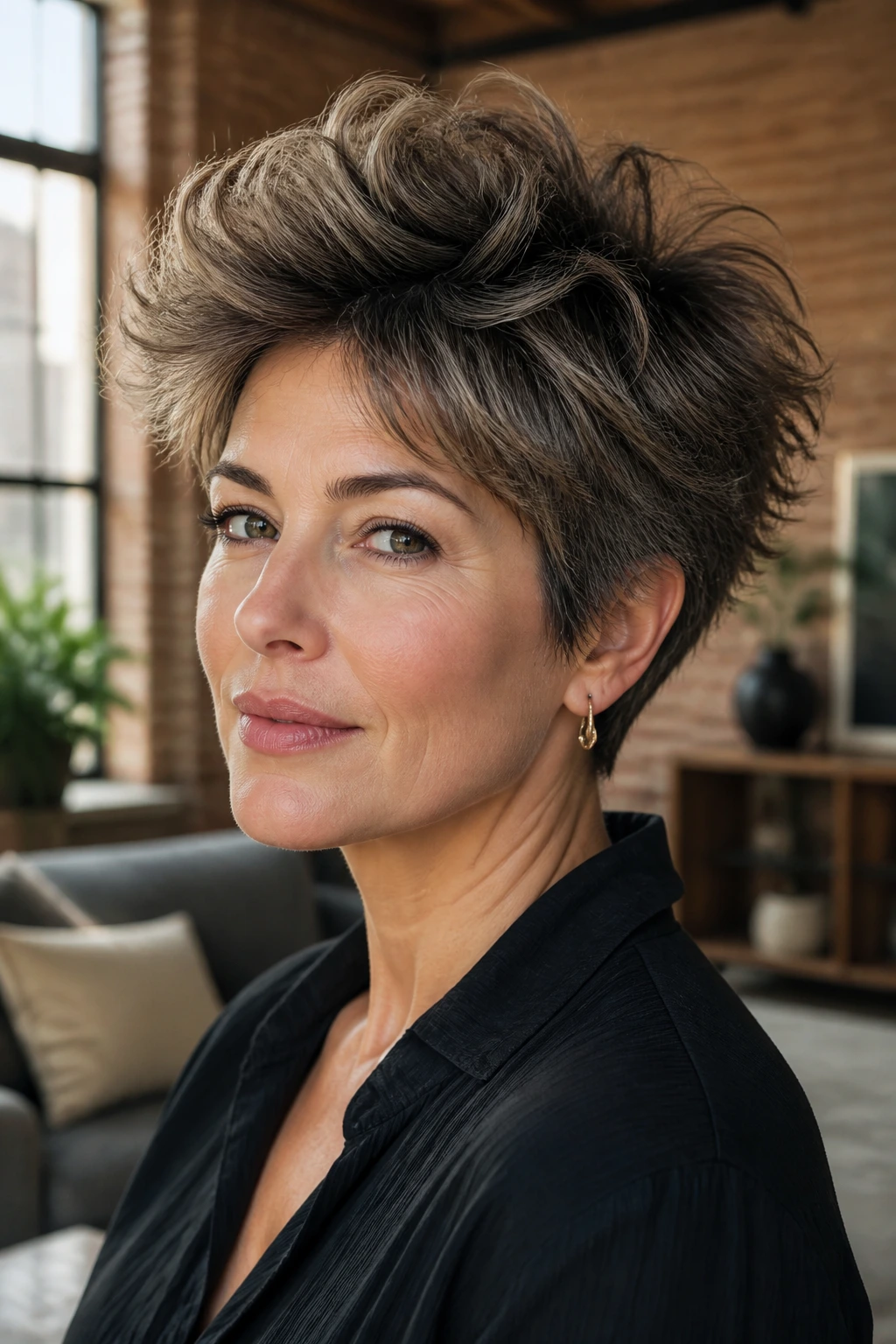
Will thick hair make a short rocker cut look too big?
Not if the cut is shaped correctly. The issue is usually too much bulk left at the sides or nape, not the thickness itself. A good stylist will remove weight internally and keep the outline clean so the cut sits close to the head.
Is a pixie or bob better for thick hair?
Both can work. A pixie feels lighter and sharper, while a bob gives you a little more length to tuck, bend, or smooth. If your hair grows out fast or you want less daily styling, a bixie or jaw-length bob is often the easier place to start.
Do I need thinning shears?
Not always. On coarse or frizz-prone hair, heavy thinning shears can make the ends look fuzzy. Point cutting, slide cutting, and internal debulking are often safer because they remove weight without wrecking the finish.
Can curly hair wear these rocker cuts?
Absolutely, but the cut has to respect the curl pattern. Curly thick hair usually needs a shorter nape or side area and a longer top so the curls can sit without swelling outward. Diffusing helps, but the cut is doing most of the work.
How often should I trim a short rocker style?
Every 4 to 6 weeks is a good range for most of these cuts. If you have a fade, nape undercut, or very short fringe, the shape may need attention sooner. Letting it grow too long usually shows up first around the ears and neck.
What if my hair has cowlicks?
Then the cut has to work with them, not against them. Tell your stylist exactly where the cowlicks sit — especially at the crown and nape — so they can leave enough length in those spots to control the direction. Very short bangs can be tricky if the front grows in two directions.
Can I air-dry these styles and skip heat?
Some of them, yes. Bixies, mini shags, and curly crops usually air-dry well if the cut has enough internal movement. Pixies with a sharp fringe or a lifted crown often look cleaner with a quick blow-dry at the roots.
What should I bring to the salon besides photos?
Bring a short list of what you do not want. Say whether you want to tuck hair behind your ears, whether you like a visible nape, whether you wear glasses, and whether you are okay with maintenance every month. That gives the stylist a much better picture than “short and edgy.”
Sharp Ends, Clean Lines
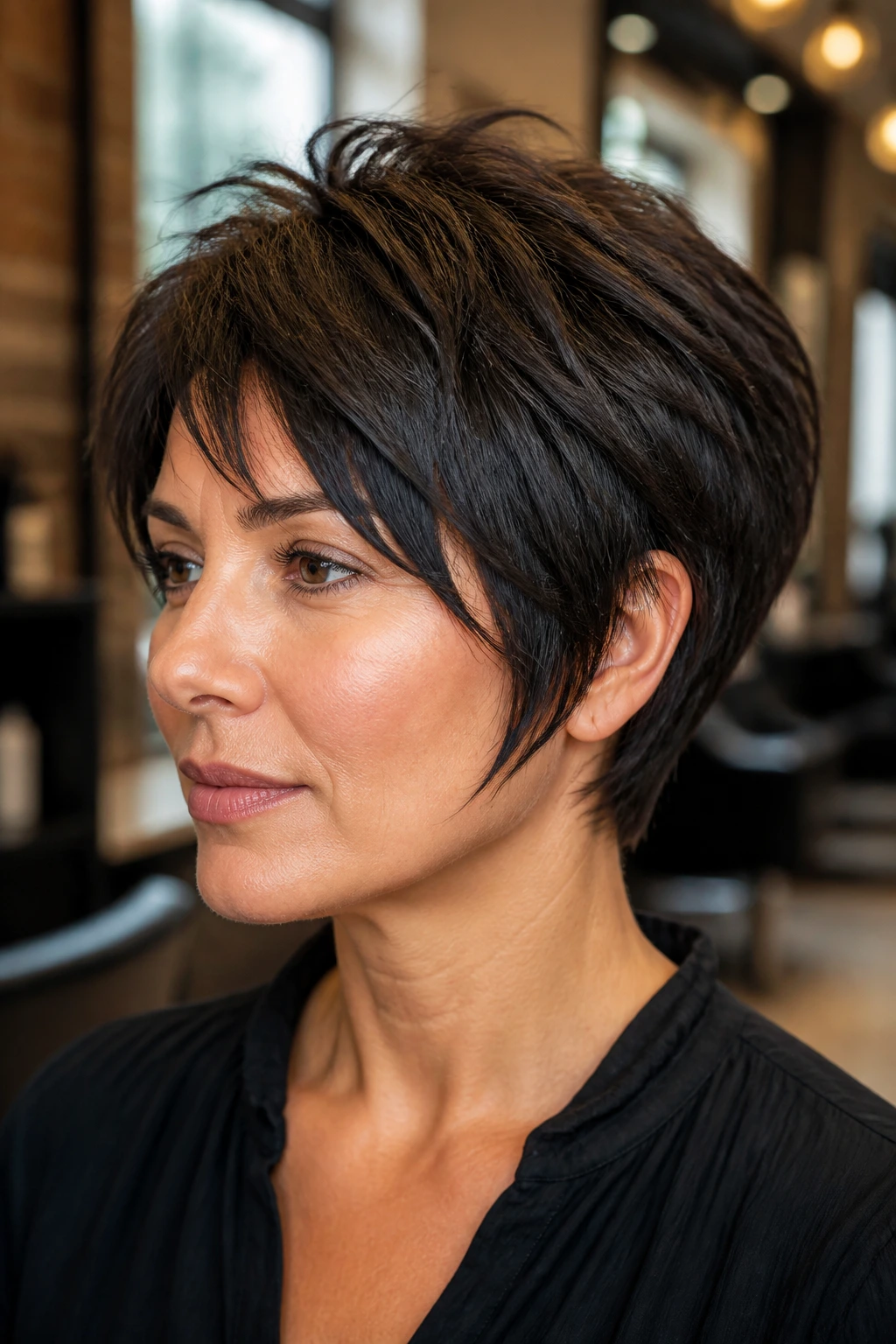
Thick hair gets blamed for looking unruly when the real problem is usually the cut. Give it a shape that respects the density, and it stops behaving like a problem and starts behaving like a feature. That is the whole point of these short rocker styles: not to tame the hair, but to frame it better.
The best haircut here will depend on how much edge you want, how often you’re willing to trim, and whether you like a finish that’s piecey, sleek, or a little messy around the crown. Pick the one that matches your habits, not your fantasy routine. Thick hair has no patience for wishful thinking.
Bring a photo, mention your growth patterns, and ask for weight removal in the places where the bulk actually lives. Do that, and the cut does the hard work for you.