



Fine hair has a way of telling on you. Leave it one afternoon too long, and the crown goes soft, the ends start to look see-through, and the whole cut loses its nerve. That is exactly why layered medium-length bobs for women over 50 keep showing up as a smart answer instead of a fad: they can hold a shape without weighing the hair down, and they can add movement without turning the ends into wisps.
The trick is in the balance. Too much layering, and fine hair looks hollow. Too little, and the whole cut sits like a flat sheet against the head. A good bob lives between those two mistakes. It keeps enough line to look intentional, then sneaks in texture where the hair needs air.
After 50, that balance matters even more. Hair often changes at the crown, around the temples, and through the nape; some strands feel finer, some grow in with a different bend, and some areas just refuse to do what they used to do. A layered bob can handle that without looking fussy. It can soften a jawline, give a neck a cleaner line, and make gray or highlighted hair look more vivid because the shape is doing part of the work.
Why These 22 Bobs Work So Well on Fine Hair
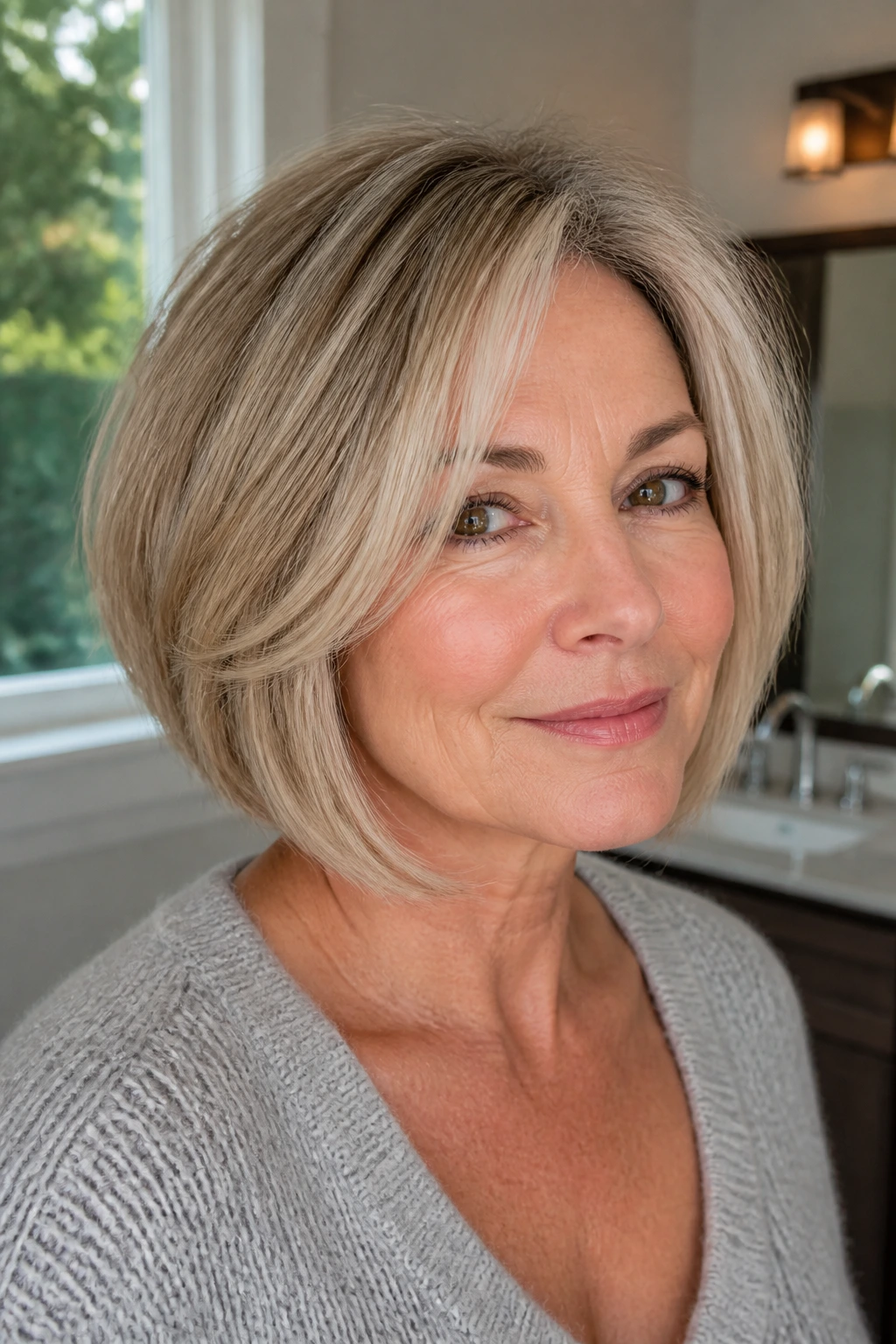
- They keep weight at the perimeter: Fine hair looks fuller when the bottom line stays clean, because the eye reads that edge as density.
- They add lift where flatness usually starts: Smart layers placed near the cheekbone or crown create movement without stripping the ends bare.
- They grow out without turning into a mess: A bob with soft layers usually keeps its shape for weeks, not days, which matters if you do not want constant salon visits.
- They play nicely with gray, silver, or highlighted hair: Shine and texture show up better when the cut has shape, and that can make even simple color look more alive.
- They work with glasses and earrings: A bob can open the face instead of crowding it, which is handy when you want the haircut to frame, not fight, your features.
- They give you options on low-effort days: Air-dry, round-brush, or tuck it behind one ear — the cut still has something to say.
1. Feathered Collarbone Bob
This is the cut I reach for when fine hair needs movement but not drama. The length lands near the collarbone, which gives the ends enough room to look soft instead of chopped off, and the feathering keeps the outline from feeling heavy. On straight hair, it slides neatly. On a small wave, it gets that easy swing that makes the whole cut look more expensive than it was to style.
What matters here is where the layers begin. If they start too high, the crown can go flat and the ends can turn stringy. If they start low, around the cheek or just below it, the hair keeps enough body to look full from the side. That placement is a small detail with a big payoff.
What to ask for
- Collarbone length, or a touch shorter if your neck is shorter.
- Soft layers that begin around the cheekbone.
- Feathered ends, not thinned-out tips.
- A side part if your crown collapses easily.
Best for: hair that lies flat on top but still has some bend through the mid-lengths.
Pro tip: Blow-dry with a 1.5-inch round brush and keep the ends slightly tucked under; that shape makes fine hair look denser.
2. Jaw-Skimming Side-Part Bob
If your hairline at the temples has started to look a little lighter, this cut is sneaky in the best way. The side part creates lift right where the eye lands first, and the front pieces skim the jaw instead of stopping at the cheek in a hard line. That soft drop helps the face look framed, not boxed in.
The side sweep also keeps the bob from feeling too symmetrical, which matters on fine hair. Symmetry can look crisp in photos, but in real life it can make every flat spot obvious. A slight imbalance gives the cut a bit of motion, and motion is what fine hair usually needs more than anything.
Ask your stylist to leave the longer side just grazing the jaw while the back stays a touch shorter. That tiny difference changes the silhouette without shouting about it.
Use this when: you want a cut that works with glasses, earrings, and a quick root-lift spray.
3. Hidden-Interior Layer Bob
This is one of my favorites for very fine hair because the surface looks calm while the inside does the heavy lifting. The outer line stays clean, almost blunt, but the interior gets removed in soft sections so the hair can move instead of sitting like a cap. It is a quiet cut. That is the point.
A lot of people think fine hair needs lots of visible layers. Usually, it does not. Visible layers can leave the ends looking thin before you even leave the chair. Hidden interior layers create space underneath the top layer, which gives lift without advertising every slice of the scissors.
Ask for this if:
- You want fullness at the bottom edge.
- Your hair goes limp after one day.
- You like a polished finish more than a messy one.
- You do not want obvious piecey layers around the face.
Bold tip: This bob looks best when the perimeter is left a little heavier than you think it should be. Resist the urge to “lighten it up” too much.
4. French-Girl Shag Bob
This version has attitude, but it does not need a lot of product or a lot of blow-drying. The hair sits between a bob and a shag, with soft, broken layers that make fine strands separate just enough to look airy. It works especially well if your hair already has a slight wave or a bend that shows up when it dries.
The danger with shaggy cuts on fine hair is overdoing the texture. Too much razor work and the ends can look hollow. Too much layering and the shape loses its backbone. The good version keeps the crown light, the mid-lengths loose, and the perimeter visible.
I like this cut on women who want their hair to look a little undone without looking messy. There is a difference.
A light mousse at the roots and a quick scrunch is usually enough.
5. Soft A-Line Bob
An A-line bob gives fine hair a strong shape without making the back feel bulky. The front stays slightly longer than the back, which creates a clean diagonal line from nape to chin or collarbone. That line does a lot of work visually. It can lengthen the neck, sharpen a jawline, and make the hair look as if it has more purpose.
The best version for fine hair is soft, not severe. You want the angle to show up when you turn your head, not to scream at the mirror. I like a gentle A-line with low layering, because that keeps the ends looking substantial.
This is a smart cut if you wear your hair tucked behind one ear a lot. The angled front pieces keep that casual move from looking like you forgot to finish your hair.
Styling note: A flat brush and a slight bend under the front pieces are usually enough.
6. Curtain-Bang Bob
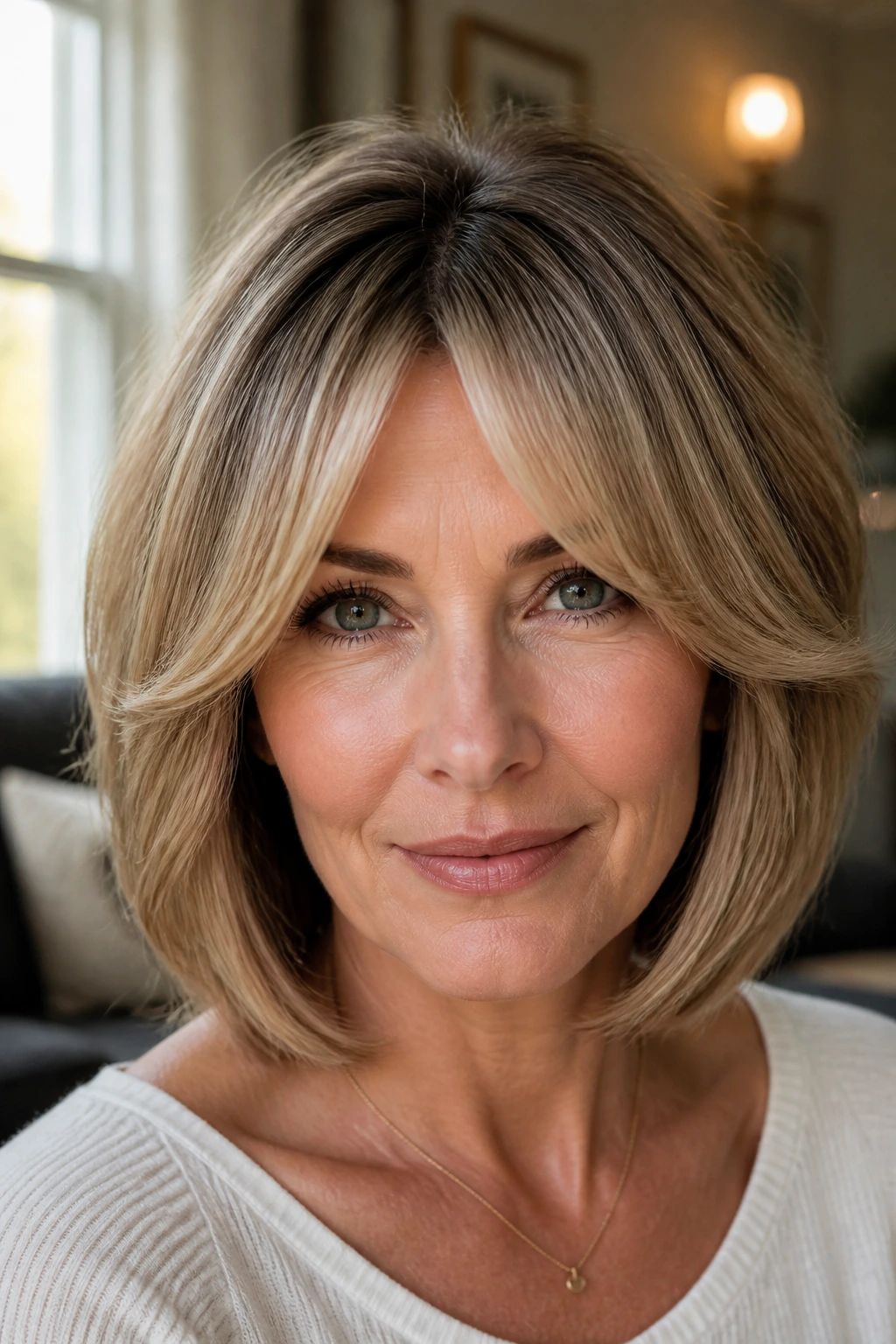
Curtain bangs can rescue a bob that needs a little face softness. They split at the center and fall away from the forehead, which opens up the eyes and takes pressure off the temples. On fine hair, that matters because heavy bangs can swallow density fast. Curtain bangs, by contrast, blend into the side layers and feel almost weightless.
What makes this cut work is the transition. The bangs should not sit as a separate block. They should melt into the cheekbone area, so the whole front of the haircut reads as one shape. That keeps the top of the head from looking crowded.
It is also a good option if you wear glasses. The bang length can be adjusted so it doesn’t fight the frames. Shorter in the center, softer at the sides — that’s the sweet spot.
A round brush on the bang area only is often enough. The rest can air-dry.
7. Blunt Bob with Whisper Layers
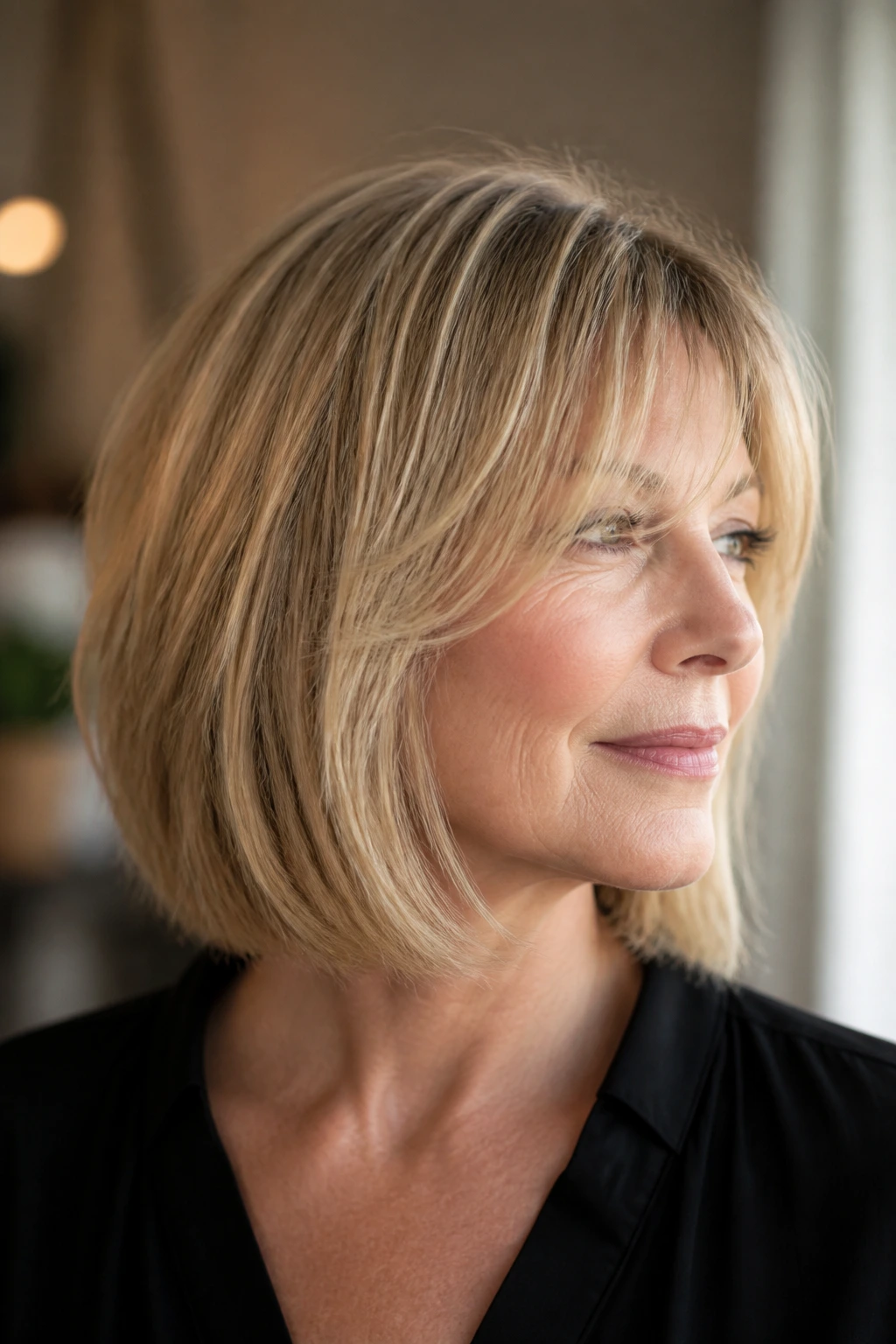
This is the bob for people who hear “layers” and worry the cut will disappear. The outer edge stays blunt, which gives fine hair the illusion of density, but the layers inside are so soft you almost have to look for them. They are there to keep the shape from collapsing, not to advertise themselves.
Fine hair likes a little bluntness. It gives the eye a clear finish line. But if every strand is chopped to the same length with no internal relief, the cut can sit like a helmet. Whisper layers fix that by giving the interior room to move while the edge stays strong.
What to ask for
- A blunt perimeter.
- Internal layering only.
- No heavy texturizing at the ends.
- A slightly longer front if your face needs softness.
Pro tip: This cut looks especially good with silver or white hair because the clean line reflects light and makes the finish look sharp.
8. Choppy Mid-Length Bob

A choppy bob is not the same thing as a messy bob. The difference is control. This version uses point-cut ends and broken pieces to keep fine hair from sitting in one flat sheet, but the overall length still feels deliberate. It usually lands somewhere between the chin and the shoulders, which gives you room to play with air-drying or a loose blowout.
This style works best when your hair has at least a little bend. Straight-as-stick hair can wear it, too, but it needs product. A bit of texture spray or a light mousse gives the broken ends something to hold on to.
The nice part is the movement. The slightly irregular ends can make very thin strands look fuller because they do not all catch the light in the same place. That breaks up the see-through effect.
If you like a haircut that looks better on day two than on day one, this is one to keep in mind.
9. Rounded Bob with Tucked-Under Ends
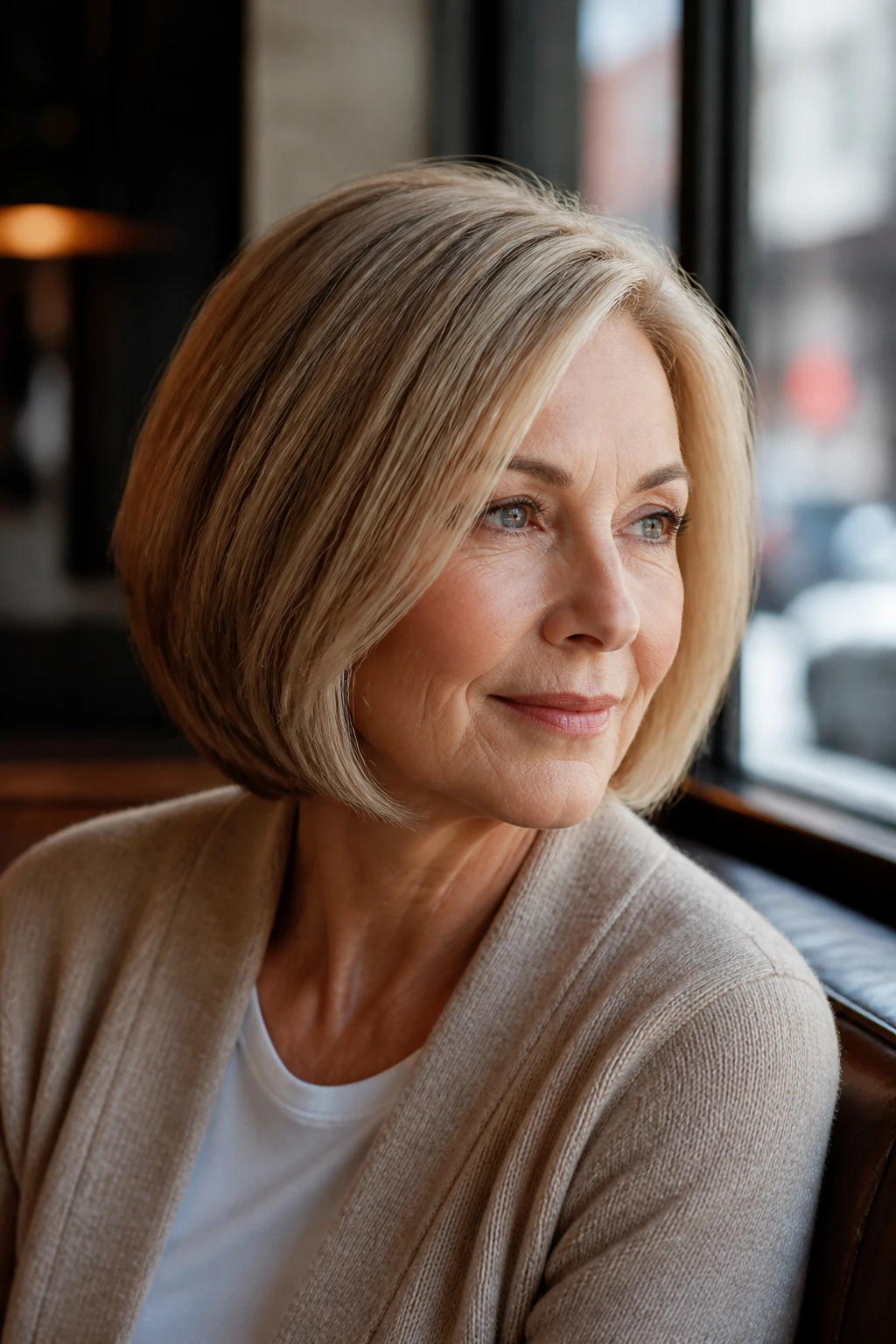
A rounded bob gives fine hair a fuller outline without asking for much length. The ends are directed inward, so the cut curves under the jaw or collarbone instead of flipping out or hanging limp. That rounded shell creates the impression of body, especially when the hair is blow-dried with a brush.
There is a reason this shape shows up on so many women who want a polished look without a lot of fuss. It behaves. It also hides a few flaws. Sparse areas near the ends read less obviously when the whole line curves together.
The main thing to avoid is over-thinning the nape. Fine hair needs a little density there, or the curve loses its structure. Keep the back compact and let the side pieces do the soft framing.
A medium round brush and a few clips for setting the shape while it cools can make a big difference.
10. Flipped-Out Layered Bob
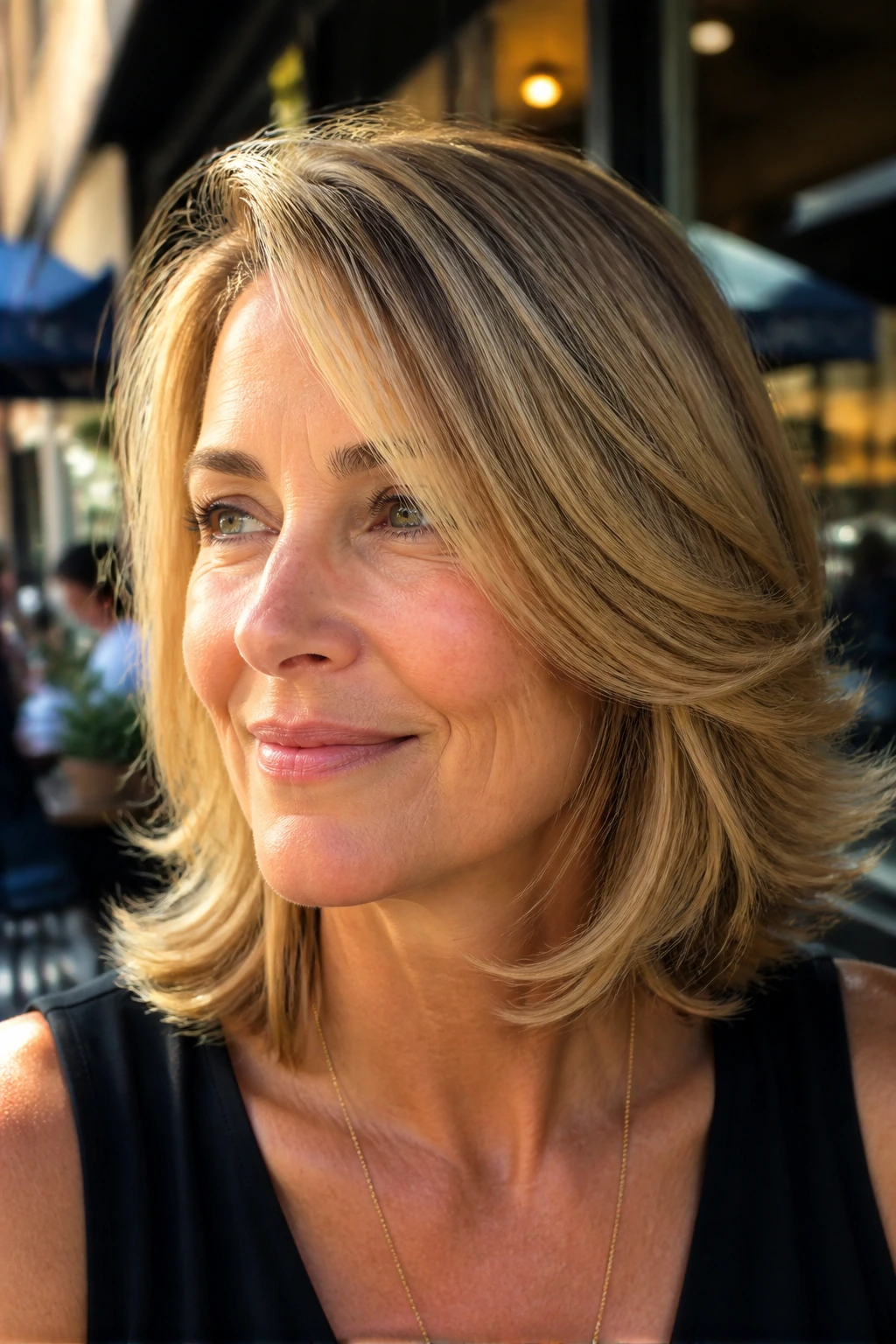
A flipped-out bob has a bit of motion at the ends, almost like the haircut remembers older blowouts but leaves out the stiffness. Fine hair often benefits from that outward bend because it prevents the perimeter from sticking too close to the neck. The flip adds lift, and lift at the ends can make the whole head look more alive.
This style works well if your hair naturally wants to flick outward anyway. Instead of fighting that bend, the cut uses it. Layers are placed so the ends can move, especially around the collarbone and shoulders, where shorter pieces can create a bit of swing.
It is especially flattering with a side part and a brushed-back crown. That combination keeps the top smooth while the ends do the talking.
One caution: If your hair is very frizzy, the flip can turn into chaos without heat protectant and a smoothing cream.
11. Asymmetrical Bob
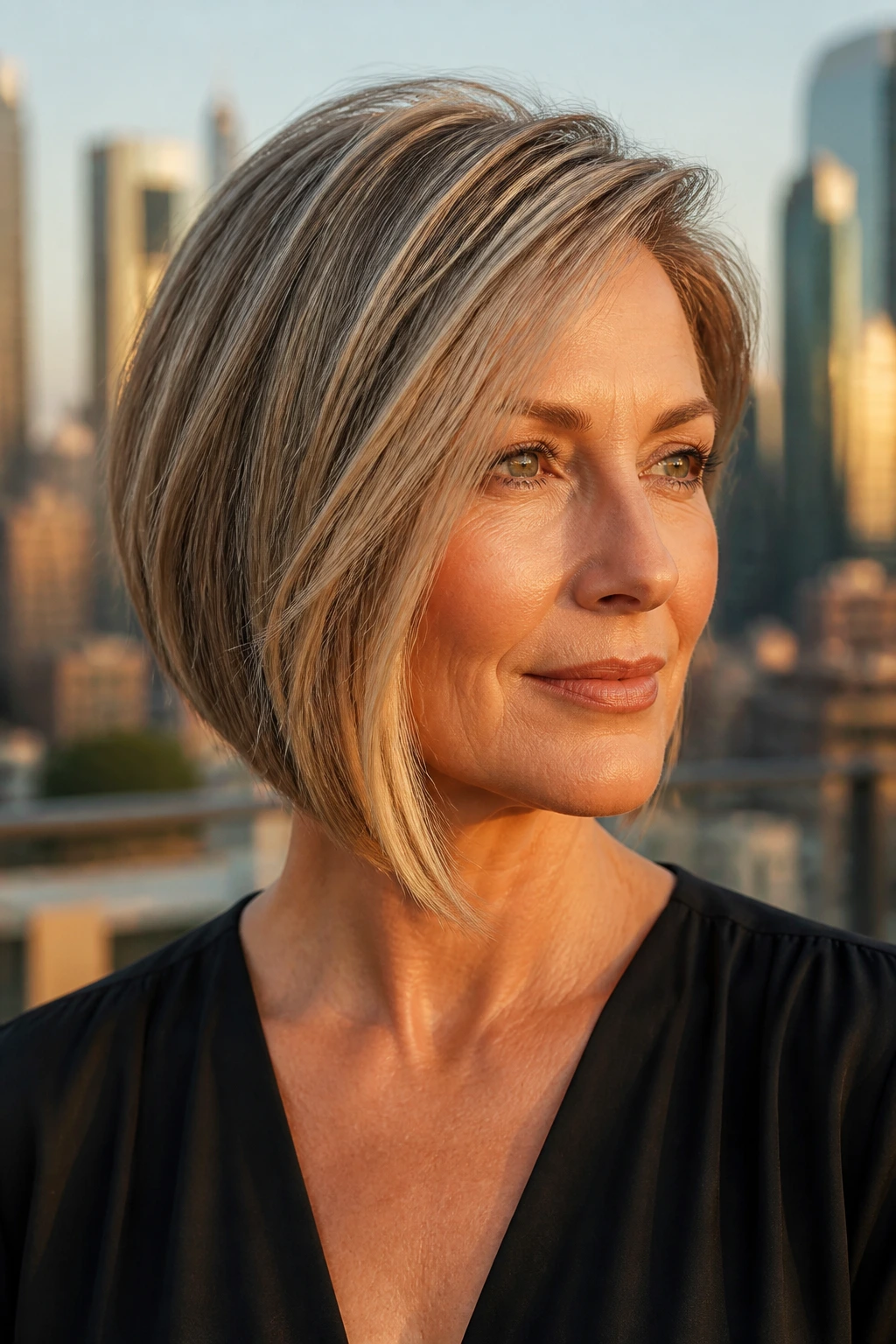
An asymmetrical bob gives fine hair a little tension, and tension is useful when the hair itself is soft. One side runs a touch longer than the other — not wildly longer, just enough to create a diagonal line that feels fresh. That tiny imbalance can make the hair look denser because the eye keeps moving.
This cut is a good choice if your hair falls flat on one side more than the other. Instead of trying to force a perfect mirror image, the haircut leans into the difference and turns it into style. It also works well with straight textures, where the angle stays visible.
I like this shape when someone wants something modern but not severe. It has edge, but not the kind that ages your features or feels hard around the jaw.
A sharp clean line at the longer side is what keeps it from looking accidental.
12. Piecey Razor Bob
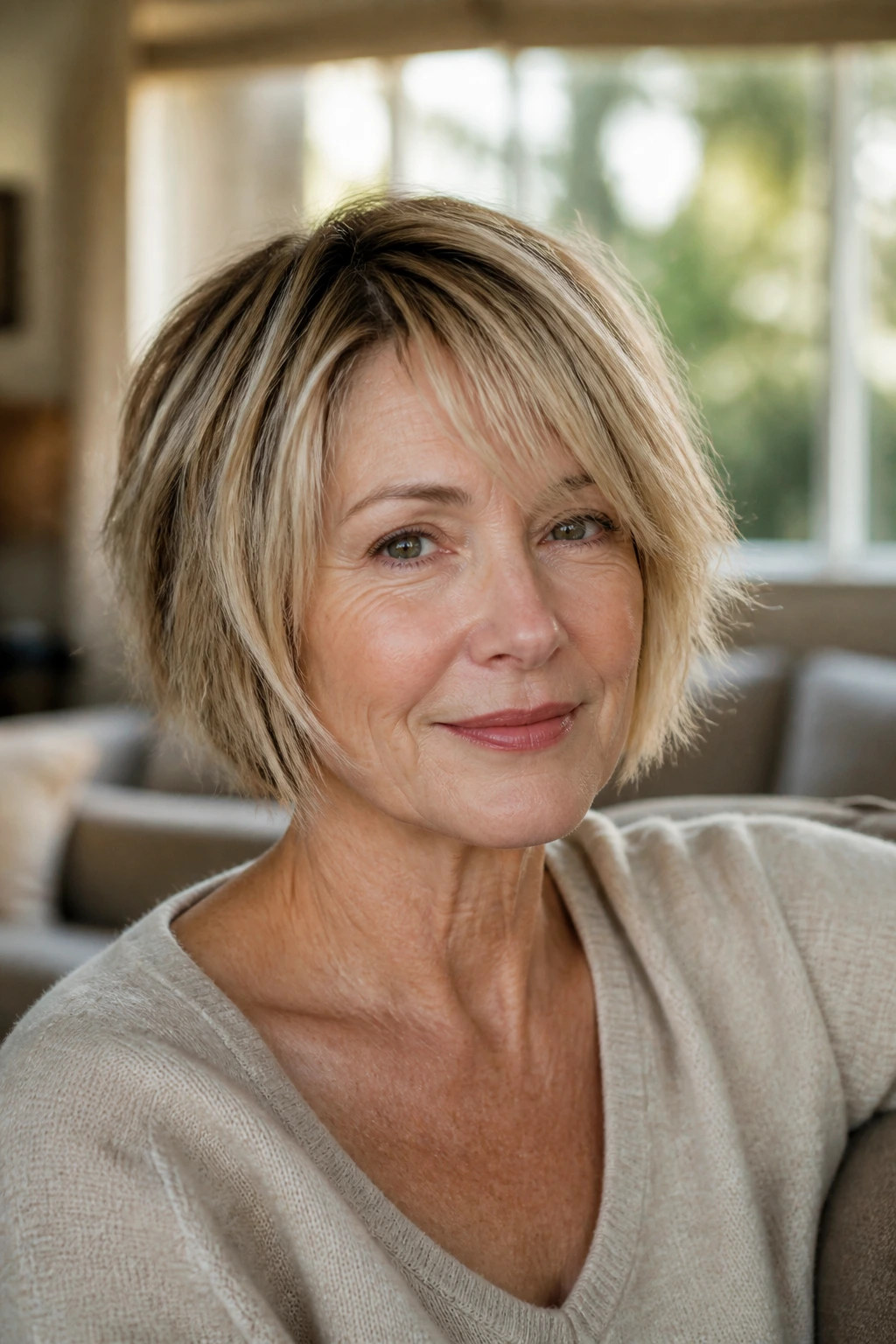
Razor cutting gets a bad reputation when it is used too aggressively on fine hair, and honestly, I get why. It can chew the ends up fast. But a light razor finish on the right hair — especially hair with a little bend or a medium-fine texture — can create a soft, piecey bob that looks airy instead of fluffy.
The key is restraint. You want the razor to loosen the edges, not shred them. When it works, the haircut moves in little separated sections that catch light in a soft way. That can make a simple bob look much less dense and boxy.
This is not the cut for hair that already frays at the ends. If your strands split easily, stick with point cutting. But if your hair feels smooth and just needs some movement, a piecey razor finish can be lovely.
A light styling cream usually beats heavy serum here. Heavy products glue the movement down.
13. Curved Bob with Face Framing
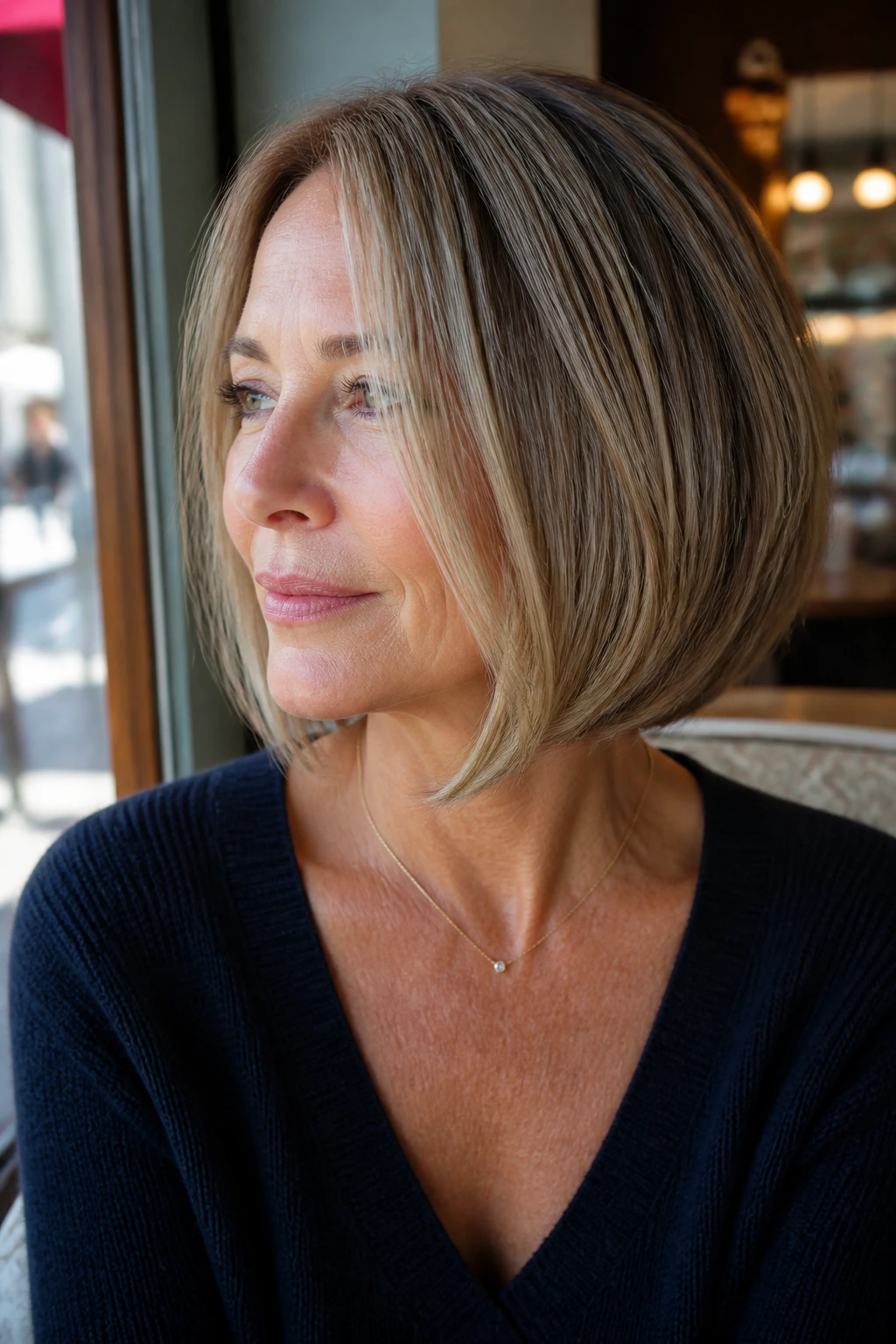
A curved bob hugs the shape of the head in a way that feels gentle, not dated. The face-framing pieces stay longer and softer, usually grazing the cheek or chin, while the back follows a rounded line. That gives fine hair a stronger outline and keeps the haircut from looking like it was chopped off at one level.
The face framing matters more than most people think. On fine hair, a few well-placed strands around the face can carry the whole cut. They soften the cheekbones, help with jawline balance, and make the haircut look tailored instead of generic.
Why it suits fine hair
- The curve creates the illusion of thickness at the edges.
- The longer front pieces keep the face from feeling closed in.
- The shape works with both straight and softly wavy textures.
- The ends do not need much product to hold their line.
Pro tip: Ask for the face-framing pieces to start around the cheekbone, not the chin, if your hair is especially sparse through the front.
14. Air-Dried Wavy Lob
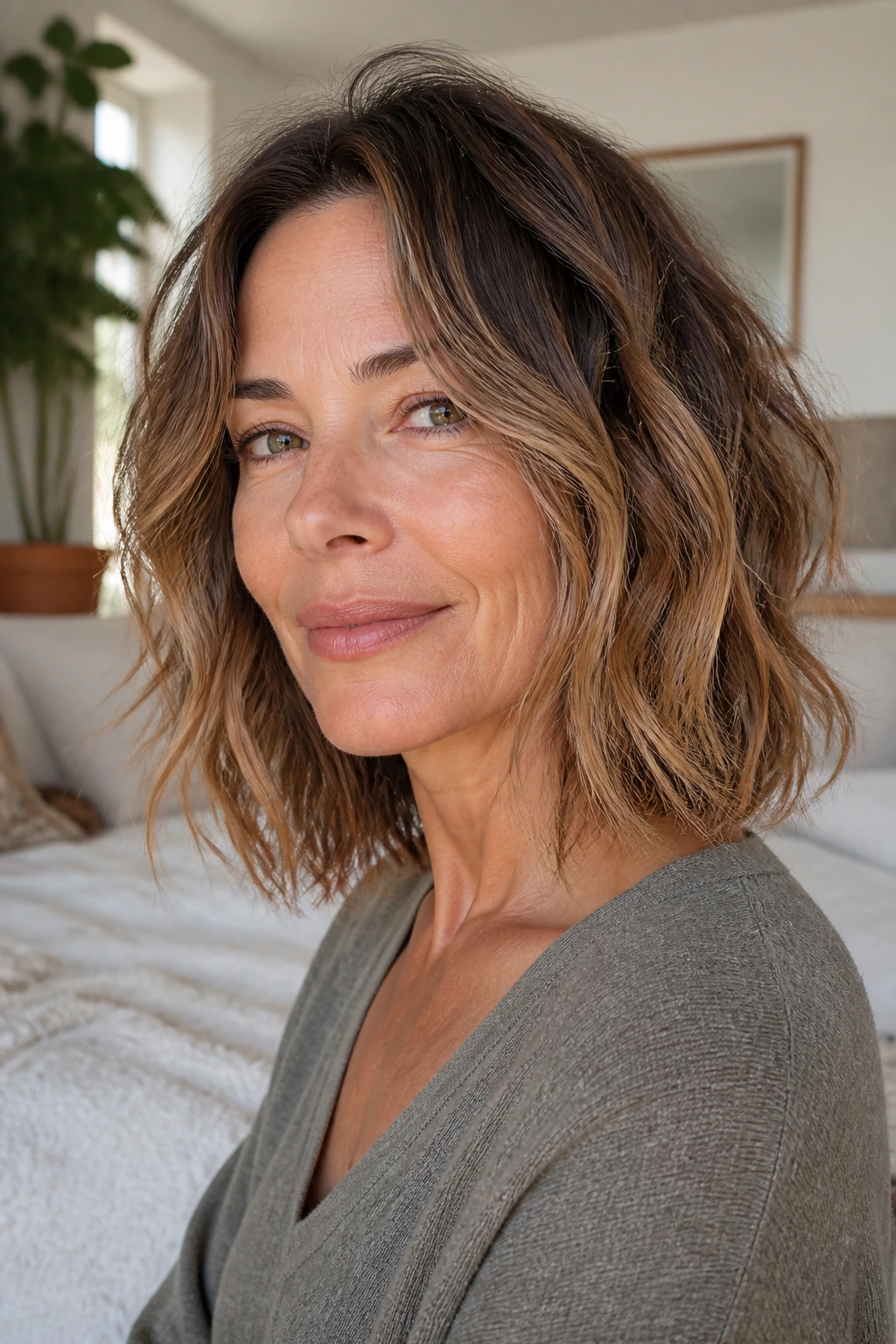
A lob that can air-dry well is worth its weight in gold when your hair is fine and your mornings are full. The length usually sits near the collarbone, which gives the wave somewhere to live without the ends puffing out too much. Long layers help the shape bend instead of balloon.
This one is less about precision and more about the right kind of freedom. A scrunch of mousse, a quick squeeze with a towel, and some patience can be enough. If your wave pattern is uneven, the longer length helps disguise that, because there is more hair for the shape to settle into.
I like this cut for women who do not want to fight their texture. It lets the hair do the work, but it still keeps the silhouette clean.
A diffuser helps, though you can get away with air-drying if you scrunch in product while the hair is still damp.
15. Crown-Lift Bob
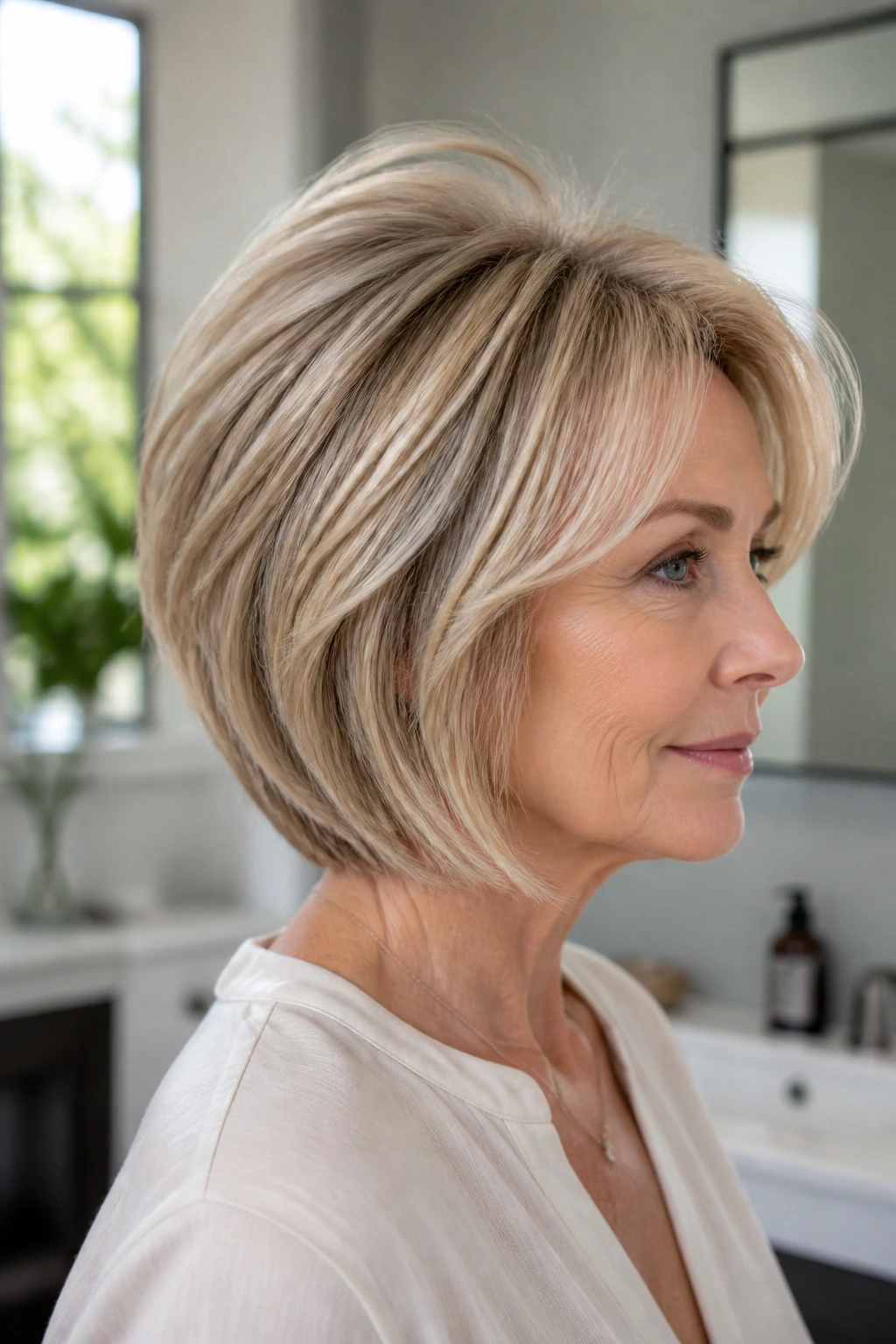
If the crown goes limp first — and for many fine heads, it does — this cut is a practical answer. The upper layers are shaped so they stand a little higher off the scalp, while the lower perimeter keeps the weight that stops the ends from looking thin. That balance is the whole game.
Too many crown layers and the haircut starts to float away from the head. Too few and the top collapses by lunchtime. The right version has lift, but it still feels anchored. It can be worn with a side part, a subtle off-center part, or even a soft pushed-back front.
This is one of those cuts where the blow-dry matters. Drying the roots in the opposite direction for the first minute or two can give the crown a better starting point. Small move. Big difference.
If you use root spray, keep it at the base only. End-heavy product can drag the shape down.
16. Silver-Enhancing Layered Bob
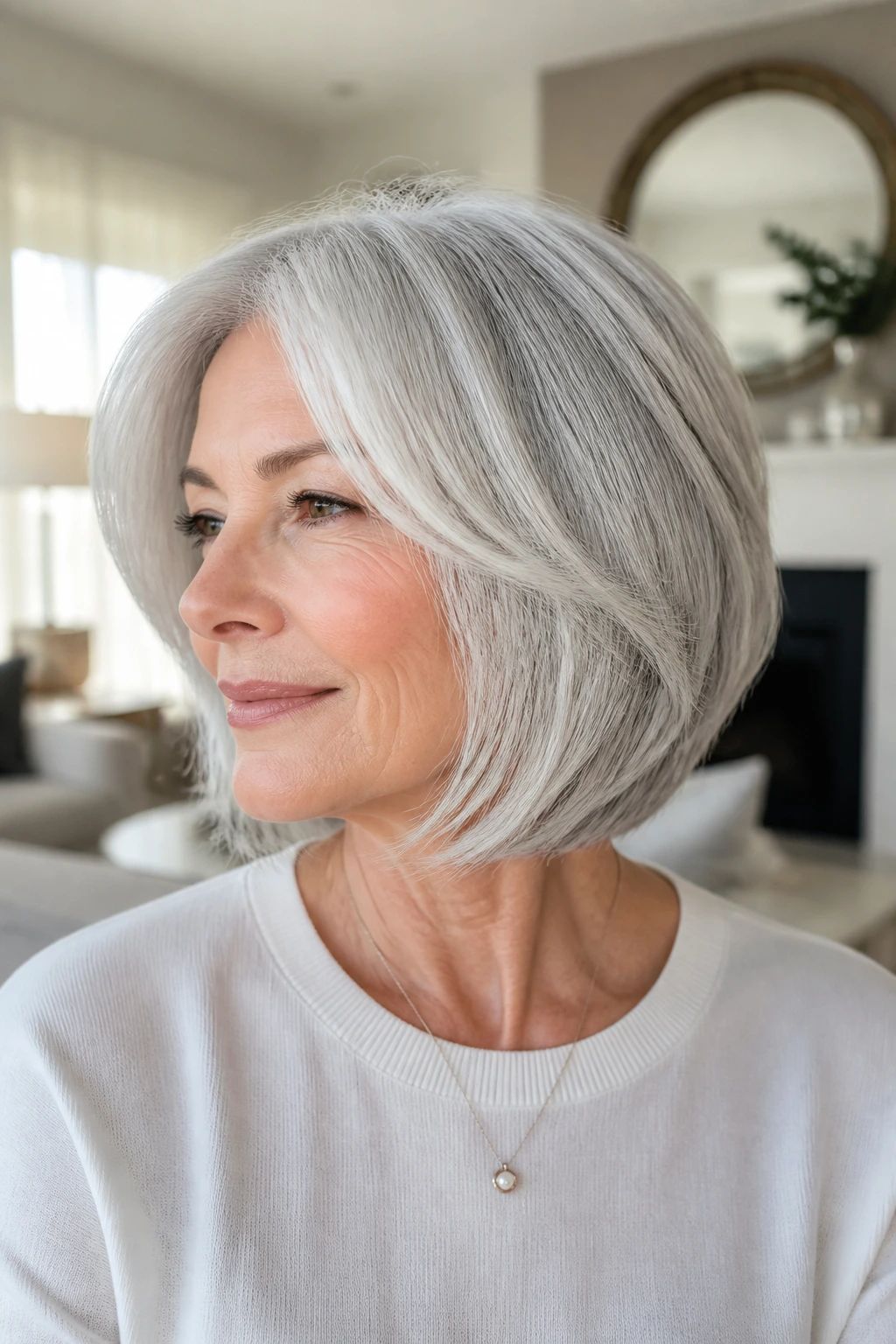
Gray and silver hair can look crisp in a layered bob because the cut gives the light somewhere to bounce. Fine silver strands can go translucent at the ends, so the shape has to do part of the work. A smart layered bob keeps enough line at the perimeter to stop the hair from looking wispy, while still allowing movement through the top and front.
The real mistake with silver hair is assuming it needs more thinning because it looks soft. Usually, it needs the opposite. It needs a clean edge, soft movement, and a cut that respects the shine of the strand instead of scattering it.
A gloss service can help, but the haircut matters first. If the shape is weak, no toner or serum will fake it.
Good pairing: a side part and soft eyebrow-skimming fringe can make silver layers look intentional instead of fragile.
17. Soft Curly Bob

Fine curls are a different animal. They need room, but not too much, and they need shape, but not a triangle. A soft curly bob keeps the curls from piling up at the sides by placing layers where the curl can spring without losing the outline. Done right, it gives the hair a rounded, airy halo instead of a bulky puff.
This cut is easier to live with when the layers are carved to the curl pattern, not against it. Wet cutting can help, but a stylist who knows how curls shrink should still leave enough length for the shape to settle once it dries. Shorter in the back, a little longer around the front, and soft around the crown — that usually behaves well.
Fine curls often look their best with a diffuser and a light gel cast that gets scrunched out once dry. Heavy creams can make them droop.
You want bounce, not collapse.
18. Sleek Glassy Bob with Internal Shape
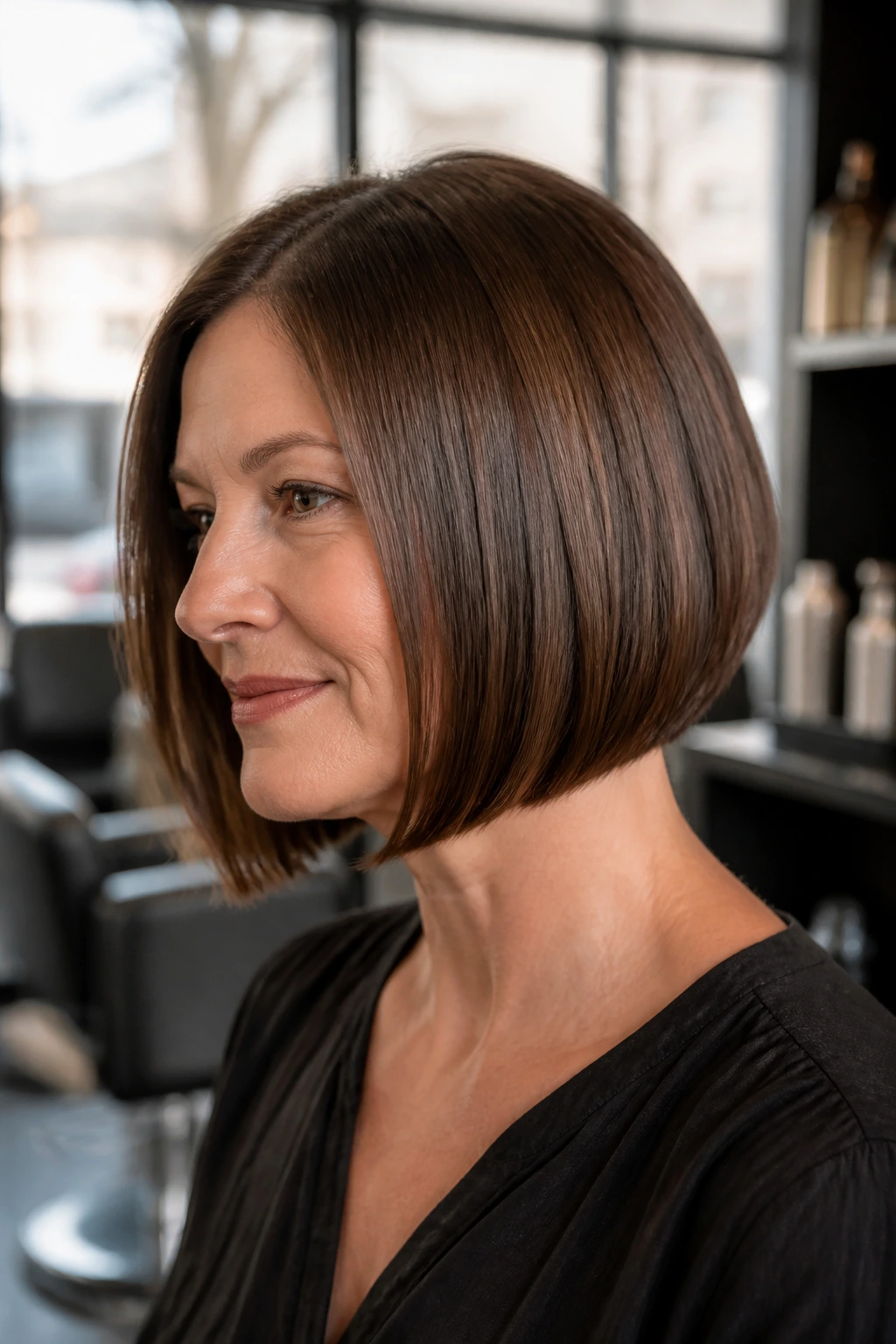
Not every fine-haired woman wants texture. Some want shine, clean lines, and a haircut that looks smooth enough to hold a mirror. A sleek glassy bob with hidden internal shape does that. The surface stays polished, but the inside has enough layering to keep the cut from lying flat all day.
This style is especially useful if your hair is naturally straight and you prefer a tidy finish. The danger with straight fine hair is that it can look severe when it is cut too blunt and too short. Internal shape softens that without disturbing the smooth look.
A heat protectant, a paddle brush, and a flat iron used in small sections are usually enough. The trick is not to overdo the pass count. One careful pass is better than four quick ones.
If you like crisp edges and gray hair with shine, this cut can look very sharp.
19. Shoulder-Skimming Side-Sweep Bob

This one gives you breathing room. The length reaches the shoulders or just above them, and the front is swept to one side so the face gets a diagonal line instead of a hard frame. It is a good compromise if you want the bob shape but are not ready for anything that feels short.
The side sweep softens the forehead and helps the haircut move when you turn your head. On fine hair, that motion matters because a perfectly still bob can look thin in motion. The sweep also works well with a little bend at the ends, which can be created with a round brush or a wide curling iron.
This is a good grow-out shape too. If you are moving away from a shorter cut, it gives you something polished while you wait for length to return.
Styling note: keep the product light. Too much cream or oil on shoulder-skimming lengths can make the ends separate and look stringy.
20. Tousled Bob with Broken Ends

This is the cut for people who do not want hair that looks overworked. The ends are softened enough to break up the line, and the finish leans tousled rather than smooth. Fine hair can pull this off beautifully because the texture creates the illusion of fullness without forcing the hair into a stiff shape.
What saves this style from looking sloppy is the shape underneath. The bob still has a structure; it is just disguised by movement. That means the nape and sides have to be cut with care. If the base is weak, the tousle turns into a shrug.
I like this on hair that gets better as the day goes on. A little root lift in the morning, a quick shake later, and the haircut settles in. It does not demand perfection. Good. Hair should not need a pep talk.
A salt spray can help, but use a small amount. Too much and the ends feel rough.
21. Rounded Bubble Bob
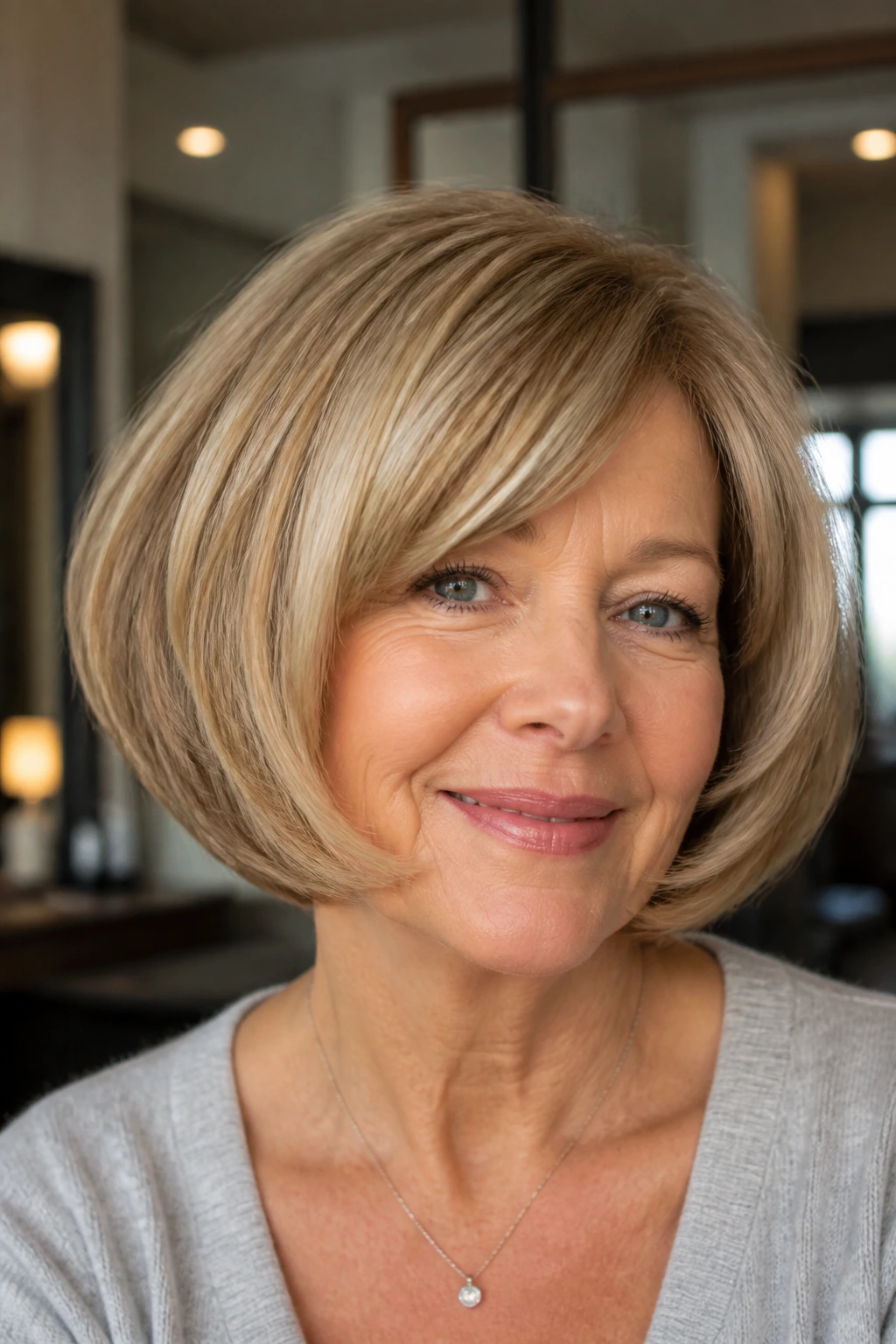
A bubble bob sounds playful because it is, but the shape is also smart. The silhouette curves outward at the sides and tucks in near the ends, which gives fine hair a fuller outline from every angle. It is especially helpful if your hair tends to lie too close to the head and needs a more sculpted finish.
This cut needs a careful hand. The rounding has to be subtle or it can look dated fast. Done softly, it gives the cut a plush shape without making the hair feel heavy. Think controlled fullness, not puff.
It can be a good choice if your face is longer and you want a little width around the cheeks. The rounded side shape helps balance that. On narrower faces, keep the curve gentler so it does not crowd the features.
A medium round brush and a cool-shot finish help the shape hold.
22. Long-Layer Lob

If you want the safest long-term bet, this is it. The lob keeps enough length to feel familiar, while long layers remove just enough weight to stop fine hair from drooping. It is the easiest shape to grow out, the easiest to style, and one of the easiest to wear with changing texture.
The long layers matter because they keep the ends from looking like a heavy curtain. At the same time, they do not strip away the line. That makes this cut a solid choice if your hair has become finer but you still want movement around the shoulders and collarbone.
This is also the cut that tolerates a bit of laziness. Air-dry it, bend it with a brush, tuck one side back, or wear it straight. It still looks like a haircut, not a compromise.
Best of all: it gives you room to adjust the length over time without starting from scratch.
Why the Right Layers Matter More Than the Word “Layered”
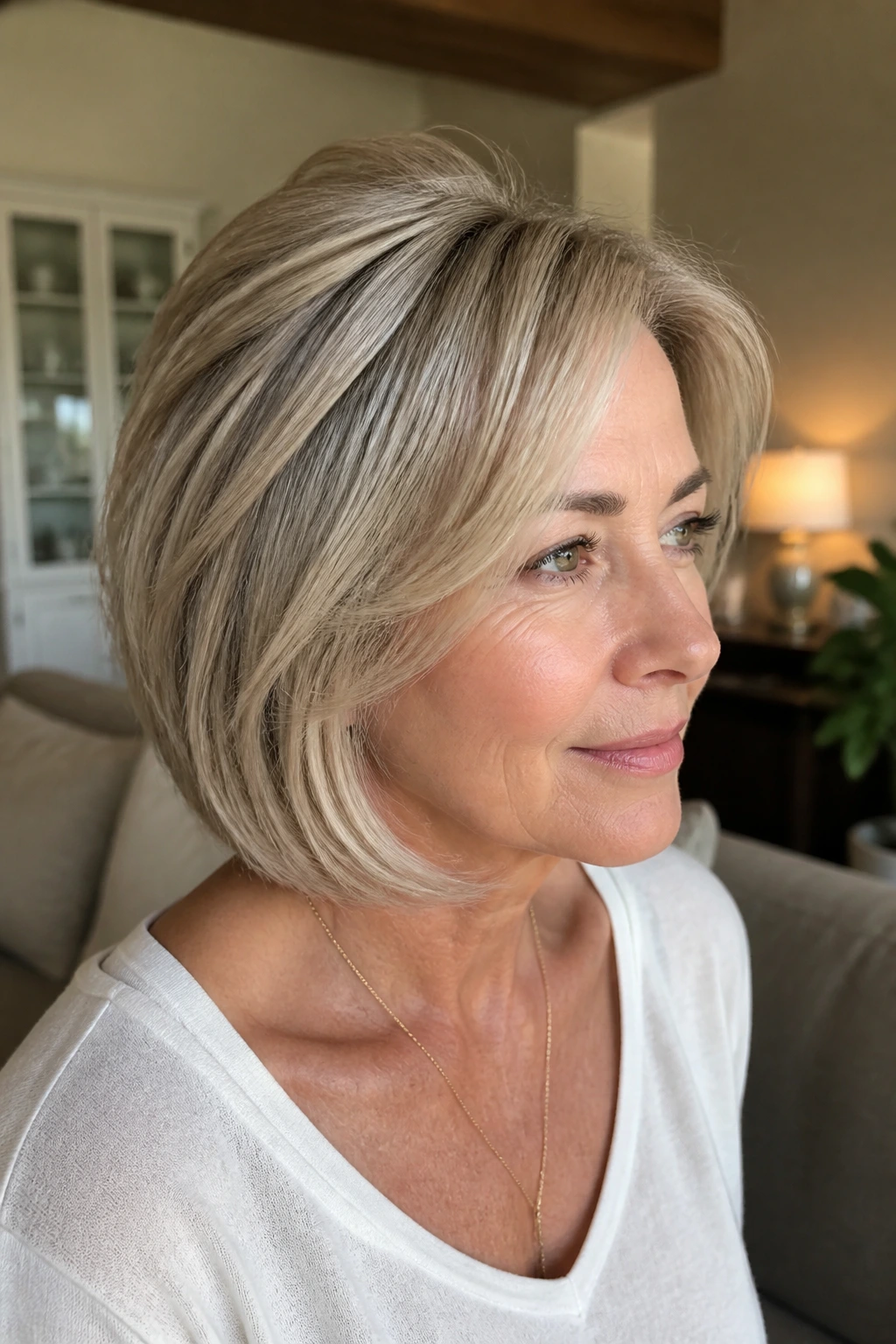
Layering is one of those haircut words that sounds simple until you see the wrong version in the mirror. On fine hair, the layer itself is not the point. The placement is the point. A layer cut too high can leave the crown hollow and the ends wispy. A layer cut too low can do almost nothing except take away the little body the hair already had.
What you want is a controlled reduction in weight. That sounds technical because it is. The haircut should remove bulk where the hair resists moving, usually through the interior, while leaving enough strength at the perimeter to make the outline look deliberate. The line around the bottom is what keeps the cut from reading as thin.
The perimeter carries the illusion
A clean edge at the jaw, chin, or collarbone gives the eye a place to stop. Fine hair without that edge can look like it evaporates at the ends. Keep the outline solid and the whole cut reads fuller, even if the individual strands are fine.
Internal shape does the invisible work
Interior layers create bend and lift from underneath. You do not always see them, but you feel them when the hair dries with a little movement instead of lying flat. That is the part most at-home haircuts miss.
Length changes the math
Medium length gives fine hair more room to shift and settle. Too short, and every cowlick shows. Too long, and the weight drags the shape down. Collarbone and shoulder-skimming lengths often hit the sweet spot because they let the hair move while keeping enough mass to hold the line.
Essential Tools for Styling These Bobs
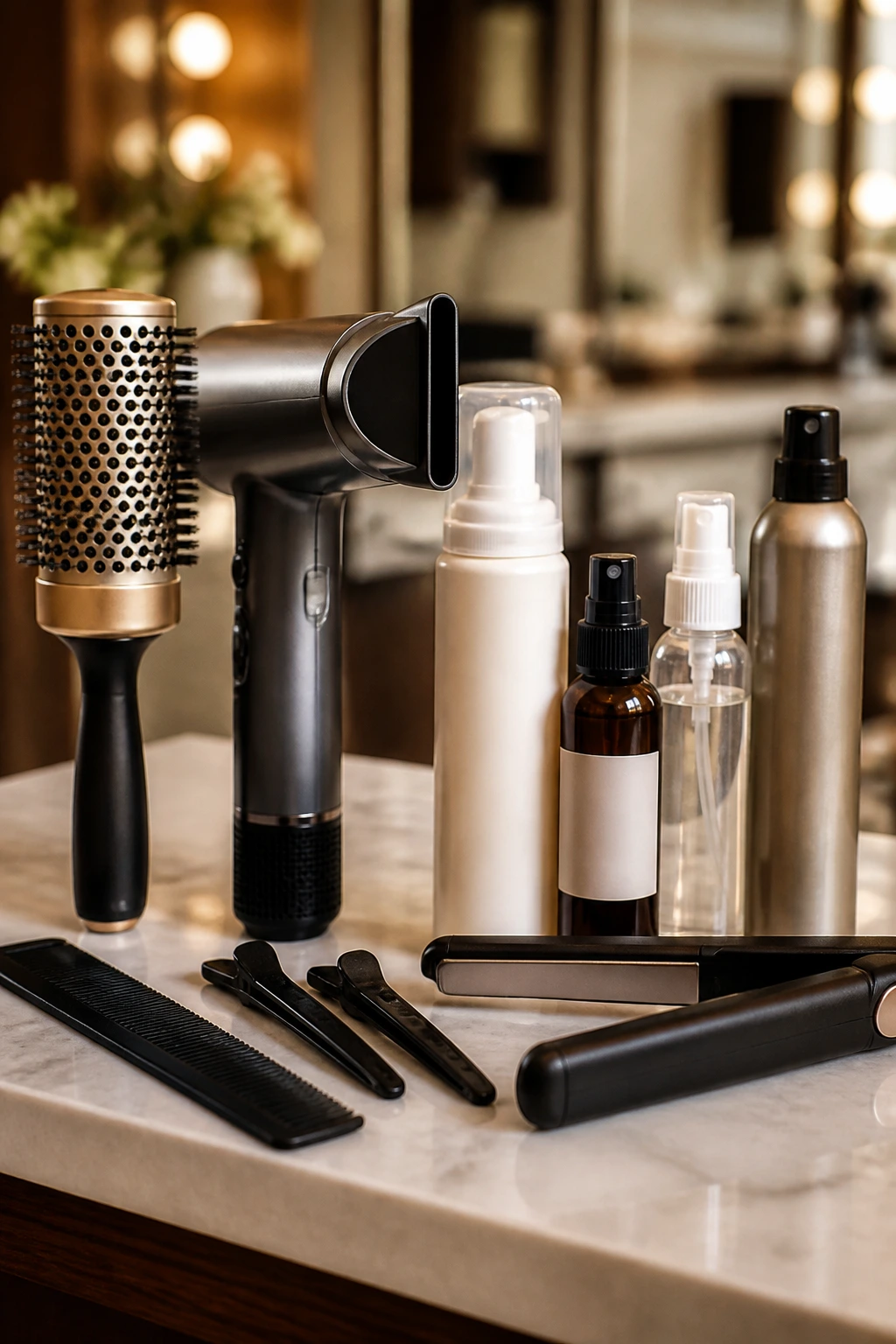
- 1.5-inch round brush: A good middle-size brush gives the ends a slight curve without creating too much volume at the root.
- Blow dryer with a concentrator nozzle: The nozzle keeps the airflow narrow, which helps smooth fine hair instead of blasting it apart.
- Volumizing mousse: Use it at the roots and mid-lengths on damp hair; a walnut-sized amount is usually enough.
- Root-lift spray: This works best when it is applied directly at the scalp, especially at the crown and around a side part.
- Light heat protectant: Fine hair burns fast and gets limp fast, so a lighter spray is usually better than a heavy cream.
- Fine-tooth comb or tail comb: Handy for clean parts and sectioning when you want a neater finish.
- Duckbill clips: These keep the top section separated while you dry the back and sides.
- Texture spray or dry shampoo: Useful on day two, but use a small amount or the hair can look dusty.
- Flat iron with narrow plates: Optional, but helpful if your bob needs a quick bend or a polished finish at the ends.
What to Ask for at the Salon Chair
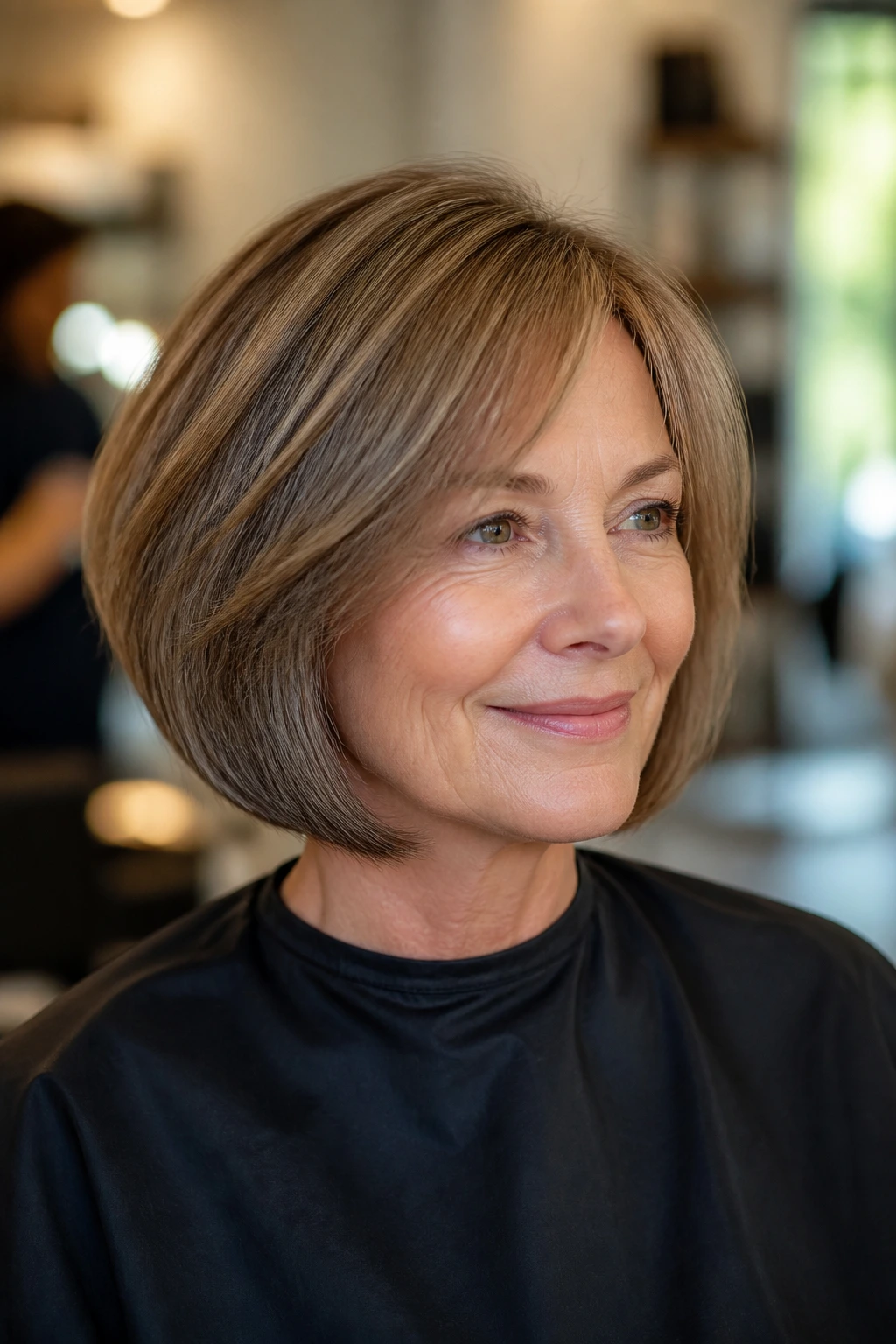
Bring pictures, yes, but point out the details that matter. If you like the length in one photo and the fringe in another, say that out loud. Most haircut disappointment comes from vague requests, not from bad scissors. Fine hair needs a plan, and the plan is usually about where the layers start, how much weight stays at the bottom, and how the front pieces fall around the face.
Tell the stylist if your hair collapses at the crown, flips out at the neck, or separates around the temples. Those are not small notes. They tell the cutter where the shape needs support. If you wear glasses, say so. If you prefer air-drying, say that too. A cut built for a round-brush blowout can behave very differently once it dries on its own.
The most useful phrases
- “Keep the perimeter strong.”
- “Start the layers low.”
- “I want movement, not see-through ends.”
- “Please leave enough weight around the bottom.”
- “I part my hair here.”
One more thing: if your hair is very fine, ask the stylist to check the cut when the hair falls naturally. Sometimes the beautiful sectioning in the chair hides a shape that looks too airy once it settles.
Small Tweaks That Give a Fine Bob More Lift
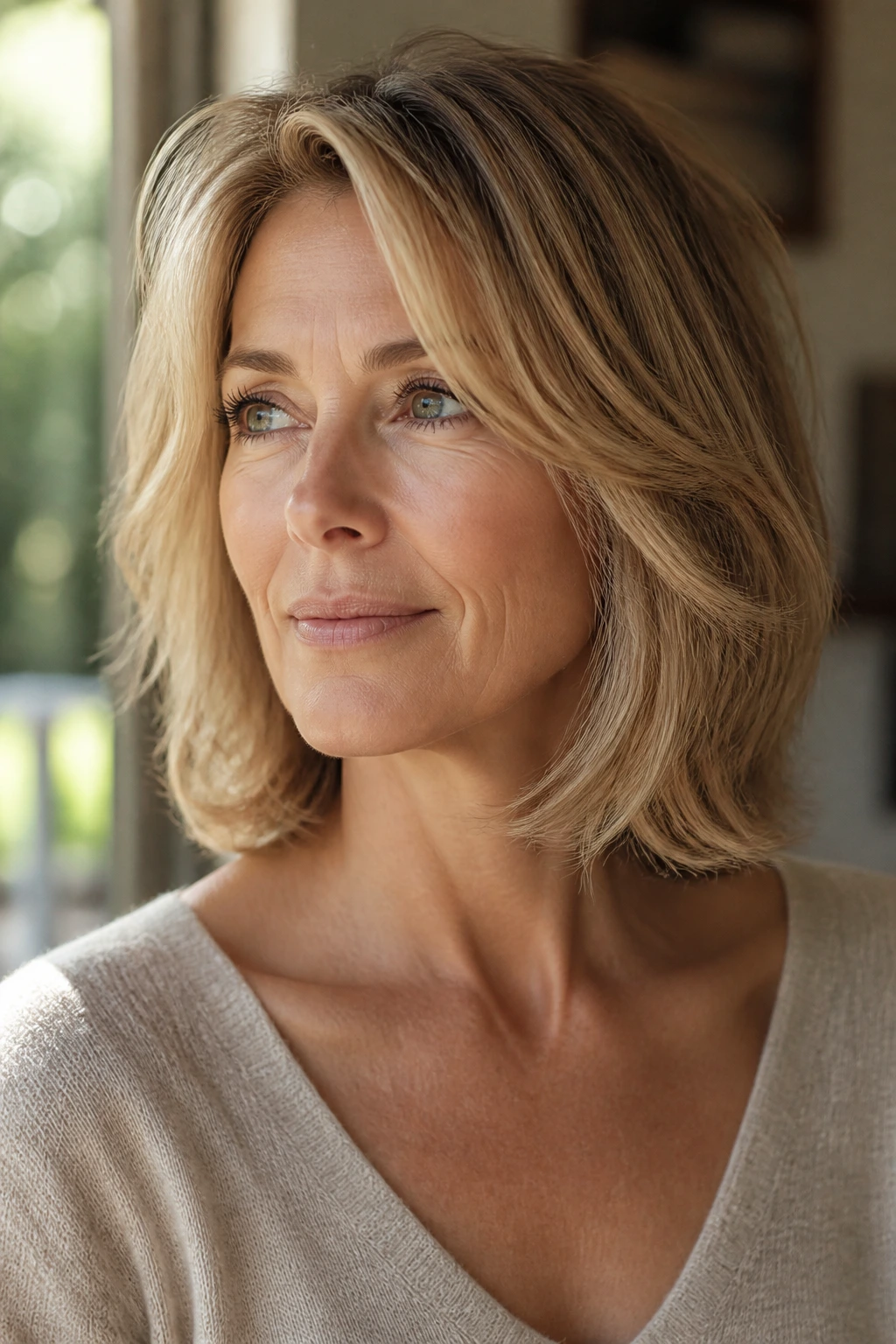
Root Lift: Blow-dry the root area in the opposite direction for the first minute, then switch back. That tiny change can give the crown more standing room without teasing.
Part Switch: If your part has lived in the same place for years, move it a half-inch to the other side for a few days. Fine hair often wakes up quickly when it is asked to fall differently.
Product Amount: Use less than you think. A pea-sized cream or a walnut-sized mousse is usually enough; too much product weighs down fine strands before they have a chance to move.
Directional Drying: Aim the dryer from root to end, not straight at the head. Air fired straight up into the crown makes the hair frizz and lose direction.
Face-Frame Finish: Bend the front pieces just slightly away from the face, especially if the bob sits at the jaw. That opens the shape and keeps it from closing in around the cheeks.
Gray-Hair Gloss: If your silver hair looks dull, a clear gloss or shine treatment can make the haircut read cleaner. The shape looks sharper when the light glides over it.
Common Mistakes That Flatten Fine Hair
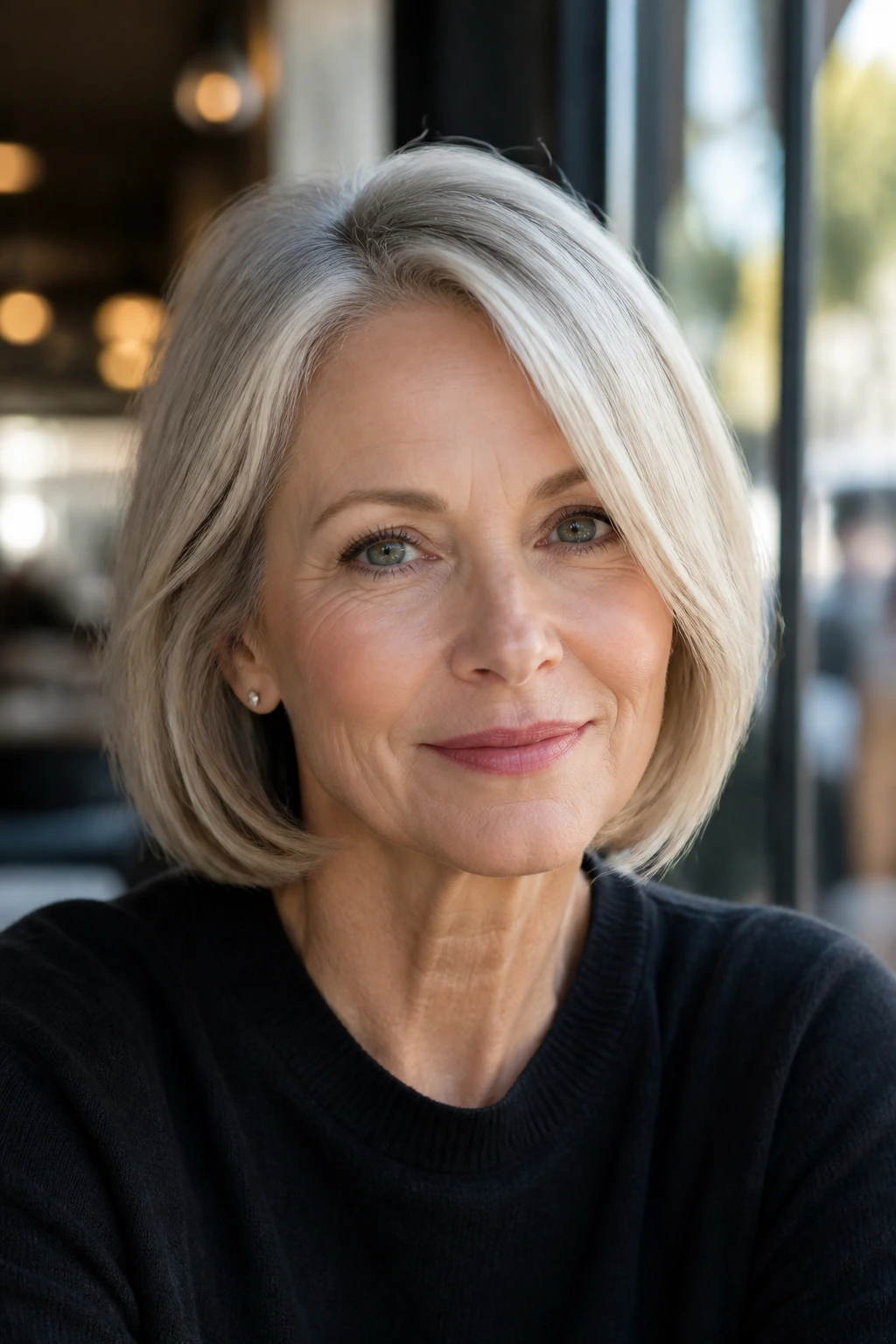
The biggest mistake is taking off too much weight in the wrong place. Fine hair does not need aggressive thinning at the ends. It needs enough density to make the outline visible. If the bottom starts to look feathery in the chair, it will probably look even thinner once it is dry.
Another common problem is layering too high around the crown. That can give a pretty shape for a minute, then the top collapses and the ends feel sparse. The fix is simple: keep most of the movement below the most fragile part of the head unless your hair truly has enough density to handle it.
Heavy creams and oils are another trap. They can make fine hair look sleek for ten minutes and greasy by lunch. Use lighter products and apply them only where the hair needs control. The roots and ends do not need the same amount.
Watch for these signs
- The cut looks good wet but wispy dry.
- The ends split apart when you turn your head.
- The crown sits flat even after styling.
- The sides puff while the top collapses.
If that happens, the haircut probably needs more perimeter weight or less product, not more effort.
Variations and Adaptations to Try
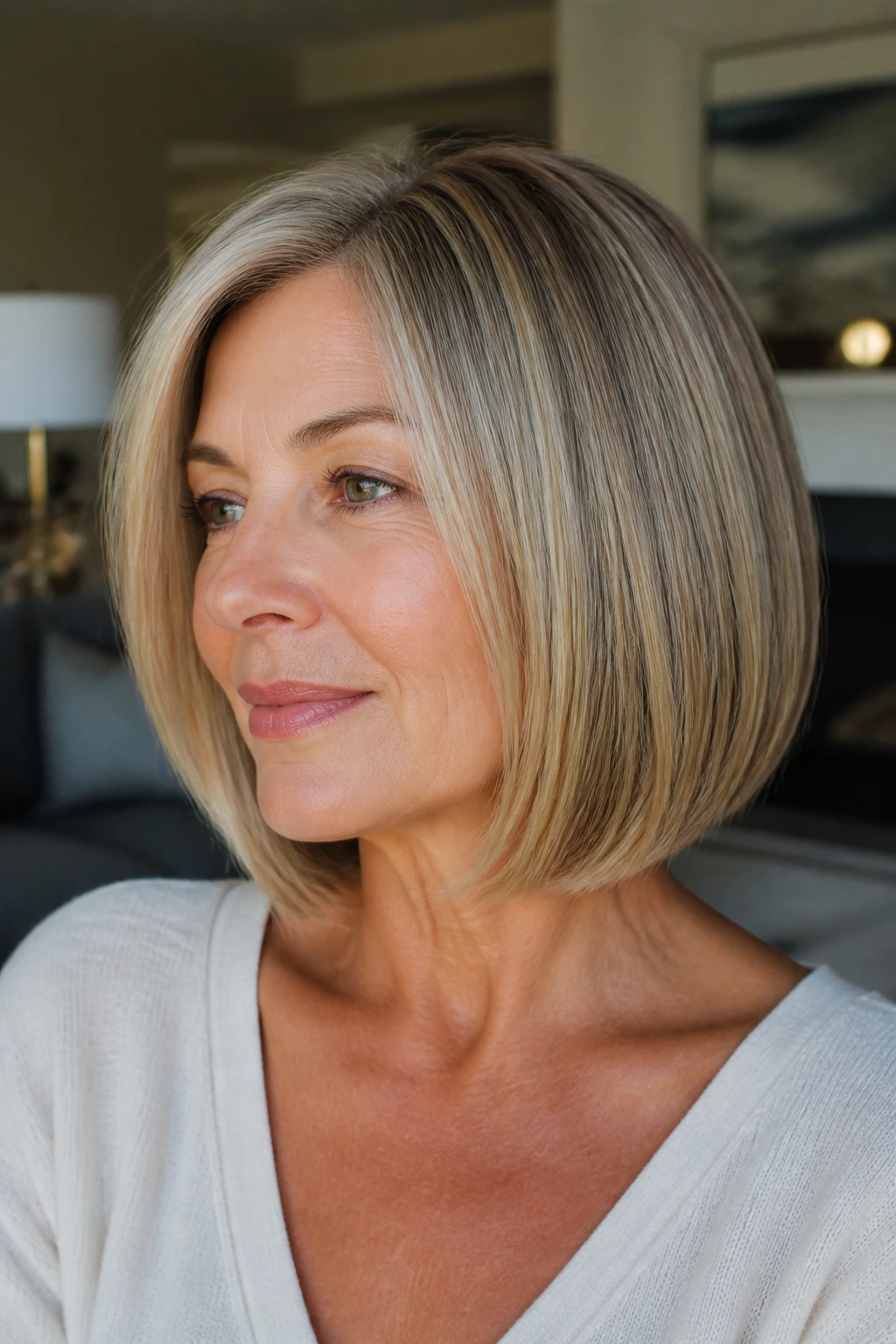
The Glassy Finish: Keep the cut sleek and straight, then use a flat iron in small sections and finish with a light shine spray. This suits people who like crisp lines and want the haircut to look tidy all day.
The Air-Dry Wave: Add a few long layers and let the texture do the rest. This works if your hair has a soft bend and you do not want to spend time with a brush.
The Soft Fringe Version: Add a wispy bang that blends into the side pieces. It can soften the forehead and make the whole cut feel gentler without taking much length away.
The Silver Glow Shape: Keep the perimeter clean and let the layers stay low so silver strands can catch the light. This version is especially good when the hair has lost a little density through the front.
The Low-Maintenance Grow-Out: Ask for longer face-framing pieces and softer layers through the interior. It buys you time between trims and keeps the cut from looking rough when it starts to grow.
The Extra-Lift Crown Cut: Use a little more internal shaping at the top, but keep the bottom line full. That helps if your crown lies flat even after drying.
How to Keep the Shape Between Trims

Fine bobs usually need a trim every 6 to 8 weeks if you want the line to stay crisp. If the cut is longer and softer, you may stretch it a bit farther, but once the ends start to feather out too much, the whole shape looks tired. That does not mean the haircut failed. It means the ends have reached the point where they need a refresh.
At home, the goal is to preserve the outline. Sleep on a smooth pillowcase if your hair kinks easily. Use a tiny bit of leave-in on the ends only if they feel dry. Wash as often as your scalp demands, not according to a rule someone handed you years ago. Fine hair usually collapses under too much product buildup, so a clarifying wash every couple of weeks can help.
Color also changes the shape. Highlighted hair can feel drier and lighter; gray hair can feel softer and more porous. Both need product adjusted to the strand, not to the bottle label. If the hair starts to look frayed, use less heat and more air-drying time.
Questions People Ask Before They Cut Their Hair
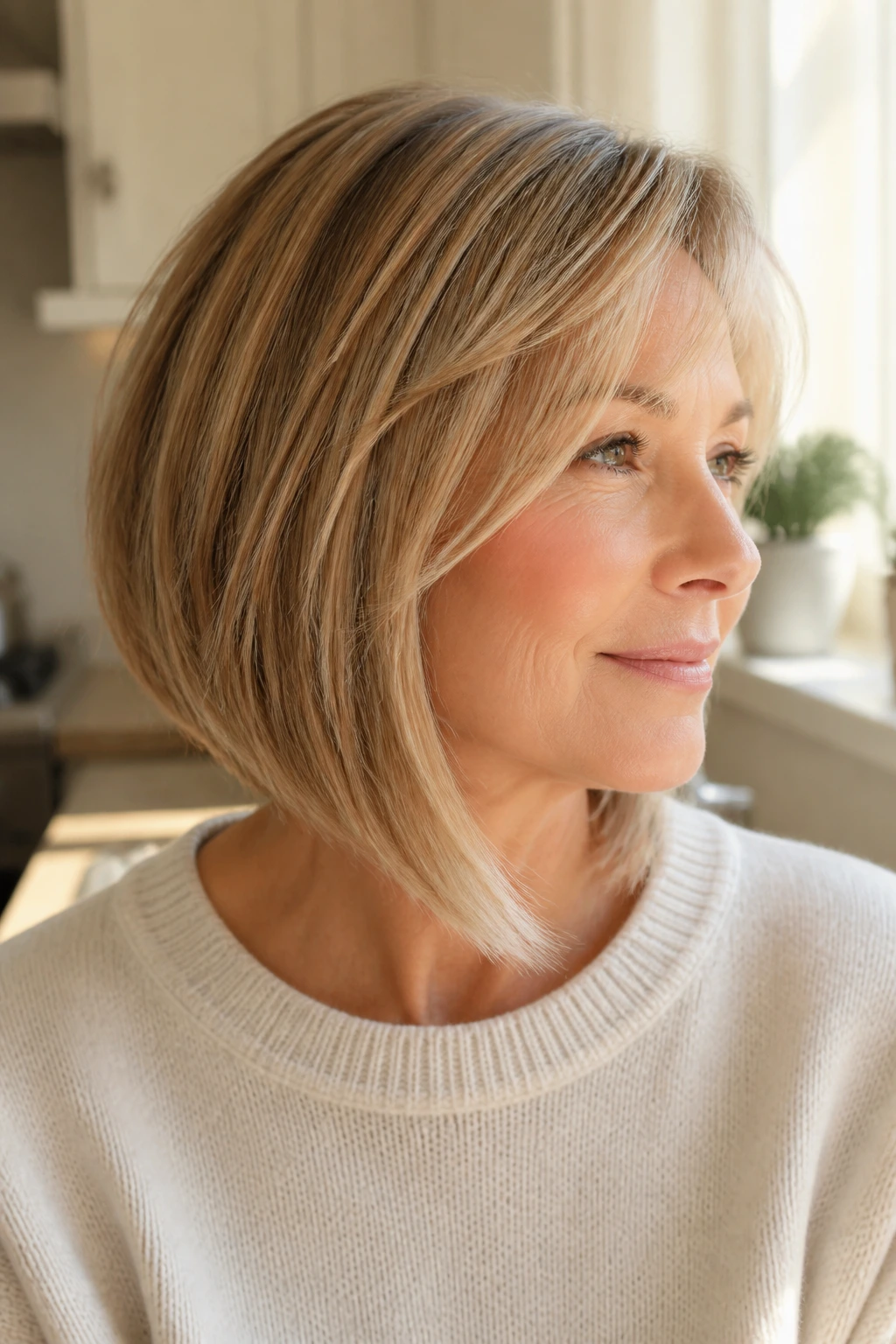
Will layered bobs make fine hair look thinner?
They can, if the layers are cut too high or too aggressively. The safer version keeps the perimeter strong and uses interior shaping sparingly so the ends still look full.
What length is best for fine hair after 50?
Collarbone to shoulder-skimming length is a strong place to start. It gives fine hair enough weight to hold shape without dragging the top flat.
Can I wear a bob if I have glasses?
Yes, and sometimes it works better with glasses than longer hair does. The trick is to keep the front pieces soft enough that they do not crowd the frames, especially at the temples.
Should I avoid bangs?
Not if you want them. Curtain bangs and soft side-swept bangs usually work better than blunt heavy bangs on fine hair because they leave more air around the forehead.
What if my hair flips out at the neck?
Ask for the nape to be cut with the growth pattern in mind and dry it downward with a brush or a nozzle. A little inward bend at the bottom can also keep the flip from taking over.
How often should I style it with heat?
As little as your routine allows. Fine hair can look shiny one day and fried the next if you heat it every morning without protection, so alternate between blow-drying and lighter air-dry days when you can.
Can a bob work with naturally wavy hair?
Absolutely, if the layer placement respects the wave pattern. The haircut should support the wave, not fight it into a straight shape it will never keep.
What should I bring to the salon?
Bring 2 or 3 photos that show length, fringe, and finish separately if possible. One picture rarely covers all three, and that is where misunderstandings start.
A Bob With Some Backbone
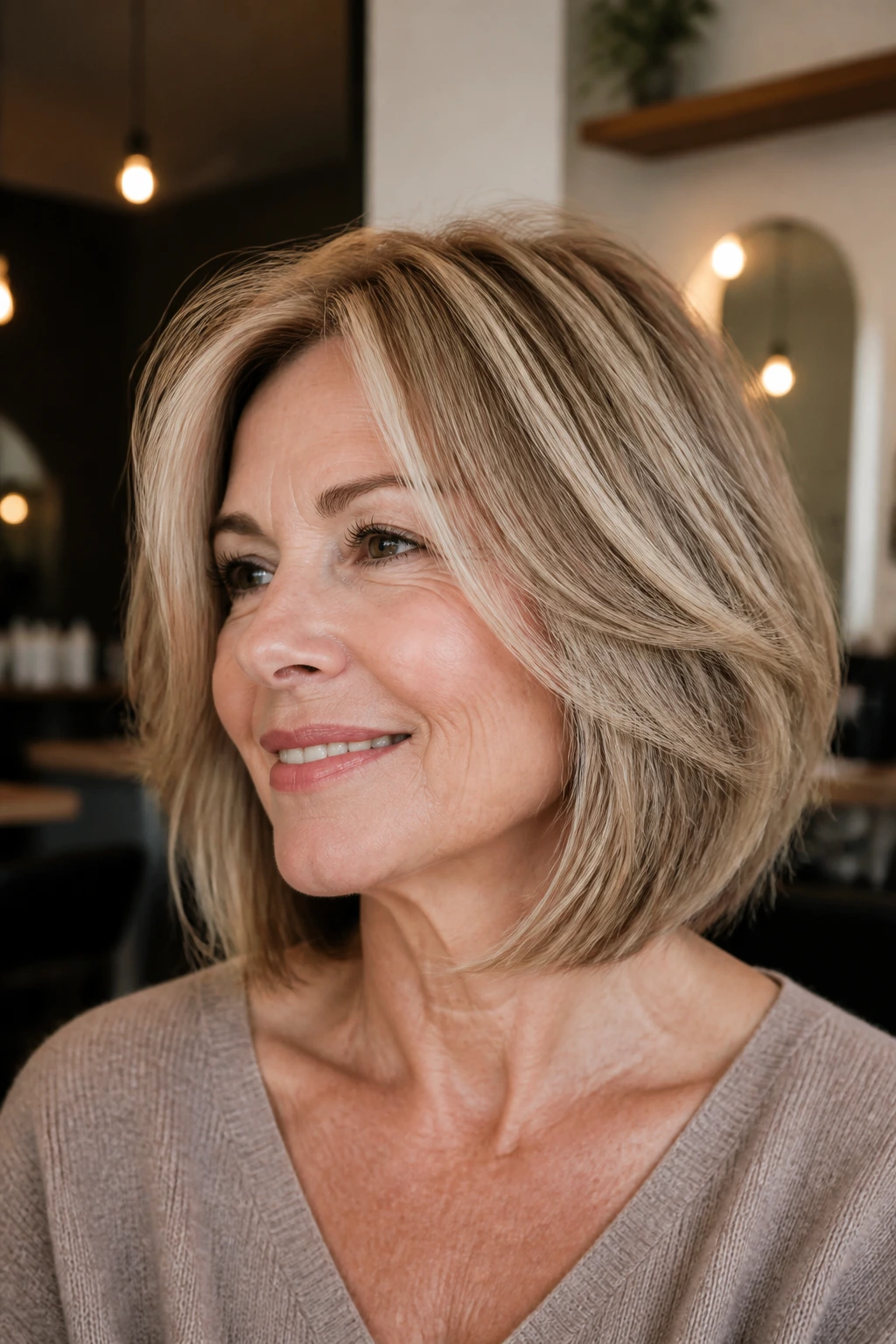
The nicest thing about these layered medium-length bobs is that they do not ask fine hair to become something else. They work with softness, not against it. They keep the outline visible, the top from collapsing, and the ends from looking like they were forgotten halfway through the haircut.
That is the real win. Not volume for its own sake. Shape. A bob with enough structure to hold the day, enough movement to keep it from feeling stiff, and enough restraint to suit hair that has grown a little finer over time. Choose the version that matches how you live, not just how it looks in a chair, and the cut will keep paying you back every time you run a comb through it.