



A bob can look plain in a blink. Give it a soft wave, a clean part, and one sharp accessory, and it changes mood fast. The cut stops reading as “just hair” and starts reading as a choice.
That’s why loose bobs with waves for special occasions keep showing up at weddings, dinners, gallery openings, milestone birthdays, and every event where you want polish without the stiffness of a full updo. The shape is compact, which means it stays neat. The movement keeps it from looking severe. And when the waves are brushed out the right way, you get that clean, airy bend that sits somewhere between relaxed and dressed up.
The trick is not to curl the life out of it. A bob does not need tight ringlets to look finished. In fact, that usually backfires. Shorter lengths can turn springy in a hurry, and the minute the barrel is too small or the section is left on too long, the style starts looking more prom than party. A 1-inch or 1.25-inch iron, a cool-down period, and a good brushout do more for a bob than another round of hairspray ever will.
Why This Collection Earns Its Place
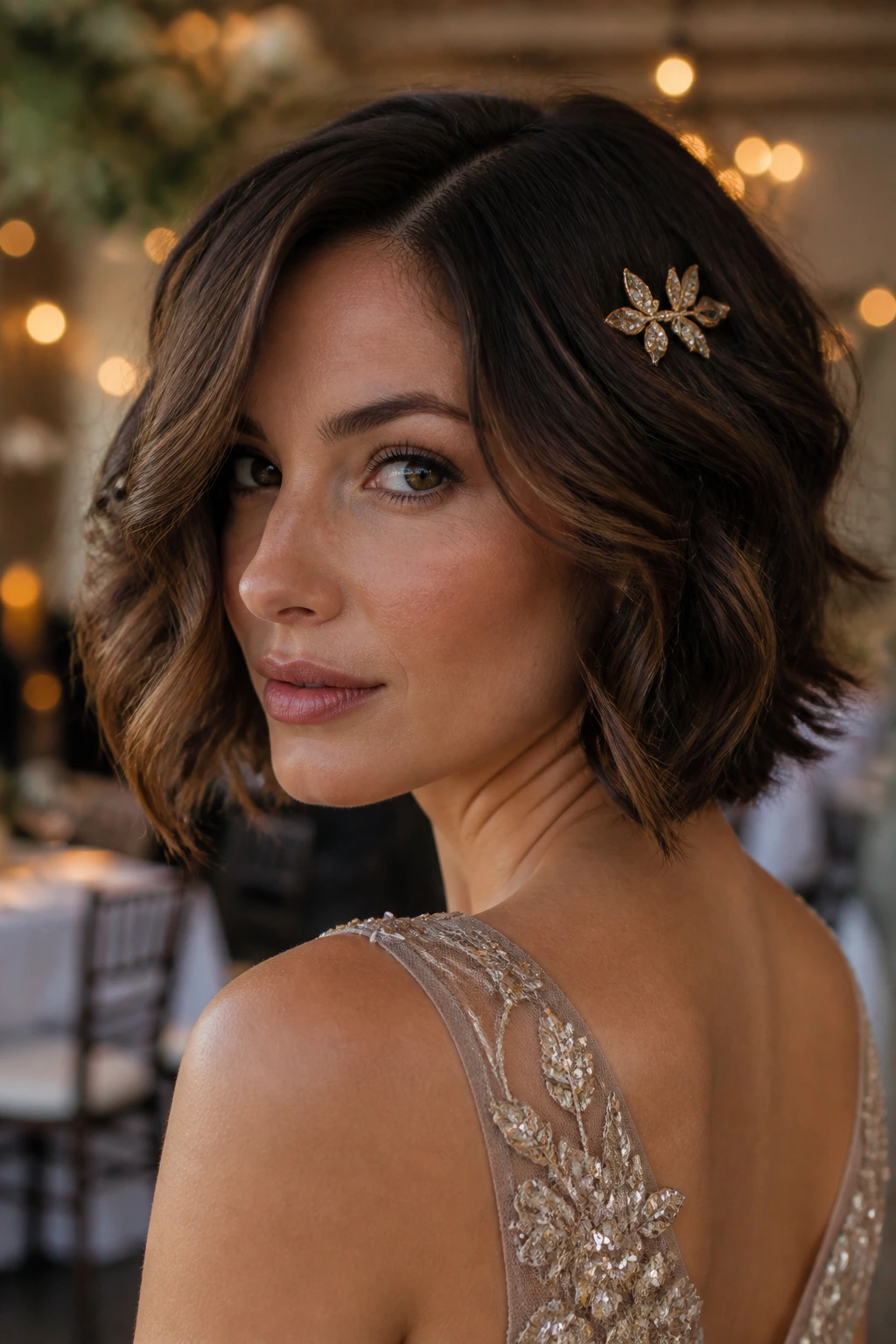
-
Short hair still gets ceremony: A bob with waves gives you shape around the face and neckline without the tugging, pinning, and hard helmet feel of a full chignon.
-
The styles travel well from ceremony to reception: Once the wave is set, you can tuck one side, add a clip, or leave it clean and let the shape do the work.
-
The same cut can look different three ways: Change the part, change the wave size, or change the finish from matte to glossy, and the whole mood shifts.
-
It plays nicely with jewelry and necklines: Bobs leave room for statement earrings, high collars, open backs, and simple straps. That matters more than people admit.
-
You can dress it up without drowning it in product: A little root lift, a flexible spray, and a careful brushout usually beat heavy cream and too much shine oil.
-
It works on more than one hair type: Fine hair, thick hair, straight hair, and naturally wavy hair can all wear this shape; they just need different section sizes and different hold.
Why Loose Waves Make a Bob Look Finished Without Being Stiff
A bob has a sharp edge by nature. That edge is the whole point, and it’s also why it can look too plain if you leave it untouched. Loose waves soften the line just enough to make the cut feel intentional, but they do not erase the shape. That balance is the sweet spot.
The wave pattern matters more on short hair than it does on long hair. On a longer style, a curl can hide inside the length and still read as soft. On a bob, everything is visible. The bend at the cheekbone, the lift at the crown, and the slight turn at the ends all show up immediately, which is why a loose wave tends to look more polished than a tight barrel curl. Tight curls on a bob can bunch up and shorten the style in a way that feels fussy.
A good bob wave also gives you room to work with the face. Slide the part a half-inch off center and the whole silhouette changes. Tuck one side and you get structure. Leave a few face-framing pieces out and the look softens. That kind of flexibility is exactly why this length keeps getting pulled into dressy situations.
And there’s a practical reason I like it. Bobs hold their personality. They do not collapse into the same limp curve that long layers sometimes do. Once the shape is set, it usually stays legible for hours, especially if the hair was fully cooled before brushing. That cooling step is boring. It matters anyway.
1. Side-Parted Soft Wave Bob
A deep side part is the fastest way to give a bob some ceremony. It creates lift over one temple, lets the other side skim the cheekbone, and makes the whole cut look more sculpted than casual. This version works when you want the dress, earrings, and makeup to share the stage with your hair instead of fighting it.
Why it works
The side part gives the bob an uneven balance that feels deliberate, not accidental. It also lets one side tuck neatly behind the ear, which is handy if you’re wearing a necklace or a pair of earrings that deserve room. I’d use a 1.25-inch curling iron here and wrap the front pieces away from the face so the wave opens up instead of closing in.
- Best for chin-length and jaw-length bobs
- Strong with off-shoulder dresses and one-shoulder necklines
- Works well when you want one side to stay softer and fuller
Tip: Keep the crown smooth and the wave loose through the mid-lengths. If the root gets too puffy, the whole style starts drifting toward afternoon hair instead of evening hair.
2. Deep Side-Part Sweep
A really deep side part changes the mood in a way that feels almost unfair. The front section becomes a sweep, not a fringe, and the bob gets a little drama without needing bigger curls. It’s the kind of style that looks expensive with a plain black dress, which I say as a compliment and not a cliché.
The trick is to set the part while the hair is still warm enough to move, then clip the heavier side across the forehead for ten minutes so it learns the direction. After that, a soft bend through the ends is enough. Don’t curl the whole head to death. You want the sweep to frame the face, not cover it.
This one is particularly useful if your hair naturally falls flat at the front. A deeper side part gives you height where you need it and keeps the back from puffing up. It also behaves nicely under a veil or a dramatic earring, because the shape already has a built-in focal point. If the event is formal but your outfit is simple, this bob does some of the talking for you.
3. Center-Parted Glossy Bend Bob
A center part on a bob can look stark if the texture is too stiff. With loose waves, though, it turns clean and modern in a way that feels quietly sharp. The whole look depends on the gloss: the hair should move, but it should also reflect light in a smooth line from root to end.
This style is strongest when the wave is more bend than curl. Think of a soft S-shape starting below the cheekbone, not a springy spiral from the root. I like it with a flat iron more than a curling wand, because the iron gives you flatter, wider bends that sit better against a bob’s shape.
Best for
- Straight hair that needs definition without too much body
- Square or oval faces that wear a center part comfortably
- Dress codes that lean minimal, tailored, or modern
The finish matters here. A tiny amount of shine spray through the mids and ends is enough. Too much serum at the root and the style goes limp, which is not the point. You want polished, not greasy. There’s a difference, and it shows from across the room.
4. Old Hollywood Brushout Bob
This is the bob for an evening where you want hair with a little theater in it. The curls start as set waves, then get brushed out until they look like one continuous ribbon of movement. On a bob, that brushout gives a softer, more expensive-looking shape than tight curls ever will.
The key is direction. Curl every section away from the face on one side, then keep the other side consistent so the wave pattern stays smooth. Let the curls cool fully. Fully. If you rush the brushout, the style goes fluffy instead of plush, and the whole thing loses its spine.
I like this version for satin fabrics, bare shoulders, and events with strong lighting. It has enough shine to catch the eye, but the wave is controlled enough to stay formal. If your bob is blunt at the ends, this can be especially pretty because the brushout hides the hard edge just enough while keeping the cut visible.
5. Tucked Bob with One Statement Ear
Sometimes the smartest move is to keep half the bob out of the way. Tucking one side behind the ear opens up the face, shows off the jawline, and gives your earrings a place to matter. The other side stays wavy and loose, so the whole thing has shape instead of looking one-note.
This version is ideal when you’ve got a statement earring or a neckline that already has enough detail. The tuck needs to feel easy, not forced, so use one hidden bobby pin near the back of the ear if the hair slides. If your strands are silky, a mist of texturizing spray at the tuck point gives the pin something to hold.
The bob itself should stay soft through the ends. Curl the front sections lightly, then brush them just enough to break the shape. That one tucked side acts like visual punctuation. The rest of the hair can stay relaxed. Honestly, I reach for this look more often than the fully symmetrical ones because it lets jewelry do its job.
6. French Girl Bob with Airy Bends
Does every bob need to look “done”? Not even close. The French girl version keeps the movement loose, the part slightly imperfect, and the texture soft enough that it feels touched by hand rather than lacquered in place. It works because it never over-explains itself.
Use a flat iron or a wide barrel and bend only the mid-lengths. Leave the ends a little straighter. That small decision keeps the style from shrinking up into a round puff. A touch of mousse at the roots before blow-drying helps the crown stay lifted without making the ends crunchy.
How to style it
- Blow-dry with a lightweight mousse through damp hair.
- Create a slightly off-center part.
- Bend 1-inch sections away from the face, but stop before the ends curl under too much.
- Brush gently with a wide-tooth comb once the hair is cool.
- Finish with a flexible spray and one or two face-framing pieces left loose.
This look is one of my favorites for daytime events that roll into dinner. It stays airy. It does not overcommit.
7. Chin-Length Flip-Under Bob
A chin-length bob with flipped-under ends looks sharper than people expect. The wave sits closer to the face, which gives it a compact, tidy shape that still moves. It reads a little retro, a little modern, and that mix is useful when the outfit has strong lines or heavy fabric.
The flip under at the ends keeps the bob from spreading out at the bottom. That matters on shorter cuts because too much outward wave can make the silhouette feel wide. A round brush during the blow-dry stage helps build the base, and then a large curling iron can soften the middle without changing the outline too much.
This style suits events where you want the hair to look controlled from the front and neat from the side. It is also a good choice if your bob grazes the jaw rather than the neck. The shape stays tidy when you turn your head, which sounds small until you’re halfway through a cocktail party and keeping one side neat matters a lot.
8. Crown-Lift Bob for Fine Hair
Fine hair needs a little architecture or it goes flat faster than anyone wants to admit. A crown-lift bob solves that by putting the energy at the roots and keeping the wave pattern light through the ends. It’s the opposite of heavy styling, and that’s why it works.
Start with root-lift spray or a small amount of mousse at the base, then rough-dry the crown upward with a concentrator nozzle. The goal is not volume everywhere. You want lift at the top and a soft bend through the rest. A 1-inch iron gives enough shape without making the hair over-curled.
- Best when the bob has subtle layers or internal texture
- Strong with side parts that need extra height
- Helpful for hair that collapses after an hour or two
Practical note: Clip the crown section up while you finish the rest, then release it at the very end and cool it in place. That one pause can be the difference between “it looked good at home” and “it stayed good through the event.”
9. Braided Crown Detail Bob
A tiny braid at the hairline changes the whole vibe of a bob. It turns soft waves into something more romantic, and it gives the front of the style a little structure so the rest can stay loose. The braid does not need to be large. In fact, I prefer it small and neat, almost like a trim.
This works especially well when the dress has softer fabric or when you want the hairstyle to feel a touch more crafted. Braid a narrow section from the temple back toward the crown, pin it flat, and let the rest of the bob fall in airy waves. If the bob is blunt, the braid softens the geometry. If the bob has layers, the braid keeps the front pieces under control.
A little detail like this also helps on windy evenings, because the hair around the face stays anchored. That’s the sort of thing nobody mentions until the outdoor photos start and everyone’s bangs are moving in different directions. One small braid solves a lot.
10. Veil-Friendly Soft Bob
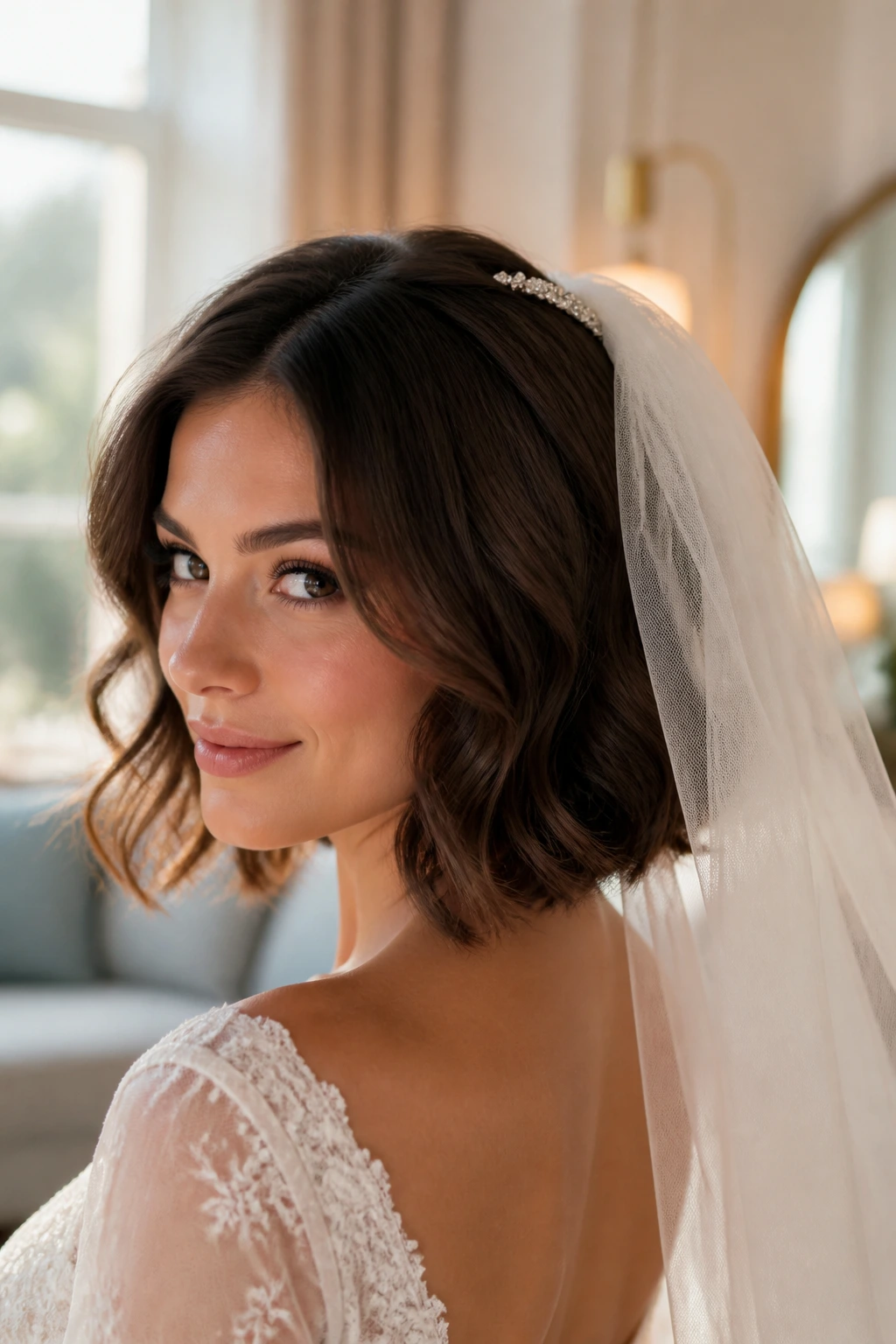
Bridal hair on a bob can be lovely, but only if the veil placement is handled with care. This version keeps the waves soft at the surface and the nape as flat as possible so the veil sits cleanly without bulking up the back of the head. The shape should look graceful first, bridal second.
The best move is usually to build the wave lower, not higher. That keeps the top smooth enough for comb placement. Curl the mids and ends, brush the wave out, then pin the front pieces where the veil comb can sit without fighting them. If the veil is heavy, anchor it into a small braided base or a hidden set of crossed pins.
A bob like this works because it doesn’t compete with the dress back, the veil, or the bouquet. It frames the face and leaves room for the rest of the look. That balance is harder to get than people expect, which is why a trial run matters. Do not guess with bridal hair. Guessing makes for very long nerves.
11. Asymmetrical Wave Bob
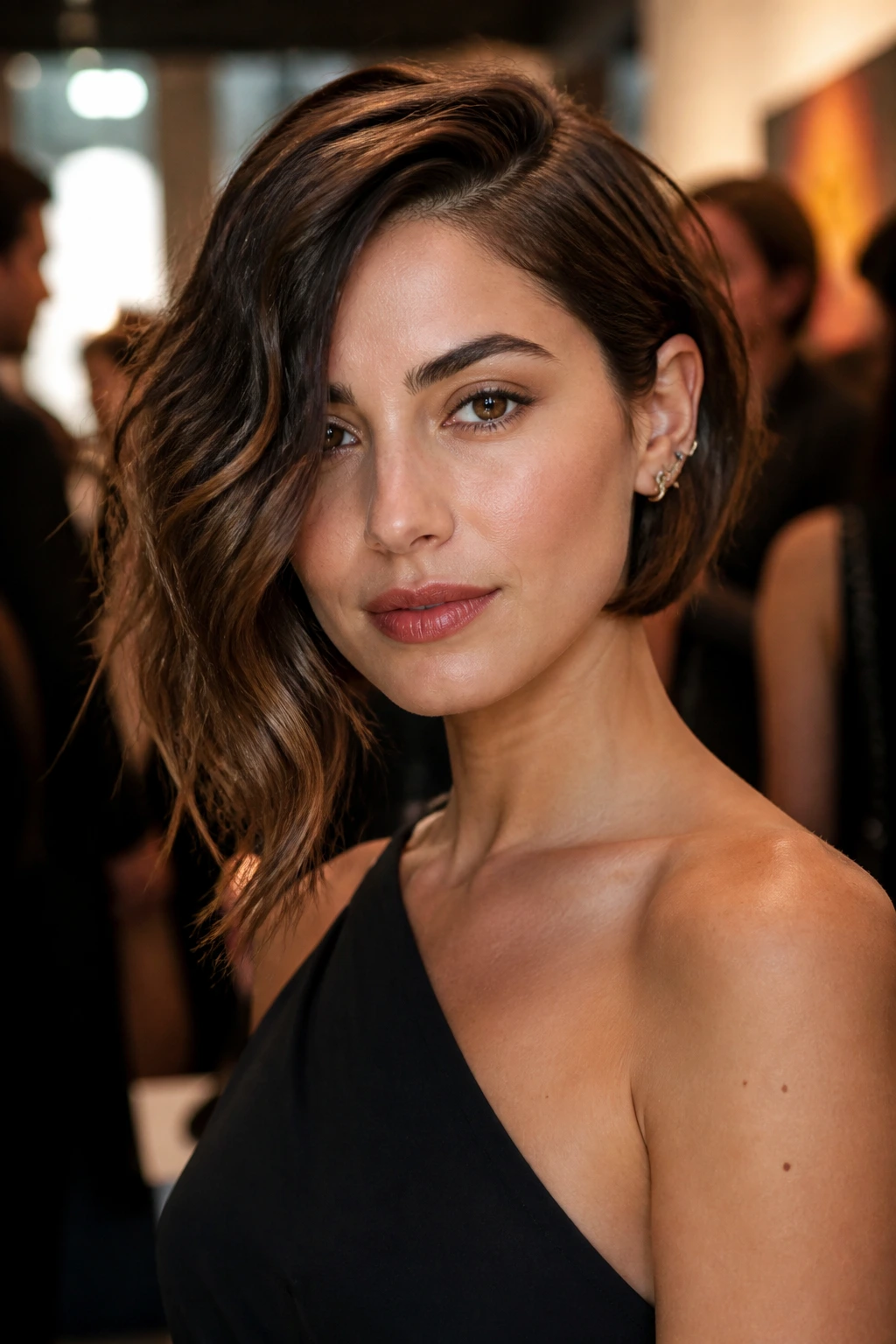
A bob with one side longer than the other already has attitude. Add loose waves and the shape turns editorial fast. The asymmetry gives the eye a place to land, and the wave keeps the cut from looking too severe. It’s an especially good choice if the outfit is minimal and the hair needs to carry a little visual weight.
The longer side should not be curled into a tight coil. Keep the wave wide and smooth so the length reads cleanly. On the shorter side, tuck a piece behind the ear or let it skim the cheekbone. The point is to let the cut’s geometry stay visible, not hide it under texture.
This style is not shy, and that is the charm. It’s the one I’d pick for a modern cocktail event, a gallery opening, or any evening where a neat, symmetrical bob would feel too polite. If you want your hair to say “I thought about this,” the asymmetrical wave bob is a very efficient way to get there.
12. Thick-Hair Controlled Wave Bob
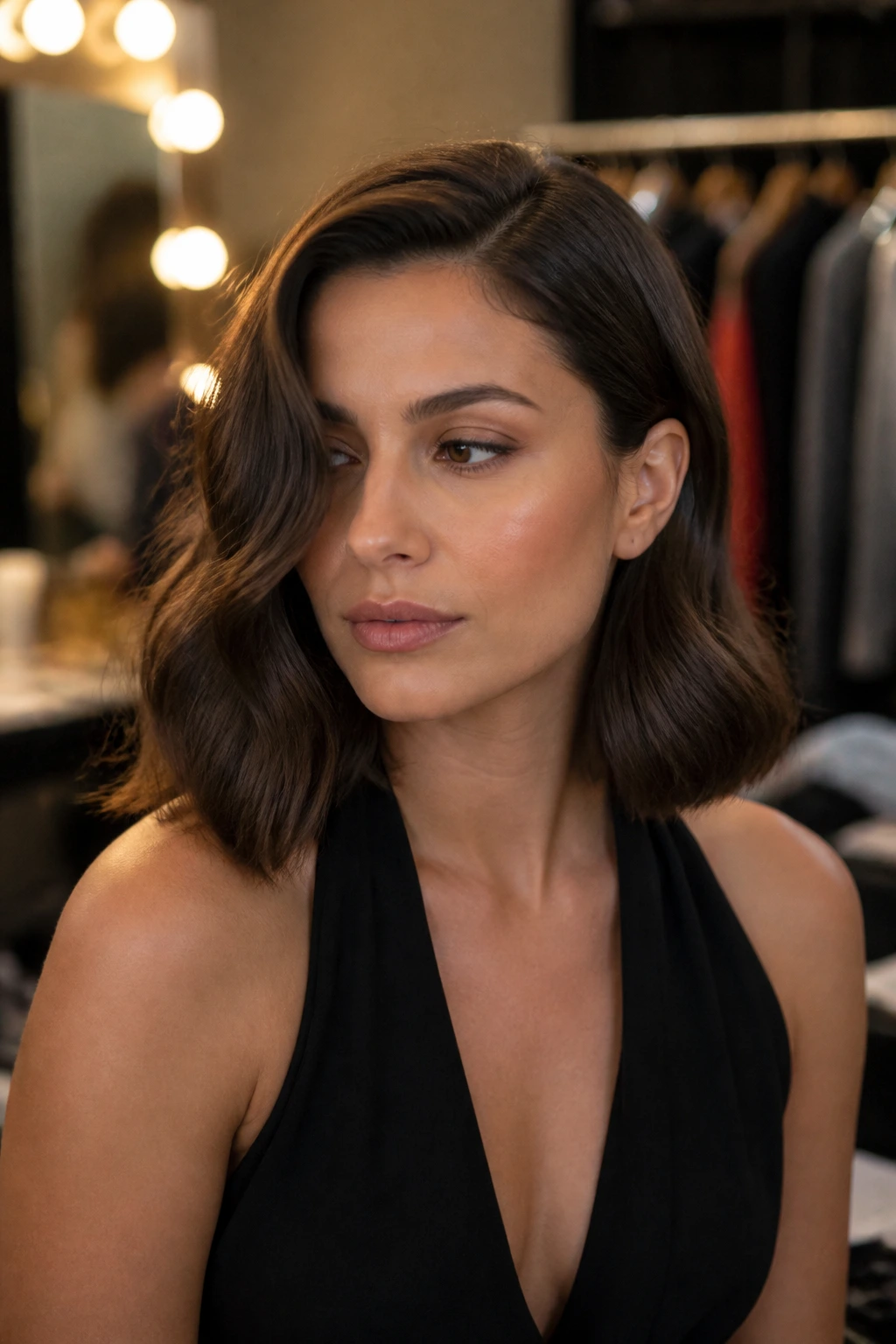
Thick hair on a bob can get big in a hurry, which is either a blessing or a battle depending on the finish you want. The controlled wave version keeps the weight moving in one direction so the shape stays sleek around the head instead of ballooning outward. That control is the whole point.
Work in slightly larger sections than you would for fine hair. Use a 1.25-inch iron and let the wave set in broad bends, not tight spirals. After cooling, brush with a paddle brush rather than a small bristle brush; the larger brush loosens the curve without turning it frizzy. That matters on dense hair because too much brushing can make the cut explode at the edges.
This bob looks especially good when the ends are blunt and the wave is concentrated from cheekbone to collarbone. It gives you movement without chaos. If your hair tends to swell in humidity, a light anti-humidity spray on the mids and ends helps keep the outline readable. You want the bob to move, not to expand.
13. Fine-Hair Airy Wave Bob
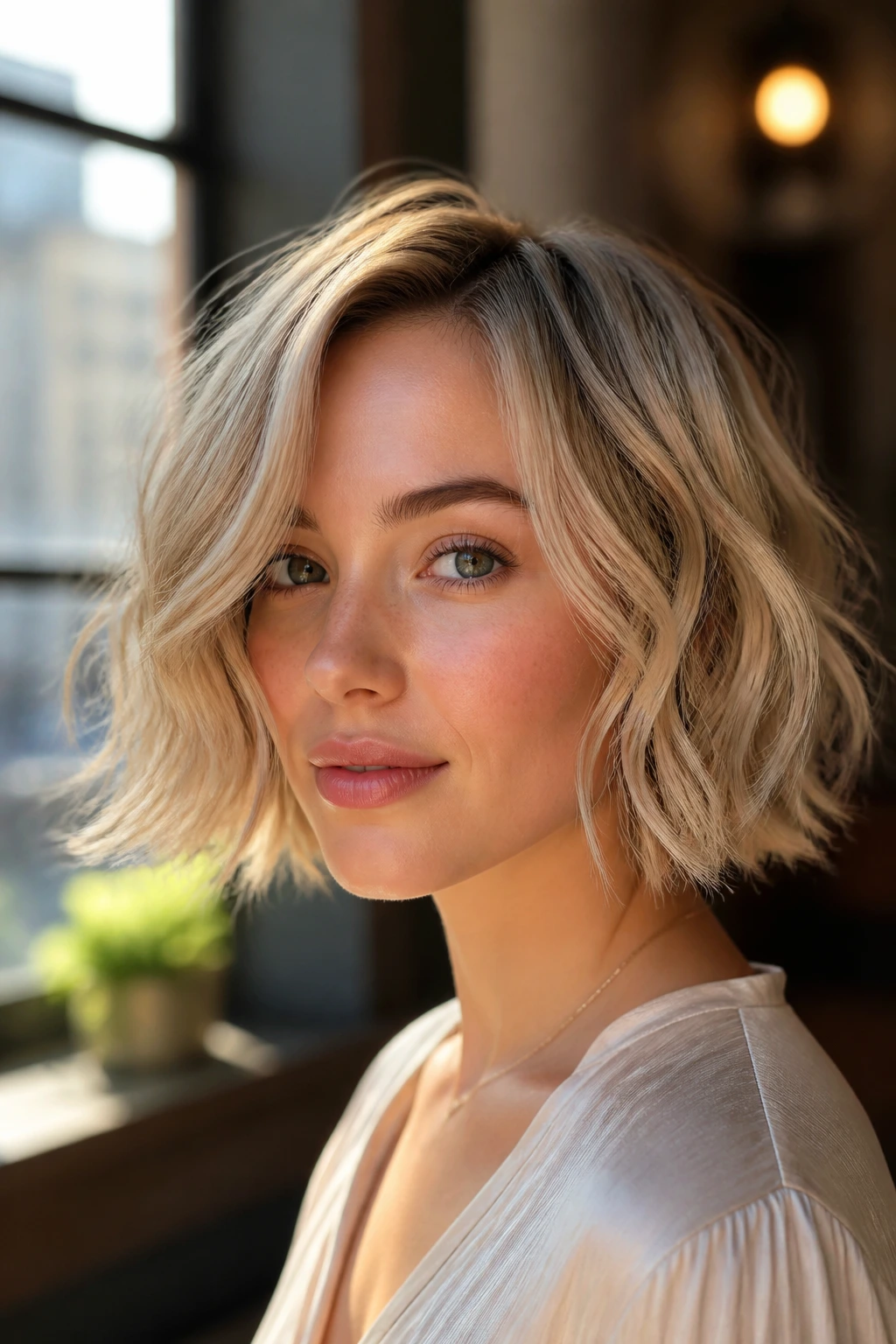
Fine hair doesn’t need heavy curls. It needs lift, light texture, and a wave pattern that can survive a long evening without going limp. That is why an airy wave bob works so well. The style looks softer than a blowout and lighter than a set curl, which is exactly the middle ground most fine hair likes.
Use fewer products than your instincts suggest. Too much cream or oil will flatten the roots and make the ends separate in a sad way. A touch of volumizing mousse, a quick pass with a medium iron, and a cool brushout are enough. If the hair is especially silky, a dry texture spray at the root gives the style some bite.
What makes it different
The wave is meant to suggest motion, not density. That subtle difference matters. You are not trying to fake thicker hair. You are trying to make the hair you have look lively and deliberate.
This version is good for events where you’ll be under bright lights or outside for a while, because the style holds better when it is not overloaded at the start. Heavy styling products can weigh fine hair down before the party even gets going.
14. Side-Swept Bang Bob

A side-swept bang changes the whole front of a wave bob. It softens the forehead, pulls attention toward the eyes, and gives the hairstyle a gentle diagonal line that feels flattering without looking overworked. When the bangs are blended into the waves, the cut gains a kind of calm movement that lasts.
The bang should not be curled tightly. Shape it with a round brush or a large barrel, then let it fall with a bend, not a flip. If the bang is too round, it can look dated fast. If it’s too flat, it loses the softness that makes the style worth wearing. There’s a narrow lane here, and it’s worth staying in it.
This is a smart pick for events where you’ll be photographed from the front a lot, because the diagonal line through the fringe keeps the face open. It also works well with dresses that have simple necklines or thin straps. The hair gives enough detail on its own. You do not need to force it.
15. Black-Tie Mirror Bob
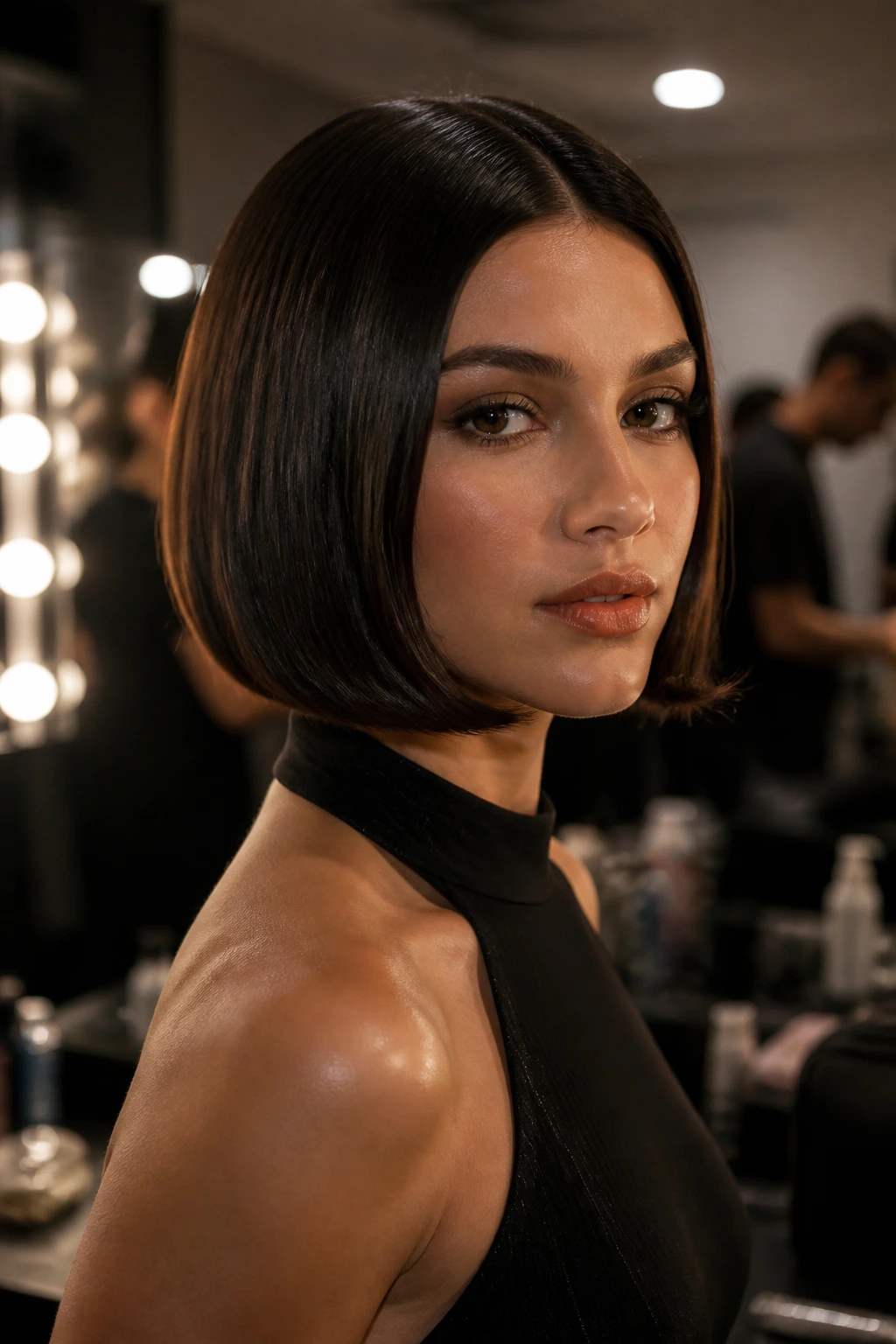
A black-tie bob should look sleek at the root and smooth through the first inch, then relax into soft movement at the ends. That mirror-like finish near the scalp is what makes the style feel formal. Without it, the bob can wander into “nicely styled” territory instead of “event-ready.”
I’d set this one with a blow-dryer, a round brush, and a light mist of heat protectant. Then use a curling iron only on the lower half of the hair, bending the ends under or away depending on the neckline. The point is to keep the top controlled. If the root frizzes, the whole style loses its edge.
This is one of the best choices for gowns, tux-style tailoring, and any outfit that already has a strong silhouette. It gives the hair enough shine to hold its own, but not so much texture that it distracts from the clothes. Clean lines. Soft ends. That combination is hard to beat.
16. Ribbon-Tied Wave Bob
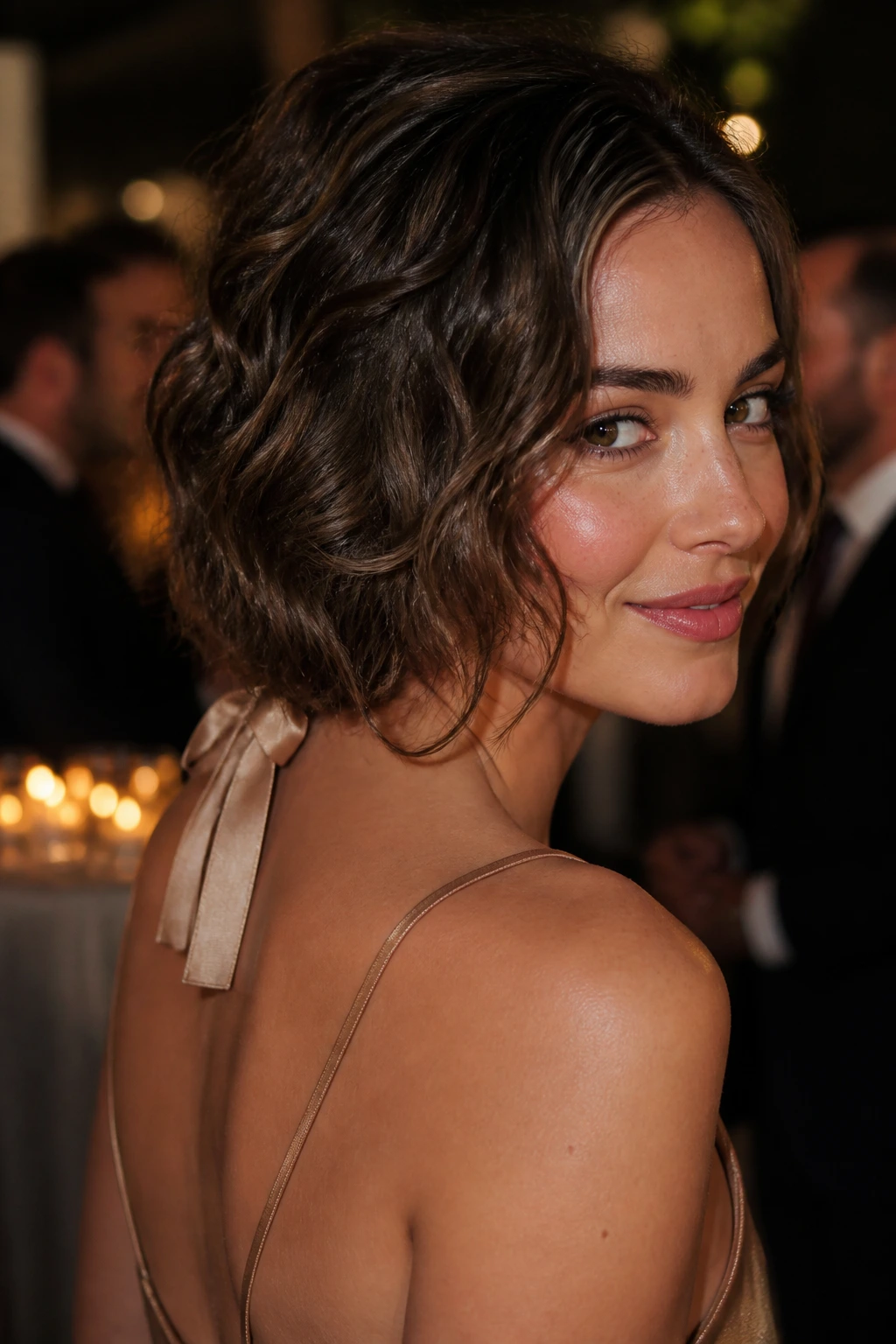
A ribbon changes a bob fast, and I mean that in the best way. A velvet or satin ribbon at the nape or just above it turns loose waves into something that feels celebratory without needing a dozen pins. The hair stays the main event, but the ribbon gives it a clear finish.
The wave pattern should stay soft and touchable so the ribbon doesn’t fight the texture. Tie it loosely enough that the bob still moves when you turn your head. A tight bow can pull the silhouette down and make the back look heavy. A narrow ribbon usually works better than a thick one on shorter hair because it keeps the proportions tidy.
This style suits birthdays, rehearsal dinners, holiday parties, and any event where you want one small detail to do the dressing-up work for you. It’s charming without trying too hard, which is harder to pull off than people think. The ribbon should look like it belongs there, not like it was added as an afterthought.
17. Half-Pinned Romantic Bob
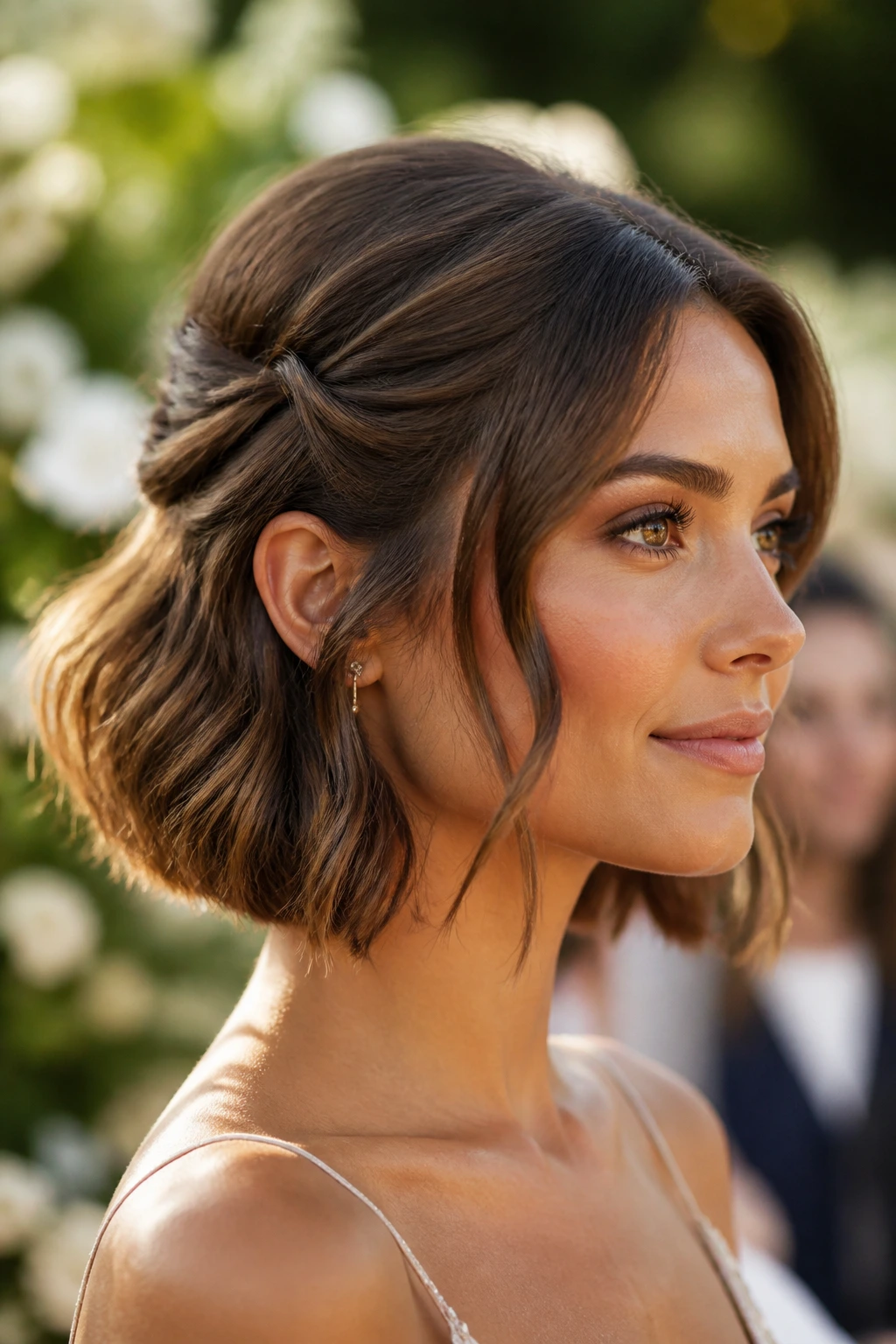
A little pinning at the back can give a bob a softer outline. Pull a small section from each temple, twist or cross it lightly at the crown, and pin it so the waves fall open around the face. The rest stays loose. That’s the whole trick, and it works because it creates shape without making the hair feel pinned down.
This is a good option when you want romance without a braid or full updo. The pinned section lifts the front and keeps the ears clear, while the loose waves frame the jaw and neck. I like it for outdoor ceremonies and dinner parties because it survives movement better than a totally free bob.
If your bob is very blunt, the half-pin helps break up the line. If it is layered, the twist keeps the shorter pieces from slipping forward. Either way, use pins that match your hair color and cross them in an X if the section is slippery. Hidden support beats decorative chaos every time.
18. Wet-Set Inspired Bob
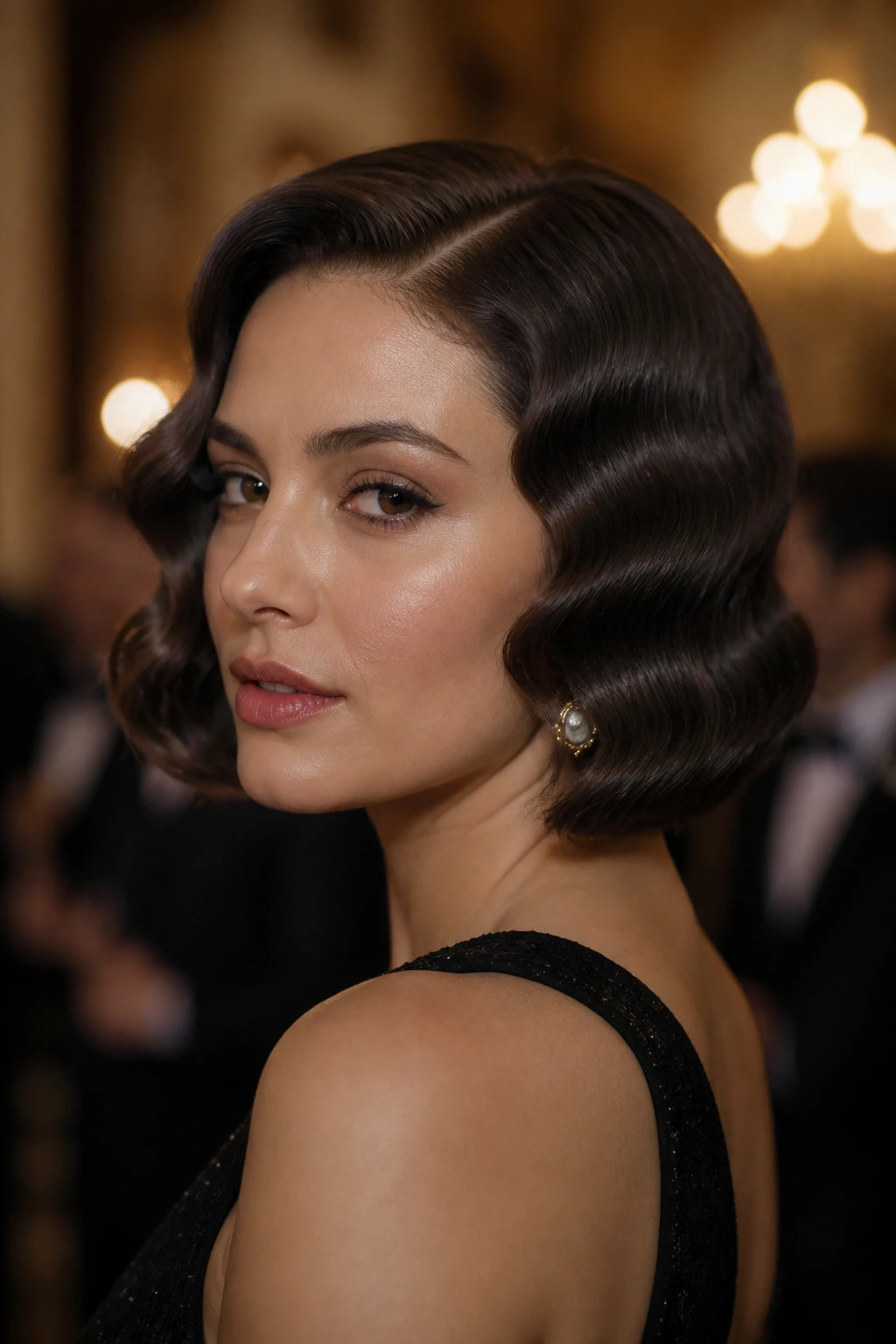
A wet-set inspired bob has a polished, vintage feel without needing an actual set overnight. The waves are defined enough to show shape, but not so tight that they harden the face. It’s the style I’d choose when I want the bob to look shaped, almost sculpted, but still soft at the edges.
You can fake the effect with mousse, finger-coiling, and a diffused blow-dry if the hair has some natural wave. On straight hair, a curling iron set into uniform sections gives the same idea. The important thing is consistency. The wave should look like it belongs together, not like separate curls pasted side by side.
The science behind the shape
Short hair reveals pattern quickly. A wet-set effect works because the wave spacing stays even, which gives the bob a cleaner outline. That even spacing is what makes the style feel deliberate instead of messy.
This one is especially nice for evening events with lower lighting, where a little sheen helps the texture stand out. If you want a bob that feels styled but not airy, this is the lane.
19. Round-Face Balancing Bob
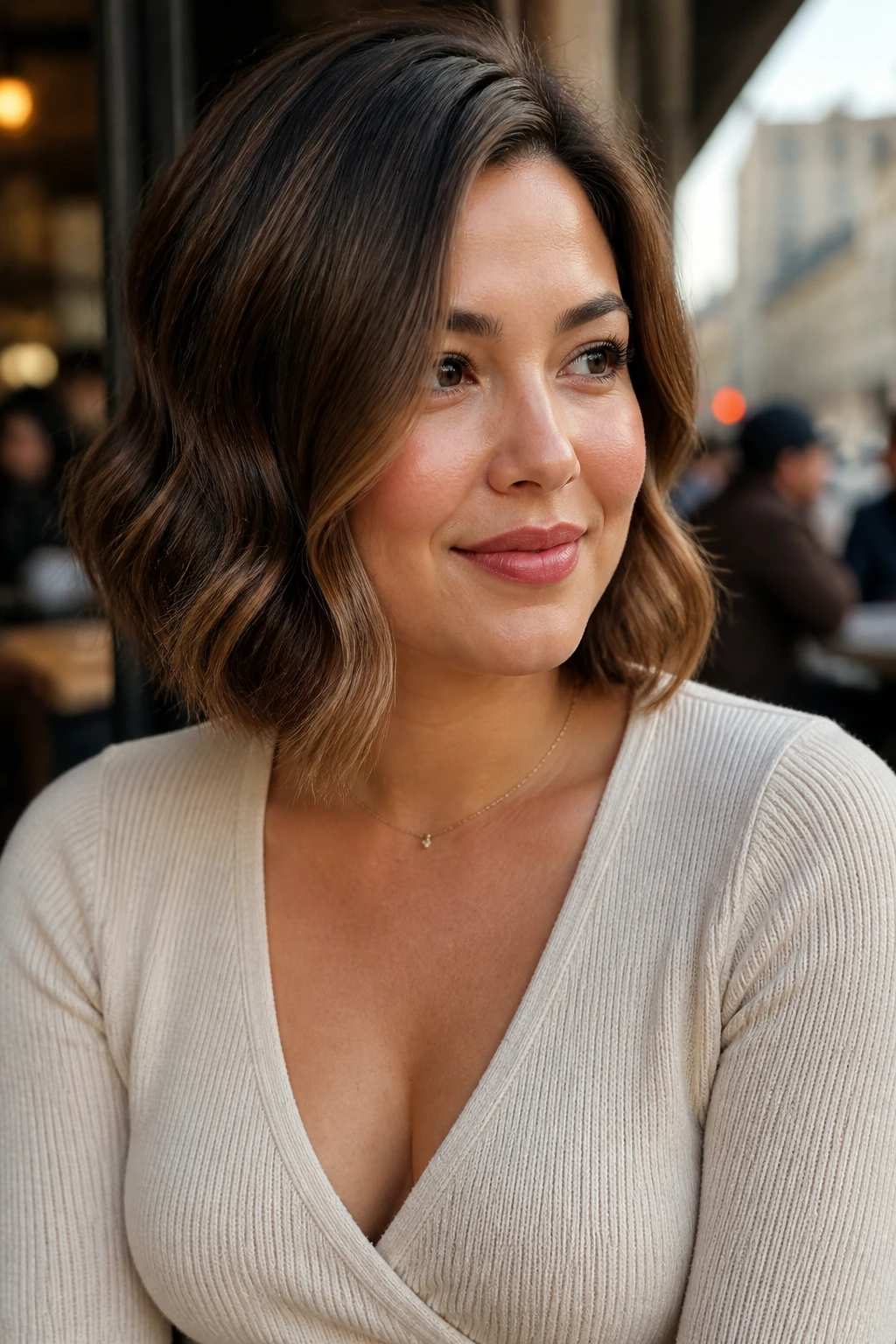
A round face needs length in the line of the hair, not width at the cheeks. A wave bob can do that beautifully if the front pieces stay a little longer and the wave starts below the cheekbone. That pulls the eye downward and keeps the style from widening the face.
A center part can work here, but a slightly off-center part is often kinder. It breaks the symmetry just enough to keep the style from feeling too full at the sides. Avoid over-curling near the cheek. That’s the mistake that turns a flattering bob into a puffball. Keep the wave lower and the crown smoother.
- Best with lengths that graze the jaw or collarbone
- Strong with long earrings and V-neck dresses
- Works especially well when the front pieces are kept a touch straighter
The nice thing about this shape is that it looks tailored without looking severe. You are not hiding the face. You are giving it clean lines.
20. Square-Jaw Softening Bob
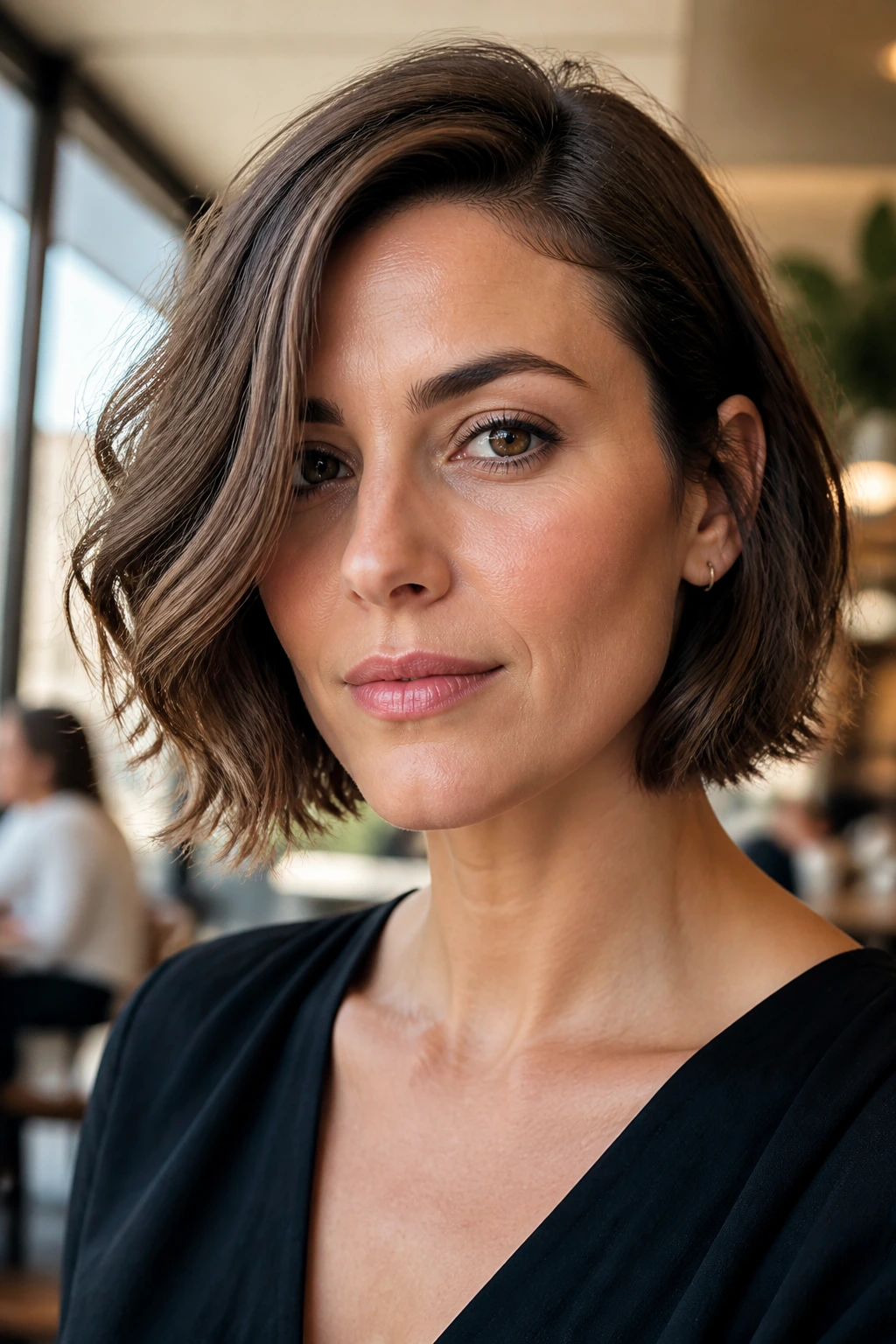
A square jaw looks striking with a bob, but the wrong wave can make the lower half of the face look heavier than you want. The fix is a softer diagonal wave that moves away from the jawline instead of sitting straight on top of it. The hair should skim, not box in, the face.
I like a side part here because it breaks up the symmetry around the jaw. Loose bends through the front pieces help soften the angle, and a little extra movement near the ends keeps the shape from feeling blocky. If the bob is blunt, you may want to leave the very bottom straighter so the line stays clean.
This style pairs nicely with dresses that have structure at the shoulders or neckline, because the hair adds softness where the outfit adds shape. It is one of those cuts that can look both strong and gentle at the same time. That’s not a contradiction. It’s the whole appeal.
21. Sparkle-Clip Party Bob
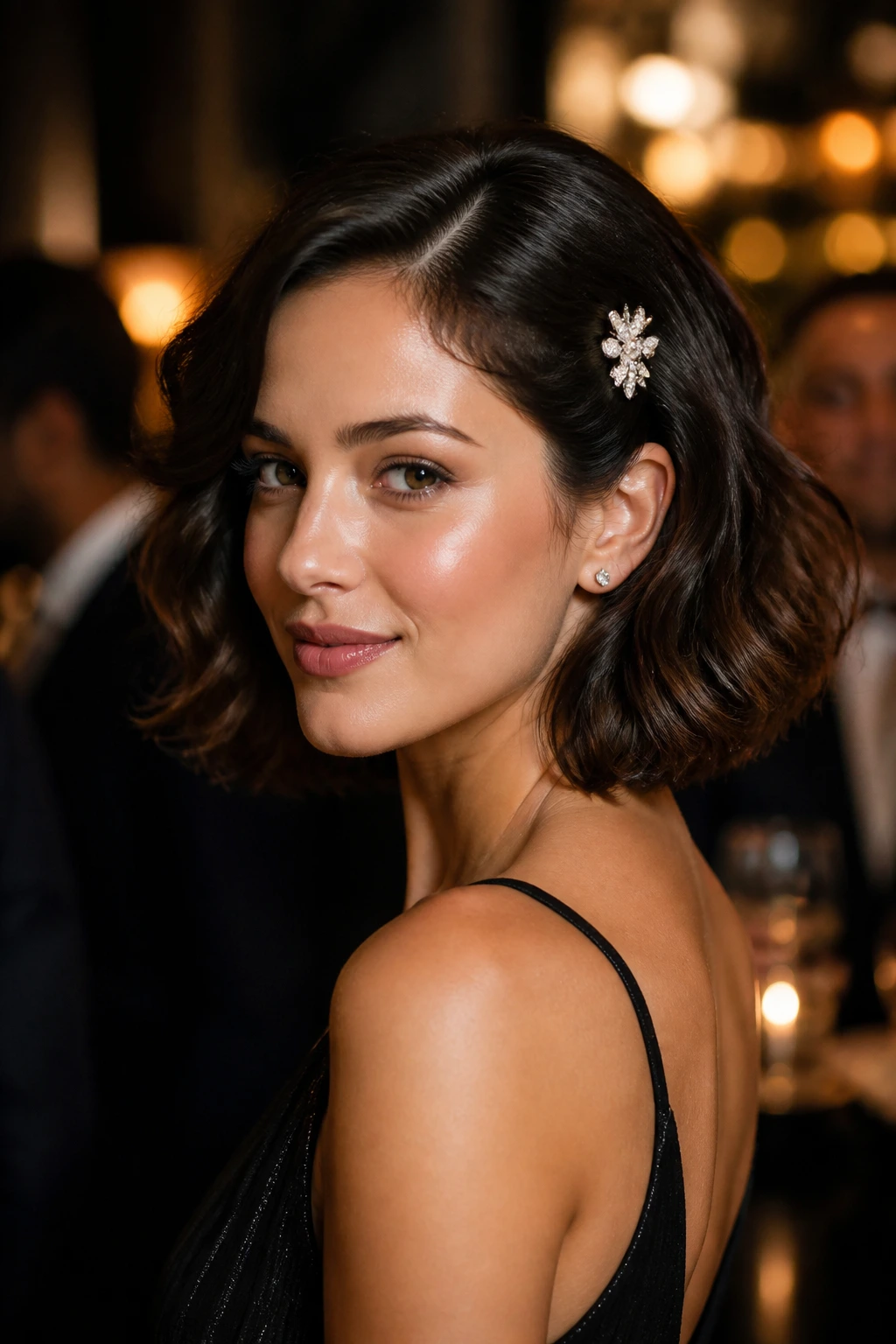
A sparkle clip can make a wave bob look event-ready in about ten seconds. Place one clip near the temple, or stack two small ones above the ear, and the style instantly feels dressed for the room. The key is restraint. One focal point is enough.
The base wave should be relaxed and touchable, because the clip is doing some of the visual work. If the hair is too stiff, the accessory starts looking pasted on. If it is too soft and slippery, the clip slides out halfway through the evening. A little root texture near the pinned side helps the clip stay anchored.
This is the bob I’d pick for cocktail parties, birthdays, or any event that sits between casual and formal. It keeps the hair from vanishing into the background, but it does not overcomplicate the silhouette. If the dress is simple, the clip can bring the sparkle. If the dress is already detailed, use a small metallic pin instead.
22. Undone Cocktail Bob
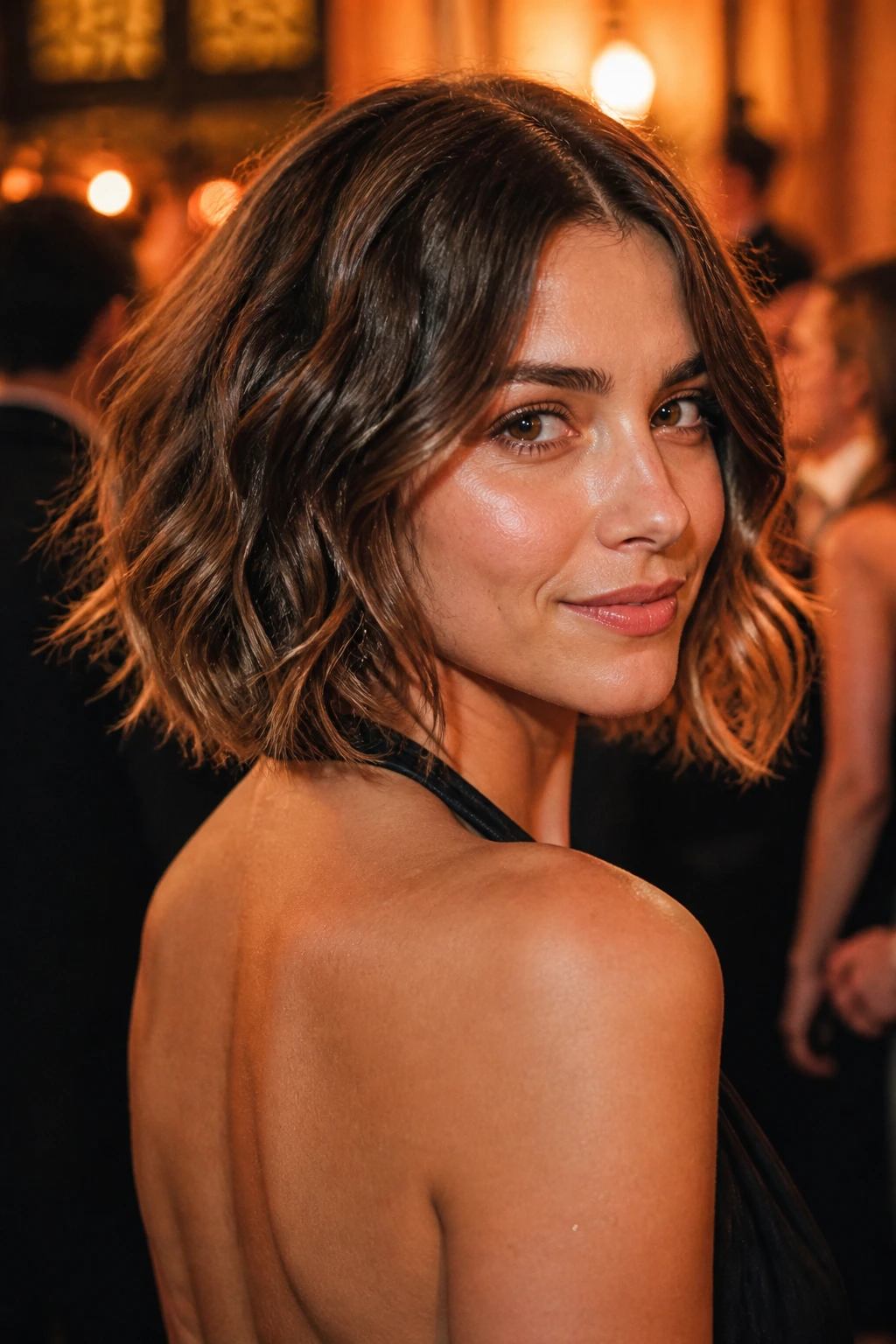
An undone cocktail bob is the one that looks like it got dressed in five minutes and somehow still looks better than styles that took half an hour. The waves are loose, the ends are a little piecey, and the overall feel is soft rather than polished to death. There is a reason this version keeps winning: it moves well and it forgives a bit of humidity.
The styling should be light. A heat protectant, a medium barrel, a rough brushout, and a tiny amount of texture spray are enough. Leave a few strands around the face slightly shorter or slightly straighter so the cut has a lived-in edge. The trick is to keep the shape readable without making it precious.
This is a good choice when the event is fun and you do not want hair that feels too formal for the room. Think drinks, dancing, a sharp dress, and earrings that move when you do. It gives you enough polish to look intentional, but not enough polish to look sealed in plastic.
Why Loose Waves Make the Cut Feel More Expensive
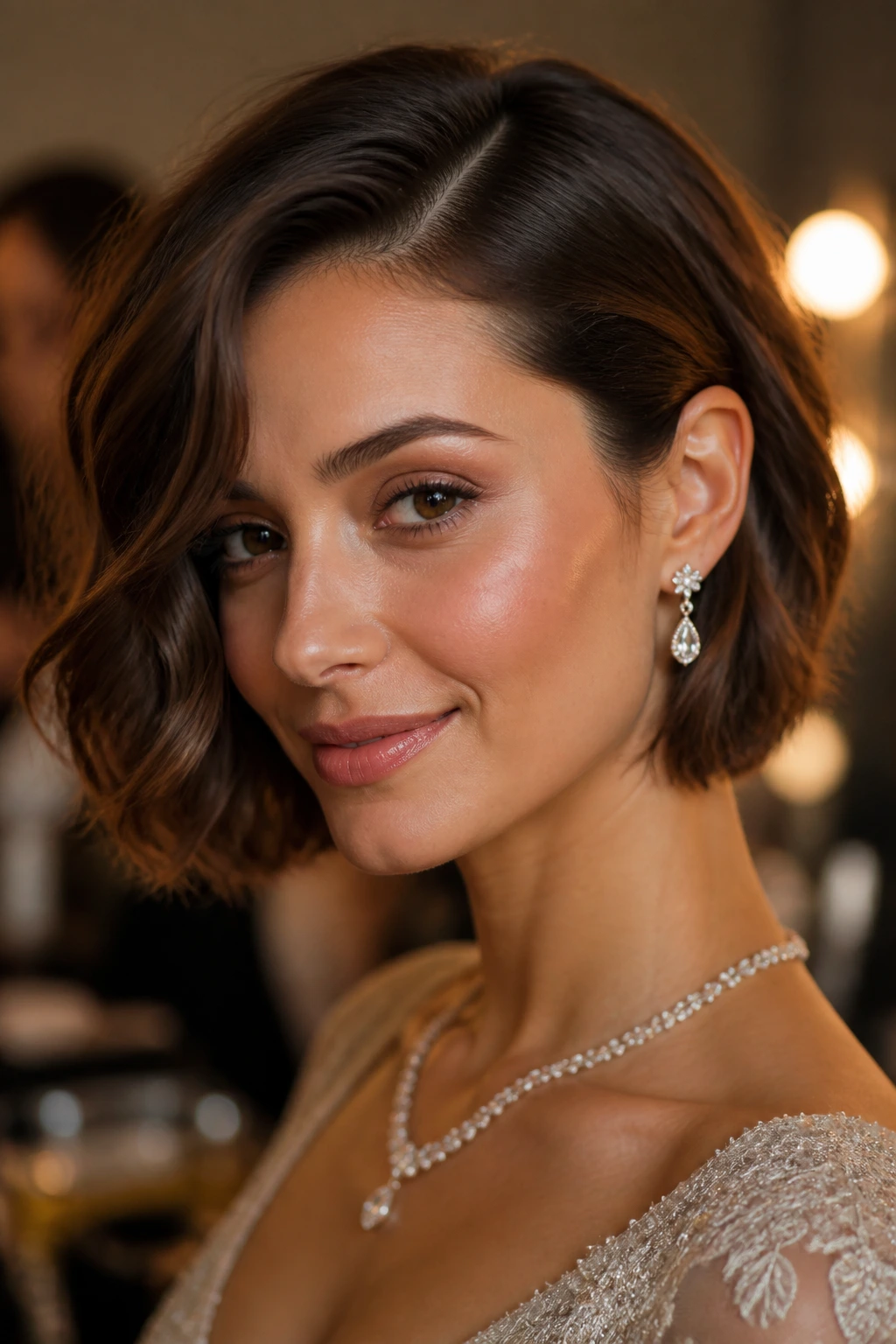
There’s a reason a bob with movement often looks better than a bob that’s been ironed flat. The wave catches texture in a way that gives the haircut more dimension, and the line of the cut reads cleaner when the hair is not glued to the head. Shorter lengths show shape fast, so the styling has to work with the haircut instead of burying it.
That’s why I always pay attention to the perimeter first. A blunt edge can look very sharp with soft waves, but a heavily layered bob needs the wave to stay lower so the haircut doesn’t fray at the bottom. If the silhouette is wrong, the accessories cannot save it. Hairpins are not a rescue squad.
The good part is that loose waves are flexible. They can lean romantic, modern, polished, or playful depending on the part and the finish. That makes them useful for events that have some dress code but not a lot of room for guesswork. You can nudge them in the direction you want with one tool, one pin, or one change in part.
Essential Tools and Products for These Styles
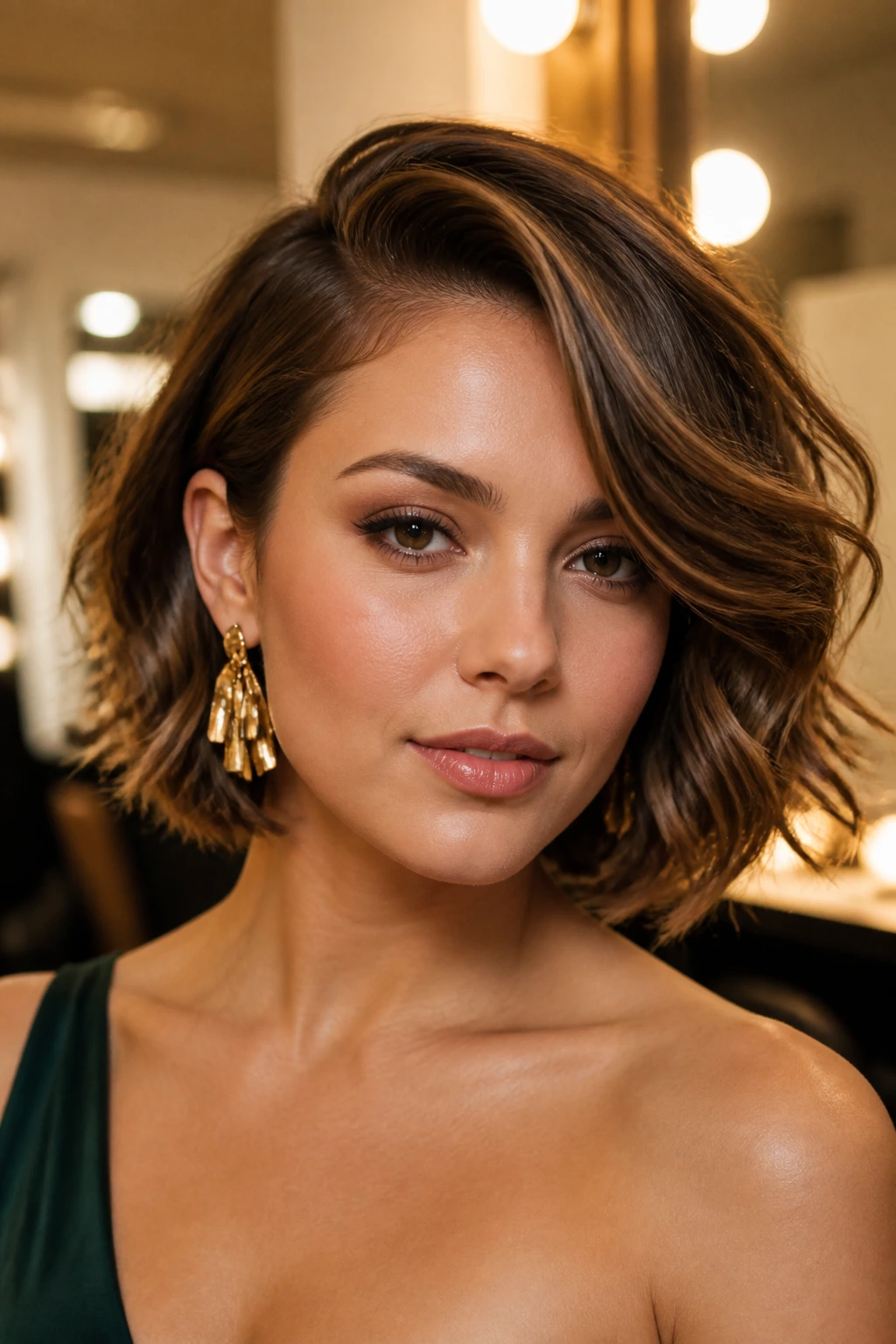
- 1-inch curling iron or wand: Best for chin-length bobs and shorter cuts; it gives enough curve without turning the hair into a spring.
- 1.25-inch curling iron or wand: My pick for most bob lengths because the wave stays soft and brushable.
- Heat protectant spray: Use it on dry hair before any hot tool; it helps prevent frizz and rough ends.
- Root-lift mousse or spray: Useful for fine hair or flat crowns, especially if the event lasts longer than a quick dinner.
- Flexible-hold hairspray: Keeps the wave in place without turning the style stiff.
- Texturizing spray: Gives slippery hair a little grip before clipping, pinning, or tucking.
- Shine spray: Best misted lightly through the mids and ends, never at the scalp.
- Duckbill clips: Handy for setting curls while they cool and for controlling the front sections.
- Bobby pins in hair-matching shades: The boring color-matched ones stay hidden better than shiny black pins on blonde hair.
- Wide-tooth comb or paddle brush: A wide-tooth comb preserves softer bends; a paddle brush loosens thicker waves.
- Tail comb: Great for clean parts and for lifting a small section at the crown.
- Decorative pins, pearl combs, or ribbons: Optional, but useful when the bob needs one clear focal point.
Choosing the Right Cut, Part, and Texture
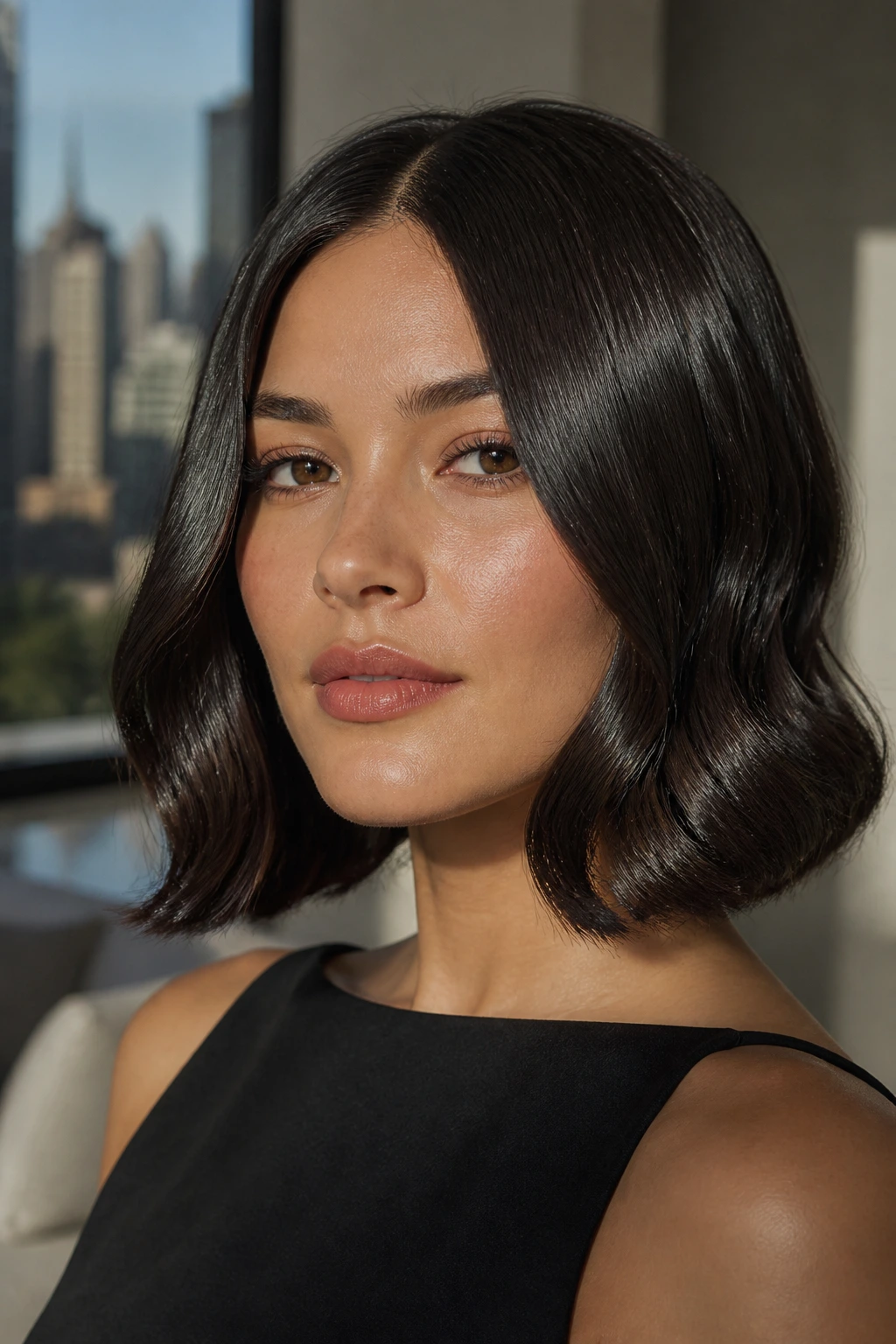
A wave bob looks best when the cut itself is doing some of the work. If the length is too blunt and too heavy, the waves can sit on top like decoration. If the cut has a little internal movement, the styling feels easier and the finish lasts longer.
For fine hair, I prefer a blunt perimeter with a touch of internal texture at the ends. That keeps the shape from disappearing. For thick hair, some hidden debulking near the nape helps the bob lie close to the head instead of flaring outward. Straight hair usually needs more product support at the roots; naturally wavy hair often needs less heat and more control.
The part matters more than most people think. A center part makes the look modern and clean. A side part adds lift and softness. A deep side part brings in more drama, which is useful if the outfit is simple or the event has a dressier mood. If your face shape is strong, a part can soften it. If your features are delicate, the part can sharpen the line.
Color also changes the read. Dimensional color — subtle highlights, ribbons of light brown, a shadow root, or a brighter money piece — makes the waves easier to see. I’m not saying you need color to wear a bob. I am saying that waves show dimension better when there’s something for the eye to follow.
How to Wear These Looks for Different Events
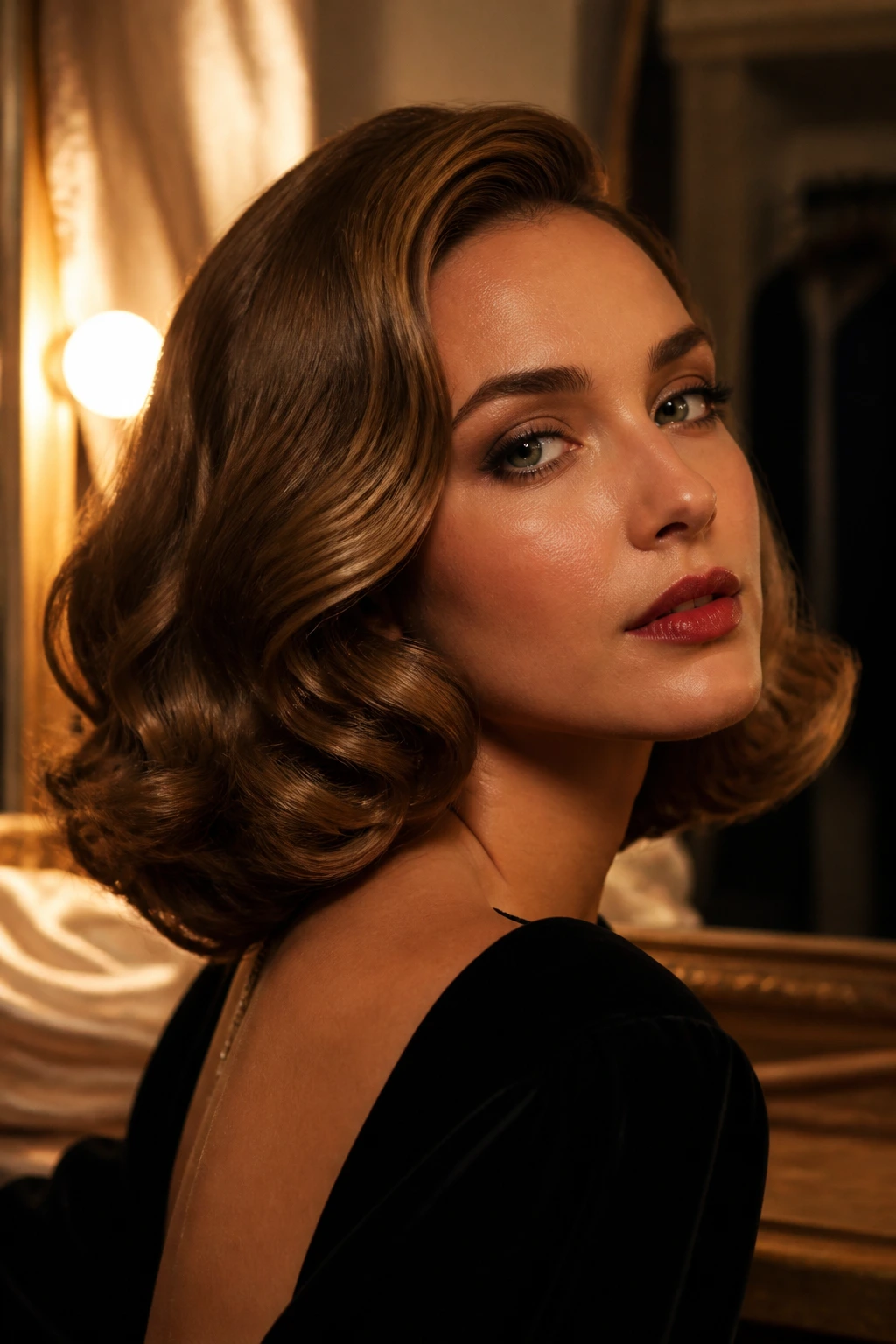
Presentation: Keep the wave pattern clean at the root and looser through the ends so the bob reads as a shape first and texture second. A neat part, a smooth crown, and one visible bend around the cheekbone usually look better than curls all over.
Accessories: Pick one focal point and stop there. A pearl pin, a crystal clip, a ribbon, or a small comb is usually enough; if you add too many pieces, the bob stops looking chic and starts looking busy.
Event Fit: Brushout waves suit formal dinners and evening events, while softer, airier bends fit daytime weddings, showers, and rehearsal parties. If the dress is dramatic, keep the hair cleaner. If the outfit is simple, the bob can carry a little more texture.
Hold: Set the waves fully, let them cool, and finish with a flexible spray rather than a hard shell. If the hair slips at the nape, a single hidden pin under the top layer keeps the style from drifting without changing the look.
Styling Upgrades and Personal Tweaks
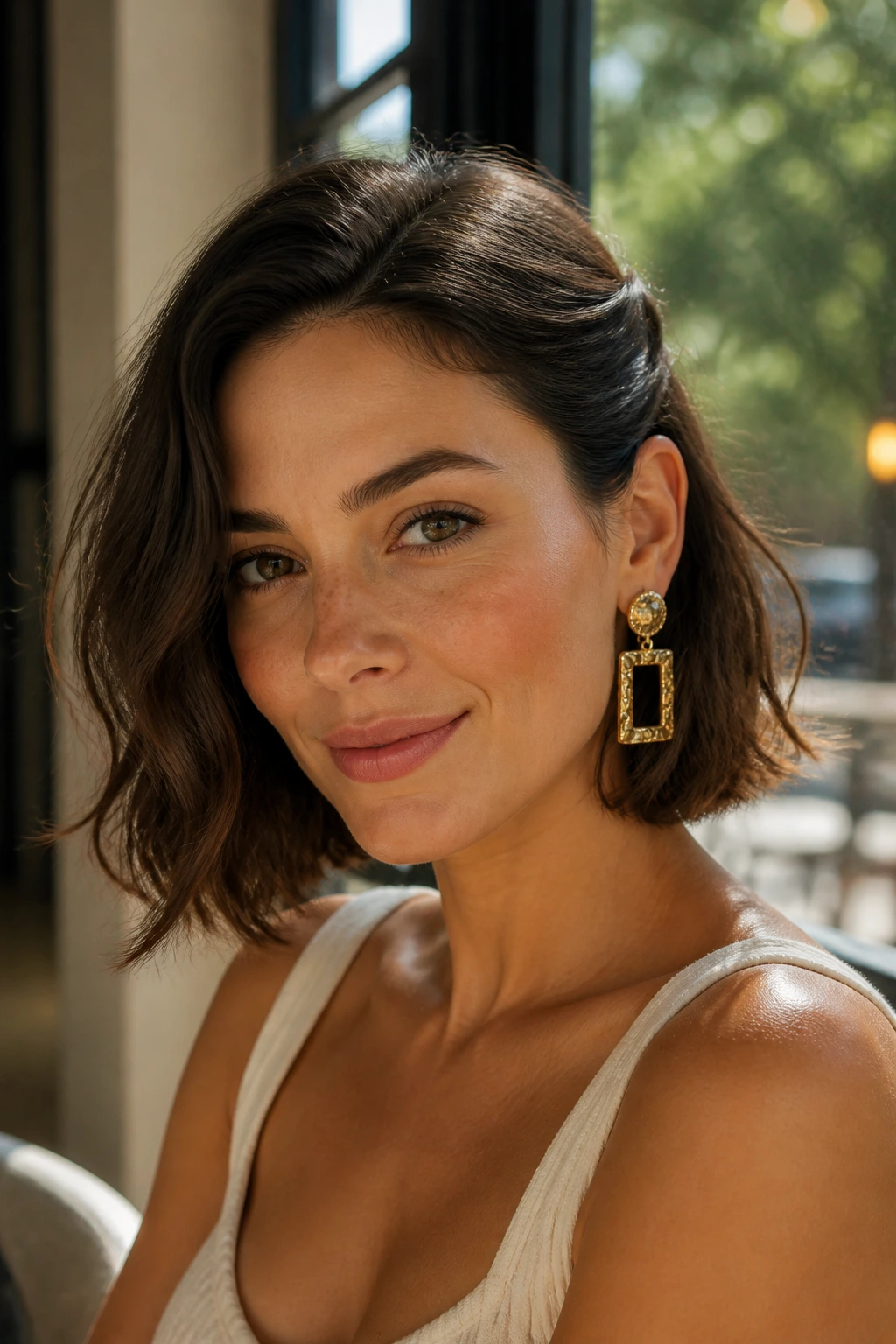
Shine Boost: Mist shine spray from ear level down and keep it off the roots. That gives the bob a smooth surface without making the crown look greasy by midnight.
Texture Shift: If the hair is too soft to hold a wave, work in a little dry texture spray before curling. The difference shows fast, especially on clean hair that usually refuses to keep a bend.
Face-Frame Fix: Leave the first front section straighter than the rest if you want a softer frame around the cheek and jaw. That tiny contrast is often more flattering than a perfectly uniform wave.
Make-It-Yours: Fine hair likes smaller sections and lighter product; thick hair likes fewer passes with the iron and a stronger finish spray. If your look leans romantic, tuck one side and use a pearl pin. If it leans modern, keep the front clean and skip the extras.
Event Shift: For daytime, brush the wave a little more so it feels airy. For evening, keep the wave slightly more defined and add a touch of gloss. Same bob. Different mood.
What Usually Goes Wrong With Bob Waves
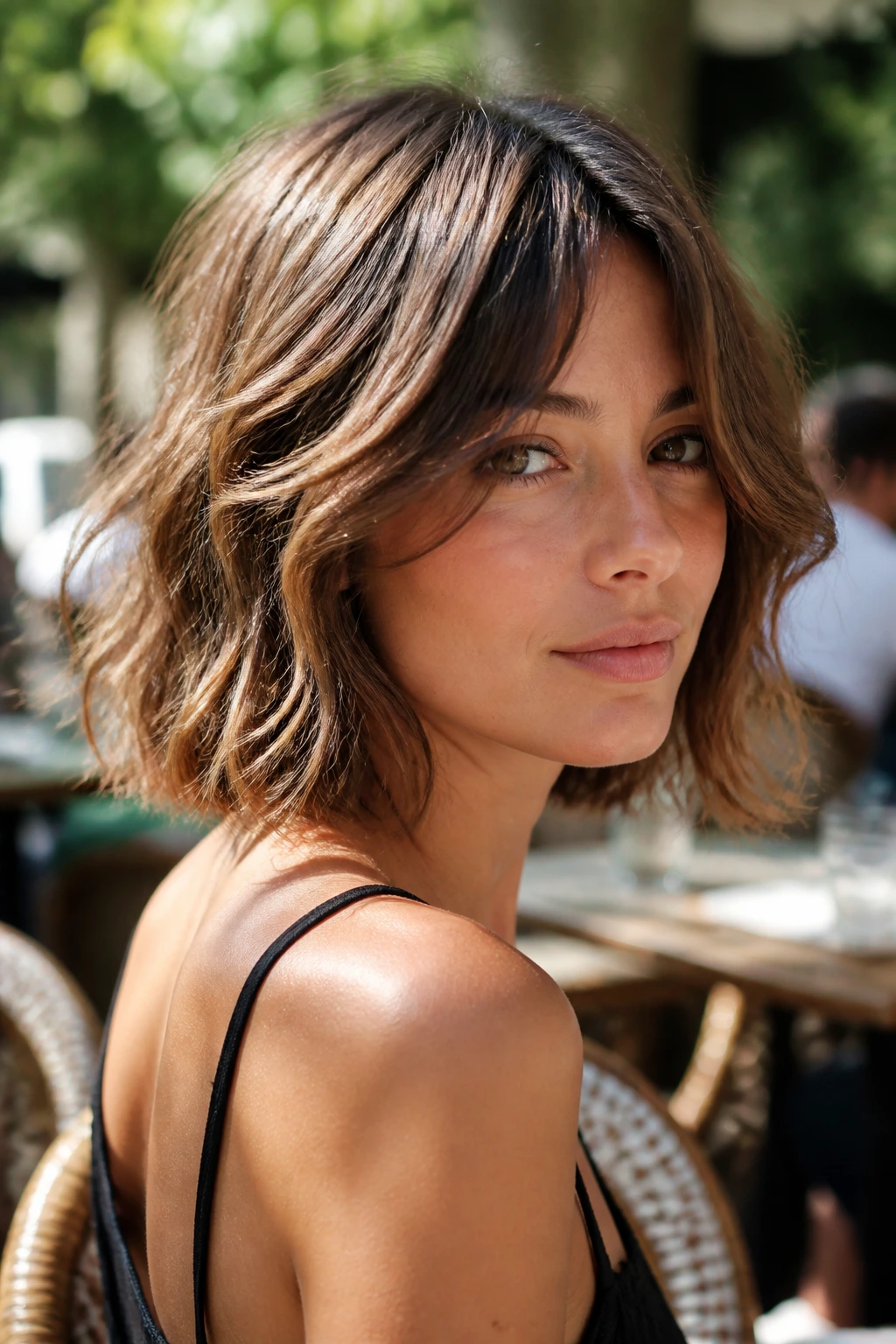
Curling the hair too tightly: On a bob, this is the fastest way to make the style shrink and puff. The fix is simple: use a larger barrel, leave the ends a little straighter, and stop trying to turn every section into the same curl.
Brushing too soon: Hot waves fall apart when you rush them. Let the curl cool in place for a few minutes before you brush, or pin the section flat until it sets.
Using heavy product near the roots: Serum or cream at the crown can flatten the shape and make the style look greasy by the end of the night. Keep heavy products on the mids and ends only.
Ignoring the neckline: If the bob ends right at the collar and the waves are too wide, the hair can flip in awkward directions against the fabric. Plan the shape around the outfit, not just the mirror.
Adding too many accessories: One good clip is elegant. Three clips, a comb, and a ribbon on the same side is a lot. The bob should still be visible.
Blowing out the outline with too much heat: Rough drying with no direction can give the ends a fuzzy edge. Use a nozzle, direct the hair, and save the loose movement for the styling step.
Fresh Variations for Different Hair Types and Dress Codes
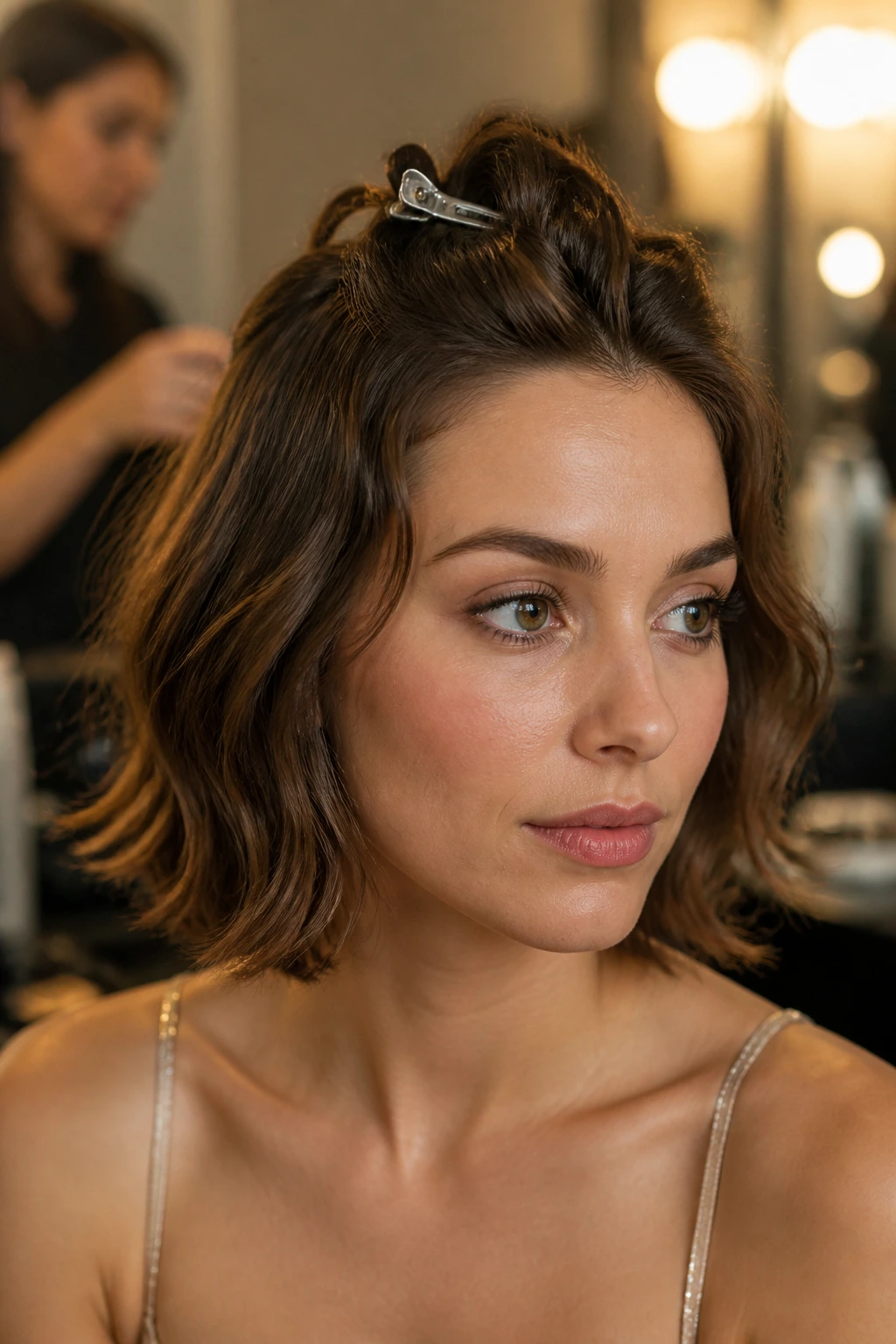
Fine-Hair Lift Wave: Start with mousse at the roots, clip the crown while it cools, and use a 1-inch iron on smaller sections. This gives fine hair enough structure to keep the bob from collapsing during the event.
Thick-Hair Smooth Bend: Use wider sections, a 1.25-inch iron, and a paddle brush to loosen the wave once it cools. The result is softer and more controlled, which helps thick hair stay close to the head instead of ballooning outward.
Bridal Pearl Sweep: Tuck one side, add a pearl comb near the temple or at the back of the ear, and keep the wave pattern soft around the face. It gives the bob a bridal finish without forcing it into an updo it doesn’t want.
Humidity-Resistant Finish: Set the wave fully, let it cool completely, then add a light anti-humidity spray and one final mist of flexible hold. This is the version to choose when the air is heavy and you need the shape to stay readable.
Minimalist Mirror Finish: Smooth the crown, keep the wave low and clean, and finish with a tiny amount of shine spray. It suits tailored dresses, tux-style outfits, and evening events that lean crisp rather than romantic.
Keeping the Shape Fresh After the Event
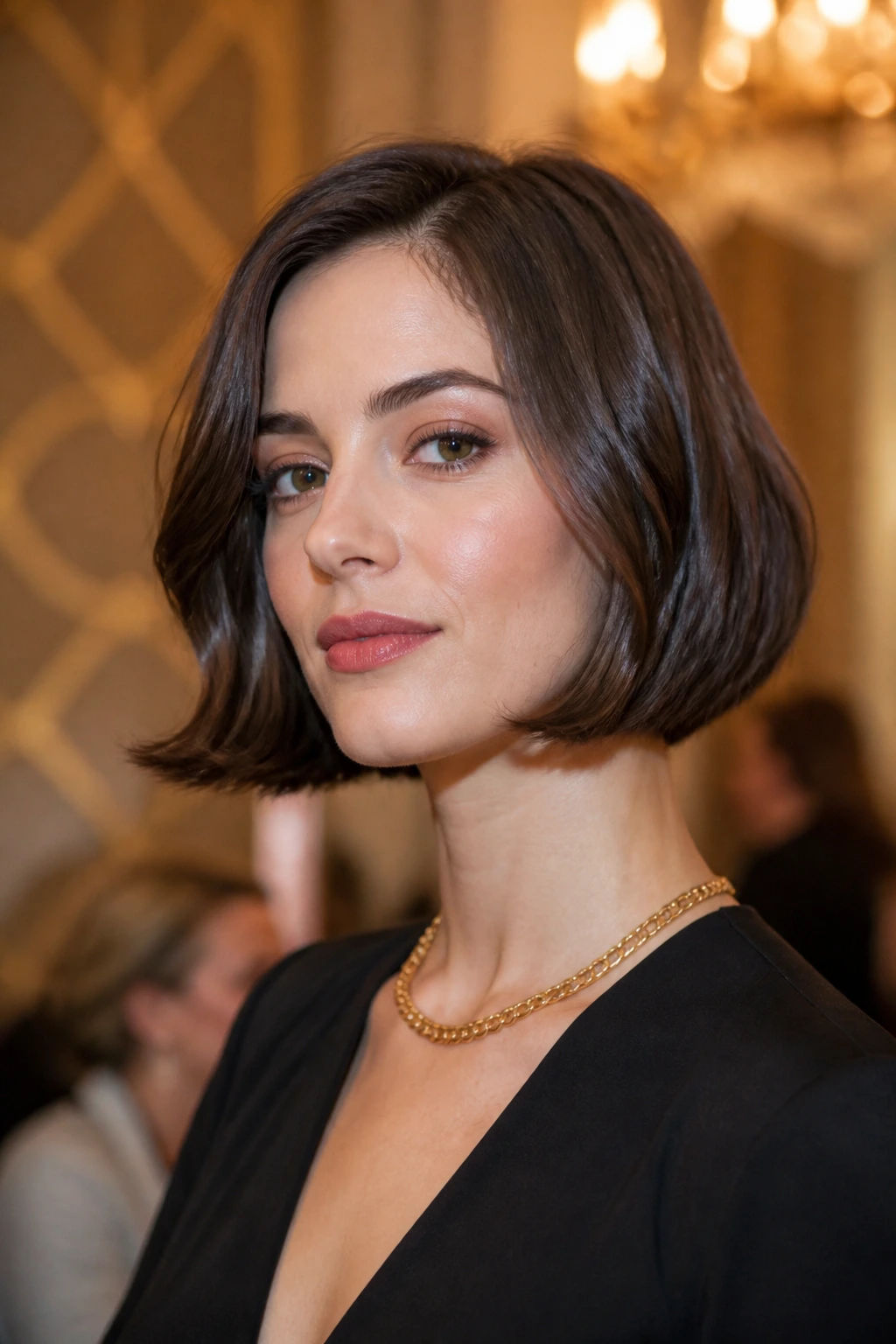
A bob with waves usually holds through one long evening if it was set properly in the first place. The real question is what happens after you take it down. If you want the style to survive into the next day, do not sleep on it loose and flattened against a pillow. That is the fastest way to wreck the crown and crush the wave.
Pin the front sections loosely away from the face before bed, then sleep on a satin or silk pillowcase if you have one. The hair won’t stay perfect, but it will keep more of its bend and less of the frizz. In the morning, shake out the roots, mist the mids with a little water, and re-bend only the pieces that need it. You do not need to recurl the entire head.
If you’re prepping ahead for an event, wash the hair the day before when possible. Slightly lived-in hair usually holds wave better than hair that was shampooed an hour ago and still feels slippery. On the day itself, refresh the roots with dry shampoo and leave the ends alone unless they’ve gone limp. The ends carry the style. Don’t overwork them.
Frequently Asked Questions
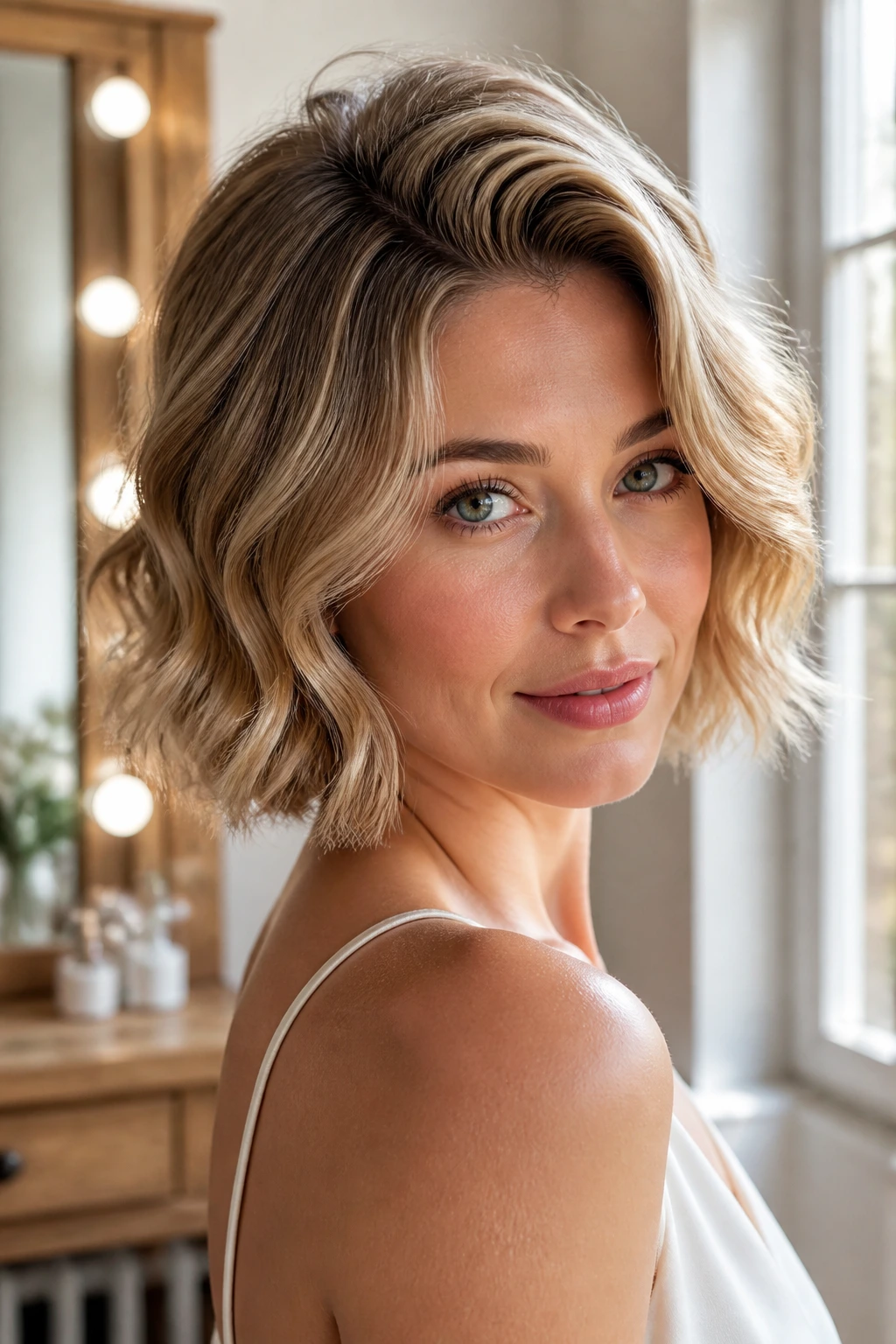
What bob length works best for loose waves at a formal event?
Chin-length to collarbone-grazing bobs usually give the nicest balance. Shorter than that and the wave can get too round; longer than that and the style starts behaving more like a lob than a true bob.
Can I wear loose waves on a very short bob?
Yes, but the wave needs to stay low and soft. On a shorter cut, use a smaller section size and avoid curling the ends into tight spirals or the hair will shrink up fast.
Do loose waves work on naturally curly hair?
They can, but you may need less heat and more shaping. Smooth the root, define the bends you want, and leave some natural texture visible so the style doesn’t fight itself.
How do I keep the style from falling flat before the event ends?
Cool the waves fully before brushing them out, then finish with a flexible spray and a little root lift at the crown. If one side keeps slipping, a hidden bobby pin under the top layer usually fixes it.
Should I curl toward or away from the face?
Away from the face is usually safer for a bob because it opens the features and keeps the front from crowding the eyes. You can still alternate a few sections in the back if you want a softer, less uniform finish.
What accessory works best with a wave bob?
One accessory, not five. Pearl pins, crystal clips, narrow ribbons, and small combs all work well, but the best choice is the one that matches the neckline and does not compete with the dress.
Can I do this on day-old hair?
Absolutely. Day-old hair often grips better than freshly washed hair, especially if the roots are a little too smooth. A quick pass of dry shampoo or texture spray at the base can make the style hold longer.
What if the waves turn out too tight?
Brush them out more than you think you should, then let the hair cool again before deciding whether to smooth a few pieces with a flat iron. On a bob, the brushout is often what turns “too curly” into “just right.”
A Bob That Knows How to Dress Up
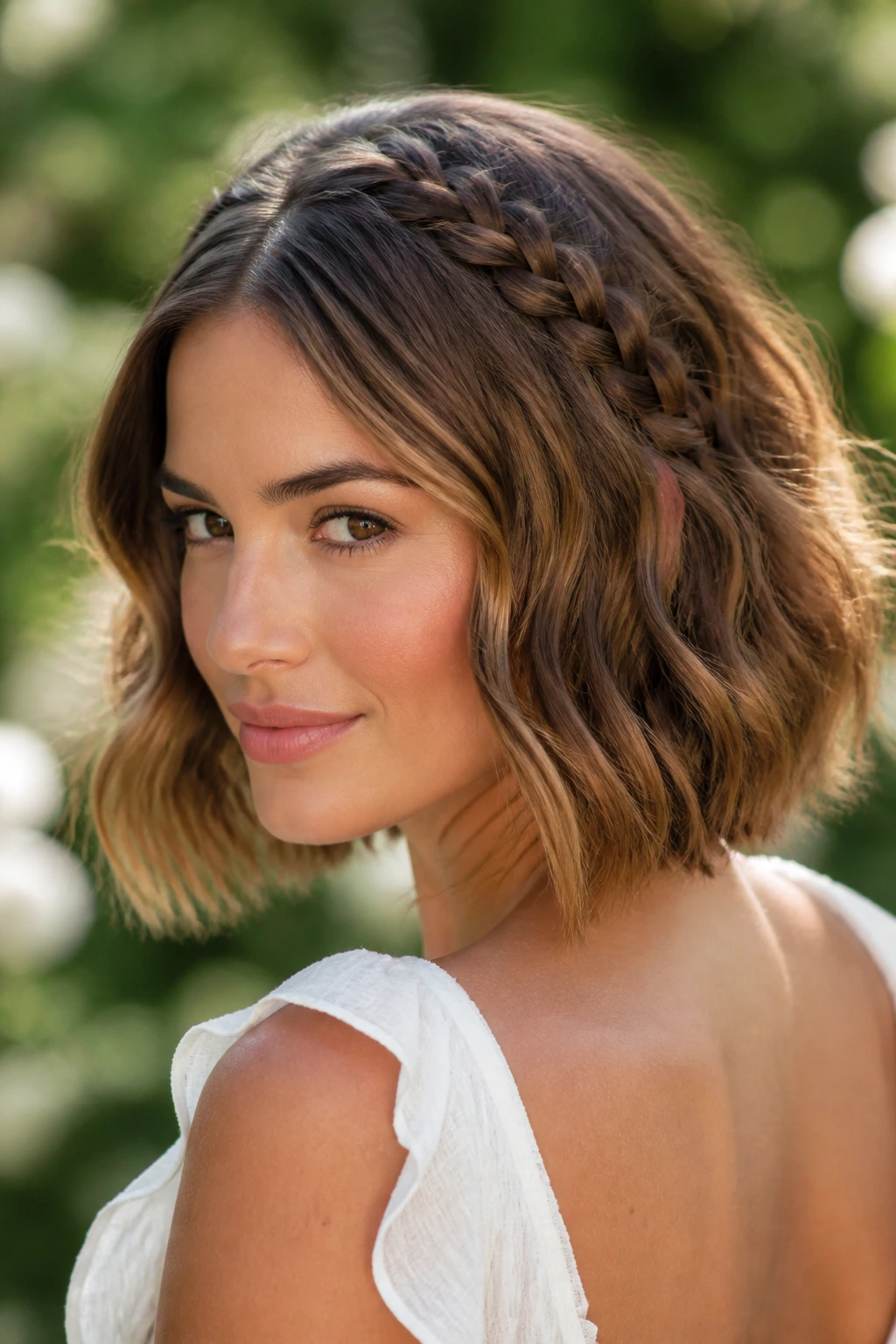
A loose bob can do more than sit neatly at the jaw. With the right wave, part, and finish, it turns into a hairstyle that feels ready for a room, not just a mirror. That’s the real appeal here: enough softness to feel relaxed, enough structure to look intentional.
The styles that last longest are usually the ones that respect the cut instead of fighting it. Keep the wave a little looser than your first instinct. Let the crown stay clean. Choose one accessory or none at all. That’s usually where the bob starts looking like it belongs at the event instead of arriving in it by accident.
And if you’re deciding between several looks, start with the neckline, then the earrings, then the part. Hair rarely needs to do everything. It just needs to hold its shape and leave the right impression when you turn your head.