



A bob on wavy hair can be a gift or a trap. On a square face, it can do one of two things: soften that strong jawline and let the texture move, or stop right at the widest part of the face and turn everything boxy in a hurry. The difference usually comes down to a few inches, a parting choice, and whether the ends are blunt or broken up enough to breathe.
That’s why bobs for wavy hair and square faces deserve more thought than a quick “ask for a bob.” Wave pattern changes how the cut sits once it dries. A chin-length shape on damp hair can creep up half an inch or more, and on a square face that little shift matters. The good cuts here don’t fight the wave. They work with it, then use length, fringe, or diagonal lines to keep the face from reading too angular.
Some of these cuts land right at the jaw, but only when the edge is softened. Others go a little longer, because a collarbone-grazing lob can be far kinder to strong cheekbones and a broad jaw than a sharp one-length crop. The common thread is movement. Clean lines have their place, but on this face shape, a little bend usually beats a hard outline.
Why These Bobs Work on Wavy Hair and Square Faces

-
They break up the jawline: Soft ends, side parts, and face-framing pieces interrupt the straight horizontal line that can make a square face look wider than it is.
-
They use your natural wave pattern: Wavy hair already gives you lift and motion, so these cuts do not need heavy styling to look finished.
-
They keep the silhouette from feeling stiff: The best versions avoid a hard helmet shape. Even the blunter ones keep a bit of bend at the ends.
-
They give you room to tweak the shape: A half-inch longer in front, a deeper side part, or a few internal layers can change the whole read of the cut.
-
They work with glasses, hoops, and collars: Small styling changes matter here, because the haircut sits close to the face and reads with whatever you wear around it.
1. Chin-Length Bob with Soft S-Waves
A chin-length bob can look sharp on a square face, but this version earns its place because the ends are softened into loose S-waves rather than cut like a ruler. The shape sits near the jaw without pinning the eye to one straight line. That matters. The wave breaks the edge and keeps the whole cut from feeling severe.
Ask for a chin-length perimeter with a little internal texture, not heavy layering. Then style it with a mousse at the roots and a diffuser, scrunching only enough to encourage the bend. If your waves spring up fast, have the stylist leave it a touch longer in front. Half an inch buys you breathing room.
2. Jaw-Skimming French Bob with Airy Ends
The French bob has a reputation for being blunt and chic, but on a square face it only works when the edge is light. Keep the length brushing the jaw rather than sitting hard on top of it, and make sure the ends are point-cut so they feather instead of forming a shelf.
This cut loves looser waves and a little mess. A soft fringe or a slightly off-center part keeps the face from reading too square, while a dab of cream on the ends keeps the shape from puffing out. It looks best when it’s touched with movement, not blown into a helmet.
3. Collarbone Lob with Invisible Layers
This is the safest place to start if you want shape without drama. The collarbone lob lands below the jaw, which gives square faces the vertical line they usually need. The invisible layers matter because they remove bulk without making the wave frizzy or broken.
Why the Length Helps
The extra length lets the hair hang past the widest part of the jaw, and that alone changes the whole balance. It also gives wavy hair a place to settle, which means fewer awkward flips at the chin.
A stylist can keep the outline clean while carving subtle movement inside the cut. That combination is useful if your waves are loose and tend to spread outward.
4. Side-Parted Angled Bob
A side-parted angled bob does a lot of the heavy lifting for you. The longer front pieces create a diagonal line, and diagonals are your friend when the face has strong corners. The shorter back keeps the neck open, which stops the style from drooping.
The part is the quiet trick here. Move it just off center and the haircut instantly feels less symmetrical, less squared-off, and more forgiving around the jaw. If your hair is dense, ask for a slightly lighter front so the longer side does not puff out at the ends.
5. Blunt Lob with a Soft Bend

A blunt lob sounds like a risky choice for square faces, but the risk goes away when the length sits below the jaw and the styling adds a little bend. The blunt edge gives the cut polish. The wave keeps it from turning rigid.
This one works best on medium to thick wavy hair that can hold shape without collapsing. Blow-dry the top smooth, then put a soft wave through the mid-lengths with a large iron or a round brush. Leave the ends slightly curved, not pin-straight. That small bend keeps the whole thing alive.
6. Curtain Bang Bob

Curtain bangs change the game because they split the forehead width and guide the eye downward along the face. On a square face, that softens the top half without making the cut feel busy. Paired with a bob that lands somewhere between the cheekbone and chin, the result looks balanced fast.
What to Ask for
Ask for curtain bangs that open near the cheekbone and graze the jaw when styled, not a heavy fringe that cuts straight across the face. The bob itself should stay textured, with enough length to keep the bangs from stealing all the attention.
This shape especially suits wavy hair because the fringe does not need perfect symmetry. A bit of bend makes it better.
7. Asymmetrical Wavy Bob

A small asymmetry can make a square face look softer right away. I am not talking about a dramatic one-side-longer cut that shouts for attention. A subtle difference of half an inch to an inch is enough. The longer side leads the eye in a diagonal line, which is what this face shape usually likes.
Wavy hair makes the asymmetry easier to wear because the texture blurs the line between sides. Style it with a side part and tuck the shorter side behind the ear. That little move exposes the cheekbone and keeps the whole thing from feeling too even.
8. Shaggy Bob with Broken-Up Ends

If your waves have a wild streak, work with it instead of trimming it into obedience. A shaggy bob uses piecey ends and internal movement to make the cut feel airy rather than dense. On a square face, all that broken-up texture softens the edge of the jaw.
The key is restraint. Too many layers and the shape turns fluffy, especially if your hair is coarse. The good version has just enough lift at the crown and enough irregularity through the perimeter to keep the bob from sitting in one hard block.
9. Curved-In Italian Bob
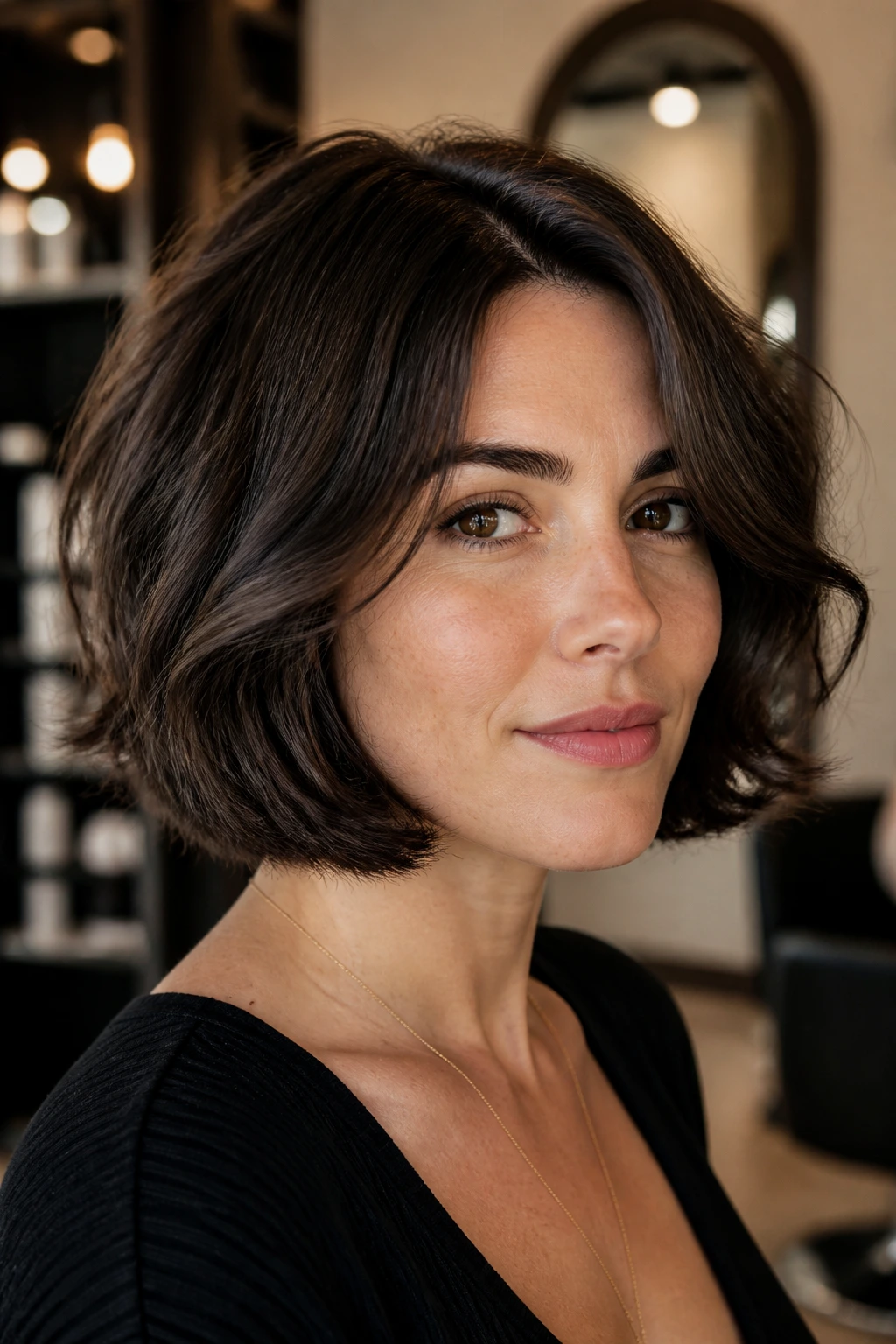
The Italian bob has body, but it’s not loud about it. The ends curve slightly inward, which gives the face a rounder frame without piling volume at the sides. For square faces, that inward sweep helps the jaw read softer. It’s a neat trick.
This cut likes medium-density wavy hair because the movement fills out the shape without making it balloon. A round brush or a large curling iron can shape the front pieces inward. Keep the finish smooth at the perimeter and a little looser through the crown.
10. Inverted Bob with Crown Lift
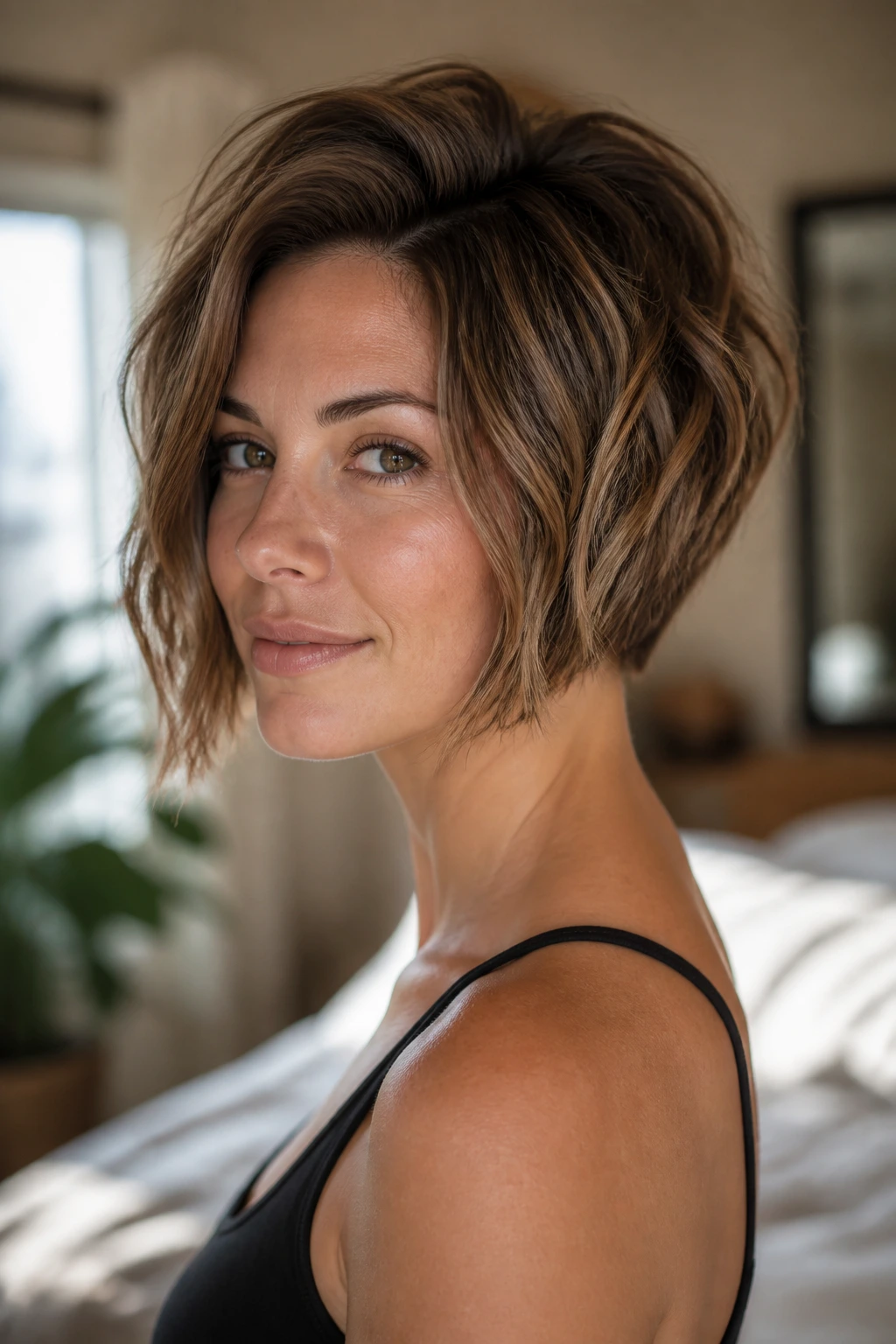
An inverted bob gives you a shorter back and longer front, and that angle does two useful things: it opens the neck and lengthens the face. On a square jaw, the diagonal helps keep the lower face from feeling too wide. The crown lift adds a bit of height where you want it.
This one needs careful layering in wavy hair. Too much stack in the back and the cut can puff out. Ask for a soft inversion, not a sharp wedge. The best version keeps the line elegant and lets the wave do the rest.
11. Layered Lob with Face-Framing Pieces
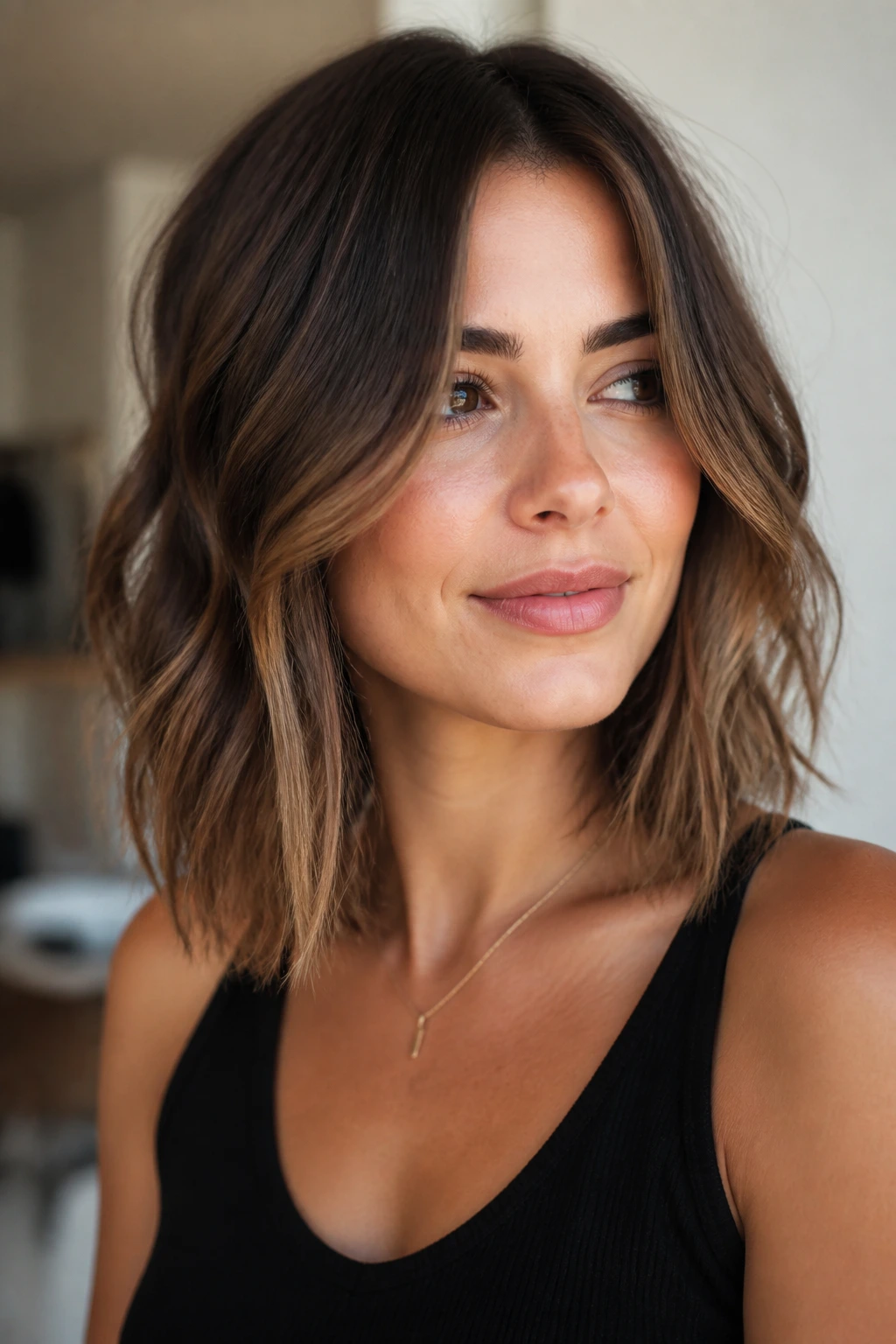
This is the cut I’d hand to someone who wants the most forgiving option on the menu. The long layers keep the lob from hanging like a slab, and the face-framing pieces slide past the jaw instead of stopping on it. That matters on a square face.
The front pieces should hit around the cheekbone or just below the chin, depending on how strong your jaw is and how much wave you have. If your hair is thick, the face framing should be subtle, not choppy. The goal is movement around the face, not strips of hair competing with it.
12. Textured Micro Bob
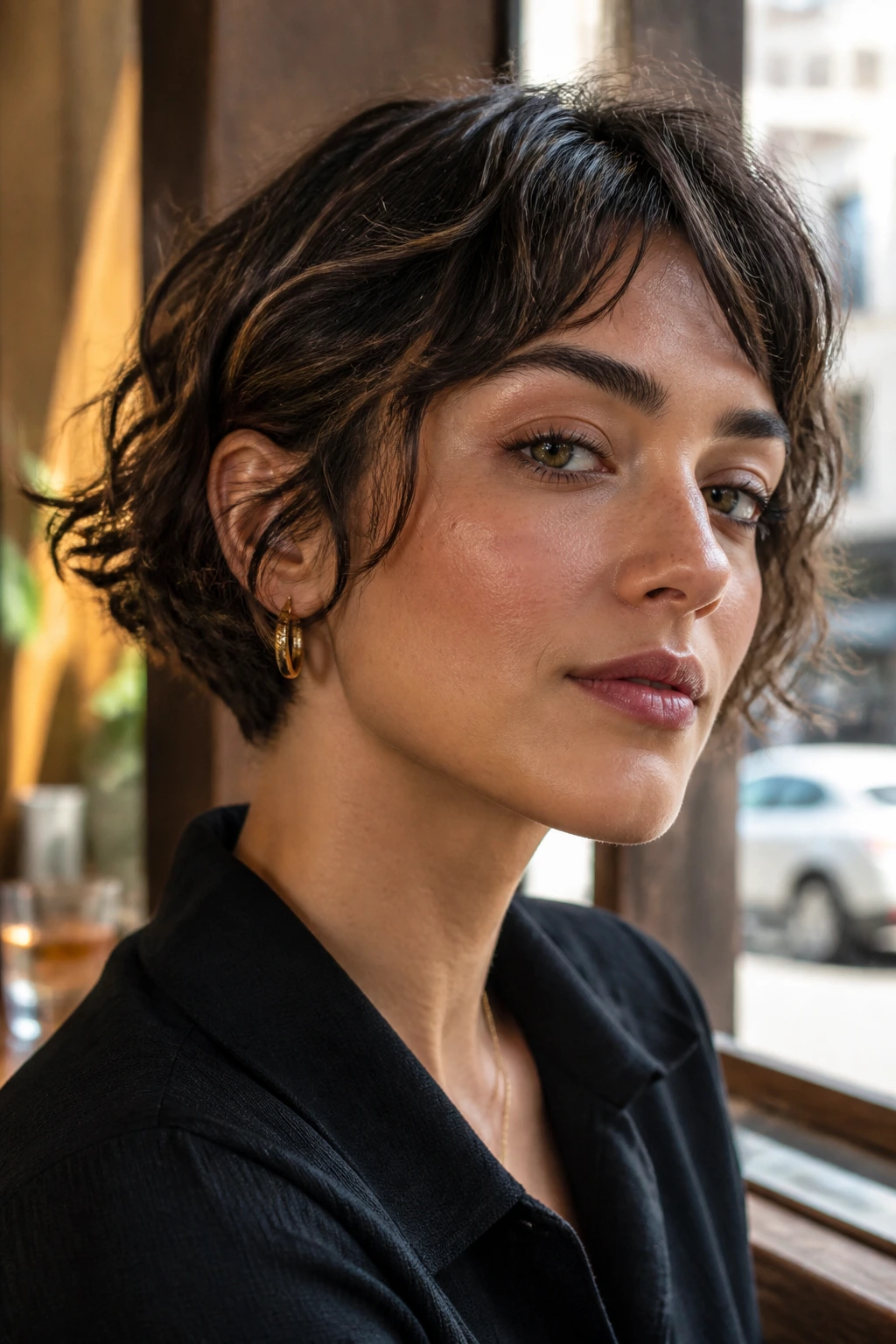
A micro bob can work here, but only when the texture is soft enough to interrupt the boxy shape. Keep it just below the ear or grazing the top of the jaw, then break up the ends so they don’t form a hard line. This is a haircut with attitude.
It suits looser waves best. Tight, bulky waves can make it too wide at the cheeks, so the cut needs internal removal and a light hand with product. If you wear glasses, this length can look especially clean because it leaves room around the frame line.
13. Off-Center Part Bob

Sometimes the smartest move is not changing the haircut at all. An off-center part can turn a blunt bob into something much friendlier on a square face. The slight imbalance takes the focus off the jaw and gives the wave a place to fall naturally.
This is especially useful if you have one side of your wave pattern that likes to kick out more than the other. Work with that side instead of forcing a middle part. A little asymmetry keeps the face from looking too neatly boxed in.
14. Wavy Box Bob

A box bob sounds harsh on paper, and on some faces it is. On a square face with waves, though, it can work if the perimeter stays soft and the length lands below the jaw or just kisses it. The wave turns the box into something looser and more wearable.
What Makes It Different
The outline is fuller than a French bob, but not as heavy as a classic blunt cut. Think of it as a clean silhouette with built-in softness.
This version suits people who like structure but do not want a lot of layers. If your hair is fine, keep the length a bit longer so the cut does not go flat.
15. Shoulder-Grazing Lob with Long Layers

This is the grown-up, low-fuss answer for anyone who wants a bob but hates feeling boxed in. The shoulder-grazing length gives wavy hair room to expand, and the long layers stop the shape from turning triangular. Square faces benefit from the extra length because it moves the line down past the jaw.
It’s also one of the easiest cuts to style. Air-dry it with a little cream, then bend a few front sections away from the face. That’s enough. No need to overwork it.
16. Bottleneck Bang Bob

Bottleneck bangs are narrower at the center and widen toward the cheekbones, which is exactly why they flatter square faces so well. They soften the forehead and guide attention downward in a gentler way than a straight fringe. Put them with a bob and the effect is immediate.
The bob underneath should stay light and textured. If the perimeter is too blunt, the bangs can feel disconnected. Keep the ends broken up and let the fringe do the framing work around the upper face.
17. A-Line Lob with a Tapered Nape
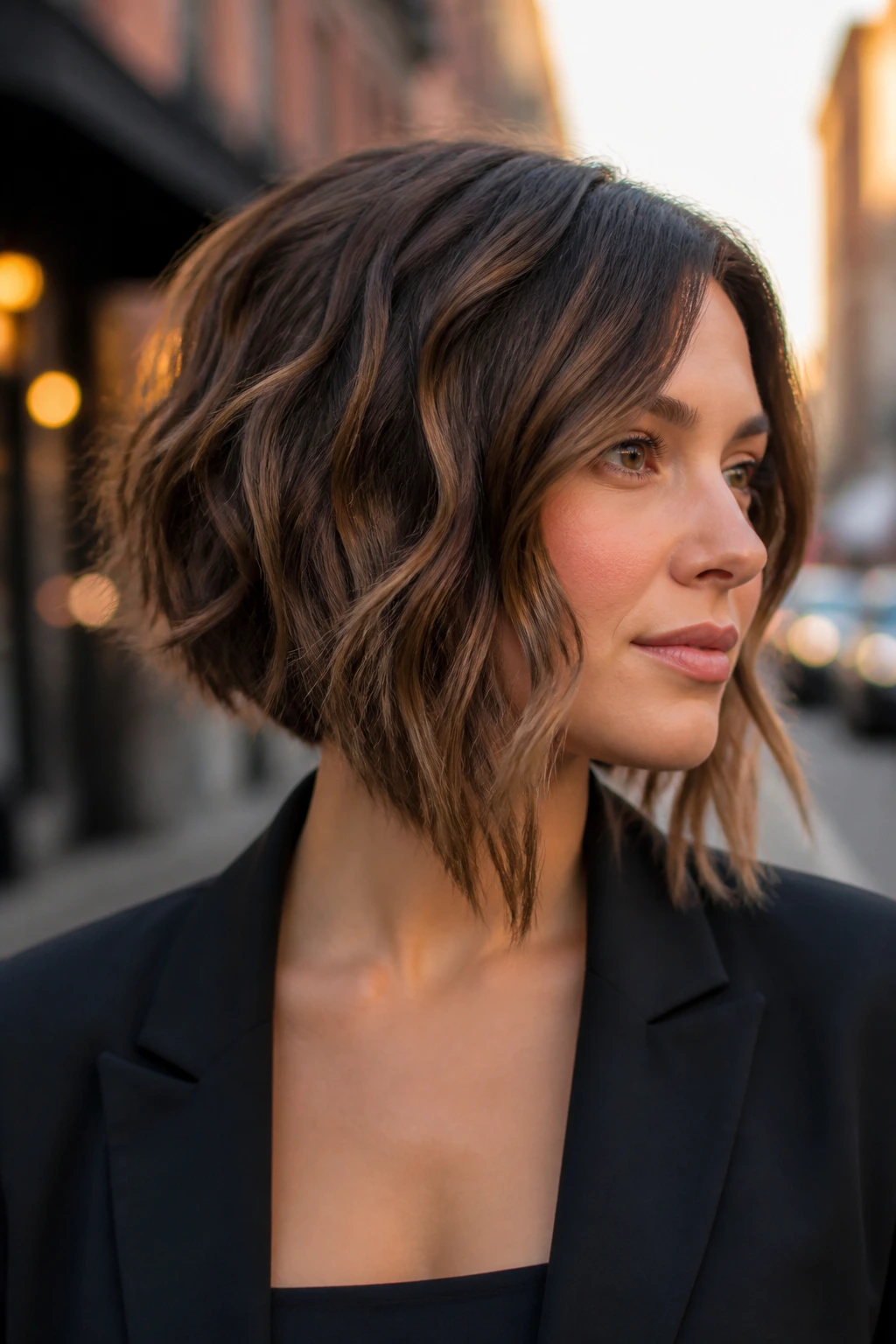
An A-line lob gives you a longer front and a tighter back, which creates a diagonal that works beautifully on square faces. The taper at the nape keeps the shape lifted, while the front pieces draw the eye downward. It’s a quiet bit of geometry, but it matters.
Wavy hair adds a little softness so the angle doesn’t read too sharp. Ask for the front to land below the chin, especially if your jaw is prominent. The cut should look like it’s easing into the face, not stopping at it.
18. Choppy Bob with Pinned-Back Sides

This is the playful one. A choppy bob with enough length to pin one side back gives you movement, asymmetry, and a little face opening without losing the bob shape. It’s good for square faces because the pinned side exposes the cheekbone and breaks the frame.
Use small clips or a barrette rather than a heavy accessory. Heavy pins can drag the wave flat. The choppiness should be subtle and irregular, not shredded. You want piecey, not frayed.
19. Rounded Bob with Feathered Perimeter

Rounded bobs can be tricky on square faces because too much roundness near the cheeks can make the face look wider. The feathered perimeter is what saves this version. It softens the shape so the bob curves without puffing outward.
This cut is especially nice on looser waves that already have a bit of bend. A round brush through the front and a diffuser in the back can keep the silhouette smooth. Keep the ends light. Heavy edges kill the effect fast.
20. Tousled Midi Bob
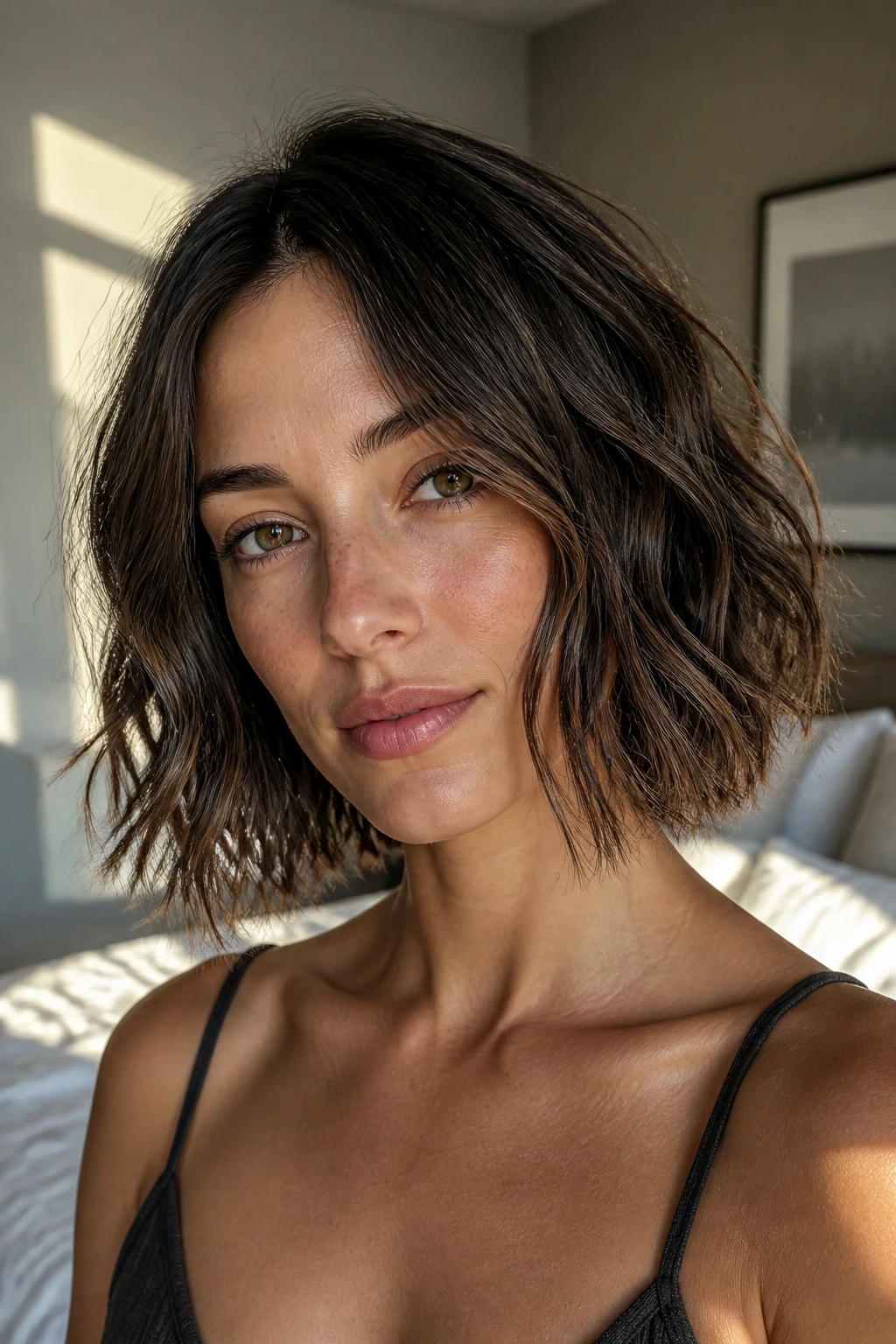
A midi bob sits in that useful middle zone between short and long. It gives square faces enough length to avoid a hard jawline cut, while still reading as a bob. The tousled finish keeps it from looking overbuilt.
Best for an Easy Morning
If your hair likes to dry with a natural bend, this length is forgiving. A little sea salt spray or mousse, a quick scrunch, and you’re done.
It’s a solid choice for anyone who wants something polished without needing hot tools every day. The waves can do the styling for you, which is the whole point.
21. Piecey Bob with a Deep Side Sweep

A deep side sweep changes the whole personality of a bob. It creates one long diagonal across the forehead and gives the face a softer edge. On a square face, that sweep does a lot to blur the corners.
The pieces should stay loose and separated, not glued together with too much product. A touch of styling cream on damp hair and a small amount of finishing spray is enough. The cut should look lived-in, not crunchy.
22. Soft Wolf Bob

The wolf bob borrows the crown lift and face-framing of a shag, then keeps the length tighter like a bob. That mix can work really well on wavy hair because it lets the texture stay wild without ballooning. On a square face, the broken-up front pieces soften the jaw and the lifted crown adds length.
This one is best when the layers are internal and not too chopped. If the cut gets too fragmented, the shape can fray out. The good version feels cool without looking like it got attacked by thinning shears.
23. Sleek-Ends Bob with Wave Through Mid-Lengths
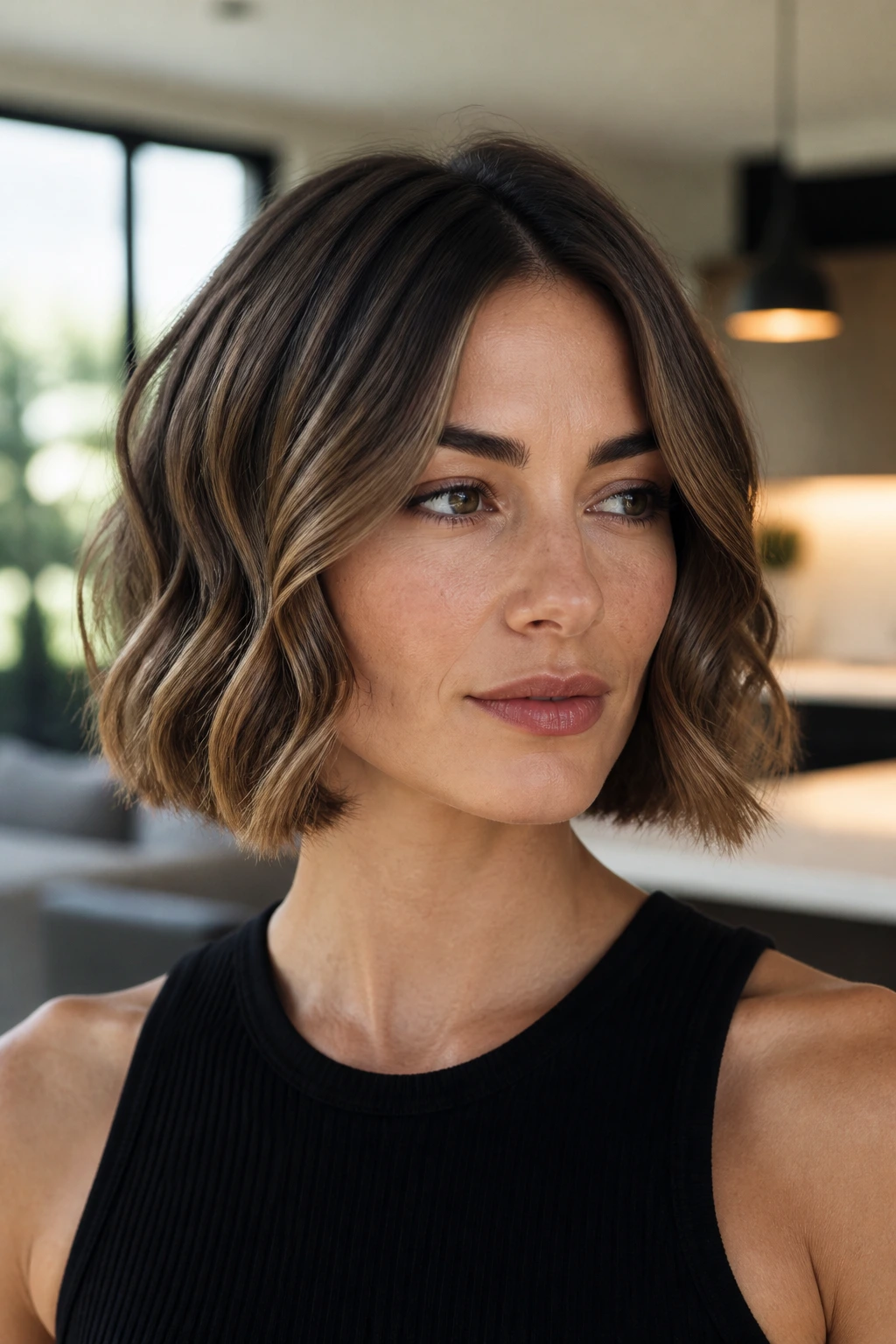
This cut is about contrast. The ends stay neat, almost polished, while the mid-lengths carry the wave. That balance gives square faces a cleaner outline without losing softness. It also works well if you like a more styled finish.
The trick is not flattening the whole head. Keep the roots controlled, then let the wave show through from cheek level down. That keeps the bob from becoming too round or too stiff. It’s a nice option for thicker hair that needs some order.
24. Graduated Bob with Hidden Layers
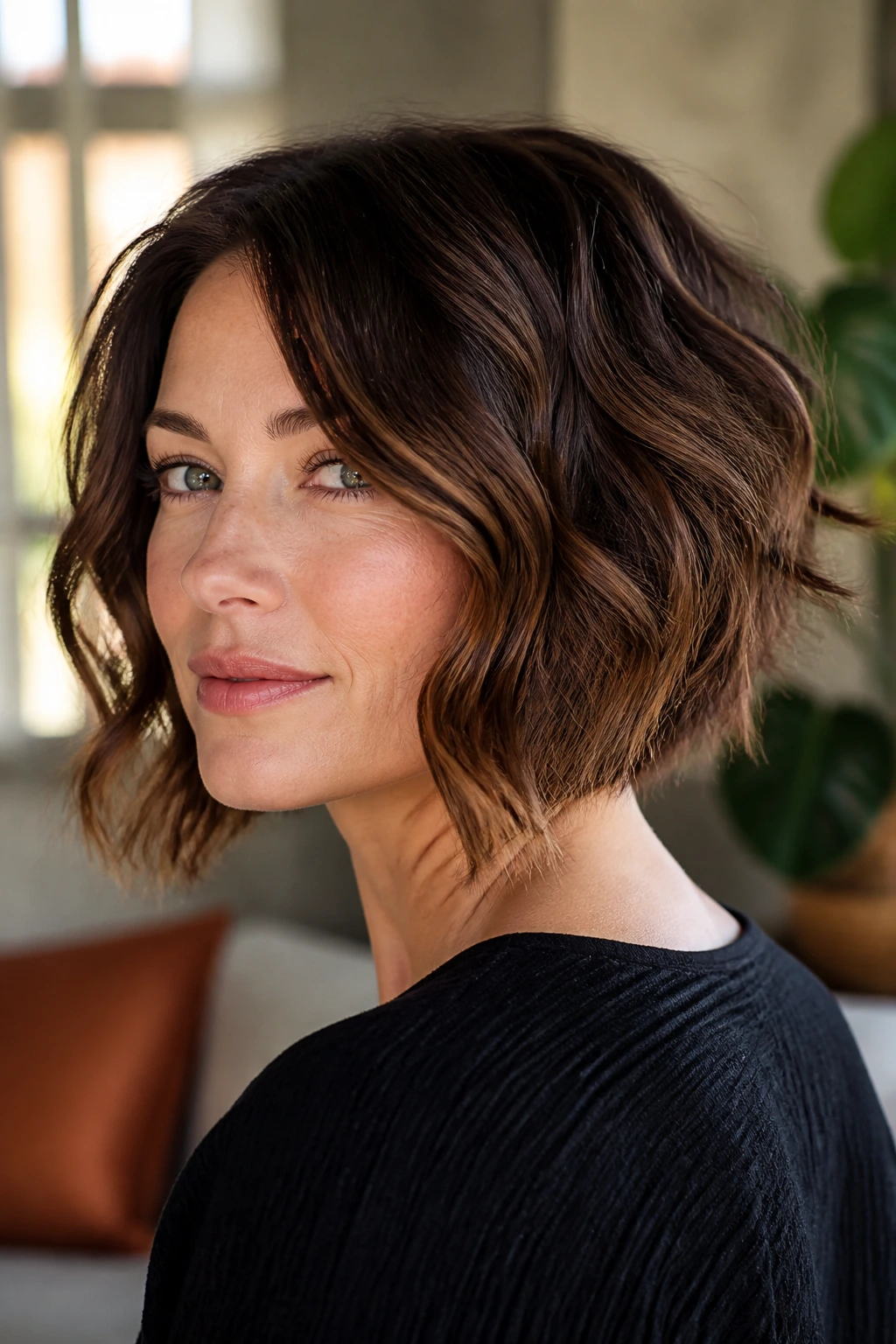
A graduated bob is shorter in back and longer in front, but the hidden layers are what make it wearable on wavy hair. They remove weight from the inside without exposing every layer on the surface. That matters because square faces need movement, not chop.
This cut is especially strong on dense hair. It gives the shape structure while preventing the sides from fanning outward. If your hair tends to sit heavy at the nape, this one can fix that without making the bob look overlayered.
25. Wavy Lob with a Long Curtain Fringe

The long curtain fringe is the friendliest finishing move for square faces, and a wavy lob gives it room to work. The fringe opens the face at the center and softens the temples, while the longer length keeps the jaw from becoming the focus. It’s elegant without feeling stiff.
If you like hair that can be tucked, flipped, or pinned back, this is the one to watch. It grows out well, and that counts. A cut that still looks good six weeks later is worth its weight in salon time.
The Shape Rules That Make These Cuts Work

A square face is not a problem to solve. It’s a shape to work with. The goal is usually to soften the jaw, add a little vertical line, and avoid a straight cut that stops right where the face is broadest. That’s why the best bobs here either land below the jaw, use diagonal lines, or break up the perimeter with texture.
Wavy hair helps more than people expect, but it also changes the math. A bob that looks neat when wet can jump and widen as it dries, especially if the waves are coarse or springy. I’d rather see a cut left a touch longer and refined later than one that lands too high on the chin and fights the face from day one.
Ask for a dry cut if your stylist likes to do them, or at least a check cut after the hair has been dried in its natural pattern. That small step keeps you from guessing where the line will actually sit. And if your face is short and your hair is thick, a little extra length can be a mercy.
Tools That Save You From Bad Hair Days
-
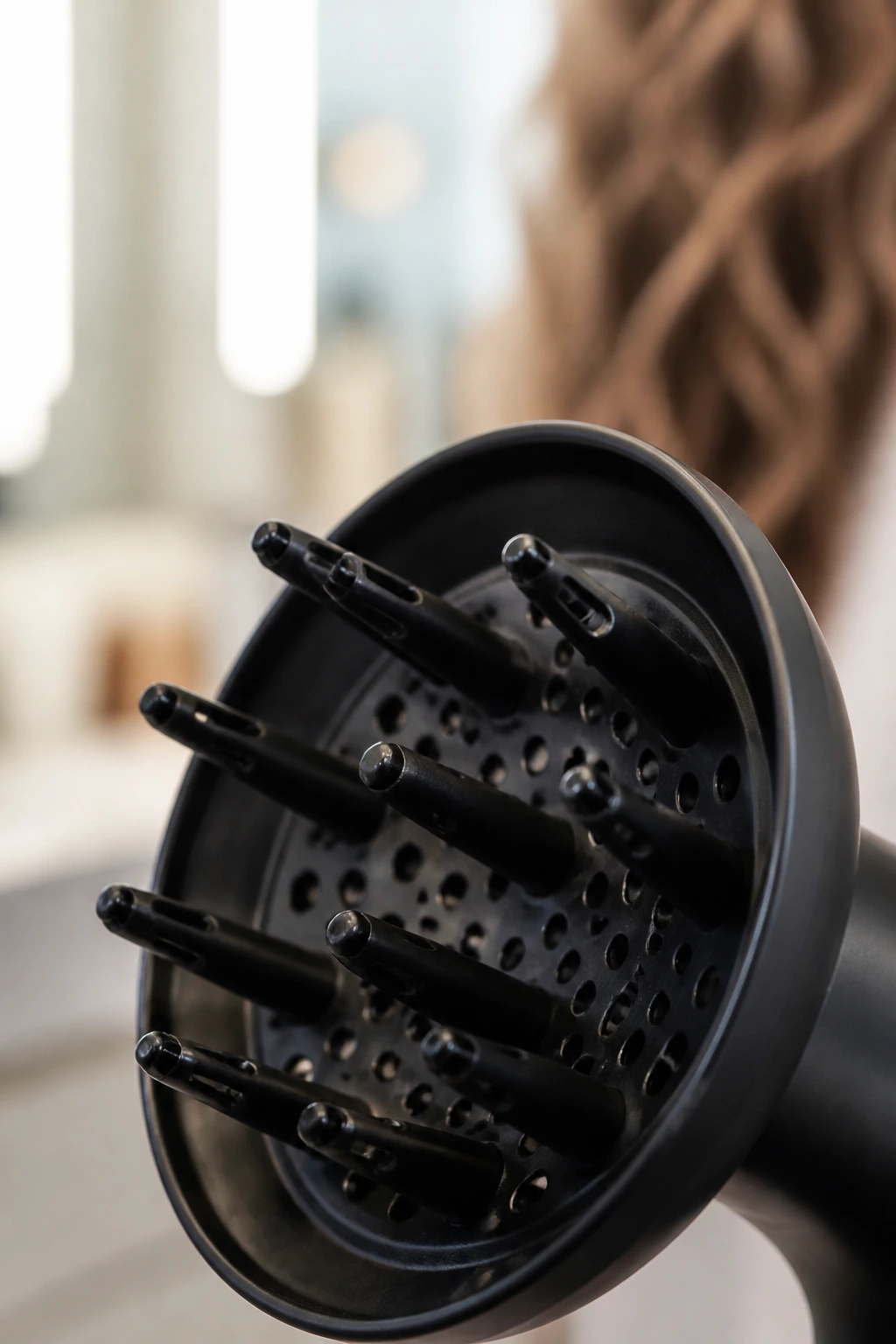
A diffuser attachment: It helps waves dry with lift instead of spreading outward in a fuzzy halo.
-
A 1 to 1.25-inch round brush: Small enough to shape the front, large enough to keep the bob from getting too curled.
-
A spray bottle with water: A quick mist resets wave clumps without soaking the whole head.
-
Wide-tooth comb: Better than a fine comb for keeping wave pattern intact while detangling.
-
Duckbill clips: Useful for setting the front away from the face while the hair cools.
-
Microfiber towel or cotton T-shirt: Cuts down on frizz right after washing.
-
Lightweight styling cream or mousse: The right one gives hold without making the bob limp.
-
Heat protectant spray: If you use an iron or dryer, don’t skip it. Fine waves burn faster than people think.
-
Silk pillowcase or bonnet: It cuts down on morning puff and helps the shape last one more day.
Smart Product Picks for Wavy Hair

Wavy hair likes products that give definition without drag. That usually means mousse at the roots, a light cream through the lengths, and a little serum only on the ends if they get fuzzy. Heavy butters and thick oils can flatten the top and make the bob collapse at the sides, which is exactly what you do not want on a square face.
If your waves are fine, look for a mousse that says volumizing or flexible hold rather than extra glossy or smoothing. Fine waves need lift more than weight. If your hair is coarse, a cream with a little slip can help the ends lie down, but use less than you think you need. Coarse hair can turn greasy-looking fast when the product gets overloaded.
A clarifying shampoo every couple of weeks helps too, especially if you use dry shampoo or texture spray. Product buildup makes a bob lose shape and makes waves cling together in odd places. That’s how a nice cut starts looking tired. Keep the base clean, and the silhouette stays crisp longer.
Heat protectant is one of those boring purchases that pays off. Use it before a blow-dry or hot iron, especially along the face-framing pieces, which get touched up most often. The front of the haircut is where people look first, and it’s usually the first place to frizz.
How to Wear These Cuts
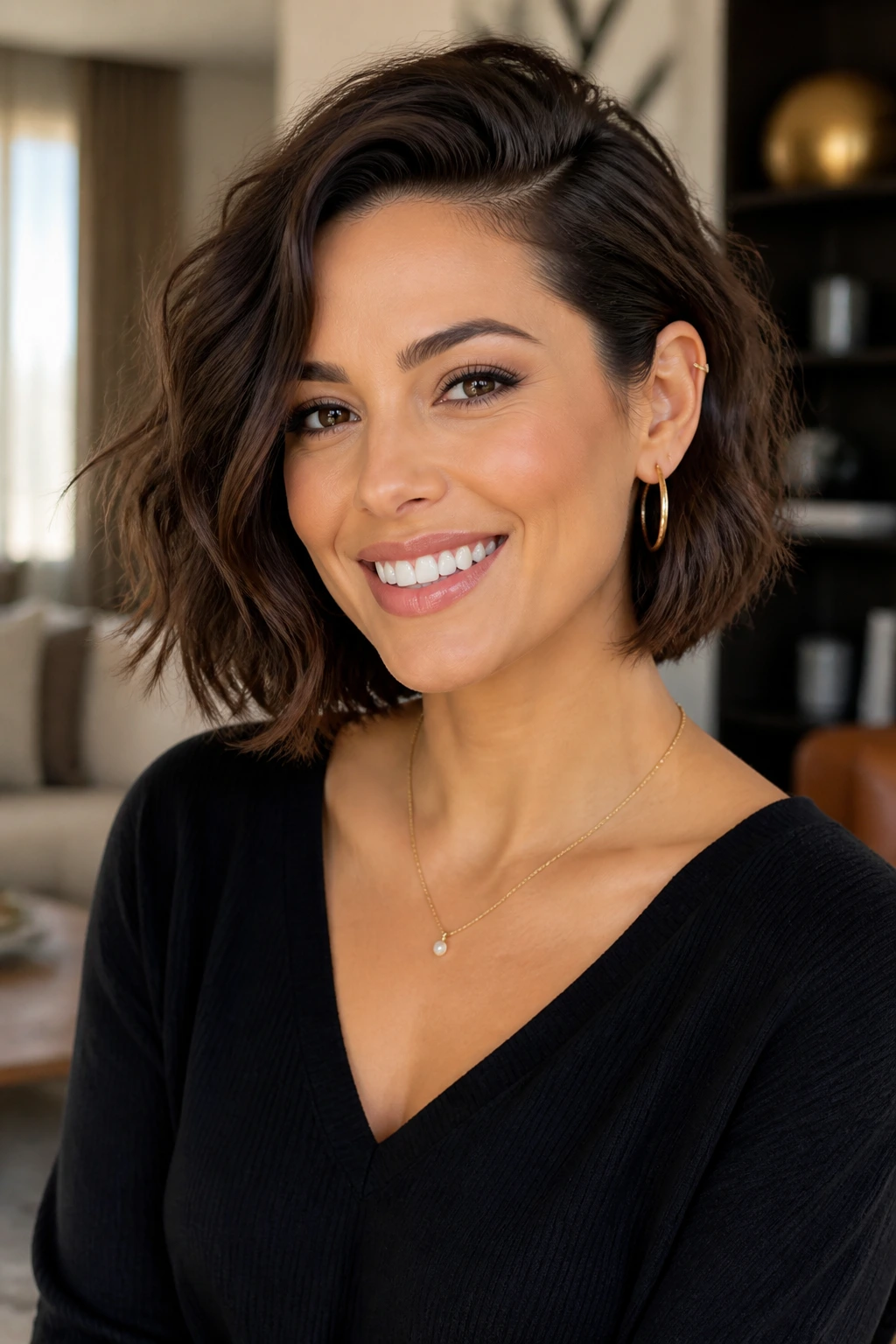
Presentation: The easiest way to make a bob flatter a square face is to let one side bend forward and tuck the other side behind the ear. That small asymmetry opens the cheekbone and keeps the jaw from feeling too boxed in. A soft finish almost always beats a stiff one here.
Accompaniments: Small hoops, narrow sunglasses, and collars that sit away from the chin work well with these shapes. Heavy statement necklaces can crowd a chin-length bob, while open necklines let the haircut breathe. If you wear glasses, try a cut that ends just below the frame line or you can get a crowded look fast.
Scale: Shorter bobs suit shorter faces best when the ends are softened. Longer lob lengths work better if you want to keep some vertical line and avoid emphasizing width. Thick hair usually needs internal removal; fine hair usually needs the outline left a little fuller.
Pairing: A side part, soft makeup around the eyes, and a little shine at the ends make the haircut feel finished without making it fussy. Keep the styling mood clean and deliberate. That’s the sweet spot.
Small Styling Moves That Change the Whole Cut

Texture Boost: Work mousse into damp roots, then diffuse until the roots are dry and the ends are still a little cool to the touch. That gives the bob lift without puff. A quick mist of texturizing spray at the crown can wake it up the next day.
Customization: If your square face feels broad, move the part slightly off center and leave the front pieces longer. If your face is longer than it is wide, keep the bob a little fuller at the sides and avoid too much crown height.
Serving Suggestions: A tuck behind one ear, a clean barrette, or a curved fringe can change the mood of the same haircut. You do not need a different cut for every occasion. Sometimes you just need one better face-framing choice.
Make-It-Yours: Fine hair usually looks best with shorter, softer layers and a lighter product. Thick hair needs more internal shaping and less oil. Coarse waves often benefit from a bit more length, because they shrink and spread less when there is some weight left in the cut.
Mistakes That Make a Good Bob Look Stiff
-
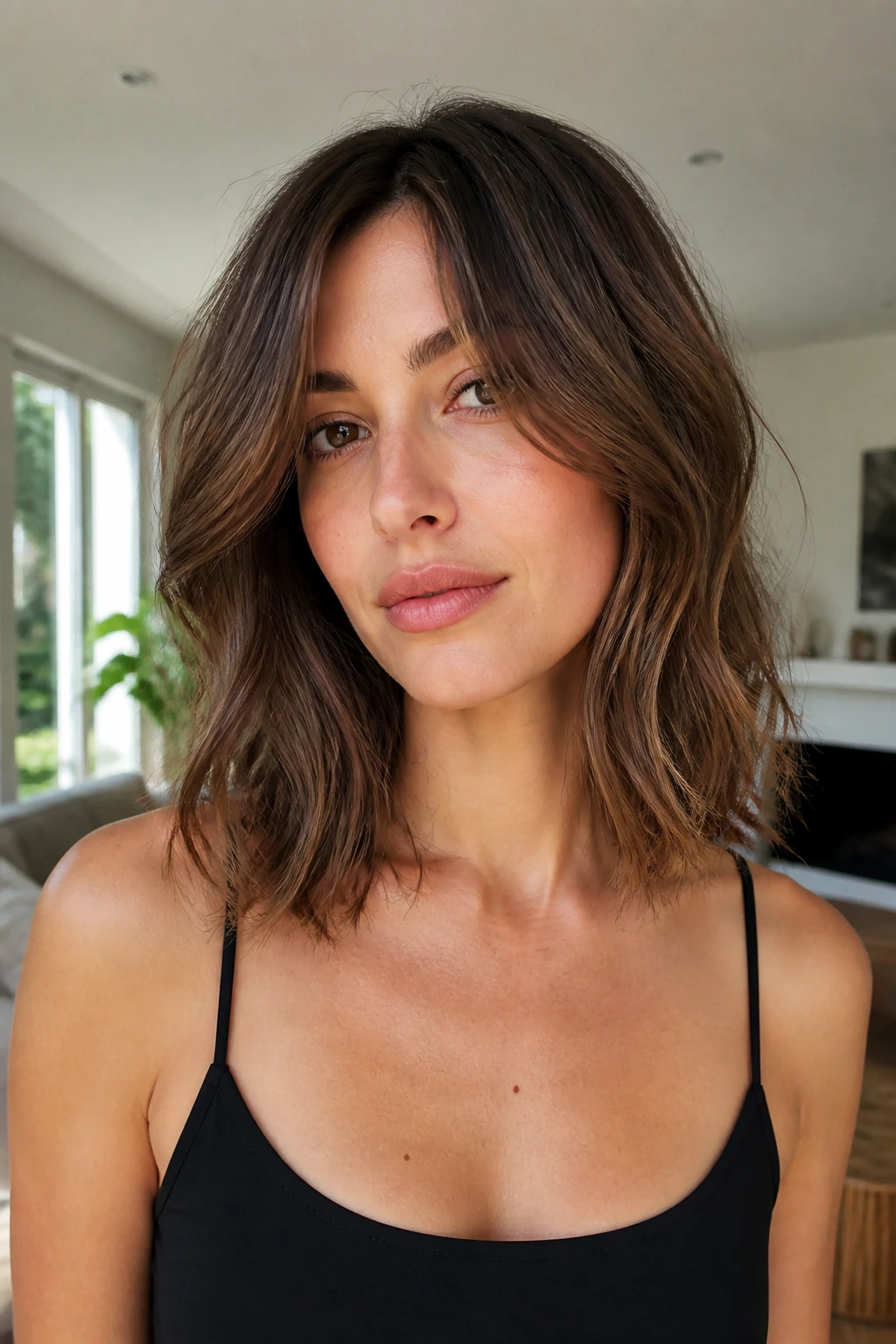
Cutting the line exactly at the jaw: That puts the eye right on the widest part of a square face. Ask for the edge to land a little above or below, or soften it with texture.
-
Over-layering wavy hair: Too many layers make the cut puff out and lose shape. The fix is subtle internal shaping, not a shredded perimeter.
-
Using heavy cream all over the head: This makes the roots collapse and the ends stringy. Keep heavier product off the crown and use only a small amount on the mids and ends.
-
Forcing a dead-center part: Center parts can work, but on a square face they sometimes make the width feel stronger. An off-center part often gives you a softer line with less effort.
-
Blowing the hair straight down from root to tip: That can leave the bob looking like a triangle or a helmet. Bend the front sections slightly away from the face and let the wave show through.
-
Ignoring how the cut will dry: Wavy hair changes size and shape as it dries. Always account for shrinkage before the first snip.
Fresh Twists on the Classics

The Soft Side-Sweep: Keep any of these bobs, then move the part deeper and sweep the front across the forehead. It softens the face fast and gives the style a little polish.
The Air-Dried Texture Cut: Ask for a bob with less bulk at the ends and more internal movement, then wear it mostly air-dried with mousse. This suits loose waves that behave better on their own than under a brush.
The Glossy Lob: Leave the length at the collarbone, smooth the top section, and keep the wave in the mids. It’s a clean option if you like a neater finish but don’t want to flatten the texture completely.
The Fringe-First Version: Pick curtain or bottleneck bangs first, then let the bob length follow from there. That can be smarter than starting with length and hoping the face shape works itself out.
The Grow-Out Bob: Start a little longer than you think you want, then trim into shape over time. This is the one I recommend if you’re nervous about the jawline effect. A bob that grows into its best shape is easier to live with than one that starts too short and has nowhere to go.
Keeping the Shape Sharp Between Salon Visits

A bob or lob only looks expensive if the outline stays neat. For wavy hair, that usually means a trim every 6 to 8 weeks if the cut is short, or every 8 to 10 weeks if it’s a longer lob. Wait much longer and the ends start flipping in odd directions, especially around the jaw.
Night care matters more than most people think. Sleep on a silk pillowcase or wear a bonnet if your waves frizz easily. In the morning, mist the mids lightly with water, scrunch in a pea-sized bit of cream, and re-diffuse for 3 to 5 minutes. That’s often enough to bring the shape back without a full wash.
If the roots go flat, use dry shampoo at the crown before the hair gets oily. Let it sit for a minute, then massage it in with your fingertips. Rushing that step leaves white patches, and nobody wants that.
Questions People Ask Before Cutting the Length

What bob length is most flattering for a square face?
Usually the safest lengths are just below the jaw, at the collarbone, or slightly angled longer in front. Those spots soften the lower face without boxing it in. If you want chin length, add texture or fringe so the edge does not feel too hard.
Can wavy hair pull off a blunt bob?
Yes, but only if the blunt line sits below the jaw or gets softened with bend and wave. A blunt cut right at the jaw on wavy hair can widen the face more than you expect. It’s less about the blunt idea and more about where the line lands.
Should I ask for layers?
Usually, yes, but not too many. Wavy hair often needs internal shaping so it doesn’t puff out, yet heavy layering can make the ends frizzy. Ask for soft, hidden layers or face-framing pieces rather than a choppy stack all over.
Is a center part bad for a square face?
Not bad, just not always the easiest choice. A center part can look sleek if the bob has softness around the jaw and fringe near the face. If you want quicker balance, shift the part a little off center and see what happens.
What if my waves get wider after the haircut?
That usually means the cut is too short at the jaw or too heavy in the wrong places. Try adding length around the front, reducing bulk inside the shape, and styling with a diffuser instead of a rough towel dry. Wavy hair needs room to settle.
Do bangs help square faces?
They can, especially curtain bangs or bottleneck bangs. Those shapes break up forehead width and guide the eye down the face. A thick straight fringe can work too, but it needs soft edges and the right length.
How often do I need to trim a bob?
Short bobs need more frequent shaping because the outline changes fast. Six to eight weeks is a good rhythm. Longer lobs can often stretch to ten weeks if the ends still fall cleanly.
Which is easier to live with, a bob or a lob?
The lob. It gives you enough length to tuck, pin, or pull back when the wave refuses to behave. A bob has more personality, but a lob usually asks for less daily negotiating.
The Cut That Softens the Jaw

A good bob on wavy hair and a square face should look like it belongs there on purpose. Not too neat. Not too fussy. The shape needs enough edge to feel modern, then just enough softness to keep the jaw from taking over the whole frame.
If you’re standing in front of a stylist’s chair trying to choose, the safest bets are the collarbone lob, the layered lob with face-framing pieces, and the curtain-bang bob. Those three give you movement without boxing the face in. And if you want the shortest version, bring a photo of a cut with texture, not one with a hard line. That tiny difference changes everything.