



Heart-shaped faces and curls can be a tricky pair if the cut is wrong. Too much width at the crown, and the forehead starts bossing the whole conversation. Too much bulk around the chin, and the lower half of the face can feel crowded. The sweet spot is usually a cut that gives the curls room to move while quietly correcting the face’s natural taper. That’s why the best curly haircuts for heart-shaped faces tend to be the ones with smart layering, a side part, or softness that lands somewhere between the cheekbones and the jaw.
Curly hair makes this even more interesting. A curl never lies for long. It springs, it shrinks, it shifts in humidity, and it changes a blunt haircut into something rounder or puffier than the salon mirror suggested. That’s not a problem. It’s just the reality of curly hair, and the whole point is to work with the spring instead of pretending it behaves like straight hair with a little bend.
The styles below are the ones I keep coming back to for this face shape: cuts that soften the forehead, flatter the cheekbones, and leave the chin looking intentional rather than apologetic. Some are polished. Some are shaggy and a little rebellious. All of them can work on a heart-shaped face when the length, layers, and part are handled with a bit of care.
Why These Cuts Keep the Balance Right
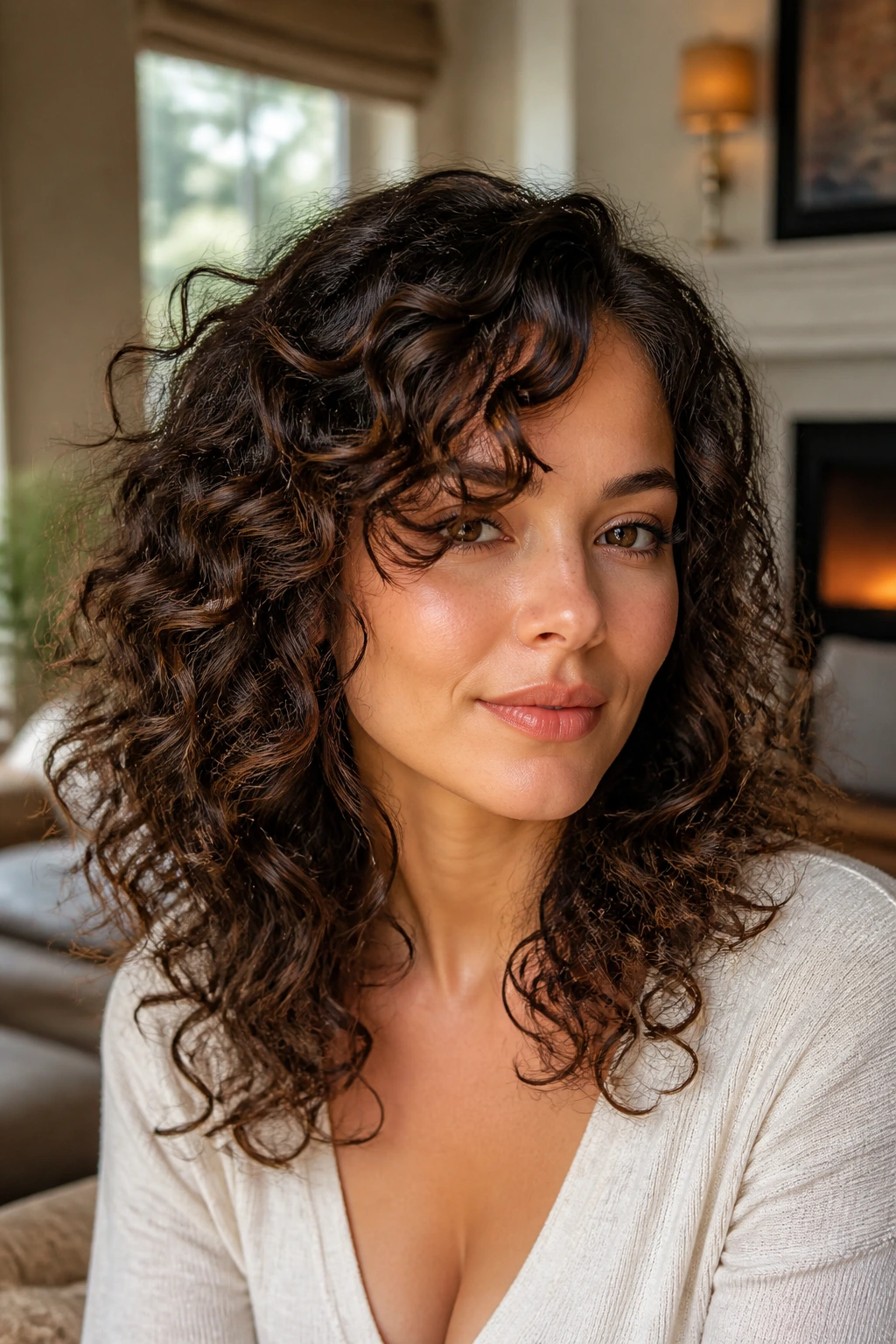
-
Forehead balance: A side part, curtain bangs, or a longer fringe breaks up the widest part of a heart-shaped face instead of drawing a hard line across it.
-
Cheekbone focus: The best curly cuts land movement near the cheekbones, where the face usually looks strongest and most sculpted.
-
Jaw softness: Pieces that fall to the jaw or just below it keep the chin from looking too narrow or too pointed.
-
Curl shrinkage: These shapes all leave a little room for shrinkage, which matters because curls can bounce up by an inch or three once they dry.
-
Growth-out grace: The cuts on this list still look decent six or eight weeks later, which is more than I can say for a lot of trendy shapes that only behave on day one.
-
Density control: Some of these cuts remove bulk. Others build it in. The point is to match the shape to how your curls actually sit, not how they look when stretched flat.
1. Chin-Grazing Curly Bob with Side Part
A chin-grazing curly bob is one of the cleanest answers for a heart-shaped face. The length lands just low enough to give the jaw some company, while the side part keeps the top from widening the forehead any further. It looks sharp when the curls are springy and a little piecey, not helmet-like.
Ask for the ends to sit slightly below the chin when dry. That little bit of extra length matters because curls almost always bounce up more than expected. If the perimeter is cut too high, the whole shape can float away from the face and make the chin look even smaller.
This cut is especially good on curls with medium density. On thicker hair, I’d ask for some internal removal under the top layer so the bob doesn’t puff out at the cheeks. On finer curls, keep the layering gentle and let the side part do the visual work.
2. Soft Curly Lob with Face-Framing Pieces
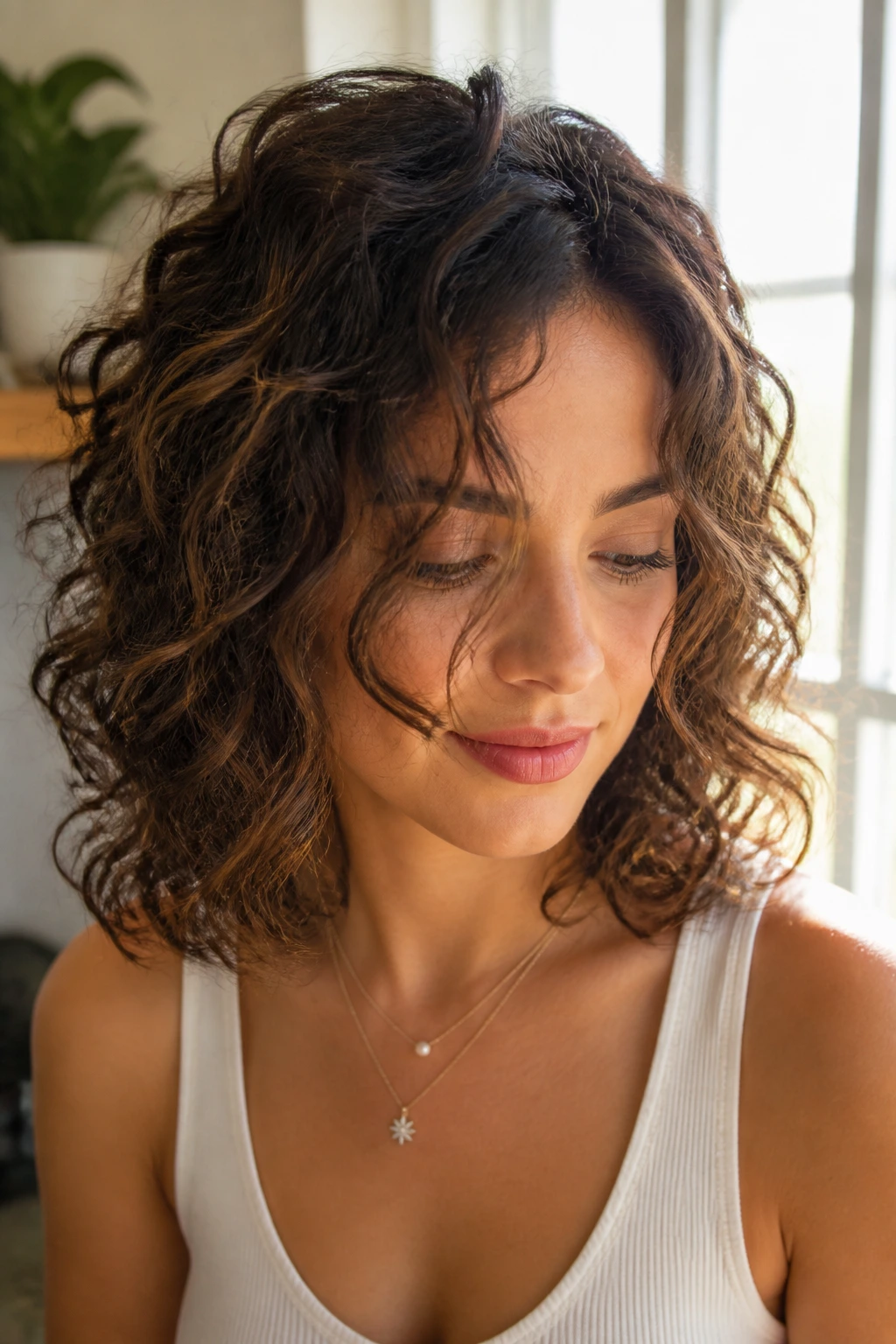
Want length without letting the face disappear into it? A soft curly lob is the answer. Sitting somewhere between the collarbone and the upper chest, this cut gives heart-shaped faces a longer vertical line while the face-framing pieces soften the width at the temples.
The front should not be chopped short. That’s the mistake. Keep the shortest face-framing layer around the lip or cheekbone, then let the rest fall in a gentle slope. When the curls dry, those pieces curve inward and make the face look less top-heavy.
Best for
- Curls that need length to weigh them down a little
- People growing out a shorter cut
- Anyone who wants a polished shape that still air-dries well
I like this cut because it doesn’t fight the curl pattern. It gives the curls somewhere to sit, and it grows out without looking accidental.
3. Long Layers with Curtain Bangs
Curtain bangs on curly hair can be glorious, but only if they start long enough. On a heart-shaped face, that fringe should hit around the cheekbones or just below, then open away from the center of the face. Anything much shorter tends to sit right where the forehead is already widest.
The long layers behind the bangs matter just as much. If the top is full of short layers and the bottom is left heavy, the shape can turn triangular fast. You want the movement distributed down the length, not stacked on the crown like a puff pastry.
What to ask for
- A center-opening fringe that blends into the sides
- Layers that begin around the cheekbones, not the brows
- Enough length to let the bangs shrink without becoming baby bangs
This is one of those cuts that looks relaxed but is doing a lot of quiet work. It softens the face without hiding it.
4. Rounded Curly Shag
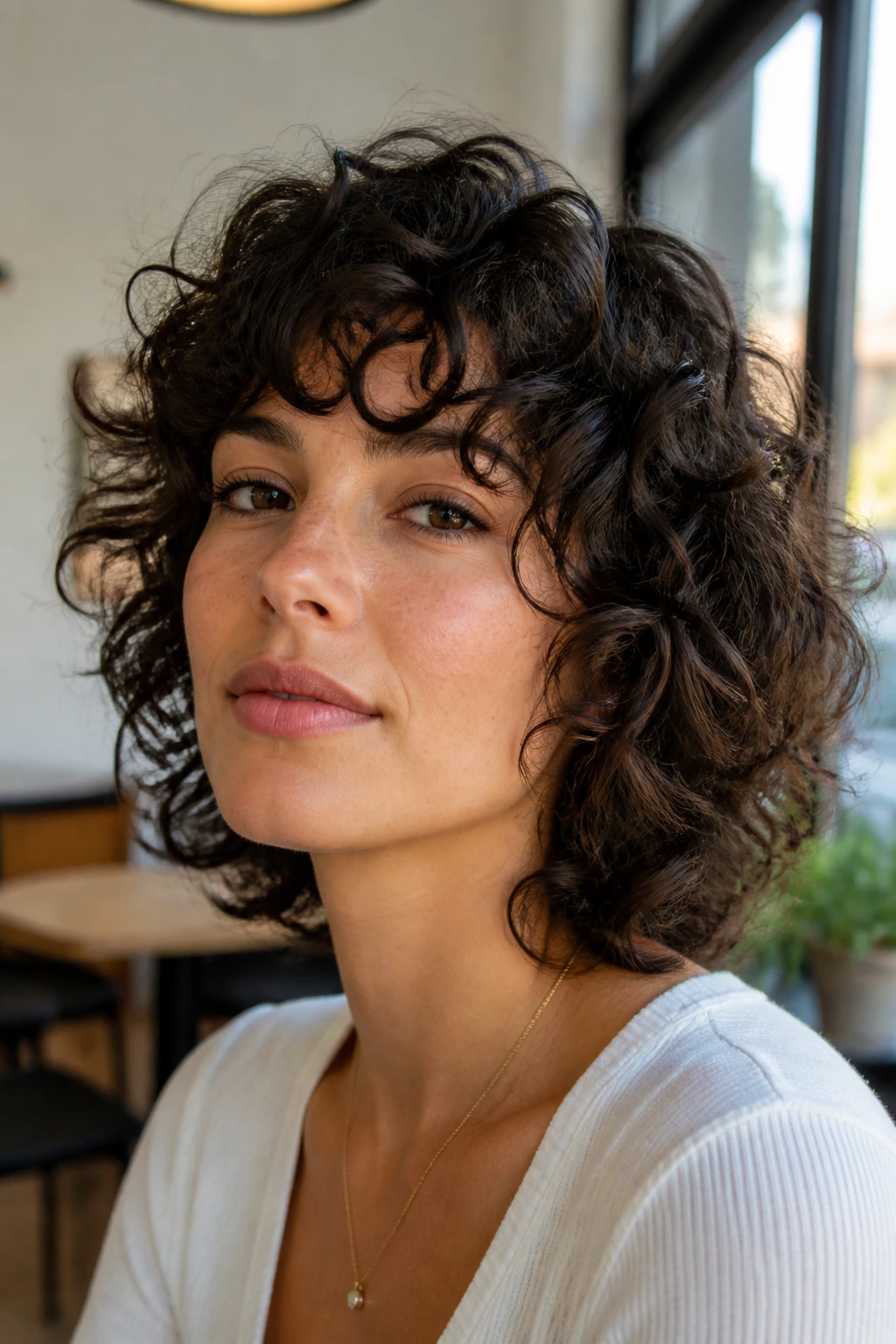
A rounded curly shag is one of my favorite choices when a client wants shape with a little attitude. The layers are built to encourage lift, but the outline stays round instead of spiky. For a heart-shaped face, that roundness matters because it fills in the space around the temples and cheeks without making the forehead feel dominant.
The key is restraint at the crown. You do want volume, but not a mushroom. The shortest layers should support the top, not balloon it. A good curly shag has movement near the cheekbones, a soft fringe, and ends that taper rather than chop off abruptly.
This cut works best when the curls have real spring and some density. Thin curls can wear a shag, sure, but they need a lighter hand. With thicker curls, the shag gives the hair room to breathe and keeps it from turning into one giant shape.
5. Deva Cut with Internal Layers
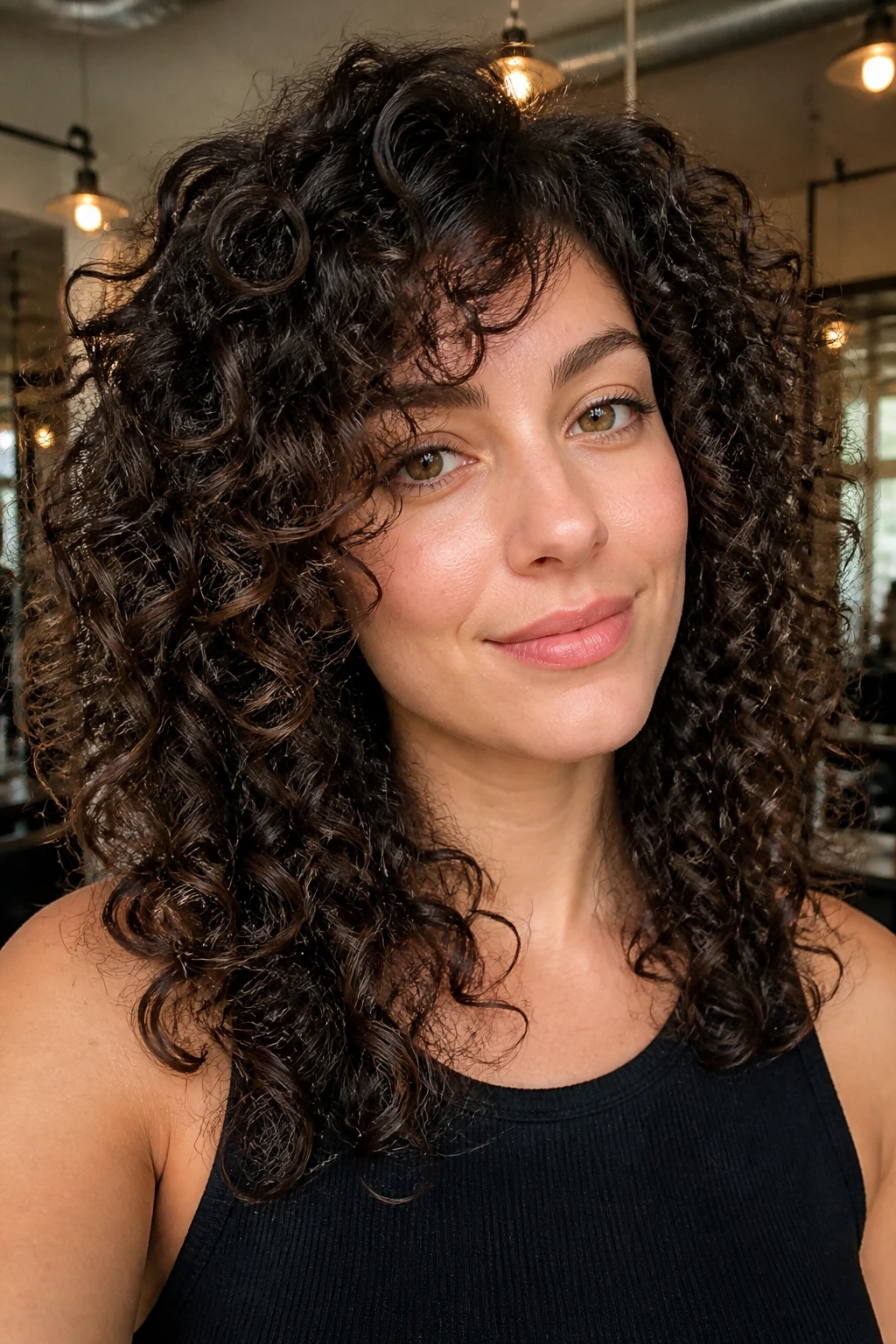
A Deva cut is less about the style name and more about the method. The stylist shapes curl by curl, usually on dry hair, so the final silhouette follows the actual spring of the curls instead of a guess made with wet hair stretched out. For heart-shaped faces, that’s gold. You can place volume exactly where you want it and remove it where you don’t.
Internal layers are the real trick here. They create lift and movement without tearing up the perimeter. The outer shape still looks full and healthy, but the inside has enough room for each curl to sit separately. That keeps the top from getting too wide and lets the lower half of the cut stay soft.
If your curls shrink unevenly, this is one of the safest ways to cut them. It’s also the best option when one side behaves differently from the other. Curls are rarely perfectly symmetrical, and pretending they are only makes the haircut harder to live with.
6. Curly Pixie with Length on Top
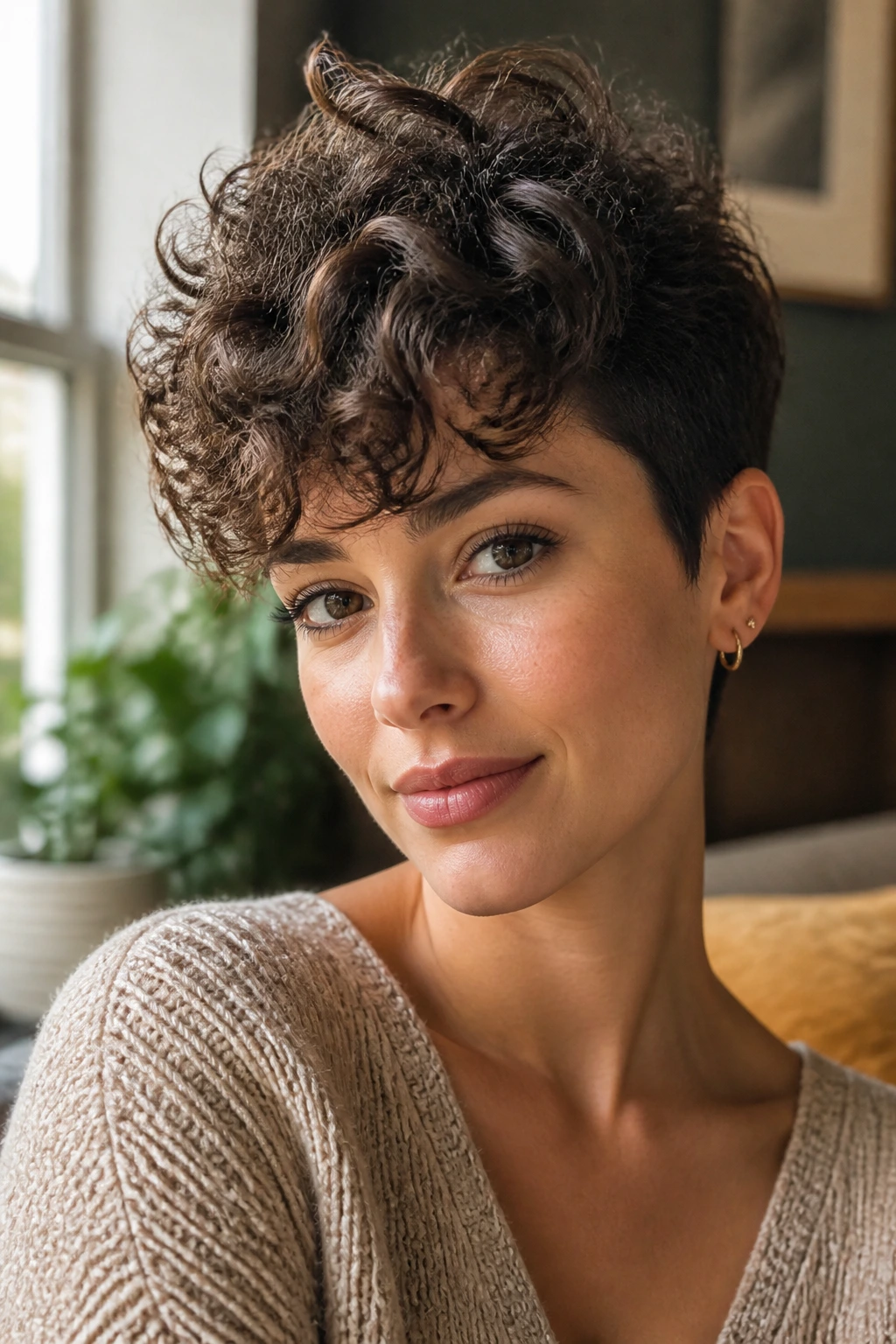
A curly pixie can flatter a heart-shaped face beautifully if the top has enough length to move. Keep the sides tapered or tucked close, then leave the top 3 to 5 inches long so the curls can fall forward, not straight out. That forward movement softens the forehead and keeps the face from feeling top-heavy.
This is not the kind of pixie that should sit flat against the head. Flat is the enemy here. You want lift at the crown, a bit of bend over the forehead, and enough texture on top to keep the cut from looking severe. A side-swept finish usually works better than a straight-down fringe.
The best versions of this cut have a little edge but still feel feminine and soft. If the curls are tight, the shape can be very sculptural. If they’re loose, the result reads more airy. Either way, it’s a strong look, and I mean that in the good sense.
7. Shoulder-Length Wolf Cut
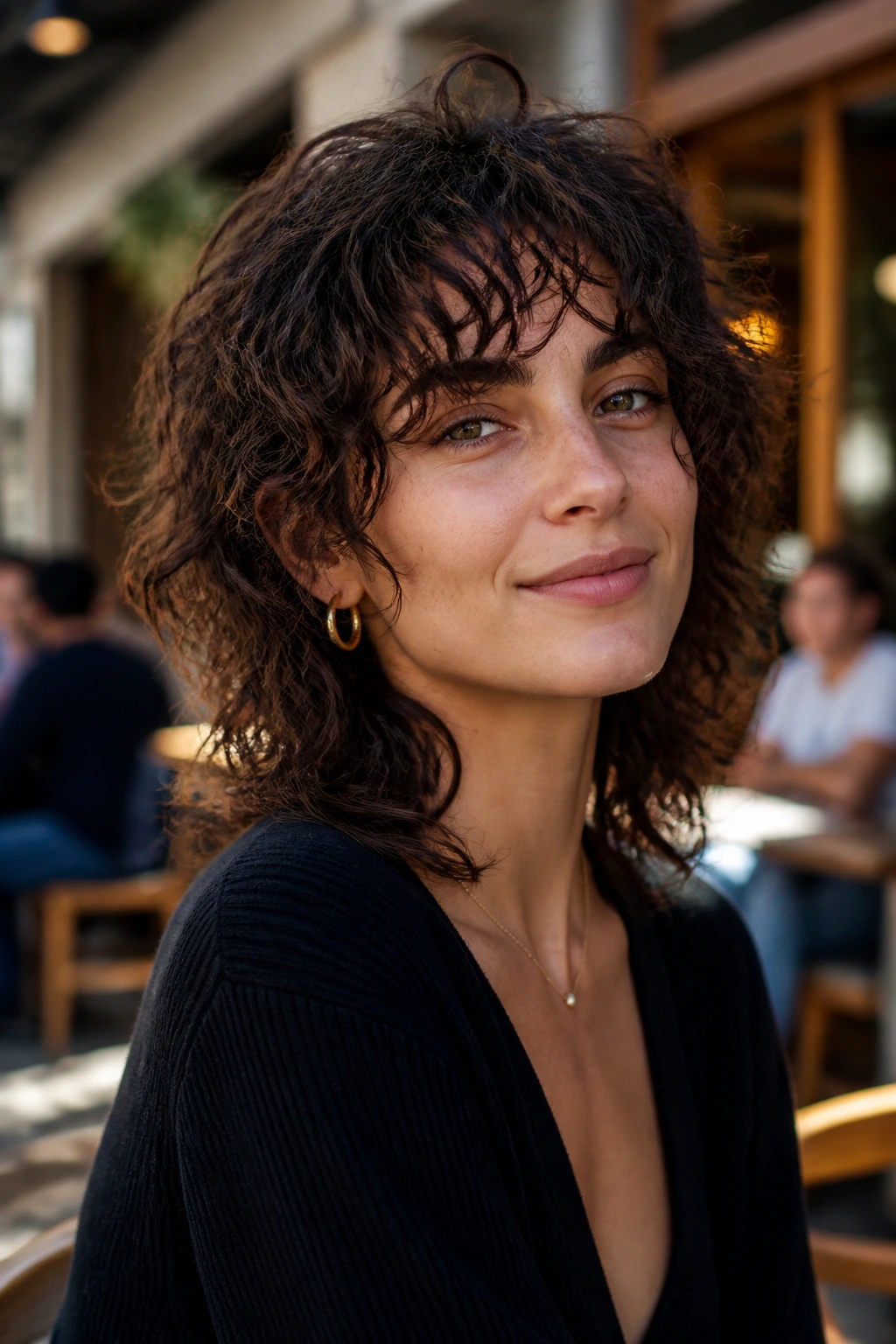
The curly wolf cut lives in that sweet spot between shag and mullet, which sounds chaotic until you see it on the right head. On a heart-shaped face, the shoulder-length version is the easiest to wear because the length keeps the shape grounded while the layers keep the top from getting boxy.
What matters most is where the face-framing pieces land. Keep them around the cheekbones and jawline, not the temples. That gives the face a diagonal line instead of a wide horizontal one. The longer back also helps the face feel a little less pointed at the chin.
This cut is best when the curls have enough density to support movement. On very fine curls, the layers can thin things out too much. On medium-to-thick curls, it gives that slightly wild, slightly polished look that works better than it has any right to.
8. Bouncy Midi Cut with Cheekbone Layers
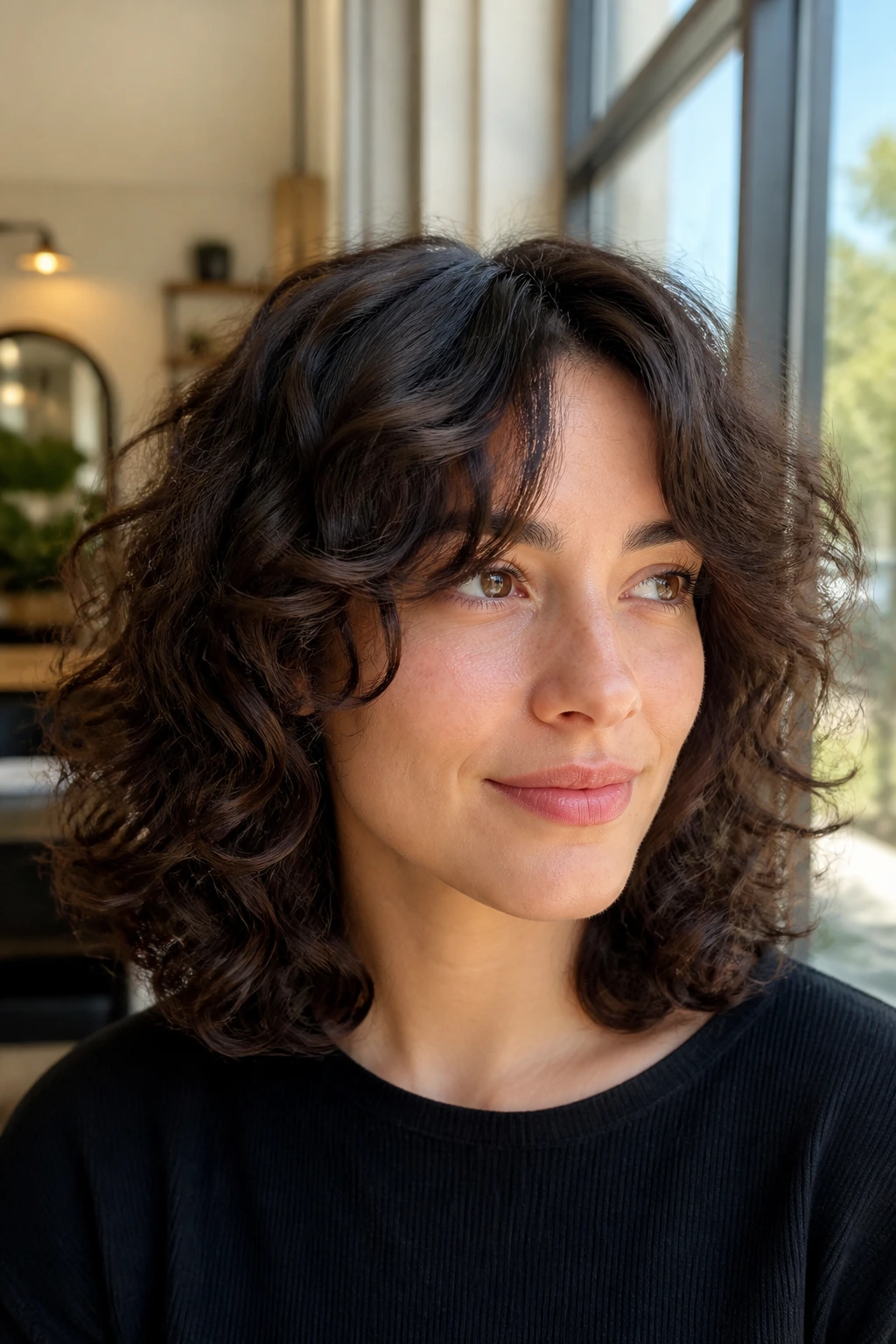
A midi cut is the underappreciated middle child of curly haircuts. It sits below the shoulders but not so long that it drags everything down. For a heart-shaped face, cheekbone layers are the key. They put visual emphasis right where the face is strongest and stop the top from carrying all the shape.
This cut is a nice compromise if you want movement without going full shag. The perimeter stays soft, the layers start high enough to create bounce, and the overall length keeps the lower half of the face from feeling too narrow. It’s the kind of cut that looks expensive even when the styling is casual.
I like it for people who wear curls both natural and stretched. The layers still read well either way, which is useful if you switch between air-drying and diffusing.
9. Asymmetrical Curly Bob
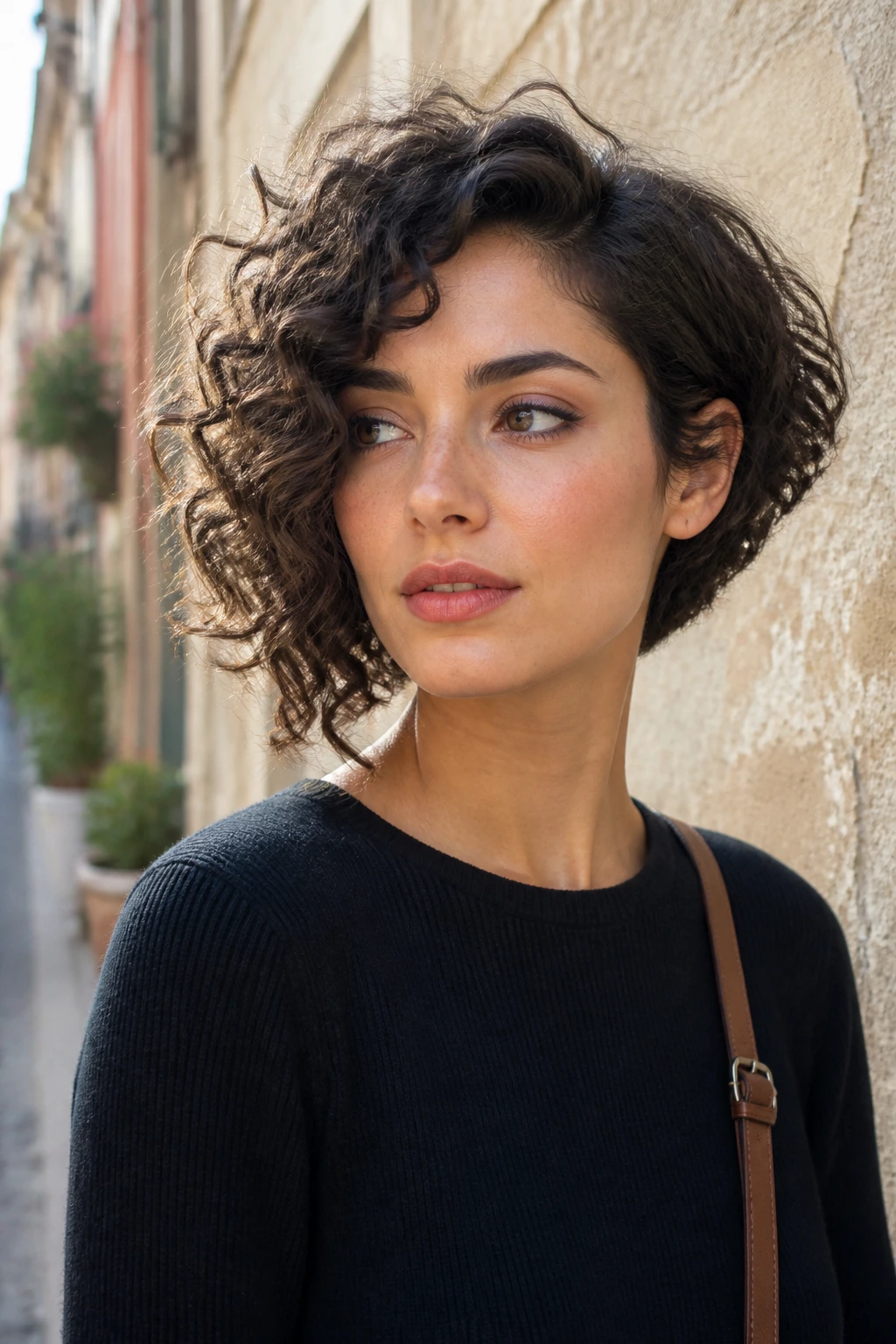
If you want a little drama, the asymmetrical curly bob brings it without needing a lot of styling theatrics. One side sits a touch longer than the other, which shifts the eye away from the center of the forehead and gives the face a less symmetrical, more interesting outline.
The key word here is touch. You do not want one side looking like it belongs to a different haircut. An inch or two is enough. The longer side should skim the jaw or graze just below it when dry, while the shorter side keeps the shape lifted and lively.
This cut is especially good if your curls are loose to medium-tight and you like your hair to look deliberate. It’s a sharp shape, but not stiff. And on a heart-shaped face, that tiny offset can do more than a blunt, centered cut ever will.
10. Collarbone Cut with Flipped Ends
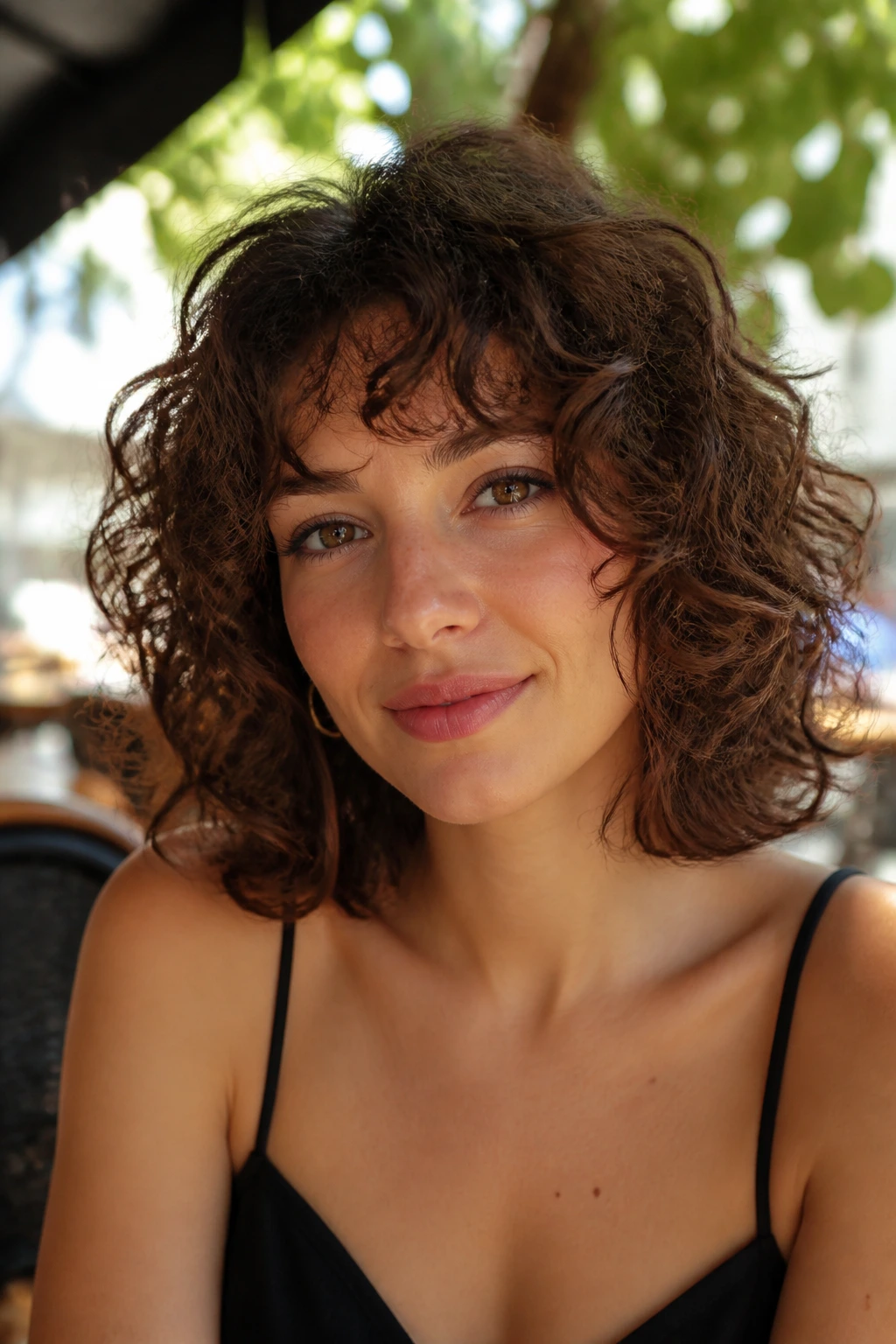
A collarbone cut with flipped ends is one of those quietly flattering shapes that doesn’t shout for attention. The length lands just around the collarbone, which helps elongate the face, and the ends can flip in or out depending on curl pattern. That bend keeps the cut from sitting like a heavy curtain.
For heart-shaped faces, the soft flip is useful because it breaks up the line at the bottom of the face. Instead of stopping abruptly at the chin, the curls keep moving. That little motion matters. It keeps the lower half of the face from feeling too narrow in contrast to the forehead.
This is a good pick if you like low-maintenance styling. The cut carries the shape for you. A mist of leave-in and a diffuser is usually enough.
11. Curly Mullet with Feathered Fringe
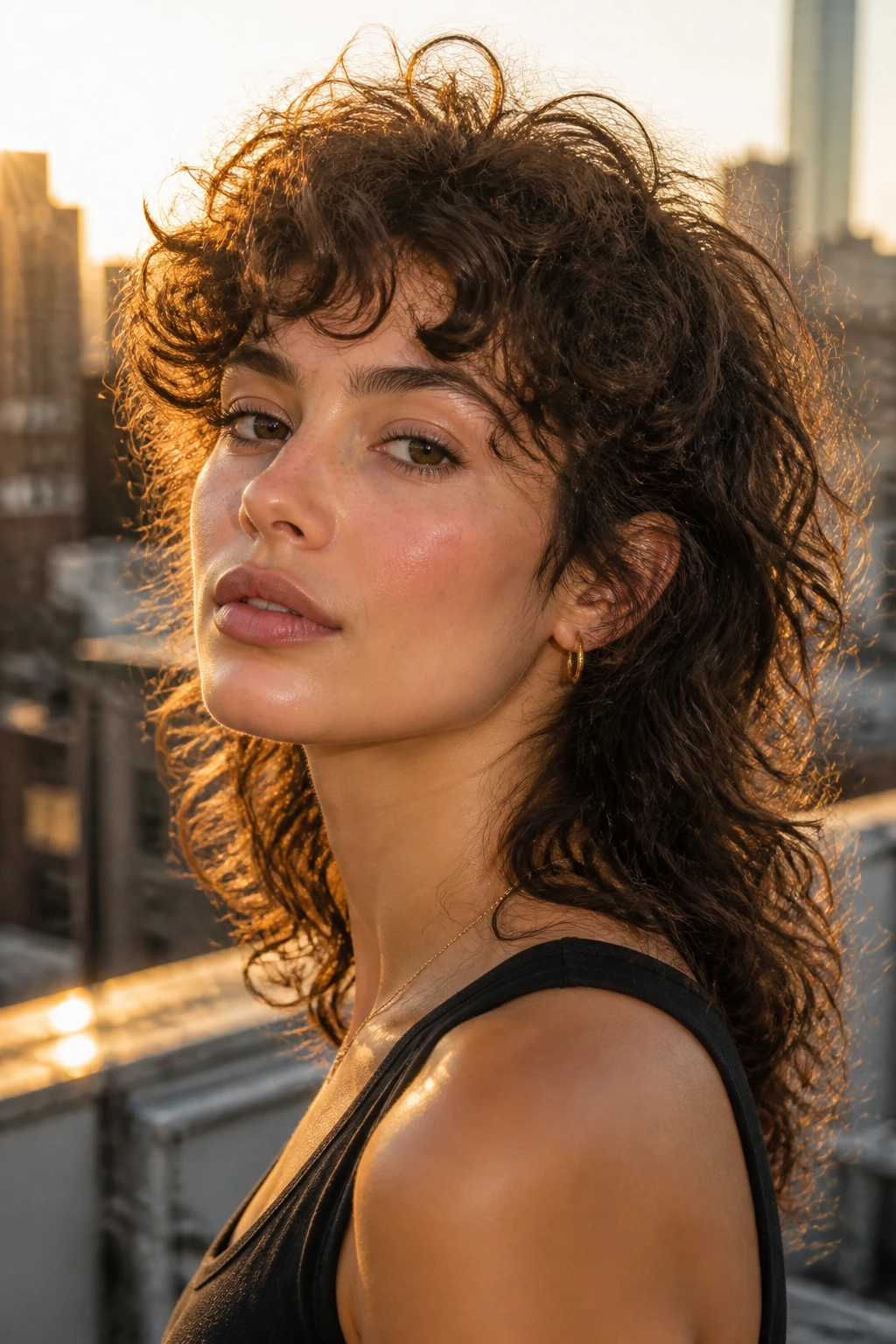
A curly mullet sounds bolder than it feels. When it’s cut well, the front and sides stay soft and the back carries a little extra length, which gives the face a lifted, almost feathered frame. On a heart-shaped face, that feathered fringe helps break up the width up top without dragging the eye down too harshly.
The fringe should be light and broken up, not dense and blunt. Thick, heavy bangs on a heart-shaped face can close off the forehead in the wrong way. Feathered curls are friendlier. They let some forehead show through while softening the line.
This is a better choice for dense curls than for very fine ones. The shape needs enough hair to hold the contrast between front and back. If you have that density, the result can look stylish in a slightly rebellious way that never feels overworked.
12. Tapered Cut with Crown Volume
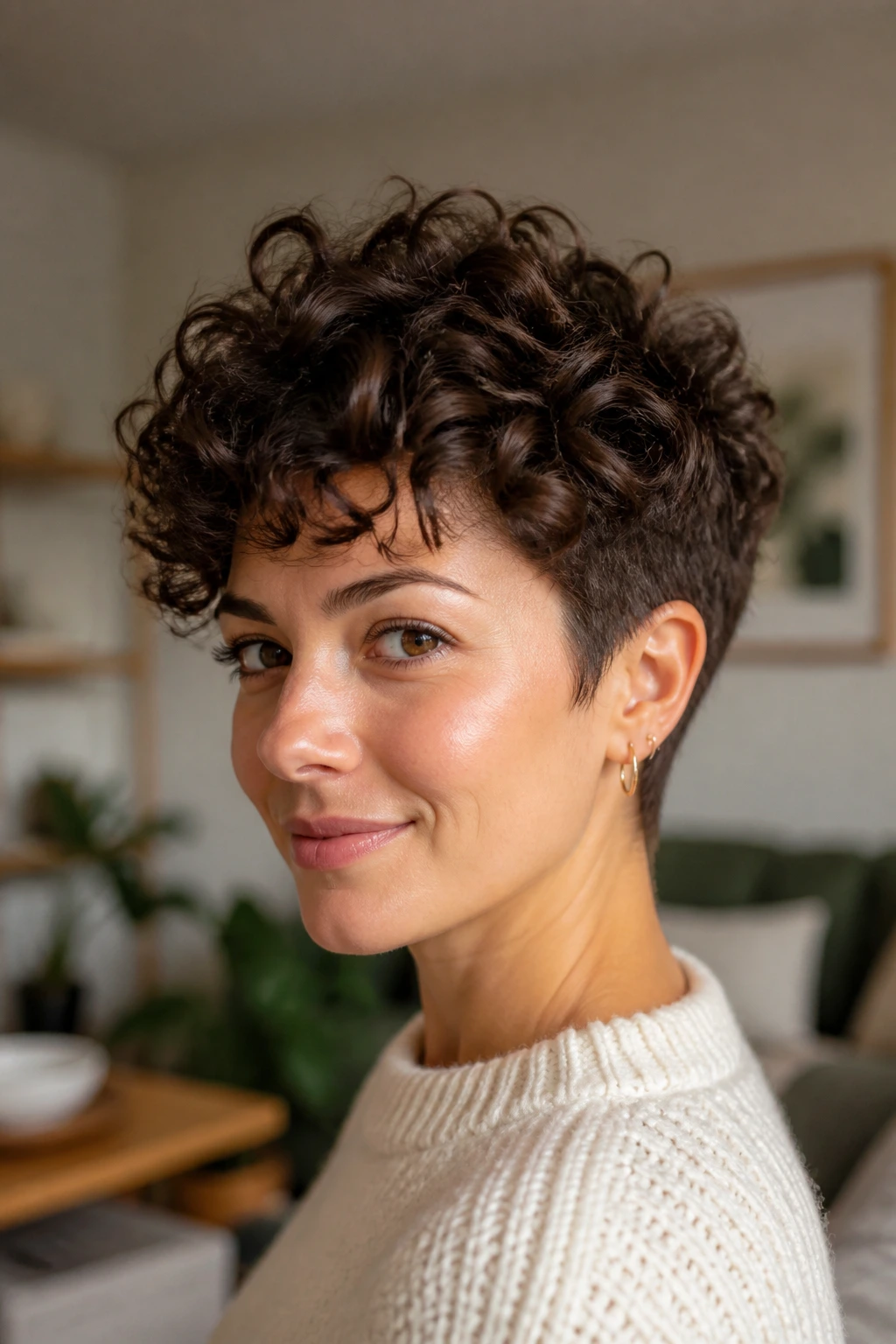
A tapered cut with crown volume is one of the best options for tighter curls and coils because it respects the natural spring of the hair instead of flattening it down. The taper keeps the sides and nape neat, while the crown gets a controlled lift that lengthens the face and softens the jaw.
For heart-shaped faces, the trick is making sure the width sits high enough to balance the forehead but not so high that the top looks like a dome. That’s a narrow lane, and a skilled stylist matters here. The shape should read sculpted, not stacked.
This cut is also a dream if you want your mornings to stay simple. The silhouette is built into the cut, so you’re not chasing shape with endless product. A little curl cream and a diffuser can go a long way.
13. Side-Swept Bangs and Long Layers
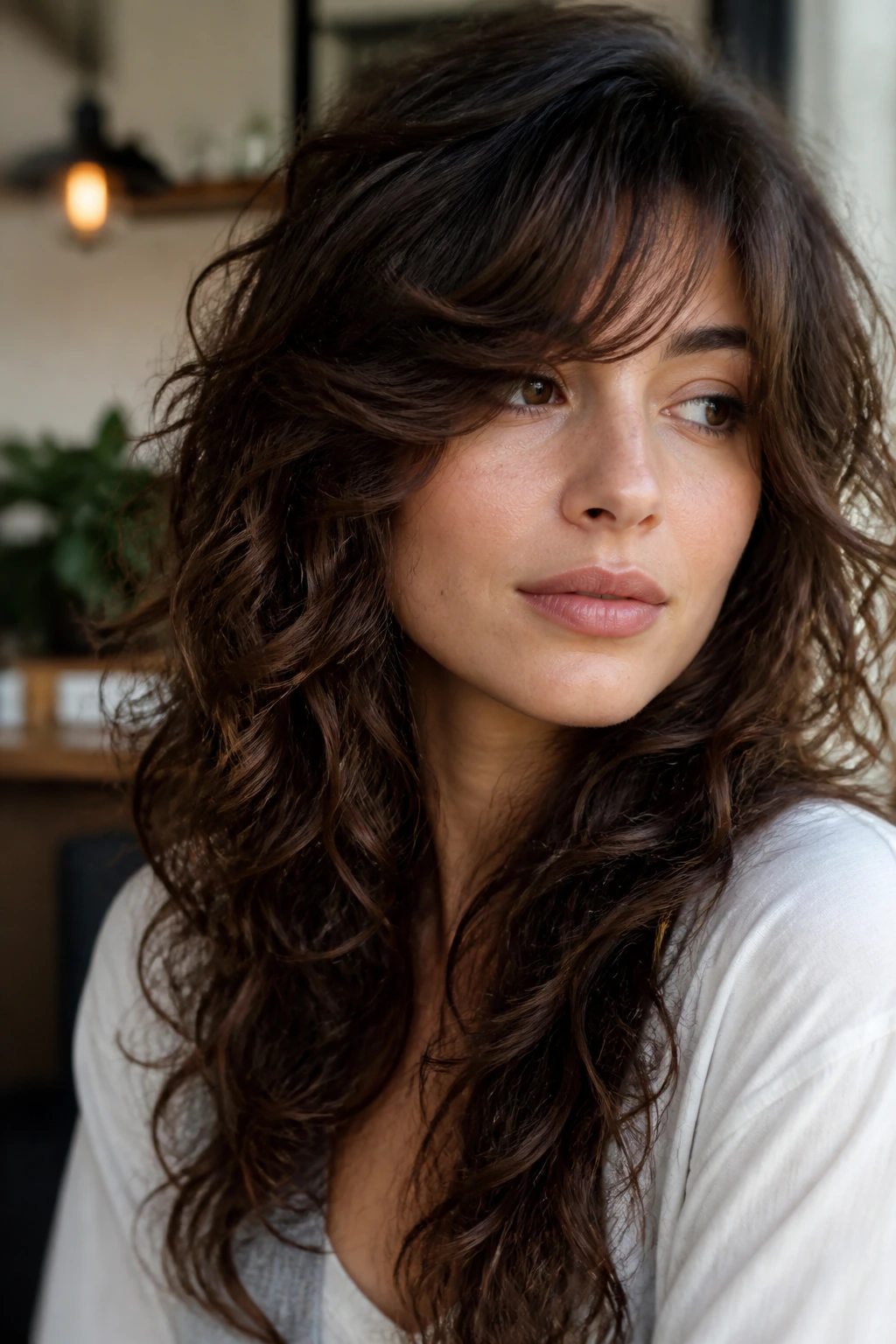
Side-swept bangs are the safest bang move for a heart-shaped face, and on curls they can look downright elegant. The diagonal line across the forehead softens the widest part of the face without chopping it into a hard horizontal. Long layers behind the bangs keep the cut from becoming bottom-heavy.
The bangs should be long enough to tuck behind the ear or blend into the cheekbone when needed. That flexibility matters. Curly bangs can change mood with humidity, and side-swept ones are far more forgiving than a blunt fringe that misses by half an inch.
This style is a good fit if you like softness but don’t want a full curtain bang. It has the same balancing effect, just with less commitment.
14. Airy Mid-Length Layers
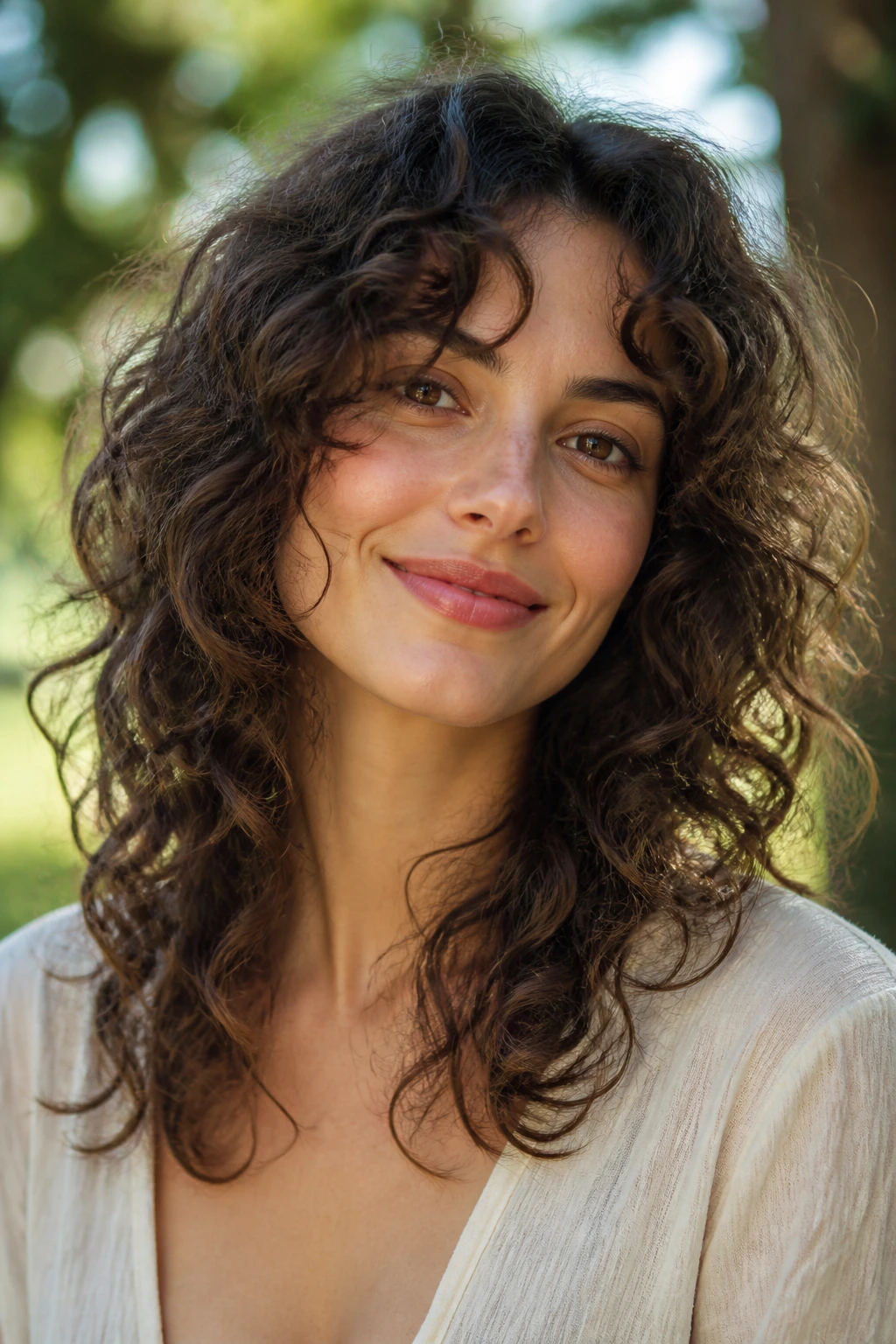
Airy mid-length layers are for people who want movement without visible “layer drama.” The lengths usually sit between the shoulders and the chest, and the layers are spaced out enough to keep the curls from stacking on top of each other. That makes a heart-shaped face look softer because the width stays controlled.
This is especially good for fine to medium curls. Too many layers can leave those hair types looking wispy at the ends and puffy at the crown. Airy layers avoid that problem. They release bulk in small amounts instead of carving the haircut to pieces.
The shape grows out well, too. That’s not sexy, but it matters. A curly cut that looks good after six weeks is worth more than a dramatic one that collapses after the first wash.
15. Rounded Afro Shape with Tapered Sides
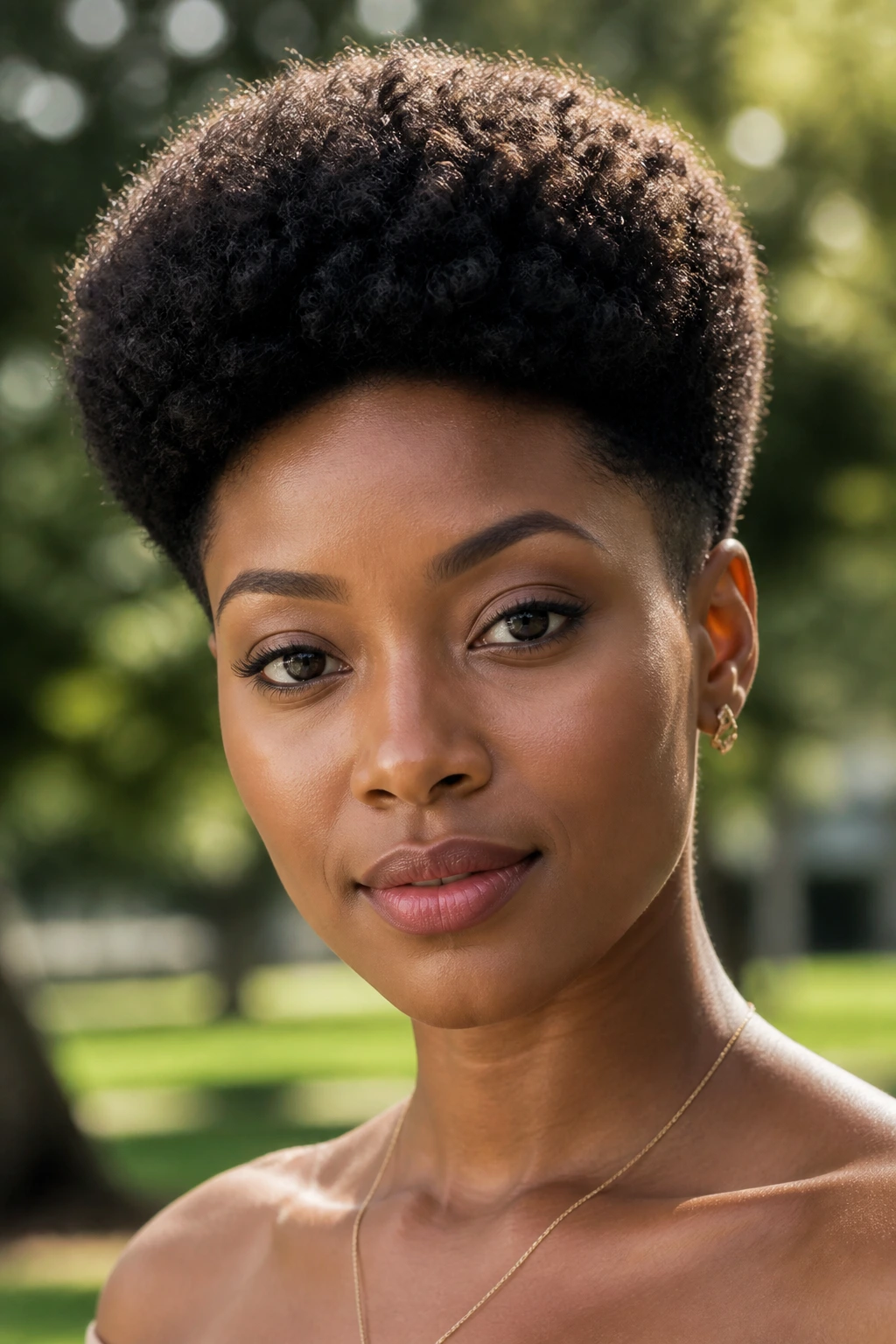
For coily hair, a rounded afro shape with tapered sides is a beautiful answer to a heart-shaped face. The rounded outline gives softness to the upper face and keeps the silhouette from stretching too wide at the temples. Tapered sides at the ears and nape help the lower half stay neat.
The important part is balance. You want roundness, not a triangle. If the sides are left too bulky, the face can look wider at the cheeks than it really is. If the crown is flattened, the whole thing loses life. The best version has a halo shape that feels full but intentional.
This cut is especially flattering when the curls or coils are healthy enough to stand on their own. The shape becomes the statement. That’s a good thing when you want the haircut to do the work.
16. Curly Crop with Baby Fringe
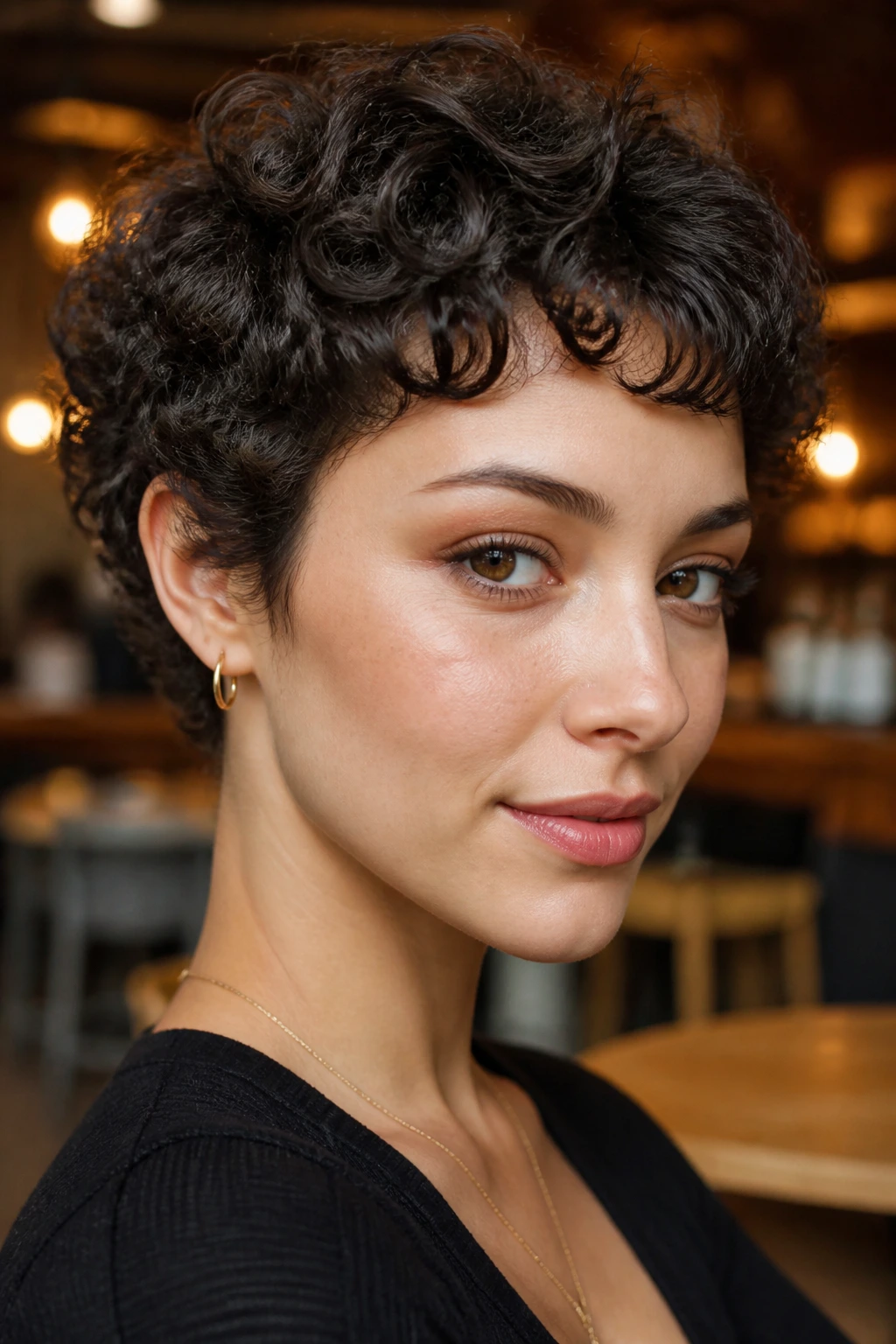
A curly crop with a baby fringe is the boldest style on this list, and it can work on a heart-shaped face if the fringe is cut with some softness. The fringe should not sit like a straight line across the forehead. It needs texture, tiny variations in length, and enough bounce to move rather than sit there.
This cut is not for everyone. If you want to hide your forehead, skip it. If you like a sharper, more editorial look, it can be fantastic. The rest of the crop should stay close around the ears and nape so the fringe has room to stand out without overwhelming the face.
I’d only do this on curls with some spring and personality. Flat, limp curls can make it look unfinished. Full, lively curls make it feel confident.
17. French Bob for Curls
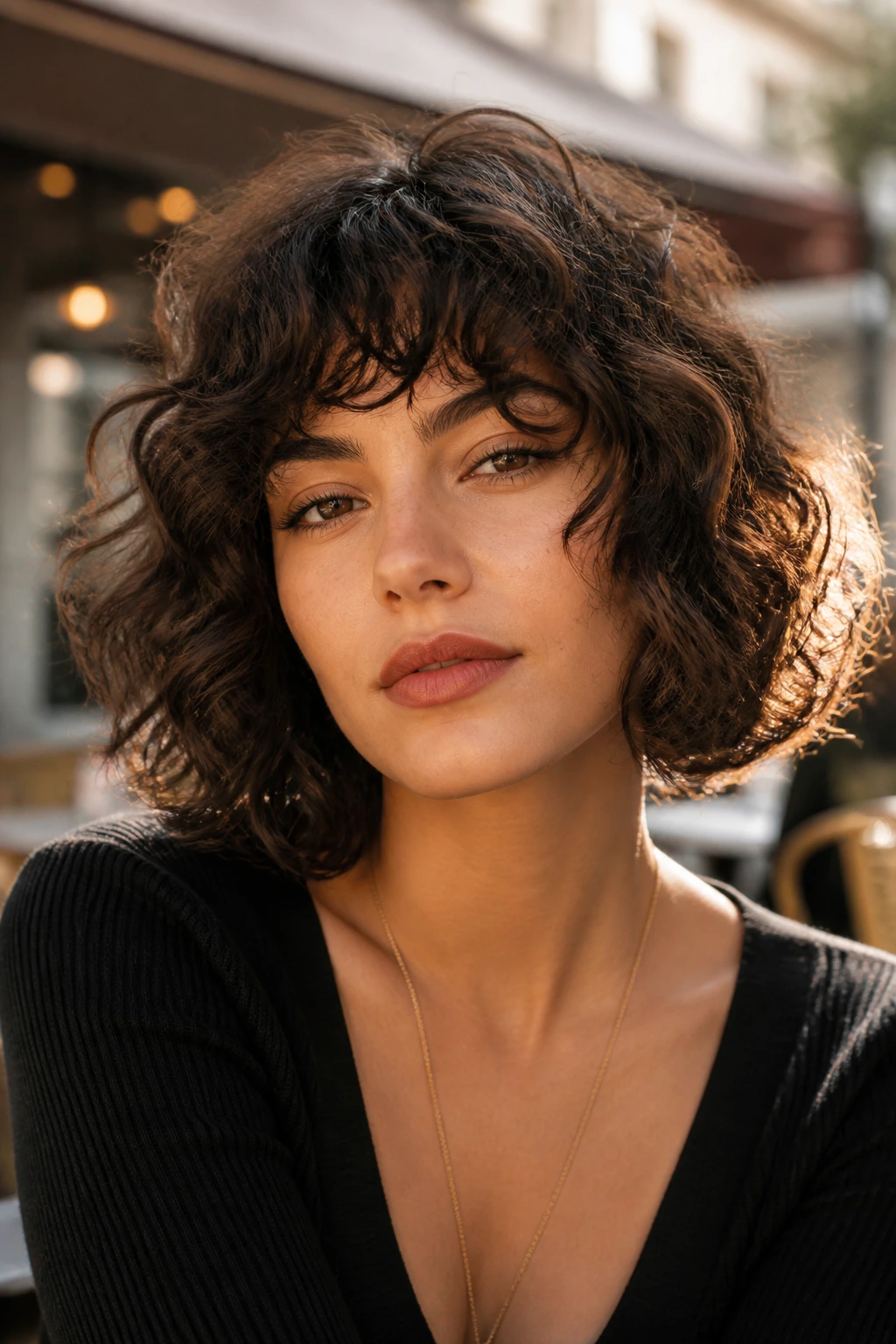
The French bob gets a lot of love for straight hair, but curly versions can be even better on a heart-shaped face. The length usually sits around the jaw, sometimes brushing just below it, and the fringe is soft enough to blend rather than slice. That keeps the face from feeling too wide at the top or too narrow at the bottom.
The magic is in the shape, not the drama. A curly French bob should feel airy, slightly undone, and a little chic without trying too hard. The curls near the cheeks should be loose and rounded, not pressed into a box.
This one works best if your curl pattern is loose to medium and your hair is not overly dense. On thicker hair, the bob can swell up fast. On the right texture, though, it’s excellent.
18. Butterfly Layers for Curly Hair
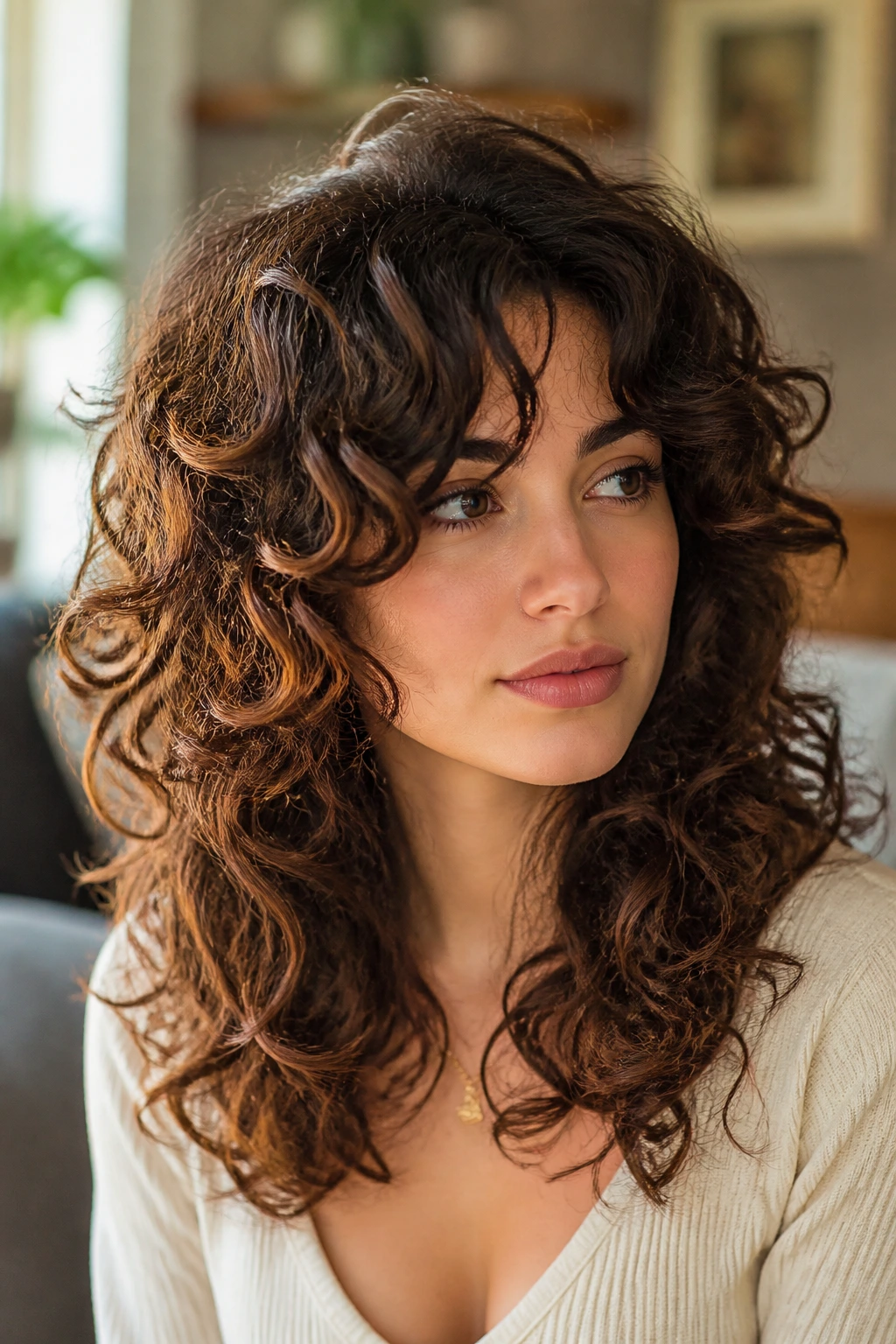
Butterfly layers are a smart option when you want long hair but still need shape around the face. The shorter top layers create lift near the crown, while the longer underlayers preserve length. On a heart-shaped face, that combination keeps the forehead from dominating and stops the chin from looking too sharp.
The face frame should start low enough that it does not flare out at the temples. A lot of curly butterfly cuts go too high and end up widening the upper face. Better to let the shortest pieces start around the cheekbone or mouth, then fall into the rest of the length.
This is a flattering cut for anyone who loves movement but hates the feeling of losing their length in layers. It keeps the drama where you can see it and the softness where you need it.
19. Inverted Curly Bob
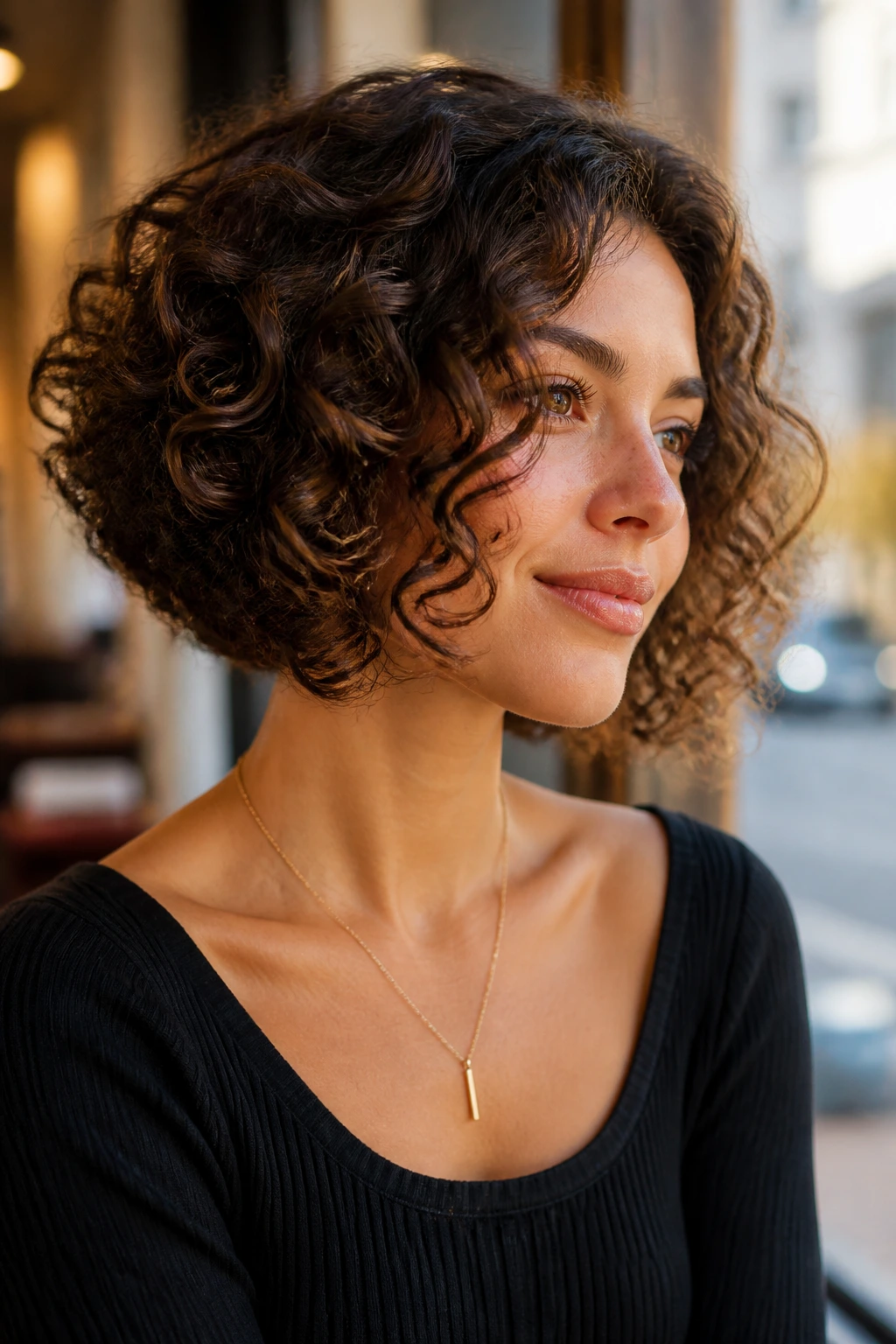
An inverted curly bob is shorter in the back and longer in the front, which gives the face a subtle forward pull. On a heart-shaped face, that forward line is useful because it gives the jawline more presence and keeps the chin from disappearing.
The slope should be gentle. If the angle is too steep, the haircut starts looking dated fast. You want enough lift in the back to create shape, but the front should stay soft and curved rather than sharp.
This is a nice middle ground between a classic bob and a bolder angular cut. It has shape, it has edge, and it still behaves well when curls dry a little bigger than expected.
20. Long U-Shape with Minimal Face Framing
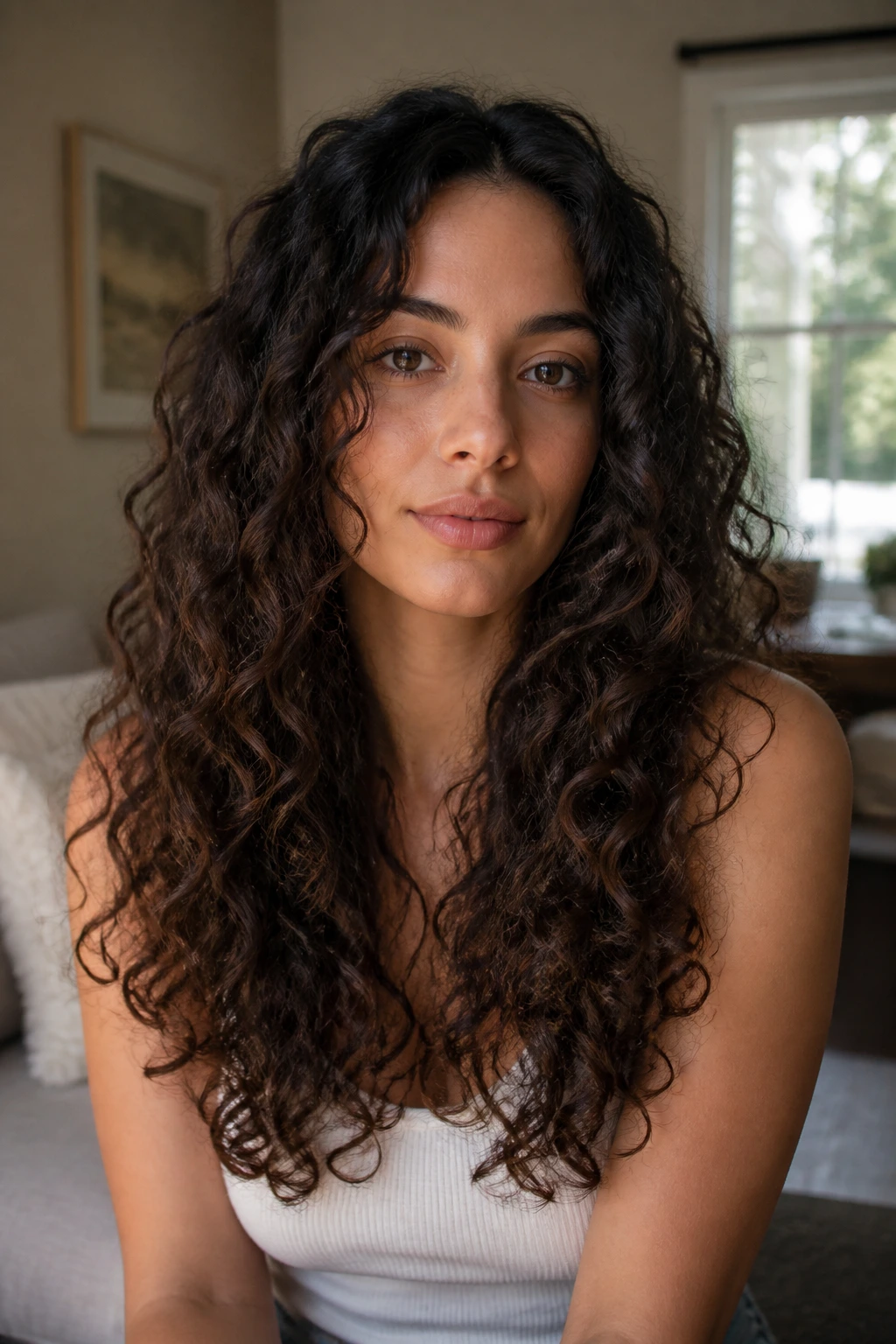
If you love long curls and don’t want much fuss, the long U-shape is a reliable choice. The back hangs in a gentle curve, and the face-framing pieces stay minimal, which keeps the upper face from getting too busy. On a heart-shaped face, that restraint can be a relief.
The mistake with long curly hair is often over-layering the front. That creates a halo of volume around the forehead and cheeks that can make the face look wider up top. The U-shape avoids that. It keeps the line soft while still giving the curls room to fall.
This is the one for someone who wants low maintenance and a clean silhouette. It doesn’t scream for attention, but it stays flattering in a way that’s hard to mess up.
21. Layered Cut with Deep Side Part
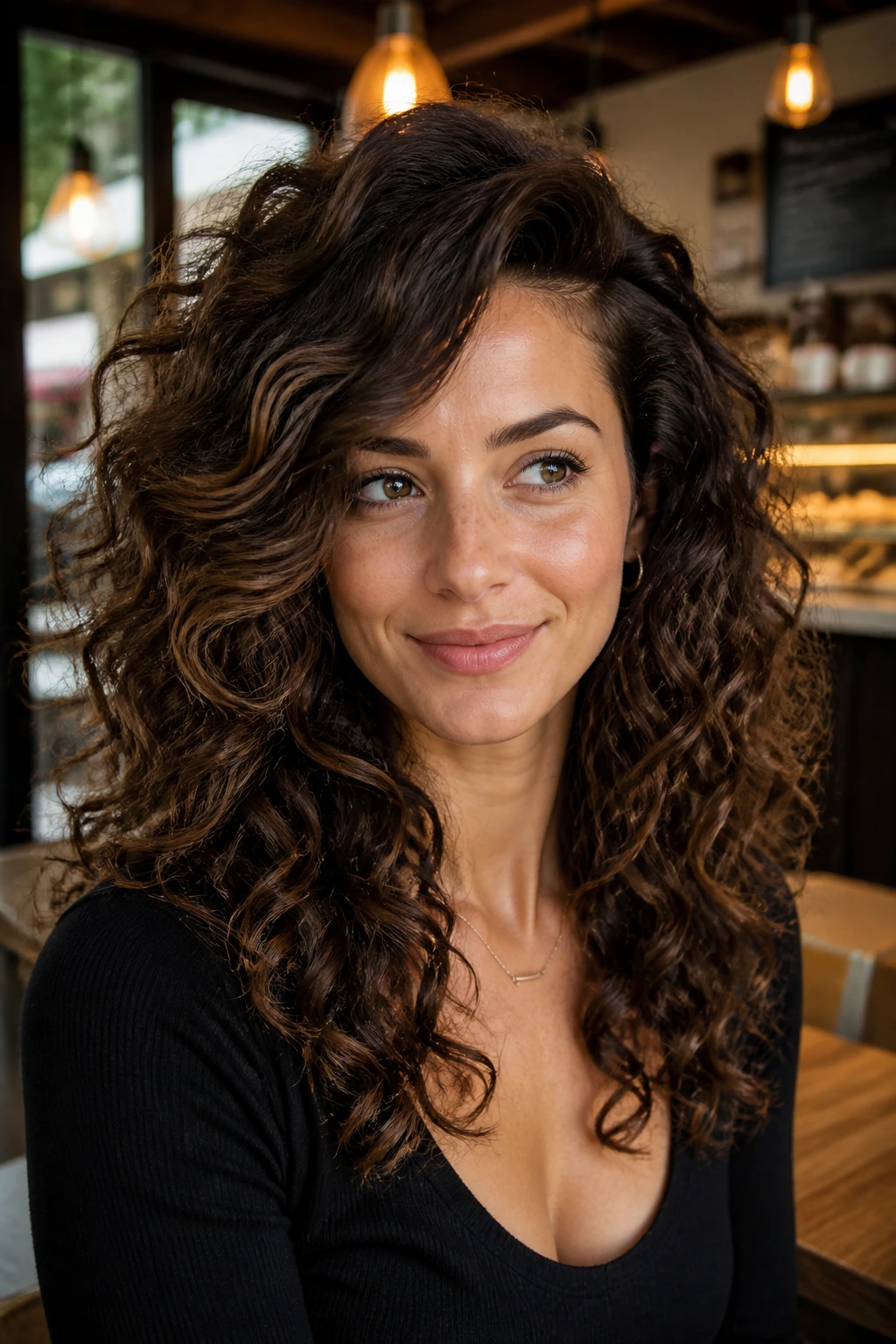
A deep side part can do more for a heart-shaped face than a dozen fancy layering tricks. It breaks the forehead width, pushes volume diagonally across the face, and keeps the top from reading too symmetrical. Pair that with soft layers, and you’ve got a cut that feels easy but looks considered.
The layers should support the part, not compete with it. If the top is too heavily layered, the hair can stand up in all the wrong places. If the ends are too blunt, the part loses its softness. You want a clean diagonal line with enough curl movement to keep it human.
This style is especially useful on second-day curls. A quick refresh and a deliberate part can completely change the shape without any heat styling at all.
22. Sculpted Shoulder-Length Cut with Tapered Ends
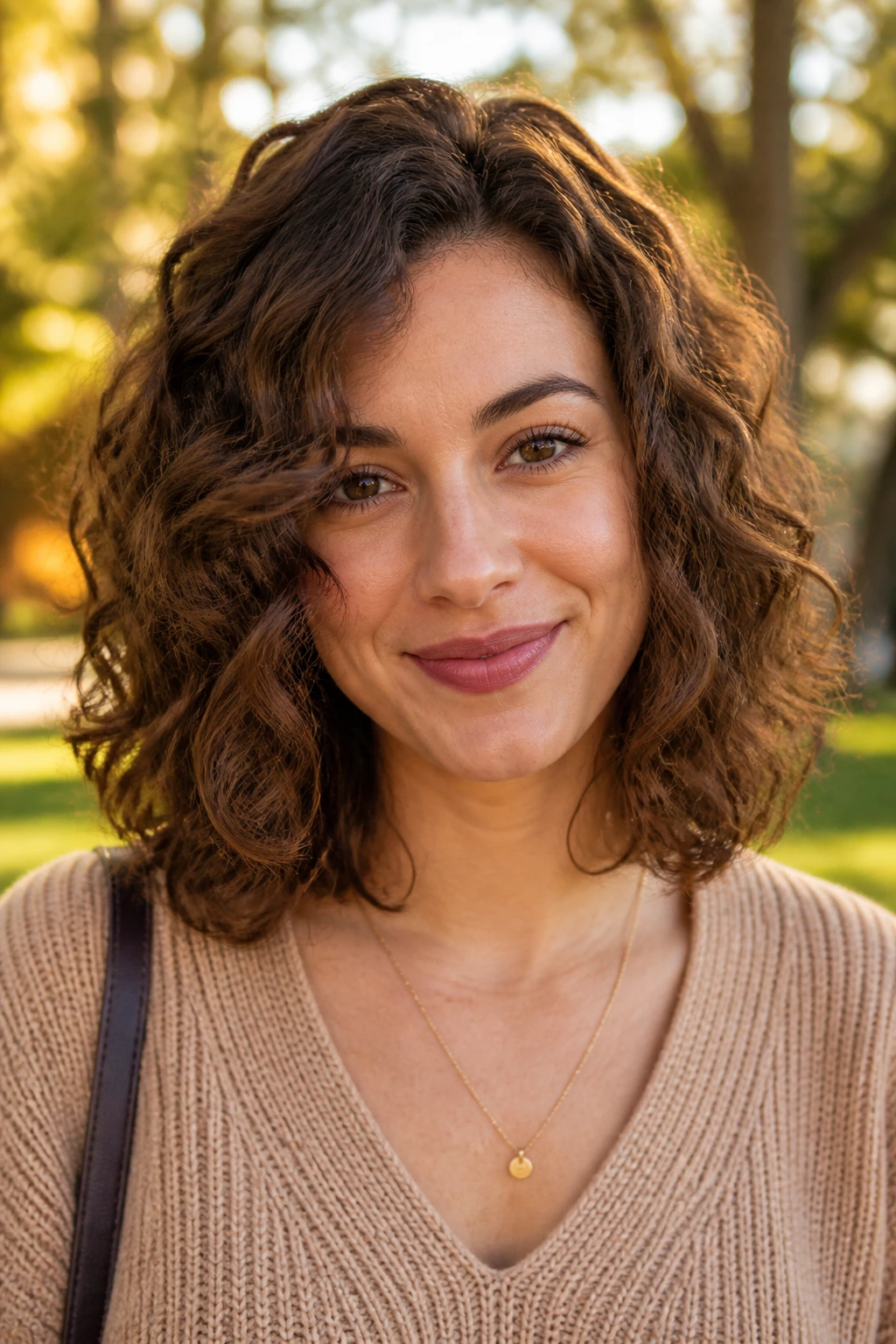
Shoulder length is one of those lengths people underrate until they wear it well. On a heart-shaped face, a sculpted shoulder cut with tapered ends keeps the silhouette polished while avoiding the puffiness that can happen when curls hit the shoulders in a hard line. Tapering the ends helps the cut swing instead of sit.
This is a good choice if you like a more finished, tidy look. It reads cleaner than a shag and softer than a blunt bob. The shoulders support the length, and the tapered edges keep the lower face from feeling boxed in.
I especially like this shape on curls that are medium-density and a little coarse. The structure holds without needing constant styling. That’s a rare and useful combination.
23. Textured Lob with Hidden Layers
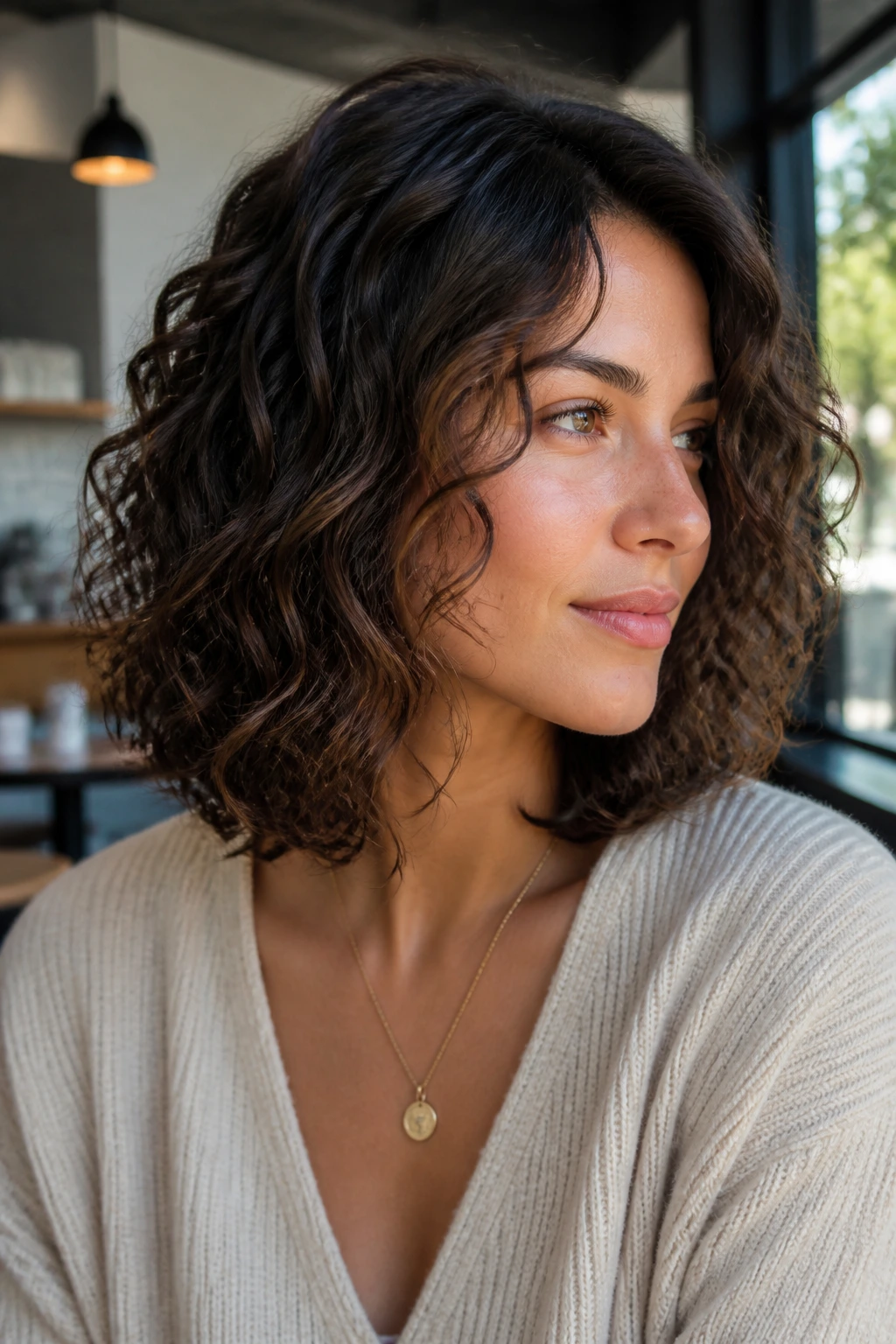
A textured lob with hidden layers is what I suggest when someone wants shape but doesn’t want the layers to show off. The outer line stays neat, while the hidden layers remove just enough weight to let the curls spring. On a heart-shaped face, that means the top stays controlled and the lower half gets a softer outline.
The hidden part matters. Too many visible layers can widen the cheek area. Too little structure makes the lob fall into one flat sheet. This cut splits the difference and gives you movement without losing polish.
It’s also easy to wear with a side part or a center part, which gives you some flexibility. On days when your curls want to misbehave, that flexibility is worth a lot.
24. Curly Shag with Bottleneck Bangs
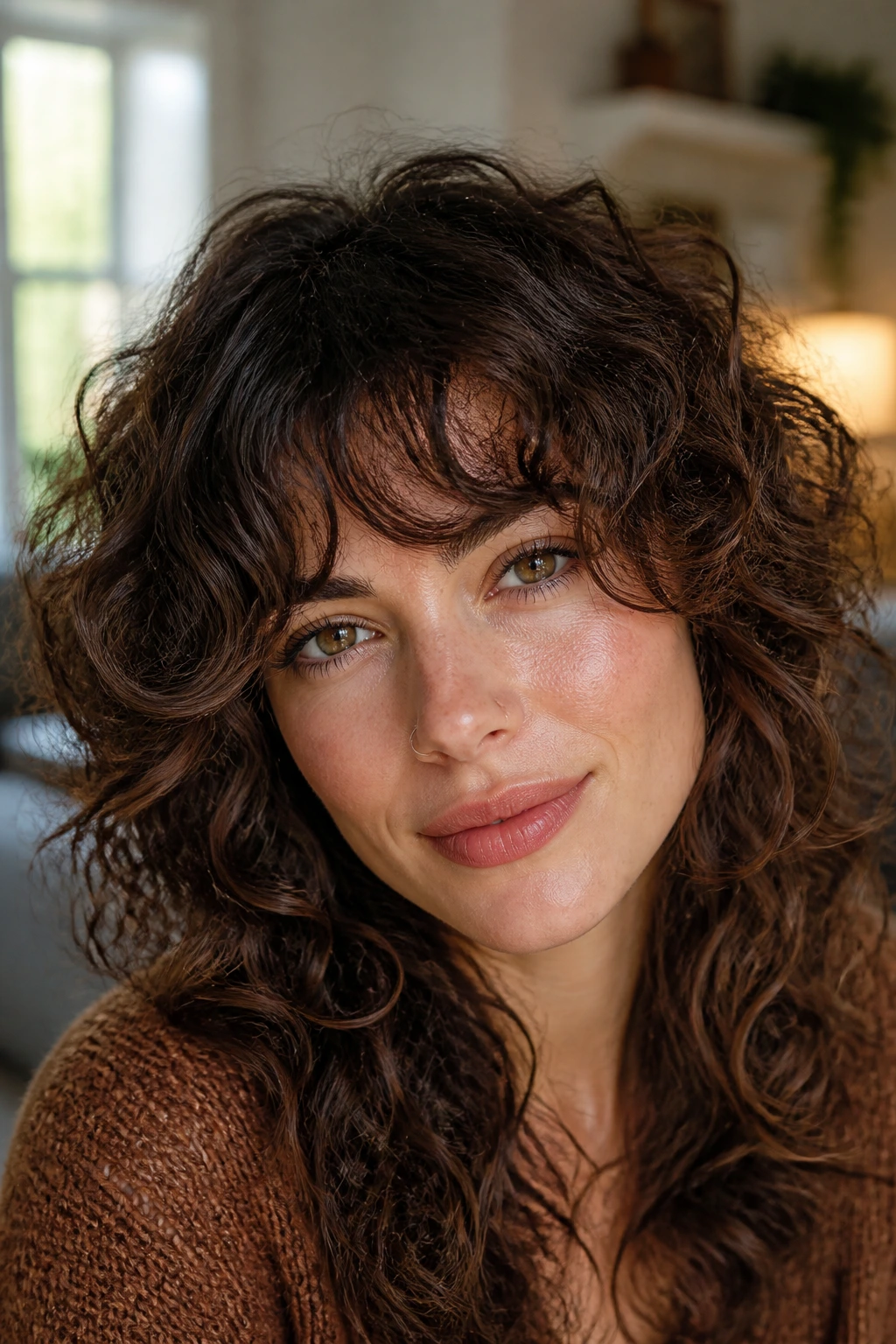
Bottleneck bangs are one of the smartest bang shapes for a heart-shaped face. They’re narrower in the center and open out toward the temples, which lets them soften the forehead without forming a blunt wall. Add shag layers underneath, and you get a cut with movement, edge, and a lot of personality.
This is not a tidy haircut. That’s the point. It likes texture, a little mess, and a curl pattern that can handle being a bit wild. The layers should be distributed so the sides don’t get too broad, while the bangs stay soft enough to work even when they shrink.
If your face feels widest at the temples, this is a good one to keep on the shortlist. It gives shape without making the face feel crowded.
25. Long Curly Layers with Soft Elongating Face Frame
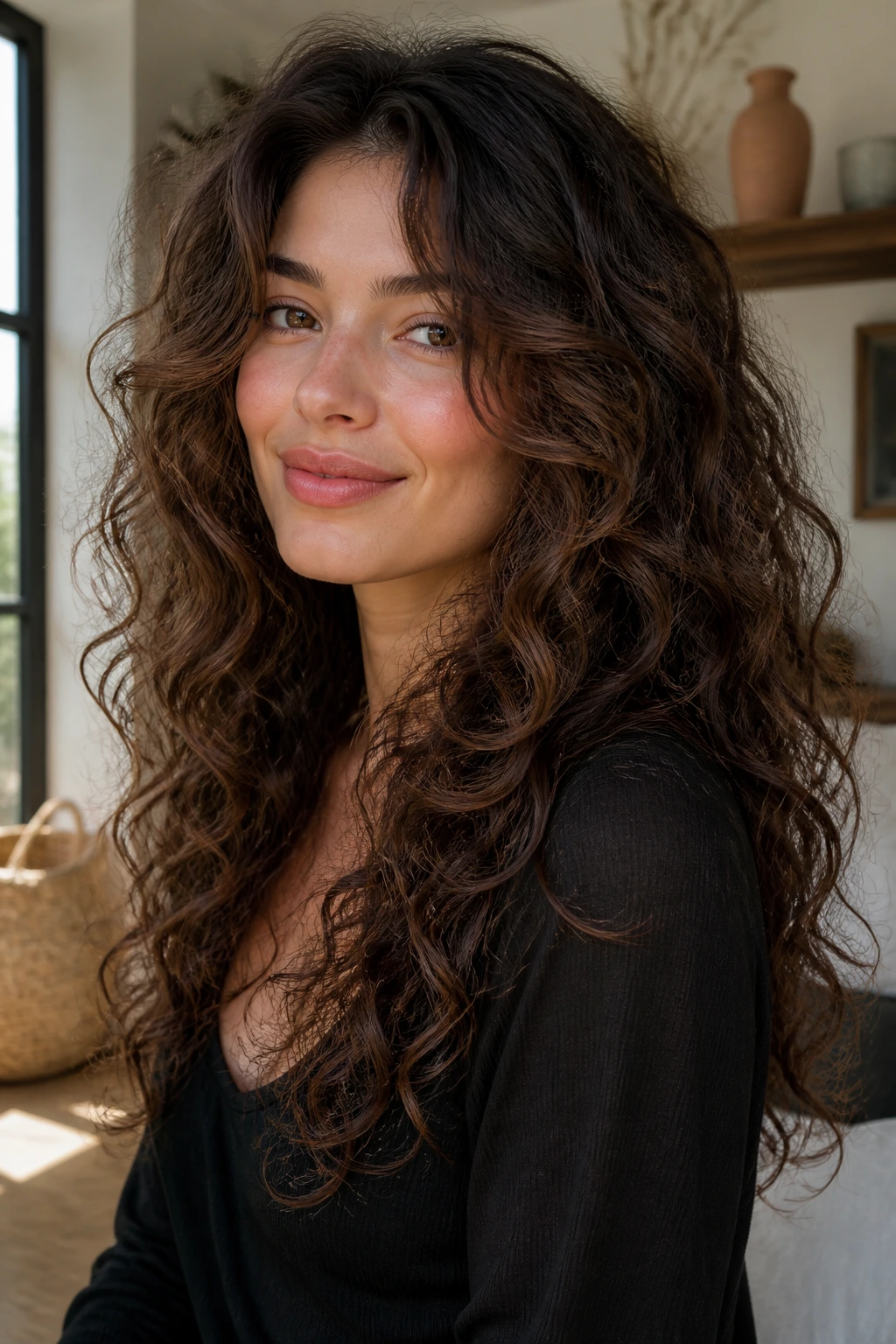
Long layers with a soft face frame are the safest classic on this list, and sometimes safe is smart. The key is where the face frame begins. For a heart-shaped face, it should usually start below the cheekbones, sometimes near the mouth, so it lengthens the face instead of opening it up too much at the temples.
The layers in the back keep the curls from turning into one heavy block, but the front stays soft and gradual. That slow slope is what keeps the face looking balanced. I prefer this when someone wants to keep most of their length and still see the shape of their face.
If you’re nervous about a big change, this is the one to try first. It leaves room to adjust later without forcing you into a dramatic chop.
How the Face Shape and the Curl Pattern Work Together
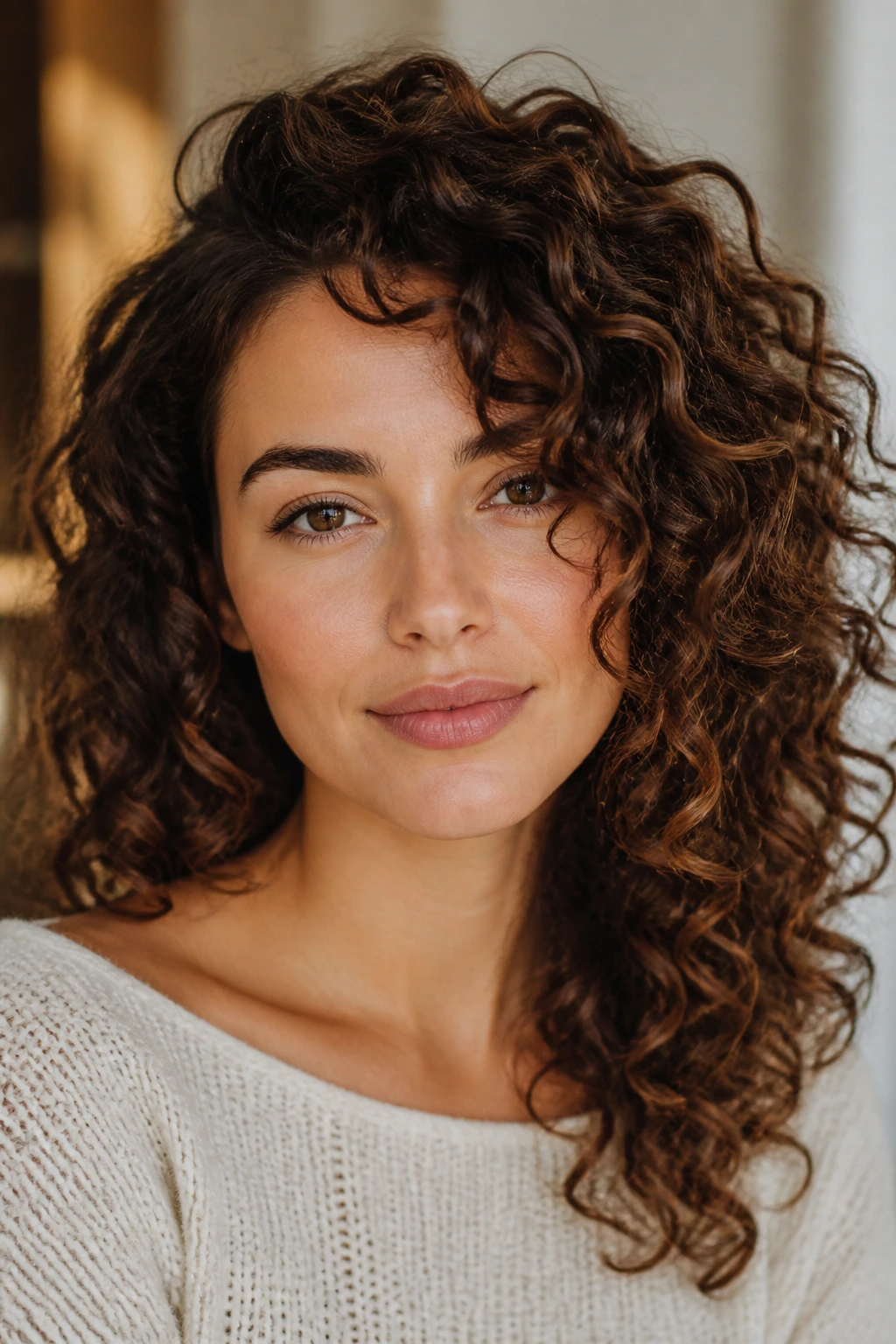
The cleanest curly haircuts for heart-shaped faces do one thing over and over: they give the upper face less visual weight and the lower face a little more support. That doesn’t mean you need to hide your forehead. It means you should avoid stacking all the width at the top of the head. Curls do that naturally if you leave them too short or layer them too high.
A good stylist will look at three things before picking a shape: where your curls spring, how dense they are, and how far the face narrows from the temples to the chin. That last part matters more than people think. A heart-shaped face often looks best when the eye can travel diagonally down through the cut instead of stopping at a blunt edge. Diagonal lines are kinder. They’re also more interesting.
The strongest cuts usually build movement at or below the cheekbones, keep the crown from exploding, and leave enough softness around the jaw. That’s the game. Once you see it, you start noticing how many “pretty” cuts miss the mark because they treat curls like decoration instead of architecture.
What to Bring to the Salon and What to Buy for Home
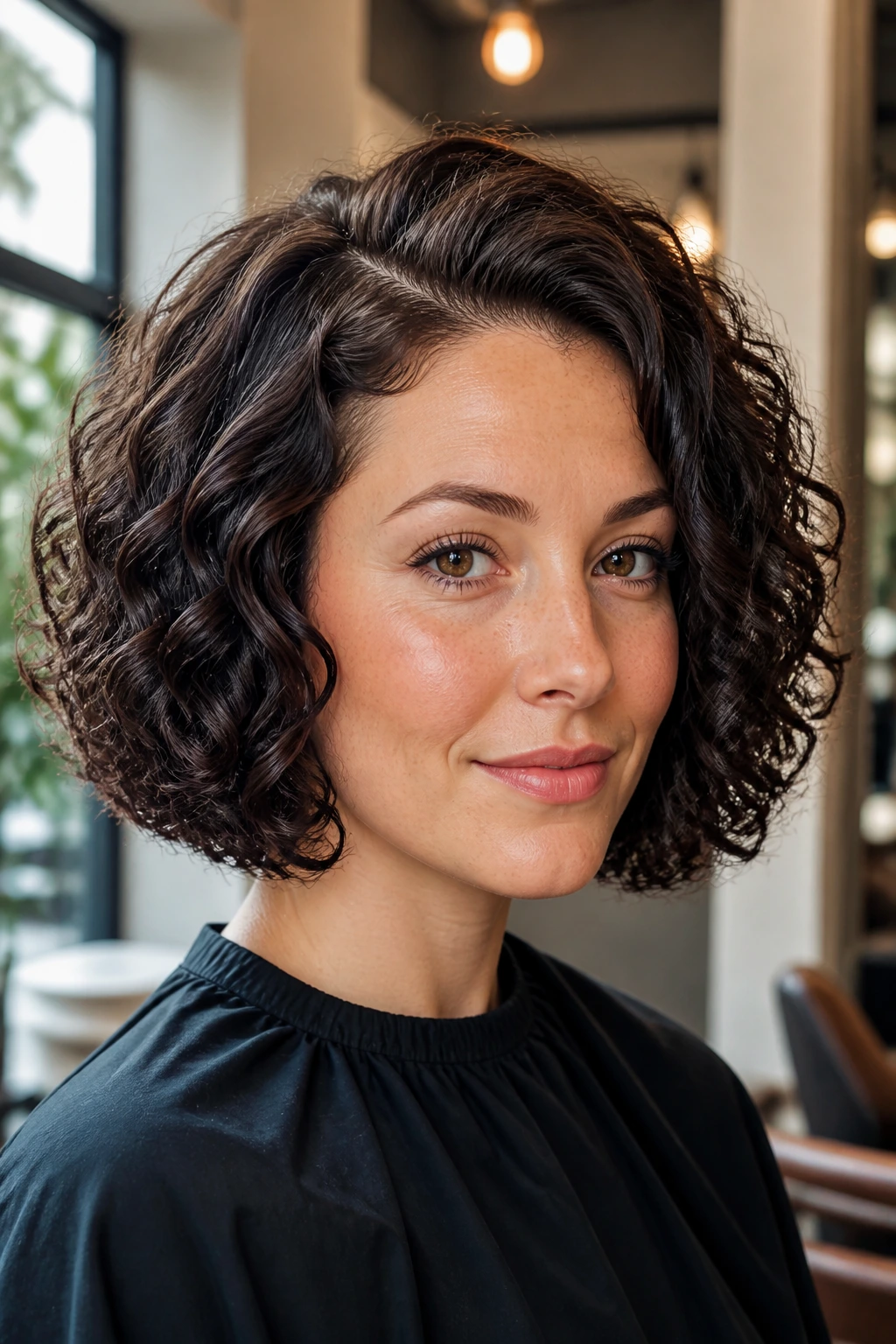
Bring photos, but bring the right ones. A picture of someone with straight hair and a blowout tells your stylist almost nothing about how a cut will land on your curls. Better to bring examples of curl patterns close to yours, plus one photo of the silhouette you want from the front and one from the side. Side views matter more than people admit.
Ask whether the cut will be done wet, dry, or a mix of both. For curls, a dry or mostly dry cut often gives the cleanest read on length and balance because shrinkage can change everything. If you have very tight curls, even a half-inch of difference can become a full inch once the hair settles. That’s not exaggeration. That’s Tuesday.
For products, think in terms of hold and density, not hype. Fine curls usually need mousse or a light gel that doesn’t collapse the shape. Dense curls often do better with a richer cream under a stronger gel, especially if the cut has a lot of layers. If your hair is dry, a leave-in with a little slip helps the curls group together instead of puffing apart. Keep a clarifying shampoo around too, because product buildup can make a perfectly good haircut look tired and fuzzy.
How to Style These Cuts So the Shape Stays Put
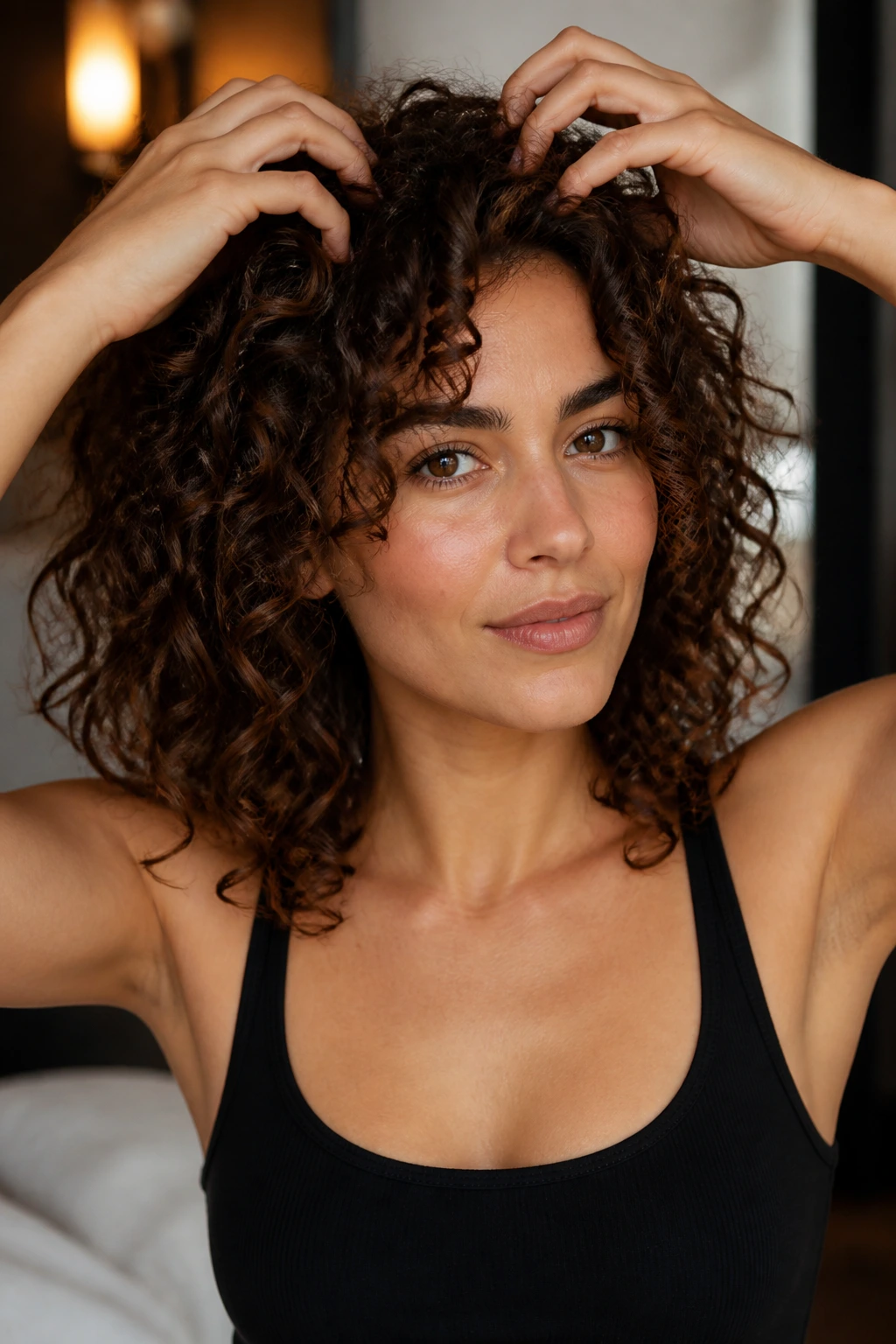
Parting: Off-center and deep side parts are your easiest friend here. They soften the forehead and stop curls from forming a round, symmetrical halo that can emphasize the upper face.
Definition: Apply stylers on soaking-wet hair, not damp hair. That’s how you get curl clumps instead of frizz. Scrunch or rake in the product, then leave it alone until a cast forms.
Drying: Diffuse on low heat if you want volume, but don’t hover forever in one spot. Move the diffuser around the head so the crown doesn’t grow wider than the sides. Air-drying works too, though it usually gives you a looser, gentler shape.
Finish: Once the hair is dry, break the cast with a drop of oil or serum in your hands. Use very little. A greasy finish ruins the movement and makes the cut collapse. You want the curl to feel soft, not slick.
Refresh: The next day, mist the curls lightly with water or a water-plus-leave-in mix, then scrunch the pieces that have gone flat. Most of these cuts respond well to a quick refresh because the shape is already doing the heavy lifting.
Common Mistakes That Throw Off the Balance
-
Cutting the fringe too short: Curly bangs spring up fast. If they’re cut to the brow while wet, they can bounce halfway to the forehead when dry. The fix is simple: leave more length than feels safe and trim gradually.
-
Piling too much volume at the crown: A high, round crown can make the forehead look wider. Keep the lift controlled and put some of the movement lower, around the cheekbones or jaw.
-
Going blunt at the jawline: A hard line right at the chin can make the lower face feel sharper. Softening the ends or angling them slightly keeps the cut friendlier.
-
Over-layering fine curls: Too many layers on fine hair create a frayed, see-through finish. Use fewer, smarter layers and let the length carry some of the shape.
-
Ignoring shrinkage: Curls can shrink a lot. If your stylist cuts to the dry length you want only after the hair has fully settled, you’re safer than if they guess while it’s stretched out wet.
-
Forgetting the side view: A cut can look fine from the front and still sit awkwardly at the profile. Check the shape from the side before you leave the chair.
Smart Variations for Different Curl Types and Lifestyles
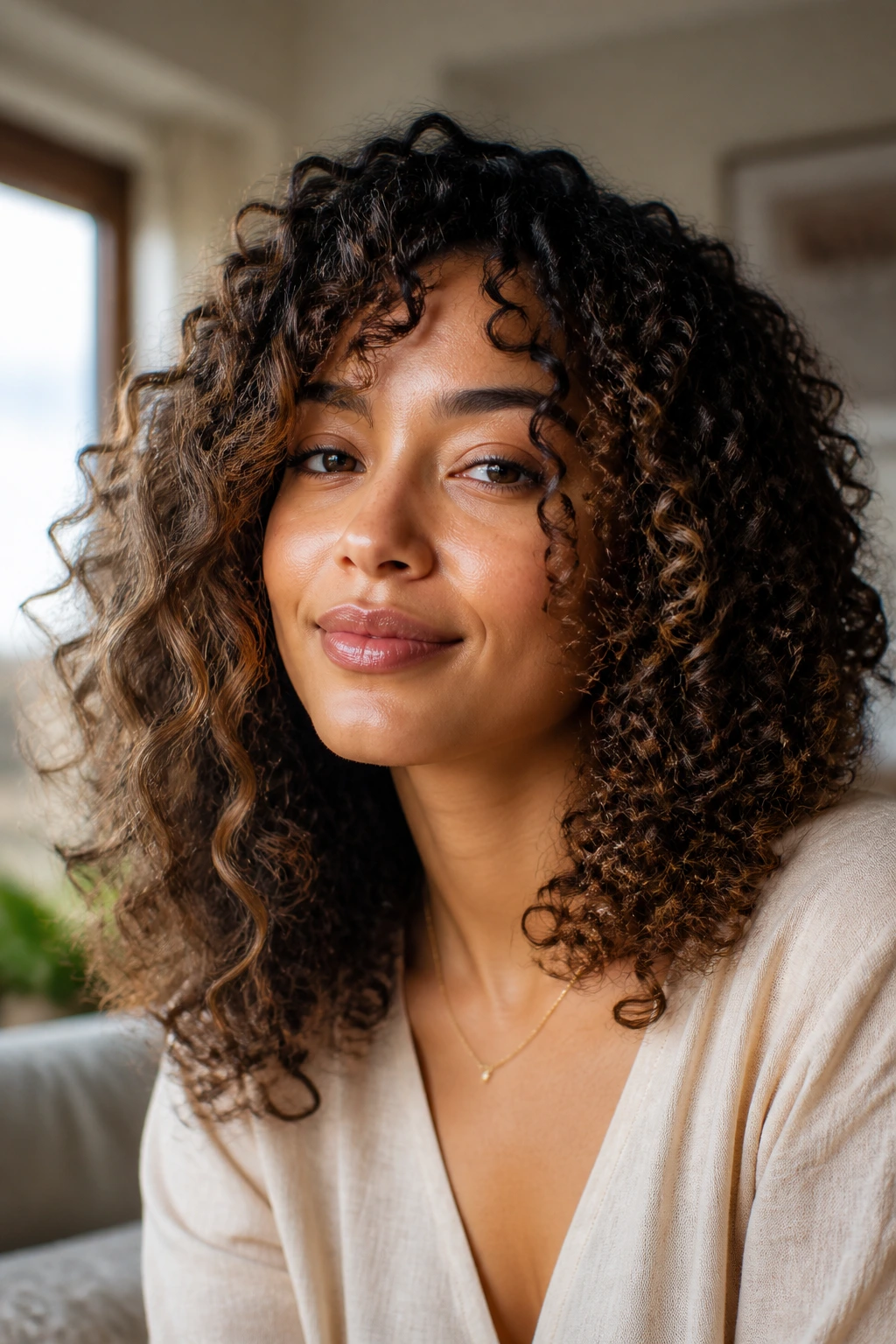
For Loose Waves: Choose the lob, collarbone cut, or long layers with a side part. These shapes let the waves move without needing a ton of structure, and they’re easier to air-dry into place.
For Dense Curls: Go for the rounded shag, Deva cut, or tapered crown shape. Dense hair needs room to breathe, and these cuts remove bulk without making the ends look skinny.
For Tight Coils: The tapered cut, rounded afro shape, and curly crop all give strong shape without fighting shrinkage. These styles look best when the curl pattern is respected instead of stretched into something straighter.
For Low-Maintenance Routines: Pick the U-shape, shoulder-length sculpted cut, or textured lob with hidden layers. These keep their outline even when styling is minimal.
For a Bigger Style Moment: Try the asymmetrical bob, French bob, or curly mullet. Each one gives a heart-shaped face a little attitude without tipping the forehead into the spotlight.
Keeping the Shape Between Haircuts
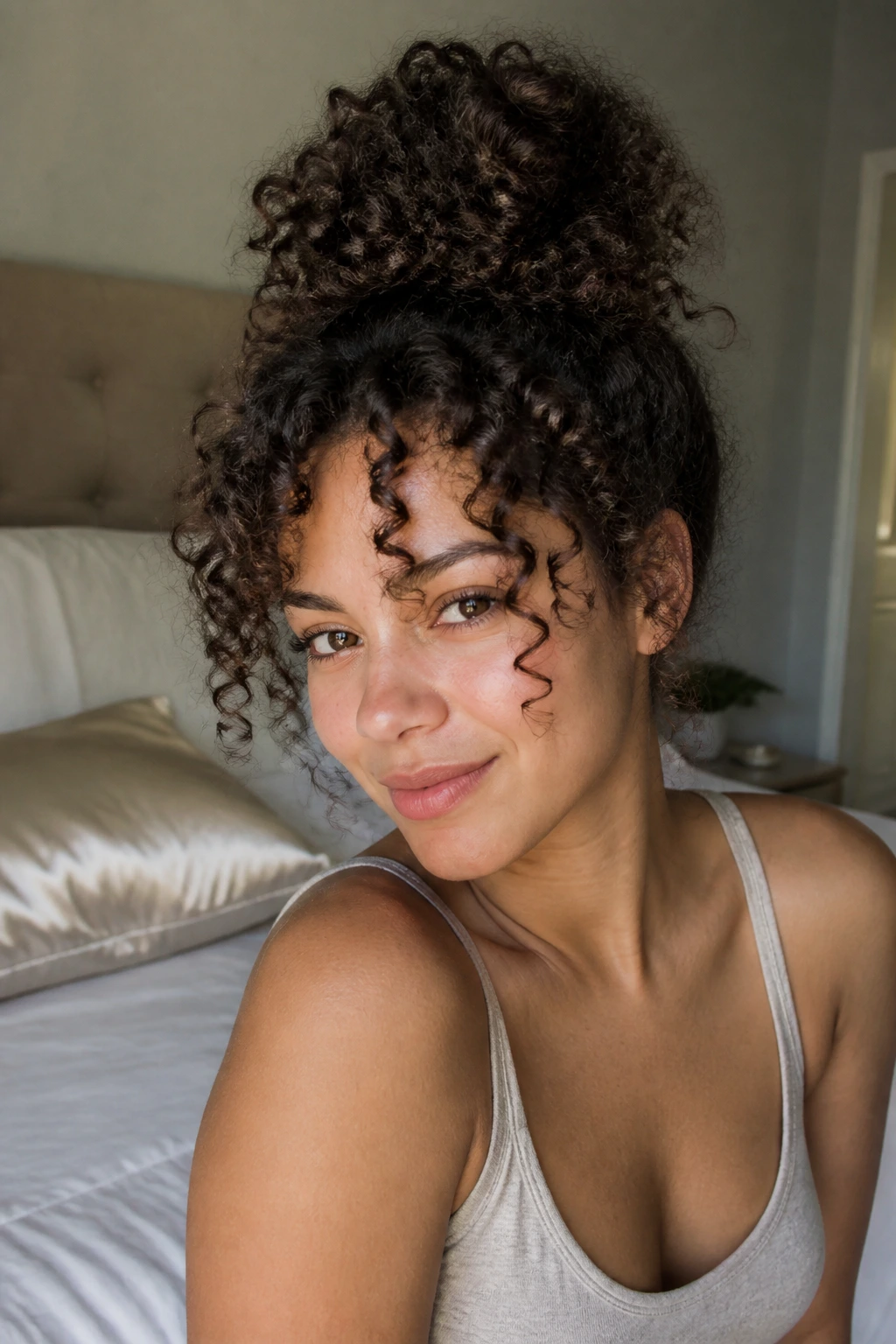
Short curly cuts need more frequent trims than long ones. A pixie or bob usually wants a tidy-up every 6 to 8 weeks, because even a small amount of growth changes the outline fast. Shoulder-length curls and layered lobs can usually stretch to 8 to 12 weeks. Long curly layers often hold their shape for 10 to 16 weeks, especially if the ends are healthy.
Night care matters more than people want it to. A silk or satin pillowcase cuts down on frizz and flattening, and a loose pineapple or clip-up style keeps the crown from getting crushed. If you wake up with one side gone wild, don’t panic and re-wet the whole head. Mist the messy pieces, smooth them with your hands, and diffuse for a few minutes if needed.
Every few washes, pay attention to buildup. If curls start looking dull, heavy, or sticky, a clarifying shampoo can reset the shape. Follow it with conditioner, because stripped curls lose their bounce fast. The cut can only do so much if the hair itself is dragging.
Frequently Asked Questions About Curly Haircuts for Heart-Shaped Faces

Can heart-shaped faces wear bangs with curly hair?
Yes, but the bang shape matters more than the word “bangs.” Curtain bangs, side-swept bangs, and bottleneck bangs are usually the safest because they soften the forehead without cutting a blunt line across it.
Is a center part bad for a heart-shaped face?
Not automatically. A center part can work if the length falls below the chin and the layers soften the temples. A deep side part just gives you an easier balancing trick when you want the forehead to look a little less wide.
Should curly hair be cut wet or dry?
Dry or mostly dry is usually better for curls because it shows shrinkage and shape more honestly. Wet cutting can still work, but only if the stylist knows exactly how your curl pattern behaves once it springs back.
What if my curls are fine and my face is heart-shaped?
Keep the layers light and avoid too much height at the crown. Fine curls can lose shape fast if they’re over-layered, so a lob, shoulder-length cut, or soft long layers usually works better than a heavy shag.
How short can I go without making my forehead stand out?
A curly pixie can work, but the top needs enough length to move forward or sideways. If the hair is too short and too flat on top, the forehead takes over. Length on top is the part that keeps the balance.
Do curly bobs work on wide foreheads?
Yes, if the bob has a side part, soft edges, or a little face-framing movement. A blunt, even bob can be harsh. A bob with texture and a slight curve usually lands much better.
How often should I trim a curly haircut for this face shape?
Shorter cuts need more frequent shaping, usually every 6 to 8 weeks. Longer layered cuts can go longer, but once the forehead area loses softness or the perimeter turns heavy, the shape is telling you it needs a clean-up.
What should I tell my stylist if I want a flattering curly cut?
Mention your face shape, your curl pattern, how much shrinkage you get, and whether you want to keep or reduce volume at the crown. That gives the stylist more useful information than asking for a name like “shag” or “bob” by itself.
The Cut That Does the Balancing For You
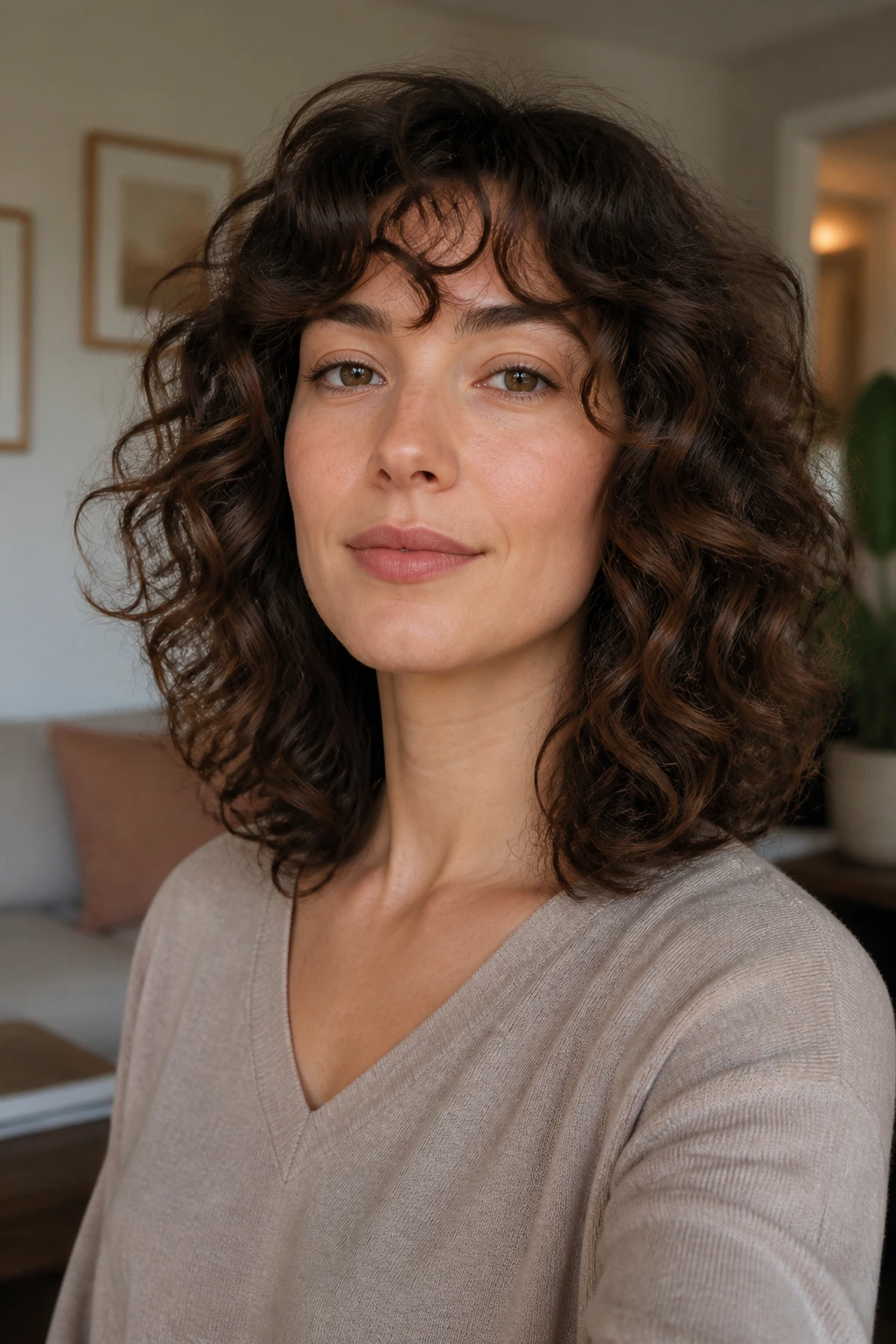
The best styles on this list don’t make your face shape disappear. They do something better. They keep the forehead from feeling overexposed, give the cheekbones some structure, and let the chin sit inside a shape instead of being left to fend for itself.
That’s why curly hair and heart-shaped faces can look so good together when the cut is chosen well. The curls bring movement. The haircut brings order. And when those two things are lined up, you stop fighting your hair and start seeing the shape it wanted to make all along.