



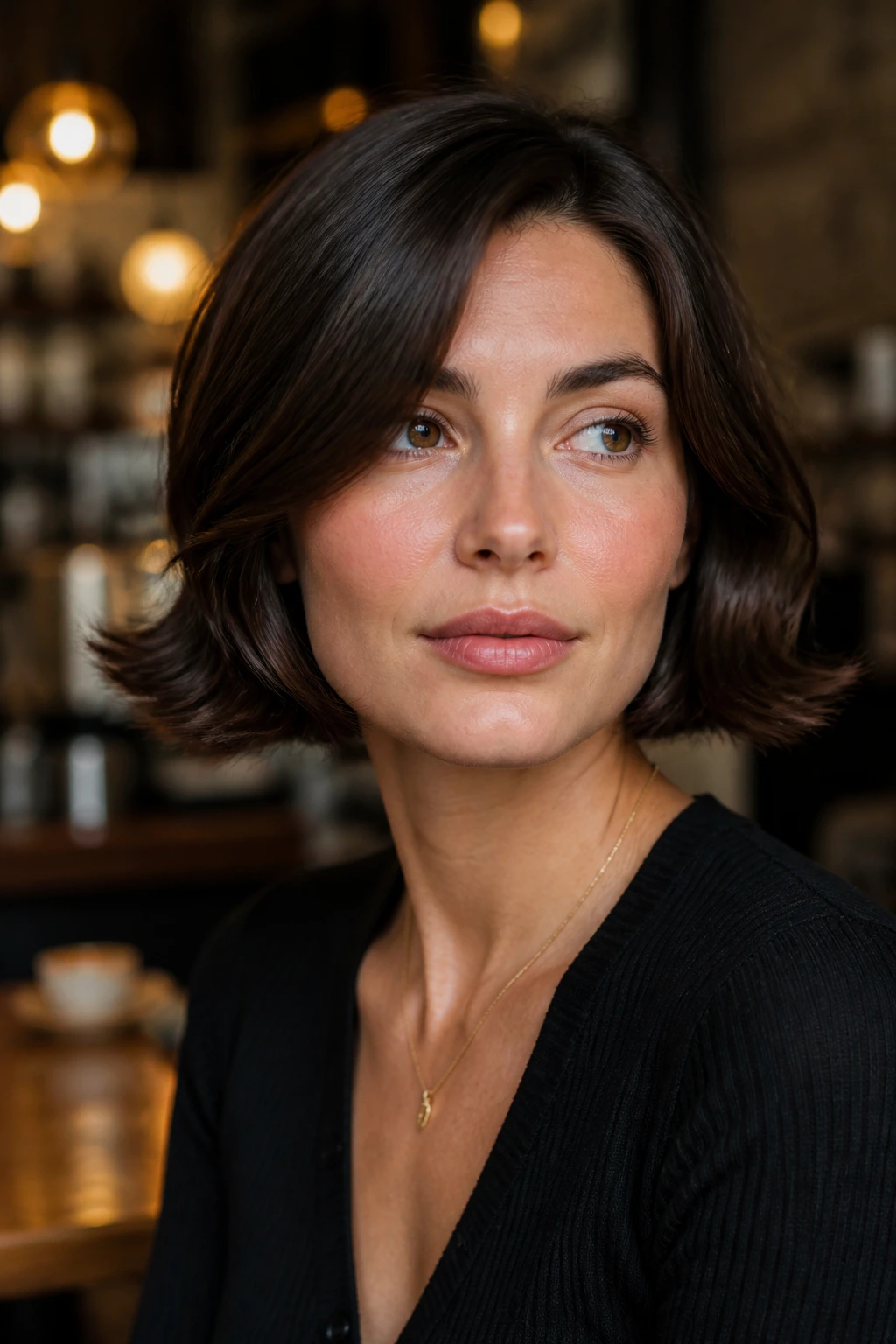
Bouncy curls for short hair and oval faces have a very specific sweet spot: the cut is short enough to spring, but long enough to show shape. That means the curl pattern matters more than sheer length. A chin-length bob can look sleepy with the wrong bend and lively with the right one, and on an oval face the difference shows up fast around the cheekbones and jaw.
Oval faces are generous, which sounds polite until you realize it can make styling feel harder, not easier. There’s room for a center part, a side part, a fringe, a tucked side, a lifted crown, a soft halo, or a blunt edge — and that freedom is exactly why short curls need a plan. If the volume sits too low, the style droops. If it sits too wide, the whole head can look like it’s wearing a helmet. The sweet spot is shape, not bulk.
The styles below lean into that. Some use a 3/4-inch iron and a strong side part, some live or die by mousse and a diffuser, and some look best after you’ve brushed them out once and let them settle into that soft, airy bend that moves when you do. Once you know where the lift should go, the rest gets a lot easier.
Why These Curls Suit Oval Faces So Well
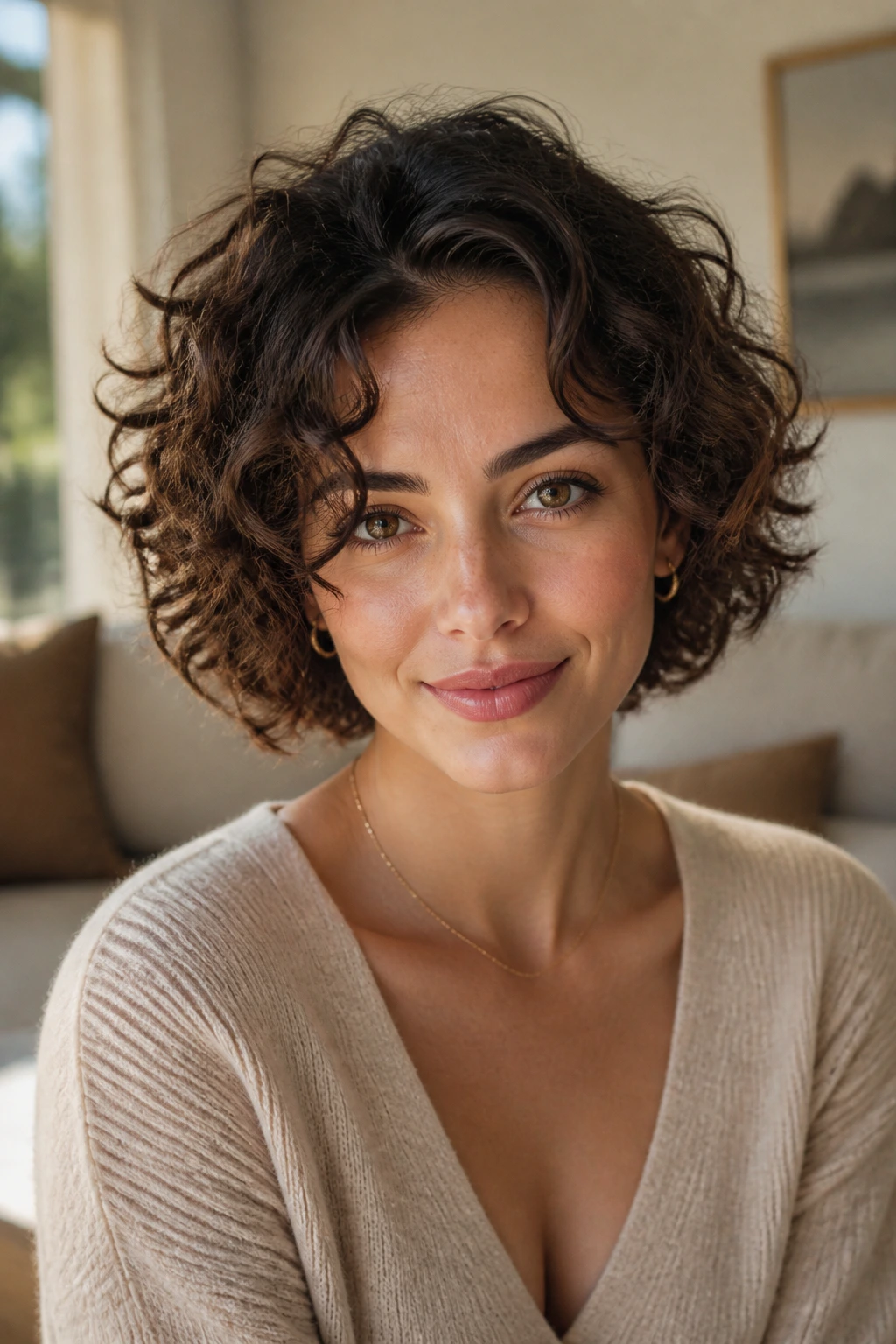
- Balanced cheek-to-jaw shape: Oval faces already have even proportions, so short curls can add movement without needing to “correct” anything. The goal is to frame, not fight, the face.
- Short length keeps bounce visible: On shorter cuts, a half-inch difference in curl direction changes the whole silhouette. You see the shape right away, which is why these looks read so clean.
- Part placement does real work: A center part makes a short curly style feel calmer; a side part pushes volume where you want attention. That tiny shift can make a bob look sharper or softer in seconds.
- Crown lift matters more than ends: On short hair, flat roots flatten the whole look. A few clips at the crown while the hair cools can be the difference between “done” and “flat by lunch.”
- Oval faces can handle contrast: Tight curls, brushed waves, micro-fringe, and flipped ends all work because the face shape gives the hairstyle room to play. You do not need every curl to behave the same way.
1. Side-Part Ringlets with Crown Lift
A deep side part and springy ringlets are one of those combinations that looks deliberate without looking stiff. The trick is keeping the top a little smoother and letting the curls get tighter as they fall toward the jaw. On an oval face, that asymmetry is useful — it draws the eye diagonally instead of straight down.
Why it works
The lifted crown keeps the style from collapsing into the cheeks, and the side part gives the face a little shape without hiding it. Use a 1-inch curling iron, curl away from the face, then pin the first two front pieces until they cool. That pause matters. Hot curls are pliable; cooled curls are what give you bounce that lasts.
If your hair is fine, use mousse at the roots and a touch of gel on the lengths. If it’s dense, a light cream under the gel helps the ringlets clump instead of frizzing out. This one is polished, but not fussy.
2. Chin-Length Curly Bob with Airy Ends
A chin-length curly bob lives or dies by the ends. If they’re too blunt, the shape can feel boxy. If they’re too broken up, you lose the clean line that makes the style look intentional. The sweet version has soft, separated ends and a bit of lift at the temples.
This cut is good for oval faces because it lets the jawline stay visible. The curls sit around it like a frame instead of covering it up. I like this look with a diffuser on low heat and a pea-size amount of mousse scrunched into damp hair, then nothing else until it’s fully dry. Touching it too soon is how you get a frizzy helmet.
A small side tuck behind one ear can make the whole style look more refined. Simple move. Big payoff.
3. Textured Pixie Curls with Lift at the Crown
Can a pixie have bounce? Absolutely. In fact, a curly pixie is one of the sharpest looks for an oval face because it puts the curl right up where you can see it. The top gets the softness; the sides stay a little leaner so the face doesn’t disappear into volume.
How to style it
Work a light curl cream through damp hair, then twist small sections with your fingers instead of trying to force a comb through everything. Let the top dry with a few root clips tucked under the crown for 10 to 15 minutes. That tiny bit of lift keeps the cut from sitting flat to the head.
This style likes a matte finish more than a glossy one. Too much shine can make a short pixie look oily. Keep the edges clean, keep the crown airy, and let the texture do the rest.
4. Flipped-Out French Bob
A flipped-out French bob has attitude in the best possible way. The ends turn away from the face, which gives the cut a little kick and makes the jawline look more defined. On an oval face, that outward movement adds structure without hard lines.
This one works best when the hair is cut just under the ear and styled with a flat iron bend rather than a full curl. Heat the iron to a medium setting, clamp the last inch, and flick the wrist outward. That’s all you need. Don’t overdo the flip or the ends start to look cartoonish.
A side part keeps the style from feeling too symmetrical. If your hair has a stubborn cowlick at the front, lean into it instead of fighting it. This bob looks better with a little personality anyway.
5. Curly Crop with Curtain Bangs
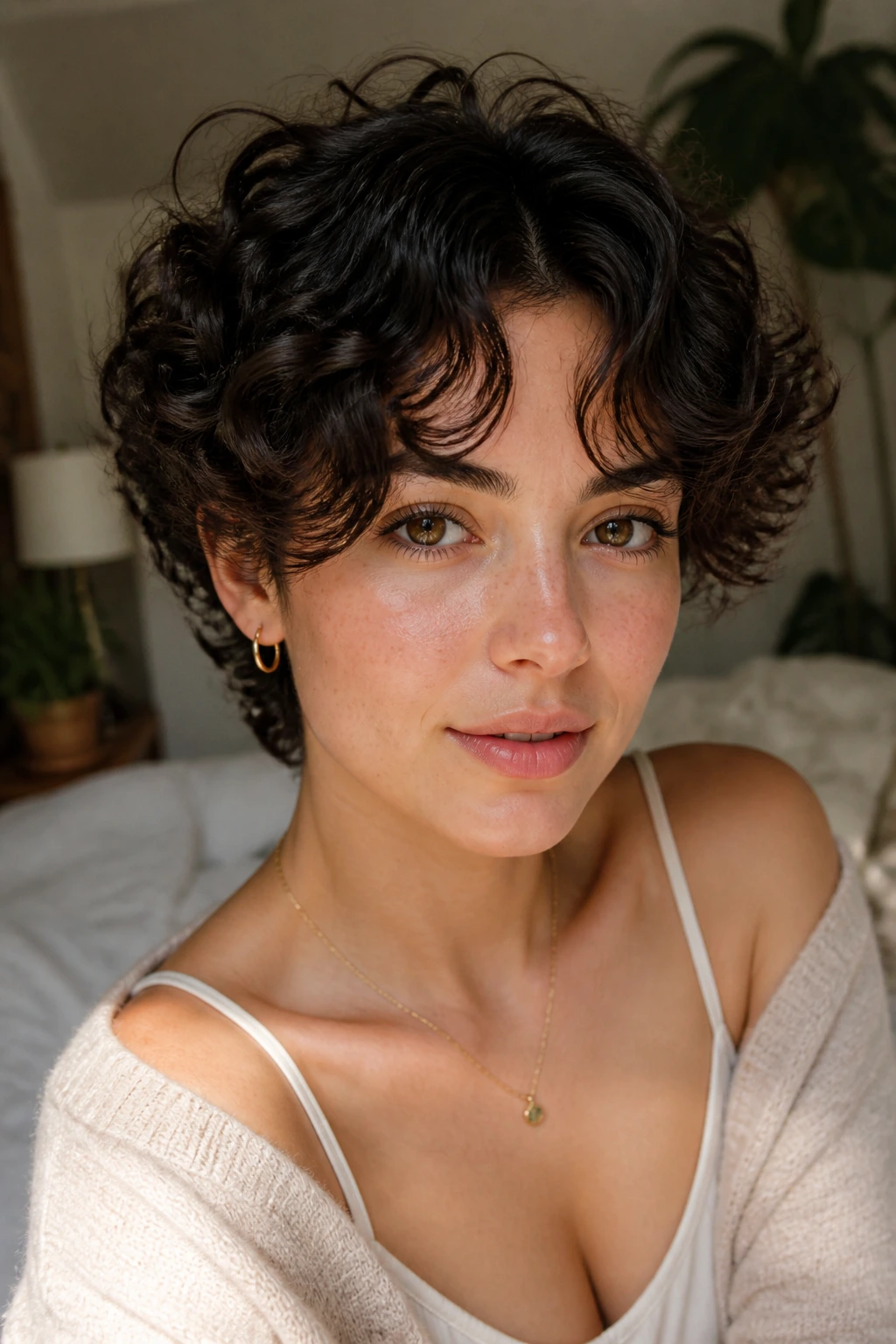
Curtain bangs on short curly hair can be brilliant, but only when they’re long enough to part and soft enough to move. You want them to fall around the brow line or just below it, then sweep into the rest of the curl. Shorter than that, and they can spring up in a way that feels accidental.
The reason this shape flatters an oval face is simple: it opens the center and frames the temples. That soft split in the front breaks up the forehead without hiding it. Use a small round brush or your fingers to guide the bangs away from the face while they dry. No hard clip marks. No crunchy fringe.
A little root volume at the crown makes the whole crop look airy instead of heavy. Keep the ends loose. That’s the whole mood.
6. Glossy Barrel Curls on a Sculpted Bob
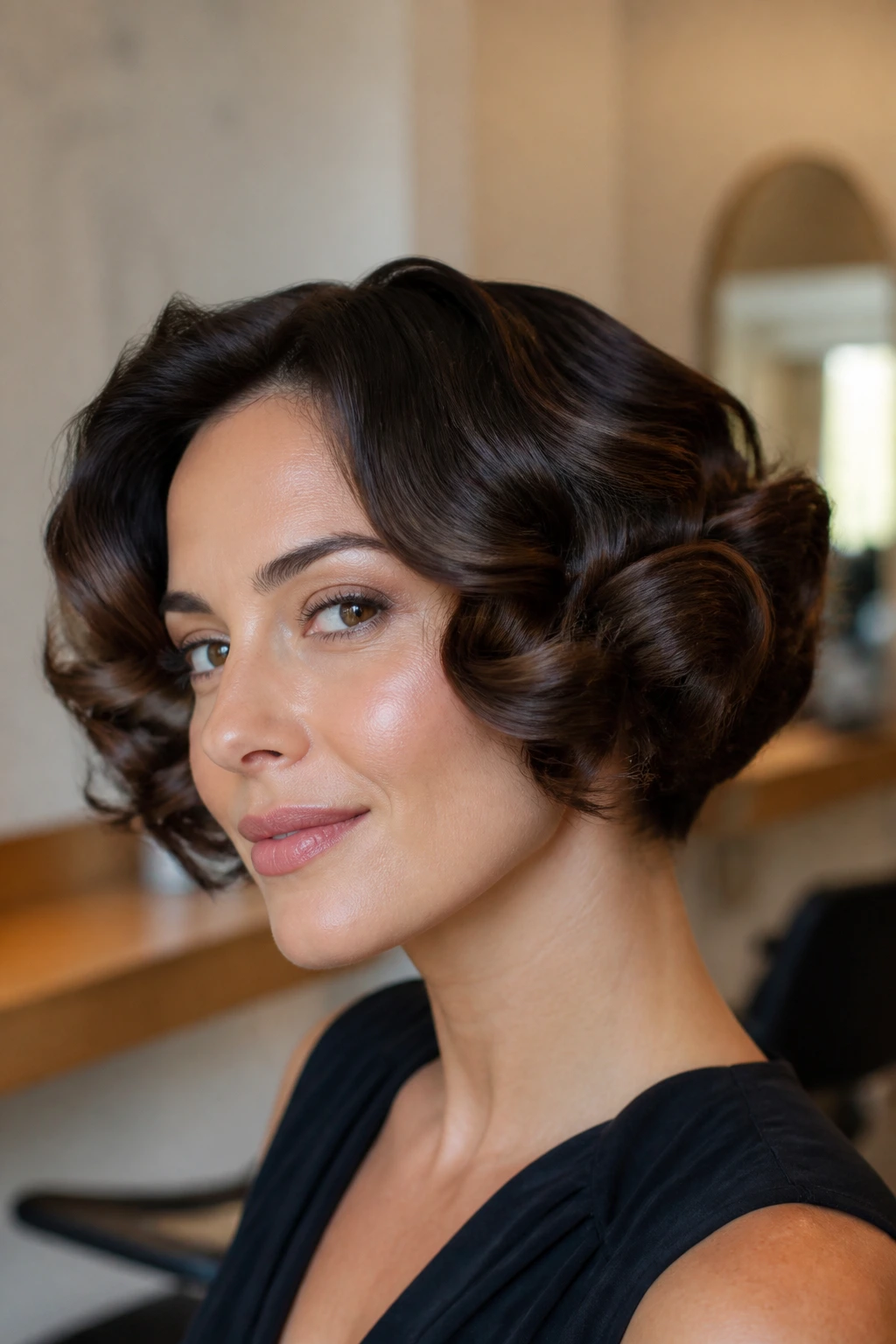
Glossy barrel curls look clean on a short bob because the curve reads immediately, even at a glance. This is not the messy, beachy route. It’s smoother, rounder, and a little more polished — the kind of curl that makes a bob look expensive without needing much length.
The style depends on section size. Use 1-inch sections, curl in the same direction for a uniform finish, and let each piece cool before you touch it. If you brush it out too soon, the curl loosens into a vague wave and you lose that sculpted shape. A light serum on the last inch of hair helps the ends shine instead of puff.
Oval faces wear this well because the curve sits evenly along the sides. Nothing gets chopped off by the silhouette. It just wraps the face and moves on.
7. Rounded Curly Bob with Interior Layers
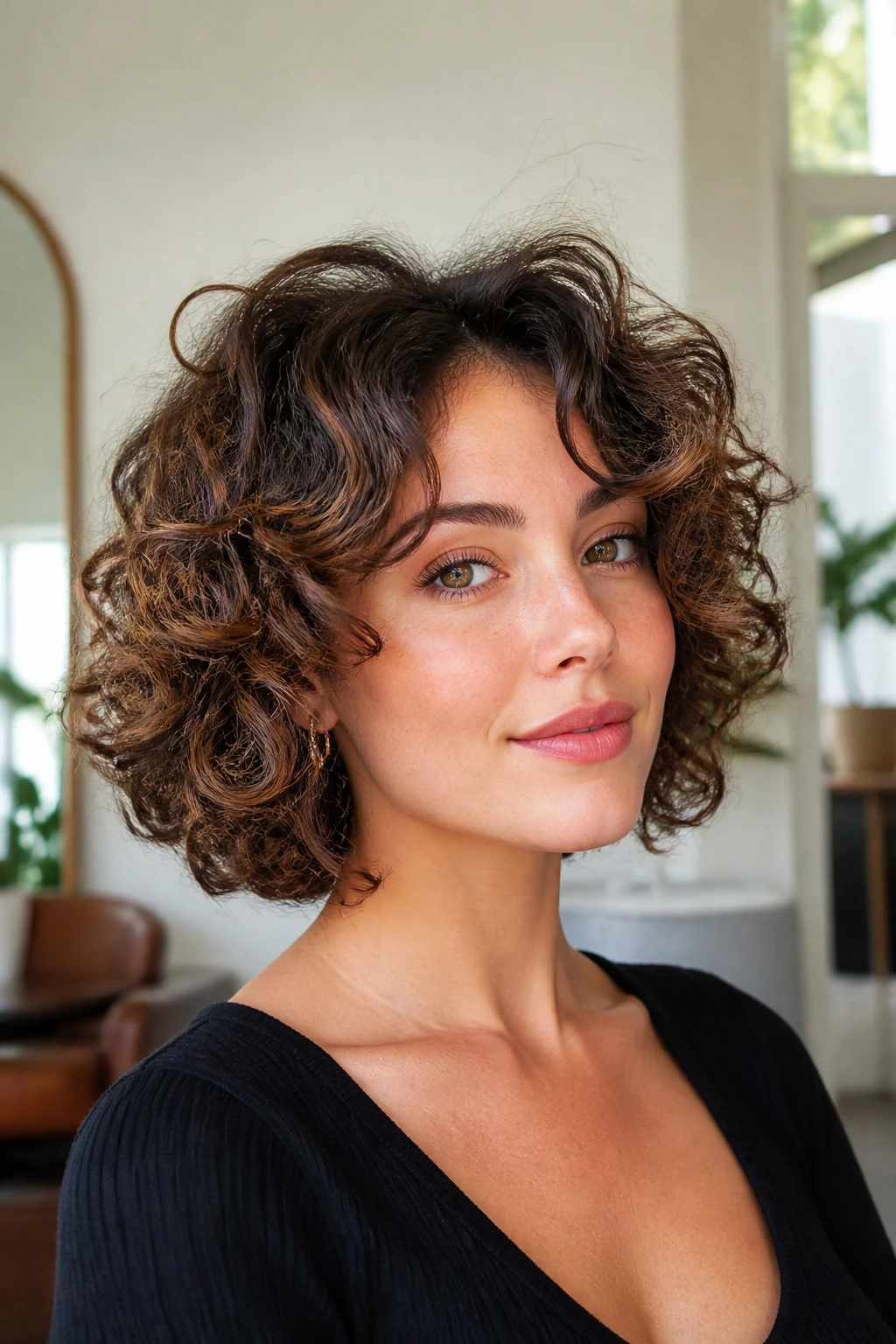
A rounded curly bob is one of my favorite shapes when the cut needs fullness without bulk. Interior layers remove the hidden weight that makes short curls droop, so the outside stays smooth while the inside keeps spring. It’s a smarter cut than a blunt one if your hair tends to puff at the corners.
Why it flatters
The rounded perimeter follows the cheek and jaw instead of flaring out. On an oval face, that keeps the style soft and balanced. You want the widest point to sit around the middle of the head, not the ears.
Use a diffuser and cup the curls upward as they dry. Then let them cool before shaking them out with your fingertips. A brush will destroy the shape here. Fingers only.
8. Piecey Shag Bob with Micro Fringe
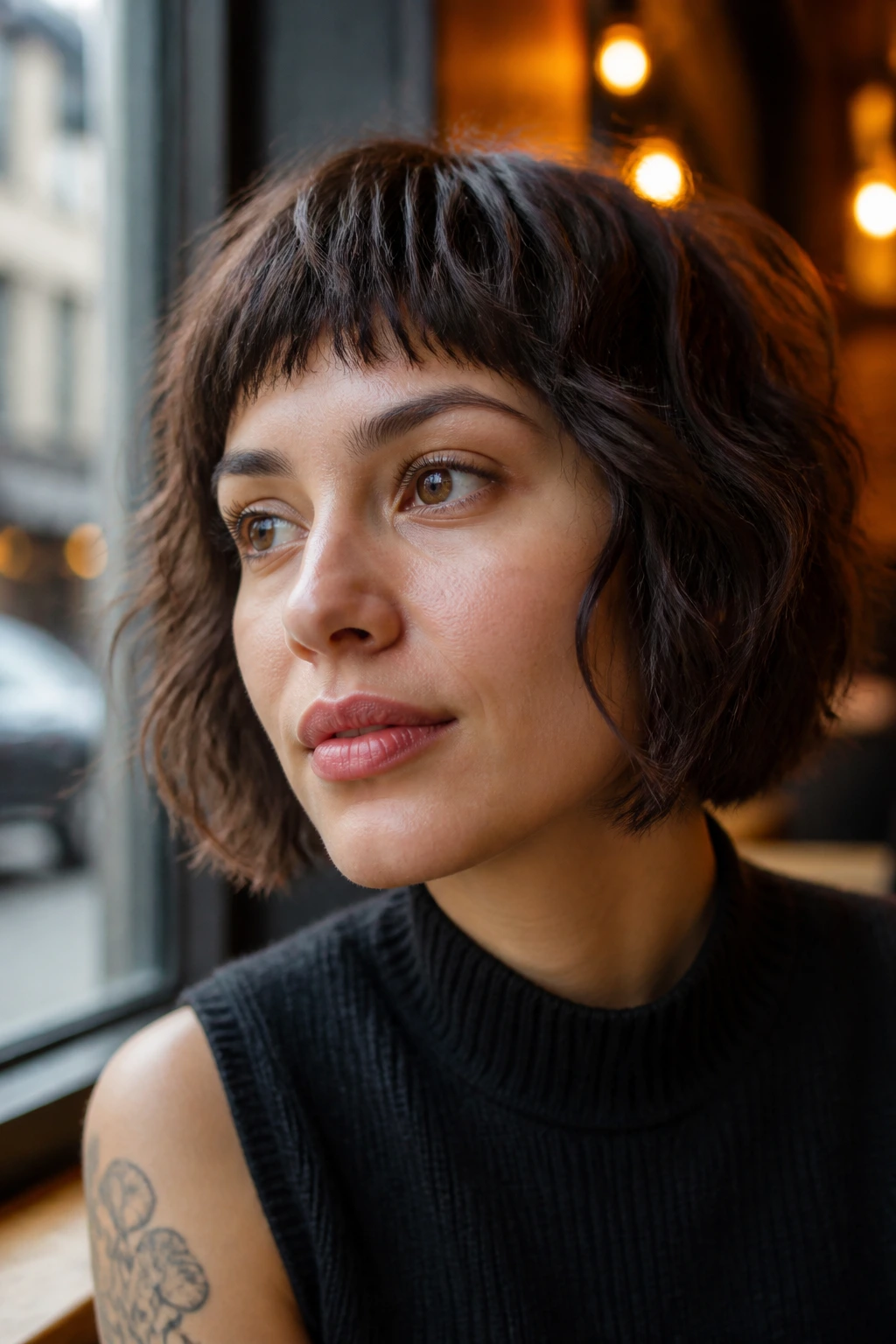
This is the one for people who want their short curls to look a little lived-in. The piecey shag bob has uneven texture on purpose, and the micro fringe gives it a sharp little edge. On an oval face, that short fringe can look cool rather than severe because the proportions are already even.
The key is separation. Use a texture spray after the hair is dry, then pinch a few ends together with a dab of pomade. You do not want every curl to merge into one puff. You want little bits of movement. That gives the cut its bite.
A micro fringe needs maintenance, though. Trim it before it starts hiding in the eyes. Once it gets too long, the whole effect turns sleepy.
9. Wet-Look Waves with a Deep Side Part
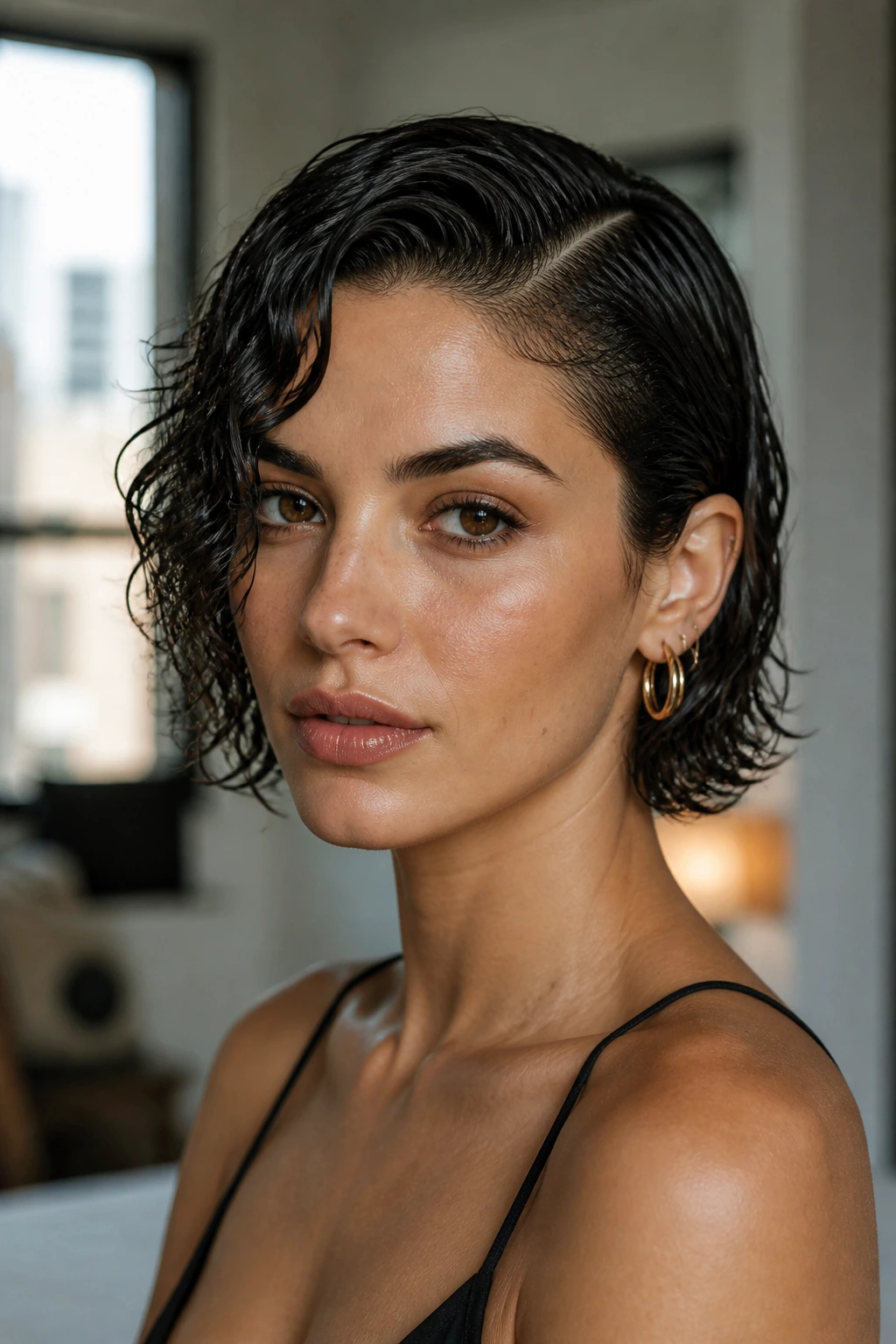
Wet-look waves on short hair are not subtle, and that is the point. The deep side part creates drama at the root, while the gel finish keeps the texture sleek through the mid-lengths. On an oval face, the side sweep opens one side and pushes attention to the eyes and cheekbones.
Start on soaking wet hair, rake in gel from roots to ends, and comb the part while the hair is still saturated. Scrunch only a little. The shape comes from the product and the part, not from roughing it up. If the hair dries before you’ve finished placing it, mist it again. Half-dry is the enemy here.
This look holds best on cuts that skim the jaw or slightly above it. Too much length and the wet finish starts to sag.
10. Brushed-Out Old Hollywood Curls
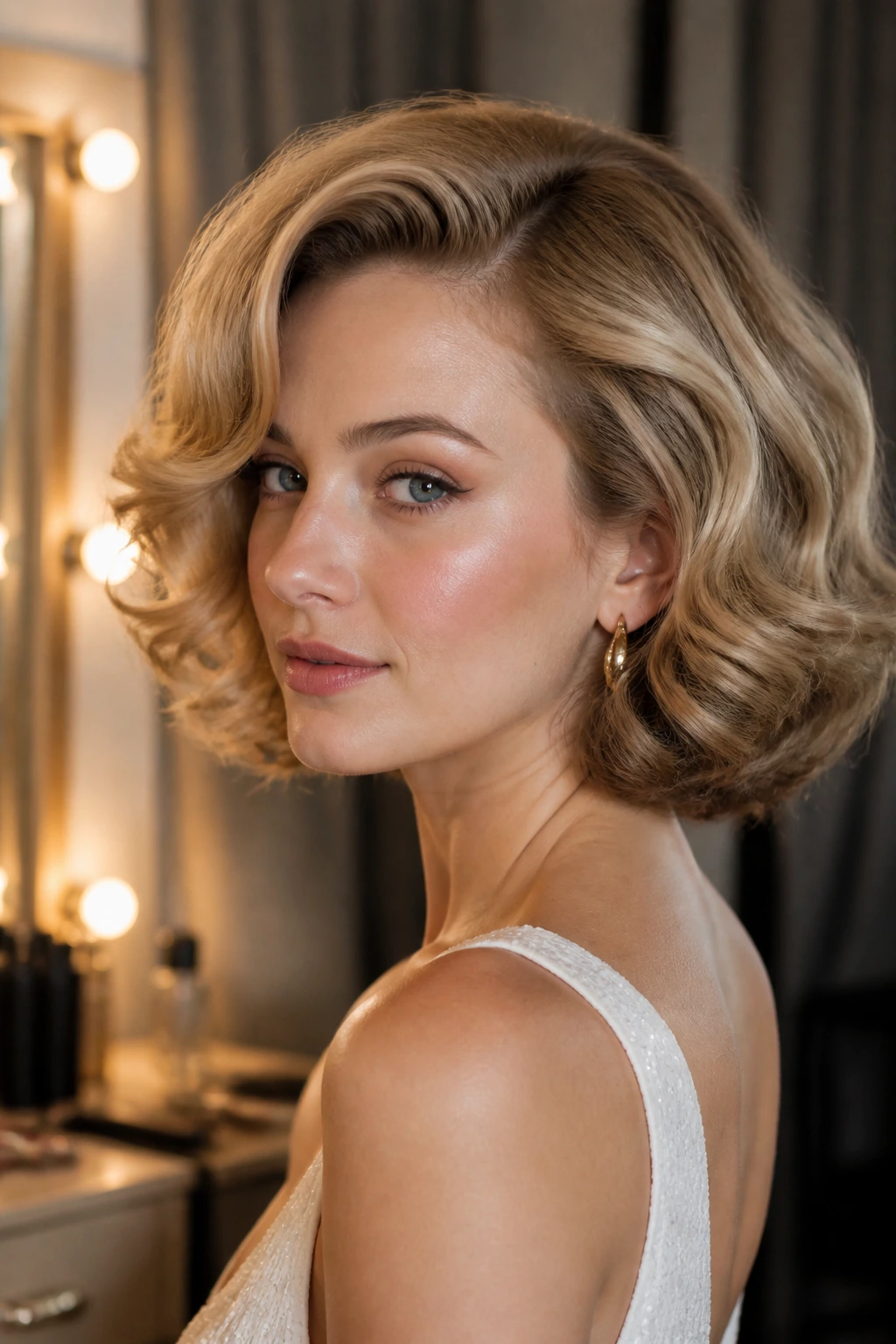
Brushed-out curls on short hair feel softer than a tight set, but they need structure at the start. Use a 1.25-inch barrel, set the curls in the same direction, then let them cool completely before brushing with a soft boar-bristle brush. That last step is where the shape changes from “curly” to “cinched and airy.”
On oval faces, this style works because it adds width in the right places without crowding the features. The polished bend along the sides gives the face a little frame, especially if the ends are tucked under just slightly. A shine spray helps, but keep it light. Too much product and the hair stops moving.
I like this for dinner, photos, or any day you want your short cut to feel dressed on purpose.
11. Tapered Nape Curl Stack
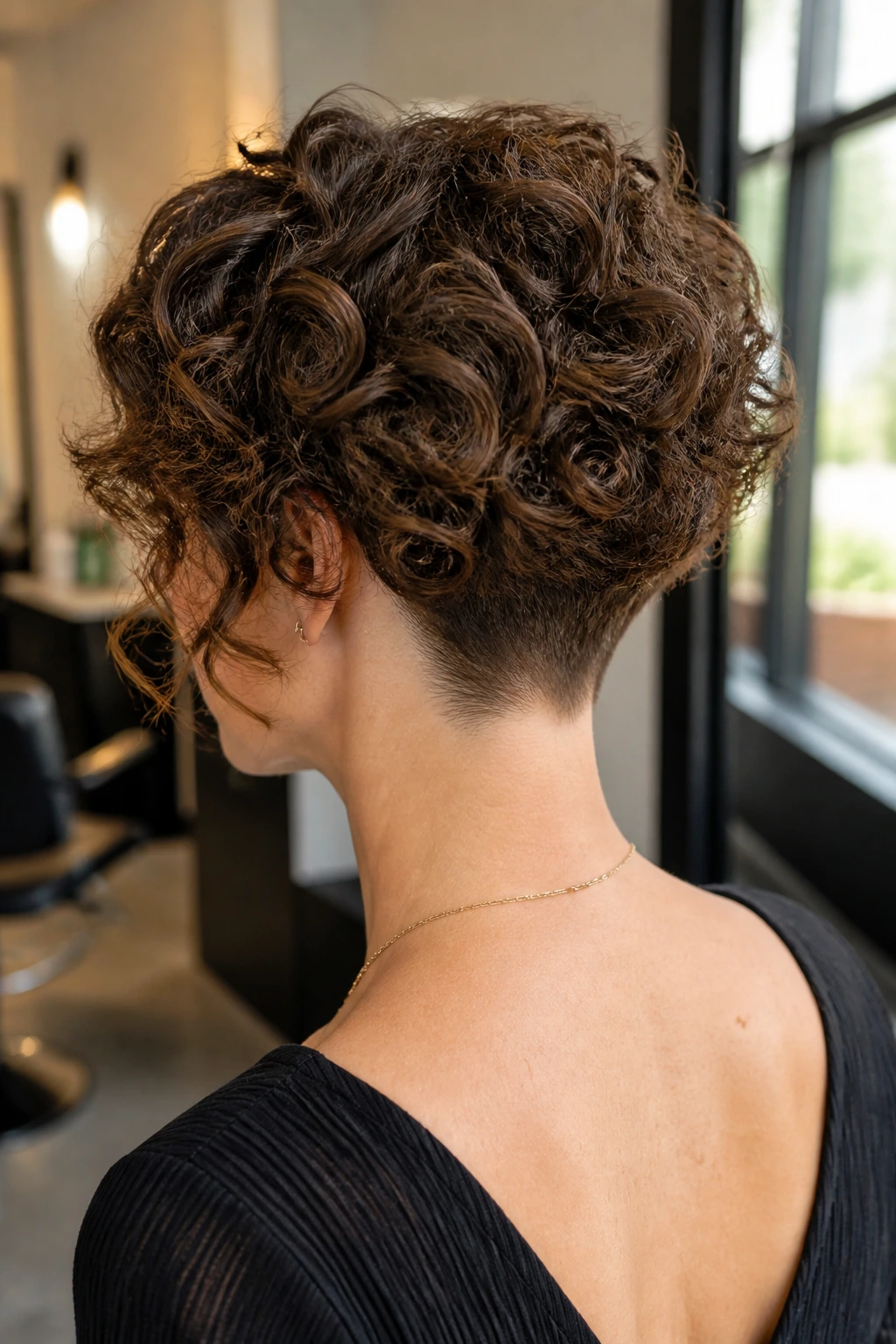
A tapered nape curl stack is a smart cut when you want short hair to feel lifted instead of round. The back sits shorter and cleaner, while the top and sides keep enough length to build a soft stack. It gives the crown a little height and keeps the silhouette from puffing out all over.
What makes it different
The shape rises, then tucks back in. That matters for oval faces because it keeps the head shape neat while still giving the curls room to bloom. Ask for weight removal near the lower back of the head, not just random thinning. There’s a difference.
Style with a diffuser and clip the crown once the roots are half-dry. Then let the back fall naturally. The cut does the heavy lifting.
12. Defined Finger-Coil Bob
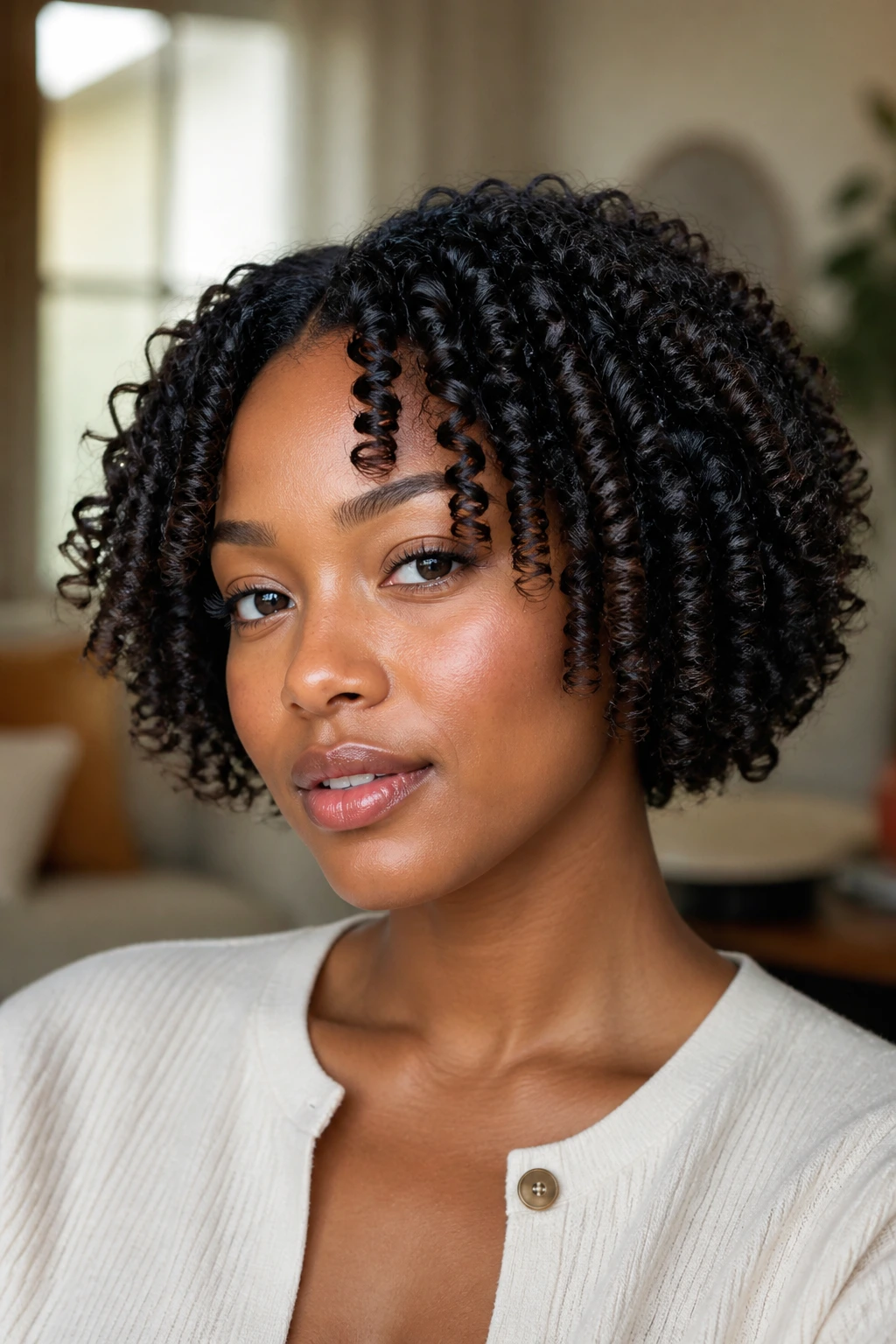
Finger coils on short hair can look almost architectural. You twist each small section around your finger, let it set, and the curl pattern ends up crisp and springy. On an oval face, that definition is useful because the face can handle a strong shape without getting overwhelmed.
The magic is in the section size. Keep them small and even, about the width of a pencil or a skinny chopstick. Larger sections lose that coil look and slide into vague waves. Use a light styling cream first, then a small amount of gel to lock the twist in place.
This one takes patience. Still worth it. When the coils fall into place, the result has a tidy, almost jewel-like texture.
13. Soft Corkscrew Crop
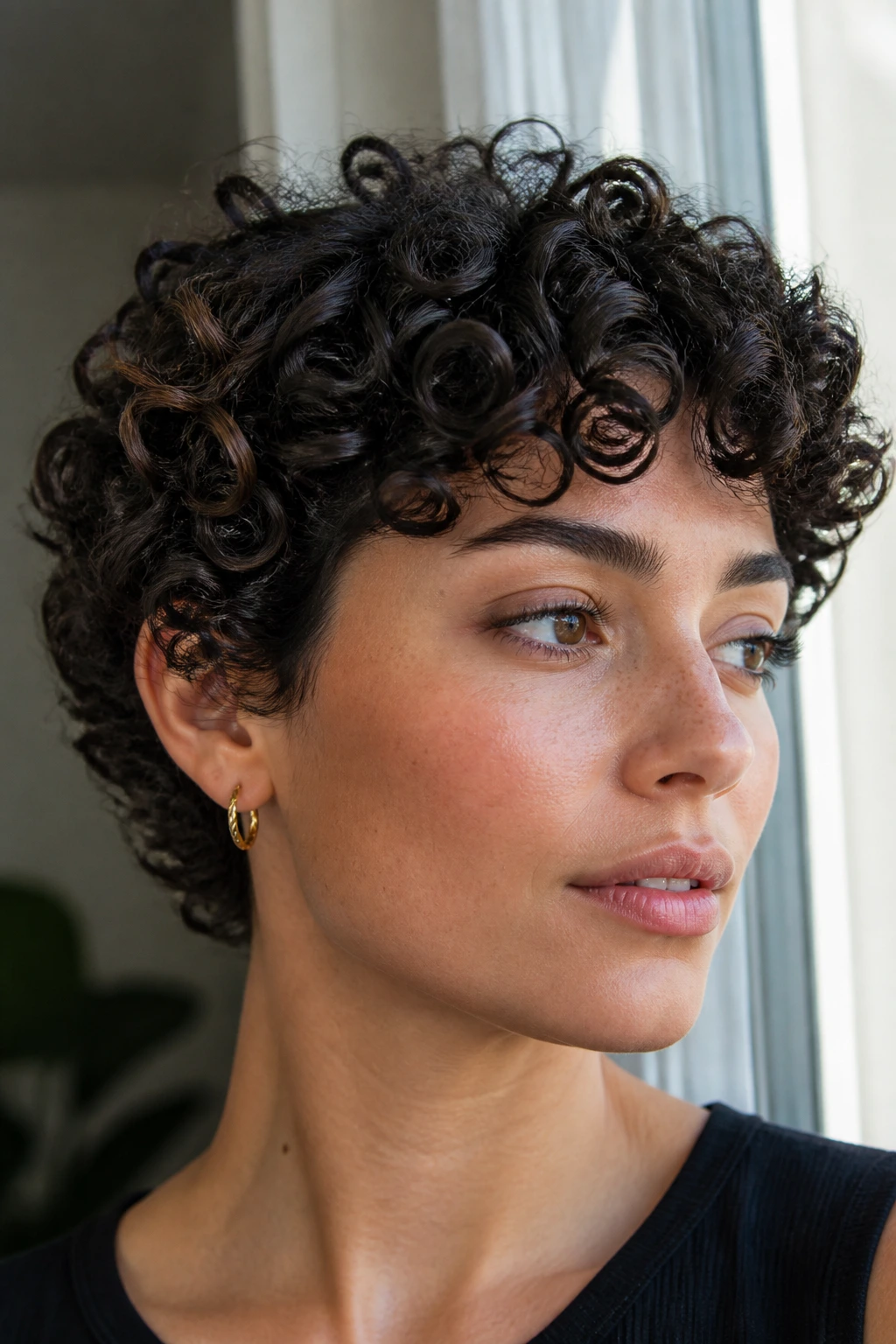
A corkscrew crop gives short hair a tighter curl pattern without making it look cramped. The curls are smaller, springier, and a little more playful than barrel curls. On an oval face, that tightness can work because the features still have room to breathe around it.
Use a smaller iron — 3/4 inch is usually the sweet spot — and keep the sections neat. After styling, wait until the curls are fully cool before separating them. If you break them up too early, the shape frizzes instead of softening.
I like this style when the cut is cropped at the nape but still has enough top length to show movement. It’s compact, but not flat. That difference matters.
14. Asymmetrical Curly Cut
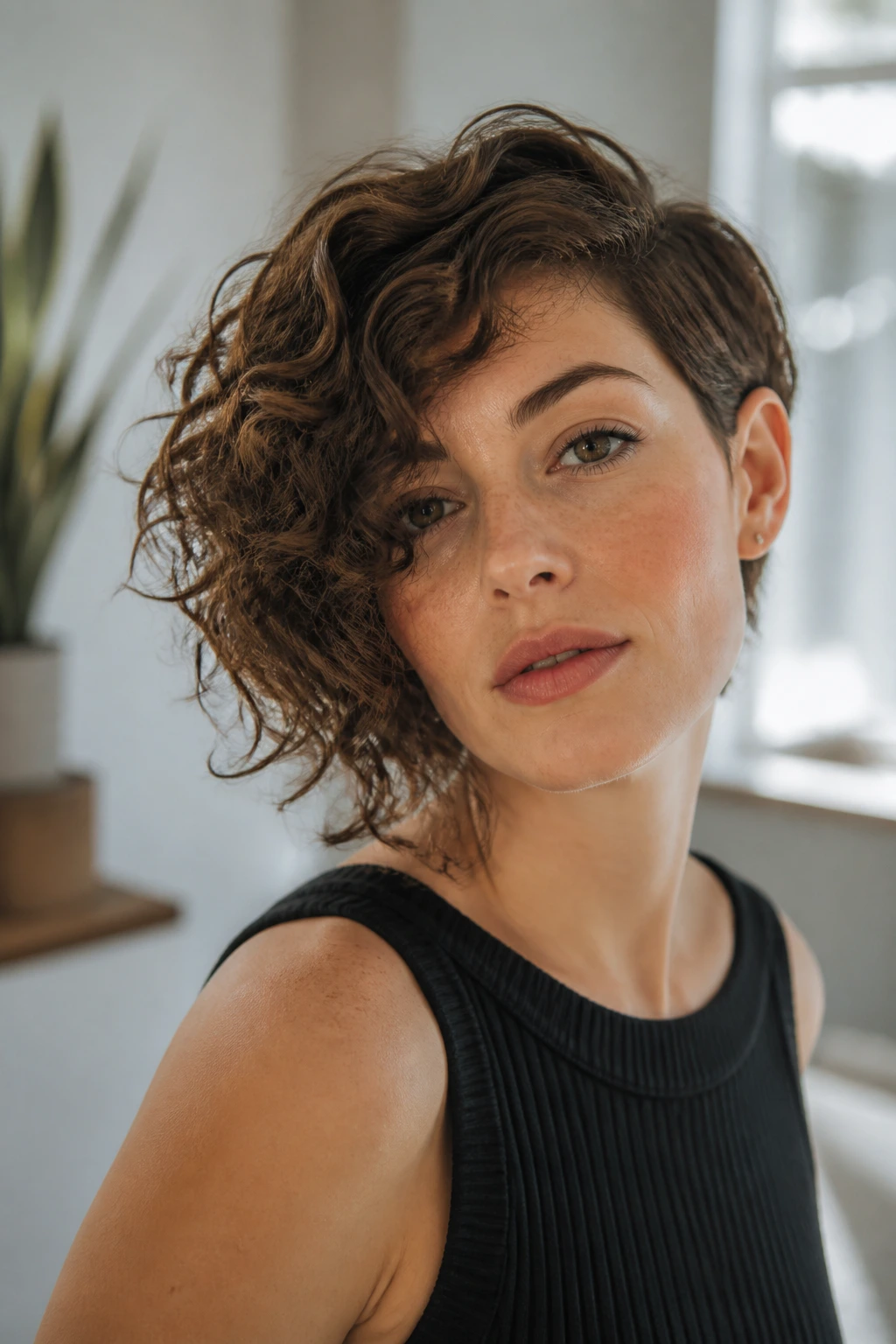
An asymmetrical curly cut gives you a little tension in the silhouette, which is exactly why it works. One side sits longer, often around the cheek or lip line, while the other side tucks closer to the ear or jaw. On an oval face, that unevenness keeps the look from feeling too predictable.
The best part is how easy it is to style. You don’t need perfectly matched curl placement. You need one strong side to carry the shape and one softer side to balance it. A deep side part exaggerates the difference; a looser part softens it.
This cut is for people who want short curls with a little edge. Clean lines help. So does a good trim every six to eight weeks, because asymmetry looks deliberate only when the lengths stay intentional.
15. Halo Curls with a Center Part
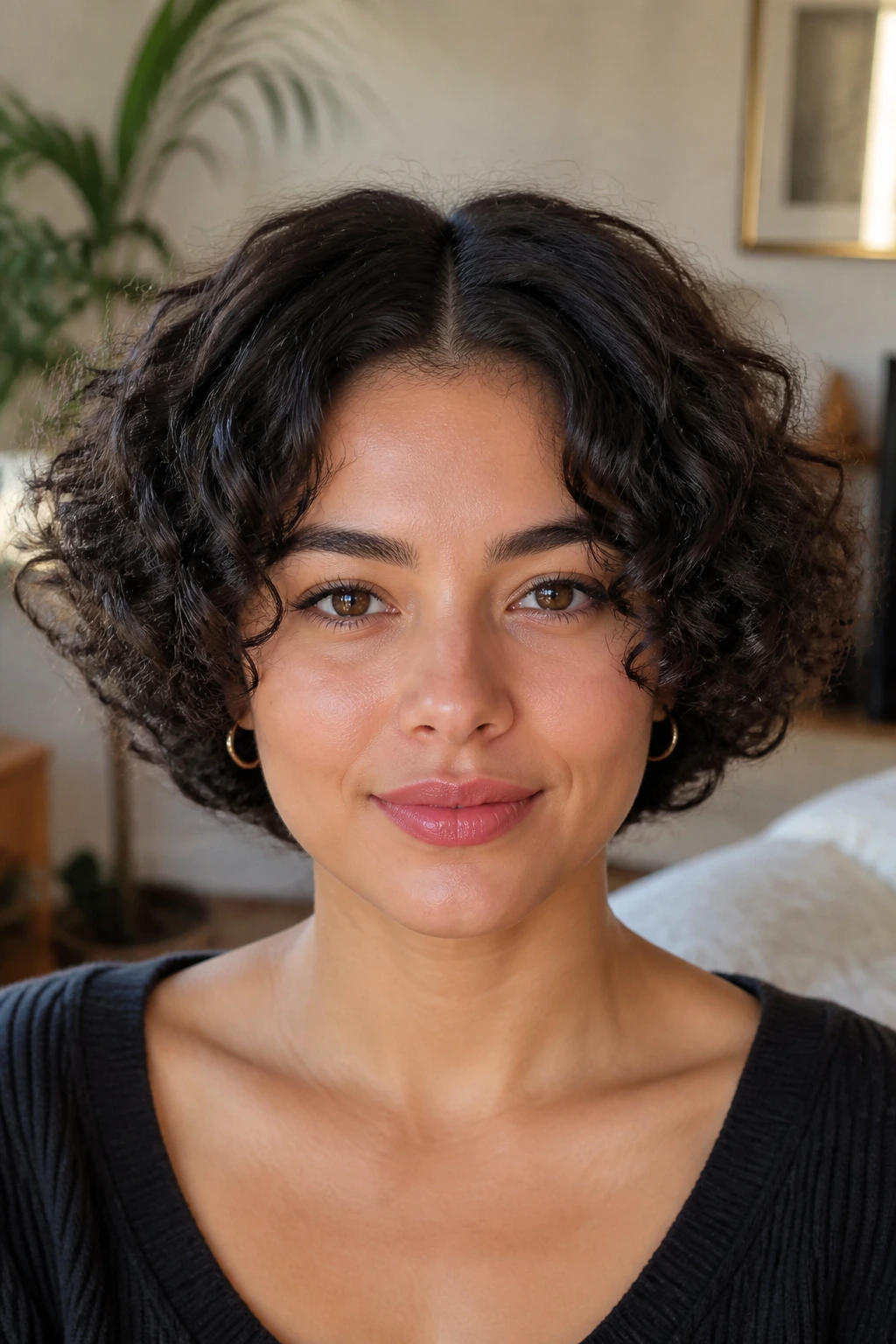
A center part can be a gamble on some face shapes. On an oval face, it usually lands nicely because the proportions are already balanced. With a halo of short curls, the center part makes the style feel symmetrical without going stiff.
The trick is to keep the volume even on both sides and a little fuller above the ear than at the ends. That creates a soft frame around the face instead of a triangle. Use lightweight foam or mousse so the curls hold shape but don’t feel crunchy.
This one is especially good when your hair naturally wants to fall in both directions. If the front pieces keep trying to split on their own, let them. Sometimes the hair is telling you the truth.
16. S-Waves Set with a Flat Iron
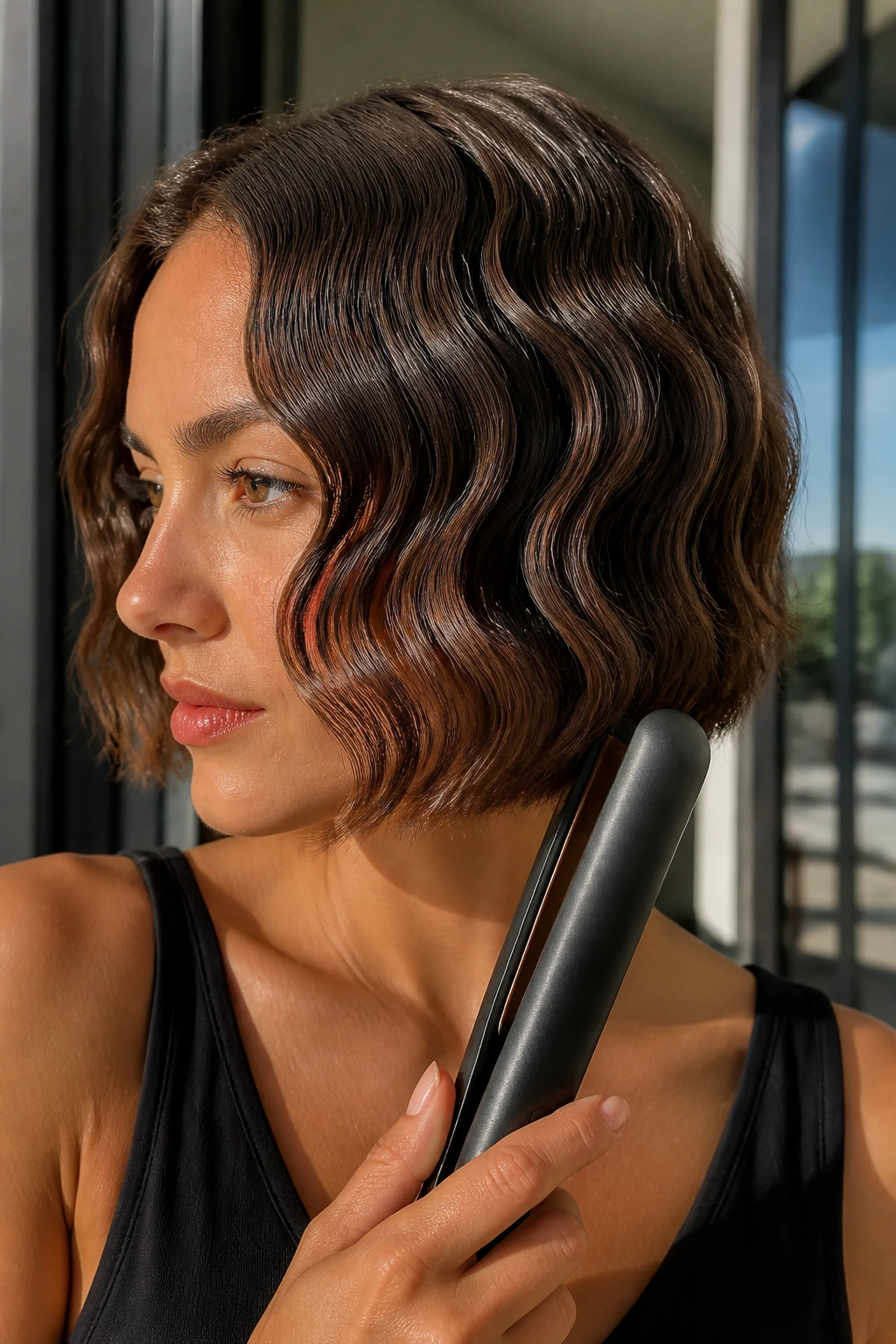
S-waves look polished because they bend, not coil. A flat iron is the tool here, and the result is a short style with soft movement that feels more modern than formal. On an oval face, the wave pattern can skim the cheekbones and keep the look open.
Quick styling note
Clamp a small section near the root, rotate the iron away from the face, then bend in the opposite direction a few inches down. Repeat that pattern to make an S. Keep the sections thin or the wave gets chunky fast.
This style works best when the hair has a little natural texture already. Bone-straight hair can do it, but it needs more product and a cooler finish. A mist of flexible spray after the curls cool will keep the shape from dropping.
17. Air-Dried Salt-Spray Waves
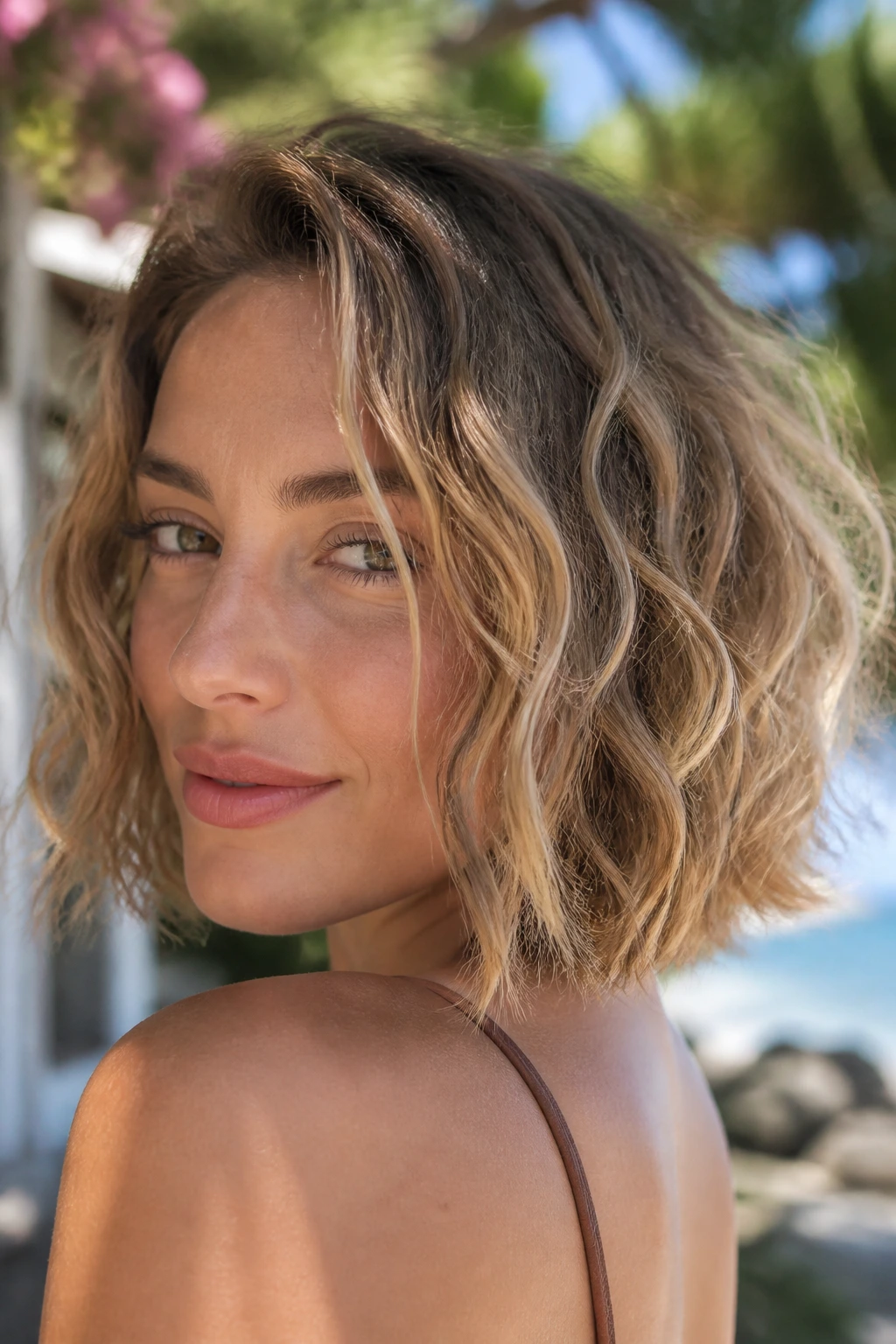
This is the style for people who want movement without obvious styling. Salt spray gives the hair grit, the air dry gives it a loose bend, and the finished look lands somewhere between casual and deliberate. On an oval face, that looser shape is useful because it keeps the features visible.
Work the spray into damp hair, twist a few sections around your fingers, and leave the roots alone until they dry. If you scrunch too hard, the ends can go fuzzy. If you do too little, the wave won’t show. It’s a narrow lane, but an easy one once you’ve done it twice.
This is not the shiniest look in the group. It is the one that looks like you did not overthink it.
18. Curly Mullet with Soft Edges
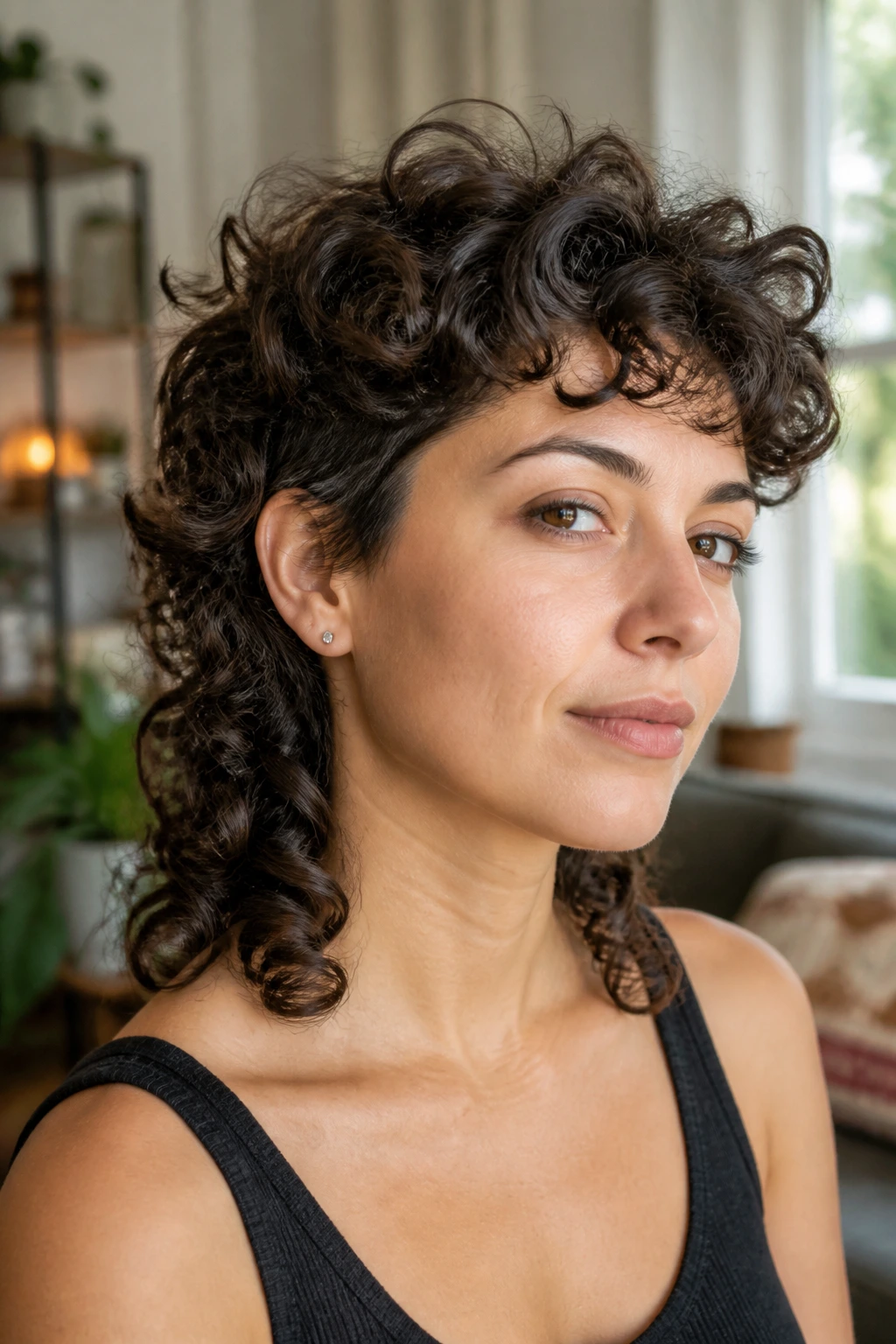
A curly mullet sounds louder than it usually wears. The modern version keeps the top short and lifted, the sides soft, and the back a little longer so the curl can hang. On an oval face, the shape works because the front stays open while the back adds movement.
The secret is softness at the edges. Hard disconnects can make the cut feel too severe on short hair. Let the transition zones blur a little. A diffuser helps here, especially if the hair grows in different directions around the crown.
This is one of the few short curly looks that can feel both edgy and easy. I’d call that a useful trick.
19. Rounded Pixie Fro with Defined Coils
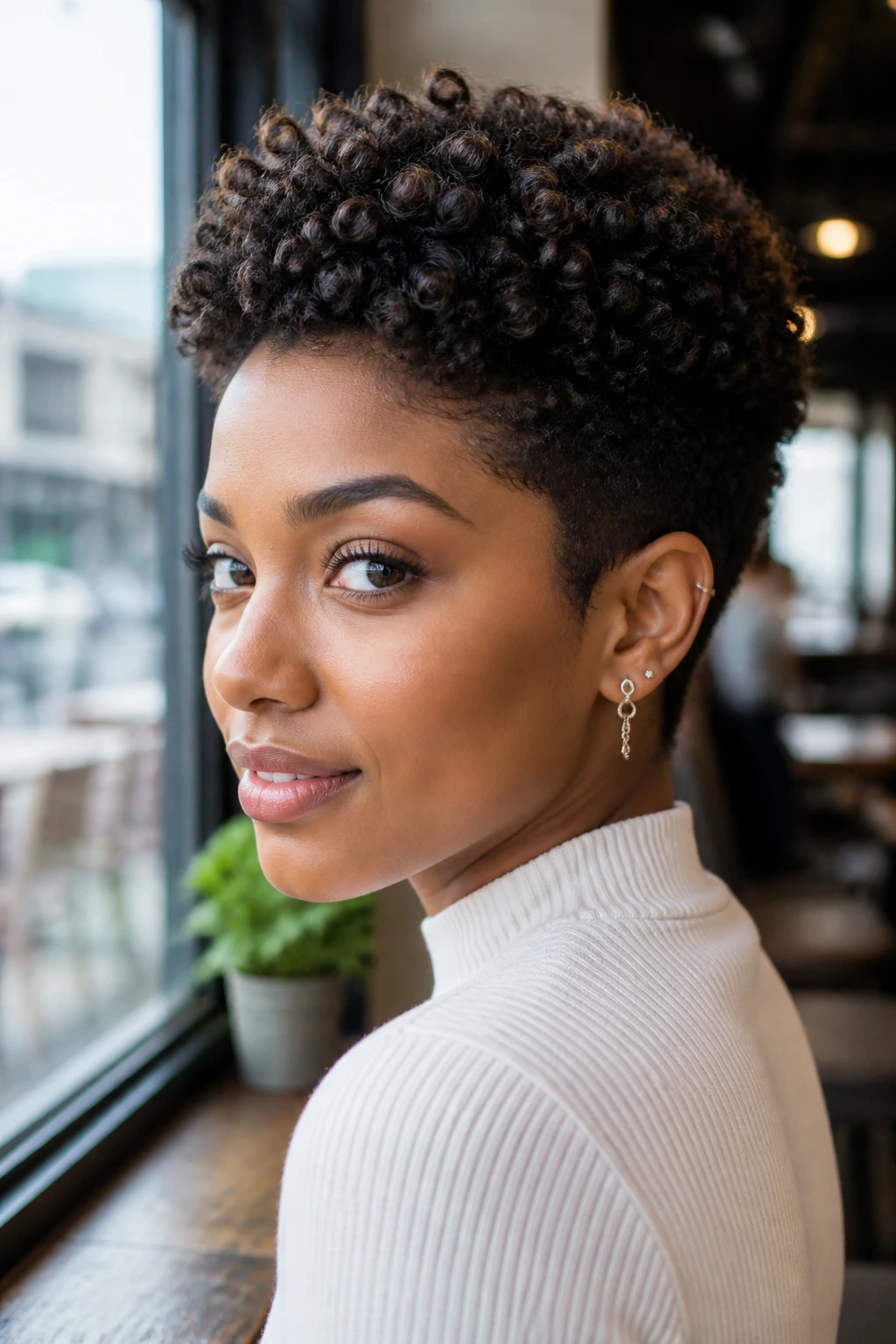
A rounded pixie fro is all about little coils packed into a clean shape. It sits close on the sides, grows a bit higher on top, and lets the curls stack rather than spread. On an oval face, that shape keeps the face open while still giving the head some presence.
The easiest mistake is flattening the top with too much cream. Use a light leave-in, then a small amount of gel where you want the coils to hold. Once dry, a pick at the roots can lift the silhouette without disturbing the coil pattern.
This style looks best when the outline stays neat. The texture can be bold. The shape should not be messy.
20. Jawline-Grazing Spiral Crop
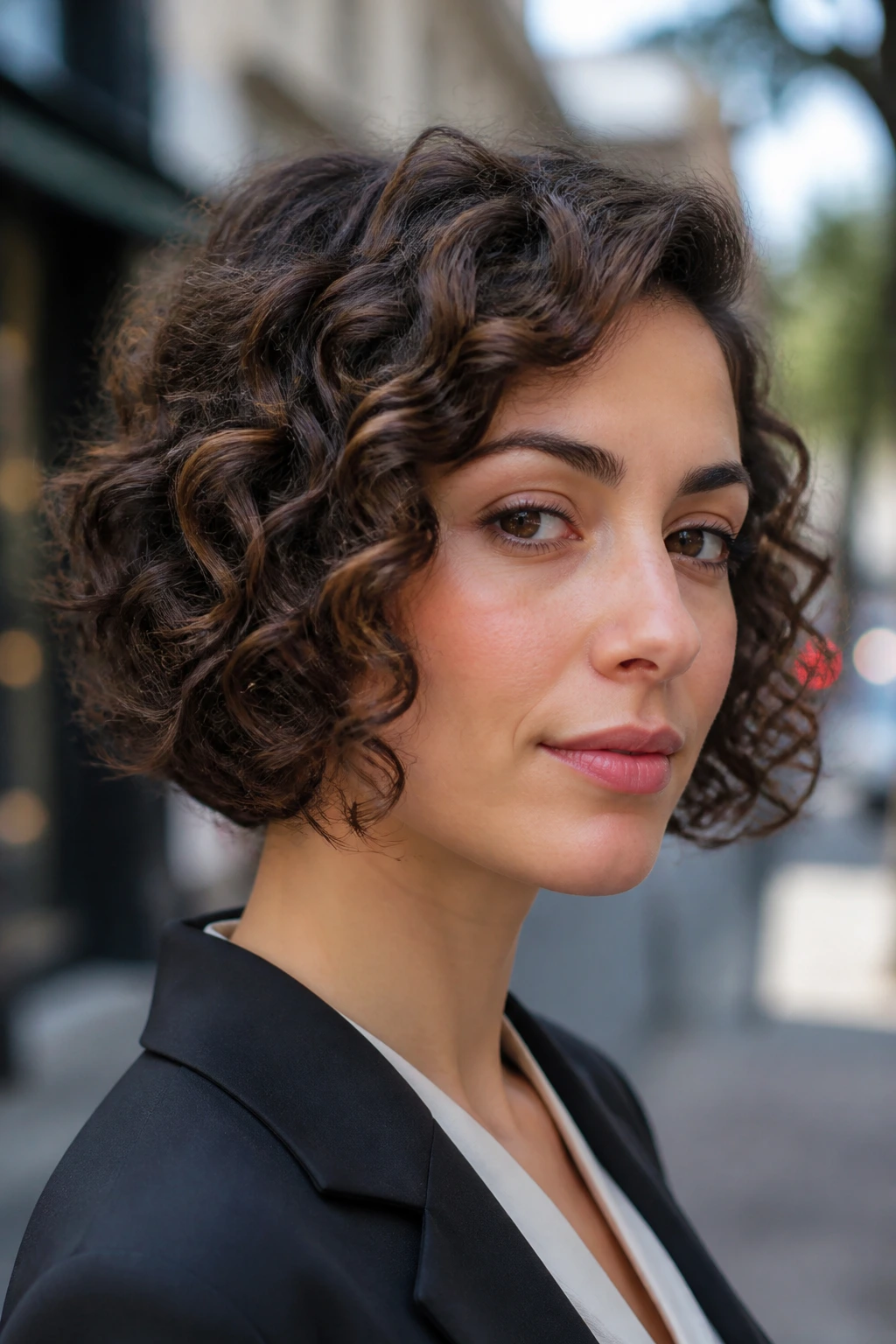
A jawline-grazing spiral crop is one of the cleanest ways to show off spring without needing long hair. The curls sit right where the jaw begins, which gives the face a neat frame. On an oval face, that placement is flattering because it follows the natural line of the face instead of cutting across it.
How to keep it balanced
Use a side part if you want a little softness, or a center part if you want the shape to feel more graphic. Spiral curls like to clump, so don’t separate them too early. Let them set first. Then break only the larger chunks with oiled fingertips.
This is one of those cuts that looks simple and isn’t. The placement has to be right or the whole thing loses its shape.
21. Side-Swept Curly Fringe Bob
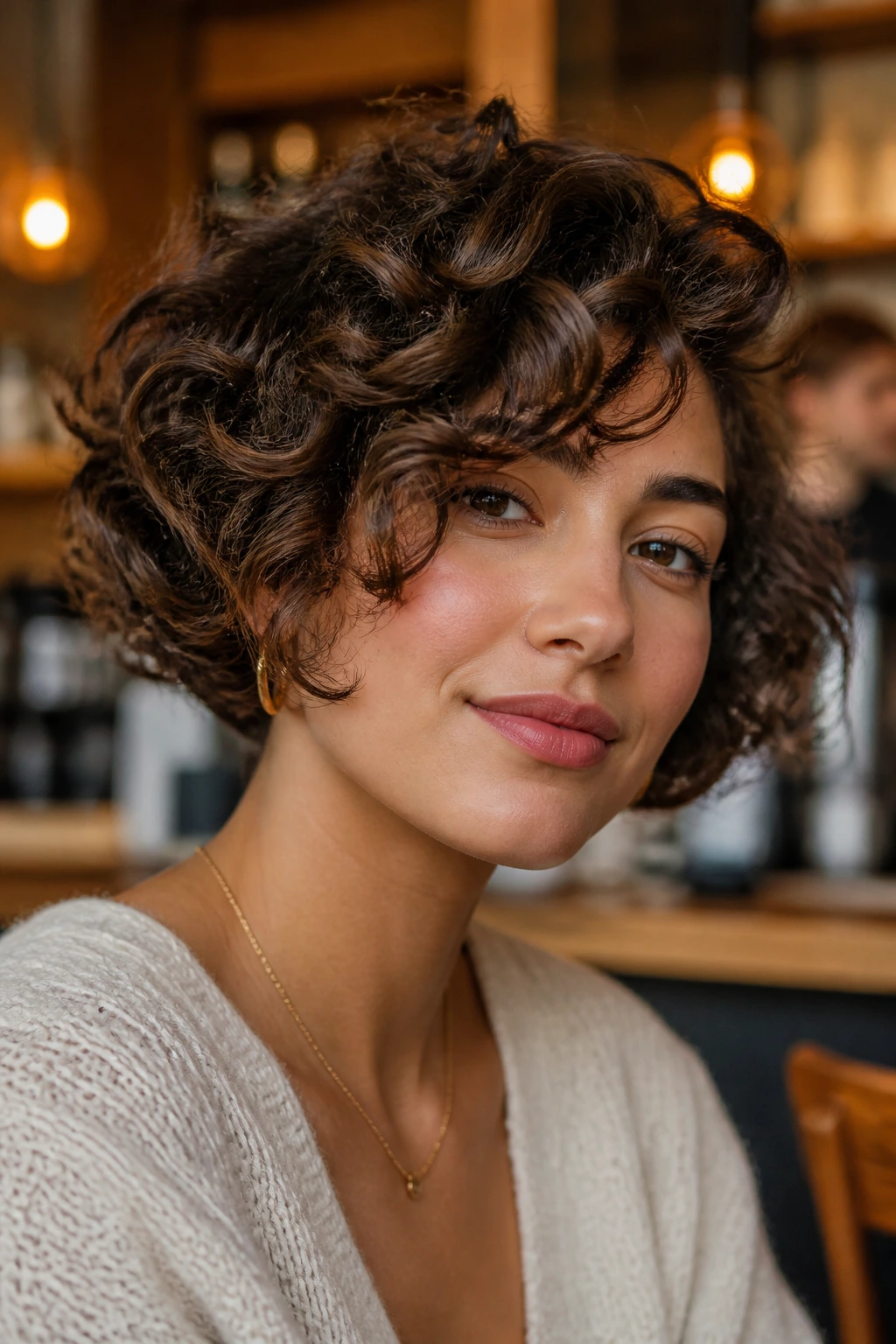
A side-swept curly fringe is a nice answer when you want forehead coverage without a full bang. The fringe drops diagonally, the bob stays short, and the face remains open around the cheek and jaw. On an oval face, that diagonal line adds motion where a blunt fringe would feel heavy.
The fringe should be longer than you think. Curly hair bounces up, and short side pieces can shrink to an awkward length fast. Dry them in the direction you want them to sit, then pin them lightly while cooling if they keep fighting you.
This is a good style for anyone who wants softness near the eyes. It has shape, but it doesn’t crowd the face.
22. Pin-Curled Evening Bob
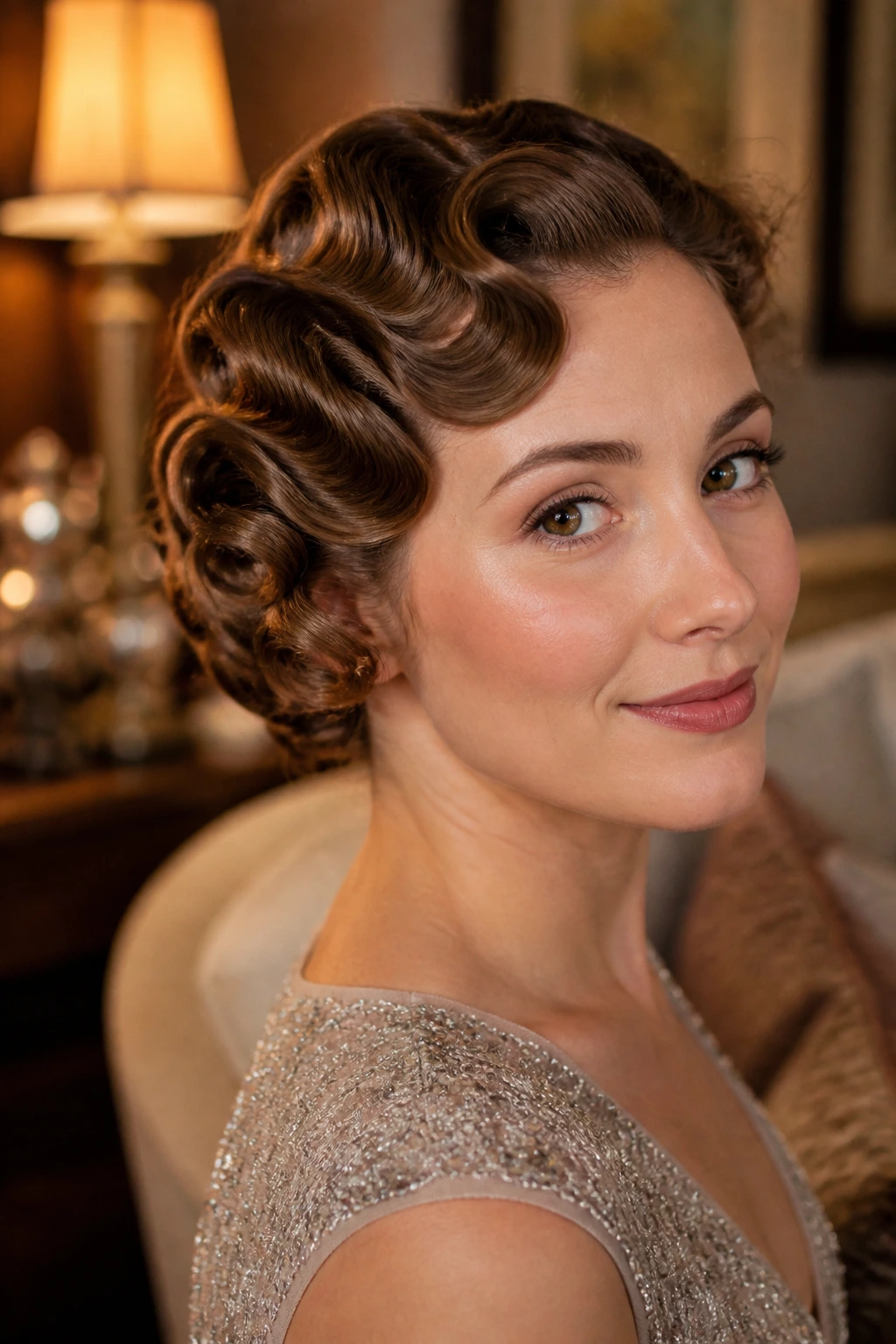
Pin curls make short hair look dressed up in a way heat tools can’t quite fake. You set small sections into loops, pin them flat against the head, let them cool, and release them into a soft wave. On an oval face, the finished pattern sits cleanly around the features without hard edges.
The style holds best when the sections are uniform and the pins lie flat. Bobby pins work, but duckbill clips are even better because they don’t leave such deep dents. If you want the curls to last through the night, mist each section lightly with setting spray before pinning.
This one takes time. It also looks like you spent time, which is the point.
23. Messy Curly Crop with Tucked Sides
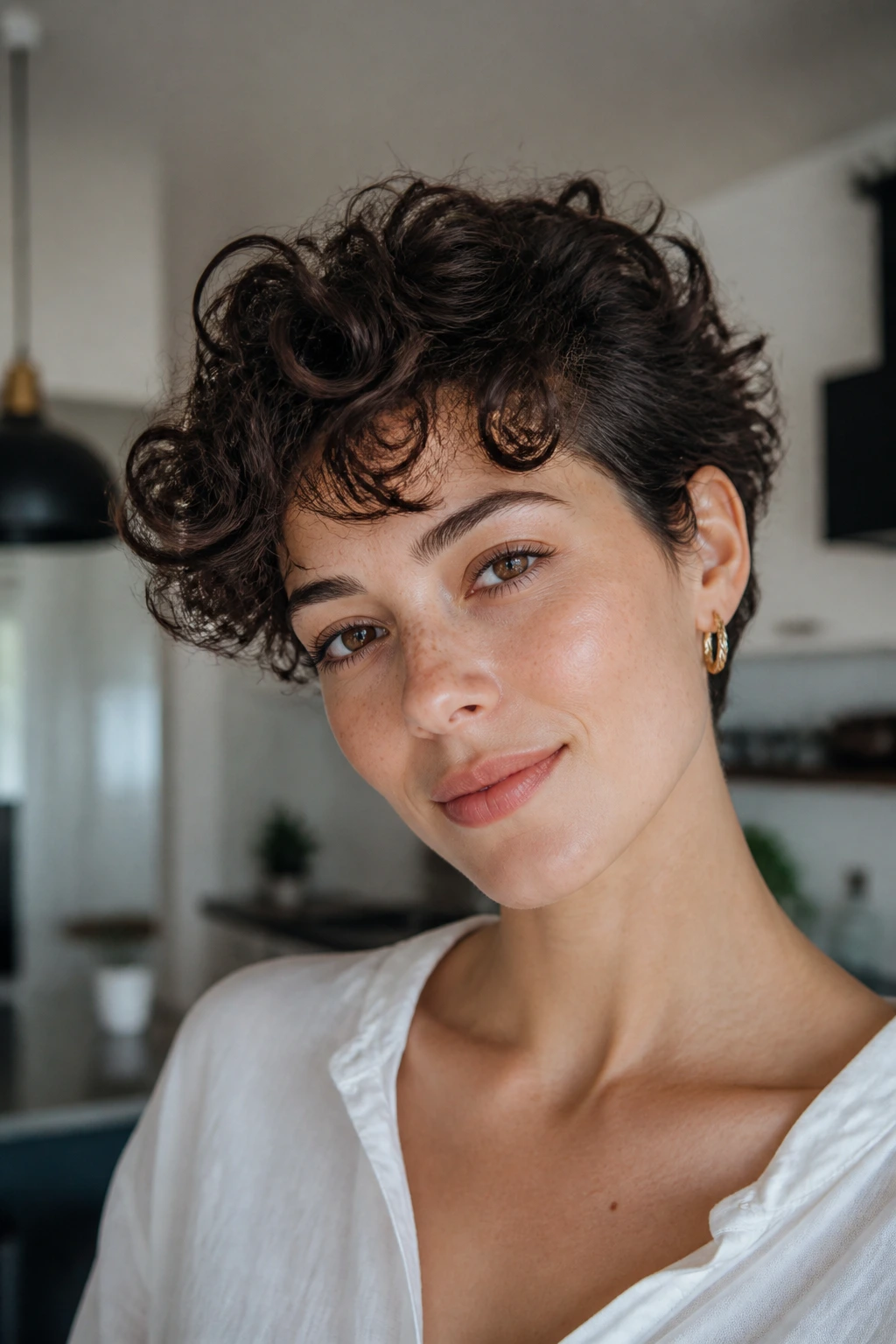
A messy curly crop only works if the mess is controlled. The top should feel airy and a little wild, while the sides get tucked behind the ears or clipped back so the face stays visible. On an oval face, that open side space keeps the whole thing from turning bulky.
The difference between stylish and sloppy here is the crown. Leave a little lift at the roots. If the top lies flat, the style loses its energy fast. Use fingers, not a brush, and stop separating the curls once they have a decent amount of shape.
I like this cut on busy mornings because it forgives a little chaos. That’s a rare quality.
24. Sculpted Retro Curls with a Flip
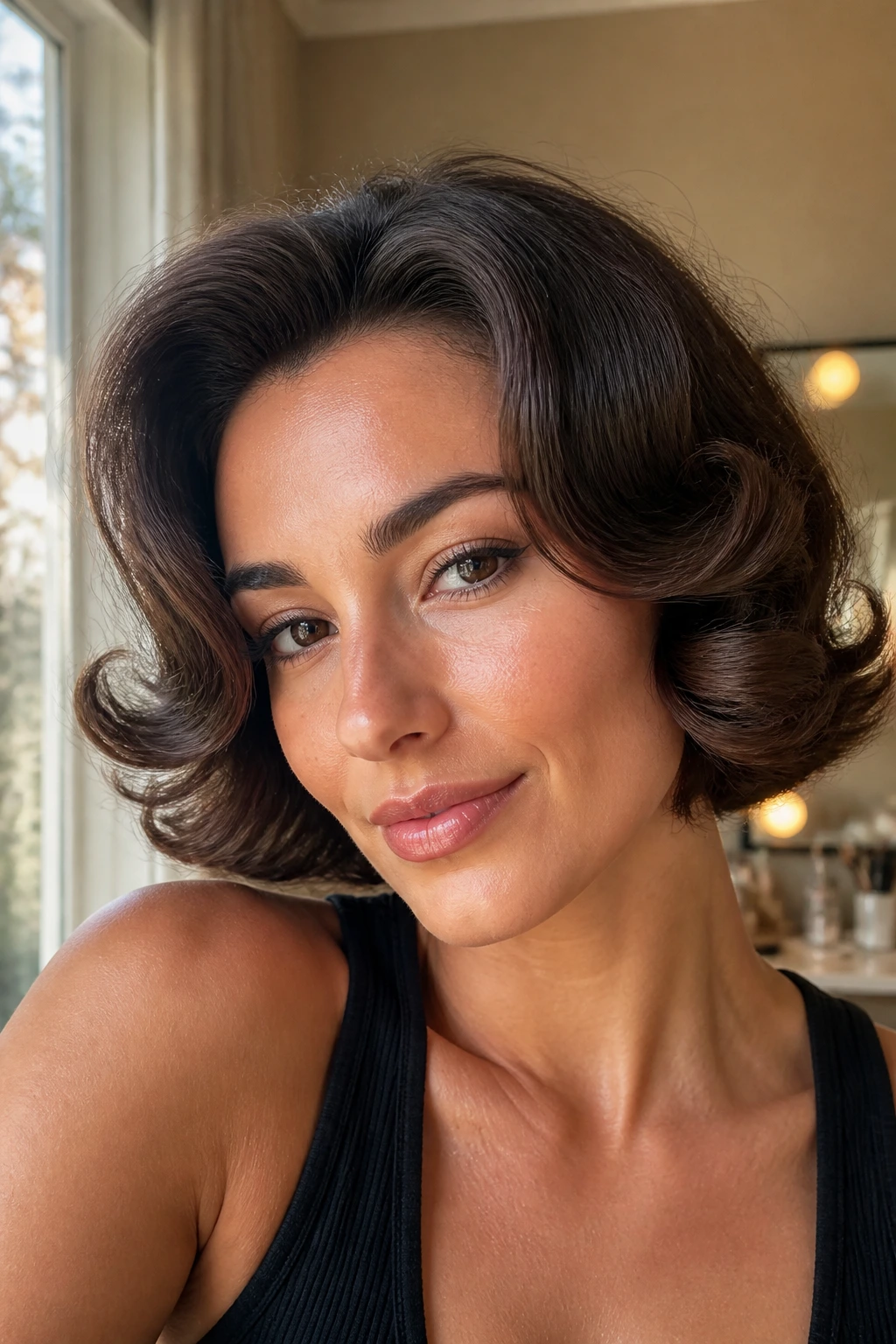
Retro curls on short hair are all about direction. The front pieces curve away from the face, the sides stay smooth, and the ends kick out with a neat little flip. On an oval face, that shape is flattering because it creates a polished outline without hiding the forehead or jaw.
A 1-inch iron and a strong setting spray do most of the work. Set the curl, clip it while it cools, then brush it out only after the hair is fully cold. If you skip the cooling step, the curl falls into a vague bend and the whole style loses its crisp edge.
This one feels a bit cinematic. Not costume-y. Just deliberate.
25. Soft-Motion Wash-and-Go Cut
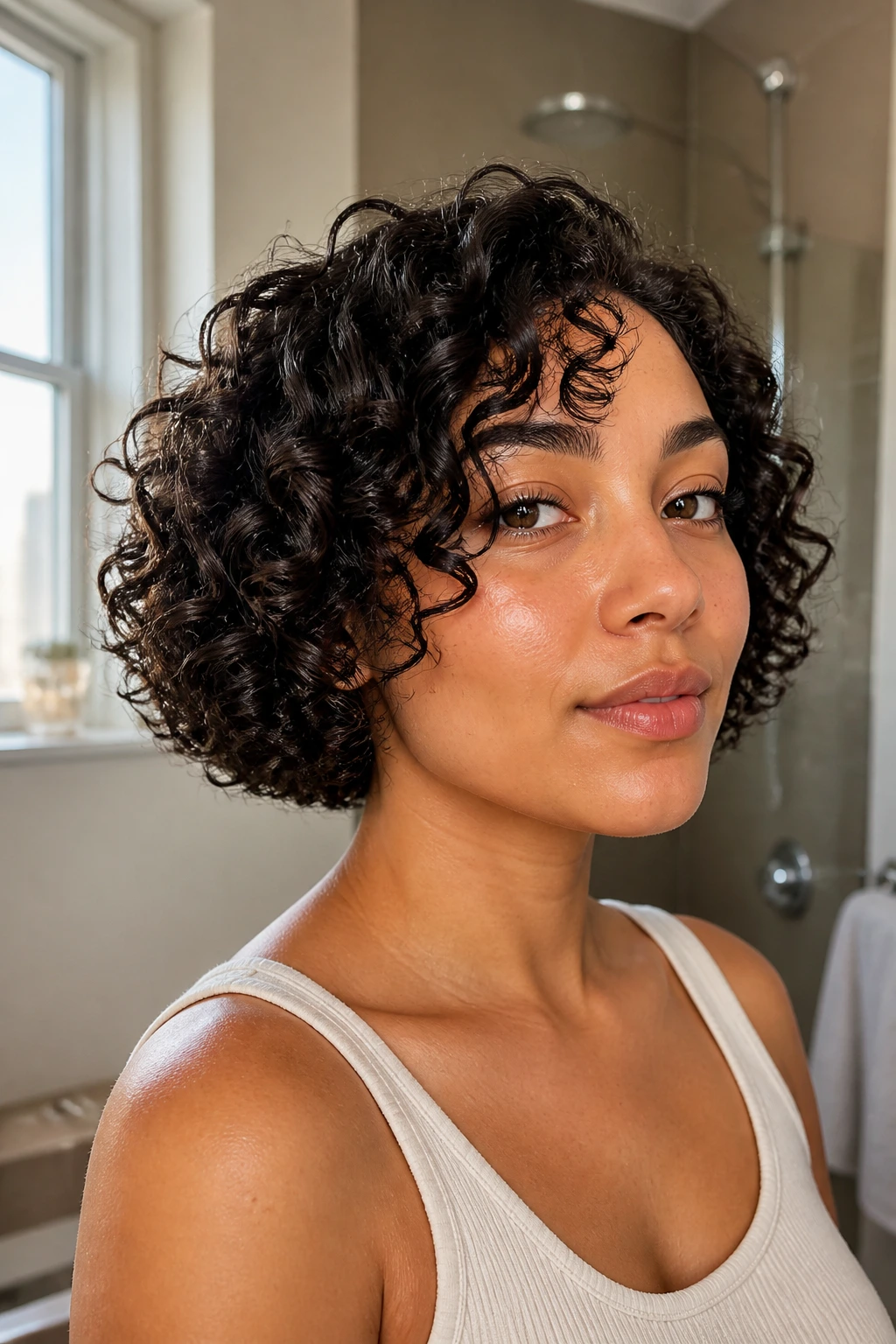
A wash-and-go cut is the easiest style to love and the hardest to cut well. The shape has to work with the hair’s natural curl pattern, especially on short lengths where a bad layer can stick out like a sore thumb. On an oval face, a good wash-and-go looks effortless because the face itself gives the curls room to move.
Use a leave-in, then a gel or foam depending on how much hold your texture needs. Scrunch once, let it dry, and resist the urge to keep touching it. That last part is usually where people mess it up. The more you poke it, the more the curls frizz and expand.
This is the style for people who want bounce with the least fuss. When the cut is right, the hair does the talking.
Why Short Curls Hold Their Shape Without Looking Boxy
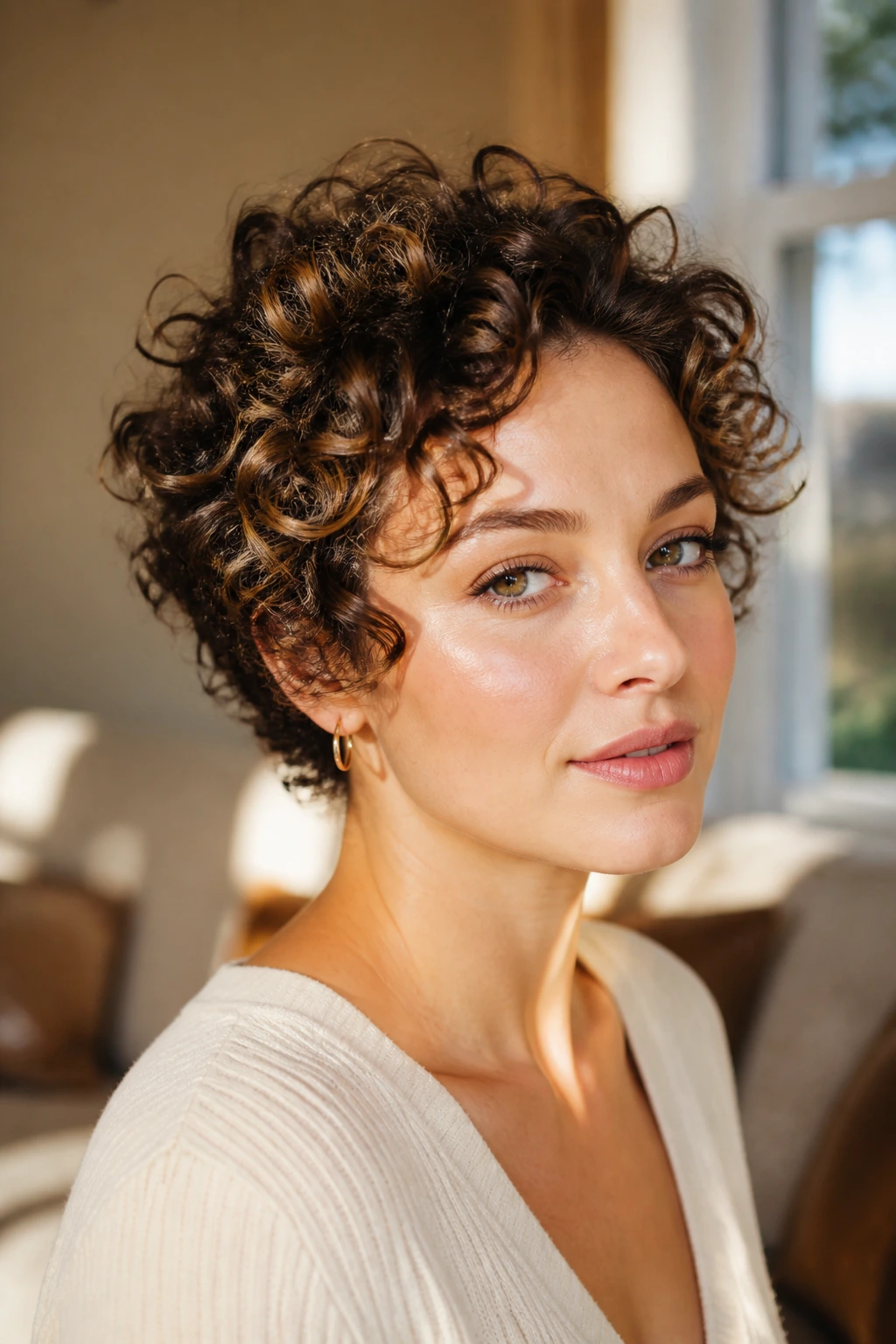
Short curls behave differently from long ones because there’s less weight pulling them down. That sounds like an advantage, and it is — until the cut gets too heavy at the ends or too full at the sides. Then the whole thing starts to widen in the wrong place. The sweet spot is lift at the roots, softness at the perimeter, and enough layer work to let the curl stack instead of balloon.
Oval faces make that easier. You do not need to fake length or carve the face into a different shape. You can place the curl where it helps most: around the temples for softness, at the crown for height, or at the jaw for a cleaner outline. That freedom is why short bouncy curls can look sharper than longer ones. There’s less hair to confuse the silhouette.
The best short curls also have a cooling period. Seriously. A curl that cools in place keeps more of its spring than one that gets brushed, touched, and flipped around while it’s still warm. Clips at the crown, a diffuser on low heat, and a little patience do more than another pump of product ever will.
Essential Tools for These Styles
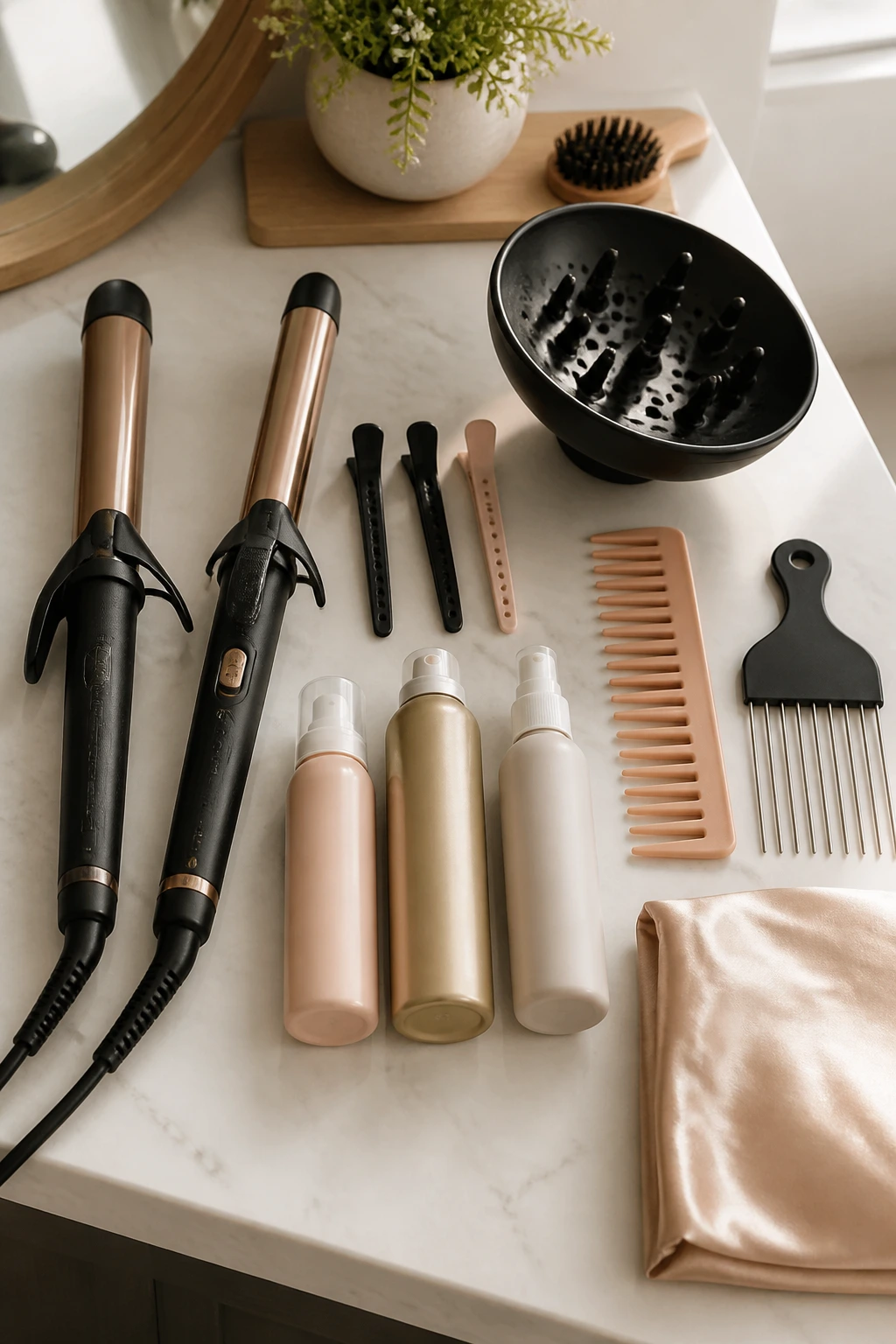
- 1-inch curling iron: The safest all-purpose barrel for chin-length bobs and soft ringlets; it makes a curl that reads clearly without turning too tight.
- 3/4-inch curling iron or wand: Better for pixies, cropped coils, and short layers that need more spring than wave.
- Diffuser attachment: A must if your curls are heat-dried; it lifts the roots and keeps the pattern from blowing apart.
- Duckbill clips or section clips: These hold crown lift and pin curls while the hair cools.
- Wide-tooth comb: Good for distributing product on damp hair without pulling out curl clumps.
- Light mousse or foam: Adds hold without turning short curls into crispy little ropes.
- Flexible-hold hairspray: Keeps the shape in place while still letting the curl move.
- Heat protectant: Non-negotiable if you use a curling iron or flat iron; short hair still burns.
- Silk or satin pillowcase: Helps preserve the shape overnight and cuts down on frizz around the hairline.
- Small pick or root comb: Useful for lifting the crown on pixies and rounded crops without disturbing the curl pattern.
Picking the Right Mousse, Cream, and Barrel Size
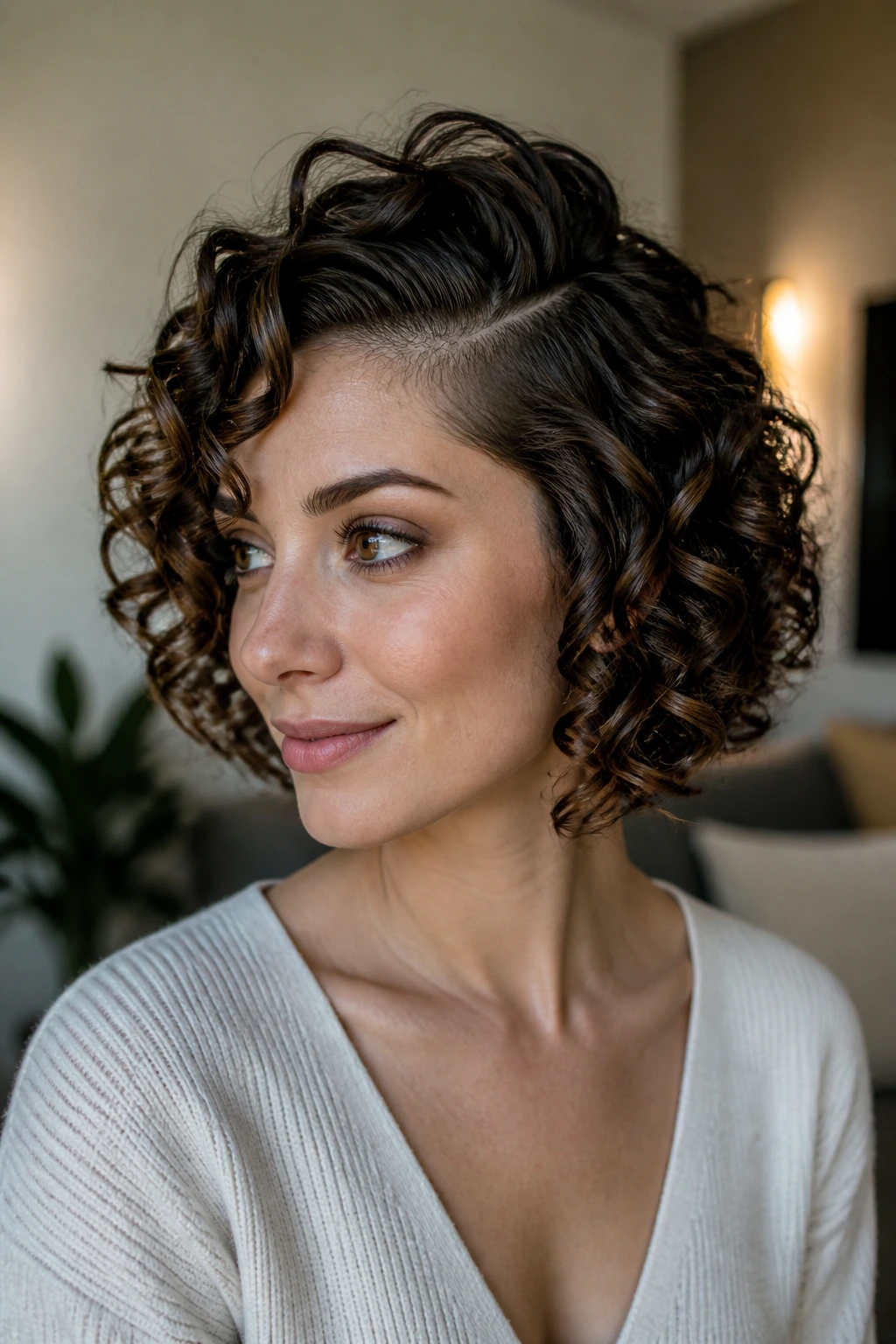
The wrong product can flatten a short curl faster than bad weather. Fine hair usually wants mousse or foam first, then a tiny bit of serum only on the ends. Dense or coarse hair can take more cream, but even then I would keep it light — short hair does not need a heavy coating to look defined.
Barrel size matters more than people think. A 1.25-inch iron gives a looser wave that can brush out into softness. A 3/4-inch barrel gives tighter spring and more staying power on cropped cuts. If your hair is just touching the chin, a barrel that’s too large can leave you with a bend instead of a curl. That’s not the same thing, and the difference shows after two hours.
For product, choose hold based on the finish you want. Mousse gives airy volume. Cream gives softness. Gel gives shape and memory. You can mix them, but do it with restraint — a pea-size amount of each beats a palmful of one. Short curls get weighed down fast, and once they’re heavy, you can’t fluff them back into life.
How to Wear These Curls With Earrings, Glasses, and Necklines

Presentation: Put the widest part of the curl where you want the eye to land. If the sides are full, keep the crown a little taller so the style doesn’t widen out near the ears. If the front is the star, let the fringe or side sweep do the talking and keep the rest a touch softer.
Accompaniments: Hoops, studs, and short drop earrings all work with short curls, but oversized earrings can fight a curly bob if the ends already sit at the jaw. Glasses look sharper when the curls don’t crowd the temples. A clean tuck behind one ear can fix that in seconds. Collared shirts and crew necks are good with pixies; a wide neckline works nicely with fuller bobs because it keeps the silhouette open.
Portions: For a pixie, leave the top 1 to 2 inches longer than the sides so the curl has room to spring. For a bob, keep the perimeter sitting near the jaw or slightly above it if you want bounce instead of drag. The more hair you have at the bottom, the more likely the style is to sag.
Pairing: Short curls look best when the rest of the look doesn’t compete. A soft lip, a clean brow, and one strong accessory beat a pile of extras. Let the hair be the texture, not the entire conversation.
Extra Tips for More Bounce and Less Puff
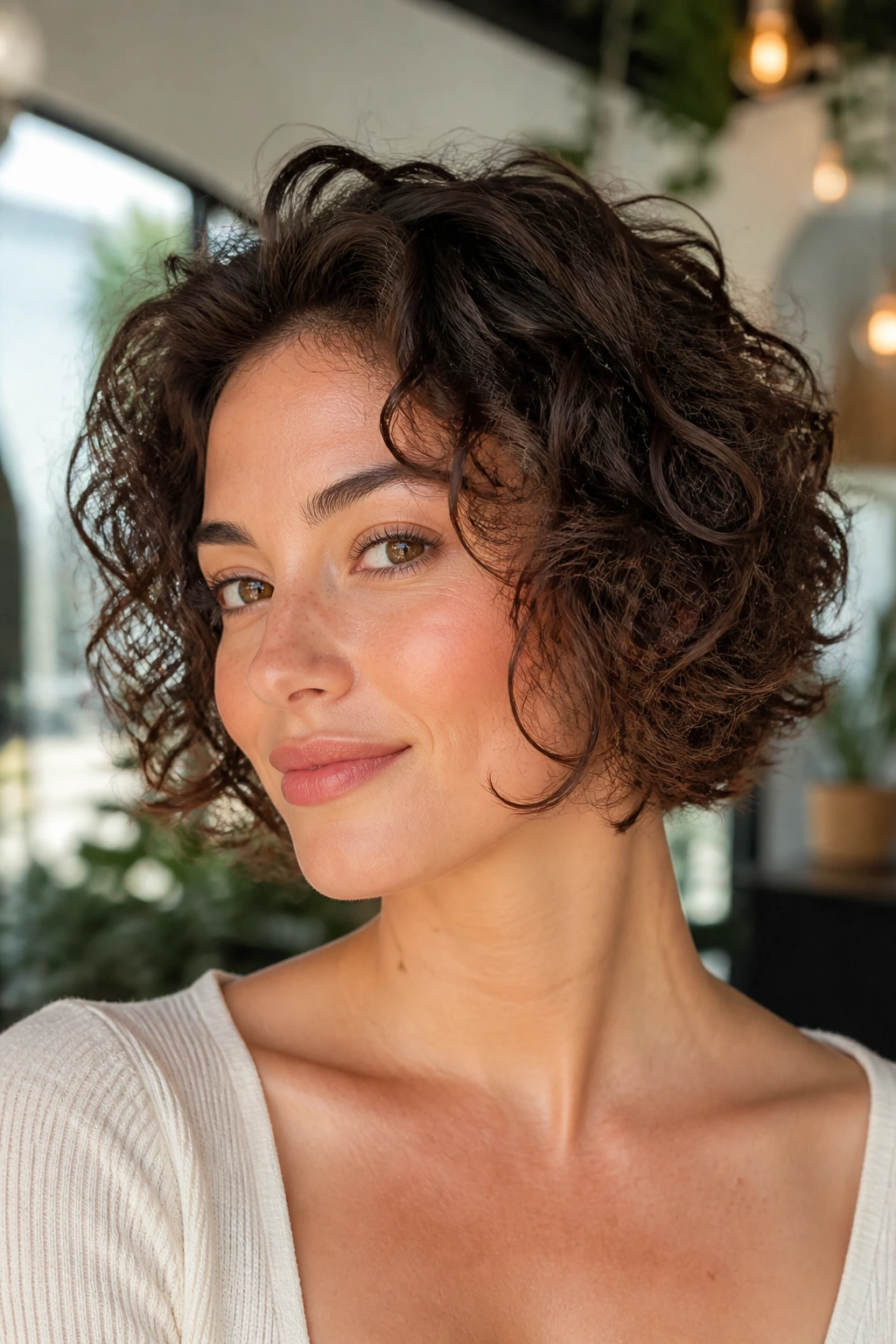
Texture Boost: Clip the crown while it cools, then remove the clips only when the hair is fully set. That one move creates lift that lasts longer than finger-fluffing.
Root Lift: Blow-dry the roots in the opposite direction of the part for the first minute, then switch back. It sounds small. It isn’t. The roots decide whether the style feels buoyant or flat.
Shape Control: If the sides are getting too wide, pinch the curl pattern inward at the ends with a little serum on your fingertips. You don’t need more product; you need better direction.
Accessory Move: One slim clip or barrette can rescue a bob that’s leaning too heavily on one side. Use it to create asymmetry instead of hiding the shape.
Night-Prep: At bedtime, twist the front sections loosely away from the face and clip them at the temple. That keeps the front from getting smashed under a pillow and saves you 10 minutes in the morning.
What Usually Goes Wrong With Short Curls
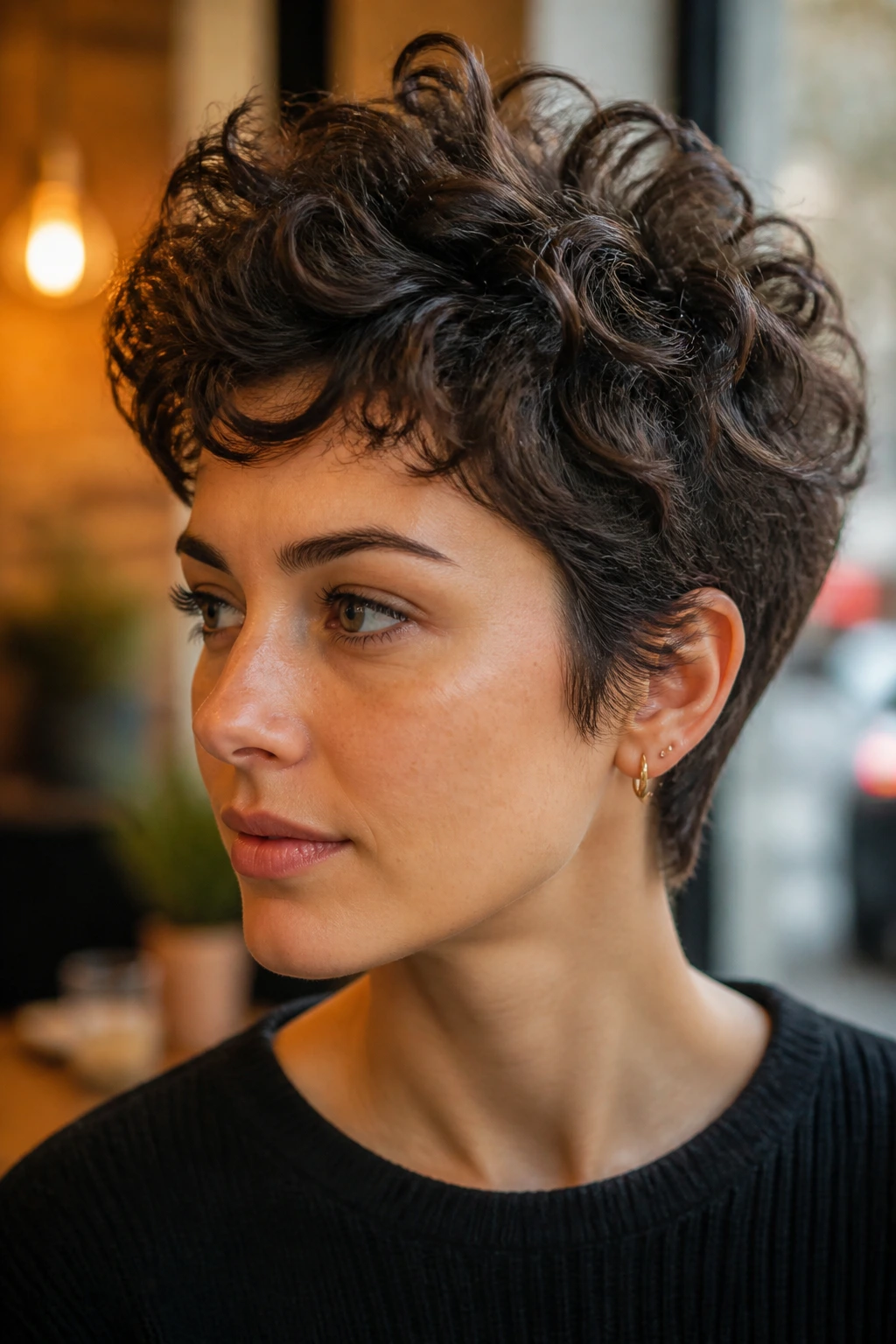
The first mistake is curling every section in the same direction and calling it texture. It can look too uniform, especially on a bob. Alternate the direction a little, then leave the front pieces curled away from the face so the style opens up.
The second mistake is loading fine short hair with cream. Heavy product makes the curl piecey in a greasy way, not in a chic way. If the hair feels sticky before it dries, you’ve gone too far. Start smaller.
Flat roots are another culprit. When the crown sits down, the whole style loses its shape and the sides start to look wider than they are. Use clips, root-drying, or a small round brush at the root if you need the lift.
And please do not brush warm curls. Warm hair is shape-shifting hair. Wait until it cools, then decide whether it needs separating. That pause saves a lot of bad hair decisions.
Variations and Adaptations to Try

Fine-Hair Float: Swap cream for mousse and use a smaller barrel than you think you need. Fine hair needs body without weight, and the smaller curl pattern will hold up longer through the day.
Thick-Hair Tamer: Add a little gel under the mousse and clip the crown during cooling. Dense hair needs control first, fluff second. Otherwise it expands sideways and swallows the face.
Heat-Free Bend: Twist damp sections around your fingers, pin them flat, and let them dry fully before releasing. It takes longer, but the finish is softer and less dry-looking than hot-tool curls.
Soft-Fringe Shift: If a full fringe feels too heavy on your oval face, turn it into a side-swept piece or curtain split. That keeps the forehead visible and avoids the hard line that short bangs can create.
Humidity Guard: In humid air, choose a stronger-hold gel and skip brush-outs until the curls are fully set. Frizz starts early when the weather is damp, so the fight is won before you leave the bathroom.
Keeping the Style Fresh Overnight and Through Day Two
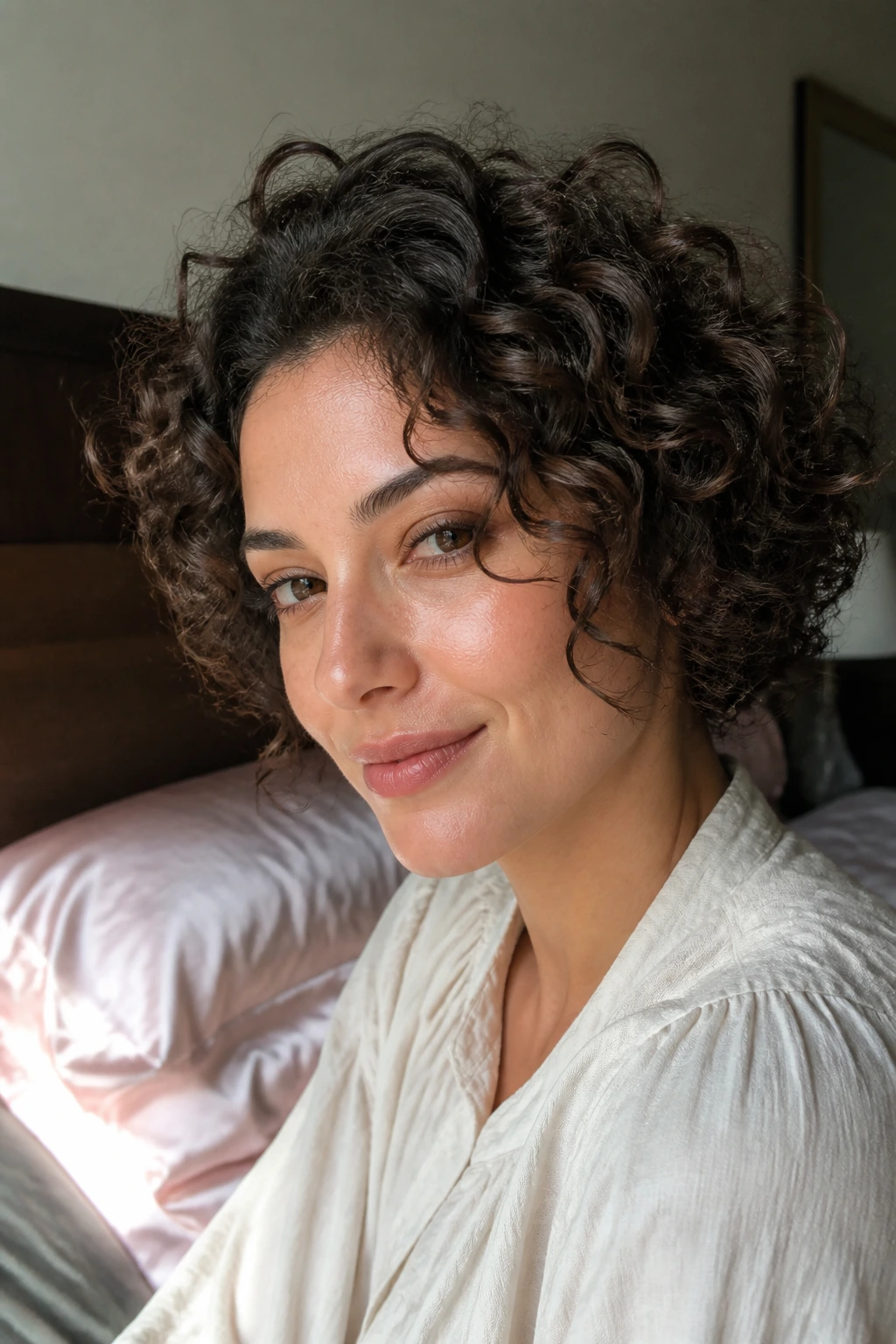
Short curls can survive overnight if you stop them from being flattened at the roots. A silk pillowcase helps, but the real trick is to pin the front sections loosely and keep the crown from pressing straight into the mattress. If the style is tighter, you can get a second day out of it with only a quick refresh. If it’s soft and brushed out, the shape usually relaxes by bedtime.
In the morning, mist the hair lightly with water — not so much that it drips, just enough to wake the curl pattern. Then scrunch in a pea-size amount of foam or a touch of leave-in, focusing on the pieces that have lost their bend. If the ends look dry, rub a tiny bit of serum between your palms first. Tiny amount. Not a glaze.
A strong-gel style can last 48 hours if you protect it well. A mousse-heavy style usually wants a refresh within 24 hours. Either way, don’t pile on more product without checking what the hair is already doing. Too much second-day product turns bounce into buildup fast.
Frequently Asked Questions
What barrel size is best for bouncy curls on short hair?
A 3/4-inch barrel gives the most spring on pixies and very short crops, while a 1-inch barrel usually works best for chin-length bobs. If your hair is fine, the smaller barrel tends to hold shape better; if it’s thick, the 1-inch iron often gives you a softer finish without going puffy.
Can oval faces wear a center part with short curls?
Yes, and often very well. A center part works especially nicely when the curl volume is balanced on both sides and the crown has a little height. If the face feels too open, shift the part half an inch off center and the whole style changes.
Do short curls need layers?
Usually, yes. Layers stop the cut from becoming a triangle or a box, especially around the jaw and sides. The only catch is that too many short layers can make fine hair fray, so the layering should follow the curl pattern, not fight it.
How do I keep short curls from puffing out?
Keep the roots lifted and the ends controlled. Use less product than you think, dry the hair with a diffuser or clips, and wait for the curls to cool before separating them. Puff usually comes from overhandling, not from the curls themselves.
Should I use curl cream or mousse?
For short hair, mousse often wins because it adds hold without weight. Curl cream is better if your hair is coarse, dry, or frizzy and needs softness first. Some people use both — cream on the mid-lengths, mousse at the roots — but keep each application light.
What if my short hair is very straight?
You can still get bounce, but it will usually need heat, set clips, or both. Straight hair often needs a little grit from a texture spray or volumizing mousse before curling so the shape doesn’t slip out the minute it cools.
Can I wear short curls with glasses?
Absolutely. The best versions keep the temples from getting bulky, so the frames sit cleanly. A tucked side, a side part, or slightly longer face-framing pieces usually helps the glasses and the curls share space instead of competing for it.
How often should I wash short curly hair?
Most short curls do well with washing every 2 to 4 days, depending on oiliness and product use. If you use strong hold products, you may need to cleanse a bit more often to keep the roots from feeling coated. On off days, a light refresh is usually enough.
A Few Last Pins and Clips
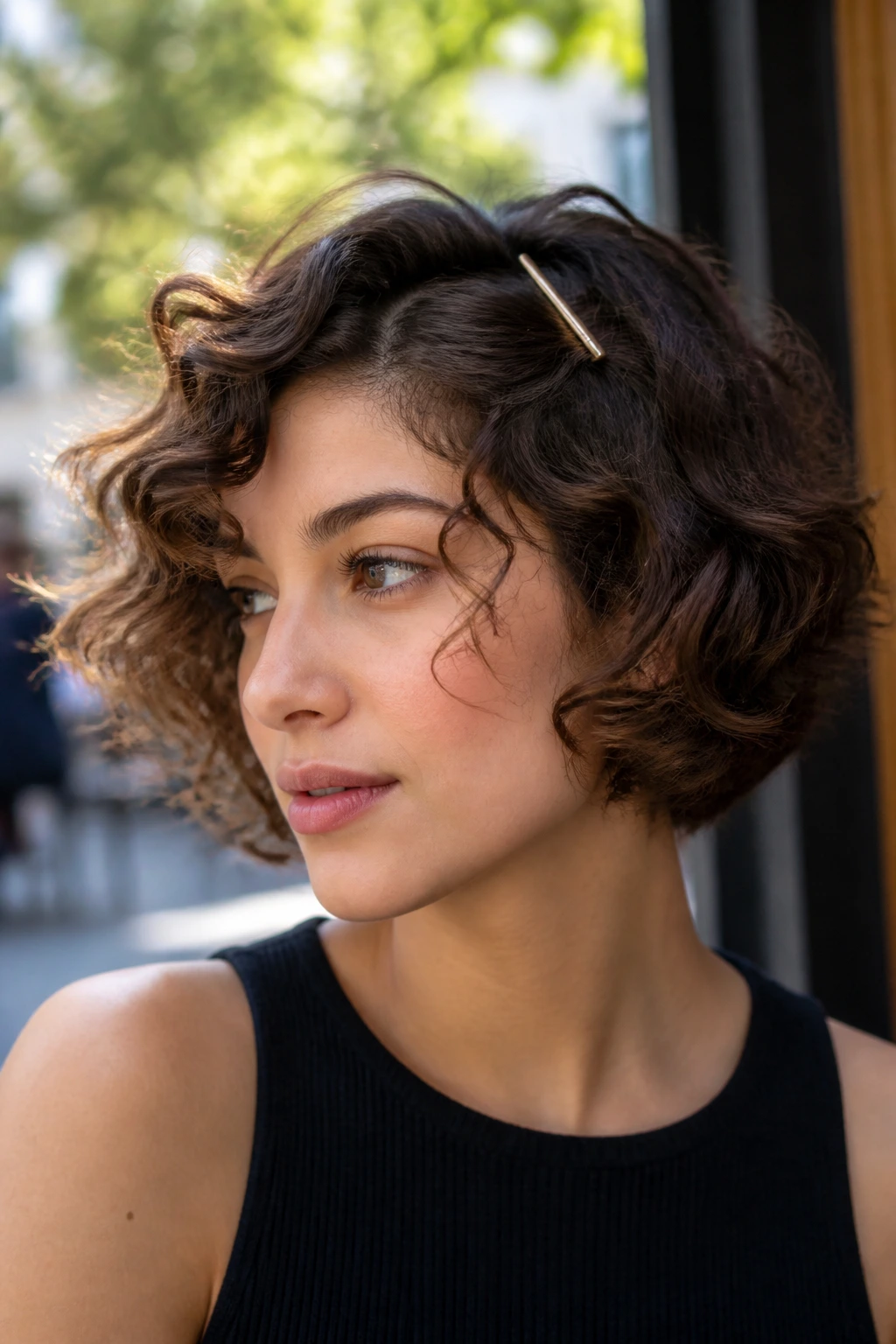
Short curls do not need more length to feel interesting. They need the right curve in the right place, and oval faces give you the room to move that curve around without the whole look tipping out of balance. That’s why some of the best styles here are the simplest ones — a side part, a lifted crown, a flipped end, a fringe that stops just shy of blunt.
If one style keeps catching your eye, start there. Save the part placement, the barrel size, and the finish you liked most. Hair is a lot less mysterious when you copy the shape that already looked good on your own face.
And if the first attempt lands a little off, don’t panic. Short curls are honest. They tell you fast whether the crown is too flat, the ends are too wide, or the fringe needs another half-inch. That feedback is useful. Use it, and the next round gets better.