



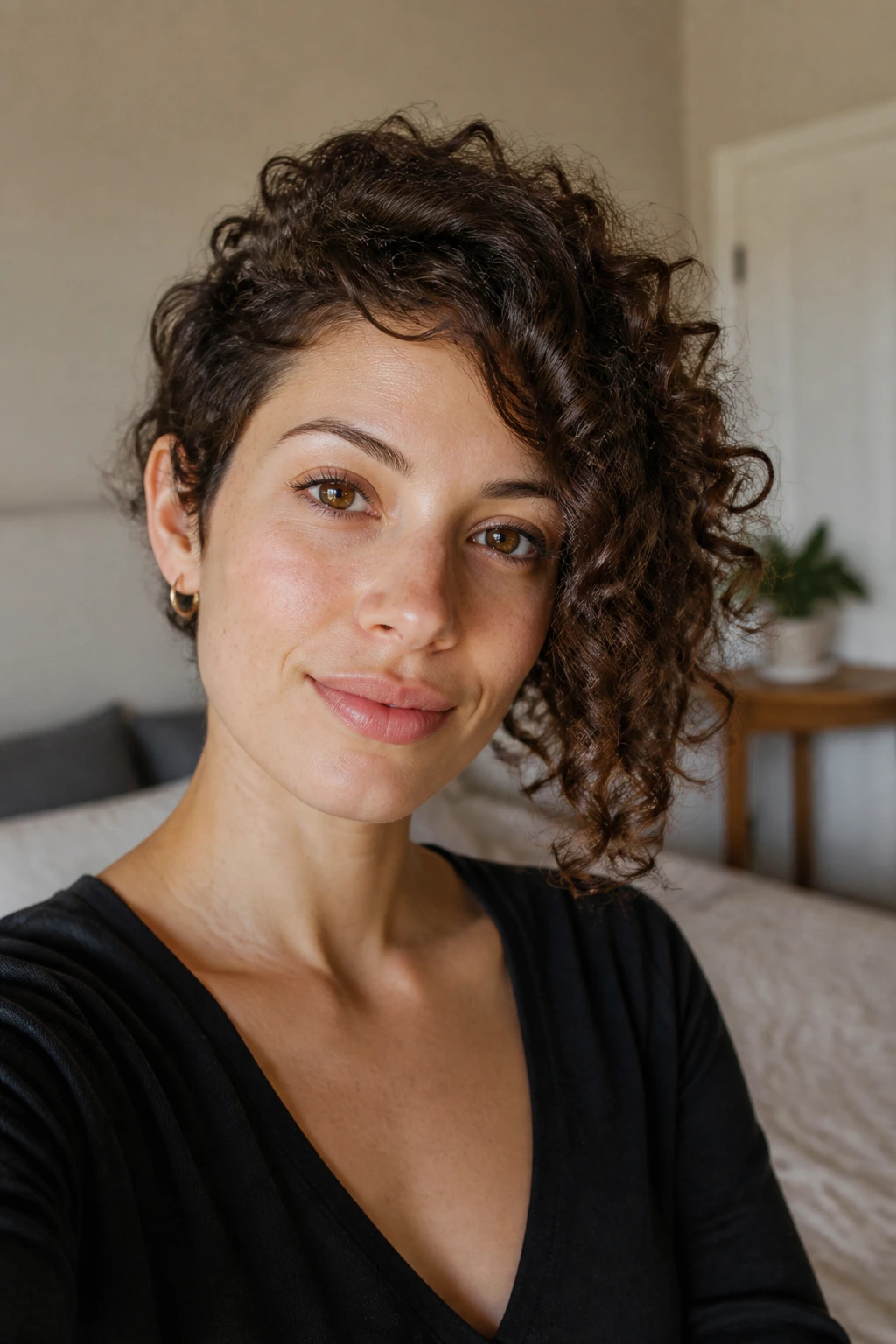
Fine curls can do something sneaky when the cut is too even: they collapse at the sides, puff in the back, and somehow look both too wide and too flat at once. A sharp asymmetrical shape changes that balance fast. One side carries a little more length, the eye follows the diagonal, and suddenly the hair reads fuller than the strand count would suggest. That’s why short asymmetrical curly hairstyles for fine hair keep showing up in salon chairs. They don’t fight the texture. They work with the way curls spring, fold, and stack.
The part that matters most is weight. Fine curls don’t have much of it to spare, so every inch counts. A blunt line can be brutal on them; it makes the lower edge look thin and the crown look limp. A smart asymmetrical cut keeps enough bulk where you need it and removes just enough where the silhouette starts to swell. Done well, the result has shape at the cheekbone, lift at the roots, and a little movement around the jaw that makes the whole cut look intentional instead of accidental.
There’s also a practical upside people forget. Asymmetry buys you time between trims. When one side is longer, a small amount of growth doesn’t wreck the shape the way it does with a strict bob or a boxy pixie. That matters with fine hair, because a cut that looks tidy on day one can start sagging fast if the outline is too rigid. The best versions of these cuts still look like hair after three or four days of living in the real world. Not a helmet. Not a cloud. Hair.
Why These Cuts Keep Fine Curls from Going Flat
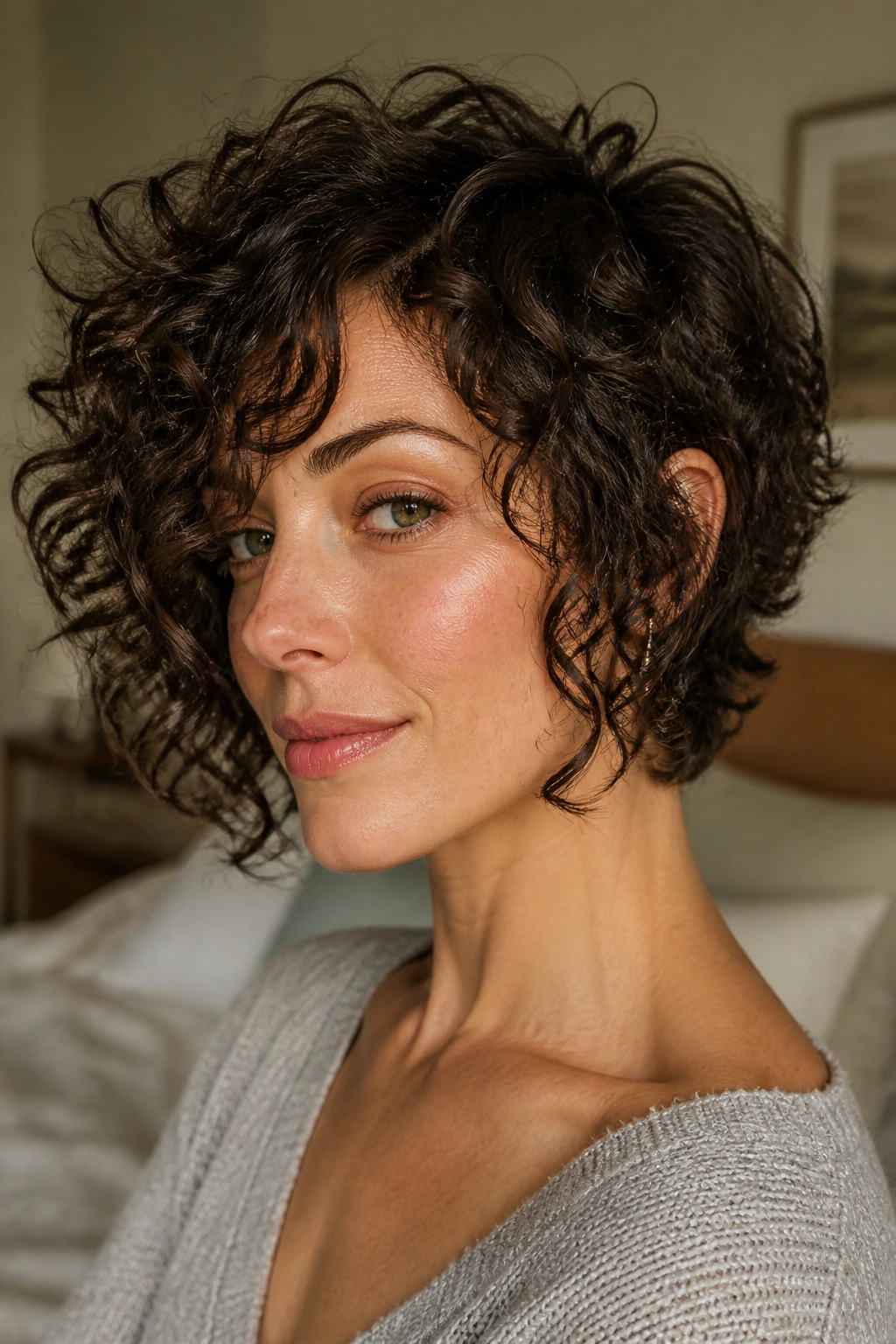
- The diagonal line adds the illusion of density: A longer front corner pulls the eye forward, so the hair looks fuller where it matters most, especially around the cheekbone and jaw.
- Shorter backs hold shape better: Fine curls lose support fast when the nape is too heavy, so removing some length there keeps the whole cut from drooping.
- They work with shrinkage instead of arguing with it: Fine curls can spring up an inch or two when dry, and asymmetry gives that movement somewhere to go.
- The silhouette stays softer than a blunt bob: A straight bottom edge can make fine curls look sparse at the ends; the off-balance line breaks that problem up.
- You get more styling options with less product: A light mousse, a diffuser, and a side part can do more here than a thick cream ever will.
Start with the first shape that feels closest to your curl pattern. The names are different, but the logic is the same: give the hair a line it can hold.
1. Deep Side-Part Curly Pixie Bob
A deep side part is the quiet trick here. It lets one side sit close to the head while the other keeps enough length to fall into a soft curl sweep, which is exactly what fine hair needs when it starts to look tired by noon. If your curls are loose and a little unpredictable, this cut gives them direction without making them stiff.
Why It Works
The shorter side lifts the root because it carries less weight. The longer side stays visually thick because the curls stack on themselves instead of hanging straight down. I like this cut best when the back is trimmed snug at the nape and the front grazes the cheekbone on the fuller side. That contrast gives you shape without asking for much styling time.
Quick Fit Notes
- Best for hair that curls in a loose S or soft spiral.
- Keep the longer side about 1 to 1½ inches below the jaw when dry.
- Works well with glasses because the front sweep doesn’t fight the frames.
- Use a small amount of mousse, not a rich cream.
A tiny bit of asymmetry goes a long way here. Too much, and the cut starts to feel costume-y. Keep it sharp enough to notice, soft enough to live in.
2. Chin-Skimming Curly Bob with a Longer Front Corner
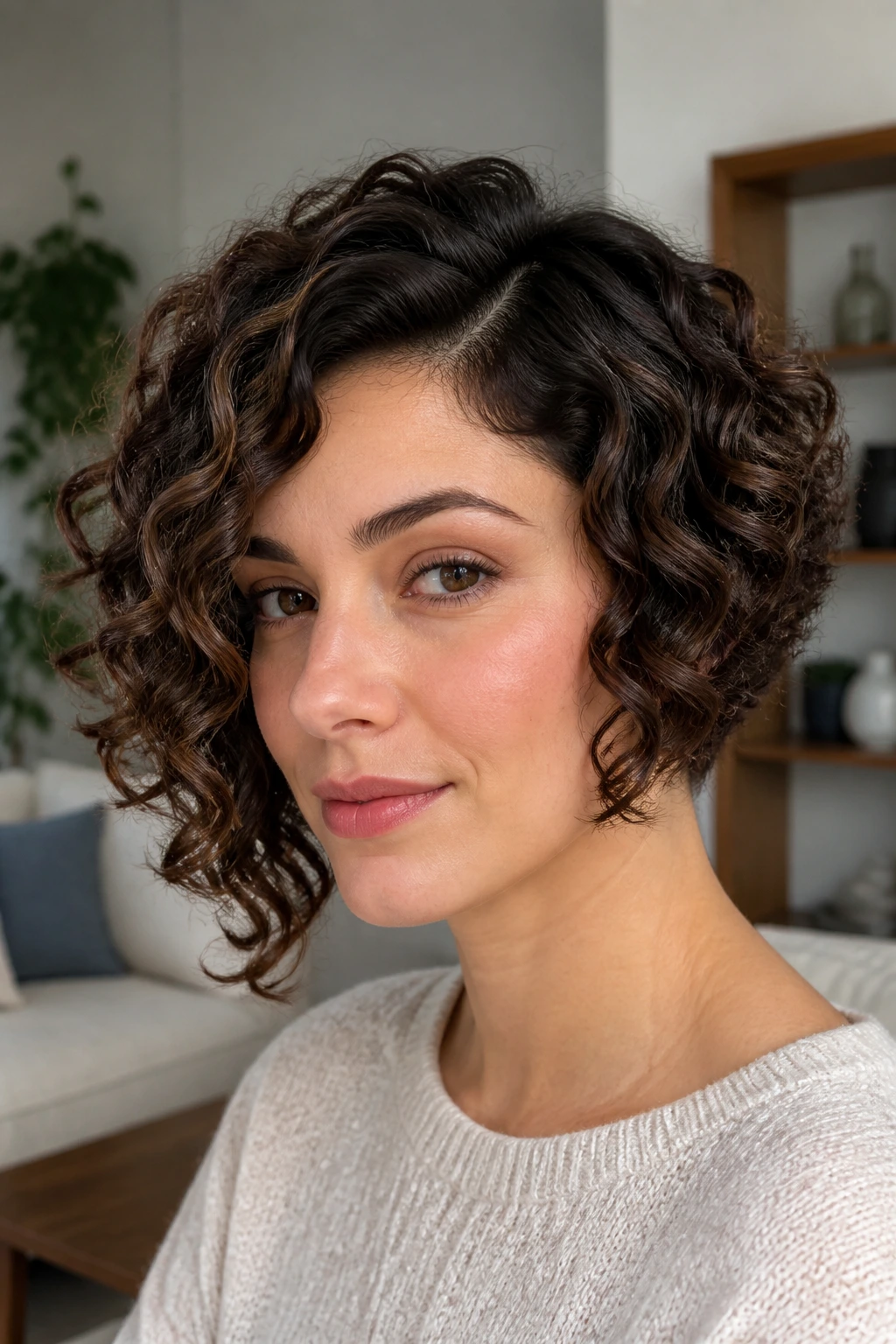
Why does this cut look so full on fine hair? Because the eye hits the longest corner first, then follows the curve back to the shorter side. That little visual trick makes the hair seem denser than it is, especially when the front pieces curl under at the chin instead of flipping out.
The shape sits best when the back lands just above the nape and the longer side brushes the jawline. If your curls shrink hard, ask for the longer corner to be cut a touch lower than feels safe. It will rise. It always does.
How to Wear It
A center part can work, but a slightly off-center part usually gives the most lift. Use a diffuser on low speed, then clip the crown while it cools if you need a bit more height. This cut likes a soft, touchable finish more than a crunchy one. Let the curls move.
3. Tapered Curly Crop with a Sweeping Fringe
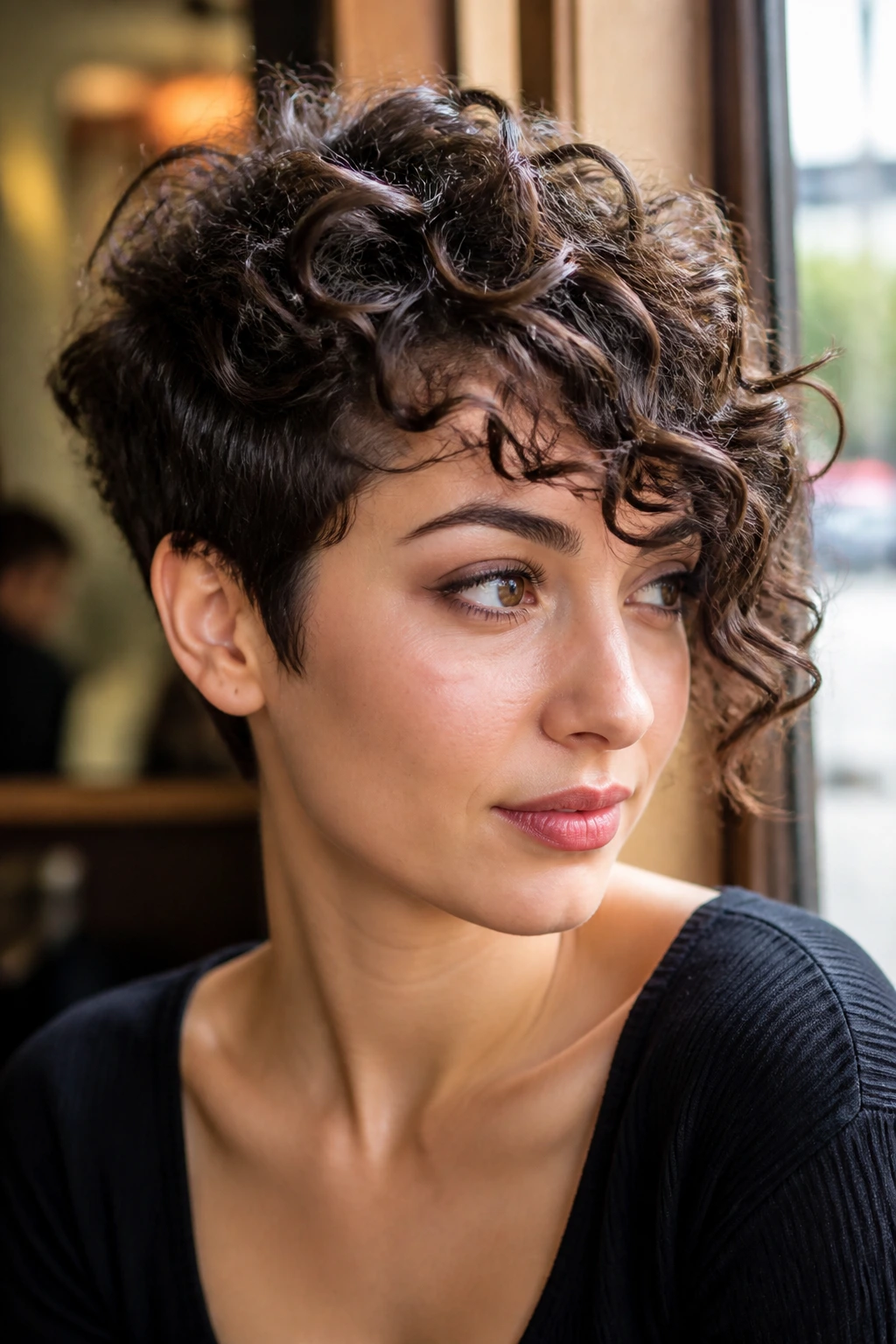
This one feels like a little wind is built into the haircut. The back and sides are cropped close enough to keep the outline neat, while the fringe sweeps across the forehead and creates a longer line on one side. Fine curls love that kind of structure because the weight stays up top where it can still puff a little, instead of dragging the whole shape down.
What to Ask for
- A cropped nape.
- A fringe that lands longer on one temple.
- Minimal thinning through the crown.
- Soft point cutting at the ends, not a rough razor pass.
The fringe matters more than people think. If it’s cut too short, fine curls can spring into a little row of baby hooks. If it’s left too long and heavy, the forehead closes in. The sweet spot is usually eyebrow-to-eyelid length when wet, then judged again after it dries.
4. Asymmetrical Bixie with Soft Crown Lift
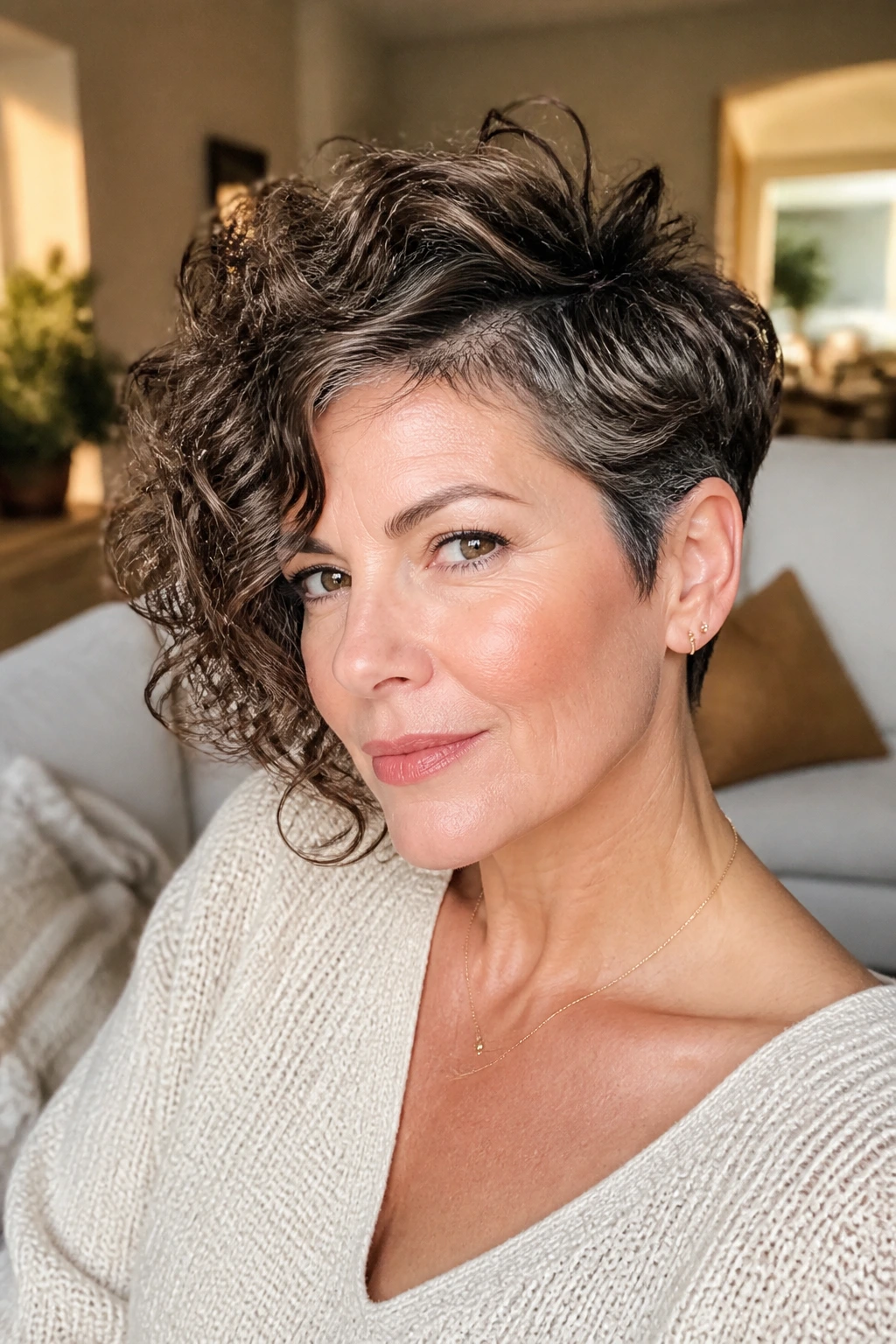
A bixie is already a useful shape for fine curls, but the asymmetry makes it more interesting. One side sits closer to a pixie, the other side keeps enough bob length to show off the curl pattern. That difference gives the crown room to breathe, and a crown that can breathe looks thicker. Full stop.
It helps if the stylist keeps the top layered just enough to let curls sit on one another without frizzing apart. Too many tiny layers and the cut gets fuzzy. Too few and the whole thing drops.
The sweet move is a side part with a gentle lift at the roots, then a light gel or foam to hold the curl clumps together. You want small, visible pieces here, not a halo of air.
5. Jawline Angle Bob with Nape Taper
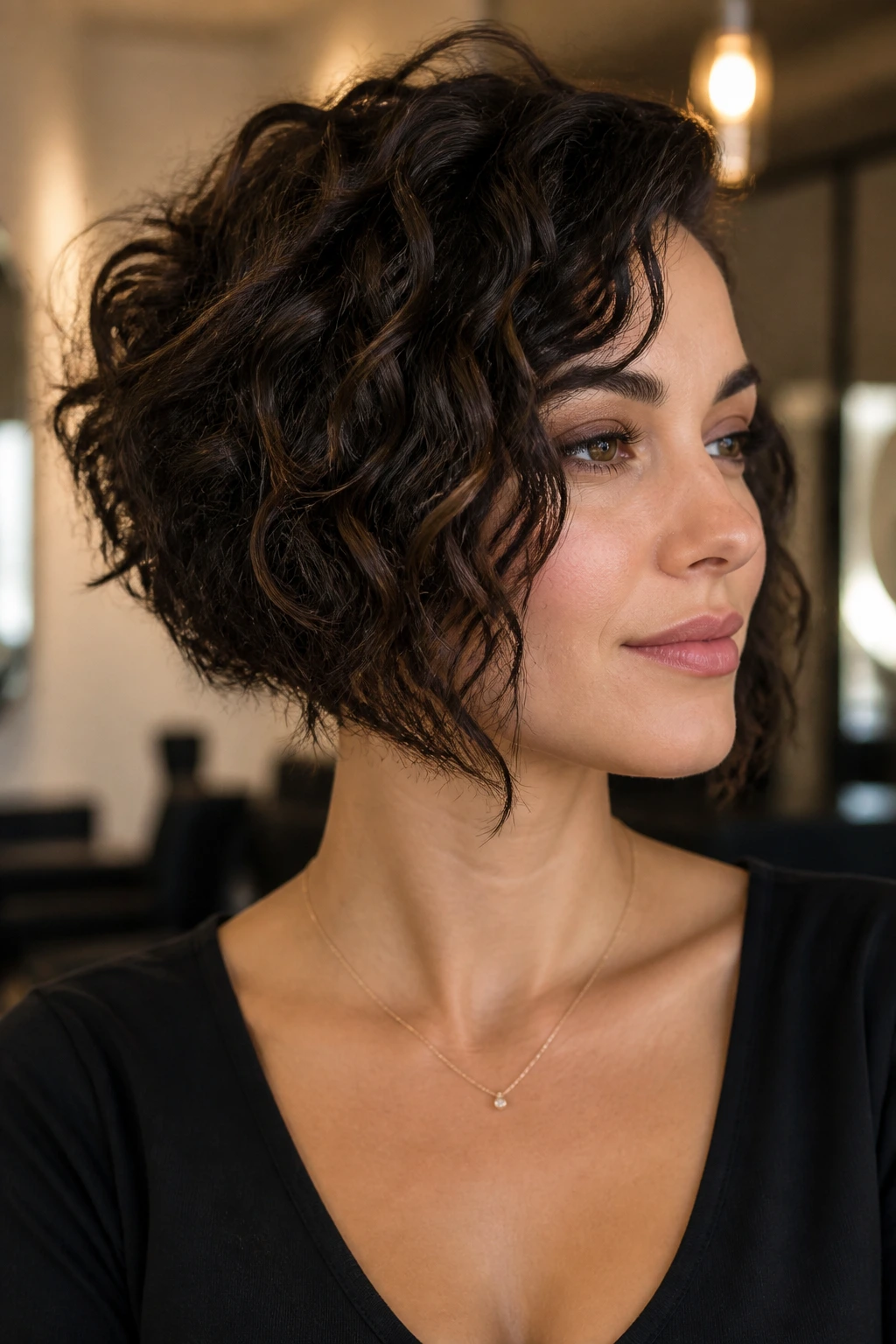
This cut is all about geometry. The front corners land at the jawline, sometimes a hair below it, while the nape is tapered tight enough that the back doesn’t compete. If your hair is fine and your face needs a bit of length, this is a solid choice because the front angle draws the eye down and forward.
Unlike a blunt chin bob, the angled version keeps the ends from looking scrappy. That matters when the curl pattern is loose and the strands aren’t packed together. The front can look thick, the back can stay neat, and the whole thing avoids that overbuilt triangle shape that fine curly hair can fall into.
Best for people who want a haircut that looks deliberate on purpose, not “I gave up and chopped it all off.” That’s the difference a clean angle makes.
6. Side-Shaved Curly Pixie with a Long Coil Sweep
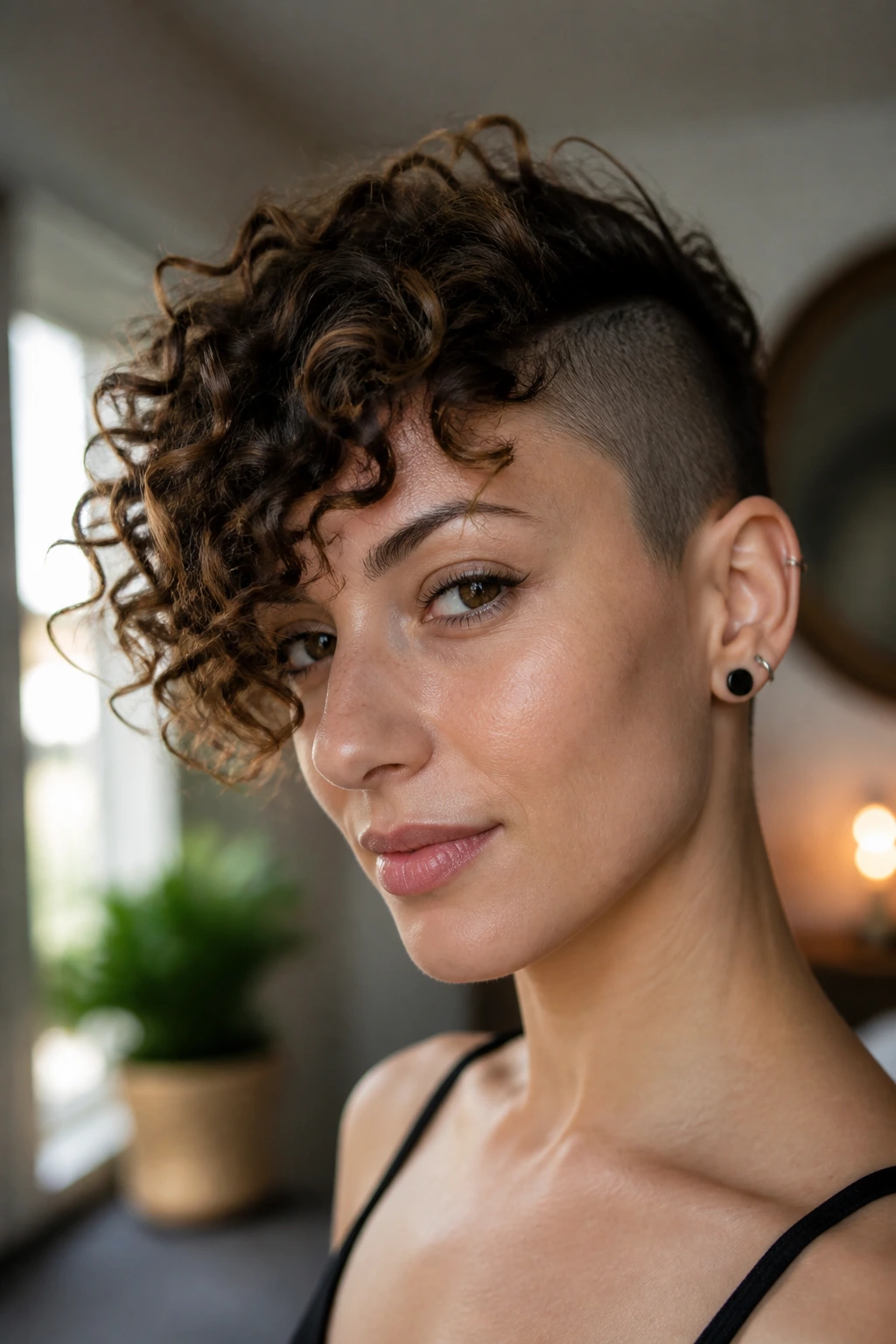
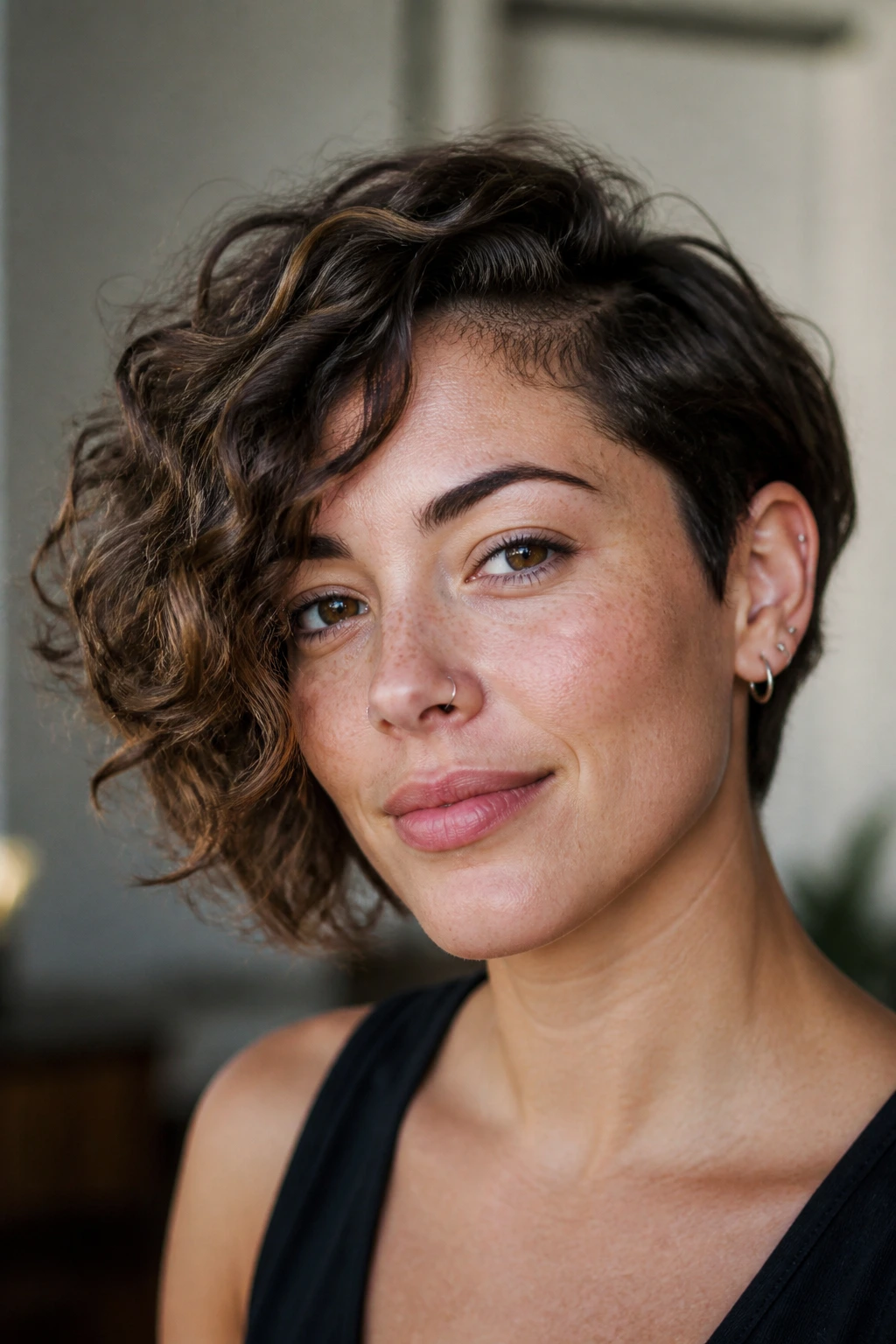
A side shave sounds dramatic, and it is, but it can also be the most practical move in the room. Fine curls often look fuller when some of the bulk is removed from one side, because the remaining length gets more visual weight. The long coil sweep keeps the haircut from turning severe. It gives you softness where the short side gives you edge.
This works especially well if your curls are springy and you like to tuck one side behind the ear. The shaved side keeps the silhouette light, and the longer side can fall in one defined curl or a small stack of curls, depending on density. Use a foam or mousse, then let the hair air-dry 80 percent before diffusing. That keeps the longer side from blasting apart.
Not everyone wants this level of contrast. Fair enough. But on a fine curl, it can make the top look twice as full as it really is.
7. One-Side Tucked French Bob
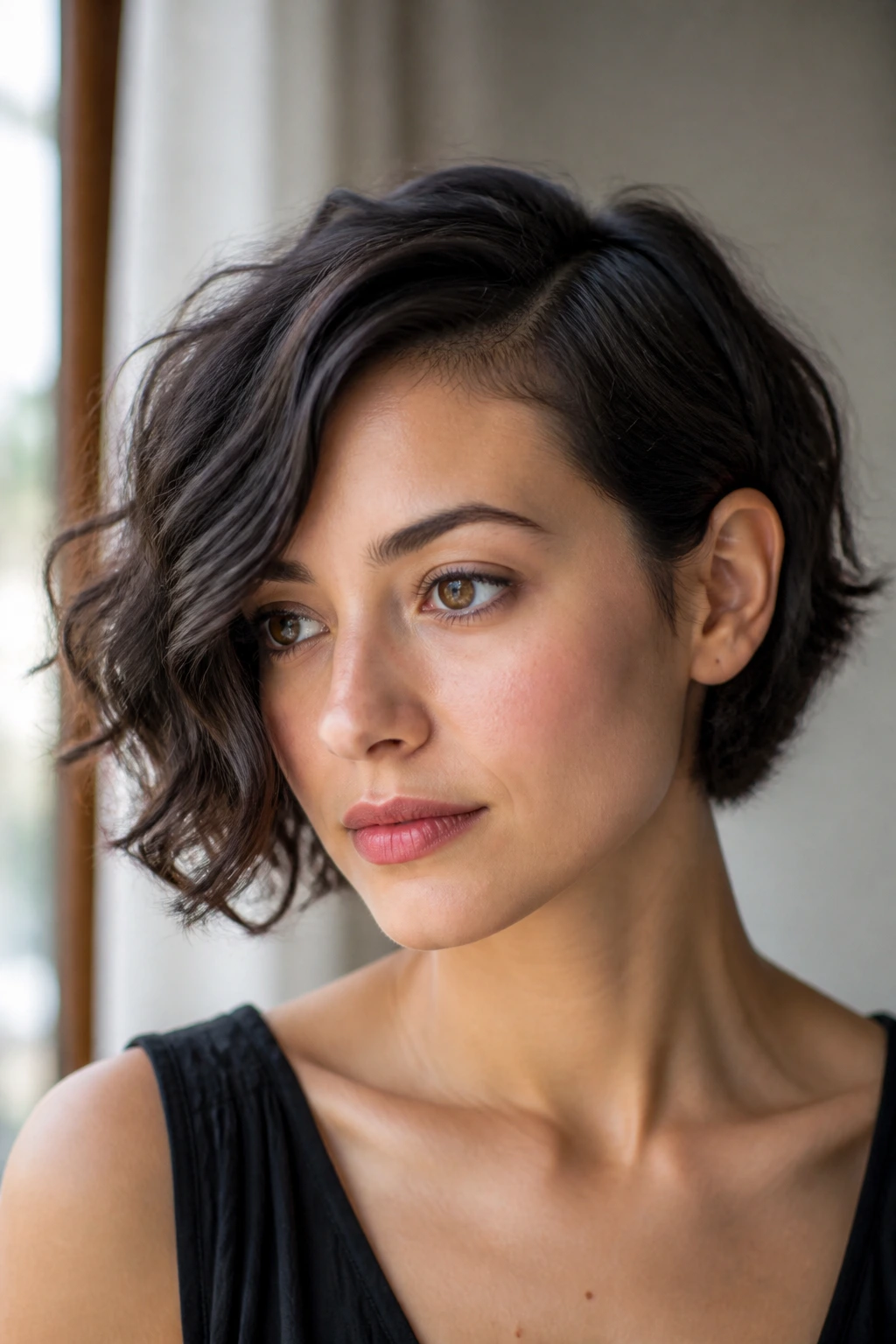
The French bob usually reads blunt and cheeky; the asymmetrical version feels a little less precious and a little more lived-in. One side gets tucked behind the ear, which reveals the jaw, while the other side keeps a soft curve that hits closer to the cheek. That mismatch is the whole point. It gives fine hair a shape that doesn’t depend on volume alone.
Why It Works
The tuck creates instant asymmetry without a huge length difference. That means you can keep the cut wearable even if you don’t want a hard diagonal. The curls around the untucked side do the work of making the hair look fuller, and the shorter tucked side keeps the head shape clean.
Styling Note
Use a light gel on the ends, then scrunch with your hands while the hair is still damp. If the tucked side flips out, pin it flat while it dries. It’s a tiny annoyance, but it changes the whole read of the cut.
8. Curly Shag Bob with an Uneven Perimeter

Can a shag be short without looking frizzy? Yes, if the perimeter stays uneven on purpose instead of being shredded to bits. Fine hair needs enough structure to hold the curl groupings together. A shag bob with one side a touch longer gives you that movement without losing the outline.
The layers should be soft and spaced out. I’d avoid aggressive razoring here unless the hair is already fairly dense for fine strands. A few face-framing pieces can be enough. The longer side can sweep toward the collarbone while the shorter side rests closer to the cheek, which gives the cut a loosened-up, slightly rebellious shape.
This one is a good match if your curls are more wavy than tight. If they’re very tight, the layers need to be calmer.
9. Ear-Length Crop with Long Temple Pieces
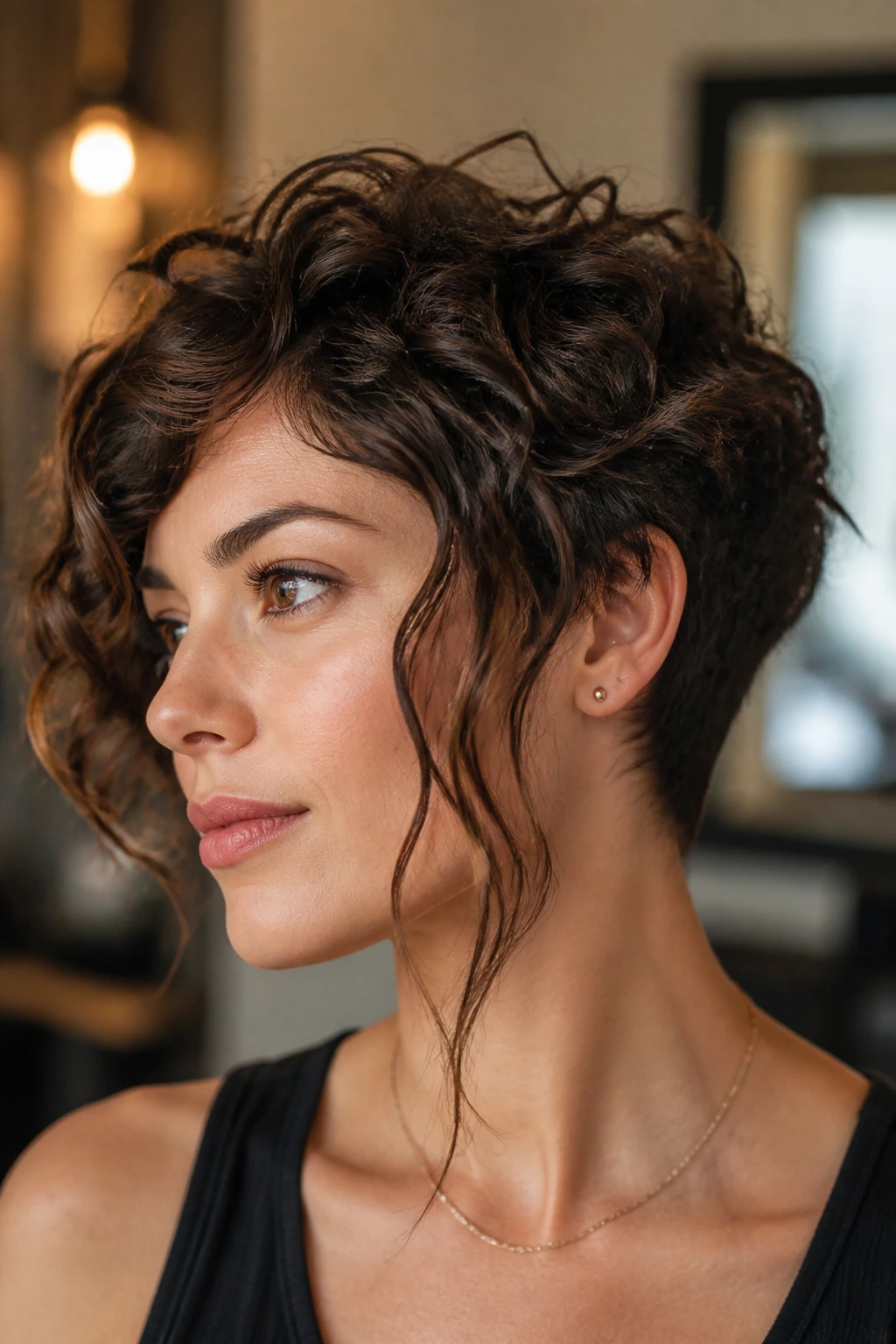
Shorter than a bob, softer than a pixie. That’s the appeal here. The body of the cut sits around ear length, but the temple pieces are left longer on one side so the silhouette doesn’t collapse into a uniform little cap. Fine hair likes that because it keeps the cut light while still leaving a trace of length around the face.
A client with sparse ends usually does well here. The crop clears out the weakest part of the hair, and the longer temple pieces keep the style from feeling abrupt. If you wear earrings, this cut is fun in a way a longer bob just isn’t. The neck shows. The jawline shows. The hair doesn’t hide the face.
A bit of texturizing cream on the longer side is enough. More than that, and the curl pieces start to separate in a thin, stringy way that no one asked for.
10. Stacked Back Curly Bob and Slanted Front
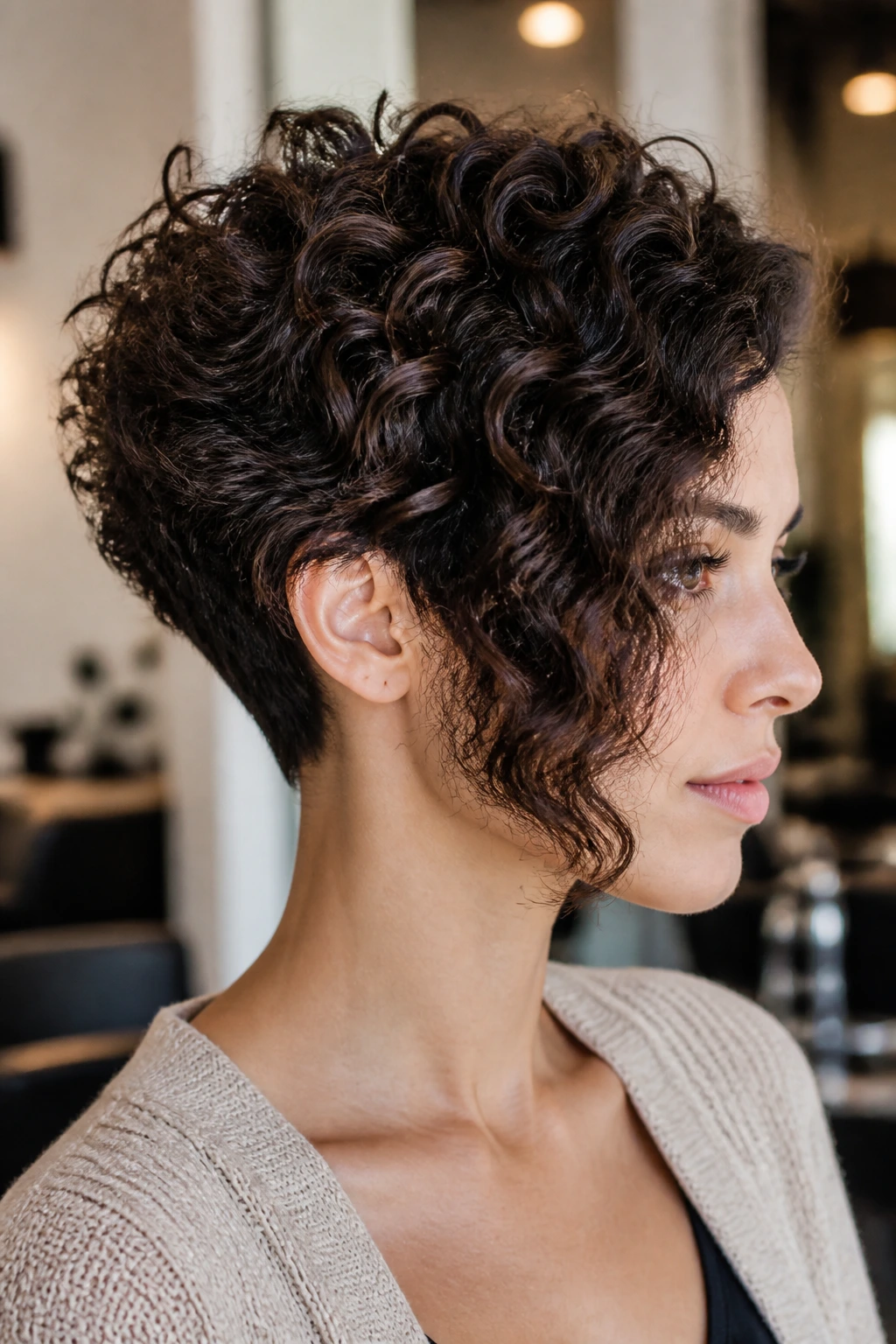
This is the cleanest answer for someone who wants lift in the back and length in front. The stacked layers at the nape build a little shelf of volume, while the front slants down toward the chin or jaw. Fine curls benefit because the back gets a shape that supports the crown instead of letting it melt flat against the head.
Best When…
- Your hair is fine but you have a decent amount of it.
- You want the back to look thicker without adding width.
- You don’t mind a stronger salon shape that needs trimming every 6 to 8 weeks.
The front slant should be obvious enough to read in profile. If it’s too soft, the haircut loses the point of its asymmetry. If it’s too sharp, it can look like a helmet with a corner missing. There’s a middle lane. Stay in it.
11. Curly Mullet-Lite with a Soft Longer Side
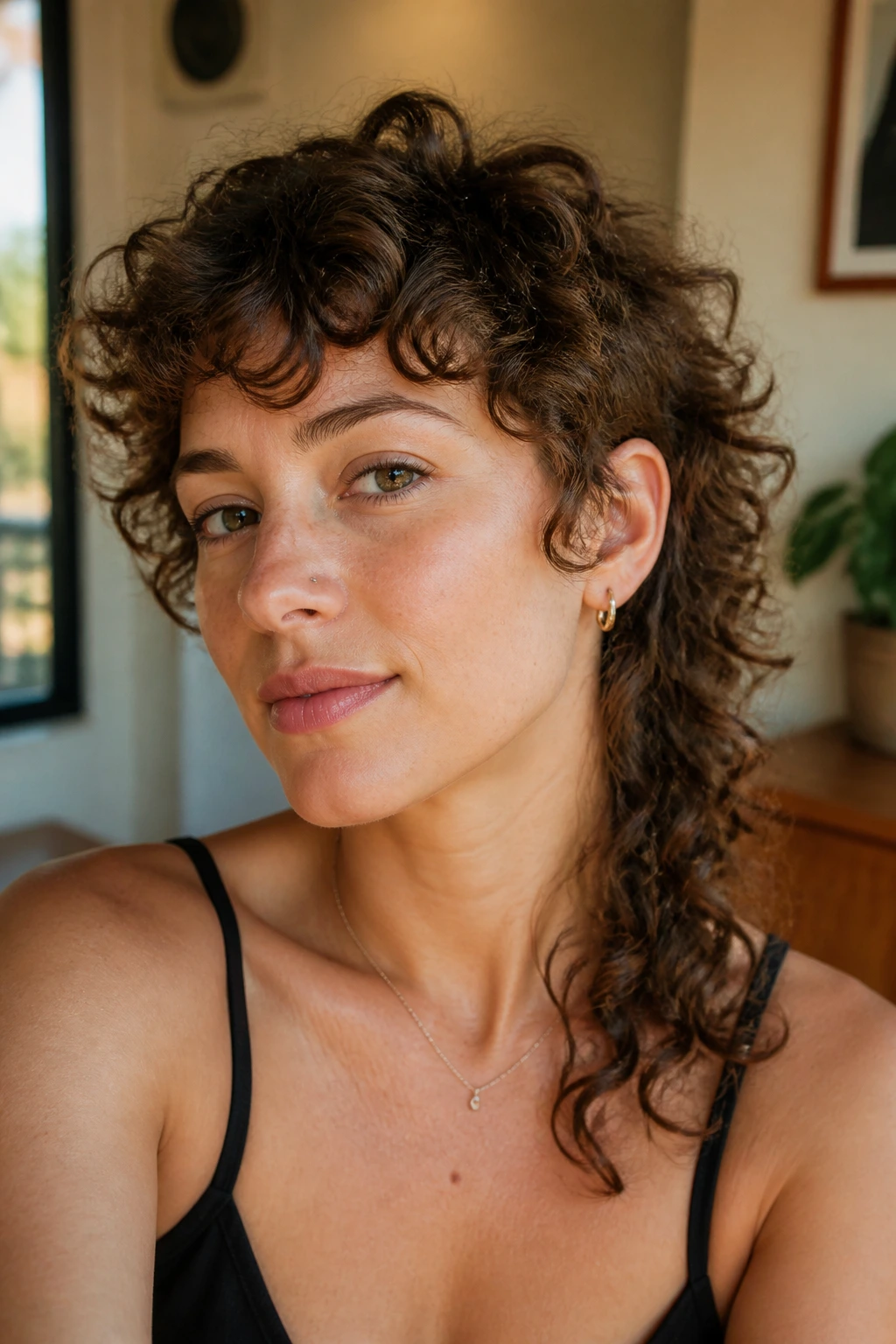
A modern mullet on fine curls works better when the contrast is gentle. Shorter layers around the crown keep the top alive, while the sides and back keep enough length to show curl pattern. The longer side gives the cut a diagonal line that stops it from looking like an unfinished grow-out.
This shape is for someone who wants movement and doesn’t mind a little personality. The trick is restraint. Keep the back soft, not chopped; keep the side length uneven, not dramatic to the point of costume. A small undercut at the nape can help if the curls pile up there, but it should stay hidden.
Air-drying can work if the curls are loose. Tight curls usually need a diffuser so the layers don’t shrink into a fuzzy stack.
12. Chin-Length Bob with a Deep Side Flip
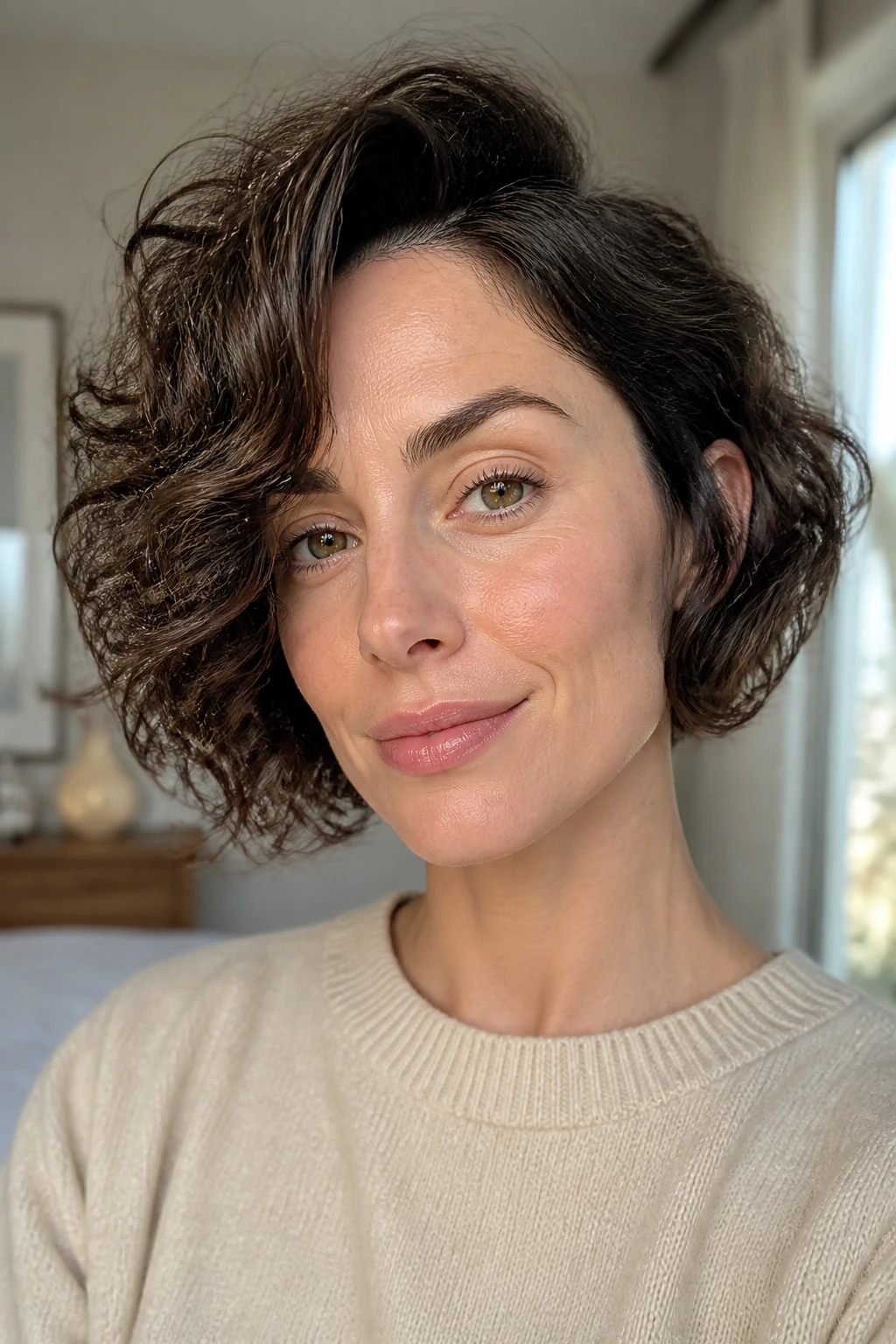
Some cuts don’t need a lot of complicated engineering. This one depends on a strong side flip at the front and a clean chin-length line through the rest of the bob. The asymmetry comes from the way the front is worn, not from a huge difference in the haircut itself.
That’s useful for fine hair because too much internal chopping can leave the ends wispy. Keep the perimeter solid, then let one side flip over with a little root lift. The result looks soft and controlled at the same time. That’s harder to pull off than it sounds.
I like this shape when the hair wants to curl away from the face anyway. Work with that bend instead of forcing a heavy side part.
13. Pixie Cut with One Long Curl Tail
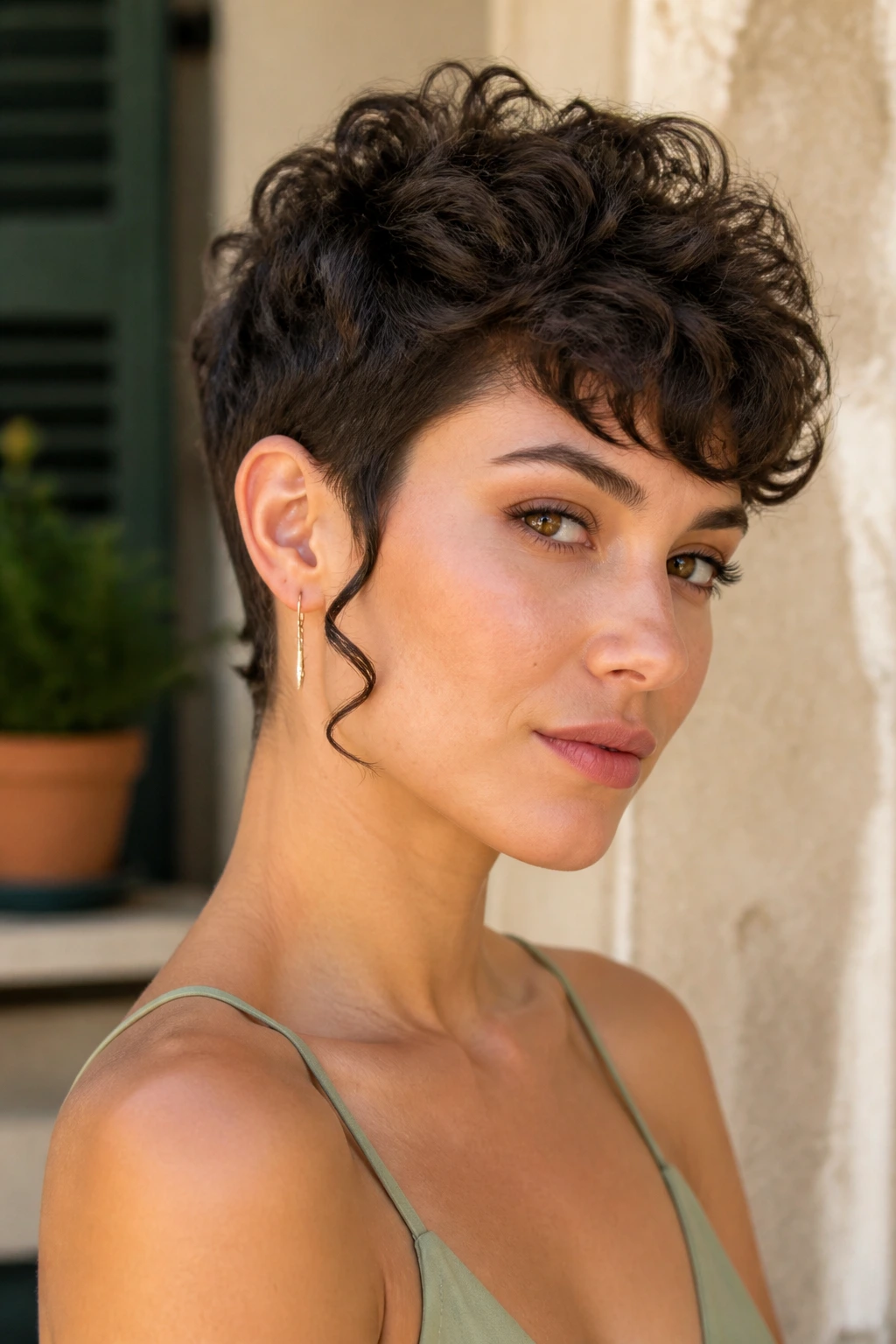
This cut is tiny, and that’s the point. Most of the hair is kept close to the head, but one side or one back section is left long enough to form a little curl tail that moves when you turn. It gives fine hair a place to keep visual interest without asking the rest of the cut to do too much.
How to Get the Most From It
Ask for the short sections to be cut with the head shape in mind, not by one blanket clipper setting. The long tail should fall naturally, not look pasted on. If your curls are loose, one long coil around the ear can carry the style. If they’re tighter, the tail can sit a little lower and still read clearly.
This is one of those cuts that looks better when it’s slightly messy. Not sloppy. Just not over-touched.
14. Curly Wedge Bob with Hidden Lift
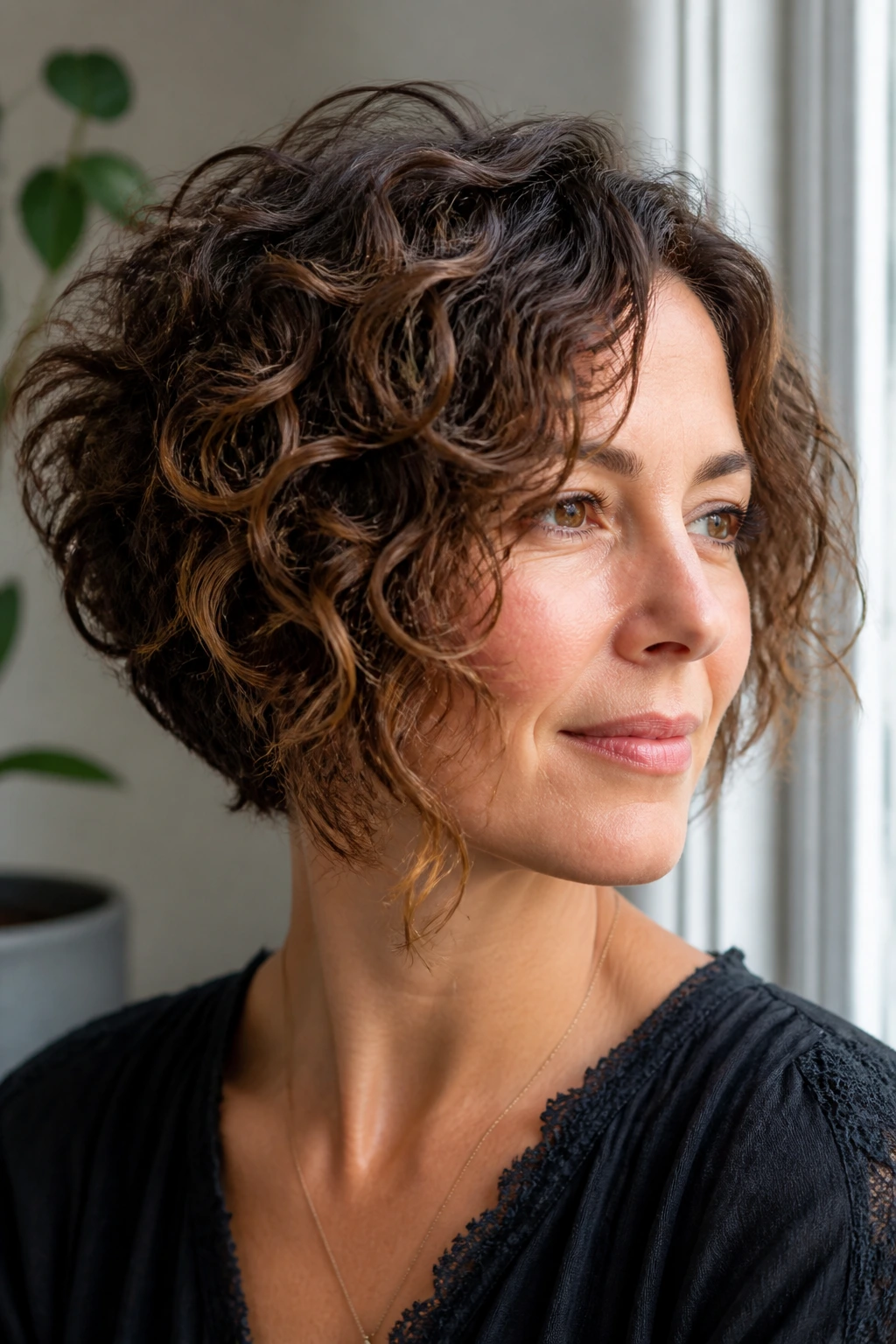
A wedge bob sounds retro, but on fine curls it can work because the hidden stacking in the back gives the hair a base. The front stays longer and lighter, often with one side carrying more of the shape. That lets the curls sit on a lifted foundation instead of sliding straight down the neck.
The trick is keeping the stack invisible enough that it doesn’t look stiff. The back should feel rounded when you run your hands over it, not carved. I’d avoid too much product here. The wedge already does the structural work.
If your hair falls flat at the crown, this shape earns its keep fast. It has a little built-in support, which is worth more than most styling promises.
15. Layered Asymmetrical Lob for Short-Length Lovers
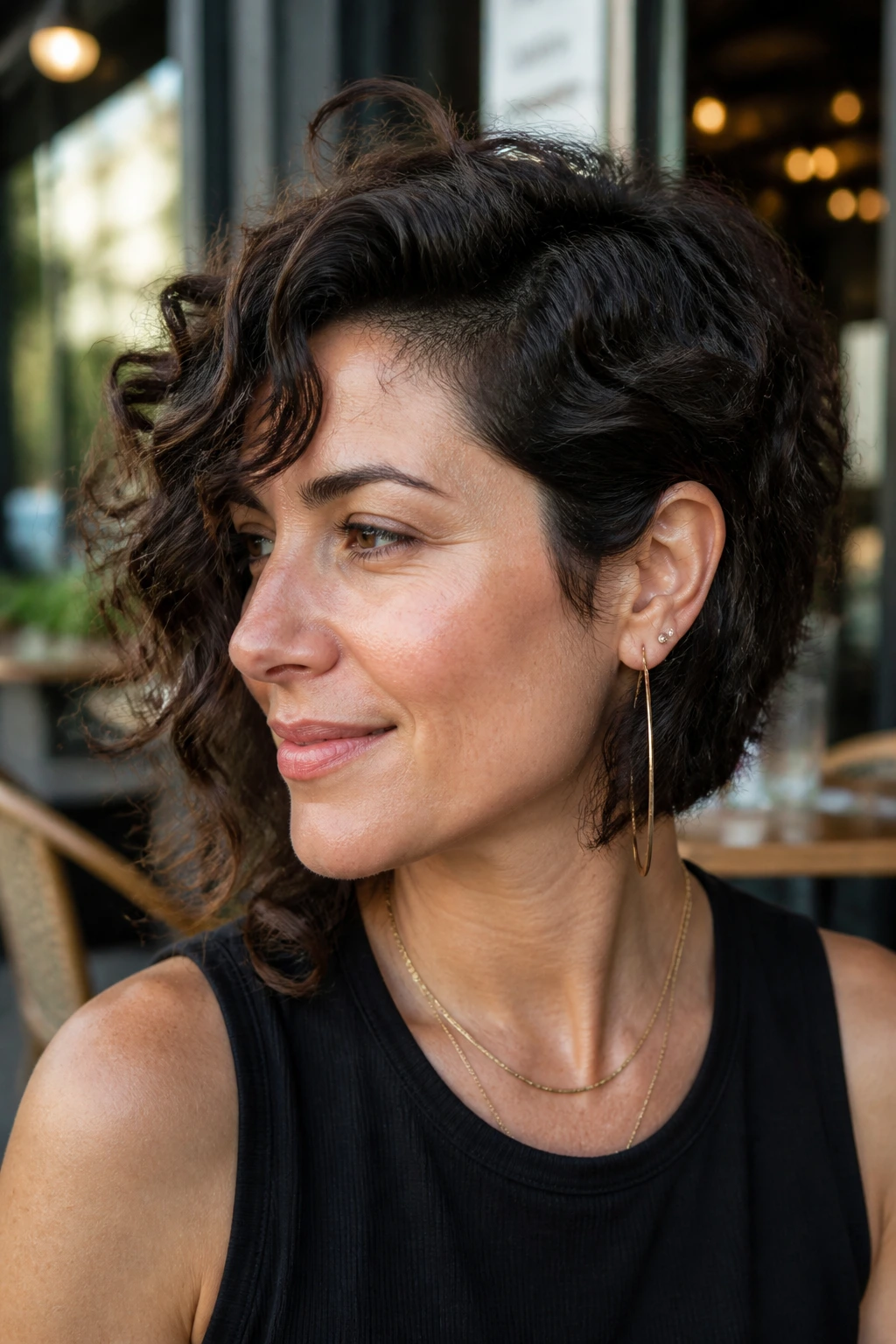
Not everyone wants to go truly short, and that’s fine. This lob stops just at or below the collarbone on the longer side, while the shorter side sits closer to the chin. Fine curls get to keep enough length for swing, but the asymmetry keeps the shape from dragging down and looking thin.
Compared with a regular lob, this one gives you more room around the face and more movement at the ends. It’s a smart choice if your curls are fine but not sparse, or if you’re easing into shorter hair and don’t want a hard cut. A side part helps, though a slightly off-center part can make the longer side read even cleaner.
If you want a haircut that can survive a bad wash day, this is a strong candidate.
16. Rounded Crop with Off-Center Bangs
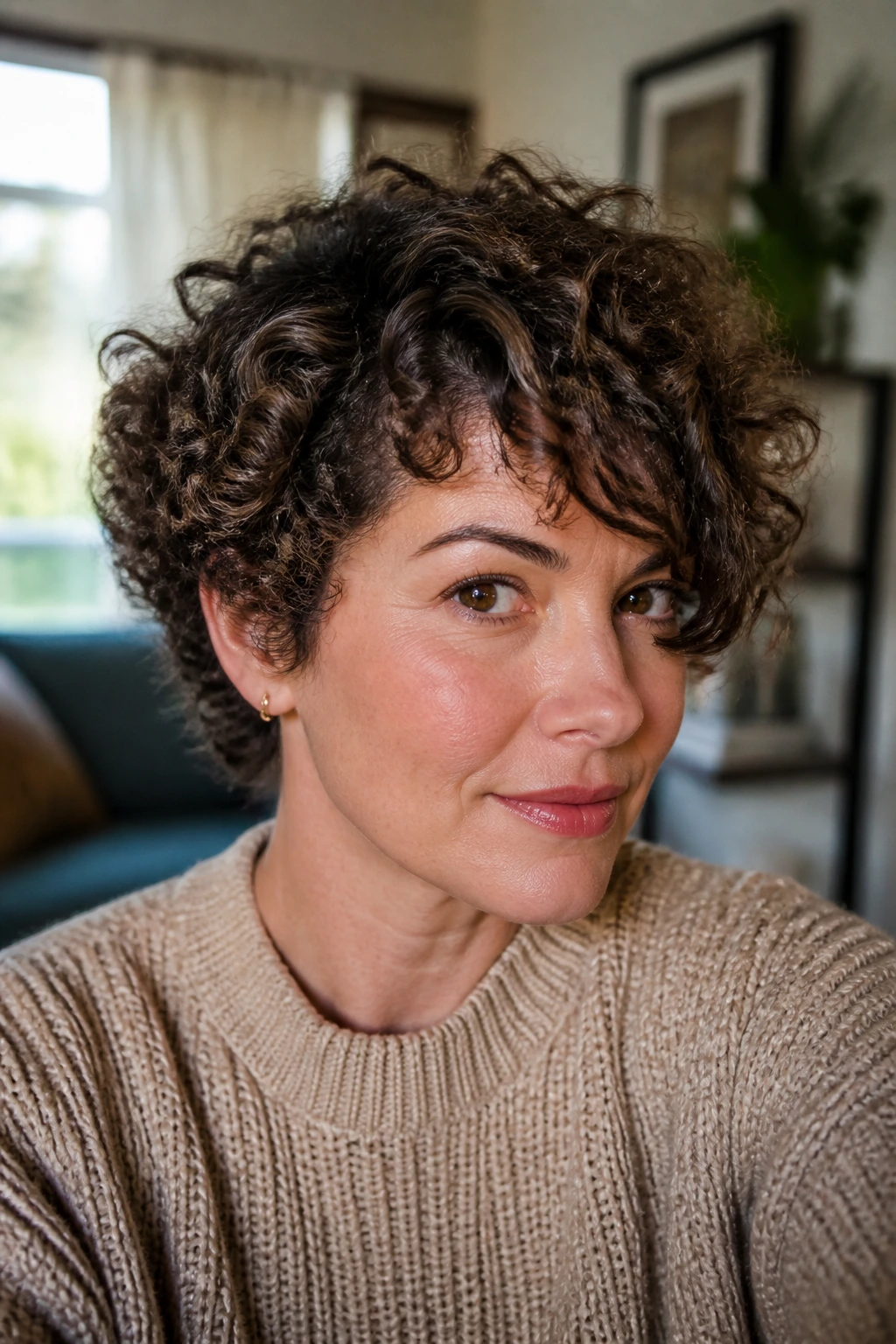
A rounded crop can go wrong fast on fine hair if it’s cut too uniformly. The off-center bangs solve that. They break the roundness just enough that the cut doesn’t look like a little dome, and they create a gentle diagonal across the forehead that fine curls can actually hold.
The shape should be soft around the ears and a touch fuller through the top. That keeps the crop from getting too narrow. The bangs can sit at eyebrow level on one side and slightly longer on the other, which gives you a bit of movement every time they dry. If you hate forehead fullness, this is a good compromise.
I’d keep the layers inside the crop quiet. The bang placement is the main event.
17. Soft Undercut Bob for Dense Fine Curls
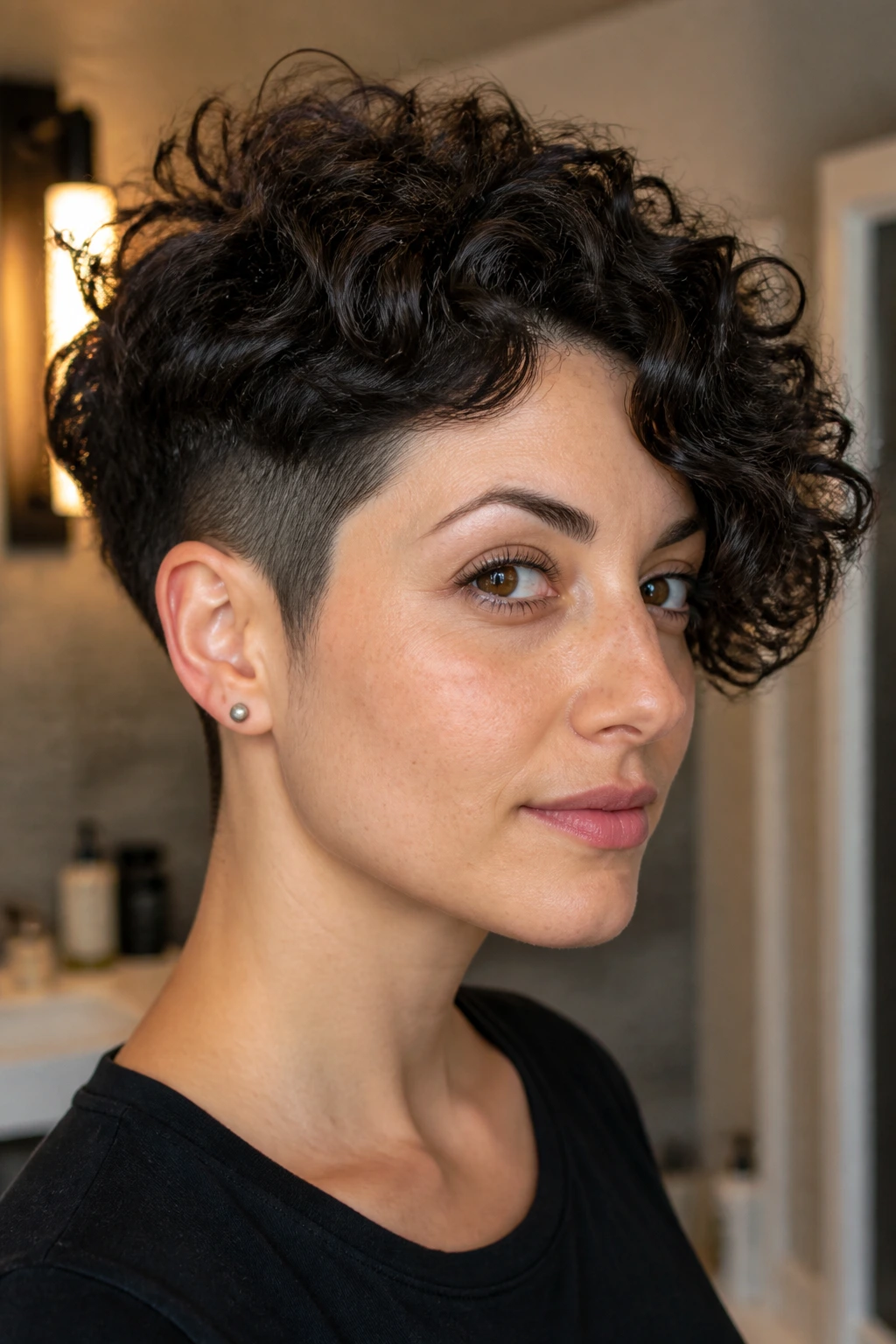
If your hair is fine but there’s a lot of it, this cut can be a lifesaver. The undercut removes bulk beneath the top layer, so the curls don’t puff into a triangle. One side or the nape can be taken shorter, while the top and longer front panel keep the shape visible.
What makes this different from a standard bob is the way it distributes weight. Dense fine curls can look heavy even though each strand is delicate. The undercut changes that balance without making the haircut look shaved in an obvious way. You can keep the top round and soft, then let the longer side fall forward with a little curl definition.
This is one of the few cuts where I’d say the inside matters more than the outside. The hidden structure does the work.
18. Curly Crop with a Long Sideburn Line
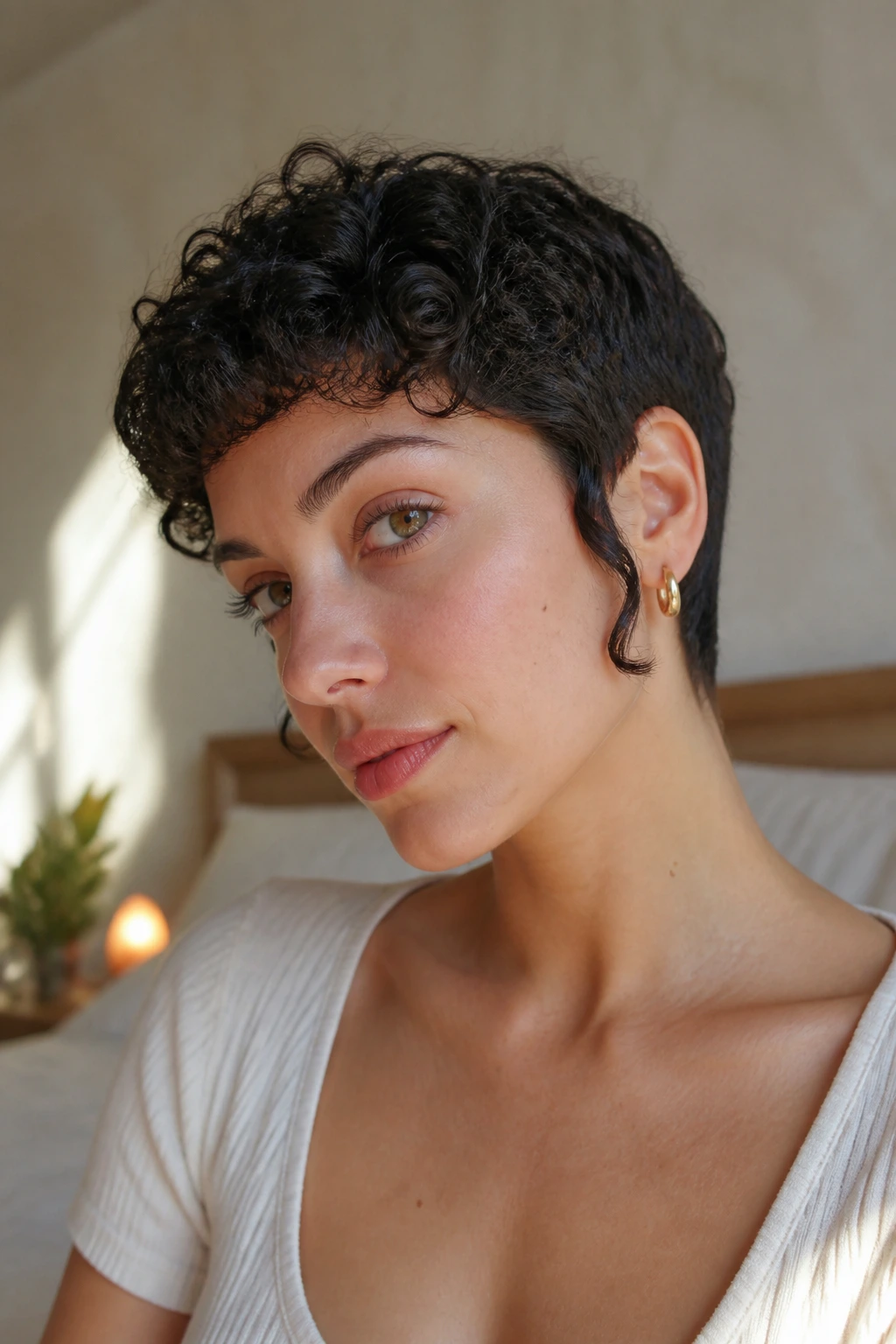
A long sideburn line gives a crop some edge without demanding a full pixie commitment. The rest of the hair stays short and close to the head, but one sideburn area is allowed to fall longer and curl into a soft frame. Fine hair benefits because that little line keeps the face from feeling overexposed.
This shape is especially good if your curls are small and springy. The sideburn piece creates a visual anchor. Keep it clean around the ears and a little softer near the jaw so it doesn’t look pasted on. A dab of gel on the sideburn curl can help it behave.
It’s a small detail. But small details are where good short cuts live.
19. Grown-Out Pixie Bob with a Diagonal Fringe
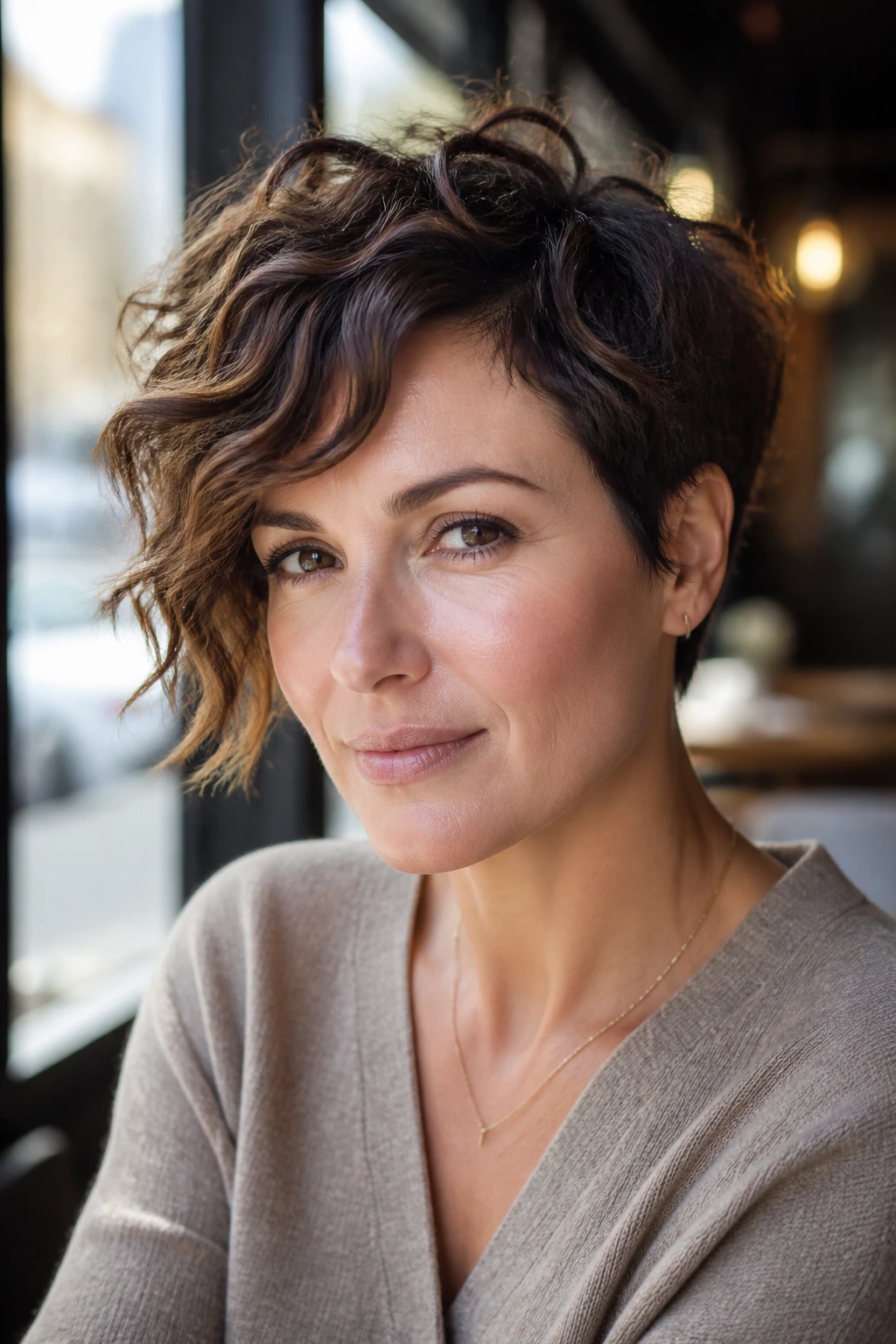
What makes this cut appealing is that it doesn’t look like a compromise. It’s a pixie and a bob meeting in the middle, with a diagonal fringe to keep the front interesting. Fine curls can wear this shape well because there’s enough length for movement but not so much that the ends start looking skinny.
A Good Match If…
- You want something between a cropped and a bobbed shape.
- Your curls need a little weight at the front to avoid puffing.
- You like styles that still make sense after six to eight weeks of growth.
The diagonal fringe should land just above or at the cheekbone on the longer side. That length gives the face a clean frame and keeps the style from flattening against the forehead. If the fringe is cut too short, the whole effect gets choppy in a way that fine hair rarely enjoys.
20. Short Inverted Bob for Fine Spiral Curls
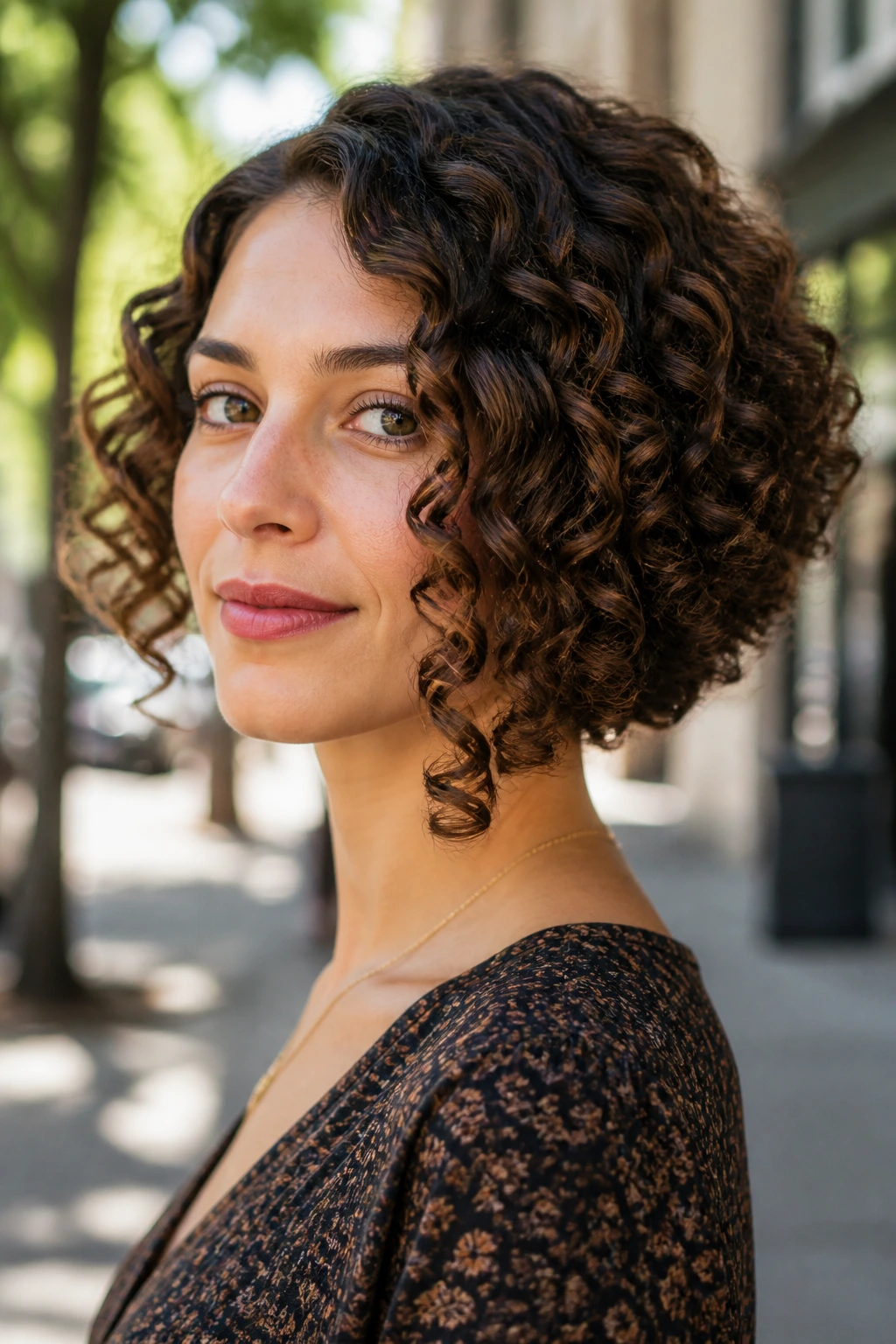
Spiral curls can hold shape better than loose waves, which makes an inverted bob a sharp fit. The back is shorter and slightly stacked, while the front angles down in a way that shows off the curl pattern. On fine hair, this keeps the back from collapsing and the front from looking stringy.
This cut works best when the front ends are not over-layered. You want the spirals to clump and show, not fray into a frizzy ribbon. A light gel cast and a careful scrunch once the hair is dry can help the spirals hold their shape without losing bounce.
If your curls spring up a lot, tell the stylist to respect shrinkage. The difference between chin length and ear length is not small once the hair dries.
21. Side-Parted Curly Bowl-Cut Remix
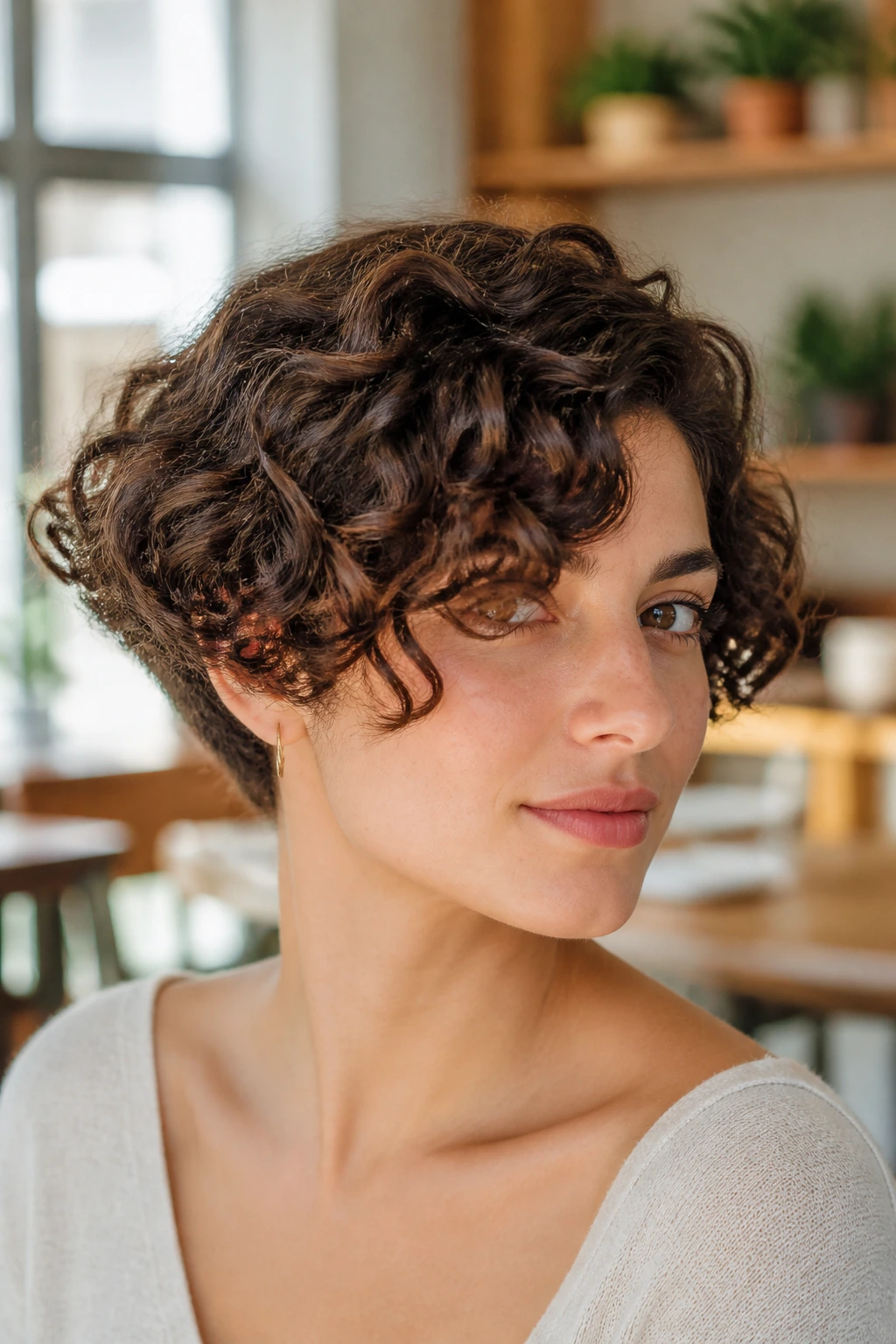
A bowl cut gets a bad reputation because people picture one flat line and too much weight in the wrong place. The remix solves that by shifting the part and leaving one side longer. Fine curls can handle this surprisingly well because the rounded top keeps volume in the crown while the side part breaks the symmetry.
The cut should hug the head, not trap it. Think soft curve, not mushroom. If the nape is too dense, ask for a little reduction underneath so the line doesn’t swell. This works well on hair that curls in loose rings, because the side part creates a curtain effect around the face.
It’s not the most conservative shape on the list. That’s part of the charm.
22. Airy Curly Razor Bob with a Lengthy Front Panel
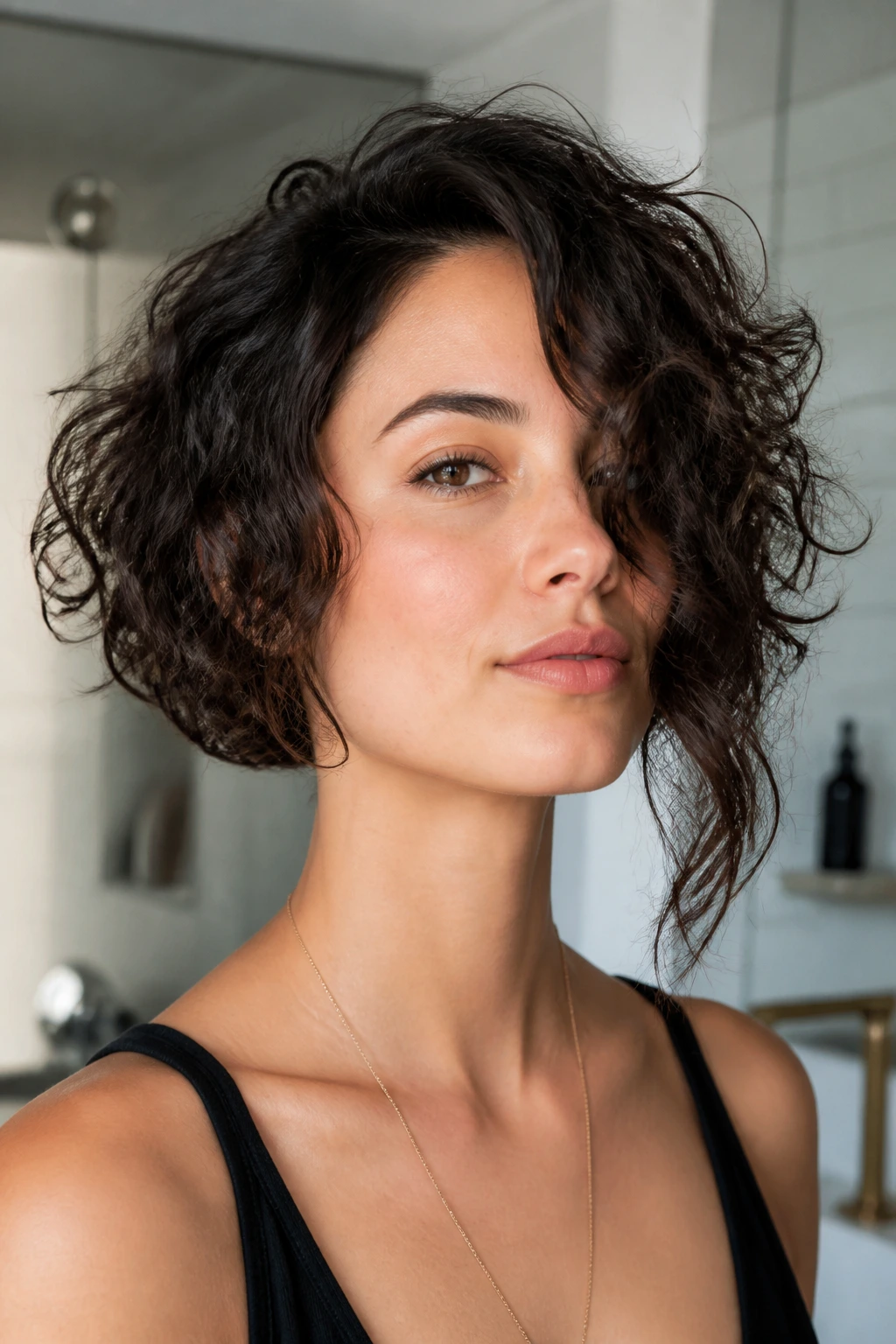
A razor cut can be risky on fine hair, but when it’s handled carefully, it creates a bob that feels lighter at the edges and more open around the face. The long front panel is what keeps the style from going wispy. It gives the curls a strong line to hang on, while the rest of the bob stays airy.
The key is moderation. Too much razor work and the ends fray. Too little, and the haircut loses the floaty feeling that makes it special. I’d keep the front panel long enough to hit below the chin, then let the rest sit slightly shorter. That way the asymmetry is visible from the front and the side.
This is a good cut if you want movement more than polish.
23. Face-Framing Asymmetrical Curly Cut with Nape Exposure
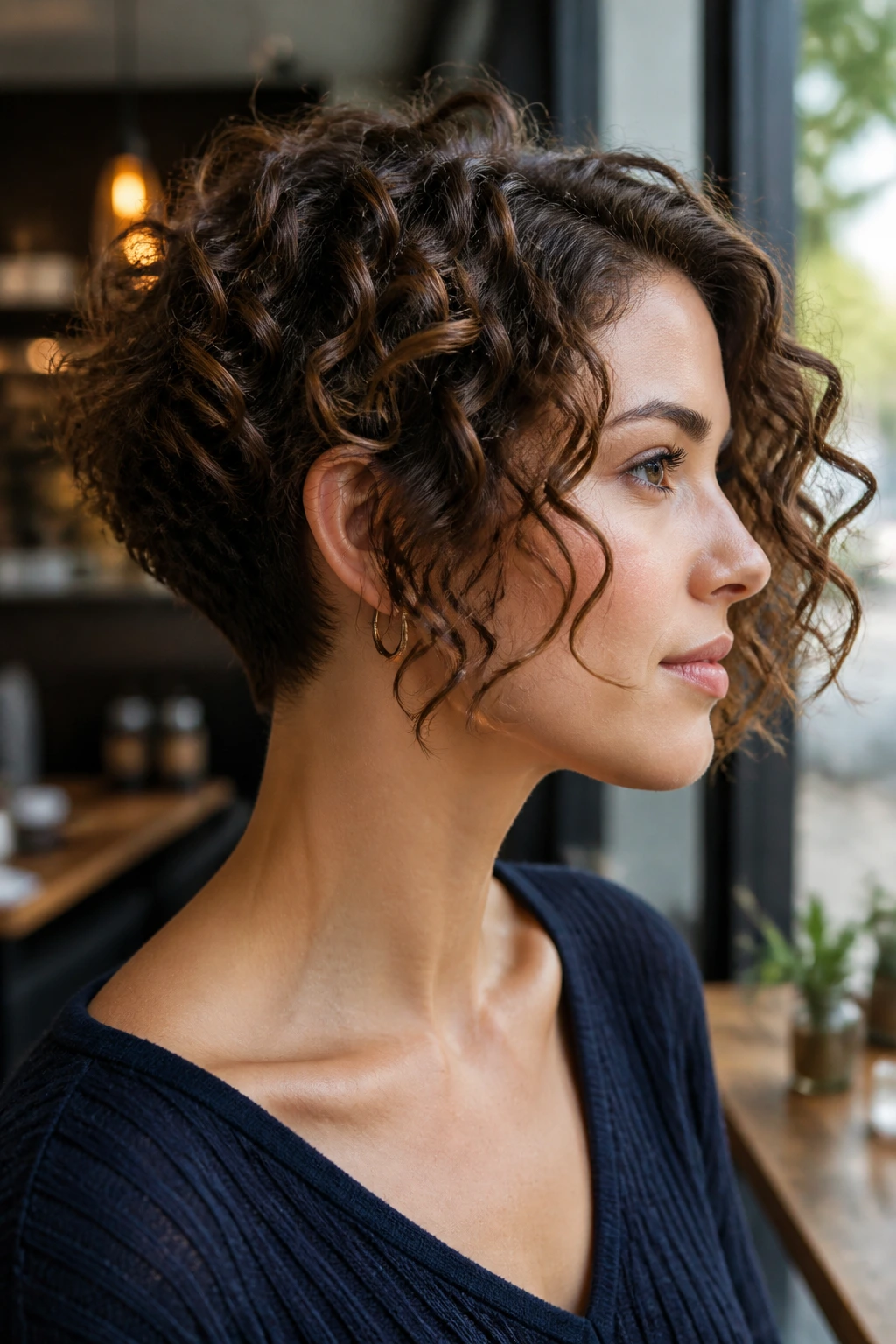
This one is half about shape and half about attitude. The nape is exposed enough to feel clean, while the front framing pieces keep the haircut soft around the face. Fine hair benefits because the exposed back removes dead weight, and the long front pieces keep the hair from reading too sparse.
I’ve seen this cut work especially well on people who wear collars, earrings, or scarves a lot. The nape stays neat, so the neckline doesn’t fight the clothing. The front pieces can be adjusted to hit the cheekbone, chin, or a bit lower, depending on how much face you want to open up.
It’s a smart choice if you like your hair off the neck but don’t want a severe crop.
24. Flippy Curly Bob with a Dramatic Side Sweep
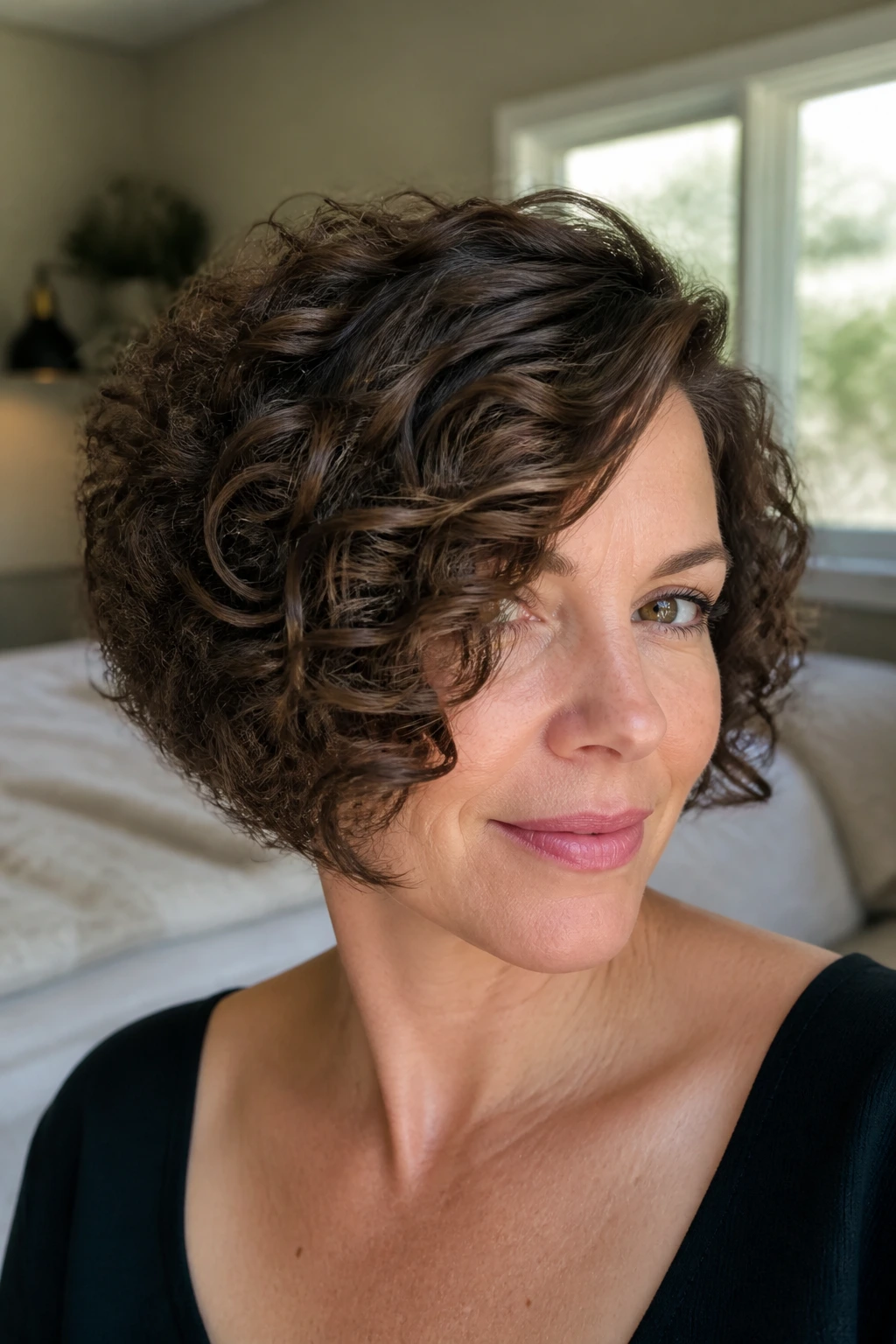
A flippy bob can go wrong if the ends are too thin. The asymmetrical version fixes that by giving the front one longer sweep to anchor the curl pattern. Fine hair usually needs that anchor. Otherwise, the flip at the ends can look airy in a bad way.
The sweep should start near the part and travel across the forehead or cheek in one clear motion. That line gives the bob movement and makes the whole cut look less static. If your curls are loose, use a diffuser to encourage the flip. If they’re tighter, a side-swept clip while drying can help train the shape.
This style has a little bounce to it. Not cutesy bounce. Actual structure.
25. Sculpted Short Curly Cut with an Uneven Halo
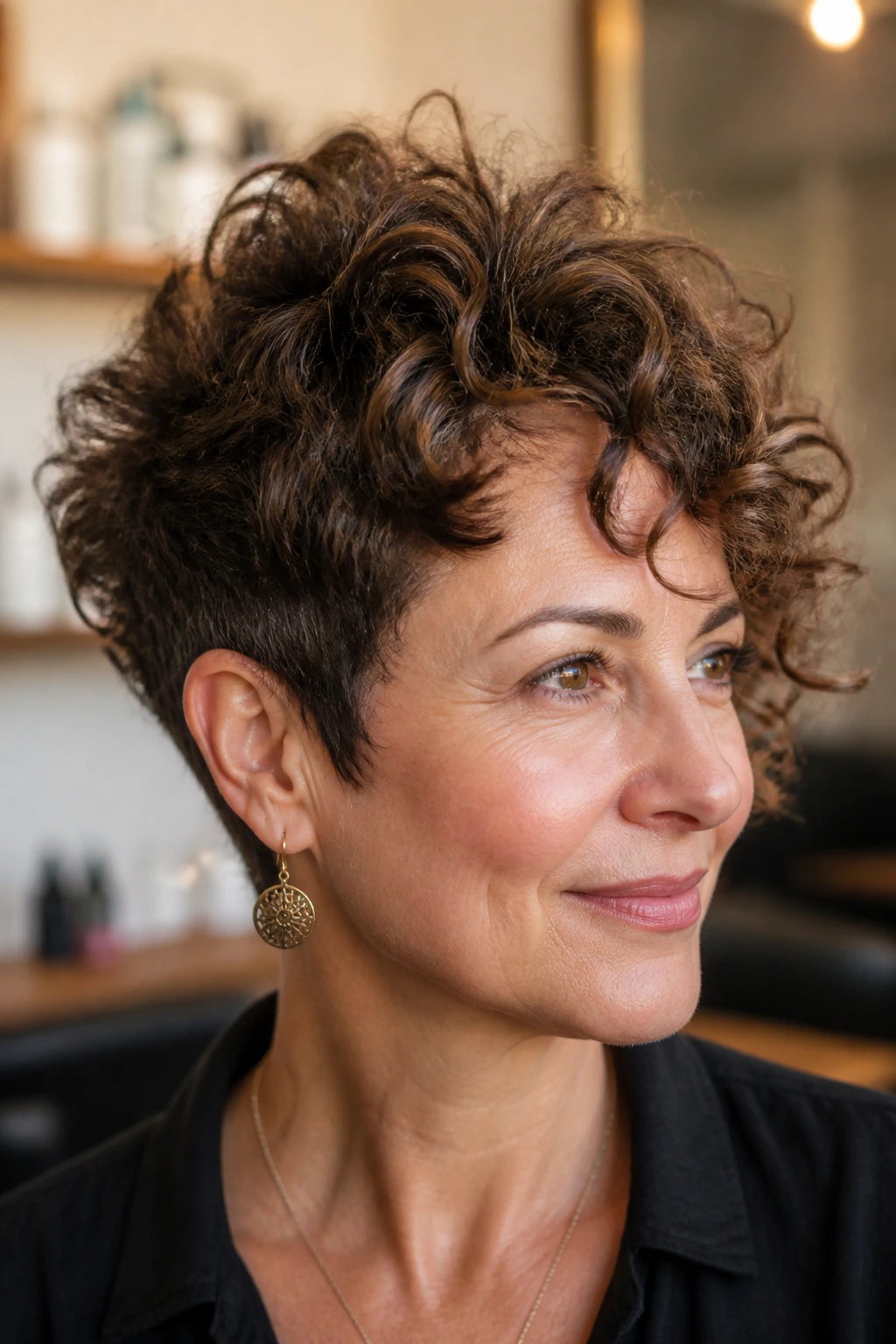
The halo here isn’t even all the way around, and that’s what keeps it interesting. One side rises a touch higher, the other falls lower, and the back stays tight enough to support the crown. On fine hair, that uneven halo can look thicker than a perfectly round shape because the silhouette never gives your eye a flat line to measure.
Who It Suits
- People with fine curls who want shape first and length second.
- Hair that needs crown support but not a lot of bulk.
- Anyone who hates the look of a wide, boxy bob.
The styling should stay light. Foam or mousse through the roots, a small amount of gel on the ends, then a diffuser if needed. If you pack this cut with cream, the halo loses its lift and the whole thing starts to sag. Keep it airy. That’s the entire point.
Why Asymmetry Makes Fine Curls Look Denser

Fine curls need a shape that gives them somewhere to go. Symmetry sounds tidy on paper, but on fine hair it can be unforgiving. The eye lands on every weak end, every flat patch, every place where the curl pattern decides to take the afternoon off. Asymmetry hides that weakness by creating motion. Motion covers a lot.
The other reason it works is weight distribution. Fine strands don’t like to carry too much length, especially when the curl pattern is loose. A shorter back or one longer front corner changes where the mass sits, and that changes how the hair behaves when it dries. The result is often better root lift and less of that hanging, narrow-end look that makes people think their hair is thinner than it is.
The Shape Rule I Trust
If the hair is fine and sparse, keep the asymmetry visible but not extreme. If the hair is fine and dense, you can push the contrast a little harder. The cut should look like it belongs to the head shape, not sit on top of it like a wig.
A good asymmetrical cut does one more thing: it buys forgiveness. If one side goes slightly flat, the other side still carries the look. That’s a nice little safety net.
What to Tell Your Stylist So the Shape Lands Right
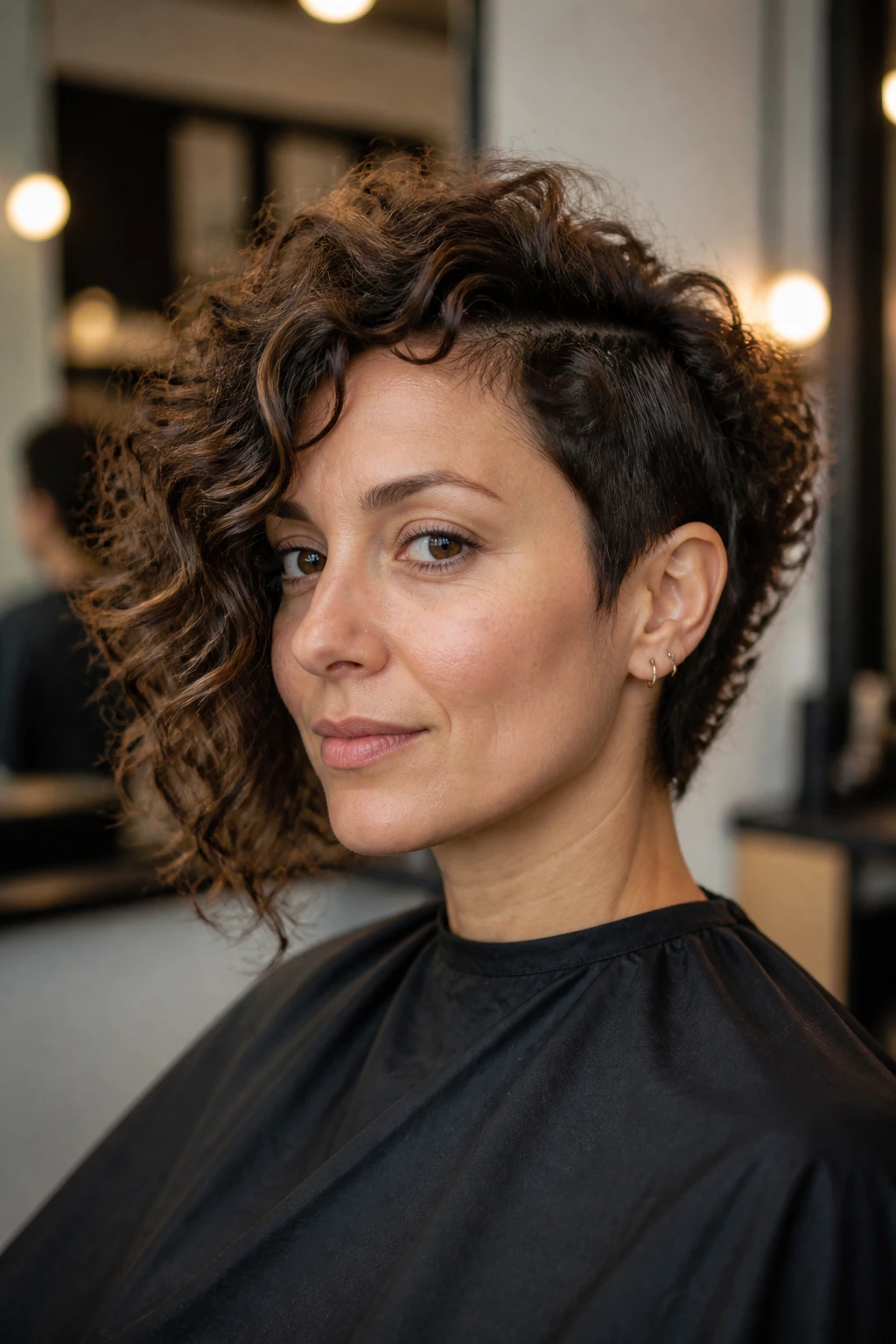
Bring photos, yes, but say a few useful things out loud too. Tell your stylist whether your curls shrink a little or a lot, where your hair flattens first, and whether you want the asymmetry to read from the front or only in profile. Those details change everything. A chin-length sweep and a cheekbone-length sweep are not the same haircut once curly hair dries.
Ask how they plan to cut it: dry, damp, or in a dry-check finish at the end. Fine curly hair usually behaves better when the final shape is checked dry, because that’s when the weight line becomes honest. If the stylist wants to thin out the crown heavily, push back. Fine hair does not need a lot of aggressive texturizing to “move.” It needs support.
Good Phrases to Use
- “I want one side longer, but not dramatic.”
- “My curls shrink about an inch.”
- “Please keep the ends full.”
- “I do not want the crown over-thinned.”
That last line matters. Over-thinning is the fastest way to ruin a fine curl cut.
Tools and Products That Make These Cuts Easier
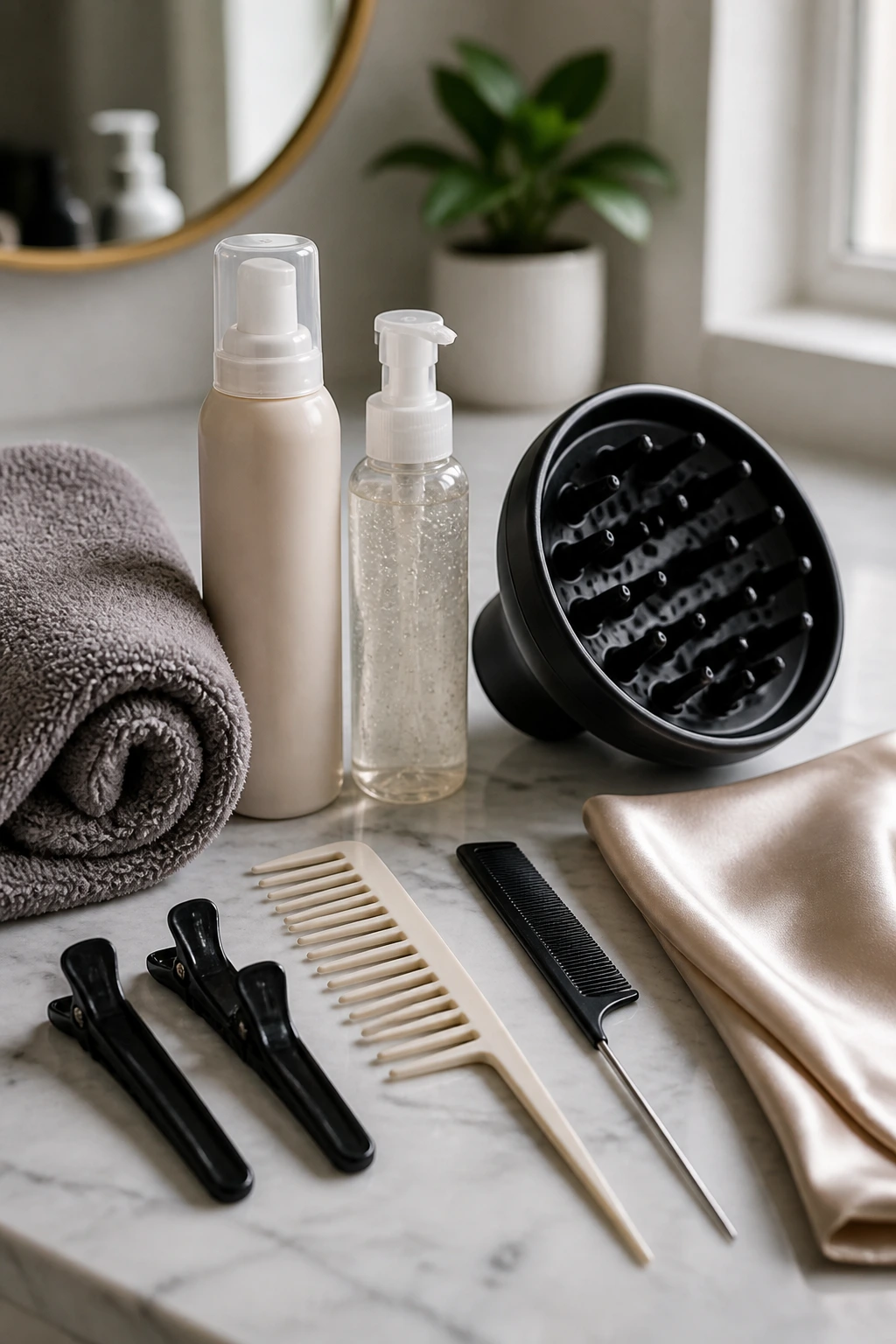
- Light mousse or curl foam — Gives roots some hold without coating fine strands.
- Flexible-hold gel — Helps curls clump and keeps the asymmetrical line visible.
- Diffuser attachment — Keeps the crown lifted and reduces frizz while drying.
- Microfiber towel or cotton T-shirt — Blot the hair gently; terry cloth is rougher than it looks.
- Duckbill clips — Useful for pinning the crown or setting a side part while the hair dries.
- Wide-tooth comb — Best for detangling in the shower when the conditioner is still in.
- Tail comb — Helpful for getting a clean side part on a short cut.
- Silk pillowcase or bonnet — Short curls still flatten overnight, and friction makes the problem worse.
You do not need a bathroom shelf full of jars. Fine curls usually look better when the product lineup stays short and light.
How to Wear These Cuts Without Fighting the Shape

Presentation: Keep the asymmetry visible at the front. A side part that lands a little off-center and a slightly lifted crown will show the cut’s diagonal line without making it look overstyled. If the curls are loose, finger-coil just a few front pieces and leave the rest alone.
Accompaniments: Small hoop earrings, slim frames, and open necklines tend to sit well with these cuts because they don’t crowd the jaw. High collars can work too, but the hair should stay neat at the nape so the neckline doesn’t get busy.
Portions: If your hair is sparse, ask for a smaller length difference between the two sides and more support in the back. If your hair is fine but dense, you can push the contrast harder and still keep the shape full. The wrong move is making both sides almost the same length. Then you lose the whole point.
Finish: Choose one of three moods and stick to it: soft and airy, piece-y and defined, or polished with a slight curl cast. Mixing all three usually ends in frizz.
Small Styling Tweaks That Change the Whole Cut
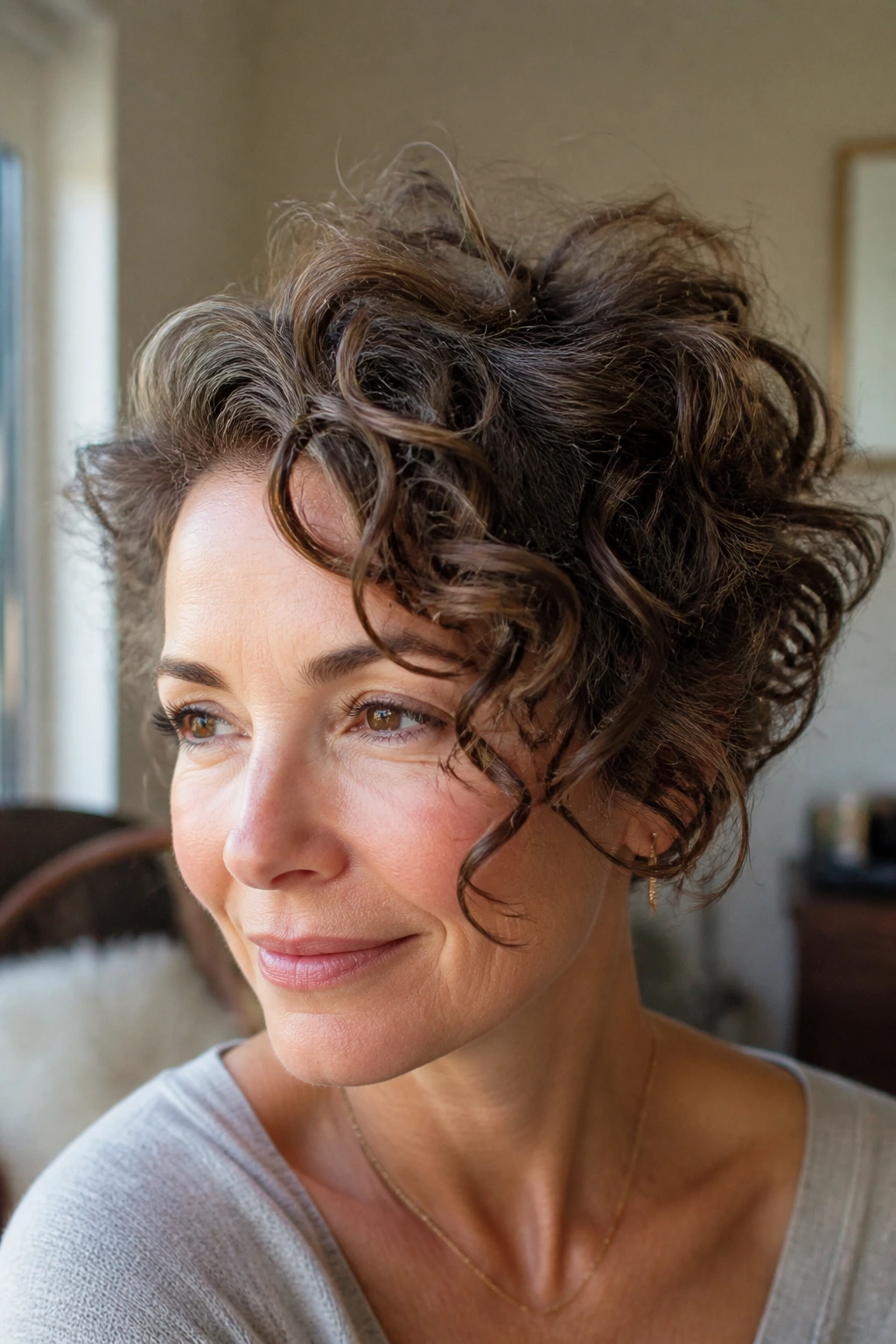
Root Lift: Clip the crown for 10 to 15 minutes after diffusing, then let it cool before you remove the clips. That tiny pause keeps the top from sinking.
Softness: If the longer side starts to look stringy, rub a drop of lightweight serum between your palms and tap only the outer layer. Don’t drag it through the whole head.
Definition: Scrunch a small amount of gel into the front pieces first. Those are the curls that frame the face, so they carry the visual load.
Spacing: If the haircut starts to puff out at the sides, use your fingers to separate only the biggest curl clumps. Over-separating fine hair makes it look thinner, not fuller.
A small cut like this often looks better with less fuss, not more.
Mistakes That Flatten Fine Curls Fast
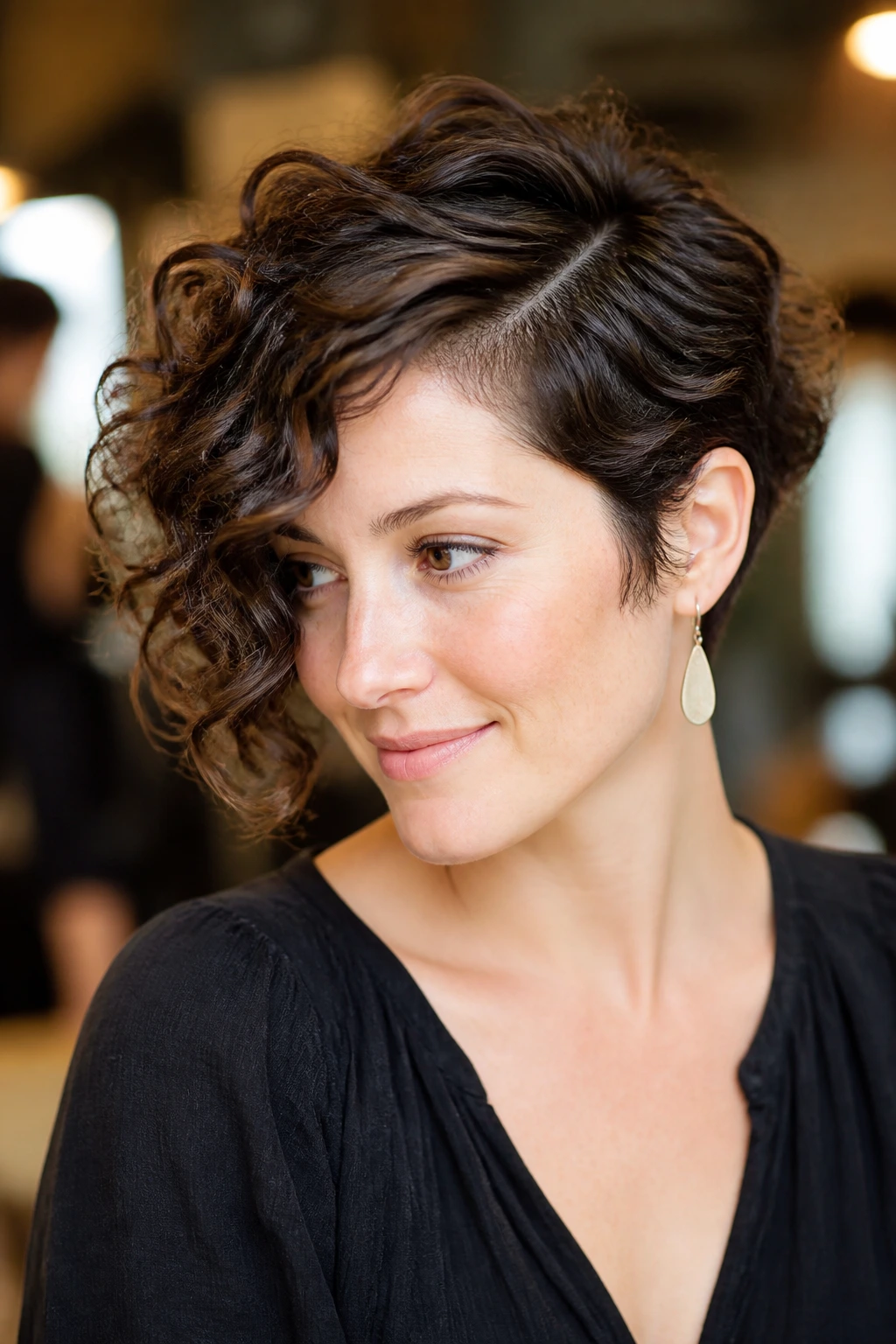
The first mistake is asking for too many layers through the crown. Fine hair can’t always pay that price. The symptom is a fuzzy top with thin ends, and the fix is straightforward: keep the layers soft and the perimeter fuller.
The second mistake is cutting the asymmetry too timidly. If both sides are almost the same, the haircut loses its shape and starts looking accidental. A clear length difference, even a modest one, is what gives the style its lift.
Heavy creams are another problem. They coat the hair, drag down the root, and make the curls clump into stringy pieces. Swap that for mousse or foam first, then add the tiniest bit of cream only if the ends need softness.
Cutting curly hair too short while it’s stretched wet can also backfire. Fine curls shrink fast, and the shorter side can pop up higher than expected. If the hair has a strong spring, the stylist should check the shape dry before making the final snip.
Variations and Adaptations to Try
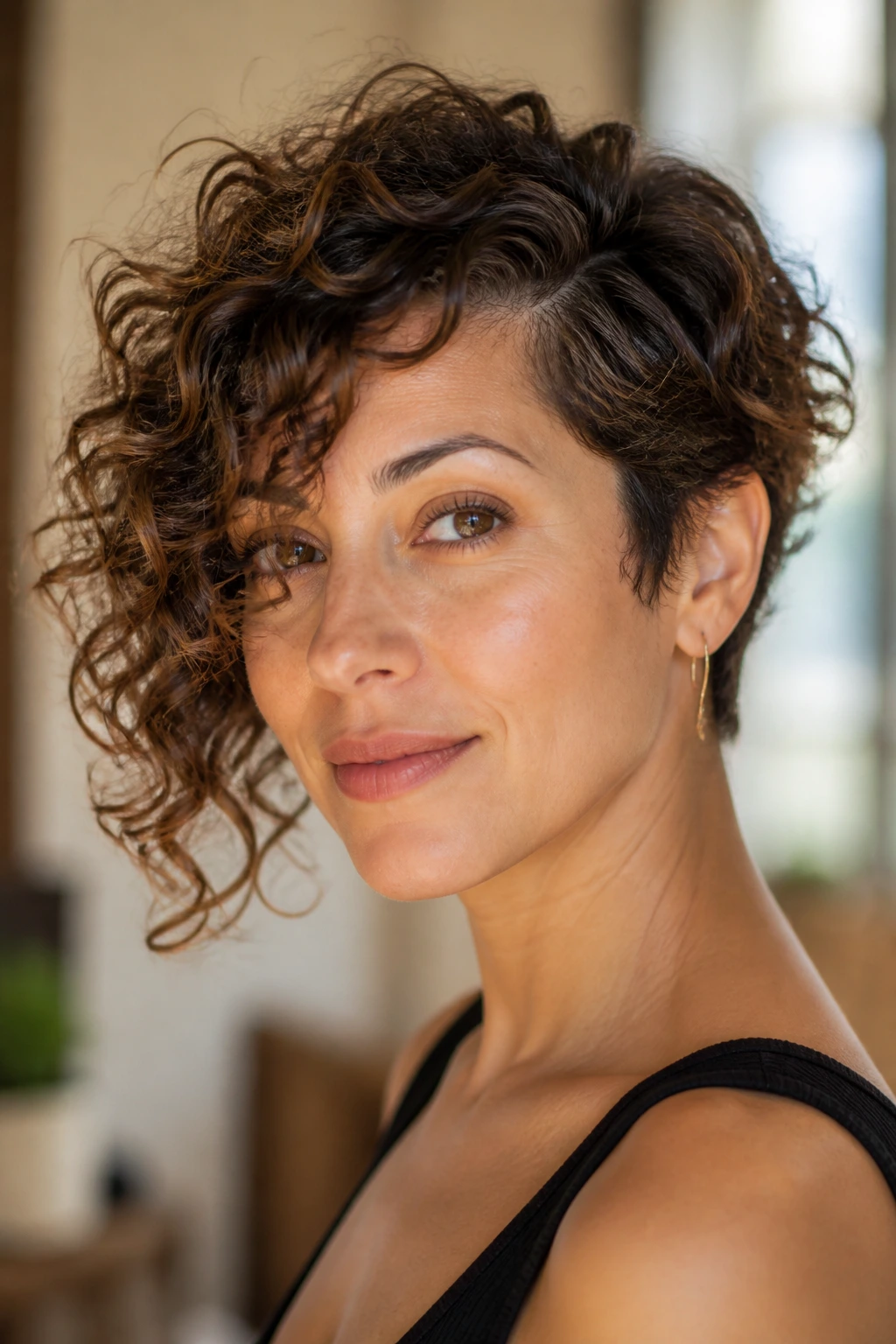
Glasses-Friendly Sweep: Keep the longer front pieces just past the cheekbone so they clear the frames instead of fighting them. This works especially well when the shorter side is tucked neatly behind the ear.
Soft Grow-Out Bob: Leave the perimeter a touch fuller and the asymmetry subtle. The cut will hold its shape longer between salon visits, which matters when you do not want a trim every month.
Bolder Side-Shear: Add a hidden or visible undercut on one side for more contrast. The top keeps its curl volume while the shaved area removes bulk that fine hair doesn’t need.
Air-Dry Crop: Ask for a shape that looks balanced even when you skip heat. That means fewer tiny layers and a stronger front line.
Fringe Shift: If bangs are part of the look, cut them off-center and longer on the heavier side. Straight-across bangs can shrink into a line that feels too blunt for fine curls.
Keeping the Shape Fresh Between Trims
Wash frequency depends on scalp oil, but fine curly hair often does well with washing every 2 to 4 days. If product starts building up, use a gentle clarifying shampoo every 2 to 4 weeks. That keeps the root from going flat and sticky.
Sleep care matters more than people think. A silk pillowcase helps, but if the cut is very short, a loose bonnet may be better because it protects the front sweep and the crown at the same time. In the morning, mist the hair lightly with water, reactivate the curl with a small amount of foam, and diffuse only the areas that collapsed overnight.
Trim the shape every 6 to 8 weeks if you want the asymmetry crisp. If you’re growing it out, push that to 8 to 10 weeks and ask the stylist to keep the diagonal line soft so the grow-out doesn’t turn into a block.
Questions People Ask Before They Cut
Will asymmetry make fine hair look thinner?
Not if the cut is balanced right. The longer side and shorter back create shape, and shape does more for fine curls than equal lengths usually do.
Should curly fine hair be cut dry?
Dry or dry-checked finishing is often safer because it shows shrinkage and reveals where the shape actually sits. Some stylists cut damp first, then refine dry, which can work well too.
How much asymmetry is too much?
If the two sides look like they belong to different haircuts, it’s too much. A visible difference is good; a costume effect is not.
Can I wear this if my hair is wavy instead of curly?
Yes. In fact, loose waves often show the diagonal line more clearly. The key is keeping the ends full enough that they don’t look wispy.
What if my curls flatten at the crown?
Ask for a shorter, lighter back and use root clips while drying. A little lift at the crown can change the whole cut.
Will an undercut help fine hair?
If the hair is dense or puffy in the wrong spots, yes. If it’s already sparse, keep the undercut subtle and hidden.
How do I stop the longer side from hanging limp?
Use less cream and more foam or mousse, then diffuse the longer side with the hair lifted away from the scalp. Heavy product is usually the culprit.
Can I ask for this if my curls are inconsistent?
Absolutely. Uneven curl patterns often benefit from asymmetry because the haircut doesn’t rely on perfect symmetry to look finished.
The Shape That Keeps Working
Fine curls do not need to be forced into looking thicker. They need a cut that gives them a stronger outline than the strands can manage on their own. That’s why short asymmetrical curly hairstyles for fine hair keep earning their place: they make the hair look like it has a plan.
If you’re picking one to bring to the salon, start with the version that matches your daily habits, not the one that looks most dramatic in a photo. The smartest cut is the one you can live with at 7 a.m., after sleep, after humidity, after a wash that didn’t go exactly right.
And once you find the right diagonal, the rest gets easier.