



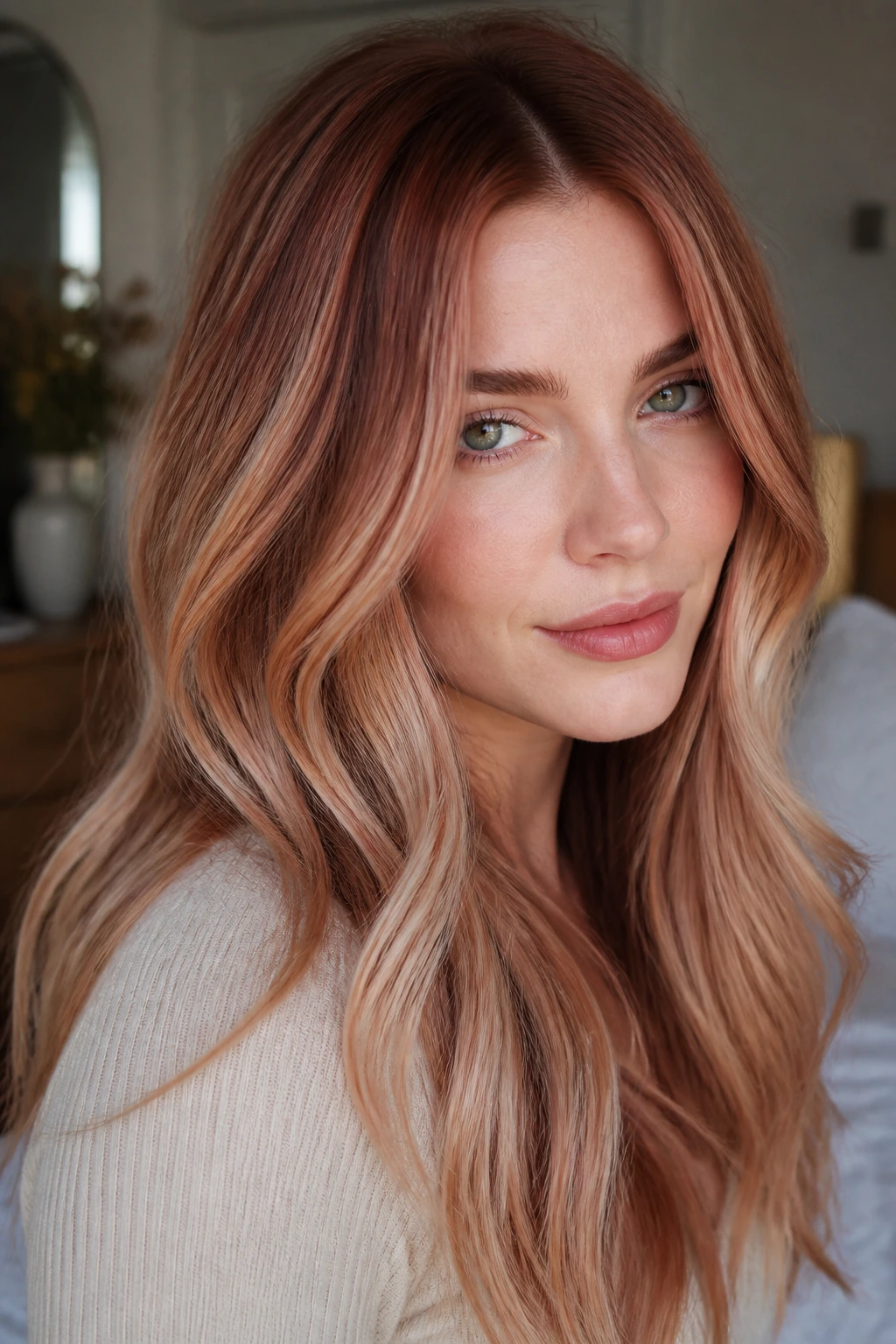
Cool skin tones can look washed out fast when auburn turns too orange. That’s the whole trap with auburn-blonde color: the shade is gorgeous on paper, then one wrong dose of gold and the face starts looking pinker, tired, or strangely flat. The best auburn blonde hair color ideas for cool skin tones keep the warmth under control with beige, rose, smoke, or chestnut so the color reads soft instead of loud.
The sweet spot sits somewhere between strawberry blonde and copper brown, but not in the obvious, pumpkin-orange way people sometimes mean when they say “auburn.” Think muted apricot, rose-copper, smoky cinnamon, and beige-tinged strawberry. Think depth at the root, shine through the mid-lengths, and ends that glow in daylight without screaming for attention.
That balance matters more than people realize. Too much gold can make cool skin look ruddy; too much ash can drain the life out of the shade and make it feel dusty. The versions that work best have a little movement, a little shadow, and a little restraint. Those are the colors that survive both indoor lighting and a harsh bathroom mirror.
Why These Auburn-Blonde Ideas Work on Cool Skin Tones
-
They soften warmth instead of fighting it: Beige, rose, and smoky copper sit better against pink or blue undertones than bright orange ever will.
-
They use depth to keep the face fresh: A shadow root or lowlight stops the color from floating on top of the skin and looking disconnected.
-
They give you room to choose your level of commitment: Some ideas are just a gloss or face frame, while others lean into full balayage or all-over dimension.
-
They grow out in a cleaner way: Rooted color and ribbon highlights usually look intentional longer than a flat one-shade copper.
-
They work with different base colors: You can borrow this palette whether you’re starting from dark brunette, medium brown, or light blonde.
How to Read Auburn-Blonde Shade Notes Without Ending Up Too Orange
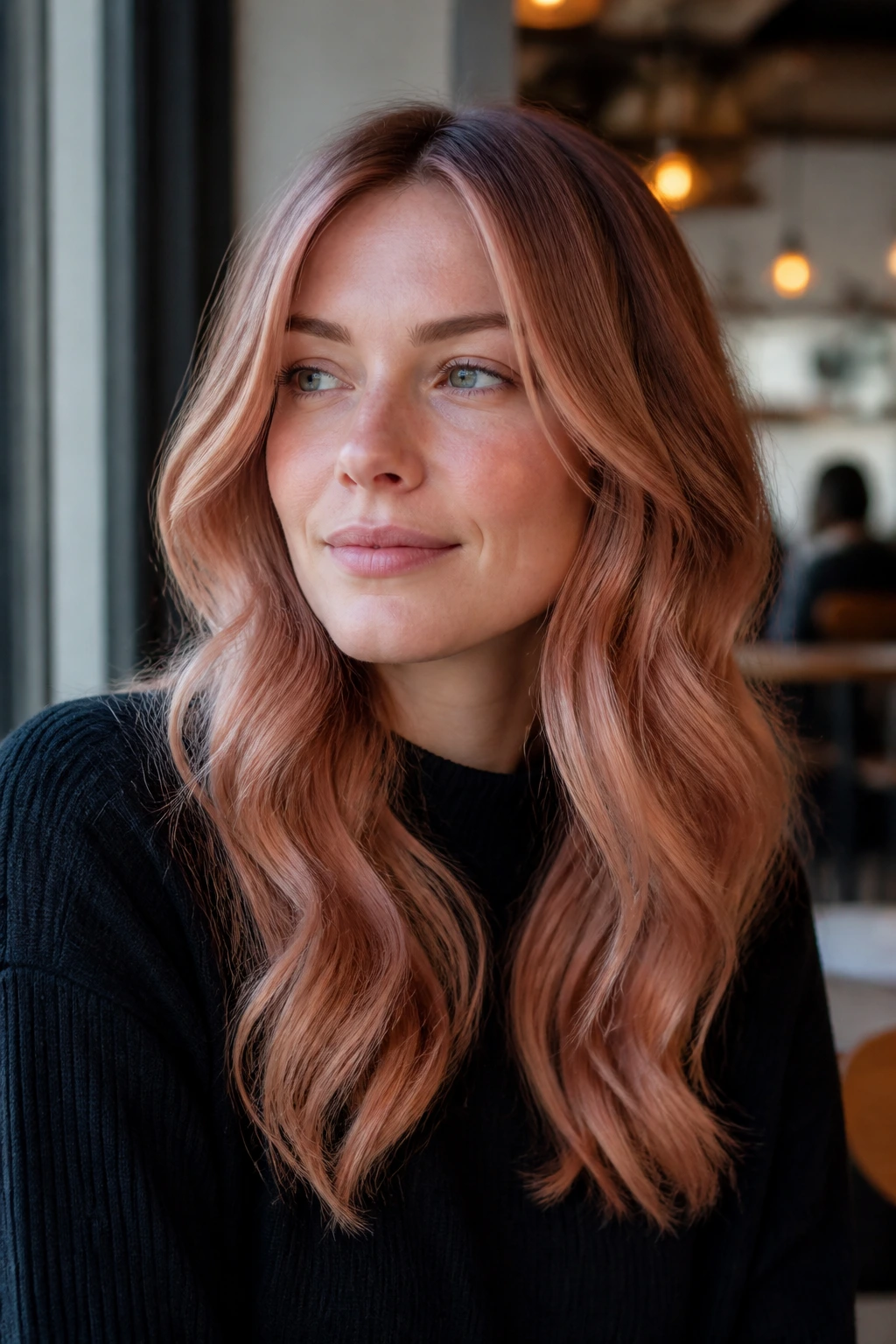
Auburn-blonde language gets messy fast because people use the same words for very different shades. One stylist’s “auburn” might be a deep copper brunette. Another’s might be a strawberry blonde with a beige gloss on top. For cool skin, the useful words are not the romantic ones. They’re the practical ones: rose, beige, smoky, chestnut, muted, dusty, mushroom, and softly copper.
Level matters, too. A level 7-8 auburn blonde usually gives you enough lightness to read as blonde, but enough depth to keep the copper from turning neon. If you go much brighter, the warmth can flare up in sunlight. If you go much darker, the result can lean brown instead of blonde, which is fine if that’s the goal, but it changes the whole mood.
Here’s the trick I’d keep in mind: if your skin is very fair and cool, ask for a shade that leans pink-beige rather than orange-gold. If your skin is cool but deeper, you can usually carry a bit more copper as long as the root has shadow and the ends stay glossy. That tiny shift changes everything.
1. Smoke-Kissed Copper Balayage
This is the version I’d put first in the lineup because it behaves. The smoke-soft root shadow keeps the copper from flashing too bright, while the beige ribbons through the lengths give cool skin something gentle to bounce off.
Why It Works
A level 6 root melts into level 7-8 copper-beige pieces, so the color never sits in one flat plane. That matters on cool skin, because flat warmth tends to look louder than it actually is. The smoky base also makes the lighter pieces look cleaner, not orange.
What to Ask For
- A level 6 neutral-ash root shadow so the top doesn’t go too red.
- Copper-beige balayage ribbons through the mid-lengths and ends.
- A few lighter face-framing pieces if you want the color to open up around the eyes.
I like this one on long layers and soft waves. It shows movement without needing a dramatic cut.
2. Rose Auburn Melt
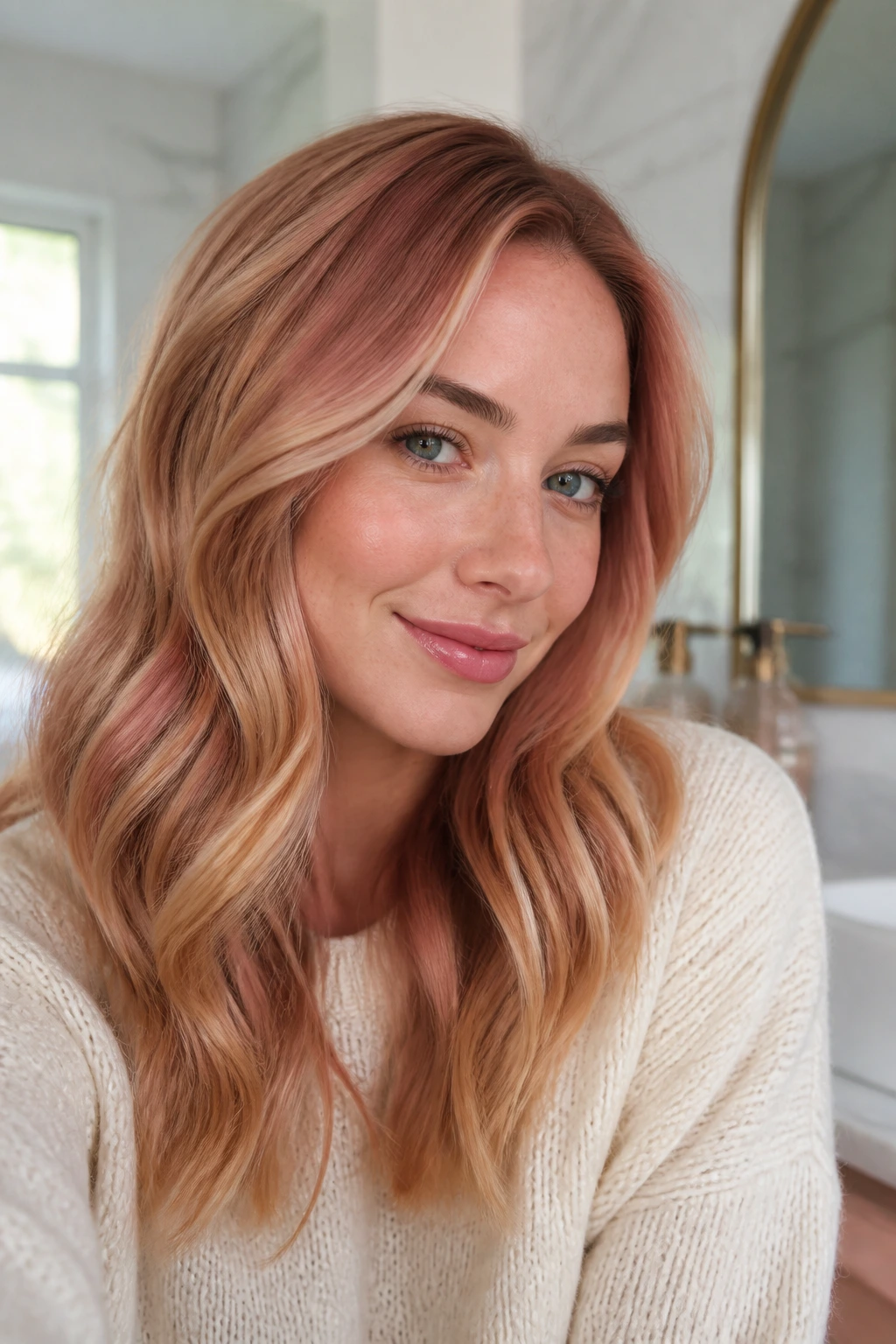
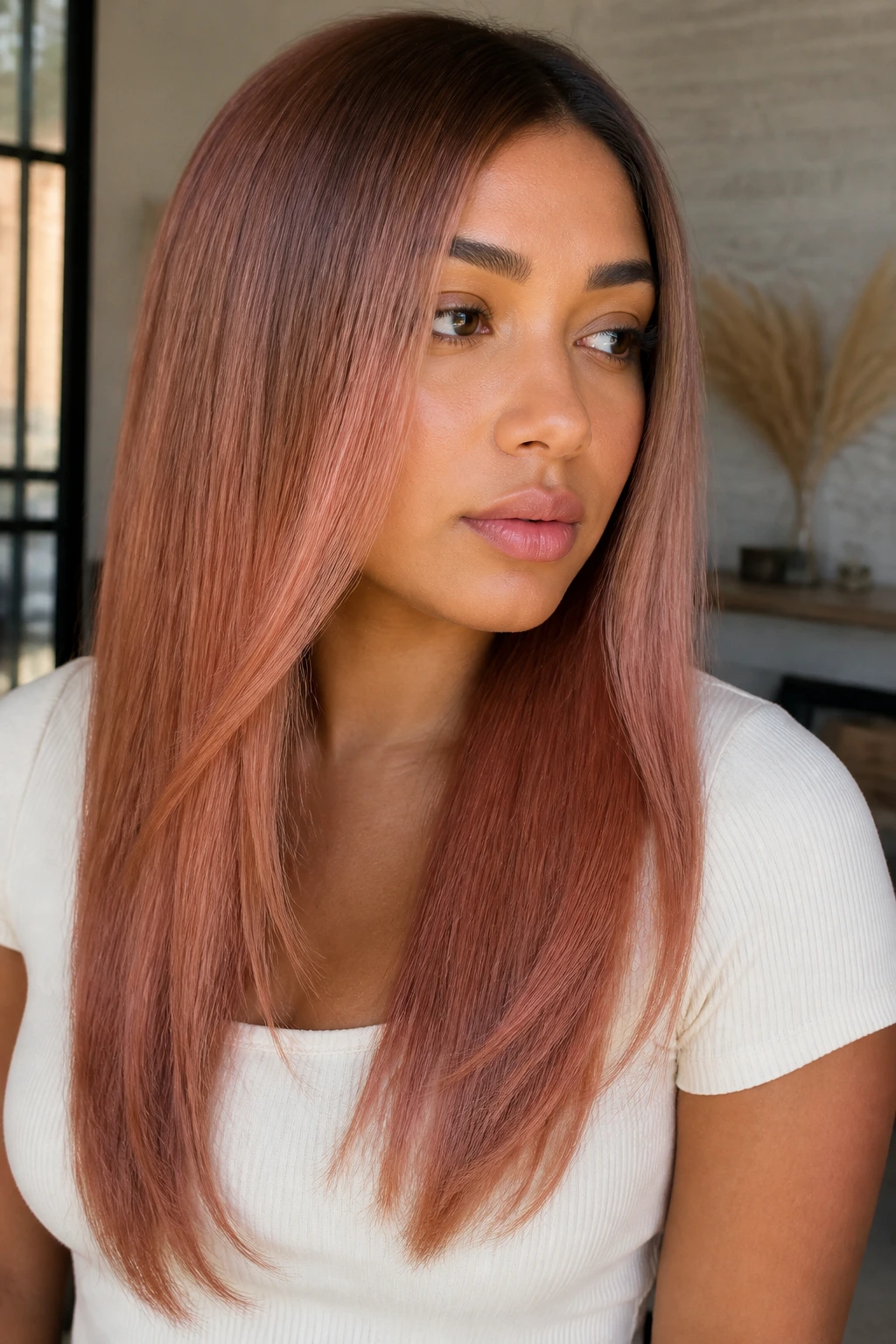
This is the softest choice on the list. Rose auburn trades sharp copper for a pink-beige undertone that makes cool skin look calmer, not flushed.
The best version starts with a light brown or dark blonde base and melts into rose-copper lengths that never feel striped. On straight hair, you get that smooth, liquid color shift. On waves, the rose note catches first, which is nice because it keeps the warmth from taking over.
If you hate orange but still want auburn, start here. It’s the shade I’d hand to someone who wants warmth at the ends and a neutral root that can grow out without a fight.
3. Beige Strawberry Blonde
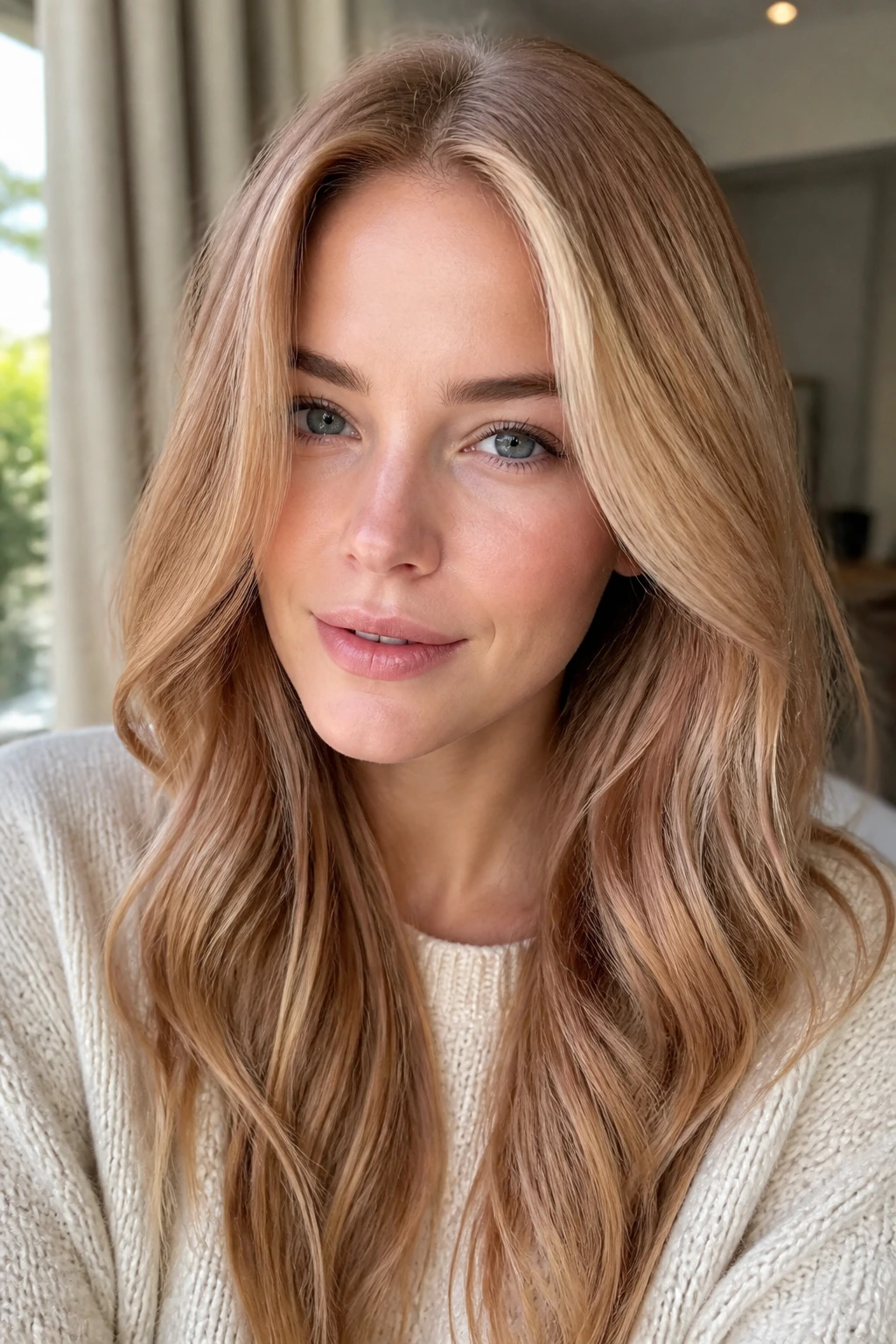
Why does this work when classic strawberry blonde sometimes doesn’t? Because beige strawberry blonde keeps the gold note quiet and lets the blonde side do more of the talking.
That little change matters on cool skin. A beige version stays creamy and soft, while a brighter strawberry can tip too peachy and make the face look pinker than intended. Ask for blonde pieces with a muted copper glaze instead of a full red-heavy formula. You want the shade to feel like sunlight through linen, not melted candy.
Best Placement
- Keep the brightest beige tone around the front.
- Leave the crown a shade deeper so the color doesn’t look washed out.
- Let the ends carry the strawberry note more than the roots.
4. Cool Cinnamon Ribbon Highlights
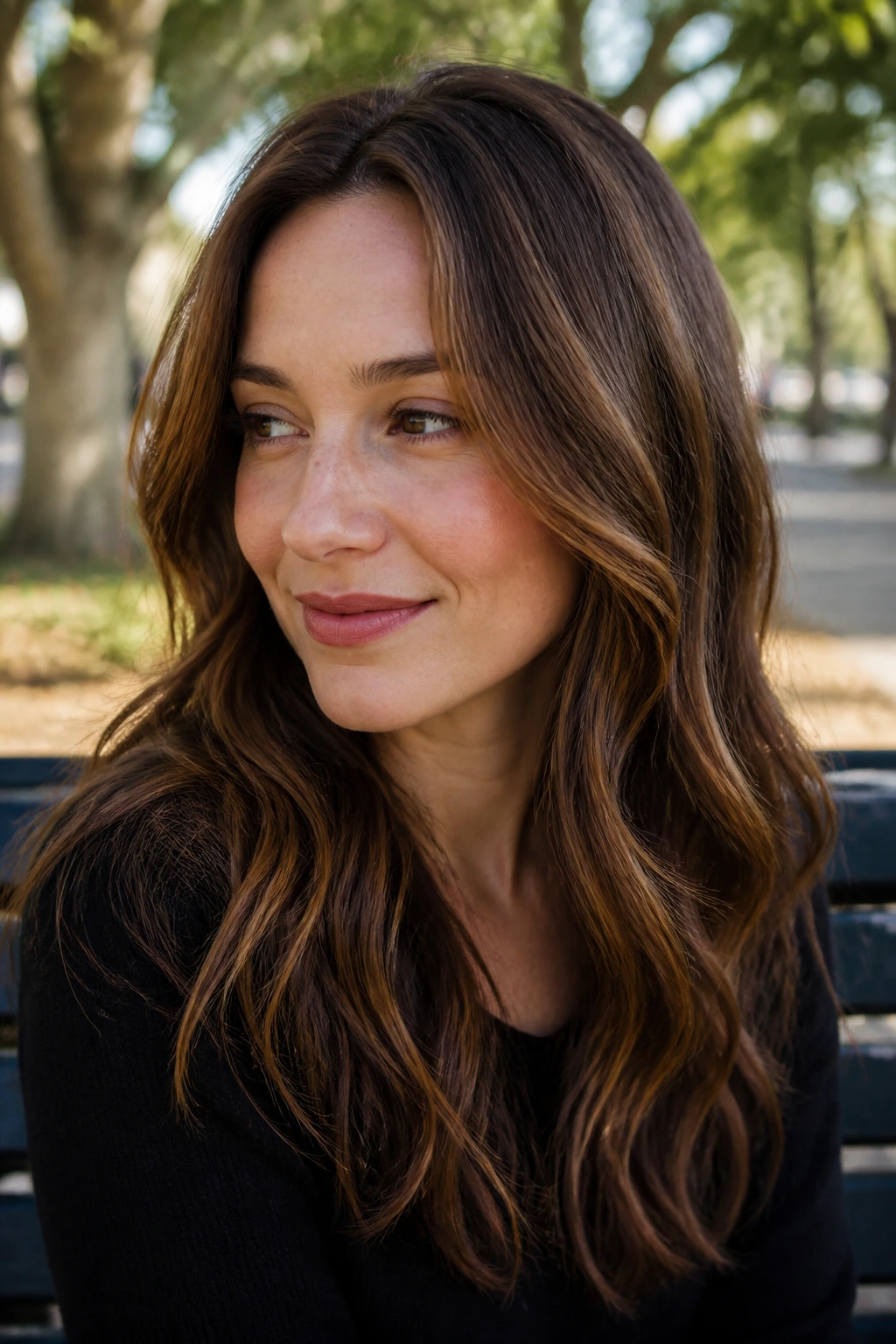
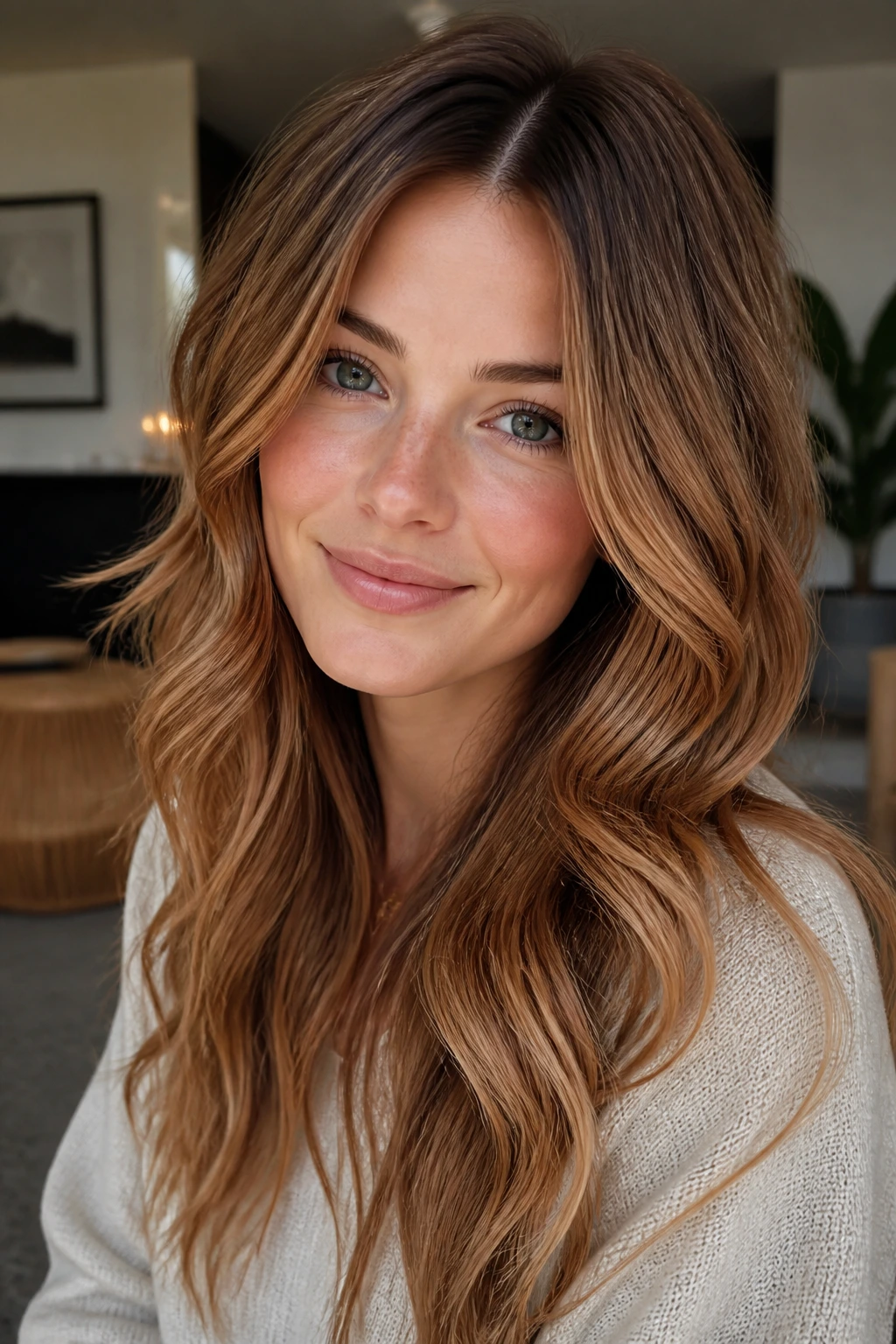
Cinnamon sounds warm, but cool cinnamon is really about the restraint. Instead of a bright orange ribbon, you get thin copper-brown highlights that sit inside a brunette or dark blonde base.
That makes this look a smart fit for cool skin because the warmth stays broken up. The ribbons add motion, not glare. On layered hair, especially long shags or soft cuts with movement, the highlights show up as flashes instead of blocks, which keeps the whole thing elegant in the plainest, best sense of the word.
If your natural color is medium brown and you want auburn-blonde energy without a big maintenance load, this is a solid middle ground.
5. Mushroom Auburn Lob
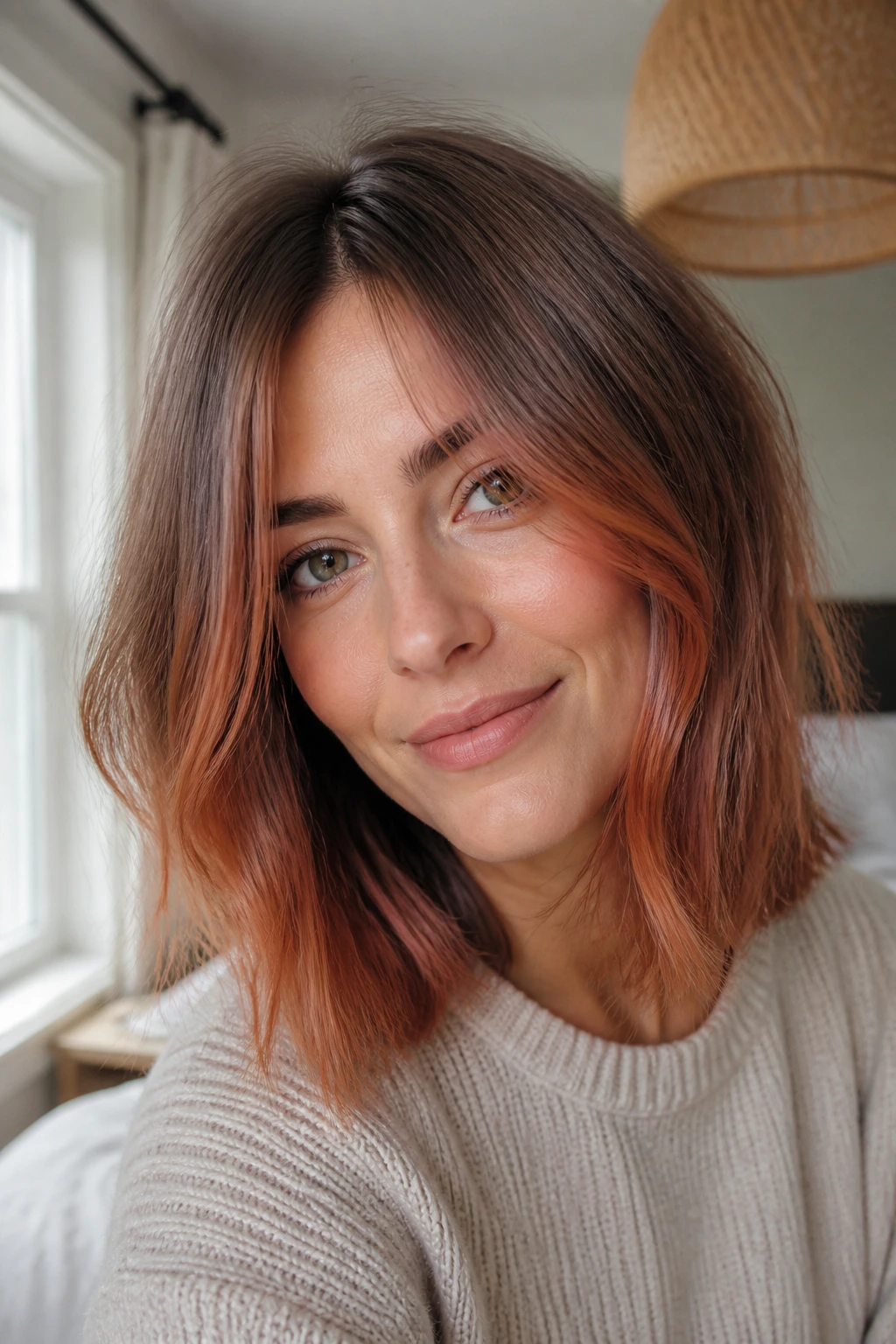
A mushroom auburn lob sounds odd until you see it. Then it makes sense. The mushroom tone cools the root and mid-lengths, while the auburn appears as a soft copper haze at the ends and around the face.
This is the one for people who want warmth but hate obvious warmth. It works especially well on a blunt lob or slightly textured bob, where the cut gives the shade enough shape. The cool base keeps fair skin from going red-faced, and the auburn pieces stop the color from looking flat or gray.
It’s a good choice if you wear your hair straight a lot. The line of the cut and the tonal shift do the work for you.
6. Champagne Copper Face Frame

The face frame is the fastest way to test auburn blonde without surrendering the whole head to it. Champagne copper sits between soft gold and pale copper, so it brightens cool skin without making it look sunburned.
You can keep the rest of the hair closer to your natural shade and still get the effect where it counts. Around the face, it gives a little lift near the cheekbones and eyes, especially if your base color is medium brown or dark blonde. It’s a smart move if you’re nervous about copper but want to see whether auburn can live on you at all.
A few pieces near the front go a long way. Don’t overdo it.
7. Dusty Apricot Balayage
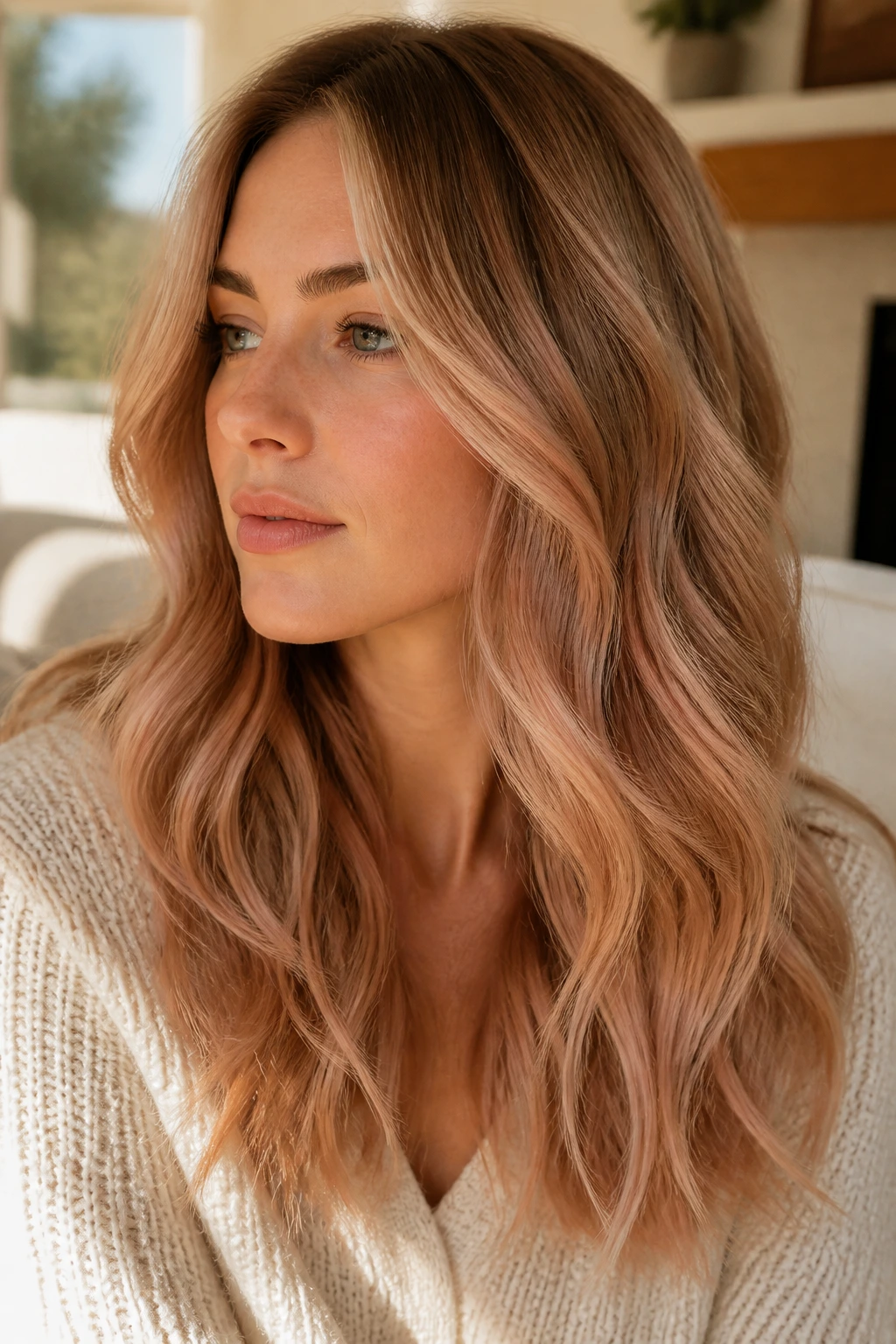
Dusty apricot is what happens when apricot grows up and learns some manners. It keeps the peach note, but it gets a beige filter that makes it wearable on cool skin instead of sticky-looking.
This shade shines on blondes who want something warmer than beige but softer than true copper. It also plays nicely with soft waves, because the different shades show up as a blur rather than a hard line. That blur is the whole point. On cool undertones, a dusty finish usually beats a bright one, especially if your skin is very fair or easily flushed.
Ask Your Stylist For
- A beige-apricot gloss rather than a bright orange toner.
- Fine balayage sections, not chunky panels.
- A finish that stays soft and translucent, not opaque.
8. Chestnut-Root Auburn Blonde
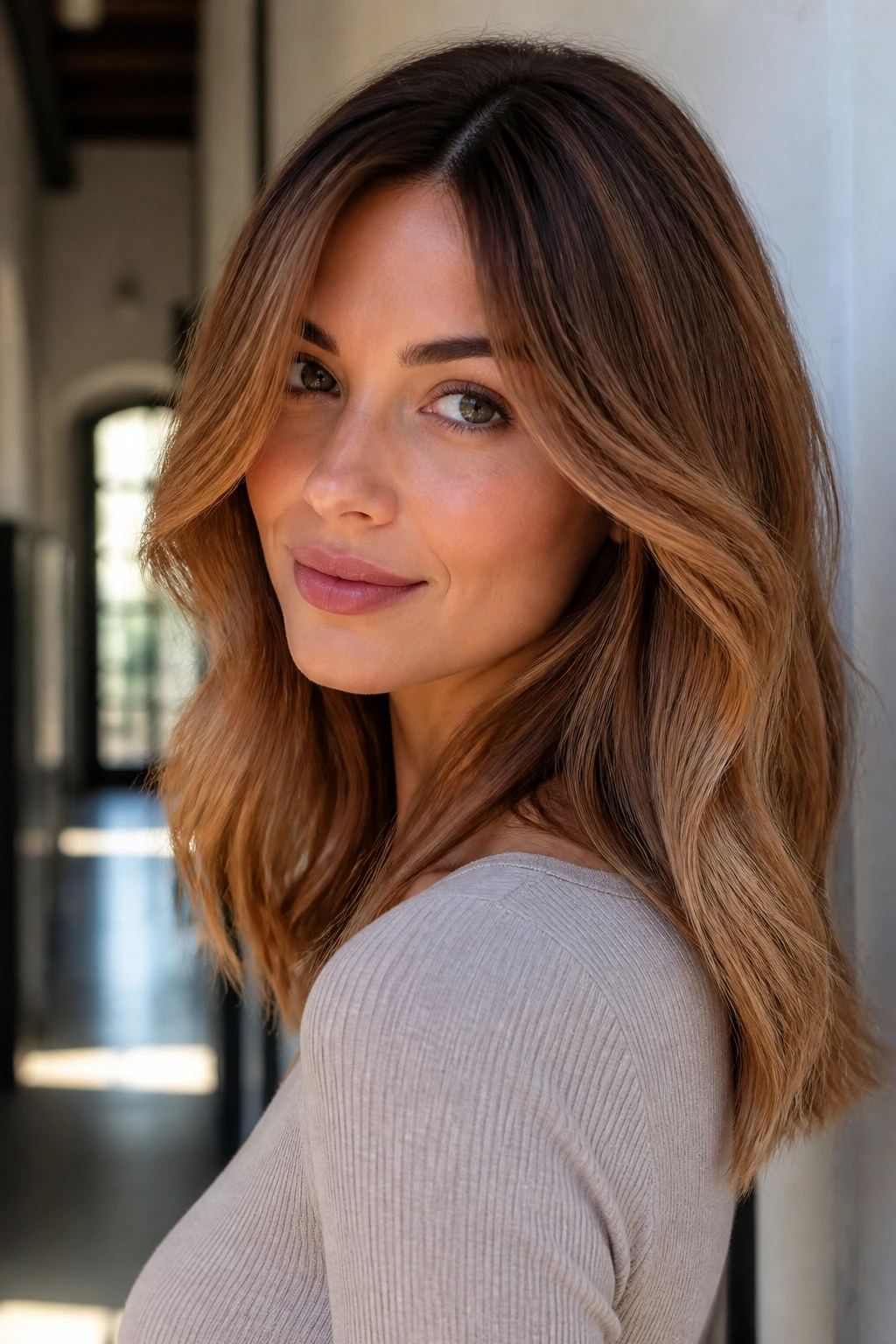
A chestnut root does a lot of quiet work here. It anchors the color, keeps the top half from looking brassy, and makes the auburn blonde lengths feel richer by contrast.
This is one of the most practical auburn blonde hair color ideas for cool skin tones if you want something that grows out well. The darker root gives you permission to wear lighter ends without making the whole head look over-processed. On medium to long hair, chestnut-root color often reads as polished because the eye gets a clear shift from shadow to light.
It’s also a strong choice if your eyebrows are naturally dark. The root won’t fight them.
9. Soft Berry Blonde
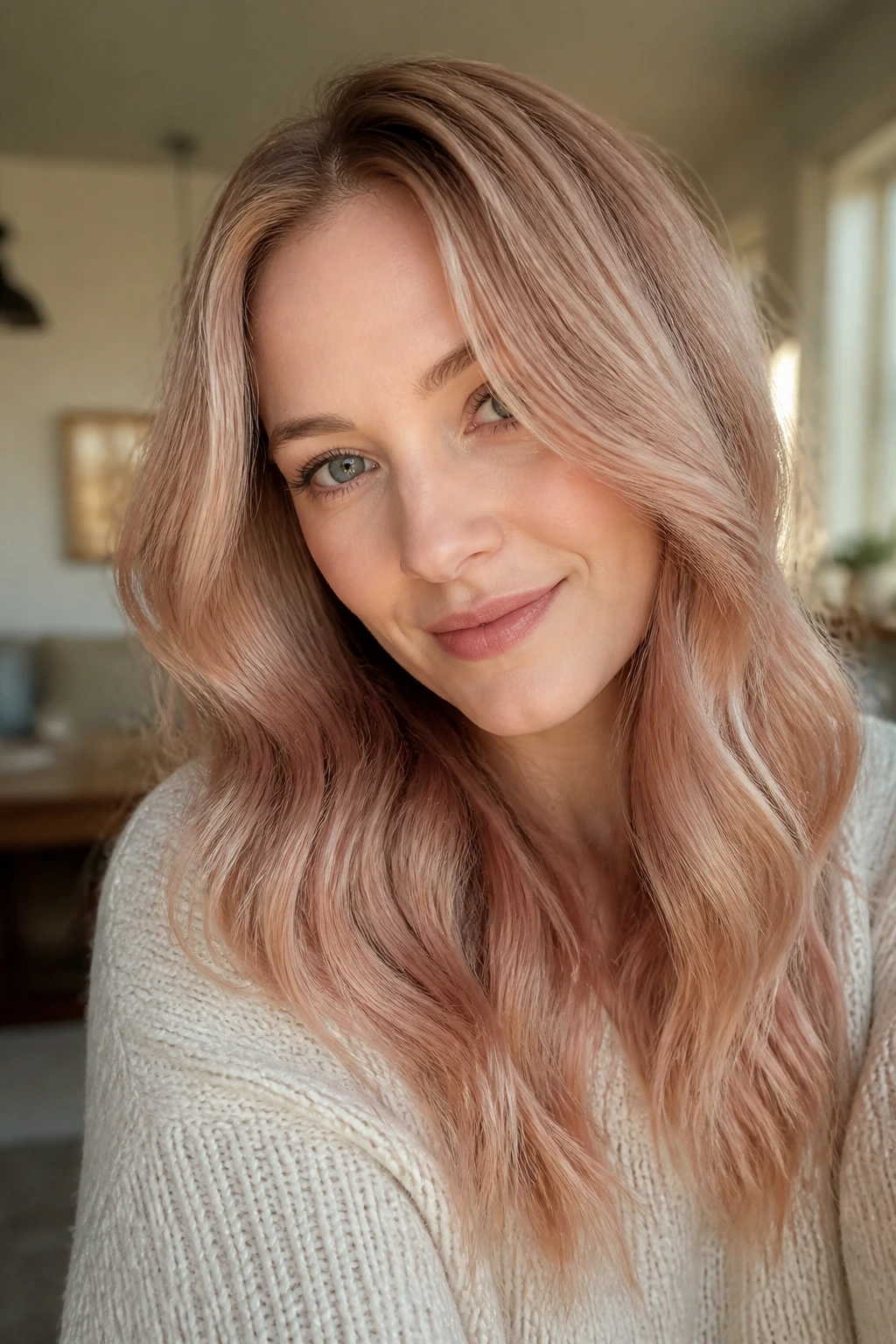
Berry blonde is for people who want red tone without sliding into red hair. The berry note pulls pink, not tomato, which is exactly why cool skin usually handles it better.
The blonde stays present, but it gets a blush cast that makes the whole shade feel more refined. This looks especially good if your natural hair is already light and you want something seasonal-looking without going dark. Straight styles show the color cleanly; soft curls make it look more dimensional.
If your skin leans cool and rosy, this is one of the easiest ways to add warmth without looking overdone.
10. Iced Copper Sombre
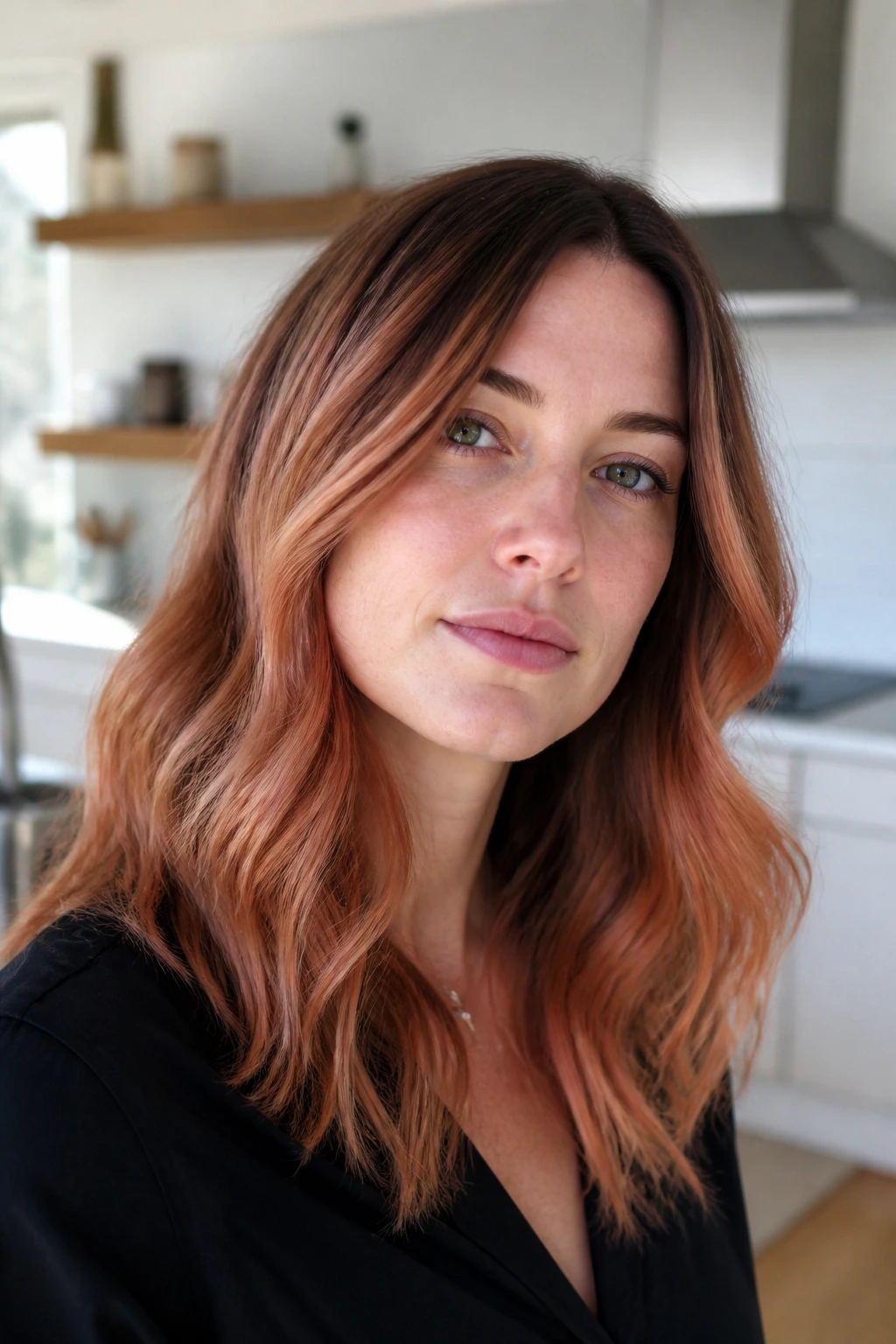
The whole point of this shade is to keep the contrast low. An iced copper sombre takes auburn blonde and stretches it into a slow fade, so you never get that hard line between root and end that can make copper feel too aggressive.
A sombre works well on fine hair because the subtle transition makes the hair look fuller without creating a stripe pattern. On cool skin, the icy note helps the copper read cleaner. You get warmth, but the finish stays cool enough to sit beside pink undertones instead of competing with them.
This is a good one if you want movement and shine without much obvious regrowth.
11. Peachy Beige Dimension
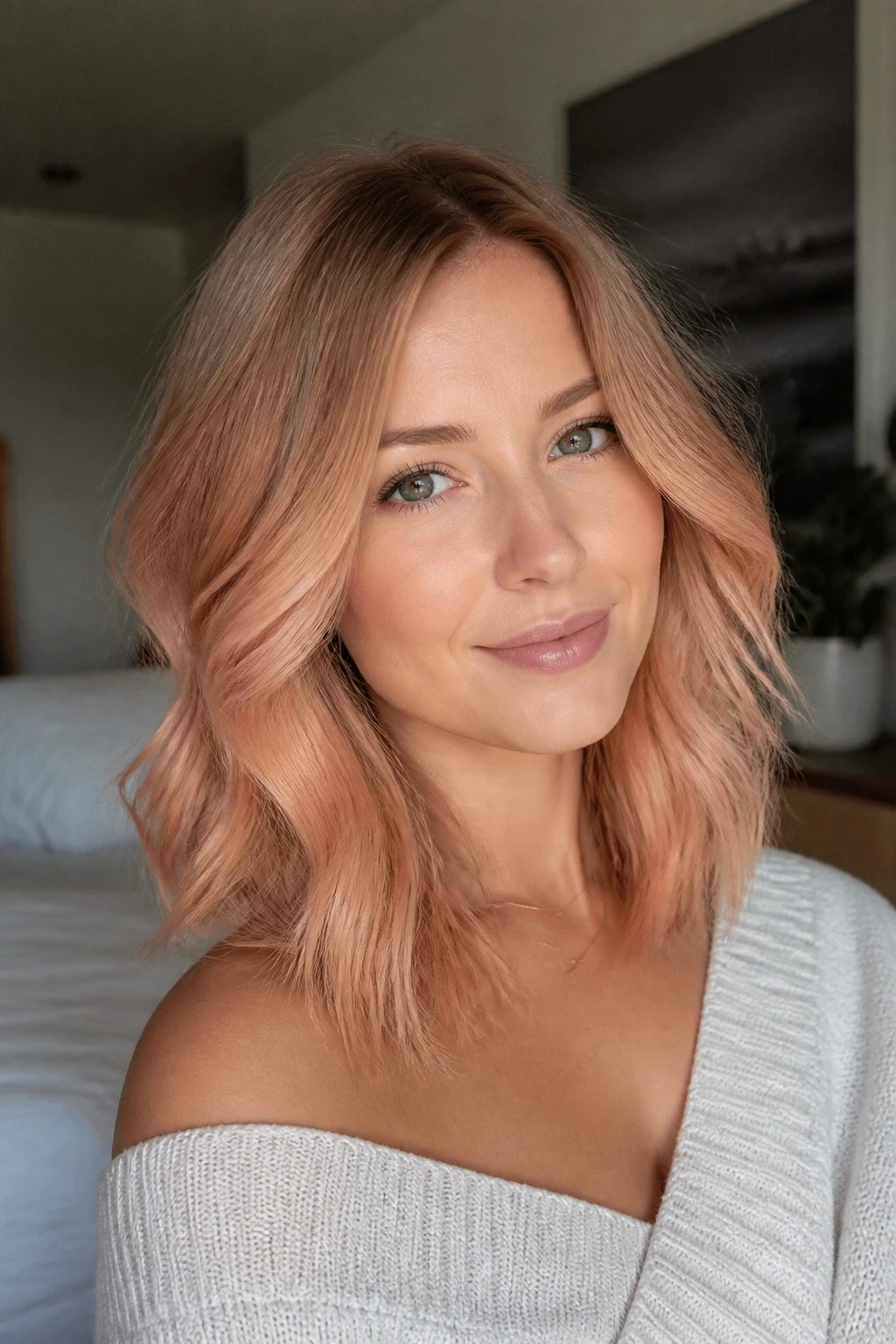
Why is this one sneaky good? Because the peach never shows up alone. It’s always buffered by beige, and that buffer is what makes the shade wearable for cool skin.
Ask for very fine dimension, not a full peach overlay. The look should read as a blonde that caught a warm filter, not as a peach statement color. On medium-length hair, this color does nice work in the ends and around the face. On longer hair, it creates a soft glow when the hair bends.
Best Placement
- Concentrate the peachier tone on the mid-lengths and ends.
- Keep the top section beige or neutral.
- Leave a little natural depth near the part so the color doesn’t wash out.
12. Cranberry-Glaze Ends
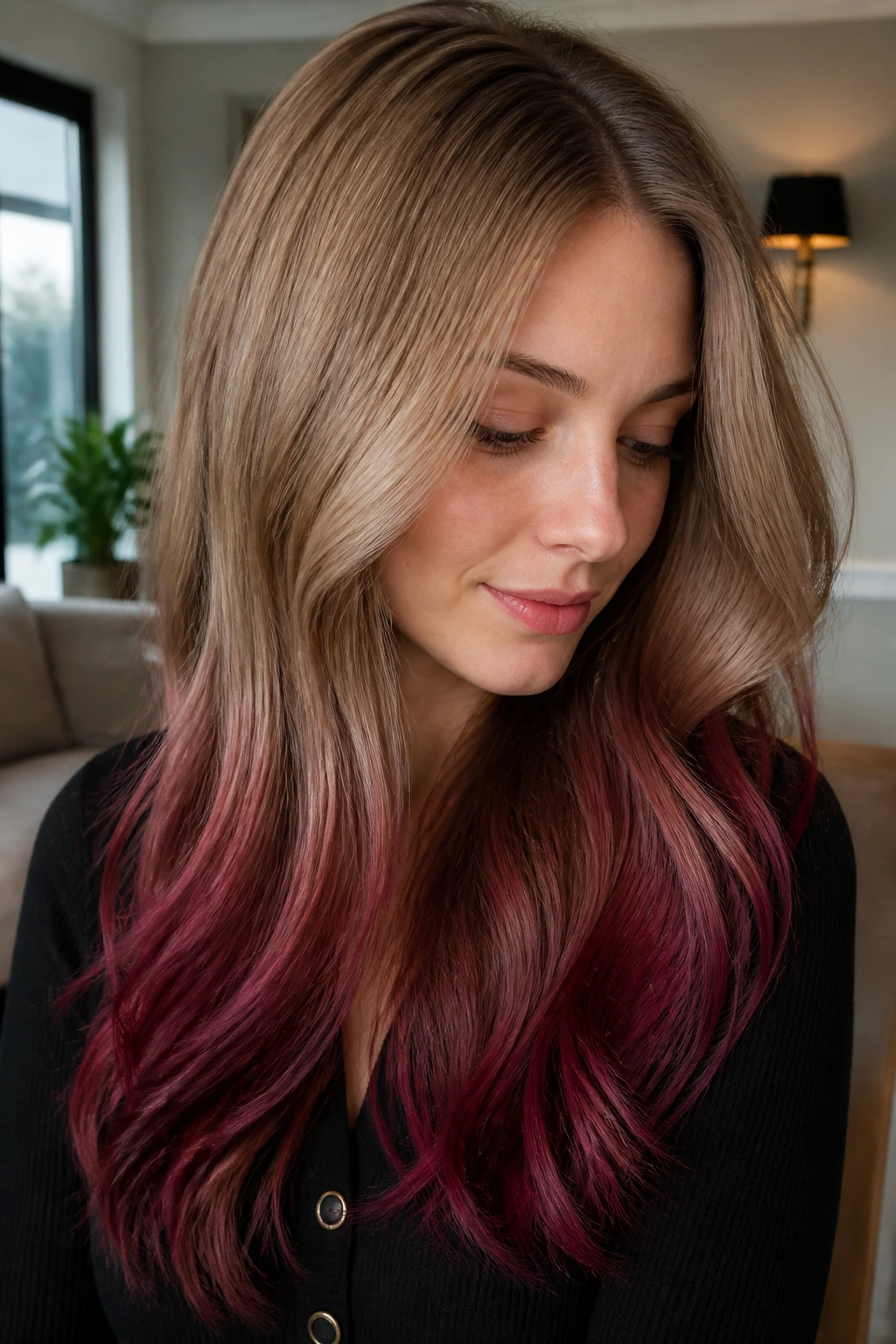
This is the dramatic option that still plays by the rules. Cranberry-glaze ends give the hair a wine-red finish at the bottom while the top stays blonde, beige, or softly coppered.
For cool skin, that red family note works because it pulls berry instead of orange. The contrast is sharp enough to feel intentional, but not so hard that the whole look goes theatrical. I like this on long hair where the ends can move. Curls make the cranberry catch light; straight hair makes it look sleeker and a little moodier.
If you want auburn blonde with a sharper point of view, this is the one.
13. Rose Gold Auburn Fade
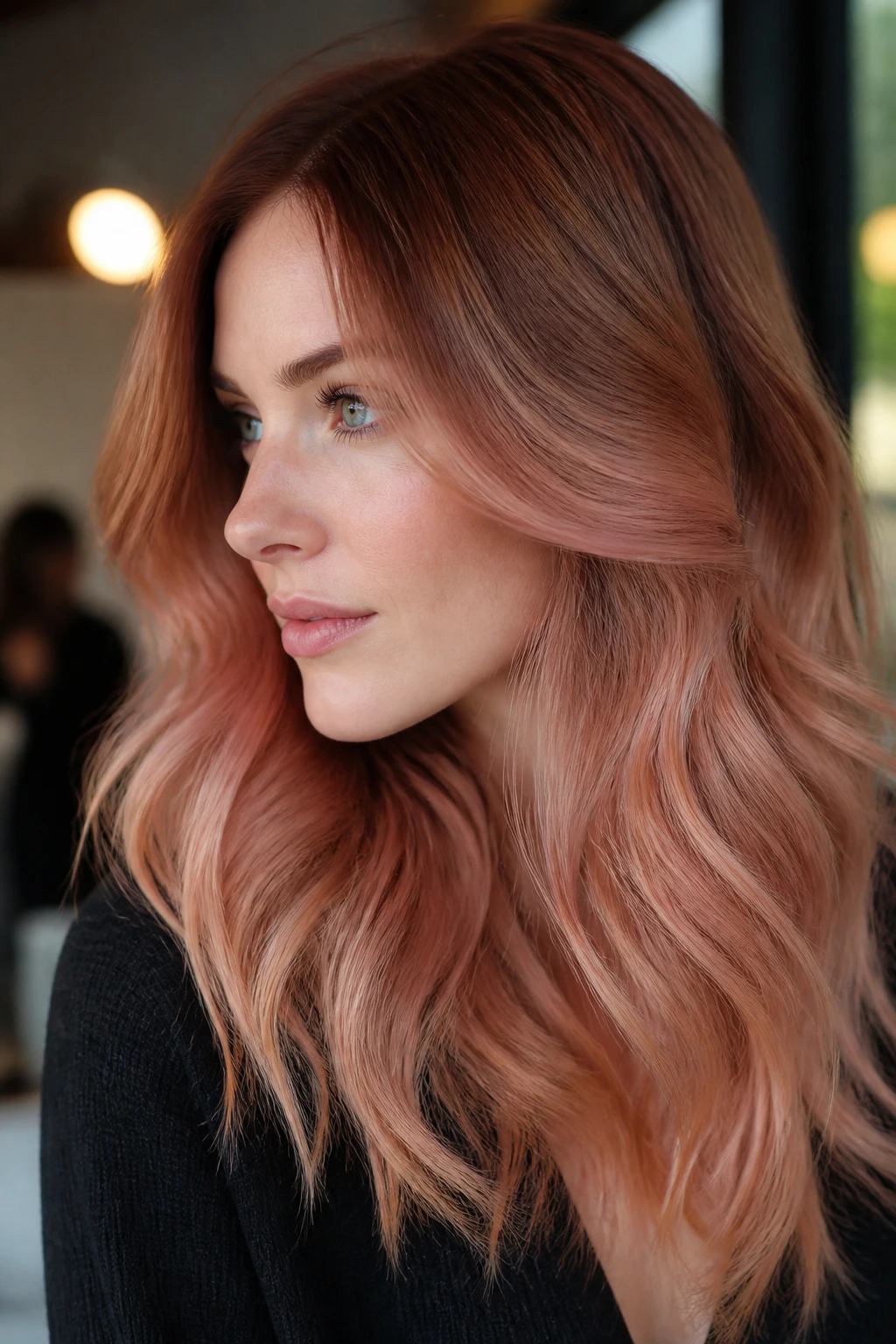
Rose gold gets overused, but this version earns its keep because the auburn keeps it from going flat and the rose keeps it from going too coppery.
The fade matters here. Instead of a strong color block, the shade shifts from a deeper root into warm rose-blonde lengths. Cool skin tends to like that softness because the warmth never arrives all at once. It creeps in. Much better. The effect is especially pretty on layered cuts where the lighter ends can move independently of the root.
This is a nice choice if you like shine and want something a little romantic without making the hair look sugary.
14. Cool Ginger Money Piece
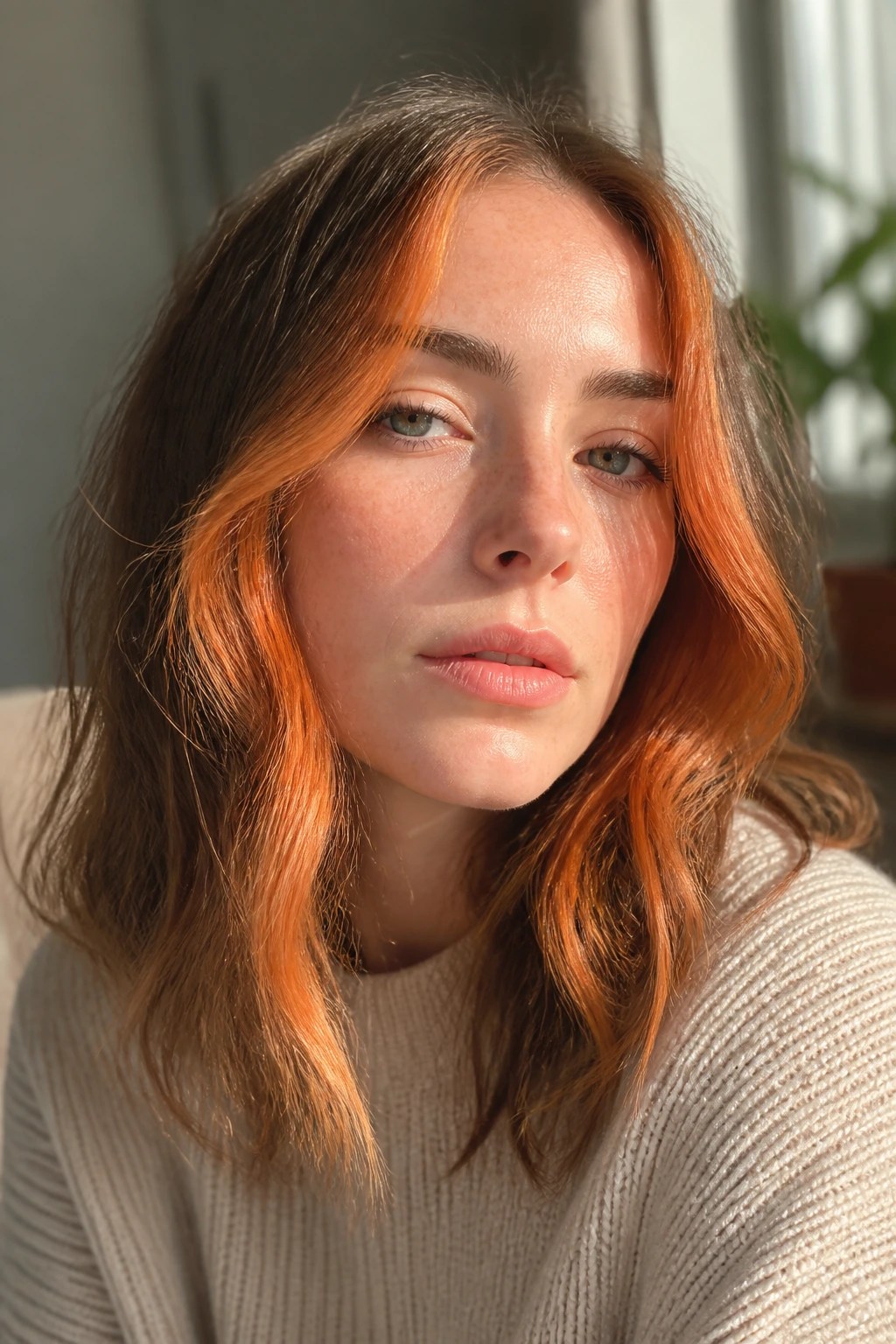
A money piece can do more than most people give it credit for. With cool ginger, it becomes a bright frame around the face, but the ginger is muted enough that it doesn’t fight the skin.
This is the easiest color idea for someone who wants auburn-blonde energy without changing the whole head. The front pieces pull attention upward and give a face-framing lift, especially on cool complexions that can handle a bit of contrast. Keep the rest of the hair neutral or smoky, and the money piece becomes the point, not a gimmick.
It’s the fast lane. And sometimes that’s enough.
15. Brushed Copper Bob
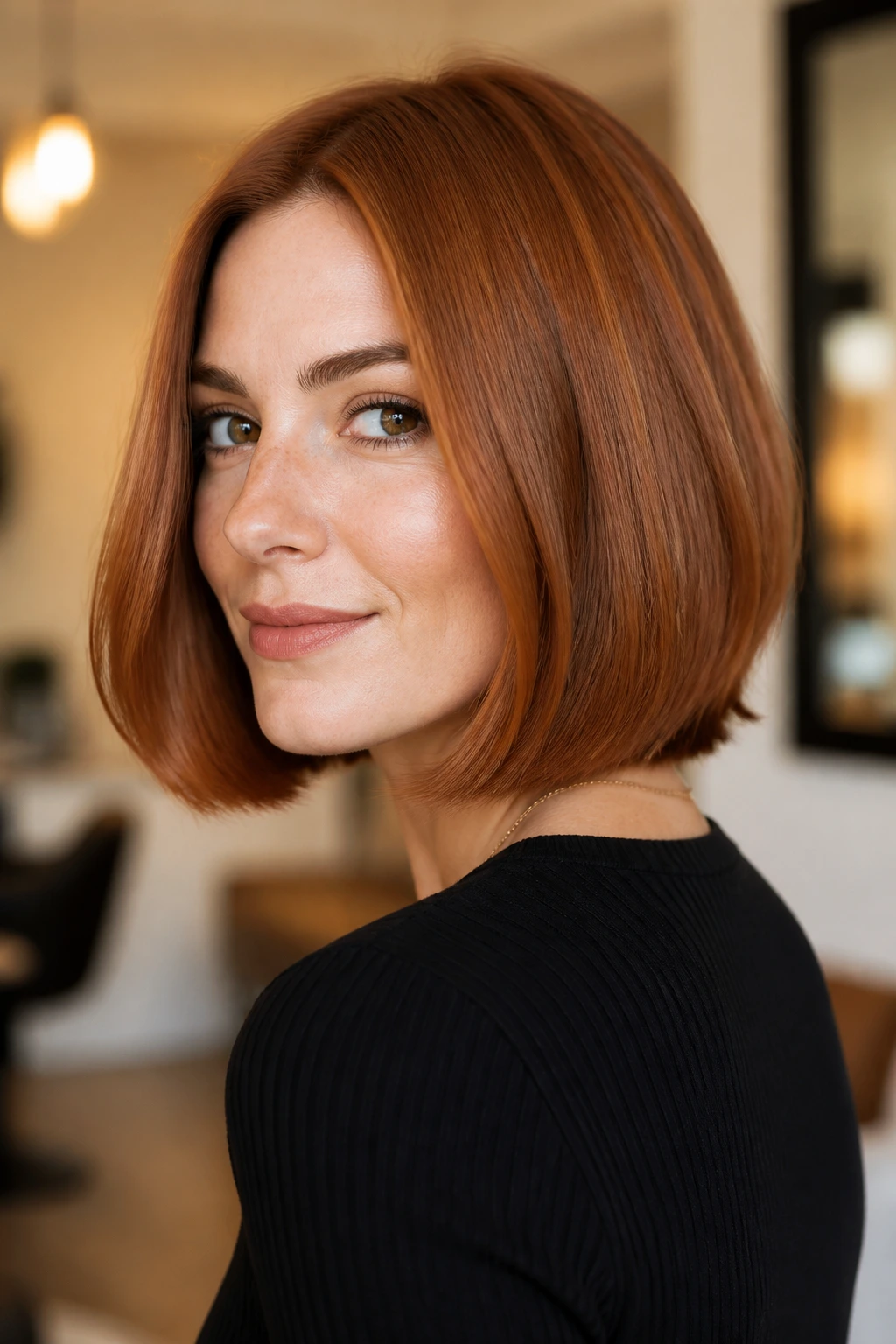
A bob changes the whole read of a color. On a brushed copper bob, the ends stay polished, the copper looks cleaner, and the shorter length keeps the warmth from building up too much.
This shade works well if your cool skin prefers structure. The cut gives the color shape, and the color gives the cut some softness back. I like this on a blunt bob with a slight bend through the ends because it keeps the copper from looking too neat, which is where short hair can go wrong if the tone is too flat.
It’s neat, but not stiff. That’s the sweet spot.
16. Toffee-Ash Auburn
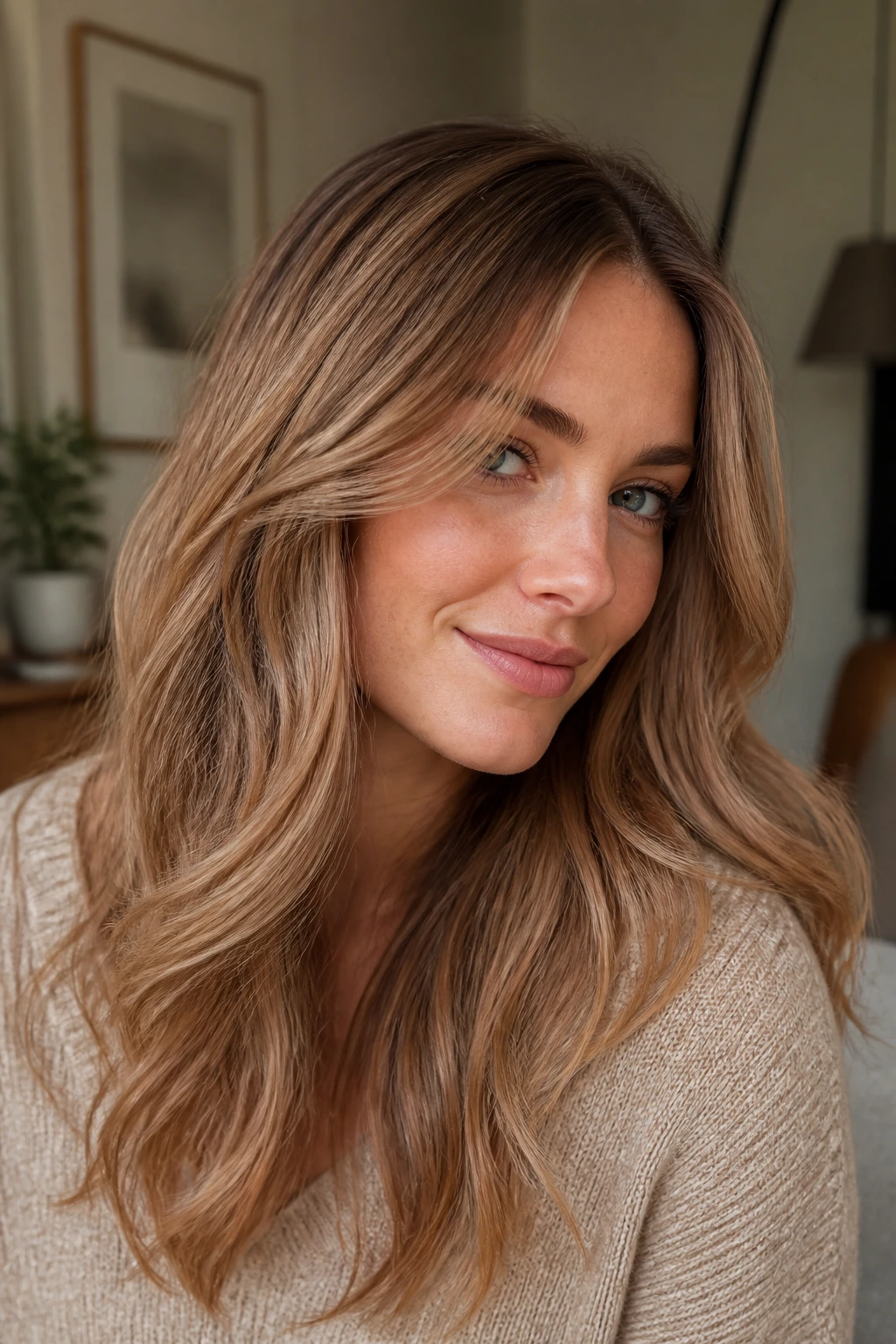
Toffee usually leans warm, but ash changes the script. The toffee stays creamy, while the ash base cools it down enough for cool skin to wear comfortably.
This is a smart middle shade for brunettes who don’t want obvious blonding. You can keep more depth at the crown and allow the lengths to take on that soft auburn-blonde shift. It’s one of those colors that looks expensive because it doesn’t try too hard. The depth does the work, and the highlights are there to keep it from sinking into brown.
If you prefer low drama and good grow-out, this one deserves a serious look.
17. Blush Blonde Waves
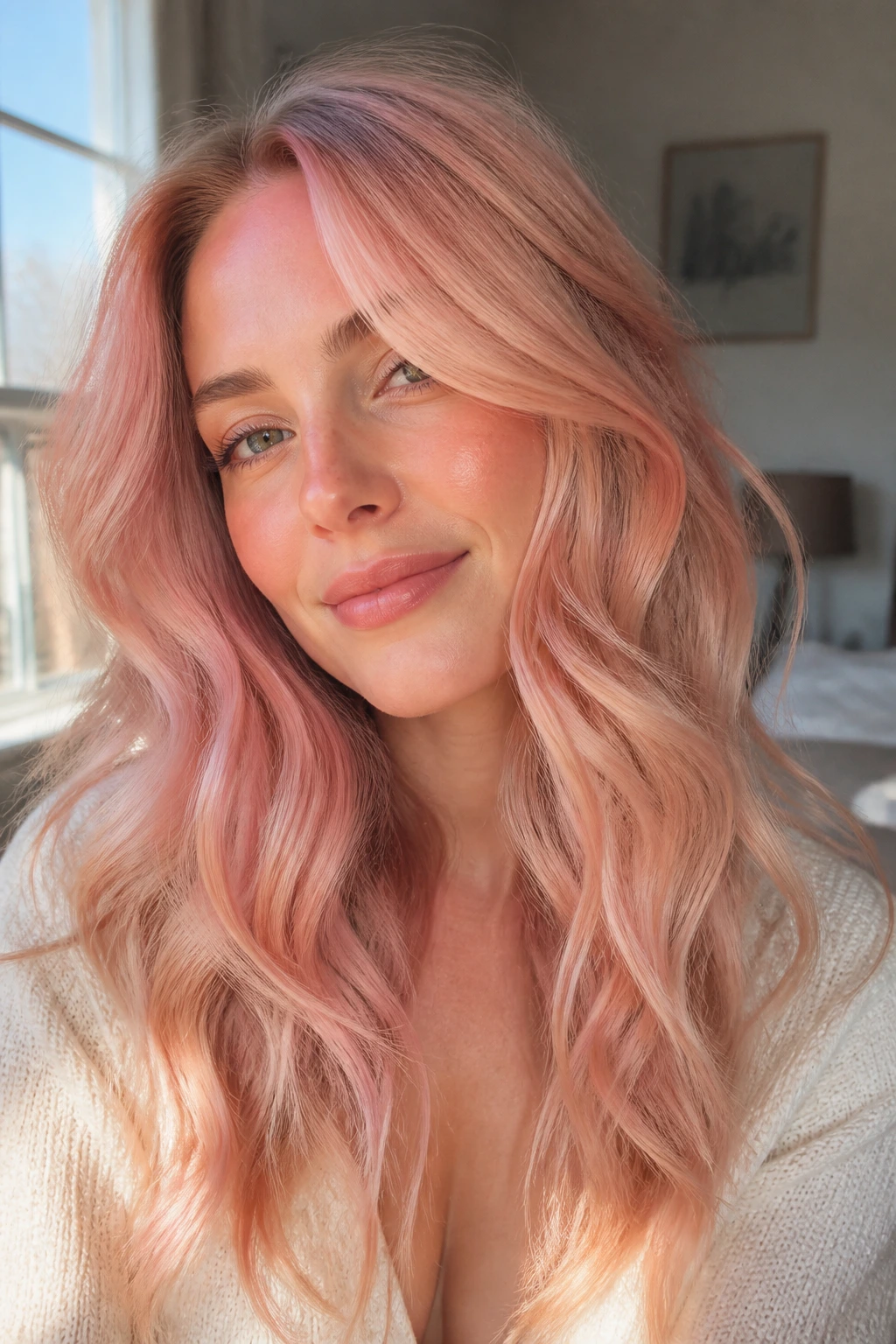
Blush blonde is the gentlest version of pink-leaning blonde. It works because the blush is restrained, so the shade stays in the strawberry family without turning candy-bright.
Cool skin usually likes this when the blonde base is pale enough to carry the tint. Waves help the blush and blonde blend together, which gives the color movement and keeps it from reading as a single flat tone. If your hair is naturally light, this can be a lighter-maintenance route than full auburn because it usually needs glossing more than aggressive lifting.
Soft, airy, and not fussy. That’s the appeal.
18. Muted Auburn Highlights on a Brunette Base
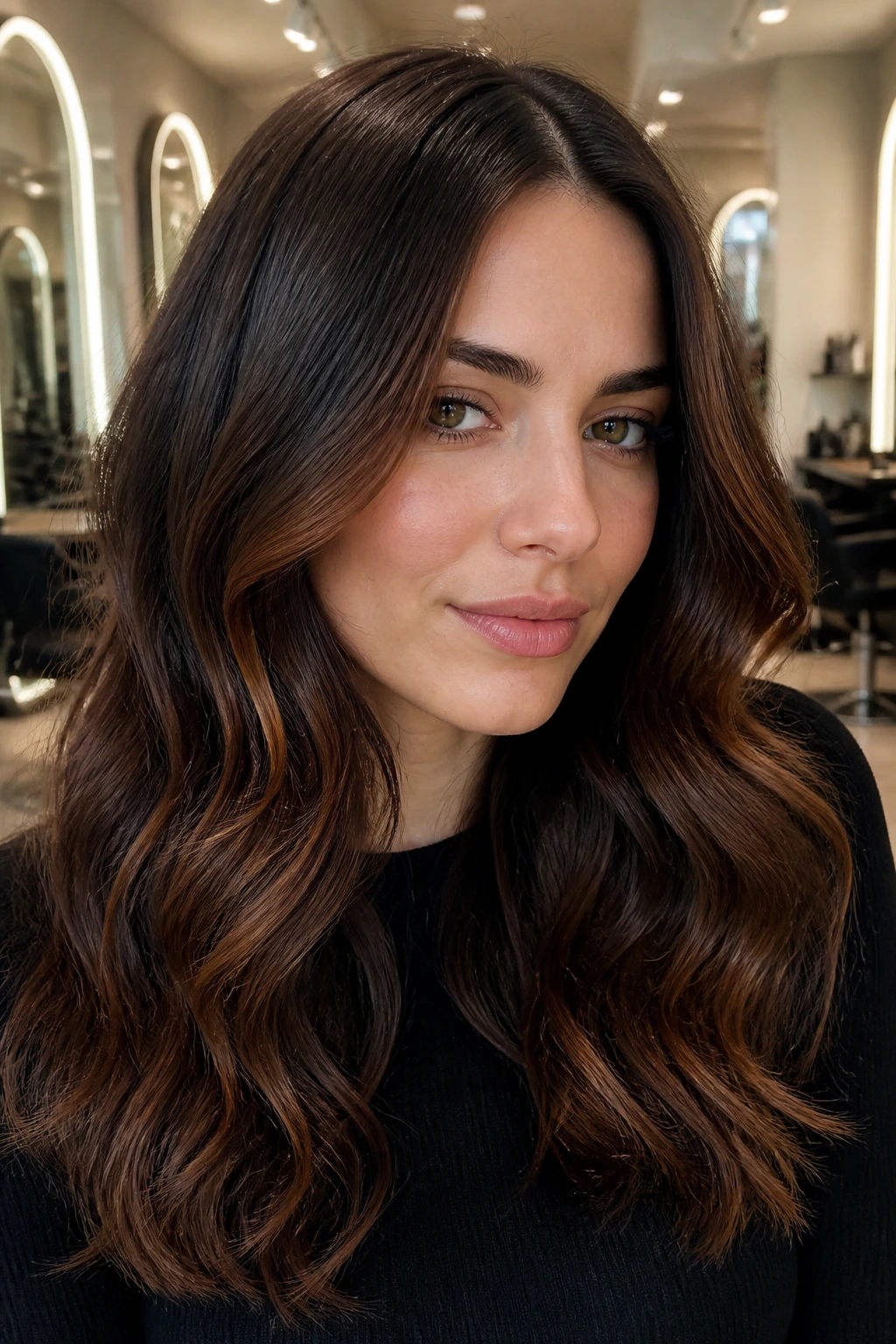
Can brunette hair wear auburn blonde without looking streaky? Absolutely, if the highlights are muted and placed with care.
The trick is keeping the auburn pieces fine and not too light. You want them to sit inside the brunette base, not sit on top of it like stripes. For cool skin, that subtlety matters. The highlights should look like the sun found the hair and then cooled down halfway through. That gives the face warmth without shouting.
Good Placement Notes
- Keep the brightest pieces around the face and crown.
- Use thin, feathered sections through the mid-lengths.
- Ask for a neutral or ash root to keep the contrast calm.
19. Strawberry Ash Pixie
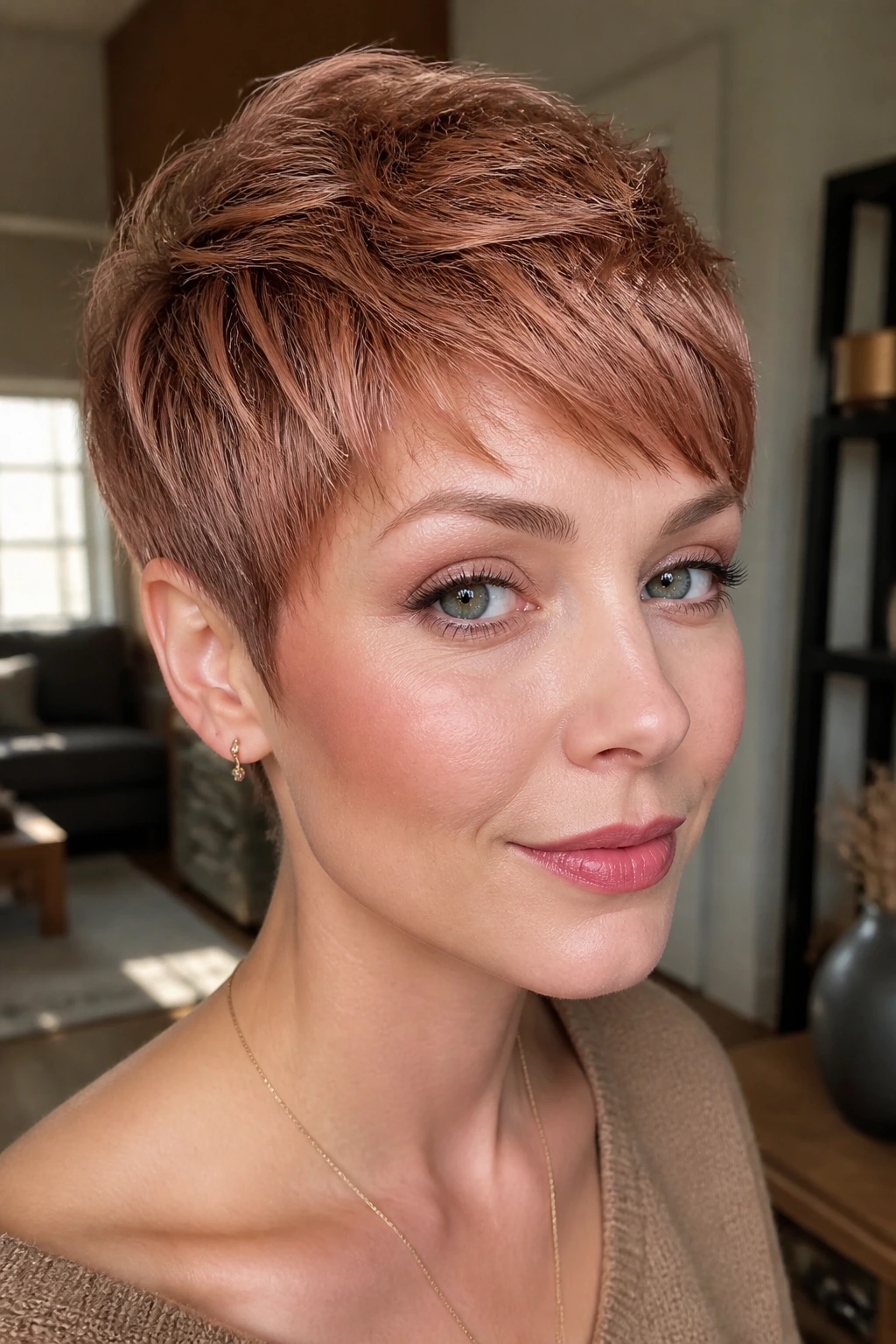
Short hair can handle more color than people expect, but only if the tone is tight. Strawberry ash does that job nicely because it keeps the red note soft and gives the pixie enough contrast to look intentional.
The ash cuts the sweetness. The strawberry keeps it from going gray. On cool skin, that mix is useful because it brightens the face without making the hair read warm in a blunt way. With a pixie, every millimeter counts, so a glossy finish matters. Dry texture can make this shade look muddy fast.
It’s a small cut, but it likes a precise color hand.
20. Cinnamon Champagne Curls
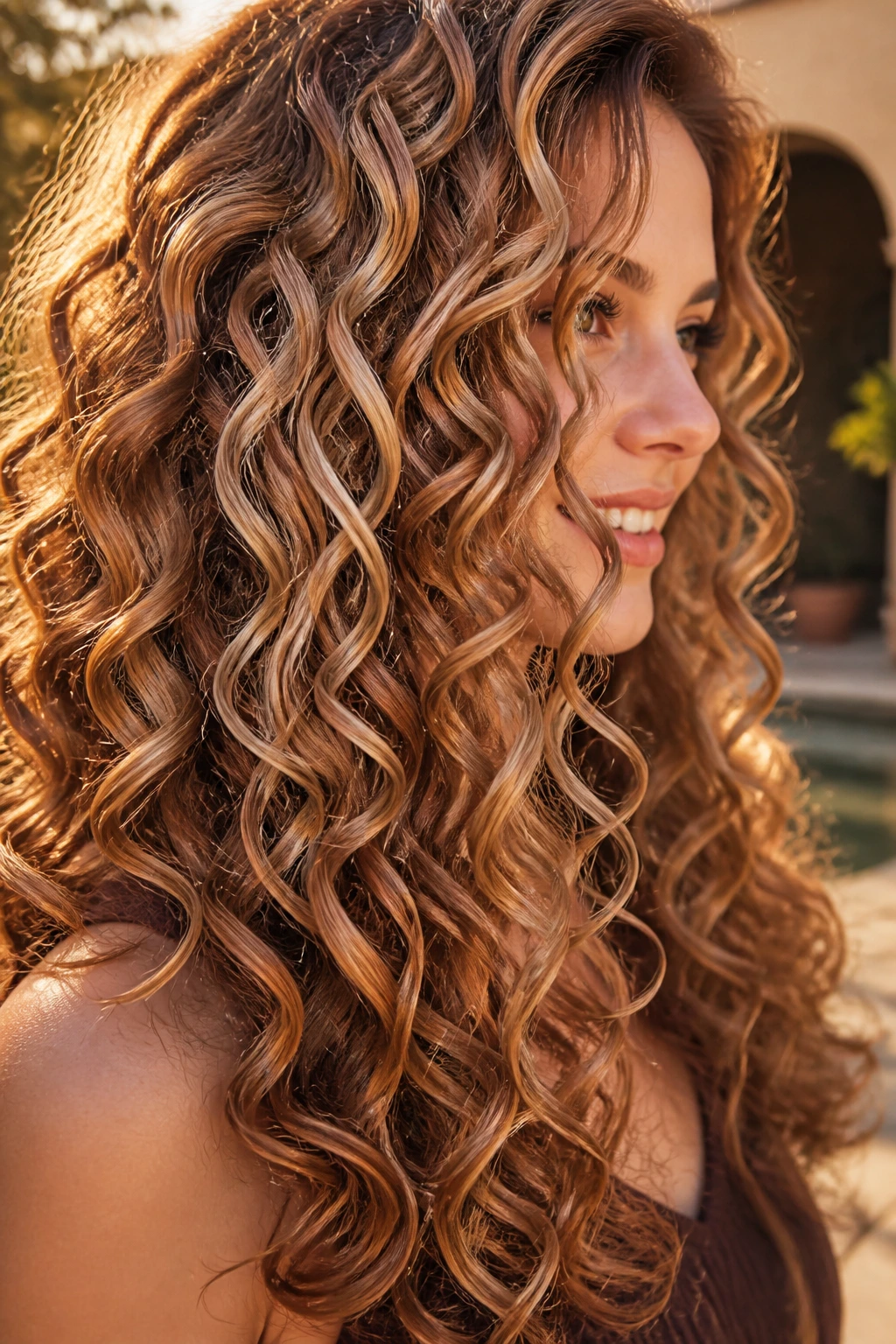
Curls change the conversation because they break up the color. Cinnamon champagne takes advantage of that by putting warm copper-brown and pale beige in the same head, so the curls catch different notes as they move.
This is a beautiful fit for cool skin if the cinnamon stays muted. The champagne pieces should sit higher on the curl pattern, while the deeper cinnamon lives underneath. That keeps the color lively without turning brassy. It also gives the curls better shape, since dimension shows up more clearly on textured hair than on straight hair.
I’d keep this one glossy. Curls love shine.
21. Soft Copper-Taupe Melt
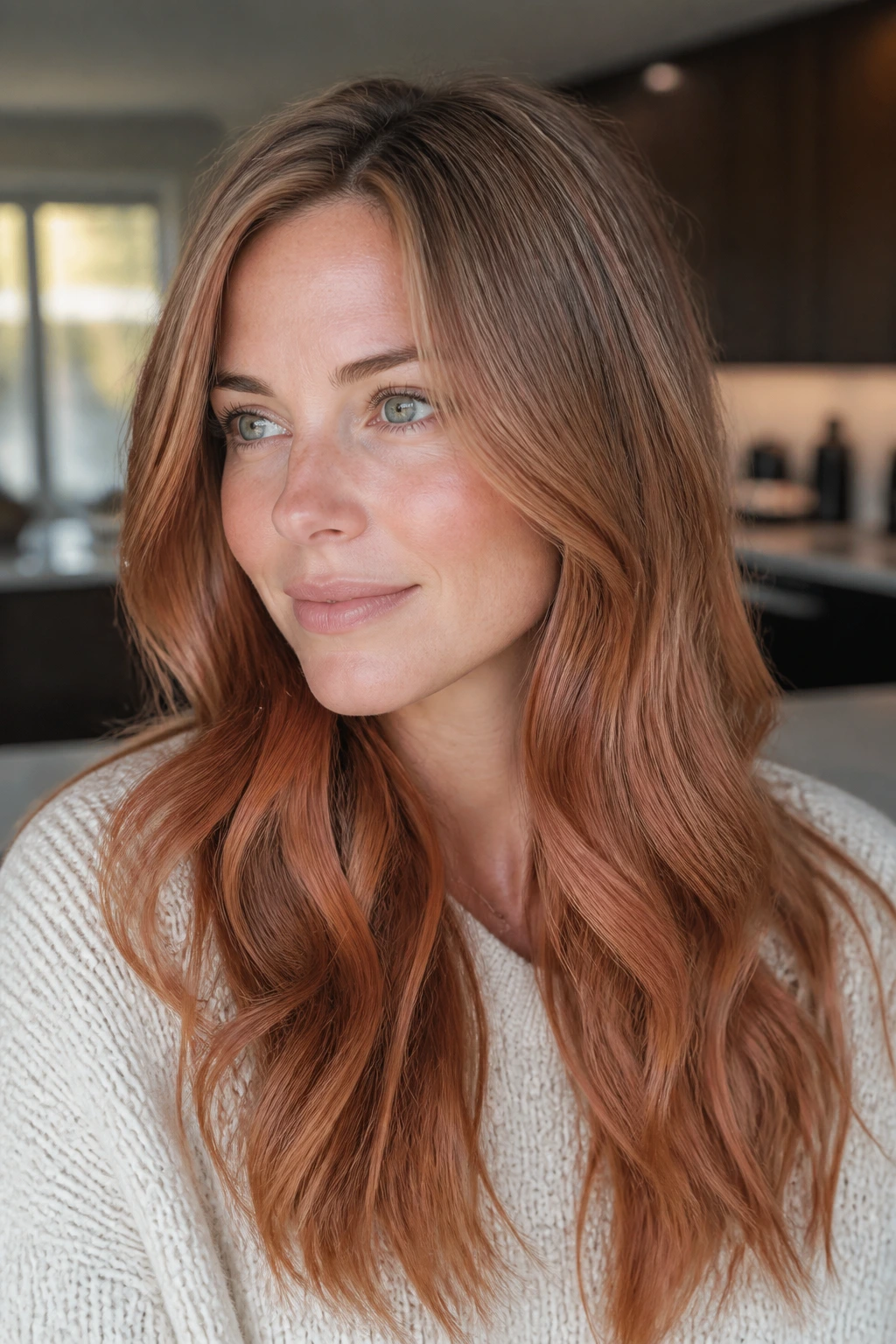
This is the cool-girl version of auburn blonde. Copper-taupe mixes warm and cool pigment so the shade feels balanced instead of fiery.
It works because taupe softens the copper edge and helps the blonde side stay neutral. On very fair cool skin, that can be a relief. The color doesn’t compete with the face; it frames it. On medium cool skin, the taupe root makes the copper lengths look richer by contrast, which is a useful trick if you don’t want the hair to overpower your complexion.
If you’re allergic to orange, this is the smart lane.
22. Pale Auburn Babylights
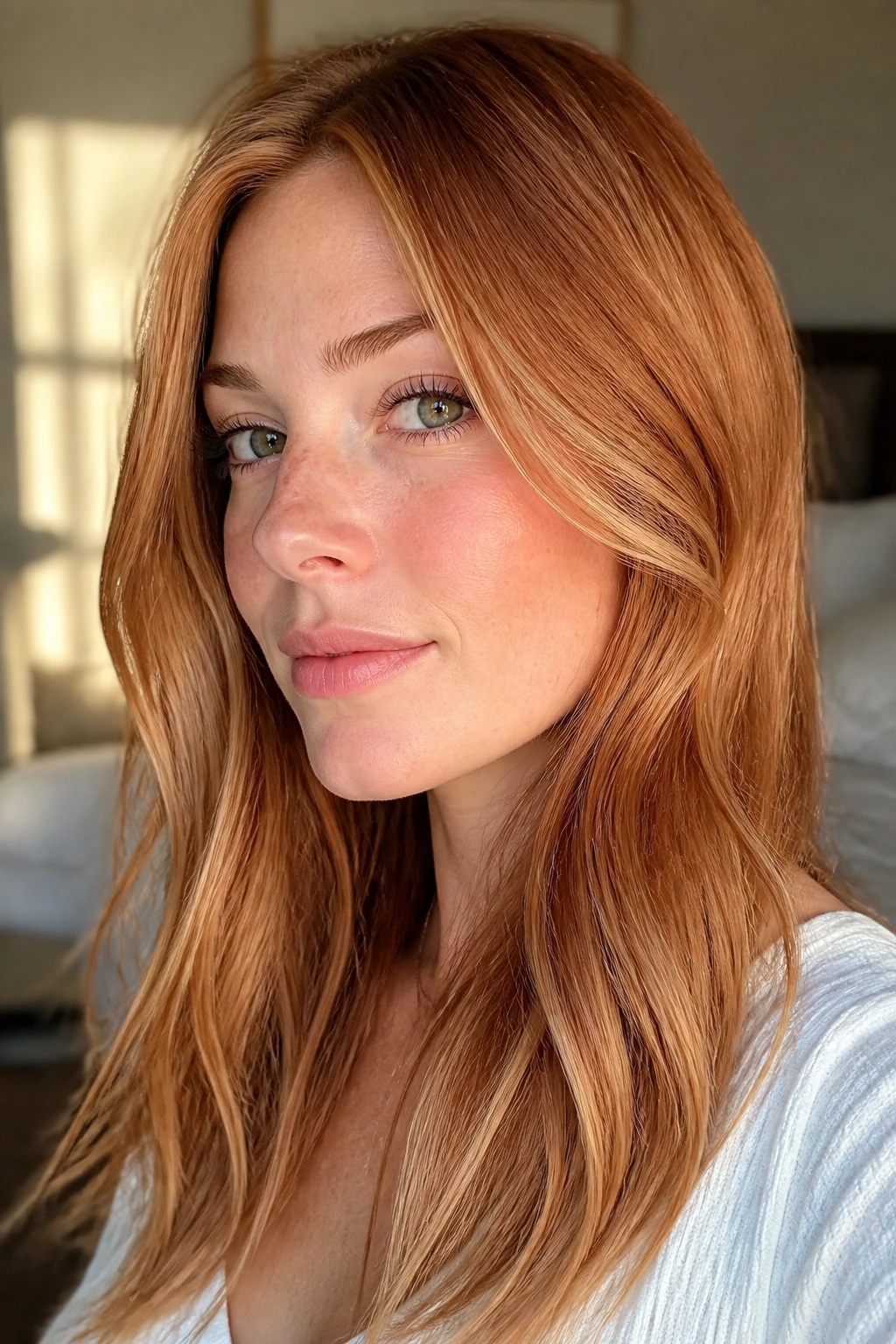
Babylights are tiny for a reason. They let the color whisper instead of announce itself, and pale auburn babylights are especially useful if you want a soft shift rather than a full-color makeover.
The small sections create a fine weave of warmth through a blonde or light brown base. That makes the hair look sun-kissed, but not beach-bright. On cool skin, the scale of the highlights matters almost as much as the tone. Tiny ribbons look delicate. Chunky ones can look heavy in a hurry.
What Makes It Work
- Keep the auburn tone light and diluted.
- Place the finest pieces around the part line and face frame.
- Let the base stay visible so the color has room to breathe.
23. Berry Beige Dimensional Blonde
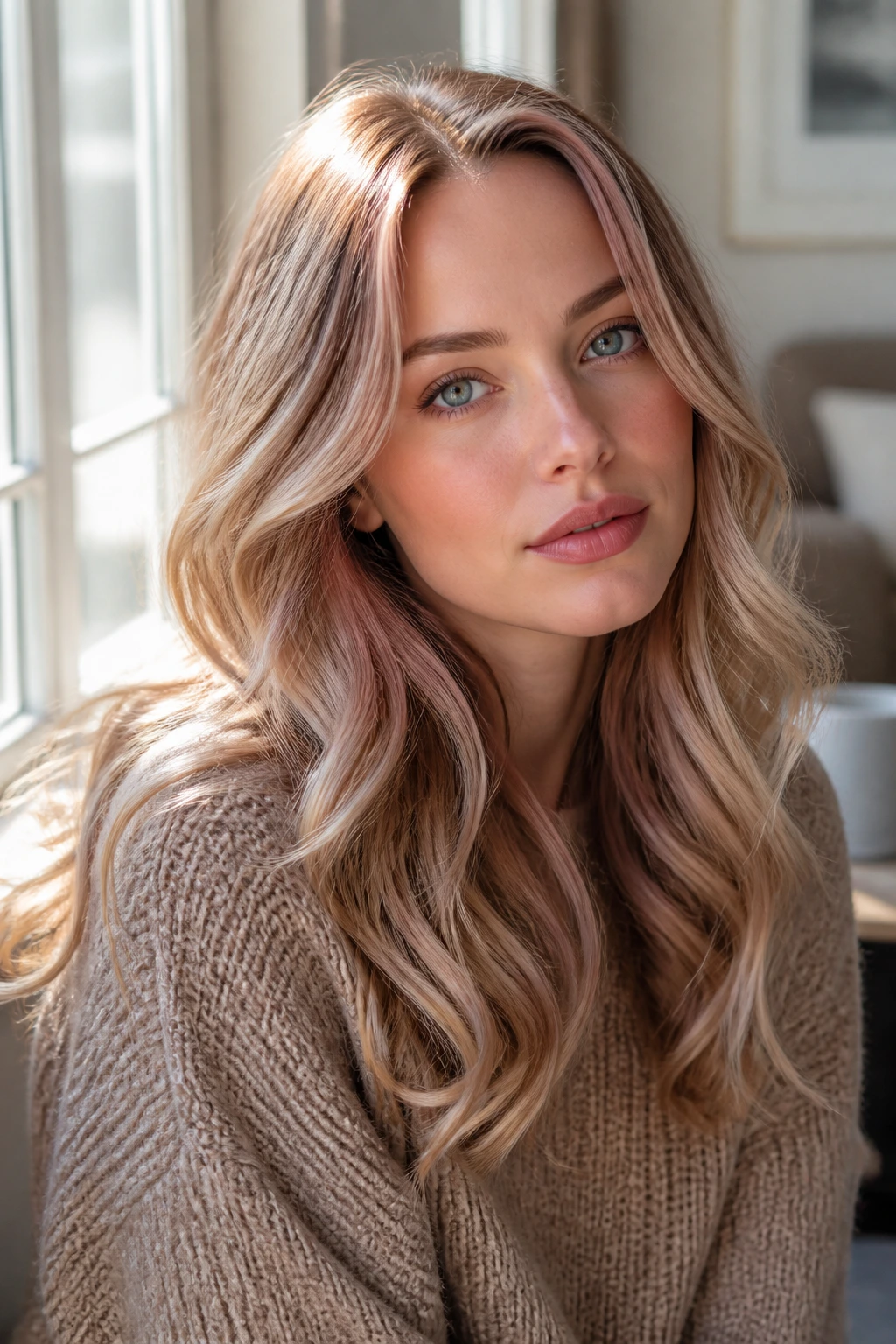
This shade leans blonde first, berry second, and that ordering is what helps. The beige keeps it wearable, while the berry gives it enough personality to feel different from ordinary blonde.
On cool skin, berry-beige works because it avoids the orange zone entirely. It gives a soft pink lift without becoming pastel. I like this on medium-length hair where the dimension can show without needing a huge amount of volume. The lighter the cut, the more the color can read airy instead of dense.
If you want something pretty that still feels grounded, this is one of the better picks.
24. Frosted Copper Balayage
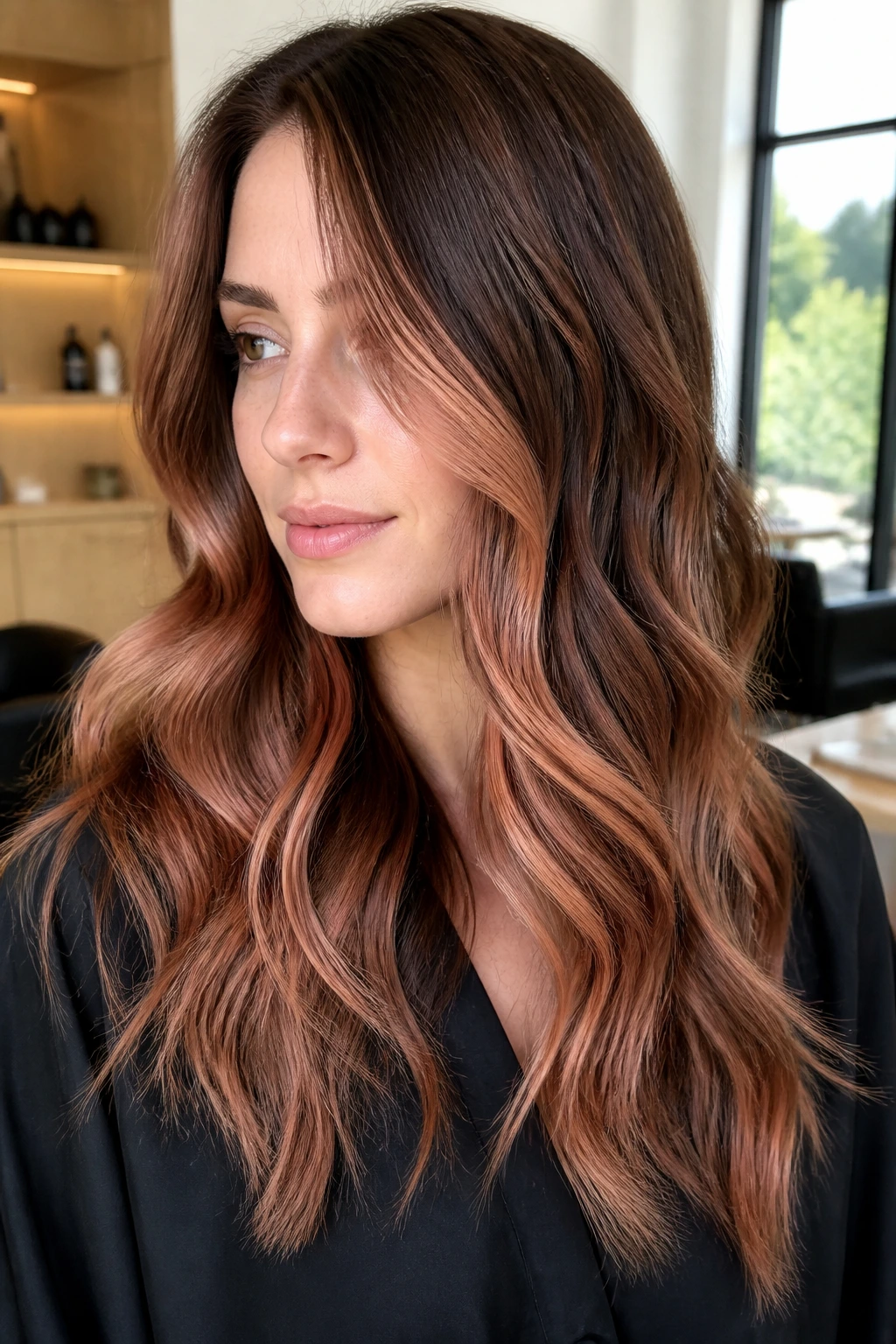
Frosted copper sounds contradictory, which is part of why it works. The frost keeps the copper from going too hot, and the balayage keeps the placement loose enough to avoid a solid band of color.
This one is particularly good for cooler brunettes who want dimension but not a redhead identity. The frosted pieces catch light in a clean way, especially around the crown and face. On cool skin, that slight chill in the finish is what keeps the warmth from looking like a mistake.
It’s copper, but edited. That’s the point.
25. Rosewood Auburn Blonde
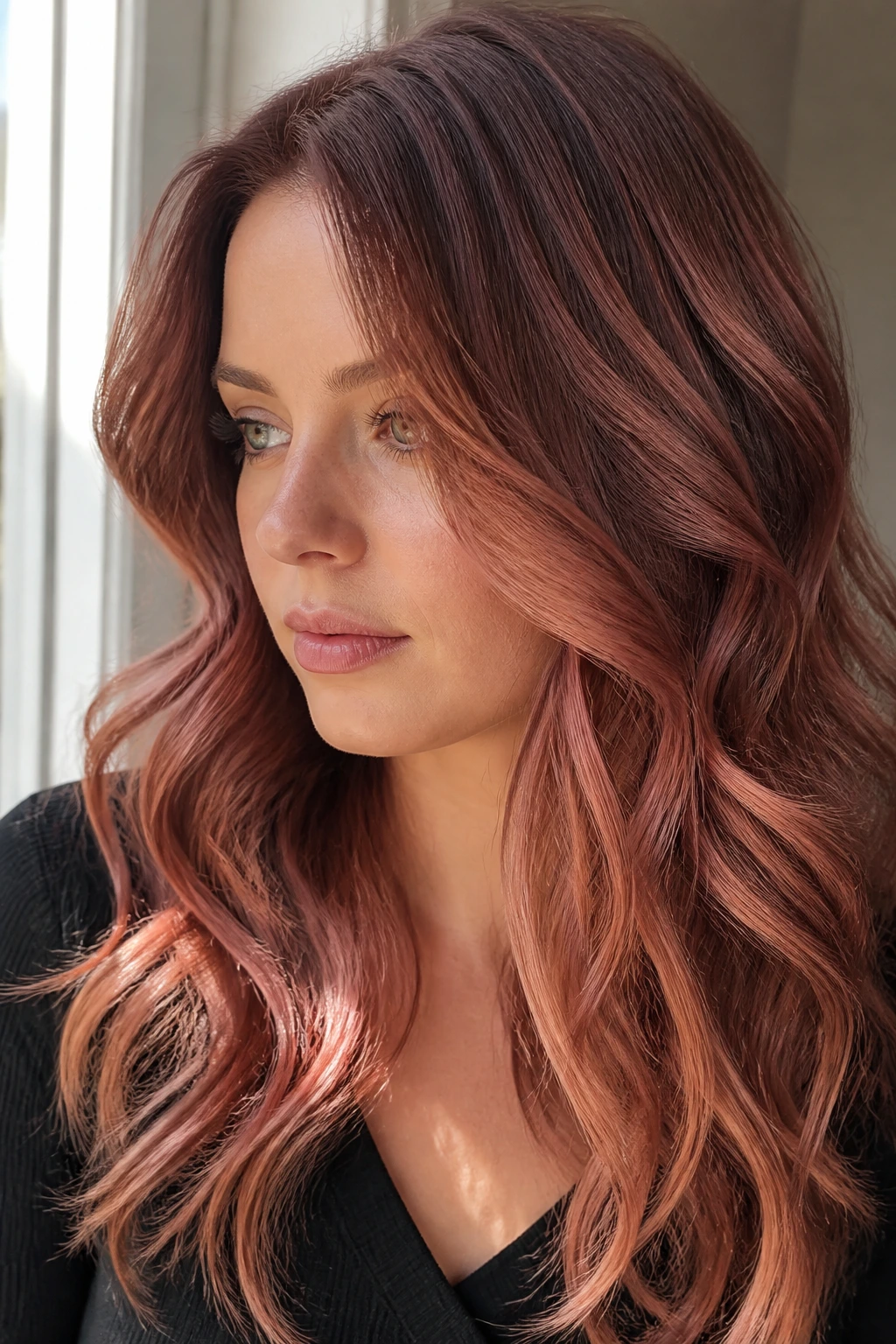
Rosewood is the richest shade at the end of the list, and I like that it doesn’t beg for attention. It has a brown-pink base with copper underneath, so the whole look feels plush rather than bright.
This is a strong choice for cool skin that can carry depth. The rosewood note gives the hair a velvety cast, especially when the color is built with a root shadow and a glossy finish. It works on long layers, blunt cuts, and even shorter styles if the colorist keeps the copper soft near the front. The shade is deep enough to feel grown up, but the blonde influence keeps it from collapsing into brunette.
If you want one color that feels steady and a little moody, this is the one I’d save.
How to Ask for These Auburn Blonde Shades at the Salon
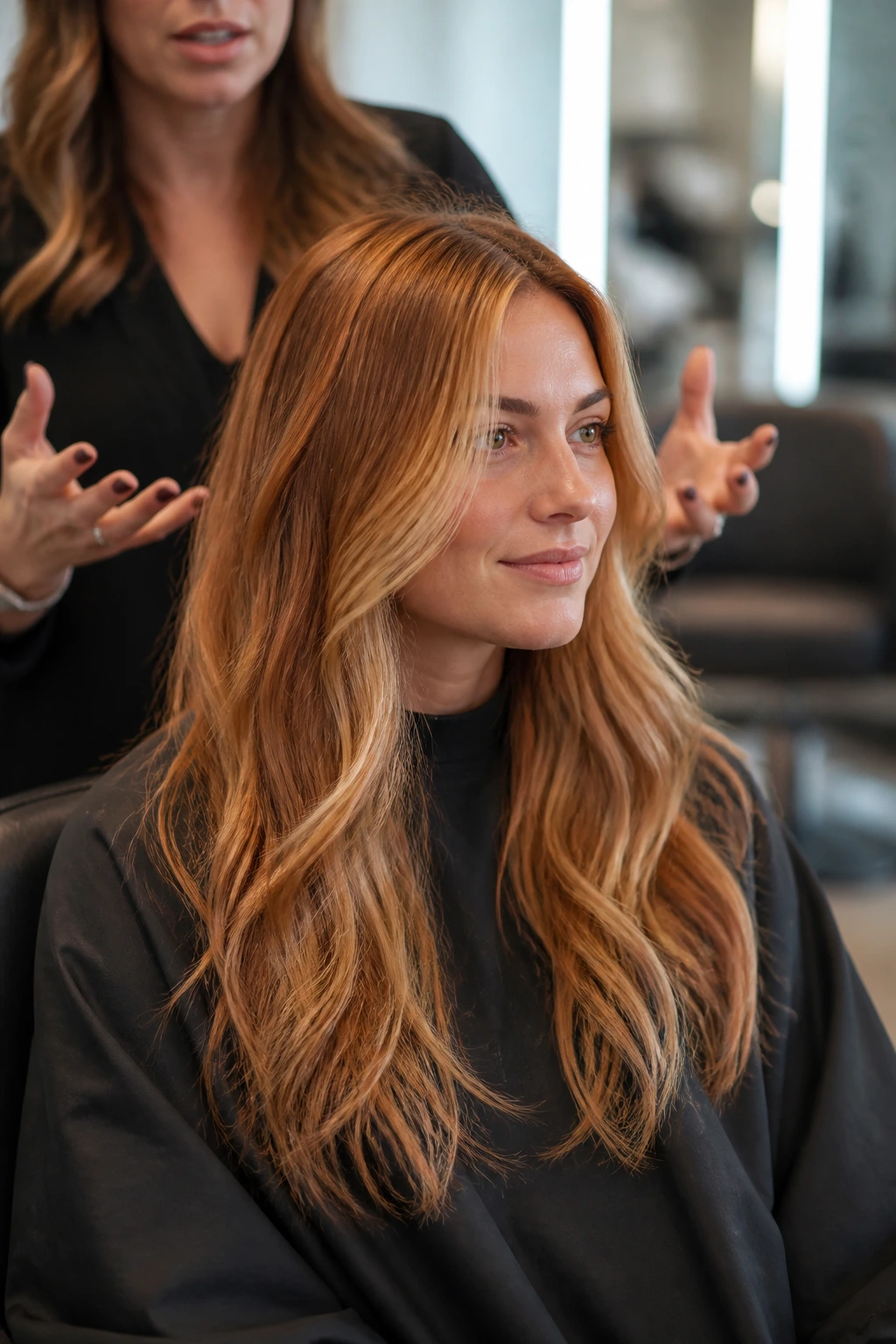
Bring photos. Two is enough, three is better, and they should show the color in different light because phone screens lie all the time. Tell your colorist what you do not want as clearly as what you do want. “No bright orange” is useful. “I want copper, but softened with beige or rose” is even better.
Then get specific about placement. If you want brightness around the face, say so. If you want grow-out to stay gentle, ask for a root shadow or lowlight. On darker hair, mention that you’re open to a multi-step process if needed. On lighter hair, ask whether a gloss or demi-permanent color can get you there without extra lightening.
A simple script helps: “I want an auburn blonde with cool-leaning warmth, not pumpkin copper. Keep the root soft, add beige or rose through the lengths, and make the front pieces a touch lighter.” That sentence gives the colorist direction without trying to do their job for them.
Essential Tools and Color-Care Products
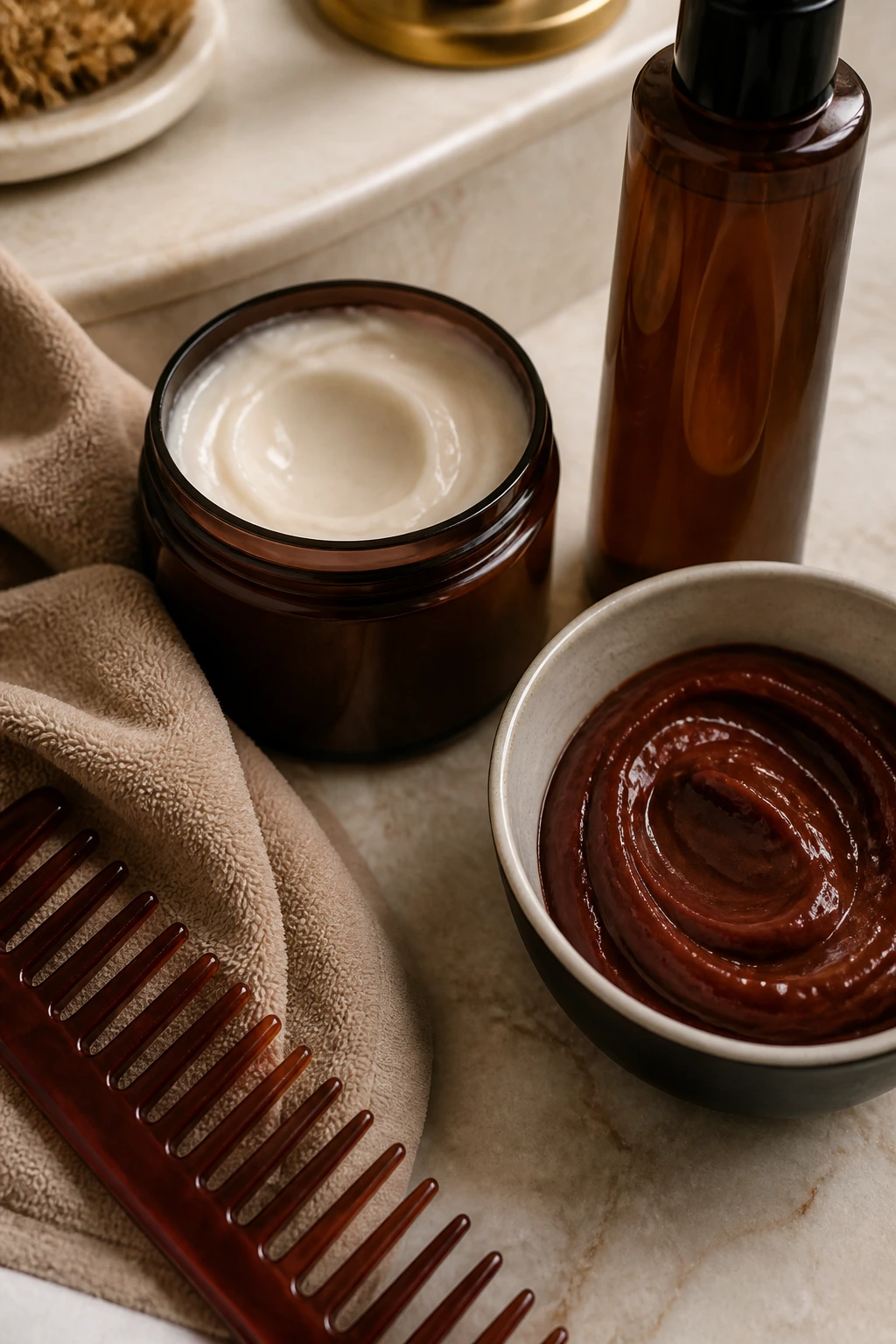
-
Sulfate-free shampoo: Keeps red and copper pigment from washing out fast.
-
Color-safe conditioner: Softens the hair cuticle so the shade stays shinier between washes.
-
Copper, rose, or beige color-depositing mask: Useful when the ends start fading lighter than the roots.
-
Heat protectant spray: Hair color fades faster when it’s exposed to hot tools without protection.
-
Microfiber towel: Cuts down on rough friction after washing, which helps the tone stay smooth.
-
Wide-tooth comb: Easier on damp, freshly toned hair than a brush that grabs too hard.
-
Clarifying shampoo: Use it sparingly when mineral buildup or heavy product dulls the finish.
-
Shower filter: Optional, but worth it if hard water leaves copper looking muddy.
-
UV-protectant hair spray: Nice if your hair spends time in sun or bright daylight.
Smart Shopping for Auburn-Blonde Color Products
Color products are crowded with words that sound useful and aren’t. For auburn blonde, the label matters more than the marketing. Look for shades described as copper-beige, rose gold, strawberry beige, chestnut, muted apricot, or warm taupe. Those names usually point you toward the softer side of auburn, which is where cool skin tends to do better.
If you’re buying a gloss or color mask, check whether it’s deposit-only or demi-permanent. Deposit-only masks are handy for maintenance because they refresh tone without changing the base much. Demi-permanent color is better when you need a real tonal shift that lasts longer than a few washes. Permanent color is the blunt instrument. Useful sometimes, but not the first tool I’d reach for unless the hair actually needs gray coverage or a deeper change.
Porosity matters, too. Hair that’s been lightened a lot grabs pigment fast, so a rich copper mask can go darker than you expected. Fine, low-porosity hair often resists color at first, which means a longer processing time or a lighter formula may work better. If your water runs hard, be suspicious of dullness that appears after only a few washes. That’s usually not “the color fading badly.” It’s buildup sitting on top of it.
One more thing: if you’re tempted to use purple shampoo every wash because you think it keeps the blonde clean, don’t. Purple can make auburn look dusty. Use it only if the blonde is turning yellow, and keep it away from every wash cycle.
How to Wear Auburn Blonde With Cool-Tone Makeup and Clothes
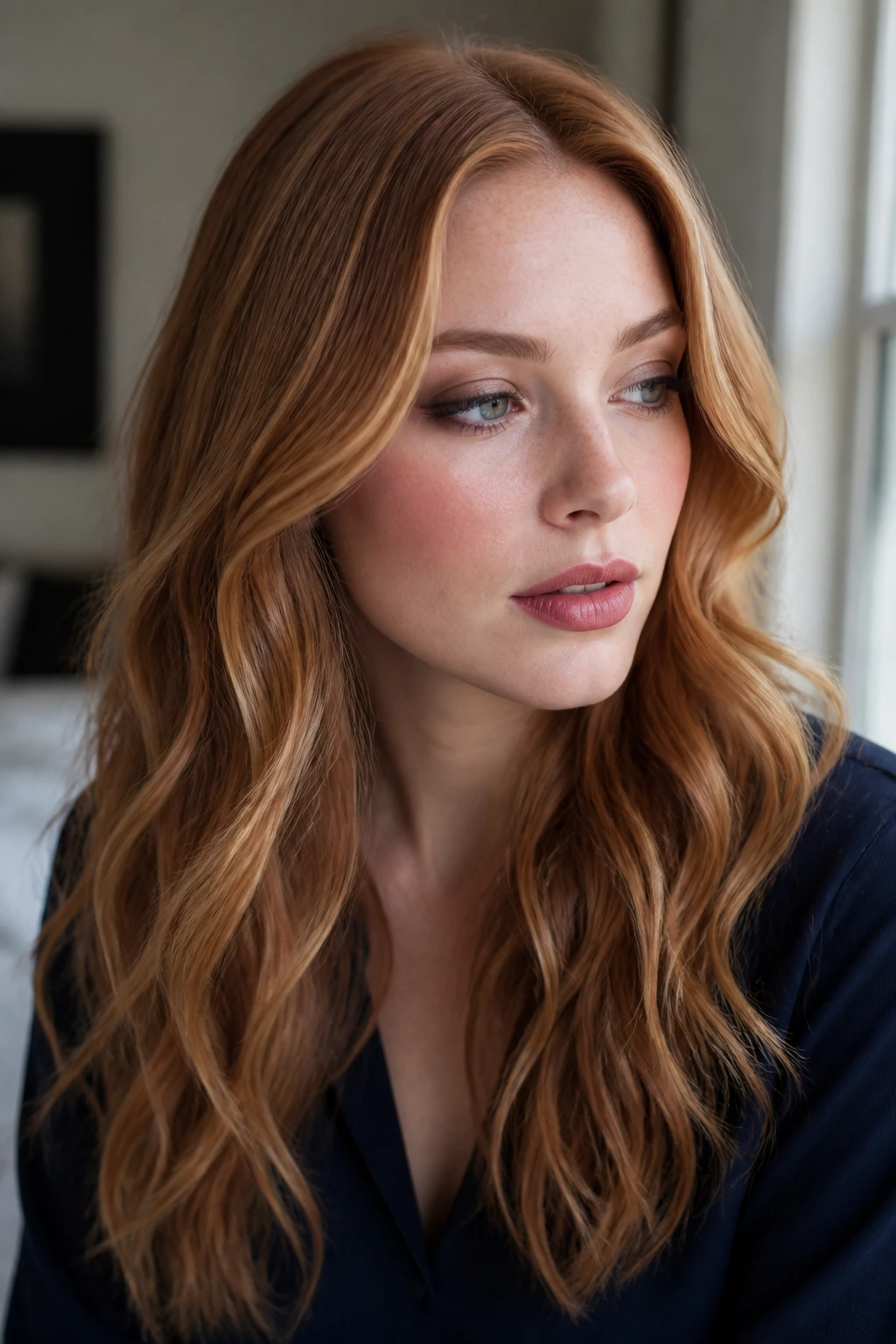
Presentation: Loose waves, soft bends, or even a clean blowout help these shades show their dimension. Auburn blonde can look flat when it’s pinned or overly straightened, so give it a little movement if you want the rose and copper notes to show.
Wardrobe Pairing: Cool skin usually looks good next to charcoal, navy, slate gray, icy white, dusty blue, deep teal, and soft black. Those colors let the hair stand out without making the warmth feel muddy. If your closet is full of warm beige, the hair can still work, but the whole look may skew toastier than you planned.
Placement: If you want the color to brighten your face, ask for lighter pieces around the cheekbones and temples. If you prefer a quieter look, keep the front soft and let the brighter tones live through the lengths. Shorter cuts, like bobs and pixies, usually need less front framing because the shape itself already creates contrast.
Makeup Pairing: Cool pink blush, berry lipstick, taupe shadow, and a neutral brow pencil usually make auburn blonde look cleaner on cool skin. I’d avoid heavy orange blush with these shades; that combination can drag the face into the wrong temperature fast. Silver or pearl earrings also keep the whole palette calm.
Extra Tips That Keep Auburn Blonde Soft, Not Brassy
Tone Booster: If the color starts to drift too warm, a beige or rose gloss can pull it back without wiping out the auburn entirely. I’d use a color-depositing mask every 4-6 weeks on lighter ends, or whenever the shine starts to feel thin.
Customization: Ask for more shadow at the root if your skin is very fair and the copper feels loud. On deeper cool skin, a little more copper around the face can work, but the root should still stay grounded. That shadow is not there to hide growth. It’s there to make the light pieces look intentional.
Styling Move: Use a medium-barrel iron or a round brush to create a soft bend, not tight curls. Tight curls can make the color look busier than it needs to be. Loose movement shows the difference between the rose, beige, and copper notes much better.
Make-It-Yours: If you want something lower commitment, keep the auburn mostly in a money piece or the bottom half of the hair. If you want stronger contrast, ask for brighter ribbons and a cleaner blonde base. Either way, let the stylist know whether you want the color to read “warm blonde” or “soft red-blonde.” Those are not the same thing.
Common Mistakes That Flatten Auburn Blonde
-
Going too orange too soon: The hair can look bright in the chair and harsh at home. Fix it by asking for rose, beige, or smoky copper rather than straight orange-gold.
-
Using purple shampoo like it’s a daily habit: Purple tones down yellow, but it can also mute the very warmth that makes auburn blonde interesting. Keep it occasional, and use blue shampoo only when the hair has turned truly orange-brassy.
-
Leaving the root too light: A flat root makes auburn blonde look like one color block. A soft shadow root gives the shade shape and helps it grow out with less fuss.
-
Choosing chunky highlights: Big streaks can make the color look stripey instead of blended. Fine babylights or balayage ribbons usually look better on cool skin.
-
Skipping gloss maintenance: Auburn pigment fades fast, especially on lightened hair. If the ends start looking beige-gray instead of warm and silky, the color needs a refresh.
Variations and Adaptations to Try
Cooler Than Copper: Push the formula toward beige, taupe, and chestnut, then keep copper only in the lightest pieces. This works if you like warmth but know your skin looks best when the color stays quiet.
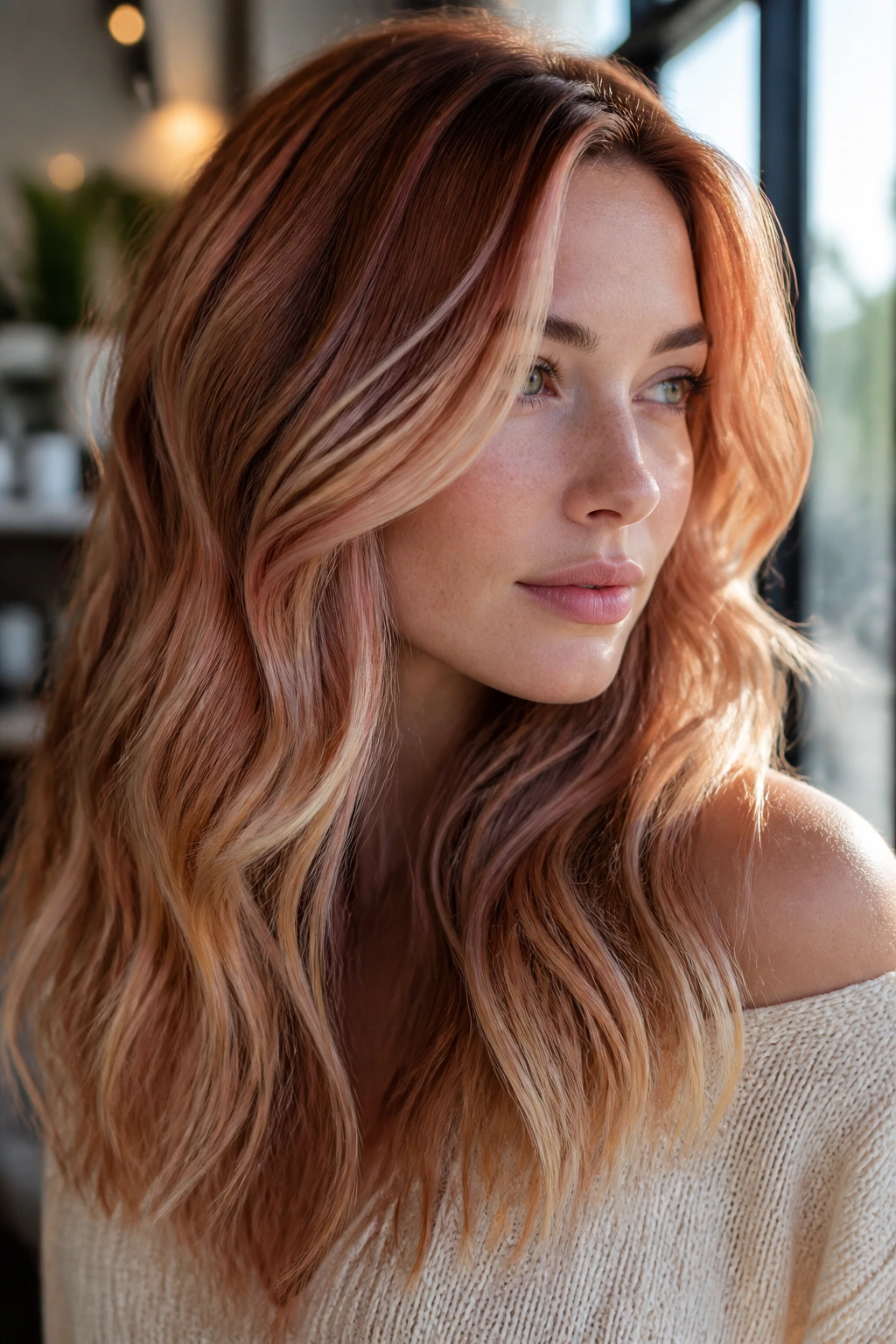
Rosy Auburn Blonde: Add a pinker gloss and cut the orange entirely back. It’s a softer choice for pale cool skin or anyone whose cheeks flush easily.
Brunette-Friendly Auburn: Keep the base deep, then add muted auburn ribbons through the lengths. This is the most practical route if your hair starts at medium brown or darker and you don’t want a huge lift.
Low-Commitment Money Piece: Leave most of the hair close to natural and only brighten the front. The effect is immediate, but the grow-out stays easy.
High-Contrast Ribbon Balayage: Use a darker root and brighter blonde-auburn ribbons for more movement. This gives the hair a stronger visual line and works well on longer cuts.
Short-Hair Version: On bobs and pixies, keep the tone tighter and the gloss richer. Short cuts show every color decision, so a muted auburn is usually safer than a bright one.
How to Keep Auburn Blonde Bright Between Appointments
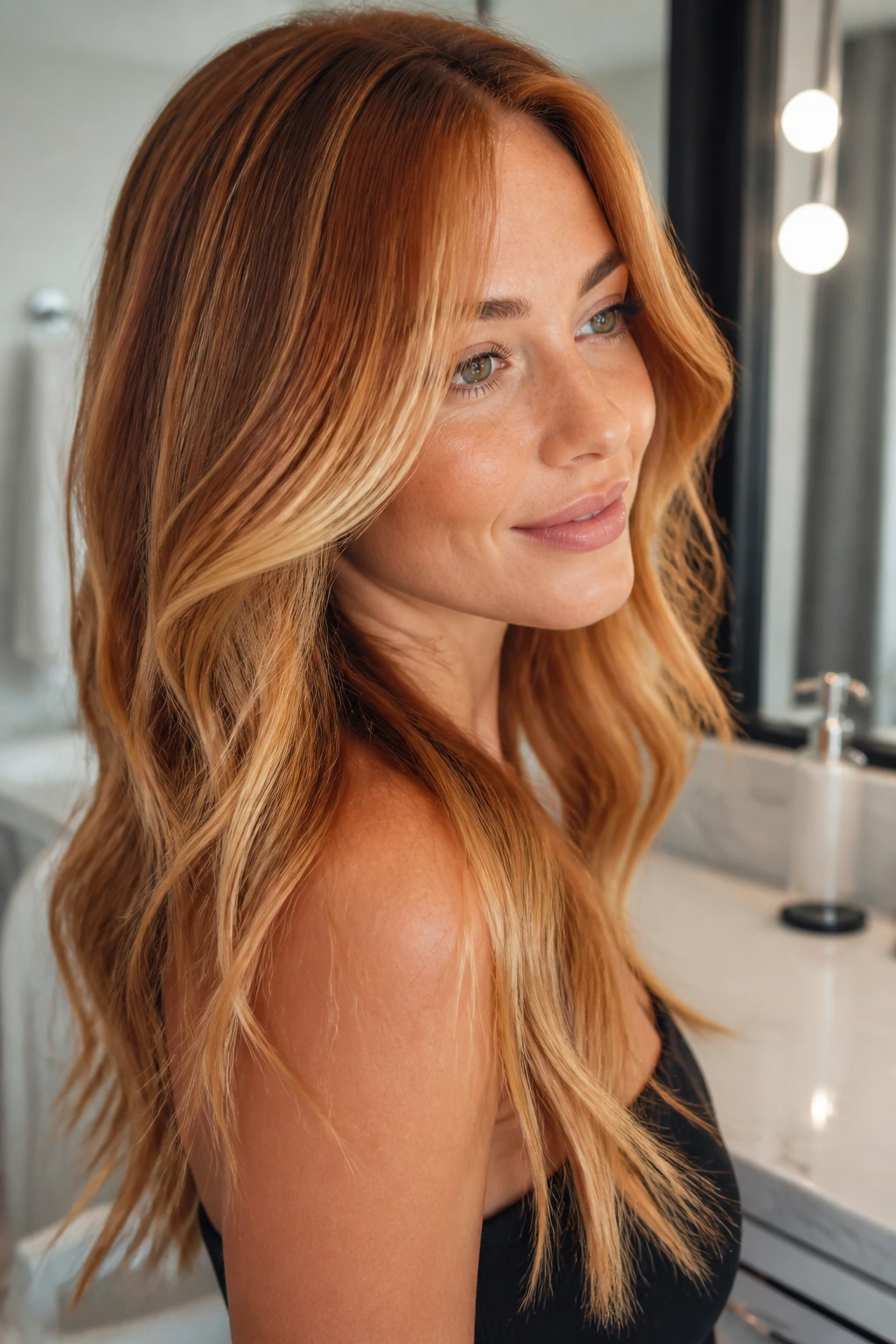
Auburn pigment fades faster than people expect. Wash 2-3 times a week if your scalp allows it, and use lukewarm water rather than steaming hot water, which strips tone and shine. A sulfate-free shampoo is worth the shelf space. So is a rich conditioner that doesn’t leave waxy buildup behind.
For gloss maintenance, most auburn-blonde shades do well with a color-refreshing treatment every 4-6 weeks. Balayage can stretch longer, usually around 8-12 weeks, because the grow-out is softer. Full-head auburn or strawberry blonde often needs attention sooner, especially if the ends are lightened. If your color leans brassy, a blue shampoo can help with orange drift, but use it sparingly—once every 1-2 weeks is plenty for most heads of hair. Purple shampoo is better for yellowing, not orange copper.
Heat is the other thing that cheats you. Always use heat protectant before blow-drying or curling, and keep the temperature as low as your texture allows. If your water is hard, a shower filter can make a bigger difference than people think. It’s not glamorous. It does help.
Frequently Asked Questions
Will auburn blonde suit very fair cool skin?
Yes, if the tone stays soft. Rose auburn, beige strawberry, and smoky copper usually flatter fair cool skin better than bright orange copper because they don’t exaggerate redness.
What’s the best auburn-blonde shade if I hate orange?
Go for mushroom auburn, rose auburn, soft copper-taupe, or a chestnut-root balayage. Those shades keep the warmth but lower the orange enough that the color feels cleaner.
Can dark brown hair go auburn blonde without looking stripey?
It can, but the best route is usually balayage or fine highlights rather than one solid all-over color. Darker hair often needs lightening first, then a muted copper or rose gloss to finish.
How often do auburn blonde shades need a gloss?
Most need a refresh every 4-6 weeks if you want the color to stay vivid. If your hair is very porous or highlighted heavily, you may notice the ends fading sooner than the roots.
Is strawberry blonde the same thing as auburn blonde?
Not really. Strawberry blonde is usually lighter and more blonde-forward, while auburn blonde carries more copper, chestnut, or rose depth. The two can overlap, but they don’t behave the same on cool skin.
What makeup works best with cool auburn blonde hair?
Cool pink blush, berry lipstick, taupe eyeshadow, and soft brown or neutral brows tend to keep the color balanced. Warm orange makeup can clash and make the hair read harsher than it is.
Does purple shampoo help auburn blonde stay fresh?
Only a little, and sometimes too much. Purple shampoo is meant to reduce yellow, not preserve copper. If the shade starts turning orange, blue shampoo is the more useful option, and only in small doses.
What if my skin is cool olive instead of pink-cool?
You can usually wear a little more copper, but it still helps to keep the root shadow in place and avoid neon orange. Beige-copper, chestnut, and rose-gold versions are usually safer than bright gold.
Is balayage better than all-over auburn blonde?
For most people with cool skin, balayage is the easier place to start because it keeps some natural depth and grows out softer. All-over color can be beautiful, but it asks for more maintenance and more precise toning.
The Shades I’d Put on the Short List
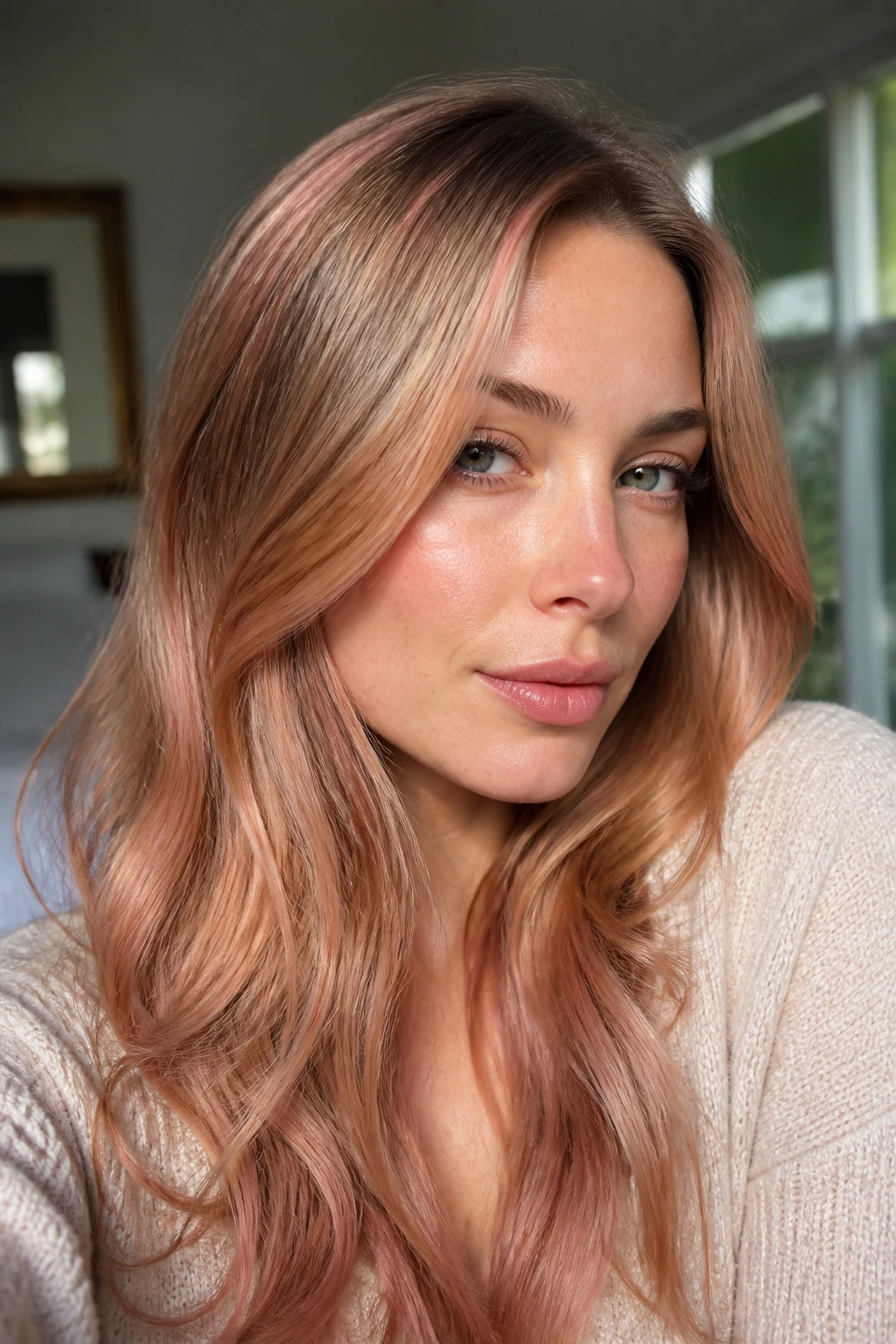
The best auburn blonde for cool skin does not look like a traffic cone with better lighting. It looks edited. A little beige, a little rose, a little shadow at the root, and enough copper to keep the hair alive. That’s the formula worth copying.
If you want the safest first move, start with a face frame, a gloss, or a smoky balayage. If you already know your skin can hold a deeper warmth, the rosewood, cranberry, or cinnamon versions give you more depth without losing the cool-weather feel. Either way, the color should flatter your face before it impresses anyone else.
That’s the real test. Bring the softest version to your next color appointment, ask for the warmth to stay muted, and let the shine do the heavy lifting.