



Dark hair can make blonde work harder. That’s the whole game. On a thin head of hair, a blunt, all-over bleach job can expose every gap, every flat spot, every strand that refuses to hold a bend for more than six minutes. The smarter move is usually a mix of placement, shade, and cut — blonde hairstyles for dark hair with thin hair need lightness in the right places, not lightness everywhere.
That’s why the best looks here aren’t just “blonde” in the generic sense. They use root shadow, face-framing pieces, soft babylights, or a blunt edge that keeps the ends from looking scraggly. A beige bob reads fuller than a one-tone pale blonde. A honey balayage lob can look thicker than a waist-length sheet of hair that’s been over-lightened and thinned out by too many layers. There’s a reason some blonde formulas make hair look airy and expensive while others make it look tired. Placement matters. So does tone.
If you’ve been staring at a blonde shade chart and wondering which colors won’t flatten fine strands or make dark roots look harsh, the answer is usually hiding in the middle of the chart, not the palest corner. Beige, champagne, mushroom, honey, and soft ash all earn their keep here because they create contrast without turning the hair into a see-through curtain. The cut does its part, too. A blunt line at the bob or lob can be worth more than another round of highlights.
Why This Collection Feels Different on Dark, Thin Hair
Dimensional, not washed out: Dark hair needs blonde placement that breaks up the surface, while thin hair needs enough depth left behind to fake density.
Cuts do some of the heavy lifting: A good bob, lob, pixie, or shag can make the same color read thicker because the perimeter stays strong.
Shade matters more than the word “blonde”: Beige, honey, ash, pearl, and mushroom blonde all read differently against a dark base, and some are far kinder to sparse strands.
Root shadow is your friend: A soft root keeps the scalp from showing through too sharply and gives thin hair a little visual lift at the crown.
Most of these looks are styling-light: They rely on bends, texture, and a clean part, not a heavy curl routine that falls out before lunch.
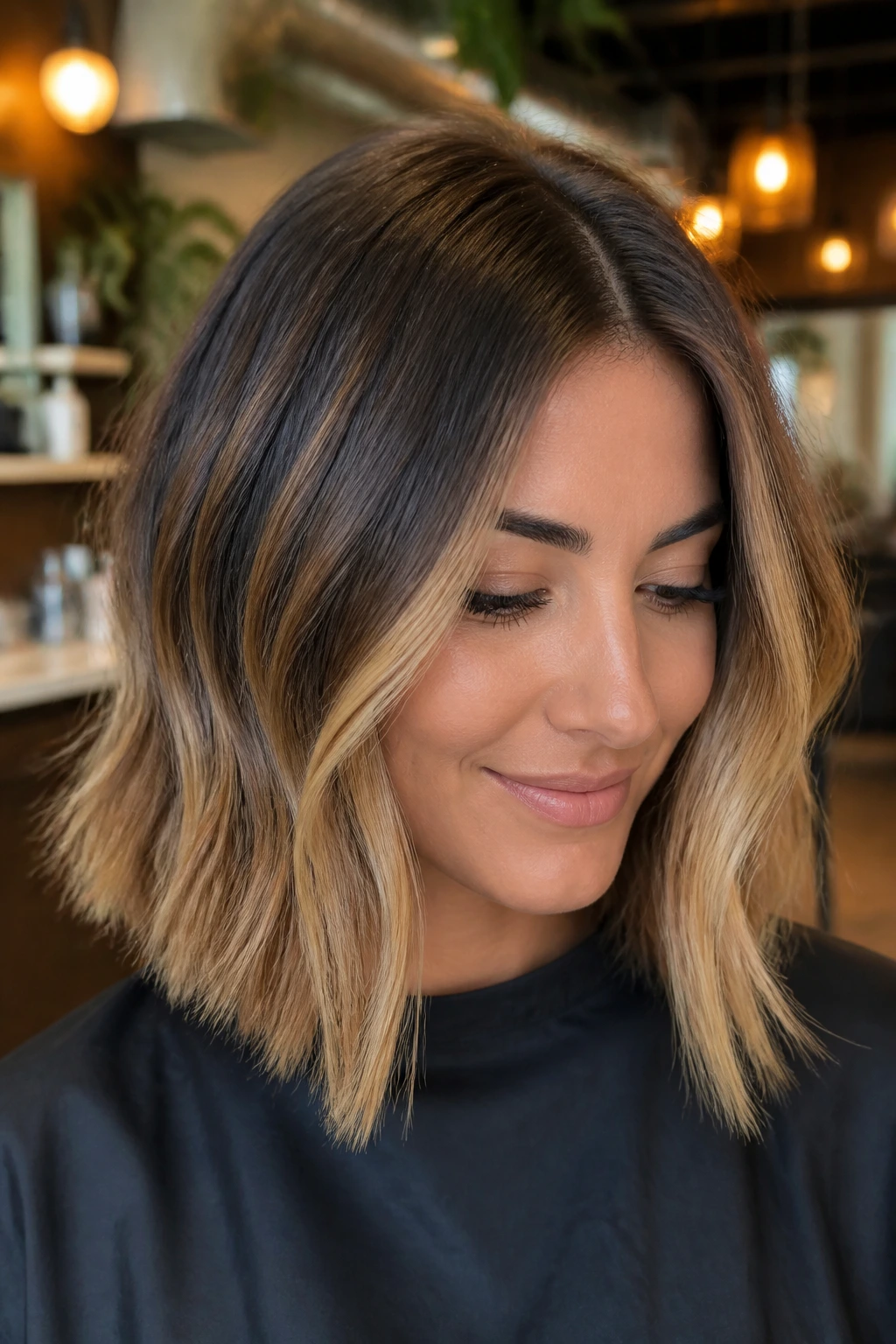
1. Rooted Honey Balayage Lob
Honey balayage on a collarbone lob has a useful trick: it brightens the mids and ends while leaving the root dark enough to keep the hair from looking stringy. On thin dark hair, that darker root is not a problem. It’s the anchor. The blonde pieces catch the eye, but the base keeps the shape from collapsing into a pale blur.
A lob like this works best when the ends stay blunt or only softly chipped. Too many layers and the honey ribbons lose their punch. The colorist should paint the brightest pieces around the cheekbones and a little below the part, then soften the blend through the back. That way the hair moves, but it still looks like there’s substance there.
Style it with a 1.25-inch iron and a loose bend, not a stiff curl. The bend should start mid-length and leave the last inch or so straight. That little detail matters. Straight ends keep the cut looking denser.
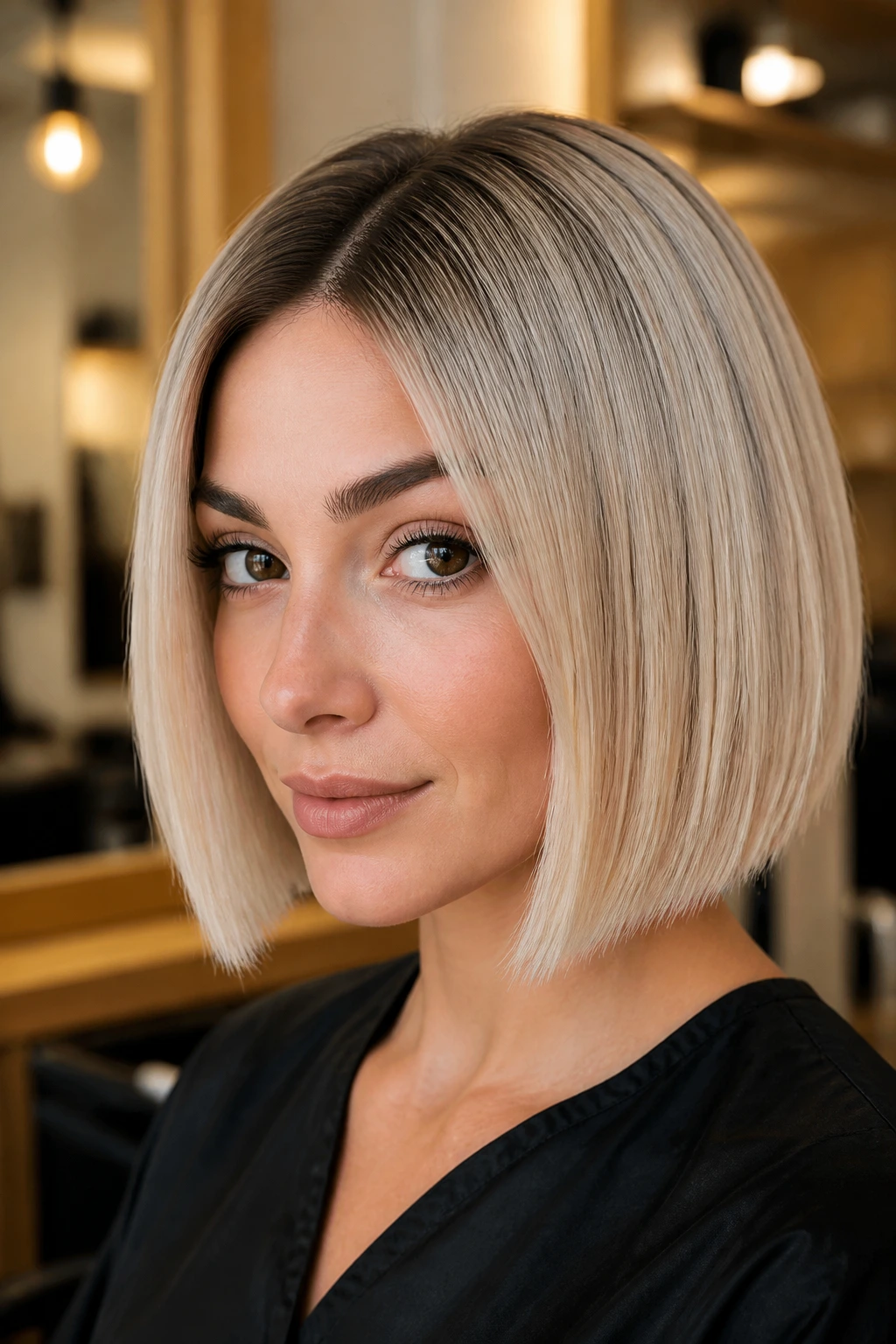
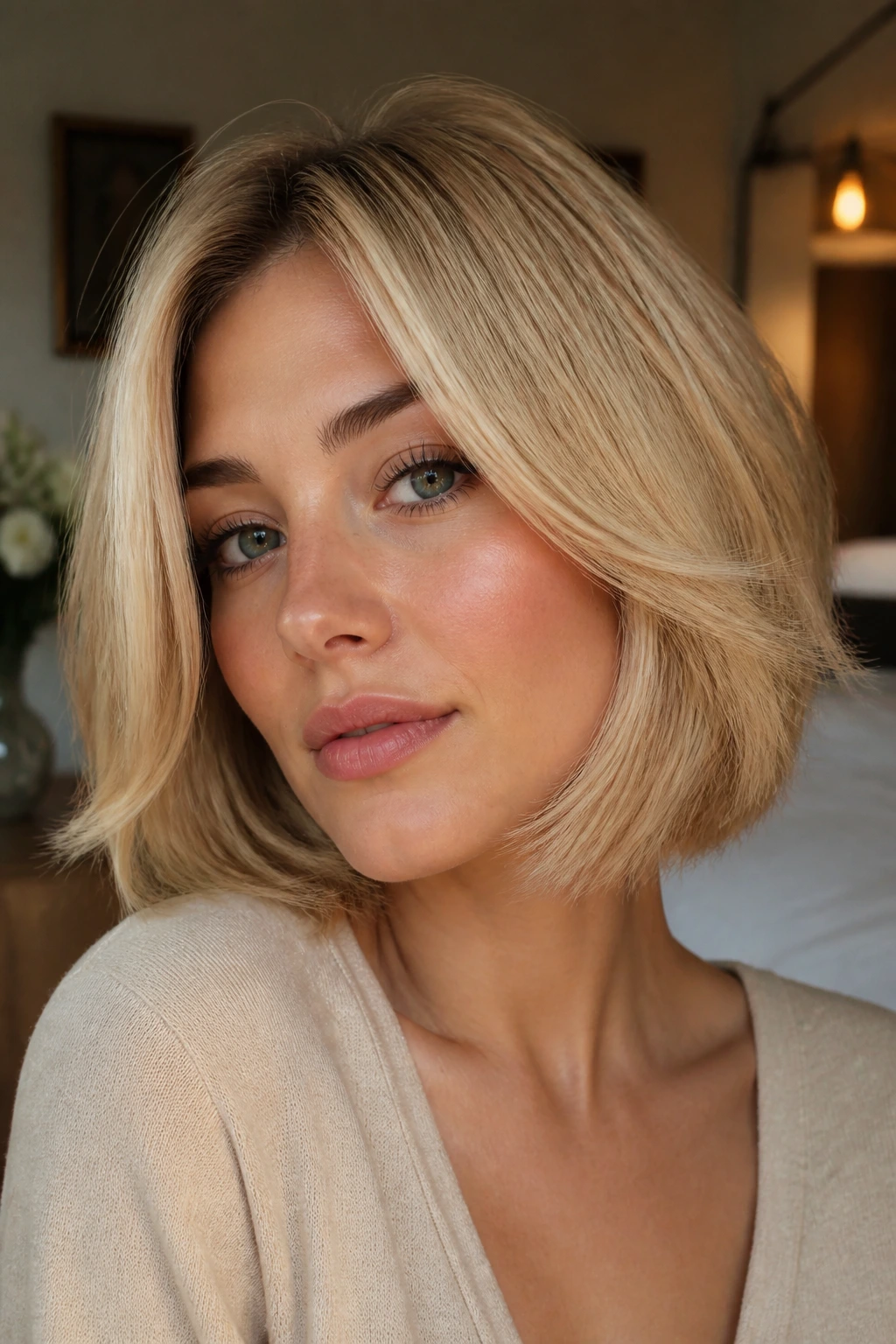
2. Beige Blunt Bob with a Dark Shadow Root
This is one of my favorite answers for thin dark hair, because it is blunt where it counts. A chin- to jaw-length bob with a beige blonde finish and a soft shadow root gives you clean lines at the perimeter and just enough lightness to keep the style from going flat.
Beige is a smart blonde here. It doesn’t scream yellow, and it doesn’t go so icy that every thin section looks separated. The root shadow should be soft, not stripey — think a half-inch to one inch of dimmer depth at the scalp. That gives the bob a little lift when you tuck one side behind the ear.
Why it works
The blunt edge makes the ends look fuller immediately. Thin hair often suffers most at the bottom, where the last inch starts to feel wispy, and a straight bob fixes that fast. Beige tone keeps the whole thing quiet and clean.
Wear it with a center part if your hairline is even, or slide the part off center if one side tends to go flat. Either way, a quick pass with a flat iron through the middle section gives the bob a polished swing without making it curl under like a helmet.
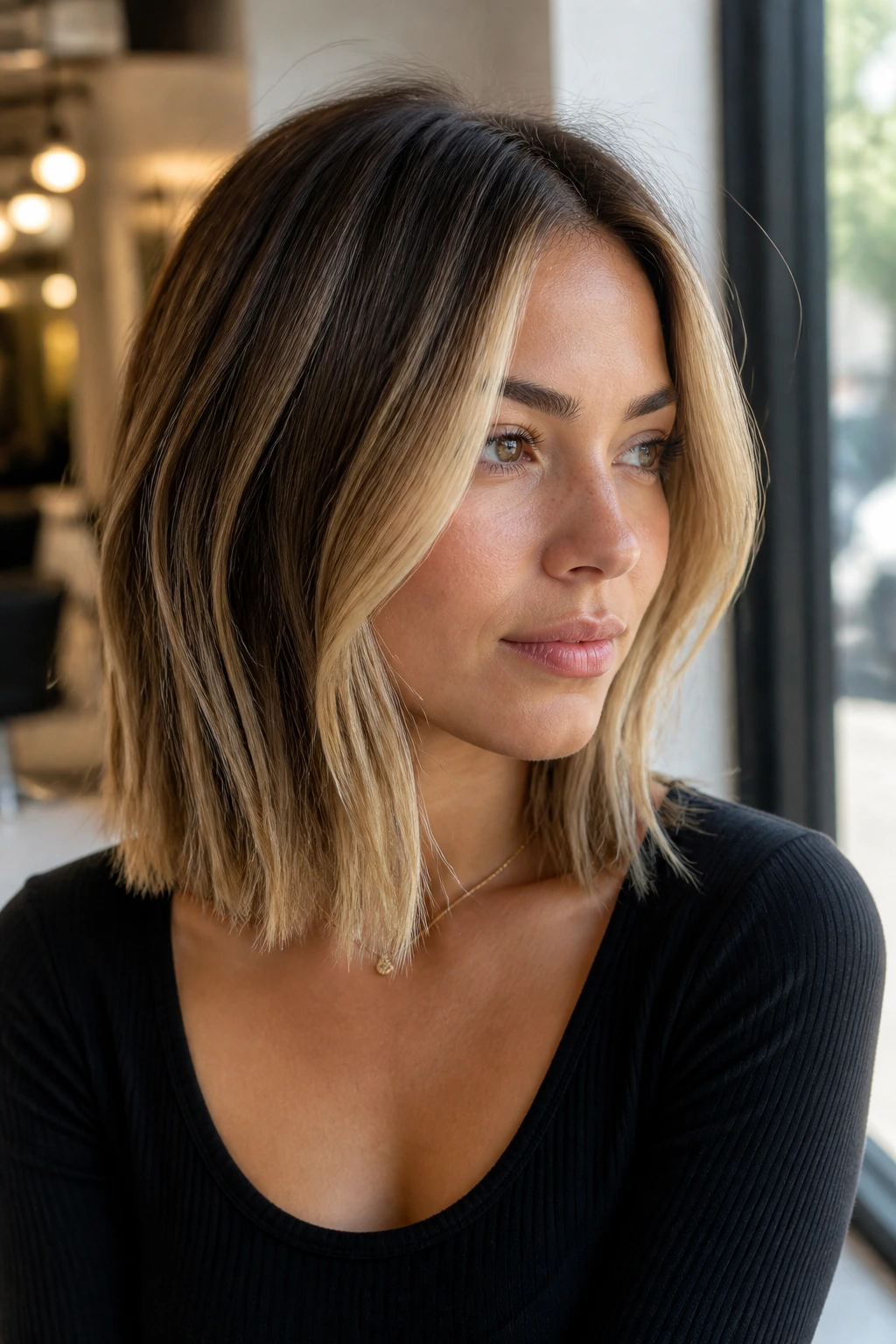
3. Champagne Money-Piece Lob
A champagne money piece is the kind of blonde that looks expensive without being fussy. The front panels are brighter, the rest of the hair stays deeper, and that contrast pulls the eye forward so thin dark hair looks fuller around the face.
On a lob, this placement is especially useful. You get lift where people look first — cheekbones, jawline, fringe area — without sacrificing density through the back. If the entire head were lifted to champagne, the result might go a little flat. Here, the darker interior keeps the style grounded.
Ask for a soft blend at the hairline and a little brightness around the temples. Not a thick stripe. The difference between a modern money piece and a dated streak is usually a few millimeters of feathering at the roots. Small thing. Big difference.
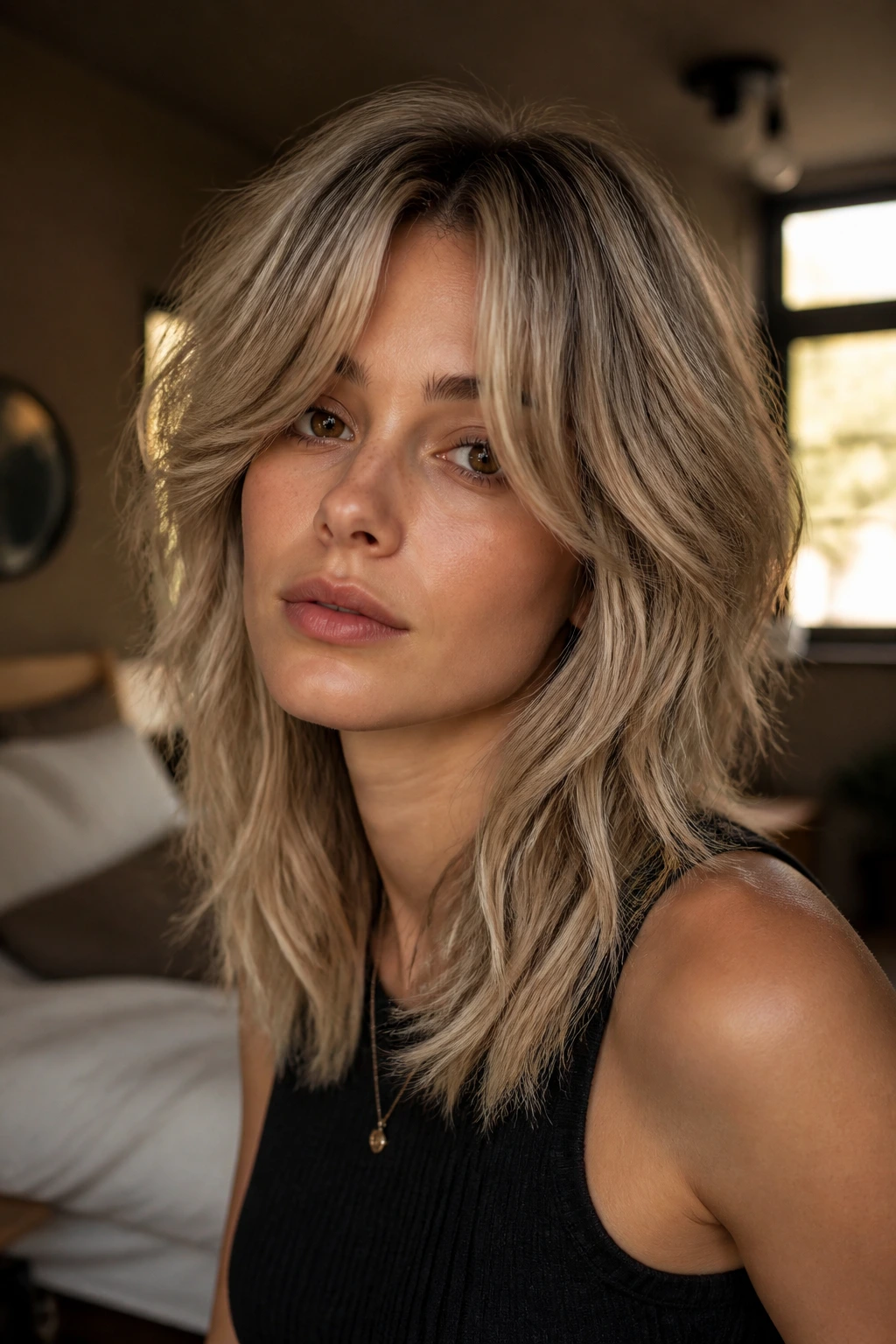
4. Ash Blonde Curtain-Bang Shag
If your dark hair is fine and a little limp, a shag with curtain bangs can do more for it than a long, careful set of layers ever will. The ash blonde tone cools down the warmth that often shows up when dark hair is lifted, and the shaggy shape gives the hair some lift at the crown.
Curtain bangs are the sneaky part here. They break up the front line and add movement around the face, which makes thin hair feel less like one continuous sheet. The ash tone keeps the texture looking crisp rather than brassy. You do need some styling time with this one — a round brush at the bangs and a bit of texture spray through the layers — but the payoff is real.
A shag like this should never be over-thinned. If the interior gets too shredded, the color shows too much scalp. Keep the edges light, the crown fluffy, and the layers soft enough to move.
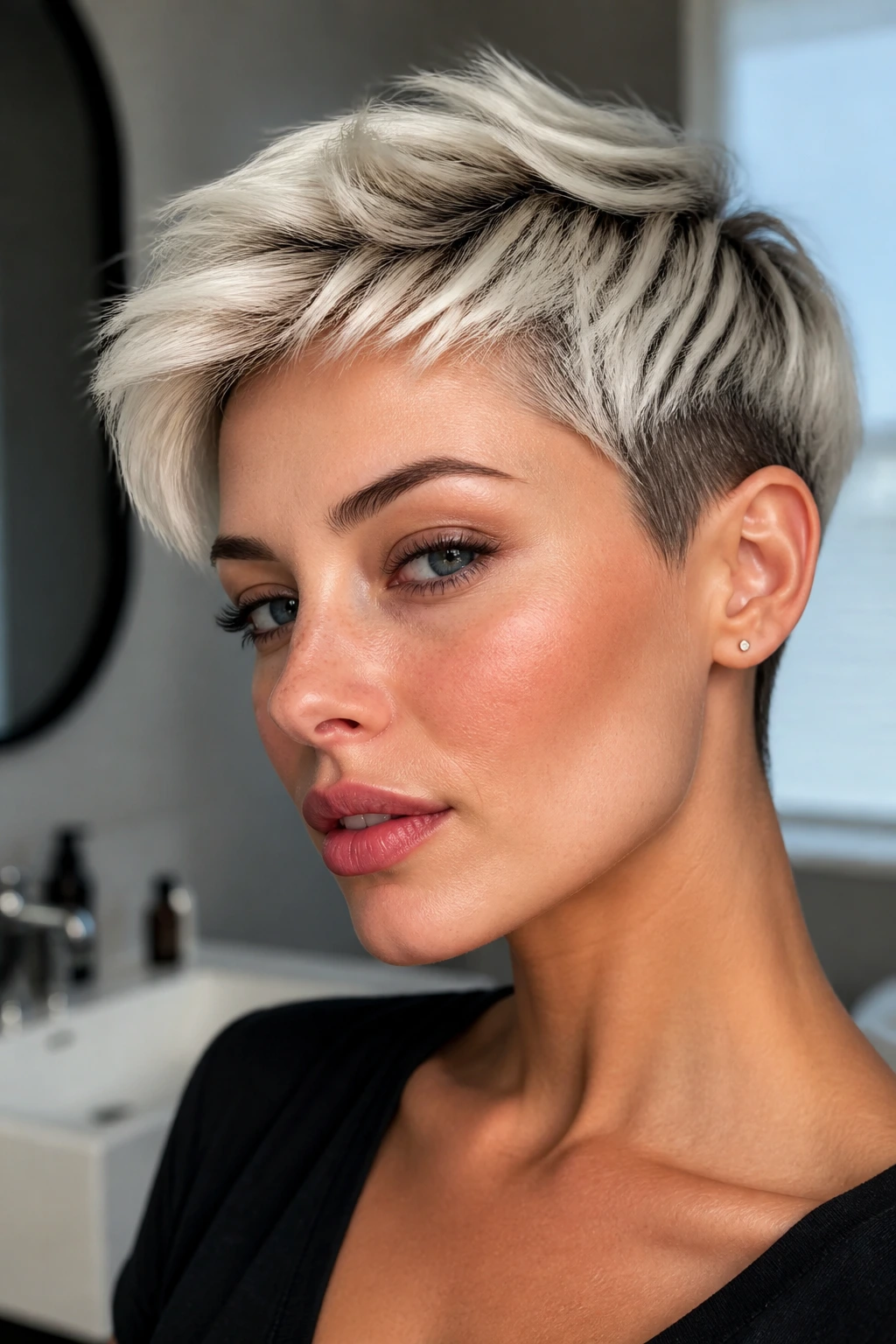
5. Platinum Pixie with Soft Depth
A pixie is often the fastest way to make thin dark hair look intentional. Add platinum, but keep a little depth near the root and around the nape, and the whole cut suddenly has shape instead of just lightness.
The mistake people make with platinum on fine hair is going too uniform. A single-tone pale blonde can look harsh and expose every small gap. A better version keeps a shade or two of shadow in the low spots — behind the ears, under the crown, at the base of the neck. The top stays bright, the underside stays quieter, and the contrast builds visual thickness.
This cut also saves styling time. A pea-sized amount of matte paste on dry hair is enough to push the front up and separate the fringe. If your hair tends to lie flat no matter what you do, a pixie like this can be a small relief.
6. Caramel-to-Cream Layered Midlength Cut
Caramel fading into cream is one of the easiest ways to make dark hair read lighter without losing the sense of volume. The darker caramel through the mid-lengths gives the eye something to hold on to, while the creamier ends brighten the movement.
On thin hair, the layers should be long and soft, not chopped to pieces. Think “air around the face,” not “five thousand tiny layers.” The goal is to keep the silhouette broad enough that the hair doesn’t taper into nothing. A soft blowout with a round brush shows the dimension better than a tight wave.
What to ask for
- Caramel ribbons through the mids
- Creamy lighter ends, but not a full bleach-out
- Long layers that keep the perimeter intact
- A soft root shadow for grow-out
That mix gives you blonde without losing the shape of the cut.
7. Mushroom Blonde Collarbone Cut
Mushroom blonde is a quiet little genius on dark, thin hair. It sits in that smoky beige-gray lane that softens the transition from dark roots to lighter ends, so the hair doesn’t look over-processed or over-bright.
A collarbone cut is the right partner. Short enough to keep the ends full, long enough to tuck behind the ear or wave with a curling iron. If the color lifts too warm, mushroom blonde can look dull; if it’s lifted to a cool beige with a touch of taupe, it reads elegant and modern without trying too hard.
This one suits people who hate high-contrast streaks. It’s low-drama in the best way. The kind of blonde that still looks good when the blowout falls apart a little.
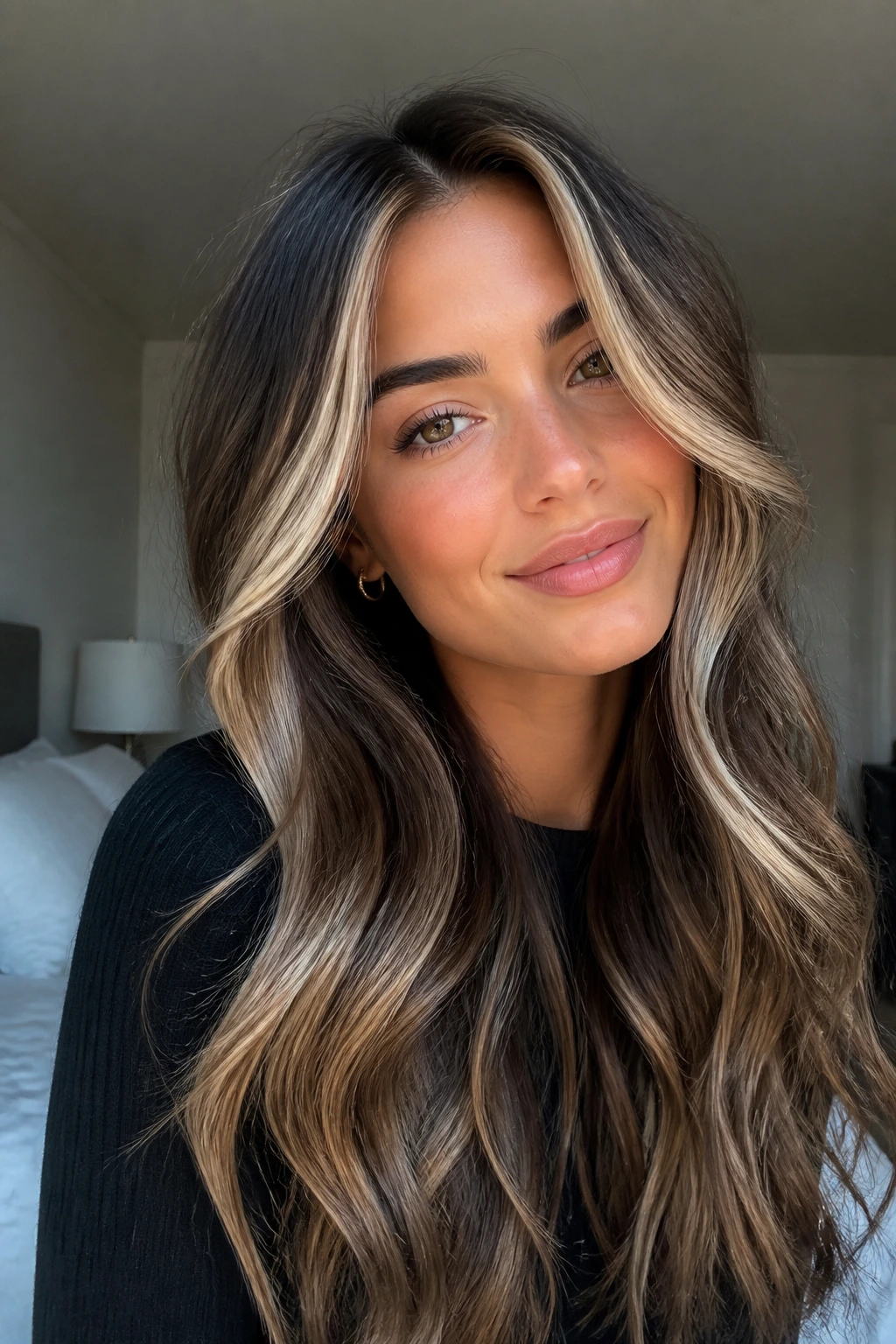
8. Face-Framing Vanilla Highlights on Long Waves
Long hair can work on thin strands if the color is doing some of the visual heavy lifting. Vanilla highlights around the face are perfect for that. They brighten the front without forcing the whole head into a pale, see-through finish.
The rest of the hair should stay deeper — brunette, dark brown, or softly lifted brown — so the waves look fuller. If the ends are all the same lightness, long thin hair can start to look flat from the mid-length down. Keeping the underside darker fixes that. It gives the wave a shadow line, and shadow is what creates depth.
Wear this with loose, brushed-out waves. Tight curls split fine hair apart. Soft bends, on the other hand, let the highlights move like ribbons.
9. Butter Blonde Feathered Bob
Butter blonde is warmer than beige and softer than gold, which makes it a useful middle ground for dark hair that needs brightness but not glare. On a feathered bob, it can look airy instead of thin because the feathering adds movement while the cut still keeps the shape controlled.
The key is the perimeter. A bob that ends at the jaw or just below it holds more visual weight than a longer cut with the same amount of hair. The feathering should live around the cheekbones and crown, not at the ends where density is already precious. That keeps the bob from turning wispy.
This style is especially kind to hair that doesn’t hold curl well. A quick round-brush blowout, a little root spray, and you’re done. No wrestling match needed.
10. Icy Beige A-Line Bob
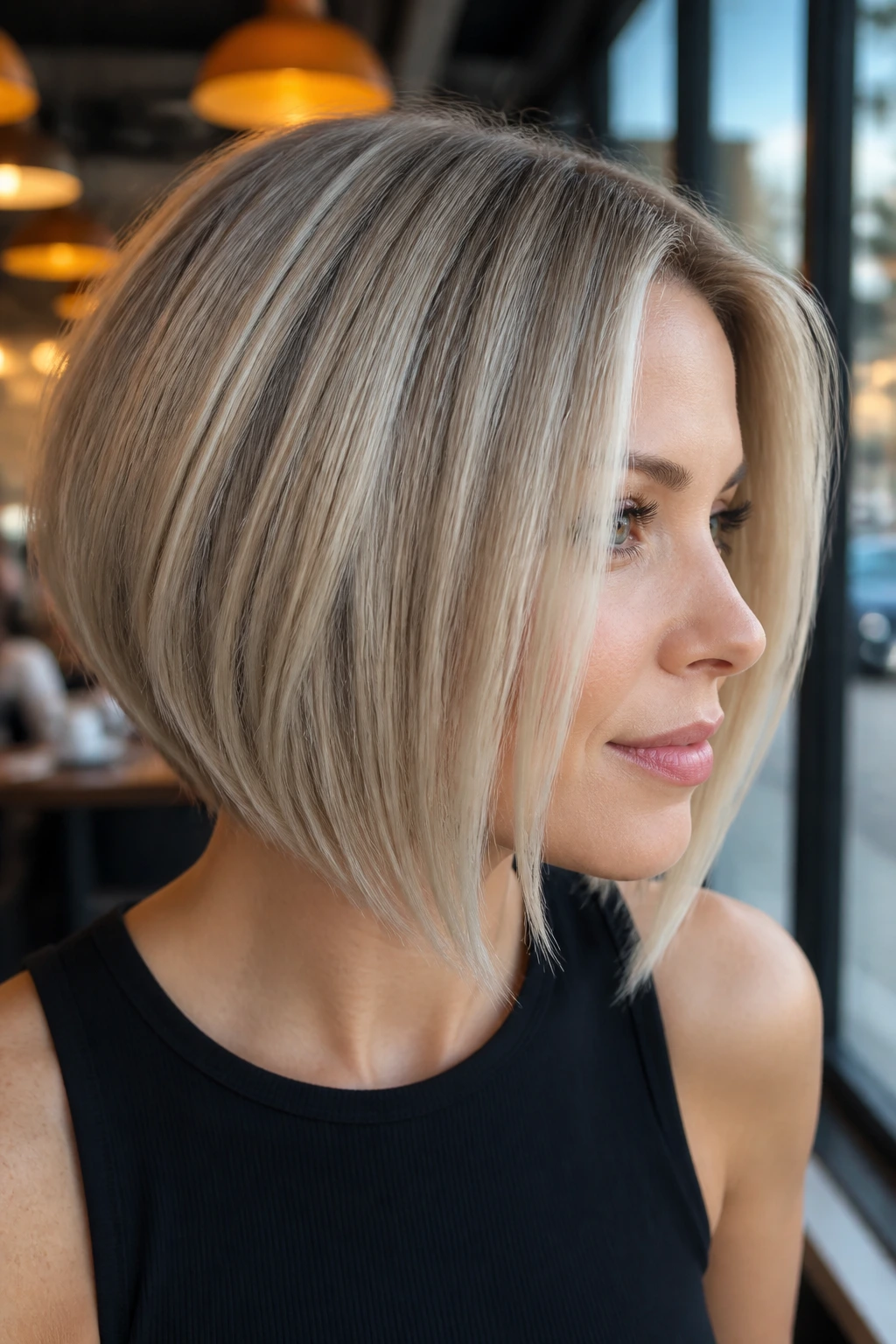
An A-line bob — shorter in back, slightly longer in front — is one of the best cuts for thin hair because the angle makes the front look fuller and frames the jaw in a strong line. Add icy beige, and the style gets crisp without turning flat.
The trick with icy tones is restraint. Too much silver or pearl on dark hair can look dull if the lift is uneven. Beige keeps the brightness readable while softening any yellow that might sneak in during lightening. Ask for clean, even lift in the front panels, then a softer finish at the nape. That keeps the cut from reading blocky.
If you like a glassy finish, flat iron the bob in tiny sections and turn the iron just slightly at the ends. Sharp, neat, controlled. That’s the point.
11. Smoky Bronde Butterfly Layers
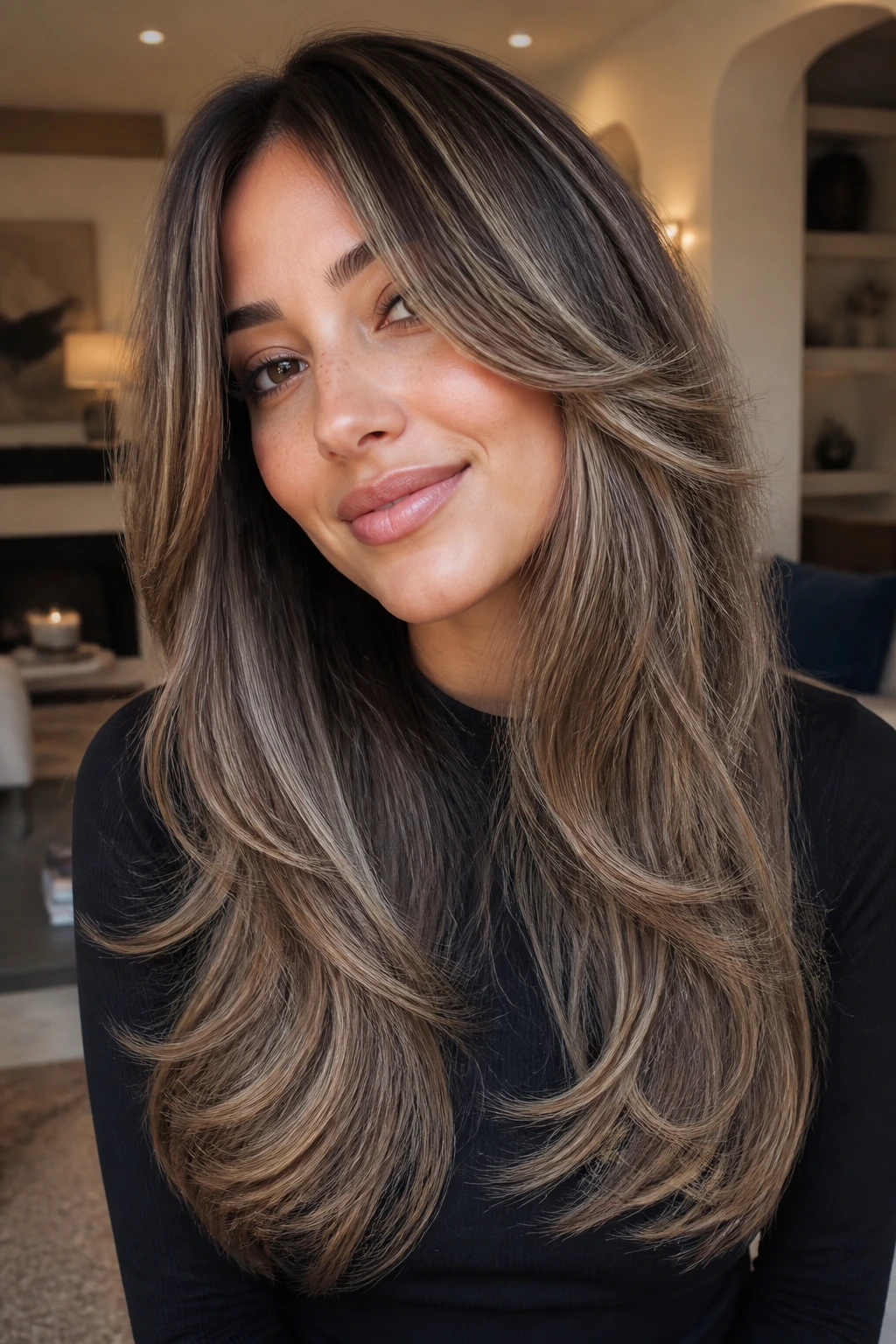
Bronde sits between brown and blonde, and that middle ground is gold for thin dark hair. Smoky bronde with butterfly layers gives you lift around the face and movement through the ends without stripping away the dark base that makes the style feel full.
Butterfly layers can be dangerous if they’re overdone. On fine hair, too much internal layering can leave the lengths see-through. The safer version keeps the top layers short enough to flip away from the face and the lower lengths long enough to hold the line. A smoky bronde tone unites everything so the layers don’t look chopped apart.
This is one of the few long styles here that can still look dense. The color does part of the softening, the cut does part of the shaping, and the whole thing feels lighter without actually being thinner.
12. Pearl Blonde French Bob
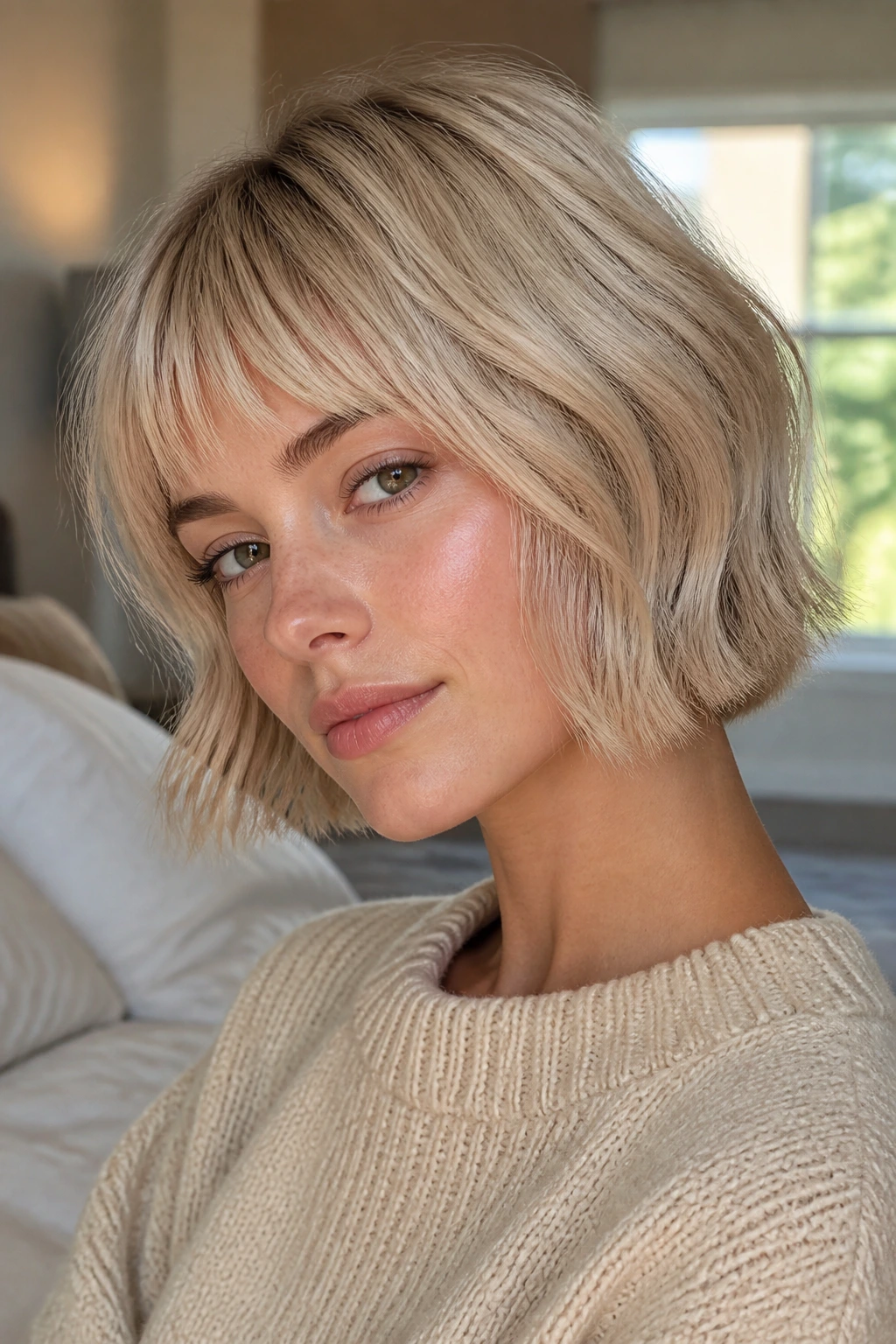
A French bob works because it’s confident and compact. At chin length, it creates a little visual weight around the face, which is exactly what thin dark hair needs. Pearl blonde softens the overall impression and keeps the cut from looking severe.
Pearl is a cool, luminous blonde with a milky edge. On a short bob, it reads polished fast, but it does need a steady hand with toner. If the hair lifts too yellow, pearl can slip into banana territory. A clean, pale, creamy tone is the sweet spot.
Wear this with a tucked-under finish or a soft wave at the ends. The line should stay clear. If the bob gets too fluffy, the shape disappears.
13. Sandy Blonde Wavy Crop
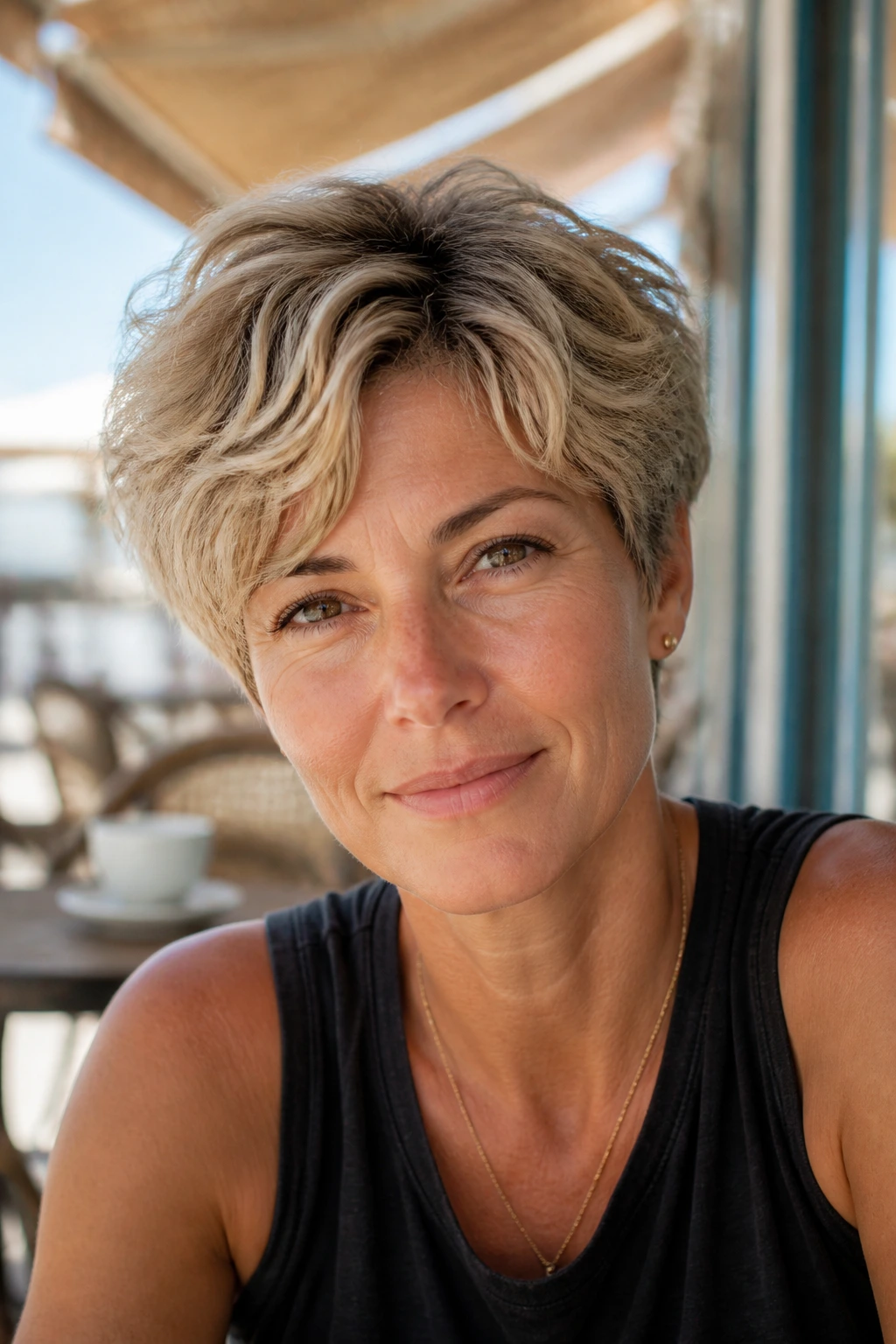
A short crop with sandy blonde pieces is one of those styles that looks casual but still does a lot of work. The sandy tone adds light without pulling hard toward ash or gold, which makes it friendly on dark hair that doesn’t lift evenly.
The wavy crop needs texture through the crown and a bit of separation at the front. That keeps thin strands from bunching together. It also gives the blonde pieces more room to show. A sea salt spray can help, but don’t soak the hair in it. Too much grit and the crop starts to feel dry instead of piecey.
This cut suits people who don’t want a heavy styling routine. Scrunch, bend, air dry, done. Sometimes that’s the best kind of beauty.
14. Toasted Almond Soft Shag
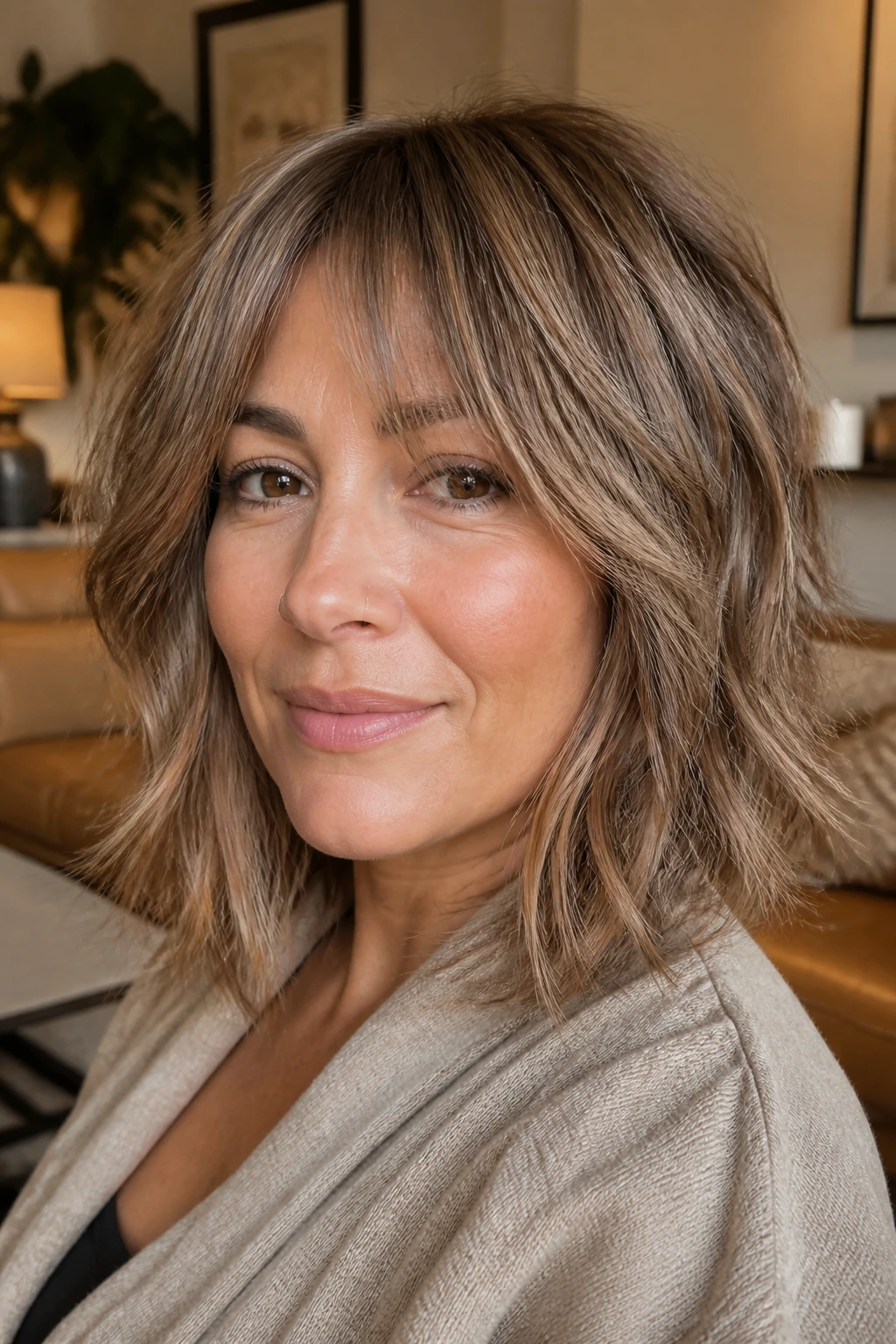
Toasted almond sits in a warm beige-brown lane that flatters dark roots and keeps thin hair from looking chalky. On a soft shag, it creates movement without the harsh contrast you get from a super light blonde.
The shag should stay airy around the crown and cheekbones, with the ends left a little blunt. That balance matters. Pure shag layers can remove too much weight from fine hair. A small amount of weight at the bottom keeps the style from puffing out weirdly in humidity.
This shade is also forgiving between salon visits. Warm neutral blondes tend to fade more gracefully than icy ones, which means the grow-out doesn’t scream for attention after three weeks.
15. Creamy Layered Pixie Bob
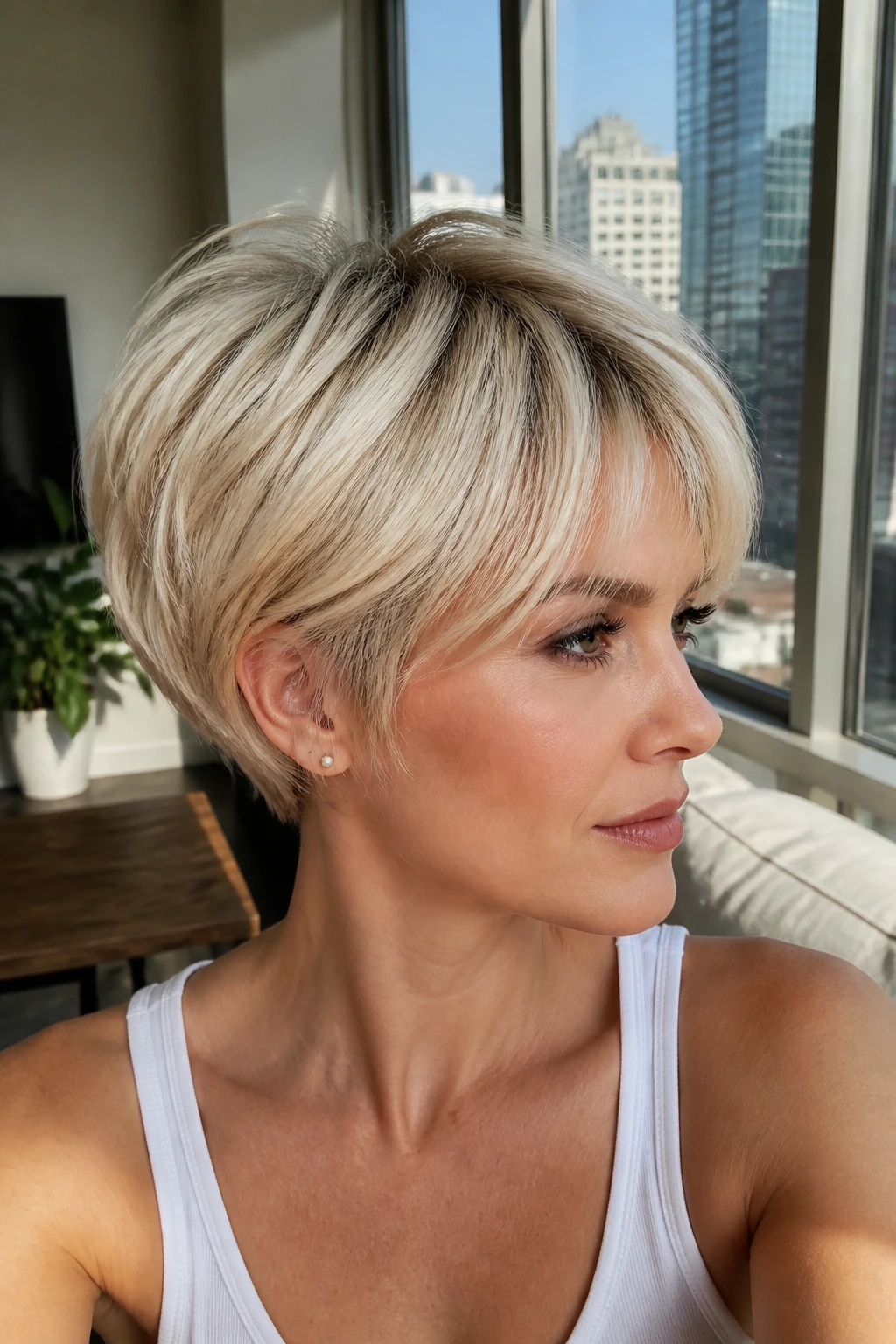
A pixie bob is a smart in-between cut for anyone who wants short hair but not a full crop. Creamy blonde adds lift, while the layered shape gives movement at the crown and around the ears without exposing the scalp too much.
The thing I like here is the way the haircut can be pushed forward or tucked back depending on the day. Thin hair likes options. A creamy tone keeps the whole style soft, and the short length means the ends stay healthy-looking instead of ragged.
Use a lightweight mousse before blow-drying. Then rough-dry with your fingers until about 80 percent dry, finish with a small round brush, and stop. Don’t overwork it. This cut looks best with a little lived-in shape.
16. Honey Blonde Flip-Out Lob
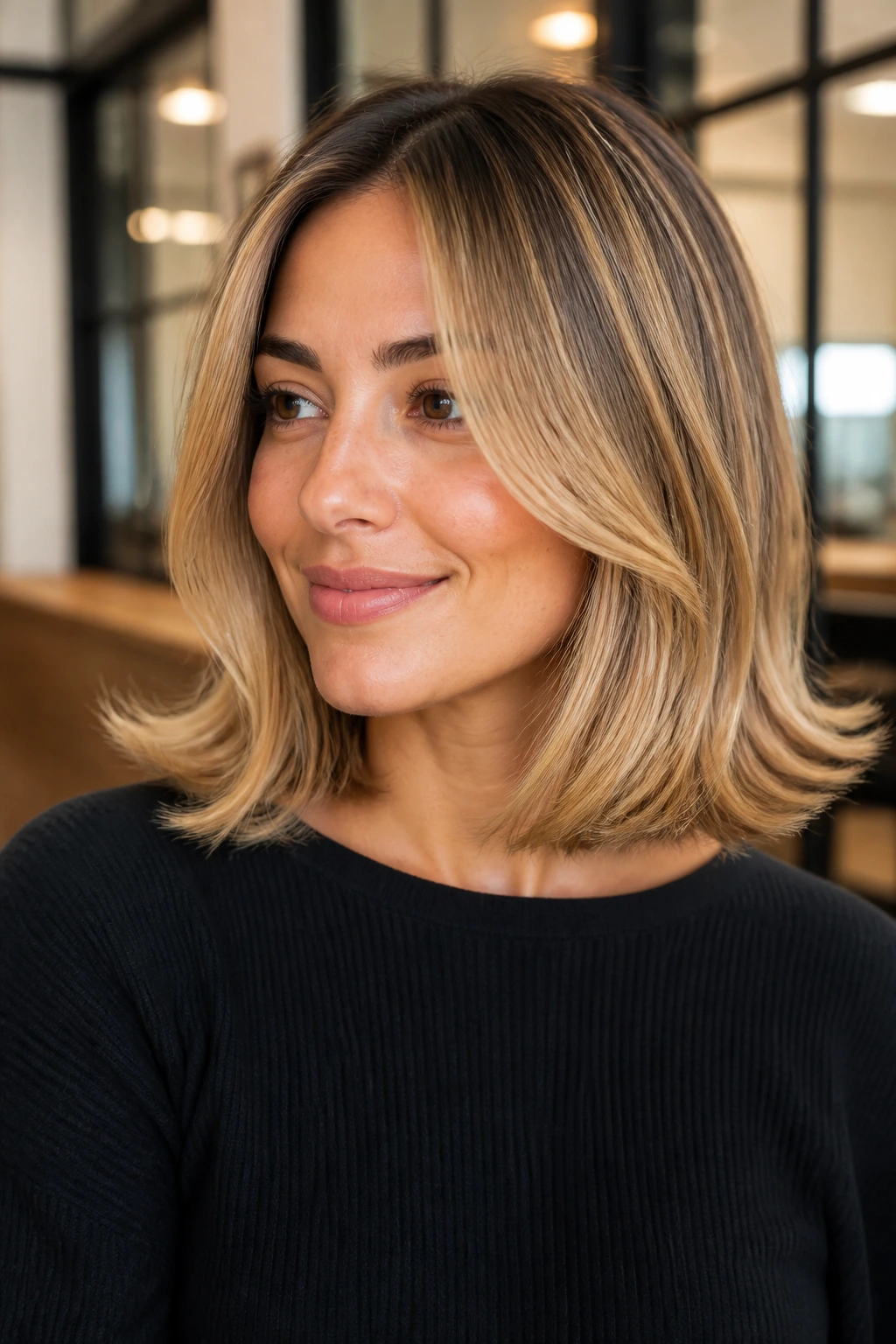
Flip-out ends feel a little retro in the best way, and on a thin lob they solve a practical problem: they make the perimeter look wider. Honey blonde warms the whole look and keeps the style from feeling icy or flat.
The flip should be subtle, not cartoonish. A half-turn away from the face is enough. Too much outward curl and the cut starts to look dated. Honey blonde works because it reflects light, but it still has enough depth to keep the hair from looking wispy at the ends.
This is one of the easiest looks to wear with a blazer or a plain tee. The shape carries the style. The color just keeps it from going dull.
17. Rooty Butterscotch Long Layers
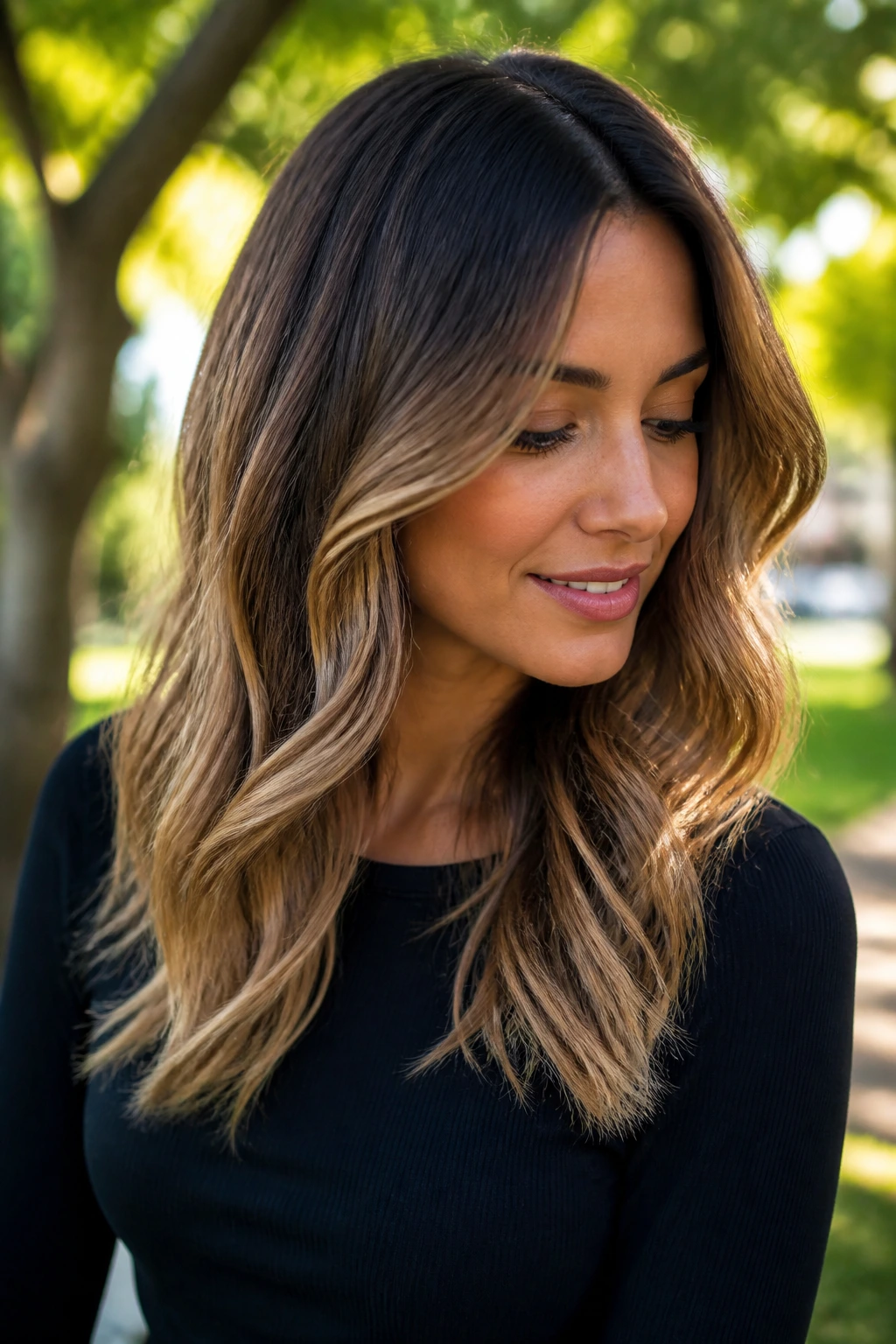
Long hair on thin dark strands needs a reason to exist, and rooty butterscotch gives it one. The dark root keeps the crown from looking sparse, while the butterscotch ribbons brighten the lower half where the eye wants movement.
Long layers should start lower than people think — often around the collarbone or just below. High layers on thin hair can leave the ends looking chopped. Here, the shape is more about swing than volume. When you curl it, the lighter ends will move like they have more hair behind them than they really do.
A wide-barrel curling iron works better than a small one. Bigger bends feel fuller. Smaller curls can make the length look stringy.
18. Beige Balayage Wolf Cut
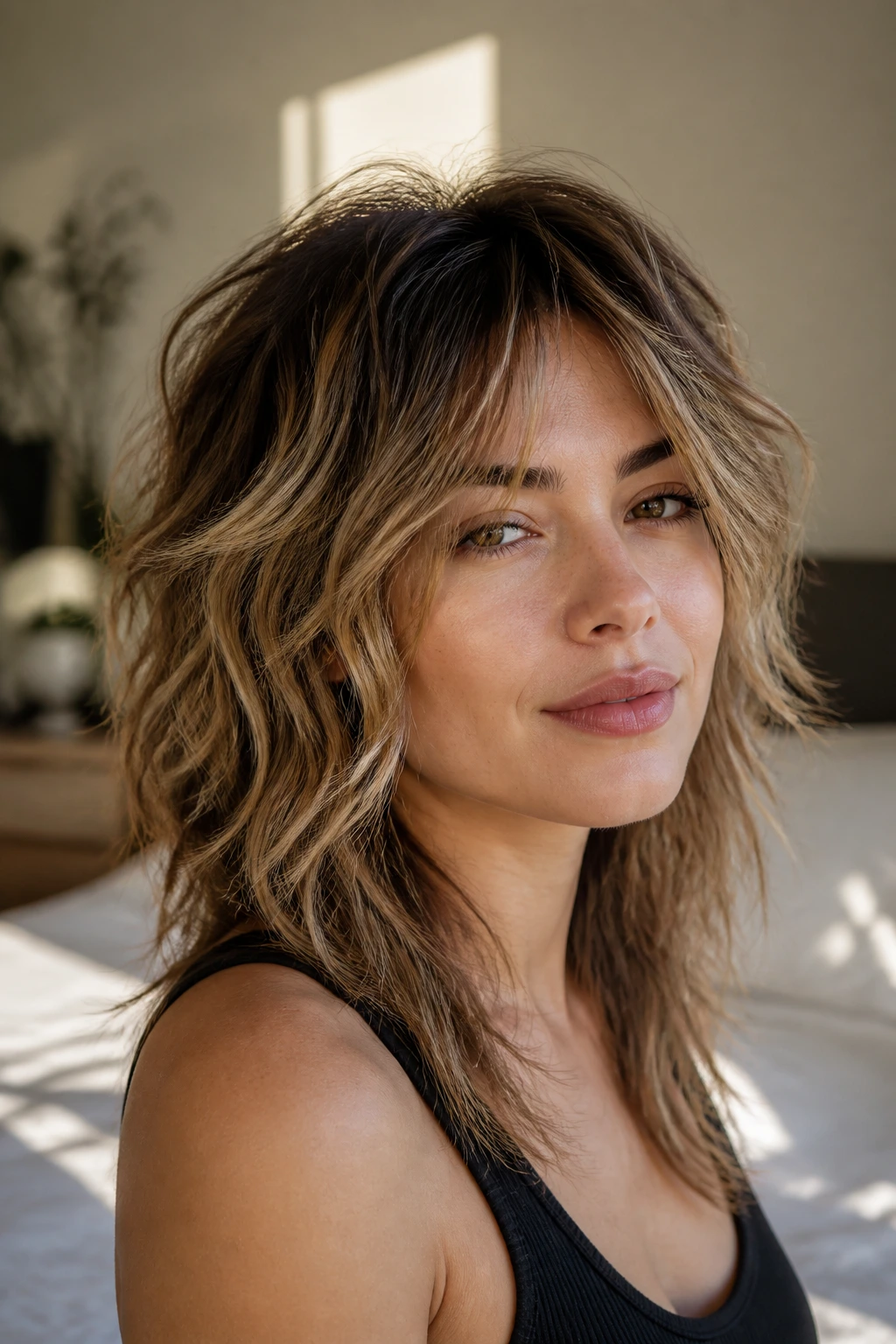
A wolf cut sounds loud, but in beige balayage it can soften nicely on thin hair. The cut brings a little attitude through the top and face-framing pieces, while the beige tone keeps it from reading too harsh or too punk.
This is a better choice if your hair has some natural wave. On pin-straight hair, a wolf cut can lose its shape fast. Beige balayage helps because the light pieces break up the layers and make the motion easier to see. Keep the ends lightly textured, not shredded. There’s a difference.
If you like air-dried hair and don’t mind a little mess, this one can be fun. If you prefer sleek and neat, skip it. It has a mood.
19. Cream Soda Blunt Lob
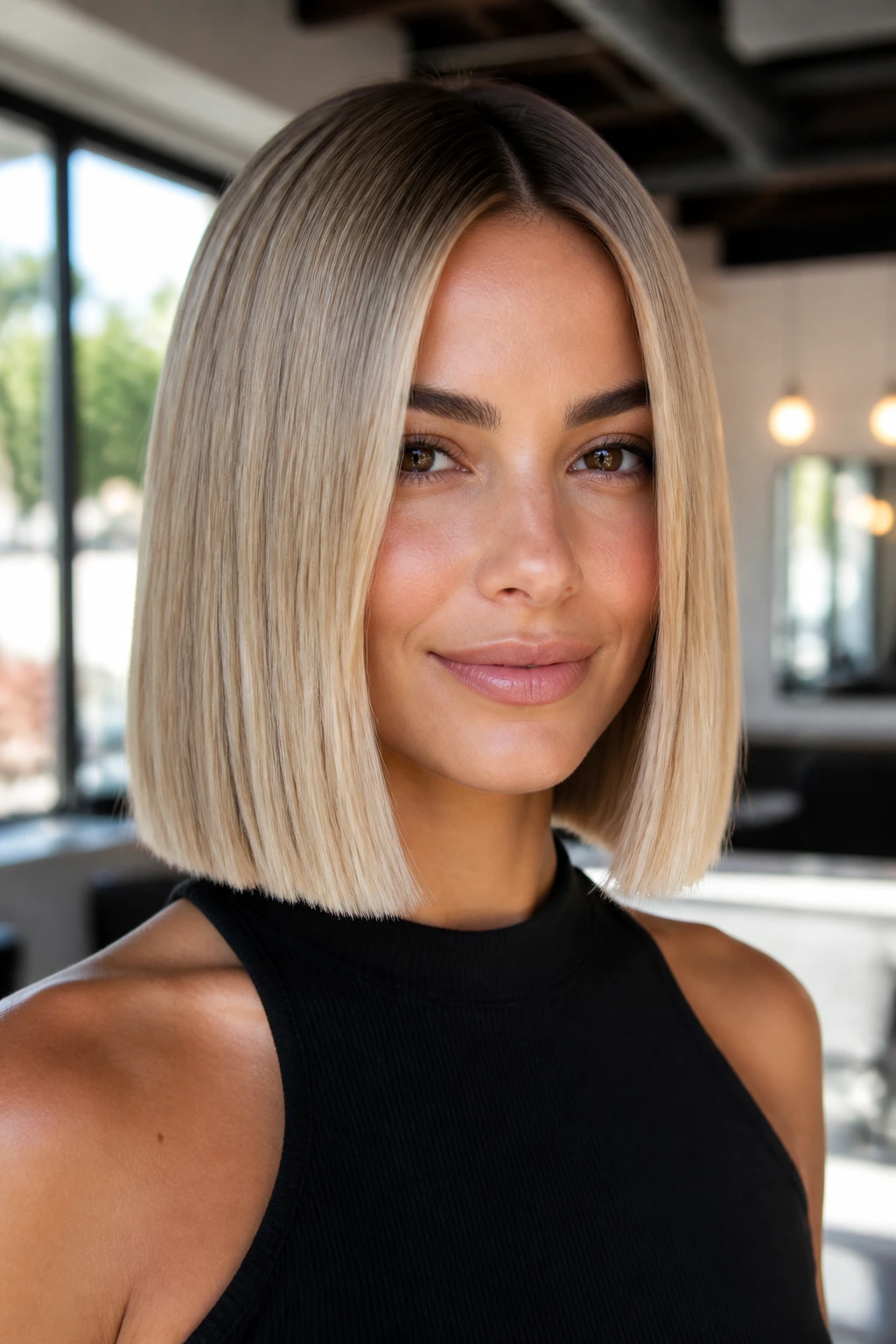
Cream soda blonde is warm, soft, and a little glossy, which makes it a nice choice when dark hair needs lightness without looking fried. On a blunt lob, it builds a clean, polished outline that thin hair often lacks.
The blunt edge is the real hero. The color just supports it. The end line should be straight and full, with enough weight to show on both sides of a center part. If the hair is wavy, a quick blowout smooths the surface so the creamy tone reads evenly.
This look is good when you want blonde that looks expensive but not icy. It has warmth, shine, and a shape that holds up well under daily styling.
20. Smoky Ash Undercut Pixie
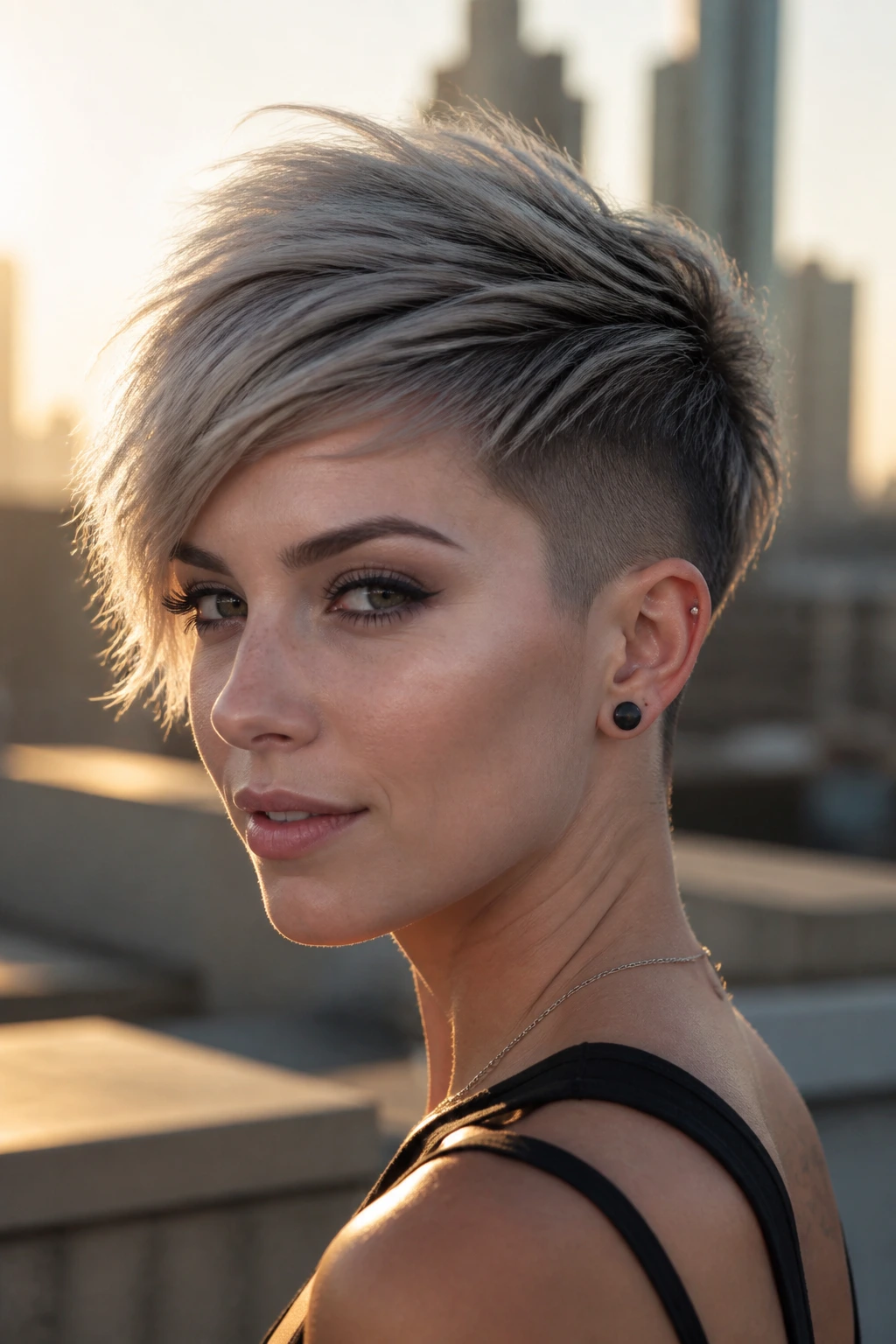
An undercut pixie may sound severe, but on thin hair it can remove bulk where you don’t need it and leave more visual height on top. Smoky ash keeps the short pieces crisp and prevents the top from turning brassy.
The undercut also lets the top layer sit better. That’s the whole point. You want lift without puffiness. If the top is too heavily lightened, though, the cut can lose contrast and start to look airy in the wrong way. Keep some depth underneath so the ash tones have something to sit against.
This is a strong choice for people who like sharp silhouettes. It’s not soft, and it doesn’t pretend to be.
21. Golden Ribbon Curls on Medium Lengths
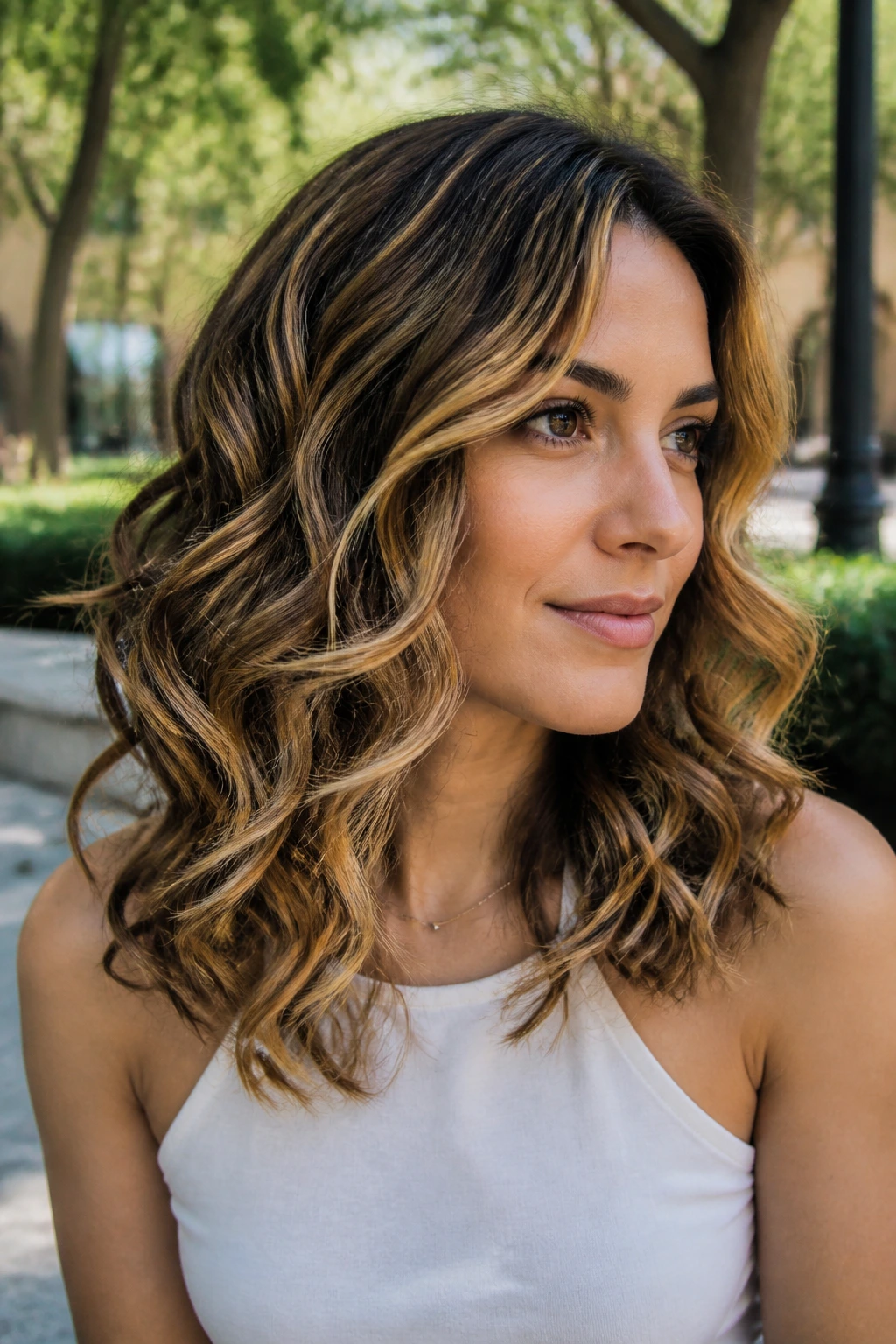
Golden ribbons through medium-length curls are straightforward, and sometimes straightforward wins. The dark base stays visible, the lighter ribbons catch the bend, and the curls look thicker because the contrast is broken up in stripes rather than one flat color field.
Medium lengths are key here. Long curls on thin hair can drag the style down. Shoulder-skimming hair keeps the curl springy. The ribbon placement should live through the outer layers and around the face, not packed too tightly everywhere. Leave some darker interior hair untouched. That’s what keeps the style from reading sparse.
Use a 1-inch iron and brush the curls out once they cool. That makes the ribbons blend and stops the finish from looking too rigid.
22. Soft Vanilla Curtain Layers
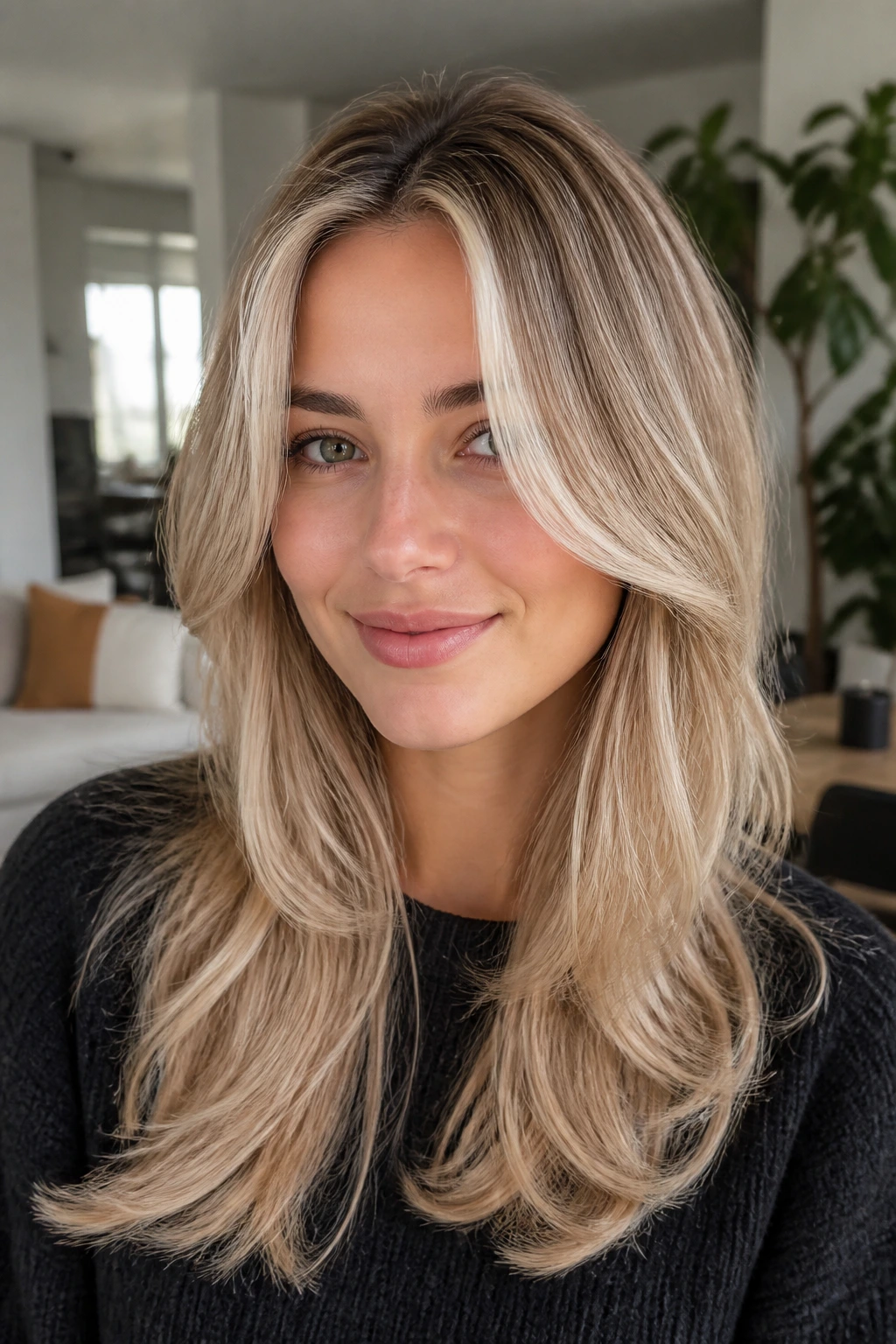
Vanilla blonde is one of the lightest tones that can still feel soft against dark hair, especially if the lift stays creamier than icy. Paired with curtain layers, it frames the face in a way that thin hair usually needs.
The center-front pieces should be the lightest. Then the tone can soften as it moves back. That gradient creates the illusion of fullness around the hairline, where thin hair often shows the quickest. Curtain layers also help because they fall diagonally, not straight down. Diagonal lines always make hair look a little more abundant than a blunt, narrow strip.
This style works if you like softness more than drama. It’s one of the easiest blonde looks to wear with natural makeup and minimal styling.
23. Dark-Root Champagne Curls
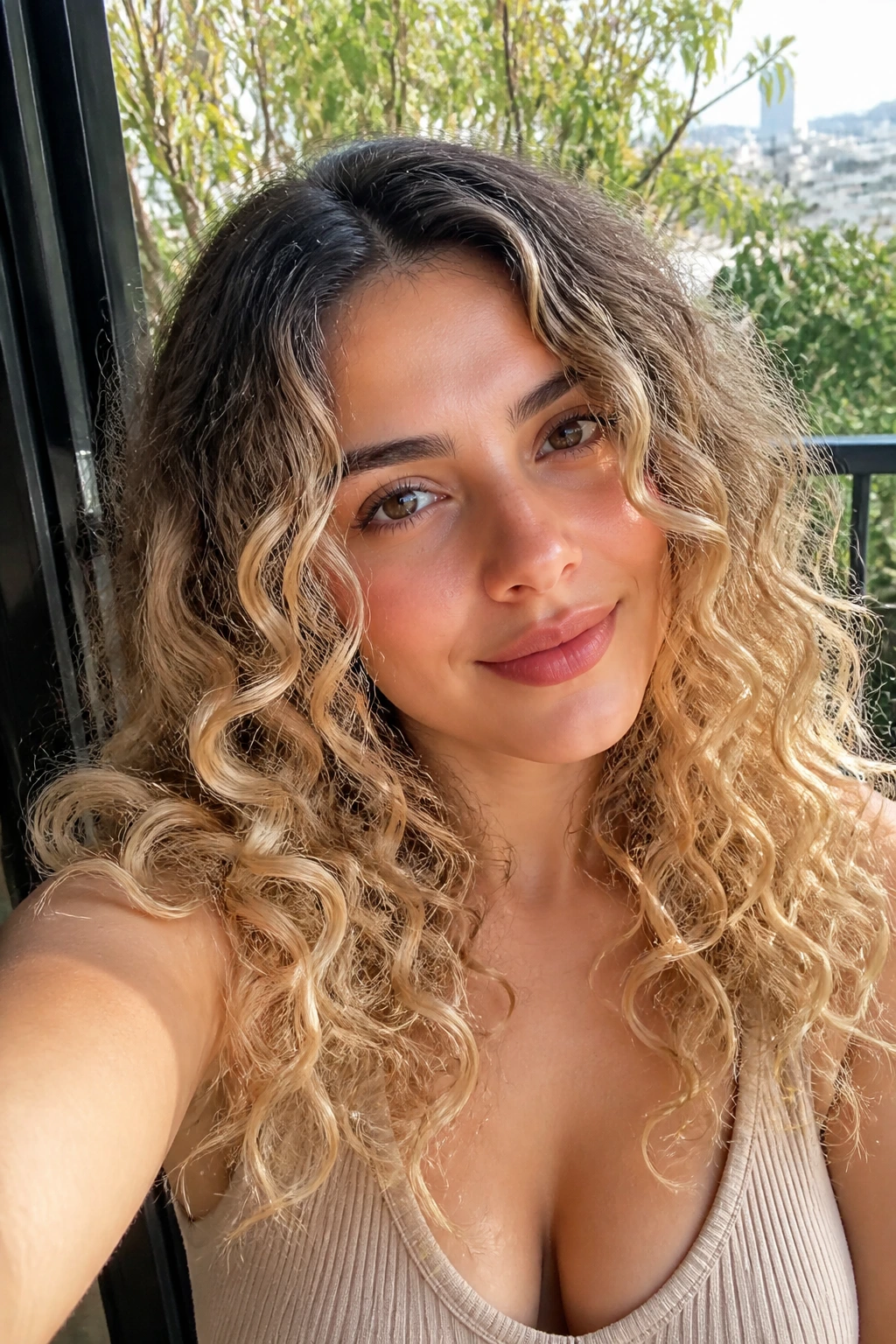
Champagne curls are a solid compromise for anyone who wants brightness but fears that a pale blonde will flatten the hair. The dark root keeps the base visible, while the champagne tone gives the curls a glossy edge.
The curls need to be relaxed. Tight ringlets separate too much on fine hair, and then the blonde starts to look spotty. Loose curls, on the other hand, clump together in a way that reads thicker. Ask for a soft root melt and keep the ends a little lighter than the mids. That detail helps the curl pattern show.
This is one of the better options if you wear your hair down most days and want the color to do more than sit there.
24. Sunlit Textured Lob
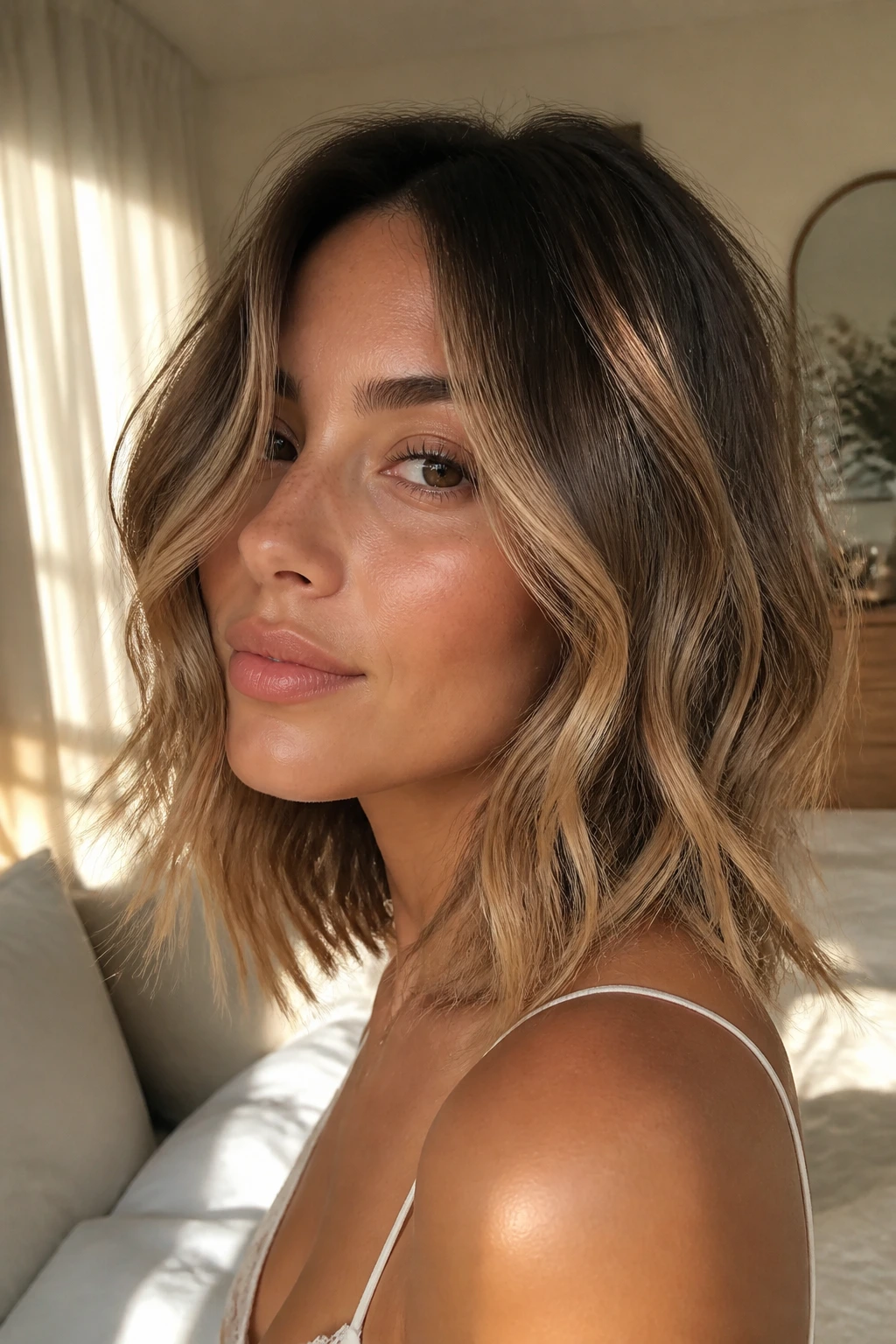
A sunlit lob is the practical cousin of a full highlight job. The color should look like it arrived in small, uneven flashes — not painted on with a ruler. On thin dark hair, that irregularity is what gives the cut depth.
Texture matters almost as much as tone. A soft wave, a bit of piecey spray, and a collarbone length cut can turn average hair into something that moves. Keep the ends blunt enough to hold shape, then let the highlights catch the bends. If the highlights are too uniform, the cut loses its lift. If the waves are too tight, the lob starts to look busy.
This style is a good middle road for someone who wants blonde without a full identity change.
25. High-Contrast Ice Blonde Crop
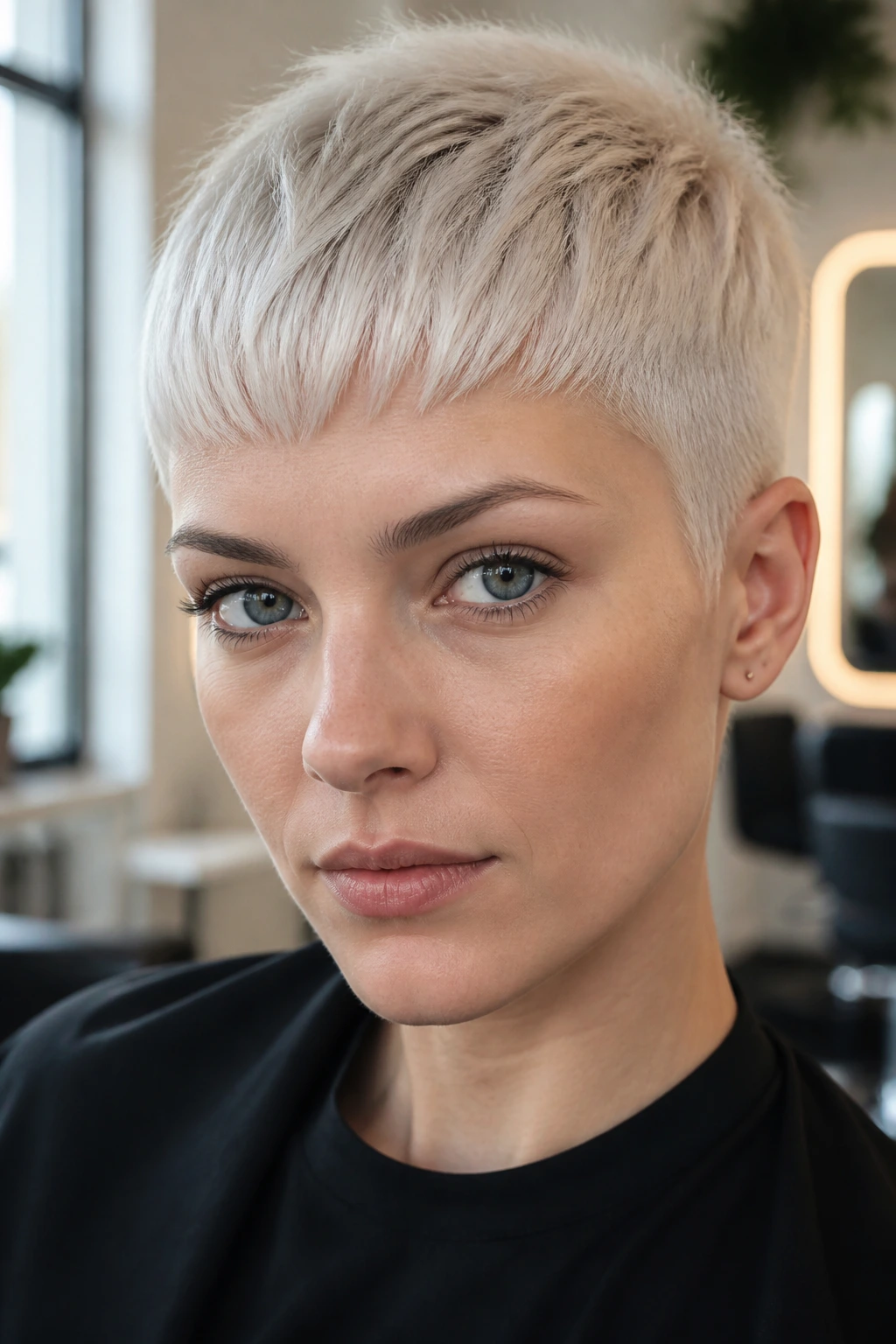
High-contrast ice blonde on a cropped cut is not for the timid, and that’s part of its appeal. On dark thin hair, the crop keeps the overall silhouette compact while the pale blonde delivers a sharp, graphic edge.
The cut should stay neat at the sides and slightly fuller on top. That way the light color doesn’t expose too much scalp. If the crop gets over-texturized, the contrast can become choppy in a bad way. Keep the surface smooth and the shape controlled. Then the ice blonde has room to look intentional.
This is the look for someone who wants the blonde to be the statement, not just a supporting detail. It’s strong, short, and very visible.
How Blonde Placement Changes the Read on Dark, Thin Hair
Dark hair and thin hair ask for different fixes, and blonde placement is one of the few things that can serve both at once. Dark roots and lowlights keep the base from going flat. Blonde ribbons lift the eye upward and outward. Put those bright pieces around the face, crown, and top layers, and the whole head reads fuller than the strand count would suggest.
A full-head pale blonde can work, but it is unforgiving. Every gap shows. Every rough blow-dry shows. On a denser head of hair, that’s not a disaster. On sparse strands, it can look a little hungry. A rooted balayage, a partial highlight, or a money piece usually buys more visual weight with less damage.
The cut matters just as much. Blunt bobs, strong lobs, pixies, and compact shags all create a perimeter. That perimeter is what tricks the eye into seeing thickness. A wispy, over-layered shape can undo even the prettiest blonde formula.
Essential Tools and Products for These Looks
- 1-inch and 1.25-inch curling irons: Small enough to create bend, not tight ringlets that split thin hair apart.
- Round brush, 1.5 to 2 inches: Useful for smoothing the top and lifting the crown without flattening the roots.
- Volumizing mousse: Apply at the roots on damp hair; a golf-ball amount is usually enough for shoulder-length hair.
- Heat protectant spray: Keep the iron from chewing up already-lightened ends.
- Root-lift spray or powder: Good for the crown, especially on styles with a center part.
- Texturizing spray: A light mist gives piecey separation, but too much makes fine hair feel dusty.
- Purple or blue shampoo: Use sparingly to keep blonde from turning brassy; overuse can make the hair look dull.
- Hair clips and duckbill clips: Helpful for sectioning when blow-drying or setting bangs.
- Wide-tooth comb: Less breakage than a fine comb when detangling damp highlighted hair.
Picking the Right Blonde Tone for a Dark Base
If you hold a blonde shade chart next to dark hair with thin density, the safest tones usually sit in the beige, honey, champagne, and mushroom lanes. Those shades soften the transition from root to lightened section, so the hair doesn’t look striped. Pure platinum can be stunning, but it asks for more lift, more maintenance, and more discipline with styling.
Warm blondes help if your skin has golden or olive undertones. Beige and ash lean cleaner on cooler skin. Pearl and icy tones look best when the lift is even and the hair is in decent shape. If the hair is already dry at the ends, a very cool pale blonde can make those ends read even thinner.
Ask for a root shadow, babylights, or face-framing brightness if you want the color to look fuller. Full bleach from scalp to ends is the fastest route to a brittle finish. Not always. But often enough to matter.
How to Style These Looks So They Read Fuller
Parting: A slight off-center part usually gives thin dark hair more height at the root than a dead center part. If your cowlick fights you, don’t force it.
Finish: Soft bends beat tight curls nearly every time. The bend should start below the cheekbone so the crown can stay lifted and the ends can stay dense.
Accessories: Small clips, skinny headbands, and tucked-behind-the-ear styling keep the face-framing blonde visible without collapsing the shape. Big heavy accessories drag the hair down.
Best touch-up move: A little dry shampoo at the root and a quick blast of the blow-dryer on cool air can revive volume in under two minutes. It’s not glamorous. It works.
Small Tweaks That Make the Blonde Look Thicker
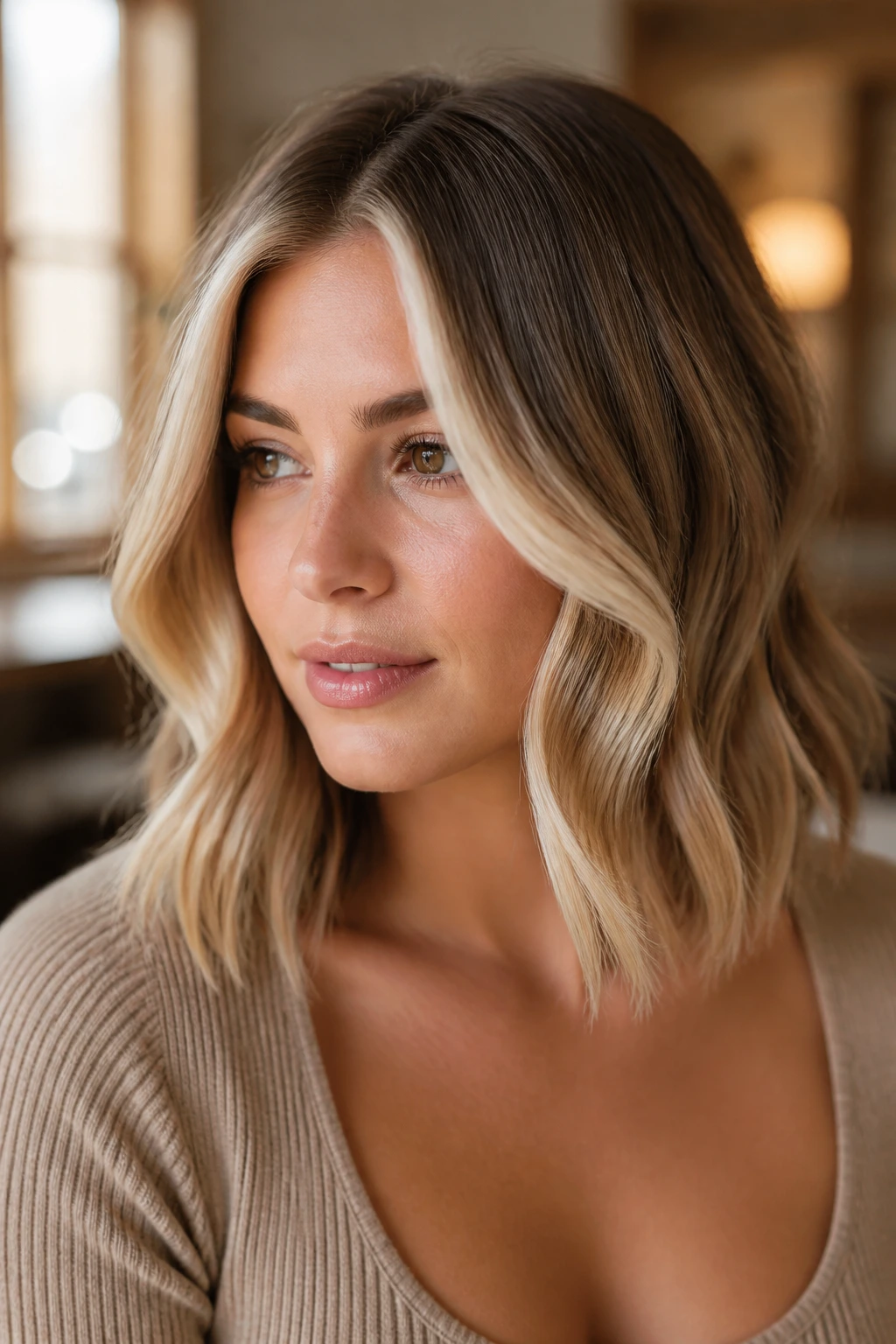
Face-Framing Lift: Brighten the money piece by one shade lighter than the rest of the blonde. That tiny contrast pulls the eye to the front and makes the hairline look denser.
Shadow at the Root: Keep a soft root melt of about half an inch to one inch. It stops the scalp from showing too sharply and gives the style a little depth.
Blunt Ends: Whenever the haircut allows it, keep the perimeter clean. A blunt bob or lob almost always reads fuller than heavily thinned ends.
Texture, Not Frizz: Use a styling cream or lightweight mousse, then finish with a bend from a hot tool. Frizz scatters the light in a bad way; controlled texture catches it where you want it.
Make-It-Yours: If you like warmer color, lean into honey and caramel. If you prefer cool tones, stay with beige, ash, pearl, or mushroom. Both camps work. The wrong choice is the one that fights your skin tone and leaves the hair looking tired.
What Goes Wrong With Blonde on Thin Dark Hair
The most common mistake is chasing the palest blonde first. That usually sounds exciting in the chair and looks flat by the second week. Thin hair needs dimension more than it needs altitude. If every strand is pushed to the same pale level, the head can look smaller, not fuller.
Over-thinning the cut is another problem. People ask for “movement” and walk out with ends that barely exist. On thin hair, movement should come from bend, layers placed with care, and color placement — not from eating away the perimeter.
Harsh root lines are a third issue. A solid stripe of dark root against bright blonde can look striped instead of modern. A root shadow or soft melt avoids that. So does asking for brightness around the face and crown, not just through the middle lengths.
Purple shampoo can backfire too. Use it too often and the blonde goes flat, gray, or dusty. Once every few washes is usually enough. Let the toner and salon work do the heavy lifting.
Variations and Adaptations to Try
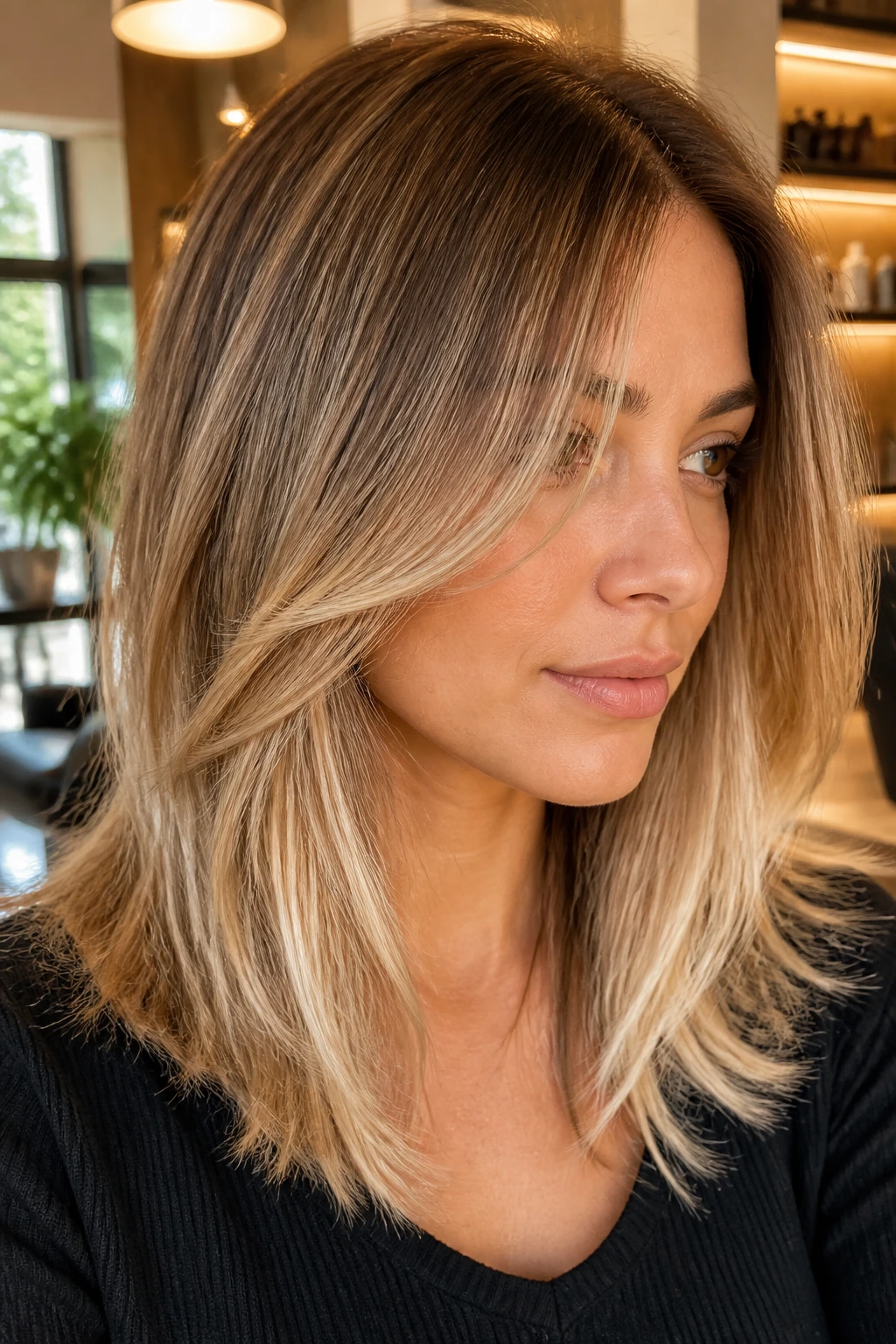
The Low-Maintenance Balayage Version: Keep the root darker and place the blonde only through the front and the outer surface of the hair. This grows out softly and asks for fewer salon visits.
The Cool-Tone Edit: Swap honey and butter for beige, ash, pearl, or mushroom blonde. That shift works well if your skin runs cool or you hate warm brass.
The Warm Glow Edit: Choose caramel, honey, cream soda, or toasted almond. These tones soften darker bases and usually look friendlier on skin with gold or olive undertones.
The Short-Cut Power Move: If your hair feels too fine to carry length, go bob, pixie bob, or cropped shag. Shorter lengths keep the ends full and make the blonde look more intentional.
The Curly-Hair Version: Use loose balayage and larger face-framing pieces so the color follows the curl pattern instead of fighting it. Fine curls need space between light sections or they start to look busy.
Maintenance, Touch-Ups, and Hair Health
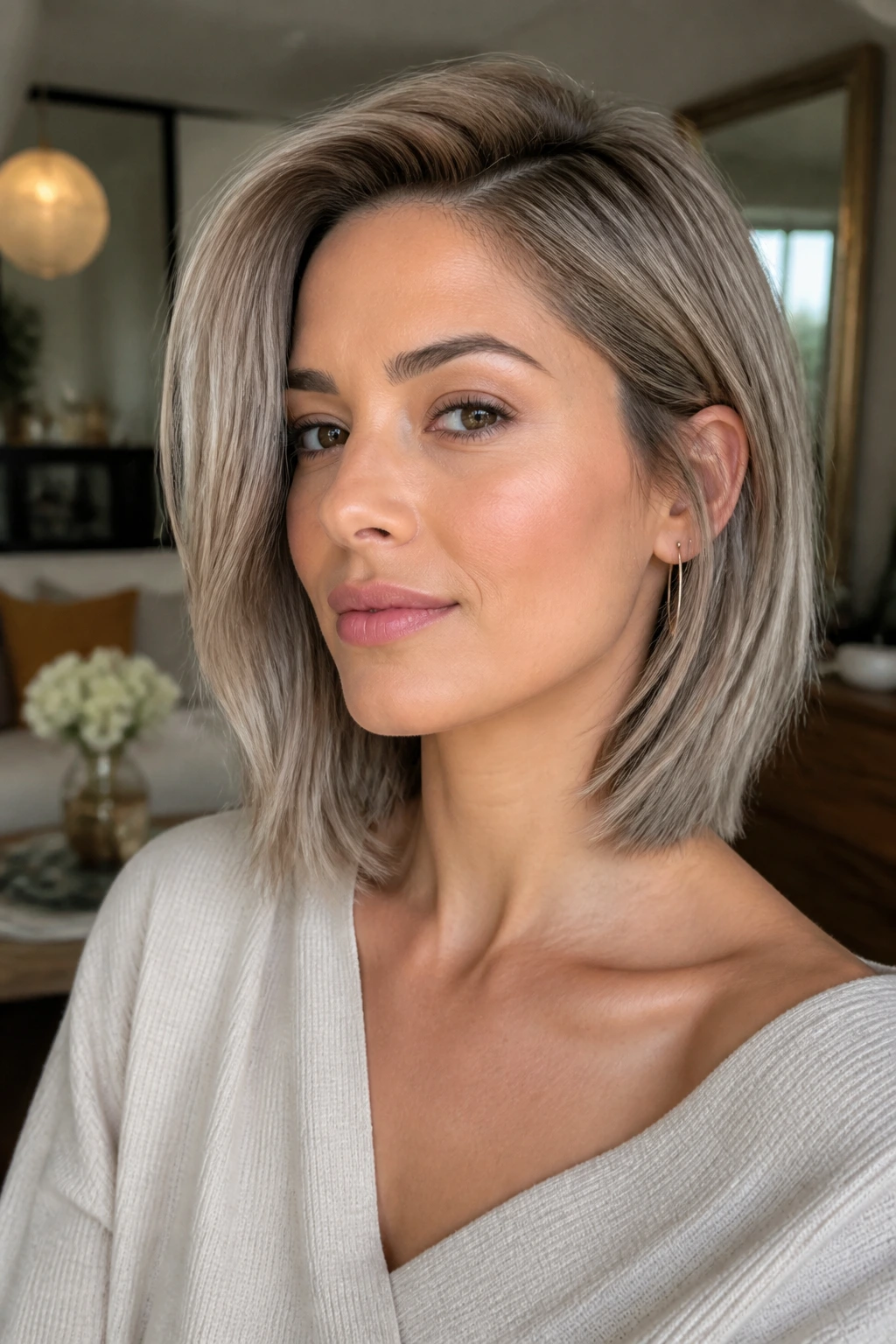
Blonde on dark hair usually needs a rhythm. Root touch-ups often land around six to eight weeks if the contrast is strong, though balayage and rooted looks can stretch farther. Toner or gloss appointments help keep the shade from drifting brassy or muddy, especially on beige and ash finishes.
At home, a gentle sulfate-free shampoo is kinder to lightened strands. Wash with lukewarm water, not hot. Hot water strips tone fast and leaves the hair rough at the ends. A mask once a week can help, but don’t drown the hair in protein if it’s already stiff; too much of it makes fine hair feel crunchy.
If you heat-style often, keep the temperature lower than you think. About 300°F to 325°F is enough for most fine hair, especially once it’s been lightened. High heat can flatten the cuticle and make thin blonde pieces look even thinner by the ends.
Questions People Ask Before They Go Blonde
Can dark hair go blonde without looking flat?
Yes, if the blonde is placed with dimension in mind. Root shadow, babylights, and face-framing pieces usually work better than one solid pale shade.
What blonde shade is safest for thin hair?
Beige, honey, champagne, and mushroom blonde tend to be kinder because they keep some depth in the hair. Pure platinum can work, but it asks for more care and a stronger cut.
Is a bob better than long hair for thin strands?
Usually, yes. A blunt bob or lob keeps the ends looking full and reduces the see-through effect that long thin hair can get.
Do highlights damage thin hair less than all-over bleach?
Often they do, because fewer strands are lightened and the base stays healthier. That said, the condition of the hair matters more than the technique alone.
How often should blonde be toned on dark hair?
A toner or gloss every six to eight weeks is a solid starting point if the blonde is warm or brass-prone. Some people can stretch longer with a rooted balayage.
Can I get these looks on naturally curly hair?
Yes, but the placement needs to follow the curl pattern. Larger ribbons and softer blends usually work better than tiny streaks.
What if my hair is very fine and breaks easily?
Keep the color a little deeper at the root, avoid over-layering, and stay away from high-heat styling every day. The haircut should protect the ends.
Final Thoughts
The strongest blonde looks on dark, thin hair are the ones that understand limits. They don’t try to turn sparse strands into a billboard of platinum. They work with shadow, shape, and controlled brightness so the hair reads fuller, not flatter.
If you take anything from this list, make it this: choose the blonde shade, the cut, and the parting as one decision. That’s where the magic sits. A beige bob, a honey lob, a champagne money piece, or a rooted pixie can all do more than a dramatic all-over blonde ever will.