



Steel blonde can look razor-sharp on pale skin, but on fine hair it turns fussy fast if the cut is lazy. A soft wash of silver-beige with no shape can leave the face looking flatter than the hair itself, which is not the effect anyone wants. The right silhouette changes that in a hurry.
The trick is not to chase more lightness. It’s to give the color something solid to sit on: a blunt edge, a clean part, a few face-framing pieces, or a little root depth so the blonde doesn’t drift into the skin and vanish. Pale complexions tend to carry a lot of reflected light already, so steel blonde has to be balanced with structure or it starts to read washed out instead of crisp.
Fine hair also has its own rules. It likes lines more than bulk, and it tends to collapse when the styling gets too heavy or too round. So the best steel blonde hairstyles for pale skin with fine hair are the ones that create the illusion of density where you need it and keep the ends honest. You’ll see short cuts, clever lobs, a few polished waves, and some low-effort updos that prove thin strands can still look deliberate.
Why These Steel Blonde Looks Work Instead of Flopping Flat
-
Steel blonde needs contrast: the cool silver-beige tone looks strongest when it’s paired with a little root shadow or a crisp perimeter, because pale skin can swallow ultra-light blonde if everything is the same value.
-
Fine hair needs edges: blunt hems, bevels, and clean lines make the ends look fuller than they are, which matters more than another round of layering ever will.
-
A little depth near the scalp helps: a soft root melt keeps the color from floating away from the face and gives fine hair a visual anchor at the crown.
-
Face-framing pieces do a lot of work: cheekbone-length strands, curtain bangs, and side sweeps put light where the face needs it, instead of letting steel blonde wash across the whole head in one flat sheet.
-
Texture has to be placed carefully: bends at the mid-lengths and ends add body without puffing up the roots, which is the difference between airy and frizzy.
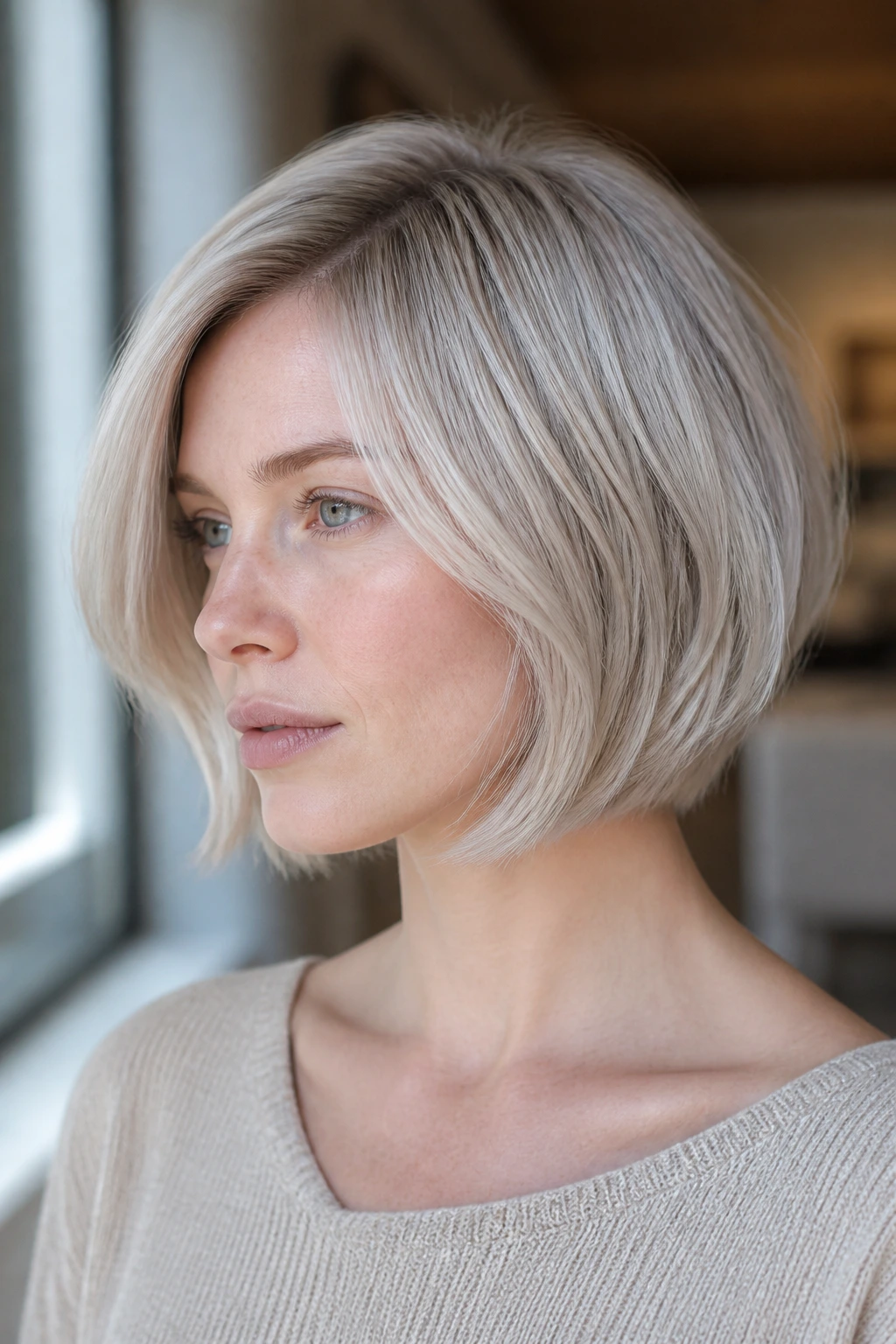
1. The Jaw-Length Blunt Bob That Makes Fine Hair Look Denser
A jaw-length blunt bob is the cut I’d reach for first if the goal is to make steel blonde look clean, not fragile. The hard line at the bottom gives fine hair a solid edge, and that edge is what tricks the eye into seeing thickness. On pale skin, the cool blonde sits right at the jaw and cheekbone level, so the whole face gets a sharper frame.
Why It Works
The strength of this cut is the perimeter. A blunt bob keeps the lightest strands from dissolving into wispy ends, which is exactly what fine hair tends to do when it gets too much layering. Ask for a tiny bevel under the chin, not a stacked back or choppy interior, and keep the root slightly deeper than the mids.
Good details to ask for:
- Jaw length or just below the jaw for the fullest look.
- A soft root shadow 1 shade deeper than the mids.
- Minimal texturizing at the ends.
- A center part if you want clean lines, or a slight off-center part if your face needs a little softness.
Best finish: smooth with a round brush, then tuck one side behind the ear. That tiny move makes the cut look intentional instead of severe.
2. The Collarbone Lob With Airy Ends
If you want a little more length, the collarbone lob is the safer bet. It gives steel blonde room to show off those smoky silver tones, but it still stops short enough to keep fine hair from turning stringy. The ends skim the collarbone and move when you walk, which is more useful than people think.
This is a good cut for pale skin because the longer outline softens the face without hiding it. It also gives you options on days when your hair decides to be flat and annoying. A loose wave, a straight blowout, even a lazy bend at the ends — all of it works here.
I like this cut with barely-there internal layers and a quiet bevel. Too much layering at this length turns the lob into a thinner version of itself. Nobody needs that.
3. Curtain Bangs With Soft S-Bends
Why do curtain bangs keep showing up with steel blonde? Because they fix the biggest problem fine hair has: too much blank space around the face. Curtain bangs break up that space, and soft S-bends below them keep the style from feeling stiff or overdone.
How to Style It
- Blow-dry the bangs forward first, then sweep them away from the face with a round brush.
- Use a 1-inch or 1.25-inch iron only from the cheekbone down.
- Leave the very ends straighter than the middle so the hair doesn’t puff.
This style is especially kind to pale skin with a pink cast. The fringe adds softness, while the cool blonde keeps the look bright. And if your hair gets flat by noon, the bang area still gives the eye something to read.
4. The Center-Parted Sleek Lob
A center-parted sleek lob has a very specific effect: it makes steel blonde look expensive in the plainest possible way. No teasing, no beachy nonsense, no fake volume sprayed from root to crown. Just smooth lines, a tidy part, and a color that reflects light like brushed metal.
That clarity suits pale skin because the face gets a neat border instead of a fuzzy halo. It also suits fine hair because the sleek finish makes the whole head read as healthier and denser, as long as you don’t drown it in heavy cream. A lightweight heat protectant and a small amount of smoothing serum are enough.
The one thing I’d avoid is over-flat ironing the roots. Leave a whisper of lift at the crown. Otherwise, the whole style can sink straight down and lose the shape that makes it work.
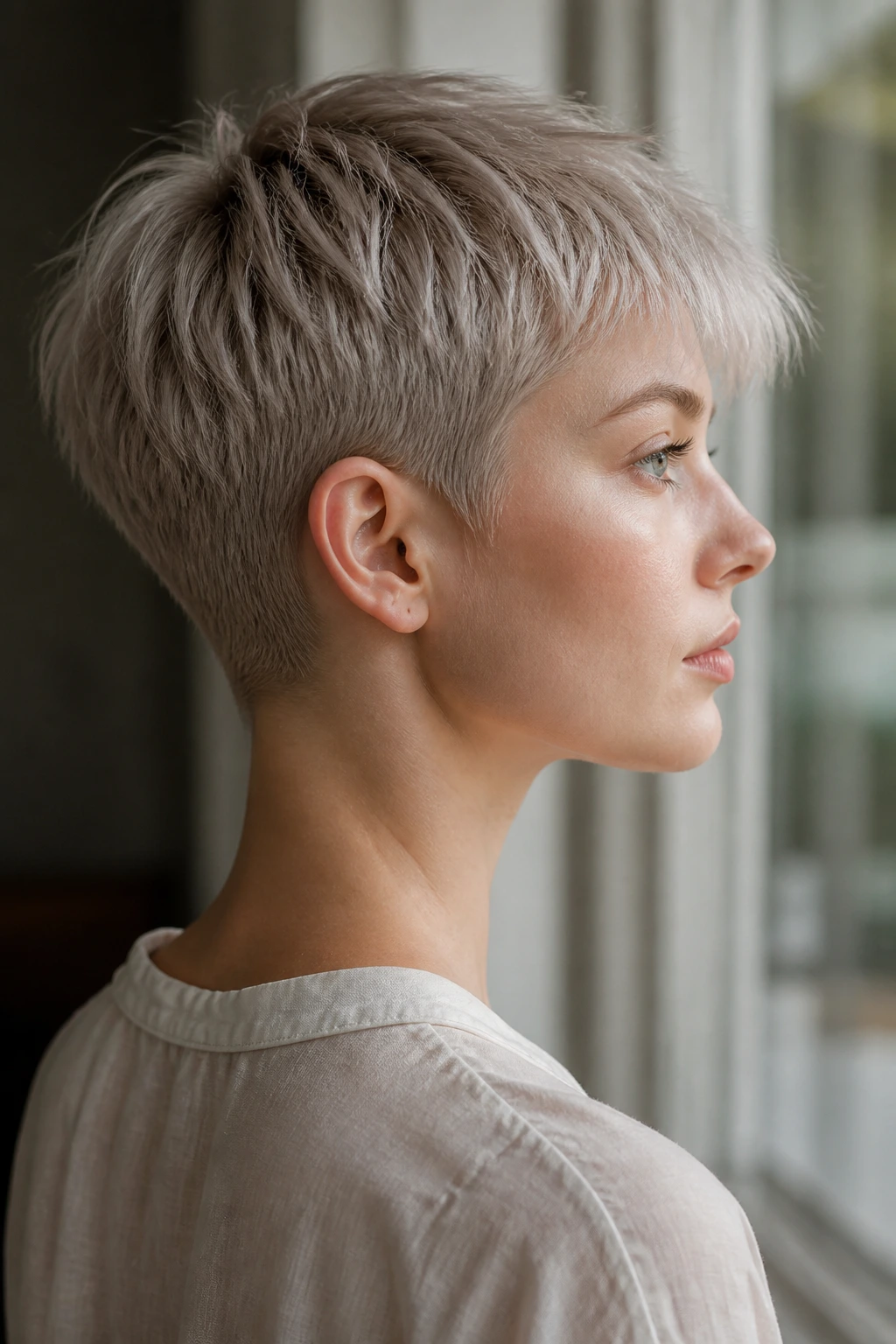
5. The Scandi Pixie With a Tapered Nape
The Scandi pixie is for the person who wants the coolness of steel blonde without the maintenance of longer hair. On pale skin, it gives strong bone structure a chance to show. On fine hair, it’s almost a relief — the short length means the hair doesn’t have to pretend to be thick.
A tapered nape keeps the back neat, while leaving the top 1 to 2 inches longer gives you enough hair to piece out with a little cream or mousse. That top section is where the style lives. The sides should stay soft, not buzzed to the point of looking hard.
This cut can go edgy fast, so I prefer it with a tiny bit of softness at the hairline. Nothing fluffy. Just enough to keep steel blonde from looking like a helmet.
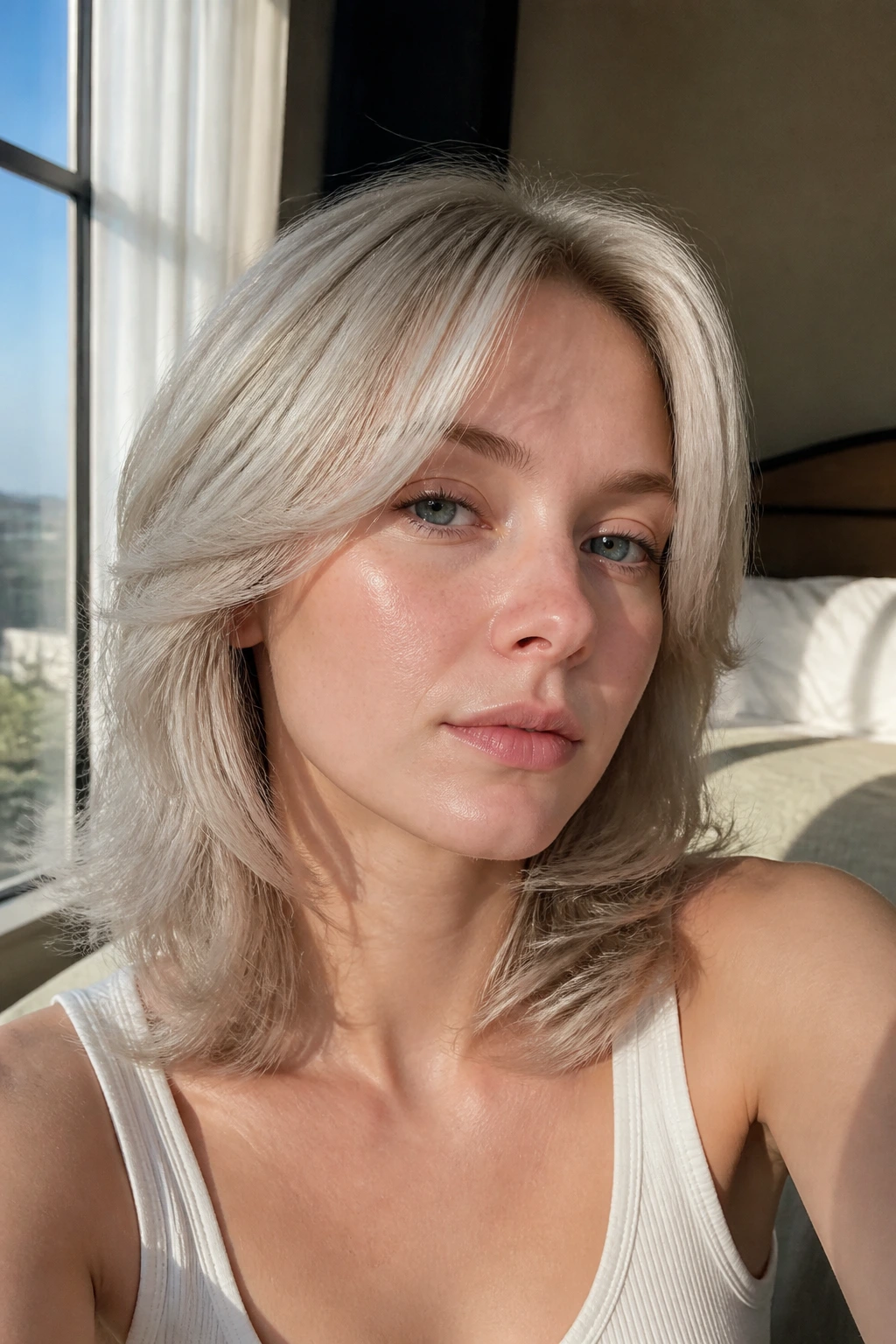
6. The Feathered Shoulder-Length Cut
Shoulder-length feathering is one of those old ideas that still works because it understands how fine hair moves. The layers are light, the shape stays loose, and steel blonde gets to shimmer through the whole cut instead of piling up at the ends.
It’s a smart choice if you want motion without giving up all your length. Pale skin benefits from the softer outline around the cheeks and collarbone, especially when the steel blonde is toned toward pearl instead of white. The result feels lighter on the face, which is often the real goal.
Styling Note
Use a medium round brush and lift the hair at the crown first. Then bend the ends away from the face. That small outward flick keeps the feathers from looking limp.
7. The Deep Side-Part Waves That Lift the Crown
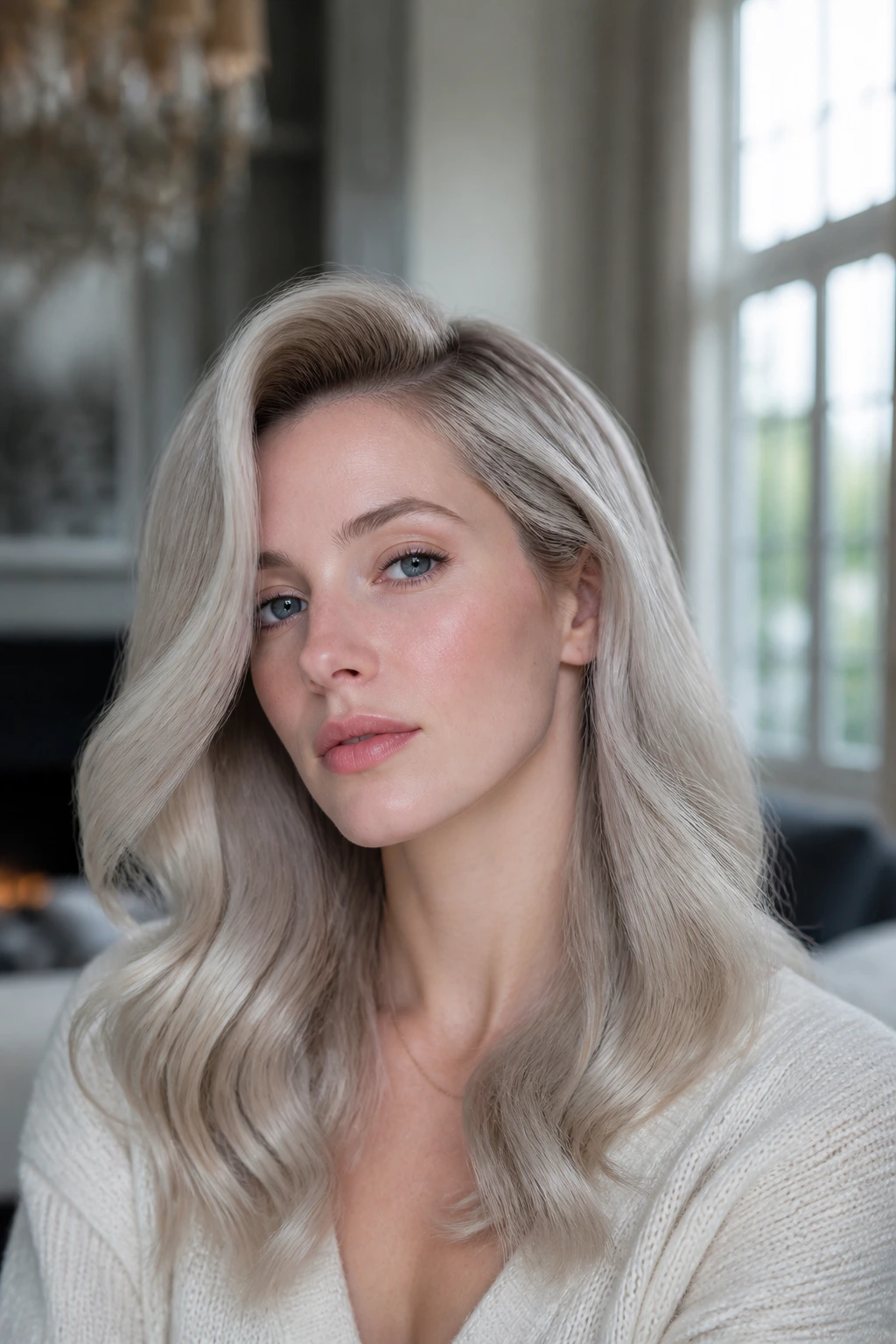
A deep side part is one of the cheapest tricks in hair styling, and I mean that as a compliment. It gives fine hair instant height at the crown, which is exactly where steel blonde can flatten out on pale skin. Add soft, brushed-out waves, and the whole look starts behaving like old Hollywood without needing a set of hot rollers.
The side part should sit about 1.5 to 2 inches off center. Any more, and it can start to feel costume-y. Any less, and you lose the lift. Keep the waves broad, not tight, so the shine of the color stays visible.
This is the style I’d wear when I want the hair to look dressed up but not stiff. It works especially well if your face is round or heart-shaped, because the side sweep adds diagonal movement that the eye follows naturally.
8. The French Bob With Choppy Texture
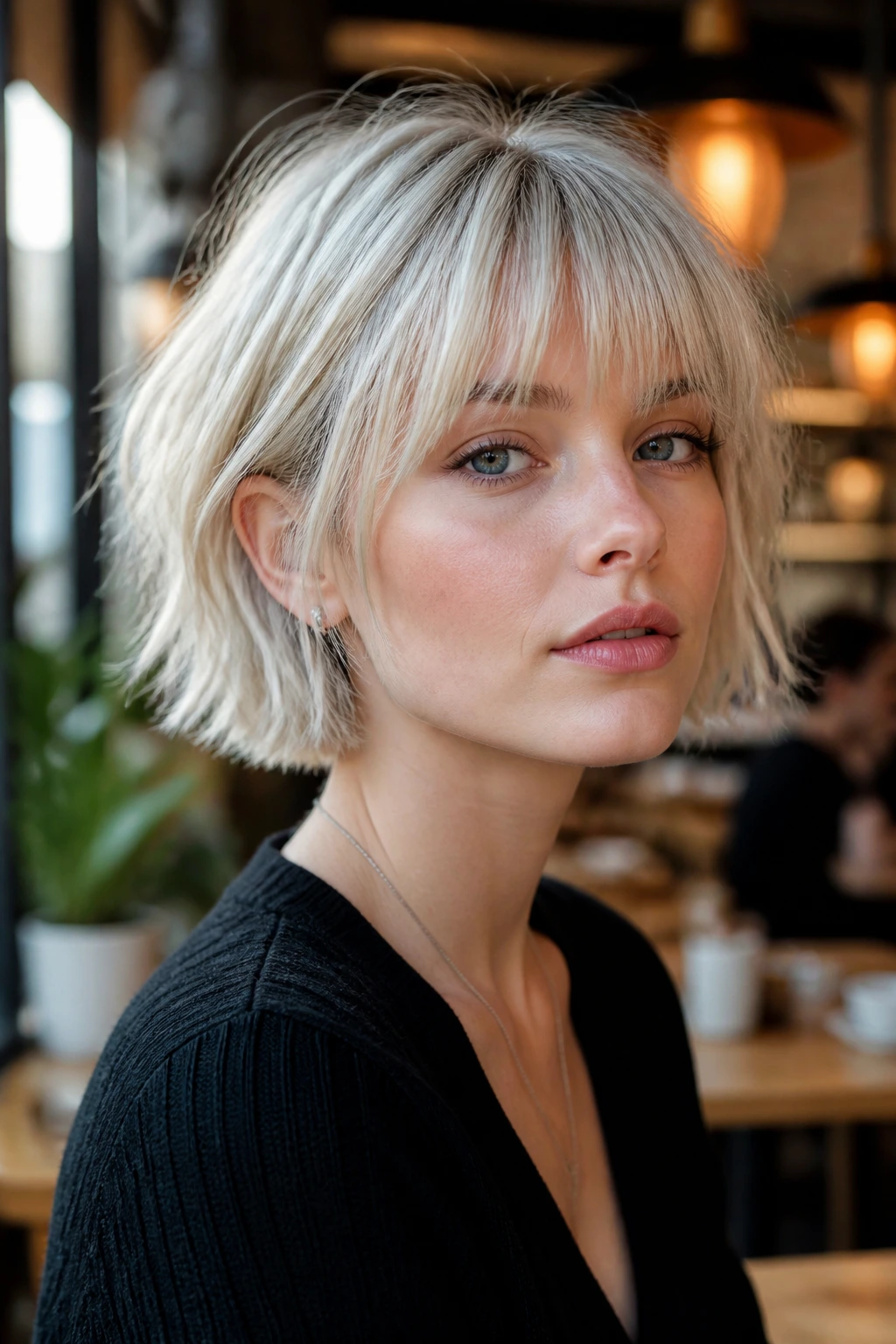
The French bob is short, cheeky, and very good at making steel blonde feel deliberate. The cut usually sits around the cheekbone or just below the ear, which gives pale skin a neat frame and keeps fine hair from dragging. A little choppy texture stops it from turning into a helmet.
A tiny fringe or soft forward bend helps here, but I wouldn’t go heavy on the bangs. The charm of this look is that it feels slightly undone, not overly crafted. The color can lean more icy or more beige depending on your skin tone, though I prefer a smoky pearl on very fair faces.
This is one of those cuts that looks best when it’s not over-styled. Let the ends move a little. Clean, not crunchy.
9. Long Layers With Face-Framing Pieces
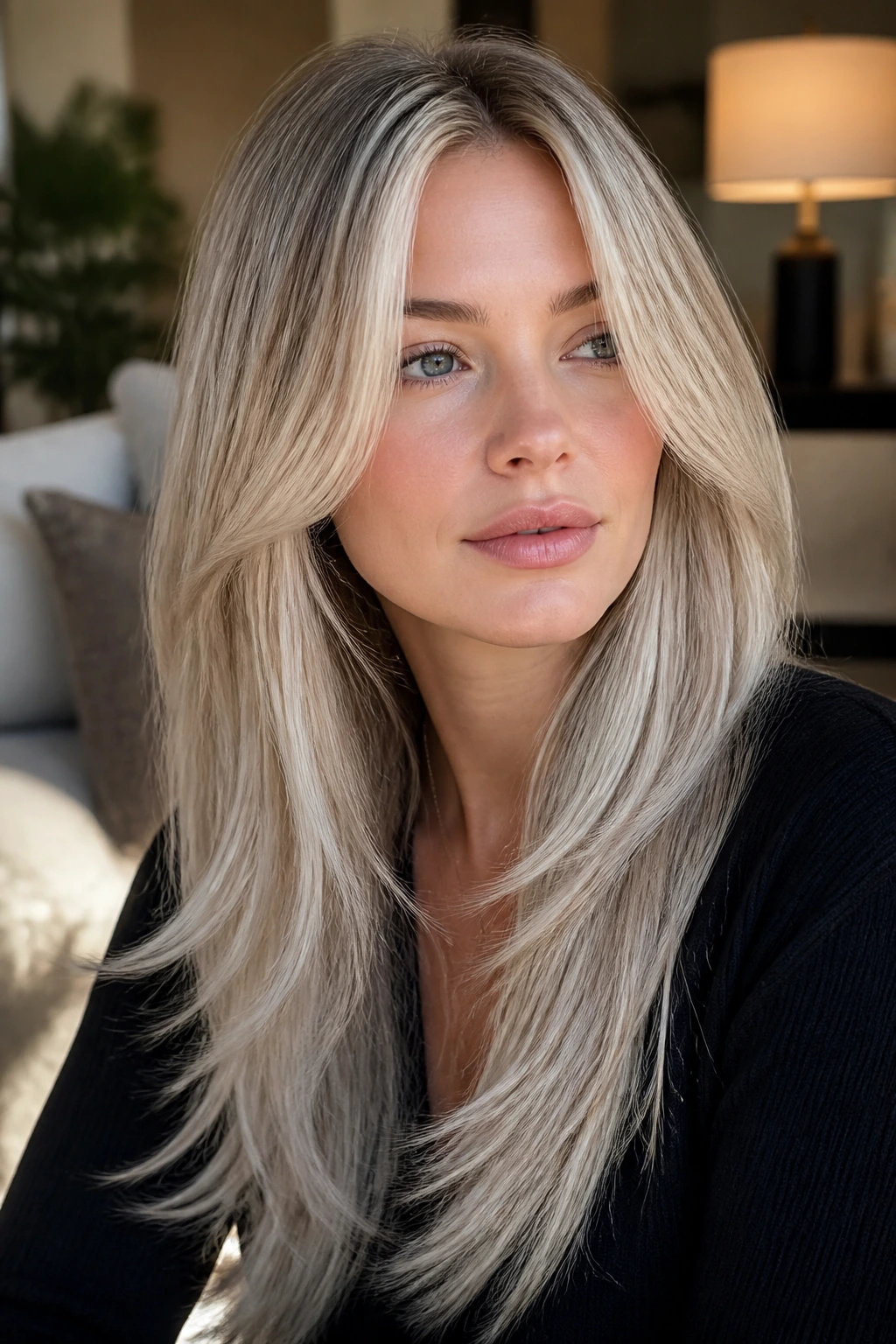
Long hair and fine hair have a complicated relationship. Too much length, and the ends get see-through. Too many layers, and the whole thing can fall apart. Long layers with careful face-framing pieces land in the middle and, when done well, make steel blonde look soft without making the hair look thin.
The key is restraint. Keep the layers long, starting below the collarbone if you can, and use only a few face-framing pieces that start around the cheekbone or lip line. That keeps the color bright where it matters without hollowing out the perimeter.
If you love longer hair, this is the version that respects fine texture. It gives the blonde some movement, but not the kind that leaves the ends looking like threads.
10. The Chin-Length Wavy Bob
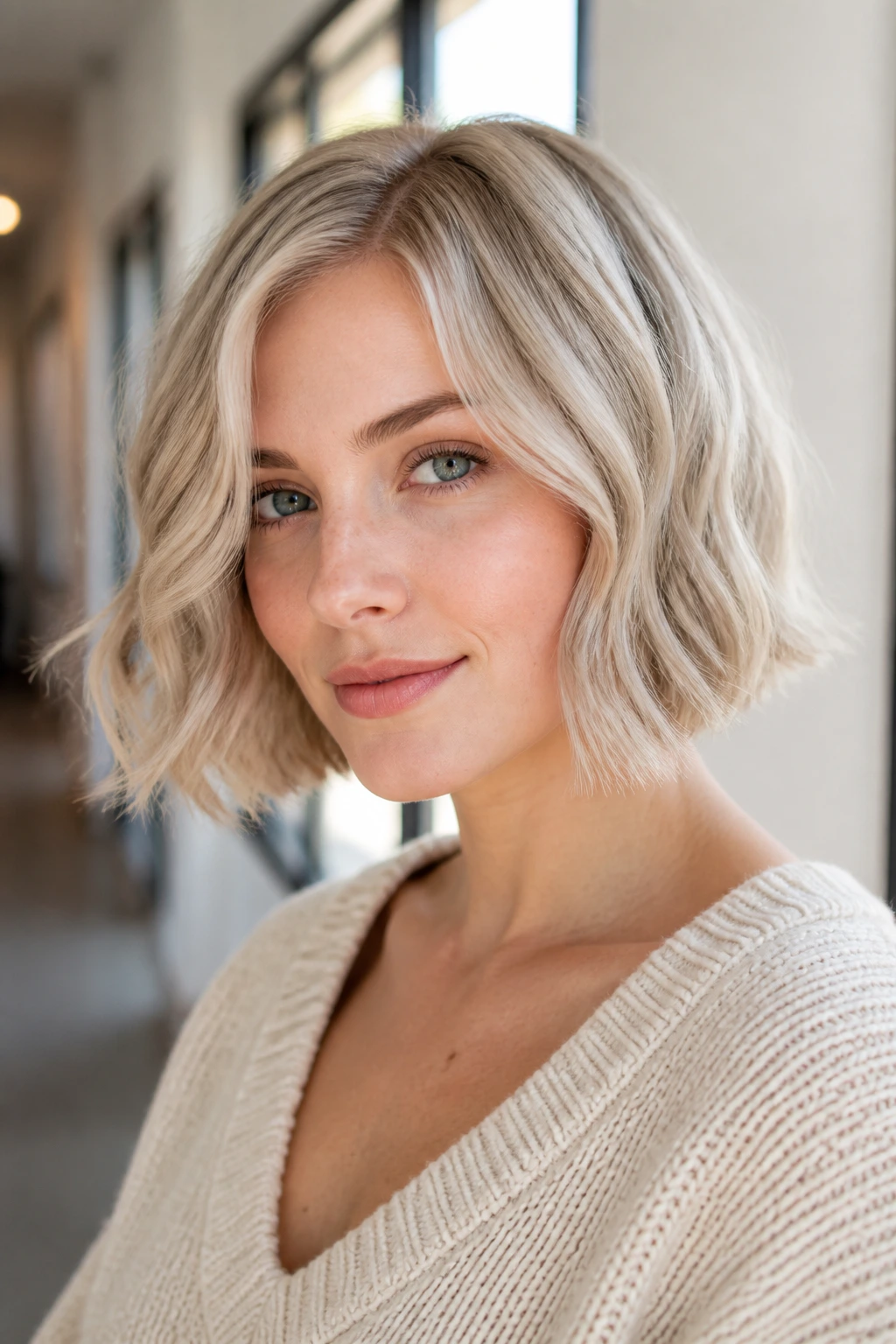
The chin-length wavy bob has a slightly easier attitude than the blunt bob. It doesn’t need to be perfect, which is a gift when you’re working with fine hair. A soft wave through the mid-lengths gives steel blonde a little body, and the chin-length finish keeps the shape compact enough to feel full.
What Makes It Different
This cut sits right where the face can handle a bit of width. If your jawline is soft, it adds outline. If your cheekbones are strong, it frames them. And because it’s not too long, the waves hold their shape a little better than they do on longer hair.
For styling, I like a 1-inch wand and a loose wrap around the barrel, leaving the last inch straight. That tiny straight end keeps the bob from turning too bouncy or too beachy. The result is cleaner.
11. The Glass-Hair Mid-Length Cut
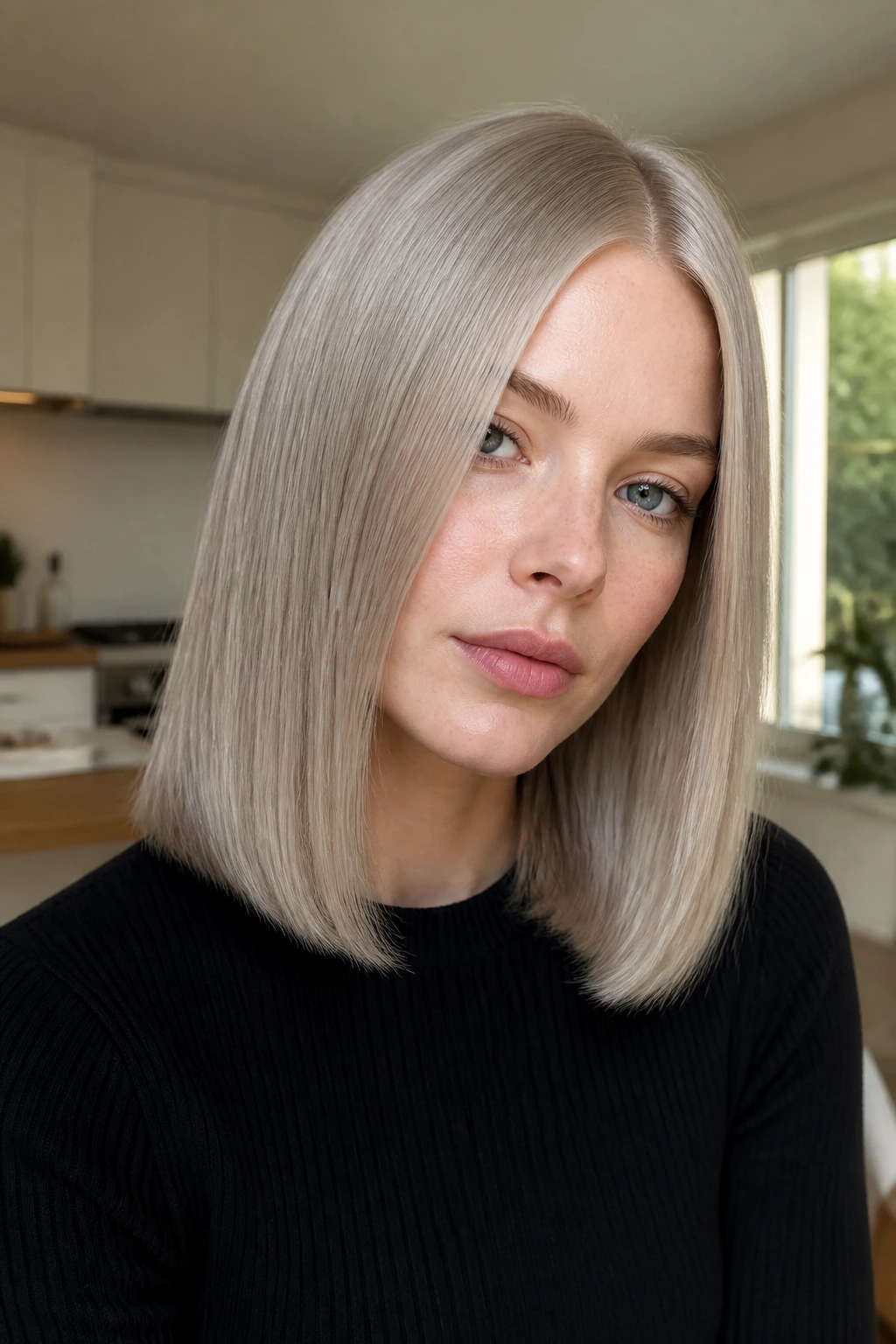
If your natural texture is straight or close to it, this is a strong option. Glass hair puts all the emphasis on shine and line, which makes steel blonde look almost metallic in a good way. On pale skin, that smooth surface looks sharp rather than stark when the tone is kept in the silver-beige range.
The cut should be tidy and mid-length, usually somewhere around the collarbone. I’d avoid shaggy layers here. Glass hair wants edges that read clearly when the light hits them. A center part is the obvious choice, but a slight off-center part can soften a strong face without ruining the shape.
Use a heat protectant, a paddle brush, and a smoothing pass at low heat. Fine hair does not need to be bullied into submission. It needs to be coaxed.
12. The Choppy Shag With Bottleneck Bangs

A choppy shag can work on fine hair if the layers are smart and the styling is light. The trick is to keep the texture airy, not shredded. Bottleneck bangs help because they open around the eyes and cheekbones, which gives pale skin some warmth and movement even when the blonde is cool.
This cut is for someone who wants volume but doesn’t want the hair to feel rigid. The layers should be shortest around the crown and soft enough through the ends that the shape still hangs together. Too much thinning turns the whole thing weak. Too little, and it goes flat.
I’d finish this with a touch of mousse at the roots and a dry texturizing spray through the mid-lengths. Not a cloud of product. Just enough grip to keep the layers visible.
13. The Tucked-Behind-Ears Crop
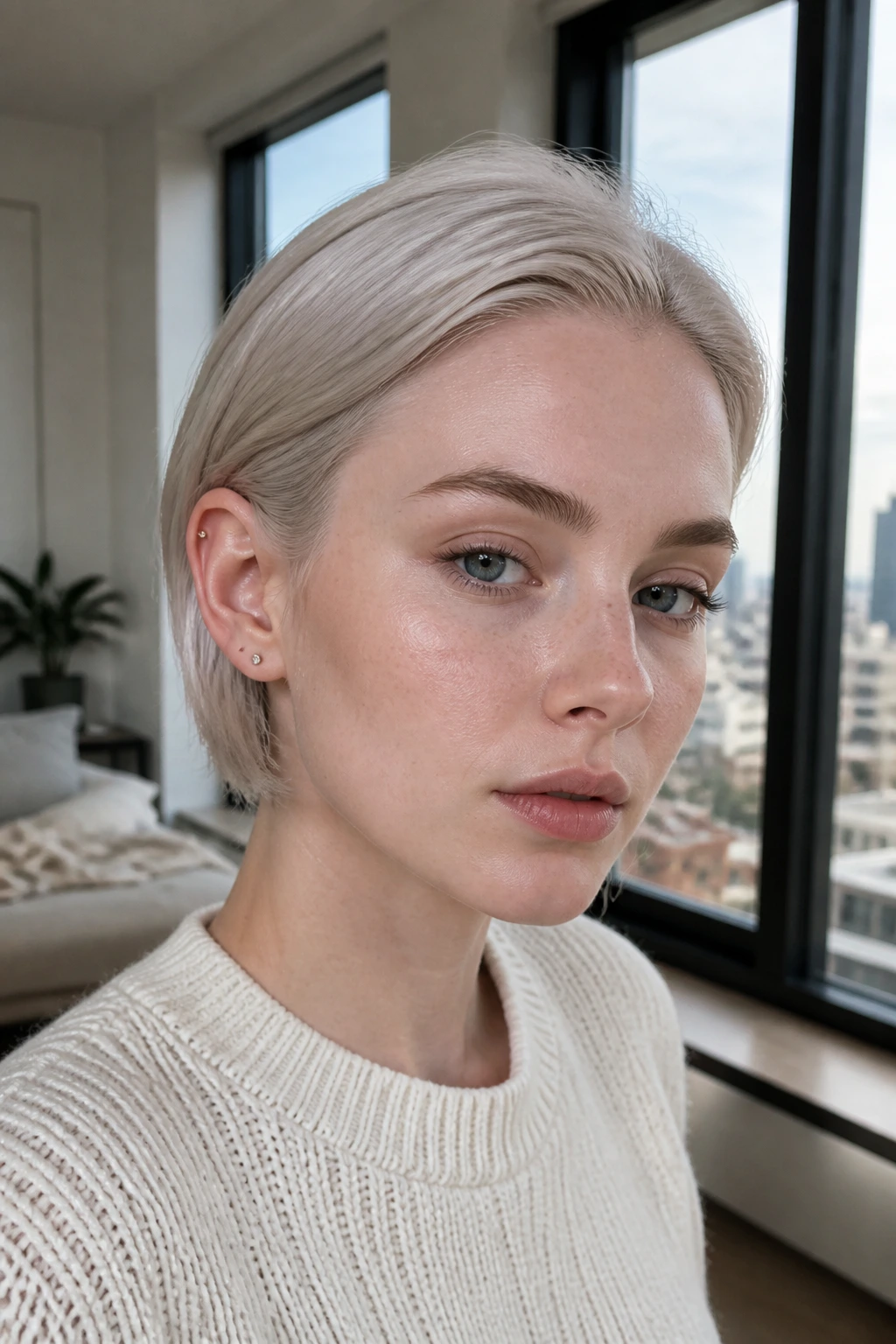
There’s something clean and almost sly about a crop that’s designed to be tucked behind the ears. Steel blonde makes the ear line, cheekbone line, and jawline more visible, which is great on pale skin if you like sharp features. Fine hair benefits because you’re leaning into the shape instead of trying to fake fullness.
Keep the top soft and the side pieces a little longer so you have something to tuck. That tiny bit of length near the temple gives the style movement. Shorter than that and it can look clipped on.
This look also loves jewelry. Small hoops, a slim cuff, even a single pin at the temple — all of it works because the hair itself isn’t competing with the face.
14. The Half-Up Twist With Crown Lift
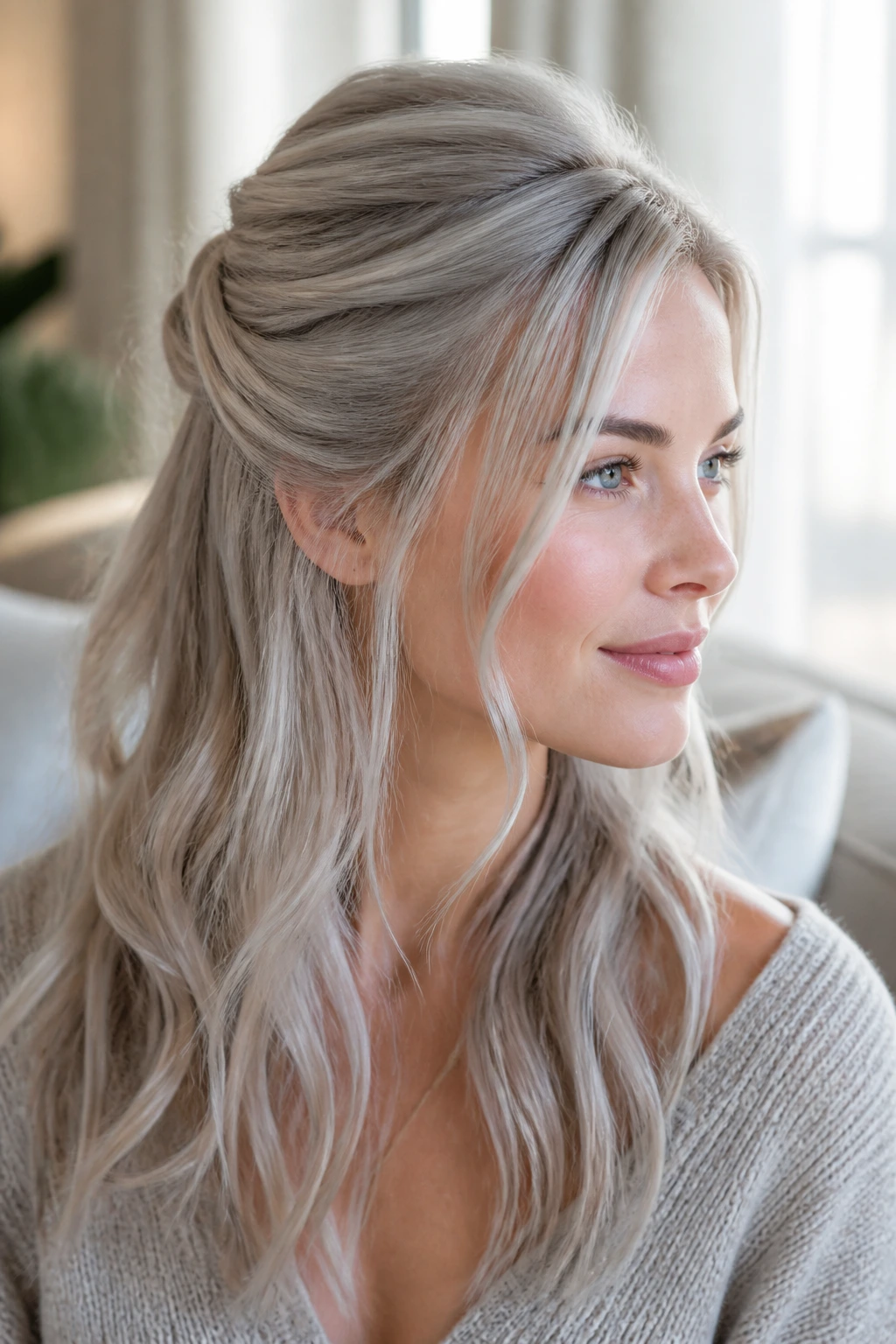
A half-up twist is one of the easiest ways to make fine hair look more awake. Pulling the top section back gives the crown lift, which is the part that tends to collapse first. Steel blonde adds brightness so the twist reads clearly instead of disappearing into the hairline.
The best version is loose, not tight. Leave a few pieces around the face and gently tease the crown before pinning or twisting. That little bit of lift matters more than volume at the ends.
This is the kind of style I’d wear on second-day hair. A dry texture spray at the roots and a soft bend through the lower sections are enough. It looks planned, but not overworked.
15. The Low Sleek Bun
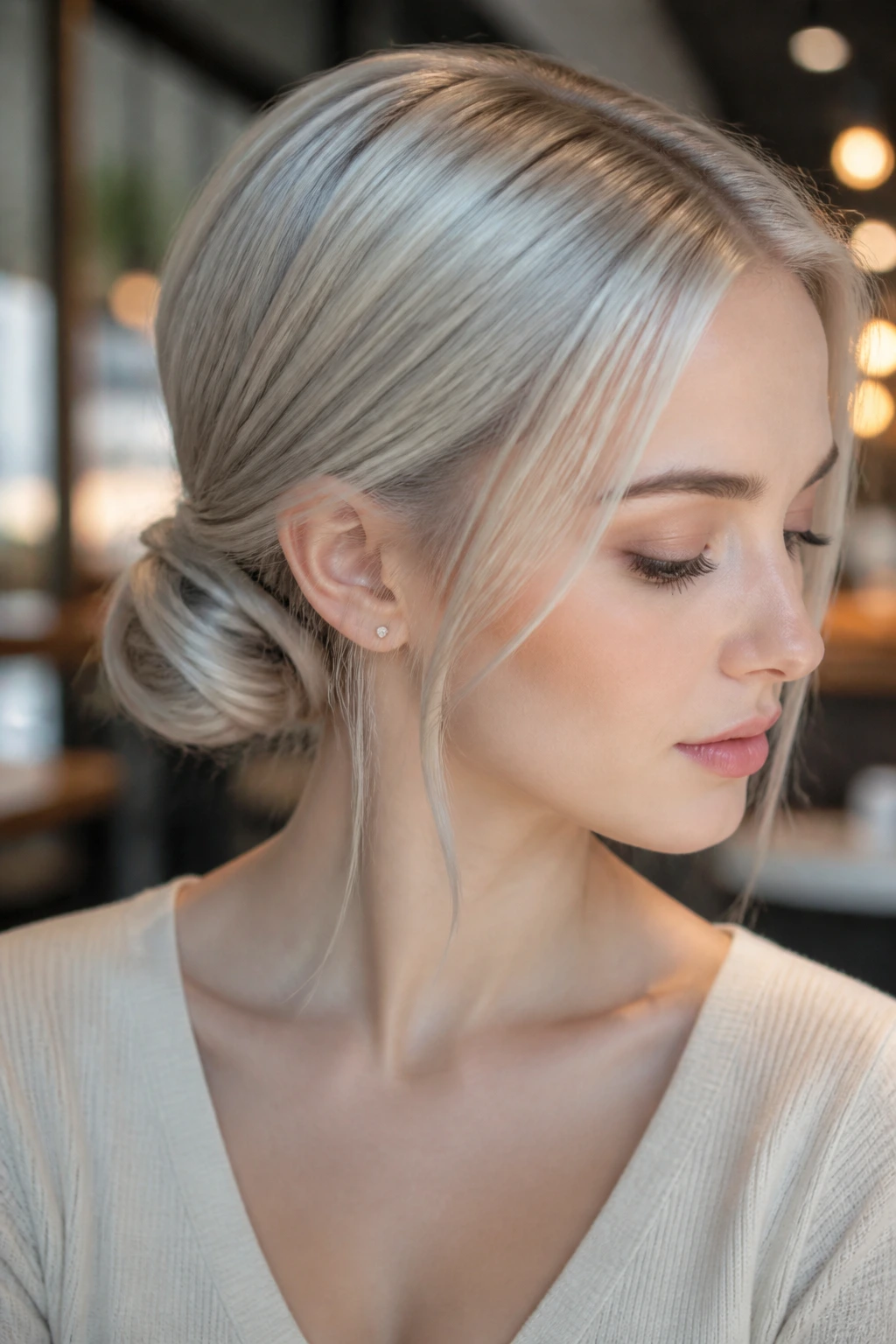
A low sleek bun can be a mercy for fine hair, because it stops pretending the strands are thick and instead lets the shine do the talking. Steel blonde works well here; the color catches every line of the knot and makes the bun look cleaner. On pale skin, the face stays open and bright.
The shape should sit low, just above the nape, with one small section wrapped around the elastic. That wrapped bit matters. It keeps the bun from looking like a gym shortcut. A tiny bit of crown smoothing or a soft side part can stop the style from becoming severe.
I like this with a few whisper-thin face-framing pieces. Just enough to soften the forehead. Not enough to unravel the whole thing.
16. The Messy Top Knot With Loose Tendrils
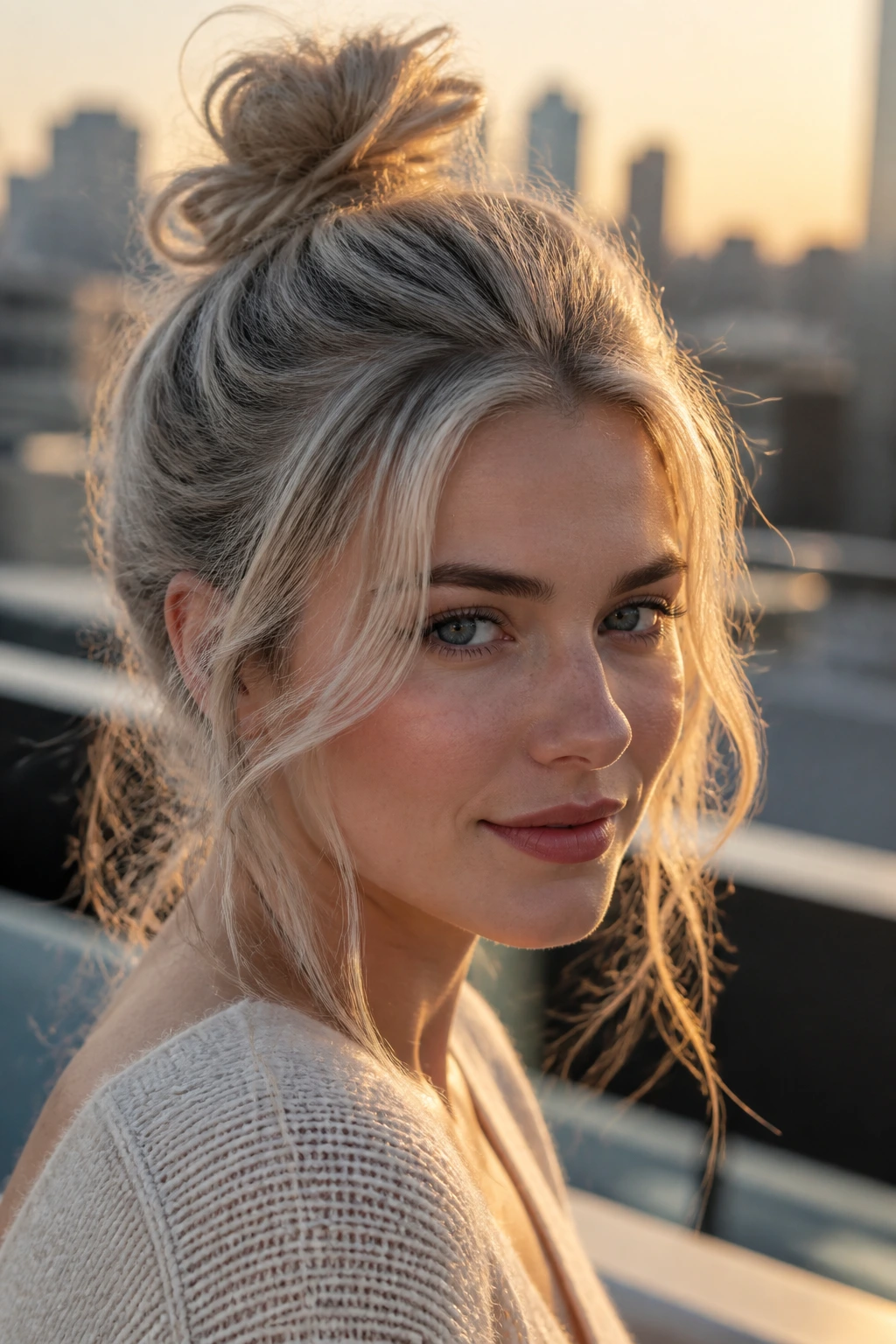
A top knot can go wrong fast on fine hair. Too much height, and it looks tiny. Too much mess, and it looks accidental. The sweet spot is a compact knot with a few loose tendrils and a little lift at the crown so the steel blonde still feels intentional.
Dry shampoo or a root powder helps here because clean, slippery hair won’t hold the knot well. The tendrils around the temples should be soft and thin, not thick enough to read as separate front pieces. That keeps the face light and keeps the style from getting heavy.
This one is less about elegance and more about usable texture. It’s useful, and there’s no shame in that.
17. The Polished Blowout With a Side Sweep
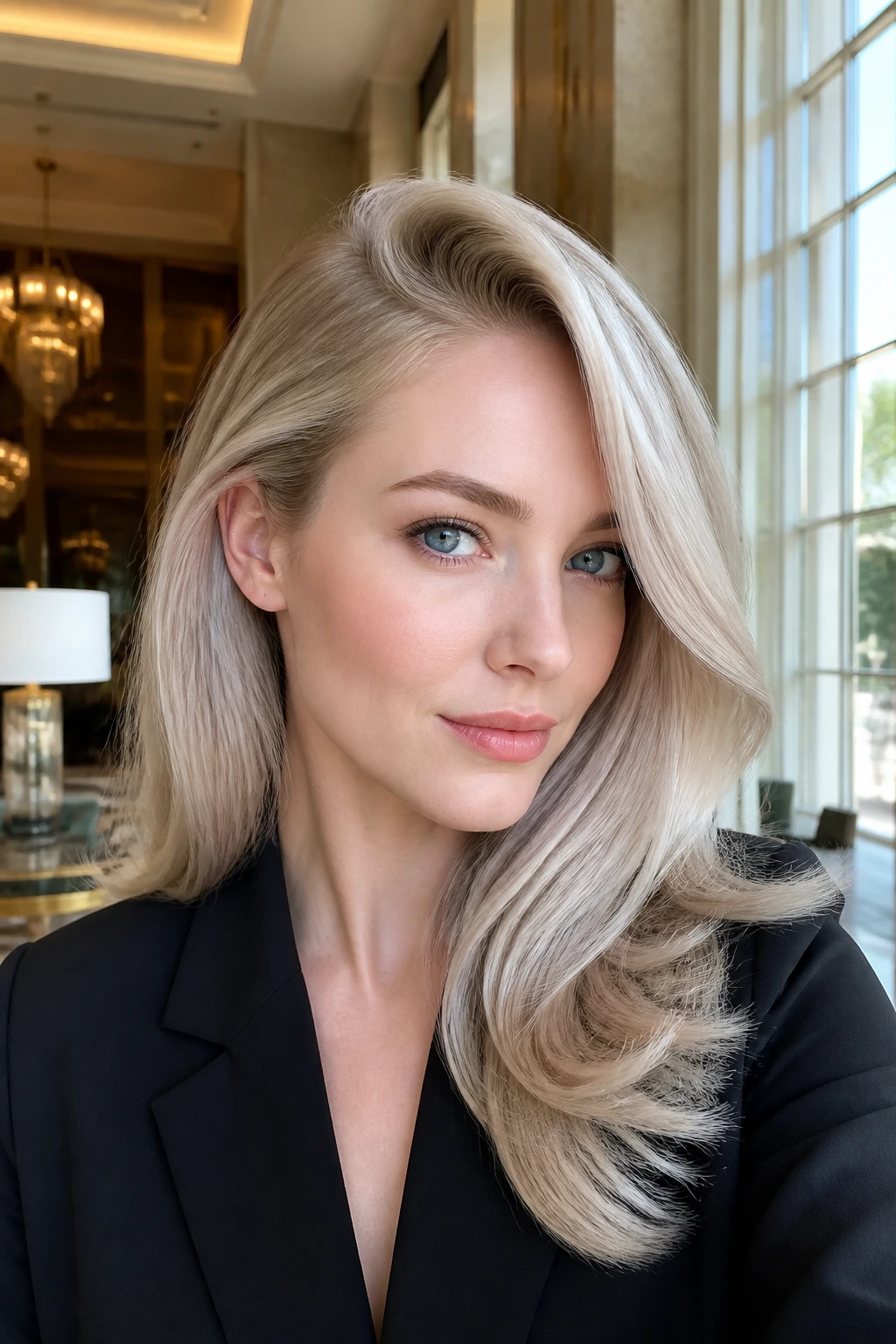
A polished blowout is one of the prettiest ways to wear steel blonde, mostly because the color shows every bit of shine. A side sweep at the front adds some lift and prevents fine hair from lying too flat over the head. Pale skin gets a clean frame, and the whole thing feels a bit more dressed up.
The best blowout for fine hair starts with mousse at the roots and a nozzle on the dryer. Once the hair is about 80 percent dry, switch to a round brush and work the front sections up and over, then away from the face. The sweep should be soft, not helmet-hard.
This is the style that looks expensive if the ends are smooth and the root area has a little air. That’s the whole game.
18. The A-Line Bob With Underbeveled Ends
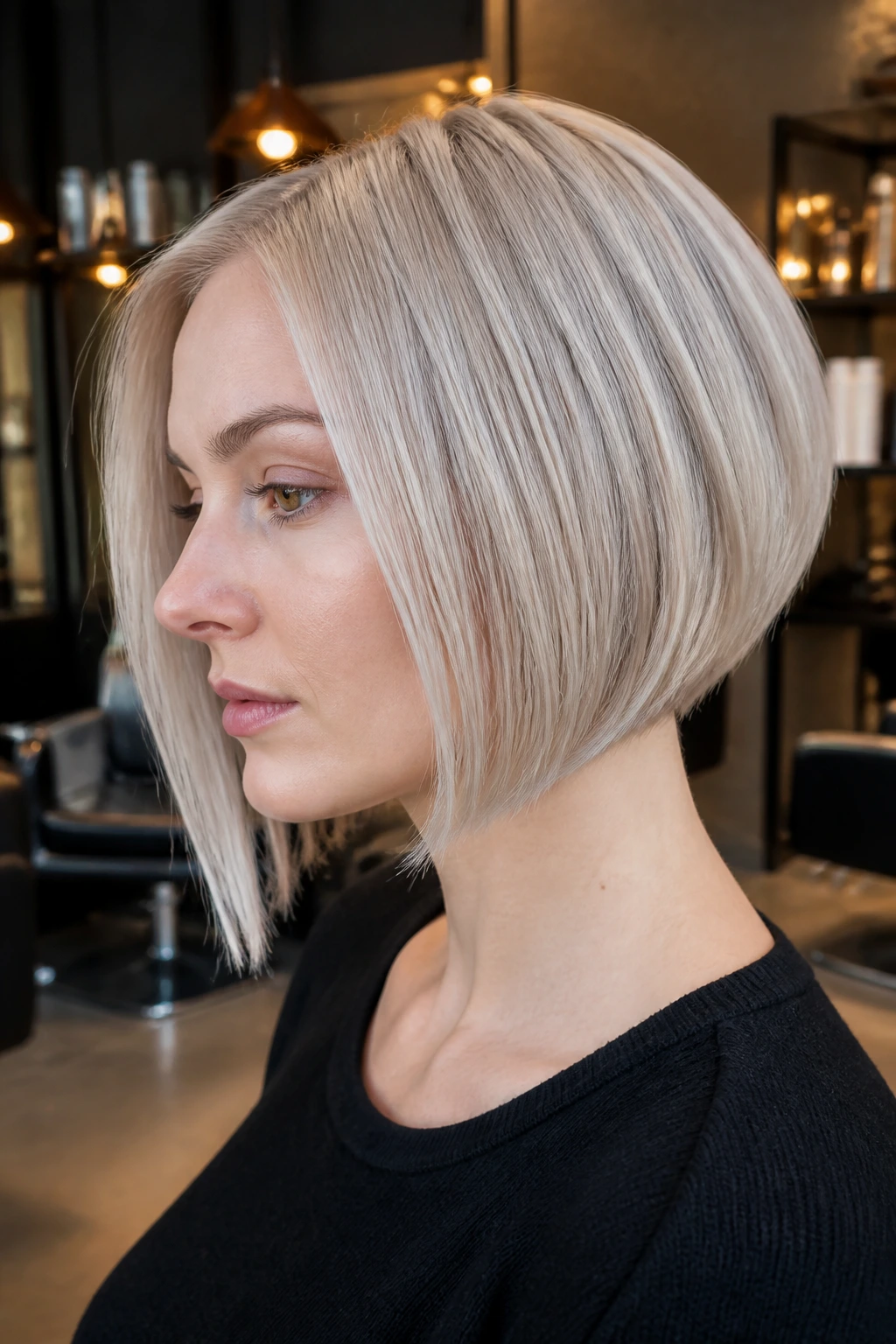
An A-line bob — shorter in back, a little longer in front — gives fine hair a built-in shape. The longer front pieces draw attention to the jaw, while the shorter back creates the feeling of density at the neck. Steel blonde makes the angle more visible, which is exactly why it works.
I like the ends underbeveled rather than flipped or shredded. That subtle inward curve adds weight visually, and weight is your friend when the hair is fine. Ask your stylist to keep the back compact and not over-thin the front.
On pale skin, this cut reads crisp and modern without looking harsh. It’s one of the stronger picks if you want something that feels tailored.
19. The Micro Bob With Soft Texture
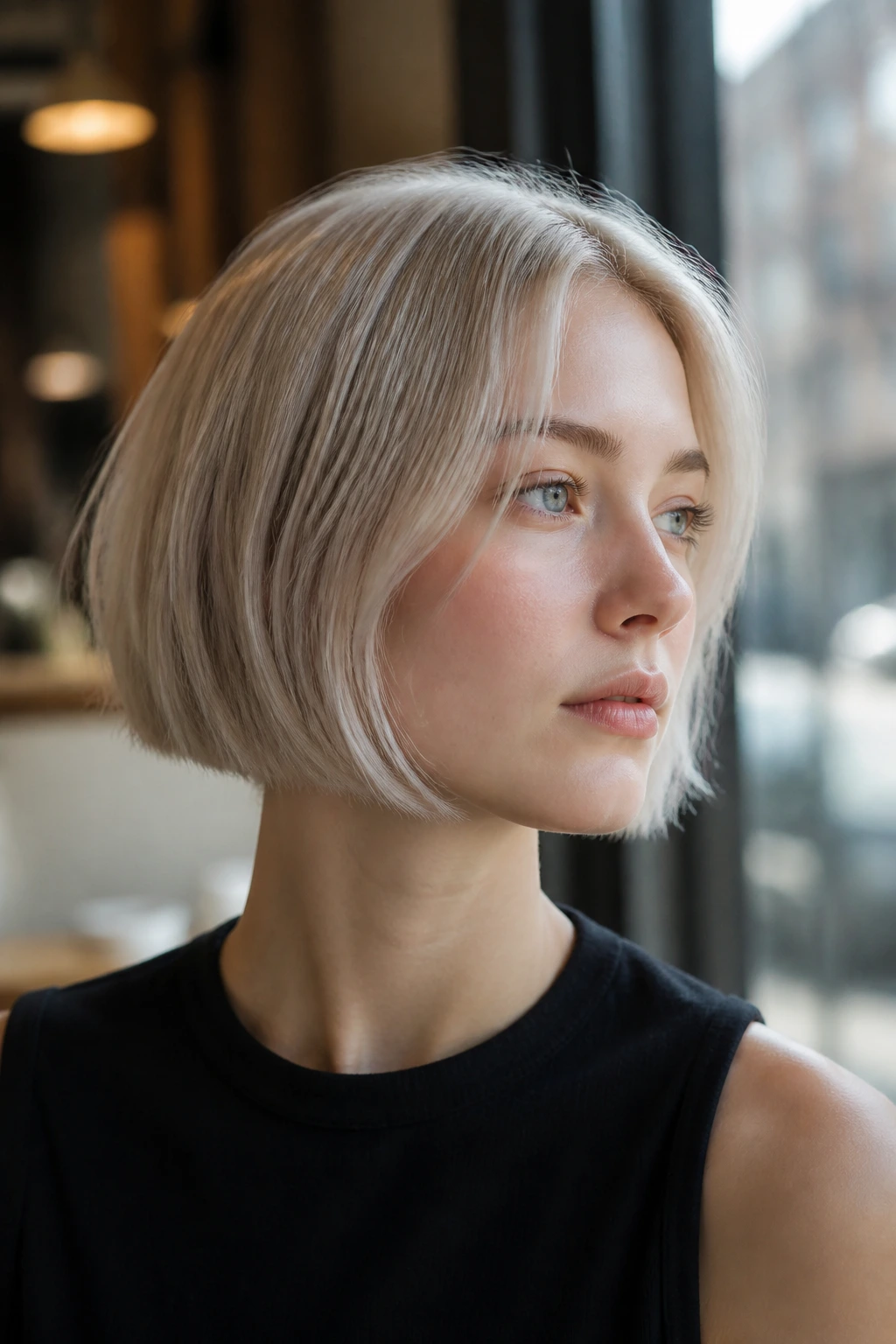
The micro bob is short enough to feel bold, but it doesn’t need to be severe. A little soft texture keeps it from looking boxy, and steel blonde gives the whole shape a clean brightness that suits pale skin very well. If your features are delicate, this cut can look almost jewel-like.
Keep the length just below the ears or at the jaw, depending on how much structure you want. A tiny side part softens the effect. A center part makes it more graphic. Either can work; the texture is what keeps it from turning stiff.
I’d avoid heavy curls here. Tiny bends or a subtle bevel are enough. Anything more starts fighting the cut.
20. The Wrapped Ponytail That Hides the Elastic
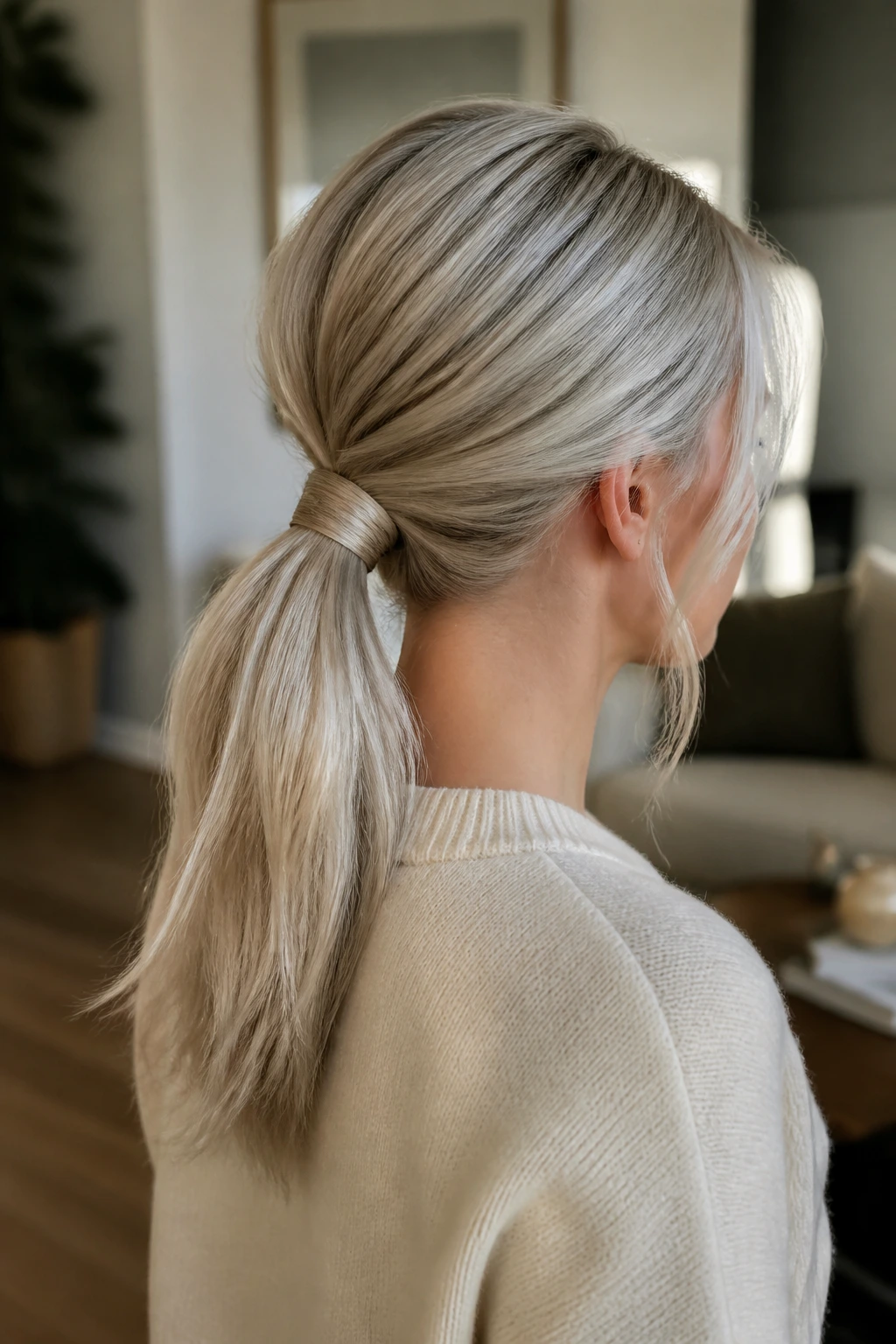
A ponytail can feel boring, but with steel blonde it becomes useful again when the base is wrapped and the crown has a touch of lift. Fine hair benefits because the style pulls everything together without asking for a lot of density. Pale skin gets a clear line at the face, which is often cleaner than a half-finished wave.
The pony should sit low or mid-low, depending on your neckline. Take a small strand from underneath, wrap it around the elastic, and pin it discreetly. That little detail makes the whole thing look more finished. If your hair is too fine to fill out a pony, a very slight tease at the crown helps more than piling on product.
This is not a thick ponytail. It’s a neat one. Different thing.
21. The Braided Crown That Builds Texture by Stealth
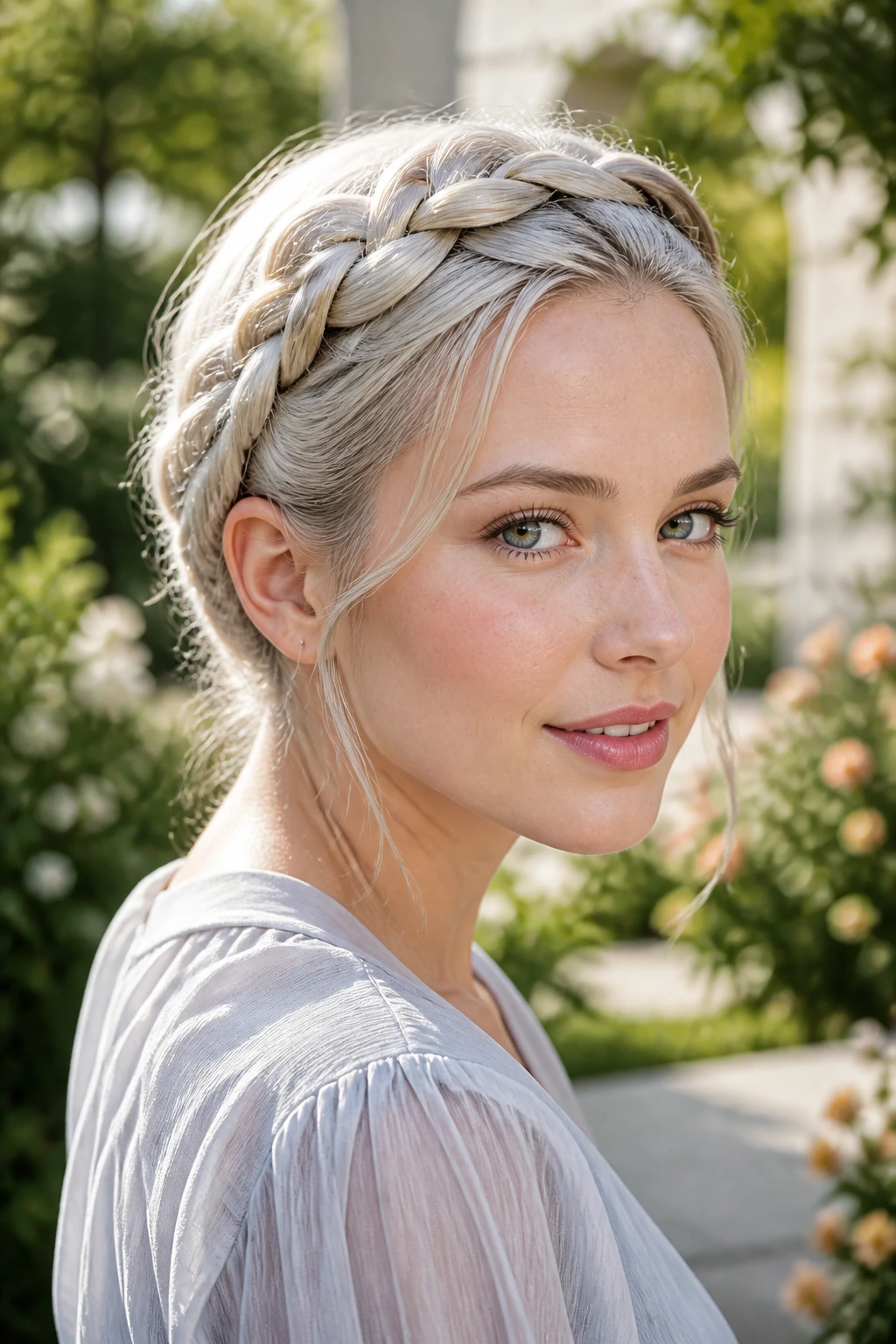
Braids are helpful when fine hair needs volume that isn’t fake. A braided crown pulls texture up around the hairline, which makes steel blonde look more dimensional. On pale skin, the braid pattern gives the face a frame without making the whole style heavy.
How to Wear It
- Start with hair that’s clean but not freshly washed; day-old hair grips better.
- Use a light texture spray before braiding.
- Pancake the braid a little after tying it off so the shape widens.
This style works best when the braid is soft and a little loose. Tight braids can make fine hair look even thinner. A couple of face-framing pieces keep it from reading too schoolgirl.
22. The Layered Pixie Bob
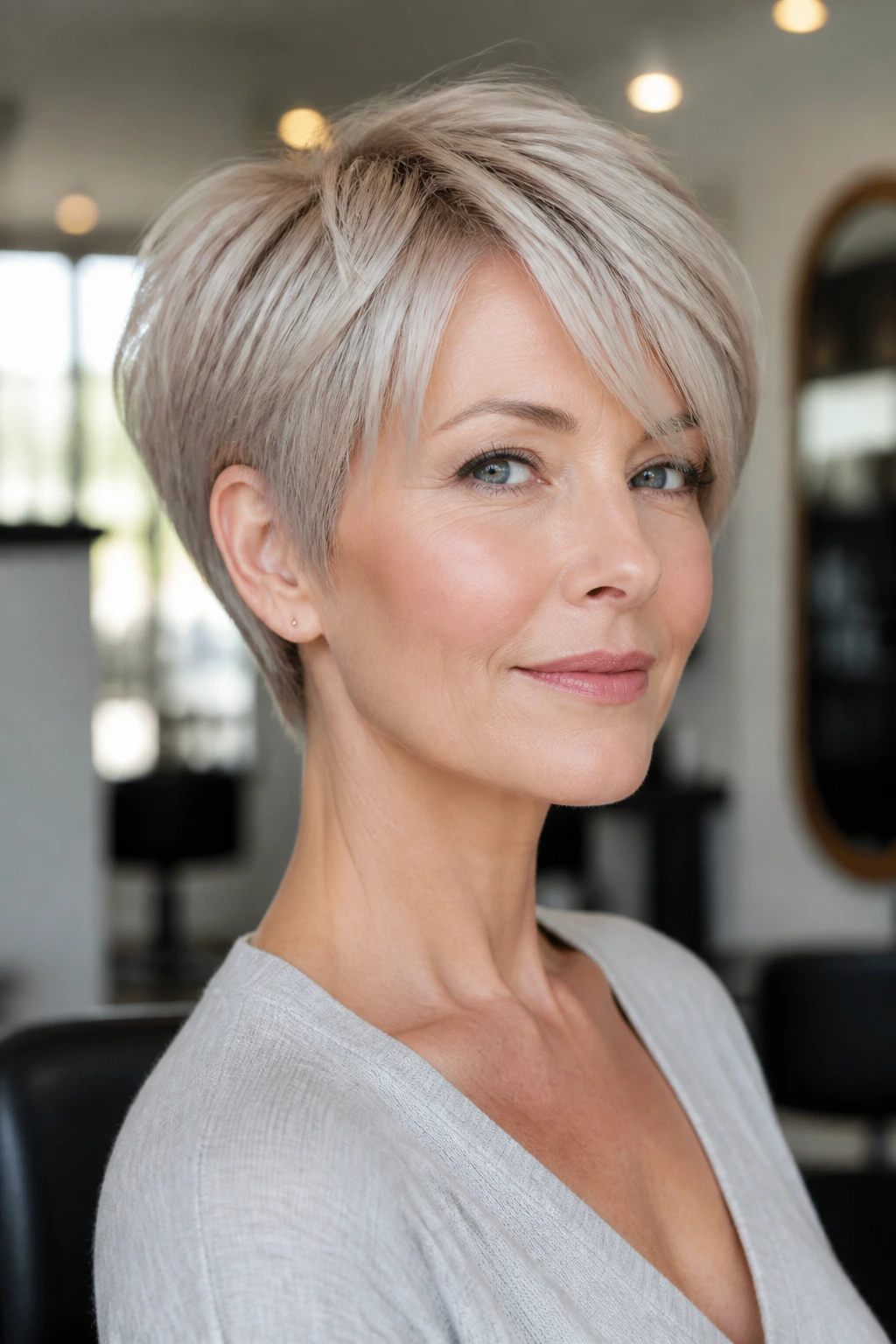
A pixie bob sits between a crop and a bob, which makes it one of the smartest cuts for fine hair. It keeps enough length to feel feminine if that matters to you, but not so much that the hair starts looking tired by midday. Steel blonde adds brightness to the shape, and pale skin benefits from the clean line around the ears and jaw.
The layers should be light and purposeful. You want movement, not gap-toothed texture. Keep the crown a touch longer and the nape neat so the silhouette stays compact.
This cut is a nice middle ground for people who want shorter hair but aren’t ready to go full pixie. It has personality without requiring too much styling. A small amount of styling cream and a quick finger-tousle is usually enough.
23. Wispy Fringe With Straight Lengths
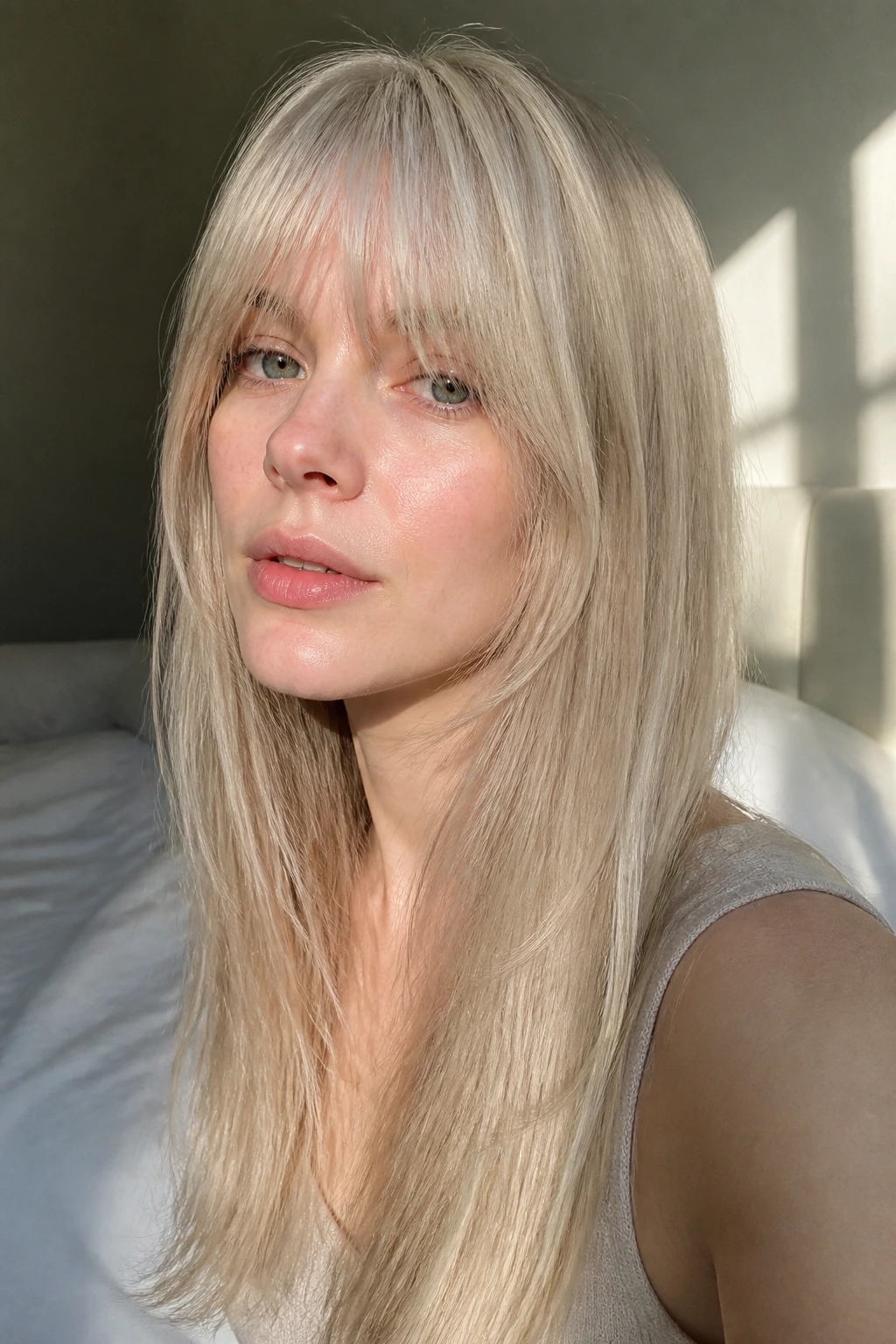
A wispy fringe can save straight hair from looking too blank around the face. It softens the forehead, adds a bit of motion, and makes steel blonde feel less icy on very fair skin. The fringe should be piecey and light, not thick enough to swallow the face.
The straight lengths below it should stay clean and uncomplicated. Fine hair does better when the line is simple. If you add too many layers here, the fringe loses its job because the rest of the cut starts competing for attention.
I like this when the hair is mid-length or longer and naturally straight. It has a calm, almost quiet look to it — which is useful if you want the color to do the talking.
24. The Retro Flip Ends Lob

A flip at the ends sounds small, but it changes the whole mood of a lob. Turning the ends out adds width, energy, and a little retro charm. Steel blonde shows that bend beautifully because the light catches the curve instead of hiding it.
What Makes It Different
This look is especially good for pale skin because it keeps the face from looking too sharp. The outward flip softens the lower edge of the hair, and that shape balances the coolness of the color. It’s also kind to fine hair because the visual fullness happens at the perimeter, not at the roots where product tends to collapse.
Use a round brush or a flat iron with a gentle wrist turn at the ends. A little hairspray on the lower half is enough. No crunchy finish. Please.
25. Soft Waves With a Root Shadow
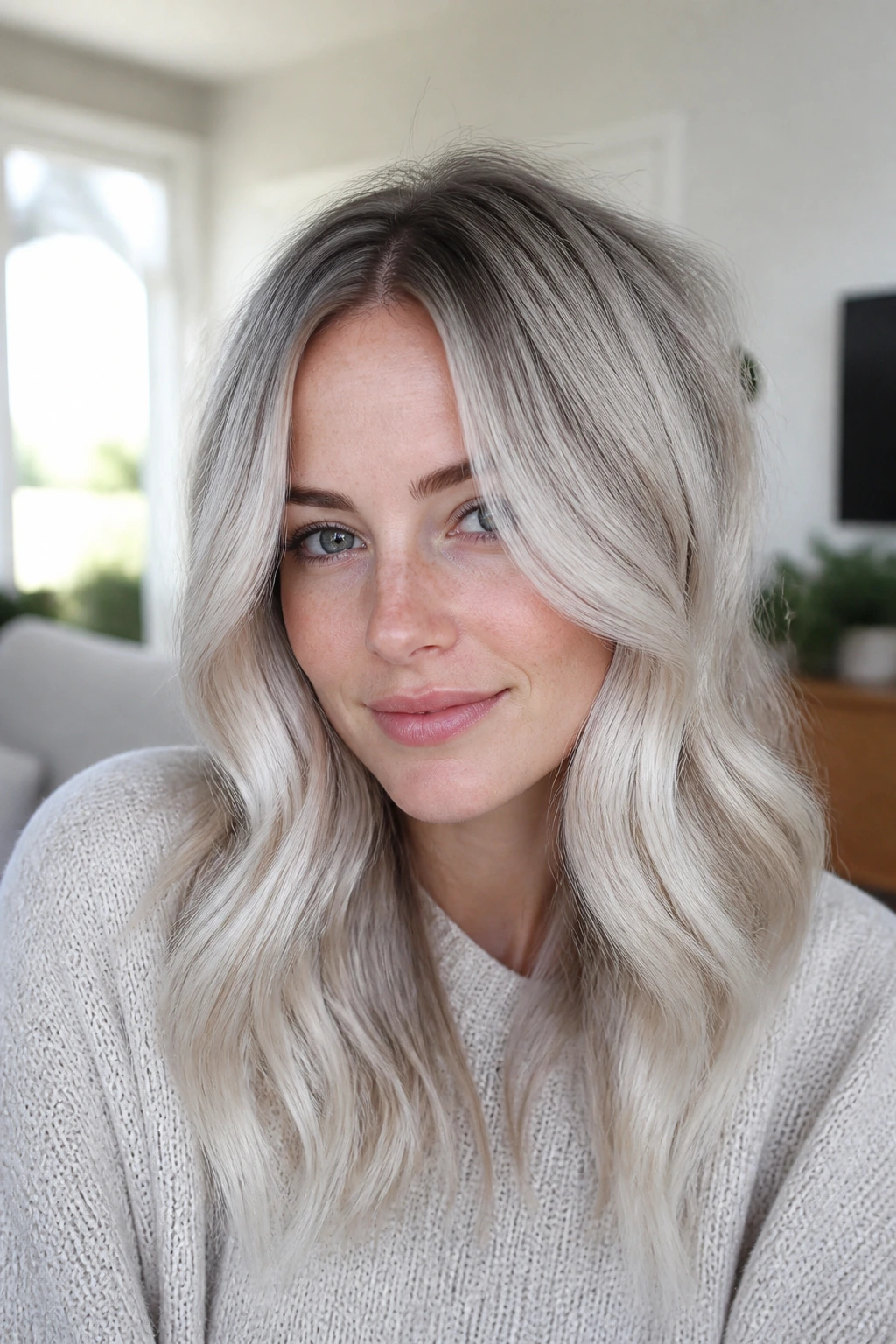
If you want the easiest version of steel blonde on pale skin with fine hair, this is the one. A soft root shadow gives the color depth, and loose waves from mid-length down keep the hair from lying like a sheet. It’s forgiving, and sometimes forgiving is the best thing a hairstyle can be.
The shadow root should be subtle — usually just a shade or two deeper than the mids. That keeps regrowth from looking harsh and gives the face some contrast near the part. The waves should be broad and loose, not tight or overly “beachy.”
I’d choose this style if you want steel blonde without daily fuss. It gives the color movement, the skin a clean frame, and the hair a little slack when the weather, or your schedule, is not cooperating.
Why the Cut Has to Carry the Color
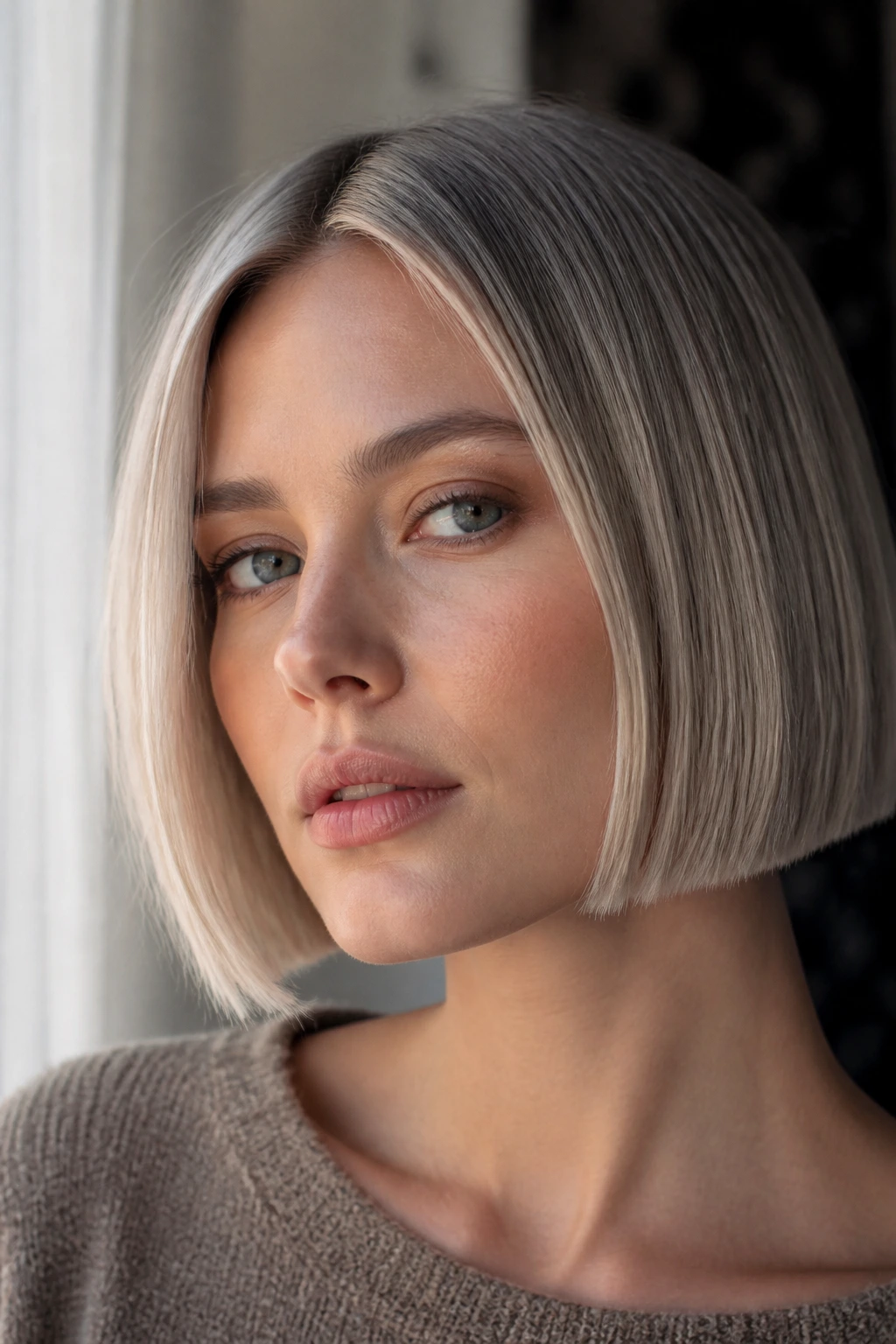
Steel blonde is a pretty shade, but it does not do all the work on its own. On fine hair, the cut has to carry the weight of the look, because thin strands don’t hide bad shaping. If the ends are too wispy or the layers start too high, the color can look flat even when the tone is right.
That is why blunt edges, beveled bobs, and careful face-framing pieces keep showing up here. They give the eye something to follow. Pale skin needs that contrast too, especially if the complexion is very light or leans pink, because a pure silver tone can start to look like it has no anchor.
A good steel blonde cut gives the blonde a border. A great one gives it a reason to exist.
Tools That Make Fine Hair Behave
-
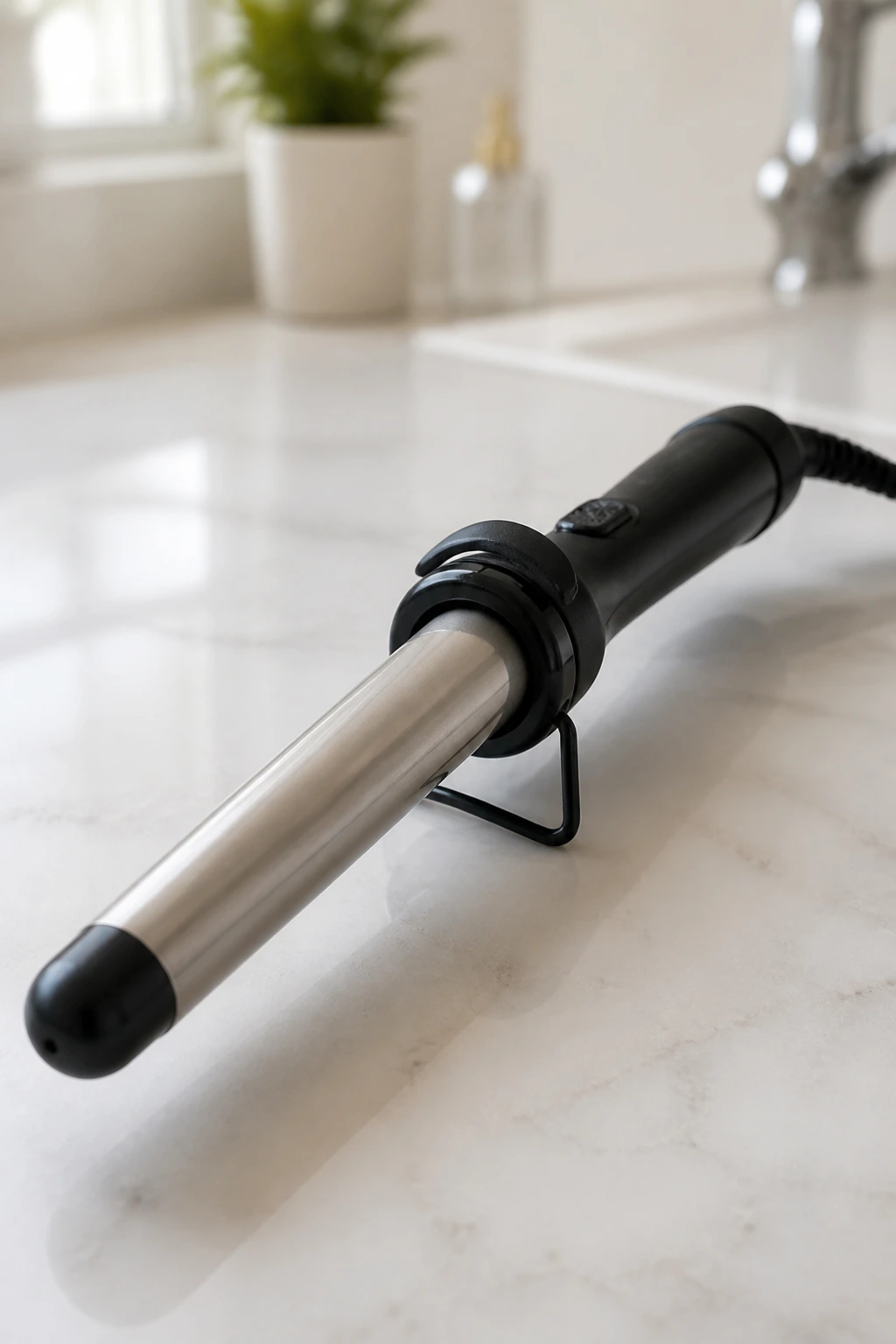
1-inch curling wand: Best for soft bends on bobs, lobs, and layered cuts without creating a giant curl that collapses in an hour.
-
1.25-inch round brush: Useful for blowouts, root lift, and shaping the ends under or out depending on the style.
-
Blow dryer with a concentrator nozzle: Helps smooth fine hair instead of blasting it into a puff.
-
Lightweight volumizing mousse: Gives the crown some memory without making the hair sticky or stiff.
-
Root-lift spray: Good at the part and crown where fine hair usually gives up first.
-
Heat protectant mist: Non-negotiable if you’re using hot tools, especially on pre-lightened hair.
-
Texturizing spray: Useful on shags, pixies, and braided styles when you need a bit of grip.
-
Purple shampoo: Helps keep steel blonde from drifting yellow, but it should be used with restraint.
-
Fine-tooth tail comb: Handy for clean parts and for lifting the crown in tiny sections.
-
Satin pillowcase: Slows down frizz and helps the style last one more day without weird bends.
How to Ask for the Right Steel Blonde at the Salon
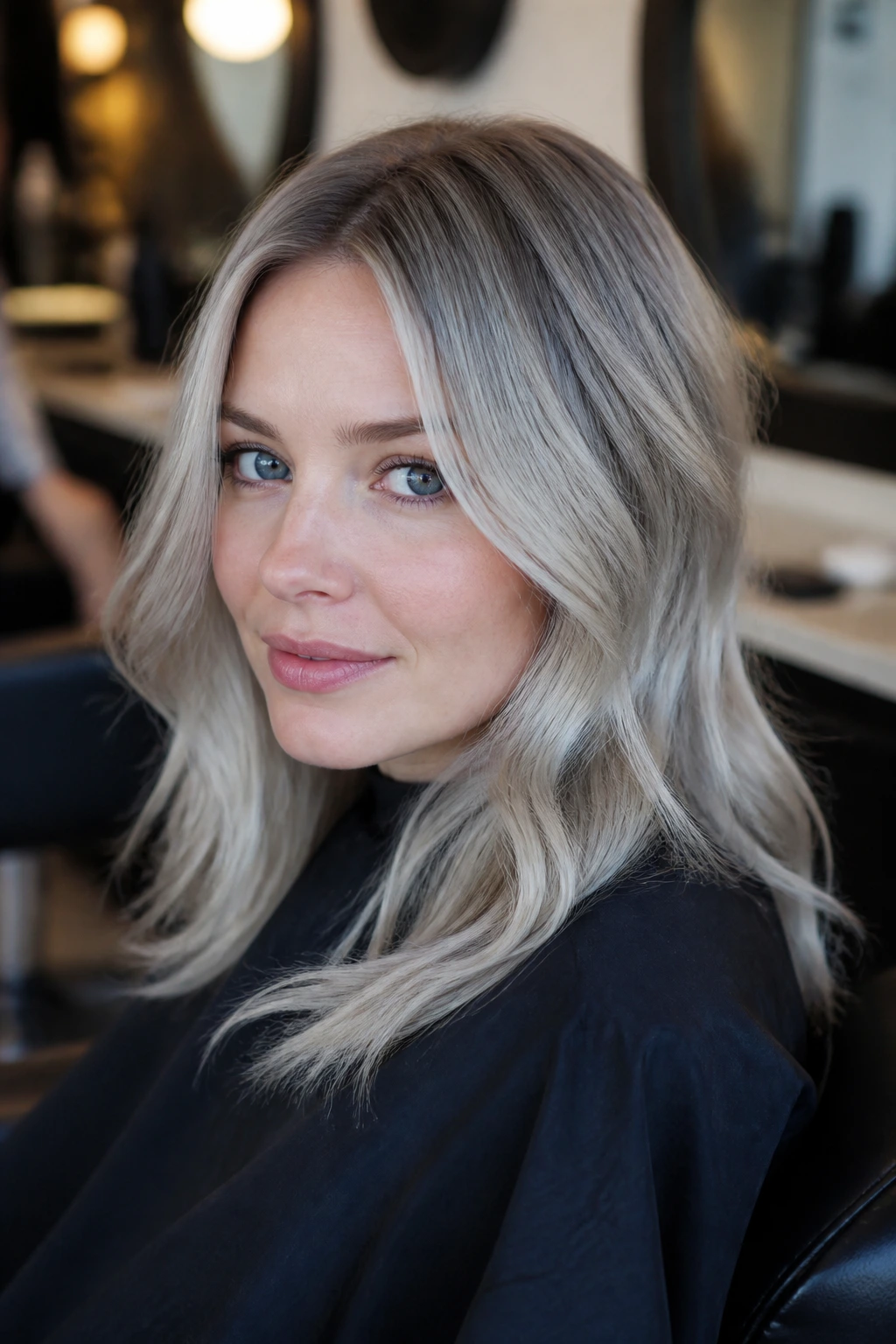
Bring photos, but bring the right photos. One picture of the color and one picture of the cut is better than five screenshots of vaguely similar blondes. Tell your stylist that you want steel blonde with a soft silver-beige finish, not a paper-white blonde that flattens the face.
For pale skin, a tiny bit of depth at the root usually helps more than more brightness at the ends. Ask for a root shadow that’s about one to two levels deeper than the mids if you want the color to sit properly on the face. If your skin leans pink, too much white tone can make you look a little drained. A pearl or smoky beige blend usually behaves better.
Fine hair needs a different request sheet. Say you want the perimeter kept strong, with minimal internal layering unless the stylist can show you exactly where the movement will sit. Ask for micro-babylights or fine weaving rather than chunky highlights, because big foils can leave gaps that make the hair look thinner.
And if your hair is fragile, do not rush the lightening. A gradual lift with better tone is safer than a hard bleach job that leaves you fighting breakage for months.
How to Wear These Styles Without Them Falling Flat
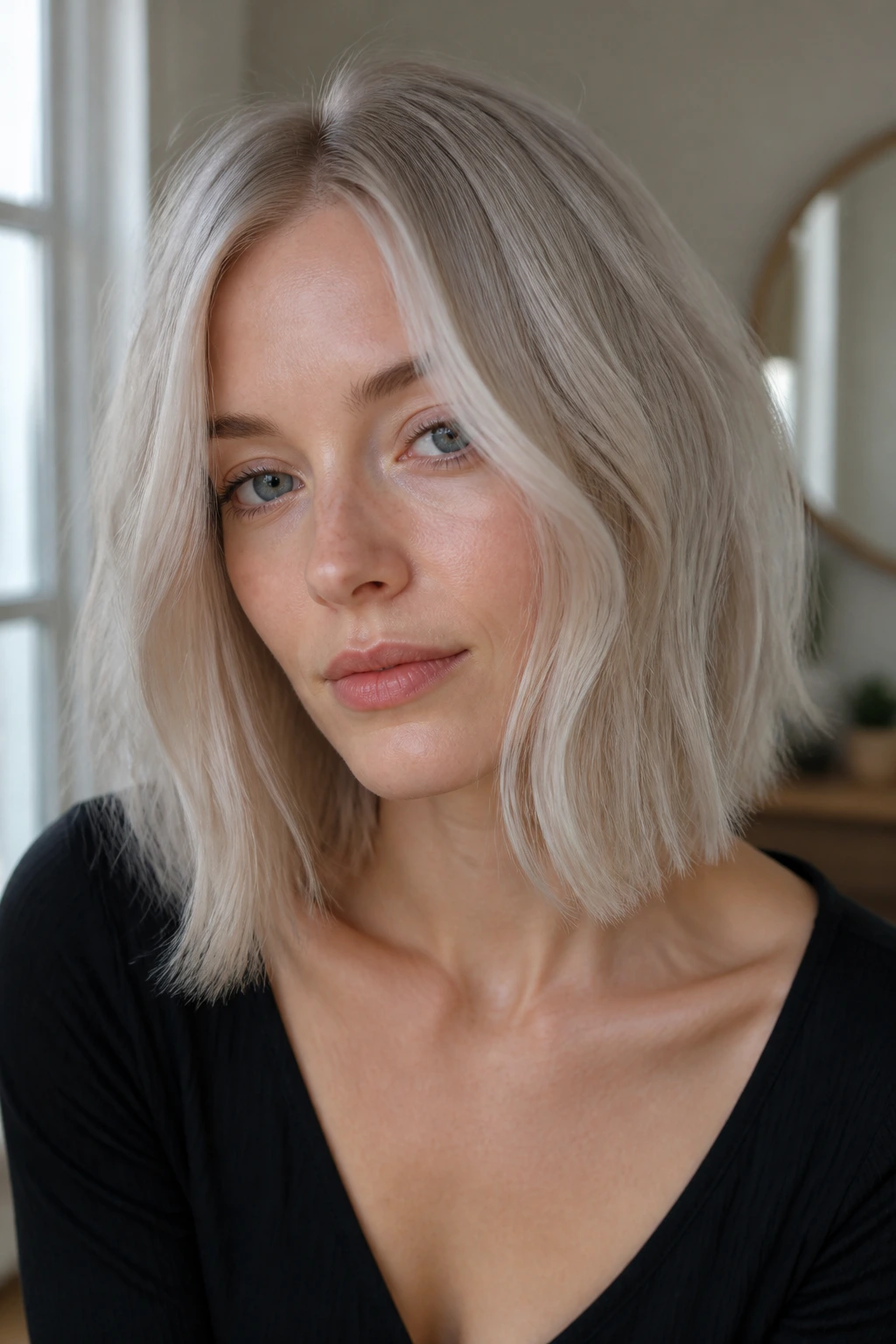
At the salon: ask for a shape first and a tone second. If you try to chase every reference photo at once, the result usually gets busy fast. A good steel blonde style needs one clear idea.
At home: start with the roots. Dry them first, lift them with your fingers or a small brush, and only then shape the mid-lengths and ends. Fine hair tends to obey the first thing you teach it, so teach the crown to stand up before you worry about waves.
Best accessories: slim clips, small hoops, pin earrings, and narrow headbands. Steel blonde and pale skin both like clean lines around the face, so bulky accessories can fight the cut instead of helping it.
Best necklines: open collars, V-necks, scoop necks, and soft turtlenecks all work if the hair is short or tucked. When the hair is longer, keep the neckline simple so the cool blonde doesn’t get lost in too much fabric near the jaw.
Best finish: choose either smooth or airy. Trying to make a style both glassy and tousled usually leaves fine hair looking undecided, and that’s a look nobody asked for.
Small Tweaks That Add Lift and Shine
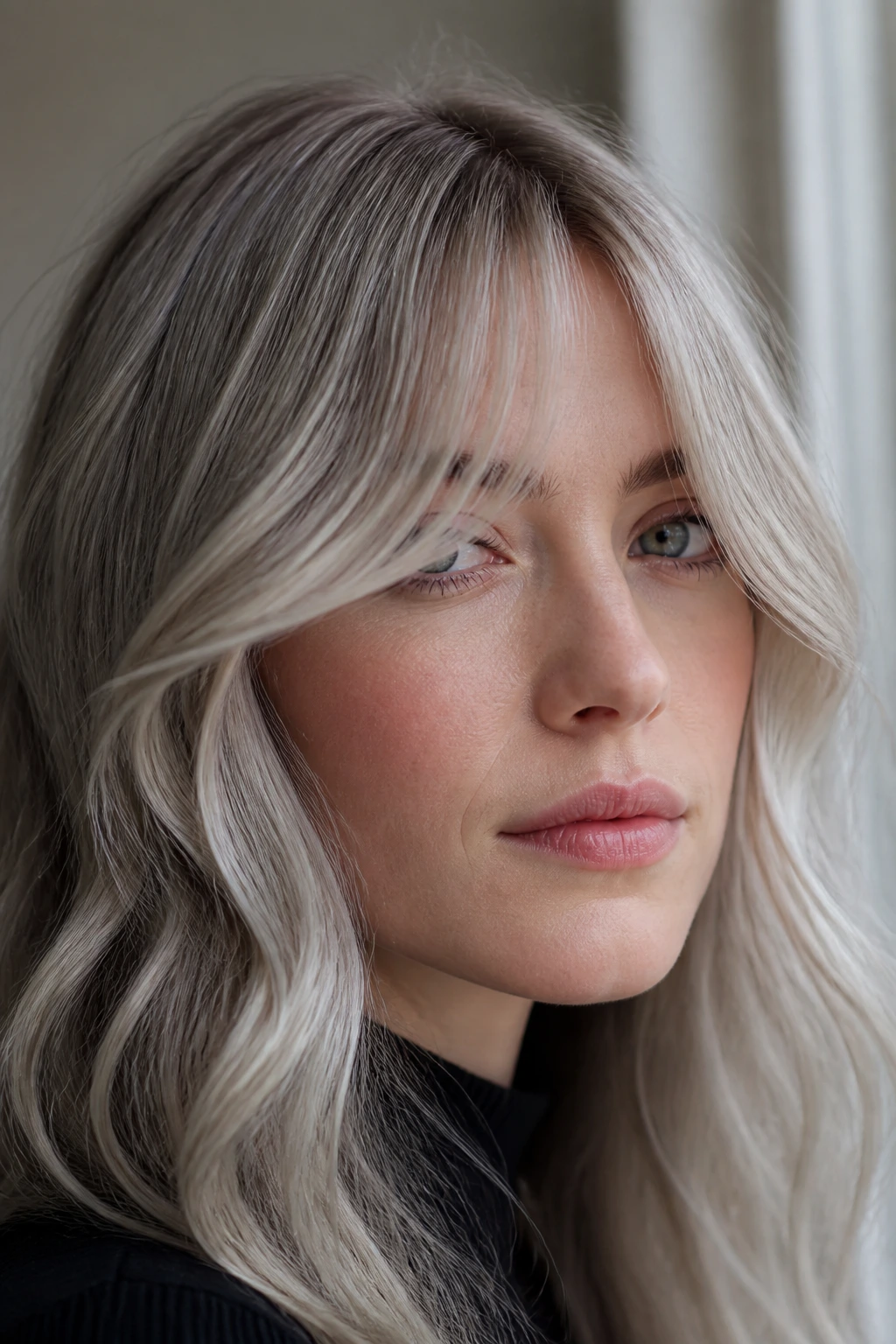
Tone Boost: If the blonde starts turning yellow or dull, use a blue-violet conditioner once every week or two, not after every wash. Too much pigment can dull the steel effect and leave the hair looking smoky in the wrong way.
Volume Boost: Blow-dry the roots in the opposite direction of your part for the first few minutes, then switch back once the hair is about 80 percent dry. That tiny reset gives the crown more memory without needing a ton of spray.
Finish Trick: Use serum only from the ears down. Fine hair near the scalp gets greasy fast, and the fastest way to flatten a pretty steel blonde style is to put shiny product where volume should be.
Make-It-Yours: If your face is very fair and narrow, add a little side sweep or curtain fringe. If your face is wider, keep the part cleaner and the ends more precise. The cut should support the face, not fight it.
What Not to Do With Steel Blonde on Fine Hair
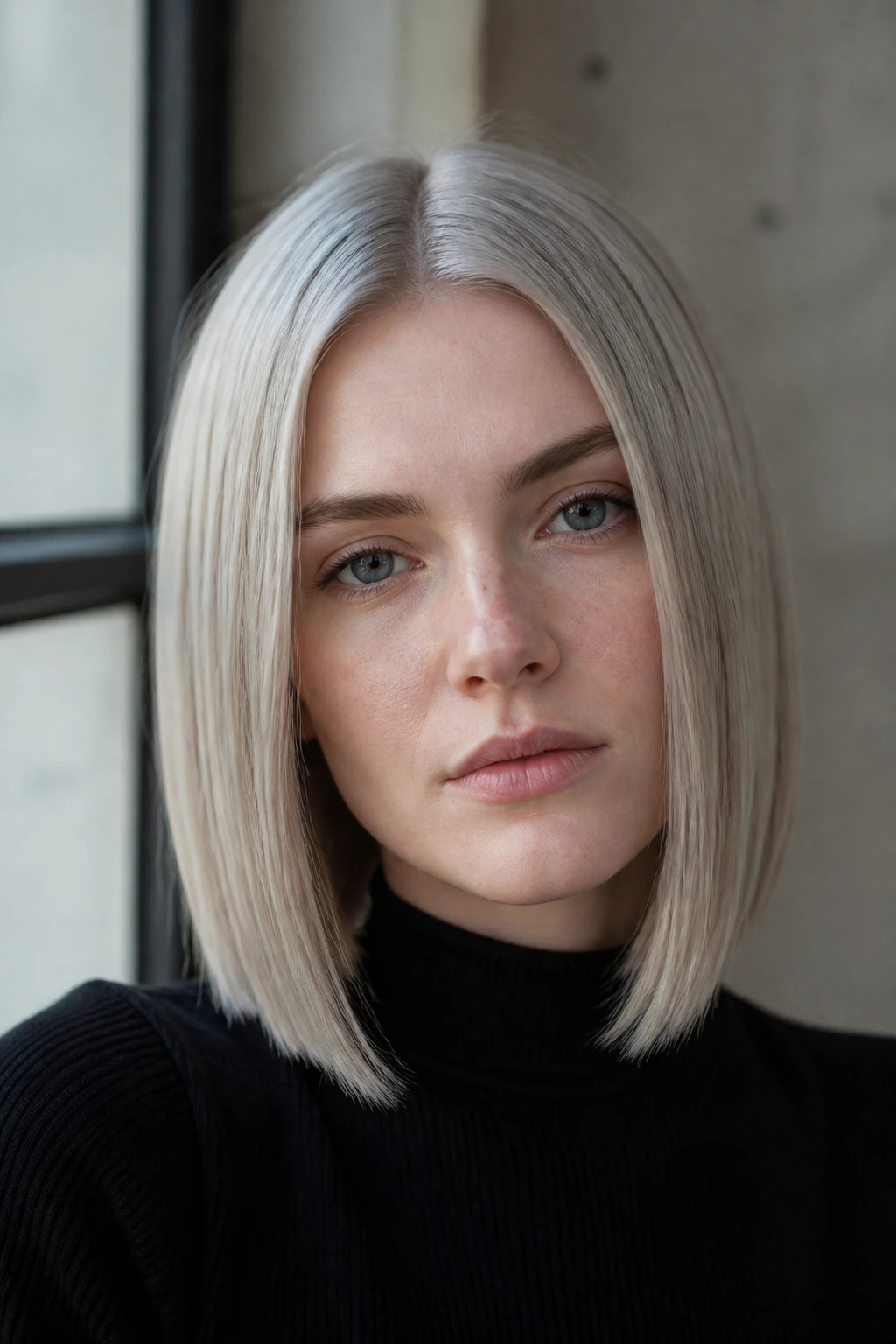
-
Choosing a tone that is too white: On pale skin, pure white blonde can make the face look tired instead of bright. Ask for pearl, silver-beige, or smoky blonde if you want more life.
-
Over-layering the cut: Fine hair with too many short layers loses its outline and starts to look see-through at the ends. Keep layers long and deliberate unless the style is a shag or pixie by design.
-
Using heavy oils near the scalp: The crown flattens fast, and greasy roots will make steel blonde look limp within minutes. Put richer products only on the lower half of the hair.
-
Going too big with curls: Large, loose curls sound flattering, but on fine hair they can fall apart before lunch. Smaller bends with a brushed-out finish usually hold better.
-
Skipping trims: Bobs and lobs lose their line fast once the ends start splitting. A trim every 6 to 8 weeks keeps the shape looking full.
-
Leaving the highlights chunky: Steel blonde looks best when the lightness is woven fine. Big, obvious sections can make pale skin look patchy instead of luminous.
Variations and Color Adjustments to Try
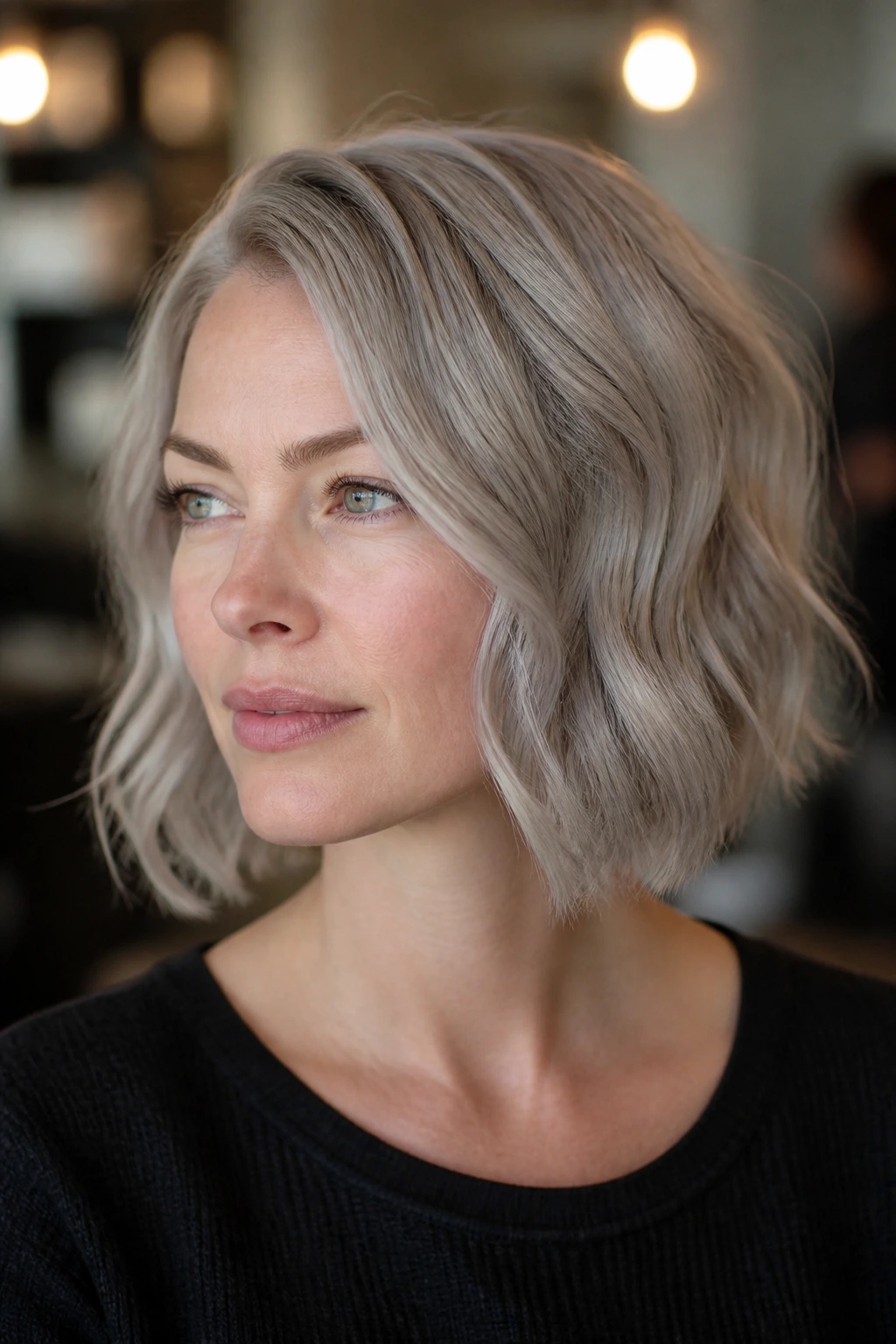
Smoky Pearl Steel: This version keeps the blonde cool, but softens the silver with a whisper of beige. It’s a strong choice if your skin has a pink cast and pure platinum makes you look a little drained. It works on bobs, lobs, and pixies without changing the cut.
Gunmetal Root Melt: A darker root that fades into brighter mids and ends gives fine hair more visual weight at the scalp. I like this for people who don’t want to be in the salon every few weeks. The grow-out is cleaner, too.
Soft Champagne Steel: This one adds the tiniest bit of warmth so the color doesn’t feel icy. It’s better for neutral or slightly peachy skin, where a severe silver tone can look too stark. The shade still reads cool, just less hard.
Ice-Flip Ends: Keep the cut simple, then turn the ends out with a brush or iron. The little flip brings motion to blunt hair and makes fine strands look fuller at the edge. It’s a good fix if a lob feels too flat.
Feathered Silver Shag: If you want more volume than polish, ask for softer layering and a bit of movement around the crown. The cut should still stay controlled; otherwise, it can get too thin through the ends. This version works best with a lived-in finish.
Keeping the Tone Sharp Between Appointments
Steel blonde stays nicest when you don’t fight it with too many products or too much heat. Wash every 2 to 4 days if your scalp needs it, and use a sulfate-free shampoo so the toner doesn’t get stripped out too quickly. A purple shampoo once every week or every other week is usually enough. More than that can dull the finish.
Trim schedule matters more than people like to admit. Short bobs and pixies usually need a clean-up every 4 to 6 weeks if you want the line to stay sharp. Lobs can stretch to 6 to 8 weeks. Long layers can go a bit longer, but once the ends start getting airy in the wrong way, the whole steel-blonde effect loses its edge.
Heat styling should stay moderate. Fine, lightened hair does not love high heat, and you usually don’t need it. Keep hot tools around 300 to 325°F when you can, and use a protectant every single time. At night, a satin pillowcase or a loose clip helps more than another mound of dry shampoo.
If the roots feel oily before the rest of the style is ready to retire, use a little root powder at the part and crown. That buys time without making the hair stiff.
Steel Blonde FAQs
Will steel blonde wash me out if my skin is very pale?
It can, if the tone is too white or the cut has no shape. A soft root shadow, a little beige in the toner, and a stronger perimeter usually solve that fast.
Is fine hair better in a bob or a lob?
Both can work, but a bob usually gives a stronger look because the ends are denser. A lob is better if you want a little more movement or the option to tie it back.
How often does steel blonde need toning?
Bright steel shades often need a gloss or toner every 4 to 6 weeks. A rooted, smoky version can stretch farther, especially if you’re not washing every day.
Can I wear steel blonde if my undertones are warm?
Yes, but pure silver may fight your skin. Ask for a softer mushroom, pearl, or champagne-steel blend so the color doesn’t look icy in the wrong way.
Does purple shampoo replace salon toner?
No. Purple shampoo helps keep yellow from creeping in, but it won’t rebuild tone the way a proper gloss does. Think of it as maintenance, not the main event.
What if my fine hair gets flat by midday?
Use less conditioner at the roots, more root-lift spray at the crown, and don’t overload the ends with heavy serum. A compact cut with a strong outline will also hold up better than long, over-layered hair.
Can I go steel blonde if my hair is naturally dark?
You can, but it usually takes patience and more than one lightening step if you want the hair to stay healthy. Fine hair especially needs a cautious path, because pushing it too hard can leave the ends fragile.
Do bangs make fine hair harder to manage?
Only if they’re too thick or too short. Soft curtain bangs, wispy fringe, or bottleneck bangs can actually help by giving the face more shape and making the rest of the hair feel fuller.
A Cooler Blonde That Still Has Shape
Steel blonde gets a lot of attention for its tone, but the cut is what keeps it from sliding into flatness. On pale skin with fine hair, the best looks are the ones that give the face a frame and the hair a line, whether that’s a blunt bob, a tidy pixie, or a soft wave with a shadowed root.
I’d pick shape over excess brightness every time. A little depth near the scalp, a cleaner edge at the bottom, and a tone that sits between silver and beige will do more for the whole look than another round of bleaching ever could.
Choose the silhouette that gives your hair the strongest outline, and let the steel blonde do the rest.