



Gold blonde on deep skin does not need to be timid. The richest versions have a warm pulse to them — honey, amber, butterscotch, bronze — and enough depth at the root that the color feels framed instead of floating. When that balance is right, the hair catches light in a way that looks deliberate, not washed out.
The mistake I see most often is people chasing a pale, icy blonde because the swatch looked pretty under salon lights. On deep skin, that can go flat fast. A warmer gold, especially one that keeps a shadow root or a darker underlayer, usually gives the face more shape and keeps the hair from reading like one big sheet of yellow.
That’s why the best gold blonde hair color ideas for deep skin tones are not all the same kind of blonde. Some are soft and honeyed. Some lean bronze. Some are bright around the face and quieter everywhere else. A few barely touch the ends and let the natural base do most of the work. The fun is in the contrast — and in the fact that deep complexions can carry more warmth than people think.
Why These Gold Blondes Earn Their Space
-
Warmth keeps the color alive: Honey, caramel, and amber tones sit better against rich skin than ash-heavy blondes, which can look dusty once they fade.
-
Depth at the root matters: A shadow root or darker base gives the blonde somewhere to land, and it buys you a softer grow-out.
-
Texture changes everything: The same gold tone looks sharper on a silk press, softer on curls, and much bolder on braids or locs.
-
You do not need full saturation: Face-framing pieces, ribbons, and gold ends can give the same lift with less upkeep than all-over lightening.
-
Bright does not have to mean pale: The prettiest versions here keep yellow-gold, bronze, or apricot in the mix instead of drifting into icy beige.
What Makes Gold Blonde Glow on Deep Skin
Gold blonde works best on deep skin when it respects contrast. If the root is too light, the color can sit on top of the face instead of around it. If the tone is too ashy, the warmth that should make the skin look lit from within gets stripped out. That is the whole game: keep one foot in brunette territory and let the blonde show up as light, not a costume.
Keep the root honest
A darker root is not a flaw here. It is the frame. Even a one- or two-level shadow root can make honey blonde, caramel blonde, or champagne gold look richer because the eye has a place to rest before it reaches the lighter pieces. That matters even more on curly hair, where the pattern already brings movement and needs depth to stay visible.
Choose warmth with intent
Gold is a family, not one shade. Honey reads sweeter and deeper. Amber has a little more glow. Bronze feels heavier and more grounded. Apricot and peach can look lively on deep skin when they are used as accents, not the whole story. I like blondes that still remember where they came from. A good warm blonde should look like sunlight, not chalk.
Texture decides the finish
Straight hair shows off clean reflection, so beige-gold and champagne tones can feel polished there. Coils and curls need more contrast, so ribbons, balayage, and face-framing pieces usually work better than a blanket application. On braids, locs, and twists, placement becomes the whole point — the lighter strands should move, not just sit there.
1. Honey-Glazed Money Piece
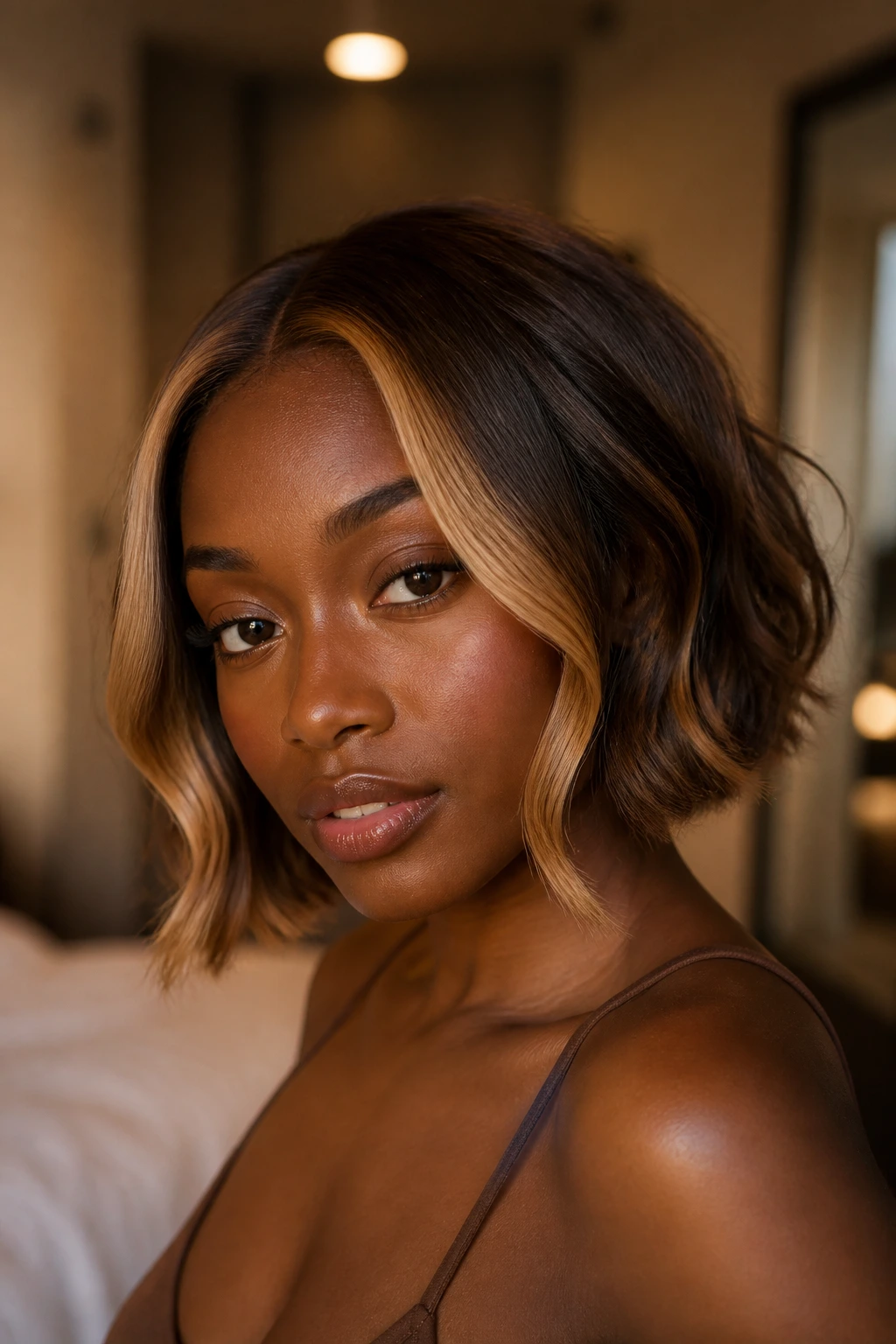
Two slim honey-blonde panels around the face can wake up deep skin faster than a whole head of pale blonde ever will. They sit where light hits first — temple, cheekbone, jawline — and they make curls, blowouts, and even a low bun look sharper.
Why It Works
Honey lives in that warm zone between gold and caramel, so it reflects against brown skin instead of fighting it. Ask for the lightest pieces to start about an inch back from the hairline if your baby hairs are dense; that keeps the line soft and avoids a striped look. On coils, the brightest part should be wider near the cheekbone and narrower as it drops.
- Best on bobs, layered curls, and side parts.
- Ask for level 8 to 9 honey, not platinum.
- Keep the root one to two levels darker for contrast.
My take: if you only lighten one place, make it the front. That is where the color earns its keep.
2. Butterscotch Ribbon Balayage
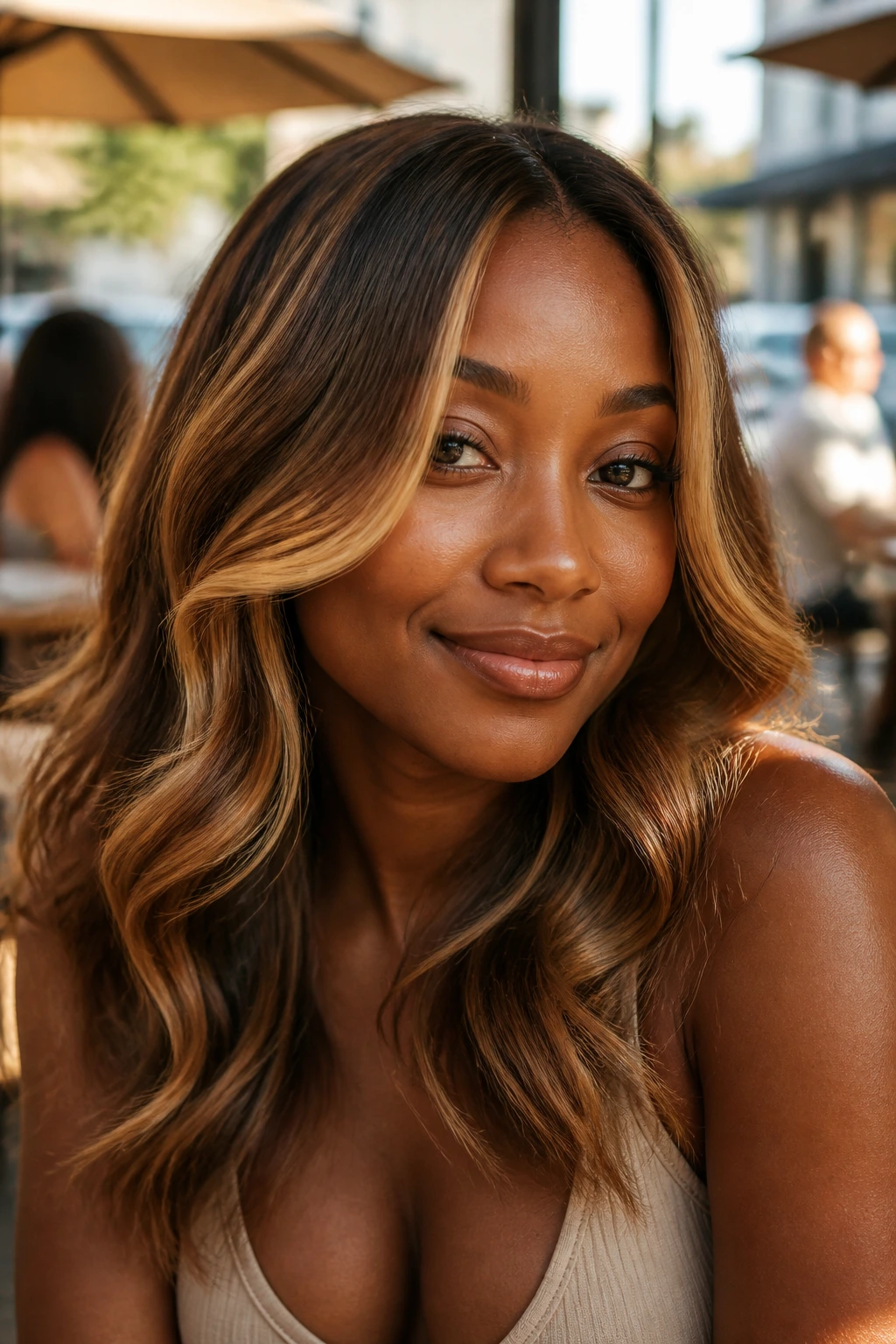
Butterscotch is the shade I reach for when blonde needs to stay warm and grown-up. The ribbons are thin enough to blend, but wide enough to show when the hair moves. On deep skin, that soft amber-gold reads like dimension instead of frost.
Balayage gives you control over how loud the blonde feels. Keep the brightest pieces on the outer layer and around the face, then let the underlayers stay brown or chestnut. That contrast is what keeps the style from getting flat once it grows out a little. On layered hair, the ribbons catch on every bend and wave.
The practical upside is easy: this is one of the cleaner ways to wear gold blonde without committing to a full bright head. It also grows out with a softer line, which matters if you do not want to sit in a chair every few weeks.
3. Amber Root Melt
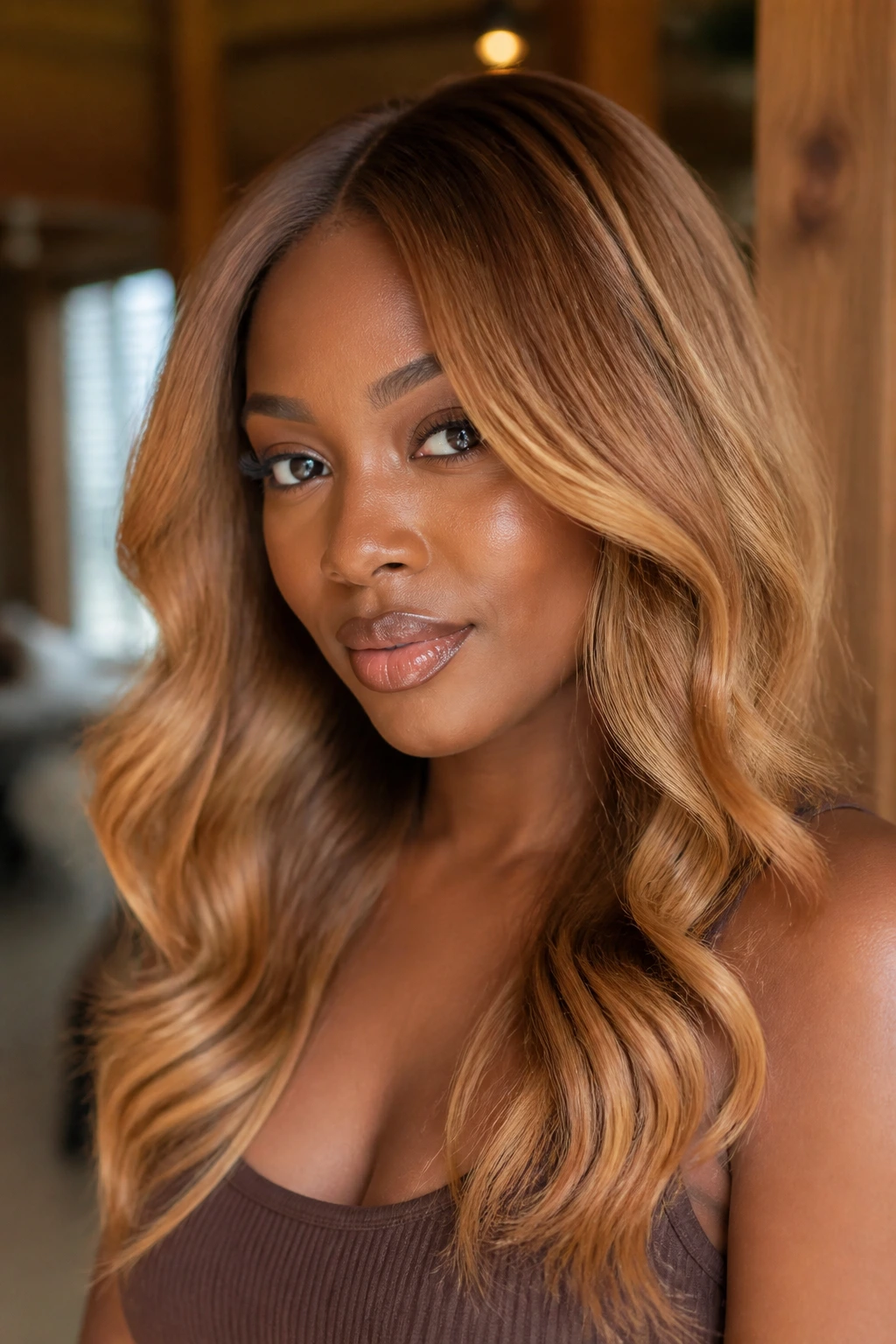
Why does an amber root melt look so polished on deep skin? Because it keeps the base honest. The darker root gives the blonde somewhere to land, and the amber through the mids stops the end color from turning dusty or hard.
How to Ask for It
Tell your colorist you want a shadow root at level 5 or 6, then amber-gold through the mid-lengths and a softer gold at the ends. If your hair is curly, this placement makes the pattern look fuller rather than thinner. On straight hair, the gradient gives that expensive, smooth fade that can look almost liquid in motion.
This is a good pick if you want your hair to feel warm in winter-light interiors and still glow outside. The key is not dragging the lightest gold all the way to the scalp. Leave that edge darker. It does the heavy lifting.
4. Caramel-Coated Curls
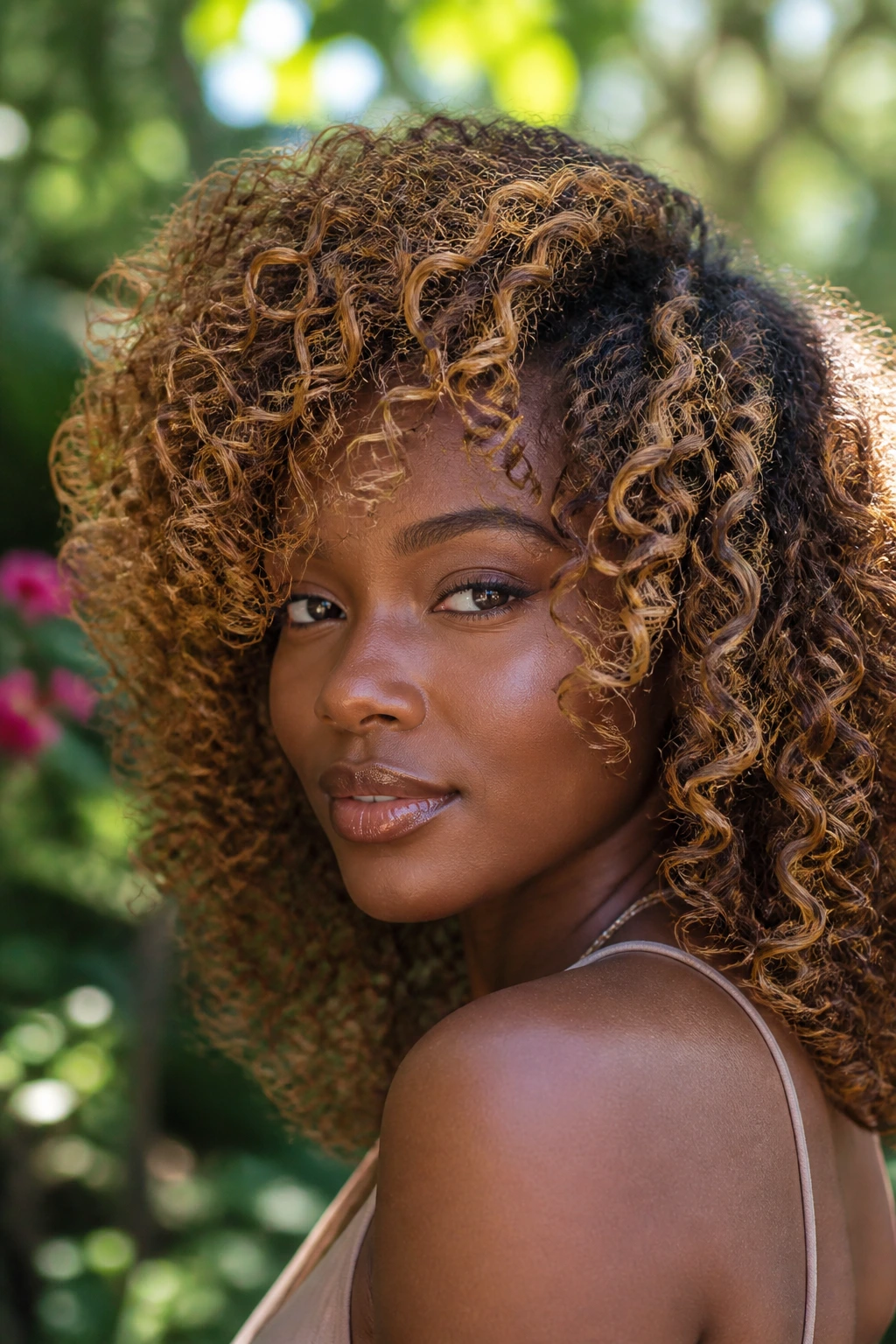
Picture soft caramel light sitting on the outer curve of each curl, with the inside of the coil staying rich and dark. That is the whole trick here. Gold blonde on curls looks best when it follows the shape of the curl instead of fighting it.
The pieces should sit where the hair bends outward, not packed into every strand. Too much blonding can make curls look fuzzy or hollow. A few warm ribbons around the crown and side panels usually give more shape than a dense weave of light streaks ever could.
- Place the lightest bits on the top layer first.
- Keep the interior darker so the curl pattern still reads.
- A gold glaze every 6 to 8 weeks keeps the caramel note from dulling.
A curl pattern with caramel pieces does not need perfect symmetry. It needs rhythm.
5. Champagne Gold Pixie
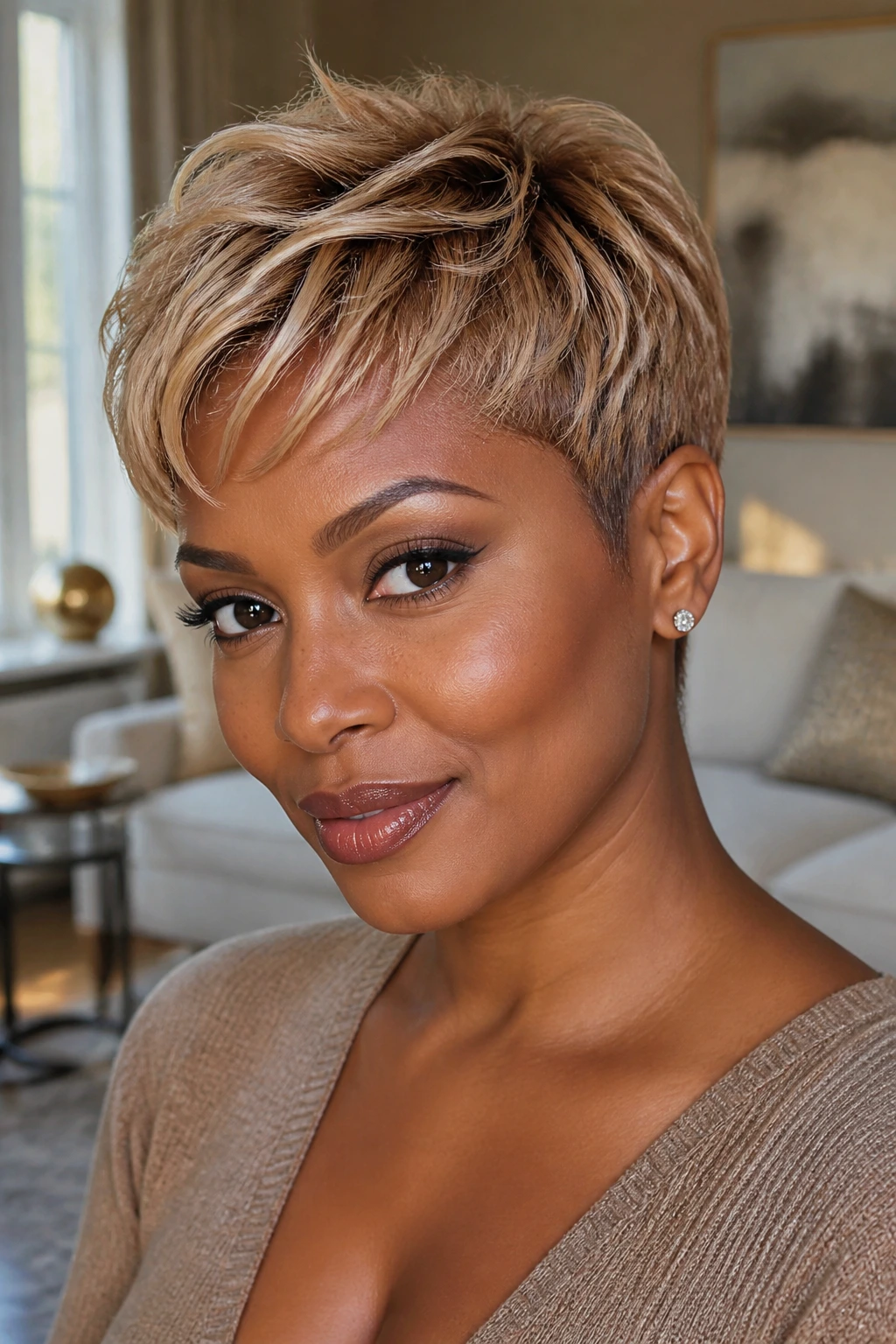
A pixie can handle more brightness than a long cut because the shape is already punchy. Champagne gold gives it that lifted, reflective finish without tipping into harsh yellow. On deep skin, the short length keeps the blonde from overwhelming the face.
I like this look best when the crown stays slightly darker and the top layers are piecey. That little bit of shadow gives the blonde more shape, especially if the cut has texture or a side-swept fringe. If every strand is equally light, the whole thing can blur. A pixie needs contrast to stay interesting.
The smart move is to keep the tone closer to honey-beige than lemon. It will grow out cleaner and flatter the skin better. Add a little pomade on the ends, and the shade picks up even more shine.
6. Toasted Almond Lob
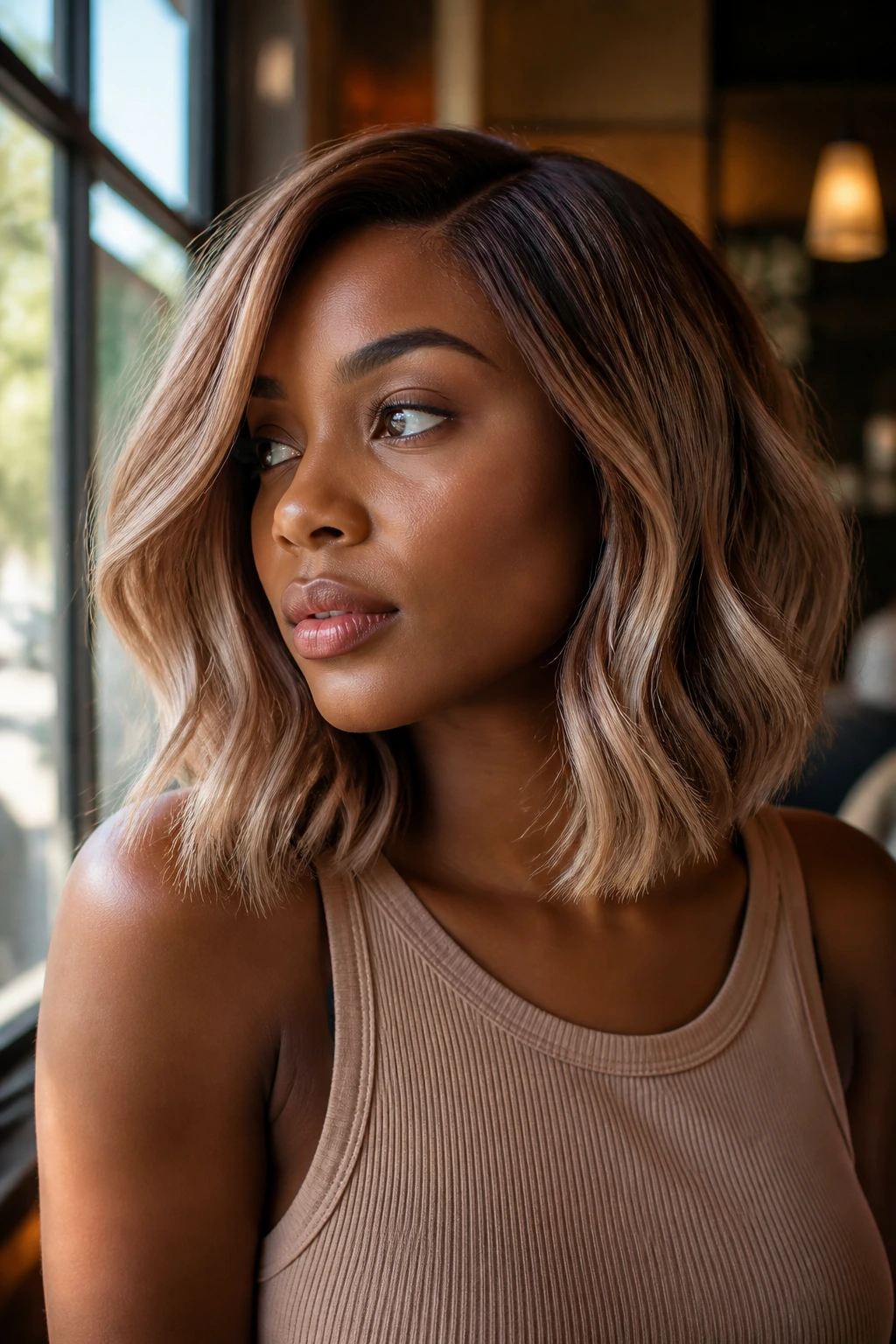
Unlike icy beige blonde, toasted almond keeps one foot in brown territory. That is why it looks so easy against deep skin. The tone still has gold in it, but there is enough beige and almond warmth to keep it from looking like a bleach job.
A lob works especially well because the length gives the color space to shift. The upper layers can stay deeper, then the mid-lengths and ends can carry the lighter almond-gold. If the cut is blunt, keep the blonde softer and more diffused. If it is layered, the ribbons can be a little bolder.
What to ask for
Ask for toasted almond, beige-gold, or warm blonde ribbons rather than a flat all-over lift. That language usually gets you a warmer result than asking for “blonde” alone. I would also keep the root a touch deeper if you wear your hair straight often; it makes the line cleaner.
7. Golden Halo Afro
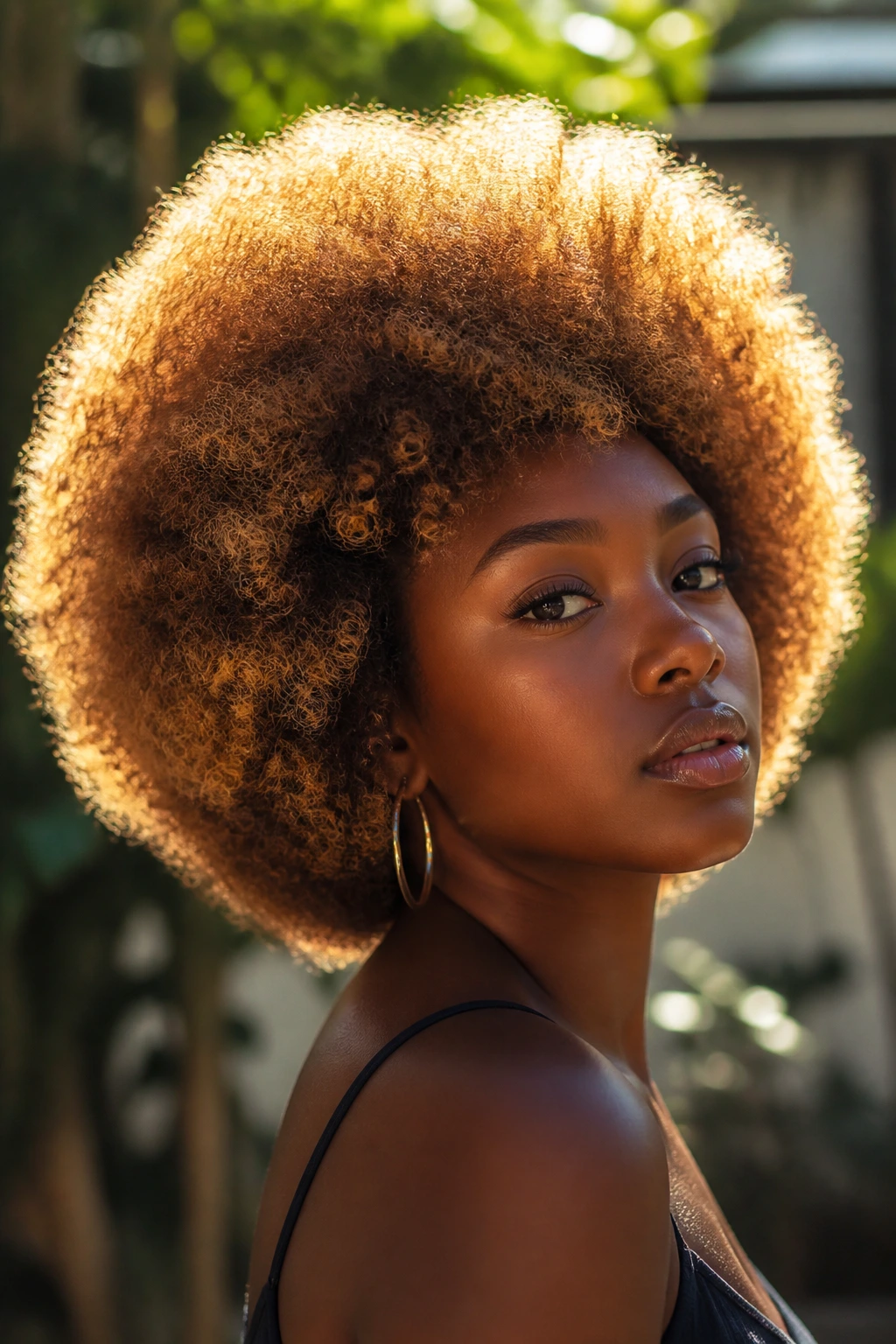
A halo of gold around an afro shape is one of the prettiest ways to wear warm blonde on deep skin. The color sits on the outer edges first, so the hair keeps its depth in the center and gets light exactly where the eye wants to land. It looks intentional from across the room.
Where the light should go
- Crown and perimeter first, not every strand.
- Leave the inside layers richer and darker.
- Use a warm gold gloss, not a flat beige toner.
The reason this works is simple: the shape does the framing for you. You do not need every section lightened to get drama. A soft halo around the top and sides can make the whole style look fuller, not thinner. If your hair is densely coiled, this is one of the better ways to use blonde without losing the pattern.
8. Maple Syrup Highlights
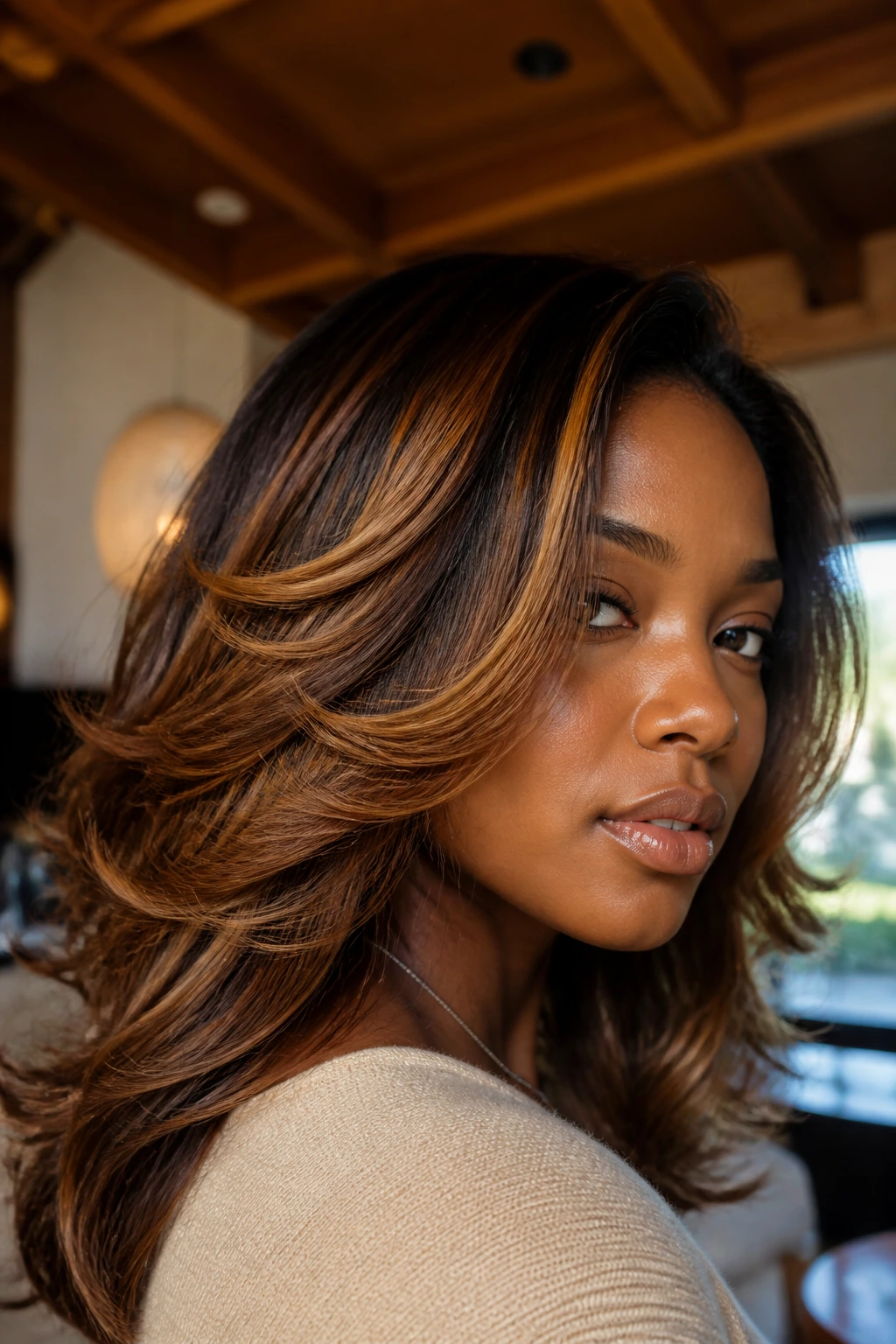
Maple syrup highlights are what I point to when someone wants blonde that still looks like hair. The tone is rich, amber-leaning, and a little sticky in the best way — not in texture, obviously, but in color depth. It clings to deep skin instead of skimming over it.
These highlights work especially well on brunettes who want to stay close to their base. The lift is there, but the warmth keeps the overall look grounded. On layered cuts, the highlights show up every time the hair moves. On blunt cuts, they can be placed a little farther apart so the shape stays crisp.
If your natural base is dark, this is a smart middle step before going lighter. You get visibility, but not the maintenance headache of a high-lift blonde.
9. Saffron Silk Press
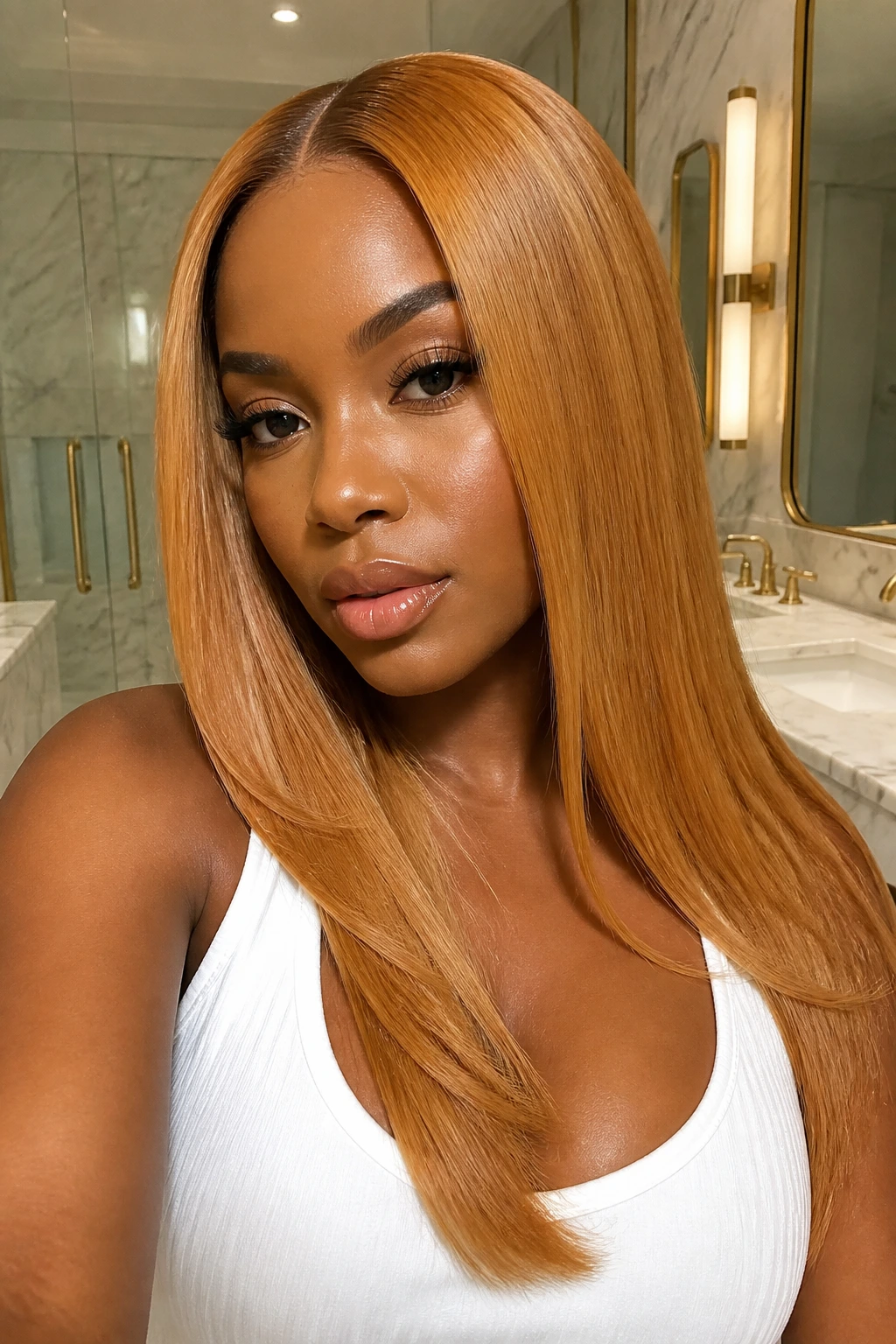
What makes a silk press good with gold blonde? Shine. The smoother the finish, the more the saffron-gold tone shows up as reflection rather than streaks. That matters on deep skin because the hair should glow, not glare.
A silk press loves a warm blonde that lives around level 8 or 9. Anything too pale can look stark once the hair is pressed flat. Keep a little depth at the root and around the nape, then let the front and crown carry the brighter pieces. The result feels clean and expensive without trying too hard.
Wear it with
A center part makes the color look modern. A deep side part gives more softness. Either way, use heat protectant every time and keep the iron moving. Gold blonde loses its charm fast when the ends get fried and frayed.
10. Bronzed Bob
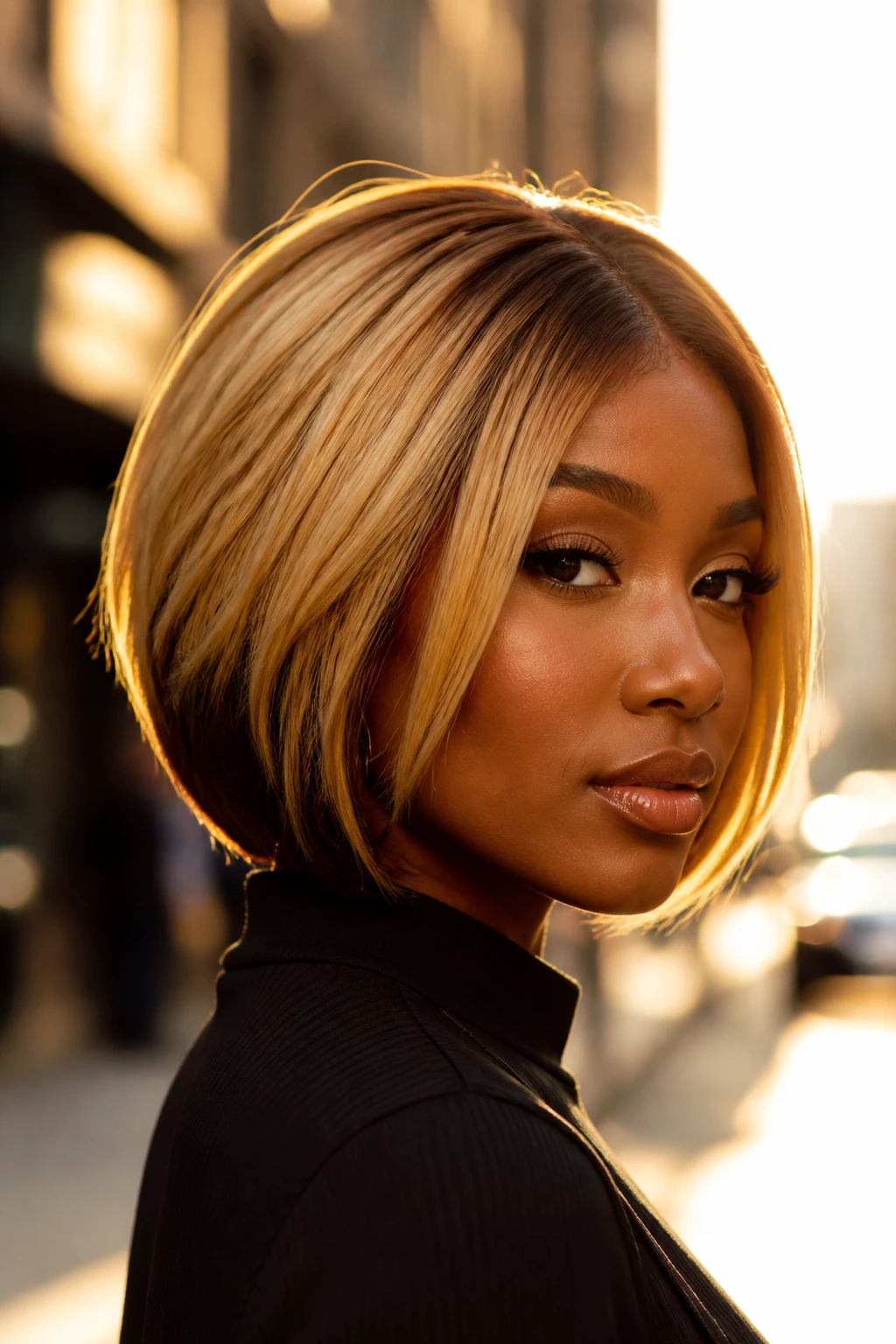
A bronzed bob has a little more weight than a classic golden blonde, and that is why it flatters deep skin so well. The bronze note keeps the blonde grounded, while the bob shape gives the color a hard edge. Clean cut. Warm color. Good tension.
This is one of the easiest shades to wear if you want blonde that still feels grown. The trick is to keep the bronze richer at the underlayers and along the back, with lighter gold just through the top. That way the bob moves when you do, instead of sitting like one flat block of color.
If your hair is naturally thick, bronzed blonde also helps break up bulk. It creates shape without needing a ton of layers.
11. Cinnamon Gold Coils
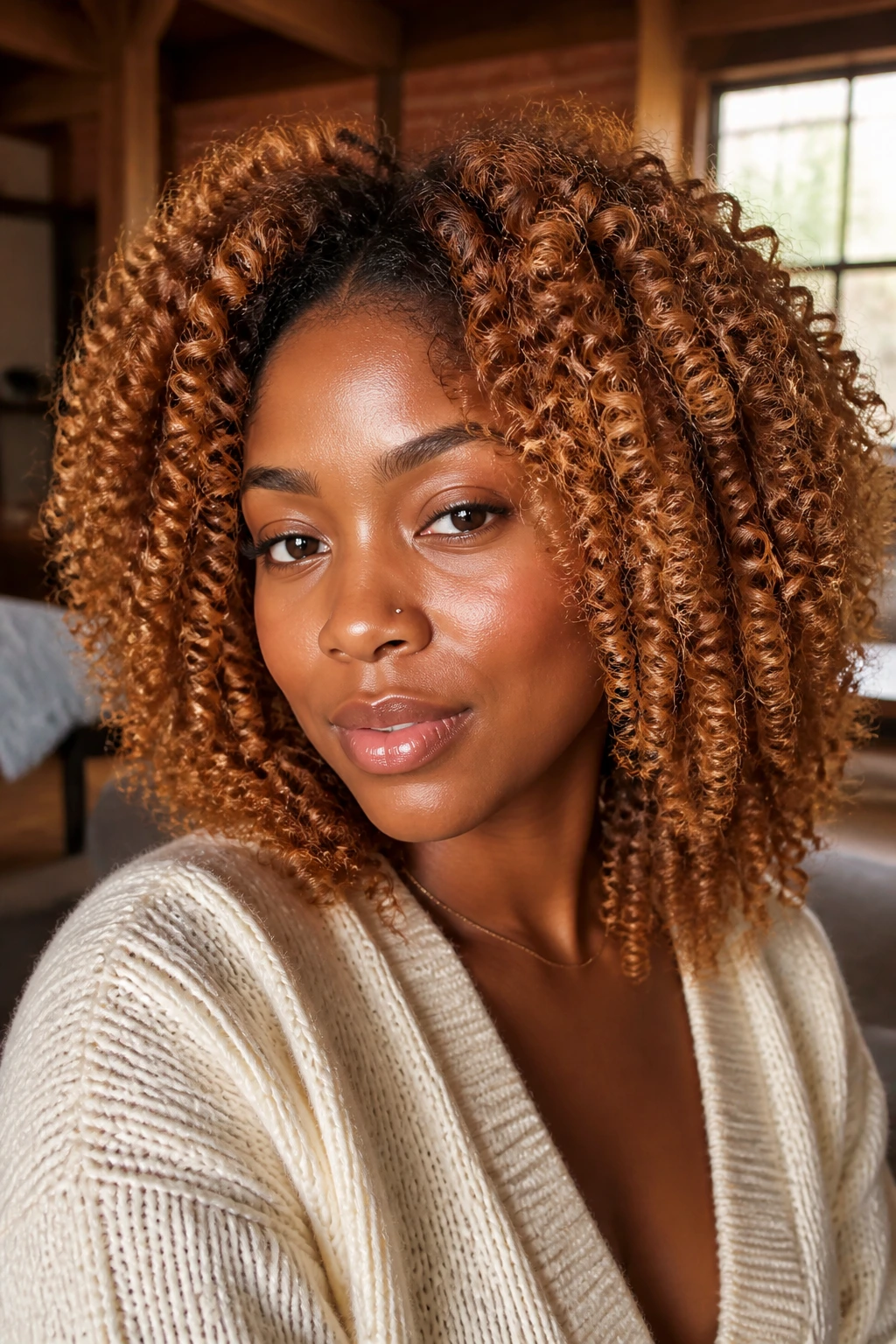
Cinnamon gold sits between warm copper and honey blonde, which makes it a sharp choice for coils that need depth. The color looks alive when it catches the raised edges of the coil pattern, then settles back into brown in the gaps. That contrast is the whole point.
I like this shade on medium-to-dark bases because it keeps the hair from going too pale. A few cinnamon-gold ribbons near the crown and sides are enough to make the whole head feel lighter. If you put the color everywhere, you lose the richness that makes it flattering in the first place.
The finish can be glossy or matte, but glossy is the one that really sings. A light serum after styling pulls the gold forward without making the hair greasy.
12. Molasses Money Pieces
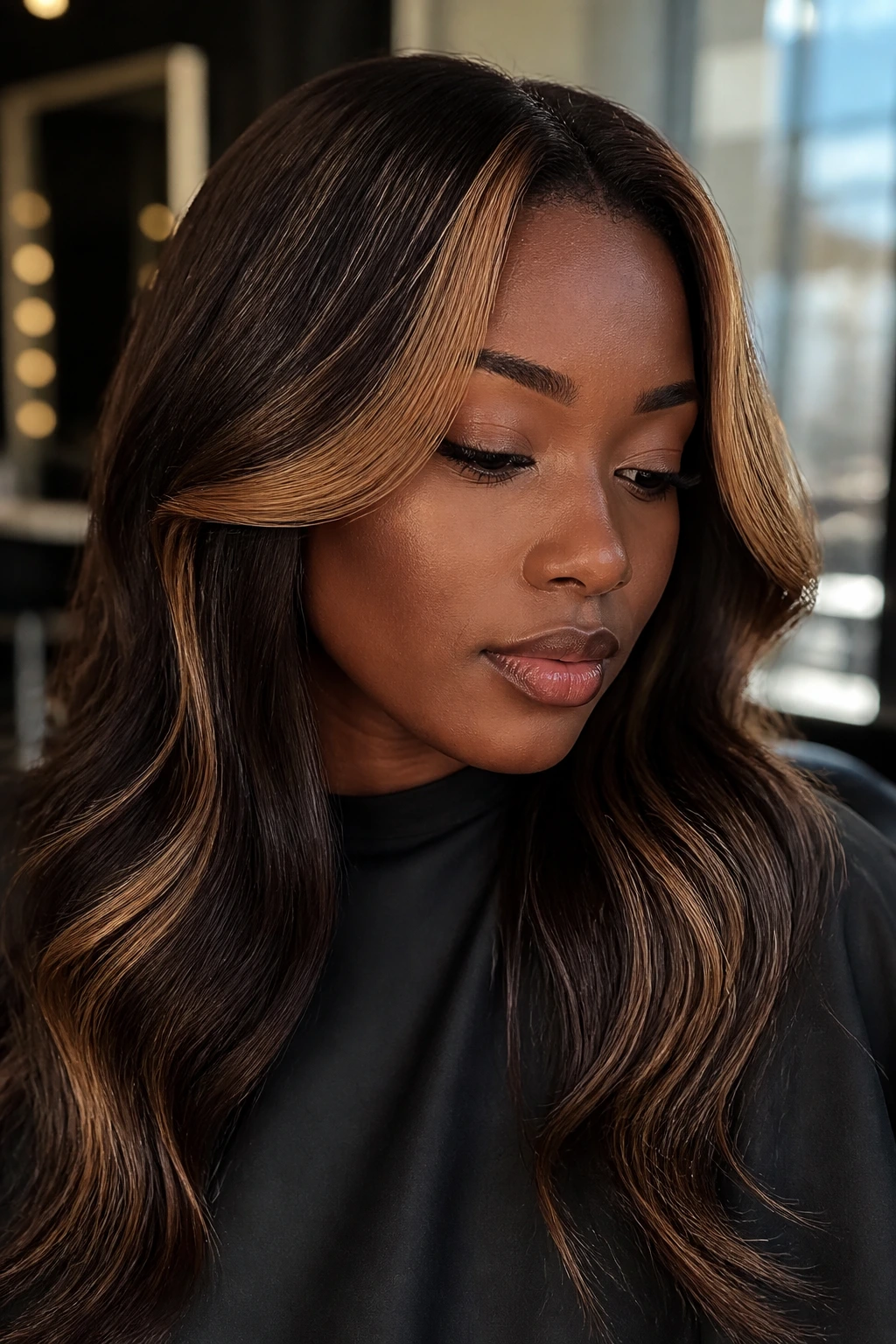
Molasses money pieces are the bolder cousin of honey face framing. Instead of soft sweetness, you get a deeper brown-gold contrast that can look almost smoky at the root and bright at the ends. On deep skin, that contrast is the good part.
This is the look for someone who likes edge. The face-framing strips should be thicker than a honey piece, but still softened at the edges so they do not read like stripes. Keep the base dark and rich — espresso, chocolate, or deep chestnut — so the blonde has a real job to do.
It works especially well with sleek ponytails, long layers, and sharp part lines. The color becomes part of the shape, not just the shade.
13. Apricot Gold Waves
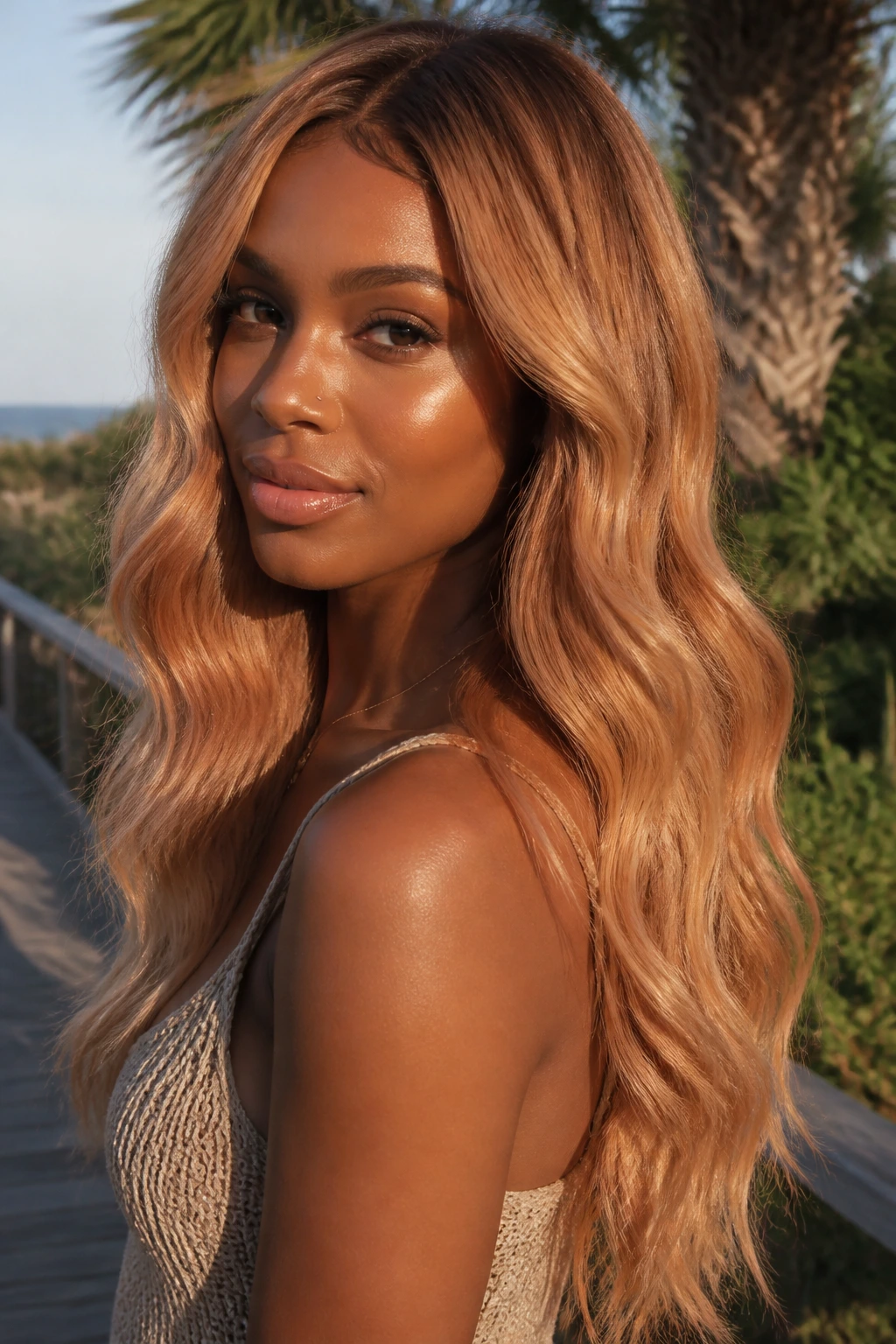
Apricot gold is warmer than champagne and softer than copper. That makes it a nice bridge for deep skin when you want something lighter, but not yellow in a loud way. The peachy note gives the blonde a little warmth that plays well with golden and red undertones in the skin.
Waves help this shade more than straight hair does. The bends show the peach-gold shifts, so the color never feels flat. If you wear it on long hair, keep the root slightly deeper and let the apricot show mostly through the mid-lengths and ends. The result feels airy without turning pale.
I would avoid making the whole head one even apricot blonde. It needs variation, or it can look like one flat paint swatch.
14. Sunflower Streaks
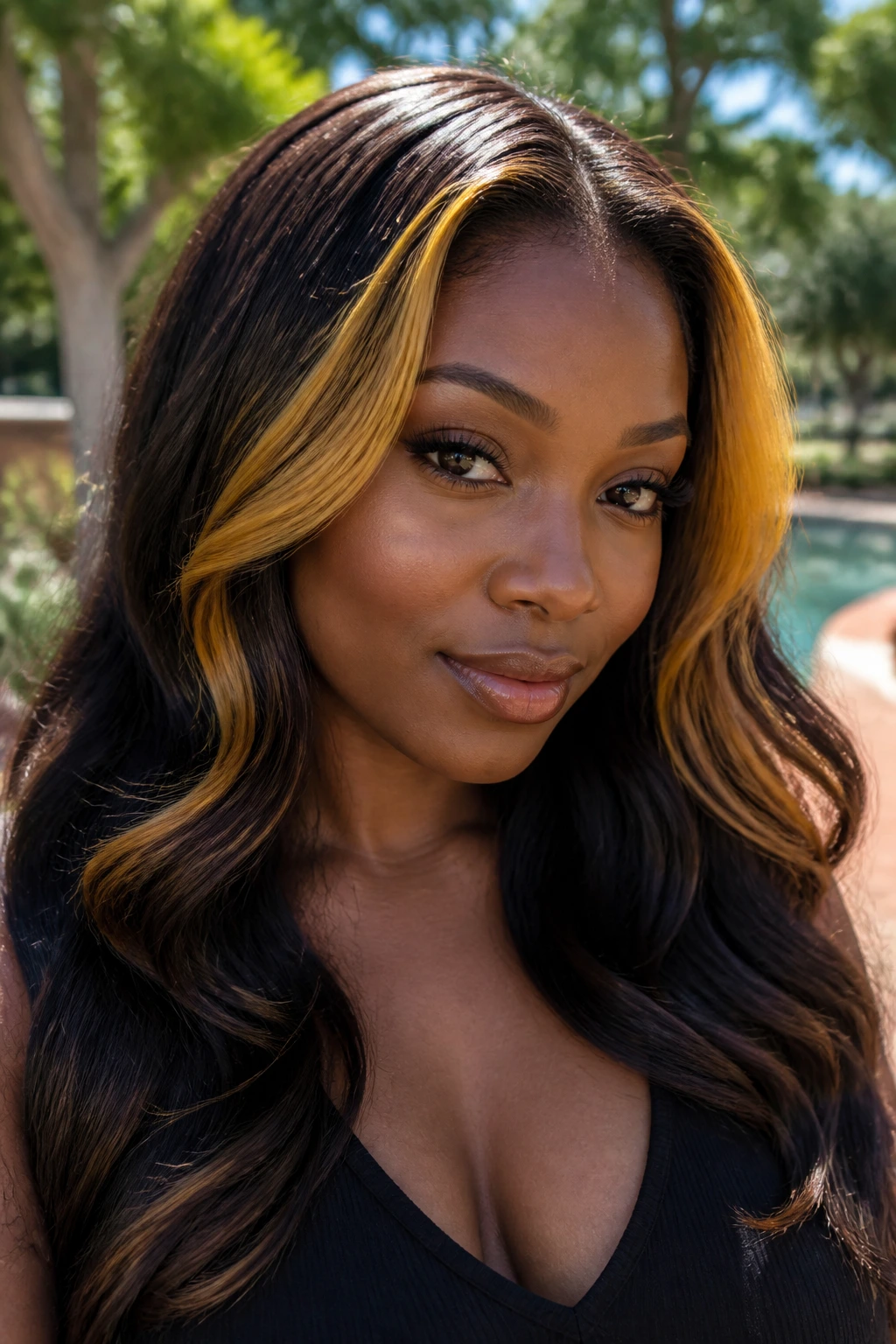
Why do sunflower streaks stand out on deep skin? Because they use brightness as an accent, not a blanket. The yellow-gold streaks catch attention fast, but the darker base keeps the look wearable.
How to wear them
Place the streaks in the top layer, around the part, and near the front where they can frame the face. On thicker hair, a few wider streaks read cleaner than a cloud of tiny highlights. On finer hair, keep them softer so the blonde does not take over.
This is not a shy color. It looks best when the wearer wants people to notice the contrast. If that sounds like you, keep the rest of the style simple — a clean braid-out, a sleek bob, or a blunt curl pattern. The color already does enough talking.
15. Beige-Gold Curtain Fringe
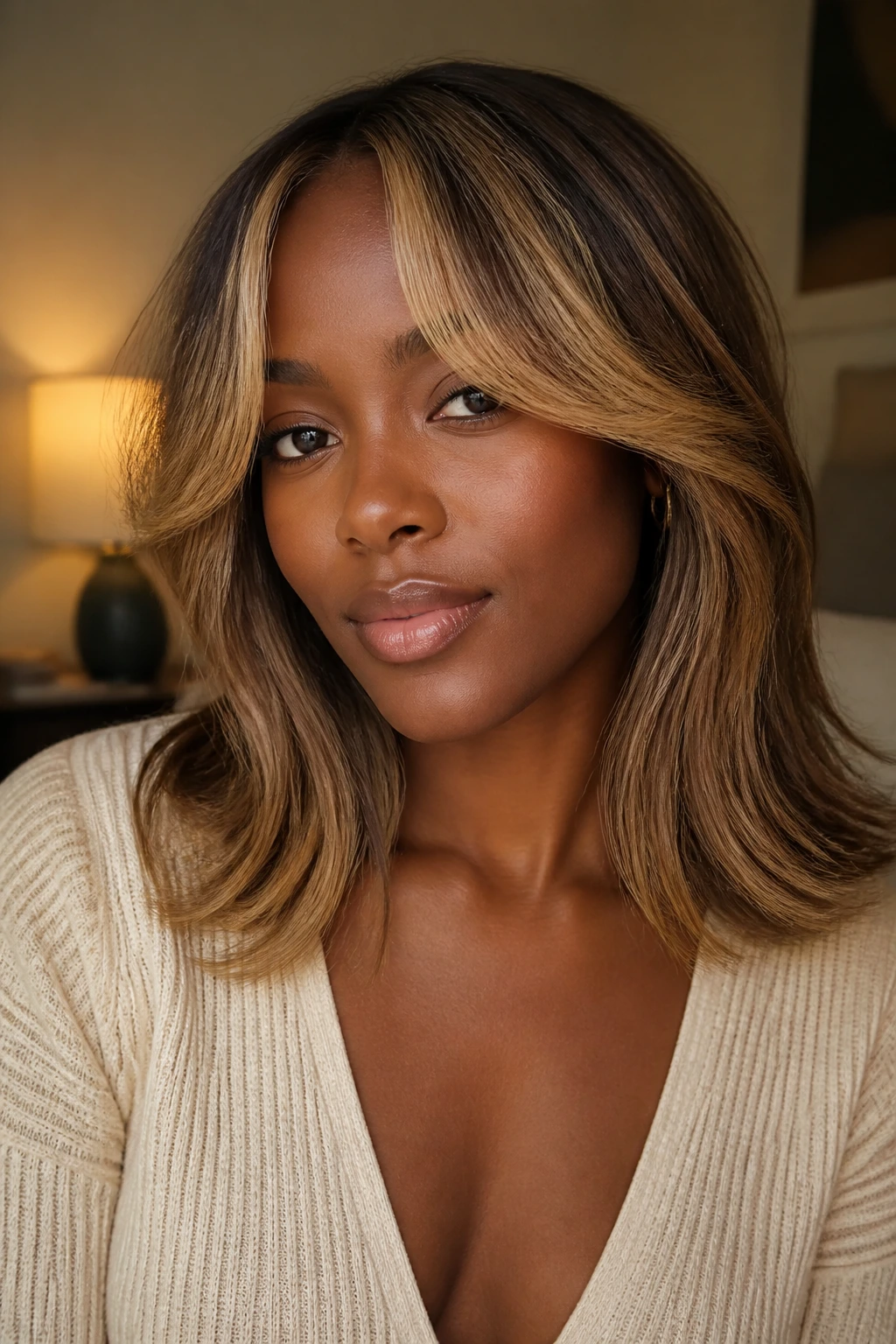
A curtain fringe changes the whole mood of gold blonde because it puts the light right over the eyes. Beige-gold keeps the fringe soft enough for deep skin, while the slightly darker underlayers stop the look from feeling washed out. It has a little romance to it.
The fringe should be lighter than the rest of the hair, but not so light that it breaks away from the base. I like this on shoulder-length cuts, especially if the rest of the hair stays in a honey-brown or caramel zone. The contrast creates a nice face frame without needing huge panels of bleach.
- Keep the fringe a half-shade brighter than the sides.
- Style it with a round brush or bendy rollers.
- Leave the mids and ends warmer and deeper.
That tiny shift in placement changes everything.
16. Desert Honey Braids
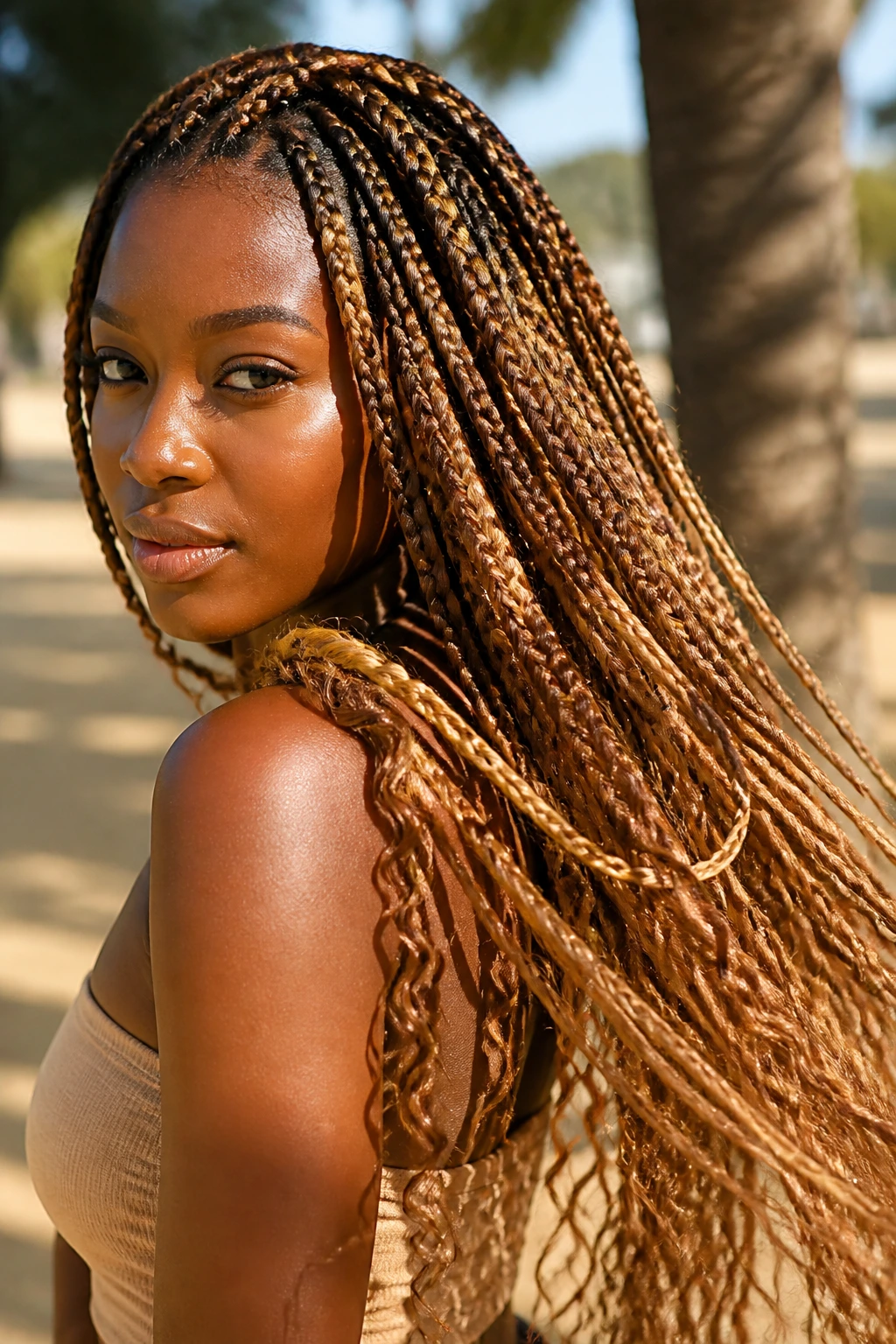
Braids are one of the easiest places to use gold blonde because the pattern already gives you texture. Desert honey sits between sandy beige and warm gold, so it adds light without turning the braid into a high-contrast glare. It looks sun-warmed, not artificial.
The color can show up in the braid hair itself, in added pieces, or as a subtle shift from root to end. If you like a softer result, keep the braid base darker and let the gold live near the ends. If you want more drama, add a few brighter strands near the front or along the part.
The best part is movement. Every turn of the braid catches a different piece of light. That is what makes the shade feel alive.
17. Antique Gold Locs
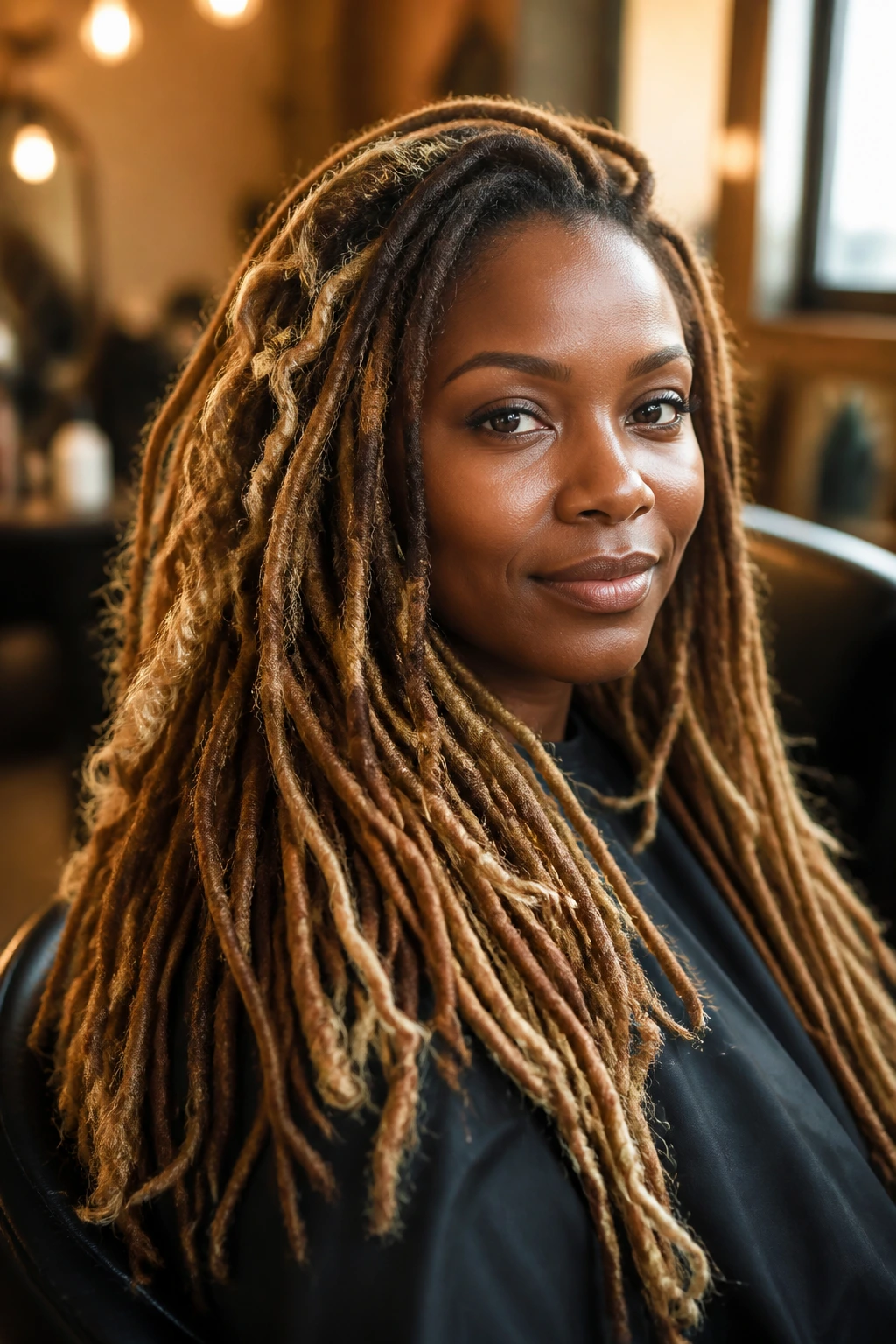
Antique gold has more depth than bright yellow blonde, and that makes it a smarter fit for locs on deep skin. The tone feels worn-in in a good way — like warm metal rather than fresh paint. That aged look keeps the style elegant instead of flashy.
This shade works especially well when the lighter pieces are placed sparingly. A few antique gold locs mixed through a richer base create a stronger read than bleaching every strand. If your locs are long, placing the lighter color near the ends can keep the root area darker and more grounded.
I prefer this to a very pale blonde on locs because it keeps the shape of the loc visible. Too much lift can blur the texture. Antique gold gives it back.
18. Liquid Gold Layers
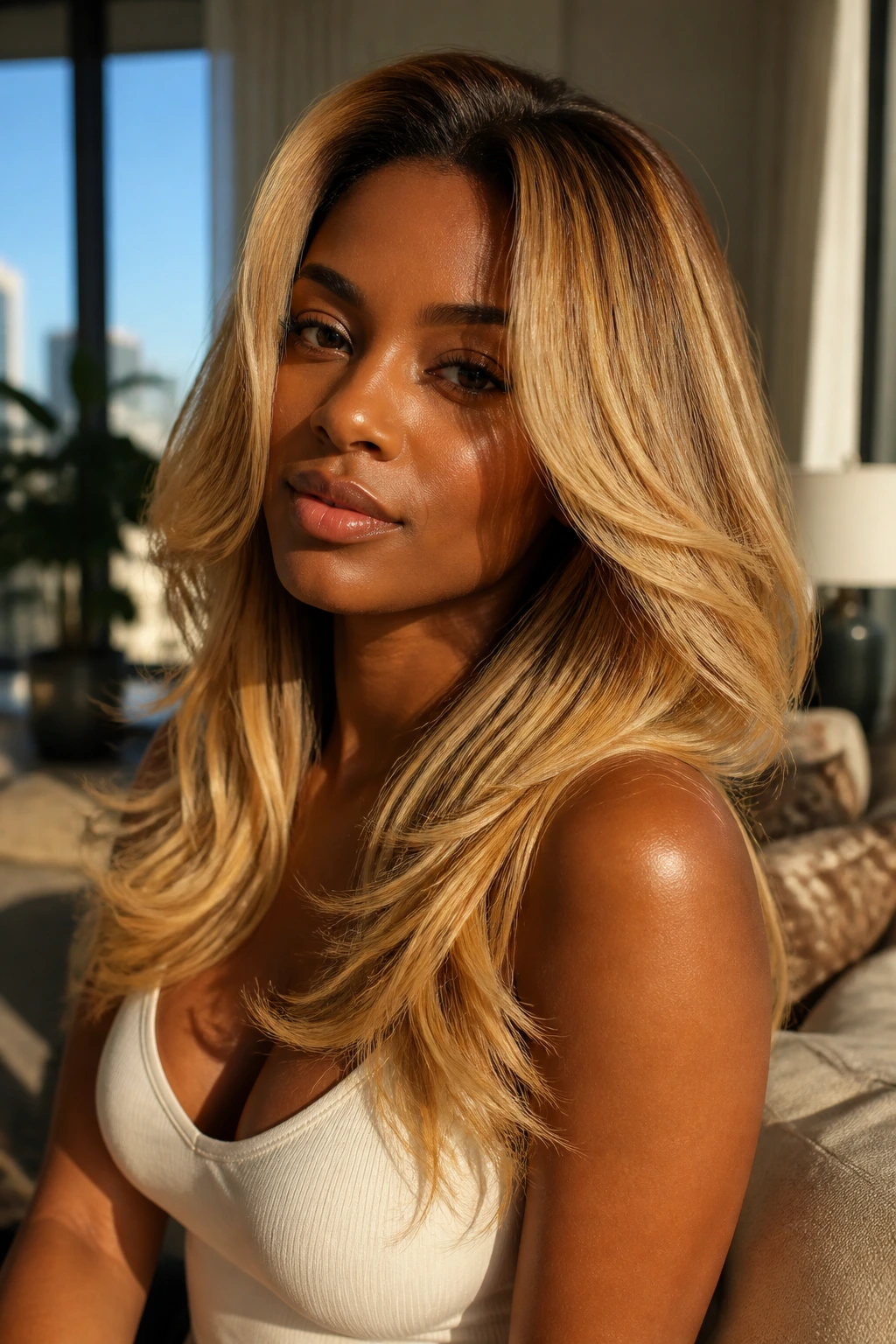
Liquid gold is what happens when the blonde is glossy, warm, and allowed to move. On deep skin, that motion matters as much as the color itself. Layers help the light travel through the hair instead of sitting on top of it.
This look tends to work best when the root is a little deeper and the mids are the brightest zone. The ends can stay just a touch darker so the whole style does not go flat. I like this on layered cuts that already have internal shape, because the gold then follows the haircut instead of hiding it.
If you want a blonde that looks high-shine rather than high-contrast, this is the one. It is not shy. It just moves better than louder blondes.
19. Golden Copper Melt
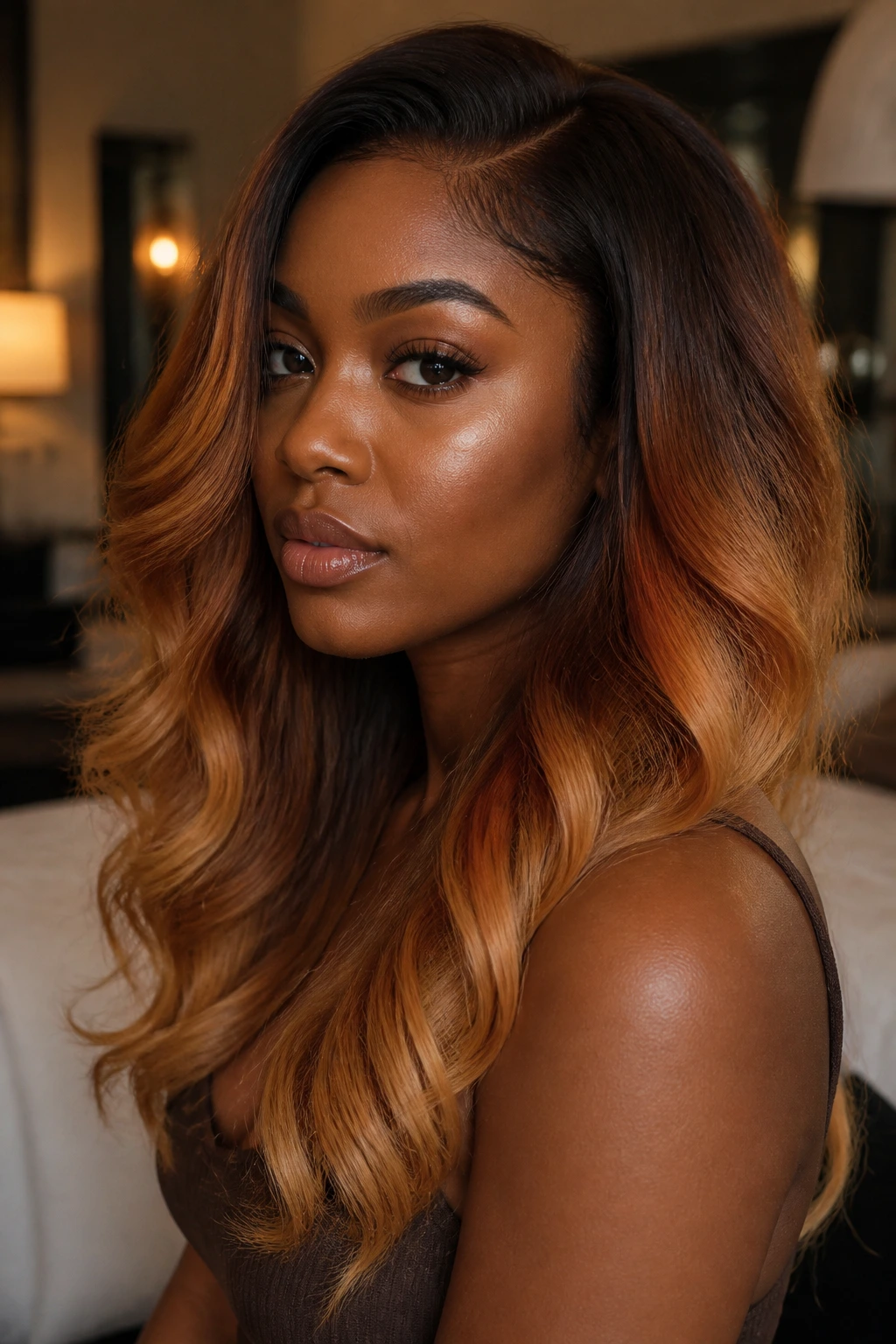
Golden copper is for the person who wants warmth first and blonde second. The copper tone gives the color a little fire, and the gold keeps it from reading too red. On deep skin, that blend can look rich in a way plain blonde often does not.
The melt should start deeper at the root and move toward brighter gold at the ends. That keeps the warmth layered instead of flat. If your skin leans more golden or red in undertone, this is one of the easiest shades to wear because it sits naturally against those tones.
I would not make this too orange. The appeal is the bridge between copper and gold, not one shade yelling over the other.
20. Sandstone Blonde Crop
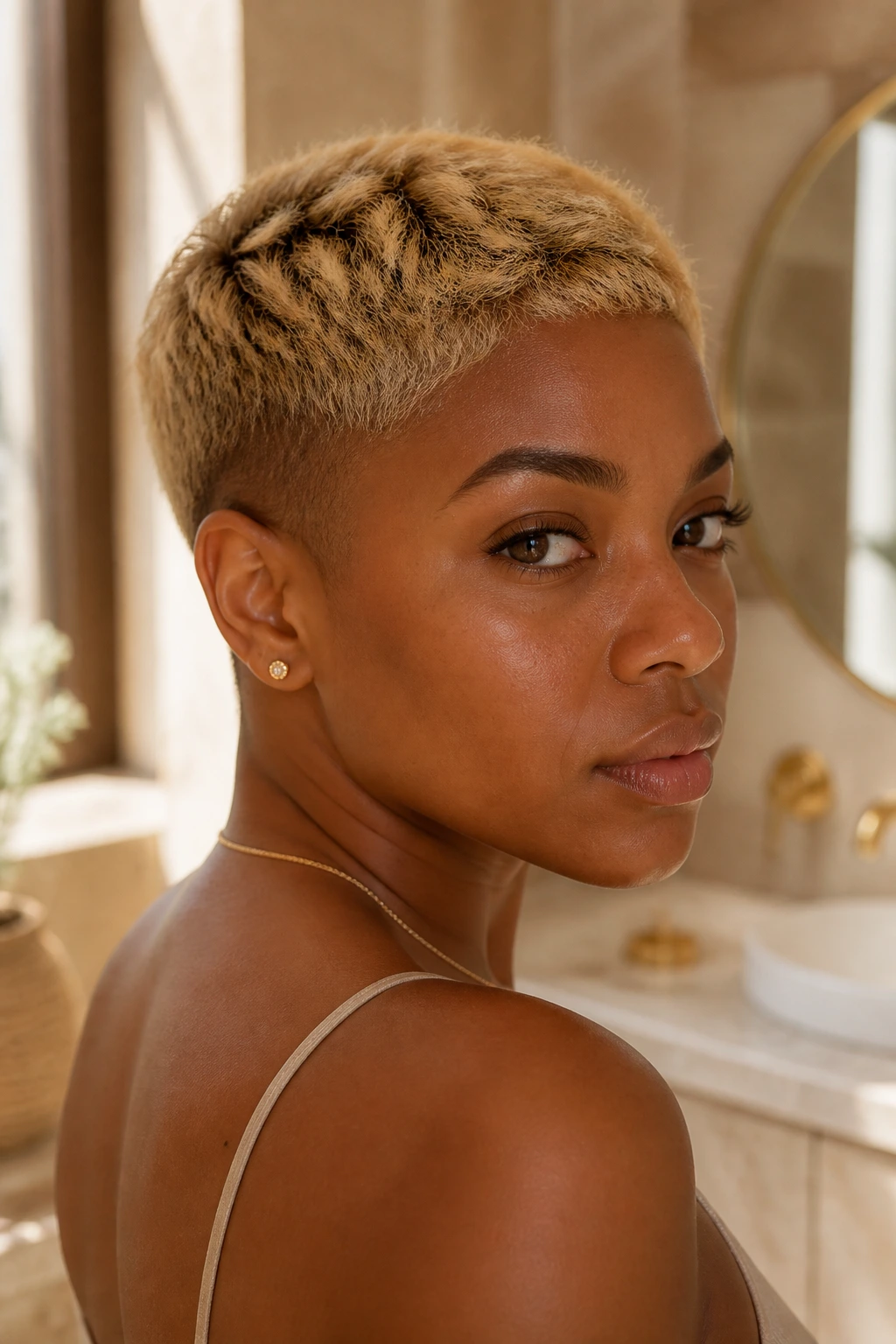
A sandstone blonde crop is one of those short cuts that looks calm from a distance and detailed up close. The shade sits in the beige-gold family, so it avoids the chalky effect that cooler blondes can have on deep skin. The crop keeps it clean and modern.
Because the cut is short, every inch of color matters. Keep the top a little lighter than the sides, and let the nape stay darker if you want shape. That tiny contrast makes the crop look intentional rather than overprocessed.
This is a strong choice if you want something easy to style and easy to read. A little edge cream, a little finger shaping, and the color does the rest.
21. Sepia Gold Shadow Root
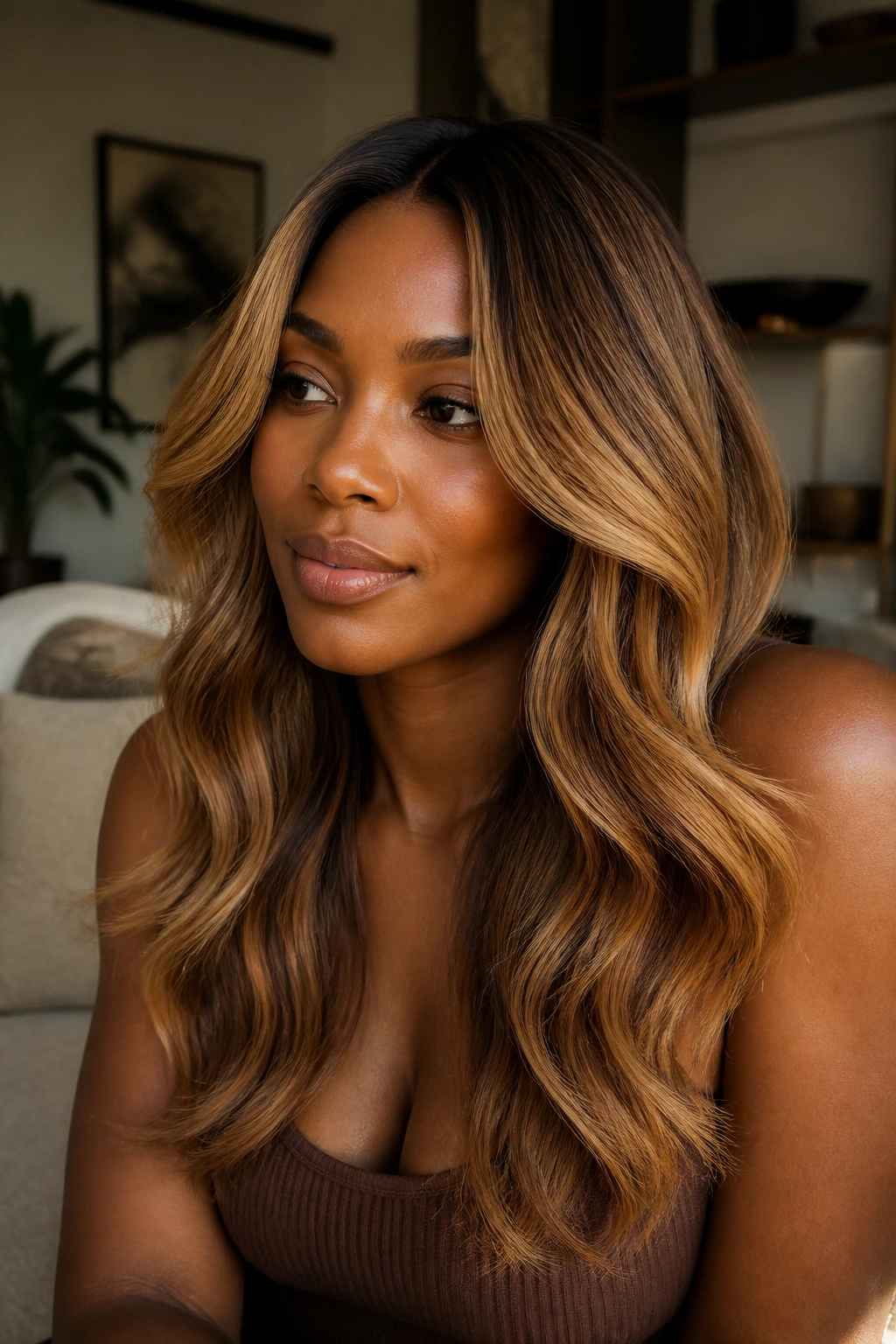
Sepia gold is one of the most useful shades in this whole group because it blends brown and gold in a way that never feels forced. The shadow root keeps the top natural-looking, while the sepia-gold mids and ends give the lightness. It is polished without being stiff.
What makes it different
Unlike a pale beige blonde, sepia gold keeps warmth in the hair from root to tip. That means less risk of the color clashing with deep skin or fading into something muddy. It also grows out cleaner, which is a real gift if you do not love constant touch-ups.
I like this on long layers, shoulder-length cuts, and any style where movement matters. The dark root and soft gold end up doing the same job: giving the hair shape.
22. Buttered Bronze Twist-Out
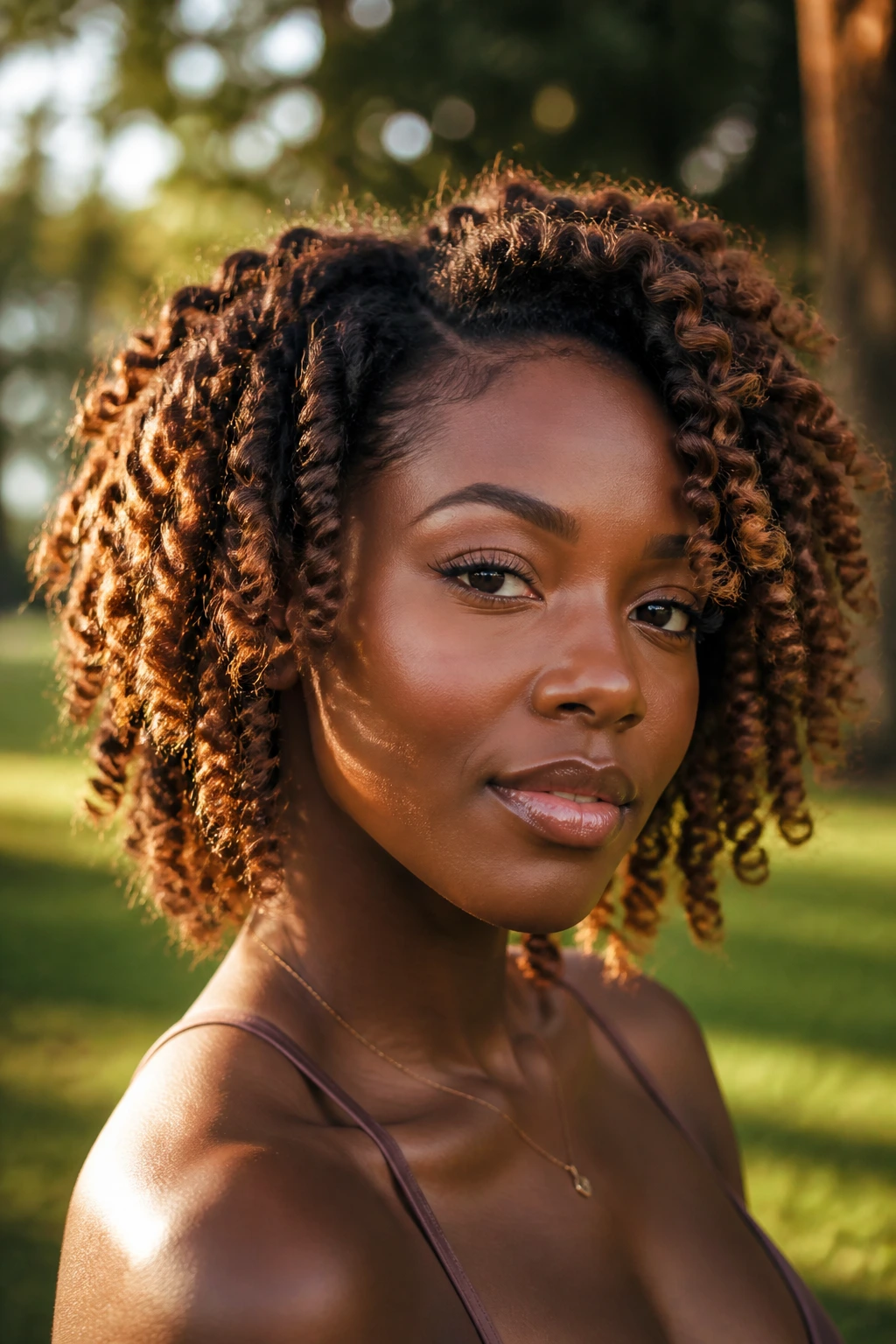
A twist-out with buttered bronze highlights looks especially good because the texture creates natural lanes for the color to sit in. The bronze keeps the blonde warm and grounded, while the buttery note keeps it from getting too heavy. It is subtle until the light hits it, then it shows up.
This is a good option if you want dimension without a dramatic bleach look. The highlights should follow the twist pattern, not sit randomly on top of it. That way the style still looks like a twist-out, not a color job with texture attached.
The shape of the hair does most of the work here. The bronze only needs to catch the edges and the upper layer to change the whole read.
23. Crème Brûlée Balayage
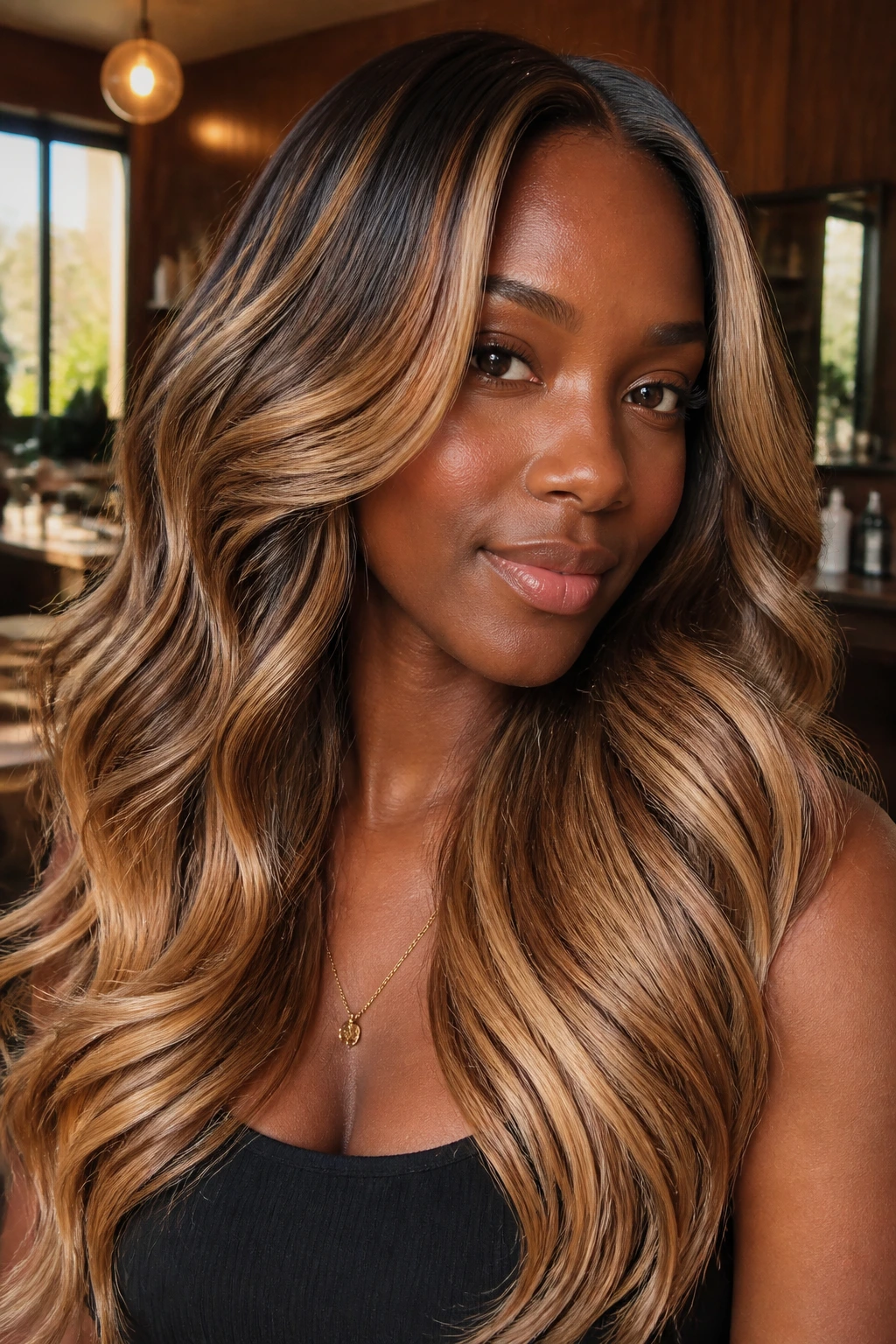
Crème brûlée balayage is the sweet spot between creamy and toasted. The root stays darker, the mids carry the golden cream, and the ends take on that caramelized warmth that makes the whole look feel layered. On deep skin, the richness keeps it from looking pale.
It is a strong choice for medium to long hair because the balayage can travel. Shorter cuts can wear it too, but the color needs room to fade in and out. If the highlight is too dense, the style can lose the brûléed effect and start to look flat.
Ask for soft hand-painted pieces and a warm gloss. I would skip anything too beige here. The point is dessert warmth, not ash.
24. Marigold Face Frame
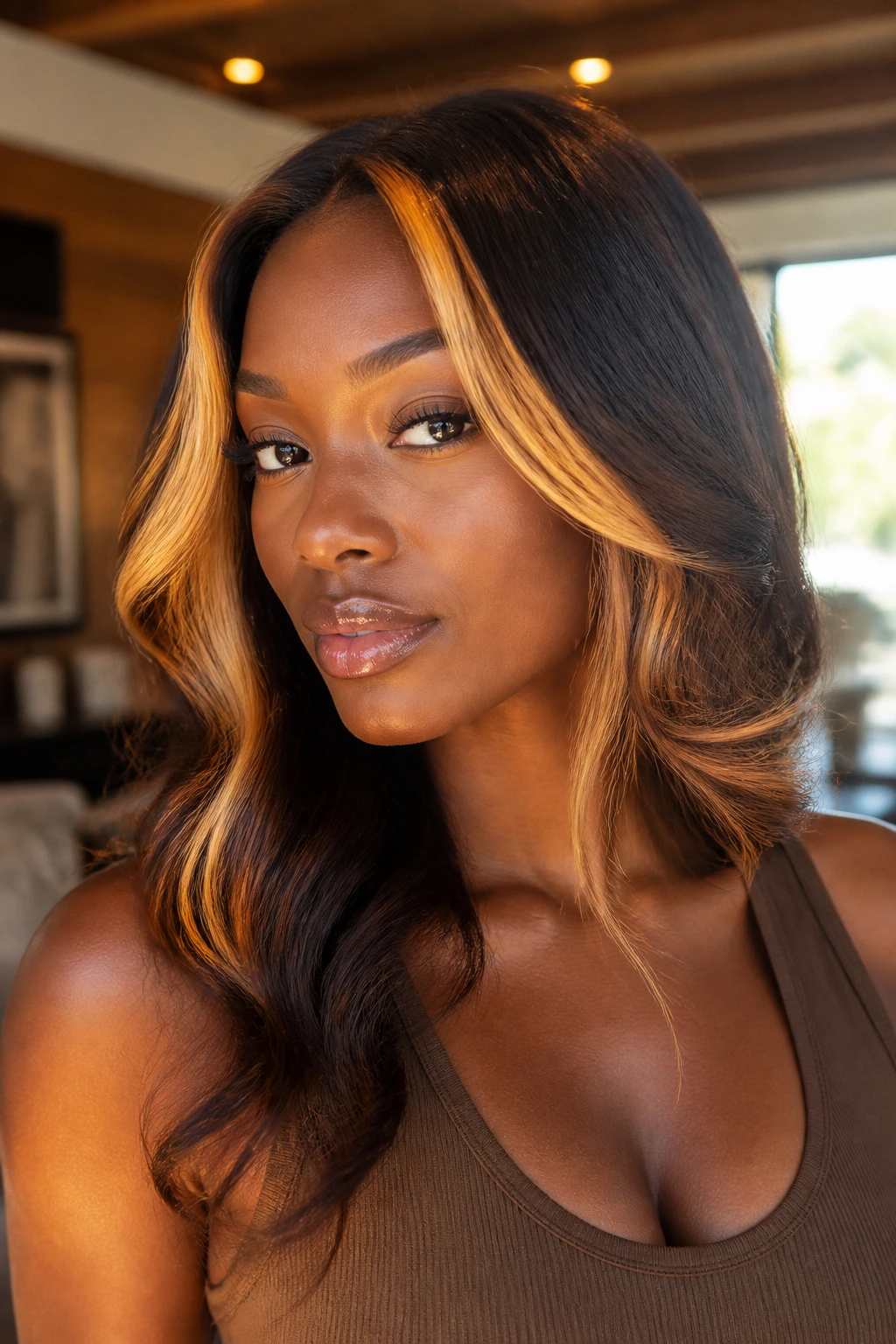
Marigold is brighter than honey and sharper than caramel, which gives the face frame a little more punch. On deep skin, that brighter gold can look electric if it is placed with care. The trick is to keep the pieces narrow enough that they frame the face instead of swallowing it.
This is the style for people who want to notice the blonde right away. Put the lightest strips around the eyes and cheekbones, then let the rest of the hair stay deeper. If you wear hoops, liner, or a clean part, the whole look gets even stronger.
It is bold, yes. But bold does not have to mean messy. The placement should stay clean.
25. Warm Gold Glass Hair
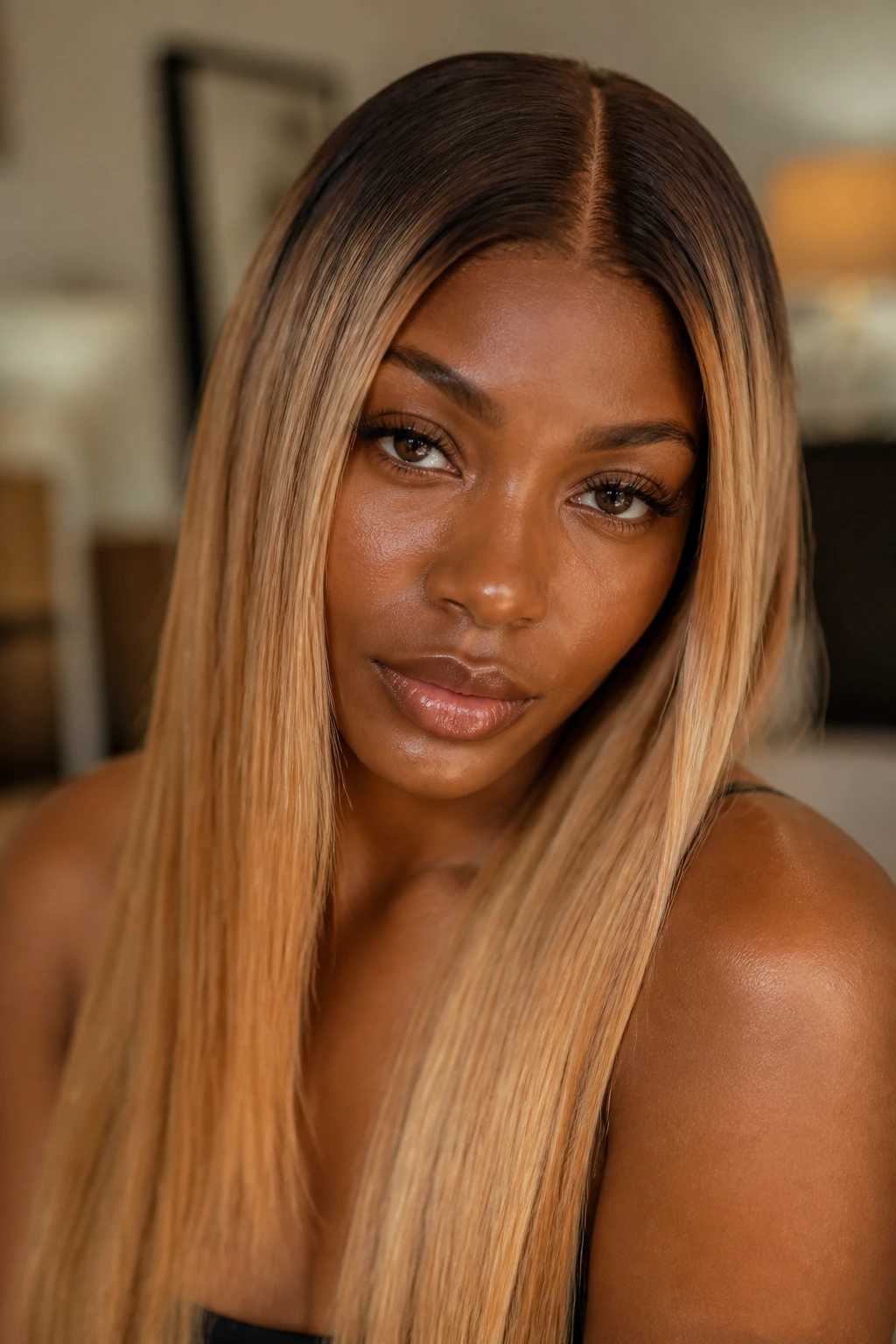
Glass hair and warm gold are a strong pair because shine makes the color look more expensive, if I can use that word without sounding silly. The real point is reflection. A smooth, pressed finish lets the gold read as polished instead of flat.
On deep skin, this works best when the gold leans beige-honey rather than lemon. Too much yellow can look harsh once the hair is straight and reflective. Keep the roots a little deeper and the ends glossy, and the color will do what it is supposed to do.
This style asks for maintenance. Heat protectant, trim schedule, and a good serum are not optional here. Smooth hair shows everything.
26. Honey Butter Puff
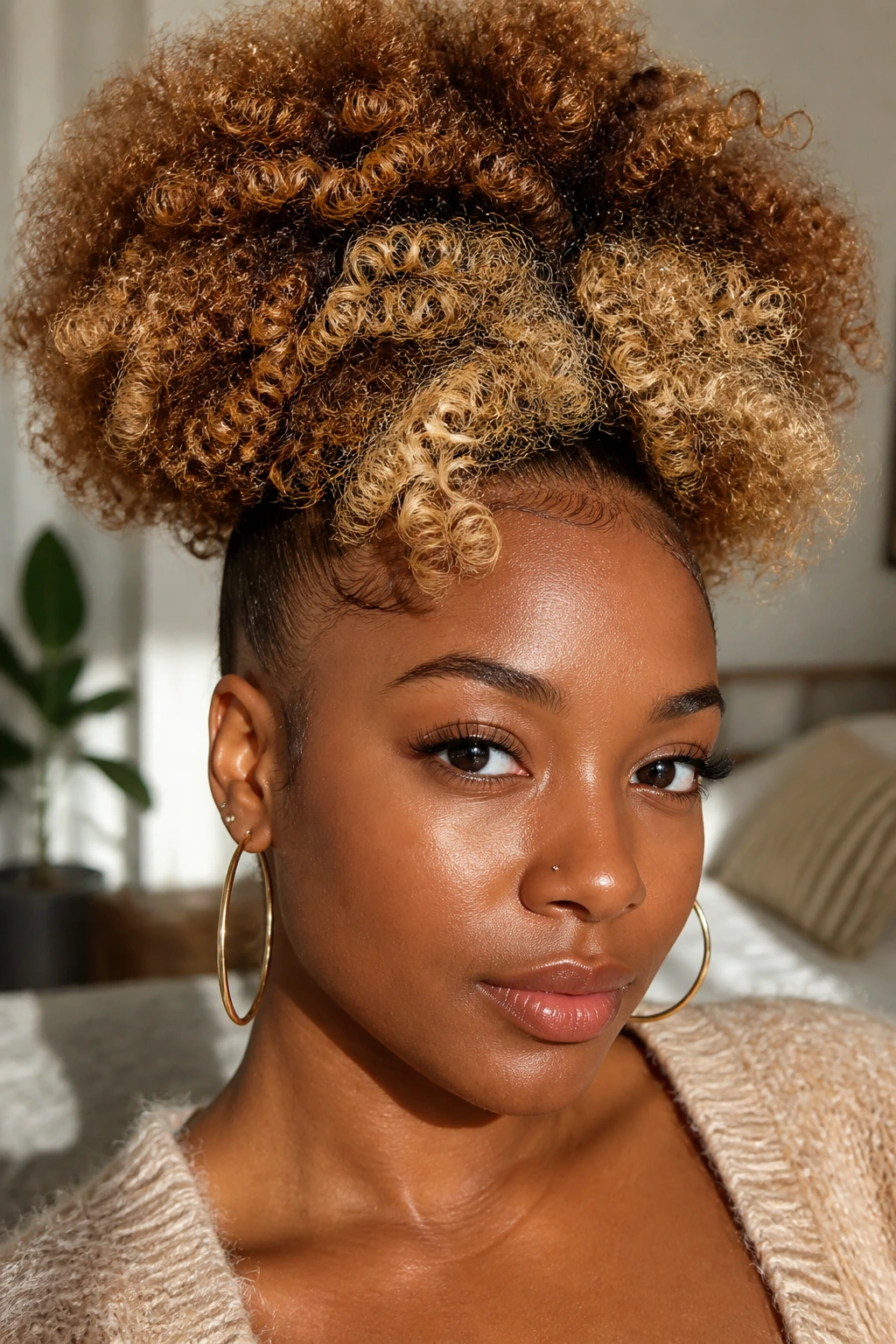
A puff with honey butter color on the outer layers feels easy, warm, and a little playful. The style gets its shape from volume, and the color gives the edges a brighter rim. That is a nice combination on deep skin because the face stays framed by warmth instead of a hard blond block.
I like this when the top or front sections are lighter than the back. It keeps the puff from looking too heavy. If you want to wear it high, the lighter bits near the crown catch sun and indoor light in a really clean way.
This one is less about all-over transformation and more about lift. And sometimes that is enough.
27. Mahogany Gold Dimension
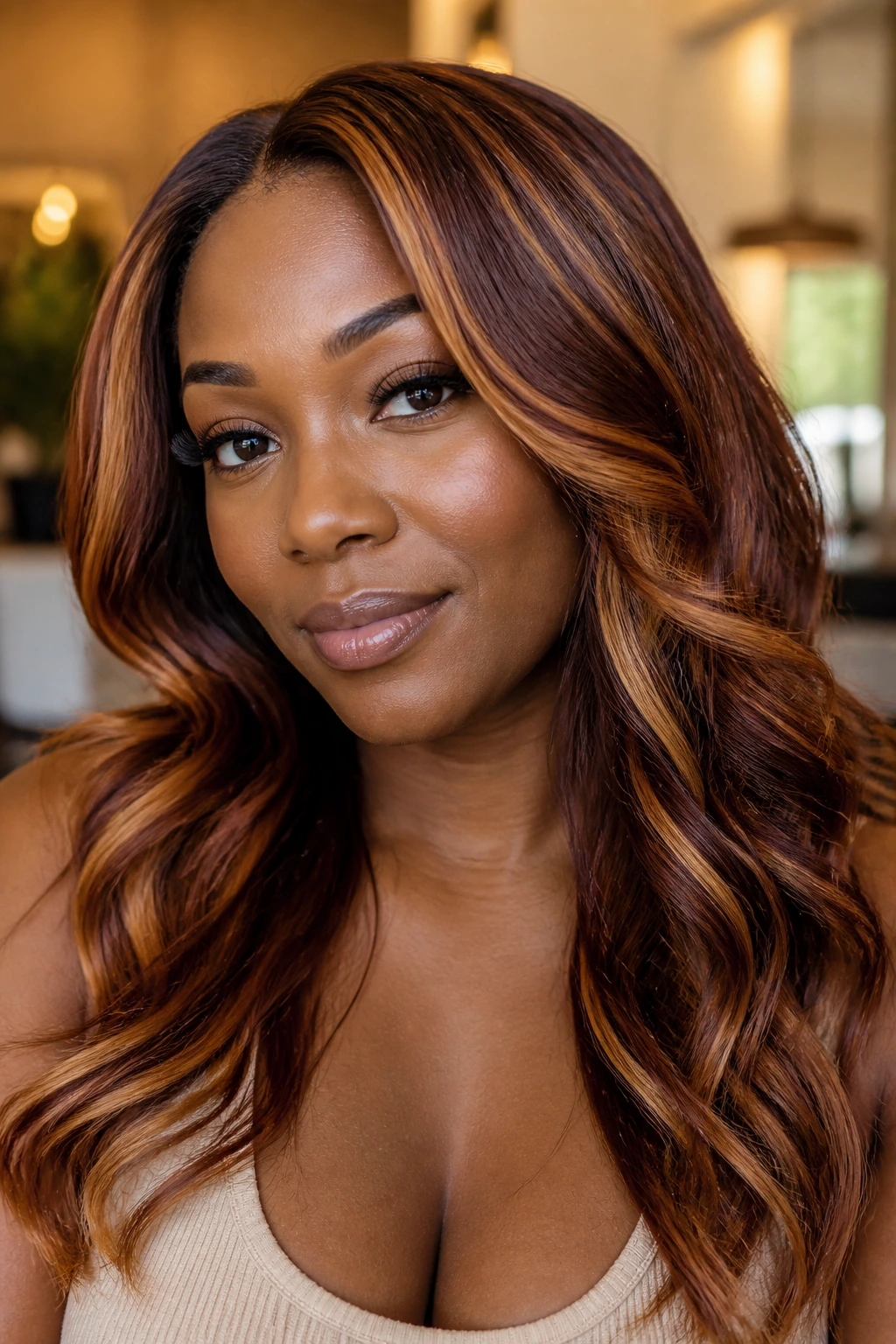
Why does mahogany gold feel so good on deep skin? Because it keeps the darker notes front and center. The mahogany base gives the blonde a richer frame, and the gold ribbons keep the hair from reading as one dark mass.
This is one of the most wearable options for people who want color but do not want a huge change. The gold should come through in thin ribbons or soft panels, never thick slabs. If the light pieces are too wide, you lose the mahogany and the whole thing gets louder than it needs to be.
It works especially well on layered cuts and blowouts. The movement makes the gold and mahogany trade places as the hair shifts.
28. Golden Peach Bob
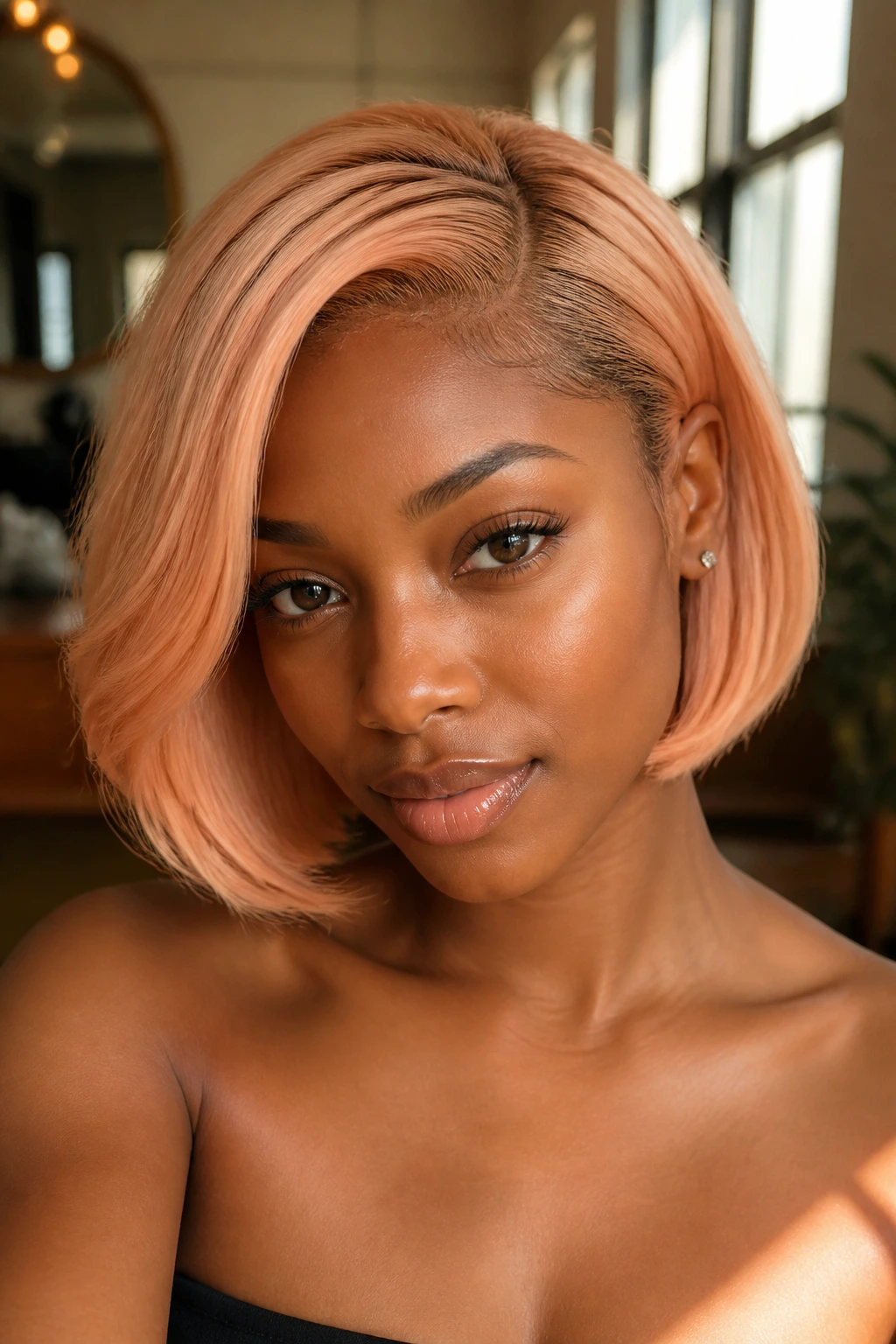
A golden peach bob has warmth with a little lift at the edge. The peach softens the gold and gives it a fresh note that looks especially nice on deep skin with warm or neutral undertones. On a bob, the color feels crisp because the shape is already controlled.
This is a good choice if you want blonde that leans friendly rather than severe. Keep the peach tone subtle; too much orange and the effect tips away from gold. A clean cut, a side part, and a little gloss are enough to make it work.
The bob makes the color read immediately. That is both the charm and the warning.
29. Amber-Glazed Butterfly Layers
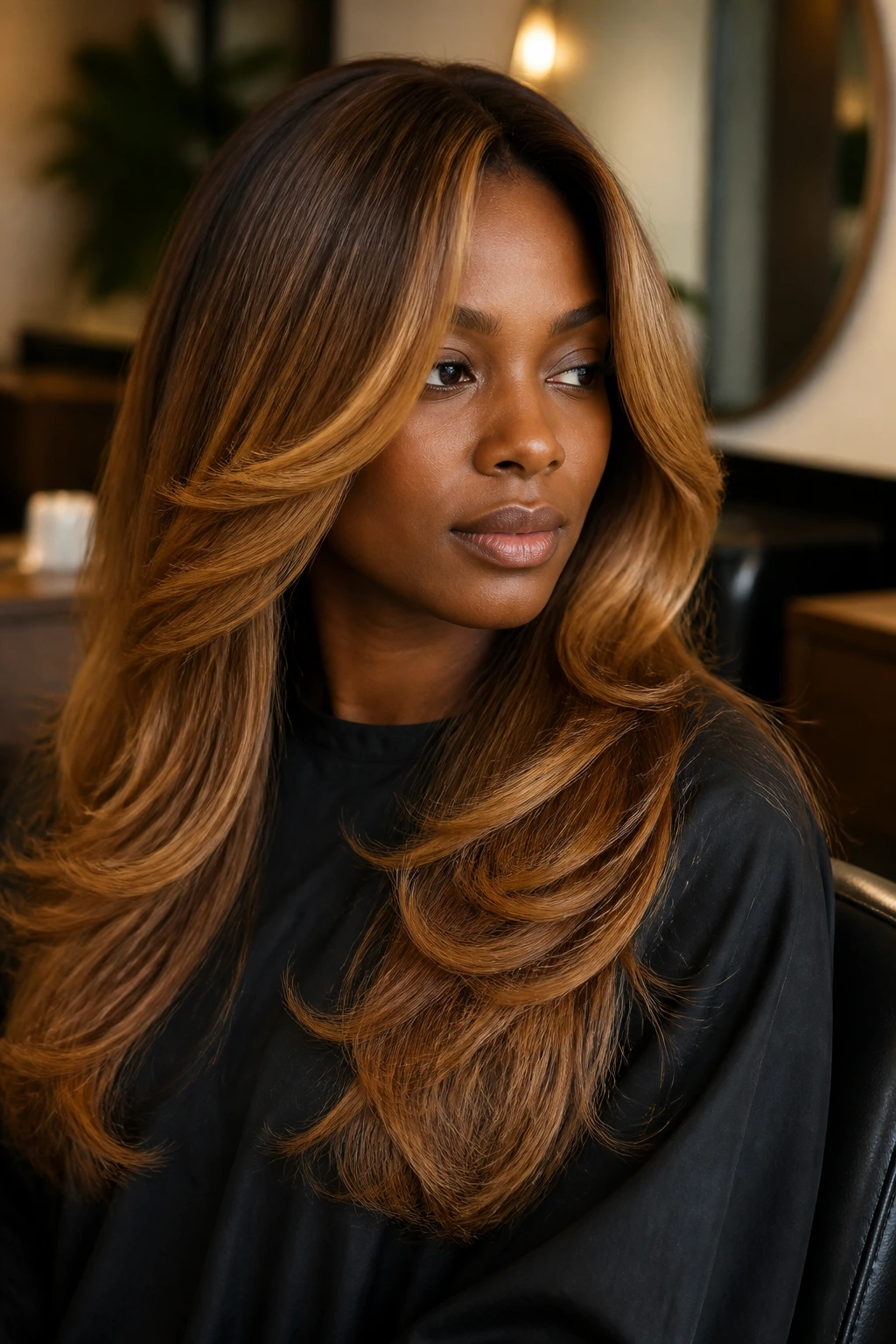
Butterfly layers are built for movement, so amber-glazed color fits them neatly. The lighter pieces can sit around the face and through the long outer layers, while the deeper base stays tucked underneath. That creates a lot of shifting light without needing every inch lightened.
The amber glaze keeps the blonde warm enough for deep skin and soft enough for long hair. If the pieces around the face are the brightest, the cut looks lifted right away. The longer lengths can stay a little darker so the whole style does not feel thin.
This is one of the most flattering ways to wear long gold blonde hair because it follows the haircut’s shape instead of flattening it.
30. Sunlit Gold Ends
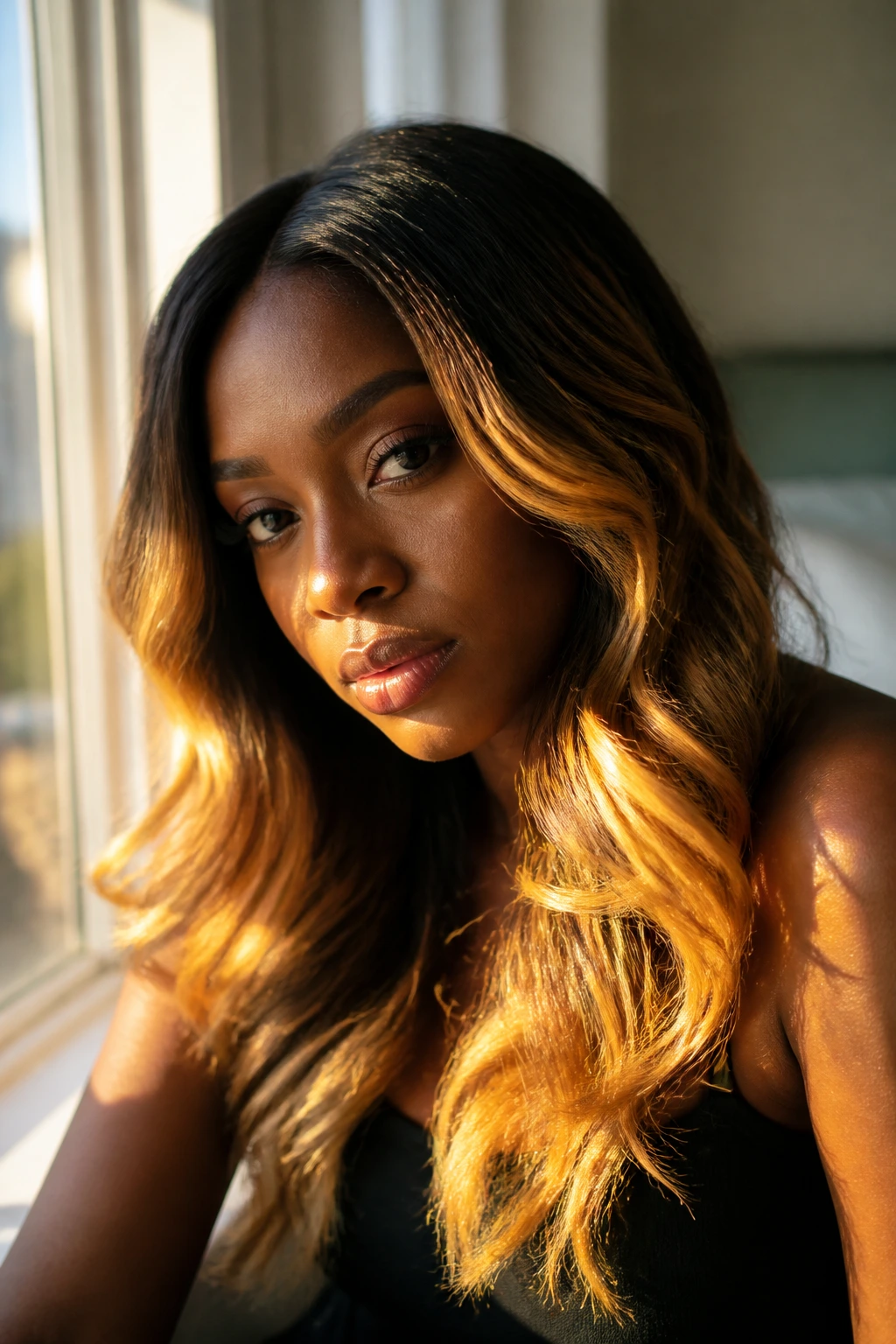
Sunlit gold ends are the easiest place to start if you want warm blonde without a huge color commitment. Keep the roots and mids dark, then let the ends fade into gold like they’ve been kissed by light. On deep skin, that contrast can look clean and expensive because the base stays rich.
This style works on waves, curls, braids, and even straight hair. The ends do the showing off, and the rest of the hair keeps the balance. It also grows out better than all-over lightening because the dark base is part of the design, not something you are trying to hide.
If you are nervous about going blonde, start here. It gives you the warmth without demanding the whole head.
Essential Tools and Products for Gold Blonde Hair
-
Color-safe shampoo: A sulfate-free shampoo helps keep gold and honey tones from slipping out too fast.
-
Moisturizing conditioner: Lightened hair gets thirsty, and warm blondes look better when the cuticle lies down instead of puffing up.
-
Deep-conditioning mask: Use this once a week if your hair has been lifted, especially on ends that see heat or bleach.
-
Heat protectant spray or cream: Essential for silk presses, blowouts, and even low-heat styling; it keeps the color from dulling.
-
Demi-permanent gloss or glaze: Handy for refreshing honey, amber, or beige-gold between appointments.
-
Wide-tooth comb and sectioning clips: These make it easier to distribute product without snapping fragile lightened strands.
-
Silk bonnet or scarf: Gold blonde fades badly when it rubs against cotton pillowcases every night.
-
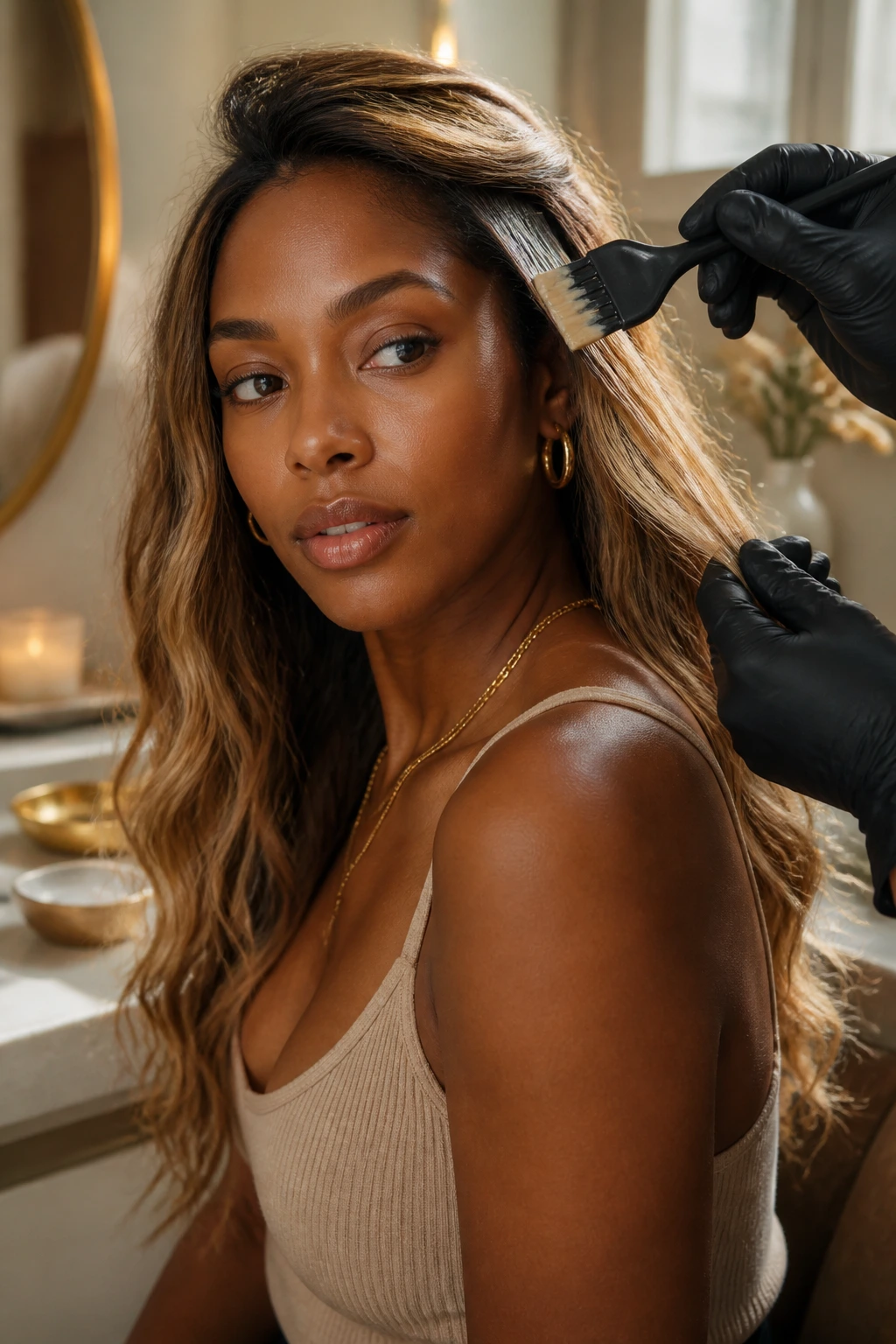
Tint brush and bowl: Useful if you tone at home or apply a gloss on the lighter pieces only.
-
Leave-in conditioner: Helps the lighter ends stay soft and keeps frizz from blurring the color.
How to Choose the Right Gold Blonde Shade
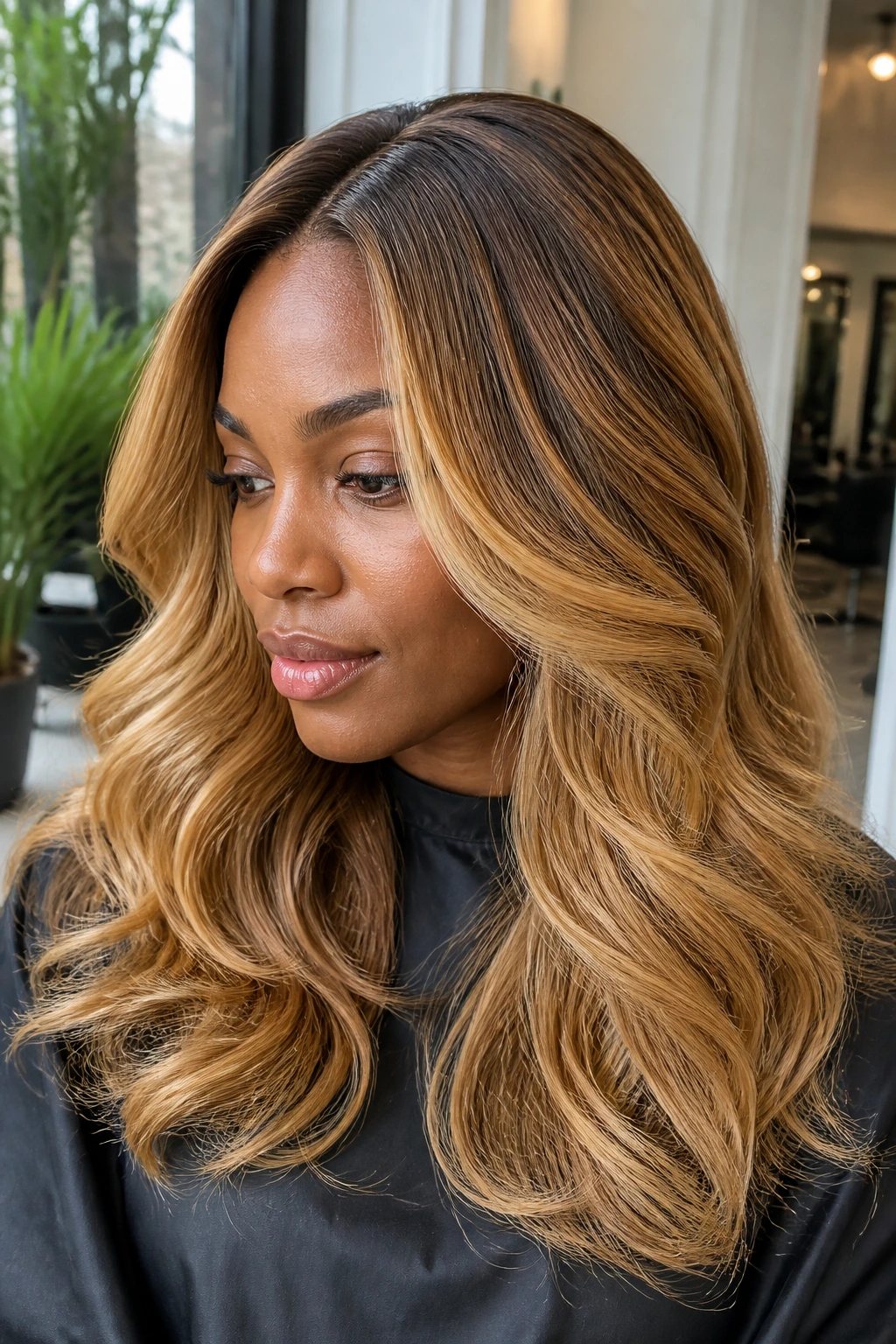
The best gold blonde for deep skin is the one that matches both your undertone and your tolerance for upkeep. If your skin runs warm or golden, honey, amber, caramel, and bronze usually sit naturally against it. If your skin is neutral, beige-gold, champagne gold, and sepia tones tend to look balanced. If your undertone leans cooler, you can still wear gold blonde — it just helps to keep the root deeper and the gold more beige than orange.
Hair history matters too. If your hair is dark and previously untreated, a full lightening session can be a lot for the strands, especially if the goal is pale blonde. In that case, ribbons, money pieces, or a root melt often look better and feel smarter. If the hair already has warmth or old color in it, your colorist may need to clean up the base before adding the gold tone so the result does not go muddy.
Bring pictures, yes, but bring the right kind of pictures. Show styles with a similar skin depth and similar texture to yours. A gold blonde bob on a light-skinned model does not always translate the same way on deep skin, and a good stylist will know that immediately.
How to Wear These Shades Day to Day
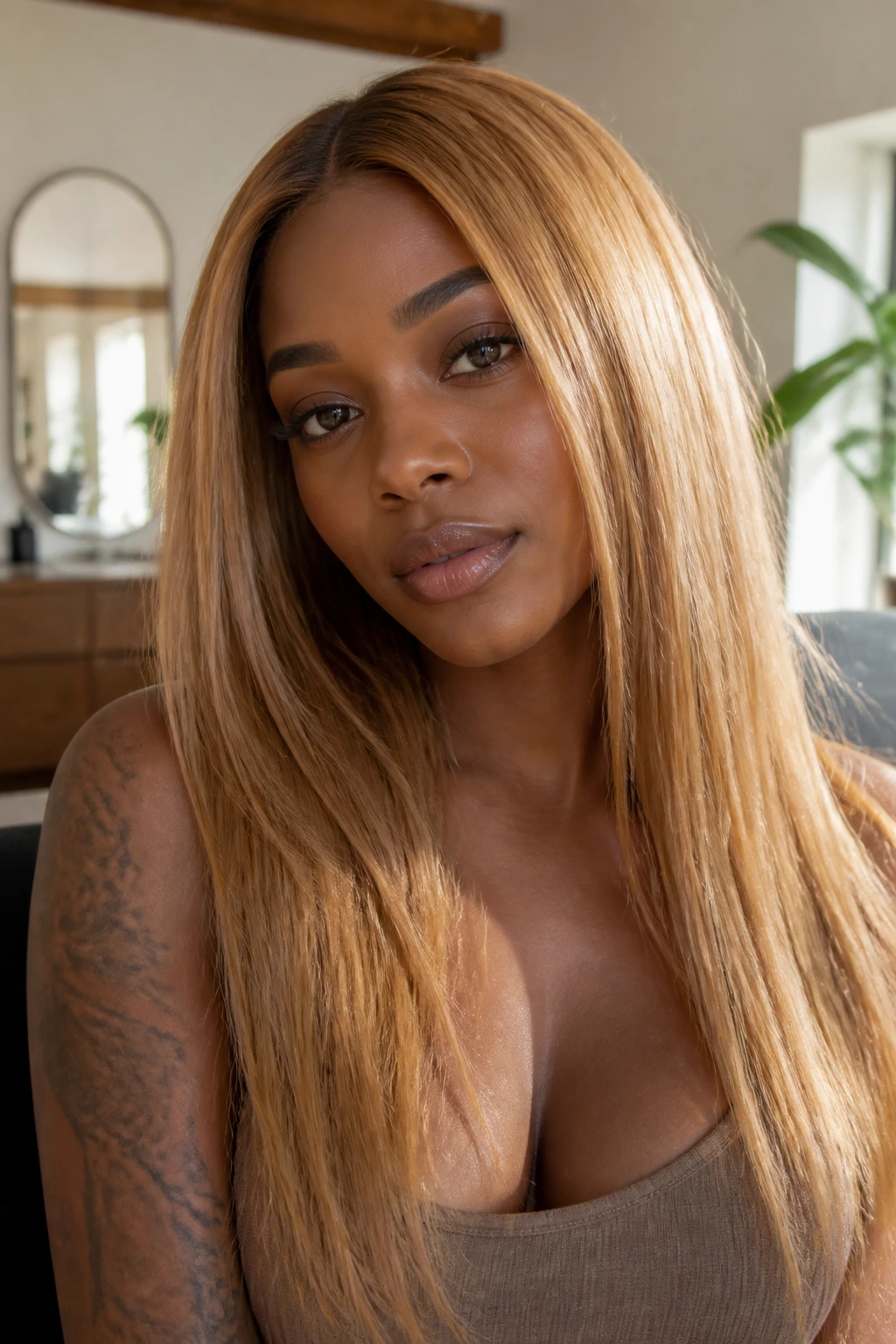
Straight styles: A silk press, blunt bob, or long layers shows gold blonde with the sharpest shine. Keep the finish smooth so the warm tone reads as reflection, not streaks.
Curly and coily textures: Place lighter ribbons on the outer curve of the curl or coil, not in every gap. That keeps the pattern visible and stops the hair from looking over-lightened.
Protective styles: Braids, locs, twists, and faux locs can all carry gold well if the lighter strands are placed at the ends, around the face, or through one visible panel. You do not need a full blonde base to make the style pop.
Makeup: Warm brown liner, terracotta blush, bronze highlighter, and cocoa lipstick usually sit nicely against gold blonde on deep skin. Cool pinks can work too, but warm skin plus warm blonde usually looks cleaner when the makeup stays in the same family.
Clothes: Cream, olive, chocolate, rust, and deep teal tend to make gold blonde stand out without competing with it. Black still works, of course, but warm neutrals bring out the honey in the hair faster.
Extra Ways to Warm, Brighten, or Soften the Tone
Tone Boost: A clear gold or beige-gold gloss can bring back warmth between appointments without making the hair look freshly bleached. Ask for a demi-permanent formula if you want the effect to fade slowly.
Customization: If the shade feels too bright, add a deeper shadow root or a few lowlights. If it feels too dull, bring the light pieces closer to the face and crown so they catch more light when you move.
Serving Suggestions: Gold hoops, clean edges, and a warm lip color do more than people think. The whole look feels more intentional when the accessories echo the hair’s warmth.
Make-It-Yours: Want less commitment? Keep the blonde to the front panels or ends. Want more drama? Increase the contrast by leaving the root a full shade darker and brightening only the top layer. Want a softer effect? Push the tone toward honey or beige instead of bright yellow.
Color Care, Touch-Ups, and Longevity
Warm blonde needs maintenance, but not every version of it is high drama. If you wash your hair one to two times a week, a gold toner or gloss usually stays lively for about 4 to 8 washes before it starts to soften. That is a normal fade, and honestly, sometimes the softer version is better than the fresh one because the gold settles in a little more naturally.
If the hair has been lightened, deep condition it once a week. On very porous hair, I would rotate a moisture mask with a lighter protein treatment every 2 to 4 weeks, depending on how the hair feels. If it starts snapping, that is a warning. If it feels too soft and gummy, that is another warning. Hair tells on you.
Touch-ups depend on the placement. A shadow root or balayage can usually go 6 to 10 weeks before it needs serious attention. Face-framing pieces and money pieces may need a gloss sooner if you like them bright. Night care matters too: satin or silk at bedtime, loose braids or twists, and no rough cotton pillowcases if you can help it. If you swim, rinse the hair with clean water first and coat it with leave-in so the blonde does not soak up chlorine or hard-water mineral haze.
Common Mistakes That Flatten Gold Blonde
-
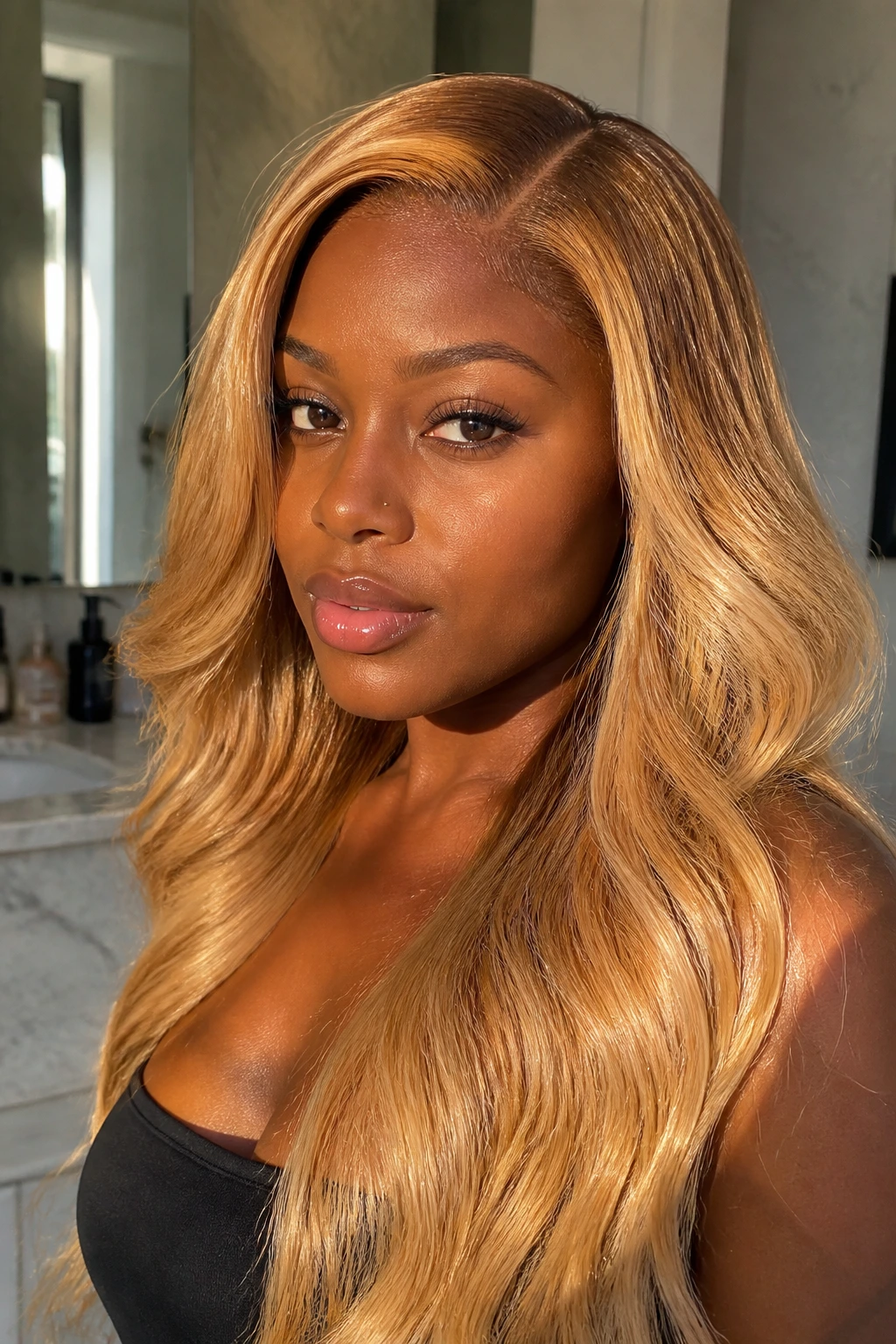
Going too pale too fast: When the blonde gets pushed all the way to a pale yellow or near-white finish, deep skin can lose the warm frame that made the color flattering. The fix is to stop at honey, amber, or beige-gold and keep some root depth.
-
Using ash toner as a cure-all: Ashy toner can mute brass, but it can also mute the warmth that makes gold blonde work here. If the result starts looking muddy or gray-brown, ask for a gold-beige gloss instead.
-
Purple shampoo overkill: Purple shampoo is useful when blonde turns yellow, but if you use it too often, the gold can go dull and the hair can start feeling dry. Use it sparingly — maybe once every few washes — and only on the parts that need toning.
-
Ignoring porosity: Lightened ends drink color faster than healthy roots. If you apply toner or gloss evenly without checking the ends first, the porous sections can go too dark or patchy. Porous hair needs a lighter hand.
-
Skipping heat protection: Gold blonde loses its shine fast when flat irons, curling wands, or blow-dryers run hot without protection. A heat protectant every single time is not optional if you want the color to stay glossy.
-
Over-highlighting curls and coils: Too many small highlights can blur the pattern and make textured hair look frizzy instead of dimensional. Leave darker spaces between pieces so the shape stays visible.
Variations and Adaptations to Try
Low-Commitment Money Piece: If you are blonde-curious but not ready for full lightening, keep the gold to the front panels and leave the rest dark. It gives you brightness near the face without turning the whole head into a maintenance project.
Curly-Hair Halo: Concentrate gold ribbons around the crown and outer layer of curls so the shape stays full and the shine sits where the eye lands first. This one is especially good if you want the texture to remain the main character.
Protective-Style Gold Ends: Add gold to braid hair, loc ends, or twist extensions instead of chemically lightening every inch of your natural hair. You get the look, and your own strands get a break.
Bronze-First Blonde: If full gold feels too bright, start with bronzed brown-blonde and move lighter later. It keeps more depth in the palette and usually feels easier to wear against deeper skin.
Bright Face-Frame Only: Keep the front pieces marigold, honey, or champagne gold, then let the back stay rich and dark. This is the fastest way to get a visible change without needing a full color overhaul.
Frequently Asked Questions
Will gold blonde work on very deep skin tones?
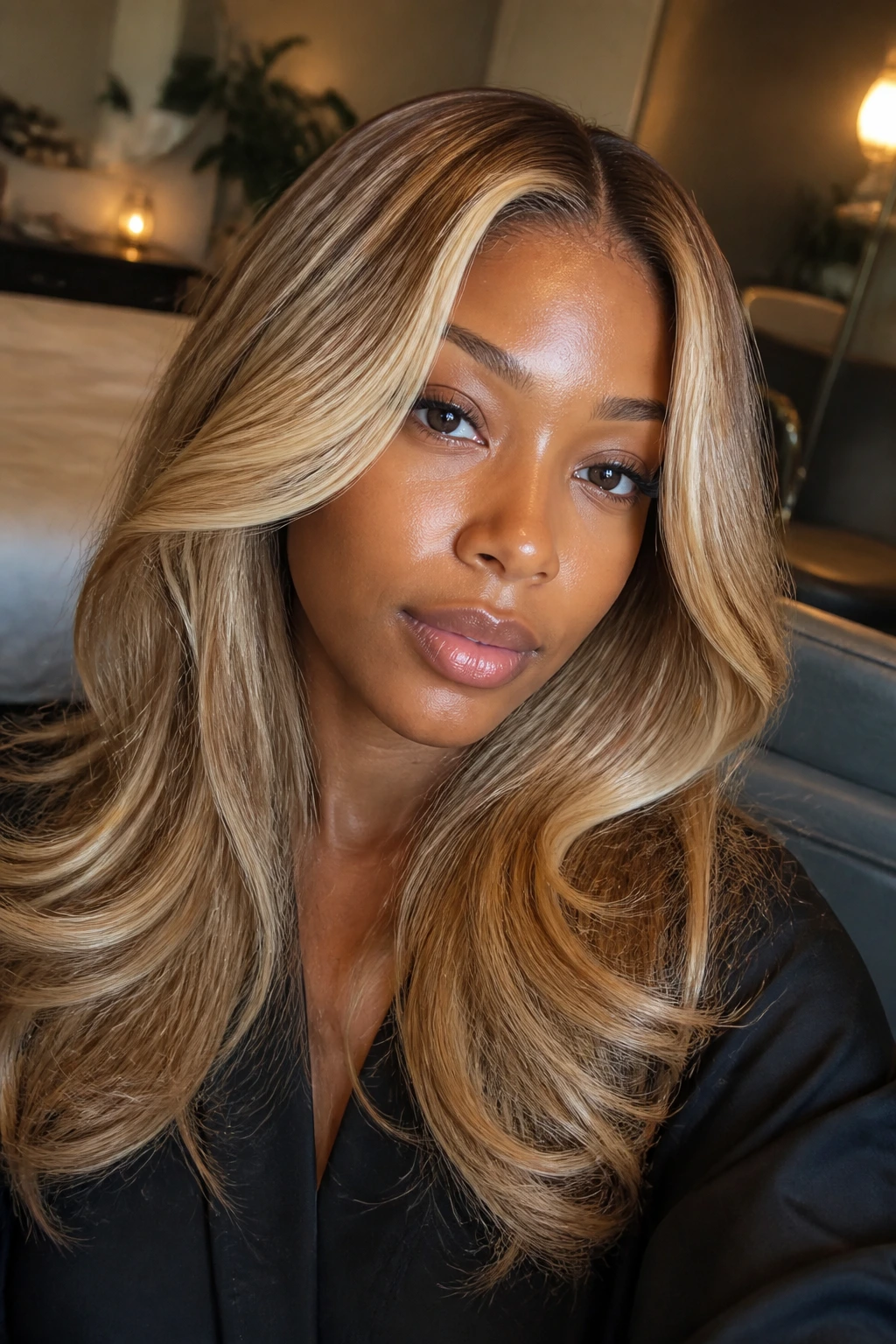
Yes, but the shade needs depth and warmth. Honey, amber, bronze, and caramel usually flatter better than pale ash or icy beige because they keep the face framed instead of washed out.
Is gold blonde easier to maintain than platinum?
Usually, yes. Gold tones can fade softly into honey-beige rather than screaming for a toner every few washes, and that grow-out is easier to live with than a harsh platinum line.
What should I ask for at the salon if I want warm blonde, not orange?
Ask for honey-gold, beige-gold, amber, or bronze-blonde, and mention that you want a soft root shadow. That language helps steer the color away from brassy orange and toward a cleaner warm blonde.
Can I wear gold blonde on natural curls without straightening my hair?
Absolutely. In fact, curls often look better with warm blonde when the light pieces follow the curl pattern instead of sitting in straight stripes. Just keep the highlights spaced out so the texture still reads.
How often do I need a gloss or toner?
For most warm blondes, a gloss every 4 to 8 weeks is enough, depending on how often you wash and heat-style. If the front pieces are the brightest part, they may need attention sooner than the rest.
What if my blonde turns too yellow or brassy?
Use a gentle toner or gloss that matches the problem. If it is slightly too yellow, a violet-based product can help; if it is looking orange, a blue-based or cooler beige gloss is usually the better fix. Do not overcorrect or you can lose the warmth that made the shade flattering.
Can braids, locs, and wigs pull off these shades too?
Yes, and often with less damage than chemical lightening. Gold braid hair, highlighted locs, and warm-blonde wigs can all give the same visual effect while keeping your natural hair more protected.
Do I need a shadow root?
You do not need one, but I almost always like one on deep skin because it adds contrast and makes the grow-out softer. Even a subtle root melt can keep the blonde from looking like it was pasted on top of the hair.
The Shades That Stay Warm
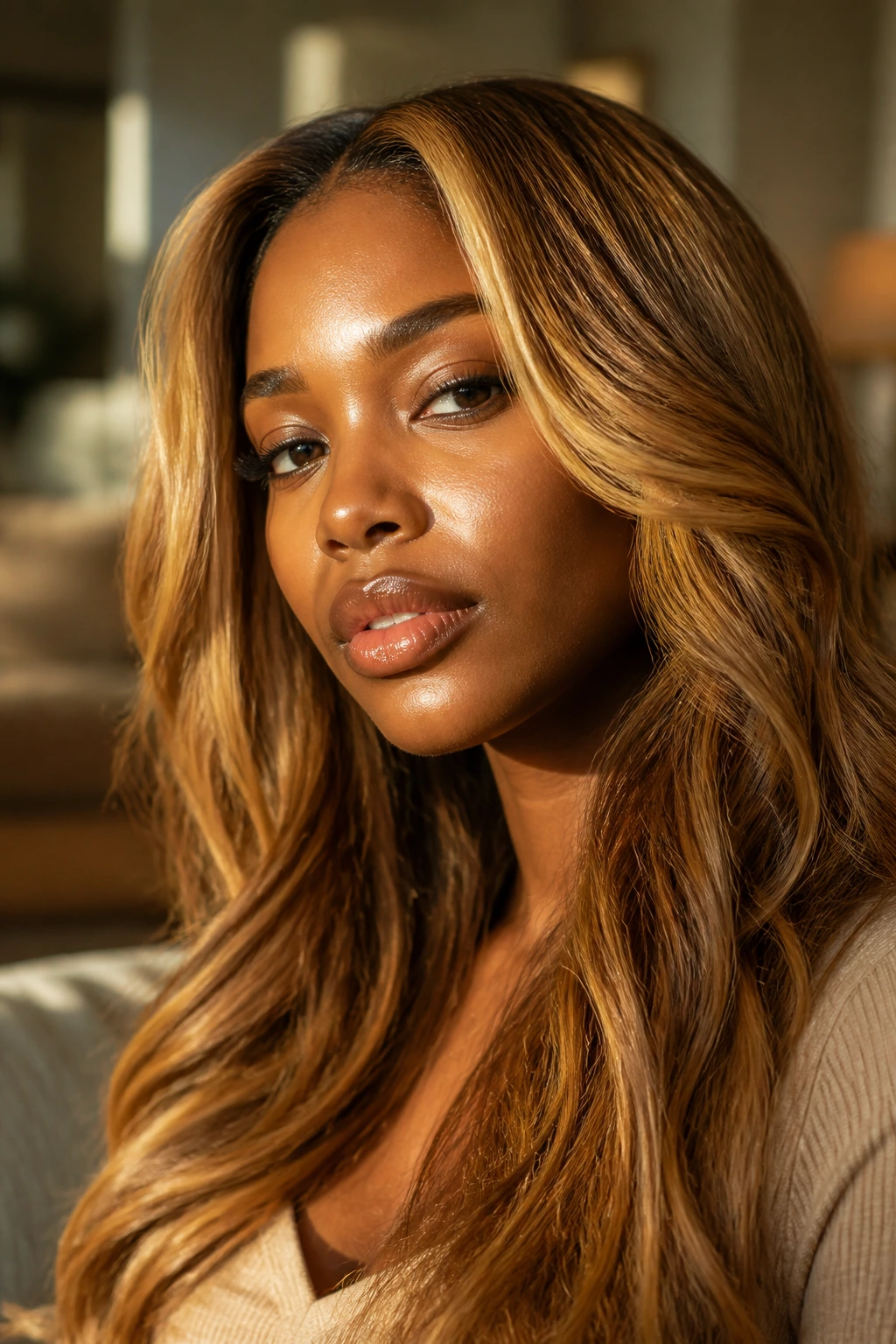
The best gold blonde ideas for deep skin tones are the ones that keep some depth in the story. A little root shadow, a warm gloss, and the right placement usually matter more than chasing the palest blonde in the room. That is how honey, amber, caramel, and bronze end up looking rich instead of loud.
If you want the safest place to start, go for face-framing pieces, a soft balayage, or a root melt with gold through the mids. If you want more edge, brighten the front, push the ends lighter, or let the gold sit on braids and locs where the texture can do half the work. Either way, warmth is the move. Bring that to the chair, and the color has a much better chance of looking like it belongs to you.