



Cascading layers for long hair and heart-shaped faces work because they solve a geometry problem, not just a style problem. A heart-shaped face usually has a broader forehead, high cheekbones, and a narrower chin, so a blunt, one-length curtain can make the top half feel louder than it needs to be. Long hair can do the same thing from the other direction: if it hangs too straight and too heavy, it pulls the whole look downward and leaves the face looking unfinished.
The sweet spot is movement. Not frantic, not shredded, not “I asked for layers and got a hedge trim.” The best versions let the hair fall in steps that start low enough to keep the forehead calm, then taper through the cheekbone and collarbone so the eye keeps moving instead of stopping at one hard line. That’s the whole game.
And the nice part? There isn’t one correct answer. Some people need soft curtain pieces that skim the cheekbones. Some need long invisible layers that take weight out of thick hair. Some need a blowout shape that keeps the crown smooth while the ends swing. The difference between a flattering cut and a frustrating one usually comes down to where the first layer starts, how much weight comes out, and whether the front pieces know what to do around a narrower chin.
Why These Layer Patterns Earn Their Keep
-
They soften the forehead without hiding it: The best front pieces break up width near the temples, then taper down before the face starts feeling boxed in.
-
They keep long hair from going flat and sleepy: Weight comes out of the mid-lengths, so the ends move instead of hanging in one heavy sheet.
-
They work with both parts: A center part gives one kind of symmetry; a soft side part gives another. Good cascading layers can live with either.
-
They make styling look more expensive than it is: A few bends with a 1¼-inch iron or a clean blowout brush stroke can make the layers read as deliberate, not accidental.
-
They grow out with less drama: Long, low layers usually keep their shape for weeks after a trim, which matters when you do not want a clean salon line to vanish in ten days.
-
They give you room to adjust: You can keep the length, add bangs, remove bulk, or soften the front without committing to a dramatic chop.
1. Soft Collarbone-Starting Cascade
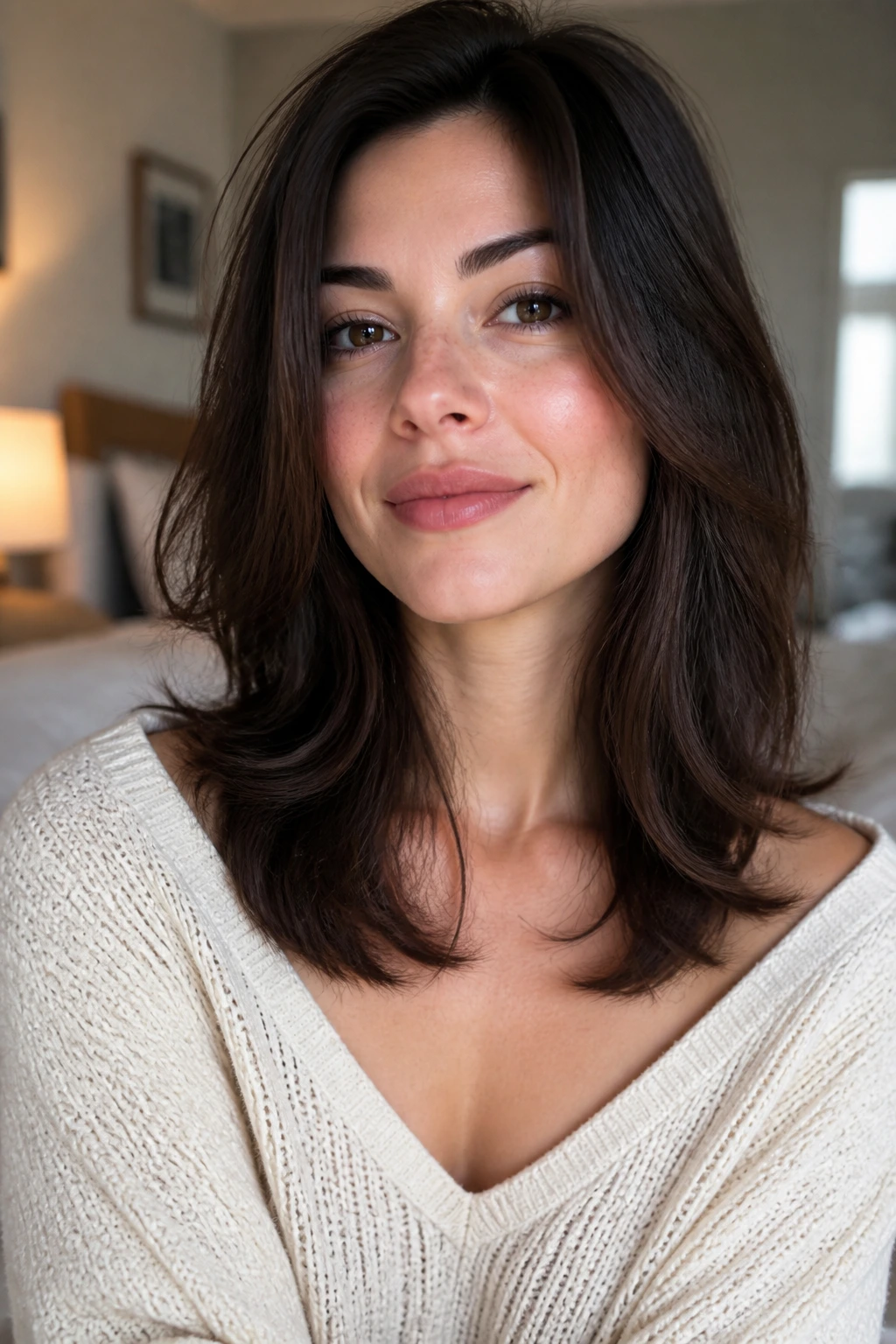
The safest starting point for a heart-shaped face is usually around the collarbone. That length gives the front a gentle slope without cutting the face off at the widest part, which is the mistake that makes long hair look top-heavy.
Why it flatters a heart-shaped face
The collarbone sits below the cheekbone and above the chest, so the first visible layer doesn’t fight with the forehead or jawline. It simply connects them.
A cut like this also keeps the bottom half of the hair long enough to move. That matters more than people think. Long layers that begin too high can turn into a puff around the crown; collarbone-starting layers keep the shape calm and let the ends do the talking.
What to ask for
- Keep the shortest face-framing piece grazing the collarbone or just below it.
- Ask for soft internal layers, not choppy steps.
- Keep the perimeter long and clean if your hair is fine.
- Add more removal through the mid-lengths if your hair is thick.
Best for: readers who want movement without giving up length.
Watch for: if the stylist starts too high near the cheekbone, the cut can pull the eye upward and make the forehead feel wider.
2. Curtain Bang Layers with Cheekbone Sweep
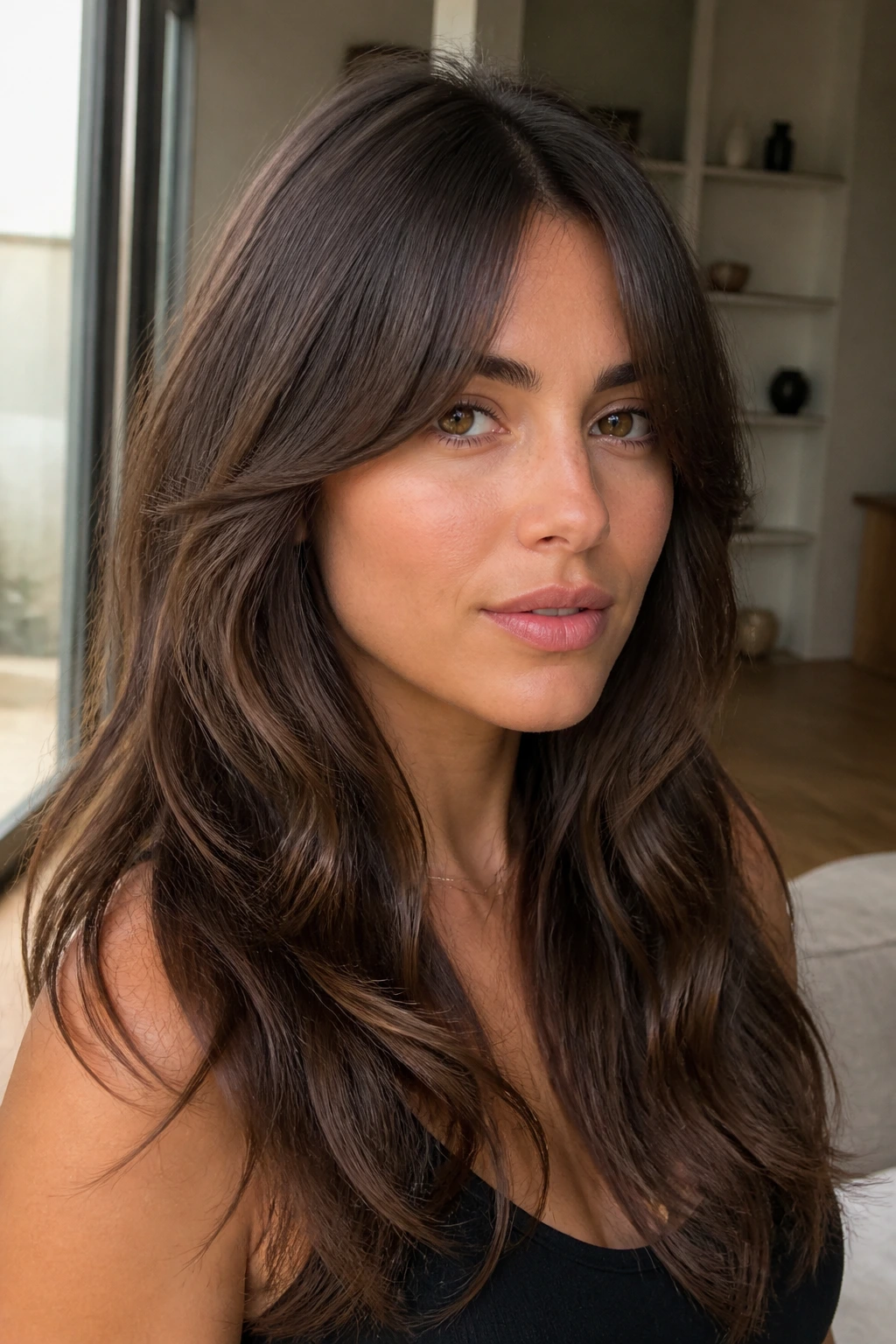
Why do curtain bangs work so well here? Because they split the difference. They open the center of the face, then drift outward in a way that mirrors the cheekbones instead of fighting them.
The best version is not short or wispy in the front. It starts a little below the eyebrow, then gets longer fast, so the sweep lands around the cheekbone and jaw. That shape is what keeps a heart-shaped face from looking front-heavy. If the bang is too short, it can make the forehead the loudest thing in the room. If it’s too long and limp, it just disappears.
How to wear it
A round brush and a quick bend away from the face usually does the job. I like this style best with a loose middle part and soft S-waves through the lengths. It gives the whole haircut that easy, layered motion people chase for months.
- Use a light mousse at the roots.
- Blow the bangs away from the face for 20 to 30 seconds on each side.
- Finish with a tiny bit of cream on the ends, not the fringe.
3. Feathered 70s Blowout Layers
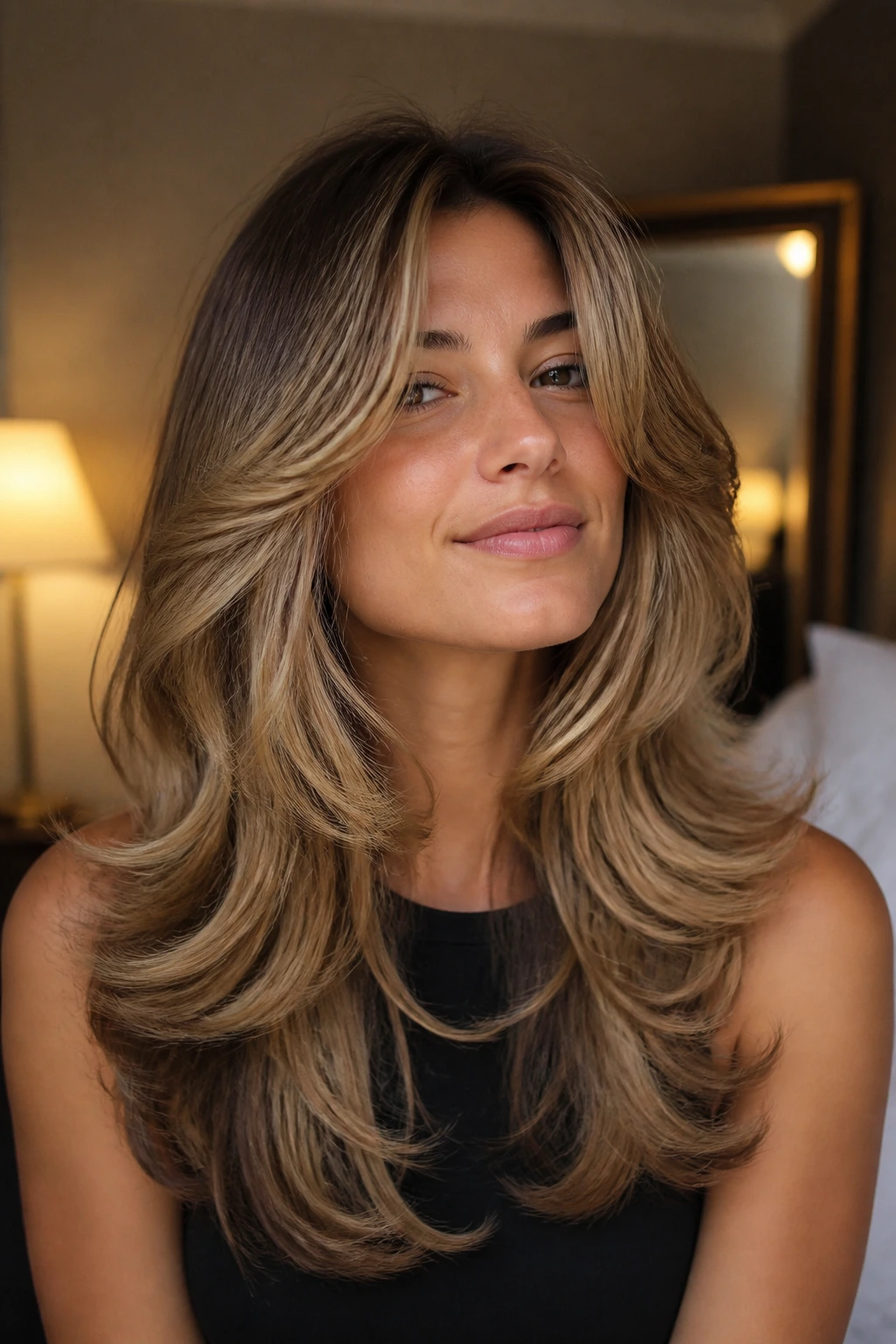
There’s a reason feathered layers keep coming back. They move in a way that looks airy, not stripped, and long hair needs that lift when the face is heart-shaped. The hair around the face should feel like it’s floating off the cheekbones, not sitting on top of them.
This version leans into a round-brush blowout. The layers are cut to swing outward from the chin and collarbone, then curve back in at the ends. When done well, the hair doesn’t look “styled” in an obvious way. It looks brushed, loose, and awake.
What makes it different
A feathered cut wants the layers to be seen. Internal layering matters here, but so does the finish. If you flatten it with a heavy serum, the whole shape loses its point. Use just enough product to keep the ends smooth, then let the movement stay visible.
This is one of my favorite options for people who wear their hair down most days. It gives the front half a soft frame and gives the length a little bounce so it does not drag the face downward.
4. U-Shaped Long Layers
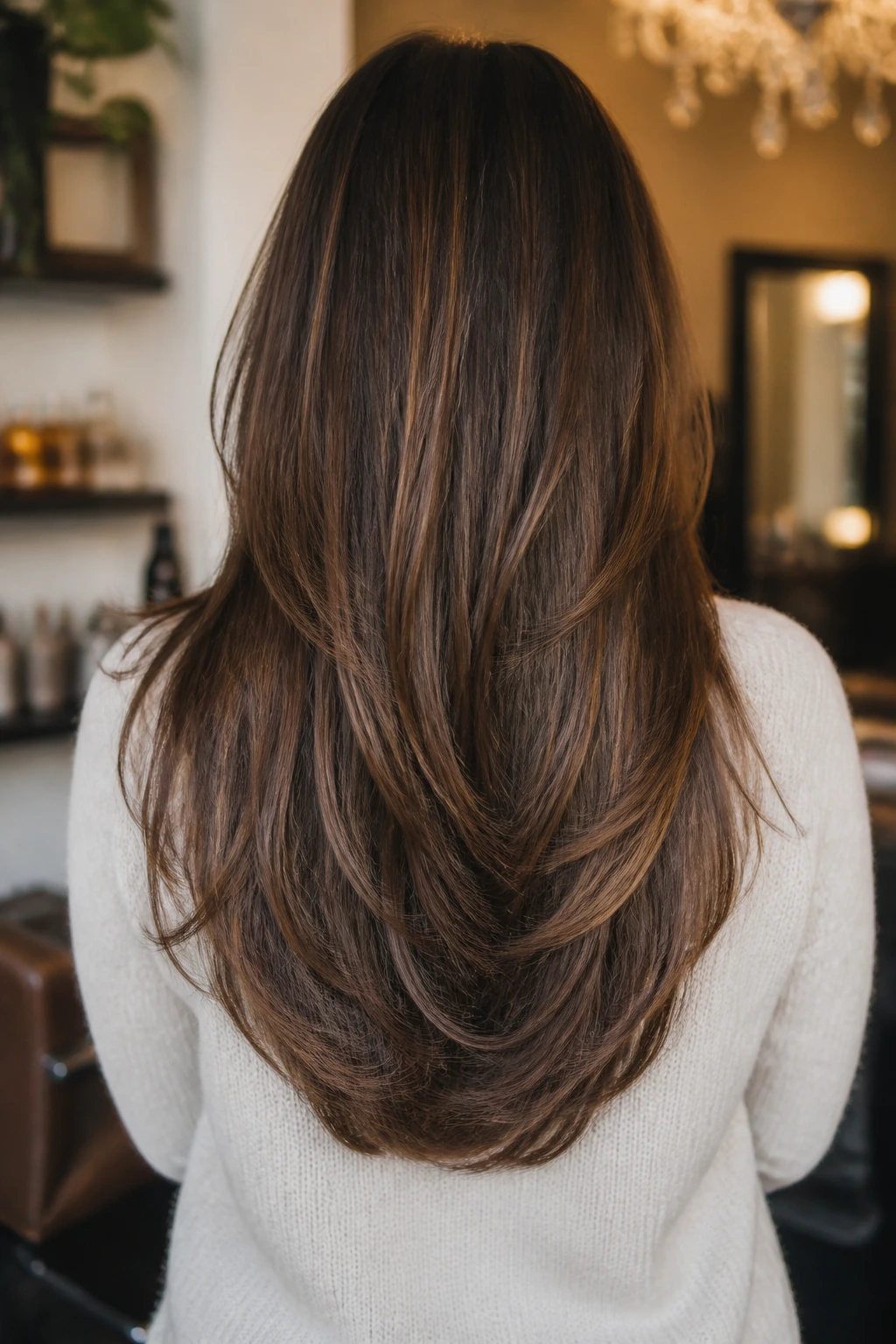
A U-shape is underrated. It keeps the perimeter rounded instead of sharp, which is useful when a heart-shaped face already has strong geometry up top. The curve at the back gives the cut a softer finish than a blunt line.
The trick is restraint. U-shaped long layers should not get over-chopped. They work best when the visible difference between the shortest layer and the longest length is gradual. Too much contrast turns the haircut into a staircase. Too little and it becomes a solid sheet.
The clean arc at the back is especially useful if your hair is naturally straight. Straight hair can look severe fast, and the U shape keeps the line from feeling boxy.
Good if you want: a polished, long look that still has motion at the ends.
Skip if you want: lots of visual drama around the face. This one is more graceful than loud.
5. V-Cut Length with Slim Ends
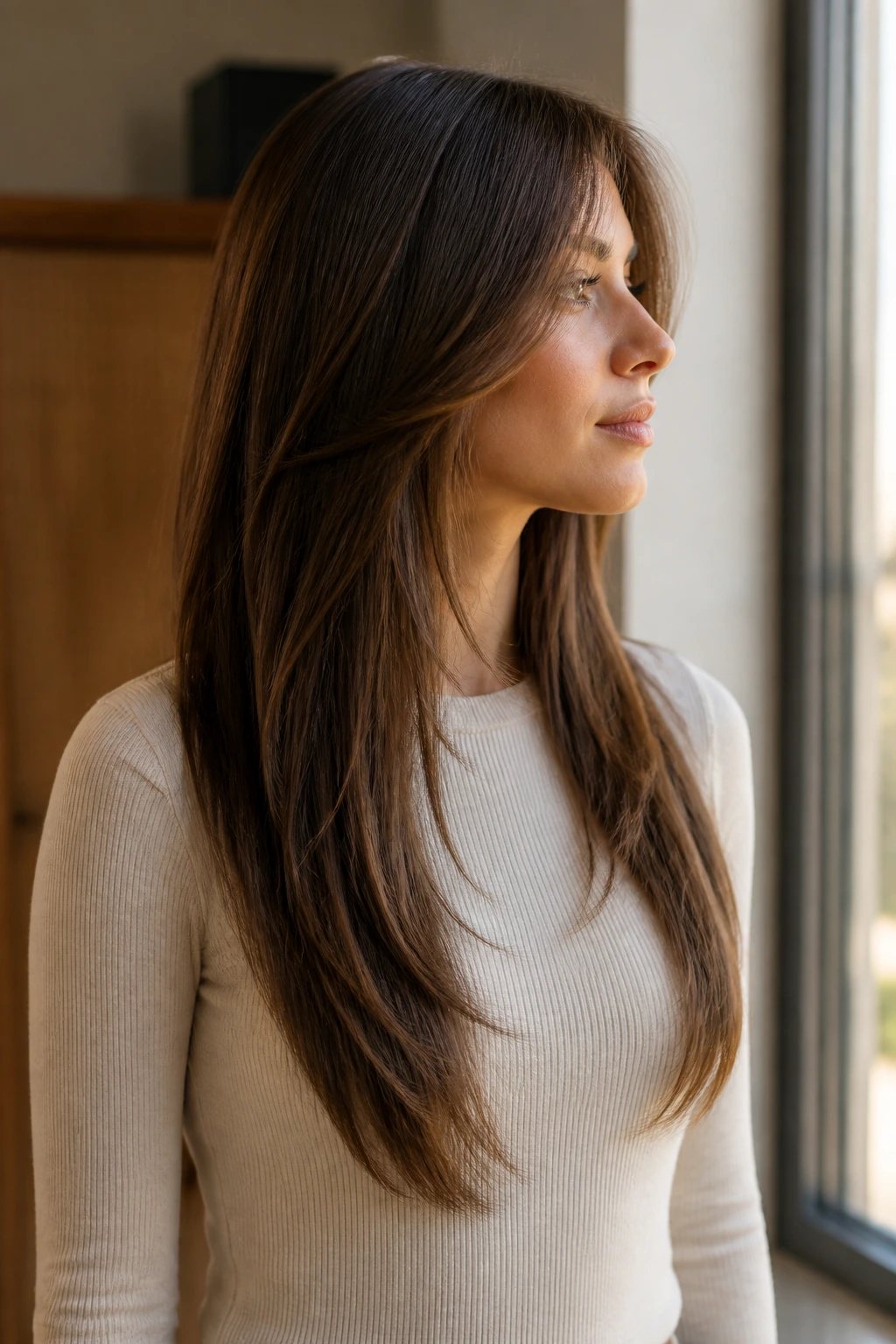
A V-cut gives the longest version of cascading layers a little attitude. The back tapers into a soft point, which pulls the eye downward and lengthens the whole silhouette. That’s useful for heart-shaped faces because it offsets the wider top half with a longer line below.
The danger is overdoing the point. A sharp V can feel dated fast and can make thick hair look stringy at the bottom. The better cut keeps the point subtle and lets the sides remain soft, so the shape reads as movement rather than a triangle.
Who it suits
- Thick straight hair that needs some visual narrowing.
- Wavy hair that wants the ends to drape rather than balloon.
- Anyone who likes a dramatic ponytail shape.
If your face is already narrow at the jaw, keep the V shallow. A deep point can make the lower half disappear.
6. Butterfly Layers with Long Perimeter
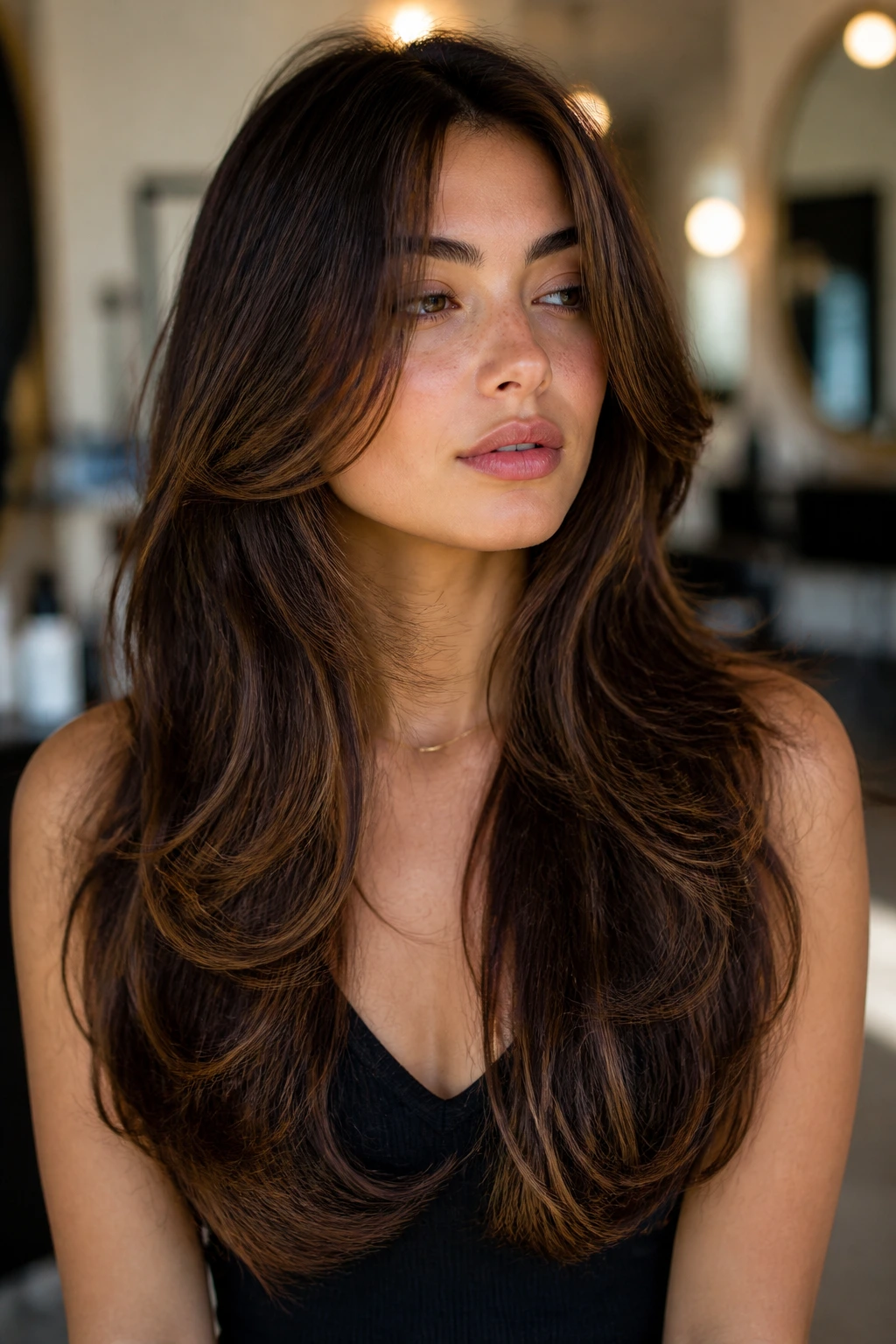
Butterfly layers are one of the few cuts that can create drama without stealing length. The shorter face pieces sit high enough to show movement near the cheekbone, while the back keeps its long perimeter. That matters for heart-shaped faces because the front gets softness and the lower half gets presence.
The nice thing about this shape is the contrast. You see volume around the face, then a long sweep underneath. It looks more sculpted than basic long layers, but it does not have the jagged feel of a shag.
You will want a blow-dry or hot tool finish to make the separation obvious. Air-dried butterfly layers can blur together if the hair is very heavy.
Quick check before you ask for it
- Ask the stylist to keep the shortest front pieces below the eyes or around the cheekbone.
- Keep the back length intact.
- Request soft blending through the side sections, not blunt disconnects.
7. Side-Swept Fringe and Floating Fronts
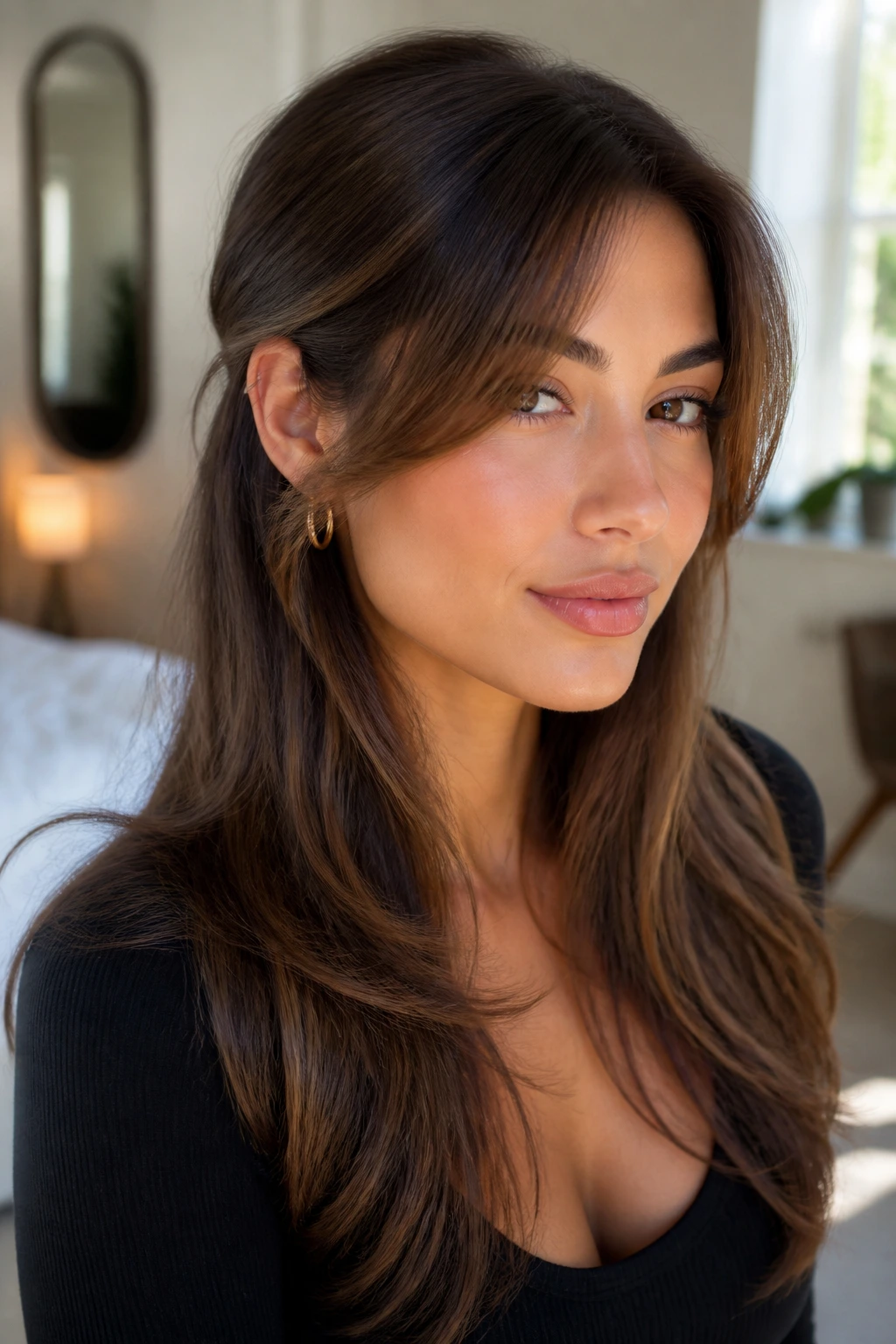
A side-swept fringe can be a very smart move on a heart-shaped face, especially when the rest of the hair is long. The diagonal line draws the eye across the face instead of straight up and down, which softens the forehead and gives the top half less visual width.
The floating front pieces should not be heavy. They need enough length to move back or tuck behind the ear, because too much density at the front can make the haircut feel stubborn. I like this shape with longer layers that begin around the jaw and fall into the chest.
It’s a practical cut, too. On days when you do not want to style everything, you can blow-dry only the front half and still look finished.
- Great for a deeper side part.
- Better on hair that holds shape without fighting.
- Easy to refresh with a curling wand and one bend away from the face.
8. Razor-Cut Movement Layers
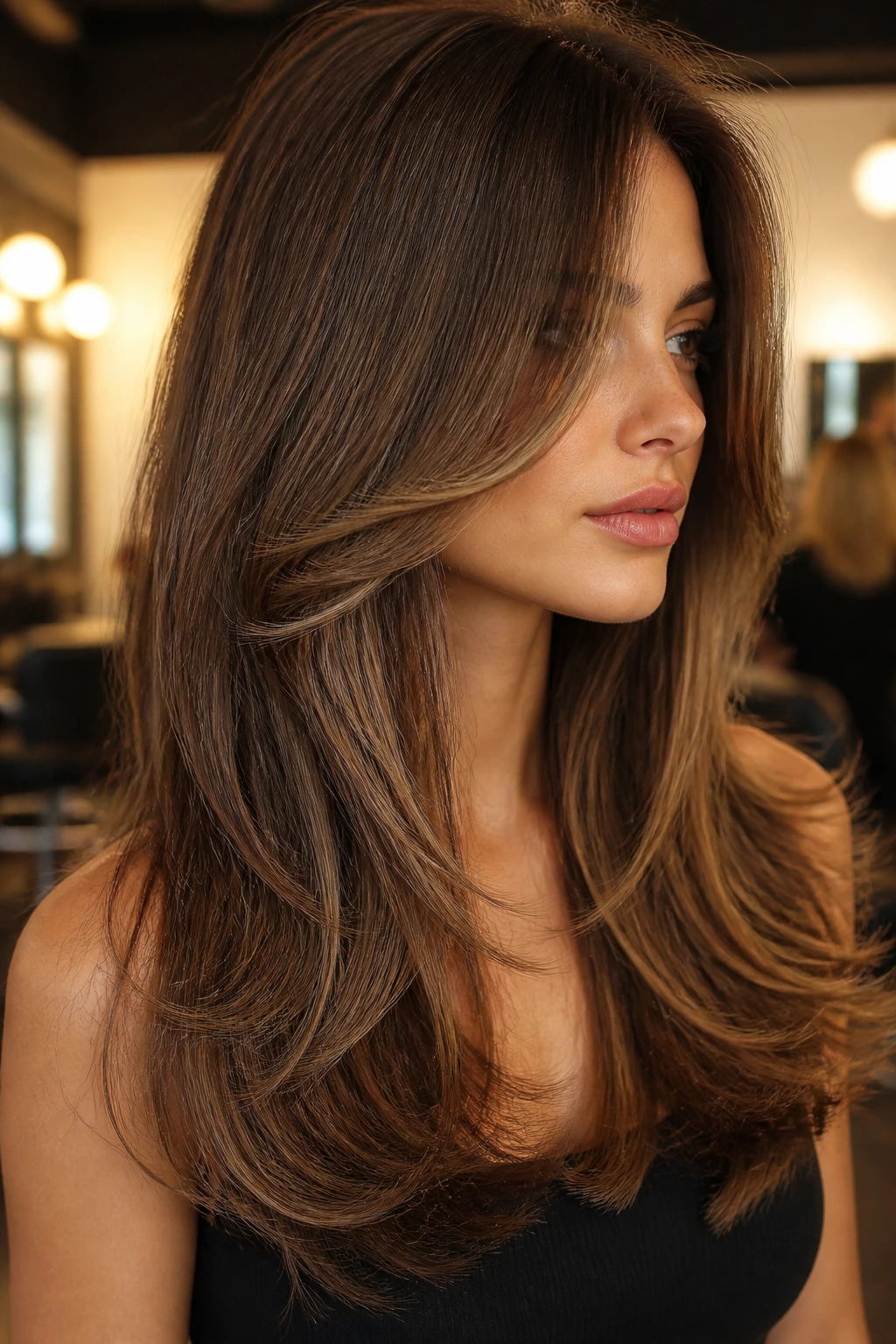
Razor-cut layers are for people who want softness at the ends, not just more “layers” in the abstract. The razor takes away bulk in a way scissors can’t quite mimic, and the result is a lighter edge that moves when you walk.
For heart-shaped faces, that softness matters because blunt, heavy ends can make the lower face look even narrower. A razor cut smears the line just enough to keep the haircut from feeling rigid. It’s especially useful on medium-to-thick hair that tends to puff at the ends.
A caution, though
Not every texture loves a razor. Very fine hair can fray, and curly hair can go fuzzy if the tool is used too aggressively. If the hair already feels wispy, ask for scissors with soft point-cutting instead.
The best razor layers still need shape. This is not about thinning the hair to death. It’s about letting the ends feather instead of clump.
9. Invisible Layers for Fine Hair
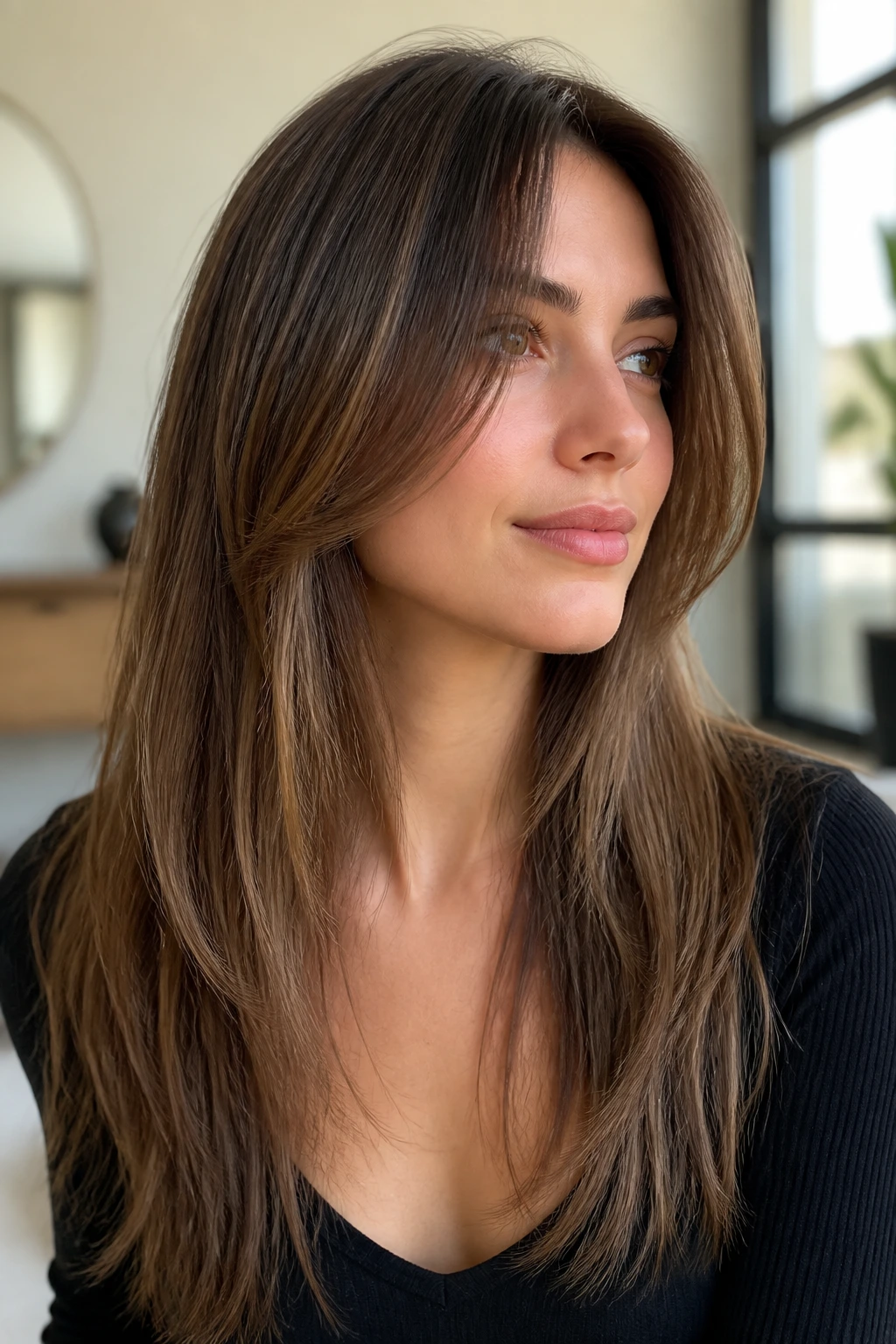
Fine hair and long hair can be a tricky pair. Add too many obvious layers and the ends look sparse. Leave it all one length and the face can look weighed down by a single curtain.
Invisible layers fix that balance. They remove weight inside the haircut, so the outside line stays clean and the movement happens underneath. That’s a smart choice for heart-shaped faces because you keep fullness where you need it, but the hair still gets lift around the cheekbones and collarbone.
What to say at the chair
- “I want the outline to stay long.”
- “Please keep the layers hidden, not chunky.”
- “I need movement, not see-through ends.”
That sentence does a lot of work. It tells the stylist you want shape without losing density. Fine hair usually looks better when the cut is quiet and the styling does the rest.
10. Thick-Hair De-Bulking Layers
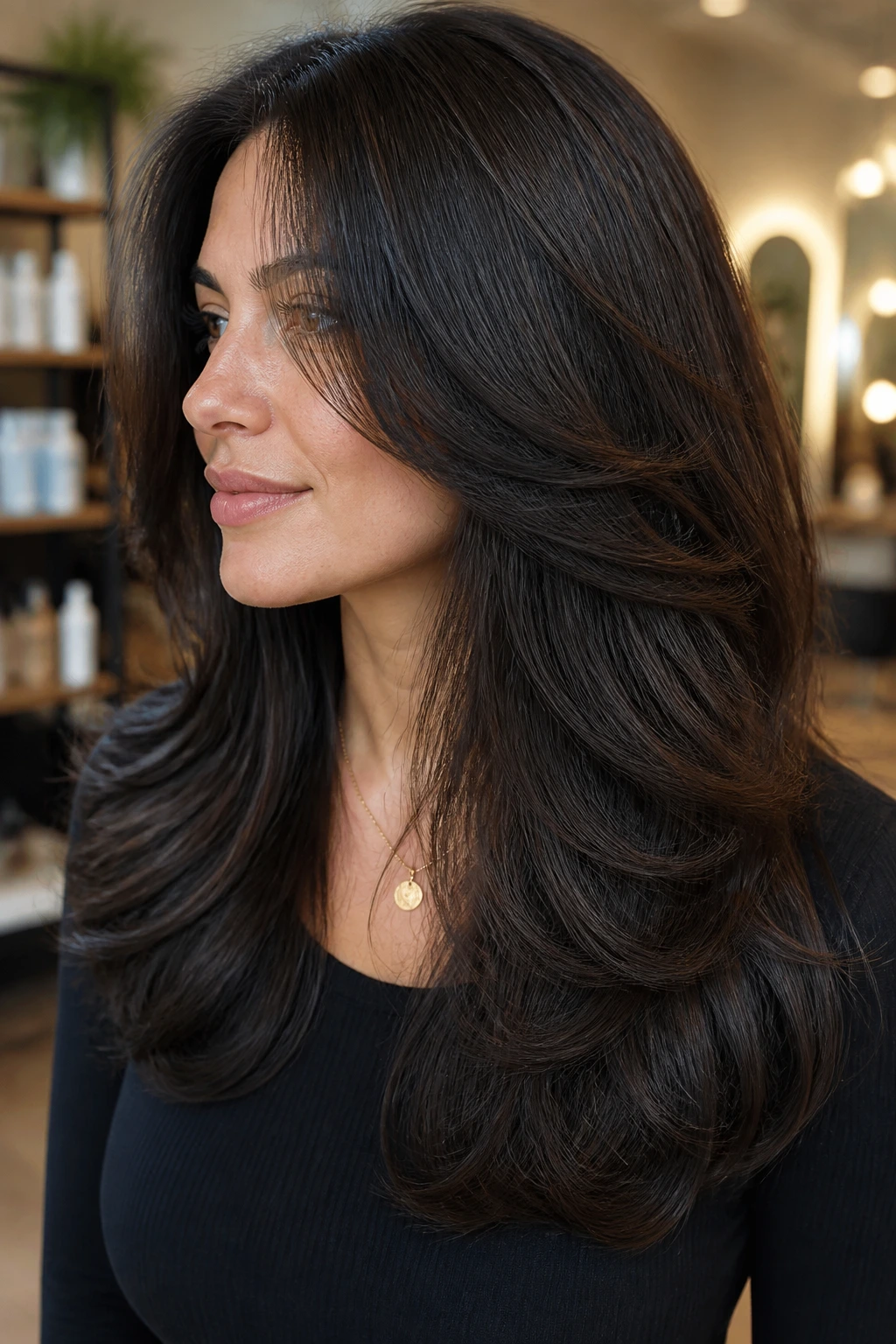
Thick hair can make a heart-shaped face feel smaller than it is if the weight piles up at the sides. That is where de-bulking layers help. They remove internal mass so the hair sits closer to the head and falls with less push at the cheeks.
The key is not to over-thin the ends. A lot of stylists get enthusiastic with thick hair and turn the bottom into frizz territory. The cleaner approach is to take weight out from the mid-sections while leaving enough density at the perimeter to keep the shape strong.
This version works especially well if your hair expands when it dries. The cut helps the hair settle instead of balloon.
Best styling move: a smoothing cream through the mid-lengths, then a round-brush finish at the front only. Leave the ends alone if they already look polished.
11. Wavy S-Curve Layers
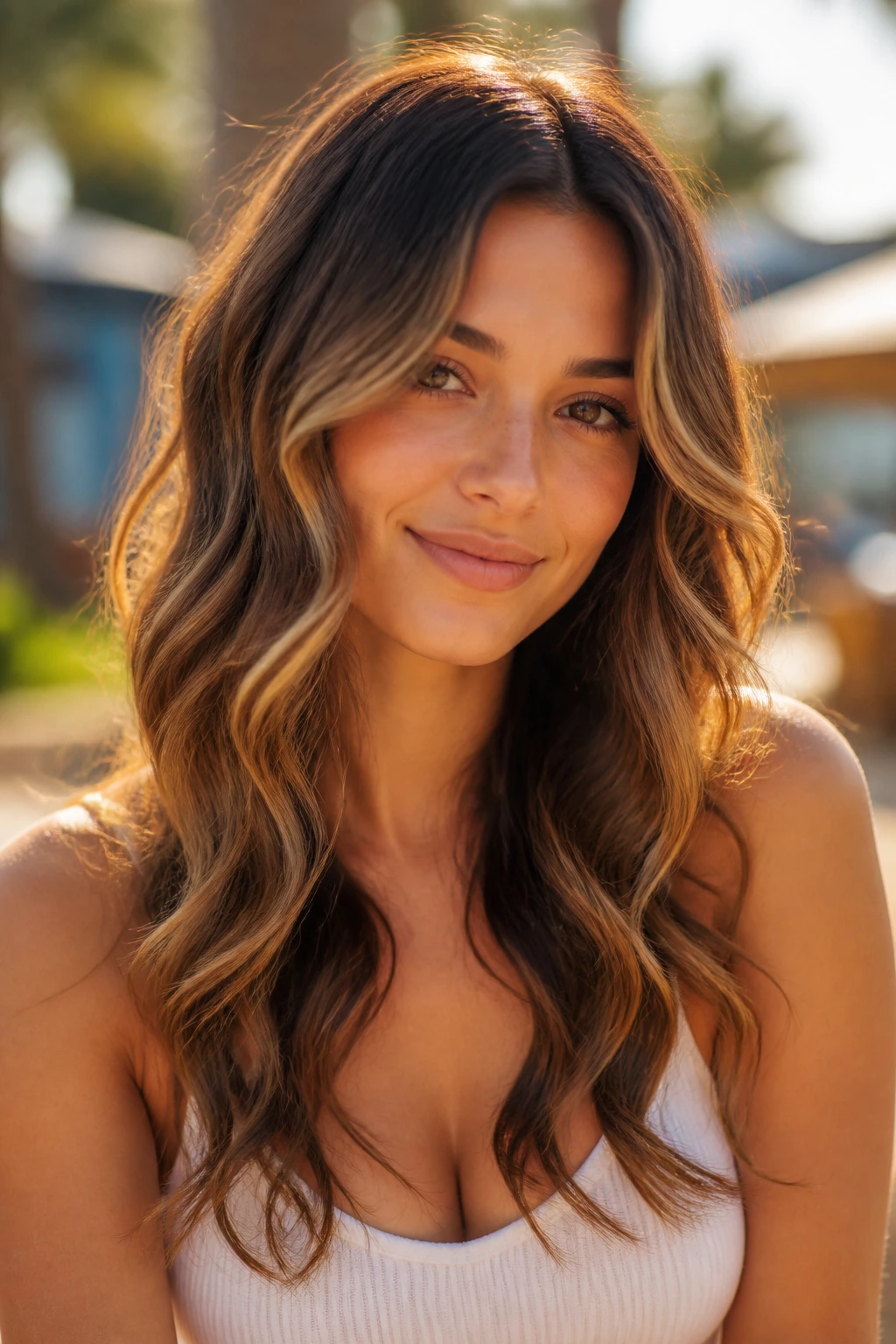
Wavy hair loves a layer pattern that gives it room to bend. S-curve layers do that by allowing the hair to fall in a soft wave pattern from temple to shoulder to chest. The result is relaxed, but not shapeless.
For a heart-shaped face, the curve matters because it softens the transition from broad forehead to narrower jaw. The wave line breaks up the angles. It keeps the eye moving.
This cut does not need a lot of heat. A curl cream, a diffuser, or even a loose twist while drying can be enough. I like this option for people who want a shape that feels more lived-in than polished.
12. Sleek Gloss Layers with Soft Ends
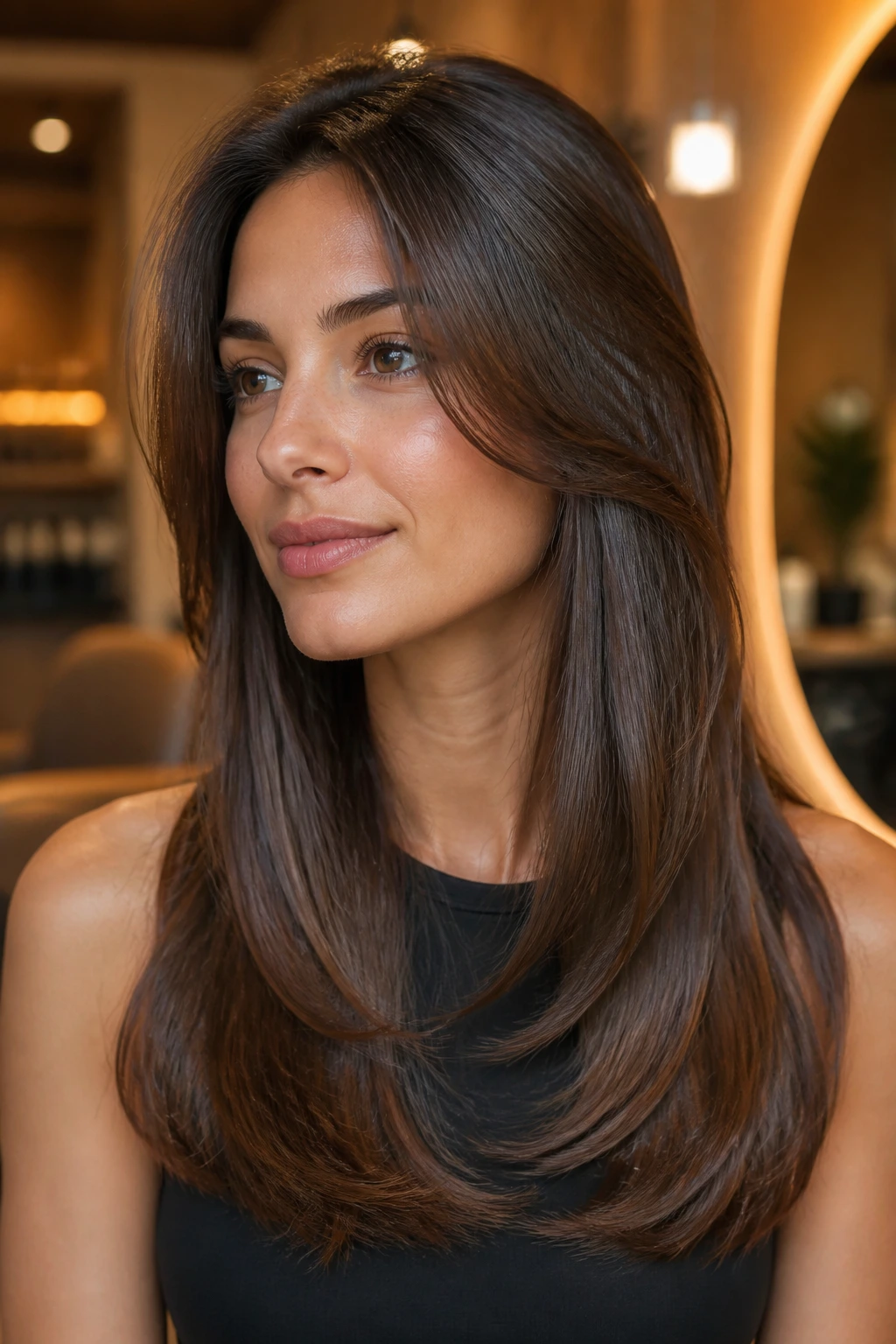
Straight hair can look sharp in a way that is either chic or harsh, depending on the cut. Sleek gloss layers thread that needle by keeping the lengths smooth while softening the bottom few inches so the line doesn’t look like a ruler.
The front should still have movement. Not much. Just enough to take the edge off the forehead and bring the eye down toward the mouth and jaw. When the ends are softened rather than chopped, the whole haircut feels more expensive and less severe.
This one is good if you wear your hair tucked behind the ears a lot. The shape still reads when the front is pinned back.
- Ask for point-cutting at the ends.
- Keep the layers long.
- Finish with a shine spray, not a heavy oil.
13. Shag-Lite Cascades
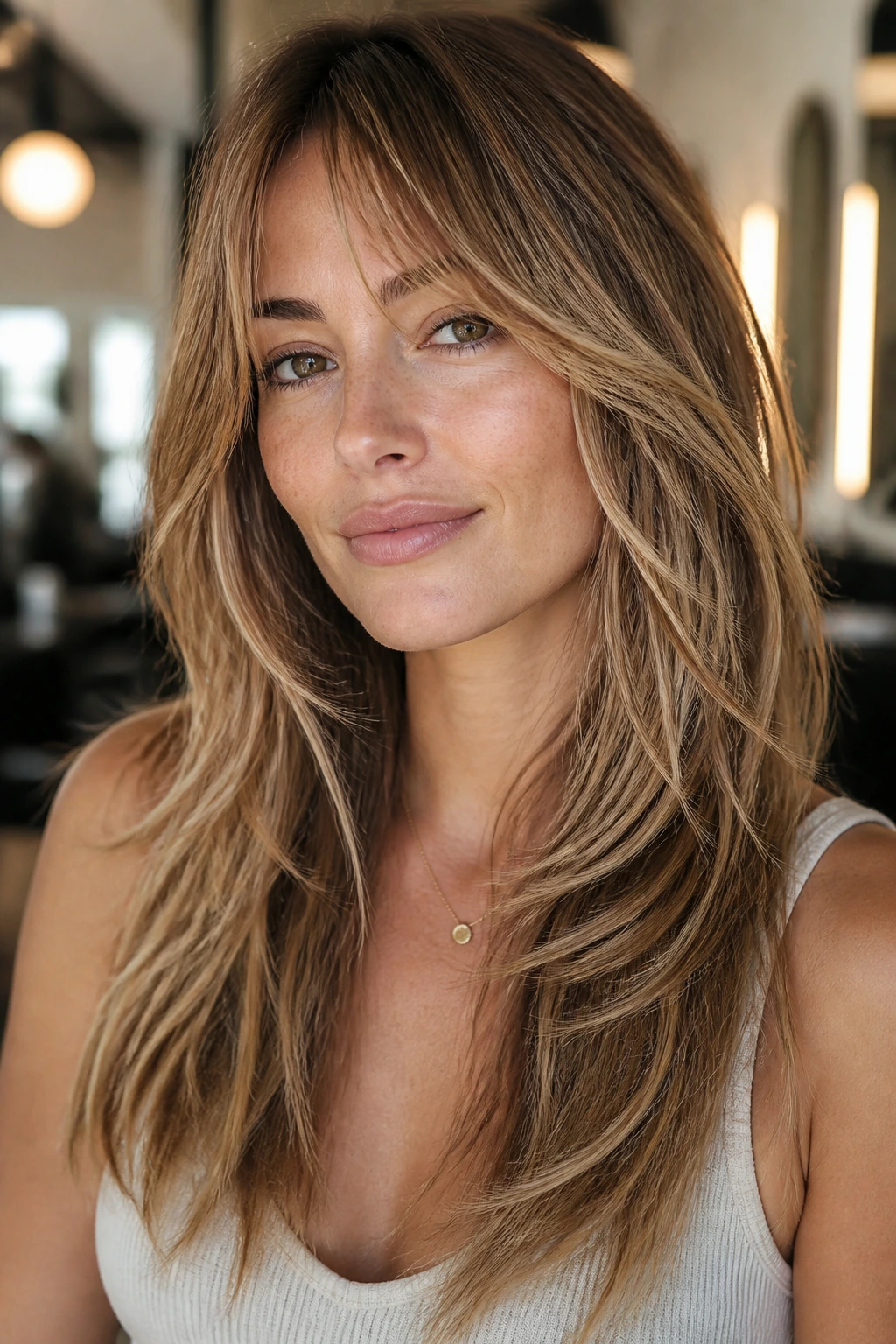
A shag-lite cut gives you some of the cool, broken-up texture of a shag without the full commitment. That’s useful if you love movement but do not want your long hair to lose its length or your face to get swamped by too much fringe.
For heart-shaped faces, the “lite” part matters. You want texture, yes, but you do not want the cut to explode around the crown. The best shag-lite version keeps the crown controlled and lets the motion happen from the cheekbone down.
Why it works
A little mess at the right spots can actually make the face look softer. The trick is keeping the top layers long enough to avoid extra width at the forehead. Short, choppy crown layers are the thing to avoid. They make the silhouette jumpy.
This cut loves dry texture spray and finger styling. If you enjoy spending three minutes on your hair and calling it done, this is one to consider.
14. Deep Side-Part Layers
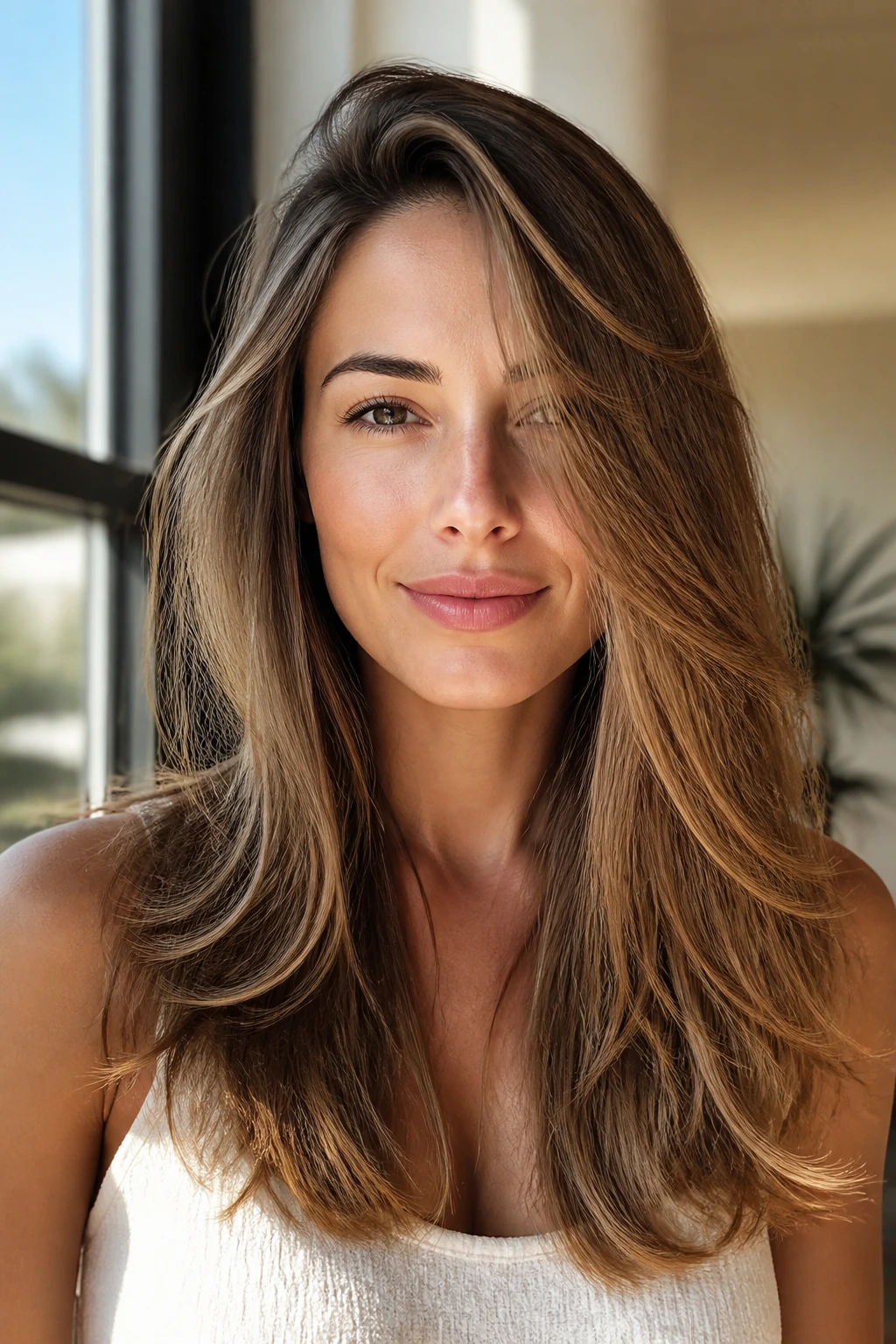
A deep side part changes the whole conversation. The part line creates asymmetry, which can be a gift for heart-shaped faces because it softens the straight-on width at the forehead and makes the face feel a little longer.
The layers themselves can stay fairly long and simple. The drama comes from the direction of the hair rather than from a lot of chopping. That makes this a smart option for people who want a quiet haircut with a strong shape.
It also works when the hair has a stubborn cowlick at the front. The side part gives the hair a place to go, which can calm down a front section that likes to split and puff.
15. Chin-Skimming Front Panels
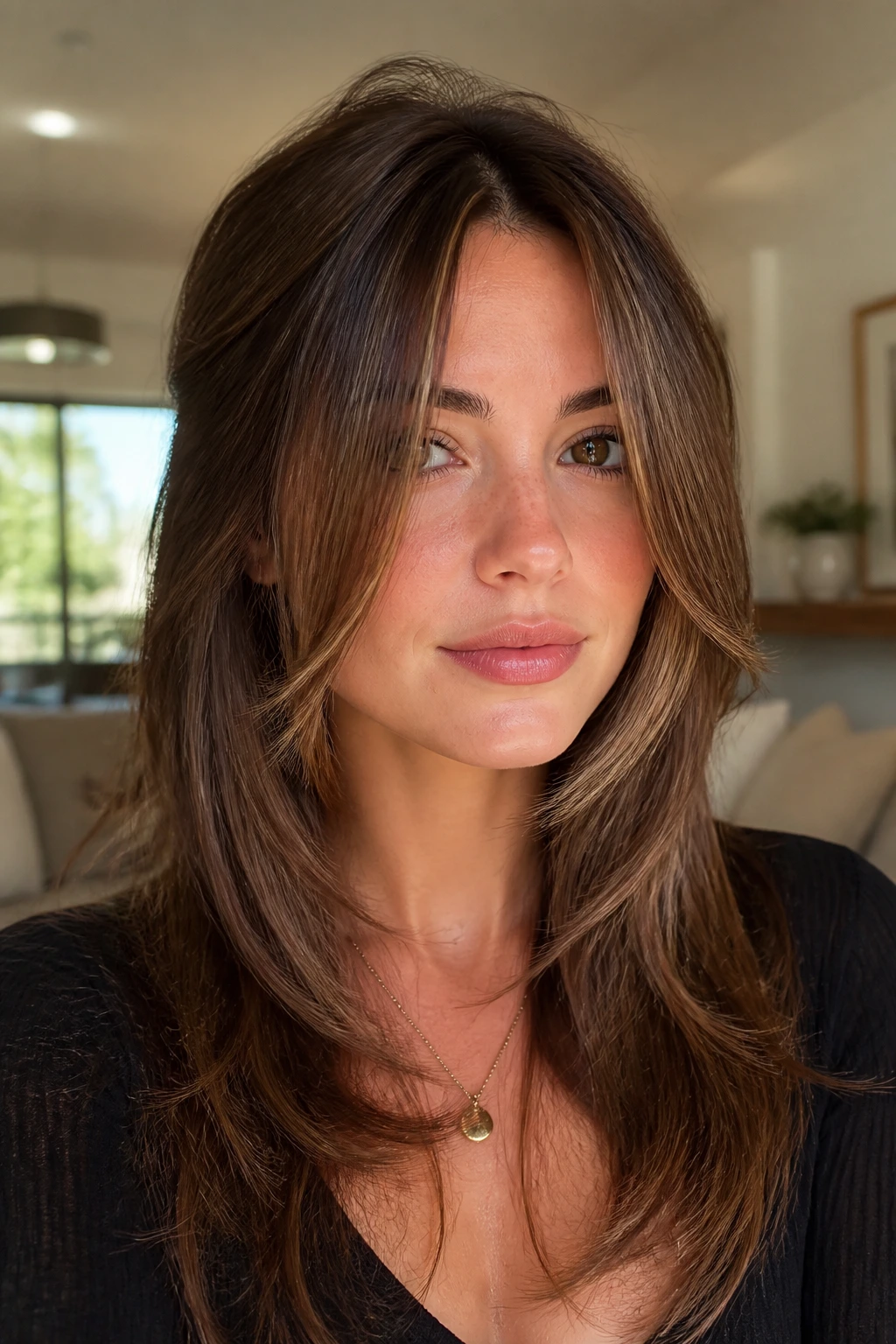
This is one of my favorite shapes when the chin needs a little help. Long panels that skim the jawline and stop just below the chin create a visual bridge between the upper face and lower face. They do not crowd the forehead, and they do not disappear into the neckline.
The panels should be soft, not blunt. If they look too heavy, they can widen the face instead of balancing it. I like this cut with medium-thick hair because the front pieces have enough substance to show, but they still move.
What to watch
Do not let the shortest face-framing piece land exactly at the widest cheekbone unless the rest of the shape is very soft. That’s the line that can make the face feel widest where it already carries strong structure.
A quick bend with a curling iron brings this cut to life fast.
16. Mermaid-Length Internal Layers
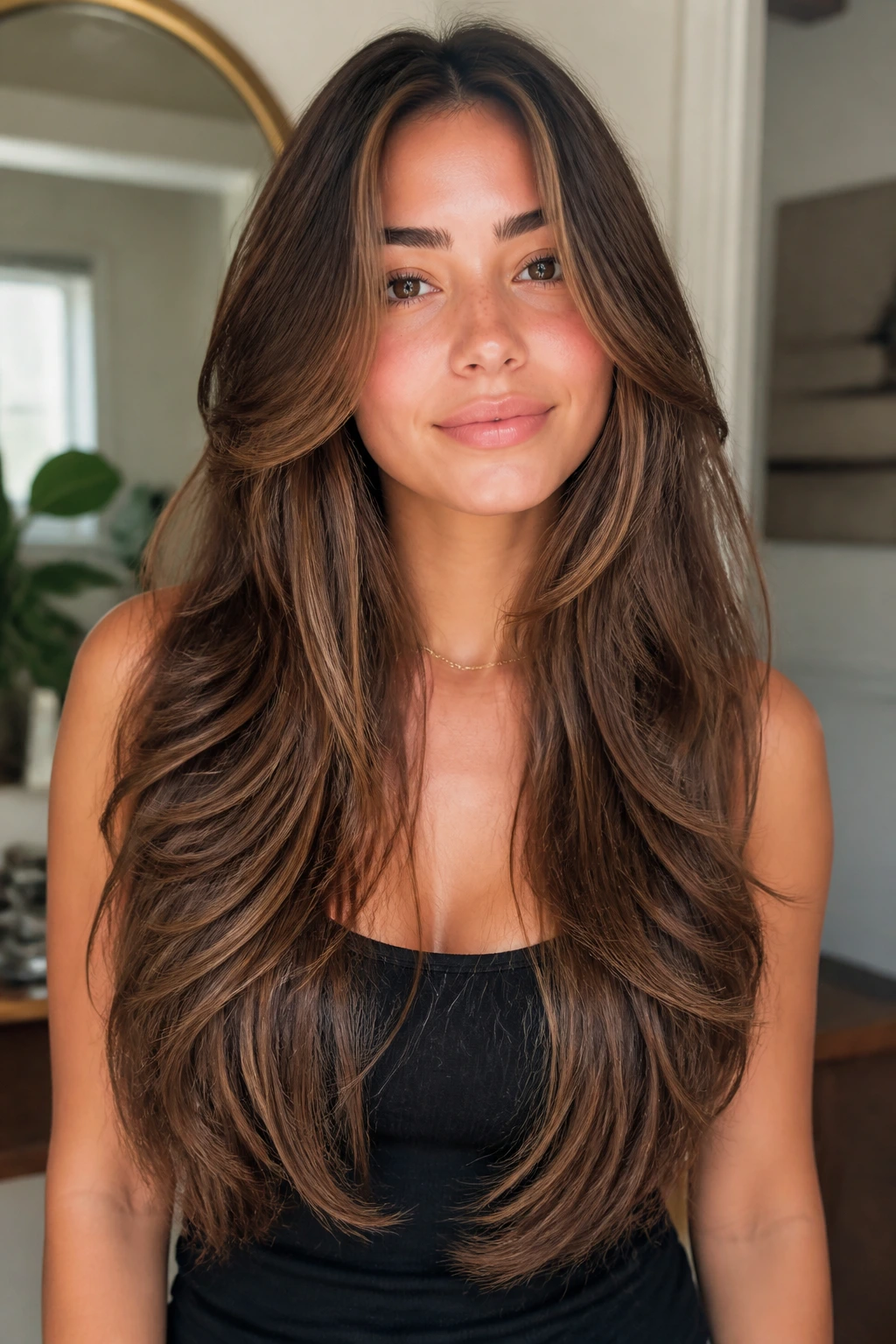
Mermaid-length hair needs structure or it can become one long, shiny weight with no personality. Internal layers give it that structure from the inside out, leaving the outer length intact while reducing the bulk that collects at the bottom.
This is a very good fit for heart-shaped faces because the length keeps the vertical line long and clean, while the hidden layers prevent the sides from looking overly dense. You still get the dramatic length. You just don’t get the dragging effect.
The trick is patience. Internal layers are subtle. If you want a dramatic shape visible from across the room, this is not it. If you want hair that falls with a little lift and still looks long in a braid or ponytail, it does the job.
17. Rounded Face-Frame Layers
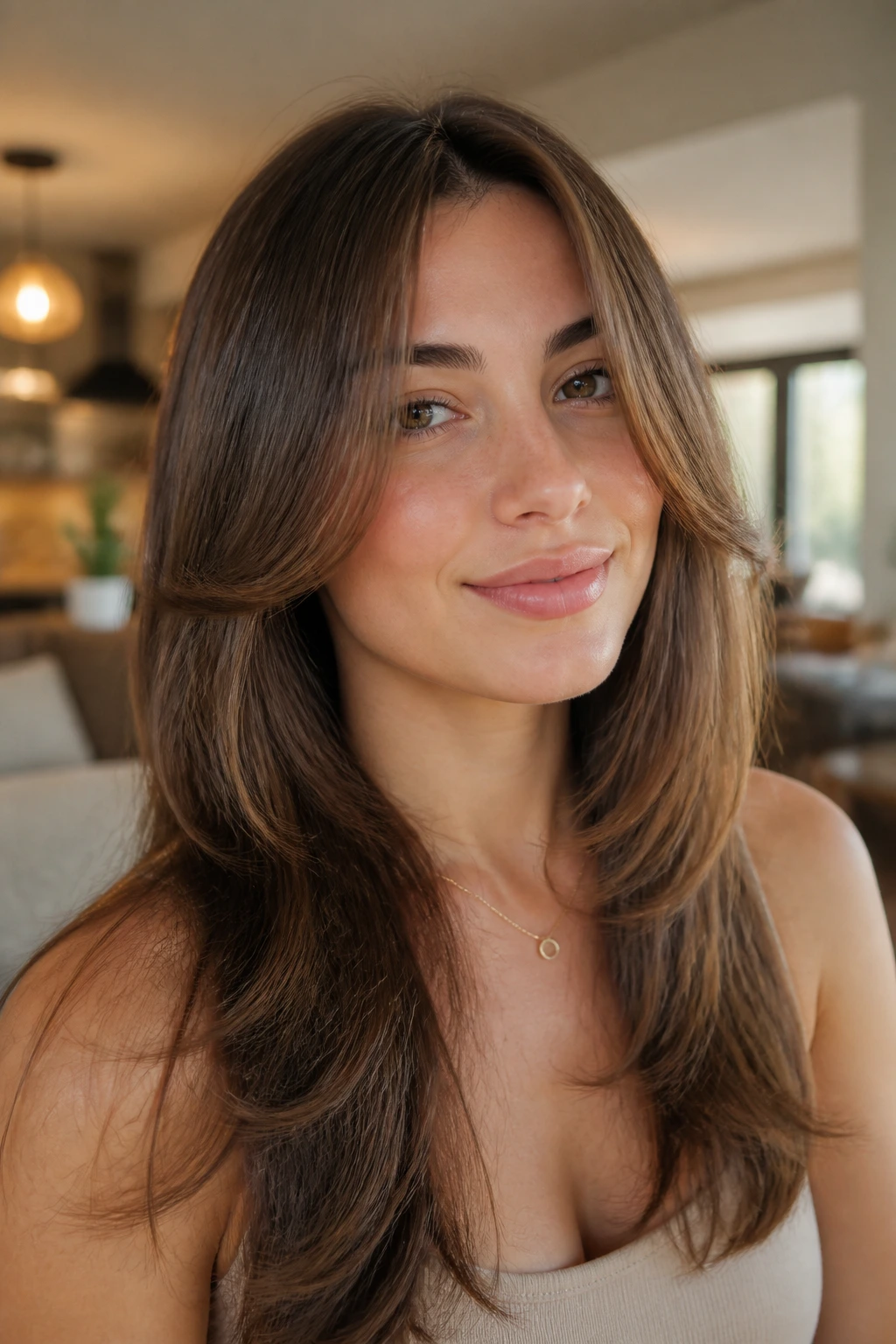
Rounded face-framing layers move in a gentle arc instead of a straight diagonal. That can be useful when the face shape already has strong angles and you want the hair to soften them rather than mirror them.
I like this style for anyone who finds sharp front pieces too obvious. The curve around the face looks softer on camera and in motion, and it works nicely with loose curls or a blown-out wave.
A small detail makes a big difference here: keep the shortest front section below the brow line and let it sweep into the cheekbone. If it starts too high, the arc becomes a puff. If it starts too low, it disappears.
- Best on medium density hair.
- Good with soft highlights.
- Easy to restyle on day two.
18. Blunt Ends with Internal Lift
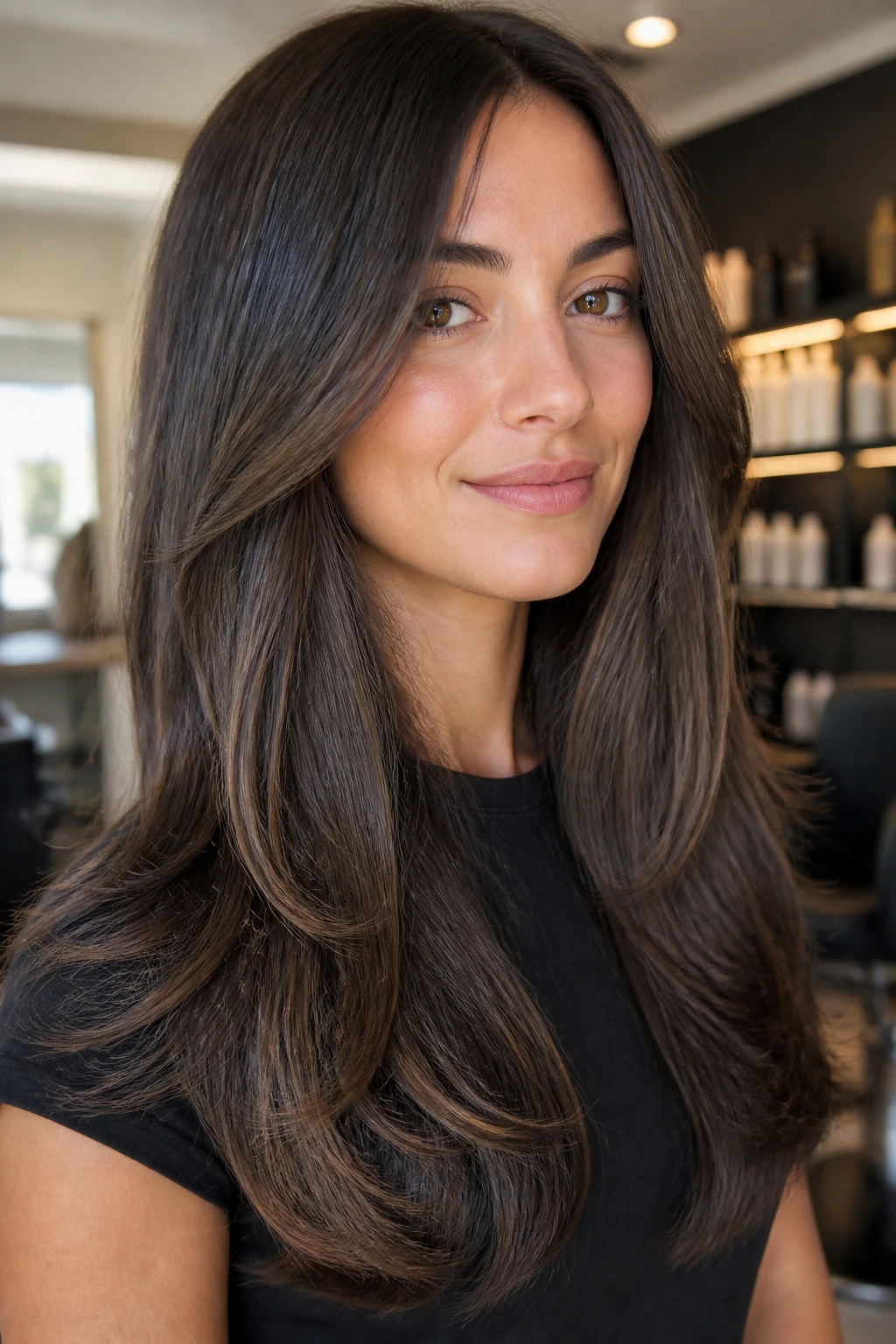
Blunt ends can absolutely work on long hair with a heart-shaped face, but only if the inside of the haircut has enough lift. Otherwise the shape looks too heavy and the top of the face can seem even broader by comparison.
This cut keeps the perimeter solid and uses internal layering to keep the body from settling into one heavy mass. The result is a strong lower line with movement hidden underneath. It’s a clean, modern look if you like your hair to feel deliberate.
The blunt edge also makes the ends look thicker, which fine-haired readers may appreciate. Thick hair, on the other hand, may need a bit more internal debulking so the line doesn’t feel dense.
19. Blowout Layers with Crown Control
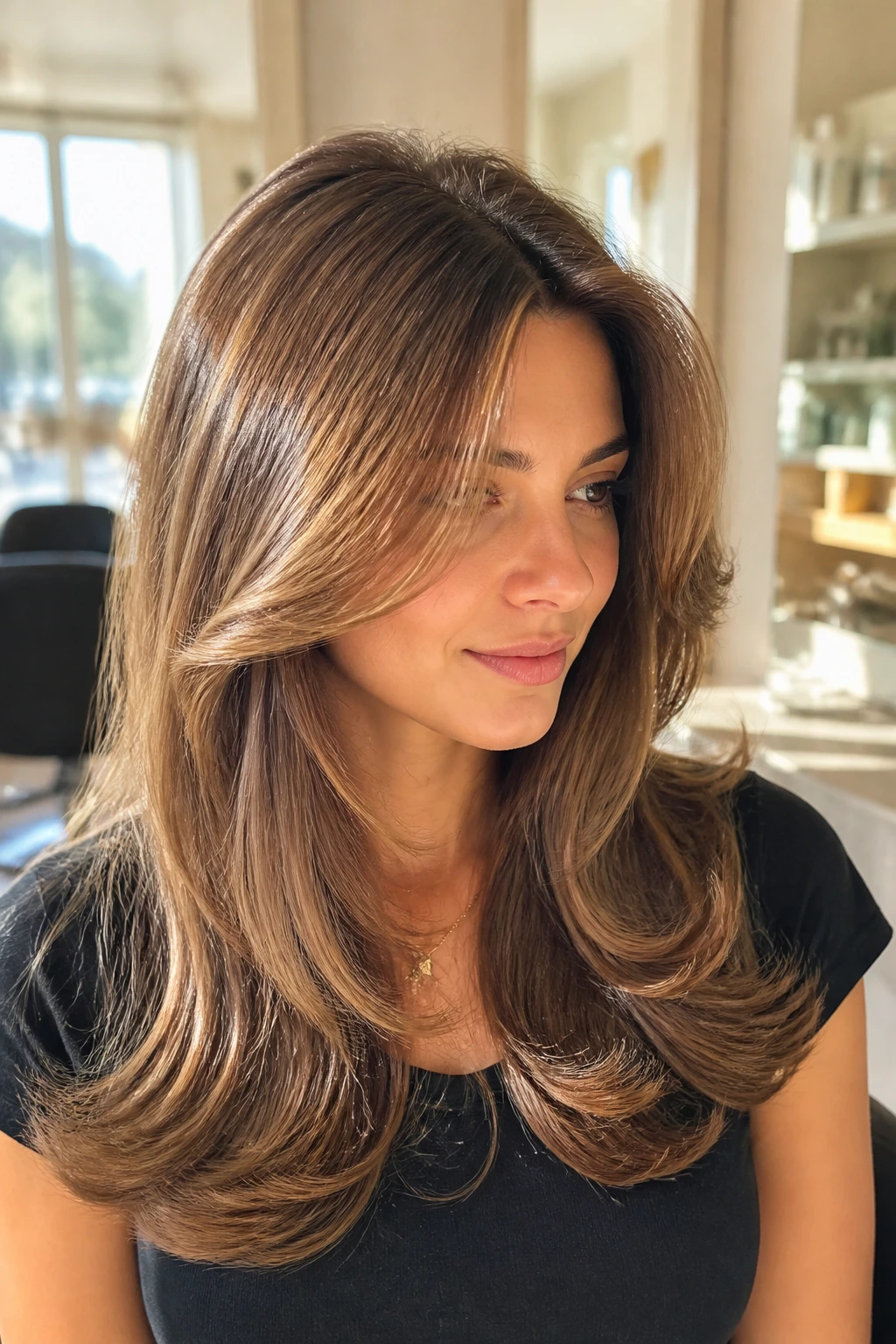
What makes a blowout layer cut work is not just the layers. It’s where the volume lives. On a heart-shaped face, you usually want less puff at the crown and more bend from the cheekbone downward.
That sounds obvious, but a lot of layered cuts do the opposite. They create lift at the top and forget the lower half. The better version keeps the crown smooth, lets the mid-lengths curve out, then brings the ends back in with a round brush or hot roller set.
Styling notes
- Blow-dry the crown flat first.
- Lift the face-framing pieces away from the face.
- Turn the ends under only after the length has cooled.
The effect is polished without feeling stiff. And yes, it takes a little more effort than a wash-and-go cut. Worth it, if you like that kind of swing.
20. Balayage-Boosting Layers
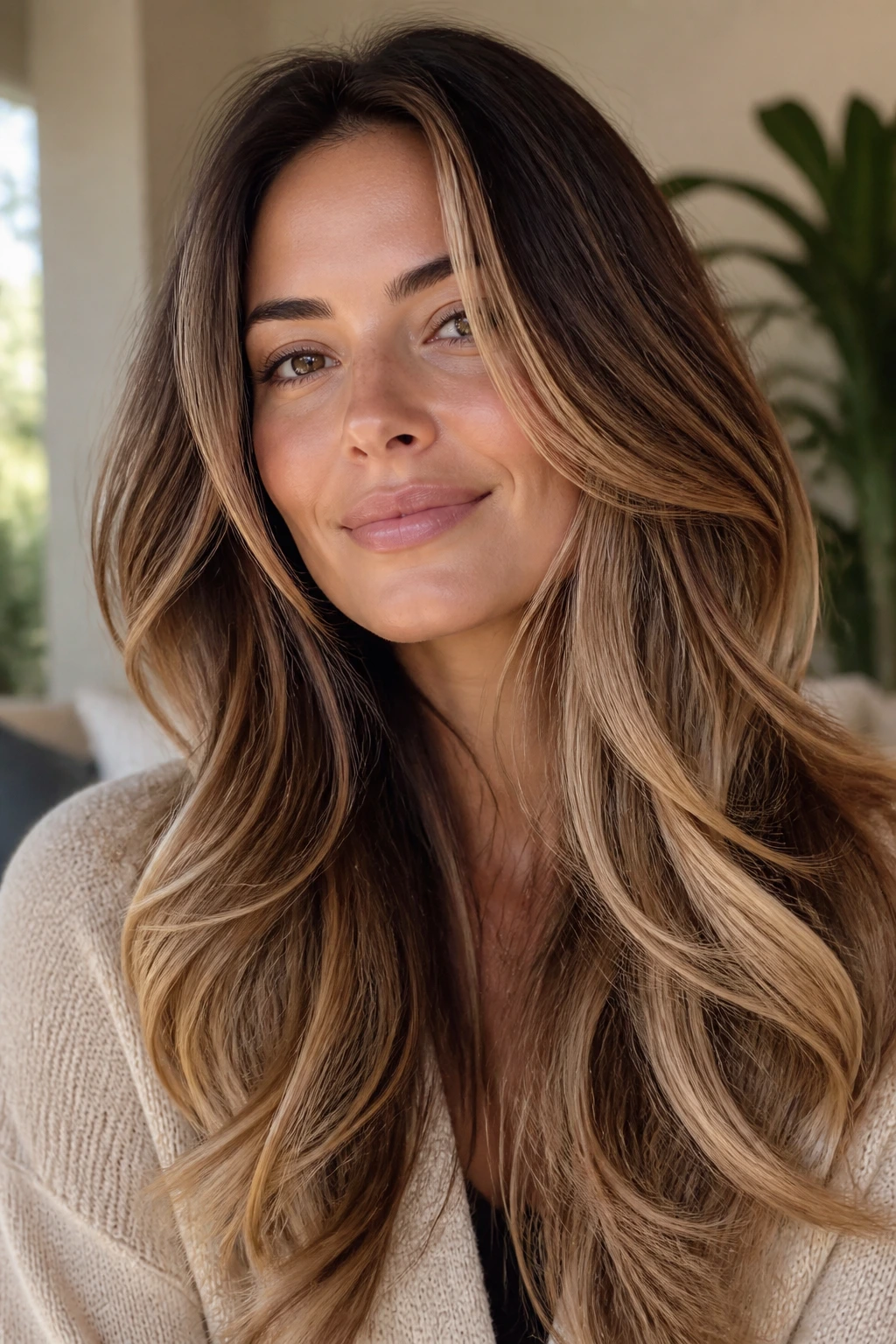
Color and layers are not separate decisions. A well-placed balayage can make cascading layers read more clearly because the lighter pieces catch the bends and show you exactly where the movement is happening.
For heart-shaped faces, this works best when the brightest pieces sit around the cheekbone and lower. That placement brings the eye down and away from the forehead. If the lightest color is crowded near the temples, the top half can feel too busy.
The cut itself should still do the real work. Color can help, but it cannot fix a bad layer map. I like this option for long hair that needs a little life without a major change in length.
21. Low-Maintenance Grow-Out Layers
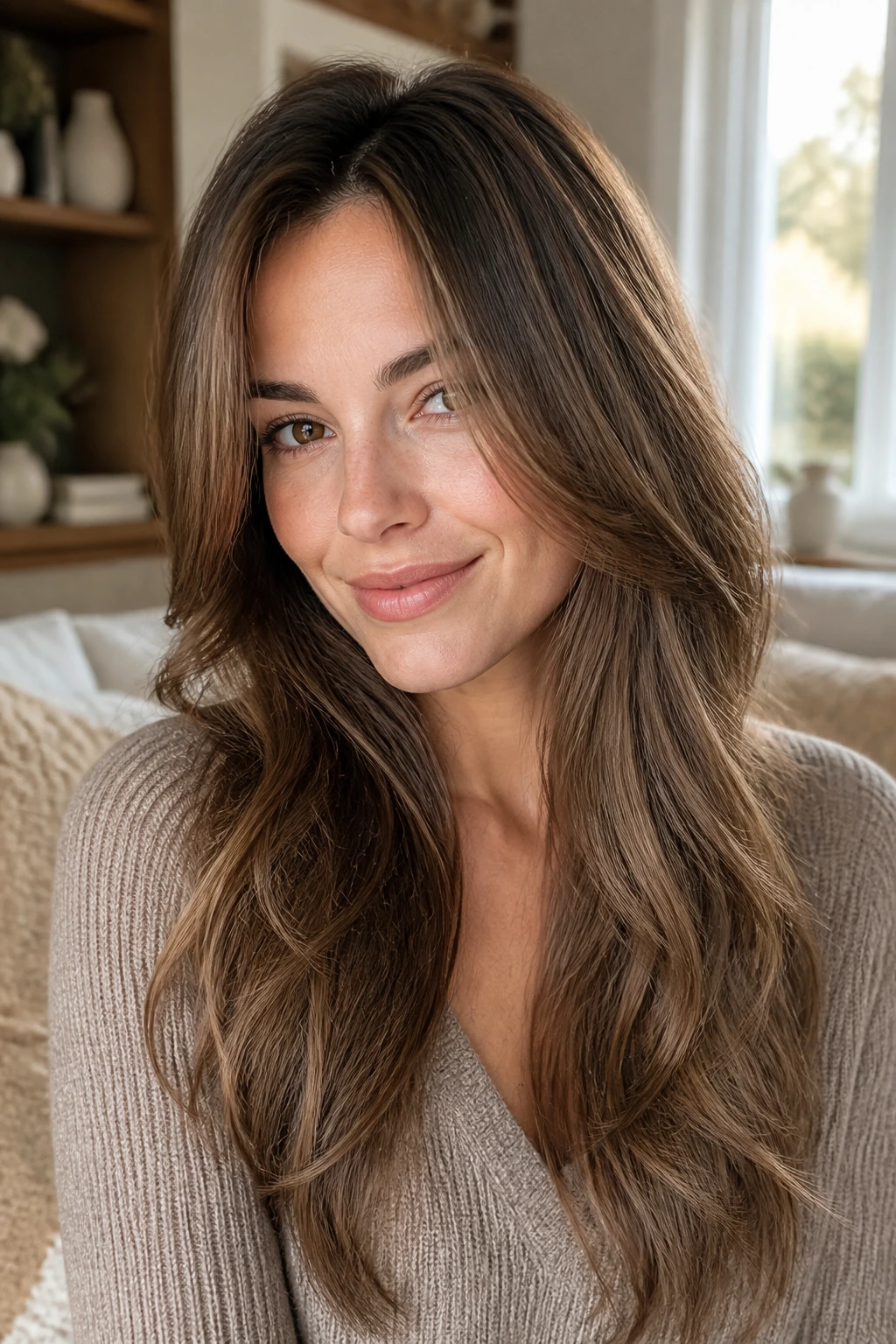
Some styles look great on day one and awkward by day twenty. This is not one of them. Low-maintenance grow-out layers are cut long enough that the shape stays soft as the hair grows, which is handy if you do not live at the salon.
The first face-framing layer should be long, almost cautious. That gives the cut room to drift without losing the balance that heart-shaped faces need. The overall line stays calm, and the front pieces keep doing their job even when the ends start to shift.
Why it stays useful
A long grow-out shape keeps the forehead softened and the jawline visible. That’s the part that matters. If the haircut only looks good in the first two weeks, it is too fussy for everyday life.
This version is especially smart for people who air-dry often or wear their hair in a half-up style a lot.
22. Bottleneck Bang Cascade
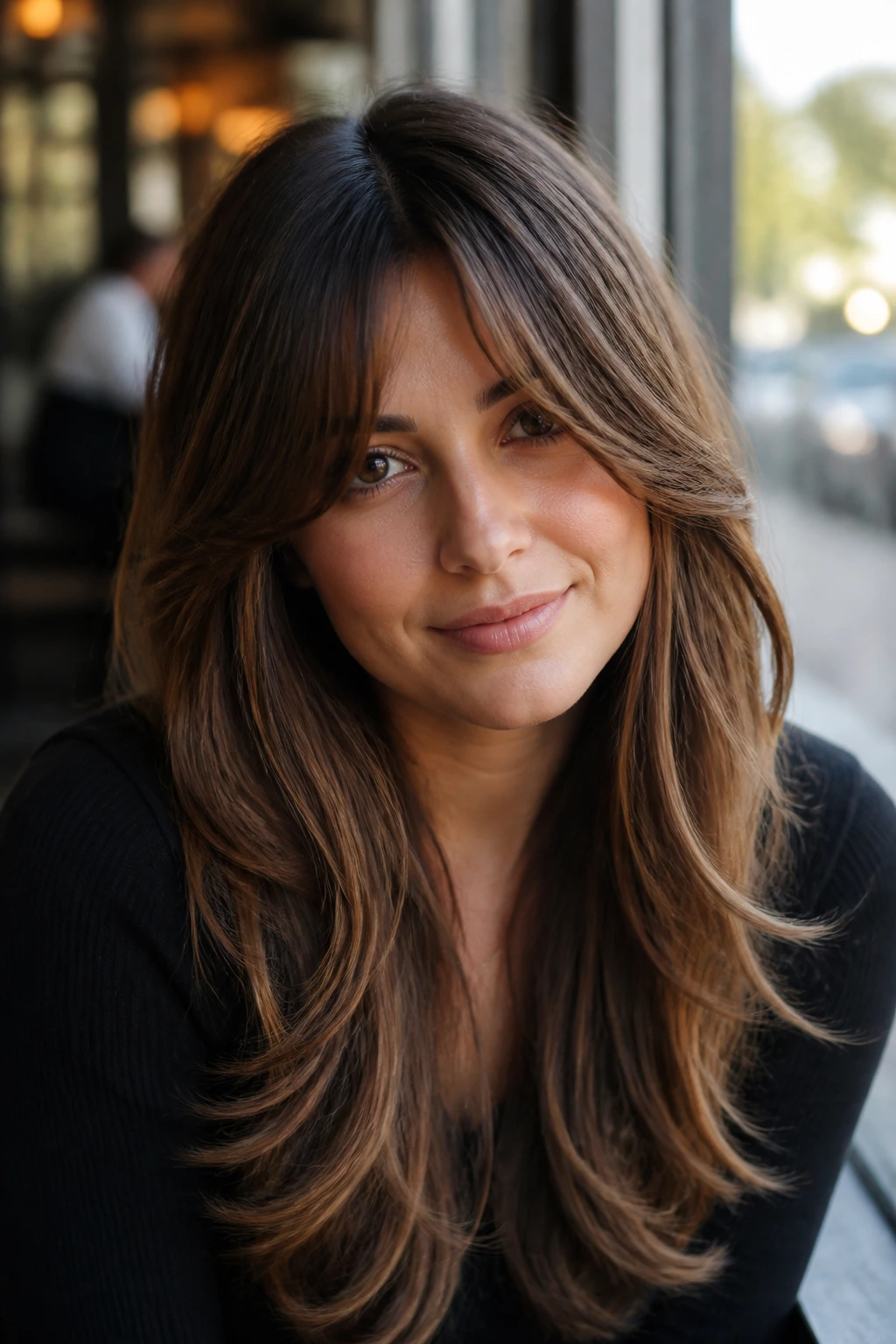
Bottleneck bangs give you a narrower opening in the center and wider pieces at the sides, which is a neat trick for heart-shaped faces. The opening keeps the forehead from feeling boxed in, while the longer side pieces taper toward the cheekbones.
The cascade below the bangs should stay long and fluid. You do not want the whole front to become busy. The bangs are the statement; the layers are the support system.
This cut has a softer mood than curtain bangs. It can feel a little more refined, a little less bohemian. Good choice if you like structure but not severity.
23. Curly Spiral Cascades
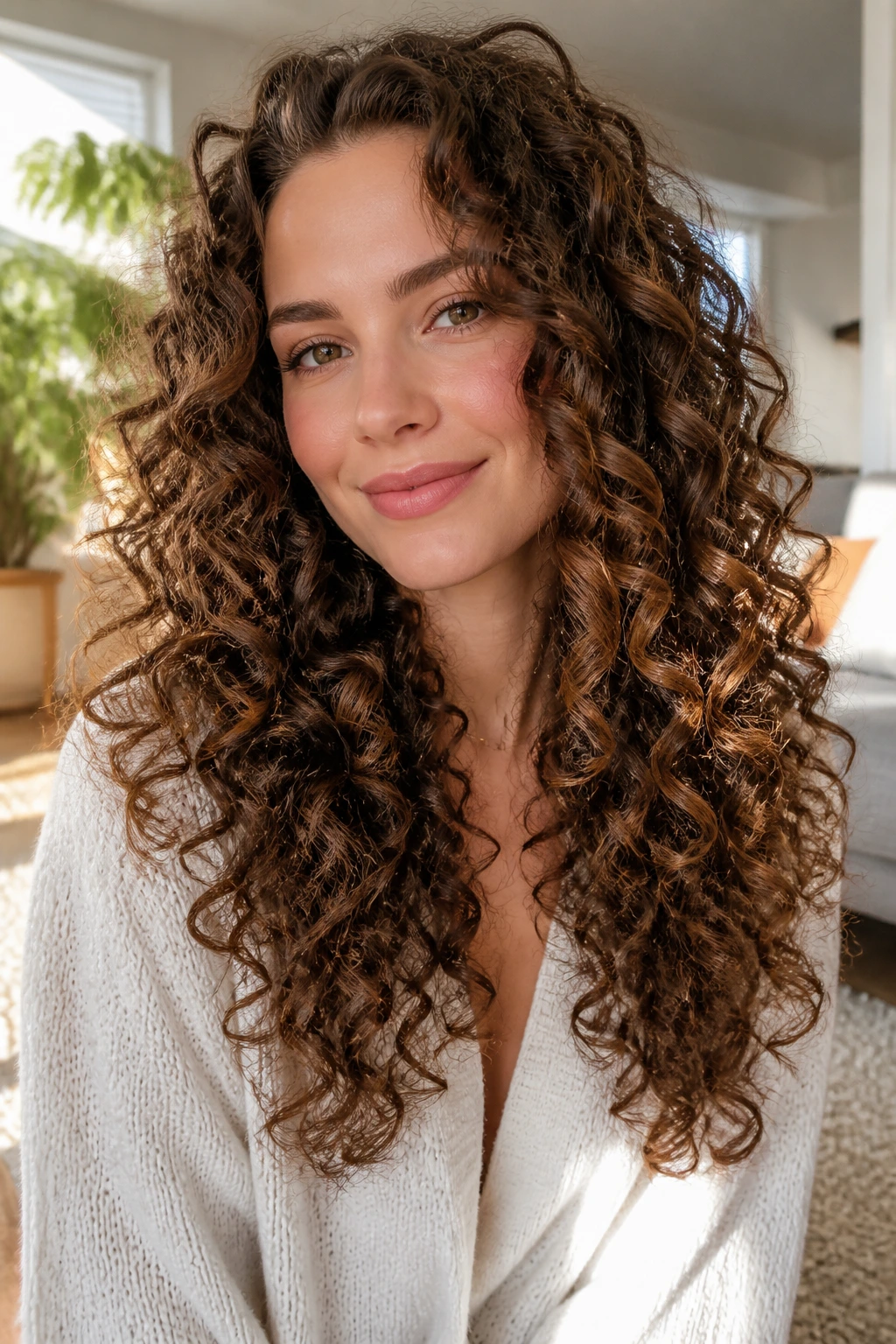
Curly hair needs room to spring, not a bunch of short layers that pop out in odd places. Spiral cascades keep the shape long and flowing while allowing the curls to stack in a way that flatters a heart-shaped face.
The top should stay controlled so the forehead does not gain extra width. Then the layers can open up below the cheekbones, where the eye wants to see movement anyway. That balance is what stops curly long hair from turning into a triangle.
How to use it
- Cut curls dry or nearly dry when possible.
- Keep the shortest pieces long enough to curl into shape.
- Use a diffuser and touch the curls as little as possible.
A heart-shaped face with curls looks best when the volume is distributed, not dumped on the temples.
24. Tucked-Behind-Ear Layers
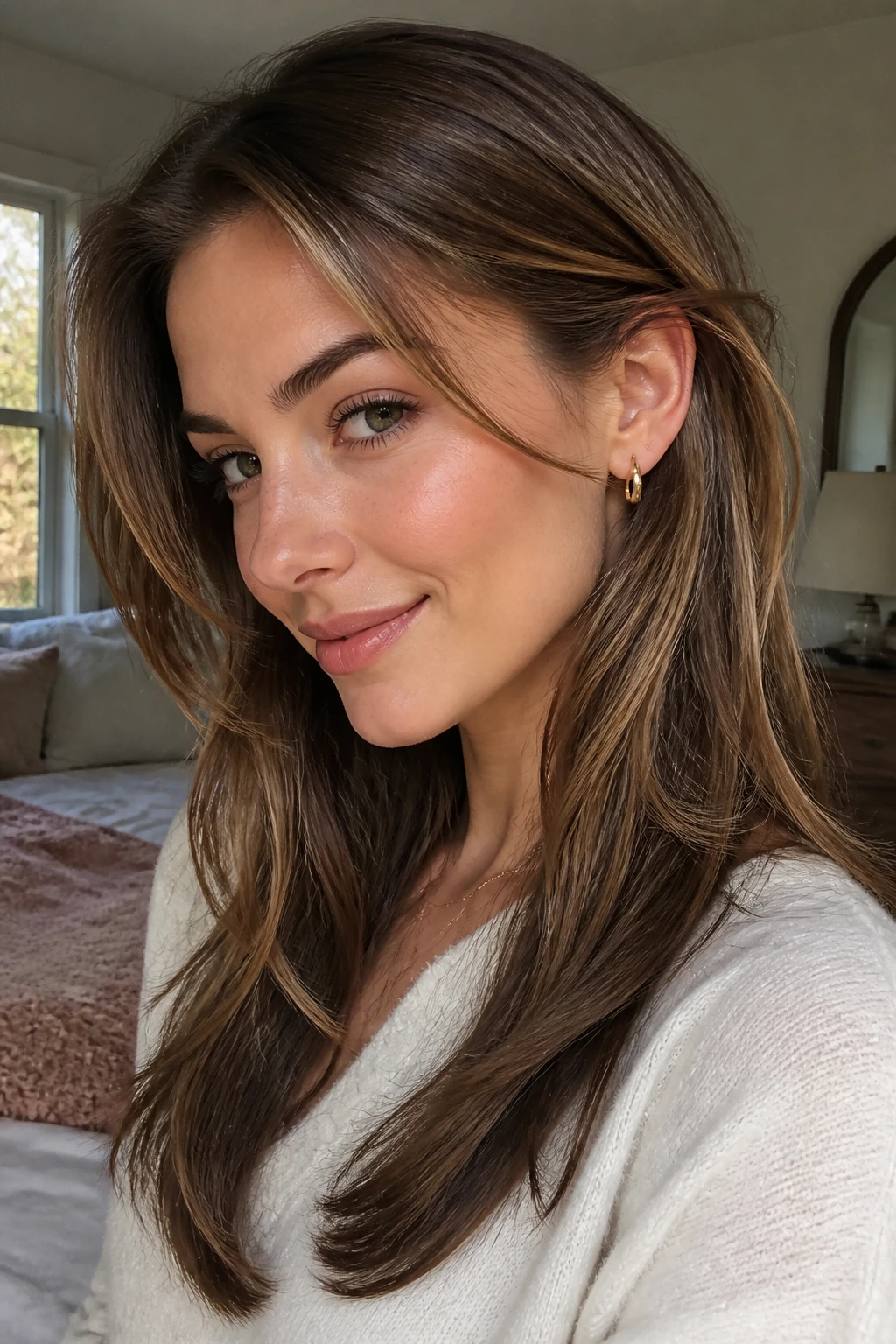
This one is for people who are always tucking hair behind one ear and then wondering why the cut feels uneven. The right layered shape should still look good when one side is tucked and the other side is down.
The front pieces need enough length to sit cleanly behind the ear without sticking out like sharp little wings. That usually means keeping the first layer longer and the next layer soft. The overall effect is casual, but not lazy.
It’s a good everyday cut because it works with glasses, earrings, scarves, and the half-done hair days most of us actually live in. If a haircut falls apart the second you touch it, I’m not interested.
25. Polished Long Layers with a Soft Finish
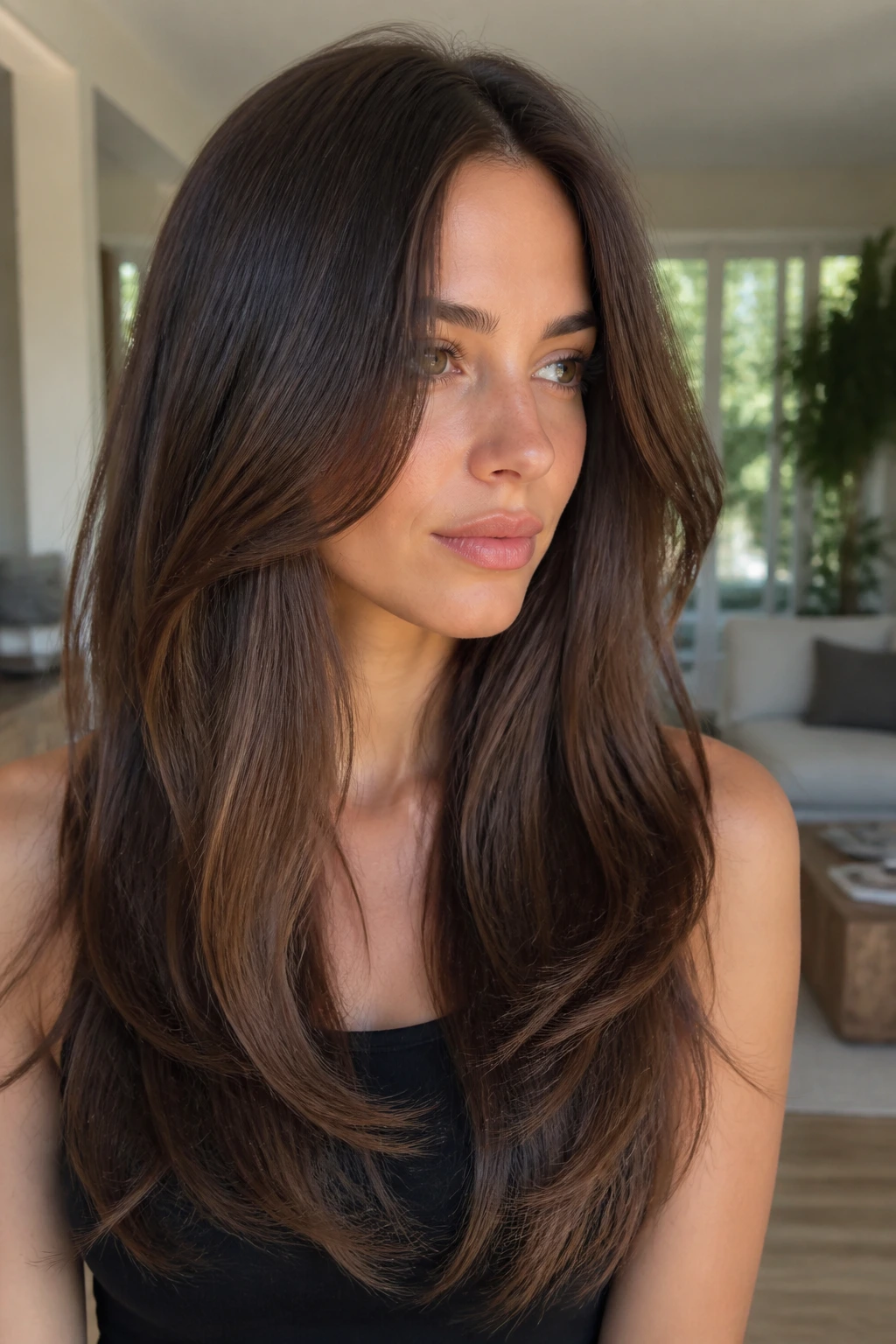
This is the version for people who want long hair to look smooth, not overworked. The layers are there, but they stay soft and understated, so the silhouette keeps its length and the face still gets shape around the sides.
Heart-shaped faces often look best when the front is guided, not shouted at. A soft finish does exactly that. It nudges the eye down from the forehead, gives the cheekbones a little room, and lets the chin stay visible instead of swallowed by heavy ends.
A finishing serum, a clean center part, and a careful bend at the bottom are often enough. Not every layered cut needs to look wild to be useful.
Why Cascading Layers Fit a Heart-Shaped Face So Well
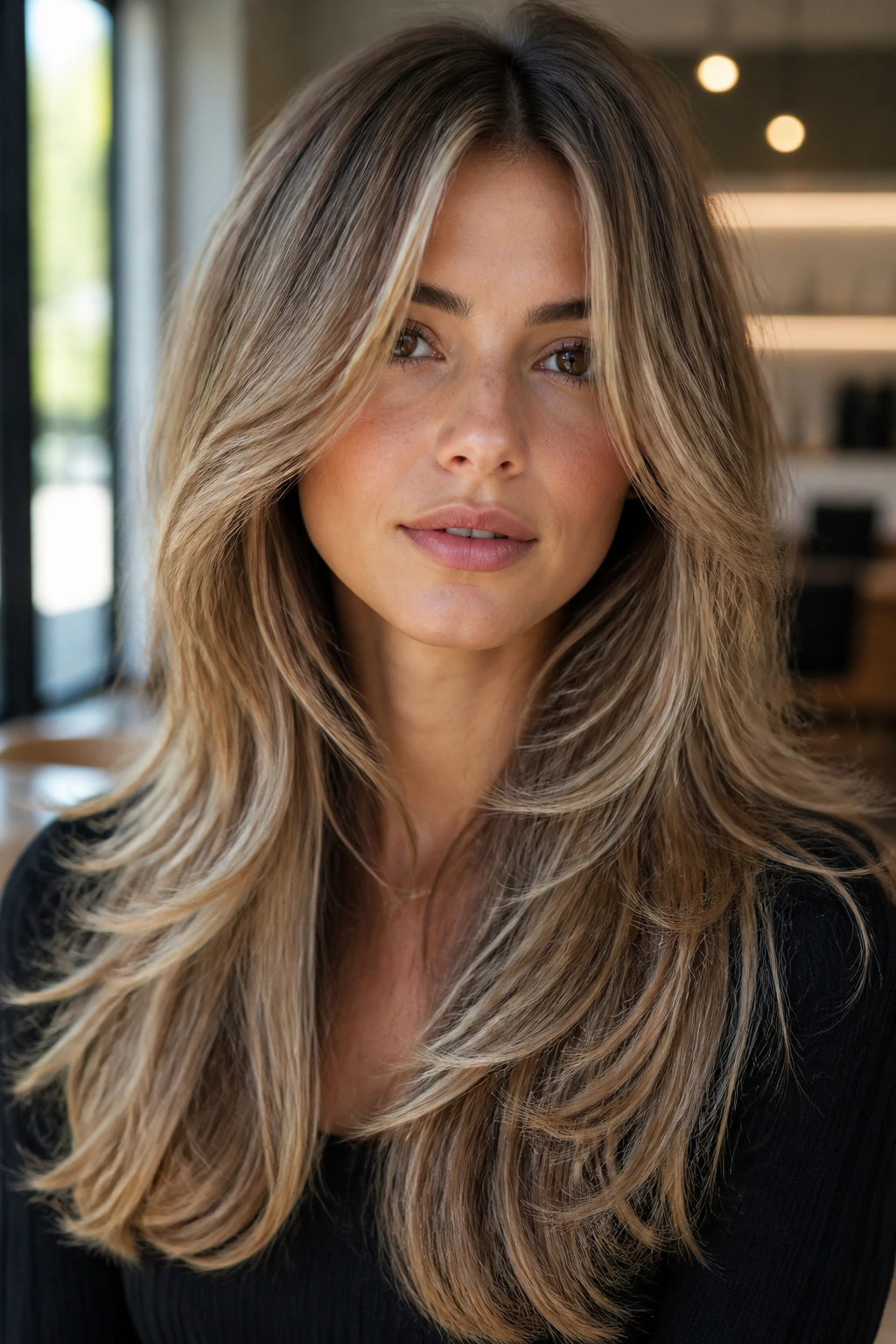
The reason this haircut family keeps working is simple: the shape of the cut follows the shape of the face instead of trying to bulldoze it. A heart-shaped face already gives you strong cheekbones and a wider upper half, so the hair has to be thoughtful about where it adds volume. Put too much lift near the crown, and the forehead takes over. Start too high with the face frame, and the whole style feels top-heavy.
Cascading layers solve that by creating movement in stages. The first visible shift can live around the cheekbone or collarbone, where it softens the face without crowding it. Below that, the length stays long enough to keep a vertical line, which is the part that keeps the chin from disappearing into the style. That vertical line matters more than people expect.
There’s also a texture issue. Long hair tends to collect weight at the bottom, especially when it’s straight or very dense. When that happens, the hair can hang like a sheet and make the face look broader by comparison. Layers take that weight off, but the good ones do it with restraint. You want the cut to move when you turn your head. You do not want it to look like it got into a fight with a thinning razor.
What to Tell Your Stylist Before the Shears Come Out
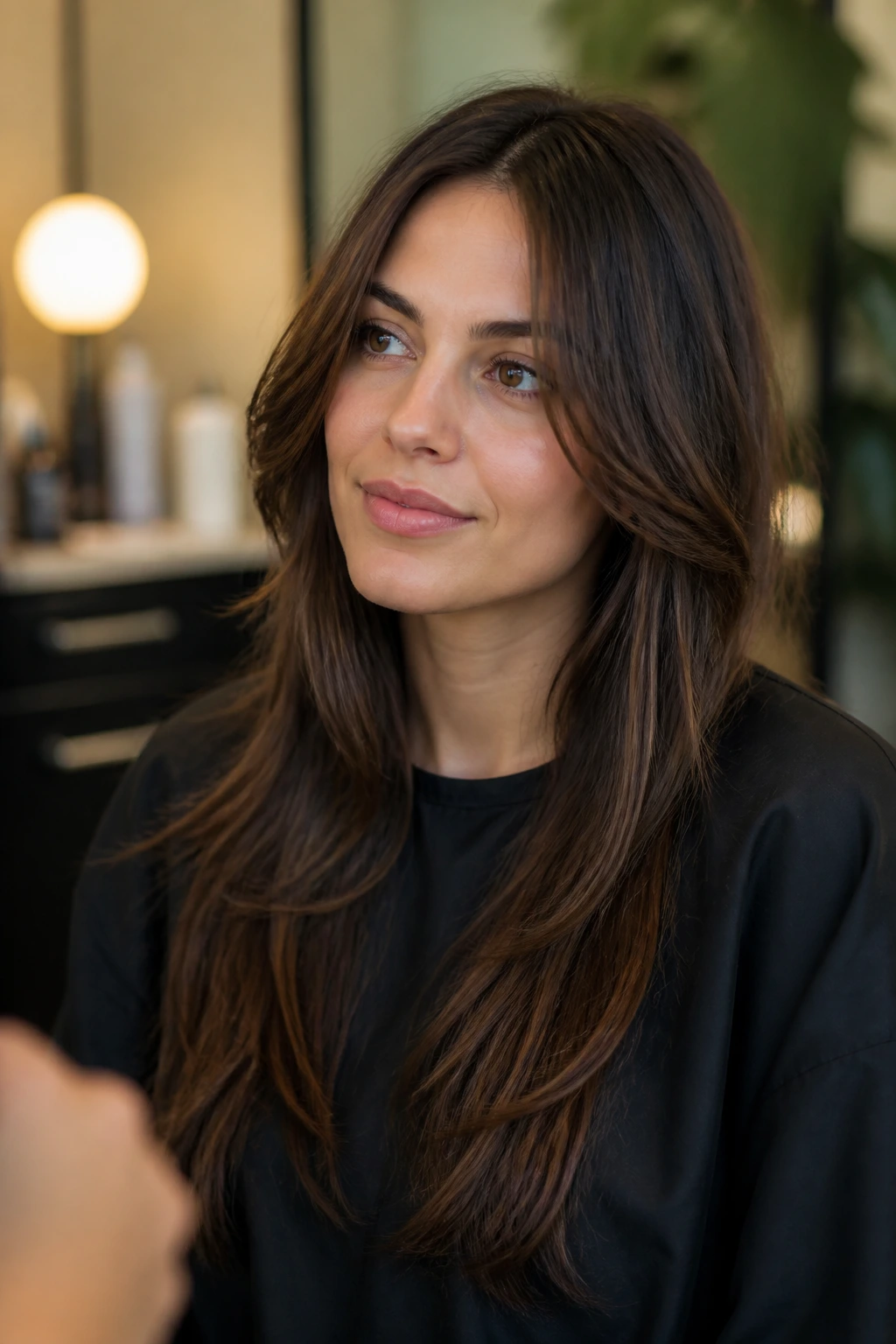
Bring more than one reference photo. One image can be misleading if the model has a different hair density, curl pattern, or part. Two or three photos make the pattern clearer: maybe you like the front length in one picture, the volume in another, and the ends in a third.
- Say where you want the shortest layer to start: around the collarbone, jaw, or cheekbone makes a huge difference in the final balance.
- Name your daily routine: if you air-dry, don’t ask for a cut that only behaves in a blowout.
- Talk about your part: a center part and a side part change where the layers need to sit.
- Be direct about density: fine hair needs fewer obvious steps; thick hair usually needs more internal weight removal.
- Ask for the grow-out plan: long layers should still look decent six to ten weeks later, not only on the day you leave the salon.
If your stylist uses the word “movement” without saying where the movement lives, push for specifics. The exact starting point matters. A lot.
Tools That Make the Cut Easy to Live With
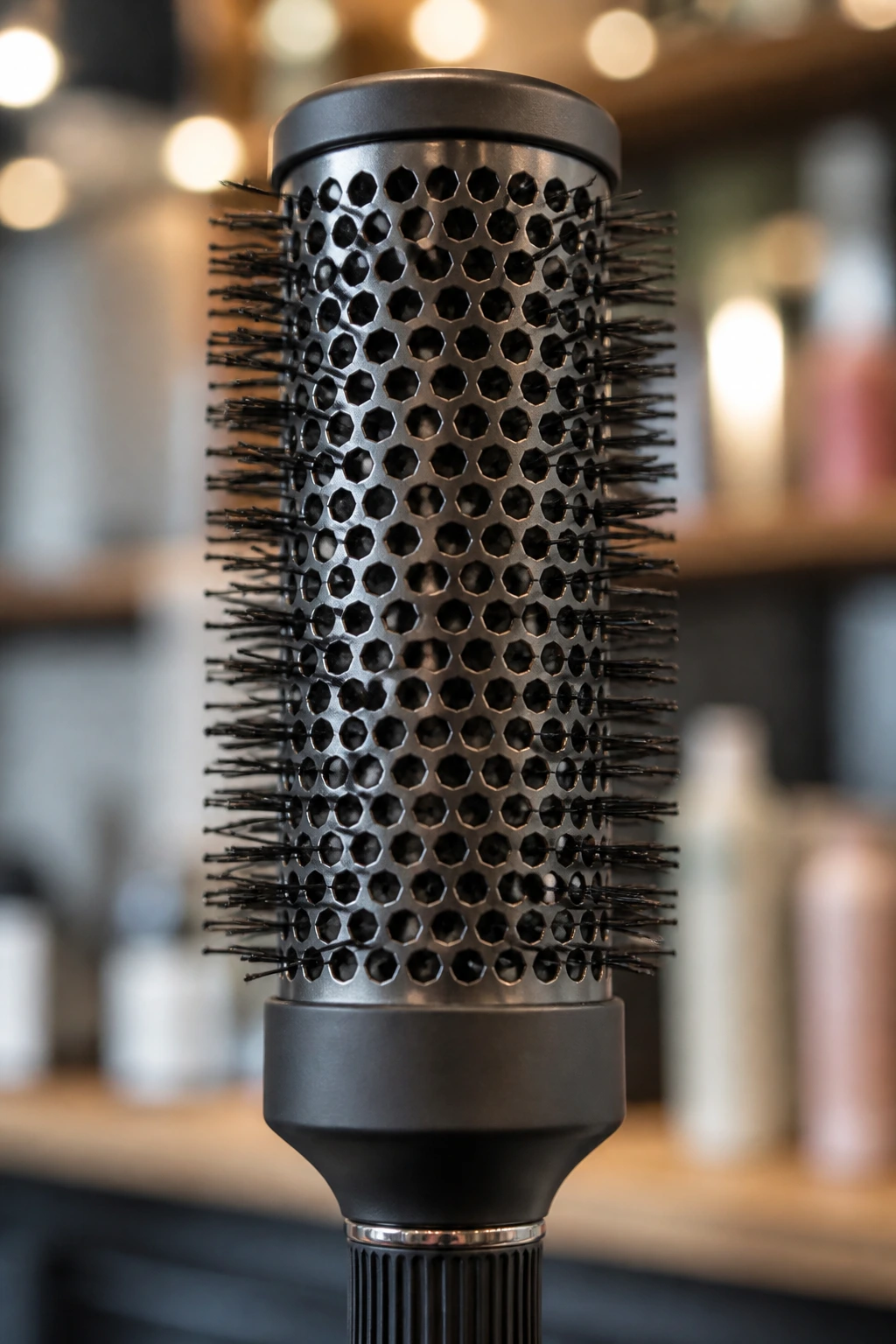
You do not need a trunk full of gadgets, but the right few tools make long layered hair behave.
- Round brush, 1½ to 2 inches: useful for bending face-framing pieces away from the face without making them puffy.
- Vent brush: speeds up rough drying at the roots and helps set a loose shape fast.
- 1 to 1¼-inch curling iron or wand: the sweet spot for soft bends, not tight curls.
- Blow-dryer nozzle: keeps airflow controlled so the layers don’t frizz apart.
- Heat protectant spray: non-negotiable if you use hot tools more than once a week.
- Light mousse or root lift spray: helps keep the crown from collapsing on fine hair.
- Texturizing spray: adds separation to feathered or shag-lite styles.
- Wide-tooth comb: better than a brush on wet wavy or curly hair.
- Dry shampoo: useful for refreshing the front pieces and keeping roots from flattening the whole shape.
How to Wear the Shape So It Looks Intentional
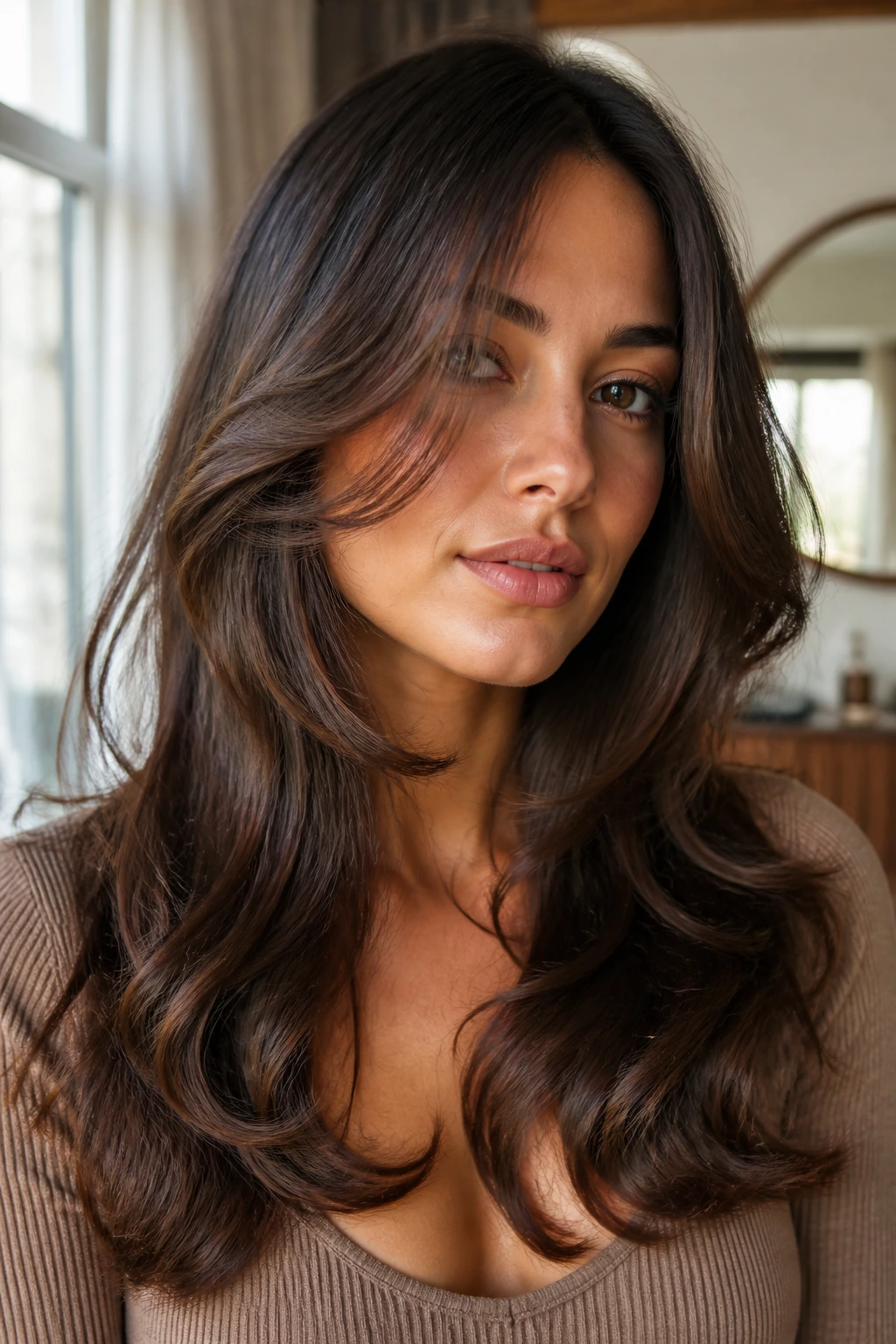
Presentation: Keep the shortest front pieces visible. If you pin them back every day, the haircut loses its point and the face frame turns into a ghost of itself.
Best Pairings: A middle part gives butterfly and curtain styles their cleanest look; a deep side part flatters side-swept fringe and rounded front panels. Soft waves almost always show the layers better than poker-straight hair.
Balance: If your hair is thick, let the mid-lengths carry the movement and leave the perimeter a little denser. If your hair is fine, ask the stylist to keep the front lighter but not sparse, because see-through ends are hard to rescue.
Finish: Use a light serum only on the last two to four inches of hair. Too much product near the face makes the front collapse, and then the whole cut loses that lifted, cascading look.
Styling Upgrades and Personal Tweaks
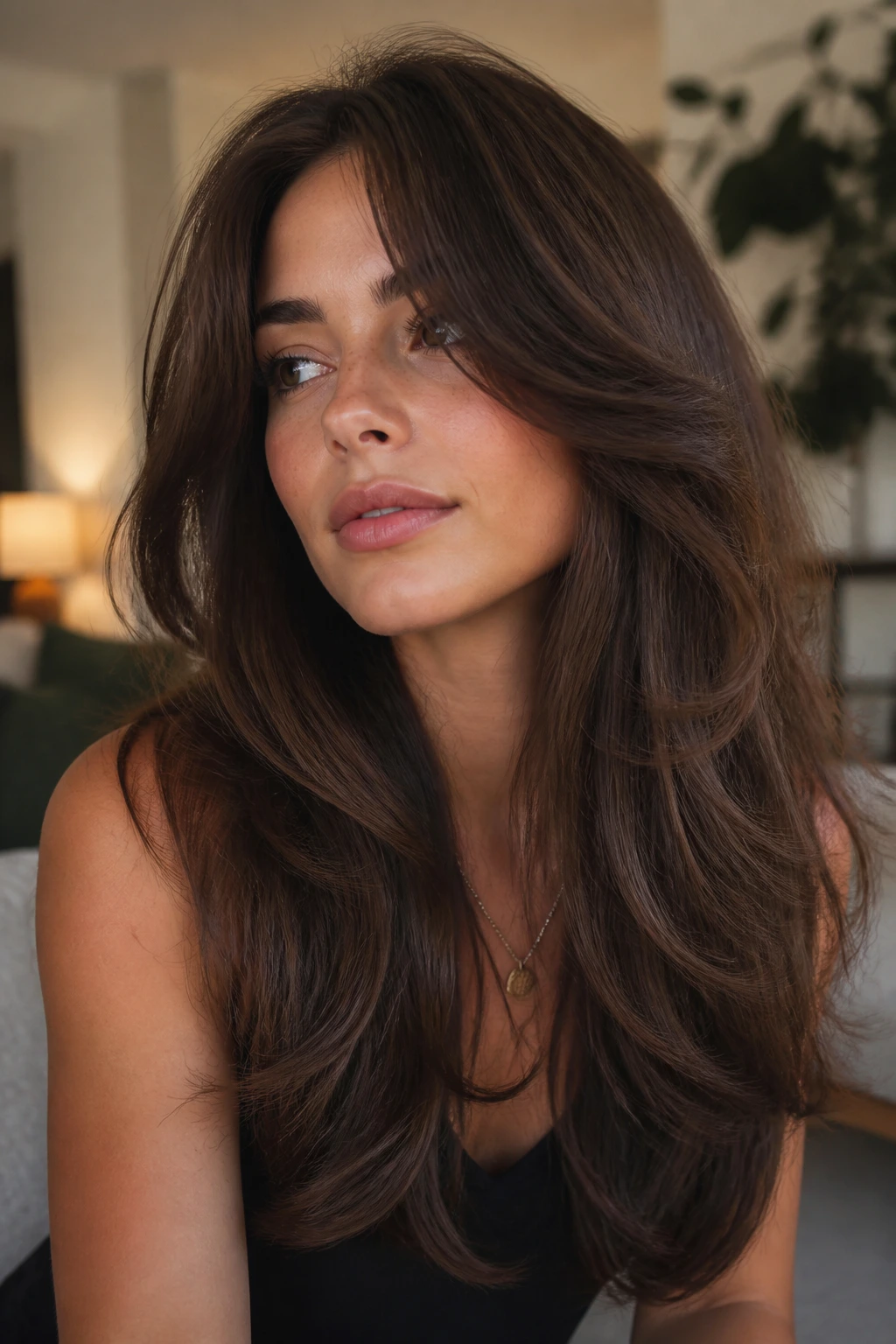
Movement Boost: Wrap the face-framing pieces away from the face for eight to ten seconds with a curling iron, then let them cool in your hand. That small bend is usually enough to make the layers read properly.
Volume Control: If the crown gets tall too fast, rough-dry the roots first and set the ends later. The order matters. Starting with the front usually gives the top too much lift.
Softness: A pea-sized amount of leave-in cream on damp mids and ends can stop the layers from feeling dry and choppy. Go easy. The wrong amount makes long hair slump.
Face-Framing Adjustment: If your forehead is broad, keep the shortest front piece below the eyebrow and let the pieces fall wider at the cheekbone. If your chin feels narrow, keep the lower layers longer so the bottom half keeps some presence.
Make-It-Yours: Straight hair can lean into gloss and smoothness, wavy hair can lean into loose bends, and curly hair should keep the layers long enough for the curls to clump well. Same haircut family, three different moods.
Keeping the Cut in Shape Between Salon Visits
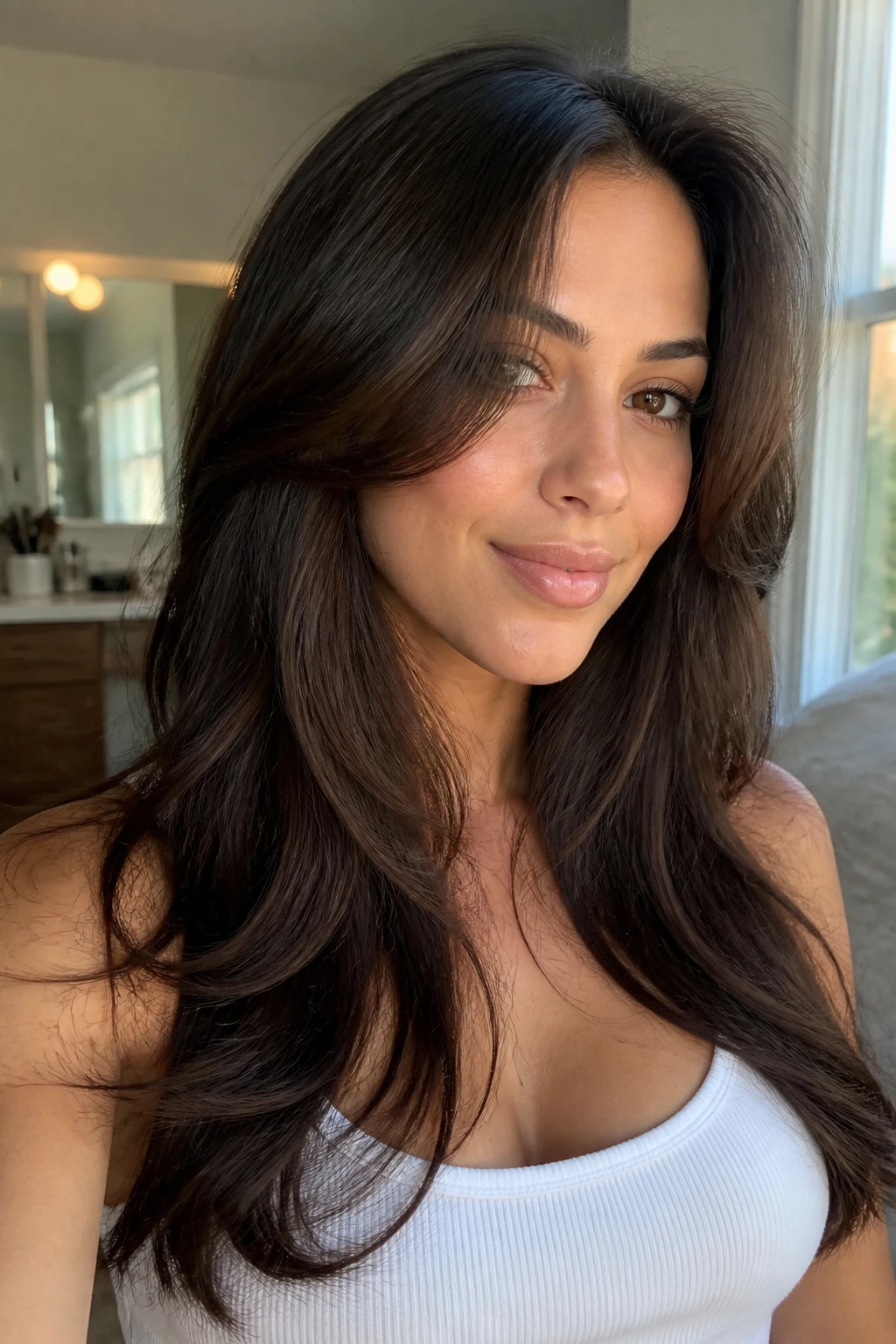
Long cascading layers are forgiving, but they are not maintenance-free. The front pieces usually need a trim before the back length does, especially if they start around the cheekbone or jaw. A trim every 8 to 10 weeks keeps those front layers from swallowing your features. If the layers are longer and more subtle, you can often stretch that to 10 to 12 weeks.
On wash days, do not scrub the crown into a puff and then expect the layers to sit neatly. Dry the roots first, then shape the front. A quick refresh with dry shampoo on day two or three can keep the top from going flat while the ends still look polished. If your hair bends awkwardly at the front after sleeping, wet just those pieces and reset them with a brush and a little heat.
Storage is not the word for hair, but upkeep is. Keep a heat protectant where you can reach it. Keep clips near the mirror. Keep a silk or satin pillowcase if your ends snag easily. Those small things reduce the little frays that make long layers look tired before their time.
Common Mistakes That Throw Off the Balance
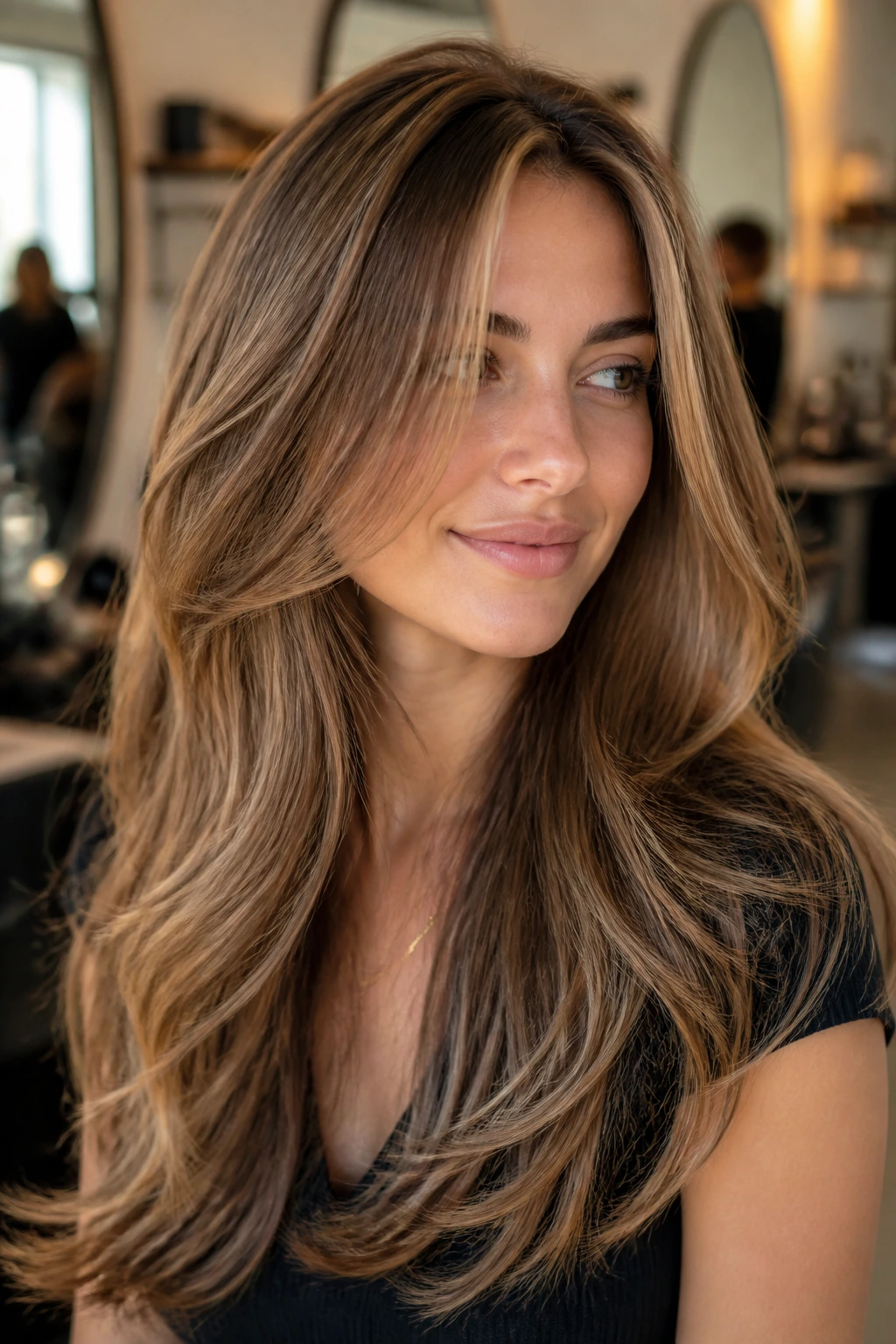
Starting the shortest layer too high: That’s the classic mistake. The hair looks busy at the top, the forehead feels wider, and the whole shape loses its calm. The fix is simple: keep the first visible layer lower, usually around the cheekbone or collarbone, unless your stylist has a very specific reason to go higher.
Over-thinning the ends: This shows up as wispy, see-through points that flutter instead of fall. It happens most often on fine hair or on thick hair that got attacked with too much texturizing. Ask for removal through the inside, not a shaved-down perimeter.
Ignoring the part: A cut designed for a side part can look lopsided in a center part, and the reverse is just as true. Decide how you wear it most days, then cut for that habit. Hair does not care about your vague intentions.
Using heavy product at the face: Creams and oils near the front pieces make them clump and stick, which ruins the airy, cascading effect. Keep heavier product on the ends and use lighter spray or mousse near the top.
Choosing bangs that are too short for the face shape: Short fringe can be cute, but on a heart-shaped face it can also make the forehead the star of the show. Longer curtain or bottleneck bangs usually soften the balance better.
Variations and Adaptations to Try
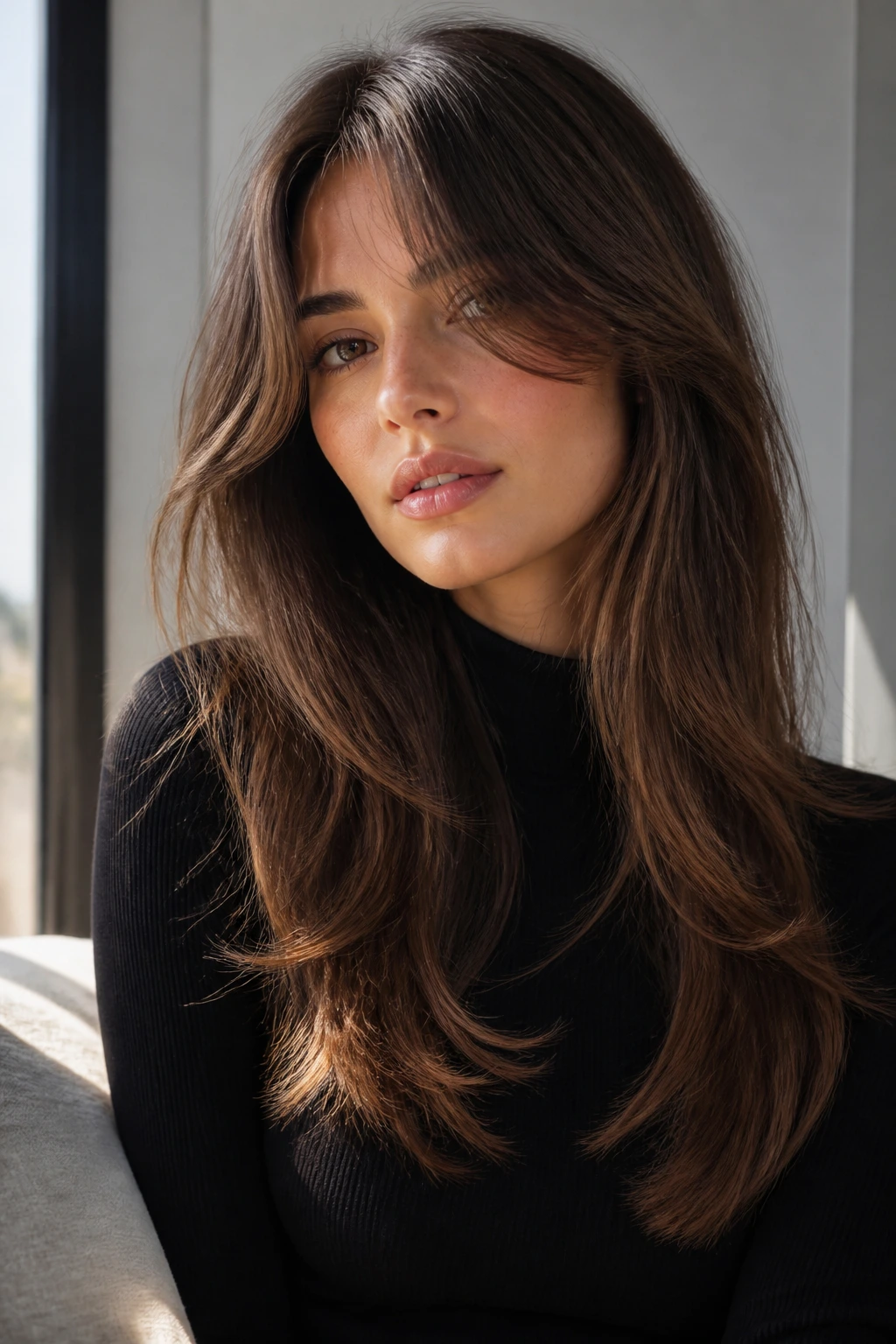
Curtain-Bang Balance: Add a longer curtain fringe to any of the softer cascading shapes if you want the forehead broken up without a full bang commitment. Keep the center shorter and let the sides taper past the cheekbones.
Invisible Layer Cleanup: If your hair is fine or naturally straight, ask for hidden layers only. You get movement without losing the outline, and the haircut keeps its density longer.
Thick-Hair Weight Release: For dense hair, request internal removal through the mids and lower back sections. The silhouette stays strong, but the hair stops expanding like a bell shape on humid days.
Curly Cascade: Cut the layers long enough for each curl to form a proper spiral. Shorter layers can pop out at odd angles and create width near the temples, which is the last thing a heart-shaped face needs.
Low-Effort Grow-Out: Keep all the face framing below the chin and the perimeter mostly one length. That version grows out quietly and is a good choice if salon visits are spaced out.
Blowout-Only Shape: If you love hot-tool styling, lean into feathered or butterfly layers. These cuts reward a round brush and a little patience; they also look a bit flat if you never style them.
Questions People Ask Before They Cut the Layers
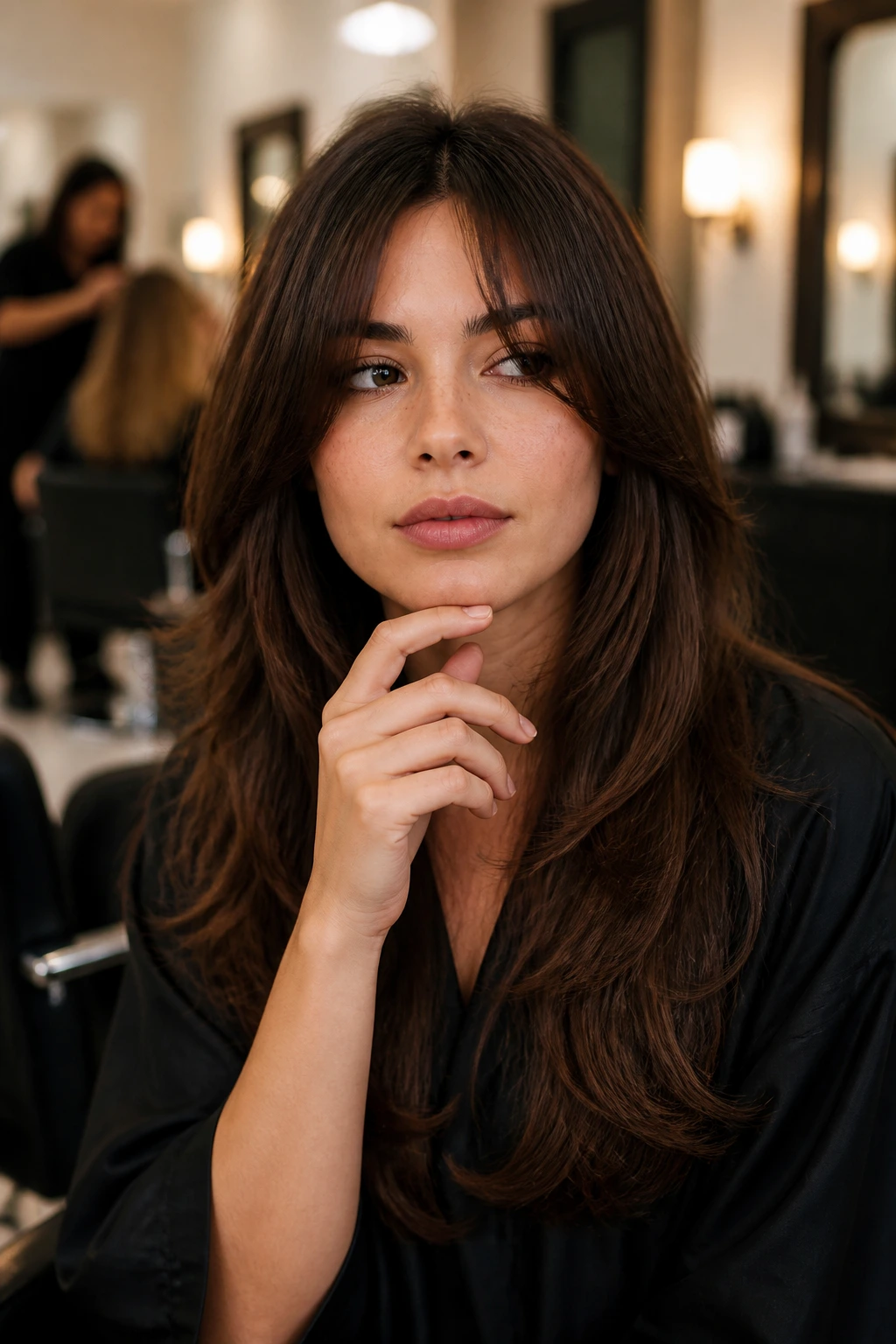
Where should the first layer start on a heart-shaped face?
Usually somewhere between the collarbone and cheekbone, depending on density and part. Starting lower keeps the forehead from looking wider and gives the cut room to move without crowding the face.
Can heart-shaped faces wear curtain bangs with long layers?
Yes, and that combo works especially well when the bangs are longer through the sides. The fringe softens the forehead while the layers carry that softness downward.
Do cascading layers work on fine hair?
They can, but the layers need to be subtle. Fine hair usually looks best with invisible layers or a long, soft face frame rather than a lot of visible steps.
What if my hair is very thick?
Ask for internal weight removal, not a lot of short surface layers. Thick hair needs room to fall, but it still needs a clean perimeter so the ends do not look thin.
Can I still wear a center part?
Absolutely. A center part works well with butterfly layers, curtain bangs, and long face-framing pieces, especially if the front starts low enough to keep the balance soft.
Will these layers make my face look longer?
Some versions will, especially V-cuts and long center-parted layers. If you do not want extra length emphasis, keep more width in the lower front sections and avoid a super-deep taper.
How often do I need a trim?
Most long layered cuts hold together for 8 to 12 weeks before the front starts losing shape. If the face-framing pieces are short, you may want a tidy-up sooner.
What should I avoid if my forehead is broad?
Very short front layers, too much crown volume, and blunt bangs that stop high on the forehead. Those choices push attention upward, which is the opposite of what you want.
The Shape That Keeps Its Softness
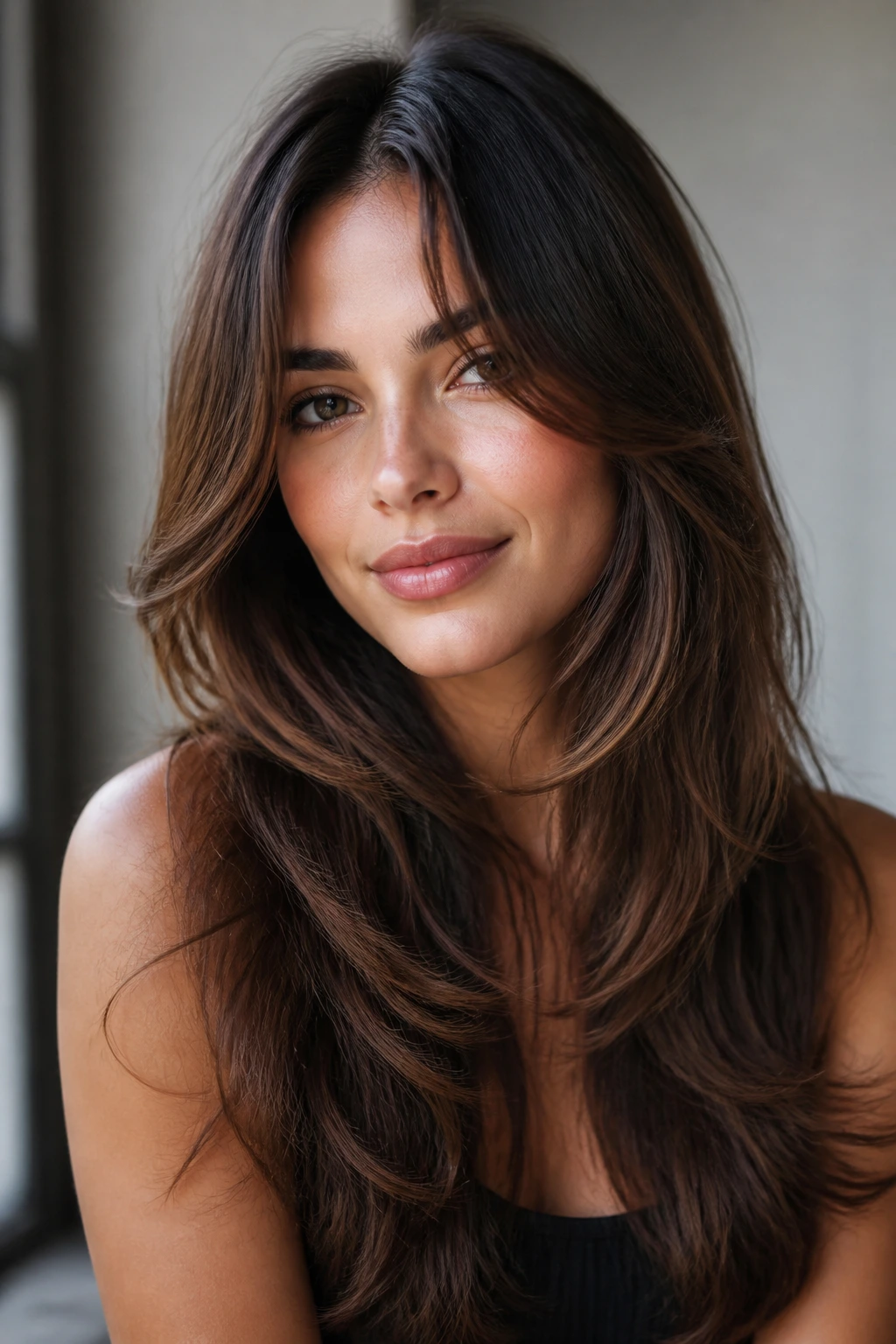
The best cascading layers for long hair and heart-shaped faces do not shout. They guide. They keep the length, soften the top half, and give the front pieces enough shape to frame the face without squeezing it.
That’s why the strongest versions in this list all share the same quiet discipline: they know where to start, where to taper, and where to stop. Get those three points right, and the rest becomes easier than it looks. Bring a photo, speak in specifics, and let the cut do what it’s supposed to do.