



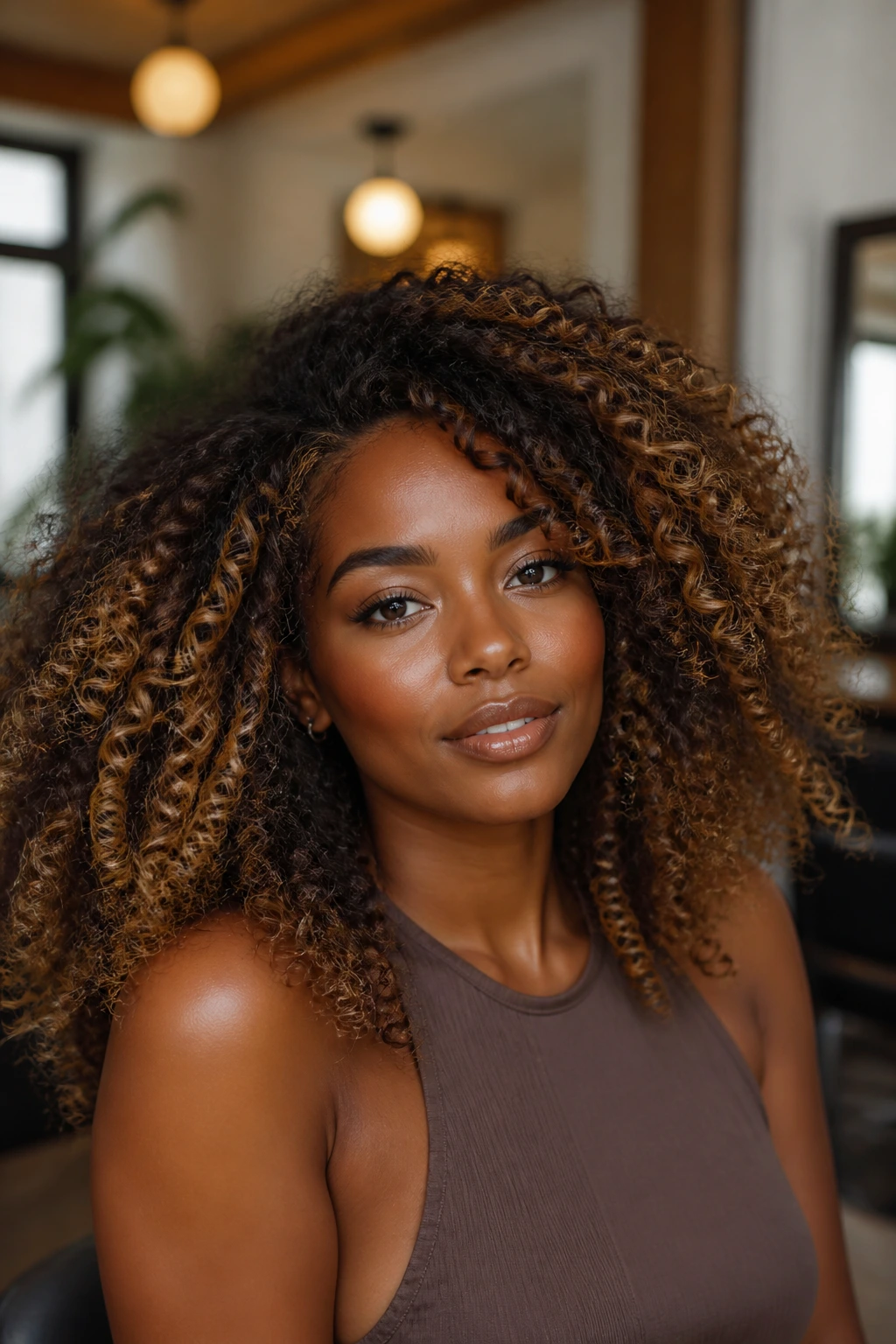
Caramel brown highlights on deep skin tones work best when the warmth is deliberate. Too pale, and the streaks can look dusty. Too orange, and the hair starts arguing with the complexion instead of sharpening it.
The sweet spot sits in that narrow band between honey, toffee, and bronze — the zone where curls pick up light, braids look more dimensional, and a straight blowout gets a soft gleam around the face. The exact shade matters, but so does placement. A ribbon through the mid-lengths lands differently than a money piece at the cheekbones, and on deep bases that difference is everything.
What people often call “caramel” is really a family of tones. Some lean golden, some lean beige, some sit closer to chestnut with a warm glow. Once you see the range, the whole idea gets more useful. You stop chasing blonde-adjacent streaks and start choosing a highlight pattern that works with your skin, your texture, and the way you actually wear your hair.
Why You’ll Love This Collection
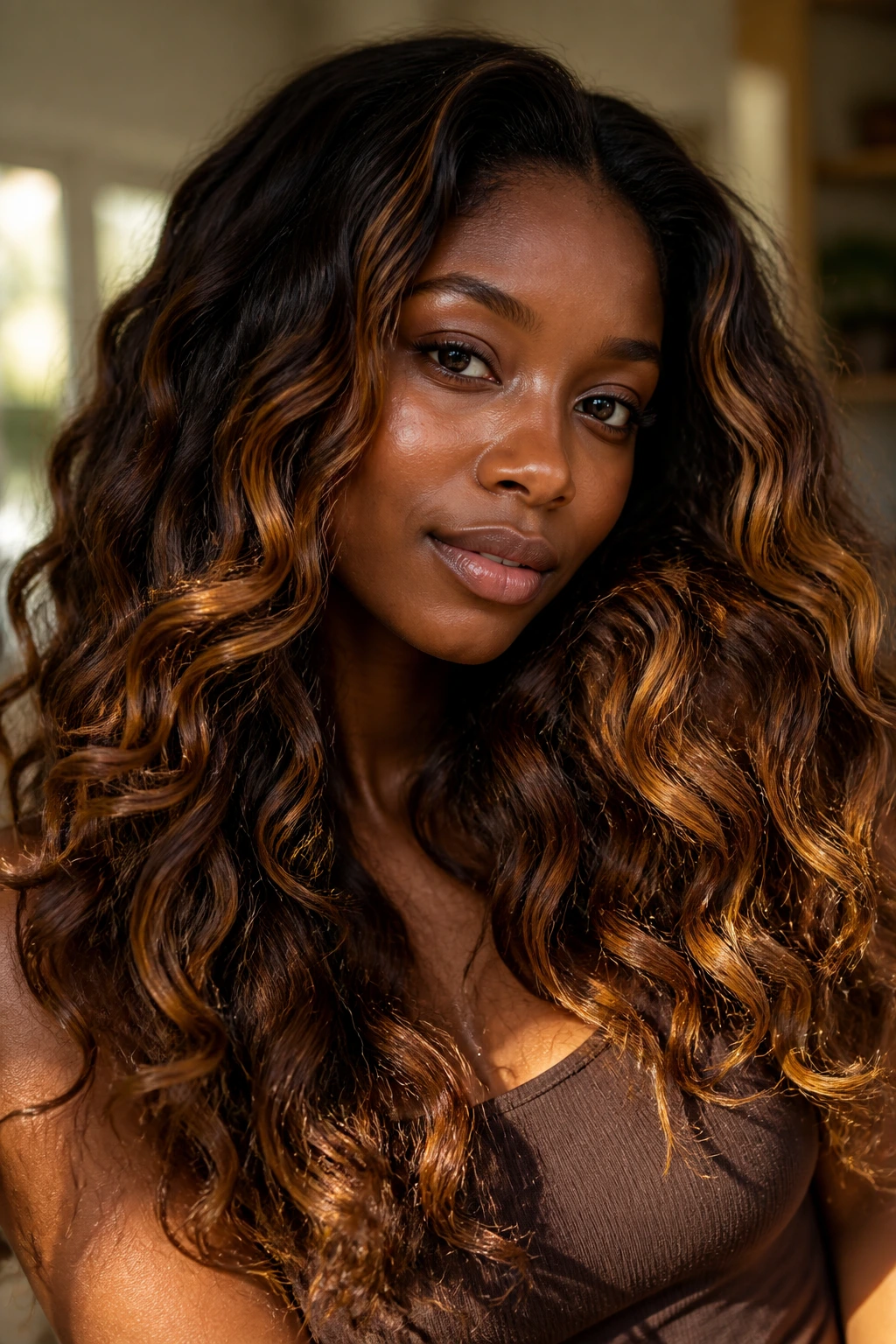
-
Warmth Without Ash: These looks stay in the caramel-to-toffee lane, so they brighten deep complexions instead of turning gray at the ends.
-
Placement You Can Control: You can go tiny with babylights, medium with ribbons, or bold with a money piece, and each version reads differently on dark hair.
-
Soft Grow-Out: Rooted balayage, halo placement, and veil highlights let the color fade out cleanly instead of drawing a hard line across the head.
-
Texture-Friendly Dimension: Curly, coily, wavy, and straight hair all show caramel in a different way, which means the same color family can look tailored, not generic.
-
More Than One Mood: Some of these styles feel subtle and office-friendly; others lean high-contrast and glamorous. Same palette, very different attitude.
-
Better Than Random Blonde: A thoughtful caramel shade gives you brightness without draining the depth that makes deep skin tones look rich.
1. Honey-Glazed Face-Framing Ribbons
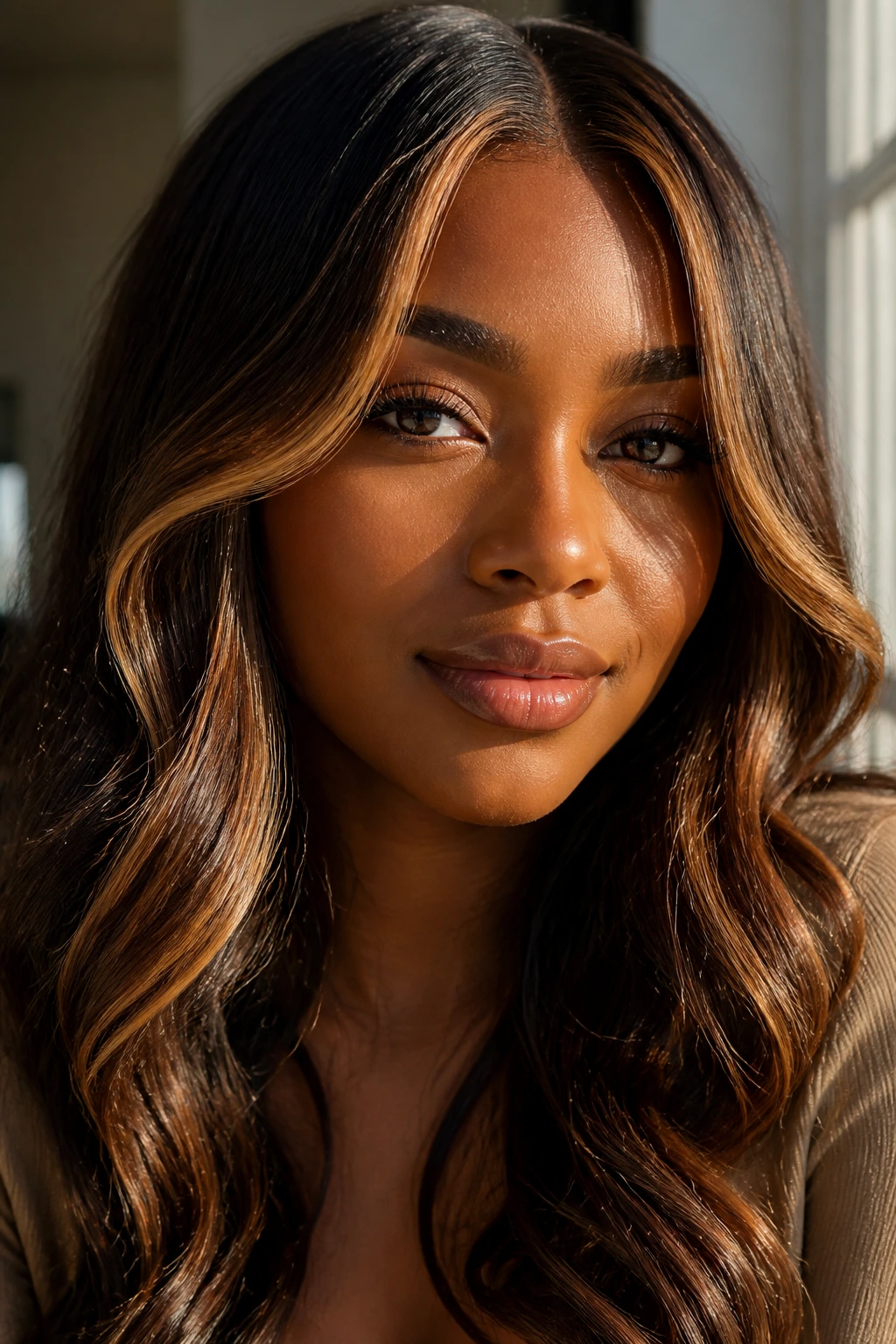
If you want the fastest visual payoff, this is it. A few honey-caramel ribbons around the front hairline pull attention to the eyes and cheekbones, and on deep skin they read like jewelry instead of streaks.
Why It Flatters Deep Skin
- The warm gold sits close to the natural warmth in melanin-rich complexions.
- Narrow placement keeps the rest of the hair rich and dark, so the contrast feels polished.
- It works on curls, coils, and silk presses because the light catches movement near the face first.
Ask for this: two to four face-framing ribbons, each about thumb-width or narrower, with a soft root so the color doesn’t start abruptly at the scalp.
That’s the whole trick. Keep the rest of the hair deeper, and the front pieces do the talking.
2. Chestnut-Caramel Balayage
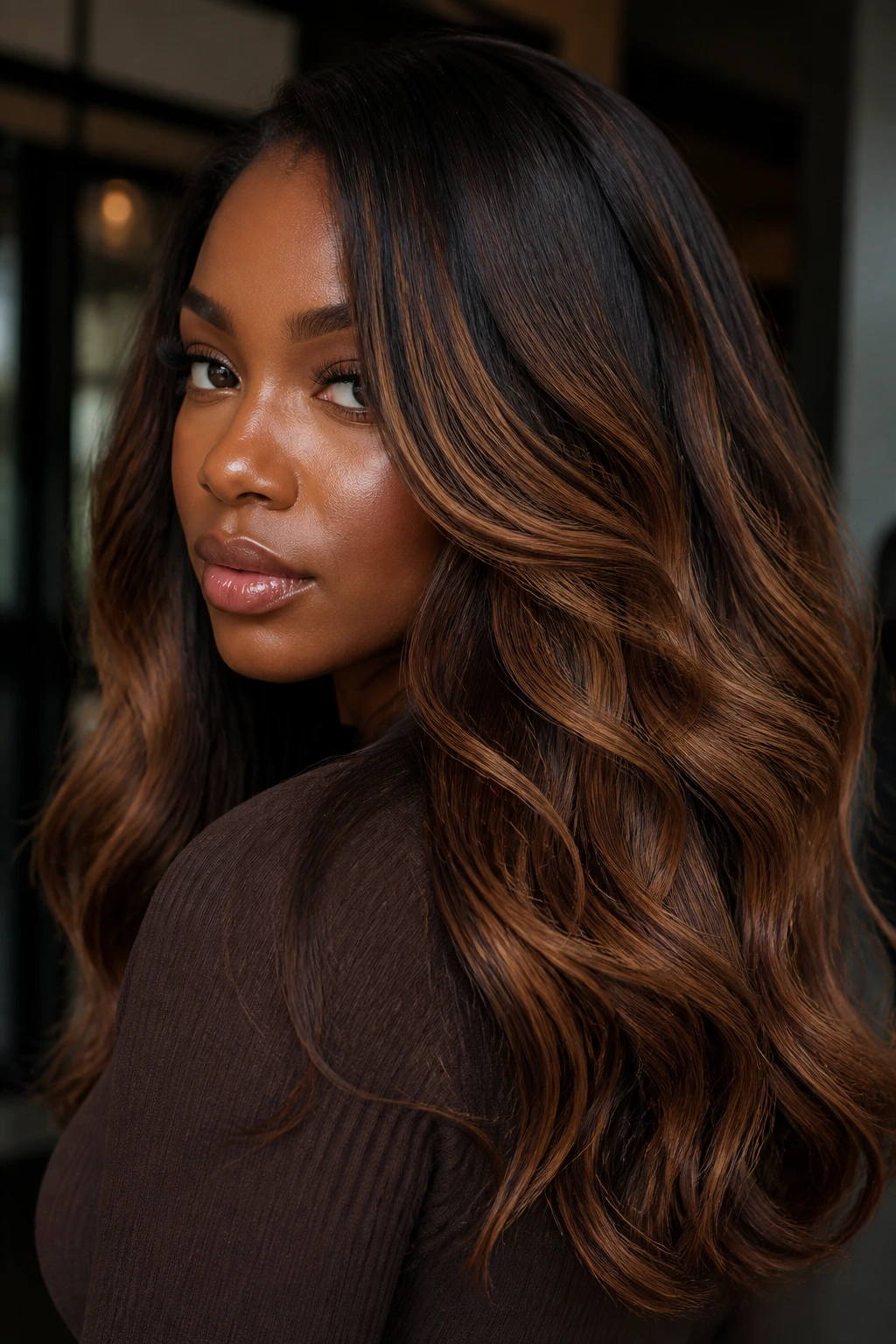
Chestnut-caramel balayage is the low-drama version of highlights. The colorist paints warm brown lightness through the mid-lengths and ends, so the hair shifts from espresso roots to a toasted chestnut finish without the hard line you get from foil stripes.
On deep skin, this works because the highlight stays in the same family as the base. You get depth first, brightness second. That order matters. If your hair is dense or long, the painted pieces also keep the ends from disappearing into one solid block under indoor light.
I like this choice for people who wear their hair loose most days and want movement, not flash. It’s one of those styles that looks even better after the first few washes, when the root shadow softens and the caramel settles in.
3. Melted Toffee Money Piece
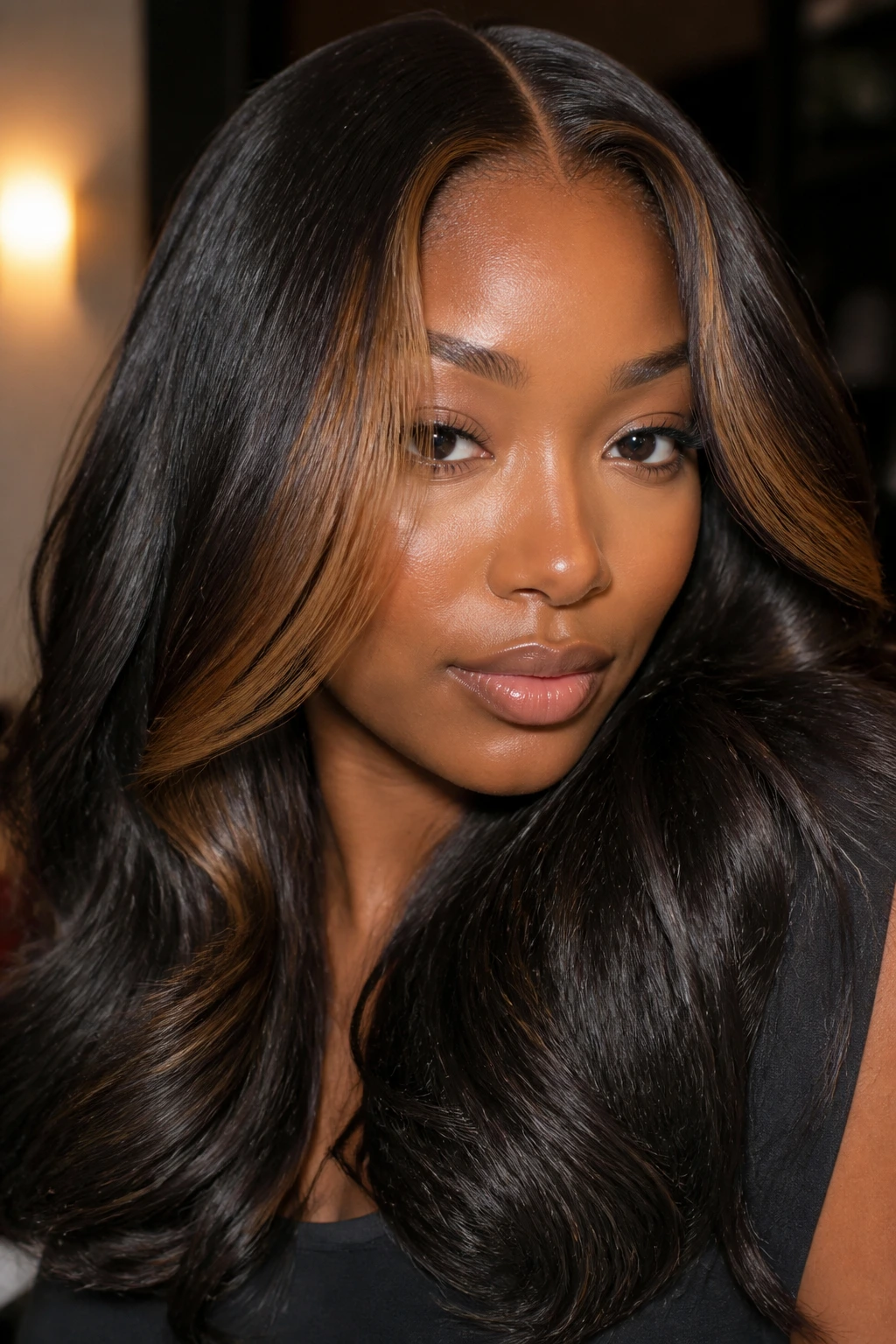
Want the hair-color equivalent of a spotlight? The toffee money piece does exactly that. It puts a brighter panel at the part and around the temples, then lets the rest of the hair stay rich and dark so the face frame does the heavy lifting.
How to Wear It
Keep the lightness warm, not yellow. On deep skin, a toffee panel with a little beige or bronze reads clean; a pale blonde strip often looks disconnected unless the rest of the color is intentionally high-contrast. Ask for a soft root, too. That tiny shadow stops the front from looking like a sticker dropped onto the hair.
This style loves a middle part, a curled-under bob, or long layers with a bend through the ends. If you pull your hair back a lot, the money piece shows even when the rest is tucked away.
4. Cinnamon-Sugar Babylights
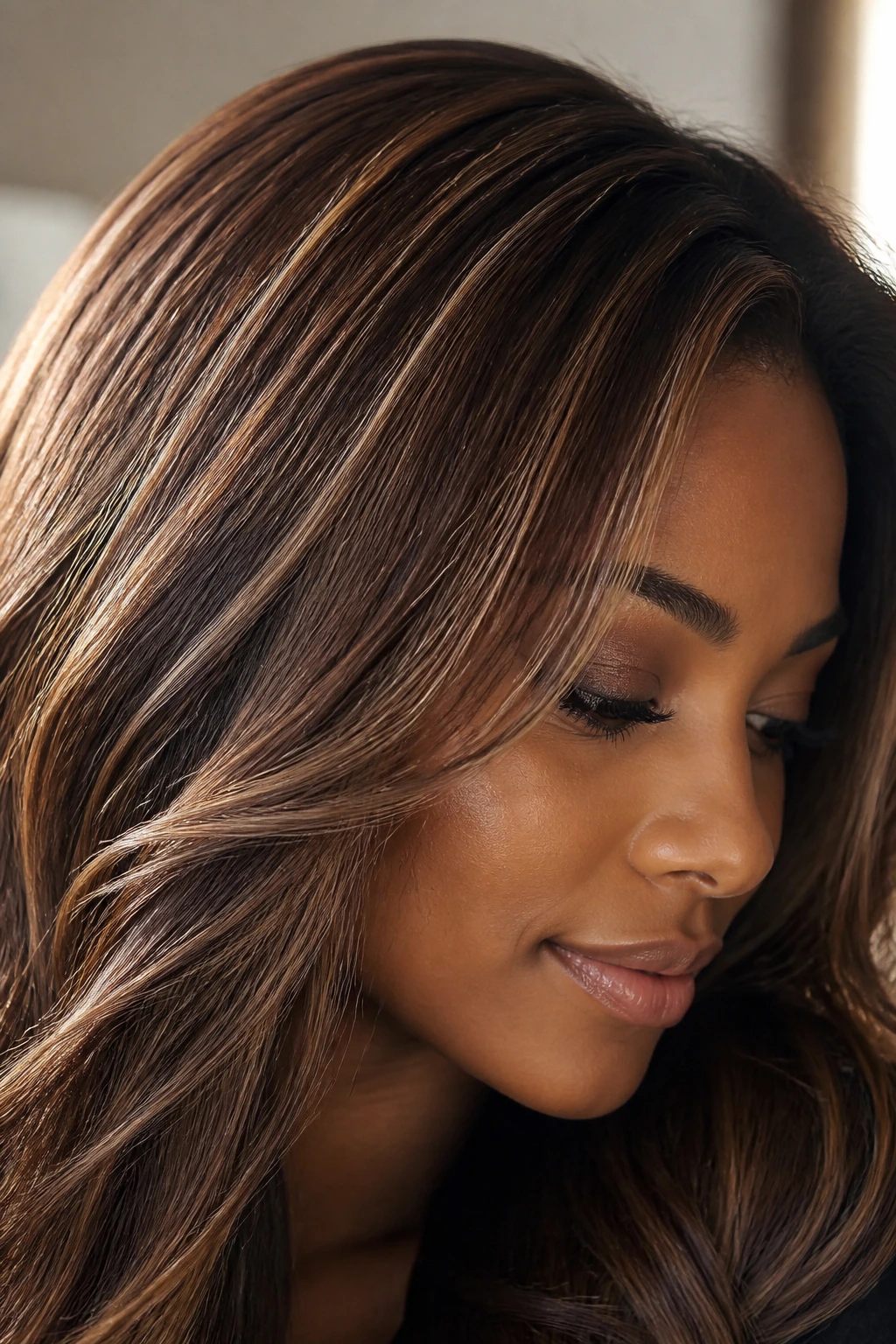
In indoor light, babylights can do more than chunkier highlights ever will. These ultra-fine threads of cinnamon and caramel flicker through the hair one strand at a time, so the color looks woven in rather than painted on.
The best version on deep skin keeps the brightness very thin and evenly distributed. That’s what gives the hair shimmer without turning the top layer patchy. On coily hair, babylights show up most when the hair is stretched or defined; on straight hair, they look like a soft sparkle across the crown.
- Ask for a micro-weave, not broad slices.
- Keep the toner warm and beige.
- Let the highlights sit mostly on the surface if you want a subtle result.
Tiny work. Big payoff.
5. Amber Brown Ribbon Highlights
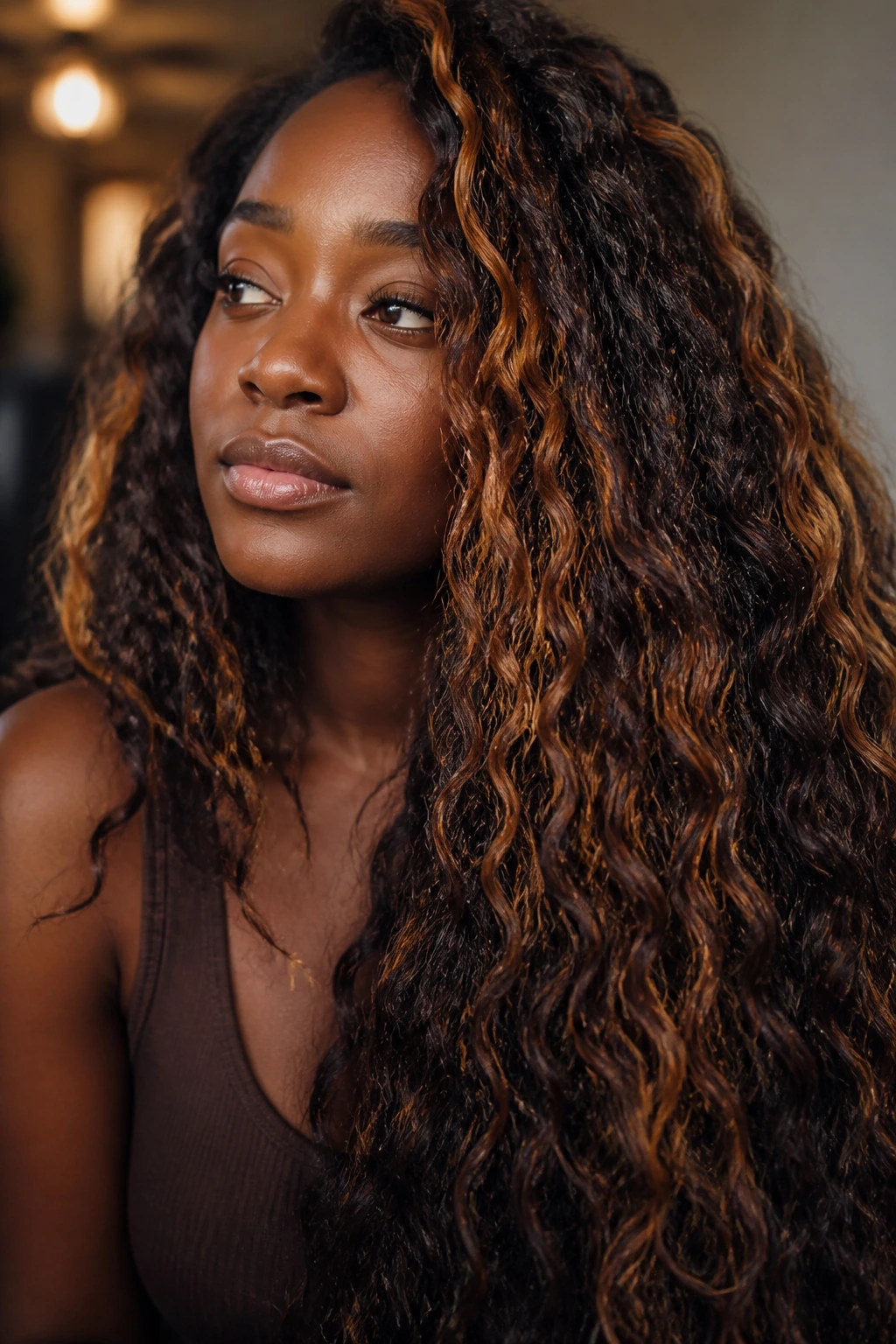
Amber-brown ribbons are for people who want visible warmth, not a whisper of it. The color sits a shade or two lighter than the base, then runs in loose bands through curls, braids, or layered blowouts so the movement reads in every turn of the head.
On deep skin, this shade works because it lands between golden and chestnut. It’s bright enough to show, but not so light that it starts shouting. I especially like it on long, textured hair where a wide ribbon can sit on top of a curl clump and still look soft. Narrow highlights disappear there. These don’t.
If your hair has a lot of density, amber ribbons keep the shape from going flat. They also hold their shape under lamp light and daylight, which is one of those small things that matters more than people admit.
6. Cocoa-to-Caramel Ombré
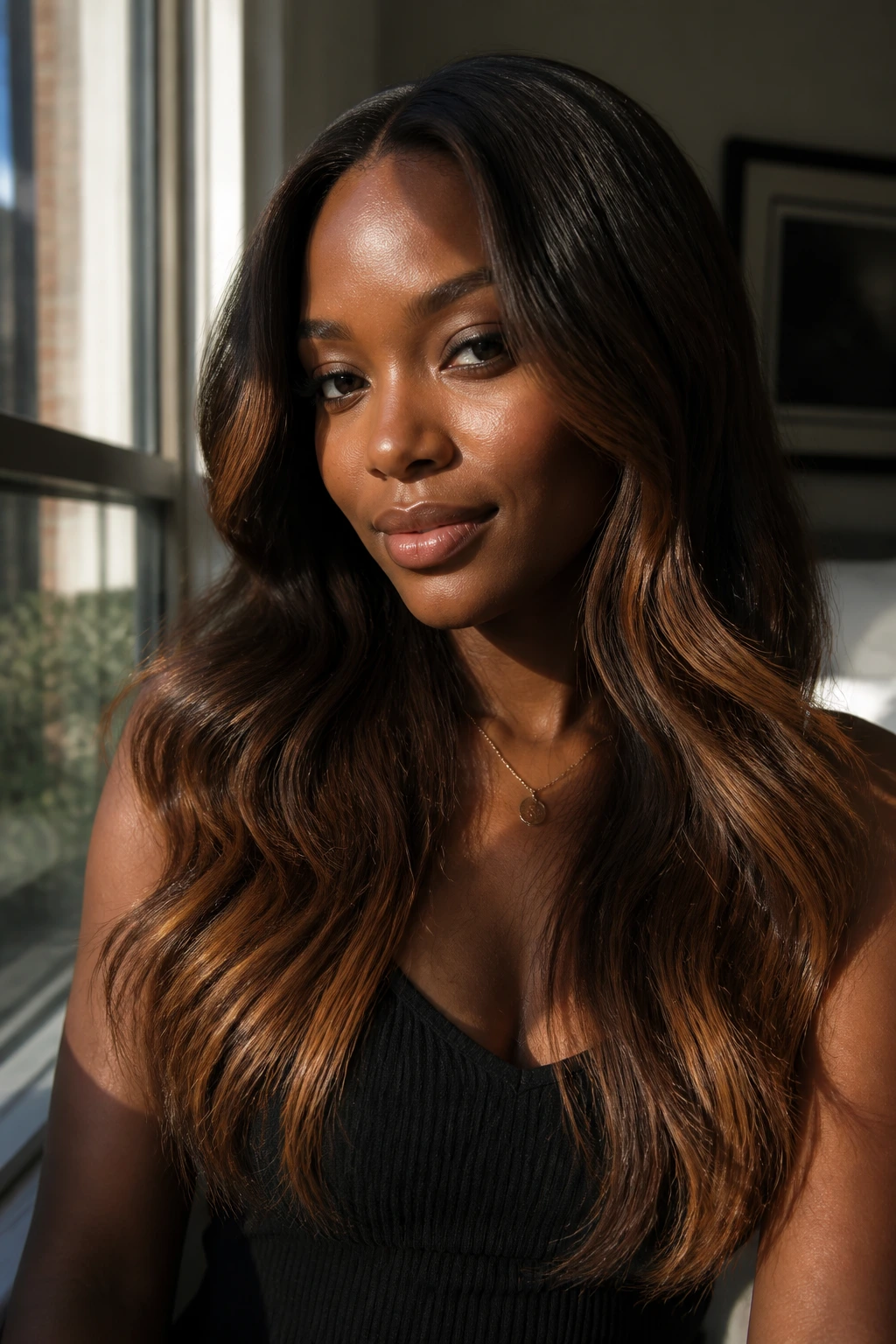
If you want the ends lighter but don’t want stripes from root to tip, ombré is the cleanest route. Cocoa at the top, caramel at the bottom, and the transition in between stays blurred enough to survive a grow-out phase without looking harsh.
This version suits long hair best, especially cuts with layers or a soft U-shape. The lightness has room to spread, which matters because a blunt hemline can make ombré look heavy at the bottom. On deep skin, keep the end shade in the caramel-to-toffee range, not pale beige, or the contrast can feel disconnected from the base.
If you wear your hair curly, the fade looks even softer because each coil picks up the lighter ends a little differently. Straight hair shows the gradient more clearly, which is useful if you want the shift to be obvious right away.
7. Sable and Caramel Peekaboo Layers
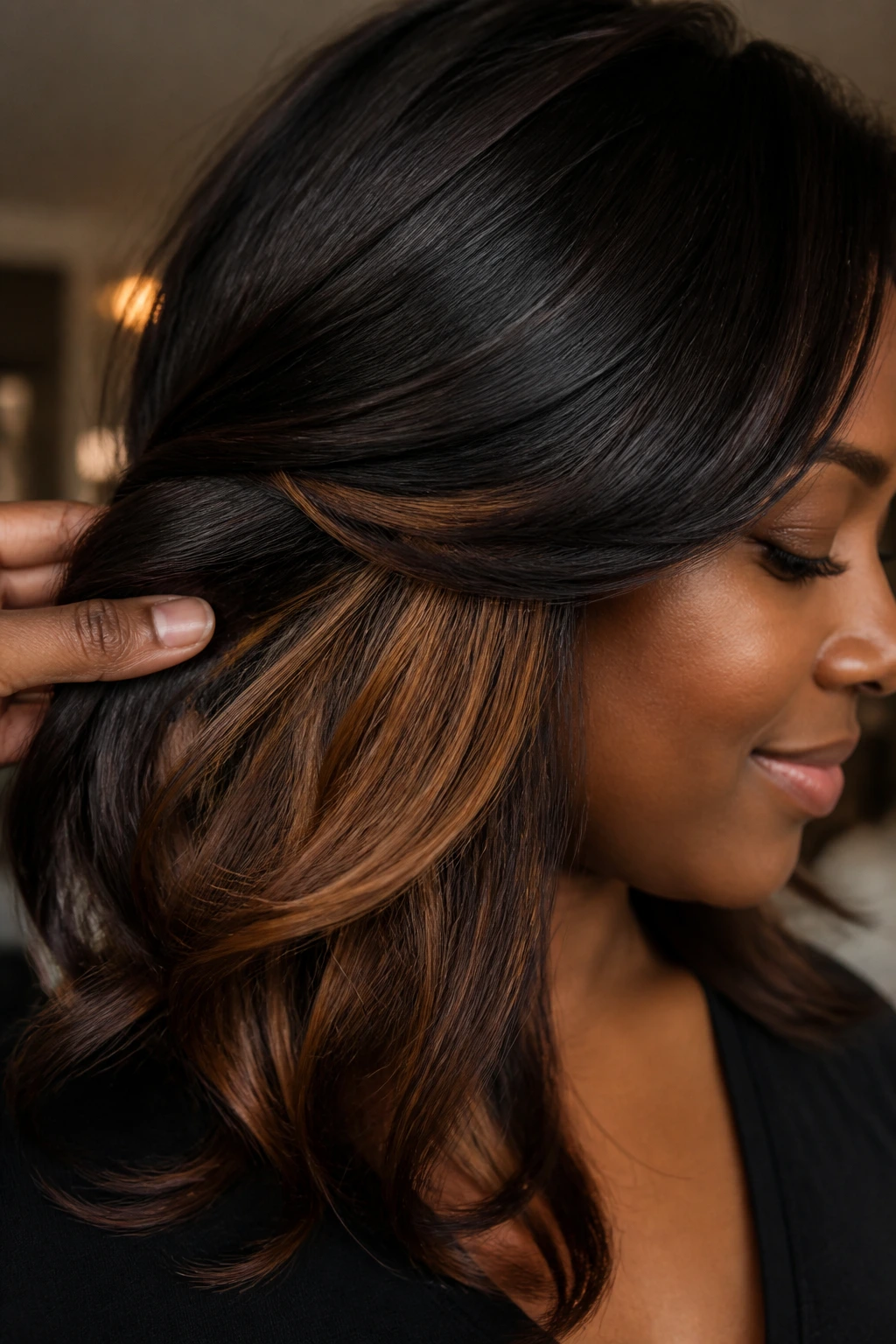
There’s something sly about peekaboo color. You see the dark top layer first, then a flash of caramel when the hair moves or gets tucked behind the ear. On deep skin, that hidden brightness can be more interesting than an all-over highlight because it gives you surprise without brightness overload.
Best Placement
- Ask for the lighter pieces underneath the top layer, especially around the mid-back or nape.
- Keep the front sections darker if you want the look to stay conservative.
- Use curls or a half-up style when you want the caramel to show more.
This is the choice for people who want color but don’t want to live in high-contrast hair every day. And yes, it looks especially good in ponytails. The hidden pieces pop the moment the hair lifts.
8. Bronze Gloss Highlights
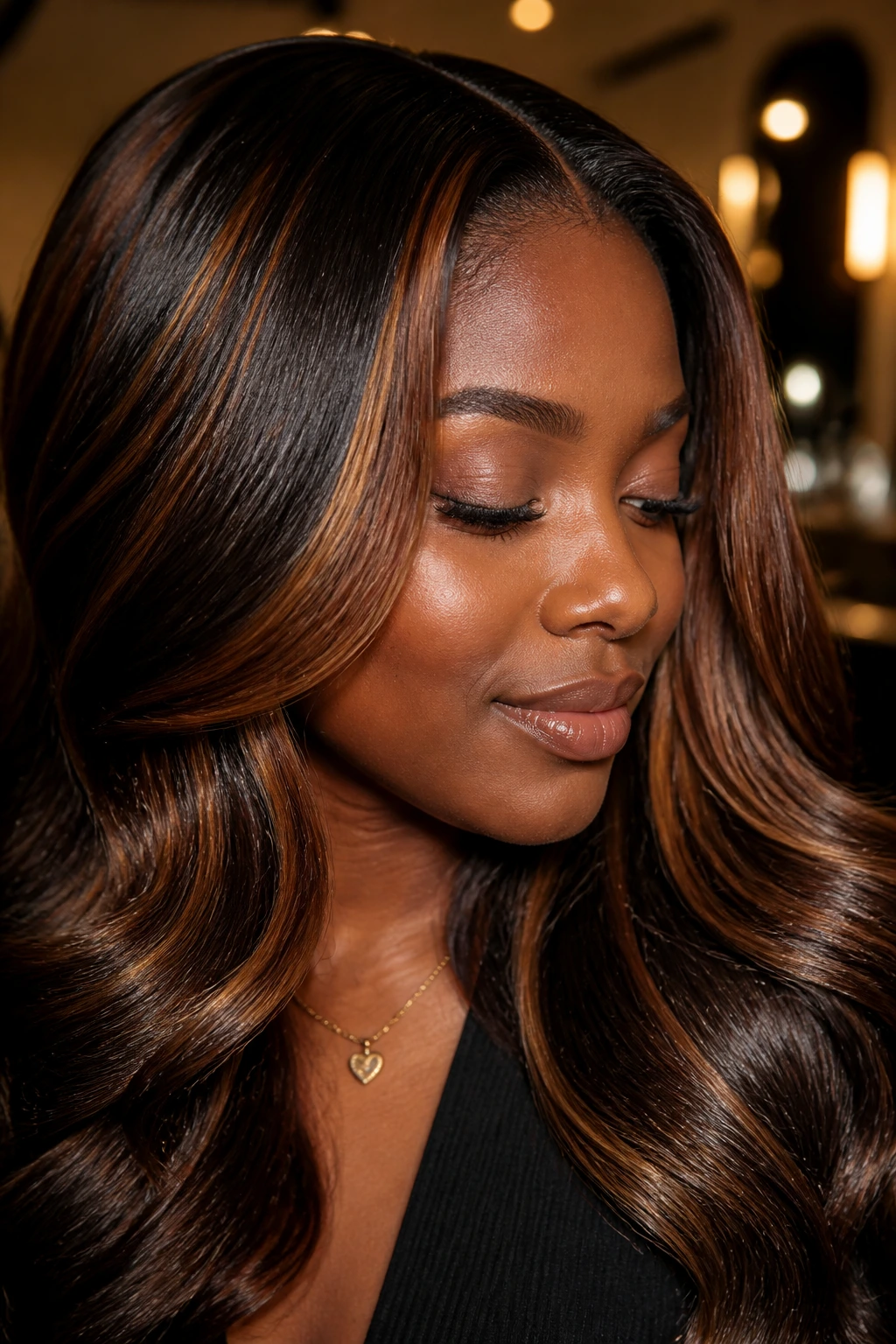
Bronze gloss highlights are less about streaks and more about sheen. Instead of chasing bright blondes, the colorist uses a bronze-toned gloss or soft highlight weave to give the hair a reflective finish that still sits comfortably beside deep skin.
That matters if your base is already rich and healthy-looking. A full set of lighter ribbons can sometimes break the visual weight of the hair. Bronze keeps the depth intact. It works especially well on silk presses, stretched curls, or blowouts where you want each section to catch a little light without losing the dark-brown drama underneath.
I like bronze on people who wear gold jewelry a lot. The tones echo each other. Not in a matchy way. In a way that makes the whole look feel connected.
9. Warm Chestnut Contour Highlights
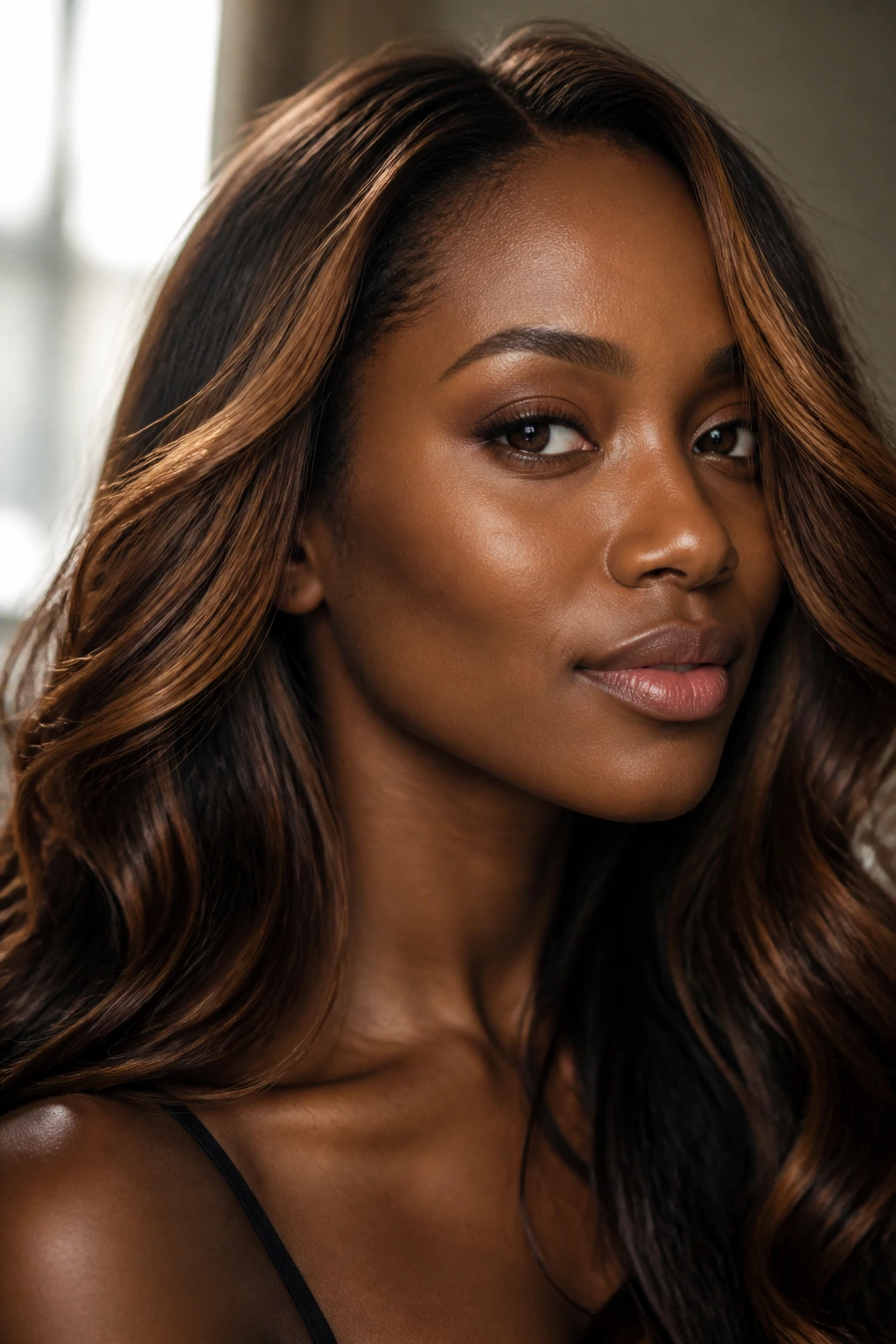
Can highlights actually shape the face? Yes, if they’re placed with a little discipline. Warm chestnut contour highlights arc around the temples, cheekbones, and outer layers so the lighter pieces land where the eye naturally looks first.
The shade stays in the chestnut family, which keeps the contrast soft enough for deep skin. You get definition without a stripy front panel. This is one of the better choices for layered cuts because the color follows the shape of the haircut instead of fighting it.
Where to Place Them
- Start the brightest pieces near the cheekbone, not at the scalp.
- Keep the crown a shade deeper so the face frame stands out.
- Blend the ends slightly warmer than the mid-lengths to avoid a blunt line.
This is the kind of placement that makes people think your haircut is sharper than it actually is. That’s the payoff.
10. Maple Syrup Ends
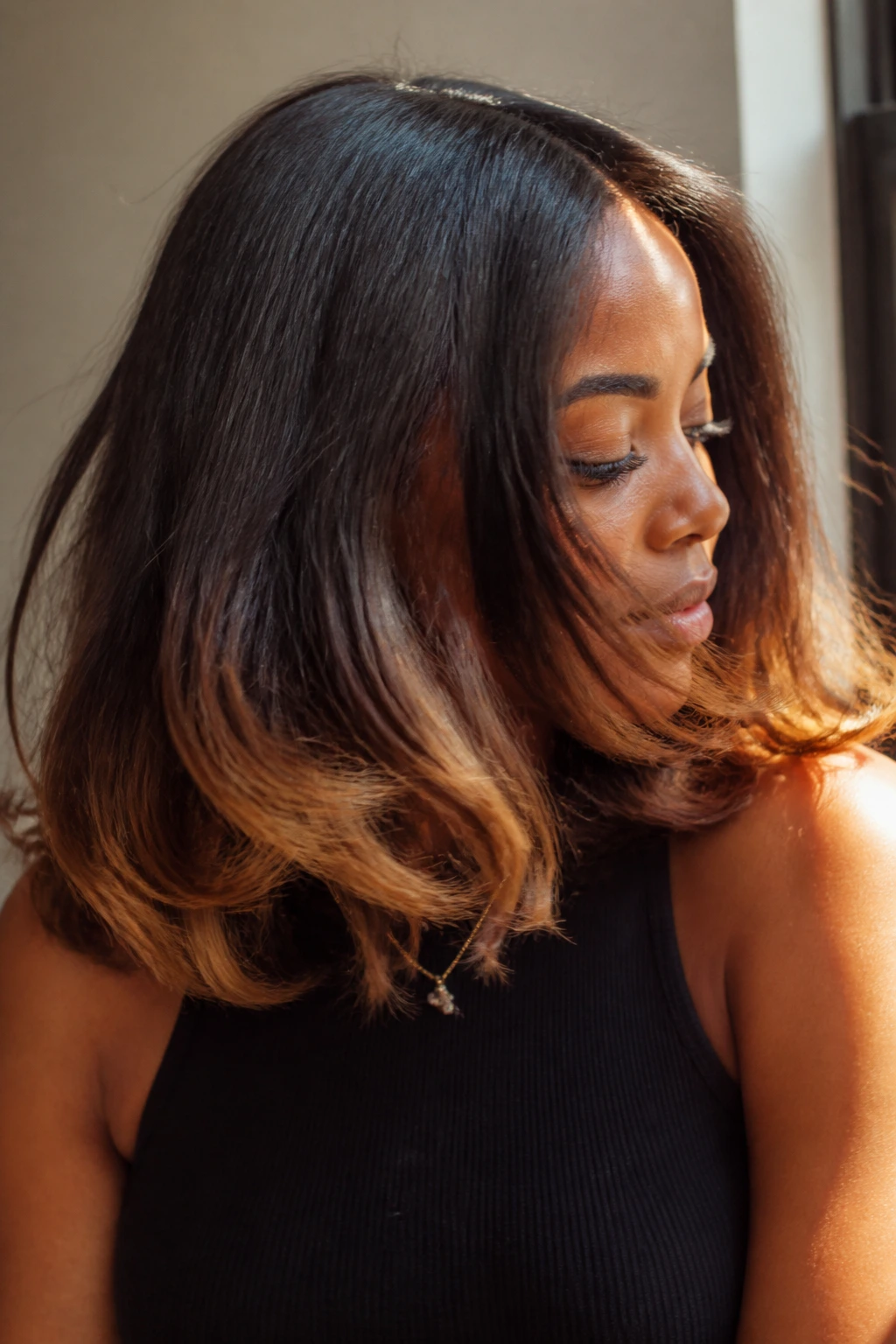
Maple syrup ends make the last few inches of the hair feel like they were dipped in warm light. The roots and mid-lengths stay dark, then the ends soften into a richer caramel that’s sweet, glossy, and a little dramatic without getting loud.
This one needs length. Shoulder-length hair can handle it, but it really opens up on longer cuts where the fade has space to breathe. On deep skin tones, the maple shade should stay warm and brown, not blonde, so the ends still belong to the base color family. That keeps the whole look grounded.
If you wear your hair in a twist-out, loose curls, or a blowout with a bend at the bottom, the lighter ends swing around and show off the movement. If your ends are dry, though, this style will expose that fast. Trim first. Color second.
11. Caramel Foilayage
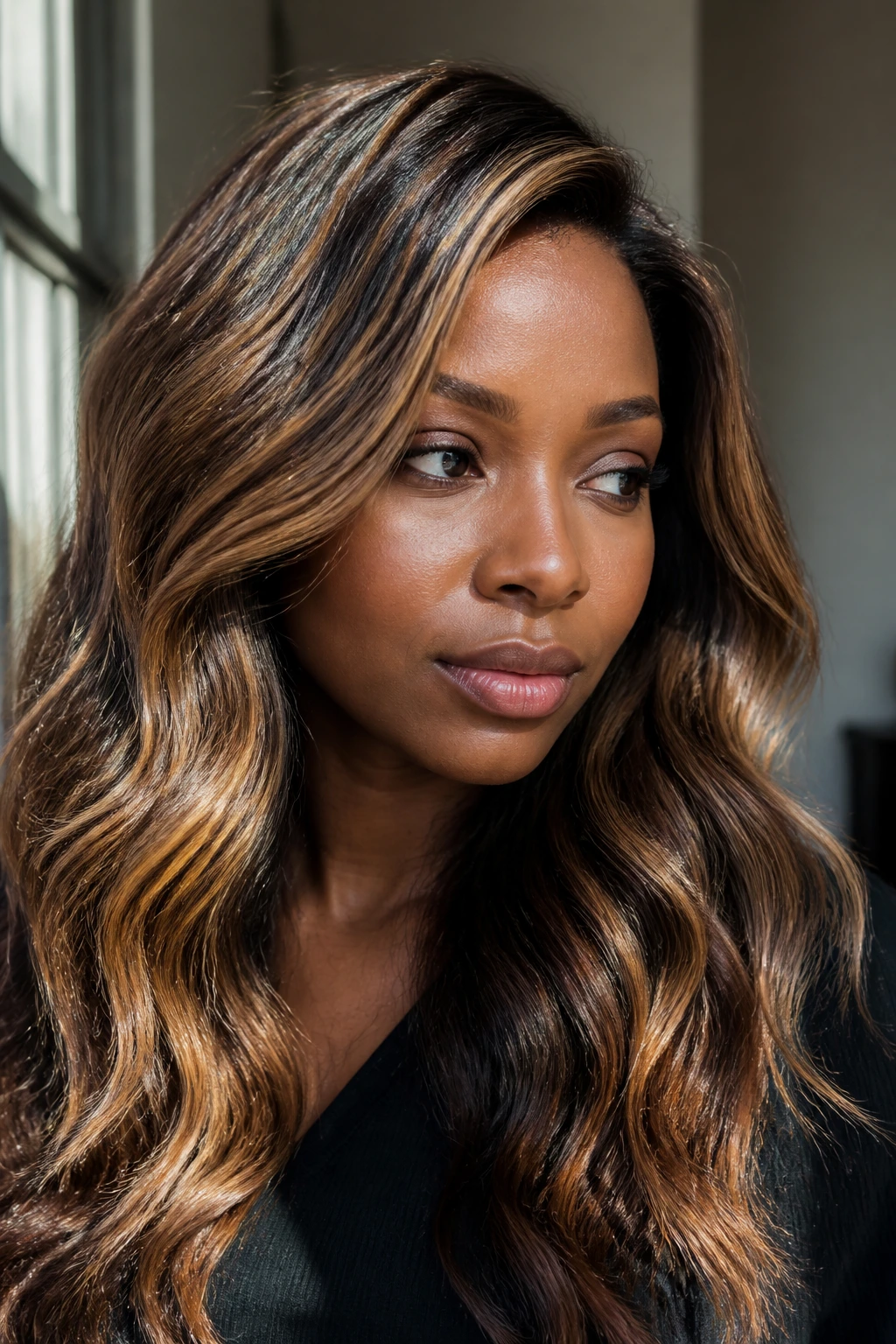
Foilayage is what happens when balayage wants a little more lift. The painterly hand-placement stays soft, but the foil gives the caramel enough heat to show up cleanly on darker bases. That combination is useful when your hair needs a clearer contrast than open-air painting can give.
On deep skin, foilayage is a smart middle ground. You can get brighter caramel through the top layers and still keep the root area lived-in. It works on thick hair especially well, because the foils help the lightener stay controlled instead of disappearing into too much texture.
If you’ve tried balayage before and felt like it barely showed, this is the move. The placement is still blended, but the result has more presence.
Why It’s Worth Asking For
- It lifts a bit more evenly on dense hair.
- It keeps the highlight soft at the root.
- It gives you visible dimension without obvious stripes.
12. Mahogany Base with Soft Caramel Veil
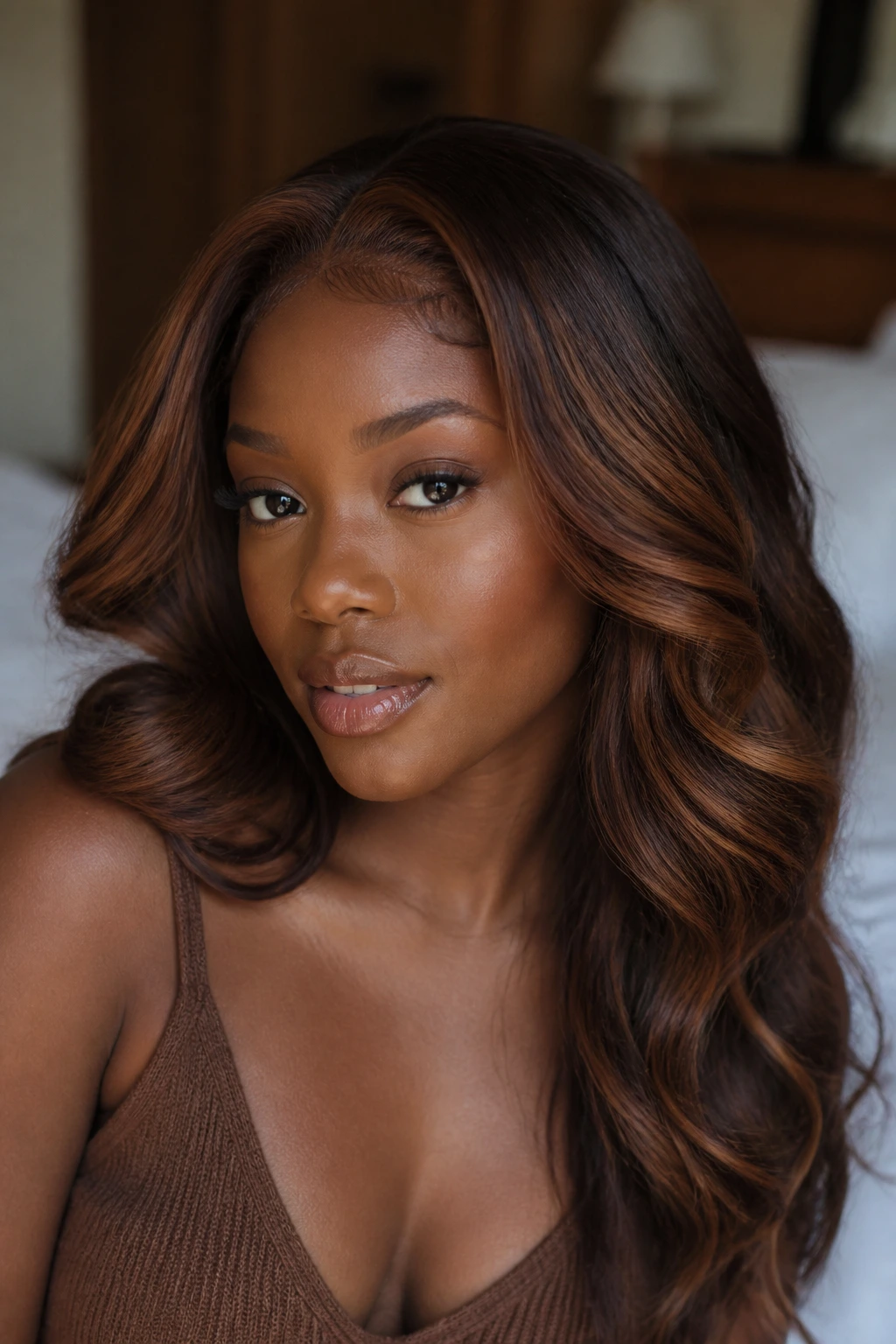
This is one of my favorites because it doesn’t try to turn dark hair into light hair. The mahogany base stays dominant, and a soft caramel veil sits on top like a thin layer of sunlight on polished wood.
That subtlety is useful on deep skin tones, especially if you like richness more than contrast. The color doesn’t have to shout to be noticed. A veil of warm caramel around the outer layers or crown can make the whole head look deeper and more dimensional without changing the mood of the hair.
It’s also forgiving. A soft veil grows out cleaner than a heavy all-over highlight, and it pairs well with textured hair that already has plenty of movement. If you want color that feels understated but not flat, this is the lane.
13. Golden Walnut Highlights
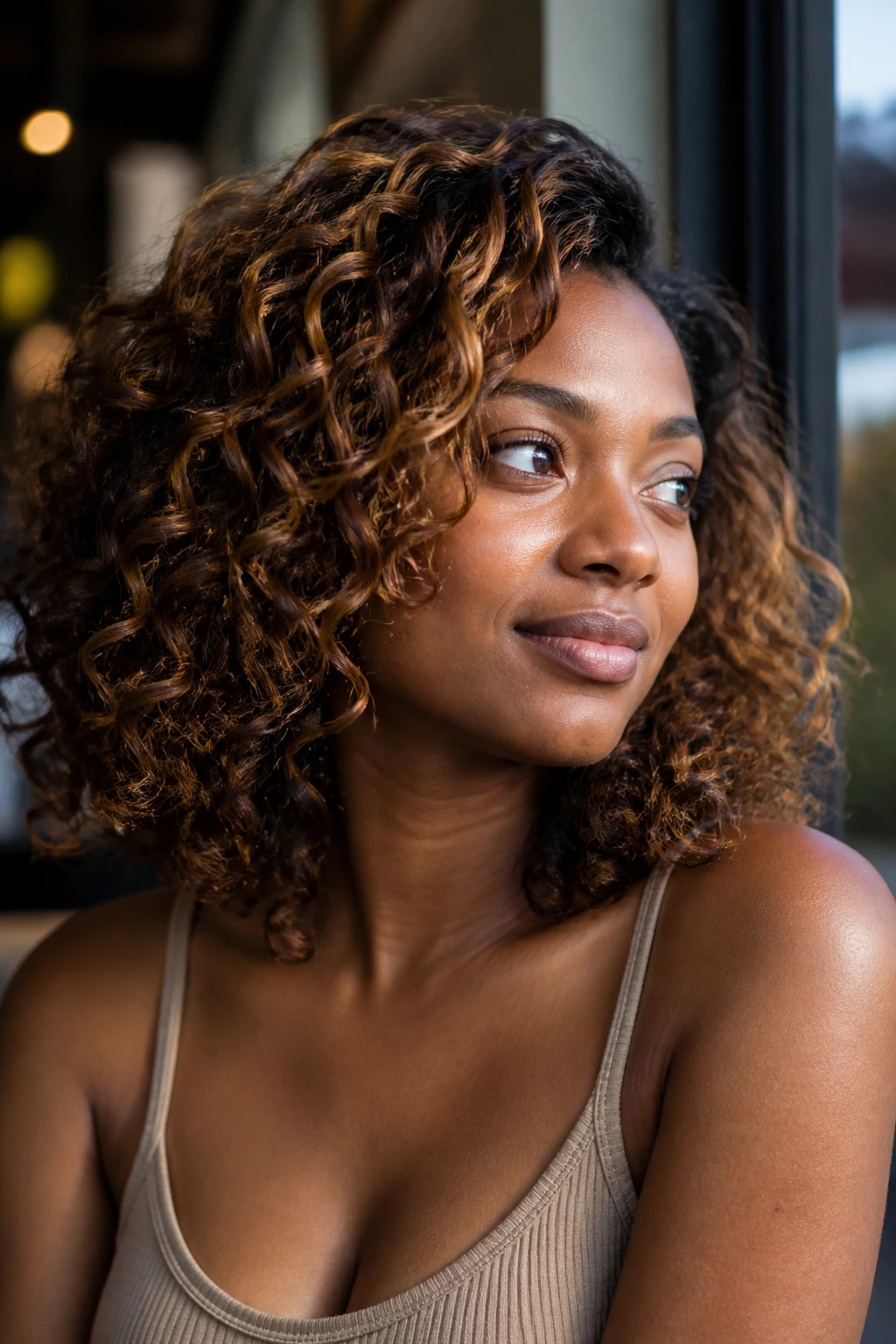
Golden walnut sits in that sweet spot between beige and brown. It’s warmer than ash, quieter than honey, and less orange than a classic golden blonde. On deep skin, that balance matters because the highlight can brighten the face without throwing off the base color.
I like this shade on medium-length cuts and layered curls. It gives the hair a sunlit edge, but the lightness still reads brown first. If your undertones lean neutral or golden, golden walnut tends to slide in easily. If you wear a lot of cream, rust, or olive clothing, even better. The shade harmonizes with those colors instead of fighting them.
It’s a shade for people who don’t want to think too hard about their highlights after the appointment. It simply sits there and looks right.
14. Soft Auburn-Caramel Blend
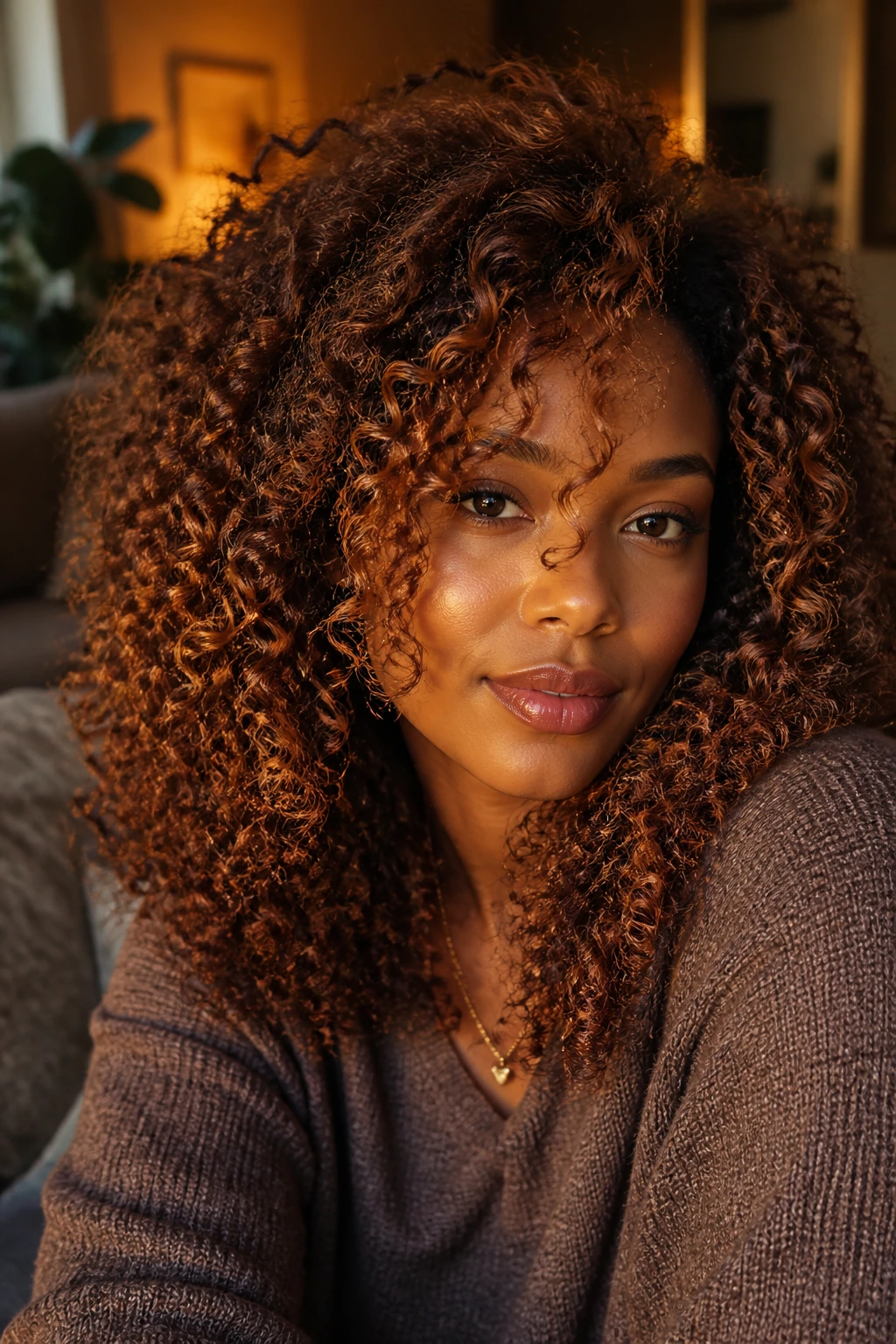
Here’s the twist: a little red can make caramel look richer on deep skin, not louder. A soft auburn-caramel blend adds a rust-brown glow through the highlights, which works especially well if your complexion already carries warmth in the cheeks or jawline.
Keep the auburn soft. Too much copper and the whole head starts to feel copper-first, caramel-second. The good version looks like warm brown hair that caught a little ember at the edges. That’s especially nice on curls and layered blowouts, where the reddish tone can move through the shape instead of sitting in one flat band.
If you’ve always been drawn to warm hair color but don’t want straight-up red, this is the clean compromise.
15. Rooted Caramel Melt
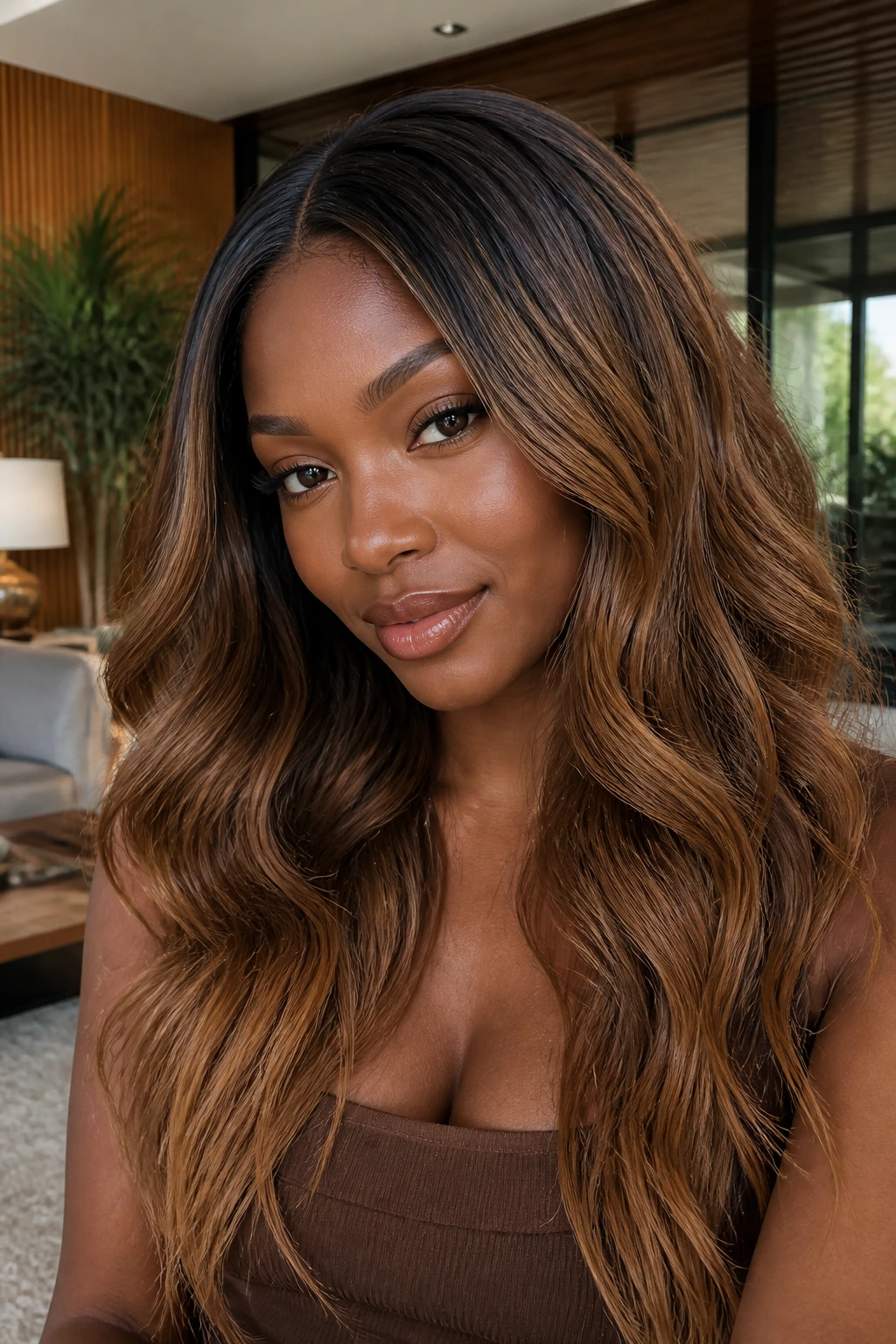
A rooted caramel melt is built for grow-out. The roots stay deep, the mids soften into a warm brown, and the lighter ends melt in so gradually that the eye barely catches where one tone ends and the next begins.
That soft root is gold on deep skin because it keeps the color anchored. Without it, some caramel highlights can float too high and look disconnected from the base. With it, the whole head feels blended, especially on curly hair where movement can expose every line if the placement is too sharp.
What to Ask For
- A shadow root one to two shades deeper than the mids.
- Caramel through the mid-lengths, not just the ends.
- Soft transition at the temple so the front doesn’t look blocky.
If you hate frequent touch-ups, this is the practical pick.
16. Espresso Hair with Buttery Caramel Ends
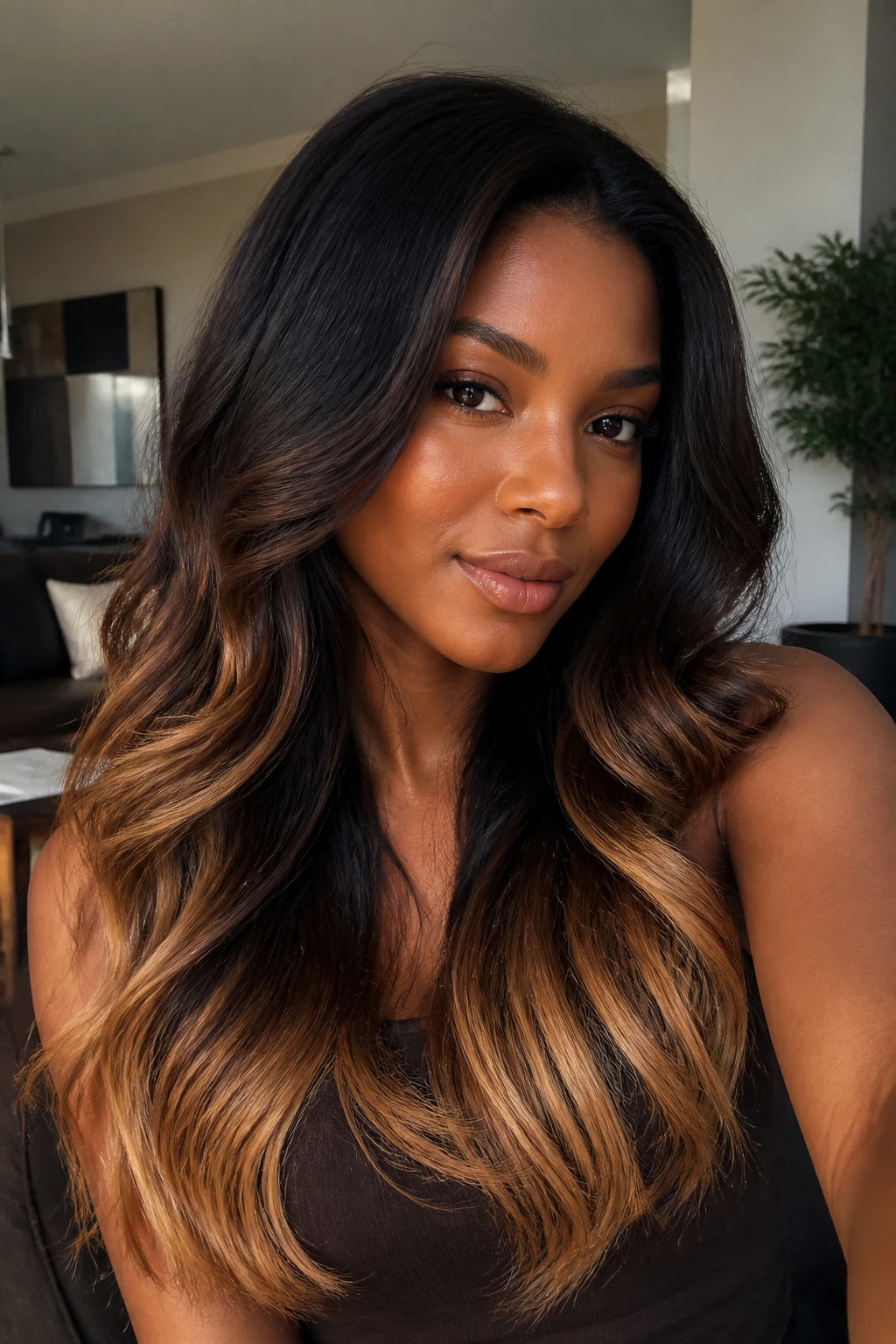
This one is all about length and shine. Espresso roots stay nearly untouched, then the last few inches turn buttery caramel, which gives long hair a clear finish without stealing the drama from the dark base.
The style looks clean on straight blowouts, soft waves, and stretched curls. Because the brightness is concentrated at the bottom, the hair still feels grounded from the crown down. On deep skin, that contrast can be especially strong in a good way: dark at the top, warmth where the hair moves.
It is not the right choice if your ends are already fragile or see-through. But on healthy, thick hair, it makes the cut look deliberate and the length look longer. The lighter ends pull the eye downward.
17. Dark Chocolate Balayage with Honey Streaks
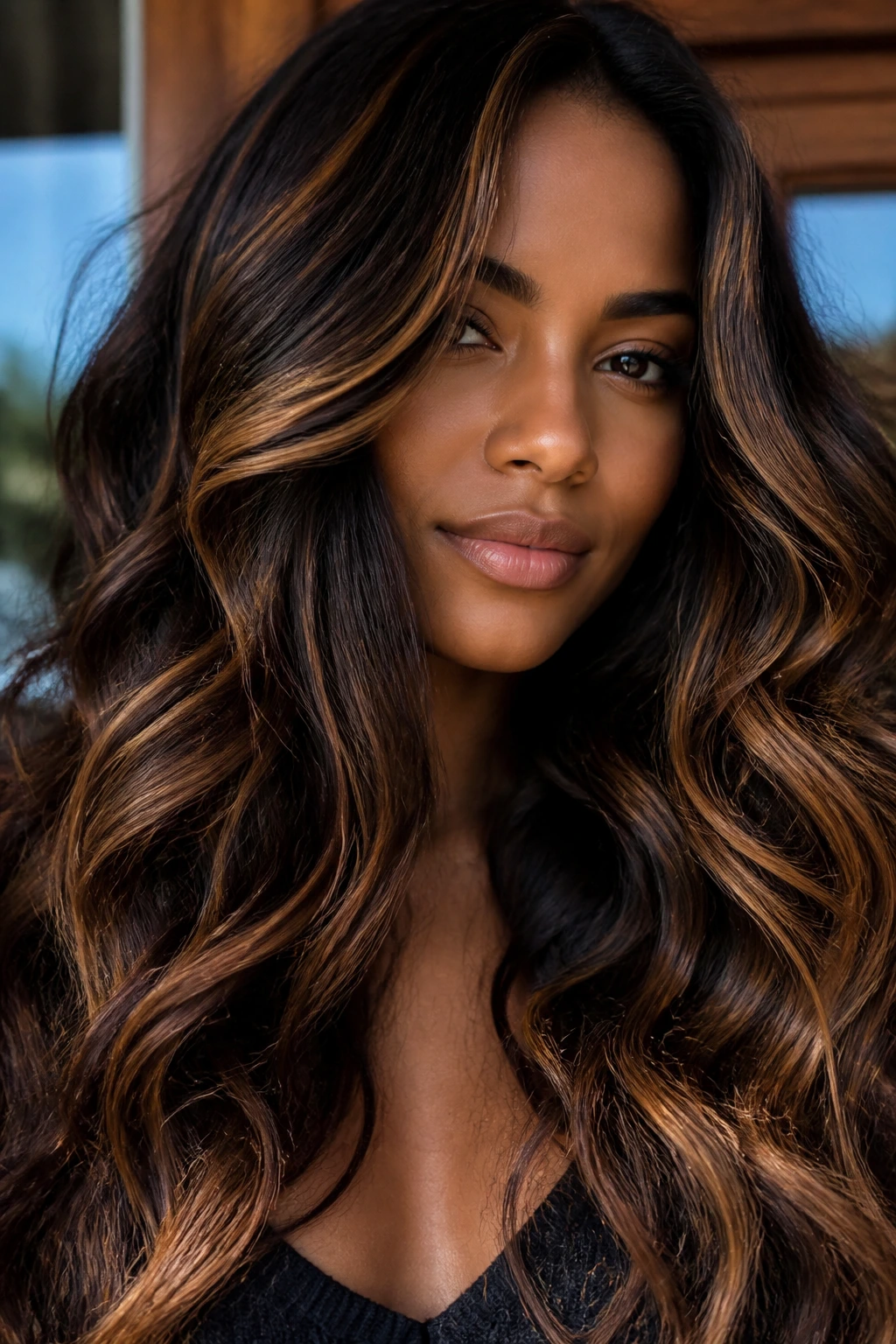
If caramel feels too brown for you and blonde feels too pale, honey streaks inside a dark chocolate base land right in the middle. The streaks stay thin enough to preserve the richness of the hair, but bright enough to show a clean contrast against deep skin.
This works best when the honey stays warm and clean, not yellow. The streaks should look like light moved across the surface of the hair, not like strips cut out of it. On curly textures, the pattern should follow the curl direction so the highlights break up naturally.
I like this choice when someone wants brighter dimension but still wants the hair to read dark from across the room. That balance is harder to get than it sounds.
18. Cocoa Swirl Lowlights and Highlights
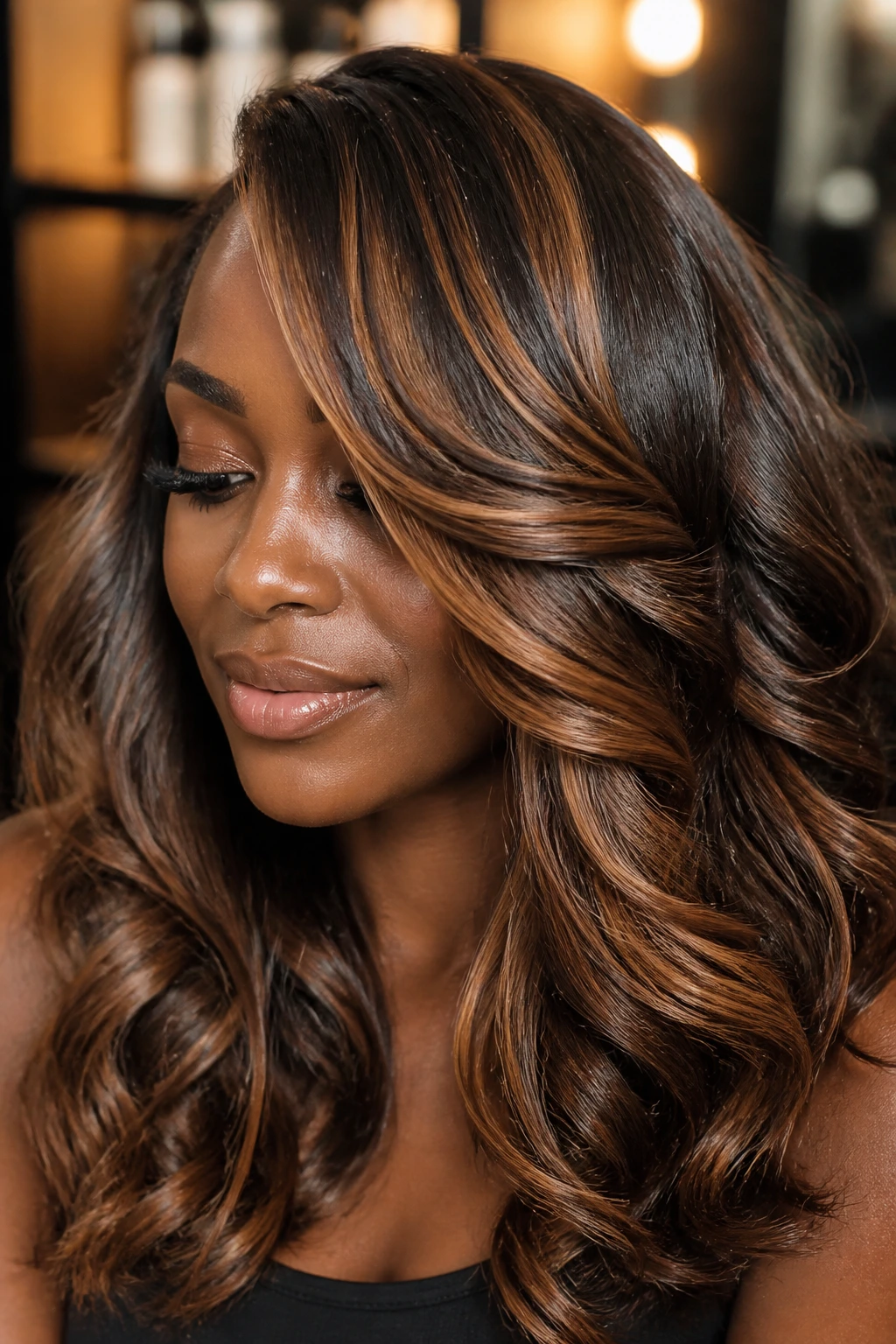
Why add dark pieces when you’re already adding lighter ones? Because dimension often comes from contrast on both sides, not just brightness. Cocoa swirls tucked between caramel ribbons keep deep hair from turning flat, especially if the base is dense or one-tone.
On deep skin, this mix can look especially rich because the darker lowlights preserve the depth of the complexion while the caramel catches the light at the surface. It is a useful trick for thick curls, layered waves, or any cut that tends to look bulky without color separation.
The Part People Skip
- Ask for lowlights one shade deeper than your base, not black.
- Keep the caramel pieces varied in width so the hair doesn’t look patterned.
- Place the lighter strands where the haircut opens up, not only at the top.
This is the option for people who want the hair to move in more than one direction.
19. Burnt Sugar Face Frame
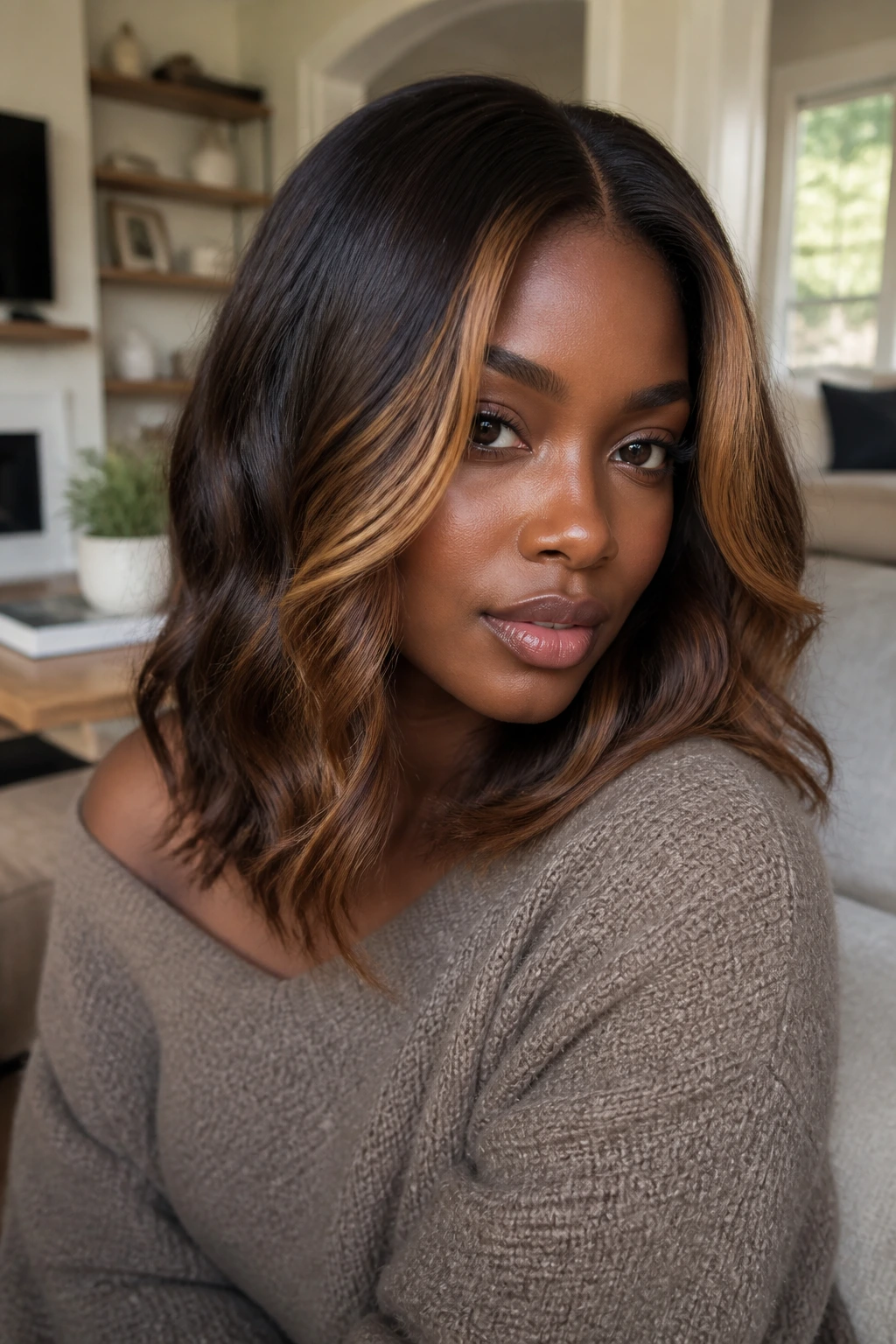
Burnt sugar is a deeper, toastier cousin of caramel. Around the face, it creates a glow that feels warmer than chestnut but less bright than honey, which is a useful middle point on deep skin tones.
This style works best when the front pieces are a touch brighter than the rest of the highlight map. That little boost keeps the face from disappearing into the hair, especially if you wear darker makeup or a center part. It also looks sharp on bobs and shoulder-length cuts where there isn’t a ton of length to spread the color around.
A burnt-sugar frame is one of those looks that says you paid attention to tone. Not flashy. Just right.
20. Sunset Caramel Money Pieces
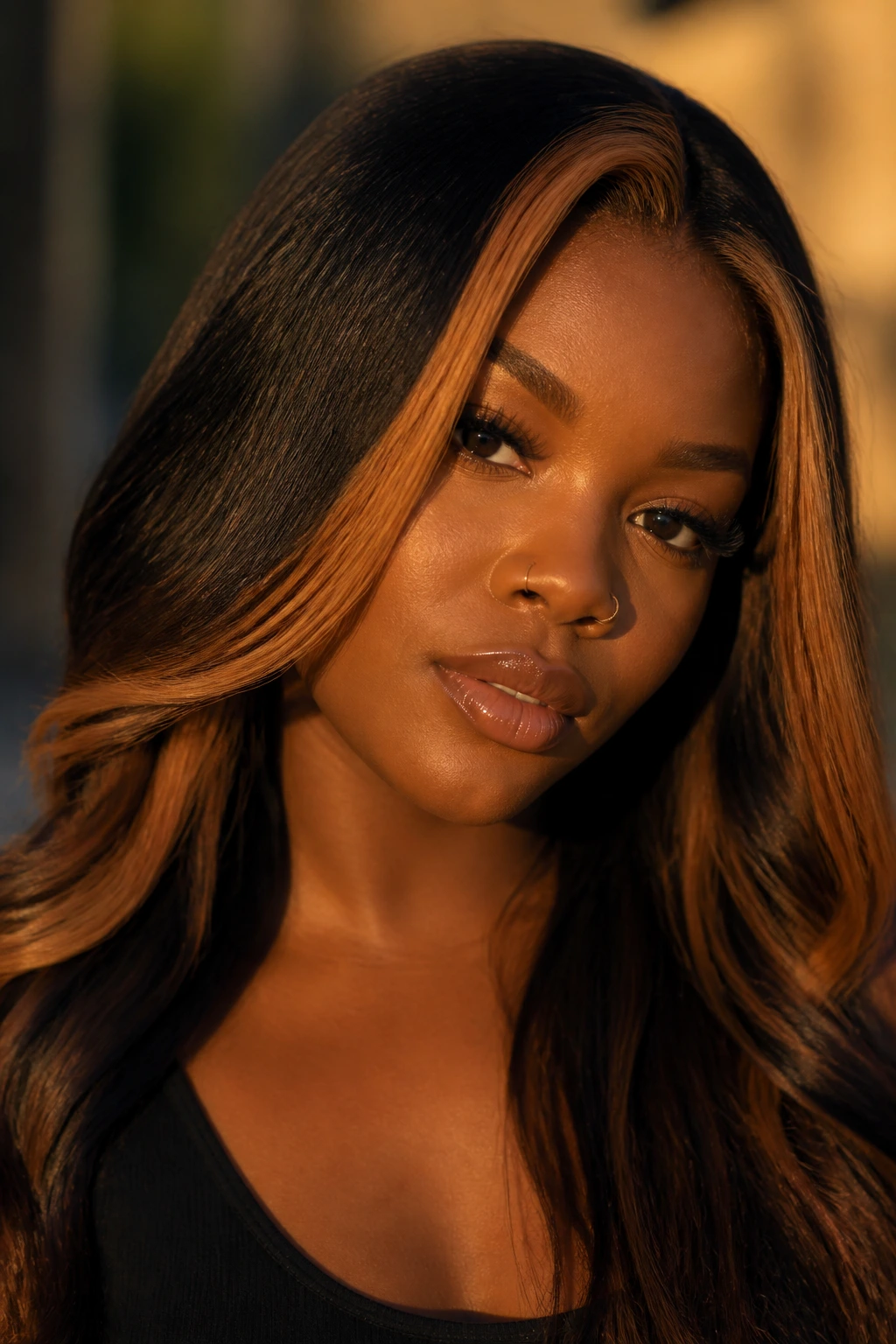
Sunset caramel sits a little higher on the warmth scale. Think amber, soft apricot-brown, and a hit of gold. It’s a stronger choice for deep skin tones with warm undertones, especially if your jewelry wardrobe leans gold or bronze.
The key is restraint. One bold money piece and a few supporting ribbons can look intentional; too many sunset streaks can push the whole head toward copper. On braids, curls, and big blowouts, the tone reads like movement at the edges of the style. On straight hair, the line should stay blurred enough that the front doesn’t look pasted on.
If you like warmth and do not want subtlety to win every fight, this is the one that will make you grin in the mirror.
21. Sandalwood Beige-Caramel Blend
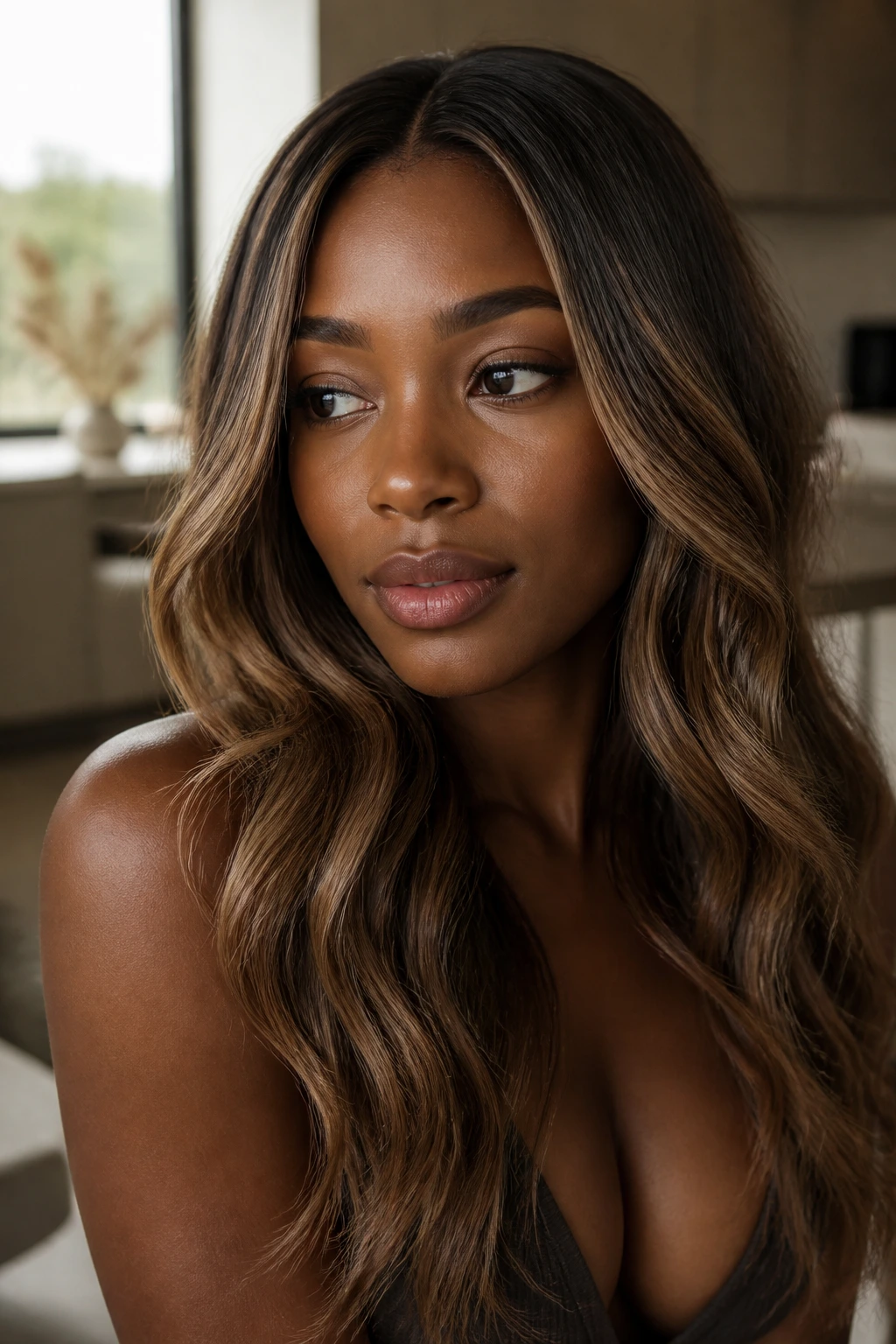
Sandalwood beige-caramel is for the person who likes caramel but wants it toned down. The beige softens the gold, the caramel keeps it from going flat, and the result feels calm rather than sunny.
That softer temperature plays well with deep skin when the undertones are neutral or slightly cool. It gives you lift without leaning orange. On sleek styles and long layers, the blend can make the hair look smoother because the tones move together instead of breaking into separate stripes.
This is also a good answer if honey highlights have looked too yellow on you before. Beige tames the brightness. The hair still reads warm, just less sugary.
22. Warm Mocha Ribbons
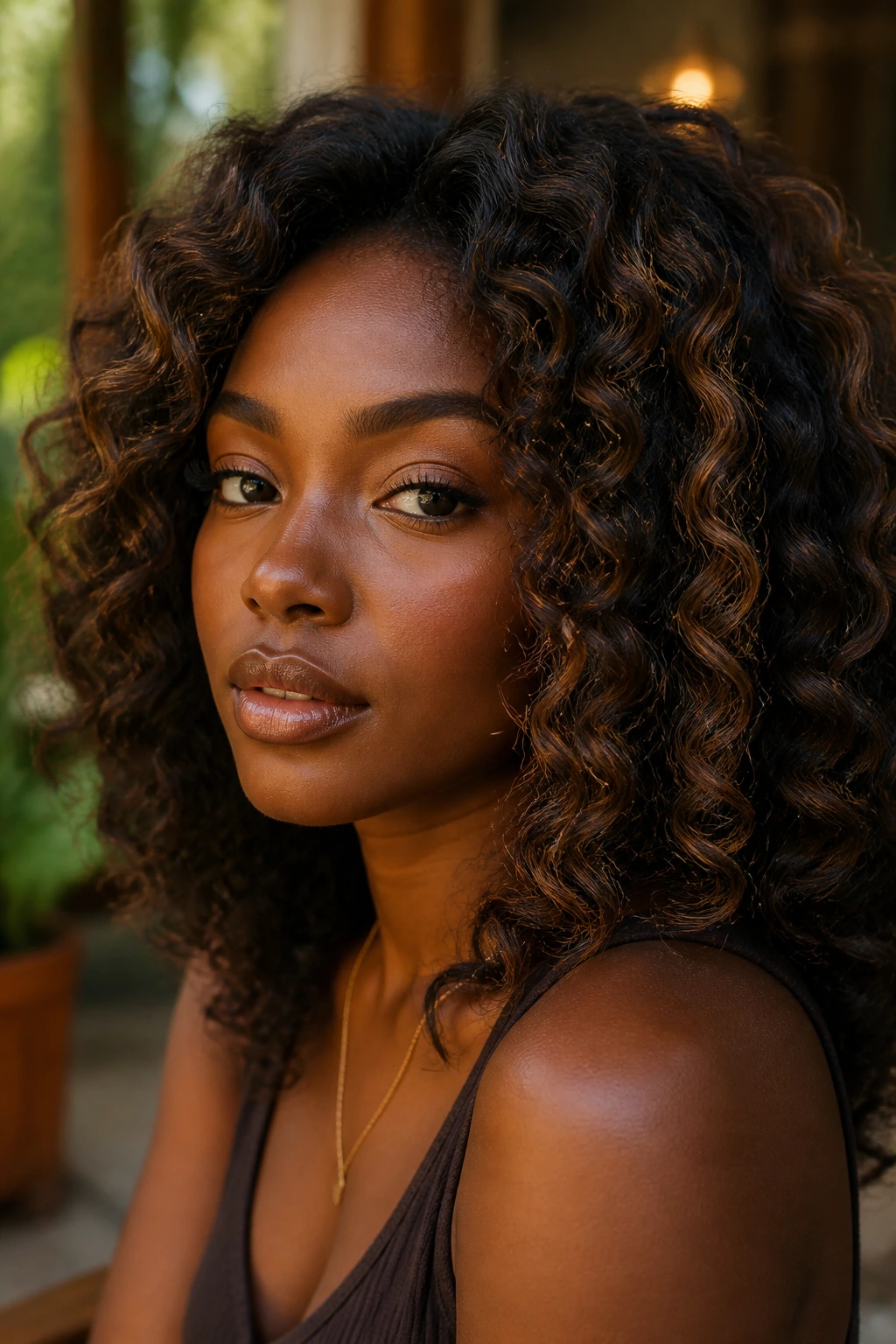
Warm mocha ribbons are barely a nudge lighter than the base, and that is the point. The highlight works by deepening the sense of texture, not by announcing itself from across the room.
On deep skin, this kind of low-contrast color can look especially sharp because it keeps the hair in the brown family the whole way through. You get soft ribbons of warmth that show when light hits a curve or bend in the hair. Think curls, waves, and layered blowouts. If the hair is very straight and very dense, the effect stays subtle, which can be a good thing if you want something work-safe.
I reach for this look when someone says they want highlights but also says they do not want to look highlighted. Fair enough.
23. Cinnamon Brunette Lattice
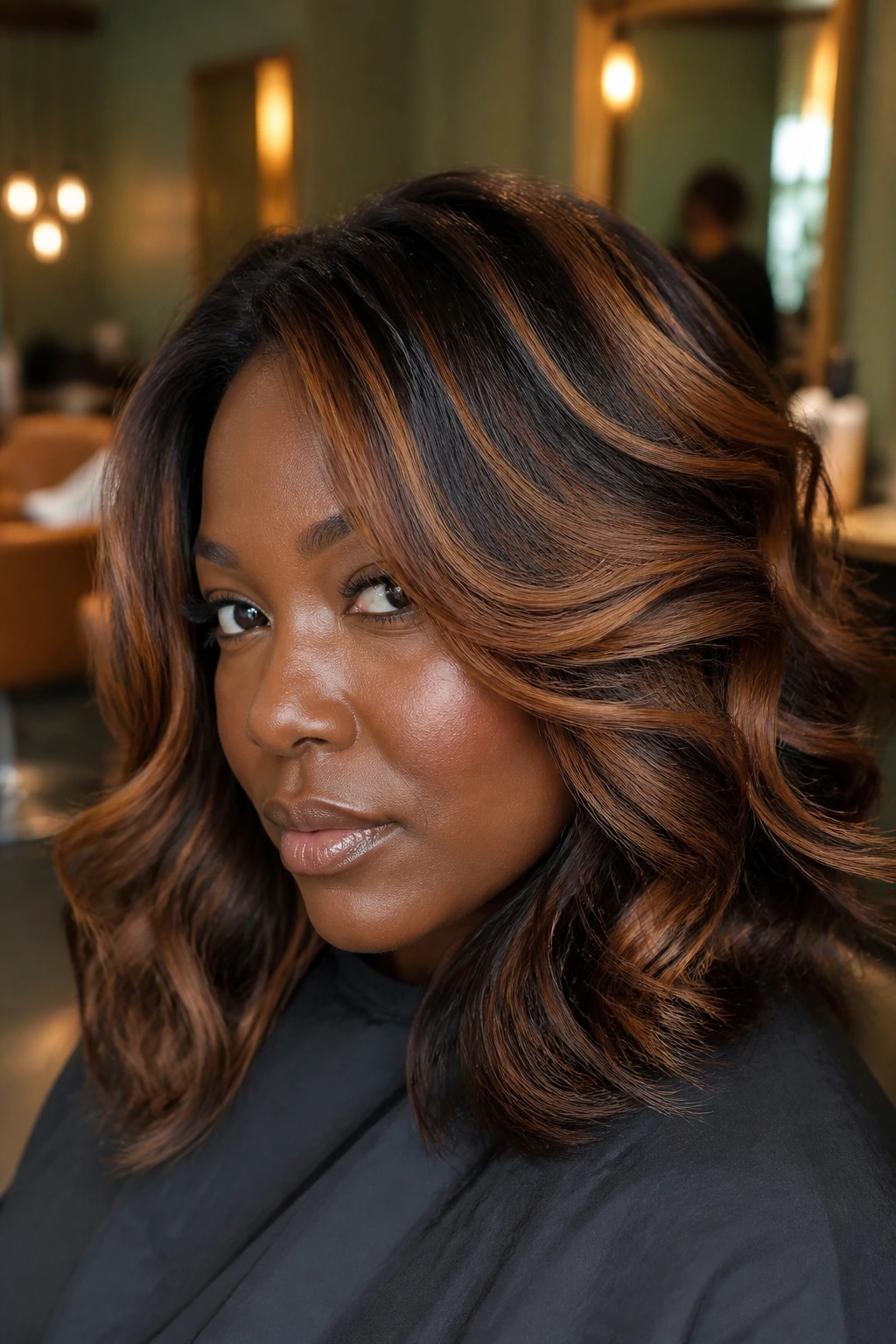
A lattice pattern sounds fancy, but it really means the highlight placement is woven through the hair in a crisscross rhythm instead of sitting in obvious stripes. Cinnamon tones thread through the brunette base, so the hair catches light at different angles as it moves.
This is a smart pick for dense hair that needs breakup. On deep skin, the cinnamon warmth keeps the color friendly and rich, while the woven layout prevents the head from reading like one solid mass. It’s a good salon conversation for people with layers, curls, or a lot of natural volume.
Best for Hair That Feels Heavy
- Ask for staggered sections rather than one continuous highlight panel.
- Keep a few darker pieces between the cinnamon threads.
- Use a gloss after lifting so the warmth stays brown, not orange.
That last part matters. Cinnamon can go loud if nobody reins it in.
24. Toasted Praline Layers
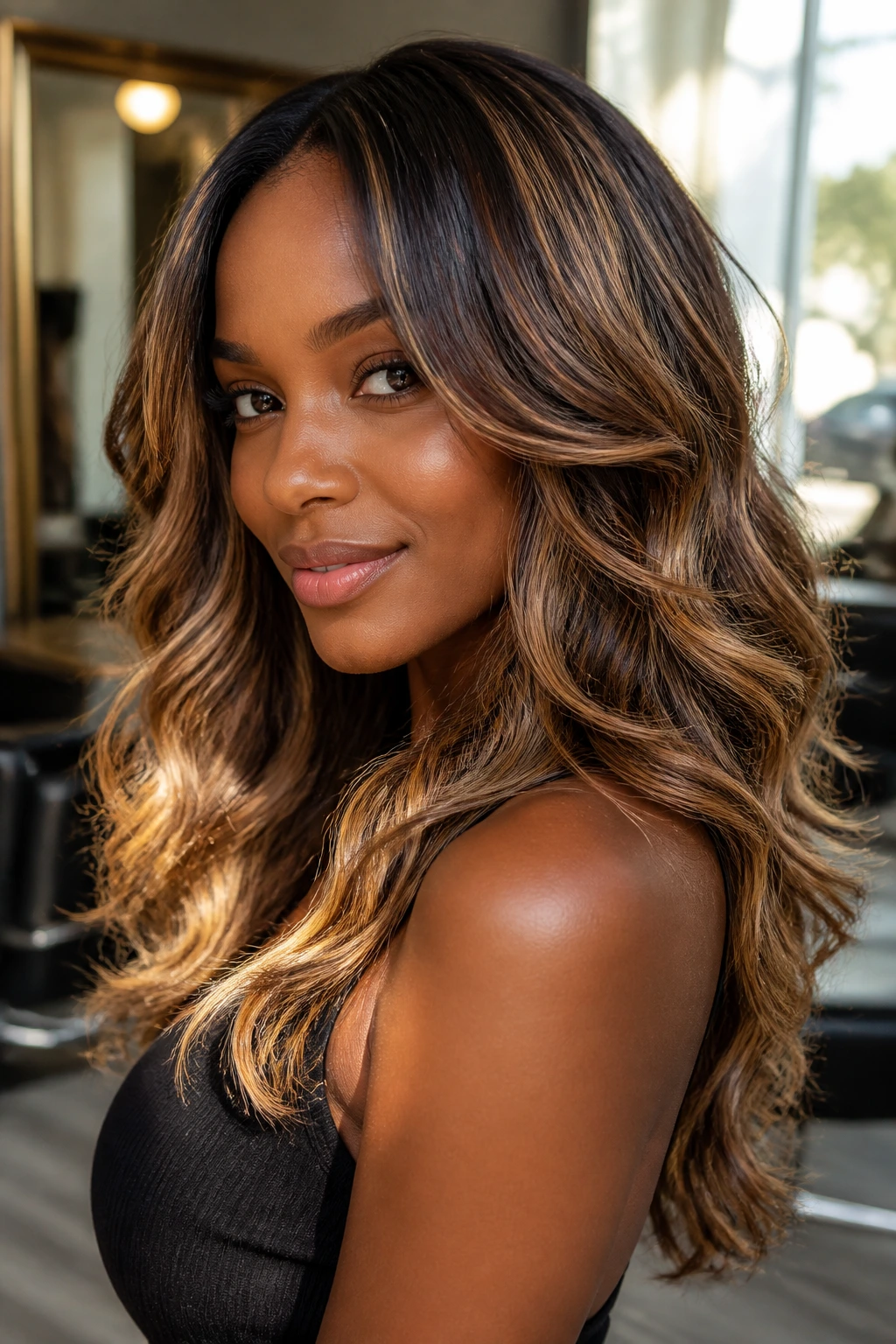
Toasted praline lives a little brighter than mocha and a little deeper than honey. It works best when the layers are long enough for the lighter pieces to break apart as the hair moves, which keeps the color from sitting like a single band.
On deep skin, praline is one of those shades that looks balanced in daylight and indoor light. It brings enough warmth to outline the haircut, but it doesn’t tip into blonde territory. If you wear your hair in a soft bend, curls, or a fluffy blowout, the lighter ends and mid-lengths show up at different points, which makes the whole head feel fuller.
I like it for people who want a noticeable change without a hard contrast.
25. Deep Espresso with Caramel Halo
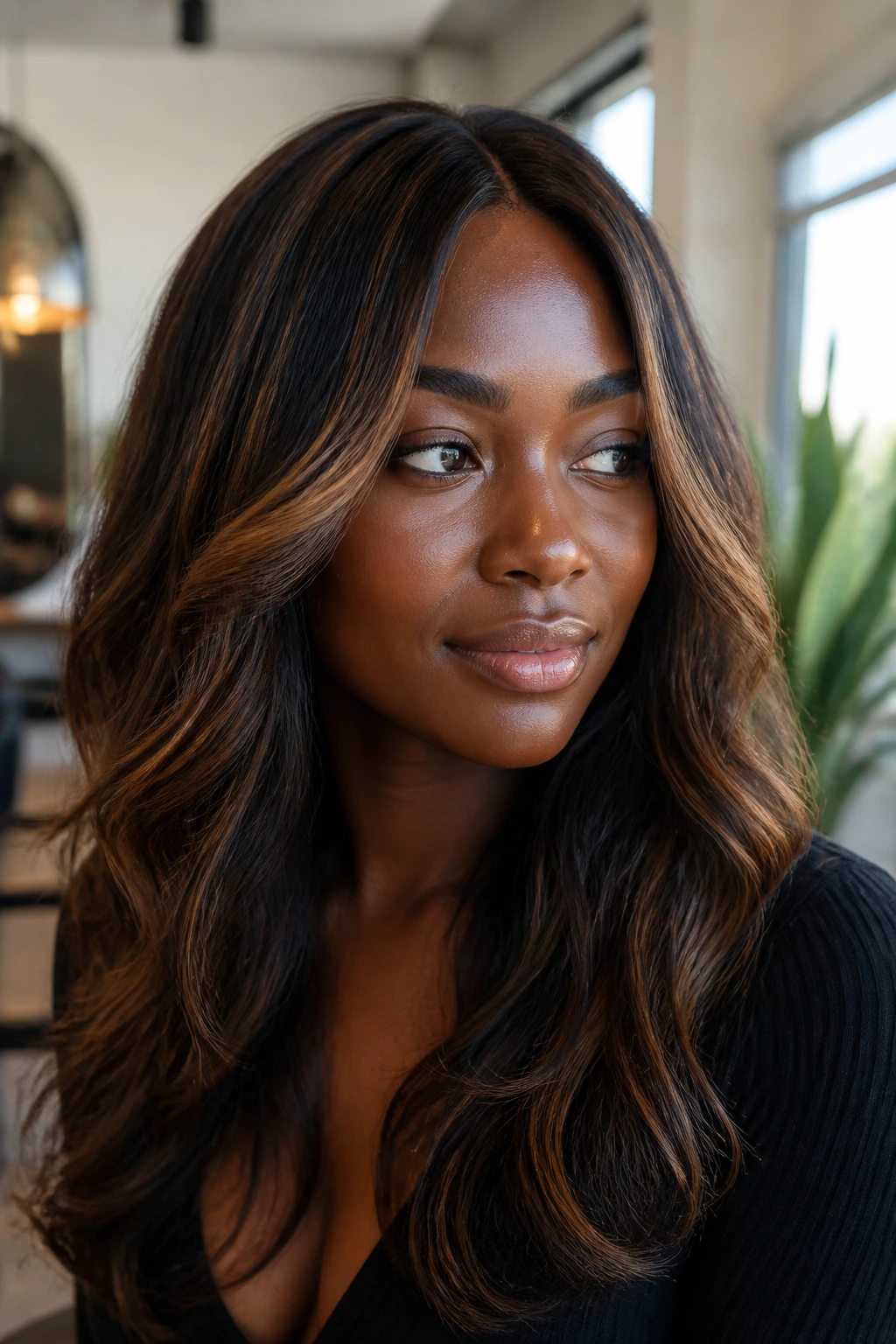
A caramel halo is broader than a face frame and softer than a full highlight map. The lighter color circles the outer perimeter and top layer, so the hair gets a glow from above instead of one bright strip in the front.
On deep skin, that halo effect is especially good with curls, coils, and rounded shapes because it follows the silhouette of the hair. The base stays deep espresso, which protects the richness, while the caramel gives the edges a warm outline. It is the kind of placement that makes a whole haircut look intentional from every angle.
Why It’s the Final Word
- It gives dimension without flattening the crown.
- It works on natural texture, stretched styles, and silk presses.
- The grow-out is soft because the brightness lives on the outside.
If you want one style that hints at everything this color family can do, this is the one to save.
Why Caramel Brown Sits So Naturally on Deep Skin
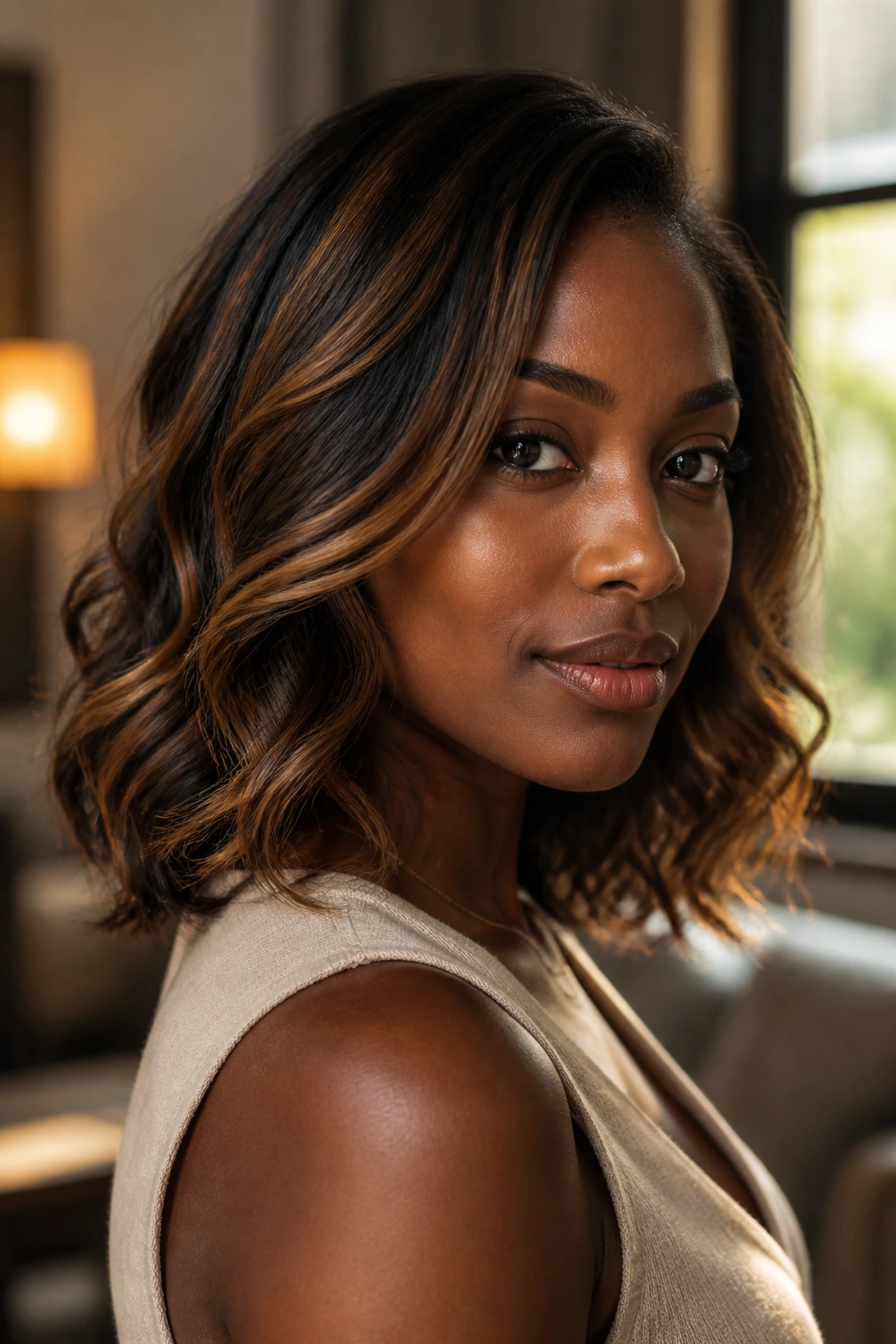
Caramel brown works because it lives in the warm middle of the hair-color wheel. It is not trying to bleach itself into blonde territory, and it is not so dark that it disappears against a deep complexion. The best versions hold on to brown first, warmth second, brightness third.
On melanin-rich skin, that order matters. A caramel ribbon that is too pale can look chalky at the edges, especially if the base is very dark. A shade with gold, bronze, or toffee in it tends to echo the warmth already present in the skin, so the eye reads the whole look as connected instead of patched together. That’s why a one-size-fits-all honey highlight recipe usually falls apart.
Placement changes everything too. A face frame lifts the eyes. Interior ribbons give curls and waves more depth. A rooted melt keeps the look soft when your natural color grows in. If you want the highlights to flatter the skin rather than sit on top of it, the job is mostly about balance: enough lightness to show, enough depth to keep the hair looking rich.
The prettiest caramel is rarely the palest.
Foils, Brushes, and Glosses Behind the Look
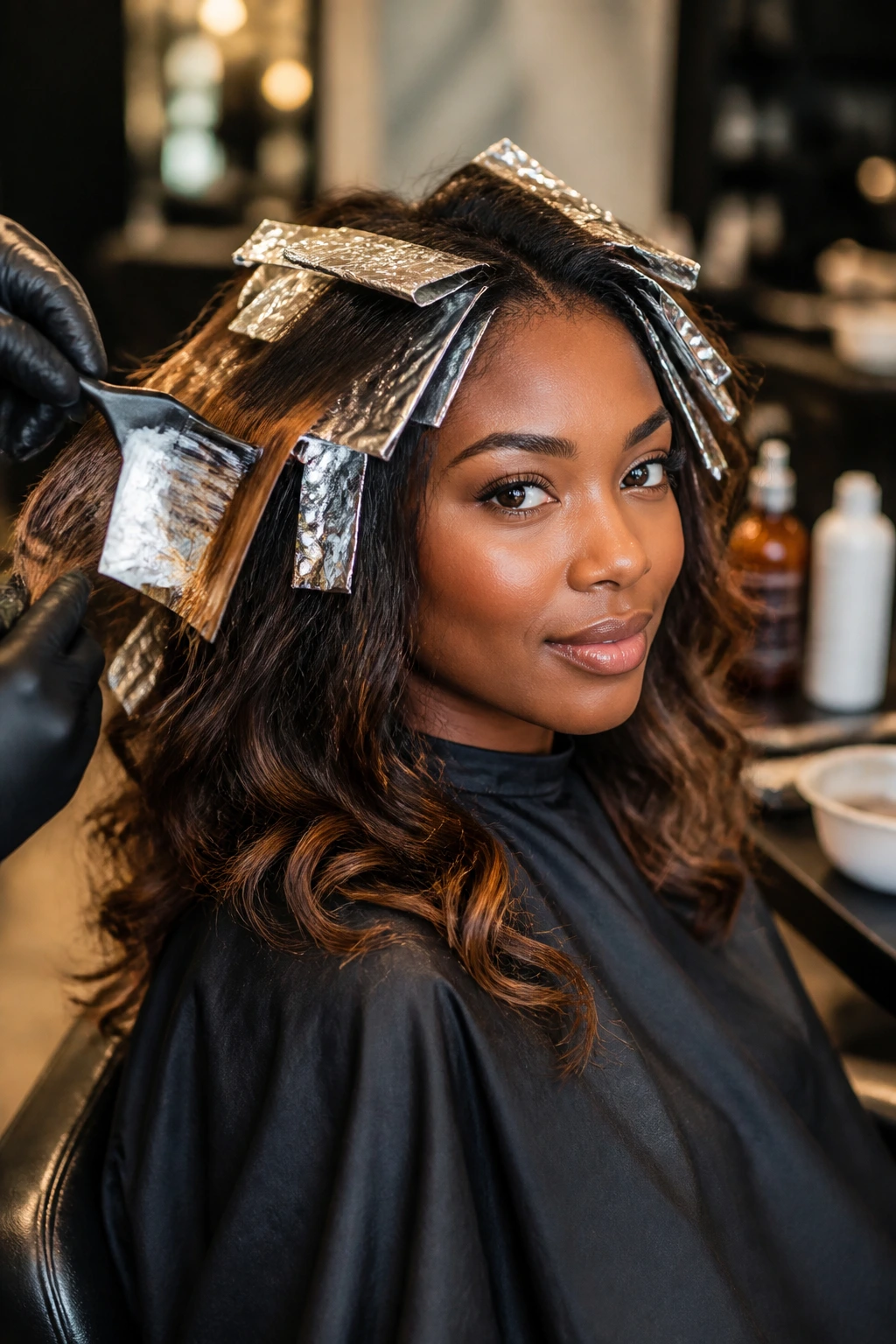
You do not need a cart full of products to get these looks done, but a few tools matter more than people think.
- Foils: Best for brighter lift and clearer contrast, especially on dense or resistant hair.
- Balayage paddle or board: Helps the colorist paint clean ribbons without flooding the section.
- Tint brush and color bowl: For controlled application when the placement needs to stay narrow.
- Fine-tail comb: Useful for micro-weaves, babylights, and clean sectioning at the part.
- Sectioning clips: Keep the top layers out of the way so the placement doesn’t drift.
- Bond-building treatment: Worth asking about if the hair needs lightening; it helps protect fragile ends.
- Warm gloss or glaze: Keeps caramel from drifting too flat or too orange after the lift.
- Sulfate-free shampoo: Safer for gloss longevity and less likely to strip warmth out too fast.
- Deep conditioner or mask: Needed if the hair has been lifted more than a shade or two.
- Silk bonnet or pillowcase: Small thing, big difference. Friction dulls the finish fast.
If you’re booking a salon appointment, bring 2 or 3 reference photos and one photo of your own hair in daylight. That saves everyone time.
Choosing the Right Caramel Tone at the Salon
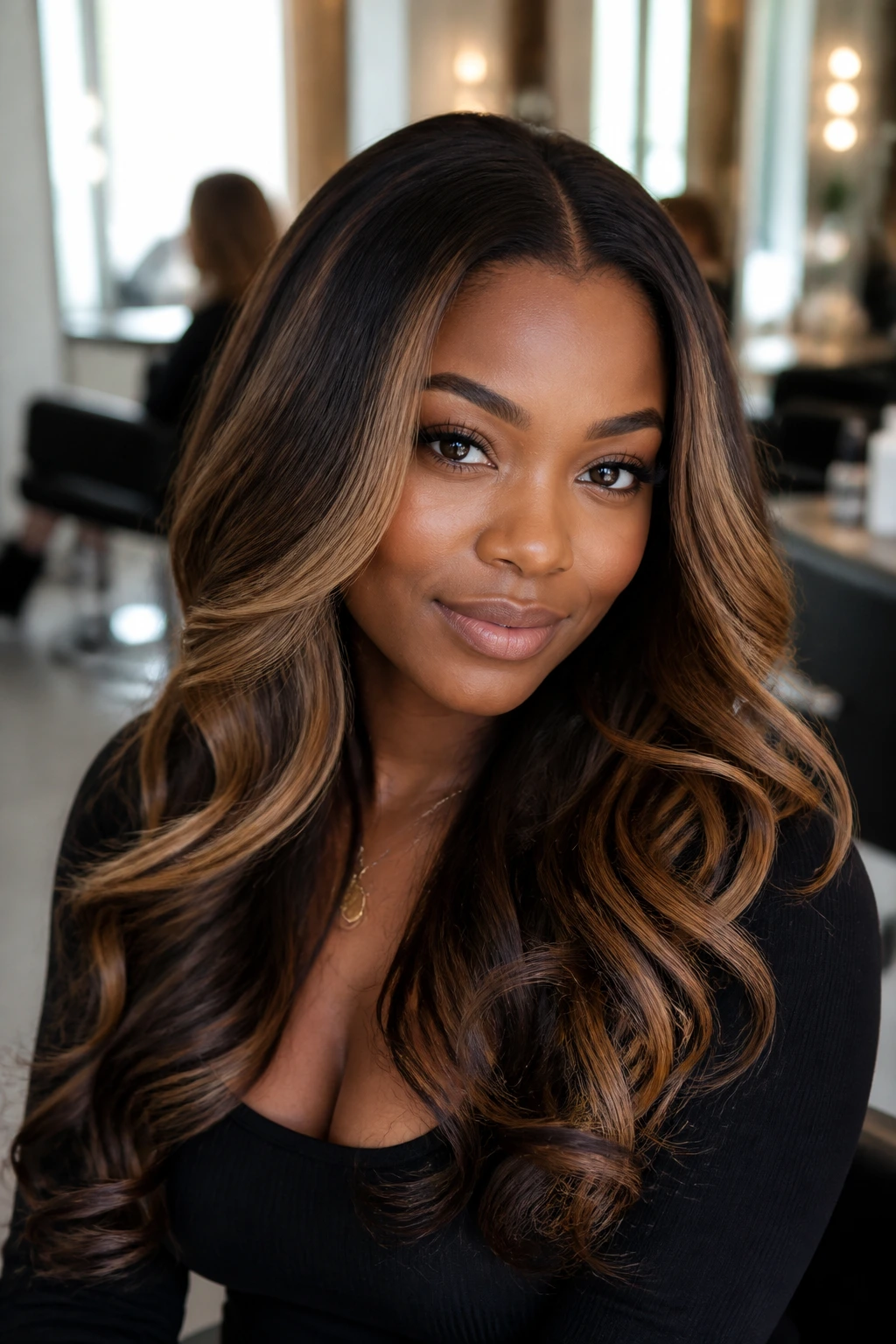
The word “caramel” is flexible, which is exactly why you need to be specific. Tell your colorist whether you want gold, bronze, beige, toffee, amber, or chestnut-brown warmth. Those words steer the result more reliably than asking for “light brown” and hoping for the best.
If your base is nearly black, a highlight only one or two levels lighter can still read clearly because contrast does the work. If you want the color to show from across the room, the lift may need to be stronger, but the tone still has to stay warm and brown. That’s the part people miss. Lift is only half the job. Tone decides whether the hair looks soft or stripped.
Texture matters, too. Coarse, dense, or tightly coiled hair often needs more deliberate placement because not every strand shows the same way once it dries and shrinks. Fine hair can look brighter faster, which means a softer gloss may be enough. Porous ends are their own thing; they grab warmth quickly and can go darker than expected. If your ends are already dry, ask for less lightness at the bottom and more softness around the face.
Bring this up during the consultation, not after the bowls are mixed. Saves headaches.
Wearing These Highlights With Curls, Bends, and Blowouts
Presentation: These highlights show best when the hair has movement. On curls and coils, the caramel breaks up naturally across the pattern. On a silk press or blowout, the ribbons read longer and smoother, which is useful if you want the placement to look cleaner.
Pairing: Long layers, curtain bangs, rounded bobs, and shoulder-grazing cuts all give the light pieces room to move. Protective styles can work too, but the highlight pattern should sit near the edges or front so it doesn’t disappear under the braid or twist pattern.
Coverage: If you want subtle dimension, ask for 10 to 15 percent highlight coverage and a deeper root. For a bolder look, pair a money piece with interior ribbons or a halo around the perimeter. That gives the color more surface area without turning the whole head lighter.
Finish: Warm makeup tones help keep the hair reading intentional — terracotta blush, bronze shadow, chocolate liner, soft gold jewelry. Black, cream, olive, rust, and deep berry clothing all sit nicely beside caramel because they let the warmth stay the star.
Small Adjustments That Make the Color Read Better
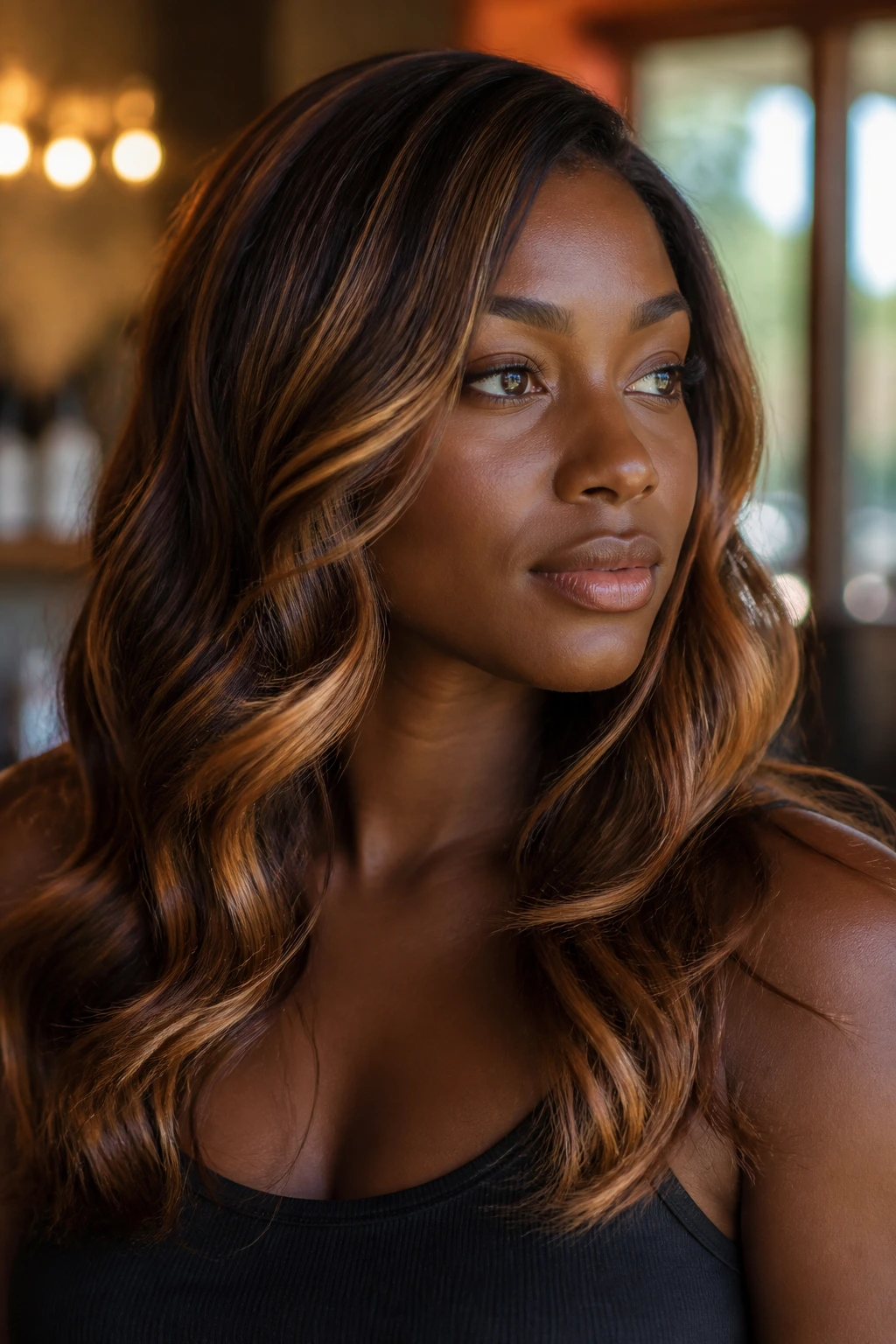
Gloss Finish: A warm beige or caramel gloss after lightening keeps the highlight from going yellow or dull. It’s the difference between “fresh color” and “I think this needs another visit.”
Texture Match: Fine babylights are lovely on straight or softly wavy hair, but on thick curls they can disappear. Wider ribbons or foilayage usually show better there because they survive shrinkage and movement.
Face-Frame Control: If you wear your hair up a lot, spend your brightness budget on the front pieces and the crown. If you wear it down most days, put more caramel through the mid-lengths so the hair doesn’t only glow at the edge.
Density Balance: Dense hair often needs a few lowlights as much as it needs highlights. One without the other can look flat or overly busy. A little mocha or cocoa woven between caramel panels gives the eye somewhere to rest.
Make-It-Yours: For the boldest look, ask for a visible money piece. For the quietest version, keep the caramel one to two levels lighter than the base and let the light do the rest.
Common Mistakes That Flatten the Dimension
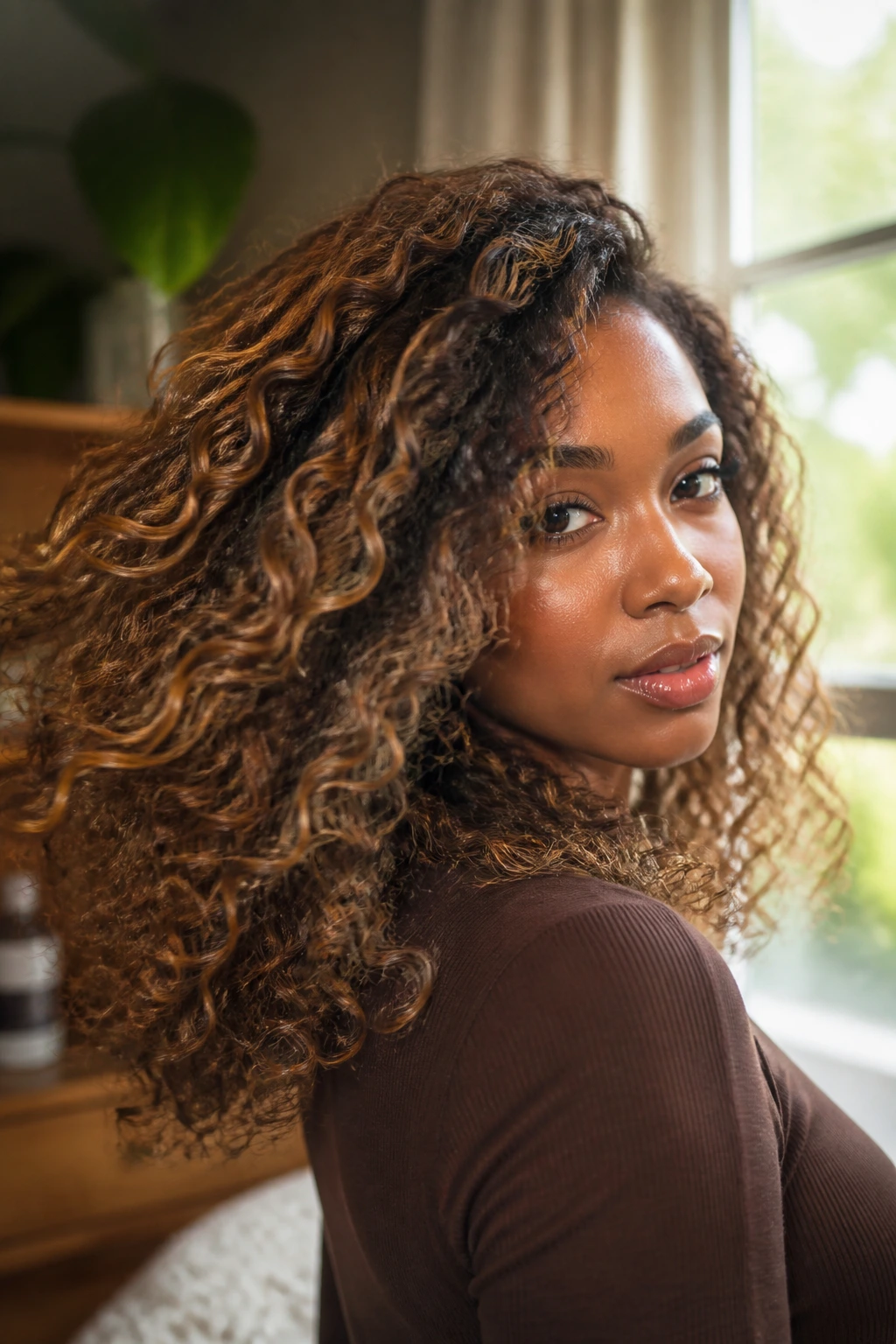
The fastest way to ruin caramel highlights on deep skin is to treat “caramel” like a single color. It isn’t. If the tone is too pale, the hair can look chalky or disconnected from the base. If it’s too orange, the warmth runs ahead of the richness and the whole style starts to feel off.
Another mistake is making every highlight the same width. That striped effect is a giveaway. Real dimension needs a mix of fine ribbons, medium panels, and a few deeper sections in between. Otherwise the hair looks like it was drawn with a marker.
People also forget about porosity. Dry ends grab lightener and toner differently, which means the ends can go flatter, darker, or more brassy than the roots. A quick trim and a more cautious lift at the bottom usually solve that.
Skipping aftercare is the last big one. Caramel color fades toward flatness if it’s washed with harsh shampoo, hammered with hot tools, or never glossed again. Weekly masks, heat protectant, and a satin bonnet are not glamorous, but they keep the whole look alive.
Adaptations for Different Textures and Maintenance Levels
Soft Honey Lift: Best if you want the brightest warm reflection with the least visual weight. Keep the placement thin and face-framing, then stop the lift before the ends get too light.
Bronzed Cocoa Melt: A quieter version with more brown than gold. It suits neutral undertones and people who want the hair to stay dark from a distance.
Copper-Kissed Caramel: This one adds a little red-brown warmth. It works well on warm skin tones and curly textures that can carry richer color without looking flat.
Protective-Style Halo: Ask for brightness around the perimeter or on the hair that will sit visible in braids, twists, locs, or sew-ins. Hidden placement is wasted if the style covers it all.
Gloss-Only Refresh: If your color is already there and you just want it to look fresh, ask for a warm gloss instead of new lightening. It won’t add more contrast, but it will bring back shine and tone.
Foils, Glosses, and Grow-Out: Keeping the Tone Fresh Between Visits
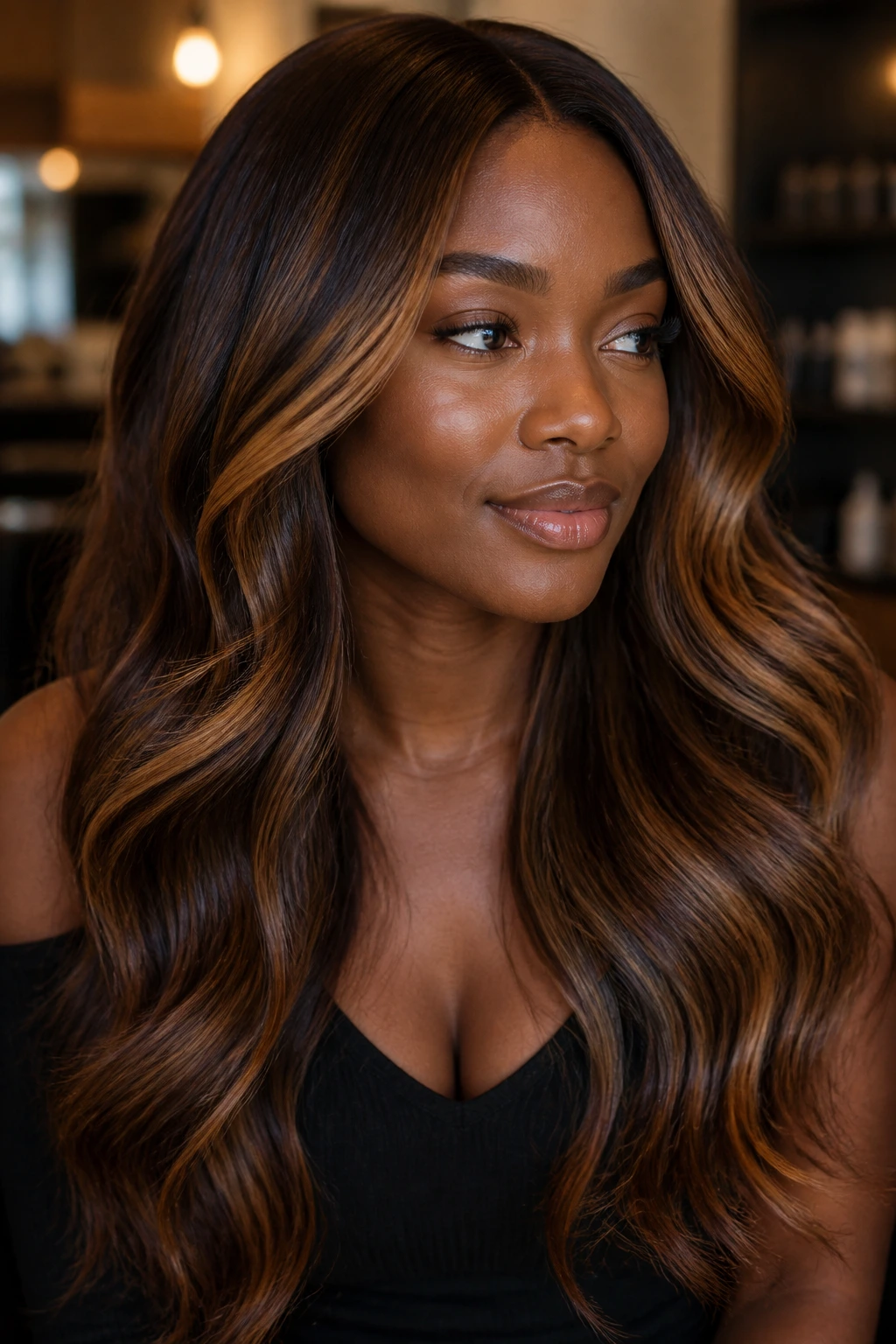
Caramel highlights usually look best when they are maintained with a light touch, not constant rework. A warm gloss every 4 to 6 weeks keeps the color from drifting dull or too brassy. If the highlights are very soft and rooted, you can often stretch that a little longer. If they’re brighter or more lifted, they may ask for a toner sooner.
Wash frequency matters more than most people think. Two washes a week with a sulfate-free shampoo is a good middle ground for colored hair; more than that can strip the warmth out faster, especially if the water runs hot. A deep conditioner once a week helps keep the lightened pieces from feeling rough at the ends. On curly and coily textures, that mask is not optional if you want the dimension to stay soft.
Heat styling should be limited, or at least buffered with protectant every single time. Caramel tones can look gorgeous on a silk press, but they also fade fastest under repeated high heat. If you like wearing curls, let the hair cool before fluffing it. That small pause keeps the pattern cleaner.
Salon touch-up timing depends on placement. A money piece or face-frame can be refreshed in 8 to 10 weeks. A rooted balayage or halo may stretch to 12 weeks or more because the grow-out stays soft. If the ends look lighter than the mids, ask for a gloss, not more bleach. That’s usually the better fix.
Frequently Asked Questions
Will caramel brown highlights work on very dark, almost black hair?
Yes, but the placement and lift have to be deliberate. On a very dark base, a warm caramel that’s only one or two levels lighter can still show well if the panels are placed where light hits first — around the face, crown, or outer layers.
What’s better for deep skin tones: balayage or foilayage?
Balayage gives the softest grow-out and the gentlest blend. Foilayage adds more lift, which helps when the hair is dense or very dark and you want the caramel to show more clearly.
How do I keep caramel highlights from turning orange?
Ask for a warm beige, bronze, or toffee toner instead of letting the color lift without a plan. Then use sulfate-free shampoo and a gloss when the tone starts to flatten.
Do caramel highlights look good on curly and coily hair?
They do, but the placement has to respect shrinkage and shape. Wider ribbons, halo pieces, or a bright face frame usually read better on textured hair than tiny stripes that disappear once the curl tightens.
Can I get this look without bleaching my hair a lot?
Yes, if you want subtle dimension rather than bright contrast. A gloss, a few painted pieces, or a low-contrast rooted melt can add warmth without pushing the hair very far from its base color.
How often will I need a touch-up?
Face-framing pieces may need a refresh every 8 to 10 weeks. Softer balayage or halo placement can last 10 to 12 weeks or longer if you keep the tone fresh with a gloss.
What if the highlights come out too light?
A warm gloss can pull them back into caramel territory if they’re only a little too bright. If they’re much lighter than you wanted, ask your colorist to deepen the tone rather than layering on more heat at home.
Are money pieces too bold for deep skin tones?
Not if the color stays in the warm brown family. A toffee or burnt-sugar money piece can look clean and crisp on deep skin, especially when the rest of the hair stays dark and rich.
A Richer Kind of Brightness
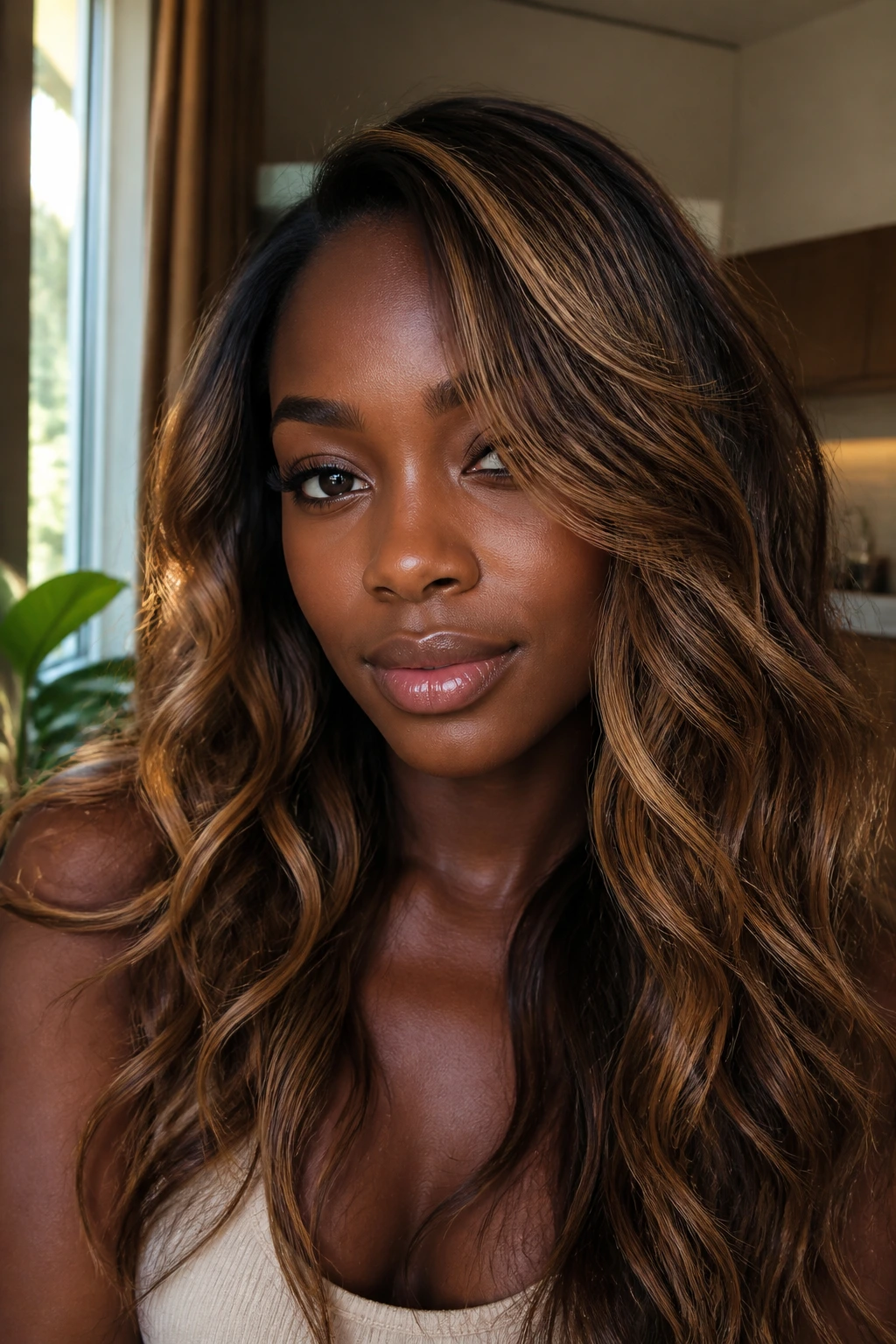
Caramel brown highlights on deep skin tones work best when they behave like light, not like dye. They should move with the hair, warm the complexion, and leave the base rich enough that the contrast feels intentional. That’s the whole appeal, honestly. Not blonde. Not flat brown. Something in between that catches the room when you turn your head.
If you save one rule, make it this: choose the warmth first, then decide how visible you want it. The rest — foil, balayage, money piece, halo — is just the way you frame the color. And once that frame is right, the hair starts doing the flattering work on its own.