



Blonde level highlights for dark hair with curly hair can look like a soft halo or a stripy mistake, and the difference usually comes down to where the light lands. On curls, a single foil isn’t a single foil for long; once the hair dries, it becomes a ribbon, a flash, or a bright edge that repeats around the bend of the curl. That’s why the same blonde can look airy on one head and busy on another.
Dark curly hair also changes the rules because the curl itself casts shadow. That shadow is useful when you keep depth underneath, and it turns against you when every strand gets pushed to the same pale shade and the shape goes mushy. The strongest looks here usually stay in the honey, beige, champagne, or soft ash family first, then climb lighter only where the eye naturally goes.
The 28 looks below move from soft ribboning to bolder face-framing and lowlight-mixed contrast, with a few brighter options for people who want the blonde to announce itself. Some are salon-friendly and low drama; some ask for more lift and a steadier hand with toner. All of them depend on the same idea: let the curl pattern do some of the work.
Why These Blonde Highlights Read So Well on Dark Curls
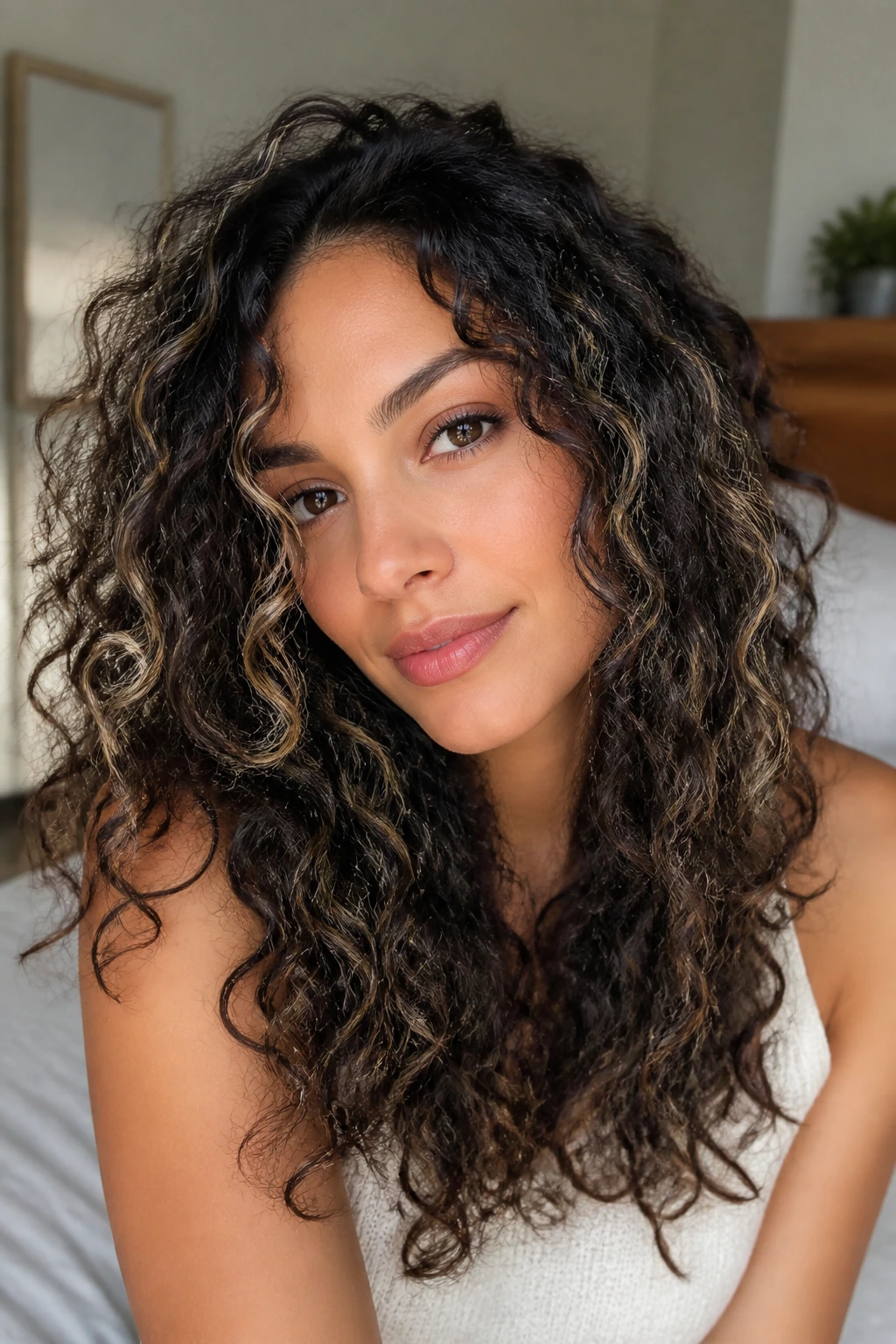
- Curl clumps change everything: One bright streak on straight hair is one bright streak; on curls, that same streak can show up across three bends and read much softer.
- Depth keeps the shape alive: Leaving the underside darker stops the hair from turning into a pale sheet, which is the fastest way to lose curl definition.
- Tone matters as much as lift: Honey, beige, champagne, ash, and vanilla each change the mood of the highlight before the placement even enters the conversation.
- Grow-out can be part of the design: Root shadows, lowlights, and balayage edges let the style soften instead of screaming at the scalp line.
- The crown and face frame do the heavy lifting: A few brighter pieces there often create more impact than over-lightening the whole head.
1. Honey Ribbon Balayage
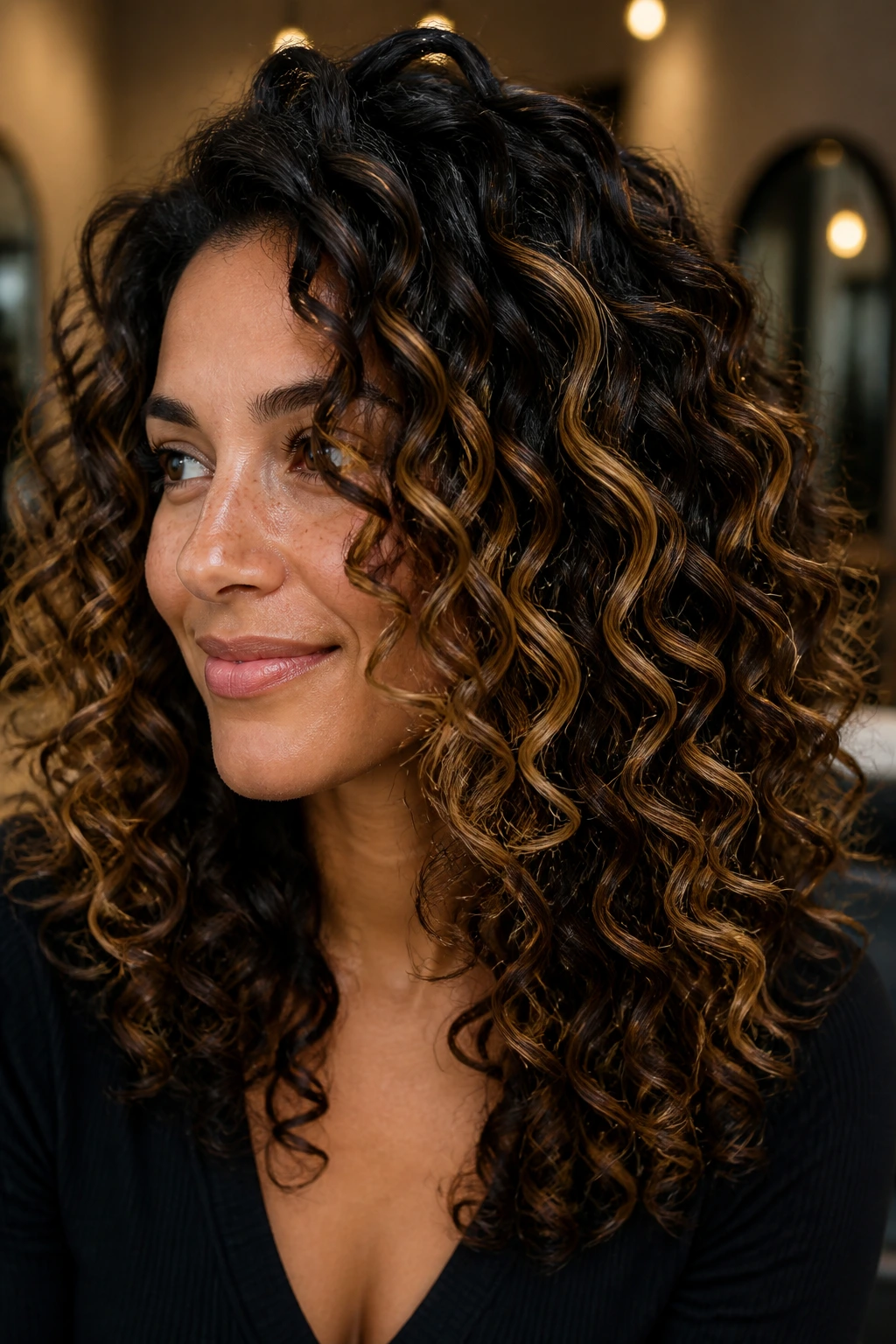
Honey ribbon balayage is the easygoing cousin in this whole lineup. The blonde sits in warm level 7-8 territory, so dark curls keep their depth while the brighter ribbons bend around each spiral instead of sitting on top of it like a sticker.
Why It Reads Soft
A honey tone does not fight the natural brown base. It sits beside it, and that side-by-side contrast is what makes curls move visually.
- Best on 3a to 3c curls with a dark brown base.
- Ask for ribbons that follow the outer curve of each curl clump.
- Leave the nape a shade deeper so the style keeps shape when pulled into a ponytail.
Best move: keep the brightest honey pieces near the face and crown, not all the way through the underside.
2. Beige Babylights
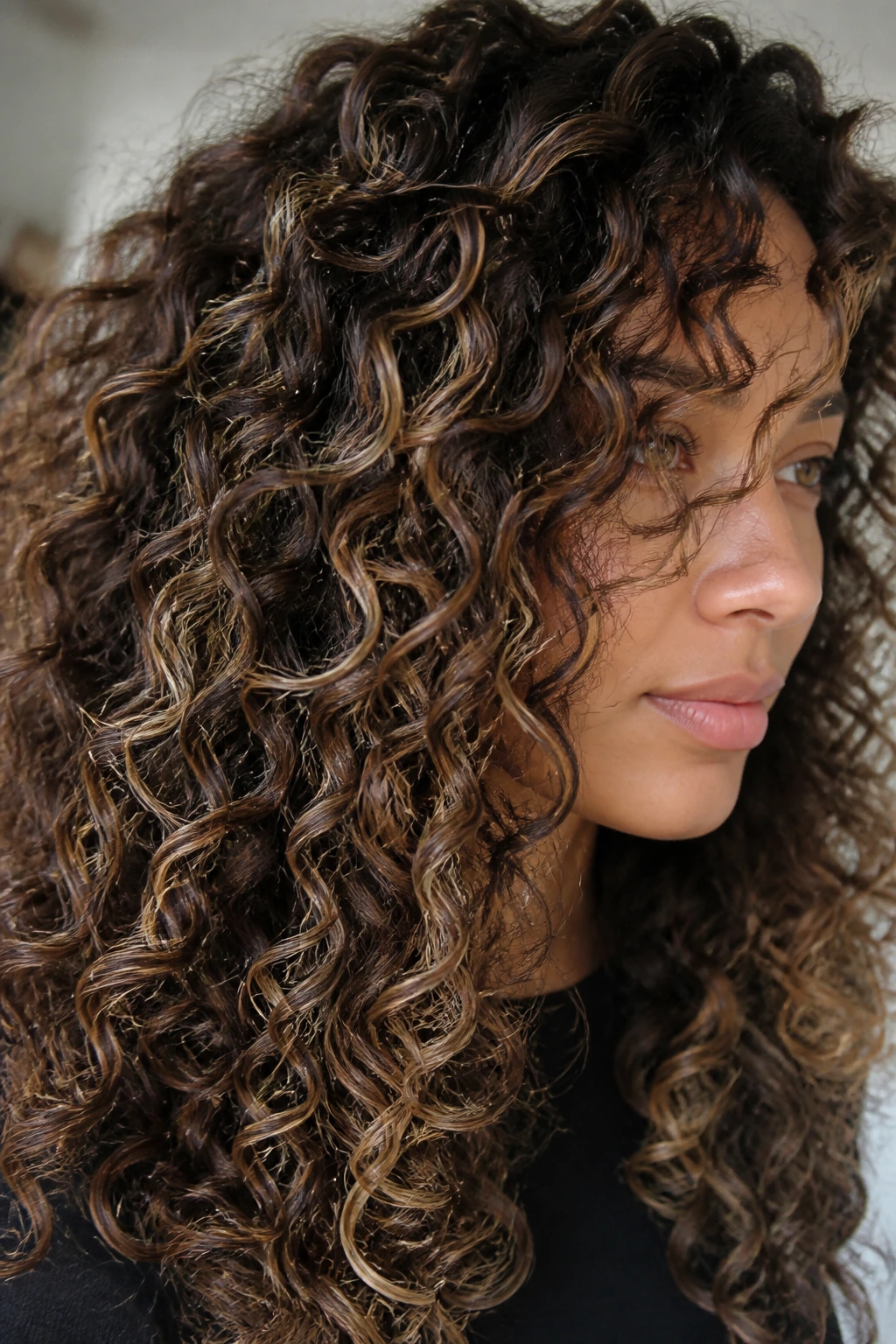
Beige babylights are tiny, nearly threadlike highlights, and that is the point. On dark curly hair, they read like a soft shimmer through the surface, not like obvious stripes that fight the curl pattern.
Because the pieces are so fine, the overall color stays dimensional even when the curls puff up a little on day three. Beige toner keeps the warmth in check, which matters on dark bases that want to turn orange after one shampoo.
Wear this when you want brightness people notice in motion more than in a flat mirror. It is also one of the safer choices for tighter curls that cannot spare a lot of bleach exposure.
3. Caramel-to-Blonde Melt
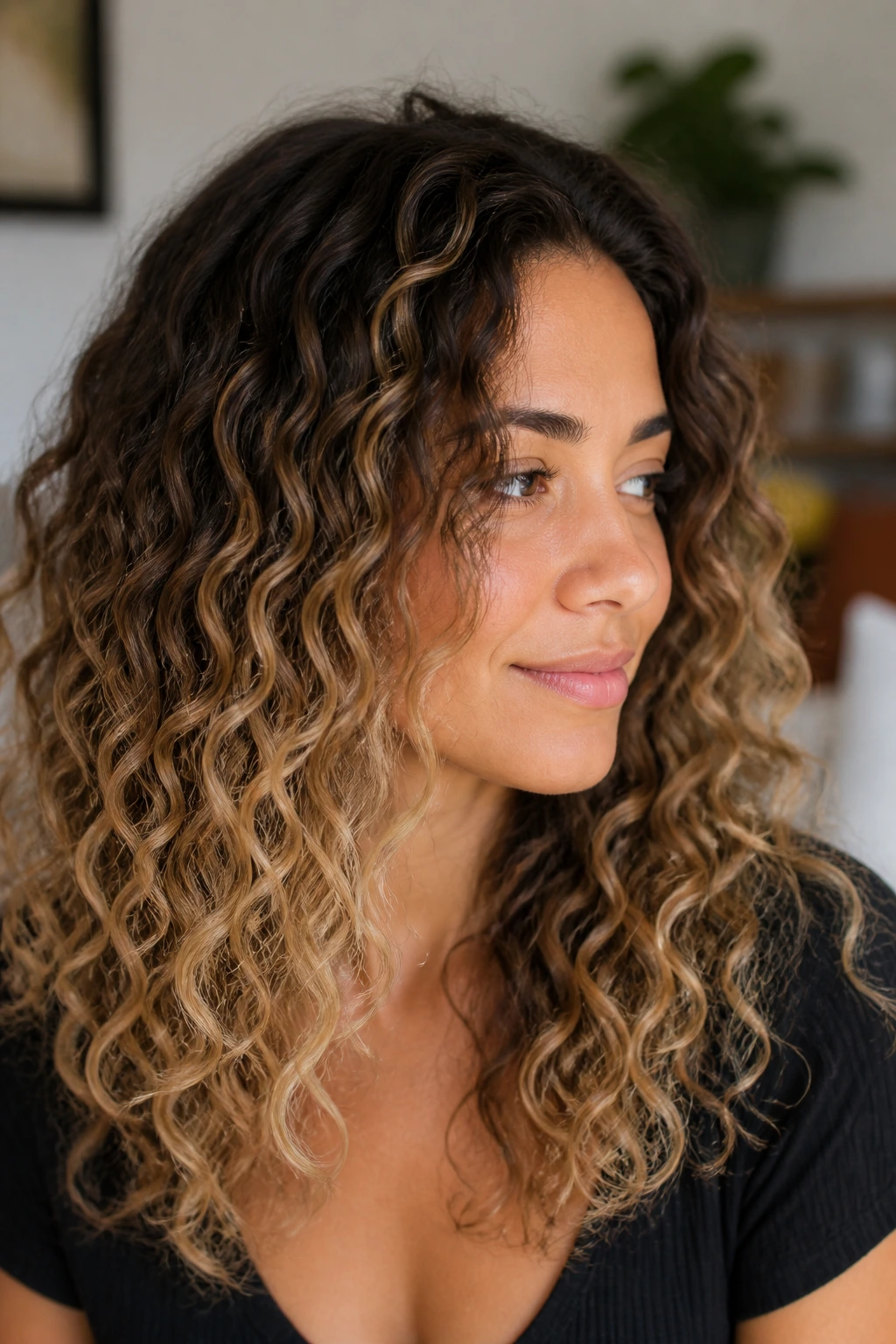
Why does a caramel-to-blonde melt look cleaner than straight streaks on curls? Because the eye reads the fade, not the line. When dark roots move through caramel, beige, and a lighter blonde end, the shrinkage in curly hair works with the color instead of exposing every section edge.
Ask for the transition to stay soft around the mid-lengths and brighter at the tips, especially if your curls spring up after diffusing. A good melt never looks like three separate colors fighting each other. It looks like one curl story that gets lighter as it falls.
How to Use It
This one suits medium to long curls where the lower half of the hair can carry more blonde without the top going flat.
4. Chunky Face-Framing Money Piece
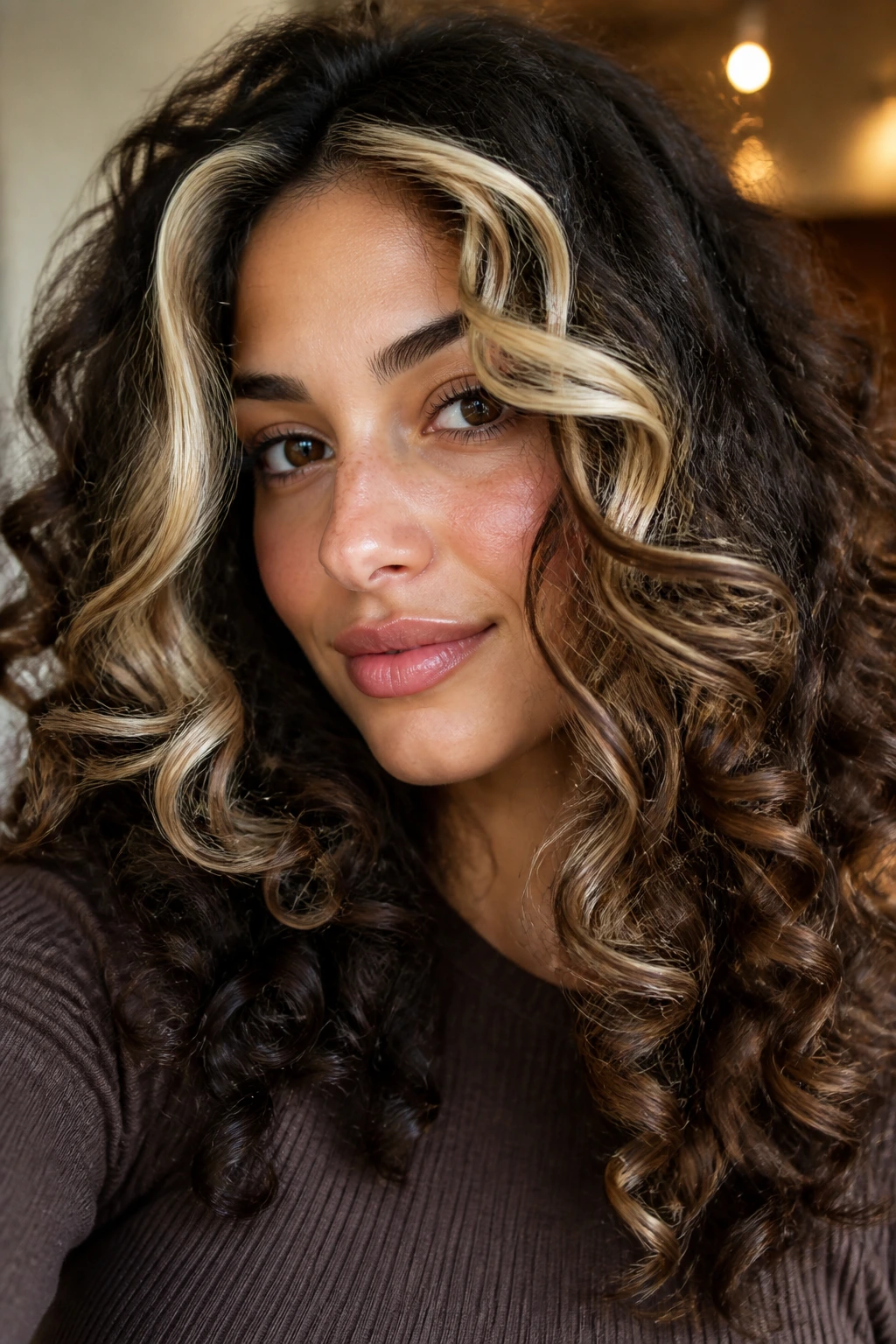
Picture dark curls pulled half up, with two brighter blonde panels hanging around the cheekbones. That is the money piece, and on curly hair it has more impact than people expect because each ringlet multiplies the color in motion.
The trick is thickness, not saturation. If the front pieces are too skinny, the curl shrinkage swallows them; if they are too wide, the look can turn harsh. Aim for two to four stronger lightened sections on each side, then keep the rest of the head softer so the face framing has room to do its job.
- Best with side parts and layered cuts.
- Ask for the lightest blonde one inch back from the hairline, not right at the edge.
- A beige or champagne toner keeps the front from going brassy fast.
Closing thought: this is the look for someone who wants the blonde to announce itself before the rest of the style even settles.
5. Champagne Ends on Layered Curls
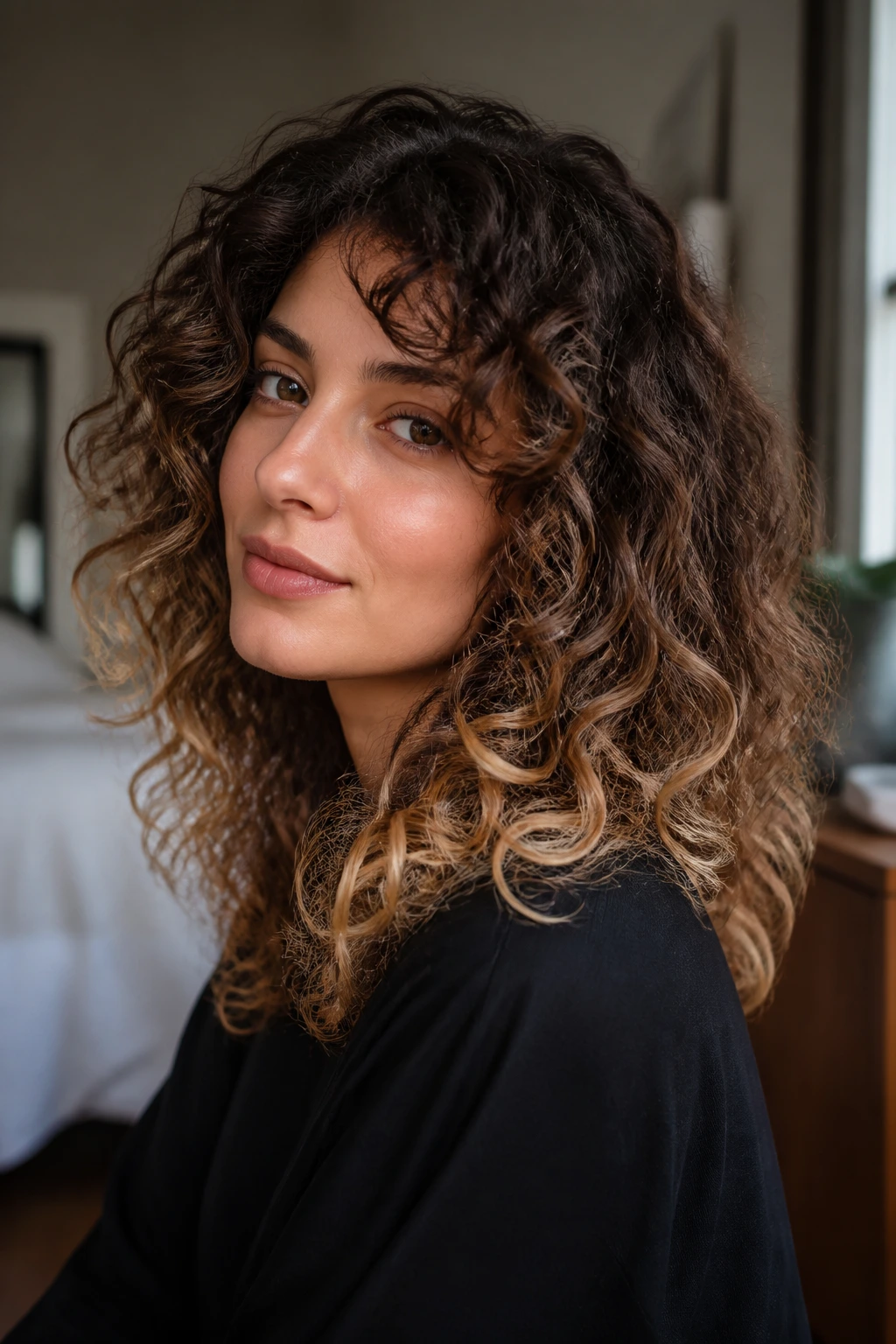
Champagne ends give dark curls a polished, slightly cooler glow without tipping into icy territory. The shade lives in that pale beige zone that reflects a lot of light, so it works best when the cut has layers and enough movement for the ends to show.
On a blunt cut, champagne can look a little harsh. On layered curls, it makes the perimeter feel lighter and airier, especially when the ends are diffused and scrunched instead of brushed out. The color reads strongest on the outside edge of each curl, which means the style gains brightness without losing root depth.
I like this choice for shoulder-length or longer curls that need a cleaner finish after sun, hard water, or too many rough wash days. It asks for a careful toner and regular moisture, but the result is one of the more elegant ways to bring blonde into a dark curly head.
6. Sandy Foilayage
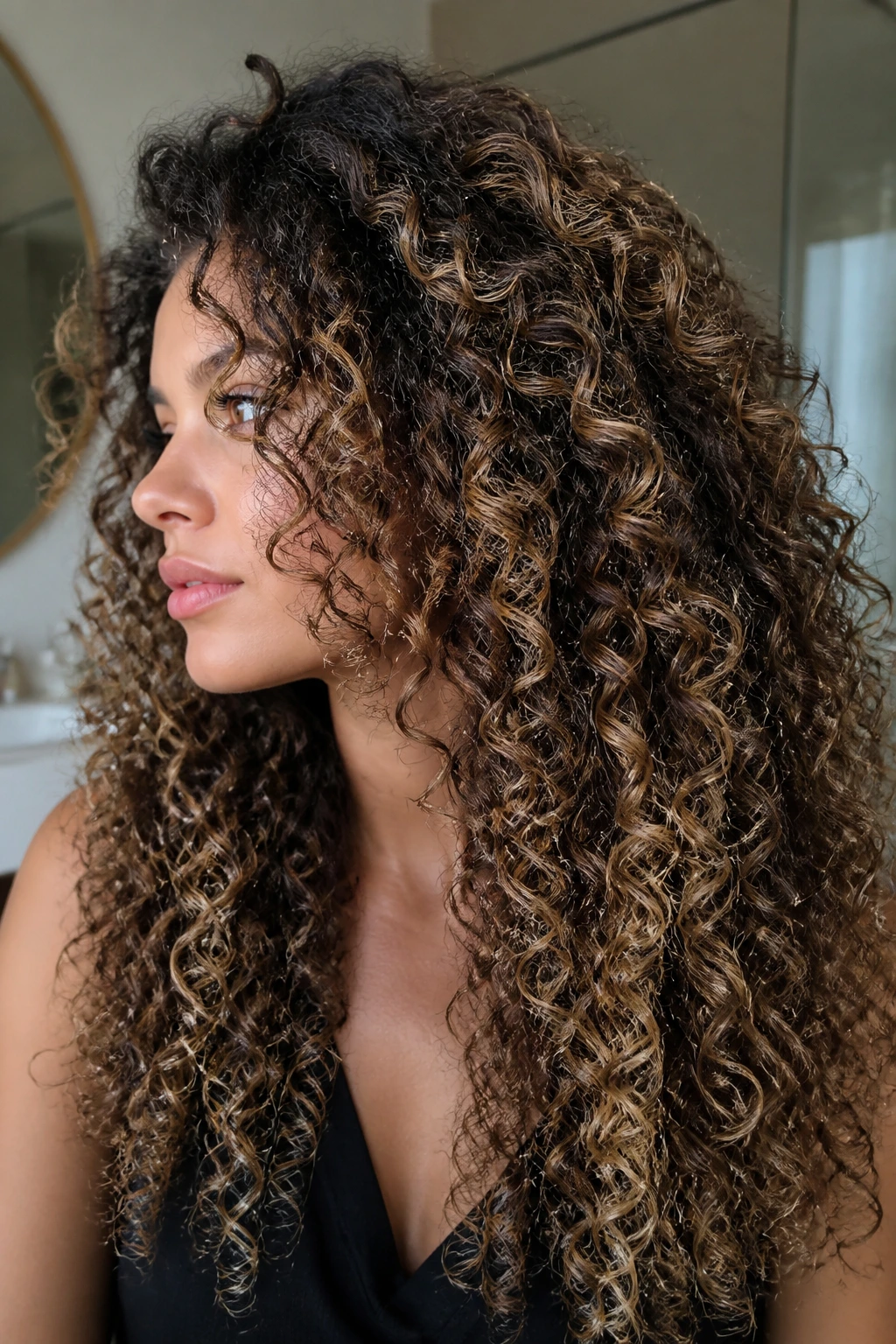
Sandy foilayage sits between a soft foil highlight and hand-painted balayage, which is why it works so well on dense curls. Unlike full foils that can look too sorted and stripey once the hair shrinks, foilayage gives you a brighter lift near the surface with softer edges underneath.
It is a smart choice if your curls are thick and your base is a level 4 or 5 brown. The sandy tone keeps the blonde from turning yellow, and the mixed placement helps the style hold up even on second- or third-day hair.
If you want movement without a big root contrast, this is the one I’d point you toward first. It gives lightness, but it still lets the curl pattern stay visible.
7. Rooted Vanilla Blonde
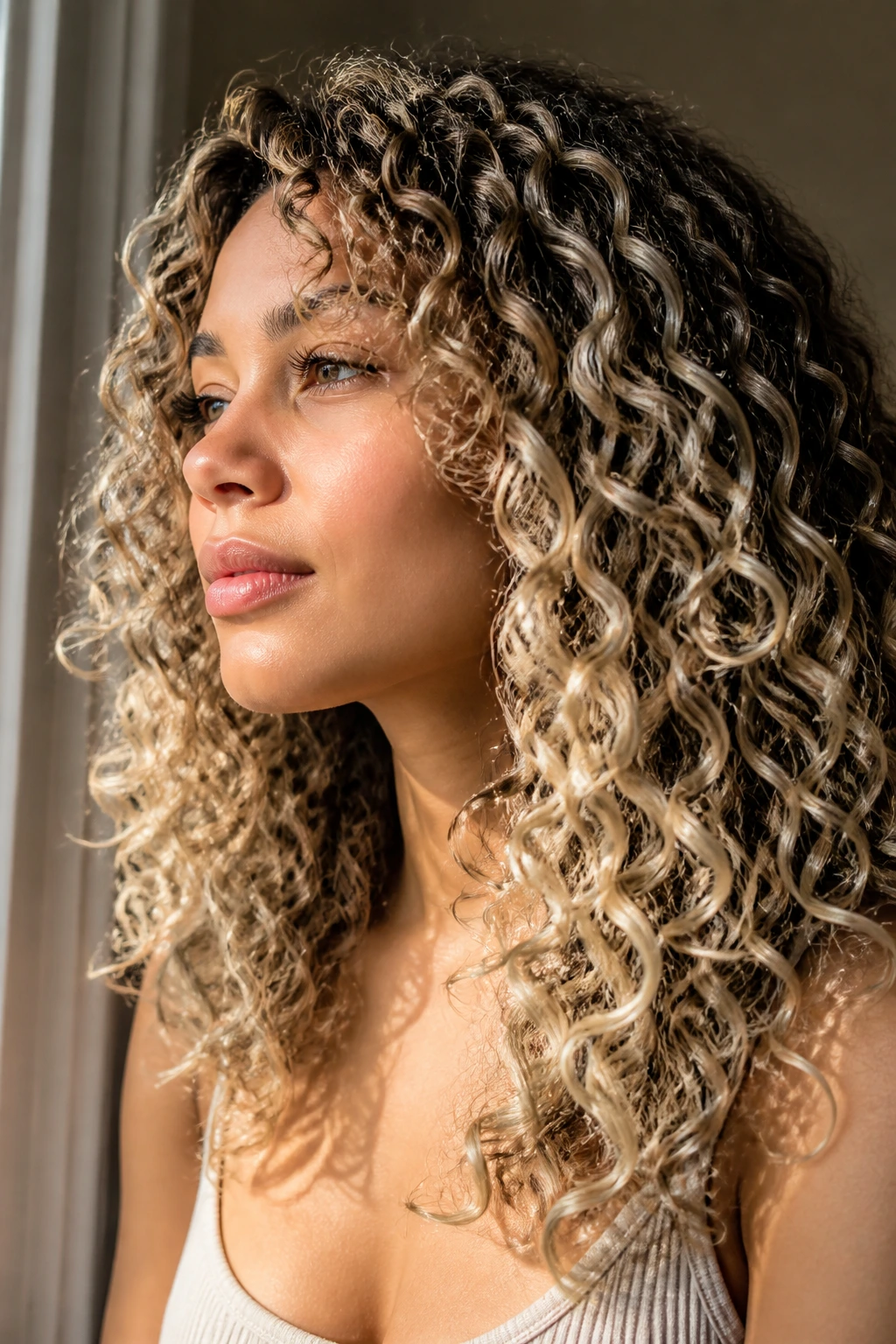
Rooted vanilla blonde is for the person who wants the ends bright and the grow-out gentle. The root stays deeper, usually in the brown-to-mushroom range, while the mid-lengths and ends move into a creamy vanilla tone that looks clean against dark curls.
What Makes It Easy to Live With
The darker root keeps the scalp area soft when the curls separate. Vanilla through the ends gives enough brightness to notice, but it does not demand constant toner like an icy blonde would.
- Works especially well on long layered curls.
- Ask for a shadow root about 1 to 2 inches deep.
- Use a bond treatment if the ends have already been lightened before.
Best move: let the vanilla sit mostly on the last third of the length, where curl shrinkage will show it.
8. Halo Lights Around the Crown
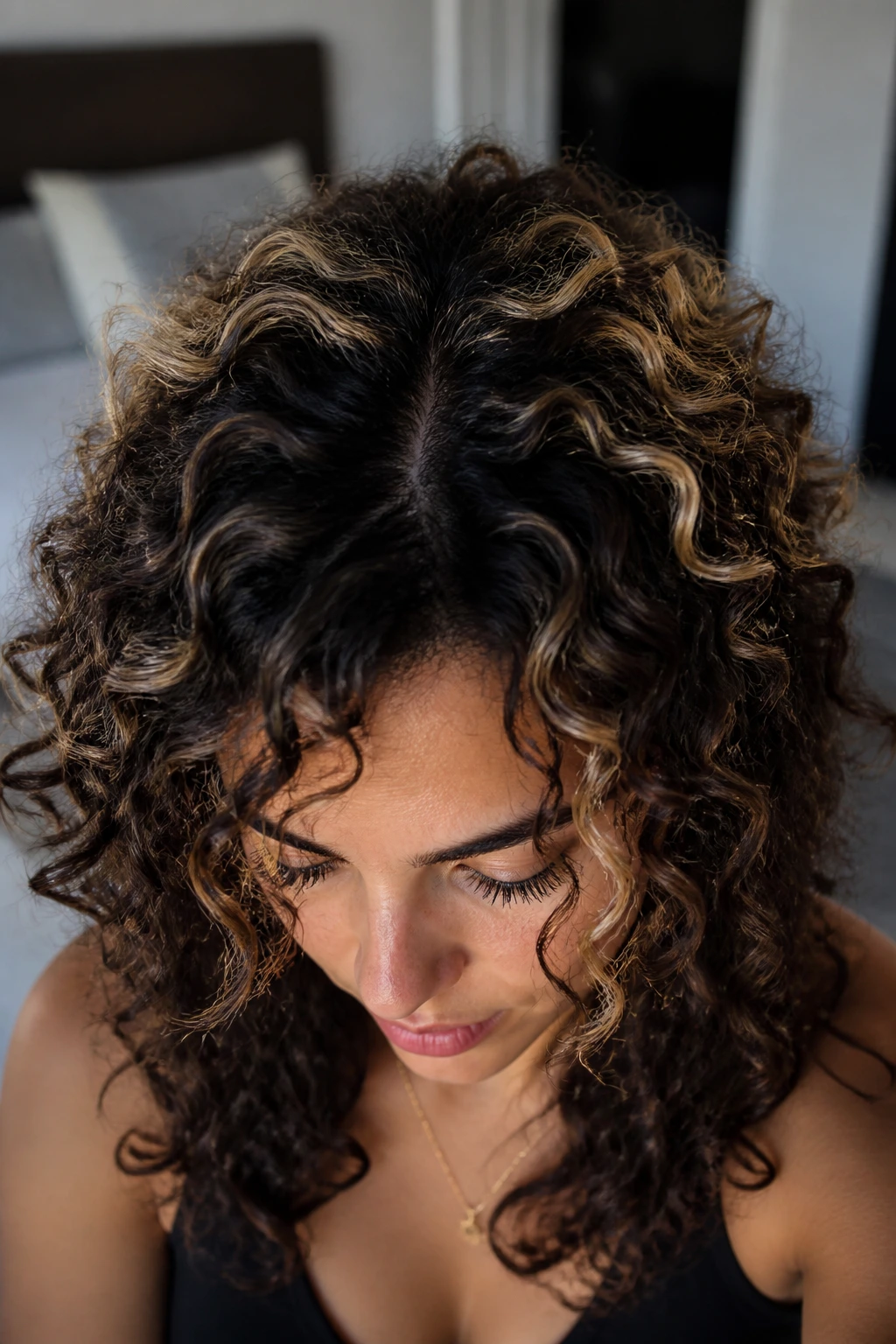
Halo lights are what happen when the brightest pieces stay around the top ring of the head, where the curls catch overhead light. That placement is magic on dark curly hair because the crown often looks densest; a little light there opens up the whole silhouette.
I like this when someone wants brightness without the front-heavy money piece look. The crown lights make the hair read fuller, not thinner, and they work well with diffused volume.
Ask for a few lighter pieces around the part and a soft scatter through the upper layers, then leave the lower interior darker. That contrast keeps the curls from losing their shape when the weather gets humid.
9. Sunset Blonde Ribbons
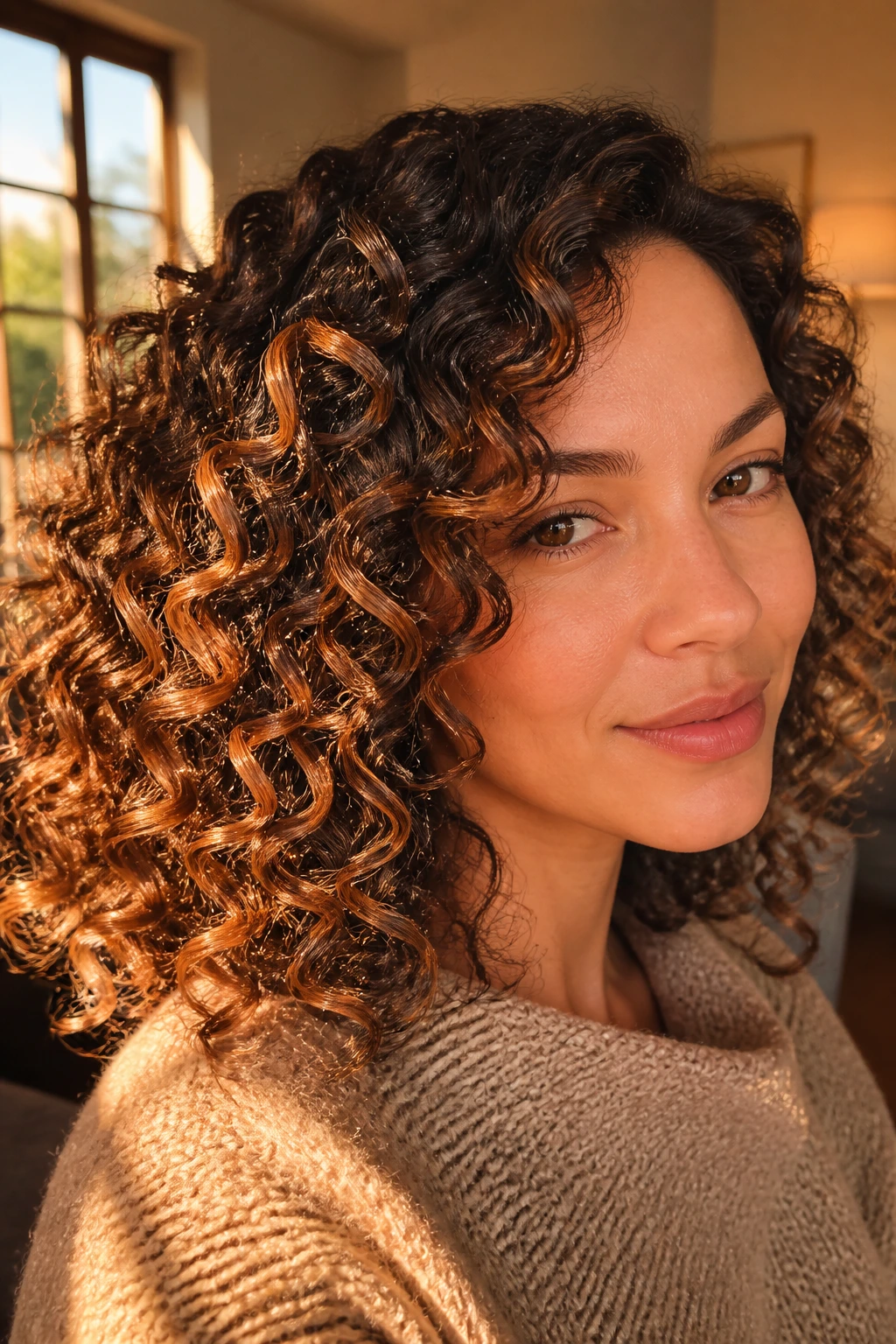
What makes sunset blonde feel different from plain gold? The tone has a little peach and apricot in it, so it catches warm light without turning orange. On dark curls, that warmth can look especially rich because it sits against the brown base like glow through glass.
Use this if your skin leans warm or neutral and you want a blonde that feels lively instead of icy. The ribbons should run with the curl pattern, not across it, and a few brighter pieces near the front keep the whole look from going too dark.
How to Use It
On coily or tightly curled hair, keep the sunset tone in thinner ribbons so the color shows without overpowering the texture.
10. Mocha-Laced Blonde with Lowlights
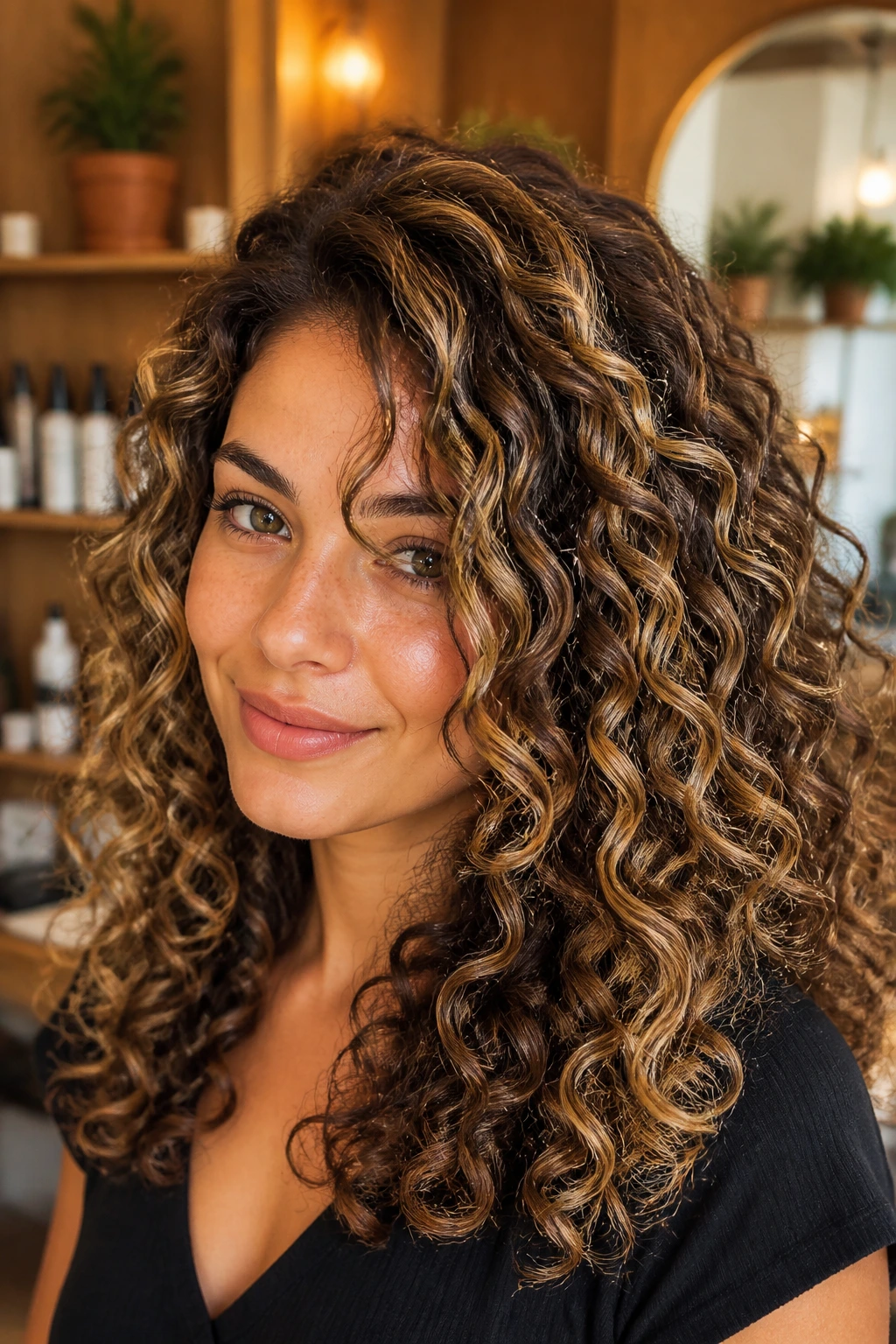
This is the one for people who like blonde, but not too much blonde. A mocha base with blonde highlights and a few deeper lowlights gives curly hair more depth than a blanket of light pieces ever could.
The lowlights matter because curly hair can lose its edges once every strand is lifted to the same tone. Drop a few mocha or chestnut panels under the surface, and the blonde reads brighter by contrast.
- Great for dark brown bases that need balance.
- Ask for lowlights under the crown and around the nape.
- Keep the highlight tone beige or honey, not platinum.
Why it works: the darker strands act like the shadow in a contour drawing, and curls need that shadow.
11. Butter Blonde Mid-Length Glow
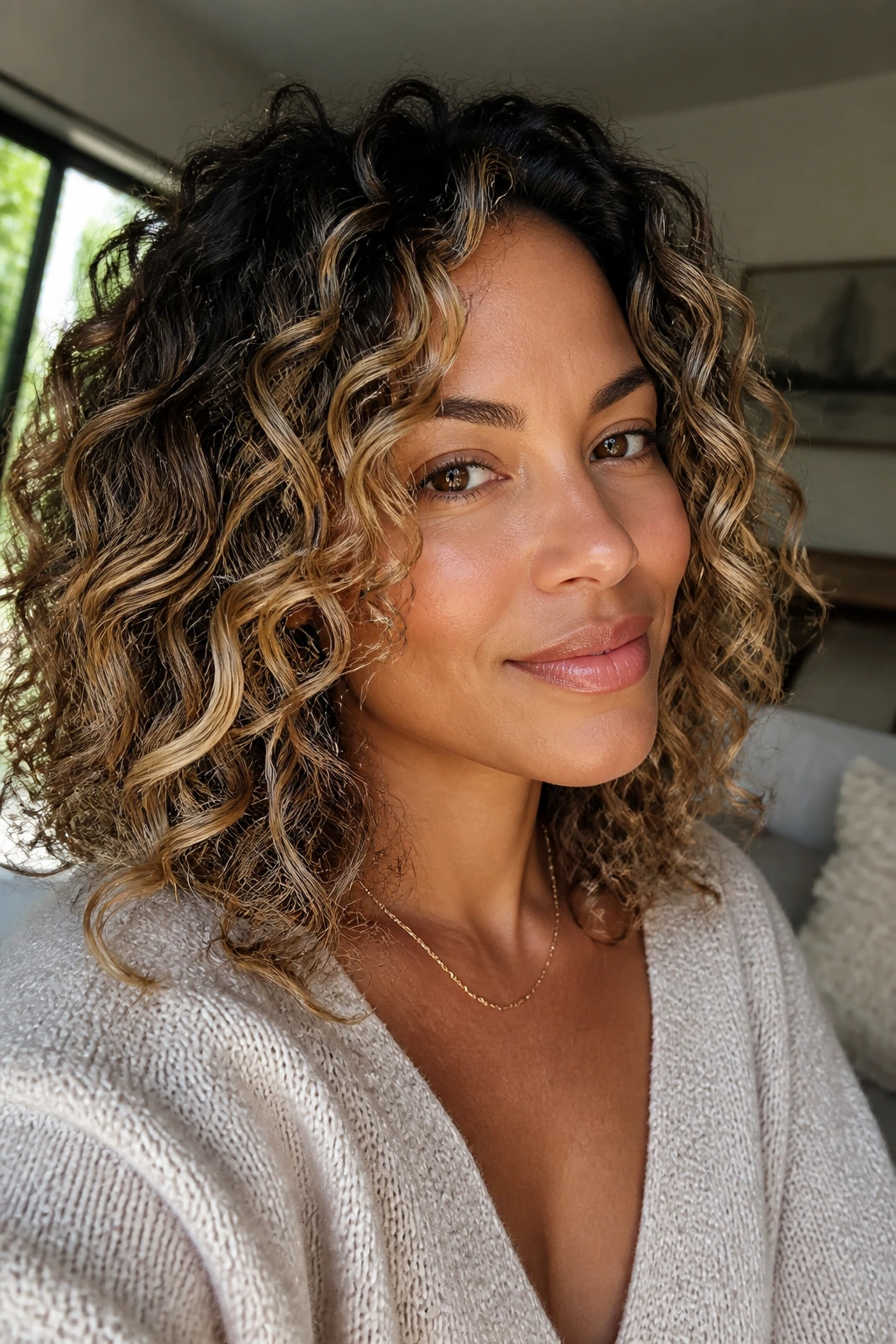
Butter blonde on mid-length curls gives a soft, creamy brightness that never feels icy or hard-edged. The color sits in that warm beige band, which means it reflects light well even when the curls are dense and the base is dark.
The reason this placement works is simple: mid-lengths move the most. They swing, they bounce, they show shape. If the blonde lives there, the color looks active instead of sitting only at the tips or the roots.
This is a good pick when you want something that reads polished in a bun, a half-up style, or a full diffused shape. It does ask for moisture, because buttery blondes on curls can look dry if the cuticle is rough.
12. Golden Spiral Foils
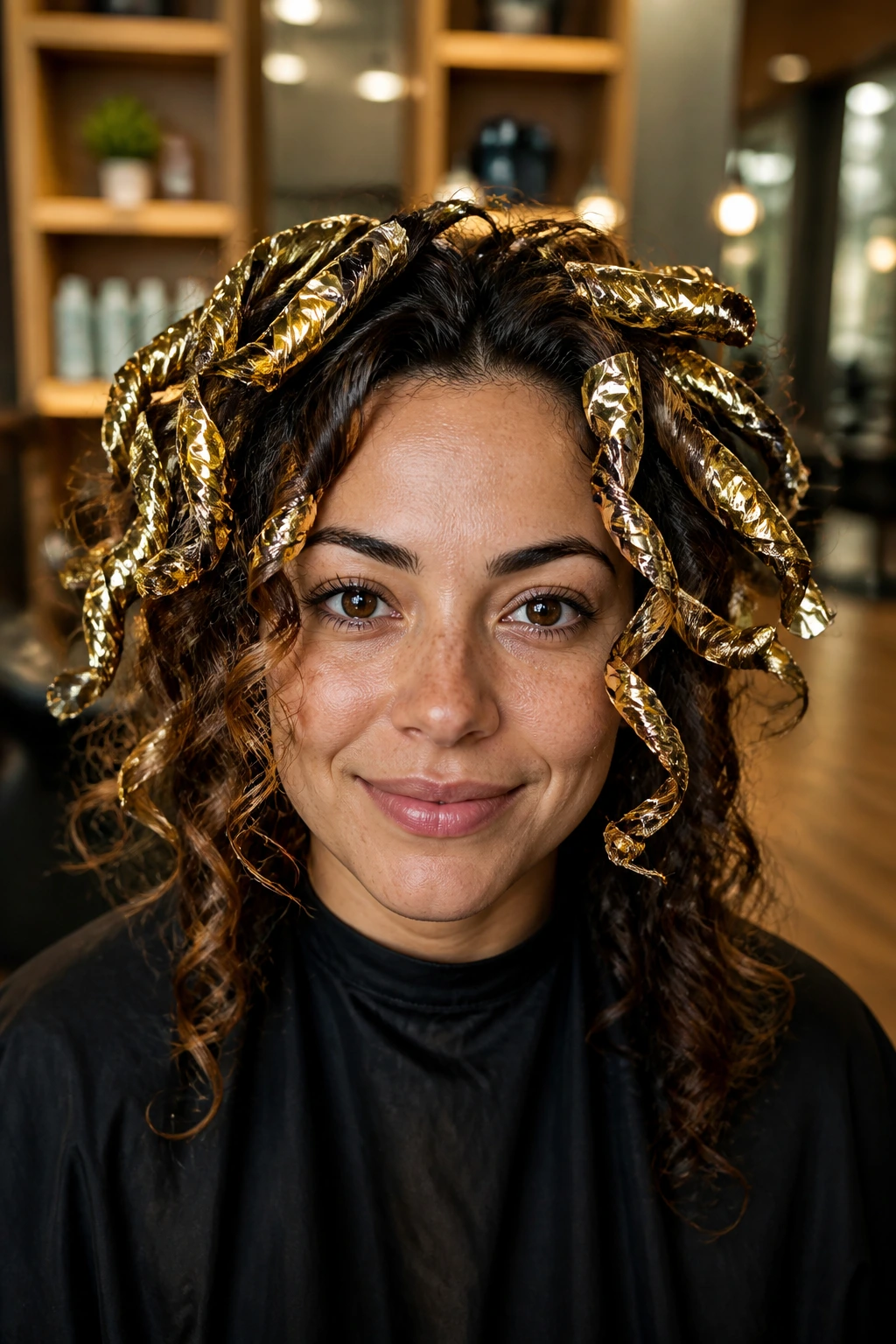
Unlike straight-across foils, spiral foils follow the loop of the curl and give the hair a more natural flash. That is the whole point here. The golden tone lands where the curl bends, so each coil shows a little different angle of light.
This is a better fit for medium curls and looser ringlets than for very tight coils, simply because the spiral shape can be painted more cleanly. Ask for the brightest gold on the outside of the spiral and a softer lift inside the bend.
If you want a blonde that looks lively when the hair moves and less obvious when it is still, spiral foils do that nicely.
13. Ash Beige Dimension
Ash beige is for the person whose dark base throws brass the second water hits it. The cooler tone reins that in, but it still stays soft enough that curly hair does not look flat or smoky.
Why Curly Hair Likes This Tone
Cool tones can go muddy if they are pushed too far, so the best version sits in a light beige-ash zone rather than silver. That keeps the curls readable and avoids the dull cast that can happen on very dark hair.
- Best on level 4 to 6 bases with stubborn orange undertones.
- Ask for a neutral or violet-based toner, not a blue-black one.
- Keep a few warmer lowlights underneath so the ash does not drain the hair.
Best move: use this on hair that gets a lot of sun, because it cools the edge without looking smoky.
14. Peekaboo Blonde Panels
Peekaboo panels are hidden blonde sections that show up when curls separate or the hair moves. On dark curly hair, they are a smart way to get brightness without painting the entire head, and they look especially good in updos or half-up twists.
Because the panels sit underneath, they keep their color a little longer than the top layer, which makes the grow-out less obvious. This is one of the better choices if you want a bolder effect but do not want the full-head commitment.
If your curls are dense, the peekaboo pieces should be placed where they can peek through the top layer, not buried so deep that nobody sees them.
15. Sunlit Tip Painting
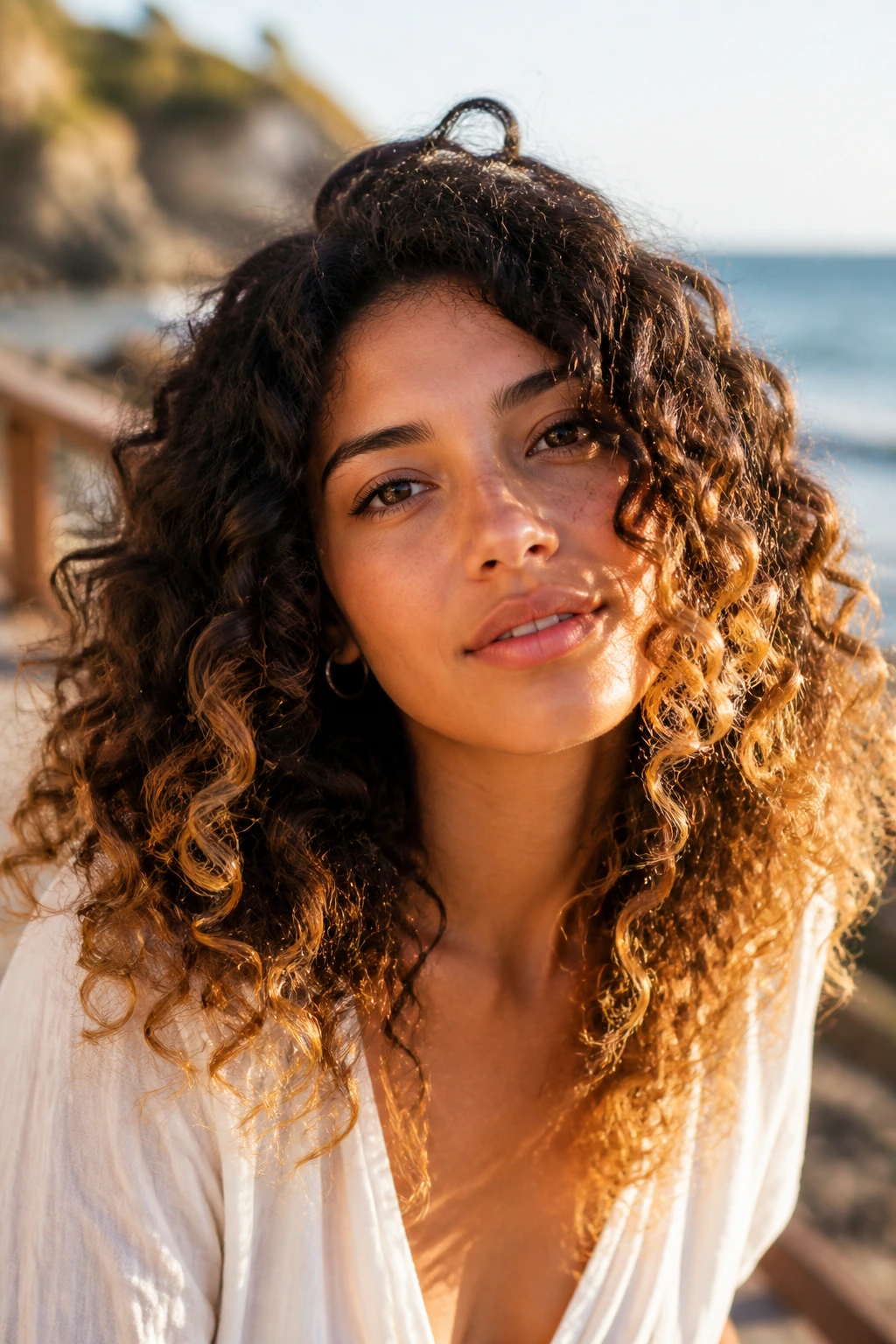
Why do sunlit tips work so well on curly hair? Because the ends already carry the most movement. A light hand on the last few inches gives you brightness without asking every curl to hold the same amount of blonde.
The key is restraint. Leave the root area rich, soften the mid-lengths, then paint the ends with a pale honey or beige tone that looks like outdoor light, not a block of bleach. This style is especially kind to curls that frizz when they are over-lightened at the top.
How to Use It
Ask for the lightest color only on the ends that naturally sit on the outside of the shape. The inner layers can stay deeper so the curl pattern still looks full.
16. Soft S-Pattern Highlights
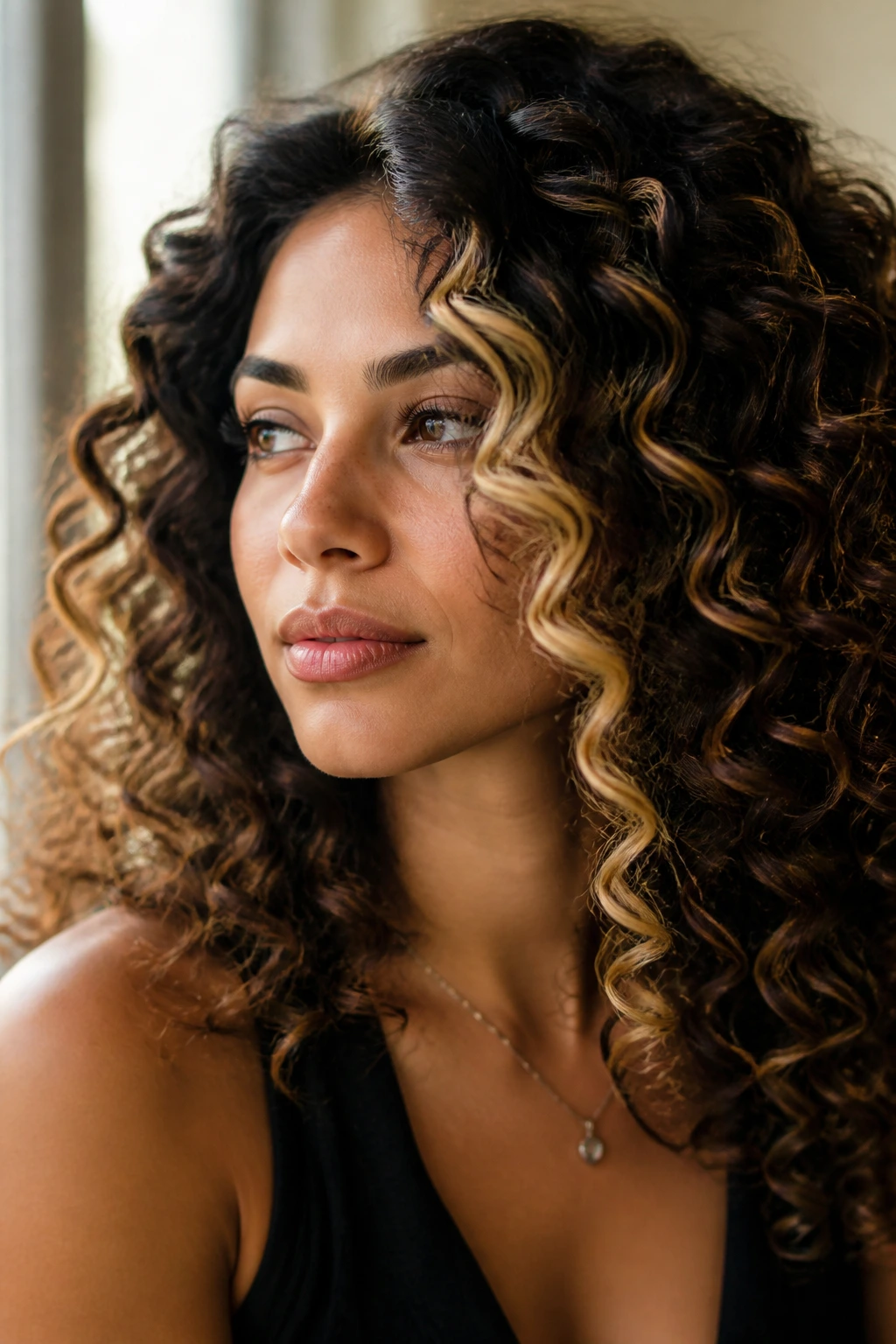
Imagine a curl that bends in an S, and a highlight that follows that bend instead of cutting across it. That is the whole trick here. The blonde lands on the outer curve and gives the illusion of movement even when the hair is still.
Soft S-pattern highlights are excellent for looser curl types, wave-heavy textures, or layered cuts where the shape already does some of the styling work. They can be very subtle or a little brighter, but the placement should always follow the line of the curl.
- Best with hand-painted sections.
- Ask for more blonde at the bend, less at the straight stretch near the root.
- A gloss after lifting keeps the lines from reading harsh.
Closing note: this is one of the few highlight patterns that almost disappears into the haircut until the light hits it.
17. Honeycomb Micro-Lights
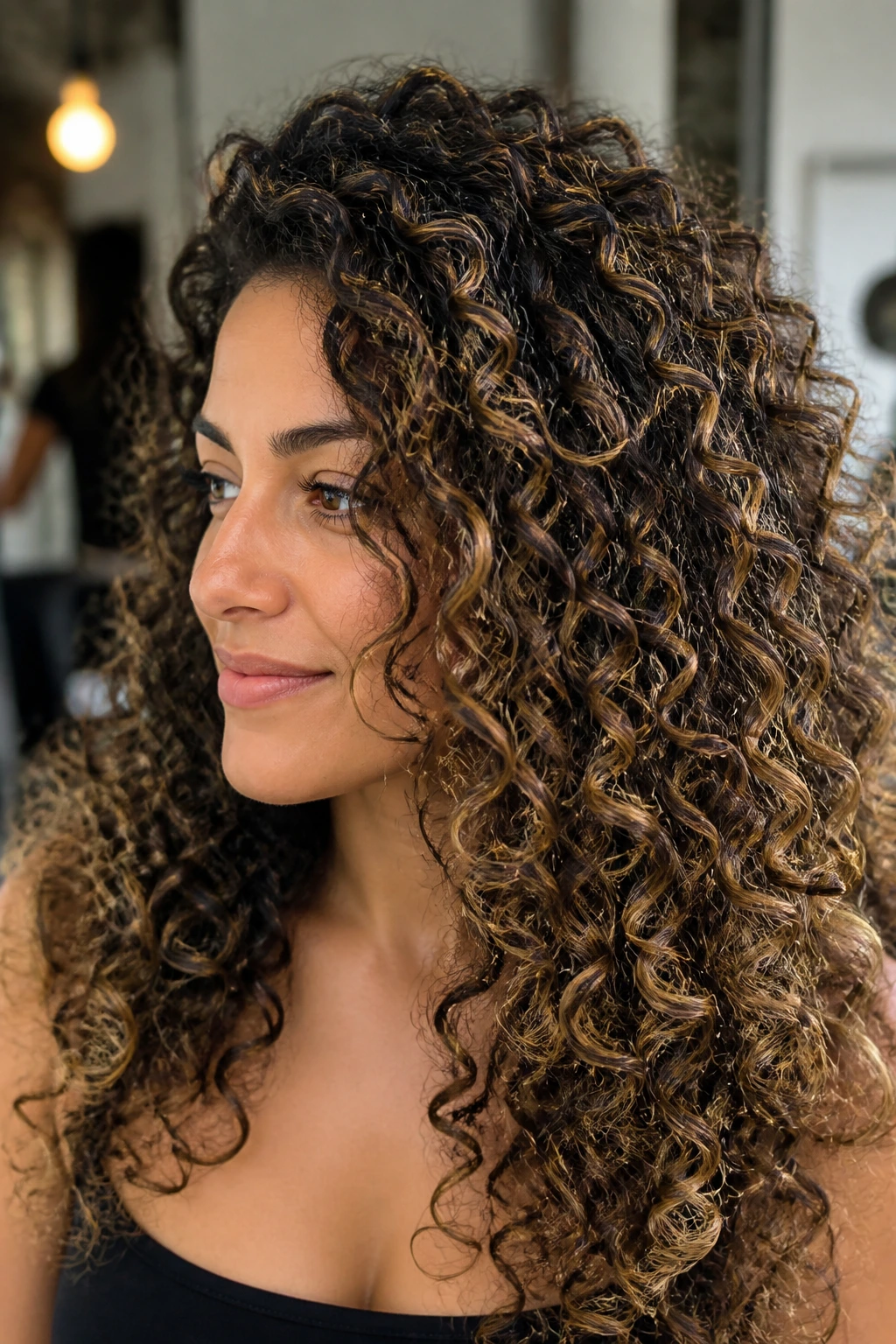
Honeycomb micro-lights are tiny woven highlights packed close together, and they give dark curls a dense, textured glow. Because the pieces are narrow, they do not shout. They shimmer.
That matters on curly hair, where one thick stripe can take over a whole curl family. Micro-lights keep the base visible while brightening the surface, which is why they look especially good on thick hair that needs detail without drama.
I like this look for anyone who wants the blonde to feel expensive without looking loud. It takes a steady colorist and a little patience, but the result is soft enough to live with for months.
18. Root Shadow Ombré Blonde
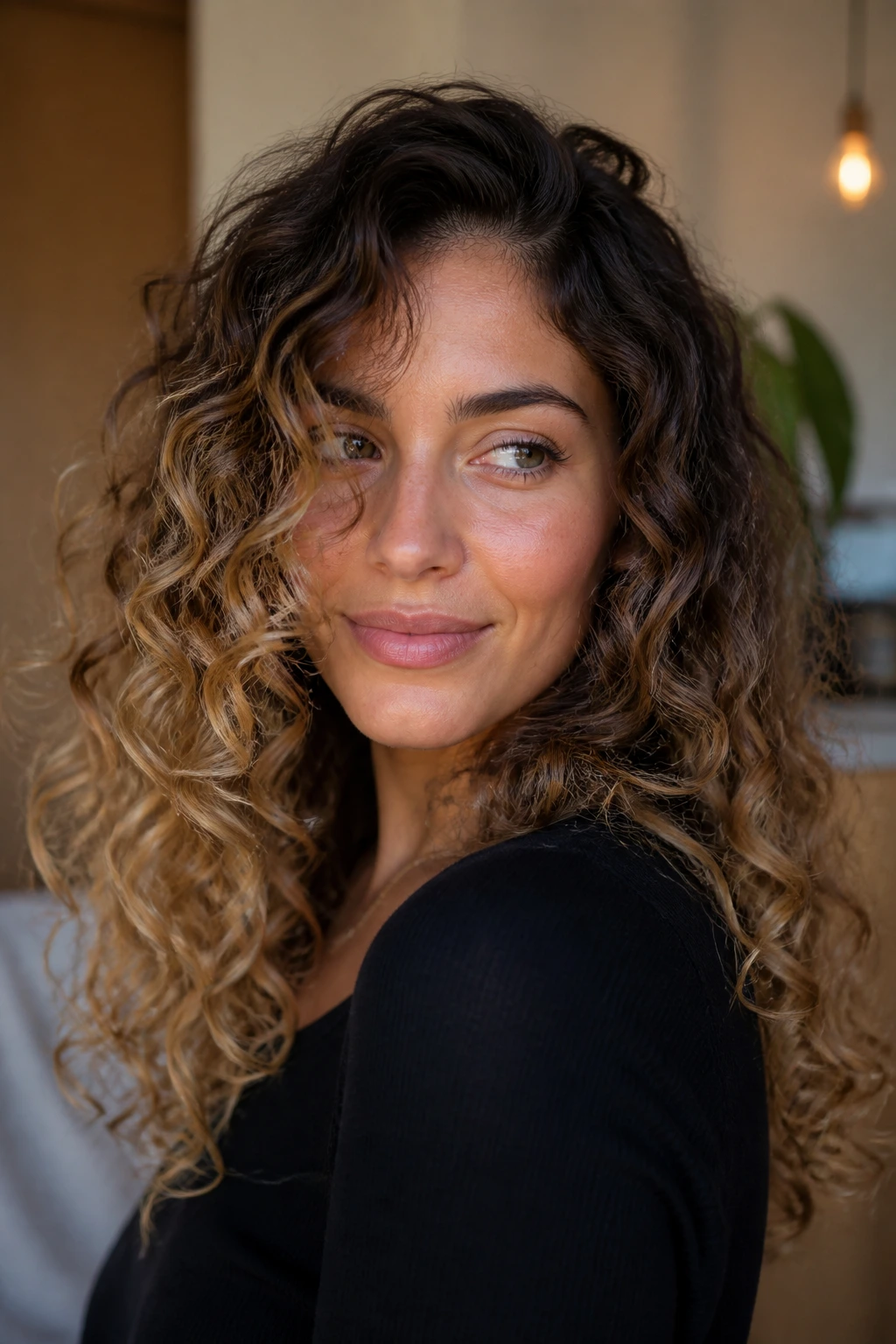
Unlike a high-contrast ombré, a root-shadow version keeps the top a little deeper and lets the blonde ease out lower on the strand. On curly hair, that softer start point saves the style from looking like a hard band once the curls shrink up.
This is a good option if your hair is already lighter through the mids and you want the blonde to feel intentional instead of patchy. The shadow at the root also makes the color grow out with less panic between appointments.
If your curls are long and thirsty at the ends, this approach gives you brightness where you want it and darkness where the hair needs a breather.
19. Cool Sand Balayage
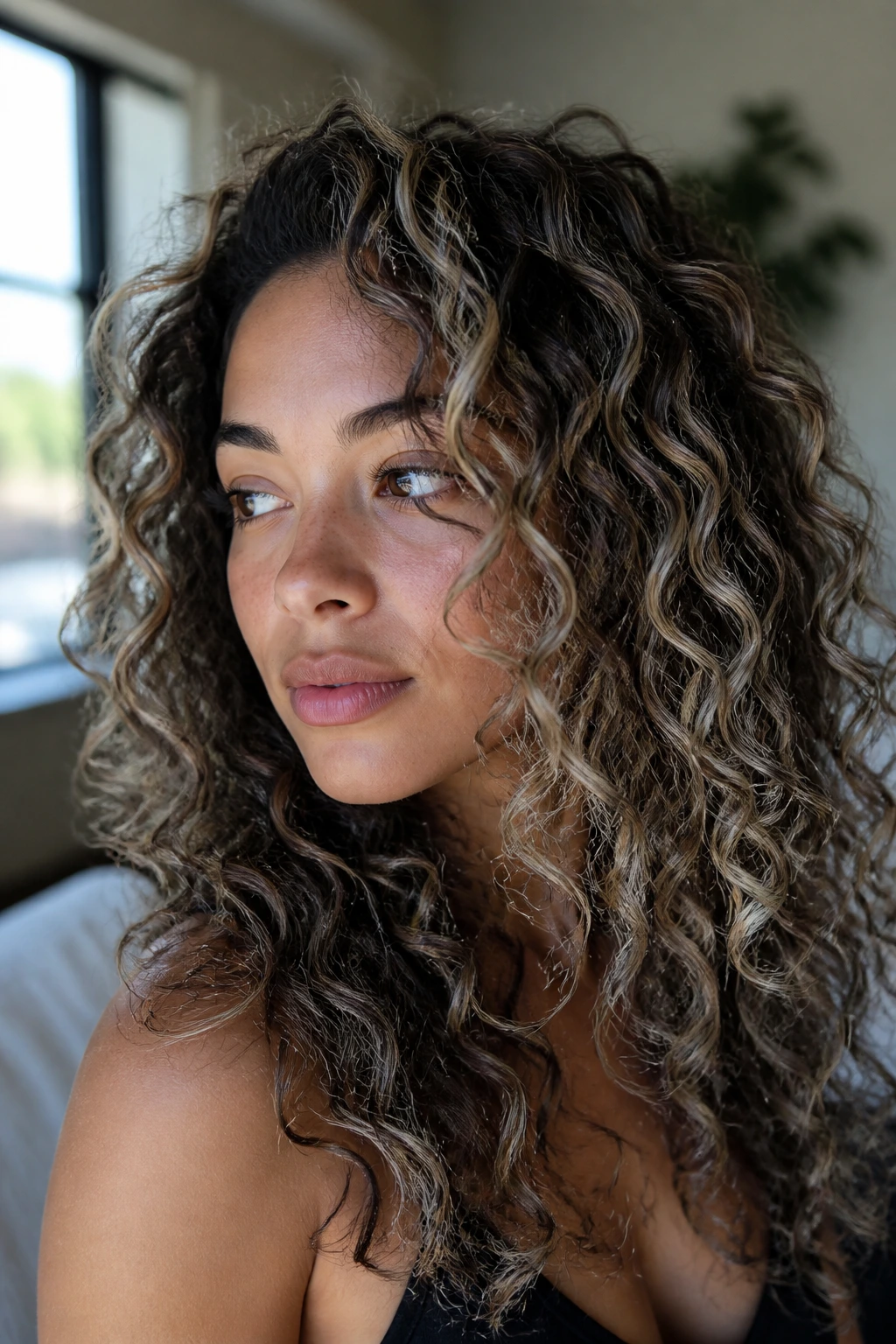
Cool sand balayage sits between beige and ash, which is why it suits dark curls that pull orange fast. The tone feels quieter than honey and less severe than platinum, and that middle ground is useful when your hair has a lot of texture.
Best For
This shade works well on people who want the blonde to feel modern but not icy. The balayage placement softens the edges, so the color grows out without a hard line.
- Keep the lightest pieces around the face and outer canopy.
- Ask for a toner that leans beige, not silver.
- Add a few lowlights underneath if the hair is very dense.
Best move: let the sand tone sit on curls that get the most daylight; the shade can look flat if it is buried too deep.
20. Bronze and Blonde Depth Mix
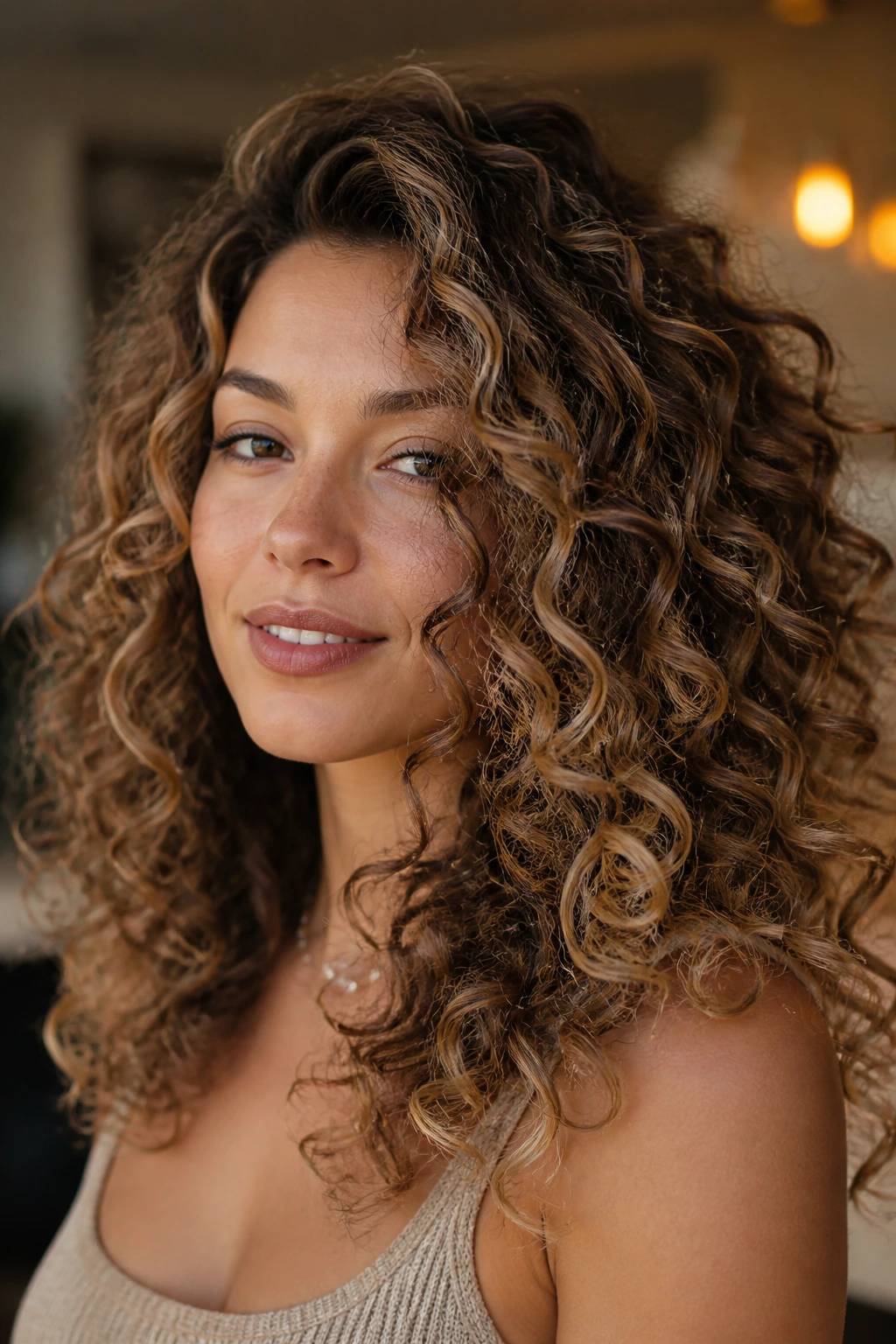
Bronze and blonde together give curly hair a richer, more layered-looking surface than blonde alone. The bronze keeps the dark base warm and readable, while the blonde lifts the outer ring of the curls.
This mix works best when the highlight plan includes both brightness and shadow. Without the bronze, a curly head can start to look one-note. With it, the blonde looks deliberate, and the curls keep their shape in photos, mirrors, and bad fluorescent light.
Ask for bronze lowlights through the interior and blonde pieces where the hair frames the face and crown. That balance holds up nicely on coarse textures that need more contrast to show detail.
21. Bright Ends on Tight Ringlets
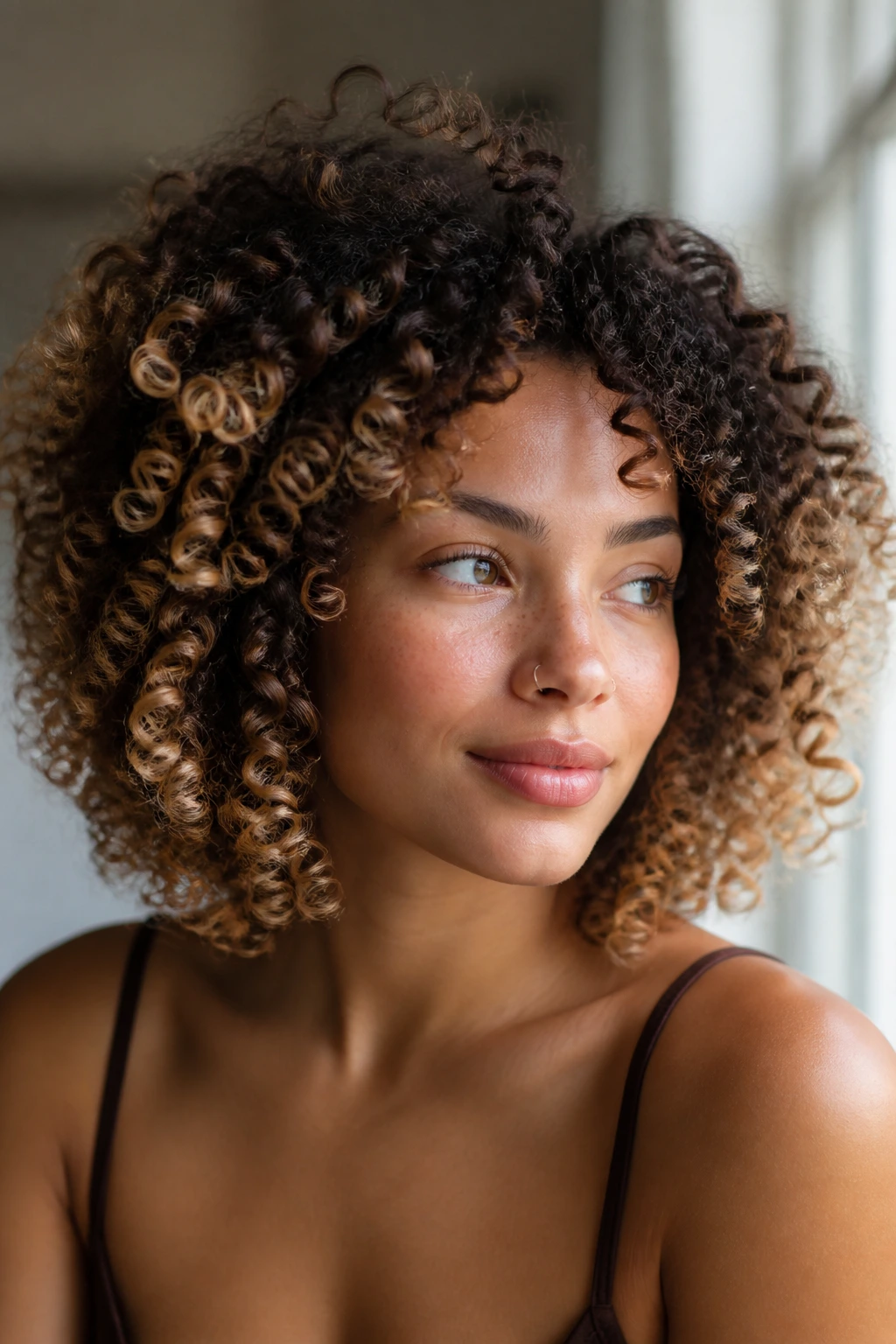
Can tight ringlets handle bright ends? Yes, if the lift is controlled and the color is kept mostly on the last inch or two. Tight curls shrink a lot, so the blonde can go from subtle to bold faster than people expect.
That is why the brightest pieces belong at the ends and outer halo, not woven through the middle of every coil. A pale beige or soft champagne tone usually reads cleaner than a stark platinum here, because the curl structure already creates enough drama.
If the ends are fragile, stop at a warm blonde and call it done. A healthy curl with slightly darker blonde beats a brittle pale one every time.
How to Use It
Ask your colorist to watch the curl spring as they place the lightener. The visual length on wet hair is not the length that the world sees once it dries.
22. Cinnamon Base with Vanilla Threads
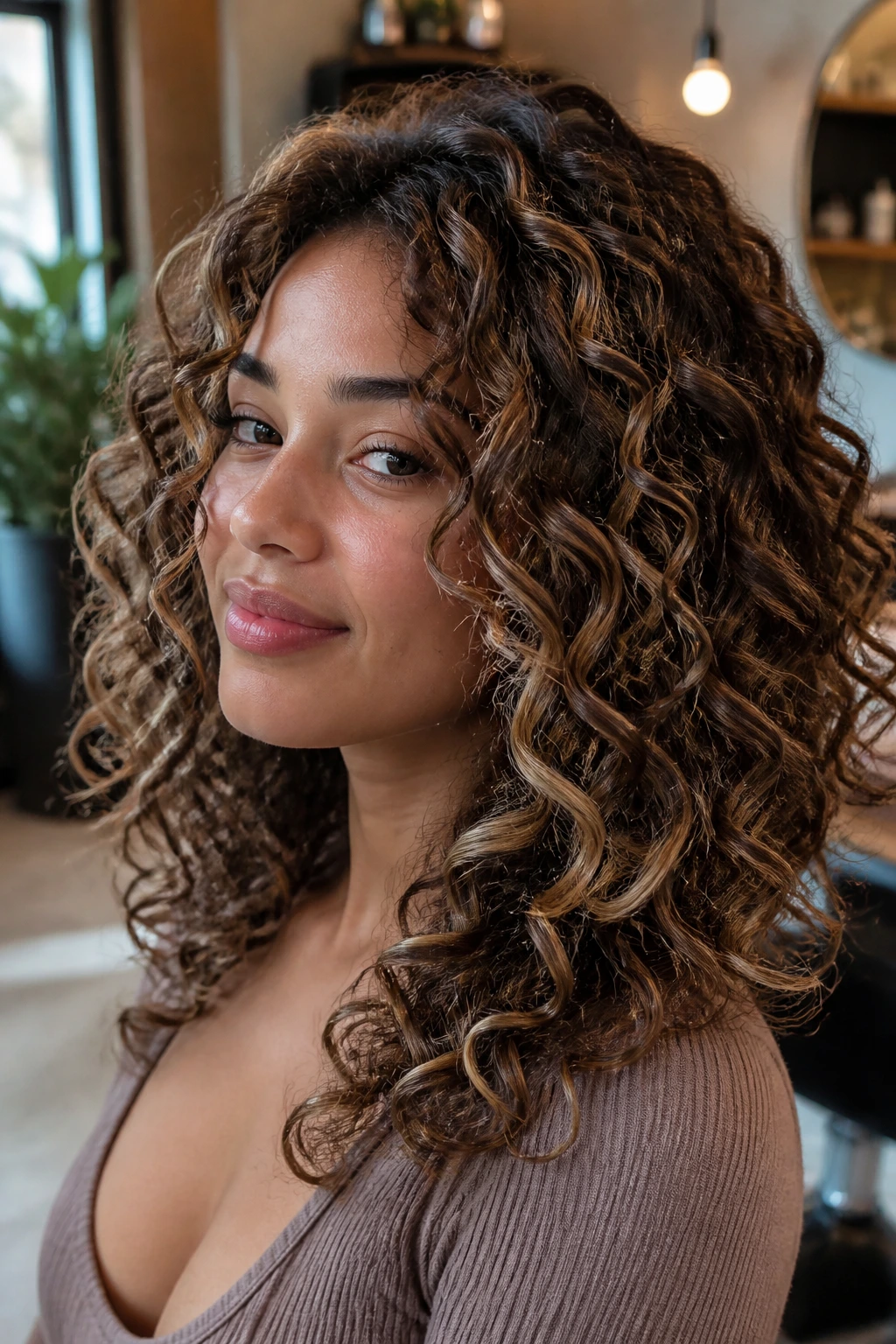
A cinnamon base with vanilla threads is one of the richest ways to build blonde into dark curls. The cinnamon keeps warmth in the background, and the vanilla strands read as flashes rather than slabs.
The result feels dimensional because the two tones are close enough to belong together, but different enough that the curls separate clearly. On thick hair, this can keep the style from looking heavy at the root and pale at the ends.
- Works well when you want warmth, not brass.
- Ask for thin vanilla ribbons rather than chunky sections.
- Keep a few deeper pieces near the nape and underlayers.
Closing insight: this is the look for someone who likes blonde but still wants the base to do some talking.
23. Barely-There Studio Lights
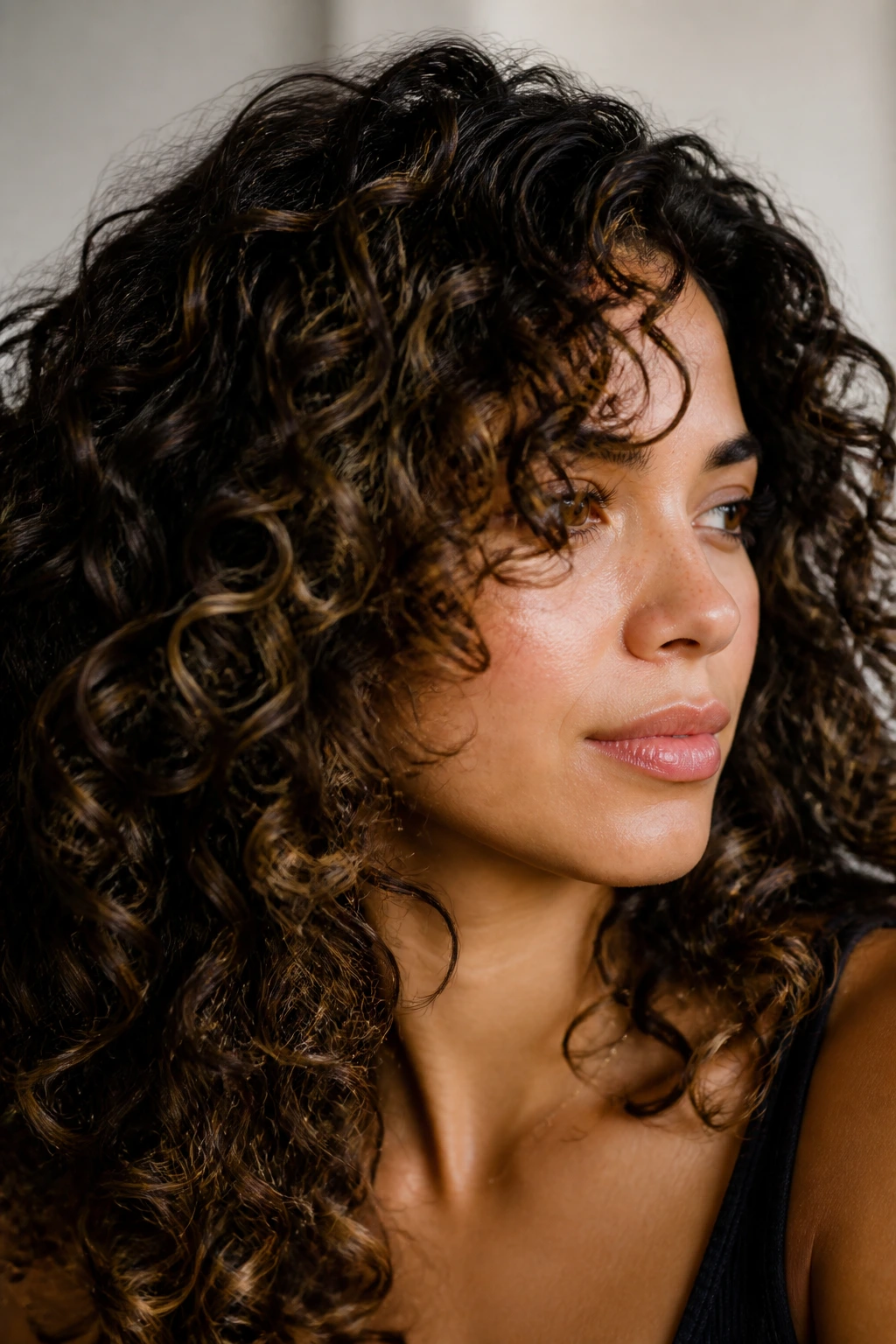
Barely-there studio lights are the quietest option in the group. They sit so close to the base color that you notice movement before you notice blonde, and that is exactly why they look good on curly hair that needs a subtle lift.
This style is useful on dark hair that has already been colored a few times, because the highlights can be placed in finer sections and kept a shade softer. The curls still look full. They just catch light in a more controlled way.
If you want a professional-looking finish without a big change, this is the lane to stay in. It grows out softly and lets the curl pattern stay the hero.
24. Beach Glass Blonde
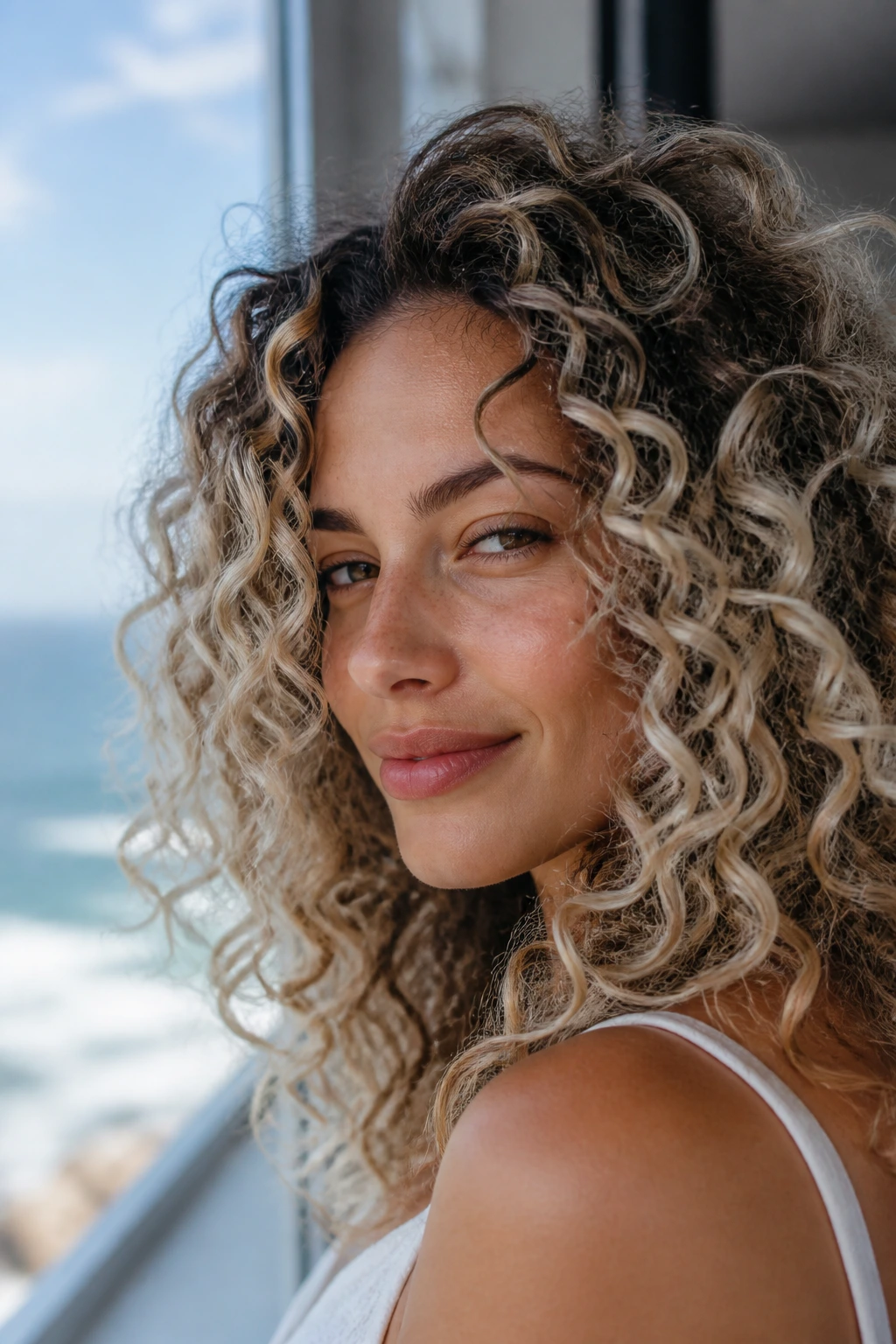
Unlike sandy blonde, beach glass blonde leans cooler and a little clearer, almost like pale stone rather than toast. On dark curls, that cooler clarity can make the texture look crisp, especially if the cut has a strong shape.
It suits curly hair that naturally reflects light well and does not pull too orange after toning. A neutral glaze helps keep the tone from turning flat, and a few lowlights underneath keep the bright pieces from floating away from the base.
If your wardrobe leans cool neutrals, this one fits the mood. If your skin tone likes warmth, keep the beach glass tone near the face only and soften the rest with beige.
25. Layered Halo Lights
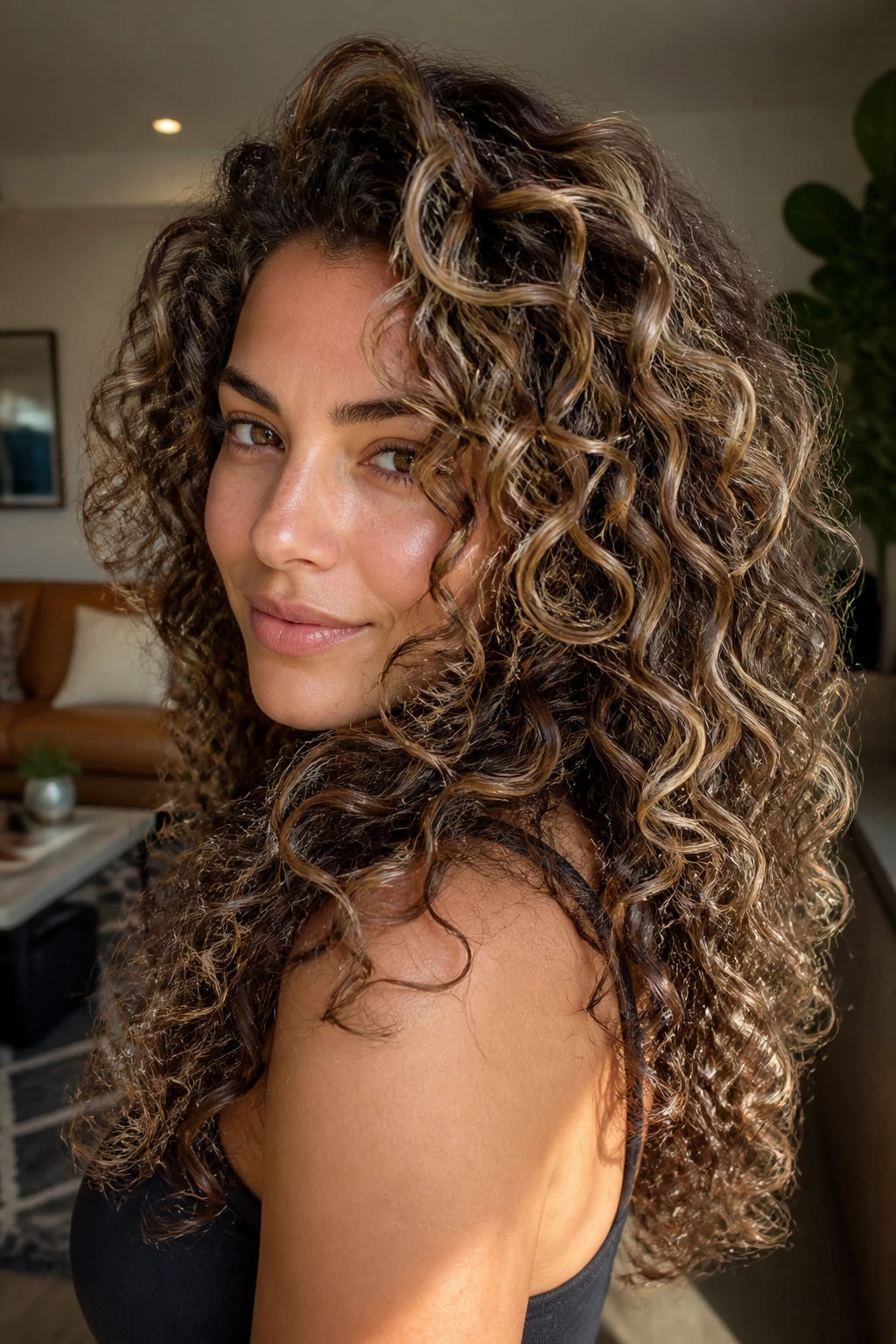
Layered halo lights follow the lift points of a layered cut, so the blonde shows up on each tier instead of sitting in one flat band. On curly hair, that matters because every layer catches light at a different angle.
Why Layers Change the Result
A good layer cut gives the color somewhere to live. Without that, highlights can bunch up and disappear into the mass of curls.
- Best on medium to long curly cuts with visible shape.
- Ask for brighter pieces on the outer top layer and softer ones beneath.
- Keep the lower interior darker so the silhouette stays round.
Best move: diffuse until the top layer dries with volume, then separate a few curls by hand so the halo lights do not clump together.
26. Disco Curl Pop Highlights
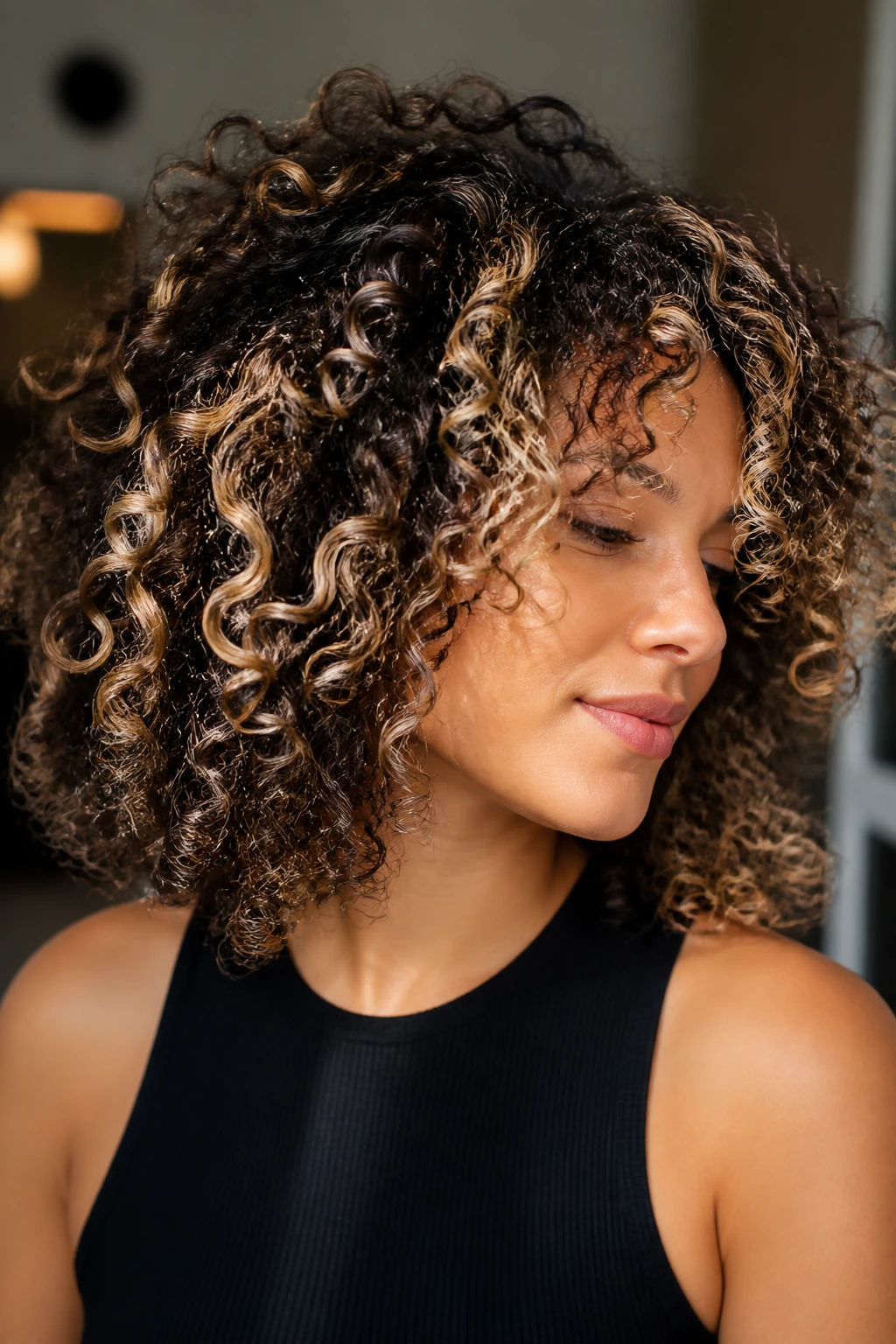
Disco curl pop highlights are brighter, more reflective pieces placed where the curls turn the most. They are not subtle. They are meant to flash.
That makes them a good fit for people who want the blonde to show up in motion and under indoor light, not just in daylight. The tone can run golden or neutral, but the placement needs confidence: around the front, the crown, and a few strategic ends.
A little lowlight underneath keeps this from turning into a helmet of brightness. Without that shadow, the curls can lose the very bounce that makes the look work.
27. Face-Softening Curve Lights
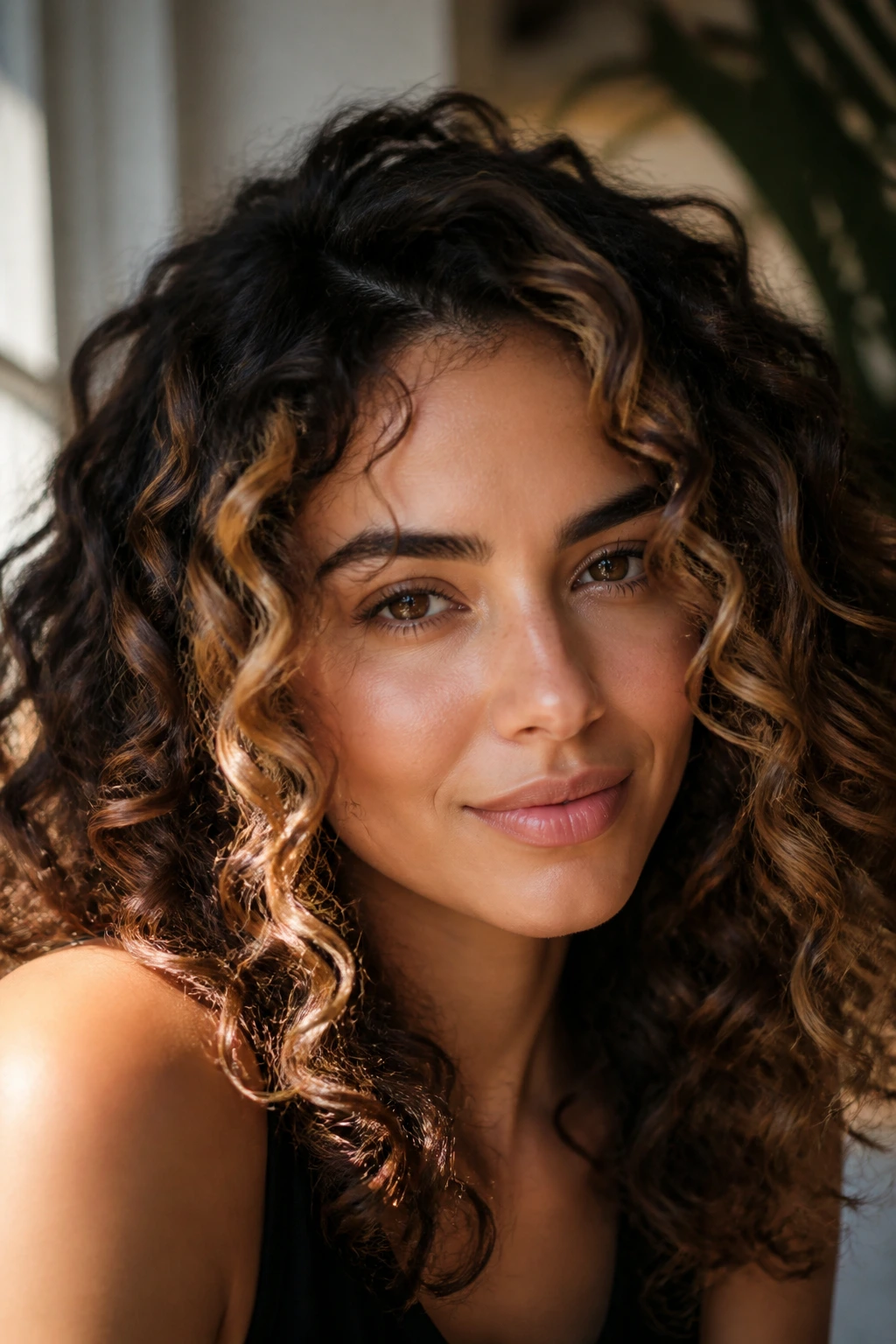
How do you keep bright pieces from looking harsh around the face? Follow the curve. Face-softening curve lights trace the outer bend of the front curls and stop before the blonde becomes a hard stripe.
This is one of the best options if your face shape benefits from a little framing but you do not want a strong money piece. Beige blonde or honey blonde both work here, and a slight root shadow keeps the front from turning too stark.
How to Use It
Ask for the lightest points to sit where your hair naturally lifts away from the cheekbones. That gives brightness without stealing the shape from the curl.
28. Platinum Veil Accents
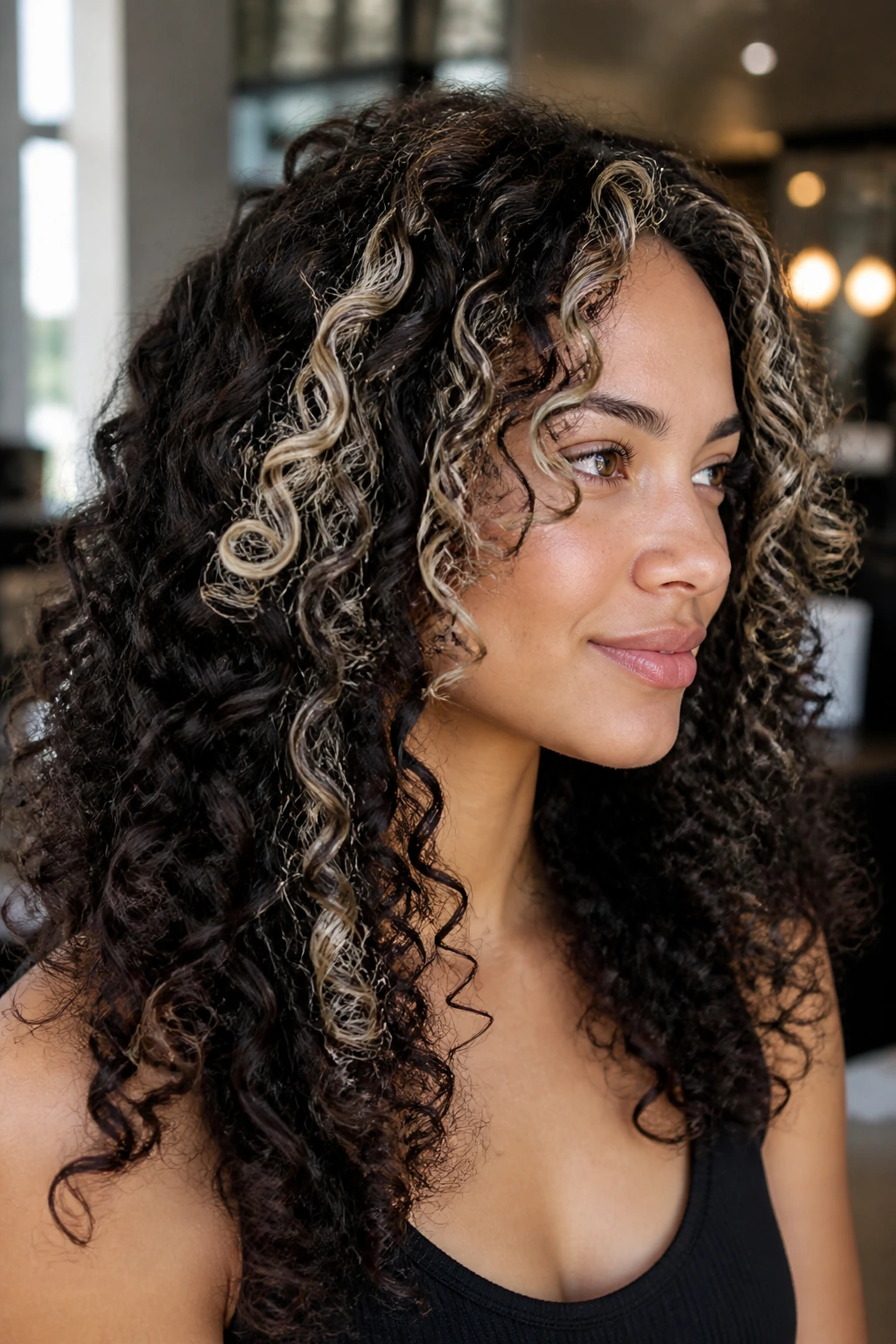
Platinum veil accents are the bold end of the spectrum, but the word veil matters. The blonde should still feel like a thin layer over the dark curls, not a solid sheet of color.
On very dark hair, this usually needs careful lifting and a toner that keeps the platinum from going yellow. It is not the friendliest low-maintenance option in the set, but when the placement is smart, the result can look sharp and modern without flattening the texture.
- Best on healthy curls that can handle a lighter lift.
- Keep the platinum mostly in a few strategic curls, not everywhere.
- A deep conditioner and bond repair become non-negotiable afterward.
Closing note: this one works when you want the curls to look edged, bright, and a little dramatic, while the shadow underneath still does half the work.
Why Placement Matters More Than the Blonde Shade Itself
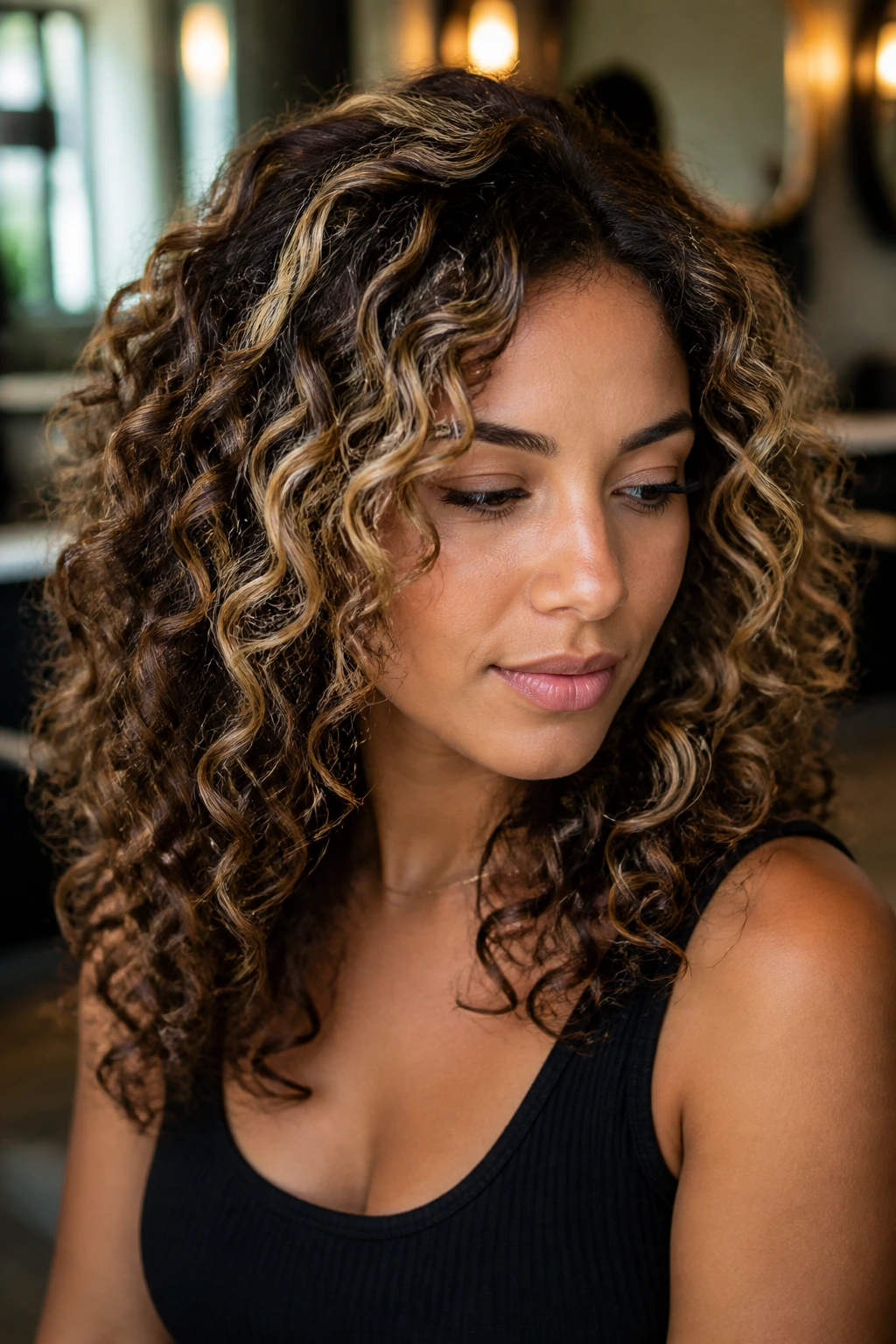
Blonde on curly hair is not a color-only decision. The same honey shade can look soft on a loose wave and loud on a tight coil because the curl changes where the light hits. That is why placement around the outer curve, crown, face frame, and ends usually reads cleaner than even spacing from root to tip.
The chemistry matters too. Lightener lifts pigment by opening the cuticle, and curly hair tends to be drier to begin with because the bends slow the natural travel of scalp oils down the strand. Push the hair too light everywhere, and the ends lose spring before you notice the tone is off.
The three zones colorists watch
- Crown: a few brighter pieces here can open the whole shape.
- Face frame: this is where the eye goes first, so a soft lift pays off fast.
- Interior and nape: darker depth here keeps curls from turning flat and overexposed.
The best curly highlight jobs usually respect those zones instead of fighting them. That is the difference between “colored hair” and “hair with dimension.”
Tools, Swatches, and Products Worth Bringing to the Chair
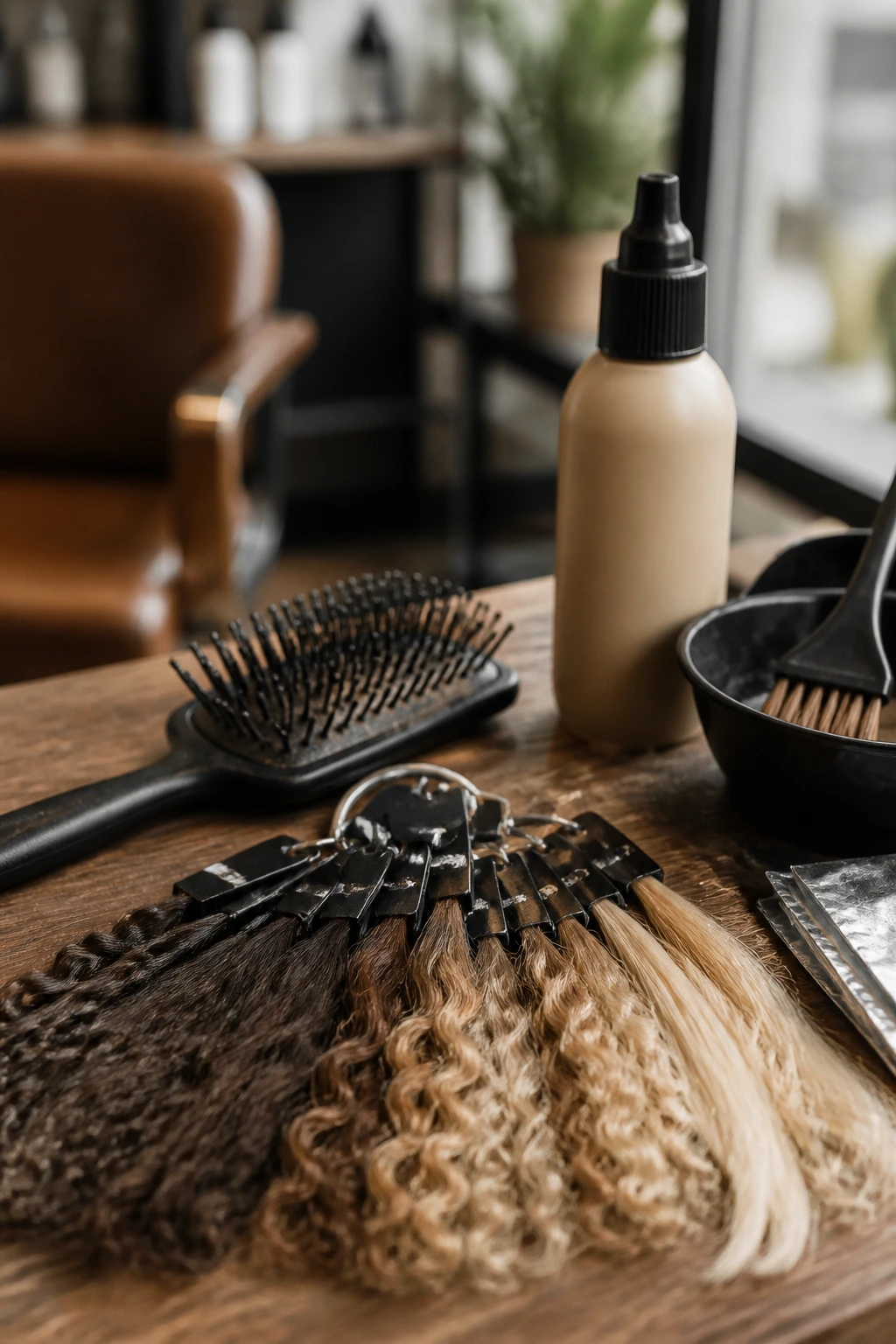
- Curl-specific inspiration photos: Bring examples with the same curl density and length as yours, not just the same color tone.
- Wide-tooth comb or detangling brush: Useful for product distribution and sectioning, especially if your hair tangles easily once wet.
- Sectioning clips: They keep curls separated when you’re diffusing, glazing, or working with a stylist who paints by curl family.
- Color-safe shampoo and conditioner: Sulfate-free formulas help the blonde hold tone longer and keep the cuticle calmer.
- Purple shampoo or blue shampoo: Purple helps yellow brass; blue helps orange brass on darker bases. Use it sparingly, not every wash.
- Bond-building treatment: Handy after a stronger lift or if the hair feels stretchy, rough, or weak at the ends.
- Satin bonnet or pillowcase: Cuts down friction that can rough up highlighted curls overnight.
- Heat protectant and diffuser: A must if you dry with heat, because blonde ends show damage fast when they fray.
Choosing the Right Blonde Level for a Dark Base
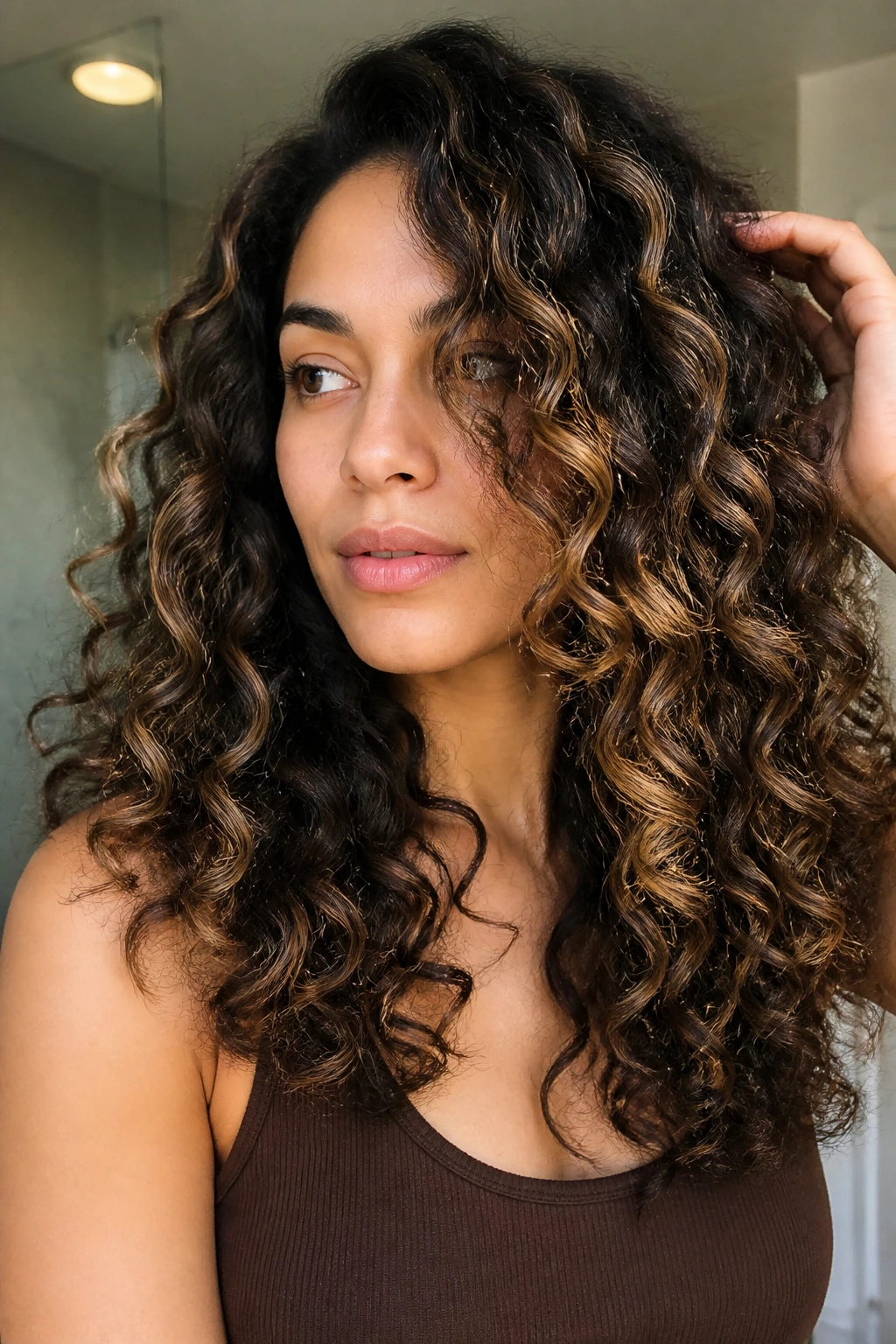
Dark hair does not need to be dragged to level 10 to look blonde. That is one of the biggest mistakes people make. On curly hair, a level 7 honey, level 8 beige, or level 9 champagne piece often gives more visible dimension than a pale, overworked blonde that leaves the curls thirsty and limp.
Level 4 to 5 bases
If your hair lives in the dark brown range, warm tones usually behave better first. Honey, caramel, and soft vanilla give enough contrast without forcing the hair to fight too much orange during the lift.
Level 6 to 7 bases
This is where beige, ash beige, and cooler sand tones start to look cleaner. The underlying pigment is lighter, so toner can do more of the work and the curls usually keep a little more bounce.
Porosity changes the plan
High-porosity curls grab color fast and lose it fast. Low-porosity curls resist lifting and may need gentler heat, thinner sections, or more than one session. If the hair feels rough when wet and drinks up conditioner in a minute, treat it like fragile fabric, not a blank canvas.
How to Wear These Highlights So the Curls Do the Talking
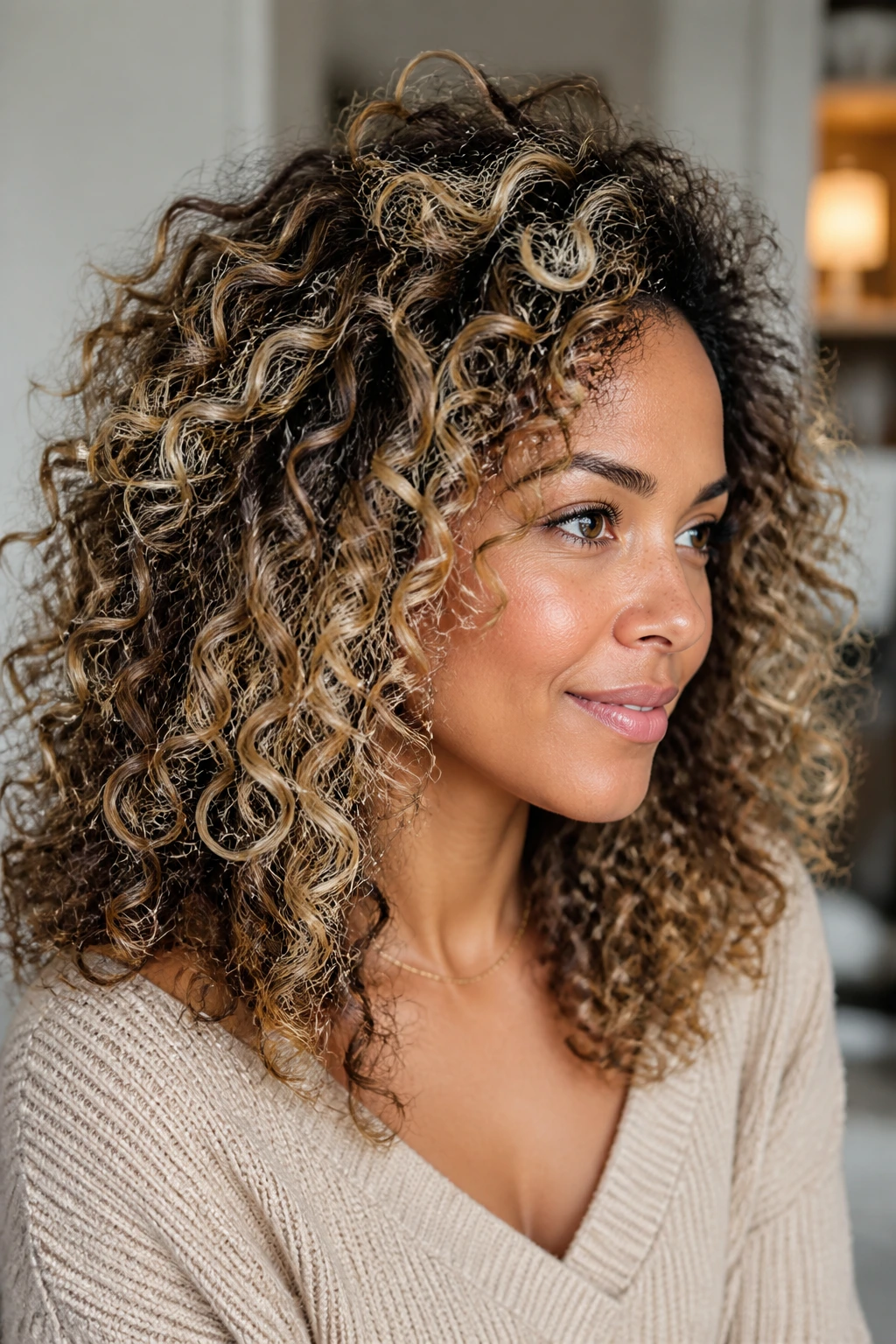
Presentation: Keep the brightest pieces where your curls naturally sit on top of the head. On tighter textures, that usually means the crown, temple pieces, and a few ends; on looser curls, a face-framing sweep can carry the whole look.
Pairing: Layered cuts, a side part, or a curly shag give the blonde more surface area to show off. A blunt cut can still work, but it needs stronger placement around the front and perimeter so the color does not disappear into the bulk.
Scale: Ask for a whisper-soft effect if you want 15 to 20 percent brightness, a clear glow if you want around 40 percent, and a bolder set of pieces only if you are prepared to keep up with gloss and moisture. That number is not scientific; it is a shorthand for how much of the curl should be visibly lighter.
Finish: A small amount of lightweight oil on dry ends and a diffuser on low heat help the blonde read polished instead of fuzzy. If the hair puffs too much, the highlight edges vanish.
Extra Shine, Contrast, and Frizz Control
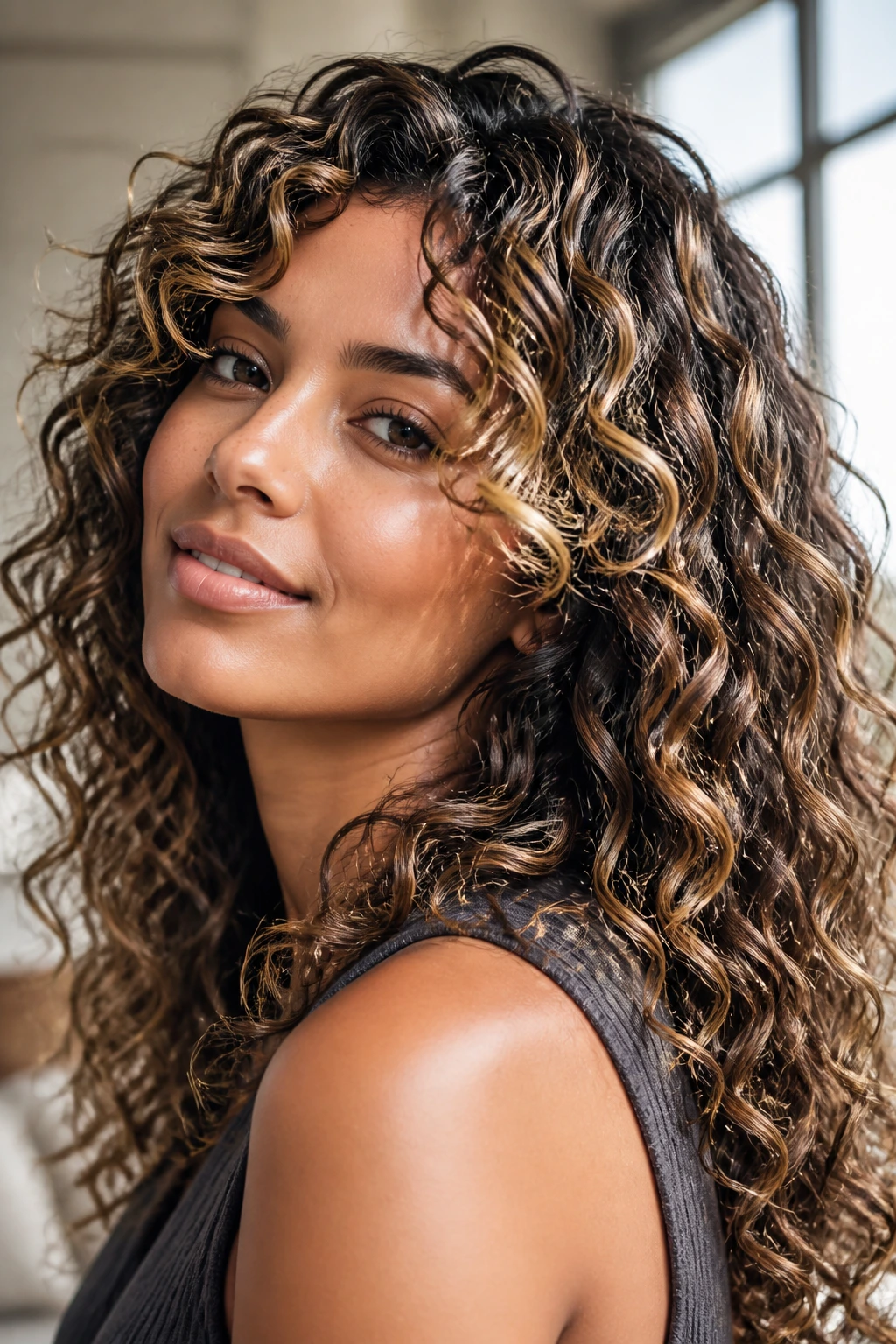
Glow Boost: Ask for a clear gloss after the lightening service, especially if the blonde is beige, honey, or ash beige. A gloss tightens the tone and gets rid of that dusty look highlights can pick up after a week of washing.
Contrast: If the color starts looking too flat, add two or three lowlight foils under the crown and around the nape. That darker thread brings back curl definition faster than trying to lighten the blonde even more.
Customization: Warm blondes flatter golden and olive undertones; beige blondes sit well on neutral skin; ashier pieces can be cleaner on cool skin, but only if the base does not pull muddy. Hair color and skin tone should talk to each other, not fight.
Frizz Control: Apply leave-in on soaking wet curls, then layer gel or curl cream before diffusing. Blonde shows frizz faster than dark brown does, so a smooth clump makes the color look richer.
Make-It-Yours: If you want subtle, keep the brightness under the top layer. If you want more punch, put the lightest curl pieces around the face and crown, then leave the interior darker.
Where People Go Wrong With Blonde on Dark Curly Hair
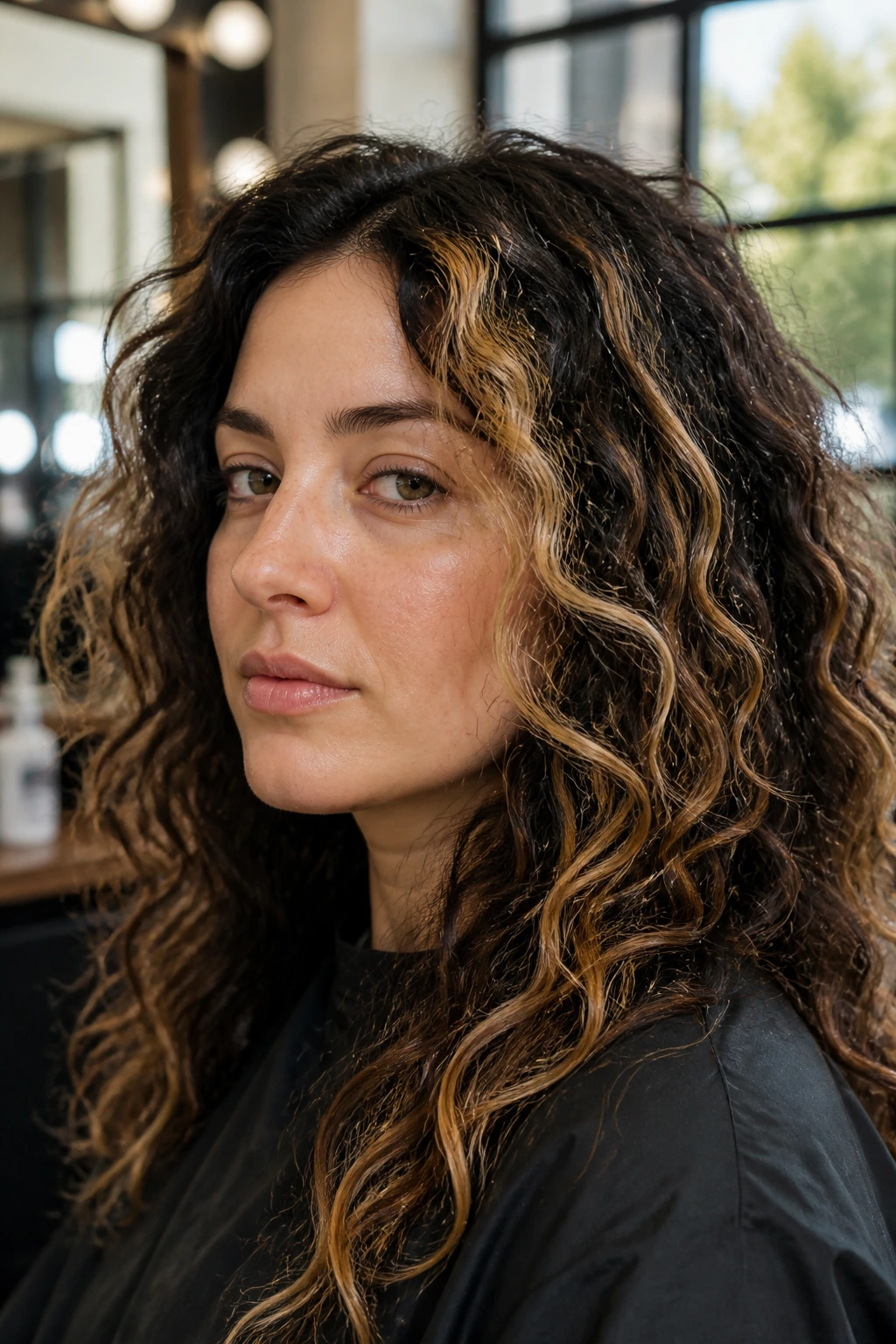
- Lifting too far in one appointment: Ends start to feel rough, stretchy, or straw-like. The fix is to stop a shade earlier and come back for another session if the hair needs it.
- Painting straight lines across stretched curls: Once the hair shrinks, those lines look like stripes. Paint on curl clumps or follow the natural bend instead.
- Ignoring undertone: Orange brass or an oddly flat gray cast usually means the toner was picked without enough attention to the underlying pigment. Match the toner to the stage of lift, not the wish list.
- Using purple shampoo too often: The blonde can turn dull, chalky, or violet at the lightest ends. Use toning shampoo once every 7 to 10 days, then go back to moisture.
- Skipping trims: Lightened ends split faster, and curly hair announces that damage fast. A trim every 8 to 12 weeks keeps the blonde looking intentional.
- Overloading heat: A diffuser on high heat or too much flat ironing makes the highlight edges fuzzy. Use a heat protectant and keep the setting on medium or lower.
Low-Maintenance Variations to Try
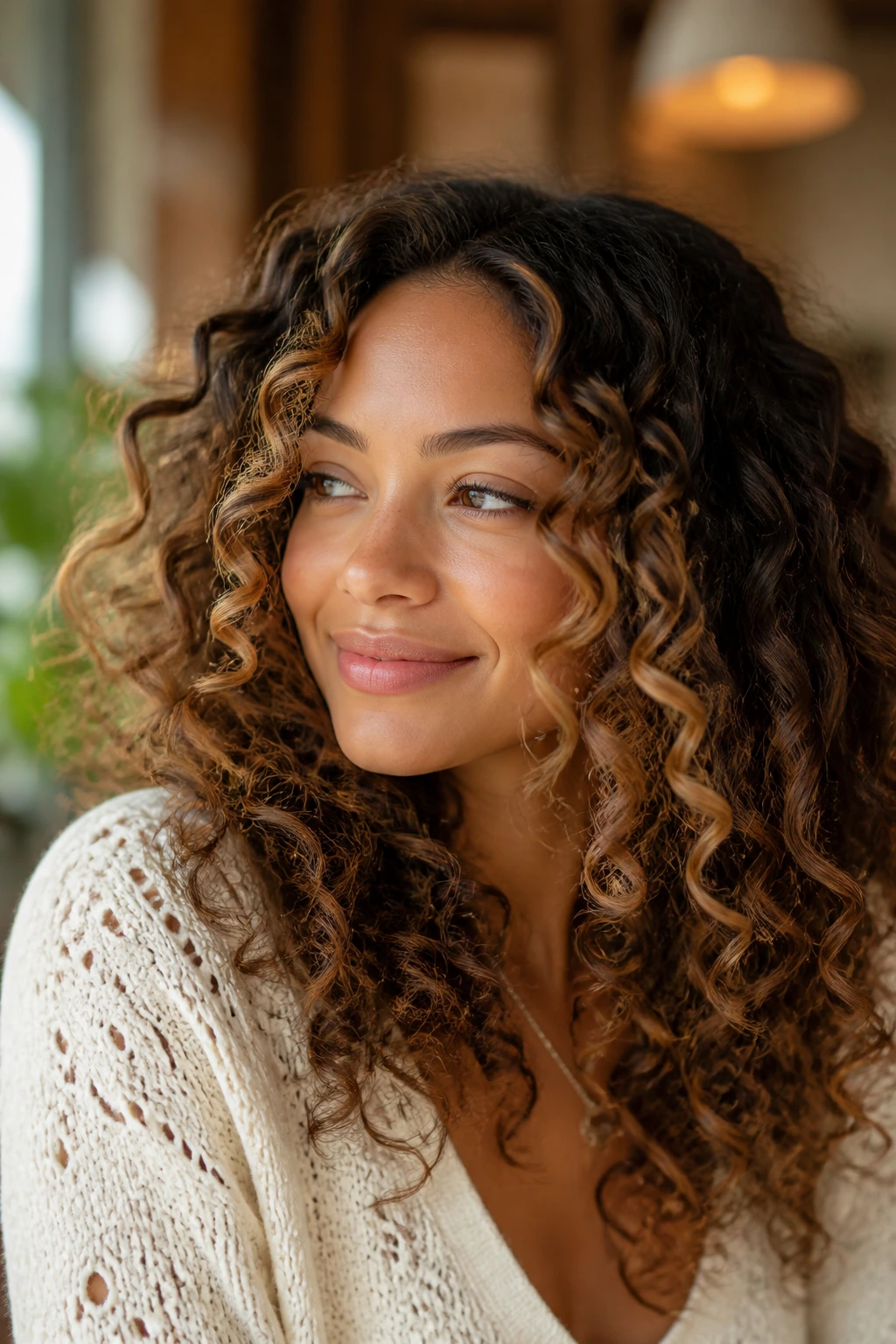
Honey Grow-Out: Keep the highlight level around honey and beige, then let a soft root shadow do the rest. This is the easiest choice if you want the blonde to soften over time instead of yelling for a salon visit.
Cool Beige Smoke: This version leans ash beige with a neutral glaze to keep orange brass under control. It suits dark hair that pulls warm fast and looks especially clean on tighter curls with a strong shape.
Money-Piece Flash: Brighten only the front panels and keep the rest of the head softly ribboned. It gives a big visual change without asking for full-head lightening.
Rooted Bronze Glow: Add bronze lowlights under the blonde so the color keeps depth and warmth. This works well on thick curls that can look too pale if every section is lifted.
Platinum Edge Only: Leave most of the head in honey or beige, then put the lightest platinum pieces in a few chosen curls near the face or crown. It gives drama without turning the whole style into maintenance you will regret.
Questions People Ask Before Going Blonde on Curls
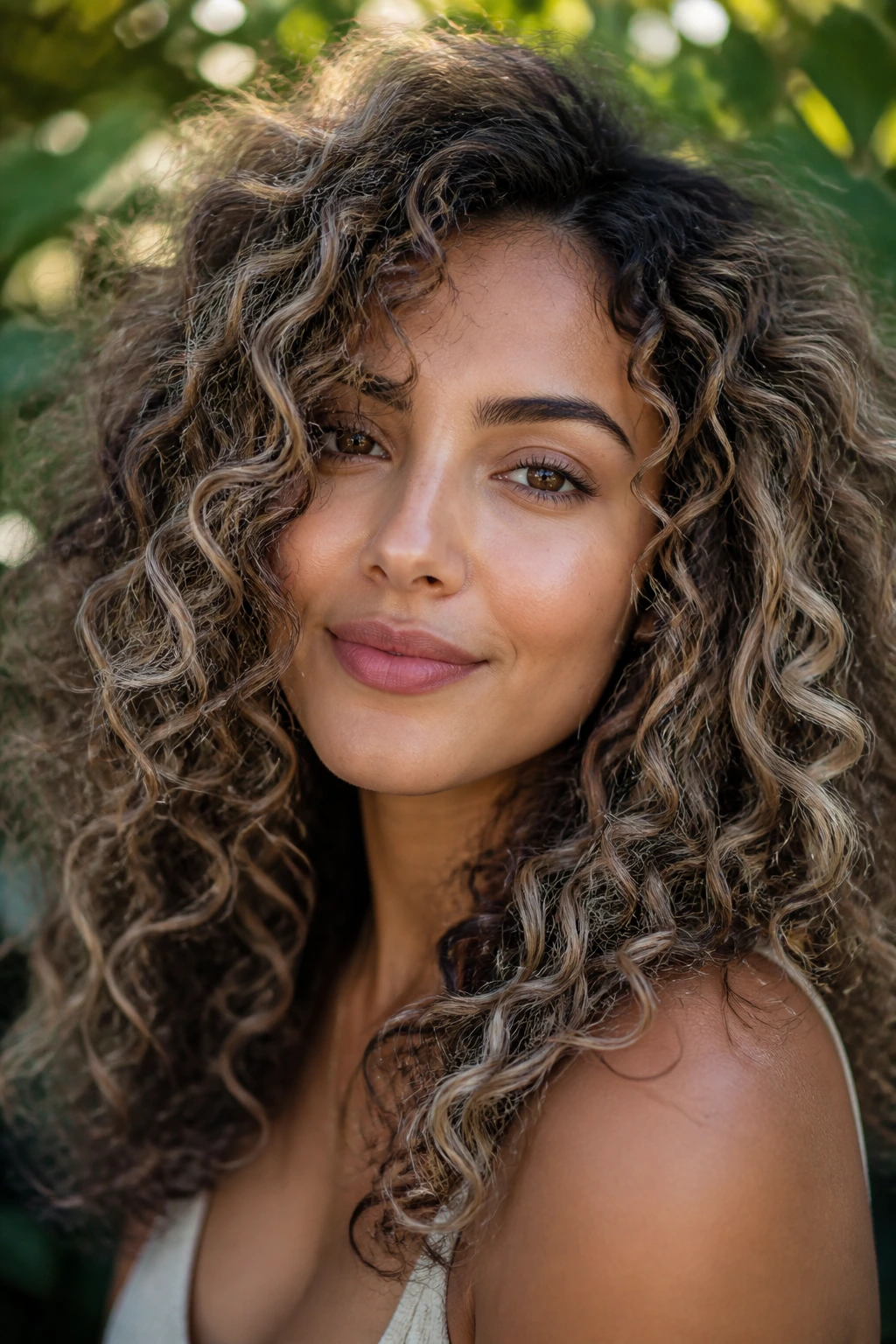
Can dark curly hair go blonde without losing curl pattern?
Yes, if the lift is paced correctly and the hair is not pushed too pale too fast. Healthy curls need moisture and bond care after lightening, but the pattern itself can stay intact when the bleach service is controlled.
Is balayage better than foils for curly hair?
Balayage is often softer and easier to grow out, but foils can lift more evenly on resistant dark hair. Many stylists mix both, because curls often need a brighter surface with a softer base underneath.
How many sessions does it take to go blonde on a dark base?
That depends on how dark the base is, whether the hair has old color on it, and how fragile the curls already are. Going from dark brown to a pale blonde often takes more than one session if the hair is meant to stay healthy.
Which blonde tone hides brass best?
Beige and ash beige usually hide brass better than super-warm gold, but they need the right base to avoid looking flat. If your hair pulls orange quickly, a blue shampoo or neutral toner can help between visits.
Can coily hair wear blonde highlights too?
Absolutely, and coil patterns can show dimension beautifully when the highlights are placed in fine, strategic sections. The mistake is over-lightening too many strands at once, not the texture itself.
What if the highlights look stripey after drying?
That usually means the sections were too wide or placed too straight. A gloss and a few lowlights can soften the look, but the real fix is better placement next time.
How often should toner or gloss be refreshed?
A gloss every 6 to 8 weeks is a good rhythm for most blonde curly styles. If the hair pulls brass faster or sees a lot of sun, you may want toner a little sooner.
Do lowlights matter, or are they optional?
On dense dark curls, lowlights often matter a lot. They stop the blonde from reading like one flat layer and give the curl pattern somewhere to cast shadow.
Keeping the Blonde Bright Between Visits
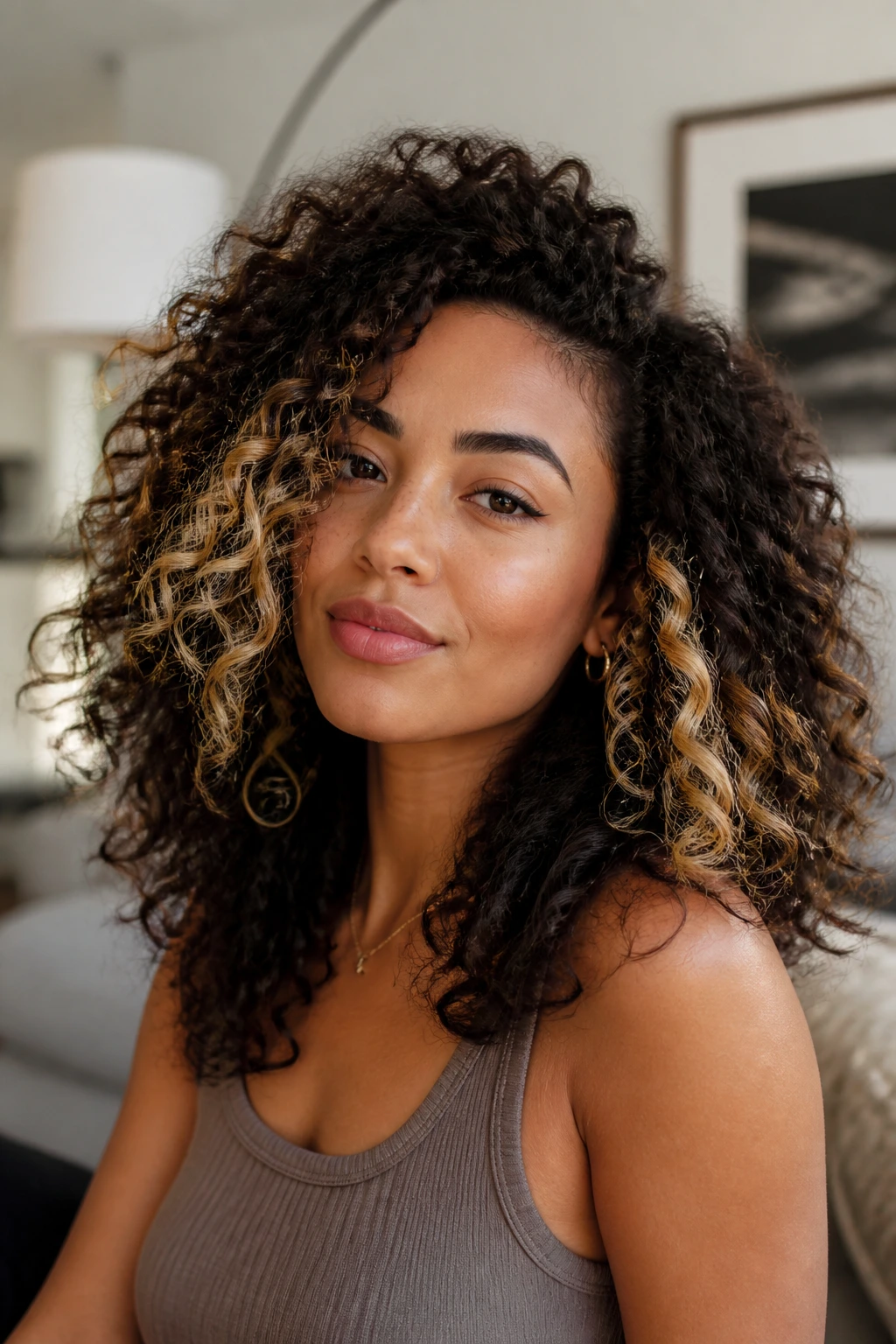
Blonde on curly hair holds up better when you treat the ends like the oldest, driest part of the outfit. Wash two or three times a week if you can, not every day, and use lukewarm water instead of hot water. Hot water swells the cuticle, and highlighted curls pay for that with frizz and faster fading.
A bond-building treatment once a week is useful after stronger lightening, especially during the first month after a color appointment. If the hair feels soft but stretchy, that is a sign to back off heat and give it a protein or bond break rather than another glaze. Purple shampoo works best once every 7 to 10 days for yellow brass; blue shampoo is the better choice when the blonde goes orange.
Sleep care matters more than people want to admit. A satin bonnet, satin pillowcase, or a loose pineapple on top of the head keeps the highlight edges from rubbing blunt by morning. Plan on a gloss every 6 to 8 weeks and a trim every 8 to 12 weeks if you want the ends to stay clean instead of see-through.
Soft Light, Strong Curls
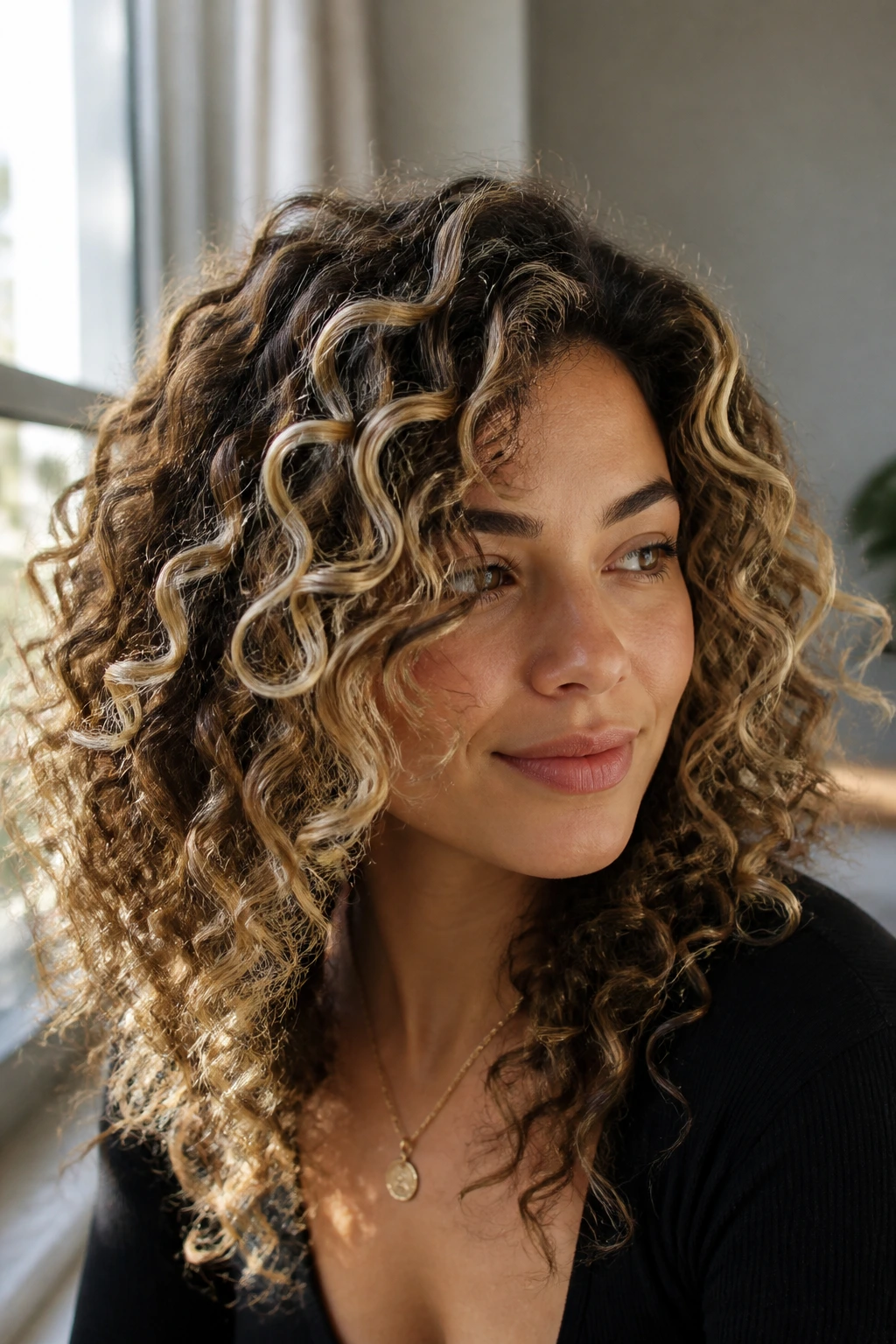
The best blonde on dark curly hair never looks sprayed on from one angle. It looks like the curl pattern and the color had a conversation and agreed on where the light should live. Honey ribbons, beige babylights, rooted vanilla, and lowlight-mixed bronze all work because they respect the shadow inside the hair.
If there is one thing worth carrying into the chair, it is this: ask where the blonde will sit when the curls dry, not just how it looks when the foils come off. That one question saves a lot of disappointment. And it usually leads to a color that grows out better, moves better, and keeps the curls doing what they do best.