



A brunette that lands in the right warm zone can make warm skin look brighter without looking loud. A brunette that misses by half a shade can do the opposite — the face goes a little flat, the hair goes a little dull, and suddenly the color feels like it belongs to somebody else.
That’s why brunette color highlights for warm skin tones need more thought than “add some caramel and call it a day.” The shades that work best usually live in the gold-to-copper family: caramel, honey, toffee, amber, bronze, cinnamon, chestnut, mahogany. When those tones sit over a brown base, they don’t fight golden, peach, or olive undertones. They echo them.
There’s also a placement trick hiding underneath all the color talk. Face-framing ribbons, soft balayage, babylights, and low-contrast glosses can all change how warm skin reads in daylight. A level 5 espresso base with a level 8 honey ribbon around the face does a very different job from a copper veil through the crown, and both can work beautifully if the warmth is handled with a little restraint.
Why This Collection Works for Warm Skin Tones
-
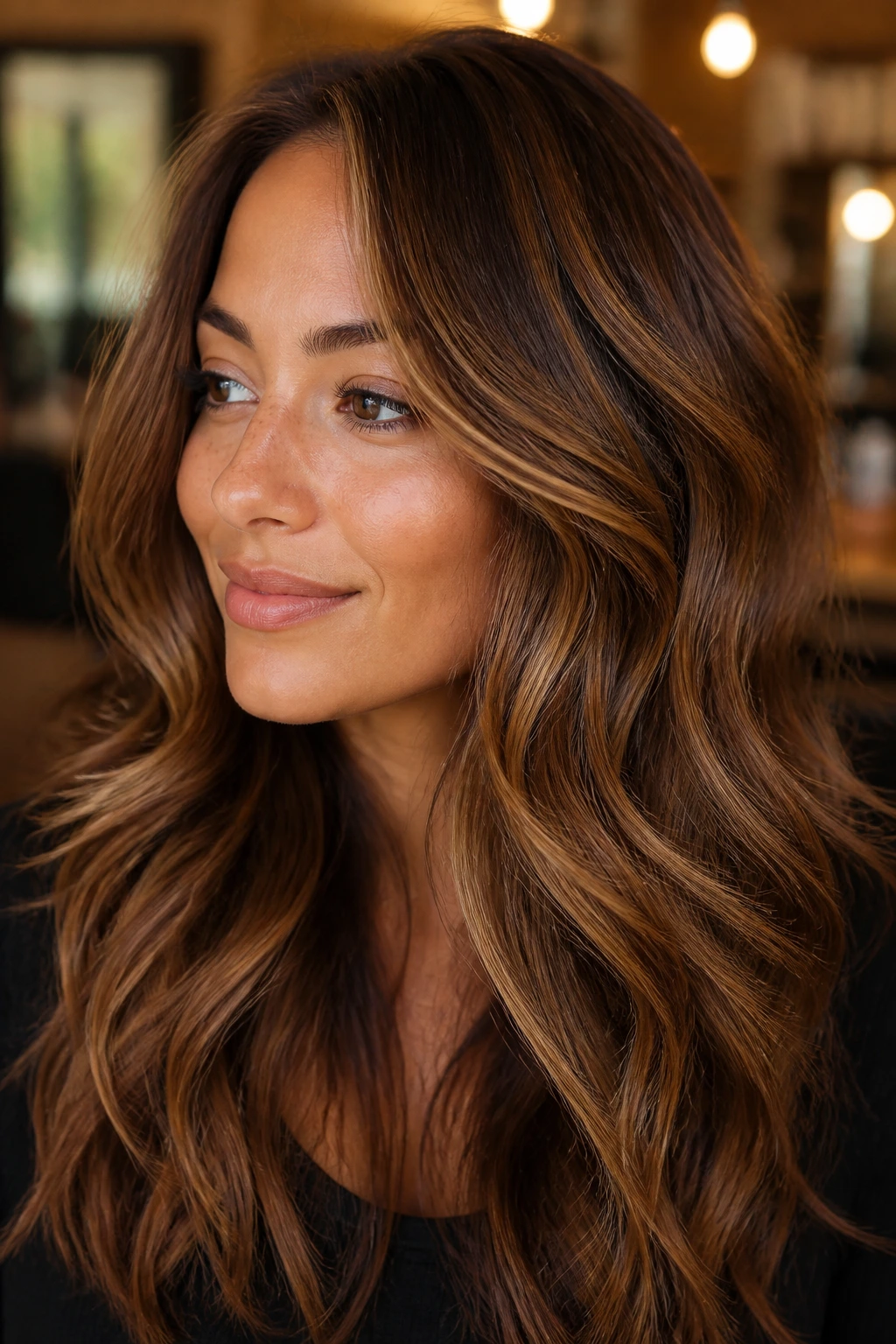
The tones stay in the same family: Gold, caramel, and copper-based highlights sit naturally against warm undertones instead of making the skin look washed out.
-
The placement does some of the work: Face-framing pieces, mid-length ribbons, and soft ends all draw the eye where you want it, which matters more than chasing a lighter blonde result.
-
There’s room for subtle or bold: You can keep the contrast low with chestnut babylights or push harder with amber and bronze money pieces.
-
Grow-out is part of the design: Balayage, foilyage, and peekaboo placement soften the line at the root, so you are not stuck with a hard demarcation every few weeks.
-
These shades play well with brown hair depth: On medium and deep brunettes, a warm highlight often adds dimension faster than trying to lift all the way to blonde.
-
The finish can be adjusted later: A gloss, toner, or glaze can tip the result more honey, more copper, or more beige-gold without redrawing the whole head.
1. Soft Caramel Ribbons Through a Medium Brunette Base
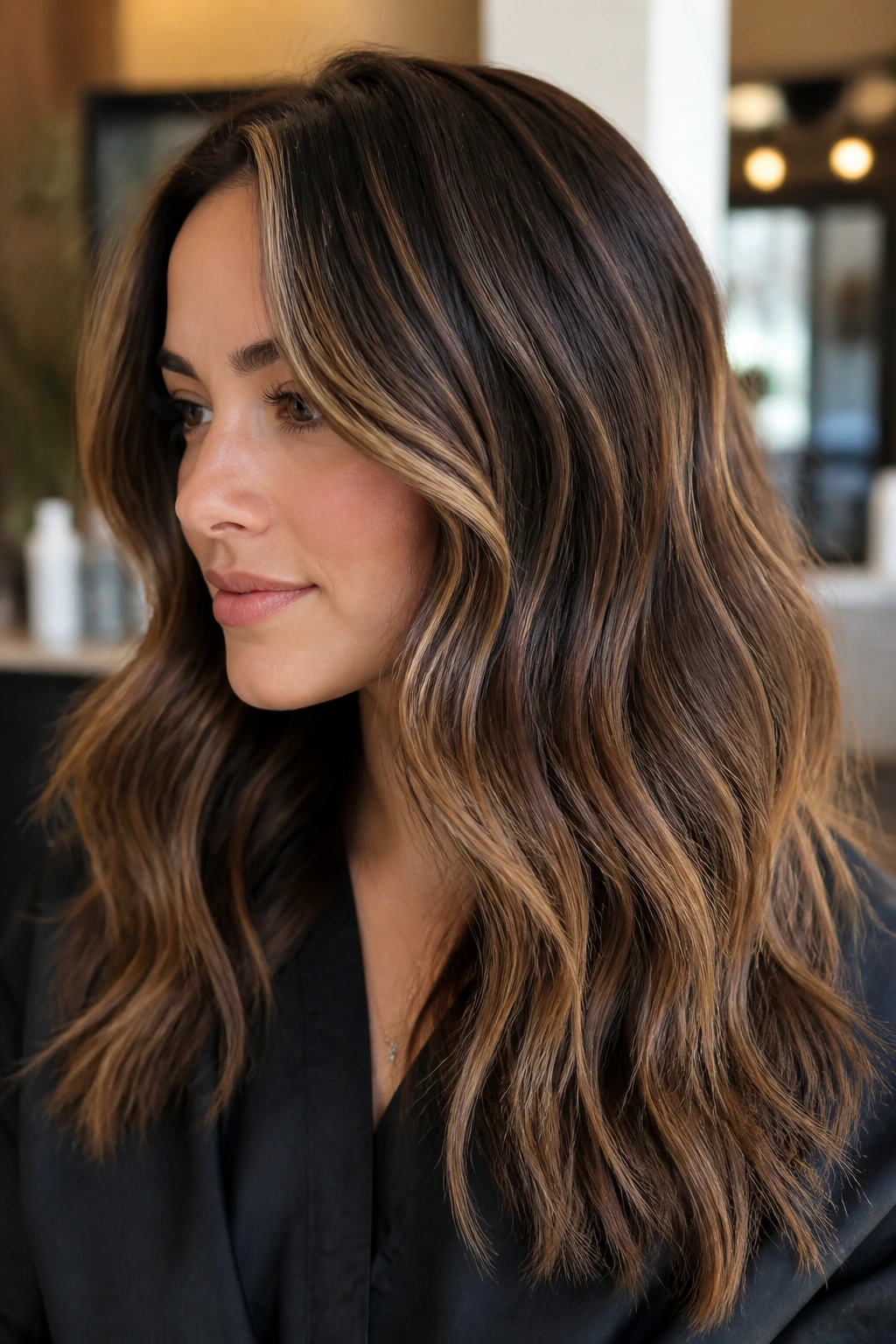
Caramel ribbons are the safest warm highlight move for a reason. They read like sunlight caught in brown hair, not like a dramatic color service that announces itself from across the room. On a medium brunette base, they give movement to the mids and ends without wiping out the depth that keeps the whole look grounded.
Why It Works
Ask for thin, painted ribbons through the top layers and a few brighter pieces around the face. The sweet spot is usually a level 7 or 8 caramel over a level 5 or 6 brunette base, finished with a gold-brown gloss so the pieces don’t drift beige or gray. On warm skin, that gold note matters. Without it, the hair can look clean on paper and strangely cold in daylight.
This is one of the easiest looks to wear with loose waves. The curl pattern breaks up the ribbons, and the color starts to feel expensive in the good sense — not glossy in a fake way, just alive.
2. Honey Balayage That Brightens the Ends Without Losing Depth
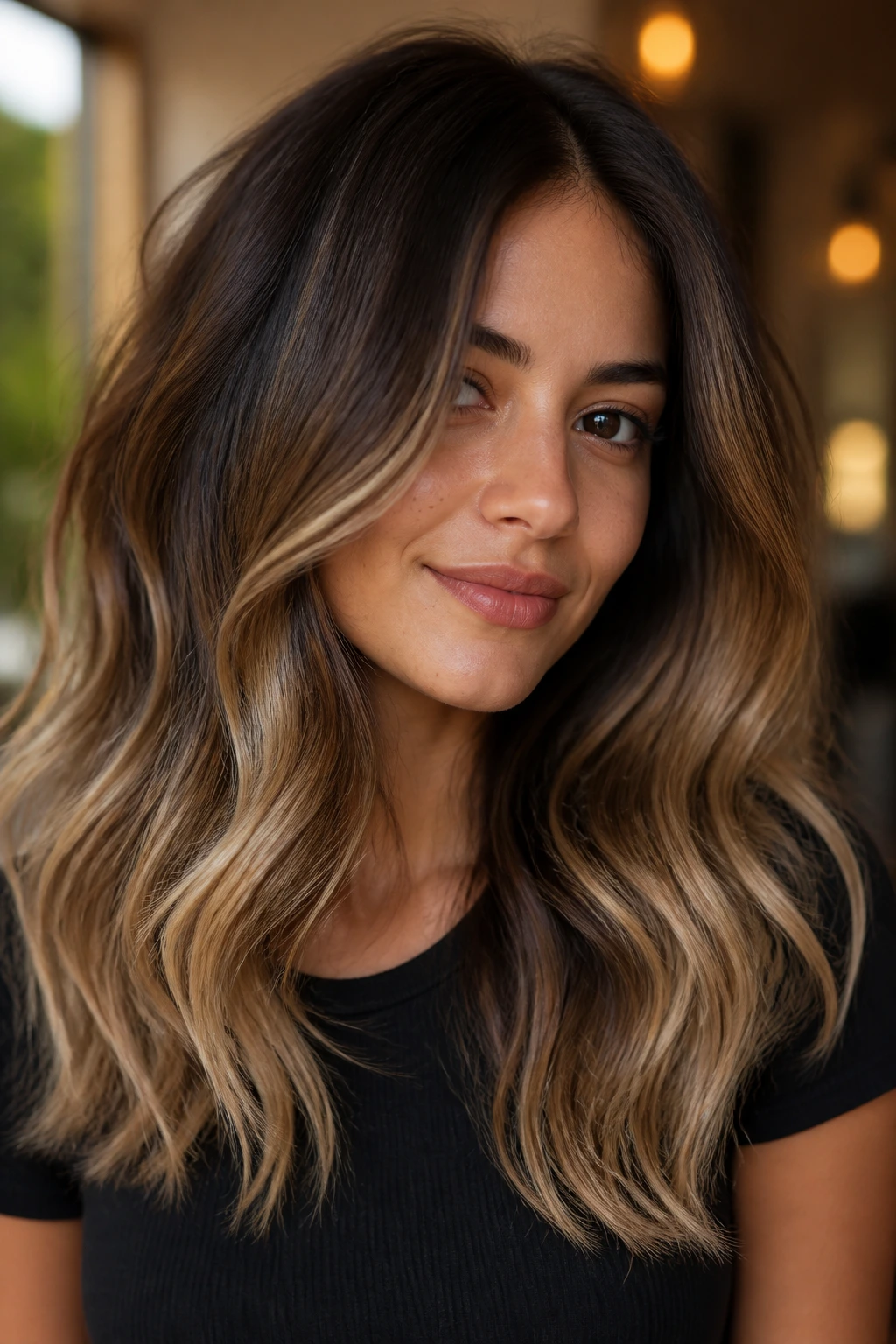
Honey balayage is for the person who likes warmth but does not want a chunky highlight story. The color lives mostly from mid-lengths down, so the root stays deep and the ends do the talking. That makes the whole head read softer, especially on warm skin with peach or golden undertones.
What Makes It Different
The trick is restraint at the root and enough lift at the ends to show contrast. If your colorist paints the honey too high, the look can turn stripey. If they keep it lower and feather the light pieces upward only near the face, the result looks like the sun did the work for you.
Honey is warmer than beige and less red than copper, which is why it sits in that useful middle ground. It’s the shade I’d send someone to first if they keep saying, “I want brightness, but I still want to look like a brunette.”
3. Toffee Money Piece for a Quick Lift Around the Face
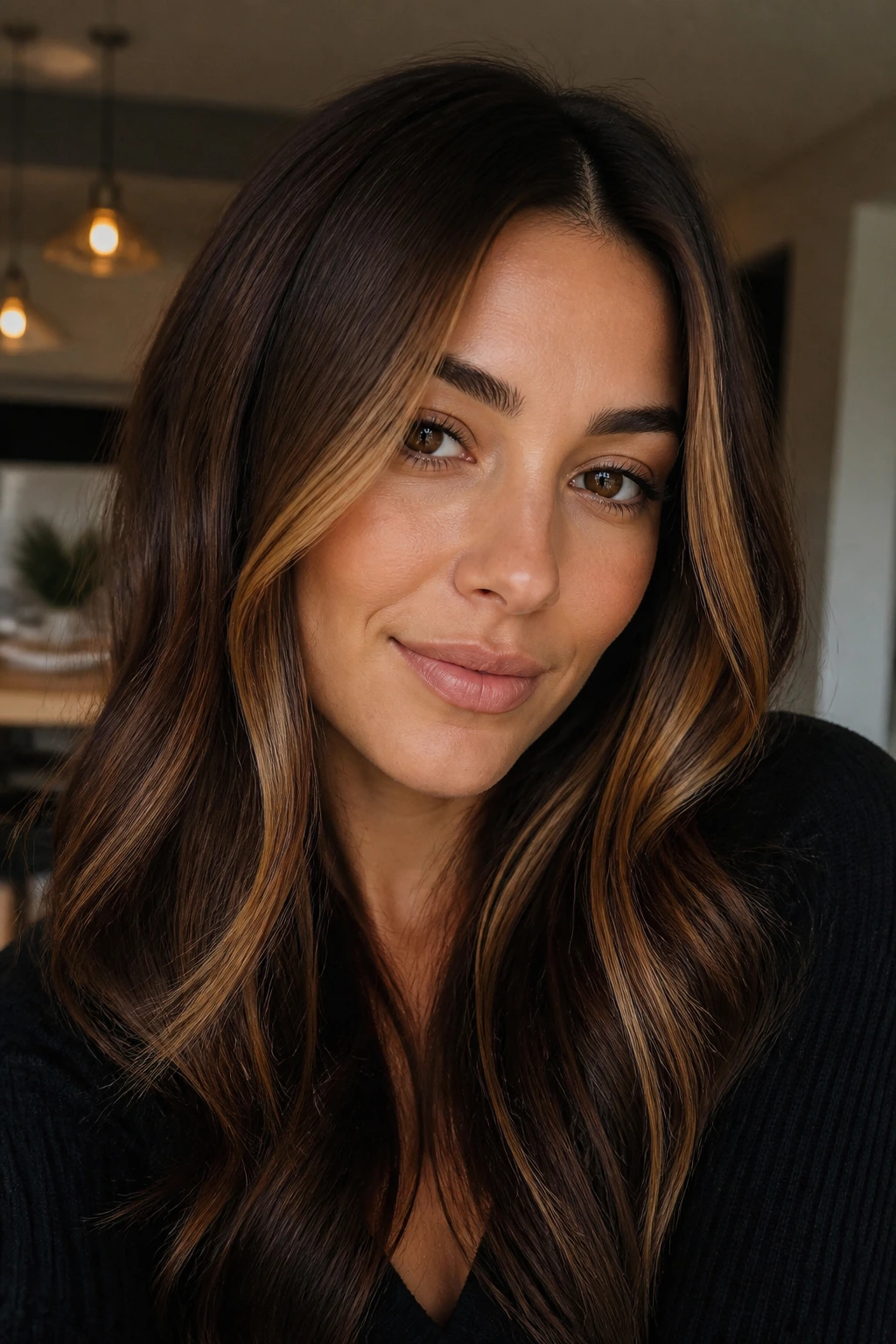
If you want the biggest shift with the least commitment, this is it. A toffee money piece puts the brightness right where people look first — at the temples, hairline, and cheekbones — and leaves the rest of the brunette intact.
Ask for two brighter face-framing sections, not a wide strip that dominates the front. The best version usually starts a little below the root so it doesn’t look like an afterthought, then blends into soft toffee or honey through the front layers. On warm skin, that front brightness can wake up the whole face fast. It’s especially good if your brows are dark and you want the hair to feel lighter without changing the base color.
A side part makes it punchier. A center part makes it feel cleaner. Either way, this is the piece that gets noticed when you tuck your hair behind your ears.
4. Chestnut Babylights That Read Soft in Sunlight
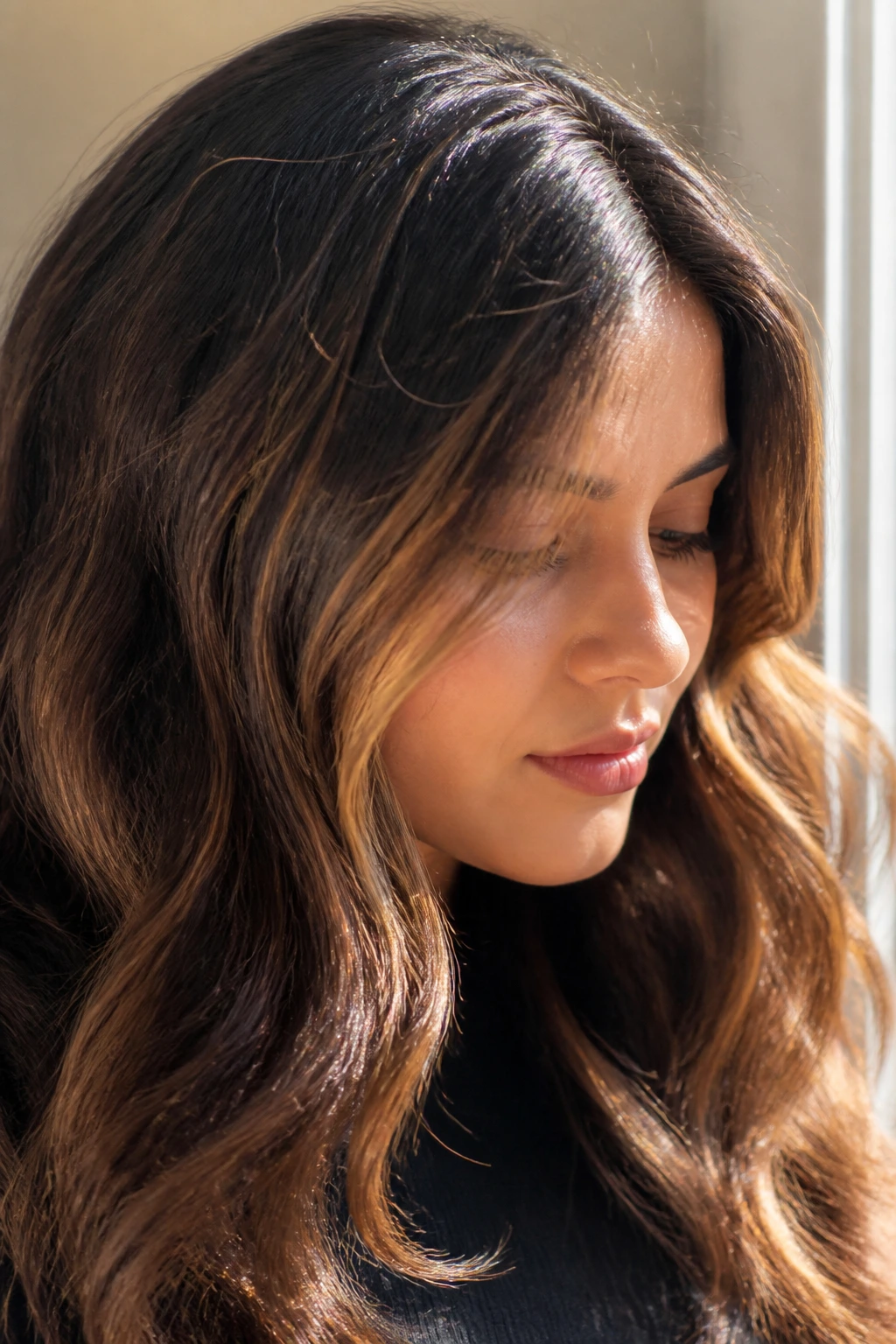
Chestnut babylights are tiny, fine highlights that blur into the brunette base instead of sitting on top of it. They’re the right answer when you want movement but not a visible stripe pattern. On warm skin, chestnut gives enough warmth to flatter the complexion while staying brown enough to feel believable.
Quick way to think about it
- Placement: Very fine foils through the top and crown.
- Tone: Chestnut brown, not ash brown.
- Best for: Fine hair, straight styles, low-contrast looks.
- Maintenance: Usually easier to live with than larger highlight panels.
The reason this works so well is simple. Babylights scatter light in dozens of small spots, so the hair looks fuller rather than lighter. On warm skin, that subtle glow around the face is often better than a brighter blonde-looking strand that steals attention away from the complexion.
5. Cinnamon Ribbon Highlights for a Warm, Spiced Finish
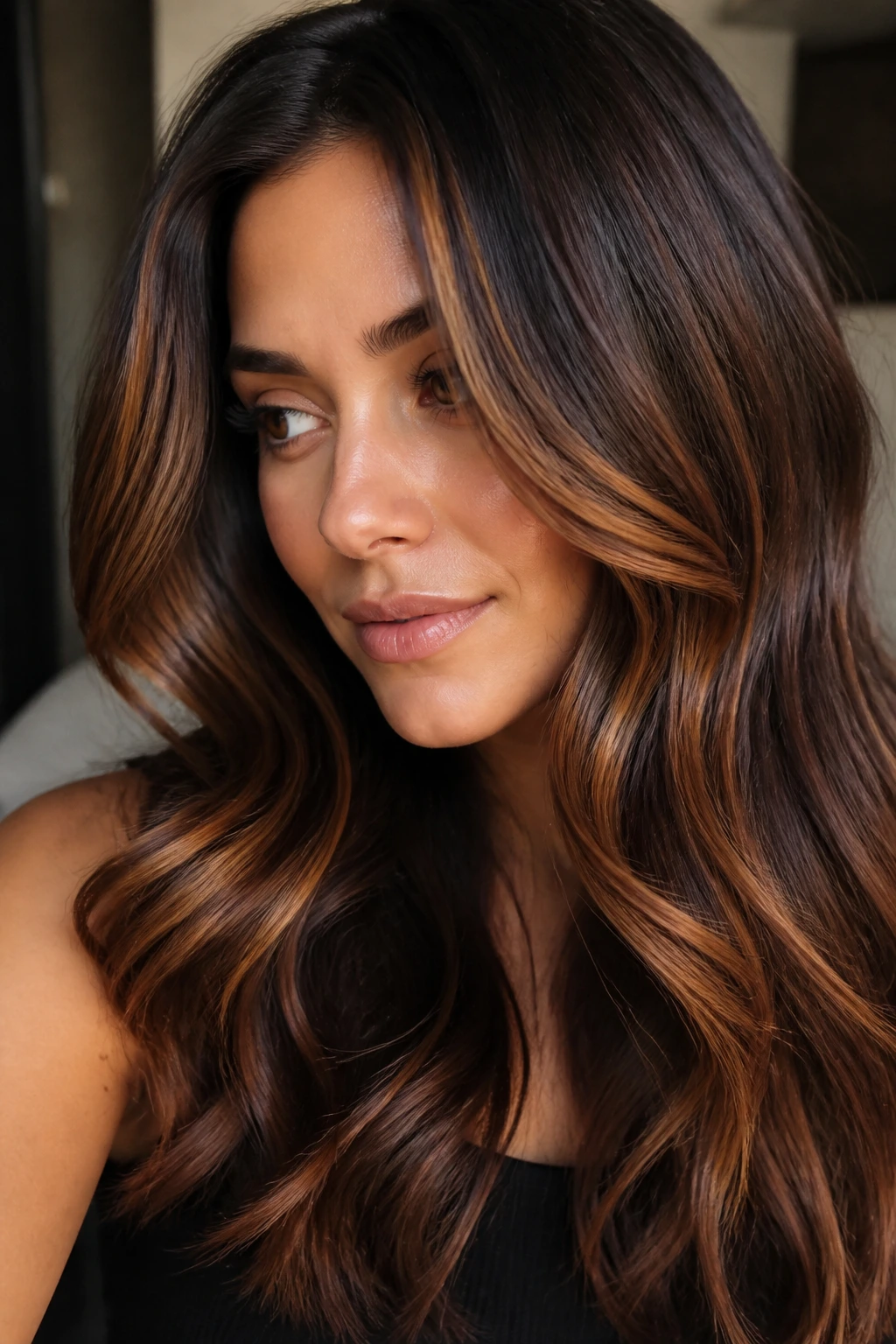
Cinnamon highlights are a little bolder, and that’s the point. They bring a brown-red warmth that looks rich on warm skin without sliding all the way into obvious copper. On textured hair, they can be lovely because the color catches bends and coils in a way flat brown never will.
The part people mess up is pushing cinnamon too orange. You want a brown spice note, not a neon rust streak. Tell your colorist to keep the red-brown balanced and to soften the lift with a glossy finish at the end. On a deep brunette base, cinnamon ribbons through the outer layers can look almost like the hair is warmed from the inside.
This is one of those shades that looks even better if the cut has movement. A blunt, single-length shape can make it feel heavier than it should.
6. Amber Face-Framing Streaks That Wake Up the Whole Cut
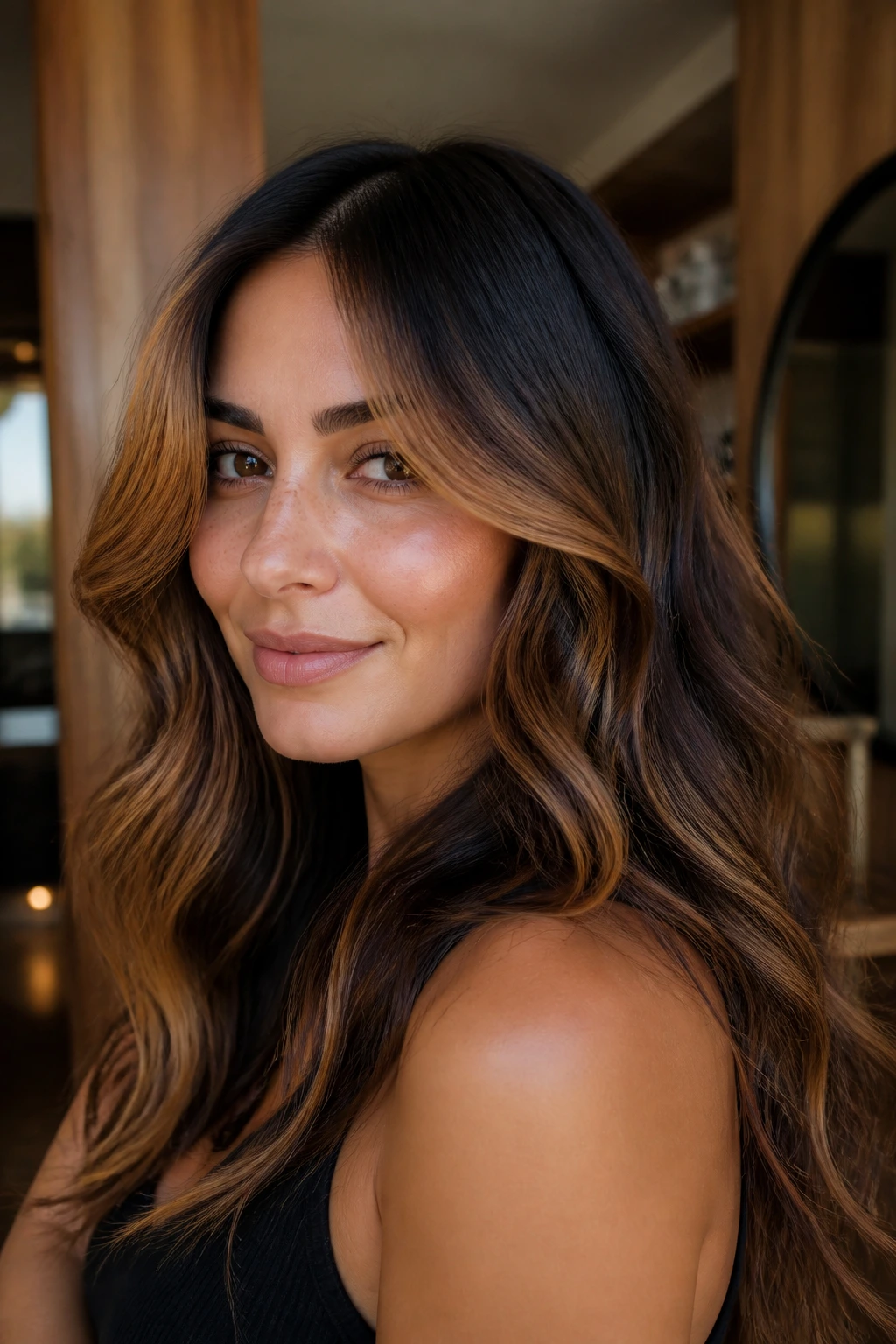
Amber is brighter than honey and softer than copper, which gives it a nice middle lane on warm skin. Place it around the front and through the outer crown, and the haircut suddenly gets more shape. The color lifts the eyes without demanding a total change.
The best amber streaks usually show up when the hair moves. Straight, they read sleek and polished. Curved with a round brush or loose wave, they flash a little more gold and feel warmer. That’s why amber works especially well on lobs, layered mid-length cuts, and shaggy shapes that need a touch of definition.
If you’ve ever felt like blonde highlights looked too pale or too pale-adjacent on you, amber is the version to try next. It keeps the brunette identity intact.
7. Golden Mocha Balayage for a Dimensional Everyday Look
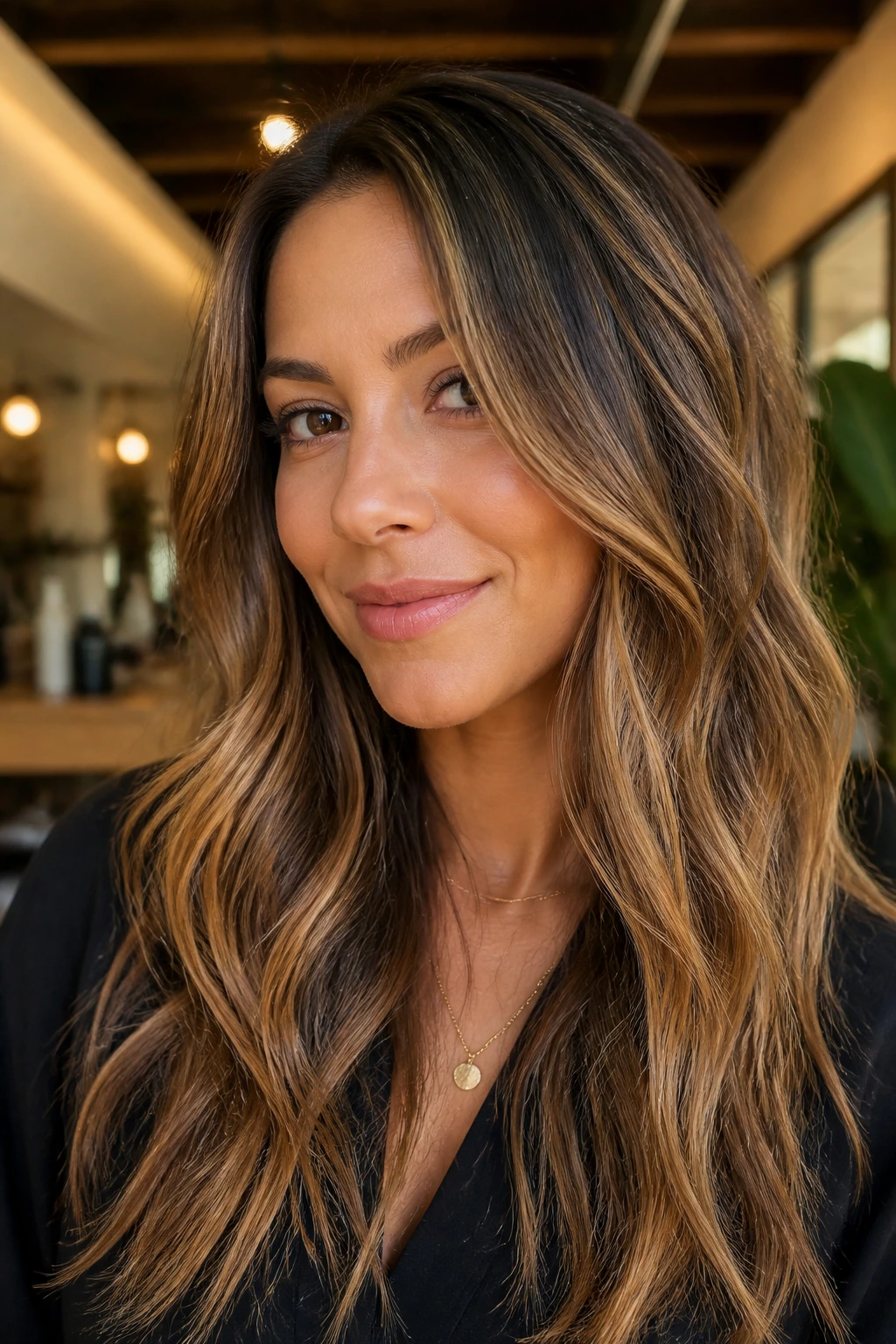
Golden mocha is the quiet one in the group, and I mean that as a compliment. It keeps the base in mocha territory while slipping in a few lighter golden pieces so the hair doesn’t go flat under indoor light. For warm skin, that balance is useful because the hair looks polished without turning into a color project.
Why I like it on warm undertones
The gold is doing the lifting, but the brown is still leading the conversation. That means you can wear it with makeup or without it, and the color does not rely on a perfect blowout to make sense. It also fades in a graceful way, which matters more than people admit.
If your natural shade sits around level 4 or 5 and you want a brunette refresh rather than a big change, this is one of the smartest asks you can make.
8. Auburn-Tinted Highlights That Lean Rich, Not Red
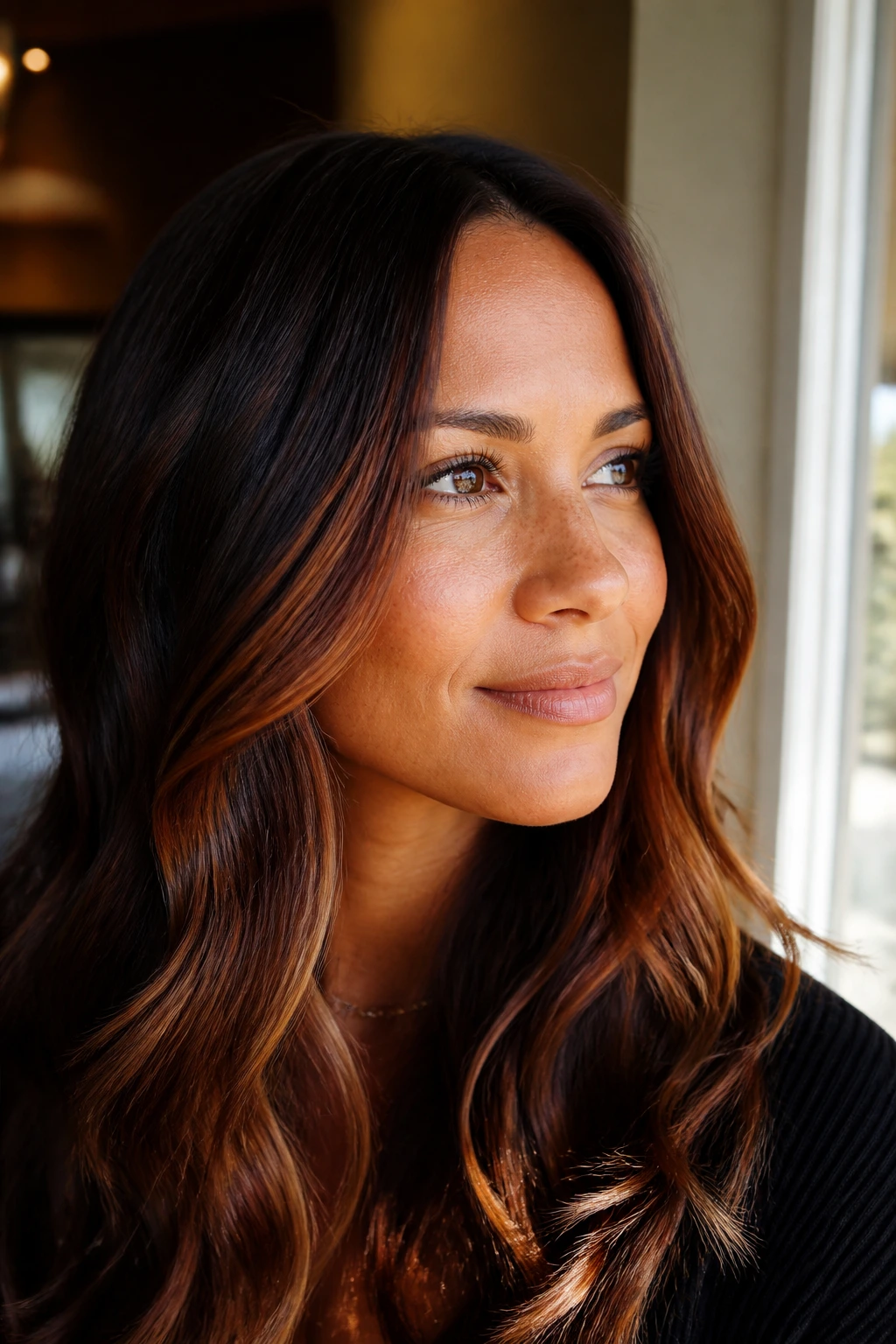
Auburn scares people because they picture fire-engine red. That’s not what this is. On a brunette base, auburn works best as a brown-copper gloss over selected ribbons or panels, so the warmth feels deep and grown-up rather than loud.
Warm skin often loves this color because the red-brown note echoes the same warmth in the complexion. It can make freckles look clearer and darker eyes look deeper, which is why it often shows nicely in fall-light and softer indoor light. But it does need a careful formula. Too much red pigment and the hair starts reading coppery in a way that can compete with the face.
If you’re nervous, ask for auburn on the underneath sections first. That lets you see how you feel about the tone before it takes over the whole head.
9. Maple Brunette Lowlights and Lights for Extra Depth
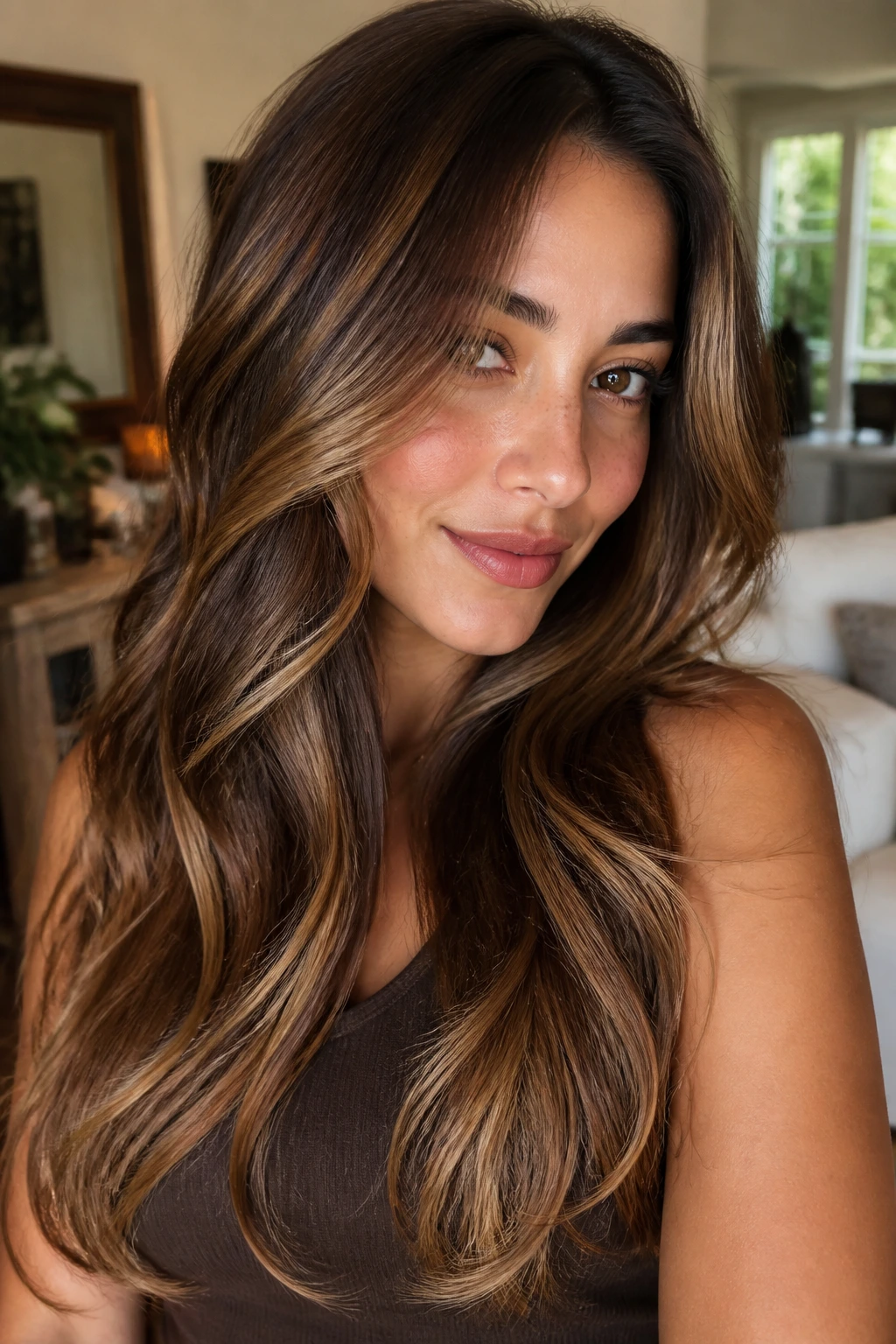
Maple is a good word for this look because it has both sweetness and structure. Instead of only adding light pieces, the colorist weaves in a few darker lowlights to stop the highlights from floating too high above the base. That extra depth is useful on thick hair, which can swallow lighter strands if everything is painted the same way.
Warm skin benefits from the brown-gold balance here. Maple doesn’t lean icy. It has that toasted, slightly syrupy quality that sits well next to golden undertones and gives the cut more shape from root to end.
This is a good choice if your hair has started to look one-note after a few color sessions. Lowlights are the unglamorous fix that make the highlights look deliberate again.
10. Copper-Glaze Highlights That Catch Movement
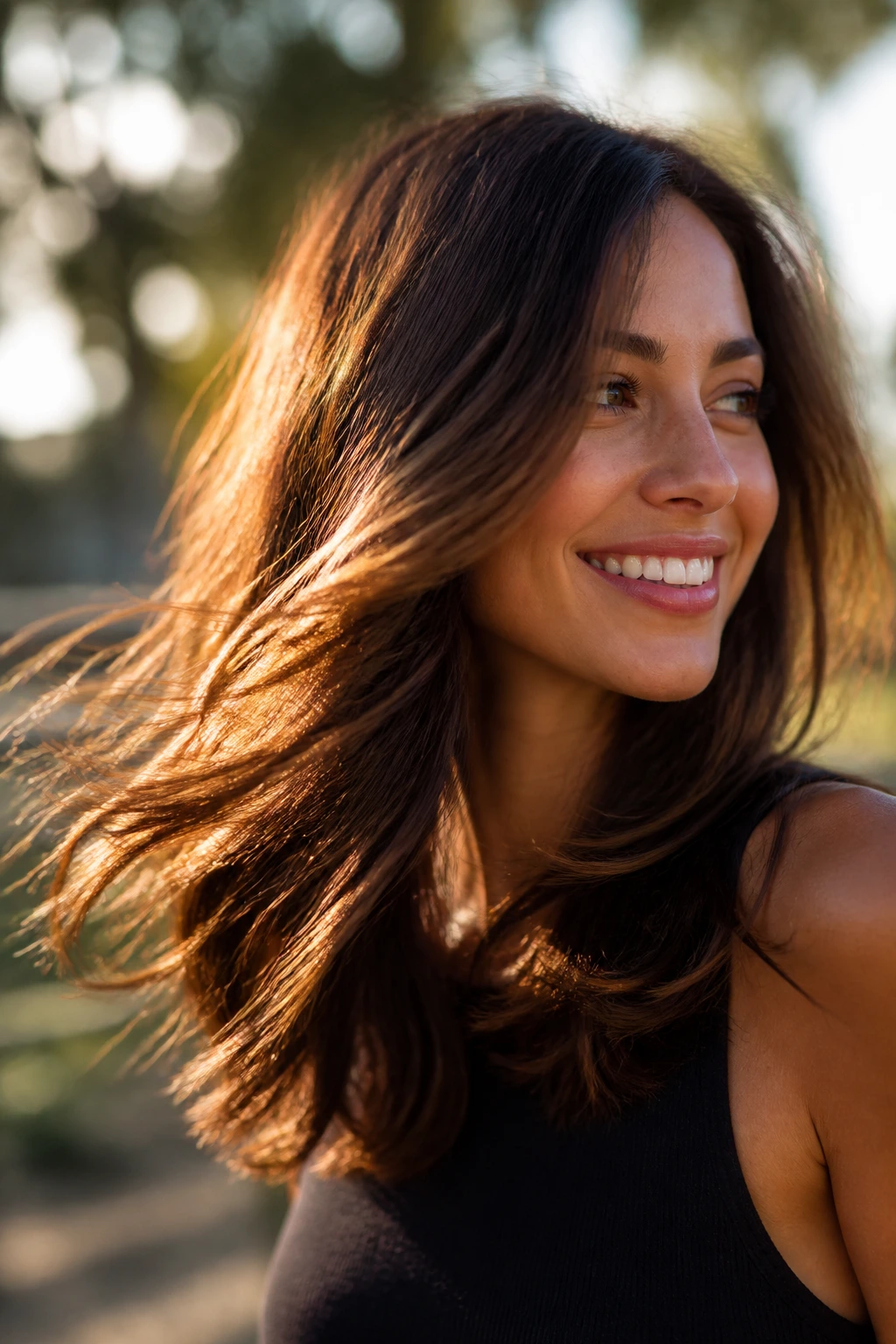
Copper glaze highlights are for people who want to see the color move. The copper is usually more of a transparent tint than a thick stripe, so it slips over brunette strands and turns them into warm ribbons instead of red blocks. On warm skin, the result can be striking in a very natural-feeling way.
Copper fades faster than honey or caramel, so the cut matters. Lived-in layers, curls, and bends in the hair help keep the finish interesting even as the intensity softens. If your strands are porous or very lightened already, the copper can grab fast, so your colorist should watch the timing closely.
This shade looks strongest when the hair has shine. Dull copper is just brown-red. Glossy copper looks intentional.
11. Butterscotch Peekaboo Panels Beneath Dark Brown Hair
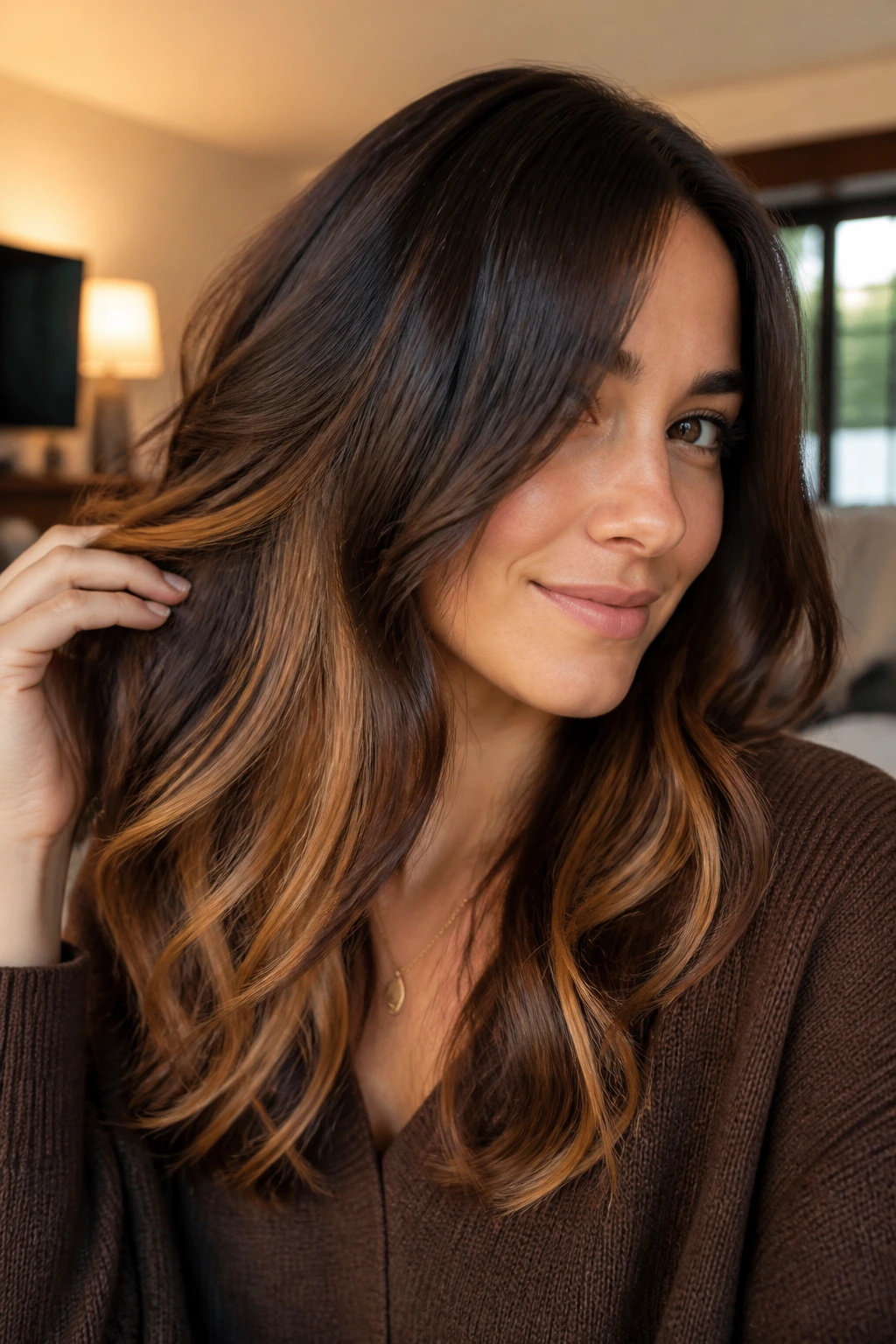
Peekaboo highlights are the fun one people forget about until they see them in motion. Butterscotch underlayers sit beneath the top panel of dark brunette hair, so they show up when you curl, braid, or flip the ends. That makes the color feel a little hidden, which is part of the appeal.
Because the butterscotch lives underneath, it can be brighter than a surface highlight and still feel wearable. Warm skin gets the benefit of the soft gold tone without needing the whole head to look lighter. If your job or routine calls for conservative hair during the day, this is a neat way to keep some personality tucked in.
I like this best on shoulder-length to long hair. Short cuts don’t hide enough of the underlayer to make the placement feel special.
12. Bronde Melt with a Golden, Brown-First Finish
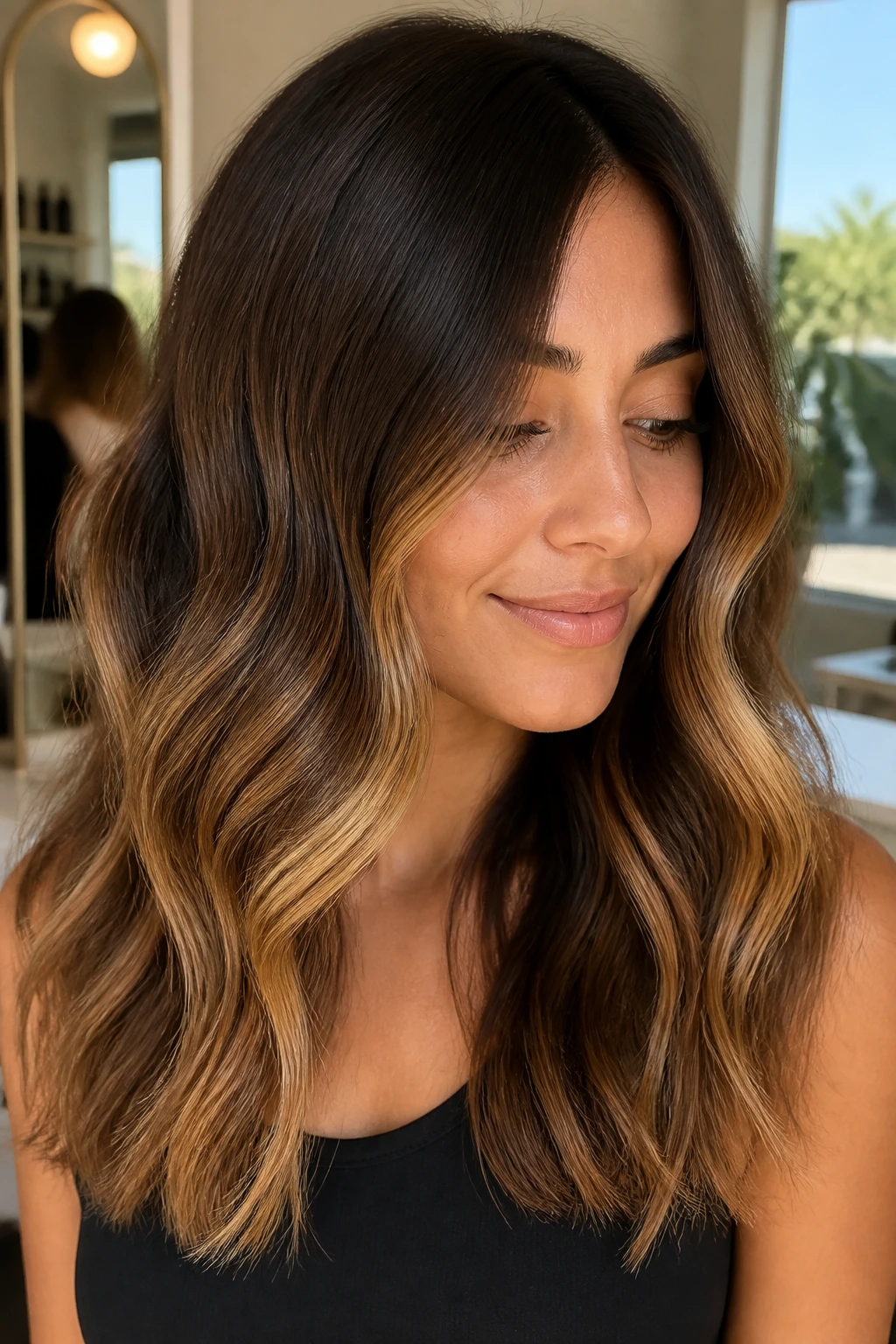
Bronde only works when the brown still leads. That’s the mistake people make: they ask for “bronde” and end up with a washed-out beige mix that doesn’t know what it is. The version that flatters warm skin keeps a warm brunette root, then melts into golden brown and soft honey through the mids and ends.
This is a good choice if you want lighter hair but not full blonde energy. It keeps a smoother grow-out line and usually looks best on wavy hair, where the color shifts are easier to see. The middle of the strands carries the lighter tone, so the ends don’t look heavy while the roots stay believable.
If you want one reference word to bring to the salon, “golden” matters more than “beige” here. Beige can work, but only if it leans warm enough to stay friendly to your undertone.
13. Sunlit Cocoa Ends for Long Layers and Waves
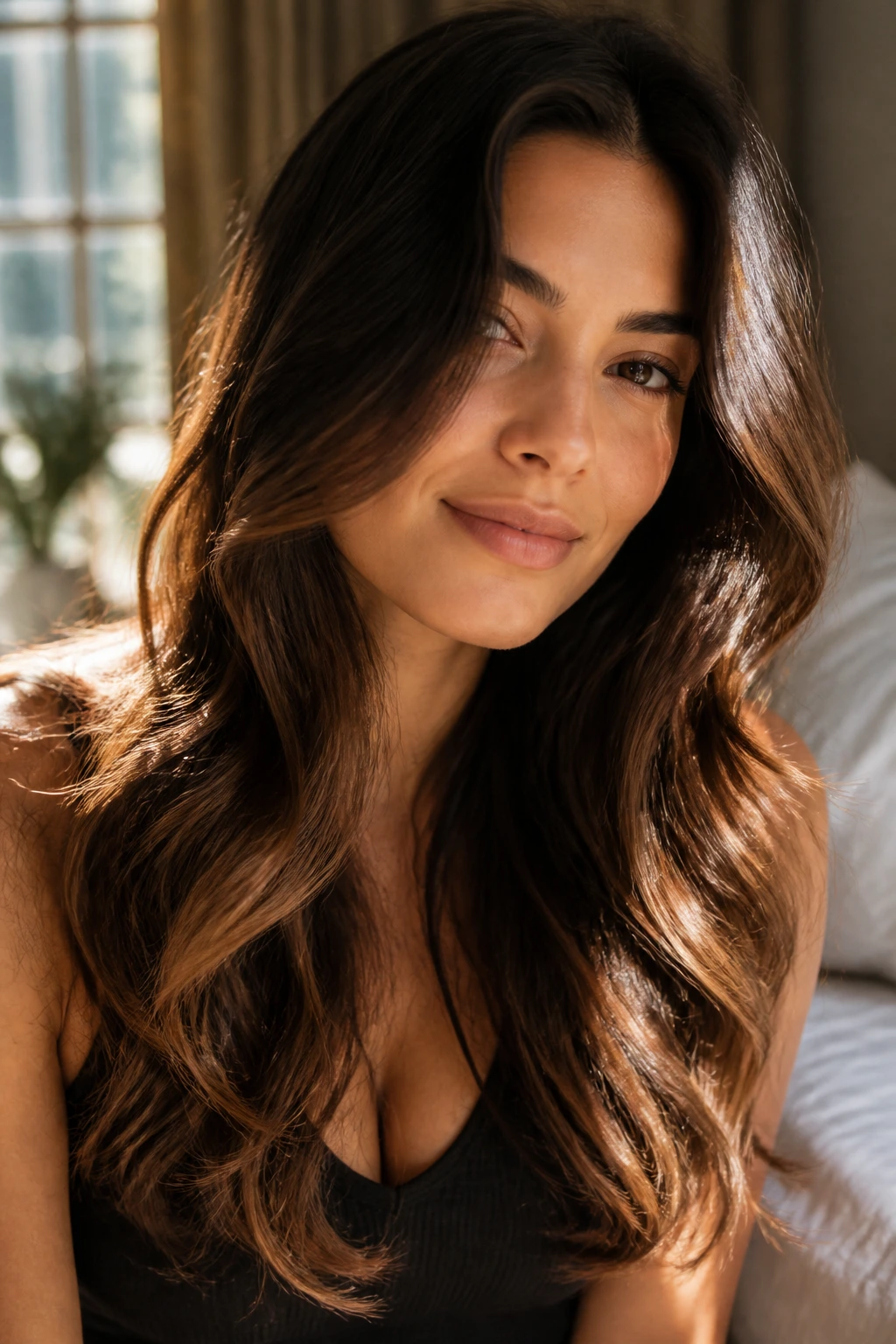
Sunlit cocoa ends are subtle, and subtle is not boring when it’s done well. The idea is to keep the root and upper lengths rich, then lighten just the lower third with cocoa-brown ribbons that catch the light. On long layers, that gives the haircut movement without making the whole head look stripped down.
A lot of people try to lighten their ends too much and end up with that dry, over-processed look. Cocoa keeps the color in the brunette family, which is kinder to warm skin and easier to wear with minimal makeup. It also gives a softer finish on curly and wavy hair because the ends don’t scream for attention.
If your hair is dense, this method can make it feel less blocky. If it’s fine, the darker root-to-mid area helps preserve the look of thickness.
14. Espresso and Warm Beige Ribbons for a Cleaner Contrast
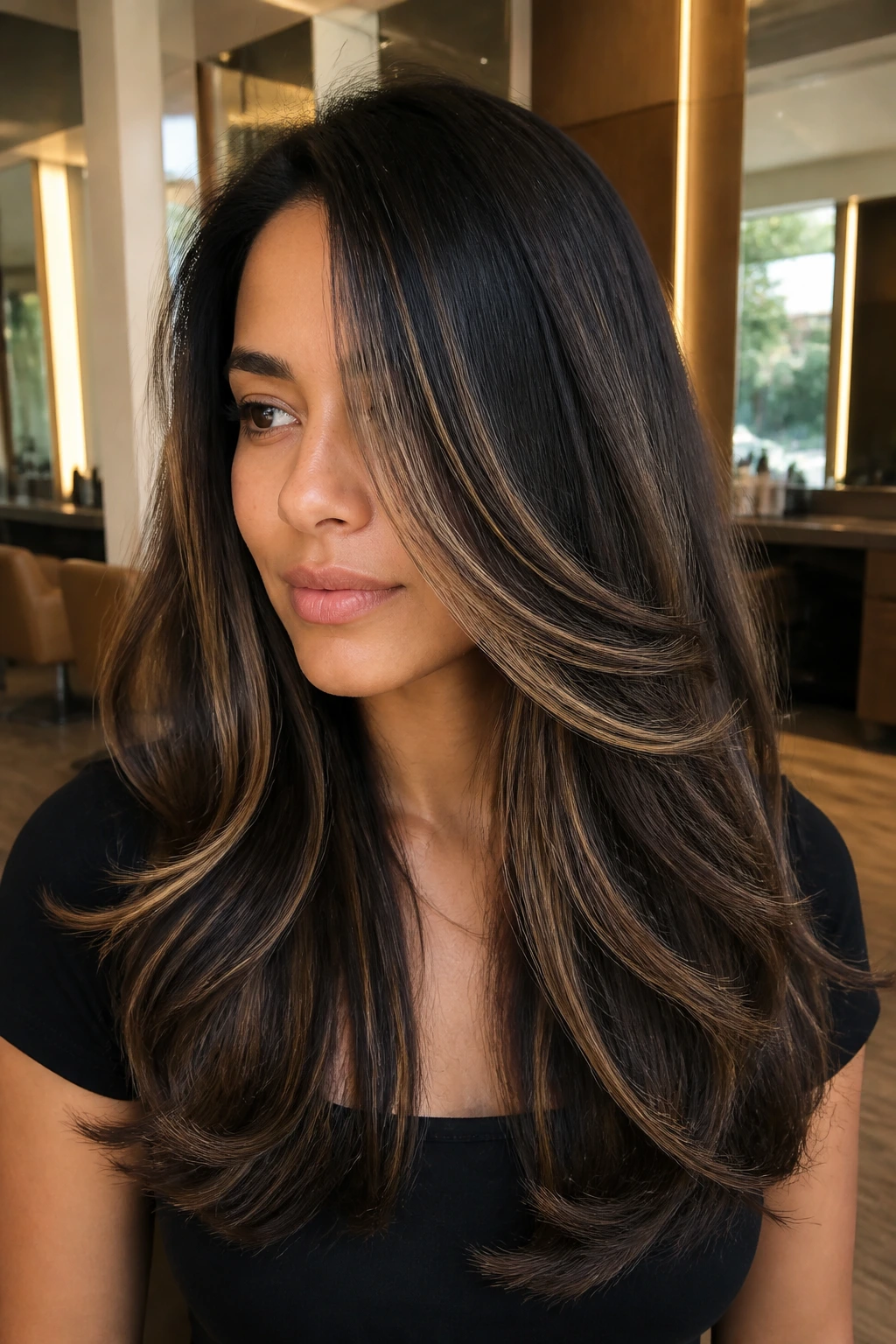
This is the more controlled, high-contrast look in the collection. The base stays deep espresso, and the highlights come in as warm beige ribbons instead of full caramel. The result is crisp, but not icy, which is where warm skin tends to look best if you still want contrast.
The beige has to be warm beige. Not mushroom. Not muddy taupe. A touch of gold in the toner keeps the skin from looking tired and prevents the hair from turning flat under strong light. This style works especially well on sleek blowouts and sharp cuts because the contrast gives the shape more edge.
If you like a cleaner, more polished brunette rather than a soft sun-kissed one, this is the look to save.
15. Mahogany Panels for a Deep, Luxe Brown Finish
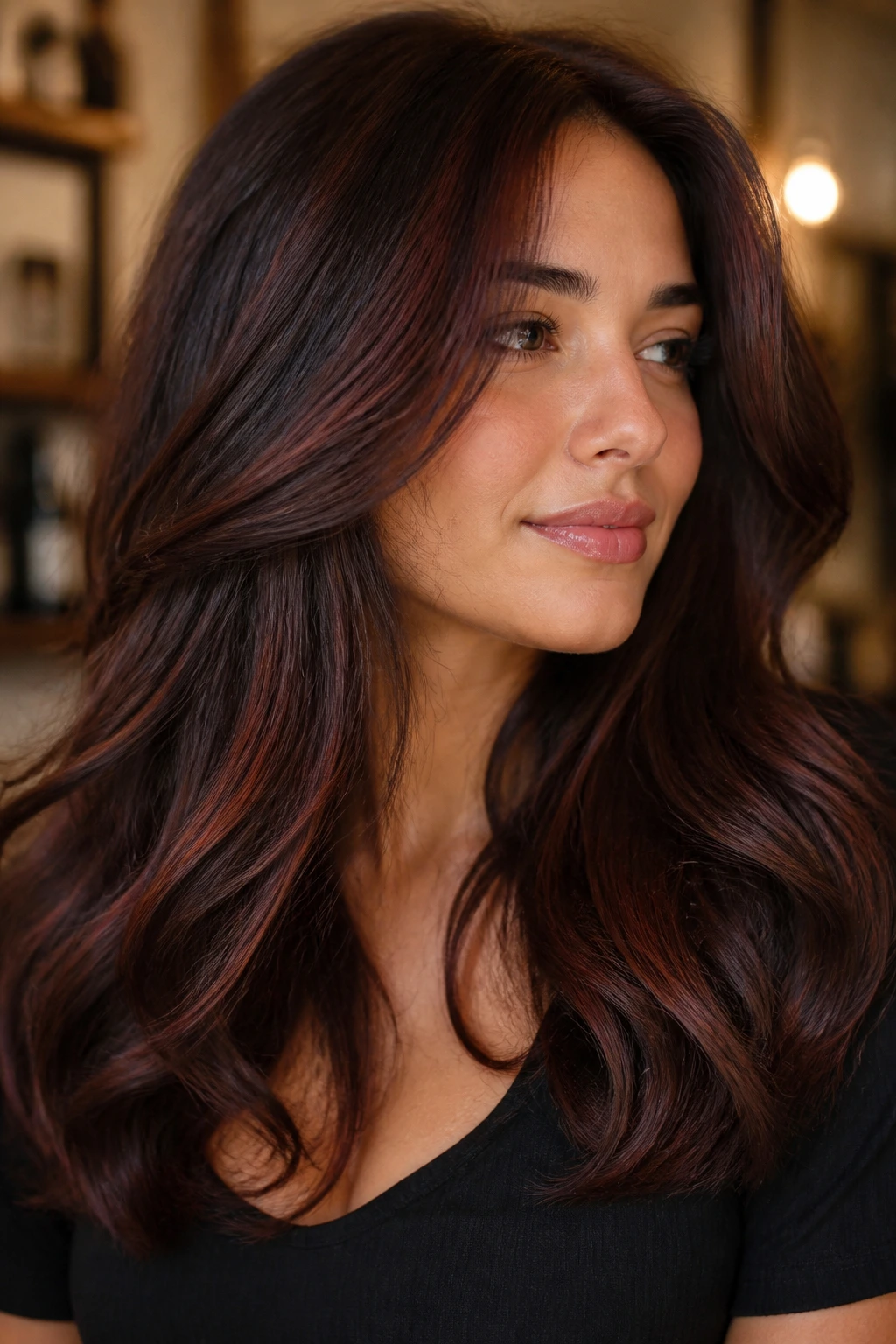
Mahogany is one of those colors that can go too red if the formula is heavy-handed. When it’s balanced correctly, though, it gives dark brunette hair a velvet look that plays beautifully with warm skin. The red-brown sits deep in the strand, so the shine looks richer than the color might sound on paper.
This shade suits thick hair, curls, and long layers especially well. The panels can be wider than babylights but still blended enough to avoid hard lines. I like mahogany most when the goal is depth first, brightness second. It brings warmth without acting like a highlight screaming for attention.
If you wear gold jewelry, there’s a good chance this color will feel very natural against your skin. It has the same rooted, earthy quality.
16. Bronze Veil Highlights for Shorter Cuts and Pixies
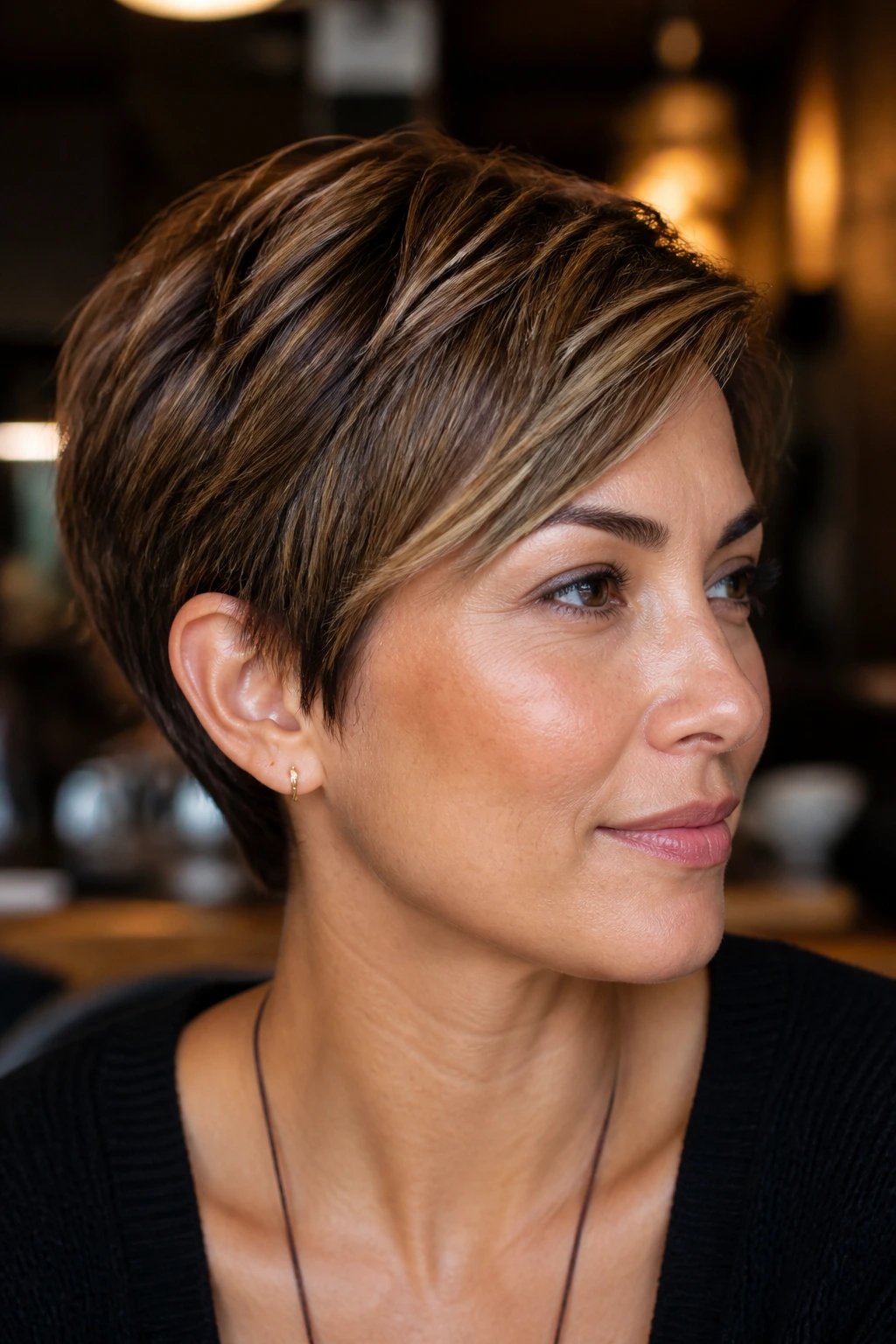
Short hair needs a different touch. Bronze veil highlights work because they are soft, close together, and placed where the cut can actually show them — around the crown, temple area, and top layers. On a pixie or cropped bob, chunky pieces can look obvious fast. A bronze veil keeps the color moving without turning stripey.
Bronze is a smart choice for warm skin because it sits in that golden-brown zone that almost always looks harmonious. It also catches a little more shine than plain brown, so shorter cuts don’t disappear under flat indoor light. If your hair is fine, this can make the cut feel fuller without needing a huge lift.
The shape of the haircut matters here more than usual. A textured crop or beveled bob will show the highlight pattern much better than a blunt, heavy outline.
17. Hazelnut Foilyage for a Soft, Expensive-Looking Grow-Out
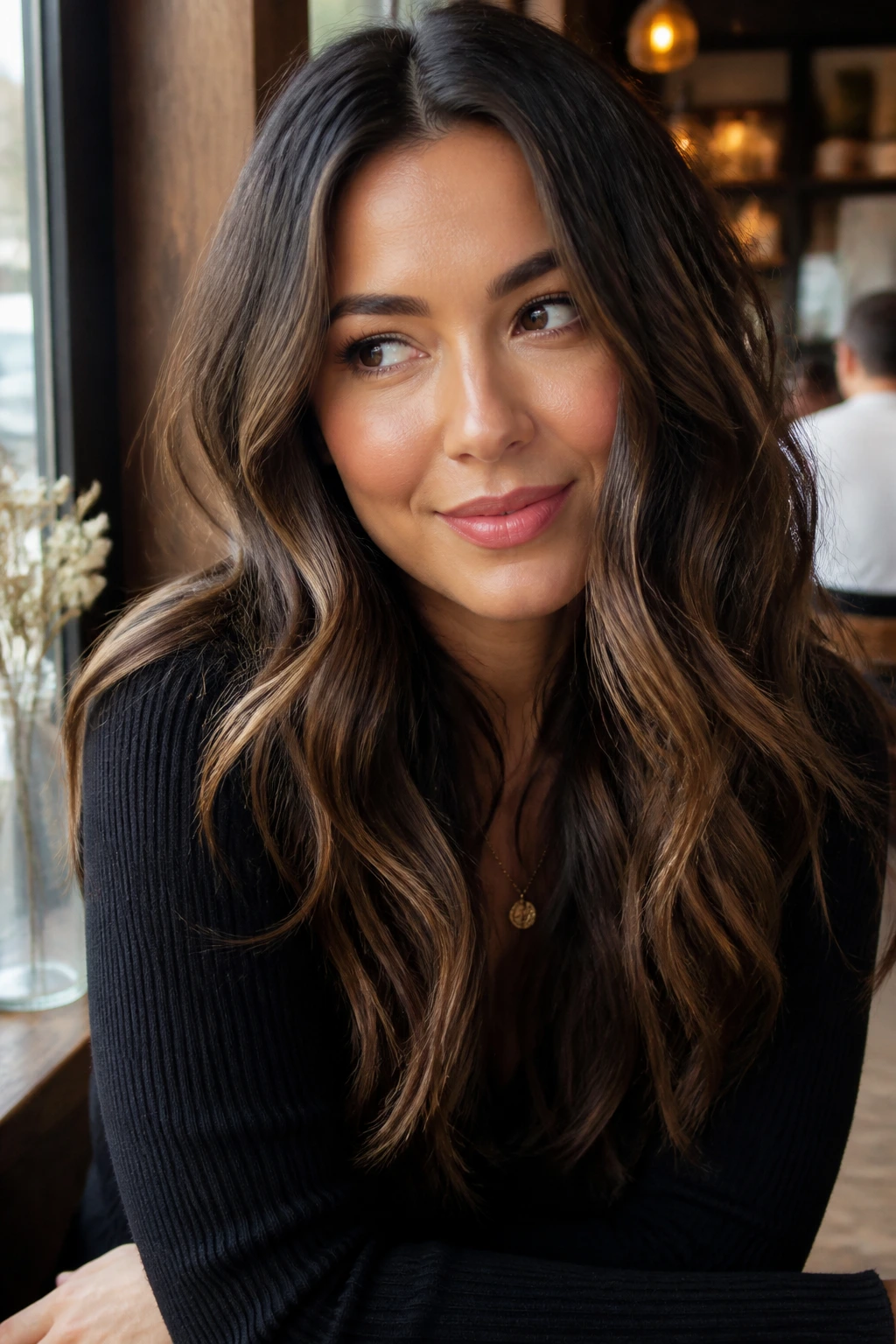
Foilyage is basically the hybrid move: painted for softness, foiled for lift. That lets hazelnut tones show up with more clarity than open-air balayage alone. The hazelnut note is key, because it gives the brightness a warm brown base instead of pushing the whole look too light.
This is one of the easiest looks to maintain if you dislike harsh regrowth lines. The root stays softer, and the light pieces appear in a gradual way as the color grows. Warm skin gets a flattering, toasted finish that doesn’t need constant salon touchups to stay believable.
I’d choose this for medium-brown hair that needs more dimension but not a dramatic color identity change. It’s polished, but it doesn’t look fussy when you pull it back.
18. Pumpkin-Spice Accents for a Copper Kick
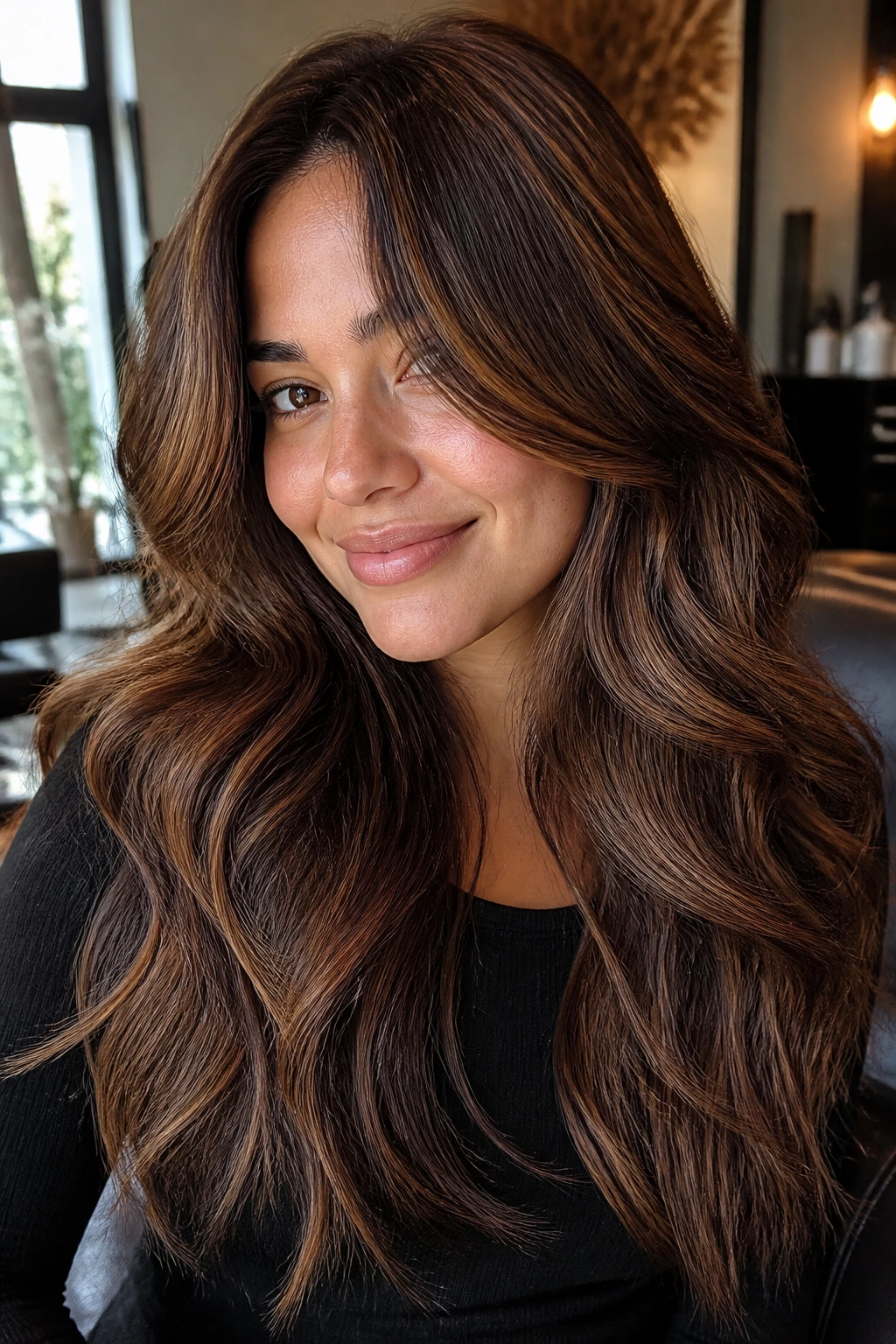
A little playful, yes. But useful too. Pumpkin-spice accents are for brunette hair that needs a stronger copper-brown note in select spots, usually around the front, the outer layer, or scattered through waves. The trick is to keep the accents small enough that they read as pieces, not a full red shift.
Warm skin can handle this color because the orange-gold side is contained by the brunette base. It works especially well if your wardrobe already leans earthy — rust, olive, cream, camel, black. The hair picks up those shades instead of fighting them.
This is a smart choice if you want your color to show in a braid or a half-up style. Hidden warmth is nice. Visible warmth in motion is better.
19. Honey Chestnut Contouring for Warm Cheeks and Jawlines
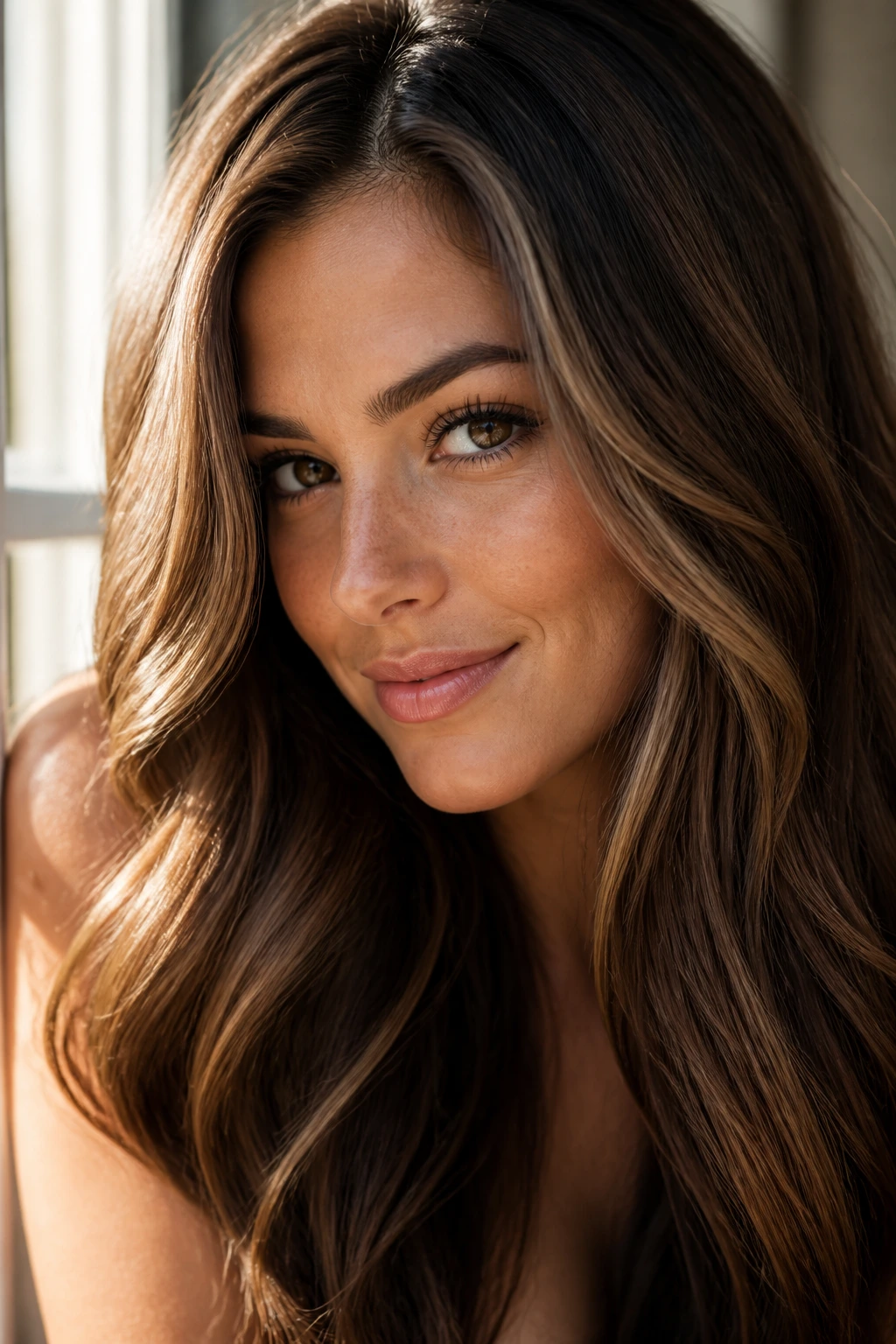
Contour coloring sounds fancier than it is. All it means here is strategic placement: honey pieces near the cheekbones, chestnut depth under the jawline, and soft brightness where the hair naturally frames the face. On warm skin, that can make the face look more awake without a heavy makeup effect.
The nice thing about this method is that it respects the shape of the haircut. The highlight placement follows the face, so long layers, curtain bangs, and shoulder-length cuts get the most out of it. Honey lifts. Chestnut anchors. That contrast is what gives the style structure.
If you’re trying to soften a wider face or give a softer edge to a heavy brunette block, this is one of the cleaner solutions.
20. Smoky Caramel Depth for Thick Hair That Needs Shape
Smoky caramel sounds contradictory, and that’s why it works. The caramel warmth is there, but it’s muted a touch so thick hair doesn’t become a bright, busy curtain. Think caramel that has been pulled back from the edge a little — still warm, still rich, just less shiny and less obvious.
This is a good fix for hair that has too much dimension already. Sometimes the answer is not more light. It’s better placement and a slightly softer tone. On warm skin, smoky caramel can feel grounding, especially if your complexion already carries a lot of natural color and you don’t want the hair to compete with it.
It also photographs better on dense hair than stark contrast does, because the transitions look smoother in layers.
21. Warm Taupe and Gold Blend for Neutral-Warm Skin
Not every warm skin tone wants full caramel or copper. Some people sit in that middle space where gold jewelry works, cream looks better than stark white, and too much orange can feel noisy. Warm taupe with a gold tilt is a smart answer there.
The word taupe can be risky. It often means cool and dusty, which is not what we want. On brunette hair, though, a warm taupe-gold blend gives a soft beige-brown result that stays gentle on the face. It’s especially good for anyone who likes a modern, muted finish but still needs the color to read warm in sunlight.
This is the shade I’d pick for someone who says they want “natural” and means it. No drama. Just a better version of brown.
22. Velvet Chestnut Peekaboo Pieces That Move Under the Surface
Velvet chestnut is the quieter cousin of brighter peekaboo color. Instead of a high-contrast hidden ribbon, the pieces stay close to the base shade and work more like texture than statement. You see them when the hair swings or when it’s pinned half-up, and then they disappear back into the brunette.
That makes this look useful for warm skin that wants softness first. The chestnut tone is warm enough to flatter but deep enough to keep the whole result grounded. On long layered hair, the hidden movement can make the cut feel fuller without tipping into obvious highlight territory.
If you’re someone who likes details that reward a closer look, this is the one. It doesn’t shout. It lingers.
23. Warm Bronde Money Piece for a Bright Front Section
This is the louder cousin of the toffee money piece. The warm bronde money piece pushes the front brighter, usually with a softer blonde-brown mix that still keeps some brunette depth at the root. It’s a strong choice if you want to refresh the face fast and don’t mind the front section carrying the look.
Warm skin needs the tone to stay gold, not beige-ash. If the front pieces go too pale, the whole face can look disconnected from the hairline. Keep the root soft, keep the tone honey-gold, and let the brightness sit in the front only.
A center part makes this look feel more symmetrical. A deep side part makes it feel more dramatic. Either way, it changes the whole mood of the cut.
24. Rich Chocolate Hair with Cinnamon Ends
Rich chocolate hair with cinnamon ends is a good option when you want the ends to feel alive but don’t want to lighten the whole head. The chocolate base gives richness, and the cinnamon ends add a warm edge that shows movement. It’s especially pretty on curls, where the ends can catch light as the pattern tightens and loosens.
This look works on warm skin because the cinnamon doesn’t sit far away from the base color. It feels related, not pasted on. That makes it easier to wear if you usually prefer deeper brunettes but want one point of interest.
I’d recommend this for long hair that gets dragged down by a single-tone finish. The lighter ends stop the shape from looking heavy.
25. Coffee-and-Caramel Dimension for a Salon-Fresh Brunette
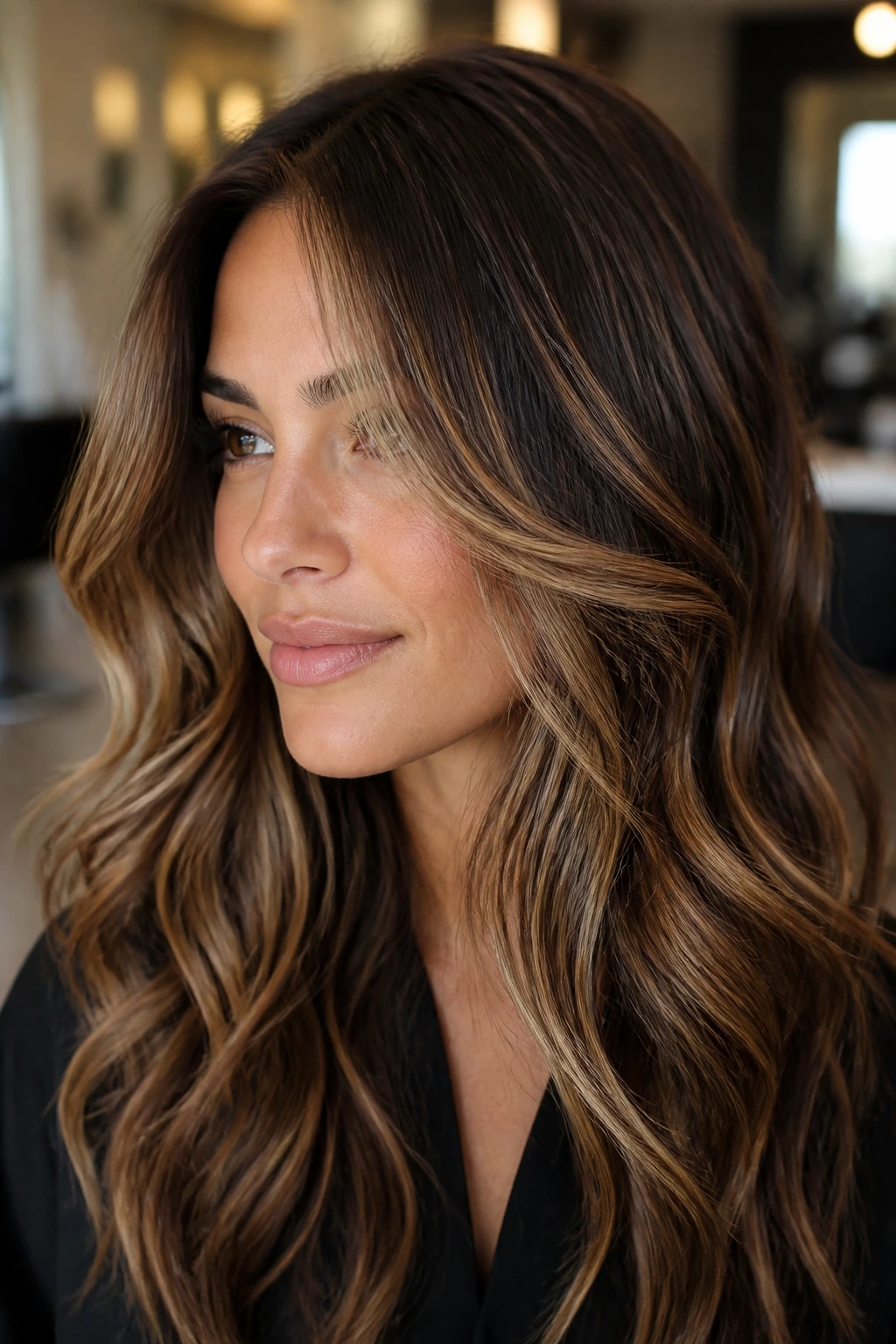
This is the full brunettes-only answer for people who want dimension without choosing a single hero shade. Coffee sits as the base, caramel comes through as ribbons, and a few slightly lighter pieces keep the whole head from reading flat. On warm skin, the mix feels balanced because there’s depth, sweetness, and warmth all at once.
The best part is that you can tune it. Want more contrast? Ask for a brighter caramel around the face. Want a softer result? Keep the ribbons thin and let the coffee base do most of the work. This style is a good final-stop option because it doesn’t lock you into one mood; it just makes brunette hair look expensive in daylight, which is really the goal.
How Brunette Color Highlights Read on Warm Skin
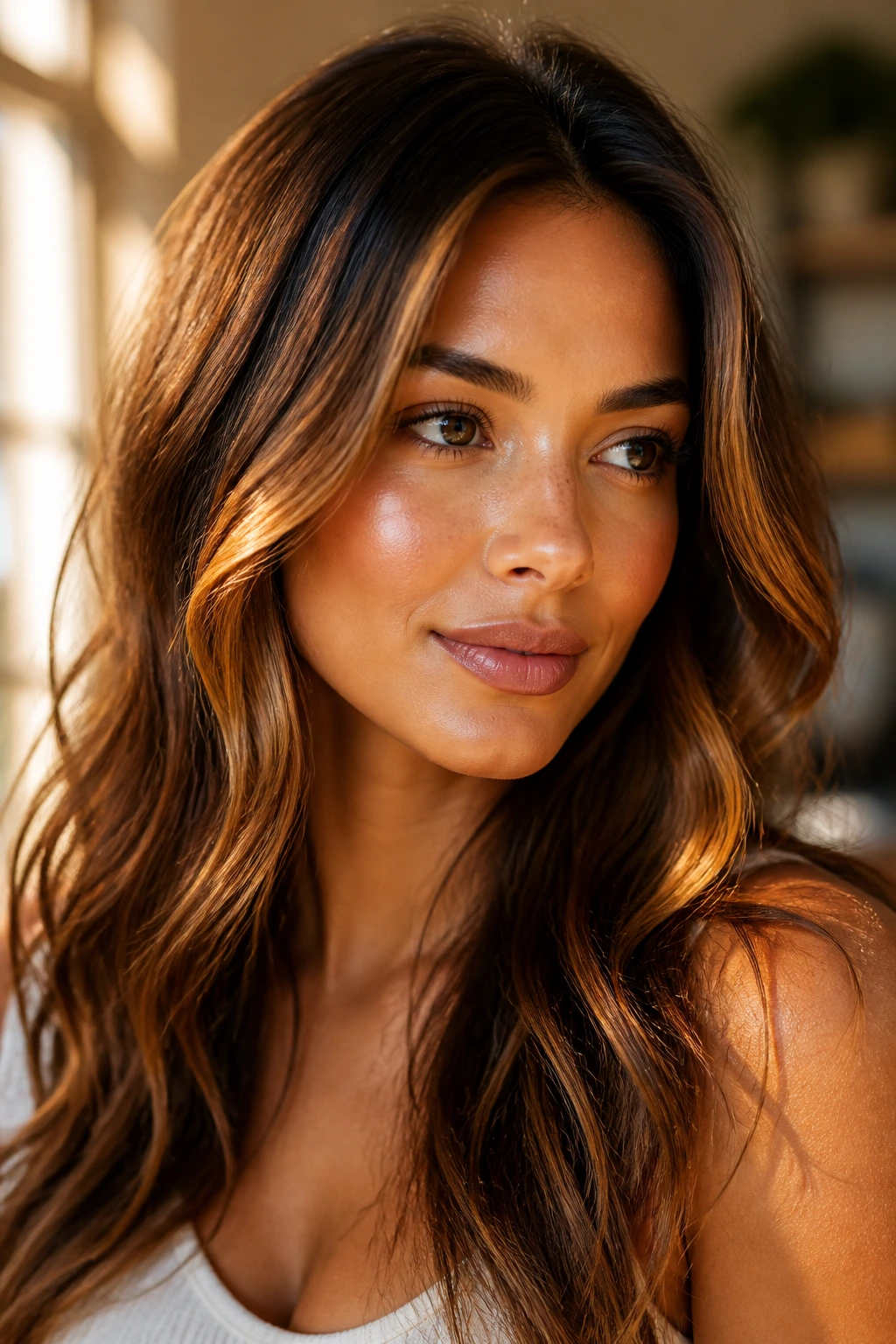
Warm skin tones usually carry yellow, golden, peach, or olive undertones, and brunette highlights should work with that warmth instead of scrubbing it away. That means gold-based caramel, honey, amber, copper, chestnut, and bronze usually read better than icy beige or smoky ash. The hair doesn’t need to match the skin exactly. It needs to share the same temperature.
Placement matters just as much as pigment. A face-framing ribbon can make warm skin look brighter than a whole head of lighter hair, because the eye reads the contrast right where it counts. Balayage and foilyage soften the root, babylights blur the pattern, and money pieces draw attention to the features people notice first. Different tools, different moods.
One detail people skip: brightness level. A level 8 ribbon over a level 5 base gives a very different effect than a level 7 caramel over a level 3 espresso brown. If you know your starting point, your colorist can keep the tone warm without over-lifting it into orange or over-toning it into beige. That little conversation saves a lot of regret.
What to Bring to the Salon Before You Book
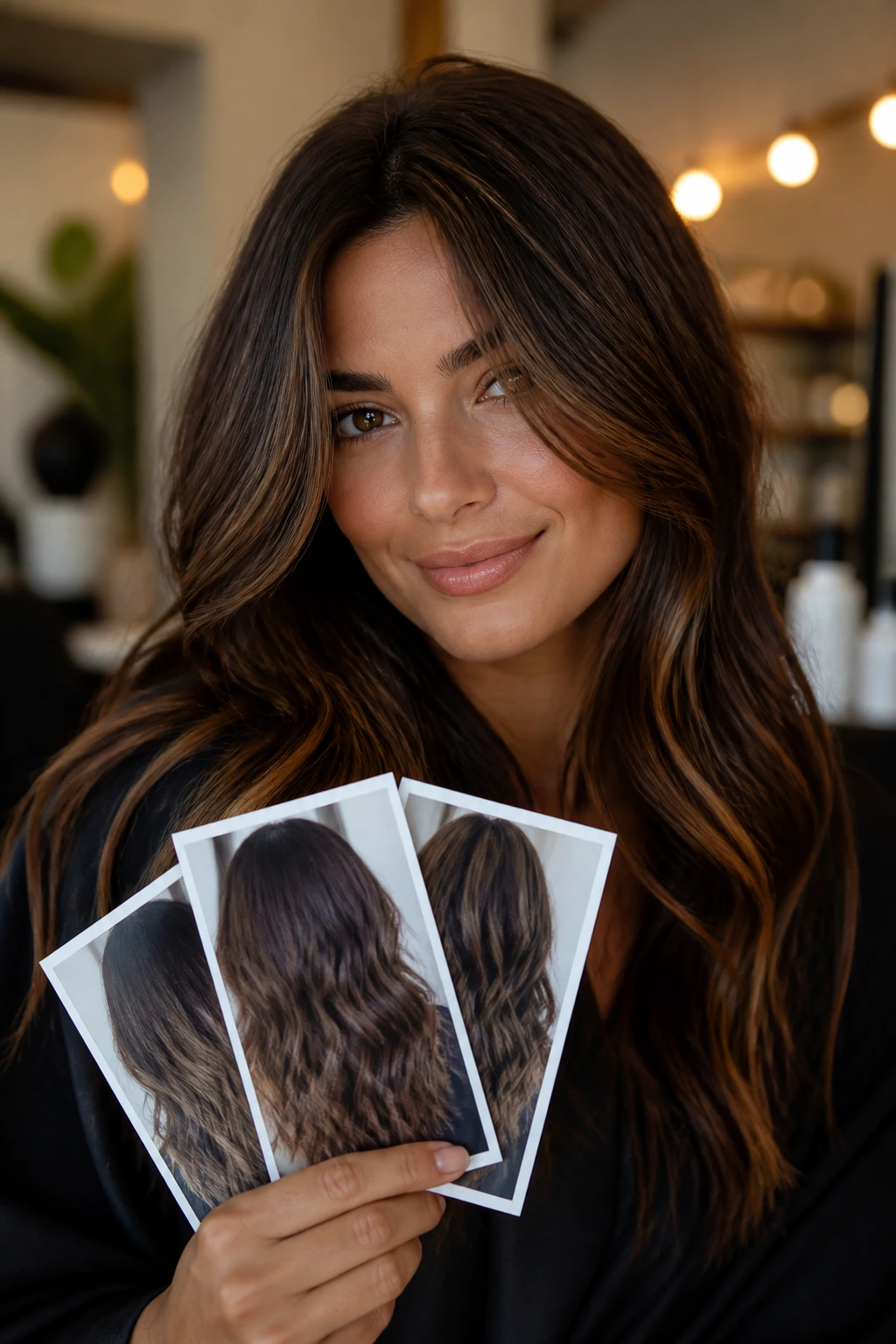
Bring photos, but bring the right photos. The best ones show the hair from more than one angle, in natural light, and on a base color close to yours. If your photo is of a blonde starting from light brown and your own hair is deep espresso, the result will not match no matter how politely you ask. Hair color has rules. Annoying rules, sometimes.
A quick salon checklist
- One photo of the tone you want: Gold, caramel, honey, copper, or bronze, not a vague “brunette glow.”
- One photo of the placement you want: Money piece, balayage, babylights, or peekaboo.
- A note about your maintenance tolerance: Tell them if you can handle touchups every 6 weeks or want a softer grow-out.
- Your recent color history: Box dye, old highlights, and henna all change how brunette highlights lift.
- A clear line about warmth: Say whether you want gold warmth, copper warmth, or just a warm brown finish.
Bring one extra picture that you do not love but that shows the depth correctly. Colorists can read that more easily than a filtered inspiration shot from a car mirror.
How to Wear These Shades in Everyday Life
Placement: If you wear your hair off your face a lot, spend the brightness on the temples and cheekbones. If you wear it down and wavy, put more life through the mids and ends so the movement shows.
Haircut Pairing: Layers, curtain bangs, and long bobs all make brunette highlights easier to see. A heavy one-length cut can swallow the detail unless the color is placed with more contrast.
Styling: Loose waves show ribbons best. Sleek blowouts show shine and tone. Curly and coily textures need painted placement that follows the curl pattern, or the highlight can disappear in the coil.
Finish: A clear or warm gloss makes the tone look intentional. Matte, dry ends flatten every one of these looks faster than a bad toner does.
Small Tweaks That Make a Big Difference
Gloss Boost: A warm gloss every 6 to 8 weeks keeps caramel, honey, and chestnut from drying out into a flat beige. Even a clear shine treatment can make the highlights look less tired.
Customization: If the color feels too light, ask for lowlights two steps deeper than the base. If it feels too dark, brighten the face frame only. You do not need to redo the whole head to fix the balance.
Styling Shortcut: A one-inch iron or round brush is enough to make ribbons show up. Big salon curls are nice, but they are not required. A bend in the mid-lengths usually does the job.
Make-It-Yours: Fine hair often looks better with babylights and a soft money piece. Thick hair usually needs a mix of lights and lowlights. Curly hair almost always benefits from hand-painted placement that follows the pattern of the curls, not the grid of the foil.
A small bottle of shine serum on the ends can help, but use less than you think. Too much and the highlight separation disappears.
Keeping the Color Fresh Between Appointments
Warm brunette highlights hold up best when the base color and the lighter pieces are treated like one system. Wash with a color-safe shampoo two or three times a week, not daily unless your scalp truly needs it. Hot water strips tone fast, and it does not care whether the shade was honey, caramel, or copper.
Glosses usually make the biggest difference. A salon glaze every 6 to 8 weeks can revive tone without a full highlight redo. Root touchups depend on placement: babylights and balayage can often stretch to 10 to 12 weeks, while a bold money piece may need attention sooner because the contrast is more obvious.
If the hair starts looking orange at the ends, a blue shampoo used sparingly can calm it down. If the hair starts looking too drab, skip the purple shampoo people reach for by default; that can mute the warmth you wanted in the first place. A deep mask once a week helps too, especially after lightening. Dry ends swallow light, and no toner can fix that.
Heat protection matters even when you are just using a blow dryer. Keep hot tools on the lower side of the range that still gives you the shape you want, and avoid dragging the iron over the same section over and over. The shine you lose there is usually the part you notice first.
Common Mistakes That Flatten Warm Undertones
The first mistake is choosing highlights that are too ash-heavy. Ash brown sounds refined in a salon chair, but on warm skin it can make the face look dull or tired. If the inspiration photo feels muted, ask whether the tone is actually gold-brown or just beige-gray in better lighting.
Another common miss is placing the lightest pieces too far from the face. Then the color may look fine from the back and do nothing for the complexion. If your goal is brightness, move some of that lift around the hairline and cheekbones.
Lifting brunette hair too far without enough toner is another headache. The result often lands orange, especially on darker bases or porous ends. The fix is not more bleach after the fact. It is better lift control and a gloss that lands in the right warm zone.
People also forget about the haircut. A color that looks blended on layered hair can read patchy on a blunt cut. The solution is not always more highlights; sometimes it’s smarter sectioning or a softer placement pattern.
Last one: treating warm highlights like they need purple shampoo every wash. They usually do not. Purple can flatten the gold and make caramel look dusty. Use it only when the hair actually turns too orange or too yellow, and even then, lightly.
Variations and Adaptations to Try
Softest Possible Version: Ask for chestnut babylights and a warm gloss only. This keeps the change understated and works well if you want movement without obvious contrast.
Higher-Contrast Front Frame: Keep the base dark and brighten only the money piece and temple sections. This suits warm skin when you want a lift near the face but do not want an all-over lighter look.
Copper-Forward Brunette: Add amber or auburn ribbons on the outer layers and keep the rest caramel-brown. This is the boldest version in the group and works best if your skin already leans peachy or golden.
Low-Maintenance Grow-Out: Choose balayage or foilyage with a soft root shadow. The grow-out line stays gentler, and you can stretch appointments longer without the color looking abandoned.
Fine-Hair Version: Use babylights instead of broad ribbons. Fine hair can look sparse if the highlights are too chunky, but fine weave work creates fullness.
Curly-Hair Version: Place the light pieces where the curls actually sit when they dry, not where they lie when wet. That one change keeps the highlights visible instead of hiding them inside the coil.
Frequently Asked Questions
Are caramel or honey highlights better for warm skin tones?
Both work, but caramel is safer if you want depth and honey is better if you want more visible brightness. Caramel usually reads richer on deep brunettes, while honey lifts lighter brown bases faster.
Can warm skin wear blonde highlights at all?
Yes, but the blonde needs to stay warm. Golden beige, buttery blonde, and honey blonde can work; icy platinum tends to fight warm undertones unless it’s balanced with a lot of depth elsewhere.
What should I ask for if my hair is very dark brown?
Ask for warm ribbons in the caramel, bronze, or amber family, plus a soft root shadow. Deep brunettes often need strategic lift rather than all-over lightening, or the contrast gets harsh fast.
How often do warm brunette highlights need to be touched up?
Balayage and babylights often hold for 8 to 12 weeks, depending on grow-out and how bold the placement is. A money piece or copper-heavy formula usually needs refreshes sooner because the front section shows fading faster.
Will these highlights work on curly hair?
Yes, but the placement needs to follow the curl pattern. Painted ribbons and soft foils work better than rigid striping, because curls move and compress the color in a way straight hair does not.
What if the highlights turn too orange?
That usually means the hair lifted warm and never got balanced with the right gloss. A colorist can cool the tone slightly with a blue-based or neutral-brown glaze, but the fix should stay gentle so the hair does not turn muddy.
Can I get lowlights too, or should it be all highlights?
Lowlights are often the thing that makes brunette highlights look finished. They add depth near the scalp and underneath, which helps the lighter pieces stand out instead of floating on top.
What’s the easiest low-maintenance version on this list?
Chestnut babylights, hazelnut foilyage, and soft caramel balayage all grow out in a forgiving way. They keep the brunette base visible, which means you are not racing the root line every few weeks.
The Brown That Glows Back
Warm skin does not need a harsh contrast to look alive. It needs the right brown in the right place, and that usually means caramel, honey, copper, bronze, chestnut, or a careful blend of all of them. The best brunette highlights for warm skin tones are the ones that look like they belong in daylight, not just in a salon mirror.
If you pick one thing from this list, let it be this: tone and placement matter more than chasing a lighter result. A soft money piece can do more for your face than an all-over lightened head, and a warm gloss can rescue a color that was almost right. Bring good reference photos, know your maintenance limit, and ask for warmth that matches your undertone instead of competing with it.
That’s the move. And once you find the right shade, brunette stops looking like a default and starts looking deliberate.