



Olive skin can be a tricky canvas. Put the wrong brunette highlight on it and the face goes a little dull, sometimes even green at the edges. Put the right mix of red and caramel through the hair, though, and the whole look snaps into focus. Cheeks look warmer. Eyes get more contrast. The brunette base stops reading flat.
That is why brunette red caramel highlights for olive skin work so well when the tones are chosen with a little restraint. Olive undertones can carry heat, but they also need depth. A caramel that’s too yellow turns loud in the wrong way. A red that’s too blue can look severe. The sweet spot sits in that earthy middle zone—copper, auburn, cinnamon, mahogany, rosewood.
Placement matters just as much as shade. A money piece near the face does one job. Fine babylights buried through the crown do another. Lowlights change the whole mood of the hair without announcing themselves. The first few looks set the rule: keep the brunette rich, keep the warmth believable, and let the skin do some of the work.
Why This Palette Clicks on Olive Skin
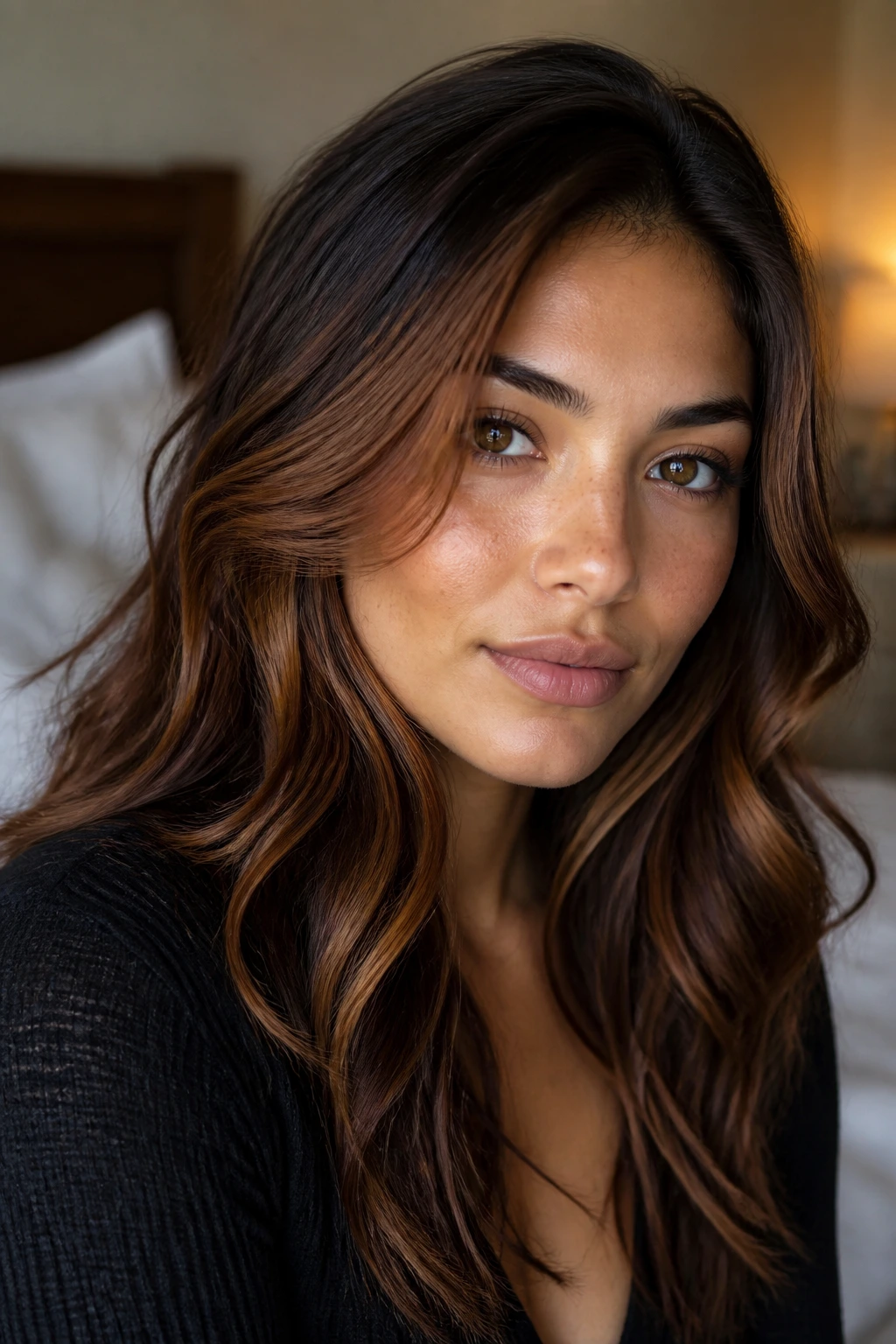
- Warmth without brass: Caramel placed at a level or two lighter than the base wakes up olive skin without pushing the hair into cheap-looking yellow.
- Red that stays earthy: Copper, auburn, and cinnamon echo the gold-green mix in olive undertones instead of fighting it.
- Depth keeps the color believable: A brunette root, shadow root, or lowlight band stops the highlights from reading stripey.
- Face-framing pieces do a lot of work: A lighter front section near the cheekbone gives the skin contrast fast, especially on layered cuts and lobs.
- The same palette can go soft or bold: Babylights, foilayage, chunky slices, and peekaboo panels all pull from the same color family, so you can dial the volume up or down.
1. Cinnamon Ribbon Balayage
Cinnamon ribbon balayage is the look I reach for when someone wants warmth without a loud makeover. The brunette base stays rich and grounded while thin ribbons of cinnamon and toasted caramel drift through the mid-lengths and ends. On olive skin, that red-brown mix keeps the face from looking flat, which is the problem with a lot of ash-heavy brunettes.
Why It Flatters Olive Undertones
The beauty of this look is the spacing. The ribbons are soft enough that they don’t cut the hair into obvious stripes, but warm enough that you can still see them in daylight. Ask for balayage that starts below the root shadow and gets denser around the face and around the outer curve of the hair.
A level 5 or 6 brunette base gives this the best payoff. On deeper brunettes, the cinnamon shows up as a whisper unless the hair is lifted a touch more. Loose waves make the ribbons look even more expensive. Straight hair still works, but the movement matters.
- Best base: medium brunette or dark chestnut
- Best finish: soft wave, not beachy crunch
- Best for: someone who wants warmth with a low-drama grow-out
2. Copper Money Piece on Chocolate Brown
This is the blunt instrument of the group, and I mean that in a good way. Keep the chocolate brown base rich, then place a copper money piece right at the front, usually from the temple to just past the cheekbone. That one move changes the whole face.
Olive skin usually handles copper better than pale skin does, because the undertone mix can stand up to the heat. The trick is to keep the copper clean and not too orange. If the stylist says “bright copper,” ask what that means in real terms. You want something between copper penny and cinnamon stick, not traffic-cone orange.
This style loves a center part. It also looks sharp with a bob or lob, because the front pieces sit where the eye lands first. If you wear glasses, even better. The frame and the money piece pull attention to the face in a way that feels deliberate.
3. Caramel Melt with Auburn Ends
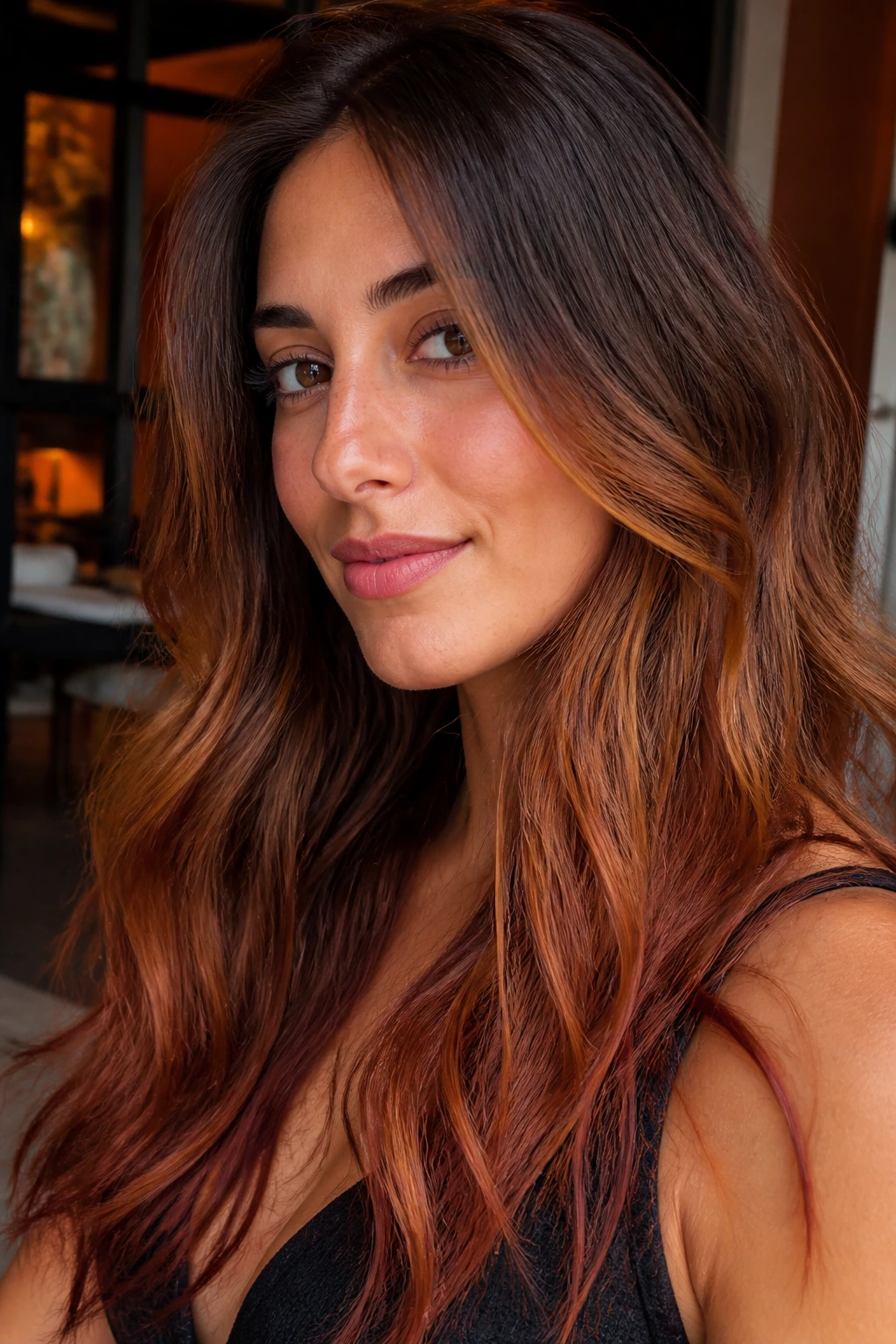
Why does this look so polished on olive skin? Because it moves slowly from dark to warm. The root stays brunette, the mid-lengths pick up caramel, and the ends lean auburn, almost like the hair was warmed from the inside out.
That gradient matters. Olive undertones can look muddy when the whole head is blasted with one flat tone, but a melt keeps the eye moving. Ask for a soft transition rather than a harsh ombré line. The auburn at the ends gives the hair a little fire without making the face fight the color.
Best on:
- medium to long layers
- wavy hair that shows the shift from root to tip
- people who want red, but not a full redhead moment
The ends do need care. Red tones fade faster than caramel, so this look likes gloss refreshes and a color-safe shampoo that doesn’t strip every trace of warmth out in two washes.
4. Cherry Cola Dimension
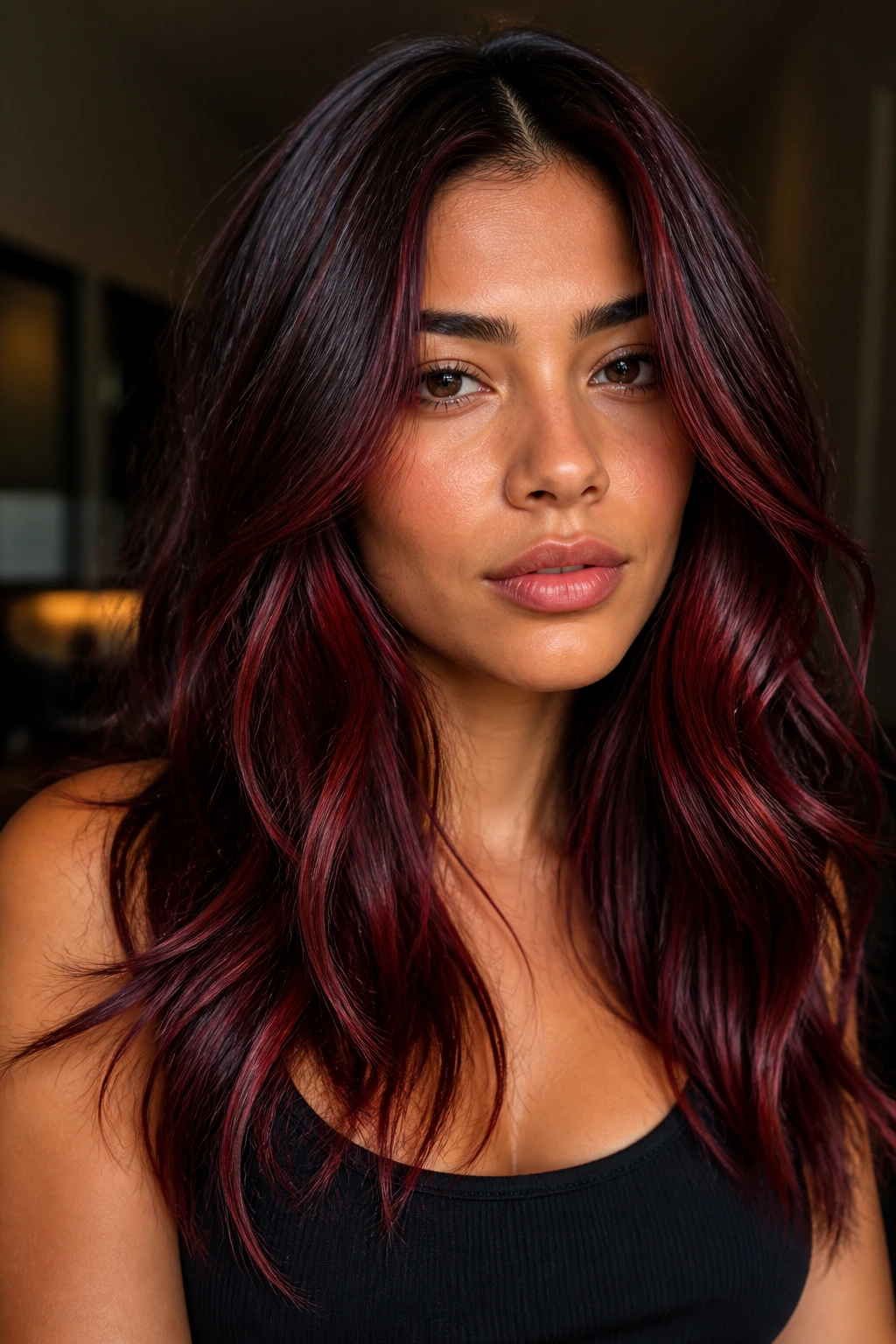
Cherry cola dimension is darker and moodier than the caramel-heavy looks, and that’s the point. You get a brunette base, then deep cherry and cola-red panels woven through the mid-lengths. In some light, it reads almost burgundy. In sun, the red wakes up.
This is a good pick if your olive skin leans neutral or cool-olive rather than gold-olive. The red-violet edge keeps the whole thing from tipping too orange. It also works well on dense hair, where deeper tones can get swallowed if they’re too light.
A lot of people think red has to be bright to show. Not here. The richness is the whole appeal. Let the shine do the talking, and keep the highlights placed in larger curved sections rather than tiny bits scattered everywhere.
5. Toasted Almond Babylights
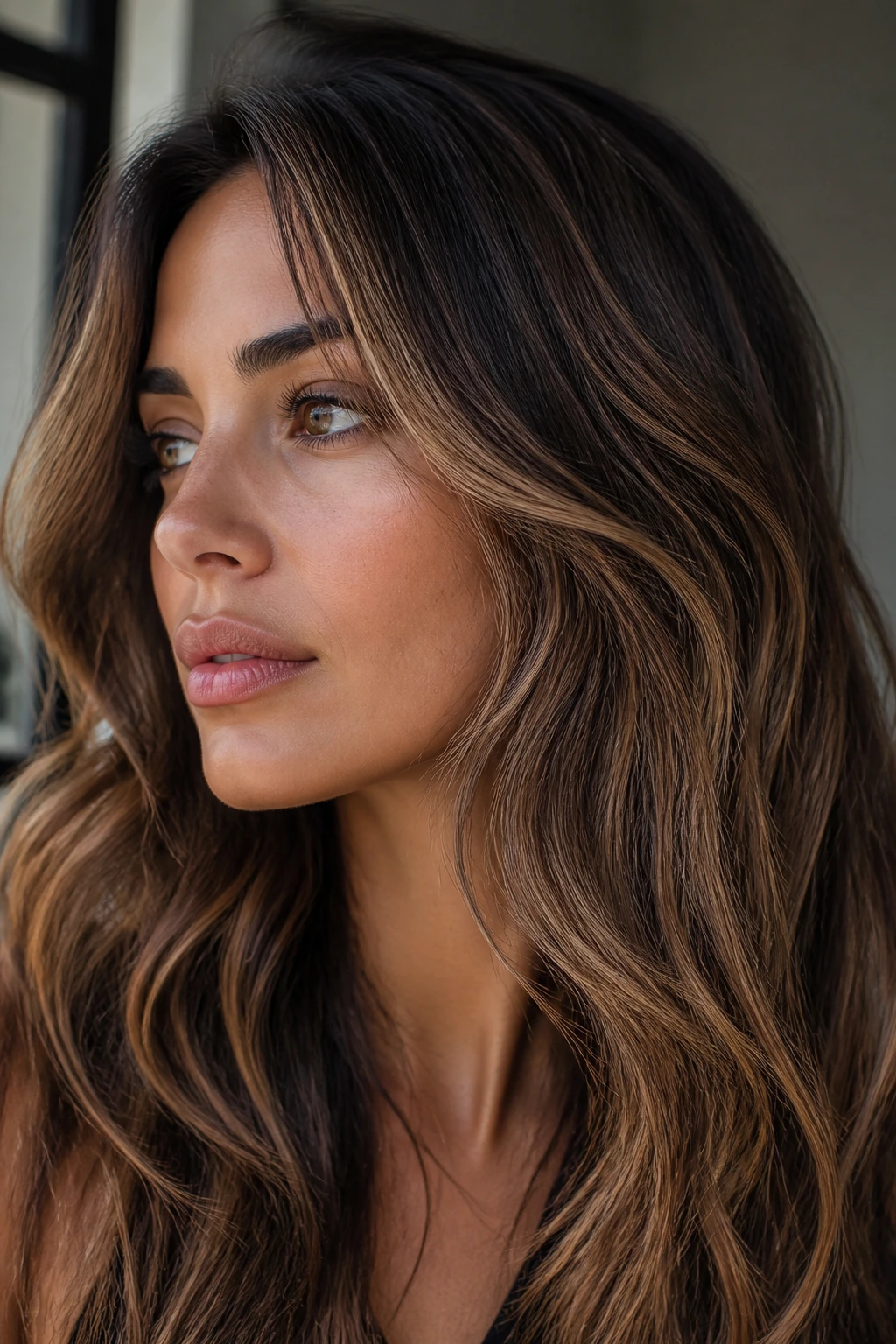
Toasted almond babylights are for the person who wants the hair to look expensive without looking obvious. These are ultra-fine highlights, usually no wider than a thread or two, placed close together so the brunette base seems to glow rather than stripe.
On olive skin, this kind of subtle lift is gold. Or caramel, really. The fine placement catches light around the face and crown, which is where dullness tends to show first. If your skin gets overwhelmed by chunky bright pieces, babylights are the quiet fix.
This style is a good fit for office dress codes, fine hair, and anyone who dislikes obvious maintenance. The grow-out is soft, the root line stays believable, and the hair can be glossed back into shape without a big correction.
6. Mahogany Lowlights with Copper Veils
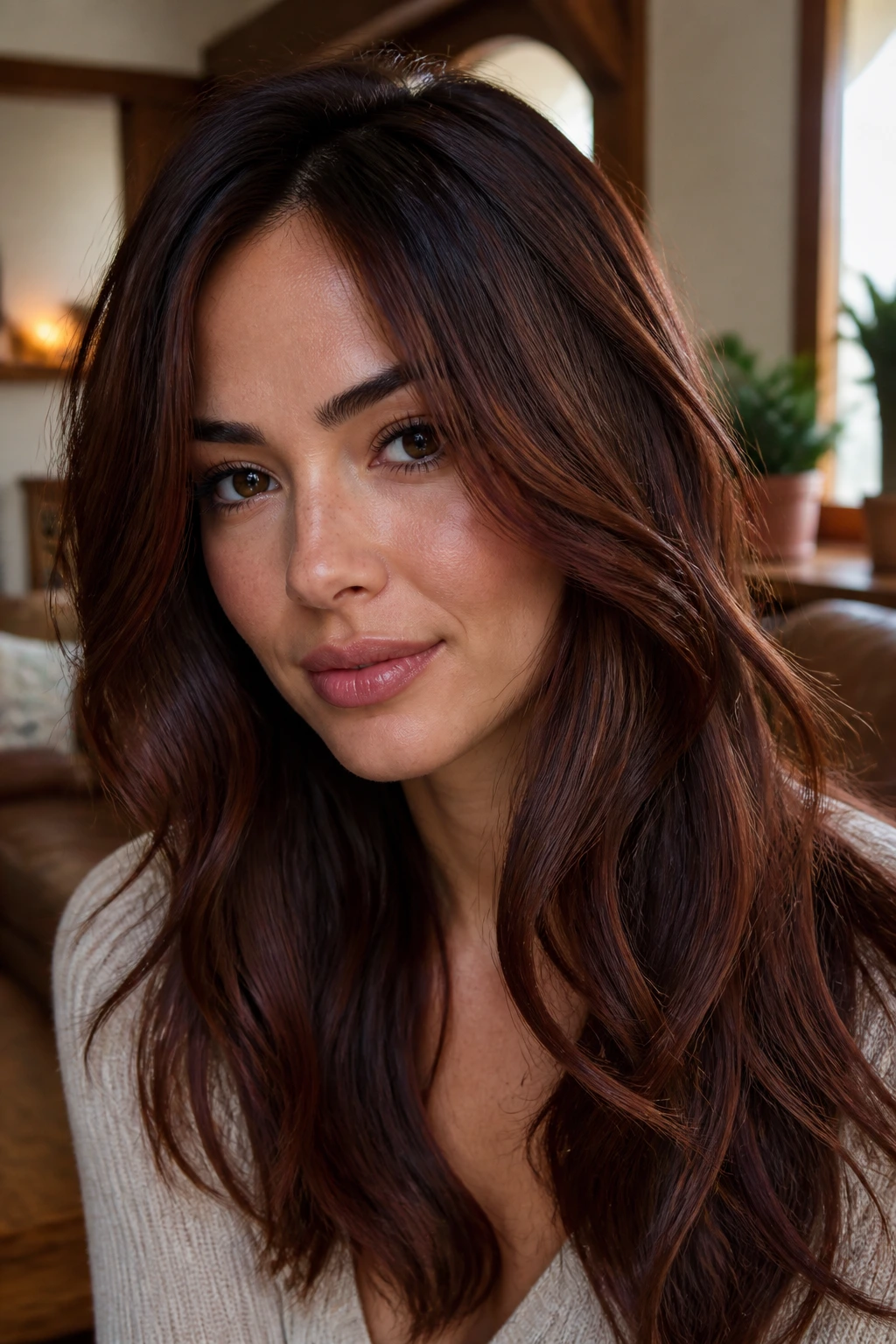
Lowlights deserve more credit than they get. Mahogany lowlights add depth under the surface, while a few copper veils on top keep the brunette from going flat. That combination is especially kind to olive skin that looks washed out by too much lightness.
This is the look to choose if your hair has already been highlighted too far and needs a reset. The darker pieces rebuild richness, and the copper veils give back movement. It’s also a smart move for fine hair, which can start to look wispy when every strand is made lighter.
Unlike all-over caramel, this approach keeps the color grounded. The hair looks fuller near the ends, and the face still gets a little warmth. It’s one of those colors that seems simple until you see the difference in the mirror.
7. Burnt Sienna Face Frame
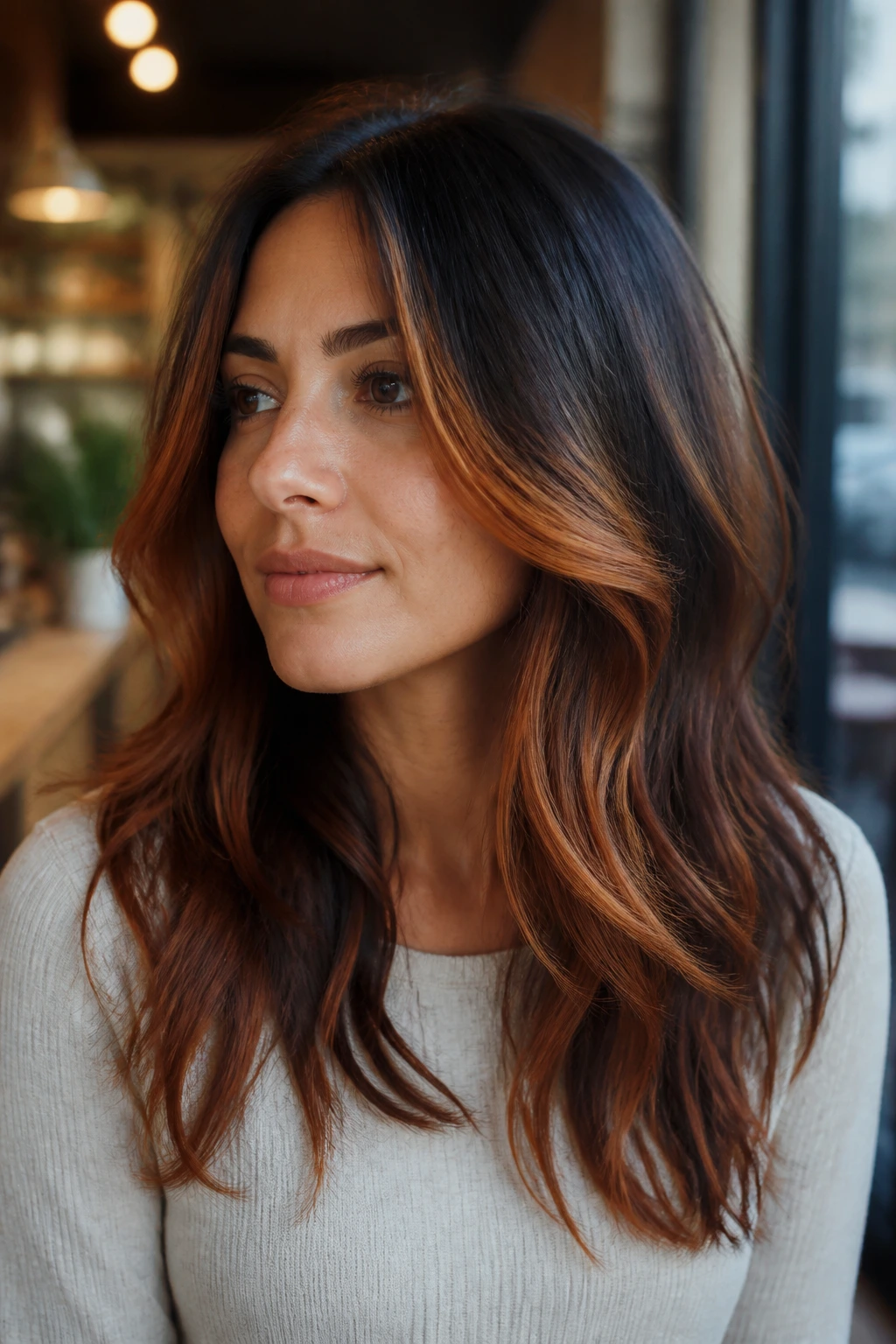
Burnt sienna face framing is all about the front. The stylist places the warmest pieces around the temple, cheekbone, and jawline, then leaves the rest of the brunette base deeper and calmer. The effect is immediate.
Ask for this if you want:
- a strong brightening effect without a full-head change
- warmth that reads earthy, not orange
- a style that plays well with curtain bangs or long layers
Olive skin loves this when the sienna sits in that red-brown lane instead of going pure copper. The face frame should feel like a soft spotlight, not two neon strips. If your hair is very dark, the front pieces may need a little more lift so the color doesn’t disappear indoors.
A side part softens the look. A center part makes it bolder. Both work.
8. Honeyed Bronze Foilayage
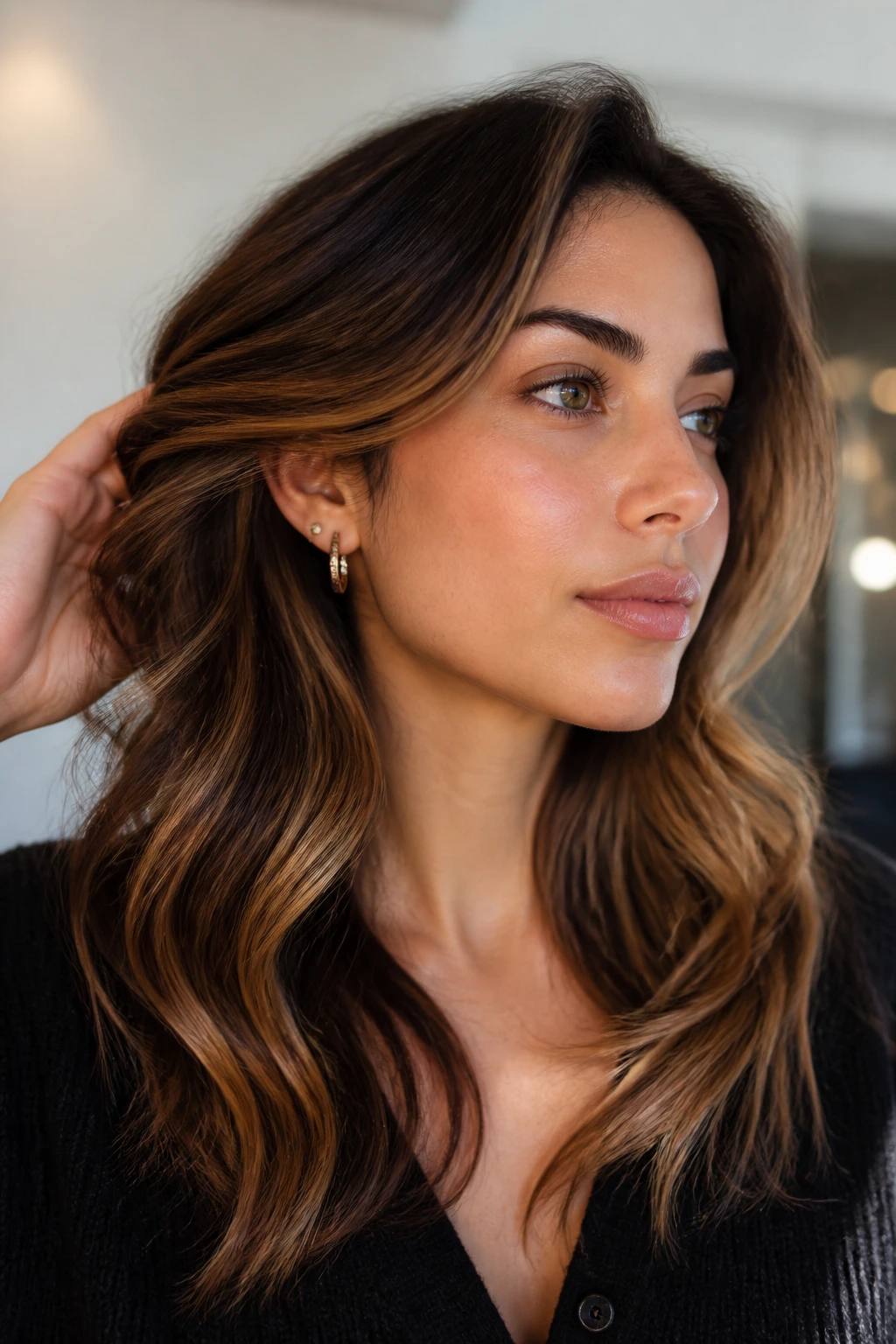
Foilayage gives you a cleaner, brighter lift than open-air balayage, and that matters if your base brown is stubborn. Honeyed bronze is a good target shade here: warm, reflective, and not too yellow. On olive skin, bronze tends to look more polished than beige-blond.
This look sits in a sweet zone for people who want dimension but don’t want obvious red. The bronze carries enough warmth to flatter the skin, while the foil placement gives a little extra brightness near the top layer. That means the color shows up even when the hair is straight and tucked behind the ears.
It’s also a nice choice if you wear your hair in ponytails or half-up styles. The contrast peeks out without screaming for attention. That restraint is what makes it work.
9. Redwood Peekaboo Panels
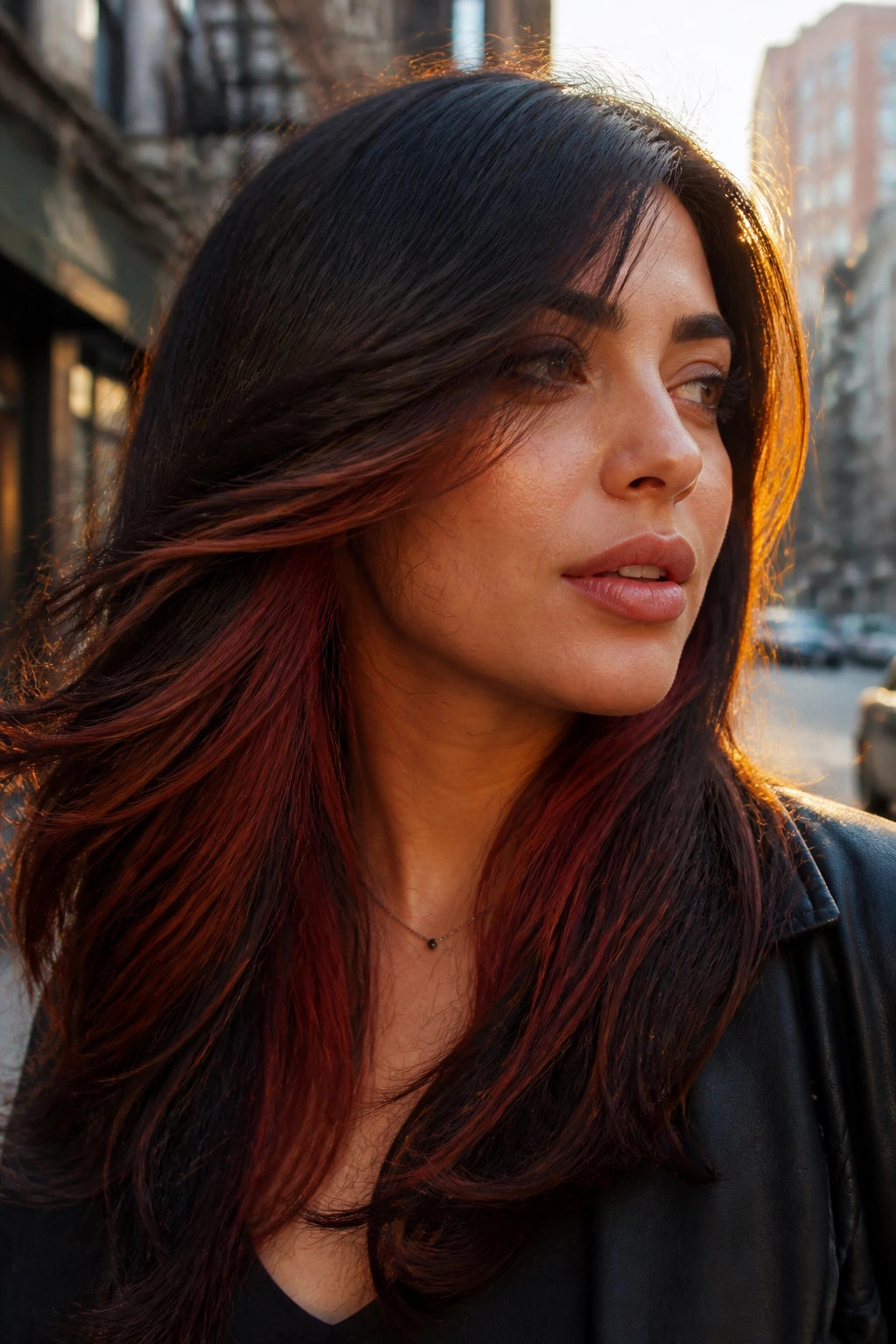
Want something bolder that still behaves at work? Peekaboo panels are the answer. Redwood panels hide under the top layer of brunette hair and only flash when you move, flip, or tuck the hair behind the ear.
The red reads darker than copper and warmer than burgundy. On olive skin, that deeper red can be surprisingly flattering because it doesn’t sit too high on the color wheel. You get the richness without the cartoon effect. It feels moody, but not goth. Important difference.
This is a nice option for layered hair, because the movement reveals the color in bits and pieces. If you have a blunt cut, the panels are still good, but the reveal becomes more controlled. Either way, you get that little jolt of color every time the hair shifts.
10. Maple Glaze Balayage Lob
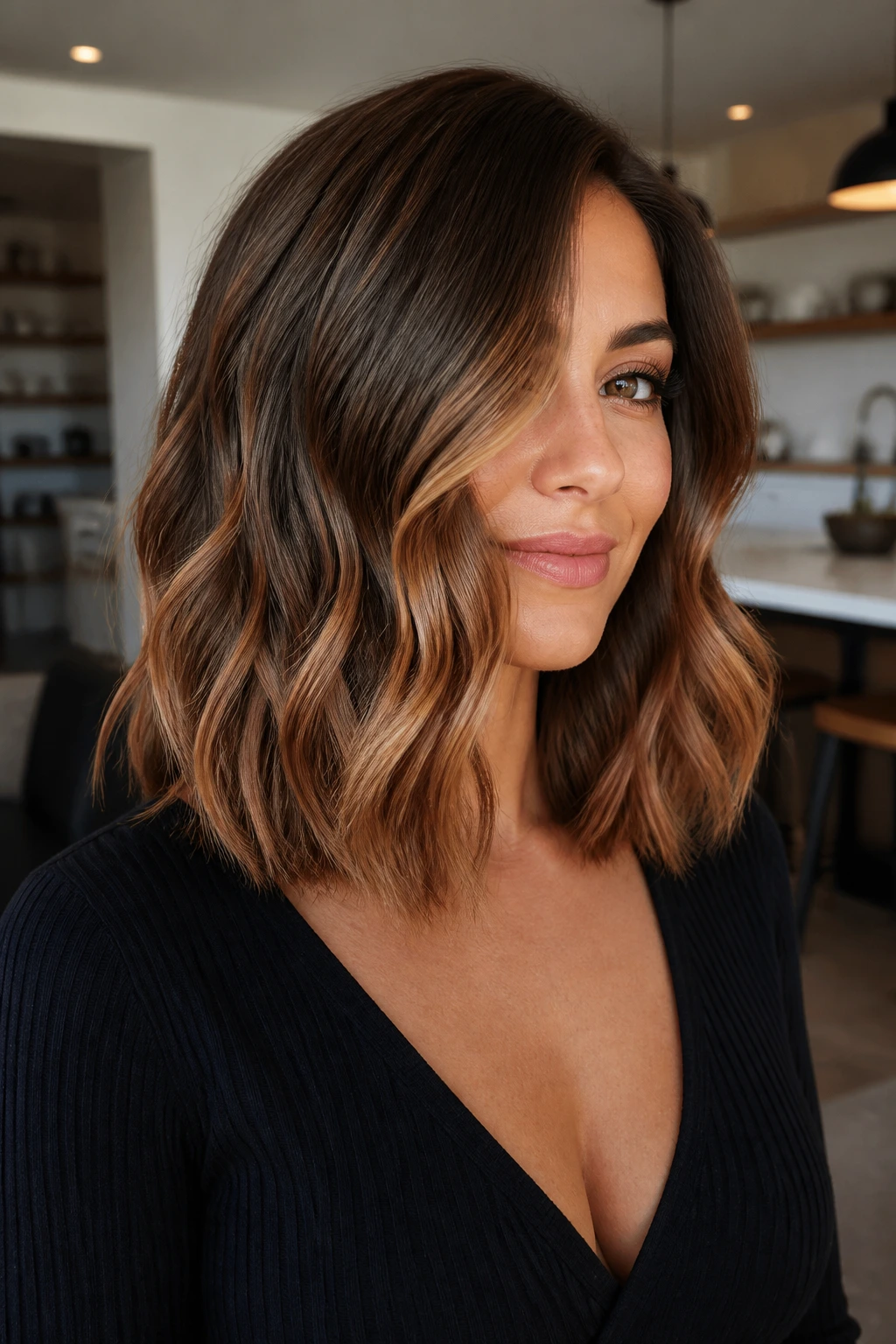
A collarbone-length lob and maple glaze are a smart pair. The cut keeps the ends blunt enough to look full, and the color adds a glossy warmth that works especially well on olive skin. Maple sits somewhere between caramel and light auburn, which is a very useful place to be.
I like this look when the base is a clean medium brunette and the highlights are painted through the outer layer only. That keeps the result modern instead of frosted. A wave through the middle makes the glaze show up in slices. A flat iron bend at the ends does the same job if you like a neater finish.
This one wears well with a side part or a deep tuck behind one ear. The neckline stays visible, the color does the rest.
11. Spiced Chestnut Contour Highlights
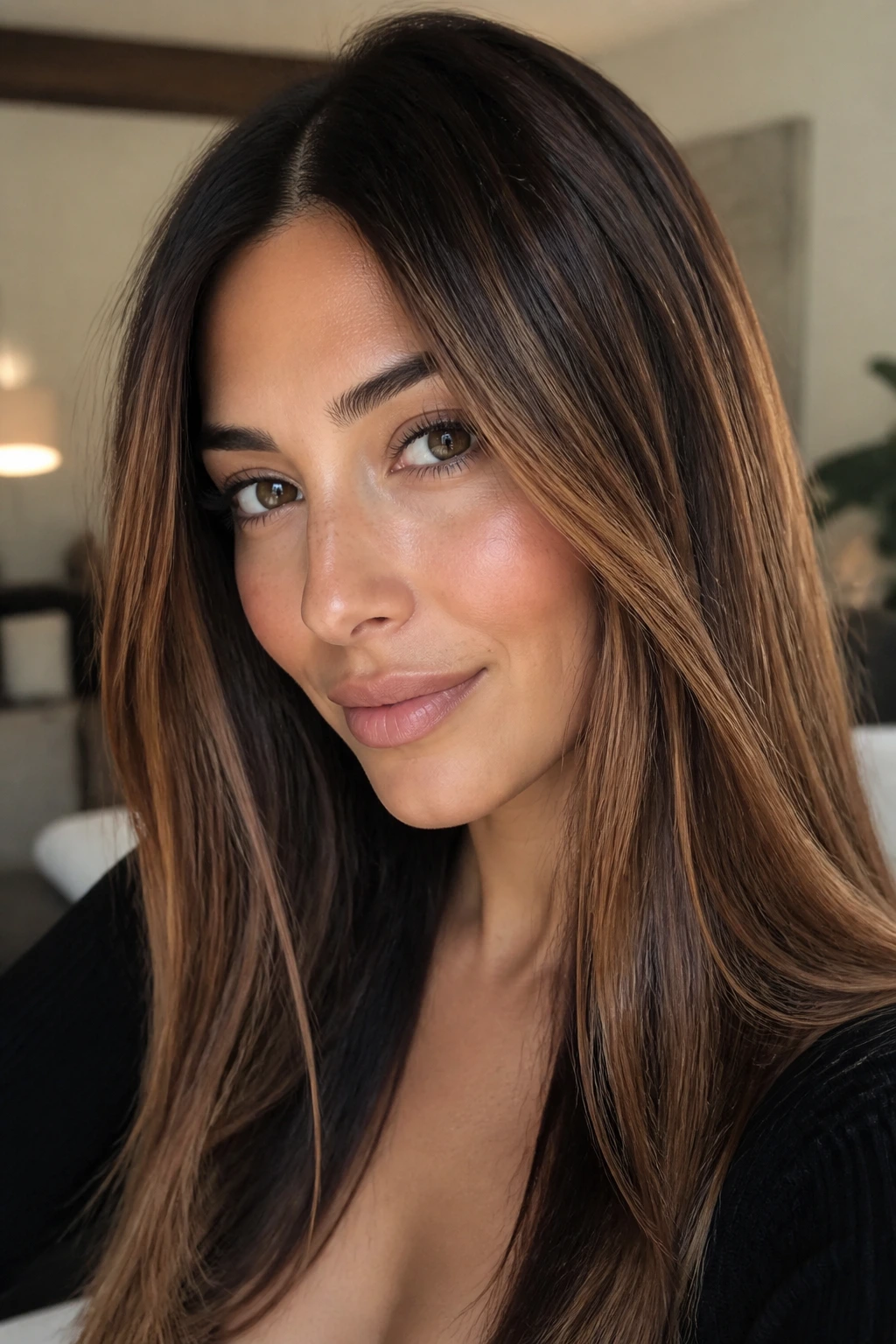
Spiced chestnut contour highlights are the cleanest way to fake cheekbones with hair color. Darker chestnut pieces sit under the surface, while warmer chestnut-caramel strokes frame the face and taper down the sides. The whole cut gets a shape without needing a lot of brightness.
Olive skin gets along with this because the tones are neither too pale nor too red. They sit in a warm brown lane that gives the skin contrast instead of competition. If you wear your hair straight a lot, this is especially good, because the contour effect shows up even when there isn’t much curl or bend.
It’s a subtle look, but not a boring one. That’s a rare combination.
12. Terracotta Ribbon Waves
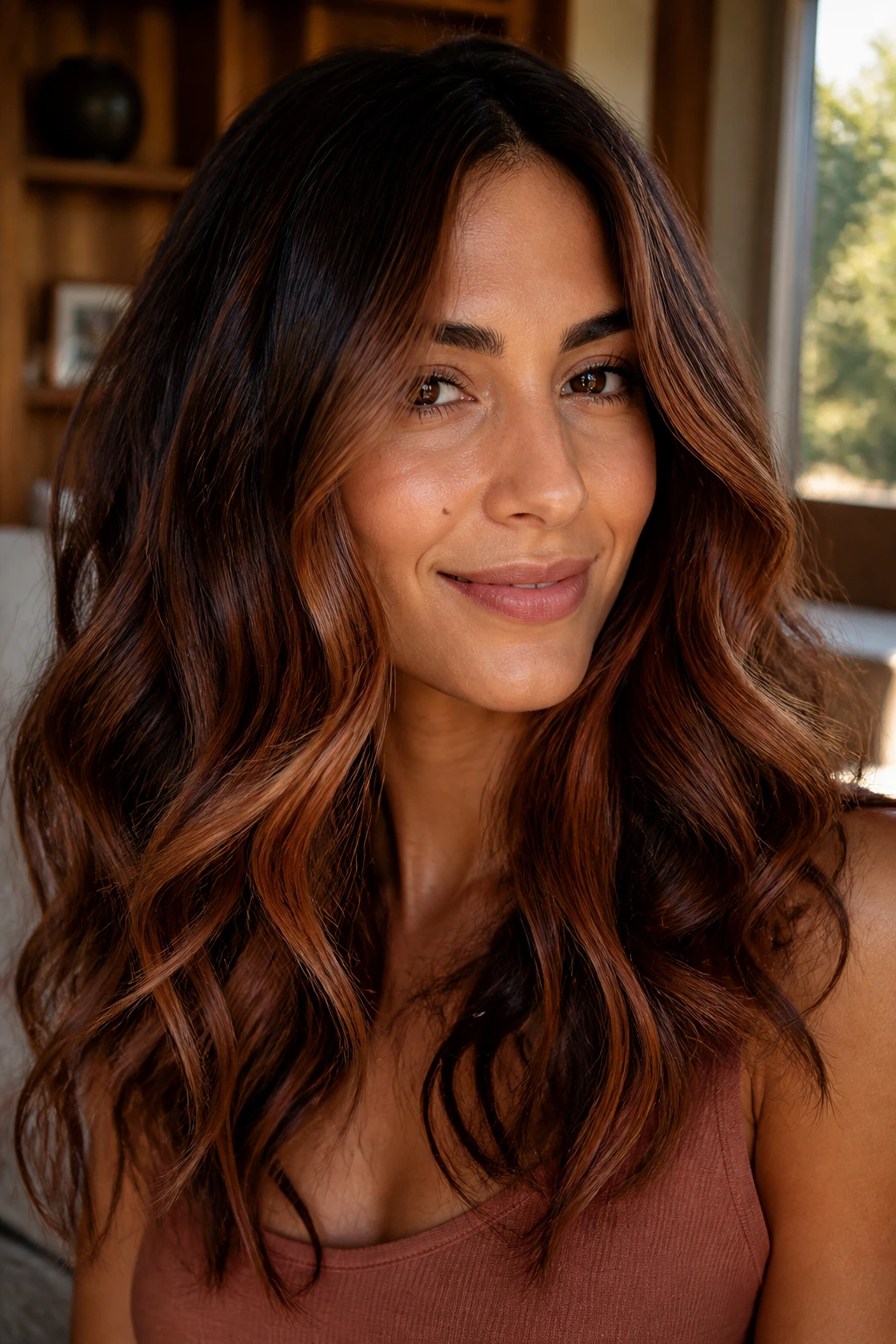
Terracotta is a better word than “red” for a lot of olive-skin brunettes. It sounds calmer, and it behaves that way too. Terracotta ribbon waves thread a muted rust tone through the brunette base, so the color reads earthy rather than loud.
This is a strong option if you want warmth but don’t want to commit to copper. The ribbons are usually placed a little farther apart than babylights, which keeps each piece visible. On olive skin, that muted red-brown can look especially polished in low light, where brighter red sometimes goes flat.
Loose, brushed-out waves suit this best. Tight curls can make the color feel busier than intended.
13. Espresso and Caramel Slice Highlights
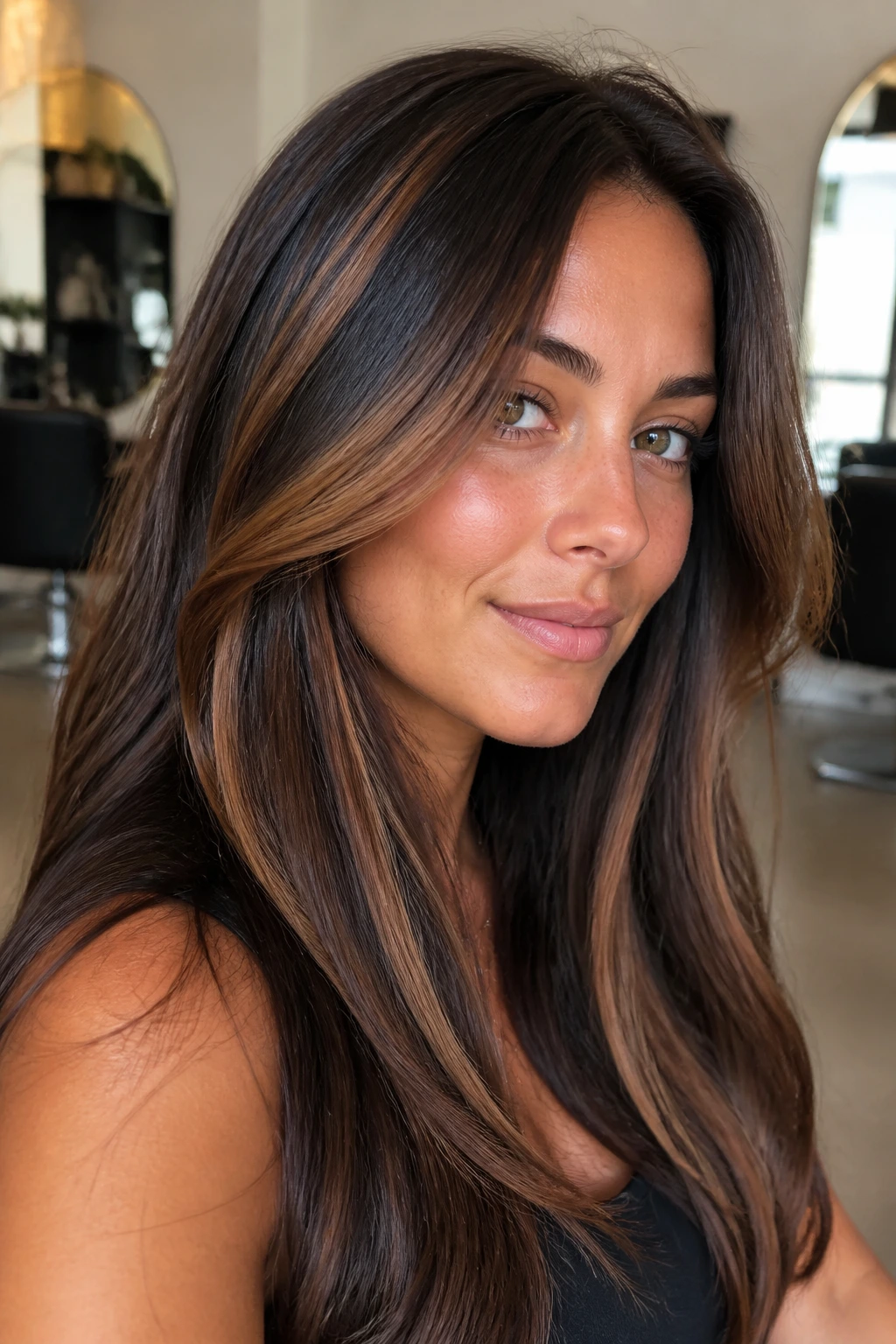
Unlike tiny babylights, slice highlights give you visible panels of color. On an espresso brunette base, caramel slices create a clean contrast that still feels grown-up. If your olive skin likes warmth but not fuzziness, this is a strong move.
What makes it different
The panels are wider and more deliberate. You see the color shift right away, which is great on thick hair or long layers where delicate highlight work can disappear. The caramel should be warm, but not pale. Think toasted sugar, not bleach blond.
Best way to wear it
Keep the styling smooth enough to let the slices show. A blowout with a large round brush or a loose iron bend does the job. If the hair is too tousled, the effect gets muddy and the contrast disappears into the texture.
14. Auburn Money Piece with Soft Ends
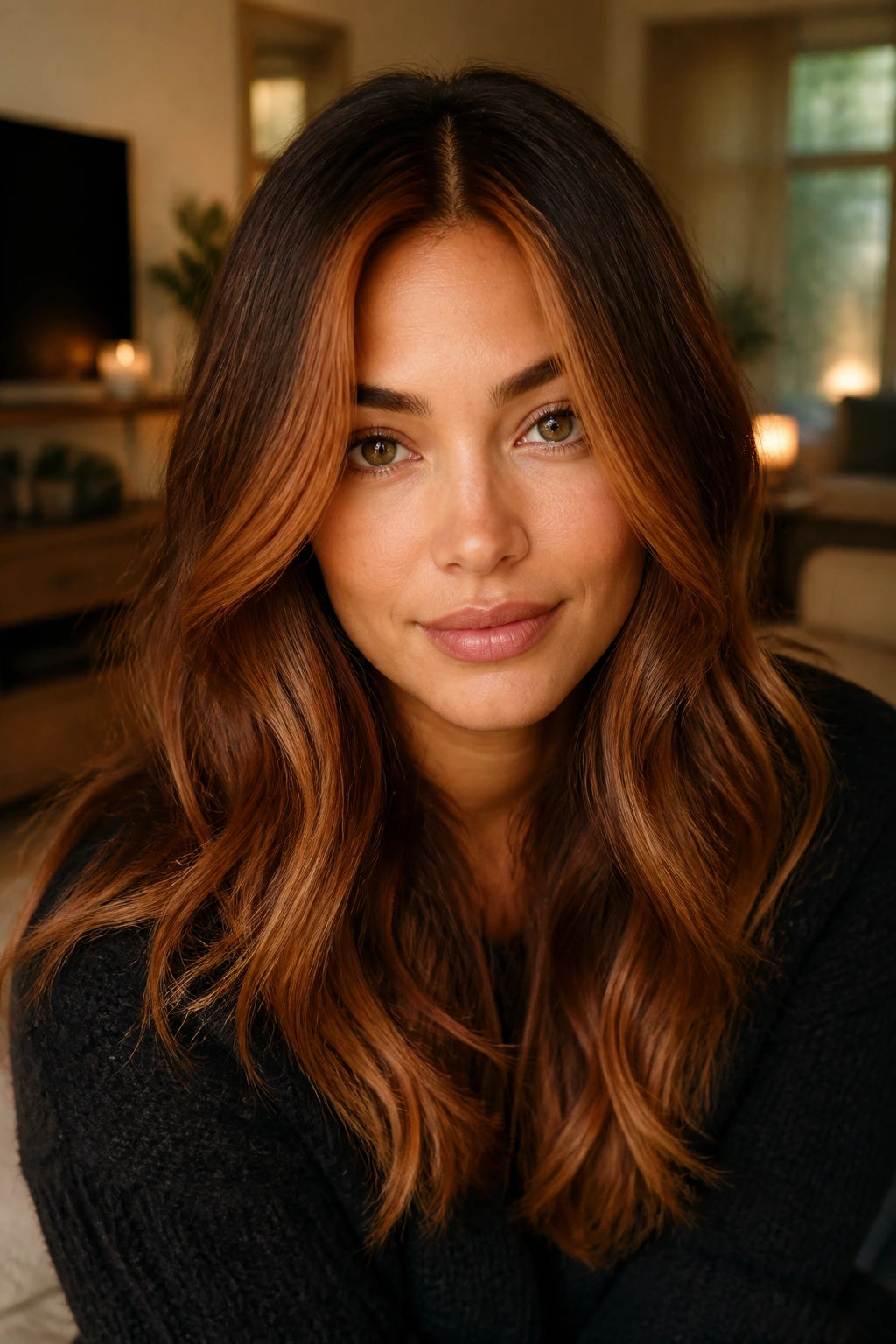
This is the cousin of the copper money piece, but with more depth. Auburn at the front gives the face warmth, while the ends stay softer and more caramel-brown. The result is brighter near the skin and quieter at the bottom.
Olive skin can wear auburn beautifully because the color has both warmth and a little smoke. It doesn’t need to be loud. In fact, too much brightness can take away the charm. A center part makes the money piece feel more fashion-forward. A side part makes it gentler.
The soft ends matter. They stop the style from turning into a block of red at the top and brown below. That balance keeps the whole head looking intentional.
15. Cocoa Brunette with Rosewood Streaks
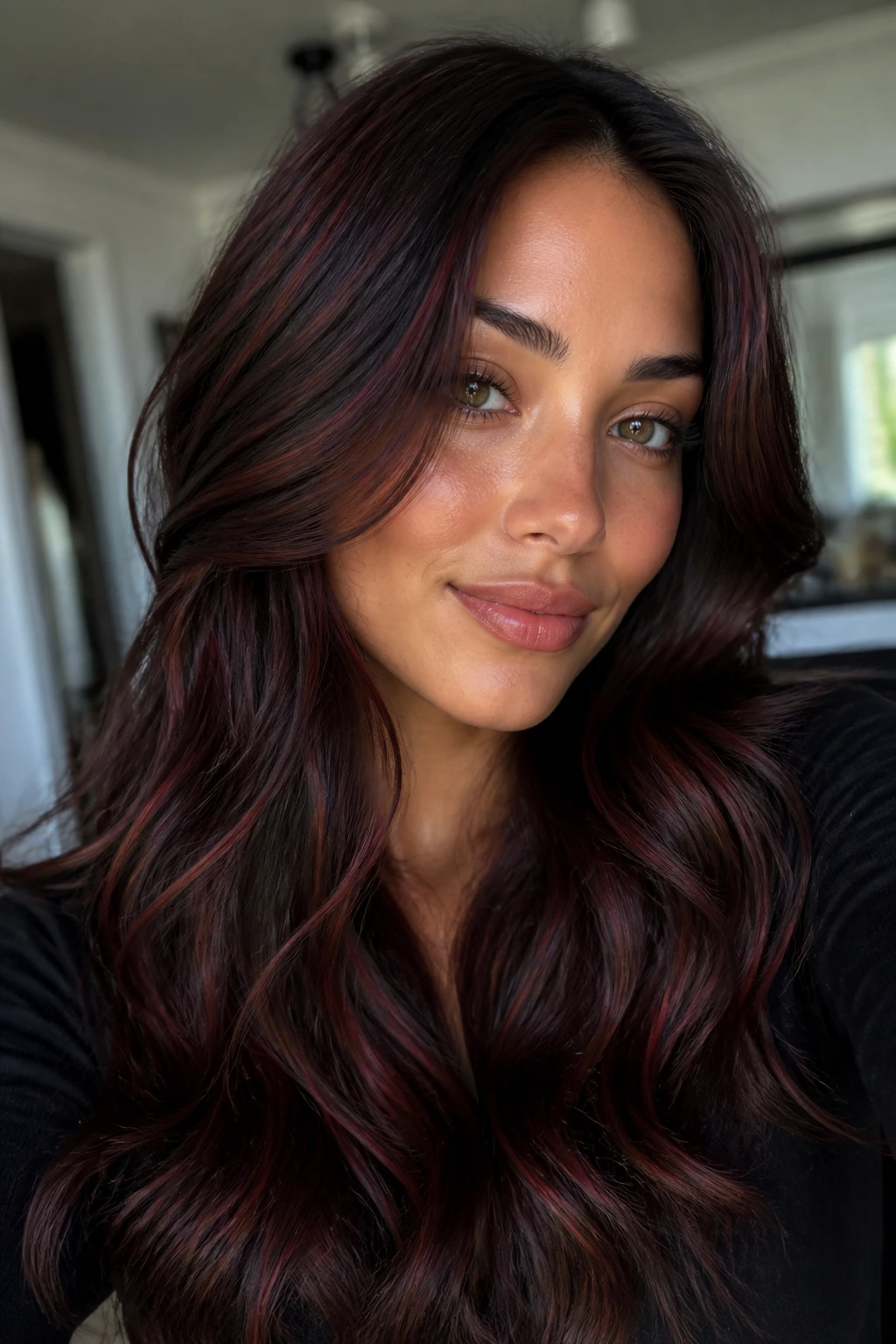
Rosewood is one of those shades that makes people squint a little, then nod. It’s red, but not fiery. Brown, but not muddy. On cocoa brunette hair, rosewood streaks give a soft flush of color that’s especially flattering on cool-leaning olive skin.
Why choose this over brighter red?
Because it lasts longer in the eye even when it fades a bit. The tone is muted enough that the grow-out stays elegant, and the contrast is gentle enough for people who hate obvious highlight lines. If your skin gets overwhelmed by copper, rosewood is the calmer answer.
This is a nice winter-to-anytime color, though I’m avoiding the calendar game. It simply reads rich when the light is lower and the hair needs depth.
16. Golden Caramel Halo
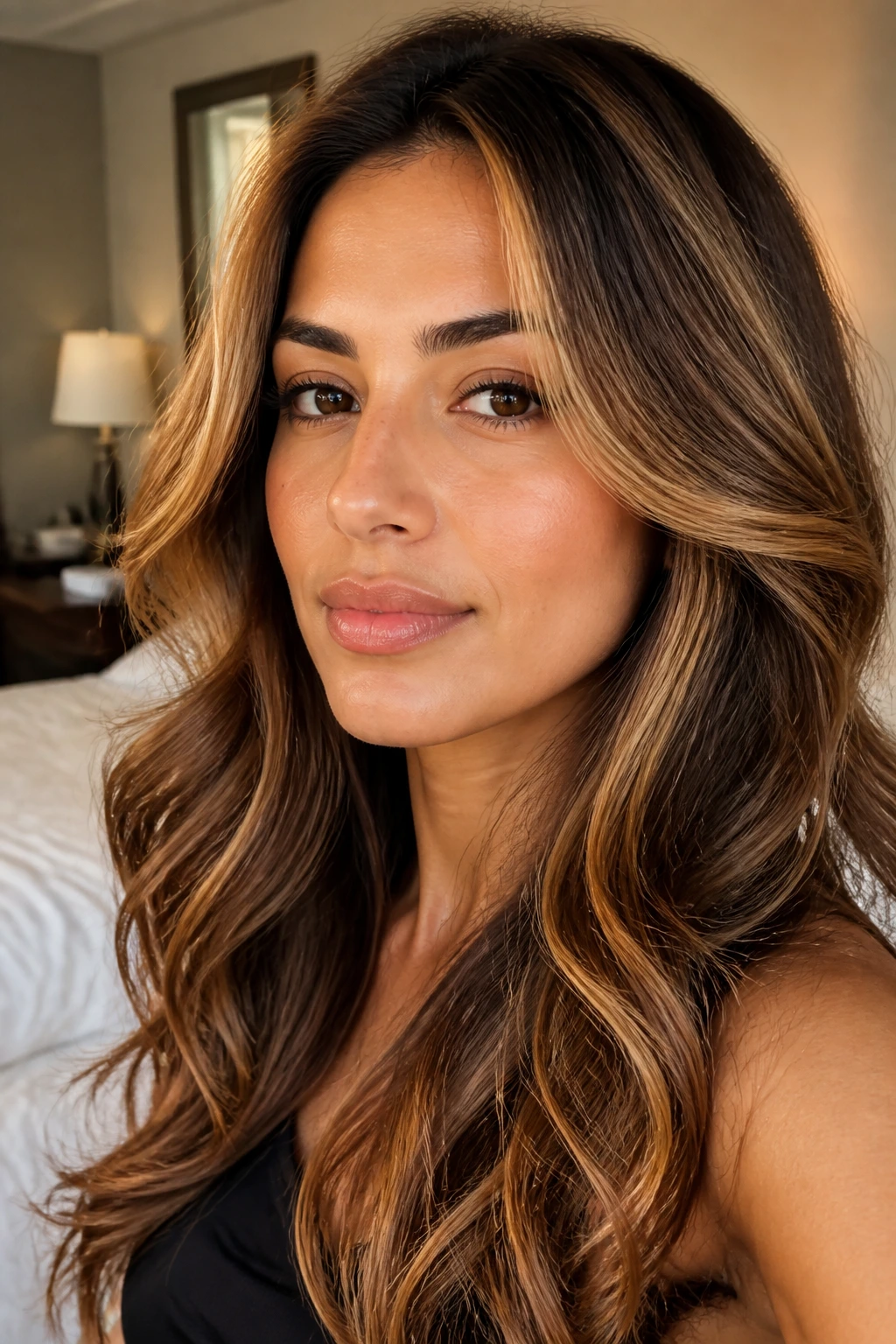
A golden caramel halo is what happens when the highlights are kept fine and spread around the crown and outer layers. The color catches on top like a ring of warmth, which is a lovely trick for olive skin that looks best with a bit of glow near the face.
This works particularly well if you already have a brunette base with some natural warmth. The caramel doesn’t need to be pale. It needs to be glossy. If the hair is too light, the halo loses its sense of depth and starts to feel disconnected from the skin.
Think of this one as brightness with a soft focus. It’s the sort of look that reads polished from a distance and textured up close.
17. Mulled Cherry Lowlights
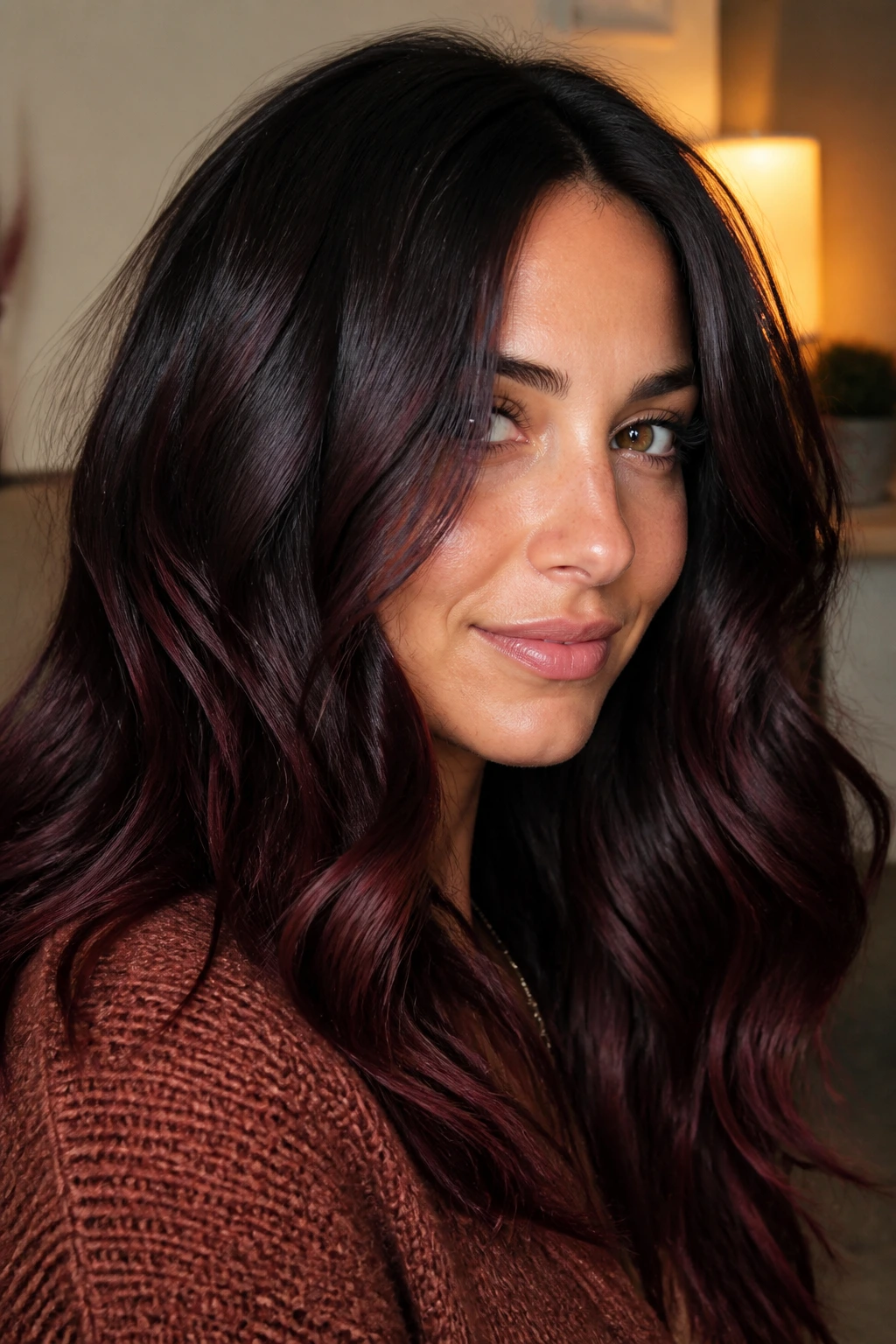
Lowlights can matter more than highlights when the hair has gone too light. Mulled cherry lowlights put the dark red back into brunette hair, and olive skin often looks better with that richer backdrop than with a brightened one.
The shade sits between merlot and cinnamon, which means it warms the complexion without shouting. It’s a smart move for thick hair, especially if the ends have become porous or faded from old color. The darker pieces make the whole cut feel denser and more expensive.
If your hair is already very warm, this can keep it from drifting into copper overload. If it’s cool, the cherry brings life back without going all the way to vivid red.
18. Honey Copper Curls
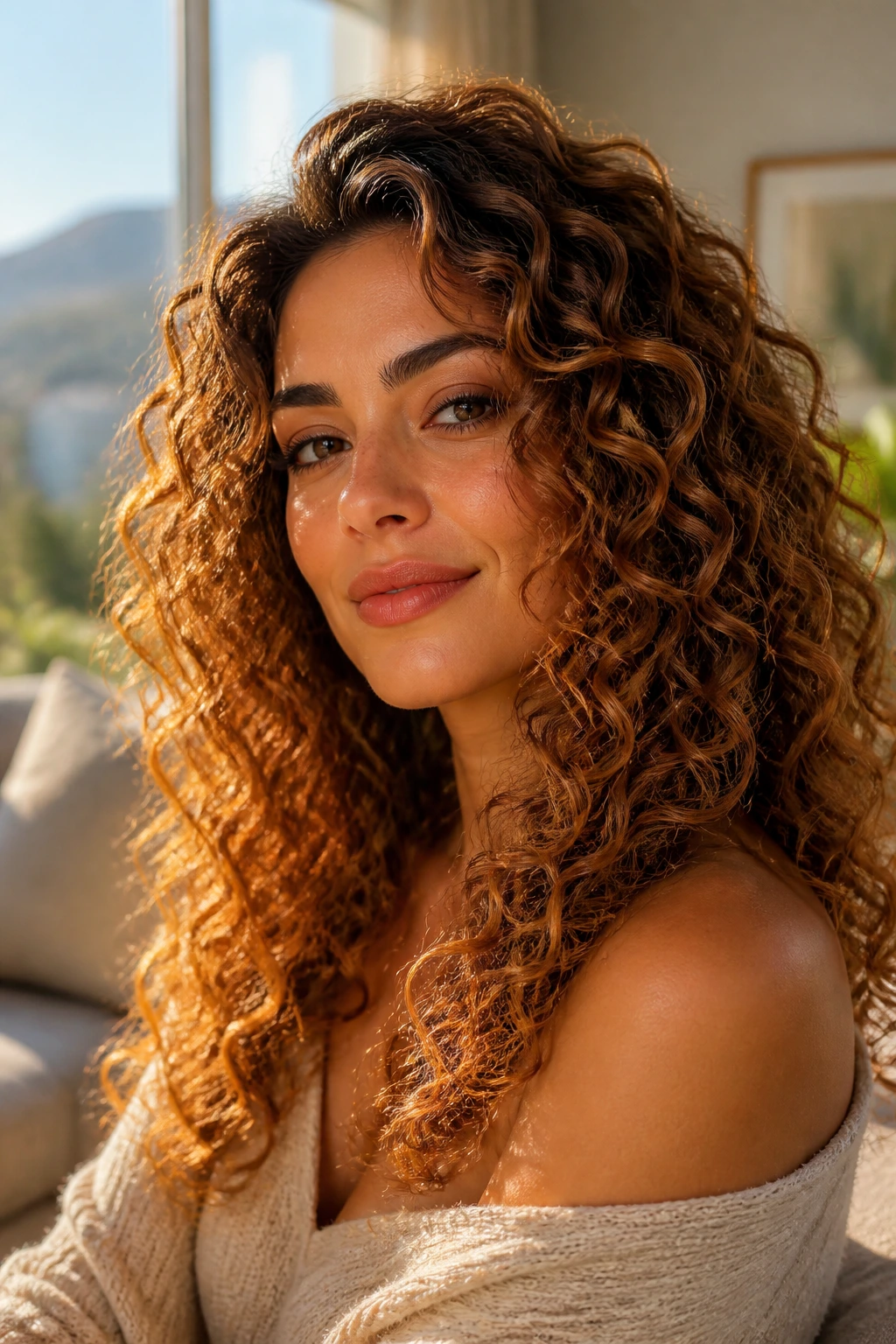
Curly hair needs a different hand. Chunky highlights can look stripy on curls, while ribboned placement moves with the coil pattern. Honey copper curls solve that by putting warm copper pieces where the curls naturally bend and catch light.
Olive skin usually loves this because the warmth is softened by texture. The curl pattern breaks up any hard lines. That means the copper reads as shimmer, not streaks. A diffuser on low heat helps preserve the shape, and a curl cream with enough slip keeps the highlights from looking fuzzy.
This is one of the few looks where a little frizz can be useful. Not a lot. Just enough to keep the dimension from looking painted on.
19. Tawny Brunette Microlights
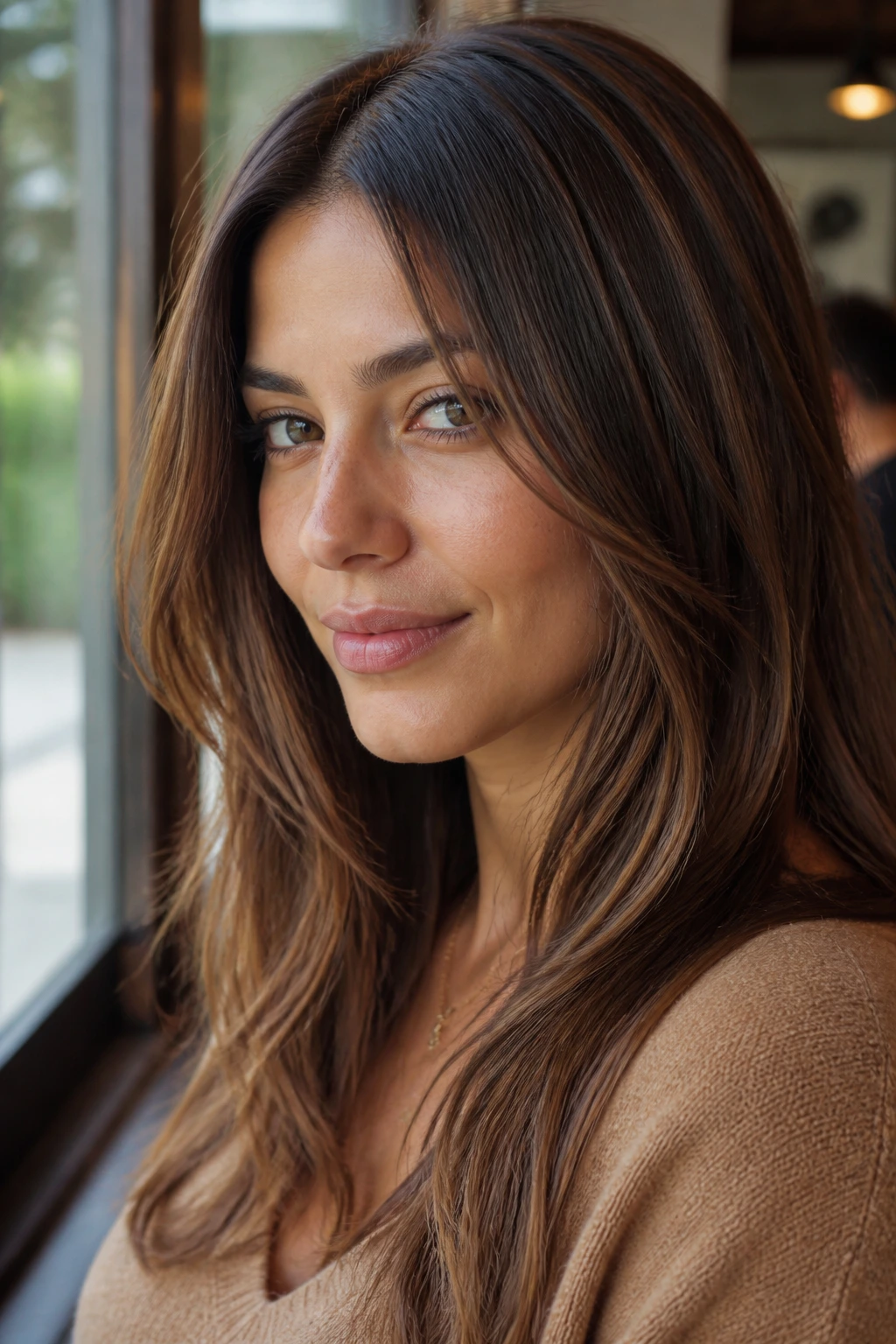
Microlights are so fine they almost disappear until the light hits them. Tawny brunette microlights add a soft warm haze across the hair, which is perfect if you like your color to be felt more than noticed.
The science behind the look
Tiny sections create a blended effect because your eye mixes the tones together. On olive skin, that matters. The shade never sits too far away from the base, so the face doesn’t get pushed into a weird color contrast. Tawny is the right sort of warmth here: brown, beige, and a hint of red in one place.
This is the option for someone who wants a long runway between appointments. The grow-out is smooth, the upkeep is lighter, and the result still looks thought-out.
20. Brick Red Balayage Tips
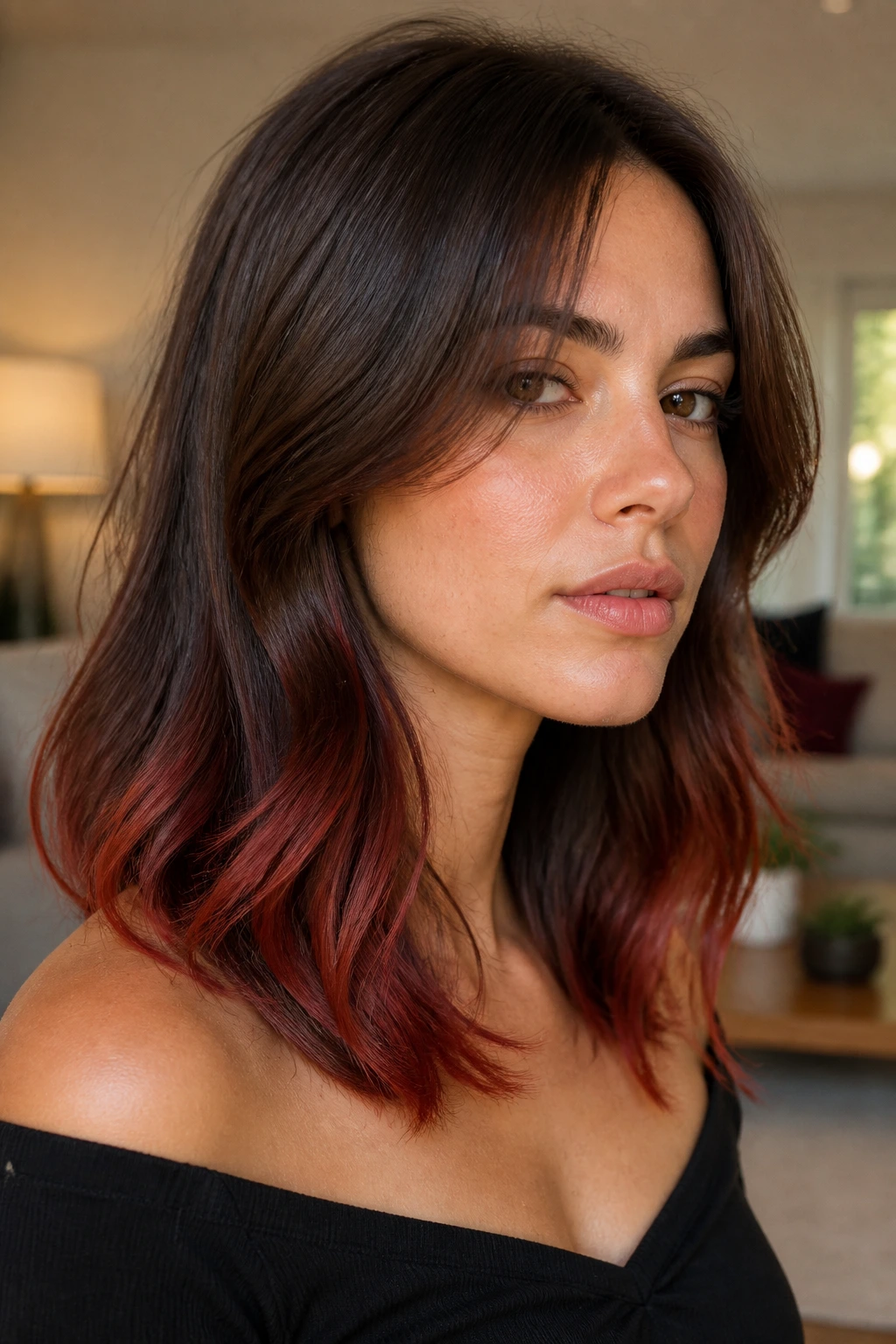
Brick red at the ends gives the hair a grounded, earthy edge. The root area stays brunette, the mid-lengths stay dark, and the tips carry the color. That means you get movement without having to commit to bright highlights around the face.
On olive skin, brick red usually behaves better than fire red because it carries brown in the mix. The end color should look like baked clay or deep paprika, not neon. It’s especially good on layered hair, because the tips show from underneath and around the shoulders.
This look can be a little dramatic in motion. That’s the whole pleasure of it. Still, it wears better when the base is kept calm.
21. Burnished Mocha Ombre
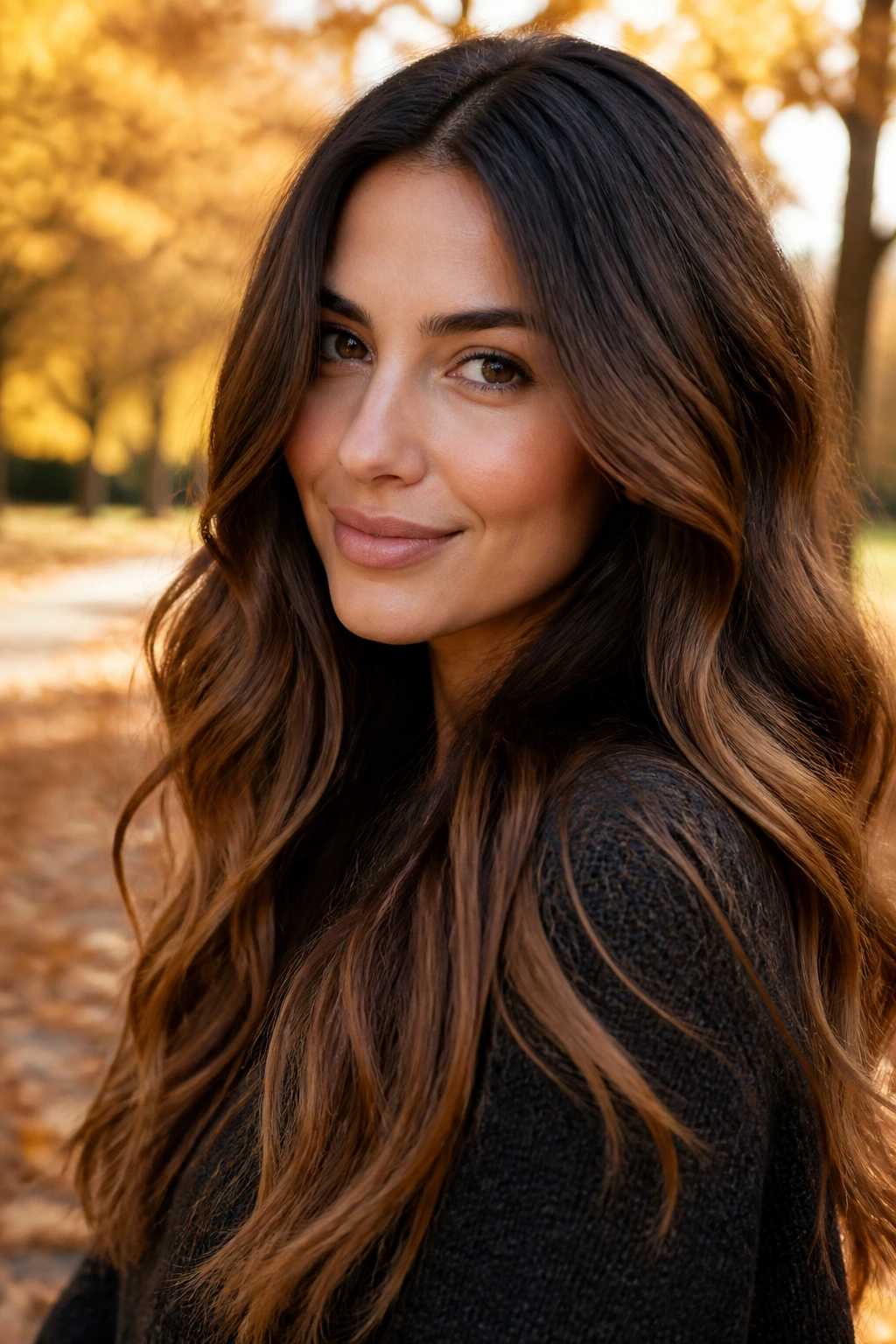
Why choose an ombre instead of all-over highlights? Because some hair needs a slower transition. Burnished mocha ombre keeps the roots and mid-lengths deep, then slides into caramel-red ends that are warm, not bright.
This works beautifully on longer hair, where the gradient has room to breathe. Olive skin benefits from the depth at the top and the warmth at the bottom. The face doesn’t get overloaded, and the ends keep the style from reading too heavy.
If you want less upkeep, this is one of the safest bets in the bunch. The root line is part of the design, so you’re not fighting your own grow-out every few weeks.
22. Gingered Caramel Curtain Bangs
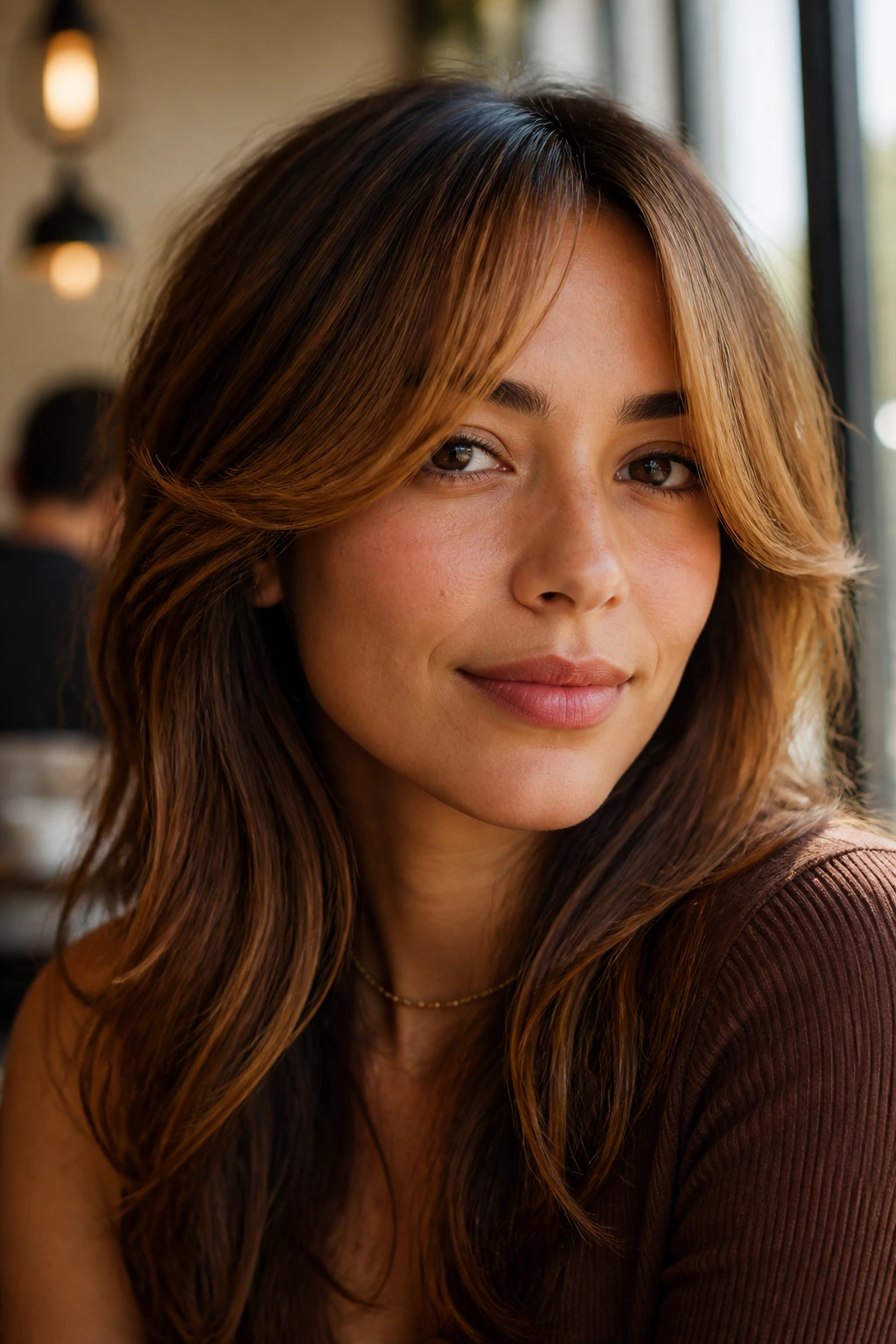
Curtain bangs can carry a lot of color without taking over the whole head. Add a gingered caramel tone through the fringe and the front layers, and the face gets a lift right where the skin needs it most. Olive undertones tend to like that warm frame.
Best parts of this look
- the eyes look brighter because the warmth sits close to them
- the rest of the brunette stays calm, so the fringe feels special
- the style grows out softly, even if you only trim the bangs every few weeks
This is a good option if you want a color change you can actually see when you tie your hair back. The bangs do the talking. The rest of the hair can stay more restrained.
23. Rusted Brunette Slices
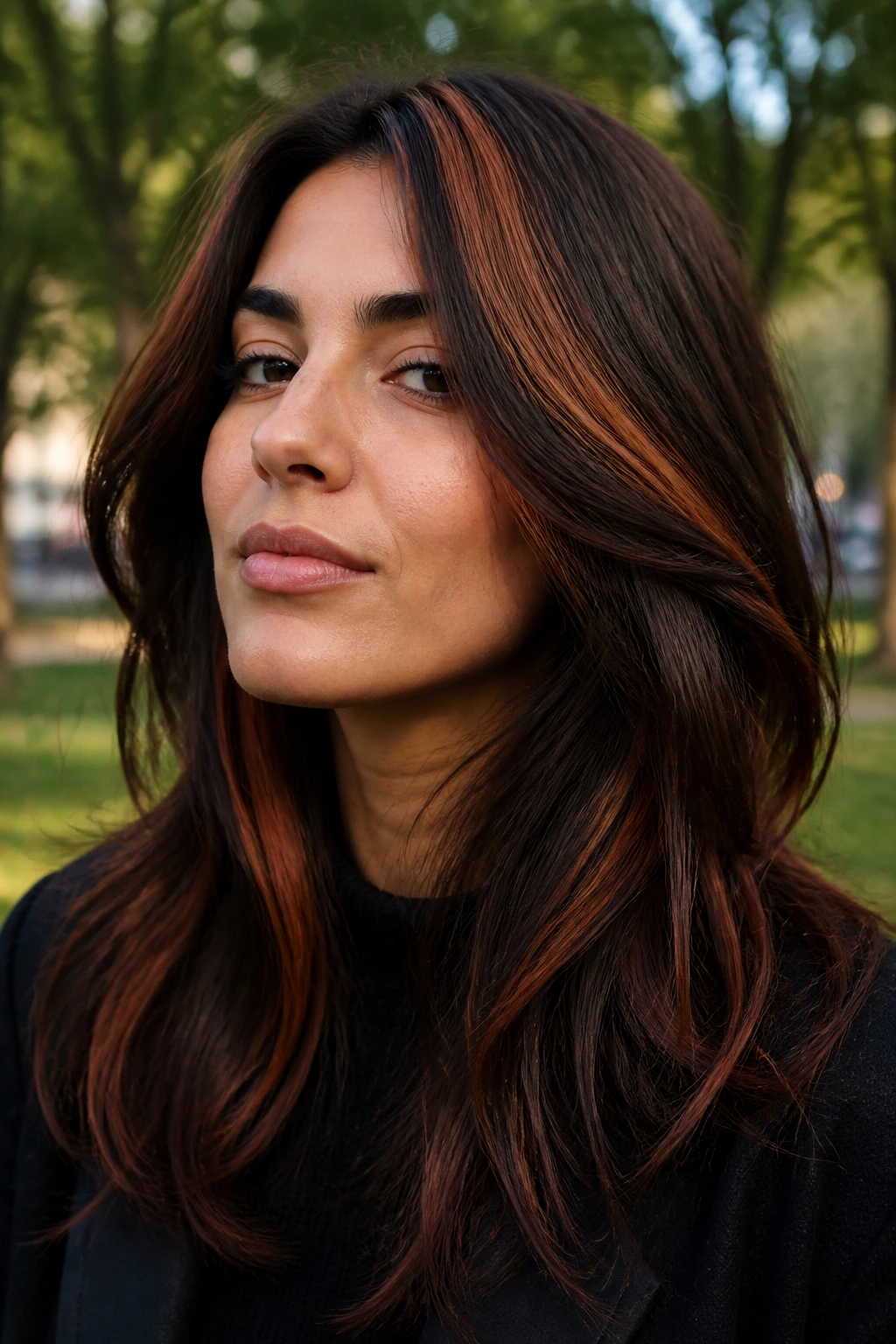
Chunky slices can look expensive when the tone is right. Rusted brunette slices use wider panels of deep rust and brown-red through a brunette base, which gives olive skin a warm, earthy contrast.
The important part is restraint in placement, not in color. Put the slices where they can show through movement—around the crown, near the temple, maybe through the lengths of a layered cut. If the slices are scattered too evenly, the hair starts to look dated. Kept in the right places, they look deliberate.
This is a good look for someone who likes a little more visual structure. It’s bolder than babylights and less hidden than peekaboo panels.
24. Merlot Shadow Lights
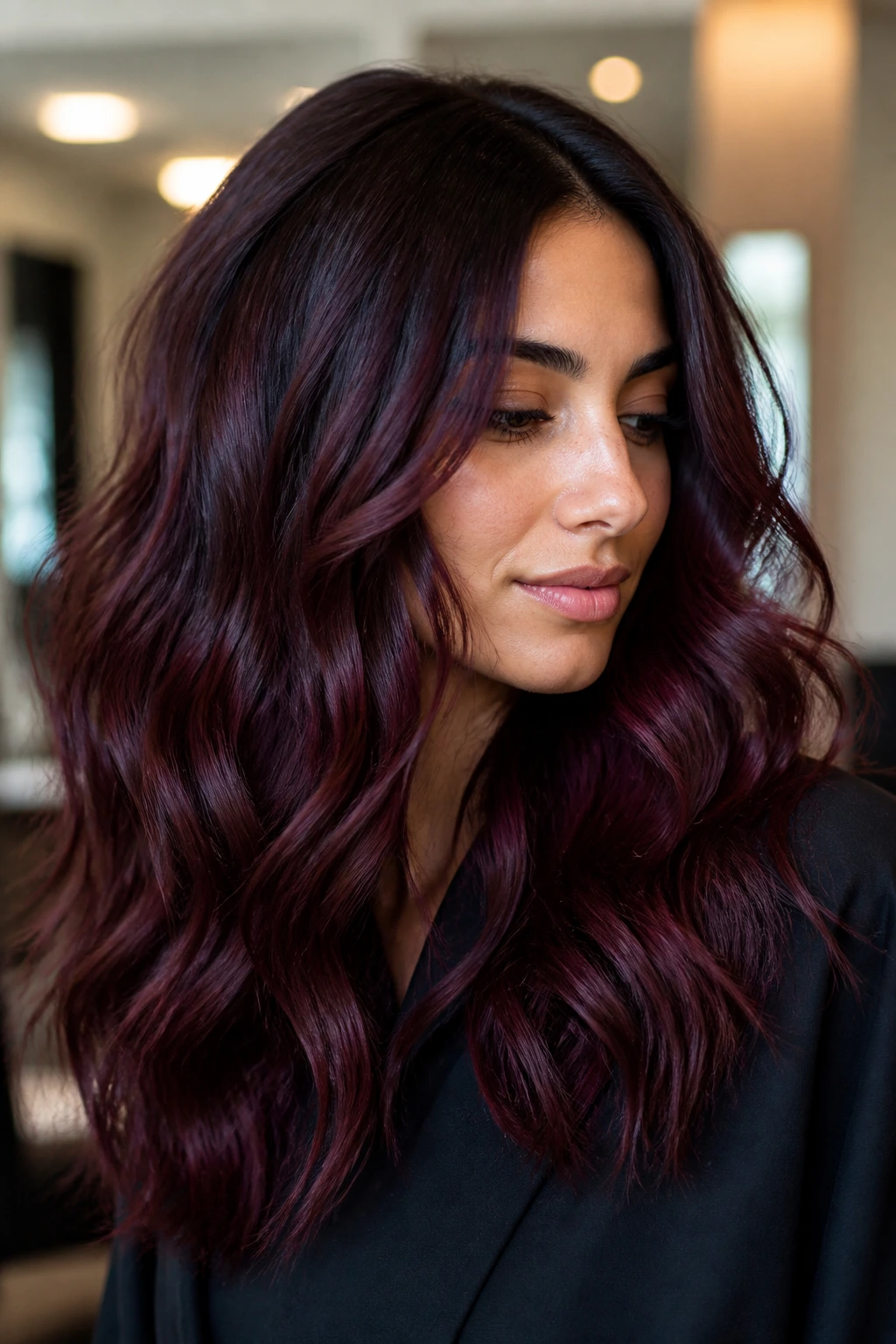
Merlot shadow lights lean deeper than copper and less obvious than red. They’re a good answer for cool-leaning olive skin, where bright orange tones can look disconnected from the complexion. The merlot gives depth; the shadow root keeps it believable.
Unlike caramel-heavy looks, this one is about tone rather than brightness. The hair looks richer under indoor light and gets a wine-dark glow outside. If you wear dark lipstick, this pairing can be sharp in a good way. If you like softer makeup, it still works because the hair isn’t fighting your face.
This is one of the quieter red-brunette options. Quiet, not dull.
25. Smoked Caramel and Red Blend
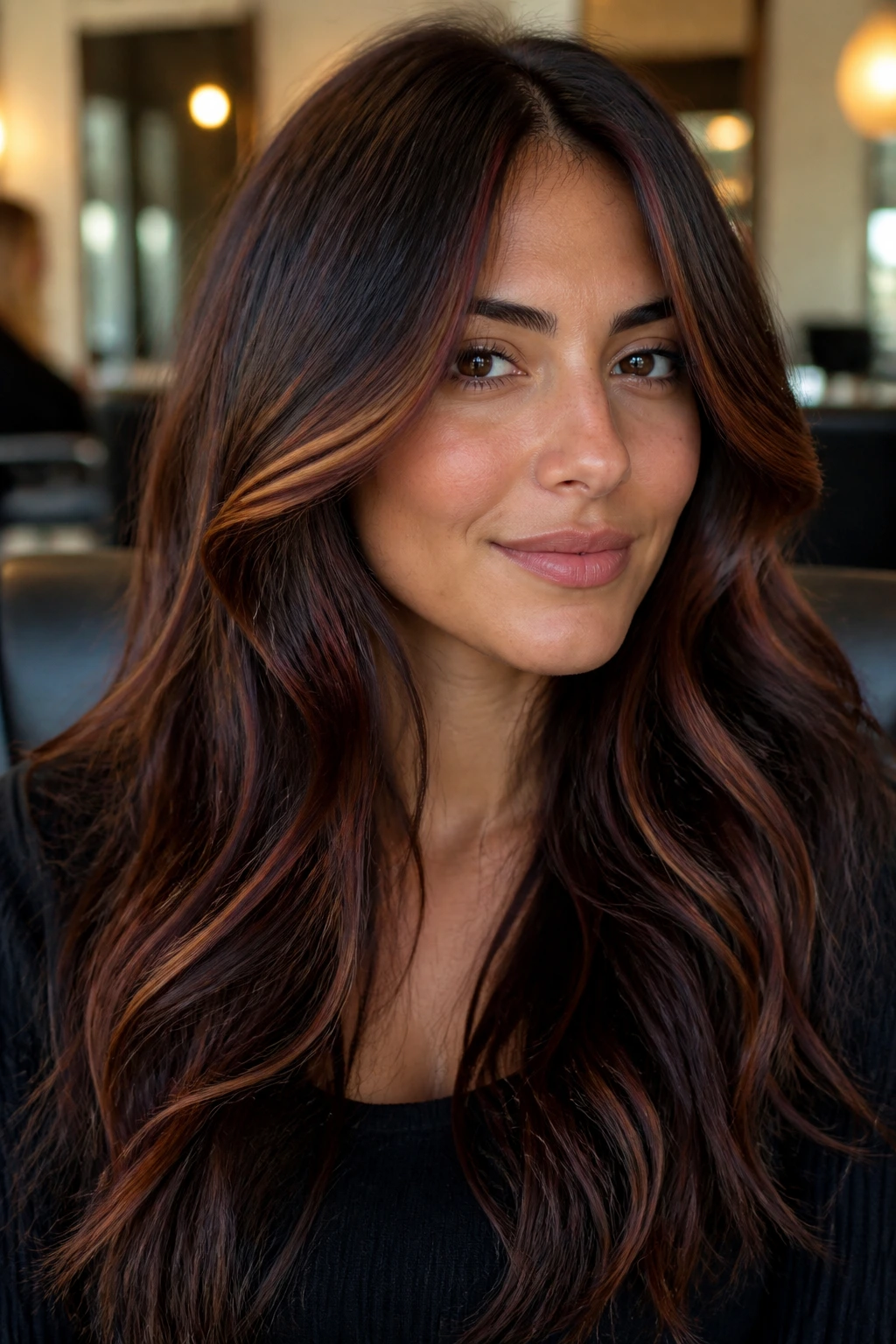
If you only bookmark one look from this whole collection, make it this one. Smoked caramel and red blend is the safest first ask when you want brunette depth, warmth near the face, and a result that won’t feel high-maintenance in week two.
The base stays smoky and brunette. The caramel pieces sit one or two shades lighter, and the red note comes through in the gloss more than in obvious stripes. That makes it a good fit for olive skin across a wide range of undertones, from gold-olive to neutral.
It also leaves room to grow. You can make it brighter later, or keep it soft and glossy. That flexibility is the real reason it earns a place at the end.
Why Brunette Red Caramel Shades Look So Right on Olive Skin
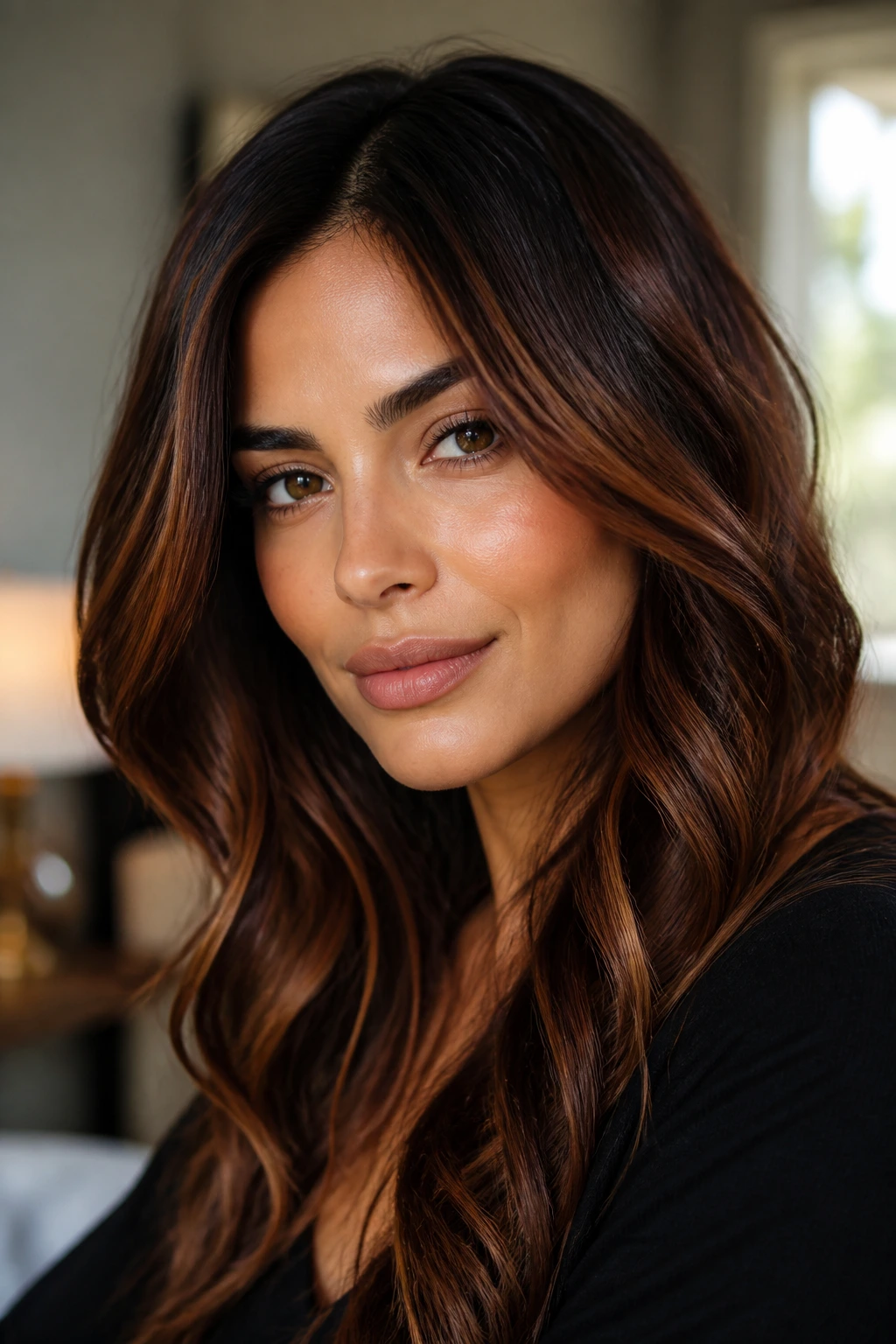
Olive skin often carries a mix of green, gold, and neutral undertones, which is why some browns fall flat and others come alive. A flat ash-brown can make the face look a bit tired. A pale yellow highlight can look disconnected. Red-caramel families sit in the middle, where the warmth feels like it belongs instead of being pasted on top.
The useful thing about this palette is how much range it gives you. Copper can brighten the face. Auburn can soften the whole look. Cinnamon and caramel can add glow without changing the mood too much. When the skin has olive undertones, those colors tend to echo the natural warmth already sitting under the surface.
There’s also a practical side to it. Brunette bases hide grow-out better than blonde bases, and deeper warm highlights don’t need to be babied quite as much as platinum pieces do. That does not mean they’re low effort. Red fades. Caramel can go brassy. But the upkeep is more forgiving if the starting shade is chosen well.
The main rule is simple: keep the brunette base rich, keep the warmth earthy, and avoid anything that looks chalky, pale, or too orange. That’s the line.
Picking the Right Brunette Base Before You Lighten
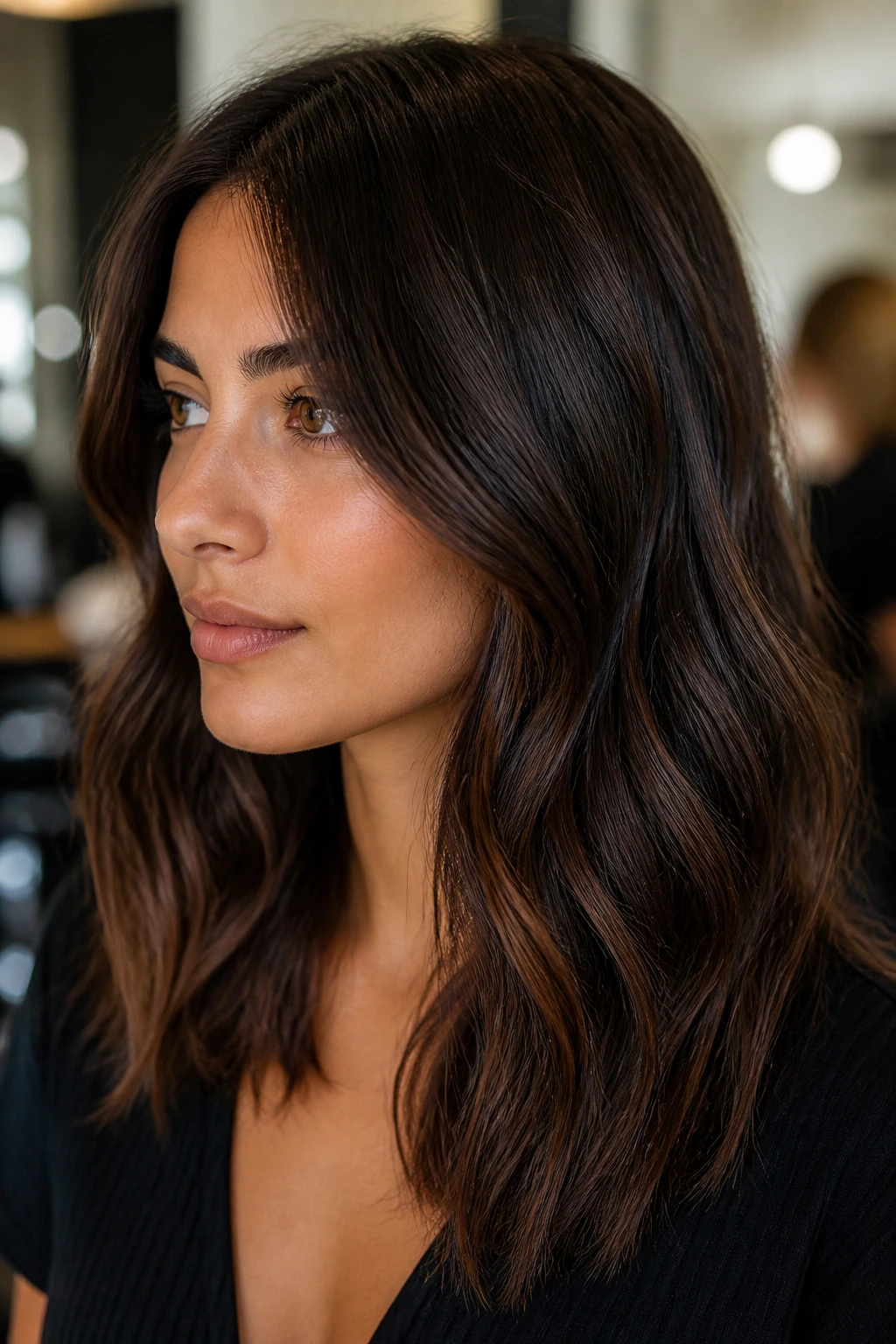
Not every brunette starting point behaves the same. A level 3 espresso base needs a different approach than a level 6 light brown base, and if you skip that detail, the whole result can skew either too dark to show or too light to hold together.
Deep brunettes usually need more strategic lightening. Foil placement, a gentler lift, and a slightly richer glaze help the color show without burning through the hair’s natural depth. If you go too pale too fast, olive skin can lose the rich contrast that makes this palette work in the first place.
Medium brunettes are the sweet spot. They can hold caramel, cinnamon, copper, and auburn with less fuss. Light brunettes can wear red-caramel too, but the tone needs more control or the hair can wander into orange territory fast. That’s where a root shadow and a gloss matter.
If your hair has old box dye, henna, or a lot of previous red pigment, say so before anyone picks up a bowl. Hidden pigment changes how the new color lands. Ignore that, and you end up fixing a problem you never planned for.
Essential Tools for Salon Visits and Home Maintenance
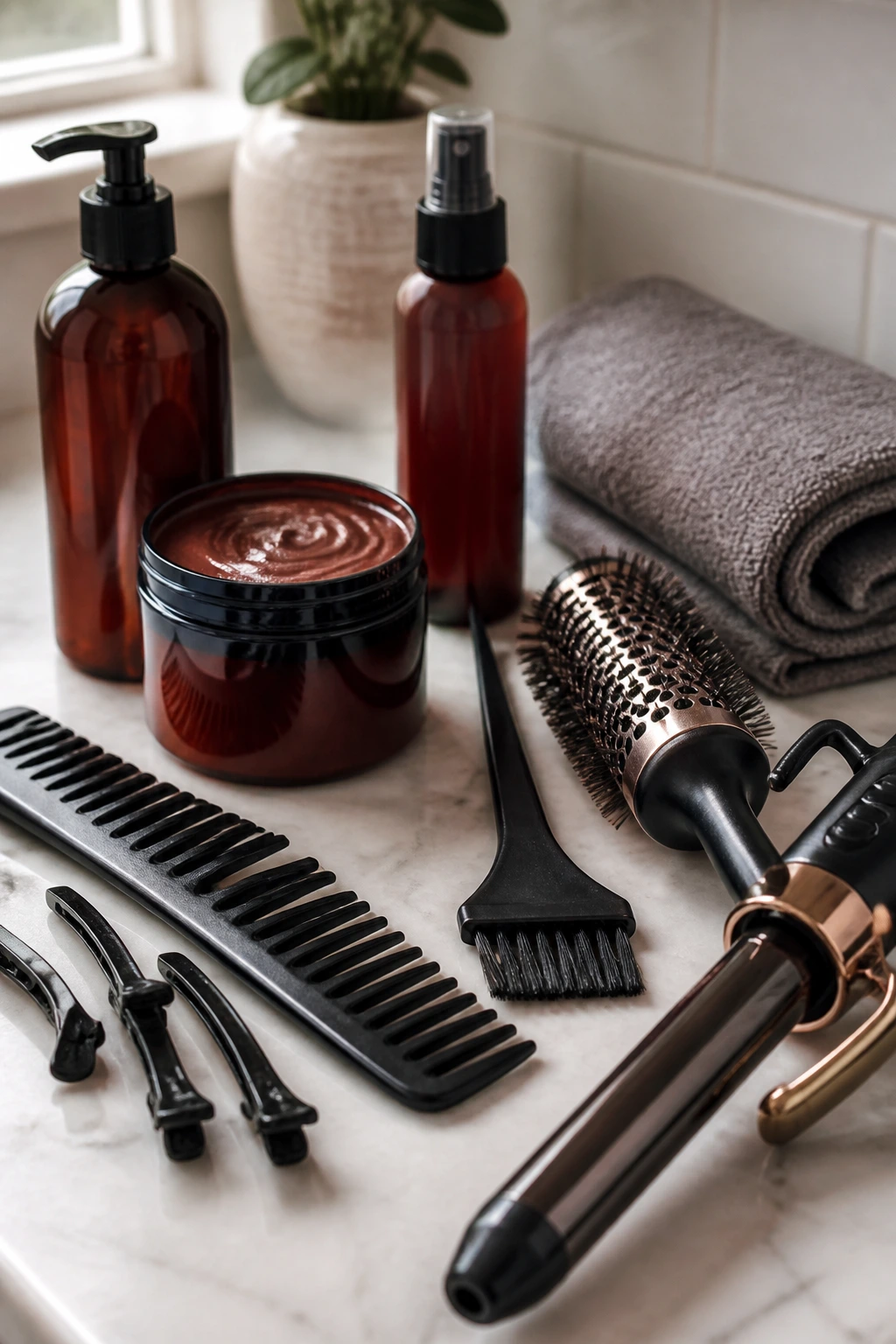
- Reference photos with notes: Bring 2 or 3 images and circle the parts you want—placement matters more than the overall vibe.
- Wide-tooth comb: Gentle detangling helps preserve toner and keeps the ends from snapping after washing.
- Sectioning clips: Useful for stylists and for at-home mask application when you want even saturation.
- Color-safe shampoo: A sulfate-free formula helps red and caramel tones hang on longer.
- Color-depositing mask or conditioner: A warm copper or red-brown mask can refresh faded strands between salon visits.
- Heat protectant spray: Red and caramel tones fade faster when hair is fried by flat irons and curling wands.
- Microfiber towel or soft T-shirt: Rough towels lift the cuticle and make warm tones look dull.
- Gloss brush or tint bowl: Handy if your stylist sends you home with a demi gloss or if you do a clear glaze in between appointments.
- Round brush or 1.25-inch curling iron: These help show the dimension instead of hiding it in a flat sheet of hair.
- Section clips for styling: Great when you want to set waves in alternating directions for more visible ribboning.
How to Wear These Highlights So the Color Shows Up
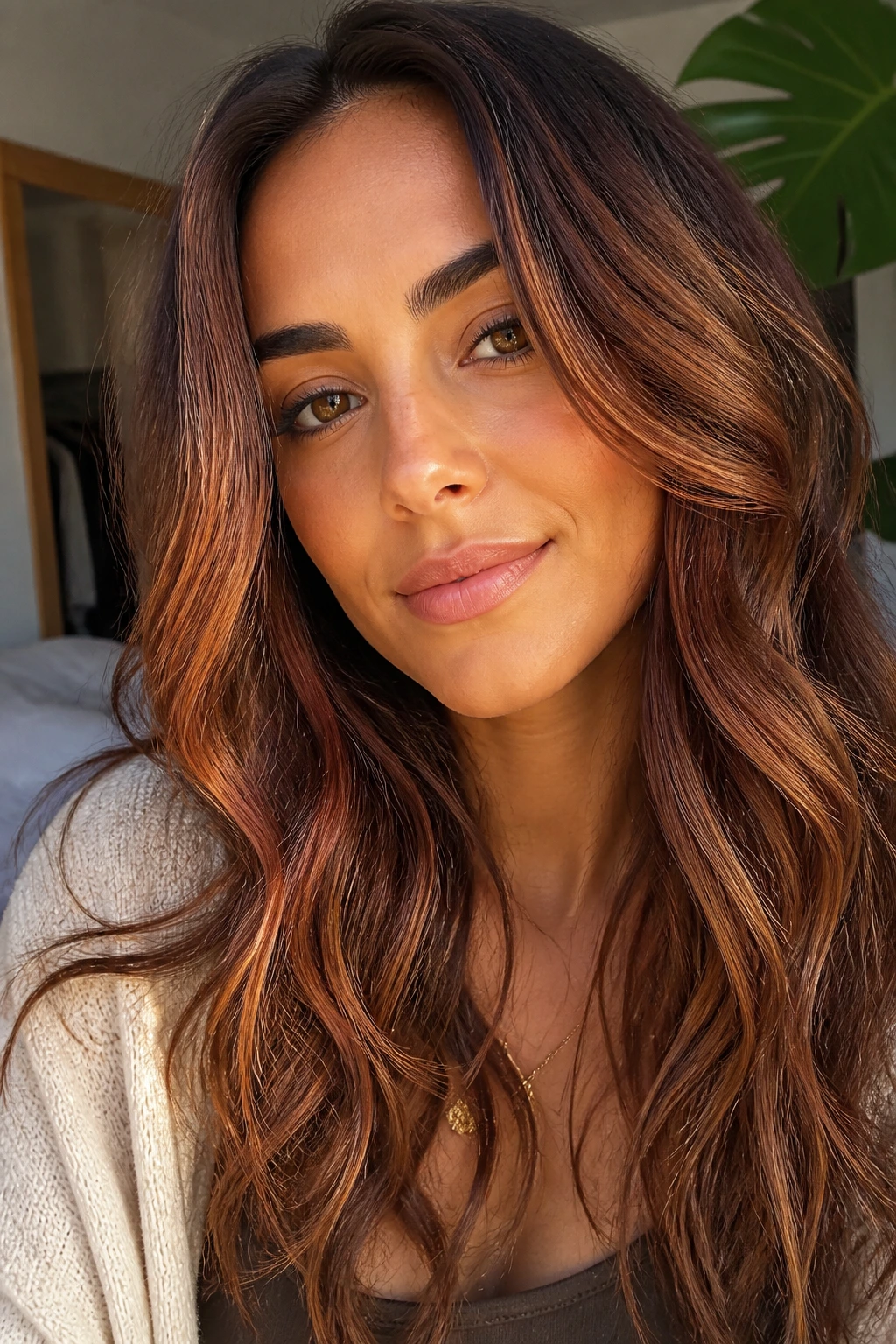
Loose waves: This is still the best move for most of the looks in this collection. A bend through the mid-lengths makes cinnamon, caramel, copper, and auburn all show in strips instead of disappearing into the base. If you curl every section the same way, the color can look too neat. Alternate direction for a softer result.
Straight and smooth: Slice highlights, contour pieces, and money pieces look sharper when the hair is blown out straight. The shine matters here. Use a heat protectant and finish with a lightweight serum, not a heavy oil that makes the highlights sink.
Updos and half-up styles: Peekaboo panels, red ends, and lowlights reveal themselves best when the hair is pinned or twisted. That’s a nice payoff if you want hidden color that still gets noticed. A messy bun can show more of the underside than a full blowout ever will.
Makeup and clothes: Terracotta blush, warm brown liner, rust, cream, espresso, olive, and soft gold usually play well with these hair colors. A very cool, blue-pink lipstick can fight the warmth in the hair. Not always. But often enough that I’d test it before committing.
Smart Consultation Notes to Save in Your Phone
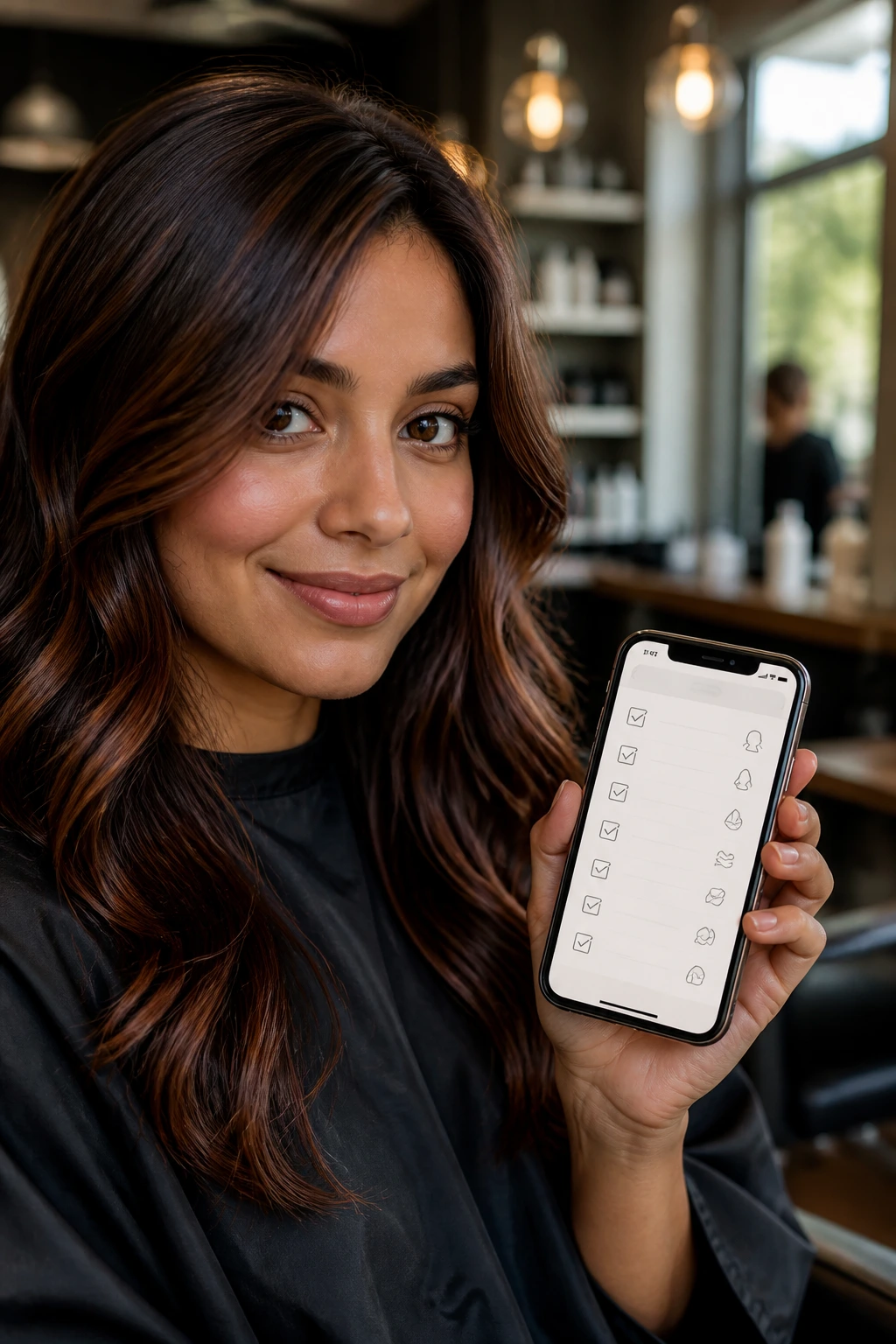
The easiest way to get the right result is to walk into the appointment with a sentence that sounds boring but is actually useful. Say the level, the tone, and the placement. “I want a level 6 brunette base with caramel and copper-red highlights, kept earthy rather than bright orange” is a much better brief than “make it warm.”
If you want a money piece, say where it should start. Temple? Hairline? Around the cheekbone? That tiny bit of placement changes the whole face. If you want lowlights too, say that out loud. A lot of people only think about light pieces and then wonder why the hair looks thin. Lowlights create the shadow that makes the highlights look richer.
If you’ve had color before, mention what faded badly. Maybe the copper went pumpkin. Maybe the caramel went yellow. Maybe the red turned dusty. That history matters. It tells the stylist which gloss family to reach for, and that’s half the battle with olive skin.
Additional Tips for Richer, Softer, or Bolder Color
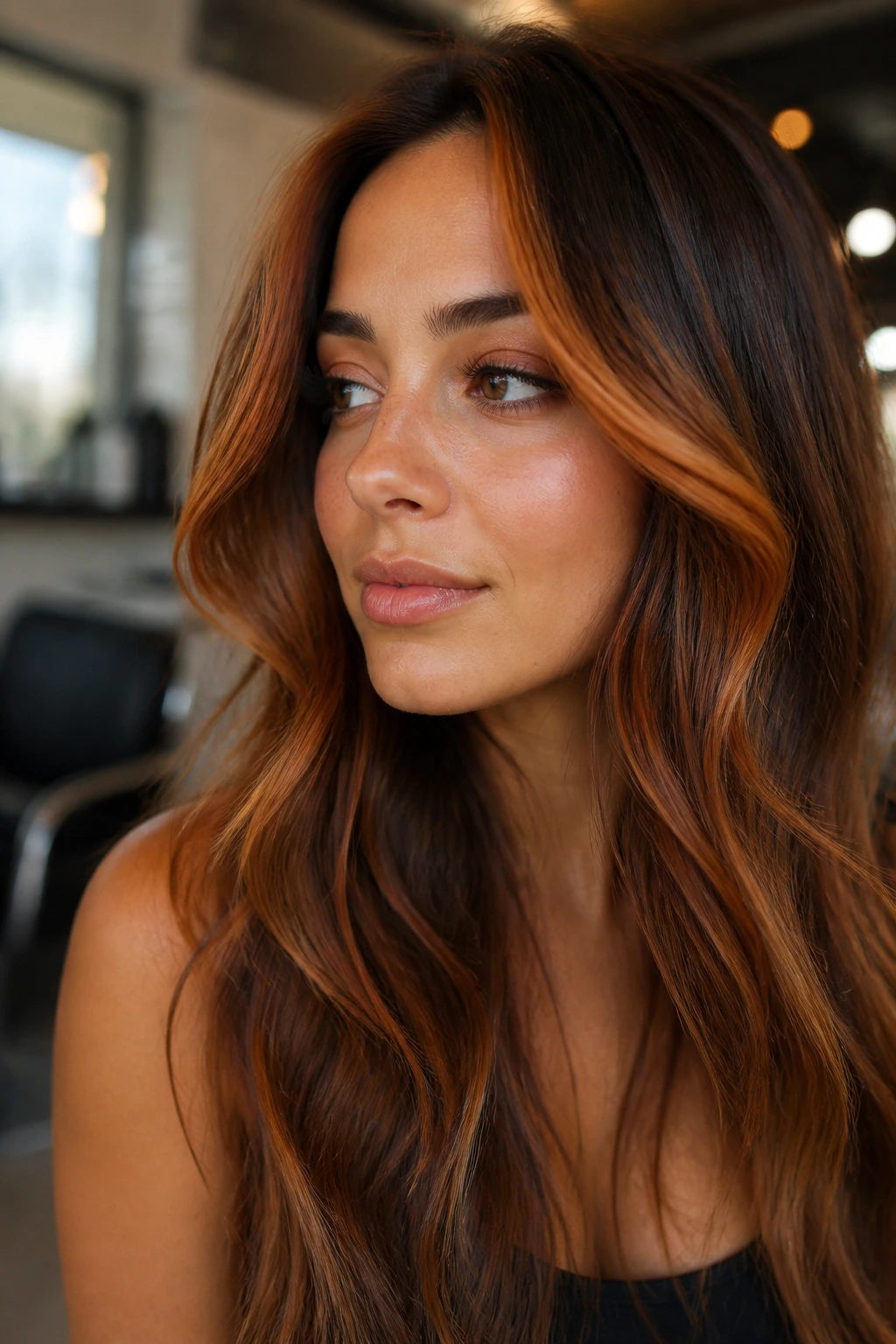
Gloss Boost: A demi-permanent gloss every 4 to 8 weeks keeps caramel from going dry and gives red tones a cleaner edge. If the color starts looking rough at the ends, the gloss usually fixes it faster than another round of highlights.
Customization: Want less contrast? Ask for finer babylights and a deeper root smudge. Want more contrast? Ask for a brighter money piece or a few wider slices around the crown. Those choices do more than people think.
Serving Suggestions: If that word has any place in hair, it’s here: wear these colors with soft waves, a clean center part, or a tucked-behind-the-ear finish. That’s when the red and caramel pieces actually show their shape.
Make-It-Yours: For a softer look, keep the red in the glaze and let caramel do the visible work. For a bolder look, push the front pieces into copper or auburn and keep the rest of the hair quieter. For curly hair, ribboning beats striping every time.
Common Mistakes That Flatten Olive Undertones
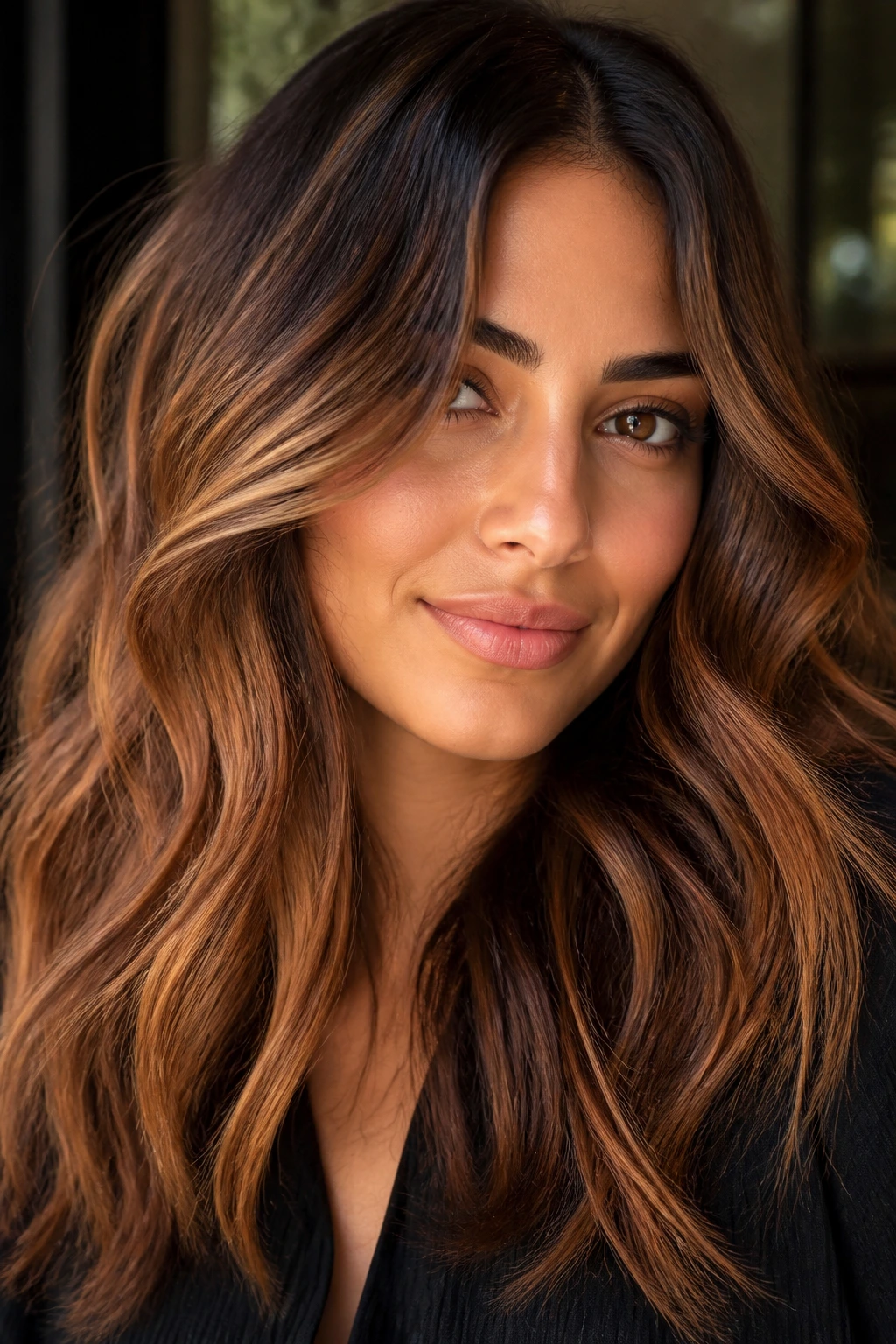
The first mistake is going too yellow with caramel. Yellow-heavy highlights can sit oddly against olive skin and make the face look a little off. The fix is to ask for beige-caramel, honeyed bronze, or cinnamon rather than pale gold.
Another common problem is choosing red that is too pure. Bright cherry can be gorgeous, but if it’s too blue or too vivid for your base, it can look disconnected instead of flattering. Earthier reds—terracotta, auburn, redwood, merlot—tend to sit more naturally.
Stripey placement is another one. Thick, evenly spaced highlights can flatten the cut and make the hair look busy. Use ribbons, slices, contour pieces, or babylights depending on the effect you want, and keep some brunette shadow between them.
People also forget about lowlights. Without them, warm highlights can float on top of the head with no depth underneath. A few deeper strands around the crown and underlayer make the whole color feel fuller.
And then there’s heat damage. Red and caramel tones look best when the cuticle is smooth. Too much hot iron work without protectant makes the ends look frayed, and frayed ends kill shine. That part is boring, yes. It also matters.
Variations and Adaptations to Try
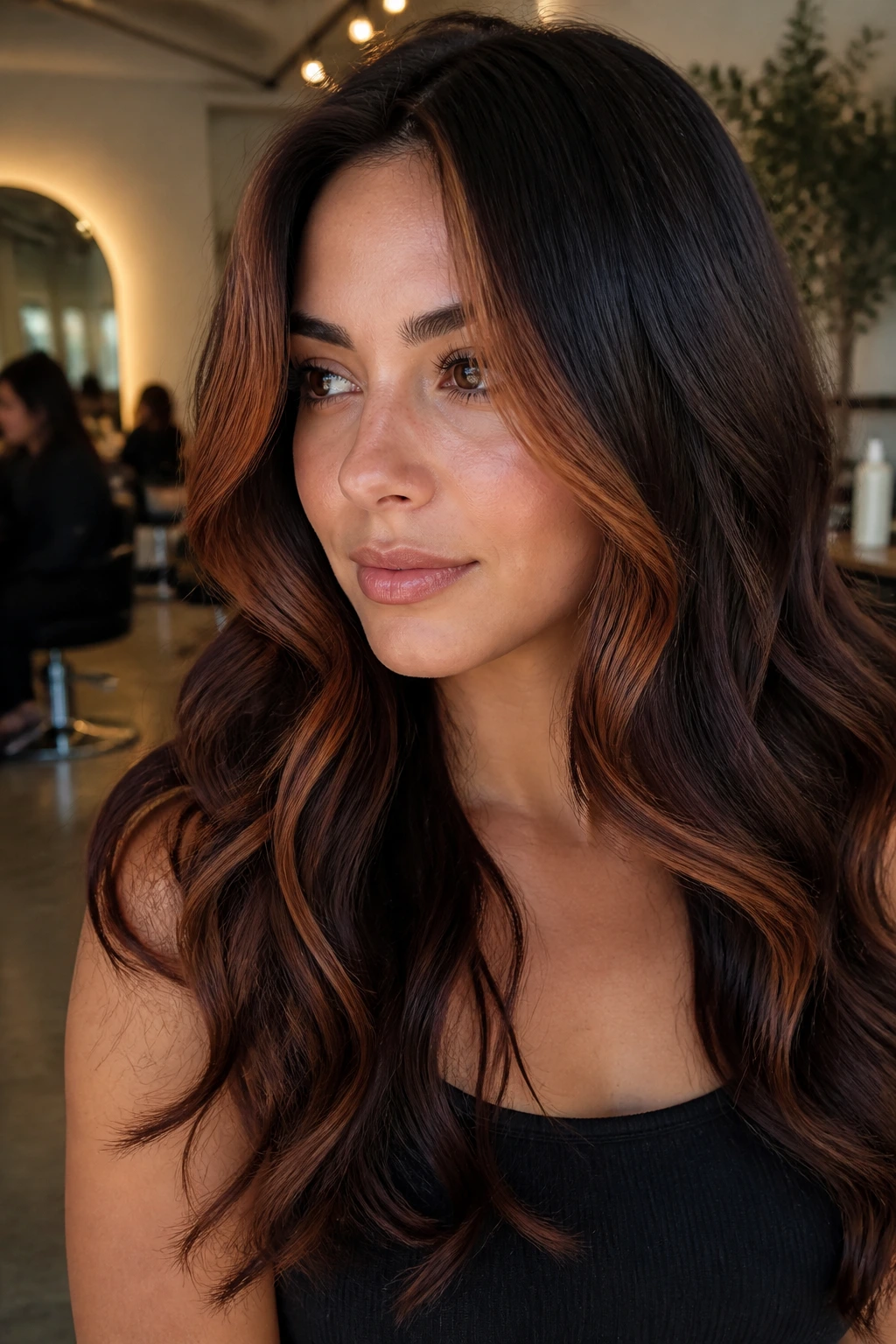
Soft Office Caramel: Keep the highlights thin, place them below the top layer, and finish with a neutral beige gloss. This version is for anyone who wants dimension without a dramatic change in the mirror. It grows out quietly and works with stricter dress codes.
Copper Fire Frame: Brighten only the front pieces and the first few inches around the face, then keep the rest of the brunette deep. This is the bolder choice, and it looks especially sharp with a lob or curtain bangs. If you want the face to glow first and everything else second, this is the move.
Cool Olive Cabernet: Swap the copper for a red-violet tone with more depth. That keeps the warmth from going orange and gives cool-leaning olive skin a richer contrast. It’s darker, moodier, and a little more grown-up.
Curly Ribbon Lift: For curls and coils, ask for painted ribbons instead of chunky pieces. The color should follow the curl pattern so the red and caramel show when the hair moves. This keeps the result soft and dimensional instead of blocky.
Gray-Blending Brunette: If silver is starting to show, use rosewood, mahogany, and warm caramel together. The silver doesn’t need to be hidden; it just needs a color family that doesn’t fight it. This is one of the smartest ways to keep olive skin looking lively as the hair changes.
Low-Maintenance Shadow Root: Leave a deeper root, add warm mids, and keep the ends only one shade lighter than the base. This is the easiest version to live with between appointments, and it avoids the hard grow-out line that can make highlights feel fussy.
Care, Gloss, and Rebooking Schedules That Keep the Shade Rich
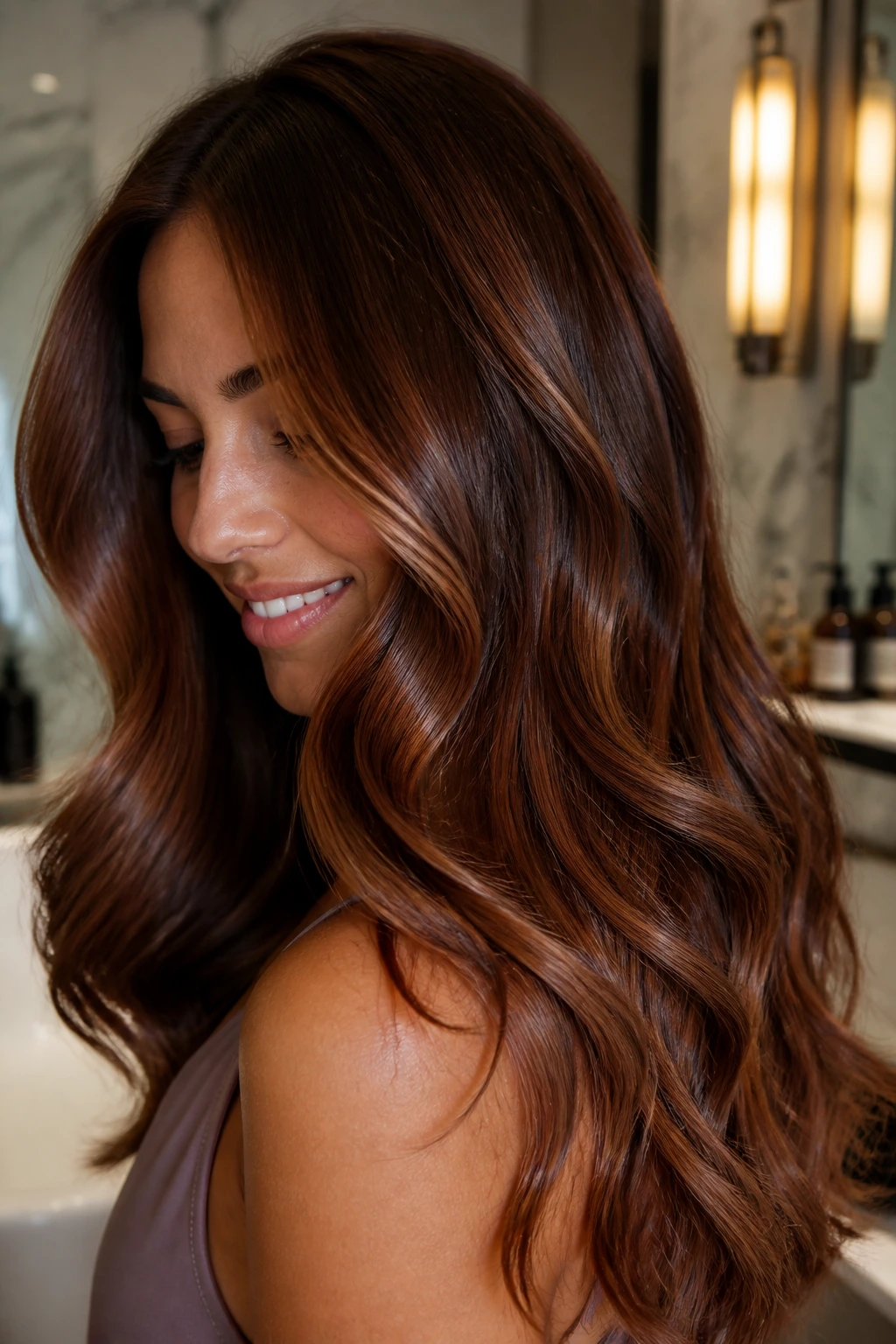
Warm brunette highlights don’t need to be washed like a blonding project. In fact, washing them too often strips the exact pigment you paid for. Two to three washes a week is a good ceiling for most people, and lukewarm water does less damage than hot water, which opens the cuticle and lets red pigment slide away.
Use a color-safe shampoo, but don’t assume every sulfate-free bottle behaves the same. Some are too heavy and leave the hair coated; some are too weak and barely clean the scalp. If your roots get oily fast, wash the scalp well and let the suds clean the lengths on the rinse. That saves the ends from extra scrubbing.
Red and copper tones fade faster than caramel, so they need backup. A color-depositing mask once a week or every other week can help keep the warmth from disappearing. Use it on towel-dried hair, leave it on for the time listed on the bottle, and rinse thoroughly. If the result gets too rich, space it out.
Glosses are where this color stays alive. A warm demi gloss every 4 to 8 weeks can smooth out brass, deepen the red note, and give the highlights that glassy finish olive skin loves. If the color is subtle, 6 to 8 weeks is often enough. If the red is strong, shorten the cycle a bit.
Rebooking for highlights usually lands around 8 to 12 weeks, depending on how bright you go and how much root shadow you keep. If you have a money piece or bold front pieces, they may need a refresh sooner. If the look is softer and more blended, you can push it farther.
Heat protectant every single time. No skipping. Red-brown shades look rich when the hair cuticle lies flat; fried ends make them dull fast. A quick pass with a silk pillowcase helps too, mostly because it cuts down on friction and keeps the strands from getting rough overnight.
Frequently Asked Questions About Brunette Red Caramel Highlights
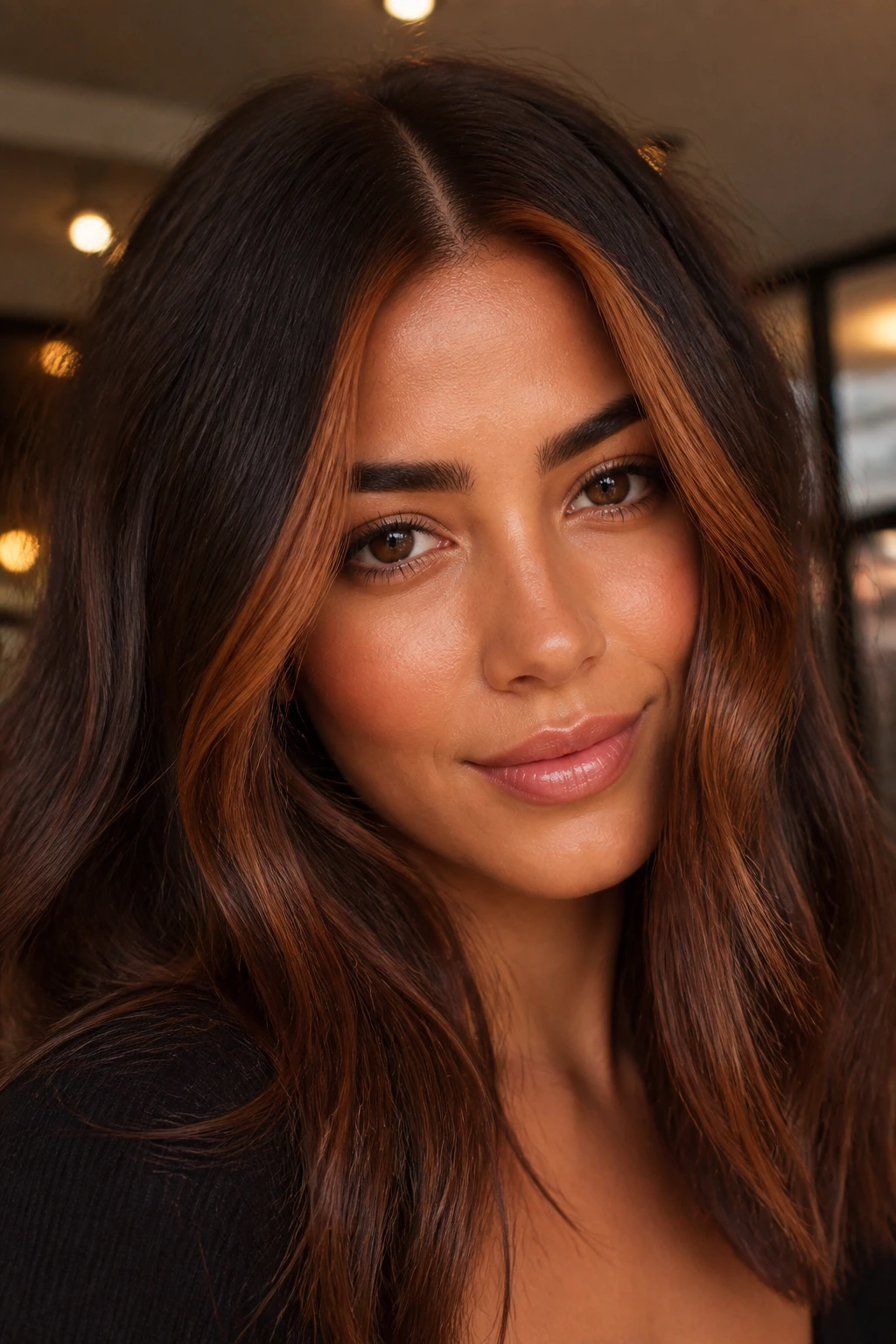
What highlight shade is safest for olive skin?
The safest starting point is usually a warm caramel with a little cinnamon or copper mixed in. It gives contrast without veering too yellow, and it tends to work whether your olive undertone is golden or neutral.
Do olive skin tones suit warm or cool red highlights better?
Warm reds are usually easier, but cool-leaning olive skin can handle red-violet, merlot, and rosewood very well. The mistake is not warmth itself; it’s choosing a red that sits too far away from your natural base. The red should look like it belongs in the brunette, not pasted onto it.
Can dark brown hair take caramel highlights without looking orange?
Yes, if the lift is controlled and the toner is chosen carefully. On very dark hair, caramel should be built in steps, not forced all at once. That keeps the color from turning brassy or hollow.
How often do red and caramel highlights need touching up?
Most people do a gloss refresh every 4 to 8 weeks and a fuller highlight touch-up around 8 to 12 weeks. If you use heat a lot or wash often, the warm tones fade faster. The red pieces usually go first.
Are lowlights necessary, or can I just do highlights?
You can do just highlights, but lowlights help a lot if you want the color to feel rich instead of thin. They’re especially useful on fine hair, overlightened brunette hair, or any style that needs more depth around the roots and ends.
Can I get this look on curly hair?
Yes, and curly hair often shows it in a nicer way than straight hair does. The trick is to ribbon the color along the curl pattern instead of dropping in thick stripes. That keeps the result soft and dimensional.
What if my highlights turn too orange?
That usually means the lift was a touch too warm or the gloss wasn’t balanced well. A salon toner or a cooler color-depositing conditioner can calm it down. Don’t keep layering red over orange at home unless you want a stronger warm tone.
Which haircut shows this color best?
Layers, lobs, curtain bangs, and long waves all show the dimension well. Straight one-length cuts can still work, but they need sharper placement—money pieces, slices, or contour highlights—so the color doesn’t disappear into one flat sheet.
Can I do brunette red caramel highlights at home?
You can maintain tone at home with glosses and color masks, but the highlighting itself is better left to a stylist unless your hair is already light and healthy. Olive skin is picky about tone, and at-home bleach is not the place to guess.
The Shade Family That Keeps Brunette Hair Awake
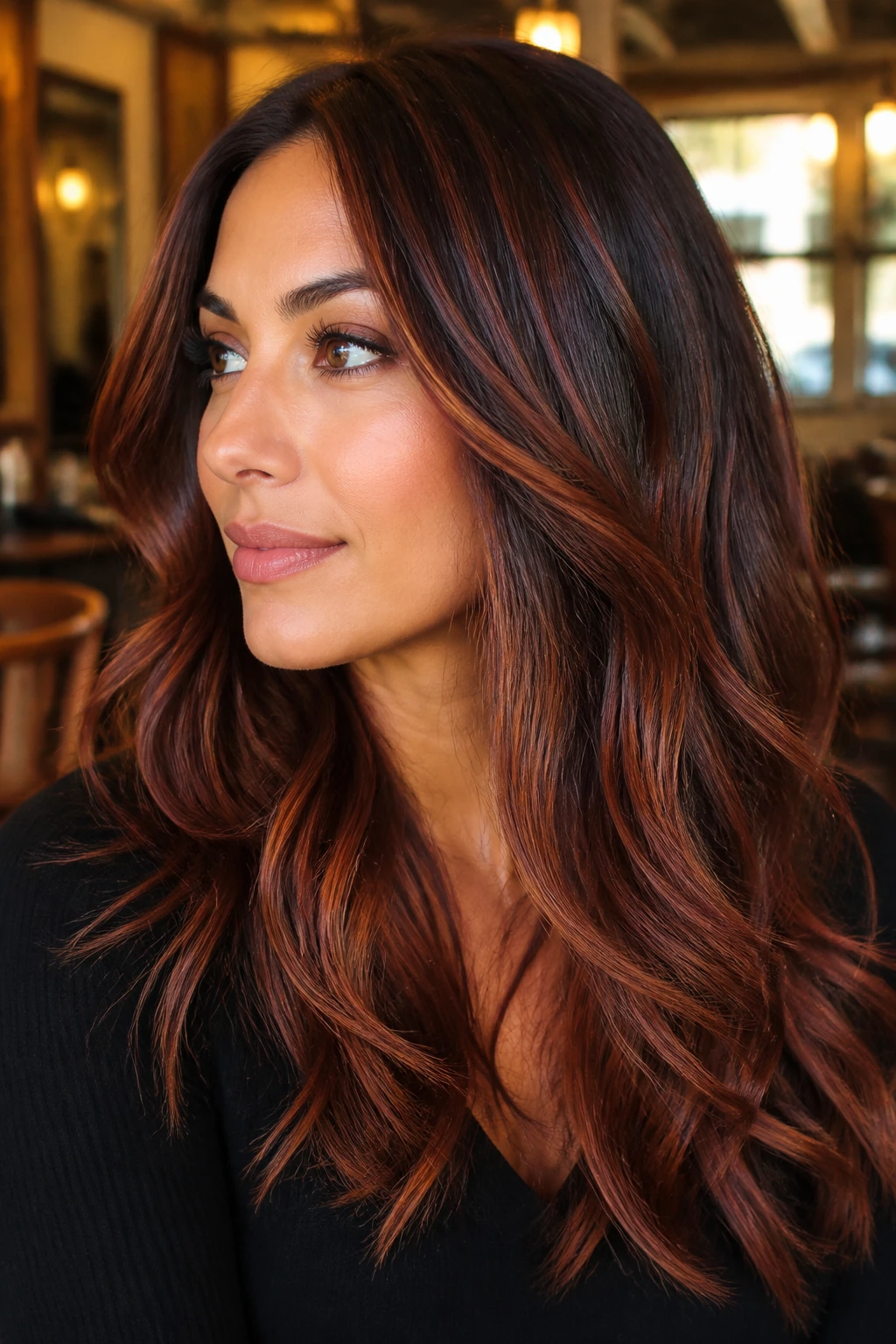
The reason this whole palette works is simple: it gives olive skin warmth without making the hair look loud for the sake of it. Cinnamon, caramel, copper, auburn, rosewood, and merlot all sit in different parts of the same family, which means you can go soft, bold, earthy, or moody without leaving brunette territory.
That flexibility is the real gift here. You can keep it subtle with microlights. You can brighten the face with a money piece. You can go deeper with lowlights or richer at the ends with auburn. None of those choices are wrong, as long as the undertones stay in tune with the skin.
Pick the version that matches how much light you want near your face, then ask for the tone to stay earthy rather than icy. That one decision saves a lot of disappointment. And it makes the final color look like it was made for the person wearing it, which is the whole point.