



Thick hair can look luxurious right up until it starts behaving like it has opinions of its own. One day it falls in a heavy, glossy sheet; the next, it puffs at the sides, sits flat at the crown, and makes every blunt line look wider than you wanted. That’s exactly why long shag haircuts for thick hair with soft layers keep showing up as the smart answer. They take the bulk out of the right places and leave enough length to keep the shape feminine, swingy, and wearable.
The trick is restraint. A good shag on dense hair does not mean hacking the ends to pieces and calling it texture. The best versions carve soft internal layers through the crown, cheeks, and mid-lengths so the haircut moves when you walk and still has weight at the bottom. If you’ve ever left a salon with “layers” that turned into a triangle by week two, you already know how much this matters.
Soft layers are doing the heavy lifting here. They stop thick hair from forming that hard shelf at the bottom, they keep the silhouette from ballooning near the ears, and they let curls, waves, and even straight strands bend instead of sit there like a block. Some of these cuts lean romantic. Some are a little rocker. A few are quietly cool in that “I didn’t try too hard, but the shape is perfect” way. The good ones all share the same trick: they make thick hair breathe.
Why These Long Shag Haircuts Earn Their Keep
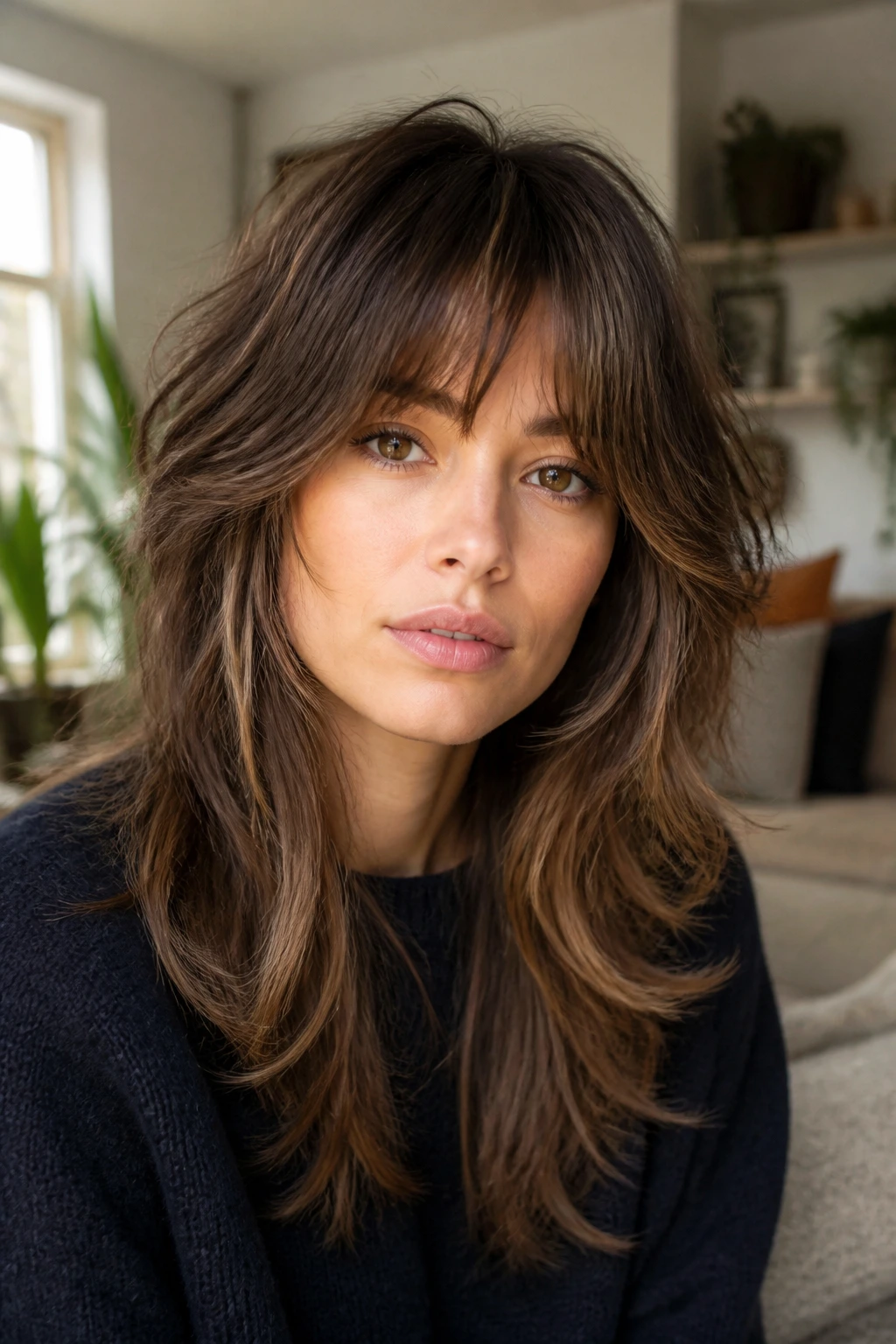
- Bulk control: Thick hair needs weight removed where it stacks up — usually around the crown, sides, and inner mids — or the cut turns boxy fast.
- Movement without losing length: Soft layers keep the ends long enough to feel full, which matters if you hate the thin, frayed look some shags can create.
- Better air-drying: These shapes tend to dry with a built-in bend instead of one stiff line, which cuts down on round-brush heroics.
- Face framing that actually shows up: On dense hair, subtle face layers can disappear unless they’re cut with enough length and angle to sit away from the cheeks.
- More forgiving grow-out: A layered shag usually grows out cleaner than a blunt cut with one heavy perimeter, especially if you trim every 8 to 10 weeks.
- Works with texture, not against it: Wavy, curly, and even straight thick hair all benefit when the haircut leaves room for natural movement instead of fighting it.
1. Feathered Curtain Shag
This is the one I reach for first when someone says, “I want layers, but I don’t want to look chopped up.” The crown stays soft, the curtain bangs split neatly at the center, and the face pieces taper from cheekbone to collarbone so the whole cut feels airy instead of busy. On thick hair, that feathering is doing real work. It breaks up the density near the front without making the rest of the head look thin.
Why it flatters thick hair
The curtain fringe pulls attention upward, which helps dense hair feel lighter around the jaw. Ask for long internal layers, not short steps. That keeps the ends full while still letting the front move.
Best styling move
Blow-dry the fringe forward, then sweep it away from the face with a round brush and a low heat setting. A 1.5-inch curling iron on the front pieces gives the soft bend that makes this shape read as polished instead of accidental.
Best for: oval, round, and heart-shaped faces.
Pro note: Don’t cut the curtain bangs too short on day one. Thick hair shrinks visually once it dries.
2. Rounded U-Shape Shag
If blunt ends make your hair look like a curtain, this shape fixes that fast. The perimeter falls in a gentle U, which keeps the bottom looking plush while the internal layers remove the heavy shelf that thick hair loves to build. It’s one of the most flattering long shag haircuts for thick hair with soft layers because it keeps the silhouette calm.
A blunt hemline can make dense hair feel wide. The U-shape softens that edge, especially when the longest pieces rest a few inches below the shoulders. It’s a clean, expensive-looking shape without feeling severe.
Ask your stylist for: long layers that start below the chin and a rounded perimeter that curves slightly toward the center back.
Styling tip: Flip the last inch of the ends under with a paddle brush if you want the shape to feel smoother and less boho.
3. Butterfly Shag With Long Ends
The butterfly shag lives on contrast. You get shorter face-framing layers around the cheekbones and jaw, then a long lower section that keeps the length dramatic. On thick hair, that split is useful because it lifts the top without taking away the fullness that makes the hair feel substantial.
It’s a good pick if you like volume at the crown but hate anything that makes the bottom look see-through. The top layers can be blown out for that airy, 90s feel, while the lower lengths stay soft and heavy enough to swing.
How to wear it
Use a large round brush on the crown and front sections, then leave the back more natural. The contrast is the point. If every piece gets over-styled, the haircut loses the butterfly shape and turns into a generic long layer cut.
4. Soft Wolf Cut
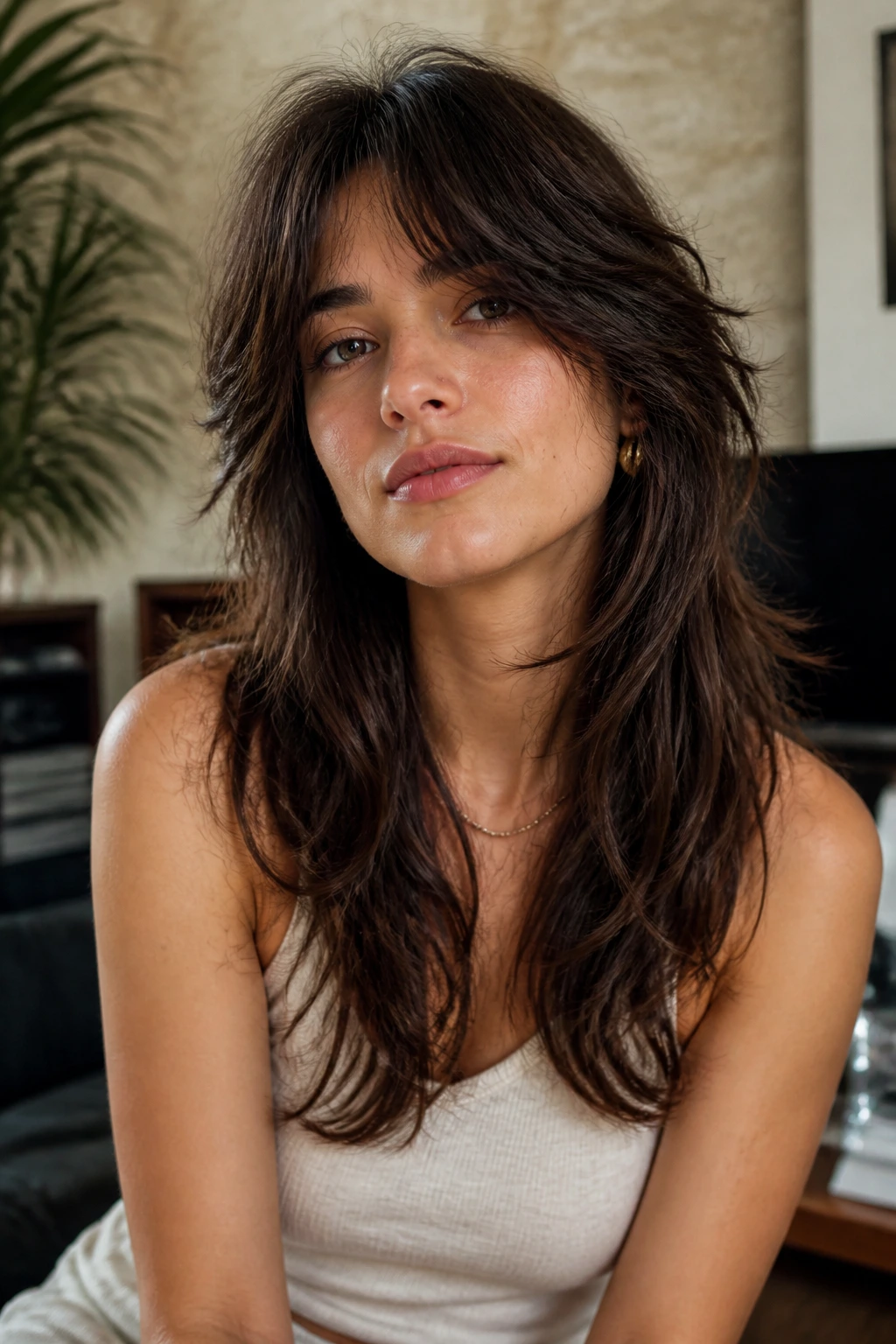
A wolf cut can go feral quickly on thick hair. The soft version keeps the attitude but trims back the chaos. You still get crown lift, broken-up layers, and that slightly undone texture, but the ends stay longer and less shredded. Good. Very good.
This works best when the stylist leaves the perimeter intact and uses soft internal layering instead of aggressive razoring everywhere. You want the hair to feel lighter, not fragile. The whole cut should move when you shake it out, not stick out in little spikes.
Best for: wavy thick hair, dense hair with natural bend, and anyone who likes a little edge.
Style it with: mousse at the roots, diffused drying, and a touch of texture spray through the mids.
5. Razor-Textured Long Shag
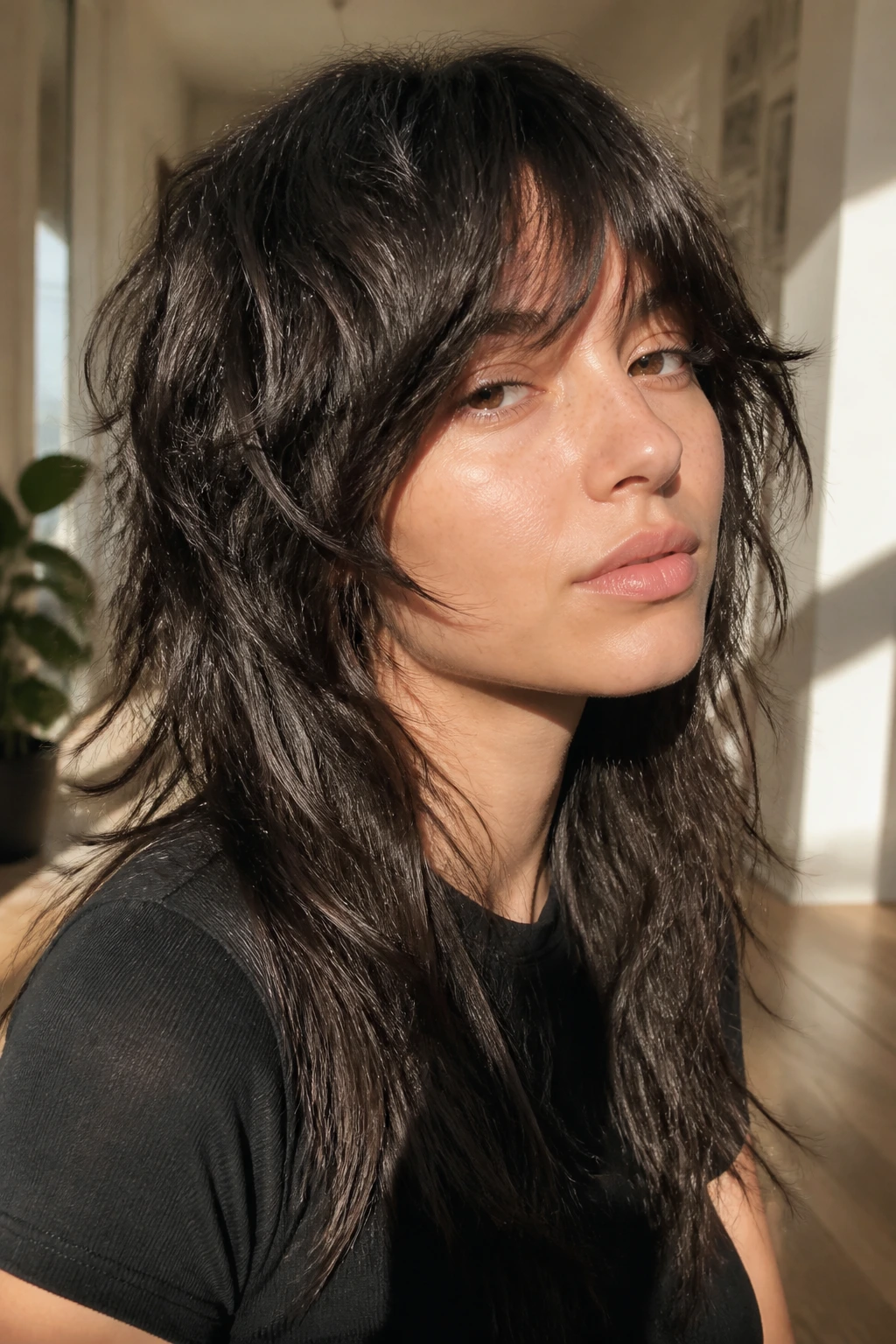
Razor cutting gets a bad reputation because people have seen too many over-thinned ends. But on straight, coarse, thick hair, a controlled razor cut can be exactly the thing. It softens the line at the bottom and takes some of the bulk out of the mid-lengths so the haircut stops looking like one giant block.
The key is moderation. A razor should carve movement, not shred the ends into wisps. If your hair is coarse and resistant to movement, this version gives it a little slip. If your hair is already fragile, skip this one.
What to ask for
Ask for razor texturizing only through the layers, not the full perimeter. That keeps the ends soft but not see-through.
Best for: straight and coarse thick hair.
One-sentence truth: This cut lives or dies by the stylist’s hand.
6. Side-Part Glam Shag
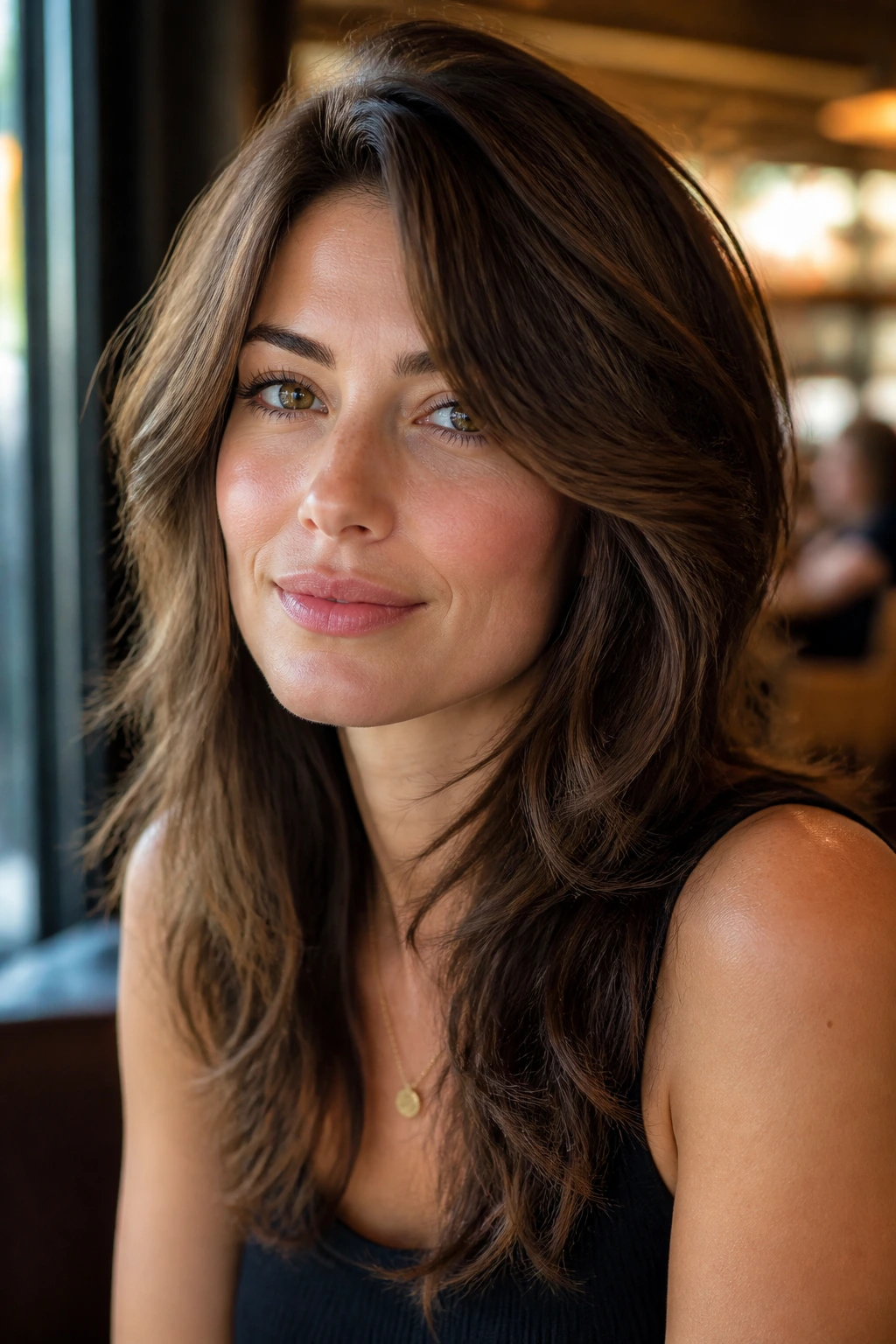
A side part changes everything on thick hair. It gives the crown a natural lift and lets the front fall in a sweeping arc instead of a heavy curtain. That little shift makes the shag feel more polished and less “I just got layers and didn’t know what to do with them.”
The side-part glam shag is especially good when you want movement around the face but still need the shape to sit neatly under a jacket collar, a coat, or a blazer. The long layers should start around the cheekbone and taper down so the front doesn’t puff outward.
Style move: blow-dry the roots in the opposite direction of the part for five to ten seconds, then switch back. Small trick. Big difference.
7. Boho Shag With Airy Waves
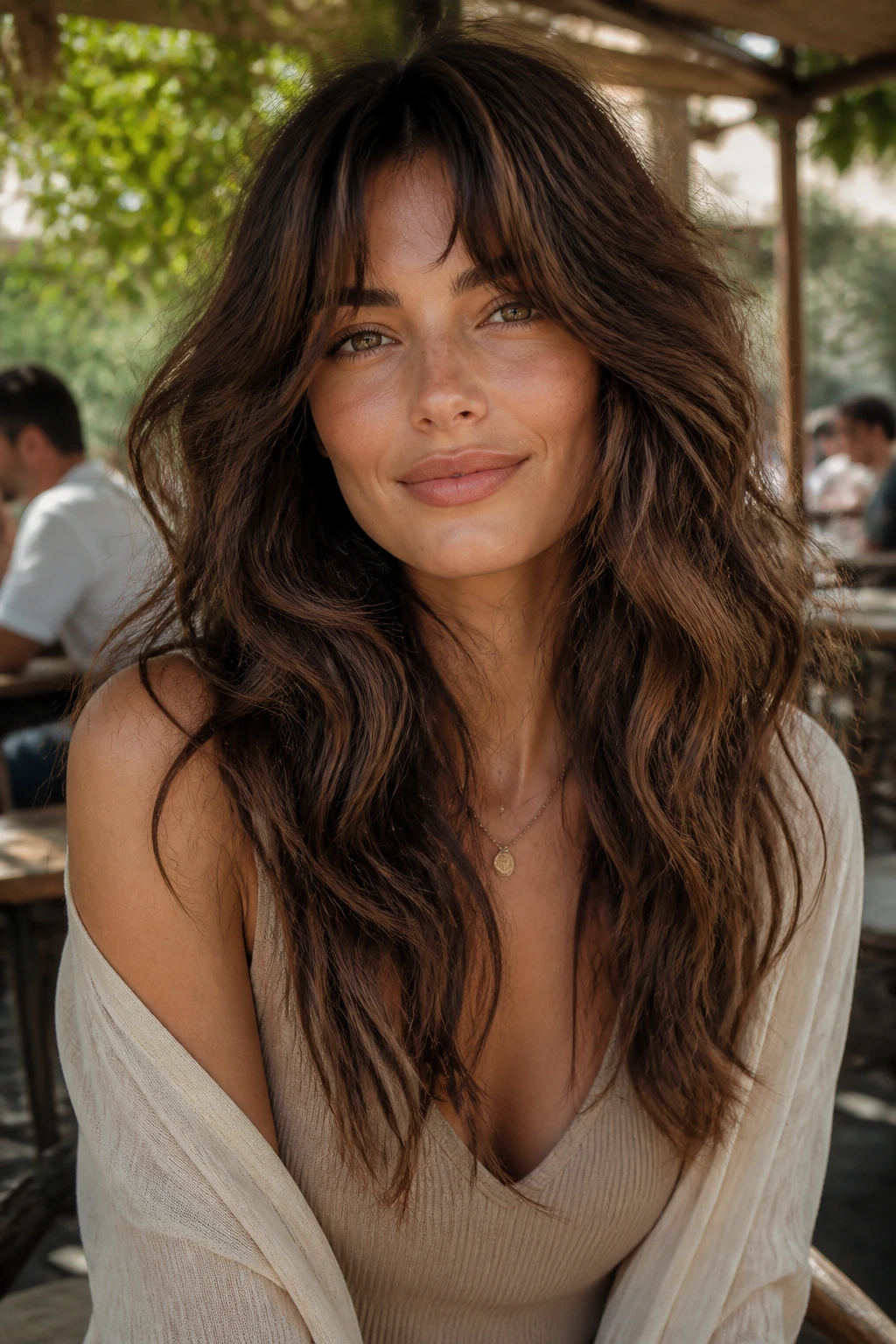
This one has that loose, lived-in shape people keep asking for, usually while holding a photo of someone who clearly spent 45 minutes curling their hair. The difference here is that thick hair actually holds the wave, so the cut can carry the style with less work.
Boho shags look best when the layers are long and soft, not jagged. You want bend through the mids and a little extra pieceiness around the face. That keeps the haircut from turning into a puffy halo.
How to style it: wrap random 1-inch sections around a curling wand, leave the last inch out, and brush through once the hair cools. Cool hair holds shape. Warm hair lies to you.
8. Invisible Layers Shag
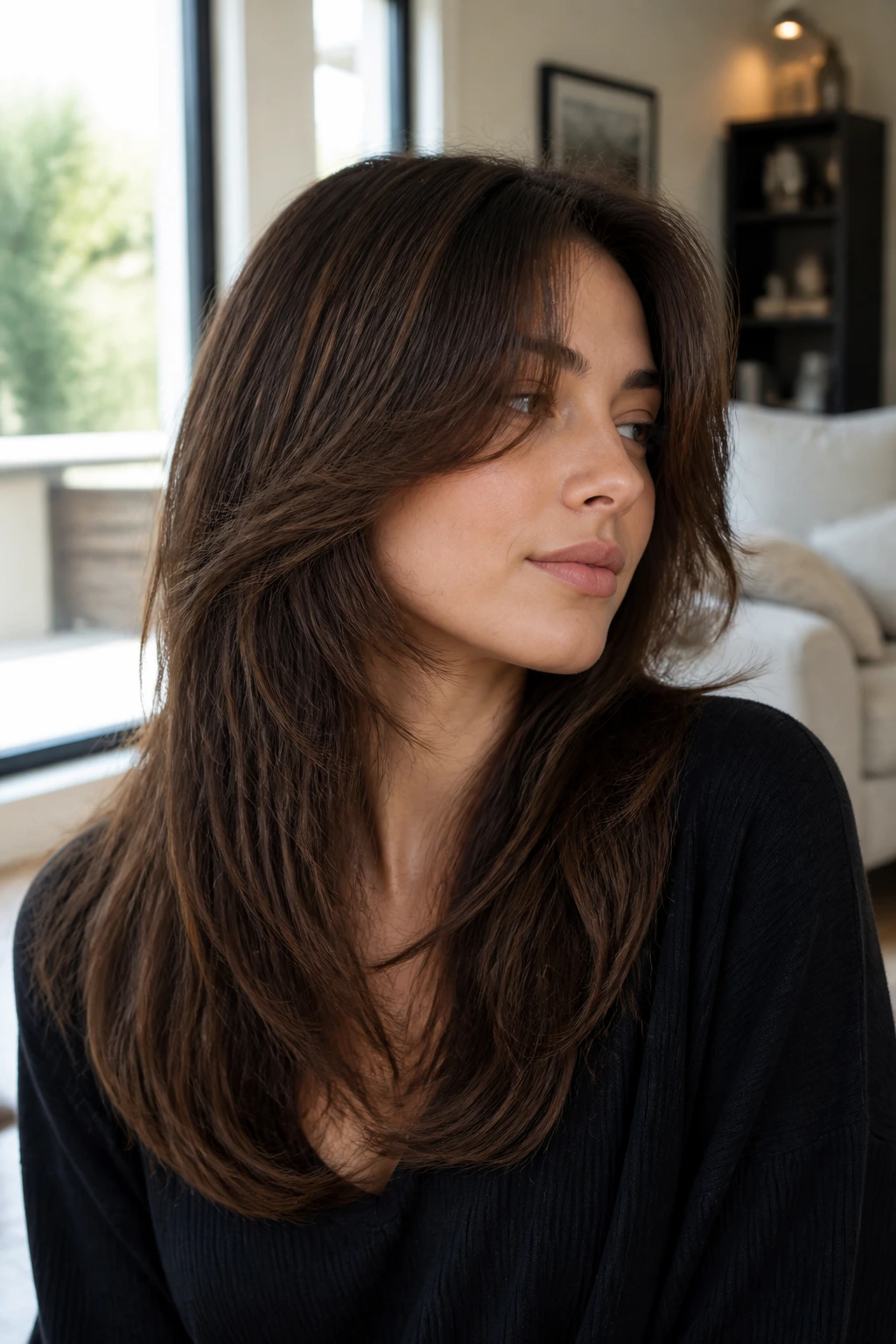
Invisible layers are one of my favorite tricks for thick hair because the haircut changes shape without looking obviously layered from the front. The bulk comes out from inside the haircut, not from the surface, so you keep that full, clean outline while gaining movement underneath.
This is the cut for someone who says they want layers but fears seeing every cut line in the mirror. The layers sit in the interior, blending into each other so the hair shifts when you walk but doesn’t announce itself in obvious steps.
Why it works
The surface stays smooth, which is useful if you wear your hair straight a lot. The movement shows up when you twist, tuck, or flip it behind one ear.
9. Bottleneck Bang Shag
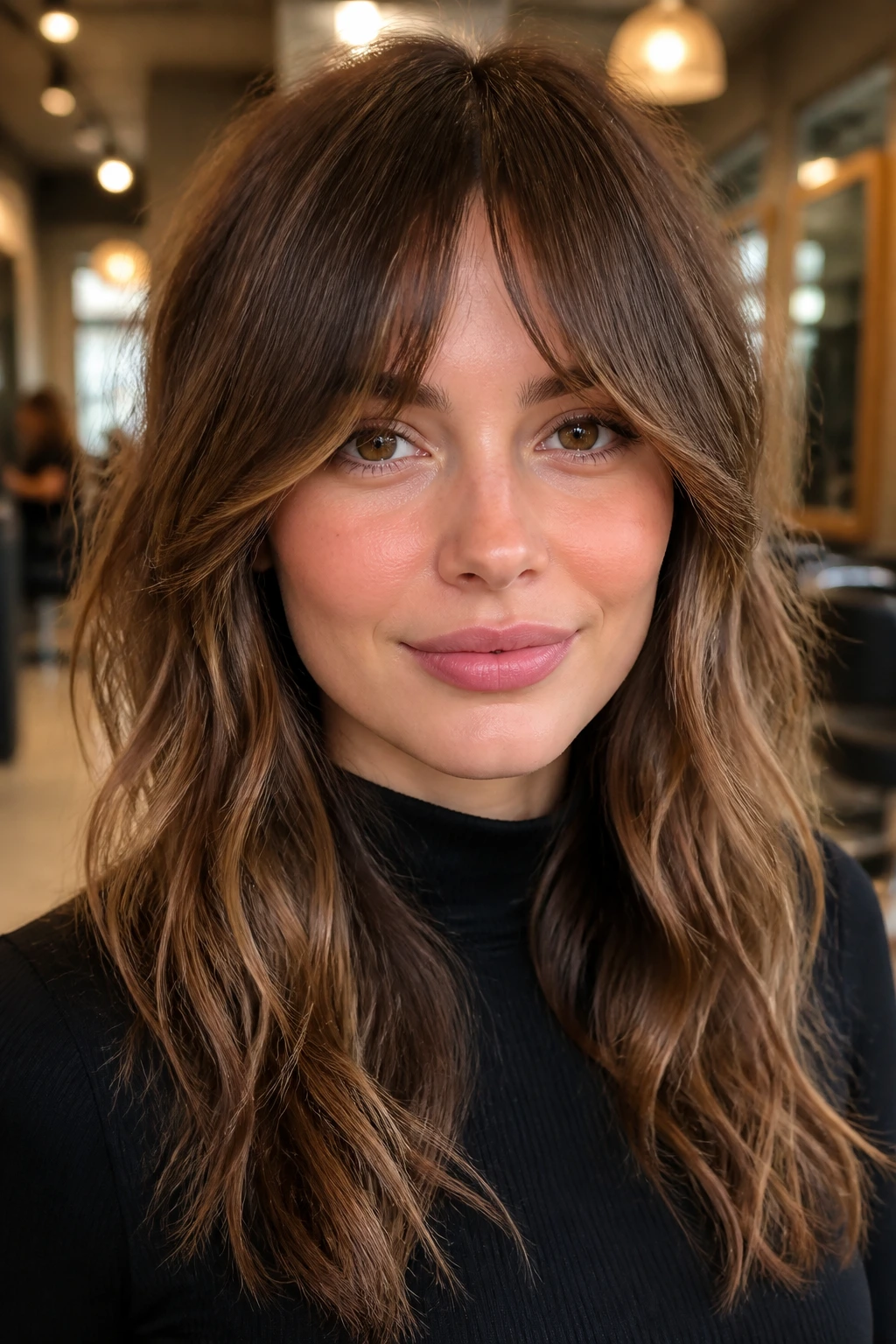
Bottleneck bangs are the cooler cousin of curtain bangs. They start narrower at the center, open a little at the brows, and widen as they drift into the side layers. On thick hair, that shape is useful because it breaks up the top without making the fringe too dense.
This cut works especially well if your hairline is full and your forehead can support a bit of fringe without feeling boxed in. The long layers through the lengths keep the rest of the haircut soft, while the bangs add enough structure to make the shape feel deliberate.
Best styling note: use a small round brush or velcro roller just on the fringe. Don’t over-curl the whole front section or the shape loses its easy bend.
10. V-Cut Shag

The V-cut shag is all about the back view. The layers fall into a subtle point at the center back, which gives thick hair a more tapered finish and stops the bottom from feeling blunt and heavy. It’s a nice choice if you wear your hair down often and want the length to look longer without actually making it heavier.
The front pieces should still be soft. If the face layers get too short, the whole cut starts to read as disconnected. Keep the top layers movable and the tail of the V gentle, not sharp.
Best for: long hair that feels too wide at the hemline.
Quick styling note: a loose wave makes the V shape show up better than pin-straight styling.
11. Collarbone-Length Long Shag

Not every “long” shag has to hit the middle of your back. A collarbone-length version still counts if the layers are long and soft enough to move. This is a smart middle ground for thick hair that needs weight removed but not a dramatic chop.
The collarbone is a useful resting point because the hair can tuck under coats, sit nicely on sweaters, and still swing when you turn your head. If your hair tends to sit flat at longer lengths, this cut often brings the volume back to life.
Ask for: longer face-framing pieces and a low layer pattern that starts below the chin.
12. C-Shape Layered Shag
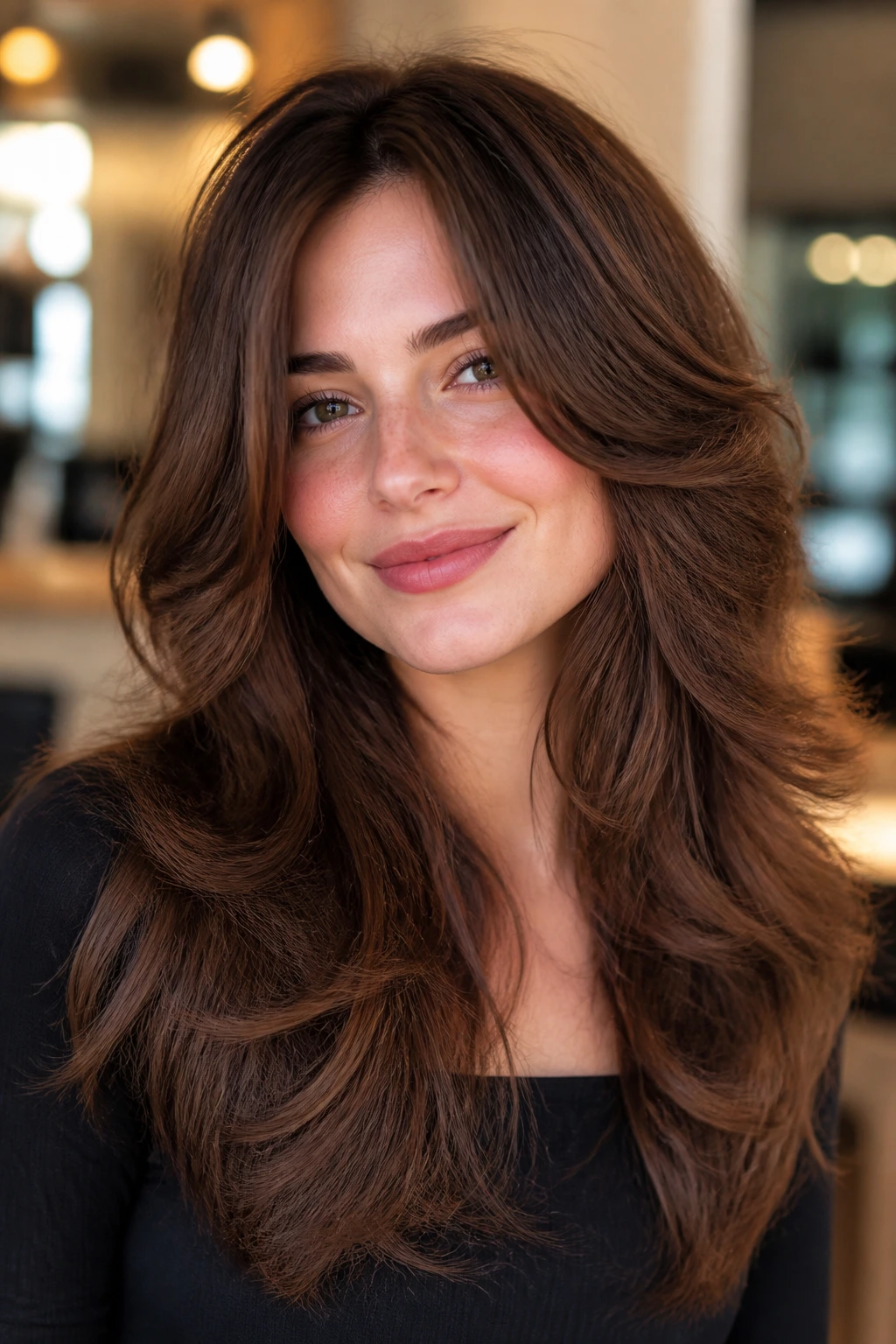
The C-shape is all about curve. Instead of having the layers angle straight down, they wrap inward around the cheekbones and jaw, creating a soft frame that works especially well on thick hair with a little natural wave. The effect is gentler than a sharp angle and less heavy than a blunt curtain of hair.
It’s a good choice if you want your haircut to feel feminine and smooth, not punky or too ragged. The layers should trace the face in a soft arc, then blend into longer mids so the back doesn’t look disconnected.
Styling it right
Use a medium round brush and roll the front away from the face, then inward at the ends. The shape should look like it curves around you, not flares out from you.
13. Micro-Feathered Ends Shag
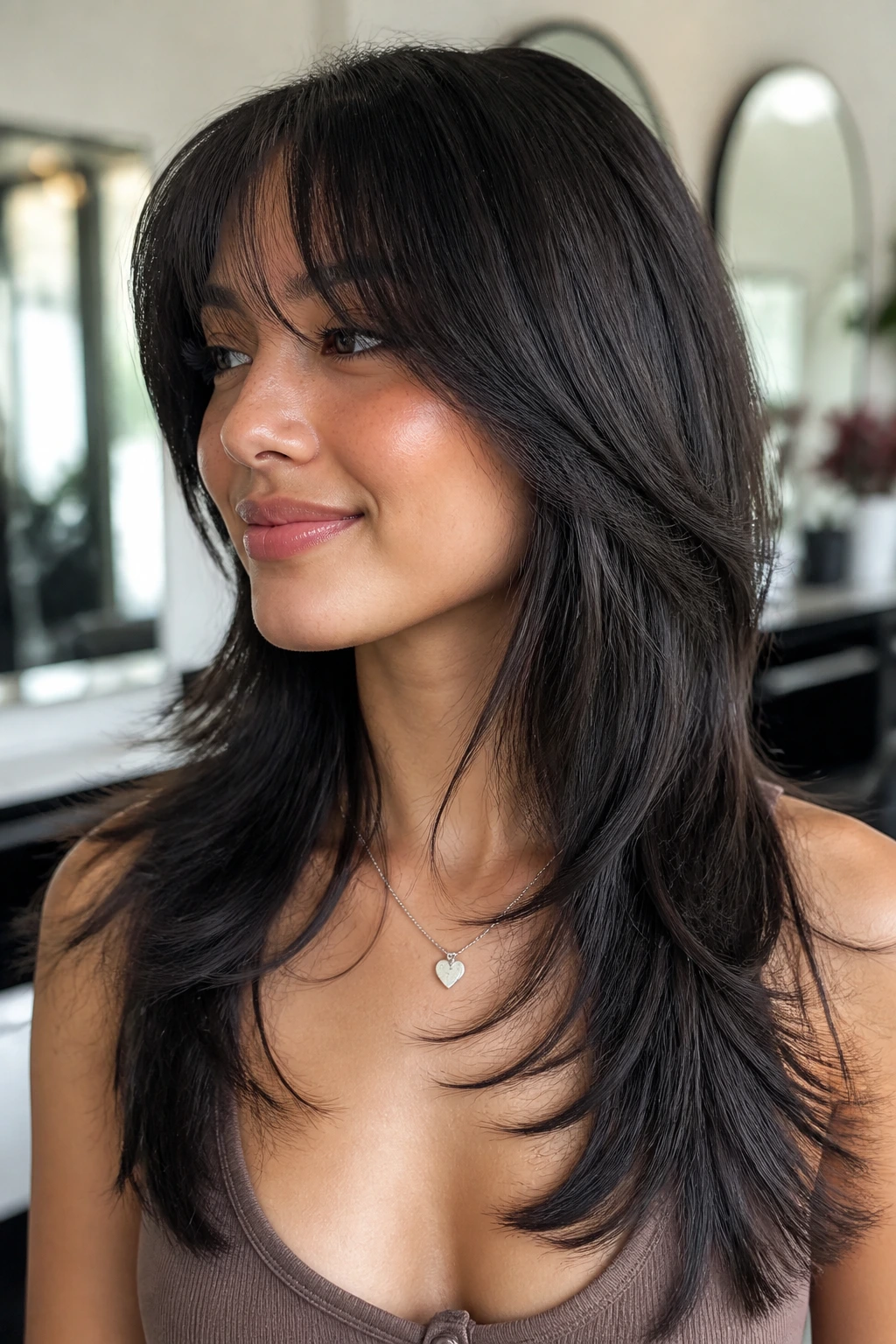
This version is for thick hair that feels sturdy but a little stubborn at the ends. Micro-feathering means the stylist softens the perimeter with tiny, controlled texture rather than chopping in obvious steps. The result is a long shag that looks polished from a distance and feather-light up close.
It’s especially helpful if your ends tend to stick out when air-dried. A soft, slightly broken edge lets them fall with more movement. The cut keeps the overall length intact, which is the whole point if you’re trying not to lose inches.
Best for: coarse or resistant hair that needs a softer finish.
Small warning: too much texturizing can make the ends frizzy. Keep it restrained.
14. Cascading Mid-Back Shag
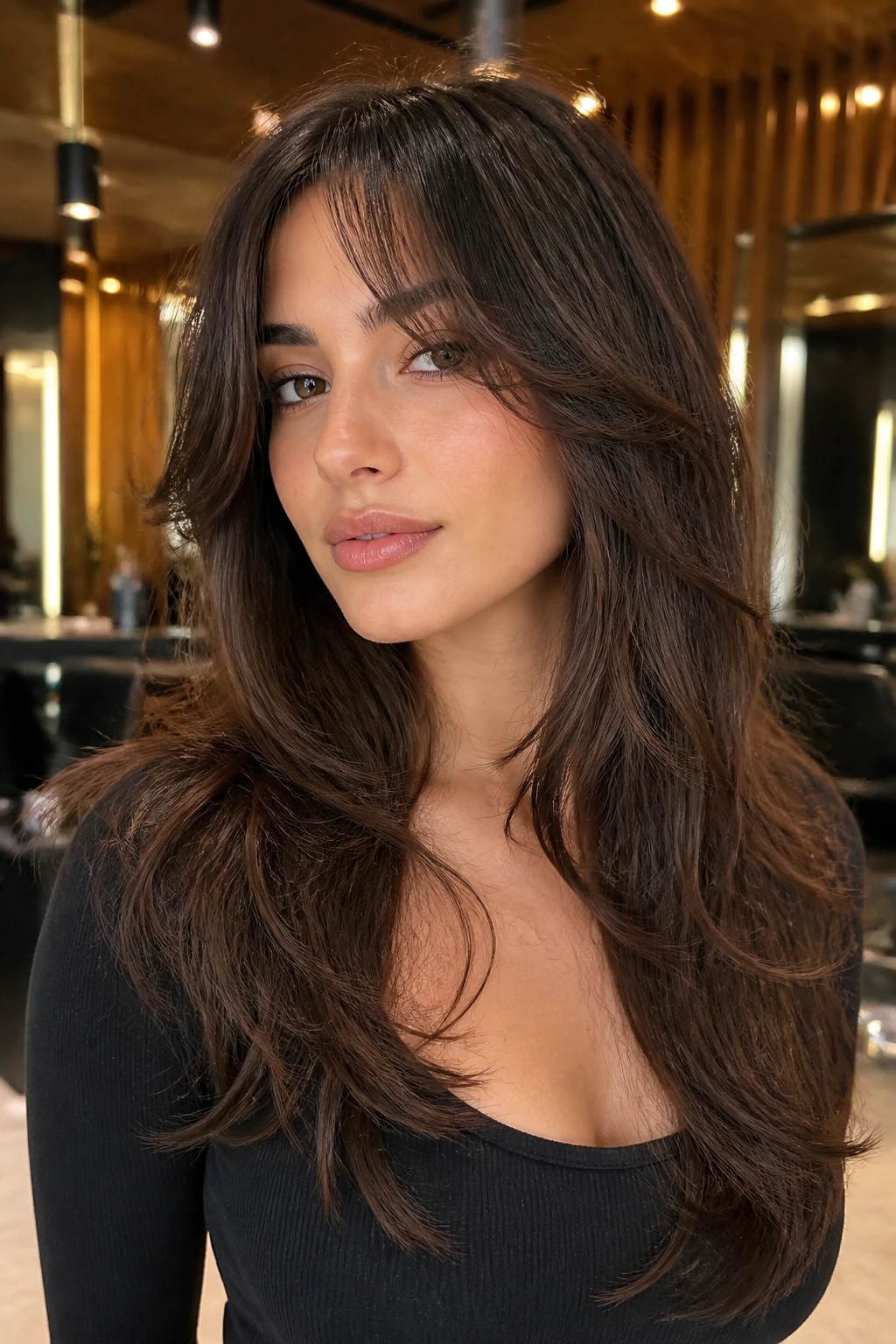
This cut leans glamorous. The layers cascade from the crown through the mid-lengths, leaving the bottom long enough to feel lush. On thick hair, that cascade matters because it prevents the cut from becoming one heavy wall while still keeping the fullness people usually want to keep.
I like this shape when the client wants movement but doesn’t want to sacrifice the feeling of hair. You still get swing, softness, and face framing, but there’s enough weight left in the last few inches to make ponytails and half-ups look good.
Works well with: blowouts, loose waves, and big clips.
15. Rounded Crown Shag
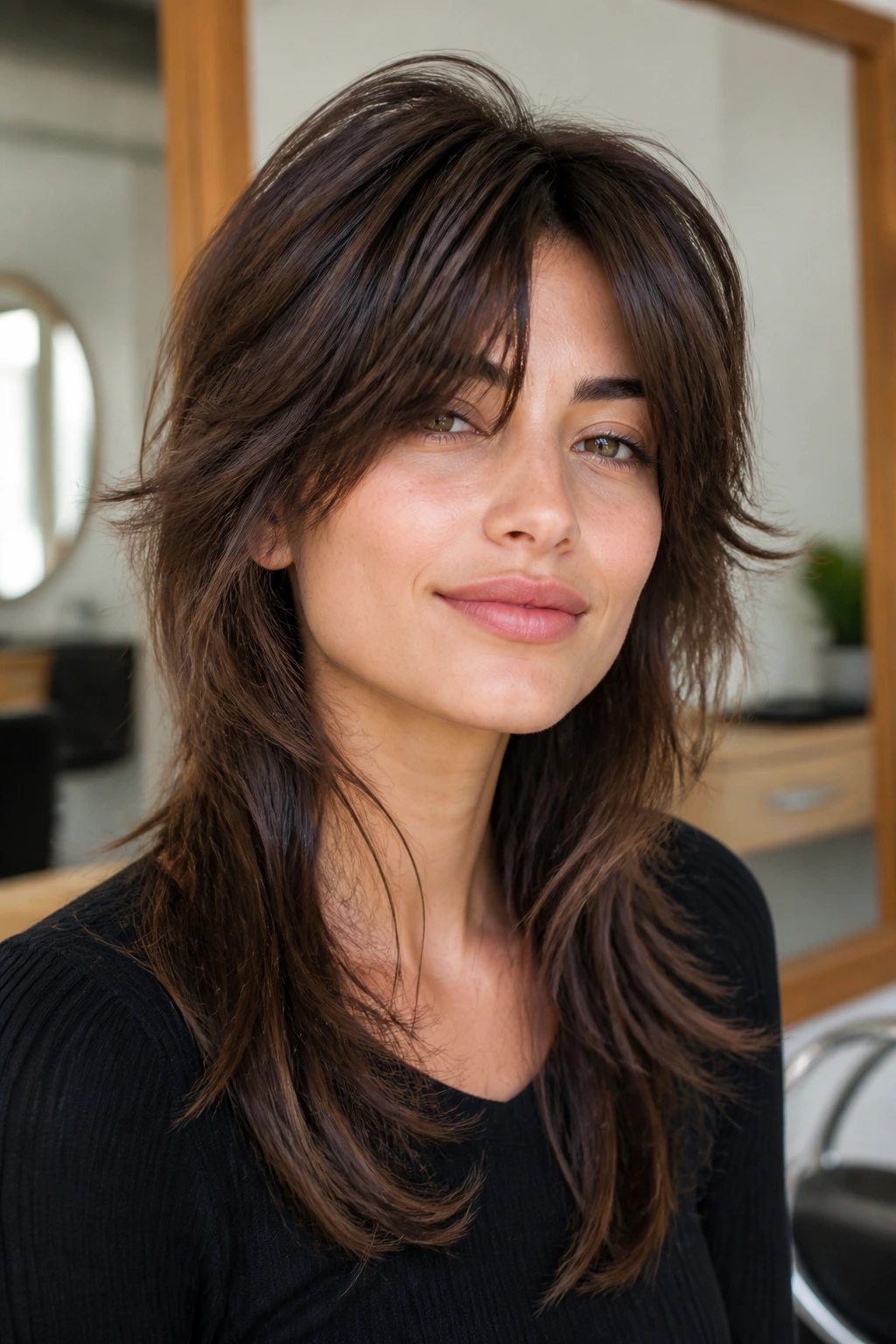
If your thick hair collapses at the top and balloons at the sides, start at the crown. A rounded-crown shag builds lift where the head naturally needs it and lets the layers drop away more softly around the ears and neckline. It’s one of the best shapes for balancing a dense silhouette.
The crown should never be overcut. You’re aiming for gentle elevation, not a pointy top. Long layers through the sides keep the haircut from looking too narrow or too stacked.
Best for: people whose hair goes flat at the roots but bulky at the ends.
Styling note: root-lift spray plus blow-drying with a nozzle changes this cut from okay to excellent.
16. Straight-Hair Shag With Soft Texture
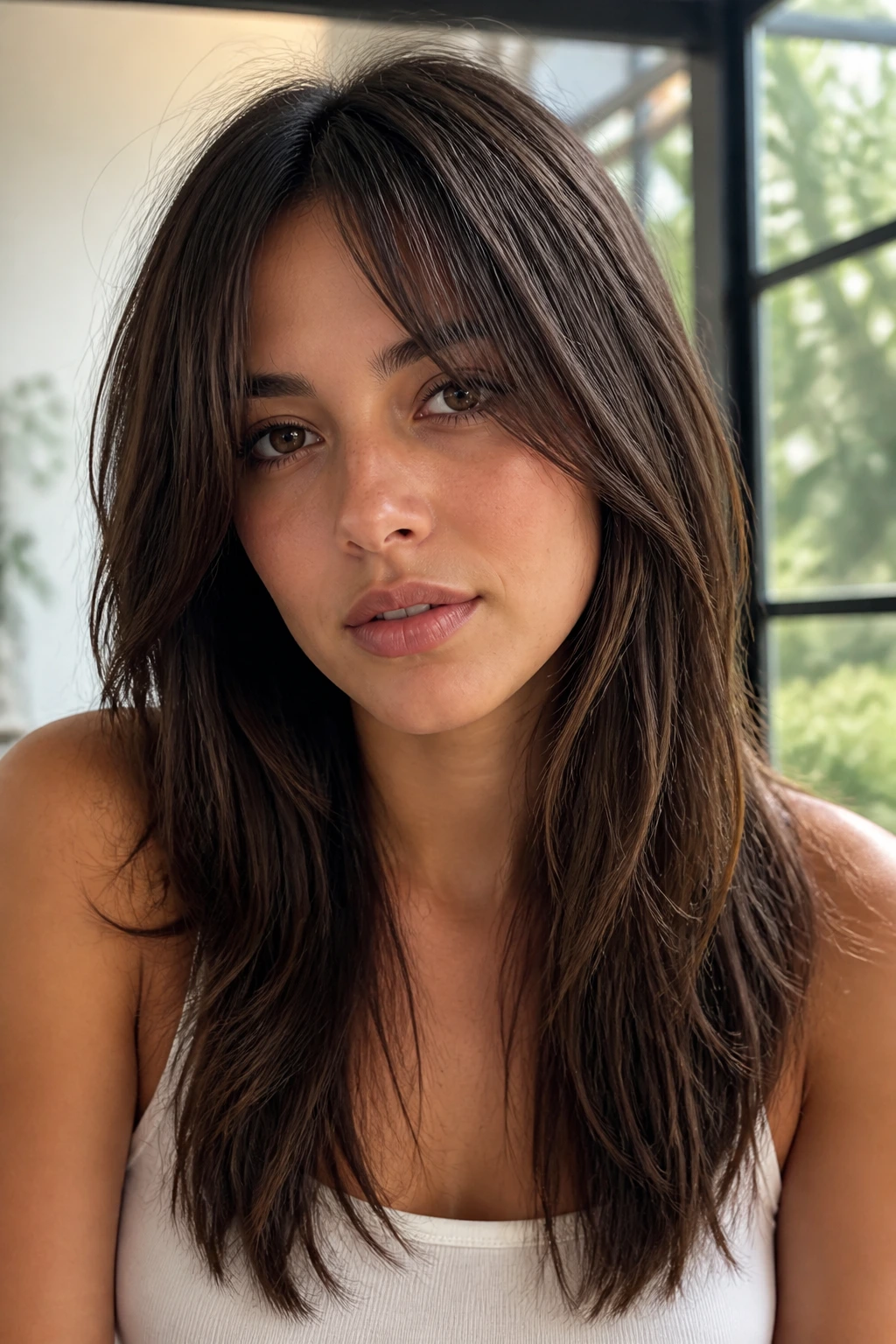
Straight thick hair can be the hardest texture for a shag because it shows every line. That’s why the soft version works: the layers are long enough to blend, but texturizing is still present so the haircut doesn’t sit in one sheet. You get movement without the jagged ends that can make straight hair look choppy in a bad way.
This one needs precision. A stylist who understands over-direction and weight removal will make the difference between “soft texture” and “random uneven bits.” If you wear your hair mostly smooth, this is one of the cleanest options.
Best for: straight, heavy, hard-to-style hair.
17. Curly Thick-Hair Shag
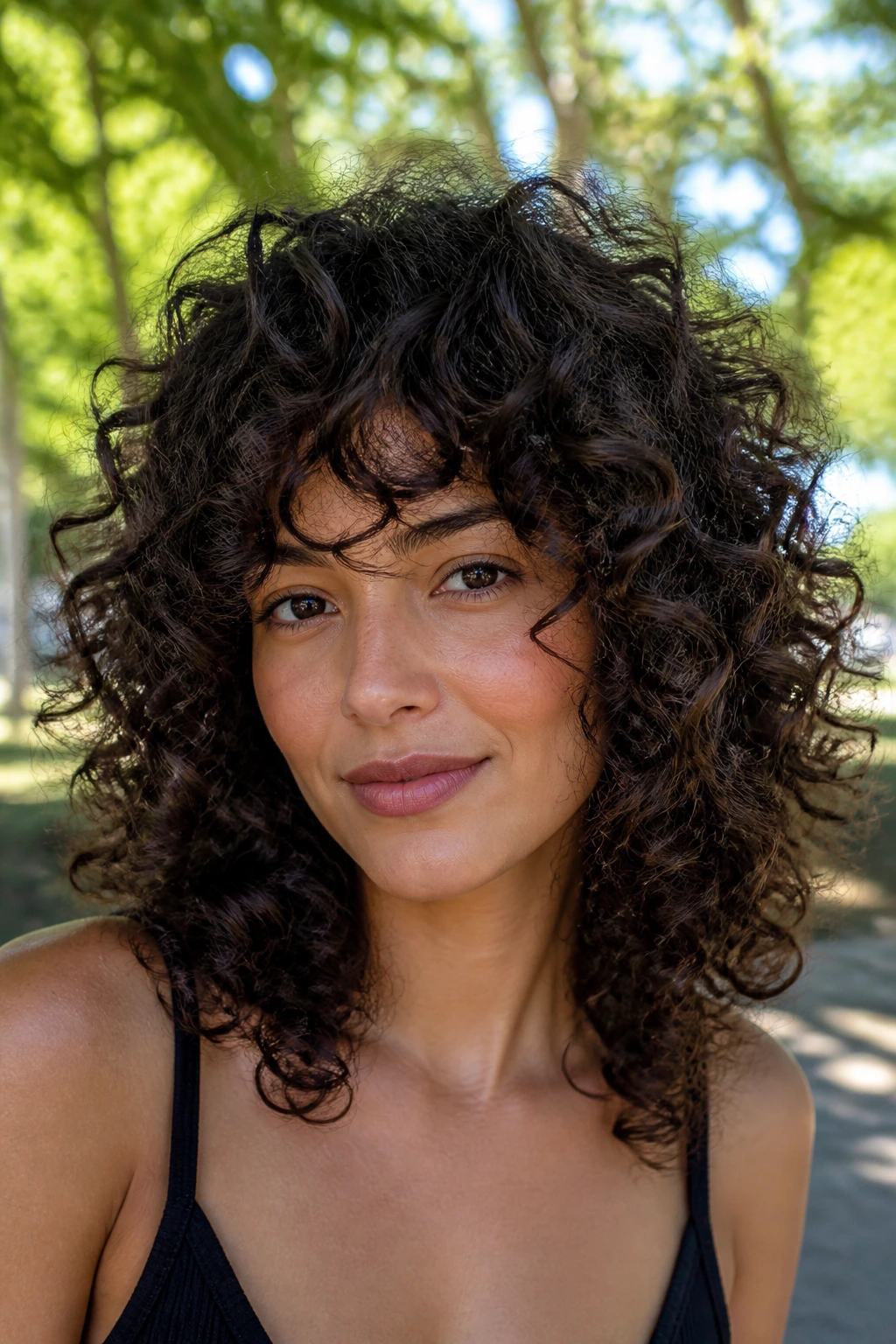
Curly thick hair and shags are a good pairing when the cut respects the curl pattern. The soft layers should be cut to encourage shape, not flatten the curl into weird wedges. When done well, the curls stack with movement and the silhouette stays rounded rather than triangular.
The trick is drying the hair in its natural curl pattern and not pulling it straight while cutting unless the stylist knows exactly how your curls spring back. A curly shag should feel springy, full, and light around the face.
Style it with: leave-in conditioner, gel, and diffusing on low heat.
Truth: curl-by-curl matters here. Don’t let someone guess.
18. Air-Dry Shag
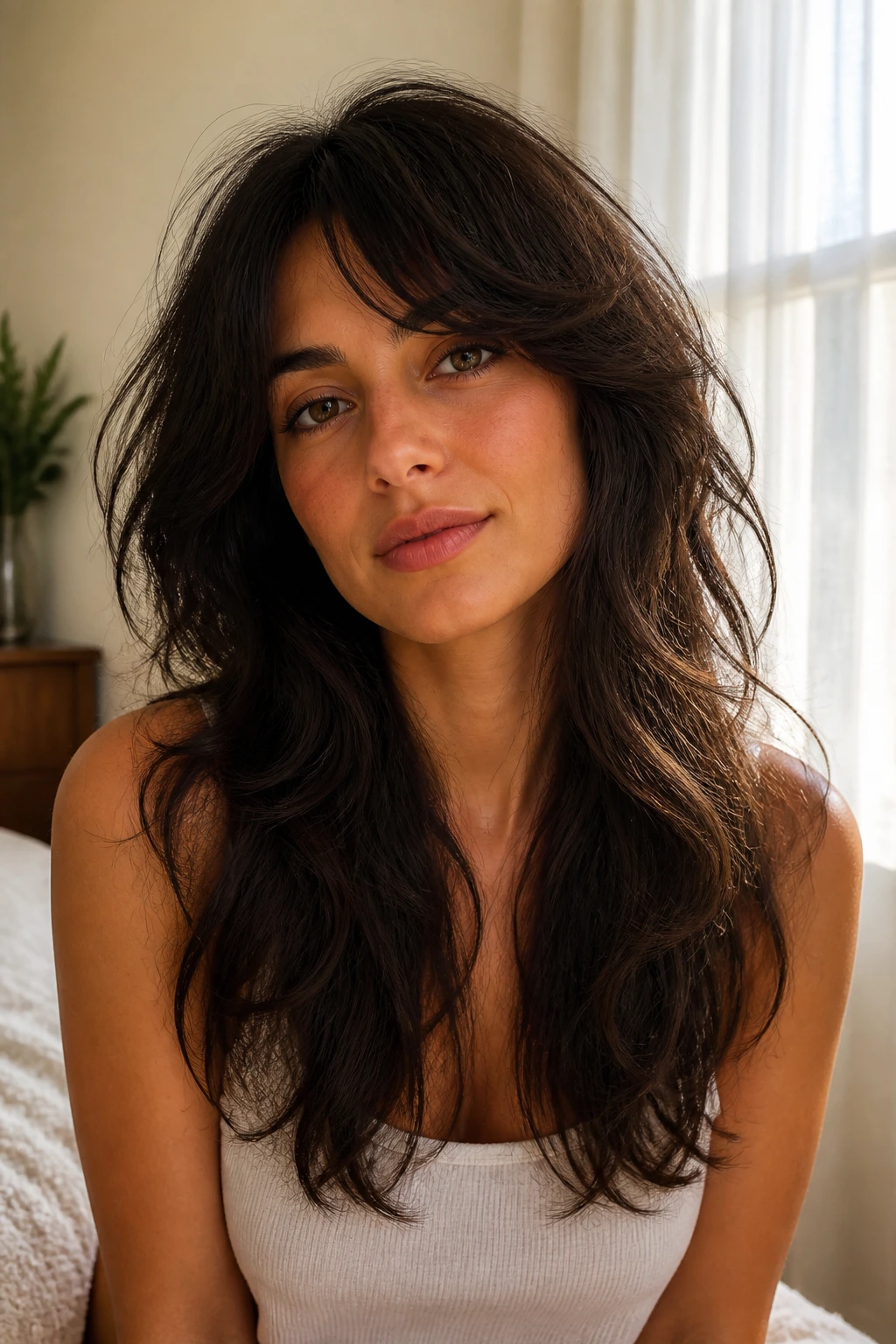
Some cuts need a blowout to behave. This one doesn’t. The air-dry shag is built for thick hair that already wants to bend and move on its own. The layers are long, soft, and placed to dry into shape instead of collapsing into a puff.
This is a practical cut. You wash, squeeze out water, scrunch a little mousse through the mids, and leave it alone. If your hair dries with a slight wave and you want low maintenance more than polished perfection, this shape earns its spot.
Best for: busy routines, natural texture, and humid climates.
19. Romantic Shag With Soft Fringe

This is the gentlest version in the bunch. The fringe sits soft and wispy, the layers fall in a long, blended line, and the whole haircut feels less rock-and-roll and more undone-polished. Thick hair keeps the shape from looking thin, which is part of why it works so well.
The romance comes from softness, not volume alone. Keep the layers long enough to drape around the face and avoid harsh separation at the ends. If you like loose dresses, knit sweaters, and airy texture sprays, you’ll probably like this shape.
Small detail that matters: a little bend in the fringe is enough. Don’t over-style it.
20. Soft Rockstar Shag
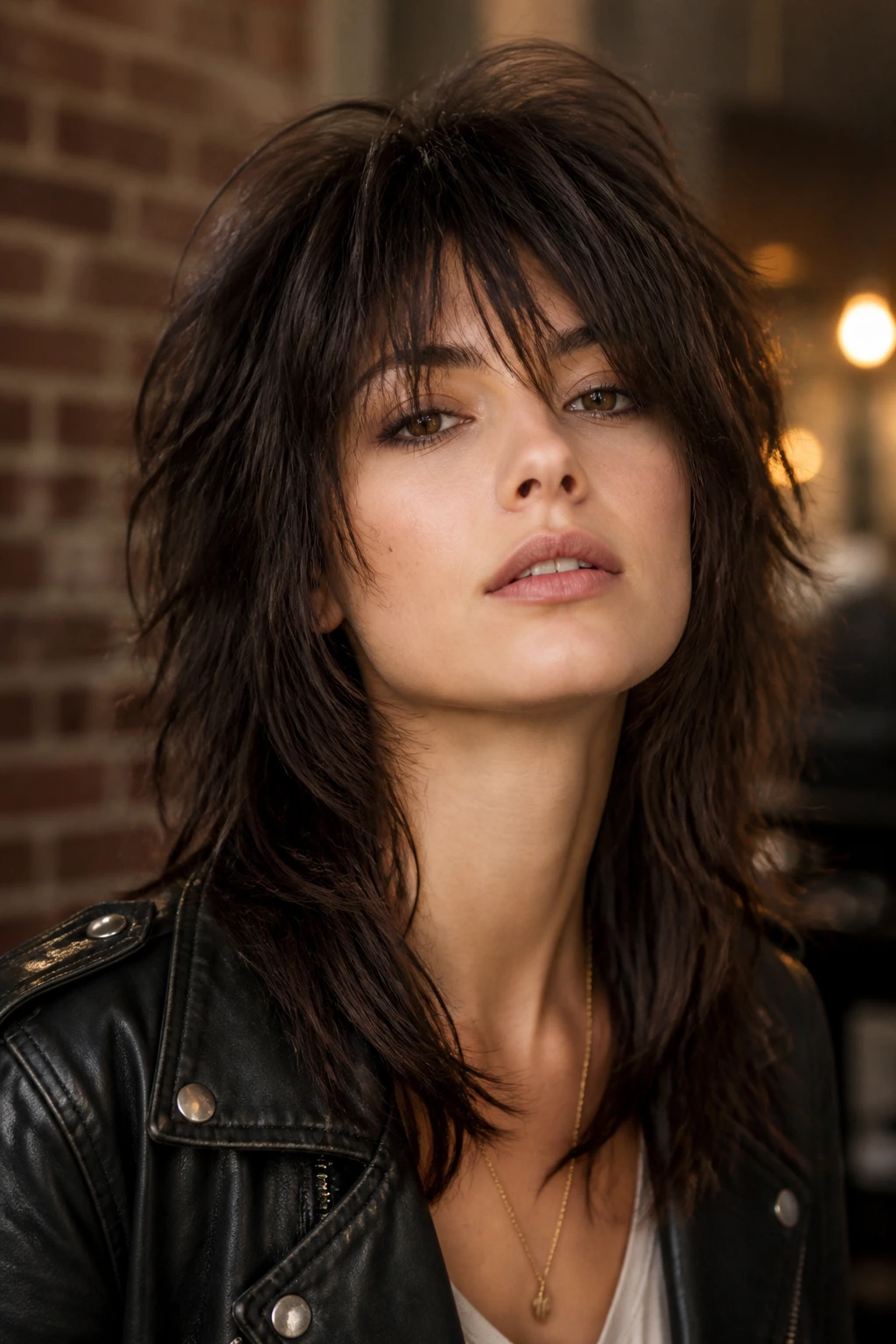
A rockstar shag on thick hair can go too far into feathered chaos. The soft version keeps the attitude but trims back the mess. You still get movement, piecey layers, and a slightly rebellious edge, but the ends stay smooth enough to look intentional.
This cut looks good when it’s a little undone. A few bent pieces around the face, a bit of lift at the crown, and a low-sheen texture spray are all it needs. It’s the haircut equivalent of a leather jacket over a silk top.
21. Round-Face Balance Shag
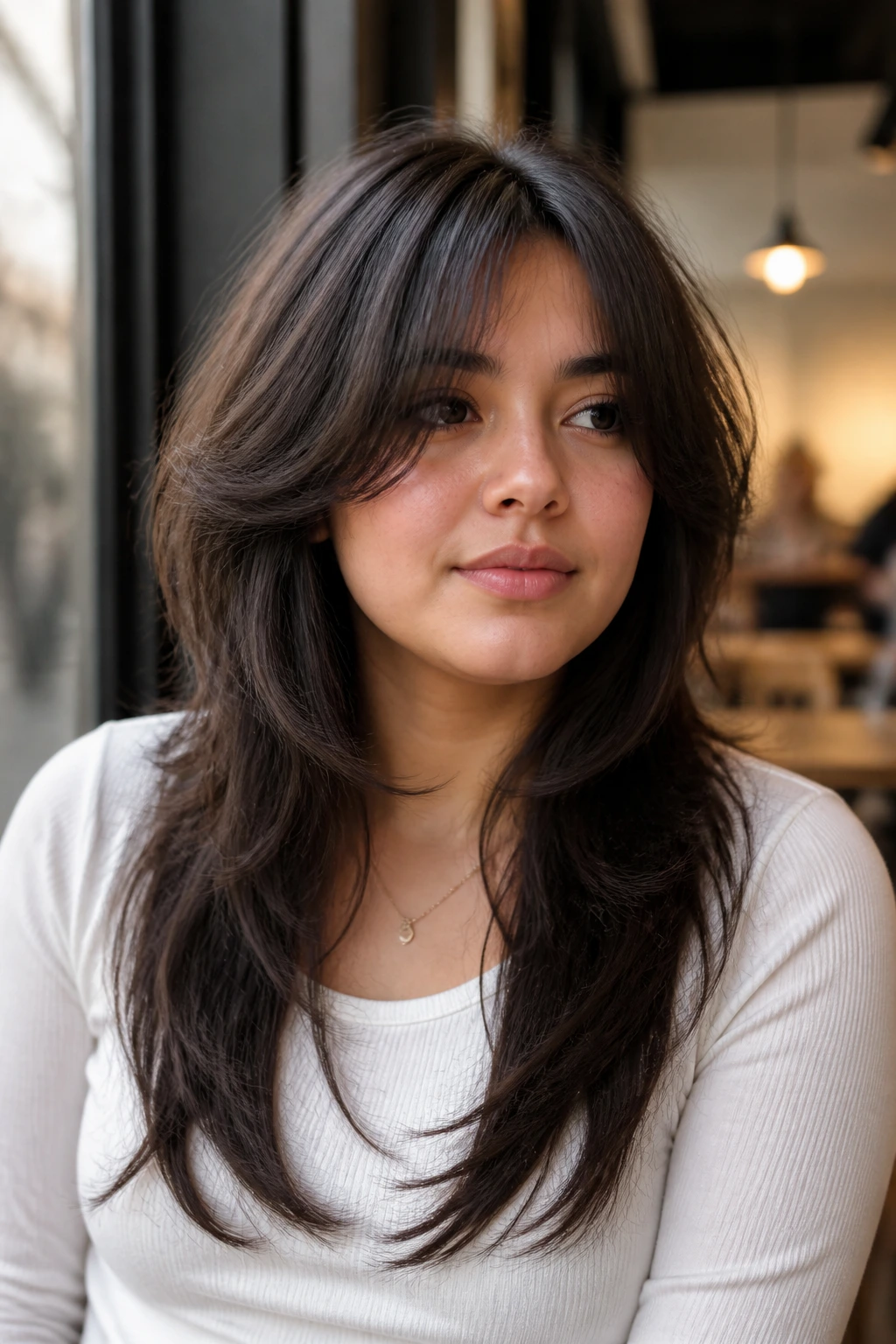
For round faces, the best long shag with soft layers is the one that stretches the silhouette without crowding the cheeks. That means longer face-framing pieces, layers that start below the chin, and a part that doesn’t sit too flat in the middle. Thick hair helps here because it holds the structure.
You want vertical movement. Not width. The soft layers should fall along the sides of the face and taper below the jaw so the haircut doesn’t add extra fullness at the widest point.
Best styling move
Create lift at the crown and keep the side pieces slightly forward, then tuck one side behind the ear. That one move can make the shape look cleaner in a second.
22. Square-Jaw Softened Shag
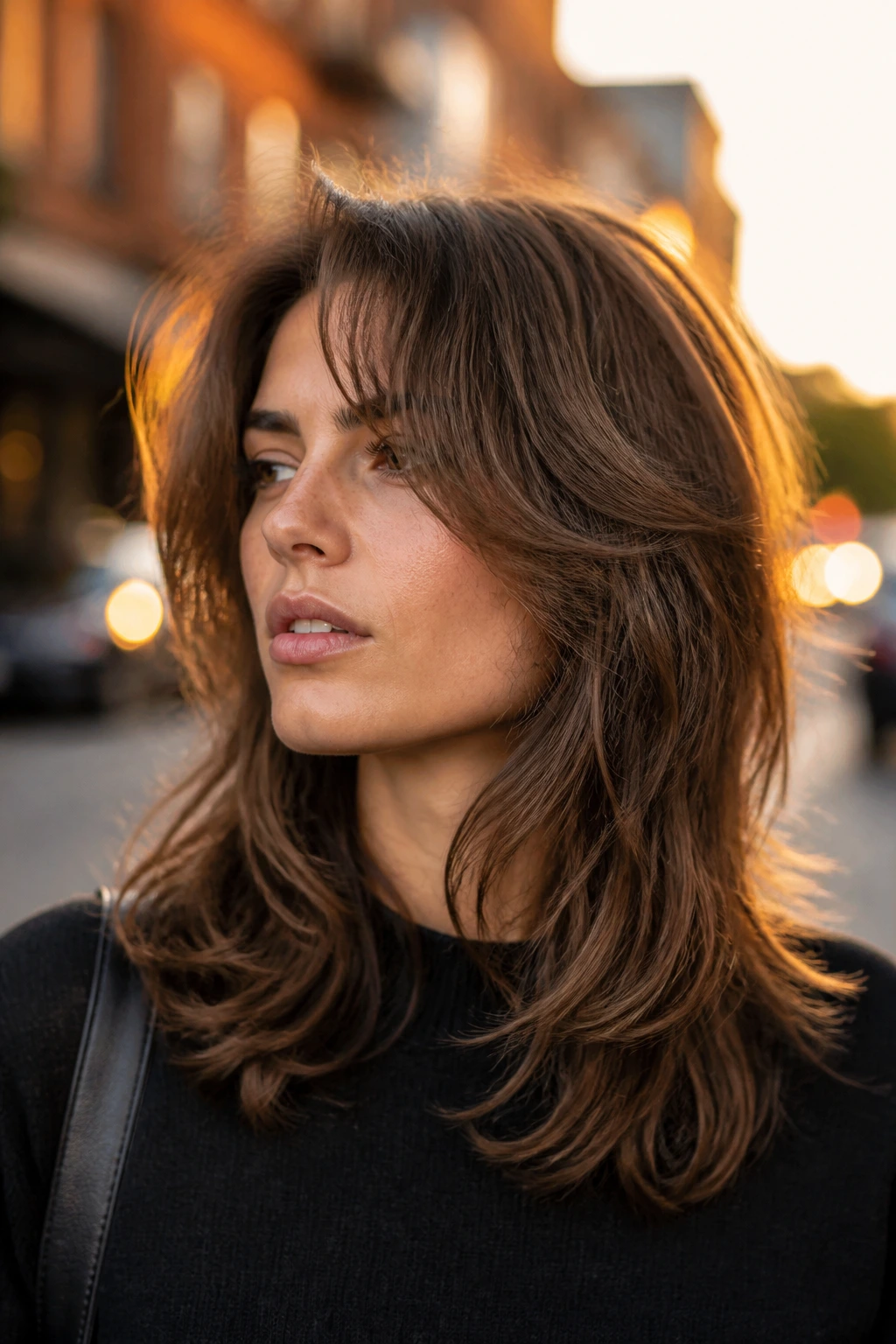
Square jaws need softness around the corners, not blunt ends that echo the jawline back at you. A long shag with soft layers does that beautifully when the front pieces curve below the chin and the ends stay feathered rather than hard. Thick hair gives the cut enough body to soften the lower face without collapsing.
This is a great place for side-swept curtain pieces or a bottleneck fringe. The goal is to blur the jaw, not hide it. Let the haircut move around the face in a curve, and avoid stopping the shortest layer right at the jawline.
Best for: anyone who wants softness without losing structure.
How Long Shag Layers Remove Bulk Without Stealing the Hair
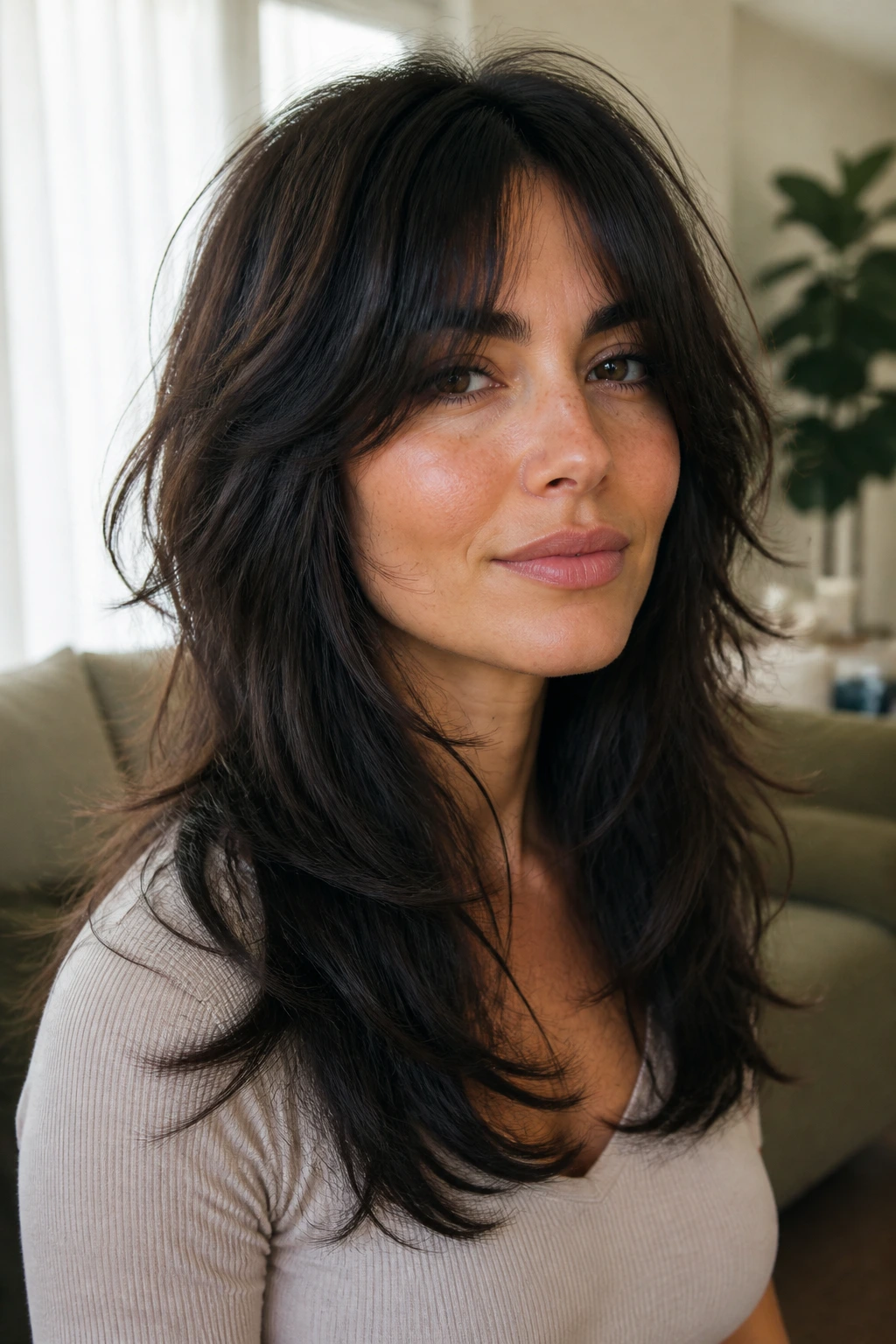
The whole point of soft layers is balance. Thick hair does not need to be “thinned out” into a sad, wispy outline. It needs strategic weight removal in places where the hair piles up — usually the crown, the sides just below the ears, and the inner mid-lengths that create the shelf effect.
A good stylist works in sections and checks how the hair falls after each cut. That sounds basic, but it matters. Thick hair can hide mistakes while it’s wet, then spring into a different shape when it dries. The best long shag haircuts for thick hair with soft layers account for that movement instead of pretending hair behaves the same way on the chair as it does at home.
If you like your length, say so early. Then talk about where the heaviness lives. That’s the useful conversation: not “I want layers,” but “my sides puff out and my ends sit too blunt.” Same haircut request, much better result.
Essential Tools for Styling These Cuts
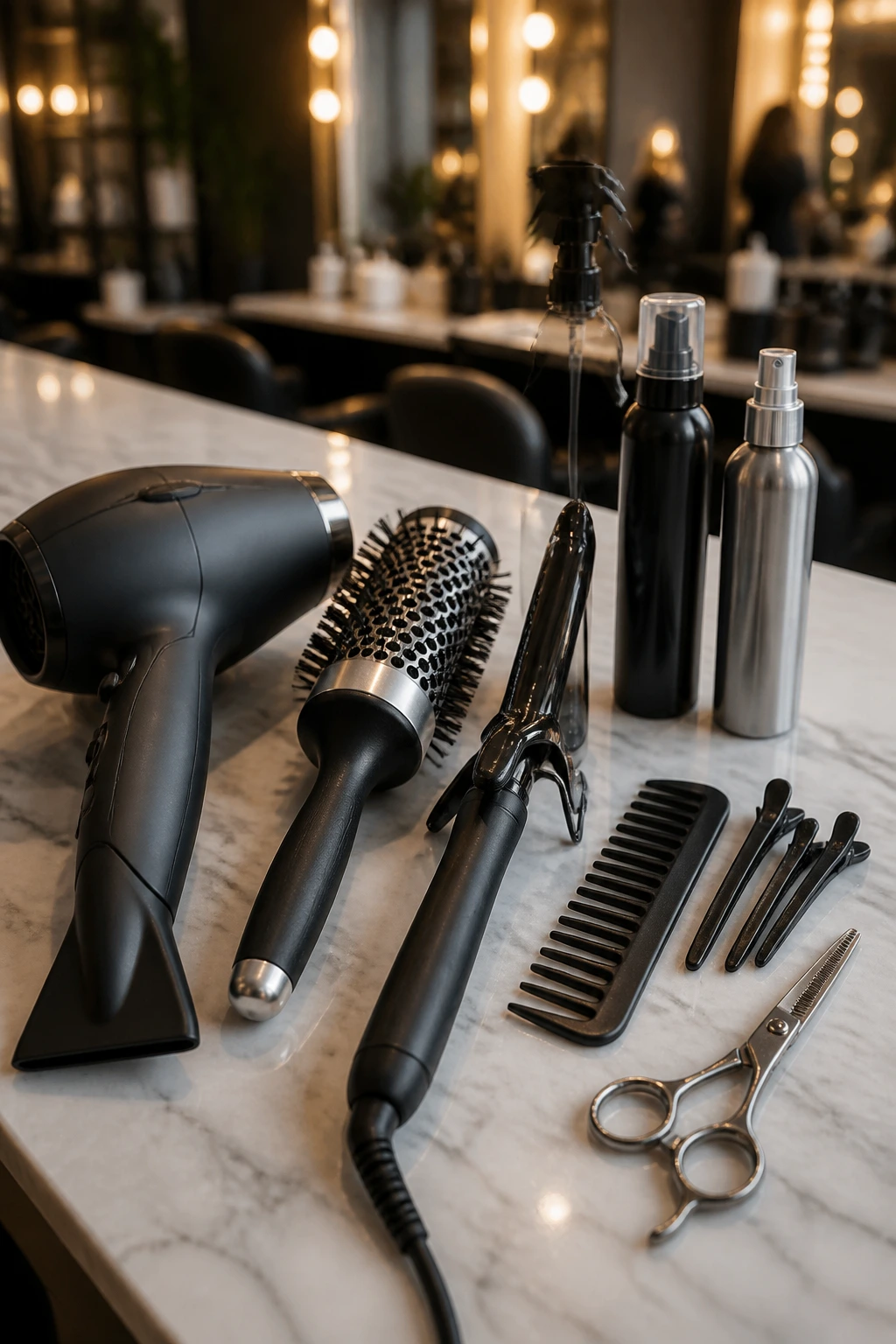
- Blow dryer with a nozzle attachment: Helps direct thick hair so the roots lift instead of blasting every layer in random directions.
- 2-inch round brush: Good for long curtain bangs, face-framing pieces, and soft bends through the mids.
- 1.25-inch curling iron or wand: Gives loose wave and movement without turning the cut into a tight curl set.
- Heat protectant spray: Thick hair still burns; the hair shaft doesn’t care that it looks healthy.
- Light mousse or root lift spray: Useful if the crown needs a little support.
- Texture spray: Adds piecey separation to shag layers without making them crunchy.
- Wide-tooth comb: Better than a fine comb for detangling layered hair without wrecking the shape.
- Sectioning clips: A small thing, but they make blow-drying thick hair less chaotic.
- Salon texturizing shears or razor: These belong in a pro’s hand, not in your bathroom drawer.
How to Ask for the Cut at the Salon
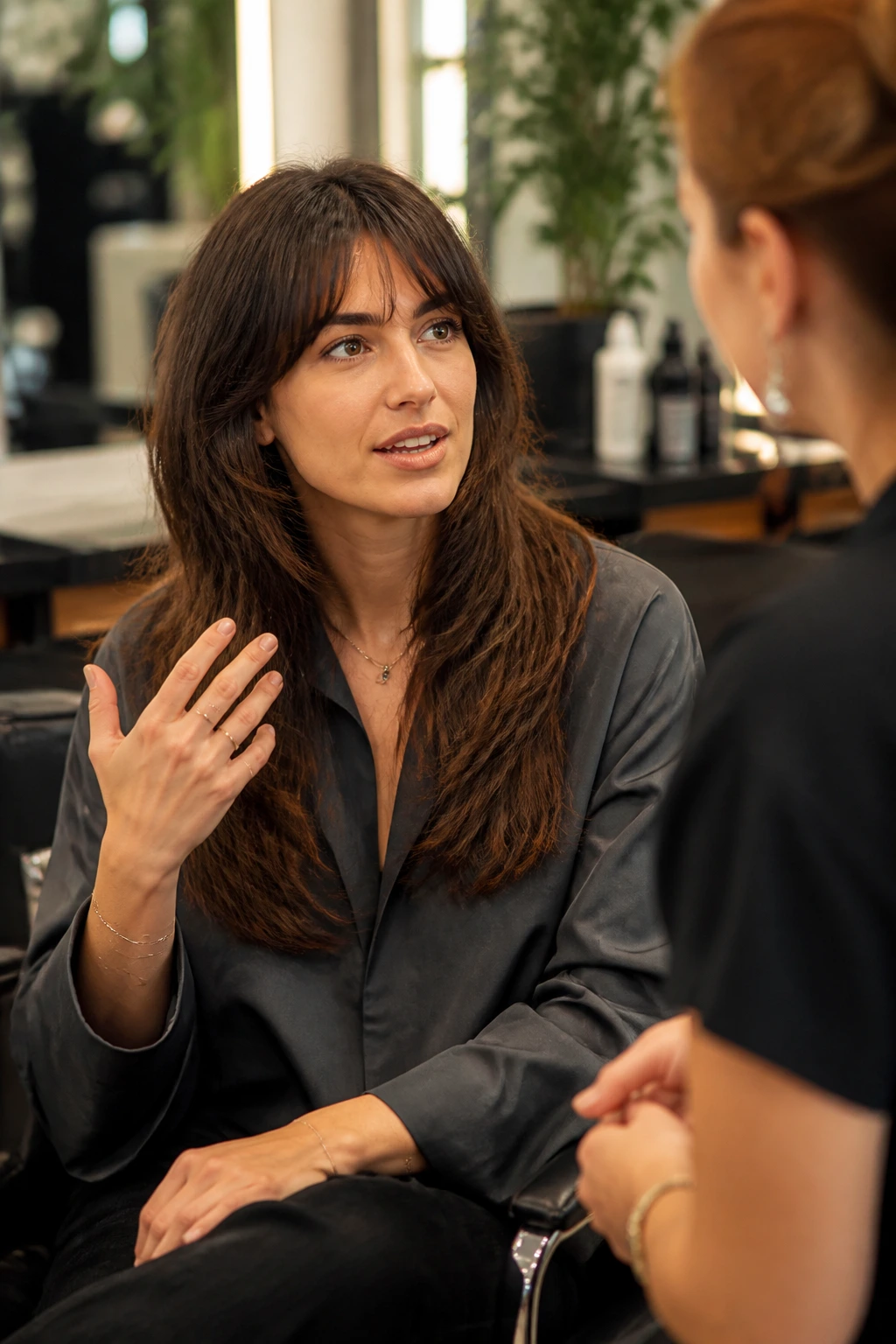
Bring pictures, but don’t stop there. Pictures only show the vibe. You still need to describe what you want the hair to do. Say whether you want movement around the face, weight kept at the ends, softer crown volume, or a shape that air-dries well. That gives the stylist something usable.
Use plain words. Try: “I want long layers that remove bulk without making the ends skinny.” Or: “I like a shag shape, but I don’t want it to look choppy.” Those sentences are more helpful than asking for “softness,” which means different things to different stylists.
If your hair is very dense, ask where the heaviest section sits when it’s dry. Some people carry weight at the sides. Others get the bulk in the back. That difference changes the cut. A good stylist will listen for that, not just the word “shag.”
Styling Thick Hair So the Layers Stay Soft
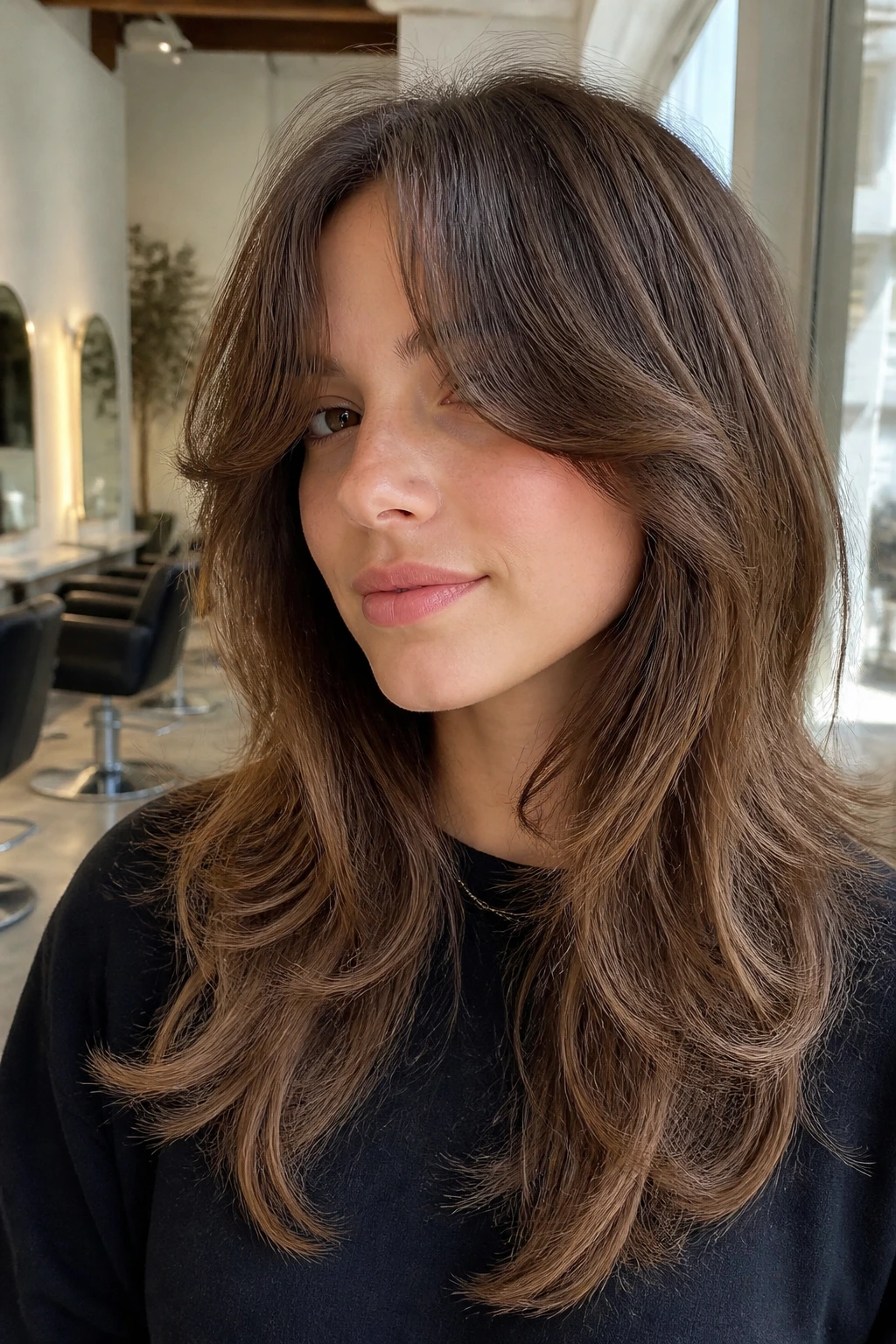
Thick hair can go from soft to poufy in about five minutes if you rough-dry it carelessly. Start with the roots and direction. Drying the root area with intent is more useful than chasing every end with a brush. You want the base to sit where you tell it to sit.
Use enough product, but not too much. A nickel-sized amount of mousse, a light mist of heat protectant, and a small hit of texture spray are usually enough for shoulder-to-long hair. If the hair feels sticky before you finish styling, it will look heavy instead of airy.
Air-drying can work, but only if the haircut is cut for it. If you have straight thick hair with stubborn ends, a quick bend at the front pieces makes the difference between “easy” and “sloppy.” If you have waves or curls, scrunching while the hair is damp helps the layers settle into their shape.
Common Mistakes That Make Thick Hair Look Wider
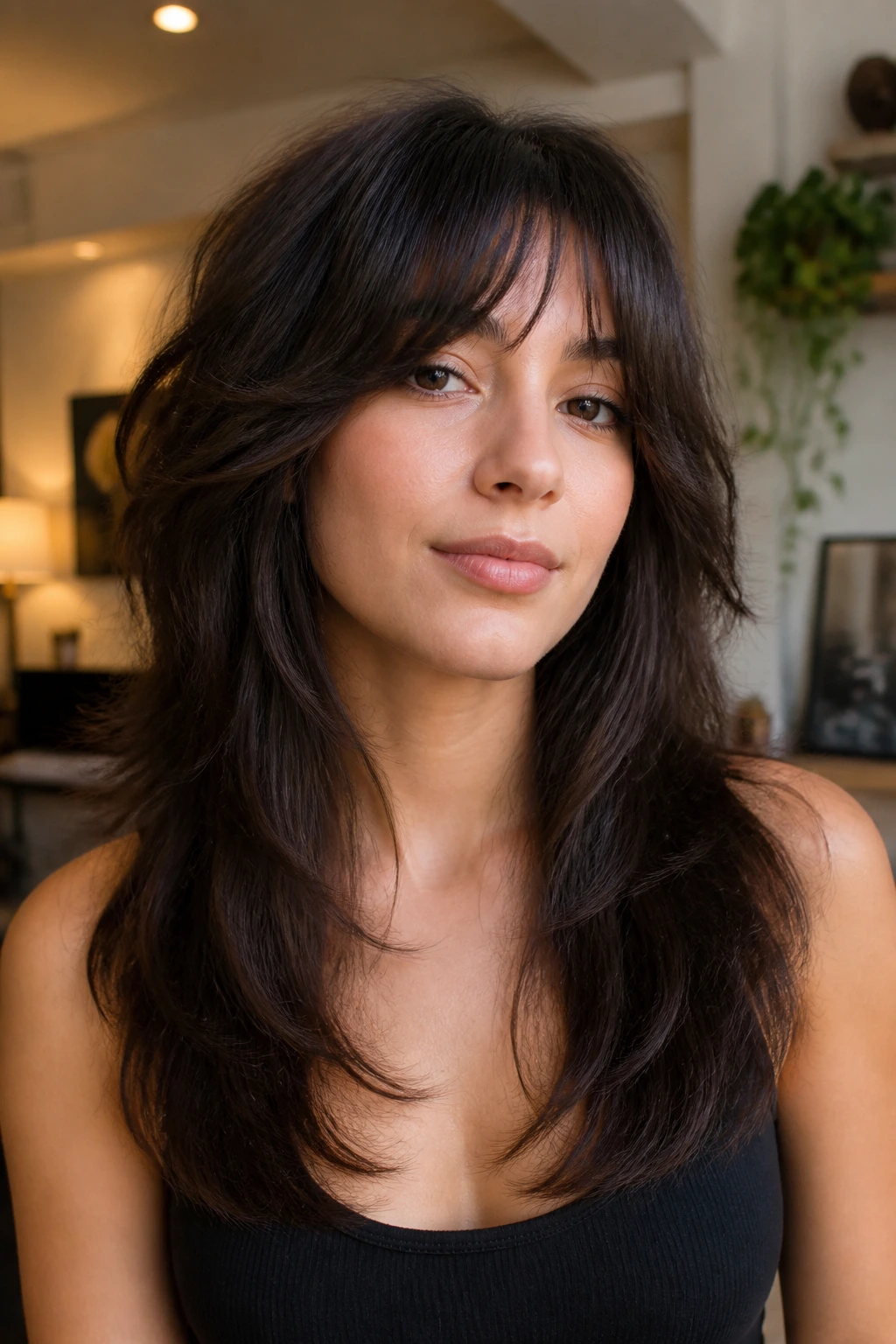
The first mistake is asking for too many short layers at the top. That can create lift, yes, but it can also build a mushroom shape. The fix is longer layers that start lower and remove bulk gradually.
Second: over-thinning the ends. Thin ends on thick hair can look see-through and frayed, especially once the hair is pulled into a ponytail. Keep some weight at the perimeter so the haircut still feels full.
Third: ignoring the part. A heavy center part can make some thick shag cuts fall flat on top and wider at the sides. A side part or off-center part often gives the shape a better balance.
Fourth: styling every piece the same way. Shags look best when the front gets more shaping than the back. If you curl all of it uniformly, you erase the haircut’s natural movement.
Fifth: waiting too long for a trim. Thick hair can hide split ends for a while, but once the layers lose their outline, the whole cut starts looking fuzzy. Eight to twelve weeks is the window I’d keep in mind.
Variations and Alternatives to Try
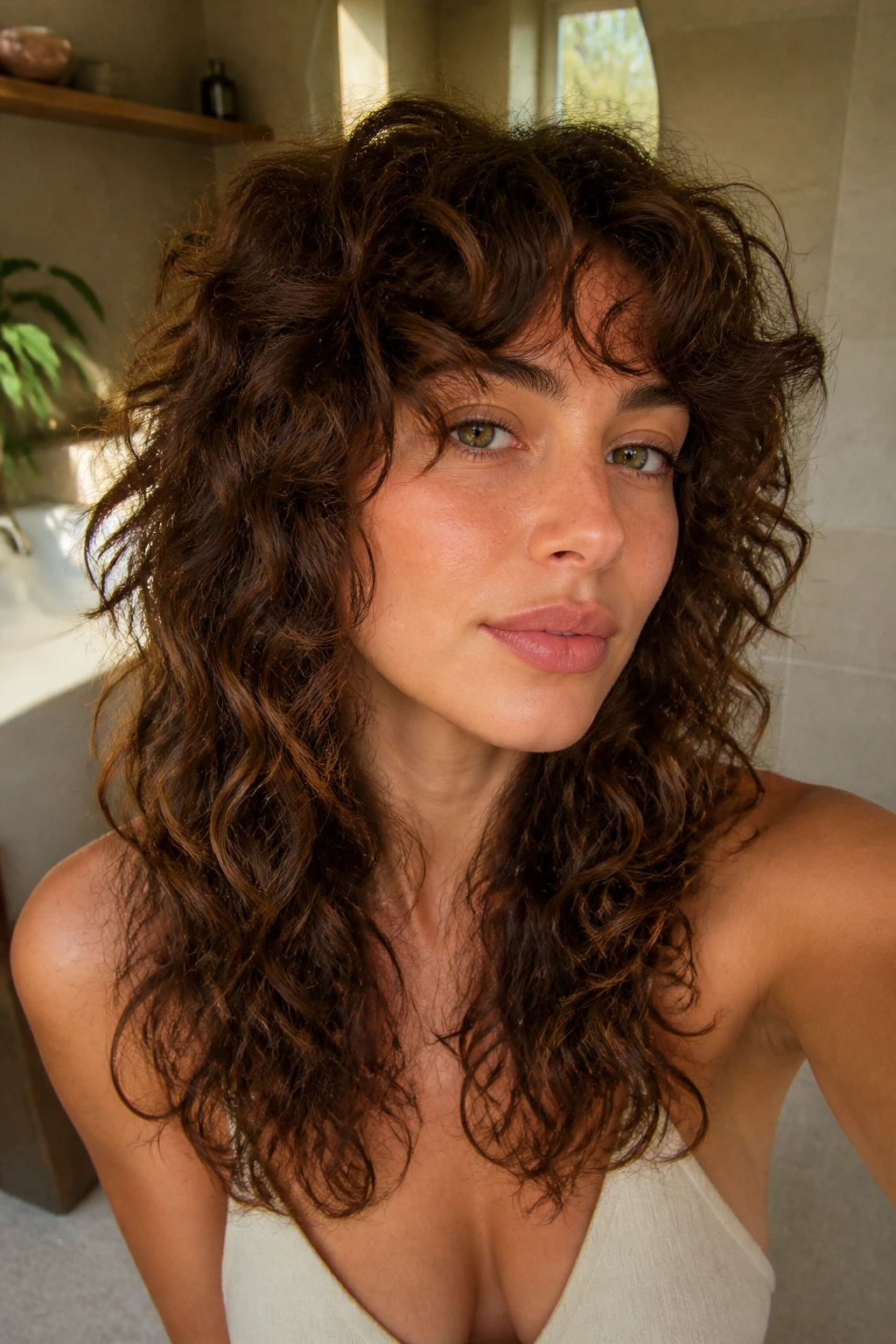
The Softer Wolf: Keep the crown lift and face shape of a wolf cut, but leave the ends fuller and longer. Good if you want edge without the shredded finish.
The Airy Blowout Shag: Ask for long layers that look best with a round-brush blowout. This one is ideal if you style your hair often and want the front to sweep cleanly away from the face.
The Curly-First Shag: Designed for curls and coils, with layers cut to work with shrinkage rather than fight it. Best when you want shape but not a pyramid.
The Straight-Sleek Shag: Built for thick straight hair, with softer texturizing and less separation. Use this if you usually wear your hair smooth and want movement without visible choppiness.
The Face-Frame Heavy Version: More emphasis on curtain bangs, bottleneck bangs, or long front pieces. Great if you want a haircut that changes your face shape without touching much of the length.
Maintenance That Keeps the Shape From Falling Apart

Thick hair is generous, but it grows into its old shape fast. Plan on a trim every 8 to 10 weeks if you want the layers to stay visible. If you stretch that much longer, the shag can lose its shape and turn into long, heavy hair with a few leftovers around the face.
Wash routine matters too. If your hair gets weighed down easily, use a clarifying shampoo every couple of weeks to clear product and oil from the roots. Don’t overdo it. Too much clarifying can make thick hair feel dry and rough at the ends.
At home, the easiest maintenance trick is not to overfight the cut. These layers look best when they’re allowed a little movement. A soft bend at the front, a light texture spray through the mids, and a clean root finish will do more than ten extra minutes with a straightener.
Frequently Asked Questions
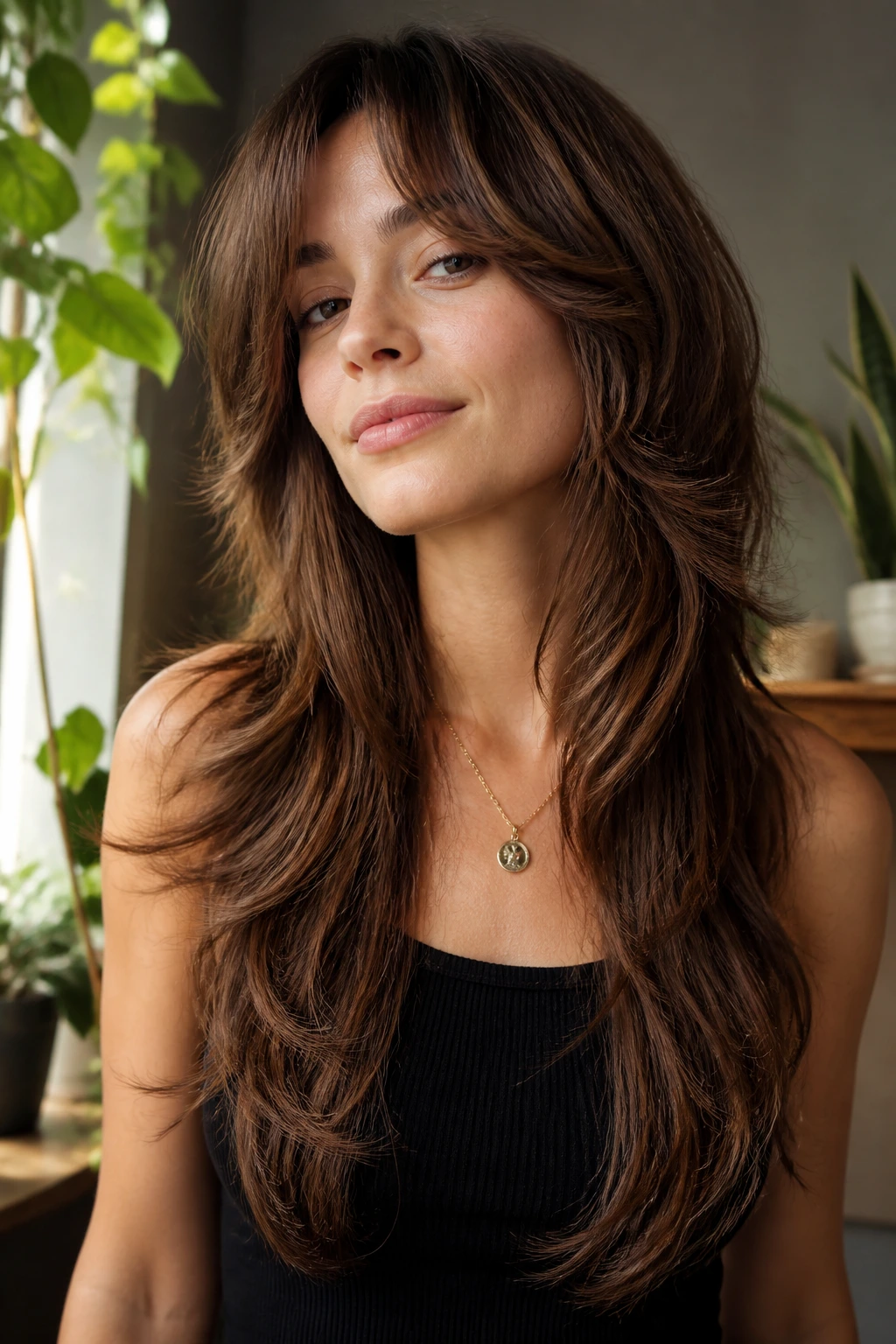
Is a shag haircut good for thick hair?
Yes, if the layers are cut with restraint. Thick hair needs bulk removed, but it still needs weight at the ends so the shape doesn’t puff up or look stringy.
What’s the difference between a shag and a wolf cut?
A wolf cut usually has a more dramatic crown and a tougher, choppier outline. A shag can be softer, longer, and less extreme, which is why it often works better for people who want movement without a wild finish.
Will soft layers make thick hair look thinner?
Not if they’re done well. Soft layers remove bulk inside the haircut while leaving the perimeter full, so the hair still looks dense and healthy.
Can I keep my length and still get a shag?
Absolutely. A long shag is built for that. The stylist can keep the bottom length while creating movement higher up in the shape.
How do I stop my thick hair from looking triangular?
Keep the layers long enough to blend and make sure the heaviest weight is removed through the sides and interior, not just at the very top. A good part and a little crown lift help too.
Do I need bangs for this cut to work?
No, but curtain bangs, bottleneck bangs, or long face-framing pieces usually help the haircut feel finished. If you hate fringe, long face layers can do the job without committing to bangs.
What if my hair is straight and resistant?
Then ask for soft internal layers and a little shaping around the front, not aggressive texturizing everywhere. Straight thick hair needs movement, but it punishes overcut ends fast.
Can I air-dry a long shag?
Yes, especially if your hair already has wave or curl. Straight thick hair may still need a bit of root direction or a quick bend through the front to keep the shape from drying too bulky.
The Shape That Lets Thick Hair Breathe
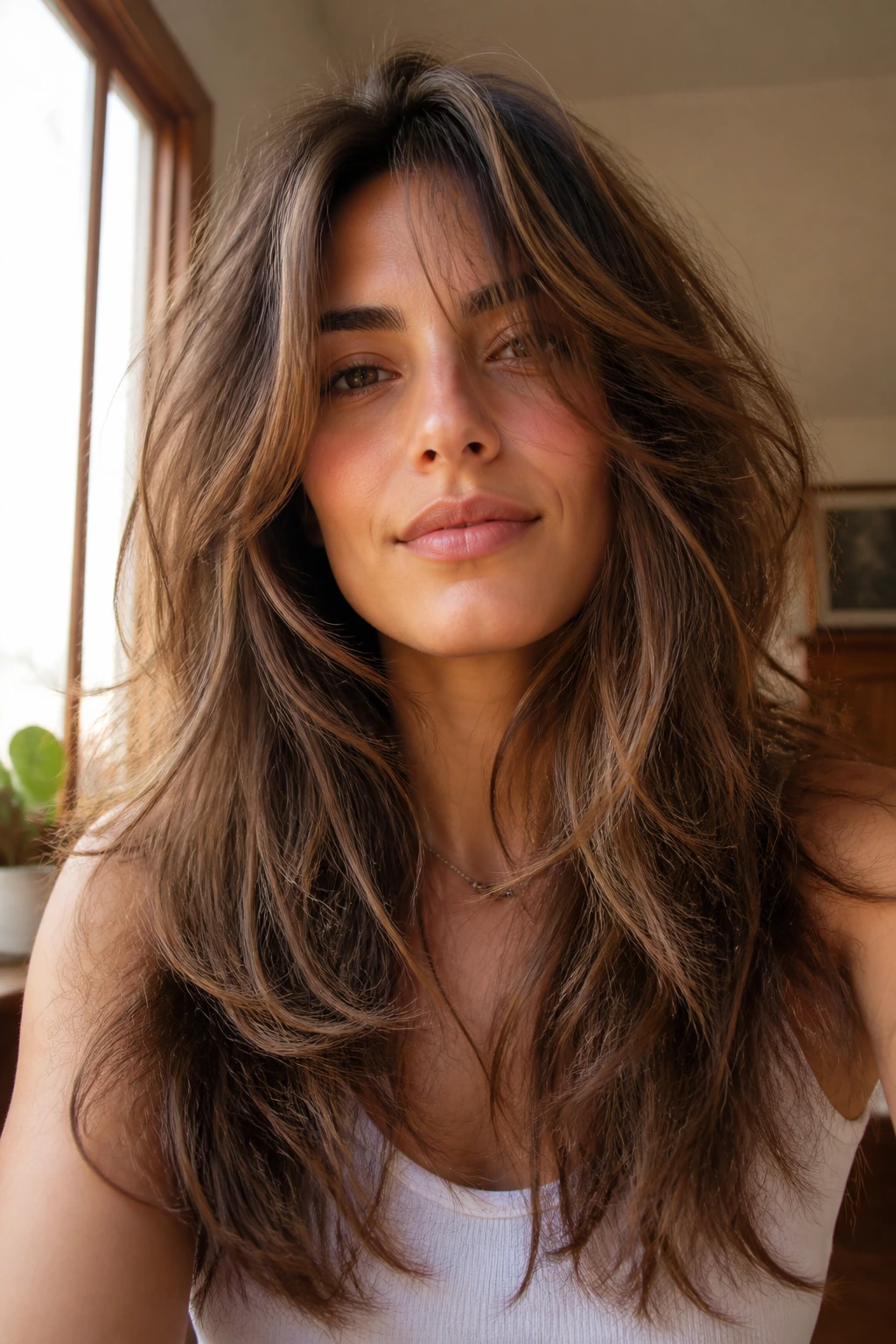
A good long shag on thick hair does something blunt cuts rarely manage: it gives the hair room to move without stealing its body. That balance is the whole story here. Not thinner. Not bigger. Just better shaped.
The soft-layered versions are the ones I trust most because they grow out kindly, style with less drama, and still look like you meant it. If your hair has been feeling heavy, square, or hard to wake up in the morning, one of these shapes can change the way it sits from the first wash onward.
Bring one photo, then describe the weight problem in plain words. That’s usually where the real haircut starts.