



If your waves look best the second you stop touching them, the problem is usually the cut, not the hair.
Wavy hair has a funny habit of telling on a bad shape almost immediately. A blunt line in the wrong spot turns into a puffed-out shelf. Too many short layers can make the ends go stringy and dry by noon. And a bob that looked polished in the salon mirror can come home and widen at the sides like it has a mind of its own.
The sweet spot is a short haircut that already knows what your hair wants to do. It needs enough structure to keep the shape, enough softness to let the bends fall where they want, and just enough weight in the right places so you’re not fighting the outline every morning. A good no-styling cut for waves should air-dry into something that looks intentional after a towel blot, a shake, and maybe a quick finger rake. That’s it. No round brush. No diffuser you’re dragging from room to room. No elaborate routine that evaporates the minute you oversleep.
Why These Short Haircuts Work for Wavy Hair
-
They respect the wave pattern: A cut that follows the natural bend of your hair looks better at 7 a.m. than one that forces a straight line where your hair wants a curve.
-
They keep weight where waves need it: Too much debulking makes wavy hair frizz out; the right amount of weight in the perimeter keeps the shape from ballooning.
-
They grow out without a fight: A smart short cut should still look decent six or eight weeks later, even when the edges have softened and the fringe has moved.
-
They work with uneven texture: Most wavy hair isn’t uniform from root to ends. The best cuts leave room for that difference instead of trying to iron it out.
-
They cut down on daily decisions: If the haircut already lands in the right place, you can wash, blot, and leave. That’s the whole point.
-
They can be tailored to density: Fine waves need a different outline than thick, springy ones, and the right short cut makes that adjustment obvious from the chair.
1. Jaw-Grazing Blunt Bob
This is the cut I reach for when I want waves to look crisp without looking stiff. The line sits around the jaw, which gives loose S-waves a place to settle instead of collapsing into the neck or flaring out at the shoulders. On the right hair, it has a clean, almost graphic finish. On the wrong hair, it can turn into a triangle. So yes, the detail matters.
Why It Works
A blunt perimeter gives fine to medium wavy hair the illusion of thickness, and that matters more than people admit. If your hair is on the softer side, a strong line at the bottom keeps the ends from looking see-through. If your waves are a little stronger, the blunt edge stops them from scattering into a frizzy halo. The key is keeping the line low enough that the waves can still bend.
Ask for the shape to sit just below the jaw if your hair shrinks up when it dries. That extra quarter inch can save you from the “I wanted a bob and got a chin puff” problem.
Best For
- Loose to medium waves
- Fine to medium density
- Anyone who wants a neat outline without using a brush
A blunt bob like this looks its best when the hair falls in one smooth perimeter and the internal texture is left alone. Too much thinning ruins the whole point.
2. Soft French Bob
A French bob lives shorter and a little cheekier than a standard bob. It usually lands between the mouth and the jaw, with a softer edge and a face-framing curve that makes wavy hair look like it cooperated on purpose. I like it because it doesn’t try to be sleek. It accepts a bit of bend and uses it.
What Makes It Easy
The trick is the roundness. Instead of a boxy line that makes waves kick out at the sides, the French bob is cut with a gentle curve and a little movement near the face. That keeps the shape from looking too blunt or too heavy. If your waves like to fall forward around the temples, this cut lets them do it naturally.
Ask For
- A soft perimeter that brushes the cheekbone or upper jaw
- A light fringe or a tiny face frame if your forehead needs balance
- Enough length in the front to keep the cut from shrinking up too high
This is one of those cuts that can look expensive even when you’ve done nothing to it. Airdry, tuck one side behind the ear if you want, and go.
3. Chin-Length Curly Bob
If your “wavy” hair has a little curl hiding in it, chin-length is often the sweet spot. The extra bend needs room, and a cut that lands right at the chin gives the wave enough length to form without collapsing into a puff. Shorter than that, and the curl can bounce up faster than you expected.
The Shape Matters Here
The cleanest version is usually rounded, not square. A rounded chin-length bob lets the wave hug the face instead of sticking out from it. If the hair is thick, some internal weight removal under the top layer helps the silhouette stay light without wrecking the outline. I’d avoid over-thinning the ends. That’s where this cut goes wrong fastest.
The back can be slightly shorter than the front if your hair tends to swell at the nape. That tiny adjustment keeps the whole thing from looking boxy when it dries.
Who It Suits
- Wavy to curly-wavy textures
- Medium to thick density
- People who want a bob that doesn’t need polishing every morning
If your hair forms little coils underneath the waves, this cut usually behaves better than a longer bob. The bend has somewhere to land.
4. Bixie
The bixie sits in that useful middle zone between a bob and a pixie, and I think that’s exactly why it works so well for wavy hair. You get enough length on top to show movement, but the sides and back stay cropped enough that the shape never feels heavy. It’s one of the best short haircuts for wavy hair if you want lift without fuss.
Why It Fits Waves So Well
Waves need room on top and control at the sides. A bixie gives both. The top can live a little longer—often around 2 to 4 inches, depending on density—while the neckline stays close enough to the head that the whole cut feels light. The result is a shape that dries into texture instead of volume chaos.
It also grows out in a pretty forgiving way. The line softens, the top gets a touch more movement, and it still reads as deliberate for longer than you’d think.
Small Detail, Big Difference
Keep the crown slightly softer than the front if your wave pattern flattens at the roots. That tiny shift stops the top from going helmet-like. If your stylist over-texturizes the sides, the cut can start looking ragged instead of airy. And that’s a bad trade.
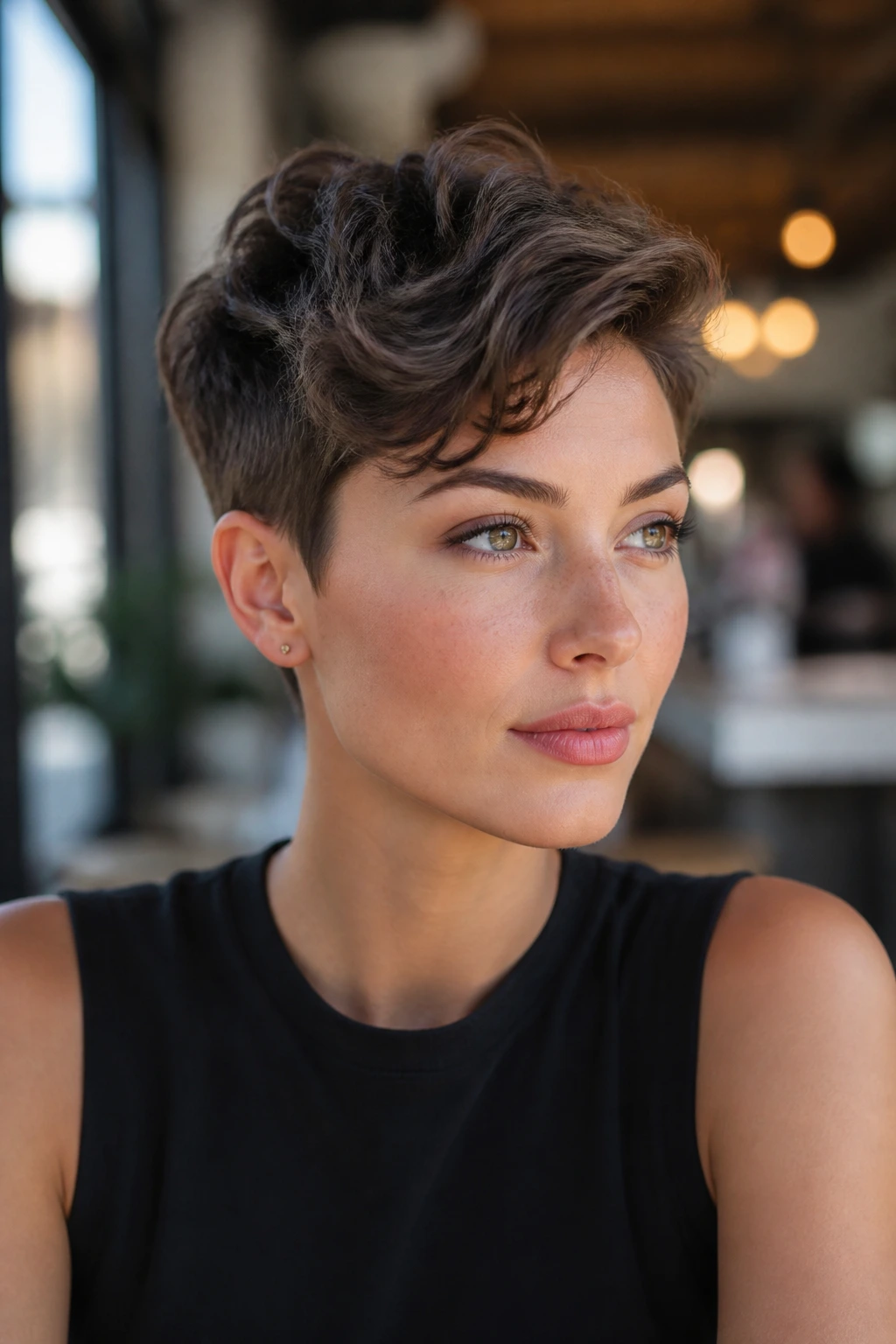
5. Classic Pixie With a Longer Top
A pixie on wavy hair can be beautiful when it isn’t overcut. The version I like keeps the top long enough to bend—usually 2 to 3 inches—while the sides are trimmed close enough to clean up the outline. That length on top gives the waves somewhere to move, which means you don’t need to build a style around them every morning.
The Right Balance
Short on the sides, but not shaved down to nothing. That’s the part people get wrong. If you take the top too short, wavy hair springs up and can look fuzzy instead of textured. Leave a little room, and the wave pattern does the work for you. The fringe can be brushed forward, split slightly, or tucked to one side depending on how your hair wants to fall.
Best If You Want
- A low-maintenance shape that still has personality
- Short sides with a softer, bendy top
- A cut that dries fast and doesn’t need a brush
A good wavy pixie should look better when it’s a little messy. If it only looks right when it’s carefully arranged, it isn’t the right pixie.
6. Tapered Pixie
A tapered pixie is one of my favorites for thick or stubborn waves, mainly because it gets rid of the bulk where bulk causes trouble. The back and sides taper in gradually, so the hair sits close to the head around the nape and ears while the top keeps enough length to show texture. It’s neat without feeling strict.
Why It Behaves
Thick wavy hair tends to swell in the wrong places: the nape, the sides, the crown if the cut is too heavy. A taper removes that extra weight in a controlled way. The silhouette gets cleaner, but the texture on top still has room to show. That’s the whole magic trick.
Bad tapering looks choppy and overclipped. Good tapering disappears into the neck. You should notice the shape, not the cutting pattern.
Ask Your Stylist For
- A soft taper at the nape and around the sideburns
- Enough length on top to let the waves bend naturally
- A finish that keeps the outline tight without exposing every scalp swirl
If your hair feels like it grows outward before it grows down, this cut can calm it down fast.
7. Layered Shag Bob
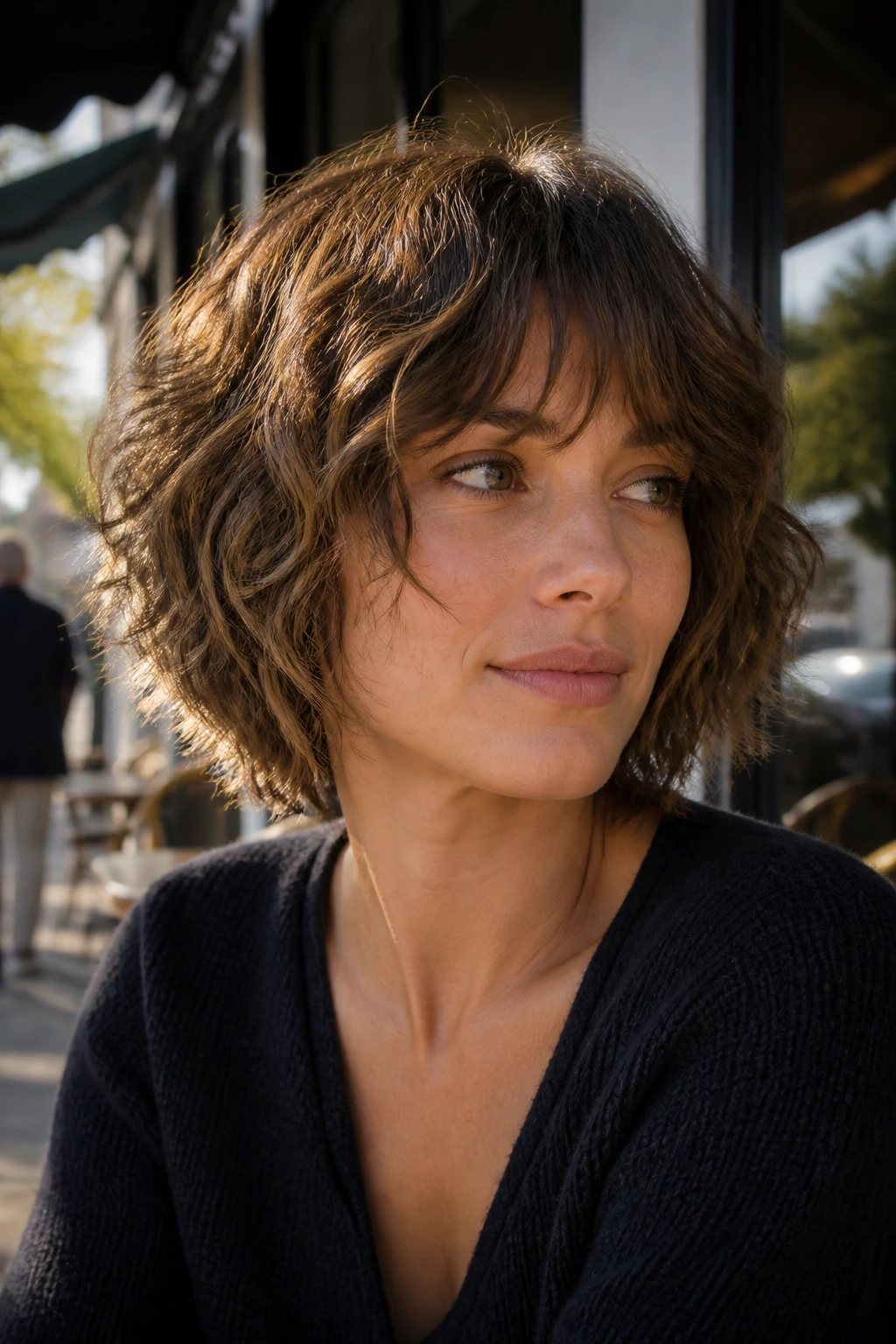
A shag bob gets a bad reputation when people imagine the wrong version: too chopped, too fluffy, too dependent on mousse. But the good version is a short bob with long, connected layers that let wavy hair fold over itself instead of hanging in one blunt block. It has movement, but not chaos.
The Part That Makes It Work
The layers need to be long enough to stay joined. Short, choppy layers can make wavy hair look frayed at the ends. Longer layers around the cheek and jaw give the wave pattern a path to follow, which means the hair can air-dry into shape rather than puffing up around the outline.
This cut is especially good if your hair is medium to thick and you hate the feeling of a heavy bottom edge. It also plays well with a side part, because the layers help the hair fall back into place after a nap, a drive, or a windy walk.
If You Choose It
Keep the fringe soft. Heavy bangs plus a shag bob can get busy fast. And if your hair is very fine, ask for fewer layers than you think you need. Too much carving and the whole thing gets wispy.
8. Wolf Bob Lite

The wolf bob is the less dramatic cousin of the full wolf cut, and for wavy hair, that restraint is a good thing. It keeps some of the crown volume and face movement, but it doesn’t leave you with a mess of disconnected pieces that need daily coaxing. The “lite” part matters.
Why It Works Without Styling
This shape relies on built-in texture. The top has a little lift, the sides keep enough length to avoid puffing out, and the ends are cut so the waves can separate naturally. It’s a very forgiving cut if your hair has a slightly wild bend pattern or a stubborn crown cowlick.
What I like most is the way it can disguise a bad hair day. Because the cut already looks slightly undone, it doesn’t need to be perfect. That’s a rare thing.
Best For
- Medium-density waves
- Hair that goes flat at the roots but puffs at the ends
- People who want movement without a lot of visible layering
If you have very fine waves, ask for the layers to stay long. The wolf shape can chew through density faster than you expect.
9. Italian Bob
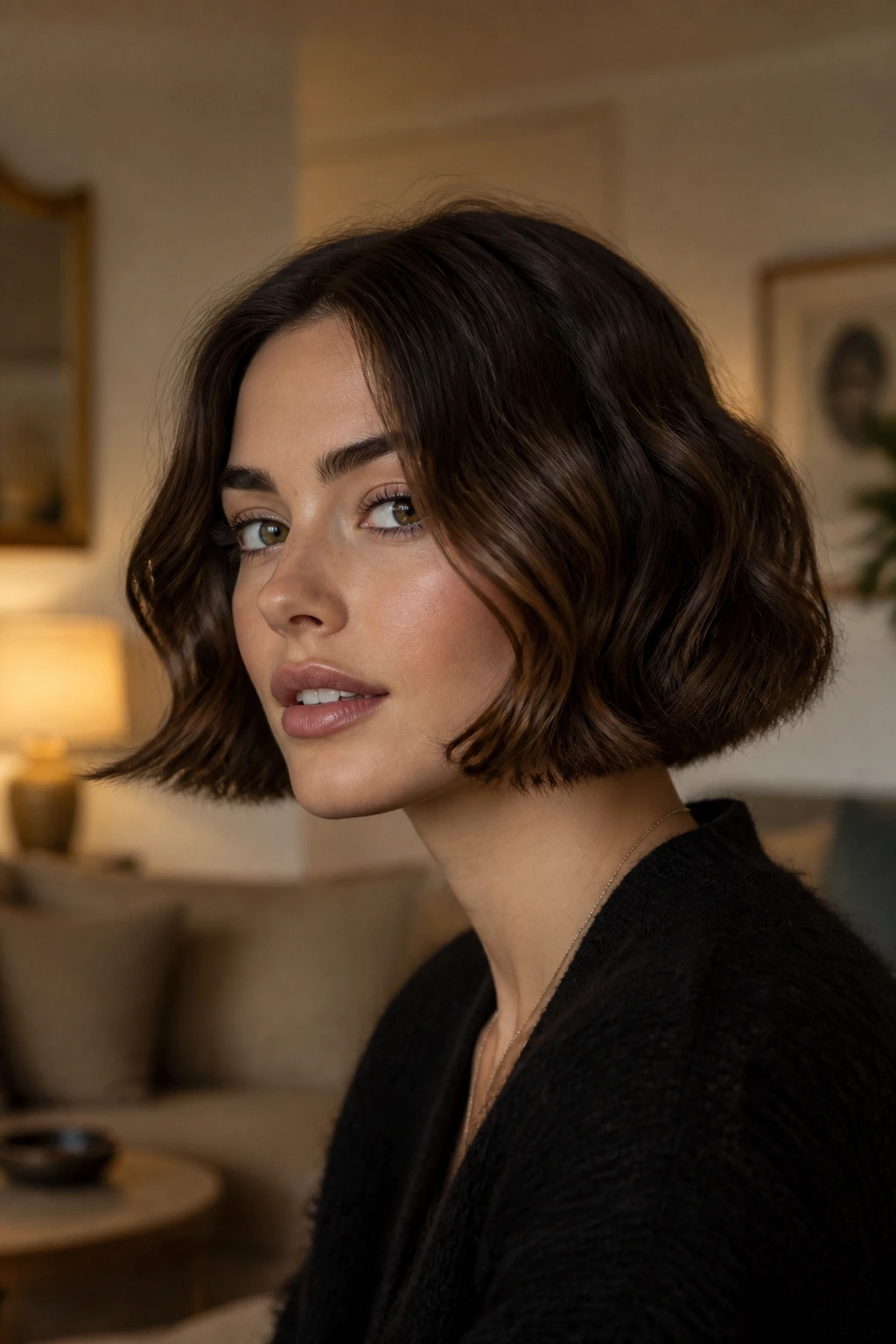
The Italian bob is all about heft. It’s fuller, weightier, and usually sits around the chin or slightly below it, with a luxurious-looking line that gives wavy hair a solid base. I prefer it on finer waves because the density at the bottom makes the hair look thicker without much effort.
Why It Feels Polished Without Styling
Unlike a heavily layered bob, the Italian bob keeps more of the perimeter intact. That means the waves fall over a stronger line, which helps the cut look deliberate even when it dries a little crooked. You get movement at the surface and structure underneath. That combination is hard to beat.
If your hair is coarse or expands a lot in humidity, the stylist needs to be careful. Too much bulk around the sides and this shape can widen. A little internal cleanup is fine. A lot of it is not.
One Detail to Ask For
Ask them to keep the bottom line strong and the face frame soft. That keeps the bob from looking like a blunt helmet while still preserving the density that makes it work.
10. Asymmetrical Bob
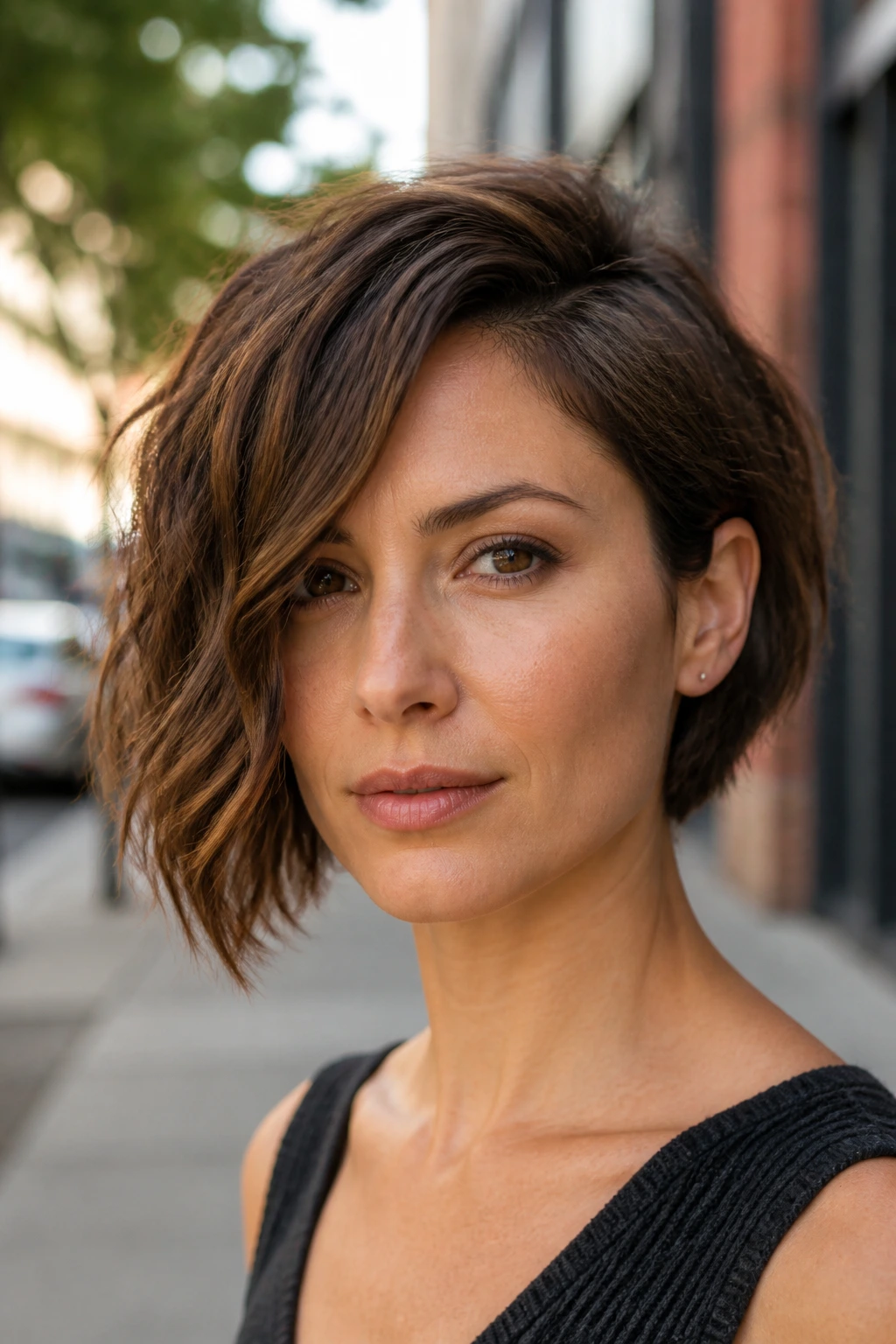
An asymmetrical bob is one of the easiest ways to make wavy hair look intentional without asking it to behave. One side stays a little longer than the other, usually by an inch or two, and that slight imbalance gives the waves somewhere interesting to fall. It’s subtle enough to wear every day, but it has more shape than a standard bob.
Why the Uneven Length Helps
Wavy hair often has a stronger direction on one side, especially if you always part it the same way. A gentle asymmetry works with that habit instead of fighting it. The longer side balances the side that tends to puff or flip, and the whole cut looks more deliberate when it air-dries.
Good If You Want
- A side part that stays put
- A bob with a little edge, not a lot of maintenance
- A shape that looks different from every angle
I’d keep the difference modest. The more dramatic the angle, the more you’ll notice every time one side dries faster than the other. A quiet asymmetry is easier to live with.
11. Rounded Pageboy

A modern pageboy is much softer than the old-school version people picture from the wrong decade. On wavy hair, the rounded perimeter is the whole point. It gives the hair a curved path to follow, so the ends don’t stick straight out or flip into strange corners.
The Shape Is the Work
A pageboy cut works because the hair bends inward instead of out. The nape is tucked in, the sides are rounded, and the front can sit at the cheek or jaw depending on how much length you want. That curve is flattering on waves because it makes the cut feel finished even when the texture is loose and casual.
It also helps if your hair grows in a slightly boxy way. The rounded edge softens the whole silhouette. If your hair is dense, keep the layers minimal. The pageboy is one of those cuts that gets worse the more you chop it up.
Best For
- Medium waves that like a tidy outline
- People who want short hair that still covers the neck a bit
- Anyone tired of a bob that flips unpredictably at the ends
12. Curtain-Bang Crop

A curtain-bang crop is a smart move when you want softness around the face without committing to full fringe maintenance. The bangs split in the center and fall to each side, which works beautifully with waves because they don’t need to be forced into one line. The rest of the crop can stay short and simple.
Why It Falls Into Place
Curtain bangs have enough length to part naturally. On wavy hair, that means they dry into a soft frame instead of sticking straight across the forehead. If you cut them too short, though, they can spring up and sit awkwardly. I usually prefer cheekbone length or just above, because that gives the wave room to bend.
The body of the cut can be a pixie, a cropped bob, or a shaggy little shape around the ears. The bangs do the face-framing work while the rest of the cut stays low-maintenance.
A Useful Rule
If your front hairline has a cowlick, keep the curtain pieces longer than you think. Short front pieces are hard to redirect on wavy hair. Longer ones settle better.
13. Razor-Layered Crop
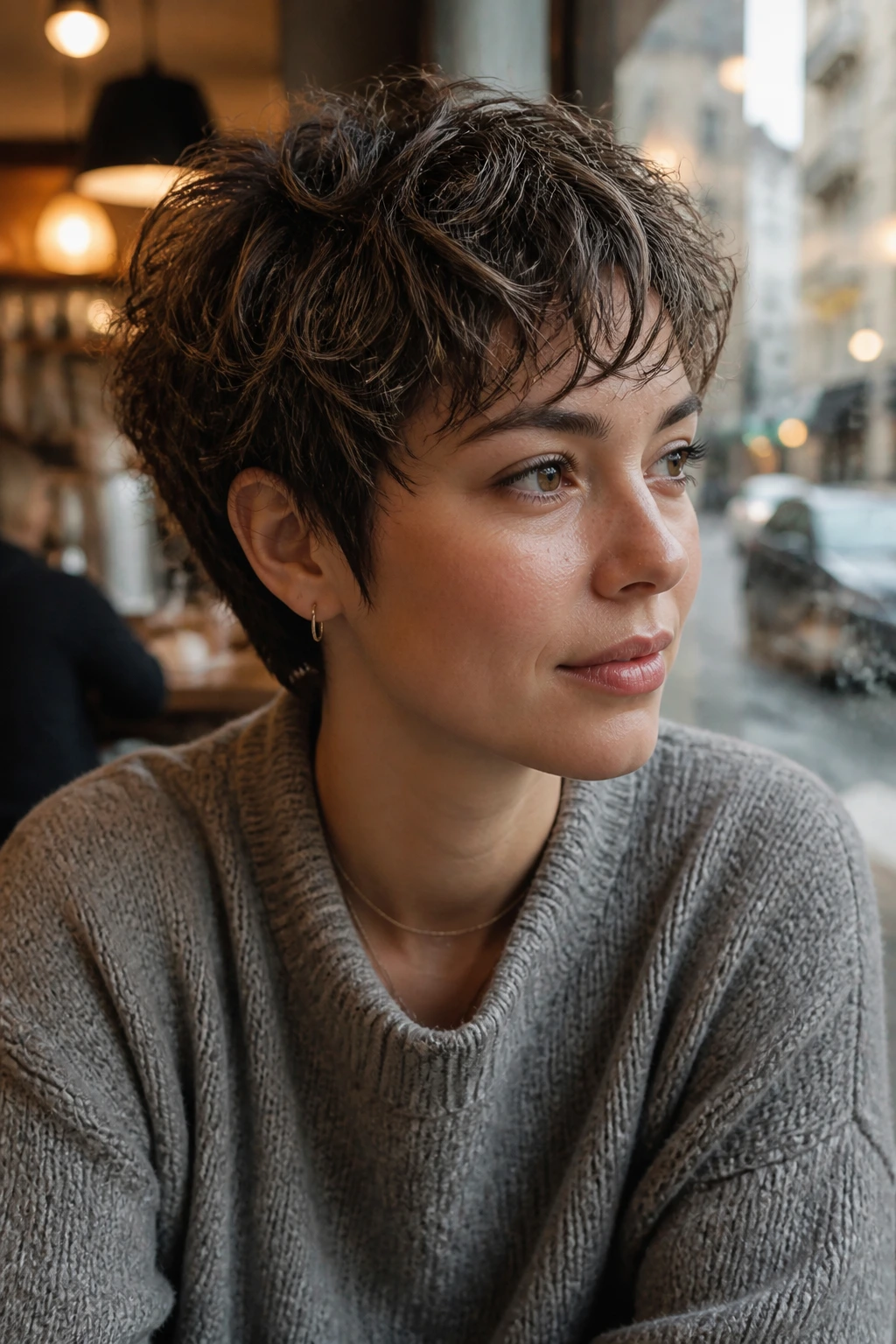
A razor-layered crop can be lovely on wavy hair when the hands behind it know exactly where to stop. The goal is a soft, piecey finish that lets the wave pattern show through. Done well, it has airy edges and a light, broken-up shape. Done badly, it turns fuzzy.
The Difference Is in the Weight
Razor cutting removes a little more softness from the ends than scissors do, so it suits medium-density hair that wants movement. If your hair is coarse, the result can be too frayed unless the stylist is careful. I’d avoid this cut if your strands already feel dry or brittle at the ends. A good razor cut should feel fluid, not shredded.
Best For
- Medium waves with decent elasticity
- Hair that tends to sit flat when cut too blunt
- People who want a lightweight, lived-in outline
If you get this cut, let it air-dry without fussing at it. The texture is doing the work; the more you separate it, the less good it looks.
14. Ear-Length Crop
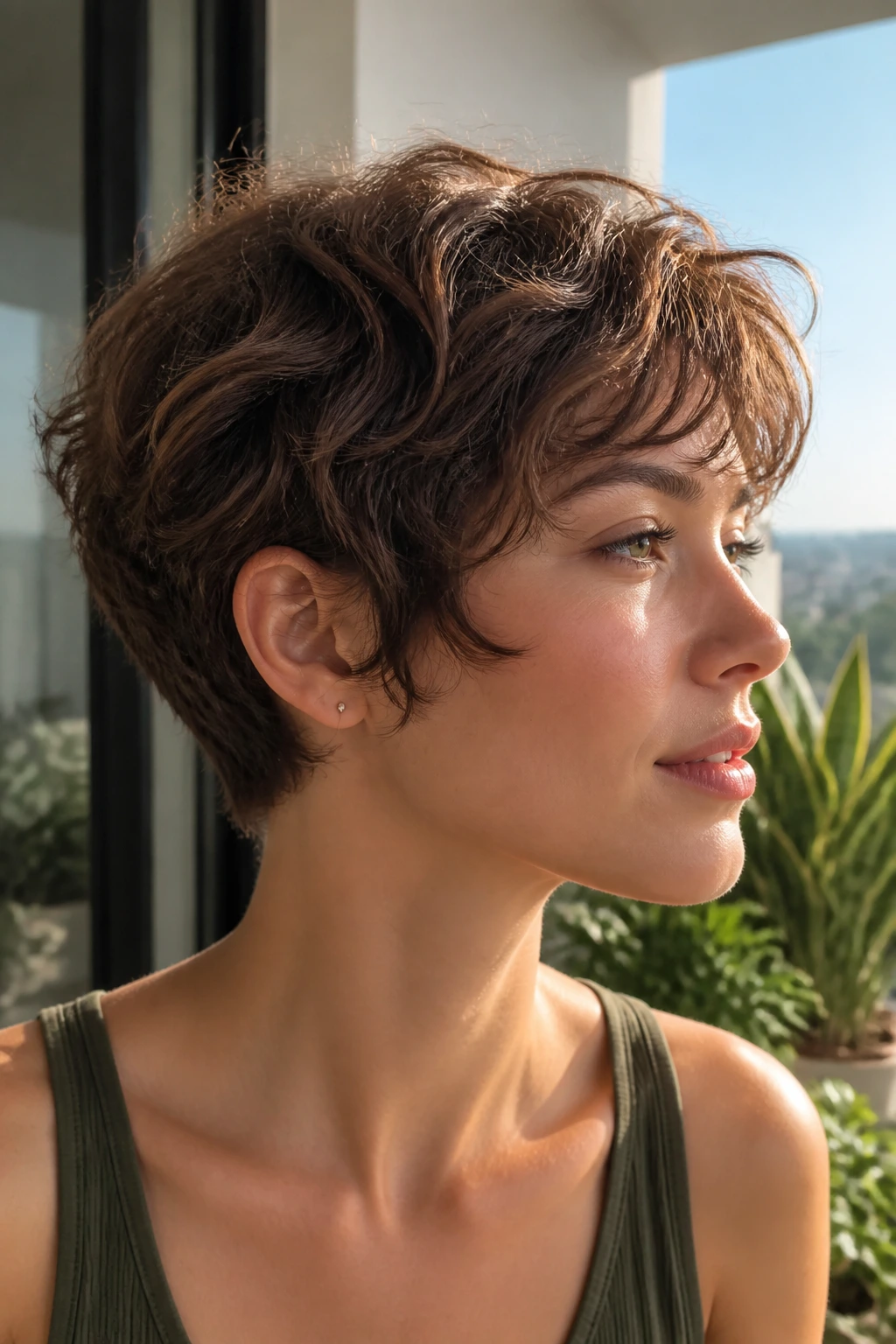
Ear-length hair is short enough to dry fast and structured enough to look planned when the waves settle. It’s a bold length, no question, but it can be one of the easiest short haircuts for wavy hair because there isn’t much hair left to wrestle with. The bends show up quickly, and the whole cut gets its shape from the texture itself.
Why It’s Easier Than It Looks
Short hair removes a lot of the drag that makes waves collapse. At ear length, the hair can spring a little, but it usually doesn’t have enough weight to go into the wide, puffy triangle that longer short cuts can create. The outline should stay soft around the ear and neckline, though. Too blunt here and it starts to look harsh.
Good For
- Strong waves
- Dense hair that dries slowly
- People who like a very short silhouette and don’t mind showing the neck and ears
This is one of those cuts that should be shaped to the head, not carved into a tiny square. Leave it soft around the edges. That’s where the difference shows.
15. Micro Bob

A micro bob is shorter than a classic bob and less structured than a pixie. It usually lands somewhere between the cheekbone and the jaw, which gives wavy hair a tiny bit of swing without asking it to behave like a longer bob. If your hair likes to bend, not drape, this length can be gold.
What Makes It Work
The micro bob dries quickly, which is already a win. But the real advantage is that the short length lets the wave pattern appear without the hair getting weighed down. I like it on finer waves that need a dense-looking shape, because the short perimeter makes the ends appear fuller. It also works on stronger waves if the bottom line stays soft and the nape is cleaned up.
One Caution
Do not cut a micro bob too straight across the bottom if your waves are thick. The line can stick out and feel boxy. A little point cutting at the ends helps keep it from becoming a shelf.
16. Undercut Pixie
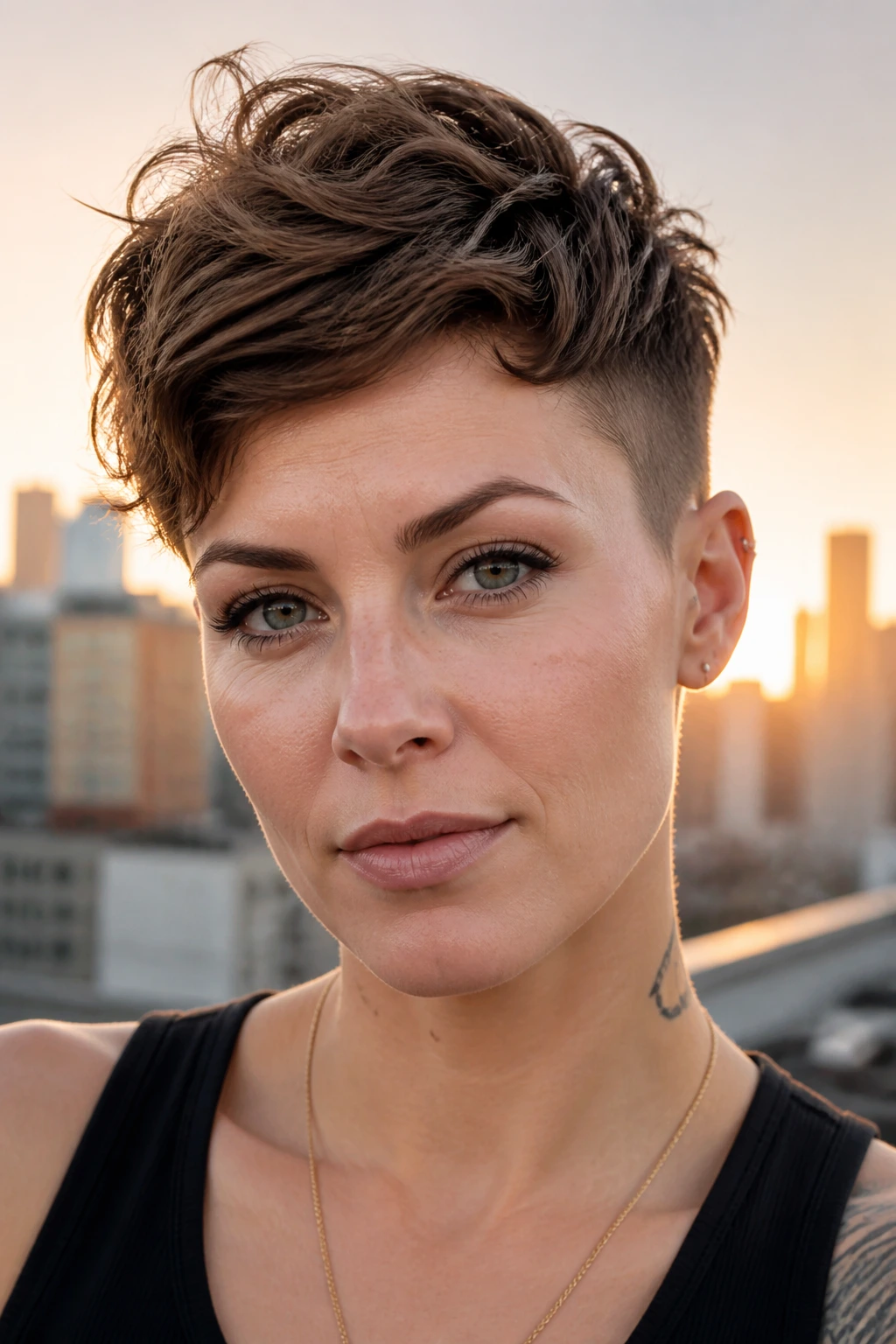
An undercut pixie solves a specific problem: too much bulk under a layer of hair that still wants to move. If your wavy hair gets heavy around the nape, ears, and lower sides, an undercut removes that pile-up and lets the top fall neatly over the shorter section. It’s practical and a little sharp-looking.
Why It Helps So Much
Dense waves don’t always need more layer. They often need less bulk in the wrong place. The undercut clears out the underside so the top texture can breathe. That means the cut dries faster, sits closer to the head, and doesn’t build the mushroom shape that thick hair loves to create.
It also gives you a clean grow-out path if the shaved section stays low. If the undercut is taken too high, though, the grow-out stage gets awkward fast. Keep it modest unless you like a stronger statement.
Best For
- Thick, dense waves
- Hot climates and fast-dry routines
- People who want a sharp outline without using styling tools
17. Side-Swept Crop
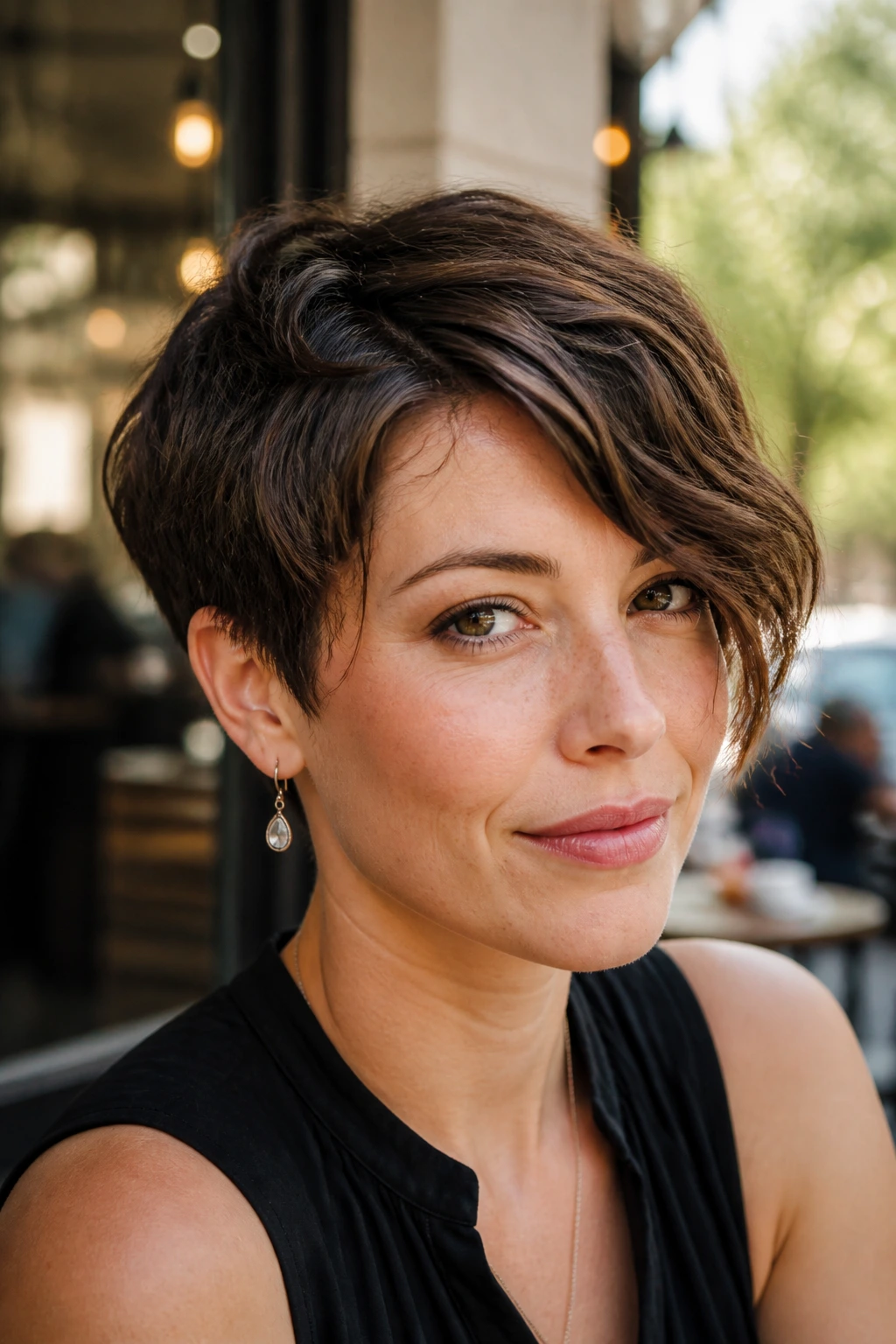
A side-swept crop is a smart answer for waves that never fully cooperate with a center part. The cut is designed to fall to one side from the start, which means the natural bend has a direction instead of a fight. It can be soft, sleek-ish, or a little piecey, but the main idea is the same: let the wave move diagonally.
Why It’s So Forgiving
Wavy hair often has one side that behaves better than the other. A side-swept crop uses that asymmetry rather than pretending both sides are identical. It’s especially useful if you have a cowlick near the front or a stubborn split at the crown. The longer front section can cover that trouble spot while the shorter side keeps the outline clean.
Ask For
- A longer top that naturally falls to one side
- Shorter sides that still leave room around the temples
- A front section long enough to move, not stick out
This cut can look very soft or very sharp depending on the length. I prefer the softer version for no-styling wear, because hard angles need more upkeep than people expect.
18. Choppy Bowl Cut
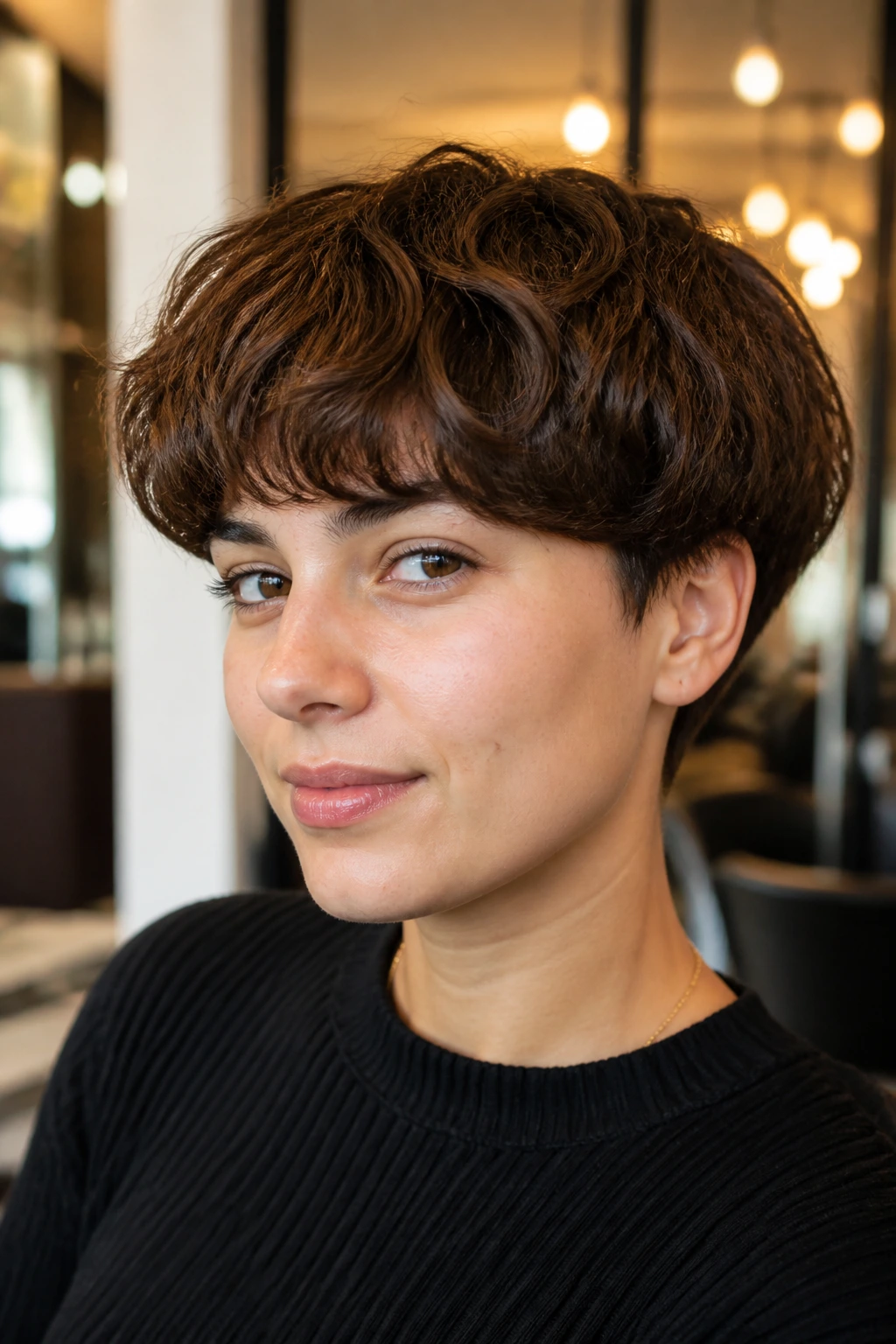
A modern bowl cut is a lot more useful on wavy hair than the old version people remember. The shape is rounded, but the edges are softened with texture so it doesn’t sit like a helmet. On the right head shape, it can be one of the easiest no-styling short cuts because the perimeter itself carries the look.
The Modern Version Is All About Texture
The classic bowl was too exact. Wavy hair doesn’t love exactness. A choppy bowl uses internal breakup to keep the hair from forming one hard line across the forehead and sides. That makes the bend show up in a more relaxed way. If your waves are uniform and your hairline is fairly even, this can be a very clean-looking cut.
Who Should Consider It
- People with strong cheekbones
- Hair that bends consistently from roots to ends
- Anyone willing to wear a more defined silhouette
This is not a timid haircut. It looks best when the texture is allowed to stay visible. If you want a soft, invisible cut, skip this one. If you want shape without daily effort, it’s worth a serious look.
19. Nape-Length Bob With Internal Layers
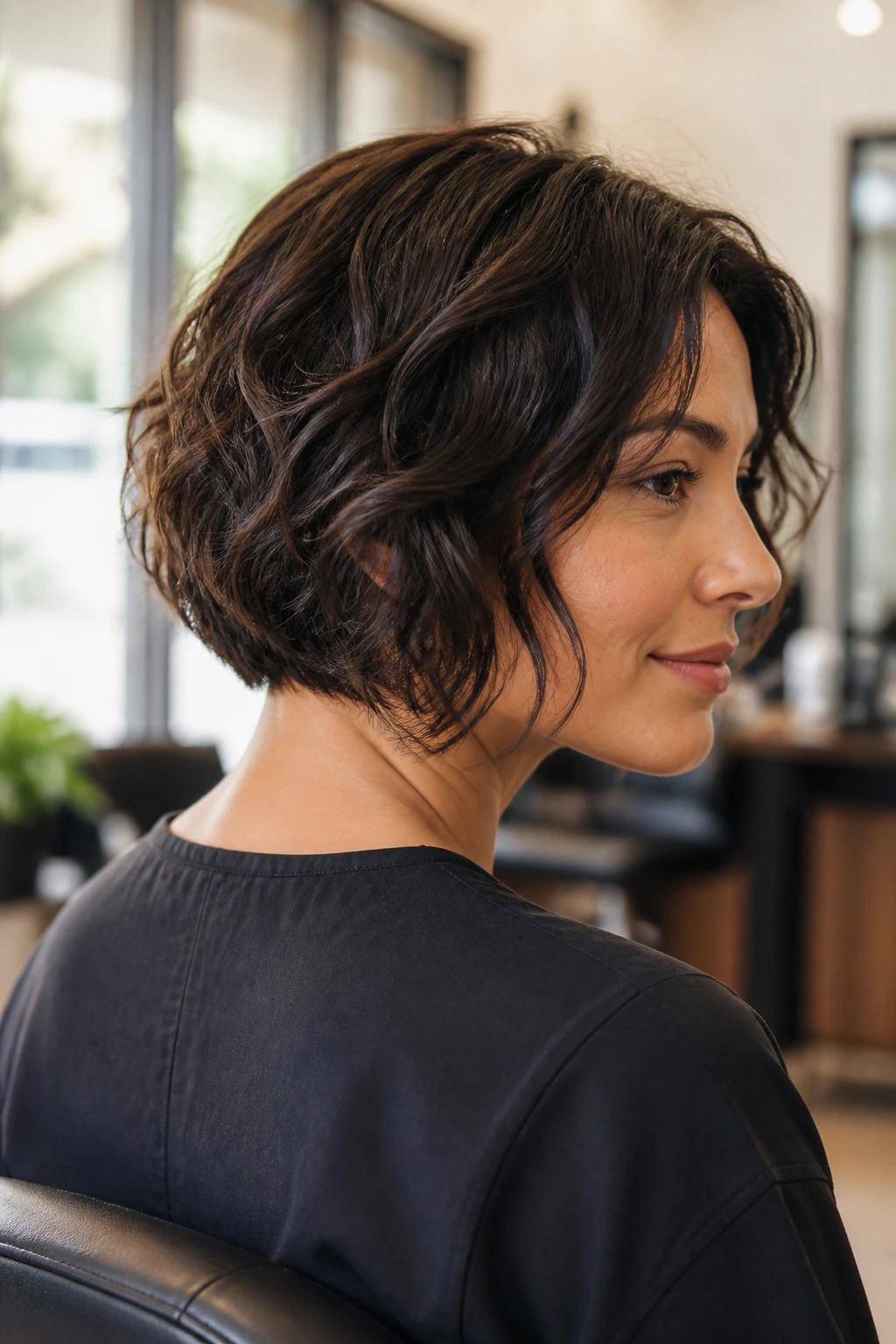
This is the quiet overachiever of the bunch. A nape-length bob can look almost plain at first glance, but the internal layers hidden underneath do a lot of useful work. The visible outline stays neat, the waves can stack inside the shape, and the back of the head doesn’t balloon out like it sometimes does with a blunt bob.
Why It’s So Good for Wavy Hair
The nape is where many wave patterns get clumsy. Hair kicks up, bends oddly, or swells underneath a heavy shape. Internal layers remove just enough bulk to stop that, while the outer line keeps the haircut looking controlled. If your hair is medium to thick and you want something that can go straight from the shower to air-dry, this cut makes a lot of sense.
A Small but Useful Detail
Ask for the shortest point to sit right at the nape, then let the front drift a little longer if needed. That slight slope keeps the haircut from turning into a block as it grows.
20. Feathered Mop Crop
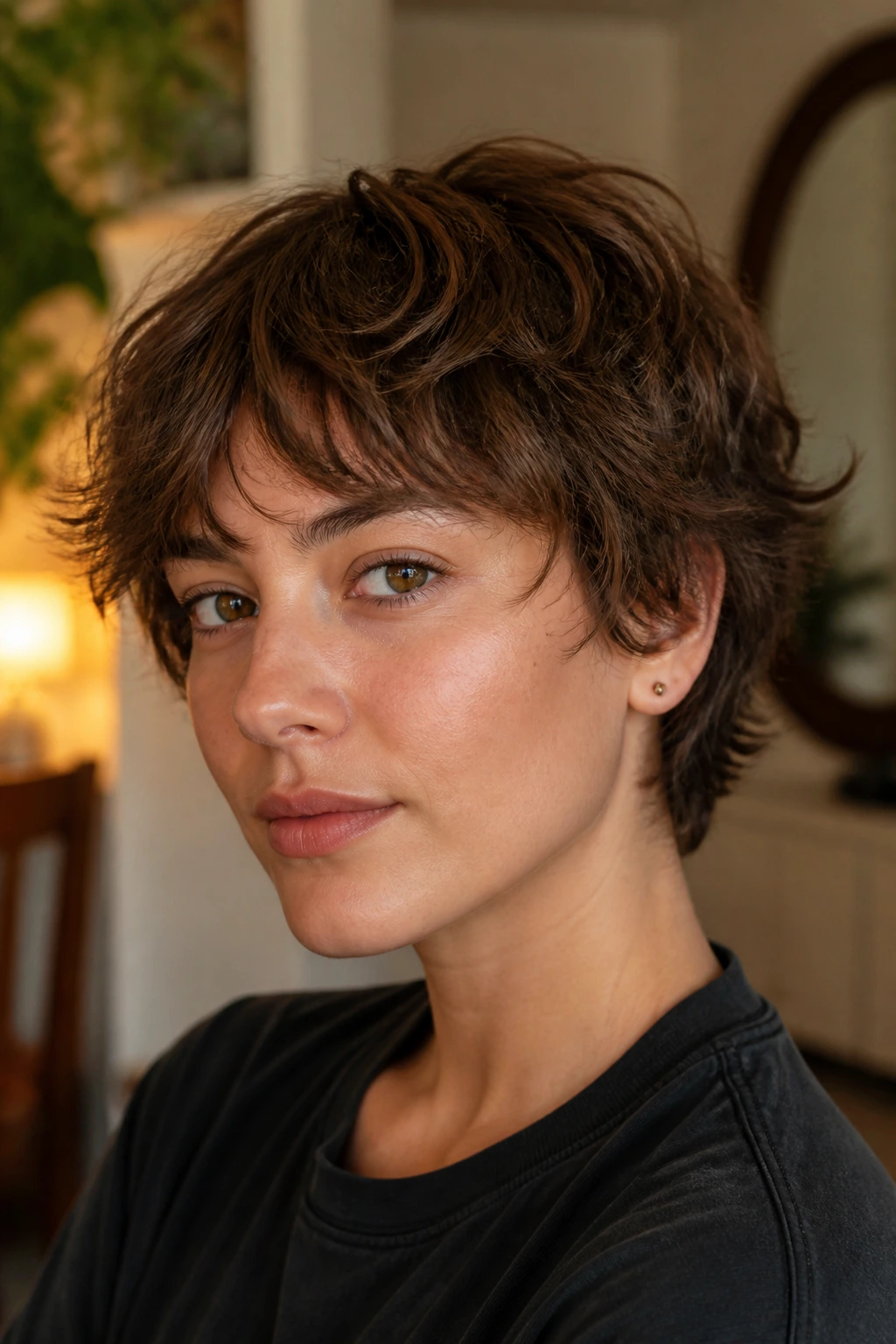
A feathered mop crop sounds more casual than it is, and that’s part of its charm. The haircut is short, soft around the edges, and feathered enough that the waves can break apart in a pleasant way instead of clumping into a hard shape. It feels loose without being sloppy.
Why It Works With Almost No Effort
The feathering gives the hair a light, mobile finish, so the waves don’t need much help to look like they belong there. It suits looser wave patterns especially well, because the hair can dry in little arcs and bends without needing a brush. I like this cut when someone wants a short style that doesn’t look severe. It has movement baked in.
Good If You Want
- A soft outline rather than a strict line
- A cut that dries fast and hides minor bedhead
- Something short that still feels a little playful
This one is especially nice if you hate spending time in the bathroom mirror. The cut does its own work.
What to Tell the Stylist in the Chair
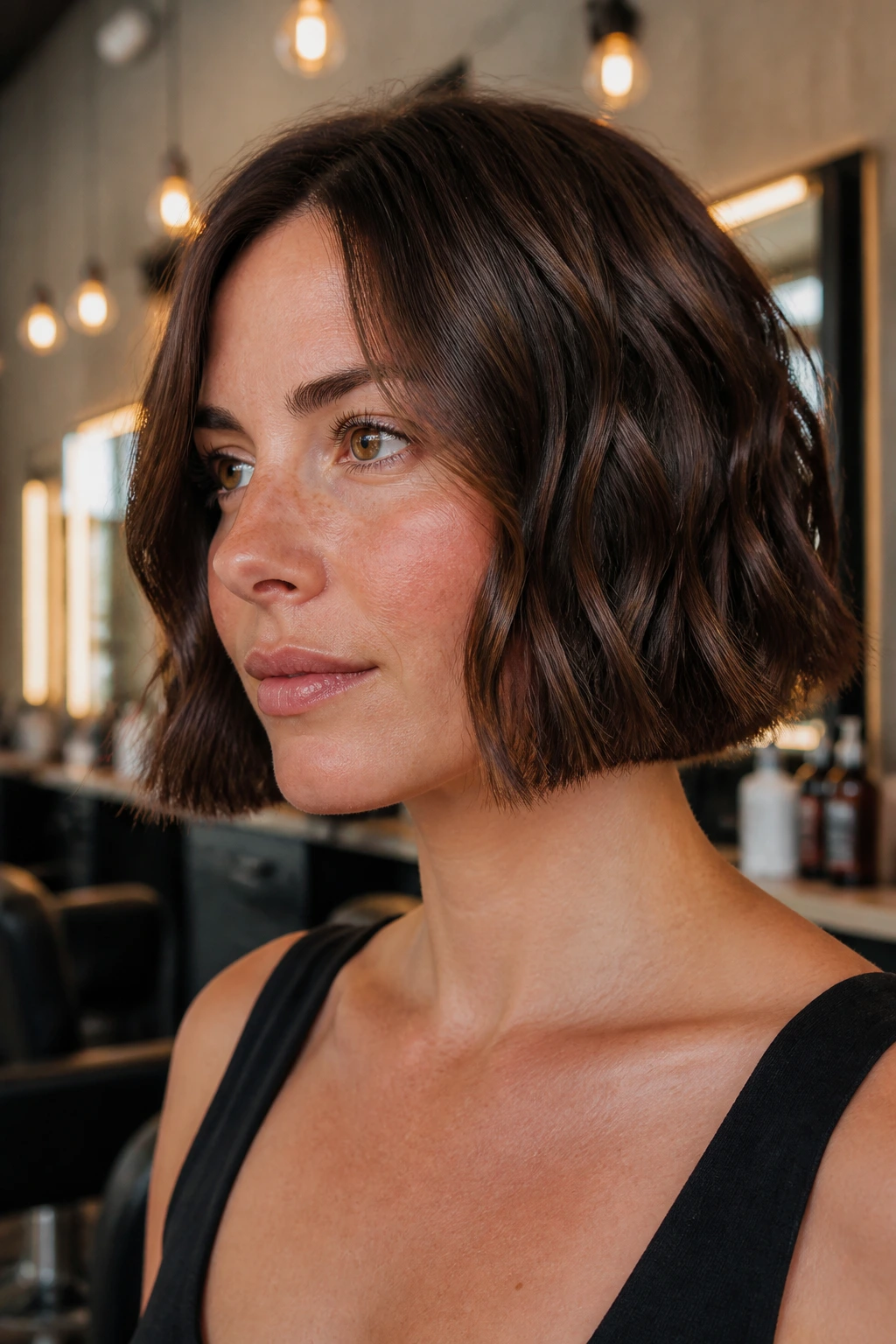
The haircut starts before the first snip. If you walk in with a photo of pin-straight hair and ask for a no-styling cut on waves, you’re giving the stylist the wrong map. Bring photos of people whose hair bends the same way yours does, with the same density and roughly the same amount of shrinkage. That part matters more than face shape, honestly.
Say where your hair misbehaves. Not in vague terms. Point out the side that flips out, the crown that goes flat, the nape that puffs, the fringe that splits down the middle. A good stylist can work with that information. A great one will ask you to tip your head, move your part, and show them how your wave sits when it’s damp and when it’s dry.
I’d also ask for a dry check before you leave, even if the cut starts wet. Wavy hair can look longer and calmer when it’s damp, then spring up and change the silhouette as it dries. That last look is the one that matters. If the shape feels a little too heavy at the salon, don’t be shy about saying so. It’s much easier to take off a quarter inch than to wait three weeks for regret to grow out.
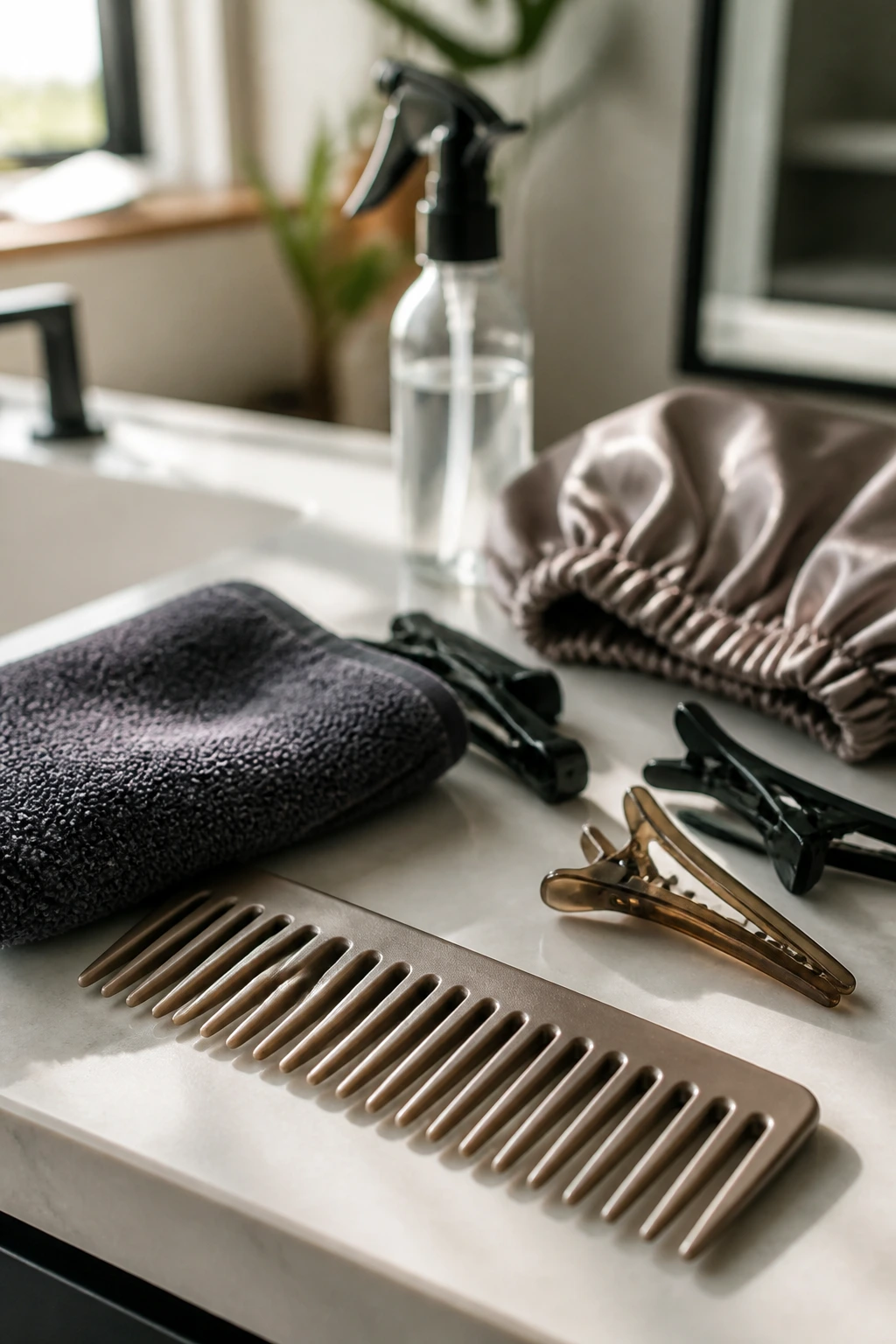
Essential Tools for Keeping a No-Styling Cut Honest
-
Wide-tooth comb: Use it on wet hair only, and only if you need to separate tangles without ripping apart the wave pattern.
-
Microfiber towel or soft cotton T-shirt: A rough bath towel can puff the cut up at the edges; blotting keeps the bend calmer.
-
Handheld mirror: Short hair grows out in the back first, and the nape is where a lot of these cuts lose their shape.
-
Hair clips: Helpful if your fringe or crown pieces separate while drying and you want to keep them out of the way for a few minutes.
-
Satin pillowcase or bonnet: This doesn’t style the hair. It just stops day-two frizz from stealing the shape overnight.
-
Spray bottle: For re-dampening a front section that split badly, not for restyling the whole head.
-
Sharp trimming scissors, if you’re experienced: Only for tiny dusting between salon visits; if you’re not confident, leave the scissors alone.
How to Keep the Shape Between Trims

Short wavy hair looks best when it’s left alone, but left alone does not mean ignored for months. The trim schedule matters more here than it does on longer hair, because a few weeks of growth can change the silhouette fast. Pixies usually need attention every 4 to 6 weeks. Bobs can often go 6 to 8 weeks. Shaggy crops and wolf-leaning shapes sometimes stretch to 8 or 10, but only if the perimeter still holds.
Watch the silhouette, not the calendar. If the nape starts puffing, the fringe falls into your eyes, or the sides begin to widen past your cheekbones, the cut is telling you it’s ready. That’s the signal. A haircut can be low-maintenance and still need a clean-up.
At home, keep the routine plain. Wash the scalp well, blot the lengths instead of rubbing them, and let the waves fall where they want. If a few front pieces are bent in the wrong direction after sleep, a quick re-wet of just those sections is enough. You do not need to restart the whole head.
Smart Variations for Fine, Thick, Loose, and Dense Waves

Fine-Wave Friendly Version: Keep the perimeter blunt and the layering minimal. Fine waves usually need density at the ends, not a lot of carving through the interior. A jaw-length bob or micro bob is often better than a heavily layered crop.
Thick-Hair Relief Cut: Ask for internal weight removal and a controlled taper at the nape or around the ears. Thick waves need room to move, but they still need a solid outline. Too much texturizing makes them frizz up instead of settling.
Fringe-Forward Version: If your face likes softness, add curtain bangs or a long side-swept fringe. Keep the shortest point longer than you think; wave shrinkage can turn a “cute fringe” into a tiny shelf.
Grow-Out-Friendly Version: Choose a shape that can turn into a bob or a longer crop without looking awkward. French bobs, Italian bobs, and soft bixies tend to grow out more gracefully than dramatic undercuts or high-shaved pixies.
Bold Shape Version: Go sharper with asymmetry, a micro bob, or a choppy bowl cut if you want the haircut to carry the whole look. These need confidence and a stylist who knows how to keep the line clean.
Common Mistakes That Make Wavy Hair Puff or Collapse

-
Using a straight-hair photo as the reference: A blunt bob on straight hair may spring up and widen on waves. Bring a photo that matches your own bend and density.
-
Over-thinning the ends: If the perimeter gets too wispy, the haircut loses its base and starts looking frayed. The fix is a stronger line with internal cleanup instead.
-
Ignoring the natural part and cowlicks: Wavy hair has opinions, especially at the front. Cutting against that growth pattern usually means one side flips out every morning.
-
Going too short at the nape on thick hair: The back can puff like a little shelf if the length is removed too aggressively. Leave a touch more length or ask for a softer taper.
-
Waiting too long between trims: Short cuts lose their shape faster than long cuts do. Once the silhouette has widened, you’re no longer wearing the same haircut.
-
Expecting a bad cut to behave on its own: No product can rescue a poor outline. If the shape is wrong, the wave will show it.
Frequently Asked Questions
Which short haircut works best for loose waves?
Loose waves usually do best in a blunt bob, French bob, or Italian bob. Those shapes keep enough weight at the perimeter to stop the ends from scattering, which matters when the wave pattern is soft and easy to collapse.
Can wavy hair wear a pixie cut without styling?
Yes, but the top needs to stay long enough to bend. A pixie with 2 to 3 inches on top and softer sides usually air-dries better than a super-short crop that stands up or frizzes out.
Should wavy hair be cut dry or wet?
Either can work, but a dry check is valuable. Wet hair stretches and hides shrinkage, so a stylist who finishes by checking the cut dry can adjust the outline before you leave the chair.
What if my waves puff out at the sides?
That usually means the perimeter is too short, too thin, or both. A stronger line, less aggressive texturizing, and a little more length around the jaw or ears can keep the sides from blooming outward.
What’s better for wavy hair, a blunt bob or a layered bob?
A blunt bob suits finer waves or loose patterns that need density. A layered bob works better when the hair is thick or builds too much bulk at the bottom. The cut should solve the problem you actually have, not the one on a mood board.
How often should I trim short wavy hair?
Pixies generally need a touch-up every 4 to 6 weeks. Short bobs usually hold their shape a bit longer, around 6 to 8 weeks, though thick or very springy hair may need a trim sooner.
Can these cuts work if I have fine wavy hair?
Absolutely, but the shape matters more. Fine waves usually need a clean, blunt outline and fewer layers so the ends don’t look sparse. The micro bob, Italian bob, and jaw-grazing blunt bob are strong options.
What if I have a cowlick at the front or crown?
Tell the stylist before they pick up the shears. A side-swept crop, curtain-bang crop, or a longer top on a pixie can hide a cowlick much better than a short front fringe cut too aggressively.
Why These Cuts Earn Their Keep
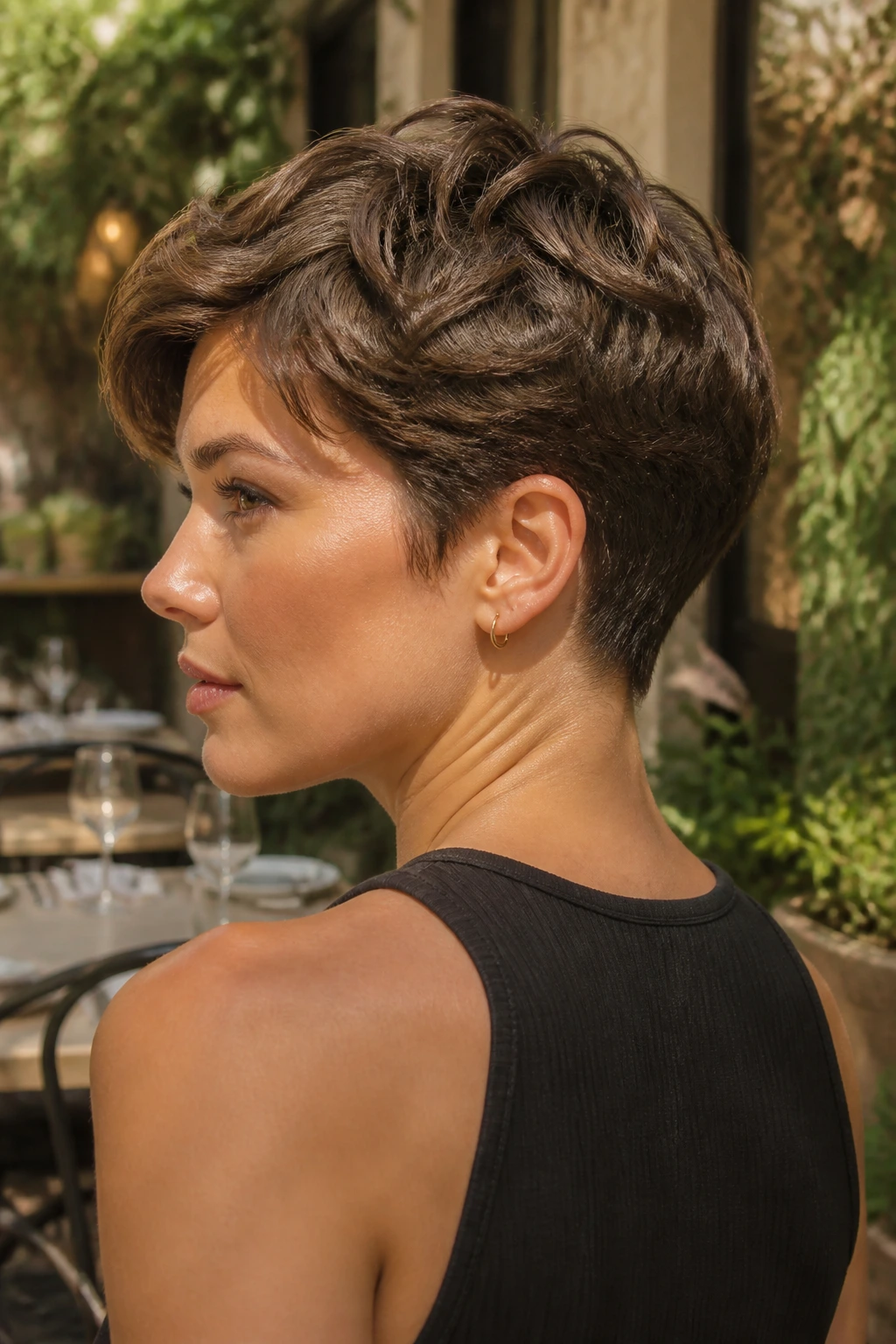
A good short haircut for wavy hair should feel like it already knows your hair. It should dry with shape, not drama. It should make the morning easier without turning you into a full-time salon project.
That’s why the best cuts here share the same idea in different forms: keep enough structure to hold the line, keep enough softness to let the waves move, and do not carve away so much weight that the hair turns airy in all the wrong places. Once you find the right balance, the cut starts doing the work you used to do with your hands.
Bring your real wave pattern to the chair, not the one you wish you had. That’s where the good cuts begin, and it’s usually where the bad ones end.