



Short hairstyles for Black women with thick hair work best when the cut respects density instead of trying to flatten it. Thick coils, kinks, and curls bring their own architecture; the job is to shape that structure before it puffs, bends, and shrinks into its real silhouette.
A bad short cut on dense hair looks accidental. The crown balloons, the nape goes fuzzy, and the face gets swallowed by weight that should have been moved somewhere else. A good one does the opposite: it keeps the bulk where it reads as style, and removes it where it reads as drag.
That’s why the right pixie, TWA, crop, or fade can feel almost suspiciously easy. You wash it, shape it, leave it alone for a day or two, and the hair still looks like it meant to be short. The styles below lean on that strength rather than fighting it.
Why Thick Hair Makes Short Cuts Look Intentional
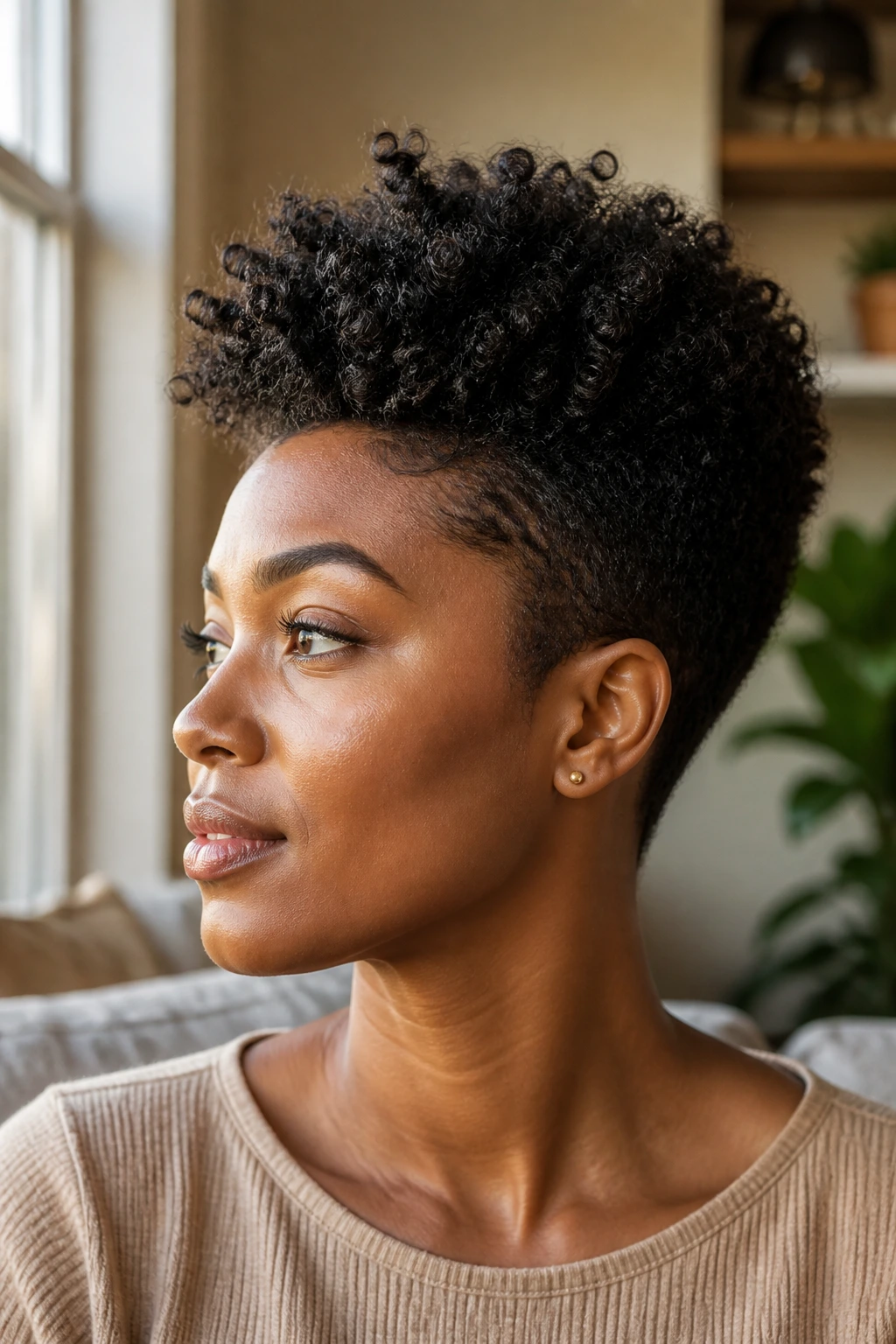
Shape holds better: Dense hair gives a short cut a real outline, so the style still reads clearly even when the curls shrink up.
Less see-through scalp: A fuller texture fills in the crown and sides, which keeps cropped styles from looking sparse or patchy.
More room for personality: Thick hair can take sharp fades, soft waves, a rounded afro, or a sculpted pixie without losing presence.
Grow-out is kinder: When the cut starts to grow, the extra density keeps it from collapsing into a sad middle stage too fast.
Daily styling can be lighter: You usually need less product and less heat to make a short, dense style look finished.
1. Soft Tapered Pixie with Airy Crown
A soft tapered pixie is the cut I reach for when thick hair needs a clean outline but not a severe mood. Leave a little lift at the crown—about 2 to 3 inches when stretched—and taper the sides down near the temples and nape so the shape narrows instead of bulking out. That is what keeps the style airy.
Why the taper matters
The taper is doing the heavy lifting here. Thick hair does not need to be sliced to the bone; it needs weight removed in the right places so the top can keep its shape without puffing at the edges.
A pixie like this also grows out with less drama than a blunt crop. The sides can soften first, which still looks tidy, while the crown keeps enough length to finger-style with a little curl cream or mousse.
- Top length: about 2 to 3 inches stretched, so shrinkage still leaves visible lift.
- Sides and nape: close, but not skin-tight, unless you want a sharper feel.
- Best styling move: rake in a dime-size curl cream on damp hair, then twist a few pieces at the front.
- Best finish: soft, touchable, not crunchy.
Best move: ask for the crown to be kept a touch longer than your first instinct. Thick hair shrinks with enthusiasm.
2. Shaped TWA with Clean Edges
Why does a TWA look so much more deliberate after a shape-up? Because dense coils need a clean perimeter to show the silhouette. A shaped teeny weeny afro is not about length. It is about the line the hair makes around the face, temples, and nape.
The version I like best has a rounded top, soft sides, and edges that are neat without looking carved. If your hair is very thick, the cut should leave enough fullness to read as a little halo instead of a flattened cap. That difference matters a lot once the hair dries.
How to wear it
A TWA is one of those styles that looks good with almost no styling if the cut is right. A little leave-in, a fingertip of styling gel along the hairline, and a satin bonnet at night can keep the shape together for days.
If you want more definition, use a small sponge or finger coils on the top section only. Don’t overdo it. Too much manipulation on a short dense crop can make the surface frizzy faster than you’d expect.
The sharpest thing about a good TWA is the confidence of it. No fake volume. No fuss.
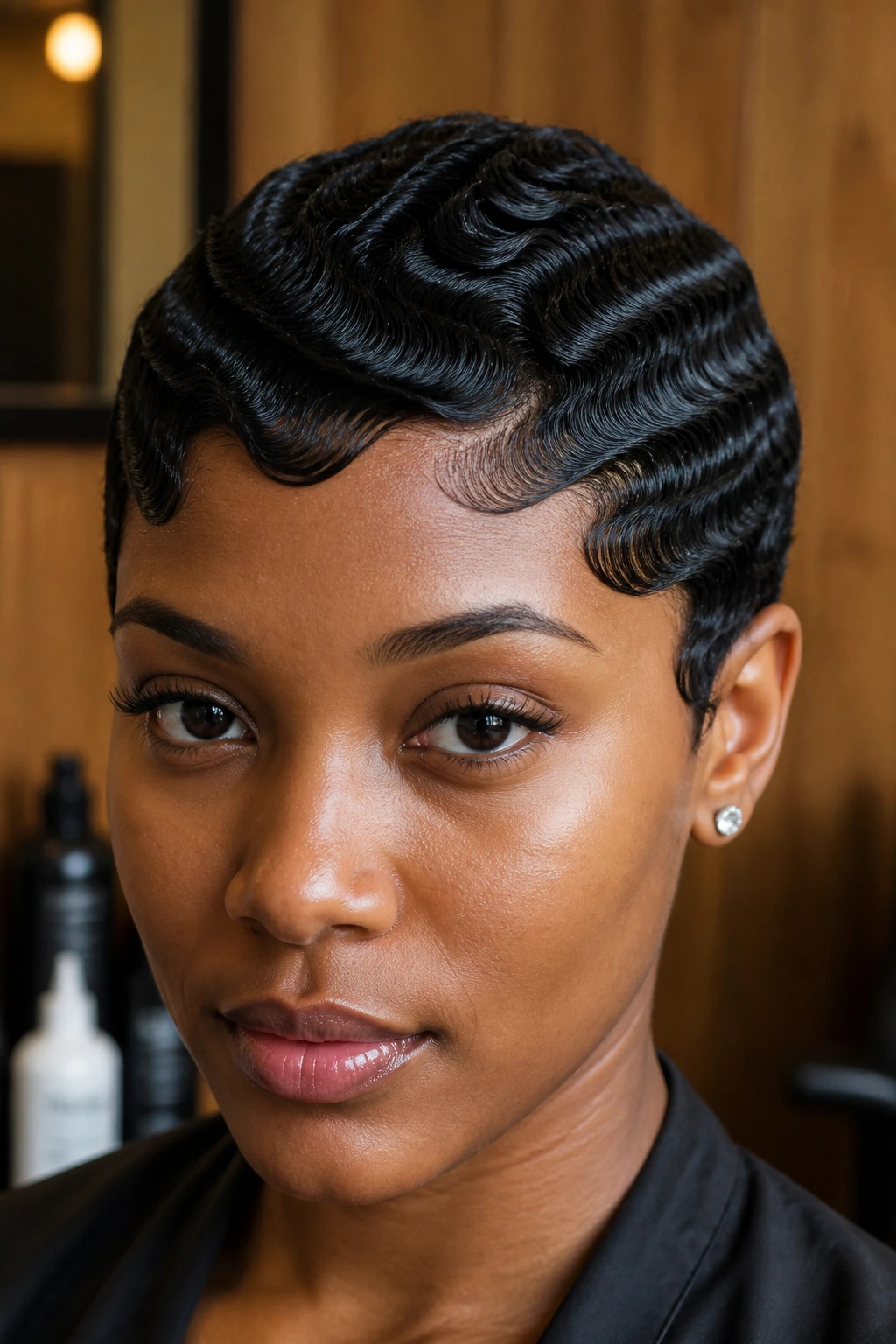
3. Finger Waves on a Close Crop
Picture a close crop that looks almost polished enough to wear with a tuxedo jacket. That’s finger waves on thick hair when they’re done well. The style depends on smooth ridges, so the density has to be controlled with wrap lotion, strong-hold gel, and a little patience under a hood dryer.
Thick hair is a gift here, because it holds the wave pattern once it sets. Fine hair can go limp. Dense hair keeps the lines visible.
- Best for: relaxed hair, pressed natural hair, or hair that can be smoothed safely without high heat every day.
- Tools that matter: comb with a fine tail, wave gel, setting clips, hood dryer.
- Set time: 15 to 20 minutes under heat, then a full cool-down.
- Night care: wrap with a silk scarf so the ridges do not flatten.
The one thing I would not skip is drying fully. Half-dry finger waves collapse overnight, and then you spend the next morning trying to rebuild a shape that never locked in.
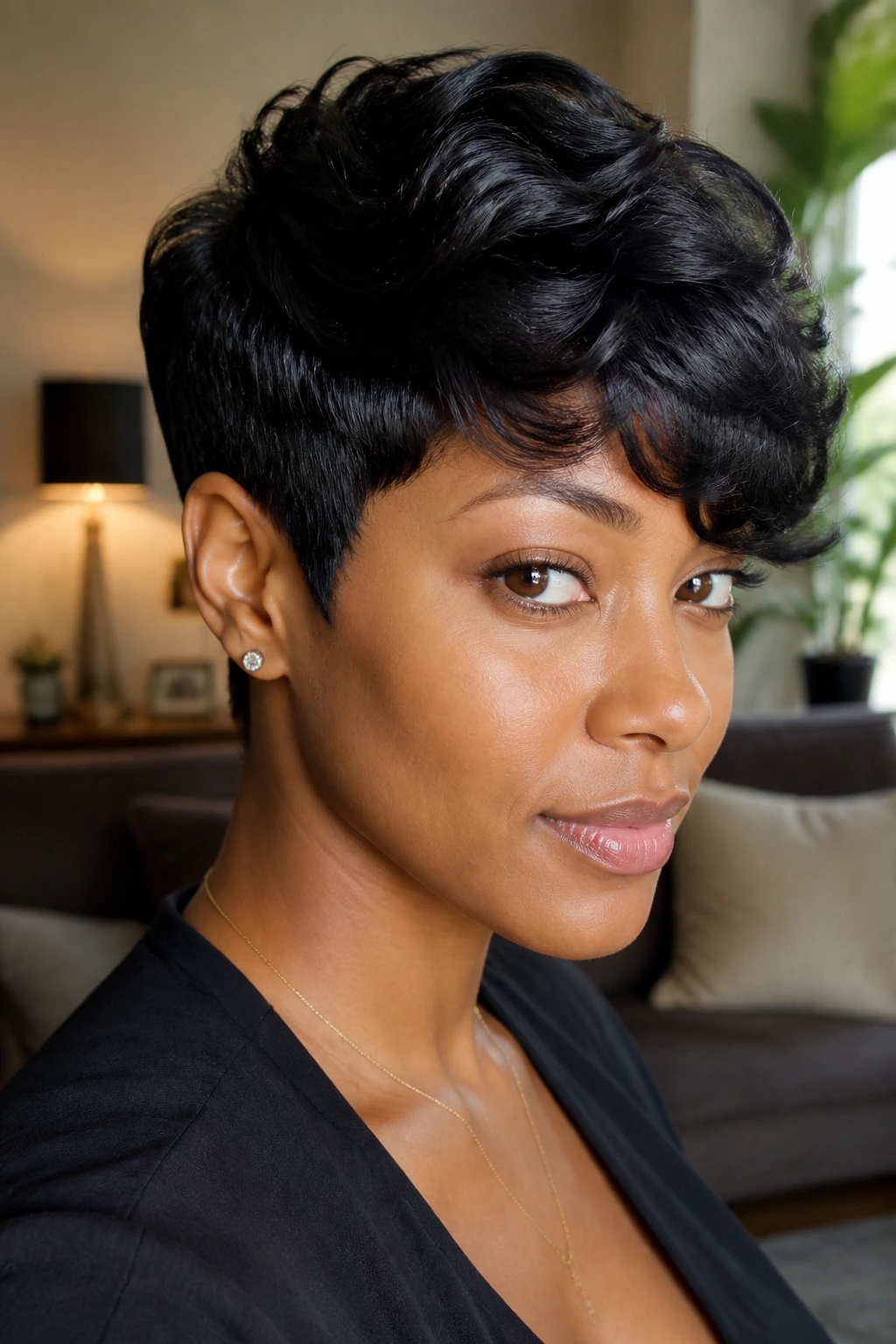
4. Side-Swept Pixie with a Longer Top
A side-swept pixie is for the days when you want short hair, but not severe hair. Keep the top longer—around 3 to 4 inches stretched—and let it fall across the forehead or sweep toward one temple. The sides stay tighter, which keeps the cut from turning into a puff with no plan.
This style works especially well on thick hair because the density gives the sweep some weight. Thin hair often needs teasing or heat to fake that look. Dense hair already has the body.
I like this cut when the shape around the face needs softening. It can take the edge off a strong brow, a sharp jaw, or a very round cheek line without hiding your face under layers. A little mousse at the roots and a finger-combed side part are usually enough.
The catch is simple: if the top is cut too short, the whole point disappears. Leave room up there.
5. Curly Frohawk
A curly frohawk gives you more height than a regular tapered crop, but it keeps the drama in the center instead of around the whole head. That is why it works so well on thick hair. The sides can be faded, slicked, or tapered close, while the middle strip stays full and springy.
I prefer this over a standard faux hawk when the curl pattern is dense enough to stand on its own. You do not need to force the center upward with a pile of product. A little curl cream, a diffuser, or a twist-out on the ridge is usually enough.
What makes it different
The frohawk reads softer than a shaved faux hawk, but it still has attitude. Thick hair keeps the ridge looking plush, not stringy, and that makes the whole style feel deliberate instead of costume-like.
If your hair grows out fast, this is a forgiving option. The sides can blur a little and still look fine for a while. The center keeps carrying the look.
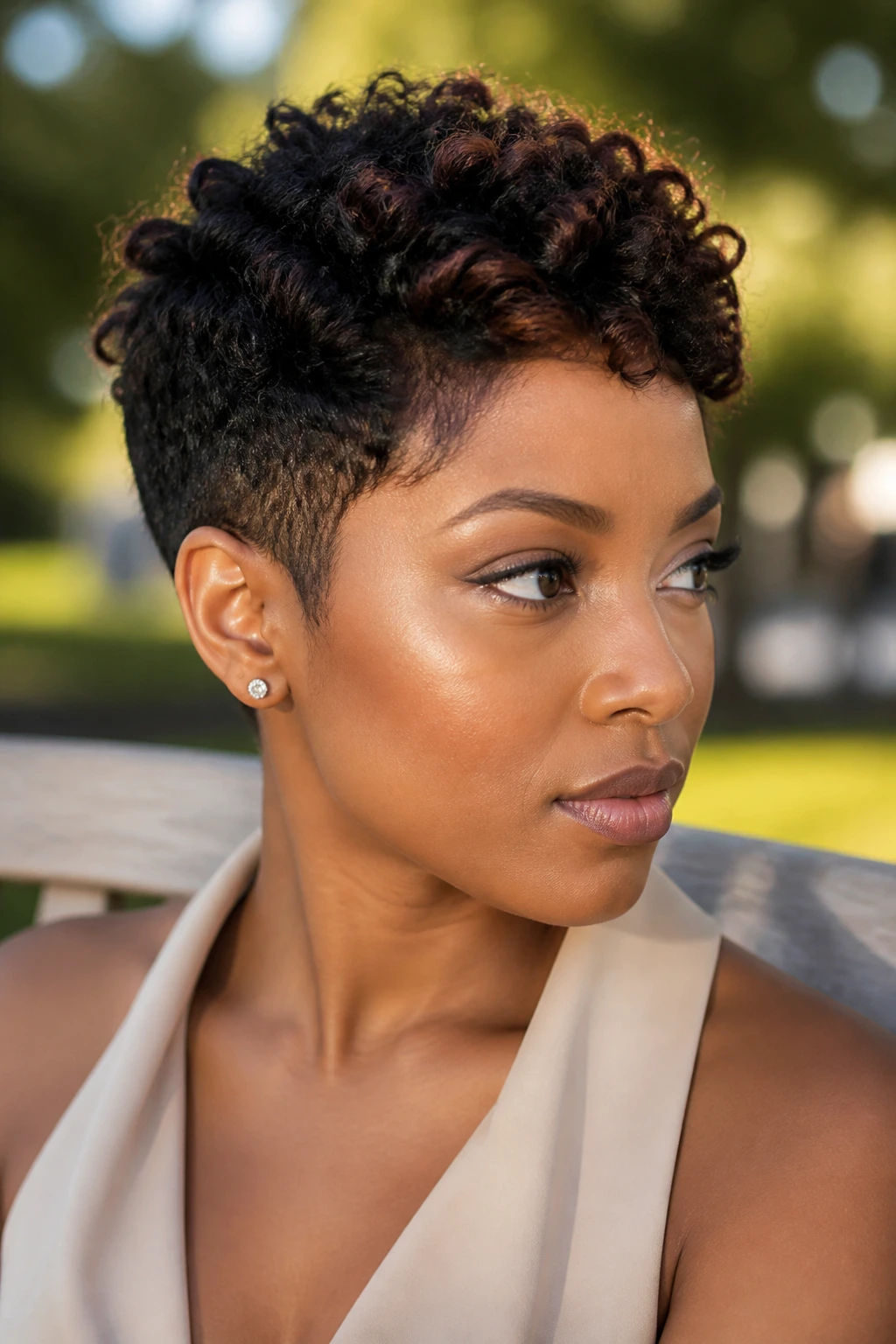
6. Tapered Coily Crop
A tapered coily crop is the most flattering short cut when you want definition without overstyling. The top stays just long enough for coils to show, while the sides and nape are tapered so the whole shape narrows cleanly toward the neck. On thick hair, that taper is what stops the cut from turning boxy.
This is one of my favorites for 4A to 4C textures because the curls themselves become the style. You can finger-coil the top in small sections, or leave it free and let the natural pattern do the work. Either way, the haircut does not need much help.
It also grows out well, which I appreciate. A lot. The top can soften a bit without looking messy, and the taper keeps the neckline tidy longer than you’d expect.
If you want one short style that can look polished at work and relaxed on the weekend, this is an easy one to defend.
7. Flat-Twist Out on Short Hair
Can short hair really take a twist-out? Absolutely, if the twists are flat enough and the hair has enough density to hold the pattern. On thick hair, a flat-twist set gives you a short style with texture, stretch, and a little movement around the hairline.
I usually like this on hair that is just long enough to twist back cleanly—about 2 to 4 inches stretched. Use a leave-in conditioner, a cream with slip, and a light gel at the roots if you want the parts to stay crisp. The twists should dry fully before you unravel them. Fully. Not “mostly.”
Where it shines
This style is ideal when you want a short look that feels softer than a cut-and-go crop. The twist pattern leaves visible ridges and a little stretch, which helps thick hair sit lower and read a bit longer.
A twist-out on short hair also gives you options. You can wear it defined, separate it for more volume, or pin one side back with a small clip when the shape starts to get wild.
8. Bantu Knot Set on Short Hair
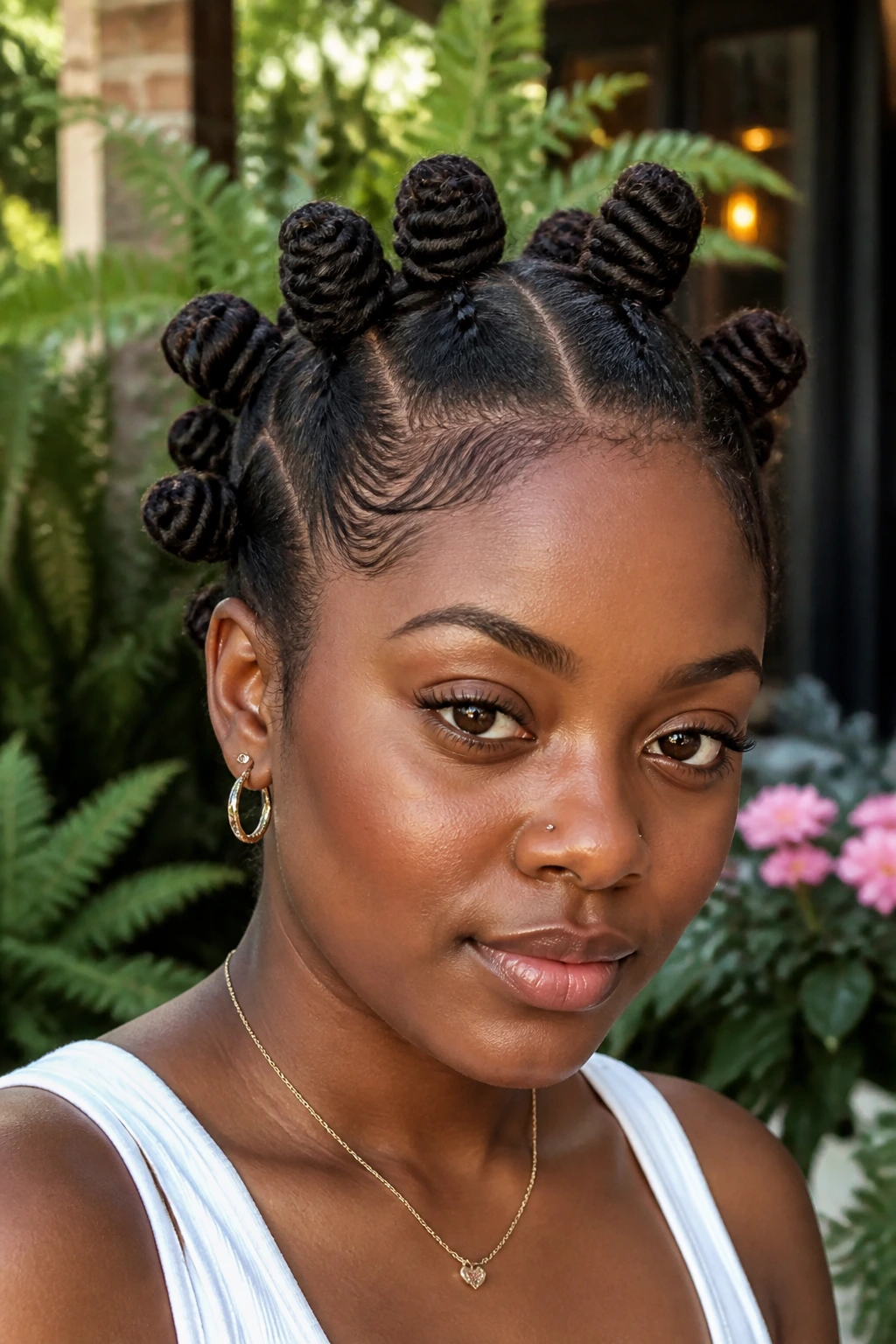
Bantu knots on thick short hair are one of those styles that look like a statement before they even come down. The knots themselves are the style, but the real payoff comes the next day when you take them apart and get a springy, compact curl pattern with a lot of body.
Use 8 to 16 knots depending on how much hair you have on top and how tight you want the curl. Dense hair can take a little more product here, but don’t drown it. A setting mousse or lightweight cream is enough if your sectioning is neat.
The part people miss is drying time. If the center of a knot is damp, the curl will frizz instead of set. A hood dryer helps. So does sleeping with the knots protected under a satin bonnet and giving them one more hour to finish in the morning if needed.
This style is best when you want two looks from one set. Knots first. Curls later.
9. Asymmetrical Pixie Cut
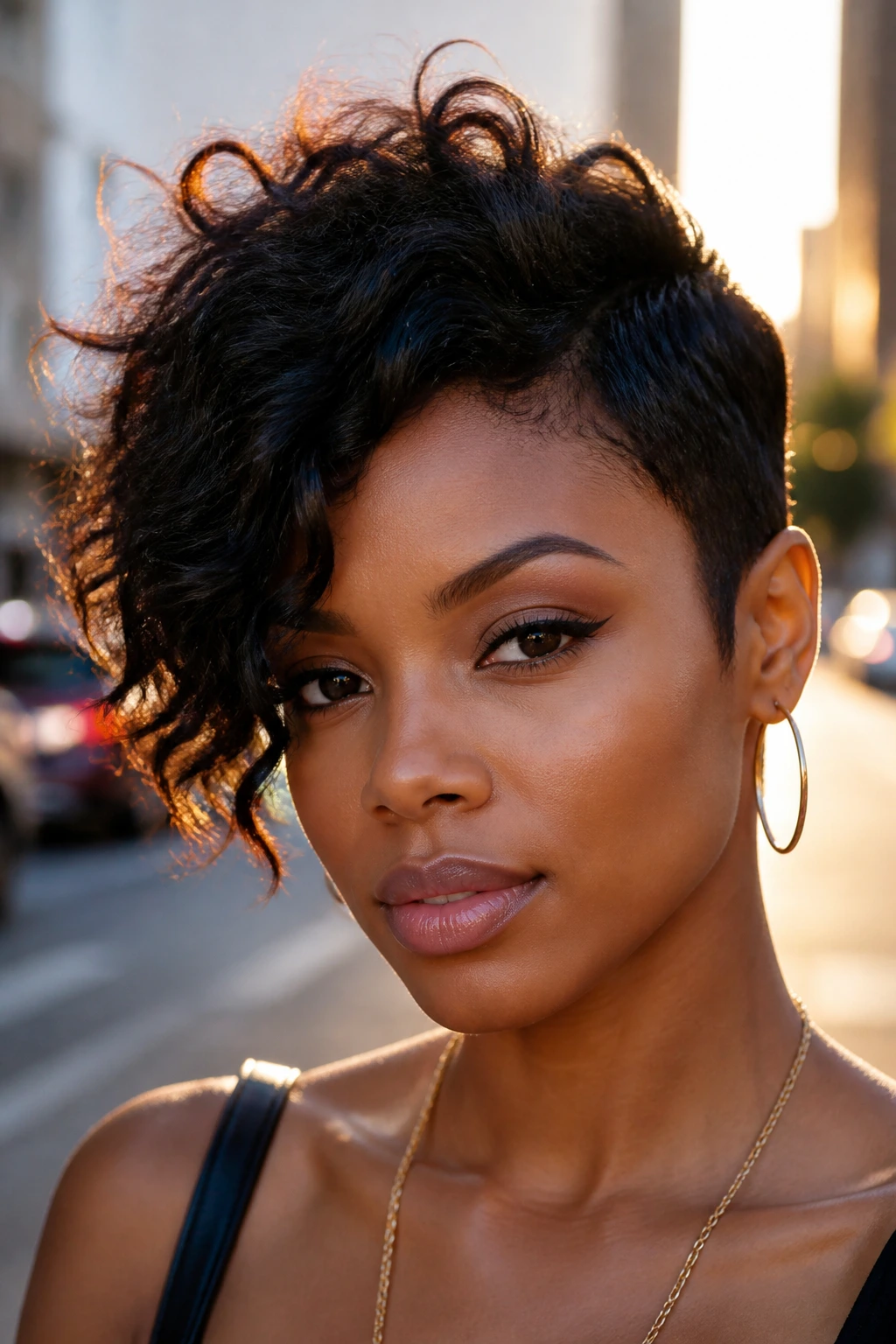
An asymmetrical pixie is a cut with an opinion. One side sits longer, usually grazing the cheekbone or ear, while the other side is kept tighter and cleaner. On thick hair, that contrast reads clearly, which is why the style looks so crisp when the balance is right.
I like this on faces that can carry a little angle. A round face gets a sharper edge. A long face gets a soft line that breaks up the length. And because the hair is dense, the longer side does not collapse into stringiness the way it sometimes does on finer textures.
The most important thing is proportion. If the long side is too long and the short side is too short, the whole cut starts shouting. Keep the difference noticeable, but not cartoonish.
A small curl cream or light pomade can help the longer side lie where you want it. The cut itself should already be doing most of the work.
10. Undercut with Sponge-Rolled Top
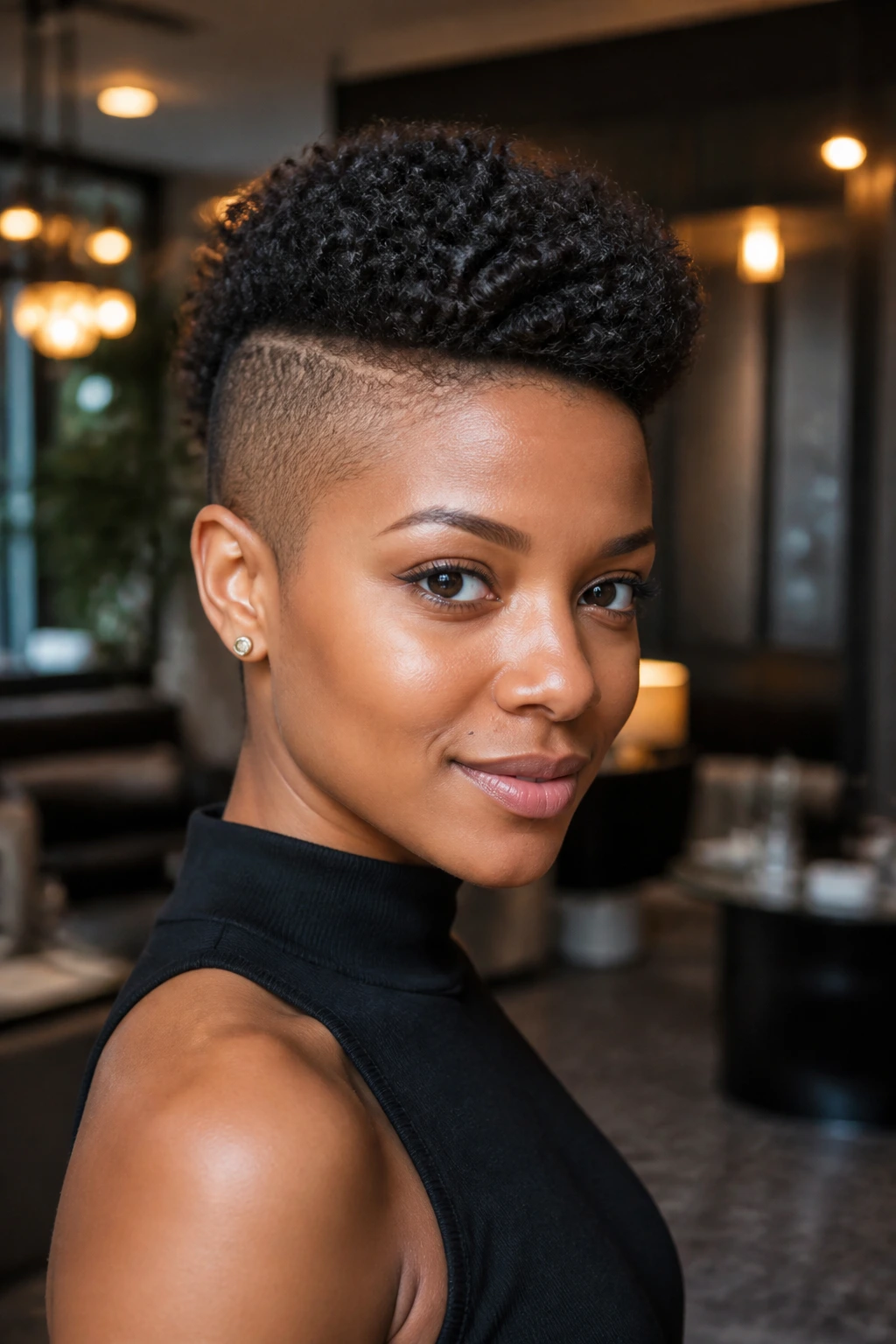
What happens when you want the top to stay full but the sides to disappear? You get an undercut with a sponge-rolled top, and thick hair is one of the best textures for it. The shaved or closely clipped sides clear out the bulk, while the top stays long enough—about 2 to 4 inches—to define with a curl sponge.
The trick is keeping the transition clean. A sloppy undercut looks unfinished. A neat one makes the top look even bigger and more sculptural, which is exactly the point here.
How to get the most from it
Use the sponge on dry or slightly damp hair with a little styling cream. Work in one direction only if you want a uniform coil pattern; change directions if you want more texture. The top should feel springy, not sticky.
This style is for people who like sharp contrast. If you want soft and blended, skip it. If you want a short cut with a bit of edge that still lets your texture be the headline, this one earns its keep.
11. Rounded Afro Crop
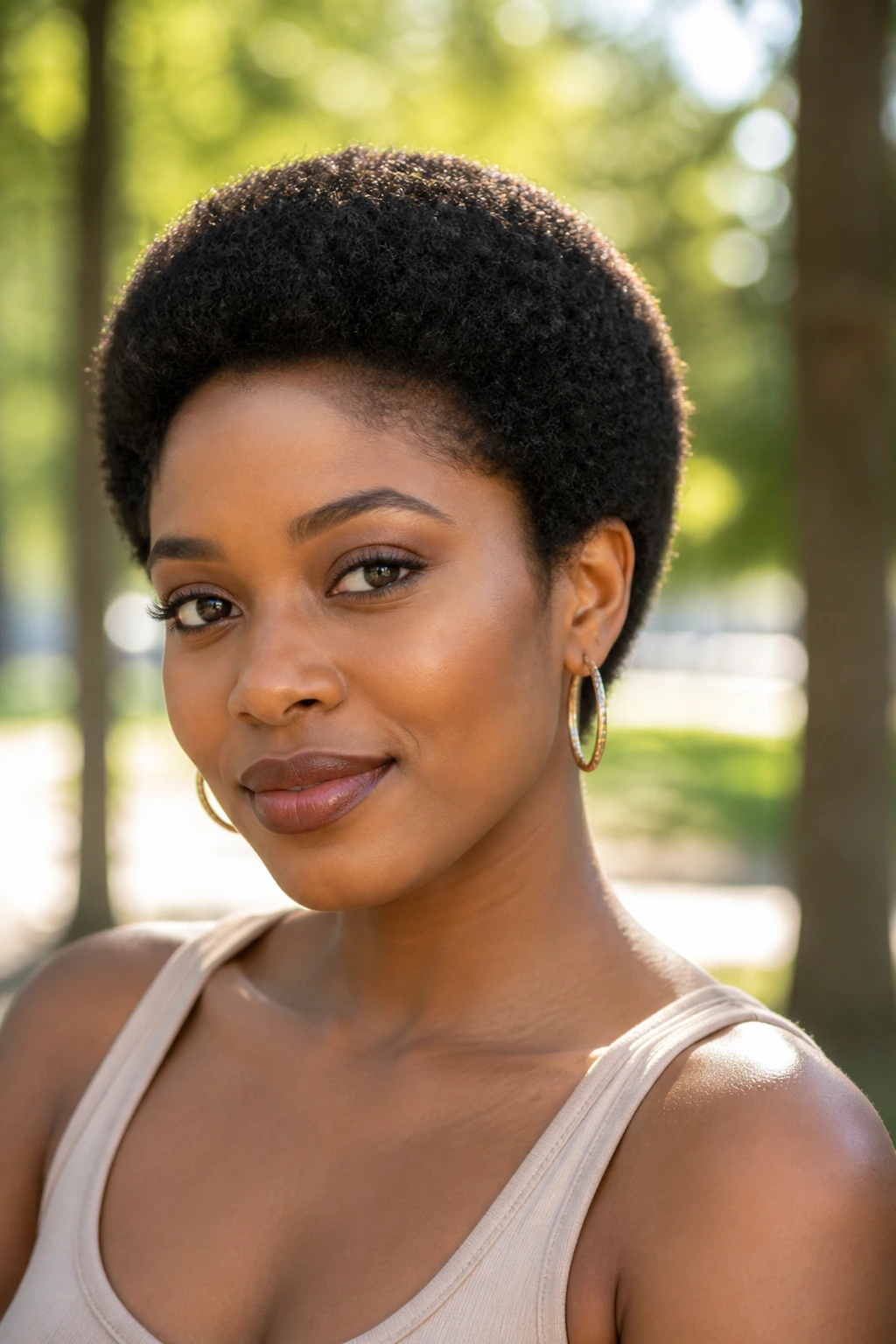
A rounded afro crop is not just “short afro, but smaller.” The shape matters. The goal is a soft dome that follows the head without looking flat on top or square at the sides. Thick hair makes that shape easier to build because density fills in the silhouette naturally.
Why a round shape works
A rounded crop lets the curl pattern stack without looking bulky in one spot. The outline stays soft, and the hair reads full from every angle. That’s a big reason I like this shape more than a fuzzy, all-over trim that ignores the sides and back.
Use a pick only at the roots if you want lift. If you go after the ends, you lose the roundness and create a halo that spreads instead of lifting. A small amount of leave-in and oil on the fingertips is enough for most people.
This is a cut that rewards restraint. Shape it, moisturize it, leave it alone. The hair will do the rest.
12. Mini Twist Bob
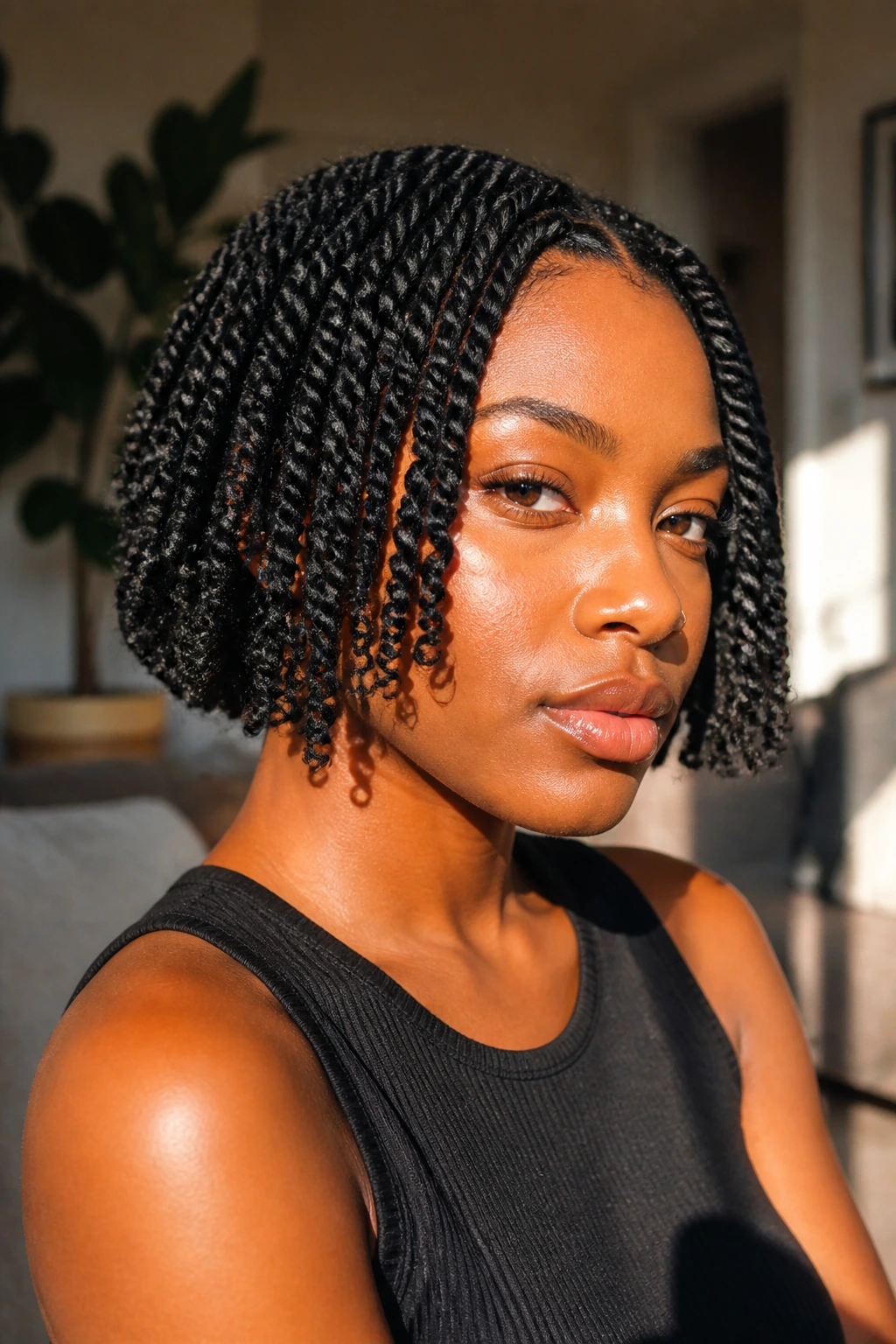
A mini twist bob is one of the cleanest ways to wear short hair when you want a protective style with a defined shape. The twists are small enough to sit neatly, but thick enough hair keeps the bob from looking wispy or threadbare. When the length lands around the jaw or just above it, the whole style feels tidy and strong.
I like this style because it solves a common short-hair problem: too much bulk, not enough structure. The twists create lines. The parting creates order. The density of the hair gives the bob a little weight so it swings instead of floating.
If your hair is short, you may need the twists just a touch longer than you first expect. Shrinkage can pull them up faster than your eye remembers. And if you want the ends to look neat for weeks, dip them carefully or seal them the way your texture responds best.
The style is calm. It’s also practical. Those two things do not always show up together.
13. Soft Caesar Cut
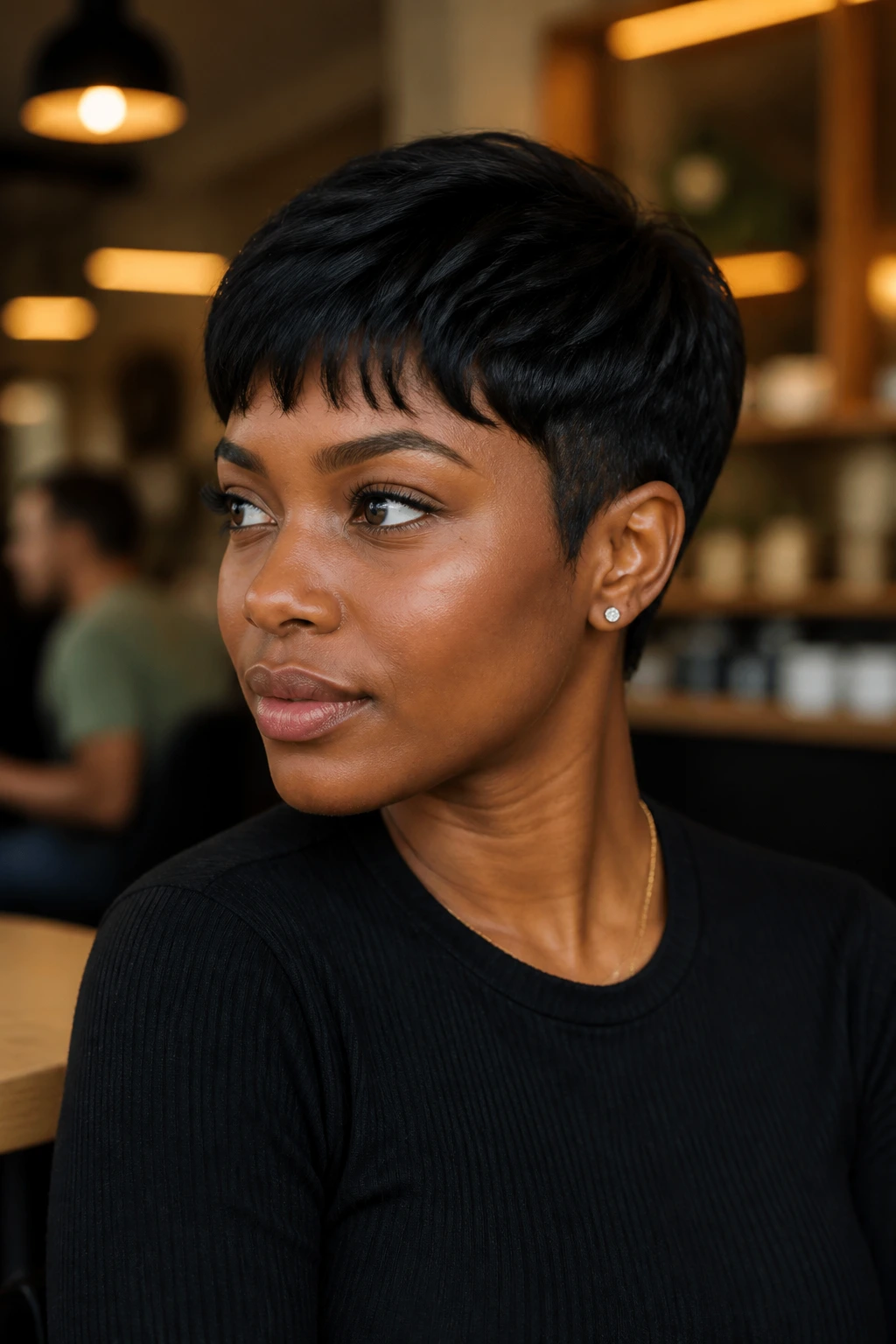
A soft Caesar cut is the short, forward-brushed style that looks simple until you notice how much shape it has. The fringe is kept short and even, with just enough taper at the sides to keep the head from looking blocky. On thick hair, that evenness reads clean and strong.
This style is a good answer for anyone who wants very little daily styling. The front sits forward, the sides stay neat, and the whole cut takes maybe one minute to finger into place after a wash. You can wear it with a line-up if you like a sharper edge, or keep the perimeter softer if your hairline is more delicate.
Compared with a pixie, a Caesar is less airy and more grounded. That can be a strength. It feels sturdy. If your texture stands up on its own, the cut can almost style itself.
My only real caution: do not let the fringe get cut too short. Thick hair springs upward fast, and a half-inch too much off the front can change the whole mood.
14. Shaved-Side Faux Hawk
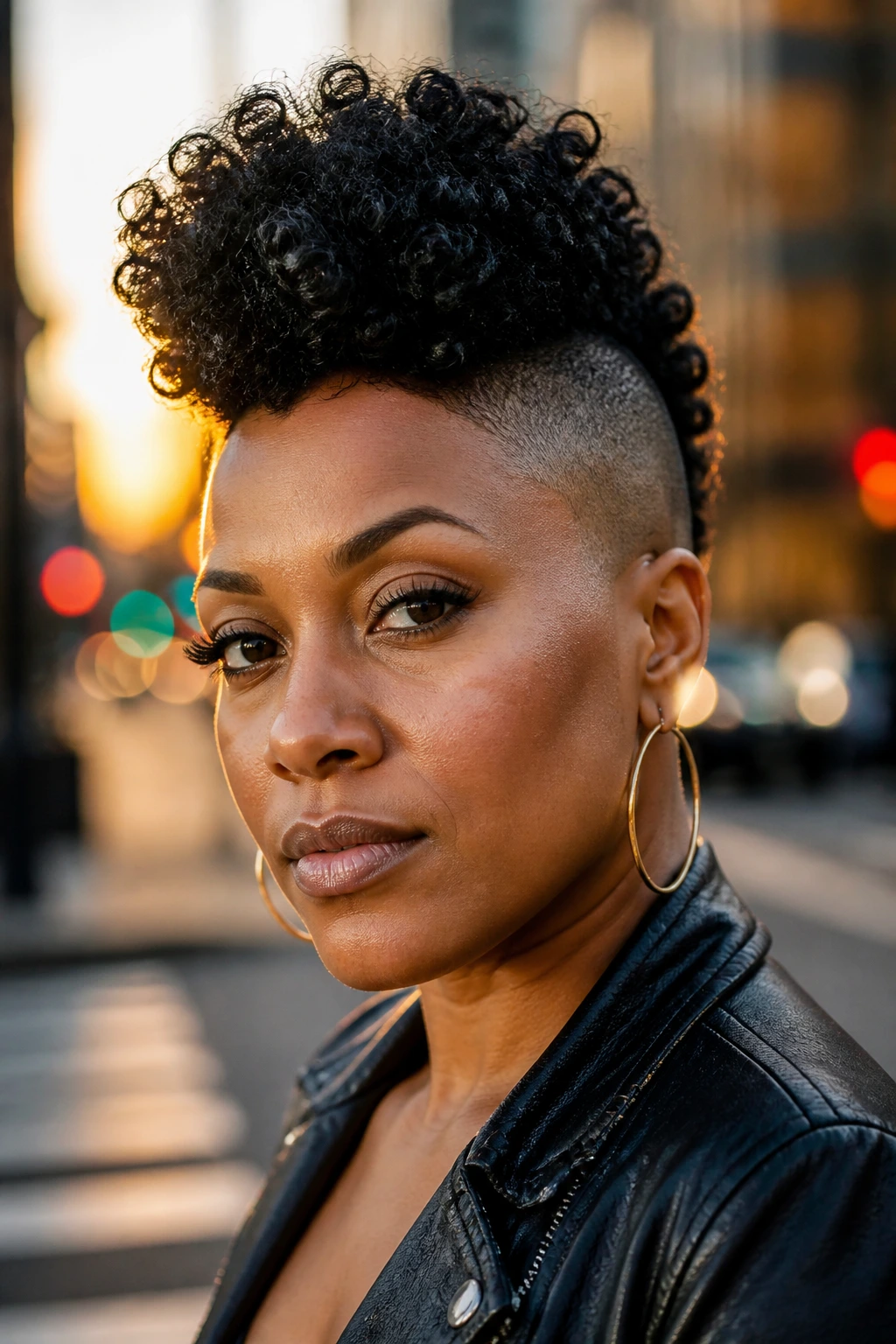
A shaved-side faux hawk is the louder cousin of the curly frohawk. The sides drop away almost completely, and the center strip is left thick enough to build real height. On dense hair, that strip can stand proud without much help, which is why the style looks so good when the curl pattern has some spring.
This cut is for someone who wants a clear shape from across the room. It is not subtle. The good news is that thick hair keeps it from looking thin or scrappy. The top reads plush, not fragile.
Use a gel or foam to define the center, then push it upward with your fingers or a diffuser. If the hair is too soft, the hawk collapses. If the product is too heavy, it turns tacky and loses the airy edge. Somewhere in the middle is where this lives best.
I prefer this cut when you want a lot of personality but not a lot of styling time. The fade does some of the talking for you.
15. Sculpted Buzz Cut with Color
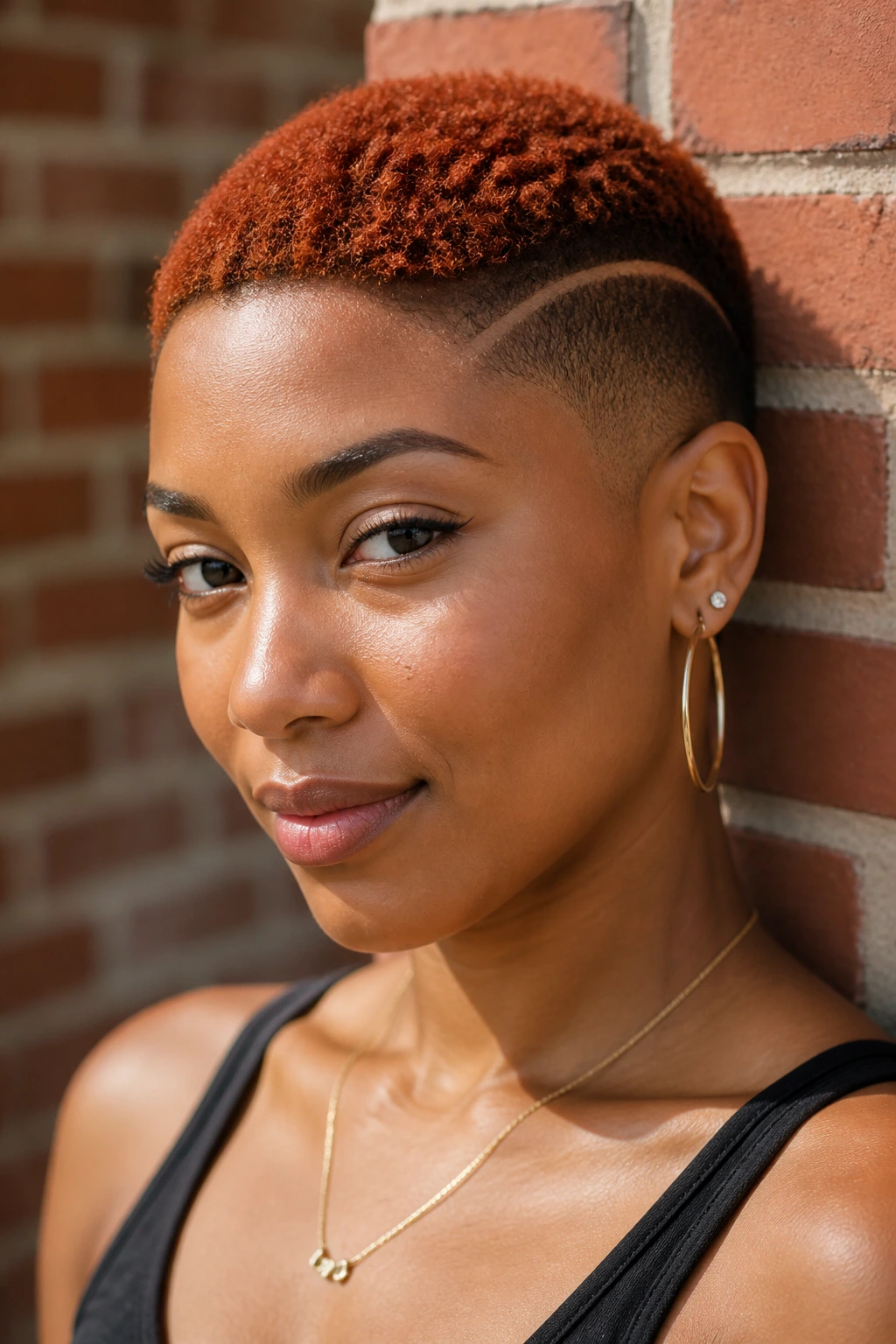
A sculpted buzz cut is one of the boldest short hairstyles for thick hair because it strips everything down to shape and scalp line. At that length, the density still matters. Thick hair gives the head a fuller outline, so the cut looks intentional instead of bare.
Color changes the whole mood. A warm copper, a deep burgundy, or a soft honey shade can make the close crop read richer. If you prefer no bleach, a natural buzz with a crisp shape-up can look even stronger. No filler. No fuss.
The maintenance is different from the curls and twists above. The scalp becomes part of the look, so moisturizing it matters. A light oil, a gentle cleanser, and sun protection on exposed areas can keep the style comfortable.
This is not the cut for someone who wants to hide. It is for someone who likes the head shape itself to do the work.
16. High-Top Fade with Natural Texture
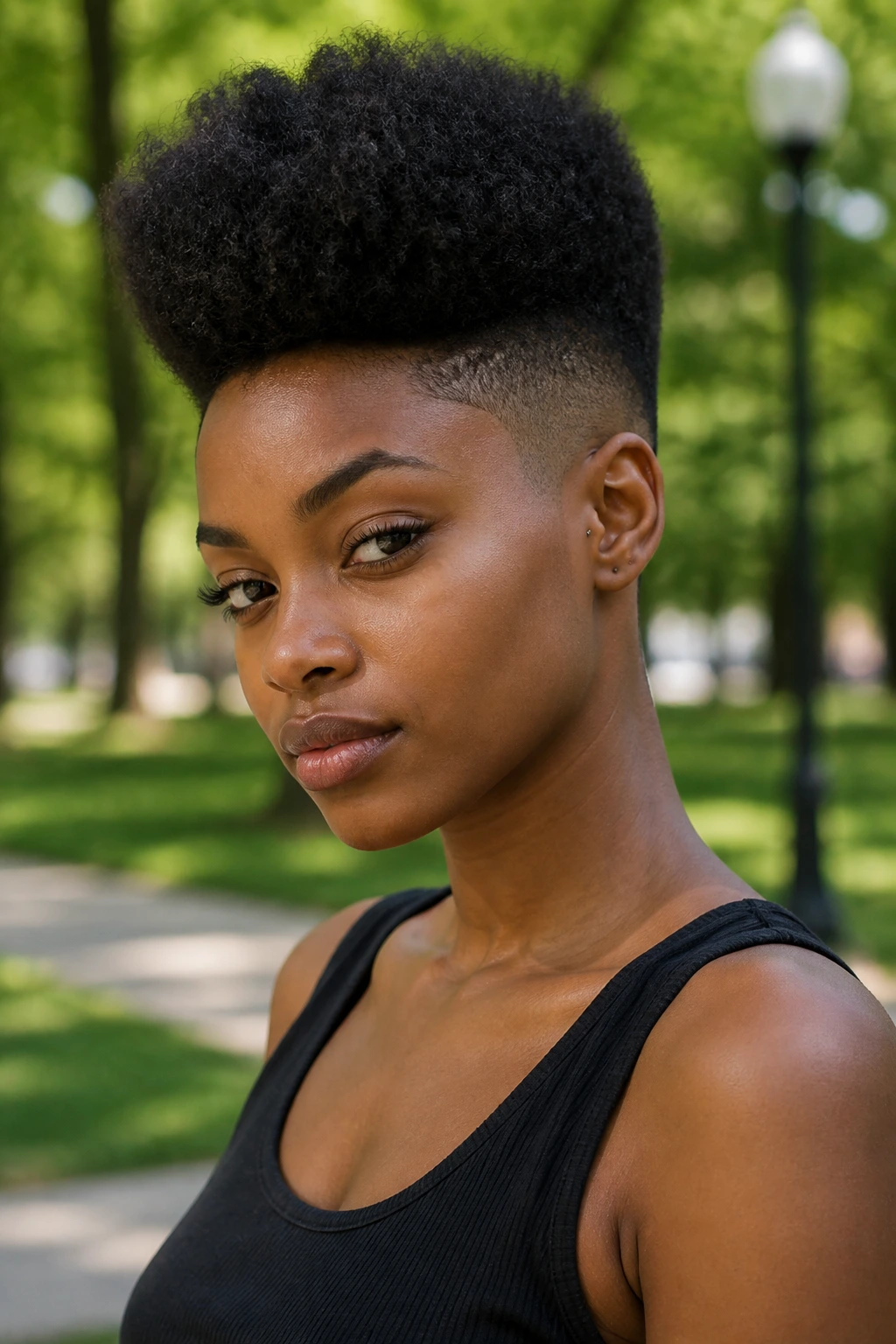
A high-top fade is a classic for a reason: thick hair gives the top enough volume to stand tall without looking forced. The fade clears the sides and back, while the top keeps its height and shape. Done well, the profile is clean from every angle.
This cut works especially well when the hair likes to grow upward instead of lying flat. The natural texture becomes part of the structure. A little sponge work, a little shaping, and you have a style that reads crisp without losing softness.
What I would watch for is over-thinning the top. You want height, not a wispy ceiling. Dense hair can take a little removal of weight, but the silhouette should still feel full.
If you like a shape with history and presence, this one delivers. It never looks accidental.
17. Short Loc Bob
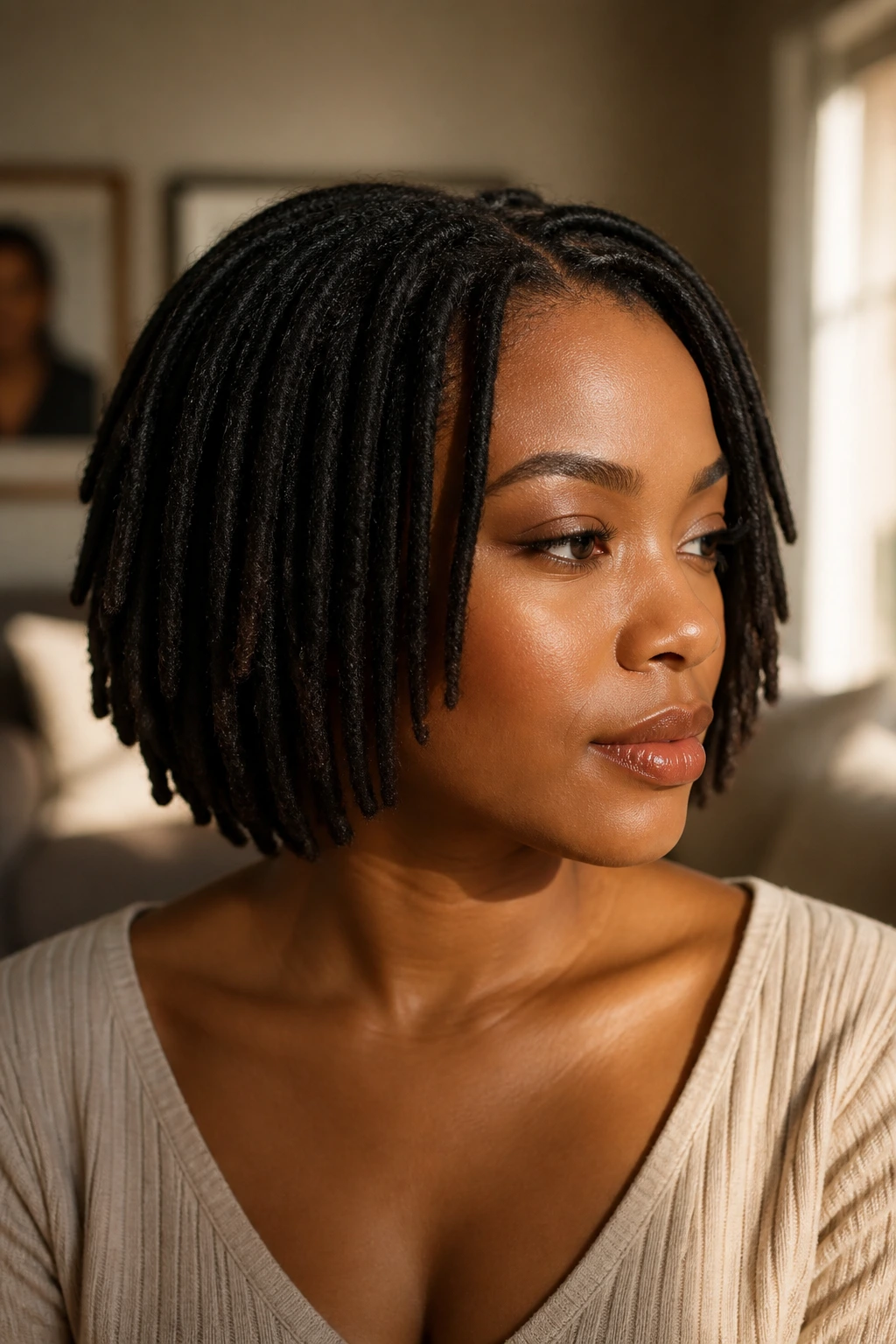
Can short locs look polished? Very much so. A short loc bob sits around the jawline or a little above it, with the ends cut or shaped so the style holds a tidy outline instead of drifting into a shaggy cloud. Thick hair supports this look because the locs have enough substance to show the bob shape.
Starter locs can sit a little fluffy at first, and that is normal. Mature locs at this length tend to fall more neatly, especially if the parting is clean and the ends are shaped on purpose. Either way, the bob silhouette gives the style a very clear frame.
If you want the edges neat, keep the temples and neckline fresh. If you like a softer mood, let the front pieces graze the cheeks a bit. The style changes with just a small shift in length, which is part of why I like it.
The main thing is patience. Short locs get better with time.
18. Wash-and-Go Crop with Gel Cast
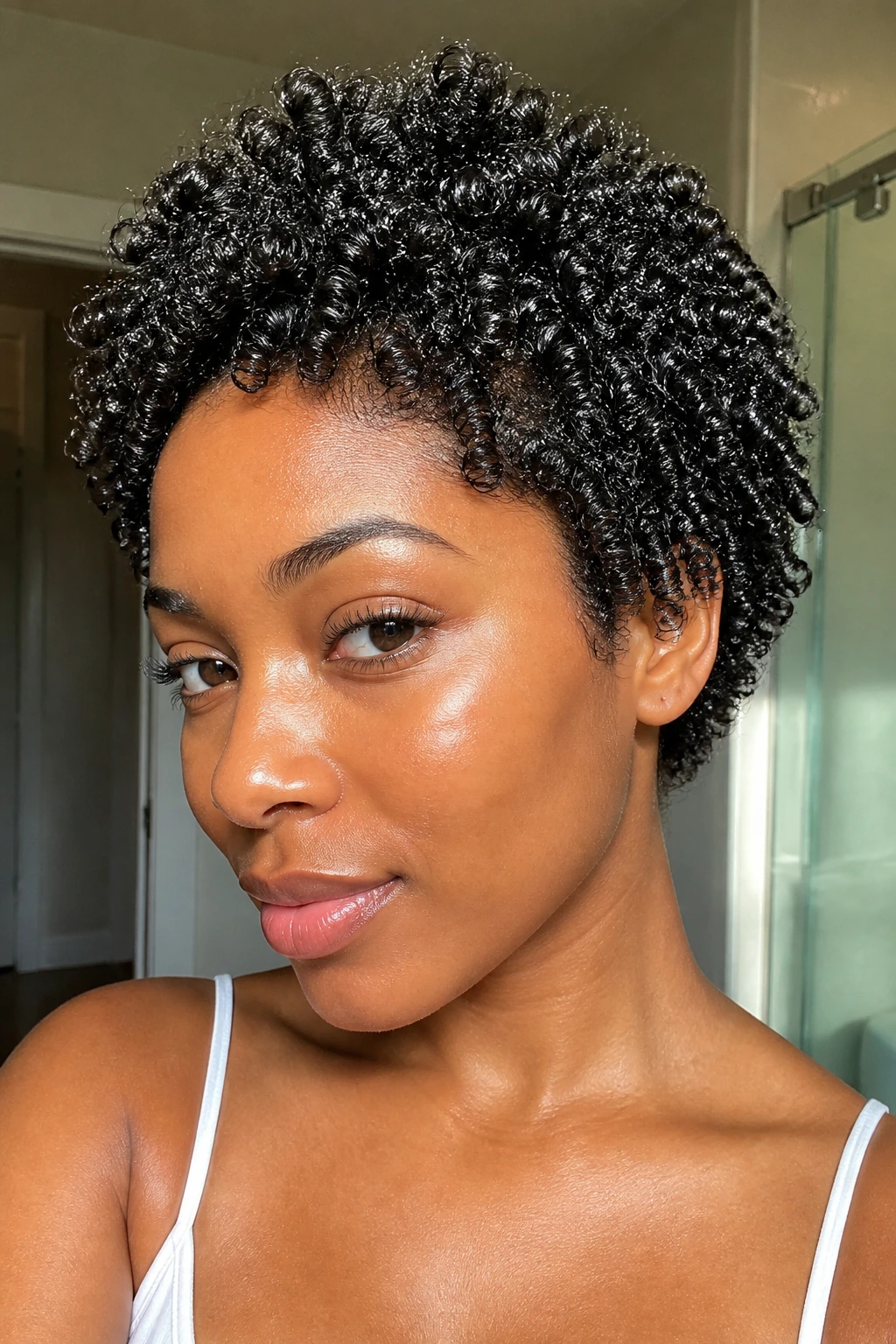
A wash-and-go crop on thick hair is one of those styles that looks effortless only after the product and drying stage have been handled with care. Use leave-in, then a gel that gives hold without turning the hair into a helmet. The curls should dry into a firm cast before you break them up.
What to watch for
If you touch the hair too early, you lose definition. If the hair is still wet at the roots when you go to bed, you get puff. Thick hair dries slower than people expect, especially in a short style where the curls cluster tightly.
The upside is that once the cast is set, the shape can look incredibly neat for a cropped style. The curls sit close, the outline stays clear, and you get a short style with real texture instead of a fuzzy compromise.
This one is best for people who do not mind a defined finish. If you like fluffy and soft, this may feel too structured. If you like clean curls with a strong silhouette, it is a very good option.
19. Side-Part Taper with Defined Edges
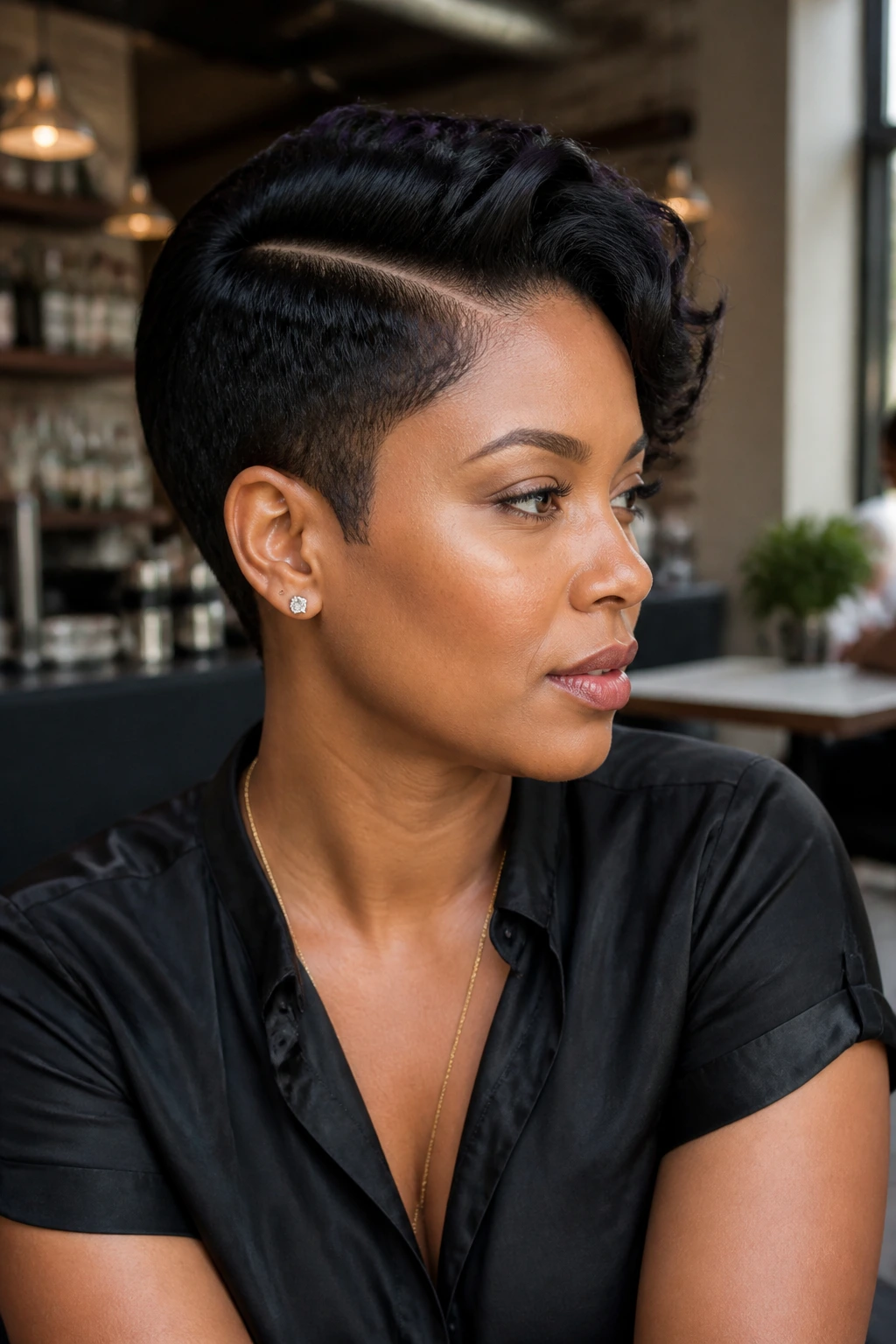
A side-part taper is the sort of short style that looks smart without trying to be dramatic. The side part gives the top direction, the taper keeps the nape and sides neat, and the edges sharpen the whole thing just enough. On thick hair, that combination keeps the style from swelling out into a shape with no center.
I like this when a person wants a short cut that can move between polished and relaxed without a full restyle. A quick brush, a touch of cream, and the part stays visible. If the hair is curly, the part can be more of a guide than a hard line, which often looks better anyway.
This is also one of the better choices if you need a short style that works with earrings, glasses, or strong brow shape. It frames the face instead of fighting it.
Keep the taper soft if your hairline is sensitive. A hard edge is not always the answer.
20. Accessorized TWA with Clips and Headbands
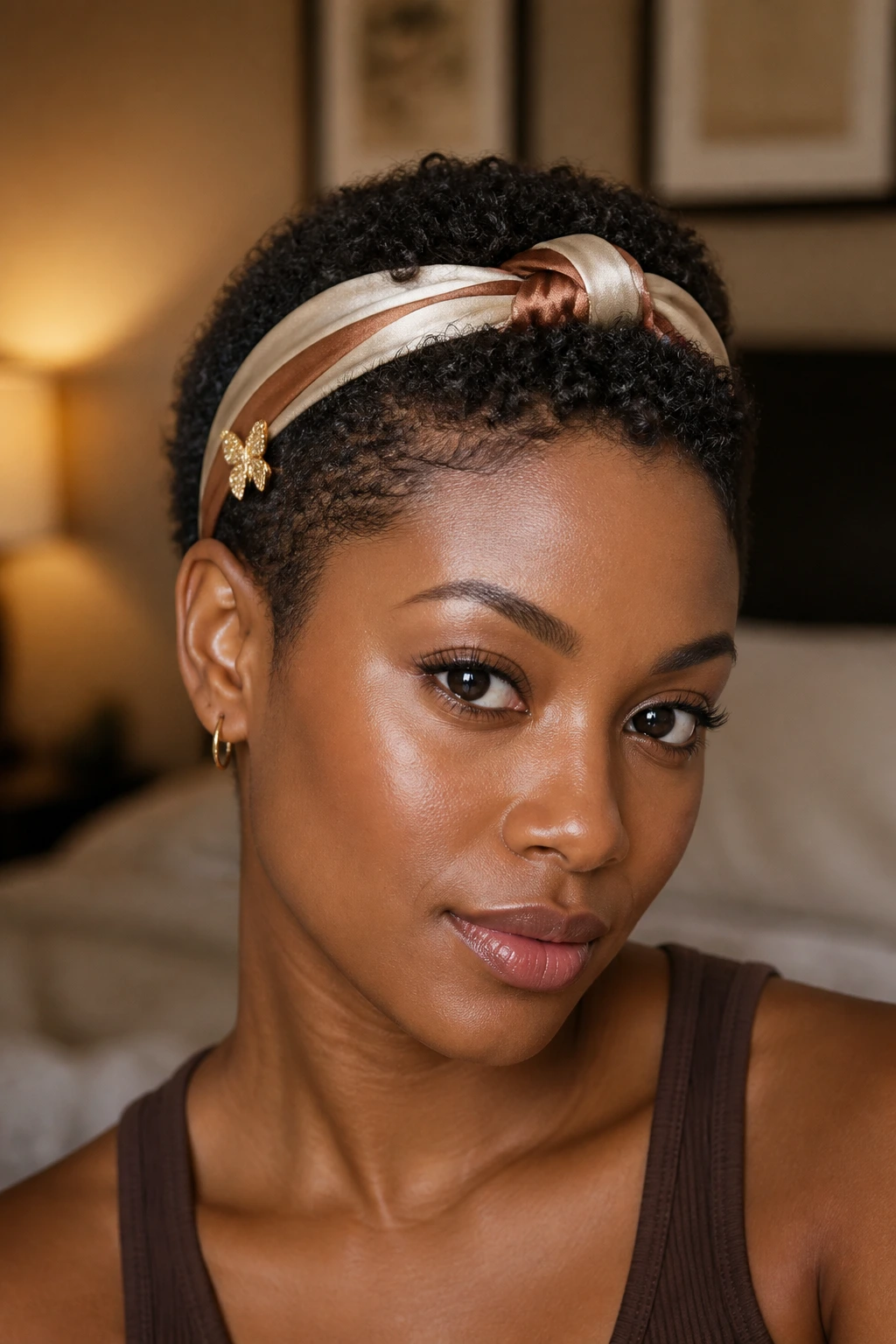
Sometimes the best short style is the one you already have, with a few smart additions. An accessorized TWA turns a simple crop into a different look with a satin headband, a narrow metal clip, a scarf, or a few small cuffs placed where the shape needs interest. On thick hair, the texture gives the accessories something to sit against, so they do not disappear.
I like this approach because it lets you vary the mood without touching a flat iron or changing the cut. One day the look is soft and neat. The next day the headband comes on and the whole thing feels sharper.
The only rule I care about here is tension. Don’t pull the band so tight that it dents the hairline. Thick hair can tolerate more structure, but the edges still need a break.
A plain TWA with one well-placed clip can look far more thoughtful than a style that was overworked for an hour. That’s the part people underestimate.
What Thick Hair Needs Before You Pick a Short Style
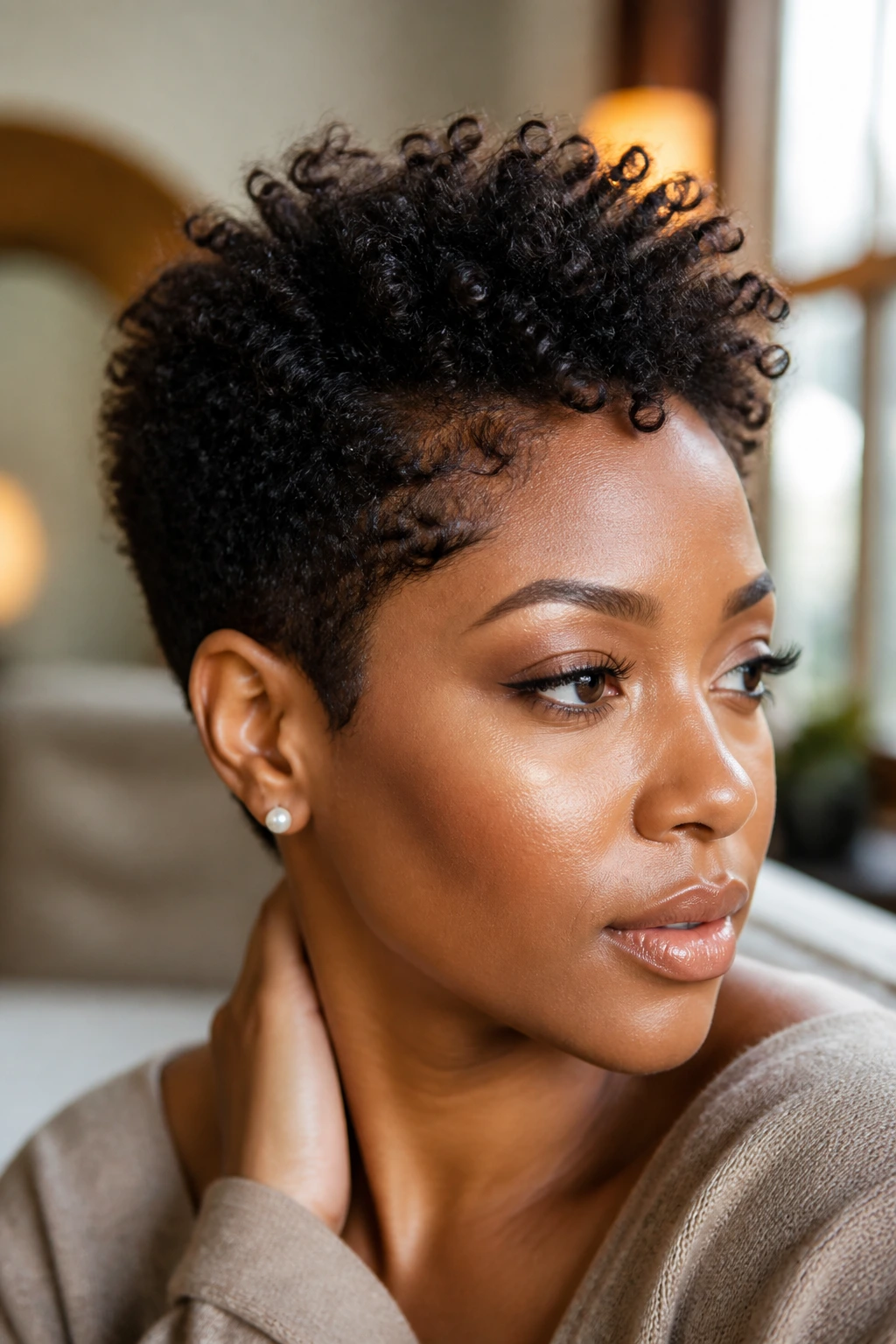
Thick hair is forgiving in one sense and demanding in another. It can fill out a crop, hide a soft grow-out, and hold shape with less effort than finer textures. It can also turn boxy fast if the weight is removed in the wrong places. That is the whole game.
The best short cuts for dense hair are not the ones that “take off bulk” everywhere. They are the ones that decide where bulk should stay. Keep the crown plush if you want height. Keep the nape tighter if you want a cleaner neck. Leave the temples soft if you want the face to read wider. The shape lives in those choices.
Shrinkage matters too. A cut that looks balanced when wet can sit an inch shorter once it dries, and on very coily hair that can change the whole read of the style. Ask your stylist to cut with shrinkage in mind. That sentence saves people a lot of regret.
And one more thing: short does not have to mean severe. Thick hair can do airy, soft, rounded, sharp, polished, or wild. The cut just has to match the texture instead of fighting it.
How to Ask for the Right Shape at the Salon Chair
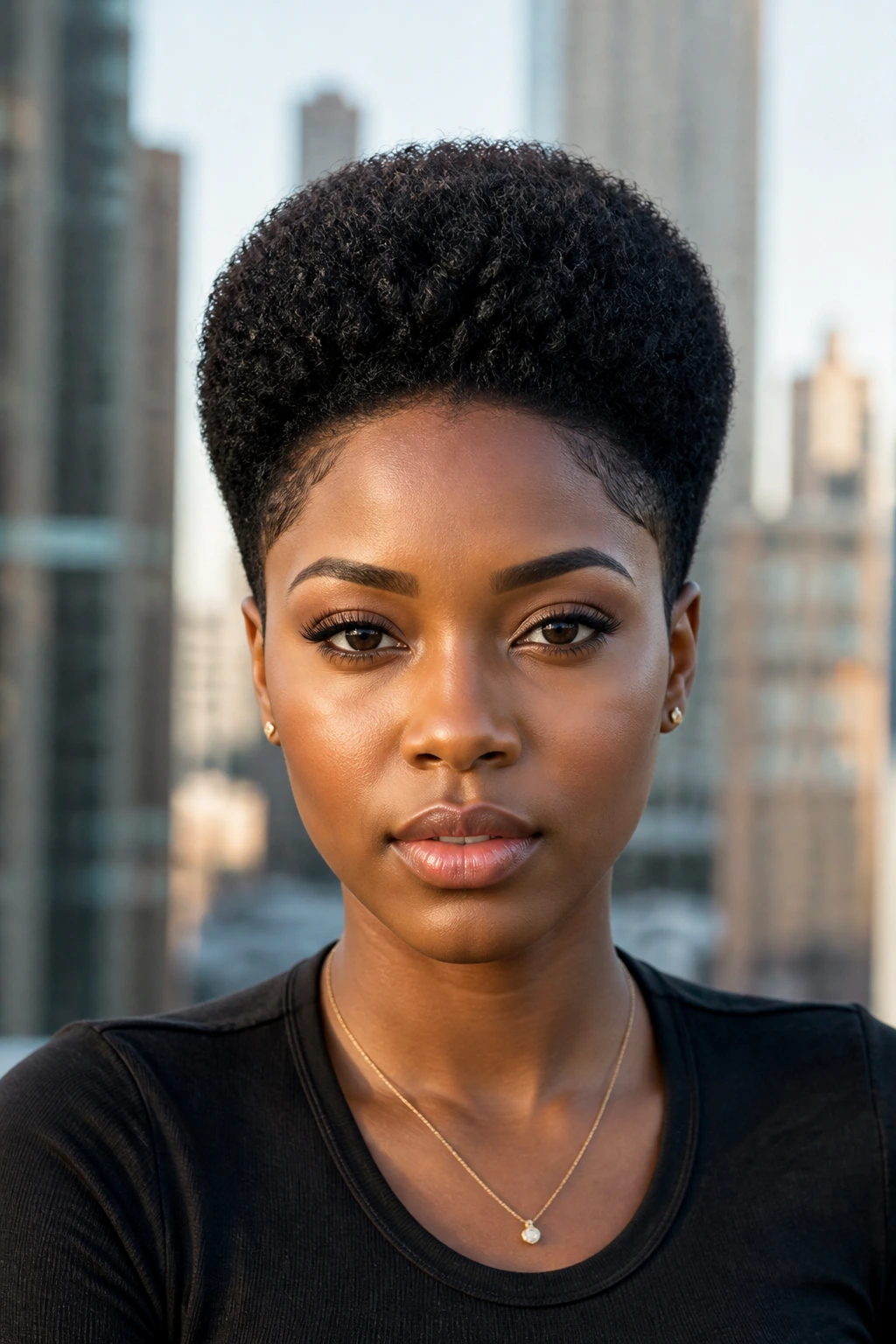
Bring photos, yes, but bring the right ones. A picture of a style on straight hair will not tell your stylist how it behaves on dense coils, and that mismatch is where half the bad haircut stories start. Look for examples with similar texture, similar density, and similar shrinkage.
Say what you do not want. If you hate daily heat, say it. If your hairline is sensitive, say that too. If you need the style to look neat after five days, not just on day one, that matters more than the pose in the mirror.
Shrinkage buffer: On natural styles, ask to leave a little extra length. Half an inch can be the difference between “soft and shaped” and “too short to tuck.”
Weight map: Point to the spots where your hair gets biggest—usually the crown, temples, or nape. That tells the stylist where to remove bulk and where to leave it alone.
Grow-out plan: Ask how the style will look in two to four weeks. A good short cut should still have a shape when the edges soften.
That’s the conversation I trust most. Not buzzwords. Real details.
Essential Tools for These Styles
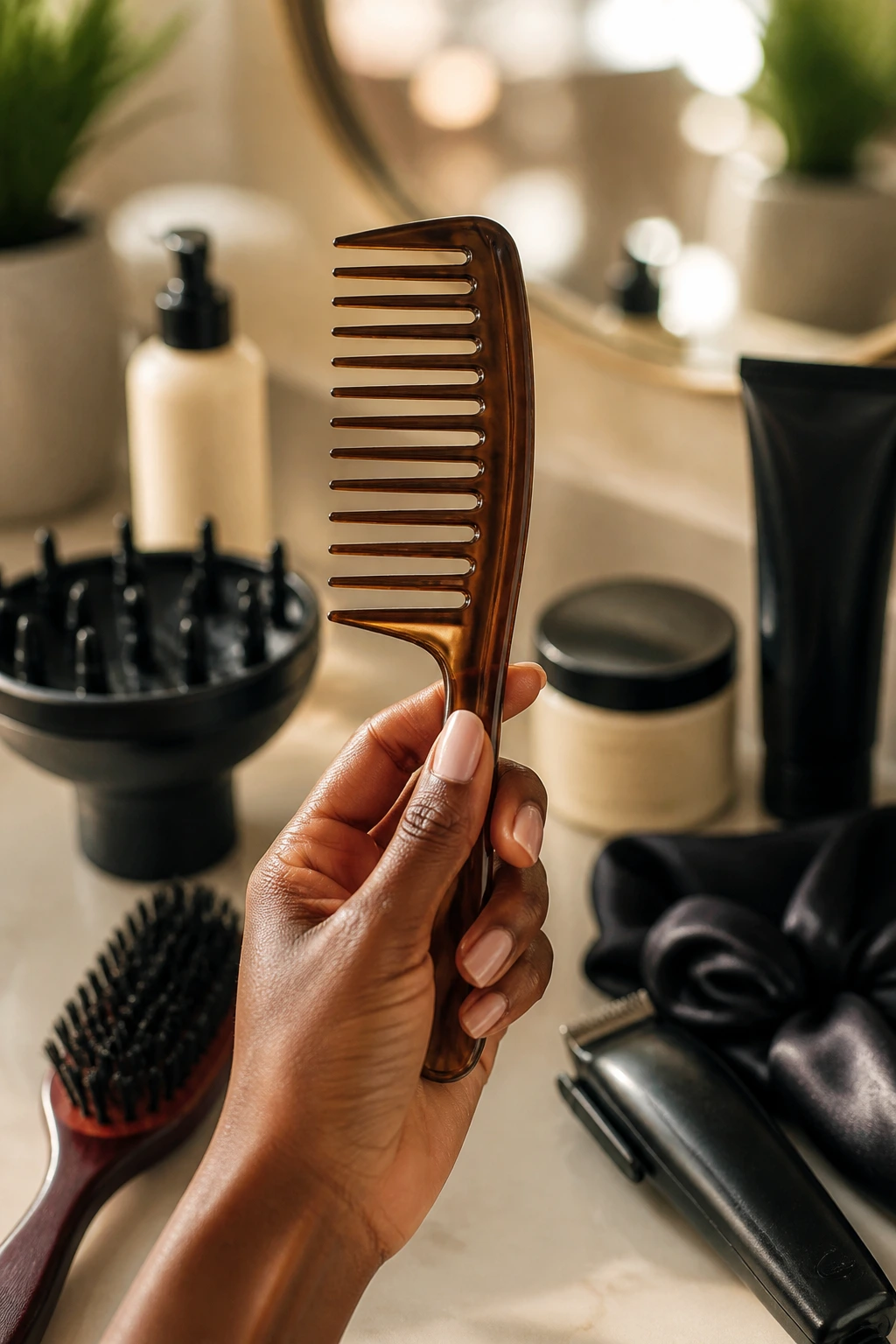
- Tail comb: Useful for clean parts, side parts, and sectioning twist sets without tearing through dense hair.
- Wide-tooth comb: Helps detangle short curls and coily crops without raking the hairline.
- Soft-bristle brush: Good for smoothing edges, polishing a Caesar cut, or laying down finger waves.
- Small spray bottle: Lets you re-dampen a short style without soaking it, which matters when you only need to wake up the roots.
- Leave-in conditioner: The base layer for most of these looks; use a light hand so the style doesn’t go limp.
- Curl cream or defining gel: Pick one main hold product. Thick hair usually behaves better when the finish is clear.
- Edge control: Handy for line-ups and polished edges, but use it sparingly so the build-up doesn’t turn white or flaky.
- Satin bonnet or scarf: Keeps the nape, edges, and crown from rubbing into a frizzy halo overnight.
- Diffuser or hood dryer: Not mandatory, but useful for twist-outs, Bantu knots, and wash-and-go sets that need a full dry.
- Small trimmer or clipper: Optional at home, but useful for keeping the neckline tidy between salon visits.
Additional Tips and Finishers
Moisture first: Short thick hair can look dull at the ends if the surface is dry. A water-based leave-in on damp hair solves more problems than most people expect.
Pick one main finish: Cream gives softness, gel gives hold, mousse gives lift. Mixing all three usually creates buildup before it creates style.
Use accessories with intent: A narrow headband, a single barrette, or one gold cuff can make a TWA feel dressed up without adding tension to the hairline.
Keep the perimeter honest: If the nape or temples start getting fuzzy, tidy them. Thick hair looks its best when the outline stays clear.
Make it yours: Want softer? Keep the taper gentle and the crown rounded. Want sharper? Shorten the sides and let the top stay dense. Tiny changes shift the whole mood.
Common Mistakes to Avoid
- Cutting too much off the crown: Thick hair shrinks, and a crown that looks balanced wet can end up too short once dry. Leave a little buffer.
- Thinning the wrong places: Overusing razors or thinning shears on dense coils can leave frizz and weak spots instead of movement. Remove weight with shape, not random slicing.
- Using too much product: Short styles do not need a heavy hand. Too much cream or gel can flatten the top and make the hair feel sticky by midday.
- Ignoring the neckline: A fuzzy nape makes even a good pixie look unfinished. Keep a light cleanup schedule if your cut depends on a neat outline.
- Picking a style that needs heat every morning: If you hate flat irons or hot combs, do not choose a look that falls apart without them. Start with a shape that works with your texture, not against it.
- Sleeping without protection: Cotton pillowcases steal moisture and rough up the cut edges fast. Satin is not a luxury here. It is maintenance.
Variations and Adaptations to Try
Soft Grow-Out Version: Keep the sides tapered but not shaved, and leave the top a little longer so the style stays nice as it grows. This is a smart move if you do not want a hard appointment schedule.
High-Definition Version: Use twist-outs, Bantu knots, or sponge work to sharpen the curl pattern on the top. The result is a shorter style with more visible texture and a cleaner finish.
Protective Short Style: Mini twists, short locs, or flat twists give you a cropped look with less daily handling. That is the version I’d choose when the ends need a break.
Bold Color Version: Add copper, burgundy, or honey tones to a buzz cut, tapered crop, or frohawk. A little color can make the cut shape pop, but only if the hair is healthy enough to take it.
Office-Neat Version: Choose a side-part taper, soft pixie, or rounded crop with clean edges and minimal height. It keeps the look sharp without feeling fussy.
Night Routine and Between-Appointment Care
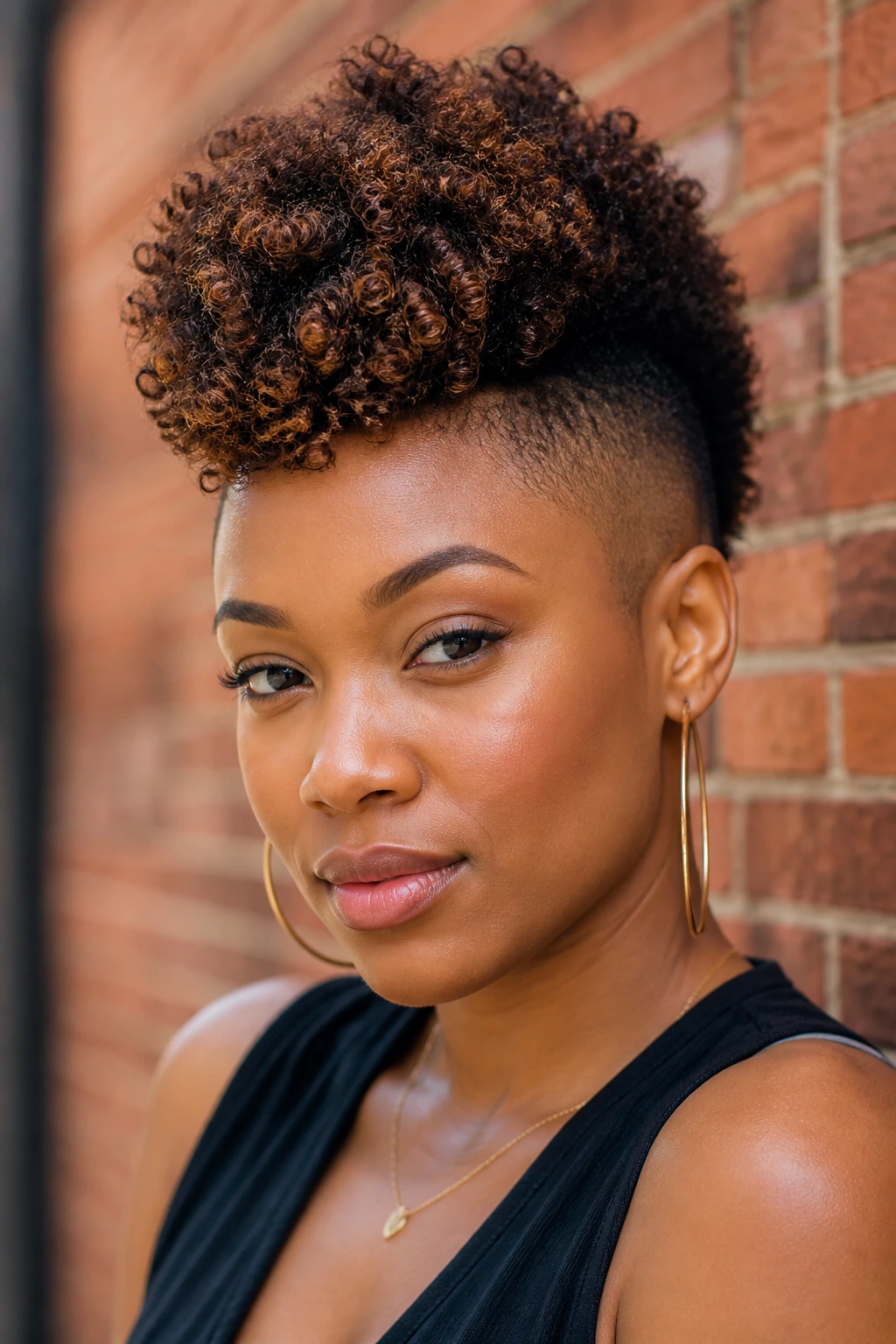
Short hair on thick texture still needs a night plan. Maybe more than people think. Friction shows up fast on cropped styles, especially around the nape and the side you sleep on every night. A satin scarf or bonnet protects the cut line, keeps moisture in, and helps the top stay from going lopsided.
For wash-and-go crops, refresh every 2 to 3 days with a light mist of water and a tiny amount of leave-in at the dullest spots. Do not soak the whole head again unless the style really needs it. Re-wetting too often can make short hair puff faster, not slower.
For twist-outs, Bantu knots, or flat twists, protect the pattern at night and restyle only the pieces that flatten. A little mousse on the frizziest sections can bring them back without restarting the whole set. That saves time and keeps the hair from getting overhandled.
For fades, taps, and tight napes, plan a cleanup every 2 to 4 weeks depending on how fast your hairline grows. That keeps the shape readable. Short cuts are all about line, and once the line disappears, the cut starts looking less crisp than it should.
Short locs need a different rhythm. Keep the scalp clean, oil lightly if it feels dry, and retwist on a schedule that suits the density and size of the locs. Thick hair can hold a loc beautifully, but buildup at the roots will weigh it down if you ignore it.
Frequently Asked Questions
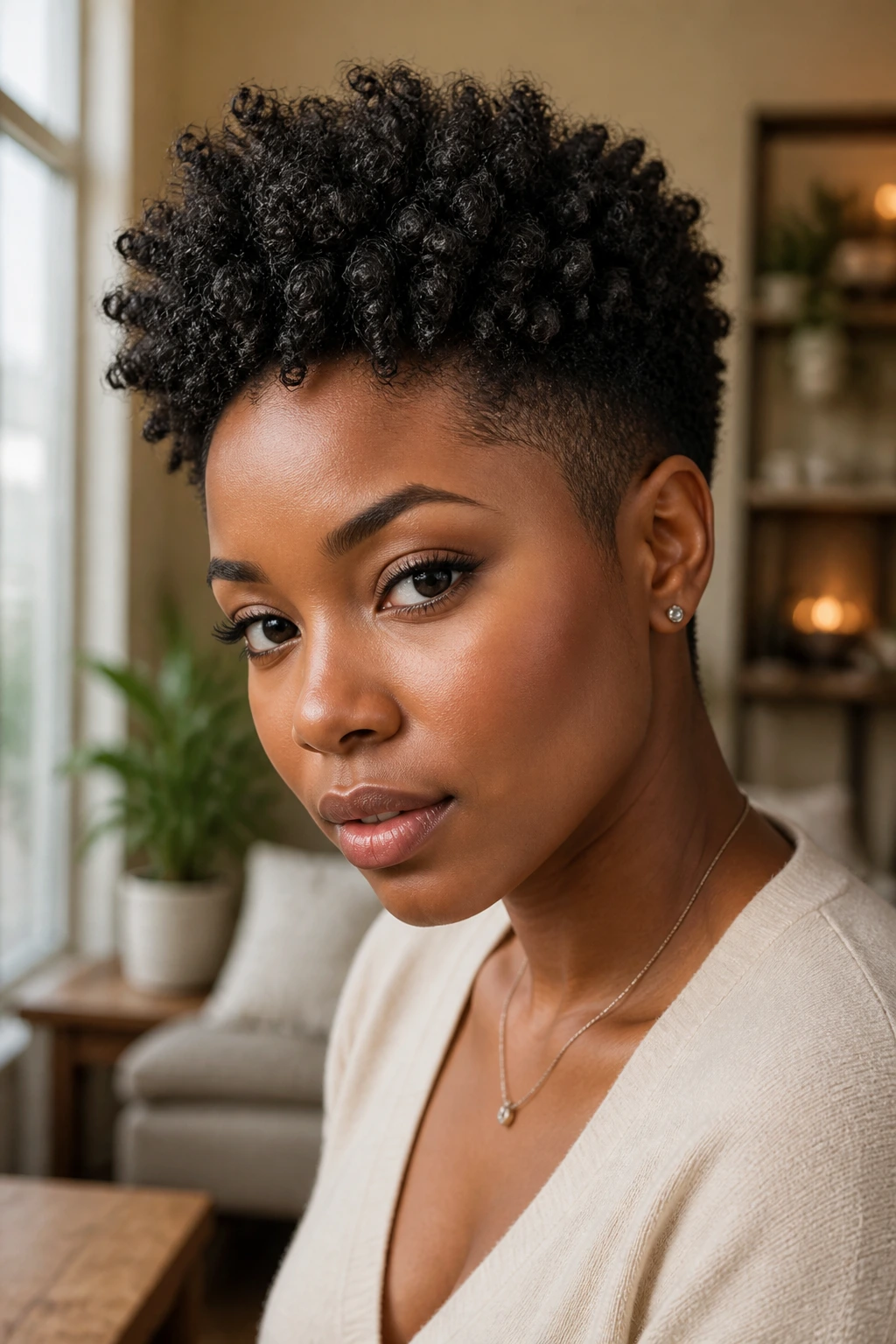
What short hairstyle works best for very thick 4C hair?
A tapered TWA, a coily crop, or short locs usually gives 4C hair the cleanest shape with the least fighting. Those cuts work with shrinkage instead of trying to flatten it out.
Should thick natural hair be cut wet or dry?
Dry cutting or curl-by-curl shaping usually shows shrinkage more honestly, which helps with dense coils. Wet cutting can still work, but the stylist has to know how much the hair will spring up once it dries.
How do I stop a short style from puffing up by midday?
Start with a good shape at the chair, then keep the perimeter neat and use a light hold product on damp hair. If the cut is boxy or too short in the wrong spots, product alone will not fix it.
Can I wear a pixie if my hair shrinks a lot?
Yes, but ask for a little extra length on top and a softer taper on the sides. Shrinkage is part of the design, not a problem to erase.
How often should I trim a short cut on thick hair?
Most cropped styles need a shape-up every 2 to 4 weeks, depending on how sharp you want the outline. If you wear a fade or undercut, the schedule leans shorter.
What if my edges are thin or fragile?
Skip harsh line-ups and ask for a soft taper around the hairline. A clean shape does not have to mean a razor-straight edge.
Are short styles still protective?
Some are. Mini twists, short locs, flat twists, and even a low-manipulation TWA can reduce daily handling, which gives the ends a break.
What if my hair looks too round or boxy after the cut?
That usually means the weight was left in the wrong places. Ask for a little more removal at the temples, nape, or sides—not the crown—so the shape narrows where it should.
Can I add color without wrecking a short style?
Yes, but short hair shows damage faster because there is less length to hide rough ends. If you lighten or color it, keep the care routine tight and do not skip moisture.
The Shape That Fits Your Hair
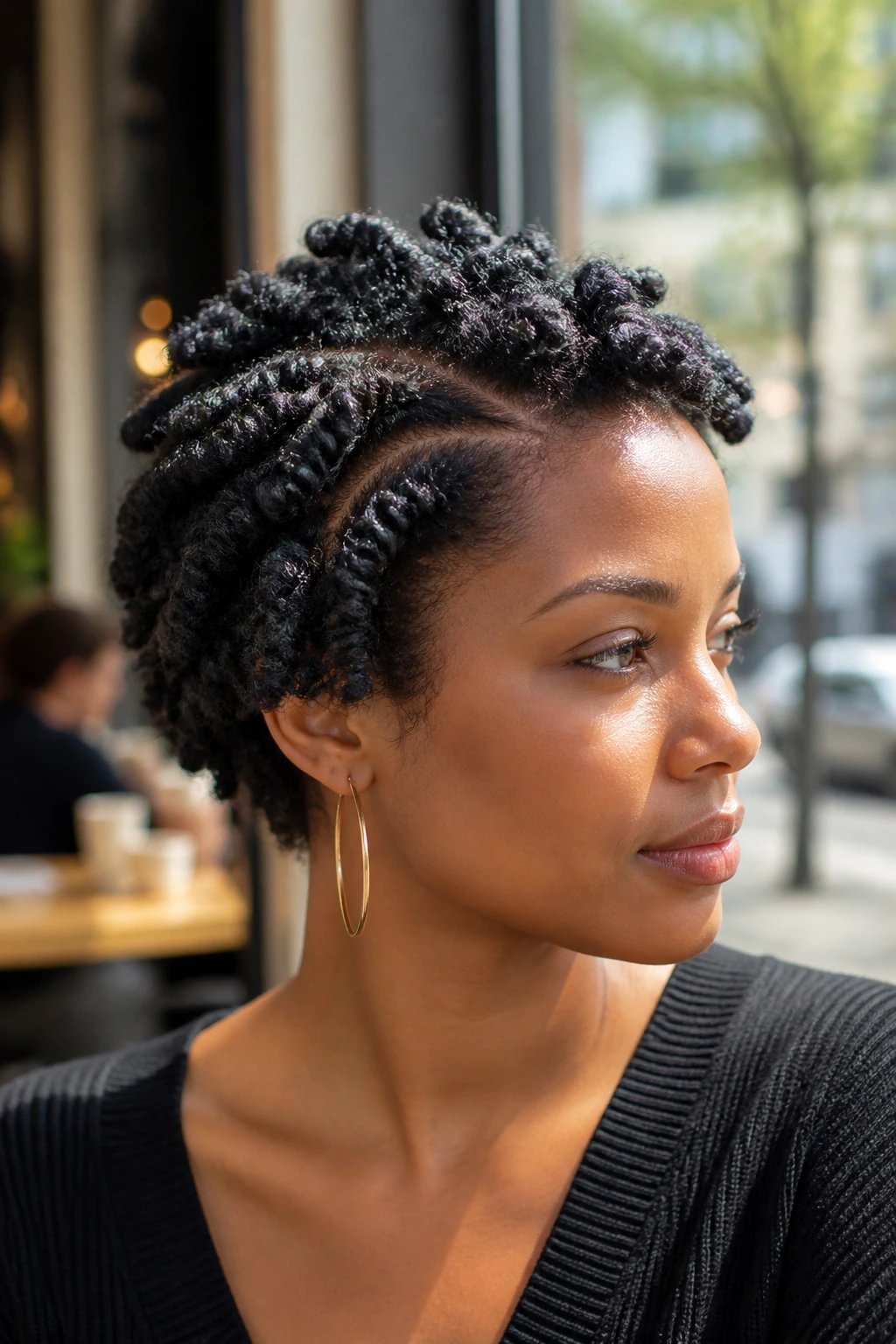
The best short haircuts for thick Black hair do not fight the texture, and they do not hide it either. They let the density work as structure. That is why a tapered pixie can look so neat, why a TWA can look so strong, and why a cropped fade can feel polished without a lot of daily work.
The real win is not the haircut alone. It is the match between shape, shrinkage, and how much effort you actually want to spend in the mirror. Get those three aligned, and short hair stops feeling like a compromise. It starts feeling like the cleanest thing in the room.