



A square face can wear a bob better than people think, but the cut has to move. When the line lands dead on the jaw, the face reads wider; when it slips a little lower, bends at the cheekbone, or gets broken up with loose curls, the whole thing softens fast. That’s the game here.
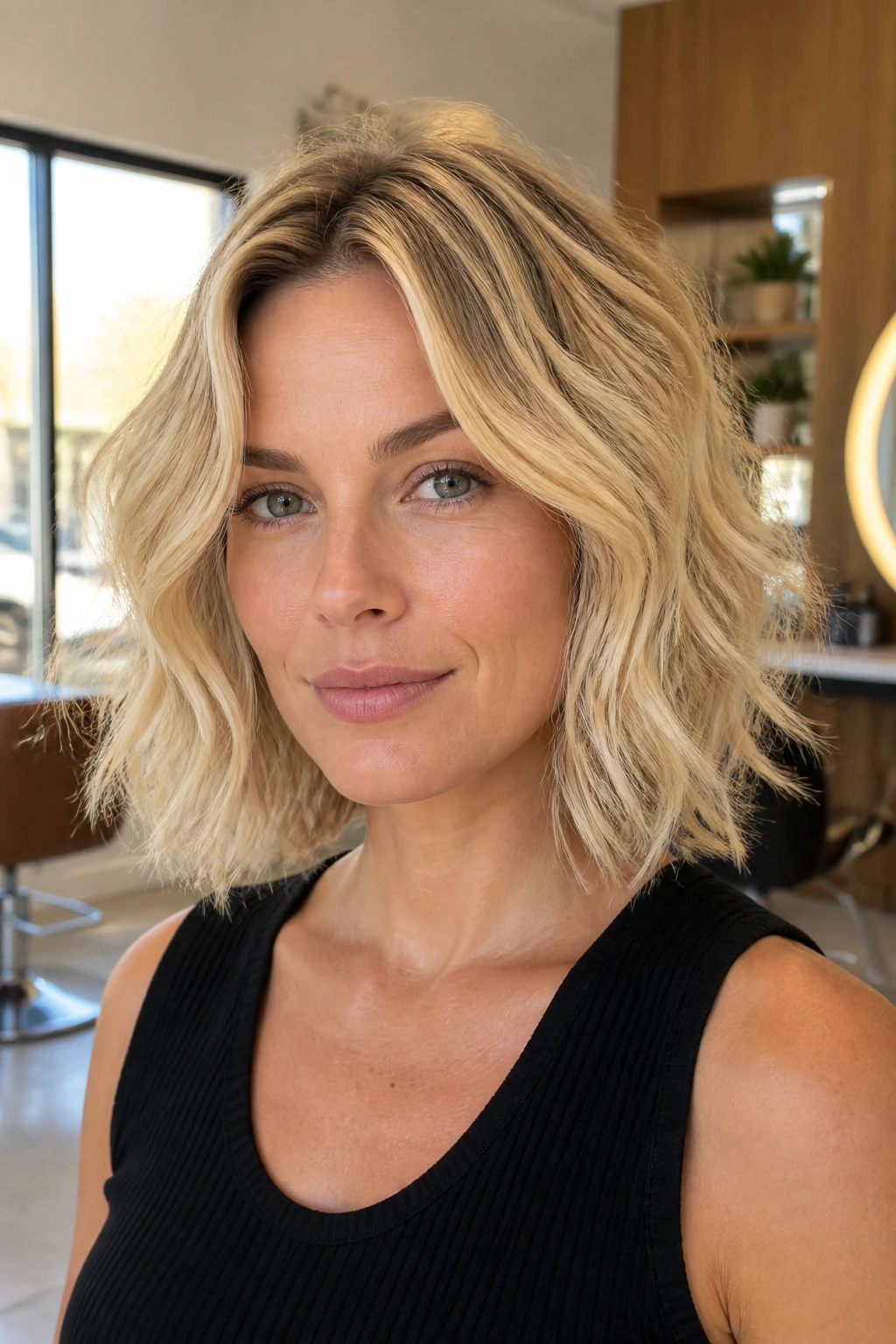
These 25 blonde wavy bobs for square faces with loose curls are built around that exact shift. Some are chin-skimming and airy, some sit closer to the collarbone, and some lean into a blunt edge that gets rescued by blonde dimension and a soft wave pattern. The point isn’t to hide the face. It’s to give the jaw somewhere to go.
Loose curls matter more than tight curls in this conversation. Tight spirals can pile up width at the sides; loose bends spread the shape out, let light move through the hair, and keep the cut from turning into one hard outline. Blonde helps, too—especially when it’s rooted, beige, honeyed, or broken up with brighter ribbons at the cheekbone.
Why These 25 Blonde Wavy Bobs Work on Square Faces
-
They move the eye up and down, not side to side: Lengths that hit at the chin, just below the jaw, or at the collarbone keep the face from reading like one straight block.
-
They use waves as shaping, not decoration: Loose bends aren’t just there for softness; they break the perimeter so the cut never looks carved with a ruler.
-
They give the cheekbones something to do: Face-framing pieces, side parts, and brighter blonde around the temples pull attention higher than the jaw.
-
They let blonde color work like contour: Root shadow, balayage, and money pieces create depth and lift without needing heavy layers everywhere.
-
They still grow out well: A square face bob looks best when the grow-out stays intentional, not when it turns into a shelf at the chin.
-
They adapt to real hair, not fantasy hair: Fine, thick, straight, and naturally wavy textures all show up differently, so the cuts below aren’t one-note salon moodboard fluff.
1. Soft Chin-Length Bob with Grown-Out Waves
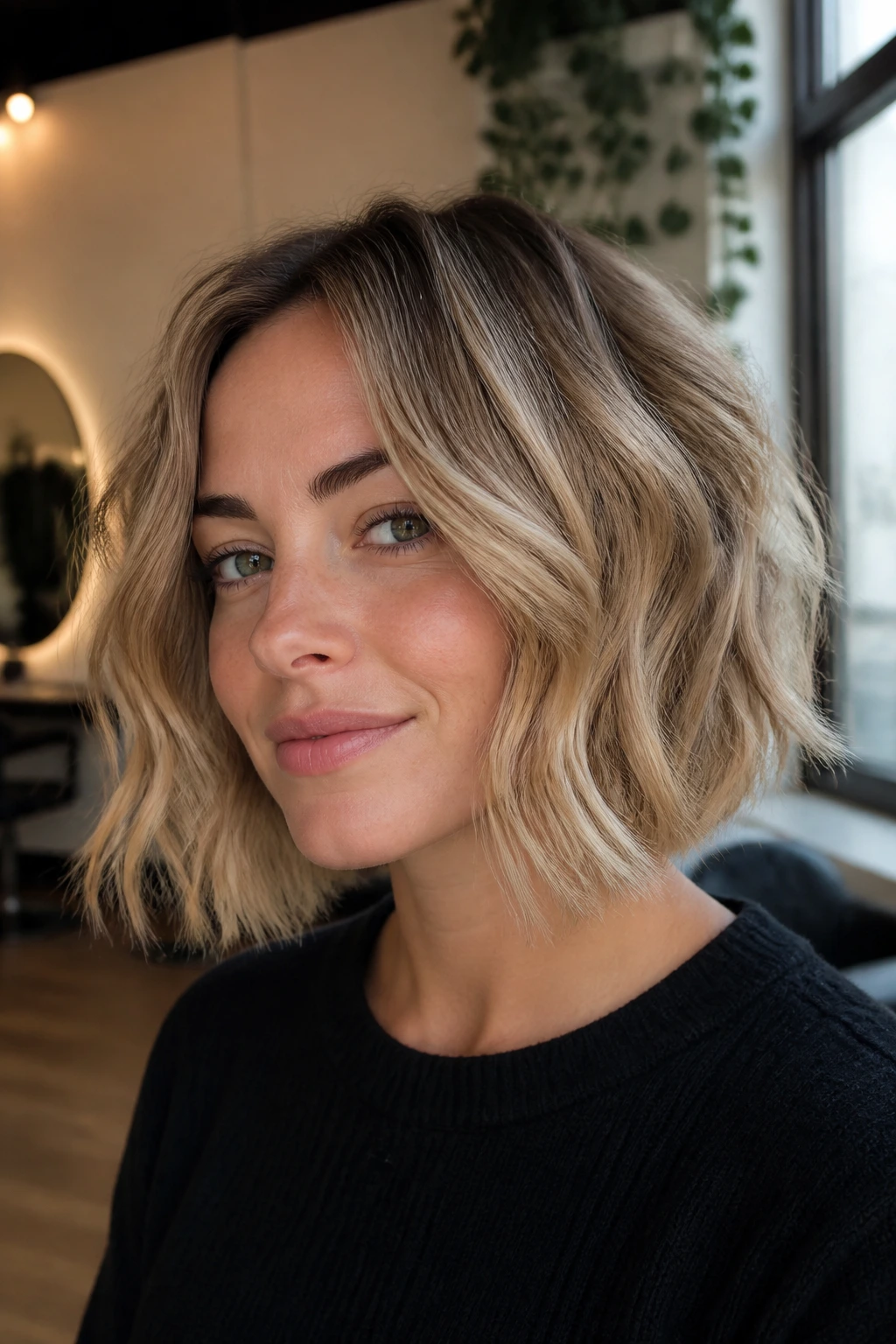
This is the easiest place to start if you want the jaw softened without losing the clean line of a bob. The length sits a touch below the chin, which keeps the ends from stopping right on the widest part of a square face, and the waves are loose enough to stay broken instead of forming one stiff curve. Ask for point-cut ends and a slightly longer front corner. That tiny difference keeps the shape from feeling boxy.
Use a 1-inch wand and wrap the front pieces away from the face first. Leave the last half-inch out so the curl doesn’t become a perfect spiral.
Best for: medium-density hair that holds a bend but still wants movement.
Color note: beige blonde or soft champagne keeps the cut light without making the jaw line harsher.
2. Collarbone Lob with Side-Part Bend
Want more room between your hair and your jaw? Go longer. A collarbone lob gives the face breathing space, and the side part creates a diagonal line that square faces usually wear well because it changes the geometry immediately. The wave should start around the cheekbone, not at the root, so the crown stays lifted and the sides don’t puff out.
What to Ask For
- Keep the length grazing the collarbone, not sitting on the jaw.
- Shift the part one to two inches off center.
- Add soft face-framing pieces that begin around the mouth or cheekbone.
- Brighten the front with a lighter blonde ribbon, but leave the root slightly deeper.
That parting move does a lot of work. A little. More than people expect.
3. French Bob with Broken Curls
A French bob can absolutely work on a square face—if you refuse to let it end in a hard shelf. The version that flatters here sits just below the cheekbone, carries a wispy fringe or brow-skimming piece, and uses brushed-out curls instead of glossy, uniform ringlets. The blonde should be airy too: think pale beige with a few brighter strands around the temples.
Why it lands well: the short length shows the neck and lifts the whole shape upward, while the broken wave stops the cut from reading severe.
Keep in mind: if your hair grows dense at the sides, ask for a little internal debulking near the nape. Too much width there turns the style square again.
4. Blunt Blonde Bob with a Soft Undercurve
Picture a blunt bob that would normally feel strict, then imagine the bottom edge tucked inward by half an inch. That’s the whole trick. The line stays crisp, which keeps the style looking modern, but the undercurve and the loose curl pattern stop it from slicing straight across the jaw. On a square face, that balance matters more than extra layering ever will.
A rooted blonde makes this one better. The darker base gives the blunt cut depth, and the lighter ends keep it from feeling heavy. If you wear it with a center part, build a little crown lift first; otherwise the bluntness can swallow your cheekbones.
Useful detail: this is the kind of bob that looks best when the waves are more bend than curl. Overdone curl pattern ruins the whole point.
5. Layered Shag Bob with Tousled Ends
There’s a reason this style keeps showing up around square faces: it messes with hard angles in the best possible way. The shaggy layers break the perimeter into pieces, so the hair never sits in one heavy line near the jaw. Add loose curls through the middle and ends, and the whole cut gets a slightly undone shape that feels lighter than a classic bob.
The blonde tone here should have dimension—sandy, beige, or dirty blonde with brighter ends. Flat platinum can make all those layers look choppy in the wrong way. A little depth at the root keeps the texture from disappearing under bright light.
This is a good choice if your hair wants movement anyway. If it doesn’t, you’ll spend too much time coaxing it into the right mess.
6. Angled A-Line Bob with Cheekbone Pieces
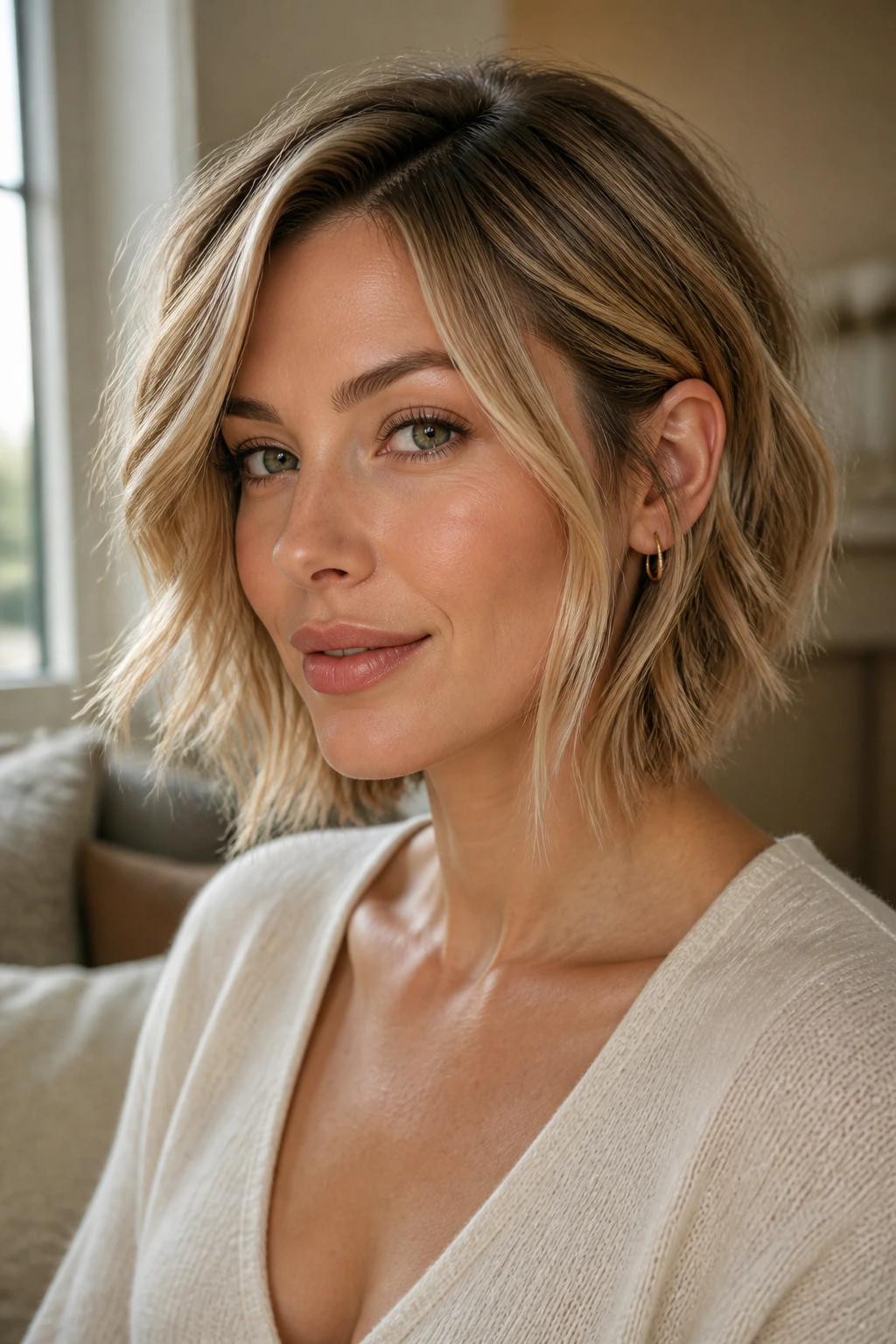
What saves an angled bob on a square face is the front length. If the front drops a little lower than the jaw, the eye follows the diagonal instead of locking onto the width of the face. Add loose curls that turn away from the cheekbone, and the shape gets even softer.
The best version of this cut has a neat back and a front that feels intentional, not extreme. Think subtle A-line, not dramatic helmet. A few brighter blonde strands around the cheekbones help the cut read lifted even when the rest of the hair is tucked behind one ear.
Ask for this: the front should graze the space between the jaw and the collarbone, with no blunt shelf at the chin.
7. Curtain-Bang Bob with Loose Spiral Underside

Do you want a bob that hides the forehead a little and softens the jaw at the same time? Curtain bangs do that job. They split the front of the face into two softer sides, then drift into the cheekbones, which square faces tend to appreciate because the widest point gets broken up rather than emphasized.
Why It Works
The bangs pull attention inward, then the loose waves carry it downward. That vertical movement is what keeps the haircut from feeling boxy. A blonde bob with curtain bangs also gives you room to play with tone—brighter pieces through the bangs and face frame, deeper blonde underneath.
The underside of the cut should stay softly curled, not over-styled. If the bangs are perfect but the ends are stiff, the whole thing loses the point.
8. Deep Side-Part Bob with S-Waves

A deep side part changes the face before the cut even starts talking. It makes one side feel longer, lifts the crown, and takes pressure off a square jaw that might otherwise feel too symmetrical with a center part. Add S-waves through the mids and ends, and you get a look that feels sculpted without looking stiff.
This one shines in honey blonde or warm beige blonde because those tones catch light along the curve of the wave. I’d skip a flat all-over ash color here unless you’re adding plenty of dimension. The cut needs depth.
Best used when: you want polish, but not the shiny, set-with-a-curling-iron kind of polish.
9. Rooted Balayage Lob with Airy Volume
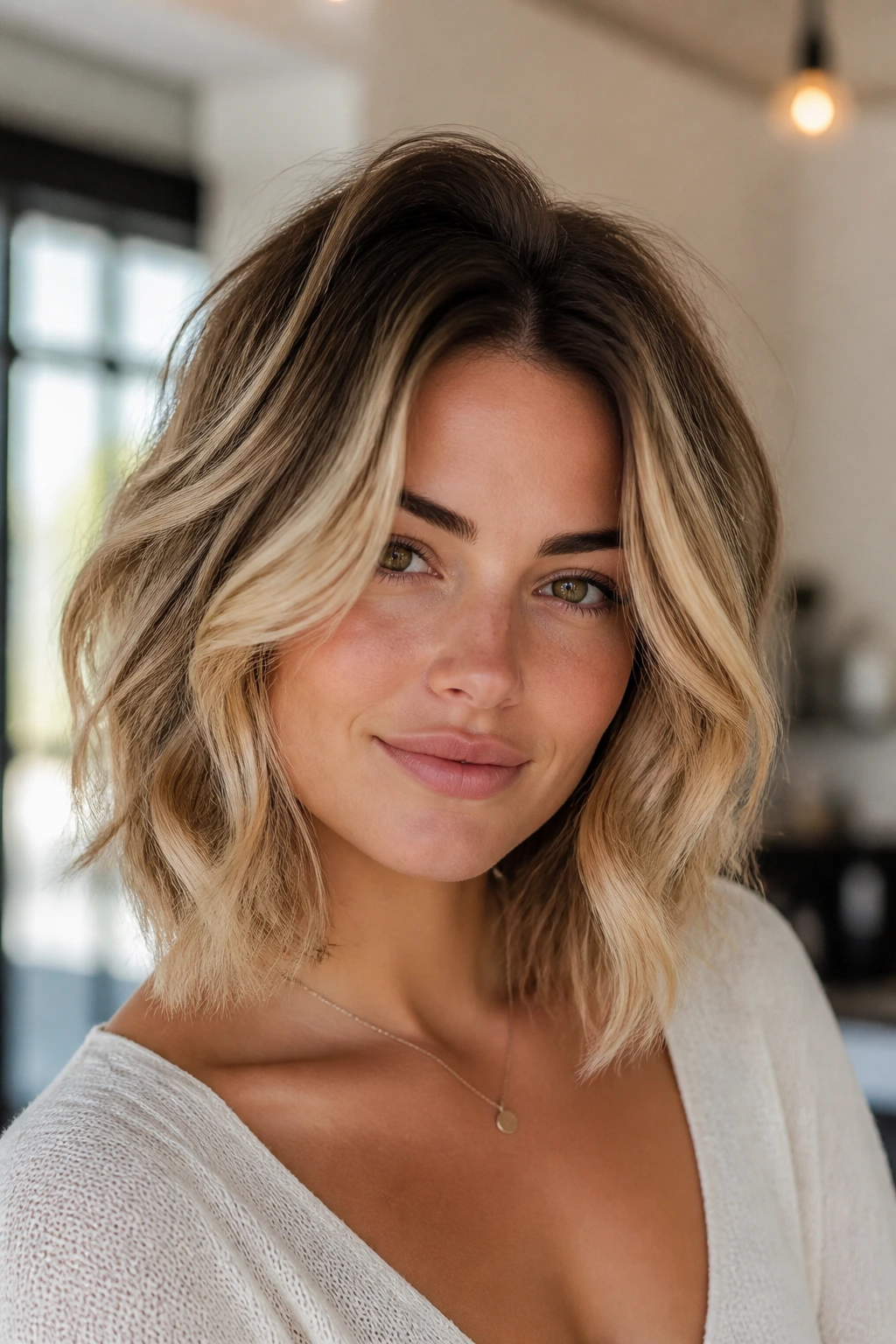
Imagine a lob that starts with a slightly deeper root, brightens at the mids, and finishes with airy, loose curls that never touch the jaw in one heavy mass. That’s the rooted balayage version, and it works because the eye moves through the color instead of stopping at the outline. Square faces need that kind of motion.
The volume belongs at the crown and upper sides, not at the bottom edge. Keep the ends lighter and softer, and avoid over-layering near the jaw. Too much chunkiness there gets loud fast.
A rooted blonde also buys you time between salon visits. That matters if you don’t enjoy living in toner appointments and root touch-ups.
10. Jaw-Skimming Bob with Face-Framing Lift

Jaw-skimming sounds risky for a square face, and sometimes it is. But when the front pieces are lifted around the cheekbone and the back sits a touch tighter, the cut can be sharper in a good way instead of boxy in a bad way. The trick is to let the hair skim past the jaw, not sit on top of it like a shelf.
Loose curls help a lot here. They blur the line just enough that the shape stays intentional. If your natural hair is straight, wrap the front sections with a 1.25-inch iron and brush them out while they’re warm.
That’s the part people skip. Then they wonder why the cut feels hard.
11. Inverted Bob with Loose Ringlets
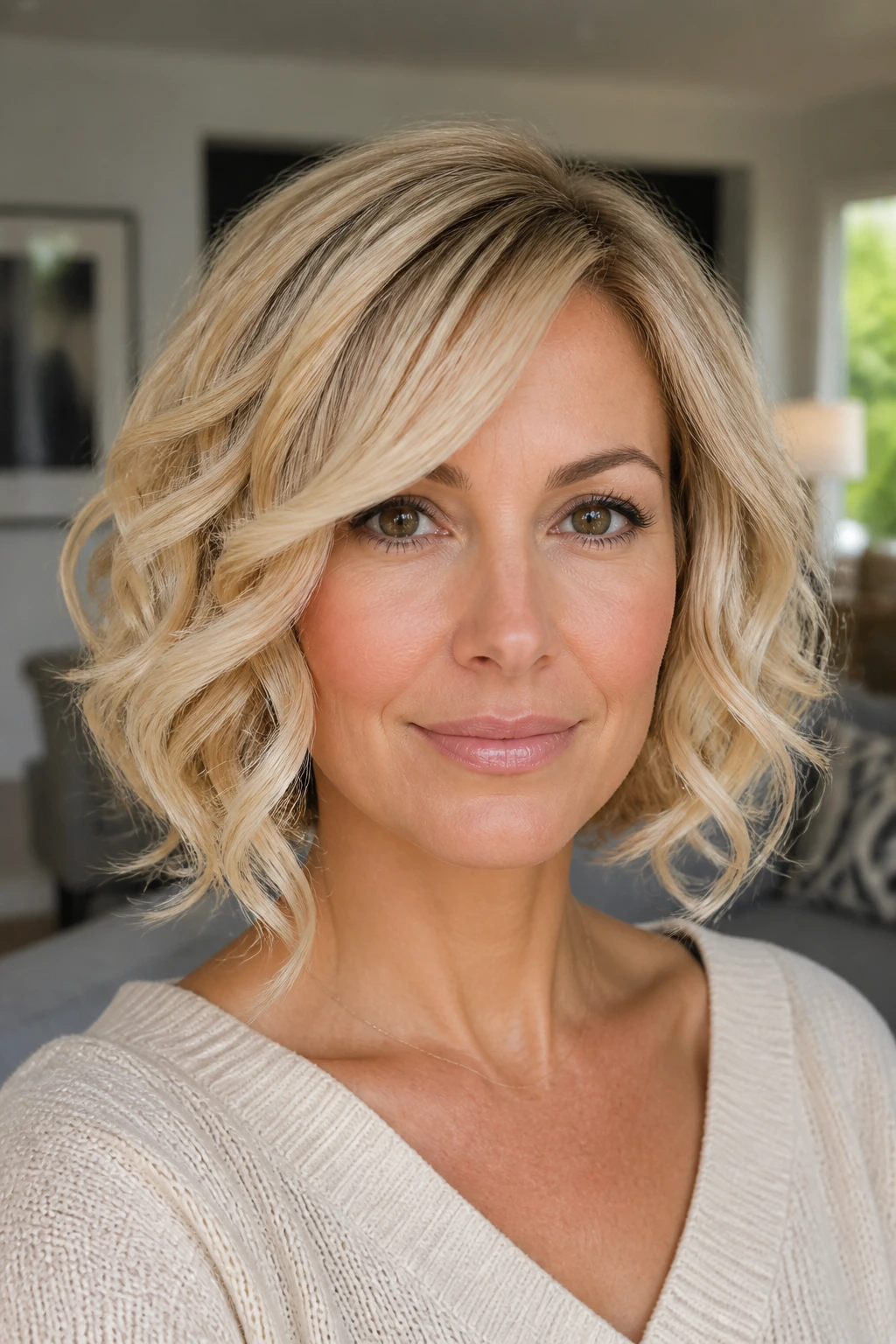
The inverted bob gives you a built-in slope: shorter at the back, longer in the front. On a square face, that front angle helps because it draws attention diagonally instead of leaving the jaw exposed as a single flat line. Loose ringlets through the front corners make the whole silhouette feel more fluid.
This version looks especially good in pearl blonde, cream blonde, or anything with a luminous finish around the face. Keep the nape clean and tidy. If the back gets too bulky, the cut loses its shape and starts feeling top-heavy.
Small detail, big difference: the front curls should bend away from the jawline, not toward it.
12. Scandi Blonde Wave Bob
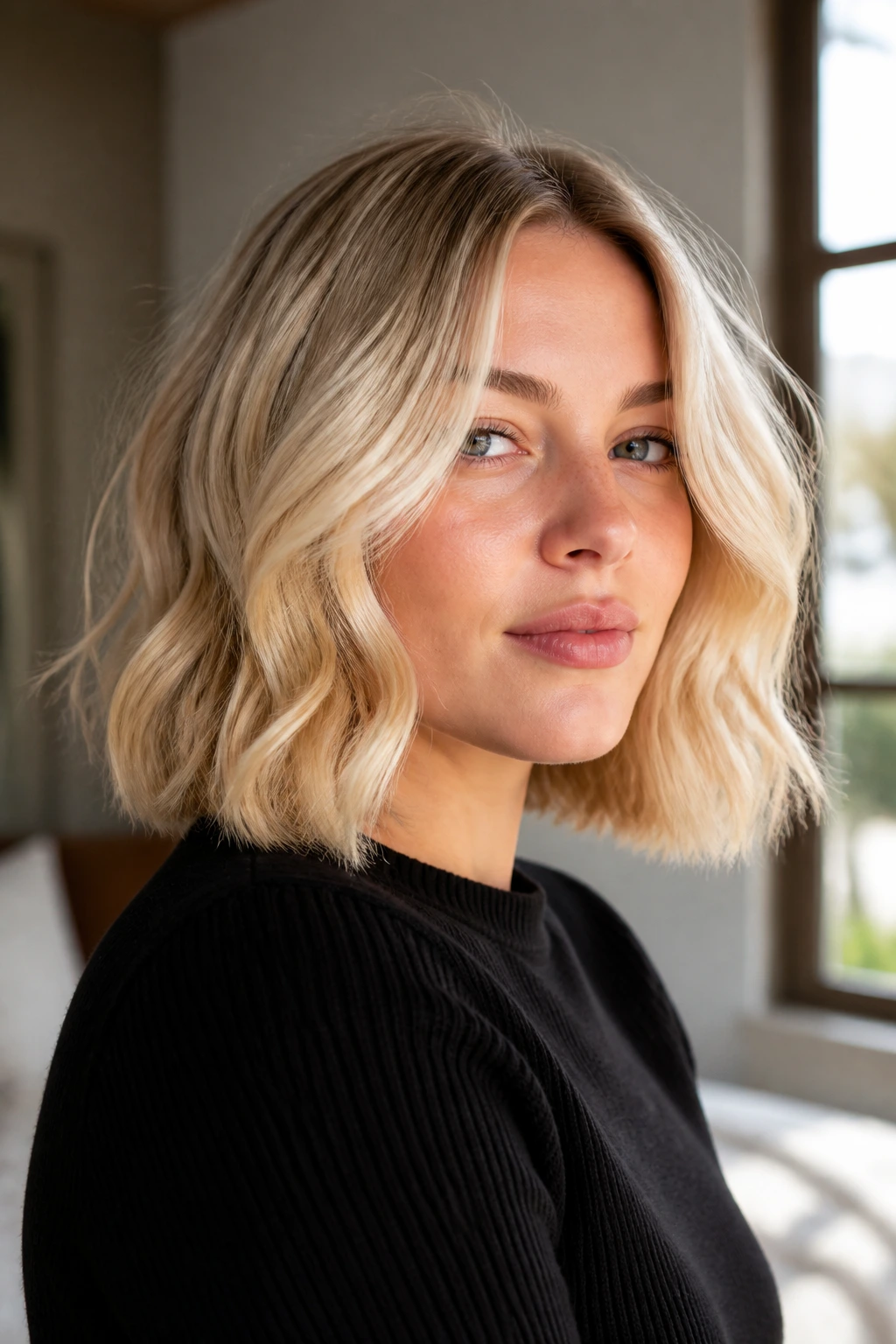
Scandi blonde has a cool, clean look, but it needs softness when the face shape is square. That’s why this bob works best with minimal layers, airy movement, and a bend that starts halfway down the hair rather than from the root. The effect is neat, pale, and slightly undone—never stiff.
What makes it click
- The length usually sits between chin and collarbone.
- The blonde is cool, but not flat white.
- The waves are loose enough to leave visible gaps.
- The perimeter is softened with point-cutting, not razor chaos.
If you love a cleaner look and hate a lot of styling fuss, this one makes sense. It’s controlled without feeling severe. Rare thing.
13. Piecey Money-Piece Bob
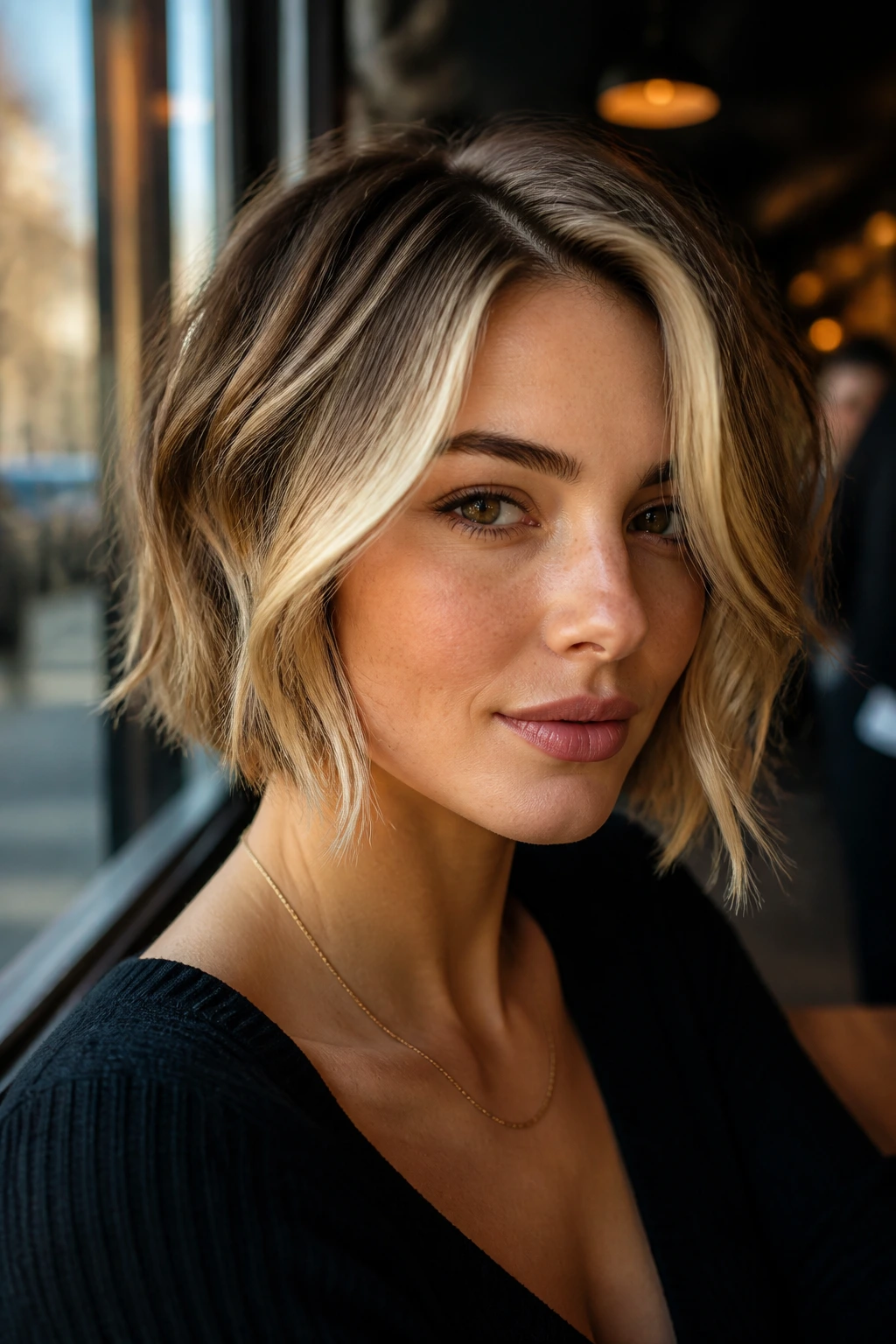
A brighter money piece changes the whole face. On a square shape, those lighter strands near the temples and cheekbones pull the gaze up and inward, which is exactly where you want it. Keep the rest of the bob textured and piecey, so the front doesn’t become the only thing with movement.
This cut is especially good if your natural base is darker blonde or light brown. The contrast gives the face frame some shape without needing a dramatic haircut. A side part makes the bright pieces even more useful, since they fall across the forehead and temple with more drama.
Worth asking for: thinner, ribbon-like highlights near the face, not one thick bleach stripe.
14. Feathered Bob with Flipped-Out Ends
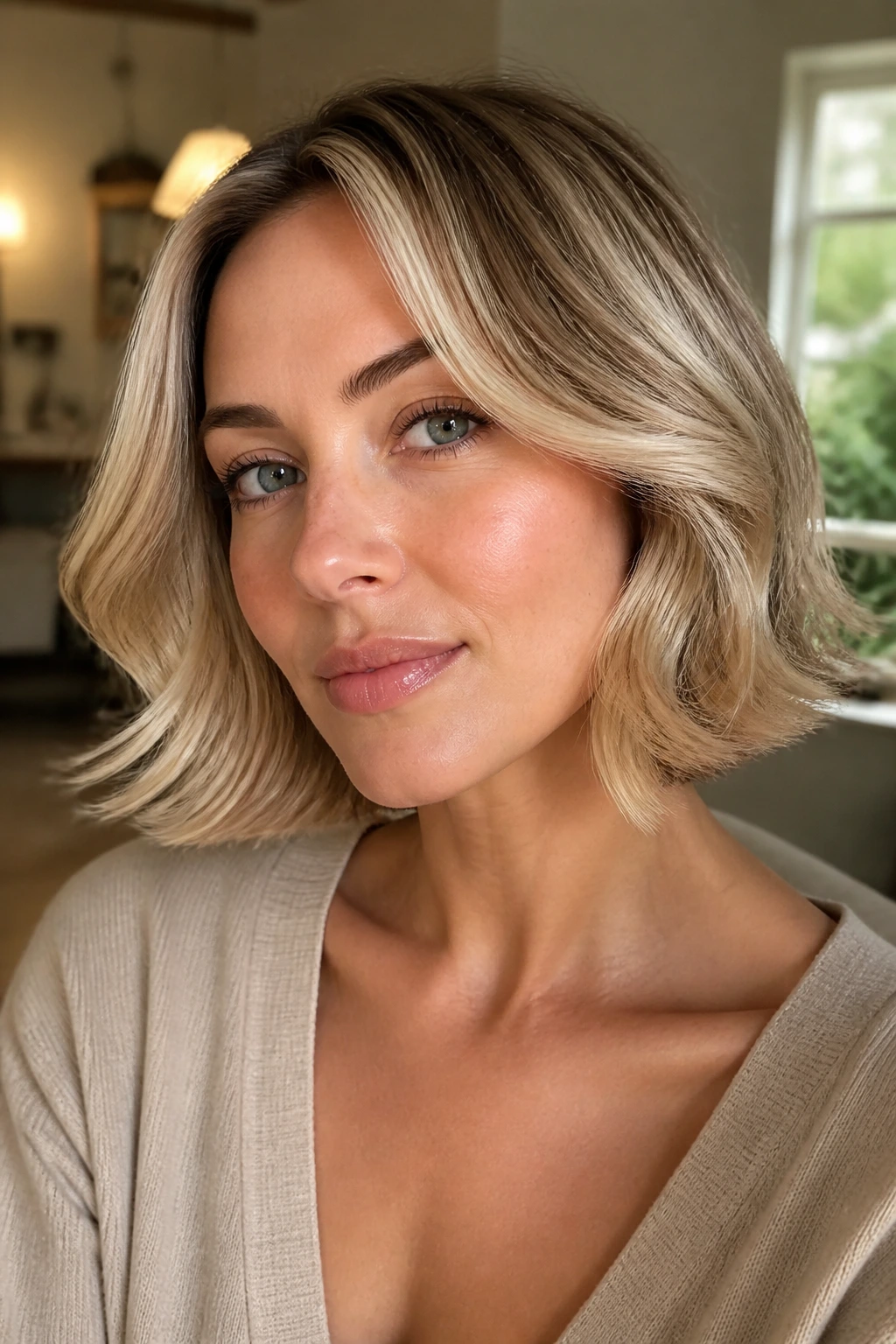
This one has a little retro energy, and I’m not mad about that. Feathered ends break up the bottom edge of the bob, which means the cut doesn’t press directly against the jaw. The flipped-out finish adds movement away from the face, not into it, and that’s what gives a square face some relief.
Go for buttery blonde or a soft beige tone here. The color should look dimensional enough to show the feathering, but not so striped that every layer screams for attention. A round brush and a quick flip at the ends are enough; you do not need a full blowout circus.
The best version feels light when you shake your head. That’s the test.
15. Asymmetrical Bob with a Longer Front Side
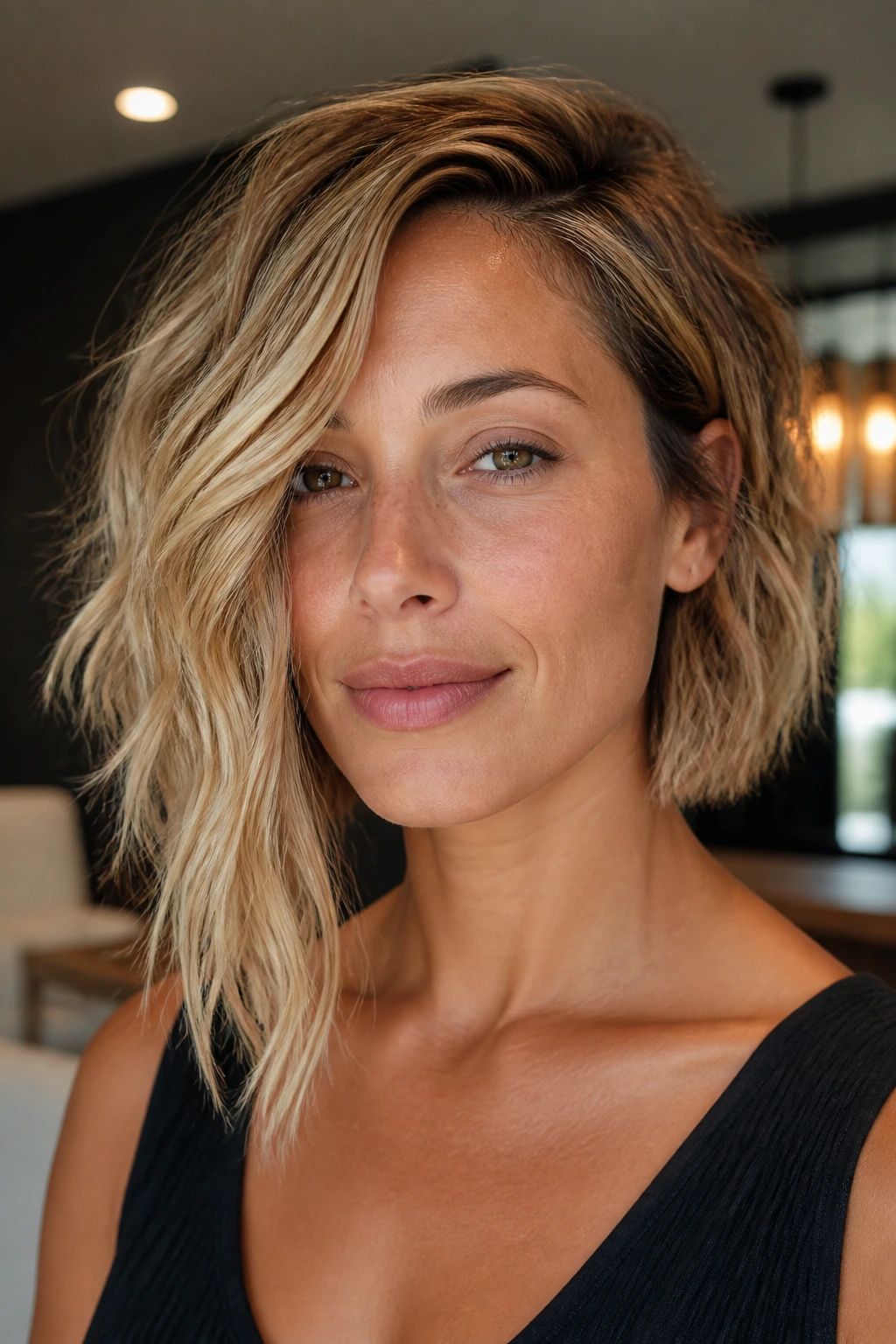
A little asymmetry does a lot. One side longer than the other creates a diagonal line that cuts across the width of a square face in a flattering way, and the loose waves keep the shape from feeling too graphic. This is one of the bolder options in the group, but it still reads soft if the blonde is dimensional.
The longer side should fall near the collarbone or just below it. The shorter side can kiss the jaw, but not stop dead on it. Keep the wave pattern loose and slightly broken, especially around the shorter side, where a blunt curl would make the face feel wider.
If you like a cut with a little attitude, this is the one.
16. Windswept Bob with Lightweight Layers
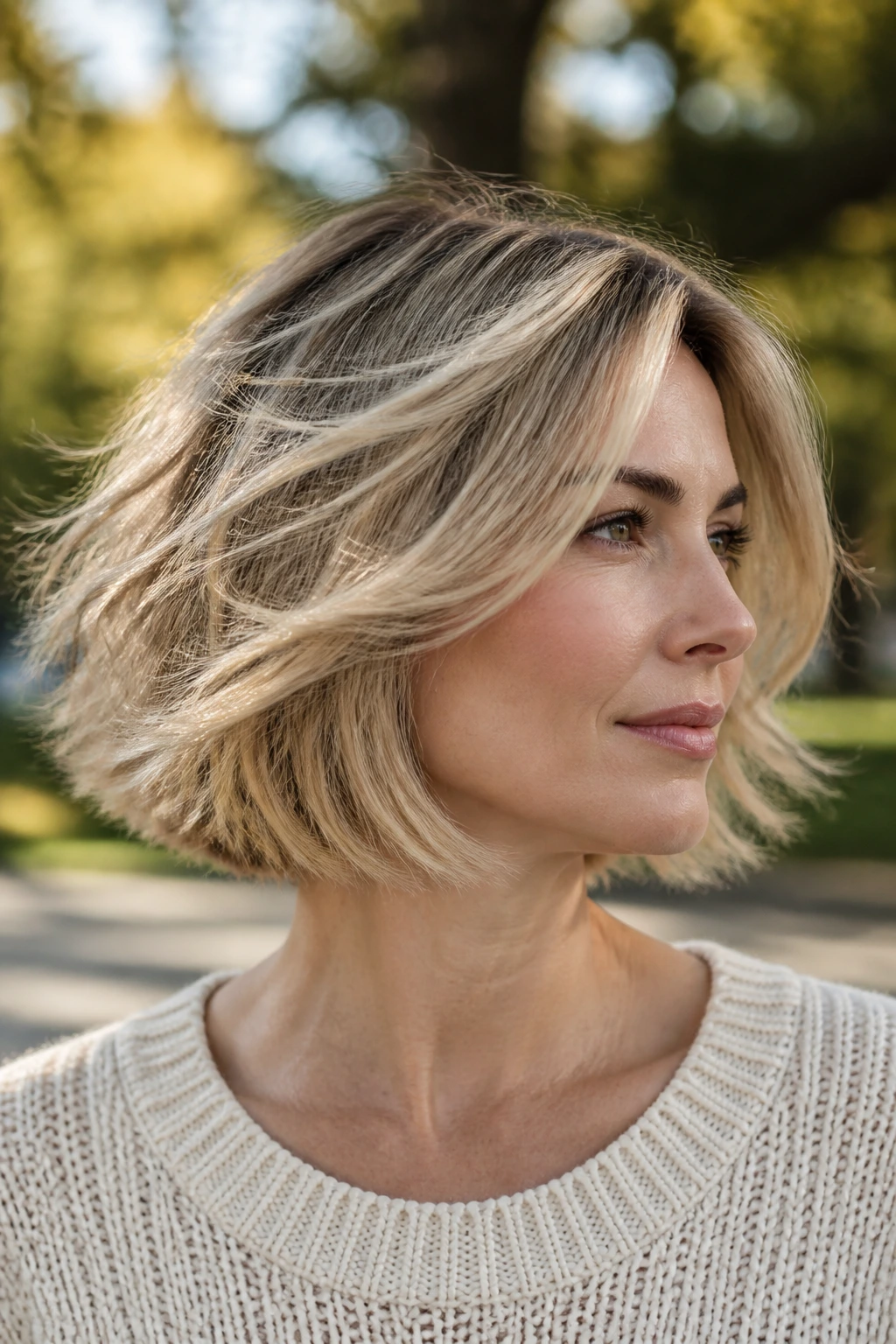
Heavy bob cuts can bury a square face under too much shape. The windswept version does the opposite: it keeps the layers light, airy, and slightly directional, so the hair looks as if it’s moving even when it’s still. That makes the jaw seem softer because there’s no rigid outline for it to push against.
This one works well on thicker hair that needs some air taken out of it, but it also helps fine hair if the layers are placed carefully. Blonde tones with a mix of light and medium ribbons show the movement best. A one-tone blonde can flatten the whole effect.
Best styling habit: rough-dry the roots, then bend only the mid-lengths and ends. The crown should stay fluffy, not curled.
17. Champagne Blonde Bob with a Soft C-Shape
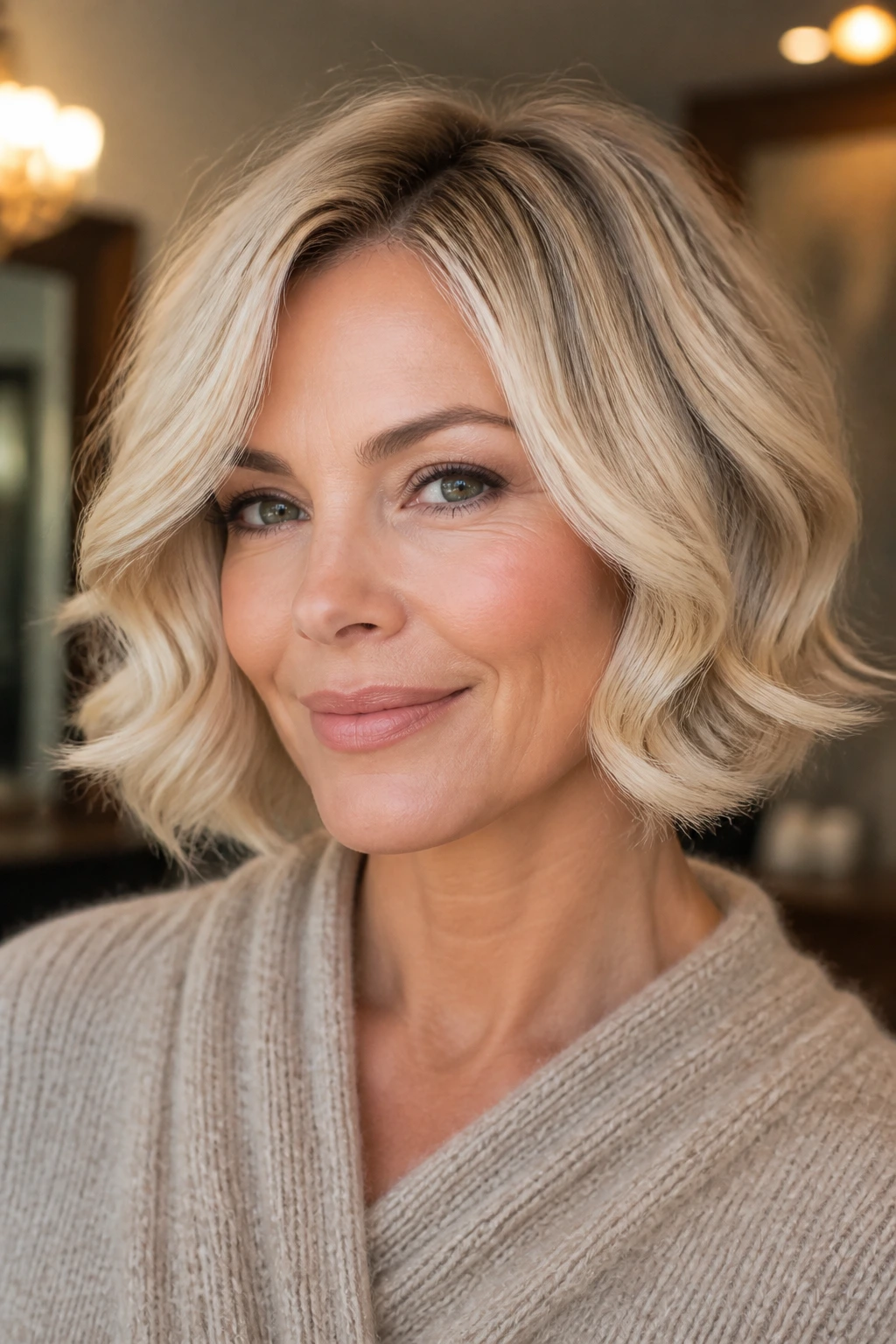
Champagne blonde has enough warmth to feel gentle, enough brightness to feel fresh, and enough translucence to make a bob look lighter than it really is. Pair that with a soft C-shape around the face, and you get a cut that curves in just enough to round off the stronger parts of a square jaw.
Ask your stylist for
- A perimeter that curves under, not outward.
- Face-framing pieces that land just under the cheekbone.
- Champagne blonde with a slightly darker root.
- Loose waves that bend in a C, not tight spirals.
This is one of the most forgiving versions in the set. If your hair is medium thickness and you want low drama, start here.
18. Old Hollywood Wavy Bob
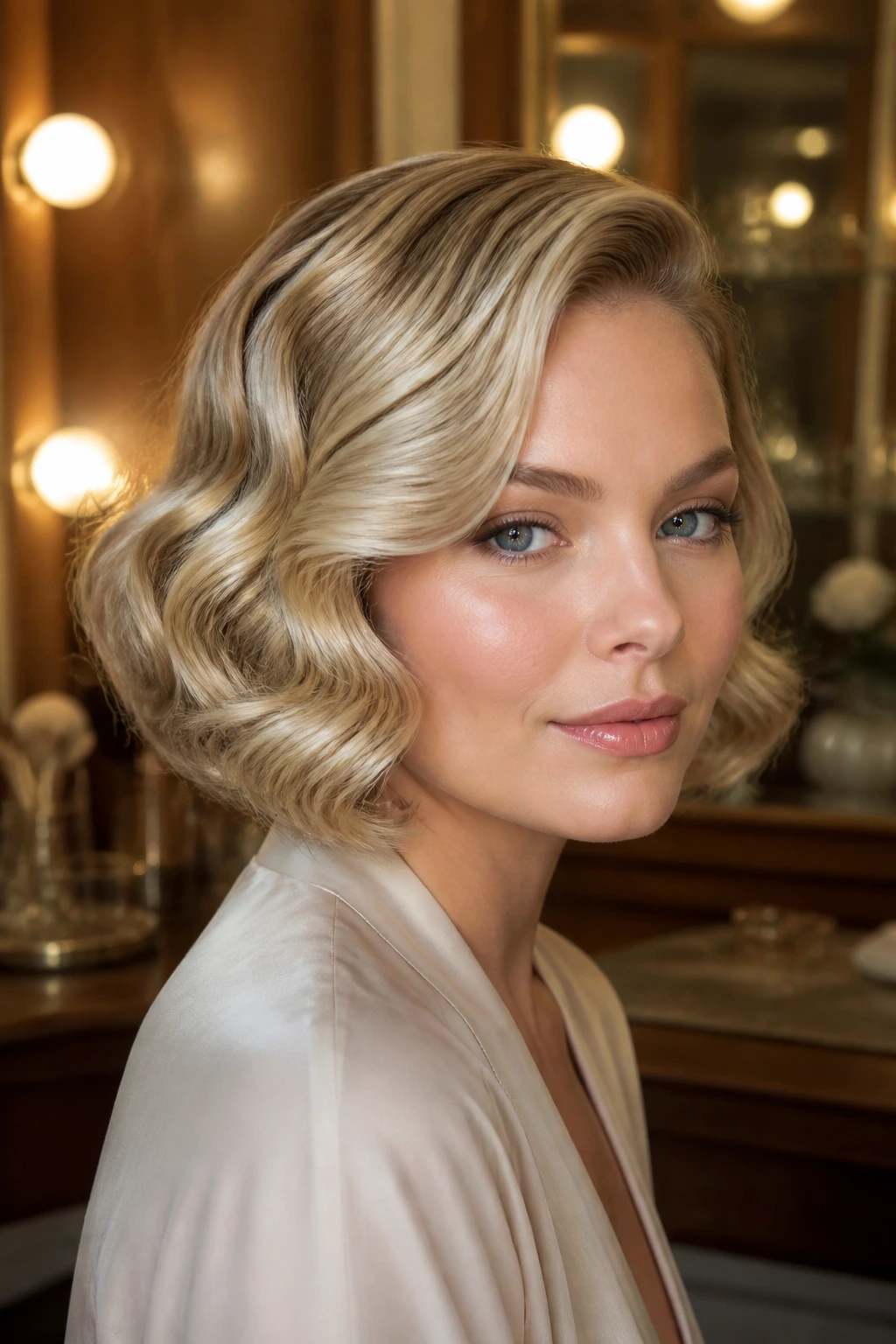
A square face can wear a polished wave beautifully, but only if the wave is brushed out and the part is placed with care. Old Hollywood bends work because they’re smooth, broad, and directional; they do not crowd the face the way tiny curls do. The blonde should be glossy, warm, and multi-tonal, with enough depth to keep the finish from going flat.
The trick is to set the waves with clips or pins, let them cool, then brush them into a soft S-shape. That cooling step matters. Skip it and the wave collapses halfway through dinner.
This style feels dressier than the others, but it still reads soft around a square jaw. That’s the point.
19. Lived-In Beach Bob with Root Shadow
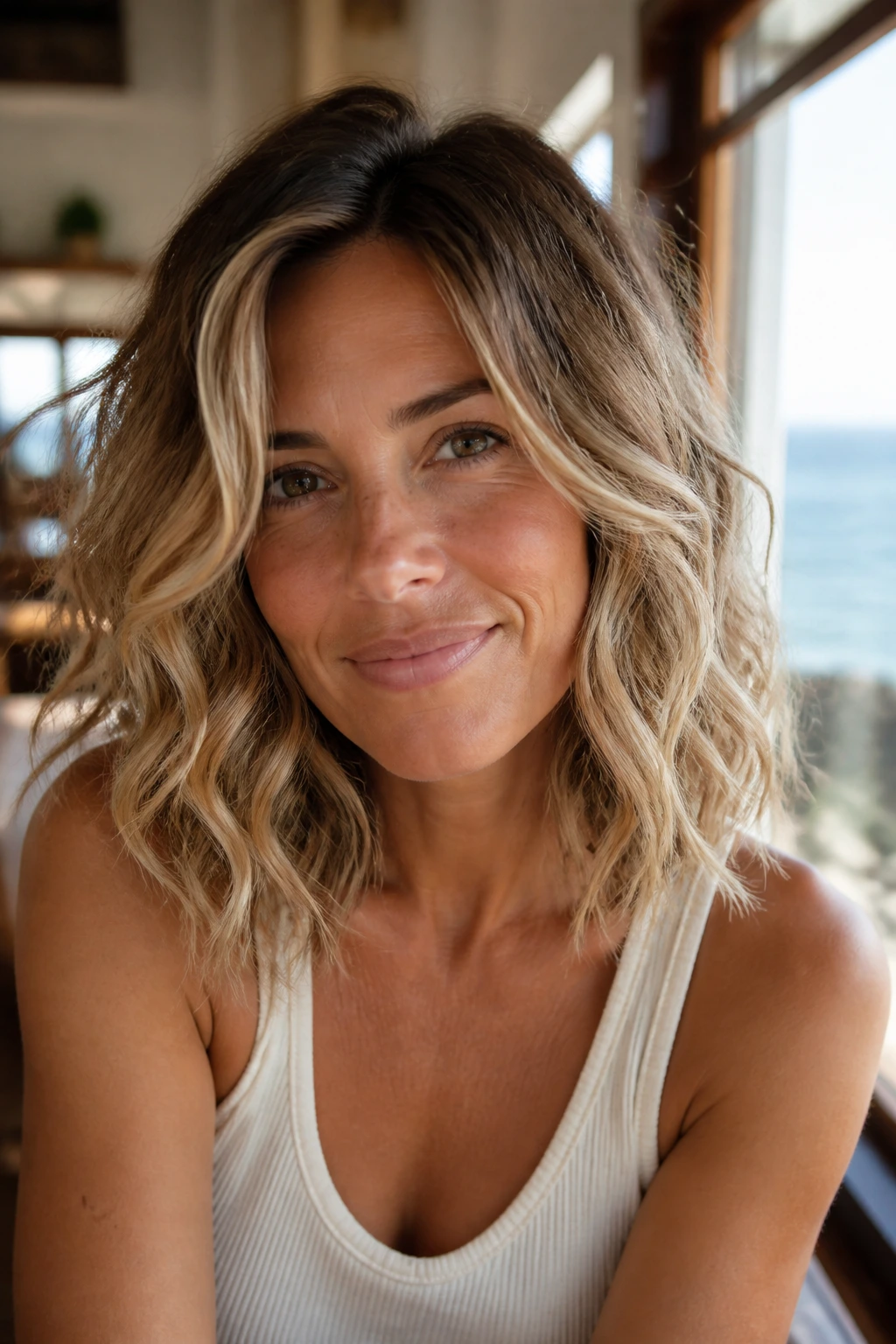
A beach bob sounds simple until you try to make it work on a square face. The version that flatters here isn’t all salt spray and scrunching; it’s a longer, layered bob with a root shadow and pieces that look like they landed there by accident. Accidental, but not sloppy.
The darker root makes the cut feel less blocky, and the bright ends give the hair movement without a hard line. Use loose curls only on random sections. If every piece gets the same treatment, you lose the laid-back shape and end up with a uniform wave helmet.
That helmet look. No thanks.
20. Rounded Bob with Interior Layers
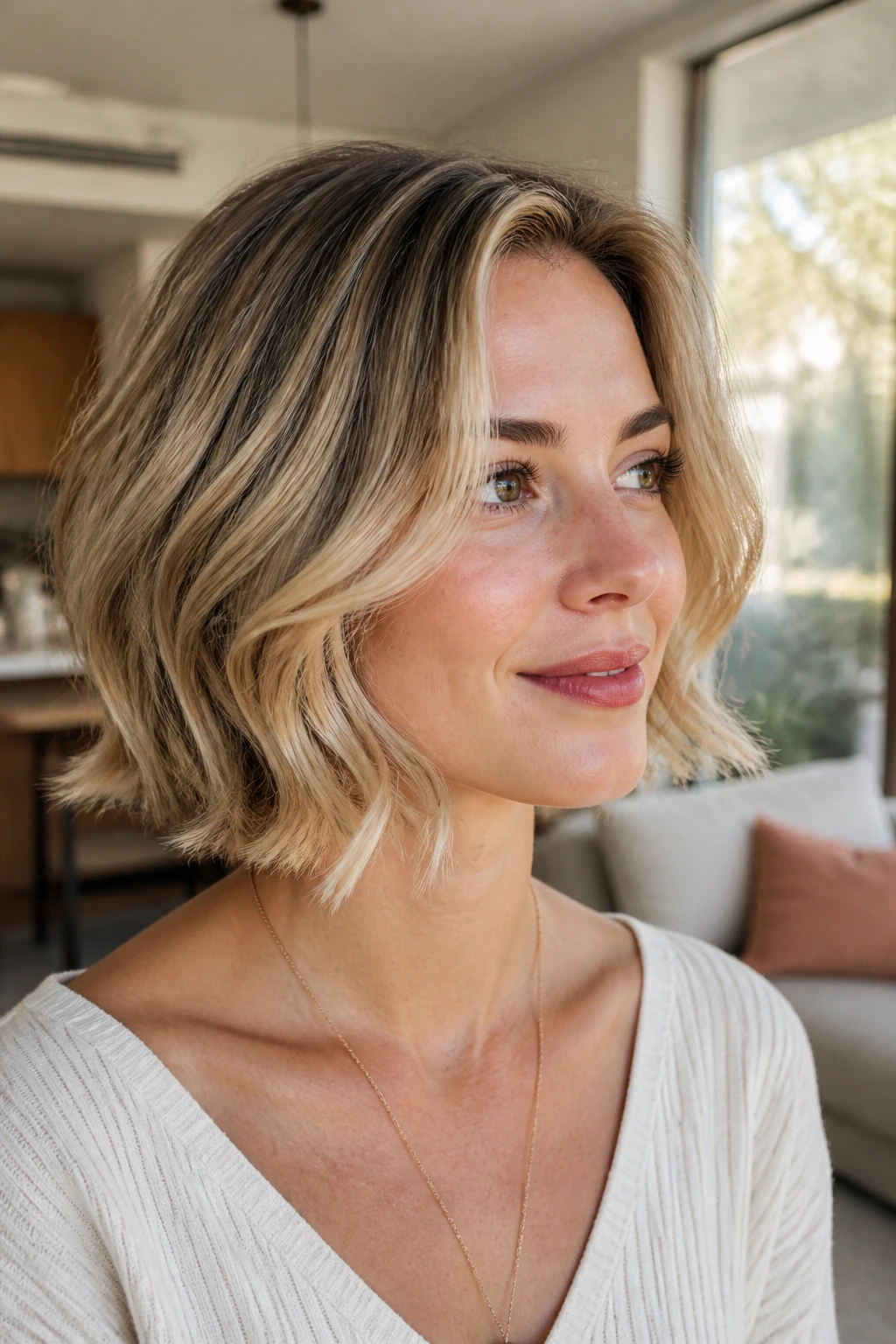
This one is for people who like a softer silhouette without going shaggy. Interior layers create roundness inside the haircut, so the outer line can stay tidy while the shape underneath curves away from the jaw. On a square face, that internal shape matters because it keeps the bob from sitting flat and wide.
A rounded bob works well with beige blonde, light caramel blonde, or a mixed blonde that has both warm and cool notes. The wave should be gentle, not too separated. Think polished bend, not beach breakup.
It’s a quiet cut. And that’s why it works.
21. Micro Bob with Airy Bends

A micro bob is a bold move on a square face, but it can work if the line stays soft and the bends stay loose. The length usually sits around the top of the jaw or just under the ears, so the side part, fringe, and blonde placement all have to do a little extra work. A hard center part would be the wrong move here.
The best version has wispy, airy bends and a bit of movement at the temples. Keep the blonde dimensional, not single-process, or the short length can look severe. If your hair is thick, ask for internal lightening so the cut doesn’t balloon out at the sides.
Tiny haircut. Big opinions.
22. Ash Blonde Textured Bob
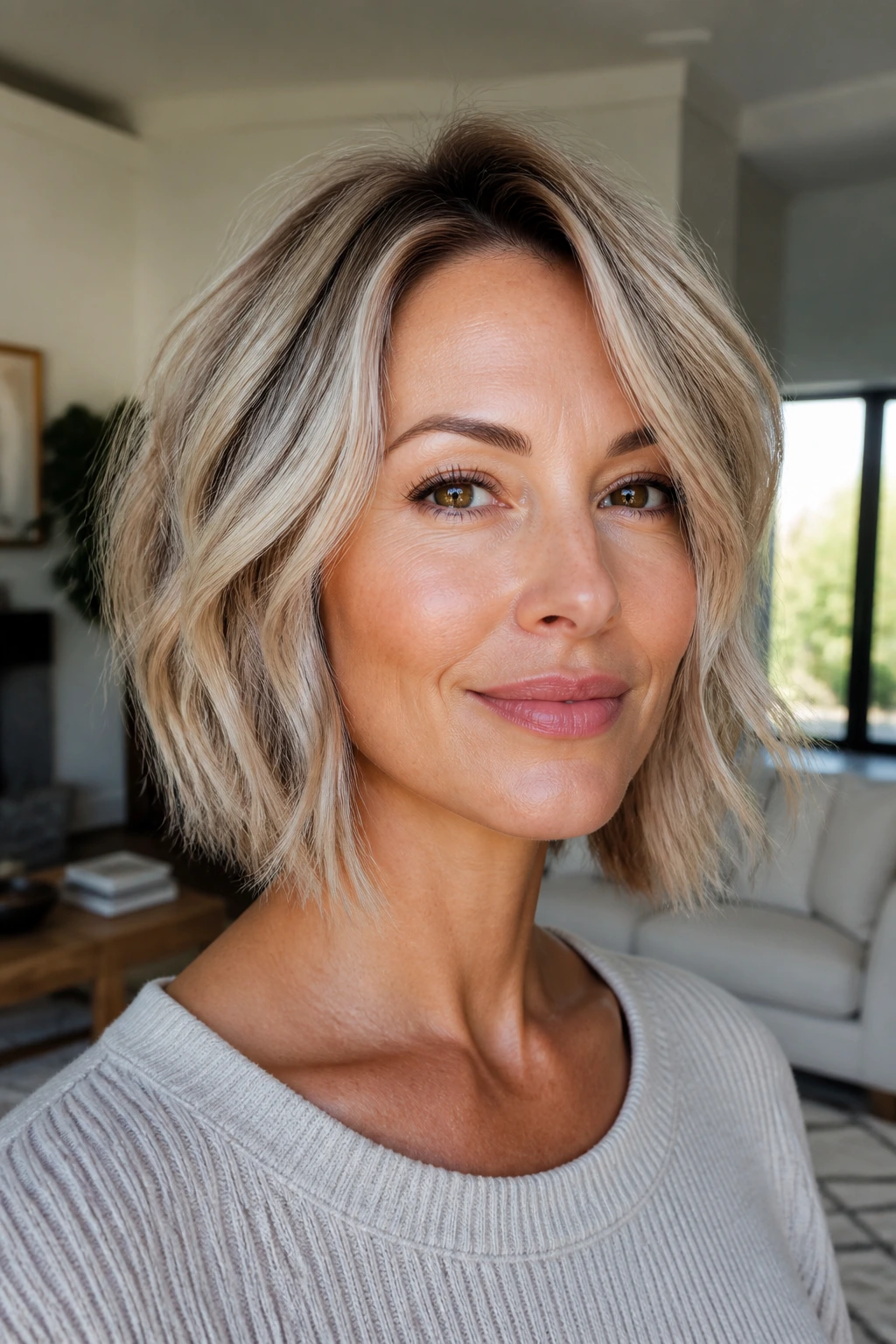
Ash blonde can sharpen a square face if the cut is too clean, so this style needs texture to stay soft. The broken wave pattern and piecey ends keep the cool tone from feeling flat, and the slightly longer front pieces add a diagonal line that offsets the jaw. It’s a cool look, but not a hard one.
What to watch for
- Too much ash with no depth can make the cut look one-dimensional.
- A straight perimeter at chin level will fight the face.
- Textured ends help the blonde read as soft, not icy and severe.
- A root shadow gives the style more shape in daylight and indoor light.
If you like cool blonde, this is the version to study.
23. Lob with Bottleneck Bangs
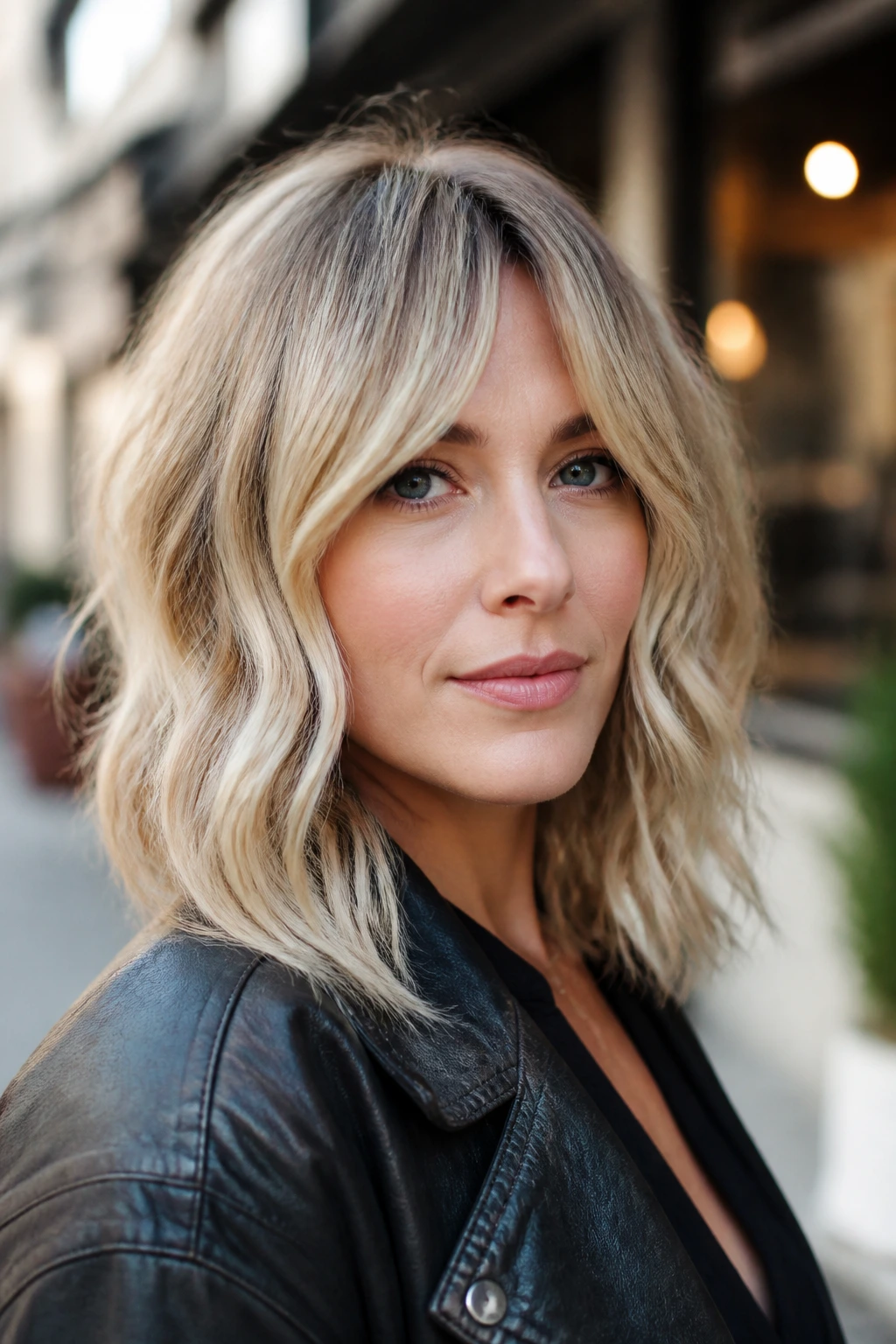
Bottleneck bangs start narrower at the center, then open up around the cheekbones. On a square face, that movement is useful because it pulls the eye inward before releasing it outward, which softens the width around the temples. A lob length keeps the bottom half of the style from feeling too compact.
The wave should be loose and somewhat brushed through, especially under the fringe. If the bangs stay too perfect, they can overpower the face. A dimensional blonde—lighter through the bangs, a shade deeper underneath—keeps the cut from looking flat across the front.
This is one of the smartest options here if you want fringe without a heavy bang commitment.
24. Side-Swept Curly Bob with Cheekbone Lift
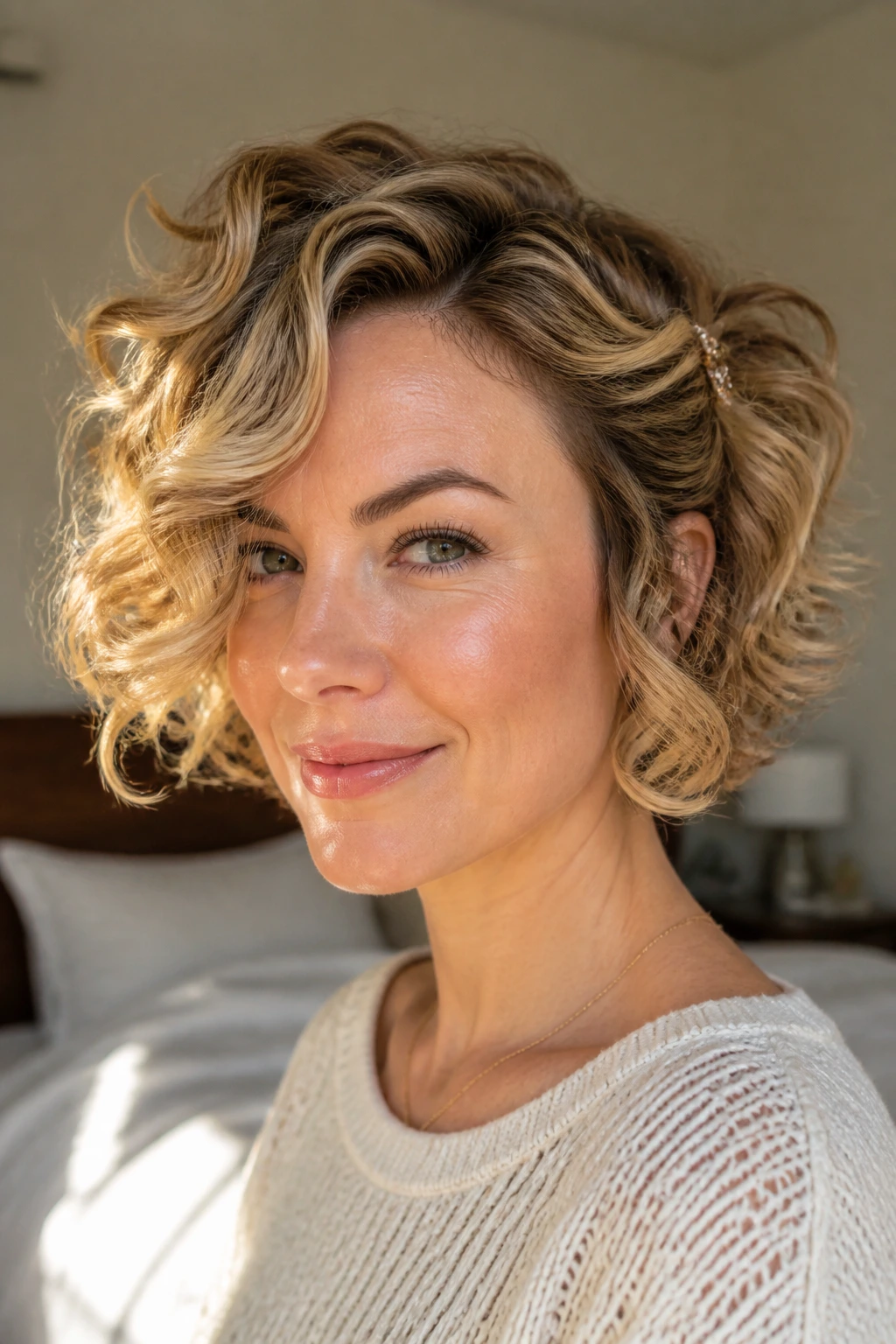
Side-swept curls are a cheat code for square faces. They create motion across the forehead and temples, then land right around the cheekbones, which keeps the jaw from taking over the whole image. The bob itself can be chin-length or slightly longer, but the lift near the cheekbone is what makes it work.
Styling cues that matter
- Start with a side part that isn’t too deep.
- Curl the front sections away from the face, then pin them for a minute.
- Break the curls with fingers or a wide-tooth comb.
- Keep the roots full, not flat.
This cut especially likes honey blonde, beige blonde, or a sunny rooted blonde that shows off the curve of the wave.
25. Soft A-Line Bob with Dimensional Blonde
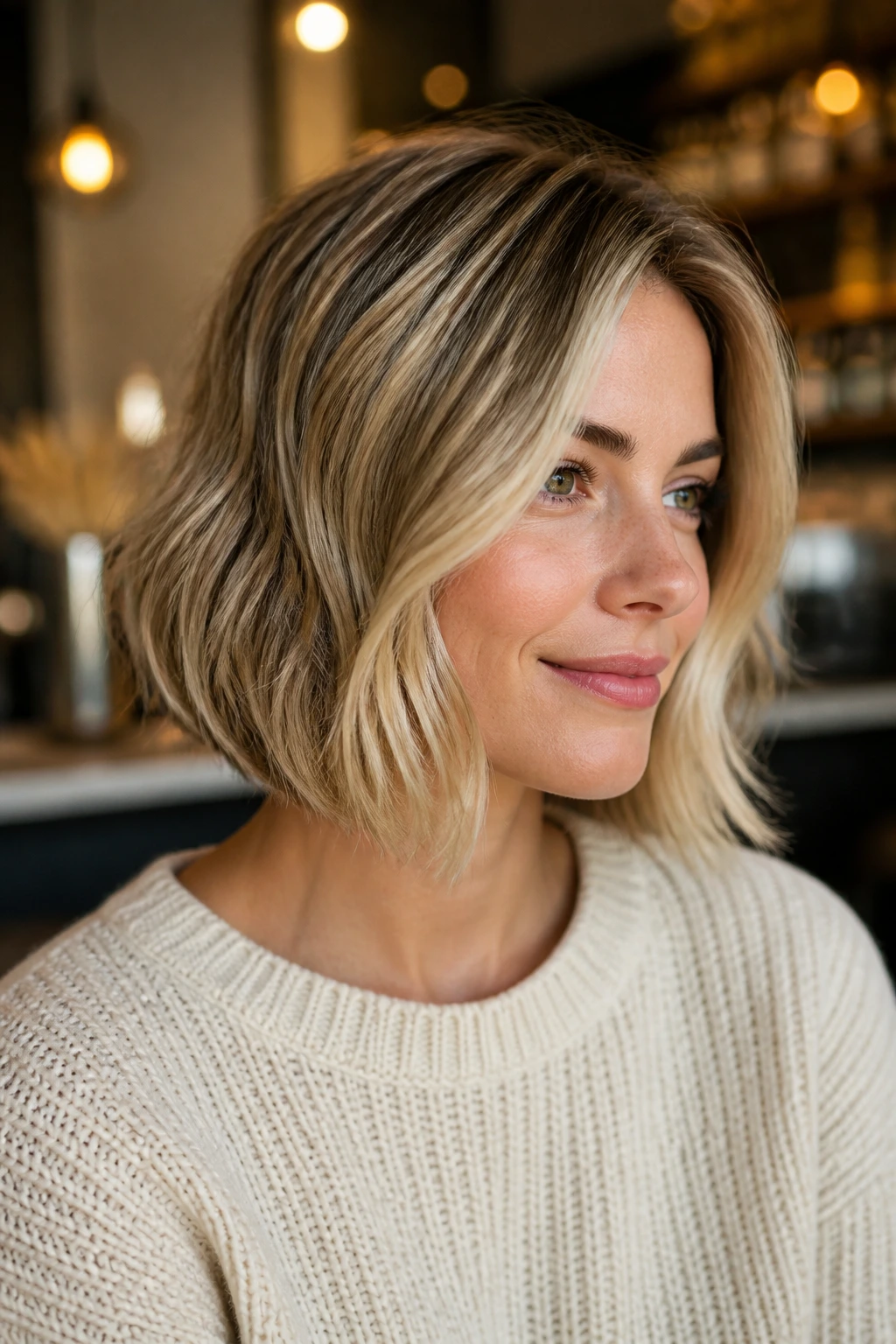
If you want the safest bet in the group, this is it. A soft A-line bob has a longer front, a slightly shorter back, and enough diagonal shape to pull attention away from the jaw without feeling dramatic. Add dimensional blonde—lighter pieces around the face, deeper lowlights underneath—and the whole cut gets softer and fuller at once.
Loose curls make this version look expensive in the most practical sense: polished but not hard, neat but not frozen. The ends should bend under just a little, and the front should never sit as one straight line. That’s the whole point of the A-line shape.
It’s the bob I’d hand to someone who wants a clean answer, not a trend chase.
What a Bob Has to Do for a Square Face
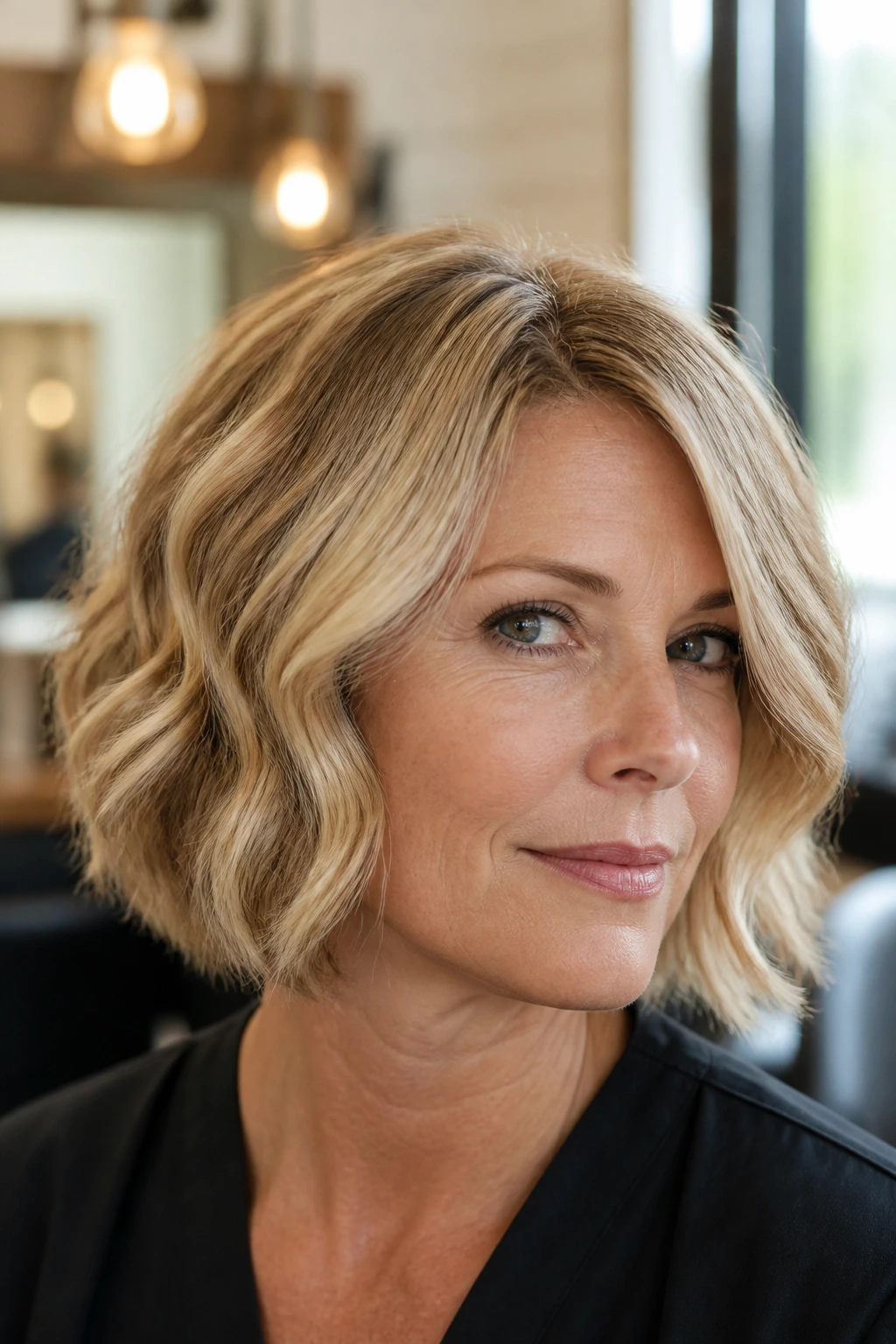
A bob for a square face has one job first and a pretty second: it has to soften the outline without flattening the head into a triangle or a helmet. That means the edge of the haircut matters as much as the length. If the line stops right on the jaw, it can make the jaw feel louder. If the line slips below it, or the front angles away from it, the whole face opens up.
The other thing a bob has to do is keep the eye moving. Square faces look best when the attention shifts between the cheekbones, the temples, and the mouth instead of locking onto the widest point of the jaw. Loose curls help because they add soft interruption. So do side parts, curtain bangs, and blonde ribbons placed with purpose instead of scattered everywhere.
A straight-across bob can work, but only when the ends are beveled, the waves are broken, and the color has depth. Flat one-length cuts with no movement are the ones that turn boxy fast. Not every square face needs the same solution, though. Some need length. Some need fringe. Some just need a better blonde formula.
How to Ask for the Cut and Blonde Tone You Want
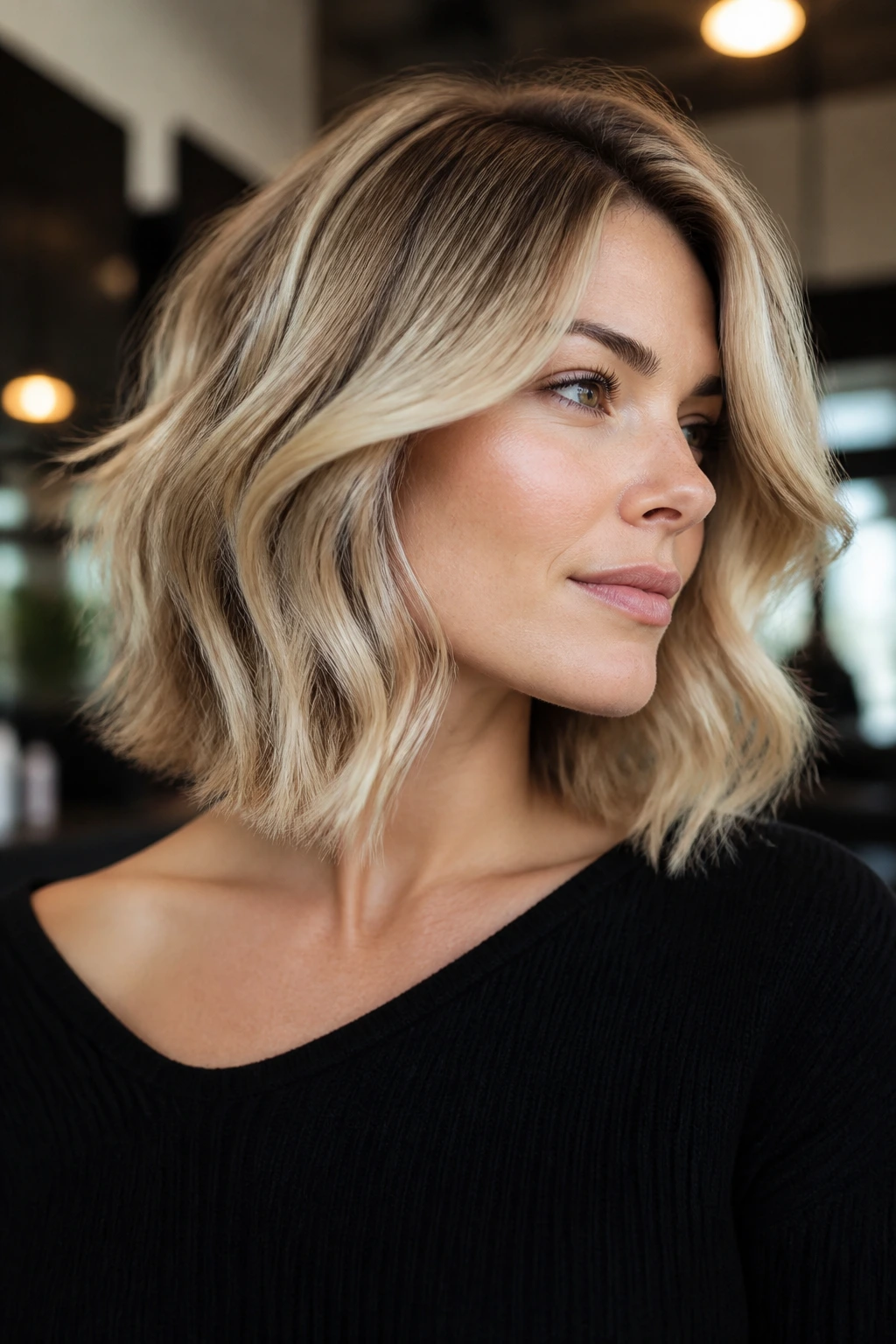
Bring photos, yes, but bring the right photos. Look for cuts with a similar jaw width and similar hair density, not just a pretty blonde bob on someone with a completely different face shape. Then tell your stylist what you want the hair to do. Say, “I want the bob to soften my jaw, not end right on it,” or, “Keep the front a little longer than the back so the line stays diagonal.”
The words that help
-
“Keep the perimeter soft.”
That tells the stylist not to carve a harsh shelf across the bottom. -
“Point-cut the ends.”
This breaks up bulk and keeps loose curls from stacking too neatly. -
“Leave length in the front corners.”
Especially useful if your jaw is strong and your hair tends to puff outward. -
“Build the brightness around the cheekbones and temples.”
Blonde placement there does more face-shaping than random all-over highlights. -
“Give me a root shadow or a deeper base.”
That keeps the style from looking flat and makes grow-out less fussy.
If your hair is thick, ask where weight should stay. If it’s fine, ask where the layers should not go. That distinction saves a lot of frustration.
Essential Tools and Products for Loose Curls
-
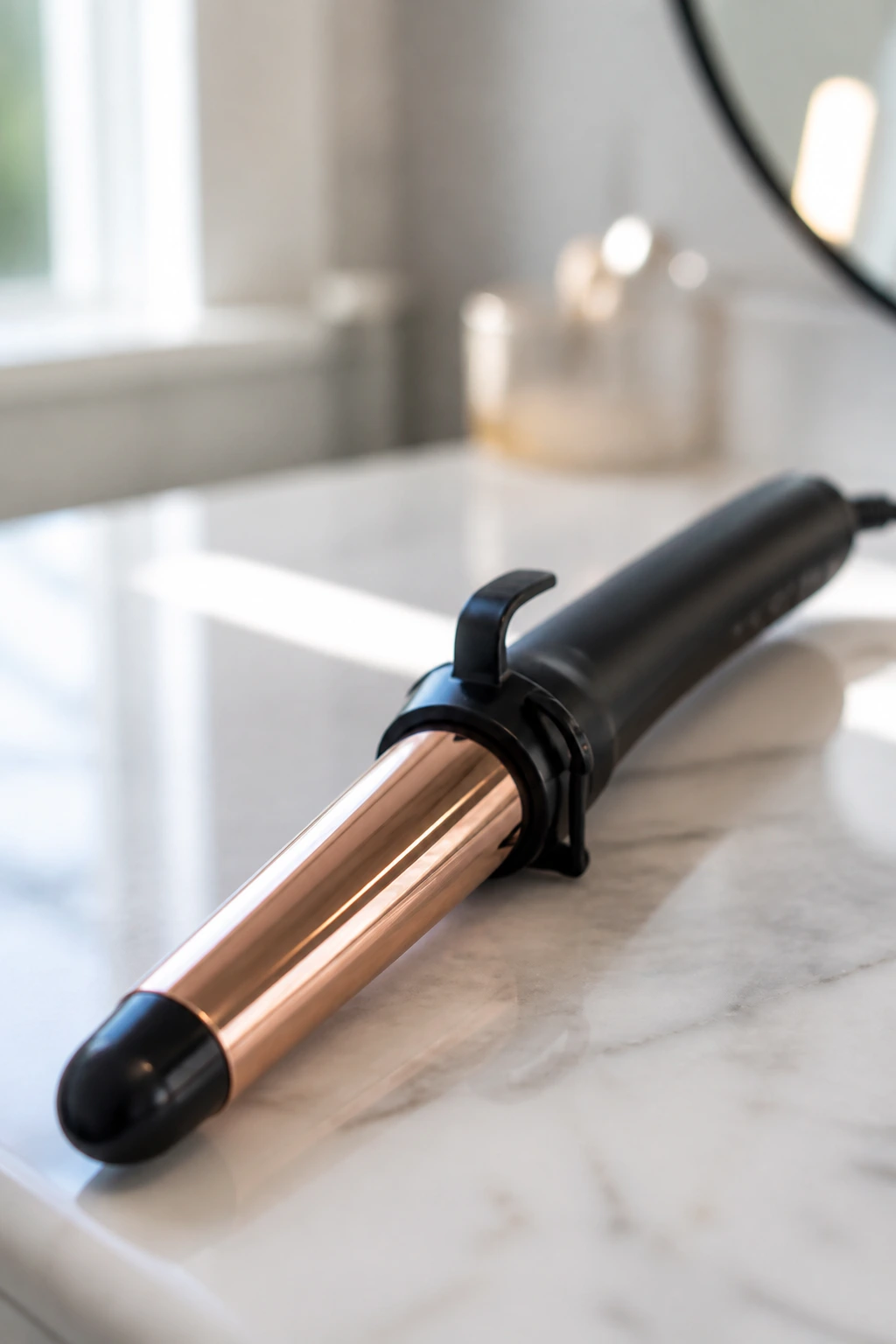
1-inch curling wand: The safest size for loose curls that bend rather than coil; larger barrels can make the wave fall out too fast.
-
1.25-inch curling iron: Handy if you want a softer, broader bend through longer bobs and lobs.
-
Heat protectant spray: Non-negotiable if you use hot tools more than once a week. A light mist is enough.
-
Lightweight mousse: Great at the roots and mids when you need volume without crunch.
-
Texturizing spray: Adds separation after the curls cool, especially on blonde hair that tends to look flat.
-
Duckbill clips or sectioning clips: Useful for pinning waves while they cool so the shape lasts longer.
-
Wide-tooth comb: Better than a brush for loosening waves without wiping them out.
-
Purple shampoo: Helps keep lighter blonde shades from turning brassy, especially if you style with heat.
-
Silk or satin pillowcase: Not flashy. Still one of the few things that actually helps preserve the bend overnight.
How to Style a Blonde Wavy Bob Without Making It Crunchy
Start With a Clean, Slightly Grip-y Base
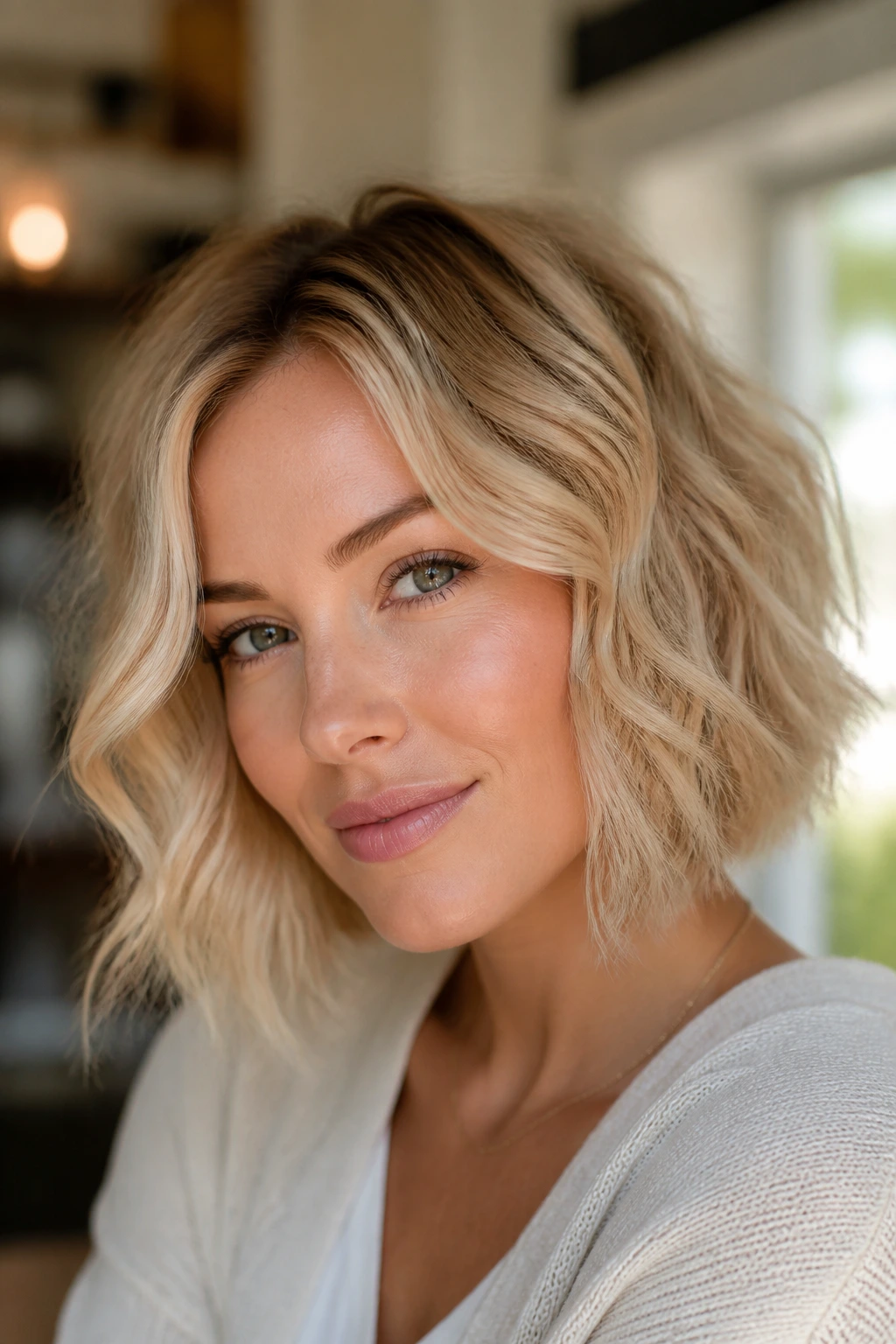
A bob with loose curls usually behaves best on hair that is clean but not slippery. A tiny amount of mousse at the roots and a heat protectant through the mids gives the hair something to hold onto. If your hair is baby-fine, skip heavy cream. It will collapse the wave before lunch.
Bend the Hair, Don’t Corkscrew It
Wrap 1-inch sections around the wand or iron, leaving the last half-inch out. Alternate directions as you move around the head, but keep the front pieces curling away from the face. That one move opens the cheekbones and keeps the jaw from looking boxed in by symmetric waves.
Break the Pattern on Purpose
When the hair cools, use clean fingers or a wide-tooth comb to loosen the curls. Don’t brush hard. You want separation, not frizz. A small mist of texturizing spray at the mids will help the waves stay piecey. If the ends start to look too neat, pinch them lightly with a drop of serum.
Finish With Control, Not Shellac
The hair should move when you shake your head. If it doesn’t, there’s too much product. A flexible hold hairspray from about 10 inches away is plenty. The goal is touchable shape. Hard, crunchy bob waves are a waste of time on square faces because they lock the outline in place.
Small Tweaks That Change the Whole Shape
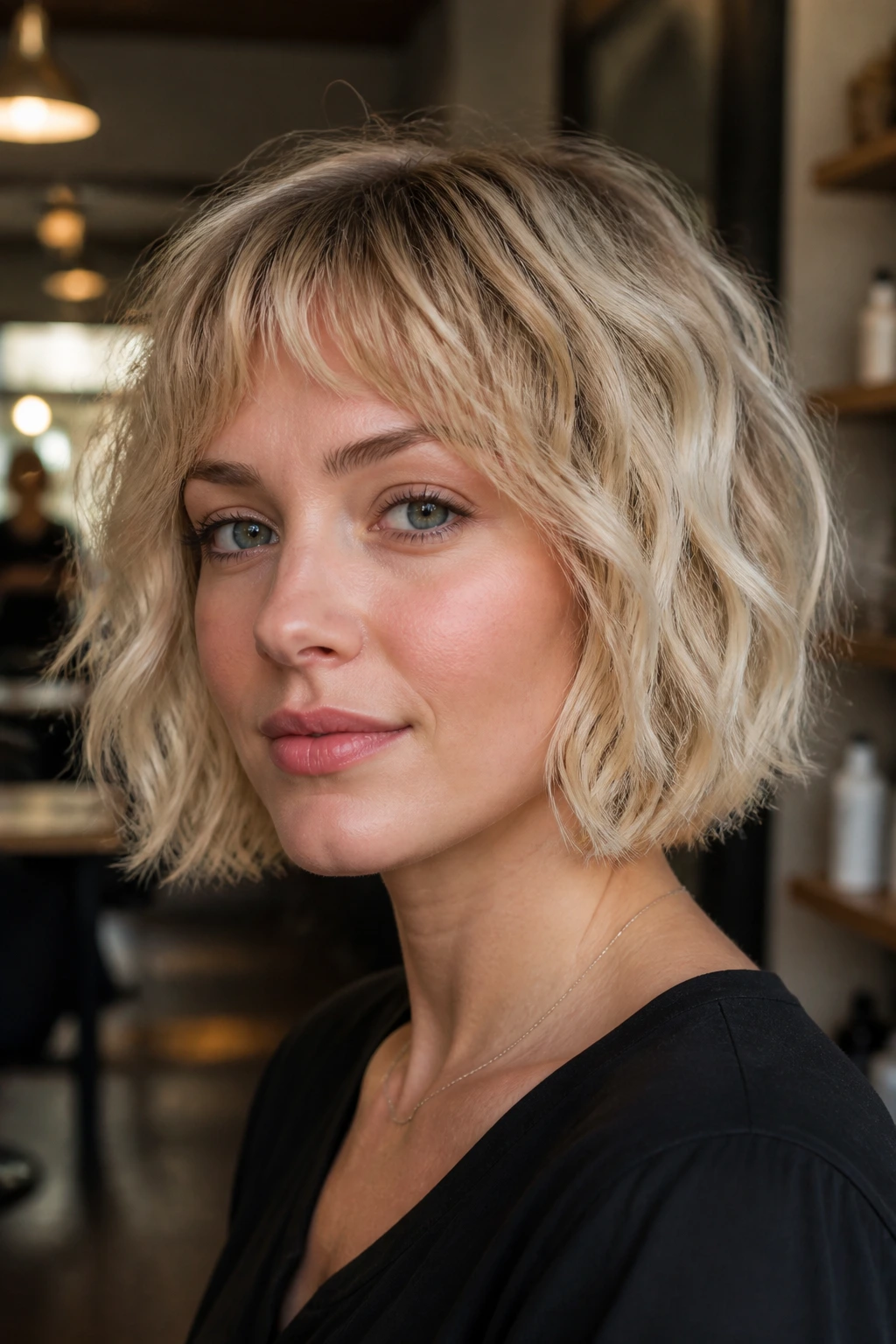
More softness: Shift the part an inch off center and keep the front pieces longer than the rest. That tiny move breaks symmetry fast.
More lift: Clip the crown while it cools or dry the roots in the opposite direction of the part for the first minute. Square faces usually look better when the top has some air.
More edge: Keep the perimeter blunt, but add broken waves and a deeper blonde root. The contrast sharpens the look without hardening the jawline.
Less upkeep: Choose a collarbone length, a shadow root, and a loose bend instead of tight curls. That combination grows out with less drama and needs less hot-tool work.
More cheekbone focus: Brighten the money piece around the temples and let it fade softly into the sides. It draws the eye where you want it.
Better texture on fine hair: Use mousse before blow-drying, then curl only the top layer. Too much hot styling on fine hair usually makes the ends look thin and tired.
Choosing the Blonde Shade That Keeps the Cut Soft
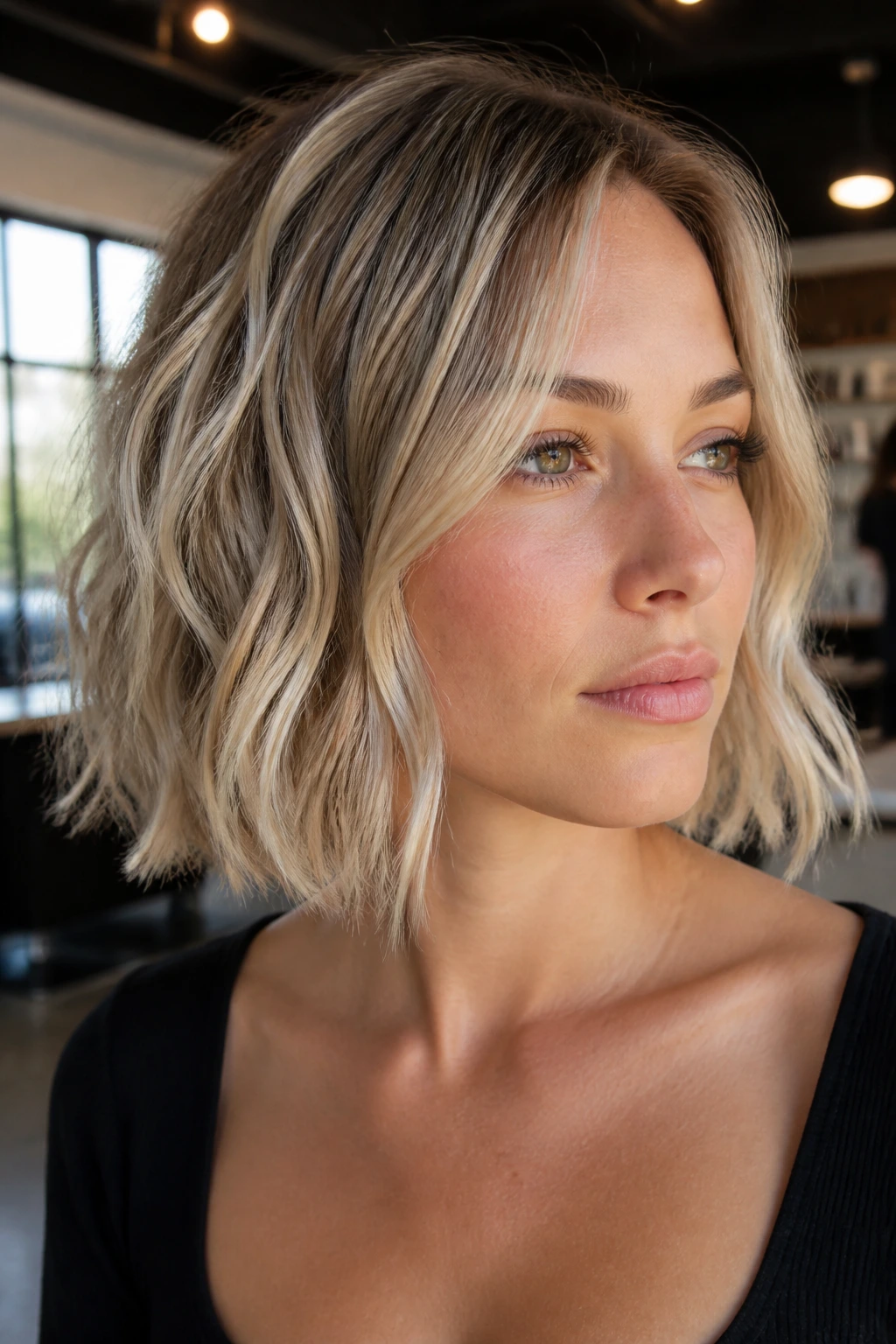
Blonde shade changes how a bob reads more than people expect. A cool ash blonde can look sleek, but on a square face it needs texture and depth to avoid feeling hard. Beige blonde sits in a friendlier middle ground. Champagne and honey blonde bring warmth, which softens the edges of a strong jaw without making the cut look heavy.
If the haircut is very structured, the color should be a little softer. If the haircut is very loose, the color can afford to be bolder. That’s a good rule to keep in your head. Platinum can work on square faces, but only when the cut has movement and the root isn’t stripped too pale. Root shadow, lowlights, or a brighter money piece around the cheekbones all help the blonde feel dimensional instead of one flat sheet.
I’m biased toward mixed tones on bob cuts. One shade from root to tip tends to expose every hard line. Dimension hides the bad parts and makes the good parts look intentional.
Common Mistakes That Make a Bob Look Boxy
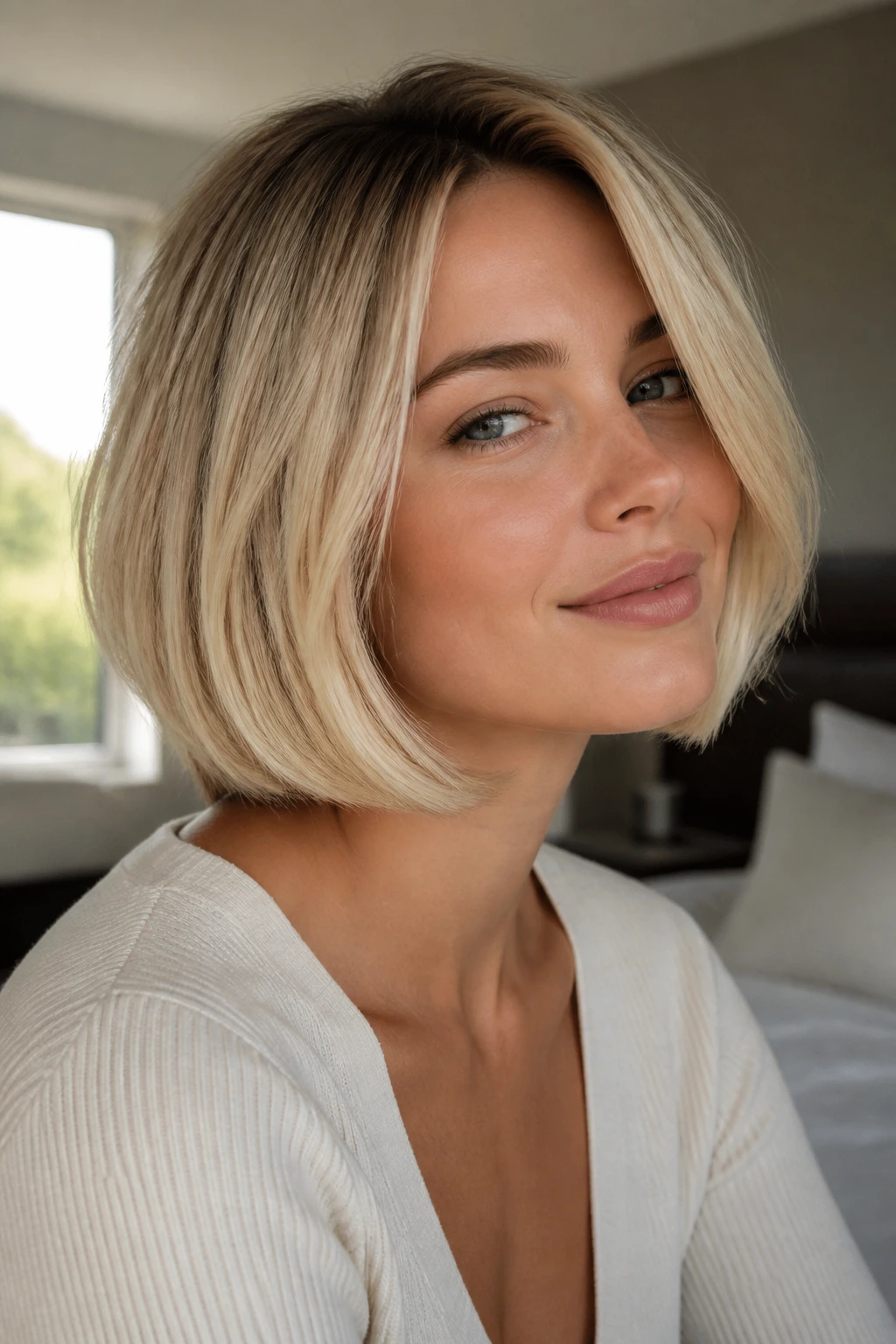
-
Cutting the bob exactly at the jaw:
The symptom is obvious: the face looks wider and the haircut feels like it’s sitting on the jaw instead of moving past it. Fix it by going a little longer in front or adding a soft A-line. -
Curling every section the same direction:
You get a shell-like shape that can look too round or too stiff. Alternate directions and break the waves apart after they cool. -
Using one flat blonde color from root to tip:
The result is a blocky shape with no depth. Add root shadow, lowlights, or brighter front pieces so the eye has somewhere to go. -
Putting the part dead center with no lift:
This can widen the face, especially if the hair is dense. Shift the part, clip the crown, or soften the fringe. -
Over-thinning fine hair:
Fine hair needs movement, not see-through ends. Use invisible layers and keep some perimeter weight. -
Too much serum or oil:
The waves collapse and the blonde goes greasy at the ends. Start with a pea-sized amount, then add only if the mids feel dry.
Variations for Fine, Thick, and Naturally Curly Hair

The Fine-Hair Cloud Bob
This version keeps a blunt-ish perimeter for density, but adds soft internal movement near the cheekbones. Use mousse, not heavy cream, and stick with a beige or champagne blonde that reflects light without looking washed out. If the hair lies flat, clip the crown while it cools.
The Thick-Hair De-Bulk Lob
Thick hair needs the weight removed from the inside, not shredded at the ends. Ask for internal layers and a collarbone length, then use a root shadow so the cut doesn’t puff out visually. Loose curls on thick hair should be broad and brushed through a little, not tightly defined.
The Naturally Curly Soft Bob
If your hair already bends on its own, don’t fight it into a straight-blowout shape. Let the stylist cut it dry or mostly dry, and keep the shortest point below the jaw. A cream blonde or honey blonde with dimension will show the curl pattern better than a flat single-process blonde.
The Low-Maintenance Rooted Bob
This one is for people who want shape without constant upkeep. Keep the bob at collarbone length, use a deeper root, and build loose waves only through the top layer and front pieces. It grows out cleanly and still keeps the square face softened.
The Brighter Front-Panel Version
Brighten the money piece, temples, and cheekbone area while leaving the rest of the bob softly blended. That placement pulls attention inward and gives the haircut a bit more lift without making the whole head lighter.
Keeping a Blonde Wavy Bob Fresh Between Salon Visits

A bob lives or dies by its edge, so trims matter. Most square-face flattering bobs need a cleanup every 6 to 8 weeks if you want the line to stay soft and intentional. If the blonde is light enough to need toner, that usually wants a refresh sooner—often around 4 to 6 weeks, depending on how quickly your hair pulls warm.
Wash frequency depends on texture, but most people get a better result at 2 to 3 washes per week than by scrubbing the hair daily. Too much washing strips the bend from the loose curls and makes the blonde look drier. If your ends start to feel rough, use conditioner only from mid-lengths down and keep the roots light.
At night, a silk pillowcase or a loose clip at the crown can keep the wave from collapsing flat. The next morning, mist the hair with water, scrunch in a little leave-in, and re-bend only the sections that lost their shape. You do not need to restyle the whole bob every day. That’s how people end up bored and fried.
Purple shampoo once a week is enough for most lighter blondes. More than that can leave the hair dull or too cool.
Frequently Asked Questions
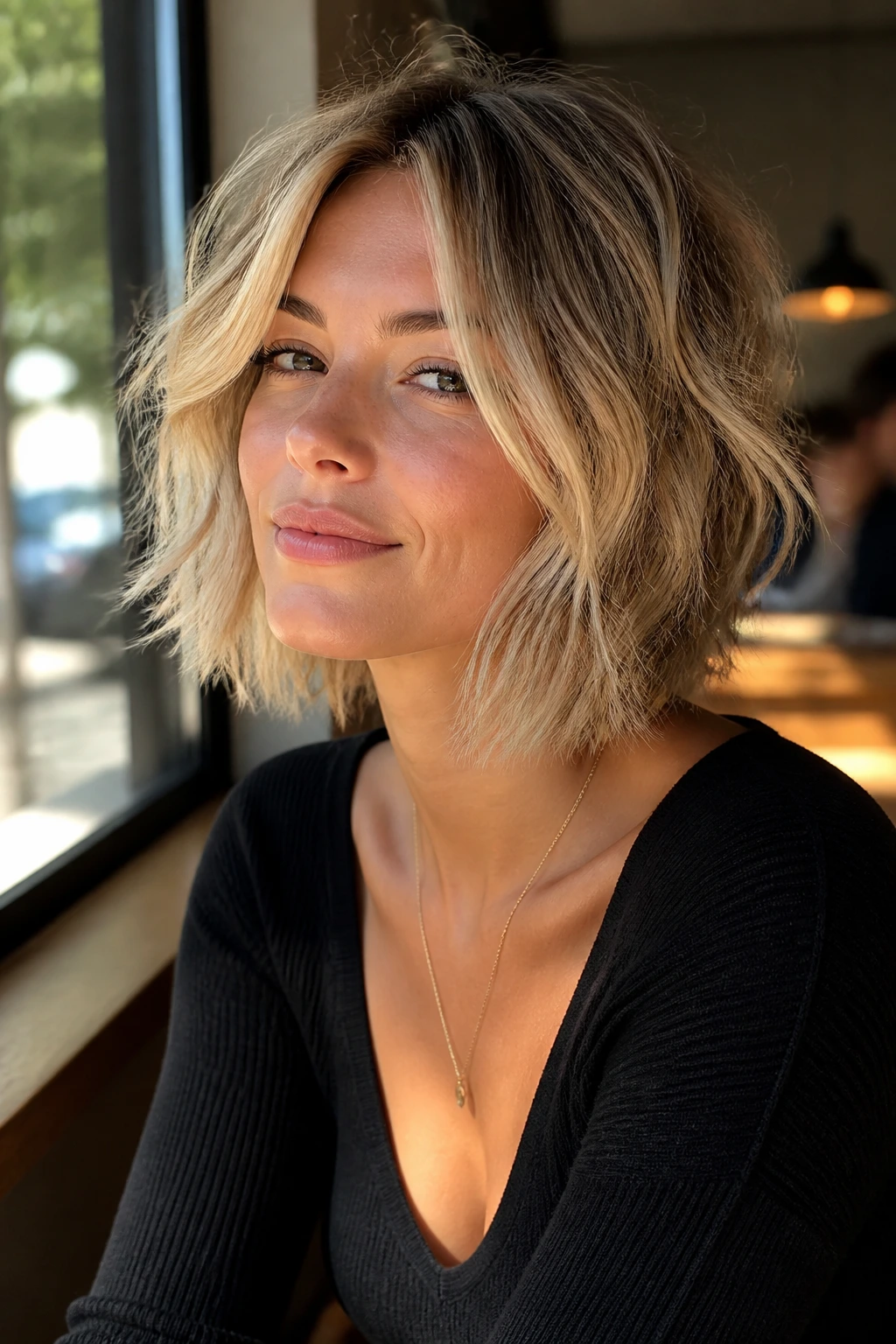
Can a square face wear a chin-length bob?
Yes, but the edge has to be softened. A chin-length bob works best when the front is a little longer than the back, the ends are point-cut, and the waves are loose enough to break the outline.
Is a center part a bad idea for square faces?
Not always, but it needs help. If the hair is flat or the bob ends right on the jaw, a center part can make the face feel wider; if you add crown lift and cheekbone framing, it can work just fine.
Do loose curls or tight curls suit a square face better?
Loose curls usually win because they soften the perimeter without stacking width at the sides. Tight curls can work if the cut is longer and the layers are placed carefully, but they need more control.
What blonde shade flatters a strong jawline most?
Beige, champagne, and honey blonde tend to soften the face best because they add light without making the haircut look severe. Root shadow or lowlights help keep the shape from turning flat.
Will layers make my bob look thinner?
Too many layers can, yes. Ask for invisible or internal layers instead of heavy shredding, especially if your hair is fine. You want movement, not holes.
Can I air-dry these styles?
Absolutely, especially if your hair already has a wave or bend. Scrunch in a light mousse or curl cream, part the hair where it wants to live, and let it dry without touching it too much.
How short is too short for a square face?
If the cut lands right at the widest part of the jaw and has no fringe, no side part, and no texture, it’s usually too short. A short bob can work, but the outline has to be softened with angle or movement.
How often should I touch up the blonde?
That depends on how bright you wear it. Dimensional blonde with a root shadow can go longer between touch-ups, while pale blonde and face-framing highlights usually need toning more often to stay clean.
A Softer Line for Sharp Angles
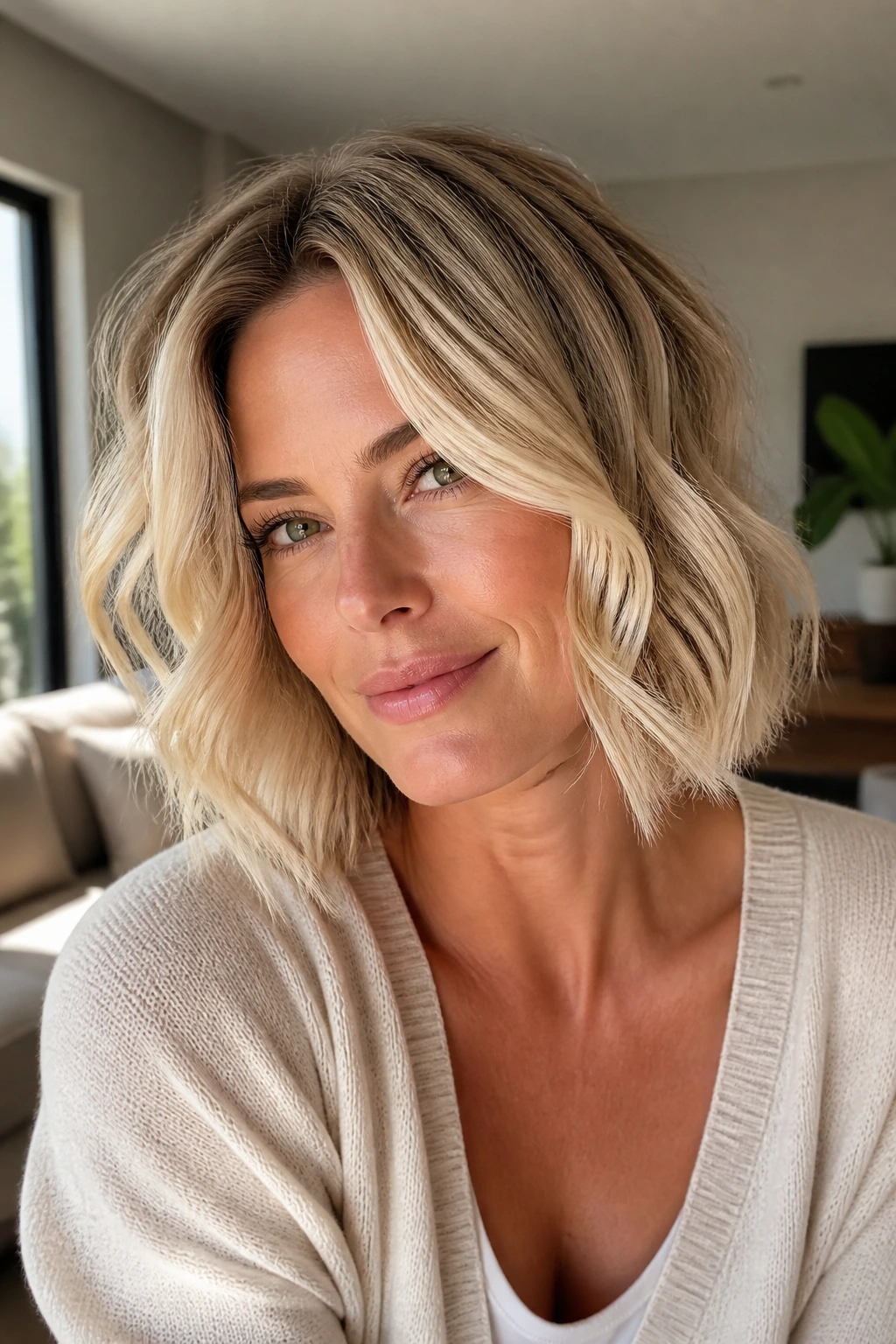
The best bob for a square face is not the one with the most drama. It’s the one that knows where to bend. A little extra length in front, some softness around the cheekbone, and blonde that isn’t afraid of depth can change the whole read of the haircut.
Loose curls do the rest. They keep the shape moving, stop the jaw from taking over, and make even a blunt cut feel more relaxed. If you start with the right geometry, the styling becomes easier—and that’s the kind of haircut people keep coming back to.