



A chin-length bob can read as waist-length from across a room if the shape is right. That is the whole trick behind Long Hair Transformations for Short Hair: you are not manufacturing inches, you’re steering the eye with cleaner lines, lower anchors, and a little sleight of hand.
Short hair gets written off as limited because people assume length is the only thing that matters. It isn’t. A low pony with a hidden tail, a side-swept bend, or a tucked French twist can carry the same long, elegant silhouette that full-length hair does — sometimes cleaner, because there is less bulk to fight.
The styles below lean hard on placement, texture, and restraint. Some use clip-ins or a halo; some work with nothing but a flat iron, bobby pins, and a firm-hold spray. The common thread is simple: when short hair looks expensive, it usually looks controlled first.
Why These Faux-Length Looks Earn Their Keep
-
Built for real short cuts: These styles work on pixies, chin-length bobs, and awkward grow-out stages, not just hair that is secretly almost long.
-
Length without bulk: Several looks rely on a low anchor, a tucked base, or a vertical braid, so they add the feel of length without piling hair high.
-
Extension-friendly, but not dependent on them: A few designs welcome clip-ins or a halo; the rest can be done with your own hair and a decent pin kit.
-
Texture-aware: Straight, wavy, curly, and coily hair each get a path that respects the way the hair actually falls.
-
Wearable beyond the photo: The best styles here can survive a workday, dinner, or a long commute without needing a bathroom reset halfway through.
-
Easy to personalize: A side part, a ribbon, a barrette, or a slightly messier finish can change the whole mood without changing the structure.
1. Sleek Faux Low Pony
A low ponytail is the oldest trick in the book for a reason: it stretches the neck and makes short hair stop fighting gravity. On a jaw-length bob, a smooth base with a tucked tail can read like a neat, shoulder-grazing style from the front, especially when the pony sits just under the occipital bone.
Why It Works
The eye follows the line from crown to nape, and that line feels longer than a bob with flipped-out ends. If you add a small clip-in ponytail piece or a wrapped weft, the finish looks deliberate instead of improvised.
- Best on straight or slightly wavy hair.
- Use a boar-bristle brush and a pea-size dab of gel.
- Keep the pony low, not mid-head.
- Leave two tiny front pieces out if your cut is too short to smooth fully back.
One detail that matters: pin the base flat before you add the tail, or the pony will sit like a bump and give the game away.
2. Crown-Clip Half Cascade
A half-up style is a gift to short hair because it lets the top do the heavy lifting while the bottom keeps its own length and texture. The right clip placement makes a bob look like it has grown out on purpose, not by accident.
The trick is to clip the top section just behind the crown, not at the very front hairline. That leaves enough hair falling over the back to create a soft, long drape while the lifted front adds height and shape.
A small weft tucked into the crown makes this even better. Keep the ends loose and lightly curled away from the face, and the whole thing reads as a grown-up, polished shape instead of “my hair is too short to decide what it wants.”
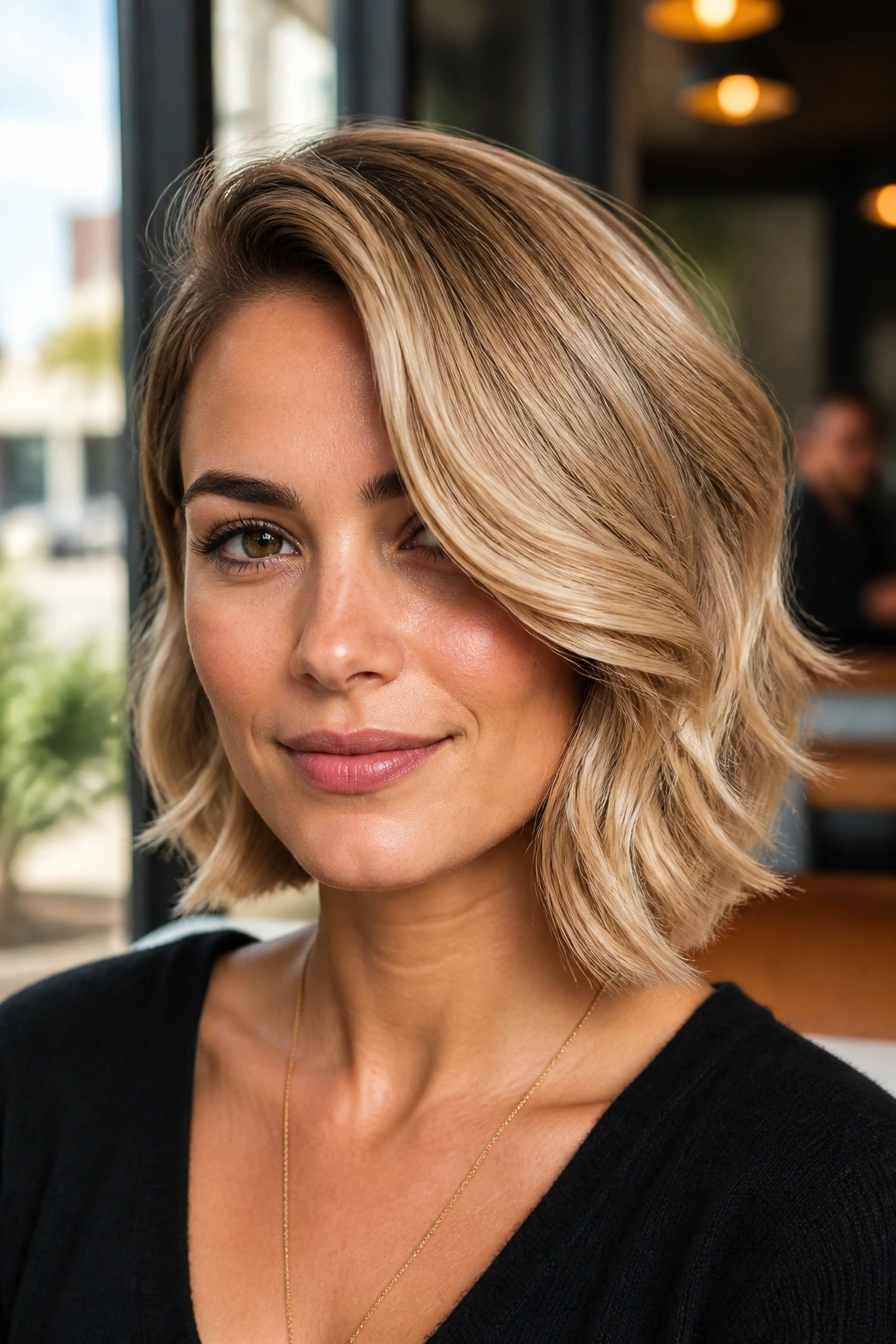
3. Deep Side-Part Hollywood Bend
Can a side part make short hair look longer? Yes — not literally longer, but visually longer in a way that matters far more once the mirror is involved.
A deep side part changes the whole balance of the cut. Instead of a round, even frame around the face, you get a long diagonal that slides across the forehead and falls toward one shoulder. That diagonal is what sells the illusion.
How to Get It
Use a tail comb to carve the part farther over than feels natural, then blow-dry the roots in the new direction. Add one or two soft bends with a 1-inch iron, brush them out, and finish with a light gloss spray.
Short hair can go wrong here if the bend is too tight. The curl springs up and the whole style shrinks.
Best for: bobs, long pixies, and layered cuts with a little length at the front.
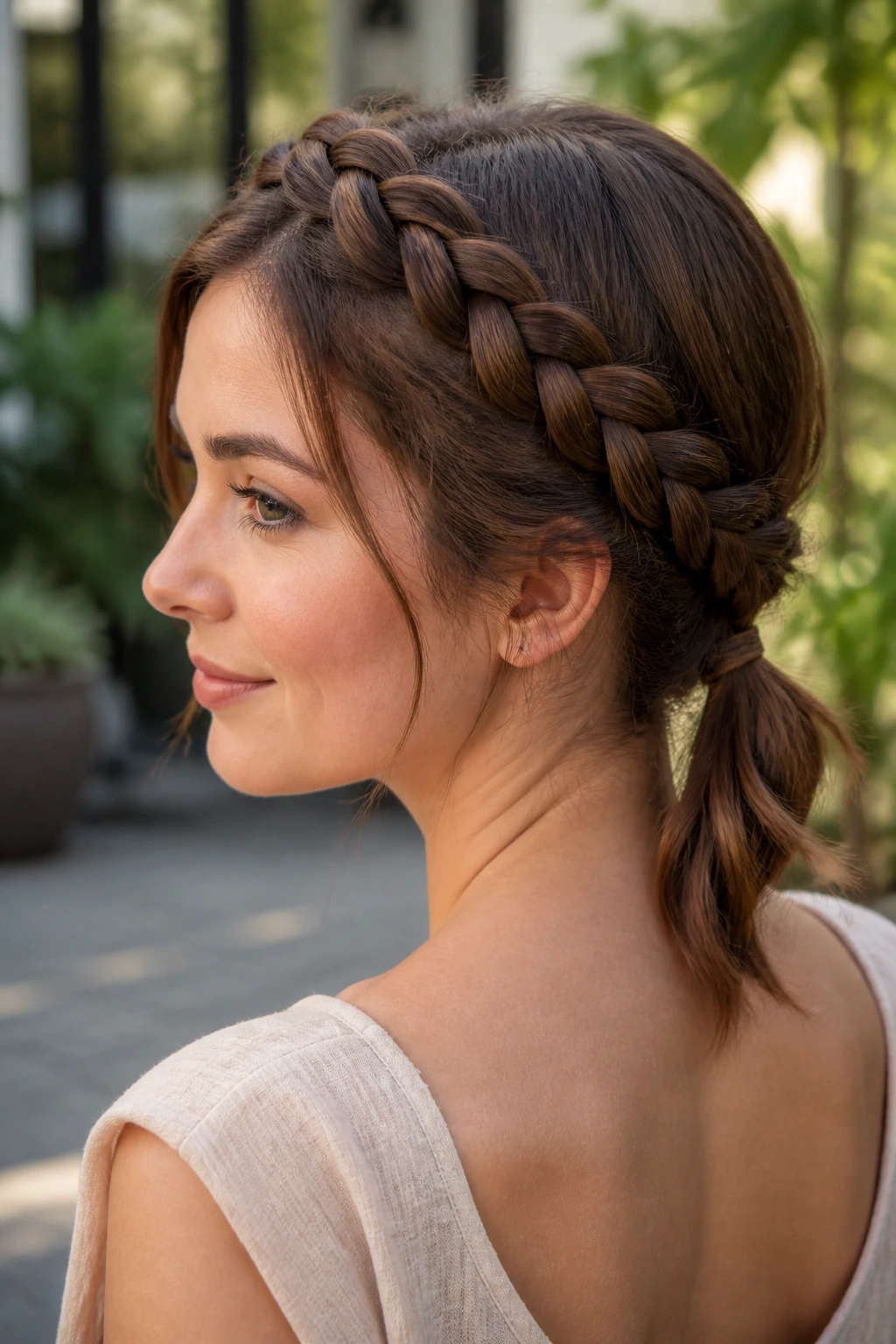
4. Braided Crown With Tail
Picture a grown-out pixie on a night when you want softness, not edge. A braided crown takes the shortest layers out of the line of sight and leaves the rest to hang as one clean drape.
The braid itself does the camouflage work. It wraps around the head, hides uneven layers, and creates a long visual frame that makes the loose section behind it feel longer than it is.
- Works best when the braid starts at the temple, not the hairline.
- A small clear elastic helps you tuck the tail under the braid.
- A little texturizing spray keeps fine layers from slipping out.
- If your ends are too short for a full plait, braid only the front third and pin it back.
A tiny flower pin or a flat gold clip gives the style a finished edge without stealing the shape.
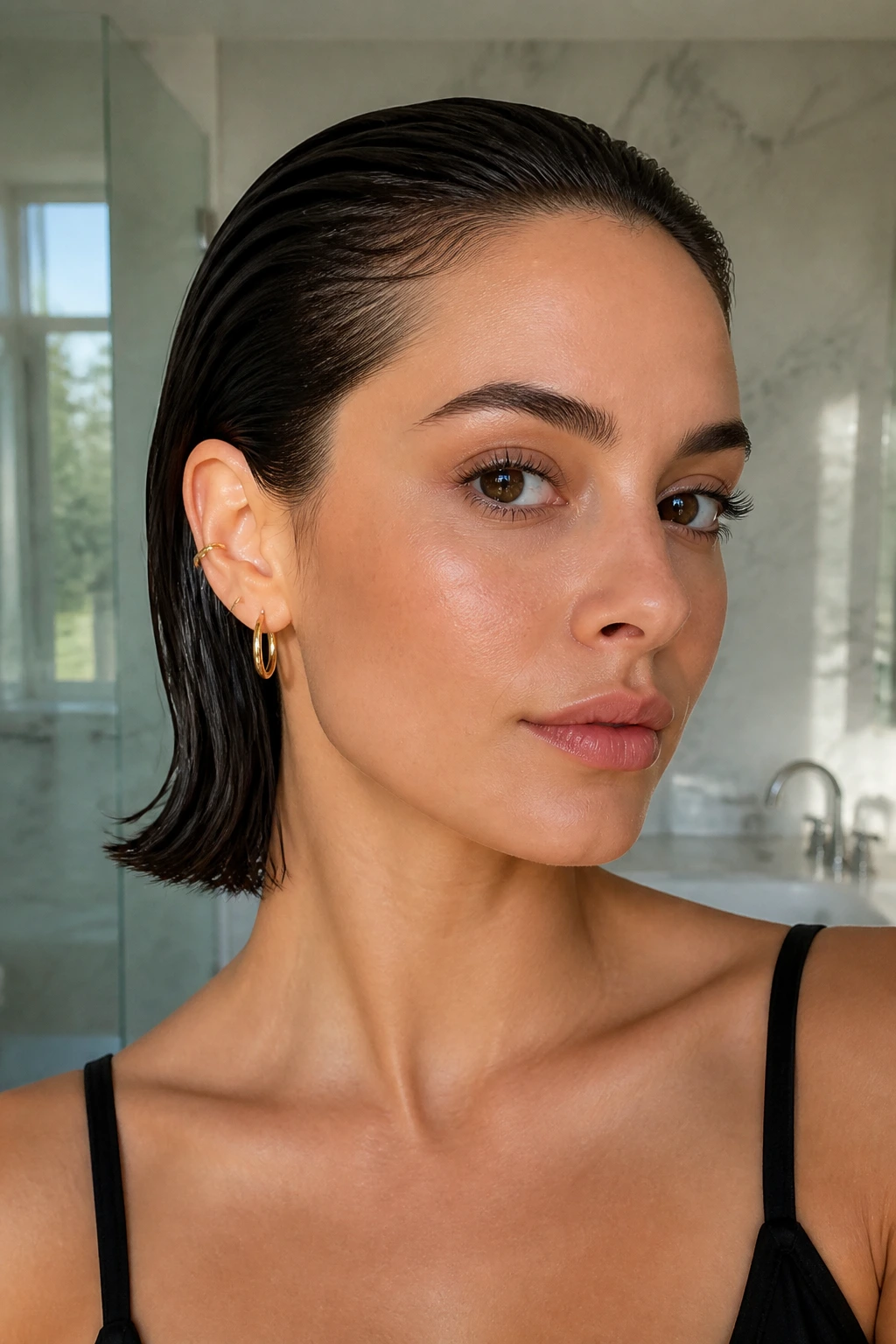
5. Wet-Look Tucked Lob
There’s something blunt and expensive about a wet-look tuck. It doesn’t pretend hair is longer than it is; it simply makes the short shape look sleek enough that the eye keeps moving.
This one is especially good for a lob that hits between the jaw and collarbone. Comb the hair back with gel, tuck both sides behind the ears, and let the ends sit low and shiny at the nape. The smoother the crown, the longer the silhouette feels.
No volume. That’s the point.
Use a shine serum on the top layer, then press the sides flat with your palms instead of your brush. A brush often makes the finish too perfect in the wrong way, and short hair benefits from that slightly hand-shaped look.
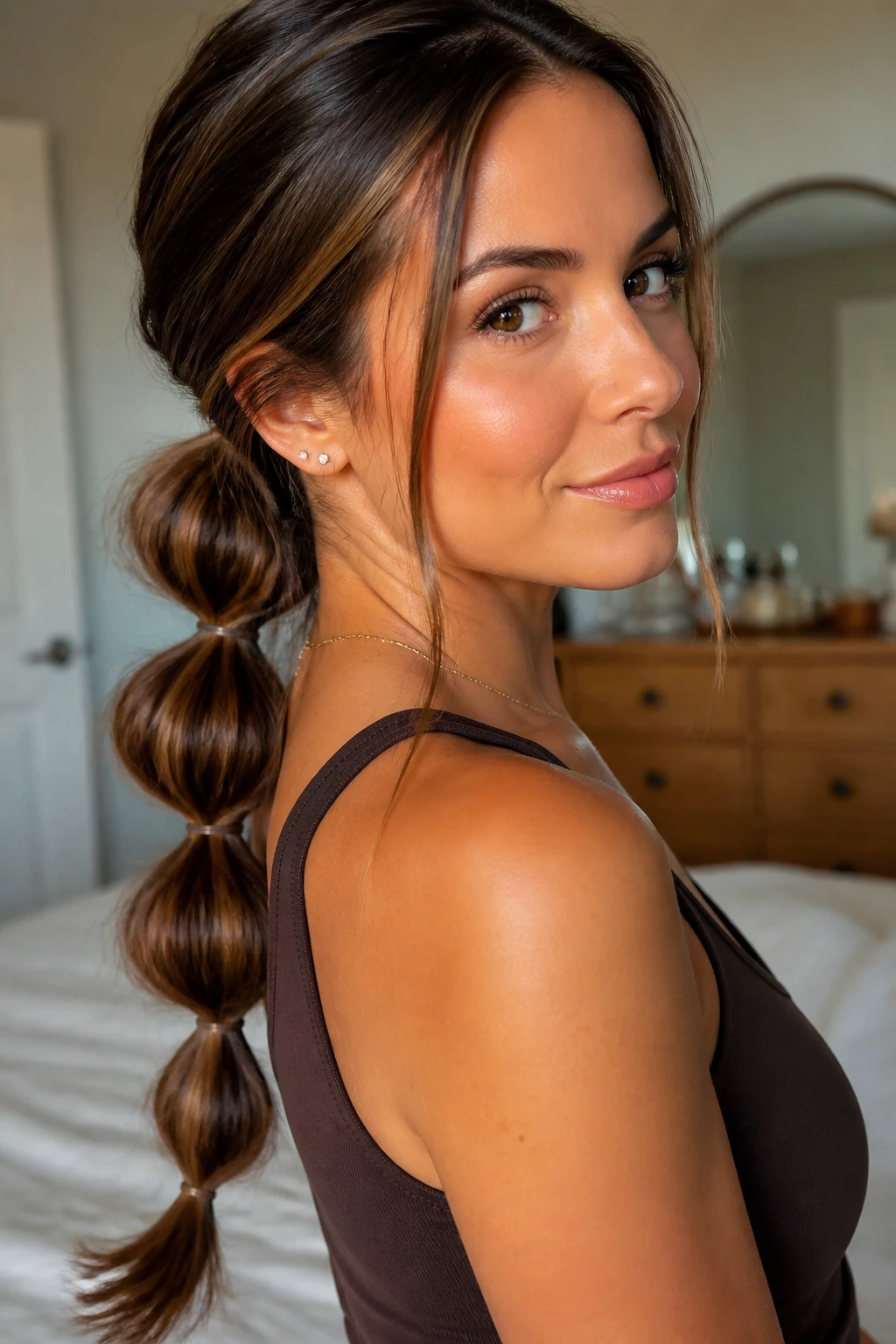
6. Bubble Ponytail Ladder
Unlike a plain ponytail, the bubble version breaks the line into sections, and that makes short hair read taller and longer. It’s the same logic as a vertical stripe on clothing: the eye keeps traveling.
This style is a smart choice when your hair can make a small pony but not a convincing long one. Build one low pony, add tiny elastics every 2 inches down the tail, then gently pinch each section to puff it out. If you have clip-ins, add them only to the tail portion, not the crown.
It’s best on hair that already has some grip, because slippery strands collapse fast. A dry texture spray before you start helps the bubbles hold shape instead of turning into limp little humps.
Try it when you want something playful that still looks orderly. The shape is doing the heavy lifting.
7. French Twist With a Loose Tail
The smell of hot serum, a firm twist, and one long tail falling down the back — that combination can make even a blunt bob look more formal than hair twice as long. A French twist pulls short hair into a vertical seam, and the tail adds the part most people remember.
The twist itself should stay low and narrow. If you build it too tall, the style turns into a shell and loses the length illusion. Secure it with a large U-pin or a pair of crossed bobby pins, then let a small tail or extension piece fall from the base.
- Best on hair that reaches the nape or collarbone.
- Keep the twist flat against the head.
- Hide the seam with one jeweled pin if needed.
- Spray the twist before you pin it, not after.
A side-swept version feels softer. A centered version feels sharper. Both can read long if the tail falls cleanly.
8. Curled-Out Collarbone Bend
Can a bob fake collarbone length without a single extension clip? Yes, if the ends fall outward instead of tucking under.
That outward bend is sneaky. It shifts the last inch of hair away from the jawline, so the whole cut reads as longer and more relaxed. Use a flat iron or curling wand to flip the ends away from the face, then brush just enough to soften the shape.
What to Watch For
If the bend is too tight, the hair bounces right back to short. If it is too loose, the shape disappears. The sweet spot is a gentle curve that looks like it settled there naturally.
This is one of those styles that depends on restraint. A little mousse at the roots, a touch of oil on the ends, and a clean center or side part are enough.
9. Rope-Braid Low Hang
A rope braid is what I reach for when the hair is too short for a real braid but too long to leave plain. It twists instead of weaving, which means shorter layers behave themselves better.
Start low at the nape, split the hair into two sections, twist each section in the same direction, then wrap them around each other in the opposite direction. The finished rope sits close to the neck and hangs straight enough to feel longer than a loose braid would.
A rope braid also hides mixed lengths better than a three-strand braid. The twist compresses everything into one narrow line, which is a blessing when you have short pieces popping out around the temples.
A clear elastic at the end keeps it tidy. A few pull-apart loops near the top make it look fuller, but don’t overdo it — too much widening kills the length effect.
10. Center-Part Face Frame Sweep
A center part can make short hair read longer than a dramatic wave ever will. It slices the face in half, then gives both sides the same clean descent, which makes the hair feel calmer and more elongated.
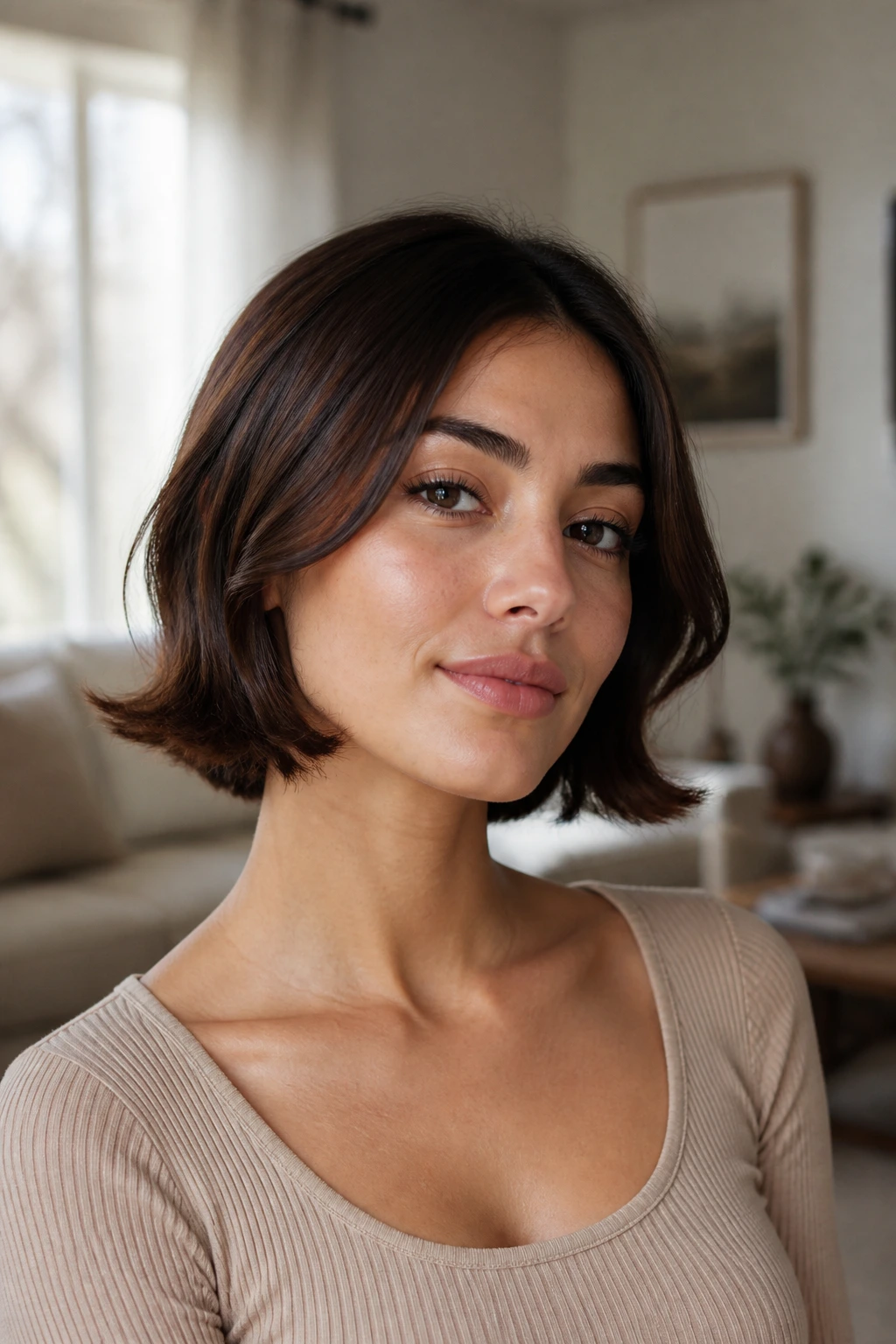
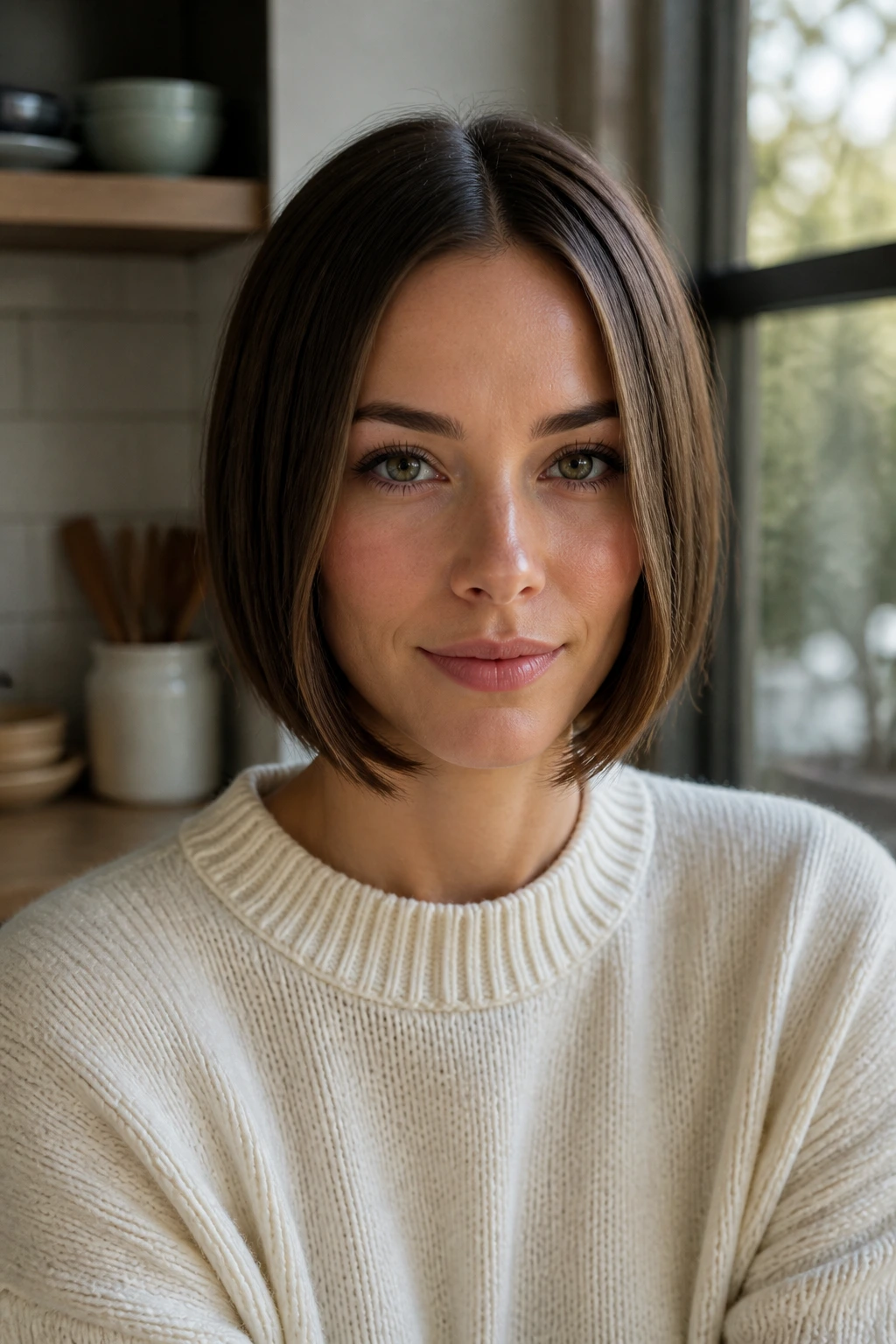
This is the style I’d pick for a sharp bob that wants to look deliberate. Straighten the top lightly, tuck the ends forward so they skim the jaw, and keep the front pieces equal. If the length is uneven, the center part softens that unevenness instead of advertising it.
No teasing. No heavy curl. Just symmetry and a little polish.
A tiny amount of cream through the mid-lengths keeps the pieces from floating away. The goal is a quiet, straight line that makes your haircut look longer simply because it stops shouting at the eyes.
11. Halo-Extension Wave Set
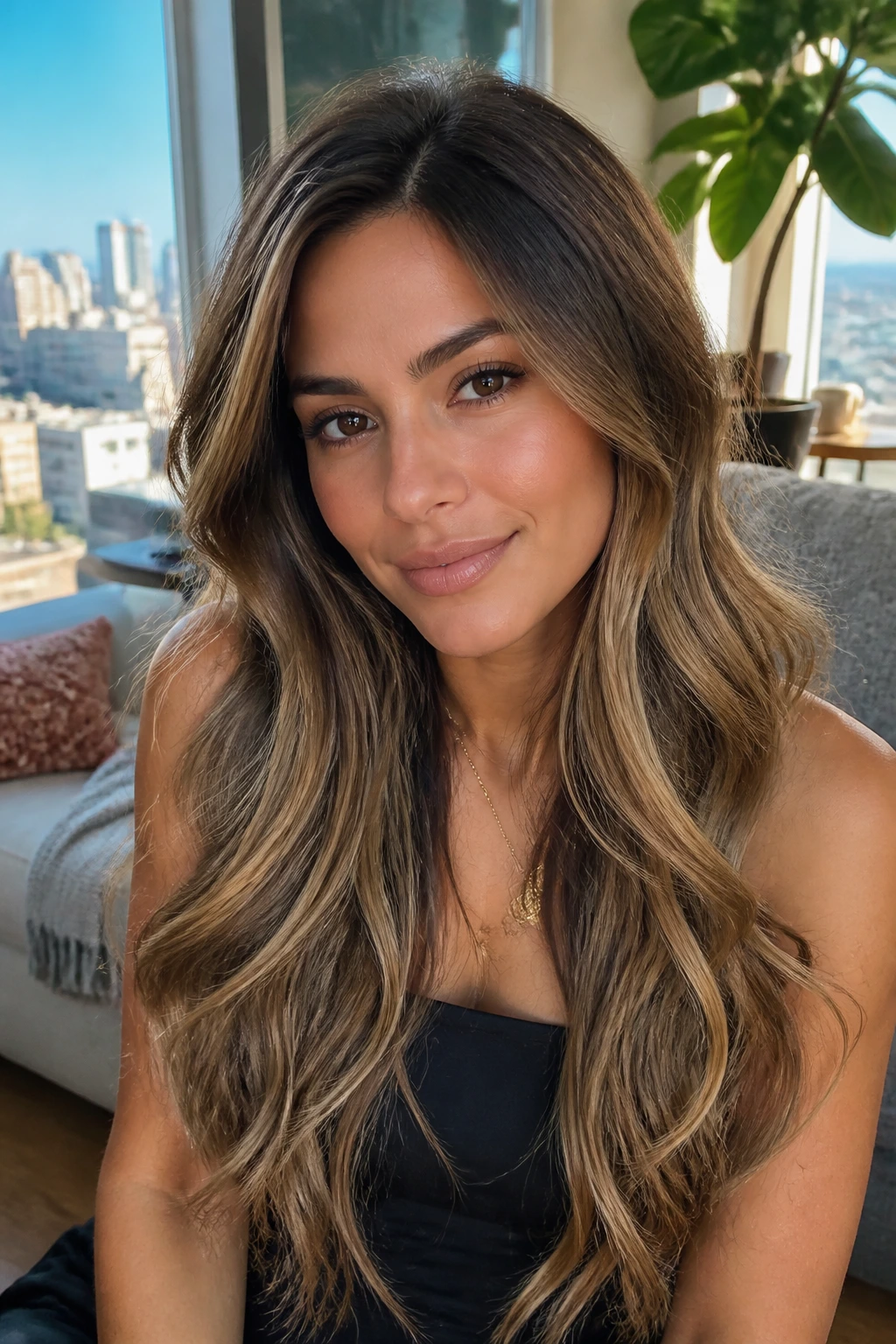
Halo extensions beat clip-ins when you want length fast and your own hair is too fine to hide a stack of wefts. The wire sits under the top layer, so the weight is spread out and the blend often looks softer than a row of clips.
The best part is the wave pattern. If your natural hair is chin-length and the halo is mid-back, you can curl both together in the same direction and get a long, continuous bend instead of two separate textures.
Halo pieces shine when the ends are lightly brushed out. That brush-out helps the fake length merge with your real length, and it stops the finished style from looking like two different heads in one mirror.
Choose a halo that matches your mid-lengths, not your roots. Roots lie, ends tell the truth.
12. Pixie Quiff Into Long Sweep
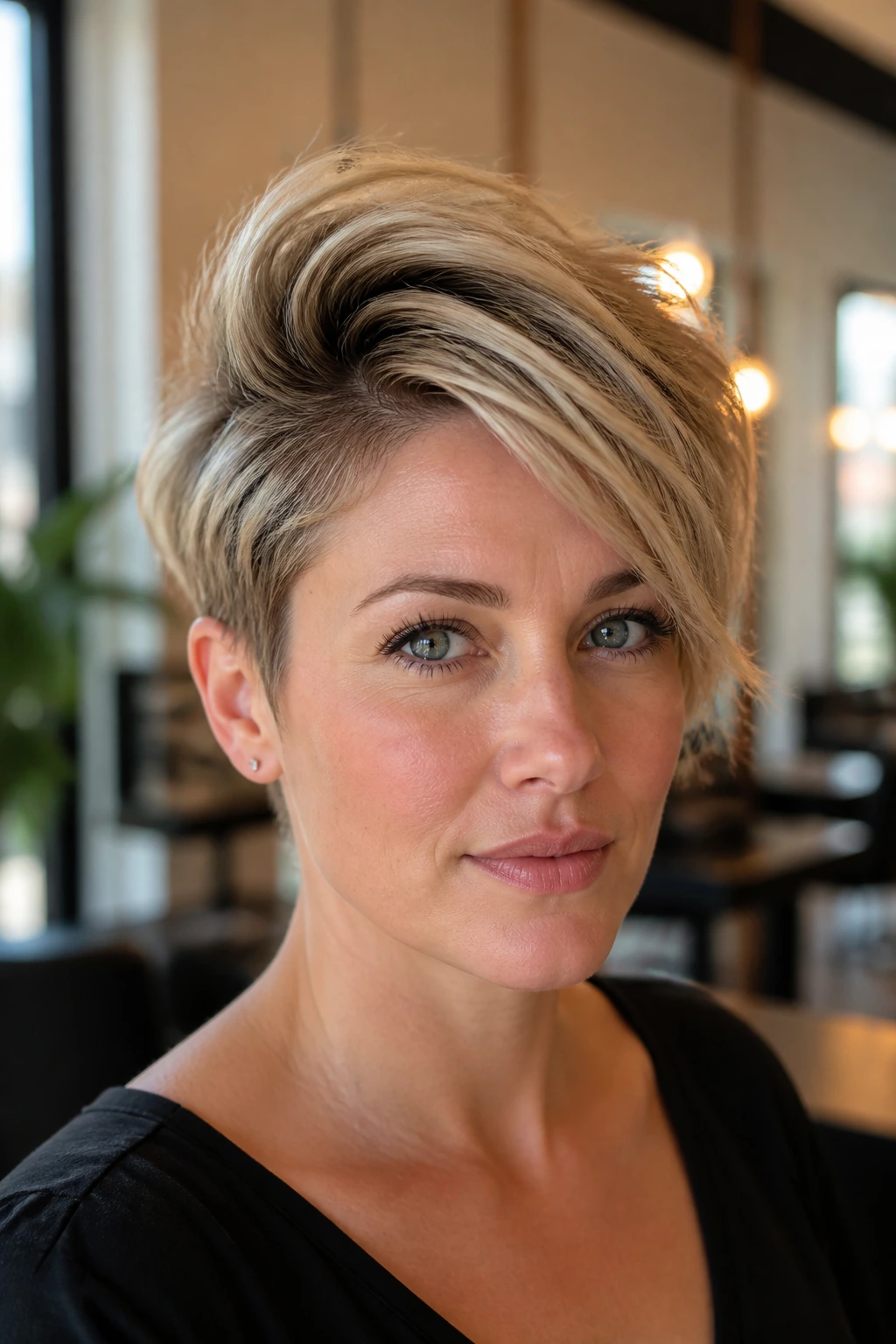
A pixie can look surprisingly long when the front is pushed up and over instead of flat. The quiff adds height, and the sweep across the forehead creates the kind of movement that makes the rest of the hair feel extended.
Use a golf-ball-sized puff of mousse at the roots, blow-dry with a small round brush, and direct the top section back and slightly to one side. Then smooth the sides close to the head so the volume stays only where it helps.
- Best for pixies with at least 2 to 3 inches on top.
- A light pomade on the front pieces keeps the shape from frizzing.
- Hair spray should go on in mist form, not as a helmet.
- If the front is too short, use a tiny clip-in fringe piece rather than forcing the lift.
This style is short hair with confidence. Nothing more, nothing less.
13. Side-Swept Old Hollywood Curve
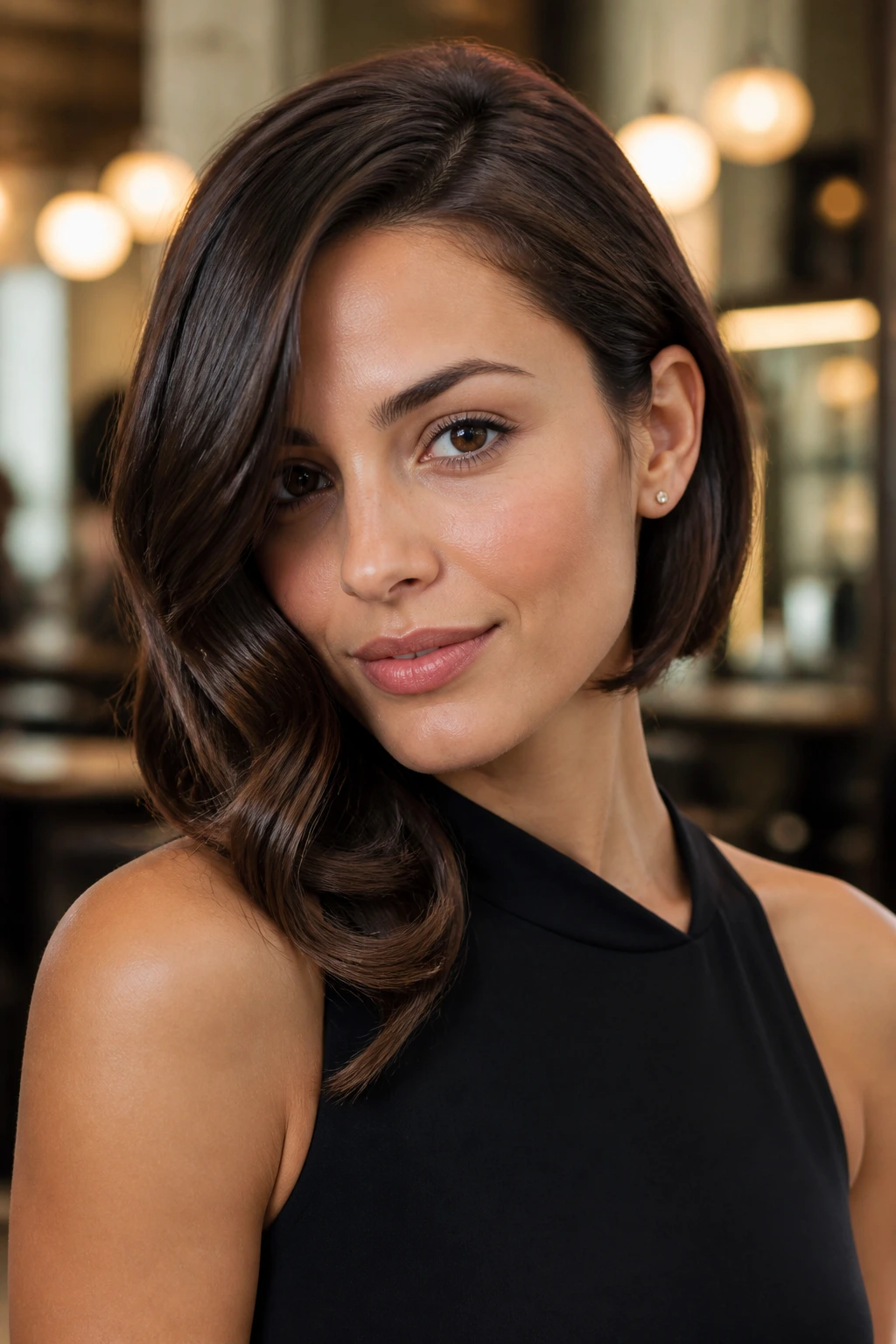
The first time you brush a soft wave over one shoulder and watch a bob lose its bluntness, you understand why this look survives every hair trend. The curve gives the hair a long, falling shape, and the side sweep keeps the eye moving.
Flat-iron the hair in a single-direction bend, then pin the side with less hair behind the ear for ten minutes while it cools. That set matters more than most people think. Cool hair holds shape; warm hair forgets.
The finished line should feel like a ribbon, not a curl. If the ends are too bouncy, they pull the shape back up toward the jaw and shorten it.
This one is especially good with a bold earring. The ear shows, the curve falls, and the whole thing feels longer without trying to be dramatic about it.
14. Wrapped Low Knot Illusion
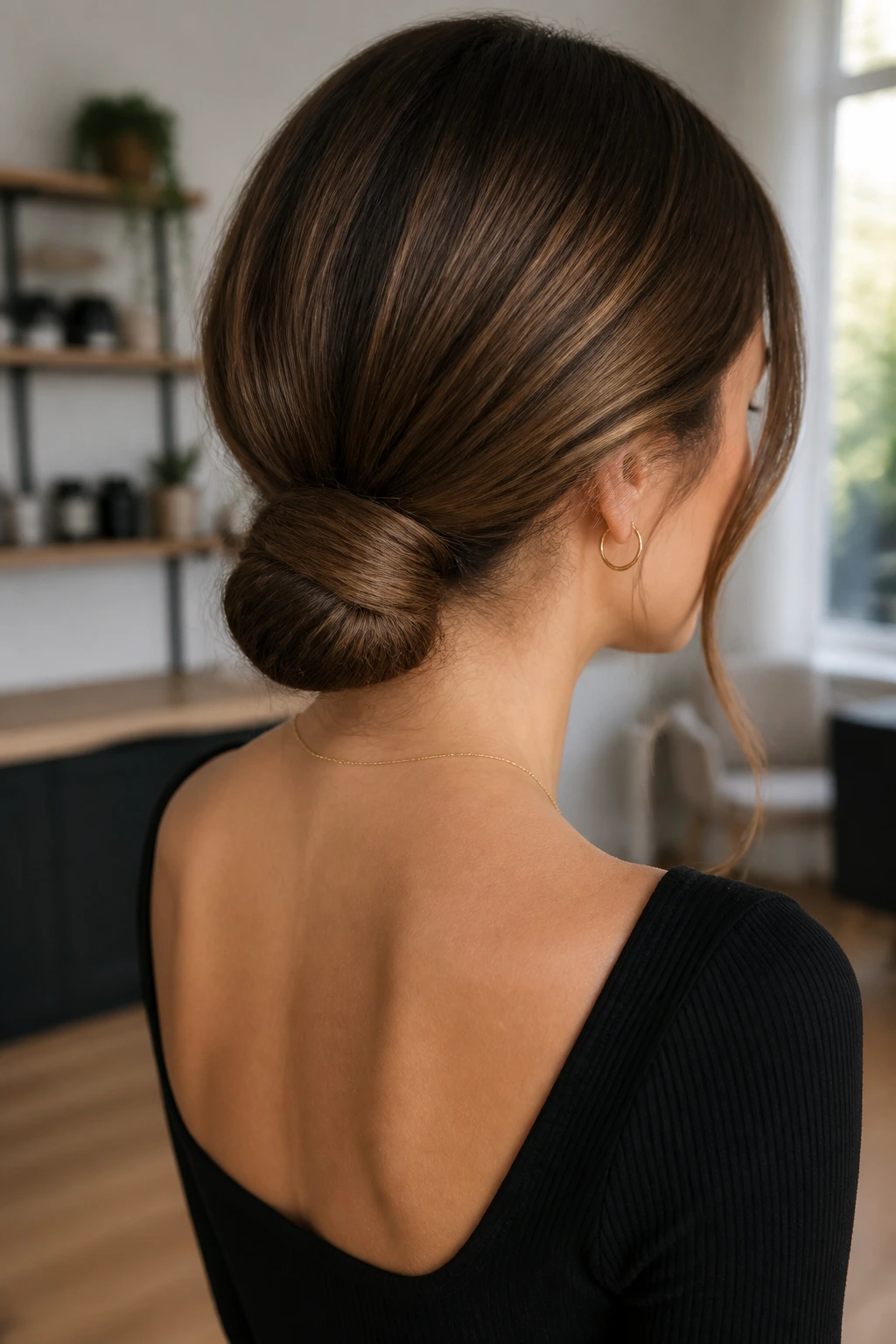
Can a tiny knot really pass for long hair? It can, if you build it low and tuck a tail or extension wrap around it.
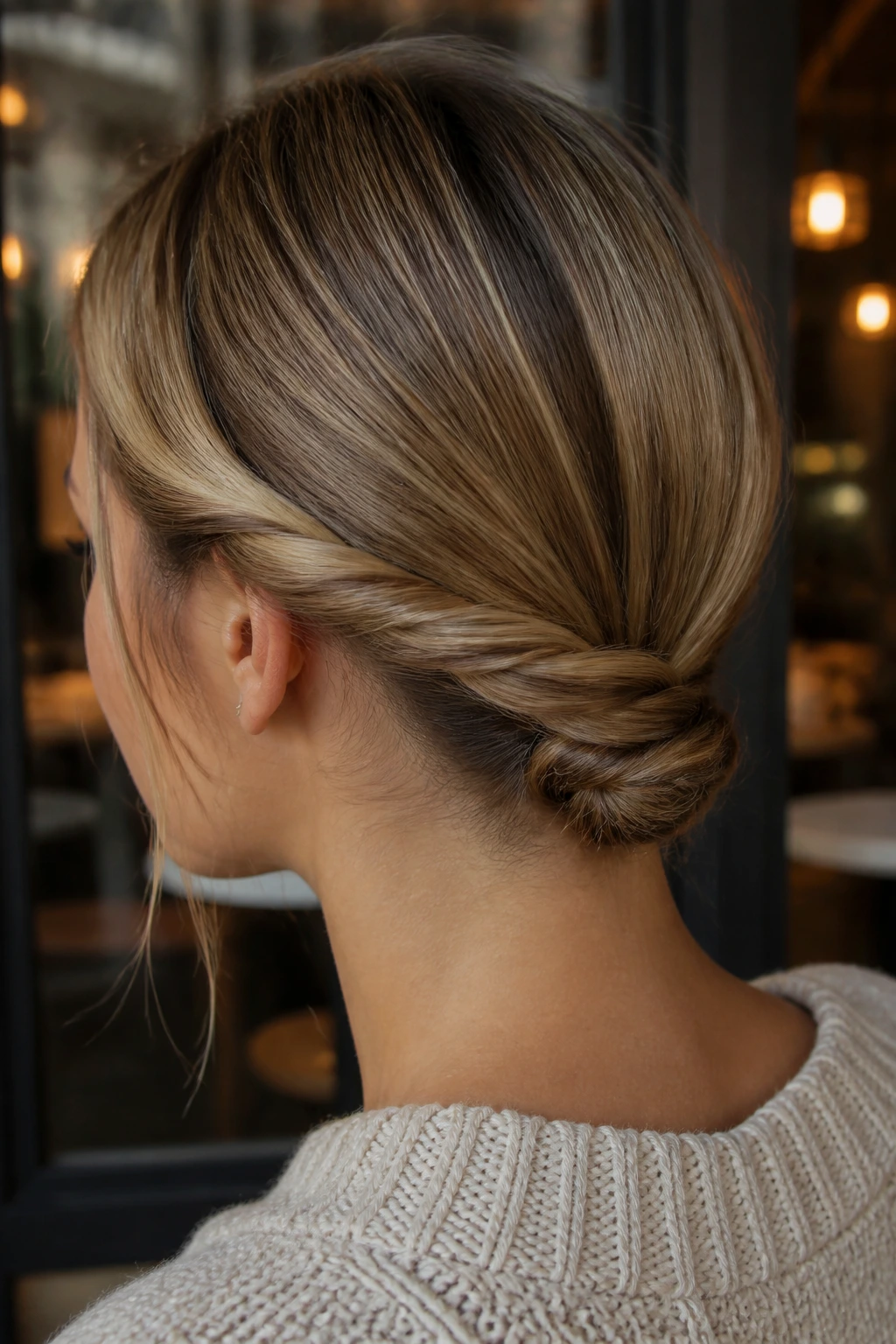
Start with a low pony, twist the length once or twice, and coil it into a small knot at the nape. Then wrap the remaining tail around the base so the knot looks fuller than the actual hair would allow. If your hair is too short to wrap all the way around, use a matching extension piece or even a narrow hairpiece.
What to Watch For
The knot should sit flat. If it pops off the neck, the style starts looking like a bun instead of a length illusion.
This works best on bob-length hair with a little grip. A finishing spray and a few crossed pins are enough. You do not need to overbuild it.
15. Faux Fishtail Sweep
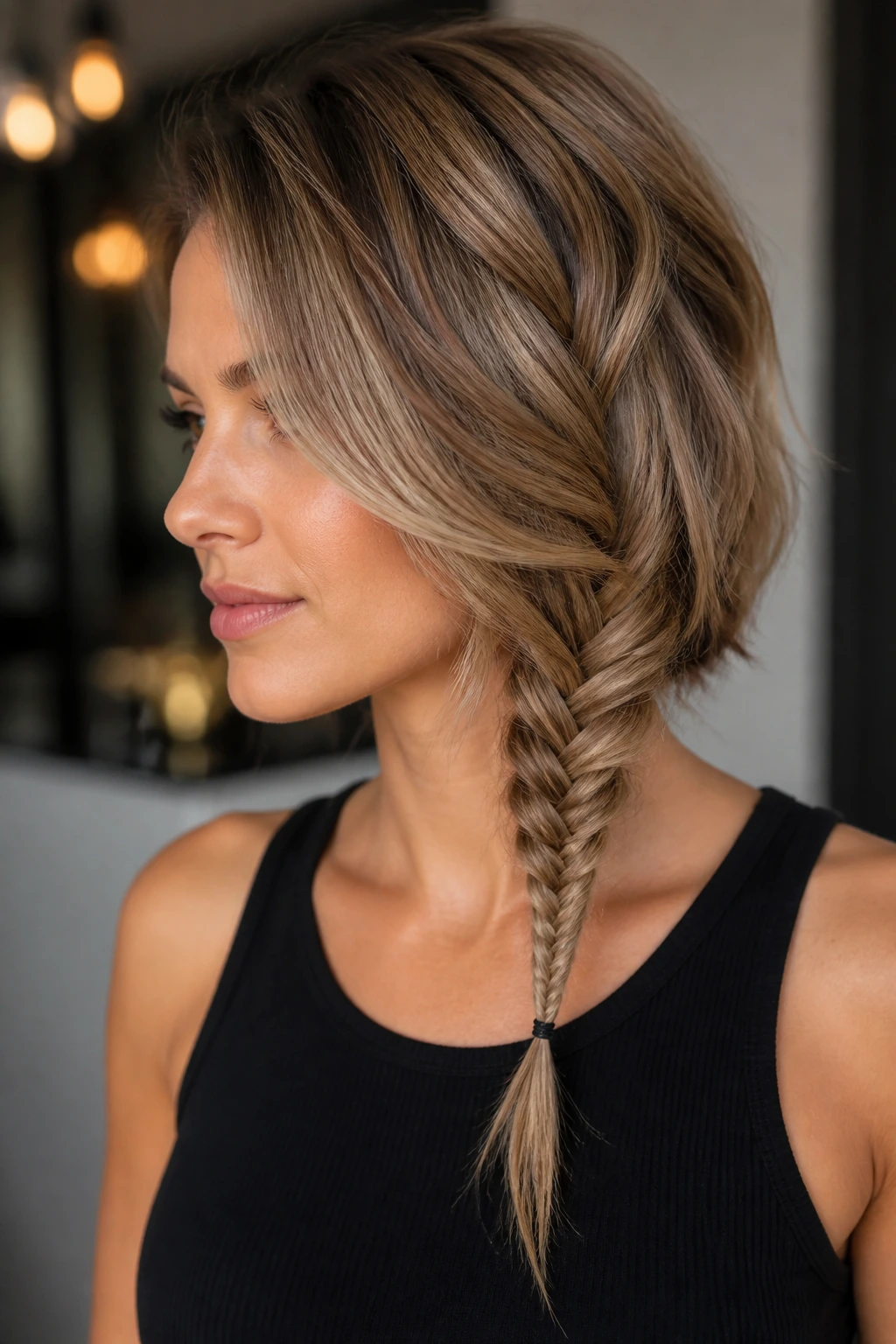
A fishtail braid always looks longer than the hair feeding it, which is why it earns its place here. The split-strand pattern creates a long, narrow spine that drags the eye straight down the back.
With short hair, start the braid lower than you think. If you begin too high, the shorter layers near the crown get noisy and the braid looks patchy. A low start lets the top stay calm and gives the braid a cleaner fall.
A small extension tail helps if the ends are stubborn. Feed it in after the first few passes so the braid has enough length to keep going without turning into a stubby little nub.
Pull the outer edges gently at the end. That widening makes the braid feel fuller, which in turn makes it look longer. Tiny trick. Big payoff.
16. Brush-Out Blowout Length
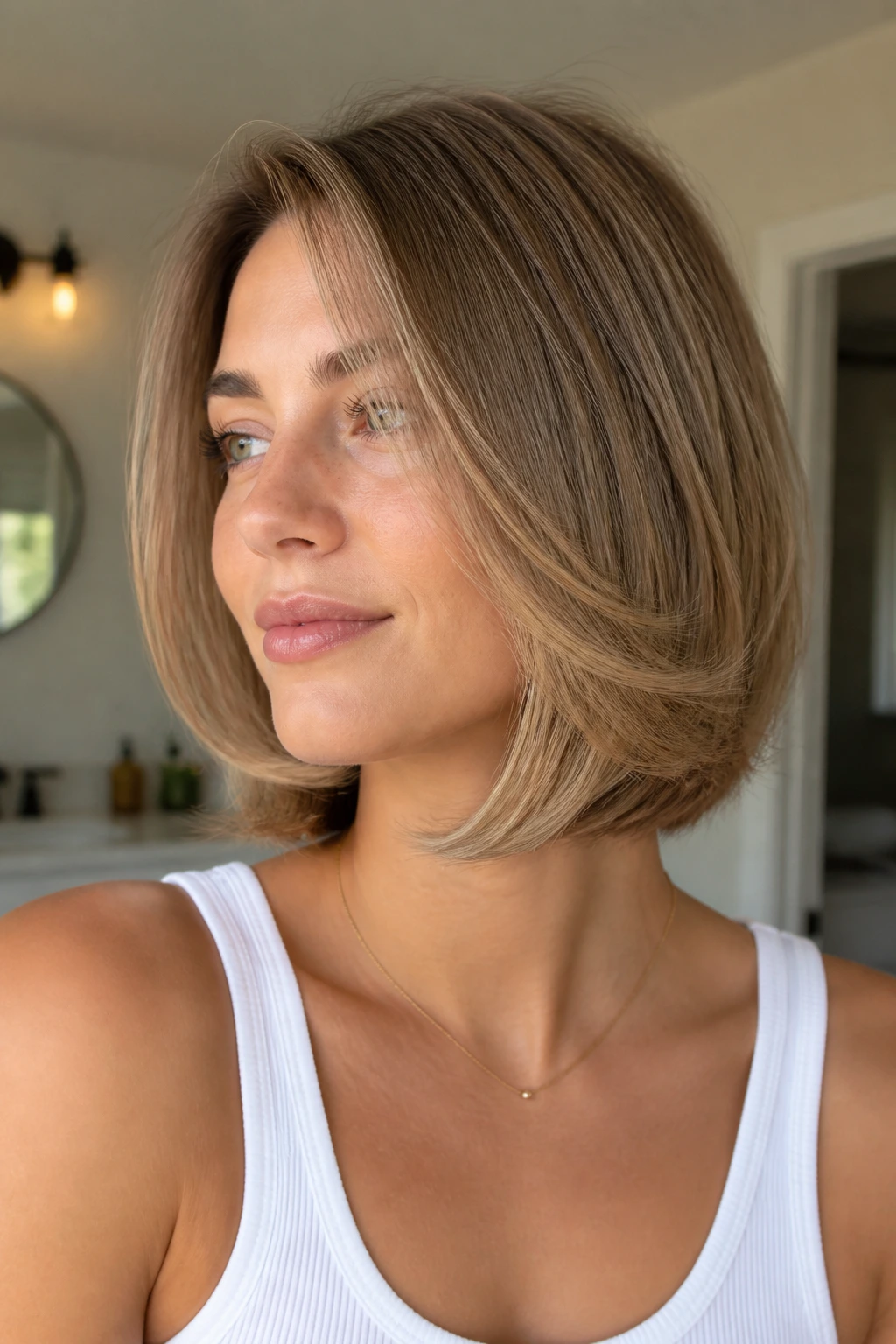
A round-brush blowout can stretch short hair into something that looks a full inch longer because it shapes the ends downward instead of snapping them up. It’s the opposite of a tight curl, and that difference matters.
Use a blow dryer with a nozzle, a medium round brush, and a light leave-in cream. Pull each section over the brush and aim the airflow down the shaft. Then bend the ends slightly under or slightly out — either one works, as long as the finish is soft and directional.
This style is better than a lot of people give it credit for. It’s not flashy, but it makes a bob look deliberate, clean, and longer through the shoulder line. On short cuts, that can be the whole game.
A touch of dry shampoo at the roots on day two keeps the lift from collapsing. You want bounce, not puff.
17. Twisted Half-Up Crown
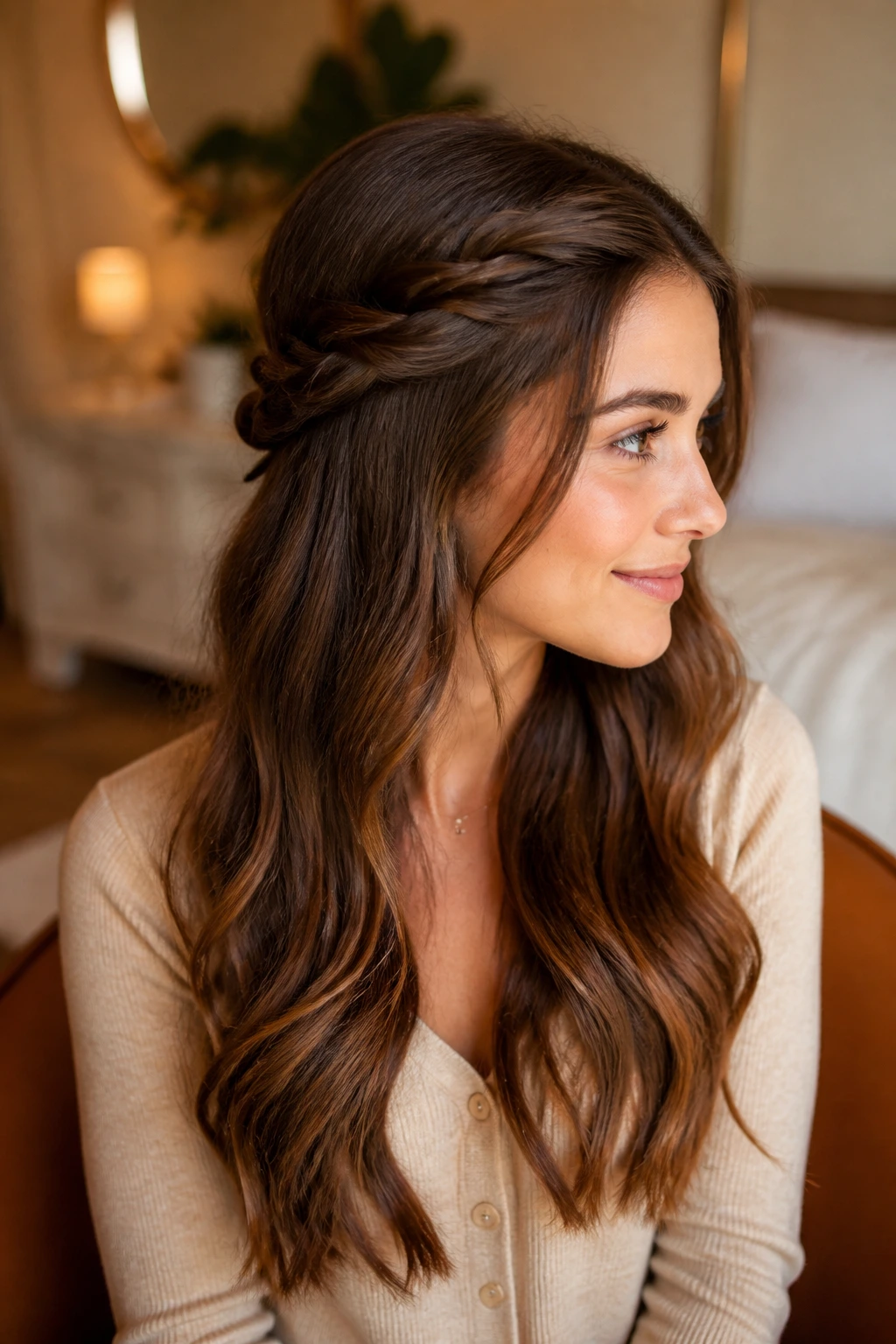
A twisted half-up crown works because it turns the top of the head into a frame and lets the bottom section fall like one long panel. That split is what makes the illusion hold.
Take two front sections, twist them back, and pin them together just above the occipital bone. Leave the rest of the hair loose, then soften the ends with a bend or wave. If the hair is short at the sides, use a tiny braid or a tucked ribbon to hide the pins.
The style is especially kind to layered cuts. Short pieces near the face join the twist, longer pieces hang free, and the eye gets a nice vertical drop down the back.
It’s a good pick when you want softness without a full updo. Casual, but with structure.
18. Scarf-Wrapped Side Tail
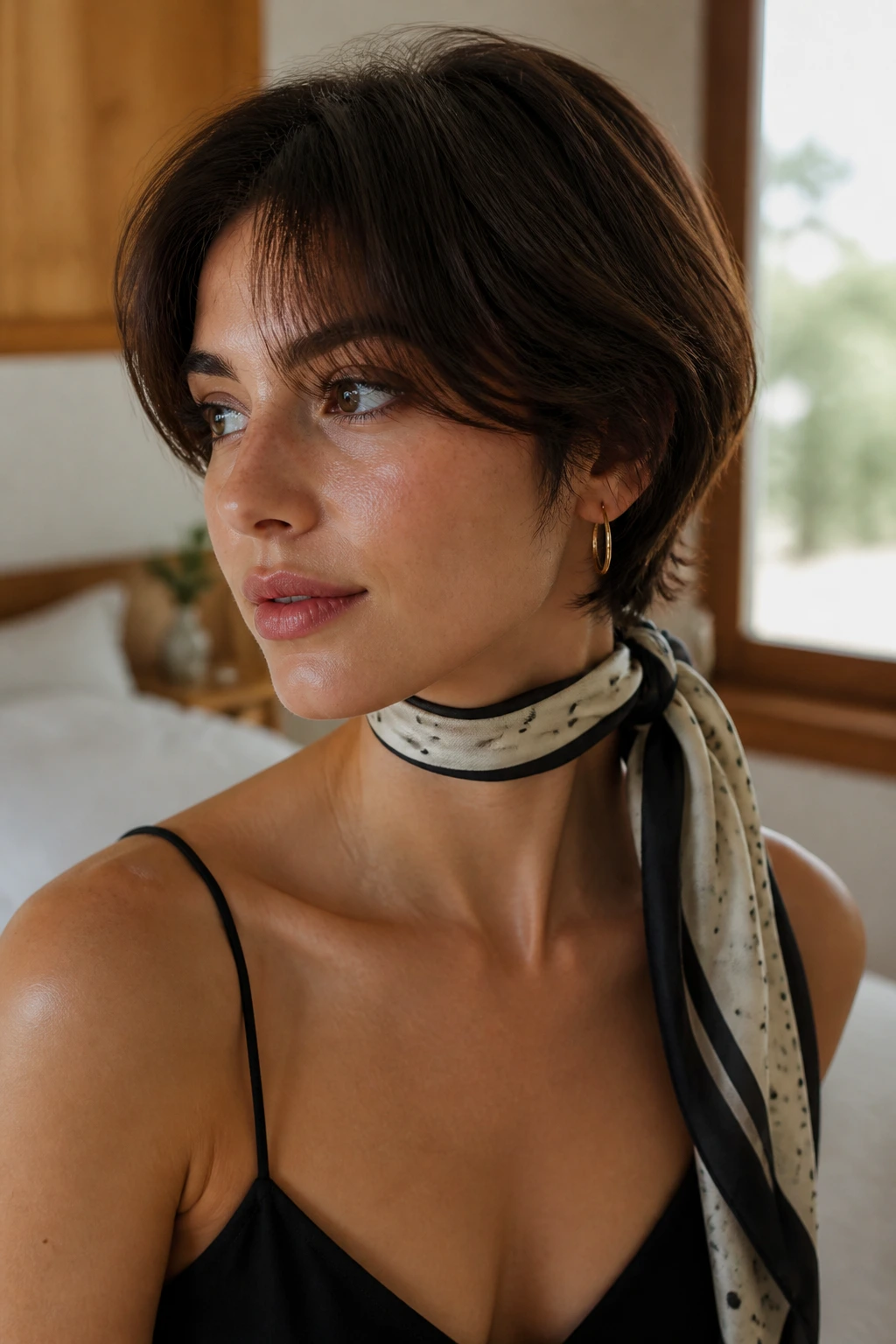
A scarf can do the work of a ponytail when your own hair falls short. Fold a silk scarf into a long strip, tie it around a tiny elastic at the nape, and let the fabric hang like the tail your hair never quite grew into.
This is not a gimmick. The scarf extends the silhouette in a way that reads as intentional, especially if your real ends are tucked under the knot. It works beautifully on pixies that can gather into a stubby low pony or on bobs that need a little theatrical help.
How to Wear It
Keep the scarf narrow enough to feel sleek. A thick square knot turns playful fast; a long wrap feels cleaner and longer. If you want extra grip, mist the base with texture spray before tying.
Choose a scarf that matches your outfit or hair color. The point is not to hide the accessory. The point is to let it carry the line.
19. Layer-Stretch Straight Finish
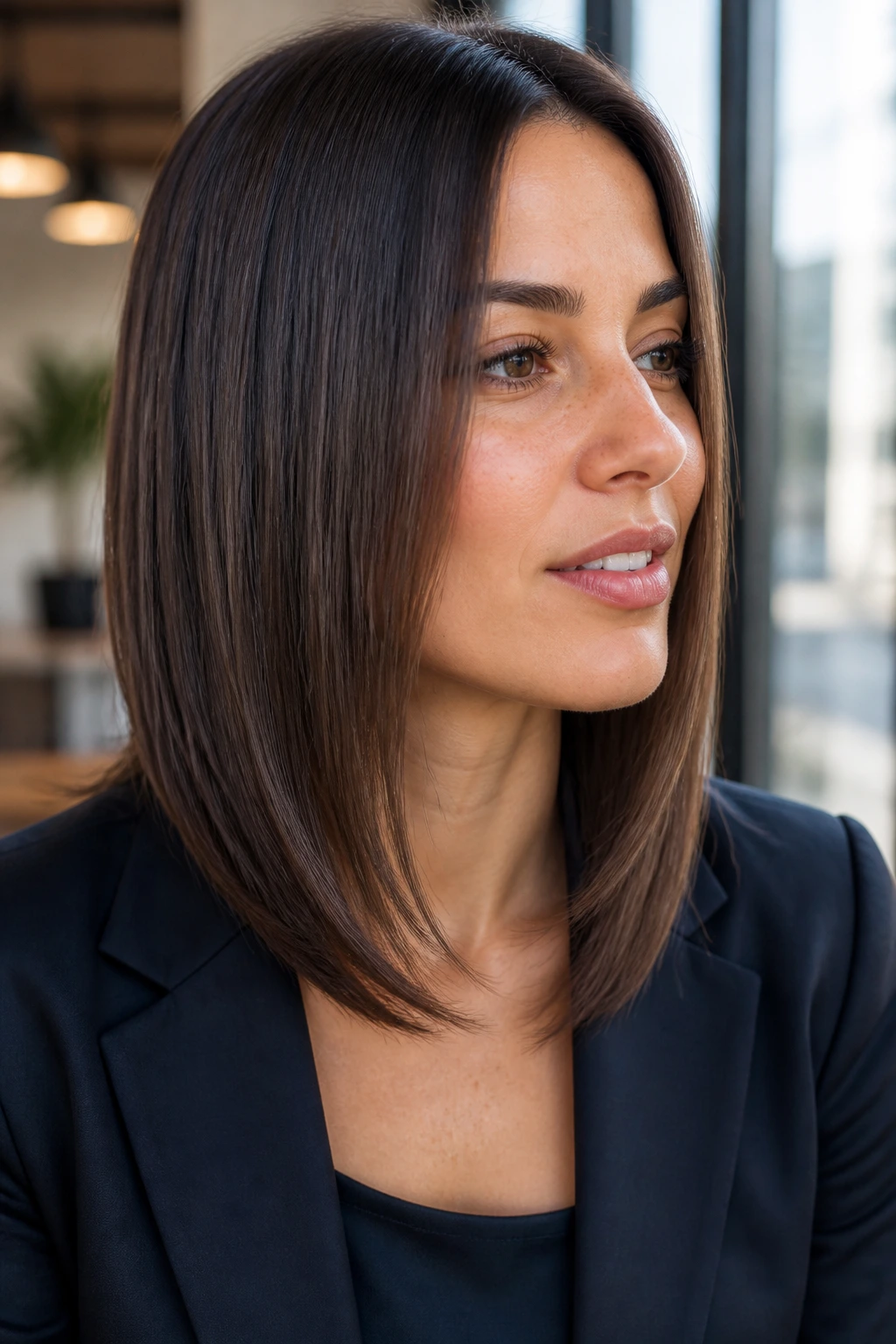
A straight finish can make curly or wavy short hair look longer by removing the bounce that usually lifts the ends back toward the jaw. It’s a simple trick, but it works because it changes the silhouette more than the texture.
Blow-dry with tension first, then pass a flat iron at a modest heat setting through 1-inch sections. For most hair, a range around 300°F to 340°F is enough; coarse hair may need a little more, fine hair often needs less. Always use heat protectant, and never go over the same section ten times trying to squeeze out one more millimeter.
The ends should swing, not stick. If they look poky, the hair will read shorter. If they look smooth and relaxed, the whole shape feels longer.
This is the style to pick when you need your haircut to behave under a blazer or a crisp shirt collar. Clean lines matter here.
20. Extension-Blend Mermaid Finish
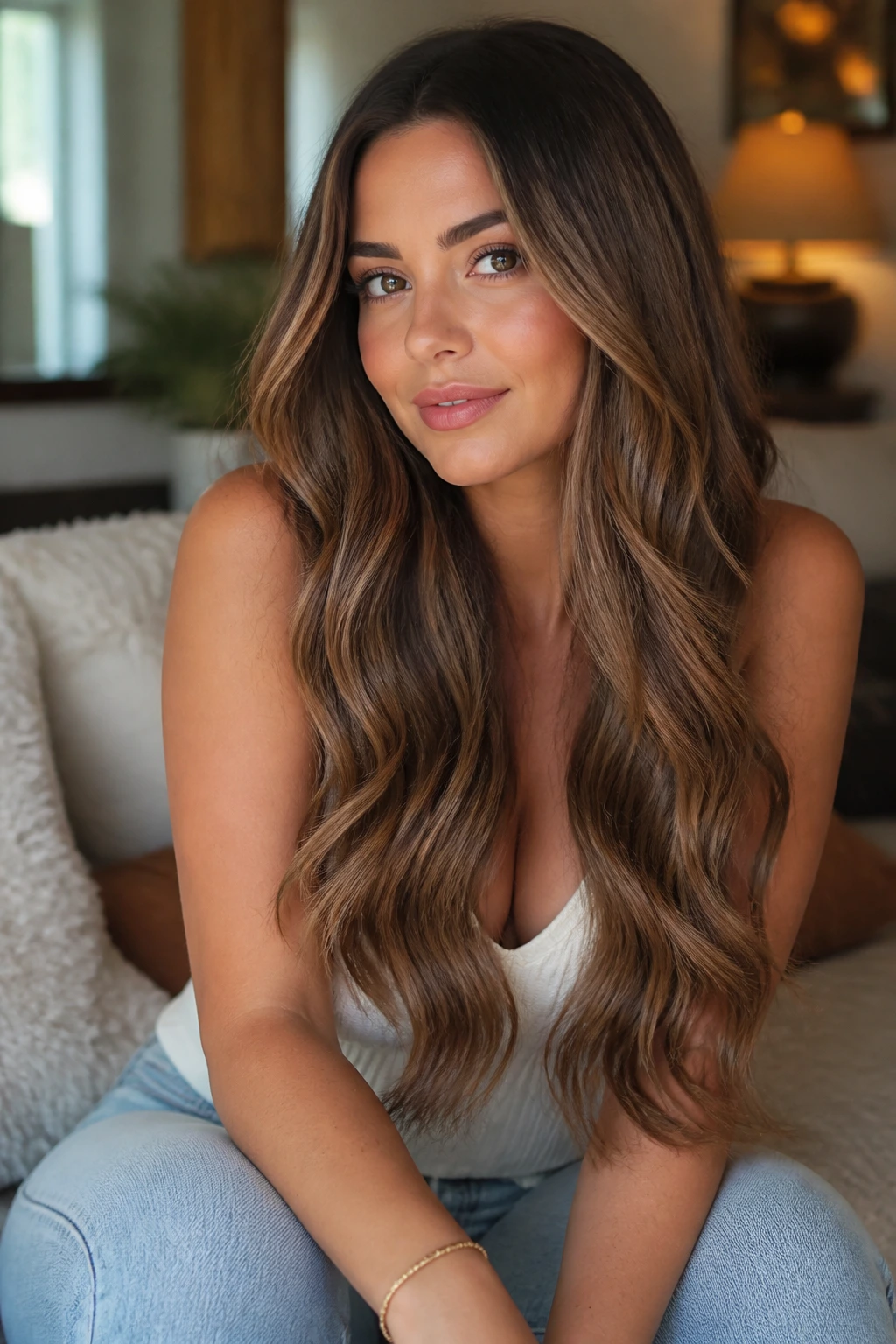
If you only try one long-hair illusion, make it this one. Loose, brushed-out waves with hidden clip-ins create the most convincing long silhouette short hair can wear, mostly because the blend happens in layers instead of one obvious jump.
Place the extensions low enough to disappear under your top layer, curl your real hair and the extensions together in the same direction, then brush the waves into one soft sheet. The important part is not the curl itself. It’s the merge.
A mermaid finish works best when the roots stay a little lifted and the mids and ends carry the movement. Too much root volume makes the style look fluffy; too little makes it flat and wiggy. The sweet spot is a little body at the crown and a long, continuous wave through the back.
This is the style that gets second looks. Not because it screams, but because it looks like your hair simply decided to grow up overnight.
Why Long Hair Transformations for Short Hair Fool the Eye
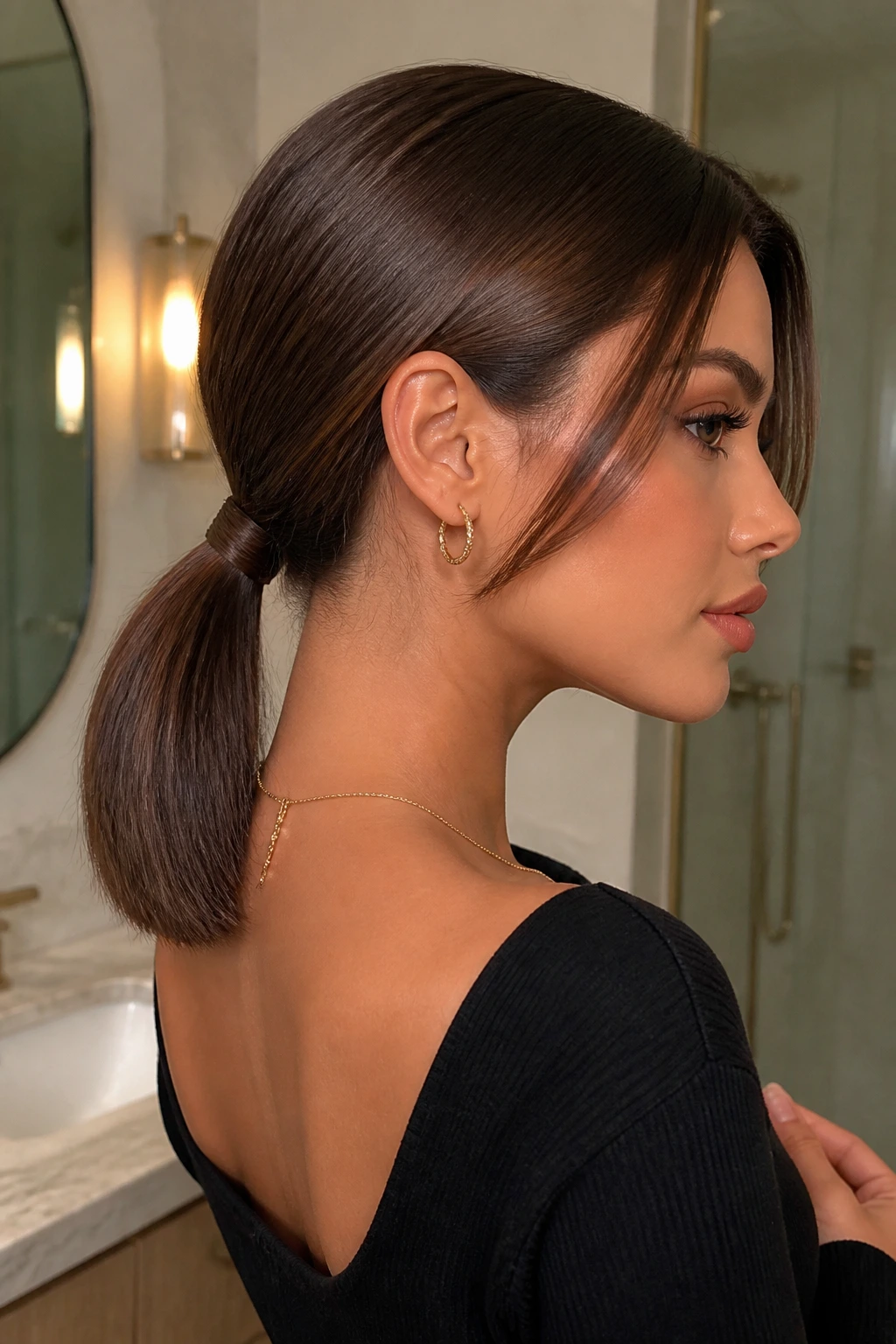
The best faux-length styles do not depend on a miracle. They depend on a few very ordinary things done with care: a low anchor point, a smooth crown, and a direction that keeps the eye traveling downward instead of outward.
Short hair gets shorter-looking when the volume sits too high or the ends kick away from the neck. That is why the most convincing transformations are usually quiet. A bob with a tucked base, a pixie with a long sweep, or a braid that hangs close to the spine all borrow length from the body around them. Neckline, earrings, collar, and posture all play a part. Hair is not alone in the frame.
The other thing people miss is texture control. A loose wave can stretch a cut. A tight curl can shrink it. A polished bend can make the same hair look deliberate and longer than a puffed-out finish ever could. Once you start seeing hair this way, length becomes only one of the variables.
Essential Tools for Fake-Length Styling
-
Tail comb: Clean parting and neat sectioning matter more on short hair, where every inch shows.
-
Bobby pins in two sizes: Small pins hide better in pixies; longer ones hold twists and braids with less fuss.
-
Clear elastics: These keep bubble ponies, low tails, and braids tidy without adding bulk.
-
1-inch curling iron or wand: Short hair usually bends better with a smaller barrel, which gives shape without swallowing the ends.
-
Flat iron with smooth plates: Useful for sleek tucks, center parts, and stretching out wavy lengths.
-
Blow dryer with a nozzle: A directed airflow helps the crown lay flat instead of exploding outward.
-
Texturizing spray: Gives grip to slippery layers and keeps braids, twists, and pins from sliding.
-
Dry shampoo: Helps fine hair hold style and keeps roots from looking shiny in the wrong way.
-
Strong-hold hairspray: A light mist locks in the shape; a heavy blast makes short hair helmet-like.
-
Clip-in extensions or halo: Optional for some looks, essential for the ones that need a real length jump.
-
Sectioning clips: Keep the top layers out of the way while you place extensions or build structure.
-
Silk scarf or satin bonnet: Handy for overnight preservation and for styles that need a soft wrap.
Smart Product and Accessory Picks for Short Hair That Needs More Length
Short hair punishes bad product choices faster than long hair does. A thick cream that works on waist-length waves can turn a bob into a greasy triangle, and a weak hairspray can leave a pixie collapsing by lunch. Start light, then build only if you need more hold.
For texture products, choose by finish rather than by marketing language. A matte texturizing spray gives grip for braids and bubble ponies. A shine mist or serum is better for wet looks, sleek buns, and French twists. If your hair is fine, a dry shampoo with a bit of powder in it will often hold a style better than a rich mousse that weighs the roots down.
Extensions deserve the same caution. Match the color at the mid-lengths and ends, not the roots, because roots vary and ends are what people see in motion. For a bob, a 100- to 120-gram set is often enough for fullness; blunt or thicker cuts may need more so the added length doesn’t look thin at the bottom. If you want a long, loose wave rather than a chunky ponytail, human hair pieces usually blend more cleanly because they take heat the same way your own hair does.
Accessories matter more than they get credit for. A small matte clip blends into short hair better than a shiny, oversized barrette. Clear elastics are useful, but in strong daylight, thin black elastics often disappear faster in dark hair. And if your hair is layered to the point of rebellion, a couple of crossed bobby pins in the same color as your hair can hold a twist in place better than one big clip.
How to Wear These Looks Without Fighting Your Cut
Presentation: Keep the part sharp or the base smooth, because short hair looks longer when the outline is tidy. Even a messy style should have one clean anchor point — a low pony, a pinned crown, or a tucked side.
Best Pairings: Open collars, crew necks, and simple earrings let the hair carry the shape. High necks can work too, but they need a sleeker finish or the whole look starts to feel crowded around the jaw.
Wear Time: Sleek styles usually survive a full day with a strong spray and a little palm-smoothing at the temples. Loose waves and brushed-out bends need a mid-day finger comb, while braids and twists can last longer if the pins sit close to the scalp.
Best For: These looks make sense for dinners, interviews, formal events, and any day you want your haircut to look intentional instead of in-between. The strongest versions usually appear the least forced.
Extra Polish and Personal Touches
Texture Boost: A mist of texturizing spray at the roots before styling gives short hair something to grab, which matters a lot when you are trying to build a low pony or a braided shape. On very fine hair, dry shampoo often does the same job with less residue.
Accessory Move: One small barrette at the temple or one ribbon at the base of a pony can change the whole mood. Keep the accessory narrow if you want the illusion of length to stay intact; big pieces can make a short cut look even shorter.
Color Lift: A gloss spray on the ends or a subtle root shadow from your existing color can make the blend look smoother. This is especially useful when clip-ins sit near blunt ends and you need the transition to disappear.
Make-It-Yours: For a softer look, leave a thin face-framing piece out on each side. For a sharper look, pull everything tighter and keep the finish close to the head. Curly hair can lean into volume at the ends; straight hair usually looks longer when the crown stays calm.
Day-Two Revival and Maintenance
These styles are at their best on the day you make them, but a few of them hold into the next morning if you treat them like a set, not a pile of hair. Sleep on a silk pillowcase or wrap the hair in a satin scarf if you want the crown to stay smooth. Loose braids, tucked buns, and bubble ponies usually survive better than brushed-out curls, which tend to lose shape overnight and need a quick re-bend.
For sleek looks, a little dry shampoo at the roots and a 5-second pass with a flat iron over the front pieces usually brings the shape back. For wave-heavy styles, mist the hair lightly with water or a flexible curl spray, then re-curl only the pieces that have gone flat. Do not reheat every section out of habit. That is how short ends get dry and fuzzy fast.
Clip-ins and halos need their own care. Brush them before you store them, keep them in a satin bag or on a hanger, and wash them after about 6 to 10 wears if product starts building up. If they feel sticky or heavy before then, clean them sooner. The cleaner the piece, the better it blends, and short hair gives you less room to hide a dirty seam.
Variations for Different Hair Types
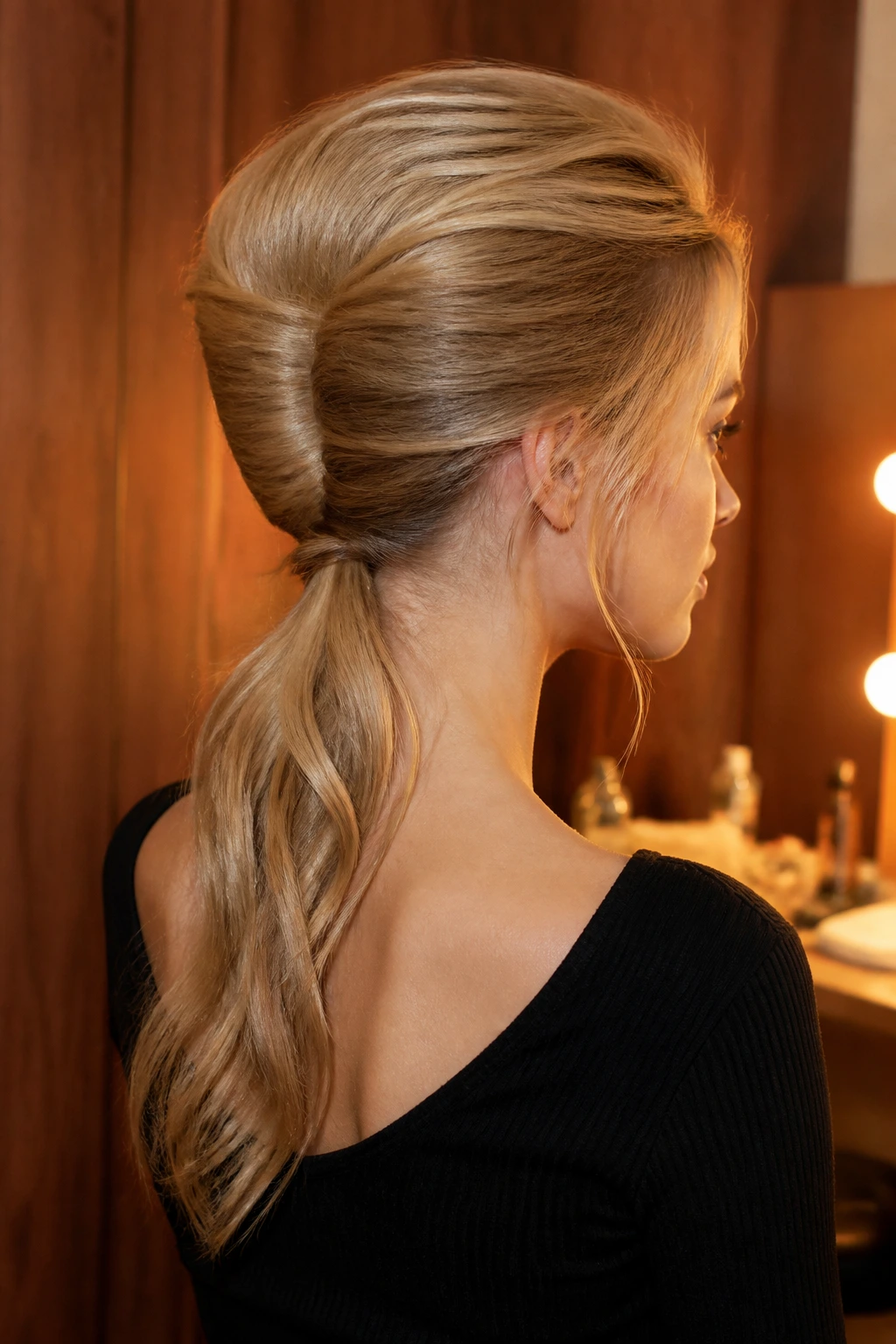
Fine-Hair Lift-Off: Use smaller sections, lighter sprays, and one well-placed halo or clip-in rather than a heavy set of wefts. Fine hair often looks longer when the crown stays flat and the ends are softly bent.
Thick-Hair Taming: Favor low buns, twists, and sleek ponies, because thick short hair can turn bulky fast. A little smoothing cream on damp hair helps the cut sit closer to the head before styling starts.
Curly-Hair Stretch and Shape: Stretch the curl pattern with a diffuser or a tension blow-dry first, then build a style like a side sweep or low knot. If you skip the stretch step, the curl will bounce up and shrink the length effect.
Grown-Out Pixie Rescue: Work with front pieces, not against the back. Quiffs, side sweeps, tiny braids, and tucked crowns make the grow-out look intentional while the nape catches up.
Event Hair Upgrade: Add one accessory only — a pearl pin, a thin ribbon, or a narrow cuff. Too many extras pull the eye sideways, and that chips away at the long-line illusion.
Common Mistakes That Make Short Hair Look Shorter
-
Placing extensions too high: If the weft sits too close to the crown, it shows the seam and makes the top look bulky. Drop it lower and hide it under a loose, smooth top layer.
-
Overbuilding the crown: Big teasing or too much root product can make the head look round and the lengths look shorter. Use just enough lift to keep the style from flattening.
-
Curls that are too tight: Short hair springs upward fast, and tight curls exaggerate that. Use a smaller iron for control, then brush the curl out until the ends soften.
-
Texture mismatch: Shiny, straight extensions beside frizzy natural hair look pasted on. Match the texture first, then the color, and finish both with the same product.
-
Too much product: When short hair gets overloaded, it goes limp or sticky and separates at the wrong places. Start with half the amount you think you need, then add more only where the style needs grip.
-
Ignoring the neck line: If everything floats away from the nape, the haircut looks shorter, not longer. Keep one anchor low and close to the neck.
Frequently Asked Questions
Can a pixie really be styled to look long?
Yes, but only in the visual sense. A pixie can gain length through a side sweep, a low twist, a long front section, or a small extension piece, yet the key is keeping the silhouette vertical instead of puffed out.
What is the shortest hair that can hold clip-ins?
If the top layer can cover the weft and the nape has enough hair to anchor the clips, you can usually work with it. Very short pixies may need a halo, a crown piece, or styles that use almost no hidden hardware.
How do I hide extension tracks in a bob?
Place them lower than you think and leave enough top hair to fall over the seam. A soft bend through the top layer, not a hard curl, helps the real hair and the added hair blend into one sheet.
Do these styles work on curly hair?
They do, but curly hair often needs a stretch step first if the goal is a longer look. If you want to keep the curl pattern, choose low anchors, twists, and side-swept shapes rather than styles that depend on perfectly straight lines.
What if my hair is too short for a ponytail?
Go lower and smaller. A tucked knot, a scarf tail, a tiny gathered pony with an extension wrap, or a braided crown usually gives you more room than trying to force a high tail.
How long do these styles last?
Sleek pony-based looks can last a full day with the right spray and pinning. Loose waves and blowout styles tend to last less well unless you sleep carefully and refresh the front pieces the next morning.
Are halo extensions better than clip-ins for short hair?
Halo pieces are easier to hide on fine hair because the weight sits under the top layer without a row of clips. Clip-ins give more control over placement, which is handy when your cut is very layered or uneven.
What should I do if the style falls apart halfway through the day?
Fix the anchor first, not the surface. Re-pin the base, smooth the crown with a little dry shampoo or serum, then rebuild the visible top layer once the structure is secure again.
The Long Line
Short hair looks longest when it stops trying to prove anything. A calm crown, a low anchor, and one clear direction will do more than a pile of spray and a lot of hope ever will.
That is why these transformations hold up. They don’t ask your haircut to be something else; they frame it so well that the eye reads longer, sleeker, and more finished.
Pick one style that suits your cut, then repeat it until the pinning and sectioning feel automatic. The long line is usually there already — you just have to draw it a little better.