



Short hair and thick hair can turn on you fast. One wrong perimeter and the whole shape starts flaring at the sides, stacking up at the crown, or sitting so heavy at the nape that it feels more like a helmet than a haircut. The good versions do the opposite. They remove bulk where the eye doesn’t need it, keep weight where the shape does need it, and make the hair look deliberate instead of merely shorter.
Thick hair is not one thing, either. Dense hair has a lot of strands packed into a small area. Coarse hair has a wider strand diameter. Plenty of people have both, which is why the same cut can look airy on one person and boxy on another. That difference matters a lot more once the length comes off. With short hair, every millimeter counts.
The fun part is that thick hair can carry a lot of shape. A choppy pixie can look sharp instead of fuzzy. A blunt bob can look expensive instead of bulky. A cropped shag can move without collapsing. Once you stop treating bulk like the enemy, the options open up fast.
Why These Transformations Work on Thick Hair
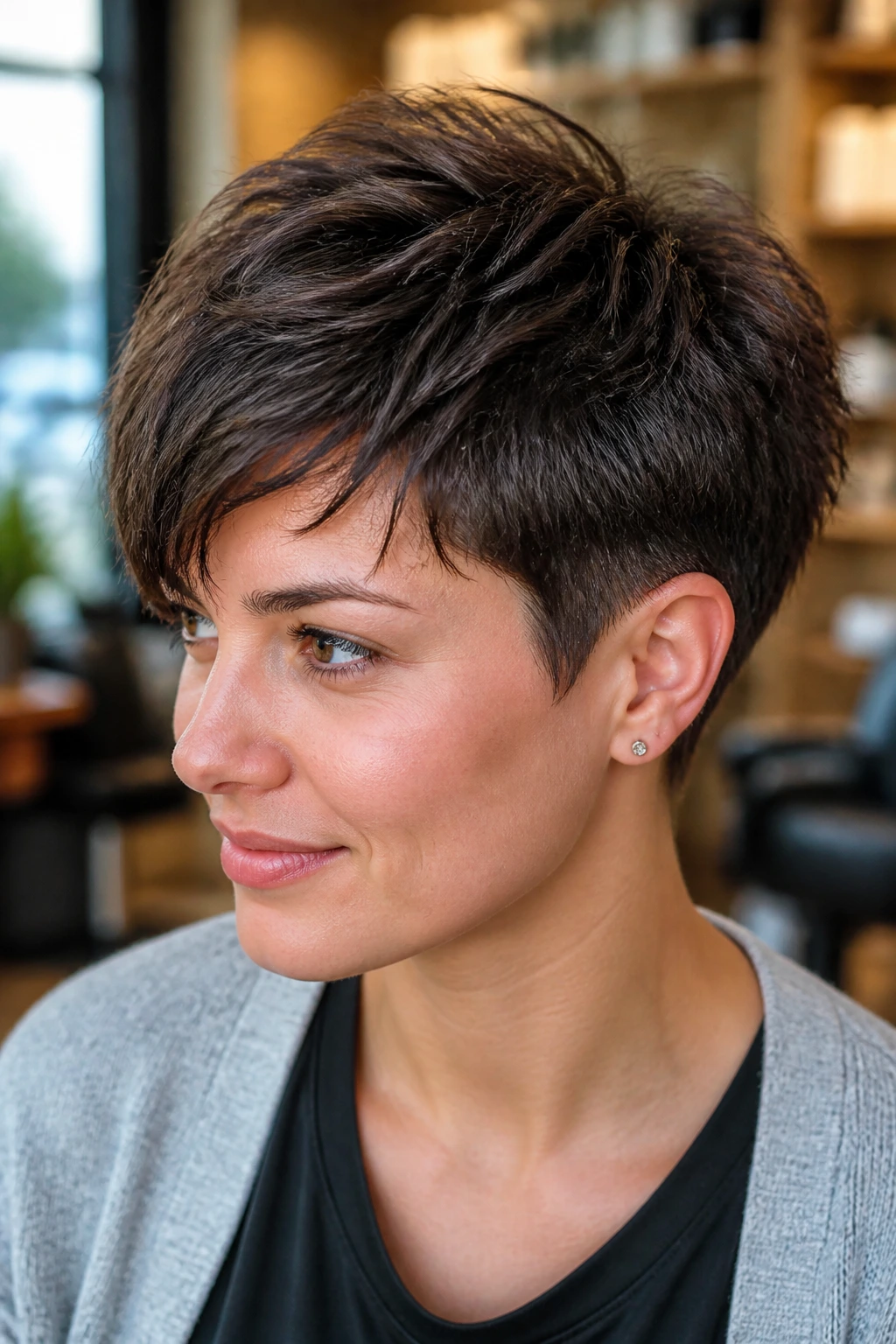
-
Bulk gets removed where it matters most: These shapes use interior weight removal, tapering, or smart graduation so the silhouette stays controlled instead of puffing out at the sides.
-
The hair’s own density does some of the work: Thick hair holds lines, bends, and texture better than finer hair, which means a short cut can keep its shape with less product and fewer hot tools.
-
The grow-out is built in: A good short cut on thick hair should still look intentional four to six weeks later, not like it lost a fight with gravity.
-
There’s room for different styling habits: Some of these looks want a quick blow-dry, some want paste and fingers, and some are happiest air-dried with a little mousse. No single routine fits all of them.
-
The shape can flatter the face instead of fighting it: Fringe, side part, crown volume, and nape taper all move the eye in different directions, which is why the right short cut can sharpen the jaw or soften a stronger forehead in one move.
1. The Choppy Pixie That Eats Bulk at the Crown
Dense hair can make a pixie look boxy if the top is left too solid. This version fixes that by point cutting through the crown, keeping the nape snug, and leaving just enough length on top for a piecey finish. It feels light when you run your fingers through it, which is exactly the point.
Why It Works on Thick Hair
The crown is where short thick hair likes to balloon. Taking internal weight out there changes the whole silhouette without making the cut look wispy. Keep the sides close and the top broken up, and you get lift without the mushroom shape.
- Ask for: a short tapered nape, soft texture through the crown, and no blunt shelf at the top.
- Style with: a pea-size amount of matte paste or clay on nearly dry hair.
- Skip: heavy cream at the roots. It flattens the lift and makes the top look sticky.
One sharp detail: if your hair swells the second it dries, tell the stylist you want the crown to move, not sit as one block.
2. The Bixie With a Soft Fringe
A bixie is what happens when a bob and a pixie stop arguing. The slightly longer perimeter gives thick hair enough weight to fall cleanly, while the shorter top keeps the whole thing from reading as a triangle. Add a soft fringe around the brow or cheekbone area, and the cut starts to feel less severe.
I like this one for people who want short hair but still need some face-framing length. It handles dense hair well because it leaves enough body in the outline to keep the ends from exploding outward. The fringe does useful work here, too. It breaks up the forehead, adds softness, and gives the cut a little motion even on a lazy styling day.
A round brush pass through the front pieces is usually enough. If your hair bends easily, a little mousse at the roots and a finger-dry can do the job without making the shape fussy.
3. The Blunt Bob With a Hidden Undercut
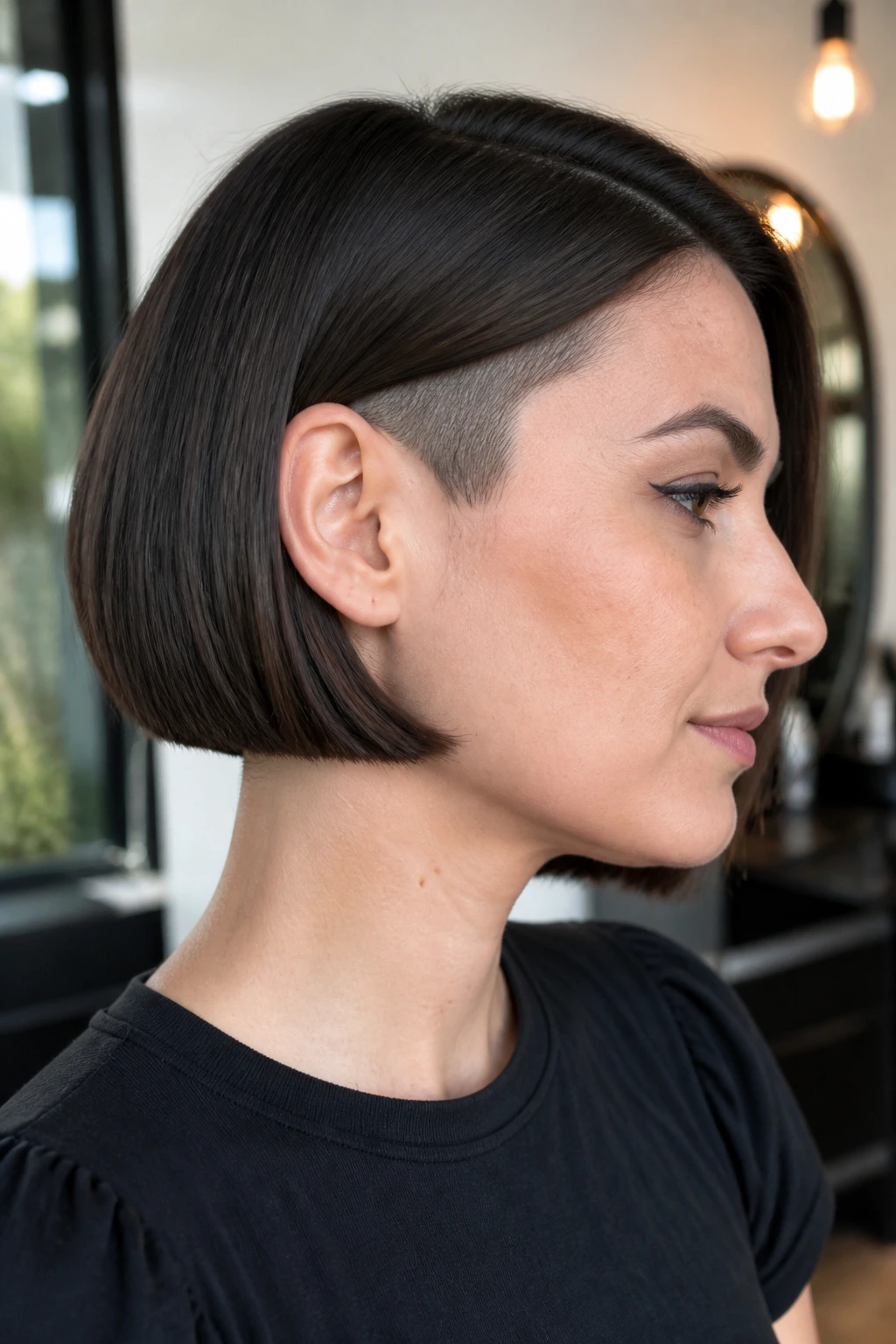
A blunt bob can be the cleanest short cut on thick hair when it’s built right. The outer line stays crisp at the jaw or just below it, while an undercut or internal removal underneath takes out the hidden bulk that would otherwise make the sides flare. That’s the trick. The edge looks full, but it isn’t overloaded.
What to Ask For at the Chair
Ask for a sharp perimeter, a slight undercut or internal debulking at the lower back and sides, and minimal exterior layering. If the hair is too aggressively thinned at the edge, the line starts to look frayed. Keep the outline solid and remove weight from underneath.
This cut is good when you want polish. Not fuss, polish. It takes a flat iron bend well, it looks neat when tucked behind the ears, and it grows out more gracefully than a heavily layered bob. On thick straight hair, it can look almost architectural. On wavy hair, it softens into something a little less formal.
4. The French Bob With Brow-Grazing Bangs
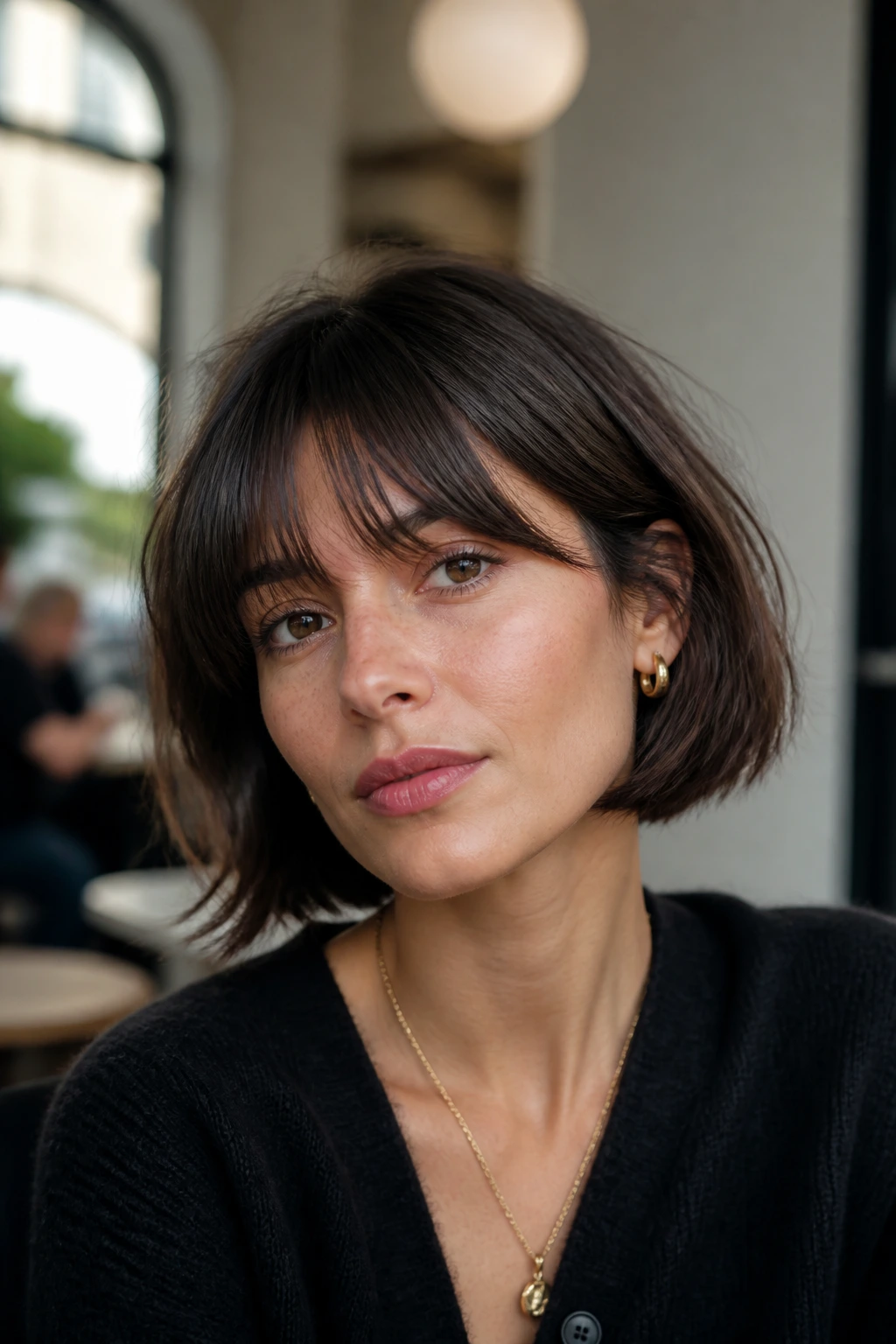
The French bob makes thick hair look intentional in a way that few cuts do. It usually lands at the jaw, with a fuller fringe that brushes the brows or sits just above them. That combination gives the face a strong frame while keeping the shape short enough to feel fresh.
What makes it work is the balance between weight and air. The fringe carries enough density to look lush, but the ends are usually softened a little so they don’t sit as one hard block. I would not ask for razor-heavy ends here if your hair frizzes easily. Point cutting gives a better finish.
This cut loves a slight bend at the ends and a bit of root lift at the front. A small round brush, a quick blast of heat, and a cool shot at the end are usually enough. If you like bangs but hate them when they separate, this is one of the safer bets.
5. The Tapered Pixie With a Long Crown Sweep
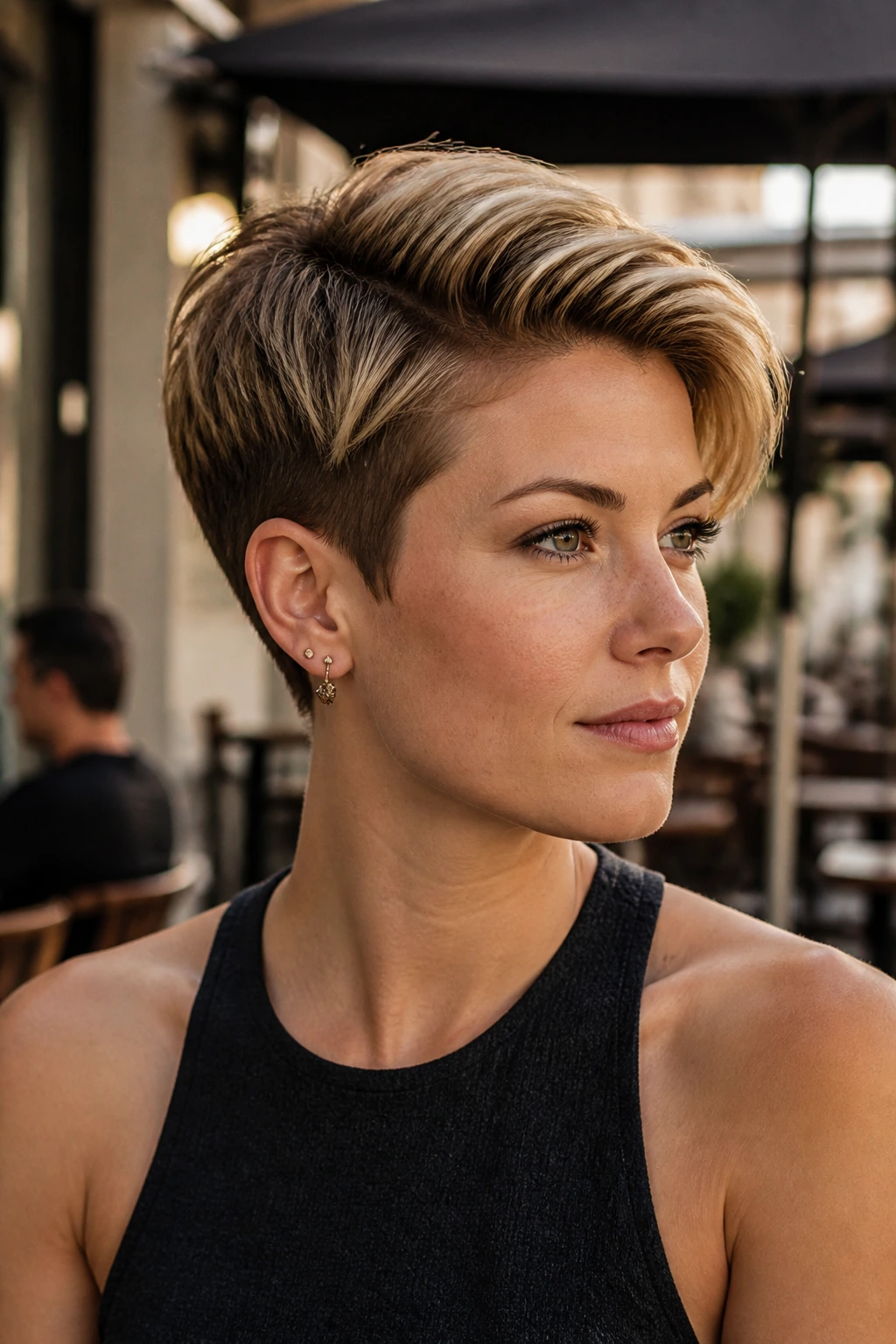
This is the pixie for people who want shape, not spikiness. The sides and nape stay neat and close, while the crown and front are kept long enough to sweep to one side or push back with a little lift. Thick hair gives this cut body; the taper keeps that body from turning into a block.
The best version has a clear direction. Everything should seem like it wants to go somewhere. That might be forward over the forehead, diagonally across the top, or slightly back with a soft lift at the roots. If the cut is too even all around, the thick hair will do what it always does and create its own shape.
I’d reach for this when someone wants a short cut that still feels feminine, sharp, and easy to finger-style. A small amount of styling cream through the top and a touch of paste at the ends is enough. The crown should look lifted, not puffy.
6. The Curly Crop With a Rounded Silhouette
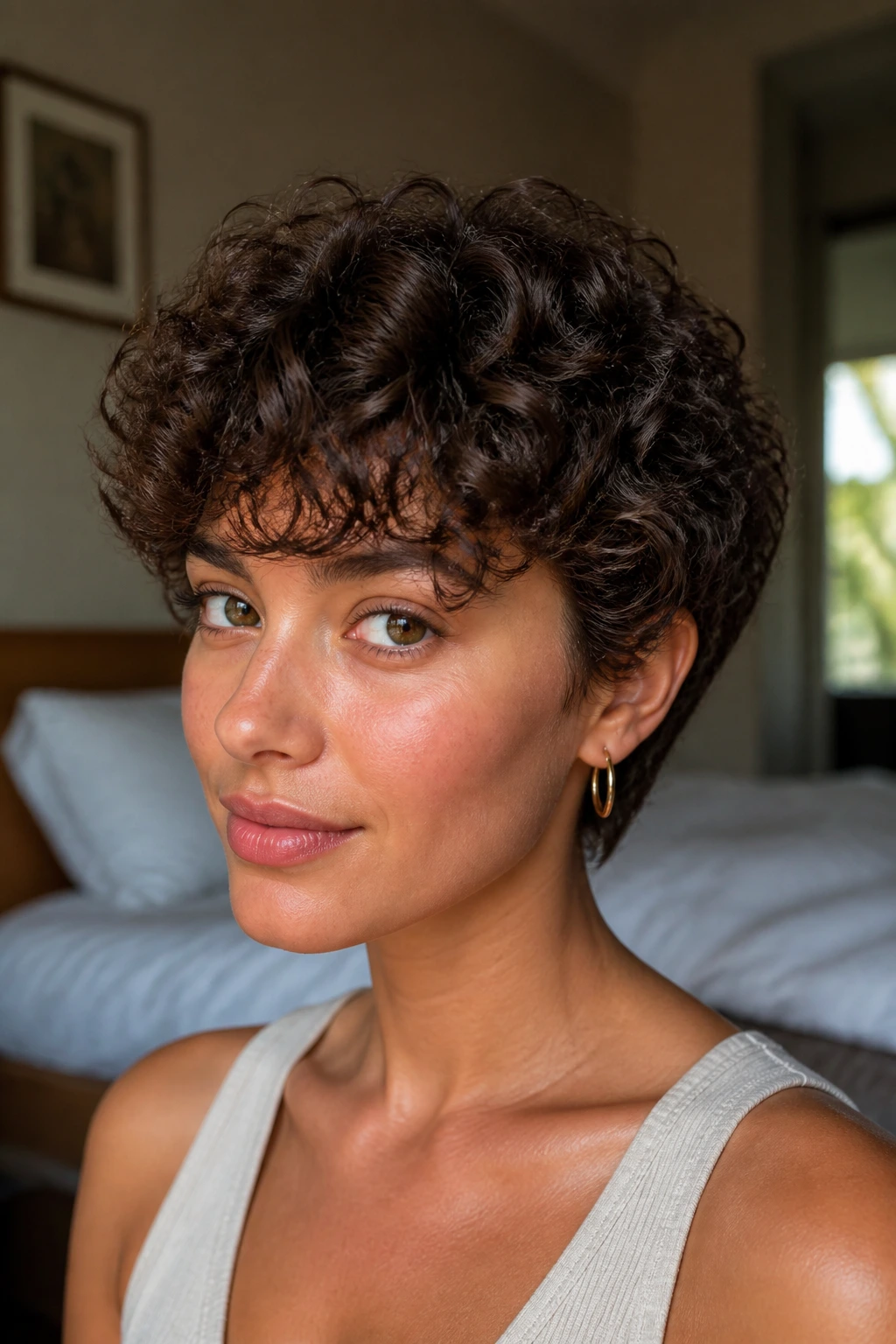
Can thick curls stay short without ballooning into a triangle? Yes, if the cut respects the curl pattern instead of chopping through it like a hedge. A rounded crop follows the head shape, keeps the sides from jutting out, and lets the curls build height where they belong.
How to Style It
Dry it with a diffuser on low heat, or let it air-dry after scrunching in a light mousse or curl cream. The goal is not to flatten the curl. The goal is to guide it into a rounded outline that sits close to the head.
A dry cut is often the smarter move here because thick curls shrink and expand depending on how they’re handled. If you cut them wet without planning for shrinkage, the shape can end up shorter and wider than expected. Keep the layers long enough to let the curl coil without springing away from the scalp.
This one is best when you want your texture to show up without a lot of daily fixing.
7. The Asymmetrical Side-Part Bob
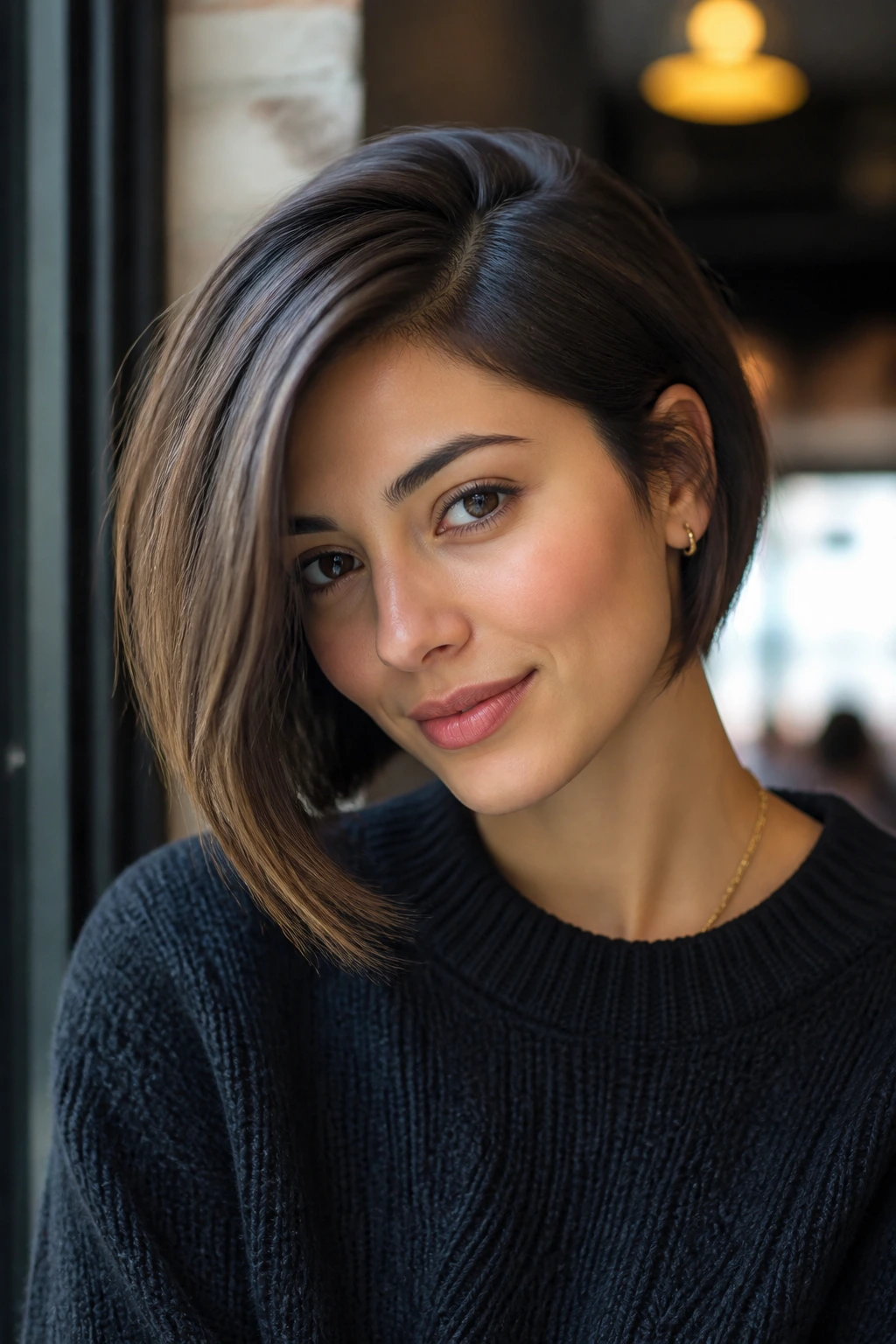
A deep side part changes everything on thick hair. The asymmetrical bob uses that trick to move weight away from the center and give the hair a deliberate slant, usually with one side a touch longer than the other. It feels modern without needing a dramatic chop.
The asymmetry matters more than people think. On thick hair, it interrupts the natural tendency to sit evenly and squarely around the face. That small shift can make the whole cut look lighter. It also helps if one side of your head has a stronger cowlick or a heavier growth pattern than the other.
I like this cut for anyone who wants a bob but doesn’t want a neat little box. The side part gives lift at the crown, and the longer side keeps the look from feeling too severe. A flat iron bend at the ends or a round brush under the front pieces is enough to make it behave.
8. The Shaggy Crop With Curtain Bangs
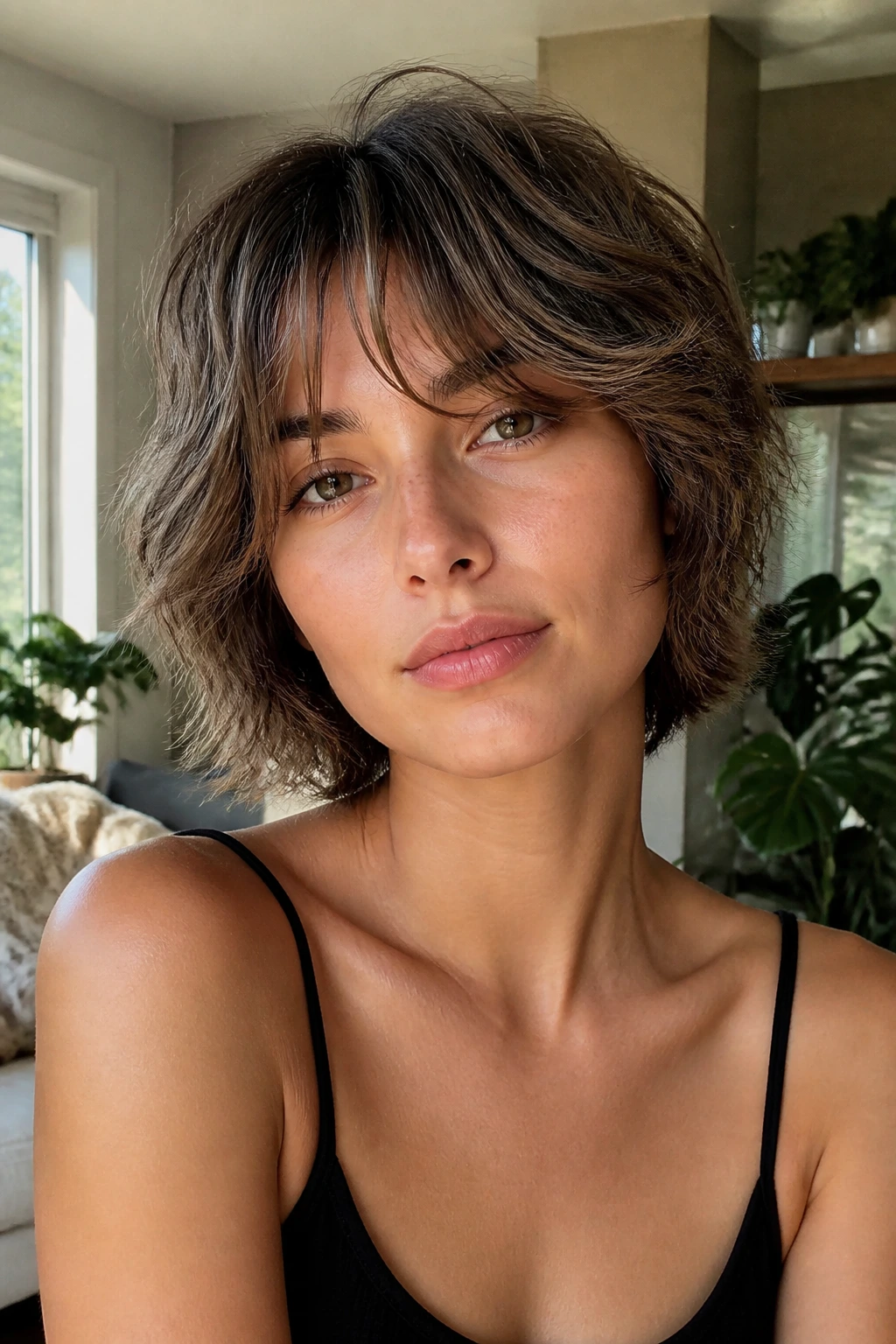
The shaggy crop works because thick hair already has body. Instead of fighting that, the cut spreads the weight out with feathered layers and curtain bangs that open around the face. It’s a little softer than a classic shag and a lot less fussy than people assume.
The secret is in the layering. The top gets movement, the sides don’t bulk up, and the fringe breaks the front into two easy pieces that don’t need perfect symmetry. That matters when you want short hair that still feels a bit lived-in rather than overworked.
This is one of the better choices if your hair has some wave in it and you’re not interested in daily smoothing. A salt-free texture spray or a light mousse can help define the shape. Don’t drown it in heavy cream. The layers will collapse and the whole point gets lost.
9. The Undercut Pixie With a Swept-Back Top
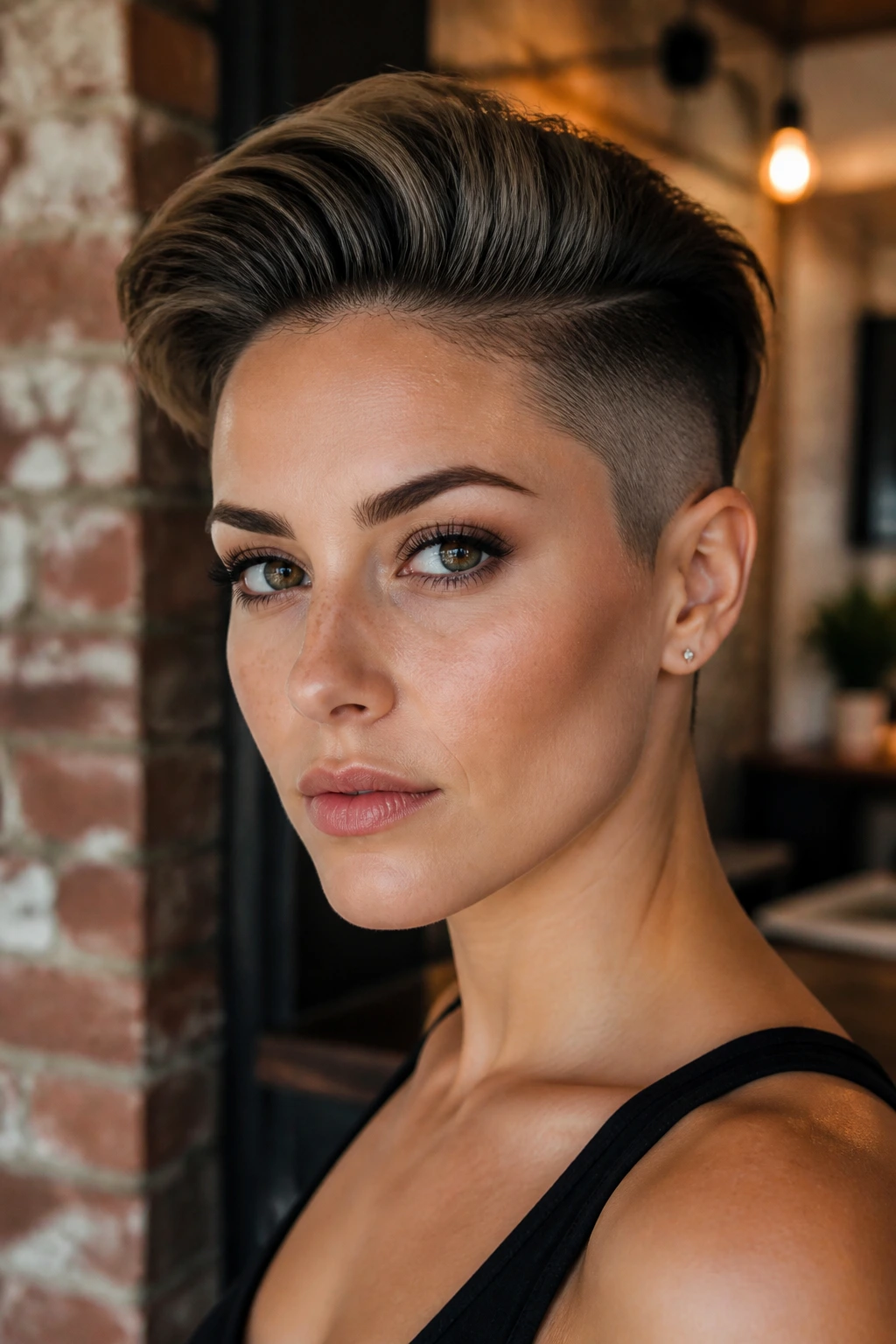
A strong undercut can be a mercy on thick hair. This pixie takes the sides and nape down close, then leaves enough length on top to sweep back, over, or slightly to the side. The contrast is the appeal. You get a sharp outline without having to remove so much weight from the visible top layer.
What Makes It Different
It’s not a soft pixie. It has edge. But the edge comes from the shape, not from over-texturizing the hair into fuzz. If your hair is especially dense at the back of the head or around the ears, this cut can make the whole shape feel cooler and lighter.
It also handles styling products well. A little gel gives a slicker finish. Matte paste gives separation. A blow-dried sweep with a round brush gives more volume on top. That flexibility is useful when the same cut needs to work for a workday and then a night out without a full reset.
10. The Micro Fringe Crop
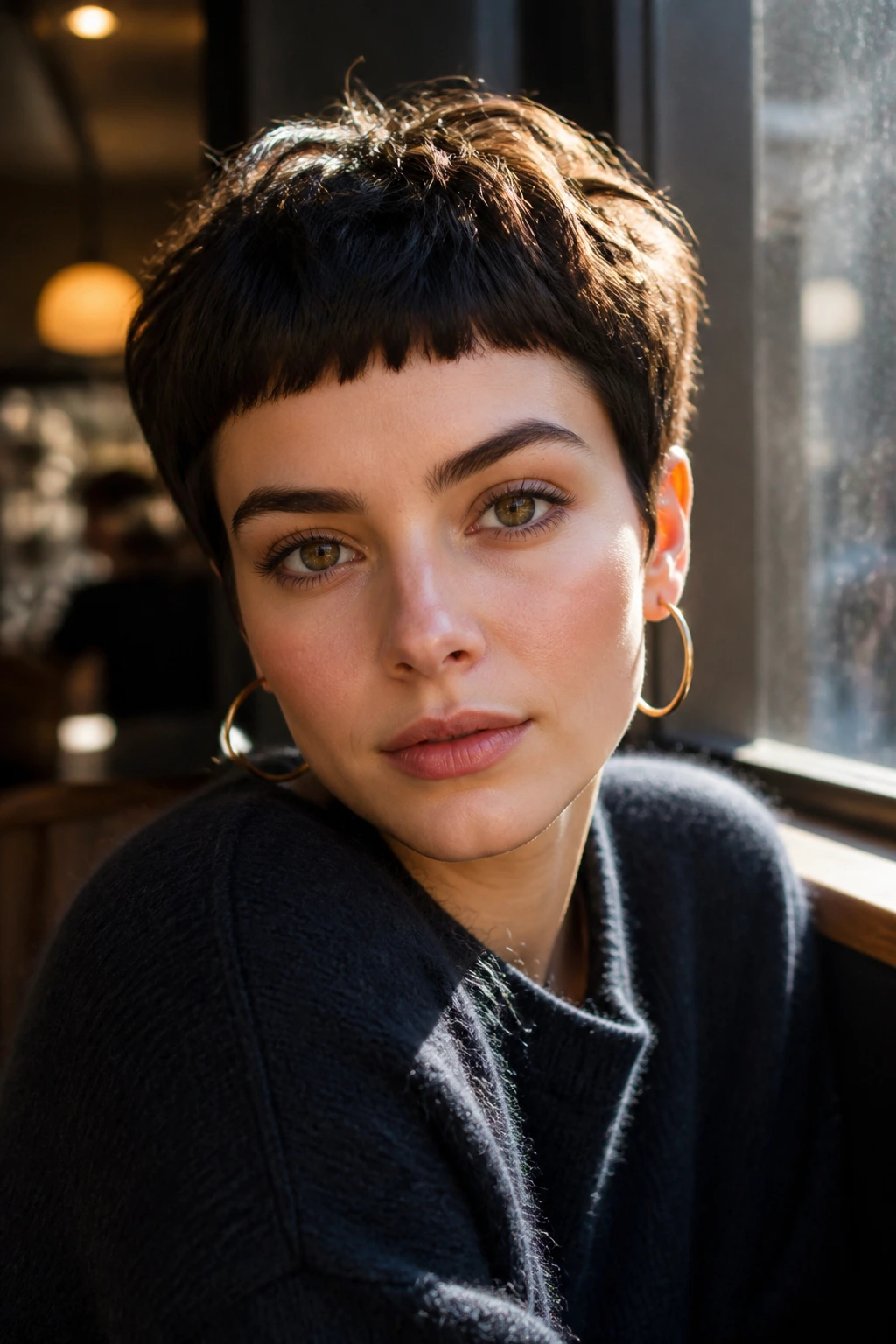
Micro bangs are not gentle. That’s part of why they look so good on thick hair. The hair has enough density to hold a tiny fringe without it looking sparse, and the cropped length opens up the face in a way that feels very deliberate.
The cut itself should stay compact. Keep the top textured so the fringe does not look pasted on, and make sure the sides are narrow enough to support the short bang without widening the face. This is one of those styles that lives or dies on proportions. Too much width, and it gets clumsy. Just enough height at the crown, and it looks crisp.
I’d recommend it for someone who likes bold shape and doesn’t mind trimming bangs often. Micro fringe grows out fast. That’s not a flaw; it’s the price of the look.
11. The Soft Bowl Crop
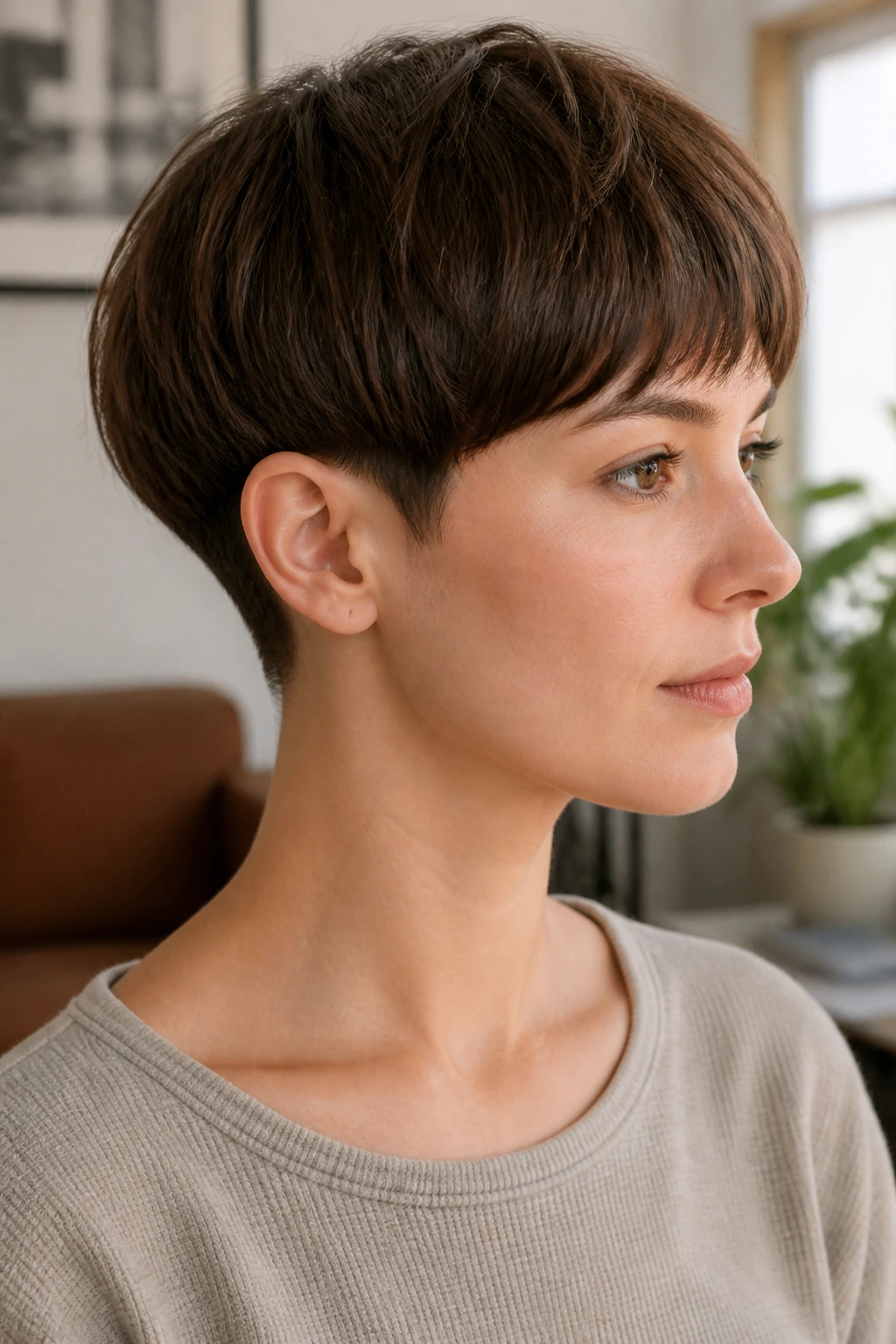
The phrase “bowl cut” still scares people off, which is a shame. A modern bowl-inspired crop on thick hair can look sleek, clean, and very current if the edges are softened and the crown is shaped with intention. The line is curved, not rigid. That makes all the difference.
Thick hair gives this style enough density to look full without needing over-styling. The trick is to remove weight from the top and keep the perimeter from ballooning at the cheeks. The best version has a broken fringe, a rounded outline, and a little space around the ears so it doesn’t sit like a cap.
This is not a cut for someone who wants a lot of movement. It is for someone who wants a graphic shape that still feels wearable. A little smoothing cream and a quick pass with a flat brush are usually enough to keep it neat.
12. The Graduated Stack Bob
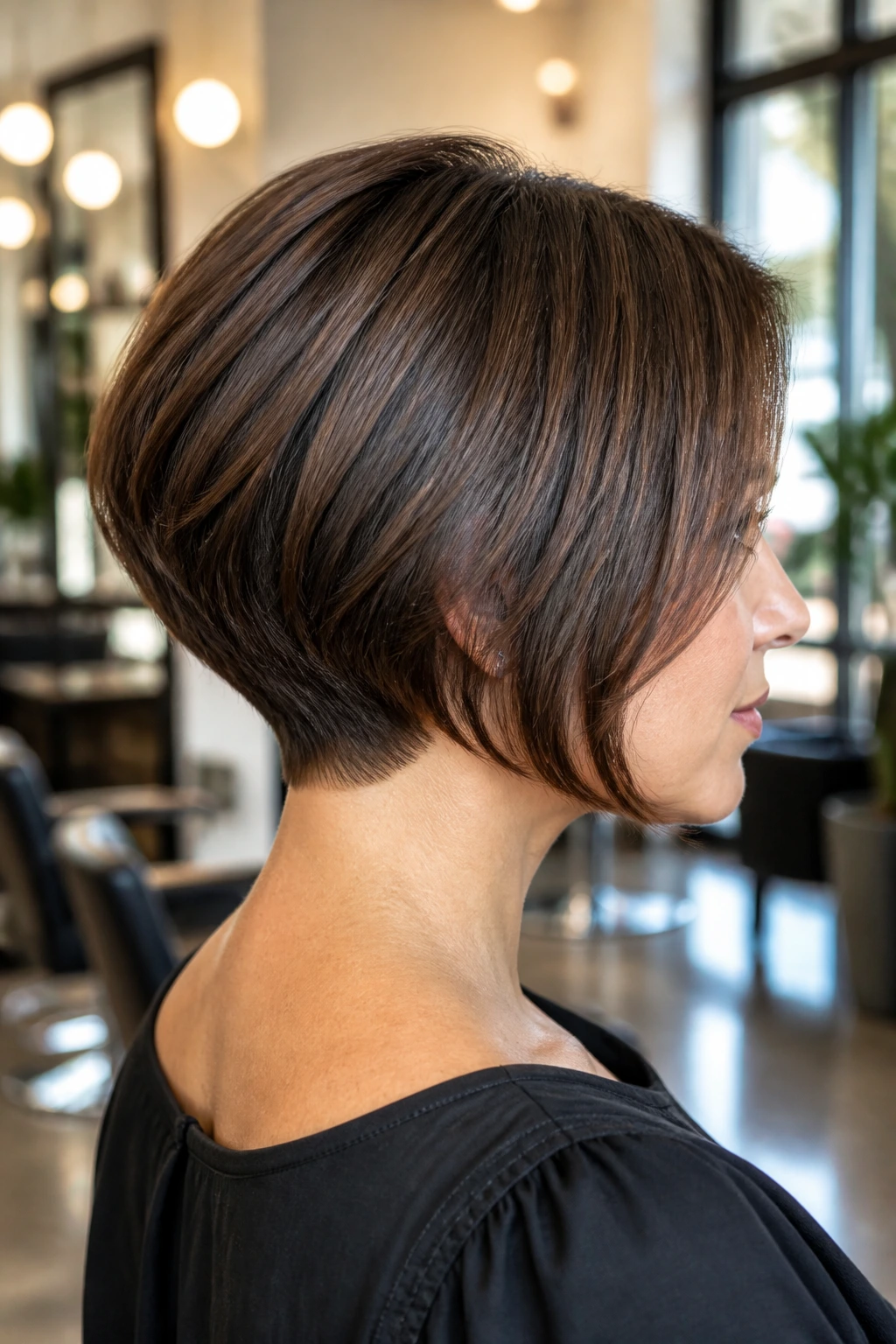
If thick hair wants lift, graduation is one of the cleanest ways to give it. This bob is shorter in the back and stacked up through the nape, which lets the hair build shape instead of sitting like a heavy slab. The front can stay near the jaw or dip a little longer, depending on how much softness you want.
The stacking does the hard work. It builds volume where the head naturally curves and keeps the back from collecting too much weight. That makes this a strong choice if your thick hair tends to grow outward instead of downward. It also gives the crown a nice rounded profile without needing a ton of heat.
Ask for a precise graduation, not random layers. The distinction matters. Random layers make thick hair poofy. Graduation creates shape.
13. The Jawline A-Line Bob
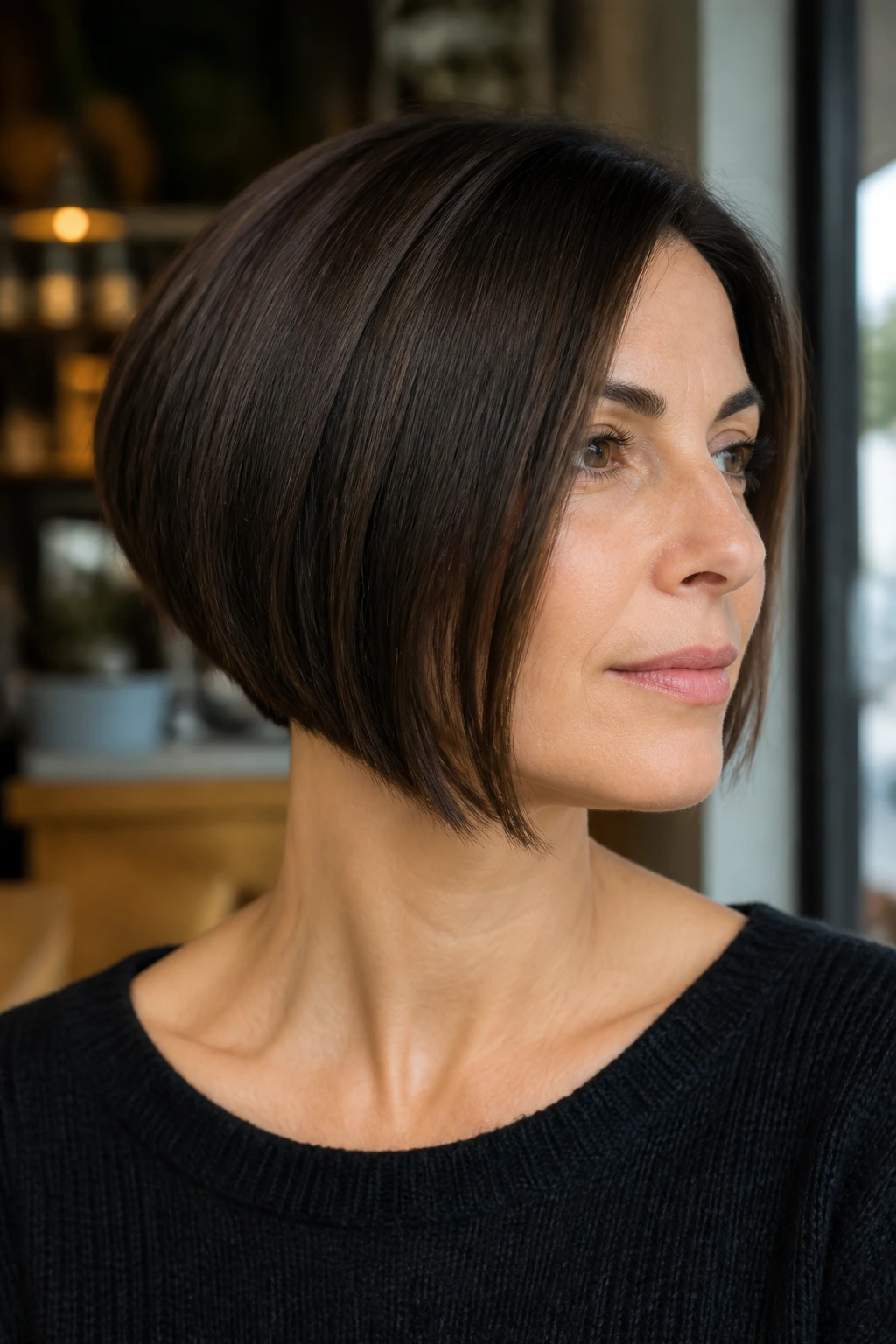
A sharp A-line bob brings the eye forward and gives thick hair a direction. The back stays shorter and tucked in, while the front pieces angle down toward the jaw. That forward line helps the hair sit closer to the head on the sides, which is exactly where thick hair likes to flare out.
This cut looks best when the front pieces are left long enough to graze the jaw or just skim below it. Too short, and the angle loses its point. Too long, and it stops reading as short hair. The sweet spot depends on your neck length and how much bulk you carry in the lower half of your hair.
I like this one because it has a clean profile from the side. It’s practical, but not plain. A quick blow-dry with a nozzle and a round brush can make the front swing forward neatly, and a light serum keeps the ends from puffing.
14. The Sleek Wet-Look Crop
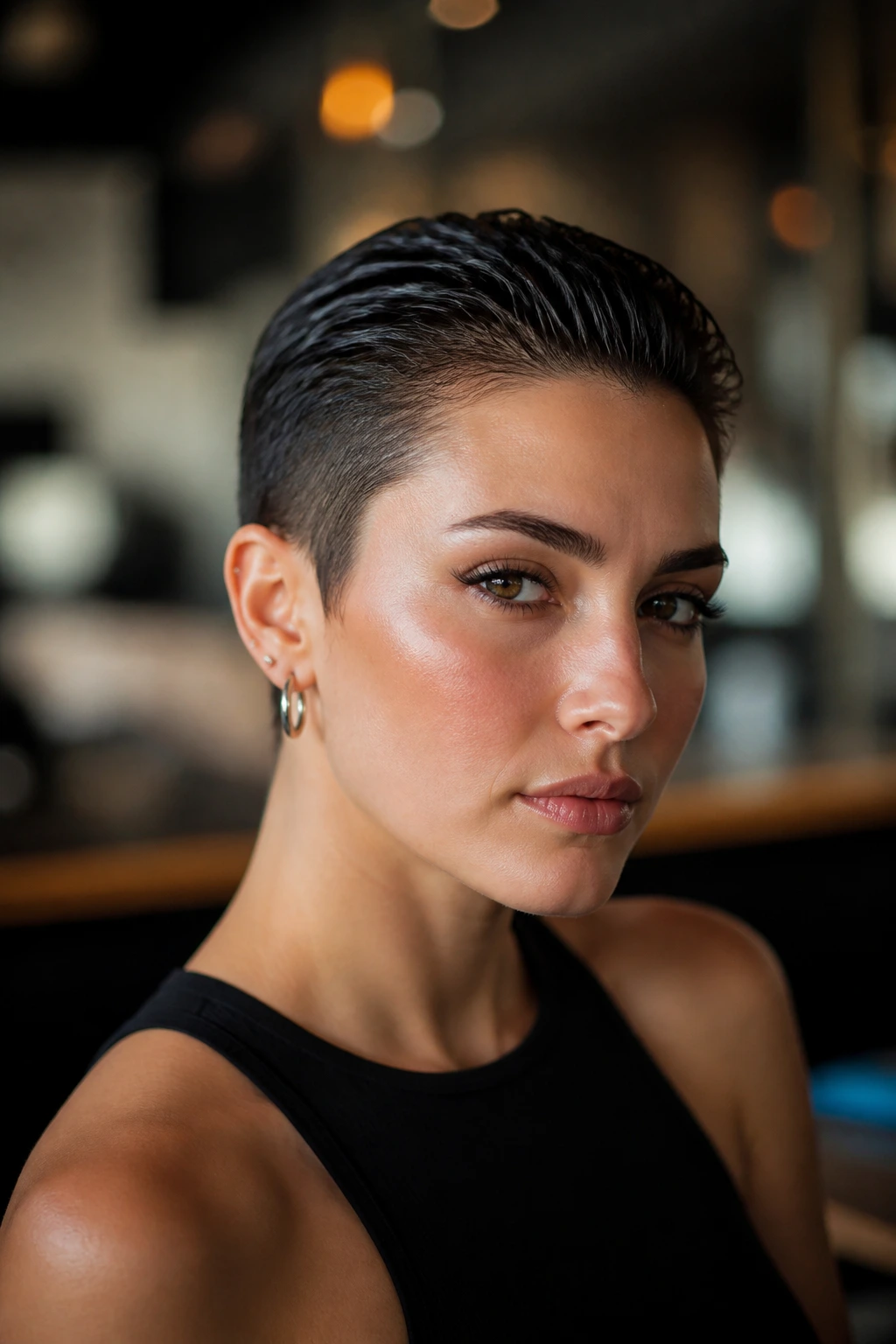
A slicked-back crop can be a smart short-hair move for thick hair, especially when humidity or frizz is part of the story. The shape is short enough to hold, and the styling product does the visual heavy lifting. With the hair combed close and set with gel, the thickness becomes structure instead of bulk.
This works best when the cut itself is already tidy. If the sides are too wide or the top is too long and uneven, the wet look starts to read messy instead of controlled. Keep the nape neat, the part clear, and the top short enough to stay where you put it.
It’s a nice option for evenings, photo-heavy days, or any time you want the haircut to look more dressed-up than casual. And yes, thick hair tends to hold this style better than fine hair. It has more substance under the product, so the slick finish doesn’t collapse as fast.
15. The Tucked-Behind-Ear Pixie
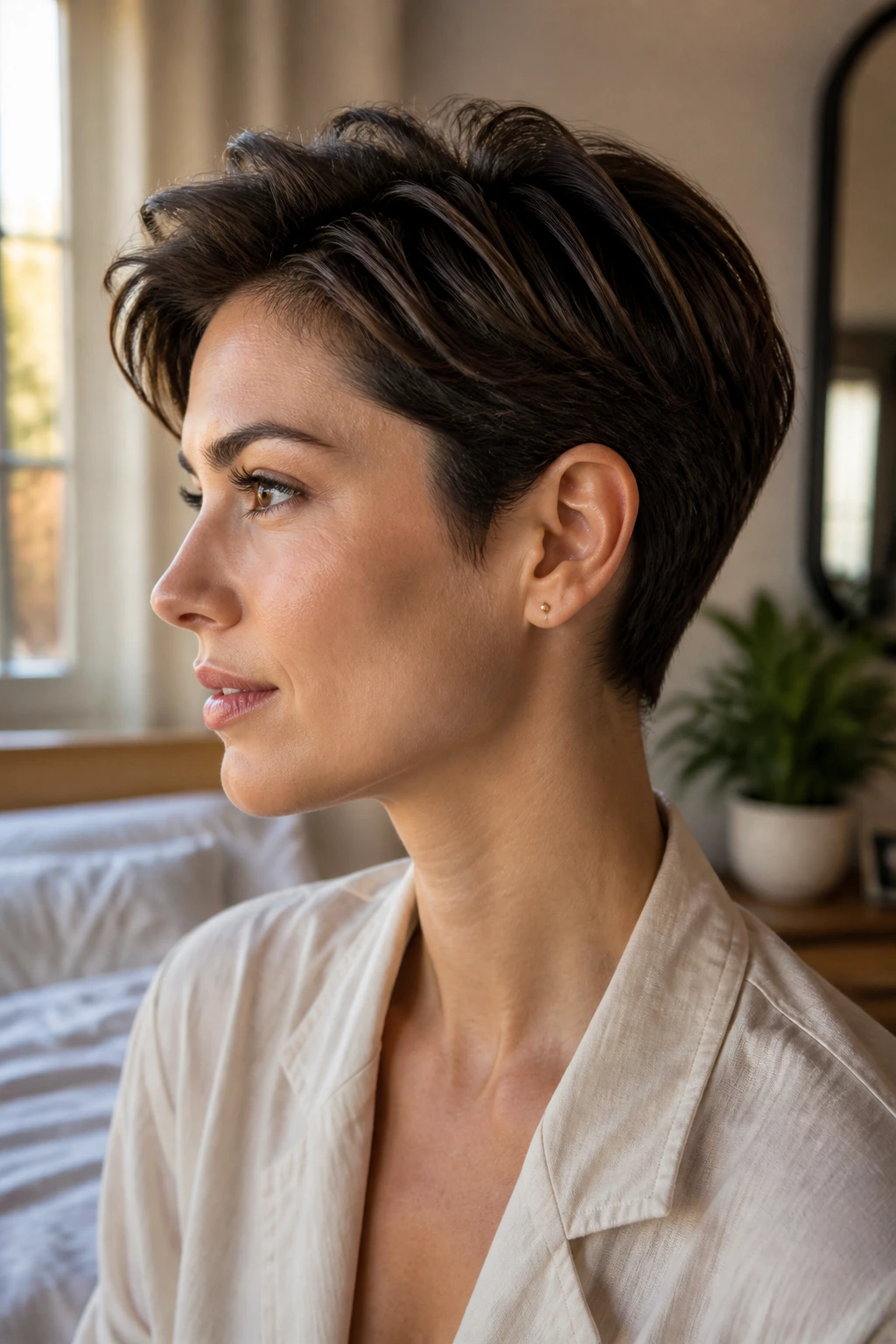
Some short cuts are designed around how they behave near the ears. This one is. The side pieces are left just long enough to tuck, while the back stays narrow and the top stays soft enough to lift a little without widening the head. Thick hair needs that restraint.
There’s a nice kind of polish to this shape. It shows the cheekbones. It clears the neck. It also makes earrings and collar lines matter more, which sounds like a small thing until you see how much it changes the whole look. The cut itself can be simple; the styling is what gives it attitude.
I’d keep the product light here. Too much wax around the ear area makes the hair look greasy instead of smooth. A touch of cream on the front and a small amount of paste at the ends is enough.
16. The Air-Dried Wave Crop
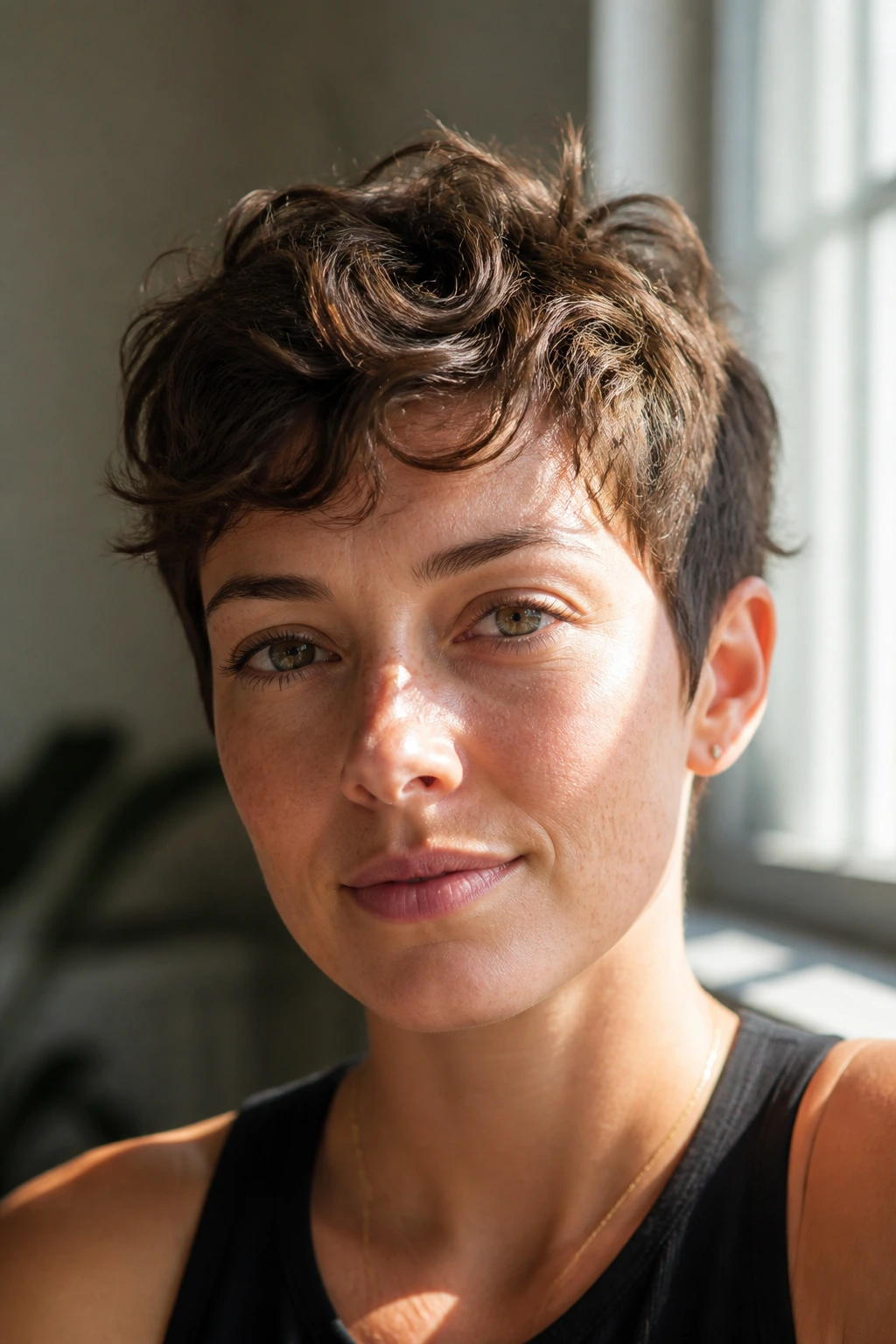
Not every short cut on thick hair needs a hot tool. This crop is cut to encourage natural wave and movement, with layers placed where the bend wants to happen instead of where a diagram says it should. The result is softer, looser, and easier to live with.
The best air-dried shapes are not accidental. They still need a plan. The back should avoid a bulky shelf, the front should fall in a readable direction, and the layers should be long enough to keep the hair from ballooning. If your wave pattern is uneven, a little mousse and a scrunch at the roots can help nudge it into shape.
This is the cut I reach for when someone wants to spend less time styling and more time letting the hair do what it already knows how to do. A diffuser can help if you have time. If not, a clean towel, a curl cream or light foam, and some patience will usually get you there.
17. The Modern Mullet-Lite Shag
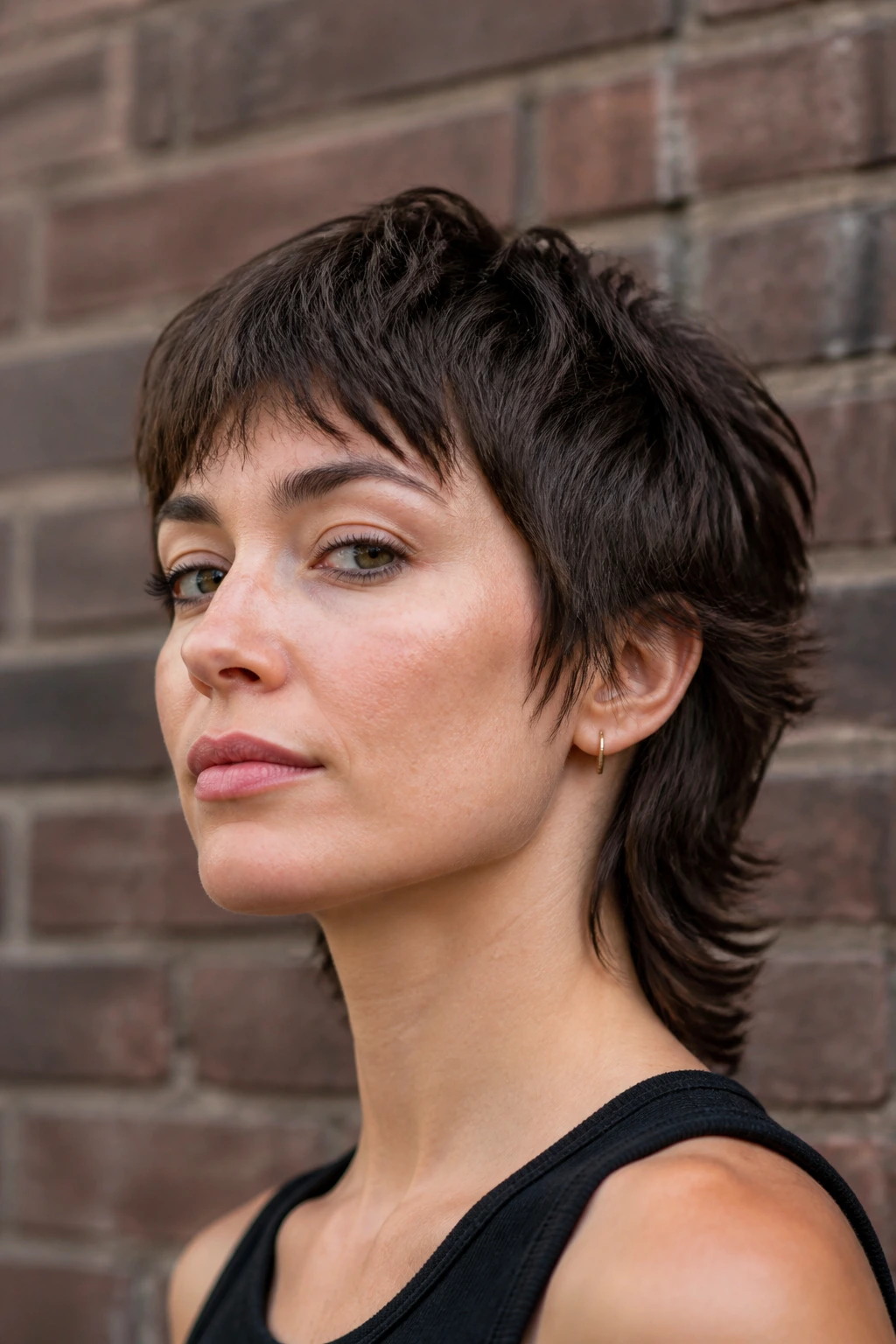
The word mullet makes people nervous, but the modern version is more controlled than the old joke haircut ever was. On thick hair, a mullet-lite shag can be a smart way to take weight out of the top and sides while leaving a little extra length at the nape for shape.
What I like here is the contrast. The crown is shorter and more open, the sides are textured, and the back carries just enough length to keep the cut from feeling severe. Thick hair gives this shape a nice hold. It doesn’t collapse as quickly as finer hair does, so the style keeps its outline longer.
This cut suits people who want something a little rawer than a bob and a little less tidy than a pixie. It works especially well with texture spray and a rough blow-dry. Clean, polished styling can make it feel too neat. A little grit helps.
18. The Deep Side-Part Power Bob
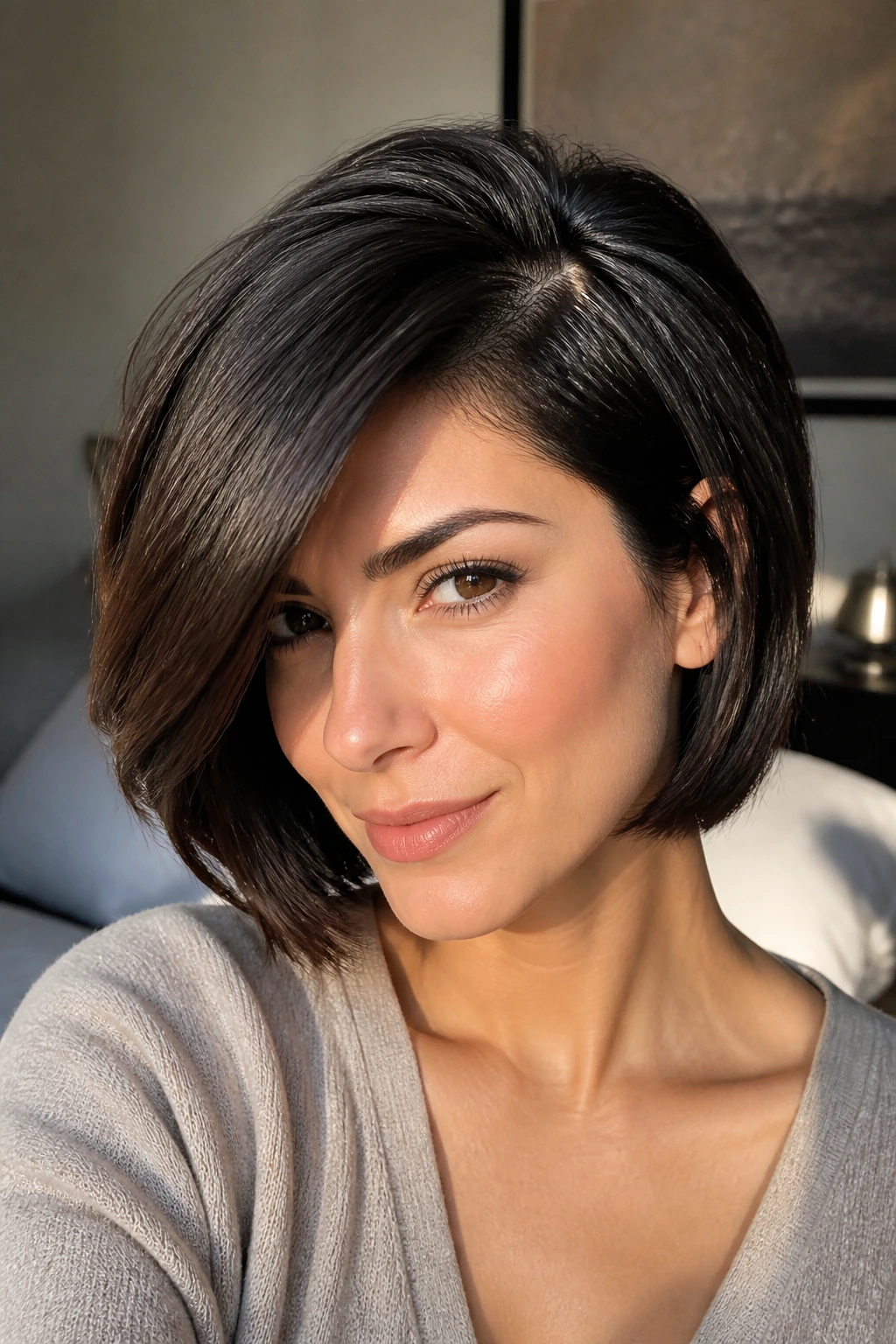
A deep side part gives thick hair direction, and this bob uses that to full effect. The extra weight is shifted across the head rather than spread evenly, which creates lift at the roots and a long, sweeping line over the forehead. That line can be sleek, bent, or tucked, depending on what you want.
This is one of the most flattering options if your hair tends to sit flat at the crown but gets too full at the sides. The side part lifts the top, and the bob length keeps the ends from puffing too far away from the face. A little root spray at the heavier side can keep the volume from sinking by afternoon.
Best For
- A stronger jawline that you want to soften a little.
- Thick hair that needs lift at the crown.
- Anyone who likes a polished shape without a severe center part.
The look is clean, but it has enough movement to avoid looking stiff.
19. The Disconnected Nape Crop
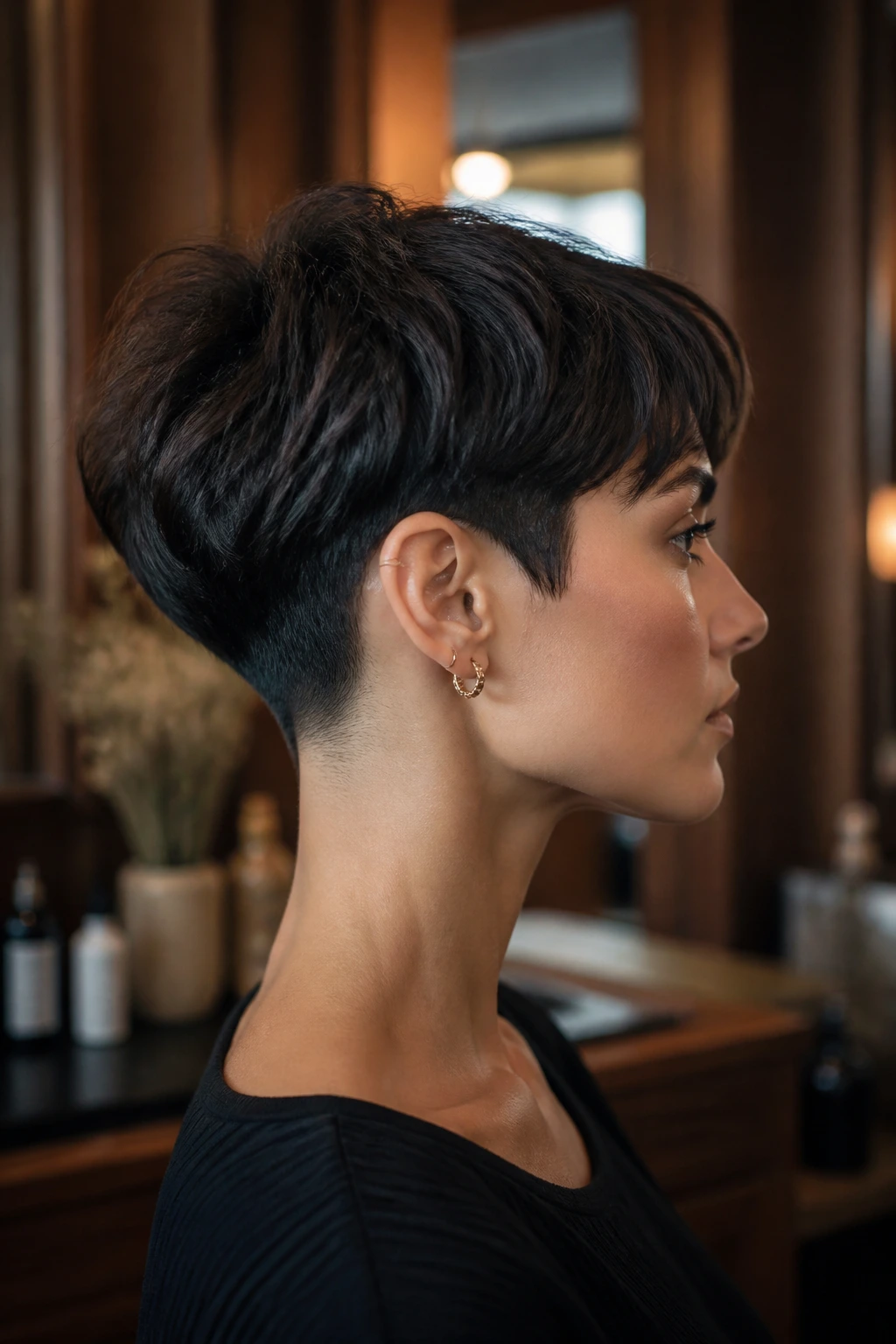
This cut is a blunt little answer to thick hair that swells at the neckline. The nape gets taken very short, often with a disconnected top that stays visibly longer, so the bulk doesn’t collect where collars and scarves rub. That small bit of separation can make the entire haircut feel lighter.
It’s a bolder shape, but not a messy one. The gap between the short nape and the longer top needs to be intentional. If the transition is sloppy, it just looks unfinished. When it’s precise, it looks sharp and modern.
I’d pick this for someone who hates the feeling of hair piling up at the back of the neck. It’s especially useful if you work with a lot of movement or wear jackets that catch at the collar. A quick shape-up every few weeks keeps it from losing the point.
20. The Rounded French Crop With Soft Lift
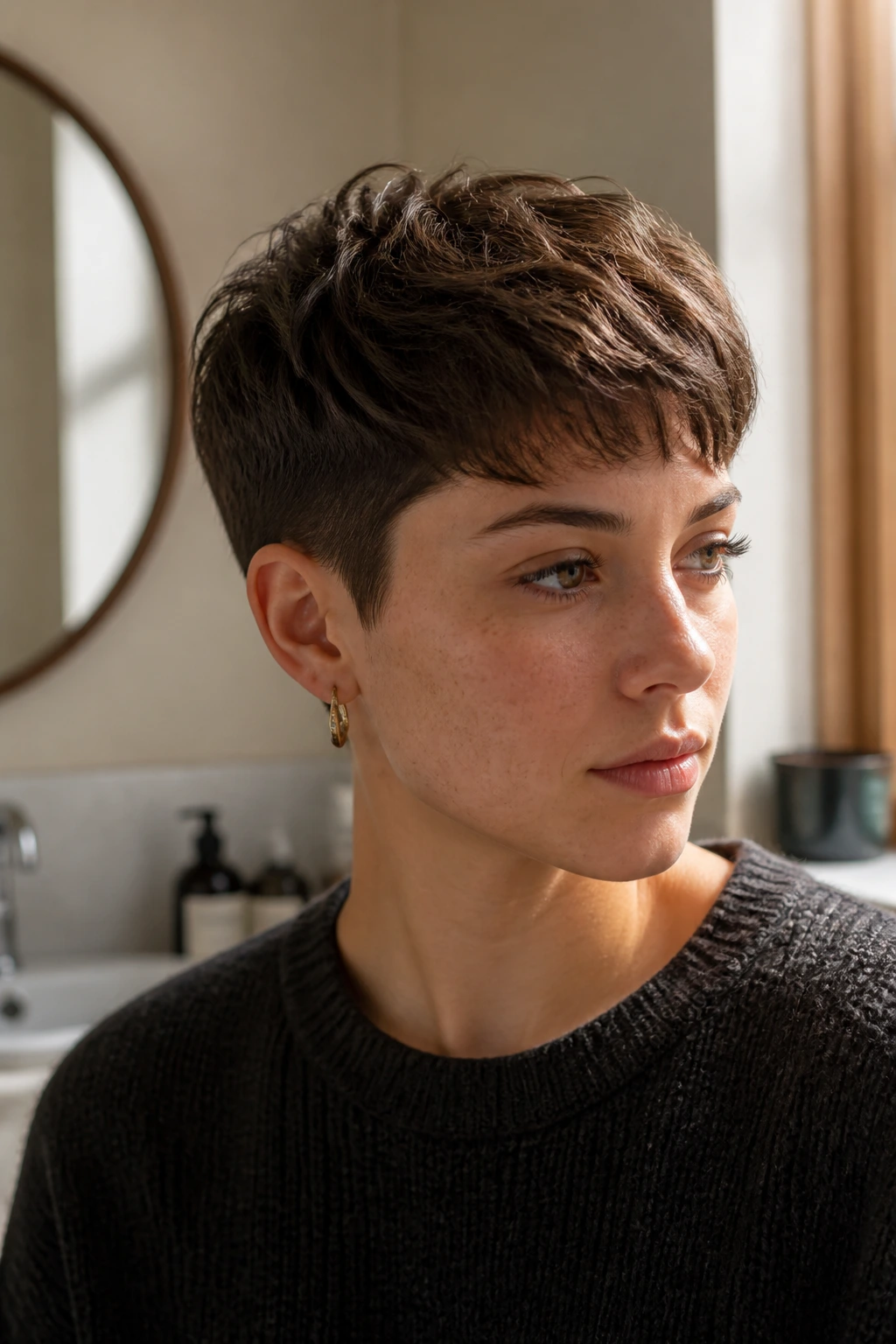
The final shape on this list is one I keep coming back to because it gets a lot right without shouting. The sides are kept close, the crown has a gentle lift, and the fringe sits soft rather than blunt. Thick hair gives it enough density to look full, while the rounded outline keeps it from feeling harsh.
This is a good choice if you want short hair that feels clean but not severe. It can be worn with a bit of texture on top, smoothed down with a light cream, or pushed slightly forward for a softer edge. The haircut should do most of the work. The styling just finishes the sentence.
It’s also one of the easier shapes to live with as it grows. The outline holds for a while, which is useful when you don’t want a haircut that announces itself the second it starts to lengthen.
How to Pick the Right Cut for Your Hair Density and Routine
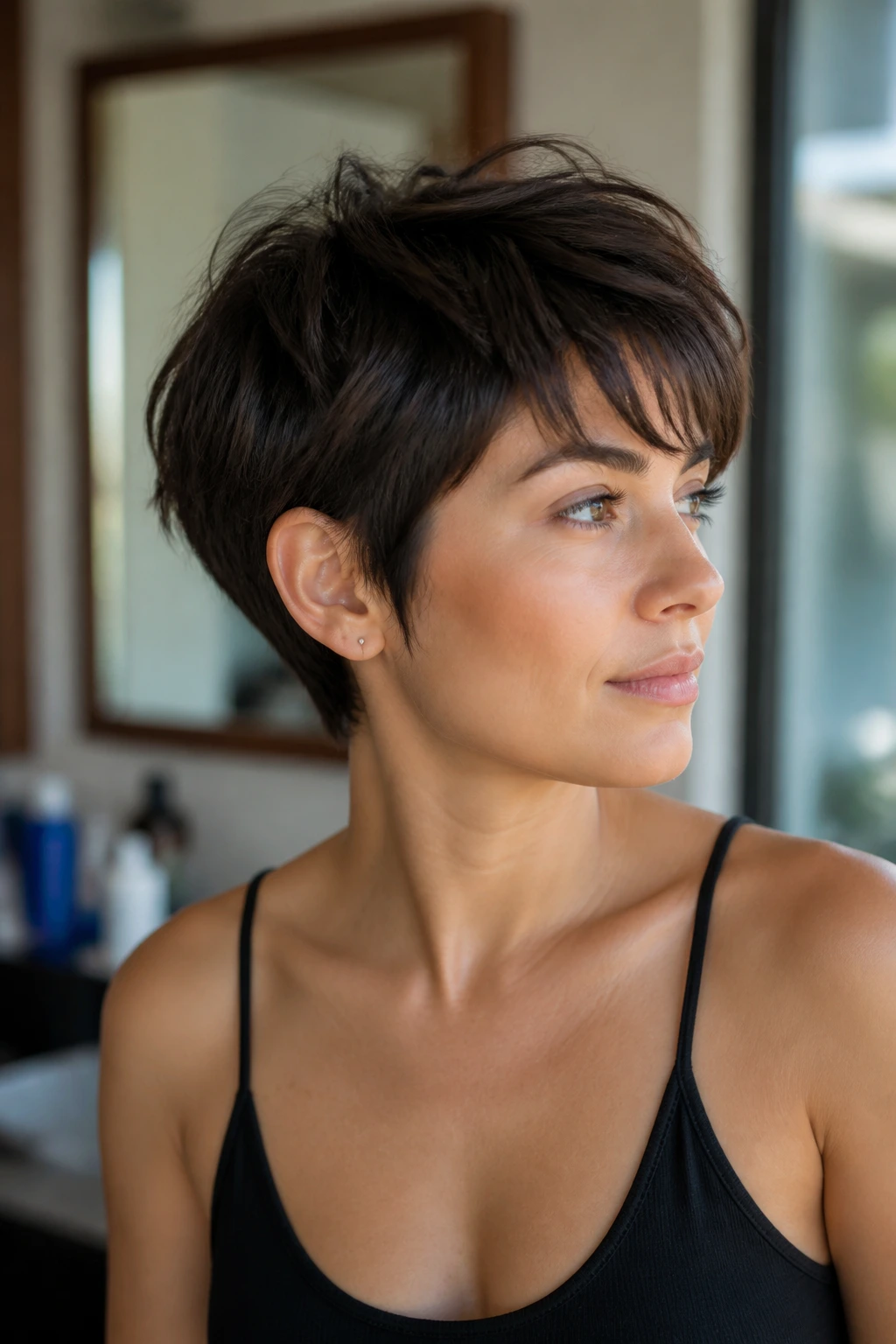
The best short cut for thick hair is the one that matches your actual life. Not your best-case morning. Your real one. If you want to run your hands through your hair and leave, pick a bixie, a rounded crop, or an air-dried wave cut. If you like a clean finish and don’t mind a brush or blow-dryer, a blunt bob, French bob, or side-part bob will give you more polish.
If your hair is dense at the roots, ask for internal weight removal, a tighter nape, and a shape that doesn’t rely on the ends doing all the work. That keeps the bulk from gathering at the sides.
If your strands are coarse, keep some length in the perimeter. Coarse hair can fray if the cut is too aggressively thinned out, and the edges often look better when they’re a little fuller.
If cowlicks run your life, bring them up before the scissors come out. A fringe placed wrong on thick hair will split, spring, or kick to one side with almost no warning.
If you hate hot tools, do not choose a cut that only looks good when ironed flat. Pick something that dries well with texture already built in.
One blunt note: show the stylist the back. Thick hair often behaves best from the side and the rear, and that’s where bad cuts usually show up first.
Common Mistakes That Make Thick Short Hair Puff Out
-
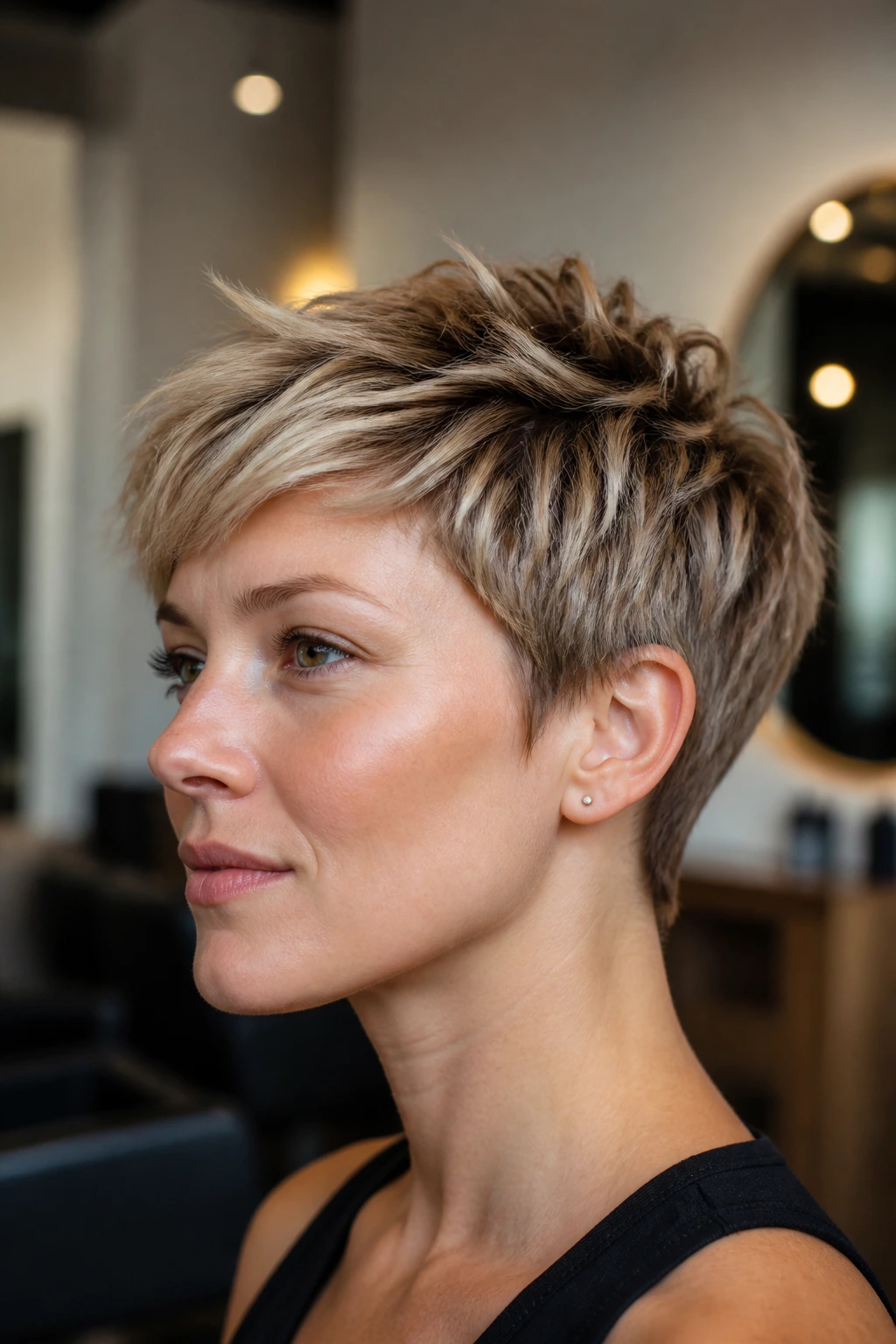
Over-thinning the ends: When the perimeter is cut too wispy, thick hair starts to fray and expand instead of lying neatly. The fix is interior weight removal, not chopping the edge into feathers.
-
Choosing a shape that’s too one-length for your growth pattern: A blunt line can look polished, but if your hair flares at the sides or kicks at the nape, the shape turns into a shelf. Ask for subtle graduation or a hidden undercut where the bulk lives.
-
Cutting bangs too short for your forehead and cowlicks: Short fringe on thick hair has a mind of its own. If your growth pattern is strong, a brow-grazing or side-swept bang is usually safer than a tiny blunt fringe.
-
Using too much cream or oil at the roots: Thick short hair needs control, not grease. Heavy product makes the style collapse and can make the bulk look dirtier than it is. Keep richer products on the ends only.
-
Waiting too long between trims: Short thick cuts lose shape fast. A pixie can grow fuzzy in a month, and a bob can start to balloon around the jaw if you ignore it. Set the next appointment before you leave the chair.
Different Ways to Wear the Same Short Cut
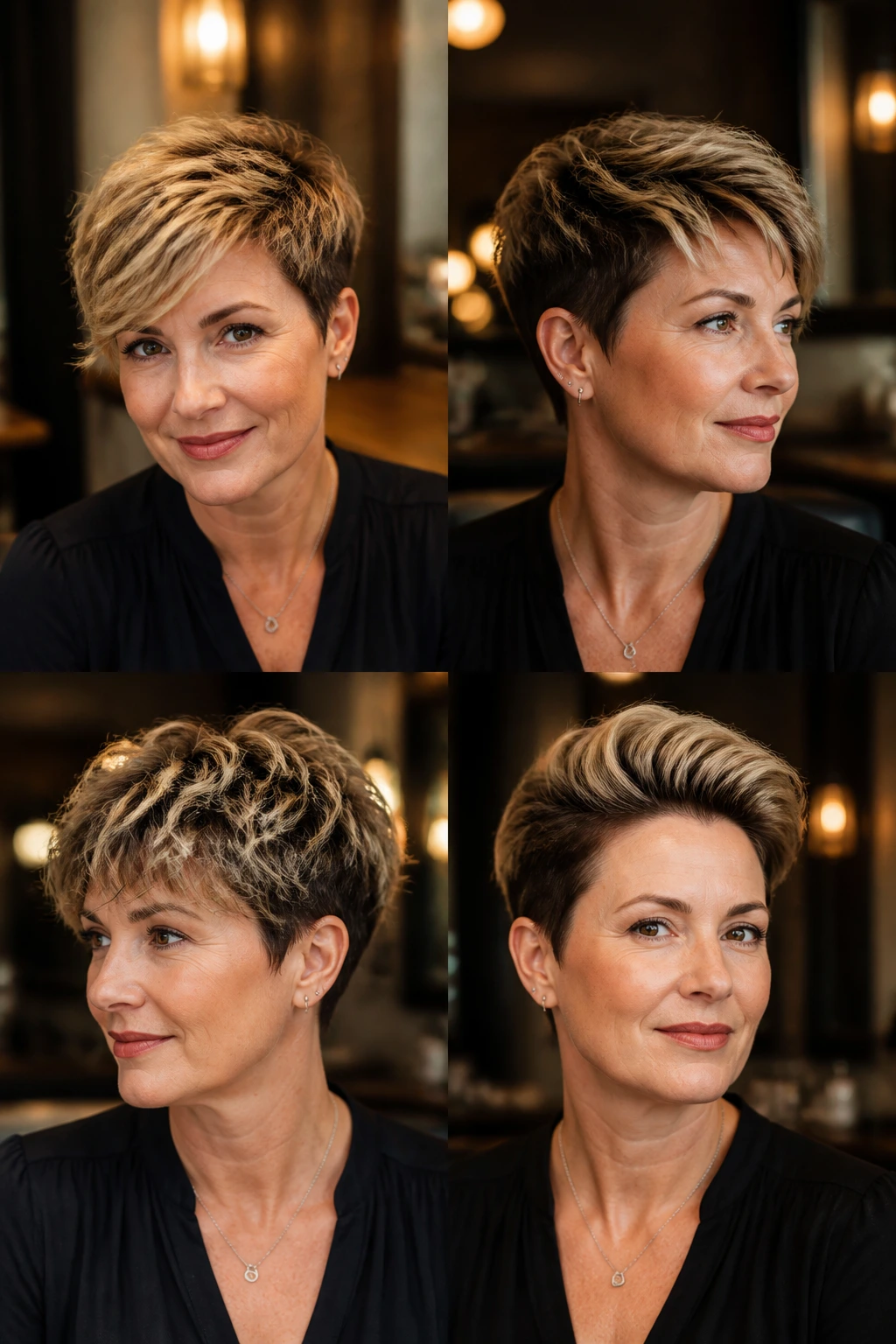
Soft and Rounded:
Choose this route if you want the cut to feel gentler on the face. The perimeter stays curved, the fringe stays broken up, and the top carries light movement instead of sharp edges.
Sharp and Graphic:
This version uses blunt lines, clean corners, and stronger contrast. It suits thick straight hair especially well because the density holds the shape without much effort.
Curl-First:
Good for wavy or curly thick hair. The cut follows the natural bend, the styling stays minimal, and the finish feels loose instead of forced.
Grown-Out Friendly:
If you dislike frequent appointments, keep a little more length in the top and front. Bixies, stacked bobs, and side-part cuts usually wear their grow-out better than ultra-short crops.
Polished and Dressed-Up:
A deep side part, smoothing serum, and a round-brush bend can make a short thick cut feel more formal in a few minutes. This route works especially well for bobs and French crops.
Tools That Make Thick Short Hair Easier to Style
-
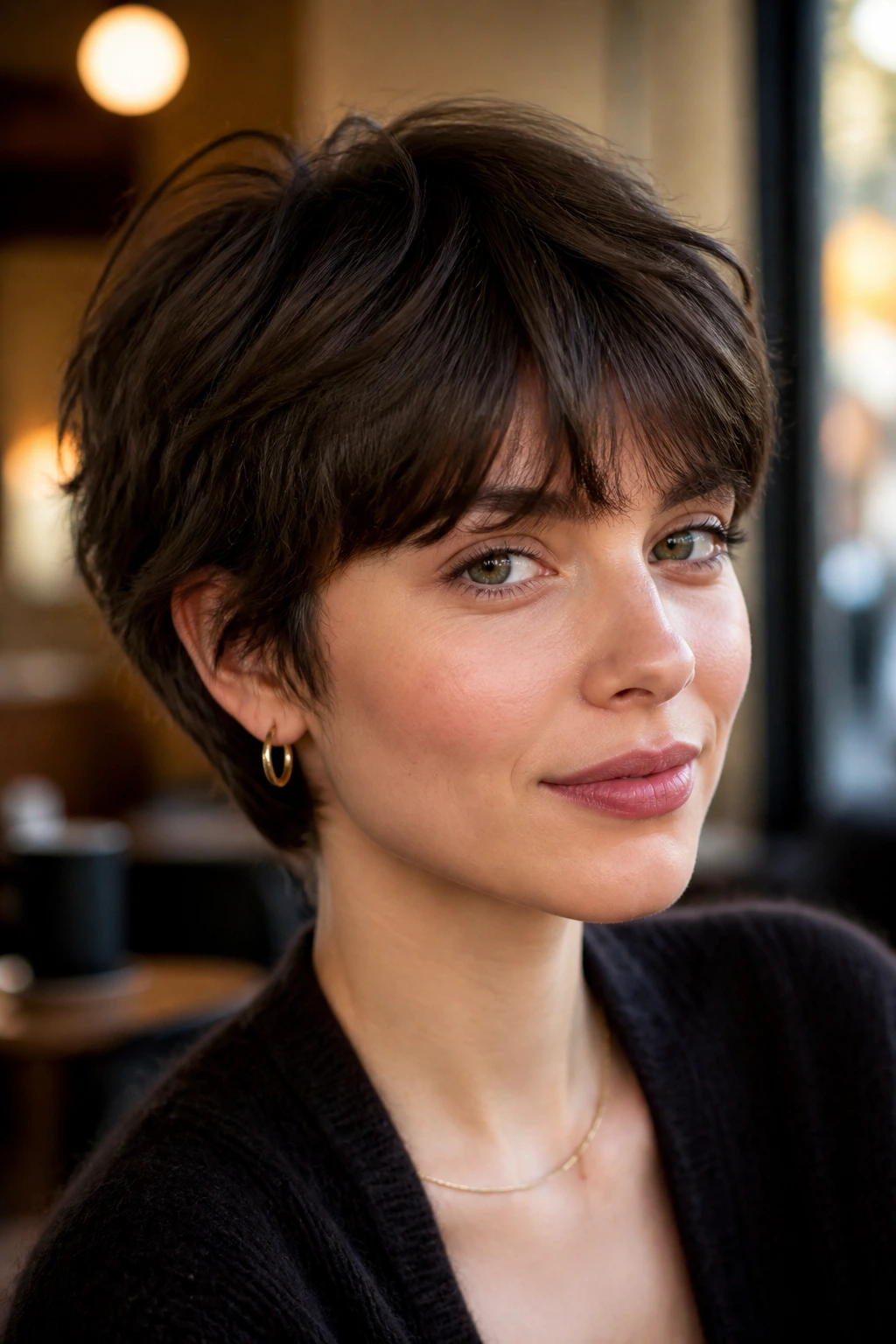
Blow dryer with a concentrator nozzle: Directs airflow so thick hair goes where you want it instead of blasting outward.
-
1-inch round brush: Gives a clean bend at the ends of bobs, bixies, and French cuts without creating too much width.
-
Fine-tooth tail comb: Useful for precise parts, bang direction, and sectioning around the crown.
-
Duckbill clips: Hold sections in place while they cool, which helps thick hair remember the shape.
-
Light mousse or root-lift spray: Good when you want body at the root without a heavy finish.
-
Matte paste or clay: Best for pixies, crops, and piecey texture.
-
Smoothing serum: Keeps blunt edges from looking frizzy, especially on coarse hair.
-
Texturizing spray: Adds separation to shaggy cuts and layered crops without making them sticky.
-
Heat protectant: Use it before blow-drying or flat-ironing. Thick hair can hide damage for a while, then suddenly show it at the ends.
-
Diffuser attachment: Handy for curly crops and air-dried wave cuts.
Keeping the Shape Between Salon Visits
Short hair with thick hair asks for maintenance sooner than people expect. A pixie usually needs a tidy-up every 4 to 5 weeks if you want the outline to stay sharp. Bobs, bixies, and A-line cuts can often go 6 to 8 weeks, though the back may need attention sooner if your hair grows fast at the nape.
Product buildup shows faster on thick short hair because many of these shapes rely on paste, mousse, spray, or serum to keep the texture under control. A clarifying shampoo every 2 to 4 weeks helps reset the roots and keep the cut from feeling coated. If your ends are dry, use a richer conditioner there, but keep it away from the scalp.
Sleep matters more than people admit. A silk or satin pillowcase cuts down on friction, which helps blunt bobs keep their line and keeps pixies from exploding at the sides. If you have bangs, pin them aside or set them in the direction you want before bed if they tend to kink.
Growing a short thick cut out without the awkward phase takes a little planning. Ask for small dustings rather than drastic reshaping, and make sure the back and sides don’t get forgotten. That’s where bulk sneaks in first.
Short Hair Questions People Ask All the Time
Which short haircut is best if my hair is thick and straight?
A blunt bob, a side-part bob, or a tapered pixie usually works well because straight thick hair shows shape clearly. If the ends feel too heavy, ask for internal weight removal rather than a lot of external layers.
Do thick short cuts need layers?
Not always. Thick hair usually needs smart weight removal, which can be done with graduation, point cutting, or a hidden undercut. Too many short layers on the outside can make the hair puff out.
Can I get bangs with thick short hair?
Yes, but the bang style matters. Brow-grazing, curtain, or softly broken fringe is often easier to live with than a tiny blunt bang that has no room to settle.
Is a pixie a bad idea for thick hair?
No, but it needs structure. Thick hair can make a pixie look bulky if the crown and sides are not shaped carefully. A tapered or undercut version usually behaves better than one cut all over the same length.
How do I stop short thick hair from getting triangular?
The triangle usually comes from too much weight sitting at the widest point of the head. Ask for the bulk to be removed internally, keep the nape neat, and choose a shape that narrows slightly at the top or crown.
Can thick hair be air-dried short?
Yes, if the cut is built for it. Cropped shags, rounded crops, and wave-friendly bixies tend to dry into shape better than blunt, one-length cuts.
What if my hair is thick but the strands are fine?
That’s a different job. Fine strands can tolerate more movement and less heavy smoothing, but they still need the shape to manage density. You may need less product than someone with coarse hair.
How often should I trim short bangs?
Micro fringe may need attention every 2 to 3 weeks. Brow-grazing bangs usually last a little longer, around 3 to 4 weeks, depending on how fast they grow and how much they split.
A Cut That Gives Thick Hair Room to Breathe
Thick hair does not need to be tamed into something smaller. It needs a shape that gives the weight somewhere useful to go. That can mean a blunt bob with hidden removal underneath, a choppy pixie with a lifted crown, or a crop that follows your wave pattern instead of arguing with it.
The best short cuts for thick hair leave you with less wrestling and more choosing. Which side part feels right. Which fringe sits best. Which earrings suddenly make sense with your neckline. That’s the good part of a smart short cut: it stops acting like a problem and starts behaving like a feature.
Bring a photo from the front, one from the side, and one from the back, and the conversation gets a lot sharper. Your hair will thank you for the clarity.