



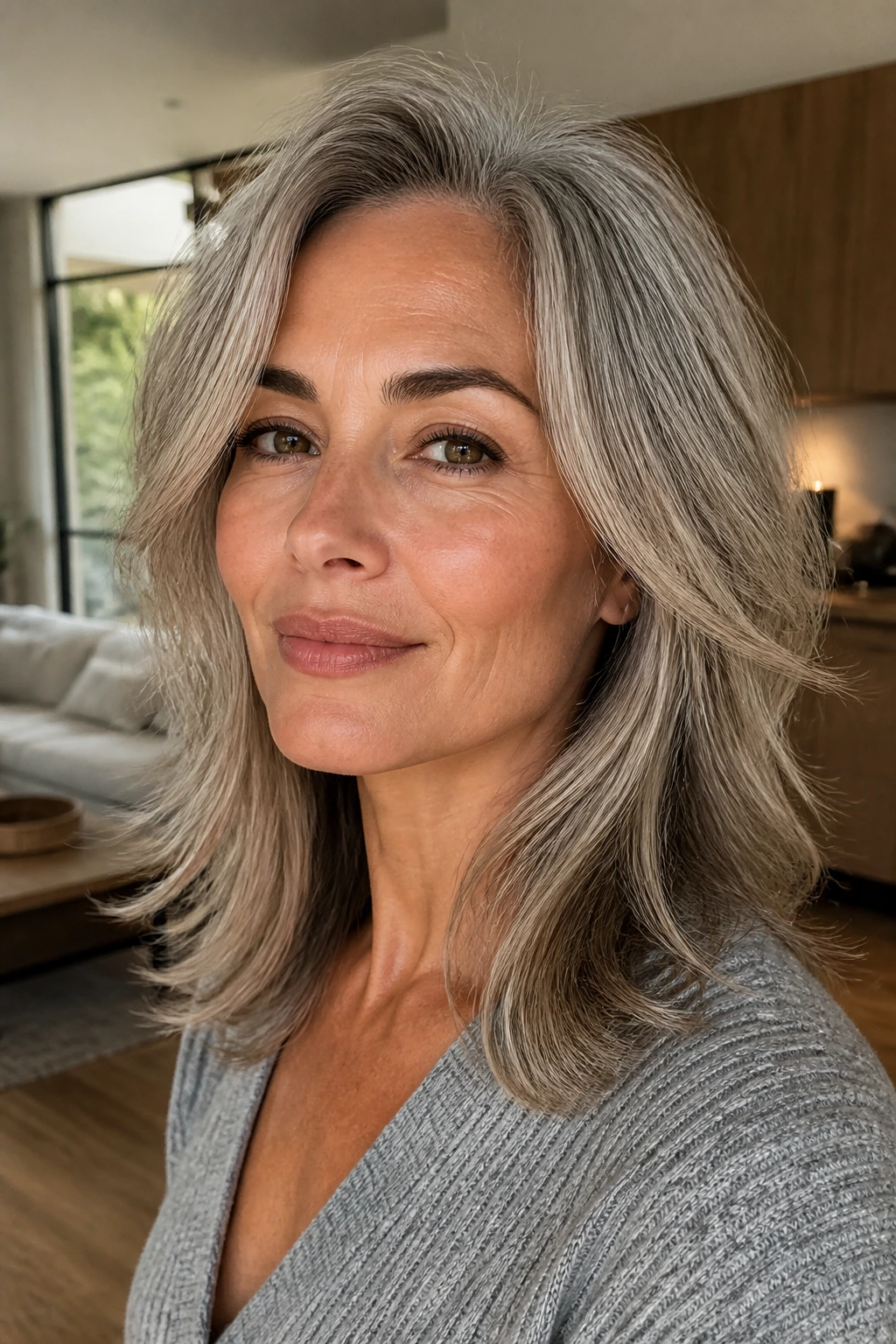
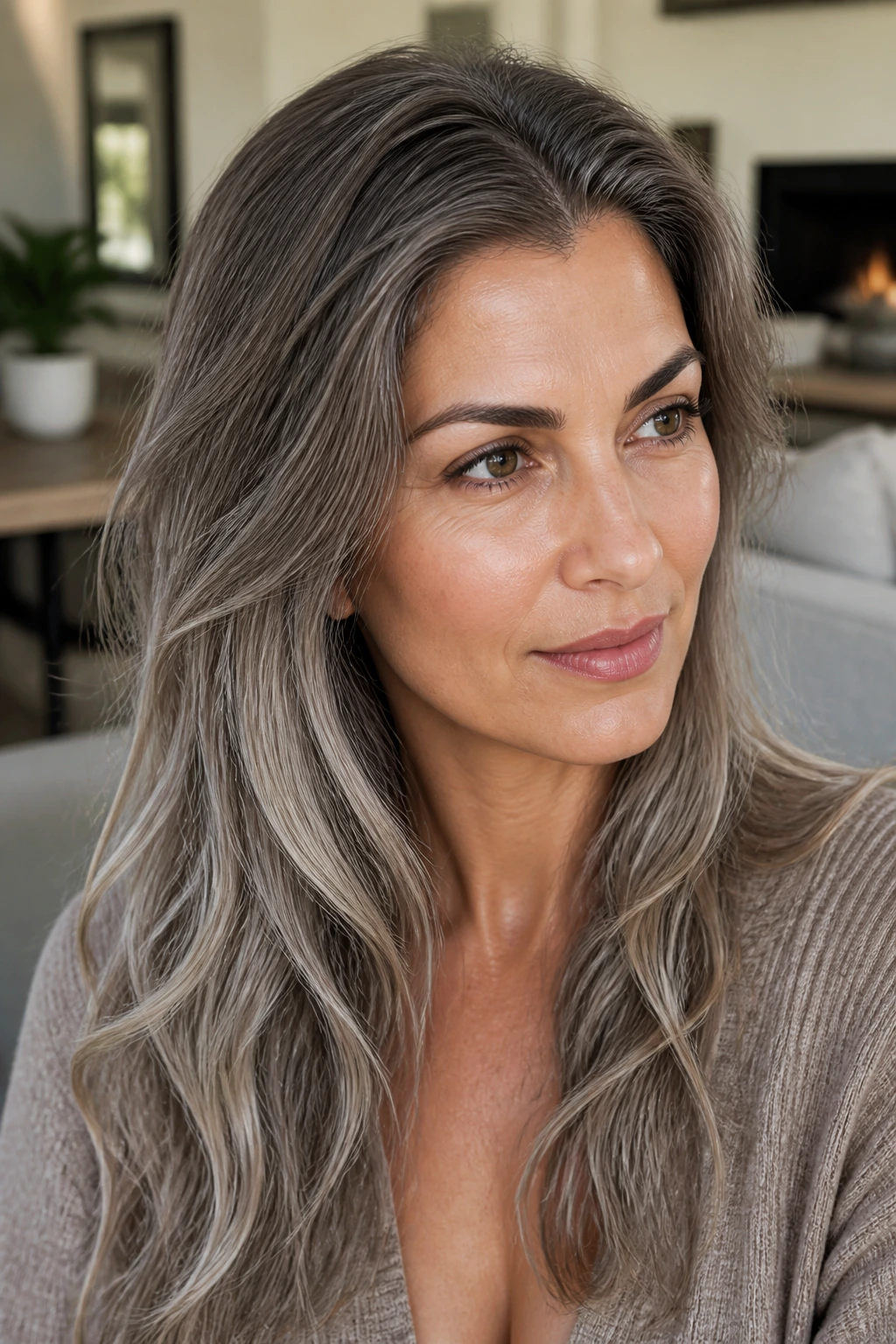
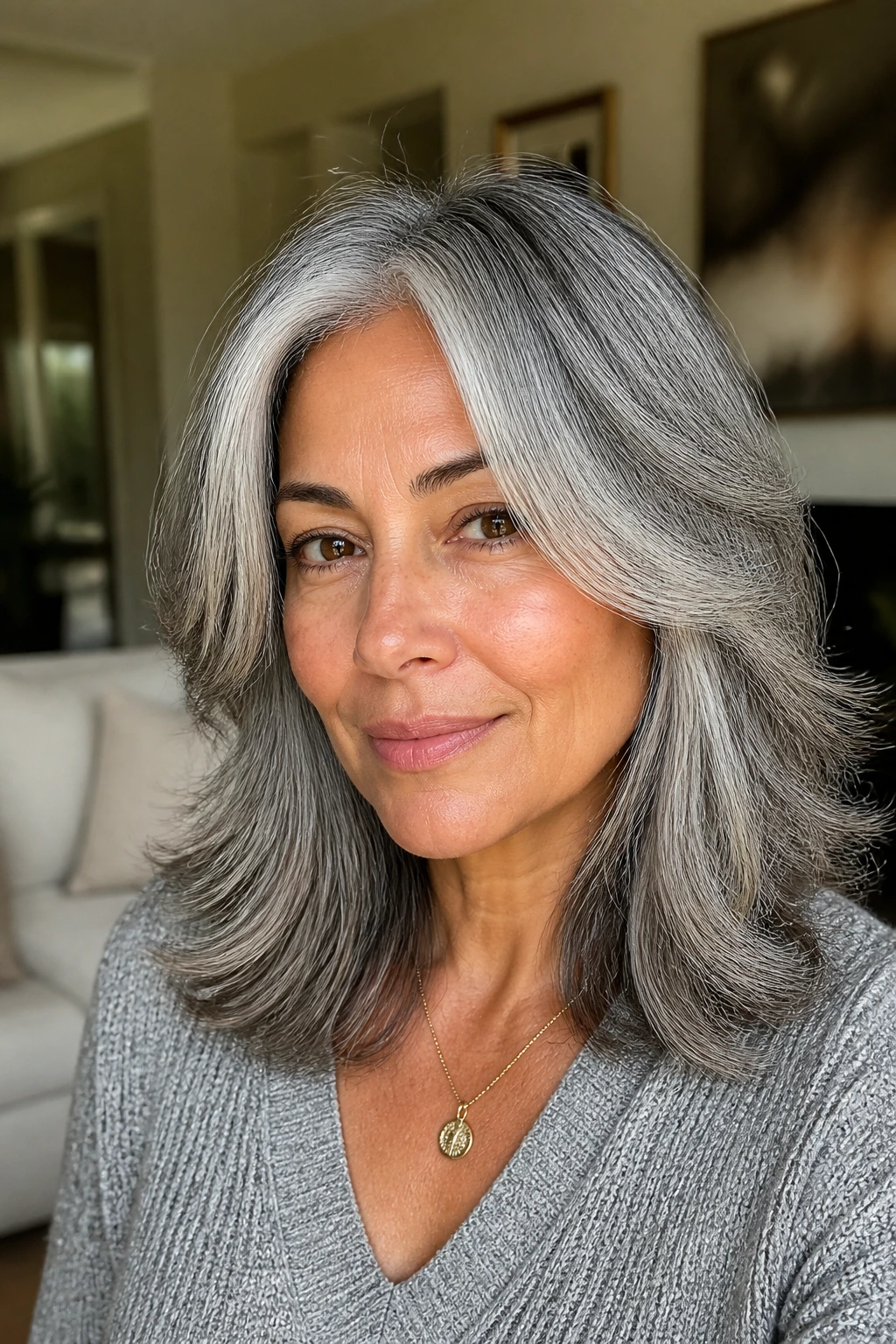
Grey hair on olive skin can look razor-sharp or oddly muddy, and the difference is usually smaller than people think. Growing out grey hair for olive skin is less about hiding the silver and more about choosing the right tone around it. A smoky silver that sits a touch soft at the root can make the skin look clearer; an icy, flat gray can pull a green cast right out of the face.
It does not have to be a battle.
The best transitions keep a little shadow, a little shine, and enough shape that the grow-out looks chosen instead of accidental. I’ve seen the strongest results when the grey is treated like a color family, not a problem to erase. Mushroom, pearl, pewter, beige-silver—those shades all do different jobs, and on olive skin that difference matters.
The looks below cover short cuts, shoulder-length layers, soft blends, and bolder silver finishes that play nicely with olive undertones. Some are quiet. Some are louder. All of them make more sense than forcing a one-note dye job that fights your skin instead of working with it.
Why These Looks Work on Olive Skin
-
Undertone Balance: Smoky, beige, and pewter shades keep grey from turning flat against olive skin, which can shift green, golden, or neutral depending on the light.
-
Grow-Out Softening: Root shadows and lowlights blur the hard line where dye ends and natural grey begins, so the transition looks intentional even when it’s still halfway done.
-
Face Brightening: Silver placed near the cheekbones can lift the face; all-over ice often does the opposite and makes the skin look a little tired.
-
Low-Maintenance Shapes: Bobs, pixies, and shags make the change feel polished because the cut does some of the work the color used to do.
-
Tone Flexibility: Every look here can be nudged warmer or cooler, which is handy because olive skin is not one single undertone. It moves.
Why Grey Grow-Out Needs a Tone Plan on Olive Skin
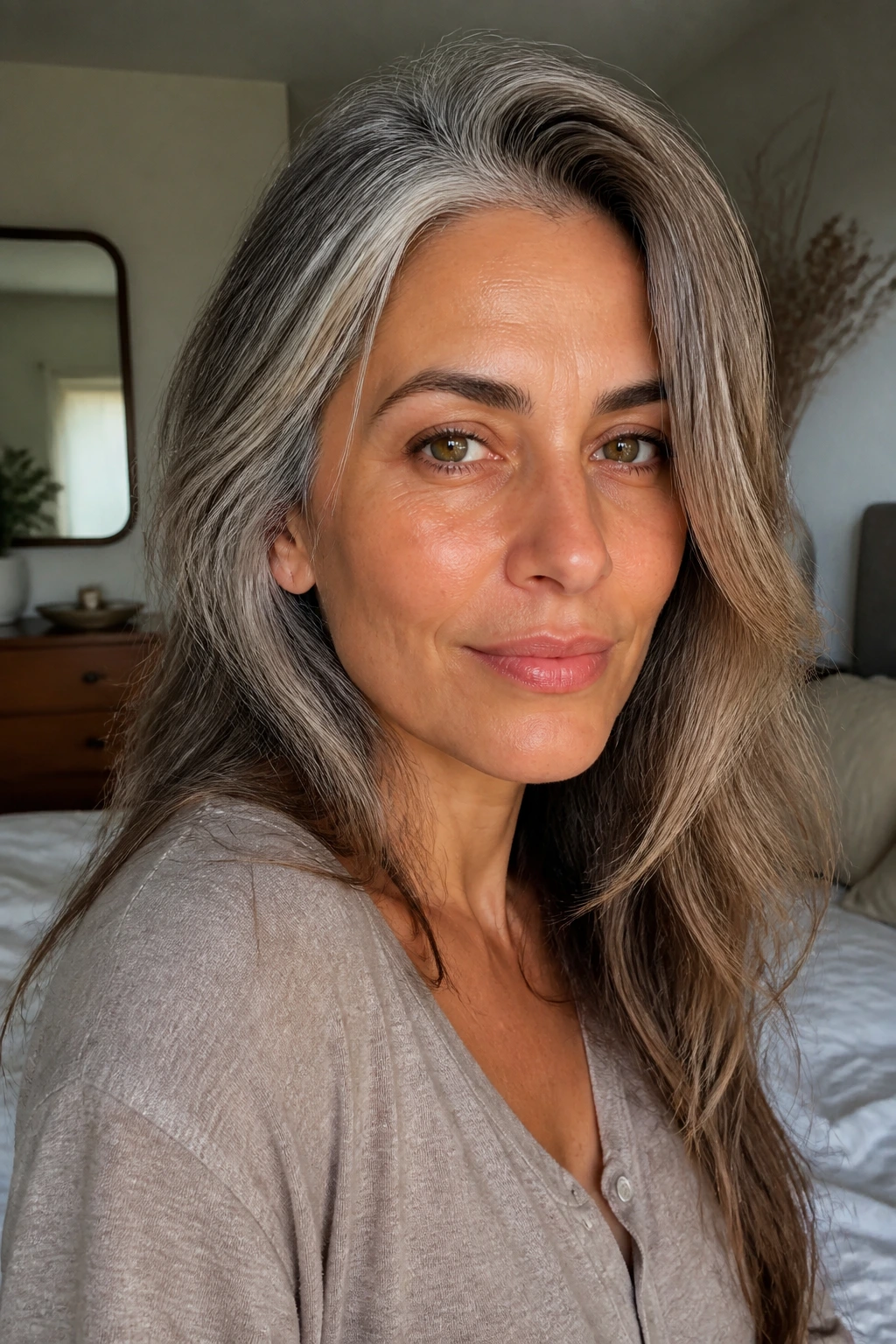
Olive skin is sneaky. In one mirror it looks golden, in another it looks green, and in daylight it can land somewhere in between. That shift is exactly why grey hair can look gorgeous on it one day and flat the next. The hair is not the only thing changing; the skin is reacting to the shade next to it.
Golden Olive Wants Beige, Not Ice
If your skin has a gold cast, pure white silver can drain the face and make the cheeks look sallow. Beige-silver, mushroom, pearl, and soft champagne tones keep the transition bright without turning it stark. That little bit of warmth near the face makes a huge difference.
Neutral Olive Can Handle More Contrast
Neutral olive skin usually takes pewter, graphite, and steel without much drama. The trick is shine and shape. Flat gray on flat hair can look dull fast, while a little bend in the ends or a glossy finish keeps the silver looking clean instead of chalky.
Green-Leaning Olive Needs Softness Nearby
If your skin already reads green in certain light, the hair should not copy that mood. Root shadow, beige ribbons, and soft movement through the mid-lengths stop the whole look from going swampy. That sounds blunt, but it is the honest version of the problem.
1. Smoky Silver Lob
A collarbone lob is the safest place to start when the grey line is still in progress. Ask for a smoky silver gloss instead of a bright white one; the smoke keeps olive skin from looking washed out, and the length gives the grey room to blend. I like this shape because it moves when you walk, which keeps silver from reading flat under office lights.
A loose bend through the mids is enough. Do not curl the ends into tight ringlets unless you want every piece of regrowth to show. The cleaner the shape, the cleaner the grow-out.
2. Salt-and-Pepper Pixie
Short hair is brutally honest, and that is exactly why this works. A textured pixie lets the natural grey and the remaining brunette sit side by side, which gives olive skin a clean frame instead of a heavy curtain. Keep the top feathered and the sides close; if the top gets too long, the transition starts to look accidental.
A matte paste is better than glossy cream here. The finish should look piecey and light, not wet. That little bit of texture makes the silver sparkle without turning the cut into a helmet.
3. Mushroom Brown Root Melt
A mushroom-brown root melt is the quiet fix for anyone who is not ready to go full silver on day one. Ask for a demi-permanent root in a cool taupe-brown, then blur it into the grey lengths with a soft gloss. On olive skin, that middle shade sits between the warmth in the face and the brightness in the hair.
It also buys you time. The grow-out line stays soft for weeks instead of announcing itself every time you part your hair. If your natural base is dark, this is one of the least annoying ways to let grey take over without looking like you got caught between appointments.
4. Pearl Gray Curtain Layers
Pearl gray has a softer, creamier edge than icy silver, which is why it flatters olive skin so well. Curtain layers around the cheekbones catch the light and keep the face from disappearing into the hair. The effect is gentle, not bland, and that matters more than people think.
Ask for layers that start around the chin and slide into the collarbone. Too many short layers can make the grow-out puff around the crown. Pearl gray wants movement, not fluff.
5. Charcoal Glossed Bob
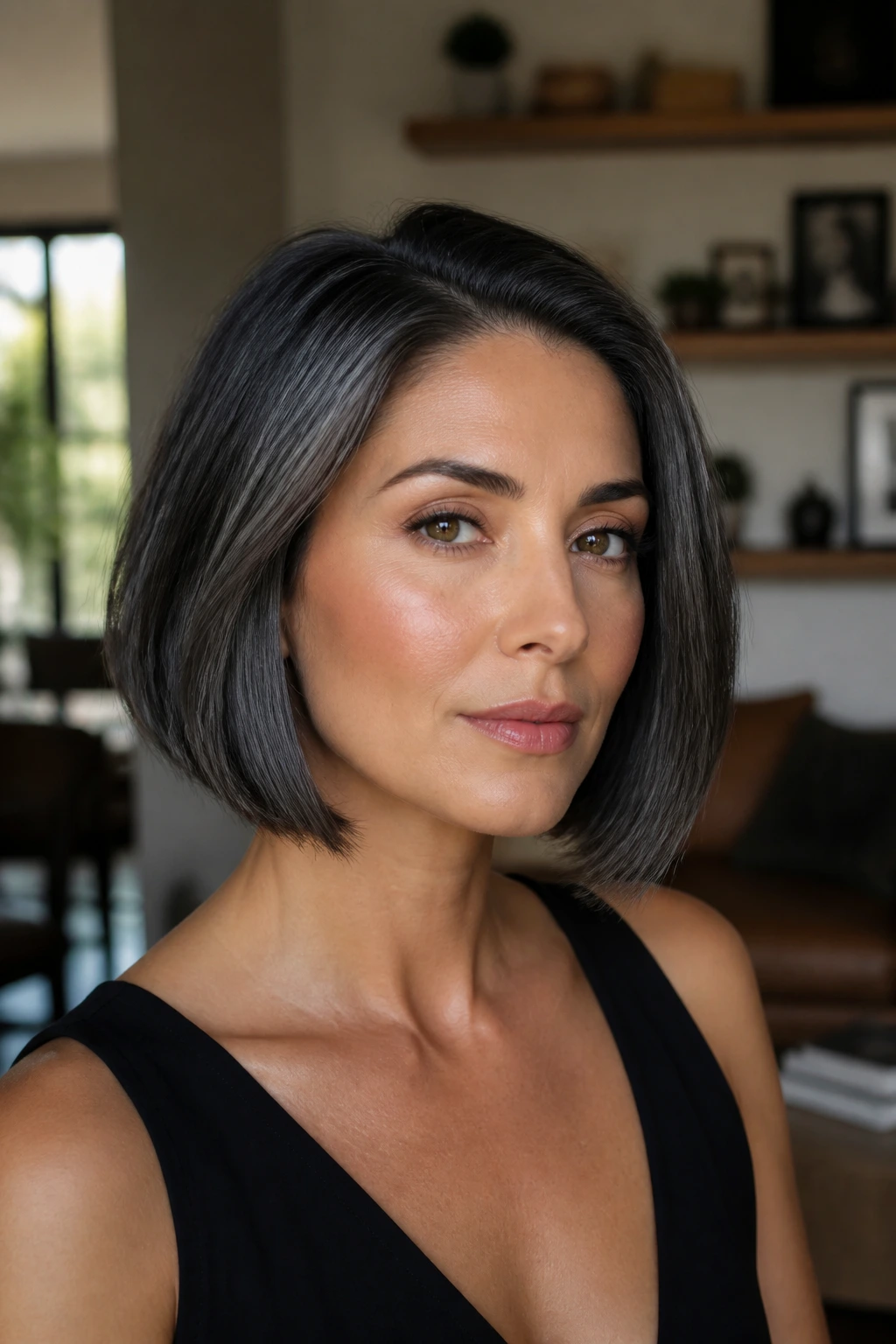
A charcoal gloss gives grey hair depth, and depth is what stops olive skin from looking drained. This is a smart choice if your natural grey feels coarse or wiry, because a deeper tone makes the surface look smoother. A chin-length bob keeps the line crisp without feeling severe.
I like this on people who wear darker brows or like a little edge in their clothes. The hair can be silver later. Right now, the charcoal does the work of connecting the old color and the new one.
6. Beige-Silver Balayage
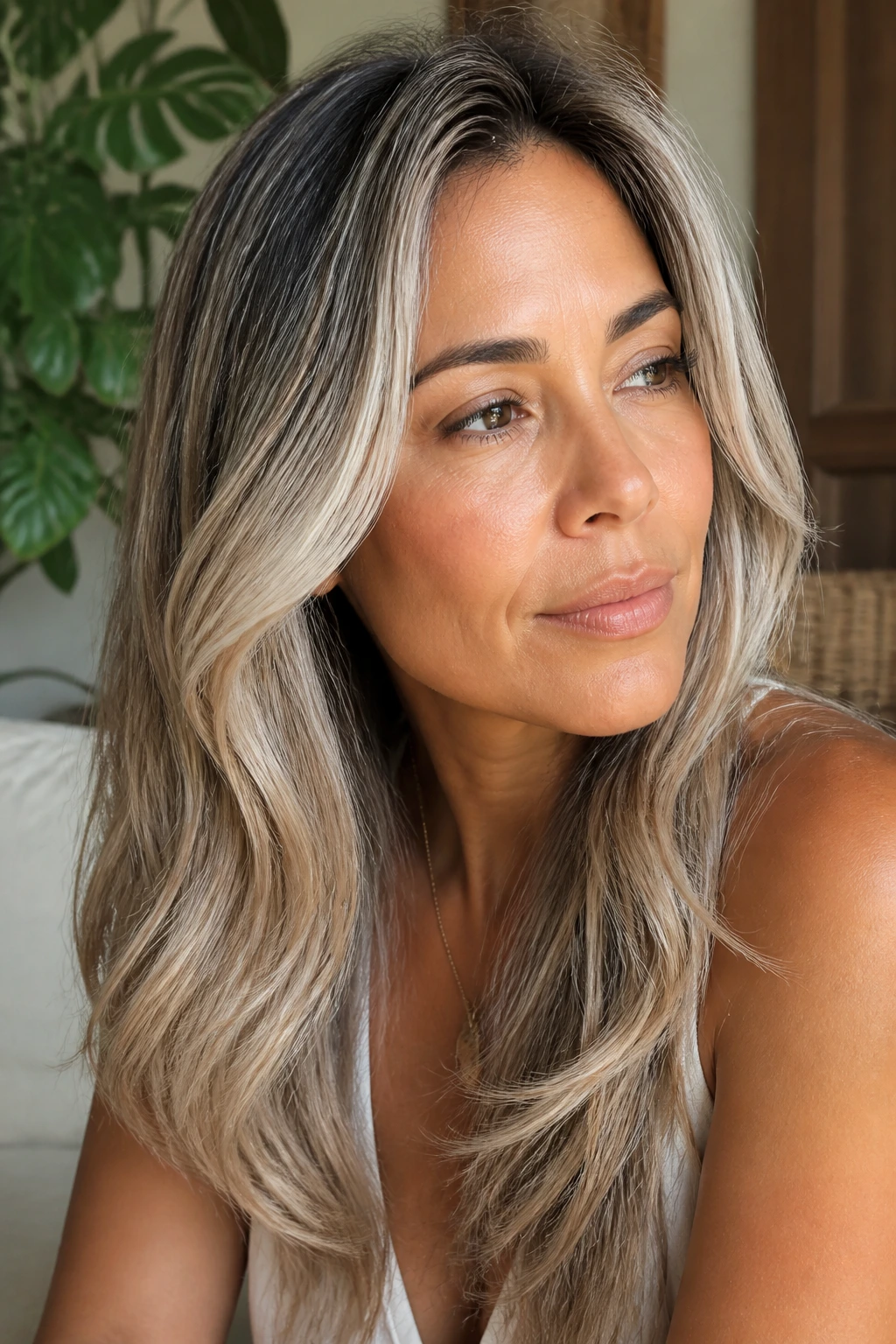
Beige-silver balayage is the easy compromise for golden olive skin. Instead of chasing a cold, blue-white silver, you let beige ribbons sit among the grey so the whole head stays warm enough. It reads airy, not icy.
The best version is hand-painted, not striped. Ask for soft pieces around the front, then a lighter scatter through the ends. If the highlights are too even, the grow-out gets busy fast.
7. Ash Brunette with Gray Ribbons
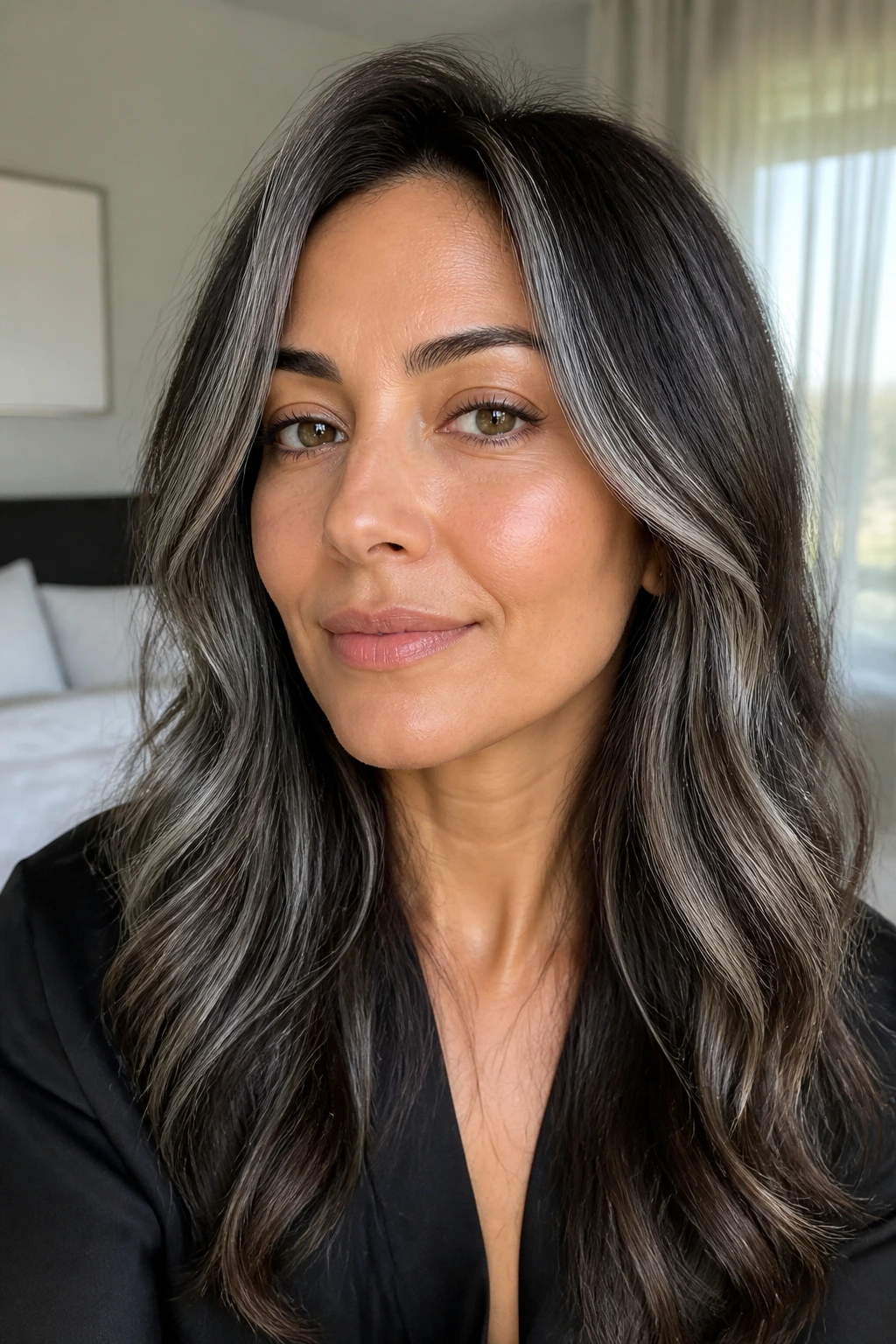
This is for the person who still wants brunette in the room. Ash brunette with grey ribbons keeps the base dark while threading silver through the lengths, which makes the transition feel gradual instead of dramatic. Olive skin tends to handle this well because the dark base anchors the face.
The ribbons should be thin enough that they catch light, not thick enough to look streaky. Keep the ash soft; too much matte ash can make the hair look dusty. A glossy blowout fixes that in a hurry.
8. Steel-Tipped Long Layers
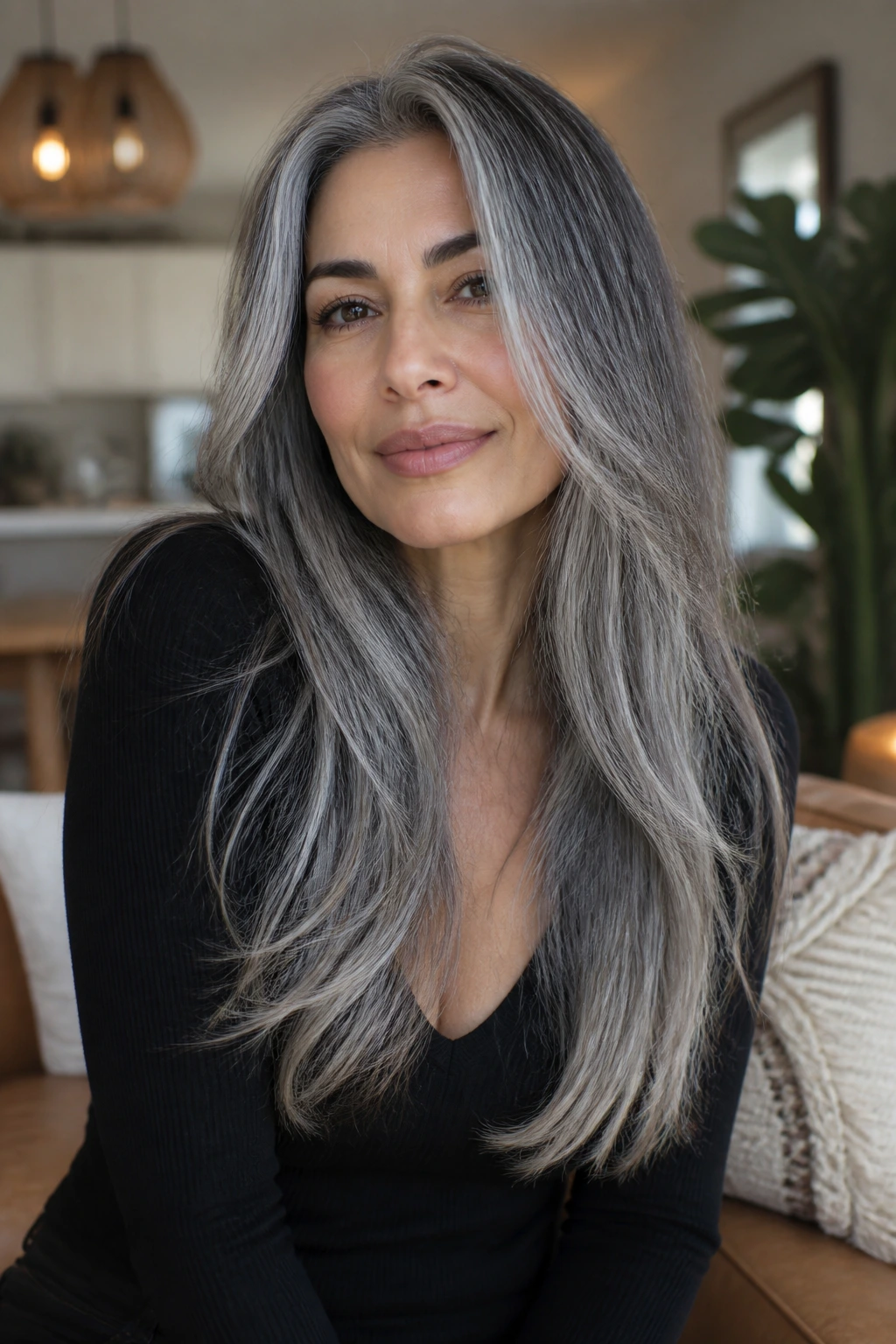
Long hair can make grey grow-out look heavy if the cut is limp. Steel-tipped layers solve that by keeping the top a little deeper and the ends brighter, almost like a soft metal fade. Olive skin gets enough contrast near the face without losing dimension through the length.
This style works best when the layers are subtle and the finish is smooth. A round brush or a large-barrel iron can add just enough bend. Leave the ends polished, not frayed.
9. Moonlit Silver Waves
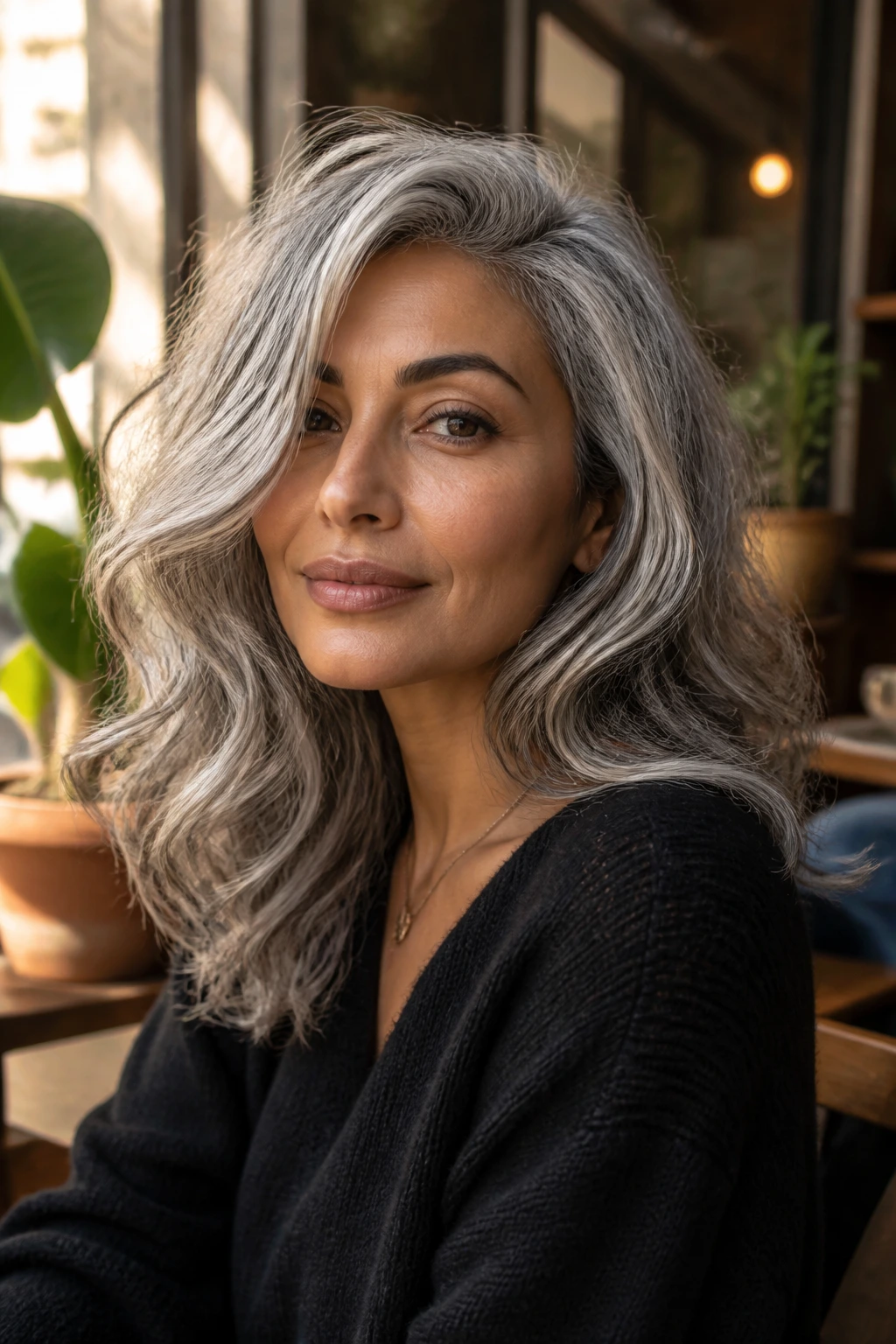
Moonlit silver is the look people notice from across the room. It is brighter than pearl, cooler than beige, and best on olive skin that leans neutral or takes contrast well. Soft waves keep it from reading harsh, which is the whole trick.
Use a side part or a deep off-center part to break up the brightness. If every strand sits in the same place, the color can look costume-like. The wave pattern gives it shadow.
10. Dark Root with Cloudy Ends
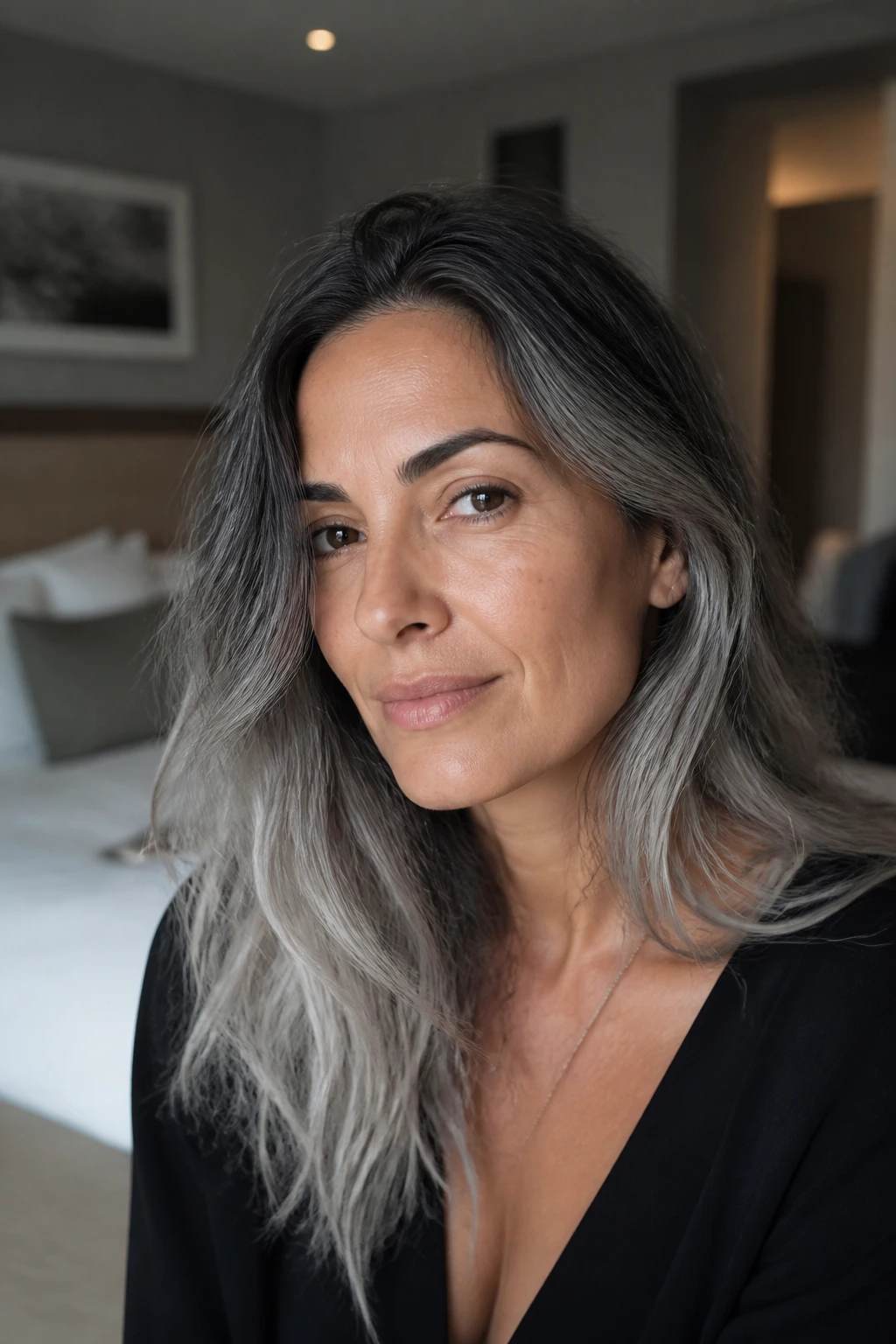
If you want the grow-out to disappear in plain sight, a dark root fading into cloudy silver ends is a smart move. The root gives the eye somewhere to start, and the cloudy ends keep the transition from looking like a hard line. Olive skin usually likes this because the face stays framed by something deeper.
The trick is keeping the fade soft. No harsh stripe at the mid-lengths. Ask for a shadow root and a muted toner, then let the hair air-dry a little rough so it does not go flat.
11. Frosted Fringe and Tapered Crop
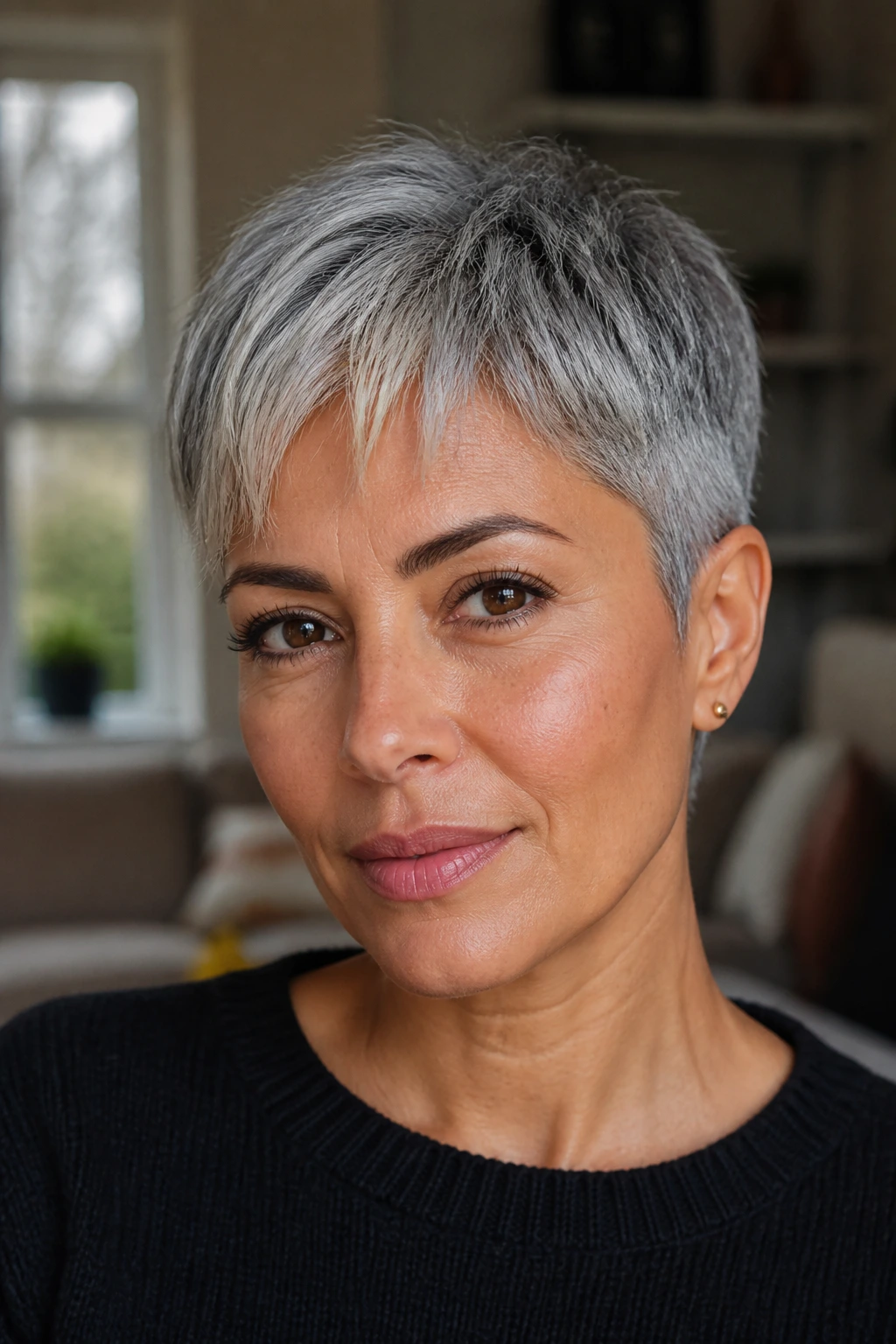
A fringe changes everything. Frosted bangs pull the eye upward, which is useful when you are growing out grey because the front takes attention away from the line of demarcation lower down. The tapered crop keeps the back and sides neat, so the silver looks tailored.
This cut is especially kind to olive skin when the fringe sits soft rather than blunt. A tiny amount of separation at the ends makes the hair feel light. Heavy bangs can box the face in fast.
12. Pewter Shag
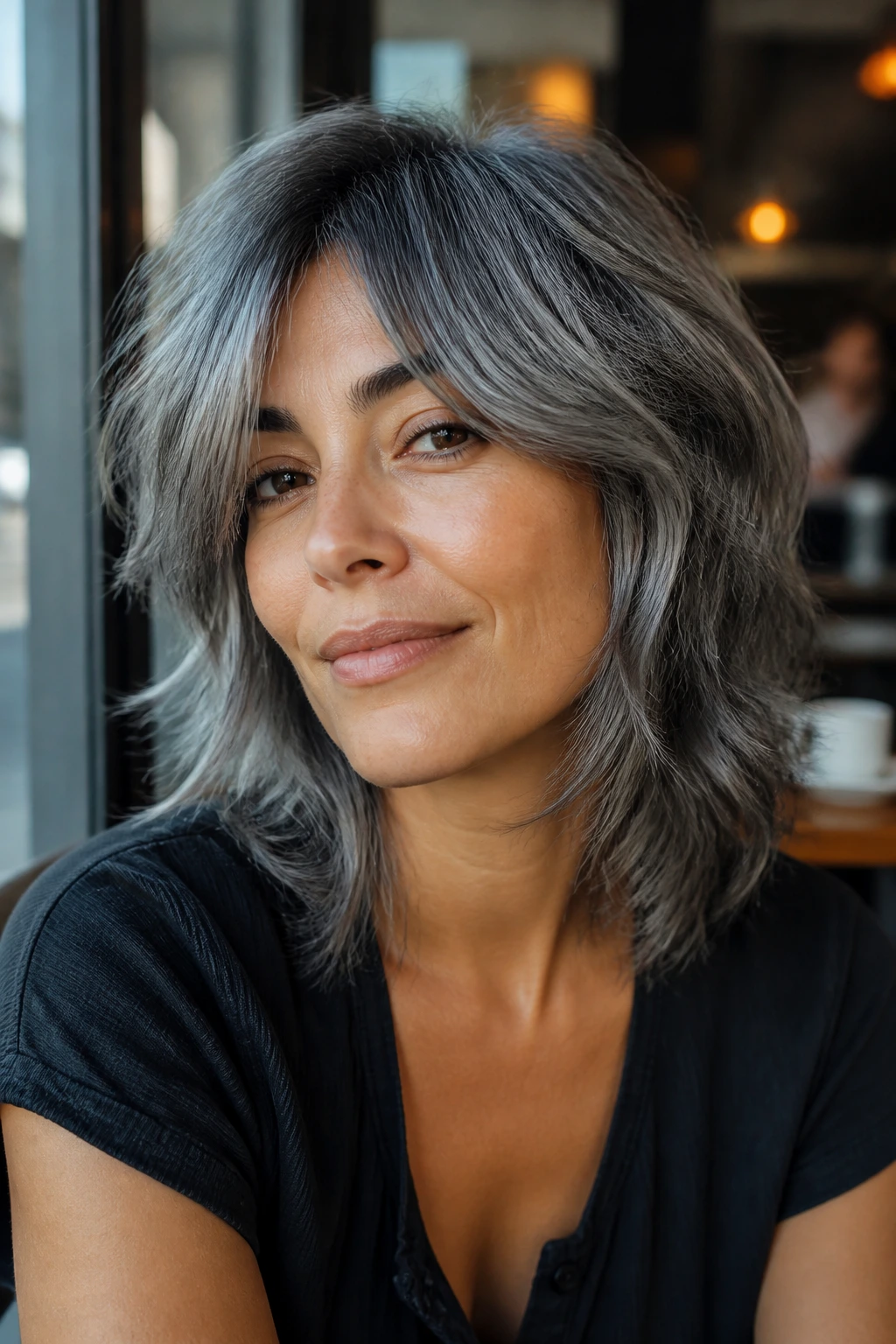
The shag is one of the easiest cuts for grey grow-out because it hides a thousand awkward stages. Pewter gives the silver a muted, metallic quality that sits nicely on olive skin, especially if your undertone leans neutral. The shag shape adds movement, so the grow-out line never stays still long enough to bother you.
Keep the layers airy and the bangs piecey. This is not the place for stiff styling. The more the hair bends and breaks up, the better the grey looks.
13. Creamy Beige Blend
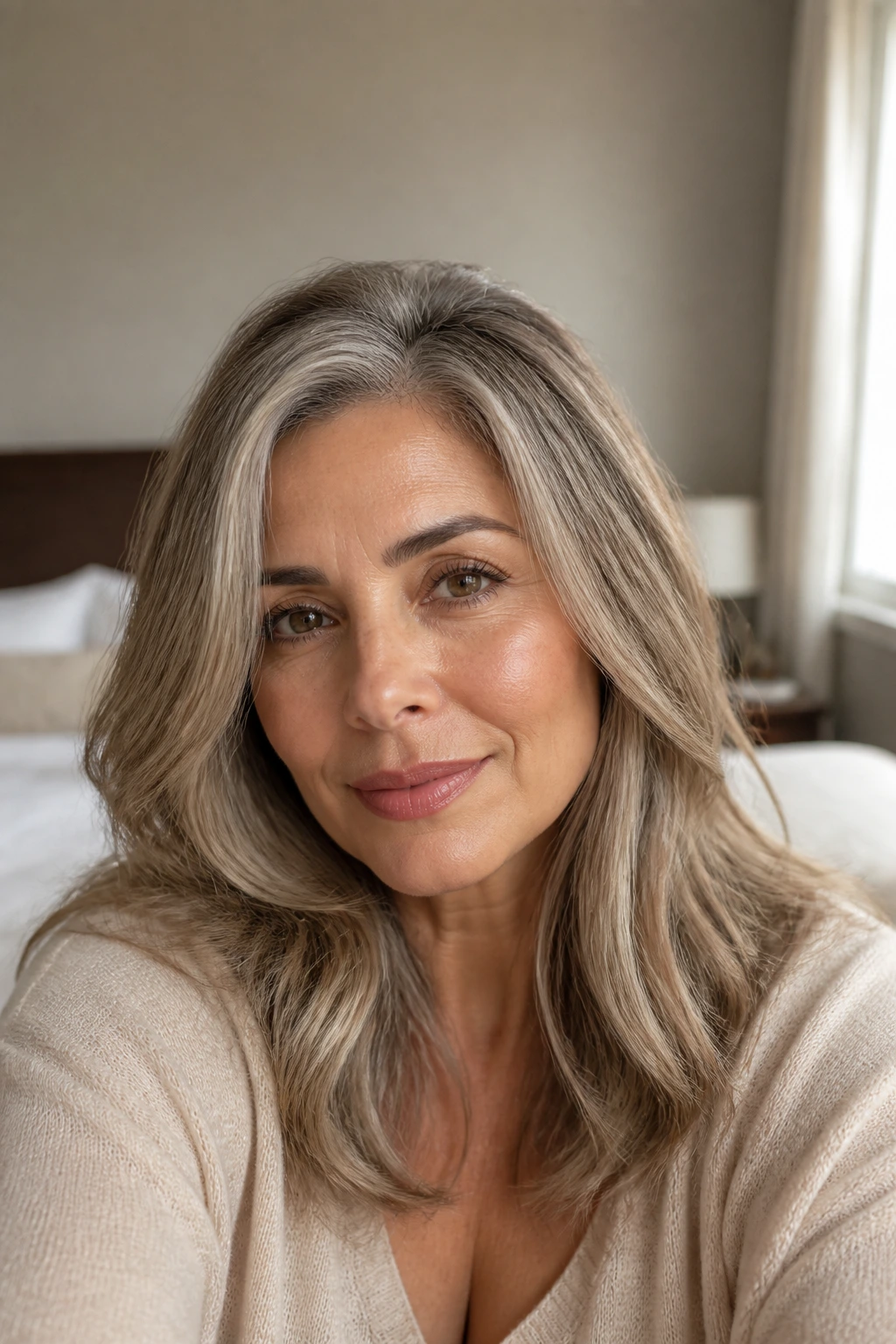
Creamy beige is the answer when ash starts to feel too severe. It softens the transition, keeps the hair from going flat, and gives olive skin a warmer frame near the cheeks. This is one of my favorite looks for people who want grey hair without the icy finish.
Ask for beige gloss over the lightest pieces and keep the roots slightly deeper. That contrast helps the grey read intentional instead of accidental. It also makes the grow-out easier to live with between appointments.
14. Silver Money Piece
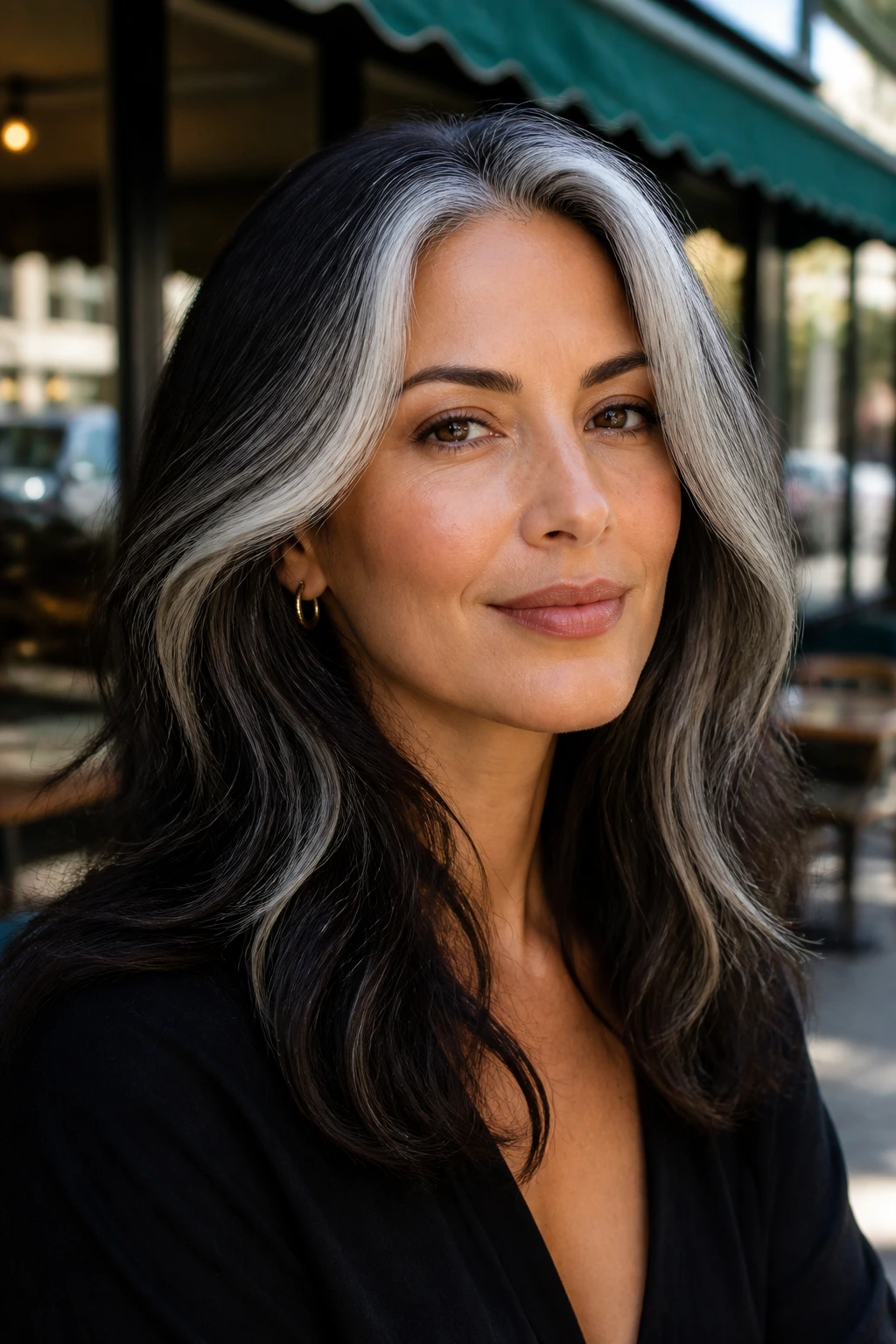
A money piece does one job well: it brightens the face. When you place silver or pearl pieces right at the hairline, olive skin can look more awake without changing the whole head. It is a clever choice if you are nervous about an all-over silver shift.
Keep the rest of the hair deeper, especially if your natural base is brown. That contrast makes the bright front pieces pop. Too much light around the face can turn harsh fast, so a little restraint helps.
15. Graphite Undercut Pixie
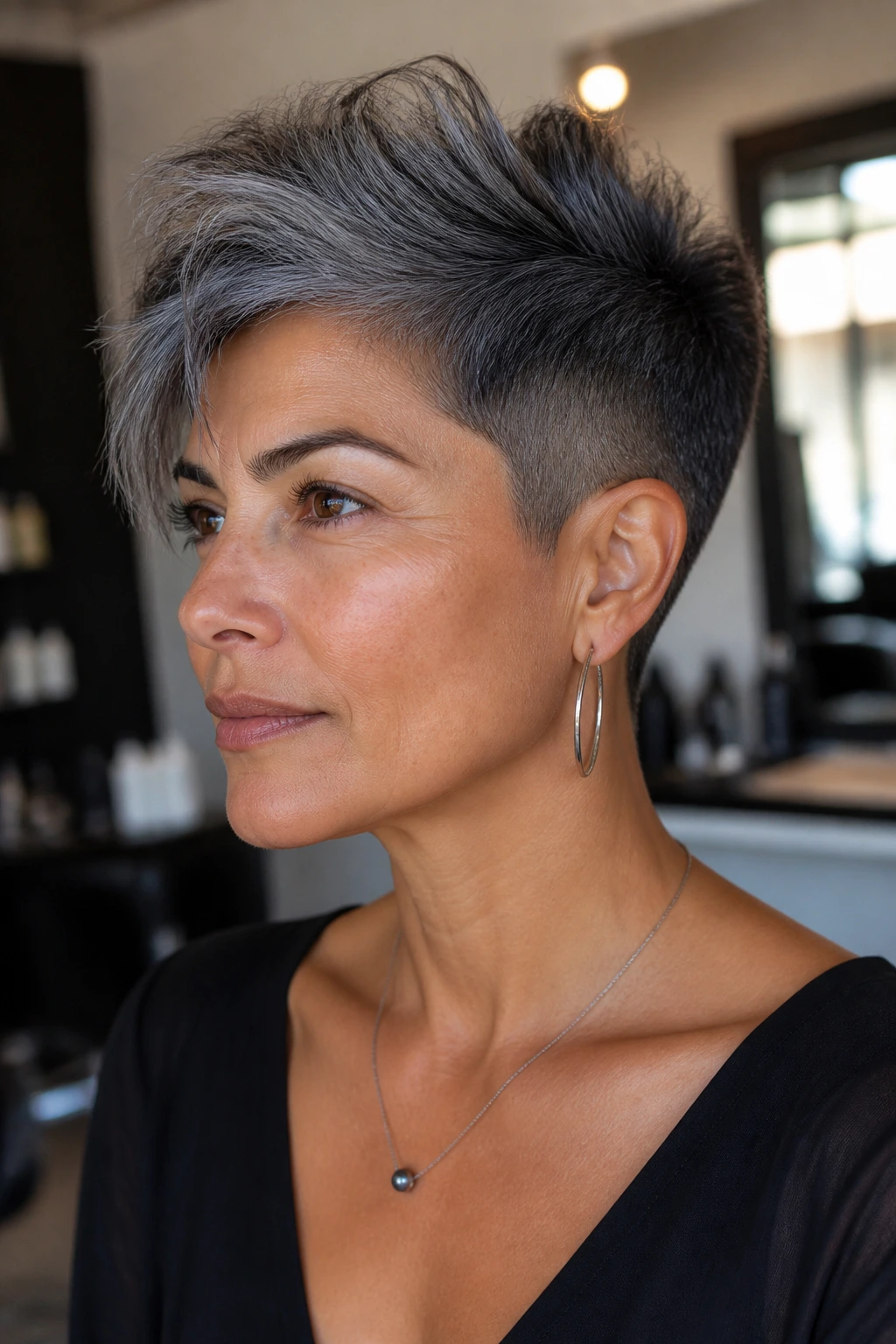
Graphite gives the shortest cuts a real backbone. An undercut pixie removes bulk where the hair tends to puff out and leaves the top long enough to show the grey without looking puffy. On olive skin, that dark graphite edge keeps the face grounded.
This is a very low-styling cut, which is part of the charm. A pea-sized dab of paste is plenty. If you want something tidy, edgy, and not fussy, this is it.
16. Dimensional Mocha Lowlights
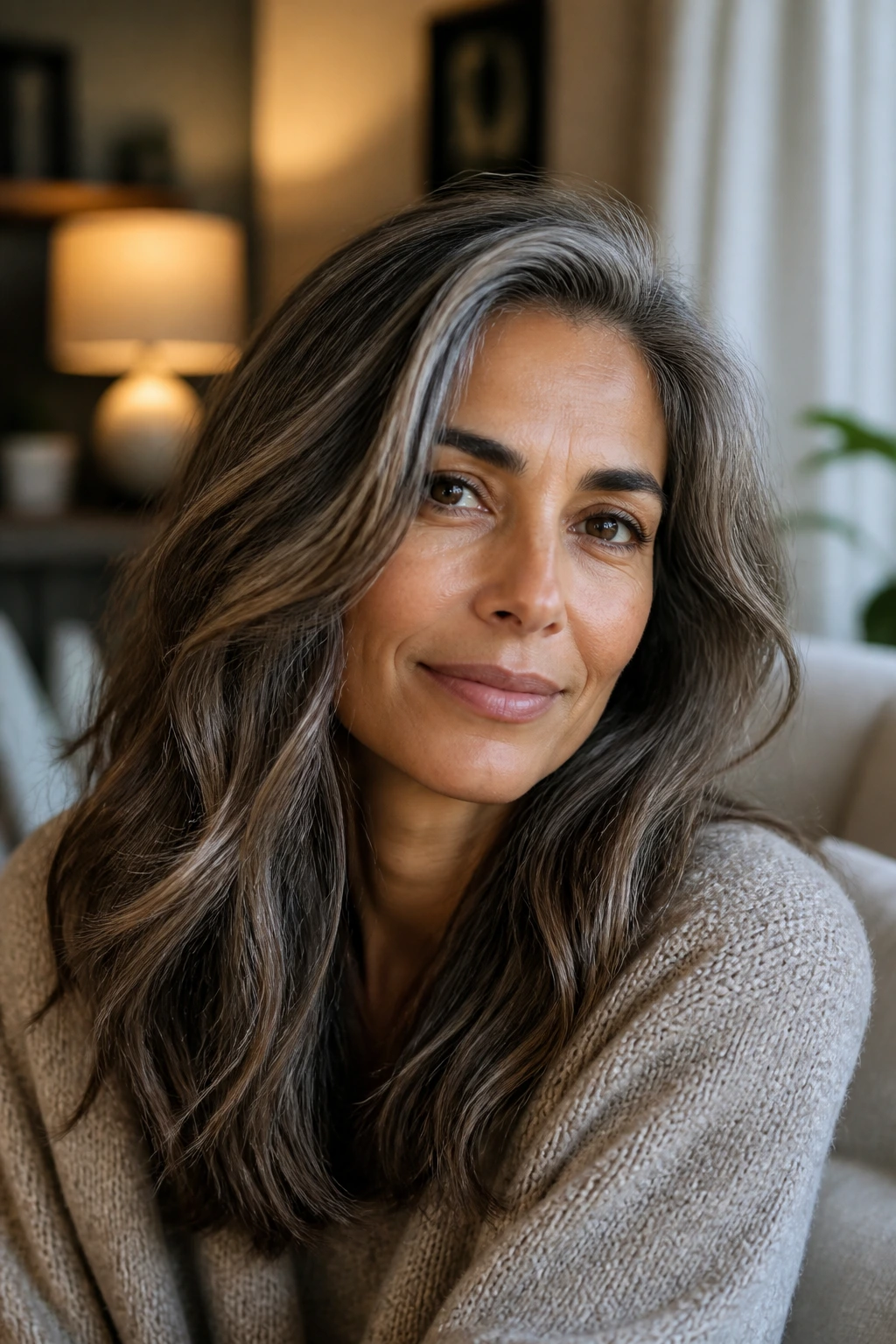
Mocha lowlights are the thing to reach for when grey hair starts looking a little too bright and you want some depth back. The darker strands tuck into the silver and keep the whole head from flattening out. Olive skin usually looks stronger with that kind of depth nearby.
Ask for lowlights one or two shades deeper than your natural base, not jet black. Black can look like a hard stamp on top of silver. Mocha gives you contrast without the harsh line.
17. Smoky Ombre Lob
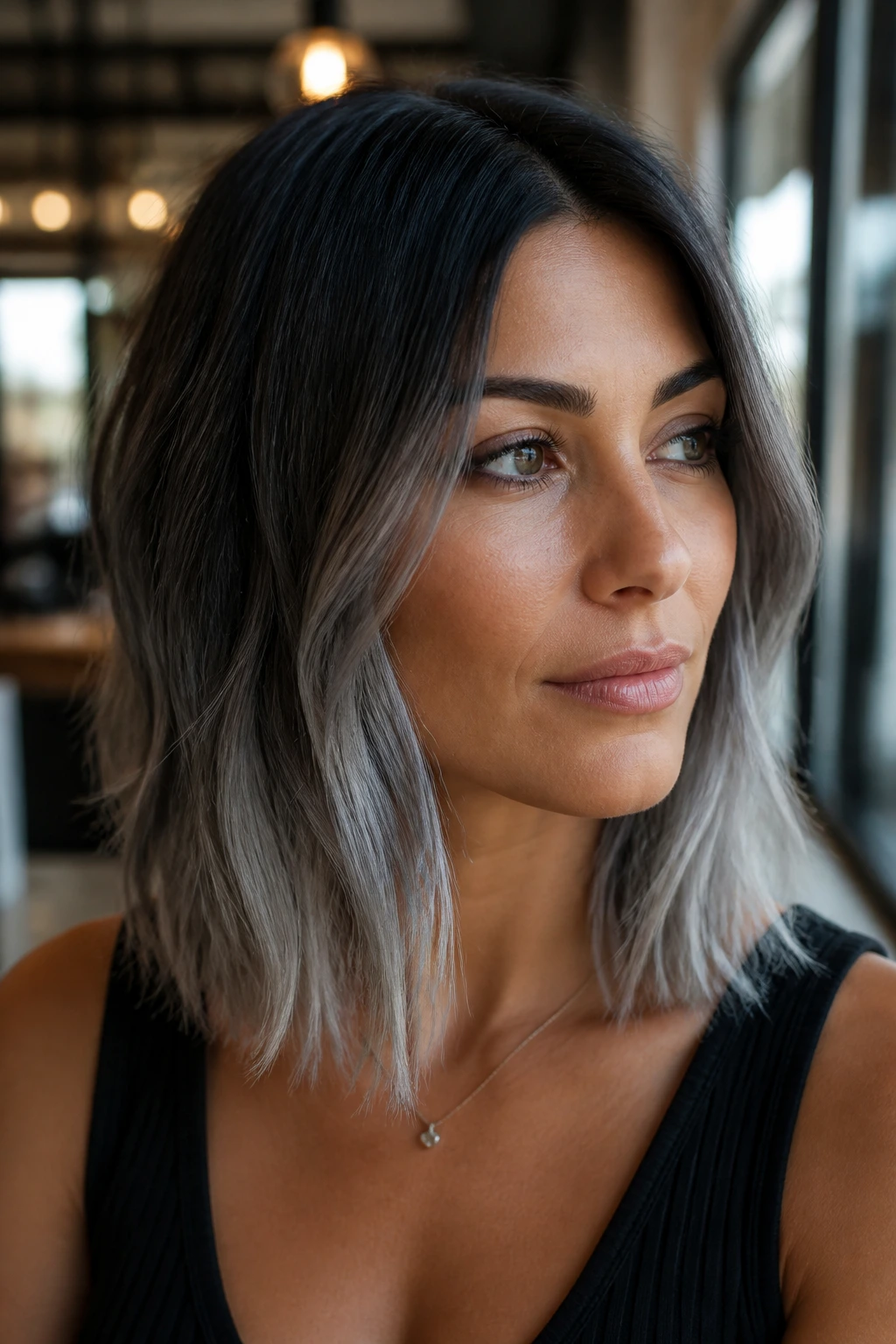
A smoky ombre lob is a cleaner grow-out path than people expect. The darker root stays grounded, the mids soften, and the silver ends show up with a little drama. Olive skin likes this because the hair does not go from dark to light in one blunt jump.
The ombre should feel like a fade, not two separate colors. If the bottom half looks pasted on, the whole thing loses shape. Ask for a muted toner at the ends so the silver looks smoky instead of brassy.
18. White-Gold Balanced Silver
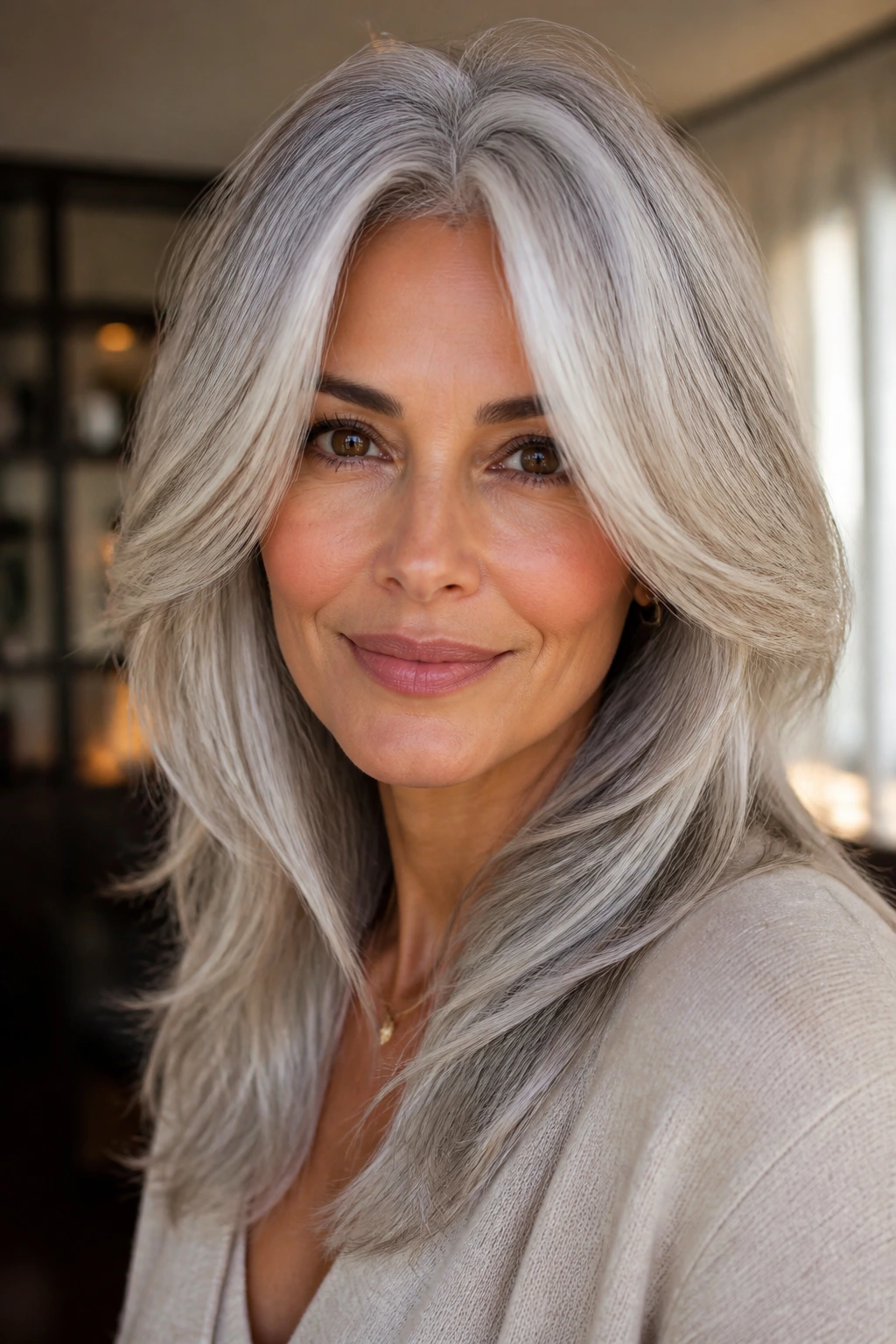
This is the hybrid that saves golden olive skin from looking drained. White-gold balanced silver keeps the brightness of grey but adds a whisper of warmth so the face still feels alive. It is a surprisingly pretty middle ground.
The best version is never yellow. Think champagne, not brass. You want the silver to glow, not flash. That balance is hard to explain in words, but easy to spot when you see it next to the skin.
19. Salted Cocoa Curls
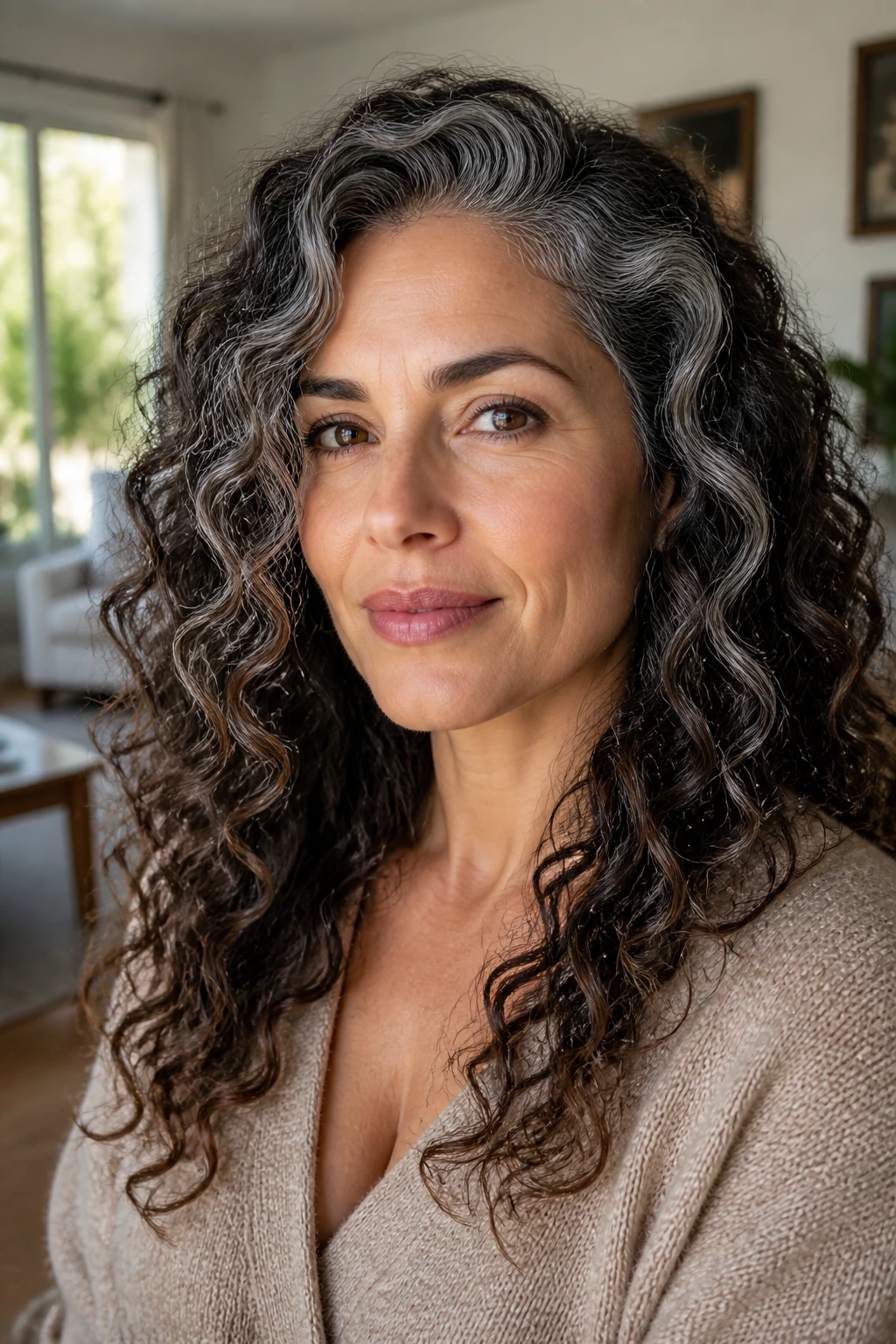
Curly hair makes grey grow-out look less like a line and more like a blend, which is a gift. Salted cocoa curls keep some brunette depth in the curls while letting the grey show up in ribbons and flashes. Olive skin benefits from the texture because the color never sits flat against the face.
A curl cream with a little hold helps the silver stay defined. Too much oil can make the gray look dull, and too little makes curls puff. There is a narrow middle path here, and it is worth finding.
20. Cool Taupe Blend
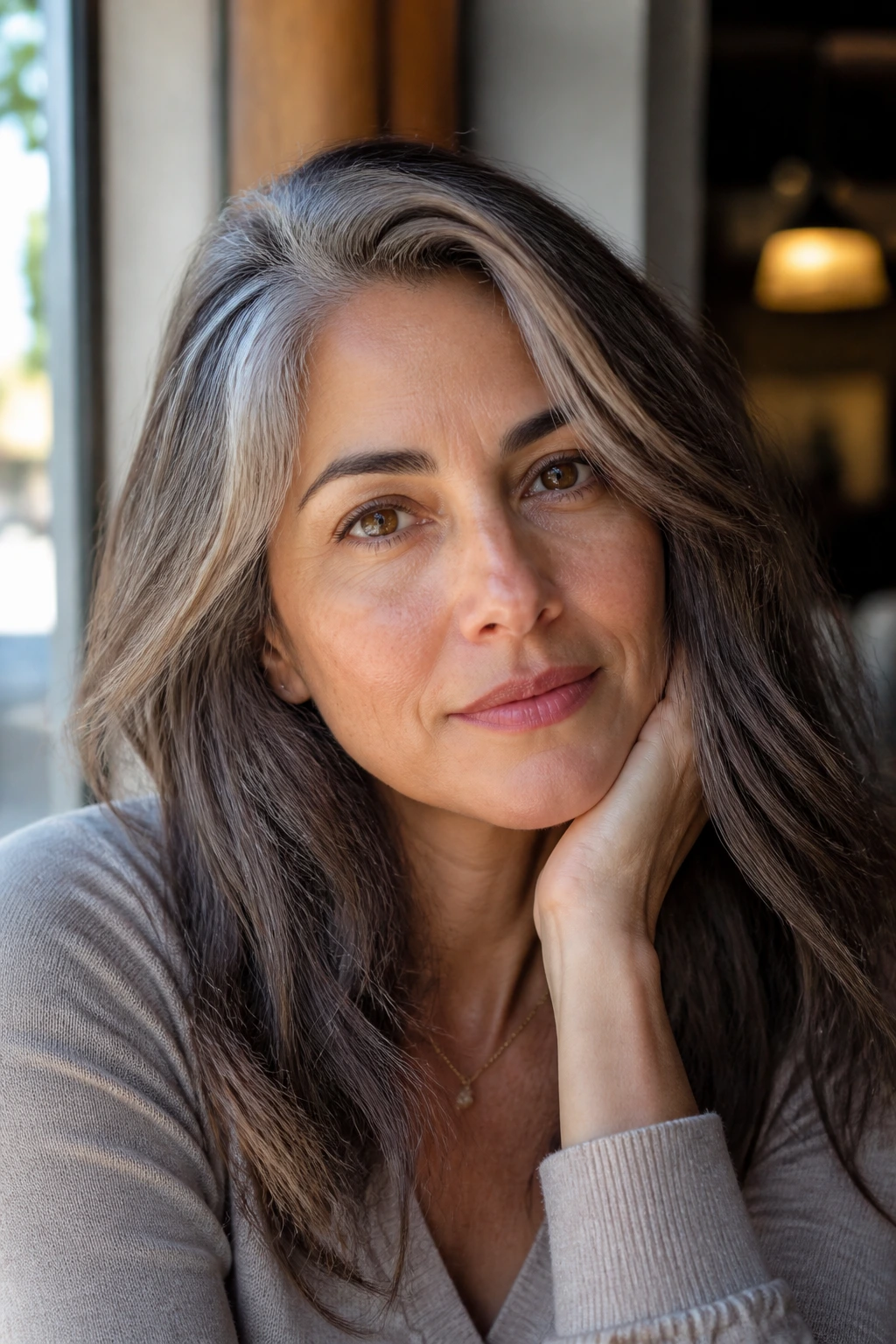
Cool taupe is one of the safest tones for olive skin when you do not know whether you lean warm or cool. It sits between brown and gray, which makes the grow-out line softer and the overall finish calmer. I like it because it rarely fights the skin.
This is the kind of color that looks expensive in a quiet way, but that is not the point. The real value is that it gives the grey room to appear without screaming for attention. If you want subtle, this is a good lane.
21. Icy Silver Blunt Cut
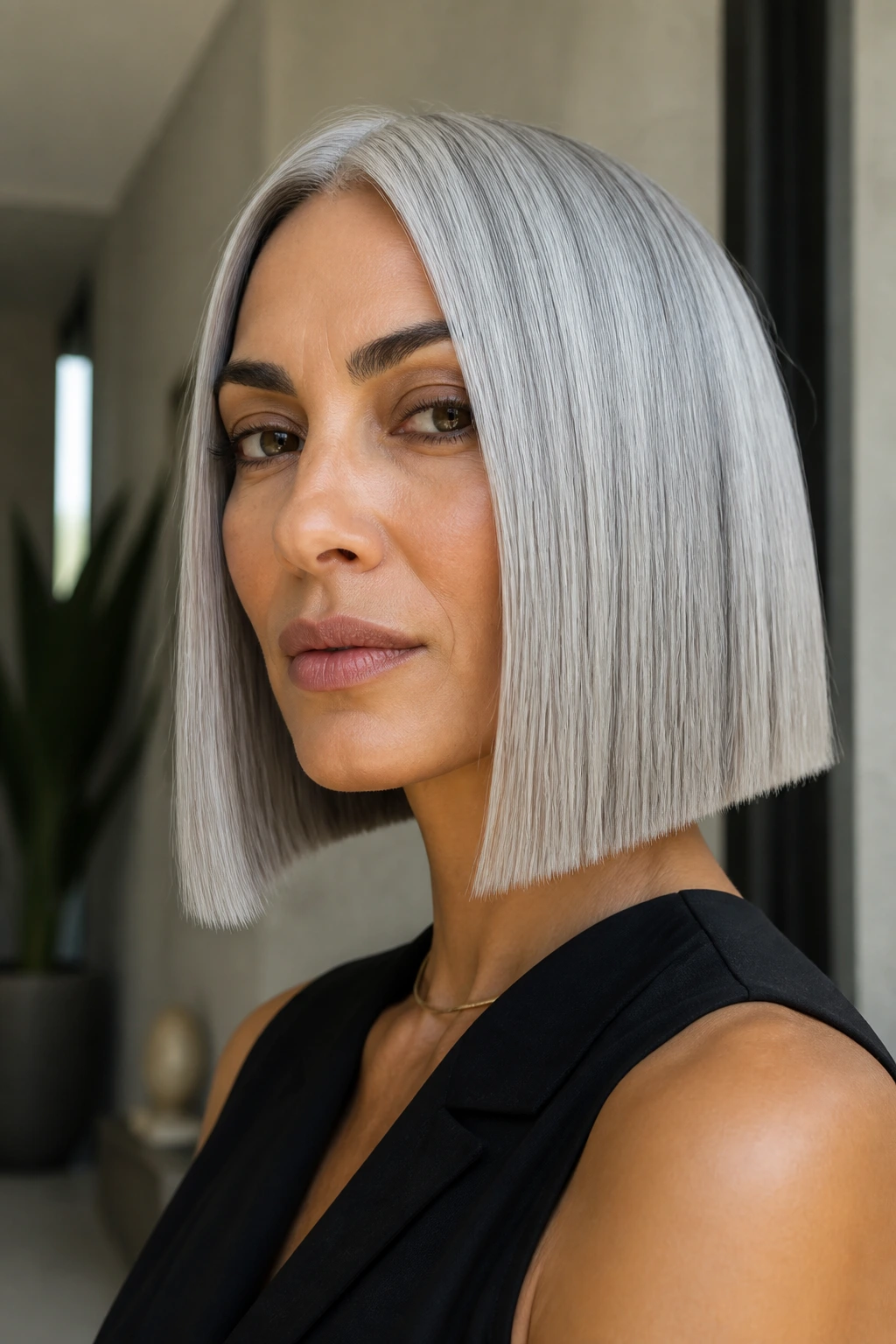
A blunt cut with icy silver is high contrast, and high contrast can be gorgeous on olive skin when everything else is balanced. The sharp line of the cut keeps the color from floating away from the face. It is a stronger look, not a softer one.
You need polished styling here. A smooth blow-dry, a clean part, and defined brows keep the whole thing from looking harsh. If your makeup routine is minimal and you do not want to change it, this one may feel like too much.
22. Rooted Champagne Gray
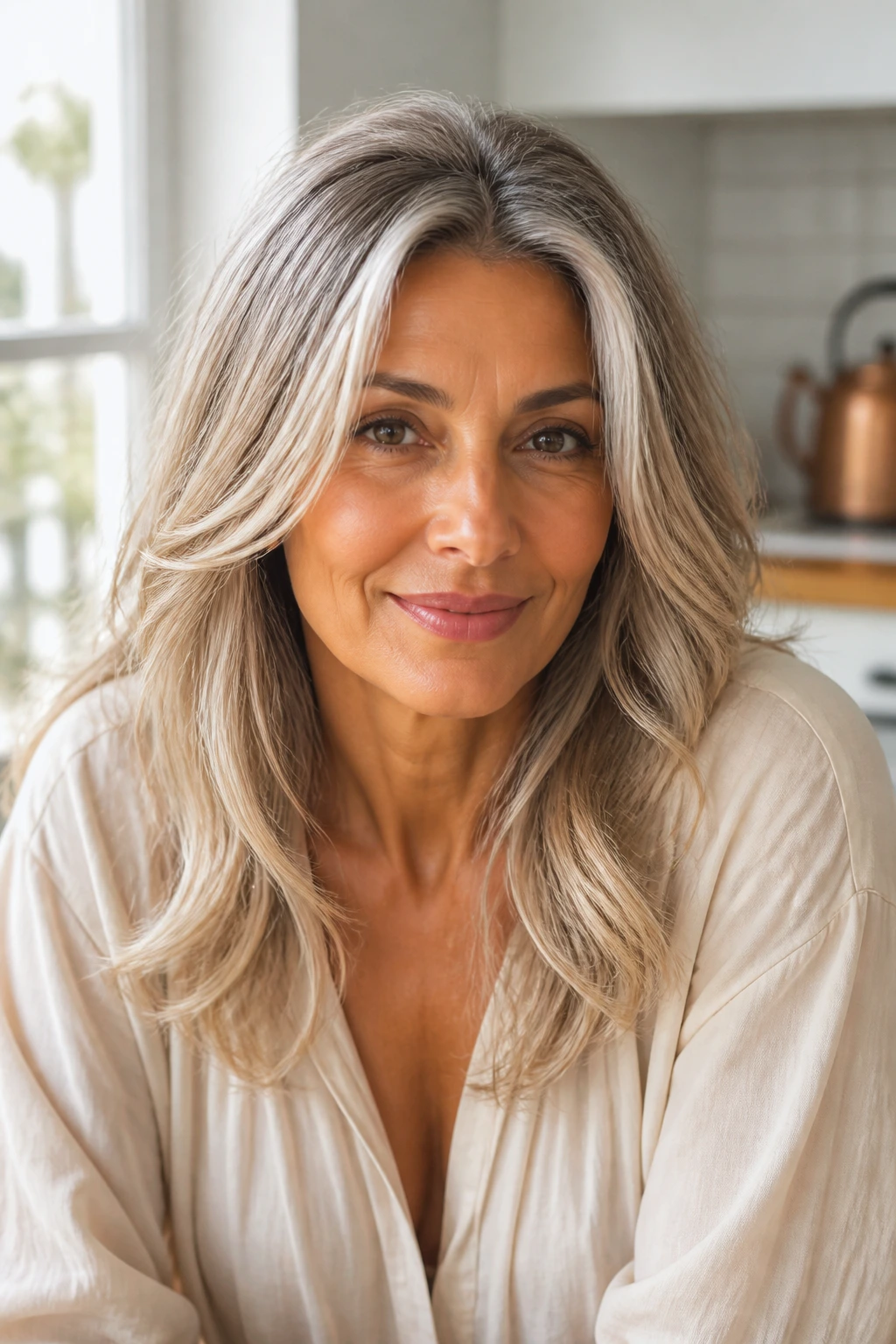
Champagne gray is warmer than icy silver, but it still feels refined. The rooted version keeps the dark line at the scalp soft, which helps olive skin stay lively while the grey comes in. This is a good fit if your undertone has a golden streak.
The champagne tone should stay subtle. Too much gold and the silver loses its edge. Too much ash and the face can look tired. The sweet spot is a soft glow near the front and a cool finish through the lengths.
23. Storm-Cloud Balayage
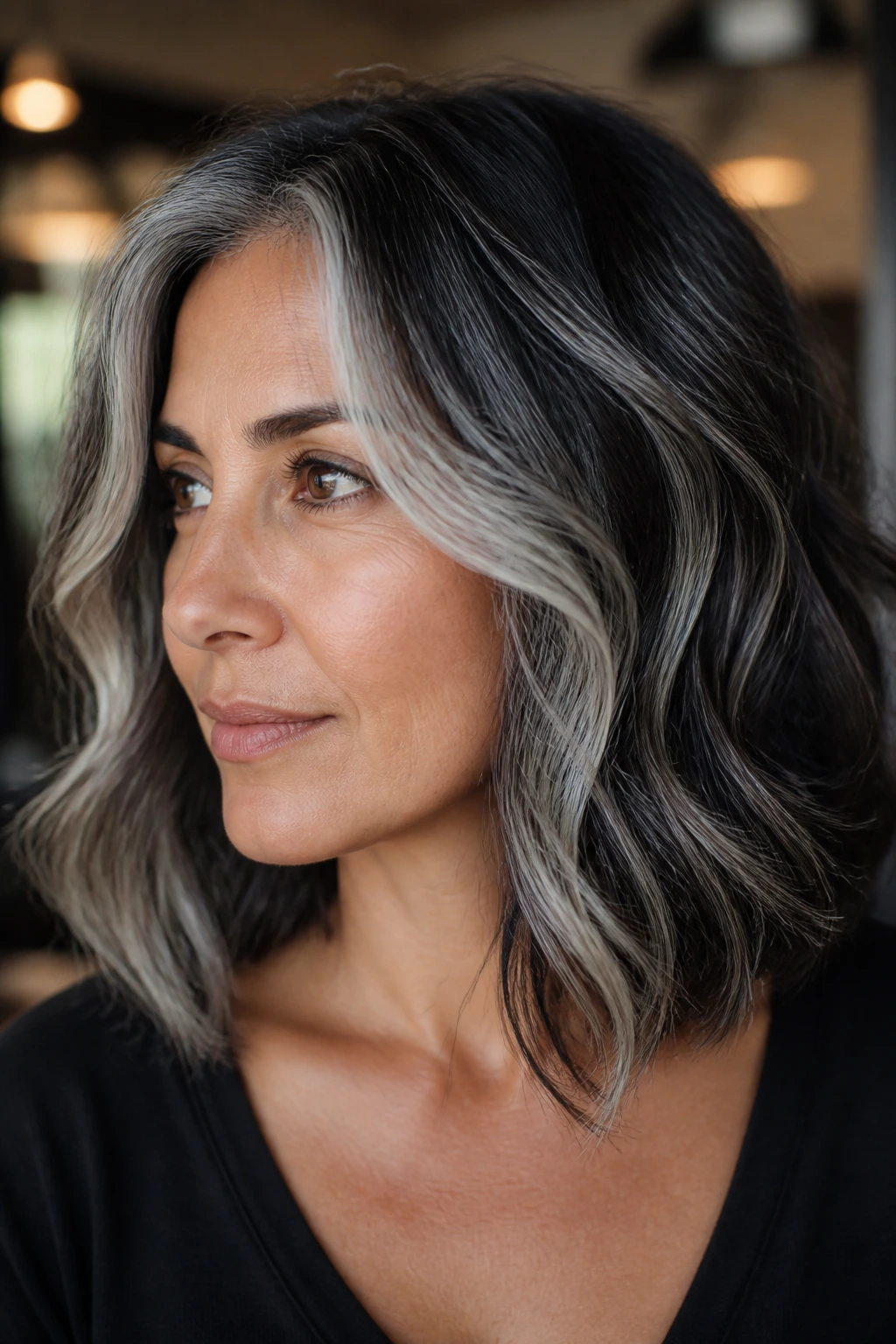
Storm-cloud balayage has depth, shadow, and silver all in one head of hair. It works because the darker strands break up the brightness, which is a relief for olive skin that can look flat under one-tone gray. The effect is moody without looking heavy.
Think of it as a dimmer switch, not a light switch. You want dark, medium, and silver tones all talking to each other. A few brighter face-framing pieces keep it from sinking into the background.
24. Softly Blended Natural Gray Afro
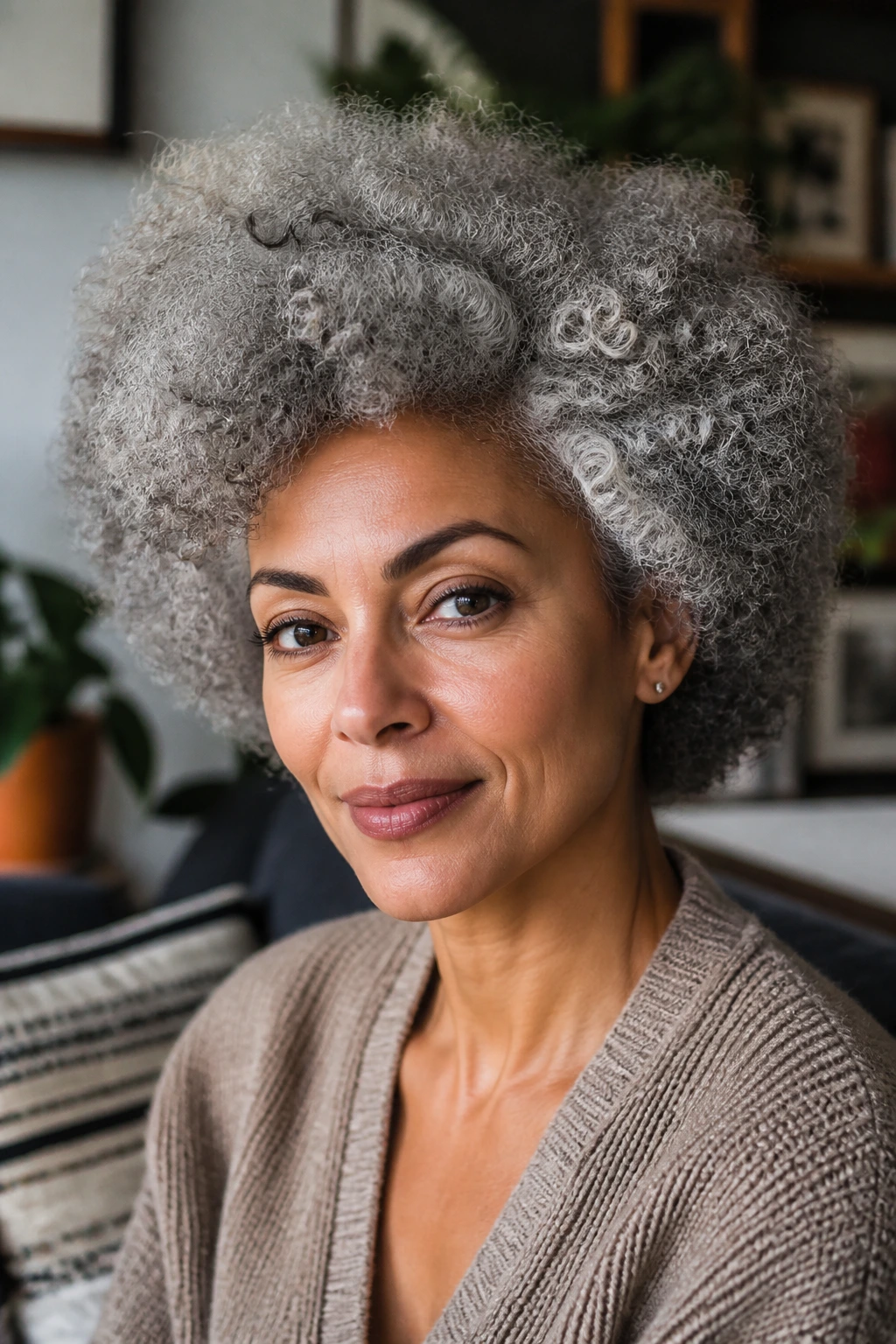
Natural texture changes the entire conversation. A softly blended gray afro lets silver sit inside the curl pattern instead of sitting on top of it, which makes the grow-out feel organic and full. Olive skin looks especially good here when the shape stays round and the finish stays moisturized.
The key is shape. Keep the sides clean and the crown lifted so the gray has room to show. Heavy products will drag the curls down and make the silver look dull, so a light leave-in and a little oil are enough.
25. Metallic Silver Waves
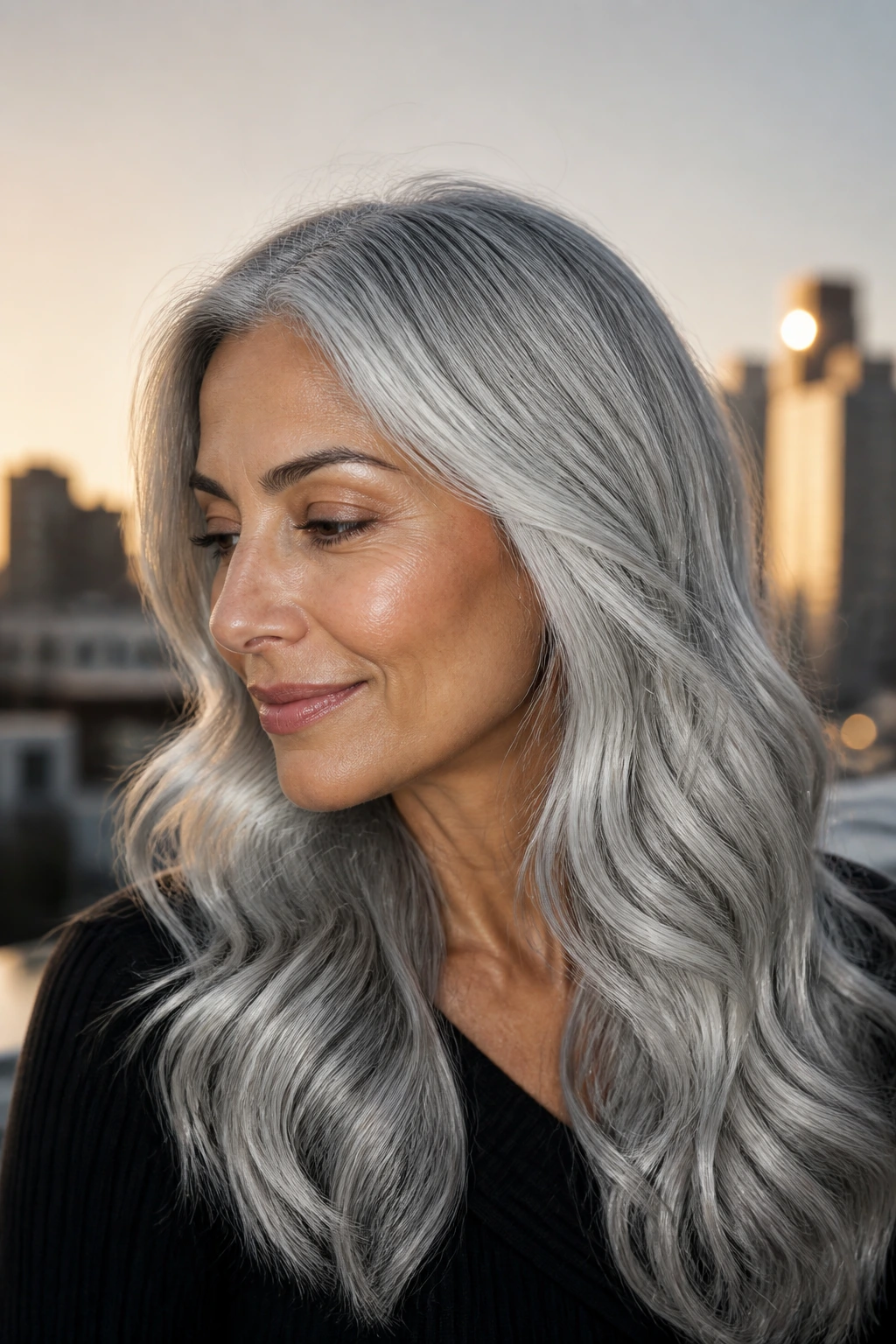
Metallic silver waves are for the person who wants the finish to feel polished, not fuzzy. The metallic tone catches light in a smooth way, and olive skin often looks cleaner against that kind of shine. Waves keep the metal finish from looking too severe.
This style likes healthy ends. If the hair is porous or over-processed, the metallic tone can go patchy fast. A bond-building treatment and a clear gloss can keep the surface sleek enough for the color to behave.
26. Mossy-Gray Mushroom Blend
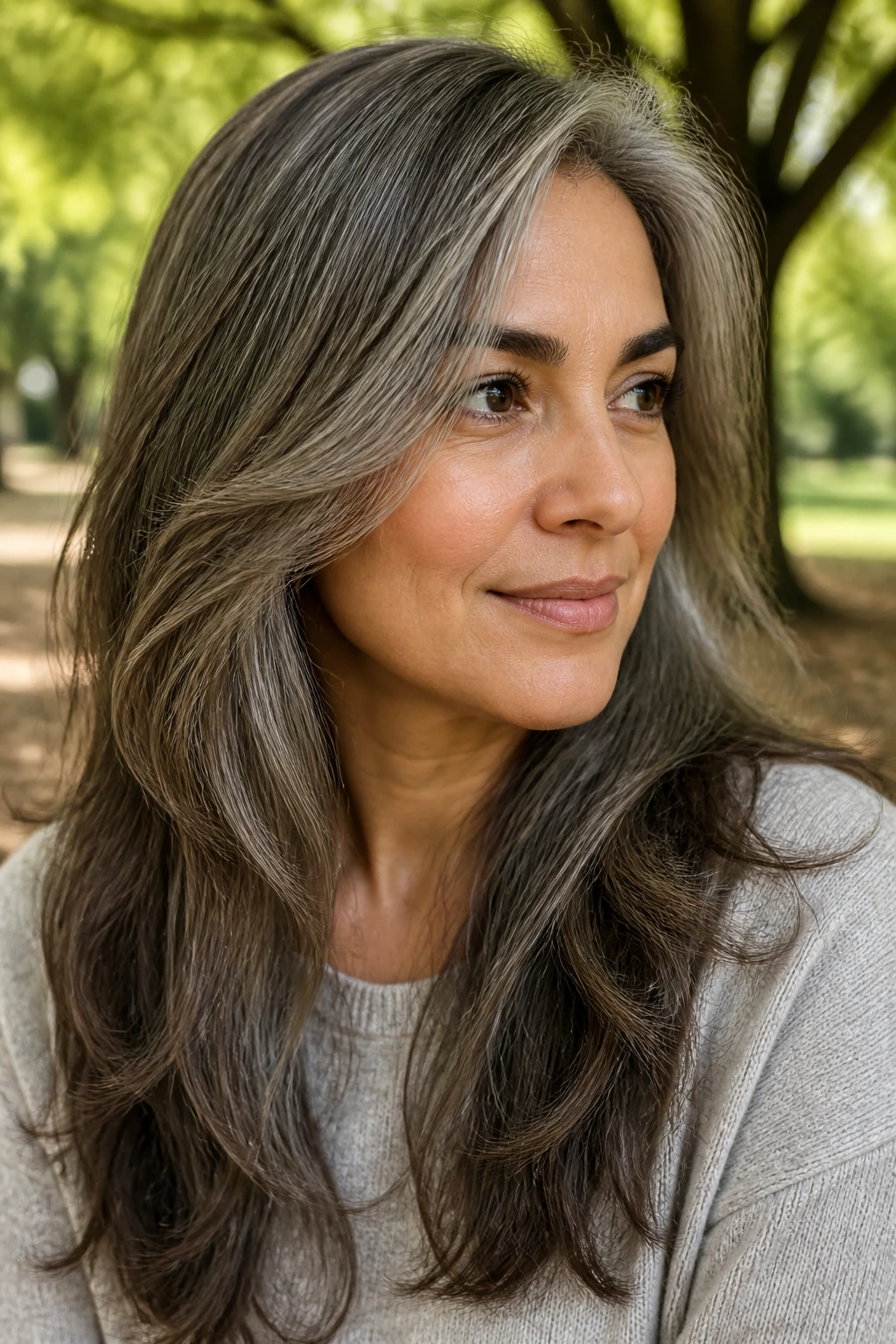
This sounds earthier than it looks. Mossy-gray mushroom blend uses cool brown and gray together so the transition feels grounded, which can be a gift on olive skin that tends to go green in some light. The earthy tone is soft, not muddy, when it is done well.
The balance matters. Too much green in the toner and the face loses warmth; too much beige and the grey disappears. You want a neutral middle lane that feels lived-in.
27. Brushed-Out Brunette-to-Gray Fade
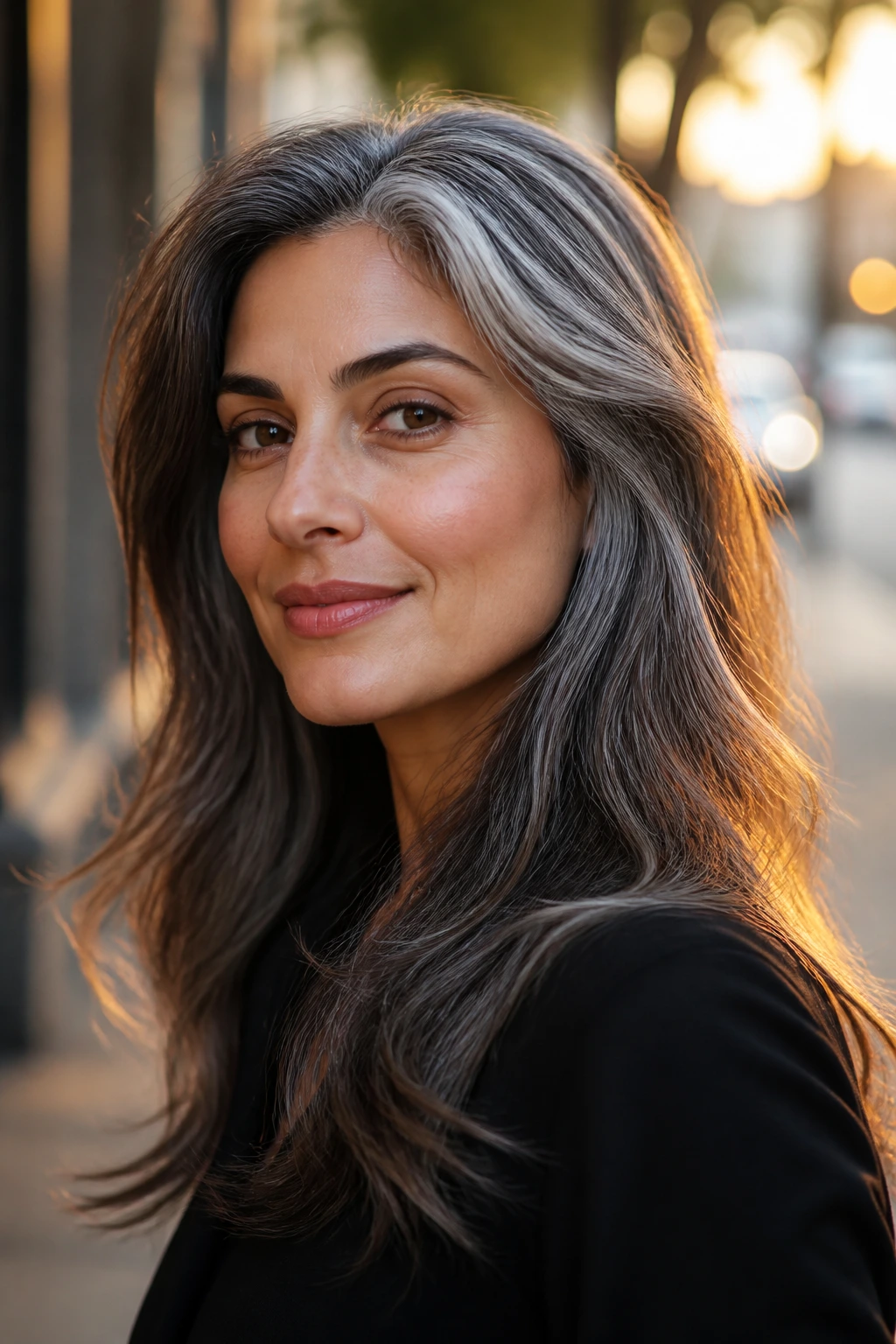
A brushed-out fade is one of the prettiest ways to grow grey out because the styling does some of the camouflage. Blow-dried volume and a soft brush-out make brunette and grey mix instead of stare at each other. Olive skin likes the movement because it keeps the color from feeling blocked in.
This is especially good if your hair is shoulder-length or longer. The fade looks more natural when there is enough length for the tones to melt into each other. Keep the front layers soft so the grow-out line does not sit like a shelf.
28. Face-Framing Silver Streaks
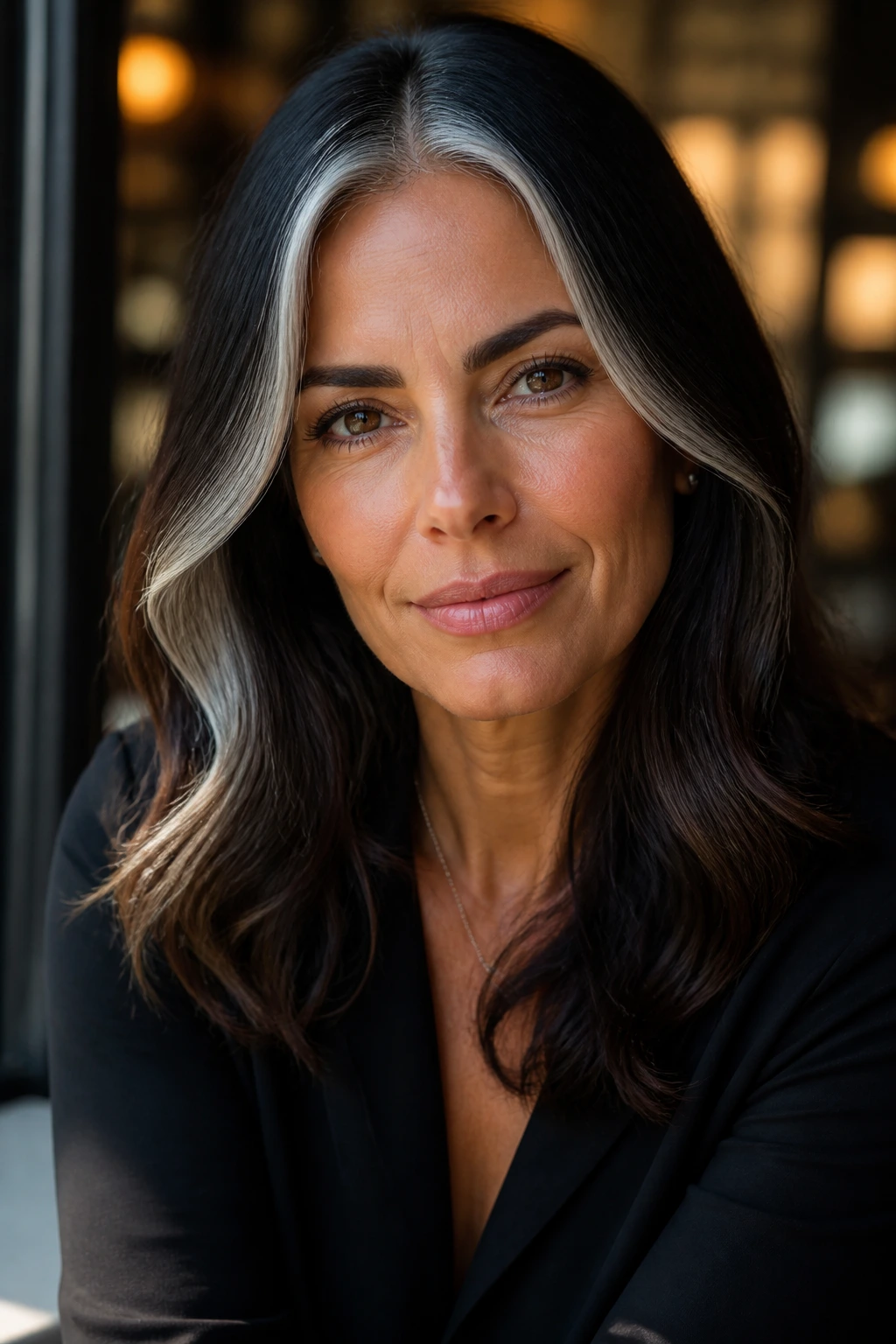
Sometimes the smartest move is to brighten only where the eye lands first. Face-framing silver streaks lift the cheekbones and lighten the whole expression, which can be especially useful if olive skin needs a little extra brightness. The rest of the hair can stay deeper and calmer.
The placement should be deliberate. Too many bright streaks around the face can wash out the skin. One or two clean panels are enough to create contrast without noise.
29. Silvery Shag with Wispy Bangs
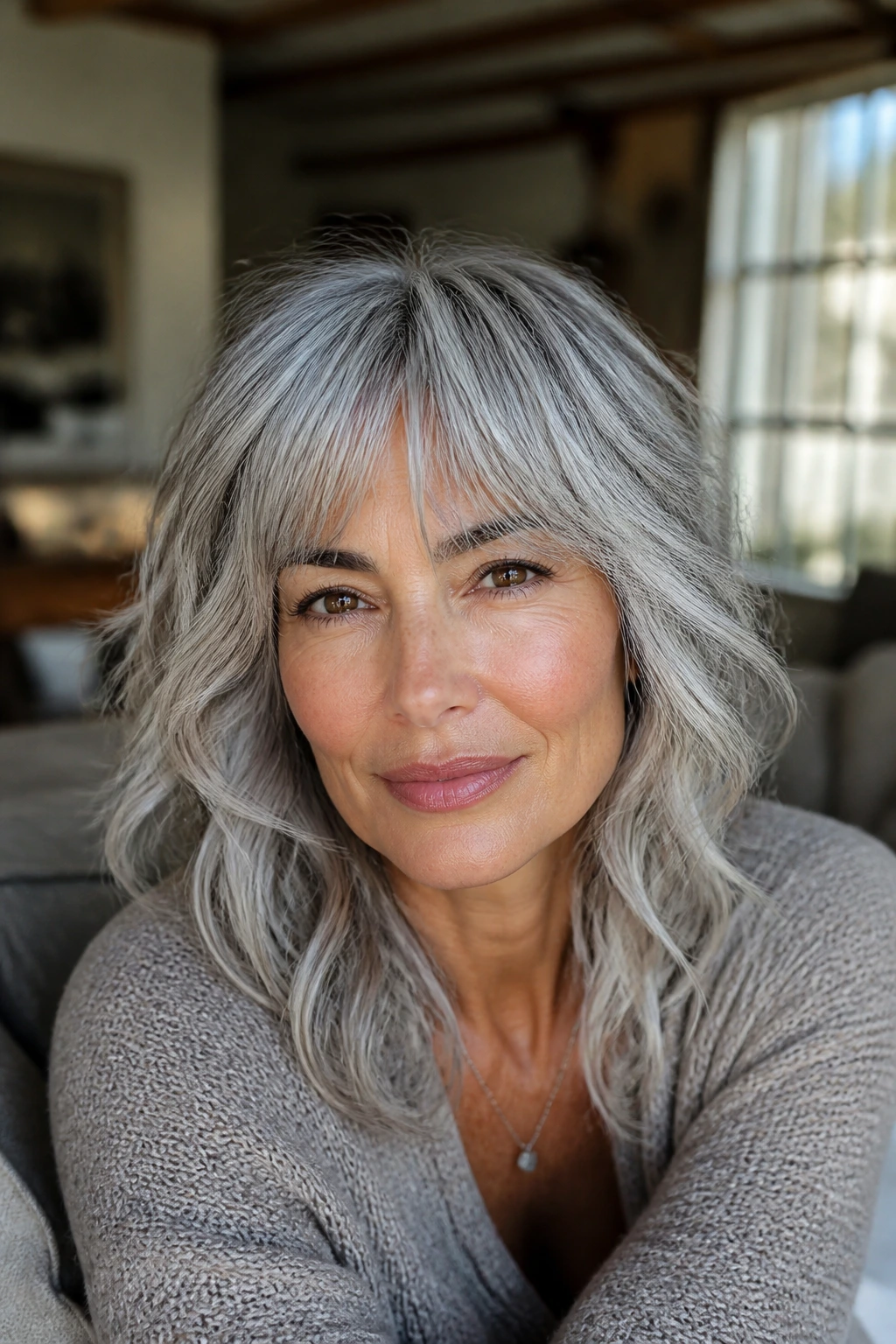
A shag with wispy bangs is a forgiving shape for almost every grow-out stage. The layers break up the line where dye meets grey, and the bangs keep the focus on the eyes instead of the root area. Silver looks softer here because the cut has motion built into it.
This is a good pick if your hair has some wave and you do not want to fight it. A little air-dry cream, a little scrunching, and you are done. The beauty is in the loose edges.
30. Charcoal-to-Pearl Pixie Bob
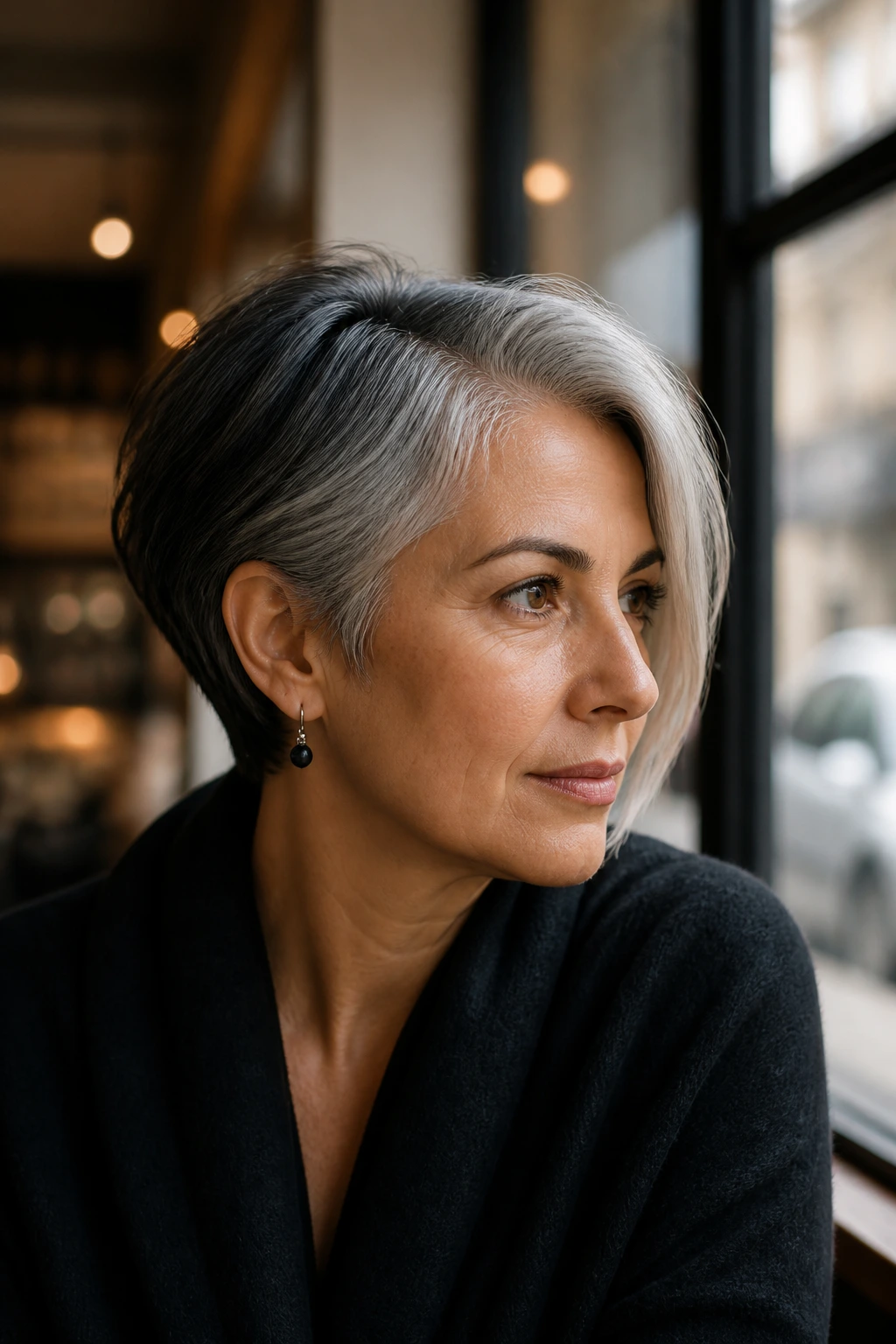
A pixie bob sits in that useful middle ground between short and not-too-short. Charcoal at the back and pearl toward the front gives the grow-out a real shape, and olive skin benefits from the contrast near the face. It feels modern without needing a lot of styling time.
Ask for stacked shape at the nape so the back does not balloon out. The front should stay soft enough to tuck behind the ear. That mix of neat and airy is what makes this cut work.
31. Neutral Beige Gray Waves
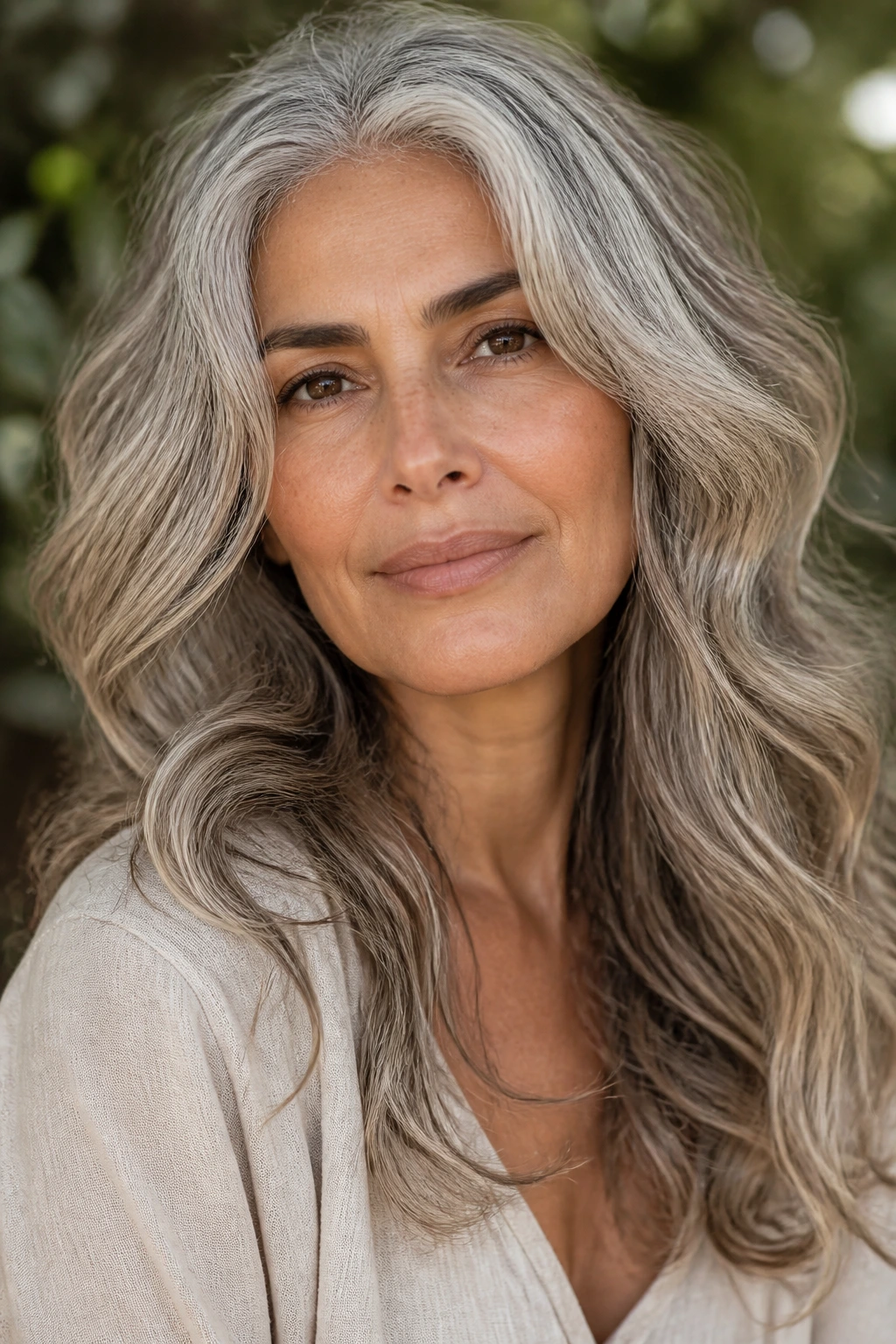
Neutral beige gray is one of the easiest places to land if you are tired of playing undertone detective. It does not swing too warm or too cold, which helps olive skin stay balanced in changing light. Waves keep the beige-gray finish from looking too still.
This is a calm, practical choice. Not boring. Calm. If your wardrobe already leans earthy or muted, this shade will sit in it nicely without fighting your clothes or your face.
32. Silver Halo Crop
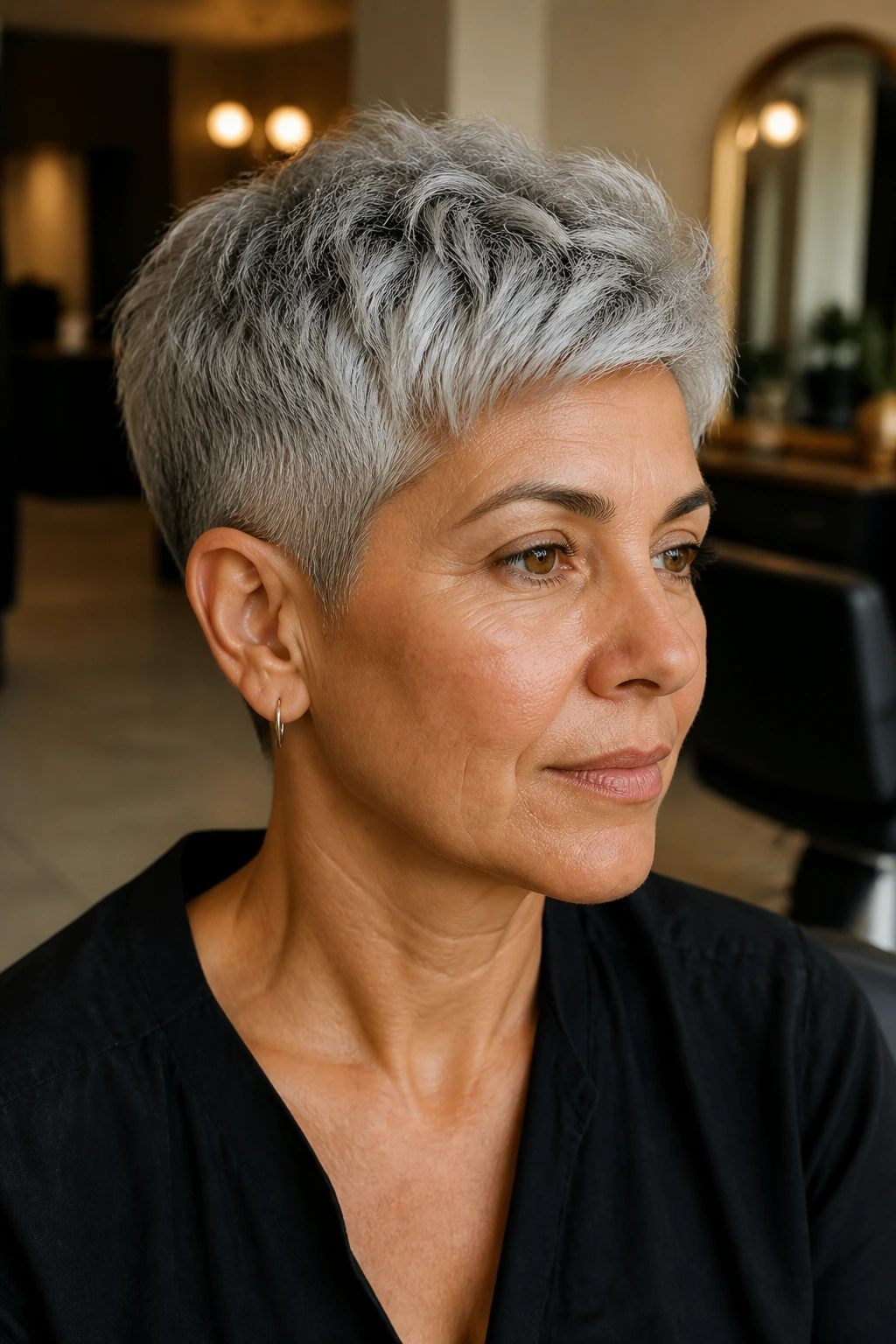
A halo crop keeps brightness around the outline of the head while the inside stays a little deeper. That gives olive skin a clean frame and keeps the silver from sitting like a single block. It is a bold but surprisingly wearable shape.
The crop needs regular shaping so the silhouette stays neat. Every six weeks is about right if the cut is short. If the outline goes fuzzy, the halo effect disappears and you are left with just overgrown hair.
33. Cinnamon-to-Smoke Transition
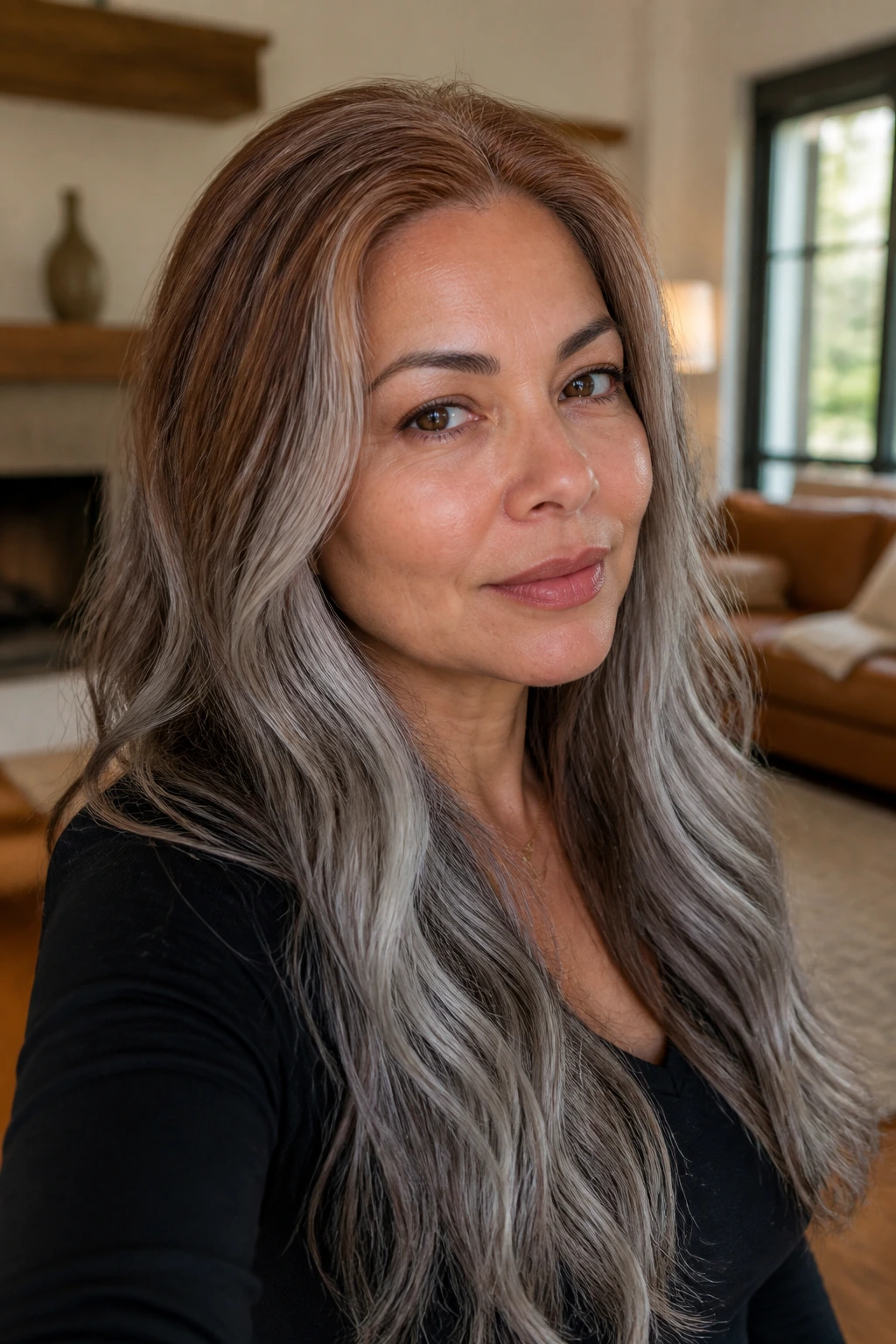
Warmth has a place here, especially if your olive skin leans golden. A cinnamon-to-smoke transition lets the root carry a little warmth before it cools off into silver, which keeps the face from going flat. It is one of the nicer routes if pure ash has never suited you.
Do not push the cinnamon too orange. You want a soft spice note, not a copper block. The smoke through the lengths keeps the whole thing mature and balanced.
34. Frosted Long Curls
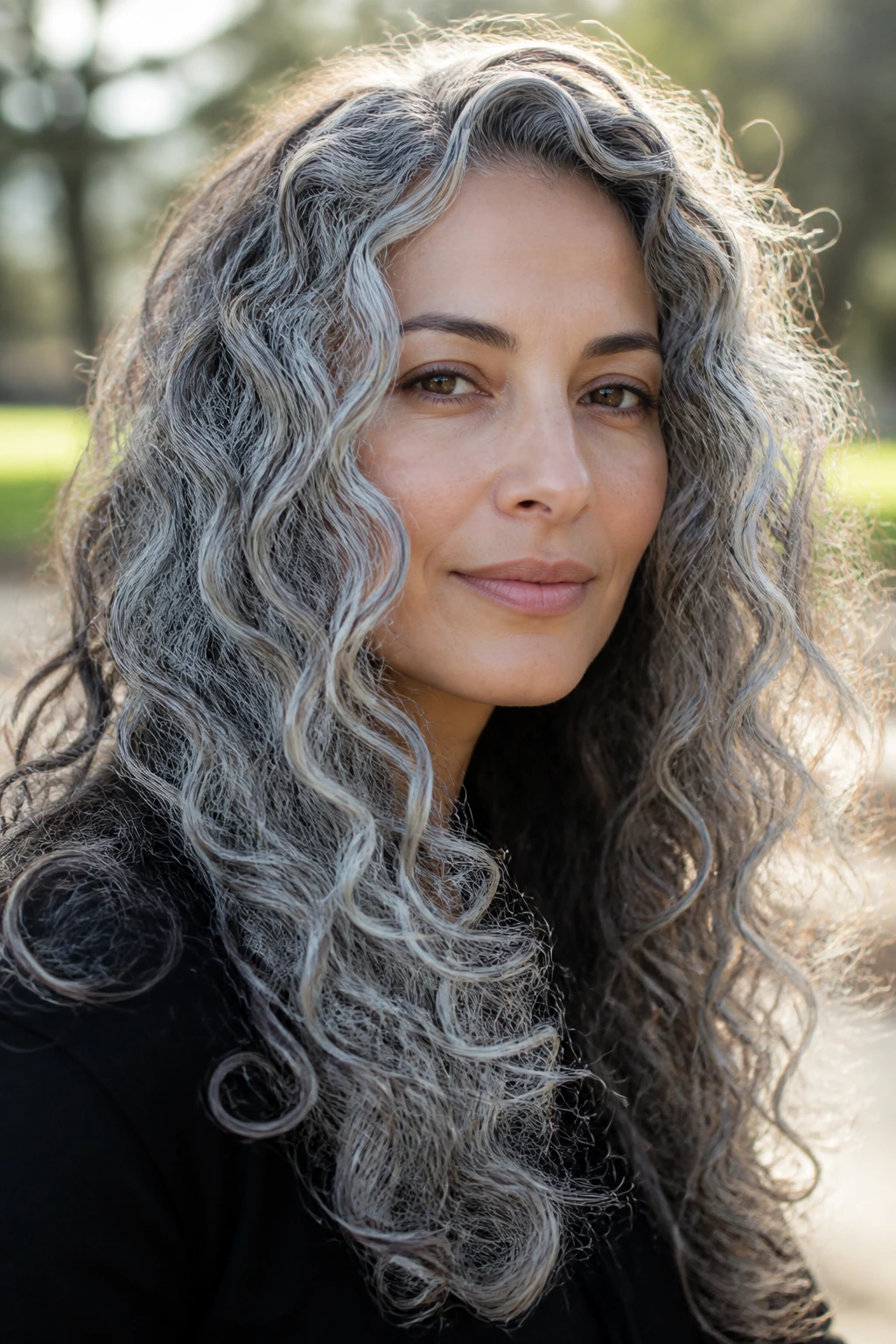
Long curls can carry grey beautifully if the shape stays open. Frosted ends and a softer crown keep the silver from bunching in one place, which is useful on olive skin because it stops the color from looking too heavy. The curl pattern does a lot of the blending on its own.
The best part is that this look does not need perfection. A little frizz can help. Really. The silver shows up better when the curls have some air between them.
35. Clean Silver Finish with Glossed Ends
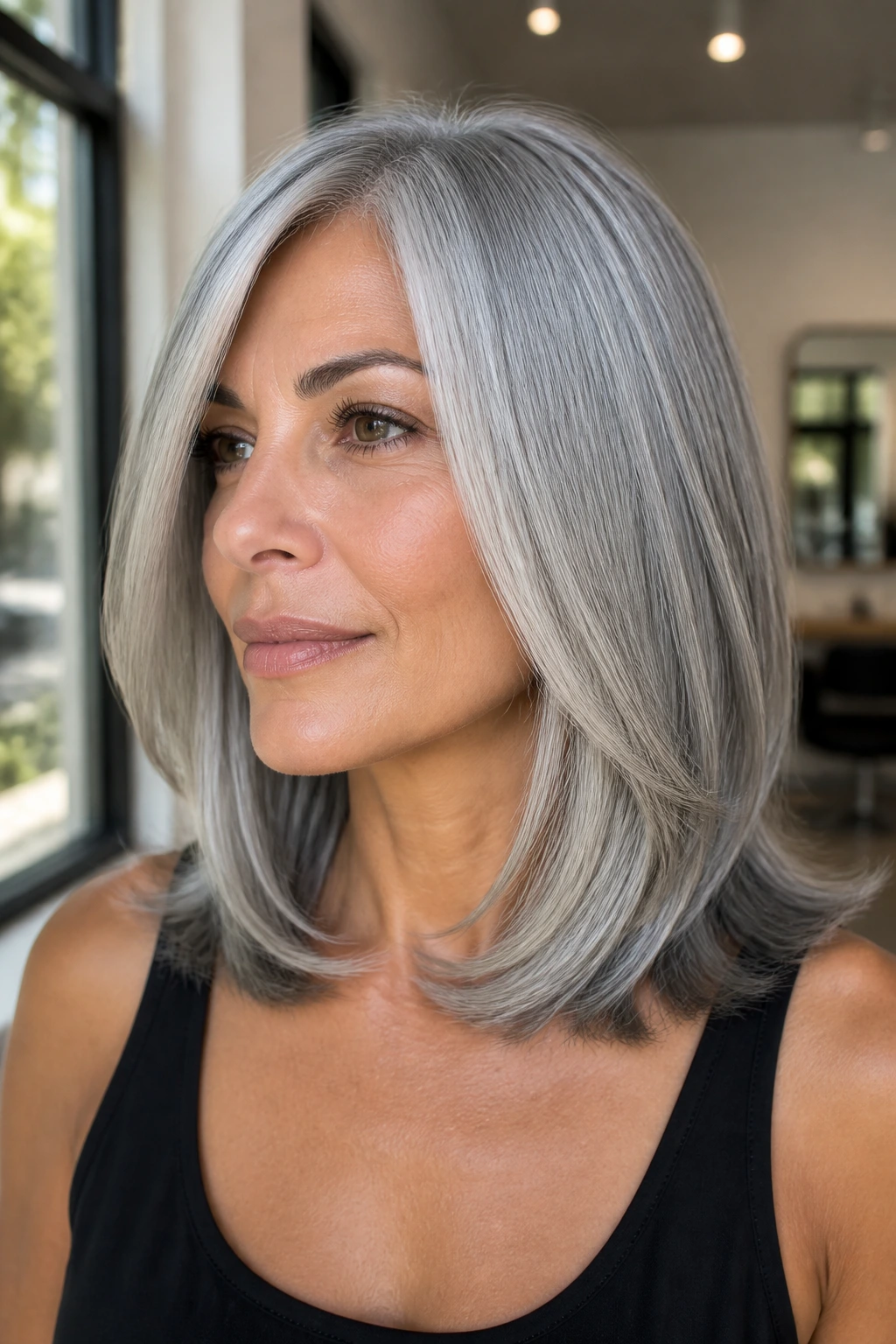
This is the finish you move toward when the grow-out is nearly done and you want everything to look polished. Clean silver with glossed ends gives olive skin a sharp, reflective frame, but the gloss keeps the ends from getting dry and chalky. It is the most finished-looking version in the whole group.
Ask for a clear or smoky gloss every few weeks and keep the ends trimmed. If the hair starts to look fuzzy, the silver loses that neat edge fast. This look is not flashy. It is clean.
Essential Tools for Smoother Grey-Hair Grow-Out
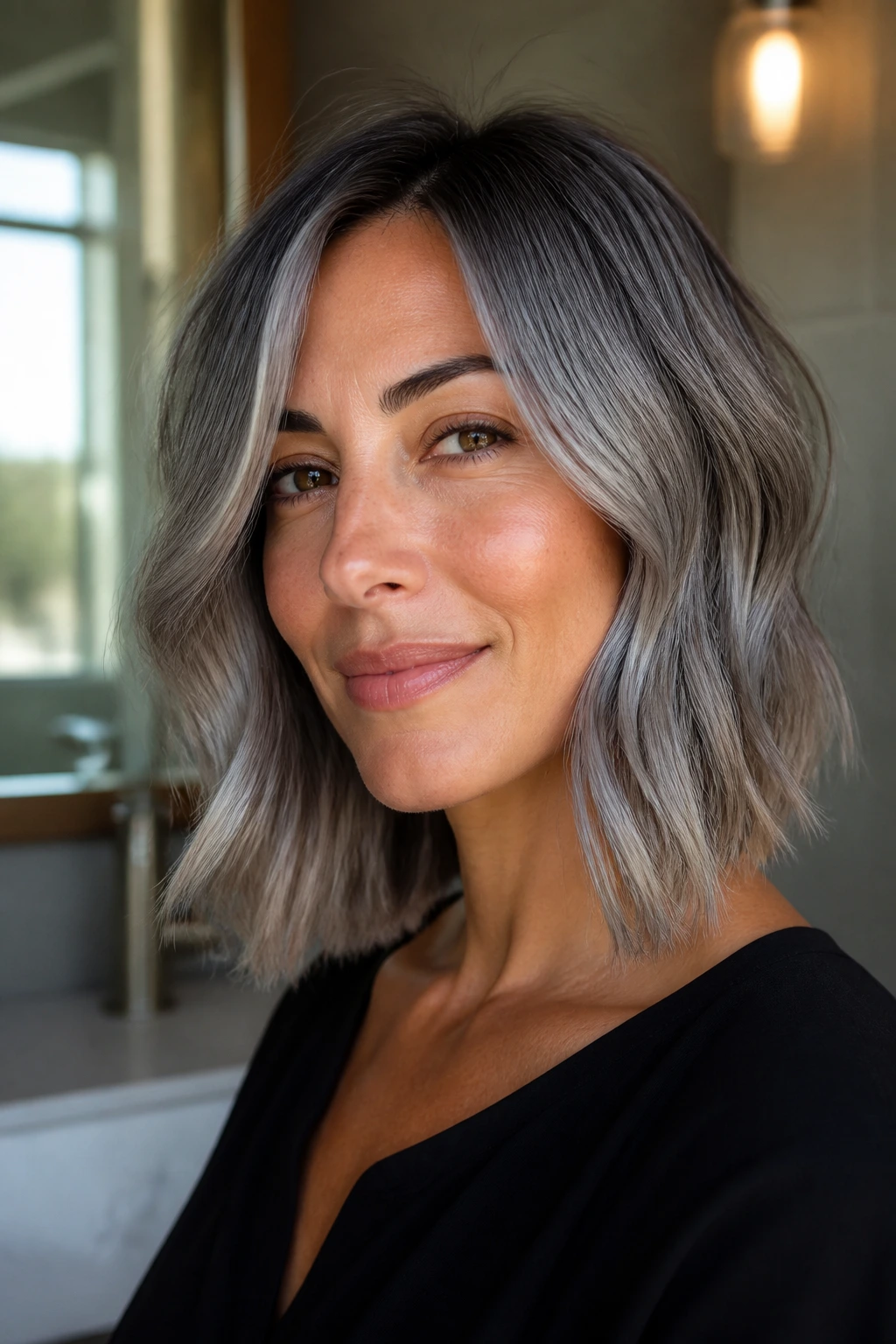
-
Color-safe sulfate-free shampoo: Keeps silver from stripping too fast and helps the tone hold between washes.
-
Purple shampoo: Useful when grey hair picks up yellow from hard water or heat; use it sparingly, not every wash.
-
Blue shampoo: Better for brunettes or dark roots that turn orange during the grow-out. Do not use it as a universal fix.
-
Demi-permanent gloss or toner: Softens the line between old dye and new grey without a harsh permanent change.
-
Wide-tooth comb: Gentle on silver strands, which often feel drier and snap more easily than the rest.
-
Microfiber towel or soft T-shirt: Reduces frizz and keeps curls or waves from puffing into a halo you did not ask for.
-
Heat protectant spray or cream: Grey hair can feel coarse, and hot tools can rough it up fast.
-
Sectioning clips and tint brush: Handy if you gloss at home or just want a neat blow-dry.
-
Clarifying or chelating shampoo: Helpful if hard water leaves the grey looking dull or yellow.
How to Talk to Your Colorist About Olive Undertones
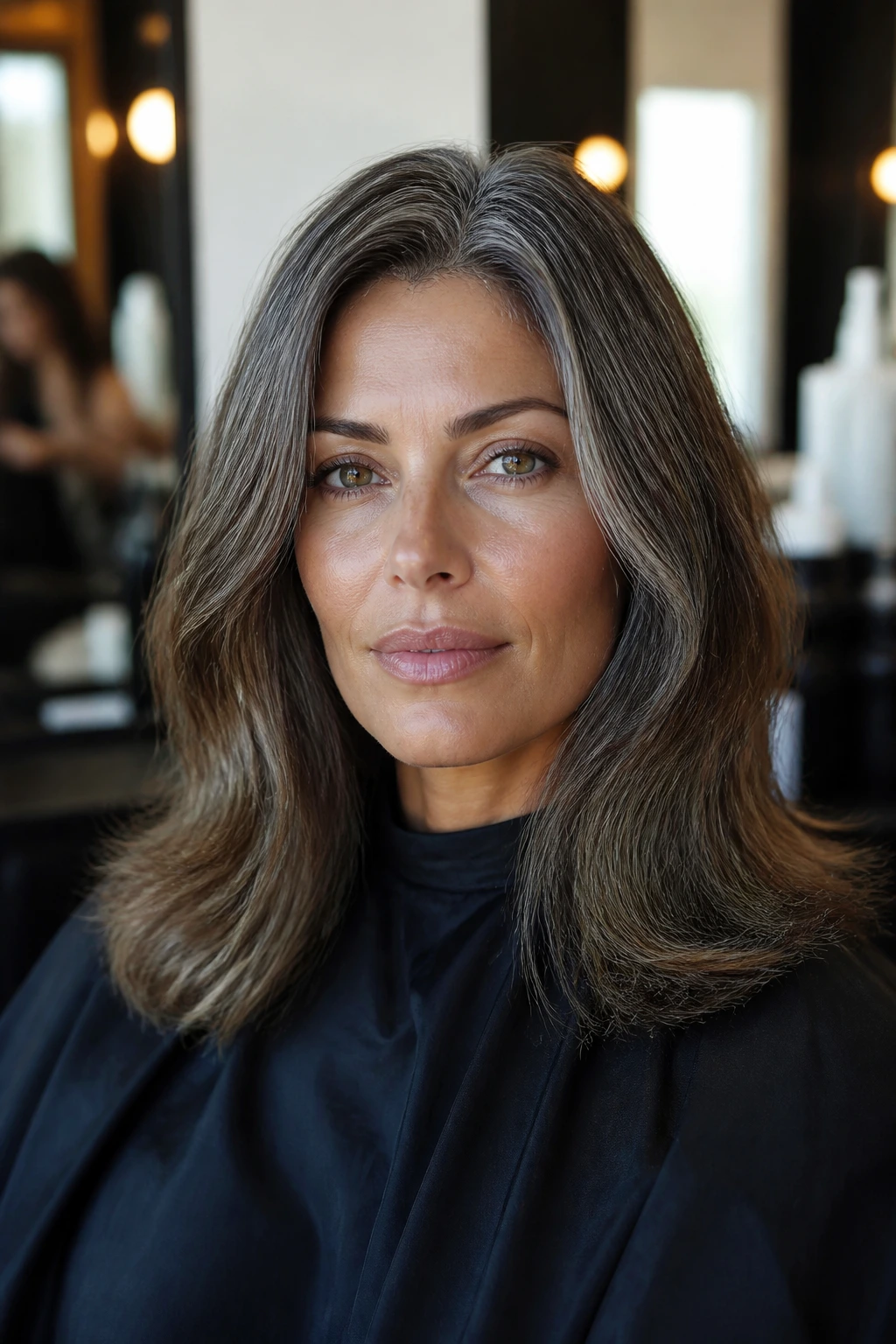
Bring photos, but bring the right kind. A picture shot in daylight tells the truth; a ring-light selfie does not. If your olive skin leans golden, say that out loud and ask for beige-silver, mushroom, or pearl rather than a flat icy tone. If your skin reads neutral, pewter, smoke, and graphite can usually go a little cooler.
Golden Olive Needs Soft Brightness
The request should be simple: keep the silver bright, but not white. A demi gloss with beige or champagne notes keeps the face from looking tired. If the colorist reaches for ash too quickly, ask for a little warmth back in the front pieces.
Neutral Olive Can Take More Edge
This is where silver, steel, and charcoal have some room to play. Keep the root soft and the finish glossy, because neutral olive can look flat if the hair has no shine. A root shadow one to two levels deeper than the mids usually works.
Green-Leaning Olive Needs Contrast Near the Face
Do not let the hair and skin share the same dull tone. Ask for brighter face-framing pieces, a softer root, or a beige ribbon through the front. That small change can save the whole look.
How to Wear Grey Hair So Olive Skin Stays Fresh
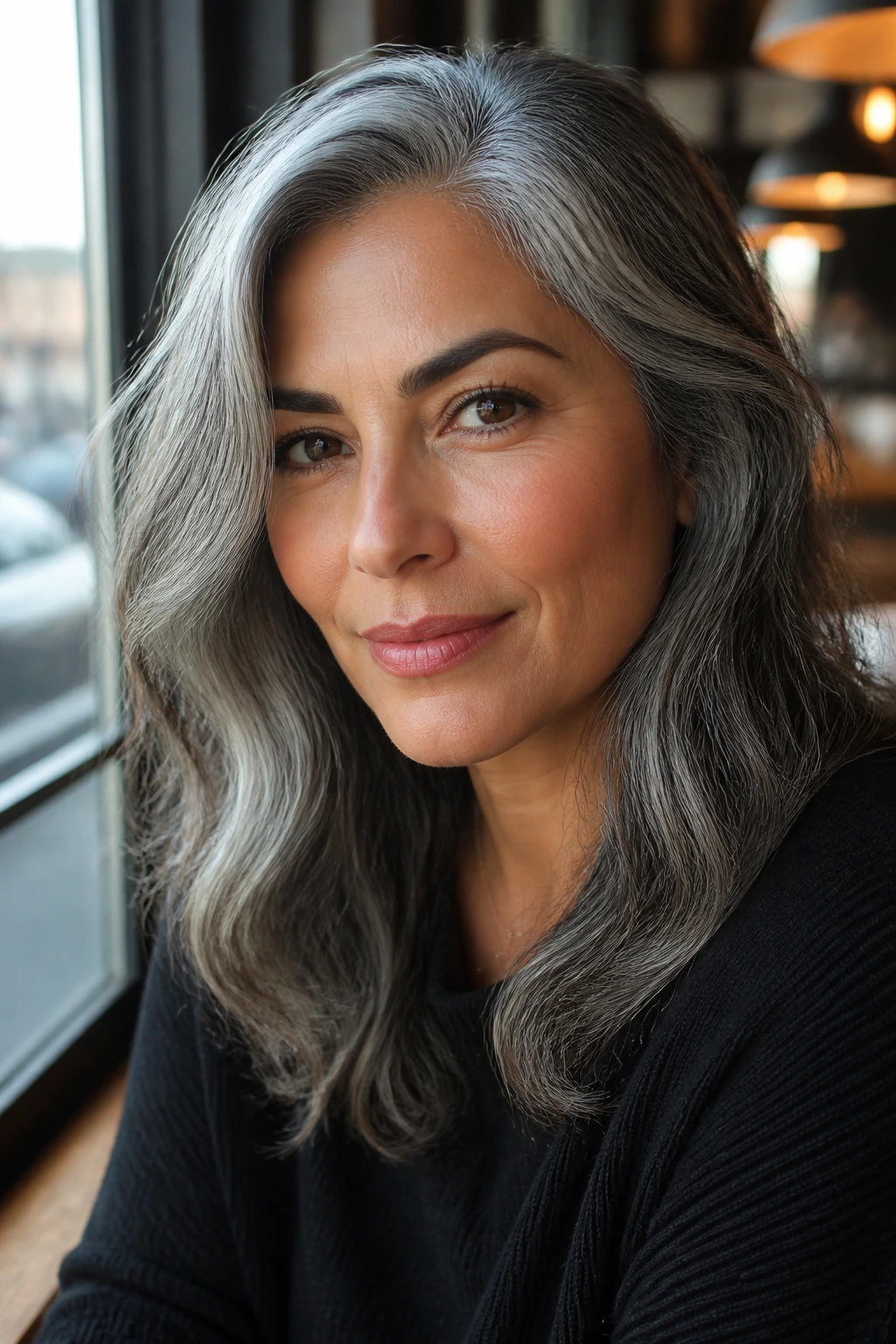
Parting: Move the part a finger width off center. A dead-center part can carve the grow-out line into the scalp and make everything look more obvious than it really is.
Texture: Soft waves, bends, or curls break up the silver and keep it from lying flat against the skin. Pin-straight grey can look severe very fast.
Brows and lashes: Keep brows defined, usually with a soft brown pencil or tinted gel. Black brows can feel heavy unless the hair is very dark.
Blush and lip color: Rosy beige, terracotta, peach, and berry keep olive skin lively beside silver hair. Pale nude on pale silver can wash the face out in a hurry.
Clothing colors: Charcoal, deep teal, olive, cream, plum, and muted rust work beautifully near the face. Too much yellow right next to cool grey can get strange fast.
Jewelry: Mixed metals are often kinder than one-note silver. Gold can warm golden olive skin; silver can sharpen neutral olive skin. Wearing both takes the pressure off.
Additional Tips and Shine Boosters
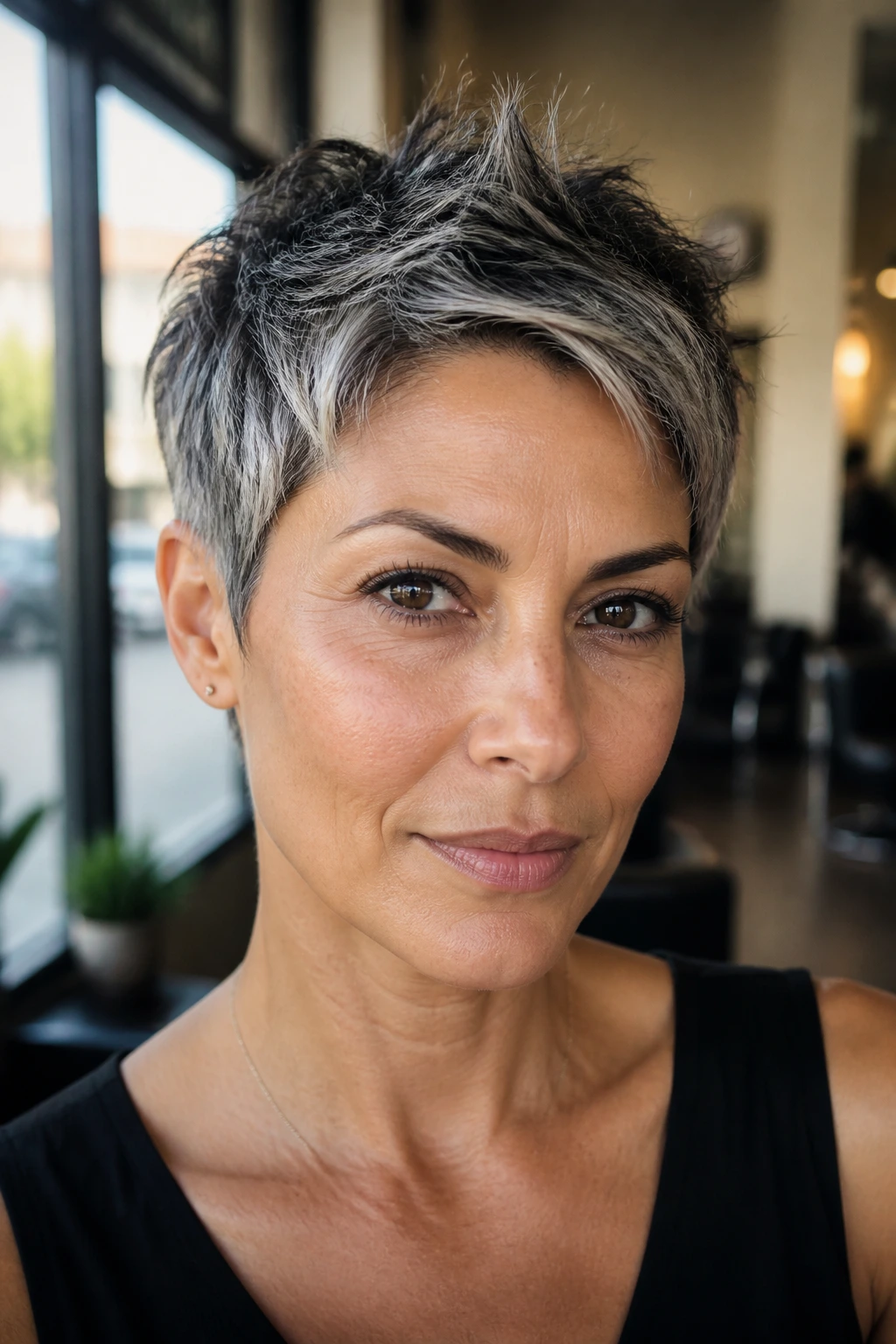
Gloss Boost: A clear or smoky gloss every 6 to 8 weeks keeps grey hair reflective. If the ends are porous, ask for an acidic gloss or a shine glaze instead of a heavy toner.
Contrast Control: If the hair starts looking too pale, add a couple of lowlights around the temples or beneath the top layer. You do not need many. Two well-placed pieces can do more than a whole panel.
Softness: Use a lightweight leave-in on mids and ends. Grey hair tends to feel rougher, and olive skin usually looks better when the finish has a little movement instead of a dry, fuzzy halo.
Make-It-Yours: Keep a bright money piece, go softer with beige ribbons, or cut the length shorter so the grow-out looks deliberate. If your skin leans warm, stay near mushroom and champagne. If it leans cool, pewter and steel usually behave better.
Keeping Grey Hair Fresh Between Appointments
Weekly: Use purple shampoo once every 7 to 10 days if the grey is picking up yellow. If your brunette lengths are going orange, swap in blue shampoo every other week, not both at once. Follow with a deep conditioner if the hair feels rough.
Every 6 to 8 Weeks: Refresh the gloss, root shadow, or toner. That is usually the sweet spot for keeping the transition soft without piling too much color on top of silver.
Every 8 to 10 Weeks: Trim the ends and reshape the cut. Grey hair shows split ends fast, and olive skin looks better when the silhouette is neat instead of scraggly.
When Hard Water Is the Problem: Use a clarifying or chelating shampoo once a month. Mineral buildup can make silver look dingy fast, and it is one of the easiest problems to miss.
Variations and Adaptations to Try
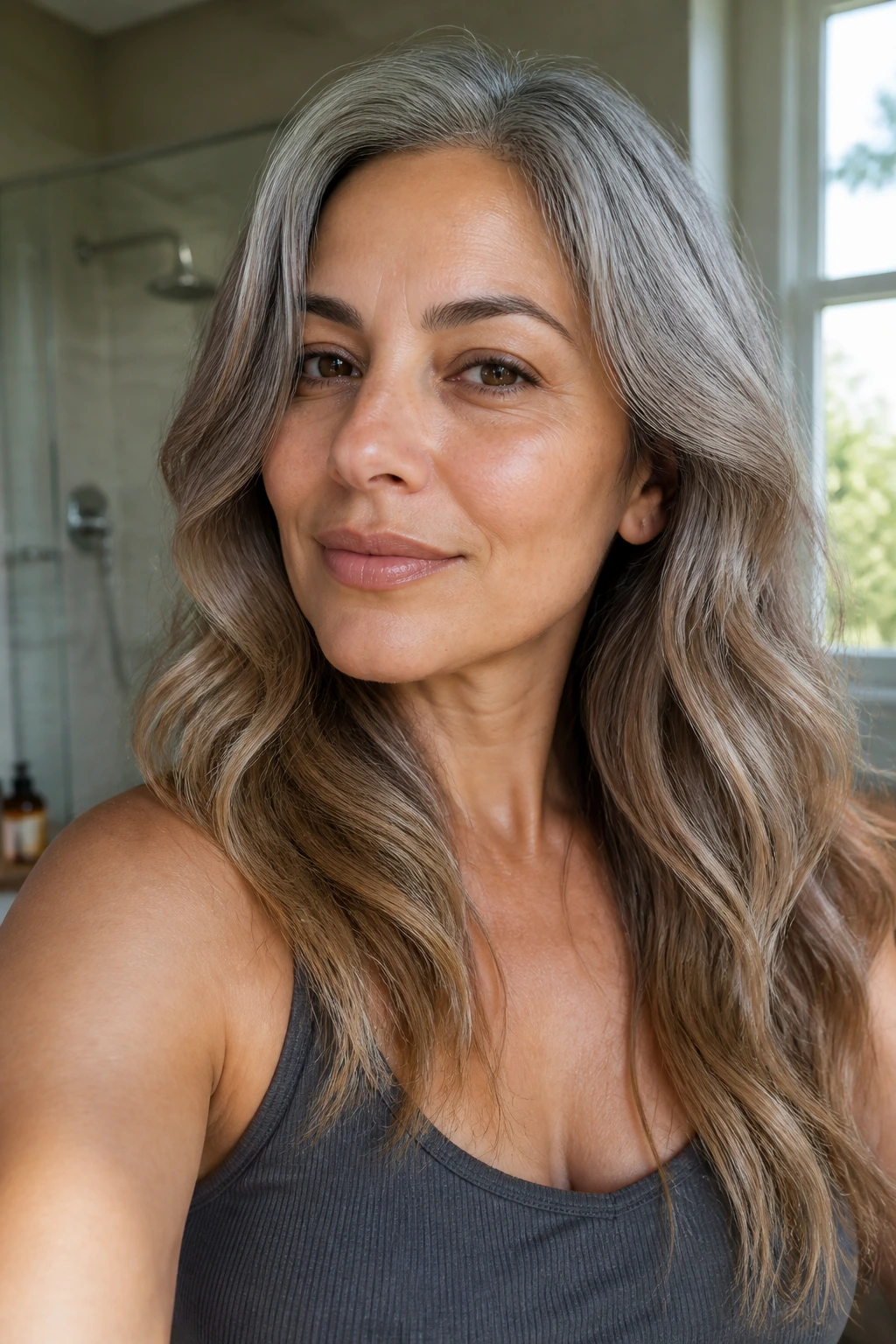
Warm-Mushroom Blend: If your olive skin is golden, ask for more beige and mushroom in the gloss and keep the silver a little softer. This takes the edge off icy tones without losing the grey story.
Pewter Smoke Finish: If your skin is neutral or green-leaning, go cooler with pewter, graphite, and smoke. It reads modern and keeps the face from looking too warm beside the hair.
Short-Cut Reset: If the grow-out line is driving you mad, a pixie, crop, or pixie bob can remove the worst of the transition in one visit. Short hair makes the remaining grey look purposeful instead of patched.
Curly Halo Grow-Out: For curls and coils, shape matters more than perfect color blending. A rounded cut with moisture and a little shine allows the grey to appear as part of the texture, not a stripe running through it.
Soft Brunette Bridge: If you are not ready for full silver, add mocha lowlights and a root melt. It is a slower route, but it gives the hair a graceful middle stage.
Common Mistakes to Avoid
-
Going too icy too fast: A blue-white silver can make olive skin look tired or green in the wrong light. Fix it with a beige or pearl gloss, or add soft warmth near the face.
-
Using purple shampoo like it is regular shampoo: Too much purple can leave grey hair dull, stained, or dry. Use it once a week or less, and always follow with moisture.
-
Letting the cut get shapeless: Grey grow-out is much harder to love when the ends hang limply. A trim every 8 to 10 weeks keeps the whole thing intentional.
-
Ignoring brows and makeup: Silver hair changes the face more than people expect. If brows vanish and lips go pale, olive skin can look flat even when the hair tone is right.
-
Keeping the part frozen in one place: The grow-out line gets louder when you never move the part. Shift it a little and the line softens immediately.
-
Chasing pure white: White hair is not the same as flattering hair. On olive skin, a little smoke, pearl, or champagne usually looks better than stark white.
Frequently Asked Questions
Will grey hair wash out olive skin?
Not if the tone is chosen carefully. Smoky silver, pewter, beige-gray, and pearl often flatter olive skin better than harsh white, because they keep some depth around the face.
Should olive skin go warm or cool with grey hair?
Usually somewhere in the middle. Golden olive skin tends to like beige-silver and mushroom; neutral olive can handle cooler pewter and graphite; green-leaning olive usually needs a touch of warmth nearby.
Can I grow out grey hair without doing a big chop?
Yes. A root shadow, lowlights, or a demi gloss can blur the line while you keep your length. The grow-out just takes longer, so patience helps.
What if my grey hair turns yellow?
That usually comes from hard water, sun, heat, or too much purple shampoo. Clarify once a month, cut back on purple, and use a soft toner or gloss if needed.
Is purple shampoo enough to keep silver hair looking good?
No. It helps with brass, but it does not replace shine, moisture, or a good cut. Think of it as a small tool, not the whole job.
Does a short haircut make growing out grey easier?
For a lot of people, yes. Pixies, crops, and bobs remove the heaviest dye line and make the change feel more deliberate. Long hair can work too, but the transition takes patience.
What is the best color if I want low maintenance?
Mushroom, taupe, or a soft root melt usually buys the most time. Those shades fade softly and do not show the grow-out line as sharply as one-process color.
Can I keep some brunette while letting the grey grow in?
Absolutely. Mocha lowlights, ash brown ribbons, or a smoky ombre let you keep depth while the grey takes over in stages. That route is slower, but it can be easier to live with.
A Softer Silver Finish
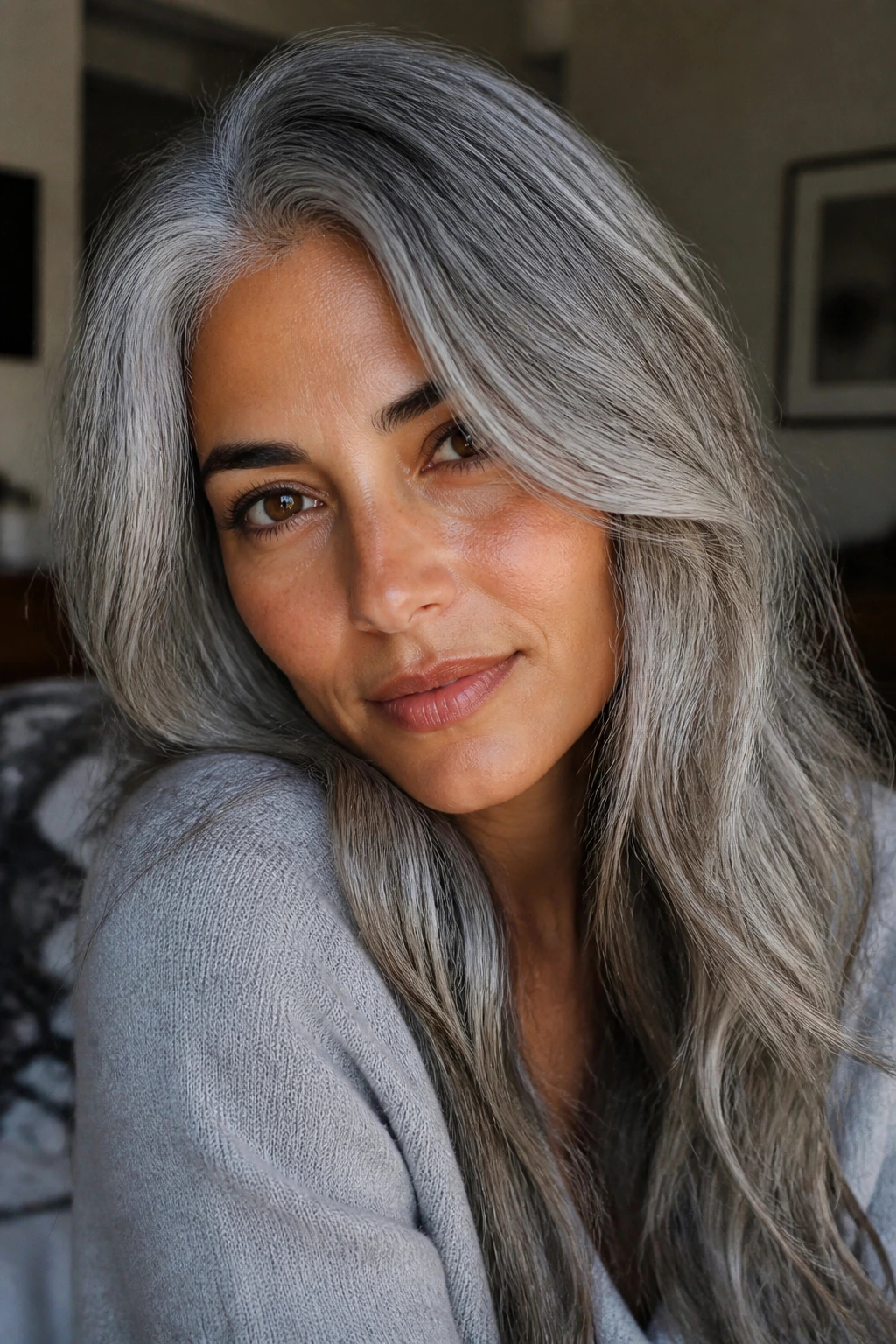
Grey hair on olive skin does not need to be forced into one extreme or the other. The prettiest versions usually sit in the middle: enough shadow to frame the face, enough silver to feel fresh, and enough movement to keep the whole thing from looking static. That is the lane where olive skin tends to look clear instead of washed out.
If you are standing between dye and grey, start with shape first, tone second, and purity of silver last. The best grow-out is rarely the whitest one. It is the one that looks like it belongs on your head, in your light, with your skin.